EP0625579B1 - Streptococcus zooepidemicus mutant strain for preparing hyaluronic acid - Google Patents

Streptococcus zooepidemicus mutant strain for preparing hyaluronic acid Download PDF

Info

Publication number
EP0625579B1
EP0625579B1 EP94105734A EP94105734A EP0625579B1 EP 0625579 B1 EP0625579 B1 EP 0625579B1 EP 94105734 A EP94105734 A EP 94105734A EP 94105734 A EP94105734 A EP 94105734A EP 0625579 B1 EP0625579 B1 EP 0625579B1
Authority
EP
European Patent Office
Prior art keywords
hyaluronic acid
medium
molecular weight
streptococcus zooepidemicus
microorganism
Prior art date
Legal status (The legal status is an assumption and is not a legal conclusion. Google has not performed a legal analysis and makes no representation as to the accuracy of the status listed.)
Expired - Lifetime
Application number
EP94105734A
Other languages
German (de)
French (fr)
Other versions
EP0625579A1 (en
Inventor
Myoung Gyu Park
Jae Deog Jang
Whan Koo Kang
Current Assignee (The listed assignees may be inaccurate. Google has not performed a legal analysis and makes no representation or warranty as to the accuracy of the list.)
LG Corp
Original Assignee
Lucky Ltd
Priority date (The priority date is an assumption and is not a legal conclusion. Google has not performed a legal analysis and makes no representation as to the accuracy of the date listed.)
Filing date
Publication date
Priority claimed from KR1019930006424A external-priority patent/KR100258237B1/en
Priority claimed from KR1019930006423A external-priority patent/KR100250573B1/en
Application filed by Lucky Ltd filed Critical Lucky Ltd
Publication of EP0625579A1 publication Critical patent/EP0625579A1/en
Application granted granted Critical
Publication of EP0625579B1 publication Critical patent/EP0625579B1/en
Anticipated expiration legal-status Critical
Expired - Lifetime legal-status Critical Current

Links

Images

Classifications

    • CCHEMISTRY; METALLURGY
    • C12BIOCHEMISTRY; BEER; SPIRITS; WINE; VINEGAR; MICROBIOLOGY; ENZYMOLOGY; MUTATION OR GENETIC ENGINEERING
    • C12NMICROORGANISMS OR ENZYMES; COMPOSITIONS THEREOF; PROPAGATING, PRESERVING, OR MAINTAINING MICROORGANISMS; MUTATION OR GENETIC ENGINEERING; CULTURE MEDIA
    • C12N1/00Microorganisms; Compositions thereof; Processes of propagating, maintaining or preserving microorganisms or compositions thereof; Processes of preparing or isolating a composition containing a microorganism; Culture media therefor
    • C12N1/20Bacteria; Culture media therefor
    • C12N1/205Bacterial isolates
    • CCHEMISTRY; METALLURGY
    • C12BIOCHEMISTRY; BEER; SPIRITS; WINE; VINEGAR; MICROBIOLOGY; ENZYMOLOGY; MUTATION OR GENETIC ENGINEERING
    • C12PFERMENTATION OR ENZYME-USING PROCESSES TO SYNTHESISE A DESIRED CHEMICAL COMPOUND OR COMPOSITION OR TO SEPARATE OPTICAL ISOMERS FROM A RACEMIC MIXTURE
    • C12P19/00Preparation of compounds containing saccharide radicals
    • C12P19/26Preparation of nitrogen-containing carbohydrates
    • CCHEMISTRY; METALLURGY
    • C12BIOCHEMISTRY; BEER; SPIRITS; WINE; VINEGAR; MICROBIOLOGY; ENZYMOLOGY; MUTATION OR GENETIC ENGINEERING
    • C12RINDEXING SCHEME ASSOCIATED WITH SUBCLASSES C12C - C12Q, RELATING TO MICROORGANISMS
    • C12R2001/00Microorganisms ; Processes using microorganisms
    • C12R2001/01Bacteria or Actinomycetales ; using bacteria or Actinomycetales
    • C12R2001/46Streptococcus ; Enterococcus; Lactococcus
    • YGENERAL TAGGING OF NEW TECHNOLOGICAL DEVELOPMENTS; GENERAL TAGGING OF CROSS-SECTIONAL TECHNOLOGIES SPANNING OVER SEVERAL SECTIONS OF THE IPC; TECHNICAL SUBJECTS COVERED BY FORMER USPC CROSS-REFERENCE ART COLLECTIONS [XRACs] AND DIGESTS
    • Y10TECHNICAL SUBJECTS COVERED BY FORMER USPC
    • Y10STECHNICAL SUBJECTS COVERED BY FORMER USPC CROSS-REFERENCE ART COLLECTIONS [XRACs] AND DIGESTS
    • Y10S435/00Chemistry: molecular biology and microbiology
    • Y10S435/8215Microorganisms
    • Y10S435/822Microorganisms using bacteria or actinomycetales
    • Y10S435/885Streptococcus

Definitions

  • a novel microorganism belonging to the genus Streptococcus which lacks hyaluronidase activity and hemolytic activity and produces high molecular weight hyaluronic acid, is obtained by mutating the known strain of Streptococcus zooepidemicus (ATCC 35246).
  • hyaluronic acid existing in the culture medium may be recovered according to a known process for isolating and purifying polysaccharides(Akasaka Hinodedo, J. Soc. Cosmet. Chem. Japan , 22 , 35-42(1988)).
  • the mutant strain obtained in the present invention exhibits the following bacteriological properties:

Landscapes

  • Life Sciences & Earth Sciences (AREA)
  • Chemical & Material Sciences (AREA)
  • Organic Chemistry (AREA)
  • Engineering & Computer Science (AREA)
  • Health & Medical Sciences (AREA)
  • Zoology (AREA)
  • Wood Science & Technology (AREA)
  • Biotechnology (AREA)
  • Genetics & Genomics (AREA)
  • Bioinformatics & Cheminformatics (AREA)
  • General Engineering & Computer Science (AREA)
  • General Health & Medical Sciences (AREA)
  • Microbiology (AREA)
  • Biochemistry (AREA)
  • Molecular Biology (AREA)
  • Chemical Kinetics & Catalysis (AREA)
  • General Chemical & Material Sciences (AREA)
  • Medicinal Chemistry (AREA)
  • Tropical Medicine & Parasitology (AREA)
  • Virology (AREA)
  • Biomedical Technology (AREA)
  • Micro-Organisms Or Cultivation Processes Thereof (AREA)
  • Preparation Of Compounds By Using Micro-Organisms (AREA)

Abstract

The present invention relates to a novel mutant of Streptococcus zooepidemicus producing high molecular weight hyaluronic acid; to a process for preparing said hyaluronic acid by employing said microorganism; and to a medium suitable for the culture of a microorganism producing hyaluronic acid. <IMAGE>

Description

Field of the Invention
The present invention relates to a novel microorganism capable of producing high molecular weight hyaluronic acid, a process for preparing said hyaluronic acid by employing the microorganism and a medium suitable for culturing the microorganism so as to produce said hyaluronic acid.
Description of the Prior Art
As well known in the art, hyaluronic acid is a colorless, transparent and highly viscous linear polysaccharide having a molecular weight ranging from 50 kda to 13,000 kda with an unbranched chain of alternating β-(1,4)-glucuronic acid and β-(1,3)-N-acetyl glucosamine linkages. Hyaluronic acid and its salts have found numerous usages, e.g., as a vitreous replacement in optical surgery and eye drop formula, and as a moisturizer in cosmetic formulations. Generally, hyaluronic acid is prepared by extracting it from animal tissues or culturing certain microorganisms.
For example, U. S. Patent No. 4,141,973 (Balaz) describes processes for extracting hyaluronic acid from animal tissues, by way of purifying or removing biopolymer impurities such as chondroitin sulfate and glycosaminoglycan in tissues; and they are not generally regarded as suitable for the mass production thereof due to high cost and low efficiency.
Accordingly, there have been proposed various processes for producing hyaluronic acid by using microorganisms, especially those microorganisms belonging to the genus Streptococcus. The exemplary microorganisms which have been used in producing hyaluronic acid include S. pyogenes, S. faecalis, S. dysgalactiae, S. zooepidemicus, S. equi, S. equisimilis, etc.; and they are classified as Lansfield serum group A or C in Bergey's Manual. They are also reported as hemolytic chain-formed cocci having β hemolytic action. The processes for producing hyaluronic acid by using a microorganism belonging to the genus Streptococcus are disclosed in, e.g., Japanese Patent Laid-open Publication Nos. 56692/1983 and 500997/1985, Korean Patent Publication No. 92-9494 and Korean Patent Laid-open Publication No. 87-11252.
In addition, various processes for improving the productivity of hyaluronic acid by employing the microorganisms of Streptococcus have been developed: for example, a process for increasing the productivity of hyaluronic acid by regulating the concentration of phosphate (Korean Patent Publication No. 90-5774); a process using pyruvate, glucosamine, etc.(Japanese Patent Laid-open Publication No. 257901/1987); a process using an aromatic compound containing one or more hydroxy radicals(Japanese Patent Laid-open Publication No. 225491/1989); and a process using amino acids(Japanese Patent Laid-open Publication Nos. 141594/1988 and 289198/1987).
EP-A-0 244 757 describes a Streptococcus zooepidemicus mutant which is hyaluronidase non productive, shows no haemolytic activity and produces hyaluronic acid having a molecular weight of 2000 to 3000 kda.
These processes, however, suffer from such deficiencies that hyaluronic acid is produced in a relatively low molecular weight, e.g., ranging from 300 kda to 3,000 kda, and a low yield. As a result, the hyaluronic acid so produced has insufficient moisturizing effect for use, e.g., in cosmetics as well as inferior quality to be used, e.g., in ophthalmic operation, or as a treating agent for arthritis.
Summary of the Invention
Accordingly, it is a primary object of the present invention to provide a novel mutant microorganism capable of producing high molecular weight hyaluronic acid in a high yield.
Another object of the present invention is to provide a process for producing the high molecular weight hyaluronic acid by utilizing said microorganism.
A further object of the present invention is to provide a medium suitable for culturing a microorganism so as to produce hyaluronic acid in an increased productivity and high molecular weight.
In accordance with one aspect of the present invention, there is provided a novel microorganism belonging to the genus Streptococcus which lacks hyaluronidase activity and hemolytic activity and produces high molecular weight hyaluronic acid.
In accordance with another aspect of the present invention, there is provided a medium suitable for obtaining said high molecular weight hyaluronic acid in a high yield from a strain of the genus Streptococcus, wherein said medium comprises uridine.
Brief Description of the Drawings
The above and other objects and features of the present invention will become apparent from the following description of preferred embodiments taken in conjunction with the accompanying drawings, in which:
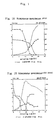
  • Figs. 1A and 1B depict the fermentation profiles of Streptococcus zooepidemicus(ATCC 35246) and Streptococcus zooepidemicus LBF707 of the present invention, respectively;
  • Fig. 2 shows the molecular weight of hyaluronic acid obtained in accordance with the present invention as compared with those of other hyaluronic acid which is produced by using S. zooepidemicus(ATCC 35246) and commercially available products;
  • Fig. 3 describes the change of intrinsic viscosity with respect to the concentration of the hyaluronic acid obtained by using the inventive process in comparison with that of hyaluronic acid produced by the prior art methods; and
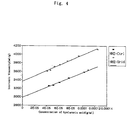
  • Fig. 4 shows the effect of uridine on the intrinsic viscosity of hyaluronic acid.
  • Detailed Description of the Invention
    In accordance with the present invention, a novel microorganism belonging to the genus Streptococcus, which lacks hyaluronidase activity and hemolytic activity and produces high molecular weight hyaluronic acid, is obtained by mutating the known strain of Streptococcus zooepidemicus(ATCC 35246). The process of mutagenesis includes at least three times of treatment of the parent microorganism with N-methyl-N'-nitro-N-nitrosoguanidine("NTG"): that is, in accordance with the present invention, mutant strains lacking in hemolytic activity are produced and selected after a first NTG treatment of the known microorganism, followed by a second NTG treatment thereof in order to select strains lacking hyaluronidase which catalyzes the decomposition of hyaluronic acid. Thereafter, the strains so selected are subjected to a third NTG treatment and then incubated on a solid medium to collect rapidly-growing, highly-mucous large colonies as the mutant strains having a superior productivity of hyaluronic acid.
    The mutant strains selected according to the above procedure are chosen to lack the hyaluronidase and hemolytic activities and can produce high molecular weight hyaluronic acid having an average molecular weight higher than, e.g., 3,500 kda. One of said mutant strains was designated as "Streptococcus zooepidemicus LBF707" and deposited with Korean Collection for Type Culture(KCTC) on January 29, 1993 with the accession number of KCTC 0075BP, under the terms of Budapest Treaty on the International Recognition of the Deposit of Microorganism for the Purpose of Patent Procedure.
    In general, a medium for incubating a microorganism belonging to the genus Streptococcus comprises a carbon source, a nitrogen source, trace elements such as an inorganic salt, etc. As the carbon source, there may be used starch, glucose, sucrose, galactose, fructose and the like; while glucose is preferred. As the nitrogen source, there may be used ammonium sulfate, ammonium nitrate, sodium nitrate, casamino acid, yeast extract, peptone, tryptone, etc. In addition, there may be added sodium chloride, sodium dihydrogenphosphate, disodium hydrogenphosphate, ferrous sulfate, potassium chloride, magnesium sulfate, etc., if required.
    In accordance with the present invention, it has been found that the yield and the molecular weight of hyaluronic acid are respectively increased in the event uridine is added to a medium for incubating a hyaluronic acid-producing microorganism, e.g., the above-mentioned novel microorganism.
    Accordingly, the medium of the present invention may preferably comprise, per 1ℓ of the medium, 10 to 100g of glucose, 0.5 to 3.0g of magnesium sulfate, 1.0 to 5.0g of potassium dihydrogenphosphate, 1.0 to 10.0g of yeast extract, 10.0 to 20.0g of yeast peptone and 0.1 to 5.0g of uridine; and more preferably, 50g to 70g of glucose, 0.7g to 1.5g of magnesium sulfate, 1.5g to 2.5g of potassium dihydrogenphosphate, 4.0g to 6.0g of yeast extract, 13.0g to 17.0g of yeast peptone and 0.5g to 1.0g of uridine.
    In addition, it is preferable to carry out an aerobic culturing of the microorganism at a temperature ranging from 33°C to 38°C while adjusting the pH of the culture medium to a range from 7.0 to 7.5 and maintaining the aeration rate of 0.1 to 1.0 VVM.
    The hyaluronic acid existing in the culture medium after culturing the microorganism normally has the form of a salt, e.g., a sodium salt thereof.
    Upon the completion of the culturing of said microorganism, hyaluronic acid existing in the culture medium may be recovered according to a known process for isolating and purifying polysaccharides(Akasaka Hinodedo, J. Soc. Cosmet. Chem. Japan, 22, 35-42(1988)).
    The amount of hyaluronic acid produced from the mutant microorganism in accordance with the present invention reaches a level ranging from 2.5 to 6.0 g/ℓ; and the average molecular weight thereof is more than 3,500 kda. Quantification of the hyaluronic acid was carried out according to the carbazole method(Z. Dische, J. Biol. Chem., 167, 189(1947)). The molecular weight of the hyaluronic acid was determined by using both high performance liquid chromatography(HPLC) and viscometry. In the method using HPLC, a standard curve was obtained by eluting polyethylene oxide as a standard material, and then hyaluronic acid was eluted under the same condition to obtain its molecular weight with reference to the standard curve(P. Chabreck, Chromatographia, 30, 201-204(1990); Narlin B. Beaty, Anal. Biochem., 147, 387-395(1985); Noriko Motohashi, J. Chrom., 299, 508-512(1984)). As for the method using viscometry, the intrinsic viscosity of serially diluted hyaluronic acid was measured by using a viscometer and plotted against the concentration of hyaluronic acid. Limited intrinsic viscosity, which is the intrinsic viscosity of the solution when the concentration of hyaluronic acid is zero, is obtained by extrapolation; and, thereafter, the molecular weight of hyaluronic acid was calculated according to the following equation of Narlin(Anal. Biochem., 147, 387-395(1985)): Limited Intrinsic Viscosity = 0.000356 X MW exp(1.0699)
    The following Examples are given for the purpose of illustration only and are not intended to limit the scope of the invention.
    Example 1: Screening of mutant strains Step 1) Preparation of strains lacking hemolytic activity
    Streptococcus zooepidemicus (ATCC 35246) was inoculated in 25mℓ of Todd-Hewitt liquid medium(Difco, USA, Cat. No. 0492-05-0) and cultured with shaking at 37°C for 14 hours. Then, 2.5mℓ of the resulting culture was inoculated again in 25mℓ of Todd-Hewitt medium and cultured with shaking at 37°C until exponential growth phase was reached. Thereafter, 1mℓ of the culture was centrifuged at 4°C(5,000 xg , 5 min.), and the precipitate was collected and washed twice respectively with 1mℓ of Tris-maleate buffer(Tris 6g, pH 6.0, maleic acid 5.8g, ammonium sulfate 1g, ferrous sulfate 0.25mg, magnesium sulfate 0.1g, calcium nitrate 0.005g per 1ℓ). The washed precipitate was suspended in 1mℓ of the above buffer solution and then subjected to mutagenesis by adding N-methyl-N'-nitro-N-nitrosoguanidine(NTG) to reach a concentration of 100 to 200µg/ℓ followed by shaking at 37°C for 20 to 30 min. or standing for 60 to 120 min.
    The resulting NTG treated suspension was centrifuged at 4°C(5,000 xg, 5 min.) and the precipitate was collected and then washed several times with the above buffer solution to remove any residue of NTG. The resulting cell pellets were resuspended in 1mℓ of the above buffer solution. 1mℓ of the resulting suspension was inoculated in 25mℓ of Todd-Hewitt medium and then cultured with shaking at 37°C for 18 hours to increase the number of viable mutant cells.
    The resulting culture was diluted with physical saline; and the diluted solution was plated on a Todd-hewitt agar medium containing 5% blood and incubated at 37°C for 48 hours. Since colonies having hemolytic activity form clear zones around them, the colonies without clear zones were selected as mutant colonies lacking hemolytic activity.
    Step 2) Preparation of strains unable to produce hyaluronidase
    The same procedures as described in the above Step 1) were repeated to mutagenize the mutant colonies obtained in the above Step 1) lacking hemolytic activity. The colonies were suspended and diluted with physical saline solution and then plated on Todd-Hewitt agar medium containing 400µg of hyaluronic acid and 1% of albumin fraction V(Sigma Co., Cat. No. A-2153). After the plate was placed in a humid chamber at 37°C for 2 to 5 days, about 10mℓ of 2N acetate solution was added thereto, and then the plate was allowed to stand for 10 minutes. Hyaluronic acid and albumin were combined in acetate solution to form a precipitate which turned the medium opaque. In case of hyaluronidase-producing colonies, digestion of hyaluronic acid results in clear surroundings. Accordingly, the colonies having opaque surroundings were selected as the mutant strains unable to produce hyaluronidase.
    Step 3) Preparation of mutant strains having superior hyaluronic acid productivity
    The same procedures as described in the above Step 1) were repeated to mutagenize the mutant colonies obtained in the above Step 2). The colonies were diluted with physical saline solution and then plated on a Todd-Hewitt agar medium. The plate was placed in a humid chamber at 37°C for 48 hours. In this Step 3), Streptococcus zooepidemicus(ATCC 35246) was used as a control group. Colonies having higher viscosity and bigger size than those of the control group were selected as mutant strains superior in hyaluronic acid productivity.
    Step 4) Preparation of the strains producing high molecular weight hyaluronic acid
    The following screening procedures were carried out to select a desired strain producing high molecular weight hyaluronic acid from the mutant colonies obtained in the above Step 3).
    3g of Todd-Hewitt medium was dissolved in 150mℓ of distilled water and the solution was sterilized at 121°C for 15 min. Each mutant colony was inoculated separately into the above sterilized medium and incubated at 37°C for 15 hours as a seed culture. Into a 5ℓ fermenter was added 3ℓ of culture medium containing 60g of glucose, 1.0g of magnesium sulfate, 2.0g of potassium dihydrogenphosphate, 5.0g of yeast extract, 15.0g of yeast peptone and 0.75g of uridine per 1ℓ of medium, and the medium was steam-sterilized at 121°C for 20 min. Then, 150mℓ of the above seed culture was added thereto, and cultured while maintaining the pH of 7.1 and temperature of 35°C with aeration rate of 0.5 vvm for 24 hours.
    The culture was filtered through a 0.45µm filter. The filtrate was subjected to high performance liquid chromatography, and then the mutant strain producing hyaluronic acid having molecular weight much higher than that of hyaluronic acid produced by Streptococcus zooepidemicus ATCC 35246 was obtained by selecting the strain which produced hyaluronic acid which was eluted fastest. It was determined the hyaluronic acid produced by the present mutant strain has an average molecular weight of more than 3,500 kda.
    Step 5) Bacteriological properties of the mutant strain
    The mutant strain obtained in the present invention exhibits the following bacteriological properties:
    • Gram stain : positive
    • growth at 10°C : negative
    • growth at 45°C : negative
    • growth in 6.5% saline : negative
    • growth at pH 9.6 : negative
    • growth in 40% bile : negative
    • arginine decomposability : positive
    • hippurate decomposability : negative
    • esculin decomposability : negative
    • bacitracin resistance : negative
    • saccharide decomposability
      • glucose, maltose, sucrose, sorbitol, lactose : positive
      • mannitol, glycerine, trehalose : negative
    As can be seen from the above, the novel mutant strain has the same properties as those of Streptococcus zooepidemicus described in Bergey's Manual of Determinative Bacteriology(1974), except for the lack of hemolytic activity and hyaluronidase production; and designated as Streptococcus zooepidemicus LBF707.
    Comparative Example 1: Comparison of yield for hyaluronic acid
    The yields of hyaluronic acid produced by Streptococcus zooepidemicus LBF707 obtained in Step 4) of Example 1 and Streptococcus zooepidemicus(ATCC 35246) were compared. As can be seen from Fig. 1, it was determined that the yield of hyaluronic acid per unit volume of fermentation in case of using the novel mutant microorganism is higher by about 20% than that of using Streptococcus zooepidemicus(ATCC 35246).
    Comparative Example 2: Comparison of molecular weight
    The molecular weights of hyaluronic acids obtained respectively from the culture of the above mutant microorganism and Streptococcus zooepidemicus(ATCC 35246) were compared with those of commercially available hyaluronic acid products extracted from animal tissues, for example, HEALON (Pharmacia AB, Sweden, lot No. RH41401) and ARTZ(Biochemical Industry Inc., Japan) by using high performance liquid chromatography. As can be seen from Fig. 2, the hyaluronic acid produced by the mutant strain of the present invention, Streptococcus zooepidemicus LBF707, has the highest molecular weight.
    In addition, the viscosity of hyaluronic acid produced by using Streptococcus zooepidemicus LBF707 and of commercially available hyaluronic acid products extracted from animal tissues, i.e., HEALON and AMVISC (Johnson & Johnson, USA) were determined by employing a viscometer. As shown in Fig. 3, the hyaluronic acid produced by the mutant strain of the present invention has the highest limited intrinsic viscosity. The molecular weight of each of hyaluronic acid products was further calculated by using Narlin's equation from its limited intrinsic viscosity value, respectively. As a result, the average molecular weight of hyaluronic acid produced by Streptococcus zooepidemicus LBF707 was 3,800 kda, that of HEALON was 3,700 kda and that of AMVISC was 3,100 kda.
    Example 2: Culture of microorganisms in a medium comprising uridine
    Into each of five 5ℓ fermenters were added 3ℓ of culture medium containing 60g of glucose, 1.0g of magnesium sulfate, 2.0g of potassium dihydrogenphosphate, 5.0g of yeast extract and 15.0g of yeast peptone per 1ℓ of medium. Uridine was added to the fermenters in an amount of 0, 0.5, 0.75, 1.0 and 2.0g per 1ℓ of medium, respectively. The media were steam-sterilized at 121°C for 20 min.; and then 150mℓ of the seed culture of Streptococcus zooepidemicus ATCC 35246 was added thereto and cultured for 24 hours maintaining the pH of 7.2, temperature of 35°C with aeration rate of 0.5 vvm. Thereafter, the concentration of hyaluronic acid in each culture medium was determined; and the results are shown in Table 1 below.
    Yield of hyaluronic acid according to the concentration of uridine
    Concentration of uridine in medium (g/ℓ) 0 (control) 0.5 0.75 1.0 2.0
    Yield of hyaluronic acid (g/ℓ) 3.5 4.1 4.8 4.8 5.0
    As can be seen from the above Table 1, addition of uridine increases the production of hyaluronic acid.
    Comparative Example 3: Comparison of molecular weight of hyaluronic acid produced in the medium with or without uridine
    The same culture procedures as described in Example 2 were repeated by using the same medium composition and culture condition with the exception that the concentration of uridine was fixed at 0.75g/ℓ. When the culture was completed, the concentration of hyaluronic acid in the culture medium was determined to be about 4.8g/ℓ.
    Molecular weight of hyaluronic acid obtained in the present Comparative Example were compared with that of the hyaluronic acid used as the control in Example 2. Fig. 4 shows the variation of intrinsic viscosity with the concentration (and the limited intrinsic viscosity) of hyaluronic acid produced in the medium with or without uridine. In Fig. 4, NH2-Ctrl represents the hyaluronic acid obtained in the medium without uridine(Example 2, control group) and NH2-Urid represents the hyaluronic acid obtained in the medium with uridine(the present Comparative Example, experimental group). The limited intrinsic viscosity value of the control group was about 3,000mℓ/g and that of experimental group was about 3,400mℓ/g. The molecular weights of the control group and the experimental group were calculated by substituting the above limited intrinsic viscosity values into the Narlin's equation previously described, and they were about 3,000 kda for control group and about 3,300 kda for experimental group. This result shows that addition of uridine to a culture medium increases the molecular weight of hyaluronic acid.
    Example 3: Batch culture of the novel microorganism
    Into a 5ℓ fermenter was added 3ℓ of culture medium containing 60g of glucose, 1.0g of magnesium sulfate, 2.0g of potassium dihydrogenphosphate, 5.0g of yeast extract, 15.0g of yeast peptone and 0.75g of uridine per 1ℓ of medium.
    The medium was steam-sterilized at 121°C for 20 min., and then 150mℓ of the seed culture solution of Streptococcus zooepidemicus LBF707 was added thereto and cultured for 24 hours maintaining the pH of 7.1 to 7.3, temperature of 35 to 38°C with aeration rate of 0.1 to 1.0 vvm. When the culture was completed, the concentration of hyaluronic acid in the culture medium was 6.0 g/ℓ and average molecular weight of hyaluronic acid was about 3,500 kda.
    Example 4: Fed-batch culture of the novel microorganism
    The culturing was carried out initially with the same medium composition and condition as of Example 3 except that the concentration of glucose was 40g/ℓ. After 12 to 18 hours, the culture was converted to a fed-batch culture in which glucose was added so as to maintain the concentration of glucose in the medium below 10g/ℓ. The culturing was carried out for 24 to 36 hours until the concentration of hyaluronic acid did not increase any further. When the culturing was completed, the concentration of hyaluronic acid in the culture solution was found to be 5.0 g/ℓ and the average molecular weight of hyaluronic acid was about 3,500 kda.

    Claims (6)

    1. A mutant strain of Streptococcus zooepidemicus which produces hyaluronic acid having an average molecular weight of 3500 kda or higher, obtainable by a process which comprises:
      mutagenizing Streptococcus zooepidemicus (ATCC 35246) with N-methyl-N'-nitro-N-nitrosoguanidine at least three times to thereby produce mutant strains; and
      selecting therefrom a strain that lacks hemolytic activity and hyaluronidase activity.
    2. The mutant strain of claim 1, which is Streptococcus zooepidemicus LBF707 (KCTC 0075BP).
    3. A process for producing hyaluronic acid, which comprises culturing the mutant strain of claim 1.
    4. A process for producing hyaluronic acid having a high molecular weight in a high yield which comprises culturing a microorganism belonging to the genus Streptococcus in a medium, wherein uridine is added to the medium.
    5. The process of claim 4, wherein said microorganism is Streptococcus zooepidemicus LBF707(KCTC 00758P).
    6. The process of claim 4 or 5, wherein the concentration of uridine is 0.1 to 5.0 g/ℓ.
    EP94105734A 1993-04-16 1994-04-13 Streptococcus zooepidemicus mutant strain for preparing hyaluronic acid Expired - Lifetime EP0625579B1 (en)

    Applications Claiming Priority (4)

    Application Number Priority Date Filing Date Title
    KR1019930006424A KR100258237B1 (en) 1993-04-16 1993-04-16 Medium for culturing microorganisms producing hyaluronic acid
    KR1019930006423A KR100250573B1 (en) 1993-04-16 1993-04-16 Hyaluronic acid
    KR9306424 1993-04-16
    KR9306423 1993-04-16

    Publications (2)

    Publication Number Publication Date
    EP0625579A1 EP0625579A1 (en) 1994-11-23
    EP0625579B1 true EP0625579B1 (en) 1998-08-12

    Family

    ID=26629611

    Family Applications (1)

    Application Number Title Priority Date Filing Date
    EP94105734A Expired - Lifetime EP0625579B1 (en) 1993-04-16 1994-04-13 Streptococcus zooepidemicus mutant strain for preparing hyaluronic acid

    Country Status (8)

    Country Link
    US (1) US5496726A (en)
    EP (1) EP0625579B1 (en)
    JP (1) JP2547965B2 (en)
    CN (1) CN1085728C (en)
    AT (1) ATE169679T1 (en)
    DE (1) DE69412352T2 (en)
    ES (1) ES2119006T3 (en)
    TW (1) TW434313B (en)

    Cited By (2)

    * Cited by examiner, † Cited by third party
    Publication number Priority date Publication date Assignee Title
    US6863886B2 (en) 1995-11-22 2005-03-08 Advanced Corneal Systems Use of hyaluronidase in the manufacture of an ophthalmic preparation for liquefying vitreous humor in the treatment of eye disorders
    US6939542B2 (en) 1995-11-22 2005-09-06 Ista Pharmaceuticals, Inc. Hyaluronidase preparation for ophthalmic administration and enzymatic methods for accelerating clearance of hemorrhagic blood from the vitreous body of the eye

    Families Citing this family (12)

    * Cited by examiner, † Cited by third party
    Publication number Priority date Publication date Assignee Title
    JP2002506013A (en) 1998-03-09 2002-02-26 イスタ ファーマシューティカルズ インコーポレイテッド Use of corneal sclerosing agents in enzyme keratoplasty
    EP1073460A4 (en) * 1998-04-02 2001-05-23 Univ Oklahoma Nucleic acid encoding hyaluronan synthase and methods of use
    US7575914B2 (en) 2002-08-19 2009-08-18 Kolon Life Science, Inc. Microorganism producing hyaluronic acid and purification method of hyaluronic acid
    CU23302A1 (en) * 2003-01-10 2008-07-24 Ct Nac Biopreparados SELECTIVE CROP MEANS FOR THE INSULATION AND DETECTION OF GÉ0 / 00NERO STREPTOCOCCUS SPECIES
    MXPA03011987A (en) 2003-12-19 2005-06-23 Osio Sancho Alberto Method for treating presbyopia by inducing changes in the corneal power and physiology.
    CN100366732C (en) * 2004-07-26 2008-02-06 清华大学 Method for producing hyaluronic acid and its special strain
    CA2620210A1 (en) 2005-08-25 2007-03-01 Toyo Boseki Kabushiki Kaisha Plant producing hyaluronic acid
    AU2009257440B2 (en) 2008-06-13 2014-09-25 ProBiora Health, LLC Use of hydrogen peroxide-producing bacteria for tooth whitening
    CN101864471B (en) * 2010-02-02 2012-08-29 天津市康婷生物工程有限公司 Microbial fermentation method for producing hyaluronic acid
    ES2994608T3 (en) 2012-08-10 2025-01-27 Osio Corp D/B/A Yolia Health Contact lens use in the treatment of an ophthalmologic condition
    KR101598329B1 (en) * 2013-03-20 2016-02-29 일동제약주식회사 Method for manufacturing of hyaluronic acid and the composition for anti adhesion comprising the hyaluronic acid by the same method
    CN114774316B (en) * 2022-04-14 2022-11-08 江南大学 A mutant strain of Streptococcus equi subsp. zooepidemicus and its application

    Family Cites Families (8)

    * Cited by examiner, † Cited by third party
    Publication number Priority date Publication date Assignee Title
    JPS5856692A (en) * 1981-09-26 1983-04-04 Shiseido Co Ltd Preparation of hyaluronic acid
    JPS6115698A (en) * 1984-07-03 1986-01-23 Chisso Corp Preparation of hyaluronic acid
    US4784990A (en) * 1985-01-18 1988-11-15 Bio-Technology General Corporation High molecular weight sodium hyaluronate
    US4780414A (en) * 1985-01-18 1988-10-25 Bio-Technology General Corp. Method of producing high molecular weight sodium hyallronate by fermentation of streptococcus
    US5023175A (en) * 1986-05-01 1991-06-11 Kabushiki Kaisha Yakult Honsha Novel production process of hyaluronic acid and bacterium strain therefor
    JPS62257393A (en) * 1986-05-01 1987-11-09 Yakult Honsha Co Ltd Production of hyaluronic acid
    JPH072117B2 (en) * 1986-10-09 1995-01-18 三菱レイヨン株式会社 Hyaluronic acid manufacturing method
    US4946780A (en) * 1988-10-12 1990-08-07 Denkl Kagaku Kogyo Kabushiki Kaisha Method for producing sodium hyaluronate by fermentation method

    Cited By (2)

    * Cited by examiner, † Cited by third party
    Publication number Priority date Publication date Assignee Title
    US6863886B2 (en) 1995-11-22 2005-03-08 Advanced Corneal Systems Use of hyaluronidase in the manufacture of an ophthalmic preparation for liquefying vitreous humor in the treatment of eye disorders
    US6939542B2 (en) 1995-11-22 2005-09-06 Ista Pharmaceuticals, Inc. Hyaluronidase preparation for ophthalmic administration and enzymatic methods for accelerating clearance of hemorrhagic blood from the vitreous body of the eye

    Also Published As

    Publication number Publication date
    ES2119006T3 (en) 1998-10-01
    ATE169679T1 (en) 1998-08-15
    CN1085728C (en) 2002-05-29
    DE69412352T2 (en) 1998-12-24
    US5496726A (en) 1996-03-05
    CN1099068A (en) 1995-02-22
    EP0625579A1 (en) 1994-11-23
    JP2547965B2 (en) 1996-10-30
    DE69412352D1 (en) 1998-09-17
    TW434313B (en) 2001-05-16
    JPH06319580A (en) 1994-11-22

    Similar Documents

    Publication Publication Date Title
    US5496726A (en) Streptococcus zooepidemicus medium and process for preparing hyaluronic acid
    US4801539A (en) Fermentation method for producing hyaluronic acid
    US20030134393A1 (en) Methods for production of hyaluronic acid and isolated strains of supercapsulated streptococci
    JP4106361B2 (en) Hyaluronic acid producing microbial strain and method for producing purified hyaluronic acid
    DE69227395T2 (en) Heparitinase, manufacturing process and bacteria producing heparitinase
    US6605461B2 (en) Production of exopolysaccharides unattached to the surface of bacterial cells
    JPH0439998B2 (en)
    EP0834555A1 (en) Novel cellulose-producing bacteria
    JPH0439997B2 (en)
    KR100250573B1 (en) Hyaluronic acid
    EP0233050B1 (en) Method for producing l-sorbose
    KR100472007B1 (en) Microorganism producing hyaluronic acid and method of producing hyalironic acid using thereof
    DE3851563T2 (en) Manufacture of xanthan gum.
    US4950604A (en) Culture of a microorgansim of the genus klebsiella sp., having a high content of rhamnose
    JPH0956391A (en) Method for producing β-1,3-glucan
    KR100258237B1 (en) Medium for culturing microorganisms producing hyaluronic acid
    JPH0443637B2 (en)
    JP2698226B2 (en) Method for producing highly viscous BS-1 material
    EP0522112B1 (en) Method of preparing dulcite from lactose
    RU2031947C1 (en) Strain streptomyces olivocinereus - a producer of glucose isomerase
    JPH044868B2 (en)
    JPS62257393A (en) Production of hyaluronic acid
    JPH06181753A (en) New antinomycetes capable of producing antibiotic
    JPH08260A (en) Production of bacterial cellulose with pyrimidine analogue-resistant strain
    WO1997035025A1 (en) Alcaligenes eutrophus strains which synthesize polymers of hydroxy alkanoic acids

    Legal Events

    Date Code Title Description
    PUAI Public reference made under article 153(3) epc to a published international application that has entered the european phase

    Free format text: ORIGINAL CODE: 0009012

    17P Request for examination filed

    Effective date: 19940413

    AK Designated contracting states

    Kind code of ref document: A1

    Designated state(s): AT BE CH DE DK ES FR GB GR IE IT LI LU MC NL PT SE

    17Q First examination report despatched

    Effective date: 19970219

    GRAG Despatch of communication of intention to grant

    Free format text: ORIGINAL CODE: EPIDOS AGRA

    GRAG Despatch of communication of intention to grant

    Free format text: ORIGINAL CODE: EPIDOS AGRA

    GRAH Despatch of communication of intention to grant a patent

    Free format text: ORIGINAL CODE: EPIDOS IGRA

    GRAH Despatch of communication of intention to grant a patent

    Free format text: ORIGINAL CODE: EPIDOS IGRA

    GRAA (expected) grant

    Free format text: ORIGINAL CODE: 0009210

    AK Designated contracting states

    Kind code of ref document: B1

    Designated state(s): AT BE CH DE DK ES FR GB GR IE IT LI LU MC NL PT SE

    PG25 Lapsed in a contracting state [announced via postgrant information from national office to epo]

    Ref country code: GR

    Free format text: LAPSE BECAUSE OF NON-PAYMENT OF DUE FEES

    Effective date: 19980812

    Ref country code: BE

    Free format text: LAPSE BECAUSE OF FAILURE TO SUBMIT A TRANSLATION OF THE DESCRIPTION OR TO PAY THE FEE WITHIN THE PRESCRIBED TIME-LIMIT

    Effective date: 19980812

    Ref country code: AT

    Free format text: LAPSE BECAUSE OF FAILURE TO SUBMIT A TRANSLATION OF THE DESCRIPTION OR TO PAY THE FEE WITHIN THE PRESCRIBED TIME-LIMIT

    Effective date: 19980812

    REF Corresponds to:

    Ref document number: 169679

    Country of ref document: AT

    Date of ref document: 19980815

    Kind code of ref document: T

    REG Reference to a national code

    Ref country code: CH

    Ref legal event code: NV

    Representative=s name: ISLER & PEDRAZZINI AG

    Ref country code: CH

    Ref legal event code: EP

    ITF It: translation for a ep patent filed
    REF Corresponds to:

    Ref document number: 69412352

    Country of ref document: DE

    Date of ref document: 19980917

    REG Reference to a national code

    Ref country code: ES

    Ref legal event code: FG2A

    Ref document number: 2119006

    Country of ref document: ES

    Kind code of ref document: T3

    ET Fr: translation filed
    PG25 Lapsed in a contracting state [announced via postgrant information from national office to epo]

    Ref country code: PT

    Free format text: LAPSE BECAUSE OF FAILURE TO SUBMIT A TRANSLATION OF THE DESCRIPTION OR TO PAY THE FEE WITHIN THE PRESCRIBED TIME-LIMIT

    Effective date: 19981112

    Ref country code: DK

    Free format text: LAPSE BECAUSE OF FAILURE TO SUBMIT A TRANSLATION OF THE DESCRIPTION OR TO PAY THE FEE WITHIN THE PRESCRIBED TIME-LIMIT

    Effective date: 19981112

    REG Reference to a national code

    Ref country code: IE

    Ref legal event code: FG4D

    PG25 Lapsed in a contracting state [announced via postgrant information from national office to epo]

    Ref country code: LU

    Free format text: LAPSE BECAUSE OF NON-PAYMENT OF DUE FEES

    Effective date: 19990413

    Ref country code: IE

    Free format text: LAPSE BECAUSE OF NON-PAYMENT OF DUE FEES

    Effective date: 19990413

    PLBE No opposition filed within time limit

    Free format text: ORIGINAL CODE: 0009261

    STAA Information on the status of an ep patent application or granted ep patent

    Free format text: STATUS: NO OPPOSITION FILED WITHIN TIME LIMIT

    26N No opposition filed
    PG25 Lapsed in a contracting state [announced via postgrant information from national office to epo]

    Ref country code: MC

    Free format text: LAPSE BECAUSE OF NON-PAYMENT OF DUE FEES

    Effective date: 19991031

    REG Reference to a national code

    Ref country code: IE

    Ref legal event code: MM4A

    REG Reference to a national code

    Ref country code: GB

    Ref legal event code: IF02

    REG Reference to a national code

    Ref country code: CH

    Ref legal event code: PCAR

    Free format text: ISLER & PEDRAZZINI AG;POSTFACH 1772;8027 ZUERICH (CH)

    PGFP Annual fee paid to national office [announced via postgrant information from national office to epo]

    Ref country code: IT

    Payment date: 20120328

    Year of fee payment: 19

    PGFP Annual fee paid to national office [announced via postgrant information from national office to epo]

    Ref country code: ES

    Payment date: 20120409

    Year of fee payment: 19

    PGFP Annual fee paid to national office [announced via postgrant information from national office to epo]

    Ref country code: GB

    Payment date: 20130326

    Year of fee payment: 20

    Ref country code: CH

    Payment date: 20130326

    Year of fee payment: 20

    PGFP Annual fee paid to national office [announced via postgrant information from national office to epo]

    Ref country code: NL

    Payment date: 20130326

    Year of fee payment: 20

    PGFP Annual fee paid to national office [announced via postgrant information from national office to epo]

    Ref country code: SE

    Payment date: 20130326

    Year of fee payment: 20

    Ref country code: DE

    Payment date: 20130326

    Year of fee payment: 20

    PGFP Annual fee paid to national office [announced via postgrant information from national office to epo]

    Ref country code: FR

    Payment date: 20130419

    Year of fee payment: 20

    REG Reference to a national code

    Ref country code: DE

    Ref legal event code: R071

    Ref document number: 69412352

    Country of ref document: DE

    REG Reference to a national code

    Ref country code: DE

    Ref legal event code: R071

    Ref document number: 69412352

    Country of ref document: DE

    Ref country code: CH

    Ref legal event code: PL

    REG Reference to a national code

    Ref country code: NL

    Ref legal event code: V4

    Effective date: 20140413

    REG Reference to a national code

    Ref country code: GB

    Ref legal event code: PE20

    Expiry date: 20140412

    REG Reference to a national code

    Ref country code: SE

    Ref legal event code: EUG

    REG Reference to a national code

    Ref country code: ES

    Ref legal event code: FD2A

    Effective date: 20140707

    PG25 Lapsed in a contracting state [announced via postgrant information from national office to epo]

    Ref country code: GB

    Free format text: LAPSE BECAUSE OF EXPIRATION OF PROTECTION

    Effective date: 20140412

    PG25 Lapsed in a contracting state [announced via postgrant information from national office to epo]

    Ref country code: DE

    Free format text: LAPSE BECAUSE OF EXPIRATION OF PROTECTION

    Effective date: 20140415

    PG25 Lapsed in a contracting state [announced via postgrant information from national office to epo]

    Ref country code: ES

    Free format text: LAPSE BECAUSE OF EXPIRATION OF PROTECTION

    Effective date: 20140414