EP0614903A2 - Phosphine compounds, complexes containing the phosphine compounds as ligands, process for producing optically active aldehydes using the phosphine compounds, or complexes, and 4-[(R)-1' formylethyl]azetidin-2-one derivatives - Google Patents
Phosphine compounds, complexes containing the phosphine compounds as ligands, process for producing optically active aldehydes using the phosphine compounds, or complexes, and 4-[(R)-1' formylethyl]azetidin-2-one derivatives Download PDFInfo
- Publication number
- EP0614903A2 EP0614903A2 EP94301775A EP94301775A EP0614903A2 EP 0614903 A2 EP0614903 A2 EP 0614903A2 EP 94301775 A EP94301775 A EP 94301775A EP 94301775 A EP94301775 A EP 94301775A EP 0614903 A2 EP0614903 A2 EP 0614903A2
- Authority
- EP
- European Patent Office
- Prior art keywords
- group
- compound
- phosphine
- lower alkyl
- formula
- Prior art date
- Legal status (The legal status is an assumption and is not a legal conclusion. Google has not performed a legal analysis and makes no representation as to the accuracy of the status listed.)
- Granted
Links
- 0 C1*2CCC1C2 Chemical compound C1*2CCC1C2 0.000 description 2
- ONDWOCJKYSSKNK-UHFFFAOYSA-N CC(C)(C(O)=O)[N]#C Chemical compound CC(C)(C(O)=O)[N]#C ONDWOCJKYSSKNK-UHFFFAOYSA-N 0.000 description 1
- YBDQLHBVNXARAU-UHFFFAOYSA-N CC1OCCCC1 Chemical compound CC1OCCCC1 YBDQLHBVNXARAU-UHFFFAOYSA-N 0.000 description 1
Classifications
-
- C—CHEMISTRY; METALLURGY
- C07—ORGANIC CHEMISTRY
- C07F—ACYCLIC, CARBOCYCLIC OR HETEROCYCLIC COMPOUNDS CONTAINING ELEMENTS OTHER THAN CARBON, HYDROGEN, HALOGEN, OXYGEN, NITROGEN, SULFUR, SELENIUM OR TELLURIUM
- C07F15/00—Compounds containing elements of Groups 8, 9, 10 or 18 of the Periodic Table
- C07F15/0006—Compounds containing elements of Groups 8, 9, 10 or 18 of the Periodic Table compounds of the platinum group
- C07F15/0073—Rhodium compounds
- C07F15/008—Rhodium compounds without a metal-carbon linkage
-
- C—CHEMISTRY; METALLURGY
- C07—ORGANIC CHEMISTRY
- C07C—ACYCLIC OR CARBOCYCLIC COMPOUNDS
- C07C45/00—Preparation of compounds having >C = O groups bound only to carbon or hydrogen atoms; Preparation of chelates of such compounds
- C07C45/49—Preparation of compounds having >C = O groups bound only to carbon or hydrogen atoms; Preparation of chelates of such compounds by reaction with carbon monoxide
- C07C45/50—Preparation of compounds having >C = O groups bound only to carbon or hydrogen atoms; Preparation of chelates of such compounds by reaction with carbon monoxide by oxo-reactions
-
- C—CHEMISTRY; METALLURGY
- C07—ORGANIC CHEMISTRY
- C07C—ACYCLIC OR CARBOCYCLIC COMPOUNDS
- C07C45/00—Preparation of compounds having >C = O groups bound only to carbon or hydrogen atoms; Preparation of chelates of such compounds
- C07C45/49—Preparation of compounds having >C = O groups bound only to carbon or hydrogen atoms; Preparation of chelates of such compounds by reaction with carbon monoxide
- C07C45/50—Preparation of compounds having >C = O groups bound only to carbon or hydrogen atoms; Preparation of chelates of such compounds by reaction with carbon monoxide by oxo-reactions
- C07C45/505—Asymmetric hydroformylation
-
- C—CHEMISTRY; METALLURGY
- C07—ORGANIC CHEMISTRY
- C07C—ACYCLIC OR CARBOCYCLIC COMPOUNDS
- C07C67/00—Preparation of carboxylic acid esters
- C07C67/28—Preparation of carboxylic acid esters by modifying the hydroxylic moiety of the ester, such modification not being an introduction of an ester group
- C07C67/293—Preparation of carboxylic acid esters by modifying the hydroxylic moiety of the ester, such modification not being an introduction of an ester group by isomerisation; by change of size of the carbon skeleton
-
- C—CHEMISTRY; METALLURGY
- C07—ORGANIC CHEMISTRY
- C07D—HETEROCYCLIC COMPOUNDS
- C07D205/00—Heterocyclic compounds containing four-membered rings with one nitrogen atom as the only ring hetero atom
- C07D205/02—Heterocyclic compounds containing four-membered rings with one nitrogen atom as the only ring hetero atom not condensed with other rings
- C07D205/06—Heterocyclic compounds containing four-membered rings with one nitrogen atom as the only ring hetero atom not condensed with other rings having one double bond between ring members or between a ring member and a non-ring member
- C07D205/08—Heterocyclic compounds containing four-membered rings with one nitrogen atom as the only ring hetero atom not condensed with other rings having one double bond between ring members or between a ring member and a non-ring member with one oxygen atom directly attached in position 2, e.g. beta-lactams
-
- C—CHEMISTRY; METALLURGY
- C07—ORGANIC CHEMISTRY
- C07D—HETEROCYCLIC COMPOUNDS
- C07D205/00—Heterocyclic compounds containing four-membered rings with one nitrogen atom as the only ring hetero atom
- C07D205/02—Heterocyclic compounds containing four-membered rings with one nitrogen atom as the only ring hetero atom not condensed with other rings
- C07D205/06—Heterocyclic compounds containing four-membered rings with one nitrogen atom as the only ring hetero atom not condensed with other rings having one double bond between ring members or between a ring member and a non-ring member
- C07D205/08—Heterocyclic compounds containing four-membered rings with one nitrogen atom as the only ring hetero atom not condensed with other rings having one double bond between ring members or between a ring member and a non-ring member with one oxygen atom directly attached in position 2, e.g. beta-lactams
- C07D205/085—Heterocyclic compounds containing four-membered rings with one nitrogen atom as the only ring hetero atom not condensed with other rings having one double bond between ring members or between a ring member and a non-ring member with one oxygen atom directly attached in position 2, e.g. beta-lactams with a nitrogen atom directly attached in position 3
-
- C—CHEMISTRY; METALLURGY
- C07—ORGANIC CHEMISTRY
- C07F—ACYCLIC, CARBOCYCLIC OR HETEROCYCLIC COMPOUNDS CONTAINING ELEMENTS OTHER THAN CARBON, HYDROGEN, HALOGEN, OXYGEN, NITROGEN, SULFUR, SELENIUM OR TELLURIUM
- C07F9/00—Compounds containing elements of Groups 5 or 15 of the Periodic Table
- C07F9/02—Phosphorus compounds
- C07F9/28—Phosphorus compounds with one or more P—C bonds
- C07F9/50—Organo-phosphines
- C07F9/5022—Aromatic phosphines (P-C aromatic linkage)
-
- C—CHEMISTRY; METALLURGY
- C07—ORGANIC CHEMISTRY
- C07F—ACYCLIC, CARBOCYCLIC OR HETEROCYCLIC COMPOUNDS CONTAINING ELEMENTS OTHER THAN CARBON, HYDROGEN, HALOGEN, OXYGEN, NITROGEN, SULFUR, SELENIUM OR TELLURIUM
- C07F9/00—Compounds containing elements of Groups 5 or 15 of the Periodic Table
- C07F9/02—Phosphorus compounds
- C07F9/547—Heterocyclic compounds, e.g. containing phosphorus as a ring hetero atom
- C07F9/6564—Heterocyclic compounds, e.g. containing phosphorus as a ring hetero atom having phosphorus atoms, with or without nitrogen, oxygen, sulfur, selenium or tellurium atoms, as ring hetero atoms
- C07F9/6568—Heterocyclic compounds, e.g. containing phosphorus as a ring hetero atom having phosphorus atoms, with or without nitrogen, oxygen, sulfur, selenium or tellurium atoms, as ring hetero atoms having phosphorus atoms as the only ring hetero atoms
- C07F9/65683—Heterocyclic compounds, e.g. containing phosphorus as a ring hetero atom having phosphorus atoms, with or without nitrogen, oxygen, sulfur, selenium or tellurium atoms, as ring hetero atoms having phosphorus atoms as the only ring hetero atoms the ring phosphorus atom being part of a phosphine
-
- C—CHEMISTRY; METALLURGY
- C07—ORGANIC CHEMISTRY
- C07F—ACYCLIC, CARBOCYCLIC OR HETEROCYCLIC COMPOUNDS CONTAINING ELEMENTS OTHER THAN CARBON, HYDROGEN, HALOGEN, OXYGEN, NITROGEN, SULFUR, SELENIUM OR TELLURIUM
- C07F9/00—Compounds containing elements of Groups 5 or 15 of the Periodic Table
- C07F9/02—Phosphorus compounds
- C07F9/547—Heterocyclic compounds, e.g. containing phosphorus as a ring hetero atom
- C07F9/6564—Heterocyclic compounds, e.g. containing phosphorus as a ring hetero atom having phosphorus atoms, with or without nitrogen, oxygen, sulfur, selenium or tellurium atoms, as ring hetero atoms
- C07F9/6571—Heterocyclic compounds, e.g. containing phosphorus as a ring hetero atom having phosphorus atoms, with or without nitrogen, oxygen, sulfur, selenium or tellurium atoms, as ring hetero atoms having phosphorus and oxygen atoms as the only ring hetero atoms
- C07F9/6574—Esters of oxyacids of phosphorus
- C07F9/65744—Esters of oxyacids of phosphorus condensed with carbocyclic or heterocyclic rings or ring systems
-
- Y—GENERAL TAGGING OF NEW TECHNOLOGICAL DEVELOPMENTS; GENERAL TAGGING OF CROSS-SECTIONAL TECHNOLOGIES SPANNING OVER SEVERAL SECTIONS OF THE IPC; TECHNICAL SUBJECTS COVERED BY FORMER USPC CROSS-REFERENCE ART COLLECTIONS [XRACs] AND DIGESTS
- Y02—TECHNOLOGIES OR APPLICATIONS FOR MITIGATION OR ADAPTATION AGAINST CLIMATE CHANGE
- Y02P—CLIMATE CHANGE MITIGATION TECHNOLOGIES IN THE PRODUCTION OR PROCESSING OF GOODS
- Y02P20/00—Technologies relating to chemical industry
- Y02P20/50—Improvements relating to the production of bulk chemicals
- Y02P20/55—Design of synthesis routes, e.g. reducing the use of auxiliary or protecting groups
Definitions
- This invention relates to a novel phosphine compound and, more particularly, to a phosphine compound serving as a useful catalyst for asymmetric hydroformylation when combined with a transition metal, e.g., rhodium; to a process for producing an optically active aldehyde using a combination of the phosphine compound and a transition metal; to a process for producing an intermediate for carbapenem antibiotics using a combination of the phosphine compound and a transition metal; and to the resulting intermediate.
- a transition metal e.g., rhodium
- transition metal complex catalysts useful for organic syntheses such as asymmetric hydrogenation, asymmetric hydrosilylation, and asymmetric hydroformylation.
- DIOP 2,3-O- isopropylidene-2,3-dihydroxy-1,4-bis(diphenylphosphino)butane
- Known complexes containing an optically active tertiary phosphite as a ligand include those containing a bis(triarylphosphite) ligand having an optically active binaphthyl skeleton disclosed in Tetrahedron Asymmetry , Vol. 3, p. 583 (1992). Asymmetric hydroformylation of vinyl acetate using a rhodium complex containing this ligand has been reported.
- carbapenem antibiotics have recently undergone marked development, and preparation of 4-[(R)-1'-carboxyethyl]azetidin-2-one derivatives represented by formula (VIII): wherein R1 represents a hydrogen atom or a hydroxyl-protecting group; and R2 represents a hydrogen atom or an amino-protecting group, which are important intermediates for carbapenem antibiotics have been extensively studied.
- the carbapenem antibiotics having no substituent at the 1-position of the carbapenem skeleton are chemically unstable at high concentrations and are readily metabolized by renal dehydropeptidase. It is known that introduction of an alkyl group in ⁇ -configuration into the 1-position provides a compound which has increased stability against renal dehydropeptidase and therefore can be used alone without combined use of a renal dehydropeptidase inhibitor.
- the compounds obtained from the intermediates (VIII) as produced by the above-mentioned processes are, in most cases, mixtures of stereoisomers, i.e., an ⁇ -isomer and a ⁇ -isomer, in a specific ratio.
- the present invention relates to a phosphine compound represented by formula (I): wherein R4 and R 4' , which may be the same or different, each represent a hydrogen atom, a lower alkyl group or a lower alkoxy group; R3, R 3' , R9, and R 9' , which may be the same or different, each represent a hydrogen atom, a lower alkyl group, a lower alkoxy group or a halogen atom; or a pair of R3 and R4 or a pair of R 3' and R 4' may form a ring; R5 and R6, which may be the same or different, each represent a phenyl group or a phenyl group substituted with a lower alkyl group, a halogen atom or a lower alkoxy group; and R7 and R8, which may be the same or different, each represent a phenyl group or a phenyl group substituted with a lower alkyl group, a lower alkoxy group
- the present invention further relates to a phosphine compound represented by formula (II): wherein R14 and R 14' , which may be the same or different, each represent a hydrogen atom, a lower alkyl group or a lower alkoxy group; R13, R 13' , R19, and R 19' , which may be the same or different, each represent a hydrogen atom, a lower alkyl group, a lower alkoxy group or a halogen atom; R15 and R16, which may be the same or different, each represent a phenyl group or a phenyl group substituted with a lower alkyl group, a halogen atom or a lower alkoxy group; and R17 and R18, which may be the same or different, each represent a phenyl group or a phenyl group substituted with a lower alkyl group, a lower alkoxy group or a halogen atom; or R17 and R18 may be taken together to form a di
- the present invention further relates to a transition metal-phosphine complex having the phosphine compound represented by formula (I) or (II) as a ligand.
- a transition metal-phosphine complex having the phosphine compound represented by formula (I) or (II) as a ligand.
- the present invention furthermost relates to a 4-[(R)-1'-formylethyl]azetidin-2-one derivative represented by formula (VII): wherein R1 is as defined above, which is obtained by utilizing the above-mentioned hydroformylation.
- lower alkyl group includes methyl, ethyl, propyl, isopropyl, butyl, isobutyl, sec-butyl, and t-butyl groups.
- halogen atom includes chlorine, bromine, iodine, and fluorine atoms.
- lower alkoxy group includes methoxy, ethoxy, propoxy, isopropoxy, butoxy, isobutoxy, sec-butoxy, and t-butoxy groups.
- divalent hydrocarbon group includes biarylene groups, e.g., a substituted or unsubstituted biphenyl group, a substituted or unsubstituted binaphthyl group, a substituted or unsubstituted bianthryl group, and a substituted or unsubstituted biphenanthryl group; and straight chain or branched and saturated or unsaturated alkylene groups having 2-6 carbon atoms, e.g., an ethylene group, a trimethylene group, a tetramethylene group, a pentamethylene group, a 1,4-dimethyltetramethylene group, a 1,3-butadienylene group, and a 1,4-dimethyl-1,3-butadienylene group.
- biarylene groups e.g., a substituted or unsubstituted biphenyl group, a substituted or unsubstituted binaphthyl group, a substituted or un
- the phosphine compound (I) of the present invention includes optically active compounds ana non-optically active compounds all of which fall within the scope of the present invention.
- the phosphine compound (I) can be synthesized by, for example, the following reaction route: wherein Tf represents a trifluoromethanesulfonyl group; Ph represents a phenyl group; and Et represents an ethyl group.
- 1,1'-bi-2-naphthol 1 is reacted with trifluoromethanesulfonic acid anhydride to obtain 2,2'-bis(trifluoromethanesulfonyloxy)-1,1'-binaphthyl 2 which is then reacted with diphenylphosphine oxide in the presence of a palladium complex catalyst to obtain 2-diphenylphosphinyl-2'-trifluoromethanesulfonyloxy-1,1'-binaphthyl 3 .
- the compound 3 is reduced by trichlorosilane in the presence of triethylamine and then hydrolyzed to obtain 2-diphenylphosphino-2'-hydroxy-1,1'-binaphthyl 4 .
- the compound 4 is reacted with a separately synthesized chlorophosphite 5 in the presence of triethylamine to obtain phosphine compound 6 of the present invention.
- the phosphine compound (I) according to the present invention serves as a ligand in the formation of complexes with transition metals.
- the transition metals capable of forming a complex with the compound (I) include rhodium, ruthenium, iridium, and platinum. Of these, rhodium is preferred.
- the rhodium complex for example, can be synthesized by reacting the phosphine compound (I) with a rhodium compound in an appropriate solvent.
- the specific examples of the solvent include methylene chloride, hydrocarbons (e.g., toluene, benzene, hexane, heptane, isooctane, decane, etc.), ethers (e.g., diethylether, tetrahydrofuran, etc.), ketones (e.g., acetone, methyl ethyl ketone, etc.), lower alcohols (methanol, ethanol, etc), and esters (e.g., ethyl acetate). Of these, methylene chloride and toluene are preferred.
- hydrocarbons e.g., toluene, benzene, hexane, heptane, isooctane, decane, etc.
- ethers e.g., diethylether, tetrahydrofuran, etc.
- ketones e.g., acetone, methyl e
- the rhodium compound as a complex precursor includes RhCl3, RhBr3, RhI3, Rh2O3, Rh2(OAc)3 (Ac represents an acetyl group, hereinafter the same), [Rh(O2C7H15)2]2, Rh(acac)3 (acac represents acetylacetonato, hereinafter the same), Rh4(CO)12, Rh6(CO)16, [Rh(COD)Cl]2 (COD represents 1,5-cyclooctadiene, hereinafter the same), [Rh(COD)Br]2, [Rh(COD)I]2, [Rh(COD)OAc]2, [Rh(COD)OCOC(CH3)3]2, [Rh(NBD)Cl]2 (NBD represents norbornadiene, hereinafter the same), [Rh(NBD)Br]2, [Rh(NBD)I]2, [Rh(NBD)OAc]2, [Rh(NBD)
- the rhodium-phosphine complexes usually have one rhodium atom in the molecule thereof (mononuclear complexes) and in some cases have two or more rhodium atoms (polynuclear complexes).
- Ruthenium complexes, iridium complexes and platinum complexes containing the phosphine compound (I) as a ligand can also be prepared in the same manner as described above.
- transition metal-phosphine complexes of the present invention are useful as a catalyst for asymmetric hydroformylation to produce optically active aldehydes.
- Optically active aldehydes can also be prepared by hydroformylation of olefins in the presence of the phosphine compound (I). That is, hydroformylation of an olefin proceeds in the presence of a transition metal compound and the phosphine compound (I) separately added and mixed in a reaction solvent to form a transition metal-phosphine complex in situ thereby to produce an optically active aldehyde similarly to the case of using a previously prepared transition metal-phosphine complex. This will be proved from the following fact.
- a transition metal compound e.g., Rh(CO)2(acac) and the phosphine compound (hereinafter abbreviated as "phos"
- phos phosphine compound
- Pro-1 corresponds to R1 in formula (IV), including a hydrogen atom and a hydroxyl-protecting group.
- the hydroxyl-protecting group include substituted silyl groups, e.g., trimethylsilyl, triethylsilyl, isopropyldimethylsilyl, t-butyldimethylsilyl, (triphenylmethyl)dimethylsilyl, t-butyldiphenylsilyl, methyldiisopropylsilyl, methyl-di-t-butylsilyl, tribenzylsilyl, tri(p-tolyl)silyl, triisopropylsilyl, and triphenylsilyl; acyl groups, e.g., formyl, benzoylformyl, acetyl, chloroacetyl, dichloroacetyl, trichloroacetyl, trifluoroacetyl;
- R1 is preferably a hydrogen atom, a trimethylsily group, a t-butyldimethylsilyl group, a benzyloxycarbonyl group, an ethoxycarbonyl group, an acetyl group, a benzyl group, a benzhydryl group, and a triphenylmethyl group.
- the hydroformylation can be carried out by adding to a reaction system the phosphine compound (I) and a compound of a transition metal selected from rhodium, ruthenium, iridium, and platinum separately or the transition metalphosphine complex previously formed from a compound of a transition metal selected from rhodium, ruthenium, iridium, and platinum and the phosphine compound (I).
- the complex catalyst or catalyst system is added in an amount of preferably from 0.0001 to 1000 mg, and more preferably from 0.001 to 100 mg, per liter of the liquid phase in terms of the transition metal atom.
- the phosphine compound (I) is preferably used in an amount 1 to 5 times, and more preferably 2 to 4 times, the mole number of the metal atom.
- reaction solvent to be used is not particularly limited as long as it does not adversely affect the reaction.
- Hydrocarbon solvents e.g., hexane, heptane, octane, isooctane, nonane, decane, cyclohexane, cyclopentane, benzene, toluene, xylene, and mesitylene, are especially preferred.
- ethers e.g., diisopropyl ether, dibutyl ether, tetrahydrofuran, dimethoxyethane, and diethylene glycol dimethyl ether; ketones, e.g., diisobutyl ketone, methyl isobutyl ketone, acetone, and methyl ethyl ketone; esters, e.g., ethyl acetate, butyl butyrate, and butyl benzoate; and alcohols, e.g., methanol, ethanol, butanol, and t-butanol; are also usable. These solvents may be used either individually or in combination thereof.
- water may be present in the reaction system. While the amount of water to be added is not limited, an extremely small amount of water produces no essential effect, and an extremely large amount of water adds no further improvement. An increase of reaction rate is often obtained by addition of water in an amount 0.001 to 1000 times the weight of the olefin substrate.
- various additives other than water may be added to the reaction system.
- phosphorus compounds e.g., triethylphosphine oxide, triphenylphosphine oxide, tributylphosphine oxide, triethyl phosphite, tributyl phosphite, and triphenyl phosphite
- carboxylic acids e.g., acetic acid, propionic acid and pivalic acid
- the hydroformylation temperature usually ranges from -20° to 250°C, and preferably from 10° to 150°C. Within this range, low temperatures are preferred from the standpoint of thermal stability of the resulting aldehyde, while high temperatures are preferred from the viewpoint of reaction rate.
- the reaction pressure usually ranges from 5 to 200 kg/cm2, and preferably from 20 to 150 kg/cm2.
- Carbon monoxide and hydrogen are usually fed to the reaction system at a molar ratio of from 0.1 to 10, and preferably from 0.2 to 4.
- the mixed gas may be diluted with an inert gas, such as methane, nitrogen, argon, helium, and carbon dioxide, either individually or in combination thereof.
- a 4-[(R)-1'-formylethyl]azetidin-2-one derivative represented by formula (VII): wherein R1 is as defined above can be prepared in excellent optical purity with high regioselectivity by subjecting a compound represented by formula (VI): wherein R1 is as defined above, to the above-mentioned hydroformylation process.
- the starting compound of formula (VI) is obtained, for example, by the process described in Liebig Ann. Chem. , pp. 539-560 (1974) as follows.
- the compound (XIII) is then reacted with an organic vinyl compound as a vinylating agent, such as vinylmagnesium chloride, vinylmagnesium bromide, vinylmagnesium iodide, divinylmagnesium, vinyllithium, vinylzinc chloride or divinylzinc, in accordance with the procedure described in J. Chem. Soc. Chem. Commn. , pp. 736-737 (1980) to obtain the compound (VI).
- an organic vinyl compound as a vinylating agent such as vinylmagnesium chloride, vinylmagnesium bromide, vinylmagnesium iodide, divinylmagnesium, vinyllithium, vinylzinc chloride or divinylzinc
- the compound (VII) can be obtained by hydroformylation of the thus prepared compound (VI) in the presence of the transition metal-phosphine complex of the present invention or both the phosphine compound (I) and a transition metal compound.
- the formyl group of the compound (VII) can easily be converted to a carboxyl group by an ordinary oxidation reaction, for example, Jones oxidation to provide the compound of formula (VIII), an important intermediate for carbapenem antibiotics.
- optically active aldehydes useful as pharmaceuticals, agricultural chemicals, perfumes, etc. or intermediates therefor can be synthesized in a high optical purity.
- Measuring instruments used in Examples are as follows. Nuclear Magnetic Resonance Spectrum (NMR): Model EX-270 manufactured by JEOL Ltd. Model AM-400 manufactured by Bruker, Inc. Internal Standard: 1H-NMR: tetramethylsilane External Standard: 31P-NMR: 85% phosphoric acid Optical Purity: GC-15A Gas Chromatograph manufactured by Shimadzu Corporation Column: Chiral capillary column, CHROMPACK ⁇ -236M Chemical Purity: Hitachi 263-30 Gas Chromatograph manufactured by Hitachi, Ltd. Optical Rotation: Model DIP-360 manufactured by JASCO Inc.
- Rh(acac)[(R,R)-biphemphos] was obtained in 100% yield in the same manner as in Example 9, except for replacing (S,R)-biphemphos with (R,R)-biphemphos.
- Rh(acac)[(R,S)-Me-biphemphos] and Rh(acac)[(S,S)-Me-biphemphos] were prepared by the same method of Example 9.
- Rh(acac)[(S,R)-H-biphemphos] was obtained in 100% yield in the same manner as in Example 9, except for replacing (S,R)-biphemphos with ( ⁇ ,R)-H-biphemphos.
- Rh(acac)[(R,S)-OcH-binaphos] was obtained in 100% yield in the same manner as in Example 9, except for replacing (S,R)-biphemphos with (R,S)-OcH-binaphos.
- Rh(acac)[(R,S)-OcH-binaphos] was obtained in 100% yield in the same manner as in Example 9, except for replacing (S,R)-biphemphos with (S,R)-OcH-binaphos.
- Rh(acac)[(R,S)-(OcH)2-binaphos] was obtained in 100% yield in the same manner as in Example 9, except for replacing (S,R)-biphemphos with (R,S)-(OcH)2-binaphos.
- Phosphine compounds shown in Tables 3 and 4 below were prepared in the same manner as in Examples 3 to 8.
- a conversion of the starting olefin and an aldehyde production ratio were determined by 1H-NMR (internal standard: diphenylmethane) analysis, and an optical purity (enantiomer excess) was determined by GLC analysis after conversion of the resulting optically active aldehyde into the corresponding carboxylic acid by Jones oxidation.
- the conversion of styrene was 100%, and the 2-phenylpropanal/3-phenylpropanal production ratio was 9:1.
- the 2-phenylpropanal produced had an optical purity of (S)-(+)-2-phenylpropanal of 94 %ee.
- optically active aldehydes can be obtained with high regio and enantio selectivities by hydroformylation of olefins in the presence of a combination of the specific phosphine compound according to the present invention and a transition metal compound or in the presence of a complex prepared from the phosphine compound and the transition metal compound.
Landscapes
- Chemical & Material Sciences (AREA)
- Organic Chemistry (AREA)
- Chemical Kinetics & Catalysis (AREA)
- Health & Medical Sciences (AREA)
- Life Sciences & Earth Sciences (AREA)
- Biochemistry (AREA)
- General Health & Medical Sciences (AREA)
- Molecular Biology (AREA)
- Organic Low-Molecular-Weight Compounds And Preparation Thereof (AREA)
- Catalysts (AREA)
Abstract

wherein the R substituents have the significations defined in the specification and are useful in the form of their transition metal complexes, or of compounds with transition metals, in producing an optically active aldehyde by hydroformylation of an olefin with high positional and steric selectivities. A 4-[(R)-1'-formylethyl]azetidin-2-one derivative obtainable by the process is particularly useful as an intermediate for the preparation of carbapenem antibiotics.
Description
- This invention relates to a novel phosphine compound and, more particularly, to a phosphine compound serving as a useful catalyst for asymmetric hydroformylation when combined with a transition metal, e.g., rhodium; to a process for producing an optically active aldehyde using a combination of the phosphine compound and a transition metal; to a process for producing an intermediate for carbapenem antibiotics using a combination of the phosphine compound and a transition metal; and to the resulting intermediate.
- A large number of reports have been made on transition metal complex catalysts useful for organic syntheses, such as asymmetric hydrogenation, asymmetric hydrosilylation, and asymmetric hydroformylation.
- In particular, many complexes exhibiting excellent catalytic activity in asymmetric syntheses are found among those comprising a transition metal, e.g., rhodium or ruthenium, and an optically active tertiary phosphine compound as a ligand. To improve the activity of these catalysts, various phosphine compounds having a special structure have been developed to date as disclosed, e.g., in Nippon Kagakukai (ed.), KAGAKU SOSETSU, Vol. 32, "YUKI KINZOKU NO KAGAKU", pp. 237-238 (1982).
- Attention being directed only to asymmetric hydroformylation using a transition metal-phosphine complex as a catalyst, known techniques include a reaction using a rhodium complex containing optically active 2,3-O- isopropylidene-2,3-dihydroxy-1,4-bis(diphenylphosphino)butane (hereinafter abbreviated as DIOP) as a ligand (see J. Org. Chem., Vol. 46, p. 4422 (1981)), a reaction using a rhodium complex containing an optically active bidentate phosphine compound (e.g., DIOP) as a ligand (see Bull. Chem. Soc. Jpn., Vol. 52, p. 2605 (1979)), and asymmetric hydroformylation of methyl acetamidoacrylate using a rhodium complex containing DIOP, etc. as a ligand (see Tetrahedron Asymmetry, Vol. 10, p. 693 (1990)).
- Known complexes containing an optically active tertiary phosphite as a ligand include those containing a bis(triarylphosphite) ligand having an optically active binaphthyl skeleton disclosed in Tetrahedron Asymmetry, Vol. 3, p. 583 (1992). Asymmetric hydroformylation of vinyl acetate using a rhodium complex containing this ligand has been reported.
- On the other hand, carbapenem antibiotics have recently undergone marked development, and preparation of 4-[(R)-1'-carboxyethyl]azetidin-2-one derivatives represented by formula (VIII):

wherein R¹ represents a hydrogen atom or a hydroxyl-protecting group; and R² represents a hydrogen atom or an amino-protecting group,
which are important intermediates for carbapenem antibiotics have been extensively studied. - The carbapenem antibiotics having no substituent at the 1-position of the carbapenem skeleton are chemically unstable at high concentrations and are readily metabolized by renal dehydropeptidase. It is known that introduction of an alkyl group in β-configuration into the 1-position provides a compound which has increased stability against renal dehydropeptidase and therefore can be used alone without combined use of a renal dehydropeptidase inhibitor.
- A number of reports have been made on synthesis of the compound of formula (VIII). In particular, processes comprising nucleophilic substitution to the 4-position of a 4-acetoxyazetidin-2-one derivative represented by formula (IX):

wherein R¹ and R² are as defined above,
by means of various nucleophiles are known. - Other known processes for synthesizing the intermediate compound (VIII) include a process comprising alkylation of a compound represented by formula (X):

wherein R¹ is as defined above,
with lithium diisopropylamide and a process comprising catalytic hydrogenation of the exo-methylene group of a compound represented by formula (XI):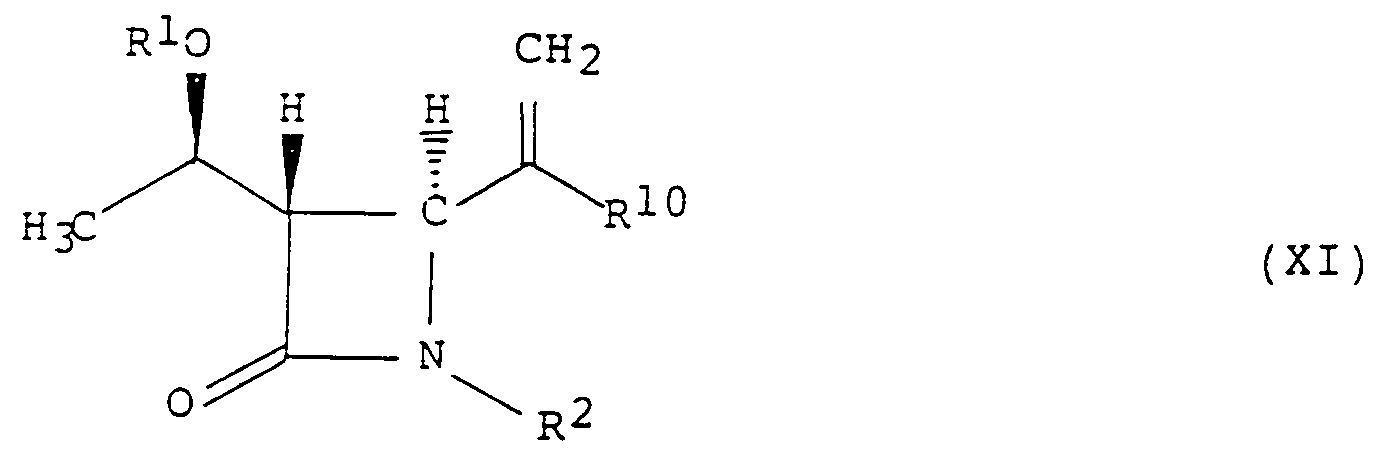
wherein R¹ and R² are as defined above; and R¹⁰ represents an alkyl group, a carboxyl group or an alkoxycarbonyl group, or asymmetric hydrogenation of the exo-methylene group of the compound of formula (XI) in the presence of a specific catalyst. - The compounds obtained from the intermediates (VIII) as produced by the above-mentioned processes are, in most cases, mixtures of stereoisomers, i.e., an α-isomer and a β-isomer, in a specific ratio.
- As stated above, a number of special phosphine compounds have so far been prepared in order to get an active catalyst for asymmetric hydroformylation. However, the known phosphine complex catalysts are not always satisfactory in terms of regio and enantio selectivities. It has therefore been demanded to develop a novel phosphine compound and a transition metal-phosphine complex performing higher regio and enantio selectivities as compared with conventional catalysts.
- There has also been a demand to develop an efficient process for producing a compound (VIII) having a methyl group in β-configuration, which is a versatide as an intermediate for carbapenem antibiotics, or a precursor thereof.
- To meet these demands, the present inventors have conducted extensive investigations on various phosphine compounds. It has now been found as a result that a transition metal complex containing a phosphine compound having an optically active biphenol or binaphthol skeleton as a ligand is markedly superior to known transition metal-optically active phosphine complexes in regio and enantio selectivities in asymmetric hydroformylation and that use of the complex makes it possible to synthesize a variety of optically active aldehydes with ease and particularly a compound which can easily lead to the above compound (VIII) which is an important intermediate for carbapenem antibiotics.
- The present invention relates to a phosphine compound represented by formula (I):

wherein R⁴ and R4', which may be the same or different, each represent a hydrogen atom, a lower alkyl group or a lower alkoxy group; R³, R3', R⁹, and R9', which may be the same or different, each represent a hydrogen atom, a lower alkyl group, a lower alkoxy group or a halogen atom; or a pair of R³ and R⁴ or a pair of R3' and R4' may form a ring; R⁵ and R⁶, which may be the same or different, each represent a phenyl group or a phenyl group substituted with a lower alkyl group, a halogen atom or a lower alkoxy group; and R⁷ and R⁸, which may be the same or different, each represent a phenyl group or a phenyl group substituted with a lower alkyl group, a lower alkoxy group or a halogen atom; or R⁷ and R⁸ may be taken together to form a divalent hydrocarbon group. - The present invention further relates to a phosphine compound represented by formula (II):

wherein R¹⁴ and R14', which may be the same or different, each represent a hydrogen atom, a lower alkyl group or a lower alkoxy group; R¹³, R13', R¹⁹, and R19', which may be the same or different, each represent a hydrogen atom, a lower alkyl group, a lower alkoxy group or a halogen atom; R¹⁵ and R¹⁶, which may be the same or different, each represent a phenyl group or a phenyl group substituted with a lower alkyl group, a halogen atom or a lower alkoxy group; and R¹⁷ and R¹⁸, which may be the same or different, each represent a phenyl group or a phenyl group substituted with a lower alkyl group, a lower alkoxy group or a halogen atom; or R¹⁷ and R¹⁸ may be taken together to form a divalent hydrocarbon group. - The present invention further relates to a transition metal-phosphine complex having the phosphine compound represented by formula (I) or (II) as a ligand. Although the following description is in terms of compounds and complexes of a transition metal and a phosphine of the formula (I) it is to be understood as referring also, mutatis mutandis, to phosphines of the formula (II).
- The present invention furthermore relates to a process for producing an optically active aldehyde comprising hydroformylation of an olefin represented by formula (III):
Q₁-CH=CH-Q₂ (III)
wherein Q₁ represents a hydrogen atom or a lower alkyl group; and Q₂ represents a lower alkyl group, a lower alkoxy group, a halogen atom, a lower alkylcarbonyloxy group, a cyano group, a carboxyl group, a lower alkylcarbonyl group, a lower alkoxycarbonyl group, a phthalimido group, an acetylamino group, a benzoylamino group, a mono-lower-alkylamino group, a di-lower-alkylamino group, a benzoyl group, a phenyl group, a naphthyl group, a phenyl or naphthyl group substituted with a lower alkyl group, a lower alkoxy group or a halogen atom, or a group represented by formula (IV):
wherein R¹ represents a hydrogen atom or a hydroxyl-protecting group;
or Q₁ and Q₂ may be taken together to form a ring represented by formula (V):
wherein n represents 1 or 2,
in the presence of a complex of the phosphine compound of formula (I) and a transition metal, e.g., rhodium, or both of the phosphine compound of formula (I) and a transition metal compound as a catalyst. - The present invention furthermost relates to a 4-[(R)-1'-formylethyl]azetidin-2-one derivative represented by formula (VII):

wherein R¹ is as defined above,
which is obtained by utilizing the above-mentioned hydroformylation. - In the present invention, the term "lower alkyl group" includes methyl, ethyl, propyl, isopropyl, butyl, isobutyl, sec-butyl, and t-butyl groups. The term "halogen atom" includes chlorine, bromine, iodine, and fluorine atoms. The term "lower alkoxy group" includes methoxy, ethoxy, propoxy, isopropoxy, butoxy, isobutoxy, sec-butoxy, and t-butoxy groups. The term "divalent hydrocarbon group" includes biarylene groups, e.g., a substituted or unsubstituted biphenyl group, a substituted or unsubstituted binaphthyl group, a substituted or unsubstituted bianthryl group, and a substituted or unsubstituted biphenanthryl group; and straight chain or branched and saturated or unsaturated alkylene groups having 2-6 carbon atoms, e.g., an ethylene group, a trimethylene group, a tetramethylene group, a pentamethylene group, a 1,4-dimethyltetramethylene group, a 1,3-butadienylene group, and a 1,4-dimethyl-1,3-butadienylene group.
- Specific examples of the phosphine compounds according to the present invention are shown in Tables 1 and 2 below. Abbreviations used in the Tables have the following meaning.


- The phosphine compound (I) of the present invention includes optically active compounds ana non-optically active compounds all of which fall within the scope of the present invention.
- The phosphine compound (I) can be synthesized by, for example, the following reaction route:


wherein Tf represents a trifluoromethanesulfonyl group; Ph represents a phenyl group; and Et represents an ethyl group. - More specifically, 1,1'-bi-2-naphthol 1 is reacted with trifluoromethanesulfonic acid anhydride to obtain 2,2'-bis(trifluoromethanesulfonyloxy)-1,1'-binaphthyl 2 which is then reacted with diphenylphosphine oxide in the presence of a palladium complex catalyst to obtain 2-diphenylphosphinyl-2'-trifluoromethanesulfonyloxy-1,1'-binaphthyl 3. The compound 3 is reduced by trichlorosilane in the presence of triethylamine and then hydrolyzed to obtain 2-diphenylphosphino-2'-hydroxy-1,1'-binaphthyl 4. The compound 4 is reacted with a separately synthesized chlorophosphite 5 in the presence of triethylamine to obtain phosphine compound 6 of the present invention.
- The phosphine compound (I) according to the present invention serves as a ligand in the formation of complexes with transition metals. The transition metals capable of forming a complex with the compound (I) include rhodium, ruthenium, iridium, and platinum. Of these, rhodium is preferred. Of the transition metal complexes according to the present invention, the rhodium complex, for example, can be synthesized by reacting the phosphine compound (I) with a rhodium compound in an appropriate solvent. The specific examples of the solvent include methylene chloride, hydrocarbons (e.g., toluene, benzene, hexane, heptane, isooctane, decane, etc.), ethers (e.g., diethylether, tetrahydrofuran, etc.), ketones (e.g., acetone, methyl ethyl ketone, etc.), lower alcohols (methanol, ethanol, etc), and esters (e.g., ethyl acetate). Of these, methylene chloride and toluene are preferred. The rhodium compound as a complex precursor includes RhCℓ₃, RhBr₃, RhI₃, Rh₂O₃, Rh₂(OAc)₃ (Ac represents an acetyl group, hereinafter the same), [Rh(O₂C₇H₁₅)₂]₂, Rh(acac)₃ (acac represents acetylacetonato, hereinafter the same), Rh₄(CO)₁₂, Rh₆(CO)₁₆, [Rh(COD)Cℓ]₂ (COD represents 1,5-cyclooctadiene, hereinafter the same), [Rh(COD)Br]₂, [Rh(COD)I]₂, [Rh(COD)OAc]₂, [Rh(COD)OCOC(CH₃)₃]₂, [Rh(NBD)Cℓ]₂ (NBD represents norbornadiene, hereinafter the same), [Rh(NBD)Br]₂, [Rh(NBD)I]₂, [Rh(NBD)OAc]₂, [Rh(NBD)OCOC(CH₃)₃]₂, Rh(COD)(acac), Rh(NBD)(acac), Rh(CO)₂(acac), [Rh(CO)₂Cℓ]₂, [Rh(CO)₂Br]₂, [Rh(CO)₂I]₂, Rh(CO)₂(Cp) (Cp represents 1,3-cyclopentadiene), Rh(CO)₂(tmCp) (tmCp represents 1,2,3,4-tetramethyl-1,3-cyclopentadiene, hereinafter the same), [Rh(CO)(tmCp)₂], Rh(C₂H₄)₂(acac), [Rh(C₂H₄)₂Cℓ]₂, [Rh(C₂H₄)₂Br]₂, [Rh(C₂H₄)₂I]₂, (Rh(C₂H₄)₂(tmCp)], RhCℓ(PPh₃)₃ (Ph represents a phenyl group, hereinafter the same), RhBr(PPh₃)₃, RhI(PPh₃)₃, RhH(CO)(PPh₃)₃, RhH(PPh₃)₃, RhH(P(i-Pr)₃)₃ (i-Pr represents an isopropyl group, hereinafter the same), RhHCℓ₂(PPh₃)₂, RhHCℓ₂(AsPh₃)₂, RhHCℓ₂(SbPh₃)₂, RhH₂Cℓ(PPh₃)₂, RhH₂Br(PPh₃)₂, RhH₂I(PPh₃)₂, Rh(OAc)(CO)(PCp₃)₂, Rh(OCOPh)(CO)(PCp₃)₂, Rh(CℓO₄)(CO)(PCp₃)₂, Rh(Cℓ)(CO)(PCp₃)₂, Rh(Cℓ)(CO)(PBu₃)₂, Rh(Cℓ)(CO)(PPh₃)₂, Rh(I)(CO)(PCp₃)₂, [RhH{P(O-i-Pr)₃}₂]₂, Rh(C₅H₇O₂)(C₂H₄), [Rh(COD)₂]BF₄, [Rh(COD)(CH₃CN)₂]BF₄, [Rh(COD)(Ph₂P(CH₂)₄PPh₃)]BF₄, [Rh(PhCH₃)(Ph₂P(CH₂)₅PPh₂)]BF₄, [Rh(PhCH₃){PPh₂(o-CH₃OC₆H₄)₂ }₂]BF₄, [Rh(COD)(PPh₃)₂]PF₆, [Rh(COD)(AsPh₃)₂]CℓO₄, [Rh(NBD)(PPh₃)₂]CℓO₄, [RhH₂(PPh₃)₂(AcCH₃) (C₂H₅OH)]CℓO₄, [RhH₂)(PPh₃)₂(CH₃CN)₂]CℓO₄, [RhH₂(PPh₃)₂(C₂H₅OH)₂]CℓO₄, [RhCℓ₂(η-C₅H₁₀(CH₃)₄)]₂, Rh(Cp)(PPh₃)₂, [Rh(tmCp)(CH₃CN)₃](PF₆)₂, Rh₂Cℓ₂(η-C₃H₅)₄, and Rh(η-C₃H₅)₃.
- The rhodium-phosphine complexes usually have one rhodium atom in the molecule thereof (mononuclear complexes) and in some cases have two or more rhodium atoms (polynuclear complexes).
- Ruthenium complexes, iridium complexes and platinum complexes containing the phosphine compound (I) as a ligand can also be prepared in the same manner as described above.
- The transition metal-phosphine complexes of the present invention are useful as a catalyst for asymmetric hydroformylation to produce optically active aldehydes.
- Optically active aldehydes can also be prepared by hydroformylation of olefins in the presence of the phosphine compound (I). That is, hydroformylation of an olefin proceeds in the presence of a transition metal compound and the phosphine compound (I) separately added and mixed in a reaction solvent to form a transition metal-phosphine complex in situ thereby to produce an optically active aldehyde similarly to the case of using a previously prepared transition metal-phosphine complex. This will be proved from the following fact.
- Where a transition metal compound, e.g., Rh(CO)₂(acac) and the phosphine compound (hereinafter abbreviated as "phos") are reacted at an equivalent ratio in a solvent, e.g., methylene chloride, ligand exchange takes place between two carbonyl groups and phos to form an Rh(acac)(phos) type complex. On ³¹P-NMR analysis of the isolated complex, there are revealed two signals. Where one equivalent of Rh(CO)₂(acac) and 2.5 equivalents of phos are similarly reacted in a solvent, the ³¹P-NMR spectrum shows two signals assigned to phos per se in addition to those to the complex. On the other hand, the system containing one equivalent of Rh(CO)₂(acac) and 2.5 equivalents of phos under hydroformylation reaction conditions (before addition of carbon monoxide and hydrogen) similarly shows signals both of the complex and phos. From these results, it is seen that the reaction necessarily proceeds via formation of Rh(acac)(phos).
- Illustrative examples of olefins which can be used as a reaction substrate in the present invention include vinyl chloride, vinyl bromide, vinyl iodide, 1-propene, 1-butene, 1-pentene, 1-hexene, 3,3-dimethyl-1-butene, N-vinylphthalimide, vinyl acetate, vinyl propionate, vinyl valerate, acrylonitrile, acrylic acid, methyl acrylate, ethyl acrylate, butyl acrylate, t-butyl acrylate, methyl vinyl ether, ethyl vinyl ether, butyl vinyl ether, t-butyl vinyl ether, 3-buten-2-one, 1-buten-3-one, 1-hepten-3-one, 4,4-dimethyl-1-penten-3-one, 1-phenyl-2-propen-1-one, N-vinylacetamide, N-vinylbenzamide, methylvinylamine, ethylvinylamine, butylvinylamine, dimethylvinylamine, diethylvinylamine, dibutylvinylamine, styrene, chlorostyrene, bromostyrene, methylstyrene, 4-t-butylstyrene, 4-isobutylstyrene, methoxystyrene, ethoxystyrene, vinylnaphthalene, 2-methoxy-6-vinylnaphthalene, 1-chloro-1-propene, 1-bromo-1-propene, 2-butene, 2-pentene, 2-hexene, 2-heptene, 1-propenyl acetate, 1-propenyl cyanide, crotonic acid, methyl crotonate, butyl crotonate, methyl 1-propenyl ether, 3-penten-2-one, 2-octen-4-one, N-2-pentenylacetamide, methyl 2-propenylamine, butyl 2-propenylamine, dimethyl 2-propenylamine, dibutyl 2-propenylamine, 4-(2-propenyl)chlorobenzene, 4-(2-propenyl)toluene, 4-(2-propenyl)butylbenzene, (1'R,3S,4R)-3-(1'-(Pro-1-)oxy)ethyl-4-vinylazetizin-2-one, indene, and 1,2-dihydronaphthalene.
- "Pro-1" as used above corresponds to R₁ in formula (IV), including a hydrogen atom and a hydroxyl-protecting group. Examples of the hydroxyl-protecting group include substituted silyl groups, e.g., trimethylsilyl, triethylsilyl, isopropyldimethylsilyl, t-butyldimethylsilyl, (triphenylmethyl)dimethylsilyl, t-butyldiphenylsilyl, methyldiisopropylsilyl, methyl-di-t-butylsilyl, tribenzylsilyl, tri(p-tolyl)silyl, triisopropylsilyl, and triphenylsilyl; acyl groups, e.g., formyl, benzoylformyl, acetyl, chloroacetyl, dichloroacetyl, trichloroacetyl, trifluoroacetyl, methoxyacetyl, phenoxyacetyl, p-chlorophenoxyacetyl, benzoyl, benzyloxycarbonyl, and ethoxycarbonyl; and aralkyl groups, e.g., benzyl, benzhydryl, and triphenylmethyl. R₁ is preferably a hydrogen atom, a trimethylsily group, a t-butyldimethylsilyl group, a benzyloxycarbonyl group, an ethoxycarbonyl group, an acetyl group, a benzyl group, a benzhydryl group, and a triphenylmethyl group.
- The hydroformylation can be carried out by adding to a reaction system the phosphine compound (I) and a compound of a transition metal selected from rhodium, ruthenium, iridium, and platinum separately or the transition metalphosphine complex previously formed from a compound of a transition metal selected from rhodium, ruthenium, iridium, and platinum and the phosphine compound (I). The complex catalyst or catalyst system is added in an amount of preferably from 0.0001 to 1000 mg, and more preferably from 0.001 to 100 mg, per liter of the liquid phase in terms of the transition metal atom. The phosphine compound (I) is preferably used in an amount 1 to 5 times, and more preferably 2 to 4 times, the mole number of the metal atom.
- While the hydroformylation may be effected in the absence of a reaction solvent, use of a reaction solvent is generally recommended. The reaction solvent to be used is not particularly limited as long as it does not adversely affect the reaction. Hydrocarbon solvents, e.g., hexane, heptane, octane, isooctane, nonane, decane, cyclohexane, cyclopentane, benzene, toluene, xylene, and mesitylene, are especially preferred. In addition, ethers, e.g., diisopropyl ether, dibutyl ether, tetrahydrofuran, dimethoxyethane, and diethylene glycol dimethyl ether; ketones, e.g., diisobutyl ketone, methyl isobutyl ketone, acetone, and methyl ethyl ketone; esters, e.g., ethyl acetate, butyl butyrate, and butyl benzoate; and alcohols, e.g., methanol, ethanol, butanol, and t-butanol; are also usable. These solvents may be used either individually or in combination thereof.
- It is generally preferred to conduct hydroformylation in the presence of water in order to enhance the catalytic activity. In the present invention, too, water may be present in the reaction system. While the amount of water to be added is not limited, an extremely small amount of water produces no essential effect, and an extremely large amount of water adds no further improvement. An increase of reaction rate is often obtained by addition of water in an amount 0.001 to 1000 times the weight of the olefin substrate.
- For the purpose of improving catalytic activity, regio and enantio selectivities, various additives other than water may be added to the reaction system. For example, presence of phosphorus compounds, e.g., triethylphosphine oxide, triphenylphosphine oxide, tributylphosphine oxide, triethyl phosphite, tributyl phosphite, and triphenyl phosphite; or carboxylic acids, e.g., acetic acid, propionic acid and pivalic acid, in the reaction system gives rise to no interference with the reaction.
- The hydroformylation temperature usually ranges from -20° to 250°C, and preferably from 10° to 150°C. Within this range, low temperatures are preferred from the standpoint of thermal stability of the resulting aldehyde, while high temperatures are preferred from the viewpoint of reaction rate. The reaction pressure usually ranges from 5 to 200 kg/cm², and preferably from 20 to 150 kg/cm². Carbon monoxide and hydrogen are usually fed to the reaction system at a molar ratio of from 0.1 to 10, and preferably from 0.2 to 4. As far as the carbon monoxide to hydrogen molar ratio falls within this range, the mixed gas may be diluted with an inert gas, such as methane, nitrogen, argon, helium, and carbon dioxide, either individually or in combination thereof.
- According to the present invention, a 4-[(R)-1'-formylethyl]azetidin-2-one derivative represented by formula (VII):

wherein R¹ is as defined above,
can be prepared in excellent optical purity with high regioselectivity by subjecting a compound represented by formula (VI):
wherein R¹ is as defined above,
to the above-mentioned hydroformylation process. - The starting compound of formula (VI) is obtained, for example, by the process described in Liebig Ann. Chem., pp. 539-560 (1974) as follows. A 4-acetoxyazetidin-2-one derivative represented by formula (XII):

wherein R¹ is as defined above,
is reacted with a sodium, potassium or lithium salt of benzenesulfinic acid or p-toluenesulfinic acid in a soluble solvent, e.g., acetone-water, methanol or water-methanol, to obtain a compound represented by formula (XIII):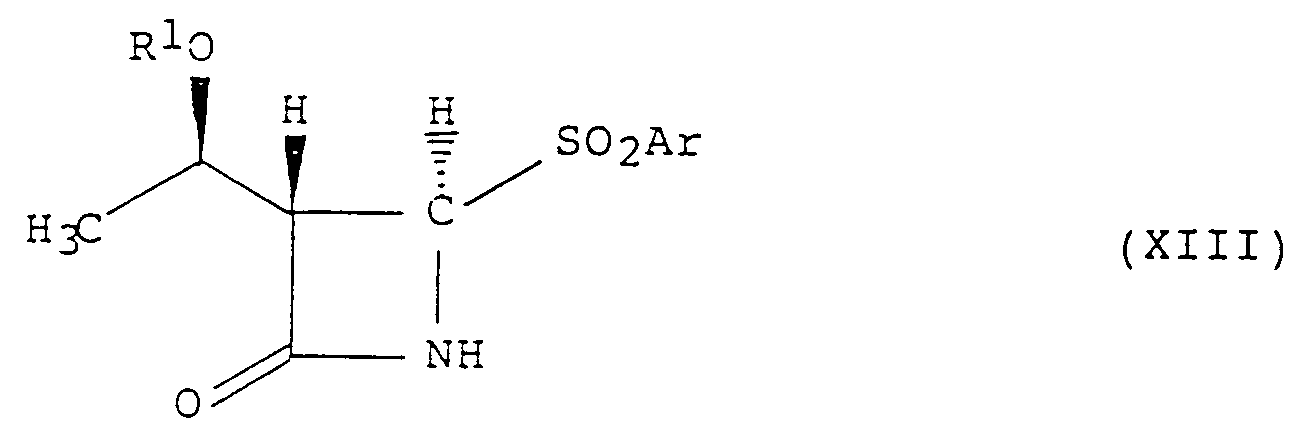
wherein R¹ is as defined above; and Ar represents a phenyl group which may be substituted with a halogen atom, a lower alkyl group, etc.
The compound (XIII) is then reacted with an organic vinyl compound as a vinylating agent, such as vinylmagnesium chloride, vinylmagnesium bromide, vinylmagnesium iodide, divinylmagnesium, vinyllithium, vinylzinc chloride or divinylzinc, in accordance with the procedure described in J. Chem. Soc. Chem. Commn., pp. 736-737 (1980) to obtain the compound (VI). - The compound (VII) can be obtained by hydroformylation of the thus prepared compound (VI) in the presence of the transition metal-phosphine complex of the present invention or both the phosphine compound (I) and a transition metal compound.
- It is essentially required for obtaining the compound (VII) in which the 1'-formyl group has an R-configuration, i.e., a β-compound that the skeleton moiety of the phosphine compound (I) should have an R-configuration and that the phosphite moiety as a counterpart, when derived from an axially dissymmetric diol, should have an S-configuration.
- The formyl group of the compound (VII) can easily be converted to a carboxyl group by an ordinary oxidation reaction, for example, Jones oxidation to provide the compound of formula (VIII), an important intermediate for carbapenem antibiotics.
- According to the present invention, optically active aldehydes useful as pharmaceuticals, agricultural chemicals, perfumes, etc. or intermediates therefor can be synthesized in a high optical purity.
- The present invention is now illustrated in greater detail with reference to Examples, but it should be understood that the present invention is not construed as being limited thereto. All the parts and percents are by weight unless otherwise specified.
- Measuring instruments used in Examples are as follows.
Nuclear Magnetic Resonance Spectrum (NMR):
Model EX-270 manufactured by JEOL Ltd.
Model AM-400 manufactured by Bruker, Inc.
Internal Standard:
¹H-NMR: tetramethylsilane
External Standard:
³¹P-NMR: 85% phosphoric acid
Optical Purity:
GC-15A Gas Chromatograph manufactured by Shimadzu Corporation
Column: Chiral capillary column, CHROMPACK β-236M
Chemical Purity:
Hitachi 263-30 Gas Chromatograph manufactured by Hitachi, Ltd.
Optical Rotation:
Model DIP-360 manufactured by JASCO Inc. - Preparation of (S)-3,3'-Dichloro-2,2',4,4'-tetramethyl-6-diphenylphosphinobiphenyl-6'-yloxy((R)-1,1'-binaphthalene-2,2'-diyldioxy)phosphine and (R)-3,3'-Dichloro-2,2',4,4'-tetramethyl-6-diphenylphosphinobiphenyl-6'-yloxy((R)-1,1'-binaphthalene-2,2'-diyldioxy)phosphine
- (1) Preparation of (±)-3,3'-Dichloro-2,2',4,4'-tetramethylbiphenyl-6,6'-diol (hereinafter referred to as compound (A)):
In a flask were charged 10.1 g (70.0 mmol) of 4-chloro-3,5-xylenol and 37.8 g (140 mmol) of iron trichloride hexahydrate, and the mixture was allowed to react at 80°C for 16 hours. After completion of the reaction, the reaction mixture was treated with 300 mℓ of 1N hydrochloric acid and extracted three 250 mℓ portions of dichloromethane. The organic layer was washed successively with 500 mℓ of a saturated sodium hydrogencarbonate aqueous solution and 500 mℓ of brine, concentrated, and recrystallized from hexane/chloroform to obtain 3.32 g (percent yield 30%) of compound (A).- Melting point:
- 231-233°C
- ¹H-NMR (CDCℓ₃) δ:
- 2.05 (s, 6H), 2.41 (s, 6H), 4.57 (s, 2H), 6.84 (s, 2H)
- (2) Preparation of (±)-3,3'-Dichloro-2,2',4,4'-tetramethyl-6,6'-bis(trifluoromethanesulfonyloxy)biphenyl (hereinafter referred to as compound (B)):
In a flask, 6.22 g (20.0 mol) of compound (A) obtained in (1) above, 4.72 g (44.0 mmol) of 2,6-lutidine, and 732 mg (6.00 mmol) of 4-dimethylaminopyridine were dissolved in 30 mℓ of dichloromethane in an argon stream, and 12.4 g (44.0 mmol) of trifluoromethanesulfonic acid anhydride was added to the solution at 0°C, followed by allowing to react at that temperature for 1 hour. After completion of the reaction, the solvent was removed under reduced pressure, and the residue was purified by column chromatography (hexane/chloroform=1:1 by volume) to obtain 10.9 g (percent yield 95%) of compound (B).- Melting point:
- 90-91°C
- ¹H-NMR (CDCℓ₃) δ:
- 2.14 (s, 6H), 2.50 (s, 6H), 7.17 (s, 2H)
- (3) Preparation of (±)-3,3'-Dichloro-2,2',4,4'-tetramethyl-6-diphenylphosphinyl-6'-trifluoromethanesulfonyloxybiphenyl (hereinafter referred to as compound (C)):
In a flask, 11.44 g (19.9 mmol) of compound (B) obtained in (2) above and 8.05 g (39.8 mmol) of diphenylphosphine oxide and 223 mg (0.99 mmol) of palladium acetate were dissolved in 980 mℓ of dimethyl sulfoxide in an argon stream. To the solution were added 821 mg (1.99 mmol) of 1,3-bis(diphenylphosphino)propane and 15.3 mℓ of diisopropylamine over 20 minutes, followed by stirring at 90°C for 60 hours. After completion of the reaction, 120 mℓ of water was added to the reaction mixture, and the mixture was extracted with two 250 mℓ portions of ethyl ether. The organic layer was washed successively with 200 mℓ of water, 200 mℓ of 1N hydrochloric acid, 200 mℓ of a saturated sodium hydrogencarbonate aqueous solution, and 200 mℓ of brine and dried over magnesium sulfate. Purification by column chromatography (hexane/ethyl acetate=1:1 by volume) gave 7.77 g (percent yield 62%) of compound (C).- Melting point:
- 159-160°C
- ³¹P-NMR (CDCℓ₃) δ:
- 27.75
- (4) Preparation of (±)-3,3'-Dichloro-2,2',4,4'-tetramethyl-6-diphenylphosphino-6'-hydroxybiphenyl (hereinafter referred to as compound (D)):
In a flask, 7.32 g (11.7 mmol) of compound (C) obtained in (3) above and 47.2 g (467 mmol) of triethylamine were dissolved in 400 mℓ of xylene. To the solution was added dropwise 63.3 g (467 mmol) of trichlorosilane at 0°C, followed by stirring at 120°C for 35 hours. To the solution was carefully added dropwise 200 mℓ of a saturated sodium hydroxide aqueous solution at 0°C, followed by stirring at 60°C for 2 hours. After completion of the reaction, the reaction mixture was extracted with two 150 mℓ portions of toluene. The organic layer was washed with 400 mℓ of water and then with 300 mℓ of brine and dried over magnesium sulfate. The solvent was removed under reduced pressure. The residue weighing 7.46 g was dissolved in 130 mℓ of tetrahydrofuran in a flask, and 44 mℓ of an aqueous solution of 5.87 g (140 mmol) of lithium hydroxide monohydrate was added thereto, followed by stirring at 30°C for 15 hours. After completion of the reaction, 200 mℓ of 1N hydrochloric acid was added to the reaction mixture, and the mixture was extracted with two 200 mℓ portions of ethyl ether. The resulting organic layer was washed successively with 300 mℓ of water and 250 mℓ of brine and dried over magnesium sulfate. The solvent was removed under reduced pressure, and the residue was purified by column chromatography (hexane/ethyl acetate=12:1 to 3:1 by volume) to obtain 5.05 g of compound (D) in 90% yield based on compound (C).- Melting point:
- 71-79°C
- ³¹P-NMR (CDCℓ₃) δ:
- -13.37
- (5) Preparation of (R)-1,1'-Binaphthalene-2,2'-diyldioxychlorophosphine (hereinafter referred to as compound (E)) and (S)-1,1'-binaphthalene-2,2'-diyldioxychlorophosphine (hereinafter referred to as compound (F)):
In 50 mℓ-flask equipped with a reflux condenser were charged 4.94 g (17.3 mmol) of (R)-1,1'-bi-2-naphthol and 104 g (757 mmol) of phosphorus trichloride in an argon stream, and the mixture was refluxed for 17 hours. After cooling to room temperature, the unreacted phosphorus trichloride was removed by distillation under reduced pressure. The residue was subjected twice to azeotropic distillation together with 50 mℓ of toluene under reduced pressure. The residue was dissolved in benzene, and the solution was dried under reduced pressure to obtain 5.56 g (percent yield 92%) of compound (E) as a white solid.- ³¹P-NMR (CDCℓ₃) δ:
- 178.8
Compound (F) was prepared quantitatively in the same manner as for compound (E). - (6) Preparation of (S)-3,3'-Dichloro-2,2',4,4'-tetramethyl-6-diphenylphosphinobiphenyl-6'-yloxy((R)-1,1'-binaphthalene-2,2'-diyldioxy)phosphine (hereinafter referred to as (S,R)-biphemphos) and (R)-3,3'-dichloro-2,2',4,4'-tetramethyl-6-diphenylphosphinobiphenyl-6'-yloxy((R)-1,1'-binaphthalene-2,2'-diyldioxy)phosphine (hereinafter referred to as (R,R)-biphemphos):
In 40 mℓ of toluene were dissolved 756 mg (1.58 mmol) of compound (D) and 1336 mg (3.81 mmol) of compound (E) in a flask, and 386 mg (3.81 mmol) of triethylamine was added thereto at 0°C. After stirring the mixture at room temperature for 42 hours, 50 mℓ of water was added thereto to cease the reaction. To the reaction mixture was added 50 mℓ of ethyl ether for liquid-liquid separation, and the organic layer was washed successively with two 80 mℓ portions of water and 80 mℓ of brine, and dried over anhydrous magnesium sulfate. The solvent was removed under reduced pressure, and the resulting crude product was purified by column chromatography (hexane/dichloromethane=20:1 to 3:1 by volume) to obtain 395 mg (percent yield 32%) of (S,R)-biphemphos and 259 mg (percent yield 21%) of (R,R)-biphemphos.
(S,R)-biphemphos:
Melting point: 155-162°C
[α]
³¹P-NMR (toluene-d₈) δ: -13.4 (d, Jp-p=35.14Hz), 146.7 (d) Thin layer chromatography (TLC):
Rf=0.47 (hexane/dichloromethane=1:1 by volume)
(R,R)-biphemphos:
Melting point: 153-159°C
[α]
³¹P-NMR (toluene-d₈) δ: -12.6 (d, Jp-p=12.2Hz), 145.8 (d)
TLC: Rf=0.42 (hexane/dichloromethane=1:1 by volume) - (R)-3,3'-Dichloro-2,2',4,4'-tetramethyl-6-diphenylphosphinobiphenyl-6'-yloxy((S)-1,1'-binaphthalene-2,2'-diyldioxy)phosphine (hereinafter referred to as (R,S)-biphemphos) and (S)-3,3'-dichloro-2,2',4,4'-tetramethyl-6-diphenylphosphinobiphenyl-6'-yloxy((S)-1,1'-binaphthalene-2,2'-diyldioxy)phosphine (hereinafter referred to as (S,S)-biphemphos), which are isomers of the products of Example 1, were obtained in the same manner as in Example 1.
(R,S)-biphemphos:
Melting point: 153-158°C
[α]
³¹P-NMR (toluene-d₈) δ: -13.3 (d, Jp-p=36.6Hz), 146.8 (d)
TLC: Rf=0.47 (hexane/dichloromethane=1:1 by volume)
(S,S)-biphemphos:
Melting point: 147-151°C
[α]
³¹P-NMR (toluene-d₈) δ: -12.6 (d, Jp-p=13.8Hz), 145.8 (d)
TLC: Rf=0.42 (hexane/dichloromethane=1:1 by volume) - Preparation of (R)-3,3',4,4',5,5'-hexamethyl-6-diphenylphosphinobiphenyl-6'-yloxy((S)-1,1'-binaphthalene-2,2'-diyldioxy)phosphine and (S)-3,3',4,4',5,5'-hexamethyl-6-diphenylphosphinobiphenyl -6'-yloxy((S)-1,1'-binaphthalene-2,2'-diyldioxy)phosphine
- (1) Preparation of (±)-22',3,3',4,4'-hexamethylbiphenyl 6,6'-diol (hereinafter referred to as compound (A''):
Compound (A'') was prepared from 3,4,5-trimethylphenol in 53% yield by the same method of the synthesis of compound (A).- ¹H-NMR (CDCℓ₃) δ:
- 1.92 (s,6H), 2.16 (s,6H), 2.31 (s,6H), 4.50 (s,2H), 6.74 (s,2H)
- TLC:
- Rf=0.28 (dichloromethane)
- (2) Preparation of (±)-2,2',3,3',4,4'-hexamethyl-6,6'-bis(trifluoromethanesulfonyloxy)biphenyl (hereinafter referred to as compound (B'')):
Compound (B'') was prepared from compound (A'') in 90% yield by the same method of the synthesis of compound (B).- ¹H-NMR (CDCℓ₃) δ:
- 2.00 (s,6H), 2.24 (s,6H), 2.38 (s,6H), 7.04 (s,2H)
- TLC:
- Rf=0.31 (hexane/dichloromethane=1:1 by volume)
- (3) Preparation of (±)-2,2',3,3',4,4'-hexamethyl-6-diphenylphosphinyl-6'-trifluoromethanesulfonyloxybiphenyl (hereinafter referred to as compound (C'')):
Compound (C'') was also prepared from compound (B'') in 77% yield by the same method of the synthesis of compound (C).- ³¹P-NMR (CDCℓ₃) δ:
- 28.20
- TLC:
- Rf=0.70 (ethylacetate)
- (4) Preparation of (±)-2,2',3,3',4,4'-hexamethyl-6-diphenylphosphino-6'-hydroxybiphenyl (hereinafter referred to as compound (D'')):
Compound (D'') was prepared from compound (C'') in 74% yield by the same method of the synthesis of compound (D).- ³¹P-NMR (CDCℓ₃) δ:
- -13.46
- TLC:
- Rf=0.68 (hexane/ethylacetate=7:3)
- (5) Preparation of (R)-3,3',4,4',5,5'-hexamethyl-6-diphenylphosphinobiphenyl-6'-yloxy((S)-1,1'-binaphthalene-2,2'-diyldioxy)phosphine (hereinafter referred to as (R,S)-Me-biphemphos) and (S)-3,3',4,4',5,5'-hexamethyl-6-diphenylphosphinobiphenyl-6'-yloxy((S)-1,1'-binaphthalene-2,2'-diyldioxy)phosphine (hereinafter referred to as (S,S)-Me-biphemphos)
(R,S)-Me-biphemphos and (S,S)-Me-biphemphos were prepared by the same method of the synthesis of (R,R)-biphemphos and (S,R)-biphemphos from compound (D'') and compound (F).
(R,S)-Me-biphemphos:- ³¹P-NMR (benzene-d₆) δ:
- -13.3 (d,Jp-p=39.6Hz), 147.6 (d)
- TLC:
- Rf=0.60 (hexane/dichloromethane=1:1)
- ³¹P-NMR (benzene-d₆) δ:
- -12.9 (d,Jp-p=13.8Hz), 147.3 (d)
- TLC:
- Rf=0.53 (hexane/dichloromethane=1:1)
- Preparation of (R)-2-Diphenylphosphino-1,1'-biphenyl-2'-yloxy((R)-1,1'-binaphthalene-2,2'-diyldioxy)-phosphine and (S)-2-Diphenylphosphino-1,1'-biphenyl-2'-yloxy((R)-1,1'-binaphthalene-2,2'-diyldioxy)phosphine
- (1) Preparation of 2,2'-bis(trifluoromethanesulfonyloxy)biphenyl (hereinafter referred to as compound (B')):
In the same manner as in Example 1-(2), compound (B') was obtained in 96% yield.- Melting point:
- 33-34°C
- TLC:
- Rf=0.67 (hexane/ethyl acetate=7:3 by volume)
- (2) Preparation of 2-diphenylphosphinyl-2'-trifluoromethanesulfonyloxybiphenyl (hereinafter referred to as compound (C')):
In the same manner as in Example 1-(3), compound (C') was obtained in 79% yield.- Melting point:
- 123-124°C
- ³¹P-NMR (CDCℓ₃) δ:
- 27.78
- ¹⁹F-NMR (CDCℓ₃) δ:
- -6.05
- (3) Preparation of 2-diphenylphosphino-2'-hydroxybiphenyl (hereinafter referred to as compound (D')):
In the same manner as in Example 1-(4), compound (D') was obtained in 60% yield.- Melting point:
- 122-123°C
- ³¹P-NMR (CDCℓ₃) δ:
- -12.01
- (4) Preparation of (R)-2-diphenylphosphino-1,1'-biphenyl-2'-yloxy((R)-1,1'-binaphthalene-2,2'-diyldioxy)phosphine (hereinafter referred to as (R,R)-H-biphemphos) and (S)-2-diphenylphosphino-1,1'-biphenyl-2'-yloxy((R)-1,1'-binaphthalene-2,2'-diyldioxy)phosphine (hereinafter referred to as (S,R)-H-biphemphos):
In the same manner as in Example 1-(6), 871 mg (percent yield 62%) of a mixture of (R,R)-H-biphemphos and (S,R)-H-biphemphos was obtained at an (S,R)-H-biphemphos/(R,R)-H-biphemphos ratio of 55:45.
Mixture:
Melting point: 150-156°C
[α]
- ³¹P-NMR (toluene-d₈) δ:
- -11.9 (d, Jp-p=35.1Hz), 146.77 (d)
- ³¹P-NMR (toluene-d₈) δ:
- -11.5 (d, Jp-p=21.4Hz), 146.81 (d)
- Synthesis of (R)-2-Diphenylphosphino-5,5',6,6',7,7',8,8'-octahydro-1,1'-binaphthalen-2'-yloxy-((S)-1,1'-binaphthalene-2,2'-diyldioxy)phosphine
- (1) Synthesis of (R)-5,5',6,6',7,7',8,8'-octahydro-1,1'-bi-2-naphthol:
In a 200 mℓ autoclave were charged 3.00 g (10.5 mmol) of (R)-2,2'-dihydroxy-1,1'-binaphthyl, 360 mg of platinum dioxide, and 75 mℓ of acetic acid, and the mixture was stirred at 5°C for 18 hours at a hydrogen pressure of 3 atm and then at 18°C for 7 days at a hydrogen pressure of 10 atm. Ethyl acetate was added thereto, and the reaction mixture was filtered through Celite. Water was added to the filtrate for separation, and the separated organic layer was washed twice with a saturated sodium hydrogencarbonate aqueous solution, followed by separation. The organic layer was dried over magnesium sulfate, and the solvent was removed under reduced pressure to obtain 3.03 g (percent yield 98%) of the titled compound. Optical purity: ≧99 %ee. - (2) Synthesis of (R)-2,2'-bis(trifluoromethanesulfonyloxy)-5,5',6,6',7,7',8,8'-octahydro-1,1'-binaphthyl:
In a 50 mℓ four-necked flask were charged 26 mℓ of methylene chloride, 5.15 g (17.4 mmol) of (R)-5,5',6,6',7,7',8,8'-octahydro-1,1'-bi-2-naphthol, 5.58 g (52.2 mmol) of 2,6-toluidine, and 0.955 g (7.83 mmol) of 4-dimethylaminopyridine. To the solution was added 14.7 g (52.2 mmol) of trifluoromethanesulfonic acid anhydride at 0°C, followed by stirring at room temperature for 23 hours. After completion of the reaction, the solvent was removed under reduced pressure, and the residue was purified by column chromatography on silica gel using methylene chloride as a developing solvent to obtain 9.36 g (percent yield 100%) of (R)-2,2'-bis(trifluoromethanesulfonyloxy)-5,5',6,6',7,7',8,8'-octahydro-1,1'-binaphthyl. - (3) Synthesis of (R)-2-diphenylphosphinyl-2'-trifluoromethanesulfonyloxy-5,5',6,6',7,7',8,8'-octahydro-1,1'-binaphthyl:
In a 50 mℓ flask were charged 2.68 g (4.80 mmol) of (R)-2,2'-bis(trifluoromethanesulfonyloxy)-5,5',6,6',7,7',8,8'-octahydro-1,1'-binaphthyl obtained in (2) above, 1.99 g (9.04 mmol) of diphenylphosphine oxide, and 20 mℓ of dimethyl sulfoxide in an argon stream to prepare a solution. To the solution were added 108 mg (0.480 mmol) of palladium acetate, 205 mg (0.48 mmol) of 1,4-bis(diphenylphosphino)butane, 5.1 mℓ of ethyldiisopropylamine, and 33 mg (0.491 mmol) of sodium formate, and the mixture was stirred at room temperature for 20 minutes and then at 90°C for 19 hours. After cooling to room temperature, 250 mℓ of ethyl ether and 150 mℓ of water were added to the reaction mixture, followed by stirring. After separation, the organic layer separated was washed successively with four 125 mℓ portions of water, two 125 mℓ portions of 5% diluted hydrochloric acid, two 50 mℓ portions of water, 125 mℓ of a saturated sodium hydrogencarbonate aqueous solution, and 125 mℓ of a saturated sodium chloride aqueous solution. The resulting organic layer was dried over anhydrous magnesium sulfate, and the solvent was removed under reduced pressure. The residue was purified by silica gel column chromatography using toluene/acetonitrile (3:1 by volume) as a developing solution to obtain 2.76 g (percent yield 94%) of the titled compound. - (4) Synthesis of (R)-2-diphenylphosphino-2'-hydroxy-5,5',6,6',7,7',8,8,'-octahydro-1,1'-binaphthyl:
In a 50 mℓ four-necked flask, 318.7 mg (0.664 mmol) of (R)-2-diphenylphosphinyl-2'-trifluoromethanesulfonyloxy-5,5',6,6',7,7,'8,8'-octahydro-1,1'-binaphthyl was dissolved in 22 mℓ of xylene, and 1.21 g (12 mmol) of triethylamine and 1.62 g (12 mmol) of trichlorosilane were added thereto. The reaction mixture was stirred at 120°C for 17 hours. After cooling the reaction mixture to room temperature, 4.4 mℓ of a 35% sodium hydroxide aqueous solution was carefully added thereto, followed by stirring for 2 hours. After liquid-liquid separation, the organic layer was washed with two 30 mℓ portions of a saturated sodium chloride aqueous solution and dried over anhydrous magnesium sulfate. The solvent was removed under reduced pressure. The residue was dissolved in 7 mℓ of tetrahydrofuran, and a solution of 335 mg (7.98 mmol) of lithium hydroxide in 2.4 mℓ of water was added thereto, followed by stirring at room temperature for 15 hours. To the reaction mixture were added 50 mℓ of ethyl ether and 15 mℓ of 5% diluted hydrochloric acid, followed by separation. The organic layer was washed twice with water and dried over anhydrous magnesium sulfate. The solvent was distilled off, and the residue was purified by silica gel column chromatography using hexane/ethyl acetate (5:1 by volume) as a developing solvent to obtain 105.4 mg (percent yield 51%) of the titled compound. - (5) Synthesis of (S)-1,1'-binaphthalene-2,2'-diyldioxychlorophosphine:
In a 50 mℓ flask were charged 4.94 g (17.3 mmol) of (S)-1,1'-2-binaphthol and 11.3 g (830 mmol) of phosphorus trichloride in an argon stream, and the mixture was heated at reflux for 4 hours. After cooling to room temperature, the unreacted phosphorus trichloride was removed by distillation under reduced pressure to obtain 5.56 g (percent yield 92%) of the titled compound as a colorless crystal. - (6) Synthesis of (R)-2-diphenylphosphino-5,5',6,6',7,7',8,8'-octahydro-1,1'-binaphthalen-2'-yloxy-((S)-1,1'-binaphthalene-2,2'-diyldioxy)phosphine:
In a 100 mℓ flask were charged 0.294 g (0.946 mmol) of (R)-2-diphenylphosphino-2'-hydroxy-5,5',6,6',7,7',8,8'-octahydro-1,1'-binaphthyl, 662 mg (1.89 mmol) of (S)-1,1-binaphthalene-2,2'-diyldioxychlorophosphine, and 30 mℓ of ethyl ether. To the solution was added 191 mg (1.89 mmol) of triethylamine at 0°C, followed by stirring at room temperature for 15 hours. The reaction was ceased by addition of 20 mℓ of water. After separation, the organic layer was dried over anhydrous magnesium sulfate, and the solvent was removed under reduced pressure. The residual crude product was purified by silica gel column chromatography using hexane/benzene (1:1 by volume) as a developing solution to obtain 719.4 mg (percent yield 98%) of (R)-2-diphenylphosphino-5,5',6,6',7,7',8,8'-octahydro-1,1'-binaphthalene-2'-yloxy-(S)-1,1'-binaphthalene-2,2-diyldioxy)phosphine (hereinafter referred to as (R,S)-OcH-binaphos) as a colorless crystal.- ³¹P-NMR (CDCℓ₃) δ:
- -15.0 (d, J=42.7Hz), 146.8 (d, J=42.7Hz)
- ³¹P-NMR (toluene-d₈) δ:
- 50.4 (dd, Jp-p=87.0Hz, JRh-p=174.0Hz)
160.2 (dd, JRh-p=328.1Hz)
- Synthesis of (R)-2-Diphenylphosphino-5,5',6,6',7,7',8,8'-octahydro-1,1'-binaphthalen-2'-yloxy-((S)-5,5',6,6',7,7', 8,8'-octahydro-1,1'-binaphthalene-2,2'-diyldioxy)phosphine
- (1) Synthesis of (S)-5,5',6,6',7,7',8,8'-octahydro-1,1'-binaphthalene-2,2'-diyldioxychlorophosphine:
In a 50 mℓ flask were charged 5.12 g (17.3 mmol) of (S)-5,5',6,6',7,7',8,8'-octahydro-1,1'-bi-2-naphthol and 11.3 g (830 mmol) of phosphorous trichloride in an argon stream, and the mixture was refluxed for 4 hours. After cooling to room temperature, the unreacted phosphorus trichloride was removed under reduced pressure to obtain 5.7 g (percent yield 92%) of the titled compound as a colorless crystal. - (2) Synthesis of (R)-2-diphenylphosphino-5,5',6,6',7,7',8,8'-octahydro-1,1'-binaphthalen-2'-yloxy-((S)-5,5',6,6',7,7',8,8'-octahydro-1,1'-binaphthalene-2,2'-diyldioxy)phosphine (hereinafter referred to as (R,S)-(OcH)₂-binaphos):
(R,S)-(OcH)₂-binaphos was obtained in 91% yield in the same manner as in Example 1-(6), except for replacing (S)-1,1-binaphthalene-2,2'-diyldioxychlorophosphine as used in Example 1-(6) with (S)-5,5',6,6',7,7',8,8'-octahydro1,1'-binaphthalene-2,2'-diyldioxychlorophosphine.- ³¹P-NMR (CDCℓ₃) δ:
- -14.7 (d, J=39.7Hz), 138.3 (d, J=39.7Hz)
- Synthesis of (R)-2-Diphenylphosphino-1,1,'-binaphthalen-2'-yloxy((S)-1,1'-binaphthalene-2,2'-diyldioxy)phosphine
- (1) Synthesis of (R)-2,2'-bis(trifluoromethanesulfonyloxy)-1,1'-binaphthyl:
9.56 g of the titled compound was obtained in 100% yield in the same manner as in Example 5-(2), except for replacing (R)-5,5',6,6',7,7',8,8'-octahydro-1,1'-bi-2-naphthol with (R)-1,1'-bi-2-naphthol. - (2) Synthesis of (R)-2-diphenylphosphinyl-2'-trifluoromethanesulfonyloxy-1,1'-binaphthyl:
2.51 g of the titled compound was obtained in 83% yield in the same manner as in Example 5-(3), except for replacing (R)-2,2'-bis(trifluoromethanesulfonyloxy)-5,5',6,6',7,7',8,8'-octahydro-1,1'-binaphthyl with (R)-2,2'-bis(trifluoromethanesulfonyloxy)-1,1'-binaphthyl. - (3) Synthesis of (R)-2-diphenylphosphino-2'-hydroxy-1,1'-binaphthyl:
153 mg of the titled compound was obtained in 51% yield in the same manner as in Example 5-(4), except for replacing (R)-2-diphenylphosphinyl-2'-hydroxy-5,5',6,6',7,7',8,8'-octahydro-1,1'-binaphthyl with (R)-2-diphenylphosphinyl-2'-hydroxy-1,1'-binaphthyl. - (4) Synthesis of (R)-2-diphenylphosphino-1,1'-binaphthalen-2'-yloxy-((S)-1,1'-binaphthalene-2,2'-diyldioxy)phosphine:
712 mg of the titled compound was obtained in 98% yield in the same manner as in Example 5-(6), except for replacing (R)-2-diphenylphosphino-2'-hydroxy-5,5',6,6',7,7',8,8'-octahydro-1,1'-binaphthyl with (R)-2-diphenylphosphino-2'-hydroxy-1,1'-binaphthyl. - Synthesis of (R)-2-Diphenylphosphino-1,1'-binaphthalen-2'-yloxy-((S)-10,10'-biphenanthrene-9,9'-diyldioxy)phosphine
- (1) Synthesis of (S)-10,10'-biphenanthrene-9,9'-diyldioxychlorophosphine:
1.05 g of the titled compound was obtained in 90% yield in the same manner as in Example 5-(5), except for replacing (S)-1,1'-bi-2-naphthol with (S)-10,10'-bi-9-phenanthrol. - (2) Synthesis of (R)-2-diphenylphosphino-1,1'-binaphthalen-2'-yloxy-((S)-10,10'-biphenanthrene-9,9'-diyldioxy)phosphine:
726 mg of the titled compound (hereinafter referred to as (R,S)-phen-binaphos) was obtained in 95% yield in the same manner as in Example 5-(6), except for replacing (S)-1,1'-binaphthalene-2,2'-diyldioxychlorophosphine with (S)-10,10'-biphenanthrene-9,9'-diyldioxychlorophosphine.- ³¹P-NMR (C₆D₆) δ:
- 148.05 (d, J=21.4Hz), -13.34 (d, J=21.4Hz)
- Preparation of Rh(acac)[(S,R)-biphemphos]
- In a 20 mℓ Schlenk tube were charged 39.7 mg (0.05 mmol) of (S,R)-biphemphos of Example 1, 12.8 mg (0.05 mmol) of Rh(acac)₂(CO)₂ ("acac" represents acetylacetonato, hereinafter the same), and 5 mℓ of benzene. The solution was stirred at room temperature for 5 minutes, and the solvent was removed under reduced pressure to obtain Rh(acac)[(S,R)-biphemphos] as a yellow solid in 100% yield.
- Preparation of Rh(acac)[(R,R)-biphemphos]
- Rh(acac)[(R,R)-biphemphos] was obtained in 100% yield in the same manner as in Example 9, except for replacing (S,R)-biphemphos with (R,R)-biphemphos.
- Preparation of Rh(acac)[(R,S)-Me-biphemphos] and Rh(acac)[(S,S)-biphemphos]
- The complexes Rh(acac)[(R,S)-Me-biphemphos] and Rh(acac)[(S,S)-Me-biphemphos] were prepared by the same method of Example 9.
- Preparation of Rh(acac)[(S,R)-H-biphemphos]
- Rh(acac)[(S,R)-H-biphemphos] was obtained in 100% yield in the same manner as in Example 9, except for replacing (S,R)-biphemphos with (±,R)-H-biphemphos.
- Preparation of Rh(acac)[(R,S)-OcH-binaphos]
- Rh(acac)[(R,S)-OcH-binaphos] was obtained in 100% yield in the same manner as in Example 9, except for replacing (S,R)-biphemphos with (R,S)-OcH-binaphos.
- Preparation of Rh(acac)[(S,R)-OcH-binaphos]
- Rh(acac)[(R,S)-OcH-binaphos] was obtained in 100% yield in the same manner as in Example 9, except for replacing (S,R)-biphemphos with (S,R)-OcH-binaphos.
- Preparation of Rh(acac)[(R,S)-(OcH)₂-binaphos]
- Rh(acac)[(R,S)-(OcH)₂-binaphos] was obtained in 100% yield in the same manner as in Example 9, except for replacing (S,R)-biphemphos with (R,S)-(OcH)₂-binaphos.
- Phosphine compounds shown in Tables 3 and 4 below were prepared in the same manner as in Examples 3 to 8.
- Phosphine compound complexes shown in Table 4 below using the phosphine compounds of Examples 20 to 23 were prepared in the same manner as in Examples 9 to 15.


- Preparation of (S)-(+)-2-Phenylpropanal
- In a 50 mℓ autoclave were charged 38.7 mg (0.0488 mmol) of (S,R)-biphemphos, 3.1 mg (0.012 mmol) of Rh(acac)(CO)₂, and a solution of 1250 mg (12.0 mmol) of styrene in 2.4 mℓ of benzene, and hydrogen and carbon monoxide were fed thereto each to a partial pressure of 50 atm. The mixture was stirred at 60°C for 42 hours. A conversion of the starting olefin and an aldehyde production ratio were determined by ¹H-NMR (internal standard: diphenylmethane) analysis, and an optical purity (enantiomer excess) was determined by GLC analysis after conversion of the resulting optically active aldehyde into the corresponding carboxylic acid by Jones oxidation. As a result, the conversion of styrene was 100%, and the 2-phenylpropanal/3-phenylpropanal production ratio was 9:1. The 2-phenylpropanal produced had an optical purity of (S)-(+)-2-phenylpropanal of 94 %ee.
- Hydroformylation of olefins shown in Table 5 below was carried out in the same manner as in Example 24, except for using the phosphine compound shown in Table 5 and changing the reaction conditions as shown in Table 5. The reaction results obtained are shown in Table 5.

- Preparation of 2-Acetoxypropanal
- In a 50 mℓ autoclave were charged 761 mg (8.84 mmol) of vinyl acetate, 8.6 mg (0.00884 mmol) of Rh(acac)((R,S)-OcH-binaphos), and 8.3 mℓ of benzene, and 50 atm of hydrogen and 50 atm of carbon monoxide were fed thereto. The mixture was stirred at 60°C for 44 hours. The conversion of vinyl acetate was 72%. The product was a mixture comprising 88.6% of 2-acetoxypropanal and 11.4% of 3-acetoxypropanal. The optical purity of the 2-acetoxypropanal was 90 %ee.
- Hydroformylation of styrene or vinyl acetate was carried out in the same manner as in Example 28 or 37, except for using the catalyst or catalyst system shown in Table 6 below and changing the reaction conditions as shown in Table 6. The reaction results obtained are shown in Table 6.

- Preparation of (R)-2-[(3S,4R)-3-[(R)-1-t-butyldimethylsilyloxyethyl]-2-oxoazetidine-4-yl]propanal
- In a 100 ml autoclave were charged 9.3 mg (0.01 mmol) of Rh(acac)(R,S)-binaphos, 8 mg (0.01 mmol) of (R,S)-binaphos, and 510 mg (2 mmol) of (1'R,3S,4R)-3-[1'-[(t-butyldimethylsilyl)oxy]ethyl]-4-binylazetidine-2-one. After throughly purging the autoclave with nitrogen, 5 ml of toluene was added thereto.
- Carbon monooxide was introduced into the autoclave under a pressure of 50 atm, and hydrogen was then introduced to a pressure of 100 atm. The mixture was vigorously stirred while heating at 60°C in an oil bath for 48 hours. After cooling to room temperature, the excess carbon monoxide and hydrogen were released, and toluene was distilled off under reduced pressure. Purification of the residue by silica gel column chromatography afforded 513 mg (90%) of a 94:6 mixture of (R)-2-[(3S,4R)-3-[(R)-1-t-butyldimethylsilyloxyethyl]-2-oxoazetidine-4-yl]propanal.
- The 2(R)/2(S) ratio was decided from the integrated ratio and aldehyde proton by ¹H-NMR. Further, the product as obtained was subjected to Jones oxidation to the corresponding mixed carboxylic acid. The resulting mixture was analyzed by high-performance liquid chromatography (Inertsil ODS-2; eluent: acetonitrile/water = 6:4; pH = 2.3 (H₃PO₄)), and the results obtained were compared with those of a standard sample.
2(R)-Isomer: - ¹H-NMR (CDCℓ₃) δ:
- 0.07 (s,3H), 0.08 (s,3H), 0.88 (s,9H), 1.22 (d, J=7.3Hz, 3H), 1.24 (d, J=6.3Hz, 3H), 2.68 (m,1H), 3.94 (dd, J=5.4, 2.4Hz, 1H), 4.20 (m,1H), 5.98 (s,1H), 9.81 (J=1.01Hz)
- A (2R/2S)-mixed formylated compound was obtained in the same method as in Example 43 except for using the catalyst or precursor shown in Table 7 below.

- A (2R/2S)-mixed formylated compound was obtained in the same method as in Example 43, except for using the solvent shown in Table 8 below.
TABLE 8 Example No. Solvent 2R/2S Yield (%) 51 benzene 94/6 90 52 dimethoxyethane 84/16 62 53 ethyl acetate 78/22 89 - According to the present invention, optically active aldehydes can be obtained with high regio and enantio selectivities by hydroformylation of olefins in the presence of a combination of the specific phosphine compound according to the present invention and a transition metal compound or in the presence of a complex prepared from the phosphine compound and the transition metal compound.
Claims (8)
- A phosphine compound represented by formula (I):

- A phosphine compound represented by formula (II):

- A transition metal-phosphine complex composed of a transition metal selected from rhodium, ruthenium, iridium and platinum and a phosphine compound as claimed in Claim 1 or Claim 2, as a ligand.
- A process for producing an optically active aldehyde comprising hydroformylation of an olefin represented by formula (III):
Q₁-CH=CH-Q₂ (III)
wherein Q₁ represents a hydrogen atom or a lower alkyl group; and Q₂ represents a lower alkyl group, a lower alkoxy group, a halogen atom, a lower alkylcarbonyloxy group, a cyano group, a carboxyl group, a lower alkylcarbonyl group, a lower alkoxycarbonyl group, a phthalimido group, an acetylamino group, a benzoylamino group, a mono-lower alkylamino group, a di-lower alkylamino group, a benzoyl group, a phenyl group, a naphthyl group, a phenyl or naphthyl group substituted with a lower alkyl group, a lower alkoxy group or a halogen atom, or a group represented by formula (IV) :
or Q₁ and Q₂ may be taken together to form a ring represented by formula (V) :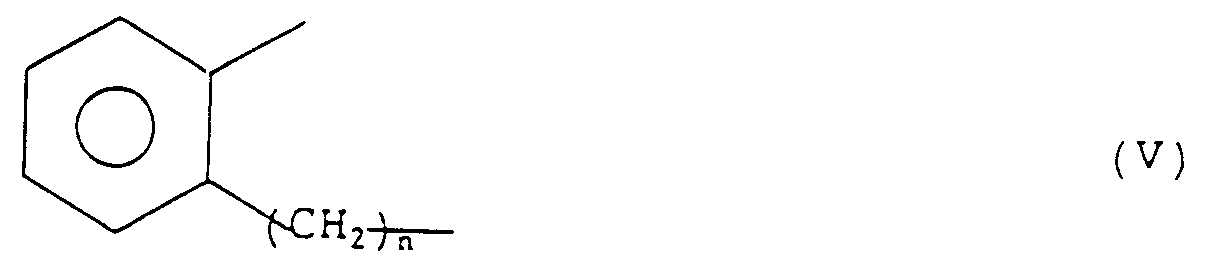
in the presence of a previously-prepared transition metalphosphine complex as claimed in Claim 3 or of a compound of a transition metal selected from rhodium, ruthenium, iridium or platinum and a phosphine compound as claimed in Claim 1 or Claim 2. - A process as claimed in Claim 4, wherein said olefin is a compound represented by formula (VI) :

- A 4-[(R)-1'-formylethyl]azetidin-2-one derivative represented by formula (VII) :

- Use of a derivative as claimed in Claim 6 in the preparation of carbapenem antibiotics.
- Use of a phosphine compound as claimed in Claim 1 or 2, in combination with rhodium, ruthenium, iridium or platinum in organic synthesis.
Priority Applications (2)
| Application Number | Priority Date | Filing Date | Title |
|---|---|---|---|
| EP95111575A EP0684249B1 (en) | 1993-03-12 | 1994-03-11 | Phosphine compounds, complexes containing the phosphine compounds as ligands, and process for producing optically active aldehydes using the phosphine compounds or complexes |
| EP95111576A EP0684230B1 (en) | 1993-03-12 | 1994-03-11 | 4- (R)-1'-formylethyl azetidin-2-one derivatives |
Applications Claiming Priority (3)
| Application Number | Priority Date | Filing Date | Title |
|---|---|---|---|
| JP7748493 | 1993-03-12 | ||
| JP77484/93 | 1993-03-12 | ||
| JP7748493 | 1993-03-12 |
Related Child Applications (4)
| Application Number | Title | Priority Date | Filing Date |
|---|---|---|---|
| EP95111575A Division EP0684249B1 (en) | 1993-03-12 | 1994-03-11 | Phosphine compounds, complexes containing the phosphine compounds as ligands, and process for producing optically active aldehydes using the phosphine compounds or complexes |
| EP95111575.7 Division-Into | 1994-03-11 | ||
| EP95111576A Division EP0684230B1 (en) | 1993-03-12 | 1994-03-11 | 4- (R)-1'-formylethyl azetidin-2-one derivatives |
| EP95111576.5 Division-Into | 1994-03-11 |
Publications (3)
| Publication Number | Publication Date |
|---|---|
| EP0614903A2 true EP0614903A2 (en) | 1994-09-14 |
| EP0614903A3 EP0614903A3 (en) | 1995-01-11 |
| EP0614903B1 EP0614903B1 (en) | 2000-09-20 |
Family
ID=13635264
Family Applications (3)
| Application Number | Title | Priority Date | Filing Date |
|---|---|---|---|
| EP94301775A Expired - Lifetime EP0614903B1 (en) | 1993-03-12 | 1994-03-11 | Process for producing optically active aldehydes using transition metal-phosphine complexes, and process for producing intermediates for carbapenem antibiotics using the same complexes |
| EP95111575A Expired - Lifetime EP0684249B1 (en) | 1993-03-12 | 1994-03-11 | Phosphine compounds, complexes containing the phosphine compounds as ligands, and process for producing optically active aldehydes using the phosphine compounds or complexes |
| EP95111576A Expired - Lifetime EP0684230B1 (en) | 1993-03-12 | 1994-03-11 | 4- (R)-1'-formylethyl azetidin-2-one derivatives |
Family Applications After (2)
| Application Number | Title | Priority Date | Filing Date |
|---|---|---|---|
| EP95111575A Expired - Lifetime EP0684249B1 (en) | 1993-03-12 | 1994-03-11 | Phosphine compounds, complexes containing the phosphine compounds as ligands, and process for producing optically active aldehydes using the phosphine compounds or complexes |
| EP95111576A Expired - Lifetime EP0684230B1 (en) | 1993-03-12 | 1994-03-11 | 4- (R)-1'-formylethyl azetidin-2-one derivatives |
Country Status (2)
| Country | Link |
|---|---|
| EP (3) | EP0614903B1 (en) |
| DE (3) | DE69425917T2 (en) |
Cited By (8)
| Publication number | Priority date | Publication date | Assignee | Title |
|---|---|---|---|---|
| EP0732337A1 (en) * | 1995-03-14 | 1996-09-18 | Takasago International Corporation | Optically active asymmetric diphosphine and process for producing optically active substance in its presence |
| EP0748811A1 (en) * | 1995-06-12 | 1996-12-18 | Hoechst Aktiengesellschaft | Process for the preparation of hydroxybiarylphosphanes and novel compounds from this materials group |
| EP0755937A1 (en) * | 1995-07-27 | 1997-01-29 | Takasago International Corporation | Phosphine-phosphinite compound and process for preparing 4-[(R)-1'-formylethyl]-azetidin-2-one derivatives using the same |
| US5631345A (en) * | 1995-03-13 | 1997-05-20 | Takasago International Corporation | Process for producing optically active polyketone |
| EP0877029A3 (en) * | 1997-03-11 | 1999-08-25 | Takasago International Corporation | Optically active phosphine derivative having vinyl group, polymer produced using the same as monomer and transition metal complexes of these |
| EP0864577A3 (en) * | 1997-03-11 | 1999-08-25 | Takasago International Corporation | Optically active phosphine derivative having at least two vinyl groups, polymer produced using the same as monomer and transition metal complexes of these |
| WO2000031010A3 (en) * | 1998-11-21 | 2000-11-02 | Studiengesellschaft Kohle Mbh | Methods for producing chiral aldehydes |
| US7442842B2 (en) | 2003-11-25 | 2008-10-28 | Basf Se | Method for asymmetric synthesis |
Families Citing this family (1)
| Publication number | Priority date | Publication date | Assignee | Title |
|---|---|---|---|---|
| DE19702025A1 (en) * | 1997-01-23 | 1998-07-30 | Studiengesellschaft Kohle Mbh | Use of perfluoroalkyl-substituted phosphorus compounds as ligands for homogeneous catalysis in supercritical carbon dioxide |
Family Cites Families (12)
| Publication number | Priority date | Publication date | Assignee | Title |
|---|---|---|---|---|
| DK446179A (en) * | 1978-10-24 | 1980-05-29 | Merck & Co Inc | PROCEDURE FOR PREPARING SUBSTITUTED 1-CARBADETHYAPE-2-EM-3-CARBOXYL ACIDS |
| EP0089139A2 (en) * | 1982-03-16 | 1983-09-21 | Beecham Group Plc | Antibiotics, their preparation and use |
| DK350383A (en) * | 1982-08-27 | 1984-02-28 | Hoffmann La Roche | phosphorus compounds |
| EP0113101A1 (en) * | 1982-12-30 | 1984-07-11 | Merck & Co. Inc. | 6-(1-Hydroxyethyl)-2-SR8-1-methyl-1-carbadethiapen-2-em-3-carboxylic acid esters |
| DE3581481D1 (en) * | 1984-10-31 | 1991-02-28 | Sumitomo Pharma | BETA LACTAME AND THEIR PRODUCTION. |
| NZ214691A (en) * | 1984-12-27 | 1988-08-30 | Sumitomo Pharma | The preparation of carbapenem derivatives and beta-lactam intermediates |
| WO1988001619A1 (en) * | 1986-08-29 | 1988-03-10 | Sumitomo Pharmaceuticals Company, Limited | 1'-methyl-beta-lactam compounds and their production |
| JP2733880B2 (en) * | 1991-03-12 | 1998-03-30 | 高砂香料工業株式会社 | Optically active tertiary phosphine compound and transition metal complex containing it as ligand |
| US5171892A (en) * | 1991-07-02 | 1992-12-15 | E. I. Du Pont De Nemours And Company | Chiral phospholanes via chiral 1,4-diol cyclic sulfates |
| US5360938A (en) * | 1991-08-21 | 1994-11-01 | Union Carbide Chemicals & Plastics Technology Corporation | Asymmetric syntheses |
| JP3313805B2 (en) * | 1993-03-12 | 2002-08-12 | 高砂香料工業株式会社 | Phosphine compounds and transition metal-phosphine complexes having the same as ligands |
| JPH06263777A (en) * | 1993-03-12 | 1994-09-20 | Takasago Internatl Corp | Phosphine compound and transition metal-phosphine complex containing the compound as ligand |
-
1994
- 1994-03-11 EP EP94301775A patent/EP0614903B1/en not_active Expired - Lifetime
- 1994-03-11 EP EP95111575A patent/EP0684249B1/en not_active Expired - Lifetime
- 1994-03-11 DE DE69425917T patent/DE69425917T2/en not_active Expired - Fee Related
- 1994-03-11 EP EP95111576A patent/EP0684230B1/en not_active Expired - Lifetime
- 1994-03-11 DE DE69430905T patent/DE69430905T2/en not_active Expired - Fee Related
- 1994-03-11 DE DE69432139T patent/DE69432139T2/en not_active Expired - Fee Related
Cited By (14)
| Publication number | Priority date | Publication date | Assignee | Title |
|---|---|---|---|---|
| US5631345A (en) * | 1995-03-13 | 1997-05-20 | Takasago International Corporation | Process for producing optically active polyketone |
| EP0732350A3 (en) * | 1995-03-13 | 1997-07-30 | Takasago Perfumery Co Ltd | Process for producing optically active polyketone |
| EP0732337A1 (en) * | 1995-03-14 | 1996-09-18 | Takasago International Corporation | Optically active asymmetric diphosphine and process for producing optically active substance in its presence |
| US5789623A (en) * | 1995-06-12 | 1998-08-04 | Hoechst Aktiengesellschaft | Process for the preparation of hydroxybiarylphosphines and novel compounds of this group of substances |
| EP0748811A1 (en) * | 1995-06-12 | 1996-12-18 | Hoechst Aktiengesellschaft | Process for the preparation of hydroxybiarylphosphanes and novel compounds from this materials group |
| DE19521340A1 (en) * | 1995-06-12 | 1996-12-19 | Hoechst Ag | Process for the preparation of hydroxybiarylphosphanes and new compounds from this group of substances |
| EP0755937A1 (en) * | 1995-07-27 | 1997-01-29 | Takasago International Corporation | Phosphine-phosphinite compound and process for preparing 4-[(R)-1'-formylethyl]-azetidin-2-one derivatives using the same |
| US5824822A (en) * | 1995-07-27 | 1998-10-20 | Takasago International Corporation | Phospphine-phosinite compound and process for preparing 4- (R)-1'-formylethyl!-azetidin-2-one derivatives using the same |
| EP0877029A3 (en) * | 1997-03-11 | 1999-08-25 | Takasago International Corporation | Optically active phosphine derivative having vinyl group, polymer produced using the same as monomer and transition metal complexes of these |
| EP0864577A3 (en) * | 1997-03-11 | 1999-08-25 | Takasago International Corporation | Optically active phosphine derivative having at least two vinyl groups, polymer produced using the same as monomer and transition metal complexes of these |
| WO2000031010A3 (en) * | 1998-11-21 | 2000-11-02 | Studiengesellschaft Kohle Mbh | Methods for producing chiral aldehydes |
| US6399834B1 (en) | 1998-11-21 | 2002-06-04 | Studiengesellschaft Kohle Mbh | Methods for producing chiral aldehydes |
| US7442842B2 (en) | 2003-11-25 | 2008-10-28 | Basf Se | Method for asymmetric synthesis |
| US7696349B2 (en) | 2003-11-25 | 2010-04-13 | Basf Se | Method for asymmetric synthesis |
Also Published As
| Publication number | Publication date |
|---|---|
| EP0614903A3 (en) | 1995-01-11 |
| DE69432139D1 (en) | 2003-03-27 |
| DE69430905T2 (en) | 2002-11-14 |
| EP0684230A1 (en) | 1995-11-29 |
| EP0684249B1 (en) | 2003-02-19 |
| EP0684249A1 (en) | 1995-11-29 |
| EP0614903B1 (en) | 2000-09-20 |
| DE69425917D1 (en) | 2000-10-26 |
| DE69425917T2 (en) | 2001-01-18 |
| DE69432139T2 (en) | 2003-07-31 |
| EP0684230B1 (en) | 2002-07-03 |
| DE69430905D1 (en) | 2002-08-08 |
Similar Documents
| Publication | Publication Date | Title |
|---|---|---|
| US7531698B2 (en) | Tetraphosphorus ligands for catalytic hydroformylation and related reactions | |
| JP4143290B2 (en) | Use of phosphine, their metal complexes and phosphinin and their metal complexes | |
| US5530150A (en) | Phosphine compound, complex containing the phosphine compound as ligand, process for producing optically active aldehyde using the phosphine compound or the complex, and 4-[(R)-1'-formylethyl]azetidin-2-one derivatives | |
| JP2733880B2 (en) | Optically active tertiary phosphine compound and transition metal complex containing it as ligand | |
| EP0614901B1 (en) | Phosphine compound and transition metal-phosphine complex containing the same as ligand | |
| EP0614903B1 (en) | Process for producing optically active aldehydes using transition metal-phosphine complexes, and process for producing intermediates for carbapenem antibiotics using the same complexes | |
| US7608709B2 (en) | 2, 3-bis(dialkylphosphino)pyrazine derivative, process of producing the same, and metal complex having the same as ligand | |
| EP0614870B1 (en) | Process for producing optically active aldehydes | |
| JP3277065B2 (en) | Phosphine compounds, complexes using the same as ligands, methods for producing optically active aldehydes using them, and 4-[(R) -1'-formylethyl] azetidin-2-one derivatives | |
| WO2019039565A1 (en) | Dihydroxybiphenyl compound, bisphosphite compound, catalyst, method for producing aldehydes, and method for producing alcohol | |
| EP0755937B1 (en) | Phosphine-phosphinite compound and process for preparing 4-[(R)-1'-formylethyl]-azetidin-2-one derivatives using the same | |
| EP0614902B1 (en) | Phosphine compounds and transition metal-phosphine complexes containing them as ligands | |
| JP2002128759A (en) | 4-[(R) -1'-formylethyl] azetidin-2-one derivative | |
| US6169179B1 (en) | Method for manufacturing (3S,4R)-4-[(R)-1′-formylethyl]azetidin-2-one derivatives | |
| JP4578592B2 (en) | Method for producing 3-formyltetrahydrofuran | |
| JP3463450B2 (en) | Method for producing optically active organosilicon compound | |
| US10093690B2 (en) | Heterocyclic selenaphosphites and process for preparation thereof | |
| US10093604B2 (en) | Heterocyclic selenabisphosphites and process for preparation thereof | |
| US9862738B2 (en) | Heterocyclic selenophosphites and method for the preparation thereof | |
| JP2001253890A (en) | (Α- and / or β-formylethyl) phosphine oxide compound, (α- and / or β-formylethyl) phosphonate compound and method for producing the same | |
| US20110218345A1 (en) | Axially asymmetric phosphorus compound and production method thereof |
Legal Events
| Date | Code | Title | Description |
|---|---|---|---|
| PUAI | Public reference made under article 153(3) epc to a published international application that has entered the european phase |
Free format text: ORIGINAL CODE: 0009012 |
|
| AK | Designated contracting states |
Kind code of ref document: A2 Designated state(s): CH DE FR GB IT LI NL |
|
| PUAL | Search report despatched |
Free format text: ORIGINAL CODE: 0009013 |
|
| 17P | Request for examination filed |
Effective date: 19941004 |
|
| AK | Designated contracting states |
Kind code of ref document: A3 Designated state(s): CH DE FR GB IT LI NL |
|
| 17Q | First examination report despatched |
Effective date: 19970919 |
|
| RAP1 | Party data changed (applicant data changed or rights of an application transferred) |
Owner name: TAKASAGO INTERNATIONAL CORPORATION |
|
| GRAG | Despatch of communication of intention to grant |
Free format text: ORIGINAL CODE: EPIDOS AGRA |
|
| RTI1 | Title (correction) |
Free format text: PROCESS FOR PRODUCING OPTICALLY ACTIVE ALDEHYDES USING TRANSITION METAL-PHOSPHINE COMPLEXES, AND PROCESS FOR PRODUCING INTERMEDIATES FOR CARBAPENEM ANTIBIOTICS USING THE SAME COMPLEXES |
|
| 17Q | First examination report despatched |
Effective date: 19970919 |
|
| GRAG | Despatch of communication of intention to grant |
Free format text: ORIGINAL CODE: EPIDOS AGRA |
|
| GRAH | Despatch of communication of intention to grant a patent |
Free format text: ORIGINAL CODE: EPIDOS IGRA |
|
| GRAH | Despatch of communication of intention to grant a patent |
Free format text: ORIGINAL CODE: EPIDOS IGRA |
|
| GRAA | (expected) grant |
Free format text: ORIGINAL CODE: 0009210 |
|
| AK | Designated contracting states |
Kind code of ref document: B1 Designated state(s): CH DE FR GB IT LI NL |
|
| XX | Miscellaneous (additional remarks) |
Free format text: TEILANMELDUNG 95111575.7 EINGEREICHT AM 23/07/95. |
|
| REG | Reference to a national code |
Ref country code: CH Ref legal event code: NV Representative=s name: BOVARD AG PATENTANWAELTE Ref country code: CH Ref legal event code: EP |
|
| REF | Corresponds to: |
Ref document number: 69425917 Country of ref document: DE Date of ref document: 20001026 |
|
| ITF | It: translation for a ep patent filed | ||
| ET | Fr: translation filed | ||
| PLBE | No opposition filed within time limit |
Free format text: ORIGINAL CODE: 0009261 |
|
| STAA | Information on the status of an ep patent application or granted ep patent |
Free format text: STATUS: NO OPPOSITION FILED WITHIN TIME LIMIT |
|
| 26N | No opposition filed | ||
| REG | Reference to a national code |
Ref country code: GB Ref legal event code: IF02 |
|
| PGFP | Annual fee paid to national office [announced via postgrant information from national office to epo] |
Ref country code: FR Payment date: 20040309 Year of fee payment: 11 |
|
| PGFP | Annual fee paid to national office [announced via postgrant information from national office to epo] |
Ref country code: NL Payment date: 20040310 Year of fee payment: 11 Ref country code: GB Payment date: 20040310 Year of fee payment: 11 |
|
| PGFP | Annual fee paid to national office [announced via postgrant information from national office to epo] |
Ref country code: CH Payment date: 20040317 Year of fee payment: 11 |
|
| PGFP | Annual fee paid to national office [announced via postgrant information from national office to epo] |
Ref country code: DE Payment date: 20040318 Year of fee payment: 11 |
|
| PG25 | Lapsed in a contracting state [announced via postgrant information from national office to epo] |
Ref country code: IT Free format text: LAPSE BECAUSE OF NON-PAYMENT OF DUE FEES;WARNING: LAPSES OF ITALIAN PATENTS WITH EFFECTIVE DATE BEFORE 2007 MAY HAVE OCCURRED AT ANY TIME BEFORE 2007. THE CORRECT EFFECTIVE DATE MAY BE DIFFERENT FROM THE ONE RECORDED. Effective date: 20050311 Ref country code: GB Free format text: LAPSE BECAUSE OF NON-PAYMENT OF DUE FEES Effective date: 20050311 |
|
| PG25 | Lapsed in a contracting state [announced via postgrant information from national office to epo] |
Ref country code: LI Free format text: LAPSE BECAUSE OF NON-PAYMENT OF DUE FEES Effective date: 20050331 Ref country code: CH Free format text: LAPSE BECAUSE OF NON-PAYMENT OF DUE FEES Effective date: 20050331 |
|
| PG25 | Lapsed in a contracting state [announced via postgrant information from national office to epo] |
Ref country code: NL Free format text: LAPSE BECAUSE OF NON-PAYMENT OF DUE FEES Effective date: 20051001 Ref country code: DE Free format text: LAPSE BECAUSE OF NON-PAYMENT OF DUE FEES Effective date: 20051001 |
|
| REG | Reference to a national code |
Ref country code: CH Ref legal event code: PL |
|
| GBPC | Gb: european patent ceased through non-payment of renewal fee |
Effective date: 20050311 |
|
| PG25 | Lapsed in a contracting state [announced via postgrant information from national office to epo] |
Ref country code: FR Free format text: LAPSE BECAUSE OF NON-PAYMENT OF DUE FEES Effective date: 20051130 |
|
| NLV4 | Nl: lapsed or anulled due to non-payment of the annual fee |
Effective date: 20051001 |
|
| REG | Reference to a national code |
Ref country code: FR Ref legal event code: ST Effective date: 20051130 |