EP0612531A1 - Therapeutic agent for digestive tract diseases - Google Patents
Therapeutic agent for digestive tract diseases Download PDFInfo
- Publication number
- EP0612531A1 EP0612531A1 EP94301325A EP94301325A EP0612531A1 EP 0612531 A1 EP0612531 A1 EP 0612531A1 EP 94301325 A EP94301325 A EP 94301325A EP 94301325 A EP94301325 A EP 94301325A EP 0612531 A1 EP0612531 A1 EP 0612531A1
- Authority
- EP
- European Patent Office
- Prior art keywords
- glicentin
- digestive tract
- human
- disease
- amino acid
- Prior art date
- Legal status (The legal status is an assumption and is not a legal conclusion. Google has not performed a legal analysis and makes no representation as to the accuracy of the status listed.)
- Granted
Links
- 210000001035 gastrointestinal tract Anatomy 0.000 title claims abstract description 77
- 208000037265 diseases, disorders, signs and symptoms Diseases 0.000 title claims abstract description 40
- 201000010099 disease Diseases 0.000 title claims abstract description 31
- 239000003814 drug Substances 0.000 title claims abstract description 22
- 229940124597 therapeutic agent Drugs 0.000 title claims abstract description 16
- URJOZSLMTIRWFW-QGZVFWFLSA-N (4r)-4-(1,3-benzodioxol-5-yl)-5,6-dimethoxy-4,9-dihydro-1h-benzo[f][2]benzofuran-3-one Chemical compound C1=C2OCOC2=CC([C@H]2C3=C(COC3=O)CC3=CC=C(C(=C32)OC)OC)=C1 URJOZSLMTIRWFW-QGZVFWFLSA-N 0.000 claims abstract description 81
- 101800002945 Glicentin Proteins 0.000 claims abstract description 77
- 102400000320 Glicentin Human genes 0.000 claims abstract description 77
- 238000011282 treatment Methods 0.000 claims abstract description 19
- 239000004480 active ingredient Substances 0.000 claims abstract description 11
- 230000029087 digestion Effects 0.000 claims abstract description 9
- 208000035475 disorder Diseases 0.000 claims abstract description 9
- 238000010521 absorption reaction Methods 0.000 claims abstract description 8
- 208000027866 inflammatory disease Diseases 0.000 claims abstract description 6
- 230000004682 mucosal barrier function Effects 0.000 claims abstract description 5
- 206010010356 Congenital anomaly Diseases 0.000 claims abstract description 4
- 206010017807 Gastric mucosal hypertrophy Diseases 0.000 claims abstract description 4
- 206010059344 Protein-losing gastroenteropathy Diseases 0.000 claims abstract description 4
- 101500028778 Homo sapiens Glicentin Proteins 0.000 claims description 27
- 125000003275 alpha amino acid group Chemical group 0.000 claims description 16
- 239000003795 chemical substances by application Substances 0.000 claims description 9
- 238000001990 intravenous administration Methods 0.000 claims description 6
- 206010067994 Mucosal atrophy Diseases 0.000 claims description 5
- 206010049416 Short-bowel syndrome Diseases 0.000 claims description 5
- 235000020882 elemental diet Nutrition 0.000 claims description 4
- 235000014105 formulated food Nutrition 0.000 claims description 4
- 235000016236 parenteral nutrition Nutrition 0.000 claims description 4
- 208000008279 Dumping Syndrome Diseases 0.000 claims description 3
- 208000032395 Post gastric surgery syndrome Diseases 0.000 claims description 3
- 238000004519 manufacturing process Methods 0.000 claims 1
- 238000002560 therapeutic procedure Methods 0.000 claims 1
- 239000000243 solution Substances 0.000 description 16
- 230000006870 function Effects 0.000 description 15
- 210000000813 small intestine Anatomy 0.000 description 12
- 230000000968 intestinal effect Effects 0.000 description 11
- 210000004877 mucosa Anatomy 0.000 description 11
- 210000002784 stomach Anatomy 0.000 description 11
- 108010088406 Glucagon-Like Peptides Proteins 0.000 description 10
- 235000013305 food Nutrition 0.000 description 10
- 239000000203 mixture Substances 0.000 description 10
- 238000002360 preparation method Methods 0.000 description 10
- 102100040918 Pro-glucagon Human genes 0.000 description 9
- MASNOZXLGMXCHN-ZLPAWPGGSA-N glucagon Chemical compound C([C@@H](C(=O)N[C@H](C(=O)N[C@@H](CCC(N)=O)C(=O)N[C@@H](CC=1C2=CC=CC=C2NC=1)C(=O)N[C@@H](CC(C)C)C(=O)N[C@@H](CCSC)C(=O)N[C@@H](CC(N)=O)C(=O)N[C@@H]([C@@H](C)O)C(O)=O)C(C)C)NC(=O)[C@H](CC(O)=O)NC(=O)[C@H](CCC(N)=O)NC(=O)[C@H](C)NC(=O)[C@H](CCCNC(N)=N)NC(=O)[C@H](CCCNC(N)=N)NC(=O)[C@H](CO)NC(=O)[C@H](CC(O)=O)NC(=O)[C@H](CC(C)C)NC(=O)[C@H](CC=1C=CC(O)=CC=1)NC(=O)[C@H](CCCCN)NC(=O)[C@H](CO)NC(=O)[C@H](CC=1C=CC(O)=CC=1)NC(=O)[C@H](CC(O)=O)NC(=O)[C@H](CO)NC(=O)[C@@H](NC(=O)[C@H](CC=1C=CC=CC=1)NC(=O)[C@@H](NC(=O)CNC(=O)[C@H](CCC(N)=O)NC(=O)[C@H](CO)NC(=O)[C@@H](N)CC=1NC=NC=1)[C@@H](C)O)[C@@H](C)O)C1=CC=CC=C1 MASNOZXLGMXCHN-ZLPAWPGGSA-N 0.000 description 9
- 229960004666 glucagon Drugs 0.000 description 9
- 210000004347 intestinal mucosa Anatomy 0.000 description 9
- 210000001630 jejunum Anatomy 0.000 description 9
- 238000000034 method Methods 0.000 description 9
- 102000051325 Glucagon Human genes 0.000 description 8
- 108060003199 Glucagon Proteins 0.000 description 8
- 230000037396 body weight Effects 0.000 description 8
- 108090000765 processed proteins & peptides Proteins 0.000 description 8
- 210000001519 tissue Anatomy 0.000 description 8
- 239000007924 injection Substances 0.000 description 7
- 238000002347 injection Methods 0.000 description 7
- 210000000936 intestine Anatomy 0.000 description 7
- 230000035755 proliferation Effects 0.000 description 7
- 239000003826 tablet Substances 0.000 description 7
- XLYOFNOQVPJJNP-UHFFFAOYSA-N water Substances O XLYOFNOQVPJJNP-UHFFFAOYSA-N 0.000 description 7
- 206010003694 Atrophy Diseases 0.000 description 6
- PEDCQBHIVMGVHV-UHFFFAOYSA-N Glycerine Chemical compound OCC(O)CO PEDCQBHIVMGVHV-UHFFFAOYSA-N 0.000 description 6
- 206010025476 Malabsorption Diseases 0.000 description 6
- 208000004155 Malabsorption Syndromes Diseases 0.000 description 6
- 241000700159 Rattus Species 0.000 description 6
- 230000037444 atrophy Effects 0.000 description 6
- 230000000694 effects Effects 0.000 description 6
- 239000008187 granular material Substances 0.000 description 6
- 235000016709 nutrition Nutrition 0.000 description 6
- 230000008855 peristalsis Effects 0.000 description 6
- 230000009467 reduction Effects 0.000 description 6
- LFQSCWFLJHTTHZ-UHFFFAOYSA-N Ethanol Chemical compound CCO LFQSCWFLJHTTHZ-UHFFFAOYSA-N 0.000 description 5
- 208000025865 Ulcer Diseases 0.000 description 5
- 210000004027 cell Anatomy 0.000 description 5
- 229940079593 drug Drugs 0.000 description 5
- 239000002504 physiological saline solution Substances 0.000 description 5
- 230000008569 process Effects 0.000 description 5
- 208000024891 symptom Diseases 0.000 description 5
- 231100000397 ulcer Toxicity 0.000 description 5
- 208000004232 Enteritis Diseases 0.000 description 4
- WSFSSNUMVMOOMR-UHFFFAOYSA-N Formaldehyde Chemical compound O=C WSFSSNUMVMOOMR-UHFFFAOYSA-N 0.000 description 4
- 108010010803 Gelatin Proteins 0.000 description 4
- GUBGYTABKSRVRQ-QKKXKWKRSA-N Lactose Natural products OC[C@H]1O[C@@H](O[C@H]2[C@H](O)[C@@H](O)C(O)O[C@@H]2CO)[C@H](O)[C@@H](O)[C@H]1O GUBGYTABKSRVRQ-QKKXKWKRSA-N 0.000 description 4
- 206010028980 Neoplasm Diseases 0.000 description 4
- 108010058003 Proglucagon Proteins 0.000 description 4
- 239000008280 blood Substances 0.000 description 4
- 210000004369 blood Anatomy 0.000 description 4
- 239000002775 capsule Substances 0.000 description 4
- 239000012153 distilled water Substances 0.000 description 4
- 210000001198 duodenum Anatomy 0.000 description 4
- 238000002474 experimental method Methods 0.000 description 4
- 229920000159 gelatin Polymers 0.000 description 4
- 239000008273 gelatin Substances 0.000 description 4
- 235000019322 gelatine Nutrition 0.000 description 4
- 235000011852 gelatine desserts Nutrition 0.000 description 4
- 238000010353 genetic engineering Methods 0.000 description 4
- 210000003405 ileum Anatomy 0.000 description 4
- 239000008101 lactose Substances 0.000 description 4
- HQKMJHAJHXVSDF-UHFFFAOYSA-L magnesium stearate Chemical compound [Mg+2].CCCCCCCCCCCCCCCCCC([O-])=O.CCCCCCCCCCCCCCCCCC([O-])=O HQKMJHAJHXVSDF-UHFFFAOYSA-L 0.000 description 4
- 230000005012 migration Effects 0.000 description 4
- 238000013508 migration Methods 0.000 description 4
- 230000001575 pathological effect Effects 0.000 description 4
- 239000013612 plasmid Substances 0.000 description 4
- 102000004196 processed proteins & peptides Human genes 0.000 description 4
- 238000002271 resection Methods 0.000 description 4
- 208000011580 syndromic disease Diseases 0.000 description 4
- HTKQXZVWMVGUHF-XCHZYIBMSA-N (2S)-2-[[(2S)-5-amino-2-[[(2S)-2-[[(2S)-2-[[(2S)-2-[[(2S)-2-[[(2S)-2-[[(2S)-2-[[(2S)-2-[[(2S)-6-amino-2-[[(2S)-2-[[(2S)-2-[[(2S)-2-[[(2S)-2-[[(2S,3R)-2-[[(2S)-2-[[(2S,3R)-2-[[2-[[(2S)-5-amino-2-[[(2S)-2-[[(2S)-2-amino-3-(1H-imidazol-4-yl)propanoyl]amino]-3-hydroxypropanoyl]amino]-5-oxopentanoyl]amino]acetyl]amino]-3-hydroxybutanoyl]amino]-3-phenylpropanoyl]amino]-3-hydroxybutanoyl]amino]-3-hydroxypropanoyl]amino]-3-carboxypropanoyl]amino]-3-(4-hydroxyphenyl)propanoyl]amino]-3-hydroxypropanoyl]amino]hexanoyl]amino]-3-(4-hydroxyphenyl)propanoyl]amino]-4-methylpentanoyl]amino]-3-carboxypropanoyl]amino]-3-hydroxypropanoyl]amino]-5-(diaminomethylideneamino)pentanoyl]amino]-5-(diaminomethylideneamino)pentanoyl]amino]propanoyl]amino]-5-oxopentanoyl]amino]butanedioic acid Chemical compound C[C@H]([C@@H](C(=O)N[C@@H](CC1=CC=CC=C1)C(=O)N[C@@H]([C@@H](C)O)C(=O)N[C@@H](CO)C(=O)N[C@@H](CC(=O)O)C(=O)N[C@@H](CC2=CC=C(C=C2)O)C(=O)N[C@@H](CO)C(=O)N[C@@H](CCCCN)C(=O)N[C@@H](CC3=CC=C(C=C3)O)C(=O)N[C@@H](CC(C)C)C(=O)N[C@@H](CC(=O)O)C(=O)N[C@@H](CO)C(=O)N[C@@H](CCCN=C(N)N)C(=O)N[C@@H](CCCN=C(N)N)C(=O)N[C@@H](C)C(=O)N[C@@H](CCC(=O)N)C(=O)N[C@@H](CC(=O)O)C(=O)O)NC(=O)CNC(=O)[C@H](CCC(=O)N)NC(=O)[C@H](CO)NC(=O)[C@H](CC4=CNC=N4)N)O HTKQXZVWMVGUHF-XCHZYIBMSA-N 0.000 description 3
- 241000282472 Canis lupus familiaris Species 0.000 description 3
- FBPFZTCFMRRESA-FSIIMWSLSA-N D-Glucitol Natural products OC[C@H](O)[C@H](O)[C@@H](O)[C@H](O)CO FBPFZTCFMRRESA-FSIIMWSLSA-N 0.000 description 3
- FBPFZTCFMRRESA-JGWLITMVSA-N D-glucitol Chemical compound OC[C@H](O)[C@@H](O)[C@H](O)[C@H](O)CO FBPFZTCFMRRESA-JGWLITMVSA-N 0.000 description 3
- 101800000224 Glucagon-like peptide 1 Proteins 0.000 description 3
- DTHNMHAUYICORS-KTKZVXAJSA-N Glucagon-like peptide 1 Chemical compound C([C@@H](C(=O)N[C@@H]([C@@H](C)CC)C(=O)N[C@@H](C)C(=O)N[C@@H](CC=1C2=CC=CC=C2NC=1)C(=O)N[C@@H](CC(C)C)C(=O)N[C@@H](C(C)C)C(=O)N[C@@H](CCCCN)C(=O)NCC(=O)N[C@@H](CCCNC(N)=N)C(N)=O)NC(=O)[C@H](CCC(O)=O)NC(=O)[C@H](CCCCN)NC(=O)[C@H](C)NC(=O)[C@H](C)NC(=O)[C@H](CCC(N)=O)NC(=O)CNC(=O)[C@H](CCC(O)=O)NC(=O)[C@H](CC(C)C)NC(=O)[C@H](CC=1C=CC(O)=CC=1)NC(=O)[C@H](CO)NC(=O)[C@H](CO)NC(=O)[C@@H](NC(=O)[C@H](CC(O)=O)NC(=O)[C@H](CO)NC(=O)[C@@H](NC(=O)[C@H](CC=1C=CC=CC=1)NC(=O)[C@@H](NC(=O)CNC(=O)[C@H](CCC(O)=O)NC(=O)[C@H](C)NC(=O)[C@@H](N)CC=1N=CNC=1)[C@@H](C)O)[C@@H](C)O)C(C)C)C1=CC=CC=C1 DTHNMHAUYICORS-KTKZVXAJSA-N 0.000 description 3
- FFEARJCKVFRZRR-BYPYZUCNSA-N L-methionine Chemical compound CSCC[C@H](N)C(O)=O FFEARJCKVFRZRR-BYPYZUCNSA-N 0.000 description 3
- 108091028043 Nucleic acid sequence Proteins 0.000 description 3
- 102400000319 Oxyntomodulin Human genes 0.000 description 3
- 101800001388 Oxyntomodulin Proteins 0.000 description 3
- DNIAPMSPPWPWGF-UHFFFAOYSA-N Propylene glycol Chemical compound CC(O)CO DNIAPMSPPWPWGF-UHFFFAOYSA-N 0.000 description 3
- 239000000654 additive Substances 0.000 description 3
- 206010009887 colitis Diseases 0.000 description 3
- 238000012258 culturing Methods 0.000 description 3
- 238000013016 damping Methods 0.000 description 3
- 238000004925 denaturation Methods 0.000 description 3
- 230000036425 denaturation Effects 0.000 description 3
- 208000000718 duodenal ulcer Diseases 0.000 description 3
- 239000000839 emulsion Substances 0.000 description 3
- 239000002702 enteric coating Substances 0.000 description 3
- 238000009505 enteric coating Methods 0.000 description 3
- 238000009472 formulation Methods 0.000 description 3
- 230000002496 gastric effect Effects 0.000 description 3
- 235000011187 glycerol Nutrition 0.000 description 3
- 229930182817 methionine Natural products 0.000 description 3
- PXZWGQLGAKCNKD-DPNMSELWSA-N molport-023-276-326 Chemical compound C([C@@H](C(=O)N[C@H](C(=O)N[C@@H](CCC(N)=O)C(=O)N[C@@H](CC=1C2=CC=CC=C2NC=1)C(=O)N[C@@H](CC(C)C)C(=O)N[C@@H](CCSC)C(=O)N[C@@H](CC(N)=O)C(=O)N[C@H](C(=O)N[C@@H](CCCCN)C(=O)N[C@@H](CCCNC(N)=N)C(=O)N[C@@H](CC(N)=O)C(=O)N[C@@H](CCCCN)C(=O)N[C@@H](CC(N)=O)C(=O)N[C@@H](CC(N)=O)C(=O)N[C@@H]([C@@H](C)CC)C(=O)N[C@@H](C)C(O)=O)[C@@H](C)O)C(C)C)NC(=O)[C@H](CC(O)=O)NC(=O)[C@H](CCC(N)=O)NC(=O)[C@H](C)NC(=O)[C@H](CCCNC(N)=N)NC(=O)[C@H](CCCNC(N)=N)NC(=O)[C@H](CO)NC(=O)[C@H](CC(O)=O)NC(=O)[C@H](CC(C)C)NC(=O)[C@H](CC=1C=CC(O)=CC=1)NC(=O)[C@H](CCCCN)NC(=O)[C@H](CO)NC(=O)[C@H](CC=1C=CC(O)=CC=1)NC(=O)[C@H](CC(O)=O)NC(=O)[C@H](CO)NC(=O)[C@@H](NC(=O)[C@H](CC=1C=CC=CC=1)NC(=O)[C@@H](NC(=O)CNC(=O)[C@H](CCC(N)=O)NC(=O)[C@H](CO)NC(=O)[C@@H](N)CC=1NC=NC=1)[C@@H](C)O)[C@@H](C)O)C1=CC=CC=C1 PXZWGQLGAKCNKD-DPNMSELWSA-N 0.000 description 3
- 230000037023 motor activity Effects 0.000 description 3
- 230000035764 nutrition Effects 0.000 description 3
- 239000000813 peptide hormone Substances 0.000 description 3
- 239000000825 pharmaceutical preparation Substances 0.000 description 3
- 230000002265 prevention Effects 0.000 description 3
- 230000002062 proliferating effect Effects 0.000 description 3
- 230000005855 radiation Effects 0.000 description 3
- 238000011084 recovery Methods 0.000 description 3
- 229960002920 sorbitol Drugs 0.000 description 3
- 239000000725 suspension Substances 0.000 description 3
- 239000006188 syrup Substances 0.000 description 3
- 235000020357 syrup Nutrition 0.000 description 3
- 229920000623 Cellulose acetate phthalate Polymers 0.000 description 2
- 229920002261 Corn starch Polymers 0.000 description 2
- 208000011231 Crohn disease Diseases 0.000 description 2
- 108020004414 DNA Proteins 0.000 description 2
- 241000588724 Escherichia coli Species 0.000 description 2
- QGWNDRXFNXRZMB-UUOKFMHZSA-N GDP Chemical compound C1=2NC(N)=NC(=O)C=2N=CN1[C@@H]1O[C@H](COP(O)(=O)OP(O)(O)=O)[C@@H](O)[C@H]1O QGWNDRXFNXRZMB-UUOKFMHZSA-N 0.000 description 2
- 101800001226 Glicentin-related polypeptide Proteins 0.000 description 2
- 241001465754 Metazoa Species 0.000 description 2
- 240000004808 Saccharomyces cerevisiae Species 0.000 description 2
- FAPWRFPIFSIZLT-UHFFFAOYSA-M Sodium chloride Chemical compound [Na+].[Cl-] FAPWRFPIFSIZLT-UHFFFAOYSA-M 0.000 description 2
- CZMRCDWAGMRECN-UGDNZRGBSA-N Sucrose Chemical compound O[C@H]1[C@H](O)[C@@H](CO)O[C@@]1(CO)O[C@@H]1[C@H](O)[C@@H](O)[C@H](O)[C@@H](CO)O1 CZMRCDWAGMRECN-UGDNZRGBSA-N 0.000 description 2
- 108700005078 Synthetic Genes Proteins 0.000 description 2
- 206010052428 Wound Diseases 0.000 description 2
- 208000027418 Wounds and injury Diseases 0.000 description 2
- 230000009471 action Effects 0.000 description 2
- 230000001154 acute effect Effects 0.000 description 2
- 125000000539 amino acid group Chemical group 0.000 description 2
- 210000004534 cecum Anatomy 0.000 description 2
- 239000001913 cellulose Substances 0.000 description 2
- 229920002678 cellulose Polymers 0.000 description 2
- 229940081734 cellulose acetate phthalate Drugs 0.000 description 2
- 238000006243 chemical reaction Methods 0.000 description 2
- 239000011248 coating agent Substances 0.000 description 2
- 239000008120 corn starch Substances 0.000 description 2
- 238000000354 decomposition reaction Methods 0.000 description 2
- 230000003111 delayed effect Effects 0.000 description 2
- 230000001079 digestive effect Effects 0.000 description 2
- 239000002662 enteric coated tablet Substances 0.000 description 2
- 235000019441 ethanol Nutrition 0.000 description 2
- 239000000796 flavoring agent Substances 0.000 description 2
- 235000019634 flavors Nutrition 0.000 description 2
- 235000019359 magnesium stearate Nutrition 0.000 description 2
- 230000004899 motility Effects 0.000 description 2
- 238000012545 processing Methods 0.000 description 2
- 230000001737 promoting effect Effects 0.000 description 2
- 108090000623 proteins and genes Proteins 0.000 description 2
- 239000000600 sorbitol Substances 0.000 description 2
- 235000010356 sorbitol Nutrition 0.000 description 2
- 239000000126 substance Substances 0.000 description 2
- 239000000454 talc Substances 0.000 description 2
- 229910052623 talc Inorganic materials 0.000 description 2
- 235000012222 talc Nutrition 0.000 description 2
- 230000001131 transforming effect Effects 0.000 description 2
- 230000001228 trophic effect Effects 0.000 description 2
- 238000005303 weighing Methods 0.000 description 2
- 244000215068 Acacia senegal Species 0.000 description 1
- GUBGYTABKSRVRQ-XLOQQCSPSA-N Alpha-Lactose Chemical compound O[C@@H]1[C@@H](O)[C@@H](O)[C@@H](CO)O[C@H]1O[C@@H]1[C@@H](CO)O[C@H](O)[C@H](O)[C@H]1O GUBGYTABKSRVRQ-XLOQQCSPSA-N 0.000 description 1
- 238000011725 BALB/c mouse Methods 0.000 description 1
- 244000063299 Bacillus subtilis Species 0.000 description 1
- 235000014469 Bacillus subtilis Nutrition 0.000 description 1
- 241000894006 Bacteria Species 0.000 description 1
- 241000283690 Bos taurus Species 0.000 description 1
- 108091003079 Bovine Serum Albumin Proteins 0.000 description 1
- VTYYLEPIZMXCLO-UHFFFAOYSA-L Calcium carbonate Chemical class [Ca+2].[O-]C([O-])=O VTYYLEPIZMXCLO-UHFFFAOYSA-L 0.000 description 1
- 229920002134 Carboxymethyl cellulose Polymers 0.000 description 1
- 241000700199 Cavia porcellus Species 0.000 description 1
- 206010010774 Constipation Diseases 0.000 description 1
- 241000699800 Cricetinae Species 0.000 description 1
- 230000006820 DNA synthesis Effects 0.000 description 1
- 108090000790 Enzymes Proteins 0.000 description 1
- 102000004190 Enzymes Human genes 0.000 description 1
- 229920003134 Eudragit® polymer Polymers 0.000 description 1
- 208000007882 Gastritis Diseases 0.000 description 1
- 206010017912 Gastroenteritis radiation Diseases 0.000 description 1
- 101800000221 Glucagon-like peptide 2 Proteins 0.000 description 1
- WQZGKKKJIJFFOK-GASJEMHNSA-N Glucose Natural products OC[C@H]1OC(O)[C@H](O)[C@@H](O)[C@@H]1O WQZGKKKJIJFFOK-GASJEMHNSA-N 0.000 description 1
- 229920000084 Gum arabic Polymers 0.000 description 1
- 241000282412 Homo Species 0.000 description 1
- 229920002153 Hydroxypropyl cellulose Polymers 0.000 description 1
- 208000008454 Hyperhidrosis Diseases 0.000 description 1
- 206010020751 Hypersensitivity Diseases 0.000 description 1
- 206010020852 Hypertonia Diseases 0.000 description 1
- 206010022714 Intestinal ulcer Diseases 0.000 description 1
- 208000032984 Intraoperative Complications Diseases 0.000 description 1
- 206010023799 Large intestinal ulcer Diseases 0.000 description 1
- UQOFGTXDASPNLL-XHNCKOQMSA-N Muscarine Chemical compound C[C@@H]1O[C@H](C[N+](C)(C)C)C[C@H]1O UQOFGTXDASPNLL-XHNCKOQMSA-N 0.000 description 1
- 206010028813 Nausea Diseases 0.000 description 1
- 206010030216 Oesophagitis Diseases 0.000 description 1
- 239000002202 Polyethylene glycol Substances 0.000 description 1
- 206010036774 Proctitis Diseases 0.000 description 1
- 208000035977 Rare disease Diseases 0.000 description 1
- 206010038080 Rectal ulcer Diseases 0.000 description 1
- 235000021355 Stearic acid Nutrition 0.000 description 1
- 208000007107 Stomach Ulcer Diseases 0.000 description 1
- 208000001871 Tachycardia Diseases 0.000 description 1
- 238000002679 ablation Methods 0.000 description 1
- 230000005856 abnormality Effects 0.000 description 1
- 239000000205 acacia gum Substances 0.000 description 1
- 235000010489 acacia gum Nutrition 0.000 description 1
- 239000002253 acid Substances 0.000 description 1
- 239000002671 adjuvant Substances 0.000 description 1
- 208000030961 allergic reaction Diseases 0.000 description 1
- 229940069428 antacid Drugs 0.000 description 1
- 239000003159 antacid agent Substances 0.000 description 1
- 230000001458 anti-acid effect Effects 0.000 description 1
- 239000003963 antioxidant agent Substances 0.000 description 1
- 235000006708 antioxidants Nutrition 0.000 description 1
- 239000011230 binding agent Substances 0.000 description 1
- 230000004071 biological effect Effects 0.000 description 1
- 230000036765 blood level Effects 0.000 description 1
- 239000000872 buffer Substances 0.000 description 1
- 239000001506 calcium phosphate Substances 0.000 description 1
- 229910000389 calcium phosphate Inorganic materials 0.000 description 1
- 235000011010 calcium phosphates Nutrition 0.000 description 1
- CJZGTCYPCWQAJB-UHFFFAOYSA-L calcium stearate Chemical compound [Ca+2].CCCCCCCCCCCCCCCCCC([O-])=O.CCCCCCCCCCCCCCCCCC([O-])=O CJZGTCYPCWQAJB-UHFFFAOYSA-L 0.000 description 1
- 239000008116 calcium stearate Substances 0.000 description 1
- 235000013539 calcium stearate Nutrition 0.000 description 1
- 239000001768 carboxy methyl cellulose Substances 0.000 description 1
- 235000010948 carboxy methyl cellulose Nutrition 0.000 description 1
- 239000008112 carboxymethyl-cellulose Substances 0.000 description 1
- 230000008859 change Effects 0.000 description 1
- 238000000576 coating method Methods 0.000 description 1
- 239000003086 colorant Substances 0.000 description 1
- 230000008602 contraction Effects 0.000 description 1
- 238000001816 cooling Methods 0.000 description 1
- 239000000287 crude extract Substances 0.000 description 1
- 210000004748 cultured cell Anatomy 0.000 description 1
- 239000000824 cytostatic agent Substances 0.000 description 1
- 230000001085 cytostatic effect Effects 0.000 description 1
- 230000007812 deficiency Effects 0.000 description 1
- 239000003405 delayed action preparation Substances 0.000 description 1
- 238000011161 development Methods 0.000 description 1
- 239000003085 diluting agent Substances 0.000 description 1
- 239000002552 dosage form Substances 0.000 description 1
- 210000003717 douglas' pouch Anatomy 0.000 description 1
- 239000008298 dragée Substances 0.000 description 1
- 206010013864 duodenitis Diseases 0.000 description 1
- -1 e.g. Substances 0.000 description 1
- 210000002919 epithelial cell Anatomy 0.000 description 1
- 230000003628 erosive effect Effects 0.000 description 1
- 208000006881 esophagitis Diseases 0.000 description 1
- NUVBSKCKDOMJSU-UHFFFAOYSA-N ethylparaben Chemical compound CCOC(=O)C1=CC=C(O)C=C1 NUVBSKCKDOMJSU-UHFFFAOYSA-N 0.000 description 1
- 230000029142 excretion Effects 0.000 description 1
- 230000008713 feedback mechanism Effects 0.000 description 1
- 239000007941 film coated tablet Substances 0.000 description 1
- 230000037406 food intake Effects 0.000 description 1
- 235000003599 food sweetener Nutrition 0.000 description 1
- 238000013110 gastrectomy Methods 0.000 description 1
- 210000004211 gastric acid Anatomy 0.000 description 1
- 201000005917 gastric ulcer Diseases 0.000 description 1
- TWSALRJGPBVBQU-PKQQPRCHSA-N glucagon-like peptide 2 Chemical compound C([C@@H](C(=O)N[C@H](C(=O)N[C@@H](CC(N)=O)C(=O)N[C@@H](CC=1C2=CC=CC=C2NC=1)C(=O)N[C@@H](CC(C)C)C(=O)N[C@@H]([C@@H](C)CC)C(=O)N[C@@H](CCC(N)=O)C(=O)N[C@@H]([C@@H](C)O)C(=O)N[C@@H](CCCCN)C(=O)N[C@@H]([C@@H](C)CC)C(=O)N[C@@H]([C@@H](C)O)C(=O)N[C@@H](CC(O)=O)C(O)=O)[C@@H](C)CC)NC(=O)[C@H](CC(O)=O)NC(=O)[C@H](CCCNC(N)=N)NC(=O)[C@H](C)NC(=O)[C@H](C)NC(=O)[C@H](CC(C)C)NC(=O)[C@H](CC(N)=O)NC(=O)[C@H](CC(O)=O)NC(=O)[C@H](CC(C)C)NC(=O)[C@@H](NC(=O)[C@@H](NC(=O)[C@H](CC(N)=O)NC(=O)[C@H](CCSC)NC(=O)[C@H](CCC(O)=O)NC(=O)[C@H](CC(O)=O)NC(=O)[C@H](CO)NC(=O)[C@H](CC=1C=CC=CC=1)NC(=O)[C@H](CO)NC(=O)CNC(=O)[C@H](CC(O)=O)NC(=O)[C@H](C)NC(=O)[C@@H](N)CC=1NC=NC=1)[C@@H](C)O)[C@@H](C)CC)C1=CC=CC=C1 TWSALRJGPBVBQU-PKQQPRCHSA-N 0.000 description 1
- 108010025491 glucagon-like-immunoreactivity Proteins 0.000 description 1
- 239000008103 glucose Substances 0.000 description 1
- 208000005594 glucose-galactose malabsorption Diseases 0.000 description 1
- 230000004116 glycogenolysis Effects 0.000 description 1
- 229940088597 hormone Drugs 0.000 description 1
- 239000005556 hormone Substances 0.000 description 1
- 235000003642 hunger Nutrition 0.000 description 1
- 239000001863 hydroxypropyl cellulose Substances 0.000 description 1
- 235000010977 hydroxypropyl cellulose Nutrition 0.000 description 1
- 230000001771 impaired effect Effects 0.000 description 1
- 230000006872 improvement Effects 0.000 description 1
- 239000012535 impurity Substances 0.000 description 1
- 230000002757 inflammatory effect Effects 0.000 description 1
- 230000005764 inhibitory process Effects 0.000 description 1
- 230000003871 intestinal function Effects 0.000 description 1
- 238000007918 intramuscular administration Methods 0.000 description 1
- 239000007927 intramuscular injection Substances 0.000 description 1
- 239000007928 intraperitoneal injection Substances 0.000 description 1
- 230000009545 invasion Effects 0.000 description 1
- 239000007788 liquid Substances 0.000 description 1
- 230000033001 locomotion Effects 0.000 description 1
- 239000000314 lubricant Substances 0.000 description 1
- 235000012054 meals Nutrition 0.000 description 1
- 238000005259 measurement Methods 0.000 description 1
- 239000012528 membrane Substances 0.000 description 1
- 244000005700 microbiome Species 0.000 description 1
- 230000009854 mucosal lesion Effects 0.000 description 1
- 210000003205 muscle Anatomy 0.000 description 1
- 230000008693 nausea Effects 0.000 description 1
- QIQXTHQIDYTFRH-UHFFFAOYSA-N octadecanoic acid Chemical compound CCCCCCCCCCCCCCCCCC(O)=O QIQXTHQIDYTFRH-UHFFFAOYSA-N 0.000 description 1
- OQCDKBAXFALNLD-UHFFFAOYSA-N octadecanoic acid Natural products CCCCCCCC(C)CCCCCCCCC(O)=O OQCDKBAXFALNLD-UHFFFAOYSA-N 0.000 description 1
- QYSGYZVSCZSLHT-UHFFFAOYSA-N octafluoropropane Chemical compound FC(F)(F)C(F)(F)C(F)(F)F QYSGYZVSCZSLHT-UHFFFAOYSA-N 0.000 description 1
- 239000004006 olive oil Substances 0.000 description 1
- 235000008390 olive oil Nutrition 0.000 description 1
- 230000003287 optical effect Effects 0.000 description 1
- 210000000056 organ Anatomy 0.000 description 1
- 210000000496 pancreas Anatomy 0.000 description 1
- 210000000277 pancreatic duct Anatomy 0.000 description 1
- 239000012188 paraffin wax Substances 0.000 description 1
- 238000007911 parenteral administration Methods 0.000 description 1
- 230000035699 permeability Effects 0.000 description 1
- 229920000058 polyacrylate Polymers 0.000 description 1
- 229920001223 polyethylene glycol Polymers 0.000 description 1
- 229920000642 polymer Polymers 0.000 description 1
- 235000013855 polyvinylpyrrolidone Nutrition 0.000 description 1
- 229920000036 polyvinylpyrrolidone Polymers 0.000 description 1
- 239000001267 polyvinylpyrrolidone Substances 0.000 description 1
- 239000000843 powder Substances 0.000 description 1
- 239000002243 precursor Substances 0.000 description 1
- 230000002035 prolonged effect Effects 0.000 description 1
- 238000011321 prophylaxis Methods 0.000 description 1
- 125000001436 propyl group Chemical group [H]C([*])([H])C([H])([H])C([H])([H])[H] 0.000 description 1
- 235000013772 propylene glycol Nutrition 0.000 description 1
- 150000003180 prostaglandins Chemical class 0.000 description 1
- 239000012264 purified product Substances 0.000 description 1
- 210000004203 pyloric antrum Anatomy 0.000 description 1
- 208000020624 radiation proctitis Diseases 0.000 description 1
- 239000002464 receptor antagonist Substances 0.000 description 1
- 229940044551 receptor antagonist Drugs 0.000 description 1
- 230000028327 secretion Effects 0.000 description 1
- 239000011780 sodium chloride Substances 0.000 description 1
- 235000002639 sodium chloride Nutrition 0.000 description 1
- 239000007787 solid Substances 0.000 description 1
- 235000021127 solid diet Nutrition 0.000 description 1
- 239000002904 solvent Substances 0.000 description 1
- 239000003381 stabilizer Substances 0.000 description 1
- 239000008117 stearic acid Substances 0.000 description 1
- 238000003756 stirring Methods 0.000 description 1
- 238000007920 subcutaneous administration Methods 0.000 description 1
- 239000007940 sugar coated tablet Substances 0.000 description 1
- 238000001356 surgical procedure Methods 0.000 description 1
- 230000035900 sweating Effects 0.000 description 1
- 239000003765 sweetening agent Substances 0.000 description 1
- 230000002194 synthesizing effect Effects 0.000 description 1
- 229920001059 synthetic polymer Polymers 0.000 description 1
- 230000006794 tachycardia Effects 0.000 description 1
- 238000012360 testing method Methods 0.000 description 1
- 230000005945 translocation Effects 0.000 description 1
- QORWJWZARLRLPR-UHFFFAOYSA-H tricalcium bis(phosphate) Chemical compound [Ca+2].[Ca+2].[Ca+2].[O-]P([O-])([O-])=O.[O-]P([O-])([O-])=O QORWJWZARLRLPR-UHFFFAOYSA-H 0.000 description 1
- 230000007306 turnover Effects 0.000 description 1
- 239000003981 vehicle Substances 0.000 description 1
Images

Classifications
-
- A—HUMAN NECESSITIES
- A61—MEDICAL OR VETERINARY SCIENCE; HYGIENE
- A61K—PREPARATIONS FOR MEDICAL, DENTAL OR TOILETRY PURPOSES
- A61K38/00—Medicinal preparations containing peptides
- A61K38/16—Peptides having more than 20 amino acids; Gastrins; Somatostatins; Melanotropins; Derivatives thereof
- A61K38/17—Peptides having more than 20 amino acids; Gastrins; Somatostatins; Melanotropins; Derivatives thereof from animals; from humans
- A61K38/22—Hormones
- A61K38/26—Glucagons
-
- A—HUMAN NECESSITIES
- A61—MEDICAL OR VETERINARY SCIENCE; HYGIENE
- A61P—SPECIFIC THERAPEUTIC ACTIVITY OF CHEMICAL COMPOUNDS OR MEDICINAL PREPARATIONS
- A61P1/00—Drugs for disorders of the alimentary tract or the digestive system
-
- A—HUMAN NECESSITIES
- A61—MEDICAL OR VETERINARY SCIENCE; HYGIENE
- A61P—SPECIFIC THERAPEUTIC ACTIVITY OF CHEMICAL COMPOUNDS OR MEDICINAL PREPARATIONS
- A61P1/00—Drugs for disorders of the alimentary tract or the digestive system
- A61P1/04—Drugs for disorders of the alimentary tract or the digestive system for ulcers, gastritis or reflux esophagitis, e.g. antacids, inhibitors of acid secretion, mucosal protectants
-
- A—HUMAN NECESSITIES
- A61—MEDICAL OR VETERINARY SCIENCE; HYGIENE
- A61P—SPECIFIC THERAPEUTIC ACTIVITY OF CHEMICAL COMPOUNDS OR MEDICINAL PREPARATIONS
- A61P1/00—Drugs for disorders of the alimentary tract or the digestive system
- A61P1/14—Prodigestives, e.g. acids, enzymes, appetite stimulants, antidyspeptics, tonics, antiflatulents
-
- A—HUMAN NECESSITIES
- A61—MEDICAL OR VETERINARY SCIENCE; HYGIENE
- A61P—SPECIFIC THERAPEUTIC ACTIVITY OF CHEMICAL COMPOUNDS OR MEDICINAL PREPARATIONS
- A61P43/00—Drugs for specific purposes, not provided for in groups A61P1/00-A61P41/00
Definitions
- This invention relates to therapeutic agents for digestive tract diseases, comprising glicentin as an active ingredient and also to the use of glicentin as therapeutic agents for digestive tract diseases by administering glicentin to a patient to promote proliferation of digestive tract mucosa. It is also concerned with the use of glicentin as therapeutic agents for digestive tract diseases by delayed migration of contents in the digestive tract to achieve improved gastrointestinal motor symptoms or to promote cure of the same.
- Glicentin which is one of enteroglucagons is a peptide comprising 69 amino acid residues.
- human glicentin is composed of the following amino acid sequence The sequence contains in positions 33-61 the structure of glucagon which is a peptide hormone comprising 29 amino acid residues.
- Glicentin and glucagon are produced by tissue specific processing from the same precursor, preproglucagon.
- Glucagon is formed in pancreas and glicentin in intestine.
- physiological roles of these peptides glucagon is known to control glycogenolysis and blood glucose level. However, the role is unknown for glicentin.
- Glucagon-producing tumors are a very rare disease.
- Gut, 12, 773-782, 1971 which was characterized by symptoms in small intestinal structure and function such as thickened small intestinal villi, delayed passing rate of food through the digestive tract and constipation.
- These findings and symptoms were found to have disappeared after removal of the tumor by surgical operation, possibility for factors produced by the tumor to participate in the altered small intestinal structure and function was postulated.
- Bloom in Gut, 13, 520-523, 1972 that the tumor produced enteroglucagon. It was thus suggested that such symptoms were due to biological activity of enteroglucagon.
- Enteroglucagon is also called gut glucagon-like immunoreactivity, which is defined on the basis of immunoreactivity against anti-glucagon antiserum of low specificity and contains a number of peptides produced by tissue specific processing from the same preproglucagon.
- a plural of candidates are presented as the active form in blood, including oxyntomodulin, i.e., a peptide hormone in positions 33-69 of the amino acid sequence of glicentin, glucagon 1-21, i.e., a peptide in positions 33-53, glucagon-like peptide-1, i.e., a peptide hormone which occurs in a region of preproglucagon containing no glicentin and similar glucagon-like peptide-2.
- oxyntomodulin i.e., a peptide hormone in positions 33-69 of the amino acid sequence of glicentin, glucagon 1-21, i.e., a peptide in positions 33-53
- glucagon-like peptide-1 i.e., a peptide hormone which occurs in a region of preproglucagon containing no glicentin and similar glucagon-like peptide-2.
- glicentin a kind of enter
- the present inventors were successful in synthesizing DNA corresponding to the amino acid sequence of human glicentin which was deduced by G. I. Bell (Nature, 304, 368-371 (1983)) from the sequence of human preproglucagon gene and preparing human glicentin by means of genetic engineering procedure using the synthesized DNA (Japanese Patent Kokai Hei 4-364199).
- human glicentin has easily been made available in a large amount and as a purified product.
- the intestinal tract is an organ mainly participating in digestion of food and absorption of nutritional elements. Ingestion of the nutritional elements necessary for life conservation is mostly effected via the intraluminal mucosal layer of the intestinal tract. It is therefore a serious problem to the living body to have the functions of the digestive tract impaired by histological atrophy, development of ulcers or reduction in function of the mucosa after pathological or surgical injuries, and further, to have permeability of the intestinal mucosa abnormally intensified to allow for translocation of bacteria or foreign bodies. Thus, when a digestive tract is invaded or atrophied, rapid cure and recovery of function of the digestive tract are desirable. In case of the hypoplasia of the digestive tract tissues, it is necessary to promote their growth and enhance their function.
- Atrophy of the intestinal mucosa occurs by exposure to strong radiation or other cytostatic stimulus because turnover of the intestinal mucosal cells is very rapid. Furthermore, it is known that atrophy of the intestinal mocosa occurs also by adopting intravenous or parenteral nutrition which does not require intestinal functioning, or enteral nutrition or elemental diet which does not require normal digestive tract functions, when functions of the intestinal tract are reduced, or digestion and absorption in the intestinal tract fail after the intestinal tract operation.
- no drug is present which induces proliferation of the cells of intestinal mucosa for the treatment of functional disorder of the digestive tract caused by atrophy of the digestive tract mucosa. Therefore, there is a continuing desire to develop such drug.
- human glicentin has an activity of proliferating an intestinal mucosa and also inhibits a peristalsis of the stomach, and have elucidated that glicentin is useful as a therapeutic agent for digestive tract diseases, thus leading to the present invention.
- the present invention provides a therapeutic agent for digestive tract diseases, which comprises glicentin as an active ingredient.
- the term "digestive tract” as used herein means a tube through which food passes, including stomach and intestine.
- digestive tract diseases as used herein means diseases accompanied by a qualitative or quantitative abnormality in the digestive tract mucosa, which include, e.g., ulceric or inflammatory disease; congenital or acquired digestion and absorption disorder including malabsorption syndrome; disease caused by loss of a mucosal barrier function of the gut; and protein-losing gastroenteropathy.
- the ulceric disease includes, e.g., gastric ulcer, duodenal ulcer, small intestinal ulcer, colonic ulcer and rectal ulcer.
- the inflammatory disease include, e.g., esophagitis, gastritis, duodenitis, enteritis, colitis, Crohn's disease, proctitis, gastrointestinal Behcet, radiation enteritis, radiation colitis, radiation proctitis, enteritis and medicamentosa.
- the malabsorption syndrome includes the essential malabsorption syndrome such as disaccharide-decomposing enzyme deficiency, glucose-galactose malabsorption, fractose malabsorption; secondary malabsorption syndrome, e.g., the disorder caused by a mucosal atrophy in the digestive tract through the intravenous or parenteral nutrition or elemental diet, the disease caused by the resection and shunt of the small intestine such as short gut syndrome, cul-de-sac syndrome; and indigestible malabsorption syndrome such as the disease caused by resection of the stomach, e.g., dumping syndrome.
- essential malabsorption syndrome such as disaccharide-decomposing enzyme deficiency, glucose-galactose malabsorption, fractose malabsorption
- secondary malabsorption syndrome e.g., the disorder caused by a mucosal atrophy in the digestive tract through the intravenous or parenteral nutrition or elemental diet, the disease caused by the resection and shunt of
- therapeutic agent for digestive tract diseases means the agents for the prevention and treatment of the digestive tract diseases, which include, e.g., the therapeutic agent for digestive tract ulcer, the therapeutic agent for inflammatory digestive tract disease, the therapeutic agent for mucosal atrophy in the digestive tract and the therapeutic agent for digestive tract wound, the amelioration agent for the function of the digestive tract including the agent for recovery of the mucosal barrier function and the amelioration agent for digestive and absorptive function.
- the ulcers include digestive ulcers and erosions, acute ulcers, namely, acute mucosal lesions.
- Glicentin of the present invention because of promoting proliferation of intestinal mucosa, can be used in the treatment and prevention of pathologic conditions of insufficiency in digestion and absorption, that is, treatment and prevention of mucosal atrophy, or treatment of hypoplasia of the digestive tract tissues and decrease in these tissues by surgical removal as well as improvement of digestion and absorption.
- glicentin can be used in the treatment of pathologic mucosal conditions due to inflammatory diseases such as enteritis, Crohn's disease and ulceric colitis and also in the treatment of reduction in function of the digestive tract after operation, for example, in damping syndrome as well as in the treatment of duodenal ulcer in conjunction with the inhibition of peristalsis of the stomach and rapid migration of food from the stomach to the jejunum. Furthermore, glicentin can effectively be used in promoting cure of surgical invasion as well as in improving functions of the digestive tract.
- the present invention also provides a therapeutic agent for atrophy of the digestive tract mucosa, a therapeutic agent for wounds in the digestive tract and a drug for improving functions of the digestive tract which comprise glicentin as active ingredients.
- Fig. 1 is a figure showing increase in length of intestinal villi by the administration of glicentin.
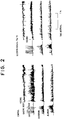
- Fig. 2 is a figure showing the effect of glicentin on the motor activity in the digestive tract in the post-feed period.
- an administration of glicentin promotes proliferation of the digestive tract mucosa, which leads to the treatment and prophylaxis of functional disorder of the digestive tract induced by atrophy or reduction of the digestive tract mucosa.
- glicentin which inhibits peristalsis of the stomach and rapid migration of food to the small intestine, is also used in the treatment of reduction in function of the digestive tract after operation or the treatment of duodenal ulcer.
- Glicentin which can be used in the present invention includes any glicentin of an animal origin such as human, porcine, bovine, hamster, rat and guinea pig, as well as glicentin containing additional methionine (Met) at the N-terminus, which are prepared by a genetic engineering procedure or a synthetic process.
- human glicentin is used in view of an undesirable allergic reaction or the like produced when being administered to humans. More preferably, there is used human glicentin (natural type) not containing additional methionine (Met) at the N-terminus.
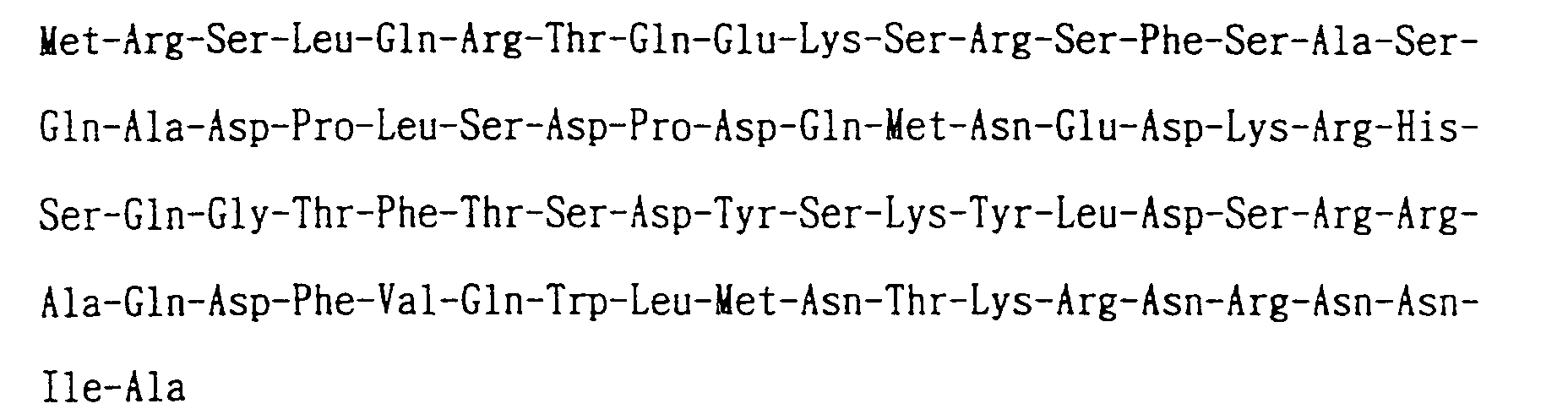
- Human glicentin (natural type) has the following amino acid sequence:
- human glicentin containing additional methionine (Met) at the N-terminus has the following amino acid sequence:
- the above human glicentin can be prepared by a genetic engineering procedure or a synthetic process from a gene of the DNA sequence corresponding to the above amino acid sequence.
- An example of the genetic engineering procedure is a process of producing a desired human glicentin which comprises preparing a synthetic gene encoding human glicentin amino acid sequence of the following DNA sequence which has been suggested by the present inventors in Japanese Patent Kokai Hei 4-364199, introducing the synthetic gene into plasmid, transforming E. coli with the resultant plasmid and culturing the transformant.
- Other processes of producing the human glicentin include introducing into plasmid a gene of another DNA sequence corresponding to the above amino acid sequence of glicentin, transforming E.
- human glicentin used in the invention is not limited to one produced by the specific process and any human glicentin can be employed in the invention so far as it has the above amino acid sequence.
- glicentin as the active ingredient can be administered orally or parenterally in the form of suitable pharmaceutical preparations.
- suitable pharmaceutical preparations can be formulated in a conventional manner using one or more pharmaceutically acceptable vehicles, adjuvants and additives, e.g., binders, diluents, solubilizers, stabilizers, buffers, lubricants, coating agents, antioxidants, sweeteners, flavors, colorants and the like.
- suitable preparations include powders, granules, tablets, capsules, injections, syrups, suspensions, emulsions or the like.
- the active ingredient may be administered in combination with other drugs such as antacid, muscarine receptor antagonist and prostaglandin. It may be in bilayered or multilayered tablet with other drugs.
- the tablets may also be coated with a conventional coating to form, e.g., sugar-coated, enteric-coated or film-coated tablets.
- suitable additives such as lactose, refined sugar, crystalline cellulose, corn starch, calcium phosphate, sorbitol, carboxymethylcellulose, gum arabic, polyvinylpyrrolidone, hydroxypropylcellulose, glycerin, polyethylene glycol, stearic acid, magnesium stearate and talc.
- suitable additives may be used such as sodium chloride, sorbitol, glycerin, olive oil, propylene glycol and ethyl alcohol.
- the aqueous or oily solutions, suspensions or emulsions may contain glicentin in an amount of 0.01 to 10 mg, advantageously 0.1 to 1 mg per 5 ml and the tablets, capsules or granules may contain glicentin in an amount of 0.01 to 10 mg, advantageously 0.1 to 1 mg.
- glicentin is considered to undergo a denaturation by an acid within intestine, a decomposition by digestion and a reduction in activity by such denaturation, when administered orally to human body. Therefore, it is recommendable to release the active ingredient, glicentin within intestine using an enteric coating.
- the active ingredient is preferably coated with a conventional enteric coating agent in the oral administration.
- the enteric coating agents include synthetic polymers such as EUDRAGIT®, polyacrylate base (available from Rohm Pharma), semisynthetic polymers such as cellulose acetate phthalate or the like.
- a preferable administration of glicentin is parenteral for the reason of its not undergoing denaturation or decomposition.
- the parenteral administration includes subcutaneous, intravenous, intramuscular and intraperitoneal injections.
- Glicentin can be formulated into the aqueous or oily solutions, suspensions or emulsions.
- glicentin is administered in the form of depot preparations for a prolonged effect of glicentin over a long period of time.
- a dose of the active ingredient can be varied depending on the route of administration, the symptoms, age, sex and weight of patients and other factors, but suitably can be in the range so as to provide a level of 100 pM to 10,000 pM in blood.
- Usual parenteral dosage for adult human ranges from 0.5 ⁇ g/kg to 500 ⁇ g/kg. However, lower or higher amount may be administered within the safety range.
- Gelatin was dissolved in warm water to a weight ratio of 16%, and the solution autoclaved and cooled to room temperature. To 40 ml of the gelatin solution was added a solution of 1 mg of glicentin in 10 ml of distilled water with stirring at room temperature. The mixture was divided into test tubes, freeze dried and stored for use.
- the gelatin solution was subcutaneously given at a dose of 10 ⁇ g per glicentin every 12 hours for 7 days to examine a nutritional effect of glicentin on the intestinal mucosae.
- a similar gelatin solution containing no glicentin was given for the same period of time as a control for comparison. Twelve hours after completion of the final administration, the rats were sacrificed and subjected to removal of the small intestine in the region from the Treitz's ligamentum to the cecum. The removed small intestine was cut at the central site to separate it into the jejunum and the ileum. The lumen of each of the intestinal tracts was gently washed with an aqueous physiological saline solution.
- the intestinal tracts were longitudinally incised, respectively, and tissues were removed of a portion of the jejunum in proximity to the duodenum, a portion of the ileum in proximity to the cecum and a portion around the boundary between the jejunum and the ileum and fixed in a 3.7% formalin solution as the proximal, distal and middle sites of the small intestine, respectively.
- Mucosae were collected by ablation with a spatula from the remainder of the intestinal tracts and weighed, respectively. The results are shown in Table 1.
- Fig. 1 Effects of the administration of glicentin on increases in intestinal villous height and in bodyweight in comparison with those in the control group are graphically shown in Fig. 1.
- glicentin significantly increases the jejunal mucosal weight and the whole small intestinal mucosal weight including jejunum and ileum. There was also shown a tendency to increase ileal mucosa and length of the small intestine. These experimental results indicate that glicentin has a trophic effect on intestinal mucosa.
- a solution of glicentin dissolved in a small amount of distilled water for injection was diluted with a 2% solution of bovine albumin prepared with a physiological saline solution for injection to a concentration of 400 ⁇ g/ml (50 nmol/ml).
- the solution was frozen and stored until used. On use it was 1:10 diluted with the physiological saline solution and subcutaneously given to rats at a dose of 0.2 ml, i.e., 1 nmol of glicentin per rat.
- GRPP which was a peptide in positions 1-30 of the amino acid sequence of glicentin, oxyntomodulin, glucagon, glucagon 1-21 and glucagon-like peptide-1. They were prepared and administered in the same way as glicentin at a dose of 1 nmol.
- Glucagon was purchased from Novonordisk Co., Ltd.
- the other control peptides were synthesized using BIOLYNX, a peptide synthesizer manufactured by LKB Co., Ltd. A physiological saline solution for injection was administered as a control group.
- the rats were sacrificed, and the small intestine was removed in the same way as in Example 1.
- the small intestine was divided equally into four parts and the third part from the duodenum was measured for the weight of the mucosa. The results are shown in Table 3.
- Example 1 The results in Examples 1 and 3 indicate that glicentin promotes the proliferation of the intestinal mucosa, thus demonstrating the activity of proliferating the digestive tract mucosa.
- the results in Example 2 indicate that glicentin inhibits the peristalsis of the stomach, thereby to inhibit the sudden movement of food to the gut. Thus, glicentin is found useful as a therapeutic agent for digestive tract diseases.
- glicentin 5 g of glicentin, 2 kg of lactose, 20 g of magnesium stearate and 100 g of corn starch were mixed, the mixture was compressed, the compressed mixture was pulverized to granules. The granules were formed in a tabletting machine to tablets each containing 50 ⁇ g of glicentin. The tablets were coated with cellulose acetate phthalate to form enteric-coated tablets.
- glicentin 30 g of refined sugar, 26 g of 70% D-sorbitol, 0.03 g of ethyl p-oxybenzoate and 0.015 g of propyl p-oxybenzoate were dissolved in 60 g of warm water. After cooling, 0.15 g of glycerin and a solution of the flavor in 0.5 g of 96% ethanol were added. Water was added to the mixture to make up a total amount of 100 ml of syrup.
- glicentin and 99 g of lactose were mixed and the mixture was dissolved in 1 liter of distilled water for injection.
- the solution was filtered through a sterile filter (e.g., a 0.22 ⁇ m membrane filter), 1 ml portions of the filtered solution were dispensed into vial bottles under sterile condition and freeze dried to provide the preparations for injection.
- the preparations are dissolved in distilled water on use.
- glicentin 5 g of glicentin, 400 g of lactose, 150 g of crystalline cellulose, 150 g of calcium stearate and 300 g of talc were mixed thoroughly, the mixture was compressed, the compressed mixture was pulverized to granules. The granules were encapsuled into two-piece capsules each containing 10.0 ⁇ g of glicentin.
Landscapes
- Health & Medical Sciences (AREA)
- Life Sciences & Earth Sciences (AREA)
- General Health & Medical Sciences (AREA)
- Veterinary Medicine (AREA)
- Animal Behavior & Ethology (AREA)
- Public Health (AREA)
- Medicinal Chemistry (AREA)
- Chemical & Material Sciences (AREA)
- Engineering & Computer Science (AREA)
- Pharmacology & Pharmacy (AREA)
- Bioinformatics & Cheminformatics (AREA)
- Organic Chemistry (AREA)
- Nuclear Medicine, Radiotherapy & Molecular Imaging (AREA)
- General Chemical & Material Sciences (AREA)
- Chemical Kinetics & Catalysis (AREA)
- Endocrinology (AREA)
- Zoology (AREA)
- Gastroenterology & Hepatology (AREA)
- Immunology (AREA)
- Proteomics, Peptides & Aminoacids (AREA)
- Epidemiology (AREA)
- Nutrition Science (AREA)
- Medicines That Contain Protein Lipid Enzymes And Other Medicines (AREA)
- Peptides Or Proteins (AREA)
Abstract
Description
- This invention relates to therapeutic agents for digestive tract diseases, comprising glicentin as an active ingredient and also to the use of glicentin as therapeutic agents for digestive tract diseases by administering glicentin to a patient to promote proliferation of digestive tract mucosa. It is also concerned with the use of glicentin as therapeutic agents for digestive tract diseases by delayed migration of contents in the digestive tract to achieve improved gastrointestinal motor symptoms or to promote cure of the same.
- Glicentin which is one of enteroglucagons is a peptide comprising 69 amino acid residues. For example, human glicentin is composed of the following amino acid sequence

The sequence contains in positions 33-61 the structure of glucagon which is a peptide hormone comprising 29 amino acid residues. Glicentin and glucagon are produced by tissue specific processing from the same precursor, preproglucagon. Glucagon is formed in pancreas and glicentin in intestine. Regarding physiological roles of these peptides, glucagon is known to control glycogenolysis and blood glucose level. However, the role is unknown for glicentin. - Glucagon-producing tumors are a very rare disease. One case was reported by Gleeson et al. in Gut, 12, 773-782, 1971, which was characterized by symptoms in small intestinal structure and function such as thickened small intestinal villi, delayed passing rate of food through the digestive tract and constipation. These findings and symptoms were found to have disappeared after removal of the tumor by surgical operation, possibility for factors produced by the tumor to participate in the altered small intestinal structure and function was postulated. Later, it was discovered by Bloom in Gut, 13, 520-523, 1972 that the tumor produced enteroglucagon. It was thus suggested that such symptoms were due to biological activity of enteroglucagon. It was further observed in animal experiments that jejunectomy brought about an increase in blood enteroglucagon level and a promoted productivity of cryptocell, by which the proliferating effect of enteroglucagon on epithelial cells of the intestinal tract was supported (Brit. J. Surg., 69, 14-18, 1982). It is however uncertain whether enteroglucagon as a trophic factor brings about proliferation of the small intestinal mucosa or both the increase in blood level and the mucosal proliferation are due to other factors. In addition, it was reported that a crude extract of enteroglucagon stimulated DNA synthesis in cultured cells of the small intestine (O. Ottenthal et al., Regul. Pept., 3, 84, 1982). However, it is uncertain whether the action is due to enteroglucagon itself, particularly glicentin, because its sample contains many impurities.
- Enteroglucagon is also called gut glucagon-like immunoreactivity, which is defined on the basis of immunoreactivity against anti-glucagon antiserum of low specificity and contains a number of peptides produced by tissue specific processing from the same preproglucagon. A plural of candidates are presented as the active form in blood, including oxyntomodulin, i.e., a peptide hormone in positions 33-69 of the amino acid sequence of glicentin, glucagon 1-21, i.e., a peptide in positions 33-53, glucagon-like peptide-1, i.e., a peptide hormone which occurs in a region of preproglucagon containing no glicentin and similar glucagon-like peptide-2. Thus, the role of glicentin, a kind of enteroglucagon has not yet been elucidated and also its target tissue and cell are unclear. Moreover, human glicentin has neither been isolated nor studied as a substance.
- The present inventors were successful in synthesizing DNA corresponding to the amino acid sequence of human glicentin which was deduced by G. I. Bell (Nature, 304, 368-371 (1983)) from the sequence of human preproglucagon gene and preparing human glicentin by means of genetic engineering procedure using the synthesized DNA (Japanese Patent Kokai Hei 4-364199). Thus, human glicentin has easily been made available in a large amount and as a purified product.
- The intestinal tract is an organ mainly participating in digestion of food and absorption of nutritional elements. Ingestion of the nutritional elements necessary for life conservation is mostly effected via the intraluminal mucosal layer of the intestinal tract. It is therefore a serious problem to the living body to have the functions of the digestive tract impaired by histological atrophy, development of ulcers or reduction in function of the mucosa after pathological or surgical injuries, and further, to have permeability of the intestinal mucosa abnormally intensified to allow for translocation of bacteria or foreign bodies. Thus, when a digestive tract is invaded or atrophied, rapid cure and recovery of function of the digestive tract are desirable. In case of the hypoplasia of the digestive tract tissues, it is necessary to promote their growth and enhance their function.
- It is also known that atrophy of the intestinal mucosa occurs by exposure to strong radiation or other cytostatic stimulus because turnover of the intestinal mucosal cells is very rapid. Furthermore, it is known that atrophy of the intestinal mocosa occurs also by adopting intravenous or parenteral nutrition which does not require intestinal functioning, or enteral nutrition or elemental diet which does not require normal digestive tract functions, when functions of the intestinal tract are reduced, or digestion and absorption in the intestinal tract fail after the intestinal tract operation. However, no drug is present which induces proliferation of the cells of intestinal mucosa for the treatment of functional disorder of the digestive tract caused by atrophy of the digestive tract mucosa. Therefore, there is a continuing desire to develop such drug.
- Further, diseases associated with resection of digestive tract, e.g., damping syndrome associated with an extensive gastrectomy bring about abnormally accelerated excretion of the intragastric contents, thus leading to rapid migration of not completely digested food to the jejunum, which results in hypertonicity of the contents in the jejunum. This will induce various pathological conditions such as sweating, tachycardia and nausea. Short gut syndrome caused by extensive resection of the intestinal tract in the treatment of various diseases or reduction in function of the small intestine is accompanied by exaggerated secretion of gastric acid, exaggerated peristalsis of the stomach and other reactions. These reactions occur as a result of failure of the feedback mechanism due to lack of the cells in the digestive tract mucosa that produce digestive tract hormones, physiologically active peptides and the like.
- The present inventors have found that human glicentin has an activity of proliferating an intestinal mucosa and also inhibits a peristalsis of the stomach, and have elucidated that glicentin is useful as a therapeutic agent for digestive tract diseases, thus leading to the present invention.
- The present invention provides a therapeutic agent for digestive tract diseases, which comprises glicentin as an active ingredient.
- The term "digestive tract" as used herein means a tube through which food passes, including stomach and intestine. The term "digestive tract diseases" as used herein means diseases accompanied by a qualitative or quantitative abnormality in the digestive tract mucosa, which include, e.g., ulceric or inflammatory disease; congenital or acquired digestion and absorption disorder including malabsorption syndrome; disease caused by loss of a mucosal barrier function of the gut; and protein-losing gastroenteropathy. The ulceric disease includes, e.g., gastric ulcer, duodenal ulcer, small intestinal ulcer, colonic ulcer and rectal ulcer. The inflammatory disease include, e.g., esophagitis, gastritis, duodenitis, enteritis, colitis, Crohn's disease, proctitis, gastrointestinal Behcet, radiation enteritis, radiation colitis, radiation proctitis, enteritis and medicamentosa. The malabsorption syndrome includes the essential malabsorption syndrome such as disaccharide-decomposing enzyme deficiency, glucose-galactose malabsorption, fractose malabsorption; secondary malabsorption syndrome, e.g., the disorder caused by a mucosal atrophy in the digestive tract through the intravenous or parenteral nutrition or elemental diet, the disease caused by the resection and shunt of the small intestine such as short gut syndrome, cul-de-sac syndrome; and indigestible malabsorption syndrome such as the disease caused by resection of the stomach, e.g., dumping syndrome.
- The term "therapeutic agent for digestive tract diseases" as used herein means the agents for the prevention and treatment of the digestive tract diseases, which include, e.g., the therapeutic agent for digestive tract ulcer, the therapeutic agent for inflammatory digestive tract disease, the therapeutic agent for mucosal atrophy in the digestive tract and the therapeutic agent for digestive tract wound, the amelioration agent for the function of the digestive tract including the agent for recovery of the mucosal barrier function and the amelioration agent for digestive and absorptive function.
- The ulcers include digestive ulcers and erosions, acute ulcers, namely, acute mucosal lesions. Glicentin of the present invention, because of promoting proliferation of intestinal mucosa, can be used in the treatment and prevention of pathologic conditions of insufficiency in digestion and absorption, that is, treatment and prevention of mucosal atrophy, or treatment of hypoplasia of the digestive tract tissues and decrease in these tissues by surgical removal as well as improvement of digestion and absorption. Further, glicentin can be used in the treatment of pathologic mucosal conditions due to inflammatory diseases such as enteritis, Crohn's disease and ulceric colitis and also in the treatment of reduction in function of the digestive tract after operation, for example, in damping syndrome as well as in the treatment of duodenal ulcer in conjunction with the inhibition of peristalsis of the stomach and rapid migration of food from the stomach to the jejunum. Furthermore, glicentin can effectively be used in promoting cure of surgical invasion as well as in improving functions of the digestive tract. Thus, the present invention also provides a therapeutic agent for atrophy of the digestive tract mucosa, a therapeutic agent for wounds in the digestive tract and a drug for improving functions of the digestive tract which comprise glicentin as active ingredients.
- Fig. 1 is a figure showing increase in length of intestinal villi by the administration of glicentin.
- Fig. 2 is a figure showing the effect of glicentin on the motor activity in the digestive tract in the post-feed period.
- In the present invention, an administration of glicentin promotes proliferation of the digestive tract mucosa, which leads to the treatment and prophylaxis of functional disorder of the digestive tract induced by atrophy or reduction of the digestive tract mucosa.
- Furthermore, glicentin, which inhibits peristalsis of the stomach and rapid migration of food to the small intestine, is also used in the treatment of reduction in function of the digestive tract after operation or the treatment of duodenal ulcer.
- Glicentin which can be used in the present invention includes any glicentin of an animal origin such as human, porcine, bovine, hamster, rat and guinea pig, as well as glicentin containing additional methionine (Met) at the N-terminus, which are prepared by a genetic engineering procedure or a synthetic process. Preferably, human glicentin is used in view of an undesirable allergic reaction or the like produced when being administered to humans. More preferably, there is used human glicentin (natural type) not containing additional methionine (Met) at the N-terminus.
- Human glicentin (natural type) has the following amino acid sequence:

- Further, human glicentin containing additional methionine (Met) at the N-terminus has the following amino acid sequence:
- The above human glicentin can be prepared by a genetic engineering procedure or a synthetic process from a gene of the DNA sequence corresponding to the above amino acid sequence. An example of the genetic engineering procedure is a process of producing a desired human glicentin which comprises preparing a synthetic gene encoding human glicentin amino acid sequence of the following DNA sequence which has been suggested by the present inventors in Japanese Patent Kokai Hei 4-364199, introducing the synthetic gene into plasmid, transforming E. coli with the resultant plasmid and culturing the transformant.

Other processes of producing the human glicentin include introducing into plasmid a gene of another DNA sequence corresponding to the above amino acid sequence of glicentin, transforming E. coli, Bacillus subtilis, yeast or other microorganism with the resultant plasmid and culturing the transformant or alternatively culturing a human glicentin productive cell. However, it should be understood that human glicentin used in the invention is not limited to one produced by the specific process and any human glicentin can be employed in the invention so far as it has the above amino acid sequence. - Usually, glicentin as the active ingredient can be administered orally or parenterally in the form of suitable pharmaceutical preparations. Such pharmaceutical preparations can be formulated in a conventional manner using one or more pharmaceutically acceptable vehicles, adjuvants and additives, e.g., binders, diluents, solubilizers, stabilizers, buffers, lubricants, coating agents, antioxidants, sweeteners, flavors, colorants and the like. Suitable preparations include powders, granules, tablets, capsules, injections, syrups, suspensions, emulsions or the like. If necessary, the active ingredient may be administered in combination with other drugs such as antacid, muscarine receptor antagonist and prostaglandin. It may be in bilayered or multilayered tablet with other drugs. The tablets may also be coated with a conventional coating to form, e.g., sugar-coated, enteric-coated or film-coated tablets.
- In the formulation of solid preparations such as tablets and capsules, there may be used suitable additives such as lactose, refined sugar, crystalline cellulose, corn starch, calcium phosphate, sorbitol, carboxymethylcellulose, gum arabic, polyvinylpyrrolidone, hydroxypropylcellulose, glycerin, polyethylene glycol, stearic acid, magnesium stearate and talc. In the formulation of liquid preparations such as injections and syrups, suitable additives may be used such as sodium chloride, sorbitol, glycerin, olive oil, propylene glycol and ethyl alcohol.
- For a preferred unit dosage form for oral administration, for instance, the aqueous or oily solutions, suspensions or emulsions may contain glicentin in an amount of 0.01 to 10 mg, advantageously 0.1 to 1 mg per 5 ml and the tablets, capsules or granules may contain glicentin in an amount of 0.01 to 10 mg, advantageously 0.1 to 1 mg.
- From the chemical structure, glicentin is considered to undergo a denaturation by an acid within intestine, a decomposition by digestion and a reduction in activity by such denaturation, when administered orally to human body. Therefore, it is recommendable to release the active ingredient, glicentin within intestine using an enteric coating. Thus the active ingredient is preferably coated with a conventional enteric coating agent in the oral administration. The enteric coating agents include synthetic polymers such as EUDRAGIT®, polyacrylate base (available from Rohm Pharma), semisynthetic polymers such as cellulose acetate phthalate or the like.
- A preferable administration of glicentin is parenteral for the reason of its not undergoing denaturation or decomposition. The parenteral administration includes subcutaneous, intravenous, intramuscular and intraperitoneal injections. Glicentin can be formulated into the aqueous or oily solutions, suspensions or emulsions. Preferably, glicentin is administered in the form of depot preparations for a prolonged effect of glicentin over a long period of time.
- A dose of the active ingredient can be varied depending on the route of administration, the symptoms, age, sex and weight of patients and other factors, but suitably can be in the range so as to provide a level of 100 pM to 10,000 pM in blood. Usual parenteral dosage for adult human ranges from 0.5 µg/kg to 500 µg/kg. However, lower or higher amount may be administered within the safety range.
- When 10 mg/kg of human glicentin (natural type) is intraperitoneally administered to male BALB/c mice (6 weeks age), no change in appearance is observed.
- The present invention is further illustrated by the following examples. The numerical values in the tables are shown by average value + standard error.
- An experiment was performed in male SD rats weighing 140-160 g which had been fed on standard food under light-dark condition of a cycle of 12 hours. The food which was replaced by an elemental nutrition (Elental®, Morishita-Roussel Japan) was taken ad lib., and remained unchanged until the experiment was finished. After feeding on the component nutrition for 3 days, administration of glicentin prepared as described below was started.
- Gelatin was dissolved in warm water to a weight ratio of 16%, and the solution autoclaved and cooled to room temperature. To 40 ml of the gelatin solution was added a solution of 1 mg of glicentin in 10 ml of distilled water with stirring at room temperature. The mixture was divided into test tubes, freeze dried and stored for use.
- The gelatin solution was subcutaneously given at a dose of 10 µg per glicentin every 12 hours for 7 days to examine a nutritional effect of glicentin on the intestinal mucosae. A similar gelatin solution containing no glicentin was given for the same period of time as a control for comparison. Twelve hours after completion of the final administration, the rats were sacrificed and subjected to removal of the small intestine in the region from the Treitz's ligamentum to the cecum. The removed small intestine was cut at the central site to separate it into the jejunum and the ileum. The lumen of each of the intestinal tracts was gently washed with an aqueous physiological saline solution. The intestinal tracts were longitudinally incised, respectively, and tissues were removed of a portion of the jejunum in proximity to the duodenum, a portion of the ileum in proximity to the cecum and a portion around the boundary between the jejunum and the ileum and fixed in a 3.7% formalin solution as the proximal, distal and middle sites of the small intestine, respectively. Mucosae were collected by ablation with a spatula from the remainder of the intestinal tracts and weighed, respectively. The results are shown in Table 1.
- The tissues fixed in the formalin solution were embedded in paraffin to form a preparation which was stained with hematoxylin-eosin and measured for height of the villi using an optical microscope. The results are shown in Table 2.
Table 1 Control group Glicentin group Bodyweight before administration 146.3 ± 2.9 161.0 ±10.4 after administration 174.4 ±40 180.8 ± 5.3 Length of small intestine, cm 103.8 ± 1.3 107.0 ± 4.8 Length of small intestine, cm/100 g bodyweight 71.1 ± 1.6 66.4 ± 1.7 Jejunal mucosal weight, g 0.97± 0.06 1.3 ± 0.12 Jejunal mucosal weight, g/100 g bodyweight 0.56± 0.04 0.75± 0.08 Ileal mucosal weight, g 0.94± 0.06 1.04± 0.09 Ileal mucosal weight, g/100 g bodyweight 0.54± 0.03 0.57± 0.04 Whole small intestinal mucosal weight, g 1.92± 0.07 2.38± 0.12 Whole small intestinal mucosal weight, g/100 g bodyweight 1.10± 0.04 1.32± 0.03 Table 2 Control group Glicentin group Villous height in proximal intestine, µm 447±13.2 546±18.6 Villous height in middle intestine, µm 301±12.3 354± 7.5 Villous height in distal intestine, µm 200±12.4 216± 8.4 - Effects of the administration of glicentin on increases in intestinal villous height and in bodyweight in comparison with those in the control group are graphically shown in Fig. 1.
- The experimental results indicate that glicentin significantly increases the jejunal mucosal weight and the whole small intestinal mucosal weight including jejunum and ileum. There was also shown a tendency to increase ileal mucosa and length of the small intestine. These experimental results indicate that glicentin has a trophic effect on intestinal mucosa.
- A solution of glicentin dissolved in a small amount of distilled water for injection was diluted with a 2% solution of bovine albumin prepared with a physiological saline solution for injection to a concentration of 400 µg/ml (50 nmol/ml). The solution was frozen and stored until used. On use it was 1:10 diluted with the physiological saline solution and subcutaneously given to rats at a dose of 0.2 ml, i.e., 1 nmol of glicentin per rat.
- As control were used GRPP which was a peptide in positions 1-30 of the amino acid sequence of glicentin, oxyntomodulin, glucagon, glucagon 1-21 and glucagon-like peptide-1. They were prepared and administered in the same way as glicentin at a dose of 1 nmol. Glucagon was purchased from Novonordisk Co., Ltd. The other control peptides were synthesized using BIOLYNX, a peptide synthesizer manufactured by LKB Co., Ltd. A physiological saline solution for injection was administered as a control group.
- The rats were sacrificed, and the small intestine was removed in the same way as in Example 1. The small intestine was divided equally into four parts and the third part from the duodenum was measured for the weight of the mucosa. The results are shown in Table 3.
- These results indicate that only glicentin significantly increases the weight of intestinal mucosa unlike GRPP, oxyntomodulin, glucagon, glucagon 1-21 and glucagon-like peptide-1.

- An experiment was performed as described below in order to examine the action of glicentin on a motility of the digestive tracts after meal.
- Six hybrid dogs weighing 16-18 kg were sutured with strain gauge transducers (manufactured by Star Medical, F121S) at a site of the gastric antrum 4 cm from the pyloric ring, a site of the duodenum for the main incurrent pancreatic duct and a site of the jejunum 10 cm from the Treitz's ligamentum, respectively, to measure the contractile force intensity of the circular muscle. Recovery period for the suture was 2 weeks.
- Three of the 6 dogs were intravenously given over 1 hour 15 ml of a physiological saline solution in which 400 pmol of glicentin had been dissolved per kg of bodyweight. The remaining three received an aqueous physiological solution containing no glicentin in the same way as above as a control for comparison. The dogs were fed on 15 g of a solid diet (SD®, manufactured by Oriental Yeast K.K.) and 15 g of Vitaone® (manufactured by Nihon Pet Food K.K. and Kyodo Shiryo K.K.) per kg of bodyweight simultaneously with the intravenous administration.
- Then, the motor activity of the digestive tracts and length of the post-feed period were measured. The results are shown in Fig. 2 and Table 3. Intensity of the contraction in the post-feed period was integrated for the two-hour measurements and evaluated in comparison with the mean level of the signal peak in phase 3 motor activity of the intestinal tracts in hunger and taken as a motor index. The results are shown in Table 5.
- These experimental results indicate that glicentin had no influence upon the length of the post-feed period and inhibited the post-feed motility in the vestibulum of stomach, thus demonstrating an effectiveness of glicentin in the treatment of increased gastric peristalsis in damping syndrome or short gut syndrome caused by excision of the stomach or the intestinal tract.
Table 4 Length of post-feed period (hr.) Control group 14.8±0.3 Glicentin group 13.6±1.0 Table 5 Motor index Control group Glicentin group Stomach vestibulum 1.670±0.2 0.878±0.1 Duodenum 1.070±0.1 0.675±0.4 Jejunum 0.829±0.2 1.087±0.2 - The results in Examples 1 and 3 indicate that glicentin promotes the proliferation of the intestinal mucosa, thus demonstrating the activity of proliferating the digestive tract mucosa. The results in Example 2 indicate that glicentin inhibits the peristalsis of the stomach, thereby to inhibit the sudden movement of food to the gut. Thus, glicentin is found useful as a therapeutic agent for digestive tract diseases.
- The following examples illustrate the formulation of typical pharmaceutical preparations containing glicentin according to the invention.
- 5 g of glicentin, 2 kg of lactose, 20 g of magnesium stearate and 100 g of corn starch were mixed, the mixture was compressed, the compressed mixture was pulverized to granules. The granules were formed in a tabletting machine to tablets each containing 50 µg of glicentin. The tablets were coated with cellulose acetate phthalate to form enteric-coated tablets.
- 0.1 g of glicentin, 30 g of refined sugar, 26 g of 70% D-sorbitol, 0.03 g of ethyl p-oxybenzoate and 0.015 g of propyl p-oxybenzoate were dissolved in 60 g of warm water. After cooling, 0.15 g of glycerin and a solution of the flavor in 0.5 g of 96% ethanol were added. Water was added to the mixture to make up a total amount of 100 ml of syrup.
- 1 g of glicentin and 99 g of lactose were mixed and the mixture was dissolved in 1 liter of distilled water for injection. The solution was filtered through a sterile filter (e.g., a 0.22 µm membrane filter), 1 ml portions of the filtered solution were dispensed into vial bottles under sterile condition and freeze dried to provide the preparations for injection. The preparations are dissolved in distilled water on use.
- 5 g of glicentin, 400 g of lactose, 150 g of crystalline cellulose, 150 g of calcium stearate and 300 g of talc were mixed thoroughly, the mixture was compressed, the compressed mixture was pulverized to granules. The granules were encapsuled into two-piece capsules each containing 10.0 µg of glicentin.


Claims (17)
- Glicentin for use in therapy.
- Glicentin for use in the treatment of digestive tract disease.
- Glicentin according to claim 2 wherein the digestive tract disease is ulceric or inflammatory disease, congenital or acquired digestion or absorption disorder, disease caused by loss of a mucosal barrier function of the gut, or protein-losing gastroenteropathy.
- Glicentin according to claim 2 wherein the digestive tract disease is a disorder caused by a mucosal atrophy in the digestive tract through the intravenous or parenteral nutrition or elemental diet, short gut syndrome or dumping syndrome.
- Glicentin according to any one of claims 1 to 4 which is human glicentin.
- Glicentin according to claim 5 wherein the human glicentin has the following amino acid sequence:

- Glicentin according to claim 5 wherein the human glicentin has the following amino acid sequence:

- The use of glicentin for the manufacture of a medicament for the treatment of digestive tract diseases.
- The use according to claim 8 wherein the digestive tract disease is ulceric or inflammatory disease, congenital or acquired digestion and absorption disorder, disease caused by loss of a mucosal barrier function of the gut, or protein-losing gastroenteropathy.
- The use according to claim 8 wherein the digestive tract disease is a disorder caused by a mucosal atrophy in the digestive tract through the intravenous or parenteral nutrition or elemental diet, short gut syndrome or dumping syndrome.
- The use according to any one of claims 8 to 10 wherein the glicentin is human glicentin.
- The use according to claim 11 wherein the human glicentin has the following amino acid sequence:


- The use according to claim 11 where the human glicentin has the following amino acid sequence:

- A therapeutic agent for treatment of digestive tract disease which comprises glicentin as an active ingredient.
- An agent according to claim 14 wherein the glicentin is human glicentin.
- An agent according to claim 15 wherein the human glicentin has the following amino acid sequence:

- An agent according to claim 15 wherein the human glicentin has the following amino acid sequence:


Applications Claiming Priority (9)
| Application Number | Priority Date | Filing Date | Title |
|---|---|---|---|
| JP35266/93 | 1993-02-24 | ||
| JP3526693 | 1993-02-24 | ||
| JP3526693 | 1993-02-24 | ||
| JP25979993 | 1993-10-18 | ||
| JP259799/93 | 1993-10-18 | ||
| JP25979993 | 1993-10-18 | ||
| JP32669893 | 1993-12-24 | ||
| JP5326698A JP2961045B2 (en) | 1993-02-24 | 1993-12-24 | Intestinal mucosa enhancement promoter |
| JP326698/93 | 1993-12-24 |
Publications (2)
| Publication Number | Publication Date |
|---|---|
| EP0612531A1 true EP0612531A1 (en) | 1994-08-31 |
| EP0612531B1 EP0612531B1 (en) | 2001-11-28 |
Family
ID=27288705
Family Applications (1)
| Application Number | Title | Priority Date | Filing Date |
|---|---|---|---|
| EP94301325A Expired - Lifetime EP0612531B1 (en) | 1993-02-24 | 1994-02-24 | Therapeutic agent for digestive tract diseases |
Country Status (5)
| Country | Link |
|---|---|
| US (2) | US5432156A (en) |
| EP (1) | EP0612531B1 (en) |
| JP (1) | JP2961045B2 (en) |
| CA (1) | CA2115377A1 (en) |
| DE (1) | DE69429202T2 (en) |
Cited By (12)
| Publication number | Priority date | Publication date | Assignee | Title |
|---|---|---|---|---|
| EP0639302A1 (en) | 1993-03-04 | 1995-02-22 | Robert Bosch Gmbh | Electromotor accomodating device |
| EP0655252A1 (en) * | 1993-10-18 | 1995-05-31 | Nisshin Flour Milling Co., Ltd. | Agent for suppressing the motor activity of gastrointestinal tracts |
| EP0713918A2 (en) | 1994-11-29 | 1996-05-29 | Nisshin Flour Milling Co., Ltd. | Method for the extraction of glicentin or glicentin analagous substances |
| WO1996032414A1 (en) | 1995-04-14 | 1996-10-17 | 1149336 Ontario Inc. | Glucagon-like peptide-2 and its therapeutic use |
| WO1997039031A1 (en) * | 1996-04-12 | 1997-10-23 | 1149336 Ontario Inc. | Glucagon-like peptide-2 analogs |
| US5712105A (en) * | 1994-10-31 | 1998-01-27 | Nisshin Flour Milling Co., Ltd. | Monoclonal antibody to human glicentin, hybridoma for producing said antibody and assay method for human glicentin using said antibody |
| US5789379A (en) * | 1995-04-14 | 1998-08-04 | Allelix Biopharmaceutical Inc. | Glucagon-like peptide-2 analogs |
| US5834428A (en) * | 1995-04-14 | 1998-11-10 | 1149336 Ontario Inc. | Glucagon-like peptide-2 and its therapeutic use |
| US5994500A (en) * | 1996-07-19 | 1999-11-30 | 1149336 Ontario Inc. | Antagonists of intestinotrophic GLP-2 peptides |
| US6051557A (en) * | 1997-05-16 | 2000-04-18 | 1149336 Ontario Inc. | Methods of enhancing functioning of the upper gastrointestinal tract |
| US6184201B1 (en) | 1995-04-14 | 2001-02-06 | Nps Allelix Corp. | Intestinotrophic glucagon-like peptide-2 analogs |
| US6297214B1 (en) | 1997-05-02 | 2001-10-02 | 1149336 Ontario, Inc. | Methods of enhancing functioning of the large intestine |
Families Citing this family (14)
| Publication number | Priority date | Publication date | Assignee | Title |
|---|---|---|---|---|
| JP2961045B2 (en) * | 1993-02-24 | 1999-10-12 | 日清製粉株式会社 | Intestinal mucosa enhancement promoter |
| JP2887063B2 (en) * | 1993-12-28 | 1999-04-26 | 日清製粉株式会社 | Gricentin manufacturing method |
| US6335317B1 (en) * | 1998-04-10 | 2002-01-01 | Emory University | Use of gut-trophic growth factors to improve oxidative status |
| GB0121709D0 (en) * | 2001-09-07 | 2001-10-31 | Imp College Innovations Ltd | Food inhibition agent |
| CN100350968C (en) * | 2001-09-24 | 2007-11-28 | 皇家创新有限公司 | Modification of feeding behavior |
| US8058233B2 (en) * | 2002-01-10 | 2011-11-15 | Oregon Health And Science University | Modification of feeding behavior using PYY and GLP-1 |
| GB0300571D0 (en) * | 2003-01-10 | 2003-02-12 | Imp College Innovations Ltd | Modification of feeding behaviour |
| UA95235C2 (en) * | 2005-05-04 | 2011-07-25 | Зииланд Фарма А/С | Glucagon-like-peptide-2 (glp-2) analogues |
| GB0511986D0 (en) * | 2005-06-13 | 2005-07-20 | Imp College Innovations Ltd | Novel compounds and their effects on feeding behaviour |
| CN101573376B (en) | 2006-11-08 | 2013-11-06 | 西兰制药公司 | Selective glucagon-like peptide-2 (GLP-2) analogs |
| TWI428346B (en) * | 2006-12-13 | 2014-03-01 | Imp Innovations Ltd | Novel compounds and their effects on feeding behaviour |
| CN104540850B (en) | 2012-05-03 | 2018-05-18 | 西兰制药公司 | Glucagon-like peptide 2 (GLP-2) analogs |
| EP3551651B1 (en) | 2016-12-09 | 2024-03-06 | Zealand Pharma A/S | Acylated glp-1/glp-2 dual agonists |
| IL299864B2 (en) | 2017-06-16 | 2024-06-01 | Zealand Pharma As | Dosing regimen for glucagon-like peptide (GLP-2) analog administration 2 |
Citations (1)
| Publication number | Priority date | Publication date | Assignee | Title |
|---|---|---|---|---|
| EP0586812A2 (en) * | 1992-07-13 | 1994-03-16 | Nisshin Flour Milling Co., Ltd. | Medicaments comprising glicentin as active ingredient |
Family Cites Families (2)
| Publication number | Priority date | Publication date | Assignee | Title |
|---|---|---|---|---|
| JPH04364199A (en) * | 1990-08-15 | 1992-12-16 | Nisshin Flour Milling Co Ltd | Synthetic gene of human type glicentin |
| JP2961045B2 (en) * | 1993-02-24 | 1999-10-12 | 日清製粉株式会社 | Intestinal mucosa enhancement promoter |
-
1993
- 1993-12-24 JP JP5326698A patent/JP2961045B2/en not_active Expired - Fee Related
-
1994
- 1994-02-09 US US08/193,863 patent/US5432156A/en not_active Expired - Lifetime
- 1994-02-10 CA CA002115377A patent/CA2115377A1/en not_active Abandoned
- 1994-02-24 EP EP94301325A patent/EP0612531B1/en not_active Expired - Lifetime
- 1994-02-24 DE DE69429202T patent/DE69429202T2/en not_active Expired - Fee Related
-
1995
- 1995-01-25 US US08/377,833 patent/US5547938A/en not_active Expired - Fee Related
Patent Citations (1)
| Publication number | Priority date | Publication date | Assignee | Title |
|---|---|---|---|---|
| EP0586812A2 (en) * | 1992-07-13 | 1994-03-16 | Nisshin Flour Milling Co., Ltd. | Medicaments comprising glicentin as active ingredient |
Non-Patent Citations (1)
| Title |
|---|
| PATENT ABSTRACTS OF JAPAN * |
Cited By (33)
| Publication number | Priority date | Publication date | Assignee | Title |
|---|---|---|---|---|
| EP0639302A1 (en) | 1993-03-04 | 1995-02-22 | Robert Bosch Gmbh | Electromotor accomodating device |
| EP0655252A1 (en) * | 1993-10-18 | 1995-05-31 | Nisshin Flour Milling Co., Ltd. | Agent for suppressing the motor activity of gastrointestinal tracts |
| US5576295A (en) * | 1993-10-18 | 1996-11-19 | Nisshin Flour Milling Co., Ltd. | Agent for suppressing the motor activity of gastrointestinal tracts |
| US5712105A (en) * | 1994-10-31 | 1998-01-27 | Nisshin Flour Milling Co., Ltd. | Monoclonal antibody to human glicentin, hybridoma for producing said antibody and assay method for human glicentin using said antibody |
| EP0713918A2 (en) | 1994-11-29 | 1996-05-29 | Nisshin Flour Milling Co., Ltd. | Method for the extraction of glicentin or glicentin analagous substances |
| EP0713918A3 (en) * | 1994-11-29 | 1999-03-17 | Nisshin Flour Milling Co., Ltd. | Method for the extraction of glicentin or glicentin analagous substances |
| US5702922A (en) * | 1994-11-29 | 1997-12-30 | Nisshin Flour Milling Co., Ltd. | Method for the extraction of glicentin or glicentin analogous substances |
| US5834428A (en) * | 1995-04-14 | 1998-11-10 | 1149336 Ontario Inc. | Glucagon-like peptide-2 and its therapeutic use |
| EP0830377A1 (en) | 1995-04-14 | 1998-03-25 | 1149336 Ontario Inc. | Glucagon-like peptide-2 and its therapeutic use |
| US5789379A (en) * | 1995-04-14 | 1998-08-04 | Allelix Biopharmaceutical Inc. | Glucagon-like peptide-2 analogs |
| US8933039B2 (en) | 1995-04-14 | 2015-01-13 | Nps Pharmaceuticals, Inc. | Glucagon-like peptide-2 analogs |
| WO1996032414A1 (en) | 1995-04-14 | 1996-10-17 | 1149336 Ontario Inc. | Glucagon-like peptide-2 and its therapeutic use |
| US5990077A (en) * | 1995-04-14 | 1999-11-23 | 1149336 Ontario Inc. | Glucagon-like peptide-2 and its therapeutic use |
| US8846625B2 (en) | 1995-04-14 | 2014-09-30 | 1149336 Ontario Inc. | Glucagon-like peptide-2 analogs |
| US7888317B2 (en) | 1995-04-14 | 2011-02-15 | Nps Pharmaceuticals, Inc. | Glucagon-like peptide-2 and its therapeutic use |
| US6184201B1 (en) | 1995-04-14 | 2001-02-06 | Nps Allelix Corp. | Intestinotrophic glucagon-like peptide-2 analogs |
| EP2277530A1 (en) | 1995-04-14 | 2011-01-26 | 1149336 Ontario Inc. | Glucagon-like peptide-2 and its therapeutic use |
| EP2277909A1 (en) | 1995-04-14 | 2011-01-26 | 1149336 Ontario Inc. | Glucagon-like peptide-2 derivatives and their therapeutic use |
| US7049284B2 (en) | 1995-04-14 | 2006-05-23 | 1149336 Ontario Inc. | Glucagon-like peptide-2 and its therapeutic use |
| EP1988100A1 (en) | 1995-04-14 | 2008-11-05 | 1149336 Ontario Inc. | Derivatives of glucagon-like peptide-2 and their therapeutic use |
| EP2275438A1 (en) | 1996-04-12 | 2011-01-19 | 1149336 Ontario Inc. | Glucagon-like peptide-2 analogs |
| EP2218734A2 (en) | 1996-04-12 | 2010-08-18 | 1149336 Ontario Inc. | Glucagon-like peptide-2 analogs |
| EP2218734A3 (en) * | 1996-04-12 | 2010-10-13 | 1149336 Ontario Inc. | Glucagon-like peptide-2 analogs |
| EP2009024A1 (en) | 1996-04-12 | 2008-12-31 | 1149336 Ontario Inc. | Glucagon-like peptide-2 analogs |
| EP1231219A1 (en) * | 1996-04-12 | 2002-08-14 | 1149336 Ontario Inc. | GLucagon-like peptide-2 analogs |
| WO1997039031A1 (en) * | 1996-04-12 | 1997-10-23 | 1149336 Ontario Inc. | Glucagon-like peptide-2 analogs |
| US5994500A (en) * | 1996-07-19 | 1999-11-30 | 1149336 Ontario Inc. | Antagonists of intestinotrophic GLP-2 peptides |
| US7642241B2 (en) | 1997-05-02 | 2010-01-05 | Nps Pharmaceuticals, Inc. | Methods of enhancing functioning of the large intestine |
| US6297214B1 (en) | 1997-05-02 | 2001-10-02 | 1149336 Ontario, Inc. | Methods of enhancing functioning of the large intestine |
| US7960344B2 (en) | 1997-05-02 | 2011-06-14 | 1149336 Ontario, Inc. | Methods of enhancing functioning of the large intestine |
| US8278273B2 (en) | 1997-05-02 | 2012-10-02 | 1149336 Ontario, Inc. | Methods of enhancing functioning of the large intestine |
| US8603976B2 (en) | 1997-05-02 | 2013-12-10 | 1149336 Ontario, Inc. | Methods of enhancing functioning of the large intestine |
| US6051557A (en) * | 1997-05-16 | 2000-04-18 | 1149336 Ontario Inc. | Methods of enhancing functioning of the upper gastrointestinal tract |
Also Published As
| Publication number | Publication date |
|---|---|
| CA2115377A1 (en) | 1994-08-25 |
| US5547938A (en) | 1996-08-20 |
| US5432156A (en) | 1995-07-11 |
| EP0612531B1 (en) | 2001-11-28 |
| DE69429202T2 (en) | 2002-05-23 |
| JP2961045B2 (en) | 1999-10-12 |
| JPH07223967A (en) | 1995-08-22 |
| DE69429202D1 (en) | 2002-01-10 |
Similar Documents
| Publication | Publication Date | Title |
|---|---|---|
| EP0612531B1 (en) | Therapeutic agent for digestive tract diseases | |
| RU2546520C2 (en) | Application of ave0010 for production of medication for treatment of type 2 diabetes mellitus | |
| JP5042312B2 (en) | Pharmaceutical composition for oral delivery comprising HGH | |
| US20040018190A1 (en) | Drugs and foods improving the quality of life and process for producing the same | |
| CA2277955A1 (en) | Remedies for diabetes | |
| JPS60231617A (en) | Medicine composition for promoting cure of damaged digestivetract | |
| EP0462071B1 (en) | Pharmaceutical resorption-improved somatostatin compositions, their preparation and use | |
| US5700776A (en) | Medicaments comprising glicentin as active ingredient | |
| HU206633B (en) | Process for producing pharmaceutical compositions for treating arthritis containing somatostatine analogues or derivatives thereof | |
| WO2000062797A1 (en) | Remedies for autonomic neuropathy | |
| EP0471761B1 (en) | Use of a GnRHanalog for the manufacture of a medicament for the treatment of motility disorders | |
| EP0655252B1 (en) | Agent for suppressing the motor activity of gastrointestinal tracts | |
| KR102932912B1 (en) | Reverse micelle drug delivery system and oral pharmaceutical composition comprising the same | |
| JP3034032B2 (en) | Intestinal disorders | |
| AU2025205229B2 (en) | Compositions and methods for treating diabetes | |
| US20260053894A1 (en) | Compositions and methods for treating diabetes | |
| KR20120127390A (en) | Therapeutic agent for gastrointestinal diseases | |
| JPWO2000062797A1 (en) | Autonomic nervous system disorder treatment |
Legal Events
| Date | Code | Title | Description |
|---|---|---|---|
| PUAI | Public reference made under article 153(3) epc to a published international application that has entered the european phase |
Free format text: ORIGINAL CODE: 0009012 |
|
| 17P | Request for examination filed |
Effective date: 19940304 |
|
| AK | Designated contracting states |
Kind code of ref document: A1 Designated state(s): BE CH DE DK ES FR GB IT LI NL SE |
|
| 17Q | First examination report despatched |
Effective date: 20000222 |
|
| GRAG | Despatch of communication of intention to grant |
Free format text: ORIGINAL CODE: EPIDOS AGRA |
|
| RIC1 | Information provided on ipc code assigned before grant |
Free format text: 7A 61K 38/26 A, 7A 61P 1/00 B |
|
| GRAG | Despatch of communication of intention to grant |
Free format text: ORIGINAL CODE: EPIDOS AGRA |
|
| GRAH | Despatch of communication of intention to grant a patent |
Free format text: ORIGINAL CODE: EPIDOS IGRA |
|
| GRAH | Despatch of communication of intention to grant a patent |
Free format text: ORIGINAL CODE: EPIDOS IGRA |
|
| GRAA | (expected) grant |
Free format text: ORIGINAL CODE: 0009210 |
|
| RAP1 | Party data changed (applicant data changed or rights of an application transferred) |
Owner name: NISSHIN SEIFUN GROUP INC. |
|
| AK | Designated contracting states |
Kind code of ref document: B1 Designated state(s): BE CH DE DK ES FR GB IT LI NL SE |
|
| PG25 | Lapsed in a contracting state [announced via postgrant information from national office to epo] |
Ref country code: NL Free format text: LAPSE BECAUSE OF FAILURE TO SUBMIT A TRANSLATION OF THE DESCRIPTION OR TO PAY THE FEE WITHIN THE PRESCRIBED TIME-LIMIT Effective date: 20011128 Ref country code: LI Free format text: LAPSE BECAUSE OF FAILURE TO SUBMIT A TRANSLATION OF THE DESCRIPTION OR TO PAY THE FEE WITHIN THE PRESCRIBED TIME-LIMIT Effective date: 20011128 Ref country code: CH Free format text: LAPSE BECAUSE OF FAILURE TO SUBMIT A TRANSLATION OF THE DESCRIPTION OR TO PAY THE FEE WITHIN THE PRESCRIBED TIME-LIMIT Effective date: 20011128 Ref country code: BE Free format text: LAPSE BECAUSE OF FAILURE TO SUBMIT A TRANSLATION OF THE DESCRIPTION OR TO PAY THE FEE WITHIN THE PRESCRIBED TIME-LIMIT Effective date: 20011128 |
|
| REG | Reference to a national code |
Ref country code: CH Ref legal event code: EP |
|
| REG | Reference to a national code |
Ref country code: GB Ref legal event code: IF02 |
|
| REF | Corresponds to: |
Ref document number: 69429202 Country of ref document: DE Date of ref document: 20020110 |
|
| PG25 | Lapsed in a contracting state [announced via postgrant information from national office to epo] |
Ref country code: SE Free format text: LAPSE BECAUSE OF FAILURE TO SUBMIT A TRANSLATION OF THE DESCRIPTION OR TO PAY THE FEE WITHIN THE PRESCRIBED TIME-LIMIT Effective date: 20020228 Ref country code: DK Free format text: LAPSE BECAUSE OF FAILURE TO SUBMIT A TRANSLATION OF THE DESCRIPTION OR TO PAY THE FEE WITHIN THE PRESCRIBED TIME-LIMIT Effective date: 20020228 |
|
| ET | Fr: translation filed | ||
| NLV1 | Nl: lapsed or annulled due to failure to fulfill the requirements of art. 29p and 29m of the patents act | ||
| PG25 | Lapsed in a contracting state [announced via postgrant information from national office to epo] |
Ref country code: ES Free format text: LAPSE BECAUSE OF FAILURE TO SUBMIT A TRANSLATION OF THE DESCRIPTION OR TO PAY THE FEE WITHIN THE PRESCRIBED TIME-LIMIT Effective date: 20020530 |
|
| REG | Reference to a national code |
Ref country code: CH Ref legal event code: PL |
|
| PLBE | No opposition filed within time limit |
Free format text: ORIGINAL CODE: 0009261 |
|
| STAA | Information on the status of an ep patent application or granted ep patent |
Free format text: STATUS: NO OPPOSITION FILED WITHIN TIME LIMIT |
|
| 26N | No opposition filed | ||
| PGFP | Annual fee paid to national office [announced via postgrant information from national office to epo] |
Ref country code: GB Payment date: 20070221 Year of fee payment: 14 |
|
| PGFP | Annual fee paid to national office [announced via postgrant information from national office to epo] |
Ref country code: DE Payment date: 20070222 Year of fee payment: 14 |
|
| PGFP | Annual fee paid to national office [announced via postgrant information from national office to epo] |
Ref country code: IT Payment date: 20070601 Year of fee payment: 14 |
|
| PGFP | Annual fee paid to national office [announced via postgrant information from national office to epo] |
Ref country code: FR Payment date: 20070208 Year of fee payment: 14 |
|
| GBPC | Gb: european patent ceased through non-payment of renewal fee |
Effective date: 20080224 |
|
| REG | Reference to a national code |
Ref country code: FR Ref legal event code: ST Effective date: 20081031 |
|
| PG25 | Lapsed in a contracting state [announced via postgrant information from national office to epo] |
Ref country code: DE Free format text: LAPSE BECAUSE OF NON-PAYMENT OF DUE FEES Effective date: 20080902 |
|
| PG25 | Lapsed in a contracting state [announced via postgrant information from national office to epo] |
Ref country code: FR Free format text: LAPSE BECAUSE OF NON-PAYMENT OF DUE FEES Effective date: 20080229 |
|
| PG25 | Lapsed in a contracting state [announced via postgrant information from national office to epo] |
Ref country code: GB Free format text: LAPSE BECAUSE OF NON-PAYMENT OF DUE FEES Effective date: 20080224 |
|
| PG25 | Lapsed in a contracting state [announced via postgrant information from national office to epo] |
Ref country code: IT Free format text: LAPSE BECAUSE OF NON-PAYMENT OF DUE FEES Effective date: 20080224 |