EP0608299B1 - CAST COMPOSITE MATERIAL HAVING ALUMINUM OXIDE REINFORCEMENT IN AN Al-Mg-Sr-MATRIX - Google Patents
CAST COMPOSITE MATERIAL HAVING ALUMINUM OXIDE REINFORCEMENT IN AN Al-Mg-Sr-MATRIX Download PDFInfo
- Publication number
- EP0608299B1 EP0608299B1 EP92921334A EP92921334A EP0608299B1 EP 0608299 B1 EP0608299 B1 EP 0608299B1 EP 92921334 A EP92921334 A EP 92921334A EP 92921334 A EP92921334 A EP 92921334A EP 0608299 B1 EP0608299 B1 EP 0608299B1
- Authority
- EP
- European Patent Office
- Prior art keywords
- matrix
- composite material
- percent
- strontium
- aluminum oxide
- Prior art date
- Legal status (The legal status is an assumption and is not a legal conclusion. Google has not performed a legal analysis and makes no representation as to the accuracy of the status listed.)
- Expired - Lifetime
Links
Images



Classifications
-
- C—CHEMISTRY; METALLURGY
- C22—METALLURGY; FERROUS OR NON-FERROUS ALLOYS; TREATMENT OF ALLOYS OR NON-FERROUS METALS
- C22C—ALLOYS
- C22C1/00—Making non-ferrous alloys
- C22C1/10—Alloys containing non-metals
- C22C1/1036—Alloys containing non-metals starting from a melt
-
- C—CHEMISTRY; METALLURGY
- C22—METALLURGY; FERROUS OR NON-FERROUS ALLOYS; TREATMENT OF ALLOYS OR NON-FERROUS METALS
- C22C—ALLOYS
- C22C32/00—Non-ferrous alloys containing at least 5% by weight but less than 50% by weight of oxides, carbides, borides, nitrides, silicides or other metal compounds, e.g. oxynitrides, sulfides, whether added as such or formed in situ
- C22C32/001—Non-ferrous alloys containing at least 5% by weight but less than 50% by weight of oxides, carbides, borides, nitrides, silicides or other metal compounds, e.g. oxynitrides, sulfides, whether added as such or formed in situ with only oxides
- C22C32/0015—Non-ferrous alloys containing at least 5% by weight but less than 50% by weight of oxides, carbides, borides, nitrides, silicides or other metal compounds, e.g. oxynitrides, sulfides, whether added as such or formed in situ with only oxides with only single oxides as main non-metallic constituents
- C22C32/0036—Matrix based on Al, Mg, Be or alloys thereof
Definitions
- This invention relates to cast composite materials, and, more particularly, to the preparation of such composite materials having aluminum oxide reinforcement particles and an aluminum alloy matrix, wherein the matrix is well wetted to the reinforcement but does not react to form extensive deleterious phases.
- Cast composite materials are conventionally formed by melting a matrix alloy in a reactor and then adding particles.
- the mixture is vigorously mixed to encourage wetting of the matrix alloy to the particles, and after a suitable mixing time the mixture is cast into molds or forms.
- the mixing is conducted while minimizing the introduction of gas into the mixture.
- the resulting composite materials have the particulate reinforcement distributed throughout a matrix of an alloy composition.
- the cast composite materials have fully wetted particles, few voids, and a generally uniform microstructure. Complete wetting is necessary to realize the full composite strength and other mechanical properties. Equally important is the need to avoid the formation of deleterious phases that may adversely affect the microstructure and the mechanical properties of the finished cast composite material.
- magnesium in the aluminum-alloy matrix of cast composite materials reinforced with aluminum oxide particulate has posed a significant problem.
- Magnesium on the order of 1/2 percent or more is present in many aluminum alloys to achieve their full strengths during aging treatments.
- Aluminum matrix alloys with such large amounts of magnesium, on the order of 1/2 percent or more of the matrix readily wet aluminum oxide particulate, but may also react with the particulate to produce the brittle spinel phase, MgAl2O4.
- the amount of spinel formed is dependent upon three factors: the magnesium content of the alloy, the mixing temperature, and the mixing time. Under normal mixing conditions, where the mixing temperature is 680-730°C and the mixing time is 1-2 hours, the magnesium content of the alloy matrix becomes the principal determining factor of the amount of spinel formed.
- Aluminum matrix alloys with small amounts of magnesium do not exhibit extensive spinel formation; but also do not readily wet the aluminum oxide particulate.
- a fibre-reinforced metal composite material which includes an aluminum or magnesium matrix metal containing at least one element selected from the group consisting of metals belonging to the fourth and higher periods of the group (IA) in the periodic table (potassium, cesium, rubidium, francium) and to the fifth and higher periods of the group (IIA) in the periodic table (strontium, barium, radium) and bismuth and indium, together with alumina fibres.
- an aluminum or magnesium matrix metal containing at least one element selected from the group consisting of metals belonging to the fourth and higher periods of the group (IA) in the periodic table (potassium, cesium, rubidium, francium) and to the fifth and higher periods of the group (IIA) in the periodic table (strontium, barium, radium) and bismuth and indium, together with alumina fibres.
- an aluminum or magnesium matrix metal containing at least one element selected from the group consisting of metals belonging to the fourth and higher periods of
- the particles can be modified with special coatings, but the coating operation can significantly raise the cost of the particles and the composite material. Small amounts of reactive gases can be introduced into the mixing chamber, but the improved wetting may only be achieved at the cost of increased porosity in the cast composite material.
- An approach to improve wetting is to raise the temperature at which the mixing is accomplished, but increased temperature also results in the acceleration of the production of deleterious phases where such phases are thermodynamically favoured but kinetically slow in forming at lower temperatures.
- the present invention fulfills this need, and further provides related advantages.
- the present invention provides a method and composition that are used in the preparation of cast composite materials with aluminum oxide particulate in an aluminum-alloy matrix also containing magnesium.
- the technique requires the addition of a controlled small amount of a further alloying element to the molten matrix alloy, and therefore is operable with existing processing procedures.
- Aluminum alloys containing up to 3 percent of magnesium that do not contain reactive spinel phase can be prepared by this approach. The suppression of spinel formation leaves more magnesium to participate in the age-hardening reactions when magnesium additions are not made during mixing, leading to substantially improved mechanical properties for the aged composite materials.
- a composite material comprises a mixture of from 5 to 35 volume percent of aluminum oxide reinforcing particles and from 95 to 65 volume percent of a matrix alloy.
- the matrix alloy is an aluminum-based alloy containing from 0.15 to 3 weight percent magnesium and a sufficient amount of strontium to reduce spinel formation in the matrix to a desired level, preferably from about 0.1 to about 2 weight percent strontium.
- the amount of strontium that must be added is dependent upon the degree of reduction of spinel formation desired.
- the composite materials are prepared by mixing a molten mixture of the stated composition to wet the matrix alloy to the particles and to distribute the particles throughout the volume of the melt while minimizing the introduction of gas into and retention of gas within the molten mixture, and then casting the composite mixture.
- the reduction of spinel phase formation by the addition of strontium to aluminum-magnesium matrix alloys has an unexpected and important beneficial effect in increasing the number of types of aluminum oxide suitable for use as the reinforcement.
- strontium In the absence of strontium, only calcined alumina has any degree of resistance to spinel formation in an aluminum alloy matrix having 0.15-3 percent magnesium.
- the suppression of spinel formation by the addition of a sufficient amount of strontium permits other types of aluminas to be used, including fused alumina, spray dried alumina, tabular alumina, and sintered alumina, in addition to calcined alumina. These other types of alumina could not be heretofore used in the aluminum-magnesium matrix without great difficulty in mixing the alumina into the molten matrix alloy.
- the formation of spinel phase increases the surface area of the reinforcement particles and thence increases the viscosity of the matrix alloy in the molten state.
- the result is that the minimum size and maximum amount of alumina that can be used in the composite material are limited.
- the smallest alumina particulate that can be used where spinel forms has a minimum dimension of about 19-22 micrometers.
- the suppression of spinel formation according to the present invention permits a reduction of the minimum particle dimension to about 9-13 micrometers.
- the smallest alumina particulate that can be used in the conventional approach has a minimum dimension of about 9-10 micrometers.
- the suppression of spinel formation according to the present invention reduces the minimum particle dimension to about 6 micrometers.
- the maximum practical volume fraction alumina particulate reinforcement that can be mixed into the matrix is about 25 volume percent where spinel forms, but increases above 25 volume percent and as high as 35 volume percent where spinel formation is suppressed.
- the presence of strontium can liberate sodium from the alumina into the molten matrix.
- Alumina normally has a small amount of sodium present, typically on the order of 0.2-0.6 weight percent.
- the alumina normally has at least two phases present, low-sodium alpha phase and a beta phase that can include as much as 9 weight percent sodium.
- the Al-Mg-Sr alloy of the invention can release sodium from the alumina reinforcement into the matrix through a mechanism that may relate to ion exchange.
- the dissolved sodium can lead to hot cracking, stringers, and other defects in the final product. It is therefore strongly preferred to utilize a low-sodium alumina for the reinforcement that has less than about 0.2 percent by weight sodium.
- Sodium is dissolved from such a low-sodium alumina into the matrix, but the dissolved amount is so small as not to have a significant affect on the properties of the final product.
- Alumina with a higher sodium content results in too high a sodium content of the final metal matrix. This requirement may be alternatively stated by requiring the alumina to have a sufficiently low fraction of beta phase so that the overall sodium content of the alumina is less than about 0.2 percent by weight.
- the composite material of the invention has an aluminum-based matrix containing magnesium required for precipitation hardening.
- the matrix is well wetted to the aluminum oxide particulate, but the production of spinel phase is reduced or suppressed entirely even when the magnesium content is on the order of up to 3 percent by weight.
- the resulting composite materials have improved mechanical properties due to the greater amount of magnesium retained in the matrix to participate in age hardening.
- a method for preparing a cast composite material includes providing a mixture having a composition of from 5 to 35 volume percent of aluminum oxide reinforcing particles and from 95 to 65 volume percent of a molten matrix alloy.
- the matrix alloy is an aluminum-based alloy containing from 0.15 to 3 weight percent magnesium and from 0.1 to 2 weight percent strontium. This composition is mixed to wet the matrix alloy to the particles and to distribute the particles throughout the volume of the molten matrix, while minimizing the introduction of gas into and retention of gas within the mixture.
- the mixture is cast, to a final shape or a semi-finished shape for further processing.
- the reinforcing particles are formed primarily of "aluminum oxide", also called alumina or Al2O3, in any of its various forms and morphologies.
- the particles are 5-10 micrometers in diameter with an aspect ratio of 1-5, but those parameters are intended as examples and not limiting of the invention.
- the particles may also include other components such as other oxides in impurity amounts or as intentional additions.
- the need for the present invention arises because the aluminum oxide of the particles chemically reacts at elevated temperature with magnesium present in the matrix alloy to form spinel phase, MgAl2O4, and is therefore useful whenever the particles contain sufficient aluminum oxide to produce a substantial spinel reaction.
- the aluminum oxide preferably has a sodium content (usually present as sodium oxide) of less than about 0.2 weight percent.
- a sodium content usually present as sodium oxide
- the molten matrix alloy is mixed under high-shear conditions with the aluminum oxide reinforcement particulate.
- Sodium can be liberated from the particulate into the matrix, leading to a dissolved sodium content in the matrix.
- the sodium present with magnesium can lead to hot shortness, affecting castability and hot working.
- the dissolved sodium may cause cracking, stringers, and other defects that reduce the mechanical properties of the composite material.
- the sodium is reduced to less than about 0.2 percent, the effect of dissolved sodium becomes negligible and can be tolerated.
- Alumina can be produced by a variety of production methods. Experience has shown that only calcined alumina produces moderate resistance to spinel formation in aluminum-magnesium alloy matrices prepared by the conventional approach. This limitation on the selection of alumina type reduces the ability of the alloy designer to select alumina suited to meeting particular requirements. The suppression of spinel formation according to the present invention, where strontium is added, permits a variety of different types of alumina to be used successfully without spinel formation. Thus, other types of alumina such as fused alumina, spray dried alumina particulate, tabular alumina, and sintered alumina can be used.
- the alumina particulate used with the present approach can have a minimum size of less than possible using the prior approach where spinel is formed.
- the particles In a conventional composite having alumina particles in an aluminum-magnesium alloy matrix, the particles must be larger than about 19-22 micrometers for 20 volume percent particulate and larger than about 9-10 micrometers for 10 volume percent particulate, for two reasons. Smaller particles are largely reacted away during spinel formation, and molten mixtures containing smaller particles become too viscous to be properly mixed due to the increased surface area of the spinel-reacted particles.
- the alumina particles can be made as small as about 9-13 micrometers in their minimum dimension for 20 volume percent alumina reinforcement and 6 micrometers for 10 volume percent alumina reinforcement, without dissolving or increasing the viscosity to an unacceptably high value.
- the reinforcing particles are present in an amount of from about 5 to about 35 percent by volume of the mixture. (The other component, the matrix, is therefore present in an amount of from about 95 to about 65 volume percent of the mixture.) If less than about 5 volume percent of particles is present, there is no technical value realized by their presence, and the manufacture of a composite material is not justified either technically or economically. If more than about 35 volume percent of particles is present, the composite mixture is too viscous and cannot be properly mixed. The particles are free flowing and can be mixed into the matrix, as distinguished from continuous particles that cannot be so mixed.
- the volume fraction of particles cannot exceed about 25 percent, or the viscosity of the molten mixture is too high to permit proper mixing.
- the spinel reaction causes a significant increase in the surface area of the particles and thence the viscosity of the molten mixture of particles and matrix alloy.
- the suppression of spinel formation by the addition of a sufficient amount of strontium results in the surface area of the particles remaining constant during mixing, and no substantial increase in viscosity.
- the alumina content can be as high as about 35 volume percent and still have a sufficiently low viscosity to permit mixing and wetting of the matrix alloy to the particles.
- the matrix is an aluminum-based alloy. It contains from about 0.15 to about 3 weight percent magnesium. Magnesium in this range is an absolute requirement of the present invention. Otherwise spinel does not form in sufficient amounts to be troublesome, and there is no need for the strontium addition. If less than about 0.15 weight percent magnesium is present, magnesium does not play a substantial role in the strengthening of the composite matrix, and there is an insignificant amount of spinel formation in any event so that no problem is evident. If more than about 3 weight percent magnesium is present, there is a high degree of spinel nucleation which results in an acceptable dense, fine-grained, crack-free reaction product.
- the composite material is prepared by mixing at a temperature of about 730°C.
- Contact times can range from a relatively short 45 minutes to an extended time of about 120 minutes, which can include both active mixing and a holding period prior to completion of solidification. It has been observed that, for a 730°C mixing temperature and 45 minutes contact time, the strontium content required to achieve a 75 percent suppression of the spinel formation is on the order of 0.1 times the weight percent magnesium in the matrix alloy. Under these same conditions, the strontium content required to achieve a 95 percent suppression (i.e., virtually total suppression) of the spinel formation is on the order of O.4 times the weight percent magnesium in the matrix alloy. For a 73O°C mixing temperature and 120 minutes contact time, the strontium content required to achieve a 95 percent suppression of the spinel formation is on the order of 0.6 times the weight percent magnesium in the matrix alloy.
- the strontium content of the matrix should be about 1.8 weight percent to achieve 95 percent suppression of spinel formation.
- Applicant has selected a maximum strontium content at this magnesium level of about 2 percent based upon these results, to provide a small margin against the possibility that even longer holding times may occur in actual foundry practice.
- the matrix can also contain other elements normally found in aluminum alloys containing magnesium.
- Such elements include, but are not limited to, copper, nickel, chromium, iron, and manganese.
- strontium reduces magnesium loss from the matrix caused by the spinel formation, but does not appear to have any significant effect on these other elements.
- the mixture of reinforcing particles and molten matrix alloy may be formed in any operable manner.
- the matrix alloy is melted, and magnesium (if not already present) and strontium are added and stirred into the melt.
- the aluminum oxide reinforcing particles are added to the melt and incorporated by high-shear stirring.
- the mixture is preferably mixed according to the process described in U.S. Patents 4,759,995, 4,786,467, or 5,028,392, to wet the matrix alloy to the particulate matter.
- the mixing preferably is accomplished with no vortex in the melt, and under vacuum or static nitrogen atmosphere followed by evacuation.
- the importance of minimal vortex in the melt is described in relation to Figure 1 of U.S. patent 4,786,467.
- the use of vacuum is described throughout U.S. patents 4,759,995 and 4,786,467.
- the minimization of gas using a nitrogen atmosphere during mixing, followed by evacuation, is described throughout U.S. patent 5,028,392. In one typical example, the mixture is mixed in vacuum for 90-135 minutes.
- the mixture is cast. It may be cast into molds or ingot molds, or continuously cast. Any type of casting process may be used, as long as the process cools the composite material so that the matrix solidifies with a cast microstructure.
- the composite contained 15 volume percent aluminum oxide particulate reinforcement, and 85 volume percent of the matrix alloy.
- the matrix alloys were 6061 alloy (nominal composition 0.6 weight percent Si, 0.25 weight percent Cu, 1.2 weight percent Mg, 0.20 weight percent Cr, balance aluminum), containing 0, 0.1, 0.2, 0.5, 0.6, or 1.0 weight percent Sr; 7005 alloy (nominal composition 1.4 weight percent magnesium, 4.5 weight percent zinc, 0.45 weight percent manganese, 0.13 weight percent chromium, 0.04 weight percent titanium, balance aluminum) containing 0, 0.5, or 1.0 weight percent strontium; and 2024 alloy (nominal composition 4.5 weight percent copper, 0.6 weight percent manganese, 1.5 weight percent magnesium, balance aluminum) containing 1.0 weight percent strontium.
- the composite materials were prepared by melting the nominal alloy composition at a temperature of about 730°C, and then adding the appropriate amount of strontium in the form of an aluminum-10 weight percent strontium master alloy. (No magnesium addition was made during the mixing operation, to replace free magnesium that might otherwise be lost to spinel formation.)
- the aluminum oxide powder was added to the melt, and the reactor vessel was sealed and pumped to a vacuum of about 1 Torr or less.
- the mixture was mixed using an impeller that did not produce a vortex at the surface of the melt, at a stirring rate of about 1200 rpm. The mixing was continued for 120 minutes, but was halted periodically to take samples of the melt for chemical analysis.
- the mixed composite material was cast into 57mm round ingot molds and solidified.
- Figures 1-3 present microstructures of one of the alloys studied, modified 6061 alloy with 0 weight percent Sr ( Figure 1), 0.1 weight percent Sr ( Figure 2), and 0.5 weight percent Sr (Figure 3).
- the spinel phase MgAl2O4 is present in the composite having no strontium, Figure 1, as small crystals that appear to cling to the surfaces of aluminum oxide particles. Only a very small amount, judged to be acceptable for most applications, of spinel phase is visible in the composite having 0.1 weight percent strontium, Figure 2. Substantially no spinel phase is visible in the composite having 0.5 weight percent strontium. The presence of strontium, in an amount of at least about 0.1 weight percent of the matrix alloy, is sufficient to suppress spinel formation to an acceptable level. Similar results were observed for other alloys studied.
- Figure 4 presents the results of an evaluation of the spinel content in samples removed from various melts after 45 minutes of mixing. A 75 percent reduction in the spinel as compared with material having no strontium addition is considered sufficient. This reduction in spinel content is achieved in those alloys containing 0.1 or more strontium. Nearly complete suppression of spinel (i.e., a 95 percent reduction) is achieved in alloys containing 0.4 percent or more strontium. These results demonstrate that the amount of added strontium may be adjusted to reduce the spinel formation by any desired amount, from minor reduction to substantially complete suppression.
- Figure 5 reports results of the aging tests, illustrating the 0.2 percent yield strength as a function of aging time.
- the specimens containing no strontium showed only a small aging response, while the specimens containing 0.6 weight percent strontium showed a large aging response.
- most of the magnesium is reacted to form spinel during mixing and is therefore not available to form strengthening precipitates.
- the specimens containing more than about 0.4 weight percent strontium do not form spinel phase (as shown in Figure 3), leaving most of the magnesium available to form strengthening precipitates during aging.
- Figure 6 presents further support for this understanding of the effect of strontium additions on cast aluminum (plus magnesium) alloy-alumina reinforcement composite materials.
- Specimens of the 6061 alloy mixture having 15 volume percent alumina particles and containing various amounts of strontium were sampled after the indicated times, and the matrix chemically analyzed for magnesium content.
- the melt containing no strontium exhibited a continual rapid decrease in magnesium content, from about 1.2 percent initially to about 0.2 percent after 120 minutes.
- the melts containing 0.1 and 0.2 weight percent strontium exhibited a much slower reduction in magnesium content.
- the matrix containing 0.6 weight percent strontium exhibited a small reduction of magnesium content from about 1.2 percent to about 1.0 percent. Since 6061 alloy is often melted to have about 1.0 weight percent magnesium, it is apparent that providing 1.2 percent magnesium initially results in an acceptable magnesium level of 1.0 percent after mixing. To assess the effect of the loss of magnesium to the vacuum mixing environment, a sample of the matrix 6061 alloy alone (no aluminum oxide particulate present) was mixed for 135 minutes, and found to undergo a loss of magnesium content to about 1.05 weight percent (the dashed line labelled "Vacuum Only"). Figure 6 demonstrates that nearly all of the magnesium loss in the 0.6 weight percent strontium alloy was due to vaporization rather than spinel formation, a conclusion supported by Figure 3. Figure 6 is also consistent with the conclusion that most of the magnesium loss from the matrix having no strontium is due to formation of spinel phase, rather than vaporization.
- strontium have a surprisingly beneficial effect when present in a composite alloy of aluminum oxide particles in a matrix containing 0.15 to 3 weight percent magnesium.
- the strontium reduces or entirely suppresses the formation of spinel phase, which otherwise forms and depletes the matrix of available magnesium.
- the spinel formation is suppressed, nearly all of the magnesium is available for the age-hardening reaction, and the composite material exhibits an excellent hardening response and excellent mechanical properties.
Landscapes
- Chemical & Material Sciences (AREA)
- Engineering & Computer Science (AREA)
- Materials Engineering (AREA)
- Mechanical Engineering (AREA)
- Metallurgy (AREA)
- Organic Chemistry (AREA)
- Manufacture Of Alloys Or Alloy Compounds (AREA)
- Ceramic Products (AREA)
- Compositions Of Oxide Ceramics (AREA)
- Mold Materials And Core Materials (AREA)
Abstract
Description
- This invention relates to cast composite materials, and, more particularly, to the preparation of such composite materials having aluminum oxide reinforcement particles and an aluminum alloy matrix, wherein the matrix is well wetted to the reinforcement but does not react to form extensive deleterious phases.
- Cast composite materials are conventionally formed by melting a matrix alloy in a reactor and then adding particles. The mixture is vigorously mixed to encourage wetting of the matrix alloy to the particles, and after a suitable mixing time the mixture is cast into molds or forms. The mixing is conducted while minimizing the introduction of gas into the mixture. The resulting composite materials have the particulate reinforcement distributed throughout a matrix of an alloy composition.
- Such cast composite materials are much less expensive to prepare than other types of metal-matrix composite materials such as those produced by powder metallurgical technology and infiltration techniques. Composite materials produced by the casting approach, as described in US Patents 4,759,995, 4,786,467, and 5,028,392, have enjoyed commercial success in only a few years after their first introduction.
- Desirably, the cast composite materials have fully wetted particles, few voids, and a generally uniform microstructure. Complete wetting is necessary to realize the full composite strength and other mechanical properties. Equally important is the need to avoid the formation of deleterious phases that may adversely affect the microstructure and the mechanical properties of the finished cast composite material.
- The presence of magnesium in the aluminum-alloy matrix of cast composite materials reinforced with aluminum oxide particulate has posed a significant problem. Magnesium on the order of 1/2 percent or more is present in many aluminum alloys to achieve their full strengths during aging treatments. Aluminum matrix alloys with such large amounts of magnesium, on the order of 1/2 percent or more of the matrix, readily wet aluminum oxide particulate, but may also react with the particulate to produce the brittle spinel phase, MgAl₂O₄. The amount of spinel formed is dependent upon three factors: the magnesium content of the alloy, the mixing temperature, and the mixing time. Under normal mixing conditions, where the mixing temperature is 680-730°C and the mixing time is 1-2 hours, the magnesium content of the alloy matrix becomes the principal determining factor of the amount of spinel formed. Aluminum matrix alloys with small amounts of magnesium do not exhibit extensive spinel formation; but also do not readily wet the aluminum oxide particulate.
- In GB-A-2081353 there is described a fibre-reinforced metal composite material, which includes an aluminum or magnesium matrix metal containing at least one element selected from the group consisting of metals belonging to the fourth and higher periods of the group (IA) in the periodic table (potassium, cesium, rubidium, francium) and to the fifth and higher periods of the group (IIA) in the periodic table (strontium, barium, radium) and bismuth and indium, together with alumina fibres. However, there is no description of a matrix consisting of an aluminum alloy containing magnesium and, consequently, there can be no spinel formation.
- There are a number of techniques that can be applied to enhance wetting or control chemical interactions between the matrix and the particles, which may work in some circumstances. The particles can be modified with special coatings, but the coating operation can significantly raise the cost of the particles and the composite material. Small amounts of reactive gases can be introduced into the mixing chamber, but the improved wetting may only be achieved at the cost of increased porosity in the cast composite material. An approach to improve wetting is to raise the temperature at which the mixing is accomplished, but increased temperature also results in the acceleration of the production of deleterious phases where such phases are thermodynamically favoured but kinetically slow in forming at lower temperatures.
- There therefore exists a continuing need for an improved technique for producing cast composite materials of aluminum-magnesium alloys and aluminum oxide particles. The present invention fulfills this need, and further provides related advantages.
- The present invention provides a method and composition that are used in the preparation of cast composite materials with aluminum oxide particulate in an aluminum-alloy matrix also containing magnesium. The technique requires the addition of a controlled small amount of a further alloying element to the molten matrix alloy, and therefore is operable with existing processing procedures. Aluminum alloys containing up to 3 percent of magnesium that do not contain reactive spinel phase can be prepared by this approach. The suppression of spinel formation leaves more magnesium to participate in the age-hardening reactions when magnesium additions are not made during mixing, leading to substantially improved mechanical properties for the aged composite materials.
- In accordance with the invention, a composite material comprises a mixture of from 5 to 35 volume percent of aluminum oxide reinforcing particles and from 95 to 65 volume percent of a matrix alloy. The matrix alloy is an aluminum-based alloy containing from 0.15 to 3 weight percent magnesium and a sufficient amount of strontium to reduce spinel formation in the matrix to a desired level, preferably from about 0.1 to about 2 weight percent strontium. The amount of strontium that must be added is dependent upon the degree of reduction of spinel formation desired.
- The composite materials are prepared by mixing a molten mixture of the stated composition to wet the matrix alloy to the particles and to distribute the particles throughout the volume of the melt while minimizing the introduction of gas into and retention of gas within the molten mixture, and then casting the composite mixture.
- The reduction of spinel phase formation by the addition of strontium to aluminum-magnesium matrix alloys has an unexpected and important beneficial effect in increasing the number of types of aluminum oxide suitable for use as the reinforcement. In the absence of strontium, only calcined alumina has any degree of resistance to spinel formation in an aluminum alloy matrix having 0.15-3 percent magnesium. The suppression of spinel formation by the addition of a sufficient amount of strontium permits other types of aluminas to be used, including fused alumina, spray dried alumina, tabular alumina, and sintered alumina, in addition to calcined alumina. These other types of alumina could not be heretofore used in the aluminum-magnesium matrix without great difficulty in mixing the alumina into the molten matrix alloy.
- In the conventional composite having alumina reinforcement and an aluminum-magnesium alloy matrix, the formation of spinel phase increases the surface area of the reinforcement particles and thence increases the viscosity of the matrix alloy in the molten state. The result is that the minimum size and maximum amount of alumina that can be used in the composite material are limited. For example, at 20 volume percent alumina particulate, the smallest alumina particulate that can be used where spinel forms has a minimum dimension of about 19-22 micrometers. The suppression of spinel formation according to the present invention permits a reduction of the minimum particle dimension to about 9-13 micrometers. At 10 volume percent alumina particulate, the smallest alumina particulate that can be used in the conventional approach has a minimum dimension of about 9-10 micrometers. The suppression of spinel formation according to the present invention reduces the minimum particle dimension to about 6 micrometers. In another example, the maximum practical volume fraction alumina particulate reinforcement that can be mixed into the matrix is about 25 volume percent where spinel forms, but increases above 25 volume percent and as high as 35 volume percent where spinel formation is suppressed.
- Thus, when the present approach is used, spinel formation is suppressed by the strontium addition so that the viscosity of the matrix remains relatively low. Smaller particles and greater volume fractions of particles can therefore be used.
- On the other hand, the presence of strontium can liberate sodium from the alumina into the molten matrix. Alumina normally has a small amount of sodium present, typically on the order of 0.2-0.6 weight percent. Studies indicate that the alumina normally has at least two phases present, low-sodium alpha phase and a beta phase that can include as much as 9 weight percent sodium. The Al-Mg-Sr alloy of the invention can release sodium from the alumina reinforcement into the matrix through a mechanism that may relate to ion exchange. The dissolved sodium can lead to hot cracking, stringers, and other defects in the final product. It is therefore strongly preferred to utilize a low-sodium alumina for the reinforcement that has less than about 0.2 percent by weight sodium. Sodium is dissolved from such a low-sodium alumina into the matrix, but the dissolved amount is so small as not to have a significant affect on the properties of the final product. Alumina with a higher sodium content results in too high a sodium content of the final metal matrix. This requirement may be alternatively stated by requiring the alumina to have a sufficiently low fraction of beta phase so that the overall sodium content of the alumina is less than about 0.2 percent by weight.
- The composite material of the invention has an aluminum-based matrix containing magnesium required for precipitation hardening. The matrix is well wetted to the aluminum oxide particulate, but the production of spinel phase is reduced or suppressed entirely even when the magnesium content is on the order of up to 3 percent by weight. The resulting composite materials have improved mechanical properties due to the greater amount of magnesium retained in the matrix to participate in age hardening. Other features and advantages of the present invention will be apparent from the following more detailed description of the preferred embodiments, take in conjunction with the accompanying drawings, which illustrate, by way of example, the principles of the invention.
-
- Figure 1 is a micrograph of a composite material having 15 volume percent aluminum oxide particles in an AA-6061 aluminum matrix, with no strontium added;
- Figure 2 is a micrograph of a composite material having 15 volume percent aluminum oxide particles in a 6061 aluminum matrix, with 0.1 percent by weight strontium added;
- Figure 3 is a micrograph of a composite material having 15 volume percent aluminum oxide particles in a 6061 aluminum matrix, with 0.5 percent by weight strontium added;
- Figure 4 is a graph of reduction of spinel formation as a function of strontium content in a 6061 alloy containing 15 volume percent aluminum oxide particles;
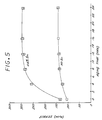
- Figure 5 is a graph of yield strength as a function of aging time, for composites having 15 volume percent aluminum oxide particles in a 6061 aluminum matrix, with no strontium addition and with 0.6 weight percent strontium addition; and
- Figure 6 is a graph of magnesium content of the matrix as a function of mixing time for composites having 15 volume percent aluminum oxide particles in a 6061 aluminum matrix, and various strontium additions.
- In accordance with the invention, a method for preparing a cast composite material includes providing a mixture having a composition of from 5 to 35 volume percent of aluminum oxide reinforcing particles and from 95 to 65 volume percent of a molten matrix alloy. The matrix alloy is an aluminum-based alloy containing from 0.15 to 3 weight percent magnesium and from 0.1 to 2 weight percent strontium. This composition is mixed to wet the matrix alloy to the particles and to distribute the particles throughout the volume of the molten matrix, while minimizing the introduction of gas into and retention of gas within the mixture. The mixture is cast, to a final shape or a semi-finished shape for further processing.
- The reinforcing particles are formed primarily of "aluminum oxide", also called alumina or Al₂O₃, in any of its various forms and morphologies. In a typical example, the particles are 5-10 micrometers in diameter with an aspect ratio of 1-5, but those parameters are intended as examples and not limiting of the invention. The particles may also include other components such as other oxides in impurity amounts or as intentional additions. The need for the present invention arises because the aluminum oxide of the particles chemically reacts at elevated temperature with magnesium present in the matrix alloy to form spinel phase, MgAl₂O₄, and is therefore useful whenever the particles contain sufficient aluminum oxide to produce a substantial spinel reaction.
- The aluminum oxide preferably has a sodium content (usually present as sodium oxide) of less than about 0.2 weight percent. When the composite is prepared, the molten matrix alloy is mixed under high-shear conditions with the aluminum oxide reinforcement particulate. Sodium can be liberated from the particulate into the matrix, leading to a dissolved sodium content in the matrix. The sodium present with magnesium can lead to hot shortness, affecting castability and hot working. After the composite is cooled and the matrix solidified, the dissolved sodium may cause cracking, stringers, and other defects that reduce the mechanical properties of the composite material. When the sodium is reduced to less than about 0.2 percent, the effect of dissolved sodium becomes negligible and can be tolerated.
- Alumina can be produced by a variety of production methods. Experience has shown that only calcined alumina produces moderate resistance to spinel formation in aluminum-magnesium alloy matrices prepared by the conventional approach. This limitation on the selection of alumina type reduces the ability of the alloy designer to select alumina suited to meeting particular requirements. The suppression of spinel formation according to the present invention, where strontium is added, permits a variety of different types of alumina to be used successfully without spinel formation. Thus, other types of alumina such as fused alumina, spray dried alumina particulate, tabular alumina, and sintered alumina can be used.
- The alumina particulate used with the present approach, where no spinel is formed to increase the effective surface area of the particulate, can have a minimum size of less than possible using the prior approach where spinel is formed. In a conventional composite having alumina particles in an aluminum-magnesium alloy matrix, the particles must be larger than about 19-22 micrometers for 20 volume percent particulate and larger than about 9-10 micrometers for 10 volume percent particulate, for two reasons. Smaller particles are largely reacted away during spinel formation, and molten mixtures containing smaller particles become too viscous to be properly mixed due to the increased surface area of the spinel-reacted particles. With the suppression of spinel formation by strontium addition, the alumina particles can be made as small as about 9-13 micrometers in their minimum dimension for 20 volume percent alumina reinforcement and 6 micrometers for 10 volume percent alumina reinforcement, without dissolving or increasing the viscosity to an unacceptably high value.
- These results may be interpolated and extrapolated over the range of alumina contents of interest, from about 5 to about 35 volume percent alumina, as follows. For conventional alloys where spinel forms at the particle/matrix interface, the minimum size of the alumina particles is approximately described by the relation


- The reinforcing particles are present in an amount of from about 5 to about 35 percent by volume of the mixture. (The other component, the matrix, is therefore present in an amount of from about 95 to about 65 volume percent of the mixture.) If less than about 5 volume percent of particles is present, there is no technical value realized by their presence, and the manufacture of a composite material is not justified either technically or economically. If more than about 35 volume percent of particles is present, the composite mixture is too viscous and cannot be properly mixed. The particles are free flowing and can be mixed into the matrix, as distinguished from continuous particles that cannot be so mixed.
- In a conventional composite material having alumina particles in an aluminum-magnesium matrix, the volume fraction of particles cannot exceed about 25 percent, or the viscosity of the molten mixture is too high to permit proper mixing. When larger volume fractions are present, the spinel reaction causes a significant increase in the surface area of the particles and thence the viscosity of the molten mixture of particles and matrix alloy. The suppression of spinel formation by the addition of a sufficient amount of strontium results in the surface area of the particles remaining constant during mixing, and no substantial increase in viscosity. Thus, with the present approach the alumina content can be as high as about 35 volume percent and still have a sufficiently low viscosity to permit mixing and wetting of the matrix alloy to the particles.
- The matrix is an aluminum-based alloy. It contains from about 0.15 to about 3 weight percent magnesium. Magnesium in this range is an absolute requirement of the present invention. Otherwise spinel does not form in sufficient amounts to be troublesome, and there is no need for the strontium addition. If less than about 0.15 weight percent magnesium is present, magnesium does not play a substantial role in the strengthening of the composite matrix, and there is an insignificant amount of spinel formation in any event so that no problem is evident. If more than about 3 weight percent magnesium is present, there is a high degree of spinel nucleation which results in an acceptable dense, fine-grained, crack-free reaction product.
- There must be present in the matrix a sufficient amount of strontium to reduce the spinel phase to a desired level. The addition may be sufficient to partially or fully suppress the formation of spinel. For practical purposes, "full suppression" has been defined as 95 percent suppression of spinel formation. There have been identified four principal factors that have a determinative effect on the selection of the permissible range of strontium added to the cast composite material having aluminum oxide particles in aluminum-based matrix. These factors include magnesium content of the matrix alloy, temperature of the alloy during mixing and casting, total mixing and contact time between the matrix alloy and the particulate, and the desired degree of spinel suppression. No theory integrating all of these factors has been developed, but some guidelines have been identified for conditions of commercial interest.
- Thus, the combination of the proper amounts of magnesium and strontium in the aluminum matrix, together with a reinforcement that reacts to produce spinel, is a necessary part of the present approach.
- In a typical situation, the composite material is prepared by mixing at a temperature of about 730°C. Contact times can range from a relatively short 45 minutes to an extended time of about 120 minutes, which can include both active mixing and a holding period prior to completion of solidification. It has been observed that, for a 730°C mixing temperature and 45 minutes contact time, the strontium content required to achieve a 75 percent suppression of the spinel formation is on the order of 0.1 times the weight percent magnesium in the matrix alloy. Under these same conditions, the strontium content required to achieve a 95 percent suppression (i.e., virtually total suppression) of the spinel formation is on the order of O.4 times the weight percent magnesium in the matrix alloy. For a 73O°C mixing temperature and 120 minutes contact time, the strontium content required to achieve a 95 percent suppression of the spinel formation is on the order of 0.6 times the weight percent magnesium in the matrix alloy.
- Based upon these observations and knowledge of aluminum alloy melting practices, some general conclusions have been reached. First, the greater degree of suppression of spinel formation (95 percent, or total suppression) is preferred, since it is attainable by the present approach. Second, for short mixing times and a minimum magnesium content of the matrix of 0.15 percent, the results suggest that the strontium addition can be as small as about 0.06 percent for 45 minutes mixing time or 0.09 percent for 120 minutes mixing time. Applicant has selected a minimum strontium content of about 0.1 percent as preferred, based upon this analysis and to provide a small margin against the possibility that even longer holding times may occur in commercial foundry practice. Third, for long mixing times and a maximum magnesium content of about 3 weight percent, the strontium content of the matrix should be about 1.8 weight percent to achieve 95 percent suppression of spinel formation. Applicant has selected a maximum strontium content at this magnesium level of about 2 percent based upon these results, to provide a small margin against the possibility that even longer holding times may occur in actual foundry practice.
- The matrix can also contain other elements normally found in aluminum alloys containing magnesium. Such elements, include, but are not limited to, copper, nickel, chromium, iron, and manganese. The presence of strontium reduces magnesium loss from the matrix caused by the spinel formation, but does not appear to have any significant effect on these other elements.
- The mixture of reinforcing particles and molten matrix alloy may be formed in any operable manner. Preferably, the matrix alloy is melted, and magnesium (if not already present) and strontium are added and stirred into the melt. The aluminum oxide reinforcing particles are added to the melt and incorporated by high-shear stirring.
- The mixture is preferably mixed according to the process described in U.S. Patents 4,759,995, 4,786,467, or 5,028,392, to wet the matrix alloy to the particulate matter.
- The mixing preferably is accomplished with no vortex in the melt, and under vacuum or static nitrogen atmosphere followed by evacuation. The importance of minimal vortex in the melt is described in relation to Figure 1 of U.S. patent 4,786,467. The use of vacuum is described throughout U.S. patents 4,759,995 and 4,786,467. The minimization of gas using a nitrogen atmosphere during mixing, followed by evacuation, is described throughout U.S. patent 5,028,392. In one typical example, the mixture is mixed in vacuum for 90-135 minutes.
- After mixing is complete, the mixture is cast. It may be cast into molds or ingot molds, or continuously cast. Any type of casting process may be used, as long as the process cools the composite material so that the matrix solidifies with a cast microstructure.
- A number of different alloy systems were prepared and tested to verify the usage of strontium to suppress spinel formation. In each case, the composite contained 15 volume percent aluminum oxide particulate reinforcement, and 85 volume percent of the matrix alloy. The matrix alloys were 6061 alloy (nominal composition 0.6 weight percent Si, 0.25 weight percent Cu, 1.2 weight percent Mg, 0.20 weight percent Cr, balance aluminum), containing 0, 0.1, 0.2, 0.5, 0.6, or 1.0 weight percent Sr; 7005 alloy (nominal composition 1.4 weight percent magnesium, 4.5 weight percent zinc, 0.45 weight percent manganese, 0.13 weight percent chromium, 0.04 weight percent titanium, balance aluminum) containing 0, 0.5, or 1.0 weight percent strontium; and 2024 alloy (nominal composition 4.5 weight percent copper, 0.6 weight percent manganese, 1.5 weight percent magnesium, balance aluminum) containing 1.0 weight percent strontium.
- The composite materials were prepared by melting the nominal alloy composition at a temperature of about 730°C, and then adding the appropriate amount of strontium in the form of an aluminum-10 weight percent strontium master alloy. (No magnesium addition was made during the mixing operation, to replace free magnesium that might otherwise be lost to spinel formation.) The aluminum oxide powder was added to the melt, and the reactor vessel was sealed and pumped to a vacuum of about 1 Torr or less. The mixture was mixed using an impeller that did not produce a vortex at the surface of the melt, at a stirring rate of about 1200 rpm. The mixing was continued for 120 minutes, but was halted periodically to take samples of the melt for chemical analysis. The mixed composite material was cast into 57mm round ingot molds and solidified.
- Figures 1-3 present microstructures of one of the alloys studied, modified 6061 alloy with 0 weight percent Sr (Figure 1), 0.1 weight percent Sr (Figure 2), and 0.5 weight percent Sr (Figure 3). The spinel phase MgAl₂O₄ is present in the composite having no strontium, Figure 1, as small crystals that appear to cling to the surfaces of aluminum oxide particles. Only a very small amount, judged to be acceptable for most applications, of spinel phase is visible in the composite having 0.1 weight percent strontium, Figure 2. Substantially no spinel phase is visible in the composite having 0.5 weight percent strontium. The presence of strontium, in an amount of at least about 0.1 weight percent of the matrix alloy, is sufficient to suppress spinel formation to an acceptable level. Similar results were observed for other alloys studied.
- Figure 4 presents the results of an evaluation of the spinel content in samples removed from various melts after 45 minutes of mixing. A 75 percent reduction in the spinel as compared with material having no strontium addition is considered sufficient. This reduction in spinel content is achieved in those alloys containing 0.1 or more strontium. Nearly complete suppression of spinel (i.e., a 95 percent reduction) is achieved in alloys containing 0.4 percent or more strontium. These results demonstrate that the amount of added strontium may be adjusted to reduce the spinel formation by any desired amount, from minor reduction to substantially complete suppression.
- The mechanical properties of some of the cast composite materials, after mixing for 120 minutes, were studied. Specifically, tensile test studies were performed on the 6061 alloy containing 0 and 0.6 weight percent strontium. For these tests, the as-cast composite materials were extruded to rod and machined into tensile test specimens. The specimens were solution heat treated at 53O°C for 1 hour and water quenched. The specimens were aged for various amounts of time from 0 to 24 hours at a temperature of 175°C, and tensile tested for yield and ultimate strength.
- Figure 5 reports results of the aging tests, illustrating the 0.2 percent yield strength as a function of aging time. The specimens containing no strontium showed only a small aging response, while the specimens containing 0.6 weight percent strontium showed a large aging response. In the specimens having no strontium, most of the magnesium is reacted to form spinel during mixing and is therefore not available to form strengthening precipitates. On the other hand, the specimens containing more than about 0.4 weight percent strontium do not form spinel phase (as shown in Figure 3), leaving most of the magnesium available to form strengthening precipitates during aging.
- Figure 6 presents further support for this understanding of the effect of strontium additions on cast aluminum (plus magnesium) alloy-alumina reinforcement composite materials. Specimens of the 6061 alloy mixture having 15 volume percent alumina particles and containing various amounts of strontium were sampled after the indicated times, and the matrix chemically analyzed for magnesium content. The melt containing no strontium exhibited a continual rapid decrease in magnesium content, from about 1.2 percent initially to about 0.2 percent after 120 minutes. The melts containing 0.1 and 0.2 weight percent strontium exhibited a much slower reduction in magnesium content.
- The matrix containing 0.6 weight percent strontium exhibited a small reduction of magnesium content from about 1.2 percent to about 1.0 percent. Since 6061 alloy is often melted to have about 1.0 weight percent magnesium, it is apparent that providing 1.2 percent magnesium initially results in an acceptable magnesium level of 1.0 percent after mixing. To assess the effect of the loss of magnesium to the vacuum mixing environment, a sample of the matrix 6061 alloy alone (no aluminum oxide particulate present) was mixed for 135 minutes, and found to undergo a loss of magnesium content to about 1.05 weight percent (the dashed line labelled "Vacuum Only"). Figure 6 demonstrates that nearly all of the magnesium loss in the 0.6 weight percent strontium alloy was due to vaporization rather than spinel formation, a conclusion supported by Figure 3. Figure 6 is also consistent with the conclusion that most of the magnesium loss from the matrix having no strontium is due to formation of spinel phase, rather than vaporization.
- It will be appreciated that these results were attained in studies wherein no magnesium was added to the melt to replace that lost to spinel formation in some of the alloys. In commercial practice, the loss of magnesium to spinel formation may be compensated for by magnesium additions during mixing, but the need for such additions makes the composite melting process more complex and unpredictable. Thus, a key advantage of the present invention is an absence of a need to compensate for magnesium loss by the spinel reaction (because strontium suppresses this effect) and associated reduction in complexity of the melting operation.
- Thus, small amounts of strontium have a surprisingly beneficial effect when present in a composite alloy of aluminum oxide particles in a matrix containing 0.15 to 3 weight percent magnesium. The strontium reduces or entirely suppresses the formation of spinel phase, which otherwise forms and depletes the matrix of available magnesium. With sufficient strontium present, the spinel formation is suppressed, nearly all of the magnesium is available for the age-hardening reaction, and the composite material exhibits an excellent hardening response and excellent mechanical properties. These improvements are not related to wetting effects, because the matrix alloys containing no strontium can be fully wetted to the particles. Instead, they result from the observed reduction in spinel formation when aluminum oxide reinforcement is present in an aluminum-based matrix alloy containing magnesium.
Claims (20)
- A composite material comprising a mixture of from 5 to 35 volume percent of aluminum oxide reinforcing particles and from 95 to 65 volume percent of a matrix alloy, the matrix alloy being an aluminum-based alloy containing from 0.15 to 3 weight percent magnesium and a sufficient amount of strontium to reduce spinel formation in the composite material.
- The composite material of claim 1, wherein the strontium content is more than about 0.1 weight percent of the matrix.
- The composite material of claim 1, wherein the strontium content is more than about 0.4 weight percent of the matrix.
- The composite material of claim 1, wherein the matrix has a cast microstructure.
- The composite material of claim 1, wherein the aluminum oxide reinforcing particles contain less than about 0.2 percent by weight sodium.
- The composite material of claim 1, wherein the aluminum oxide reinforcing particles are selected from the group consisting of fused alumina, spray dried alumina, tabular alumina, and sintered alumina.
- The composite material of claim 1, wherein the minimum dimension of the aluminum oxide reinforcing particles is in the range from about S₂ to about S₁, where S₁ and S₂ are given respectively by


- A composite material comprising a mixture of from 5 to 35 volume percent of aluminum oxide reinforcing particles and from 95 to 65 volume percent of a matrix alloy, the matrix alloy being an aluminum-based alloy containing from 0.15 to 3 weight percent magnesium and from about 0.1 to about 2 weight percent of strontium.
- A method for preparing a cast composite material, comprising the steps of:
providing a mixture having a composition of from 5 to 35 volume percent of aluminum oxide reinforcing particles and from 95 to 65 volume percent of a molten matrix alloy, the matrix alloy being an aluminum-based alloy containing from 0.15 to 3 weight percent magnesium and a sufficient amount of strontium to reduce spinel formation in the composite material;
mixing the mixture to wet the matrix alloy to the particles and to distribute the particles throughout the volume of the molten matrix; and
casting the mixture. - The method of claim 9, wherein the strontium content is more than about 0.1 weight percent of the matrix.
- The method of claim 9, wherein the strontium content is more than about 0.4 weight percent of the matrix.
- The method of claim 9, wherein the strontium content is from about 0.1 to about 2 weight percent of the matrix.
- The method of claim 9, wherein the step of mixing occurs while minimizing the introduction of gas into and retention of gas within the mixture.
- The method of claim 9, wherein a vacuum is applied to the mixture during the step of mixing.
- The method of claim 9, wherein a static nitrogen atmosphere is applied to the mixture during the step of mixing.
- The method of claim 9, wherein the aluminum oxide reinforcing particles contain less than about 0.2 percent by weight sodium.
- The method of claim 9, wherein the aluminum oxide reinforcing particles are selected from the group consisting of fused alumina, spray dried alumina, tabular alumina, and sintered alumina.
- The method of claim 9, wherein the minimum dimension of the aluminum oxide reinforcing particles is in the range from about S₂ to about S₁, where S₁ and S₂ are given respectively by


- The method of claim 9, wherein the volume fraction of the aluminum oxide reinforcing particles is from about 5 to about 35 volume percent.
- A cast composite material prepared by the method of claim 9.
Applications Claiming Priority (5)
| Application Number | Priority Date | Filing Date | Title |
|---|---|---|---|
| US77576391A | 1991-10-15 | 1991-10-15 | |
| US775763 | 1991-10-15 | ||
| US95477392A | 1992-10-08 | 1992-10-08 | |
| US954773 | 1992-10-08 | ||
| PCT/CA1992/000456 WO1993008311A1 (en) | 1991-10-15 | 1992-10-15 | CAST COMPOSITE MATERIAL HAVING ALUMINUM OXIDE REINFORCEMENT IN AN Al-Mg-Sr-MATRIX |
Publications (2)
| Publication Number | Publication Date |
|---|---|
| EP0608299A1 EP0608299A1 (en) | 1994-08-03 |
| EP0608299B1 true EP0608299B1 (en) | 1995-12-06 |
Family
ID=27119092
Family Applications (1)
| Application Number | Title | Priority Date | Filing Date |
|---|---|---|---|
| EP92921334A Expired - Lifetime EP0608299B1 (en) | 1991-10-15 | 1992-10-15 | CAST COMPOSITE MATERIAL HAVING ALUMINUM OXIDE REINFORCEMENT IN AN Al-Mg-Sr-MATRIX |
Country Status (6)
| Country | Link |
|---|---|
| EP (1) | EP0608299B1 (en) |
| JP (1) | JP3375958B2 (en) |
| AT (1) | ATE131212T1 (en) |
| AU (1) | AU2760392A (en) |
| DE (1) | DE69206630T2 (en) |
| WO (1) | WO1993008311A1 (en) |
Families Citing this family (4)
| Publication number | Priority date | Publication date | Assignee | Title |
|---|---|---|---|---|
| AU699266B2 (en) * | 1995-02-28 | 1998-11-26 | Sumitomo Chemical Company, Limited | Metal matrix composite and process for producing the same |
| US6358233B1 (en) * | 1996-03-13 | 2002-03-19 | The Procter & Gamble Company | Arcuate absorbent article with laterally extending flaps having longitudinal stretch |
| JP5294627B2 (en) | 2004-04-22 | 2013-09-18 | アルキャン・インターナショナル・リミテッド | Improved recycling method for Al-B4C composites |
| RU2673270C2 (en) | 2013-06-19 | 2018-11-23 | Рио Тинто Алкан Интернэшнл Лимитед | Composition of aluminum alloy with improved mechanical properties at increased temperature |
Family Cites Families (4)
| Publication number | Priority date | Publication date | Assignee | Title |
|---|---|---|---|---|
| US4489138A (en) * | 1980-07-30 | 1984-12-18 | Sumitomo Chemical Company, Limited | Fiber-reinforced metal composite material |
| EP0074067B1 (en) * | 1981-09-01 | 1986-01-29 | Sumitomo Chemical Company, Limited | Method for the preparation of fiber-reinforced metal composite material |
| US5040588A (en) * | 1988-11-10 | 1991-08-20 | Lanxide Technology Company, Lp | Methods for forming macrocomposite bodies and macrocomposite bodies produced thereby |
| US5028392A (en) * | 1990-06-14 | 1991-07-02 | Alcan International Ltd. | Melt process for the production of metal-matrix composite materials with enhanced particle/matrix wetting |
-
1992
- 1992-10-15 EP EP92921334A patent/EP0608299B1/en not_active Expired - Lifetime
- 1992-10-15 DE DE69206630T patent/DE69206630T2/en not_active Expired - Fee Related
- 1992-10-15 AU AU27603/92A patent/AU2760392A/en not_active Abandoned
- 1992-10-15 WO PCT/CA1992/000456 patent/WO1993008311A1/en not_active Ceased
- 1992-10-15 AT AT92921334T patent/ATE131212T1/en not_active IP Right Cessation
- 1992-10-15 JP JP50730993A patent/JP3375958B2/en not_active Expired - Fee Related
Also Published As
| Publication number | Publication date |
|---|---|
| DE69206630T2 (en) | 1996-04-25 |
| WO1993008311A1 (en) | 1993-04-29 |
| EP0608299A1 (en) | 1994-08-03 |
| JP3375958B2 (en) | 2003-02-10 |
| AU2760392A (en) | 1993-05-21 |
| DE69206630D1 (en) | 1996-01-18 |
| JPH07500148A (en) | 1995-01-05 |
| ATE131212T1 (en) | 1995-12-15 |
Similar Documents
| Publication | Publication Date | Title |
|---|---|---|
| EP0074067B1 (en) | Method for the preparation of fiber-reinforced metal composite material | |
| CN1708597B (en) | Improved Aluminum Alloy-Boron Carbide Composite Material | |
| US5394928A (en) | Cast composite material with high-silicon aluminum matrix alloy and its applications | |
| JPH0561333B2 (en) | ||
| US5083602A (en) | Stepped alloying in the production of cast composite materials (aluminum matrix and silicon additions) | |
| EP0627015B1 (en) | Method for preparing cast composite materials having an aluminum-magnesium matrix alloy | |
| EP0964069B1 (en) | Strontium master alloy composition having a reduced solidus temperature and method of manufacturing the same | |
| US3961945A (en) | Aluminum-silicon composite | |
| WO1993008311A1 (en) | CAST COMPOSITE MATERIAL HAVING ALUMINUM OXIDE REINFORCEMENT IN AN Al-Mg-Sr-MATRIX | |
| US3856583A (en) | Method of increasing hardness of aluminum-silicon composite | |
| US4432936A (en) | Method for adding insoluble material to a liquid or partially liquid metal | |
| US4906531A (en) | Alloys strengthened by dispersion of particles of a metal and an intermetallic compound and a process for producing such alloys | |
| JP2503119B2 (en) | Beryllium copper alloy casting method | |
| CN117604341A (en) | High impact toughness aluminium magnesium silicon alloy material and casting method of component | |
| EP0601694A2 (en) | Method for the production of dispersion strengthened metal matrix composites | |
| US4959194A (en) | High strength uranium-tungsten alloy process | |
| EP0539417B1 (en) | Cast composite materials | |
| US3901691A (en) | Aluminum-silicon alloy | |
| JP3666822B2 (en) | Master alloy for adding Zr into Mg alloy | |
| US3167425A (en) | Method of producing a magnesium base alloy | |
| AU652950C (en) | Cast composite materials | |
| US3997340A (en) | Method of preparing an aluminum-silicon composite | |
| US5035854A (en) | High strength uranium-tungsten alloys | |
| MXPA99005252A (en) | Composition of strontium base alloys that have a reduced fusion temperature and method to manufacture the mi | |
| JPH01177331A (en) | Oxide dispersed cured aluminum composition |
Legal Events
| Date | Code | Title | Description |
|---|---|---|---|
| PUAI | Public reference made under article 153(3) epc to a published international application that has entered the european phase |
Free format text: ORIGINAL CODE: 0009012 |
|
| 17P | Request for examination filed |
Effective date: 19940310 |
|
| AK | Designated contracting states |
Kind code of ref document: A1 Designated state(s): AT BE CH DE DK ES FR GB GR IE IT LI LU MC NL SE |
|
| 17Q | First examination report despatched |
Effective date: 19941125 |
|
| GRAA | (expected) grant |
Free format text: ORIGINAL CODE: 0009210 |
|
| ITF | It: translation for a ep patent filed | ||
| AK | Designated contracting states |
Kind code of ref document: B1 Designated state(s): AT BE CH DE DK ES FR GB GR IE IT LI LU MC NL SE |
|
| PG25 | Lapsed in a contracting state [announced via postgrant information from national office to epo] |
Ref country code: NL Free format text: LAPSE BECAUSE OF FAILURE TO SUBMIT A TRANSLATION OF THE DESCRIPTION OR TO PAY THE FEE WITHIN THE PRESCRIBED TIME-LIMIT Effective date: 19951206 Ref country code: MC Free format text: LAPSE BECAUSE OF NON-PAYMENT OF DUE FEES Effective date: 19951206 Ref country code: LI Effective date: 19951206 Ref country code: GR Free format text: LAPSE BECAUSE OF FAILURE TO SUBMIT A TRANSLATION OF THE DESCRIPTION OR TO PAY THE FEE WITHIN THE PRESCRIBED TIME-LIMIT Effective date: 19951206 Ref country code: ES Free format text: THE PATENT HAS BEEN ANNULLED BY A DECISION OF A NATIONAL AUTHORITY Effective date: 19951206 Ref country code: DK Effective date: 19951206 Ref country code: CH Effective date: 19951206 Ref country code: BE Effective date: 19951206 Ref country code: AT Effective date: 19951206 |
|
| REF | Corresponds to: |
Ref document number: 131212 Country of ref document: AT Date of ref document: 19951215 Kind code of ref document: T |
|
| REG | Reference to a national code |
Ref country code: IE Ref legal event code: FG4D Free format text: 66444 |
|
| REF | Corresponds to: |
Ref document number: 69206630 Country of ref document: DE Date of ref document: 19960118 |
|
| ET | Fr: translation filed | ||
| PG25 | Lapsed in a contracting state [announced via postgrant information from national office to epo] |
Ref country code: SE Effective date: 19960306 |
|
| NLV1 | Nl: lapsed or annulled due to failure to fulfill the requirements of art. 29p and 29m of the patents act | ||
| REG | Reference to a national code |
Ref country code: CH Ref legal event code: PL |
|
| PLBE | No opposition filed within time limit |
Free format text: ORIGINAL CODE: 0009261 |
|
| STAA | Information on the status of an ep patent application or granted ep patent |
Free format text: STATUS: NO OPPOSITION FILED WITHIN TIME LIMIT |
|
| PG25 | Lapsed in a contracting state [announced via postgrant information from national office to epo] |
Ref country code: IE Free format text: LAPSE BECAUSE OF NON-PAYMENT OF DUE FEES Effective date: 19961015 |
|
| PG25 | Lapsed in a contracting state [announced via postgrant information from national office to epo] |
Ref country code: LU Free format text: LAPSE BECAUSE OF NON-PAYMENT OF DUE FEES Effective date: 19961031 |
|
| 26N | No opposition filed | ||
| REG | Reference to a national code |
Ref country code: GB Ref legal event code: IF02 |
|
| PGFP | Annual fee paid to national office [announced via postgrant information from national office to epo] |
Ref country code: GB Payment date: 20031008 Year of fee payment: 12 |
|
| PGFP | Annual fee paid to national office [announced via postgrant information from national office to epo] |
Ref country code: FR Payment date: 20031020 Year of fee payment: 12 |
|
| PGFP | Annual fee paid to national office [announced via postgrant information from national office to epo] |
Ref country code: DE Payment date: 20031201 Year of fee payment: 12 |
|
| PG25 | Lapsed in a contracting state [announced via postgrant information from national office to epo] |
Ref country code: GB Free format text: LAPSE BECAUSE OF NON-PAYMENT OF DUE FEES Effective date: 20041015 |
|
| PG25 | Lapsed in a contracting state [announced via postgrant information from national office to epo] |
Ref country code: DE Free format text: LAPSE BECAUSE OF NON-PAYMENT OF DUE FEES Effective date: 20050503 |
|
| GBPC | Gb: european patent ceased through non-payment of renewal fee |
Effective date: 20041015 |
|
| PG25 | Lapsed in a contracting state [announced via postgrant information from national office to epo] |
Ref country code: FR Free format text: LAPSE BECAUSE OF NON-PAYMENT OF DUE FEES Effective date: 20050630 |
|
| REG | Reference to a national code |
Ref country code: FR Ref legal event code: ST |
|
| PG25 | Lapsed in a contracting state [announced via postgrant information from national office to epo] |
Ref country code: IT Free format text: LAPSE BECAUSE OF NON-PAYMENT OF DUE FEES;WARNING: LAPSES OF ITALIAN PATENTS WITH EFFECTIVE DATE BEFORE 2007 MAY HAVE OCCURRED AT ANY TIME BEFORE 2007. THE CORRECT EFFECTIVE DATE MAY BE DIFFERENT FROM THE ONE RECORDED. Effective date: 20051015 |