EP0603159A2 - Human growth hormone formulation - Google Patents
Human growth hormone formulation Download PDFInfo
- Publication number
- EP0603159A2 EP0603159A2 EP94102274A EP94102274A EP0603159A2 EP 0603159 A2 EP0603159 A2 EP 0603159A2 EP 94102274 A EP94102274 A EP 94102274A EP 94102274 A EP94102274 A EP 94102274A EP 0603159 A2 EP0603159 A2 EP 0603159A2
- Authority
- EP
- European Patent Office
- Prior art keywords
- hgh
- formulation
- growth hormone
- glycine
- mannitol
- Prior art date
- Legal status (The legal status is an assumption and is not a legal conclusion. Google has not performed a legal analysis and makes no representation as to the accuracy of the status listed.)
- Withdrawn
Links
Images



Classifications
-
- A—HUMAN NECESSITIES
- A61—MEDICAL OR VETERINARY SCIENCE; HYGIENE
- A61K—PREPARATIONS FOR MEDICAL, DENTAL OR TOILETRY PURPOSES
- A61K9/00—Medicinal preparations characterised by special physical form
- A61K9/0012—Galenical forms characterised by the site of application
- A61K9/0019—Injectable compositions; Intramuscular, intravenous, arterial, subcutaneous administration; Compositions to be administered through the skin in an invasive manner
-
- A—HUMAN NECESSITIES
- A61—MEDICAL OR VETERINARY SCIENCE; HYGIENE
- A61K—PREPARATIONS FOR MEDICAL, DENTAL OR TOILETRY PURPOSES
- A61K38/00—Medicinal preparations containing peptides
- A61K38/16—Peptides having more than 20 amino acids; Gastrins; Somatostatins; Melanotropins; Derivatives thereof
- A61K38/17—Peptides having more than 20 amino acids; Gastrins; Somatostatins; Melanotropins; Derivatives thereof from animals; from humans
- A61K38/22—Hormones
- A61K38/27—Growth hormone [GH], i.e. somatotropin
-
- A—HUMAN NECESSITIES
- A61—MEDICAL OR VETERINARY SCIENCE; HYGIENE
- A61K—PREPARATIONS FOR MEDICAL, DENTAL OR TOILETRY PURPOSES
- A61K47/00—Medicinal preparations characterised by the non-active ingredients used, e.g. carriers or inert additives; Targeting or modifying agents chemically bound to the active ingredient
- A61K47/06—Organic compounds, e.g. natural or synthetic hydrocarbons, polyolefins, mineral oil, petrolatum or ozokerite
- A61K47/08—Organic compounds, e.g. natural or synthetic hydrocarbons, polyolefins, mineral oil, petrolatum or ozokerite containing oxygen, e.g. ethers, acetals, ketones, quinones, aldehydes, peroxides
- A61K47/10—Alcohols; Phenols; Salts thereof, e.g. glycerol; Polyethylene glycols [PEG]; Poloxamers; PEG/POE alkyl ethers
-
- A—HUMAN NECESSITIES
- A61—MEDICAL OR VETERINARY SCIENCE; HYGIENE
- A61K—PREPARATIONS FOR MEDICAL, DENTAL OR TOILETRY PURPOSES
- A61K47/00—Medicinal preparations characterised by the non-active ingredients used, e.g. carriers or inert additives; Targeting or modifying agents chemically bound to the active ingredient
- A61K47/06—Organic compounds, e.g. natural or synthetic hydrocarbons, polyolefins, mineral oil, petrolatum or ozokerite
- A61K47/16—Organic compounds, e.g. natural or synthetic hydrocarbons, polyolefins, mineral oil, petrolatum or ozokerite containing nitrogen, e.g. nitro-, nitroso-, azo-compounds, nitriles, cyanates
- A61K47/18—Amines; Amides; Ureas; Quaternary ammonium compounds; Amino acids; Oligopeptides having up to five amino acids
- A61K47/183—Amino acids, e.g. glycine, EDTA or aspartame
-
- A—HUMAN NECESSITIES
- A61—MEDICAL OR VETERINARY SCIENCE; HYGIENE
- A61K—PREPARATIONS FOR MEDICAL, DENTAL OR TOILETRY PURPOSES
- A61K47/00—Medicinal preparations characterised by the non-active ingredients used, e.g. carriers or inert additives; Targeting or modifying agents chemically bound to the active ingredient
- A61K47/06—Organic compounds, e.g. natural or synthetic hydrocarbons, polyolefins, mineral oil, petrolatum or ozokerite
- A61K47/26—Carbohydrates, e.g. sugar alcohols, amino sugars, nucleic acids, mono-, di- or oligo-saccharides; Derivatives thereof, e.g. polysorbates, sorbitan fatty acid esters or glycyrrhizin
Definitions
- the present invention is directed to pharmaceutical formulations containing human growth hormone (hGH) and to methods for making and using such formulations. More particularly, this invention relates to such pharmaceutical formulations having increased stability in a lyophilized formulation and upon reconstitution. The formulation is also very stable during processing. Formulations are provided for immediate, safe, effective therapeutic administration to human subjects.
- hGH human growth hormone
- hHG Human growth hormone
- hGH Human growth hormone
- hGH The major biological effect of hGH is to promote growth.
- organ systems affected include the skeleton, connective tissue, muscles, and viscera such as liver, intestine, and kidneys. Growth hormone exerts its action through interaction with specific receptors on cell membranes.
- Human growth hormone has been formulated in a variety of ways as shown in Table I.
- compositions In order that materials like hGH be provided to health care personnel and patients, these materials must be prepared as pharmaceutical compositions. Such compositions must maintain activity for appropriate periods of time, must be acceptable in their own right to easy and rapid administration to humans, and must be readily manufacturable.
- pharmaceutical formulations are provided in frozen or in lyophilized form. In this case, the composition must be thawed or reconstituted prior to use.
- the frozen or lyophilized form is often used to maintain biochemical integrity and the bioactivity of the medicinal agent contained in the compositions under a wide variety of storage conditions, as it is recognized by those skilled in the art that lyophilized preparations often maintain activity better than their liquid counterparts.
- Such lyophilized preparations are reconstituted prior to use by the addition of suitable pharmaceutically acceptable diluent(s), such as sterile water for injection or sterile physiological saline solution, and the like.
- composition can be provided in liquid form appropriate for immediate use.
- Desirable is a liquid formulation which maintains its activity in long term storage.
- hGH Current formulation of hGH lose activity due to formation of dimer and higher order aggregates (macro range) during formulation processing as well as during storage and reconstitution. Other chemical changes, such as deamidation and oxidation may also occur upon storage.
- EP 303746 discloses formulations containing animal growth hormone, buffer and one or more stabilisers, but there is no specific formulation of human growth hormone.
- EP 211601 discloses the use of certain block copolymers in growth hormone formulations. Neither of these references provides any effective teaching for preventing HGH dimer formation.
- a further object of the invention is to provide a formulation which can be aerosolized for pulmonary use, or used in a needleless jet injector for subcutaneous injection.
- a further object of the invention is to provide an hGH formulation with enhanced characteristics.
- a still further object of the invention is to provide an hGH formulation wherein no component is derived from animals e.g. natural albumin, thus avoiding possible contamination of the formulation with impurities.
- Objects of this invention are accomplished by a pharmaceutically acceptable formulation comprising a pharmaceutically effective amount of human growth hormone, glycine, mannitol, and a buffer, said formulation having an hGH: glycine molar ratio of from 1:50 to 1:200.
- the pH of the formulation is 4-8 adjusted with buffer, and the formulation has a purity level which is pharmaceutically acceptable.
- the invention comprises a pharmaceutically effective amount of human growth hormone, glycine, mannitol, a buffer and a non-ionic surfactant, wherein said formulation is capable of undergoing processing and storage with substantially no dimer formation.
- the invention also comprises a method of stabilizing a formulation of human growth hormone comprising the steps of combining human growth hormone with glycine, mannitol and a buffer to make a pharmaceutically acceptable formulation, and wherein the molar ratio of human growth hormone:glycine is 1:50-200.
- the invention also includes a method of administering human growth hormone with an aerosol device or needleless injector gun, wherein the formulation comprises human growth hormone, mannitol, glycine, a buffer, and a non-ionic surfactant.
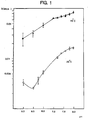
- Figure 1 is a plot of the first order rate constants for deamidation of hGH in solution, vs. pH.
- the rate constants were determined by incubating hGH samples prepared at various pH values, at either 25°C or 40°C, and measuring the amount of deamidation occurring as a function of time by quantitative isoelectric focusing (IEF) gel electrophoresis.
- IEF quantitative isoelectric focusing
- Figure 2 is a plot of the logarithm of the number of 2 ⁇ m particles (as detected by a HIAC-Royco particle analyzer) vs. pH for solutions of hGH before lyophilization. This figure shows that as the pH decreases from 8 to 6, the mount of aggregation, as measured by the number of particles, increases.
- Figure 3 shows three chromatograms of reverse phase HPLC, from three hGH samples buffered at pH valves 6.0, 6.5 and 7.2, and stored for 47 days at 40°C in the lyophilized state. They show that as the pH is decreased (toward 6.0) a greater amount of "trailing peak" is formed.
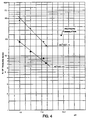
- Figure 4 is a plot of the percent trailing band vs. pH, upon storage at either 40°C or 60°C for samples made at various pH values, and lyophilized. This graph shows in a quantitative form, that lower pH values produce more trailing band upon storage.
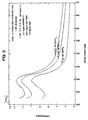
- Figure 5 describes the amount of UV light absorbed (or scattered) vs. wavelength for hGH made upon with three different concentrations of buffer, all at pH 7.4. The plots show that more scatter (i.e. aggregation) is present in samples at buffer concentrations lower than 5mM.
- Figure 6 is a plot of % dimer formed in lyophilized samples of hGH vs. time, upon storage at 40°C.
- the samples comprised of hGH prepared in mannitol alone (MANNITOL) with a molar ratio hGH:mannitol 1:1100, or glycine alone (GLYCINE) with a glycine molar ration hGH:glycine 1:5540, or with a mixture of hGH:glycine:mannitol in a molar ratio of 1:100:1100 (100GLY).
- all samples had the same amount of sodium phosphate buffer (5 mM at pH 7.4.
- Figure 7 is a plot of % dimer formed in lyophilized samples of hGH vs. time, upon storage at 40°C.
- the samples comprised of hGH prepared in varying mixtures of mannitol and glycine, with the same amount (5 mM) of sodium phosphate buffer at pH 7.4.
- the code for the various molar ratios of hGH:glycine:mannitol are 1:10:1100 (10GLY), 1:100:1100 (100GLY) and 1:1000:1100 (100GLY).
- Figure 8A is a size exclusion chromatogram of growth hormone after nebulization from a standard aerosol nebulizer (Turret BrandTM). The chromatogram shows that only about 33% of the growth hormone is present as intact monomer, the remainder being dimer, trimer and higher order aggregates. These results were confirmed by native polyacrylamide gel electrophoresis.
- Figure 8B is the size exclusion chromatogram of growth hormone after nebulization, in the same formulation as the figure above with the inclusion of polysorbate 80, 1%. This figure shows the lack of any aggregation occurring. Similar results were also obtained when poloxamer 188, 1% was used instead of polysorbate 80. (Poloxamer and Polysorbate are trade marks).
- the present invention is based upon the discovery that the inclusion of glycine and mannitol in a specific pharmaceutically acceptable formulation of human growth hormone maintains the activity of hGH, and inhibits undesirable reactions that hGH undergoes during processing, reconstitution, and storage.
- processing includes filtration, filling into vials and lyophilization.
- a non-ionic surfactant such as polysorbate 80 is added for reduced aggregation and denaturation.
- the invention is thus directed to such formulations, and to all associated formulations and to means for effectively stabilizing human growth hormone.
- human growth hormone denote human growth hormone produced, for example, from natural source extraction and purification, and by recombinant cell culture systems. Its sequence and characteristics are set forth, for example, in Hormone Drugs , Gueriguian et al ., U.S.P. Convention, Rockville, MD (1982). The terms likewise cover biologically active human growth hormone equivalents; e.g., differing in one or more amino acid(s) in the overall sequence. Further, the terms as used in this application are intended to cover substitution, deletion and insertion amino acid variants of hGH, or post translational modifications. Human growth hormone is generally produced by recombinant means.
- the formulation of the subject invention comprises:
- the formulation of the subject invention comprises the following components at pH 7.4: Ingredient Quantity per ml upon reconstitution (mg) Molar Ratio r-hGH 1.0 1 Glycine 0.34 100 Mannitol 9.0 1100 NaH2PO4 ⁇ H2O 0.18 NaH2PO4 ⁇ 12H2O 1.32 110 Polysorbate 80 0.20 3
- formulations of the subject invention may contain other components in amounts preferably not detracting from the preparation of stable forms and in amounts suitable for effective, safe pharmaceutical administration.
- Suitable pH ranges, adjusted with buffer, for the preparation of the formulations hereof are from 4 to 8, advantageously 5 to 8, most advantageously 7.4.
- the formulation pH should be less than 7.5 to reduce deamidation (see Figure 1). pH values below 7.0 result in particulate formation upon lyophilization (see Figure 2). The aggregation is not related to deamidation.
- the molar ration of hGH:glycine is 1:50-200, advantageously 1:75-125, most advantageously 1:100. Glycine greatly inhibits dimer formation when it is added in these ratios. Ratios of 1:10 and 1:1000 result is substantial dimer formation upon lyophilization.
- Glycine which is a nonessential amino acid, has the formula NH2CH2 COOH.
- an amino acid such as alanine or derivatives of such amino acids are used in the subject formulation.
- the molar ratio of hGH:mannitol is 1:700-2000, advantageously 1:800-1500, and most advantageously 1:1100.
- a formulation containing mannitol as the sole bulking agent results in greater aggregate and dimer formation than one containing a mixture of mannitol and glycine.
- other sugars or sugar alcohols are used such as sucrose, maltose, fructose, lactose and the like.
- the preferred buffer is a phosphate buffer and the molar ratio of hGH:phosphate buffer is 1:50-250, advantageously 1:75-150, most advantageously 1:110.
- a buffer concentration greater than or equal to 2.5mM and less than 20mM is preferred, most advantageously 5-10mM (see Figure 5). In this concentration range of buffer, minimal aggregation occurs.
- a sodium phosphate or tris buffer is used.
- Figure 6 demonstrates that a molar ratio of hGH:glycine:mannitol of 1:100:1100 results in the formation of less dimer upon storage, than either mannitol alone of glycine alone.
- the formulation of the subject invention may optionally include one of several types of non-ionic surfactants, such as the polysorbates (e.g. polysorbate 20,80, etc.) and the poloxamers (e.g. poloxamer 188).
- polysorbates e.g. polysorbate 20,80, etc.
- poloxamers e.g. poloxamer 188.
- polysorbate 80 When polysorbate 80 is used the molar ratio of hGH:polysorbate 80 is 1:0.07-30, advantageously 1:0.1-10, and most advantageously 1:3.
- polysorbate 80 is added in amount so of about 0.001 to abut 2% (w/v), in order to enhance further the stability of the hGH.
- Polysorbate 80 in concentrations above 0.01% (w/v) reduces the amount of aggregation forming upon lyophilization.
- the surfactant containing formulation of the subject invention inhibits the formation of protein aggregates when the reconstituted formulation is shaken.
- compositions may also form a part of the subject compositions. These include, for example, various bulking agents, additional buffering agents, chelating agents, antioxidants, preservatives, cosolvents, and the like; specific examples of these could include, trimethylamine salts ("Tris buffer”), and disodium edetate.
- Tris buffer trimethylamine salts
- disodium edetate no proteins other than hGH are part of the formulation.
- nonionic surfactants permits the formulation to be exposed to shear surface stresses without causing denaturation of the protein.
- surfactant containing formulations may be employed in aerosol devices such as those used in a pulmonary dosing, and needleless jet injector guns.
- Figure 8 shows the severe aggregation of hGH in a mannitol/phosphate buffer upon aerosolization. Only about 30% of the protein is present as intact monomer. The remainder has formed dimer, trimer and higher order aggregates. The formation of aggregates was eliminated as shown in Figure 8B which was obtained from a sample after aerosolization of the hGh in a mannitol phosphate buffer, containing 1% polysorbate 80.
- a "pharmaceutically effective amount" of hGH refers to that amount which provides therapeutic effect in various administration regimens.
- the compositions hereof may be prepared containing amounts of hGH at least about 0.1 mg/ml, upwards of about 10/mg/ml, preferably from about 1 mg/ml to about 5 mg/ml.
- these compositions may contain from about 0.1 mg/ml to about 10 mg/ml, corresponding to the currently contemplated dosage rate for such treatment.
- the formulations are prepared in general by combining the components using generally available pharmaceutical combining techniques, known per se.
- a particular method for preparing a pharmaceutical formulation of hGH hereof comprises employing hGH purified according to any standard protein purification scheme.
- a solution of protein in the final formulation is prepared by buffer exchange on a gel filtration column.
- the elution buffer contains glycine, mannitol, buffer and the non-ionic surfactant in their final ratios.
- the concentration of the protein is obtained by dilution of this resulting solution to a desired protein concentration.
- the solution is sterile filtered, and can be stored for several weeks at 5°C, or, filled into sterile vials and freeze-dried using an appropriate lyophilization cycle.
- Quantitative isoelectric focusing gel electrophoresis was used to determine the rate of deamidation of hGH, by measurement of the acidic material forming with time.
- Reversed phase high performance liquid chromatography was used to follow the degradation profile of hGH with time.
- the method employed a C4RP column (4.5 mm IDx 25 cm) and a mobile phase composed of 60:40 water, containing 0.1% trifluoroacetic acid: acetonitrile, containing 0.1% trifluoroacetic acid which was ramped to 30:70 water:acetonitrile at 1% per minute. Detection was made by UV absorbance.
- GPC Gel permeation chromatography
- HIAC-Royco particle size analysis was used to measure particle size and distribution of reconstituted solutions of hGH by means of a light blockage technique.
- UV scans were used to measure both the concentration of the protein, and absorbance due to scatter (i.e. aggregation).
Landscapes
- Health & Medical Sciences (AREA)
- Life Sciences & Earth Sciences (AREA)
- Chemical & Material Sciences (AREA)
- Medicinal Chemistry (AREA)
- Pharmacology & Pharmacy (AREA)
- Epidemiology (AREA)
- Animal Behavior & Ethology (AREA)
- General Health & Medical Sciences (AREA)
- Public Health (AREA)
- Veterinary Medicine (AREA)
- Engineering & Computer Science (AREA)
- Oil, Petroleum & Natural Gas (AREA)
- General Chemical & Material Sciences (AREA)
- Chemical Kinetics & Catalysis (AREA)
- Proteomics, Peptides & Aminoacids (AREA)
- Endocrinology (AREA)
- Biochemistry (AREA)
- Zoology (AREA)
- Gastroenterology & Hepatology (AREA)
- Bioinformatics & Cheminformatics (AREA)
- Immunology (AREA)
- Molecular Biology (AREA)
- Dermatology (AREA)
- Medicines That Contain Protein Lipid Enzymes And Other Medicines (AREA)
- Medicinal Preparation (AREA)
- Pharmaceuticals Containing Other Organic And Inorganic Compounds (AREA)
- Steroid Compounds (AREA)
- Peptides Or Proteins (AREA)
Abstract

Description
- The present invention is directed to pharmaceutical formulations containing human growth hormone (hGH) and to methods for making and using such formulations. More particularly, this invention relates to such pharmaceutical formulations having increased stability in a lyophilized formulation and upon reconstitution. The formulation is also very stable during processing. Formulations are provided for immediate, safe, effective therapeutic administration to human subjects.
- Human growth hormone (hHG) is secreted in the human pituitary. In its mature form it consists of 191 amino acids, has molecular weight of about 22,000, and thus is more than three times as large as insulin. This hormone is a linear polypeptide containing two intrachain disulfide bridges. Until the advent of recombinant DNA technology, hGH could be obtained only by laborious extraction from a limited source--the pituitary glands of human cadavers. The consequent scarcity of the substance limited its application to treatment of hypopituitary dwarfism even though it has been proposed to be effective in the treatment of burns, wound healing, dystrophy, bone knitting, diffuse gastric bleeding and pseudarthrosis. hGH can be produced in a recombinant host cell, in quantities which would be adequate to treat hypopituitary dwarfism and the other conditions for which it is effective. See, for example, U.S. Patent 4,342,832.
- The major biological effect of hGH is to promote growth. The organ systems affected include the skeleton, connective tissue, muscles, and viscera such as liver, intestine, and kidneys. Growth hormone exerts its action through interaction with specific receptors on cell membranes.
- Human growth hormone has been formulated in a variety of ways as shown in Table I.

- In order that materials like hGH be provided to health care personnel and patients, these materials must be prepared as pharmaceutical compositions. Such compositions must maintain activity for appropriate periods of time, must be acceptable in their own right to easy and rapid administration to humans, and must be readily manufacturable. In many cases pharmaceutical formulations are provided in frozen or in lyophilized form. In this case, the composition must be thawed or reconstituted prior to use. The frozen or lyophilized form is often used to maintain biochemical integrity and the bioactivity of the medicinal agent contained in the compositions under a wide variety of storage conditions, as it is recognized by those skilled in the art that lyophilized preparations often maintain activity better than their liquid counterparts. Such lyophilized preparations are reconstituted prior to use by the addition of suitable pharmaceutically acceptable diluent(s), such as sterile water for injection or sterile physiological saline solution, and the like.
- Alternatively, the composition can be provided in liquid form appropriate for immediate use. Desirable is a liquid formulation which maintains its activity in long term storage.
- Current formulation of hGH lose activity due to formation of dimer and higher order aggregates (macro range) during formulation processing as well as during storage and reconstitution. Other chemical changes, such as deamidation and oxidation may also occur upon storage.
- Prior attempts to stabilize hGH have not fully succeeded in preventing dimer formation. The problems associated with dimer being present are noted in Becker, G.W., Biotechnology and Applied Biochemistry 9, 478 (1987).
- EP 303746 discloses formulations containing animal growth hormone, buffer and one or more stabilisers, but there is no specific formulation of human growth hormone.
- EP 211601 discloses the use of certain block copolymers in growth hormone formulations. Neither of these references provides any effective teaching for preventing HGH dimer formation.
- It is an object of the present invention to prepare stable, aggregate-free formulations of human growth hormone.
- A further object of the invention is to provide a formulation which can be aerosolized for pulmonary use, or used in a needleless jet injector for subcutaneous injection.
- A further object of the invention is to provide an hGH formulation with enhanced characteristics.
- A still further object of the invention is to provide an hGH formulation wherein no component is derived from animals e.g. natural albumin, thus avoiding possible contamination of the formulation with impurities.
- Other objects, features and characteristics of the present invention will become more apparent upon consideration of the following description and the appended claims.
- Objects of this invention are accomplished by a pharmaceutically acceptable formulation comprising a pharmaceutically effective amount of human growth hormone, glycine, mannitol, and a buffer, said formulation having an hGH: glycine molar ratio of from 1:50 to 1:200. Advantageously the pH of the formulation is 4-8 adjusted with buffer, and the formulation has a purity level which is pharmaceutically acceptable. In another embodiment, the invention comprises a pharmaceutically effective amount of human growth hormone, glycine, mannitol, a buffer and a non-ionic surfactant, wherein said formulation is capable of undergoing processing and storage with substantially no dimer formation. The invention also comprises a method of stabilizing a formulation of human growth hormone comprising the steps of combining human growth hormone with glycine, mannitol and a buffer to make a pharmaceutically acceptable formulation, and wherein the molar ratio of human growth hormone:glycine is 1:50-200. The invention also includes a method of administering human growth hormone with an aerosol device or needleless injector gun, wherein the formulation comprises human growth hormone, mannitol, glycine, a buffer, and a non-ionic surfactant.
- Figure 1 is a plot of the first order rate constants for deamidation of hGH in solution, vs. pH. The rate constants were determined by incubating hGH samples prepared at various pH values, at either 25°C or 40°C, and measuring the amount of deamidation occurring as a function of time by quantitative isoelectric focusing (IEF) gel electrophoresis. Thus the lower the pH, the less deamidation occurs, with a minimum at about pH 6.0. A similar dependency occurs in the solid state, with much slower reaction rates.
- Figure 2 is a plot of the logarithm of the number of 2 µm particles (as detected by a HIAC-Royco particle analyzer) vs. pH for solutions of hGH before lyophilization. This figure shows that as the pH decreases from 8 to 6, the mount of aggregation, as measured by the number of particles, increases.
- Figure 3 shows three chromatograms of reverse phase HPLC, from three hGH samples buffered at pH valves 6.0, 6.5 and 7.2, and stored for 47 days at 40°C in the lyophilized state. They show that as the pH is decreased (toward 6.0) a greater amount of "trailing peak" is formed.
- Figure 4 is a plot of the percent trailing band vs. pH, upon storage at either 40°C or 60°C for samples made at various pH values, and lyophilized. This graph shows in a quantitative form, that lower pH values produce more trailing band upon storage.
- Figure 5 describes the amount of UV light absorbed (or scattered) vs. wavelength for hGH made upon with three different concentrations of buffer, all at pH 7.4. The plots show that more scatter (i.e. aggregation) is present in samples at buffer concentrations lower than 5mM.
- Figure 6 is a plot of % dimer formed in lyophilized samples of hGH vs. time, upon storage at 40°C. The samples comprised of hGH prepared in mannitol alone (MANNITOL) with a molar ratio hGH:mannitol 1:1100, or glycine alone (GLYCINE) with a glycine molar ration hGH:glycine 1:5540, or with a mixture of hGH:glycine:mannitol in a molar ratio of 1:100:1100 (100GLY). all samples had the same amount of sodium phosphate buffer (5 mM at pH 7.4.
- Figure 7 is a plot of % dimer formed in lyophilized samples of hGH vs. time, upon storage at 40°C. The samples comprised of hGH prepared in varying mixtures of mannitol and glycine, with the same amount (5 mM) of sodium phosphate buffer at pH 7.4. The code for the various molar ratios of hGH:glycine:mannitol are 1:10:1100 (10GLY), 1:100:1100 (100GLY) and 1:1000:1100 (100GLY).
- Figure 8A is a size exclusion chromatogram of growth hormone after nebulization from a standard aerosol nebulizer (Turret Brand™). The chromatogram shows that only about 33% of the growth hormone is present as intact monomer, the remainder being dimer, trimer and higher order aggregates. These results were confirmed by native polyacrylamide gel electrophoresis. Figure 8B is the size exclusion chromatogram of growth hormone after nebulization, in the same formulation as the figure above with the inclusion of
polysorbate 80, 1%. This figure shows the lack of any aggregation occurring. Similar results were also obtained whenpoloxamer 188, 1% was used instead of polysorbate 80.
(Poloxamer and Polysorbate are trade marks). - The present invention is based upon the discovery that the inclusion of glycine and mannitol in a specific pharmaceutically acceptable formulation of human growth hormone maintains the activity of hGH, and inhibits undesirable reactions that hGH undergoes during processing, reconstitution, and storage. As used herein, the term processing includes filtration, filling into vials and lyophilization. In a preferred embodiment, a non-ionic surfactant such as polysorbate 80 is added for reduced aggregation and denaturation. The invention is thus directed to such formulations, and to all associated formulations and to means for effectively stabilizing human growth hormone.
- As used herein, the terms "human growth hormone" or "hGH" denote human growth hormone produced, for example, from natural source extraction and purification, and by recombinant cell culture systems. Its sequence and characteristics are set forth, for example, in Hormone Drugs, Gueriguian et al., U.S.P. Convention, Rockville, MD (1982). The terms likewise cover biologically active human growth hormone equivalents; e.g., differing in one or more amino acid(s) in the overall sequence. Further, the terms as used in this application are intended to cover substitution, deletion and insertion amino acid variants of hGH, or post translational modifications. Human growth hormone is generally produced by recombinant means.
- The formulation of the subject invention comprises:
- a) hGH
- b) Glycine
- c) Mannitol
- d) Buffer
- In a preferred embodiment, the formulation of the subject invention comprises the following components at pH 7.4:
Ingredient Quantity per ml upon reconstitution (mg) Molar Ratio r-hGH 1.0 1 Glycine 0.34 100 Mannitol 9.0 1100 NaH₂PO₄ · H₂O 0.18 NaH₂PO₄ · 12H₂O 1.32 110 Polysorbate 80 0.20 3 - In general, the formulations of the subject invention may contain other components in amounts preferably not detracting from the preparation of stable forms and in amounts suitable for effective, safe pharmaceutical administration.
- Suitable pH ranges, adjusted with buffer, for the preparation of the formulations hereof are from 4 to 8, advantageously 5 to 8, most advantageously 7.4. The formulation pH should be less than 7.5 to reduce deamidation (see Figure 1). pH values below 7.0 result in particulate formation upon lyophilization (see Figure 2). The aggregation is not related to deamidation.
- Storage of lyophilized r-hGH at 40 and 60°C resulted in increased formation of a trailing peak by HPLC. This peak increased with lower pH values (see Figures 3 and 4). Consequently pH 7.4 is an advantageous pH.
- The molar ration of hGH:glycine is 1:50-200, advantageously 1:75-125, most advantageously 1:100. Glycine greatly inhibits dimer formation when it is added in these ratios. Ratios of 1:10 and 1:1000 result is substantial dimer formation upon lyophilization. Glycine, which is a nonessential amino acid, has the formula NH₂CH₂ COOH. In addition to glycine, an amino acid such as alanine or derivatives of such amino acids are used in the subject formulation.
- The molar ratio of hGH:mannitol is 1:700-2000, advantageously 1:800-1500, and most advantageously 1:1100. A formulation containing mannitol as the sole bulking agent, results in greater aggregate and dimer formation than one containing a mixture of mannitol and glycine. As an alternative to mannitol, other sugars or sugar alcohols are used such as sucrose, maltose, fructose, lactose and the like.
- The preferred buffer is a phosphate buffer and the molar ratio of hGH:phosphate buffer is 1:50-250, advantageously 1:75-150, most advantageously 1:110. A buffer concentration greater than or equal to 2.5mM and less than 20mM is preferred, most advantageously 5-10mM (see Figure 5). In this concentration range of buffer, minimal aggregation occurs. Advantageously a sodium phosphate or tris buffer is used.
- The effect of using a mannitol-glycine mixture as the lyophilization bulking matrix is compared with using either mannitol alone, or glycine alone in Figures 6 and 7. All samples were buffered with 5 mM sodium phosphate buffer, pH 7.4. These figures are plots of the influence of bulking matrix on the formation of dimer over time, at a storage temperature of 40°C.
- Figure 6 demonstrates that a molar ratio of hGH:glycine:mannitol of 1:100:1100 results in the formation of less dimer upon storage, than either mannitol alone of glycine alone.
- The importance of the molar ratio of hGH to glycine is shown in Figure 7, wherein the hGH:mannitol molar ratio is fixed at 1:1100, and the hGH:glycine molar ratio is varied from 1:10, 1:100, 1:1000. The least amount of dimer forms int he sample which has an hGH:glycine molar ration of 1:100. More dimer is formed in the other two cases.
- The formulation of the subject invention may optionally include one of several types of non-ionic surfactants, such as the polysorbates (e.g.
polysorbate 20,80, etc.) and the poloxamers (e.g. poloxamer 188). When polysorbate 80 is used the molar ratio of hGH:polysorbate 80 is 1:0.07-30, advantageously 1:0.1-10, and most advantageously 1:3. On a weight to volume basis, polysorbate 80 is added in amount so of about 0.001 to abut 2% (w/v), in order to enhance further the stability of the hGH. Polysorbate 80, in concentrations above 0.01% (w/v) reduces the amount of aggregation forming upon lyophilization. In addition to improved shelf life, the surfactant containing formulation of the subject invention inhibits the formation of protein aggregates when the reconstituted formulation is shaken. - Other pharmaceutically acceptable excipients well known to those skilled in the art may also form a part of the subject compositions. These include, for example, various bulking agents, additional buffering agents, chelating agents, antioxidants, preservatives, cosolvents, and the like; specific examples of these could include, trimethylamine salts ("Tris buffer"), and disodium edetate. In one embodiment, no proteins other than hGH are part of the formulation.
- In a further embodiment of this invention, the use of nonionic surfactants permits the formulation to be exposed to shear surface stresses without causing denaturation of the protein. Further, such surfactant containing formulations, may be employed in aerosol devices such as those used in a pulmonary dosing, and needleless jet injector guns.
- In order to prevent surface induced denaturation of hGH that occurs during aerosolization of an hGH formulation concentrations of non-ionic surfactants in the range 0.1 - 5% (w/v) are used. Figure 8! shows the severe aggregation of hGH in a mannitol/phosphate buffer upon aerosolization. Only about 30% of the protein is present as intact monomer. The remainder has formed dimer, trimer and higher order aggregates. The formation of aggregates was eliminated as shown in Figure 8B which was obtained from a sample after aerosolization of the hGh in a mannitol phosphate buffer, containing 1% polysorbate 80.
- A "pharmaceutically effective amount" of hGH refers to that amount which provides therapeutic effect in various administration regimens. The compositions hereof may be prepared containing amounts of hGH at least about 0.1 mg/ml, upwards of about 10/mg/ml, preferably from about 1 mg/ml to about 5 mg/ml. For use of these compositions in administration to human patients suffering from hypopituitary dwarfism, for example, these compositions may contain from about 0.1 mg/ml to about 10 mg/ml, corresponding to the currently contemplated dosage rate for such treatment.
- The formulations are prepared in general by combining the components using generally available pharmaceutical combining techniques, known per se. A particular method for preparing a pharmaceutical formulation of hGH hereof comprises employing hGH purified according to any standard protein purification scheme.
- A solution of protein in the final formulation is prepared by buffer exchange on a gel filtration column. The elution buffer contains glycine, mannitol, buffer and the non-ionic surfactant in their final ratios. The concentration of the protein is obtained by dilution of this resulting solution to a desired protein concentration.
- The solution is sterile filtered, and can be stored for several weeks at 5°C, or, filled into sterile vials and freeze-dried using an appropriate lyophilization cycle.
- Quantitative isoelectric focusing gel electrophoresis was used to determine the rate of deamidation of hGH, by measurement of the acidic material forming with time.
- Reversed phase high performance liquid chromatography (RPHPLC) was used to follow the degradation profile of hGH with time. The method employed a C4RP column (4.5
mm IDx 25 cm) and a mobile phase composed of 60:40 water, containing 0.1% trifluoroacetic acid: acetonitrile, containing 0.1% trifluoroacetic acid which was ramped to 30:70 water:acetonitrile at 1% per minute. Detection was made by UV absorbance. - Gel permeation chromatography (GPC) was employed to separate and quantitate dimer and higher order aggregates from monomeric hGH. It comprised a Superose 12R column and elution was effected with a
pH 7 buffer containing 150mm sodium chloride. Detection was performed by UV absorbance. - HIAC-Royco particle size analysis was used to measure particle size and distribution of reconstituted solutions of hGH by means of a light blockage technique.
- UV scans were used to measure both the concentration of the protein, and absorbance due to scatter (i.e. aggregation).
Claims (6)
- A composition in liquid form comprising hGH and 0.1 to 5% (w/v) of a non-ionic surfactant.
- A composition according to claim 1 further comprising mannitol.
- A composition according to claim 1 wherein the non-ionic surfactant is polysorbate 20R or poloxamer 188R.
- A composition according to claim 3 wherein the non-ionic surfactant is polysorbate 20R.
- A composition according to claim 3 wherein the non-ionic surfactant is poloxamer 188R at a level of 1% (w/v).
- A composition according to any one of the preceding claims comprising 0.1 to 10 mg/ml hGH.
Applications Claiming Priority (3)
| Application Number | Priority Date | Filing Date | Title |
|---|---|---|---|
| US07/182,262 US5096885A (en) | 1988-04-15 | 1988-04-15 | Human growth hormone formulation |
| EP89904428A EP0409870B1 (en) | 1988-04-15 | 1989-03-28 | Human growth hormone formulation |
| US182262 | 1998-10-29 |
Related Parent Applications (1)
| Application Number | Title | Priority Date | Filing Date |
|---|---|---|---|
| EP89904428.3 Division | 1989-03-28 |
Publications (2)
| Publication Number | Publication Date |
|---|---|
| EP0603159A2 true EP0603159A2 (en) | 1994-06-22 |
| EP0603159A3 EP0603159A3 (en) | 1995-12-13 |
Family
ID=22667706
Family Applications (2)
| Application Number | Title | Priority Date | Filing Date |
|---|---|---|---|
| EP94102274A Withdrawn EP0603159A3 (en) | 1988-04-15 | 1989-03-28 | Formulation of human growth hormones. |
| EP89904428A Expired - Lifetime EP0409870B1 (en) | 1988-04-15 | 1989-03-28 | Human growth hormone formulation |
Family Applications After (1)
| Application Number | Title | Priority Date | Filing Date |
|---|---|---|---|
| EP89904428A Expired - Lifetime EP0409870B1 (en) | 1988-04-15 | 1989-03-28 | Human growth hormone formulation |
Country Status (9)
| Country | Link |
|---|---|
| US (1) | US5096885A (en) |
| EP (2) | EP0603159A3 (en) |
| JP (1) | JP2747073B2 (en) |
| AT (1) | ATE112685T1 (en) |
| AU (1) | AU627174B2 (en) |
| CA (1) | CA1329543C (en) |
| DE (1) | DE68918853T2 (en) |
| NZ (1) | NZ228747A (en) |
| WO (1) | WO1989009614A1 (en) |
Cited By (4)
| Publication number | Priority date | Publication date | Assignee | Title |
|---|---|---|---|---|
| EP1136068A3 (en) * | 2000-03-21 | 2003-04-02 | Jcr Pharmaceuticals Co., Ltd. | Powder containing physiologically active peptide |
| WO2004087213A1 (en) * | 2003-04-02 | 2004-10-14 | Ares Trading S.A. | Liquid pharmaceutical formulations of fsh and lh together with a non-ionic surfactant |
| US7446090B2 (en) | 1998-07-23 | 2008-11-04 | Ares Trading S.A. | FSH formulation |
| US7740884B2 (en) | 2003-06-20 | 2010-06-22 | Ares Trading S.A. | Freeze-dried FSH/LH formulations |
Families Citing this family (97)
| Publication number | Priority date | Publication date | Assignee | Title |
|---|---|---|---|---|
| CA1331133C (en) * | 1988-03-01 | 1994-08-02 | Michael Jon Pikal | Pharmaceutical growth hormone formulations |
| US5981485A (en) * | 1997-07-14 | 1999-11-09 | Genentech, Inc. | Human growth hormone aqueous formulation |
| US5763394A (en) * | 1988-04-15 | 1998-06-09 | Genentech, Inc. | Human growth hormone aqueous formulation |
| AU5252090A (en) * | 1989-04-04 | 1990-10-11 | Eli Lilly And Company | Improvements in and relating to pharmaceutical formulations |
| DK372589D0 (en) * | 1989-07-28 | 1989-07-28 | Novo Nordisk As | PROTEIN |
| WO1991011196A1 (en) * | 1990-02-02 | 1991-08-08 | Novo Nordisk A/S | A method of treating a mammal with a biologically active compound |
| AU7237491A (en) * | 1990-02-02 | 1991-08-21 | Novo Nordisk A/S | A method of treating a mammal with a biologically active compound |
| US6326154B1 (en) * | 1990-11-19 | 2001-12-04 | Genentech, Inc. | Ligand-mediated immunofunctional hormone binding protein assay method |
| WO1992017200A2 (en) * | 1991-03-28 | 1992-10-15 | Genentech, Inc. | Stable growth hormone metal ion formulations |
| US5492891A (en) * | 1991-09-05 | 1996-02-20 | Novo Nordisk A/S | Method for treatment of patients with chronic liver disease |
| US5849704A (en) * | 1991-12-20 | 1998-12-15 | Novo Nordisk A/S | Pharmaceutical formulation |
| DK204791D0 (en) * | 1991-12-20 | 1991-12-20 | Novo Nordisk As | UNKNOWN PHARMACEUTICAL PREPARATION |
| US6022858A (en) * | 1991-12-20 | 2000-02-08 | Novo Nordisk A/S | Pharmaceutical formulation of human-growth hormone pretreated with zinc salt |
| US5849700A (en) * | 1991-12-20 | 1998-12-15 | Novo Nordisk A/S | Pharmaceutical formulation |
| FR2686899B1 (en) * | 1992-01-31 | 1995-09-01 | Rhone Poulenc Rorer Sa | NOVEL BIOLOGICALLY ACTIVE POLYPEPTIDES, THEIR PREPARATION AND PHARMACEUTICAL COMPOSITIONS CONTAINING THEM. |
| SE9201073D0 (en) * | 1992-04-03 | 1992-04-03 | Kabi Pharmacia Ab | PROTEIN FORMULATION |
| US6582728B1 (en) | 1992-07-08 | 2003-06-24 | Inhale Therapeutic Systems, Inc. | Spray drying of macromolecules to produce inhaleable dry powders |
| DK0955062T3 (en) * | 1992-07-31 | 2007-09-17 | Genentech Inc | Aqueous formulation containing human growth hormone |
| DK0679088T3 (en) | 1992-09-29 | 2002-10-28 | Inhale Therapeutic Syst | Pulmonary delivery of active fragments of parathyroid hormone |
| ATE198277T1 (en) * | 1992-10-02 | 2001-01-15 | Genetics Inst | COMPOSITION INCLUDING COAGULATION FACTOR VIII; METHOD FOR THE PRODUCTION THEREOF AND THE USE OF A SURFACE-ACTIVE SUBSTANCE AS A STABILIZER |
| US5488034A (en) * | 1993-02-02 | 1996-01-30 | Xoma Corporation | Pharmaceutical composition comprising BPI proteins |
| DK0686045T3 (en) * | 1993-02-23 | 2001-03-05 | Genentech Inc | Stabilization of organic solvent-treated polypeptides with an adjuvant |
| SE9301581D0 (en) * | 1993-05-07 | 1993-05-07 | Kabi Pharmacia Ab | PROTEIN FORMULATION |
| US6277828B1 (en) * | 1993-08-20 | 2001-08-21 | Syntex (U.S.A.) Inc. | Pharmaceutical formulations of nerve growth factor |
| US6288030B1 (en) | 1993-12-22 | 2001-09-11 | Amgen Inc. | Stem cell factor formulations and methods |
| DE69535897D1 (en) | 1994-03-07 | 2009-01-22 | Nektar Therapeutics | Method and composition for the pulmonary delivery of insulin |
| US6242417B1 (en) | 1994-03-08 | 2001-06-05 | Somatogen, Inc. | Stabilized compositions containing hemoglobin |
| US6372716B1 (en) * | 1994-04-26 | 2002-04-16 | Genetics Institute, Inc. | Formulations for factor IX |
| FR2719479B1 (en) * | 1994-05-04 | 1996-07-26 | Sanofi Elf | Stable lyophilized formulation comprising a protein: assay kit. |
| US5932544A (en) | 1994-05-31 | 1999-08-03 | Xoma Corporation | Bactericidal/permeability-increasing protein (BPI) compositions |
| DE69420872T2 (en) * | 1994-06-17 | 2000-01-13 | Applied Research Systems Ars Holding N.V., Curacao | PHARMACEUTICAL PREPARATIONS CONTAINING HGH |
| US5654278A (en) * | 1994-10-13 | 1997-08-05 | Novo Nordisk A/S | Composition and method comprising growth hormone and leucine |
| US5547696A (en) * | 1994-10-13 | 1996-08-20 | Novo Nordisk A/S | Pharmaceutical formulation |
| US5631225A (en) * | 1994-10-13 | 1997-05-20 | Novo Nordisk A/S | Pharmaceutical formulation |
| US5705482A (en) * | 1995-01-13 | 1998-01-06 | Novo Nordisk A/S | Pharmaceutical formulation |
| US5656730A (en) * | 1995-04-07 | 1997-08-12 | Enzon, Inc. | Stabilized monomeric protein compositions |
| US5552385A (en) * | 1995-06-05 | 1996-09-03 | Novo Nordisk A/S | Pharmaceutical formulation |
| US6790439B1 (en) | 1995-06-07 | 2004-09-14 | Zymogenetics, Inc. | Thrombopoietin compositions |
| US6685940B2 (en) * | 1995-07-27 | 2004-02-03 | Genentech, Inc. | Protein formulation |
| US6267958B1 (en) | 1995-07-27 | 2001-07-31 | Genentech, Inc. | Protein formulation |
| SE9502927D0 (en) * | 1995-08-24 | 1995-08-24 | Pharmacia Ab | Solution containing IGF-I |
| JP3869874B2 (en) * | 1995-11-15 | 2007-01-17 | 大日本住友製薬株式会社 | Acute liver failure treatment |
| BR9707081A (en) | 1996-01-25 | 1999-05-25 | Schering Ag | Enhanced concentrated injection and infusion solutions for intravasal application |
| AU763521B2 (en) * | 1996-01-25 | 2003-07-24 | Schering Aktiengesellschaft | Improved concentrated injection and infusion solutions for intravascular use |
| AUPN801296A0 (en) * | 1996-02-12 | 1996-03-07 | Csl Limited | Stabilised growth hormone formulation and method of preparation thereof |
| US20020077461A1 (en) * | 1996-04-24 | 2002-06-20 | Soren Bjorn | Pharmaceutical formulation |
| US20070179096A1 (en) * | 1996-04-24 | 2007-08-02 | Novo Nordisk A/S | Pharmaceutical Formulation |
| EP0852951A1 (en) | 1996-11-19 | 1998-07-15 | Roche Diagnostics GmbH | Stable lyophilized monoclonal or polyclonal antibodies containing pharmaceuticals |
| US6171586B1 (en) | 1997-06-13 | 2001-01-09 | Genentech, Inc. | Antibody formulation |
| US6991790B1 (en) * | 1997-06-13 | 2006-01-31 | Genentech, Inc. | Antibody formulation |
| SE9704405D0 (en) * | 1997-11-28 | 1997-11-28 | Pharmacia & Upjohn Ab | New syringes |
| CN1360506A (en) * | 1999-07-12 | 2002-07-24 | 格兰迪斯生物技术有限公司 | Growth hormone formulations |
| AT408721B (en) | 1999-10-01 | 2002-02-25 | Cistem Biotechnologies Gmbh | PHARMACEUTICAL COMPOSITION CONTAINING AN ANTIG |
| US6890896B1 (en) | 1999-11-18 | 2005-05-10 | Ceremedix, Inc. | Compositions and methods for counteracting effects of reactive oxygen species and free radicals |
| EP2368898B1 (en) | 1999-11-18 | 2014-10-01 | Ischemix, Inc | Compositions and methods for counteracting effects of reactive oxygen species and free radicals |
| WO2001062296A2 (en) * | 2000-02-24 | 2001-08-30 | Monsanto Technology Llc | Non-aqueous injectable formulations for extended release of somatotropin |
| US6926898B2 (en) * | 2000-04-12 | 2005-08-09 | Human Genome Sciences, Inc. | Albumin fusion proteins |
| US20050100991A1 (en) * | 2001-04-12 | 2005-05-12 | Human Genome Sciences, Inc. | Albumin fusion proteins |
| JP4361710B2 (en) | 2000-04-19 | 2009-11-11 | ジェネンテック・インコーポレーテッド | Sustained release formulation |
| MXPA03000073A (en) * | 2000-06-26 | 2003-09-25 | Monsanto Technology Llc | Non-aqueous surfactant-containing formulations for extended release of somatotropin. |
| US6664234B1 (en) | 2000-06-30 | 2003-12-16 | Monsanto Technology Llc | Non-aqueous injectable formulation preparation with pH adjusted for extended release of somatotropin |
| AU2001276737A1 (en) * | 2000-08-04 | 2002-02-18 | Chugai Seiyaku Kabushiki Kaisha | Protein injection preparations |
| DE60139944D1 (en) * | 2000-10-12 | 2009-10-29 | Genentech Inc | LOW VISCOSIS CONCENTRATED PROTEIN FORMULATIONS |
| US8703126B2 (en) | 2000-10-12 | 2014-04-22 | Genentech, Inc. | Reduced-viscosity concentrated protein formulations |
| GB2371227A (en) * | 2001-01-10 | 2002-07-24 | Grandis Biotech Gmbh | Crystallisation - resistant aqueous growth hormone formulations |
| DE60231862D1 (en) * | 2001-02-23 | 2009-05-20 | Genentech Inc | ERODABLE POLYMERS FOR INJECTION |
| US7271150B2 (en) * | 2001-05-14 | 2007-09-18 | United States Of America, Represented By The Secretary, Department Of Health And Human Services | Modified growth hormone |
| WO2002092781A2 (en) * | 2001-05-17 | 2002-11-21 | Ceremedix, Inc. | Peptide compounds for counteracting reactive oxygen species and free radicals |
| WO2002097038A2 (en) * | 2001-05-25 | 2002-12-05 | Human Genome Sciences, Inc. | Chemokine beta-1 fusion proteins |
| PT1397155E (en) * | 2001-06-21 | 2015-12-07 | Genentech Inc | Sustained release formulation |
| CA2841097A1 (en) | 2001-12-21 | 2003-07-24 | Human Genome Sciences, Inc. | Albumin and g-csf fusion proteins |
| WO2005003296A2 (en) | 2003-01-22 | 2005-01-13 | Human Genome Sciences, Inc. | Albumin fusion proteins |
| WO2003059934A2 (en) * | 2001-12-21 | 2003-07-24 | Human Genome Sciences, Inc. | Albumin fusion proteins |
| AU2003249992A1 (en) * | 2002-07-09 | 2004-01-23 | Sandoz Ag | Liquid formulations with high concentration of human growth hormone (hgh) comprising phenol |
| US20070065469A1 (en) * | 2002-07-09 | 2007-03-22 | Michael Betz | Liquid formulations with high concentration of human growth hormone (high) comprising glycine |
| US20040033228A1 (en) | 2002-08-16 | 2004-02-19 | Hans-Juergen Krause | Formulation of human antibodies for treating TNF-alpha associated disorders |
| DK1581251T3 (en) | 2002-12-31 | 2016-06-27 | Althea Tech Inc | CRYSTALS OF HUMAN GROWTH HORMON AND METHODS OF PRODUCING THEREOF |
| US20060252682A1 (en) * | 2003-03-18 | 2006-11-09 | Ares Trading S.A. | Liquid growth hormone formulation and process of preparation thereof |
| US20050158303A1 (en) * | 2003-04-04 | 2005-07-21 | Genentech, Inc. | Methods of treating IgE-mediated disorders comprising the administration of high concentration anti-IgE antibody formulations |
| PT1610820E (en) * | 2003-04-04 | 2010-12-16 | Novartis Ag | High concentration antibody and protein formulations |
| WO2005027960A1 (en) * | 2003-09-25 | 2005-03-31 | Cangene Corporation | Liquid human growth hormone formulation containing polyethylene glycol |
| KR100624013B1 (en) * | 2004-06-25 | 2006-09-19 | 주식회사 녹십자홀딩스 | Lyophilized Albumin-Free Recombinant Human Coagulation Factor 8 Formulation |
| EP1896134A2 (en) | 2005-06-13 | 2008-03-12 | Rigel Pharmaceuticals, Inc. | Methods and compositions for treating degenerative bone disorders |
| JP5522939B2 (en) * | 2005-11-02 | 2014-06-18 | トランスファーマ メディカル リミテッド | Human growth hormone patch formulation |
| MX2009012609A (en) | 2007-05-22 | 2009-12-07 | Amgen Inc | Compositions and methods for producing bioactive fusion proteins. |
| AU2008269086B2 (en) * | 2007-06-25 | 2014-06-12 | Amgen Inc. | Compositions of specific binding agents to hepatocyte growth factor |
| PE20120359A1 (en) * | 2009-03-06 | 2012-04-13 | Genentech Inc | FORMULATION WITH ANTIBODY |
| PT2542257T (en) | 2010-03-01 | 2017-10-09 | Bayer Healthcare Llc | Optimized monoclonal antibodies against tissue factor pathway inhibitor (tfpi) |
| KR101337797B1 (en) * | 2010-07-14 | 2013-12-06 | 한미사이언스 주식회사 | A liquid formulation of long acting human growth hormone conjugate |
| CA2819236A1 (en) | 2010-12-02 | 2012-06-07 | Oncolytics Biotech Inc. | Lyophilized viral formulations |
| MX373096B (en) | 2010-12-02 | 2020-04-27 | Oncolytics Biotech Inc | LIQUID VIRAL FORMULATIONS. |
| EA201391605A1 (en) * | 2011-04-29 | 2014-02-28 | Онколитикс Байотек Инк. | METHODS OF CLEANING VIRUSES USING GELPRODUCTING CHROMATOGRAPHY |
| US8613919B1 (en) | 2012-08-31 | 2013-12-24 | Bayer Healthcare, Llc | High concentration antibody and protein formulations |
| US9592297B2 (en) | 2012-08-31 | 2017-03-14 | Bayer Healthcare Llc | Antibody and protein formulations |
| ES2841123T3 (en) * | 2013-04-05 | 2021-07-07 | Formulacion Del Compuesto De La Hormona De Crecimiento | Growth hormone compound formulation |
| CN112566652A (en) * | 2018-06-25 | 2021-03-26 | Jcr制药股份有限公司 | Aqueous liquid preparation containing protein |
| CN111329996B (en) * | 2020-03-03 | 2023-11-03 | 上海联合赛尔生物工程有限公司 | Composition of recombinant human growth hormone and preparation method thereof |
Family Cites Families (6)
| Publication number | Priority date | Publication date | Assignee | Title |
|---|---|---|---|---|
| DE2916711A1 (en) * | 1979-04-25 | 1980-11-06 | Behringwerke Ag | Blood coagulation factors and process for their manufacture |
| US4783441A (en) * | 1979-04-30 | 1988-11-08 | Hoechst Aktiengesellschaft | Aqueous protein solutions stable to denaturation |
| EP0158487B1 (en) * | 1984-04-09 | 1991-08-28 | Takeda Chemical Industries, Ltd. | Stable composition of interleukin-2 |
| EP0193917A3 (en) * | 1985-03-06 | 1987-09-23 | American Cyanamid Company | Water dispersible and water soluble carbohydrate polymer compositions for parenteral administration |
| EP0211601A3 (en) * | 1985-07-30 | 1988-01-13 | International Minerals And Chemical Corporation | Stabilization of growth promoting hormones |
| EP0303746B2 (en) * | 1987-08-21 | 1998-12-02 | Mallinckrodt Group Inc. | Stabilization of growth promoting hormones |
-
1988
- 1988-04-15 US US07/182,262 patent/US5096885A/en not_active Expired - Lifetime
-
1989
- 1989-03-28 AU AU33687/89A patent/AU627174B2/en not_active Expired
- 1989-03-28 EP EP94102274A patent/EP0603159A3/en not_active Withdrawn
- 1989-03-28 WO PCT/US1989/001272 patent/WO1989009614A1/en not_active Ceased
- 1989-03-28 EP EP89904428A patent/EP0409870B1/en not_active Expired - Lifetime
- 1989-03-28 DE DE68918853T patent/DE68918853T2/en not_active Expired - Lifetime
- 1989-03-28 AT AT89904428T patent/ATE112685T1/en not_active IP Right Cessation
- 1989-03-28 JP JP1504344A patent/JP2747073B2/en not_active Expired - Lifetime
- 1989-04-14 NZ NZ228747A patent/NZ228747A/en unknown
- 1989-04-17 CA CA000596921A patent/CA1329543C/en not_active Expired - Lifetime
Cited By (9)
| Publication number | Priority date | Publication date | Assignee | Title |
|---|---|---|---|---|
| US7446090B2 (en) | 1998-07-23 | 2008-11-04 | Ares Trading S.A. | FSH formulation |
| US7563763B2 (en) | 1998-07-23 | 2009-07-21 | Ares Trading S.A. | FSH and FSH variant formulations, products and methods |
| EP1136068A3 (en) * | 2000-03-21 | 2003-04-02 | Jcr Pharmaceuticals Co., Ltd. | Powder containing physiologically active peptide |
| WO2004087213A1 (en) * | 2003-04-02 | 2004-10-14 | Ares Trading S.A. | Liquid pharmaceutical formulations of fsh and lh together with a non-ionic surfactant |
| AU2004226666B2 (en) * | 2003-04-02 | 2009-09-03 | Ares Trading S.A. | Liquid pharmaceutical formulations of FSH and LH together with a non-ionic surfactant |
| EA012565B1 (en) * | 2003-04-02 | 2009-10-30 | Арес Трейдинг С.А. | Liquid pharmaceutical formulations of follicle-stimulating hormone (fsh) and luteinising hormone (lh) comprising non-ionic surfactant |
| AU2004226666B9 (en) * | 2003-04-02 | 2010-04-08 | Ares Trading S.A. | Liquid pharmaceutical formulations of FSH and LH together with a non-ionic surfactant |
| US7741268B2 (en) | 2003-04-02 | 2010-06-22 | Ares Trading S.A. | Liquid pharmaceutical formulations of FSH and LH together with a non-ionic surfactant |
| US7740884B2 (en) | 2003-06-20 | 2010-06-22 | Ares Trading S.A. | Freeze-dried FSH/LH formulations |
Also Published As
| Publication number | Publication date |
|---|---|
| WO1989009614A1 (en) | 1989-10-19 |
| NZ228747A (en) | 1991-09-25 |
| AU3368789A (en) | 1989-11-03 |
| DE68918853D1 (en) | 1994-11-17 |
| EP0603159A3 (en) | 1995-12-13 |
| CA1329543C (en) | 1994-05-17 |
| DE68918853T2 (en) | 1995-04-13 |
| US5096885A (en) | 1992-03-17 |
| JP2747073B2 (en) | 1998-05-06 |
| EP0409870A1 (en) | 1991-01-30 |
| JPH03503764A (en) | 1991-08-22 |
| AU627174B2 (en) | 1992-08-20 |
| ATE112685T1 (en) | 1994-10-15 |
| EP0409870B1 (en) | 1994-10-12 |
Similar Documents
| Publication | Publication Date | Title |
|---|---|---|
| EP0409870B1 (en) | Human growth hormone formulation | |
| JP4405666B2 (en) | Stabilized teriparatide solution | |
| AU695129B2 (en) | Formulations for IL-12 | |
| US7550434B2 (en) | Stabilized teriparatide solutions | |
| JP3065662B2 (en) | Parathyroid hormone preparations | |
| WO1996024369A9 (en) | Formulations for il-12 | |
| HK89495A (en) | Stabilized human protein preparations | |
| AU2006295570B2 (en) | hFSH aqueous formulation | |
| JP2003522735A (en) | Composition for IL-11 | |
| EP1629832A1 (en) | A pharmaceutical formulation comprising human growth hormone, an amino acid and a non-ionic detergent | |
| EP0804223B1 (en) | Hgh containing pharmaceutical compositions | |
| EP1066059B1 (en) | Formulations for protection of peg-interferon alpha conjugates | |
| EP0641216B1 (en) | PHARMACEUTICAL COMPOSITIONS CONTAINING IL-6 stabilized with a non-reducing sugar | |
| US20060074011A1 (en) | Compositions providing for increased IGF-I solubility | |
| MXPA00005214A (en) | A ONE DOSE SYRINGE, COMPRISING A FREEZE-DRIED PROTEIN COMPOSITION, FOR ADMINISTERING OF A VOLUME LESS THAN 0.5 ml. | |
| US5340574A (en) | Stabilized non-glycosylated recombinant human IL2 in reduced form compositions | |
| JP2001522814A (en) | Compositions Providing Enhanced IGF-I Solubility | |
| MXPA03008545A (en) | Pharmaceutical compositions containing human growth hormone. | |
| HK1029754B (en) | Formulations for protection of peg-interferon alpha conjugates | |
| HK1021798B (en) | Stabilized teriparatide solutions |
Legal Events
| Date | Code | Title | Description |
|---|---|---|---|
| PUAI | Public reference made under article 153(3) epc to a published international application that has entered the european phase |
Free format text: ORIGINAL CODE: 0009012 |
|
| AC | Divisional application: reference to earlier application |
Ref document number: 409870 Country of ref document: EP |
|
| AK | Designated contracting states |
Kind code of ref document: A2 Designated state(s): AT BE CH DE FR GB IT LI LU NL SE |
|
| PUAL | Search report despatched |
Free format text: ORIGINAL CODE: 0009013 |
|
| AK | Designated contracting states |
Kind code of ref document: A3 Designated state(s): AT BE CH DE FR GB IT LI LU NL SE |
|
| RHK1 | Main classification (correction) |
Ipc: A61K 38/27 |
|
| 17P | Request for examination filed |
Effective date: 19960610 |
|
| 17Q | First examination report despatched |
Effective date: 19981207 |
|
| STAA | Information on the status of an ep patent application or granted ep patent |
Free format text: STATUS: THE APPLICATION IS DEEMED TO BE WITHDRAWN |
|
| 18D | Application deemed to be withdrawn |
Effective date: 19990419 |