EP0597831B1 - Arginine antagonists for inhibition of systemic hypotension associated with nitric oxide production or endothelial derived relaxing factor - Google Patents
Arginine antagonists for inhibition of systemic hypotension associated with nitric oxide production or endothelial derived relaxing factor Download PDFInfo
- Publication number
- EP0597831B1 EP0597831B1 EP90913926A EP90913926A EP0597831B1 EP 0597831 B1 EP0597831 B1 EP 0597831B1 EP 90913926 A EP90913926 A EP 90913926A EP 90913926 A EP90913926 A EP 90913926A EP 0597831 B1 EP0597831 B1 EP 0597831B1
- Authority
- EP
- European Patent Office
- Prior art keywords
- arginine
- induced
- nmma
- use according
- tnf
- Prior art date
- Legal status (The legal status is an assumption and is not a legal conclusion. Google has not performed a legal analysis and makes no representation as to the accuracy of the status listed.)
- Expired - Lifetime
Links
- 0 CCCC*C(C1)C1([C@](C)CC(C)C(C)C(C)C(C)C(C)C(C)C(C)C(C)C(C)C(C)C(C)CC)C(C(*)C1)C(CC)C1C(C)CC Chemical compound CCCC*C(C1)C1([C@](C)CC(C)C(C)C(C)C(C)C(C)C(C)C(C)C(C)C(C)C(C)C(C)CC)C(C(*)C1)C(CC)C1C(C)CC 0.000 description 3
Images









Classifications
-
- A—HUMAN NECESSITIES
- A61—MEDICAL OR VETERINARY SCIENCE; HYGIENE
- A61K—PREPARATIONS FOR MEDICAL, DENTAL OR TOILETRY PURPOSES
- A61K31/00—Medicinal preparations containing organic active ingredients
-
- A—HUMAN NECESSITIES
- A61—MEDICAL OR VETERINARY SCIENCE; HYGIENE
- A61K—PREPARATIONS FOR MEDICAL, DENTAL OR TOILETRY PURPOSES
- A61K31/00—Medicinal preparations containing organic active ingredients
- A61K31/185—Acids; Anhydrides, halides or salts thereof, e.g. sulfur acids, imidic, hydrazonic or hydroximic acids
- A61K31/19—Carboxylic acids, e.g. valproic acid
- A61K31/195—Carboxylic acids, e.g. valproic acid having an amino group
-
- A—HUMAN NECESSITIES
- A61—MEDICAL OR VETERINARY SCIENCE; HYGIENE
- A61K—PREPARATIONS FOR MEDICAL, DENTAL OR TOILETRY PURPOSES
- A61K31/00—Medicinal preparations containing organic active ingredients
- A61K31/185—Acids; Anhydrides, halides or salts thereof, e.g. sulfur acids, imidic, hydrazonic or hydroximic acids
- A61K31/19—Carboxylic acids, e.g. valproic acid
- A61K31/195—Carboxylic acids, e.g. valproic acid having an amino group
- A61K31/197—Carboxylic acids, e.g. valproic acid having an amino group the amino and the carboxyl groups being attached to the same acyclic carbon chain, e.g. gamma-aminobutyric acid [GABA], beta-alanine, epsilon-aminocaproic acid or pantothenic acid
- A61K31/198—Alpha-amino acids, e.g. alanine or edetic acid [EDTA]
-
- A—HUMAN NECESSITIES
- A61—MEDICAL OR VETERINARY SCIENCE; HYGIENE
- A61K—PREPARATIONS FOR MEDICAL, DENTAL OR TOILETRY PURPOSES
- A61K31/00—Medicinal preparations containing organic active ingredients
- A61K31/21—Esters, e.g. nitroglycerine, selenocyanates
- A61K31/215—Esters, e.g. nitroglycerine, selenocyanates of carboxylic acids
- A61K31/22—Esters, e.g. nitroglycerine, selenocyanates of carboxylic acids of acyclic acids, e.g. pravastatin
- A61K31/223—Esters, e.g. nitroglycerine, selenocyanates of carboxylic acids of acyclic acids, e.g. pravastatin of alpha-aminoacids
-
- A—HUMAN NECESSITIES
- A61—MEDICAL OR VETERINARY SCIENCE; HYGIENE
- A61P—SPECIFIC THERAPEUTIC ACTIVITY OF CHEMICAL COMPOUNDS OR MEDICINAL PREPARATIONS
- A61P43/00—Drugs for specific purposes, not provided for in groups A61P1/00-A61P41/00
-
- A—HUMAN NECESSITIES
- A61—MEDICAL OR VETERINARY SCIENCE; HYGIENE
- A61P—SPECIFIC THERAPEUTIC ACTIVITY OF CHEMICAL COMPOUNDS OR MEDICINAL PREPARATIONS
- A61P9/00—Drugs for disorders of the cardiovascular system
- A61P9/02—Non-specific cardiovascular stimulants, e.g. drugs for syncope, antihypotensives
-
- A—HUMAN NECESSITIES
- A61—MEDICAL OR VETERINARY SCIENCE; HYGIENE
- A61P—SPECIFIC THERAPEUTIC ACTIVITY OF CHEMICAL COMPOUNDS OR MEDICINAL PREPARATIONS
- A61P9/00—Drugs for disorders of the cardiovascular system
- A61P9/12—Antihypertensives
Definitions
- the present invention relates to the prophylaxis and alleviation of hypotension induced by nitrogen oxide production.
- EDRF nitric oxide
- the enzyme responsible for NO synthesis has been partially characterized by some of the present inventors (Stuehr et al . BBRC 161 : 420-426, 1989) and acts to oxidize the terminal amino group of arginine, resulting in production of NO and citrulline. It is now believed that macrophage-derived NO is an important tumoricidal and bactericidal agent.
- bacterial endotoxin, gamma-interferon and other cytokines can trigger NO generation by macrophage cells it appeared that: 1) endothelial cell NO generation may be stimulated by similar stimuli and 2) septic shock (i.e., systemic vasodilatation induced by bacterial endotoxin) may result from massive activation of NO biosynthesis. Speculation that the latter hypothesis was correct was fueled by a prior report that urinary nitrate levels are grossly elevated by treatment of rats with bacterial endotoxin (Wagner et al ., PNAS 80 : 4518-4521, 1983).
- Cytokines are well known to cause morphological and functional alterations in endothelial cells described as "endothelial cell activation”. Distinct immune-mediators such as tumor necrosis factor (TNF), interleukin-1 (IL-1), and gamma-interferon (IFN or I) appear to induce different but partially overlapping patterns of endothelial cell activation including increased procoagulant activity (Bevilaqua, 1986), PGI2 production (Rossi, 1985 Science 229,174), HLA antigen expression (Pober 1987) and lymphocyte adhesion molecules (Harlan 1985; Cavender 1987).
- TNF tumor necrosis factor
- IL-1 interleukin-1
- IFN or I gamma-interferon
- cytokines Although these cytokines are reported to cause hypotension, vascular hemorrhage, and ischemia, the underlying mechanisms of altered vasoactivity are unclear (Goldblum et al . 1989; Tracey et al . Science 234:470, 1986). A potential mediator of altered vasoactivity is EDRF.
- a first aspect of the invention provides the use of an inhibitor of nitric oxide formation from arginine for the manufacture of a medicament for the prophylaxis or treatment of systemic hypotension induced by a biological response modifier.
- a second aspect of the invention provides the use of an inhibitor of nitric oxide formation from arginine for the manufacture of a medicament for the prophylaxis or treatment of systemic hypotension induced by therapy with tumor necrosis factor and/or interleukin-2.
- a third aspect of the invention provides the use of an inhibitor of nitric oxide formation from arginine for the manufacture of a medicament for the treatment of septic shock.
- the present invention involves a method for prophylaxis or treatment of an animal for systemic hypotension induced by a biological response modifier such as cytokines, IFN, TNF, IL-1 and IL-2.
- Said method involves administering, preferably intravascularly, a therapeutically effective amount of an inhibitor of nitric oxide formation from arginine.
- a biological response modifier such as cytokines, IFN, TNF, IL-1 and IL-2.
- Said method involves administering, preferably intravascularly, a therapeutically effective amount of an inhibitor of nitric oxide formation from arginine.
- preferable administration is intravascular, it is contemplated that other parenteral administration routes such as intraperitoneal, intramuscular or subdermal injection, for example, may prove useful. Enteral or topical administration may also prove beneficial for certain clinical conditions.
- the inhibitor is N G -substituted arginine or an N G ,N G -disubstituted arginine which is administered to an animal which is possibly developing or experiencing NO-induced systemic hypotension.
- the arginine antagonists of the present invention are preferably of the L configuration and include any pharmaceutically acceptable addition salts as commensurate with planned treatments.
- a particular use of the method of the present invention is for prophylaxis or treatment of systemic hypotension induced in a patient by chemotherapeutic treatment with tumor necrosis factor or interleukin-2 or both.
- the method involves intravascularly administering to the chemotherapy patient a therapeutically effective amount of N G -substituted arginine or an N G ,N G -disubstituted arginine.
- An important aspect of the present invention is as a method for treatment of an animal for systemic hypotension induced by endotoxin, i.e., septic shock.
- endotoxin i.e., septic shock.
- treatment is essential, the treatment involving intravascularly administering to such a hypotensive animal a therapeutically effective amount of an arginine antagonist such as N G -substituted arginine, N G ,N G -disubstituted arginine, N G -aminoarginine or N G -nitroarginine.
- Septic shock is a life-threatening condition that results from exposure to bacterial endotoxin. It is manifested by cardiovascular collapse and mediated by the release of cytokines such as tumor necrosis factor. Some of these cytokines cause the release of vasoactive substances.
- administration of 40 ⁇ g/kg of bacterial endotoxin to dogs caused a 33% decrease in peripheral vascular resistance and a 54% fall in mean arterial blood pressure within 30 to 90 minutes.
- Vascular resistance and systemic arterial pressure were normalized within 1.5 minutes after intravenous administration of N G -methyl-L-arginine (20 mg/kg), a potent and selective inhibitor of nitric oxide synthesis.
- N G -substituted arginine antagonists of the L configuration for uses as described herein include N G -aminoarginine, N G -nitroarginine, and N G alkyl arginines such as N G -methylarginine, N G -ethylarginine, N G -propylarginine or N G -butylarginine.
- Therapeutically effective amounts of the substituted or disubstituted arginine antagonists inhibit production in the animal or patient of nitric oxide from arginine, thus obviating its hypotensive effects.
- the present invention may relate to a method for prophylaxis or treatment of an animal for systemic hypotension related to induced production of nitric oxide.
- Said method would involve intravascularly administering to an animal a therapeutically effective amount of an arginine antagonist for inhibiting production of nitric oxide from arginine.
- Effective arginine antagonists may include a wide variety of compounds, particularly arginine derivatives which inhibit nitric oxide production. Many substituents, for example, on the guanidino group of arginine or analogous citrulline functional groups should serve as well.
- Synthesis of hypotension-producing nitric oxide may be directly or indirectly induced by at least one of IFN, TNF, IL-1, IL-2 and endotoxin.
- the arginine antagonists usable as described herein include N G -substituted arginine or N G ,N G -disubstituted arginine.
- these antagonists preferably have alkyl substituents selected from the group consisting of methyl, ethyl, propyl and butyl.
- Analogous antagonists may include derivatized alkyl substituents selected from the group consisting of hydroxyalkyl, carboxyalkyl and aminoalkyl.
- the arginine antagonists usable in the practice of the present invention comprise arginine with at least one N G substituent selected from the group consisting of alkyl, hydroxyalkyl, and alkenyl.
- the therapeutically effective amount of arginine antagonists of the present invention is an amount sufficient to inhibit production of nitric oxide from arginine. Nitric oxide rapidly degrades to nitrate and (primarily) nitrite ions (in a fixed ratio) in the presence of oxygen; therefore, nitrites are measured clinically to indicate nitric oxide production.
- the therapeutically effective amount is between about 4 mg/kg and about 100 mg/kg.
- the appropriate dose for a human of NMMA and/or other arginine antagonists should be between about 0.1 mg/kg and about 100 mg/kg.
- cytokines biologic response modifiers such as certain cytokines have shown that a major dose-limiting toxicity is hypotension. These cytokines have also been found to activate macrophages, a process that renders macrophages cytotoxic for tumor cells. Recent studies have implicated macrophage-derived nitric oxide, as the effector molecule responsible for tumor cell cytotoxicity.
- Nitric oxide (NO) is a highly reactive compound which spontaneously decomposes to nitrates and nitrites in the culture medium. Nitrite, a predominant spontaneous oxidation product of NO is readily assayed and used herein for assays of NO production.
- NO has also been demonstrated to be produced by vascular endothelial cells, previously being known as endothelial-derived relaxing factor (EDRF).
- EDRF endothelial-derived relaxing factor
- the present invention involves a finding that IFN (100 U/ml) in combination with either TNF 500 U/ml), IL-1 (10 U/ml), or endotoxin 1 ⁇ g/ml.), can induce MBEC's to accumulate nitrate in the culture medium (15 to 80 ⁇ M in 48 hours). These levels are comparable to those produced by activated macrophages. TNF, IL-1 or endotoxin alone induced the production of minimal levels of nitrites (1-3 ⁇ M).
- vasoactive factors such as NO by endothelial cells may play a role in the development of hypotension associated with the administration these agents in vivo .
- This invention relates to a demonstration that cultured MBEC's produce NO in response to various combinations of cytokines and the potential role of NO in the pathogenesis of vascular endothelial cell injury.
- NMMA Materials - Recombinant murine IFN, IL-1 and TNF (Genzyme). NMMA was a gift from Dr. Moncada, London, England. Endotoxin (E.coli B126) and all other reagents were obtained from the Sigma Chemical Co. (Sigma).
- Endothelial cells - MBEC's were isolated from murine brain microvessels and cultured on gelatin-coated tissue culture dishes in DME/F12 media supplemented with 2% PPPHS, 5% FBS (Hyolone), 50 ⁇ g/ml ECGF (Biomed Tech), and 10 U/ml heparin (Sigma) as previously described (Belloni et al . 1989).
- the endothelial derivation of MBEC's was determined by the presence of a non-thrombogenic surface to platelets and immunofluorescent staining for Factor VIII related antigen. MBEC's were used between passage 6-9 for all experiments.
- Nitrite Assay - MBE cells were cultured on gelatin-coated well plates (Corning) in 100 ⁇ l of culture medium and treated with cytokines at 3 days post-confluence. After 48 hours, nitrite production was determined by a colorimetric assay. Briefly, 50 ⁇ l of media was removed from each culture well and mixed with 50 ⁇ l of Greiss reagent (1% sulfanilamide and 0.1% naphthyethylene diamine dihydrochloride in 2% H 3 PO 4 , incubated for 10 minutes with shaking at 25°, and the absorbance (OD) was measured in a microplate reader (Molecular Devices Corp.) and concentrations determined by comparison to a standard solution of NaNO 2 in water.
- Greiss reagent 1% sulfanilamide and 0.1% naphthyethylene diamine dihydrochloride in 2% H 3 PO 4
- FIGURE 1 The effects of IFN in combination with various cytokines or immunomodulators on the production of nitrite by MBEC are illustrated in FIGURE 1.
- nitrites in the culture medium were also found to occur in a time dependent manner with the first detectable increase at 8 hours after addition of TNF and IFN (FIGURE 3). The maximum accumulation was observed at 48 hours and therefore, in all subsequent studies nitrite measurements were performed 48 hours after the addition of TNF (500 U/ml) and IFN (100 U/ml). Although both TNF and IFN have been reported to cause morphological alterations in human umbilical cord endothelial cells, no changes in the gross morphology of these murine microvascular endothelial cells was detected under these conditions.
- microvascular endothelial cells produce NO in response to specific cytokines by de novo synthesis utilizing L-arginine as the physiological precursor.
- a similar metabolic pathway has been identified for the production of NO by large vessel endothelial cells in response to hypotensive agents such as bradykinin and acetylcholine (Palmer et al . 1988 BBRC 153:1251-1256; Kelm et al . 1988).
- endotoxin caused a dose-dependent stimulation of nitrite production with MBEC in the presence of 100 units IFN/ml.
- hypotension associated with the administration of TNF in the dog can be blocked by subsequent administration of NMMA which in its free base form has the structural formula: Furthermore, this inhibition of hypotension can be reversed by administration of an excess of arginine.
- NO is the mediator of hypotension induced by TNF. Furthermore, activation of NO synthesis may be involved in the pathogenesis of septic shock.
- Recombinant human TNF specific activity 2 x 10 7 units/mg was from the Niposn Chemical Corporation, Tokyo, Japan. TNF was administered at a dose of 10 mcg/kg in a volume of 10 ml of phosphate buffered salin containing 2 mgs/ml of dog albumin. NMMA was synthesized by adaptation of the method of Corbin and Reporter (Anal. Biochem. 57 : 310-312, 1974) and was dissolved in 5 ml of phosphate-buffered saline for administration at a dose of 15 mgs/kg. Arginine was obtained from Sigma Chemical Company, St. Louis, Mo.
- NMMA was found to reverse the hypotension associated with the administration of TNF.
- the pressor effect of NMMA occurred rapidly (within 2 minutes) and could be antagonized by administration of an excess of L-arginine.
- the antagonism of the NMMA pressor effect was stereospecific for the L-form of arginine.
- FIGURE 7 The data shown in FIGURE 7 is representative of several animal experiments. There were some variations noted in the degree of hypotension as well as the time of onset of hypotension after TNF administration. Ten ⁇ g TNF/kg body weight was intravenously administered at the ten minute timepoint; 4.4 mg NMMA/kg at about 52 minutes; and 3 g L-arginine at about 63 minutes. The onset of hypotension was found to occur between 30 to 60 minutes after TNF. In dog number 3, the SAP dropped rapidly from 106 to 36. The administration of NMMA resulted in the rapid increase in blood pressure to an SAP of 116. The response of the remaining two dogs to TNF was similar to that described in FIGURE 7.
- NMMA can increase the resting blood pressure in the guinea pig. Therefore, NO may play a role in normal arterial pressure homeostasis. This also appears to be true in the dog.
- TNF is also involved in the development of the toxicity observed in septic shock.
- Septic shock is caused by endotoxin, a component of the cell wall of gram negative organisms.
- the administration of anti-TNF antibodies after TNF exposure does not protect against hypotension. This implies that TNF may induce another mediator of hypotension.
- the results presented herein indicate that NO is the true mediator of that response.
- L-N G -substituted arginine analogs block NO synthesis from arginine.
- NMMA blocks endothelium-dependent relaxation in response to various dilators which act via EDRF/NO release.
- FIGURE 8 shows concentration-response curves for relaxation of guinea pig pulmonary artery rings by endothelium-dependent and endothelium-independent vasodilators and the effect of NMMA.
- NMMA blocks the action of ACh, LTD4 and HIST, agents which vasodilate by eliciting release of EDRF, whereas NMMA does not inhibit vasodilatation by SNP (which acts directly on vascular smooth muscle).
- SNP which acts directly on vascular smooth muscle.
- NMMA has a specific action on EDRF-mediated vasodilatation. It is noteworthy that L-arginine restored relaxation in the presence of NMMA and that the D-stereoisomer was not an inhibitor of EDRF/NO synthesis.
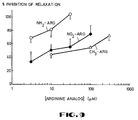
- FIGURE 9 shows concentration-response curves for inhibition of ACh-induced relaxation of guinea pig pulmonary artery rings by L-N G -substituted arginine analogs.
- Rings were precontracted with 1 ⁇ M NE, then relaxed by cumulative addition of ACh, alone (control), and then in the presence of various concentrations of the arginine analogs N G -aminoarginine, N G -nitroarginine and NMMA.
- Another N G substitution tested for inhibition of induced nitrite release had two methyl groups on one of the arginine guanidino nitrogens.
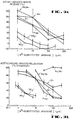
- FIGURE 9a Concentration-response relationships for inhibition of A23187-stimulated nitrite release by bovine aortic endothelial cells (BAEC) are shown in FIGURE 9a for the N,N-disubstituted derivative in comparison with several monosubstituted derivatives.
- Nitrite production was measured as an indication of nitric oxide synthesis since nitric oxide spontaneously decays to nitrite.
- Nitrite production by BAEC in a 2-hr. period was assessed in an L-arginine-free medium alone or in the presence of the indicated concentration of arginine analogs.
- the points plotted represent means ⁇ S.E. of the percent inhibition of nitrite production observed in 3 individual BAEC culture wells.
- FIGURE 9a indicates the groups substituted on the guanidino nitrogens of L-arginine.
- Me,Me- indicates the disubstituted analog tested; note that this compound is approximately equipotent to L-N G -methylarginine.
- FIGURE 9b compares concentration-response relationships for the same set of mono- and disubstituted arginine analogs as FIGURE 9a, plus an additional dimethyl analog with the two methyl groups on different guanidino nitrogens.
- the test is for inhibition of ACh-induced vasorelaxation in isolated rabbit aortic rings.
- FIGURE 10 shows inhibition of ACh-induced relaxation by NMMA in arteries from various vascular beds and species and the stereospecific reversal by L-arginine.
- Guinea pig pulmonary artery (GP PA), rat and rabbit aorta (Ao), and dog coronary (CA) and femoral artery (FA) were precontracted with NE (1 ⁇ M) and relaxed with a single concentration of ACh.
- Concentration of ACh GP PA 1 ⁇ M, rat Ao 0.3 ⁇ M, rabbit Ao 0.3, dog CA 0.3 ⁇ M and dog PA 0.1 ⁇ M.
- the concentration of NMMA was 100 ⁇ M except for the rat Ao which was 5 ⁇ M.
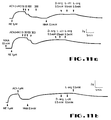
- FIGURE 11 contains representative physiograph tracings which depict ACh-induced relaxation of NE-preconstricted rings prepared from rabbit aorta (upper panel) and human internal mammary artery (lower panel). In both tissues, NMMA is shown to attenuate ACh-induced vasorelaxation; addition of excess L-arginine restores relaxation.
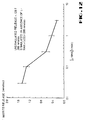
- L-NMA also inhibits EDRF/NO release from bovine endothelial cells grown in culture (FIGURE 12) and from the isolated guinea pig heart (FIGURE 13) when challenged with an endothelium-dependent vasodilator.
- FIGURE 12 illustrates inhibition by NMMA of calcium ionophore stimulated nitrite release from bovine aortic endothelial cells grown in cell culture.
- Cells were stimulated to release NO by addition of 3 ⁇ g/ml of ionophore (A23187) to the culture medium, alone, and in the presence of various concentrations of NMMA.
- FIGURE 13 depicts inhibition by NMMA of histamine-induced nitrite release from the isolated coronary perfused guinea pig heart and its restoration by L-arginine.
- FIGURES 15 and 16 depict the time course of pressor effect elicited by NMMA (NMA; FIGURE 15) and L-N G -aminoarginine (NAA; FIGURE 16) in the phenobarbital anesthetized guinea pig.
- EMT6 A murine cancer cell line, EMT6, has been observed to release large quantities of nitrite into the culture medium when activated by bacterial ET, IFN and various cytokines.
- EMT6 cytosolic preparations i.e., cell-free solutions
- an enzyme activity was characterized which forms NO and citrulline from arginine. This reaction requires NADPH (FIGURE 18 and 19) and other cofactors.
- FIGURE 18 shows the time course of nitrite production at 37°C by cytosolic preparations from EMT6 cells that were either untreated (control) or stimulated with IFN and endotoxin. Incubation mixtures were 100 ⁇ l total volume containing: 40 ⁇ l cytosol (100,000 X g supernatant), 2 mM L-arginine, 2 mM NADPH, 20 mM TRIS (pH 8.0) and a "cocktail" of protease inhibitors. Nitrite synthesis is observed with cytosol prepared from stimulated cells but not from control cells.
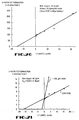
- FIGURE 20 is a Lineweaver-Burke plot for synthesis of nitrite from L-arginine by cytosol from stimulated EMT6 cells. The rate of nitrite formation was evaluated over a range of L-arginine (ARG) concentrations (from 0.03-2.0 mM) under conditions similar to that described for FIGURE 18, except that incubates contained 50 ⁇ l cytosol in a total volume of 80 ⁇ l. Open and filled circles represent results obtained with each of two cytosol preparations. From these results an apparent Km value of 61.6 ⁇ M can be extrapolated for the utilization of ARG by the enzyme pathway which forms NO.
- ARG L-arginine
- N G -substituted arginine analogs were screened for precise quantitation of their ability to inhibit arginine-dependent NO formation by the EMT6 enzyme system.
- NMMA is a competitive inhibitor of arginine utilization with an apparent Ki of 5-10 ⁇ M.
- Ki 5-10 ⁇ M.
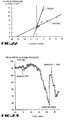
- the ethyl-substituted compound is approximately 10-fold less active in this assay (FIGURE 22).
- N G -substituted arginine analogs may be used as specific blockers of the enzymatic pathway for NO generation.
- this class of arginine antagonists may offer specific relief from hypotension resulting from conditions which cause excess NO generation, such as those indicated in Examples 1 and 2.
- ET is known to stimulate the synthesis and release of several cytokines and biological mediators having hypotensive activity; among the factors released, TNF, PAF, prostacyclin and complement-derived C5a anaphylatoxin have been proposed as important contributors to the cardiovascular collapse of septic shock (Hesse, et al., 1988, Cytokine Appearance in Human Endotoxemia and Primate Bacteremia, Surg. Gynecol. Obstet. 166:147; Etienne, et al., 1986, The Relative Role of PAF-acether and Icosanoids in Septic Shock, Pharmacol. Res. Commun.
- nitrite accumulates when cultured mouse endothelial cells are exposed to immunomodulators and endotoxin (Kilbourn, et al., 1990, Endothelial cell production of nitrogen oxides in response to interferon gamma in combination with tumor necrosis factor, interleukin-1, or endotoxin. J. Natl. Cancer Inst. 82:722).
- NO nitric oxide
- L-NMA N G -methyl-L-arginine
- EDRF endothelium-derived relaxing factor
- N G -Methyl-L-arginine was synthesized as previously described (Corbin, et al., 1974, N G -Methylated Arginines: Convenient Preparation of N G -Methylarginines. Anal. Biochem. 57, 310-312.) and purified by crystallization as the monoflavianate salt. A solution of the free amino acid was obtained by stirring a suspension of the salt with Dowex-1 (OH); after neutralization with HCl, the concentration of L-NMA was determined by amino acid analysis using the crystalline monoflavianate salt as standard. Endotoxin (Escherichia Coli; B0128:B12) and all other reagents were purchased from Sigma Chemical Company, St. Louis, Missouri. Nitroglycerin was purchased from DuPont Pharmaceuticals, Wilmington, D.E.
- Dogs were then endotracheally intubated and ventilated with a piston-driven respirator (Harvard instruments) using room air at a tidal volume of 20 ml/kg and at a rate of 10 to 12 breaths per minute, adjusted to achieve a normal arterial pH and pCO 2 (Instrumentation Laboratories lL1302 pH/Blood Gas Analyzer). Catheters were placed percutaneously into the femoral and pulmonary arteries; In the latter, a flow-directed thermal-dilation catheter was used (Abbott Critical Care Systems).
- Physiologic measurements Mean SAP and heart rate were continuously monitored (Parametron 7048 Monitoring System, Roche) and stored on a magnetic disk using an analog-to-digital converter (Scientific Solutions, Inc.). Cardiac output (CO) was determined as the mean of six measurements by thermal-dilution. Systemic vascular resistance was calculated as (SAP X80)/CO and expressed as dynes-sec/cm 2 .
- endotoxin 40 ug/kg, in 10 ml of phosphate-buffered saline (PBS), pH 7.4
- PBS phosphate-buffered saline
- SAP systemic arterial pressure
- FIG 23 A representative blood pressure tracing which depicts the effect of endotoxin on systemic arterial pressure in the anesthetized dog is shown in Figure 23. Cardiovascular parameters for this and 3 additional dogs are summarized in Table 1 (Study 1).
- FIGURE 23 shows the time course of changes in mean systemic arterial pressure (SAP) in a pentobarbital-anesthetized dog following the i.v. administration of endotoxin (ET), N G -methyl-L-arginine (L-NMA), and L-arginine (L-Arg). Data from this and additional experiments are summarized in Table 1 (above).
- L-NMA Long-term reversal of hypotension. It was found that a single i.v. dose of L-NMA (20 mg/kg) restored normal blood pressure for 30-60 minutes. If an additional dose of L-NMA (20 mg/kg) was given when the blood pressure began to decrease again, normal blood pressure could be maintained for at least 2 hours in the endotoxin-treated dog. Results of a typical study are shown in Figure 24.
- FIGURE 24 shows the time course of changes in mean systemic arterial pressure (SAP) in a pentobarbital-anesthetized dog following the i.v. administration of endotoxin.
- SAP systemic arterial pressure
- a second dose of L-NMA restored the blood pressure to a level equivalent to the first dose and maintained the SAP greater than 100 mm Hg for 2 hrs.
- L-NMA alone had a significant but modest hypertensive effect in control dogs not treated with endotoxin; L-NMA increased SAP by only 24.8 ⁇ 2.7 mm Hg (p,0.01) with an associated increase in SVR (p,0.01), and decreases in heart rate (HR) and cardiac output (CO) that did not reach statistical significance. L-arginine (400 mg/kg) fully reversed the pressor effect of L-NMA.
- hypotension and other changes associated with septic shock may depend on complex interactions between cytokines, eicosanoids, PAF, activated complement components, and other factors, it is not surprising that several interventions have been found to be at least partially effective in some models.
- Inhibitors of prostaglandin synthesis and PAF receptor antagonists are two major classes of compounds that may have therapeutic potential (8-9). Although these agents appear to be effective, they have been tested primarily in animals administered very large doses of endotoxin (e.g., 1 to 40 mg/kg, or about 1000 times larger than the dose used here). The onset of hypotension occurs within a few minutes in such animals and may not accurately reflect the cytokine-mediated processes characteristic of clinical septic shock.
- the ET-induced hypotension escaping blockade by 20 mg/kg L-NMA may be due to mediators other than NO. While it may be that long-term inhibition by L-NMA may be self-limited by conversion to L-Arginine (Salvemini, et al., 1990, Immediate Release of a Nitric Oxide-Like Factor from Bovine Aortic Endothelial Cells by Escherichia coli Lipopolysaccharide. Proc. Natl. Acad. Sci. 87:2593.), such metabolism would not be expected to diminish the short-term pressor effect of L-NMA which is shown in Figure 23. Nevertheless, the finding that L-NMA restores blood pressure to normal or near normal values indicates that overproduction of NO is a major, and perhaps the major, cause of hypotension in endotoxic shock.
- NMMA specifically blocks NO synthesis
- these observations suggest a role for NO in immunomodulator-induced shock and in septic shock.
- L-arginine overcomes the competitive inhibition affected by L-NMMA by providing an excess of the required precursor for NO synthesis
- this work also suggests a role for arginine in the generation of hypotension associated with these two processes.
- the reversal of hypotension by NMMA appears to be selective for TNF and ET-induced hypotension since reduction in the blood pressure to a similar level of hypotension with nitroglycerin was not antagonized by NMMA administration. This provides further support for a role of NO in these processes since hypotension was not antagonized by NMMA when induced by an agent that acts by an arginine-independent pathway.
- the response of the dog to TNF and ET is similar to that observed in humans.
- hypotension is the dose-limiting toxicity which restricts the dose of TNF which can be administered.
- time of onset and severity of hypotension is variable in the dog.
- the administration of ET to the dog is associated with a more severe and uncontrollable form of hypotension than a bolus injection of TNF. This may be due to the fact that TNF has a short half-life in circulation (5 minutes), however, it is continually produced by endogenous sources after administration of ET. This may lead to an increased inductive drive to produce larger amounts of NO in response to ET as compared to TNF. This hypothesis is confirmed by the fact that lower doses of NMMA were required to reverse TNF-induced shock as compared to ET-induced shock.
- NMMA does not inhibit the anti-tumor activity of TNF and IL-2, in vitro .
- TNF bioactivity was measured by the cytotoxicity towards murine L929 cells, in vitro .
- Addition of NMMA or N G aminoarginine did not alter the cytolytic effect of TNF towards tumor cells in vitro (Table 3).
- NMMA did not alter either the proliferation phase (data not shown) or the lytic phase of human LAK cells exposed to IL-2, in vitro (Table 4).
- Aminoarginine is the most potent inhibitor of nitric oxide production measured thusfar. Since NMMA is metabolized to citrulline which can subsequently serve as a precursor for arginine biosynthesis, other arginine analogs were tested for their ability to inhibit nitric oxide production (Table 5).
- N G -aminoarginine The most potent derivative tested was N G -aminoarginine. Subsequent testing in vivo , showed that aminoarginine was more effective than NMMA in reversing the hypotension associated with TNF administration in the dog (FIGURE 25).
- FIGURE 26 depicts systemic arterial pressure (SAP) versus time (min). ET (2 mg/kg), a lethal dose, was infused over 60 min. and NAA administered at 97, 165, and 374 min. to maintain blood pressure. The animal was survived for 24 hours and then autopsied. No pathological changes were observed in liver, lungs, heart, brain, bowel or kidney.
- FIGURE 27 demonstrates the ability of N G -aminoarginine to reverse systemic hypotension mediated by interleukin-1. Subsequent administration of L-arginine obviated this reversal.
Landscapes
- Health & Medical Sciences (AREA)
- Public Health (AREA)
- Veterinary Medicine (AREA)
- Chemical & Material Sciences (AREA)
- Medicinal Chemistry (AREA)
- Pharmacology & Pharmacy (AREA)
- Life Sciences & Earth Sciences (AREA)
- Animal Behavior & Ethology (AREA)
- General Health & Medical Sciences (AREA)
- Epidemiology (AREA)
- Engineering & Computer Science (AREA)
- Bioinformatics & Cheminformatics (AREA)
- Cardiology (AREA)
- Heart & Thoracic Surgery (AREA)
- Chemical Kinetics & Catalysis (AREA)
- General Chemical & Material Sciences (AREA)
- Nuclear Medicine, Radiotherapy & Molecular Imaging (AREA)
- Organic Chemistry (AREA)
- Emergency Medicine (AREA)
- Acyclic And Carbocyclic Compounds In Medicinal Compositions (AREA)
- Medicines That Contain Protein Lipid Enzymes And Other Medicines (AREA)
- Pharmaceuticals Containing Other Organic And Inorganic Compounds (AREA)
Abstract
Description
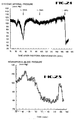
- FIGURE 1 shows the effects of IFN in combination with various cytokines on the production of nitrites by brain endothelial cells (MBEC).
- FIGURE 2a shows nitrite concentration associated with MBEC at constant tumor necrosis factor (TNF) concentration and a range of IFN concentrations.
- FIGURE 2b shows nitrite concentration associated with MBEC at constant IFN concentration and a range of TNF concentrations.
- FIGURE 3 shows nitrite concentration associated with MBEC induced by TNF and IFN (as a function of time).
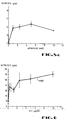
- FIGURE 4 shows nitrite concentration associated with MBEC exposed to TNF and IFN as a function of arginine concentration.
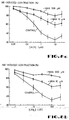
- FIGURE 5 shows reduction by NMMA of TNF and IFN-induced nitrite concentration associated with MBEC.
- FIGURE 5a shows arginine reversal of NMMA inhibition of nitrite concentration.
- FIGURE 6 shows nitrite concentrations associated with MBEC with 100 U IFN/ml as a function of endotoxin concentration.
- FIGURE 7 illustrates variations in canine systemic blood pressure (BP) and heart rate (HR) as a function of time after sequential administration of TNF, NMMA, and L-arginine.
- FIGURE 7a also illustrates variations in canine systemic BP and HR as a function of time after sequential administration of TNF, NMMA, and L-arginine.
- FIGURE 7b illustrates control experiments where NMMA was administered to previously untreated dogs.
- FIGURE 7c illustrates the effects of NMMA on nitroglycerin-induced canine hypotension.
- FIGURE 8 demonstrates the effect of NMMA on endothelium-dependent relaxation of guinea pig (cavian) pulmonary artery rings in response to ACh, LTDD4 and HIST, and on endothelium-independent relaxation caused by SNP.
- FIGURE 9 shows artery ring acetylcholine-induced relaxation dose-response inhibition curves for certain NG substituted arginine derivatives.
- FIGURE 9a shows inhibition of A23187-stimulated nitrite release in bovine aortic endothelial cells by several mono- and disubstituted arginine analogs.
- FIGURE 9b shows inhibition of ACh-induced relaxation in isolated rabbit aortic rings by several mono- and disubstituted arginine analogs.
- FIGURE 10 shows the modification of ACh-induced relaxation by NMMA, L-citrulline, D-arginine and L-arginine in vascular rings from various species.
- FIGURE 11 depicts ACh-induced relaxation of NE-preconstricted rabbit aorta and human internal mammary artery as modified by L-NMA, D-arginine (D-arg), L-citrulline (L-cit) and L-arginine (L-arg).
- FIGURE 12 shows the inhibition by NMMA of calcium ionophore induced nitrite release from bovine aortic endothelial cells (BAEC's).
- FIGURE 13 shows histamine-induced nitrite release from cavian heart: blockade by NMMA and restoration by L-arginine.
- FIGURE 14 shows the dose-response relationship for the pressor effect of NMMA in the anesthetized guinea pig.
- FIGURE 15 shows the time course and dose-dependence of NMMA hypertension in the guinea pig.
- FIGURE 16 shows the time course and dose-dependence of L-NG-aminoarginine-induced hypertension in the guinea pig.
- FIGURE 17 shows the pressor effects of L-NG-amino-arginine and NMMA as a function of concentration in the guinea pig.
- FIGURE 18 shows the effect of IFN and ET stimulation of EMT6 cells on cytosol nitrite concentration in these cells.
- FIGURE 19 shows that nitrite formation in the cytosol of EMT6 cells stimulated by IFN and ET is dependent upon arginine and NADPH.
- FIGURE 20 is a Lineweaver-Burke plot for L-arginine-dependent nitrite synthesis by an enzyme activity present in stimulated EMT6 cytosol (stimulated with IFN and ET).
- FIGURE 21 shows that NMMA is a competitive inhibitor of the enzyme described in FIGURE 20.
- FIGURE 22 shows a Lineweaver-Burke plot indicating that NG-monoethylarginine (L-NEA) is a competitive inhibitor of the enzymic activity shown in FIGURE 20.
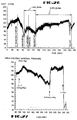
- FIGURE 23 shows the time course of changes in mean systemic arterial pressure (SAP) in a pentobarbital-anesthetized dog following the i.v. administration of endotoxin (ET), NG-methyl-L-arginine (L-NMA), and L-arginine (L-Arg).
- FIGURE 24 shows the time course of changes in mean systemic arterial pressure (SAP) in a pentobarbital-anesthetized dog following the i.v. administration of endotoxin, L-NMA and L-ARG.
- FIGURE 25 shows the time course of TNF-mediated canine systemic hypotension and reversal by NG-aminoarginine.
- FIGURE 26 shows the reversal of endotoxin-induced systemic hypotension by NG-aminoarginine.
- FIGURE 27 shows the reversal of interleukin-1 mediated hypotension by NG-aminoarginine.


Claims (16)
- Use of an inhibitor of nitric oxide formation from arginine for the manufacture of a medicament for the prophylaxis or treatment of systemic hypotension induced by a biological response modifier.
- Use according to claim 1, wherein said biological response modifier is a cytokine or an endotoxin.
- Use according to claim 2, wherein said cytokine is gamma-interferon, interleukin-1, interleukin-2, or tumor necrosis factor.
- Use of an inhibitor of nitric oxide formation from arginine for the manufacture of a medicament for the prophylaxis or treatment of systemic hypotension induced by therapy with tumor necrosis factor and/or interleukin-2.
- Use of an inhibitor of nitric oxide formation from arginine for the manufacture of a medicament for the treatment of septic shock.
- Use according to any of claims 1 to 5, wherein the inhibitor of nitric oxide formation is an arginine antagonist.
- Use according to claim 6, wherein the arginine antagonist is an NG-substituted arginine or an NG,NG-disubstituted arginine.
- Use according to claim 7, wherein the arginine antagonist is an NG-substituted arginine or an NG,NG-disubstituted arginine having a nitro, amino, alkyl, hydroxyalkyl, carboxyalkyl, aminoalkyl or alkenyl substituent replacing a hydrogen of a guanidino amino group.
- Use according to claim 7 or 8, wherein the arginine antagonist is an NG-aminoarginine, NG-nitroarginine, or an NG-alkylarginine such as NG-methylarginine, NG-ethylarginine, NG-propylarginine or NG-butylarginine.
- Use according to claim 9, wherein the arginine antagonist is a NG-methylarginine.
- Use according to claim 10, wherein the arginine antagonist is NG-methyl-L-arginine.
- Use according to claim 7 or 8, wherein the arginine antagonist is a NG,NG-disubstituted arginine.
- Use according to claim 7 or 8, wherein the arginine antagonist is a NG,NG-dialkylarginine.
- Use according to claim 13, wherein the arginine antagonist is a NG,NG-dialkylarginine having an alkyl substituent selected from methyl, ethyl, propyl and butyl.
- Use according to claim 13 or 14, wherein the arginine antagonist is NG,NG-dimethylarginine.
- Use according to claim 6, wherein the arginine antagonist is L-nitroarginine methylester.
Priority Applications (2)
| Application Number | Priority Date | Filing Date | Title |
|---|---|---|---|
| DK98202345T DK0922454T3 (en) | 1989-09-13 | 1990-09-13 | Arginine antagonists for inhibiting systemic hypotension associated with nitric oxide production or endothelial-derived relaxant factor |
| EP98202345A EP0922454B1 (en) | 1989-09-13 | 1990-09-13 | Arginine antagonists for inhibition of systemic hypotension associated with nitric oxide production or endothelial derived relaxing factor |
Applications Claiming Priority (3)
| Application Number | Priority Date | Filing Date | Title |
|---|---|---|---|
| US406909 | 1989-09-13 | ||
| US07/406,909 US5028627A (en) | 1989-09-13 | 1989-09-13 | Method of using arginine derivatives to inhibit systemic hypotension associated with nitric oxide production or endothelial derived relaxing factor |
| PCT/US1990/005199 WO1991004024A1 (en) | 1989-09-13 | 1990-09-13 | Arginine antagonists for inhibition of systemic hypotension associated with nitric oxide production or endothelial derived relaxing factor |
Related Child Applications (1)
| Application Number | Title | Priority Date | Filing Date |
|---|---|---|---|
| EP98202345A Division EP0922454B1 (en) | 1989-09-13 | 1990-09-13 | Arginine antagonists for inhibition of systemic hypotension associated with nitric oxide production or endothelial derived relaxing factor |
Publications (2)
| Publication Number | Publication Date |
|---|---|
| EP0597831A1 EP0597831A1 (en) | 1994-05-25 |
| EP0597831B1 true EP0597831B1 (en) | 1999-01-20 |
Family
ID=23609857
Family Applications (2)
| Application Number | Title | Priority Date | Filing Date |
|---|---|---|---|
| EP98202345A Expired - Lifetime EP0922454B1 (en) | 1989-09-13 | 1990-09-13 | Arginine antagonists for inhibition of systemic hypotension associated with nitric oxide production or endothelial derived relaxing factor |
| EP90913926A Expired - Lifetime EP0597831B1 (en) | 1989-09-13 | 1990-09-13 | Arginine antagonists for inhibition of systemic hypotension associated with nitric oxide production or endothelial derived relaxing factor |
Family Applications Before (1)
| Application Number | Title | Priority Date | Filing Date |
|---|---|---|---|
| EP98202345A Expired - Lifetime EP0922454B1 (en) | 1989-09-13 | 1990-09-13 | Arginine antagonists for inhibition of systemic hypotension associated with nitric oxide production or endothelial derived relaxing factor |
Country Status (12)
| Country | Link |
|---|---|
| US (1) | US5028627A (en) |
| EP (2) | EP0922454B1 (en) |
| JP (1) | JP2679873B2 (en) |
| KR (1) | KR100230514B1 (en) |
| AT (2) | ATE175871T1 (en) |
| AU (1) | AU634826B2 (en) |
| CA (1) | CA2065040C (en) |
| DE (2) | DE69034206T2 (en) |
| DK (1) | DK0922454T3 (en) |
| ES (2) | ES2256913T3 (en) |
| SG (1) | SG48203A1 (en) |
| WO (1) | WO1991004024A1 (en) |
Families Citing this family (75)
| Publication number | Priority date | Publication date | Assignee | Title |
|---|---|---|---|---|
| US5216025A (en) * | 1989-09-13 | 1993-06-01 | Board Of Regents, The University Of Texas System | Nitric oxide synthesis inhibitors for potentiating the action of pressor agents in certain hypotensive patients |
| US5158883A (en) * | 1989-09-13 | 1992-10-27 | Cornell Research Foundation, Inc. | Method of using aminoarginine to block nitric oxide formation in vitro |
| US5770623A (en) * | 1989-09-13 | 1998-06-23 | Board Of Regents, The University Of Texas System | Argine antagonists for inhibition of systemic hypotension associated with nitric oxide production or endothelial derived relaxing factor |
| US5059712A (en) * | 1989-09-13 | 1991-10-22 | Cornell Research Foundation, Inc. | Isolating aminoarginine and use to block nitric oxide formation in body |
| US5312835A (en) * | 1989-09-13 | 1994-05-17 | Board Of Regents, The University Of Texas System | Use of cardiotonic drugs and inhibitors of nitric oxide synthesis to alleviate pathologic hypotension |
| US5318992A (en) * | 1990-02-26 | 1994-06-07 | Merrell Dow Pharmaceuticals Inc. | Inhibitors of nitric oxide biosynthesis |
| US5710324A (en) * | 1990-02-26 | 1998-01-20 | Merrell Pharmaceuticals Inc. | Inhibitors of nitric oxide biosynthesis |
| US5196195A (en) * | 1990-03-27 | 1993-03-23 | Cornell Research Foundation, Inc. | Use of arginase to control nitric oxide formation |
| US5395612A (en) * | 1990-03-27 | 1995-03-07 | Cornell Research Foundation, Inc. | Method for treating systemic hypotension caused by sepsis or cytokine using arginase in combination with an α1 adrenergic agonist |
| DE69214467T3 (en) * | 1991-01-10 | 2000-09-28 | Transcend Therapeutics, Inc. | Use of L-2-oxo thiazolidine-4-carboxylate for the treatment of respiratory distress syndrome |
| US5747459A (en) * | 1991-02-04 | 1998-05-05 | Nestec, Ltd. | Method for insuring adequate intracellular glutathione in tissue |
| US5273875A (en) * | 1991-03-22 | 1993-12-28 | Cornell Research Foundation, Inc. | N6 -(hydrazinoiminomethyl)lysine and method of inhibiting nitric oxide formation in body |
| US5132453A (en) * | 1991-03-22 | 1992-07-21 | Cornell Research Foundation, Inc. | N6 -(hydrazinoiminomethyl)lysine and method of inhibiting nitric oxide formation in body |
| US5286739A (en) * | 1991-09-27 | 1994-02-15 | Board Of Regents, University Of Texas System | Parenteral formulations for the inhibition of systemic hypotension associated with nitric oxide production or endothelial derived relaxing factor |
| US5374651A (en) * | 1991-09-27 | 1994-12-20 | Board Of Regents, The University Of Texas System | Methods and compositions for the treatment of hypotension with arginine free essential and essential amino acids and arginine derivatives |
| US5334380A (en) * | 1991-09-27 | 1994-08-02 | Board Of Regents, The University Of Texas System | Anti-endotoxin, interleukin-1 receptor antagonist and anti-tumor necrosis factor antibody with arginine-free formulations for the treatment of hypotension |
| GB9127376D0 (en) * | 1991-12-24 | 1992-02-19 | Wellcome Found | Amidino derivatives |
| JP2534423B2 (en) | 1991-12-26 | 1996-09-18 | コーネル・リサーチ・ファンデーション・インコーポレイテッド | Inhibitors that prevent vascular disorders resulting from overproduction of nitric oxide |
| US5877176A (en) * | 1991-12-26 | 1999-03-02 | Cornell Research Foundation, Inc. | Blocking induction of tetrahydrobiopterin to block induction of nitric oxide synthesis |
| GB9200114D0 (en) * | 1992-01-04 | 1992-02-26 | Scras | Dual inhibitors of no synthase and cyclooxygenase |
| US5296466A (en) * | 1992-02-19 | 1994-03-22 | Board Of Regents, The University Of Texas System | Inhibition of nitric oxide-mediated hypotension and septic shock with iron-containing hemoprotein |
| US6187744B1 (en) * | 1992-03-11 | 2001-02-13 | Michael W. Rooney | Methods and compositions for regulating the intravascular flow and oxygenating activity of hemoglobin in a human or animal subject |
| US5430045A (en) * | 1992-04-23 | 1995-07-04 | Free Radical Sciences, Inc. | Method of reducing or preventing bone marrow hypoplasia |
| US5281627A (en) * | 1992-05-28 | 1994-01-25 | Cornell Research Foundation, Inc. | Substituted arginines and substituted homoarginines and use thereof |
| GB9215816D0 (en) * | 1992-07-24 | 1992-09-09 | Wellcome Found | Arginine derivatives |
| US5856565A (en) * | 1992-07-24 | 1999-01-05 | Glaxo Wellcome, Inc. | Ng-monomethyl-l-argine hydrochloride derivatives and their use in the treatment of septic shock |
| US5356873A (en) * | 1992-11-05 | 1994-10-18 | Clintec Nutrition Co. | Method for providing nutritional requirements to patients having a chronic inflammation reaction |
| US5385940A (en) * | 1992-11-05 | 1995-01-31 | The General Hospital Corporation | Treatment of stroke with nitric-oxide releasing compounds |
| US5585402A (en) * | 1992-12-23 | 1996-12-17 | Glaxo Wellcome Inc. | Nitric oxide synthase inhibitors |
| DE4305881C1 (en) * | 1993-02-26 | 1994-03-03 | Lohmann Therapie Syst Lts | Transdermal therapeutic system for topical and systemic application of active agents - includes cpd(s) from which nitrogen oxide is released by human or animal metabolism or cpds which release nitrogen oxide in organism |
| US5449688A (en) * | 1993-03-30 | 1995-09-12 | The United States Of America As Represented By The Department Of Health And Human Services | Method of treating chronic inflammatory diseases |
| US5436270A (en) * | 1993-04-07 | 1995-07-25 | National Science Council | Method for protecting against endotoxin-induced shock |
| US5891459A (en) * | 1993-06-11 | 1999-04-06 | The Board Of Trustees Of The Leland Stanford Junior University | Enhancement of vascular function by modulation of endogenous nitric oxide production or activity |
| GB9312761D0 (en) * | 1993-06-21 | 1993-08-04 | Wellcome Found | Amino acid derivatives |
| US5424447A (en) * | 1993-07-07 | 1995-06-13 | The Medical College Of Wisconsin Research Foundation, Inc. | Heme binding compounds and use thereof |
| CN1071746C (en) * | 1993-08-12 | 2001-09-26 | 阿斯特拉公司 | Amidine derivatives with nitric oxide synthetase activities |
| US5807885A (en) * | 1993-08-12 | 1998-09-15 | Astra Aktiebolag | Amidine derivatives with nitric oxide synthetase activities |
| US6225305B1 (en) | 1993-10-04 | 2001-05-01 | Glaxo Wellcome Inc. | Substituted urea and isothiorea derivatives as no synthase inhibitors |
| US6297276B1 (en) | 1993-10-04 | 2001-10-02 | Glaxosmithkline | Substituted urea and isothiourea derivatives as no synthase inhibitors |
| US6090846A (en) * | 1994-06-01 | 2000-07-18 | Glaxo Wellcome Inc. | Substituted urea and isothiourea derivatives as no synthase inhibitors |
| KR100342275B1 (en) * | 1993-10-21 | 2002-12-05 | 지.디. 썰 엘엘씨 | Amidino derivatives useful as nitric oxide synthase inhibitors |
| WO1995011014A1 (en) * | 1993-10-21 | 1995-04-27 | G.D. Searle & Co. | Amidino derivatives useful as nitric oxide synthase inhibitors |
| US5502050A (en) * | 1993-11-29 | 1996-03-26 | Cornell Research Foundation, Inc. | Blocking utilization of tetrahydrobiopterin to block induction of nitric oxide synthesis |
| US5447712A (en) * | 1993-12-09 | 1995-09-05 | Free Radical Sciences | Method of reducing cyclophosphamide induced hemorrhagic cystitis |
| US5470847A (en) * | 1993-12-10 | 1995-11-28 | Board Of Regents, The University Of Texas System | Ovulation control by regulating nitric oxide levels with arginine derivatives |
| PT749418E (en) * | 1994-03-10 | 2001-01-31 | Searle & Co | UTEIS L-N6- (1-IMINOETIL) DERIVATIVES LIKE NITRIC OXIDE INHIBITORS SINTETASE |
| WO1996002245A1 (en) * | 1994-07-14 | 1996-02-01 | The Wellcome Foundation Limited | Nitric oxide synthase inhibitors for inhibiting the production of airway mucus |
| US5583101A (en) * | 1994-07-15 | 1996-12-10 | Harvard College | Use of nitrogen oxide species and adducts to inhibit skeletal muscle contraction |
| US5519020A (en) * | 1994-10-28 | 1996-05-21 | The University Of Akron | Polymeric wound healing accelerators |
| US5684008A (en) * | 1994-11-09 | 1997-11-04 | G. D. Searle & Co. | Aminotetrazole derivatives useful as nitric oxide synthase inhibitors |
| US5545625A (en) * | 1994-12-12 | 1996-08-13 | The Medical College Of Wisconsin Research Foundation, Inc. | Preventing conversion of citrulline to argininosuccinate to limit pathological nitric oxide overproduction |
| GB9504350D0 (en) * | 1995-03-04 | 1995-04-26 | Sod Conseils Rech Applic | Arginine derivatives |
| JPH11504319A (en) * | 1995-04-20 | 1999-04-20 | ジー.ディー.サール アンド カンパニー | Cyclic amidino drugs useful as nitric oxide synthase inhibitors |
| US5830917A (en) * | 1995-09-11 | 1998-11-03 | G. D. Searle & Co. | L-N6 -(1-iminoethyl) lysine derivatives useful as nitric oxide synthase inhibitors |
| US5945408A (en) * | 1996-03-06 | 1999-08-31 | G.D. Searle & Co. | Hydroxyanidino derivatives useful as nitric oxide synthase inhibitors |
| US5981511A (en) * | 1996-03-06 | 1999-11-09 | G.D. Searle & Co. | Hydroxyamidino derivatives useful as nitric oxide synthase inhibitors |
| GB9624540D0 (en) * | 1996-11-26 | 1997-01-15 | Nycomed Imaging As | Compositions |
| US6620848B2 (en) | 1997-01-13 | 2003-09-16 | Smithkline Beecham Corporation | Nitric oxide synthase inhibitors |
| US6369272B1 (en) | 1997-01-13 | 2002-04-09 | Glaxosmithkline | Nitric oxide synthase inhibitors |
| US5981556A (en) * | 1997-07-22 | 1999-11-09 | G.D. Searle & Co. | 1,3-diazolino and 1,3-diazolidino heterocycles as useful nitric oxide synthase inhibitors |
| US20020031513A1 (en) * | 1997-11-24 | 2002-03-14 | Shamir Leibovitz | Method and pharmaceutical composition for inhibiting premature rapture of fetal membranes, ripening of uterine cervix and preterm labor in mammals |
| US6011066A (en) * | 1998-02-02 | 2000-01-04 | Veterans General Hospital-Taipei | Method for treating septic shock |
| GB9811599D0 (en) | 1998-05-30 | 1998-07-29 | Glaxo Group Ltd | Nitric oxide synthase inhibitors |
| AU4821799A (en) | 1998-06-10 | 1999-12-30 | G.D. Searle & Co. | Heterobicyclic and tricyclic nitric oxide synthase inhibitors |
| US6552052B2 (en) | 1998-06-10 | 2003-04-22 | Monsanto/G.D. Searle | Pyrrolo[2,1-c][1,2,4] thiadiazoles and Pyrollo[2,1-c][1,12,4]oxadiazoles useful as nitric oxide synthase inhibitors |
| AU2001229501A1 (en) * | 2000-01-24 | 2001-07-31 | Isis Pharmaceuticals, Inc. | Antisense modulation of inducible nitric oxide synthase expression |
| EP1351674A4 (en) | 2000-04-12 | 2004-12-22 | Cornell Res Foundation Inc | PHARMACOTHERAPY FOR VASCULAR FUNCTIONAL DISORDERS ASSOCIATED WITH A DEFICIT NITROGEN MONOXIDE BIOACTIVITY |
| AU2001255439A1 (en) * | 2000-04-17 | 2001-10-30 | Duke University | Method of treating alzheimer's disease |
| US6344473B1 (en) | 2000-08-07 | 2002-02-05 | G.D. Searle & Co. | Imidazoles useful as nitric oxide synthase inhibitors |
| ITTO20010110A1 (en) | 2001-02-08 | 2002-08-08 | Rotta Research Lab | NEW BENZAMIDINE DERIVATIVES EQUIPPED WITH ANTI-INFLAMMATORY AND IMMUNOSOPPRESSIVE ACTIVITY. |
| EP1572086A4 (en) * | 2002-03-06 | 2008-07-02 | Univ Duke | METHODS AND COMPOSITION BASED ON THE DISCOVERY OF METABOLISM OF NITROGLYCERIN |
| US20090259215A1 (en) * | 2008-04-09 | 2009-10-15 | Searete Llc, A Limited Liability Corporation Of The State Of Delaware | Methods and systems associated with delivery of one or more agents to an individual |
| US20090259217A1 (en) * | 2008-04-09 | 2009-10-15 | Searete Llc, A Limited Liability Corporation Of The State Of Delaware | Methods and systems associated with delivery of one or more agents to an individual |
| KR102275339B1 (en) * | 2019-12-05 | 2021-07-08 | 전남대학교산학협력단 | Pharmaceutical composition for preventing or treating heart failure with preserved ejection fraction |
| CN112294751B (en) * | 2020-10-31 | 2023-10-31 | 郑州大学 | Preparation method and application of a calcium peroxide-loaded metal-organic framework pharmaceutical composition |
Citations (1)
| Publication number | Priority date | Publication date | Assignee | Title |
|---|---|---|---|---|
| US4499068A (en) * | 1982-08-26 | 1985-02-12 | Johnson & Johnson Products, Inc. | Oral compositions comprising NG -alkyl derivatives of arginine |
Family Cites Families (3)
| Publication number | Priority date | Publication date | Assignee | Title |
|---|---|---|---|---|
| IT1127322B (en) * | 1979-12-28 | 1986-05-21 | Italfarmaco Spa | PHARMACEUTICAL COMPOSITIONS WITH EXHALATION OF THE THERAPEUTIC ACTIVITY OF CORTISONICS |
| IT1201511B (en) * | 1985-12-23 | 1989-02-02 | Italfarmaco Spa | CITOPROTECTIVE DERIVATIVES IN ISCHEMIC-BASED DISEASES, THEIR PREPARATION AND COMPOSITIONS THAT CONTAIN THEM |
| US5059712A (en) * | 1989-09-13 | 1991-10-22 | Cornell Research Foundation, Inc. | Isolating aminoarginine and use to block nitric oxide formation in body |
-
1989
- 1989-09-13 US US07/406,909 patent/US5028627A/en not_active Expired - Lifetime
-
1990
- 1990-09-13 SG SG1996007882A patent/SG48203A1/en unknown
- 1990-09-13 KR KR1019920700550A patent/KR100230514B1/en not_active Expired - Fee Related
- 1990-09-13 AT AT90913926T patent/ATE175871T1/en active
- 1990-09-13 AU AU64096/90A patent/AU634826B2/en not_active Ceased
- 1990-09-13 ES ES98202345T patent/ES2256913T3/en not_active Expired - Lifetime
- 1990-09-13 EP EP98202345A patent/EP0922454B1/en not_active Expired - Lifetime
- 1990-09-13 DE DE69034206T patent/DE69034206T2/en not_active Expired - Fee Related
- 1990-09-13 DE DE69032911T patent/DE69032911T2/en not_active Expired - Fee Related
- 1990-09-13 WO PCT/US1990/005199 patent/WO1991004024A1/en not_active Ceased
- 1990-09-13 JP JP2513075A patent/JP2679873B2/en not_active Expired - Fee Related
- 1990-09-13 ES ES90913926T patent/ES2132070T3/en not_active Expired - Lifetime
- 1990-09-13 DK DK98202345T patent/DK0922454T3/en active
- 1990-09-13 EP EP90913926A patent/EP0597831B1/en not_active Expired - Lifetime
- 1990-09-13 AT AT98202345T patent/ATE309799T1/en not_active IP Right Cessation
- 1990-09-13 CA CA002065040A patent/CA2065040C/en not_active Expired - Fee Related
Patent Citations (1)
| Publication number | Priority date | Publication date | Assignee | Title |
|---|---|---|---|---|
| US4499068A (en) * | 1982-08-26 | 1985-02-12 | Johnson & Johnson Products, Inc. | Oral compositions comprising NG -alkyl derivatives of arginine |
Non-Patent Citations (9)
| Title |
|---|
| AM. J. PHYSIOL., vol. 264, 1993, pages 660-663 * |
| BIOCHEM. BIOPHYS. RES. COMMUN., vol. 171, 1990, pages 562-568 * |
| BR. J. PHARMACOL., vol. 97, no. 4, 1989, pages 1119-1124 * |
| 'CELLULAR AND MOLECULAR IMMUNOLOGY', W.B.SAUNDERS COMPANY, PHILADELPHIA, 1994 * |
| 'DICTIONARY OF CYTOKINES', VCH, WEINHEIM, 1994 * |
| 'ILLUSTRATED DICTIONARY OF IMMUNOLOGY', CRC PRESS, 1995 * |
| J. EXP. MED., vol. 169, 1989, pages 1543-1555 * |
| LIFE SCIENCES, vol. 20, 1977, pages 385-392 * |
| PROC. NATL. ACAD. SCI., vol. 86, 1989, pages 3375-3378 * |
Also Published As
| Publication number | Publication date |
|---|---|
| DK0922454T3 (en) | 2006-03-27 |
| US5028627A (en) | 1991-07-02 |
| EP0922454A3 (en) | 2001-05-02 |
| WO1991004024A1 (en) | 1991-04-04 |
| ATE309799T1 (en) | 2005-12-15 |
| DE69034206D1 (en) | 2005-12-22 |
| DE69034206T2 (en) | 2006-07-27 |
| JP2679873B2 (en) | 1997-11-19 |
| EP0597831A1 (en) | 1994-05-25 |
| CA2065040C (en) | 2001-07-17 |
| ES2132070T3 (en) | 1999-08-16 |
| KR100230514B1 (en) | 1999-11-15 |
| HK1011287A1 (en) | 1999-07-09 |
| AU6409690A (en) | 1991-04-18 |
| ATE175871T1 (en) | 1999-02-15 |
| JPH05500219A (en) | 1993-01-21 |
| SG48203A1 (en) | 1998-04-17 |
| DE69032911D1 (en) | 1999-03-04 |
| AU634826B2 (en) | 1993-03-04 |
| DE69032911T2 (en) | 1999-09-02 |
| KR920703042A (en) | 1992-12-17 |
| ES2256913T3 (en) | 2006-07-16 |
| EP0922454A2 (en) | 1999-06-16 |
| EP0922454B1 (en) | 2005-11-16 |
| CA2065040A1 (en) | 1991-03-14 |
Similar Documents
| Publication | Publication Date | Title |
|---|---|---|
| EP0922454B1 (en) | Arginine antagonists for inhibition of systemic hypotension associated with nitric oxide production or endothelial derived relaxing factor | |
| Kilbourn et al. | Reversal of endotoxin-mediated shock by NG-methyl-L-arginine, an inhibitor of nitric oxide synthesis | |
| EP0592557B1 (en) | Nitric oxide synthesis inhibitors for potentiating the action of pressor agents in certain hypotensive patients | |
| US5534545A (en) | Parenteral amino acid formulations for the inhibition of systemic hypotension associated with nitric oxide production | |
| US5543430A (en) | Method and formulation of stimulating nitric oxide synthesis | |
| Gray et al. | The effect of inhibitors of the l‐arginine/nitric oxide pathway on endotoxin‐induced loss of vascular responsiveness in anaesthetized rats | |
| US5449688A (en) | Method of treating chronic inflammatory diseases | |
| US5686493A (en) | Method for protecting against endotoxin-induced shock using ornithine | |
| US5374651A (en) | Methods and compositions for the treatment of hypotension with arginine free essential and essential amino acids and arginine derivatives | |
| Conrad et al. | NG-monomethyl-L-arginine and nitroarginine potentiate pressor responsiveness of vasoconstrictors in conscious rats | |
| Dubbin et al. | Inhibition of endothelial nitric oxide biosynthesis by N‐nitro‐l‐arginine | |
| EP0663826B1 (en) | Amino acids containing parenteral formulations for the treatment of hypotension and related pathologies | |
| US5770623A (en) | Argine antagonists for inhibition of systemic hypotension associated with nitric oxide production or endothelial derived relaxing factor | |
| EP0669824B1 (en) | Use of cardiotonic drugs and inhibitors of nitric oxide synthesis to alleviate pathologic hypotension | |
| HK1011287B (en) | Arginine antagonists for inhibition of systemic hypotension associated with nitric oxide production or endothelial derived relaxing factor | |
| HK1021141A (en) | Arginine antagonists for inhibition of systemic hypotension associated with nitric oxide production or endothelial derived relaxing factor |
Legal Events
| Date | Code | Title | Description |
|---|---|---|---|
| PUAI | Public reference made under article 153(3) epc to a published international application that has entered the european phase |
Free format text: ORIGINAL CODE: 0009012 |
|
| 17P | Request for examination filed |
Effective date: 19920221 |
|
| AK | Designated contracting states |
Kind code of ref document: A1 Designated state(s): AT BE CH DE DK ES FR GB IT LI LU NL SE |
|
| RAP1 | Party data changed (applicant data changed or rights of an application transferred) |
Owner name: CORNELL RESEARCH FOUNDATION, INC. Owner name: BOARD OF REGENTS THE UNIVERSITY OF TEXAS SYSTEM |
|
| 17Q | First examination report despatched |
Effective date: 19940623 |
|
| GRAG | Despatch of communication of intention to grant |
Free format text: ORIGINAL CODE: EPIDOS AGRA |
|
| GRAG | Despatch of communication of intention to grant |
Free format text: ORIGINAL CODE: EPIDOS AGRA |
|
| GRAH | Despatch of communication of intention to grant a patent |
Free format text: ORIGINAL CODE: EPIDOS IGRA |
|
| GRAH | Despatch of communication of intention to grant a patent |
Free format text: ORIGINAL CODE: EPIDOS IGRA |
|
| GRAA | (expected) grant |
Free format text: ORIGINAL CODE: 0009210 |
|
| AK | Designated contracting states |
Kind code of ref document: B1 Designated state(s): AT BE CH DE DK ES FR GB IT LI LU NL SE |
|
| PG25 | Lapsed in a contracting state [announced via postgrant information from national office to epo] |
Ref country code: LI Free format text: LAPSE BECAUSE OF FAILURE TO SUBMIT A TRANSLATION OF THE DESCRIPTION OR TO PAY THE FEE WITHIN THE PRESCRIBED TIME-LIMIT Effective date: 19990120 Ref country code: SE Free format text: THE PATENT HAS BEEN ANNULLED BY A DECISION OF A NATIONAL AUTHORITY Effective date: 19990120 Ref country code: AT Free format text: LAPSE BECAUSE OF FAILURE TO SUBMIT A TRANSLATION OF THE DESCRIPTION OR TO PAY THE FEE WITHIN THE PRESCRIBED TIME-LIMIT Effective date: 19990120 Ref country code: BE Free format text: LAPSE BECAUSE OF FAILURE TO SUBMIT A TRANSLATION OF THE DESCRIPTION OR TO PAY THE FEE WITHIN THE PRESCRIBED TIME-LIMIT Effective date: 19990120 Ref country code: NL Free format text: LAPSE BECAUSE OF FAILURE TO SUBMIT A TRANSLATION OF THE DESCRIPTION OR TO PAY THE FEE WITHIN THE PRESCRIBED TIME-LIMIT Effective date: 19990120 Ref country code: CH Free format text: LAPSE BECAUSE OF FAILURE TO SUBMIT A TRANSLATION OF THE DESCRIPTION OR TO PAY THE FEE WITHIN THE PRESCRIBED TIME-LIMIT Effective date: 19990120 |
|
| REF | Corresponds to: |
Ref document number: 175871 Country of ref document: AT Date of ref document: 19990215 Kind code of ref document: T |
|
| REG | Reference to a national code |
Ref country code: CH Ref legal event code: EP |
|
| REF | Corresponds to: |
Ref document number: 69032911 Country of ref document: DE Date of ref document: 19990304 |
|
| ITF | It: translation for a ep patent filed | ||
| PG25 | Lapsed in a contracting state [announced via postgrant information from national office to epo] |
Ref country code: DK Free format text: LAPSE BECAUSE OF FAILURE TO SUBMIT A TRANSLATION OF THE DESCRIPTION OR TO PAY THE FEE WITHIN THE PRESCRIBED TIME-LIMIT Effective date: 19990420 |
|
| PG25 | Lapsed in a contracting state [announced via postgrant information from national office to epo] |
Ref country code: DE Free format text: LAPSE BECAUSE OF FAILURE TO SUBMIT A TRANSLATION OF THE DESCRIPTION OR TO PAY THE FEE WITHIN THE PRESCRIBED TIME-LIMIT Effective date: 19990421 |
|
| ET | Fr: translation filed | ||
| NLV1 | Nl: lapsed or annulled due to failure to fulfill the requirements of art. 29p and 29m of the patents act | ||
| REG | Reference to a national code |
Ref country code: CH Ref legal event code: PL |
|
| REG | Reference to a national code |
Ref country code: ES Ref legal event code: FG2A Ref document number: 2132070 Country of ref document: ES Kind code of ref document: T3 |
|
| PG25 | Lapsed in a contracting state [announced via postgrant information from national office to epo] |
Ref country code: LU Free format text: LAPSE BECAUSE OF NON-PAYMENT OF DUE FEES Effective date: 19990913 |
|
| PLBE | No opposition filed within time limit |
Free format text: ORIGINAL CODE: 0009261 |
|
| STAA | Information on the status of an ep patent application or granted ep patent |
Free format text: STATUS: NO OPPOSITION FILED WITHIN TIME LIMIT |
|
| 26N | No opposition filed | ||
| REG | Reference to a national code |
Ref country code: GB Ref legal event code: IF02 |
|
| PGFP | Annual fee paid to national office [announced via postgrant information from national office to epo] |
Ref country code: GB Payment date: 20050809 Year of fee payment: 16 |
|
| PGFP | Annual fee paid to national office [announced via postgrant information from national office to epo] |
Ref country code: FR Payment date: 20050902 Year of fee payment: 16 |
|
| PGFP | Annual fee paid to national office [announced via postgrant information from national office to epo] |
Ref country code: ES Payment date: 20050919 Year of fee payment: 16 |
|
| PGFP | Annual fee paid to national office [announced via postgrant information from national office to epo] |
Ref country code: DE Payment date: 20050930 Year of fee payment: 16 |
|
| PGFP | Annual fee paid to national office [announced via postgrant information from national office to epo] |
Ref country code: IT Payment date: 20060930 Year of fee payment: 17 |
|
| GBPC | Gb: european patent ceased through non-payment of renewal fee |
Effective date: 20060913 |
|
| REG | Reference to a national code |
Ref country code: FR Ref legal event code: ST Effective date: 20070531 |
|
| PG25 | Lapsed in a contracting state [announced via postgrant information from national office to epo] |
Ref country code: GB Free format text: LAPSE BECAUSE OF NON-PAYMENT OF DUE FEES Effective date: 20060913 |
|
| REG | Reference to a national code |
Ref country code: ES Ref legal event code: FD2A Effective date: 20060914 |
|
| PG25 | Lapsed in a contracting state [announced via postgrant information from national office to epo] |
Ref country code: ES Free format text: LAPSE BECAUSE OF NON-PAYMENT OF DUE FEES Effective date: 20060914 |
|
| PG25 | Lapsed in a contracting state [announced via postgrant information from national office to epo] |
Ref country code: FR Free format text: LAPSE BECAUSE OF NON-PAYMENT OF DUE FEES Effective date: 20061002 |
|
| PG25 | Lapsed in a contracting state [announced via postgrant information from national office to epo] |
Ref country code: IT Free format text: LAPSE BECAUSE OF NON-PAYMENT OF DUE FEES Effective date: 20070913 |