EP0597018B1 - Glycosidation reaction - Google Patents
Glycosidation reaction Download PDFInfo
- Publication number
- EP0597018B1 EP0597018B1 EP92917211A EP92917211A EP0597018B1 EP 0597018 B1 EP0597018 B1 EP 0597018B1 EP 92917211 A EP92917211 A EP 92917211A EP 92917211 A EP92917211 A EP 92917211A EP 0597018 B1 EP0597018 B1 EP 0597018B1
- Authority
- EP
- European Patent Office
- Prior art keywords
- acyl
- compound
- erythro
- hex
- enopyranoside
- Prior art date
- Legal status (The legal status is an assumption and is not a legal conclusion. Google has not performed a legal analysis and makes no representation as to the accuracy of the status listed.)
- Expired - Lifetime
Links
- MCJNLITZBZRQFK-NLKSTHHJSA-N CC(C)CCCC(CC1)C(C)(CCC2C(C)(CCC(C3)OC(CC4)OC(CO)[C@H]4O)C3=C3)C1C2C3O Chemical compound CC(C)CCCC(CC1)C(C)(CCC2C(C)(CCC(C3)OC(CC4)OC(CO)[C@H]4O)C3=C3)C1C2C3O MCJNLITZBZRQFK-NLKSTHHJSA-N 0.000 description 1
- 0 CCC(C)C(O[C@@](C[C@](C)C=C1C=CC(C)=C2CC[C@](CO[C@]3OC(C*)[C@@](*)C=C3)OC(CC)=O)C12O)=O Chemical compound CCC(C)C(O[C@@](C[C@](C)C=C1C=CC(C)=C2CC[C@](CO[C@]3OC(C*)[C@@](*)C=C3)OC(CC)=O)C12O)=O 0.000 description 1
Images


Classifications
-
- C—CHEMISTRY; METALLURGY
- C07—ORGANIC CHEMISTRY
- C07H—SUGARS; DERIVATIVES THEREOF; NUCLEOSIDES; NUCLEOTIDES; NUCLEIC ACIDS
- C07H15/00—Compounds containing hydrocarbon or substituted hydrocarbon radicals directly attached to hetero atoms of saccharide radicals
- C07H15/20—Carbocyclic rings
- C07H15/24—Condensed ring systems having three or more rings
- C07H15/256—Polyterpene radicals
-
- A—HUMAN NECESSITIES
- A61—MEDICAL OR VETERINARY SCIENCE; HYGIENE
- A61P—SPECIFIC THERAPEUTIC ACTIVITY OF CHEMICAL COMPOUNDS OR MEDICINAL PREPARATIONS
- A61P35/00—Antineoplastic agents
-
- A—HUMAN NECESSITIES
- A61—MEDICAL OR VETERINARY SCIENCE; HYGIENE
- A61P—SPECIFIC THERAPEUTIC ACTIVITY OF CHEMICAL COMPOUNDS OR MEDICINAL PREPARATIONS
- A61P35/00—Antineoplastic agents
- A61P35/02—Antineoplastic agents specific for leukemia
-
- C—CHEMISTRY; METALLURGY
- C07—ORGANIC CHEMISTRY
- C07H—SUGARS; DERIVATIVES THEREOF; NUCLEOSIDES; NUCLEOTIDES; NUCLEIC ACIDS
- C07H17/00—Compounds containing heterocyclic radicals directly attached to hetero atoms of saccharide radicals
- C07H17/04—Heterocyclic radicals containing only oxygen as ring hetero atoms
-
- C—CHEMISTRY; METALLURGY
- C07—ORGANIC CHEMISTRY
- C07J—STEROIDS
- C07J17/00—Normal steroids containing carbon, hydrogen, halogen or oxygen, having an oxygen-containing hetero ring not condensed with the cyclopenta(a)hydrophenanthrene skeleton
- C07J17/005—Glycosides
-
- C—CHEMISTRY; METALLURGY
- C07—ORGANIC CHEMISTRY
- C07J—STEROIDS
- C07J9/00—Normal steroids containing carbon, hydrogen, halogen or oxygen substituted in position 17 beta by a chain of more than two carbon atoms, e.g. cholane, cholestane, coprostane
-
- C—CHEMISTRY; METALLURGY
- C07—ORGANIC CHEMISTRY
- C07J—STEROIDS
- C07J9/00—Normal steroids containing carbon, hydrogen, halogen or oxygen substituted in position 17 beta by a chain of more than two carbon atoms, e.g. cholane, cholestane, coprostane
- C07J9/005—Normal steroids containing carbon, hydrogen, halogen or oxygen substituted in position 17 beta by a chain of more than two carbon atoms, e.g. cholane, cholestane, coprostane containing a carboxylic function directly attached or attached by a chain containing only carbon atoms to the cyclopenta[a]hydrophenanthrene skeleton
Definitions
- This invention relates to a surprisingly novel method for the production of a broadly novel type of glycoside.
- the method comprises glycosylation (i.e., glycosidation) of an aglycon compound having a functional group, e.g. a hydroxy compound such as a hydroxy-steroid or hydroxy-non-steroid.
- WO 91/11452 refers to the production of steroidal glycosides; this reference is relevant under Art 54(3)EPC.
- a method for the production of a pyranoside compound wherein a aglycon compound selected from aliphatic, alicyclic, aliphatic-aromatic and aromatic compounds having a primary, secondary or tertiary functional group selected from -SH and -COOH is glycosylated, characterized in that the aglycon compound is reacted in a solvent with 3,4,6-trio-O-acyl-glucal of formula in the presence of molecular halogen preferably molecular iodine as a catalyst to produce the corresponding, 4,6-di-O-acyl-2,3-dideoxy- ⁇ -D-erythro-hex-2-enopyranoside of said aglycon compound, where acyl is a lower acyl group.
- the 4,6-di-O-acyl (or acetyl)-2,3-dideoxy- ⁇ -D-erythro-hex-2-enopyranoside will sometimes be referred to herein simply as a DDH pyranoside.
- a method for the production of a pyranoside compound wherein a aglycon compound selected from aliphatic, alicyclic, aliphatic-armoatic and aromatic compounds having a primary, secondary or tertiary functional group selected from -OH, -SH and - COOH is glycosylated, characterized in that the aglycon compound is reacted in tetrahydrofuran with 3,4,6-trio-O-acyl-glucal of formula in the presence of molecular halogen preferably molecular iodine as a catalyst to produce the corresponding 4,6-di-O-acyl-2,3-dideoxy- ⁇ -D-erythro-hex-2-enopyranoside of said algycon compound, where acyl is a lower acyl group.
- the invention concerns a method for the production of a pyranoside compound, wherein an aglycon compound selected from aliphatic, alicyclic, aliphatic-aromatic or aromatic compounds having a primary, secondary or tertiary functional group selected from -OH, -SH, and is glycosylated, characterized in that the aglycon compound is reacted in THF with 3,4,6-tri-O-acyl-glucal of formula in the presence of molecular or ionized halogen as a catalyst, such as iodine I 2 , chlorine Cl 2 , bromine Br 2 , and fluorine F 2 , preferably iodine, to produce the corresponding 4,6-di-O-acyl-2,3-dideoxy- ⁇ -D-erythro-hex-2-enopyranoside of said aglycon compound, where acyl is a lower acyl group.
- a catalyst such as iodine I 2 , chlorine
- a hydroxysteryl compound preferably a 3 ⁇ -ol sterol compound, more preferably a delta 5 -3 ⁇ -ol steroid compound such as a cholesterol, (e.g., delta 5 -cholesten-3 ⁇ -ol) is glycosylated by reaction with 3,4,6-tri-O-acyl-D-glucal in THF in the presence of molecular or ionized halogen, preferably iodine, as a catalyst.
- a non-steroidal compound can be thus glycosylated as detailed herein. The reaction is achieved in a single step and in high yield.
- the resulting unsaturated glycoside obtained may be used as an end product or as an intermediate in further reactions to provide functional derivatives which may be steroidal, e.g., cholesterol, derivatives.
- functional groups can be introduced into the perhydrocyclopentano-phenanthrene skeleton of the unsaturated acylglycoside, wherein the ⁇ -bond of the acylglycoside at the same time functions as a protecting group for the original OH-group at C 3 of the phenanthrene skeleton.
- the present method makes use of iodine which is molecularly dissolved in inert solvents.
- inert solvents for example, comprise CH 2 Cl 2 dichloromethane, CHCl 3 chloroform, CCl 4 carbon tetrachloride, C 6 H 4 (CH 3 ) 2 xylene, C 6 H 3 (CH 3 ) 3 mesitylene, C 6 H 5 CH(CH 3 ) 2 cymene, C 6 H 12 cyclohexane and methyl derivatives thereof, as well as ligroin, petroleum ether and saturated hydrocarbons, such as for example n-pentane or n-heptane, preferably C 6 H 6 benzene or C 6 H 5 CH 3 toluene.
- the glycosylation reaction catalyzed by iodine runs quantitatively at room temperature in 2 hours.
- the method of the invention for the preparation of the DDH pyranoside also makes use of iodine dissolved in ionizing solvents.
- a ketone such as acetone, methyl ethyl ketone (2-butanone), and cyclohexanone as an alternative solvent
- the iodine catalyzed reaction between 3,4,6-Tri-0-acetyl-D-glucal and cholesterol runs quantitatively at 20°C in only 60 to 90 minutes.
- the glycosylation method according to the mentioned preferred embodiment is directed to the reaction of the vinyl ether of 3,4,6-tri-O-acyl-D-glucal with a cholesterol such as delta 5 -cholesten-3 ⁇ -ol, with molecularly dissolved halogen, i.e. iodine, as catalyst in THF.
- the reaction thereby introduces a double bond between C-atoms 2 and 3 while eliminating the acyl group sited at C 3 , instead of introducing an iodine atom at C 2 in the glycosidic part of the resulting cholesterylglycoside.
- This reaction is conveniently followed by IR-spectroscopy, and is complete only when the peak of the glucal at 1650 cm -1 has disappeared.
- the iodine being utilized as catalyst is quantitatively titrated back by a suitable back-titrant reagent such as 0.1 N aqueous sodium thiosulphate (Na 2 S 2 O 3 ).
- a suitable back-titrant reagent such as 0.1 N aqueous sodium thiosulphate (Na 2 S 2 O 3 ).
- the method for providing the corresponding di-O-acyl glycoside as exemplified hereinafter for cholesterol compounds is applicable to the glycosylation of not only steroid compounds and cholesterol compounds and precursors but also aglycon compounds in general, i.e., aliphatic, alicyclic, aliphatic-aromatic and aromatic compounds having a primary, secondary or tertiary functional group of the type mentioned.
- Aglycon compounds that are useful for their pharmacological properties are preferred, since their respective glycosides produced according to the invention have the same utility and useful properties and art-recognized dosage regimens with the possible enhancement of bioavailability, e.g., at cell membranes, due to the presence of the sugar residue.
- Preferred hydroxy compounds for glycosylation comprise cholesterols, bile salts, steroid hormones, and vitamin D compounds and precursors as described in Stryer's Biochemistry , 3rd Ed. pp. 559-570, Freeman and Company, New York, 1988.
- Examples of such compounds are cholic acid and derivatives, 25-hydroxy-cholesterol, 25-hydroxy-calciferol, pregnenolone, 17 ⁇ -hydroxy-progesterone, 17 ⁇ -hydroxy-pregnenolone, 11-desoxy-corticosterone, 11-desoxy-cortisol, corticosterone, cortisol, cortisone, dolichol, androsterone, testosterone, estrone, 17 ⁇ -estradiol, estratriol-3,16 ⁇ ,17 ⁇ , 3 ⁇ ,5 ⁇ -tetrahydro-corticosterone, serotonin, urocortisol, and allocortolone, preferably cyclopentanoperhydrophenanthrene compounds having the delta 5 -3 ⁇ -OH steryl moiety in which the delta 5 double bond is stabilized as described by 3 ⁇ -OH glycosylation resulting in the pyranoside.
- aglycon compounds for glycosylation include those listed in the "Therapeutic Category and Biological Activity Index" of The Merck Index XI, pp. THER-5 to THER-29, Merck & Co., Inc., Rahway, NJ.
- glycosylation method and related oxidation and reduction methods described hereinafter may be illustrated by a preferred embodiment employing the starting material cholesterol, as follows:
- the steryl DDH pyranoside product obtained by the glycosylation method can be converted by oxidation of the steroid part into an ⁇ -glycosylated 7-keto-sterol such as ⁇ -glycosylated 7-keto-cholesterol.
- the method is applicable to the oxidation of sterol compounds broadly, preferably cyclopentanoperhydro-phenanthrene compounds having the delta 5 -3 ⁇ -OH steryl 4,6-di-O-acyl-2,3-dideoxy- ⁇ -D-erythro-hex-2-enopyranoside moiety to provide the corresponding 7-keto sterols having the corresponding moiety
- the oxidation is accomplished with an oxidizing agent, which preferably contains chromium, with pyridine-chromium trioxide (C 5 H 5 N) 2 CrO 3 or pyridine-chlorochromate (C 5 H 5 NHCrO 3 )Cl being preferred and t-butyl chromate being especially preferred.
- the inert glycosidic double bond between C 2 C 3 thereby remains intact as it is shielded by the C 4 , C 6 acyl (e.g., acetyl) groups.
- a suitable reducing agent preferably a complex metal hydride, such as one or more of LiAlH 4 , NaBH 4 , and KBH 4 , more preferably LiAlH 4 , leads to a steroidal glycoside.
- the method importantly provides 7 ⁇ -hydroxycholesteryl 2,3-dideoxy- ⁇ -D-erythro-hex-2-enopyranoside (7 ⁇ -OHC) of formula which like cholesterol is systemically biocompatible.
- the product is obtained after workup of the reaction mixture, e.g. by chromatographic separation of the C 7 ⁇ -hydroxy isomer from the C 7 ⁇ -hydroxy isomer, in a suitable solvent mixture, preferably a mixture comprising dichloromethane:acetone preferably in 1:1 mixture.
- a suitable solvent mixture preferably a mixture comprising dichloromethane:acetone preferably in 1:1 mixture.
- novel 7 ⁇ -hydroxycholesterol DDH pyranoside in particular and its 7-keto precursor possess valuable pharmacological properties.
- a preferred parenteral dosage regimen in treating the proliferative phase growth of the kind described calls for administration of about 10 to about 40 mg. of 7 ⁇ -OHC DDH pyranoside per 70 Kg. of body weight, once a day or less often while analysis is made of tumor markers such as CEA, TPA, etc. so that the dosage can be adjusted from time to time to normalize the tumor marker level.
- the alpha-isomer, delta 5 -cholesten-3 ⁇ ,7 ⁇ -diol is formed in the liver as the first degradation product of cholesterol and possesses no physiological activity
- the beta-isomer, delta 5 -cholesten-3 ⁇ ,7 ⁇ -diol is formed in the thymus gland of all mammals as a universal signal substance of the mammalian immune defense. It owes its activity, which is solely directed to malignant cell surfaces, to the fact that it is bound unspecifically by LDL (low density lipoproteins).
- novel steroid and non-steroid compounds can be used in the form of pharmaceutical preparations comprising each such compound in a pharmacogically effective amount in admixture with a pharmaceutically acceptable carrier which may be conventional per se.
- a pharmaceutically acceptable carrier which may be conventional per se.
- These preparations may be formulated by well known procedures. In these respects, see for example Remington's Pharmaceutical Sciences , Chapter 43, 14th Ed., Mack Publishing Co., Easton, PA 18042, USA.
- These preparations can be administered in any suitable way such as orally, e.g. in the form of tablets, dragees, gelatin capsules, soft capsules, solutions, emulsions or suspensions or parenterally, e.g. in the form of injectable solutions at suitable pH, e.g. ca. 7.5, or topically, e.g. in the form of a cream.
- the invention comprises not only the above glycoside product but also other glycoside products made by the above procedure using as starting materials equivalent amounts of the glucal (or other suitable glucal) and the aglycon selected for glycosidation.
- Suitable aglycon compounds are selected (for their known use as aglycons) from the aforementioned aliphatic, alicyclic, aliphatic-aromatic or aromatic compounds having a primary, secondary or tertiary functional group (i.e., -OH, -SH,), preferably a compound listed in the foregoing paragraphs a) to y) or in pages THER-5 to THER-29 of the Merck Index XI, supra.
- glycoside products made by the above procedure are the respective 4,6-di-O-acyl or acetyl-2,3-dideoxy- ⁇ -D-erythro-hex-2-eno-pyranosides of the following aglycon compounds which as DDH pyranoside products are characterized by known IR and NMR spectroscopy data available from the referenced literature.
- Hydroxy Aglycon The Merck Index IX Monograph No. Use Cholic acid 2206 choleretic Clavulanic acid 2342 antibacterial Amoxicillin 610 antibacterial Daunorubicin 2825 antineoplastic Lovastatin 5460 antihyper cholesterolemic Mevastatin 6088 antihyper cholesterolemic Simvastatin 8491 antihyperlipidemic
- the above glycosylation reaction carried out in benzene at 70°C is selective for the desired alpha isomer rather than the beta isomer.
- the reaction typically produces a ratio of alpha to beta cholesteryl glycosylate isomers ( ⁇ : ⁇ ) of greater than 20:1.
- ⁇ : ⁇ ratio of alpha to beta cholesteryl glycosylate isomers
- a starting material i.e., a substrate
- at least one functional group e.g., OH, SH, and/or -COOH
- the substrate (1 equiv) was added to a stirring solution of glucal (0.5-1.0 g) and iodine (20 mol%) in THF at room temperature.
- the reaction was monitored by thin-layer chromatography. Reaction times are listed for each compound.
- the solution was diluted with ether and washed with 10% aqueous Na 2 S 2 O 3 solution.
- the layers were separated and the aqueous layer was extracted with additional ether.
- the combined organic layers were dried over Na 2 S 2 O 4 , concentrated, and purified by column chromatography on 230-400 mesh SiO 2 . All products were recovered as viscous oils except for those compounds for which a melting point is given. Note: The thiols were added at lower temperatures as indicated for each adduct.
- the resulting adduct in about 60% yield is Lovastatin 4,6-di-O-acetyl-2,3-dideoxy- ⁇ -D-erythro-hex-2-enopyranoside having the formula:
- the reaction is carried out under mild conditions, e.g., preferably at room temperature, for one hour, using triacetyl D-glucal (1.0 equiv), iodine (20 mol %) in THF as the solvent.
- the resulting adduct is mephenesin 4,6-di-O-acetyl-2,3-dideoxy- ⁇ -D-erythro-hex-2-enopyranoside and capsaicin 4,6-di-O-acetyl-2,3-dideoxy- ⁇ -D-erythro-hex-2-enopyranoside, respectively.
- Adducts with cholic acid or a cholic acid analog by this procedure are as follows:
Landscapes
- Chemical & Material Sciences (AREA)
- Organic Chemistry (AREA)
- Health & Medical Sciences (AREA)
- General Health & Medical Sciences (AREA)
- Life Sciences & Earth Sciences (AREA)
- Medicinal Chemistry (AREA)
- Pharmacology & Pharmacy (AREA)
- Biotechnology (AREA)
- Genetics & Genomics (AREA)
- Molecular Biology (AREA)
- Chemical Kinetics & Catalysis (AREA)
- General Chemical & Material Sciences (AREA)
- Engineering & Computer Science (AREA)
- Nuclear Medicine, Radiotherapy & Molecular Imaging (AREA)
- Biochemistry (AREA)
- Animal Behavior & Ethology (AREA)
- Public Health (AREA)
- Veterinary Medicine (AREA)
- Hematology (AREA)
- Oncology (AREA)
- Steroid Compounds (AREA)
- Saccharide Compounds (AREA)
- Pharmaceuticals Containing Other Organic And Inorganic Compounds (AREA)
- Medicines Containing Material From Animals Or Micro-Organisms (AREA)
Abstract
Description
- This invention relates to a surprisingly novel method for the production of a broadly novel type of glycoside. The method comprises glycosylation (i.e., glycosidation) of an aglycon compound having a functional group, e.g. a hydroxy compound such as a hydroxy-steroid or hydroxy-non-steroid.
- J. THIEM et al Liebigs Ann Chem. 1985, 2135-2150 discloses an N-iodosuccinimide catalysed reaction of glycal with a steroid aglycon (cholesterin) the Fernier rearrangement taking place and a 2', 3' - unsaturated glycoside obtained.
- C. COLAS et al JACS 102/2, 857 (1980) discloses chiral 2,5,6 - trideoxystreptamine as an aglycon, its synthesis from quinic acid and its microbial and chemical transformation into two bioactive pseudodisaccharides.
- WO 91/11452 refers to the production of steroidal glycosides; this reference is relevant under Art 54(3)EPC.
- There has been surprisingly found according to a first aspect of the present invention a method for the production of a pyranoside compound, wherein a aglycon compound selected from aliphatic, alicyclic, aliphatic-aromatic and aromatic compounds having a primary, secondary or tertiary functional group selected from -SH and -COOH is glycosylated, characterized in that the aglycon compound is reacted in a solvent with 3,4,6-trio-O-acyl-glucal of formulain the presence of molecular halogen preferably molecular iodine as a catalyst to produce the corresponding, 4,6-di-O-acyl-2,3-dideoxy-α-D-erythro-hex-2-enopyranoside of said aglycon compound, where acyl is a lower acyl group.

- A steroidal glycoside -- a 3-β-ol cholesterol pyranoside which is
cholesteryl 4,6-di-O-acetyl-2,3-dideoxy-α-D-erythro-hex-2-enopyranoside, obtainable by this method --has been found to be applicable as a pharmacologically active agent for use as a medicament, especially as an anti-neoplastic agent, or in geriatric medicine, or as a sedative or activity-enhancing agent. For convenience in describing the invention, the 4,6-di-O-acyl (or acetyl)-2,3-dideoxy-α-D-erythro-hex-2-enopyranoside will sometimes be referred to herein simply as a DDH pyranoside. - Further, there has been surprisingly found according to a second aspect of the present invention a method for the production of a pyranoside compound, wherein a aglycon compound selected from aliphatic, alicyclic, aliphatic-armoatic and aromatic compounds having a primary, secondary or tertiary functional group selected from -OH, -SH and - COOH is glycosylated, characterized in that the aglycon compound is reacted in tetrahydrofuran with 3,4,6-trio-O-acyl-glucal of formulain the presence of molecular halogen preferably molecular iodine as a catalyst to produce the corresponding 4,6-di-O-acyl-2,3-dideoxy-α-D-erythro-hex-2-enopyranoside of said algycon compound, where acyl is a lower acyl group.
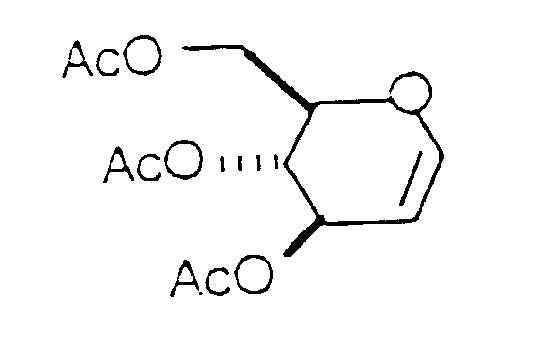
- In the accompanying drawings with reference to preferred examples of the invention:
- FIGURE 1 is an infrared spectrum of the glucal used in the reaction of Example 1;
- FIGURE 2 is an infrared spectrum of the glycosylation product of Example 1;
- FIGURE 3 is an NMR spectrum of the same glycosylation product of Example 1;
- FIGURES 4 and 5 are the IR-spectrum and the NMR-spectrum, respectively of the ketone product of Example 2;
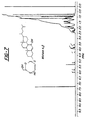
- FIGURES 6 and 7 are the IR-spectrum and the NMR-spectrum, respectively, of the 7β-OHC product of Example 3;
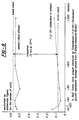
- Figure 8 is a plot showing the tumor cell growth inhibition by selected concentrations of 7β-OH cholesterol in cell culture fluid;
-
- According to one preferred embodiment, the invention concerns a method for the production of a pyranoside compound, wherein an aglycon compound selected from aliphatic, alicyclic, aliphatic-aromatic or aromatic compounds having a primary, secondary or tertiary functional group selected from -OH, -SH, and is glycosylated, characterized in that the aglycon compound is reacted in THF with 3,4,6-tri-O-acyl-glucal of formulain the presence of molecular or ionized halogen as a catalyst, such as iodine I2, chlorine Cl2, bromine Br2, and fluorine F2, preferably iodine, to produce the corresponding 4,6-di-O-acyl-2,3-dideoxy-α-D-erythro-hex-2-enopyranoside of said aglycon compound, where acyl is a lower acyl group. In another preferred embodiment a hydroxysteryl compound, preferably a 3β-ol sterol compound, more preferably a delta5-3β-ol steroid compound such as a cholesterol, (e.g., delta5-cholesten-3β-ol) is glycosylated by reaction with 3,4,6-tri-O-acyl-D-glucal in THF in the presence of molecular or ionized halogen, preferably iodine, as a catalyst. Alternatively, a non-steroidal compound can be thus glycosylated as detailed herein. The reaction is achieved in a single step and in high yield. Thus a double bond which is strongly hindered by the C4, C6-acyl groups and thus being inert, is introduced between C2=C3 of the glycosidic part of the molecule, whereby as to the hydroxysteryl compound the delta5 double bond of the cyclopentano-perhydro-phenanthrene skeleton is stabilized and remains unchanged.

- The resulting unsaturated glycoside obtained may be used as an end product or as an intermediate in further reactions to provide functional derivatives which may be steroidal, e.g., cholesterol, derivatives. Thus, in the case of cholesterol, functional groups can be introduced into the perhydrocyclopentano-phenanthrene skeleton of the unsaturated acylglycoside, wherein the α-bond of the acylglycoside at the same time functions as a protecting group for the original OH-group at C3 of the phenanthrene skeleton.
- The present method makes use of iodine which is molecularly dissolved in inert solvents. These inert solvents, for example, comprise CH2Cl2 dichloromethane, CHCl3 chloroform, CCl4 carbon tetrachloride, C6H4(CH3)2 xylene, C6H3(CH3)3 mesitylene, C6H5CH(CH3)2 cymene, C6H12 cyclohexane and methyl derivatives thereof, as well as ligroin, petroleum ether and saturated hydrocarbons, such as for example n-pentane or n-heptane, preferably C6H6 benzene or C6H5CH3 toluene. Using the alternative solvent nitromethane CH3NO2, the glycosylation reaction catalyzed by iodine runs quantitatively at room temperature in 2 hours. The method of the invention for the preparation of the DDH pyranoside also makes use of iodine dissolved in ionizing solvents. Using a ketone such as acetone, methyl ethyl ketone (2-butanone), and cyclohexanone as an alternative solvent, the iodine catalyzed reaction between 3,4,6-Tri-0-acetyl-D-glucal and cholesterol runs quantitatively at 20°C in only 60 to 90 minutes. As a preferred embodiment, one can also use tetrahydrofuran (THF).
- Using a lower alcohol such as methanol, ethanol, or propanol, the iodine catalyzed reaction between 3,4,6-Tri-O-acetyl-D-glucal and the aglycon runs during 30 minutes time quantitatively at 20°C as well.
- The glycosylation method according to the mentioned preferred embodiment is directed to the reaction of the vinyl ether of 3,4,6-tri-O-acyl-D-glucal with a cholesterol such as delta5-cholesten-3β-ol, with molecularly dissolved halogen, i.e. iodine, as catalyst in THF. The reaction thereby introduces a double bond between C-
atoms in which the delta5 double bond is stabilized as described by 3β-OH glycosylation resulting in the pyranoside.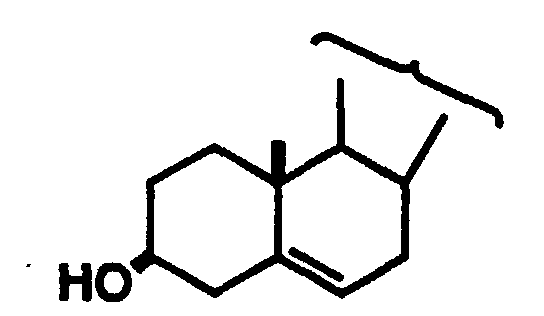
- Other preferred aglycon compounds for glycosylation include
- a) morphine and morphine derivatives such as codeine, ethyl morphine, dihydrocodeine, hydromorphone, oxycodone, nalorphine and levorphan;
- b) α- and β-sympathomimetic (adrenergic) compounds such as p-hydroxyphenylethanolamine, norfenefrine, synephrine, etilefrin, phenylephrine, octapamine, isoprenaline, dichloroisoproterenol, metaproterenol, terbutaline and buphenine;
- c) antihypertensive compounds such as methyldopa;
- d) vasoconstrictor compounds such as α-methylnoradrenaline;
- e) anticholinergic (parasympatholytic) and antispasmodic compounds such as atropine, homatropine, scopolamine and its methobromide and butyl bromide quaternary compounds, podine methyl sulfate and tropine benzilate;
- f) antipsychotic compounds such as acetophenazine, fluphenazine, dixyrazine, perphenazine hydroxyzine, pericyazine, haloperidol, trifluperidol and moperone;
- g) cardiotonic compounds such as digitoxigenin, digoxigenin and diginatigenin;
- h) estrogen and contraceptive compounds such as ethinylestradiol, mestranol and quinestrol;
- i) antibacterial compounds such as amoxicillin, chloramphenicol, thiamphenicol, tetracycline, chlortetracycline and oxytetracycline;
- j) antitussive compounds such as chlophedianol, clobutinol and zipeprol;
- k) analgesic compounds such as levorphanol, ciramadol, pentazocine, carbetidine, glafenine and salicylamide;
- l) oxytocic compounds such as ergonovine, prostaglandin F2α;
- m) antineoplastic compounds such as fluorouracil;
- n) antimalarial compounds such as quinine;
- o) fungicidal compounds such as cycloheximide;
- p) antirheumatic compounds such as oxyphenbutazone;
- q) anticholelithogenic compounds such as chenodiol;
- r) choleretic compounds such as hymecromone;
- s) anti-gout compounds such as allopurinol;
- t) anti-parkinsonian compounds such as levodopa, carbidopa and droxidopa;
- u) anti-spasmodic compounds such as ephedrine;
- v) nasal decongestant compounds such as cafaminol;
- w) muscle relaxant compounds such as phenprobamate and guaiacol glycerol ether;
- x) anti-inflammatory compounds such as dexamethasone and beclomethasone; and
- y) vitamin and vitamin related compounds such as provitamin D, xanthophyll, vitamin A, vitamin E, thiamin and ascorbic acid.
-
- Other preferred aglycon compounds for glycosylation according to the invention include those listed in the "Therapeutic Category and Biological Activity Index" of The Merck Index XI, pp. THER-5 to THER-29, Merck & Co., Inc., Rahway, NJ.
- The glycosylation method and related oxidation and reduction methods described hereinafter may be illustrated by a preferred embodiment employing the starting material cholesterol, as follows:

- The steryl DDH pyranoside product obtained by the glycosylation method can be converted by oxidation of the steroid part into an α-glycosylated 7-keto-sterol such as α-glycosylated 7-keto-cholesterol. The method is applicable to the oxidation of sterol compounds broadly, preferably cyclopentanoperhydro-phenanthrene compounds having the delta5-3β-
OH steryl 4,6-di-O-acyl-2,3-dideoxy-α-D-erythro-hex-2-enopyranoside moietyto provide the corresponding 7-keto sterols having the corresponding moiety The oxidation is accomplished with an oxidizing agent, which preferably contains chromium, with pyridine-chromium trioxide (C5H5N)2CrO3 or pyridine-chlorochromate (C5H5NHCrO3)Cl being preferred and t-butyl chromate being especially preferred. The inert glycosidic double bond between C2=C3 thereby remains intact as it is shielded by the C4, C6 acyl (e.g., acetyl) groups. The reduction of this 7-ketone with a suitable reducing agent, preferably a complex metal hydride, such as one or more of LiAlH4, NaBH4, and KBH4, more preferably LiAlH4, leads to a steroidal glycoside. In a preferred embodiment, the method importantly provides 7β-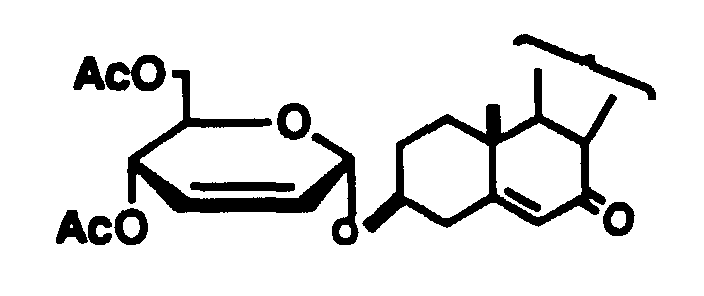
hydroxycholesteryl 2,3-dideoxy-α-D-erythro-hex-2-enopyranoside (7β-OHC) of formulawhich like cholesterol is systemically biocompatible. The product is obtained after workup of the reaction mixture, e.g. by chromatographic separation of the C7 β-hydroxy isomer from the C7 α-hydroxy isomer, in a suitable solvent mixture, preferably a mixture comprising dichloromethane:acetone preferably in 1:1 mixture.
- The novel 7β-hydroxycholesterol DDH pyranoside in particular and its 7-keto precursor possess valuable pharmacological properties. For example, a preferred parenteral dosage regimen in treating the proliferative phase growth of the kind described, allowing for ethical considerations and practices exercised in the clinician's judgment, calls for administration of about 10 to about 40 mg. of 7β-OHC DDH pyranoside per 70 Kg. of body weight, once a day or less often while analysis is made of tumor markers such as CEA, TPA, etc. so that the dosage can be adjusted from time to time to normalize the tumor marker level. Whereas the alpha-isomer, delta5-cholesten-3β,7α-diol, is formed in the liver as the first degradation product of cholesterol and possesses no physiological activity, the beta-isomer, delta5-cholesten-3β,7β-diol (as well as its 7-keto analog), is formed in the thymus gland of all mammals as a universal signal substance of the mammalian immune defense. It owes its activity, which is solely directed to malignant cell surfaces, to the fact that it is bound unspecifically by LDL (low density lipoproteins).
- The novel steroid and non-steroid compounds can be used in the form of pharmaceutical preparations comprising each such compound in a pharmacogically effective amount in admixture with a pharmaceutically acceptable carrier which may be conventional per se. These preparations may be formulated by well known procedures. In these respects, see for example Remington's Pharmaceutical Sciences, Chapter 43, 14th Ed., Mack Publishing Co., Easton, PA 18042, USA. These preparations can be administered in any suitable way such as orally, e.g. in the form of tablets, dragees, gelatin capsules, soft capsules, solutions, emulsions or suspensions or parenterally, e.g. in the form of injectable solutions at suitable pH, e.g. ca. 7.5, or topically, e.g. in the form of a cream.
- The invention and the best mode for practicing the same are illustrated by the following examples.
-

- 5.0 g (=0.02 mole) molecular iodine were dissolved with stirring in 300 ml benzene in a 2-litre three-necked flask fitted with stirrer, reflux condenser and thermometer. To the wine-red solution thus obtained was added the solution of 27.2 g (=0.10 mole) 3,4,6-tri-O-acetyl-D-glucal and 38.6 g (=0.10 mole) cholesterol (delta5-cholesten-3β-ol) in 700 ml of benzene. In the course of 2 hours the mixture was heated to 70-75°C. The reaction was monitored by IR-spectroscopy; it was terminated only when the peak of the glucal at 1650 cm-1 (Figure 1) had disappeared. The red color of the reaction solution is not significant. After removal of the flask heater the reaction solution is rapidly cooled in a water-bath to about 20-30°C. After transfer into a 2-litre separatory funnel the cooled wine-red reaction solution was thoroughly shaken until complete discoloration with 500 ml + 10% of 0.1 N = 12.5 g + 10% = 13.8 g aqueous solution of Na2S2O3, washed twice with water, treated with activated carbon, dried over anhydrous Na2SO4 and the solvent distilled off, finally in vacuo.
- Crude yield: 58.3 g (= 97.4% th.)
The product,cholesteryl 4,6-di-O-acetyl-2,3-dideoxy-α-D-erythro-hex-2-enopyranoside, is recrystallized from 2 litres of CH3OH. - Yield: 56.95 g (= 95.1% th.)
- Mp: 118-120°C
- IR-spectrum: Figure 2
- NMR-spectrum: Figure 3
-
- The invention comprises not only the above glycoside product but also other glycoside products made by the above procedure using as starting materials equivalent amounts of the glucal (or other suitable glucal) and the aglycon selected for glycosidation. Suitable aglycon compounds are selected (for their known use as aglycons) from the aforementioned aliphatic, alicyclic, aliphatic-aromatic or aromatic compounds having a primary, secondary or tertiary functional group (i.e., -OH, -SH,), preferably a compound listed in the foregoing paragraphs a) to y) or in pages THER-5 to THER-29 of the Merck Index XI, supra. Especially preferred glycoside products made by the above procedure are the respective 4,6-di-O-acyl or acetyl-2,3-dideoxy-α-D-erythro-hex-2-eno-pyranosides of the following aglycon compounds which as DDH pyranoside products are characterized by known IR and NMR spectroscopy data available from the referenced literature.
Hydroxy Aglycon The Merck Index IX Monograph No. Use Cholic acid 2206 choleretic Clavulanic acid 2342 antibacterial Amoxicillin 610 antibacterial Daunorubicin 2825 antineoplastic Lovastatin 5460 antihyper cholesterolemic Mevastatin 6088 antihyper cholesterolemic Simvastatin 8491 antihyperlipidemic - The above glycosylation reaction carried out in benzene at 70°C is selective for the desired alpha isomer rather than the beta isomer. Thus the reaction typically produces a ratio of alpha to beta cholesteryl glycosylate isomers (α:β) of greater than 20:1. Similarly, in THF at 67°C and at room temperature the reaction in either case typically produces an α:β ratio of about 9:1.
- Another general procedure was used in which, instead of cholesterol, a starting material (i.e., a substrate) having at least one functional group (e.g., OH, SH, and/or -COOH) was used. The procedure is detailed as follows:
- The substrate (1 equiv) was added to a stirring solution of glucal (0.5-1.0 g) and iodine (20 mol%) in THF at room temperature. The reaction was monitored by thin-layer chromatography. Reaction times are listed for each compound. Upon completion the solution was diluted with ether and washed with 10% aqueous Na2S2O3 solution. The layers were separated and the aqueous layer was extracted with additional ether. The combined organic layers were dried over Na2S2O4, concentrated, and purified by column chromatography on 230-400 mesh SiO2. All products were recovered as viscous oils except for those compounds for which a melting point is given.
Note: The thiols were added at lower temperatures as indicated for each adduct. -
- ALCOHOLS (all over 90% yield; α-isomer:β-isomer = 5-8:1)
- methanol
- ethanol
- isopropanol
- tert-butyl alcohol
- benzyl alcohol
- allyl alcohol
- PHENOLS (α-isomer:β-isomer = 6 - 8:1)
- phenol (70%)
- p-methoxyphenol (ca. 65%)
- p-nitrophenol (ca. 60%)
- THIOLS (highly reactive)
- ethyl mercaptan (-78°C to -55°C) (35%)
- α-isomer:β-isomer = 16:1
- isopropyl mercaptan (-78°C to 0°C) (77%)
- α-isomer:β-isomer = 15:1
- tert-butyl mercaptan (-25°C) (68%)
- α-isomer only
- thiophenol (room temperature) (50%)
- α-isomer:β-isomer = 20:1
- CARBOXYLIC ACID
- acetic acid (catalytic) (80%)
- α-isomer:β-isomer = 10:1
-
-
- R = Me (Reaction Time = 30 min. Yield = 87%)
- 1 H NMR (CDCl 3 ; 300 MHz) δ 2.087 (s,3H), 2.111 (s,3H), 3.457 (s,3H), 4.05-4.13 (m,1H), 4.188 (1H) and 4.266 (1H) (ABq,JAB=12.1 Hz; the 4.188 peaks are further split into d with J=2.5 Hz; the 4.266 peaks are further broken down into d with J=5.3 Hz), 4.934 (s,1H), 5.322 (dd,1H,J=9.7, 1.4 Hz), 5.834 (1H) and 5.894 ppm (1H) (ABq,JAB=10.6 Hz; the 5.834 peaks are further split into dd with J=2.0, 2.0 Hz).
- 13 C NMR (CDCl 3 ; 75.5 MHz) δ 20.56, 55.70, 63.26, 65.75, 67.35, 95.60, 128.15, 129.38, 170.08, 170.36 ppm.
- IR (KBr) 1048, 1072, 1107, 1137, 1148, 1188, 1233, 1372, 1438, 1449, 1456, 1744, 2910, 2939, 2956 cm-1.
- R = Et (Reaction Time = 50 min. Yield = 97%) m.p. (hexanes =
76-77.5°C.
- 1 H NMR (CDCl 3 ; 300 MHz) δ 1.256 (d,J=7.1 Hz,3H), 2.084 (s,3H), 2.105 (s,3H), 3.584 (1H) and 3.837 (1H) (ABq, JAB=9.7 Hz; both sets of peaks are further split into q with J=7.1 Hz), 4.09-4.14 (m,1H), 4.174 (1H) and 4.261 (1H) (ABq, JAB=12.2 Hz; the 4.174 peaks are further split into dd with J=2.8, 2.8 Hz; the 4.261 peaks are further split into d with J=5.3 Hz), 5.050 (s,1H), 5.319 (dd,J=9.6,1.4 Hz, 1H), 5.837 (1H) and 5,891 ppm (1H) (ABq, JAB=10.2 Hz; the 5.837 peaks are further split into dd with J=1.7, 1.4 Hz).
- 13 C NMR (CDCl 3 ; 75.5 MHz) δ 15.31, 20.66, 20.83, 63.30, 64.25, 65.75, 67.25, 94.40, 128.37, 129.13, 170.17, 170.53 ppm.
- IR (KBr) 1019, 1052, 1084, 1108, 1120, 1133, 1137, 1189, 1229, 1239, 1257, 1274, 1372, 1382, 1738, 2902, 2980 cm-1.
- R = i-Pr (Reaction Time = 65 min. Yield = 96%)
- 1 H NMR (CDCl 3 ; 300 MHz) δ 1.186 (d,J=6.2 Hz,3H), 1.258 (d,J=6.2 Hz,3H), 2.081 (s,3H), 2.096 (s,3H), 3.988 (dq,J=6.2, 6.2 Hz,1H), 4.12-4.28 (m,3H), 5.133 (s,1H), 5.301 (dd,J=9.5, 1.4 Hz,1H), 5.804 (1H) and 5.875 ppm (1H) (ABq, JAB=10.3 Hz; the 5.804 peaks are further split into dd with J=2.6, 2.5 Hz,1H).
- 13 C NMR (CDCl 3 ; 75.5 MHz) δ 20.59, 20.83, 22.06, 23.54, 63.42, 65.87, 67.22, 70.83, 93.06, 128.82, 128.91, 170.18, 170.55 ppm.
- IR (KBr) 1035, 1101, 1125, 1185, 1231, 1372, 1457, 1744, 2933, 2973 cm-1.
- R = t-Bu (Reaction Time = 2 hr. Yield = 74%)
- 1 H NMR (CDC) 3 : 300 MHz) δ 1.292 (s,9H), 2.075 9s,3H), 2.085 (s,3H), 4.12-4.28 (m,3H), 5.271 (d,1H,J=8.0 Hz), 5.321 (dd,1H,J=1.3, 1.3 Hz), 5.744 (1H), and 5.844 ppm (1H) (ABq,JAB=10.2 Hz; the 5.744 peaks are further split into dd with J=2.8, 2.8 Hz).
- 13 C NMR (CDCl 3 ; 75.5 MHz) δ 20.72, 20.93, 28.79, 63.35, 65.49, 66.72, 75.23, 89.02, 128.13, 129.67, 170.17, 170.57 ppm.
- IR (KBr) 1025, 1044, 1100, 1183, 1196, 1235, 1370, 1392, 1746, 2935, 2976 cm-1.
- R = Ph (Reaction Time = 8 hr. Yield = 70%)
- 1 H NMR (CDCl 3 ; 300 MHz) δ 1.976 (s,3H), 2.017 (s,3H), 4.10-4.30 (m,3H), 5.387 (d,J=11.4 Hz,1H), 5.698 (s,2H), 7.00-7.33 ppm (m,5H).
- 13 C NMR (CDCl 3 ; 75.5 MHz) δ 20.54, 20.84, 62.66, 65.13, 67.85, 92.12, 117.10, 122.42, 127.14, 129.40, 130.06, 157.08, 170.06, 1740.46 ppm.
- IR (KBr) 1005, 1029, 1047, 1076, 1096, 1187, 1222, 1371, 1491, 1589, 1598, 1744 cm-1.
- R = p-MeO-Ph (Reaction Time = 12 hr. Yield = 75%) m.p.
(hexanes) = 77-77.5°C.
- 1 H NMR (CDCl 3 ; 300 MHz) δ 2.023 (s,3H), 2.109 (s,3H), 3.774 (s,3H), 4.14-4.30 (m,3H), 5.376 (d,J=9.1 Hz,1H), 5.567 (s,1H), 6.007 (s,1H), 6.830 (2H) and 7.047 ppm (2H) (ABq,JAB=9.0 Hz).
- 13 C NMR (CDCl 3 ; 75.5 MHz) δ 20.61, 20.85, 55.77, 63.03, 65.60, 67.94, 94.23, 114.85, 115.11, 116.21, 118.90, 127.51, 130.08, 170.32, 170.75 ppm.
- IR (KBr) 1010, 1037, 1053, 1184, 1227, 1243, 1255, 1270, 1380, 1507, 1741, 2922, 2934, 2958 cm-1.
- R = CH2Ph (Reaction Time = 80 min. Yield = 95%)
- 1 H NMR (CDCl 3 ; 300 MHz) δ 2.081 (s,3H), 2,102 (s,3H), 4.09-4.29 (m,3H), 4.601 (1H) and 4.809 (1H) (ABq,JAB=11.7 Hz), 5.139 (s,1H), 5.334 (dd,J=9.4, 1.3 Hz,1H) 5.875 (ABq,2H), 7.29-7.40 ppm (m,5H).
- 13 C NMR (CDCl 3 ; 75.5 MHz) δ 20.63, 20.81, 63.19, 65.74, 67.50, 70.35, 93.83, 127.00, 128.56, 128.56, 129.46, 170.17, 170.59 ppm.
- IR (KBr) 1026, 1038, 1101, 1137, 1151, 1186, 1227, 1370, 1405, 1436, 1454, 1743, 2904, 2937, 2953, 3032 cm-1.
- R = CH2CH=CH2 (Reaction Time = 80 min. Yield = 88%)
- 1 H NMR (CDCl 3 ; 300 MHz) δ 2.086 (s,3H), 2.106 (s,3H), 4.05-4.30 (m,5H), 5.084 (s,1H), 5.212 (d,J=10.3 Hz, 1H), 5.28-5.35 (m,2H), 5.848 (1H) and 5.899 (1H) (ABq,JAB=10.3 Hz), 5.92-5.99 ppm (m,1H).
- 13 C NMR (CDCl 3 ; 75.5 MHz) δ 20.73, 20.91, 63.00, 65.35, 67.05, 69.22, 93.65, 117.35, 127.86, 129.27, 134.27, 170.18, 170.62 ppm.
- R = CH2C(CH3)3 (Reaction Time = 30 min. Yield = 97%)
- 1 H NMR (CDCl 3 ; 300 MHz) δ 0.931 (s,9H), 2.086 (s,3H), 3.133 and 3.481 (ABq,JAB=8.8 Hz, 2H), 4.07-4.27 (m,3H), 4.985 (s,1H) 5.305 (d,J=9.5 Hz,1H), 5.850 and 5.859 (ABq,JAB=10.5 Hz, 2H; the 5.850 ppm peaks are further split into dd with J=2.7 and 2.6 Hz).
- 13 C NMR (CDCl 3 ; 75.5 MHz) δ 20.73, 20.91, 63.00, 65.35, 67.05, 69.22, 93.65, 117.35, 127.86, 129.27, 134.27, 170.18, 170.62 ppm.
- R = OAc (Reaction time 24 h. Yield = 81%) (20 mol% of acetic
acid was used).
- 1H NMR (CDCl3; 300 MHz) δ 2.082 (s,3H), 2.095 (s,3H), 2.098 (s,3H), 4.06-4.28 (m,3H), 5.368 (d,J=10.5 Hz, 1H), 5.850 and 6.011 (ABq, JAB=10.6 Hz, 2H; the 5.850 ppm peaks are further split into dd with J=2.7 and 2.2 Hz), 6.294 ppm (s,1H).
-
-
- R = Et (-78 to -55°C, Reaction Time = 3.5 hr. Yield = 35%)
- 1 H NMR (CDCl 3 ; 300 MHz) δ 1.252 (t,J=7.1 Hz, 3H), 2.080 (s,3H), 2.099 (s,3H), 3.581 (1H) and 3.832 (1H) (ABq,JAB=9.7 Hz; both sets of peaks are further split into dq with J=7.1, 7.1 Hz), 4.08-4.29 (m,3H), 5.043 (s,1H), 5.315 (dd,J=9.6, 1.3 Hz, 1H), 5.831 (1H) and 5.883 ppm (1H) (ABq,JAB=10.3 Hz).
- 13 C NMR (CDCl 3 ; 75.5 MHz) δ 15.31, 20.72, 20.92, 63.15, 64.30, 65.52, 67.02, 94.30, 128.09, 129.03, 170.20, 170.66 ppm.
- IR (KBr) 1049, 1079, 1182, 1232, 1371, 1437, 1451, 1743, 2930, 2964 cm-1.
- R = i-Pr (-78 to 0°C, Reaction Time = 6 hr. Yield = 77%)
- 1 H NMR (CDCl 3 ; 300 MHz) δ 1.337 (d,3H,J=6.8 Hz), 1.342 (d,3H,J=6.8 Hz), 2.085 (s,6H), 3.145 (dq,1H,J=6.8, 6.8 Hz), 4.15-4.38 (m,3H), 5.349 (d,1H,J=9.6 Hz), 5.638 (s,1H), 5.761 (1H) and 5.935 ppm (1H) (ABq,JAB=10.1 Hz).
- 13 C NMR (CDCl 3 ; 75.5 MHz) δ 20.66, 20.92, 23.88, 36.3, 63.14, 65.25, 66.93, 79,61, 126.74, 129.39, 170.21, 170.60 ppm.
- IR (KBr) 1050, 1078, 1122, 1157, 1181, 1229, 1369, 1419, 1452, 1743, 2868, 2927, 2960 cm-1.
- R = t-Bu (-25 to 0°C, Reaction Time = 2 hr. Yield = 68%)
- 1 H NMR (CDCl 3 ; 300 MHz) δ 1.404 (s,9H), 2.070 (s,3H), 2.080 (s,3H), 4.13-4.37 (m,3H), 5.325 (dd,1H,J=9.3, 1.8 Hz), 5.739 (d,1H,J=1.7 Hz), 5.753 (1H) and 5.902 ppm (1H) (ABq,J=10.9 Hz).
- 13 C NMR (CDCl 3 ; 75.5 MHz) δ 20.70, 20.94, 31.51, 44.33, 63.22, 65.16, 66.84, 78.17, 126.61, 129,67, 170.30, 170.72 ppm.
- IR (KBr) 1054, 1078, 1164, 1236, 1368, 1744, 2962 cm-1.
-
- By the same procedure, but using mevinolin (lovastatin) as a substrate rather than cholesterol, the resulting adduct in about 60% yield is
Lovastatin 4,6-di-O-acetyl-2,3-dideoxy-α-D-erythro-hex-2-enopyranoside having the formula:The reaction is carried out under mild conditions, e.g., preferably at room temperature, for one hour, using triacetyl D-glucal (1.0 equiv), iodine (20 mol %) in THF as the solvent.
- R = Lovastatin (Reaction Time = 1 h. Yield = 55%)
- 1H NMR (CDCl3; 300 MHz) δ 0.873 (t,J=7.5 Hz,3H), 0.892 (d,J=7.0 Hz, 3H), 1.074 (d,J=7.4 Hz, 3H), 1.105 (d,J=6.9 Hz, 3H), 2.091 (s,3H), 2.094 (s,3H), 3.99-4.05 (m,1H), 4.14-4.28 (m,3H), 4.29-4.34 (m,1H), 4.52-4.61 (m,1H), 5.134 (s,1H), 5.323 (dd,J=9.6, 1.3 Hz, 1H), 5.373 (d,J=2.7 Hz, 1H), 5.75-5.91 (m,2H), 5.909 (part of ABq, JAB=11.1 Hz, 1H), 5.992 ppm (d,J=9.7 Hz, 1H).
- 13C NMR (CDCl3; 75.5 MHz) δ 11.67, 13.92, 16.23, 20.70, 20.88, 22.85, 24.23, 26.79, 27.51, 30.77, 32.77, 33.22, 35.01, 35.73, 36.65, 37.46, 41.45, 62.98, 65.26, 67.38, 67.85, 68.65, 76.70, 93.12, 127.44, 128.44, 129.49, 129.72, 131.65, 132.94, 169.32, 170.07, 170.47, 176.39 ppm.
-
- By the same procedure, but using either mephenesin or capaicin as a substrate rather than mevinolin, the resulting adduct is
mephenesin 4,6-di-O-acetyl-2,3-dideoxy-α-D-erythro-hex-2-enopyranoside andcapsaicin 4,6-di-O-acetyl-2,3-dideoxy-α-D-erythro-hex-2-enopyranoside, respectively. - R = Mephenesin (Reaction Time = 1 h. Yield = 85%)
- 1H NMR (CDCl3; 300 MHz) δ 2.068 (s,3H), 2.071 (s,3H), 2.077 (s,3H), 2.080 (s,3H), 2.214 (brs, 3H), 3.70-3.82 (m,3H), 3.99-4.40 (m,11H), 5.06-5.12 (m,1H), 5.28-5.39 (m,3H), 5.78-5.99 (m,4H), 6.81-6.91 (m,3H), 7.11-7.19 ppm (m,2H).
- R = Capsaicin (Reaction Time = 8 h. reflux in THF. Yield =
60%)
- 1H NMR (CDCl3; 300 MHz) δ 0.834 (d,J=6.6 Hz, 3H), 0.948 (d,J=6.7 Hz, 3H), 2.091 (s,3H), 2.093 (s,3H), 3.850 (s), 5.27-5.35 (m,2H), 5.45-5.90 (m,4H), 6.71-6.88 (m,3H).
-
- Adducts with cholic acid or a cholic acid analog by this procedure are as follows:
-

- Conditions: triacetyl D-glucal (2.0 equiv); iodine (20 mol %); THF, room temperature, 4h
- Results: diadduct (89%)
chenodeoxycholic acid 3,12-di-(4,6-di-O-acetyl-2,3-deoxy-α-D-erythro-hex-2-enopyranoside). -
-
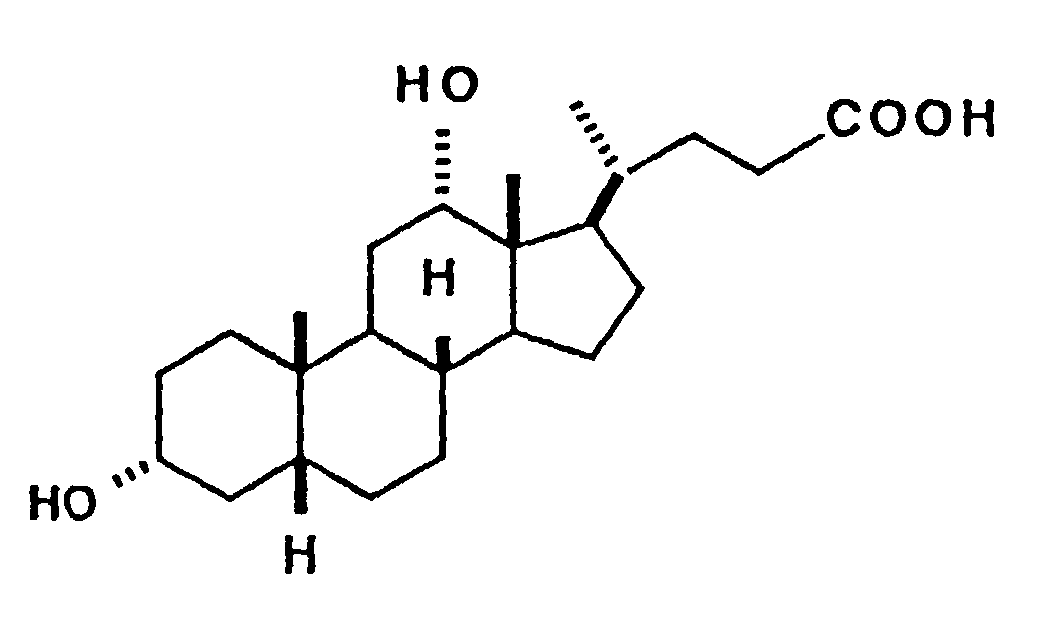
- Conditions: triacetyl D-glucal (2.0 equiv); iodine (20 mol %); THF, room temperature, 4h
- Results: diadduct (91%)
chenodeoxycholic acid 3,12-di-(4,6-di-O-acetyl-2,3-deoxy-α-D-erythro-hex-2-enopyranoside). -
-

- Conditions: triacetyl D-glucal (3.0-5.0 equiv); iodine (20
mol %); THF, reflux, 8h
- Results:
- mixture of di- and triadducts (85%):
cholic acid 3,7-di-(DDH pyranoside);
cholic acid 3,12-di-(DDH pyranoside); and
cholic acid
-
- An adduct with chloramphenicol by this procedure is as follows:
-

- Conditions: triacetyl D-glucal (2.0 equiv); iodine (20 mol %); THF, room temperature, 6h
- Results: diadduct (85%)
chloramphenicol 1,3-di-(DDH pyranoside). -
- Having described the invention, the embodiments of the invention in which an exclusive property or privilege is claimed are defined as follows:
Claims (10)
- Method for the production of a pyranoside compound, wherein a aglycon compound selected from aliphatic, alicyclic, aliphatic-aromatic and aromatic compounds having a primary, secondary or tertiary functional group selected from -SH and -COOH is glycosylated, characterized in that the aglycon compound is reacted in a solvent with 3,4,6-tri-O-acyl-glucal of formulain the presence of molecular halogen preferably molecular iodine as a catalyst to produce the corresponding 4,6-di-O-acyl-2,3-dideoxy-α-D-erythro-hex-2-enopyranoside of said aglycon compound, where acyl is a lower acyl group.

- Method according to claim 1, characterized in that benzene or toluene is used as the solvent.
- Method for the production of a pyranoside compound, wherein a aglycon compound selected from aliphatic, alicyclic, aliphatic-aromatic and aromatic compounds having a primary, secondary or tertiary functional group selected from -OH, -SH and -COOH is glycosylated, characterized in that the aglycon compound is reacted in tetrahydrofuran with 3,4,6-tri-O-acyl-glucal of formulain the presence of molecular halogen preferably molecular iodine as a catalyst to produce the corresponding 4,6-di-O-acyl-2,3-dideoxy-α-D-erythro-hex-2-enopyranoside of said aglycon compound, where acyl is a lower acyl group.

- Method according to claim 3, characterized in that the aglycon compound is a delta5-3β-ol steryl compound.
- Method according to claim 4, characterized in that a cholesterol compound is reacted with 3,4,6-tri-O-acetyl-D-glucal in a solvent to yield the corresponding 4,6-di-O-acetyl-2,3-dideoxy-α-D-erythro-hex-2-enopyranoside.
- Method according to claim 5, characterized in that the 4,6-di-O-acetyl-2,3-dideoxy-α-D-erythro-hex-2-enopyranoside is oxidized with an oxidizing agent to produce 7-ketocholesteryl 4,6-di-O-acetyl-2,3-dideoxy-α-D-erythro-hex-2-enopyranoside which in turn is reduced with a metal hydride as a reducing agent to produce 7-β-hydroxycholesteryl 2,3-dideoxy-α-D-erythro-hex-2-enopyranoside.
- Method according to claim 6 characterized in that the oxidizing agent is selected from the group consisting essentially of t-butyl chromate, pyridine-chromium trioxide, and pyridine chlorochromate.
- Method according to claim 6, characterized in that one or more of LiAlH4, NaBH4, and KBH4 is used as a reducing agent.
- Method according to claim 6, characterized in that the 7β-hydroxycholesteryl pyranoside is isolated by chromatography.
- Method according to claim 9, characterized in that the isolation is carried out by chromatography using a solvent mixture which comprises dichloromethane and acetone.
Applications Claiming Priority (5)
| Application Number | Priority Date | Filing Date | Title |
|---|---|---|---|
| US73391591A | 1991-07-22 | 1991-07-22 | |
| US81569192A | 1992-01-24 | 1992-01-24 | |
| US815691 | 1992-01-24 | ||
| PCT/US1992/006063 WO1993001821A1 (en) | 1991-07-22 | 1992-07-21 | Novel glycoside compounds and production and use thereof |
| US733915 | 2003-12-11 |
Publications (3)
| Publication Number | Publication Date |
|---|---|
| EP0597018A1 EP0597018A1 (en) | 1994-05-18 |
| EP0597018A4 EP0597018A4 (en) | 1996-02-07 |
| EP0597018B1 true EP0597018B1 (en) | 1999-10-06 |
Family
ID=27112641
Family Applications (1)
| Application Number | Title | Priority Date | Filing Date |
|---|---|---|---|
| EP92917211A Expired - Lifetime EP0597018B1 (en) | 1991-07-22 | 1992-07-21 | Glycosidation reaction |
Country Status (10)
| Country | Link |
|---|---|
| EP (1) | EP0597018B1 (en) |
| JP (1) | JPH06501499A (en) |
| CN (1) | CN1031643C (en) |
| AT (1) | ATE185348T1 (en) |
| AU (1) | AU2401192A (en) |
| CA (1) | CA2113819C (en) |
| DE (1) | DE69230104T2 (en) |
| IL (1) | IL102566A0 (en) |
| TW (1) | TW202455B (en) |
| WO (1) | WO1993001821A1 (en) |
Families Citing this family (3)
| Publication number | Priority date | Publication date | Assignee | Title |
|---|---|---|---|---|
| CN107056878B (en) * | 2017-03-24 | 2019-07-05 | 昆明理工大学 | One D- pyranoid ring pregnane glycoside compounds and its application |
| KR102124470B1 (en) | 2019-12-13 | 2020-06-18 | 주식회사 큐라클 | Preparation method of vascular leakage blockers with a high yield |
| CN116217642A (en) * | 2023-03-09 | 2023-06-06 | 西北大学 | Olemanthin compounds and their application in the preparation of antitumor drugs |
Family Cites Families (3)
| Publication number | Priority date | Publication date | Assignee | Title |
|---|---|---|---|---|
| FI46067C (en) * | 1968-04-06 | 1972-12-11 | Hoechst Ag | Process for the production of digitoxygenase glycosides. |
| US4415731A (en) * | 1981-03-30 | 1983-11-15 | Merck & Co., Inc. | Process for the preparation of methyl 2,6-dideoxy-α-D-arabino-hexopyranoside |
| DE4001895A1 (en) * | 1990-01-23 | 1991-07-25 | Harrier Gmbh | PRODUCTION OF PARTICULAR STEROID GLYCOSIDES |
-
1992
- 1992-07-20 IL IL102566A patent/IL102566A0/en unknown
- 1992-07-21 DE DE69230104T patent/DE69230104T2/en not_active Expired - Fee Related
- 1992-07-21 AU AU24011/92A patent/AU2401192A/en not_active Abandoned
- 1992-07-21 JP JP5503027A patent/JPH06501499A/en active Pending
- 1992-07-21 CN CN92109745A patent/CN1031643C/en not_active Expired - Fee Related
- 1992-07-21 AT AT92917211T patent/ATE185348T1/en not_active IP Right Cessation
- 1992-07-21 CA CA002113819A patent/CA2113819C/en not_active Expired - Fee Related
- 1992-07-21 WO PCT/US1992/006063 patent/WO1993001821A1/en not_active Ceased
- 1992-07-21 EP EP92917211A patent/EP0597018B1/en not_active Expired - Lifetime
- 1992-08-14 TW TW081106445A patent/TW202455B/zh active
Also Published As
| Publication number | Publication date |
|---|---|
| CA2113819A1 (en) | 1993-02-04 |
| CN1073179A (en) | 1993-06-16 |
| JPH06501499A (en) | 1994-02-17 |
| DE69230104D1 (en) | 1999-11-11 |
| TW202455B (en) | 1993-03-21 |
| DE69230104T2 (en) | 2000-08-24 |
| CA2113819C (en) | 2009-01-06 |
| EP0597018A1 (en) | 1994-05-18 |
| AU2401192A (en) | 1993-02-23 |
| ATE185348T1 (en) | 1999-10-15 |
| CN1031643C (en) | 1996-04-24 |
| WO1993001821A1 (en) | 1993-02-04 |
| EP0597018A4 (en) | 1996-02-07 |
| IL102566A0 (en) | 1993-01-14 |
Similar Documents
| Publication | Publication Date | Title |
|---|---|---|
| US5278296A (en) | Production of hydroxysteryl glycoside compounds | |
| US6093805A (en) | Glycoside compounds and methods of synthesis | |
| KUSANO et al. | Studies on the constituents of Cimicifuga spp. XIII. Structure of cimicifugoside | |
| US6150336A (en) | Steroidal glycosides | |
| Eriksson et al. | Metabolism of corticosterone in the isolated perfused rat liver | |
| WO1993001821A1 (en) | Novel glycoside compounds and production and use thereof | |
| Okano et al. | Antitumor agents. 43. Conversion of bruceoside-A into bruceantin | |
| US6753414B2 (en) | Process for preparing saponin compounds | |
| Marwah et al. | Ergosteroids IV: synthesis and biological activity of steroid glucuronosides, ethers, and alkylcarbonates | |
| Sethi et al. | Expeditious and convenient synthesis of pregnanes and its glycosides as potential anti-dyslipidemic and anti-oxidant agents | |
| DE3874763T2 (en) | LANOSTEROLS SUBSTITUTED IN 14 AND 15 POSITIONS AND THEIR USE AS HYPOCHOLESTEROLEMIC AGENTS. | |
| Sethi et al. | Expedient synthesis of some novel pregnane derivatives and their evaluation as anti-oxidant and anti-dyslipidemic agents | |
| US5496806A (en) | Glycoside compounds and production and use thereof | |
| FI70719C (en) | FRAMEWORK FOR CARDENOLIDE-BIS-DIGITOXOSID | |
| US3706727A (en) | Steroid compounds effective against cardiac conditions and method of their preparation | |
| Aggarwal et al. | Synthesis of 3α, 6β, 7a, 12β-and 3α, 6β, 7β, 12β-tetrahydroxy-5β-cholanoic acids | |
| Weiland et al. | Synthesis of acetates of gomphogenin and gomphoside and evaluation of structure-activity relationships | |
| NAMBARA et al. | Studies on Metabolism of 3-Desoxyestrone. II. Isolation and Characterization of Urinary Metabolites of 3-Desoxyestrone in Rabbit | |
| Huang | Semisynthetic betulin analogues with potential biodynamic activity | |
| Bloxton II | Synthesis of C-15-alpha hydroxy steroids: An approach to the synthesis of the shark repellent Pavoninin 5 | |
| Flekhter et al. | Synthesis of methyl esters of betulinic acid 2-deoxy-α-glycosides and 28-oxo-19, 28-epoxyoleanane | |
| Comezoglu | Isolation and characterization of new trichothecenes from Baccharis megapotamica; chemical modifications of baccharinoid B5 | |
| Kuramoto et al. | Chemical synthesis of 5beta-cholestane-3alpha, 7alpha, 24, 25-tetrol and its metabolism in the perfused rabbit liver | |
| Weihe et al. | Conversion of 15α-hydroxy-11-oxo-progesterone to 3β, 11α, 15β-trihydroxy-5-pregnen-20-one | |
| Mahato | Glycosides, saponins and sapogenins |
Legal Events
| Date | Code | Title | Description |
|---|---|---|---|
| PUAI | Public reference made under article 153(3) epc to a published international application that has entered the european phase |
Free format text: ORIGINAL CODE: 0009012 |
|
| 17P | Request for examination filed |
Effective date: 19940222 |
|
| AK | Designated contracting states |
Kind code of ref document: A1 Designated state(s): AT BE CH DE DK ES FR GB GR IT LI LU MC NL SE |
|
| RHK1 | Main classification (correction) |
Ipc: C07J 17/00 |
|
| A4 | Supplementary search report drawn up and despatched |
Effective date: 19951221 |
|
| AK | Designated contracting states |
Kind code of ref document: A4 Designated state(s): AT BE CH DE DK ES FR GB GR IT LI LU MC NL SE |
|
| 17Q | First examination report despatched |
Effective date: 19961014 |
|
| GRAG | Despatch of communication of intention to grant |
Free format text: ORIGINAL CODE: EPIDOS AGRA |
|
| GRAG | Despatch of communication of intention to grant |
Free format text: ORIGINAL CODE: EPIDOS AGRA |
|
| GRAH | Despatch of communication of intention to grant a patent |
Free format text: ORIGINAL CODE: EPIDOS IGRA |
|
| GRAH | Despatch of communication of intention to grant a patent |
Free format text: ORIGINAL CODE: EPIDOS IGRA |
|
| GRAA | (expected) grant |
Free format text: ORIGINAL CODE: 0009210 |
|
| AK | Designated contracting states |
Kind code of ref document: B1 Designated state(s): AT BE CH DE DK ES FR GB GR IT LI LU MC NL SE |
|
| PG25 | Lapsed in a contracting state [announced via postgrant information from national office to epo] |
Ref country code: NL Free format text: LAPSE BECAUSE OF FAILURE TO SUBMIT A TRANSLATION OF THE DESCRIPTION OR TO PAY THE FEE WITHIN THE PRESCRIBED TIME-LIMIT Effective date: 19991006 Ref country code: IT Free format text: LAPSE BECAUSE OF FAILURE TO SUBMIT A TRANSLATION OF THE DESCRIPTION OR TO PAY THE FEE WITHIN THE PRE;WARNING: LAPSES OF ITALIAN PATENTS WITH EFFECTIVE DATE BEFORE 2007 MAY HAVE OCCURRED AT ANY TIME BEFORE 2007. THE CORRECT EFFECTIVE DATE MAY BE DIFFERENT FROM THE ONE RECORDED.SCRIBED TIME-LIMIT Effective date: 19991006 Ref country code: GR Free format text: LAPSE BECAUSE OF NON-PAYMENT OF DUE FEES Effective date: 19991006 Ref country code: ES Free format text: THE PATENT HAS BEEN ANNULLED BY A DECISION OF A NATIONAL AUTHORITY Effective date: 19991006 Ref country code: BE Free format text: LAPSE BECAUSE OF FAILURE TO SUBMIT A TRANSLATION OF THE DESCRIPTION OR TO PAY THE FEE WITHIN THE PRESCRIBED TIME-LIMIT Effective date: 19991006 Ref country code: AT Free format text: LAPSE BECAUSE OF FAILURE TO SUBMIT A TRANSLATION OF THE DESCRIPTION OR TO PAY THE FEE WITHIN THE PRESCRIBED TIME-LIMIT Effective date: 19991006 |
|
| REF | Corresponds to: |
Ref document number: 185348 Country of ref document: AT Date of ref document: 19991015 Kind code of ref document: T |
|
| REG | Reference to a national code |
Ref country code: CH Ref legal event code: EP |
|
| REF | Corresponds to: |
Ref document number: 69230104 Country of ref document: DE Date of ref document: 19991111 |
|
| PG25 | Lapsed in a contracting state [announced via postgrant information from national office to epo] |
Ref country code: DK Free format text: LAPSE BECAUSE OF FAILURE TO SUBMIT A TRANSLATION OF THE DESCRIPTION OR TO PAY THE FEE WITHIN THE PRESCRIBED TIME-LIMIT Effective date: 20000106 |
|
| ET | Fr: translation filed | ||
| NLV1 | Nl: lapsed or annulled due to failure to fulfill the requirements of art. 29p and 29m of the patents act | ||
| REG | Reference to a national code |
Ref country code: CH Ref legal event code: NV Representative=s name: RITSCHER & SEIFERT |
|
| PG25 | Lapsed in a contracting state [announced via postgrant information from national office to epo] |
Ref country code: LU Free format text: LAPSE BECAUSE OF NON-PAYMENT OF DUE FEES Effective date: 20000721 |
|
| PG25 | Lapsed in a contracting state [announced via postgrant information from national office to epo] |
Ref country code: MC Free format text: THE PATENT HAS BEEN ANNULLED BY A DECISION OF A NATIONAL AUTHORITY Effective date: 20000731 |
|
| PLBE | No opposition filed within time limit |
Free format text: ORIGINAL CODE: 0009261 |
|
| 26N | No opposition filed | ||
| REG | Reference to a national code |
Ref country code: GB Ref legal event code: IF02 |
|
| PGFP | Annual fee paid to national office [announced via postgrant information from national office to epo] |
Ref country code: DE Payment date: 20080829 Year of fee payment: 17 Ref country code: CH Payment date: 20080730 Year of fee payment: 17 |
|
| PGFP | Annual fee paid to national office [announced via postgrant information from national office to epo] |
Ref country code: FR Payment date: 20080729 Year of fee payment: 17 |
|
| PGFP | Annual fee paid to national office [announced via postgrant information from national office to epo] |
Ref country code: GB Payment date: 20080729 Year of fee payment: 17 |
|
| PGFP | Annual fee paid to national office [announced via postgrant information from national office to epo] |
Ref country code: SE Payment date: 20080729 Year of fee payment: 17 |
|
| REG | Reference to a national code |
Ref country code: CH Ref legal event code: PL |
|
| EUG | Se: european patent has lapsed | ||
| GBPC | Gb: european patent ceased through non-payment of renewal fee |
Effective date: 20090721 |
|
| REG | Reference to a national code |
Ref country code: FR Ref legal event code: ST Effective date: 20100331 |
|
| PG25 | Lapsed in a contracting state [announced via postgrant information from national office to epo] |
Ref country code: LI Free format text: LAPSE BECAUSE OF NON-PAYMENT OF DUE FEES Effective date: 20090731 Ref country code: FR Free format text: LAPSE BECAUSE OF NON-PAYMENT OF DUE FEES Effective date: 20090731 Ref country code: CH Free format text: LAPSE BECAUSE OF NON-PAYMENT OF DUE FEES Effective date: 20090731 |
|
| PG25 | Lapsed in a contracting state [announced via postgrant information from national office to epo] |
Ref country code: GB Free format text: LAPSE BECAUSE OF NON-PAYMENT OF DUE FEES Effective date: 20090721 |
|
| PG25 | Lapsed in a contracting state [announced via postgrant information from national office to epo] |
Ref country code: DE Free format text: LAPSE BECAUSE OF NON-PAYMENT OF DUE FEES Effective date: 20100202 |
|
| PG25 | Lapsed in a contracting state [announced via postgrant information from national office to epo] |
Ref country code: SE Free format text: LAPSE BECAUSE OF NON-PAYMENT OF DUE FEES Effective date: 20090722 |