EP0592435B1 - Process for the preparation of pyrimidine compounds - Google Patents
Process for the preparation of pyrimidine compounds Download PDFInfo
- Publication number
- EP0592435B1 EP0592435B1 EP91919721A EP91919721A EP0592435B1 EP 0592435 B1 EP0592435 B1 EP 0592435B1 EP 91919721 A EP91919721 A EP 91919721A EP 91919721 A EP91919721 A EP 91919721A EP 0592435 B1 EP0592435 B1 EP 0592435B1
- Authority
- EP
- European Patent Office
- Prior art keywords
- compound
- formula
- reacting
- product
- iii
- Prior art date
- Legal status (The legal status is an assumption and is not a legal conclusion. Google has not performed a legal analysis and makes no representation as to the accuracy of the status listed.)
- Expired - Lifetime
Links
- 0 *c(cccc1)c1O Chemical compound *c(cccc1)c1O 0.000 description 5
Classifications
-
- C—CHEMISTRY; METALLURGY
- C07—ORGANIC CHEMISTRY
- C07D—HETEROCYCLIC COMPOUNDS
- C07D239/00—Heterocyclic compounds containing 1,3-diazine or hydrogenated 1,3-diazine rings
- C07D239/02—Heterocyclic compounds containing 1,3-diazine or hydrogenated 1,3-diazine rings not condensed with other rings
- C07D239/24—Heterocyclic compounds containing 1,3-diazine or hydrogenated 1,3-diazine rings not condensed with other rings having three or more double bonds between ring members or between ring members and non-ring members
- C07D239/28—Heterocyclic compounds containing 1,3-diazine or hydrogenated 1,3-diazine rings not condensed with other rings having three or more double bonds between ring members or between ring members and non-ring members with hetero atoms or with carbon atoms having three bonds to hetero atoms with at the most one bond to halogen, directly attached to ring carbon atoms
- C07D239/32—One oxygen, sulfur or nitrogen atom
- C07D239/34—One oxygen atom
-
- C—CHEMISTRY; METALLURGY
- C07—ORGANIC CHEMISTRY
- C07D—HETEROCYCLIC COMPOUNDS
- C07D307/00—Heterocyclic compounds containing five-membered rings having one oxygen atom as the only ring hetero atom
- C07D307/77—Heterocyclic compounds containing five-membered rings having one oxygen atom as the only ring hetero atom ortho- or peri-condensed with carbocyclic rings or ring systems
- C07D307/78—Benzo [b] furans; Hydrogenated benzo [b] furans
- C07D307/82—Benzo [b] furans; Hydrogenated benzo [b] furans with hetero atoms or with carbon atoms having three bonds to hetero atoms with at the most one bond to halogen, e.g. ester or nitrile radicals, directly attached to carbon atoms of the hetero ring
- C07D307/83—Oxygen atoms
-
- C—CHEMISTRY; METALLURGY
- C07—ORGANIC CHEMISTRY
- C07D—HETEROCYCLIC COMPOUNDS
- C07D311/00—Heterocyclic compounds containing six-membered rings having one oxygen atom as the only hetero atom, condensed with other rings
- C07D311/02—Heterocyclic compounds containing six-membered rings having one oxygen atom as the only hetero atom, condensed with other rings ortho- or peri-condensed with carbocyclic rings or ring systems
- C07D311/04—Benzo[b]pyrans, not hydrogenated in the carbocyclic ring
- C07D311/06—Benzo[b]pyrans, not hydrogenated in the carbocyclic ring with oxygen or sulfur atoms directly attached in position 2
- C07D311/08—Benzo[b]pyrans, not hydrogenated in the carbocyclic ring with oxygen or sulfur atoms directly attached in position 2 not hydrogenated in the hetero ring
- C07D311/12—Benzo[b]pyrans, not hydrogenated in the carbocyclic ring with oxygen or sulfur atoms directly attached in position 2 not hydrogenated in the hetero ring substituted in position 3 and unsubstituted in position 7
Definitions
- This invention relates to a process for the preparation of phenoxypyrimidine compounds that can be used as intermediates in the preparation of fungicides, to certain compounds prepared from 3-( ⁇ -methoxy)methylenebenzofuranone which are intermediates in said process and to the preparation of certain fungicides.
- 3-( ⁇ -methoxy)methylenebenzofuran-2(3H)-one can be made by methylation of 3-formylbenzofuran-2(3H)-one with either diazomethane or methanolic sulphuric acid [J.A. Elix and B.A. Ferguson in Australian Journal of Chemistry 26 (5) 1079-91 (1973)].
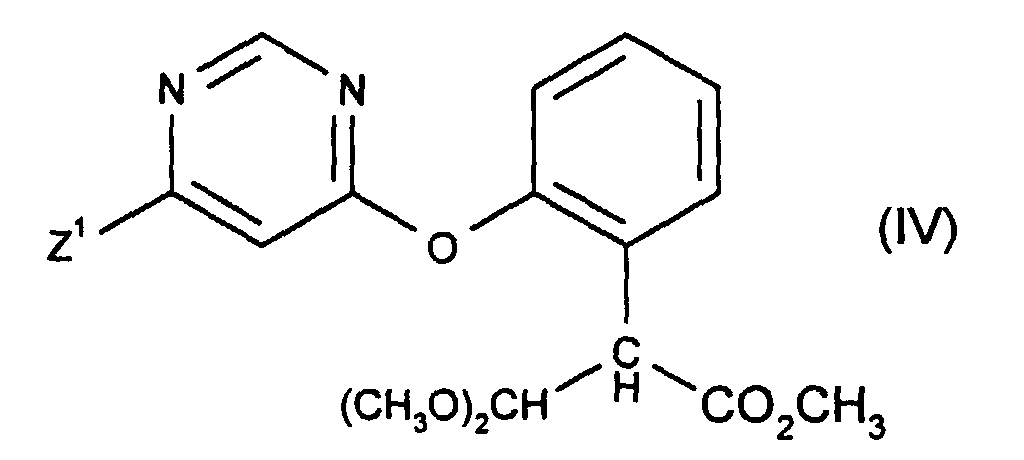
- the present invention provides a process for the preparation of a compound of general formula (IV), wherein Z 1 is a halogen atom (preferably chlorine); the process comprising reacting a compound of formula (II) with a compound of general formula (III), wherein Z 1 is as defined above and Z 2 is a halogen atom (preferably chlorine), in the presence of a methoxide anion and optionally another suitable base.
- Z 1 is a halogen atom (preferably chlorine)
- the present invention provides a process for the preparation of a compound of general formula (IV), wherein Z 1 is a halogen atom (preferably chlorine); the process, which is carried out in the presence of methanol, comprising the steps of:
- the present invention provides a process for the preparation of a compound of general formula (V), wherein Z 1 is a halogen atom (preferably chlorine), the process comprising the steps of:
- the invention provides a process for the preparation of a compound of formula (I), wherein step (b) is carried out in the presence of methanol.
- the invention provides a process for the preparation of a compound of formula (V), comprising reacting a compound, obtainable by reacting a compound of formula (II) with a compound of formula ROCH 3 (wherein R is a metal), with a compound of formula (III).
- the present invention provides a process for the preparation of a compound of formula (IV), the process, which is carried out in the presence of methanol, comprising reacting a compound, obtainable by reacting a compound of formula (II) with a methoxide anion (preferably from a compound of formula ROCH 3 , wherein R is a metal) in the presence of methanol, with a compound of formula (III).
- the process of the present invention produces a mixture of compounds of formulae (IV) and (V) in between the range of ratios 100:0 to 2:98 of (IV):(V), especially 99:1 to 25:75 of (IV):(V), more especially 97:3 to 32:68 of (IV):(V) (for example, 90:10 to 70:30 of (IV) : (V).
- the present invention provides a process for the preparation of a mixture of compounds of formulae (IV) and (V), wherein Z 1 is as defined above, in the range of ratios 100:0 to 2:98 of (IV):(V), the process, which is carried out in the presence of methanol, comprising the steps of:
- the present invention provides a process for the preparation of a compound of formula (V), wherein Z 1 is as defined above, the process comprising the steps of:
- the present invention also provides the product of the process comprising reacting a compound of formula (II) with a compound of formula ROCH 3 , wherein R is a metal.
- the present invention further provides the product of the process comprising reacting a compound of formula (II) with a compound of formula ROCH 3 , wherein R is a metal, in the presence of methanol.
- the present invention provides a process for the preparation of a compound of formula (VI) and stereoisomers thereof, wherein Y and Z are, independently, hydrogen, halogen, cyano, C 1-4 alkyl, C 1-4 haloalkyl, C 1-4 alkoxy, C 1-4 haloalkoxy, CSNH 2 , CONH 2 or nitro; the process comprising the steps of:
- the present invention provides a process for the preparation of a compound of formula (VI), wherein Z and Y are independently hydrogen, halogen, cyano, C 1-4 alkyl, C 1-4 haloalkyl, C 1-4 alkoxy, C 1-4 haloalkoxy, CSNH 2 , CONH 2 or nitro; the process comprising the steps of:
- the present invention provides a process for the preparation of a compound of formula (VI), wherein Z and Y are independently hydrogen, halogen, cyano, C 1-4 alkyl, C 1-4 haloalkyl, C 1-4 alkoxy, C 1-4 haloalkoxy, CSNH 2 , CONH 2 or nitro; the process comprising the steps of:
- the present invention provides a process for the preparation of a compound of formula (VI), wherein Z and Y are independently hydrogen, halogen, cyano, C 1-4 alkyl, C 1-4 haloalkyl, C 1-4 alkoxy, C 1-4 haloalkoxy, CSNH 2 , CONH 2 or nitro; the process comprising the steps of:
- the present invention provides a process for the preparation of a compound of formula (VI), wherein Z and Y are independently hydrogen, halogen, cyano, C 1-4 alkyl, C 1-4 haloalkyl, C 1-4 alkoxy, C 1-4 haloalkoxy, CSNH 2 , CONH 2 or nitro; the process comprising the steps of:
- the present invention provides a process for the preparation of a compound of formula (VI), wherein Z and Y are independently hydrogen, halogen, cyano, C 1-4 alkyl, C 1-4 haloalkyl, C 1-4 alkoxy, C 1-4 haloalkoxy, CSNH 2 , CONH 2 or nitro; the process comprising the steps of:
- the present invention provides a process for the preparation of a compound of formula (I), the process comprising the steps of:
- the present invention provides a process for the compound of formula (VI), and stereoisomers thereof, wherein Z and Y are independently hydrogen, halogen, cyano, C 1-4 alkyl, C 1 - 4 haloalkyl, C 1-4 alkoxy, C 1-4 haloalkoxy, CSNH 2 , CONH 2 or nitro; the process comprising the steps of:
- the present invention provides a process for the preparation of a compound of formula (VI), and stereoisomers thereof, wherein Z and Y are as defined above, the process comprising the steps of:
- the molar ratio of the compound of formula (II) to a compound of formula (III) is in the range 2:1 to 1:1, more preferably in the range 1.5:1 to 1:1.
- the compound of formula ROCH 3 (wherein R is a metal, preferably an alkali metal, for example sodium or potassium) is a source of methoxide anion.
- the compound of formula ROCH 3 is, for example, sodium methoxide.
- the methoxide anion is the anion CH 3 O - and it is preferred that the anion is present in the form of an alkali metal (for example sodium) methoxide.
- the compound of formula (VI) has the variables Z and Y selected from the group comprising hydrogen, fluorine, cyano, CSNH 2 , CONH 2 and nitro.
- the alkyl moiety and the alkyl moieties of alkoxy, haloalkyl and haloalkoxy are either a straight or branched chain and are, for example, methyl, ethyl, n -propyl, iso -propyl, n -butyl or tert -butyl.
- Halogen inludes fluorine, bromine and iodine but is preferably chlorine.
- Acyl includes carbacyl which includes C 1-4 alkanoyl (for example acetyl) and benzoyl (wherein the phenyl moiety is optionally substituted by halogen, C 1-4 alkoxy or C 1-4 alkyl).
- the processes of the present invention predominantly produce (E)-isomers.
- methanol is present in the range 0.5 to 8 equivalents, preferably 0.5 to 6 equivalents, for example 1 to 4 equivalents.
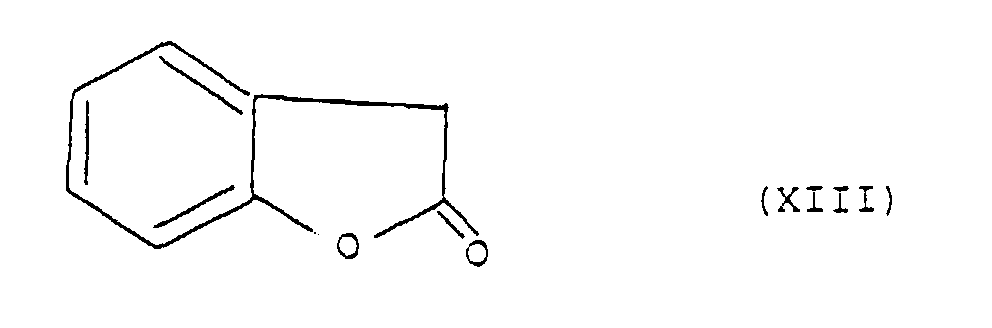
- the compound of formula (II) can be prepared by reacting a compound of formula (XIII) with trimethyl orthoformate in a suitable solvent (for example trimethyl orthoformate or an inert solvent such as a hydrocarbon solvent, for example toluene), at a suitable pressure, preferably in the range 1-5 atmospheres, usually atmospheric pressure, and at a suitable temperature (preferably In the range 20-180°C, suitably 90-130°C (for example 95-110°C)).
- a suitable solvent for example trimethyl orthoformate or an inert solvent such as a hydrocarbon solvent, for example toluene
- a suitable pressure preferably in the range 1-5 atmospheres, usually atmospheric pressure
- a suitable temperature preferably In the range 20-180°C, suitably 90-130°C (for example 95-110°C)
- an acid anhydride preferably an alkyl acid anhydride (for example acetic anhydride or iso -butyric anhydride)
- the suitable solvent can be the acid anhydride, trimethyl orthoformate, or a mixture of the two and/or an inert solvent such as a hydrocarbon solvent, for example toluene.
- the compound of formula (II) can be prepared by a 2-step process.
- the first step comprises cyclising a compound of formula (IX), suitably by heating it, preferably in the presence of another suitable acid (for example glacial acetic acid) which is preferably present in a catalytic amount, optionally in a suitably high boiling point and inert solvent (such as a hydrocarbon solvent (for example toluene or a xylene)) at a suitable temperature, preferably 20-250°C, suitably 50-200°C, for example 90-150°C, and at a suitable pressure in the range 0.1-10 atmospheres, preferably at atmospheric or autogenic pressure.
- a solvent is used, the temperature at which this cyclisation is carried out is the boiling point of said solvent or its azeotrope with water. It is further preferred that any water generated by the cyclisation is removed during the course of the reaction.
- the second step comprises reacting the product of cyclisation of the compound of formula (IX) with trimethyl orthoformate in a suitable solvent (for example trimethyl orthoformate and/or an inert soluent such as a hydrocarbon solvent, for example toluene) and at a suitable temperature (preferably 20-180°C, suitably 90-130°C, for example 95-110°C) to give a compound of formula (II).
- a suitable solvent for example trimethyl orthoformate and/or an inert soluent such as a hydrocarbon solvent, for example toluene
- a suitable temperature preferably 20-180°C, suitably 90-130°C, for example 95-110°C
- an acid anhydride preferably an alkyl acid anhydride (for example acetic anhydride or iso -butyric anhydride)
- the suitable solvent can be the acid anhydride or a mixture of trimethyl orthoformate and the acid anhydride.
- the compound of formula (II) can be prepared by reacting a compound of formula (IX) with an acid anhydride (preferably an alkyl acid anhydride (for example acetic anhydride or iso -butyric anhydride)) and trimethyl orthoformate, optionally in a suitable solvent (for example acetic anhydride or trimethyl orthoformate or a mixture of the two and/or optionally an inert solvent such as a hydrocarbon solvent, for example toluene or a xylene), at a suitable temperature (preferably 20-250°C, suitably 50-200°C, for example 90-150°C), and at a suitable pressure in the range 0.1-10 atmospheres, preferably at atmospheric or autogenic pressure.
- an acid anhydride preferably an alkyl acid anhydride (for example acetic anhydride or iso -butyric anhydride)
- a suitable solvent for example acetic anhydride or trimethyl orthoformate or a mixture of the two and/or optionally an
- the compound of general formula (II) can be prepared by reacting a mixture of compounds of formulae (XIII) and (IX) with trimethyl orthoformate and an acid anhydride (preferably an alkyl acid anhydride (for example, acetic anhydride or iso -butyric anhydride)), optionally in a suitable solvent (for example, acetic anhydride or trimethyl orthoformate or a mixture of the two or a mixture of one or both with an inert solvent such as a hydrocarbon solvent, for example toluene or a xylene), at a suitable temperature (preferably 20-250°C, suitably 50-200°C for example 90-150°C) and at a suitable pressure, preferably in the range 0.1-10 atmospheres, usually atmospheric or autogenic pressure.
- an acid anhydride preferably an alkyl acid anhydride (for example, acetic anhydride or iso -butyric anhydride)
- a suitable solvent for example, acetic anhydride or trimethyl
- a compound of formula (II) can be prepared by reacting a compound a compound of formula (XIII) with a dimethoxymethyl carboxylate (preferably dimethoxymethyl acetate) at a suitable temperature, preferably in the range 20-180°C, suitably 90-130°C (for example 95-100°C).
- the present invention provides a process for the preparation of a compound of formula (II), and stereoisomers thereof, the process comprising reacting a compound of formula (XIII) with a dimethoxymethyl carboxylate at a suitable temperature, preferably in the range 20-180°C, suitably 90-130°C (for example 95-110°C).
- the apparatus in which the process is carried out is adapted to allow the removal of volatile by-products.
- the compound of formula (II) is 3-( ⁇ -methoxy)-methylenebenzofuran-2(3H)-one.
- Compounds of formula (IX) can be made by standard literature methods. In addition to the methods described above for the preparation of compounds (XIII) from compounds (IX), compounds (XIII) can be made by methods described in the literature.
- a suitable base preferably an alkali metal (for example sodium or potassium) carbonate
- a suitable copper catalyst for example a copper halide (preferably cuprous chloride)
- a suitable solvent preferably polar, for example N,N-dimethylformamide
- a suitable catalyst for example potassium bisulphate (where temperatures in the range 100-300°C, preferably 140-300°C
- a suitable base preferably an alkali metal (for example sodium or potassium) carbonate
- a suitable copper catalyst for example a copper halide (preferably cuprous chloride)
- a suitable solvent
- the compound of formula (II) is used in the processes for preparing compounds of formulae (IV) and (V). On completion of these processes some compound of formula (II) might remain in the reaction mixture and it is desirable to be able to isolate this for use in other reactions.
- NMR data are selective; no attempt is made to list every signal.
- mpt melting point
- gc gas chromatography
- MS mass spectrum
- This Example illustrates a preparation of 3-( ⁇ -methoxy)methylenebenzofuran-2(3H)-one.
- Benzofuran-2(3H)-one (10.2g), acetic anhydride (30cm 3 ) and trimethyl orthoformate (12.1g) were stirred at 100-105% for 12 hours. During this time, low boiling point liquids were collected using a Dean and Stark apparatus.
- This Example illustrates an alternative preparation of 3-( ⁇ -methoxy)methylenebenzofuran-2(3H)-one.
- Acetic anhydride 40cm 3
- the low boiling solvents mostly toluene (100cm 3 ) were distilled off.
- trimethyl orthoformate 15.9g was added to the reaction mixture which was then heated to 100-105°C for 20 hours. Analysis by gas chromatography showed that about 5% of starting material remained.
- This Example illustrates an alternative preparation of 3-( ⁇ -methoxy)methylene-benzofuran-2(3H)-one.
- This Example illustrates a preparation of compound (I) wherein Z 1 is chlorine and W is (CH 3 O) 2 CHCHCO 2 CH 3 .
- ( ⁇ -Methoxy)methylenebenzofuran-2(3H)-one (8.8g) was dissolved in tetrahydrofuran (100ml). To this were added sodium methoxide (2.78g) and methanol (1.6g). On addition the reaction mixture turned red and there was an exotherm (reaction mixture went from 20°C to 45°C). The reaction mixture was cooled to 20°C, stirred for 15 minutes, 4,6-dichloropyrimidine (7.45g) was added and it was stirred for 22 hours.
- a small amount of the viscous cloudy orange oil (prepared in Example 4) was heated to 250°C for 30 minutes with a catalytic amount of potassium bisulphate. On cooling, the reaction mixture was dissolved in dichloromethane (50ml) and this was washed with water (50ml). The organic layer was separated and evaporated under reduced pressure (using a water bath temperature of 60°C) to leave a residue.
- reaction mixture was then filtered and the residue washed with methyl acetate (2x20ml).
- the filtrate and washings were combined and evaporated under reduced pressure (using a water bath temperature of 60°C and for a period long enough to remove volatile pyrimidine residues) to give a viscous, cloudy, red oil (17.02g).
- This Example illustrates the preparation of a compound of formula (VI) wherein Z is hydrogen, Y is 2-cyano and the isomer is the ( E )-isomer.
- Example 6 The compound prepared in Example 6 (12.11g), 2-cyanophenol (4.15g), potassium carbonate (6.9g), cuprous chloride (0.11g) and N , N -dimethylformamide (83cm3) were mixed together and heated at 120°C for 90 minutes. The reaction mixture was then filtered and the residue was washed with N , N -dimethylformamide (20ml). The filtrate and washings were combined and evaporated under reduced pressure (using a water bath at 70°C) to leave a crude product (15.87g).
- This Example illustrates an alternative preparation of 3-( ⁇ -methoxy)methylenebenzofuran-2(3H)-one.
- Trimethyl orthoformate (7.95g), iso-butyric anhydride (25cm 3 ) and o -hydroxy-phenylacetic acid (7.6g) were mixed and heated to 100°C for 19 hours. During this time low boiling point liquids were collected using a Dean and Stark apparatus.
- reaction mixture was then concentrated under reduced pressure (using a water bath temperature of 85°C) to leave a black oil (8.64g).
- the black oil was taken up in hot methanol (20ml) and on cooling this solution gave the title compound as a crystalline product (4.16g).
- This Example illustrates an alternative preparation of the compound of formula (VI) wherein Z is hydrogen, Y is 2-cyano and the isomer is the (E)-isomer.
- Sodium methoxide (6.25g, 0.11 moles), methyl acetate (100ml) and methanol (3.52g, 0.11 moles) were charged to a 250ml flask under nitrogen and were cooled to 0-5°C.
- 3-( ⁇ -Methoxy)methylenebenzofuran-2(3H)-one (21.12g, 0.12 moles) was added to this mixture keeping the temperature below 10°C and once the addition was complete the reaction mixture was llowed to warm to room temperature.
- the reaction mixture was evaporated on a rotary evaporator at 40°C and to leave a red oil.
- the red oil was dissolved in toluene (200ml) and filtered through charcoal, the charcoal being washed with further toluene (50ml).
- the toluene solution and washings were combined, washed with water (200ml) and evaporated on a rotary evaporator at 60°C to leave a viscous red oil (33.15g).
- This Example illustrates the preparation or a compound of formula (V), wherein Z 1 is chlorine.
- a toluene solution containing a compound of formula (V) (wherein Z 1 is chlorine, 1.08g) and a compound of formula (IV) (wherein Z 1 is chlorine, 5.68g) was created with para-toluenesulphonic acid (0.285g).
- the mixture was heated at 85-90°C for 5 hours, under a vacuum of 130-220mm Hg to distil the methanol formed in the reaction.
- the toluene was then distilled at 80°C under a vacuum of 15mm Hg to afford the product, which was analysed by liquid chromatography against a known standard sample, and shown to contain the title compound (6.23g).
Landscapes
- Organic Chemistry (AREA)
- Chemical & Material Sciences (AREA)
- Organic Low-Molecular-Weight Compounds And Preparation Thereof (AREA)
- Furan Compounds (AREA)
- Pharmaceuticals Containing Other Organic And Inorganic Compounds (AREA)
- Physical Or Chemical Processes And Apparatus (AREA)
- Plural Heterocyclic Compounds (AREA)
- Low-Molecular Organic Synthesis Reactions Using Catalysts (AREA)
- Saccharide Compounds (AREA)
- Heterocyclic Carbon Compounds Containing A Hetero Ring Having Oxygen Or Sulfur (AREA)
- Agricultural Chemicals And Associated Chemicals (AREA)
- Compositions Of Macromolecular Compounds (AREA)
- Indole Compounds (AREA)
Abstract
Description
- This invention relates to a process for the preparation of phenoxypyrimidine compounds that can be used as intermediates in the preparation of fungicides, to certain compounds prepared from 3-(α-methoxy)methylenebenzofuranone which are intermediates in said process and to the preparation of certain fungicides.
- It is known that 3-(α-methoxy)methylenebenzofuran-2(3H)-one can be made by methylation of 3-formylbenzofuran-2(3H)-one with either diazomethane or methanolic sulphuric acid [J.A. Elix and B.A. Ferguson in Australian Journal of Chemistry 26(5) 1079-91 (1973)].
- Attempts to formylate benzofuran-2(3H)-one are reported to have been unsuccessful [A.D. Harmon and C.R. Hutchinson in Journal of Organic Chemistry 40(24) 3474-3480 (1975)].
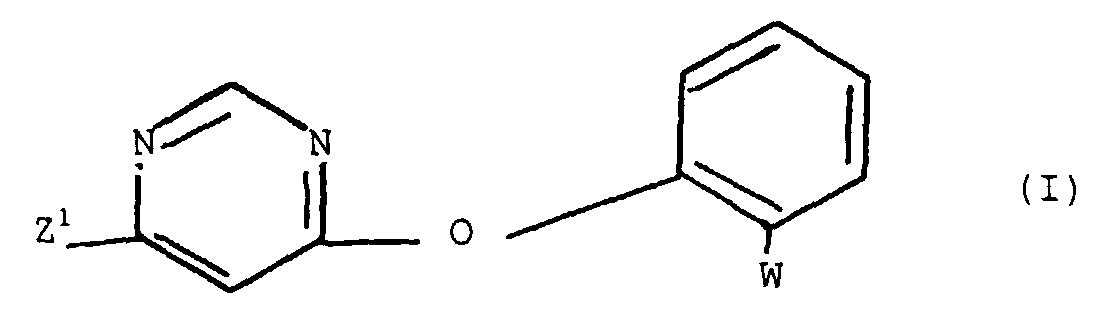
- According to the present invention there is provided a process for the preparation of a compound of formula (I), wherein W is (CH3O)2CH.CHCO2CH3 or CH3O.CH=CCO2CH3 and Z1 is a halogen atom; the process comprising the steps of:
- (a) reacting a compound of formula (II) with a compound of formula ROCH3, wherein R is a metal; and,
- (b) reacting the product of (a) with a compound of formula (III), wherein Z1 and Z2 are halogen atoms.
-
- In one aspect the present invention provides a process for the preparation of a compound of general formula (IV), wherein Z1 is a halogen atom (preferably chlorine); the process comprising reacting a compound of formula (II) with a compound of general formula (III), wherein Z1 is as defined above and Z2 is a halogen atom (preferably chlorine), in the presence of a methoxide anion and optionally another suitable base.
- In a further aspect the present invention provides a process for the preparation of a compound of general formula (IV), wherein Z1 is a halogen atom (preferably chlorine); the process, which is carried out in the presence of methanol, comprising the steps of:
- (a) reacting a compound of formula (II) with a compound of formula ROCH3, wherein R is a metal, and optionally another suitable base; and
- (b) reacting the product of (a) with a compound of general formula (III), wherein Z1 is as defined above and Z2 is a halogen atom (preferably chlorine).
-
- In another aspect the present invention provides a process for the preparation of a compound of general formula (V), wherein Z1 is a halogen atom (preferably chlorine), the process comprising the steps of:
- a) reacting a compound of formula (II) with a compound of formula ROCH3, wherein R is a metal, and optionally another suitable base; and,
- b) reacting the product of (a) with a compound of formula (III) wherein Z1 is as defined above and Z2 is a halogen atom (preferably chlorine).
-
- In yet another aspect the invention provides a process for the preparation of a compound of formula (I), wherein step (b) is carried out in the presence of methanol.
- In a further aspect the invention provides a process for the preparation of a compound of formula (V), comprising reacting a compound, obtainable by reacting a compound of formula (II) with a compound of formula ROCH3 (wherein R is a metal), with a compound of formula (III).
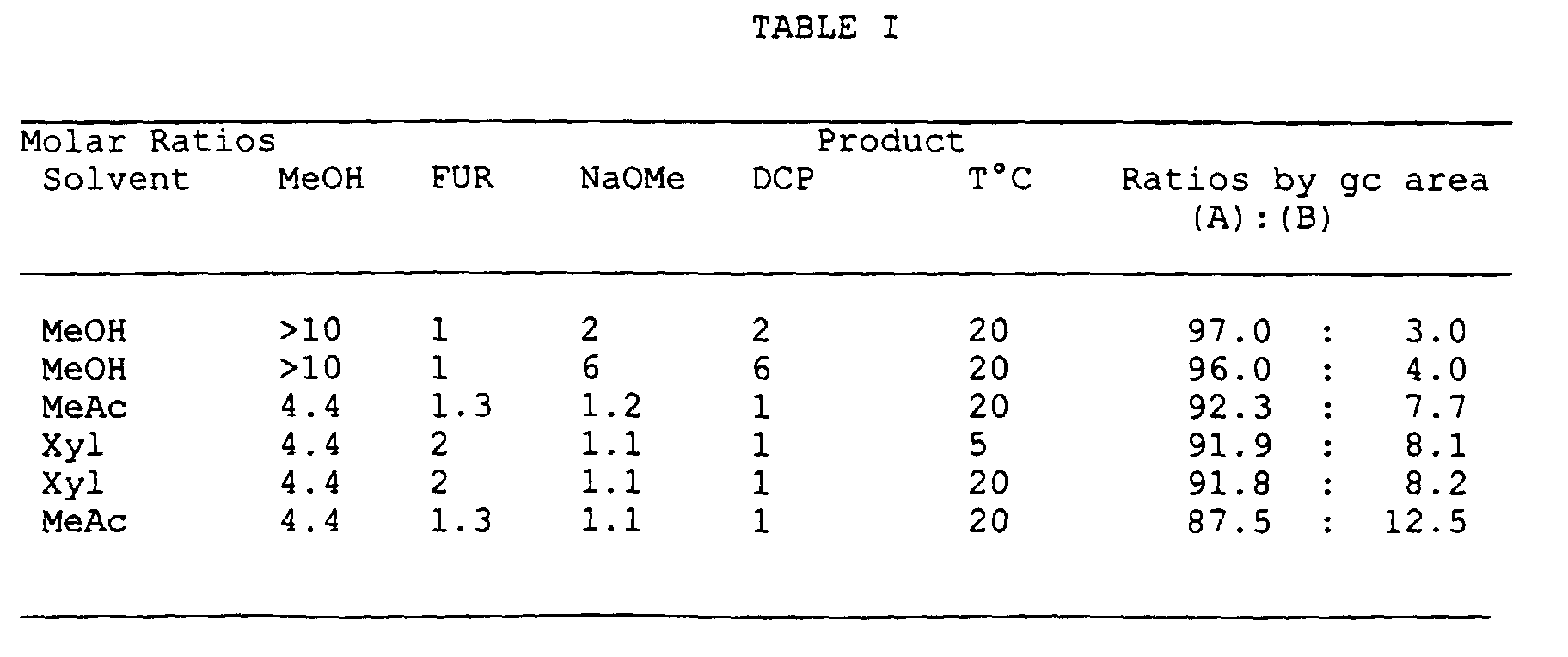
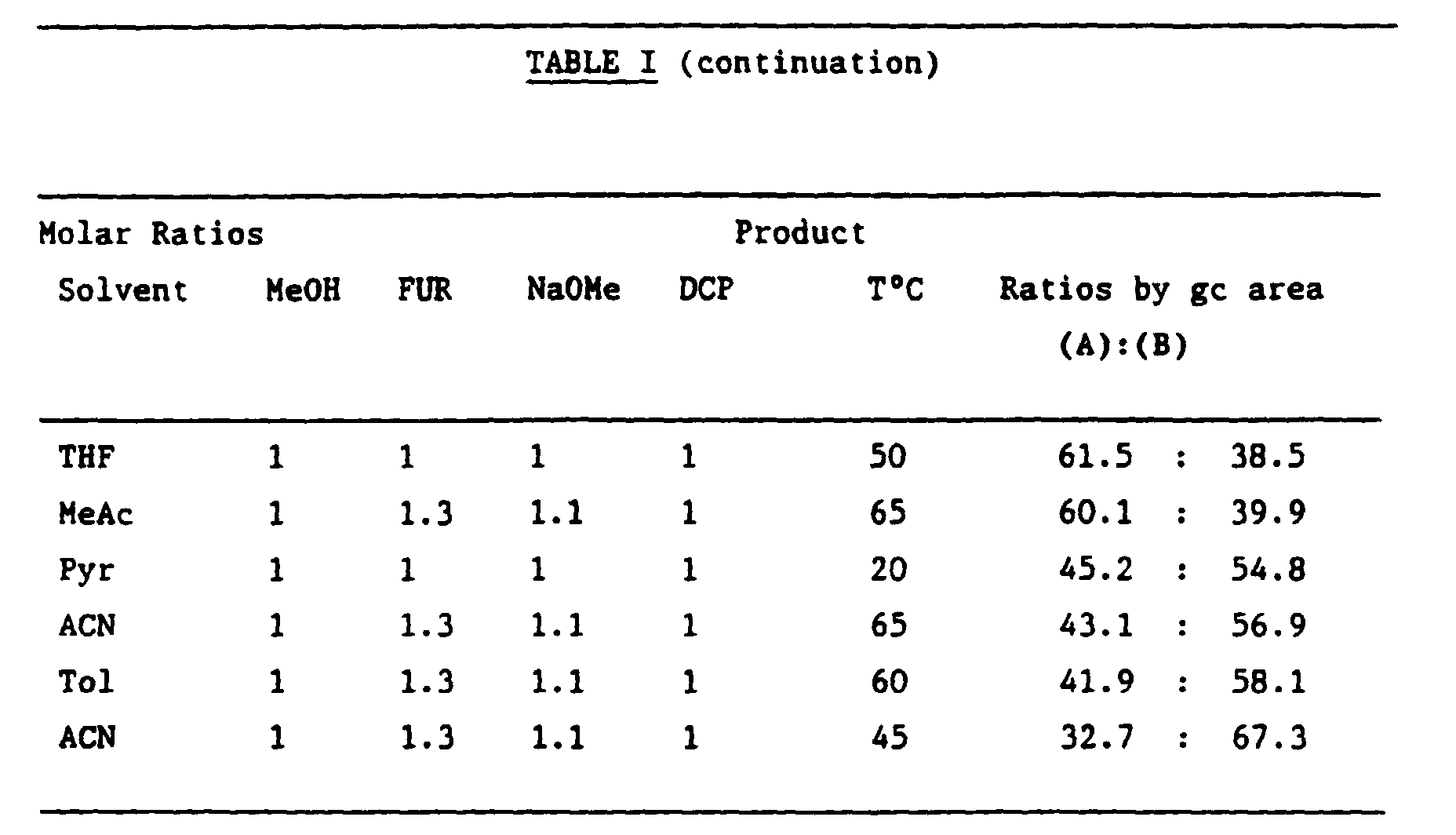
- In another aspect the present invention provides a process for the preparation of a compound of formula (IV), the process, which is carried out in the presence of methanol, comprising reacting a compound, obtainable by reacting a compound of formula (II) with a methoxide anion (preferably from a compound of formula ROCH3, wherein R is a metal) in the presence of methanol, with a compound of formula (III). The process of the present invention normally produces compounds of formula (I) as a mixture of acetal (wherein W is (CH3O)2CHCHCO2CH3) and acrylate (wherein W is CH3O.HC=CCO2CH3). (The proportion of acetal to acrylate is dependent on a number of factors including the nature of solvent used. Examples of solvents are given in Table 1.) Thus, in a further aspect, the present invention provides a process for the preparation of a mixture of compounds of formula (I) wherein W is (CH3O)2CHCHCO2CH3 and CH3O.HC=CCO2CH3; the process, which is optionally carried out in the presence of methanol, comprising the steps of:
- (a) reacting a compound of formula (II) with a compound of ROCH3, wherein R is a metal; and,
- (b) reacting the product of (a) with a compound of formula (III) wherein Z1 is as defined above and Z2 is a halogen atom (preferably chlorine).
-
- In a further aspect the process of the present invention produces a mixture of compounds of formulae (IV) and (V) in between the range of ratios 100:0 to 2:98 of (IV):(V), especially 99:1 to 25:75 of (IV):(V), more especially 97:3 to 32:68 of (IV):(V) (for example, 90:10 to 70:30 of (IV) : (V).
- In another aspect the present invention provides a process for the preparation of a mixture of compounds of formulae (IV) and (V), wherein Z1 is as defined above, in the range of ratios 100:0 to 2:98 of (IV):(V), the process, which is carried out in the presence of methanol, comprising the steps of:
- (a) reacting a compound of formula (II) with a compound of formula ROCH3, wherein R is a metal, and optionally another suitable base; and
- (b) reacting the product of (a) with a compound of general formula (III), wherein Z1 and Z2 are as defined above. In a further aspect the present invention provides a process for the preparation of a compound of formula (V), the process comprising the steps of:
- a) reacting a compound of formula (II) with a compound of formula ROCH3, wherein R is a metal, and optionally another suitable base;
- b) reacting the product of (a) with a compound of formula (III) to produce a compound of formula (IV); and,
- c) eliminating methanol from the compound of formula (IV) using a
suitable method;
steps (a) and (b) being carried out in the presence of methanol. -
- In another aspect the present invention provides a process for the preparation of a compound of formula (V), wherein Z1 is as defined above, the process comprising the steps of:
- a) reacting a compound of formula (II) with a compound of formula ROCH3 and optionally another suitable base;
- b) reacting the product of (a) with a compound of formula (III) to produce a mixture of compounds of formulae (IV) and (V) in the range of ratios 100:0 to 2:98 of (IV):(V); and,
- c) eliminating methanol from the compound of formula (IV) of said mixture using a suitable method, thereby producing substantially pure (V) from said mixture; steps (a) and (b) being carried out in the presence of methanol.
-
- The present invention also provides the product of the process comprising reacting a compound of formula (II) with a compound of formula ROCH3, wherein R is a metal.
- The present invention further provides the product of the process comprising reacting a compound of formula (II) with a compound of formula ROCH3, wherein R is a metal, in the presence of methanol.
- In another aspect the present invention provides a process for the preparation of a compound of formula (VI) and stereoisomers thereof, wherein Y and Z are, independently, hydrogen, halogen, cyano, C1-4 alkyl, C1-4 haloalkyl, C1-4 alkoxy, C1-4 haloalkoxy, CSNH2, CONH2 or nitro; the process comprising the steps of:
- (a) reacting a compound of formula (II) with a compound of formula ROCH3;
- (b) reacting the product of (a) with a compound of formula
(III); and
- 1)
- (c) eliminating methanol from the compound of formula (I), wherein W is (CH3O)2CHCHCO2CH3, in the mixture of products from (b); and
- (d) reacting the product of (c) with a compound of formula (VII), wherein Z and Y are as defined above; OR
- 2)
- (c) reacting the product of (b) with a compound of formula (VII), wherein Z and Y are as defined above; and
- (d)
- (i) separating the compound of formula (VI); or
- (ii) eliminating methanol from a compound of formula (VIII), wherein Y and Z are as defined above, in the mixture of products from (c); or
- (iii) separating the compound of formula (VIII) from the mixture of products from (c) and eliminating methanol from it; OR
- 3)
- (c) separating the compounds of formula (I), wherein W is (CH3O)2CHCHCO2CH3 and CH3O.CH=CCO2CH3, in the mixture of products from (b); and
- (d)
- (i) reacting the compound of formula (I), wherein W is CH3O.CH=CCO2CH3, with a compound of formula (VII), wherein Y and Z are defined above; or
- (ii) reacting the compound of formula (I), wherein W is (CH3O)2CHCHCO2CH3, with a compound of formula (VII); and eliminating methanol from the product so formed; or
- (iii) eliminating methanol from the compound of formula (I), wherein W is (CH3O)2CHCHCO2CH3, and reacting the product so formed with a compound of formula (VII) wherein Y and Z are as defined above.
-
- In a further aspect the present invention provides a process for the preparation of a compound of formula (VI), wherein Z and Y are independently hydrogen, halogen, cyano, C1-4 alkyl, C1-4 haloalkyl, C1-4 alkoxy, C1-4 haloalkoxy, CSNH2, CONH2 or nitro; the process comprising the steps of:
- a) reacting a compound of formula (II) with a compound of formula ROCH3, wherein R is a metal, and optionally another suitable base;
- b) reacting the product of (a) with a compound of formula (III) to produce a compound of formula (V); and,
- c) reacting the compound of formula (V) with a phenol of formula (VII), wherein Z and Y are as defined above, in the presence of a base.
-
- In a further aspect the present invention provides a process for the preparation of a compound of formula (VI), wherein Z and Y are independently hydrogen, halogen, cyano, C1-4 alkyl, C1-4 haloalkyl, C1-4 alkoxy, C1-4 haloalkoxy, CSNH2, CONH2 or nitro; the process comprising the steps of:
- a) reacting a compound of formula (II) with a compound of formula ROCH3 and optionally another suitable base;
- b) reacting the product of (a) with a compound of formula (III) to produce a compound of formula (IV); and
- c) reacting the compound of formula (IV) with a phenol of formula (VII), wherein Z and Y are as defined above, in the presence of a base; steps (a) and (b) being carried out in the presence of methanol.
-
- In a still further aspect the present invention provides a process for the preparation of a compound of formula (VI), wherein Z and Y are independently hydrogen, halogen, cyano, C1-4 alkyl, C1-4 haloalkyl, C1-4 alkoxy, C1-4 haloalkoxy, CSNH2, CONH2 or nitro; the process comprising the steps of:
- a) reacting a compound of formula (II) with a compound of formula ROCH3 and optionally another suitable base;
- b) reacting the product of (a) with a compound of formula (III) to produce a mixture of compounds of formulae (IV) and (V) in the range of ratios 100:0 to 2:98 of (IV):(V); and
- c) reacting said mixture with a phenol of formula (VII) in the presence
of a base;
steps (a) and (b) being carried out in the presence of methanol. -
- In yet another aspect the present invention provides a process for the preparation of a compound of formula (VI), wherein Z and Y are independently hydrogen, halogen, cyano, C1-4 alkyl, C1-4 haloalkyl, C1-4 alkoxy, C1-4 haloalkoxy, CSNH2, CONH2 or nitro; the process comprising the steps of:
- a) reacting a compound of formula (II) with a compound of formula ROCH3 and optionally another suitable base;
- b) reacting the product of (a) with a compound of formula (III) to produce a compound of formula (IV);
- c) eliminating methanol from the compound of formula (IV) using a suitable method to produce a compound of formula (V); and,
- d) reacting the compound of formula (V) with a phenol of formula (VII)
in the presence of a base;
steps (a) and (b) being carried out in the presence of methanol. -
- In a still further aspect the present invention provides a process for the preparation of a compound of formula (VI), wherein Z and Y are independently hydrogen, halogen, cyano, C1-4 alkyl, C1-4 haloalkyl, C1-4 alkoxy, C1-4 haloalkoxy, CSNH2, CONH2 or nitro; the process comprising the steps of:
- a) reacting a compound of formula (II) with a compound of formula ROCH3 and optionally another suitable base;
- b) reacting the product of (a) with a compound of formula (III) to produce a mixture of compounds of formulae (IV) and (V) in the range of ratios 100:0 to 2:98 of (IV):(V);
- c) eliminating methanol from the compound of formula (IV) in said mixture using a suitable method to produce the compound of formula (V) in a substantially pure state from said mixture; and,
- d) reacting the compound of formula (V) with a phenol of formula (VII)
in the presence of a base;
steps (a) and (b) being carried out in the presence of methanol. -
- In a further aspect the present invention provides a process for the preparation of a compound of formula (I), the process comprising the steps of:
- i)
- (a) reacting a compound of formula (XIII)with trimethyl orthoformate;
- (b) reacting the product of (a) with a compound of formula ROCH3, wherein R is a metal; and,
- (c) reacting the product of (b) with a compound of formula (III); or
- ii)
- (a) reacting a compound of formula (XIII) with a dimethoxymethyl carboxylate;
- (b) reacting the product of (a) with a compound of formula ROCH3, wherein R is a metal; and,
- (c) reacting the product of (b) with a compound of formula (III); or
- iii)
- (a) cyclising a compound of formula (IX) and reacting the product formed with either trimethyl orthorformate or a dimethoxymethyl carboxylate;
- (b) reacting the product of (a) with a compound of formula ROCH3, wherein R is a metal; and,
- (c) reacting the product of (b) with a compound of formula (III).
-
- In a still further aspect the present invention provides a process for the compound of formula (VI), and stereoisomers thereof, wherein Z and Y are independently hydrogen, halogen, cyano, C1-4 alkyl, C1-4 haloalkyl, C1-4 alkoxy, C1-4 haloalkoxy, CSNH2, CONH2 or nitro; the process comprising the steps of:
- 1) forming a compound of formula (II), and stereoisomers thereof, by:
- i) reacting a compound of formula (XIII) with trimethyl orthoformate (preferably in the presence of an activating agent such as an acid anhydride); or
- ii) reacting a compound of formula (IX) with an acid anhydride and trimethyl orthoformate at a suitable temperature; or
- iii) cyclising a compound of formula (IX) and reacting the product so formed with trimethyl orthoformate (preferably in the presence of an activating agent such as an acid anhydride); or
- iv) reacting a mixture of compounds of formulae (XIII) and (IX) with an acid anhydride and trimethyl orthoformate; or
- v) reacting a compound of formula (XIII) with a dimethoxymethyl carboxylate (such as dimethoxymethyl acetate);
- 2)
- a) reacting the compound of formula (II) with a compound of formula ROCH3 and optionally another suitable base; and
- b) reacting the product of (2) (a) with a compound of general formula (III), wherein Z1 and Z2 are as defined above, to give a mixture of compounds (IV) and (V), in the range of ratios 100:0 to 2:98 of (IV):(V); and either
- 3)
- a) treating the mixture of compounds (IV) and (V) using a suitable method to eliminate methanol from the compound of formula (IV) and hence produce substantially pure (V) from said mixture; and,
- b) reacting the substantially pure (V) with a phenol of formula (VII), wherein Z and Y are as defined above, in the presence of a base, to give a compound of formula (VI) as defined above; or
- 4) reacting the mixture of compounds (IV) and (V), or a compound of formula (IV), with a phenol of formula (III), wherein Z and Y are as defined above, in the presence of a base to give a compound of formula (VI) as defined above; steps (2)(a) and (2)(b) being carried out in the presence of methanol.
-
- In a further aspect the present invention provides a process for the preparation of a compound of formula (VI), and stereoisomers thereof, wherein Z and Y are as defined above, the process comprising the steps of:
- 1) forming a compound of formula (II), and stereoisomers thereof, by:
- i) reacting a compound of formula (XIII) with trimethyl orthoformate (preferably in the presence of an activating agent such as an acid anhydride); or
- ii) reacting a compound of formula (IX) with an acid anhydride and trimethyl orthoformate at a suitable temperature; or
- iii) cyclising a compound of formula (IX) and reacting the product so formed with trimethyl orthoformate (preferably in the presence of an activating agent such as an acid anhydride); or
- iv) reacting a mixture of compounds of formulae (XIII) and (IX) with an acid anhydride and trimethyl orthoformate; or
- v) reacting a compound of formula (XIII) with a dimethoxymethyl carboxylate (such as dimethoxymethyl acetate);
- 2)
- a) reacting the compound of formula (II) with a compound of formula ROCH3 (wherein R is a metal) and optionally another suitable base; and,
- b) reacting the product of (2)(a) with a compound of general formula (III), wherein Z1 and Z2 are as defined above, to give a compound of formula (V); and,
- 3) reacting (V) with a phenol of formula (VII), wherein Z and Y are as defined above, in the presence of a base.
-
- In all of the foregoing processes it is preferred that the molar ratio of the compound of formula (II) to a compound of formula (III) is in the range 2:1 to 1:1, more preferably in the range 1.5:1 to 1:1.
- The compound of formula ROCH3 (wherein R is a metal, preferably an alkali metal, for example sodium or potassium) is a source of methoxide anion. The compound of formula ROCH3 is, for example, sodium methoxide.
- The methoxide anion is the anion CH3O- and it is preferred that the anion is present in the form of an alkali metal (for example sodium) methoxide.
- It is preferred that the compound of formula (VI) has the variables Z and Y selected from the group comprising hydrogen, fluorine, cyano, CSNH2, CONH2 and nitro.
The alkyl moiety and the alkyl moieties of alkoxy, haloalkyl and haloalkoxy are either a straight or branched chain and are, for example, methyl, ethyl, n-propyl, iso-propyl, n-butyl or tert-butyl. - Halogen inludes fluorine, bromine and iodine but is preferably chlorine.
- Acyl includes carbacyl which includes C1-4 alkanoyl (for example acetyl) and benzoyl (wherein the phenyl moiety is optionally substituted by halogen, C1-4 alkoxy or C1-4 alkyl).
- The compounds of general formulae (I) (when W is CH3O.HC=CCO2CH3), (II), (V) and (VI) can exist in the form of two geometric isomers, referred to as (E)- and (Z)-isomers. The processes of the present invention predominantly produce (E)-isomers.
- It is preferred that, where reactions are carried out in the presence of methanol, methanol is present in the range 0.5 to 8 equivalents, preferably 0.5 to 6 equivalents, for example 1 to 4 equivalents.
- The foregoing processes of the invention are shown diagrammatically in Scheme I. Throughout Scheme I the variables Z, Z1, Z2 and Y are as defined above.
- The compound of formula (II) can be prepared by reacting a compound of formula (XIII) with trimethyl orthoformate in a suitable solvent (for example trimethyl orthoformate or an inert solvent such as a hydrocarbon solvent, for example toluene), at a suitable pressure, preferably in the range 1-5 atmospheres, usually atmospheric pressure, and at a suitable temperature (preferably In the range 20-180°C, suitably 90-130°C (for example 95-110°C)). It is preferred that an acid anhydride (preferably an alkyl acid anhydride (for example acetic anhydride or iso-butyric anhydride)) is used with the trimethyl orthoformate in this reaction, and in this case the suitable solvent can be the acid anhydride, trimethyl orthoformate, or a mixture of the two and/or an inert solvent such as a hydrocarbon solvent, for example toluene.
- Alternatively, the compound of formula (II) can be prepared by a 2-step process. The first step comprises cyclising a compound of formula (IX), suitably by heating it, preferably in the presence of another suitable acid (for example glacial acetic acid) which is preferably present in a catalytic amount, optionally in a suitably high boiling point and inert solvent (such as a hydrocarbon solvent (for example toluene or a xylene)) at a suitable temperature, preferably 20-250°C, suitably 50-200°C, for example 90-150°C, and at a suitable pressure in the range 0.1-10 atmospheres, preferably at atmospheric or autogenic pressure. It is preferred that when a solvent is used, the temperature at which this cyclisation is carried out is the boiling point of said solvent or its azeotrope with water. It is further preferred that any water generated by the cyclisation is removed during the course of the reaction.
- The second step comprises reacting the product of cyclisation of the compound of formula (IX) with trimethyl orthoformate in a suitable solvent (for example trimethyl orthoformate and/or an inert soluent such as a hydrocarbon solvent, for example toluene) and at a suitable temperature (preferably 20-180°C, suitably 90-130°C, for example 95-110°C) to give a compound of formula (II). It is further preferred that an acid anhydride (preferably an alkyl acid anhydride (for example acetic anhydride or iso-butyric anhydride)) is used with the trimethyl orthoformate in this reaction. In this case the suitable solvent can be the acid anhydride or a mixture of trimethyl orthoformate and the acid anhydride.
- It is probable that the product or the cyclisation of a compound of formula (IX) is a compound of formula (XIII) The two steps of this 2-step process can be combined in a "one-pot" process.
- Alternatively the compound of formula (II) can be prepared by reacting a compound of formula (IX) with an acid anhydride (preferably an alkyl acid anhydride (for example acetic anhydride or iso-butyric anhydride)) and trimethyl orthoformate, optionally in a suitable solvent (for example acetic anhydride or trimethyl orthoformate or a mixture of the two and/or optionally an inert solvent such as a hydrocarbon solvent, for example toluene or a xylene), at a suitable temperature (preferably 20-250°C, suitably 50-200°C, for example 90-150°C), and at a suitable pressure in the range 0.1-10 atmospheres, preferably at atmospheric or autogenic pressure.
- Alternatively the compound of general formula (II) can be prepared by reacting a mixture of compounds of formulae (XIII) and (IX) with trimethyl orthoformate and an acid anhydride (preferably an alkyl acid anhydride (for example, acetic anhydride or iso-butyric anhydride)), optionally in a suitable solvent (for example, acetic anhydride or trimethyl orthoformate or a mixture of the two or a mixture of one or both with an inert solvent such as a hydrocarbon solvent, for example toluene or a xylene), at a suitable temperature (preferably 20-250°C, suitably 50-200°C for example 90-150°C) and at a suitable pressure, preferably in the range 0.1-10 atmospheres, usually atmospheric or autogenic pressure.
- Under suitable conditions an acid anhydride (for example acetic anhydride) can react with trimethyl orthoformate to form a dimethoxymethyl carboxylate (for example dimethoxymethyl acetate). Therefore, in another alternative, a compound of formula (II) can be prepared by reacting a compound a compound of formula (XIII) with a dimethoxymethyl carboxylate (preferably dimethoxymethyl acetate) at a suitable temperature, preferably in the range 20-180°C, suitably 90-130°C (for example 95-100°C). In another aspect the present invention provides a process for the preparation of a compound of formula (II), and stereoisomers thereof, the process comprising reacting a compound of formula (XIII) with a dimethoxymethyl carboxylate at a suitable temperature, preferably in the range 20-180°C, suitably 90-130°C (for example 95-110°C).
- For all processes for the preparation of the compound of formula (II) it is preferred that the apparatus in which the process is carried out is adapted to allow the removal of volatile by-products.
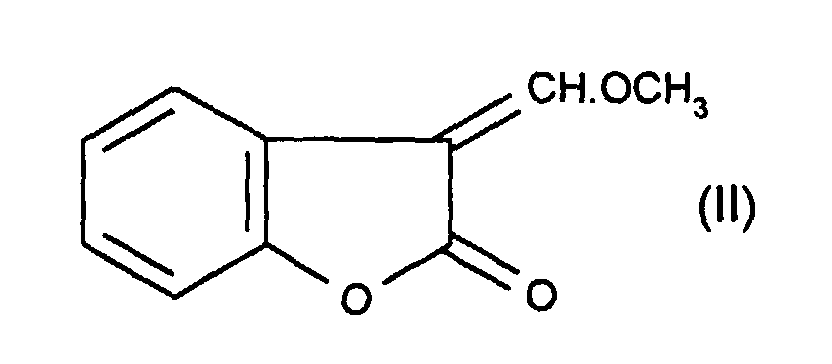
- The compound of formula (II) is 3-(α-methoxy)-methylenebenzofuran-2(3H)-one.
- Compounds of formula (IX) can be made by standard literature methods.
In addition to the methods described above for the preparation of compounds (XIII) from compounds (IX), compounds (XIII) can be made by methods described in the literature. - Compounds of general formula (VI) can be prepared by reacting a compound of formula (I), wherein W is CH3O.CH=CCO2CH3 with a phenol of general formula (VII), wherein Z and Y are as defined above, in the presence of a suitable base (preferably an alkali metal (for example sodium or potassium) carbonate), optionally in the presence of a suitable copper catalyst (for example a copper halide (preferably cuprous chloride)) in a suitable solvent (preferably polar, for example N,N-dimethylformamide) and at a suitable temperature (preferably in the range 0-150°C, for example 40-130°C).
- A compound of formula (I), wherein W is CH3O.HC=CCO2CH3, can be prepared by using a suitable method to eliminate methanol from a compound of formula (I), wherein W is (CH3O)2CHCHCO2CH3. It is preferred that the method of eliminating methanol from the compound of formula (I) wherein W is (CH3O)2CHCHCO2CH3, and which can be in admixture with a compound of formula (I) wherein W is CH3O.CH=CCO2CH3, involves heating said compound or mixture to a temperature in the range 60-300°C, optionally in the presence of a suitable catalyst, preferably an acid catalyst (for example potassium bisulphate (where temperatures in the range 100-300°C, preferably 140-300°C (for example 160-250°C), more preferably 140-160°C are more suitable) or p-toluene sulphonic acid (where temperatures in the range 80-300°C, preferably 80-160°C are more suitable)], optionally under a reduced pressure (suitably 1-50mm Hg, for example 5-30mm Hg) and optionally in the presence of a suitable solvent.
- Alternatively, elimination of methanol from the compound of formula (I) wherein W is (CH3O)2CHCHCO2CH3 when it is alone or in a mixture with a compound of formula (I) wherein W is CH3O.CH=CCO2CH3, can be effected by an acidic work-up when the compound or mixture is prepared, followed by heating the compound or mixture to a temperature in the range 100-300°C, preferably 140-300°C (for example 160-250°C), more preferably 140-160°C, optionally under a reduced pressure (suitably 1-50mm Hg, for example 5-30mm Hg).
- A mixture of compounds of formulae (I) wherein W is (CH3O)2CHCHCO2CH3 and CH3O.CH=CCO2CH3 can be prepared by reacting a compound of formula (II), with a compound of formula ROCH3 (preferably sodium methoxide) and optionally another suitable base, and reacting the product so formed with a compound of general formula (III), wherein Z1 and Z2 are as defined above; both stages optionally being carried out in the presence of methanol, in a suitable solvent (preferably an ether (for example tetrahydrofuran, tert-butyl ether or diethyl ether), a methyl ester (for example (C1-4 alkyl)CO2CH3) an aromatic hydrocarbon (for example xylene or toluene), acetonitrile, pyridine, a chlorinated hydrocarbon (for example carbon tetrachloride), diethoxymethane or methylisobutyl ketone) and at a suitable temperature (preferably in the range -10-100°C, for example 0-50°C). The compounds of formula (I) can be isolated from the mixture of these two compounds using standard techniques (for example chromatography).
- Alternatively, compounds of general formula (I) can be prepared by reacting a mixture of compounds of formula (I) wherein W is (CH3O)2CHCHCO2CH3 and CH3O.CH=CCO2CH3, or a compound of formula (I), wherein W is (CH3O)2CHCHCO2CH3 with a phenol of general formula (VII), wherein Z and Y are as defined above, in the presence of a suitable base (preferably an alkali metal (for example sodium or potassium) carbonate), optionally in the presence of a suitable copper catalyst (for example a copper halide (preferably cuprous chloride)) in a suitable solvent (preferably polar, for example N,N-dimethylformamide) and at a suitable temperature (preferably in the range 0-150°C, for example 40-130°C).
- The compound of formula (II) is used in the processes for preparing compounds of formulae (IV) and (V). On completion of these processes some compound of formula (II) might remain in the reaction mixture and it is desirable to be able to isolate this for use in other reactions.
- The following Examples illustrate the invention. All reactions were performed under an atmosphere of nitrogen.
- Where shown, NMR data are selective; no attempt is made to list every signal. The following abbreviations are used throughout:
mpt = melting point brs = broad singlet s = singlet gc = gas chromatography d = doublet m = multiplet t = triplet MS = mass spectrum - This Example illustrates a preparation of 3-(α-methoxy)methylenebenzofuran-2(3H)-one.
- Benzofuran-2(3H)-one (10.2g), acetic anhydride (30cm3) and trimethyl orthoformate (12.1g) were stirred at 100-105% for 12 hours. During this time, low boiling point liquids were collected using a Dean and Stark apparatus.
- The reaction mixture was allowed to cool and was concentrated under reduced pressure (using a water bath temperature of 60°C) to give a brown solid. This was dissolved in dichloromethane (100cm3) and this solution was washed with water (2x50cm3) and concentrated under reduced pressure (using a water bath temperature of 60°C) to give a crude product (13.5g). Some of this crude product was added to crude product from similar experiments, and the total crude product was taken up in methanol and treated with activated carbon. After this, the methanolic solution was refluxed for 30 minutes, cooled to below 10°C, filtered and the residue was washed with cold methanol. The residue was dried at 50°C under vacuum to give an off-white solid with a mpt of 102-103°C.
- The product from a similar experiment gave the following physical data: 1H NMR (CDCl3, 250MHz): δ 7.6(1H,s); 7.6-7.1(4H,m); 4.15(3H,s) ppm. 13C NMR (CDCl3, 62.9MHz): δ 169.9, 160.1, 152.0, 128.3, 123.9, 123.0, 122.8, 110.4, 103.9, 63.9 ppm. MS: molecular ion m/z 176.
- This Example illustrates an alternative preparation of 3-(α-methoxy)methylenebenzofuran-2(3H)-one.
- o-Hydroxyphenylacetic acid (15.2g), toluene (95cm3) and glacial acetic acid (5cm3) were mixed and heated to reflux for 4 hours, after which time there was no undissolved starting material. During this time water (2.2ml) was collected in a Dean and Stark apparatus. The reaction mixture was then cooled and allowed to stand overnight.
- Acetic anhydride (40cm3) was then added to the reaction mixture and the low boiling solvents (mostly toluene) (100cm3) were distilled off. After cooling to below 50°C, trimethyl orthoformate (15.9g) was added to the reaction mixture which was then heated to 100-105°C for 20 hours. Analysis by gas chromatography showed that about 5% of starting material remained.
- The reaction mixture was worked-up and purified as in Example 1.
- This Example illustrates an alternative preparation of 3-(α-methoxy)methylene-benzofuran-2(3H)-one.
- Benzofuran-2(3H)-one (10g), o-hydroxyphenylacetic acid (11.3g), acetic anhydride (60cm3) and trimethyl orthoformate (23.7g) were heated to 100-105°C for 14 hours. During this time some volatile products were collected in a Dean and Stark apparatus. Analysis of the reaction mixture showed that there was still about 5% of starting material present.
- The reaction mixture was concentrated under reduced pressure (water bath at 70°C) to give a crude product (28.24g). This was combined with crude product from a similar experiment and recrystallised from methanol to give the title compound.
- This Example illustrates a preparation of compound (I) wherein Z1 is chlorine and W is (CH3O)2CHCHCO2CH3. (α-Methoxy)methylenebenzofuran-2(3H)-one (8.8g) was dissolved in tetrahydrofuran (100ml). To this were added sodium methoxide (2.78g) and methanol (1.6g). On addition the reaction mixture turned red and there was an exotherm (reaction mixture went from 20°C to 45°C). The reaction mixture was cooled to 20°C, stirred for 15 minutes, 4,6-dichloropyrimidine (7.45g) was added and it was stirred for 22 hours. The reaction mixture was then filtered and the residue was washed with dichloromethane (50ml). The filtrate and washings were combined and evaporated under reduced pressure using a water bath temperature of 30°C to leave an orange oil. This was dissolved in dichloromethane (200ml) to which water (100ml) was added. The mixture was shaken, the water layer was neutralised with concentrated hydrochloric acid and the organic layer was separated and evaporated under reduced pressure (using a water bath temperature of 50°C) to leave a viscous cloudy orange oil (15.66g). Proton NMR showed that this comprised mainly a compound of formula (I) wherein Z1 is chlorine, W is (CH3O)2CHCHCO2CH3, X is oxygen and R1, R2, R3 and R4 are hydrogen.
- The product from a similar experiment gave the following physical data: 1H NMR (CDCl3 ): δ 8.6(1H,s); 7.7-7.1(4H,m); 6.9(1H,s); 5.0(1H,d); 4.2(1H,d); 3.55(3H,s); 3.4(3H,s); 3.2(3H,s) ppm. 13 C NMR (CDCl3): δ 170.8, 170.4, 162.0, 158.4, 150.2, 130.0, 129.1, 127.3, 126.7, 122.4, 107.9, 104.8, 55.5, 53.6, 52.2, 48.0 ppm.
- This Example illustrates a preparation of the (E)-isomer of a compound of formula (I) wherein Z1 is chlorine and W is CH3O.CH=CCO2CH3. A small amount of the viscous cloudy orange oil (prepared in Example 4) was heated to 250°C for 30 minutes with a catalytic amount of potassium bisulphate. On cooling, the reaction mixture was dissolved in dichloromethane (50ml) and this was washed with water (50ml). The organic layer was separated and evaporated under reduced pressure (using a water bath temperature of 60°C) to leave a residue.
- The product from a similar experiment gave the following physical data: 1H NMR (CDCl3): δ 8.6(1H,s); 7.5(1H,s); 7.5-7.1(4H,m); 6.8(1H,s); 3.7(3H,s); 3.6(3H,s) ppm. 13C NMR (CDCl3, 62.9 MHz): δ 170.6, 167.5, 162.1, 160.9, 155.8, 150.2, 133.1, 129.6, 126.5, 126.3, 122.2, 107.6, 107.3, 62.3, 51.9 ppm.
- This Example illustrates an alternative preparation of the (E)-isomer of a compound of formula (I) wherein Z1 is chlorine and W is CH3O.CH=CCO2CH3.
- Sodium methoxide (2.84g) was suspended in methyl acetate (30ml) and methanol (1.6g) and the suspension was cooled to 0-5°C. (α-Methoxy)methylenebenzofuran-2(3H)-one (8.8g) was added portionwise to the suspension over one minute to keep the temperature below 20°C. The reaction mixture was allowed to warm to room temperature and 4,6-dichloropyrimidine (7.45g) was added. The reaction mixture was stirred at 20-25°C for 19 hours (approximately). The reaction mixture was cooled to 0-5°C and further charges of sodium methoxide (1.0g), methanol (0.56g) and 4,6-dichloropyrimidine (2.61g) were added to it. The reaction mixture was stirred at room temperature for 23 hours.
- The reaction mixture was then filtered and the residue washed with methyl acetate (2x20ml). The filtrate and washings were combined and evaporated under reduced pressure (using a water bath temperature of 60°C and for a period long enough to remove volatile pyrimidine residues) to give a viscous, cloudy, red oil (17.02g).
- This oil was then heated at 160°C at 20mm Hg for 1 hour using a Kugelrohr apparatus. After this time potassium bisulphate (0.16g) was added to the oil and the oil was kept at 160°C at 20mm Hg for 2 hours. The oil was cooled, dissolved in dichloromethane (100ml) and this solution was washed with water (100ml) containing 36% hydrochloric acid (1cm3). The organic layer was separated and evaporated under reduced pressure (using a water bath temperature of 30°C) to leave an oil. This oil was heated at 180°C at 20mm Hg for 3 hours. Analysis showed the viscous red tar (12.11g) remaining to be crude compound (VII) and this was used directly for the next stage (Example 7).
- This Example illustrates the preparation of a compound of formula (VI) wherein Z is hydrogen, Y is 2-cyano and the isomer is the (E)-isomer.
- The compound prepared in Example 6 (12.11g), 2-cyanophenol (4.15g), potassium carbonate (6.9g), cuprous chloride (0.11g) and N,N-dimethylformamide (83cm3) were mixed together and heated at 120°C for 90 minutes. The reaction mixture was then filtered and the residue was washed with N,N-dimethylformamide (20ml). The filtrate and washings were combined and evaporated under reduced pressure (using a water bath at 70°C) to leave a crude product (15.87g).
- The crude product was dissolved in methanol (16ml) at reflux, then cooled to 0-5°C; the crystals formed were filtered off, washed with 60-80 petroleum ether (2x10ml) and dried in a vacuum oven at 50°C to leave a dark brown solid (8.71g).
- The product from a similar experiment gave the following physical data: 1H NMR (CDCl3): δ 8.4(1H,s); 7.6-7.8 (2H,m); 7.5(1H,s); 7.2-7.5(6H,m); 6.4(1H,s); 3.7(3H,s); 3.6(3H,s) ppm.
- This Example illustrates an alternative preparation of the (E)-isomer of a compound of general formula (I) wherein Z1 is chlorine and W is CH3O.CH=CCO2CH3.
- Crude compound (I) (wherein Z1 is chlorine, W is (CH3O)2CHCHCO2CH3 and X is oxygen) (18.03g) (prepared by a method involving an acidic work-up) was heated at 160°C and at 10mm Hg using a Kugelrohr apparatus for 4 hours. The title compound was obtained as a very viscous red oil (13.82g).
- This Example illustrates an alternative preparation of 3-(α-methoxy)methylenebenzofuran-2(3H)-one.
- Trimethyl orthoformate (7.95g), iso-butyric anhydride (25cm3) and o-hydroxy-phenylacetic acid (7.6g) were mixed and heated to 100°C for 19 hours. During this time low boiling point liquids were collected using a Dean and Stark apparatus.
- The reaction mixture was then concentrated under reduced pressure (using a water bath temperature of 85°C) to leave a black oil (8.64g). The black oil was taken up in hot methanol (20ml) and on cooling this solution gave the title compound as a crystalline product (4.16g).
- This Example illustrates an alternative preparation of the compound of formula (VI) wherein Z is hydrogen, Y is 2-cyano and the isomer is the (E)-isomer.
- Crude compound (I) (wherein X is oxygen; Z1 is chlorine and W is (CH3O)2CHCHCO2CH3) (14.47g) (prepared in a method analogous to that of Example 4), 2-cyanophenol (4.26g), potassium carbonate (7.05g), cuprous chloride (0.12g) and N,N-dimethylformamide (85ml) were mixed together and heated to 120°C for 90 minutes. The reaction mixture was cooled to below 30°C, filtered and the residue washed with N,N-dimethylformamide (20ml). The filtrate and washings were combined and concentrated under reduced pressure (using a water bath temperature of 80°C) to remove the N,N-dimethylformamide.
- The resulting black oil was dissolved in hot methanol (15ml). Some crystals of product formed after allowing the solution to stand at room temperature for 3 weeks. The 1H NMR of this product was the same as to that given in Example 7.
- This Example illustrates an alternative preparation of the (E)-isomer of a compound of general formula (I) wherein Z1 is chlorine and W is CH3O.CH=CCO2CH3.
Sodium methoxide (6.25g, 0.11 moles), methyl acetate (100ml) and methanol (3.52g, 0.11 moles) were charged to a 250ml flask under nitrogen and were cooled to 0-5°C. 3-(α-Methoxy)methylenebenzofuran-2(3H)-one (21.12g, 0.12 moles) was added to this mixture keeping the temperature below 10°C and once the addition was complete the reaction mixture was llowed to warm to room temperature. - 4,6-Dichloropyrimidine (15.05g, 0.10 moles) was then added to the reaction mixture and the reaction mixture was stirred overnight (approximately 20 hours) at 20-25°C and then allowed to stand over the weekend.
- The reaction mixture was evaporated on a rotary evaporator at 40°C and to leave a red oil. The red oil was dissolved in toluene (200ml) and filtered through charcoal, the charcoal being washed with further toluene (50ml). The toluene solution and washings were combined, washed with water (200ml) and evaporated on a rotary evaporator at 60°C to leave a viscous red oil (33.15g).
- Some of the viscous red oil (23.15g) was heated with potassium bisulphate 0.14g) at 120-130°C at 12mm Hg for one hour. This mixture was cooled to 80°C and dissolved in toluene (150ml). The toluene solution was washed with water (150ml) and then evaporated on a rotary evaporator at 75°C to leave a crude product (20.51g).
Crystallisation of the crude product from iso-propyl acetate (25ml) gave the title compound (10.6g, mpt 104-6°C).1H NMR (CDCl3, 250 MHz): δ 8.6(1H,s); 7.5(1H,s); 7.5-7.1(4H,m); 6.8(1H,s); 3.7(3H,s); 3.6(3H,s) ppm. - This Example illustrates the preparation of a compound of formula (I) where Z1 is chlorine and W is CH3O.CH=CCO2CH3.
- Sodium methoxide (2.97g, 0.055 moles) and acetonitrile (19.60g) were charged to a flask at ambient temperature and (α-methoxy)methylenebenzofuran-2(3H)-one (11.40g, 0.065 moles) was added over 2 minutes, causing the temperature of the reaction mixture to increase to about 40°C. The reaction mixture was cooled to ambient temperature and 4,6-dichloropyrimidine (7.45g, 0.05 moles) was added to give a red-brown solution, which was heated at 60°C for 6.25 hours. The solvent was distilled out at 60°C/15mm Hg pressure to leave a red semi-solid product (21.85g). Gas chromatographic analysis of the product indicated the title compound at about 55% strength and a compound of formula (I) (wherein X is oxygen; R1, R2, R3 and R4 are all hydrogen, Z1 is chlorine and W is (CH3O)2CHCHCO2CH3) at about 2.5% strength.
- The crude product was crystallised using iso-propyl acetate to give the title compound as a solid product (mpt 103-105°C) which was pure by gas chromatographic analysis.
- The solid product gave the following physical data:
1H NMR (CDCl3, 250 MHz): δ 8.6(1H,s); 7.5(1H,s); 7.2-7.5(4H,m); 6.8(1H,s); 3.7(3H,s); 3.6(3H,s) ppm.
13C NMR (CDCl3, 62.9 MHz): δ 170.3, 167.2, 161.8, 160.6, 158.5, 149.9, 132.8, 129.2, 126.1, 125.9, 121.9, 107.2, 106.9, 61.9, 51.5 ppm.
Mass spectroscopy showed a molecular ion at m/z 320. - This Example illustrates the preparation or a compound of formula (V), wherein Z1 is chlorine.
- A toluene solution containing a compound of formula (V) (wherein Z1 is chlorine, 1.08g) and a compound of formula (IV) (wherein Z1 is chlorine, 5.68g) was created with para-toluenesulphonic acid (0.285g). The mixture was heated at 85-90°C for 5 hours, under a vacuum of 130-220mm Hg to distil the methanol formed in the reaction. The toluene was then distilled at 80°C under a vacuum of 15mm Hg to afford the product, which was analysed by liquid chromatography against a known standard sample, and shown to contain the title compound (6.23g).
- Preparations of compounds of formulae (I) wherein W is (CH3 O) 2CHCHCO2CH3 (A) or CH3O.CH=CCO2CH3 (B); X is oxygen; and Z1 is chlorine, are listed in Table I. The conditions under which the preparations were conducted and their results are also shown in Table I.
- In Table I the following abbreviations are used:
- gc
- = Gas chromatography
- NaOMe
- = Sodium methoxide
- DCP
- = 4,6-dichloropyrimidine
- FUR
- = 3-(α-methoxy)methylenebenzofuran-2(3H)-one
- MeOH
- = Methanol
- MeAc
- = Methyl acetate
- Xyl
- = Xylene
- Tol
- = Toluene
- MeBut
- = Methyl butyrate
- TButE
- = tert-Butyl ether
- CCl4
- = Carbon tetrachloride
- DEM
- = Diethoxymethane
- MIBK
- = Methylisobutyl ketone
- THF
- = Tetrahydrofuran
- DEE
- = Diethyl ether
- ACN
- = Acetonitrile
- Pyr
- = Pyridine



Claims (11)
- A process for the preparation of a compound of formula (I):wherein W is (CH3O)2CH.CHCO2CH3 or CH3O.CH=CCO2CH3; and Z1 is a halogen atom; the process comprising the steps of:
 (a) reacting a compound of formula (II):with a compound of formula ROCH3, wherein R is a metal; and,
 (b) reacting the product of (a) with a compound of formula (III):wherein Z1 and Z3 are halogen atoms.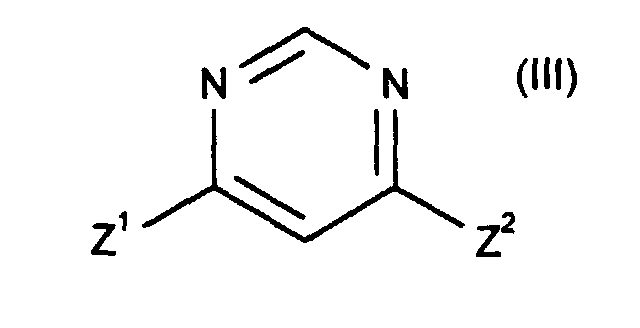
- A process for the preparation of a compound of general formula (IV):wherein Z1 is a halogen atom; the process comprising reacting a compound of formula (II):
 with a compound of general formula (III):
 wherein Z1 is as defined above and Z2 is a halogen atom, in the presence of a methoxide anion and optionally another suitable base.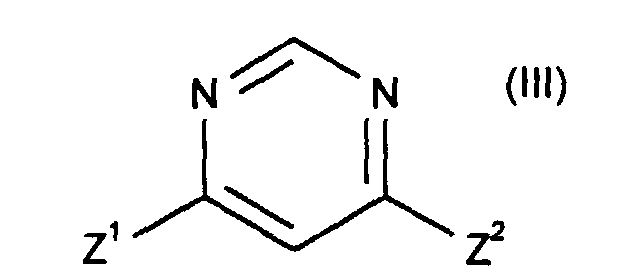
- A process as claimed in claim 1 for the preparation of a compound of general formula (IV):wherein Z1 is a halogen atom; the process, which is carried out in the presence of methanol, comprising the steps of:
 (a) reacting a compound of formula (II):with a compound of formula ROCH3, wherein R is a metal, and optionally another suitable base; and,
 (b) reacting the product of (a) with a compound of general formula (III):wherein Z1 is as defined above, and Z2 is a halogen atom.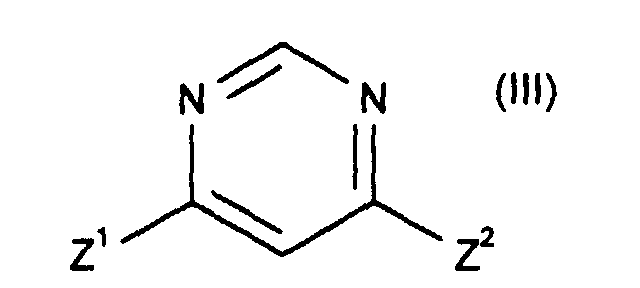
- A process as claimed in claim 1 for the preparation of a compound of general formula (V):wherein Z1 is a halogen atom; the process comprising the steps of:
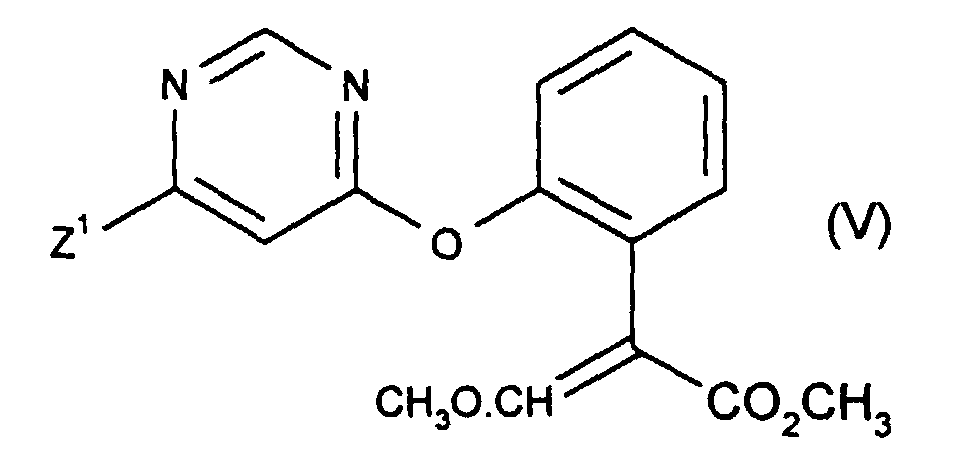 a) reacting a compound of formula (II):with a compound of formula ROCH3, wherein R is a metal, and optionally another suitable base; and
 b) reacting the product formed in (a) with a compound of general formula (III):wherein Z1 is as defined above and Z2 is a halogen atom.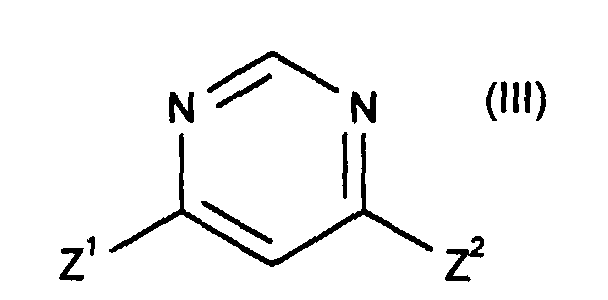
- The product of the process comprising reacting a compound of formula (II):with a compound of formula ROCH3, wherein R is a metal.

- The product of the process comprising reacting a compound of formula (II):with a compound of formula ROCH3, wherein R is a metal, in the presence of methanol.

- A process as claimed in claim 1 for the preparation of a compound of formula (I) wherein step (b) is carried out in the presence of methanol.
- A process for the preparation of a compound of formula (VI):and stereoisomers thereof, wherein Y and Z are, independently, hydrogen, halogen, cyano, C1-4 alkyl, C1-4 haloalkyl, C1-4 alkoxy, C1-4 haloalkoxy, CSNH2, CONH2 or nitro; the process comprising the steps of:
 a) reacting a compound of formula (II) with a compound of formula ROCH3;b) reacting the product of (a) with a compound of formula (III); wherein steps (a) and (b) are carried out as defined in claim 1; and1)OR(c) eliminating methanol from the compound of formula (I), wherein W is (CH3O)2CHCHCO2CH3, in the mixture of products from (b); and(d) reacting the product of (c) with a compound of formula (VII):wherein Z and Y are as defined above;
 2)(c) reacting the product of (b) with a compound of formula (VII):wherein Z and Y are as defined above; and
 (d)OR(i) separating the compound of formula (VI); or(ii) eliminating methanol from the compound of formula (VIII):wherein Y and Z are as defined above, in the mixture of products from (c); or
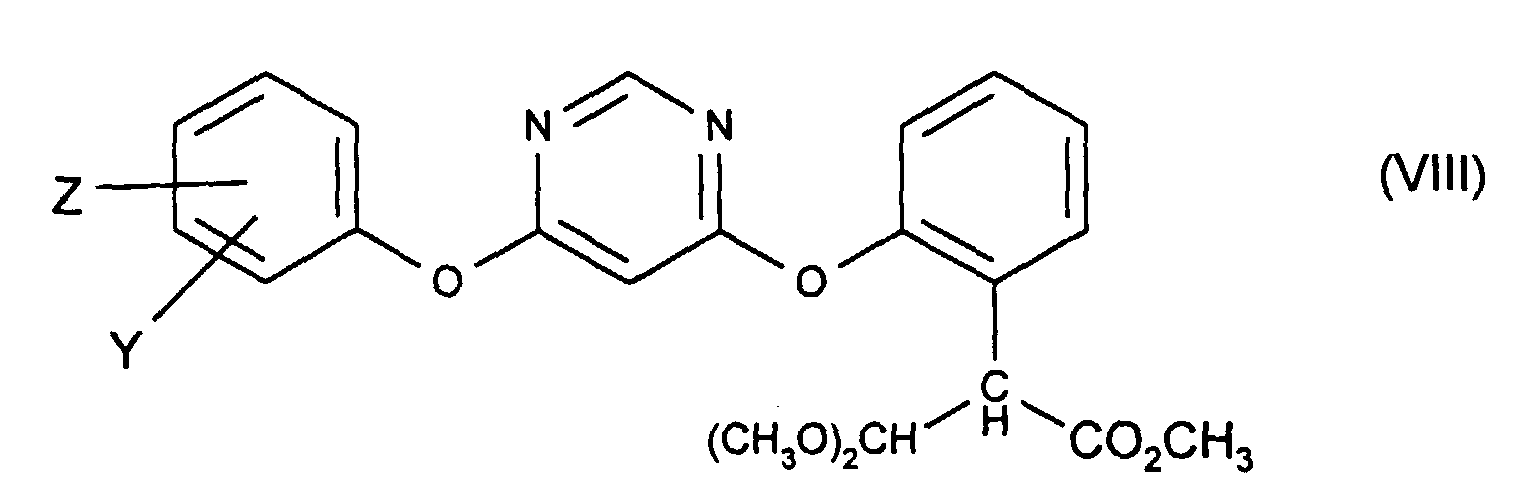 (iii) separating a compound of formula (VIII) from the mixture of products from (c) and eliminating methanol from it;3)(c) separating the compounds of formula (I), wherein W is (CH3O)2CHCHCO2CH3 and CH3O.CH=CCO2CH3, in the mixture of products from (b); and(d)(i) reacting the compound of formula (I), wherein W is CH3O.CH=CCO2CH3 with a compound of formula (VII):wherein Y and Z are defined above; or
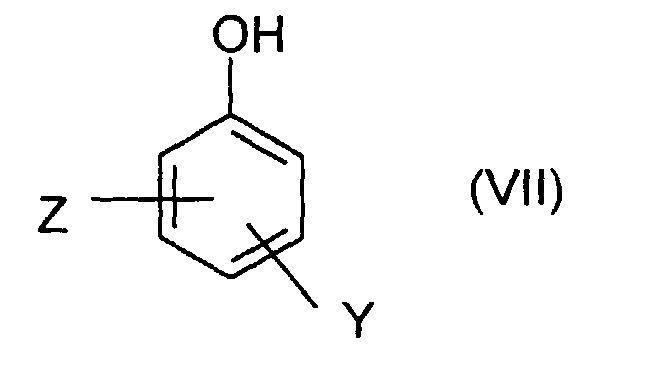 (ii) reacting the compound of formula (I), wherein W is (CH3O)2CHCHCO2CH3, with a compound of formula (VII):and eliminating methanol from the product so formed; or
 (iii) eliminating methanol from the compound of formula (I), wherein W is (CH3O)2CHCHCO2CH3, and reacting the product so formed with a compound of formula (VII):wherein Y and Z are as defined above.
- A process as claimed in claim 1 or 8 wherein steps (a) and (b) are carried out in the presence of methanol.
- A process for the preparation of a compound of formula (I), the process comprising the steps of:i)(a) reacting a compound of formula (XIII):with trimethyl orthoformate;
 (b) reacting the product of (a) with a compound or formula ROCH3, wherein R is a metal; and,(c) reacting the product of (b) with a compound of formula (III); orii)(a) reacting a compound of formula (XIII):with a dimethoxymethyl carboxylate;
 (b) reacting the product of (a) with a compound of formula ROCH3, wherein R is a metal; and,(c) reacting the product of (b) with a compound of formula (III); oriii)(a) cyclising a compound of formula (IX):and reacting the product formed with either trimethyl orthoformate or a dimethoxymethyl carboxylate;
 (b) reacting the product of (a) with a compound of formula ROCH3, wherein R is a metal; and,(c) reacting the product of (b) with a compound of formula (III); steps (b) and (c) of (i), (ii) and (iii) being carded out as for steps (a) and (b) defined in claim 1.
 - A process as claimed in claim 10 wherein steps (b) and (c) are carried out in the presence of methanol.
Priority Applications (1)
| Application Number | Priority Date | Filing Date | Title |
|---|---|---|---|
| EP99100461A EP0940394B1 (en) | 1990-11-16 | 1991-11-12 | Chemical process |
Applications Claiming Priority (15)
| Application Number | Priority Date | Filing Date | Title |
|---|---|---|---|
| GB909024960A GB9024960D0 (en) | 1990-11-16 | 1990-11-16 | Chemical process |
| GB909024992A GB9024992D0 (en) | 1990-11-16 | 1990-11-16 | Chemical progress |
| GB9024960 | 1990-11-16 | ||
| GB9024992 | 1990-11-16 | ||
| GB919110592A GB9110592D0 (en) | 1991-05-16 | 1991-05-16 | Chemical process |
| GB9110592 | 1991-05-16 | ||
| GB9112832 | 1991-06-14 | ||
| GB919112833A GB9112833D0 (en) | 1991-06-14 | 1991-06-14 | Chemical process |
| GB9112833 | 1991-06-14 | ||
| GB919112832A GB9112832D0 (en) | 1991-06-14 | 1991-06-14 | Chemical process |
| GB919113914A GB9113914D0 (en) | 1991-06-27 | 1991-06-27 | Chemical process |
| GB919113911A GB9113911D0 (en) | 1991-06-27 | 1991-06-27 | Chemical process |
| GB9113914 | 1991-06-27 | ||
| GB9113911 | 1991-06-27 | ||
| PCT/GB1991/001989 WO1992008703A1 (en) | 1990-11-16 | 1991-11-12 | Process for the preparation of pyrimidine compounds |
Related Child Applications (1)
| Application Number | Title | Priority Date | Filing Date |
|---|---|---|---|
| EP99100461A Division EP0940394B1 (en) | 1990-11-16 | 1991-11-12 | Chemical process |
Publications (2)
| Publication Number | Publication Date |
|---|---|
| EP0592435A1 EP0592435A1 (en) | 1994-04-20 |
| EP0592435B1 true EP0592435B1 (en) | 2000-07-12 |
Family
ID=27562839
Family Applications (2)
| Application Number | Title | Priority Date | Filing Date |
|---|---|---|---|
| EP91919721A Expired - Lifetime EP0592435B1 (en) | 1990-11-16 | 1991-11-12 | Process for the preparation of pyrimidine compounds |
| EP99100461A Expired - Lifetime EP0940394B1 (en) | 1990-11-16 | 1991-11-12 | Chemical process |
Family Applications After (1)
| Application Number | Title | Priority Date | Filing Date |
|---|---|---|---|
| EP99100461A Expired - Lifetime EP0940394B1 (en) | 1990-11-16 | 1991-11-12 | Chemical process |
Country Status (26)
| Country | Link |
|---|---|
| US (1) | US5847138A (en) |
| EP (2) | EP0592435B1 (en) |
| JP (1) | JP3127159B2 (en) |
| KR (3) | KR100231969B1 (en) |
| CN (2) | CN1040749C (en) |
| AT (2) | ATE194601T1 (en) |
| AU (1) | AU646313B2 (en) |
| BG (1) | BG62047B1 (en) |
| BR (1) | BR9107087A (en) |
| CA (2) | CA2347599C (en) |
| CZ (2) | CZ283215B6 (en) |
| DE (2) | DE69132318T2 (en) |
| DK (2) | DK0940394T3 (en) |
| ES (2) | ES2148155T3 (en) |
| GB (1) | GB9122430D0 (en) |
| GR (1) | GR3034428T3 (en) |
| HU (1) | HU213186B (en) |
| IE (1) | IE913753A1 (en) |
| IL (4) | IL117709A (en) |
| MY (1) | MY107905A (en) |
| NZ (2) | NZ240438A (en) |
| PH (1) | PH31039A (en) |
| PT (1) | PT99509B (en) |
| RO (1) | RO111078B1 (en) |
| SK (1) | SK281055B6 (en) |
| WO (1) | WO1992008703A1 (en) |
Families Citing this family (54)
| Publication number | Priority date | Publication date | Assignee | Title |
|---|---|---|---|---|
| GB9405492D0 (en) * | 1994-03-21 | 1994-05-04 | Zeneca Ltd | Chemical compounds |
| GB9415291D0 (en) * | 1994-07-28 | 1994-09-21 | Zeneca Ltd | Chemical process |
| FR2737086B1 (en) * | 1995-07-24 | 1997-08-22 | Rhone Poulenc Agrochimie | FUNGICIDAL COMPOSITION COMPRISING A STROBILURIN-LIKE COMPOUND |
| FR2739529B1 (en) * | 1995-10-05 | 1997-10-31 | Rhone Poulenc Agrochimie | FUNGICIDAL COMPOSITION COMPRISING A STROBILURIN-LIKE COMPOUND |
| GB9617351D0 (en) * | 1996-08-19 | 1996-10-02 | Zeneca Ltd | Chemical process |
| WO1998013361A1 (en) * | 1996-09-26 | 1998-04-02 | Novartis Ag | Herbicidal composition |
| GB9622345D0 (en) * | 1996-10-28 | 1997-01-08 | Zeneca Ltd | Chemical process |
| US5849910A (en) * | 1997-09-05 | 1998-12-15 | American Cyanamid Company | Process for the preparation of unsymmetrical 4,6-bis aryloxy-pyrimidine compounds |
| US6277856B1 (en) * | 1998-09-25 | 2001-08-21 | American Cynamid Co. | Fungicidal mixtures |
| US6699874B2 (en) | 1999-09-24 | 2004-03-02 | Basf Aktiengesellschaft | Fungicidal mixtures |
| US6608199B2 (en) | 2000-07-07 | 2003-08-19 | Syngenta Limited | Synthesis of chlorinated pyrimidines |
| US6982331B2 (en) | 2001-06-08 | 2006-01-03 | Syngenta Crop Protection, Inc. | Synthesis of chlorinated pyrimidines |
| GB0508422D0 (en) * | 2005-04-26 | 2005-06-01 | Syngenta Ltd | Chemical process |
| CN100427481C (en) | 2005-05-26 | 2008-10-22 | 沈阳化工研究院 | A kind of aryl ether compound and its preparation and application |
| US20070284114A1 (en) | 2006-06-08 | 2007-12-13 | Halliburton Energy Services, Inc. | Method for removing a consumable downhole tool |
| US20080257549A1 (en) | 2006-06-08 | 2008-10-23 | Halliburton Energy Services, Inc. | Consumable Downhole Tools |
| US7591318B2 (en) | 2006-07-20 | 2009-09-22 | Halliburton Energy Services, Inc. | Method for removing a sealing plug from a well |
| GB0619941D0 (en) | 2006-10-09 | 2006-11-15 | Syngenta Ltd | Chemical process |
| IL180134A0 (en) | 2006-12-17 | 2007-07-04 | David Ovadia | Process for the preparation of substituted cyanophenoxy-pyrimidinyloxy -phenyl acrylate derivatives |
| IL181125A0 (en) * | 2007-02-01 | 2007-07-04 | Maktheshim Chemical Works Ltd | Polymorphs of 3-(e)-2-{2-[6-(2- |
| US20080202764A1 (en) | 2007-02-22 | 2008-08-28 | Halliburton Energy Services, Inc. | Consumable downhole tools |
| US8235102B1 (en) | 2008-03-26 | 2012-08-07 | Robertson Intellectual Properties, LLC | Consumable downhole tool |
| US8327926B2 (en) | 2008-03-26 | 2012-12-11 | Robertson Intellectual Properties, LLC | Method for removing a consumable downhole tool |
| CN102190640B (en) * | 2010-03-17 | 2013-03-27 | 淄博万昌科技股份有限公司 | Method for preparing 3-(alpha-methoxy)methylenebenzofuran-2-(3H)-one from hydrocyanic acid in acrylonitrile waste gas |
| CN102190629B (en) * | 2010-03-17 | 2012-12-12 | 淄博万昌科技股份有限公司 | Method for preparing azoxystrobin from hydrocyanic acid in acrylonitrile waste gas |
| CN102199137B (en) * | 2010-03-24 | 2013-03-20 | 淄博万昌科技股份有限公司 | Method for preparing 3-(alpha-methoxy)-methylenebenzofuran-2(3H)-one |
| CN102199127B (en) * | 2010-03-24 | 2012-12-12 | 淄博万昌科技股份有限公司 | Method for preparing azoxystrobin |
| CN101973943B (en) * | 2010-09-26 | 2012-11-21 | 重庆紫光化工股份有限公司 | Preparation method of (E)-2-[2-(6-pyrimidine-4-yloxy) phenyl]-3-methoxyacrylate |
| CN102241651B (en) * | 2011-05-25 | 2013-01-23 | 江苏七洲绿色化工股份有限公司 | Preparation method of azoxystrobin intermediate |
| CN102276538B (en) * | 2011-08-12 | 2015-01-28 | 河北威远生化农药有限公司 | Method for preparing azoxystrobin and key intermediate thereof |
| CN102417498B (en) * | 2011-08-24 | 2015-09-09 | 重庆紫光化工股份有限公司 | The synthetic method of 3-(α-methoxyl group) methene cumarone-2 (3H)-one |
| CN102311392B (en) * | 2011-08-24 | 2014-01-22 | 重庆紫光化工股份有限公司 | Synthetic method of azoxystrobin and special intermediate for synthesis |
| CN102399195A (en) * | 2011-12-08 | 2012-04-04 | 北京颖新泰康国际贸易有限公司 | Method for synthesizing azoxystrobin intermediate |
| CN103664846B (en) * | 2012-08-31 | 2015-10-21 | 中国中化股份有限公司 | A kind of preparation method of 3-(α-methoxyl group)-methylenebenzofuran-2 (3 hydrogen)-one |
| CN103214423B (en) | 2013-03-20 | 2016-03-16 | 北京颖泰嘉和生物科技股份有限公司 | A kind of preparation method of acrylic ester compound |
| CN103265496B (en) | 2013-05-16 | 2015-02-25 | 北京颖泰嘉和生物科技有限公司 | Preparation method of azoxystrobin |
| TWI621614B (en) | 2013-05-28 | 2018-04-21 | 科麥農股份有限公司 | Method for preparing 4,6-bis(aryloxy)pyrimidine derivatives |
| CN103467387B (en) * | 2013-09-05 | 2016-03-16 | 北京颖泰嘉和生物科技股份有限公司 | A kind of method preparing Azoxystrobin and intermediate thereof |
| WO2015102016A1 (en) * | 2013-12-31 | 2015-07-09 | Bhagiradha Chemicals & Industries Limited | Process for the preparation of methyl 2-[2-(6-chloropyrimidin-4-yloxy) phenyl]-3,3- dimethoxypropionate |
| CN104311493B (en) * | 2014-09-16 | 2016-08-24 | 重庆紫光国际化工有限责任公司 | The synthetic method of azoxystrobin |
| CN104557825B (en) * | 2015-01-04 | 2016-06-15 | 尹山红 | A kind of method reclaiming 3-(α-methoxyl group)-methylenebenzofuran-2 (3 hydrogen)-one |
| CN104974097B (en) * | 2015-05-29 | 2018-04-17 | 重庆紫光化工股份有限公司 | A kind of synthetic method of Fluoxastrobin |
| CN104926736B (en) * | 2015-05-29 | 2019-05-17 | 重庆紫光化工股份有限公司 | A kind of synthetic method of azoxystrobin and intermediate thereof |
| CN105968057B (en) * | 2016-05-13 | 2019-03-26 | 安徽广信农化股份有限公司 | A kind of synthesis technology of azoxystrobin |
| CN107353255A (en) * | 2017-06-29 | 2017-11-17 | 上海应用技术大学 | A kind of synthetic method of azoxystrobin intermediate |
| CN109721545B (en) | 2017-10-31 | 2020-09-11 | 南通泰禾化工股份有限公司 | Preparation method of azoxystrobin intermediate |
| CN110294716B (en) | 2018-03-23 | 2021-05-07 | 帕潘纳(北京)科技有限公司 | Preparation method of azoxystrobin and intermediate thereof |
| CN108558818B (en) * | 2018-04-28 | 2020-08-28 | 帕潘纳(北京)科技有限公司 | Preparation method of methoxymethyl alkenyl compound |
| TWI705961B (en) * | 2018-11-28 | 2020-10-01 | 興農股份有限公司 | Preparation method of Yatomin |
| CN112574125A (en) * | 2020-12-01 | 2021-03-30 | 维讯化工(南京)有限公司 | Method for improving conversion rate of azoxystrobin |
| CN116239540B (en) * | 2021-12-08 | 2025-04-25 | 南通泰禾化工股份有限公司 | A preparation method and application of azoxystrobin intermediate |
| CN118084805A (en) | 2022-05-26 | 2024-05-28 | 安徽广信农化股份有限公司 | Method for preparing azoxystrobin and intermediate thereof |
| CN116924997A (en) * | 2023-07-14 | 2023-10-24 | 江苏剑牌农化股份有限公司 | Preparation method of azoxystrobin intermediate |
| WO2026078205A1 (en) | 2024-10-10 | 2026-04-16 | Syngenta Crop Protection Ag | Process for the preparation of intermediates for the preparation of azoxystrobin |
Citations (1)
| Publication number | Priority date | Publication date | Assignee | Title |
|---|---|---|---|---|
| EP0242081A1 (en) * | 1986-04-17 | 1987-10-21 | Zeneca Limited | Fungicides |
Family Cites Families (3)
| Publication number | Priority date | Publication date | Assignee | Title |
|---|---|---|---|---|
| NZ213630A (en) * | 1984-10-19 | 1990-02-26 | Ici Plc | Acrylic acid derivatives and fungicidal compositions |
| GB8903019D0 (en) * | 1989-02-10 | 1989-03-30 | Ici Plc | Fungicides |
| GB8908875D0 (en) * | 1989-04-19 | 1989-06-07 | Ici Plc | Fungicides |
-
1991
- 1991-10-23 GB GB919122430A patent/GB9122430D0/en active Pending
- 1991-10-25 IE IE375391A patent/IE913753A1/en not_active IP Right Cessation
- 1991-10-29 IL IL11770991A patent/IL117709A/en not_active IP Right Cessation
- 1991-10-29 IL IL12716791A patent/IL127167A/en not_active IP Right Cessation
- 1991-10-29 IL IL9988491A patent/IL99884A/en not_active IP Right Cessation
- 1991-11-01 NZ NZ240438A patent/NZ240438A/en not_active IP Right Cessation
- 1991-11-01 NZ NZ248281A patent/NZ248281A/en not_active IP Right Cessation
- 1991-11-04 PH PH43387A patent/PH31039A/en unknown
- 1991-11-11 MY MYPI91002082A patent/MY107905A/en unknown
- 1991-11-12 AU AU88708/91A patent/AU646313B2/en not_active Expired
- 1991-11-12 DK DK99100461T patent/DK0940394T3/en active
- 1991-11-12 DE DE69132318T patent/DE69132318T2/en not_active Expired - Lifetime
- 1991-11-12 HU HU9301296A patent/HU213186B/en unknown
- 1991-11-12 CZ CZ961649A patent/CZ283215B6/en not_active IP Right Cessation
- 1991-11-12 BR BR919107087A patent/BR9107087A/en not_active IP Right Cessation
- 1991-11-12 EP EP91919721A patent/EP0592435B1/en not_active Expired - Lifetime
- 1991-11-12 ES ES91919721T patent/ES2148155T3/en not_active Expired - Lifetime
- 1991-11-12 RO RO93-00660A patent/RO111078B1/en unknown
- 1991-11-12 ES ES99100461T patent/ES2175860T3/en not_active Expired - Lifetime
- 1991-11-12 CZ CZ93852A patent/CZ281966B6/en not_active IP Right Cessation
- 1991-11-12 JP JP03518202A patent/JP3127159B2/en not_active Expired - Lifetime
- 1991-11-12 CA CA002347599A patent/CA2347599C/en not_active Expired - Lifetime
- 1991-11-12 DE DE69132971T patent/DE69132971T2/en not_active Expired - Lifetime
- 1991-11-12 DK DK91919721T patent/DK0592435T3/en active
- 1991-11-12 SK SK483-93A patent/SK281055B6/en not_active IP Right Cessation
- 1991-11-12 AT AT91919721T patent/ATE194601T1/en not_active IP Right Cessation
- 1991-11-12 CA CA002095848A patent/CA2095848C/en not_active Expired - Lifetime
- 1991-11-12 EP EP99100461A patent/EP0940394B1/en not_active Expired - Lifetime
- 1991-11-12 KR KR1019930701458A patent/KR100231969B1/en not_active Expired - Lifetime
- 1991-11-12 AT AT99100461T patent/ATE215077T1/en not_active IP Right Cessation
- 1991-11-12 WO PCT/GB1991/001989 patent/WO1992008703A1/en not_active Ceased
- 1991-11-14 CN CN91110782A patent/CN1040749C/en not_active Expired - Lifetime
- 1991-11-14 PT PT99509A patent/PT99509B/en not_active IP Right Cessation
-
1993
- 1993-05-14 BG BG97737A patent/BG62047B1/en unknown
-
1995
- 1995-06-07 US US08/479,242 patent/US5847138A/en not_active Expired - Lifetime
-
1996
- 1996-03-28 IL IL11770996A patent/IL117709A0/en unknown
-
1997
- 1997-09-15 CN CN97118615A patent/CN1096454C/en not_active Expired - Lifetime
-
1999
- 1999-05-31 KR KR1019997004771A patent/KR100242580B1/en not_active Expired - Lifetime
- 1999-05-31 KR KR1019997004772A patent/KR100242581B1/en not_active Expired - Lifetime
-
2000
- 2000-09-18 GR GR20000402117T patent/GR3034428T3/en unknown
Patent Citations (1)
| Publication number | Priority date | Publication date | Assignee | Title |
|---|---|---|---|---|
| EP0242081A1 (en) * | 1986-04-17 | 1987-10-21 | Zeneca Limited | Fungicides |
Also Published As
Similar Documents
| Publication | Publication Date | Title |
|---|---|---|
| AU646313B2 (en) | Chemical Process | |
| Tsutsui et al. | Synthesis of pyrrole derivatives by palladium-catalyzed cyclization of γ, δ-unsaturated ketone O-pentafluorobenzoyloximes | |
| US4818819A (en) | Process for the preparation of fused pyridine compounds | |
| US5760250A (en) | Process for the preparation of 3-(α-methoxy)methylenebenzofuranones and intermediates therefor | |
| US4902796A (en) | 6-alkenyl and ethynyl derivatives of 2-amino-4-hydroxypyrido[2,3-d]pyrimidines | |
| US5663370A (en) | Chemical intermediates useful in agriculture | |
| KR930006767B1 (en) | Method for preparing pyridine carboxylic acid derivative | |
| RU2090561C1 (en) | Method of synthesis of phenoxypyrimidine compounds | |
| LV10238B (en) | Process for preparing phenoxypyrimidine derivatives and 3-(alfa-methoxy)methylenebenzofuranone. | |
| Rashed et al. | Synthesis of [1, 5‐A] Pyrimidinone Ring Derivatives | |
| RU2159239C2 (en) | Method of preparing 3-(alpha-methoxy)methylenebenzofurans | |
| KR900001179B1 (en) | Method for preparing 4-amino-5-dialkoxymethylpyrimidine derivative | |
| Młochowski et al. | Conversion of Formyl into Cyano groups in kojic acid derivatives and analogues | |
| Inagaki et al. | This journal is© The Royal Society of Chemistry 2023 | |
| US5124486A (en) | Process for the preparation of cyclic ketones | |
| SK281056B6 (en) | Process for the preparation of 3-(alpha-methoxy)methylenebenzofuranones and intermediates therefor | |
| De Buyck et al. | Regioselective synthesis of Alkyl‐methoxyoxiranes from α‐alkyl‐α, α', α'‐trichlorocyclanones and methanolic sodium methoxide |
Legal Events
| Date | Code | Title | Description |
|---|---|---|---|
| PUAI | Public reference made under article 153(3) epc to a published international application that has entered the european phase |
Free format text: ORIGINAL CODE: 0009012 |
|
| 17P | Request for examination filed |
Effective date: 19930419 |
|
| AK | Designated contracting states |
Kind code of ref document: A1 Designated state(s): AT BE CH DE DK ES FR GB GR IT LI LU NL SE |
|
| 17Q | First examination report despatched |
Effective date: 19961219 |
|
| GRAG | Despatch of communication of intention to grant |
Free format text: ORIGINAL CODE: EPIDOS AGRA |
|
| GRAG | Despatch of communication of intention to grant |
Free format text: ORIGINAL CODE: EPIDOS AGRA |
|
| GRAH | Despatch of communication of intention to grant a patent |
Free format text: ORIGINAL CODE: EPIDOS IGRA |
|
| GRAH | Despatch of communication of intention to grant a patent |
Free format text: ORIGINAL CODE: EPIDOS IGRA |
|
| GRAA | (expected) grant |
Free format text: ORIGINAL CODE: 0009210 |
|
| AK | Designated contracting states |
Kind code of ref document: B1 Designated state(s): AT BE CH DE DK ES FR GB GR IT LI LU NL SE |
|
| REF | Corresponds to: |
Ref document number: 194601 Country of ref document: AT Date of ref document: 20000715 Kind code of ref document: T |
|
| REG | Reference to a national code |
Ref country code: CH Ref legal event code: EP Ref country code: CH Ref legal event code: NV Representative=s name: BOVARD AG PATENTANWAELTE |
|
| REF | Corresponds to: |
Ref document number: 69132318 Country of ref document: DE Date of ref document: 20000817 |
|
| ET | Fr: translation filed | ||
| REG | Reference to a national code |
Ref country code: DK Ref legal event code: T3 |
|
| ITF | It: translation for a ep patent filed | ||
| REG | Reference to a national code |
Ref country code: ES Ref legal event code: FG2A Ref document number: 2148155 Country of ref document: ES Kind code of ref document: T3 |
|
| RAP2 | Party data changed (patent owner data changed or rights of a patent transferred) |
Owner name: SYNGENTA LIMITED |
|
| NLT2 | Nl: modifications (of names), taken from the european patent patent bulletin |
Owner name: SYNGENTA LIMITED |
|
| PLBE | No opposition filed within time limit |
Free format text: ORIGINAL CODE: 0009261 |
|
| STAA | Information on the status of an ep patent application or granted ep patent |
Free format text: STATUS: NO OPPOSITION FILED WITHIN TIME LIMIT |
|
| 26N | No opposition filed | ||
| REG | Reference to a national code |
Ref country code: GB Ref legal event code: IF02 |
|
| NLT1 | Nl: modifications of names registered in virtue of documents presented to the patent office pursuant to art. 16 a, paragraph 1 |
Owner name: SYNGENTA LIMITED |
|
| REG | Reference to a national code |
Ref country code: CH Ref legal event code: PFA Owner name: SYNGENTA LIMITED SYNGENTA EUROPEAN REGIONAL CENTR Free format text: ZENECA LIMITED#15 STANHOPE GATE#LONDON W1Y 6LN (GB) -TRANSFER TO- SYNGENTA LIMITED SYNGENTA EUROPEAN REGIONAL CENTRE#PRIESTLEY ROAD, SURREY RESEARCH PARK,#GUILDFORD, SURREY GU2 7YH (GB) |
|
| REG | Reference to a national code |
Ref country code: FR Ref legal event code: CA Ref country code: FR Ref legal event code: CD |
|
| PGFP | Annual fee paid to national office [announced via postgrant information from national office to epo] |
Ref country code: DK Payment date: 20101110 Year of fee payment: 20 Ref country code: NL Payment date: 20101110 Year of fee payment: 20 Ref country code: FR Payment date: 20101123 Year of fee payment: 20 Ref country code: AT Payment date: 20101110 Year of fee payment: 20 |
|
| PGFP | Annual fee paid to national office [announced via postgrant information from national office to epo] |
Ref country code: LU Payment date: 20110110 Year of fee payment: 20 Ref country code: DE Payment date: 20101110 Year of fee payment: 20 Ref country code: CH Payment date: 20101112 Year of fee payment: 20 |
|
| REG | Reference to a national code |
Ref country code: CH Ref legal event code: PFA Owner name: SYNGENTA LIMITED SYNGENTA EUROPEAN REGIONAL CENTR Free format text: SYNGENTA LIMITED SYNGENTA EUROPEAN REGIONAL CENTRE#PRIESTLEY ROAD, SURREY RESEARCH PARK,#GUILDFORD, SURREY GU2 7YH (GB) -TRANSFER TO- SYNGENTA LIMITED SYNGENTA EUROPEAN REGIONAL CENTRE#PRIESTLEY ROAD, SURREY RESEARCH PARK,#GUILDFORD, SURREY GU2 7YH (GB) |
|
| PGFP | Annual fee paid to national office [announced via postgrant information from national office to epo] |
Ref country code: BE Payment date: 20101117 Year of fee payment: 20 Ref country code: GB Payment date: 20101110 Year of fee payment: 20 Ref country code: SE Payment date: 20101111 Year of fee payment: 20 Ref country code: IT Payment date: 20101115 Year of fee payment: 20 Ref country code: GR Payment date: 20101014 Year of fee payment: 20 |
|
| PGFP | Annual fee paid to national office [announced via postgrant information from national office to epo] |
Ref country code: ES Payment date: 20101217 Year of fee payment: 20 |
|
| REG | Reference to a national code |
Ref country code: DE Ref legal event code: R071 Ref document number: 69132318 Country of ref document: DE |
|
| REG | Reference to a national code |
Ref country code: DE Ref legal event code: R071 Ref document number: 69132318 Country of ref document: DE |
|
| REG | Reference to a national code |
Ref country code: CH Ref legal event code: PL |
|
| REG | Reference to a national code |
Ref country code: NL Ref legal event code: V4 Effective date: 20111112 |
|
| REG | Reference to a national code |
Ref country code: DK Ref legal event code: EUP |
|
| BE20 | Be: patent expired |
Owner name: *SYNGENTA LTD Effective date: 20111112 |
|
| REG | Reference to a national code |
Ref country code: GB Ref legal event code: PE20 Expiry date: 20111111 |
|
| REG | Reference to a national code |
Ref country code: SE Ref legal event code: EUG |
|
| PG25 | Lapsed in a contracting state [announced via postgrant information from national office to epo] |
Ref country code: NL Free format text: LAPSE BECAUSE OF EXPIRATION OF PROTECTION Effective date: 20111112 |
|
| REG | Reference to a national code |
Ref country code: GR Ref legal event code: MA Ref document number: 20000402117 Country of ref document: GR Effective date: 20111113 |
|
| REG | Reference to a national code |
Ref country code: AT Ref legal event code: MK07 Ref document number: 194601 Country of ref document: AT Kind code of ref document: T Effective date: 20111112 |
|
| PG25 | Lapsed in a contracting state [announced via postgrant information from national office to epo] |
Ref country code: GB Free format text: LAPSE BECAUSE OF EXPIRATION OF PROTECTION Effective date: 20111111 |
|
| PG25 | Lapsed in a contracting state [announced via postgrant information from national office to epo] |
Ref country code: DE Free format text: LAPSE BECAUSE OF EXPIRATION OF PROTECTION Effective date: 20111113 |
|
| REG | Reference to a national code |
Ref country code: ES Ref legal event code: FD2A Effective date: 20140827 |
|
| PG25 | Lapsed in a contracting state [announced via postgrant information from national office to epo] |
Ref country code: ES Free format text: LAPSE BECAUSE OF EXPIRATION OF PROTECTION Effective date: 20111113 |