EP0586390B1 - Coarse grained polyolefin, production thereof and a procatalyst containing a transesterification product between a lower alcohol and dioctylphthalate used therefore - Google Patents
Coarse grained polyolefin, production thereof and a procatalyst containing a transesterification product between a lower alcohol and dioctylphthalate used therefore Download PDFInfo
- Publication number
- EP0586390B1 EP0586390B1 EP92907471A EP92907471A EP0586390B1 EP 0586390 B1 EP0586390 B1 EP 0586390B1 EP 92907471 A EP92907471 A EP 92907471A EP 92907471 A EP92907471 A EP 92907471A EP 0586390 B1 EP0586390 B1 EP 0586390B1
- Authority
- EP
- European Patent Office
- Prior art keywords
- procatalyst
- alcohol
- acid ester
- transesterification
- titanium compound
- Prior art date
- Legal status (The legal status is an assumption and is not a legal conclusion. Google has not performed a legal analysis and makes no representation as to the accuracy of the status listed.)
- Expired - Lifetime
Links
Images




Classifications
-
- C—CHEMISTRY; METALLURGY
- C08—ORGANIC MACROMOLECULAR COMPOUNDS; THEIR PREPARATION OR CHEMICAL WORKING-UP; COMPOSITIONS BASED THEREON
- C08F—MACROMOLECULAR COMPOUNDS OBTAINED BY REACTIONS ONLY INVOLVING CARBON-TO-CARBON UNSATURATED BONDS
- C08F110/00—Homopolymers of unsaturated aliphatic hydrocarbons having only one carbon-to-carbon double bond
- C08F110/04—Monomers containing three or four carbon atoms
- C08F110/06—Propene
-
- C—CHEMISTRY; METALLURGY
- C08—ORGANIC MACROMOLECULAR COMPOUNDS; THEIR PREPARATION OR CHEMICAL WORKING-UP; COMPOSITIONS BASED THEREON
- C08F—MACROMOLECULAR COMPOUNDS OBTAINED BY REACTIONS ONLY INVOLVING CARBON-TO-CARBON UNSATURATED BONDS
- C08F10/00—Homopolymers and copolymers of unsaturated aliphatic hydrocarbons having only one carbon-to-carbon double bond
Definitions
- the invention relates to a method for preparing polyolefins by polymerizing an olefin with the aid of a procatalyst composition, which has been prepared by contacting MgCl 2 , a C 1 -C 4 alcohol, a titanium compound and a phtalic acid ester.
- the invention also relates to a polyolefin which has been obtained by polymerizing an olefin in the presence of a procatalyst, which has been prepared by contacting MgCl 2 , a C 1 -C 4 alcohol, a titanium compound and a phtalic acid ester, as well as a procatalyst composition usable for the preparation of a coarse-grained and an even-grained polyolefin, which has been prepared by contacting MgCl 2 , a C 1 -C 4 alcohol, a titanium compound, and a phtalic acid ester.
- Olefins especially ⁇ olefins, are often polymerized by means of a catalyst composition, in which the procatalyst consists of a compound of a transition metal of groups IV-VI of the periodic system, and the cocatalyst is a compound of a metal of groups I-III of the periodic system, which activates the procatalyst by reduction.
- the so-called Ziegler-Natta procatalyst has been further developed by using an inert carrier as a support of the transition metal compound, the transition metal compound being superposed on the inert carrier in order to improve the activity of the procatalyst as it catalyzes the polymerization reaction.
- the asymmetrical olefin monomers are often polymerized into different stereoisomeric polymers, yielding for instance mixtures of isotactic, atactic and syndiotactic polymers, from which the desired stereoisomer has to be separated by means of washing and similar steps, which are often complicated.
- a polymer having a basically specific stereospecific form, for instance an isotactic polyolefin, out of an asymmetrical olefin monomer the effect of the catalyst on the stereospecificity of the yielded product has been enhanced by adding a donor compound to the catalyst.
- the donor compound promotes the settling of the monomer molecule into a given position in the catalyst particle at the end of the growing polymer molecule, and thus the molecule chain of the polymer gets a given stereisomeric structure and the polymer product obtained corresponds more or less to the desired product as a function of the selected donor compound.
- a so-called internal donor is added already to the procatalyst mixture of the transition metal compound and the carrier, or then the donor is added to the mixture of the monomer and the catalyst component only in the polymerization reactor together with the cocatalyst, and in this case a so-called external donor is concerned.
- a donor compound may of course be used in both the steps, and then the donor may be the same or a different compound in the various steps.
- All monomers are asymmetrical, i.e. stereospecifically polymerizable monomers, except ethene, the unsaturated carbons of which have hydrogen substituents, and also in the rare case in which all the secondary groups are identical, tetramethyl-ethylene for instance.
- a certain stereospecific form is desirable because the properties of the yielded polymer for a given purpose are enhanced, for example isotactic polyolefins are better crystallized, their bulk density is higher, their mechanical properties are better, being for instance more resistant, etc.
- the adhesion characteristics of the atactic form are usually better than with other tactic forms and thus they are suitable for glue implementations among others.
- the catalyst may comprise a compound enhancing the stereospecificty of the catalyst, i.e. an electron donor, which, due to its electron donor character, may be connected to some other catalyst structure, and due to its steric action, may guide the monomer molecule of the polymer chain into such a position, that the yielded polymer molecule has a stereospecific structure in some respect.
- an electron donor which, due to its electron donor character, may be connected to some other catalyst structure, and due to its steric action, may guide the monomer molecule of the polymer chain into such a position, that the yielded polymer molecule has a stereospecific structure in some respect.
- Such donors are a great number of various organic compounds, such as esters, carboxylic acids, alcohols, ketones, aldehydes, nitriles, amides, amines, organic phosphor and silicon compounds, etc. These compounds also have other effects on the characteristics of the catalyst, one such being that the activity of the catalyst varies according to the donor used in each case.
- the donor is a carboxylic acid ester, it is usually an aromatic carboxylic acid ester, e.g. benzoates, phtalates, toluates, anisates, etc.
- the optimal donors among these are dialkyl phthalates.
- the physical structure of the procatalyst carrier is reproduced throughout the procatalyst composition and eventually also in the polymer product, and this means that the morphology of the procatalyst composition is very important in view of the polymerization.
- JP patent specifications 59172507, 59206409, 59206415, 59206416, 59206424, 60262804, 61103910 and 61108614 disclose a procatalyst composition, which has been prepared from MgCl 2 , 2-ethyl hexylalcohol, titanium tetrachloride, di-isobutyl phthalate and in some cases from phtalic acid anhydride.
- the patent family including the patent specifications DE 3 540 699, EP 226 003 and US 4 761 461, discloses a method for preparing propene polymers by means of a procatalyst composition, which has been obtained by contacting MgCl 2 , alkanol, such as ethanol, phtalic acid ester, such as di-isobutyl phthalate, and titanium tetrachloride under given conditions at 90°C.
- the phtalic acid may be added either at the stage when MgCl 2 and ROH react with each other, or at the stage when the reaction product of MgCl 2 and alkanol is reacted with titanium tetrachloride.
- dibutylphthalate is attached to the MgCl 2 catalyst carrier.
- procatalysts and methods described above have affected the particle size and shape of the polymer product and the particle size distribution to a very small extent. Thus, a great amount of fine fraction has been produced, which is detrimental for the treatment of polyolefins.
- the object of the invention is to provide an active and stereospecific procatalyst composition. Another object is to reduce the titanium and donor contents of the catalyst and thus of the polymer, since these bring about colour problems and aromaticity in the polymers.
- the purpose is in particular a catalyst and a method which allow to increase the particle size of the polymer and to reduce the share of its fine fraction.
- the purposes of the invention have now been achieved with a new method for preparing polyolefins, which is mainly characterized by the features presented in the characterizing part of claim 1.
- the invention also relates to a new polyolefin, which is mainly characterized by the features presented in the characterizing part of claim 9, and a new procatalyst composition suitable for the preparation of coarse-grained and even-grained polyolefins, which is mainly characterized by the features presented in the characterizing part of claim 11.
- the particle size of the polyolefin product can be increased and the share of the fine fraction decreased by carrying out a transesterification between the C 1 -C 4 alcohol and the phtalic acid ester during the preparation of the procatalyst, and by selecting dioctyl phthalate (DOP) as phtalic acid ester.
- DOP dioctyl phthalate
- the MgCl 2 carrier of the used procatalyst composition may be used as such or combined with silica, e.g. by absorbing a solution or slurry containing MgCl 2 into the silica. It is also important that the MgCl 2 used is clean and anhydrous.
- the alcohol used in the method may be any C 1 -C 4 alcohol.
- Advantageous alcohols are methanol and ethanol, especially ethanol.
- the physical structure of the catalyst carrier is reproduced throughout the catalyst composition, and this is again reproduced in the yielded polymer product, it is crucial to make the physical structure of the carrier, i.e. the morphology, advantageous, in other words, similar to the desired product.
- This can be achieved by using two different procedures, which may of course be combined: chemically, i.e. by treating the carrier with a specific or a number of specific chemicals, or physically, i.e. by grinding the carrier in a ball mill or a jet blowing mill.
- the carrier in this case expressly MgCl 2 , and a C 1 -C 4 alcohol, advantageously ethanol
- the titanium compound used for the preparation of the procatalyst composition of the method according to the invention is advantageously an organic or inorganic titanium compound with the oxidation degree 3 or 4.
- the titanium compound can be admixed with other transition metal compounds, such as vanadium, zirkonium, chromium, molybdene, volfram compounds.
- the titanium compound is usually halogenide or oxyhalogenide, an organic metal halogenide or a purely metalorganic compound, in which cnly organic ligands have been bound to the transition metal. Titanium halogenides, in particular TiCl 4 are especially advantageous.
- the phtalic acid ester used in the method is dioctyl phthalate, since only this substance yields the desired coarseness and low fine fraction content of the polymer product.
- the advantages are unexpected and differ from the results yielded by other phtalic acid esters.
- the dioctyl phthalate acts as a so-called electron donor of the catalyst composition with the purpose to improve the activity and/or stereospecificty of the obtained polymer.
- the molar ratio of the dioctyl phthalate to the magnesium halogenide is advantageously of the order of about 0.2.
- the transesterification can be accomplished e.g. by choosing a pair of phtalic acid ester - C 1 -C 4 alcohol which is transesterified under normal preparation conditions, either spontaneously or by means of a catalyst that does not damage the procatalyst composition. However, it is often necessary to apply a raised temperature in order to bring about the transesterification. In this case, the transesterification is carried out at a temperature in the range of 110-150°C and preferably in the range of 130-140°C.
- the treatment by means of this i.e. the so-called titanization
- the titanization temperature is below 100°C in practice, a temperature at which no transesterification takes place.
- solvents boiling at a higher temperature should advantageously be applied, for instance nonane (boiling point 151°C) and decane (boiling point 174°C) are recommended.
- the titanium separation of formula (4) relates to the inactive part of the titanium.
- the composition having a low titanium and donor content with regard to the activity of the catalyst.
- the procatalyst composition contains 2.0% by weight of Ti at the most. Its molar ratio donor/mg is advantageously in the range of 0.03-0.06 and/or its donor concentration in the range of 4-6% by weight.
- the phtalic acid ester alxocy group has 8 carbon atoms, whereby the activity of the procatalyst composition is advantageously about 800 kg PP/g Ti when using triethyl aluminium as a catalyst and cyclohexylmethyl dimethcxysilane as an external donor.
- the polymerization is advantageously carried out in the presence of an organometallic cocatalyst, such as trialkyl aluminium (e.g. triethyl aluminium), and advantageously of an external donor similar to cyclohexylmethyl dimethoxysilane.
- an organometallic cocatalyst such as trialkyl aluminium (e.g. triethyl aluminium)
- an external donor similar to cyclohexylmethyl dimethoxysilane.
- the polymer produced according to the invention contains a small amount of titanium and donor, among others, and resembles morphologically a relatively coarse catalyst composition. Propene is an advantageous olefin monomer.
- the catalyst and/or polymer particles are formed by agglomerating a more finely divided material.
- the catalyst particles produced advantageously have a size distribution such that 90% by weight has an average diameter above 200 ⁇ m.
- the average diameter of the corresponding polymer particles is advantageously of the order of 1-2 mm, particles having a diameter under 1 mm being preferably absent.
- An olefin polymerization method is described as an exemplified case below, in which propene is polymerized with a catalyst composition, in which a spray-crystallized MgCl 2 x 3 EtOH adduct is used as a carrier, which has subsequently been titanized with TiCl 4 in a hydrocarbon solvent in the presence of di-alkyl phthalates of various lengths.
- a catalyst composition in which a spray-crystallized MgCl 2 x 3 EtOH adduct is used as a carrier, which has subsequently been titanized with TiCl 4 in a hydrocarbon solvent in the presence of di-alkyl phthalates of various lengths.
- the particle size distribution of the product was measured and each sample was microscopically photographed.
- the chemical composition of the procatalyst was measured by analyzing their Ti, Mg and donor contents.
- X-ray diffraction spectrums were also taken.
- the activity was measured on the basis of the polymerization yield.
- the soluble portion of the polymer was measured by evaporating a measured portion from the polymerization solution. Under these standard polymerization conditions, a polymer material was prepared, the MFR of which was approx. 8.
- the bulk density and particle size distribution (PSD) of all the polymerization drives were measured.
- PSD bulk density and particle size distribution
- the isotacticity index was measured with the help of heptanelution and the isotacticity was determined on the basis of the results obtained from the evaporation residue measurements.
- the melt viscosity was measured at a temperature of 230°C by using a weight of 2.16 kg. All the polymerization batches were microscopically photographed in view of further documentation and comparisons.
- DSC curves differential scanning calorimetric curves
- Table 2 presents the symbols of all the catalysts and the corresponding polymers. Table 2 Symbols of the catalysts and polymers used in the study Alkyl group length Catalyst symbol Polymer symbol 4 C-C-4 1 PP-C-4 6 C-C-6 2 PP-C-6 8 C-C-8 3 PP-C-8 10 C-C-10 4 PP-C-10 13 C-C-13 5 PP-C-13
- Table 3 indicates the magnesium and titanium contents of the catalysts.
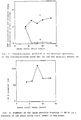
- the titanium content is also presented in figure 1.
- the results showed that, with a substantially constant Mg content, a systematic decrease of the Ti content was observed in the catalyst series.
- the Ti content of the last catalyst in the range was 1.6% by weight. This is a 60% lower value than the 4% obtained in the standard synthesis and up to 30% lower than the titanium content found in commercial high yield catalysts.
- These results showed that the combination of transesterification and the washing effect of TiCl 3 x OEt is enhanced by using higher phtalic acid esters.
- Table 3 Mg and Ti contents of the catalysts Alkyl chain length Mg (%) Ti (%) 4 18.1 2.4 6 20.8 2.2 8 22.0 1.9 10 20.0 1.9 13 17.3 1.6
- Table 4 indicates the respective catalyst yields of each catalyst synthesis, and the results are graphically presented in figure 2. The same trend can be observed as in the first measurement, i.e. as the phtalic alkyl chain increases and the titanium content decreases, the catalyst yield also decreases. The yield is very slightly reduced, only 25%, which is explained by the decreased TiCl 4 content of the catalyst and the weight reduction produced by the replacement of an electron donor with a high molar mass by one with a lower molar mass. The reduced catalyst yield is also explained by the reduction of the total donor content.
- DEP diethyl phthalate
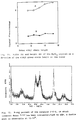
- Figure 12 shows the X-ray diffraction spectrum of the catalyst C-C-6. According to the diagram, recrystallization appeared in the MgCl 2 crystal grating, showing as a sharpening of the crystal peak at 30° and 35°. The forming of the double peak at 13-15° can also be seen.
- Table 7 Crystal dimensions of the MgCl 2 materials of the catalysts Section levels Width(nm) Growth (%) Alkyl group length Height(nm) 4 1.8 7.9 0 6 2.1 7.9 0 8 1.9 8.4 6 10 2.3 9.3 18 13 2.2 9.8 24
- the area and the pore volume of the catalysts were measured. The results are listed in table 8. According to these, the area of the catalysts remained almost constant regardless of the donor used in the synthesis. The specific area obtained was of the order of about 300 m 2 /g. Conversely, the pore volume increased as donors with longer chains were used. In the last catalyst of the series an increase of up to 60% was observed. The increase of the pore volume can partly be explained by the agglomerizing of the catalyst particles.
- Table 10 shows the PSD of the polymers together with a fine fraction, i.e. the total amount of particles under 1 mm. The amount of the fine fraction is also graphically presented in figure 17.
- Table 10 Particle size distribution of the polymers Alkyl content/number of C atoms Share (% by weight) of the material having a diameter d (mm) within the following range d>2.0 2.0>d>1.0 1.0>d>0.5 0.5>d>0.18 0.18>d>0.1 0.1>d>0.056 d ⁇ 0.056 4 12.0 67.4 18.5 1.8 0.2 0.1 20.6 6 10.7 71.3 17.7 0.2 0.1 0.0 18.0 8 95.0 3.1 1.1 0.5 0.2 0.1 1.9 10 14.6 69.4 15.5 0.5 0.2 0.0 16.0 13 52.1 30.4 17.1 0.2 0.1 0.1 17.5
- the results are listed in table 11 and presented in figure 18. According to the figure, the bulk density is actually a function of the agglomerating tendency. The more the polymer is agglomerated, the lower the bulk density. When DIBP esters are used, there is practically no agglomeration, whereby the bulk density will be 0.46 g/ml. If again DOP esters are used, a marked agglomeration will take place and the bulk density drops to 0.33 g/ml.
- Table 11 Bulk density of the polymers Alkyl group length Bulk density (g/ml) 4 0.46 6 0.44 8 0.33 10 0.37 13 0.39
- Table 14 presents a list of fusion points, crystallization points and crystallization percentages of the polymers. These measurements did not either reveal any systematic dependency of the esters used.
- the point of fusion is about 161°C and the crystallization temperature about 114°C. The crystallization was 51-52%.
- a number of fusion curves are presented in figures 19, 20 and 21.
- FIG. 22 presents a schematic view of the correlation between the titanization temperature of the catalyst and the crystallization temperature of the polymer.
- Table 15 gives the results of the area and pore volume measurements. The measurements were carried out by means of an Hg porosimeter. The results corresponded to the ones obtained with the corresponding catalysts.
- the specific area of the pores decreases only slightly when higher phtalic acid esters are used in the transesterification synthesis.
- the pore volume again, increased linearly according to the alkyl chain length of the phtalic acid ester, as in figure 24. The increase was about 100% for the last polymer of the range, compared to the first polymer of the range.
- DIDP greatly increased the share of the macroporous fraction (10-100 ⁇ m), whereas DTDP increased the share of the micropores (1-10 ⁇ m).
Landscapes
- Chemical & Material Sciences (AREA)
- Health & Medical Sciences (AREA)
- Chemical Kinetics & Catalysis (AREA)
- Medicinal Chemistry (AREA)
- Polymers & Plastics (AREA)
- Organic Chemistry (AREA)
- Transition And Organic Metals Composition Catalysts For Addition Polymerization (AREA)
- Compositions Of Macromolecular Compounds (AREA)
Abstract
Description
- The invention relates to a method for preparing polyolefins by polymerizing an olefin with the aid of a procatalyst composition, which has been prepared by contacting MgCl2, a C1-C4 alcohol, a titanium compound and a phtalic acid ester.
- The invention also relates to a polyolefin which has been obtained by polymerizing an olefin in the presence of a procatalyst, which has been prepared by contacting MgCl2, a C1-C4 alcohol, a titanium compound and a phtalic acid ester, as well as a procatalyst composition usable for the preparation of a coarse-grained and an even-grained polyolefin, which has been prepared by contacting MgCl2, a C1-C4 alcohol, a titanium compound, and a phtalic acid ester.
- Olefins, especially α olefins, are often polymerized by means of a catalyst composition, in which the procatalyst consists of a compound of a transition metal of groups IV-VI of the periodic system, and the cocatalyst is a compound of a metal of groups I-III of the periodic system, which activates the procatalyst by reduction. The so-called Ziegler-Natta procatalyst has been further developed by using an inert carrier as a support of the transition metal compound, the transition metal compound being superposed on the inert carrier in order to improve the activity of the procatalyst as it catalyzes the polymerization reaction.
- However, under the effect of this procatalyst composition, the asymmetrical olefin monomers are often polymerized into different stereoisomeric polymers, yielding for instance mixtures of isotactic, atactic and syndiotactic polymers, from which the desired stereoisomer has to be separated by means of washing and similar steps, which are often complicated. In order to prepare a polymer having a basically specific stereospecific form, for instance an isotactic polyolefin, out of an asymmetrical olefin monomer, the effect of the catalyst on the stereospecificity of the yielded product has been enhanced by adding a donor compound to the catalyst.
- Owing to its specific steric structure, the donor compound promotes the settling of the monomer molecule into a given position in the catalyst particle at the end of the growing polymer molecule, and thus the molecule chain of the polymer gets a given stereisomeric structure and the polymer product obtained corresponds more or less to the desired product as a function of the selected donor compound.
- There are two ways of adding the donor to the catalyst: a so-called internal donor is added already to the procatalyst mixture of the transition metal compound and the carrier, or then the donor is added to the mixture of the monomer and the catalyst component only in the polymerization reactor together with the cocatalyst, and in this case a so-called external donor is concerned. A donor compound may of course be used in both the steps, and then the donor may be the same or a different compound in the various steps.
- All monomers are asymmetrical, i.e. stereospecifically polymerizable monomers, except ethene, the unsaturated carbons of which have hydrogen substituents, and also in the rare case in which all the secondary groups are identical, tetramethyl-ethylene for instance. A certain stereospecific form is desirable because the properties of the yielded polymer for a given purpose are enhanced, for example isotactic polyolefins are better crystallized, their bulk density is higher, their mechanical properties are better, being for instance more resistant, etc. The adhesion characteristics of the atactic form are usually better than with other tactic forms and thus they are suitable for glue implementations among others.
- When polymerizing asymmetrical olefin monomers, i.e. when at least one of the groups connected to the carbon atoms bound by an unsaturated bond is different, the catalyst may comprise a compound enhancing the stereospecificty of the catalyst, i.e. an electron donor, which, due to its electron donor character, may be connected to some other catalyst structure, and due to its steric action, may guide the monomer molecule of the polymer chain into such a position, that the yielded polymer molecule has a stereospecific structure in some respect. Such donors are a great number of various organic compounds, such as esters, carboxylic acids, alcohols, ketones, aldehydes, nitriles, amides, amines, organic phosphor and silicon compounds, etc. These compounds also have other effects on the characteristics of the catalyst, one such being that the activity of the catalyst varies according to the donor used in each case. If the donor is a carboxylic acid ester, it is usually an aromatic carboxylic acid ester, e.g. benzoates, phtalates, toluates, anisates, etc. The optimal donors among these are dialkyl phthalates.
- Thanks to the so-called replica process, the physical structure of the procatalyst carrier is reproduced throughout the procatalyst composition and eventually also in the polymer product, and this means that the morphology of the procatalyst composition is very important in view of the polymerization.
- Combinations of various donors are also known in the field. Thus, the JP patent specifications 59172507, 59206409, 59206415, 59206416, 59206424, 60262804, 61103910 and 61108614 disclose a procatalyst composition, which has been prepared from MgCl2, 2-ethyl hexylalcohol, titanium tetrachloride, di-isobutyl phthalate and in some cases from phtalic acid anhydride.
- The patent family including the
patent specifications DE 3 540 699, EP 226 003 and US 4 761 461, discloses a method for preparing propene polymers by means of a procatalyst composition, which has been obtained by contacting MgCl2, alkanol, such as ethanol, phtalic acid ester, such as di-isobutyl phthalate, and titanium tetrachloride under given conditions at 90°C. The phtalic acid may be added either at the stage when MgCl2 and ROH react with each other, or at the stage when the reaction product of MgCl2 and alkanol is reacted with titanium tetrachloride. As a result, dibutylphthalate is attached to the MgCl2 catalyst carrier. - The procatalysts and methods described above have affected the particle size and shape of the polymer product and the particle size distribution to a very small extent. Thus, a great amount of fine fraction has been produced, which is detrimental for the treatment of polyolefins.
- The object of the invention is to provide an active and stereospecific procatalyst composition. Another object is to reduce the titanium and donor contents of the catalyst and thus of the polymer, since these bring about colour problems and aromaticity in the polymers. The purpose is in particular a catalyst and a method which allow to increase the particle size of the polymer and to reduce the share of its fine fraction.
- The purposes of the invention have now been achieved with a new method for preparing polyolefins, which is mainly characterized by the features presented in the characterizing part of
claim 1. The invention also relates to a new polyolefin, which is mainly characterized by the features presented in the characterizing part of claim 9, and a new procatalyst composition suitable for the preparation of coarse-grained and even-grained polyolefins, which is mainly characterized by the features presented in the characterizing part ofclaim 11. - Hence, it has been discovered, that when using a procatalyst composition prepared by contacting MgCl2, C1-C4 alcohol, a titanium compound and phtalic acid ester, the particle size of the polyolefin product can be increased and the share of the fine fraction decreased by carrying out a transesterification between the C1-C4 alcohol and the phtalic acid ester during the preparation of the procatalyst, and by selecting dioctyl phthalate (DOP) as phtalic acid ester.
- In the polymerization method according to the invention, the MgCl2 carrier of the used procatalyst composition may be used as such or combined with silica, e.g. by absorbing a solution or slurry containing MgCl2 into the silica. It is also important that the MgCl2 used is clean and anhydrous.
- The alcohol used in the method may be any C1-C4 alcohol. Advantageous alcohols are methanol and ethanol, especially ethanol.
- Since, under the effect of the so-called replica process, the physical structure of the catalyst carrier is reproduced throughout the catalyst composition, and this is again reproduced in the yielded polymer product, it is crucial to make the physical structure of the carrier, i.e. the morphology, advantageous, in other words, similar to the desired product. This can be achieved by using two different procedures, which may of course be combined: chemically, i.e. by treating the carrier with a specific or a number of specific chemicals, or physically, i.e. by grinding the carrier in a ball mill or a jet blowing mill.
- One may also proceed by first making an adduct between the carrier, in this case expressly MgCl2, and a C1-C4 alcohol, advantageously ethanol, and melting the adduct, injecting the melt by gas into a cooled solvent or a cooled gas, whereby the adduct is crystallized into a morphologically advantageous form, and this crystallized adduct is used as a catalyst carrier (cf. FI 862459).
- The titanium compound used for the preparation of the procatalyst composition of the method according to the invention is advantageously an organic or inorganic titanium compound with the
oxidation degree - The phtalic acid ester used in the method is dioctyl phthalate, since only this substance yields the desired coarseness and low fine fraction content of the polymer product. The advantages are unexpected and differ from the results yielded by other phtalic acid esters. It is also advantageous that the dioctyl phthalate acts as a so-called electron donor of the catalyst composition with the purpose to improve the activity and/or stereospecificty of the obtained polymer. In the synthesis, the molar ratio of the dioctyl phthalate to the magnesium halogenide is advantageously of the order of about 0.2.
- The transesterification can be accomplished e.g. by choosing a pair of phtalic acid ester - C1-C4 alcohol which is transesterified under normal preparation conditions, either spontaneously or by means of a catalyst that does not damage the procatalyst composition. However, it is often necessary to apply a raised temperature in order to bring about the transesterification. In this case, the transesterification is carried out at a temperature in the range of 110-150°C and preferably in the range of 130-140°C.
- Since the boiling point of liquid TiCl4 under normal pressure is about 136°C, the treatment by means of this, i.e. the so-called titanization, can normally be performed only at a temperature lower than this. Given that hydrocarbon solvents such as heptane, hexane or pentane are usually used as a titanization medium, and these have a markedly lower boiling point, the titanization temperature is below 100°C in practice, a temperature at which no transesterification takes place. Thus, in order to produce a transesterification, solvents boiling at a higher temperature should advantageously be applied, for instance nonane (boiling point 151°C) and decane (boiling point 174°C) are recommended. Thus the boiling point of TiCl4 is approached and even exceeded in terms of the titanization temperature, allowing a simultaneous transesterification reaction.
- According to one embodiment, the transesterification takes place so that the adduct of magnesium chloride and C1-C4 alcohol MgCl2*nR1OH, in which n is 1-6, is treated with a titanium compound, e.g. is titanized with TiCl4, apparently generating the following reaction:
(1) MgCl2*nR1OH + nTiCl4 = MgCl2*nTiCl3OR1 + nHCl
- As the donor, i.e. phtalic acid ester, is added to this titanized carrier, an adduct formed by all the components is probably produced:
(2) MgCl2*nTiCl3OR1 + nR3COOR2 = MgCl2*nTiCl3OR1*nR3COOR2
- As this adduct can be transesterified at a temperature above 100°C and advantageously above 130°C, the ester groups R1 and R2 change places:
(3) MgCl2*nTiCl3OR1*nR3COOR2 = MgCl2*nTiCl3OR2*nR3COOR1
- As the catalyst residue is removed by extracting, an adduct of the carrier and the ester donor is obtained, in which the group deriving from the ester alcohol has changed:
(4) MgCl2*nTiCl3OR2*nR3COOR1 = MgCl2*nR3COOR1 + nTiCl3OR2
- In case sufficient titanium remains on the carrier, it will act as an active element of the procatalyst.
- Otherwise the titanization is renewed after the above treatment in order to ensure a sufficient titanium concentration and thus an activity. The titanium separation of formula (4) relates to the inactive part of the titanium.
- Consequently, a procatalyst composition for the polymerization of olefins has been provided in the present invention, the composition having a low titanium and donor content with regard to the activity of the catalyst. According to one embodiment, the procatalyst composition contains 2.0% by weight of Ti at the most. Its molar ratio donor/mg is advantageously in the range of 0.03-0.06 and/or its donor concentration in the range of 4-6% by weight. The phtalic acid ester alxocy group has 8 carbon atoms, whereby the activity of the procatalyst composition is advantageously about 800 kg PP/g Ti when using triethyl aluminium as a catalyst and cyclohexylmethyl dimethcxysilane as an external donor.
- The procatalyst composition for the polymerization of olefins according to the invention is advantageously prepared
- a) by reacting the adduct of MgCl2 and C1-C4 alcohol with the titanium compound,
- b) by reacting the product of step a) with dioctyl phthalate under conditions in which the transesterification of dioctyl phthalate and C1-C4 alcohol takes place,
- c) by washing the product,
- d) by reacting the end product of step c) with the titanium compound (i.e. a second treatment).
- In the polymerization method according to the invention, the polymerization is advantageously carried out in the presence of an organometallic cocatalyst, such as trialkyl aluminium (e.g. triethyl aluminium), and advantageously of an external donor similar to cyclohexylmethyl dimethoxysilane. The polymer produced according to the invention contains a small amount of titanium and donor, among others, and resembles morphologically a relatively coarse catalyst composition. Propene is an advantageous olefin monomer.
- According to a preferred embodiment of the invention, the catalyst and/or polymer particles are formed by agglomerating a more finely divided material. The catalyst particles produced advantageously have a size distribution such that 90% by weight has an average diameter above 200 µm. The average diameter of the corresponding polymer particles is advantageously of the order of 1-2 mm, particles having a diameter under 1 mm being preferably absent.
- An olefin polymerization method is described as an exemplified case below, in which propene is polymerized with a catalyst composition, in which a spray-crystallized MgCl2 x 3 EtOH adduct is used as a carrier, which has subsequently been titanized with TiCl4 in a hydrocarbon solvent in the presence of di-alkyl phthalates of various lengths. By means cf the procatalyst composition and the trialkyl aluminium cocatalyst (triethyl aluminium, TEA) thus obtained as well as of an external donor (cyclohexyl methoxy dimethylsilane, CMMS) the propene was polymerized in a hydrocarbon solvent. If a sufficiently high titanizing temperature is applied, a transesterification will take place between the ethoxy groups deriving from the carrier-adduct and the long alkyl groups of the donor, yielding diethyl phthalate (DEP) as a donor compound. The following examples are merely intended to illustrate the invention.
- 5 donors were examined in the test series. The donors are given in table 1. The donors examined were propylhexyl phthalate (PrHP), dioctyl phthalate (DOP), di-isodecyl phthalate (DIDP) and ditridecyl phthalate (DTDP). Di-isobutyl phthalate (DIBP) was also included in the test series.
Table 1 Examined internal donors Test Length of the alkyl Donor group Molar mass g/mol Density g/ ml 1 4 DIBP 278 1,00 2 6 PrHP 292 0,95 3 8 DOP 390 0,96 4 10 DIDP 446 0,96 5 13 DTDP 530 0,91 - 0.1 moles of MgCl2 x 3 EtOH was suspended under inert circumstances in 250 ml of decane in a reactor. The solution was cooled to a temperature of -15°C and 300 ml of cold TiCl4 was added. This was followed by a controlled heating to a temperature of +20°C. At this temperature, 0.02 moles of internal donor was added. In all the catalyst syntheses, the molar ratio between the donor and MgCl2 was 0.2. When all the synthesis reagents were present, the temperature was raised to 135°C. Both the first and the second titanization were carried out at this temperature. The catalyst synthesis was ended by performing a normal washing of the reaction mixture.
- In order to investigate the particle size of the produced procatalyst, the particle size distribution of the product was measured and each sample was microscopically photographed. In addition, the chemical composition of the procatalyst was measured by analyzing their Ti, Mg and donor contents. In order to examine the changes in the crystal structure, X-ray diffraction spectrums were also taken.
- All the catalysts were submitted to a test polymerization under the following polymerizing conditions. A 2 lx bench reactor was used as a reaction vessel. 20-30 mg of procatalyst was used in the test polymerization. This amount was mixed with 620 µl of triethyl aluminium and 200 µl of a 25% solution of CMMS in 30 ml of heptane. The polymerizations were carried out at a temperature of +70°C and under a propene monomer pressure of 10 bar. The partial pressure of hydrogen was 0.2 bar during the polymerization. The polymerization lasted 3 hours. At the beginning of the test, the prepolymerization took place during the 10 minutes in the course of which the temperature and the pressure reached the desired polymerization conditions. The activity was measured on the basis of the polymerization yield. The soluble portion of the polymer was measured by evaporating a measured portion from the polymerization solution. Under these standard polymerization conditions, a polymer material was prepared, the MFR of which was approx. 8.
- The bulk density and particle size distribution (PSD) of all the polymerization drives were measured. The isotacticity index was measured with the help of heptanelution and the isotacticity was determined on the basis of the results obtained from the evaporation residue measurements. The melt viscosity was measured at a temperature of 230°C by using a weight of 2.16 kg. All the polymerization batches were microscopically photographed in view of further documentation and comparisons. In order to characterize the melt behavior of the material, differential scanning calorimetric curves (DSC curves) were carried out. The specific area and the pore volume distribution were measured with the aid of an Hg porosimetric equipment.
- Table 2 presents the symbols of all the catalysts and the corresponding polymers.
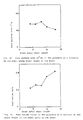
Table 2 Symbols of the catalysts and polymers used in the study Alkyl group length Catalyst symbol Polymer symbol 4 C-C-4 1 PP-C-4 6 C-C-6 2 PP-C-6 8 C-C-8 3 PP-C-8 10 C-C-10 4 PP-C-10 13 C-C-13 5 PP-C-13 - Table 3 indicates the magnesium and titanium contents of the catalysts. The titanium content is also presented in figure 1. The results showed that, with a substantially constant Mg content, a systematic decrease of the Ti content was observed in the catalyst series. The longer the alkyl chain of the alcoxy group of the electron donor, the smaller the Ti content of the final procatalyst. The Ti content of the last catalyst in the range was 1.6% by weight. This is a 60% lower value than the 4% obtained in the standard synthesis and up to 30% lower than the titanium content found in commercial high yield catalysts. These results showed that the combination of transesterification and the washing effect of TiCl3 x OEt is enhanced by using higher phtalic acid esters.
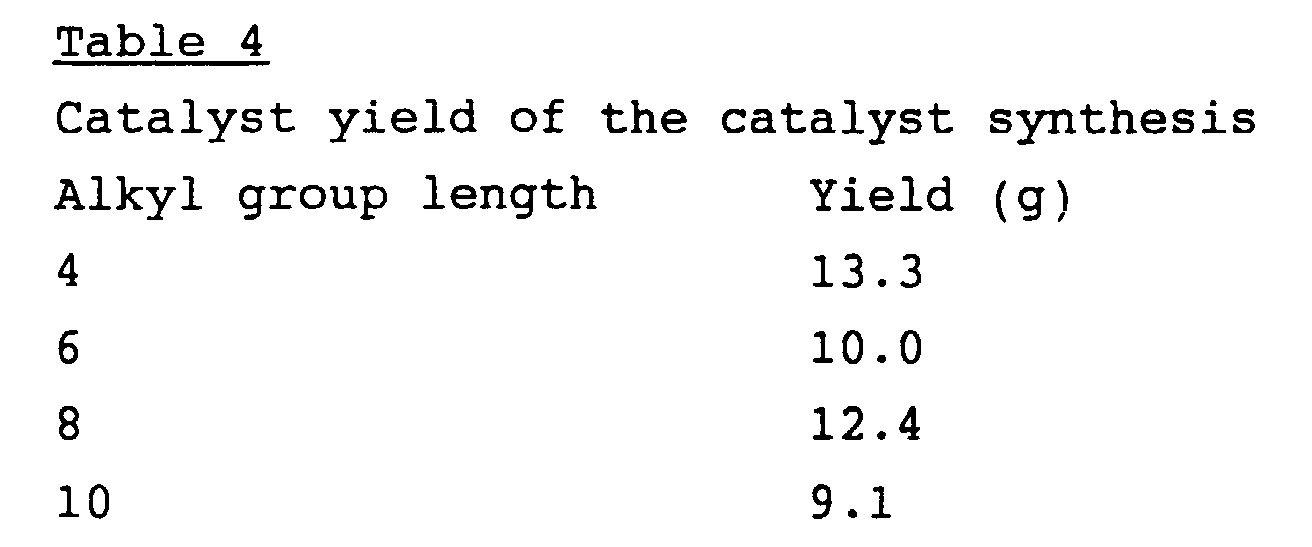
Table 3 Mg and Ti contents of the catalysts Alkyl chain length Mg (%) Ti (%) 4 18.1 2.4 6 20.8 2.2 8 22.0 1.9 10 20.0 1.9 13 17.3 1.6 - Table 4 indicates the respective catalyst yields of each catalyst synthesis, and the results are graphically presented in figure 2. The same trend can be observed as in the first measurement, i.e. as the phtalic alkyl chain increases and the titanium content decreases, the catalyst yield also decreases. The yield is very slightly reduced, only 25%, which is explained by the decreased TiCl4 content of the catalyst and the weight reduction produced by the replacement of an electron donor with a high molar mass by one with a lower molar mass. The reduced catalyst yield is also explained by the reduction of the total donor content.

- The donor composition of the catalysts was measured by liquid chromatography by using the HPLC method. The results are listed in table 5 and are graphically presented in figure 3. In all the catalysts, a small fraction of mixed esters and a small fraction of phtalic acid anhydride were observed. As seen in figure 3, the transesterification was not complete for the first catalyst of the test series. The transesterification degree of DIBP was only 70%. This implies that DIBP is not completely transesterified at a temperature of 135°C. In all the other syntheses, the transesterification was complete. Only traces of the original ester were found in their products. The amount of transesterified diethyl phthalate (DEP) found in the catalysts was essentially constant and near 5%. This equals a D/Mg ratio of 0.03-0.04 (D = donor), which is even a lower value than the one obtained as DIBP was transesterified at a temperature of 143°C.
- These results show that the transesterification is improved if longer alkyl chains are used in the phtalic acid esters. They also show that a low molar ratio electron donor/MgCl2 is obtained.


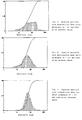
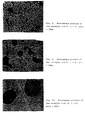
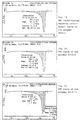
- The PSD of the catalysts was also measured and the results are given in table 6. Figure 4 shows the share in which more than 90% of the particles had an average particle diameter as a function of the alkyl chain length. The results show that a change of the donor compositions entails a marked change of the PSD. At the same time it was noted that the catalyst particles agglomerate as higher phtalic acid esters are being used. The effect was most drastic when dioctyl phthalate was used, appearing as a noticeable agglomeration. This agglomeration appears in the PSD curves of figures 5, 6 and 7, as well as the microscopic pictures in figures 8, 9 and 10. The results also showed that the agglomeration decreased again when higher phtalic acid esters were used. By using DIDP (C = 10), very beautifully shaped catalyst particles were obtained, having a diameter of about 140 µm. This appears from figure 10.
Table 6 Particle size distribution of the catalysts Alkyl group length D (0.9)µm D (0.5)µm D (0.1)µm 4 117 62 34 6 127 68 36 8 218 76 17 10 138 56 18 13 140 69 36 - The transesterification yielded a new procatalyst structure, which appears in the double peak at 13-15°. In order to observe the effect of higher phtalic esters X-ray diagrams were taken of all the catalysts in the test series. Table 7 lists the crystal dimensions deduced from the diagrams and the results are also shown in figure 11. According to the results, the crystal was systematically broadened as the alkyl chain of the ester was lengthened. DTDP yielded 25% broader crystals than DIBP.
- Figure 12 shows the X-ray diffraction spectrum of the catalyst C-C-6. According to the diagram, recrystallization appeared in the MgCl2 crystal grating, showing as a sharpening of the crystal peak at 30° and 35°. The forming of the double peak at 13-15° can also be seen.
Table 7 Crystal dimensions of the MgCl2 materials of the catalysts Section levels Width(nm) Growth (%) Alkyl group length Height(nm) 4 1.8 7.9 0 6 2.1 7.9 0 8 1.9 8.4 6 10 2.3 9.3 18 13 2.2 9.8 24 - The area and the pore volume of the catalysts were measured. The results are listed in table 8. According to these, the area of the catalysts remained almost constant regardless of the donor used in the synthesis. The specific area obtained was of the order of about 300 m2/g. Conversely, the pore volume increased as donors with longer chains were used. In the last catalyst of the series an increase of up to 60% was observed. The increase of the pore volume can partly be explained by the agglomerizing of the catalyst particles.


- All the catalysts were test polymerized in the conditions described above. The results are given in table 9 and figure 13. The activity based on the weight of the catalyst and the polymer remained constant for the entire catalyst range and was about 16 kg/g of cat. Expressed as the unit kg PP/g of Ti, the activity increased systematically. This was due to the fact that the Ti content decreased accordingly as higher phtalic acid esters were used. Thus, an activity value of 1019 kg PP/g of Ti was obtained for the last catalyst in the range. When decane was used as an activating medium, the activity of the catalyst decreased slightly.
Table 9 Activity of the catalysts Alkyl group length Activity (kg PP/g of cat.) Activity (kg PP/g of Ti) 4 16.6 692 6 15.6 709 8 16.2 853 10 16.6 874 13 16.3 1019 - Table 10 shows the PSD of the polymers together with a fine fraction, i.e. the total amount of particles under 1 mm. The amount of the fine fraction is also graphically presented in figure 17.
- The PSFD results of the polymers follow the same pattern as the PSD results of the catalysts, i.e. a marked agglomerating effect was observed especially with DOP esters. When still greater chain lengths were used, the agglomerating trend decreased. This appears in the PSD diagrams of figures 14, 15 and 16. The share of the fine fraction (D < 1 mm) was generally high (> 15%), however for DOP is was practically non-existent. The absence of the fine fraction can be explained by the agglomerization in this case.
Table 10 Particle size distribution of the polymers Alkyl content/number of C atoms Share (% by weight) of the material having a diameter d (mm) within the following range d>2.0 2.0>d>1.0 1.0>d>0.5 0.5>d>0.18 0.18>d>0.1 0.1>d>0.056 d<0.056 4 12.0 67.4 18.5 1.8 0.2 0.1 20.6 6 10.7 71.3 17.7 0.2 0.1 0.0 18.0 8 95.0 3.1 1.1 0.5 0.2 0.1 1.9 10 14.6 69.4 15.5 0.5 0.2 0.0 16.0 13 52.1 30.4 17.1 0.2 0.1 0.1 17.5 - The bulk density decreased as higher phtalic acid esters were used in the transesterification synthesis. The results are listed in table 11 and presented in figure 18. According to the figure, the bulk density is actually a function of the agglomerating tendency. The more the polymer is agglomerated, the lower the bulk density. When DIBP esters are used, there is practically no agglomeration, whereby the bulk density will be 0.46 g/ml. If again DOP esters are used, a marked agglomeration will take place and the bulk density drops to 0.33 g/ml.
Table 11 Bulk density of the polymers Alkyl group length Bulk density (g/ml) 4 0.46 6 0.44 8 0.33 10 0.37 13 0.39 - The chain length of the ester did not have a great impact on the melt viscosity. The results are shown in table 12.
Table 12 Melt viscosity of the polymers Alkyl group length Melt viscosity (2.16 kg) 4 10.5 6 9.3 8 10.0 10 7.3 - No systematic changes in the molecular weight distribution were observed as the esters changed. All the results are listed in table 13. The results correspond to the ones normally obtained in standard polymerization.


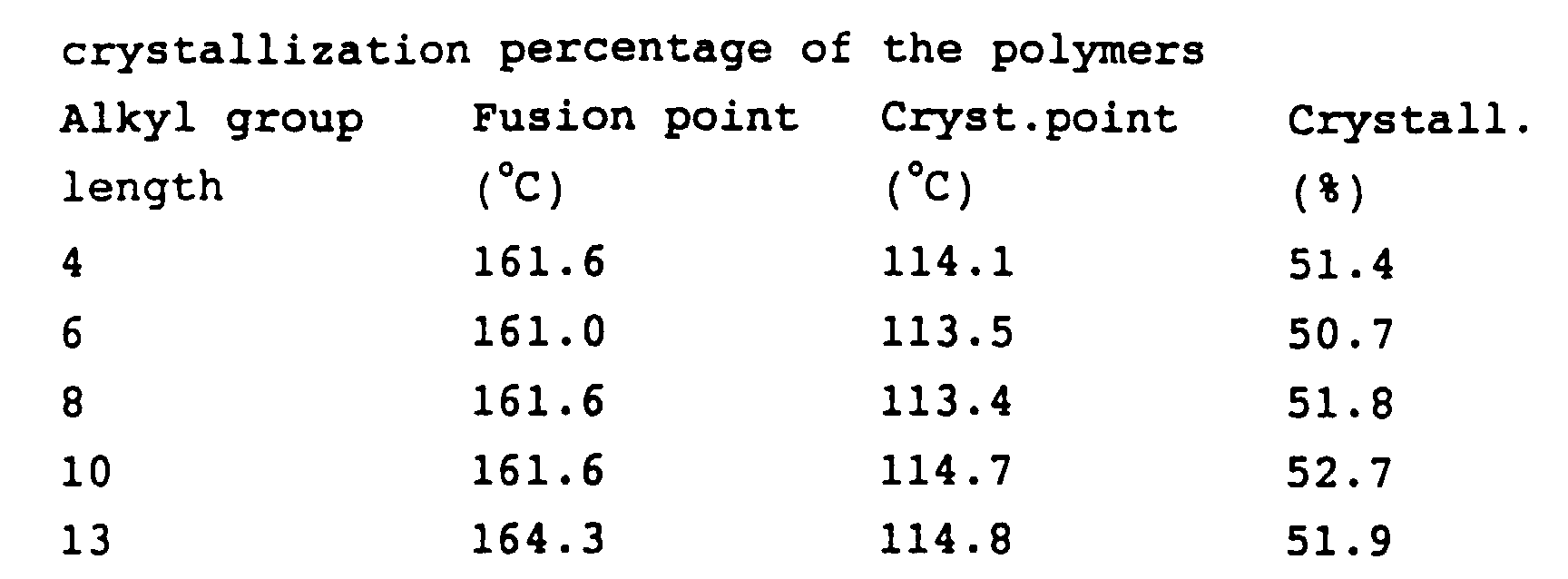
- Table 14 presents a list of fusion points, crystallization points and crystallization percentages of the polymers. These measurements did not either reveal any systematic dependency of the esters used. The point of fusion is about 161°C and the crystallization temperature about 114°C. The crystallization was 51-52%. A number of fusion curves are presented in figures 19, 20 and 21.
- It can be generally noted that there is a correlation between the titanization temperature and the crystallization temperature of the catalyst. A higher titanization temperature yields a purer catalyst and a more homogenous polypropene. This again increases the crystallization of the polymer and reduces its crystallization temperature. Figure 22 presents a schematic view of the correlation between the titanization temperature of the catalyst and the crystallization temperature of the polymer.

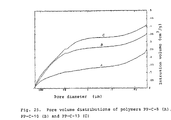
- Table 15 gives the results of the area and pore volume measurements. The measurements were carried out by means of an Hg porosimeter. The results corresponded to the ones obtained with the corresponding catalysts. As shown in figure 23, the specific area of the pores decreases only slightly when higher phtalic acid esters are used in the transesterification synthesis. The pore volume, again, increased linearly according to the alkyl chain length of the phtalic acid ester, as in figure 24. The increase was about 100% for the last polymer of the range, compared to the first polymer of the range. According to figure 25, DIDP greatly increased the share of the macroporous fraction (10-100 µm), whereas DTDP increased the share of the micropores (1-10 µm).
Table 15 Specific area and pore volume of the polymers, median diameter of the pores Alkyl group length Area (m2/g) Pore volume (ml/g) Pore diameter (µm) 4 53.5 0.22 1.2 6 52.4 0.25 4.9 8 58.5 0.24 1.5 10 46.0 0.35 26.3 13 41.2 0.41 18.8
Claims (18)
- A method for producing polyolefins by polymerizing olefins by means of a procatalyst, which has been prepared by contacting MgCl2, a C1-C4 alcohol, a titanium compound and a phtalic acid ester, characterized by using a procatalyst, which has been prepared by carrying out a transesterification between the C1-C4 alcohol and the phthalic acid ester at a temperature in the range of 110 to 150°C, and by selecting dioctyl phthalate (DOP) as the said phtalic acid ester.
- A method according to claim 1, characterized in that the olefin used in the method is propene.
- A method according to claim 1 or 2, characterized in that the C1-C4 alcohol is ethanol.
- A method according to claim 1, 2 or 3, characterized in that the titanium compound is TiCl4.
- A method according to any of the preceding claims, characterized in that the olefin is polymerized by means of an organometallic cocatalyst.
- A method according to claim 5, characterized in that the organometallic cocatalyst is trialkyl aluminium.
- A method according to any of the preceding claims, characterized in that the olefin is polymerized by means of an external donor such as cyclohexylmethyl dimethoxysilane.
- A method according to any of the preceding claims, characterized in that the polyolefin is prepared by agglomerization of the polyolefin material produced in the polymerization.
- A polyolefin produced by the polymerization of olefin in the presence of a procatalyst, which has been prepared by contacting MgCl2, a C1-C4 alcohol, a titanium compound and a phtalic acid ester, characterized in that it has a coarseness obtained by using a procatalyst, which has been produced by a transesterification of the C1-C4 alcohol and the phtalic acid ester at a temperature in the range of 110 to 150°C and by selecting dioctyl phthalate as the phtalic acid ester.
- A polyolefin according to claim 9, characterized in that the average diameter of its particles is of the order of 1-2 mm, particles having a diameter under 1 mm being essentially absent.
- A procatalyst composition usable for preparing polyolefins with a coarse and regular grain structure, the procatalyst composition having been produced by contacting MgCl2, a C1-C4 alcohol, a titanium compound and a phtalic acid ester, characterized in that a transesterification has been carried out at a temperature in the range of 110 to 150°C between the C1-C4 alcohol and the phtalic acid ester and in that dioctyl phthalate (DOP) is used as the phtalic acid ester.
- A procatalyst composition according to claim 11, characterized in that the transesterification has been carried out at a temperature in the range of 130°C to 140°C.
- A procatalyst composition according to claim 11 or 12, characterized in that the transesterification has been carried out in nonane or decane.
- A procatalyst composition according to claim 11, 12 or 13, characterized in that the C1-C4 alcohol is ethanol.
- A procatalyst composition according to any of claims 11 to 14, characterized in that the titanium compound is TiCl4.
- A procatalyst composition according to any of claims 11-15, characterized in that it has been produced bya) reacting an adduct of MgCl2 and a C1-C4 alcohol with the titanium compound,b) by reacting at a temperature in the range of 110 to 150°C the product of step a) with dioctyl phthalate (DOP) under conditions in which a transesterification takes place between the dioctyl phthalate and the C1-C4 alcohol,c) by washing the product andd) by reacting the product of step c) with a titanium compound.
- A procatalyst composition according to any of claims 11-16, characterized in that 90% by weight of its particles have an average diameter with a length above 200 µm.
- A procatalyst composition according to any of claims 11-16, characterized in that its particles are agglomerates.
Applications Claiming Priority (3)
| Application Number | Priority Date | Filing Date | Title |
|---|---|---|---|
| FI912263 | 1991-05-09 | ||
| FI912263A FI88048C (en) | 1991-05-09 | 1991-05-09 | Coarse-grained polyolefin, its method of preparation and a catalyst used in the method |
| PCT/FI1992/000082 WO1992019658A1 (en) | 1991-05-09 | 1992-03-23 | Coarse grained polyolefin, production thereof and a procatalyst containing a transesterification product between a lower alcohol and dioctylphthalate used therefore |
Publications (2)
| Publication Number | Publication Date |
|---|---|
| EP0586390A1 EP0586390A1 (en) | 1994-03-16 |
| EP0586390B1 true EP0586390B1 (en) | 1997-05-28 |
Family
ID=8532489
Family Applications (1)
| Application Number | Title | Priority Date | Filing Date |
|---|---|---|---|
| EP92907471A Expired - Lifetime EP0586390B1 (en) | 1991-05-09 | 1992-03-23 | Coarse grained polyolefin, production thereof and a procatalyst containing a transesterification product between a lower alcohol and dioctylphthalate used therefore |
Country Status (6)
| Country | Link |
|---|---|
| EP (1) | EP0586390B1 (en) |
| CA (1) | CA2102306C (en) |
| DE (1) | DE69220058T2 (en) |
| FI (1) | FI88048C (en) |
| NO (1) | NO934041D0 (en) |
| WO (1) | WO1992019658A1 (en) |
Cited By (53)
| Publication number | Priority date | Publication date | Assignee | Title |
|---|---|---|---|---|
| EP2216350A1 (en) | 2009-02-04 | 2010-08-11 | Borealis AG | Polypropylene composition with high stiffness and impact strength |
| EP2216346A1 (en) | 2009-02-04 | 2010-08-11 | Borealis AG | Process for the production of polyolefins with broad molecular weight distribution |
| EP2348058A1 (en) | 2010-01-22 | 2011-07-27 | Borealis AG | Heterophasic polypropylene resin and composition |
| US9394073B2 (en) | 2012-12-12 | 2016-07-19 | Borealis Ag | Extrusion blow molded bottles |
| US9598566B2 (en) | 2013-12-19 | 2017-03-21 | Borealis Ag | Soft heterophasic polyolefin composition |
| US9637602B2 (en) | 2013-12-18 | 2017-05-02 | Borealis Ag | BOPP film with improved stiffness/toughness balance |
| US9670293B2 (en) | 2013-10-29 | 2017-06-06 | Borealis Ag | Solid single site catalysts with high polymerisation activity |
| US9670347B2 (en) | 2013-08-14 | 2017-06-06 | Borealis Ag | Propylene composition with improved impact resistance at low temperature |
| US9695261B2 (en) | 2013-03-26 | 2017-07-04 | Borealis Ag | Propylene copolymer with high impact properties |
| US9708481B2 (en) | 2013-10-24 | 2017-07-18 | Borealis Ag | Blow molded article based on bimodal random copolymer |
| US9751962B2 (en) | 2013-11-22 | 2017-09-05 | Borealis Ag | Low emission propylene homopolymer with high melt flow |
| US9777142B2 (en) | 2013-08-21 | 2017-10-03 | Borealis Ag | High flow polyolefin composition with high stiffness and toughness |
| US9802394B2 (en) | 2013-10-11 | 2017-10-31 | Borealis Ag | Machine direction oriented film for labels |
| US9828698B2 (en) | 2013-12-04 | 2017-11-28 | Borealis Ag | Phthalate-free PP homopolymers for meltblown fibers |
| US9890275B2 (en) | 2013-08-21 | 2018-02-13 | Borealis Ag | High flow polyolefin composition with high stiffness and toughness |
| US9890274B2 (en) | 2014-10-27 | 2018-02-13 | Borealis Ag | Heterophasic polypropylene with improved impact strength/stiffness balance, improved powder flowability, reduced emissions and low shrinkage |
| US10030109B2 (en) | 2014-02-14 | 2018-07-24 | Borealis Ag | Polypropylene composite |
| US10040930B2 (en) | 2013-09-27 | 2018-08-07 | Abu Dhabi Polymers Co. Ltd (Borouge) Llc. | Polymer composition with high XS, high Tm suitable for BOPP processing |
| US10100185B2 (en) | 2014-02-06 | 2018-10-16 | Borealis Ag | Soft copolymers with high impact strength |
| US10100186B2 (en) | 2014-02-06 | 2018-10-16 | Borealis Ag | Soft and transparent impact copolymers |
| US10125248B2 (en) | 2014-06-27 | 2018-11-13 | Borealis Ag | Nucleated polypropylene composition |
| US10138308B2 (en) | 2014-06-27 | 2018-11-27 | Borealis Ag | Catalyst component for the preparation of nucleated polyolefins |
| US10227427B2 (en) | 2014-01-17 | 2019-03-12 | Borealis Ag | Process for preparing propylene/1-butene copolymers |
| US10316177B2 (en) | 2014-11-05 | 2019-06-11 | Borealis Ag | Long-chain branched polypropylene for foam application |
| US10369491B2 (en) | 2010-11-12 | 2019-08-06 | Borealis Ag | Method for recovering transition metal tetrahalide and hydrocarbons from a waste stream |
| US10392492B2 (en) | 2013-12-04 | 2019-08-27 | Borealis Ag | Polypropylene composition suitable for primerless painting |
| US10450451B2 (en) | 2014-05-20 | 2019-10-22 | Borealis Ag | Polypropylene composition for automotive interior applications |
| US10519259B2 (en) | 2013-10-24 | 2019-12-31 | Borealis Ag | Low melting PP homopolymer with high content of regioerrors and high molecular weight |
| US10526478B2 (en) | 2015-05-29 | 2020-01-07 | Borealis Ag | Propylene copolymer composition |
| US10696834B2 (en) | 2016-01-29 | 2020-06-30 | Borealis Ag | Polyolefin composition with improved thoughness |
| US10745548B2 (en) | 2016-12-15 | 2020-08-18 | Borealis Ag | Polypropylene composition with excellent paint adhesion |
| US10759931B2 (en) | 2016-03-04 | 2020-09-01 | Borealis Ag | High flow heterophasic polyolefin compositions having improved stiffness/impact balance |
| US10781303B2 (en) | 2016-03-04 | 2020-09-22 | Borealis Ag | High flow heterophasic polyolefin composition having improved stiffness/impact balance |
| US10851191B2 (en) | 2015-06-30 | 2020-12-01 | Borealis Ag | Process for preparing propylene polymer compositions |
| US10919993B2 (en) | 2016-04-13 | 2021-02-16 | Borealis Ag | Injection molded article based on propylene homopolymer |
| WO2021032458A1 (en) | 2019-08-19 | 2021-02-25 | Borealis Ag | Polypropylene - polyethylene blends with improved properties |
| US10934422B2 (en) | 2015-10-28 | 2021-03-02 | Borealis Ag | Polypropylene compositions for a layer element |
| US11053379B2 (en) | 2016-01-29 | 2021-07-06 | Borealis Ag | Heterophasic propylene copolymer with low CLTE |
| US11091617B2 (en) | 2016-11-09 | 2021-08-17 | Borealis Ag | Polypropylene composition |
| US11248115B2 (en) | 2016-08-11 | 2022-02-15 | Borealis Ag | Polypropylene composition with flame retardant activity |
| US11332603B2 (en) | 2017-06-30 | 2022-05-17 | Borealis Ag | Polypropylene composition with excellent surface appearance |
| US11345804B2 (en) | 2017-02-03 | 2022-05-31 | Borealis Ag | Use of a polymer composition for the production of articles with improved paintability and surface appearance |
| US11377543B2 (en) | 2017-06-26 | 2022-07-05 | Borealis Ag | Polypropylene composition with excellent surface appearance |
| US11485843B2 (en) | 2017-09-29 | 2022-11-01 | Borealis Ag | Reinforced polyproylene composition |
| US11492478B2 (en) | 2017-11-28 | 2022-11-08 | Borealis Ag | Polymer composition with improved paint adhesion |
| US11530321B2 (en) | 2017-11-28 | 2022-12-20 | Borealis Ag | Polymer composition with improved paint adhesion |
| US11739202B2 (en) | 2018-04-10 | 2023-08-29 | Borealis Ag | Bimodal polypropylene random copolymer with improved gamma-irradiation resistance |
| US11845857B2 (en) | 2018-09-12 | 2023-12-19 | Abu Dhabi Polymers Co. Ltd (Borouge) L.L.C. | Polypropylene composition with excellent stiffness and impact strength |
| US12043687B2 (en) | 2018-08-02 | 2024-07-23 | Borealis Ag | Process for polymerizing ethylene in a multi-stage polymerization process |
| US12209178B2 (en) | 2021-06-09 | 2025-01-28 | Borealis Ag | Polypropylene composition for exterior automotive applications |
| US12281220B2 (en) | 2019-07-05 | 2025-04-22 | Borealis Ag | Soft propylene copolymer composition |
| US12356731B2 (en) | 2014-05-12 | 2025-07-08 | Borealis Ag | Polypropylene composition for producing a layer of a photovoltaic module |
| US12674050B2 (en) | 2020-08-13 | 2026-07-07 | Borealis Ag | Automotive composition |
Families Citing this family (248)
| Publication number | Priority date | Publication date | Assignee | Title |
|---|---|---|---|---|
| FI96615C (en) * | 1993-06-04 | 1996-07-25 | Neste Oy | Process for Polymerization of C4-C40 Olefins or Copolymerization with Other Olefins |
| FI104089B (en) | 1996-11-15 | 1999-11-15 | Borealis As | Process for preparing homo- or copolymers of propylene |
| FI111848B (en) | 1997-06-24 | 2003-09-30 | Borealis Tech Oy | Process and equipment for the preparation of homopolymers and copolymers of propylene |
| FI111846B (en) | 1997-06-24 | 2003-09-30 | Borealis Tech Oy | Process and apparatus for preparing mixtures of polypropylene |
| FI973816A0 (en) | 1997-09-26 | 1997-09-26 | Borealis As | Polypropen med Hoeg smaeltstyrka |
| FI974175L (en) | 1997-11-07 | 1999-05-08 | Borealis As | Method for producing polypropylene |
| FI980342A0 (en) | 1997-11-07 | 1998-02-13 | Borealis As | Polymerroer och -roerkopplingar |
| FI974178A0 (en) | 1997-11-07 | 1997-11-07 | Borealis As | Polypropensammansaettningar |
| WO2002044220A1 (en) * | 2000-11-29 | 2002-06-06 | Reliance Industries Limited | A lower a-alkene polymerisation heterogeneous solid catalyst |
| ATE422508T1 (en) | 2001-12-19 | 2009-02-15 | Borealis Tech Oy | PRODUCTION OF SUPPORTED CATALYSTS FOR OLEFIN POLYMERIZATION |
| ES2313133T3 (en) | 2005-01-14 | 2009-03-01 | Borealis Polymers Oy | COMPOSITION OF HETEROPHASIC POLYMER AND PROCESS FOR PREPARATION. |
| ES2335420T3 (en) | 2005-12-22 | 2010-03-26 | Borealis Technology Oy | POLYOLEFIN COMPOSITIONS. |
| ATE499408T1 (en) | 2006-04-18 | 2011-03-15 | Borealis Tech Oy | POLYMER LAYER FOR CABLES WITH IMPROVED RESISTANCE TO WHITE CRACKAGE |
| ES2317381T3 (en) | 2006-08-01 | 2009-04-16 | Borealis Technology Oy | PROCEDURE FOR THE PREPARATION OF IMPACT RESISTANT DRIVING. |
| KR20090132648A (en) | 2007-05-22 | 2009-12-30 | 보레알리스 테크놀로지 오와이. | Catalyst System for Polypropylene Copolymer |
| CN101687950B (en) * | 2007-05-22 | 2012-10-10 | 博里利斯技术有限公司 | Polypropylene copolymer |
| EP2014714A1 (en) | 2007-07-11 | 2009-01-14 | Borealis Technology Oy | Heterophasic polyolefin composition |
| EP2101973B1 (en) | 2007-08-27 | 2016-01-06 | Borealis Technology OY | Equipment and process for producing polymer pellets |
| JP2010537036A (en) | 2007-08-31 | 2010-12-02 | ステフティング ダッチ ポリマー インスティテュート | Compatibilized polyolefin composition |
| EP2062936A1 (en) | 2007-11-20 | 2009-05-27 | Borealis Technology OY | Improved glass fiber reinforced polypropylene |
| EP2067794A1 (en) | 2007-12-06 | 2009-06-10 | Borealis Technology OY | Use of a Ziegler-Natta procatalyst containing a trans-esterification product of a lower alcohol and a phthalic ester for the production of reactor grade thermoplastic polyolefins with improved paintability |
| BRPI0822601B1 (en) * | 2008-04-24 | 2020-12-01 | Borealis Ag | copolymers of heterophasic polypropylene with high purity, its production process, and article |
| WO2009153213A1 (en) | 2008-06-16 | 2009-12-23 | Borealis Ag | Thermoplastic polyolefins with high flowability and excellent surface quality produced by a multistage process |
| EP2344585B1 (en) | 2008-10-01 | 2018-04-25 | Borealis AG | New sewage pipe material with improved properties |
| EP2174962B1 (en) | 2008-10-08 | 2011-11-30 | Borealis AG | A method to produce very stiff polypropylene |
| EP2174965B1 (en) | 2008-10-08 | 2013-05-29 | Borealis AG | Preparation of propylene copolymer with dynamically operated reactor |
| ES2392218T3 (en) | 2008-10-27 | 2012-12-05 | Borealis Ag | Extrusion-blow molded bottles with high rigidity and transparency |
| CN102197083B (en) | 2008-10-27 | 2014-03-12 | 北欧化工公司 | Extrusion blow molded bottles with high stiffness and clarity |
| EP2182030B1 (en) | 2008-10-29 | 2012-04-04 | Borealis AG | Tough composition for food applications |
| EP2350153B1 (en) | 2008-11-21 | 2013-07-31 | Borealis AG | Method for improving flowability of heterophasic polypropylene powder |
| US8450421B2 (en) | 2008-12-29 | 2013-05-28 | Borealis Ag | Cable layer of modified soft polypropylene with improved stress whitening resistance |
| EP2202271A1 (en) | 2008-12-29 | 2010-06-30 | Borealis AG | Alpha-nucleated polypropylene for power cable insulation |
| EP2216347A1 (en) | 2009-01-30 | 2010-08-11 | Borealis AG | A method of catalyst transitions in olefin polymerizations |
| ATE529450T1 (en) | 2009-02-25 | 2011-11-15 | Borealis Ag | MULTIMODAL PROPYLENE POLYMER, COMPOSITION THEREOF AND METHOD FOR PRODUCING THEREOF |
| EP2226337A1 (en) | 2009-03-02 | 2010-09-08 | Borealis AG | Process for the production of polypropylene random copolymers for injection moulding applications |
| WO2010115878A1 (en) | 2009-04-09 | 2010-10-14 | Borealis Ag | Thermoplastic polyolefin composition |
| EP2275476A1 (en) | 2009-06-09 | 2011-01-19 | Borealis AG | Automotive material with excellent flow, high stiffness, excellent ductility and low CLTE |
| ES2365797T3 (en) | 2009-06-22 | 2011-10-11 | Borealis Ag | COPOLYM COMPOSITION OF HETEROPHASE POLYPROPYLENE. |
| PL2308923T3 (en) | 2009-10-09 | 2012-11-30 | Borealis Ag | Glass fibre composite of improved processability |
| PL2325248T3 (en) | 2009-11-16 | 2012-11-30 | Borealis Ag | Melt blown fibers of polypropylene compositions |
| EP2330135B1 (en) | 2009-12-02 | 2012-11-07 | Borealis AG | Process for producing polyolefins |
| EP2390279A1 (en) | 2009-12-17 | 2011-11-30 | ExxonMobil Chemical Patents Inc. | Polypropylene composition with plasticiser for sterilisable films |
| EP2338930A1 (en) | 2009-12-23 | 2011-06-29 | Borealis AG | Blownfilm grade showing superior stiffness, transparency and processing behaviour |
| EP2338931A1 (en) | 2009-12-23 | 2011-06-29 | Borealis AG | Blown grade showing superior stiffness, transparency and processing behaviour |
| WO2011089133A1 (en) | 2010-01-22 | 2011-07-28 | Borealis Ag | Polypropylene copolymers with specific crystal nucleation |
| ES2474090T3 (en) | 2010-01-28 | 2014-07-08 | Borealis Ag | Meltblown fiber |
| EP2361950A1 (en) | 2010-02-26 | 2011-08-31 | Borealis AG | Random propylene copolymers for pipes |
| EP2368937A1 (en) | 2010-03-22 | 2011-09-28 | Borealis AG | Heterophasic polypropylene with excellent creep performance |
| EP2368938A1 (en) | 2010-03-22 | 2011-09-28 | Borealis AG | Heterophasic polypropylene with excellent mechanical properties |
| EP2368921B1 (en) | 2010-03-26 | 2014-11-26 | Borealis AG | Process for the preparation of flowable comonomer rich polypropylene |
| EP2371517B1 (en) | 2010-03-30 | 2012-07-25 | Borealis AG | Process for transforming polypropylene into a crystal modification of high transparency and articles resulting from said process |
| EP2386602B1 (en) | 2010-04-20 | 2012-08-29 | Borealis AG | Automotive interior compound |
| EP2386604B1 (en) | 2010-04-20 | 2018-11-28 | Borealis AG | Polypropylene bottles |
| EP2380926B1 (en) | 2010-04-26 | 2017-06-21 | Borealis AG | Masterbatch for improving stiffness and transparency of a random propylene copolymer |
| EA022217B1 (en) | 2010-05-12 | 2015-11-30 | Бореалис Аг | Polypropylene with specific calcium stearate content for special capacitors |
| DK2390092T4 (en) | 2010-05-25 | 2019-01-02 | Borealis Ag | RESPONSIBLE NON-WOVEN COMPOSITION MATERIAL |
| EP2397517B1 (en) | 2010-06-16 | 2012-12-26 | Borealis AG | Propylene polymer compositions having superior hexane extractables/impact balance |
| ES2443569T3 (en) | 2010-07-22 | 2014-02-19 | Borealis Ag | Bimodal heterophasic polypropylene with talcum load |
| EP2410007B1 (en) | 2010-07-22 | 2014-06-11 | Borealis AG | Polypropylene/talc composition with improved impact behavior |
| EP2415831A1 (en) | 2010-08-06 | 2012-02-08 | Borealis AG | Heterophasic propylene copolymer with excellent impact/stiffness balance |
| ES2397547T3 (en) | 2010-08-27 | 2013-03-07 | Borealis Ag | Rigid polypropylene composition with excellent break elongation |
| EP2431416B1 (en) | 2010-09-16 | 2012-10-31 | Borealis AG | High flow and stiff polymer material with good transparency and impact properties |
| EP2452960B1 (en) | 2010-11-12 | 2015-01-07 | Borealis AG | Process for preparing propylene polymers with an ultra high melt flow rate |
| EP2452957A1 (en) | 2010-11-12 | 2012-05-16 | Borealis AG | Improved process for producing heterophasic propylene copolymers |
| EP2452976A1 (en) | 2010-11-12 | 2012-05-16 | Borealis AG | Heterophasic propylene copolymers with improved stiffness/impact/flowability balance |
| EP2452959B1 (en) | 2010-11-12 | 2015-01-21 | Borealis AG | Process for producing propylene random copolymers and their use |
| EP2452956A1 (en) | 2010-11-12 | 2012-05-16 | Borealis AG | Improved process for polymerising propylene |
| EP2452975A1 (en) | 2010-11-12 | 2012-05-16 | Borealis AG | Soft heterophasic propylene copolymers |
| CA2825173C (en) | 2011-01-28 | 2015-05-19 | Borealis Ag | Terpolymer for melt blown media for air filtration |
| EP2492310B1 (en) | 2011-02-28 | 2016-11-23 | Borealis AG | Heterophasic polyolefin composition having improved flowability and impact strength |
| EP2492309A1 (en) | 2011-02-28 | 2012-08-29 | Borealis AG | Heterophasic polyolefin composition having improved flowability and impact strength |
| PT2495038T (en) | 2011-03-02 | 2020-11-06 | Borealis Ag | Flexible reactor assembly for polymerization of olefins |
| ES2813282T3 (en) | 2011-03-02 | 2021-03-23 | Borealis Ag | High-performance reactor assembly for olefin polymerization |
| EP2514770B1 (en) | 2011-04-21 | 2014-02-26 | Borealis AG | Polypropylene homopolymers with high heat deflection temperature, high stiffness and flowability |
| ES2605429T3 (en) | 2011-06-15 | 2017-03-14 | Borealis Ag | Mixing the in situ reactor of a nucleated polypropylene catalyzed by Ziegler-Natta and a metallocene catalyzed polypropylene |
| EP2537868B1 (en) | 2011-06-21 | 2016-08-10 | Borealis AG | Process for the manufacture of alpha-nucleated polypropylene |
| KR101614228B1 (en) | 2011-07-15 | 2016-04-20 | 보레알리스 아게 | High flow polyolefin composition with low shrinkage and clte |
| ES2628836T3 (en) | 2011-07-15 | 2017-08-04 | Borealis Ag | Non-oriented film |
| WO2013010877A1 (en) | 2011-07-15 | 2013-01-24 | Borealis Ag | Heterophasic polypropylene with low clte and high stiffness |
| EP2557096B1 (en) | 2011-08-09 | 2014-04-09 | Borealis AG | Soft propylene copolymer |
| ES2559957T3 (en) | 2011-08-09 | 2016-02-16 | Borealis Ag | Preparation of a soft heterophasic propylene copolymer |
| ES2625287T3 (en) | 2011-08-19 | 2017-07-19 | Borealis Ag | Heterophasic system with improved surface properties |
| ES2556057T3 (en) | 2011-08-25 | 2016-01-12 | Borealis Ag | Polypropylene composition with low load content and balanced properties profile |
| BR112014004254B1 (en) | 2011-08-30 | 2020-07-21 | Borealis Ag | high voltage direct current (ccat) or extra high voltage direct current (cceat) power cable comprising polypropylene and process for producing it |
| EP2573134B1 (en) | 2011-09-21 | 2017-04-05 | Borealis AG | Moulding composition |
| WO2013041507A1 (en) | 2011-09-21 | 2013-03-28 | Borealis Ag | Heterophasic propylene copolymer with excellent stiffness and impact balance |
| EP2586823B1 (en) | 2011-10-26 | 2014-10-01 | Borealis AG | Heterophasic propylene copolymer comprising an external plastomeric olefin copolymer |
| ES2524190T3 (en) | 2011-12-05 | 2014-12-04 | Borealis Ag | Increased performance of a film extrusion process |
| EP2602367B1 (en) | 2011-12-06 | 2015-05-13 | Borealis AG | PP copolymers for melt blown/pulp fibrous nonwoven structures with improved mechanical properties and lower hot air consumption |
| PL2794690T3 (en) | 2011-12-23 | 2016-08-31 | Borealis Ag | Propylene copolymer for blow molded articles |
| EP2794756B1 (en) | 2011-12-23 | 2015-09-16 | Borealis AG | Process for the preparation of a heterophasic propylene copolymer |
| BR112014014803B1 (en) | 2011-12-23 | 2020-12-08 | Borealis Ag | propylene copolymer for films and injection molded articles |
| EP2617741B1 (en) | 2012-01-18 | 2016-01-13 | Borealis AG | Process for polymerizing olefin polymers in the presence of a catalyst system and a method of controlling the process |
| EP2809718B1 (en) | 2012-02-03 | 2018-07-25 | Borealis AG | Improved scratch resistance polypropylene at high flow |
| PL2631269T3 (en) | 2012-02-24 | 2017-09-29 | Borealis Ag | Fiber grade with improved spinning performance and mechanical properties |
| JP5826951B2 (en) | 2012-02-27 | 2015-12-02 | ボレアリス・アクチェンゲゼルシャフトBorealis Ag | Method for producing low ash polypropylene |
| WO2013149915A1 (en) | 2012-04-04 | 2013-10-10 | Borealis Ag | High-flow fiber reinforced polypropylene composition |
| KR101512279B1 (en) | 2012-04-05 | 2015-04-14 | 보레알리스 아게 | High flow thermoplastic polyolefin with balanced mechanical performance and low shrinkage and clte |
| EP2650329B1 (en) | 2012-04-12 | 2017-04-05 | Borealis AG | Automotive material with high quality perception |
| US9695308B2 (en) | 2012-04-23 | 2017-07-04 | Borealis Ag | Soft bottles |
| EP2666818B1 (en) | 2012-05-21 | 2016-10-26 | Borealis AG | High flow polypropylene with excellent mechanical properties |
| ES2716459T3 (en) | 2012-08-07 | 2019-06-12 | Borealis Ag | Polypropylene with low ash content |
| CA2878439C (en) | 2012-08-07 | 2016-08-30 | Borealis Ag | Process for the preparation of polypropylene with improved productivity |
| MX348469B (en) | 2012-08-27 | 2017-06-13 | Borealis Ag | Polypropylene composite. |
| CN104582829B (en) | 2012-08-29 | 2016-12-28 | 博里利斯股份公司 | Reactor assembly and method for olefinic polymerization |
| EP2719725B1 (en) | 2012-10-11 | 2018-12-05 | Abu Dhabi Polymers Company Limited (Borouge) | Nucleated polypropylene composition for containers |
| WO2014056175A1 (en) | 2012-10-11 | 2014-04-17 | Abu Dhabi Polymers Company Limited (Borouge) | Heterophasic polypropylene composition |
| EP2733175B1 (en) | 2012-11-16 | 2016-08-31 | Borealis AG | Random propylene copolymer for bottles with good optical properties and low hexane content |
| EP2733157B1 (en) | 2012-11-16 | 2015-01-07 | Borealis AG | Highly isotactic PP resin with wide melting distribution having improved BOPP film properties and easy processing characteristics |
| ES2543642T3 (en) | 2012-11-29 | 2015-08-20 | Borealis Ag | Tiger Stripe Default Modifier |
| ES2542435T3 (en) | 2012-11-29 | 2015-08-05 | Borealis Ag | Tiger Stripe Default Modifier |
| CN104837904B (en) | 2012-11-30 | 2017-07-04 | 博禄塑料(上海)有限公司 | Polypropylene composition that reduces or eliminates tiger skin pattern and retains excellent mechanical properties |
| EP2746335A1 (en) | 2012-12-19 | 2014-06-25 | Borealis AG | Automotive compounds featuring low surface tack |
| EP2746325A1 (en) | 2012-12-19 | 2014-06-25 | Borealis AG | Automotive compounds with improved odor |
| ES2654442T5 (en) | 2012-12-19 | 2025-02-04 | Borealis Ag | Automotive compound with reduced tigerskin |
| EP2745927A1 (en) | 2012-12-21 | 2014-06-25 | Borealis AG | Fluidized bed reactor with internal moving bed reaction unit |
| EP2745926A1 (en) | 2012-12-21 | 2014-06-25 | Borealis AG | Gas phase polymerization and reactor assembly comprising a fluidized bed reactor and an external moving bed reactor |
| EP2749580B1 (en) | 2012-12-28 | 2016-09-14 | Borealis AG | Process for producing copolymers of propylene |
| EP2787034A1 (en) | 2013-04-05 | 2014-10-08 | Borealis AG | High stiffness polypropylene compositions |
| EP2793236B1 (en) | 2013-04-16 | 2015-06-10 | Borealis AG | Insulation layer for cables |
| EP2796502A1 (en) | 2013-04-22 | 2014-10-29 | Abu Dhabi Polymers Company Limited (Borouge) | Propylene random copolymer composition for pipe applications |
| EP3235832B1 (en) | 2013-04-22 | 2018-06-20 | Borealis AG | Polypropylene compositions |
| EP2796500B1 (en) | 2013-04-22 | 2018-04-18 | Abu Dhabi Polymers Company Limited (Borouge) | Propylene random copolymer composition for pipe applications |
| EP2796472B1 (en) | 2013-04-22 | 2017-06-28 | Borealis AG | Two-stage process for producing polypropylene compositions |
| EP2796473B1 (en) | 2013-04-22 | 2017-05-31 | Borealis AG | Multistage process for producing low-temperature resistant polypropylene compositions |
| ES2569078T3 (en) | 2013-04-22 | 2016-05-06 | Abu Dhabi Polymers Company Limited (Borouge) | Multimodal polypropylene composition for pipe applications |
| EP2796498B1 (en) | 2013-04-22 | 2018-09-12 | Abu Dhabi Polymers Company Limited (Borouge) | Multimodal polypropylene composition for pipe applications |
| EP2796499B1 (en) | 2013-04-22 | 2018-05-30 | Abu Dhabi Polymers Company Limited (Borouge) | Polypropylene composition with improved impact resistance for pipe applications |
| JP6144411B2 (en) | 2013-05-31 | 2017-06-07 | ボレアリス・アクチェンゲゼルシャフトBorealis Ag | Hard polypropylene composition suitable for primer-free coating |
| EP2853562A1 (en) | 2013-09-27 | 2015-04-01 | Borealis AG | Two-stage process for producing polypropylene compositions |
| AR098543A1 (en) | 2013-12-04 | 2016-06-01 | Borealis Ag | COMPOSITION OF POLYPROPYLENE WITH EXCELLENT PAINT ADHESION |
| EP2886600B1 (en) | 2013-12-19 | 2018-05-30 | Abu Dhabi Polymers Co. Ltd (Borouge) LLC. | Multimodal polypropylene with respect to comonomer content |
| WO2015095985A1 (en) | 2013-12-24 | 2015-07-02 | Abu Dhabi Polymers Co. Ltd (Borouge) Llc | Superior impact strength at low temperature by rubber design |
| ES2571587T3 (en) | 2014-01-29 | 2016-05-26 | Borealis Ag | High fluid polyolefin composition with high rigidity and puncture resistance |
| EP2933291A1 (en) | 2014-04-17 | 2015-10-21 | Borealis AG | Propylene copolymer composition for pipe applications |
| EP2995631A1 (en) | 2014-09-12 | 2016-03-16 | Borealis AG | Process for producing graft copolymers on polyolefin backbone |
| EP3006472A1 (en) | 2014-10-07 | 2016-04-13 | Borealis AG | Process for the preparation of an alpha nucleated polypropylene |
| EP3015503A1 (en) | 2014-10-27 | 2016-05-04 | Borealis AG | Heterophasic polypropylene with improved stiffness/impact balance |
| EP3015504A1 (en) | 2014-10-27 | 2016-05-04 | Borealis AG | Heterophasic polypropylene with improved puncture respectively impact strength/stiffness balance |
| EP3018155A1 (en) | 2014-11-05 | 2016-05-11 | Borealis AG | Branched polypropylene for film applications |
| EP3023450B1 (en) | 2014-11-21 | 2017-07-19 | Borealis AG | Process for producing pellets of soft copolymers |
| CN107250249B (en) | 2014-12-19 | 2021-04-23 | 阿布扎比聚合物有限责任公司(博禄) | Battery case with excellent stress whitening performance |
| EA033602B1 (en) | 2014-12-22 | 2019-11-08 | Abu Dhabi Polymers Co Ltd Borouge | Polymer composition with enhanced visual appearance |
| CN107075020B (en) | 2014-12-22 | 2020-07-24 | 博里利斯股份公司 | Process for the preparation of polypropylene |
| EP3050937B1 (en) | 2015-01-27 | 2019-01-02 | Borealis AG | Flame retardant polypropylene composition |
| EP3317310A1 (en) | 2015-06-30 | 2018-05-09 | Borealis AG | Process for preparing propylene polymer compositions |
| EP3115411B2 (en) | 2015-07-08 | 2019-12-18 | Borealis AG | Tube made of a heterophasic polypropylene composition |
| EP3115412B1 (en) | 2015-07-08 | 2020-02-26 | Borealis AG | Soft heterophasic random propylene copolymer with improved clarity |
| PL3115379T3 (en) | 2015-07-08 | 2018-10-31 | Borealis Ag | Heterophasic polypropylene with improved powder flowability, reduced emissions and low shrinkage |
| EP3124567A1 (en) | 2015-07-30 | 2017-02-01 | Borealis AG | Polypropylene based hot-melt adhesive composition |
| WO2017016711A1 (en) | 2015-07-30 | 2017-02-02 | Borealis Ag | Polypropylene composition with improved hot-tack force |
| CA2993886C (en) | 2015-08-14 | 2019-01-08 | Borealis Ag | Composite comprising a cellulose-based filler |
| EP3147324B1 (en) | 2015-09-28 | 2018-09-26 | Borealis AG | Polypropylene pipes with improved pressure resistance |
| UA120984C2 (en) | 2015-10-06 | 2020-03-10 | Бореаліс Аг | POLYPROPYLENE COMPOSITIONS IN THE AUTOMOTIVE INDUSTRY |
| KR102112981B1 (en) | 2015-10-21 | 2020-05-21 | 보레알리스 아게 | Long chain branched polypropylene composition with increased melt strength stability |
| EP3159377B1 (en) | 2015-10-23 | 2021-07-14 | Borealis AG | Heterophasic composition |
| ES2663149T3 (en) | 2015-11-04 | 2018-04-11 | Borealis Ag | Polypropylene-polyethylene composition with improved fluidity |
| EP3178853B1 (en) | 2015-12-07 | 2018-07-25 | Borealis AG | Process for polymerising alpha-olefin monomers |
| EP3184584A1 (en) | 2015-12-21 | 2017-06-28 | Abu Dhabi Polymers Co. Ltd (Borouge) LLC. | Preparation process for polypropylene with enhanced visual appearance |
| EP3187512A1 (en) | 2015-12-31 | 2017-07-05 | Borealis AG | Process for preparing propylene copolymer compositions |
| MX2018010004A (en) | 2016-03-14 | 2018-12-17 | Borealis Ag | Polypropylene composition comprising flame retardant. |
| EP3243622B1 (en) | 2016-05-13 | 2020-09-09 | Borealis AG | Process for hydraulic conveying of polyolefin pellets |
| ES2968167T3 (en) | 2016-06-16 | 2024-05-08 | Borealis Ag | Nucleated propylene-ethylene-butylene terpolymers and molded articles manufactured therefrom |
| EP3257878B1 (en) | 2016-06-16 | 2023-05-03 | Borealis AG | Propylene-butylene copolymers with improved mechanical and optical properties and better processability as well as articles made thereof |
| PL3260489T3 (en) | 2016-06-24 | 2020-06-15 | Borealis Ag | Novel polypropylene compositions with low fogging |
| EP3263641B1 (en) | 2016-06-29 | 2021-03-24 | Borealis AG | Fiber reinforced polypropylene composite |
| EP3484930A1 (en) | 2016-07-12 | 2019-05-22 | Borealis AG | Solid catalyst for the preparation of nucleated polyolefins |
| ES2984489T3 (en) | 2016-07-25 | 2024-10-29 | Borealis Ag | Rigid propylene composition with good dimensional stability and excellent surface appearance |
| BR112018074449B1 (en) | 2016-07-25 | 2022-12-27 | Borealis Ag | COMPOSITION, ARTICLE, USE OF A PEROXIDE, AND PROCESS FOR PREPARING THE COMPOSITION |
| PL3494175T3 (en) | 2016-08-03 | 2020-11-30 | Borealis Ag | Fiber reinforced polypropylene composite |
| ES2713267T3 (en) | 2016-10-17 | 2019-05-20 | Borealis Ag | Composite of fiber reinforced polypropylene |
| EP3309212B1 (en) | 2016-10-17 | 2018-12-12 | Borealis AG | Fiber reinforced polypropylene composite |
| ES2897714T3 (en) | 2016-12-01 | 2022-03-02 | Borealis Ag | Expanded polypropylene composition |
| WO2018141672A1 (en) | 2017-02-01 | 2018-08-09 | Borealis Ag | Article comprising a layer element |
| WO2018210893A1 (en) | 2017-05-18 | 2018-11-22 | Borealis Ag | Propylene-ethylene random copolymer with improved irradiation resistance |
| EP3625274B1 (en) | 2017-05-18 | 2021-05-26 | Borealis AG | Nucleated c3c4 copolymers and nucleated c3c4c2 terpolymers |
| CN109135067A (en) | 2017-06-27 | 2019-01-04 | 阿布扎比聚合物有限责任公司(博禄) | For manufacturing the polypropene composition of high-voltage tube |
| EP3473674B1 (en) | 2017-10-19 | 2022-04-20 | Abu Dhabi Polymers Co. Ltd (Borouge) Llc. | Polypropylene composition |
| ES2943029T3 (en) | 2018-01-22 | 2023-06-08 | Borealis Ag | Nucleated C3C4 copolymers |
| PL3567061T3 (en) | 2018-05-09 | 2024-02-26 | Borealis Ag | Polypropylene pipe composition |
| CN110498973B (en) | 2018-05-16 | 2023-09-01 | 北欧化工公司 | Expanded polypropylene composition |
| TWI736891B (en) | 2018-05-18 | 2021-08-21 | 阿拉伯聯合大公國商阿布達比聚合物股份有限公司(波魯) | Improving rheological properties of thermoplastic polyolefin compositions |
| EP3804119A2 (en) | 2018-05-28 | 2021-04-14 | Borealis AG | Devices for a photovoltaic (pv) module |
| EP3604425A1 (en) | 2018-07-31 | 2020-02-05 | Borealis AG | Foamed polypropylene composition comprising polymeric fibers |
| EP3608364A1 (en) | 2018-08-06 | 2020-02-12 | Borealis AG | Multimodal propylene random copolymer based composition suitable as hot melt adhesive composition |
| US20210277290A1 (en) | 2018-08-06 | 2021-09-09 | Borealis Ag | Propylene random copolymer based hot melt adhesive composition |
| US20210324119A1 (en) | 2018-09-21 | 2021-10-21 | Borealis Ag | Polypropylene composition for melt spun fiber applications |
| US11897975B2 (en) | 2018-09-28 | 2024-02-13 | Borealis Ag | Multi-stage process for producing a C2 to C8 olefin polymer composition |
| KR102593922B1 (en) | 2018-10-31 | 2023-10-25 | 보레알리스 아게 | Polyethylene composition for high pressure resistant pipes with improved homogeneity |
| EP3647645A1 (en) | 2018-10-31 | 2020-05-06 | Borealis AG | Polyethylene composition for high pressure resistant pipes |
| MY195282A (en) | 2018-11-15 | 2023-01-12 | Abu Dhabi Polymers Co Ltd Borouge | Polymer Composition For Blow Molding Applications |
| ES2986685T3 (en) | 2018-11-30 | 2024-11-12 | Borealis Ag | Washing process |
| ES3058887T3 (en) | 2019-01-25 | 2026-03-13 | Abu Dhabi Polymers Co Ltd Borouge Sole Proprietorship L L C | Foamable polypropylene composition with excellent mechanical performance |
| FI3715410T3 (en) | 2019-03-29 | 2024-09-24 | Borealis Ag | Composition containing recycled material for pipes |
| KR102723897B1 (en) | 2019-06-04 | 2024-11-01 | 보레알리스 아게 | Method for producing polyolefins and multistage reactor assembly for producing polyolefins |
| ES2975494T3 (en) | 2019-07-05 | 2024-07-08 | Borealis Ag | Composition of soft propylene copolymer |
| MY201008A (en) | 2019-12-23 | 2024-01-30 | Abu Dhabi Polymers Co Ltd Borouge | Heterophasic Propylene Copolymer (Heco) Composition Having Excellent Impact Strength, Stiffness And Processability |
| EP4157635A1 (en) | 2020-05-25 | 2023-04-05 | Borealis AG | Layer element suitable as integrated backsheet for a bifacial photovoltaic module |
| EP3915782B1 (en) | 2020-05-25 | 2024-07-17 | Borealis AG | Layer element suitable as integrated backsheet element of a photovoltaic module |
| EP4196528A1 (en) | 2020-08-13 | 2023-06-21 | Borealis AG | Filled automotive polypropylene composition containing recyclates |
| CN116113666B (en) | 2020-08-13 | 2024-10-22 | 北欧化工公司 | Low-filled automotive polypropylene compositions containing recycled content |
| US20240002647A1 (en) | 2020-12-11 | 2024-01-04 | Borealis Ag | Semiconductive polypropylene composition |
| PT4036129T (en) | 2021-02-02 | 2023-09-11 | Borealis Ag | Film made from c2c3c4 terpolymer - c3c4 copolymer blend and c2c3c4 terpolymer - c3c4 copolymer blend |
| US20240158623A1 (en) | 2021-03-25 | 2024-05-16 | Borealis Ag | Polypropylene compostion for cable insulation |
| ES3015161T3 (en) | 2021-03-25 | 2025-04-29 | Borealis Ag | Polypropylene composition for cable insulation |
| EP4144435A1 (en) | 2021-09-01 | 2023-03-08 | Borealis AG | Gas phase polymerization process with improved gas recycling |
| US20250197618A1 (en) | 2022-03-23 | 2025-06-19 | Borealis Ag | Polypropylene composition for automotive applications |
| ES3015219T3 (en) | 2022-05-31 | 2025-04-30 | Borealis Ag | Glass fiber composite |
| EP4594416A1 (en) | 2022-09-28 | 2025-08-06 | Borealis GmbH | Polypropylene composition for cable insulation |
| KR102863125B1 (en) | 2022-09-28 | 2025-09-24 | 보레알리스 게엠베하 | Polypropylene composition for cable insulation |
| US20260098148A1 (en) | 2022-09-28 | 2026-04-09 | Borealis Ag | Polypropylene composition for cable insulation |
| CN119948097A (en) | 2022-09-28 | 2025-05-06 | 北欧化工公司 | Polypropylene compositions for cable insulation |
| WO2024068580A1 (en) | 2022-09-28 | 2024-04-04 | Borealis Ag | Polypropylene composition for cable insulation |
| EP4612233A1 (en) | 2022-10-31 | 2025-09-10 | Borealis GmbH | Compositon for automotive exterior parts |
| EP4375328A1 (en) | 2022-11-23 | 2024-05-29 | Borealis AG | Polypropylene composition for automotive applications |
| EP4389776A1 (en) | 2022-12-20 | 2024-06-26 | Borealis AG | Process |
| EP4389783A1 (en) | 2022-12-20 | 2024-06-26 | Borealis AG | Catalyst transition process |
| EP4389820A1 (en) | 2022-12-21 | 2024-06-26 | Borealis AG | Polypropylene random copolymer compositions with improved impact resistance for pipe applications |
| EP4393969A1 (en) | 2022-12-27 | 2024-07-03 | Borealis AG | Propylene composition |
| EP4673503A1 (en) | 2023-02-28 | 2026-01-07 | Borealis GmbH | Polypropylene composition suitable for automotive applications |
| EP4424767B1 (en) | 2023-02-28 | 2025-10-08 | Borealis GmbH | Polypropylene composition suitable for automotive applications |
| EP4677025A1 (en) | 2023-03-06 | 2026-01-14 | Borealis GmbH | Recyclate-containing polypropylene compositions with excellent paint adhesion |
| WO2024223775A1 (en) | 2023-04-26 | 2024-10-31 | Borealis Ag | Layer element suitable as integrated backsheet for a bifacial photovoltaic module |
| WO2024223777A1 (en) | 2023-04-26 | 2024-10-31 | Borealis Ag | Layer element suitable as integrated backsheet for a bifacial photovoltaic module |
| CN121175162A (en) | 2023-05-23 | 2025-12-19 | 博里利斯有限责任公司 | Process for producing pellets of polyolefin and pellets produced thereby |
| ES3075886T3 (en) | 2023-09-13 | 2026-08-10 | Abu Dhabi Polymers Co Ltd Borouge Sole Proprietorship L L C | Polypropylene composition for injection molded articles |
| EP4780895A1 (en) | 2023-09-19 | 2026-07-29 | Borealis GmbH | Recyclate containing polypropylene composition for exterior automotive applications |
| EP4527884A1 (en) | 2023-09-20 | 2025-03-26 | Borealis AG | Polypropylene composition for automotive applications |
| CN121909245A (en) | 2023-09-28 | 2026-04-21 | 北欧化工有限责任公司 | Cable comprising polypropylene composition |
| KR20260049664A (en) | 2023-09-28 | 2026-04-14 | 보레알리스 게엠베하 | Semiconductive polypropylene composition |
| KR20260072623A (en) | 2023-09-28 | 2026-05-20 | 보레알리스 게엠베하 | Polyolefin composition for cable insulation |
| WO2025125458A1 (en) | 2023-12-12 | 2025-06-19 | Abu Dhabi Polymers Co. Ltd (Borouge) - Sole Proprietorship L.L.C. | Modified polyethylene having improved hydrostatic pressure resistance and slow crack growth resistance |
| EP4570856B1 (en) | 2023-12-14 | 2026-07-29 | Borealis GmbH | Polypropylene random copolymer compositions with improved impact resistance for pipe applications |
| EP4600277A1 (en) | 2024-02-07 | 2025-08-13 | Abu Dhabi Polymers Co. Ltd (Borouge) - Sole Proprietorship L.L.C. | Improved polypropylene composition for injection or blow molded articles |
| WO2025202314A1 (en) | 2024-03-27 | 2025-10-02 | Borealis Gmbh | Polyolefin composition comprising polypropylene polymers and a blend of a plastic material comprising polypropylene and polyethylene |
| WO2025202306A1 (en) | 2024-03-28 | 2025-10-02 | Borealis Gmbh | Polypropylene composition for cable insulation |
| WO2025202325A1 (en) | 2024-03-28 | 2025-10-02 | Borealis Gmbh | Polypropylene composition for cable insulation |
| EP4644436A1 (en) | 2024-05-03 | 2025-11-05 | Borealis GmbH | Heterophasic propylene-ethylene copolymer having excellent stiffness-impact strength balance, optical properties and stress whitening performance |
| EP4660240A1 (en) | 2024-06-07 | 2025-12-10 | Borealis GmbH | Polypropylene composition for exterior automotive applications |
| EP4671322A1 (en) | 2024-06-26 | 2025-12-31 | Abu Dhabi Polymers Co. Ltd (Borouge) - Sole Proprietorship L.L.C. | POLYPROPYLENE COMPOSITION WITH EXCELLENT STIFFNESS AND IMPACT RESISTANCE |
| WO2026013181A1 (en) | 2024-07-11 | 2026-01-15 | Borealis Gmbh | Polyolefin composition comprising heterophasic polypropylene polymers and recycled plastic materials for pipes |
| WO2026013179A1 (en) | 2024-07-11 | 2026-01-15 | Borealis Gmbh | Polyolefin composition comprising heterophasic polypropylene polymers and recycled plastic materials for pipes |
| WO2026013180A1 (en) | 2024-07-11 | 2026-01-15 | Borealis Gmbh | Polyolefin composition comprising heterophasic polypropylene polymers and recycled plastic materials for pipes |
| WO2026093282A1 (en) | 2024-10-30 | 2026-05-07 | Borealis Gmbh | Polypropylene composition with reduced stickiness |
| WO2026093295A1 (en) | 2024-10-30 | 2026-05-07 | Borealis Gmbh | Polypropylene composition with reduced emissions |
| WO2026093354A1 (en) | 2024-10-30 | 2026-05-07 | Abu Dhabi Polymers Co. Ltd (Borouge) - Sole Proprietorship L.L.C. | Polyethylene compositions having ethylene copolymer prepolymer fractions |
| WO2026104533A1 (en) | 2024-11-13 | 2026-05-21 | Abu Dhabi Polymers Co. Ltd (Borouge) - Sole Proprietorship L.L.C. | Polypropylene composition suitable for healthcare applications |
| WO2026132039A1 (en) | 2024-12-19 | 2026-06-25 | Abu Dhabi Polymers Co. Ltd (Borouge) - Sole Proprietorship L.L.C. | High-density polyethylene composition for molding and film applications |
Family Cites Families (4)
| Publication number | Priority date | Publication date | Assignee | Title |
|---|---|---|---|---|
| IT1209255B (en) * | 1980-08-13 | 1989-07-16 | Montedison Spa | CATALYSTS FOR THE POLYMERIZATION OF OLEFINE. |
| DE3540699A1 (en) * | 1985-11-16 | 1987-05-27 | Basf Ag | METHOD FOR PRODUCING HOMO AND COPOLYMERISATES OF PROPYLENE BY MEANS OF A ZIEGLER-NATTA CATALYST SYSTEM |
| FI80055C (en) * | 1986-06-09 | 1990-04-10 | Neste Oy | Process for preparing catalytic components for polymerization of olefins |
| FI86548C (en) * | 1990-11-07 | 1992-09-10 | Neste Oy | Improved stereoselective catalyst for polymerization of olefins |
-
1991
- 1991-05-09 FI FI912263A patent/FI88048C/en active
-
1992
- 1992-03-23 WO PCT/FI1992/000082 patent/WO1992019658A1/en not_active Ceased
- 1992-03-23 DE DE69220058T patent/DE69220058T2/en not_active Expired - Lifetime
- 1992-03-23 EP EP92907471A patent/EP0586390B1/en not_active Expired - Lifetime
- 1992-03-23 CA CA002102306A patent/CA2102306C/en not_active Expired - Fee Related
-
1993
- 1993-11-08 NO NO1993934041A patent/NO934041D0/en unknown
Cited By (57)
| Publication number | Priority date | Publication date | Assignee | Title |
|---|---|---|---|---|
| EP2216350A1 (en) | 2009-02-04 | 2010-08-11 | Borealis AG | Polypropylene composition with high stiffness and impact strength |
| EP2216346A1 (en) | 2009-02-04 | 2010-08-11 | Borealis AG | Process for the production of polyolefins with broad molecular weight distribution |
| WO2010089123A1 (en) | 2009-02-04 | 2010-08-12 | Borealis Ag | Process for the production of polyolefins with broad molecular weight distribution |
| EP2557092A1 (en) | 2009-02-04 | 2013-02-13 | Borealis AG | Process for the production of polyolefins with broad molecular weight distribution |
| EP2348058A1 (en) | 2010-01-22 | 2011-07-27 | Borealis AG | Heterophasic polypropylene resin and composition |
| US10369491B2 (en) | 2010-11-12 | 2019-08-06 | Borealis Ag | Method for recovering transition metal tetrahalide and hydrocarbons from a waste stream |
| US11213765B2 (en) | 2010-11-12 | 2022-01-04 | Borealis Ag | Method for recovering transition metal tetrahalide and hydrocarbons from a waste stream |
| US9394073B2 (en) | 2012-12-12 | 2016-07-19 | Borealis Ag | Extrusion blow molded bottles |
| US9695261B2 (en) | 2013-03-26 | 2017-07-04 | Borealis Ag | Propylene copolymer with high impact properties |
| US9670347B2 (en) | 2013-08-14 | 2017-06-06 | Borealis Ag | Propylene composition with improved impact resistance at low temperature |
| US9890275B2 (en) | 2013-08-21 | 2018-02-13 | Borealis Ag | High flow polyolefin composition with high stiffness and toughness |
| US9777142B2 (en) | 2013-08-21 | 2017-10-03 | Borealis Ag | High flow polyolefin composition with high stiffness and toughness |
| US10040930B2 (en) | 2013-09-27 | 2018-08-07 | Abu Dhabi Polymers Co. Ltd (Borouge) Llc. | Polymer composition with high XS, high Tm suitable for BOPP processing |
| US9802394B2 (en) | 2013-10-11 | 2017-10-31 | Borealis Ag | Machine direction oriented film for labels |
| US10519259B2 (en) | 2013-10-24 | 2019-12-31 | Borealis Ag | Low melting PP homopolymer with high content of regioerrors and high molecular weight |
| US9708481B2 (en) | 2013-10-24 | 2017-07-18 | Borealis Ag | Blow molded article based on bimodal random copolymer |
| US9670293B2 (en) | 2013-10-29 | 2017-06-06 | Borealis Ag | Solid single site catalysts with high polymerisation activity |
| US9751962B2 (en) | 2013-11-22 | 2017-09-05 | Borealis Ag | Low emission propylene homopolymer with high melt flow |
| US10392492B2 (en) | 2013-12-04 | 2019-08-27 | Borealis Ag | Polypropylene composition suitable for primerless painting |
| US9828698B2 (en) | 2013-12-04 | 2017-11-28 | Borealis Ag | Phthalate-free PP homopolymers for meltblown fibers |
| US9637602B2 (en) | 2013-12-18 | 2017-05-02 | Borealis Ag | BOPP film with improved stiffness/toughness balance |
| US9598566B2 (en) | 2013-12-19 | 2017-03-21 | Borealis Ag | Soft heterophasic polyolefin composition |
| US10227427B2 (en) | 2014-01-17 | 2019-03-12 | Borealis Ag | Process for preparing propylene/1-butene copolymers |
| US10100185B2 (en) | 2014-02-06 | 2018-10-16 | Borealis Ag | Soft copolymers with high impact strength |
| US10100186B2 (en) | 2014-02-06 | 2018-10-16 | Borealis Ag | Soft and transparent impact copolymers |
| US10030109B2 (en) | 2014-02-14 | 2018-07-24 | Borealis Ag | Polypropylene composite |
| US12356731B2 (en) | 2014-05-12 | 2025-07-08 | Borealis Ag | Polypropylene composition for producing a layer of a photovoltaic module |
| US10450451B2 (en) | 2014-05-20 | 2019-10-22 | Borealis Ag | Polypropylene composition for automotive interior applications |
| US10138308B2 (en) | 2014-06-27 | 2018-11-27 | Borealis Ag | Catalyst component for the preparation of nucleated polyolefins |
| US10125248B2 (en) | 2014-06-27 | 2018-11-13 | Borealis Ag | Nucleated polypropylene composition |
| US11078310B2 (en) | 2014-06-27 | 2021-08-03 | Borealis Ag | Catalyst component for the preparation of nucleated polyolefins |
| US9890274B2 (en) | 2014-10-27 | 2018-02-13 | Borealis Ag | Heterophasic polypropylene with improved impact strength/stiffness balance, improved powder flowability, reduced emissions and low shrinkage |
| US10316177B2 (en) | 2014-11-05 | 2019-06-11 | Borealis Ag | Long-chain branched polypropylene for foam application |
| US10526478B2 (en) | 2015-05-29 | 2020-01-07 | Borealis Ag | Propylene copolymer composition |
| US10851191B2 (en) | 2015-06-30 | 2020-12-01 | Borealis Ag | Process for preparing propylene polymer compositions |
| US10934422B2 (en) | 2015-10-28 | 2021-03-02 | Borealis Ag | Polypropylene compositions for a layer element |
| US11053379B2 (en) | 2016-01-29 | 2021-07-06 | Borealis Ag | Heterophasic propylene copolymer with low CLTE |
| US10696834B2 (en) | 2016-01-29 | 2020-06-30 | Borealis Ag | Polyolefin composition with improved thoughness |
| US10759931B2 (en) | 2016-03-04 | 2020-09-01 | Borealis Ag | High flow heterophasic polyolefin compositions having improved stiffness/impact balance |
| US10781303B2 (en) | 2016-03-04 | 2020-09-22 | Borealis Ag | High flow heterophasic polyolefin composition having improved stiffness/impact balance |
| US10919993B2 (en) | 2016-04-13 | 2021-02-16 | Borealis Ag | Injection molded article based on propylene homopolymer |
| US11248115B2 (en) | 2016-08-11 | 2022-02-15 | Borealis Ag | Polypropylene composition with flame retardant activity |
| US11091617B2 (en) | 2016-11-09 | 2021-08-17 | Borealis Ag | Polypropylene composition |
| US10745548B2 (en) | 2016-12-15 | 2020-08-18 | Borealis Ag | Polypropylene composition with excellent paint adhesion |
| US11345804B2 (en) | 2017-02-03 | 2022-05-31 | Borealis Ag | Use of a polymer composition for the production of articles with improved paintability and surface appearance |
| US11377543B2 (en) | 2017-06-26 | 2022-07-05 | Borealis Ag | Polypropylene composition with excellent surface appearance |
| US11332603B2 (en) | 2017-06-30 | 2022-05-17 | Borealis Ag | Polypropylene composition with excellent surface appearance |
| US11485843B2 (en) | 2017-09-29 | 2022-11-01 | Borealis Ag | Reinforced polyproylene composition |
| US11492478B2 (en) | 2017-11-28 | 2022-11-08 | Borealis Ag | Polymer composition with improved paint adhesion |
| US11530321B2 (en) | 2017-11-28 | 2022-12-20 | Borealis Ag | Polymer composition with improved paint adhesion |
| US11739202B2 (en) | 2018-04-10 | 2023-08-29 | Borealis Ag | Bimodal polypropylene random copolymer with improved gamma-irradiation resistance |
| US12043687B2 (en) | 2018-08-02 | 2024-07-23 | Borealis Ag | Process for polymerizing ethylene in a multi-stage polymerization process |
| US11845857B2 (en) | 2018-09-12 | 2023-12-19 | Abu Dhabi Polymers Co. Ltd (Borouge) L.L.C. | Polypropylene composition with excellent stiffness and impact strength |
| US12281220B2 (en) | 2019-07-05 | 2025-04-22 | Borealis Ag | Soft propylene copolymer composition |
| WO2021032458A1 (en) | 2019-08-19 | 2021-02-25 | Borealis Ag | Polypropylene - polyethylene blends with improved properties |
| US12674050B2 (en) | 2020-08-13 | 2026-07-07 | Borealis Ag | Automotive composition |
| US12209178B2 (en) | 2021-06-09 | 2025-01-28 | Borealis Ag | Polypropylene composition for exterior automotive applications |
Also Published As
| Publication number | Publication date |
|---|---|
| FI912263A0 (en) | 1991-05-09 |
| NO934041L (en) | 1993-11-08 |
| DE69220058T2 (en) | 1997-10-02 |
| EP0586390A1 (en) | 1994-03-16 |
| FI88048B (en) | 1992-12-15 |
| DE69220058D1 (en) | 1997-07-03 |
| CA2102306C (en) | 2003-05-27 |
| WO1992019658A1 (en) | 1992-11-12 |
| FI88048C (en) | 1993-03-25 |
| CA2102306A1 (en) | 1992-11-10 |
| NO934041D0 (en) | 1993-11-08 |
Similar Documents
| Publication | Publication Date | Title |
|---|---|---|
| CA2102306C (en) | Coarse grained polyolefin, production thereof and a procatalyst containing a transesterification product between a lower alcohol and dioctylphthalate used therefore | |
| EP0586389B1 (en) | A large-pore polyolefin, a method for its production and a procatalyst containing a transesterification product of a lower alcohol and a phthalic acid ester | |
| US6303532B1 (en) | Olefin polymerization catalyst containing a transesterification product of a lower alcohol and a phthalic acid ester | |
| US5767215A (en) | Coarse-grained polyolefin, its production method and a catalyst used in the method | |
| EP0491566B1 (en) | A method for the modification of catalysts intended for the polymerization of olefins | |
| EP0395083B1 (en) | Components and catalysts for the polymerization of olefins | |
| KR101284432B1 (en) | High activity ziegler-natta catalysts, process for producing catalyst and use thereof | |
| JPH0798764B2 (en) | Method for producing olefin polymerization catalyst component | |
| HK1004605B (en) | Components and catalysts for the polymerization of olefins | |
| EP1209172A1 (en) | Solid catalyst component and catalyst for olefin polymerization | |
| KR101697558B1 (en) | Pre-polymerized catalyst components for the polymerization of olefins | |
| US5122490A (en) | Catalyst component for olefin polymerization | |
| US5710229A (en) | Large-pole polyolefin, a method for its production and a procatalyst containing a transesterification product of a lower alcohol and a phthalic acid ester | |
| EP2520591B1 (en) | Catalyst for polyolefin polymerisation and a production method for the same | |
| JPH0693010A (en) | Improved stereoselective catalyst for olefin polymerization | |
| KR100604962B1 (en) | Process for preparing solid titanium catalyst for olefin polymerization | |
| JP4767373B2 (en) | Ziegler / Natta catalyst composition modified during manufacturing | |
| HK219896A (en) | Solid catalyst for use in stereospecific x-olefin polymerization, process of preparation and polymerization process using the same | |
| DD281756A5 (en) | METHOD FOR PRODUCING A CATALYST SYSTEM FOR PREPARING OLEFINE POLYMERS | |
| EP2029277B1 (en) | Catalyst component for the polymerization of olefins | |
| JP4368398B2 (en) | Method for producing solid titanium catalyst for olefin polymerization | |
| CN114456289B (en) | Titanium-containing catalyst, catalyst for olefin polymerization, preparation method and application thereof | |
| KR100573920B1 (en) | Process for preparing solid titanium catalyst for olefin polymerization | |
| KR100500205B1 (en) | Magnesium dichloride-alcohol adducts, process for their preparation and catalyst components obtained therefrom |
Legal Events
| Date | Code | Title | Description |
|---|---|---|---|
| PUAI | Public reference made under article 153(3) epc to a published international application that has entered the european phase |
Free format text: ORIGINAL CODE: 0009012 |
|
| 17P | Request for examination filed |
Effective date: 19931203 |
|
| AK | Designated contracting states |
Kind code of ref document: A1 Designated state(s): DE FR GB IT |
|
| RAP1 | Party data changed (applicant data changed or rights of an application transferred) |
Owner name: BOREALIS HOLDING A/S |
|
| 17Q | First examination report despatched |
Effective date: 19950614 |
|
| RAP1 | Party data changed (applicant data changed or rights of an application transferred) |
Owner name: BOREALIS A/S |
|
| GRAG | Despatch of communication of intention to grant |
Free format text: ORIGINAL CODE: EPIDOS AGRA |
|
| GRAH | Despatch of communication of intention to grant a patent |
Free format text: ORIGINAL CODE: EPIDOS IGRA |
|
| GRAH | Despatch of communication of intention to grant a patent |
Free format text: ORIGINAL CODE: EPIDOS IGRA |
|
| GRAA | (expected) grant |
Free format text: ORIGINAL CODE: 0009210 |
|
| AK | Designated contracting states |
Kind code of ref document: B1 Designated state(s): DE FR GB IT |
|
| ITF | It: translation for a ep patent filed | ||
| REF | Corresponds to: |
Ref document number: 69220058 Country of ref document: DE Date of ref document: 19970703 |
|
| ET | Fr: translation filed | ||
| PLBE | No opposition filed within time limit |
Free format text: ORIGINAL CODE: 0009261 |
|
| 26N | No opposition filed | ||
| REG | Reference to a national code |
Ref country code: GB Ref legal event code: IF02 |
|
| PGFP | Annual fee paid to national office [announced via postgrant information from national office to epo] |
Ref country code: FR Payment date: 20090312 Year of fee payment: 18 |
|
| REG | Reference to a national code |
Ref country code: FR Ref legal event code: ST Effective date: 20101130 |
|
| PG25 | Lapsed in a contracting state [announced via postgrant information from national office to epo] |
Ref country code: FR Free format text: LAPSE BECAUSE OF NON-PAYMENT OF DUE FEES Effective date: 20100331 |
|
| REG | Reference to a national code |
Ref country code: GB Ref legal event code: 732E Free format text: REGISTERED BETWEEN 20110127 AND 20110202 |
|
| REG | Reference to a national code |
Ref country code: DE Ref legal event code: R081 Ref document number: 69220058 Country of ref document: DE Owner name: BOREALIS TECHNOLOGY OY, FI Free format text: FORMER OWNER: BOREALIS A/S, LYNGBY, DK Effective date: 20110429 |
|
| PGFP | Annual fee paid to national office [announced via postgrant information from national office to epo] |
Ref country code: DE Payment date: 20110325 Year of fee payment: 20 Ref country code: GB Payment date: 20110321 Year of fee payment: 20 |
|
| PGFP | Annual fee paid to national office [announced via postgrant information from national office to epo] |
Ref country code: IT Payment date: 20110329 Year of fee payment: 20 |
|
| REG | Reference to a national code |
Ref country code: DE Ref legal event code: R071 Ref document number: 69220058 Country of ref document: DE |
|
| REG | Reference to a national code |
Ref country code: DE Ref legal event code: R071 Ref document number: 69220058 Country of ref document: DE |
|
| REG | Reference to a national code |
Ref country code: GB Ref legal event code: PE20 Expiry date: 20120322 |
|
| PG25 | Lapsed in a contracting state [announced via postgrant information from national office to epo] |
Ref country code: DE Free format text: LAPSE BECAUSE OF EXPIRATION OF PROTECTION Effective date: 20120324 |
|
| PG25 | Lapsed in a contracting state [announced via postgrant information from national office to epo] |
Ref country code: GB Free format text: LAPSE BECAUSE OF EXPIRATION OF PROTECTION Effective date: 20120322 |