EP0584324B1 - Expression cassette and plasmids for a guard cell specific expression and their use for the introduction of transgenic plant cells and plants - Google Patents
Expression cassette and plasmids for a guard cell specific expression and their use for the introduction of transgenic plant cells and plants Download PDFInfo
- Publication number
- EP0584324B1 EP0584324B1 EP93905294A EP93905294A EP0584324B1 EP 0584324 B1 EP0584324 B1 EP 0584324B1 EP 93905294 A EP93905294 A EP 93905294A EP 93905294 A EP93905294 A EP 93905294A EP 0584324 B1 EP0584324 B1 EP 0584324B1
- Authority
- EP
- European Patent Office
- Prior art keywords
- plant
- expression
- cells
- expression cassette
- gene
- Prior art date
- Legal status (The legal status is an assumption and is not a legal conclusion. Google has not performed a legal analysis and makes no representation as to the accuracy of the status listed.)
- Expired - Lifetime
Links
- 230000014509 gene expression Effects 0.000 title claims abstract description 64
- 239000013612 plasmid Substances 0.000 title claims abstract description 60
- 230000009261 transgenic effect Effects 0.000 title abstract description 9
- 230000001105 regulatory effect Effects 0.000 claims abstract description 25
- 238000000034 method Methods 0.000 claims abstract description 19
- 230000002103 transcriptional effect Effects 0.000 claims abstract description 11
- 241000196324 Embryophyta Species 0.000 claims description 93
- 210000004027 cell Anatomy 0.000 claims description 93
- 108090000623 proteins and genes Proteins 0.000 claims description 45
- 108091028043 Nucleic acid sequence Proteins 0.000 claims description 26
- 239000012634 fragment Substances 0.000 claims description 26
- 108700023224 Glucose-1-phosphate adenylyltransferases Proteins 0.000 claims description 22
- 108010060309 Glucuronidase Proteins 0.000 claims description 21
- 244000061456 Solanum tuberosum Species 0.000 claims description 21
- 230000009466 transformation Effects 0.000 claims description 17
- 235000002595 Solanum tuberosum Nutrition 0.000 claims description 16
- 102000053187 Glucuronidase Human genes 0.000 claims description 14
- 230000008569 process Effects 0.000 claims description 11
- 238000013518 transcription Methods 0.000 claims description 11
- 230000035897 transcription Effects 0.000 claims description 11
- 108091026890 Coding region Proteins 0.000 claims description 10
- 230000009391 cell specific gene expression Effects 0.000 claims description 10
- 230000005068 transpiration Effects 0.000 claims description 10
- 238000002360 preparation method Methods 0.000 claims description 9
- 230000008859 change Effects 0.000 claims description 8
- 229930195732 phytohormone Natural products 0.000 claims description 8
- 230000015572 biosynthetic process Effects 0.000 claims description 7
- 229930027917 kanamycin Natural products 0.000 claims description 6
- 229960000318 kanamycin Drugs 0.000 claims description 6
- SBUJHOSQTJFQJX-NOAMYHISSA-N kanamycin Chemical compound O[C@@H]1[C@@H](O)[C@H](O)[C@@H](CN)O[C@@H]1O[C@H]1[C@H](O)[C@@H](O[C@@H]2[C@@H]([C@@H](N)[C@H](O)[C@@H](CO)O2)O)[C@H](N)C[C@@H]1N SBUJHOSQTJFQJX-NOAMYHISSA-N 0.000 claims description 6
- 229930182823 kanamycin A Natural products 0.000 claims description 6
- 239000007858 starting material Substances 0.000 claims description 6
- 210000001339 epidermal cell Anatomy 0.000 claims description 5
- 235000002637 Nicotiana tabacum Nutrition 0.000 claims description 4
- 230000033228 biological regulation Effects 0.000 claims description 4
- 108010058731 nopaline synthase Proteins 0.000 claims description 4
- 241000219310 Beta vulgaris subsp. vulgaris Species 0.000 claims description 3
- 238000004904 shortening Methods 0.000 claims description 3
- 240000003768 Solanum lycopersicum Species 0.000 claims description 2
- 244000061176 Nicotiana tabacum Species 0.000 claims 1
- 238000010353 genetic engineering Methods 0.000 claims 1
- 108700039691 Genetic Promoter Regions Proteins 0.000 abstract 1
- 230000000694 effects Effects 0.000 description 24
- 239000013598 vector Substances 0.000 description 24
- CURLTUGMZLYLDI-UHFFFAOYSA-N Carbon dioxide Chemical compound O=C=O CURLTUGMZLYLDI-UHFFFAOYSA-N 0.000 description 20
- 108020004414 DNA Proteins 0.000 description 19
- 102000004190 Enzymes Human genes 0.000 description 12
- 108090000790 Enzymes Proteins 0.000 description 12
- 229910002092 carbon dioxide Inorganic materials 0.000 description 12
- 238000005520 cutting process Methods 0.000 description 12
- 238000004458 analytical method Methods 0.000 description 9
- 239000001569 carbon dioxide Substances 0.000 description 9
- 241000589155 Agrobacterium tumefaciens Species 0.000 description 8
- 239000002299 complementary DNA Substances 0.000 description 8
- 210000001519 tissue Anatomy 0.000 description 8
- 238000010367 cloning Methods 0.000 description 7
- 238000003780 insertion Methods 0.000 description 7
- 230000037431 insertion Effects 0.000 description 7
- 241000588724 Escherichia coli Species 0.000 description 6
- 239000002253 acid Substances 0.000 description 6
- 150000007513 acids Chemical class 0.000 description 6
- 239000000126 substance Substances 0.000 description 6
- XLYOFNOQVPJJNP-UHFFFAOYSA-N water Substances O XLYOFNOQVPJJNP-UHFFFAOYSA-N 0.000 description 6
- 210000002615 epidermis Anatomy 0.000 description 5
- 239000007789 gas Substances 0.000 description 5
- 230000012010 growth Effects 0.000 description 5
- 239000003550 marker Substances 0.000 description 5
- 102000004169 proteins and genes Human genes 0.000 description 5
- 238000012546 transfer Methods 0.000 description 5
- 108020004705 Codon Proteins 0.000 description 4
- 108700008625 Reporter Genes Proteins 0.000 description 4
- 239000000470 constituent Substances 0.000 description 4
- 108020004999 messenger RNA Proteins 0.000 description 4
- 241000589156 Agrobacterium rhizogenes Species 0.000 description 3
- 229930192334 Auxin Natural products 0.000 description 3
- 241000208125 Nicotiana Species 0.000 description 3
- 108020005120 Plant DNA Proteins 0.000 description 3
- 238000002105 Southern blotting Methods 0.000 description 3
- 239000002363 auxin Substances 0.000 description 3
- 150000001720 carbohydrates Chemical class 0.000 description 3
- 235000014633 carbohydrates Nutrition 0.000 description 3
- 230000000295 complement effect Effects 0.000 description 3
- 238000011049 filling Methods 0.000 description 3
- 238000002955 isolation Methods 0.000 description 3
- 238000004519 manufacturing process Methods 0.000 description 3
- 239000000463 material Substances 0.000 description 3
- 239000002609 medium Substances 0.000 description 3
- 230000003204 osmotic effect Effects 0.000 description 3
- 239000000523 sample Substances 0.000 description 3
- 239000002689 soil Substances 0.000 description 3
- 230000032258 transport Effects 0.000 description 3
- JLIDBLDQVAYHNE-YKALOCIXSA-N (+)-Abscisic acid Chemical compound OC(=O)/C=C(/C)\C=C\[C@@]1(O)C(C)=CC(=O)CC1(C)C JLIDBLDQVAYHNE-YKALOCIXSA-N 0.000 description 2
- IJGRMHOSHXDMSA-UHFFFAOYSA-N Atomic nitrogen Chemical compound N#N IJGRMHOSHXDMSA-UHFFFAOYSA-N 0.000 description 2
- VGGSQFUCUMXWEO-UHFFFAOYSA-N Ethene Chemical compound C=C VGGSQFUCUMXWEO-UHFFFAOYSA-N 0.000 description 2
- 239000005977 Ethylene Substances 0.000 description 2
- 101800000874 Small capsid protein Proteins 0.000 description 2
- 101800000996 Small capsid protein precursor Proteins 0.000 description 2
- 229920002472 Starch Polymers 0.000 description 2
- 235000021536 Sugar beet Nutrition 0.000 description 2
- 230000001580 bacterial effect Effects 0.000 description 2
- 108010051210 beta-Fructofuranosidase Proteins 0.000 description 2
- 230000003115 biocidal effect Effects 0.000 description 2
- 239000003139 biocide Substances 0.000 description 2
- GPRBEKHLDVQUJE-VINNURBNSA-N cefotaxime Chemical compound N([C@@H]1C(N2C(=C(COC(C)=O)CS[C@@H]21)C(O)=O)=O)C(=O)/C(=N/OC)C1=CSC(N)=N1 GPRBEKHLDVQUJE-VINNURBNSA-N 0.000 description 2
- 229940088530 claforan Drugs 0.000 description 2
- 238000003776 cleavage reaction Methods 0.000 description 2
- UQHKFADEQIVWID-UHFFFAOYSA-N cytokinin Natural products C1=NC=2C(NCC=C(CO)C)=NC=NC=2N1C1CC(O)C(CO)O1 UQHKFADEQIVWID-UHFFFAOYSA-N 0.000 description 2
- 239000004062 cytokinin Substances 0.000 description 2
- 238000011161 development Methods 0.000 description 2
- 230000018109 developmental process Effects 0.000 description 2
- 238000004520 electroporation Methods 0.000 description 2
- 230000004927 fusion Effects 0.000 description 2
- 238000002347 injection Methods 0.000 description 2
- 239000007924 injection Substances 0.000 description 2
- 230000010354 integration Effects 0.000 description 2
- 239000001573 invertase Substances 0.000 description 2
- 235000011073 invertase Nutrition 0.000 description 2
- 238000011835 investigation Methods 0.000 description 2
- 238000011068 loading method Methods 0.000 description 2
- 229940049920 malate Drugs 0.000 description 2
- BJEPYKJPYRNKOW-UHFFFAOYSA-N malic acid Chemical compound OC(=O)C(O)CC(O)=O BJEPYKJPYRNKOW-UHFFFAOYSA-N 0.000 description 2
- 230000004060 metabolic process Effects 0.000 description 2
- 239000002207 metabolite Substances 0.000 description 2
- 239000006870 ms-medium Substances 0.000 description 2
- 239000002773 nucleotide Substances 0.000 description 2
- 125000003729 nucleotide group Chemical group 0.000 description 2
- 235000015097 nutrients Nutrition 0.000 description 2
- DTBNBXWJWCWCIK-UHFFFAOYSA-N phosphoenolpyruvic acid Chemical class OC(=O)C(=C)OP(O)(O)=O DTBNBXWJWCWCIK-UHFFFAOYSA-N 0.000 description 2
- 230000000243 photosynthetic effect Effects 0.000 description 2
- 210000001938 protoplast Anatomy 0.000 description 2
- 230000009467 reduction Effects 0.000 description 2
- 230000007017 scission Effects 0.000 description 2
- 241000894007 species Species 0.000 description 2
- 235000019698 starch Nutrition 0.000 description 2
- 239000008107 starch Substances 0.000 description 2
- 238000003786 synthesis reaction Methods 0.000 description 2
- 238000012360 testing method Methods 0.000 description 2
- 238000013519 translation Methods 0.000 description 2
- PRPINYUDVPFIRX-UHFFFAOYSA-N 1-naphthaleneacetic acid Chemical compound C1=CC=C2C(CC(=O)O)=CC=CC2=C1 PRPINYUDVPFIRX-UHFFFAOYSA-N 0.000 description 1
- JXCKZXHCJOVIAV-UHFFFAOYSA-N 6-[(5-bromo-4-chloro-1h-indol-3-yl)oxy]-3,4,5-trihydroxyoxane-2-carboxylic acid;cyclohexanamine Chemical compound [NH3+]C1CCCCC1.O1C(C([O-])=O)C(O)C(O)C(O)C1OC1=CNC2=CC=C(Br)C(Cl)=C12 JXCKZXHCJOVIAV-UHFFFAOYSA-N 0.000 description 1
- 101710145411 Acid beta-fructofuranosidase Proteins 0.000 description 1
- 229920001817 Agar Polymers 0.000 description 1
- 108030004401 Aminocyclopropanecarboxylate oxidases Proteins 0.000 description 1
- 108020005544 Antisense RNA Proteins 0.000 description 1
- 241000894006 Bacteria Species 0.000 description 1
- 108010006654 Bleomycin Proteins 0.000 description 1
- BVKZGUZCCUSVTD-UHFFFAOYSA-L Carbonate Chemical compound [O-]C([O-])=O BVKZGUZCCUSVTD-UHFFFAOYSA-L 0.000 description 1
- 108090000209 Carbonic anhydrases Proteins 0.000 description 1
- 102000003846 Carbonic anhydrases Human genes 0.000 description 1
- LXJXRIRHZLFYRP-VKHMYHEASA-N D-glyceraldehyde 3-phosphate Chemical compound O=C[C@H](O)COP(O)(O)=O LXJXRIRHZLFYRP-VKHMYHEASA-N 0.000 description 1
- 108010066133 D-octopine dehydrogenase Proteins 0.000 description 1
- HMFHBZSHGGEWLO-SOOFDHNKSA-N D-ribofuranose Chemical compound OC[C@H]1OC(O)[C@H](O)[C@@H]1O HMFHBZSHGGEWLO-SOOFDHNKSA-N 0.000 description 1
- YQYJSBFKSSDGFO-UHFFFAOYSA-N Epihygromycin Natural products OC1C(O)C(C(=O)C)OC1OC(C(=C1)O)=CC=C1C=C(C)C(=O)NC1C(O)C(O)C2OCOC2C1O YQYJSBFKSSDGFO-UHFFFAOYSA-N 0.000 description 1
- 241000701959 Escherichia virus Lambda Species 0.000 description 1
- -1 G 418 Chemical compound 0.000 description 1
- 239000005980 Gibberellic acid Substances 0.000 description 1
- WQZGKKKJIJFFOK-GASJEMHNSA-N Glucose Natural products OC[C@H]1OC(O)[C@H](O)[C@@H](O)[C@@H]1O WQZGKKKJIJFFOK-GASJEMHNSA-N 0.000 description 1
- 108010056771 Glucosidases Proteins 0.000 description 1
- 102000004366 Glucosidases Human genes 0.000 description 1
- 108030007134 Indoleacetate-lysine synthetases Proteins 0.000 description 1
- 108091092195 Intron Proteins 0.000 description 1
- 235000007688 Lycopersicon esculentum Nutrition 0.000 description 1
- 108091093105 Nuclear DNA Proteins 0.000 description 1
- 229910019142 PO4 Inorganic materials 0.000 description 1
- 108091000041 Phosphoenolpyruvate Carboxylase Proteins 0.000 description 1
- 229920001213 Polysorbate 20 Polymers 0.000 description 1
- 102000006270 Proton Pumps Human genes 0.000 description 1
- 108010083204 Proton Pumps Proteins 0.000 description 1
- PYMYPHUHKUWMLA-LMVFSUKVSA-N Ribose Natural products OC[C@@H](O)[C@@H](O)[C@@H](O)C=O PYMYPHUHKUWMLA-LMVFSUKVSA-N 0.000 description 1
- 238000012300 Sequence Analysis Methods 0.000 description 1
- 229930006000 Sucrose Natural products 0.000 description 1
- CZMRCDWAGMRECN-UGDNZRGBSA-N Sucrose Chemical compound O[C@H]1[C@H](O)[C@@H](CO)O[C@@]1(CO)O[C@@H]1[C@H](O)[C@@H](O)[C@H](O)[C@@H](CO)O1 CZMRCDWAGMRECN-UGDNZRGBSA-N 0.000 description 1
- 108700026226 TATA Box Proteins 0.000 description 1
- 239000004098 Tetracycline Substances 0.000 description 1
- 230000001133 acceleration Effects 0.000 description 1
- 239000013543 active substance Substances 0.000 description 1
- 230000006978 adaptation Effects 0.000 description 1
- 239000008272 agar Substances 0.000 description 1
- HMFHBZSHGGEWLO-UHFFFAOYSA-N alpha-D-Furanose-Ribose Natural products OCC1OC(O)C(O)C1O HMFHBZSHGGEWLO-UHFFFAOYSA-N 0.000 description 1
- UGJQDKYTAYNNBH-UHFFFAOYSA-N amino cyclopropanecarboxylate Chemical compound NOC(=O)C1CC1 UGJQDKYTAYNNBH-UHFFFAOYSA-N 0.000 description 1
- 239000003242 anti bacterial agent Substances 0.000 description 1
- 230000000692 anti-sense effect Effects 0.000 description 1
- 229940088710 antibiotic agent Drugs 0.000 description 1
- 238000003556 assay Methods 0.000 description 1
- 238000010170 biological method Methods 0.000 description 1
- 229960001561 bleomycin Drugs 0.000 description 1
- OYVAGSVQBOHSSS-UAPAGMARSA-O bleomycin A2 Chemical compound N([C@H](C(=O)N[C@H](C)[C@@H](O)[C@H](C)C(=O)N[C@@H]([C@H](O)C)C(=O)NCCC=1SC=C(N=1)C=1SC=C(N=1)C(=O)NCCC[S+](C)C)[C@@H](O[C@H]1[C@H]([C@@H](O)[C@H](O)[C@H](CO)O1)O[C@@H]1[C@H]([C@@H](OC(N)=O)[C@H](O)[C@@H](CO)O1)O)C=1N=CNC=1)C(=O)C1=NC([C@H](CC(N)=O)NC[C@H](N)C(N)=O)=NC(N)=C1C OYVAGSVQBOHSSS-UAPAGMARSA-O 0.000 description 1
- 230000023852 carbohydrate metabolic process Effects 0.000 description 1
- 235000021256 carbohydrate metabolism Nutrition 0.000 description 1
- 239000000969 carrier Substances 0.000 description 1
- 230000010261 cell growth Effects 0.000 description 1
- 210000003855 cell nucleus Anatomy 0.000 description 1
- 230000001413 cellular effect Effects 0.000 description 1
- 238000006243 chemical reaction Methods 0.000 description 1
- 239000003795 chemical substances by application Substances 0.000 description 1
- 230000001055 chewing effect Effects 0.000 description 1
- 210000003763 chloroplast Anatomy 0.000 description 1
- 238000004040 coloring Methods 0.000 description 1
- 238000004891 communication Methods 0.000 description 1
- 239000003184 complementary RNA Substances 0.000 description 1
- 230000021615 conjugation Effects 0.000 description 1
- 238000010276 construction Methods 0.000 description 1
- 230000008878 coupling Effects 0.000 description 1
- 238000010168 coupling process Methods 0.000 description 1
- 238000005859 coupling reaction Methods 0.000 description 1
- 244000038559 crop plants Species 0.000 description 1
- 230000001086 cytosolic effect Effects 0.000 description 1
- 230000003111 delayed effect Effects 0.000 description 1
- 238000012217 deletion Methods 0.000 description 1
- 230000037430 deletion Effects 0.000 description 1
- FCRACOPGPMPSHN-UHFFFAOYSA-N desoxyabscisic acid Natural products OC(=O)C=C(C)C=CC1C(C)=CC(=O)CC1(C)C FCRACOPGPMPSHN-UHFFFAOYSA-N 0.000 description 1
- 238000009792 diffusion process Methods 0.000 description 1
- 235000021186 dishes Nutrition 0.000 description 1
- 238000009826 distribution Methods 0.000 description 1
- 238000001035 drying Methods 0.000 description 1
- 238000001962 electrophoresis Methods 0.000 description 1
- 230000003628 erosive effect Effects 0.000 description 1
- 238000002474 experimental method Methods 0.000 description 1
- 239000013604 expression vector Substances 0.000 description 1
- 238000001502 gel electrophoresis Methods 0.000 description 1
- 238000012239 gene modification Methods 0.000 description 1
- 230000005017 genetic modification Effects 0.000 description 1
- 235000013617 genetically modified food Nutrition 0.000 description 1
- IXORZMNAPKEEDV-UHFFFAOYSA-N gibberellic acid GA3 Natural products OC(=O)C1C2(C3)CC(=C)C3(O)CCC2C2(C=CC3O)C1C3(C)C(=O)O2 IXORZMNAPKEEDV-UHFFFAOYSA-N 0.000 description 1
- IXORZMNAPKEEDV-OBDJNFEBSA-N gibberellin A3 Chemical compound C([C@@]1(O)C(=C)C[C@@]2(C1)[C@H]1C(O)=O)C[C@H]2[C@]2(C=C[C@@H]3O)[C@H]1[C@]3(C)C(=O)O2 IXORZMNAPKEEDV-OBDJNFEBSA-N 0.000 description 1
- 239000008103 glucose Substances 0.000 description 1
- 238000003306 harvesting Methods 0.000 description 1
- 150000002402 hexoses Chemical class 0.000 description 1
- 230000001744 histochemical effect Effects 0.000 description 1
- 230000006801 homologous recombination Effects 0.000 description 1
- 238000002744 homologous recombination Methods 0.000 description 1
- 230000003054 hormonal effect Effects 0.000 description 1
- 239000005556 hormone Substances 0.000 description 1
- 229940088597 hormone Drugs 0.000 description 1
- 230000002779 inactivation Effects 0.000 description 1
- 238000011534 incubation Methods 0.000 description 1
- SEOVTRFCIGRIMH-UHFFFAOYSA-N indole-3-acetic acid Chemical compound C1=CC=C2C(CC(=O)O)=CNC2=C1 SEOVTRFCIGRIMH-UHFFFAOYSA-N 0.000 description 1
- 230000005764 inhibitory process Effects 0.000 description 1
- 229910052500 inorganic mineral Inorganic materials 0.000 description 1
- 230000037427 ion transport Effects 0.000 description 1
- 101150109249 lacI gene Proteins 0.000 description 1
- 230000007774 longterm Effects 0.000 description 1
- 230000014759 maintenance of location Effects 0.000 description 1
- 238000005259 measurement Methods 0.000 description 1
- 239000012528 membrane Substances 0.000 description 1
- 239000011707 mineral Substances 0.000 description 1
- 239000000203 mixture Substances 0.000 description 1
- 238000012986 modification Methods 0.000 description 1
- 230000004048 modification Effects 0.000 description 1
- 229910052757 nitrogen Inorganic materials 0.000 description 1
- 150000007523 nucleic acids Chemical group 0.000 description 1
- 239000002357 osmotic agent Substances 0.000 description 1
- KHPXUQMNIQBQEV-UHFFFAOYSA-N oxaloacetic acid Chemical compound OC(=O)CC(=O)C(O)=O KHPXUQMNIQBQEV-UHFFFAOYSA-N 0.000 description 1
- 239000010452 phosphate Substances 0.000 description 1
- 229930029653 phosphoenolpyruvate Natural products 0.000 description 1
- 230000029553 photosynthesis Effects 0.000 description 1
- 238000010672 photosynthesis Methods 0.000 description 1
- 230000008635 plant growth Effects 0.000 description 1
- 239000000256 polyoxyethylene sorbitan monolaurate Substances 0.000 description 1
- 235000010486 polyoxyethylene sorbitan monolaurate Nutrition 0.000 description 1
- 239000011148 porous material Substances 0.000 description 1
- 235000012015 potatoes Nutrition 0.000 description 1
- 239000002243 precursor Substances 0.000 description 1
- 108090000765 processed proteins & peptides Proteins 0.000 description 1
- 239000002994 raw material Substances 0.000 description 1
- 101150079601 recA gene Proteins 0.000 description 1
- 230000001172 regenerating effect Effects 0.000 description 1
- 230000008929 regeneration Effects 0.000 description 1
- 238000011069 regeneration method Methods 0.000 description 1
- 230000022532 regulation of transcription, DNA-dependent Effects 0.000 description 1
- 230000008439 repair process Effects 0.000 description 1
- 230000010076 replication Effects 0.000 description 1
- 238000011160 research Methods 0.000 description 1
- 108091008146 restriction endonucleases Proteins 0.000 description 1
- 230000005070 ripening Effects 0.000 description 1
- 238000006467 substitution reaction Methods 0.000 description 1
- 239000000758 substrate Substances 0.000 description 1
- 239000005720 sucrose Substances 0.000 description 1
- 239000000725 suspension Substances 0.000 description 1
- 229960002180 tetracycline Drugs 0.000 description 1
- 229930101283 tetracycline Natural products 0.000 description 1
- 235000019364 tetracycline Nutrition 0.000 description 1
- 150000003522 tetracyclines Chemical class 0.000 description 1
- UZKQTCBAMSWPJD-UQCOIBPSSA-N trans-Zeatin Natural products OCC(/C)=C\CNC1=NC=NC2=C1N=CN2 UZKQTCBAMSWPJD-UQCOIBPSSA-N 0.000 description 1
- UZKQTCBAMSWPJD-FARCUNLSSA-N trans-zeatin Chemical compound OCC(/C)=C/CNC1=NC=NC2=C1N=CN2 UZKQTCBAMSWPJD-FARCUNLSSA-N 0.000 description 1
- 230000005026 transcription initiation Effects 0.000 description 1
- 108091008023 transcriptional regulators Proteins 0.000 description 1
- 238000000844 transformation Methods 0.000 description 1
- 230000007704 transition Effects 0.000 description 1
- 230000004102 tricarboxylic acid cycle Effects 0.000 description 1
- 230000002792 vascular Effects 0.000 description 1
- 238000010792 warming Methods 0.000 description 1
- 230000007279 water homeostasis Effects 0.000 description 1
- 229940023877 zeatin Drugs 0.000 description 1
Images



Classifications
-
- C—CHEMISTRY; METALLURGY
- C12—BIOCHEMISTRY; BEER; SPIRITS; WINE; VINEGAR; MICROBIOLOGY; ENZYMOLOGY; MUTATION OR GENETIC ENGINEERING
- C12N—MICROORGANISMS OR ENZYMES; COMPOSITIONS THEREOF; PROPAGATING, PRESERVING, OR MAINTAINING MICROORGANISMS; MUTATION OR GENETIC ENGINEERING; CULTURE MEDIA
- C12N9/00—Enzymes; Proenzymes; Compositions thereof; Processes for preparing, activating, inhibiting, separating or purifying enzymes
- C12N9/10—Transferases (2.)
- C12N9/12—Transferases (2.) transferring phosphorus containing groups, e.g. kinases (2.7)
- C12N9/1241—Nucleotidyltransferases (2.7.7)
-
- C—CHEMISTRY; METALLURGY
- C12—BIOCHEMISTRY; BEER; SPIRITS; WINE; VINEGAR; MICROBIOLOGY; ENZYMOLOGY; MUTATION OR GENETIC ENGINEERING
- C12N—MICROORGANISMS OR ENZYMES; COMPOSITIONS THEREOF; PROPAGATING, PRESERVING, OR MAINTAINING MICROORGANISMS; MUTATION OR GENETIC ENGINEERING; CULTURE MEDIA
- C12N15/00—Mutation or genetic engineering; DNA or RNA concerning genetic engineering, vectors, e.g. plasmids, or their isolation, preparation or purification; Use of hosts therefor
- C12N15/09—Recombinant DNA-technology
- C12N15/63—Introduction of foreign genetic material using vectors; Vectors; Use of hosts therefor; Regulation of expression
- C12N15/79—Vectors or expression systems specially adapted for eukaryotic hosts
- C12N15/82—Vectors or expression systems specially adapted for eukaryotic hosts for plant cells, e.g. plant artificial chromosomes (PACs)
- C12N15/8241—Phenotypically and genetically modified plants via recombinant DNA technology
- C12N15/8242—Phenotypically and genetically modified plants via recombinant DNA technology with non-agronomic quality (output) traits, e.g. for industrial processing; Value added, non-agronomic traits
- C12N15/8243—Phenotypically and genetically modified plants via recombinant DNA technology with non-agronomic quality (output) traits, e.g. for industrial processing; Value added, non-agronomic traits involving biosynthetic or metabolic pathways, i.e. metabolic engineering, e.g. nicotine, caffeine
- C12N15/8245—Phenotypically and genetically modified plants via recombinant DNA technology with non-agronomic quality (output) traits, e.g. for industrial processing; Value added, non-agronomic traits involving biosynthetic or metabolic pathways, i.e. metabolic engineering, e.g. nicotine, caffeine involving modified carbohydrate or sugar alcohol metabolism, e.g. starch biosynthesis
Definitions
- the present invention relates to an expression cassette and plasmids containing this expression cassette.
- the DNA sequence of the expression cassette contains a transcriptional regulatory starter region, that ensures a specific gene expression in the guard cell of the leaves of plants, and no expression in mesophyllic cells or epidermal cells of the leaves.
- the invention further relates to a process for the preparation of transgenic plant cells, which contain sequences of the expression cassette as well as the use of the plasmids containing expression cassette for the preparation of transgenic plants.
- Guard cells are specific kidney-shaped cells of that part of the epidermis which is above ground and in the air surrounding the green parts of higher plants and which are arranged in pairs and have a gap (hole) between each other.
- the hole interrupts the otherwise continuous film of epidermis cells and causes the connection between the outer air and the intercellular system.
- the pore area resulting from the open holes occupies around 0.5 to 1.5% of the leaf area.
- guard cells can so regulate their shape through active turgidity changes that the hole between them closes or opens. The openings are thus regulators of the exchange, especially the transpiration.
- the guard cells therefore have the task to so regulate the diffusion resistance, that the water demand through transpiration and CO 2 uptake for photosynthetic or darkness-CO 2 fixation, is in an appropriate relationship for the particular requirements.
- the opening or closing of the guard cells is led back to a change in the turgidity in the guard cells themselves and with it to the building up of a difference of the turgidity in the guard cells to that in the bordering epidermal cells (neighbouring cells).
- Guard cells control the gas exchange between carbon dioxide uptake and transpiration (expiration of water vapour). Besides the concentration of carbon dioxide and the phytohormones, a constituent of the control system is the concentration of dissolved substances since these lead via changes in turgidity to the opening and closing of the holes. Since the changes of concentration in dissolved substances have wide-reaching consequences for the metabolism of plants, whether this occurs in tissues or cells, it is desirable to allow these changes only in certain areas of plants or during a certain time period in the plant growth cycle. It should be especially possible to have a change influencing the gas exchange of the carbon dioxide or also the content in osmotically active substance of guard cells which is independent of the concentration of these substances in mesophyllic cells. For this reason, there is a great interest in the identification and the economic use of regulatory DNA sequences of plant genomes which are responsible for the specific transcription in guard cells.
- guard cell specific regulatory sequences by expression of suitable, newly introduced genes or by modulation of endogenous gene products, a permanent opening or closing or lengthening or shortening of the opening period of guard cells can be introduced.
- the present invention provides a guard cell specific expression system with which such effect are possible.
- Permanent opening of the guard cells should, on account of an increased transpiration, lead to a higher water loss in the plants which can however, for example, in late phases of the growth cycle be desirable for the acceleration of the ripening of crops.
- a controlled drainage of soil Plants rooting above ground can cause, by a lowering of the heat capacity of the soil, a year long earlier warming of growing ares and so make possible an earlier harvesting of temperature-sensitive crops such as, for example, sugar beet.
- the first introduced genetically modified help plants are handicapped in the later phases of the growth cycle, they do not lead to a hindering of the development of crops, but on the contrary through an extension of the vegetation phase to an increase in yield.
- a wide-ranging closed holding of the hole openings should cause through a reduced gas exchange, a delayed growth and, as a result, timely extension of the vegetation phase. This can be of interest in ornamental crops. Further, agricultural help crops can be produced which as transpiration weak soil cover, prevent an erosion of useful land in the quiet phase or at the beginning of the vegetation phase of crops.
- a change in the opening period of the holes has been shown to be valuable in crops. For example, in green harvested plants, especially fodder crops, by retention of water, drying out of older leaf material can be prevented and so the yield increased. Further, an adaptation to an area with increased atmospheric carbon dioxide concentration (for example adding CO 2 in greenhouses), can be envisaged. Through artificial lengthening of the opening period, effects such as mineral deprivation in reduced transpiration, following a higher carbon dioxide partial pressure in the plants, can be compensated for.
- guard cell specific regulatory elements By combination of guard cell specific regulatory elements with other control systems, further use possibilities can be seen. For example, through a coupling of chemical sensors, a closing of the hole openings induced from outside of the hole openings can be produced, and so that for example, a growth stop of certain plants, the so-called agricultural help plants, could be produced at the desired time.
- an expression cassett comprising a DNA sequence with a transcriptional regulatory starter region that ensures guard cell specific gene expression which causes no expression in mesophyllic cells or epidermal cells of the leaves according to claim 1.
- a gene manipulating of plants is possible which causes a permanent opening or closing or a lengthening or shortening of the opening period of the guard cells.
- the DNA sequence contains the transcriptional regulatory starting region for a guard cell specific gene expression.
- Plant cells that contain a regulatory region for a guard cell specific gene expression, can be prepared by the following process:
- T-DNA For the introduction of DNA into a plant host cell there many techniques available. These techniques include the transformation with T-DNA using Agrobacterium tumefaciens or Agrobacterium rhizogenes as transformation agent, fusion of protoplasts, injection or electroporation of DNA etc. Where Agrobakteria are used for the transformation, the DNA being introduced must be cloned in special plasmids, and that means either in an intermediary or binary vector.
- the intermediary vectors on the basis of sequences, which are homologous to sequences in the T-DNA, can be integrated by homologous recombination in the Ti- or Ri-plasmid. This contains also the necessary vir-region for the transfer of the T-DNA.
- Intermediary vectors cannot be replicated in Agrobakteria .
- the intermediary vector can be transferred to Agrobacterium tumefaciens (conjugation).
- Binary vectors can be replicated in E. coli as well as in Agrobakteria. They contain a selection marker gene and a linker or polylinker, which are framed by the right and left T-DNA border regions. They can be directly transformed in the Agrobakteria (Holsters et al.(1978) Mol gene geneet 163: 181-187).
- the Agrobakteria serving as host cells should contain a plasmid, that carries a vir-region. The vir-region is necessary for the transfer of the T-DNA in the plants cells.
- T-DNA can be contained.
- the so transformed bacterium is used for the transformation of plant cells.
- plant-explantate can suitably be cocultivated with Agrobacterium tumefaciens or Agrobacterium rhizogenes.
- Agrobacterium tumefaciens or Agrobacterium rhizogenes From the infected plant material (e.g. leaf pieces, stem segments, roots and also protoplasts or suspensions of cultivated cells) whole plants can be regenerated in a suitable medium, which contain antibiotics or biocides for the selection.
- the resulting plants can then be tested for the presence of introduced DNA. No special demands are placed an the plasmids in the injection and electroporation. Simple plasmids such as e.g. pUC-derivatives can be used. Should however whole plants be regenerated from such transformed cells the presence of a selectable marker gene is necessary.
- the plasmids pAS and pAS-GUS have a size of around 13.3 and 15.2 kb respectively and contain the approximately 2.0 kb size kanamycin resistance gene, the approximately 3.2 kb size HindII/BglII-promoter-fragment of the regulatory starter-region of the ADP-glucose-pyrophosphorylase-gene GS6-11 of Solanum tuberosum , a linker and a transcription terminator of the nopaline synthase gene.
- the plasmid pAS-GUS contains also the approximately 2 kb size ⁇ -glucuronidase gene.
- cloning vectors which contain a replications signal for E. coli and a marker, which allows a selection of the transformed cells.
- vectors are pBR 332, pUC-series, M13 mp-series, pACYC 184 etc.
- the desired sequence can be introduced in the vector on a suitable restriction position.
- the resulting plasmid is used for the transformation in E. coli .
- the E. coli cells are cultivated in a suitable nutrient medium, then harvested and lysed. The plasmid is reextracted.
- a sequence analysis for analysis in general, a sequence analysis, a restriction analysis, electrophoresis and other biochemical-molecular biological methods can be used. After each manipulation the used DNA-sequence can be split and attached to another DNA-sequence. Each plasmid sequence can be cloned in the same or different plasmids. Depending on the method of introductions of the desired gene in the plant, further DNA-sequences may be necessary. Should for example the Ti- or Ri-plasmid be used for the transformation of the plant cells, at least the right boundary, and often however, the right and the left boundary of the Ti- and Ri- plasmid T-DNA, should be linked as a flanking area of the introduced gene.
- T-DNA for the transformation of plants cells has been intensively researched and is well described in EP 120 516; Hoekema, In: The Binary Plant Vector System, Offset-drukkerij Kanters B.V., Alblasserdam, (1985), Chapter V; Fraley, et al., Crit. Rev. Plant Sci., 4:1-46 and An et al. (1985) EMBO J. 4: 277-287.
- the introduced DNA is integrated in the genome, it is as a rule stable there and remains also in the offspring of the original transformed cells. It normally contains a selection marker, which induces resistance in the transformed plant cells against a biocide or antibiotic such as kanamycin, G 418, bleomycin, hygromycin or phosphinotricin etc.
- the individual marker employed should therefore allow the selection of transformed cells from cells, which lack the introduced DNA.
- the transformed cells grow within the plants in the usual manner (see also McCormick et al. (1986) Plant Cell Reports 5: 81-84). These plants can be grown normally and crossed with plants, that possess the same transformed genes or different. The resulting hybrid individuals have the corresponding phenotypical properties.
- Two or more generations should be grown to ensure that the phenotypic characteristic remains stabile and inherited. Also seeds should be harvested to ensure that the corresponding phenotype or other individualities remain. All plant species are suitable as host plants for the guard cell specific expression, but especially crop species.
- Suitable crops are e.g. potatoes, tobacco, tomatoes and sugar beet as well as species agricultural supplementary crops e.g nitrogen providing crops.
- the DNA sequence contained in the expression cassette of the invention can be inserted after further DNA sequences, that contain information for the formation and quantitative distribution of endogenous products or the formation of heterologous expression products in crops.
- Endogenous expression products are e.g. phytohormones, carbohydrates and other metabolites.
- Heterologous products are e.g. carbohydrates not naturally formed in plants or enzymes for liberation of substances with phytohormone activity as a primary step, which are not naturally converted to phytohormones in plants.
- DNA sequences that can be inserted after the regulatory sequence of the expression cassette should contain all possible open reading screens for a preferred peptide as well as one or more introns.
- sequences for enzymes, sequences which are complementary are named:
- the desired DNA sequence can be prepared synthetically or extracted naturally or can consist of a mixture of synthetic and natural DNA constituents.
- synthetic DNA sequences are produced with codons, which are preferred for plants. These preferred codons for plants can be fixed from codons with the highest protein abundance, which are expressed in the most interesting plant species.
- various DNA fragments can be manipulated in order to obtain DNA sequence that reads suitably in the correct direction and which is supplied with the correct reading screen.
- adaptors or linkers can be put onto the fragments.
- a transcription start and termination region in the transcription direction should be seen through a linker or polylinker which contains one or more restriction positions for the insertion of this sequence.
- the linker has 1 to 10, mostly 1 to 8 and preferably 2 to 6 restriction positions.
- the linker has, within the regulatory area, a size of less than 100 bp, generally less than 60 bp and at least however 5 bp.
- the transcriptional start area as well as being native and/or homologous can also be foreign and/or heterologous to the host plants.
- the expression cassette comprises in the 5'-3' transcription direction, a representative region for the plant, for the transcription initiation, a preferred sequence and a region for the transcriptional termination.
- Various termination areas are exchangeable, preferably with each other.
- a modification of the guard cells with effects on the opening condition of the stomata can be achieved in two ways: through a modulation of the content of endogenous proteins, enzymes, carriers or pumps which transport the metabolite through membranes, present in the guard cells; or through transfer and expression of genes of homologous or heterologous or of synthetic origin, which code the proteins, enzymes, carrier or pumps, which do not belong to the normal constituents of a guard cell, but whose activity or presence influences the state of the cells in relation to the opening of the stomata.
- Turgidity changes are for example possible through influencing the activity of enzymes or transport systems of the carbohydrate metabolism.
- concentration of the osmotic activity of the carbohydrate for example by means of cytosolic or vacuolar invertases or of the chloroplast triose phosphate translocators, consequences for the osmo regulation to be expected, through an enrichment or reduction of precursors of osmotically active substances.
- starch synthesis can be influenced, and so the amounts on substrates for glycolyse and citrate cycle can be modified, whereby lastly the concentration of the malate, a substance of importance in relation to the cell turgidity, is concerned.
- An increase of the apoplastic invertase activity in guard cells can raise the starch concentration by an increased uptake of hexoses.
- the expression cassette of the invention can also be used for guard cell specific expression of genes which regulate the phytohormone level of plants.
- a chimeral genes is introduced into the plant. It consists of a promoter active in the plant, a coding sequence of the enzyme attached to the promoter in the anti-sense direction, whose activity is reduced (3'-end of the coding sequence to the 3'-end of the promoters) and a termination signal, functional in plants, for the transcription.
- a termination signal functional in plants, for the transcription.
- genes of this kind in plant cells there are various processes available. From the transformed cells, intact transgenic plants can be regenerated for which the desired phenotype (lowering of the activity of the target enzyme) must be determined.
- mRNA is dealt with, which is isolated from certain parts of the plants (here, guard cells) (see also Example 1).
- cDNA can be prepared whereby unspecific cDNA is attached to the mRNA or the cDNA from other tissues (mesophyllic cells) or plant states. The remaining cDNA can be used then for the probing of the genome of the complementary sequences using a suitable plant DNA library.
- a protein, appearing in a specific cell or tissue type is isolated it can be partially sequenced so that a probe can be prepared for direct identification of the corresponding sequences in a plant DNA library (see Example 2). Then the sequences that hybridise with the probe can be isolated and manipulated. Further, the non-translated 5' area that is associated with the coded area can be isolated and tested in expression cassettes for transcriptional activity.
- the expression cassettes obtained, which use the non-translated 5' regions can be transformed in plants (see above) where their functionality as transcriptional regulators in combination with a heterologous structure gene (other than the open reading screen of the wild type genes that is associated with the non-translated 5' region) as well as the guard cells specificity can be tested. In this way sequences, which are necessary for the guard cell specific transcription, can be identified.
- the E. coli strain BMH71-18 (Messing et al ., Proc. Natl. Acad. Sci. USA (1977), 24, 6342-6346) or TB1 was used for the pUC and M13 mP vectors.
- TB1 is a recombinant-negative, tetracycline-resistant derivative of strain JM101 (Yanisch-Perron et al ., genee (1985), 33, 103-119).
- the genotype of the TB1 strain is (Bart Barrel, personal communication): F'(traD36, proAB, lacI, lacZ ⁇ M15), ⁇ (lac, pro), SupE, this, recA, Sr1::Tn10(TcR).
- the transformation of the plasmids into the potato plants was carried out by means of the Agrobacterium tumefaciens strain LBA4404 (Bevan, M., Nucl. Acids Res. 12 , 8711-8720, (1984); BIN19 derivative).
- the insertion of the DNA into the agrobacteria was effected by direct transformation in accordance with the method developed by Holsters et al ., (Mol. gene. geneet. (1978), 163, 181-187).
- the plasmid DNA of transformed agrobacteria was isolated in accordance with the method developed by Birnboim and Doly (Nucl. Acids Res. (1979), 7, 1513-1523) and was analysed by gel electrophoresis after suitable restriction cleavage.
- genomic plant DNA was effected in accordance with Rogers and Bendich (Plant Mol. Biol. (1985), 5, 69-76. After suitable restriction cleavage, 10 to 20 ⁇ g of DNA were tested by means of Southern blots for the integration of the DNA sequences to be introduced.
- the ⁇ -glucuronidase is a bacterial enzyme, that hydrolyses ⁇ -glucuronide and accessible to quantitative as well as histochemical activity determinations. Activity measurement were carried out by the method of Jefferson et al. (1987) EMBO J 6: 3901-3907. Tissue probes incubated in 1mM X-Gluc, 50mM Na-phosphate pH 7.0 and 0.1% Tween 20 bis to give the desired intensity of blue colouring.
- the following examples illustrate the preparation of the expression cassette, whose DNA sequence contains a regulatory sequence for a guard cell specific gene expression.
- the introduction of the sequence in a plasmid is also illustrated with which a transformation of plant cells is possible as well as the transformation of plant cells, the regeneration of transgenic plants and the investigation of the function of the expression cassette in transgenic plants.
- cDNA clones that code for the S-subunit of ADP glucose pyrophosphorylase of potato, were isolated from the potato variety "Desirée” and sequenced (Müller-Röber et al. (1990) Mol gene geneet 224:136-146; EP 455 316). These cDNA clones are used to isolate a homologous, genomic, ADP glucose pyrophosphorylase clone from the potato variety AM 80/5793 (Max-Planck-Institut for Züchtungsforschung, GmbH).
- the greater than 12 kbp size Sal I insertion of the genomic clone GS6-11 was cloned in the Sal I cutting position of the vectors pUC 19 and the Plasmid SF-6 resulted.
- An approximately 5.3 kbp long HincII fragment of the plasmid SF-6 was sub-cloned in the HincII cutting position of the vectors pUC 19 and the Plasmid pH6-1 resulted.
- the approximately 3.2 kbp long HincII/Bgl II of the plasmid pH6-1 was cloned after filling in of the Bgl II cutting position in the SmaI cutting position of the vector pUC 19.
- the vector pBI101.1 was previously cut HindIII/BamH I and the HindIII cutting position filled in.
- the vector pBI101.1 contains the coding region of the ⁇ -glucuronidase gene as reporter gene.
- the ⁇ -glucuronidase is indicative of a histological determination of its activity and can thus be introduced for the analysis of the cell specificity of a regulatory region of an expression system to be tested.
- the expression vector pAS was prepared, which contains a polylinker between the promoter fragment of the ADP glucose pyrophosphorylase and the terminator of the Octopine synthase gene (see. Fig 3). With the help of this plasmid an expression of preferred genes under the control of the ADP glucose pyrophosphorylase promoters is possible.
- the 0.35 kbp size HindIII/BamHI fragment was isolated from Plasmid pSA described in Example 3 and inserted in vector pBI101.1 which had been linearised with restriction enzymes BamHI and HindIII. The resulting plasmid bears the designation pS1-D4GUS.
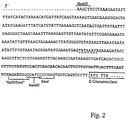
- the 0.35 kbp size HindIII/BamHI insertion of the plasmid is shown in Fig. 2 as well as in Seq ID No 1.
- the vector pBI101.1 contains the coding region of the ⁇ -glucuronidase gene as reporter gene.
- the ⁇ -glucuronidase is indicative of a histological detemination of its activity and can thus be introduced for the analysis of the cell specificity of a regulatory region of an expression system to be tested.
- the construct pS1-D4GUS with the coding region of ⁇ -glucuronidase as reporter gene was transferred into the Agrobacteria strain LBA 4404 (Bevan, M. (1984) Nucl Acids Res 12: 8711-8721) and the Agrobacteria containing the chimeral ADP glucose pyrophosphorylase/B-glucuronidase gene is introduced for transformation of potato and tobacco leaves.
Landscapes
- Health & Medical Sciences (AREA)
- Life Sciences & Earth Sciences (AREA)
- Genetics & Genomics (AREA)
- Engineering & Computer Science (AREA)
- Chemical & Material Sciences (AREA)
- Zoology (AREA)
- Organic Chemistry (AREA)
- Bioinformatics & Cheminformatics (AREA)
- Biotechnology (AREA)
- Molecular Biology (AREA)
- Wood Science & Technology (AREA)
- General Engineering & Computer Science (AREA)
- Biomedical Technology (AREA)
- Nutrition Science (AREA)
- Biochemistry (AREA)
- General Health & Medical Sciences (AREA)
- Microbiology (AREA)
- Medicinal Chemistry (AREA)
- Cell Biology (AREA)
- Physics & Mathematics (AREA)
- Biophysics (AREA)
- Plant Pathology (AREA)
- Breeding Of Plants And Reproduction By Means Of Culturing (AREA)
- Micro-Organisms Or Cultivation Processes Thereof (AREA)
- Agricultural Chemicals And Associated Chemicals (AREA)
- Saccharide Compounds (AREA)
Abstract
Description
- The present invention relates to an expression cassette and plasmids containing this expression cassette. The DNA sequence of the expression cassette contains a transcriptional regulatory starter region, that ensures a specific gene expression in the guard cell of the leaves of plants, and no expression in mesophyllic cells or epidermal cells of the leaves. The invention further relates to a process for the preparation of transgenic plant cells, which contain sequences of the expression cassette as well as the use of the plasmids containing expression cassette for the preparation of transgenic plants.
- Because of the continual growth in world population, there is a continual growing demand for nutrient and raw materials and, because of the foreseeable long-term limitation of agricultural land, it is the continuing task of biotechnological research to strive for the production of high yielding ecologically acceptable crops. To achieve this, the metabolism of plants has to be modified. This can be achieved, amongst other ways, by altering the DNA in the cell nucleus. The process for genetic modification of dicotyledenous and monocotyledenous is already known, (see for example Fraley, R.T. (1989) Science 244: 1293-1299; and Potrykus (1991) Ann Rev Plant Mol Biol Plant Physiol 42: 205-225).
- With the present invention it is possible to influence the transpiration process and the gas exchange of a plant in regard to the increase of yield through manipulation of the genes which are expressed specifically in guard cells. This is not practicable using known expression systems because of the wide-ranging consequences of a non-guard cell specific gene expression for the total material exchange of the plant. An increase in yield of crop plants can be achieved by changing the photosynthesis loading of plants or by reducing the water needs. For this the guard cells of the epidermis of the leaf tissue are a valuable starting point.
- Guard cells are specific kidney-shaped cells of that part of the epidermis which is above ground and in the air surrounding the green parts of higher plants and which are arranged in pairs and have a gap (hole) between each other. The hole interrupts the otherwise continuous film of epidermis cells and causes the connection between the outer air and the intercellular system. In most plants the pore area resulting from the open holes occupies around 0.5 to 1.5% of the leaf area. Owing to their special formation, guard cells can so regulate their shape through active turgidity changes that the hole between them closes or opens. The openings are thus regulators of the exchange, especially the transpiration. The guard cells therefore have the task to so regulate the diffusion resistance, that the water demand through transpiration and CO2 uptake for photosynthetic or darkness-CO2 fixation, is in an appropriate relationship for the particular requirements. The opening or closing of the guard cells is led back to a change in the turgidity in the guard cells themselves and with it to the building up of a difference of the turgidity in the guard cells to that in the bordering epidermal cells (neighbouring cells).
- Guard cells control the gas exchange between carbon dioxide uptake and transpiration (expiration of water vapour). Besides the concentration of carbon dioxide and the phytohormones, a constituent of the control system is the concentration of dissolved substances since these lead via changes in turgidity to the opening and closing of the holes. Since the changes of concentration in dissolved substances have wide-reaching consequences for the metabolism of plants, whether this occurs in tissues or cells, it is desirable to allow these changes only in certain areas of plants or during a certain time period in the plant growth cycle. It should be especially possible to have a change influencing the gas exchange of the carbon dioxide or also the content in osmotically active substance of guard cells which is independent of the concentration of these substances in mesophyllic cells. For this reason, there is a great interest in the identification and the economic use of regulatory DNA sequences of plant genomes which are responsible for the specific transcription in guard cells.
- With the help of guard cell specific regulatory sequences, by expression of suitable, newly introduced genes or by modulation of endogenous gene products, a permanent opening or closing or lengthening or shortening of the opening period of guard cells can be introduced.
- The present invention provides a guard cell specific expression system with which such effect are possible.
- Permanent opening of the guard cells should, on account of an increased transpiration, lead to a higher water loss in the plants which can however, for example, in late phases of the growth cycle be desirable for the acceleration of the ripening of crops. Besides this, one can conceive in the production of strongly transpirationally active plants for this purpose a controlled drainage of soil. Plants rooting above ground can cause, by a lowering of the heat capacity of the soil, a year long earlier warming of growing ares and so make possible an earlier harvesting of temperature-sensitive crops such as, for example, sugar beet. Since the first introduced genetically modified help plants are handicapped in the later phases of the growth cycle, they do not lead to a hindering of the development of crops, but on the contrary through an extension of the vegetation phase to an increase in yield.
- A wide-ranging closed holding of the hole openings should cause through a reduced gas exchange, a delayed growth and, as a result, timely extension of the vegetation phase. This can be of interest in ornamental crops. Further, agricultural help crops can be produced which as transpiration weak soil cover, prevent an erosion of useful land in the quiet phase or at the beginning of the vegetation phase of crops.
- A change in the opening period of the holes has been shown to be valuable in crops. For example, in green harvested plants, especially fodder crops, by retention of water, drying out of older leaf material can be prevented and so the yield increased. Further, an adaptation to an area with increased atmospheric carbon dioxide concentration (for example adding CO2 in greenhouses), can be envisaged. Through artificial lengthening of the opening period, effects such as mineral deprivation in reduced transpiration, following a higher carbon dioxide partial pressure in the plants, can be compensated for.
- By combination of guard cell specific regulatory elements with other control systems, further use possibilities can be seen. For example, through a coupling of chemical sensors, a closing of the hole openings induced from outside of the hole openings can be produced, and so that for example, a growth stop of certain plants, the so-called agricultural help plants, could be produced at the desired time.
- In order to specify regulatory DNA sequences, one must first seek products that appear only at certain times in the cell growth cycle or in a certain part of the plant such as here in guard cells. Once the responsible gene is identified and isolated, it is necessary to have a basic investigation of the sequence and above all the identification and isolation of the desired transcriptional regulatory region. Then a suitable model must be prepared whose validity can be proven by experiment.
- There is now provided an expression cassett comprising a DNA sequence with a transcriptional regulatory starter region that ensures guard cell specific gene expression which causes no expression in mesophyllic cells or epidermal cells of the leaves according to
claim 1. With the expression cassette, a gene manipulating of plants is possible which causes a permanent opening or closing or a lengthening or shortening of the opening period of the guard cells. - The DNA sequence contains the transcriptional regulatory starting region for a guard cell specific gene expression.
- On the expressions cassette according to
claim 1 there is located the DNA sequence of the guard cell specific promoter having the sequence (Seq. ID No:1)BamHI (see also Example 4)
- Plant cells, that contain a regulatory region for a guard cell specific gene expression, can be prepared by the following process:
- a) Isolation of the clone GS 6-11 as described in Examples 1 and 2. The clone contains an approximately 12kb size DNA-fragment, that contains a guard cells specific regulator element (see Fig. 1).
- b) preparation of the plasmid pSF-6 corresponding to Example 3 using the approximately 12 kb size SalI-fragment of the clone GS 6-11.
- c) preparation of the plasmid pH 6-1 using the approximately 5.3 kb size HincII-fragment of the plasmid pSF-6 corresponding to Example 3.
- d) preparation of the plasmid pAS (DSM 6906), pAS-GUS (DSM 6907) and/or pS1 - D4GUS, using the approximately 3.2 kb size HincII/BglII-fragment of the regulatory starter-region of the ADP glucose pyrophosphorylase gene of Solanum tuberosum from the plasmid pH 6-1 (Example 3). The plasmid pAS-GUS contains in addition to the sequence of the plasmid pAS the coding region of the β-glucuronidase gene.
- e) transfer of the T-DNA of the plasmid pAS (DSM 6906), pAS-GUS (DSM 6907) and/or pS1 - D4GUS, in a plant cell.
-
- For the introduction of DNA into a plant host cell there many techniques available. These techniques include the transformation with T-DNA using Agrobacterium tumefaciens or Agrobacterium rhizogenes as transformation agent, fusion of protoplasts, injection or electroporation of DNA etc. Where Agrobakteria are used for the transformation, the DNA being introduced must be cloned in special plasmids, and that means either in an intermediary or binary vector. The intermediary vectors, on the basis of sequences, which are homologous to sequences in the T-DNA, can be integrated by homologous recombination in the Ti- or Ri-plasmid. This contains also the necessary vir-region for the transfer of the T-DNA. Intermediary vectors cannot be replicated in Agrobakteria. Using a helper plasmid, the intermediary vector can be transferred to Agrobacterium tumefaciens (conjugation). Binary vectors can be replicated in E. coli as well as in Agrobakteria. They contain a selection marker gene and a linker or polylinker, which are framed by the right and left T-DNA border regions. They can be directly transformed in the Agrobakteria (Holsters et al.(1978) Mol gene geneet 163: 181-187). The Agrobakteria serving as host cells should contain a plasmid, that carries a vir-region. The vir-region is necessary for the transfer of the T-DNA in the plants cells. Additional T-DNA can be contained. The so transformed bacterium is used for the transformation of plant cells. For the transfer of the DNA in the plant cells plant-explantate can suitably be cocultivated with Agrobacterium tumefaciens or Agrobacterium rhizogenes. From the infected plant material (e.g. leaf pieces, stem segments, roots and also protoplasts or suspensions of cultivated cells) whole plants can be regenerated in a suitable medium, which contain antibiotics or biocides for the selection. The resulting plants can then be tested for the presence of introduced DNA. No special demands are placed an the plasmids in the injection and electroporation. Simple plasmids such as e.g. pUC-derivatives can be used. Should however whole plants be regenerated from such transformed cells the presence of a selectable marker gene is necessary.
- The plasmids pAS and pAS-GUS have a size of around 13.3 and 15.2 kb respectively and contain the approximately 2.0 kb size kanamycin resistance gene, the approximately 3.2 kb size HindII/BglII-promoter-fragment of the regulatory starter-region of the ADP-glucose-pyrophosphorylase-gene GS6-11 of Solanum tuberosum, a linker and a transcription terminator of the nopaline synthase gene. The plasmid pAS-GUS contains also the approximately 2 kb size β-glucuronidase gene.
- For the preparation for the introduction of foreign genes in higher plants, a large number of cloning vectors are available, which contain a replications signal for E. coli and a marker, which allows a selection of the transformed cells. Examples of vectors are pBR 332, pUC-series, M13 mp-series, pACYC 184 etc. The desired sequence can be introduced in the vector on a suitable restriction position. The resulting plasmid is used for the transformation in E. coli. The E. coli cells are cultivated in a suitable nutrient medium, then harvested and lysed. The plasmid is reextracted. For analysis in general, a sequence analysis, a restriction analysis, electrophoresis and other biochemical-molecular biological methods can be used. After each manipulation the used DNA-sequence can be split and attached to another DNA-sequence. Each plasmid sequence can be cloned in the same or different plasmids. Depending on the method of introductions of the desired gene in the plant, further DNA-sequences may be necessary. Should for example the Ti- or Ri-plasmid be used for the transformation of the plant cells, at least the right boundary, and often however, the right and the left boundary of the Ti- and Ri- plasmid T-DNA, should be linked as a flanking area of the introduced gene.
- The use of T-DNA for the transformation of plants cells has been intensively researched and is well described in EP 120 516; Hoekema, In: The Binary Plant Vector System, Offset-drukkerij Kanters B.V., Alblasserdam, (1985), Chapter V; Fraley, et al., Crit. Rev. Plant Sci., 4:1-46 and An et al. (1985) EMBO J. 4: 277-287.
- Once the introduced DNA is integrated in the genome, it is as a rule stable there and remains also in the offspring of the original transformed cells. It normally contains a selection marker, which induces resistance in the transformed plant cells against a biocide or antibiotic such as kanamycin, G 418, bleomycin, hygromycin or phosphinotricin etc. The individual marker employed should therefore allow the selection of transformed cells from cells, which lack the introduced DNA.
- The transformed cells grow within the plants in the usual manner (see also McCormick et al. (1986) Plant Cell Reports 5: 81-84). These plants can be grown normally and crossed with plants, that possess the same transformed genes or different. The resulting hybrid individuals have the corresponding phenotypical properties.
- Two or more generations should be grown to ensure that the phenotypic characteristic remains stabile and inherited. Also seeds should be harvested to ensure that the corresponding phenotype or other individualities remain. All plant species are suitable as host plants for the guard cell specific expression, but especially crop species.
- Suitable crops are e.g. potatoes, tobacco, tomatoes and sugar beet as well as species agricultural supplementary crops e.g nitrogen providing crops.
- The DNA sequence contained in the expression cassette of the invention can be inserted after further DNA sequences, that contain information for the formation and quantitative distribution of endogenous products or the formation of heterologous expression products in crops.
- Endogenous expression products are e.g. phytohormones, carbohydrates and other metabolites. Heterologous products are e.g. carbohydrates not naturally formed in plants or enzymes for liberation of substances with phytohormone activity as a primary step, which are not naturally converted to phytohormones in plants.
- The DNA sequences that can be inserted after the regulatory sequence of the expression cassette should contain all possible open reading screens for a preferred peptide as well as one or more introns. As examples can be named: sequences for enzymes, sequences which are complementary:
- a)
- to a genome sequence, whereby the genome sequence should be an open reading screen;
- b)
- to an intron;
- c)
- to a non-coded reading sequence;
- d)
- to each sequence,
- The desired DNA sequence can be prepared synthetically or extracted naturally or can consist of a mixture of synthetic and natural DNA constituents. In general, synthetic DNA sequences are produced with codons, which are preferred for plants. These preferred codons for plants can be fixed from codons with the highest protein abundance, which are expressed in the most interesting plant species. In the preparation of an expression cassette, various DNA fragments can be manipulated in order to obtain DNA sequence that reads suitably in the correct direction and which is supplied with the correct reading screen. For the combination of DNA fragments with each other, adaptors or linkers can be put onto the fragments.
- Suitably, a transcription start and termination region in the transcription direction should be seen through a linker or polylinker which contains one or more restriction positions for the insertion of this sequence. As a rule, the linker has 1 to 10, mostly 1 to 8 and preferably 2 to 6 restriction positions. In general the linker has, within the regulatory area, a size of less than 100 bp, generally less than 60 bp and at least however 5 bp. The transcriptional start area as well as being native and/or homologous can also be foreign and/or heterologous to the host plants. The expression cassette comprises in the 5'-3' transcription direction, a representative region for the plant, for the transcription initiation, a preferred sequence and a region for the transcriptional termination. Various termination areas are exchangeable, preferably with each other.
- Further, manipulations which prepare suitable restriction cutting sites or separate the excess DNA or cutting positions, can be carried out. Where insertions, deletions or substitutions, for example transitions and transversions are to be considered, in vitro-mutagenase, primer repair, restriction or ligation can be used. In suitable manipulations, such as for example restriction, chewing back or filling in of overhangs for blunt ends, complementary ends of the fragments for the ligation can be used. For carrying out the various stages, a cloning is necessary for an enlargement of the DNA amounts and for the DNA analysis which ensures the expected success of the intervention.
- For the introduction of foreign genes into plants by using the guard cell specific regulatory sequence a number of possibilities are available, but especially interesting is however, the expression of genes which change the regulation of the guard cell in relation to the gas exchange as well as the expiration of water vapour (transpiration).
- For the expression of such genes the use of the expression cassette of the invention is especially valuable.
- A modification of the guard cells with effects on the opening condition of the stomata can be achieved in two ways: through a modulation of the content of endogenous proteins, enzymes, carriers or pumps which transport the metabolite through membranes, present in the guard cells; or through transfer and expression of genes of homologous or heterologous or of synthetic origin, which code the proteins, enzymes, carrier or pumps, which do not belong to the normal constituents of a guard cell, but whose activity or presence influences the state of the cells in relation to the opening of the stomata.
- For regulation of the transpiration three sensor systems are concerned: sensors for measuring the carbon dioxide concentration, phytohormone sensors and a measuring system for turgidity gradients between guard cells and bordering epidermal cells. Turgidity changes are for example possible through influencing the activity of enzymes or transport systems of the carbohydrate metabolism. Besides a direct change of the concentration of the osmotic activity of the carbohydrate, for example by means of cytosolic or vacuolar invertases or of the chloroplast triose phosphate translocators, consequences for the osmo regulation to be expected, through an enrichment or reduction of precursors of osmotically active substances. For example, by modifying the ADP glucose pyrophosphorylase activity, starch synthesis can be influenced, and so the amounts on substrates for glycolyse and citrate cycle can be modified, whereby lastly the concentration of the malate, a substance of importance in relation to the cell turgidity, is concerned. An increase of the apoplastic invertase activity in guard cells can raise the starch concentration by an increased uptake of hexoses. Such an introduction must follow a guard cell specificity since an increase of apoplastic invertase activity in the strongly photosynthetic active mesophyllic cells leads to a reduction of the assimilate transport and with it a higher osmotic loading of the tissues (see Schaewen et al 1990 EMBO J 9: 3033-3044). Further, an increase of the expression or the expression of a modified phospho-enol-pyruvate carboxylase can be envisaged. The enzyme catalyses the reaction of phospho-enol-pyruvate to oxaloacetate, that again is a predecessor for malate. Besides, proton pumps (proton-ATPases) can contribute to a change of the osmotic potential, which makes possible the ion transport process for the electrochemical gradients.
- Further possibilities of influence are seen in the activity of the carbonate dehydratase, which controls the equilibrium between dissolved carbon dioxide and carbonate in so far as it thus influences the cellular carbon dioxide concentration; but also for example in fructose-biphosphotase which contributes as an enzyme in the regenerative section of the Calvin cycle in the fixing of carbon dioxide.
- The expression cassette of the invention can also be used for guard cell specific expression of genes which regulate the phytohormone level of plants.
- Local changes to the phytohormone level are especially interesting for the influence of the properties of guard cells: whilst for example auxins cause an opening of the holes, application of abscisic acid leads to a fast hole closure. Numerous genes whose products have influence in the hormone make-up of plants, have already been cloned, (see e.g. Klee, H. & Estelle, M. (1991) Ann Rev Plant Physiol Plant Mol Biol 42: 529-551). The
genes - Because of the wide-reaching consequences of hormonal activity for the plants an influence of the guard cell activity is feasible only by using the expression cassette of the invention for a guard cell specific gene expression.
- Processes for the reducing the activity and/or the amount of a specified enzyme are already known in the art. As a rule a chimeral genes is introduced into the plant. It consists of a promoter active in the plant, a coding sequence of the enzyme attached to the promoter in the anti-sense direction, whose activity is reduced (3'-end of the coding sequence to the 3'-end of the promoters) and a termination signal, functional in plants, for the transcription. For introduction of genes of this kind in plant cells there are various processes available. From the transformed cells, intact transgenic plants can be regenerated for which the desired phenotype (lowering of the activity of the target enzyme) must be determined.
- The identification of necessary transcriptional starting areas can be achieved in a number of ways. As a rule mRNA is dealt with, which is isolated from certain parts of the plants (here, guard cells) (see also Example 1). For additional increase in concentration of the mRNA characterising for the tissue or the plant condition, cDNA can be prepared whereby unspecific cDNA is attached to the mRNA or the cDNA from other tissues (mesophyllic cells) or plant states. The remaining cDNA can be used then for the probing of the genome of the complementary sequences using a suitable plant DNA library.
- Where a protein, appearing in a specific cell or tissue type, is isolated it can be partially sequenced so that a probe can be prepared for direct identification of the corresponding sequences in a plant DNA library (see Example 2). Then the sequences that hybridise with the probe can be isolated and manipulated. Further, the non-translated 5' area that is associated with the coded area can be isolated and tested in expression cassettes for transcriptional activity.
- The expression cassettes obtained, which use the non-translated 5' regions can be transformed in plants (see above) where their functionality as transcriptional regulators in combination with a heterologous structure gene (other than the open reading screen of the wild type genes that is associated with the non-translated 5' region) as well as the guard cells specificity can be tested. In this way sequences, which are necessary for the guard cell specific transcription, can be identified.
- The following plasmids were deposited at the Deutschen Sammlung von Mikroorganismen (DSM) in Braunschweig, Germany on the 13.02.1992 (deposit number):
- Plasmid pAS (DSM 6906);
- Plasmid pAS-GUS (DSM 6907).
-
-
- Fig. 1 shows the restriction map of the genomic clone GS6-11, which codes the S-subunit of the ADP glucose pyrophosphorylase of Solanum tuberosum. Above the restriction map are the designations of genes of the phages Lambda as well as a scale for estimating the length of the DNA sequences in kilobases (kb).
- Fig. 2 shows the promoter GUS fusion of the plasmid pAS-GUS, that contains the nucleic acid sequence of a part of the important areas for transcriptional regulation of the ADP glucose pyrophosphorylase gene GS6-11, which is also contained in Plasmid pAS. ATG signifies the translation start for the β-glucuronidase. The Bgl II cutting site, where the clone pH6-1 is cut and attached with the linearised plasmid pUC 19 to the SmaI cutting site, is shown. The sequence up to the BamHI cutting site stems from the polylinker of von pUC 19 and the following nucleotide from the plasmid pBI101.1 (Jefferson et al.(1987) Plant Mol Biol Rep 5: 387-405). The corresponding area with der cDNA is shown in bold lettering. The two first codons of β-glucuronidase are bracketed. A sequence, which possibly represents a Hogness box, is underlined.
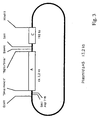
- Fig. 3 shows the approximately 13.2 kb size Plasmid pAS.
It contains the approximately 2.0 kb size kanamycin
resistance gene as a constituent of the starting
vector pBIN 19 (Bevan, M.(1984) Nucl Acids Res 12:
8711-8721), the approximately 3.2 kb size regulatory
area for a guard cell specific gene expression from
the ADP glucose pyrophosphorylase gene from Solanum
tuberosum from the clone GS6-11 (A), inserted between
nucleotide position (nt) 2525 and 2544 of pBIN 19 as
well as the transcription terminator from the
nopaline synthase gene (C), inserted at nt 2494 of
pBIN 19.
A = Fragment A (approximately 3.2 kb): contains: - nt 400-414 from pUC 19
- approximately 3.2 kb from GS6-11
- nt 415-421 from pUC 19 C = Fragment C (192 bp): contains nt 11749-11939 from pTiACH5 (Gielen et al. (1984) EMBO J 3: 835-846)
- Fig. 4 shows the approximately 15.2 kb size plasmid
pAS-GUS, that is a derivative of pBI101.1 (Jefferson
et al. (1987) Plant Mol Biol Rep 5: 387-405). The
plasmid pBI101.1 again is a derivative of pBIN 19,
that contains, at nt 2534, an insertion of 1.87 kb of
the coding region of β-glucuronidase (B).
Plasmid pAS-GUS is even differentiated from pAS by
this insertion. In detail pAS-GUS contains the
following fragments:
A = Fragment A (approximately 3.2 kb): contains: - nt 400-414 from pUC 19
- approximately 3.2 kb from GS6-11
- nt 415-421 from pUC 19 B = Fragment B (1.87 kb): coding region of the β-Glucuronidase.
- Fig. 5 shows the expression of β-glucuronidase in the leaf of a transgenic potato plant transformed with the plasmid pAS-GUS. It can clearly be seen, that no expression in the mesophyllic cells or epidermis cells is detectable but only a specific expression in the guard cells
-
- In order to understand the examples forming the basis of this invention all the processes necessary for these tests and which are known per se will first of all be listed:
- The vectors pUC 18/19 and M13mp10 series (Yanisch-Perron et al. (1985) genee 33: 103-119), as well as the vector EMBL 3 (Frischauf et al. (1983) J Mol Biol 170: 827- 842) were used for cloning.
- The gene constructions in the binary vector BIN 19 (Bevan (1984) Nucl. Acids Res 12: 8711-8720) were cloned for the plant transformations
- The E. coli strain BMH71-18 (Messing et al., Proc. Natl. Acad. Sci. USA (1977), 24, 6342-6346) or TB1 was used for the pUC and M13 mP vectors.
- For the vector BIN19 exclusively the E. coli strain TB1 was used. TB1 is a recombinant-negative, tetracycline-resistant derivative of strain JM101 (Yanisch-Perron et al., genee (1985), 33, 103-119).
- The genotype of the TB1 strain is (Bart Barrel, personal communication): F'(traD36, proAB, lacI, lacZΔM15), Δ(lac, pro), SupE, this, recA, Sr1::Tn10(TcR).
- The transformation of the plasmids into the potato plants was carried out by means of the Agrobacterium tumefaciens strain LBA4404 (Bevan, M., Nucl. Acids Res. 12, 8711-8720, (1984); BIN19 derivative).
- In the case of BIN19 derivatives, the insertion of the DNA into the agrobacteria was effected by direct transformation in accordance with the method developed by Holsters et al., (Mol. gene. geneet. (1978), 163, 181-187). The plasmid DNA of transformed agrobacteria was isolated in accordance with the method developed by Birnboim and Doly (Nucl. Acids Res. (1979), 7, 1513-1523) and was analysed by gel electrophoresis after suitable restriction cleavage.
- Ten small leaves, wounded with a scalpel, of a sterile potato culture were placed in 10 ml of MS medium with 2% sucrose containing from 30 to 50 µl of an Agrobacterium tumefaciens overnight culture grown under selection. After from 3 to 5 minutes gentle shaking, the Petri dishes were incubated in the dark at 25°C. After 2 days, the leaves were laid out on MS medium with 1.6% glucose, 2 mg/l of zeatin ribose, 0.02 mg/l of naphthylacetic acid, 0.02 mg/l of gibberellic acid, 500 mg/l of claforan, 50 mg/l of kanamycin and 0.8% Bacto agar. After incubation for one week at 25°C and 3000 lux, the claforan concentration in the medium was reduced by half.
- The isolation of genomic plant DNA was effected in accordance with Rogers and Bendich (Plant Mol. Biol. (1985), 5, 69-76. After suitable restriction cleavage, 10 to 20 µg of DNA were tested by means of Southern blots for the integration of the DNA sequences to be introduced.
- The β-glucuronidase is a bacterial enzyme, that hydrolyses β-glucuronide and accessible to quantitative as well as histochemical activity determinations. Activity measurement were carried out by the method of Jefferson et al. (1987) EMBO J 6: 3901-3907. Tissue probes incubated in 1mM X-Gluc, 50mM Na-phosphate pH 7.0 and 0.1
% Tween 20 bis to give the desired intensity of blue colouring. - The following examples illustrate the preparation of the expression cassette, whose DNA sequence contains a regulatory sequence for a guard cell specific gene expression. The introduction of the sequence in a plasmid is also illustrated with which a transformation of plant cells is possible as well as the transformation of plant cells, the regeneration of transgenic plants and the investigation of the function of the expression cassette in transgenic plants.
- cDNA clones, that code for the S-subunit of ADP glucose pyrophosphorylase of potato, were isolated from the potato variety "Desirée" and sequenced (Müller-Röber et al. (1990) Mol gene geneet 224:136-146; EP 455 316). These cDNA clones are used to isolate a homologous, genomic, ADP glucose pyrophosphorylase clone from the potato variety AM 80/5793 (Max-Planck-Institut for Züchtungsforschung, Köln).
- A genomic library of the nuclear DNA from the potato variety AM 80/5793, which has been established in vector EMBL 3 derived from Lambda phages, was probed with the help of the ADP glucose pyrophosphorylase cDNA S25-1 (see. Example 1). Several independent clones were obtained, from which the clone GS6-11 was used for the further working. The restriction map of the clone GS6-11 is shown Fig. 1. Part of the gene was sequenced and the sequence is shown in Fig. 2.
- The greater than 12 kbp size Sal I insertion of the genomic clone GS6-11 was cloned in the Sal I cutting position of the vectors pUC 19 and the Plasmid SF-6 resulted. An approximately 5.3 kbp long HincII fragment of the plasmid SF-6 was sub-cloned in the HincII cutting position of the vectors pUC 19 and the Plasmid pH6-1 resulted. The approximately 3.2 kbp long HincII/Bgl II of the plasmid pH6-1 was cloned after filling in of the Bgl II cutting position in the SmaI cutting position of the vector pUC 19. In this way the 5'end for the EcoRI cutting position of the polylinker was orientated, so that the plasmid pSA was obtained. Then the EcoRI/BamHI fragment was cut from the pUC 19 derivative pSA and after filling in the EcoRI cutting position, was put in the vector pBI101.1 (Jefferson et al. (1987) Plant Mol Biol Rep 5: 387-405), whereby pAS-GUS was obtained (see Fig 4). The vector pBI101.1 was previously cut HindIII/BamH I and the HindIII cutting position filled in. The vector pBI101.1 contains the coding region of the β-glucuronidase gene as reporter gene. The β-glucuronidase is indicative of a histological determination of its activity and can thus be introduced for the analysis of the cell specificity of a regulatory region of an expression system to be tested. In parallel with the cloning of pAS-GUS the expression vector pAS was prepared, which contains a polylinker between the promoter fragment of the ADP glucose pyrophosphorylase and the terminator of the Octopine synthase gene (see. Fig 3). With the help of this plasmid an expression of preferred genes under the control of the ADP glucose pyrophosphorylase promoters is possible.
- The construct pAS-GUS, with the coding region of β-glucuronidase as reporter gene, was transferred into the Agrobacteria strain LBA 4404 (Bevan, M. (1984) Nucl Acids Res 12: 8711-8721) and the Agrobacteria containing the chimeral ADP glucose pyrophosphorylase/β-glucuronidase gene is introduced for transformation of potato and tobacco leaves.
- Of ten resulting independent transformands, in which the presence of the intact, unrearranged chimeral ADP glucose pyrophosphorylase/β-glucuronidase gene had been proven with the help of southern blot analyses, leaves, stems, tubers and roots were tested for β-glucuronidase activity. The results are shown in Fig. 5. From these data is clearly shown, that the HincII fragment of the ADP glucose pyrophosphorylase gene GS6-11, which was fused with the β-glucuronidase gene, had induced in the leaf a guard cell specific activity of the β-glucuronidase. This activity could not been seen in the mesophyllic and epidermis cells.
- The 0.35 kbp size HindIII/BamHI fragment was isolated from Plasmid pSA described in Example 3 and inserted in vector pBI101.1 which had been linearised with restriction enzymes BamHI and HindIII. The resulting plasmid bears the designation pS1-D4GUS. The 0.35 kbp size HindIII/BamHI insertion of the plasmid is shown in Fig. 2 as well as in
Seq ID No 1. The vector pBI101.1 contains the coding region of the β-glucuronidase gene as reporter gene. The β-glucuronidase is indicative of a histological detemination of its activity and can thus be introduced for the analysis of the cell specificity of a regulatory region of an expression system to be tested. The construct pS1-D4GUS with the coding region of β-glucuronidase as reporter gene, was transferred into the Agrobacteria strain LBA 4404 (Bevan, M. (1984) Nucl Acids Res 12: 8711-8721) and the Agrobacteria containing the chimeral ADP glucose pyrophosphorylase/B-glucuronidase gene is introduced for transformation of potato and tobacco leaves. - Of ten resulting independent transformands, in which the presence of the intact, unrearranged chimeral ADP glucose pyrophosphorylase/B-glucuronidase gene had been proven with the help of southern blot analyses, leaves, stems, tubers and roots were tested for β-glucuronidase activity. It was shown that the 0.35 kbp size HindIII/BamHI promoter fragment of the ADP glucose pyrophosphorylase gene has a comparable activity to that of the EcoRI/BamHI promoter fragment of the plasmid pSA (see. Fig. 5) in the stomata cells of leaves, whilst for vascular tissues, tubers and stolons of potato plants and roots no activity was seen.
C = Fragment C (192 bp): contains nt 11749-11939 from pTiACH5 (Gielen et al. (1984) EMBO J 3: 835-846)
Claims (20)
- An expression cassette characterized in that it comprises a DNA sequence with a transcriptional regulatory starter region that ensures a guard cell specific gene expression in the guard cells of leaves of plants and no expression in mesophyllic cells or epidermal cells of the leaves comprising Seq ID No.1:

- The expression cassette according to claim 1 characterized in that it contains an approximately 3.2 kb size HincII/BglII promoter fragment of plasmid pAS (DSM 6906).
- The expression cassette according to claim 1 or 2 characterized in that the DNA sequence contained therein, which is fused to suitable coding DNA sequences, changes the plant guard cells therein so that a permanent opening or closing or lengthening or shortening of the opening period of these cells is made possible.
- The expression cassette according to any of claims 1-3 characterized in that it comprises a DNA sequence, that contains the information for the formation of endogenous products or the formation of heterologous expression products in crops, inserted after the transcriptional regulatory starter region for guard cell specific gene expression.
- A plasmid comprising the expression cassette according to any one of claims 1 to 4.
- A plasmid comprising the DNA sequence of Seq ID No.1.
- The plasmid pAS (DSM 6906) according to claim 6, consisting of an approximately 13.2 kb size DNA sequence in which there is contained an approximately 2.0 kb size kanamycin resistance gene, and an approximately 3.2 kb size HincII/BglII promoter fragment of the regulatory starter area of the ADP glucose pyrophosphorylase gene GS6-11 of Solanum tuberosum, a polylinker and the transcription terminator of the nopaline synthase gene.
- The plasmid pAS-GUS (DSM 6907) according to claim 6, consisting of an approximately 15.2 kb size DNA sequence in which there is contained an approximately 2.0 kb size kanamycin resistance gene, an approximately 3.2 kb size HincII/BglII promoter fragment of the regulatory starter area of the ADP glucose pyrophosphorylase gene GS6-11 from Solanum tuberosum, the approximately 2 kb size coding region beta-glucuronidase and the transcription terminator of the nopaline synthase gene.
- A process for the genetic manipulation of a plant cell comprising the step of introducing an expression cassette according to any of claims 1 to 4 into a plant cell.
- A plant cell prepared according to the process of claim 9 containing an expression cassette according to any of claims 1 to 4.
- A plant or plant tissue regenerated from a plant cell according to claim 10.
- Use of the expression cassette according to any one of claims 1 to 4 for the expression of genes in guard cells that change the regulation of gas exchange and transpiration.
- Use of the expression cassette according to any one of claims 1 to 4 for the expression of homologous or heterologous genes in guard cells of transformed plants.
- Use of the expression cassette according to any one of claims 1 to 4 for the expression of genes in guard cells that cause a local change of the phytohormone level.
- Use of plasmid pAS (DSM 6906) or pAS-GUS (DSM 6907) for the transformation of crops.
- Use of plasmid pAS (DSM 6906) or pAS-GUS (DSM 6907) for the regulation of guard cell specific gene expression or for the preparation of heterogenous products in crops.
- A plant according to claim 11 characterized in that it is a tobacco plant.
- A plant according to claim 11 characterized in that it is a potato plant.
- A plant according to claim 11 characterized in that it is a tomato plant.
- A plant according to claim 11 characterized in that it is a sugar beet plant.
Applications Claiming Priority (3)
| Application Number | Priority Date | Filing Date | Title |
|---|---|---|---|
| DE4207358A DE4207358A1 (en) | 1992-03-04 | 1992-03-04 | EXPRESSION CASSETTE AND PLASMIDE FOR CLOSE-CELL-SPECIFIC EXPRESSION AND THEIR USE FOR THE PRODUCTION OF TRANSGENIC PLANT CELLS AND PLANTS |
| DE4207358 | 1992-03-04 | ||
| PCT/EP1993/000489 WO1993018169A2 (en) | 1992-03-04 | 1993-03-03 | Expression cassette and plasmids for a guard cell specific expression and their use for the introduction of transgenic plant cells and plants |
Publications (2)
| Publication Number | Publication Date |
|---|---|
| EP0584324A1 EP0584324A1 (en) | 1994-03-02 |
| EP0584324B1 true EP0584324B1 (en) | 2003-07-09 |
Family
ID=6453545
Family Applications (1)
| Application Number | Title | Priority Date | Filing Date |
|---|---|---|---|
| EP93905294A Expired - Lifetime EP0584324B1 (en) | 1992-03-04 | 1993-03-03 | Expression cassette and plasmids for a guard cell specific expression and their use for the introduction of transgenic plant cells and plants |
Country Status (10)
| Country | Link |
|---|---|
| US (3) | US5538879A (en) |
| EP (1) | EP0584324B1 (en) |
| AT (1) | ATE244764T1 (en) |
| AU (1) | AU671099B2 (en) |
| CA (1) | CA2112800A1 (en) |
| DE (2) | DE4207358A1 (en) |
| ES (1) | ES2197148T3 (en) |
| HU (1) | HUT67084A (en) |
| IL (1) | IL104933A0 (en) |
| WO (1) | WO1993018169A2 (en) |
Families Citing this family (25)
| Publication number | Priority date | Publication date | Assignee | Title |
|---|---|---|---|---|
| GB9321183D0 (en) * | 1993-10-14 | 1993-12-01 | Zeneca Ltd | A method of plant transformation |
| US5986174A (en) * | 1996-06-21 | 1999-11-16 | Pioneer Hi-Bred International, Inc. | Maize promoter sequence for leaf- and stalk-preferred gene expression |
| DE19644478A1 (en) | 1996-10-25 | 1998-04-30 | Basf Ag | Leaf-specific expression of genes in transgenic plants |
| DE19904754A1 (en) * | 1999-02-05 | 2000-08-10 | Max Planck Gesellschaft | Plant guard cell-specific regulatory cis-active element useful for promoter constructs and for identification of components of guard cell signal pathways comprises specific sequences |
| US6653535B1 (en) * | 1999-05-28 | 2003-11-25 | Pioneer Hi-Bred International, Inc. | Methods for modulating water-use efficiency or productivity in a plant by transforming with a DNA encoding a NAPD-malic enzyme operably linked to a guard cell or an epidermal cell promoter |
| CA2383642C (en) | 1999-10-14 | 2014-03-25 | Clontech Laboratories, Inc. | Anthozoa derived chromophores/fluorophores and methods for using the same |
| EP1111051B1 (en) * | 1999-12-21 | 2005-02-23 | Korea Kumho Petrochemical Co. Ltd. | Promoter for guard cell-specific gene expression in plants |
| EP1207204A1 (en) | 2000-11-16 | 2002-05-22 | KWS Saat AG | Tissue-specific promoters from sugar beet |
| EP1456223B1 (en) * | 2001-12-19 | 2009-08-12 | The University Of Chicago | Rapidly maturing fluorescent proteins and methods for using the same |
| AU2003285844A1 (en) | 2002-11-12 | 2004-06-03 | Zakrytoe Aktsionernoe Obschestvo "Evrogen" | Fluorescent proteins and chromoproteins from non-aequorea hydrozoa species and methods for using same |
| EP1732944B1 (en) * | 2004-04-07 | 2012-09-05 | The University of Chicago | Monomeric red fluorescent proteins |
| US8227572B2 (en) * | 2005-08-19 | 2012-07-24 | Commonwealth Scientific And Industrial Research Organisation | Arachnocampa luciferases |
| US7417131B2 (en) * | 2005-11-04 | 2008-08-26 | Evrogen Joint Stock Company | Modified green fluorescent proteins and methods for using same |
| US8563703B2 (en) | 2006-01-25 | 2013-10-22 | Evrogen IP Joint Stock Company | Fluorescent proteins and methods for using same |
| DE602007009498D1 (en) * | 2006-01-25 | 2010-11-11 | Evrogen Ip | NEW FLUORESCENCE PROTEINS AND METHOD FOR USE THEREOF |
| US8680235B2 (en) * | 2006-09-22 | 2014-03-25 | Stowers Institute For Medical Research | Branchiostoma derived fluorescent proteins |
| WO2009059305A2 (en) * | 2007-11-01 | 2009-05-07 | The University Of Chicago | Red fluorescent proteins with enhanced bacterial expression, increased brightness and reduced aggregation |
| US9145562B2 (en) | 2009-11-20 | 2015-09-29 | Alberta Innovates—Technology Futures | Variegation in plants |
| US20130055471A1 (en) | 2009-12-15 | 2013-02-28 | Edwin Henricus Antonius HOLMAN | Transgenic Ozone-Resistant Plants |
| EP2336310A1 (en) | 2009-12-16 | 2011-06-22 | Isobionics B.V. | Valencene synthase |
| EP2537926A1 (en) | 2011-06-21 | 2012-12-26 | Isobionics B.V. | Valencene synthase |
| RU2674894C2 (en) | 2017-01-30 | 2018-12-13 | Общество с ограниченной ответственностью "ПЛАНТА" | New luciferases and methods of their use |
| NL2018457B1 (en) | 2017-03-02 | 2018-09-21 | Isobionics B V | Santalene Synthase |
| NL2019473B1 (en) | 2017-09-01 | 2019-03-11 | Isobionics B V | Terpene Synthase producing patchoulol and elemol, and preferably also pogostol |
| RU2730038C2 (en) | 2018-06-28 | 2020-08-14 | Общество с ограниченной ответственностью "ПЛАНТА" | Luciferin biosynthesis enzymes and use thereof |
-
1992
- 1992-03-04 DE DE4207358A patent/DE4207358A1/en not_active Withdrawn
-
1993
- 1993-03-03 US US08/140,180 patent/US5538879A/en not_active Expired - Fee Related
- 1993-03-03 CA CA002112800A patent/CA2112800A1/en not_active Abandoned
- 1993-03-03 HU HU9303138A patent/HUT67084A/en unknown
- 1993-03-03 DE DE69333079T patent/DE69333079T2/en not_active Expired - Fee Related
- 1993-03-03 WO PCT/EP1993/000489 patent/WO1993018169A2/en not_active Ceased
- 1993-03-03 AT AT93905294T patent/ATE244764T1/en not_active IP Right Cessation
- 1993-03-03 AU AU36304/93A patent/AU671099B2/en not_active Ceased
- 1993-03-03 EP EP93905294A patent/EP0584324B1/en not_active Expired - Lifetime
- 1993-03-03 ES ES93905294T patent/ES2197148T3/en not_active Expired - Lifetime
- 1993-03-04 IL IL104933A patent/IL104933A0/en unknown
-
1996
- 1996-07-19 US US08/690,237 patent/US20020090726A1/en not_active Abandoned
-
2002
- 2002-11-15 US US10/295,930 patent/US20030093839A1/en not_active Abandoned
Also Published As
| Publication number | Publication date |
|---|---|
| ES2197148T3 (en) | 2004-01-01 |
| US5538879A (en) | 1996-07-23 |
| DE69333079D1 (en) | 2003-08-14 |
| WO1993018169A2 (en) | 1993-09-16 |
| EP0584324A1 (en) | 1994-03-02 |
| AU3630493A (en) | 1993-10-05 |
| US20020090726A1 (en) | 2002-07-11 |
| WO1993018169A3 (en) | 1993-10-28 |
| DE69333079T2 (en) | 2004-05-13 |
| ATE244764T1 (en) | 2003-07-15 |
| CA2112800A1 (en) | 1993-09-16 |
| DE4207358A1 (en) | 1993-09-09 |
| HU9303138D0 (en) | 1994-01-28 |
| IL104933A0 (en) | 1993-07-08 |
| US20030093839A1 (en) | 2003-05-15 |
| HUT67084A (en) | 1995-01-30 |
| AU671099B2 (en) | 1996-08-15 |
Similar Documents
| Publication | Publication Date | Title |
|---|---|---|
| US5538879A (en) | Expression cassette and plasmids for a guard cell specific expression and their use for the introduction of transgenic plant cells and plants | |
| CA2006454C (en) | Potatoe tuber specific transcriptional regulation | |
| AU672017B2 (en) | Dna sequences and plasmids for the preparation of plants with changed sucrose concentration | |
| US5492820A (en) | Plasmids for the production of transgenic plants that are modified in habit and yield | |
| CA2036103A1 (en) | Plasmids for the preparation of transgenic plants having a modified habit and yield | |
| AU739067B2 (en) | Selection method for transgenic plants | |
| JP2000516806A (en) | Shoot meristem-specific promoter sequence | |
| AU694457B2 (en) | DNA sequences for ammonium transporter, plasmids, bacteria, yeasts, plant cells and plants containing the transporter | |
| JP2001510036A (en) | Strong early seed-specific gene regulatory regions | |
| US5723757A (en) | Plant promoters specific for sink organ expression of genes | |
| EP1111051B1 (en) | Promoter for guard cell-specific gene expression in plants | |
| Kretsch et al. | Spatial and temporal pattern of light‐regulated gene expression during tobacco seedling development: the photosystem II‐related genes Lhcb (Cab) and PsbP (Oee2) | |
| CA2204023A1 (en) | Processes for modifying plant flowering behaviour | |
| EP4628591A1 (en) | Method for producing caaibz1 gene-edited pepper to improve drought tolerance | |
| JPH0589A (en) | Method for inducing gene manifestation | |
| JP2004016153A (en) | Tissue-specific / environmental stress-specific promoter |
Legal Events
| Date | Code | Title | Description |
|---|---|---|---|
| PUAI | Public reference made under article 153(3) epc to a published international application that has entered the european phase |
Free format text: ORIGINAL CODE: 0009012 |
|
| 17P | Request for examination filed |
Effective date: 19931103 |
|
| AK | Designated contracting states |
Kind code of ref document: A1 Designated state(s): AT BE CH DE DK ES FR GB GR IE IT LI LU MC NL PT SE |
|
| RAP1 | Party data changed (applicant data changed or rights of an application transferred) |
Owner name: HOECHST SCHERING AGREVO GMBH |
|
| 17Q | First examination report despatched |
Effective date: 19981202 |
|
| RAP1 | Party data changed (applicant data changed or rights of an application transferred) |
Owner name: AVENTIS CROPSCIENCE GMBH |
|
| RAP1 | Party data changed (applicant data changed or rights of an application transferred) |
Owner name: AVENTIS CROPSCIENCE GMBH |
|
| RAP1 | Party data changed (applicant data changed or rights of an application transferred) |
Owner name: BAYER CROPSCIENCE GMBH |
|
| GRAH | Despatch of communication of intention to grant a patent |
Free format text: ORIGINAL CODE: EPIDOS IGRA |
|
| GRAH | Despatch of communication of intention to grant a patent |
Free format text: ORIGINAL CODE: EPIDOS IGRA |
|
| GRAA | (expected) grant |
Free format text: ORIGINAL CODE: 0009210 |
|
| AK | Designated contracting states |
Designated state(s): AT BE CH DE DK ES FR GB GR IE IT LI LU MC NL PT SE |
|
| PG25 | Lapsed in a contracting state [announced via postgrant information from national office to epo] |
Ref country code: LI Free format text: LAPSE BECAUSE OF FAILURE TO SUBMIT A TRANSLATION OF THE DESCRIPTION OR TO PAY THE FEE WITHIN THE PRESCRIBED TIME-LIMIT Effective date: 20030709 Ref country code: CH Free format text: LAPSE BECAUSE OF FAILURE TO SUBMIT A TRANSLATION OF THE DESCRIPTION OR TO PAY THE FEE WITHIN THE PRESCRIBED TIME-LIMIT Effective date: 20030709 Ref country code: AT Free format text: LAPSE BECAUSE OF FAILURE TO SUBMIT A TRANSLATION OF THE DESCRIPTION OR TO PAY THE FEE WITHIN THE PRESCRIBED TIME-LIMIT Effective date: 20030709 |
|
| REG | Reference to a national code |
Ref country code: GB Ref legal event code: FG4D |
|
| REG | Reference to a national code |
Ref country code: CH Ref legal event code: EP |
|
| REF | Corresponds to: |
Ref document number: 69333079 Country of ref document: DE Date of ref document: 20030814 Kind code of ref document: P |
|
| REG | Reference to a national code |
Ref country code: IE Ref legal event code: FG4D |
|
| PG25 | Lapsed in a contracting state [announced via postgrant information from national office to epo] |
Ref country code: SE Free format text: LAPSE BECAUSE OF FAILURE TO SUBMIT A TRANSLATION OF THE DESCRIPTION OR TO PAY THE FEE WITHIN THE PRESCRIBED TIME-LIMIT Effective date: 20031009 Ref country code: GR Free format text: LAPSE BECAUSE OF FAILURE TO SUBMIT A TRANSLATION OF THE DESCRIPTION OR TO PAY THE FEE WITHIN THE PRESCRIBED TIME-LIMIT Effective date: 20031009 Ref country code: DK Free format text: LAPSE BECAUSE OF FAILURE TO SUBMIT A TRANSLATION OF THE DESCRIPTION OR TO PAY THE FEE WITHIN THE PRESCRIBED TIME-LIMIT Effective date: 20031009 |
|
| PGFP | Annual fee paid to national office [announced via postgrant information from national office to epo] |
Ref country code: DE Payment date: 20031203 Year of fee payment: 12 |
|
| PG25 | Lapsed in a contracting state [announced via postgrant information from national office to epo] |
Ref country code: PT Free format text: LAPSE BECAUSE OF FAILURE TO SUBMIT A TRANSLATION OF THE DESCRIPTION OR TO PAY THE FEE WITHIN THE PRESCRIBED TIME-LIMIT Effective date: 20031209 |
|
| REG | Reference to a national code |
Ref country code: ES Ref legal event code: FG2A Ref document number: 2197148 Country of ref document: ES Kind code of ref document: T3 |
|
| REG | Reference to a national code |
Ref country code: CH Ref legal event code: PL |
|
| PG25 | Lapsed in a contracting state [announced via postgrant information from national office to epo] |
Ref country code: LU Free format text: LAPSE BECAUSE OF NON-PAYMENT OF DUE FEES Effective date: 20040303 Ref country code: IE Free format text: LAPSE BECAUSE OF NON-PAYMENT OF DUE FEES Effective date: 20040303 |
|
| PGFP | Annual fee paid to national office [announced via postgrant information from national office to epo] |
Ref country code: GB Payment date: 20040303 Year of fee payment: 12 |
|
| PGFP | Annual fee paid to national office [announced via postgrant information from national office to epo] |
Ref country code: FR Payment date: 20040309 Year of fee payment: 12 |
|
| PGFP | Annual fee paid to national office [announced via postgrant information from national office to epo] |
Ref country code: NL Payment date: 20040310 Year of fee payment: 12 |
|
| PGFP | Annual fee paid to national office [announced via postgrant information from national office to epo] |
Ref country code: ES Payment date: 20040318 Year of fee payment: 12 |
|
| PG25 | Lapsed in a contracting state [announced via postgrant information from national office to epo] |
Ref country code: MC Free format text: LAPSE BECAUSE OF NON-PAYMENT OF DUE FEES Effective date: 20040331 |
|
| ET | Fr: translation filed | ||
| PLBE | No opposition filed within time limit |
Free format text: ORIGINAL CODE: 0009261 |
|
| STAA | Information on the status of an ep patent application or granted ep patent |
Free format text: STATUS: NO OPPOSITION FILED WITHIN TIME LIMIT |
|
| PGFP | Annual fee paid to national office [announced via postgrant information from national office to epo] |
Ref country code: BE Payment date: 20040519 Year of fee payment: 12 |
|
| 26N | No opposition filed |
Effective date: 20040414 |
|
| REG | Reference to a national code |
Ref country code: IE Ref legal event code: MM4A |
|
| PG25 | Lapsed in a contracting state [announced via postgrant information from national office to epo] |
Ref country code: IT Free format text: LAPSE BECAUSE OF NON-PAYMENT OF DUE FEES;WARNING: LAPSES OF ITALIAN PATENTS WITH EFFECTIVE DATE BEFORE 2007 MAY HAVE OCCURRED AT ANY TIME BEFORE 2007. THE CORRECT EFFECTIVE DATE MAY BE DIFFERENT FROM THE ONE RECORDED. Effective date: 20050303 Ref country code: GB Free format text: LAPSE BECAUSE OF NON-PAYMENT OF DUE FEES Effective date: 20050303 |
|
| PG25 | Lapsed in a contracting state [announced via postgrant information from national office to epo] |
Ref country code: ES Free format text: LAPSE BECAUSE OF NON-PAYMENT OF DUE FEES Effective date: 20050304 |
|
| PG25 | Lapsed in a contracting state [announced via postgrant information from national office to epo] |
Ref country code: BE Free format text: LAPSE BECAUSE OF NON-PAYMENT OF DUE FEES Effective date: 20050331 |
|
| BERE | Be: lapsed |
Owner name: *BAYER CROPSCIENCE G.M.B.H. Effective date: 20050331 |
|
| PG25 | Lapsed in a contracting state [announced via postgrant information from national office to epo] |
Ref country code: NL Free format text: LAPSE BECAUSE OF NON-PAYMENT OF DUE FEES Effective date: 20051001 Ref country code: DE Free format text: LAPSE BECAUSE OF NON-PAYMENT OF DUE FEES Effective date: 20051001 |
|
| GBPC | Gb: european patent ceased through non-payment of renewal fee |
Effective date: 20050303 |
|
| PG25 | Lapsed in a contracting state [announced via postgrant information from national office to epo] |
Ref country code: FR Free format text: LAPSE BECAUSE OF NON-PAYMENT OF DUE FEES Effective date: 20051130 |
|
| NLV4 | Nl: lapsed or anulled due to non-payment of the annual fee |
Effective date: 20051001 |
|
| REG | Reference to a national code |
Ref country code: FR Ref legal event code: ST Effective date: 20051130 |
|
| REG | Reference to a national code |
Ref country code: ES Ref legal event code: FD2A Effective date: 20050304 |
|
| BERE | Be: lapsed |
Owner name: *BAYER CROPSCIENCE G.M.B.H. Effective date: 20050331 |