EP0584128B1 - Sequencing of oligosaccharides - Google Patents
Sequencing of oligosaccharides Download PDFInfo
- Publication number
- EP0584128B1 EP0584128B1 EP92909582A EP92909582A EP0584128B1 EP 0584128 B1 EP0584128 B1 EP 0584128B1 EP 92909582 A EP92909582 A EP 92909582A EP 92909582 A EP92909582 A EP 92909582A EP 0584128 B1 EP0584128 B1 EP 0584128B1
- Authority
- EP
- European Patent Office
- Prior art keywords
- structures
- oligosaccharide
- unknown
- sequencing
- enzyme
- Prior art date
- Legal status (The legal status is an assumption and is not a legal conclusion. Google has not performed a legal analysis and makes no representation as to the accuracy of the status listed.)
- Expired - Lifetime
Links
- 0 C1CC*CC1 Chemical compound C1CC*CC1 0.000 description 1
Images


Classifications
-
- C—CHEMISTRY; METALLURGY
- C12—BIOCHEMISTRY; BEER; SPIRITS; WINE; VINEGAR; MICROBIOLOGY; ENZYMOLOGY; MUTATION OR GENETIC ENGINEERING
- C12Q—MEASURING OR TESTING PROCESSES INVOLVING ENZYMES, NUCLEIC ACIDS OR MICROORGANISMS; COMPOSITIONS OR TEST PAPERS THEREFOR; PROCESSES OF PREPARING SUCH COMPOSITIONS; CONDITION-RESPONSIVE CONTROL IN MICROBIOLOGICAL OR ENZYMOLOGICAL PROCESSES
- C12Q1/00—Measuring or testing processes involving enzymes, nucleic acids or microorganisms; Compositions therefor; Processes of preparing such compositions
- C12Q1/34—Measuring or testing processes involving enzymes, nucleic acids or microorganisms; Compositions therefor; Processes of preparing such compositions involving hydrolase
-
- C—CHEMISTRY; METALLURGY
- C12—BIOCHEMISTRY; BEER; SPIRITS; WINE; VINEGAR; MICROBIOLOGY; ENZYMOLOGY; MUTATION OR GENETIC ENGINEERING
- C12Q—MEASURING OR TESTING PROCESSES INVOLVING ENZYMES, NUCLEIC ACIDS OR MICROORGANISMS; COMPOSITIONS OR TEST PAPERS THEREFOR; PROCESSES OF PREPARING SUCH COMPOSITIONS; CONDITION-RESPONSIVE CONTROL IN MICROBIOLOGICAL OR ENZYMOLOGICAL PROCESSES
- C12Q1/00—Measuring or testing processes involving enzymes, nucleic acids or microorganisms; Compositions therefor; Processes of preparing such compositions
- C12Q1/54—Measuring or testing processes involving enzymes, nucleic acids or microorganisms; Compositions therefor; Processes of preparing such compositions involving glucose or galactose
-
- G—PHYSICS
- G01—MEASURING; TESTING
- G01N—INVESTIGATING OR ANALYSING MATERIALS BY DETERMINING THEIR CHEMICAL OR PHYSICAL PROPERTIES
- G01N33/00—Investigating or analysing materials by specific methods not covered by groups G01N1/00 - G01N31/00
- G01N33/48—Biological material, e.g. blood, urine; Haemocytometers
- G01N33/50—Chemical analysis of biological material, e.g. blood, urine; Testing involving biospecific ligand binding methods; Immunological testing
-
- G—PHYSICS
- G01—MEASURING; TESTING
- G01N—INVESTIGATING OR ANALYSING MATERIALS BY DETERMINING THEIR CHEMICAL OR PHYSICAL PROPERTIES
- G01N2333/00—Assays involving biological materials from specific organisms or of a specific nature
- G01N2333/90—Enzymes; Proenzymes
- G01N2333/914—Hydrolases (3)
- G01N2333/924—Hydrolases (3) acting on glycosyl compounds (3.2)
-
- Y—GENERAL TAGGING OF NEW TECHNOLOGICAL DEVELOPMENTS; GENERAL TAGGING OF CROSS-SECTIONAL TECHNOLOGIES SPANNING OVER SEVERAL SECTIONS OF THE IPC; TECHNICAL SUBJECTS COVERED BY FORMER USPC CROSS-REFERENCE ART COLLECTIONS [XRACs] AND DIGESTS
- Y10—TECHNICAL SUBJECTS COVERED BY FORMER USPC
- Y10T—TECHNICAL SUBJECTS COVERED BY FORMER US CLASSIFICATION
- Y10T436/00—Chemistry: analytical and immunological testing
- Y10T436/14—Heterocyclic carbon compound [i.e., O, S, N, Se, Te, as only ring hetero atom]
- Y10T436/142222—Hetero-O [e.g., ascorbic acid, etc.]
- Y10T436/143333—Saccharide [e.g., DNA, etc.]
Definitions
- the present invention relates to the analysis of oligosaccharides and more particularly to the form of analysis known as sequencing of oligosaccharides.
- Oligosaccharides form a class of chemical compounds which are each made up of a number of monosaccharide units linked together by glycosidic bonds.
- Important sources of naturally occurring oligosaccharides are glycoproteins in which oligosaccharides are found linked to a peptide chain by either an N-glycosidic bond or by an O-glycosidic bond; these oligosaccharides may vary up to highly branched structures containing many (e.g. over 30) monosaccharide units.
- a single reaction is performed with a particular reagent on a pure sample of the unknown oligosaccharide and its products analysed.
- the reagent is chosen such that the product of the reaction will reveal the presence or absence of a particular structural sub-unit or sub-units which may or may not occur in the sample.
- a further reaction may be carried out using a different reagent, either with more of the original pure sample or with the products of the previous reaction.
- the end point of any analysis of an oligosaccharide structure, whether the analytical technique is sequential or not, is to deduce information concerning the oligosaccharide structure; this information includes,
- sequencing agent An agent which assists in this process of structural analysis may be regarded as a "sequencing agent".
- a sequencing agent is a chemical or biochemical reagent the sequencing agent may be regarded as a sequencing reagent.
- Examples of sequencing reagents are enzymes and typical enzymes used in sequencing oligosaccharides are listed in the Enzyme Rules Table set out below.
- a sequencing agent may be chosen such that the products obtained when it is brought into contact with an unknown oligosaccharide will reveal (in later analysis) the presence or absence of a particular structural sub-unit (e.g. a monosaccharide unit) in the oligosaccharide. It will also be appreciated that by sequentially contacting either samples of the original oligosaccharide or products thereof (produced by previously contacting samples of the oligosaccharide with one or more sequencing reagents) with a sequencing reagent, it is possible to deduce that the unknown oligosaccharide contains a certain structure or structures or does not contain a certain structure or structures.
- a particular structural sub-unit e.g. a monosaccharide unit
- the presence and linkage of a particular monosaccharide at the terminus of an oligosaccharide may be confirmed by the ability of a given sequencing agent, such as an enzyme, to cause cleavage of that linkage; thus, if cleavage occurs when that enzyme is brought together with the oligosaccharide, then detection of that particular monosaccharide (now detached from the oligosaccharide) in the products of the reaction will confirm the presence of that monosaccharide and will define the position and orientation of the linkage of that monosaccharide in the original oligosaccharide structure.
- a given sequencing agent such as an enzyme
- a sequencing agent or reagent can be an agent or reagent which either cleaves or forms chemical bonds when brought into contact with an unknown oligosaccharide.
- the effectiveness of the sequencing method depends critically upon the choice of agent to be used at each stage of each reaction process and the accuracy of the interpretation of the results of each analysis.
- a good choice of agent requires an experienced operator who has already made some intelligent guesses about the type of structure being dealt with.
- a poor choice may result in little or no additional information being revealed by a particular experiment, resulting in the process being wasteful of both time and materials.
- the operator may assign a single structure which is consistent with the experimental results, whereas in reality there may be more than one structure consistent with the same set of observations.
- a further difficulty arises in defining the point at which no further information can be revealed by the use of the agents available.
- the sequencing of oligosaccharides may be assisted by a knowledge of the biosynthetic pathways involved in building up the oligosaccharide structures.
- N-linked oligosaccharides N-glycans
- N-glycans N-linked oligosaccharides
- This knowledge may be used to develop the concept of 'basic' or 'core' structures for oligosaccharides from which sets of sub-structures can be generated by performing specific transformations on the 'basic' structures.
- the transformation used to generate the sub-structures is successive deletion of terminal monosaccharides.
- Numerous sub-structures can thus be formed starting with a 'basic' structure and, for example, successively deleting monosaccharides in all possible ways.
- the number of sub-structures which can be generated by transformation from the three illustrated sub-structures is, therefore, very large.
- an initial analysis will allow a first judgement to be made that the oligosaccharide belongs to a particular set of sub-structures. This leads to the term "candidate structure" which is used herein to refer to a structure which is included in the set of sub-structures as being a possible candidate for having the same structure as the unknown oligosaccharide.
- the oligosaccharide to be sequenced has been purified from a mixture of oligosaccharides released from a glycoprotein by the use of enzyme peptide-N-glycosidase F, then it can be assumed that the oligosaccharide is an N-glycan and that its structure is likely to be one of the sub-structures generated from 'basic' structures similar to the ones illustrated in Figures 1 to 3.
- the present invention provides a way of optimising the use of sequencing agents, interpreting the results unambiguously and determining the point where no further sequencing with the available reagents is possible.
- apparatus for sequencing an unknown oligosaccharide comprising first means for deducing a set of oligosaccharide structures of which the unknown oligosaccharide is assumed to be a member, second means for simulating the effect of applying each one of a series of sequencing agents to each of said set of oligosaccharide structures and third means for determining the sequencing agent likely to give the most structural information if applied to the unknown oligosaccharide.
- the invention also provides a method of sequencing an unknown oligosaccharide comprising analysing the unknown oligosaccharide, deducing a set of oligosaccharide structures of which the unknown oligosaccharide is assumed to be a member, simulating the effect of applying each one of a series of sequencing agents to each of said set of oligosaccharide structures and determining the sequencing agent likely to give the most structural information if applied to the unknown oligosaccharide, applying said sequencing agent and comparing the actual experimental results with the structural information expected.
- the invention includes performing an initial analysis whereby to identify at least one basic structure (as herein defined) from which the said set of oligosaccharide structures can be generated.
- the method of the present invention postulates an initial set of candidate structures and allows a calculation to be made to determine the most efficient experiment to be performed at any given time. Structures inconsistent with the results of this experiment are then eliminated from the existing set and the next experiment determined based on the structures remaining. The process is repeated until no further elimination is possible with the given sequencing agents.
- the initial composition analysis indicates that the unknown oligosaccharide is a member of a set of candidate structures denoted [A, B, C, D] and that enzymes 1, 2, 3, 4 are the available sequencing reagents.
- the results of applying these enzymes to these structures can be predicted by applying enzyme rules such as those set out in the Enzyme Rules Table above, to each structure in turn.
- the rules might indicate that enzyme 1 will cleave the monosaccharide mannose from each of the candidate structures as follows,
- the question to be answered in this example is, which, if any, of the candidate set [A, B, C, D] is the actual structure of the unknown sample. It must be determined which of the available sequencing reagents (in this example enzymes 1 to 4) is the best one to use to help find the answer to that question most efficiently. This is done by considering a Breakdown Result (a) for each enzyme derived from data in the above tables. A Breakdown Result groups the candidate structures into subsets where all the members of that subset give the same result in terms of the number of monosaccharides cleaved when reacted with the enzyme.
- a Breakdown Entropy (b) can be calculated to give a numerical measure of the efficiency of each enzyme.
- the Breakdown Entropy (b) is the sum over all the subsets in a Breakdown Result (a) of the term, - N(i) * log N(i) where N(i) is the length of the ith subset, i.e. the number of candidate structures in the ith subset.
- the Breakdown Entropy of an enzyme is a direct measure of the scatter of the structures in the candidate set among different possible experimental outcomes from applying that enzyme. When all experimental outcomes are the same, the Breakdown Entropy has its minimum value (as in the above example for enzyme 3), and it is clear that it is impossible to distinguish between the candidate structures by performing that experiment. Conversely, if all experimental outcomes are distinct, the Breakdown Entropy is identically zero, which is its maximum possible value, and performing that experiment will identify uniquely the structure being sought. In general, the enzyme with the maximum Breakdown Entropy is chosen so as to give the highest statistical chance of rapidly eliminating structures from the set of candidates. In the example above therefore, enzyme 1 would be chosen.
- the Breakdown Entropy is the primary index of evaluation in the search for the best sequencing experiment. An enzyme can be eliminated from further consideration in the search under the following criteria,
- a first generation search i.e. a search on the original sample
- a second generation search i.e. a search on the residue from the first generation search
- three generation, fourth generation, etc., searches are performed, until the point is reached where the candidate structures are deemed indistinguishable because all enzyme mixtures being tested would reduce all candidate structures to a common residue.
- the method can be carried out as a series of logical steps, not all of which need to be performed in every case:-
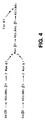
- the sample used for analysis was NA2F, which has the composition shown in Figure 4.
Landscapes
- Chemical & Material Sciences (AREA)
- Life Sciences & Earth Sciences (AREA)
- Health & Medical Sciences (AREA)
- Engineering & Computer Science (AREA)
- Organic Chemistry (AREA)
- Proteomics, Peptides & Aminoacids (AREA)
- Immunology (AREA)
- Molecular Biology (AREA)
- Wood Science & Technology (AREA)
- Zoology (AREA)
- Biochemistry (AREA)
- Microbiology (AREA)
- Biotechnology (AREA)
- General Health & Medical Sciences (AREA)
- Physics & Mathematics (AREA)
- Analytical Chemistry (AREA)
- Urology & Nephrology (AREA)
- General Engineering & Computer Science (AREA)
- Bioinformatics & Cheminformatics (AREA)
- Hematology (AREA)
- Biophysics (AREA)
- Genetics & Genomics (AREA)
- Biomedical Technology (AREA)
- Food Science & Technology (AREA)
- Pathology (AREA)
- General Physics & Mathematics (AREA)
- Medicinal Chemistry (AREA)
- Cell Biology (AREA)
- Emergency Medicine (AREA)
- Measuring Or Testing Involving Enzymes Or Micro-Organisms (AREA)
- Apparatus Associated With Microorganisms And Enzymes (AREA)
Abstract
Description
- The present invention relates to the analysis of oligosaccharides and more particularly to the form of analysis known as sequencing of oligosaccharides. Oligosaccharides form a class of chemical compounds which are each made up of a number of monosaccharide units linked together by glycosidic bonds. Important sources of naturally occurring oligosaccharides are glycoproteins in which oligosaccharides are found linked to a peptide chain by either an N-glycosidic bond or by an O-glycosidic bond; these oligosaccharides may vary up to highly branched structures containing many (e.g. over 30) monosaccharide units.
- In a sequential analysis of an unknown oligosaccharide structure, a single reaction is performed with a particular reagent on a pure sample of the unknown oligosaccharide and its products analysed. The reagent is chosen such that the product of the reaction will reveal the presence or absence of a particular structural sub-unit or sub-units which may or may not occur in the sample. Based on the results of this analysis, a further reaction may be carried out using a different reagent, either with more of the original pure sample or with the products of the previous reaction. From the analysis of the second reaction further conclusions may be drawn about the structure of the original oligosaccharide sample and the process repeated as often as necessary, until as much information as possible has been extracted about the original oligosaccharide structure with the reagents available or until supplies of the pure sample and derived products have been exhausted.
- The end point of any analysis of an oligosaccharide structure, whether the analytical technique is sequential or not, is to deduce information concerning the oligosaccharide structure; this information includes,
- (i) the type of each monosaccharide unit in the oligosaccharide,
- (ii) the order in which the monosaccharide units are arranged in the oligosaccharide,
- (iii) the position of linkages between each of the monosaccharide units (e.g. 1-3, 1-4), and hence any branching pattern,
- (iv) the orientation of the linkage between each of the monosaccharide units (i.e. whether a linkage is an alpha linkage or a beta linkage).
- An agent which assists in this process of structural analysis may be regarded as a "sequencing agent". Where a sequencing agent is a chemical or biochemical reagent the sequencing agent may be regarded as a sequencing reagent. Examples of sequencing reagents are enzymes and typical enzymes used in sequencing oligosaccharides are listed in the Enzyme Rules Table set out below.


- It will be appreciated that a sequencing agent may be chosen such that the products obtained when it is brought into contact with an unknown oligosaccharide will reveal (in later analysis) the presence or absence of a particular structural sub-unit (e.g. a monosaccharide unit) in the oligosaccharide. It will also be appreciated that by sequentially contacting either samples of the original oligosaccharide or products thereof (produced by previously contacting samples of the oligosaccharide with one or more sequencing reagents) with a sequencing reagent, it is possible to deduce that the unknown oligosaccharide contains a certain structure or structures or does not contain a certain structure or structures.
- For example, the presence and linkage of a particular monosaccharide at the terminus of an oligosaccharide may be confirmed by the ability of a given sequencing agent, such as an enzyme, to cause cleavage of that linkage; thus, if cleavage occurs when that enzyme is brought together with the oligosaccharide, then detection of that particular monosaccharide (now detached from the oligosaccharide) in the products of the reaction will confirm the presence of that monosaccharide and will define the position and orientation of the linkage of that monosaccharide in the original oligosaccharide structure. Thus, by sequentially using a plurality of different sequencing agents having specific linkage cleaving capabilities, it is possible to deduce increasing amounts of information regarding the structure of the oligosaccharide under analysis.
- Where no single sequencing agent can be found that can increase the amount of information about the structure of the unknown oligosaccharide then consideration can be given to possible combinations of two, three or more agents being applied one after the other; at each stage of consideration an agent which does not produce a meaningful result may be discarded, although the fact that it did not react with the oligosaccharide to produce products may allow deductions to be made regarding the structure of the oligosaccharide. Consideration may also be given to using a combination of two or more agents applied simultaneously.
- For the purposes of this specification, a sequencing agent or reagent can be an agent or reagent which either cleaves or forms chemical bonds when brought into contact with an unknown oligosaccharide.
- The effectiveness of the sequencing method depends critically upon the choice of agent to be used at each stage of each reaction process and the accuracy of the interpretation of the results of each analysis. At present, to a large degree, a good choice of agent requires an experienced operator who has already made some intelligent guesses about the type of structure being dealt with. A poor choice may result in little or no additional information being revealed by a particular experiment, resulting in the process being wasteful of both time and materials. There is also the danger that the prejudices of the operator will mask ambiguities in the interpretation of the results. Thus, the operator may assign a single structure which is consistent with the experimental results, whereas in reality there may be more than one structure consistent with the same set of observations. A further difficulty arises in defining the point at which no further information can be revealed by the use of the agents available.
- The sequencing of oligosaccharides may be assisted by a knowledge of the biosynthetic pathways involved in building up the oligosaccharide structures.
- Thus, for example, for N-linked oligosaccharides (N-glycans) it is known that there is a characteristic core structure and that monosaccharides may only add on in certain well defined orders and branching patterns. This knowledge may be used to develop the concept of 'basic' or 'core' structures for oligosaccharides from which sets of sub-structures can be generated by performing specific transformations on the 'basic' structures.
- In the accompanying drawings three 'basic' structures are shown respectively in Figures 1 to 3. The illustrated 'basic' structures are not all the structural possibilities for N-glycans and are shown by way of example only.
- In the case of these structures, the transformation used to generate the sub-structures is successive deletion of terminal monosaccharides. Numerous sub-structures can thus be formed starting with a 'basic' structure and, for example, successively deleting monosaccharides in all possible ways. There are several different patterns of deletion of monosaccharides possible leading to a very large number of sub-structures which can be derived from the 'basic' structures. The number of sub-structures which can be generated by transformation from the three illustrated sub-structures, is, therefore, very large. In carrying out an analysis of an unknown oligosaccharide, an initial analysis will allow a first judgement to be made that the oligosaccharide belongs to a particular set of sub-structures. This leads to the term "candidate structure" which is used herein to refer to a structure which is included in the set of sub-structures as being a possible candidate for having the same structure as the unknown oligosaccharide.
- For example, if the oligosaccharide to be sequenced has been purified from a mixture of oligosaccharides released from a glycoprotein by the use of enzyme peptide-N-glycosidase F, then it can be assumed that the oligosaccharide is an N-glycan and that its structure is likely to be one of the sub-structures generated from 'basic' structures similar to the ones illustrated in Figures 1 to 3.
- However, because such a set of sub-structures can be very large, it is desirable to reduce the size of the initial set of candidate structures as much as possible. One way of approaching this problem is to consider one property of the sample to be sequenced which depends in some way upon its structure. Examples of such properties are:-
- i) the molar proportion of each monosaccharide (composition analysis)
- ii) the retention time of the sample on a chromatographic column, which may be expressed in glucose units
- These properties can be calculated for each substructure, and only those structures whose properties are the same as those of the sample to be sequenced need be retained for further consideration as candidates for the unknown structure.
- The presence and linkage (both position and orientation) of a particular monosaccharide at the terminus of an oligosaccharide can be confirmed if it is known that a given enzyme will cause cleavage of that monosaccharide (and nothing else). If cleavage occurs, then detection of that monosaccharide in the products of the reaction confirms the presence of the linkage in the original structure.
- For each enzyme used as a sequencing reagent, it can be established which monosaccharides will be cleaved from a particular 'basic' oligosaccharide structure. The rules for such cleavage for a number of enzymes are set out in the Enzymes Rules Table above. By applying rules such as these to each candidate structure it is possible to determine for each candidate structure the monosaccharides which will be cleaved by bringing each enzyme in turn into contact with it.
- The present invention provides a way of optimising the use of sequencing agents, interpreting the results unambiguously and determining the point where no further sequencing with the available reagents is possible. According to the present invention there is provided apparatus for sequencing an unknown oligosaccharide, comprising first means for deducing a set of oligosaccharide structures of which the unknown oligosaccharide is assumed to be a member, second means for simulating the effect of applying each one of a series of sequencing agents to each of said set of oligosaccharide structures and third means for determining the sequencing agent likely to give the most structural information if applied to the unknown oligosaccharide.
- The invention also provides a method of sequencing an unknown oligosaccharide comprising analysing the unknown oligosaccharide, deducing a set of oligosaccharide structures of which the unknown oligosaccharide is assumed to be a member, simulating the effect of applying each one of a series of sequencing agents to each of said set of oligosaccharide structures and determining the sequencing agent likely to give the most structural information if applied to the unknown oligosaccharide, applying said sequencing agent and comparing the actual experimental results with the structural information expected.
- Preferably, the invention includes performing an initial analysis whereby to identify at least one basic structure (as herein defined) from which the said set of oligosaccharide structures can be generated.
- The method of the present invention postulates an initial set of candidate structures and allows a calculation to be made to determine the most efficient experiment to be performed at any given time. Structures inconsistent with the results of this experiment are then eliminated from the existing set and the next experiment determined based on the structures remaining. The process is repeated until no further elimination is possible with the given sequencing agents.
- By performing an exhaustive search among the known products of reaction of all candidate structures with the available sequencing reagents, it is possible to determine the optimum sequencing reagent or series or mixtures of sequencing reagents, such that the largest possible number of candidate structures can be eliminated by performing the reaction with this reagent and determining the products.
- In order to determine the most efficient experiment to be carried out, consideration must then be given to the known results of applying each of the available reagents to the remaining candidate structures.
- As an example, assuming that the initial composition analysis indicates that the unknown oligosaccharide is a member of a set of candidate structures denoted [A, B, C, D] and that
enzymes enzyme 1 will cleave the monosaccharide mannose from each of the candidate structures as follows, - Candidate A,
enzyme 1cleaves 1 mannose - Candidate B,
enzyme 1cleaves 1 mannose - Candidate C,
enzyme 1 cleaves 0 mannose - Candidate D,
enzyme 1 cleaves 2 mannose - Assume, for example, that the full results of applying each enzyme to each candidate structure are as follows,
Candidates A B C D Enzyme 1 1 mannose 1 mannose 0 mannose 2 mannose Enzyme 2 1 fucose 0 fucose 0 fucose 0 fucose Enzyme 3 2 galactose 2 galactose 2 galactose 2 galactose Enzyme 4 1 mannose 0 mannose 0 mannose 2 mannose - The question to be answered in this example is, which, if any, of the candidate set [A, B, C, D] is the actual structure of the unknown sample. It must be determined which of the available sequencing reagents (in this
example enzymes 1 to 4) is the best one to use to help find the answer to that question most efficiently. This is done by considering a Breakdown Result (a) for each enzyme derived from data in the above tables. A Breakdown Result groups the candidate structures into subsets where all the members of that subset give the same result in terms of the number of monosaccharides cleaved when reacted with the enzyme. - Also, for each Breakdown Result (a), a Breakdown Entropy (b) can be calculated to give a numerical measure of the efficiency of each enzyme. The Breakdown Entropy (b) is the sum over all the subsets in a Breakdown Result (a) of the term,

- The above table of data can therefore be expressed in terms of Breakdown Results (a) and Breakdown Entropy (b),
- (a)
enzyme 1, subset ([A, B],1), subset ([C],0), subset ([D],2) - (b)
entropy 1 = - ( 2 * log2 + 1 * log1 + 1 * log1 )
= - 0.602 - (a)
enzyme 2, subset ([A],1), subset ([B, C, D],0) - (b)
entropy 2 = - (1 * log1 + 3 * log3 ) = - 1.431 - (a)
enzyme 3, subset ([A, B, C, D],2) - (b)
entropy 3 = - (4 * log4 ) = - 2.408 - (a)
enzyme 4, subset ([A, D],1), subset ([B, C],2) - (b)
entropy 4 = - (2 * log2 + 2 * log2 ) = - 1.204 - The Breakdown Entropy of an enzyme is a direct measure of the scatter of the structures in the candidate set among different possible experimental outcomes from applying that enzyme. When all experimental outcomes are the same, the Breakdown Entropy has its minimum value (as in the above example for enzyme 3), and it is clear that it is impossible to distinguish between the candidate structures by performing that experiment. Conversely, if all experimental outcomes are distinct, the Breakdown Entropy is identically zero, which is its maximum possible value, and performing that experiment will identify uniquely the structure being sought. In general, the enzyme with the maximum Breakdown Entropy is chosen so as to give the highest statistical chance of rapidly eliminating structures from the set of candidates. In the example above therefore,
enzyme 1 would be chosen. - The Breakdown Entropy is the primary index of evaluation in the search for the best sequencing experiment. An enzyme can be eliminated from further consideration in the search under the following criteria,
- A) if the enzyme would not cleave any monosaccharides from any of the candidate structures,
- B) if the Breakdown Entropy is less than that of some other enzyme,
- C) if the enzyme cleaves more monosaccharides than some other enzyme which has an equal Breakdown Entropy,
- D) if the enzyme is more expensive to use than another enzyme which offers an equal result.
- If a first generation search (i.e. a search on the original sample) using all available enzymes, yields no single enzyme with a Breakdown Entropy greater than the minimum, then a second generation search (i.e. a search on the residue from the first generation search) using two enzymes, either together or in sequence is performed, and failing that, third generation, fourth generation, etc., searches are performed, until the point is reached where the candidate structures are deemed indistinguishable because all enzyme mixtures being tested would reduce all candidate structures to a common residue. At this point it is possible to conclude that there is no experiment with the available sequencing reagents which could further reduce the size of the set of candidate structures.
- The method can be carried out as a series of logical steps, not all of which need to be performed in every case:-
- 1. Initialisation
- 1.1 Specify a set of 'basic' structures
- 1.2 Specify sample composition
- 1.3 Generate all the sub-structures from the 'basic' structures in 1.1 having the composition given in 1.2. These form the initial set of candidate structures
- 2. Calculation
- 2.1 Search for the best reagent
- 2.1.1 For each reagent calculate a Breakdown Result listing the number of monosaccharides cleaved from each 'basic' structure by that reagent.
- 2.1.2 Compare the results using criteria A to D above and select the best Breakdown Result,
- 2.1.2.1 If no Breakdown Result is found which contains two or more subsets of residues which give different results when the reagent is applied, then select the next best Breakdown Result.
- 2.1.2.2 If no single reagent can be found that can distinguish between the candidate structures, then the search is repeated using all possible series of two, three or more reagents applied one after the other. At each stage, reagents which have no effect on any of the candidate structures are eliminated from the search. If a series of one or more sequencing reagents is found which produces a distribution entropy greater than the minimum, then this series of experiments is chosen to be performed sequentially on the sample.
- 2.1 Search for the best reagent
- 3. Experiment
- 3.1 Carry out the experiment(s) indicated by 2. above
- 4. Result
Check the results against predictions,- 4.1 Compare the number of monosaccharides cleaved using the recommended reagent with the prediction for each subset in the Breakdown Result for that enzyme.
- 4.2 If the sample is identified as a member of one of the subsets of structures in the Breakdown Result in that it matches in the number of monosaccharides cleaved with the experimental result, it may be that further information can be obtained. A further set of calculations can be performed by re-defining the set of candidate structures as the subset of structures identified in the Breakdown Result.
- 4.3 If no subset of the Breakdown Result matches the experimental result then it is likely that either,
- i) the experiment has failed, or
- ii) the initial assumptions about the 'basic' structures were invalid.
- It is clear that the amount of calculation to be performed can be considerable. The method is, therefore, best performed using a computer and a program can be written to carry out the calculations and allow the user to make the choices needed to select the experiments.
- However, the kind of decisions to be made are essentially those which an expert can perform and a computer expert system has been developed to perform the logical operations involved.
- To test the accuracy of this computer expert system a known, pure oligosaccharide was analysed using, for reference, the three 'basic' structures shown in Figures 1 to 3. The total number of structural variants generated from the three 'basic' structures by cleaving monosaccharides in all known ways from these three oligosaccharides, is about 70,000.
- The sample used for analysis was NA2F, which has the composition shown in Figure 4.
- Monosaccharide composition analysis of the sample gave,
- Mannose = 3
- Galactose = 2
- GlcNAc = 4
- Fucose = 1
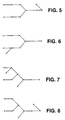
- Four groups of structural possibilities can be derived from a composition having these monosaccharides in these proportions and these four structures are shown in outline respectively in Figures 5, 6, 7 and 8. In addition, the structures shown in these Figures give multiple variants in the following numbers,
- Figure 5 - 9 variants
- Figure 6 - 18 variants
- Figure 7 - 12 variants
- Figure 8 - 6 variants
- Within each group, all variants of bond numbering are included and both core and outer arm fucosylation are accounted for. The above variants give a set of 45 candidates structures and this was confirmed by the computer expert system, which successively recommended the use of the following enzymes with the results shown,
Enzyme to use Monosaccharide detected Candidate structures remaining Jack bean alpha man (non arm-specific) None 27 Bovine testis beta gal Gal = 2 9 Dip.P.beta hex GlcNAc = 2 1 - The variants of Figures 7 and 8 are eliminated by the first experiment, because these would yield mannose if treated with the alpha-mannosidase, whereas the putative test sample yielded none. The variants of Figure 6 are eliminated by the second experiment, which yielded two galactose, whereas the presence of the outer arm fucose branch in Figure 6 blocks the action of the galactosidase on that branch. Finally, of the nine remaining structures of Figure 5, only the structure given would yield two N-Acetyl Glucosamine entities when reacted with the enzymes in the sequence given.
- In this sequence, the structure is uniquely identified.
Claims (4)
- A method of sequencing an unknown oligosaccharide comprising the steps of:(i) conducting an analysis of the unknown oligosaccharide, to determine a structure-dependent property thereof;(ii) on the basis of said property, deducing a set of oligosaccharide structures of which the unknown oligosaccharide is assumed to be a member;(iii) simulating the effect of applying each one of a series of sequencing agents to each of said set of oligosaccharide structures;(iv) determining the sequencing agent likely to give the most structural information if applied to the unknown oligosaccharide;(v) applying said sequencing agent; and(vi) comparing results of steps (iv) and (v).
- A method as claimed in claim 1, wherein step (ii) comprises identifying at least one basic structure from which a set of sub-structures can be generated by deleting monosaccharides from the basic structure in all possible ways, and further identifying, from among the set of sub-structures, a set of candidate structures of which the unknown oligosaccharide is assumed to be a member.
- A method as claimed in claim 2, including, as step (vii), eliminating structures from the candidate set which step (vi) shows to be inconsistent, and determining the next sequencing agent to be applied, based on the structures remaining.
- A method as claimed in claim 3, in which steps (v), (vi) and (vii) are repeated until no further elimination is possible.
Applications Claiming Priority (3)
| Application Number | Priority Date | Filing Date | Title |
|---|---|---|---|
| GB919109842A GB9109842D0 (en) | 1991-05-07 | 1991-05-07 | Sequencing of oligosaccharides |
| GB9109842 | 1991-05-07 | ||
| PCT/GB1992/000831 WO1992019766A1 (en) | 1991-05-07 | 1992-05-07 | Sequencing of oligosaccharides |
Publications (2)
| Publication Number | Publication Date |
|---|---|
| EP0584128A1 EP0584128A1 (en) | 1994-03-02 |
| EP0584128B1 true EP0584128B1 (en) | 1997-08-27 |
Family
ID=10694565
Family Applications (1)
| Application Number | Title | Priority Date | Filing Date |
|---|---|---|---|
| EP92909582A Expired - Lifetime EP0584128B1 (en) | 1991-05-07 | 1992-05-07 | Sequencing of oligosaccharides |
Country Status (6)
| Country | Link |
|---|---|
| US (1) | US5427744A (en) |
| EP (1) | EP0584128B1 (en) |
| JP (1) | JPH06506828A (en) |
| DE (1) | DE69221861T2 (en) |
| GB (1) | GB9109842D0 (en) |
| WO (1) | WO1992019766A1 (en) |
Families Citing this family (4)
| Publication number | Priority date | Publication date | Assignee | Title |
|---|---|---|---|---|
| GB9710582D0 (en) | 1997-05-22 | 1997-07-16 | Oxford Glycosciences Uk Ltd | A method for de novo peptide sequence determination |
| GB9814420D0 (en) * | 1998-07-03 | 1998-09-02 | Cancer Res Campaign Tech | Sequence analysis of saccharide material |
| US6963807B2 (en) | 2000-09-08 | 2005-11-08 | Oxford Glycosciences (Uk) Ltd. | Automated identification of peptides |
| JP6360738B2 (en) * | 2014-07-10 | 2018-07-18 | 学校法人 愛知医科大学 | Method for determining the sequence structure of glycosaminoglycan sugar chains |
Family Cites Families (2)
| Publication number | Priority date | Publication date | Assignee | Title |
|---|---|---|---|---|
| US5100778A (en) * | 1989-10-03 | 1992-03-31 | Monsanto Company | Oligosaccharide sequencing |
| US5284558A (en) * | 1990-07-27 | 1994-02-08 | University Of Iowa Research Foundation | Electrophoresis-based sequencing of oligosaccharides |
-
1991
- 1991-05-07 GB GB919109842A patent/GB9109842D0/en active Pending
-
1992
- 1992-05-07 EP EP92909582A patent/EP0584128B1/en not_active Expired - Lifetime
- 1992-05-07 WO PCT/GB1992/000831 patent/WO1992019766A1/en not_active Ceased
- 1992-05-07 JP JP4508675A patent/JPH06506828A/en active Pending
- 1992-05-07 DE DE69221861T patent/DE69221861T2/en not_active Expired - Fee Related
- 1992-05-07 US US08/140,143 patent/US5427744A/en not_active Expired - Fee Related
Also Published As
| Publication number | Publication date |
|---|---|
| GB9109842D0 (en) | 1991-06-26 |
| DE69221861T2 (en) | 1998-01-02 |
| US5427744A (en) | 1995-06-27 |
| WO1992019766A1 (en) | 1992-11-12 |
| DE69221861D1 (en) | 1997-10-02 |
| EP0584128A1 (en) | 1994-03-02 |
| JPH06506828A (en) | 1994-08-04 |
Similar Documents
| Publication | Publication Date | Title |
|---|---|---|
| Edge et al. | Fast sequencing of oligosaccharides: the reagent-array analysis method. | |
| Penny et al. | Estimating the reliability of evolutionary trees. | |
| Aitken et al. | First‐trimester biochemical screening for fetal chromosome abnormalities and neural tube defects | |
| Bar et al. | DNA Commission of the International Society for Forensic Genetics: guidelines for mitochondrial DNA typing | |
| Klein et al. | Prediction of protein function from sequence properties: Discriminant analysis of a data base | |
| NO960370L (en) | Marker reagent, as well as its use in the assay | |
| Spencer et al. | First trimester biochemical screening for trisomy 21: the role of free beta hCG, alpha fetoprotein and pregnancy associated plasma protein A | |
| WO1999005591A3 (en) | Method and apparatus for providing a bioinformatics database | |
| EP0421972A2 (en) | Oligosaccharide sequencing | |
| Lathi et al. | Tissue sampling technique affects accuracy of karyotype from missed abortions | |
| EP0852004A2 (en) | Multiplexed analysis of clinical specimens | |
| Benner et al. | Post-genomic science: converting primary structure into physiological function | |
| US5427744A (en) | Sequencing of oligosaccharides | |
| CA2373119A1 (en) | Polysaccharide structure and sequence determination | |
| EP2256653A2 (en) | System and method for integrated analysis of data for characterizing carbohydrate polymers | |
| Benigni | Predicting chemical carcinogenesis in rodents: the state of the art in light of a comparative exercise | |
| Bleiweiss et al. | Experimental analysis of variance for DNA hybridization: II. Precision | |
| Bruford et al. | Minisatellite DNA markers in the chicken genome: I. Distribution and abundance of minisatellites in multilocus DNA fingerprints | |
| EP0574844A1 (en) | Method for the automated determination of isoenzymatic profiles and relevant equipment | |
| Yadrenkin | Frondicularia (Foraminifera) from Triassic Deposits of North Siberia and the Kotelny Island (New Siberian Islands) | |
| MacIntyre et al. | Evolution of acid phosphatase-1 in the genus Drosophila. Immunological studies | |
| Kang et al. | Solving the No‐intermediate StorageFlowshop Scheduling Problem | |
| Hazel | On the use of cluster analysis in biogeography | |
| Fielding | Discriminant analysis on a microcomputer | |
| Hjelm et al. | Automation and data processing in a clinical laboratory—a pilot study |
Legal Events
| Date | Code | Title | Description |
|---|---|---|---|
| PUAI | Public reference made under article 153(3) epc to a published international application that has entered the european phase |
Free format text: ORIGINAL CODE: 0009012 |
|
| 17P | Request for examination filed |
Effective date: 19931203 |
|
| AK | Designated contracting states |
Kind code of ref document: A1 Designated state(s): DE ES FR GB IT |
|
| 17Q | First examination report despatched |
Effective date: 19960319 |
|
| GRAG | Despatch of communication of intention to grant |
Free format text: ORIGINAL CODE: EPIDOS AGRA |
|
| RAP1 | Party data changed (applicant data changed or rights of an application transferred) |
Owner name: OXFORD GLYCOSCIENCES (UK) LIMITED |
|
| GRAH | Despatch of communication of intention to grant a patent |
Free format text: ORIGINAL CODE: EPIDOS IGRA |
|
| GRAH | Despatch of communication of intention to grant a patent |
Free format text: ORIGINAL CODE: EPIDOS IGRA |
|
| RAP1 | Party data changed (applicant data changed or rights of an application transferred) |
Owner name: OXFORD GLYCOSCIENCES (UK) LIMITED |
|
| GRAA | (expected) grant |
Free format text: ORIGINAL CODE: 0009210 |
|
| AK | Designated contracting states |
Kind code of ref document: B1 Designated state(s): DE ES FR GB IT |
|
| PG25 | Lapsed in a contracting state [announced via postgrant information from national office to epo] |
Ref country code: IT Free format text: LAPSE BECAUSE OF FAILURE TO SUBMIT A TRANSLATION OF THE DESCRIPTION OR TO PAY THE FEE WITHIN THE PRESCRIBED TIME-LIMIT;WARNING: LAPSES OF ITALIAN PATENTS WITH EFFECTIVE DATE BEFORE 2007 MAY HAVE OCCURRED AT ANY TIME BEFORE 2007. THE CORRECT EFFECTIVE DATE MAY BE DIFFERENT FROM THE ONE RECORDED. Effective date: 19970827 Ref country code: ES Free format text: THE PATENT HAS BEEN ANNULLED BY A DECISION OF A NATIONAL AUTHORITY Effective date: 19970827 |
|
| REF | Corresponds to: |
Ref document number: 69221861 Country of ref document: DE Date of ref document: 19971002 |
|
| ET | Fr: translation filed | ||
| PLBE | No opposition filed within time limit |
Free format text: ORIGINAL CODE: 0009261 |
|
| 26N | No opposition filed | ||
| REG | Reference to a national code |
Ref country code: GB Ref legal event code: IF02 |
|
| PGFP | Annual fee paid to national office [announced via postgrant information from national office to epo] |
Ref country code: GB Payment date: 20020501 Year of fee payment: 11 |
|
| PGFP | Annual fee paid to national office [announced via postgrant information from national office to epo] |
Ref country code: FR Payment date: 20020508 Year of fee payment: 11 |
|
| PGFP | Annual fee paid to national office [announced via postgrant information from national office to epo] |
Ref country code: DE Payment date: 20020516 Year of fee payment: 11 |
|
| PG25 | Lapsed in a contracting state [announced via postgrant information from national office to epo] |
Ref country code: GB Free format text: LAPSE BECAUSE OF NON-PAYMENT OF DUE FEES Effective date: 20030507 |
|
| PG25 | Lapsed in a contracting state [announced via postgrant information from national office to epo] |
Ref country code: DE Free format text: LAPSE BECAUSE OF NON-PAYMENT OF DUE FEES Effective date: 20031202 |
|
| GBPC | Gb: european patent ceased through non-payment of renewal fee |
Effective date: 20030507 |
|
| PG25 | Lapsed in a contracting state [announced via postgrant information from national office to epo] |
Ref country code: FR Free format text: LAPSE BECAUSE OF NON-PAYMENT OF DUE FEES Effective date: 20040130 |
|
| REG | Reference to a national code |
Ref country code: FR Ref legal event code: ST |