EP0582810A1 - Novel 7-(substituted)-8-(substituted)-9-(substituted amino)-6-demethyl-6-deoxyetracyclines as antibiotic agents - Google Patents
Novel 7-(substituted)-8-(substituted)-9-(substituted amino)-6-demethyl-6-deoxyetracyclines as antibiotic agents Download PDFInfo
- Publication number
- EP0582810A1 EP0582810A1 EP93109850A EP93109850A EP0582810A1 EP 0582810 A1 EP0582810 A1 EP 0582810A1 EP 93109850 A EP93109850 A EP 93109850A EP 93109850 A EP93109850 A EP 93109850A EP 0582810 A1 EP0582810 A1 EP 0582810A1
- Authority
- EP
- European Patent Office
- Prior art keywords
- alkyl
- group
- group selected
- straight
- methylpropyl
- Prior art date
- Legal status (The legal status is an assumption and is not a legal conclusion. Google has not performed a legal analysis and makes no representation as to the accuracy of the status listed.)
- Granted
Links
- REUGBQHYBNPNCN-UHFFFAOYSA-N CC(C(C)N1N)NC1=O Chemical compound CC(C(C)N1N)NC1=O REUGBQHYBNPNCN-UHFFFAOYSA-N 0.000 description 9
- QBEOGDDXOQMTPC-UHFFFAOYSA-N CC(C)(CCO1)CC1=O Chemical compound CC(C)(CCO1)CC1=O QBEOGDDXOQMTPC-UHFFFAOYSA-N 0.000 description 6
- GHKJCGGBJJHVBQ-UHFFFAOYSA-N CC(C)(CCN1N)C1=O Chemical compound CC(C)(CCN1N)C1=O GHKJCGGBJJHVBQ-UHFFFAOYSA-N 0.000 description 5
- ARLOADDJFMFVPN-UHFFFAOYSA-N CC1=C(C)NNC1 Chemical compound CC1=C(C)NNC1 ARLOADDJFMFVPN-UHFFFAOYSA-N 0.000 description 5
- YSWBFLWKAIRHEI-UHFFFAOYSA-N Cc1c(C)nc[nH]1 Chemical compound Cc1c(C)nc[nH]1 YSWBFLWKAIRHEI-UHFFFAOYSA-N 0.000 description 5
- 0 CC(C)(CCN1N)*1=O Chemical compound CC(C)(CCN1N)*1=O 0.000 description 4
- RNXBYZOFEHPXOK-UHFFFAOYSA-N CC(C)(CCN1N)CC1=O Chemical compound CC(C)(CCN1N)CC1=O RNXBYZOFEHPXOK-UHFFFAOYSA-N 0.000 description 3
- UPVAIJPDWVTFKT-UHFFFAOYSA-N CC(C)(CCO1)C1=O Chemical compound CC(C)(CCO1)C1=O UPVAIJPDWVTFKT-UHFFFAOYSA-N 0.000 description 1
- UBGAIIGGQHGNIK-UHFFFAOYSA-N CCCCN(C(CCC)=O)N Chemical compound CCCCN(C(CCC)=O)N UBGAIIGGQHGNIK-UHFFFAOYSA-N 0.000 description 1
Classifications
-
- C—CHEMISTRY; METALLURGY
- C07—ORGANIC CHEMISTRY
- C07C—ACYCLIC OR CARBOCYCLIC COMPOUNDS
- C07C237/00—Carboxylic acid amides, the carbon skeleton of the acid part being further substituted by amino groups
- C07C237/24—Carboxylic acid amides, the carbon skeleton of the acid part being further substituted by amino groups having the carbon atom of at least one of the carboxamide groups bound to a carbon atom of a ring other than a six-membered aromatic ring of the carbon skeleton
- C07C237/26—Carboxylic acid amides, the carbon skeleton of the acid part being further substituted by amino groups having the carbon atom of at least one of the carboxamide groups bound to a carbon atom of a ring other than a six-membered aromatic ring of the carbon skeleton of a ring being part of a condensed ring system formed by at least four rings, e.g. tetracycline
-
- A—HUMAN NECESSITIES
- A61—MEDICAL OR VETERINARY SCIENCE; HYGIENE
- A61P—SPECIFIC THERAPEUTIC ACTIVITY OF CHEMICAL COMPOUNDS OR MEDICINAL PREPARATIONS
- A61P31/00—Antiinfectives, i.e. antibiotics, antiseptics, chemotherapeutics
-
- A—HUMAN NECESSITIES
- A61—MEDICAL OR VETERINARY SCIENCE; HYGIENE
- A61P—SPECIFIC THERAPEUTIC ACTIVITY OF CHEMICAL COMPOUNDS OR MEDICINAL PREPARATIONS
- A61P31/00—Antiinfectives, i.e. antibiotics, antiseptics, chemotherapeutics
- A61P31/04—Antibacterial agents
-
- C—CHEMISTRY; METALLURGY
- C07—ORGANIC CHEMISTRY
- C07C—ACYCLIC OR CARBOCYCLIC COMPOUNDS
- C07C243/00—Compounds containing chains of nitrogen atoms singly-bound to each other, e.g. hydrazines, triazanes
- C07C243/10—Hydrazines
- C07C243/20—Hydrazines having nitrogen atoms of hydrazine groups bound to carbon atoms of rings other than six-membered aromatic rings
-
- C—CHEMISTRY; METALLURGY
- C07—ORGANIC CHEMISTRY
- C07C—ACYCLIC OR CARBOCYCLIC COMPOUNDS
- C07C245/00—Compounds containing chains of at least two nitrogen atoms with at least one nitrogen-to-nitrogen multiple bond
- C07C245/20—Diazonium compounds
-
- C—CHEMISTRY; METALLURGY
- C07—ORGANIC CHEMISTRY
- C07C—ACYCLIC OR CARBOCYCLIC COMPOUNDS
- C07C247/00—Compounds containing azido groups
- C07C247/16—Compounds containing azido groups with azido groups bound to carbon atoms of six-membered aromatic rings of a carbon skeleton
- C07C247/18—Compounds containing azido groups with azido groups bound to carbon atoms of six-membered aromatic rings of a carbon skeleton being further substituted by carboxyl groups
-
- C—CHEMISTRY; METALLURGY
- C07—ORGANIC CHEMISTRY
- C07C—ACYCLIC OR CARBOCYCLIC COMPOUNDS
- C07C271/00—Derivatives of carbamic acids, i.e. compounds containing any of the groups, the nitrogen atom not being part of nitro or nitroso groups
- C07C271/06—Esters of carbamic acids
- C07C271/08—Esters of carbamic acids having oxygen atoms of carbamate groups bound to acyclic carbon atoms
- C07C271/24—Esters of carbamic acids having oxygen atoms of carbamate groups bound to acyclic carbon atoms with the nitrogen atom of at least one of the carbamate groups bound to a carbon atom of a ring other than a six-membered aromatic ring
-
- C—CHEMISTRY; METALLURGY
- C07—ORGANIC CHEMISTRY
- C07C—ACYCLIC OR CARBOCYCLIC COMPOUNDS
- C07C271/00—Derivatives of carbamic acids, i.e. compounds containing any of the groups, the nitrogen atom not being part of nitro or nitroso groups
- C07C271/60—Derivatives of carbamic acids, i.e. compounds containing any of the groups, the nitrogen atom not being part of nitro or nitroso groups having oxygen atoms of carbamate groups bound to nitrogen atoms
-
- C—CHEMISTRY; METALLURGY
- C07—ORGANIC CHEMISTRY
- C07C—ACYCLIC OR CARBOCYCLIC COMPOUNDS
- C07C309/00—Sulfonic acids; Halides, esters, or anhydrides thereof
- C07C309/63—Esters of sulfonic acids
- C07C309/64—Esters of sulfonic acids having sulfur atoms of esterified sulfo groups bound to acyclic carbon atoms
- C07C309/65—Esters of sulfonic acids having sulfur atoms of esterified sulfo groups bound to acyclic carbon atoms of a saturated carbon skeleton
-
- C—CHEMISTRY; METALLURGY
- C07—ORGANIC CHEMISTRY
- C07C—ACYCLIC OR CARBOCYCLIC COMPOUNDS
- C07C2603/00—Systems containing at least three condensed rings
- C07C2603/02—Ortho- or ortho- and peri-condensed systems
- C07C2603/40—Ortho- or ortho- and peri-condensed systems containing four condensed rings
- C07C2603/42—Ortho- or ortho- and peri-condensed systems containing four condensed rings containing only six-membered rings
- C07C2603/44—Naphthacenes; Hydrogenated naphthacenes
- C07C2603/46—1,4,4a,5,5a,6,11,12a- Octahydronaphthacenes, e.g. tetracyclines
Definitions
- the invention relates to novel [4S-(4alpha, 12aalpha)]-4-(dimethylamino)-7-(substituted)-8-(substituted)-9-(substituted)-1,4,4a,5,5a,6,11,12a-octahydro-3,10,12,12a-tetrahydroxy-1,11-dioxo-2-naphthacenecarboxamides herein after called 7-(substituted)-8-(substituted)-9-(substituted)-6-demethyl-6-deoxytetracyclines, which are useful as antibiotic agents and exhibit antibacterial activity against a wide spectrum of organisms including organisms which are resistant to tetracyclines.
- the invention also relates to novel 7-(substituted)-8-(substituted)-9-(substituted)-6-demethyl-6-deoxytetracycline intermediates useful for making the novel compounds of the present invention and to novel methods for producing the novel compounds and intermediate compounds.
- This invention is concerned with novel 7-(substituted)-8-(substituted)-9-(substituted)-6-demethyl-6-deoxytetracyclines, represented by formulas I and II, which have antibacterial activity; with method of treating infectious diseases in warm blooded animals employing these new compound; with methods of treating or controlling veterinary diseases; with pharmaceutical preparations containing these compounds; with novel intermediate compounds and processes for the production of these compounds. More particularly, this invention is concerned with compounds of formulas I and II which have enhanced in vitro and in vivo antibiotic activity against tetracycline resistant strains as well as a high level of activity against strains which are normally susceptible to tetracyclines.
- Y is selected from -N2+Cl ⁇ or -N3;
- Y is -N2+Cl ⁇ or -N3;
- novel compounds of the present invention may be readily prepared in accordance with the following schemes.
- the 7-amino-8-(substituted)-9-(substituted)-6-demethyl-6-deoxytetracycline, 4 , or 9-amino-8-(substituted)-7-(substituted)-6-demethyl-6-deoxytetracycline, 4' , or their mineral acid or halide salt, can be further converted as described in Schemes 5, 6, 7 and 8.
- a 7-amino-8-(substituted)-9-(substituted)-6-demethyl-6-deoxytetracycline, 4 , or a 9-amino-8-(substituted)-7-(substituted)-6-demethyl-6-deoxytetracycline, 4' , or their mineral acid or halide salt is treated with an acyl chloride, acyl anhydride, mixed acyl anhydride, sulfonyl chloride or sulfonyl anhydride in the presence of a suitable acid scavenger in a variety of solvents to form the corresponding 7-(acyl or sulfonyl amino)-8-(substituted)-9-(substituted)-6-demethyl-6-deoxytetracycline, 5 , or 9-(acyl or sulfonyl amino)-8-(substituted)-7-(substit
- the acid scavenger is selected from sodium bicarbonate, sodium acetate, pyridine, triethylamine, N,O-bis(trimethylsilyl)acetamide, N,O-bis(trimethylsilyl)trifluoroacetamide, potassium carbonate or a basic ion-exchange resin.
- the solvents are selected from water-tetrahydrofuran, N-methylpyrrolidone, 1,3-dimethyl-2-imidazolidinone, hexamethylphosphoramide, 1,3-dimethyl-3,4,5,6-tetrahydro-2(1H)pyrimidinone or 1,2-dimethoxyethane.
- a 7-amino-8-(substituted)-9-(substituted)-6-demethyl-6-deoxytetracycline, 4 , or 9-amino-8-(substituted)-7-(substituted)-6-demethyl-6-deoxytetracycline, 4' , or their mineral acid or halide salt is converted to the respective diazonium salt, 6 or 6' , using procedures known to those skilled in the art including those described in J. J. Hlavka, et al., J. Am. Chem. Soc., 84, 1420(1962).
- the diazonium salts, 6 or 6' are reduced to their respective 8-(substituted)-7-(substituted)-6-demethyl-6-deoxytetracycline, 7 , or 8-(substituted)-9-(substituted)-6-demethyl-6-deoxytetracycline, 7' , by heating in an alcohol.
- a 7-azido-9-(substituted)-6-demethyl-6-deoxytetracycline, 1 , or a 9-azido-7-(substituted)-6-demethyl-6-deoxytetracycline, 1' is treated with trifluoromethanesulfonic acid to give the desired 7-amino-9-(substituted)-8-(trifluoromethanylsulfonyloxy)-6-demethyl-6-deoxytetracycline, 8 , or 9-amino-7-(substituted)-8-(trifluoromethanylsulfonyloxy)-6-demethyl-6-deoxytetracycline, 8' .
- Compounds 5 , 5 ', 7 , or 7 ' are selectively N-alkylated in the presence of formaldehyde and either a primary amine such as methylamine, ethylamine, benzylamine, methyl glycinate, (L or D)lysine, (L or D)alanine or their substituted congeners; or a secondary amine such as morpholine, pyrrolidine, piperidine or their substituted congeners to give their corresponding Mannich base adduct, 9 , 9 ', 10 ,or 10 '.
- a primary amine such as methylamine, ethylamine, benzylamine, methyl glycinate, (L or D)lysine, (L or D)alanine or their substituted congeners
- a secondary amine such as morpholine, pyrrolidine, piperidine or their substituted congeners
- the 7-(substituted)-8-(substituted)-9-(substituted)-6-demethyl-6-deoxytetracyclines may be obtained as metal complexes such as aluminum, calcium, iron, magnesium, manganese and complex salts; inorganic and organic salts and corresponding Mannich base adducts using methods known to those skilled in the art (Richard C. Larock Comprehensive Organic Transformations, VCH Publishers, 411-415, 1989).
- the 7-(substituted)-8-(substituted)-9-(substituted)-6-demethyl-6-deoxytetracyclines are obtained as inorganic salts such as hydrochloric, hydrobromic, hydroiodic, phosphoric, nitric or sulfate; or organic salts such as acetate, benzoate, citrate, cysteine or other amino acids, fumarate, glycolate, maleate, succinate, tartrate, alkylsulfonate or arysulfonate. In all cases the salt formation occurs with the C(4)-dimethylamino group.
- the salts are preferred for oral and parenteral administration.
- the minimum inhibitory concentration (MIC) the lowest concentration of the antibiotic which inhibits growth of the test organism, is determined by the agar dilution method using Muller-Hinton II agar (Baltimore Biological Laboratories). An inoculum density of 1-5 x 10⁵ CFU/ml and an antibiotic concentration (32- ⁇ 0.015 ⁇ g/ml) is used. The plates are incubated for 18 hours at 35 o C in a forced air incubator.
- the test organisms comprise strains sensitive to tetracycline and genetically defined strains that are resistant to tetracycline, due to inability to bind bacterial ribosomes ( tet M).
- each 10 ⁇ l reaction contains S30 extract (a whole extract) made from either tetracycline sensitive cells or an isogenic tetracycline resistant (tet M) strain, low molecular weight components necessary for transcription and translation (i.e., ATP and GTP), a mix of 19 amino acids (no methionine), 35S labeled methionine, DNA template (either pBR322 or pUC119), and either DMSO (control) or the novel tetracycline compound to be tested (“novel TC”) dissolved in DMSO.
- the reactions are incubated for 30 minutes at 37 o C. Timing is initiated with the addition of the S30 extract, the last component to be added. After 30 minutes, 2.5 ⁇ l of the reaction is removed and mixed with 0.5 ml of 1N NaOH to destroy RNA and tRNA. Two to three ml of 25% trichloroacetic acid is added and the mixture incubated at room temperature for 15 minutes. The trichloroacetic acid precipitated material is collected on Whatman GF/C filters and washed with a solution of 10% trichloroacetic acid. The filters are dried and the retained radioactivity, representing incorporation of 35S-methionine into polypeptides, is counted using standard liquid scintillation methods.
- the percent inhibition (P.I.) of protein synthesis is determined to be:
- mice The therapeutic effects of tetracyclines are determined against an acute lethal infection with Staphylococcus aureus strain Smith (tetracycline sensitive).
- Antibacterial agents contained in 0.5 ml of 0.2% aqueous agar, are administered subcutaneously or orally 30 minutes after infection. When an oral dosing schedule is used, animals are deprived of food for 5 hours before and 2 hours after infection. Five mice are treated at each dose level. The 7 day survival ratios from 3 separate tests are pooled for calculation of median effective dose (ED50).
- ED50 median effective dose
- the claimed compounds exhibit antibacterial activity against a spectrum of tetracycline sensitive and resistant Gram-positive and Gram-negative bacteria, especially, strains of E . coli , S. aureus and E. faecalis , containing the tet M resistance determinants (Table I). Notable is 8-chloro-9-(formylamino)-4-(dimethylamino)-6-demethyl-6-deoxytetracycline, compound A in Table I, which has good in vitro activity against tetracycline resistant strains containing the tet M resistance determinant (such as S. aureus UBMS 88-5 and S. aureus UBMS 90-1 and 90-2) and is equally as effective as minocycline against tetracycline susceptible strains.
- the tet M resistance determinant such as S. aureus UBMS 88-5 and S. aureus UBMS 90-1 and 90-2
- Protein synthesis determined using cell-free extracts from the tetracycline susceptible strain MRE600, is inhibited by tetracycline, minocycline and the 8-chloro-9-(formylamino)-4-(dimethylamino)-6-demethyl-6-deoxytetracycline of this invention (Table II).
- Protein synthesis determined using cell-free extracts from strain MRE600 ( tet M), is resistant to tetracycline and minocycline, since less than 20% inhibition is achieved even at 1mg/ml concentration of minocycline vs 90% inhibition at 0.3mg/ml of the tetracycline sensitive ribosome extracts prepared from strain MRE600 (Table II).
- 8-chloro-9-(formylamino)-4-(dimethylamino)-6-demethyl-6-deoxytetracycline effectively inhibited protein synthesis in extracts prepared from either MRE600 or MRE600 ( tet M) (Table II).
- the evidence presented indicates that 8-chloro-9-(formylamino)-4-(dimethylamino)-6-demethyl-6-deoxytetracycline is an inhibitor of protein synthesis at the ribosome level.
- the ability of 8-chloro-9-(formylamino)-4-(dimethylamino)-6-demethyl-6-deoxytetracycline to inhibit bacterial growth almost certainly reflects directed inhibition of bacterial protein synthesis. Therefore, it is expected to exhibit a bacteriostatic effect against susceptible bacteria, as is the case with other tetracyclines.
- the compounds When the compounds are employed as anti-bacterials, they can be combined with one or more pharmaceutically acceptable carriers, for example, solvents, diluents and the like, and may be administered orally in such forms as tablets, capsules, dispersible powders, granules, or suspensions containing, for example, from about 0.05 to 5% of suspending agent, syrups containing, for example, from about 10 to 50% of sugar, and elixirs containing, for example, from about 20 to 50% ethanol, and the like, or parenterally in the form of sterile injectable solutions or suspensions containing from about 0.05 to 5% suspending agent in an isotonic medium.
- Such pharmaceutical preparations may contain, for example, from about 25 to about 90% of the active ingredient in combination with the carrier, more usually between about 5% and 60% by weight.
- An effective amount of compound from 2.0 mg/kg of body weight to 100.0 mg/kg of body weight should be administered one to five times per day via any typical route of administration including but not limited to oral, parenteral (including subcutaneous, intravenous, intramuscular, intrasternal injection or infusion techniques), topical or rectal, in dosage unit formulations containing conventional non-toxic pharmaceutically acceptable carriers, adjuvants and vehicles.
- active compounds may be administered orally as well as by intravenous, intramuscular, or subcutaneous routes.
- Solid carriers include starch, lactose, dicalcium phosphate, microcrystalline cellulose, sucrose and kaolin, while liquid carriers include sterile water, polyethylene glycols, non-ionic surfactants and edible oils such as corn, peanut and sesame oils, as are appropriate to the nature of the active ingredient and the particular form of administration desired.
- Adjuvants customarily employed in the preparation of pharmaceutical compositions may be advantageously included, such as flavoring agents, coloring agents, preserving agents, and antioxidants, for example, vitamin E, ascorbic acid, BHT and BHA.
- compositions from the standpoint of ease of preparation and administration are solid compositions, particularly tablets and hard-filled or liquid-filled capsules. Oral administration of the compounds is preferred.
- active compounds may also be administered parenterally or intraperitoneally.
- Solutions or suspensions of these active compounds as a free base or pharmacologically acceptable salt can be prepared in water suitably mixed with a surfactant such as hydroxypropylcellulose.
- Dispersions can also be prepared in glycerol, liquid, polyethylene glycols and mixtures thereof in oils. Under ordinary conditions of storage and use, these preparations contain a preservative to prevent the growth of microorganisms.
- the pharmaceutical forms suitable for injectable use include sterile aqueous solutions or dispersions and sterile powders for the extemporaneous preparation of sterile injectable solutions or dispersions.
- the form must be sterile and fluid. It must be stable under the conditions of manufacture and storage and must be preserved against the contaminating action of microorganisms such as bacteria and fungi.
- the carrier can be a solvent or dispersion medium containing, for example, water, ethanol, polyol (e.g., glycerol, propylene glycol and liquid polyethylene glycol), suitable mixtures thereof, and vegetable oil.
- the title compound is prepared by the procedure of Example 3, using the product from Example 2 and liquid hydrogen fluoride.
- the title compound is prepared by the procedure of Example 3, using 9-azido-6-demethyl-6-deoxytetracycline prepared by the procedure described in J. Am. Chem. Soc., 84:1426-1430 and trifluoromethanesulfonic acid.
- the title compound is prepared by the procedure of Example 4, using the product from Example 24.
- the title compound is prepared by the procedures described in Examples 1 and 5, using the product from Example 24.
- the title compound is prepared by the procedure of Example 20, using the product from Example 24.
- the title compound is prepared by the procedure of Example 3, using the product from Example 3 and trifluoromethanesulfonic acid.
- the title compound is prepared by the procedure of Example 3, using 7-azido-6-demethyl-6-deoxytetracycline prepared by the procedure described in J. Am. Chem. Soc., 84:1426-1430 and liquid hydrogen fluoride at -30 o C.
- the title compound is prepared by the procedure of Example 27, using the product from the Example 3 and beta-dimethylaminoethyl chloroformate.
- the title compound is prepared by the procedure of Example 27, using the product from Example 3 and diethylaminoxy chloroformate.
- the title compound is prepared by the procedure of Example 20, using the product from Example 24.
- the title compound is prepared by the procedure of Example 33, using the product of Example 24.
- the title compound is prepared by the procedure of Example 20, using the product from Example 23.
- the title compound is prepared by the procedure of Example 20, using the product from Example 10 and dimethylaminoxy chloroformate.
- the title compound is prepared by the procedure of Example 20, using the product from Example 10 and diethylamino chloroformate.
- the title compound is prepared by the procedure of Example 3, using 9-azido-6-demethyl-6-deoxytetracycline prepared by the procedure described on J. Am. Chem. Soc., 84:1426-1430 and a solution of hydrogen bromide in acetic acid (30 wt%).
- the title compound is prepared by the procedure of Example 3, using the product from Example 2 and a solution of hydrogen bromide in acetic acid (30 wt%).
- the title compound is prepared by the procedure of Example 3, using the product from Example 2 and hydroiodic acid.
- the title compound is prepared by the procedure of Example 3, using 9-azido-6-demethyl-6-deoxytetracycline prepared by the procedure describefd on J. Am. Chem. Soc., 84:1426-1430 and hydroiodic acid.
- the title compound is prepared by the procedure of Example 20, using the product from Example 44.
- the title compound is prepared by the procedure of Example 20, using the product from Example 41.
Landscapes
- Chemical & Material Sciences (AREA)
- Organic Chemistry (AREA)
- Health & Medical Sciences (AREA)
- General Health & Medical Sciences (AREA)
- Veterinary Medicine (AREA)
- Chemical Kinetics & Catalysis (AREA)
- General Chemical & Material Sciences (AREA)
- Medicinal Chemistry (AREA)
- Nuclear Medicine, Radiotherapy & Molecular Imaging (AREA)
- Pharmacology & Pharmacy (AREA)
- Life Sciences & Earth Sciences (AREA)
- Animal Behavior & Ethology (AREA)
- Communicable Diseases (AREA)
- Public Health (AREA)
- Oncology (AREA)
- Pharmaceuticals Containing Other Organic And Inorganic Compounds (AREA)
- Organic Low-Molecular-Weight Compounds And Preparation Thereof (AREA)
- Nitrogen Condensed Heterocyclic Rings (AREA)
- Preparation Of Compounds By Using Micro-Organisms (AREA)
- Peptides Or Proteins (AREA)
- Medicines That Contain Protein Lipid Enzymes And Other Medicines (AREA)
- Seasonings (AREA)
- Medicines Containing Plant Substances (AREA)
- Acyclic And Carbocyclic Compounds In Medicinal Compositions (AREA)
Abstract
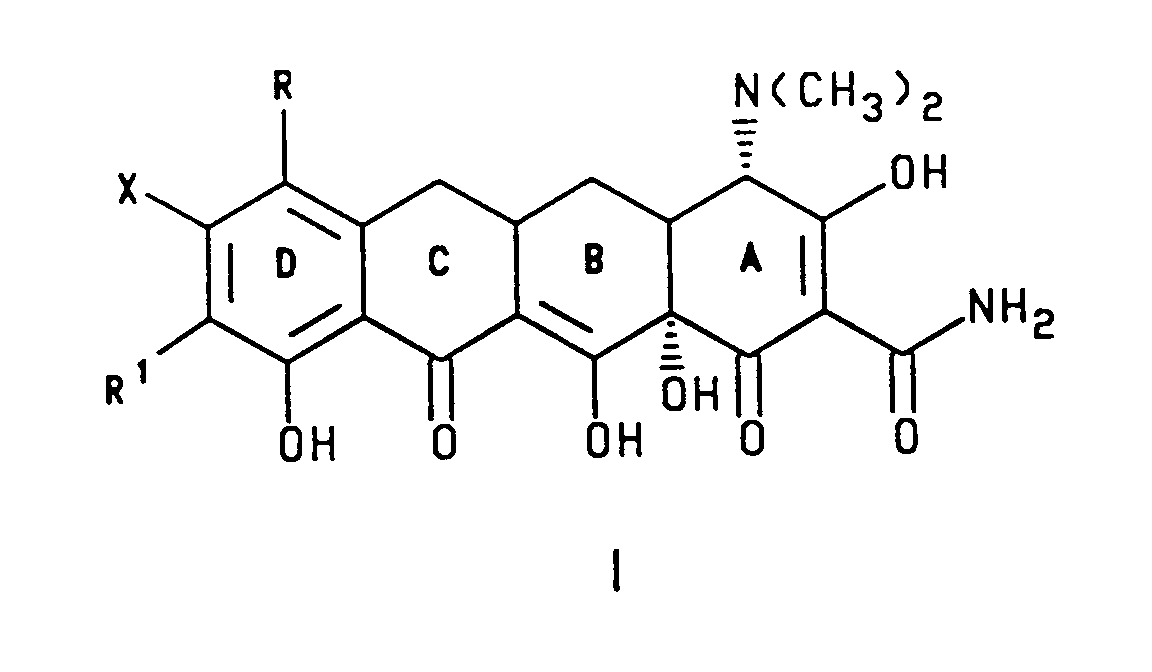
wherein X, R and R¹ are defined in the specification. These compounds are useful as antibiotic agents.
Description
- The invention relates to novel [4S-(4alpha, 12aalpha)]-4-(dimethylamino)-7-(substituted)-8-(substituted)-9-(substituted)-1,4,4a,5,5a,6,11,12a-octahydro-3,10,12,12a-tetrahydroxy-1,11-dioxo-2-naphthacenecarboxamides herein after called 7-(substituted)-8-(substituted)-9-(substituted)-6-demethyl-6-deoxytetracyclines, which are useful as antibiotic agents and exhibit antibacterial activity against a wide spectrum of organisms including organisms which are resistant to tetracyclines.
- The invention also relates to novel 7-(substituted)-8-(substituted)-9-(substituted)-6-demethyl-6-deoxytetracycline intermediates useful for making the novel compounds of the present invention and to novel methods for producing the novel compounds and intermediate compounds.
- This invention is concerned with novel 7-(substituted)-8-(substituted)-9-(substituted)-6-demethyl-6-deoxytetracyclines, represented by formulas I and II, which have antibacterial activity; with method of treating infectious diseases in warm blooded animals employing these new compound; with methods of treating or controlling veterinary diseases; with pharmaceutical preparations containing these compounds; with novel intermediate compounds and processes for the production of these compounds. More particularly, this invention is concerned with compounds of formulas I and II which have enhanced in vitro and in vivo antibiotic activity against tetracycline resistant strains as well as a high level of activity against strains which are normally susceptible to tetracyclines.

In formula I and II, X is selected from halogen or trifluoromethanesulfonyloxy; the halogen is selected from bromine, chlorine, fluorine or iodine; R and R¹ are the same or different and are selected from hydrogen; nitro; amino; halogen (selected from chlorine, bromine, fluorine or iodine); cyano; hydroxy; or -NR²R³;
and when R or R¹ = -NR²R³ and R² = hydrogen,
R³ = methyl, ethyl, n-propyl, 1-methylethyl, n-butyl, 1-methylpropyl, 2-methylpropyl or 1,1-dimethylethyl;
and when R² = methyl or ethyl,
R³ = methyl, ethyl, n-propyl, 1-methylethyl, n-butyl, 1-methylpropyl or 2-methylpropyl;
and when R² = n-propyl,
R³ = n-propyl, 1-methylethyl, n-butyl, 1-methylpropyl or 2-methylpropyl;
and when R² = 1-methylethyl,
R³ = n-butyl, 1-methylpropyl or 2-methylpropyl;
and when R² = n-butyl,
R³ = n-butyl, 1-methylpropyl or 2-methylpropyl;
and when R² = 1-methylpropyl,
R³ = 2-methylpropyl;
and when R or R¹ = -NR²R³ and R² = hydrogen,
R³ is selected from R⁴(CH₂)nCO- or R4' (CH₂)nSO₂-; and when R³ = R⁴(CH₂)nCO- and n=0,
R⁴ is selected from hydrogen; amino; hydroxyamino; straight or branched mono(C₁-C₆)alkylamino group selected from methyl, ethyl, n-propyl, 1-methylethyl, n-butyl, 1-methylpropyl, 2-methylpropyl, 1,1-dimethylethyl, n-pentyl, 2-methylbutyl, 1,1-dimethylpropyl, 2,2-dimethylpropyl, 3-methylbutyl, n-hexyl, 1-methylpentyl, 1,1-dimethylbutyl, 2,2-dimethylbutyl, 3-methylpentyl, 1,2-dimethylbutyl, 1,3-dimethylbutyl or 1-methyl-1-ethylpropylamino and where appropriate their diastereomers and enantiomers; (C₃-C₈)cycloalkylamino group selected from cyclopropyl, trans-1,2-dimethylcyclopropyl, cis-1,2-dimethylcyclopropyl, trans-2,3-dimethylcyclopropyl, cis-2,3-dimethylcyclopropyl, cyclobutyl, trans-2,3-dimethylcyclobutyl, cis-2,3-dimethylcyclobutyl, cyclopentyl, cyclohexyl, cycloheptyl, cyclooctyl, bicyclo[2.2.1]hept-2-yl, or bicyclo[2.2.2]oct-2-ylamino and where appropriate their diastereomers and enantiomers; straight or branched chain di(C₁-C₆)alkylamino group selected from dimethylamino, diethylamino, methyl(ethyl)amino, ethyl(1-methylethyl)amino or a combination of methyl, ethyl, n-propyl, 1-methylethyl, n-butyl, 1-methylpropyl, 2-methylpropyl, 1,1-dimethylethyl, n-pentyl, 2-methylbutyl, 1,1-dimethylpropyl, 2,2-dimethylpropyl, 3-methylbutyl, n-hexyl, 1-methylpentyl, 1,1-dimethylbutyl, 2,2-dimethylbutyl, 3-methylpentyl, 1,2-dimethylbutyl, 1,3-dimethylbutyl or 1-methyl-1-ethylpropylamino and where appropriate their diastereomers and enantiomers; (C₁-C₆)alkoxyamino group selected from methoxy, ethoxy, propoxy, butoxy, pentoxy or hexoxyamino; (C₃-C₈)cycloalkoxyamino group selected from cyclopropoxy, trans-1,2-dimethylcyclopropoxy, cis-1,2-dimethylcyclopropoxy, trans-2,3-dimethylcyclopropoxy, cis-2,3-dimethylcyclopropoxy, cyclobutoxy, trans-2,3-dimethylcyclobutoxy, cis-2,3-dimethylcyclobutoxy, cyclopentoxy, cyclohexoxy, cycloheptyloxy, cyclooctoxy, bicyclo[2.2.1]hept-2-yloxy, or bicyclo[2.2.1]oct-2-yloxyamino and where appropriate their diastereomers and enantiomers; (C₇-C₁₀)aralkoxyamino group selected from benzyloxy, 2-phenylethoxy, α-phenylethoxy, (2-naphthyl)methoxy, (1-naphthyl)methoxy, or phenylpropoxyamino; (C₂-C₈)azacycloalkyl group selected from aziridinyl, azetidinyl, pyrrolidinyl, pyrrolinyl, piperidinyl, 2-methylpyrrolidinyl, cis-3,4-dimethylpyrrolidinyl, trans-3,4-dimethylpyrrolidinyl, 2-azabicyclo[2.1.1]hex-2-yl, 5-azabicyclo[2.1.1]hex-5-yl, 2-azabicyclo[2.2.1]hept-2-yl, 7-azabicyclo[2.2.1]hept-7-yl, or 2-azabicyclo[2.2.2]oct-2-yl and where appropriate their diastereomers and enantiomers; azaheterocycloalkyl group selected from morpholinyl, piperazinyl, 4-methylpiperazinyl, 4-hydroxypiperazinyl, 4-(C₁-C₄)alkoxypiperazinyl, thiamorpholinyl, tetrahydro-1,2-oxazinyl, isoxazolidinyl, pyrazolidinyl, 2-methylpyrazolidinyl, 2,5-diazabicyclo[2.2.2]hept-2-yl, or 2,5-diaza-5-methylbicyclo[2.2.1]hept-2-yl and where appropriate their diastereomers and enantiomers; azaheterocyclic group selected from 1-imidazolyl, 1-pyrrolyl, 1-(1,2,3-triazolyl), 4-(1,2,4-triazolyl), 1-tetrazolyl, or 2-tetrazolyl; carboxy(C₂-C₄)alkylamino group selected from aminoacetic acid, α-aminopropionic acid, or α-aminobutyric acid and their optical isomers; (heterocyclo)amino group selected from 2- or 3-furyl, 2- or 3-thienyl, 2-, 3- or 4-pyridyl, 2- or 5-pyridazinyl, 2-pyrazinyl, or 2-(imidazolyl)amino and their substituted analogues (substitution selected from straight or branched (C₁-C₆)alkyl); (C₆-C₁₀)arylamino group selected from phenylamino or naphthylamino; substituted (C₆-C₁₀)arylamino group selected from 4-(acetamido)phenyl, 2-,3- or 4-halophenyl, 2-,3-, or 4-(C₁-C₄)alkylphenyl, or 2-,3- or 4-carboxyphenylamino; (C₇-C₁₀)arylalkylamino group selected from benzyl, 2-phenylethyl, α-phenylethyl, (2-naphthyl)methyl, (1-naphthyl)methyl or phenylpropylamino; straight or branched (C₁-C₄)alkyl group selected from methyl, ethyl, n-propyl, 1-methylethyl, n-butyl, 1-methylpropyl, 2-methylpropyl or 1,1-dimethylethyl; (C₃-C₆)cycloalkyl group selected from cyclopropyl, cyclobutyl, cyclopentyl or cyclohexyl; substituted (C₃-C₆)cycloalkyl group (substitution selected from (C₁-C₃)alkyl, cyano, amino or (C₁-C₃)acyl); (C₆-C₁₀)aryl group selected from phenyl, α-naphthyl or β-naphthyl; substituted (C₆-C₁₀)aryl group (substitution selected from halo, (C₁-C₄)alkoxy, trihalo(C₁-C₃)alkyl, nitro, amino, cyano, (C₁-C₄)alkoxycarbonyl, (C₁-C₃)alkylamino or carboxy); (C₇-C₉)aralkyl group selected from benzyl, 1-phenylethyl, 2-phenylethyl or phenylpropyl; α-hydroxy(C₁-C₃)alkyl group selected from hydroxymethyl, α-hydroxyethyl,α-hydroxy-1-methylethyl or α-hydroxypropyl; α-mercapto(C₁-C₃)alkyl group selected from mercaptomethyl, α-mercaptoethyl, α-mercapto-1-methyl-ethyl or α-mercaptopropyl; halo(C₁-C₃)alkyl group such as bromomethyl, fluoromethyl, difluoromethyl, trifluoromethyl, chloromethyl, dichloromethyl, trichloromethyl, 2-fluoroethyl, 2,2-difluoroethyl, 2,2,2-trifluoroethyl, 2-bromoethyl or 2-iodoethyl; a heterocycle group selected from a five membered aromatic or saturated ring with one N, O, S or Se heteroatom optionally having a benzo or pyrido ring fused thereto:
such as pyrrolyl, N-methylindolyl, indolyl, 2-pyrrolidinyl, 3-pyrrolidinyl, 2-pyrrolinyl, tetrahydrofuranyl, furanyl, benzofuranyl, tetrahydrothienyl, thienyl, benzothienyl or selenazolyl, or a five membered aromatic ring with two N, O, S or Se heteroatoms optionally having a benzo or pyrido ring fused thereto:
such as imidazolyl, pyrazolyl, benzimidazolyl, oxazolyl, benzoxazolyl, indazolyl, thiazolyl, benzothiazolyl, 3-alkyl-3H-imidazo[4,5-b]pyridyl or pyridylimidazolyl, or a five membered saturated ring with one or two N, O, S or Se heteroatoms and an adjacent appended O heteroatom:
(A is selected from hydrogen; straight or branched (C₁-C₄) alkyl; C₆-aryl; substituted C₆-aryl (substitution selected from halo,(C₁-C₄)alkoxy, trihalo(C₁-C₃)alkyl, nitro, amino, cyano, (C₁-C₄)alkoxycarbonyl, (C₁-C₃)alkylamino or carboxy); (C₇-C₉)aralkyl group selected from benzyl, 1-phenylethyl, 2-phenylethyl or phenylpropyl)
such as γ-butyrolactam, γ-butyrolactone, imidazolidinone or N-aminoimidazolidinone, or a six membered aromatic ring with one to three N heteroatoms such as pyridyl, pyridazinyl, pyrazinyl, sym-triazinyl, unsym-triazinyl, pyrimidinyl or (C₁-C₃)alkylthiopyridazinyl, or a six membered saturated ring with one or two N, O, S or Se heteroatoms and an adjacent appended O heteroatom such as 2,3-dioxo-1-piperazinyl, 4-ethyl-2,3-dioxo-1-piperazinyl, 4-methyl-2,3-dioxo-1-piperazinyl, 4-cyclopropyl-2-dioxo-1-piperazinyl, 2-dioxomorpholinyl or 2-dioxo-thiomorpholinyl; acyl or haloacyl group selected from acetyl, propionyl, chloroacetyl, trifluoroacetyl, (C₃-C₆)cycloalkylcarbonyl such as cyclopropylcarbonyl, cyclobutylcarbonyl, cyclopentylcarbonyl, cyclohexylcarbonyl, (2,3-dimethylcyclopropyl)carbonyl, (1,2-dimethylcyclopropyl)carbonyl, (2-ethylcyclopropyl)carbonyl, (2-methylcyclopentyl)carbonyl or (3-ethylcyclobutyl)carbonyl, (C₆-C₁₀)aroyl selected from benzoyl or naphthoyl, halo substituted (C₆-C₁₀)aroyl such as pentafluorobenzoyl, 4-chlorobenzoyl, 3-bromobenzoyl or 3,4-difluorobenzoyl, (C₁-C₄)alkylbenzoyl such as 4-toluoyl, 2-toluoyl or 4-(1-methylethyl)benzoyl, or (heterocycle)carbonyl, the heterocycle selected from a five membered aromatic or saturated ring with one N, O, S or Se heteroatom optionally having a benzo or pyrido ring fused thereto:
such as pyrrolyl, N-methylindolyl, indolyl, 2-pyrrolidinyl, 3-pyrrolidinyl, 2-pyrrolinyl, tetrahydrofuranyl, furanyl, benzofuranyl, tetrahydrothienyl, thienyl, benzothienyl or selenazolyl, or a five membered aromatic ring with two N, O, S or Se heteroatoms optionally having a benzo or pyrido ring fused thereto:
such as imidazolyl, pyrazolyl, benzimidazolyl, oxazolyl, benzoxazolyl, indazolyl, thiazolyl, benzothiazolyl, 3-alkyl-3H-imidazo[4,5-b]pyridyl or pyridylimidazolyl, or a five membered saturated ring with one or two N, O, S or Se heteroatoms and an adjacent appended O heteroatom:
(A is selected from hydrogen; straight or branched (C₁-C₄)alkyl; C₆-aryl; substituted C₆-aryl (substitution selected from halo,(C₁-C₄)alkoxy, trihalo(C₁-C₃)alkyl, nitro, amino, cyano, (C₁-C₄)alkoxycarbonyl, (C₁-C₃)alkylamino or carboxy); (C₇-C₉)aralkyl group selected from benzyl, 1-phenylethyl, 2-phenylethyl or phenylpropyl)
such as γ-butyrolactam, γ-butyrolactone, imidazolidinone or N-aminoimidazolidinone, or a six membered aromatic ring with one to three N heteroatoms such as pyridyl, pyridazinyl, pyrazinyl, sym-triazinyl, unsym-triazinyl, pyrimidinyl or (C₁-C₃)alkylthiopyridazinyl, or a six membered saturated ring with one or two N, O, S or Se heteroatoms and an adjacent appended O heteroatom such as 2,3-dioxo-1-piperazinyl, 4-ethyl-2,3-dioxo-1-piperazinyl, 4-methyl-2,3-dioxo-1-piperazinyl, 4-cyclopropyl-2-dioxo-1-piperazinyl, 2-dioxomorpholinyl or 2-dioxothiomorpholinyl; (C₁-C₄)alkoxycarbonyl group selected from methoxycarbonyl, ethoxycarbonyl, straight or branched propoxylcarbonyl, straight or branched butoxycarbonyl or allyloxycarbonyl; α-aminomethoxycarbonyl; halomethoxycarbonyl; vinyl or substituted vinyl group [substitution selected from (C₁-C₃)alkyl group, halogen, (C₆-C₁₀)aryl group selected from phenyl, α-naphthyl, β-naphthyl, substituted (C₆-C₁₀)aryl group (substitution selected from halo, (C₁-C₄)alkoxy, trihalo(C₁-C₃)alkyl, nitro, amino, cyano, (C₁-C₄)alkoxycarbonyl, (C₁-C₃)alkylamino or carboxy), halo(C₁-C₃)alkyl group such as bromomethyl, fluoromethyl, difluoromethyl, trifluoromethyl, chloromethyl, dichloromethyl, trichloromethyl, 2-fluoroethyl, 2,2-difluoroethyl, 2,2,2-trifluoroethyl, 2-bromoethyl or 2-iodoethyl, a heterocycle group selected from a five membered aromatic or saturated ring with one N, O, S or Se heteroatom optionally having a benzo or pyrido ring fused thereto:
such as pyrrolyl, N-methylindolyl, indolyl, 2-pyrrolidinyl, 3-pyrrolidinyl, 2-pyrrolinyl, tetrahydrofuranyl, furanyl, benzofuranyl, tetrahydrothienyl, thienyl, benzothienyl or selenazolyl]; (C₁-C₄)alkoxy group such as allyloxy, methoxy, ethoxy, n-propoxy, n-butoxy or tert-butoxy; C₆-aryloxy group selected from phenoxy or substituted phenoxy (substitution selected from halo, (C₁-C₄)alkyl, nitro, cyano, thiol, amino, carboxy, di(C₁-C₃)alkylamino); (C₇-C₁₀)aralkyloxy group such as benzyloxy, 1-phenylethyloxy or 2-phenylethyloxy; vinyloxy or substituted vinyloxy group (substitution selected from (C₁-C₄)alkyl, cyano, carboxy, or (C₆-C₁₀)aryl selected from phenyl, α-naphthyl or β-naphthyl); RaRbamino(C₁-C₄)alkoxy group, wherein RaRb is a straight or branched (C₁-C₄)alkyl selected from methyl, ethyl, n-propyl, 1-methylethyl, n-butyl, 1-methylpropyl, 2-methylpropyl or 1,1-dimethylethyl or RaRb is (CH₂)n, n=2-6, or -(CH₂)₂W(CH₂)₂- wherein W is selected from -N(C₁-C₃)alkyl [straight or branched], -NH, -NOB [B is selected from hydrogen or (C₁-C₃)alkyl], O or S; or RaRbaminoxy group, wherein RaRb is a straight or branched (C₁-C₄)alkyl selected from methyl, ethyl, n-propyl, 1-methylethyl, n-butyl, 1-methylpropyl, or 2-methylpropyl or RaRb is (CH₂)n, n=2-6, or -(CH₂)₂W(CH₂)₂- wherein W is selected from -N(C₁-C₃)- alkyl [straight or branched], -NH, -NOB [B is selected from hydrogen or (C₁-C₃)alkyl], O or S; and when R³ = R⁴(CH₂)nCO- and n=1-4;
R⁴ is selected from hydrogen; straight or branched (C₁-C₄)alkyl group selected from methyl, ethyl, n-propyl, 1-methylethyl, n-butyl, 1-methylpropyl, 2-methylpropyl or 1,1-dimethylethyl; (C₃-C₆)cycloalkyl group selected from cyclopropyl, cyclobutyl, cyclopentyl or cyclohexyl; substituted (C₃-C₆)cycloalkyl group (substitution selected from (C₁-C₃)alkyl, cyano, amino or (C₁-C₃)acyl); (C₆-C₁₀)aryl group selected from phenyl, α-naphthyl or β-naphthyl; substituted(C₆-C₁₀)- aryl group (substitution selected from halo, (C₁-C₄)alkoxy, trihalo(C₁-C₃)alkyl, nitro, amino, cyano, (C₁-C₄)alkoxycarbonyl, (C₁-C₃)alkylamino or carboxy); (C₇-C₉)aralkyl group such as benzyl, 1-phenylethyl, 2-phenylethyl or phenylpropyl; acyloxy or haloacyloxy group, selected from acetyl, propionyl, chloroacetyl, trichloroacetyl, (C₃-C₆)cycloalkyl- carbonyl, (C₆-C₁₀)aroyl selected from benzoyl or naphthoyl, halo substituted (C₆-C₁₀)aroyl such as pentafluorobenzoyl, 4-chlorobenzoyl, 3-bromobenzoyl or 3,4-difluorobenzoyl, (C₁-C₄)alkylbenzoyl such as 4-toluoyl, 2-toluoyl or 4-(1-methylethyl)benzoyl, (heterocycle)carbonyl, the heterocycle selected from a five membered aromatic or saturated ring with one N, O, S or Se heteroatom optionally having a benzo or pyrido ring fused thereto:
such as pyrrolyl, N-methylindolyl, indolyl, 2-pyrrolidinyl, 3-pyrrolidinyl, 2-pyrrolinyl, tetrahydrofuranyl, furanyl, benzofuranyl, tetrahydrothienyl, thienyl, benzothienyl or selenazolyl, or a five membered aromatic ring with two N, O, S or Se heteroatoms optionally having a benzo or pyrido ring fused thereto: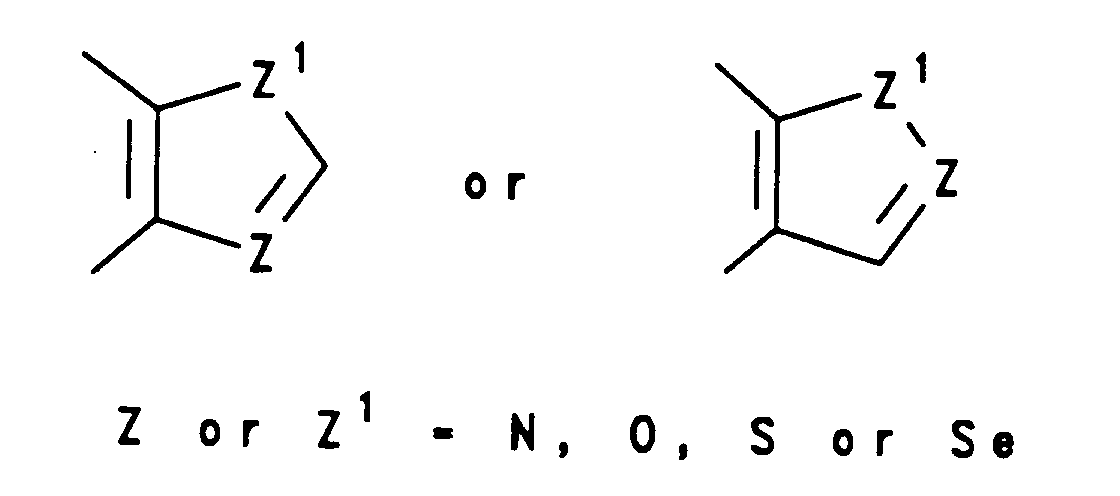
such as imidazolyl, pyrazolyl, benzimidazolyl, oxazolyl, benzoxazolyl, indazolyl, thiazolyl, benzothiazolyl, 3-alkyl-3H-imidazo[4,5-b]pyridyl or pyridylimidazolyl, or a five membered saturated ring with one or two N, O, S or Se heteroatoms and an adjacent appended O heteroatom:
(A is selected from hydrogen; straight or branched (C₁-C₄)alkyl; C₆-aryl; substituted C₆-aryl (substitution selected from halo,(C₁-C₄)alkoxy, trihalo(C₁-C₃)alkyl, nitro, amino, cyano, (C₁-C₄)alkoxycarbonyl, (C₁-C₃)alkylamino or carboxy); (C₇-C₉)aralkyl group selected from benzyl, 1-phenylethyl, 2-phenylethyl or phenylpropyl)
such as γ-butyrolactam, γ-butyrolactone, imidazolidinone or N-aminoimidazolidinone, or a six membered aromatic ring with one to three N heteroatoms such as pyridyl, pyridazinyl, pyrazinyl, sym-triazinyl, unsym-triazinyl, pyrimidinyl or (C₁-C₃)alkylthiopyridazinyl, or a six membered saturated ring with one or two N, O, S or Se heteroatoms and an adjacent appended O heteroatom such as 2,3-dioxo-1-piperazinyl, 4-ethyl-2,3-dioxo-1- piperazinyl, 4-methyl-2,3-dioxo-1-piperazinyl, 4-cyclopropyl-2-dioxo-1-piperazinyl, 2-dioxomorpholinyl or 2-dioxothiomorpholinyl; (C₁-C₄)alkoxy group such as allyloxy, methoxy, ethoxy, n-propoxy,n-butoxy or tert-butoxy; C₆-aryloxy group selected from phenoxy or substituted phenoxy (substitution selected from halo, (C₁-C₄)alkyl, nitro, cyano, thiol, amino, carboxy, di(C₁-C₃)alkylamino); (C₇-C₁₀)aralkyloxy group such as benzyloxy, 1-phenylethyloxy or 2-phenylethyloxy; (C₁-C₃)alkylthio group selected from methylthio, ethylthio, propylthio or allylthio; C₆-arylthio group selected from phenylthio or substituted phenylthio (substitution selected from halo, (C₁-C₄)alkyl, nitro, cyano, thiol, amino, carboxy, di(C₁-C₃)alkylamino); C₆-arylsulfonyl group selected from phenylsulfonyl or substituted phenylsulfonyl (substitution selected from halo, (C₁-C₄)alkoxy, trihalo(C₁-C₃)alkyl, nitro, amino, cyano, (C₁-C₄)alkoxycarbonyl, (C₁-C₃)alkylamino or carboxy); (C₇-C₈)aralkylthio group such as benzylthio, 1-phenylethylthio or 2-phenylethylthio; a heterocycle group selected from a five membered aromatic or saturated ring with one N, O, S or Se heteroatom optionally having a benzo or pyrido ring fused thereto:
such as pyrrolyl, N-methylindolyl, indolyl, 2-pyrrolidinyl, 3-pyrrolidinyl, 2-pyrrolinyl, tetrahydrofuranyl, furanyl, benzofuranyl, tetrahydrothienyl, thienyl, benzothienyl or selenazolyl, or a five membered aromatic ring with two N, O,S or Se heteroatoms optionally having a benzo or pyrido ring fused thereto:
such as imidazolyl, pyrazolyl, benzimidazolyl, oxazolyl, benzoxazolyl, indazolyl, thiazolyl, benzothiazolyl, 3-alkyl-3H-imidazo[4,5-b]pyridyl or pyridylimidazolyl, or a five membered saturated ring with one or two N, O, S or Se heteroatoms and an adjacent appended O heteroatom:
(A is selected from hydrogen; straight or branched (C₁-C₄)alkyl; C₆-aryl; substituted C₆-aryl (substitution selected from halo,(C₁-C₄)alkoxy, trihalo(C₁-C₃)alkyl, nitro, amino, cyano, (C₁-C₄)alkoxycarbonyl, (C₁-C₃)alkylamino or carboxy); (C₇-C₉)aralkyl group selected from benzyl, 1-phenylethyl, 2-phenylethyl or phenylpropyl)
such as γ-butyrolactam, γ-butyrolactone, imidazolidinone or N-aminoimidazolidinone, or a six membered aromatic ring with one to three N heteroatoms such as pyridyl, pyridazinyl, pyrazinyl, sym-triazinyl, unsym-triazinyl, pyrimidinyl or (C₁-C₃)alkylthiopyridazinyl, or a six membered saturated ring with one or two N, O, S or Se heteroatoms and an adjacent appended O heteroatom such as 2,3-dioxo-1-piperazinyl, 4-ethyl-2,3-dioxo-1-pipera- zinyl, 4-methyl-2,3-dioxo-1-piperazinyl, 4-cyclopropyl-2-dioxo-1-piperazinyl, 2-dioxomorpholinyl or 2-dioxothiomorpholinyl; hydroxy group; mercapto group; α-hydroxy(C₁-C₃)alkyl group selected from hydroxy- methyl, α-hydroxyethyl or α-hydroxy-1-methylethyl or α-hydroxypropyl; halo(C₁-C₃)alkyl group such as bromomethyl, fluoromethyl, difluoromethyl, trifluoromethyl, chloromethyl, dichloromethyl, trichloromethyl, 2-fluoroethyl, 2,2-difluoroethyl, 2,2,2-trifluoroethyl, 2-bromoethyl or 2-iodoethyl; acyl or haloacyl group selected from acetyl, propionyl, chloroacetyl, trifluoroacetyl, (C₃-C₆)cycloalkylcarbonyl, (C₆-C₁₀)aroyl selected from benzoyl or naphthoyl, halo substituted (C₆-C₁₀)aroyl such as pentafluorobenzoyl, 4-chlorobenzoyl, 3-bromobenzoyl, 3,4-difluorobenzoyl, (C₁-C₄)alkylbenzoyl such as 4-toluoyl, 2-toluoyl or 4-(1-methylethyl)benzoyl, or (heterocycle)carbonyl, the heterocycle selected from a five membered aromatic or saturated ring with one N, O, S or Se heteroatom optionally having a benzo or pyrido ring fused thereto:
such as pyrrolyl, N-methylindolyl, indolyl, 2-pyrrolidinyl, 3-pyrrolidinyl, 2-pyrrolinyl, tetrahydrofuranyl, furanyl,benzofuranyl, tetrahydrothienyl, thienyl, benzothienyl or selenazolyl, or a five membered aromatic ring with two N, O, S or Se heteroatoms optionally having a benzo or pyrido ring fused thereto:
such as imidazolyl, pyrazolyl, benzimidazolyl, oxazolyl, benzoxazolyl, indazolyl, thiazolyl, benzothiazolyl, 3-alkyl-3H-imidazo[4,5-b]pyridyl or pyridylimidazolyl, or a five membered saturated ring with one or two N, O, S or Se heteroatoms and an adjacent appended O heteroatom:
(A is selected from hydrogen; straight or branched (C₁-C₄)alkyl; C₆-aryl; substituted C₆-aryl (substitution selected from halo,(C₁-C₄)alkoxy, trihalo(C₁-C₃)alkyl, nitro, amino, cyano, (C₁-C₄)alkoxycarbonyl, (C₁-C₃)alkylamino or carboxy); (C₇-C₉)-aralkyl group selected from benzyl, 1-phenylethyl, 2-phenylethyl or phenylpropyl)
such as γ-butyrolactam, γ-butyrolactone, imidazolidinone or N-aminoimidazolidinone, or a six membered aromatic ring with one to three N heteroatoms such as pyridyl, pyridazinyl, pyrazinyl, sym-triazinyl, unsym-triazinyl, pyrimidinyl or (C₁-C₃)alkylthiopyridazinyl, or a six membered saturated ring with one or two N, O, S or Se heteroatoms and an adjacent appended O heteroatom such as 2,3-dioxo-1-piperazinyl, 4-ethyl-2,3-dioxo-1-piperazinyl, 4-methyl-2,3-dioxo-1-piperazinyl, 4-cyclopropyl-2-dioxo-1-piperazinyl, 2-dioxomorpholinyl or 2-dioxothiomorpholinyl; (C₁-C₄)alkoxycarbonyl group selected from methoxycarbonyl, ethoxycarbonyl, straight or branched propoxycarbonyl, allyloxycarbonyl or straight or branched butoxycarbonyl; RaRbamino(C₁-C₄)alkoxy group, wherein RaRb is a straight or branched (C₁-C₄)alkyl selected from methyl, ethyl, n-propyl, 1-methylethyl, n-butyl, 1-methylpropyl, or 2-methylpropyl or RaRb is (CH₂)n, n=2-6, or -(CH₂)₂W(CH₂)₂- wherein W is selected from -N(C₁-C₃)alkyl [straight or branched], -NH, -NOB [B is selected from hydrogen or (C₁-C₃)alkyl], O or S; or RaRbaminoxy group, wherein RaRb is a straight or branched (C₁-C₄)alkyl selected from methyl, ethyl, n-propyl, 1-methylethyl, n-butyl, 1-methylpropyl, or 2-methylpropyl or RaRb is (CH₂)n, n=2-6, or -(CH₂)₂W(CH₂)₂- wherein W is selected from -N(C₁-C₃)alkyl [straight or branched], -NH, -NOB [B is selected from hydrogen or (C₁-C₃)alkyl], O or S;
and when R³ = R⁴(CH₂)nCO- and n = 2-4,
R⁴ is selected from amino; hydroxyamino; straight or branched mono(C₁-C₆)alkylamino group selected from methyl, ethyl, n-propyl, 1-methylethyl, n-butyl, 1-methylpropyl, 2-methylpropyl, 1,1-dimethylethyl, n-pentyl, 2-methylbutyl, 1,1-dimethylpropyl, 2,2-dimethylpropyl, 3-methylbutyl, n-hexyl, 1-methylpentyl, 1,1-dimethylbutyl, 2,2-dimethylbutyl, 3-methylpentyl, 1,2-dimethylbutyl, 1,3-dimethylbutyl or 1-methyl-1-ethylpropylamino and where appropriate their diastereomers and enantiomers; (C₃-C₈)cycloalkylamino group selected from cyclopropyl, trans-1,2-dimethylcyclopropyl, cis-1,2-dimethylcyclopropyl, trans-2,3-dimethylcyclopropyl, cis-2,3-dimethylcyclopropyl, cyclobutyl, trans-2,3-dimethylcyclobutyl, cis-2,3-dimethylcyclobutyl, cyclopentyl, cyclohexyl, cycloheptyl, cyclooctyl, bicyclo[2.2.1]hept-2-yl, or bicyclo[2.2.2]oct-2-ylamino and where appropriate their diastereomers and enantiomers; straight or branched chain di-(C₁-C₆)alkylamino group selected from dimethylamino, diethylamino, methyl(ethyl)amino, ethyl(1-methylethyl)amino or a combination of methyl, ethyl, n-propyl, 1-methylethyl, n-butyl, 1-methylpropyl, 2-methylpropyl, 1,1-dimethylethyl, n-pentyl, 2-methylbutyl, 1,1-dimethylpropyl, 2,2-dimethylpropyl, 3-methylbutyl, n-hexyl, 1-methylpentyl, 1,1-dimethylbutyl, 2,2-dimethylbutyl, 3-methylpentyl, 1,2-dimethylbutyl, 1,3-dimethylbutyl or 1-methyl-1-ethylpropylamino and where appropriate their diastereomers and enantiomers; (C₁-C₆)alkoxyamino group selected from methoxy, ethoxy, propoxy, butoxy, pentoxy or hexoxyamino; (C₃-C₈)cycloalkoxyamino group selected from cyclopropoxy, trans-1,2-dimethylcyclopropoxy, cis-1,2-dimethylcyclopropoxy, trans-2,3-dimethylcyclopropoxy, cis-2,3-dimethylcyclopropoxy, cyclobutoxy, trans-2,3-dimethylcyclobutoxy, cis-2,3-dimethylcyclobutoxy, cyclopentoxy, cyclohexoxy, cycloheptyloxy, cyclooctoxy, bicyclo[2.2.1]hept-2-yloxy, or bicyclo[2.2.1]oct-2-yloxyamino and where appropriate their diastereomers and enantiomers; (C₇-C₁₀)aralkoxyamino group selected from benzyloxy, 2-phenylethoxy, α-phenylethoxy, (2-naphthyl)methoxy, (1-naphthyl)methoxy, or phenylpropoxyamino; (C₂-C₈)azacycloalkyl group selected from aziridinyl, azetidinyl, pyrrolidinyl, pyrrolinyl, piperidinyl, 2-methylpyrrolidinyl, cis-3,4-dimethylpyrrolidinyl, trans-3,4-dimethylpyrrolidinyl, 2-azabicyclo[2.1.1]hex-2-yl, 5-azabicyclo[2.1.1]hex-5-yl, 2-azabicyclo[2.2.1]hept-2-yl, 7-azabicyclo[2.2.1]hept-7-yl, or 2-azabicyclo[2.2.2]oct-2-yl and where appropriate their diastereomers and enantiomers; azaheterocycloalkyl group selected from morpholinyl, piperazinyl, 4-methylpiperazinyl, 4-hydroxypiperazinyl, 4-(C₁-C₄)alkoxypiperazinyl, thiamorpholinyl, tetrahydro-1,2-oxazinyl, isoxazolidinyl, pyrazolidinyl, 2-methylpyrazolidinyl, 2,5-diazabicyclo[2.2.2]hept-2-yl, or 2,5-diaza-5-methylbicyclo[2.2.1]hept-2-yl and where appropriate their diastereomers and enantiomers; azaheterocyclic group selected from 1-imidazolyl, 1-pyrrolyl, 1-(1,2,3-triazolyl), 4-(1,2,4-triazolyl), 1-tetrazolyl, or 2-tetrazolyl; carboxy(C₂-C₄)alkylamino group selected from aminoacetic acid, α-aminopropionic acid, or α-aminobutyric acid and their optical isomers; (heterocyclo)amino group selected from 2- or 3-furyl, 2- or 3-thienyl, 2-, 3- or 4-pyridyl, 2- or 5-pyridazinyl, 2-pyrazinyl, or 2-(imidazolyl)amino and their substituted analogues (substitution selected from straight or branched (C₁-C₆)alkyl); (C₆-C₁₀)arylamino group selected from phenylamino or naphthylamino; substituted (C₆-C₁₀)arylamino group selected from 4-(acetamido)phenyl, 2-,3- or 4-halophenyl, 2-,3-, or 4-(C₁-C₄)alkylphenyl, or 2-,3- or 4-carboxyphenylamino; (C₇-C₁₀)arylalkylamino group selected from benzyl, 2-phenylethyl, α-phenylethyl, (2-naphthyl)methyl, (1-naphthyl)methyl or phenylpropylamino; (C₁-C₄)alkoxycarbonylamino group selected from tert-butoxycarbonylamino, allyloxycarbonylamino, methoxycarbonylamino, ethoxycarbonylamino or propoxycarbonylamino;
and when R³ = R4' (CH₂)nSO₂- and n = 0,
R4' is selected from amino; hydroxyamino; straight or branched mono(C₁-C₆)alkylamino group selected from methyl, ethyl, n-propyl, 1-methylethyl, n-butyl, 1-methylpropyl, 2-methylpropyl, 1,1-dimethylethyl, n-pentyl, 2-methylbutyl, 1,1-dimethylpropyl, 2,2-dimethylpropyl, 3-methylbutyl, n-hexyl, 1-methylpentyl, 1,1-dimethylbutyl, 2,2-dimethylbutyl, 3-methylpentyl, 1,2-dimethylbutyl, 1,3-dimethylbutyl or 1-methyl-1-ethylpropylamino and where appropriate their diastereomers and enantiomers; (C₃-C₈)cycloalkylamino roup selected from cyclopropyl, trans-1,2-dimethylcyclopropyl, cis-1,2-dimethylcyclopropyl, trans-2,3-dimethylcyclopropyl, cis-2,3-dimethylcyclopropyl, cyclobutyl, trans-2,3-dimethylcyclobutyl, cis-2,3-dimethylcyclobutyl, cyclopentyl, cyclohexyl, cycloheptyl, cyclooctyl, bicyclo[2.2.1]hept-2-yl, or bicyclo[2.2.2]oct-2-ylamino and where appropriate their diastereomers and enantiomers; straight or branched chain di-(C₁-C₆)alkylamino group selected from dimethylamino, diethylamino, methyl(ethyl)amino, ethyl(1-methylethyl)amino or a combination of methyl, ethyl, n-propyl, 1-methylethyl, n-butyl, 1-methylpropyl, 2-methylpropyl, 1,1-dimethylethyl, n-pentyl, 2-methylbutyl, 1,1-dimethylpropyl, 2,2-dimethylpropyl, 3-methylbutyl, n-hexyl, 1-methylpentyl, 1,1-dimethylbutyl, 2,2-dimethylbutyl, 3-methylpentyl, 1,2-dimethylbutyl, 1,3-dimethylbutyl or 1-methyl-1-ethylpropylamino and where appropriate their diastereomers and enantiomers; (C₁-C₆)alkoxyamino group selected from methoxy, ethoxy, propoxy, butoxy, pentoxy or hexoxyamino; (C₃-C₈)cycloalkoxyamino group selected from cyclopropoxy, trans-1,2-dimethylcyclopropoxy, cis-1,2-dimethylcyclopropoxy, trans-2,3-dimethylcyclopropoxy, cis-2,3-dimethylcyclopropoxy, cyclobutoxy, trans-2,3-dimethylcyclobutoxy, cis-2,3-dimethylcyclobutoxy, cyclopentoxy, cyclohexoxy, cycloheptyloxy, cyclooctoxy, bicyclo[2.2.1]hept-2-yloxy, or bicyclo[2.2.1]oct-2-yloxyamino and where appropriate their diastereomers and enantiomers; (C₇-C₁₀)aralkoxyamino group selected from benzyloxy, 2-phenylethoxy, α-phenylethoxy, (2-naphthyl)methoxy, (1-naphthyl)methoxy, or phenylpropoxyamino; (C₂-C₈)azacycloalkyl group selected from aziridinyl, azetidinyl, pyrrolidinyl, pyrrolinyl, piperidinyl, 2-methylpyrrolidinyl, cis-3,4-dimethylpyrrolidinyl, trans-3,4-dimethylpyrrolidinyl, 2-azabicyclo[2.1.1]hex-2-yl, 5-azabicyclo[2.1.1]hex-5-yl, 2-azabicyclo[2.2.1]hept-2-yl, 7-azabicyclo[2.2.1]hept-7-yl, or 2-azabicyclo[2.2.2]oct-2-yl and where appropriate their diastereomers and enantiomers; azaheterocycloalkyl group selected from morpholinyl, piperazinyl, 4-methylpiperazinyl, 4-hydroxypiperazinyl, 4-(C₁-C₄)alkoxypiperazinyl, thiamorpholinyl, tetrahydro-1,2-oxazinyl, isoxazolidinyl, pyrazolidinyl, 2-methylpyrazolidinyl, 2,5-diazabicyclo[2.2.2]hept-2-yl, or 2,5-diaza-5-methylbicyclo[2.2.1]hept-2-yl and where appropriate their diastereomers and enantiomers; azaheterocyclic group selected from 1-imidazolyl, 1-pyrrolyl, 1-(1,2,3-triazolyl), 4-(1,2,4-triazolyl), 1-tetrazolyl, or 2-tetrazolyl; (C₆-C₁₀)arylamino group selected from phenylamino or naphthylamino; (C₇-C₁₀)arylalkylamino group selected from benzyl, 2-phenylethyl, α-phenylethyl, (2-naphthyl)methyl, (1-naphthyl)methyl or phenylpropylamino; straight or branched (C₁-C₄)alkyl group selected from methyl, ethyl, n-propyl, 1-methylethyl, n-butyl, 1-methylpropyl, 2-methylpropyl or 1,1-dimethylethyl; (C₃-C₆)cycloalkyl group selected from cyclopropyl, cyclobutyl, cyclopentyl or cyclohexyl; substituted (C₃-C₆)cycloalkyl group (substitution selected from (C₁-C₃)alkyl, cyano, amino or (C₁-C₃)acyl); (C₆-C₁₆)aryl group selected from phenyl, α-naphthyl or β-naphthyl; substituted (C₆-C₁₀)aryl group (substitution selected from halo, (C₁-C₄)alkoxy, trihalo(C₁-C₃)alkyl, nitro, amino, cyano, (C₁-C₄)alkoxycarbonyl, (C₁-C₃)alkylamino or carboxy); (C₇-C₉)aralkyl group such as benzyl, 1-phenylethyl, 2-phenylethyl or phenylpropyl; halo(C₁-C₃)alkyl group such as bromomethyl, fluoromethyl, difluoromethyl, trifluoromethyl, chloromethyl, dichloromethyl, trichloromethyl, 2-fluoroethyl, 2,2-difluoroethyl, 2,2,2-trifluoroethyl, 2-chloroethyl, 2,2-dichloroethyl, 2,2,2-trichloroethyl, 2-bromoethyl or 2-iodoethyl; a heterocycle group selected from a five membered aromatic or saturated ring with one N, O, S or Se heteroatom optionally having a benzo or pyrido ring fused thereto:
such as pyrrolyl, N-methylindolyl, indolyl, 2-pyrrolidinyl, 3-pyrrolidinyl, 2-pyrrolinyl, tetrahydrofuranyl, furanyl, benzofuranyl, tetrahydrothienyl, thienyl, benzothienyl or selenazolyl, or a five membered aromatic ring with two N, O, S or Se heteroatoms optionally having a benzo or pyrido ring fused thereto:
such as imidazolyl, pyrazolyl, benzimidazolyl, oxazolyl, benzoxazolyl, indazolyl, thiazolyl, benzothiazolyl, 3-alkyl-3H-imidazo[4,5-b]pyridyl or pyridylimidazolyl, or a five membered saturated ring with one or two N, O, S or Se heteroatoms and an adjacent appended O heteroatom:
(A is selected from hydrogen; straight or branched (C₁-C₄)alkyl; C₆-aryl; substituted C₆-aryl (substitution selected from halo,(C₁-C₄)alkoxy, trihalo(C₁-C₃)alkyl, nitro, amino, cyano, (C₁-C₄)alkoxycarbonyl, (C₁-C₃)alkylamino or carboxy); (C₇-C₉)aralkyl group selected from benzyl, 1-phenylethyl, 2-phenylethyl or phenylpropyl)
such as γ-butyrolactam, γ-butyrolactone, imidazolidinone or N-aminoimidazolidinone, or a six membered aromatic ring with one to three N heteroatoms such as pyridyl, pyridazinyl, pyrazinyl, sym-triazinyl, unsym-triazinyl, pyrimidinyl or (C₁-C₃)alkylthiopyridazinyl, or a six membered saturated ring with one or two N, O, S or Se heteroatoms and an adjacent appended O heteroatom such as 2,3-dioxo-1-piperazinyl, 4-ethyl-2,3-dioxo-1-piperazinyl, 4-methyl-2,3-dioxo-1-piperazinyl, 4-cyclopropyl-2-dioxo-1-piperazinyl, 2-dioxomorpholinyl or 2-dioxothiomorpholinyl; RaRbamino(C₁-C₄)alkoxy group, wherein RaRb is a straight or branched (C₁-C₄)alkyl selected from methyl, ethyl, n-propyl, 1-methylethyl, n-butyl, 1-methylpropyl, or 2-methylpropyl or RaRb is (CH₂)n, n=2-6, or -(CH₂)₂W(CH₂)₂- wherein W is selected from -N(C₁-C₃)alkyl [straight or branched], -NH, -NOB [B is selected from hydrogen or (C₁-C₃)alkyl], O or S; or RaRbaminoxy group, wherein RaRb is a straight or branched (C₁-C₄)alkyl selected from methyl, ethyl, n-propyl, 1-methylethyl, n-butyl, 1-methylpropyl, or 2-methylpropyl or RaRb is (CH₂)n, n=2-6, or -(CH₂)₂W(CH₂)₂- wherein W is selected from -N(C₁-C₃)alkyl [straight or branched], -NH, -NOB [B is selected from hydrogen or (C₁-C₃)alkyl], O or S;
and when R³ = R4' (CH₂)nSO₂- and n= 1-4,
R4' is selected from hydrogen; straight or branched (C₁-C₄)alkyl group selected from methyl, ethyl, n-propyl, 1-methylethyl, n-butyl, 1-methylpropyl, 2-methylpropyl or 1,1-dimethylethyl; (C₁-C₄)carboxyalkyl group; (C₃-C₆)cycloalkyl group selected from cyclopropyl, cyclobutyl, cyclopentyl or cyclohexyl; substituted (C₃-C₆)cycloalkyl group (substitution selected from (C₁-C₃)alkyl, cyano, amino or (C₁-C₃)acyl); (C₆-C₁₀)aryl group selected from phenyl, α-naphthyl or β-naphthyl; substituted (C₆-C₁₀)aryl group (substitution selected from halo, (C₁-C₄)alkoxy, trihalo(C₁-C₃)alkyl, nitro, amino, cyano, (C₁-C₄)alkoxycarbonyl, (C₁-C₃)alkylamino or carboxy); (C₇-C₉)aralkyl group selected from benzyl, 1-phenylethyl, 2-phenylethyl or phenylpropyl; (C₁-C₄)alkoxy group such as allyloxy, methoxy, ethoxy, n-propoxy or tert-butoxy; C₆-aryloxy group selected from phenoxy or substituted phenoxy (substitution selected from halo, (C₁-C₃)alkyl, nitro, cyano, thiol, amino, carboxy, di(C₁-C₃)alkylamino); (C₇-C₁₀)aralkyloxy group such as benzyloxy, 1-phenylethyloxy or 2-phenylethyloxy; RaRbamino(C₁-C₄)alkoxy group, wherein RaRb is a straight or branched (C₁-C₄)alkyl selected from methyl, ethyl, n-propyl, 1-methylethyl, n-butyl, 1-methylpropyl, or 2-methylpropyl or RaRb is (CH₂)n, n=2-6, or -(CH₂)₂W(CH₂)₂- wherein W is selected from -N(C₁-C₃)alkyl [straight or branched], -NH, -NOB [B is selected from hydrogen or (C₁-C₃)alkyl], O or S; or RaRbaminoxy group, wherein RaRb is a straight or branched (C₁-C₄)alkyl selected from methyl, ethyl, n-propyl, 1-methylethyl, n-butyl, 1-methylpropyl, or 2-methylpropyl or RaRb is (CH₂)n, n=2-6, or -(CH₂)₂W(CH₂)₂- wherein W is selected from -N(C₁-C₃)alkyl [straight or branched], -NH, -NOB [B is selected from hydrogen or (C₁-C₃)alkyl], O or S; (C₁-C₃)alkylthio group selected from methylthio, ethylthio or n-propylthio; C₆-arylthio group selected from phenylthio or substituted phenylthio (substitution selected from halo, (C₁-C₃)alkyl, nitro, cyano, thiol, amino, carboxy, di(C₁-C₃)alkylamino); (C₇-C₈)aralkylthio group such as benzylthio, 1-phenylethylthio or 2-phenylethylthio;
a heterocycle group selected from a five membered aromatic or saturated ring with one N, O, S or Se heteroatom optionally having a benzo or pyrido ring fused thereto:
such as pyrrolyl, N-methylindolyl, indolyl, 2-pyrrolidinyl, 3-pyrrolidinyl, 2-pyrrolinyl, tetrahydrofuranyl, furanyl, benzofuranyl, tetrahydrothienyl, thienyl, benzothienyl or selenazolyl, or a five membered aromatic ring with two N, O, S or Se heteroatoms optionally having a benzo or pyrido ring fused thereto:
such as imidazolyl, pyrazolyl, benzimidazolyl, oxazolyl, benzoxazolyl, indazolyl, thiazolyl, benzothiazolyl, 3-alkyl-3H-imidazo[4,5-b]pyridyl or pyridylimidazolyl, or a five membered saturated ring with one or two N, O, S or Se heteroatoms and an adjacent appended O heteroatom:
(A is selected from hydrogen; straight or branched (C₁-C₄)alkyl; C₆-aryl; substituted C₆-aryl (substitution selected from halo,(C₁-C₄)alkoxy, trihalo(C₁-C₃)alkyl, nitro, amino, cyano, (C₁-C₄)alkoxycarbonyl, (C₁-C₃)alkylamino or carboxy); (C₇-C₉)aralkyl group selected from benzyl, 1-phenylethyl, 2-phenylethyl or phenylpropyl)
such as γ-butyrolactam, γ-butyrolactone, imidazolidinone or N-aminoimidazolidinone, or a six membered aromatic ring with one to three N heteroatoms such as pyridyl, pyridazinyl, pyrazinyl, sym-triazinyl, unsym-triazinyl, pyrimidinyl or (C₁-C₃)alkylthiopyridazinyl, or a six membered saturated ring with one or two N, O, S or Se heteroatoms and an adjacent appended O heteroatom such as 2,3-dioxo-1-piperazinyl, 4-ethyl-2,3-dioxo-1-piperazinyl, 4-methyl-2,3-dioxo-1-piperazinyl, 4-cyclopropyl-2-dioxo-1-piperazinyl, 2-dioxomorpholinyl or 2-dioxothiomorpholinyl; hydroxy group; mercapto group; amino; hydroxyamino; straight or branched mono(C₁-C₆)alkylamino group selected from methyl, ethyl, n-propyl, 1-methylethyl, n-butyl, 1-methylpropyl, 2-methylpropyl, 1,1-dimethylethyl, n-pentyl, 2-methylbutyl, 1,1-dimethylpropyl, 2,2-dimethylpropyl, 3-methylbutyl, n-hexyl, 1-methylpentyl, 1,1-dimethylbutyl, 2,2-dimethylbutyl, 3-methylpentyl, 1,2-dimethylbutyl, 1,3-dimethylbutyl or 1-methyl-1-ethylpropylamino and where appropriate their diastereomers and enantiomers; (C₃-C₈)cycloalkylamino group selected from cyclopropyl, trans-1,2-dimethylcyclopropyl, cis-1,2-dimethylcyclopropyl, trans-2,3-dimethylcyclopropyl, cis-2,3-dimethylcyclopropyl, cyclobutyl, trans-2,3-dimethylcyclobutyl, cis-2,3-dimethylcyclobutyl, cyclopentyl, cyclohexyl, cycloheptyl, cyclooctyl, bicyclo[2.2.1]hept-2-yl, or bicyclo[2.2.2]oct-2-ylamino and where appropriate their diastereomers and enantiomers; straight or branched chain di-(C₁-C₆)alkylamino group selected from dimethylamino, diethylamino, methyl(ethyl)amino, ethyl(1-methylethyl)amino or a combination of methyl, ethyl, n-propyl, 1-methylethyl, n-butyl, 1-methylpropyl, 2-methylpropyl, 1,1-dimethylethyl, n-pentyl, 2-methylbutyl, 1,1-dimethylpropyl, 2,2-dimethylpropyl, 3-methylbutyl, n-hexyl, 1-methylpentyl, 1,1-dimethylbutyl, 2,2-dimethylbutyl, 3-methylpentyl, 1,2-dimethylbutyl, 1,3-dimethylbutyl or 1-methyl-1-ethylpropylamino and where appropriate their diastereomers and enantiomers; (C₁-C₆)alkoxyamino group selected from methoxy, ethoxy, propoxy, butoxy, pentoxy or hexoxyamino; (C₃-C₈)cycloalkoxyamino group selected from cyclopropoxy, trans-1,2-dimethylcyclopropoxy, cis-1,2-dimethylcyclopropoxy, trans-2,3-dimethylcyclopropoxy, cis-2,3-dimethylcyclopropoxy, cyclobutoxy, trans-2,3-dimethylcyclobutoxy, cis-2,3-dimethylcyclobutoxy, cyclopentoxy, cyclohexoxy, cycloheptyloxy, cyclooctoxy, bicyclo[2.2.1]hept-2-yloxy, or bicyclo[2.2.1]oct-2-yloxyamino and where appropriate their diastereomers and enantiomers; (C₇-C₁₀)aralkoxyamino group selected from benzyloxy, 2-phenylethoxy, α-phenylethoxy, (2-naphthyl)methoxy, (1-naphthyl)methoxy, or phenylpropoxyamino; (C₂-C₈)azacycloalkyl group selected from aziridinyl, azetidinyl, pyrrolidinyl, pyrrolinyl, piperidinyl, 2-methylpyrrolidinyl, cis-3,4-dimethylpyrrolidinyl, trans-3,4-dimethylpyrrolidinyl, 2-azabicyclo[2.1.1]hex-2-yl, 5-azabicyclo[2.1.1]hex-5-yl, 2-azabicyclo[2.2.1]hept-2-yl, 7-azabicyclo[2.2.1]hept-7-yl, or 2-azabicyclo[2.2.2]oct-2-yl and where appropriate their diastereomers and enantiomers; azaheterocycloalkyl group selected from morpholinyl, piperazinyl, 4-methylpiperazinyl, 4-hydroxypiperazinyl, 4-(C₁-C₄)alkoxypiperazinyl, thiamorpholinyl, tetrahydro-1,2-oxazinyl, isoxazolidinyl, pyrazolidinyl, 2-methylpyrazolidinyl, 2,5-diazabicyclo[2.2.2]hept-2-yl, or 2,5-diaza-5-methylbicyclo[2.2.1]hept-2-yl and where appropriate their diastereomers and enantiomers; azaheterocyclic group selected from 1-imidazolyl, 1-pyrrolyl, 1-(1,2,3-triazolyl), 4-(1,2,4-triazolyl), 1-tetrazolyl, or 2-tetrazolyl; (C₆-C₁₀)arylamino group selected from phenylamino or naphthylamino; (C₇-C₁₀)arylalkylamino group selected from benzyl, 2-phenylethyl, α-phenylethyl, (2-naphthyl)methyl, (1-naphthyl)methyl or phenylpropylamino; halo(C₁-C₃)alkyl group such as bromomethyl, fluoromethyl, difluoromethyl, trifluoromethyl, chloromethyl, dichloromethyl, trichloromethyl, 2-fluoroethyl, 2,2-difluoroethyl, 2,2,2-trifluoroethyl, 2-chloroethyl, 2,2-dichloroethyl, 2,2,2-trichloroethyl, 2-bromoethyl or 2-iodoethyl; acyl or haloacyl group selected from acetyl, propionyl, chloroacetyl, trifluoroacetyl, (C₃-C₆)cycloalkylcarbonyl, (C₆-C₁₀)aroyl selected from benzoyl or naphthoyl, halo substituted (C₆-C₁₀)aroyl such as pentafluorobenzoyl, 4-chlorobenzoyl, 3-bromobenzoyl or 3,4-difluorobenzoyl, (C₁-C₄)alkylbenzoyl such as 4-toluoyl, 2-toluoyl or 4-(1-methylethyl)benzoyl, or (heterocycle)carbonyl, the heterocycle selected from a five membered aromatic or saturated ring with one N, O, S or Se heteroatom optionally having a benzo or pyrido ring fused thereto:
such as pyrrolyl, N-methylindolyl, indolyl, 2-pyrrolidinyl, 3-pyrrolidinyl, 2-pyrrolinyl, tetrahydrofuranyl, furanyl, benzofuranyl, tetrahydrothienyl, thienyl, benzothienyl or selenazolyl, or a five membered aromatic ring with two N, O, S or Se heteroatoms optionally having a benzo or pyrido ring fused thereto:
such as imidazolyl, pyrazolyl, benzimidazolyl, oxazolyl, benzoxazolyl, indazolyl, thiazolyl, benzothiazolyl, 3-alkyl-3H-imidazo[4,5-b]pyridyl or pyridylimidazolyl, or a five membered saturated ring with one or two N, O, S or Se heteroatoms and an adjacent appended O heteroatom:
(A is selected from hydrogen; straight or branched (C₁-C₄)alkyl; C₆-aryl; substituted C₆-aryl (substitution selected from halo,(C₁-C₄)alkoxy, trihalo(C₁-C₃)alkyl, nitro, amino, cyano, (C₁-C₄)alkoxycarbonyl, (C₁-C₃)alkylamino or carboxy); (C₇-C₉)aralkyl group selected from benzyl, 1-phenylethyl, 2-phenylethyl or phenylpropyl)
such as γ-butyrolactam, γ-butyrolactone, imidazolidinone or N-aminoimidazolidinone, or a six membered aromatic ring with one to three N heteroatoms such as pyridyl, pyridazinyl, pyrazinyl, sym-triazinyl, unsym-triazinyl, pyrimidinyl or (C₁-C₃)alkylthiopyridazinyl, or a six membered saturated ring with one or two N, O, S or Se heteroatoms and an adjacent appended O heteroatom such as 2,3-dioxo-1-piperazinyl, 4-ethyl-2,3-dioxo-1-piperazinyl, 4-methyl-2,3-dioxo-1-piperazinyl, 4-cyclopropyl-2-dioxo-1-piperazinyl, 2-dioxomorpholinyl or 2-dioxothiomorpholinyl; (C₁-C₄)alkoxycarbonyl group selected from methoxycarbonyl, ethoxycarbonyl, straight or branched propoxycarbonyl, allyloxycarbonyl or straight or branched butoxycarbonyl; R⁵ is selected from hydrogen; straight or branched (C₁-C₃)alkyl group selected from methyl, ethyl, n-propyl or 1-methylethyl; (C₆-C₁₀)aryl group selected from phenyl, α-naphthyl or β-naphthyl; (C₇-C₉)aralkyl group such as benzyl, 1-phenylethyl, 2-phenylethyl or phenylpropyl; a heterocycle group selected from a five membered aromatic or saturated ring with one N, O, S or Se heteroatom optionally having a benzo or pyrido ring fused thereto:
such as pyrrolyl, N-methylindolyl, indolyl, 2-pyrrolidinyl, 3-pyrrolidinyl, 2-pyrrolinyl, tetrahydrofuranyl, furanyl, benzofuranyl, tetrahydrothienyl, thienyl, benzothienyl or selenazolyl, or a five membered aromatic ring with two N, O, S or Se heteroatoms optionally having a benzo or pyrido ring fused thereto:
such as imidazolyl, pyrazolyl, benzimidazolyl, oxazolyl, benzoxazolyl, indazolyl, thiazolyl, benzothiazolyl, 3-alkyl-3H-imidazo[4,5-b]pyridyl or pyridylimidazolyl, or a five membered saturated ring with one or two N, O, S or Se heteroatoms and an adjacent appended O heteroatom:
(A is selected from hydrogen; straight or branched (C₁-C₄)alkyl; C₆-aryl; substituted C₆-aryl (substitution selected from halo,(C₁-C₄)alkoxy, trihalo(C₁-C₃)alkyl, nitro, amino, cyano, (C₁-C₄)alkoxycarbonyl, (C₁-C₃)alkylamino or carboxy); (C₇-C₉)aralkyl group selected from benzyl, 1-phenylethyl, 2-phenylethyl or phenylpropyl)
such as γ-butyrolactam, γ-butyrolactone, imidazolidinone or N-aminoimidazolidinone, or a six membered aromatic ring with one to three N heteroatoms such as pyridyl, pyridazinyl, pyrazinyl, sym-triazinyl, unsym-triazinyl, pyrimidinyl or (C₁-C₃) alkylthiopyridazinyl, or a six membered saturated ring with one or two N, O, S or Se heteroatoms and an adjacent appended O heteroatom such as 2,3-dioxo-1-piperazinyl, 4-ethyl-2,3-dioxo-1-piperazinyl, 4-methyl-2,3-dioxo-1-piperazinyl, 4-cyclopropyl-2-dioxo-1-piperazinyl, 2-dioxomorpholinyl, 2-dioxothiomorpholinyl; or -(CH₂)nCOOR⁷ where n=0-4 and R⁷ is selected from hydrogen; straight or branched (C₁-C₃)alkyl group selected from methyl, ethyl, n-propyl or 1-methylethyl; or (C₆-C₁₀)aryl group selected from phenyl, α-naphthyl, β-naphthyl; R⁶ is selected from hydrogen; straight or branched (C₁-C₃)alkyl group selected from methyl, ethyl, n-propyl or 1-methylethyl; (C₆-C₁₀)aryl group selected from phenyl, α-naphthyl or β-naphthyl; (C₇-C₉)aralkyl group such as benzyl, 1-phenylethyl, 2-phenylethyl or phenylpropyl; a heterocycle group selected from a five membered aromatic or saturated ring with one N, O, S or Se heteroatom optionally having a benzo or pyrido ring fused thereto:
such as pyrrolyl, N-methylindolyl, indolyl, 2-pyrrolidinyl, 3-pyrrolidinyl, 2-pyrrolinyl, tetrahydrofuranyl, furanyl, benzofuranyl, tetrahydrothienyl, thienyl, benzothienyl or selenazolyl, or a five membered aromatic ring with two N, O, S or Se heteroatoms optionally having a benzo or pyrido ring fused thereto:
such as imidazolyl, pyrazolyl, benzimidazolyl, oxazolyl, benzoxazolyl, indazolyl, thiazolyl, benzothiazolyl, 3-alkyl-3H-imidazo[4,5-b]pyridyl or pyridylimidazolyl, or a five membered saturated ring with one or two N, O, S or Se heteroatoms and an adjacent appended O heteroatom:
(A is selected from hydrogen; straight or branched (C₁-C₄)alkyl; C₆-aryl; substituted C₆-aryl (substitution selected from halo,(C₁-C₄)alkoxy, trihalo(C₁-C₃)alkyl, nitro, amino, cyano, (C₁-C₄)alkoxycarbonyl, (C₁-C₃)alkylamino or carboxy); (C₇-C₉)aralkyl group selected from benzyl, 1-phenylethyl, 2-phenylethyl or phenylpropyl)
such as γ-butyrolactam, γ-butyrolactone, imidazolidinone or N-aminoimidazolidinone, or a six membered aromatic ring with one to three N heteroatoms such as pyridyl, pyridazinyl, pyrazinyl, sym-triazinyl, unsym-triazinyl, pyrimidinyl or (C₁-C₃)alkylthiopyridazinyl, or a six membered saturated ring with one or two N, O, S or Se heteroatoms and an adjacent appended O heteroatom such as 2,3-dioxo-1-piperazinyl, 4-ethyl-2,3-dioxo-1-pipera- zinyl, 4-methyl-2,3-dioxo-1-piperazinyl, 4-cyclopropyl-2-dioxo-1-piperazinyl, 2-dioxomorpholinyl, 2-dioxothiomorpholinyl; or -(CH₂)nCOOR7' where n=0-4 and R7' is selected from hydrogen; straight or branched (C₁-C₃)alkyl selected from methyl, ethyl, n-propyl or 1-methylethyl; or (C₆-C₁₀)aryl selected from phenyl, α-naphthyl or β-naphthyl; with the proviso that R⁵ and R⁶ cannot both be hydrogen;
or R⁵ and R⁶ taken together are -(CH₂)₂W(CH₂)₂-, wherein W is selected from (CH₂)n and n=0-1, -NH, -N(C₁-C₃)alkyl [straight or branched], -N(C₁-C₄)alkoxy, oxygen, sulfur or substituted congeners selected from (L or D)proline, ethyl(L or D)prolinate, morpholine, pyrrolidine or piperidine; and the pharmacologically acceptable organic and inorganic salts or metal complexes. - Preferred compounds are compounds according to the above formula I and II in which X is selected from halogen or trifluoromethanesulfonyloxy; the halogen is selected from bromine, chlorine, fluorine or iodine;
R and R¹ are the same or different and are selected from hydrogen; nitro; amino; halogen (selected from chlorine, bromine, fluorine or iodine); cyano; hydroxy or -NR²R³;
and when R or R¹ = -NR²R³ and R² = hydrogen,
R³ = methyl, ethyl, n-propyl, 1-methylethyl, n-butyl, 1-methylpropyl, 2-methylpropyl or 1,1-dimethylethyl; and when R² = methyl or ethyl, R³ = methyl, ethyl, n-propyl, 1-methylethyl, n-butyl, 1-methylpropyl or 2-methylpropyl;
and when R or R¹ = -NR²R³ and R² = hydrogen,
R³ is selected from R⁴(CH₂)nCO- or R4' (CH₂)nSO₂-; and when R³ = R⁴(CH₂)nCO- and n=0,
R⁴ is selected from hydrogen; amino; hydroxyamino; straight or branched mono(C₁-C₆)alkylamino group selected from methyl, ethyl, n-propyl, 1-methylethyl, n-butyl, 1-methylpropyl, 2-methylpropyl, 1,1-dimethylethyl, n-pentyl, 2-methylbutyl, 1,1-dimethylpropyl, 2,2-dimethylpropyl, 3-methylbutyl, n-hexyl, 1-methylpentyl, 1,1-dimethylbutyl, 2,2-dimethylbutyl, 3-methylpentyl, 1,2-dimethylbutyl, 1,3-dimethylbutyl or 1-methyl-1-ethylpropylamino and where appropriate their diastereomers and enantiomers; (C₃-C₈)cycloalkylamino group selected from cyclopropyl, trans-1,2-dimethylcyclopropyl, cis-1,2-dimethylcyclopropyl, trans-2,3-dimethylcyclopropyl, cis-2,3-dimethylcyclopropyl, cyclobutyl, trans-2,3-dimethylcyclobutyl, cis-2,3-dimethylcyclobutyl, cyclopentyl, cyclohexyl, cycloheptyl, cyclooctyl, bicyclo[2.2.1]hept-2-yl, or bicyclo[2.2.2]oct-2-ylamino and where appropriate their diastereomers and enantiomers; straight or branched chain di-(C₁-C₆)alkylamino group selected from dimethylamino, diethylamino, methyl(ethyl)amino, ethyl(1-methylethyl)amino or a combination of methyl, ethyl, n-propyl, 1-methylethyl, n-butyl, 1-methylpropyl, 2-methylpropyl, 1,1-dimethylethyl, n-pentyl, 2-methylbutyl, 1,1-dimethylpropyl, 2,2-dimethylpropyl, 3-methylbutyl, n-hexyl, 1-methylpentyl, 1,1-dimethylbutyl, 2,2-dimethylbutyl, 3-methylpentyl, 1,2-dimethylbutyl, 1,3-dimethylbutyl or 1-methyl-1-ethylpropylamino and where appropriate their diastereomers and enantiomers; (C₁-C₆)alkoxyamino group selected from methoxy, ethoxy, propoxy, butoxy, pentoxy or hexoxyamino; (C₃-C₈)cycloalkoxyamino group selected from cyclopropoxy, trans-1,2-dimethylcyclopropoxy, cis-1,2-dimethylcyclopropoxy, trans-2,3-dimethylcyclopropoxy, cis-2,3-dimethylcyclopropoxy, cyclobutoxy, trans-2,3-dimethylcyclobutoxy, cis-2,3-dimethylcyclobutoxy, cyclopentoxy, cyclohexoxy, cycloheptyloxy, cyclooctoxy, bicyclo[2.2.1]hept-2-yloxy, or bicyclo[2.2.1]oct-2-yloxyamino and where appropriate their diastereomers and enantiomers; (C₇-C₁₀)aralkoxyamino group selected from benzyloxy, 2-phenylethoxy, α-phenylethoxy, (2-naphthyl)methoxy, (1-naphthyl)methoxy, or phenylpropoxyamino; (C₂-C₈)azacycloalkyl group selected from aziridinyl, azetidinyl, pyrrolidinyl, pyrrolinyl, piperidinyl, 2-methylpyrrolidinyl, cis-3,4-dimethylpyrrolidinyl, trans-3,4-dimethylpyrrolidinyl, 2-azabicyclo[2.1.1]hex-2-yl, 5-azabicyclo[2.1.1]hex-5-yl, 2-azabicyclo[2.2.1]hept-2-yl, 7-azabicyclo[2.2.1]hept-7-yl, or 2-azabicyclo[2.2.2]oct-2-yl and where appropriate their diastereomers and enantiomers; azaheterocycloalkyl group selected from morpholinyl, piperazinyl, 4-methylpiperazinyl, 4-hydroxypiperazinyl, 4-(C₁-C₄)alkoxypiperazinyl, thiamorpholinyl, tetrahydro-1,2-oxazinyl, isoxazolidinyl, pyrazolidinyl, 2-methylpyrazolidinyl, 2,5-diazabicyclo[2.2.2]hept-2-yl, or 2,5-diaza-5-methylbicyclo[2.2.1]hept-2-yl and where appropriate their diastereomers and enantiomers; azaheterocyclic group selected from 1-imidazolyl, 1-pyrrolyl, 1-(1,2,3-triazolyl), 4-(1,2,4-triazolyl), 1-tetrazolyl, or 2-tetrazolyl; carboxy(C₂-C₄)alkylamino group selected from aminoacetic acid, α-aminopropionic acid, or α-aminobutyric acid and their optical isomers; (heterocyclo)amino group selected from 2- or 3-furyl, 2- or 3-thienyl, 2-, 3- or 4-pyridyl, 2- or 5-pyridazinyl, 2-pyrazinyl, or 2-(imidazolyl)amino and their substituted analogues (substitution selected from straight or branched (C₁-C₆)alkyl); (C₆-C₁₀)arylamino group selected from phenylamino or naphthylamino; substituted (C₆-C₁₀)arylamino group selected from 4-(acetamido)phenyl, 2-,3- or 4-halophenyl, 2-,3-, or 4-(C₁-C₄)alkylphenyl, or 2-,3- or 4-carboxyphenylamino; (C₇-C₁₀)arylalkylamino group selected from benzyl, 2-phenylethyl, α-phenylethyl, (2-naphthyl)methyl, (1-naphthyl)methyl or phenylpropylamino; straight or branched (C₁-C₃)alkyl group selected from methyl, ethyl, n-propyl or 1-methylethyl; (C₃-C₆)cycloalkyl group selected from cyclopropyl, cyclobutyl, cyclopentyl or cyclohexyl; substituted (C₃-C₆)cycloalkyl group (substitution selected from (C₁-C₃)alkyl, cyano, amino or (C₁-C₃)acyl); (C₆-C₁₀)aryl group selected from phenyl, α-naphthyl or β-naphthyl; substituted (C₆-C₁₀)aryl group (substitution selected from halo,(C₁-C₄)alkoxy, trihalo(C₁-C₃)alkyl, nitro, amino, cyano, (C₁-C₄)alkoxycarbonyl, (C₁-C₃)alkylamino or carboxy); α-hydroxy(C₁-C₃)alkyl group selected from hydroxymethyl, α-hydroxyethyl, α-hydroxy-1-methylethyl or α-hydroxypropyl; halo(C₁-C₃)alkyl group such as bromomethyl, fluoromethyl, difluoromethyl, trifluoromethyl, chloromethyl, dichloromethyl, trichloromethyl, 2-fluoroethyl, 2,2-difluoroethyl, 2,2,2-trifluoroethyl, 2-bromoethyl or 2-iodoethyl; a heterocycle group selected from a five membered aromatic or saturated ring with one N, O, S or Se heteroatom optionally having a benzo or pyrido ring fused thereto:
such as pyrrolyl, N-methylindolyl, indolyl, 2-pyrrolidinyl, 3-pyrrolidinyl, 2-pyrrolinyl, tetrahydrofuranyl, furanyl, benzofuranyl, tetrahydrothienyl, thienyl, or benzothienyl, or a five membered aromatic ring with two N, O, S or Se heteroatoms optionally having a benzo or pyrido ring fused thereto:
such as imidazolyl, pyrazolyl, benzimidazolyl, oxazolyl, benzoxazolyl, indazolyl, thiazolyl or benzothiazolyl, or a five membered saturated ring with one or two N, O, S or Se heteroatoms and an adjacent appended O heteroatom:
(A is selected from hydrogen; straight or branched (C₁-C₄)alkyl; C₆-aryl; substituted C₆-aryl (substitution selected from halo,(C₁-C₄)alkoxy, trihalo(C₁-C₃)alkyl, nitro, amino, cyano, (C₁-C₄)alkoxycarbonyl, (C₁-C₃)alkylamino or carboxy); (C₇-C₉)aralkyl group selected from benzyl, 1-phenylethyl, 2-phenylethyl or phenylpropyl)
such as γ-butyrolactam, γ-butyrolactone, imidazolidinone or N-aminoimidazolidinone, or a six membered aromatic ring with one to three N heteroatoms such as pyridyl, pyridazinyl, pyrazinyl, sym-triazinyl, unsym-triazinyl, pyrimidinyl or (C₁-C₃)alkylthiopyridazinyl, or a six membered saturated ring with one or two N, O, S or Se heteroatoms and an adjacent appended O heteroatom such as 2,3-dioxo-1-piperazinyl, 4-ethyl-2,3-dioxo-1-piperazinyl, 4-methyl-2,3-dioxo-1-piperazinyl, 4-cyclopropyl-2-dioxo-1-piperazinyl, 2-dioxomorpholinyl or 2-dioxothiomorpholinyl; acyl or haloacyl group selected from acetyl, propionyl, chloroacetyl, trifluoroacetyl, (C₃-C₆)cycloalkylcarbonyl such as cyclopropylcarbonyl, cyclobutylcarbonyl, cyclopentylcarbonyl, cyclohexylcarbonyl, (2,3-dimethylcyclopropyl)carbonyl, (1,2-dimethylcyclopropyl)carbonyl, (2-ethylcyclopropyl)carbonyl, (2-methylcyclopentyl)carbonyl or (3-ethylcyclobutyl)carbonyl, (C₆-C₁₀)aroyl selected from benzoyl or naphthoyl, halo substituted (C₆-C₁₀)aroyl such as pentafluorobenzoyl, 4-chlorobenzoyl, 3-bromobenzoyl or 3,4-difluorobenzoyl, (C₁-C₄)alkylbenzoyl such as 4-toluoyl, 2-methyltoluoyl or 4-(1-methylethyl)benzoyl, or (heterocycle)carbonyl, the heterocycle selected from a five membered aromatic or saturated ring with one N, O, S or Se heteroatom optionally having a benzo or pyrido ring fused thereto:
such as pyrrolyl, N-methylindolyl, indolyl, 2-pyrrolidinyl, 3-pyrrolidinyl, 2-pyrrolinyl, tetrahydrofuranyl, furanyl, benzofuranyl, tetrahydrothienyl, thienyl, or benzothienyl, or a five membered aromatic ring with two N, O, S or Se heteroatoms optionally having a benzo or pyrido ring fused thereto:
such as imidazolyl, pyrazolyl, benzimidazolyl, oxazolyl, benzoxazolyl, indazolyl, thiazolyl or benzothiazolyl, or a five membered saturated ring with one or two N, O, S or Se heteroatoms and an adjacent appended O heteroatom:
(A is selected from hydrogen; straight or branched (C₁-C₄)alkyl; C₆-aryl; substituted C₆-aryl (substitution selected from halo,(C₁-C₄)alkoxy, trihalo(C₁-C₃)alkyl, nitro, amino, cyano, (C₁-C₄)alkoxycarbonyl, (C₁-C₃)alkylamino or carboxy); (C₇-C₉)aralkyl group selected from benzyl, 1-phenylethyl, 2-phenylethyl or phenylpropyl)
such as γ-butyrolactam, γ-butyrolactone, imidazolidinone or N-aminoimidazolidinone, or a six membered aromatic ring with one to three N heteroatoms such as pyridyl, pyridazinyl, pyrazinyl, sym-triazinyl, unsym-triazinyl, pyrimidinyl or (C₁-C₃)alkylthiopyridazinyl, or a six membered saturated ring with one or two N, O, S or Se heteroatoms and an adjacent appended O heteroatom such as 2,3-dioxo-1-piperazinyl, 4-ethyl-2,3-dioxo-1-piperazinyl, 4-methyl-2,3-dioxo-1-piperazinyl, 4-cyclopropyl-2-dioxo-1-piperazinyl, 2-dioxomorpholinyl or 2-dioxothiomorpholinyl; (C₁-C₄)alkoxycarbonyl group selected from methoxycarbonyl, ethoxycarbonyl, straight or branched propoxylcarbonyl, straight or branched butoxycarbonyl or allyloxycarbonyl; α-aminomethoxycarbonyl; halomethoxycarbonyl; vinyl or substituted vinyl group [substitution selected from (C₁-C₃)alkyl group, halogen, (C₆-C₁₀)aryl group selected from phenyl, α-naphthyl, β-naphthyl, substituted (C₆-C₁₀)aryl group (substitution selected from halo, (C₁-C₄)alkoxy, trihalo(C₁-C₃)alkyl, nitro, amino, cyano, (C₁-C₄)alkoxycarbonyl, (C₁-C₃)alkylamino or carboxy), halo(C₁-C₃)alkyl group such as bromomethyl, fluoromethyl, difluoromethyl, trifluoromethyl, chloromethyl, dichloromethyl, trichloromethyl, 2-fluoroethyl, 2,2-difluoroethyl, 2,2,2-trifluoroethyl, 2-bromoethyl or 2-iodoethyl, a heterocycle group selected from a five membered aromatic or saturated ring with one N, O, S or Se heteroatom optionally having a benzo or pyrido ring fused thereto:
such as pyrrolyl, N-methylindolyl, indolyl, 2-pyrrolidinyl, 3-pyrrolidinyl, 2-pyrrolinyl, tetrahydrofuranyl, furanyl, benzofuranyl, tetrahydrothienyl, thienyl, or benzothienyl]; (C₁-C₄)alkoxy group such as allyloxy, methoxy, ethoxy, n-propoxy,n-butoxy or tert-butoxy; C₆-aryloxy group selected from phenoxy or substituted phenoxy (substitution selected from halo, (C₁-C₄)alkyl, nitro, cyano, thiol, amino, carboxy, di(C₁-C₃)alkylamino); (C₇-C₁₀)aralkyloxy group such as benzyloxy, 1-phenylethyloxy or 2-phenylethyloxy; vinyloxy or substituted vinyloxy group (substitution selected from (C₁-C₄)alkyl, cyano, carboxy, or (C₆-C₁₀)aryl selected from phenyl, α-naphthyl or β-naphthyl); RaRbamino(C₁-C₄)alkoxy group, wherein RaRb is a straight or branched (C₁-C₄)alkyl selected from methyl, ethyl, n-propyl, 1-methylethyl, n-butyl, 1-methylpropyl, or 2-methylpropyl or RaRb is (CH₂)n, n=2-6, or -(CH₂)₂W(CH₂)₂- wherein W is selected from -N(C₁-C₃)alkyl [straight or branched], -NH, -NOB [B is selected from hydrogen or (C₁-C₃)alkyl], O or S; or RaRbaminoxy group, wherein RaRb is a straight or branched (C₁-C₄)alkyl selected from methyl, ethyl, n-propyl, 1-methylethyl, n-butyl, 1-methylpropyl, or 2-methylpropyl or RaRb is (CH₂)n, n=2-6, or -(CH₂)₂W(CH₂)₂- wherein W is selected from -N(C₁-C₃)alkyl [straight or branched], -NH, -NOB [B is selected from hydrogen or (C₁-C₃)alkyl], O or S;
and when R³ = R⁴(CH₂)nCO- and n=1-4,
R⁴ is selected from hydrogen; (C₁-C₃)alkyl group selected from methyl, ethyl, n-propyl or 1-methylethyl; (C₆-C₁₀)aryl group selected from phenyl, α-naphthyl or β-naphthyl; substituted (C₆-C₁₀)aryl group (substitution selected from halo, (C₁-C₄)alkoxy, trihalo(C₁-C₃)alkyl, nitro, amino, cyano, (C₁-C₄)alkoxycarbonyl, (C₁-C₃)alkylamino or carboxy); acyloxy or haloacyloxy group, selected from acetyl, propionyl, chloroacetyl, trichloroacetyl, (C₃-C₆)cycloalkylcarbonyl, (C₆-C₁₀)aroyl selected from benzoyl or naphthoyl, halo substituted (C₆-C₁₀)aroyl such as pentafluorobenzoyl, 4-chlorobenzoyl, 3-bromobenzoyl or 3,4-difluorobenzoyl, (C₁-C₄)alkylbenzoyl such as 4-toluoyl, 2-toluoyl, 4-(1-methylethyl)benzoyl or (heterocycle)carbonyl, the heterocycle selected from a five membered aromatic or saturated ring with one N, O, S or Se heteroatom optionally having a benzo or pyrido ring fused thereto:
such as pyrrolyl, N-methylindolyl, indolyl, 2-pyrrolidinyl, 3-pyrrolidinyl, 2-pyrrolinyl, tetrahydrofuranyl, furanyl, benzofuranyl, tetrahydrothienyl, thienyl, or benzothienyl, or a five membered aromatic ring with two N, O, S or Se heteroatoms optionally having a benzo or pyrido ring fused thereto:
such as imidazolyl, pyrazolyl, benzimidazolyl, oxazolyl, benzoxazolyl, indazolyl, thiazolyl or benzothiazolyl, or a five membered saturated ring with one or two N, O, S or Se heteroatoms and an adjacent appended O heteroatom:
(A is selected from hydrogen; straight or branched (C₁-C₄)alkyl; C₆-aryl; substituted C₆-aryl (substitution selected from halo,(C₁-C₄)alkoxy, trihalo(C₁-C₃)alkyl, nitro, amino, cyano, (C₁-C₄)alkoxycarbonyl, (C₁-C₃)alkylamino or carboxy); (C₇-C₉)aralkyl group selected from benzyl, 1-phenylethyl, 2-phenylethyl or phenylpropyl)
such as γ-butyrolactam, γ-butyrolactone, imidazolidinone or N-aminoimidazolidinone, or a six membered aromatic ring with one to three N heteroatoms such as pyridyl, pyridazinyl, pyrazinyl, sym-triazinyl, unsym-triazinyl, pyrimidinyl, or a six membered saturated ring with one or two N, O, S or Se heteroatoms and an adjacent appended O heteroatom such as 2,3-dioxo-1-piperazinyl, 4-ethyl-2,3-dioxo-1-piperazinyl, 4-methyl-2,3-dioxo-1-piperazinyl, 4-cyclopropyl-2-dioxo-1-piperazinyl, 2-dioxomorpholinyl or 2-dioxothiomorpholinyl; (C₁-C₄)alkoxy group such as allyloxy, methoxy, ethoxy, n-propoxy,n-butoxy or tert-butoxy; RaRbamino(C₁-C₄)alkoxy group, wherein RaRb is a straight or branched (C₁-C₄)alkyl selected from methyl, ethyl, n-propyl, 1-methylethyl, n-butyl, 1-methylpropyl, or 2-methylpropyl or RaRb is (CH₂)n, n=2-6, or -(CH₂)₂W(CH₂)₂- wherein W is selected from -N(C₁-C₃)alkyl [straight or branched], -NH, -NOB [B is selected from hydrogen or (C₁-C₃)alkyl], O or S; or RaRbaminoxy group, wherein RaRb is a straight or branched (C₁-C₄)alkyl selected from methyl, ethyl, n-propyl, 1-methylethyl, n-butyl, 1-methylpropyl, or 2-methylpropyl or RaRb is (CH₂)n, n=2-6, or -(CH₂)₂W-(CH₂)₂- wherein W is selected from -N(C₁-C₃)alkyl [straight or branched], -NH, -NOB [B is selected from hydrogen or (C₁-C₃)alkyl], O or S; C₆-aryloxy group selected from phenoxy or substituted phenoxy (substitution selected from halo, (C₁-C₄)alkyl, nitro, cyano, thiol, amino, carboxy, di(C₁-C₃)alkylamino); (C₁-C₃)alkylthio group selected from methylthio, ethylthio, propylthio or allylthio; C₆-arylthio group selected from phenylthio or substituted phenylthio (substitution selected from halo, (C₁-C₄)alkyl, nitro, cyano, thiol, amino, carboxy, di-(C₁-C₃)alkylamino); C₆-arylsulfonyl group selected from phenylsulfonyl or substituted phenylsulfonyl (substitution selected from halo, (C₁-C₄)alkoxy, trihalo(C₁-C₃)alkyl, nitro, amino, cyano, (C₁-C₄)alkoxycarbonyl, (C₁-C₃)alkylamino or carboxy); a heterocycle group selected from a five membered aromatic or saturated ring with one N, O, S or Se heteroatom optionally having a benzo or pyrido ring fused thereto:
such as pyrrolyl, N-methylindolyl, indolyl, 2-pyrrolidinyl, 3-pyrrolidinyl, 2-pyrrolinyl, tetrahydrofuranyl, furanyl, benzofuranyl, tetrahydrothienyl, thienyl or benzothienyl, or a five membered aromatic ring with two N, O,S or Se heteroatoms optionally having a benzo or pyrido ring fused thereto:
such as imidazolyl, pyrazolyl, benzimidazolyl, oxazolyl, benzoxazolyl, indazolyl, thiazolyl or benzothiazolyl, or a five membered saturated ring with one or two N, O, S or Se heteroatoms and an adjacent appended O heteroatom:
(A is selected from hydrogen; straight or branched (C₁-C₄)alkyl; C₆-aryl; substituted C₆-aryl (substitution selected from halo,(C₁-C₄)alkoxy, trihalo(C₁-C₃)alkyl, nitro, amino, cyano, (C₁-C₄)alkoxycarbonyl, (C₁-C₃)alkylamino or carboxy); (C₇-C₉)aralkyl group selected from benzyl, 1-phenylethyl, 2-phenylethyl or phenylpropyl)
such as γ-butyrolactam, γ-butyrolactone, imidazolidinone or N-aminoimidazolidinone, or a six membered aromatic ring with one to three N heteroatoms such as pyridyl, pyridazinyl, pyrazinyl, sym-triazinyl, unsym-triazinyl, pyrimidinyl, or a six membered saturated ring with one or two N, O, S or Se heteroatoms and an adjacent appended O heteroatom such as 2,3-dioxo-1-piperazinyl, 4-ethyl-2,3-dioxo-1-piperazinyl, 4-methyl-2,3-dioxo-1-piperazinyl, 4-cyclopropyl-2-dioxo-1-piperazinyl, 2-dioxomorpholinyl or 2-dioxothiomorpholinyl; hydroxy group; α-hydroxy(C₁-C₃)alkyl group selected from hydroxymethyl, α-hydroxyethyl, α-hydroxy-1-methylethyl or α-hydroxypropyl; halo(C₁-C₃)alkyl group such as bromomethyl, fluoromethyl, difluoromethyl, trifluoromethyl, chloromethyl, dichloromethyl, trichloromethyl, 2-fluoroethyl, 2,2-difluoroethyl, 2,2,2-trifluoroethyl, 2-bromoethyl or 2-iodoethyl; acyl or haloacyl group selected from acetyl, propionyl, chloroacetyl, trifluoroacetyl, (C₃-C₆)cycloalkylcarbonyl, (C₆-C₁₀)aroyl selected from benzoyl or naphthoyl, halo substituted (C₆-C₁₀)aroyl such as pentafluorobenzoyl, 4-chlorobenzoyl, 3-bromobenzoyl or 3,4-difluorobenzoyl, (C₁-C₄)alkylbenzoyl such as 4-toluoyl, 2-toluoyl,or 4-(1-methylethyl)benzoyl, or (heterocycle)carbonyl, the heterocycle selected from a five membered aromatic or saturated ring with one N, O, S or Se heteroatom optionally having a benzo or pyrido ring fused thereto:
such as pyrrolyl, N-methylindolyl, indolyl, 2-pyrrolidinyl, 3-pyrrolidinyl, 2-pyrrolinyl, tetrahydrofuranyl, furanyl, benzofuranyl, tetrahydrothienyl, thienyl or benzothienyl, or a five membered aromatic ring with two N, O, S or Se heteroatoms optionally having a benzo or pyrido ring fused thereto: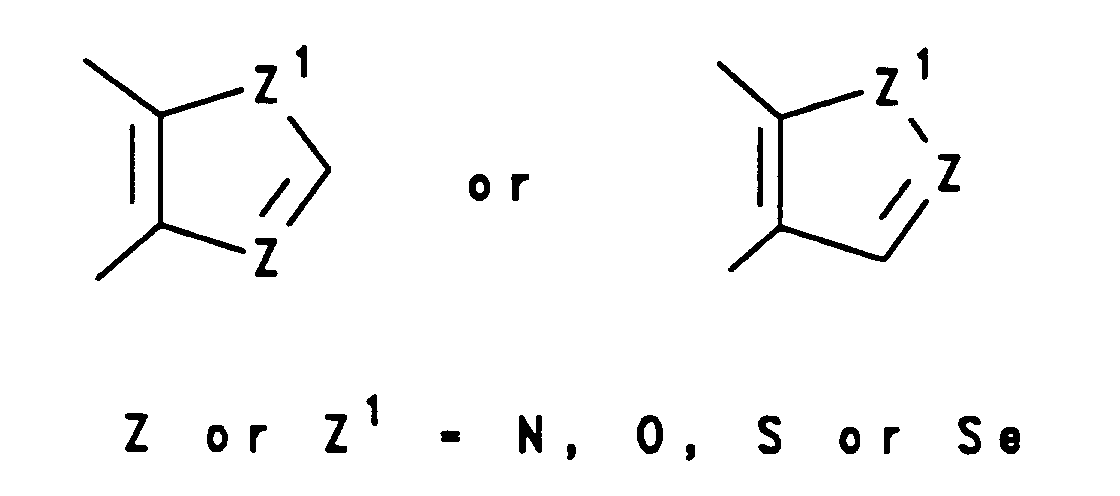
such as imidazolyl, pyrazolyl, benzimidazolyl, oxazolyl, benzoxazolyl, indazolyl, thiazolyl or benzothiazolyl, or a five membered saturated ring with one or two N, O, S or Se heteroatoms and an adjacent appended O heteroatom:
(A is selected from hydrogen; straight or branched (C₁-C₄)alkyl; C₆-aryl; substituted C₆-aryl (substitution selected from halo,(C₁-C₄)alkoxy, trihalo(C₁-C₃)alkyl, nitro, amino, cyano, (C₁-C₄)alkoxycarbonyl, (C₁-C₃)alkylamino or carboxy); (C₇-C₉)aralkyl group selected from benzyl, 1-phenylethyl, 2-phenylethyl or phenylpropyl)
such as γ-butyrolactam, γ-butyrolactone, imidazolidinone or N-aminoimidazolidinone, or a six membered aromatic ring with one to three N heteroatoms such as pyridyl, pyridazinyl, pyrazinyl, sym-triazinyl, unsym-triazinyl, pyrimidinyl, or a six membered saturated ring with one or two N, O, S or Se heteroatoms and an adjacent appended O heteroatom such as 2,3-dioxo-1-piperazinyl, 4-ethyl-2,3-dioxo-1-piperazinyl, 4-methyl-2,3-dioxo-1-piperazinyl, 4-cyclopropyl-2-dioxo-1-piperazinyl, 2-dioxomorpholinyl or 2-dioxothiomorpholinyl;
and when R³ = R⁴(CH₂)nCO- and n = 2-4,
R₄ is selected from amino; hydroxyamino; straight or branched mono(C₁-C₆)alkylamino group selected from methyl, ethyl, n-propyl, 1-methylethyl, n-butyl, 1-methylpropyl, 2-methylpropyl, 1,1-dimethylethyl, n-pentyl, 2-methylbutyl, 1,1-dimethylpropyl, 2,2-dimethylpropyl, 3-methylbutyl, n-hexyl, 1-methylpentyl, 1,1-dimethylbutyl, 2,2-dimethylbutyl, 3-methylpentyl, 1,2-dimethylbutyl, 1,3-dimethylbutyl or 1-methyl-1-ethylpropylamino and where appropriate their diastereomers and enantiomers; (C₃-C₈)cycloalkylamino group selected from cyclopropyl, trans-1,2-dimethylcyclopropyl, cis-1,2-dimethylcyclopropyl, trans-2,3-dimethylcyclopropyl, cis-2,3-dimethylcyclopropyl, cyclobutyl, trans-2,3-dimethylcyclobutyl, cis-2,3-dimethylcyclobutyl, cyclopentyl, cyclohexyl, cycloheptyl, cyclooctyl, bicyclo[2.2.1]hept-2-yl, or bicyclo[2.2.2]oct-2-ylamino and where appropriate their diastereomers and enantiomers; straight or branched chain di-(C₁-C₆)alkylamino group selected from dimethylamino, diethylamino, methyl(ethyl)amino, ethyl(1-methylethyl)amino or a combination of methyl, ethyl, n-propyl, 1-methylethyl, n-butyl, 1-methylpropyl, 2-methylpropyl, 1,1-dimethylethyl, n-pentyl, 2-methylbutyl, 1,1-dimethylpropyl, 2,2-dimethylpropyl, 3-methylbutyl, n-hexyl, 1-methylpentyl, 1,1-dimethylbutyl, 2,2-dimethylbutyl, 3-methylpentyl, 1,2-dimethylbutyl, 1,3-dimethylbutyl or 1-methyl-1-ethylpropylamino and where appropriate their diastereomers and enantiomers; (C₁-C₆)alkoxyamino group selected from methoxy, ethoxy, propoxy, butoxy, pentoxy or hexoxyamino; (C₃-C₈)cycloalkoxyamino group cyclopropoxy, trans-1,2-dimethylcyclopropoxy, cis-1,2-dimethylcyclopropoxy, trans-2,3-dimethylcyclopropoxy, cis-2,3-dimethylcyclopropoxy, cyclobutoxy, trans-2,3-dimethylcyclobutoxy, cis-2,3-dimethylcyclobutoxy, cyclopentoxy, cyclohexoxy, cycloheptyloxy, cyclooctoxy, bicyclo[2.2.1]hept-2-yl-oxy, or bicyclo[2.2.1]oct-2-yloxyamino and where appropriate their diastereomers and enantiomers; (C₇-C₁₀)aralkoxyamino group selected from benzyloxy, 2-phenylethoxy, α-phenylethoxy, (2-naphthyl)methoxy, (1-naphthyl)methoxy, or phenylpropoxyamino; (C₂-C₈)azacycloalkyl group selected from aziridinyl, azetidinyl, pyrrolidinyl, pyrrolinyl, piperidinyl, 2-methylpyrrolidinyl, cis-3,4-dimethylpyrrolidinyl, trans-3,4-dimethylpyrrolidinyl, 2-azabicyclo[2.1.1]hex-2-yl, 5-azabicyclo[2.1.1]hex-5-yl, 2-azabicyclo[2.2.1]hept-2-yl, 7-azabicyclo[2.2.1]hept-7-yl, or 2-azabicyclo[2.2.2]oct-2-yl and where appropriate their diastereomers and enantiomers; azaheterocycloalkyl group selected from morpholinyl, piperazinyl, 4-methylpiperazinyl, 4-hydroxypiperazinyl, 4-(C₁-C₄)alkoxypiperazinyl, thiamorpholinyl, tetrahydro-1,2-oxazinyl, isoxazolidinyl, pyrazolidinyl, 2-methylpyrazolidinyl, 2,5-diazabicyclo[2.2.2]hept-2-yl, or 2,5-diaza-5-methylbicyclo[2.2.1]hept-2-yl and where appropriate their diastereomers and enantiomers; azaheterocyclic group selected from 1-imidazolyl, 1-pyrrolyl, 1-(1,2,3-triazolyl), 4-(1,2,4-triazolyl), 1-tetrazolyl, or 2-tetrazolyl; carboxy(C₂-C₄)alkylamino group selected from aminoacetic acid, α-aminopropionic acid, or α-aminobutyric acid and their optical isomers; (C₆-C₁₀)arylamino group selected from phenylamino or naphthylamino; (C₇-C₁₀)arylalkylamino group selected from benzyl, 2-phenylethyl, α-phenylethyl, (2-naphthyl)methyl, (1-naphthyl)methyl or phenylpropylamino; (C₁-C₄)alkoxycarbonylamino group selected from tert-butoxycarbonylamino, allyloxycarbonylamino, methoxycarbonylamino, ethoxycarbonylamino or propoxycarbonylamino;
and when R³ = R4' (CH₂)nSO₂- and n = 0,
R4' is selected from amino; hydroxyamino; straight or branched mono(C₁-C₆)alkylamino group selected from methyl, ethyl, n-propyl, 1-methylethyl, n-butyl, 1-methylpropyl, 2-methylpropyl, 1,1-dimethylethyl, n-pentyl, 2-methylbutyl, 1,1-dimethylpropyl, 2,2-dimethylpropyl, 3-methylbutyl, n-hexyl, 1-methylpentyl, 1,1-dimethylbutyl, 2,2-dimethylbutyl, 3-methylpentyl, 1,2-dimethylbutyl, 1,3-dimethylbutyl or 1-methyl-1-ethylpropylamino and where appropriate their diastereomers and enantiomers; (C₃-C₈)cycloalkylamino group selected from cyclopropyl, trans-1,2-dimethylcyclopropyl, cis-1,2-dimethylcyclopropyl, trans-2,3-dimethylcyclopropyl, cis-2,3-dimethylcyclopropyl, cyclobutyl, trans-2,3-dimethylcyclobutyl, cis-2,3-dimethylcyclobutyl, cyclopentyl, cyclohexyl, cycloheptyl, cyclooctyl, bicyclo[2.2.1]hept-2-yl, or bicyclo[2.2.2]oct-2-ylamino and where appropriate their diastereomers and enantiomers; straight or branched chain di(C₁-C₆)alkylamino group selected from dimethylamino, diethylamino, methyl(ethyl)amino, ethyl(1-methylethyl)amino or a combination of methyl, ethyl, n-propyl, 1-methylethyl, n-butyl, 1-methylpropyl, 2-methylpropyl, 1,1-dimethylethyl, n-pentyl, 2-methylbutyl, 1,1-dimethylpropyl, 2,2-dimethylpropyl, 3-methylbutyl, n-hexyl, 1-methylpentyl, 1,1-dimethylbutyl, 2,2-dimethylbutyl, 3-methylpentyl, 1,2-dimethylbutyl, 1,3-dimethylbutyl or 1-methyl-1-ethylpropylamino and where appropriate their diastereomers and enantiomers; (C₁-C₆)alkoxyamino group selected from methoxy, ethoxy, propoxy, butoxy, pentoxy or hexoxyamino; (C₃-C₈)cycloalkoxyamino group selected from cyclopropoxy, trans-1,2-dimethylcyclopropoxy, cis-1,2-dimethylcyclopropoxy, trans-2,3-dimethylcyclopropoxy, cis-2,3-dimethylcyclopropoxy, cyclobutoxy, trans-2,3-dimethylcyclobutoxy, cis-2,3-dimethylcyclobutoxy, cyclopentoxy, cyclohexoxy, cycloheptyloxy, cyclooctoxy, bicyclo[2.2.1]hept-2-yloxy, or bicyclo[2.2.1]oct-2-yloxyamino and where appropriate their diastereomers and enantiomers; (C₇-C₁₀)aralkoxyamino group selected from benzyloxy, 2-phenylethoxy, α-phenylethoxy, (2-naphthyl)methoxy, (1-naphthyl)methoxy, or phenylpropoxyamino; (C₂-C₈)azacycloalkyl group selected from aziridinyl, azetidinyl, pyrrolidinyl, pyrrolinyl, piperidinyl, 2-methylpyrrolidinyl, cis-3,4-dimethylpyrrolidinyl, trans-3,4-dimethylpyrrolidinyl, 2-azabicyclo[2.1.1]hex-2-yl, 5-azabicyclo[2.1.1]hex-5-yl, 2-azabicyclo[2.2.1]hept-2-yl, 7-azabicyclo[2.2.1]hept-7-yl, or 2-azabicyclo[2.2.2]oct-2-yl and where appropriate their diastereomers and enantiomers; azaheterocycloalkyl group selected from morpholinyl, piperazinyl, 4-methylpiperazinyl, 4-hydroxypiperazinyl, 4-(C₁-C₄)alkoxypiperazinyl, thiamorpholinyl, tetrahydro-1,2-oxazinyl, isoxazolidinyl, pyrazolidinyl, 2-methylpyrazolidinyl, 2,5-diazabicyclo[2.2.2]hept-2-yl, or 2,5-diaza-5-methylbicyclo[2.2.1]hept-2-yl and where appropriate their diastereomers and enantiomers; azaheterocyclic group selected from 1-imidazolyl, 1-pyrrolyl, 1-(1,2,3-triazolyl), 4-(1,2,4-triazolyl), 1-tetrazolyl, or 2-tetrazolyl; (C₆-C₁₀)arylamino group selected from phenylamino or naphthylamino; (C₇-C₁₀)arylalkylamino group selected from benzyl, 2-phenylethyl, α-phenylethyl, (2-naphthyl)methyl, (1-naphthyl)methyl or phenylpropylamino; straight or branched (C₁-C₃)alkyl group selected from methyl, ethyl, n-propyl or 1-methylethyl; (C₆-C₁₀)aryl group selected from phenyl, α-naphthyl or β-naphthyl; substituted (C₆-C₁₀)aryl group (substitution selected from halo, (C₁-C₄)alkoxy, trihalo(C₁-C₃)alkyl, nitro, amino, cyano, (C₁-C₄)alkoxycarbonyl, (C₁-C₃)alkylamino or carboxy); a heterocycle group selected from a five membered aromatic or saturated ring with one N, O, S or Se heteroatom optionally having a benzo or pyrido ring fused thereto:
such as pyrrolyl, N-methylindolyl, indolyl, 2-pyrrolidinyl, 3-pyrrolidinyl, 2-pyrrolinyl, tetrahydrofuranyl, furanyl, benzofuranyl, tetrahydrothienyl, thienyl or benzothienyl, or a five membered aromatic ring with two N, O, S or Se heteroatoms optionally having a benzo or pyrido ring fused thereto:
such as imidazolyl, pyrazolyl, benzimidazolyl, oxazolyl, benzoxazolyl, indazolyl, thiazolyl or benzothiazolyl, or a five membered saturated ring with one or two N, O, S or Se heteroatoms and an adjacent appended O heteroatom:
(A is selected from hydrogen; straight or branched (C₁-C₄)alkyl; C₆-aryl; substituted C₆-aryl (substitution selected from halo,(C₁-C₄)alkoxy, trihalo(C₁-C₃)alkyl, nitro, amino, cyano, (C₁-C₄)alkoxycarbonyl, (C₁-C₃)alkylamino or carboxy); (C₇-c₉)aralkyl group selected from benzyl, 1-phenylethyl, 2-phenylethyl or phenylpropyl)
such as γ-butyrolactam, γ-butyrolactone, imidazolidinone or N-aminoimidazolidinone, or a six membered aromatic ring with one to three N heteroatoms such as pyridyl, pyridazinyl, pyrazinyl, sym-triazinyl, unsym-triazinyl, pyrimidinyl or a six membered saturated ring with one or two N, O, S or Se heteroatoms and an adjacent appended O heteroatom such as 2,3-dioxo-1-piperazinyl, 4-ethyl-2,3-dioxo-1-piperazinyl, 4-methyl-2,3-dioxo-1-piperazinyl, 4-cyclopropyl-2-dioxo-1-piperazinyl, 2-dioxomorpholinyl or 2-dioxothiomorpholinyl;
and when R³ = R4' (CH₂)nSO₂- and n= 1-4,
R4' is selected from hydrogen; amino; hydroxyamino; straight or branched mono(C₁-C₆)alkylamino group selected from methyl, ethyl, n-propyl, 1-methylethyl, n-butyl, 1-methylpropyl, 2-methylpropyl, 1,1-dimethylethyl, n-pentyl, 2-methylbutyl, 1,1-dimethylpropyl, 2,2-dimethylpropyl, 3-methylbutyl, n-hexyl, 1-methylpentyl, 1,1-dimethylbutyl, 2,2-dimethylbutyl, 3-methylpentyl, 1,2-dimethylbutyl, 1,3-dimethylbutyl or 1-methyl-1-ethylpropylamino and where appropriate their diastereomers and enantiomers; (C₃-C₈)cycloalkylamino group selected from cyclopropyl, trans-1,2-dimethylcyclopropyl, cis-1,2-dimethylcyclopropyl, trans-2,3-dimethylcyclopropyl, cis-2,3-dimethylcyclopropyl, cyclobutyl, trans-2,3-dimethylcyclobutyl, cis-2,3-dimethylcyclobutyl, cyclopentyl, cyclohexyl, cycloheptyl, cyclooctyl, bicyclo[2.2.1]hept-2-yl, or bicyclo[2.2.2]oct-2-ylamino and where appropriate their diastereomers and enantiomers; straight or branched chain di-(C₁-C₆)alkylamino group selected from dimethylamino, diethylamino, methyl(ethyl)amino, ethyl(1-methylethyl)amino or a combination of methyl, ethyl, n-propyl, 1-methylethyl, n-butyl, 1-methylpropyl, 2-methylpropyl, 1,1-dimethylethyl, n-pentyl, 2-methylbutyl, 1,1-dimethylpropyl, 2,2-dimethylpropyl, 3-methylbutyl, n-hexyl, 1-methylpentyl, 1,1-dimethylbutyl, 2,2-dimethylbutyl, 3-methylpentyl, 1,2-dimethylbutyl, 1,3-dimethylbutyl or 1-methyl-1-ethylpropylamino and where appropriate their diastereomers and enantiomers; (C₁-C₆)alkoxyamino group selected from methoxy, ethoxy, propoxy, butoxy, pentoxy or hexoxyamino; (C₃-C₈)cycloalkoxyamino group selected from cyclopropoxy, trans-1,2-dimethylcyclopropoxy, cis-1,2-dimethylcyclopropoxy, trans-2,3-dimethylcyclopropoxy, cis-2,3-dimethylcyclopropoxy, cyclobutoxy, trans-2,3-dimethylcyclobutoxy, cis-2,3-dimethylcyclobutoxy, cyclopentoxy, cyclohexoxy, cycloheptyloxy, cyclooctoxy, bicyclo[2.2.1]hept-2-yloxy, or bicyclo[2.2.1]oct-2-yloxyamino and where appropriate their diastereomers and enantiomers; (C₇-C₁₀)aralkoxyamino group selected from benzyloxy, 2-phenylethoxy, α-phenylethoxy, (2-naphthyl)methoxy, (1-naphthyl)methoxy, or phenylpropoxyamino; (C₂-C₈)azacycloalkyl group selected from aziridinyl, azetidinyl, pyrrolidinyl, pyrrolinyl, piperidinyl, 2-methylpyrrolidinyl, cis-3,4-dimethylpyrrolidinyl, trans-3,4-dimethylpyrrolidinyl, 2-azabicyclo[2.1.1]hex-2-yl, 5-azabicyclo[2.1.1]hex-5-yl, 2-azabicyclo[2.2.1]hept-2-yl, 7-azabicyclo[2.2.1]hept-7-yl, or 2-azabicyclo[2.2.2]oct-2-yl and where appropriate their diastereomers and enantiomers; azaheterocycloalkyl group selected from morpholinyl, piperazinyl, 4-methylpiperazinyl, 4-hydroxypiperazinyl, 4-(C₁-C₄)-alkoxypiperazinyl, thiamorpholinyl, tetrahydro-1,2-oxazinyl, isoxazolidinyl, pyrazolidinyl, 2-methylpyrazolidinyl, 2,5-diazabicyclo[2.2.2]hept-2-yl, or 2,5-diaza-5-methylbicyclo[2.2.1]hept-2-yl and where appropriate their diastereomers and enantiomers; azaheterocyclic group selected from 1-imidazolyl, 1-pyrrolyl, 1-(1,2,3-triazolyl), 4-(1,2,4-triazolyl), 1-tetrazolyl, or 2-tetrazolyl; (C₆-C₁₀)arylamino group selected from phenylamino or naphthylamino; (C₇-C₁₀)arylalkylamino group selected from benzyl, 2-phenylethyl, α-phenylethyl, (2-naphthyl)methyl, (1-naphthyl)methyl or phenylpropylamino; straight or branched (C₁-C₃)alkyl group selected from methyl, ethyl, n-propyl or 1-methylethyl; (C₆-C₁₀)aryl group selected from phenyl, α-naphthyl or β-naphthyl; substituted (C₆-C₁₀)aryl group (substitution selected from halo, (C₁-C₄)alkoxy, trihalo(C₁-C₃)alkyl, nitro, amino, cyano, (C₁-C₄)alkoxycarbonyl, (C₁-C₃)alkylamino or carboxy); (C₁-C₄)alkoxy group such as allyloxy, methoxy, ethoxy, n-propoxy, n-butoxy, iso-butoxy or tert-butoxy; C₆-aryloxy group selected from phenoxy or substituted phenoxy (substitution selected from halo, (C₁-C₄)alkyl, nitro cyano, thiol, amino, carboxy, di(C₁-C₃)alkylamino; (C₇-C₁₀)aralkyloxy group such as benzyloxy, 1-phenylethyloxy or 2-phenylethyloxy; (C₁-C₄)carboxyalkyl group;
R⁵ is selected from hydrogen; straight or branched (C₁-C₃)alkyl group selected from methyl, ethyl, n-propyl or 1-methylethyl; (C₆-C₁₀)aryl group selected from phenyl, α-naphthyl or β-naphthyl; (C₇-C₉)aralkyl group such as benzyl, 1-phenylethyl, 2-phenylethyl or phenylpropyl; a heterocycle group selected from a five membered aromatic or saturated ring with one N, O, S or Se heteroatom optionally having a benzo or pyrido ring fused thereto:
such as pyrrolyl, N-methylindolyl, indolyl, 2-pyrrolidinyl, 3-pyrrolidinyl, 2-pyrrolinyl, tetrahydrofuranyl, furanyl, benzofuranyl, tetrahydrothienyl, thienyl or benzothienyl, or a five membered aromatic ring with two N, O, S or Se heteroatoms optionally having a benzo or pyrido ring fused thereto:
such as imidazolyl, pyrazolyl, benzimidazolyl, oxazolyl, benzoxazolyl, indazolyl, thiazolyl or benzothiazolyl, or a five membered saturated ring with one or two N, O, S or Se heteroatoms and an adjacent appended O heteroatom:
(A is selected from hydrogen; straight or branched (C₁-C₄)alkyl; C₆-aryl; substituted C₆-aryl (substitution selected from halo,(C₁-C₄)alkoxy, trihalo(C₁-C₃)alkyl, nitro, amino, cyano, (C₁-C₄)alkoxycarbonyl, (C₁-C₃)alkylamino or carboxy); (C₇-C₉)aralkyl group selected from benzyl, 1-phenylethyl, 2-phenylethyl or phenylpropyl)
such as γ-butyrolactam, γ-butyrolactone, imidazolidinone or N-aminoimidazolidinone, or a six membered aromatic ring with one to three N heteroatoms such as pyridyl, pyridazinyl, pyrazinyl, sym-triazinyl, unsym-triazinyl or pyrimidinyl, or a six membered saturated ring with one or two N, O, S or Se heteroatoms and an adjacent appended O heteroatom such as 2,3-dioxo-1-piperazinyl, 4-ethyl-2,3-dioxo-1-piperazinyl, 4-methyl-2,3-dioxo-1-piperazinyl, 4-cyclopropyl-2-dioxo-1-piperazinyl, 2-dioxomorpholinyl, 2-dioxothiomorpholinyl; or -(CH₂)nCOOR⁷ where n=0-4 and R⁷ is selected from hydrogen; straight or branched (C₁-C₃)alkyl group selected from methyl, ethyl, n-propyl or 1-methylethyl; or (C₆-C₁₀)aryl group selected from phenyl, α-naphthyl or β-naphthyl;
R⁶ is selected from hydrogen; straight or branched (C₁-C₃)alkyl group selected from methyl, ethyl, n-propyl or 1-methylethyl; (C₆-C₁₀)aryl group selected from phenyl, α-naphthyl or β-naphthyl; (C₇-C₉)aralkyl group such as benzyl, 1-phenylethyl, 2-phenylethyl or phenylpropyl; a heterocycle group selected from a five membered aromatic or saturated ring with one N, O, S or Se heteroatom optionally having a benzo or pyrido ring fused thereto:
such as pyrrolyl, N-methylindolyl, indolyl, 2-pyrrolidinyl, 3-pyrrolidinyl, 2-pyrrolinyl, tetrahydrofuranyl, furanyl, benzofuranyl, tetrahydrothienyl, thienyl or benzothienyl, or a five membered aromatic ring with two N, O, S or Se heteroatoms optionally having a benzo or pyrido ring fused thereto:
such as imidazolyl, pyrazolyl, benzimidazolyl, oxazolyl, benzoxazolyl, indazolyl, thiazolyl or benzothiazolyl, or a five membered saturated ring with one or two N, O, S or Se heteroatoms and an adjacent appended O heteroatom:
(A is selected from hydrogen; straight or branched (C₁-C₄)alkyl; C₆-aryl; Substituted C₆-aryl (substitution selected from halo,(C₁-C₄)alkoxy, trihalo(C₁-C₃)alkyl, nitro, amino, cyano, (C₁-C₄)alkoxycarbonyl, (C₁-C₃)alkylamino or carboxy); (C₇-C₉)aralkyl group selected from benzyl, 1-phenylethyl, 2-phenylethyl or phenylpropyl)
such as γ-butyrolactam, γ-butyrolactone, imidazolidinone or N-aminoimidazolidinone, or a six membered aromatic ring with one to three N heteroatoms such as pyridyl, pyridazinyl, pyrazinyl, sym-triazinyl, unsym-triazinyl, pyrimidinyl, or a six membered saturated ring with one or two N, O, S or Se heteroatoms and an adjacent appended O heteroatom such as 2,3-dioxo-1-piperazinyl, 4-ethyl-2,3-dioxo-1-piperazinyl, 4-methyl-2,3-dioxo-1-piperazinyl, 4-cyclopropyl-2-dioxo-1-piperazinyl, 2-dioxomorpholinyl, 2-dioxothiomorpholinyl; or (CH₂)nCOOR7' where n=0-4 and R7' is selected from hydrogen; straight or branched (C₁-C₃)alkyl selected from methyl, ethyl, n-propyl or 1-methylethyl; or (C₆-C₁₀)aryl selected from phenyl, α-naphthyl or β-naphthyl; with the proviso that R⁵ and R⁶ cannot both be hydrogen;
or R⁵ and R⁶ taken together are -(CH₂)₂W(CH₂)₂-, wherein W is selected from (CH₂)n and n=0-1, -NH, -N(C₁-C₃)alkyl [straight or branched], -N(C₁-C₄)alkoxy, oxygen, sulfur or substituted congeners selected from (L or D)proline, ethyl(L or D)prolinate, morpholine, pyrrolidine or piperidine; and the pharmacologically acceptable organic and inorganic salts or metal complexes. - Particularly preferred compounds are compounds according to the above formula I and II in which X is selected from halogen or trifluoromethanesulfonyloxy; the halogen is selected from bromine, chlorine, fluorine or iodine;
R and R¹ are the same or different and are selected from hydrogen; nitro; amino; halogen (selected from chlorine, bromine, fluorine or iodine); cyano; hydroxy; or -NR²R³;
and when R or R¹ = -NR²R³ and R² = hydrogen,
R³ = methyl, ethyl, n-propyl, 1-methylethyl, n-butyl, 1-methylpropyl, 2-methylpropyl or 1,1-dimethylethyl; and when R² = methyl or ethyl,
R³ = methyl, ethyl, n-propyl, 1-methylethyl, n-butyl, 1-methylpropyl or 2-methylpropyl;
and when R or R¹ = -NR²R³ and R² = hydrogen,
R³ is selected from R⁴(CH₂)nCO- or R4' (CH₂)nSO₂-;
and when R³ = R⁴(CH₂)nCO- and n=0,
R⁴ is selected from hydrogen; amino; hydroxyamino; straight or branched mono(C₁-C₆)alkylamino group selected from methyl, ethyl, n-propyl, 1-methylethyl, n-butyl, 1-methylpropyl, 2-methylpropyl, 1,1-dimethylethyl, n-pentyl, 2-methylbutyl, 1,1-dimethylpropyl, 2,2-dimethylpropyl, 3-methylbutyl, n-hexyl, 1-methylpentyl, 1,1-dimethylbutyl, 2,2-dimethylbutyl, 3-methylpentyl, 1,2-dimethylbutyl, 1,3-dimethylbutyl or 1-methyl-1-ethylpropylamino and where appropriate their diastereomers and enantiomers; (C₃-C₈)cycloalkylamino group selected from cyclopropyl, trans-1,2-dimethylcyclopropyl, cis-1,2-dimethylcyclopropyl, trans-2,3-dimethylcyclopropyl, cis-2,3-dimethylcyclopropyl, cyclobutyl, trans-2,3-dimethylcyclobutyl, cis-2,3-dimethylcyclobutyl, cyclopentyl, cyclohexyl, cycloheptyl, cyclooctyl, bicyclo[2.2.1]hept-2-yl, or bicyclo[2.2.2]oct-2-ylamino and where appropriate their diastereomers and enantiomers; straight or branched chain di-(C₁-C₆)-alkylamino group selected from dimethylamino, diethylamino, methyl(ethyl)amino, ethyl(1-methylethyl)amino or a combination of methyl, ethyl, n-propyl, 1-methylethyl, n-butyl, 1-methylpropyl, 2-methylpropyl, 1,1-dimethylethyl, n-pentyl, 2-methylbutyl, 1,1-dimethylpropyl, 2,2-dimethylpropyl, 3-methylbutyl, n-hexyl, 1-methylpentyl, 1,1-dimethylbutyl, 2,2-dimethylbutyl, 3-methylpentyl, 1,2-dimethylbutyl, 1,3-dimethylbutyl or 1-methyl-1-ethylpropylamino and where appropriate their diastereomers and enantiomers; (C₁-C₆)alkoxyamino group selected from methoxy, ethoxy, propoxy, butoxy, pentoxy or hexoxyamino; (C₃-C₈)cycloalkoxyamino group selected from cyclopropoxy, trans-1,2-dimethylcyclopropoxy, cis-1,2-dimethylcyclopropoxy, trans-2,3-dimethylcyclopropoxy, cis-2,3-dimethylcyclopropoxy, cyclobutoxy, trans-2,3-dimethylcyclobutoxy, cis-2,3-dimethylcyclobutoxy, cyclopentoxy, cyclohexoxy, cycloheptyloxy, cyclooctoxy, bicyclo[2.2.1]hept-2-yloxy, or bicyclo[2.2.1]oct-2-yloxyamino and where appropriate their diastereomers and enantiomers; (C₇-C₁₀)aralkoxyamino group selected from benzyloxy, 2-phenylethoxy, α-phenylethoxy, (2-naphthyl)methoxy, (1-naphthyl)methoxy, or phenylpropoxyamino; (C₂-C₈)azacycloalkyl group selected from aziridinyl, azetidinyl, pyrrolidinyl, pyrrolinyl, piperidinyl, 2-methylpyrrolidinyl, cis-3,4-dimethylpyrrolidinyl, trans-3,4-dimethylpyrrolidinyl, 2-azabicyclo[2.1.1]hex-2-yl, 5-azabicyclo[2.1.1]hex-5-yl, 2-azabicyclo[2.2.1]hept-2-yl, 7-azabicyclo[2.2.1]hept-7-yl, or 2-azabicyclo[2.2.2]oct-2-yl and where appropriate their diastereomers and enantiomers; azaheterocycloalkyl group selected from morpholinyl, piperazinyl, 4-methylpiperazinyl, 4-hydroxypiperazinyl, 4-(C₁-C₄)- alkoxypiperazinyl, thiamorpholinyl, tetrahydro-1,2-oxazinyl, isoxazolidinyl, pyrazolidinyl, 2-methylpyrazolidinyl, 2,5-diazabicyclo[2.2.2]hept-2-yl, or 2,5-diaza-5-methylbicyclo[2.2.1]hept-2-yl and where appropriate their diastereomers and enantiomers; azaheterocyclic group selected from 1-imidazolyl, 1-pyrrolyl, 1-(1,2,3-triazolyl), 4-(1,2,4-triazolyl), 1-tetrazolyl, or 2-tetrazolyl; (heterocyclo)amino group selected from 2- or 3-furyl, 2- or 3-thienyl, 2-, 3- or 4-pyridyl, 2- or 5-pyridazinyl, 2-pyrazinyl, or 2-(imidazolyl)amino and their substituted analogues (substitution selected from straight or branched (C₁-C₆)alkyl); (C₆-C₁₀)arylamino group selected from phenylamino or naphthylamino; substituted (C₆-C₁₀)arylamino group selected from 4-(acetamido)phenyl, 2-,3- or 4-halophenyl, 2-,3-, or 4-(C₁-C₄)alkylphenyl, or 2-,3- or 4-carboxyphenylamino; (C₇-C₁₀)arylalkylamino group selected from benzyl, 2-phenylethyl, α-phenylethyl, (2-naphthyl)methyl, (1-naphthyl)methyl or phenylpropylamino; straight or branched (C₁-C₃)alkyl group selected from methyl, ethyl, n-propyl or 1-methylethyl; (C₃-C₆)cycloalkyl group selected from cyclopropyl, cyclobutyl, cyclopentyl or cyclohexyl; substituted (C₃-C₆)cycloalkyl group (substitution selected from (C₁-C₃)alkyl, cyano, amino or (C₁-C₃)acyl); (C₆-C₁₀)aryl group selected from phenyl, α-naphthyl or β-naphthyl; substituted (C₆-C₁₀)aryl group (substitution selected from halo, (C₁-C₄)alkoxy, trihalo(C₁-C₃)alkyl, nitro, amino, cyano, (C₁-C₄)alkoxycarbonyl, (C₁-C₃)alkylamino or carboxy); α-hydroxy(C₁-C₃)alkyl group selected from hydroxymethyl, α-hydroxyethyl, α-hydroxy-1-methylethyl or α-hydroxypropyl; halo(C₁-C₃)alkyl group such as bromomethyl, fluoromethyl, difluoromethyl, trifluoromethyl, chloromethyl, dichloromethyl, trichloromethyl, 2-fluoroethyl, 2,2-difluoroethyl, 2,2,2-trifluoroethyl, 2-bromoethyl or 2-iodoethyl; a heterocycle group selected from a five membered aromatic or saturated ring with one N, O, S or Se heteroatom optionally having a benzo or pyrido ring fused thereto:
such as pyrrolyl, N-methylindolyl, indolyl, 2-pyrrolidinyl, 3-pyrrolidinyl, 2-pyrrolinyl, tetrahydrofuranyl, furanyl, benzofuranyl, tetrahydrothienyl, thienyl or benzothienyl, or a five membered aromatic ring with two N, O, S or Se heteroatoms optionally having a benzo or pyrido ring fused thereto:
such as imidazolyl, pyrazolyl, benzimidazolyl, oxazolyl, benzoxazolyl, indazolyl, thiazolyl or benzothiazolyl, or a five membered saturated ring with one or two N, O, S or Se heteroatoms and an adjacent appended O heteroatom:
(A is selected from hydrogen; straight or branched (C₁-C₄)alkyl; C₆-aryl; substituted C₆-aryl (substitution selected from halo, (C₁-C₄)alkoxy, trihalo(C₁-C₃)alkyl, nitro, amino, cyano, (C₁-C₄)alkoxycarbonyl, (C₁-C₃)alkylamino or carboxy); (C₇-C₉)aralkyl group selected from benzyl, 1-phenylethyl, 2-phenylethyl or phenylpropyl)
such as γ-butyrolactam, γ-butyrolactone, imidazolidinone or N-aminoimidazolidinone, or a six membered aromatic ring with one to three N heteroatoms such as pyridyl, pyridazinyl, pyrazinyl, sym-triazinyl, unsym-triazinyl, pyrimidinyl, or a six membered saturated ring with one or two N, O, S or Se heteroatoms and an adjacent appended O heteroatom such as 2,3-dioxo-1-piperazinyl, 4-ethyl-2,3-dioxo-1-piperazinyl, 4-methyl-2,3-dioxo-1-piperazinyl, 4-cyclopropyl-2-dioxo-1-piperazinyl, 2-dioxomorpholinyl or 2-dioxothiomorpholinyl; acyl or haloacyl group selected from acetyl, propionyl, chloroacetyl, trifluoroacetyl, (C₃-C₆)cycloalkylcarbonyl such as cyclopropylcarbonyl, cyclobutylcarbonyl, cyclopentylcarbonyl, cyclohexylcarbonyl, (2,3-dimethylcyclopropyl)carbonyl, (1,2-dimethylcyclopropyl)carbonyl, (2-ethylcyclopropyl)carbonyl, (2-methylcyclopentyl)carbonyl or (3-ethylcyclobutyl)carbonyl, (C₆-C₁₀)aroyl selected from benzoyl or naphthoyl, halo substituted (C₆-C₁₀)aroyl such as pentafluorobenzoyl, 4-chlorobenzoyl, 3-bromobenzoyl or 3,4-difluorobenzoyl, (C₁-C₄)alkylbenzoyl such as 4-toluoyl, 2-methylbenzoyl or 4-(1-methylethyl)benzoyl, or (heterocycle)carbonyl, the heterocycle selected from a five membered aromatic or saturated ring with one N, O, S or Se heteroatom optionally having a benzo or pyrido ring fused thereto:
such as pyrrolyl, N-methylindolyl, indolyl, 2-pyrrolidinyl, 3-pyrrolidinyl, 2-pyrrolinyl, tetrahydrofuranyl, furanyl, benzofuranyl, tetrahydrothienyl, thienyl, or benzothienyl, or a five membered aromatic ring with two N, O, S or Se heteroatoms optionally having a benzo or pyrido ring fused thereto:
such as imidazolyl, pyrazolyl, benzimidazolyl, oxazolyl, benzoxazolyl, indazolyl, thiazolyl or benzothiazolyl, or a five membered saturated ring with one or two N, O, S or Se heteroatoms and an adjacent appended O heteroatom: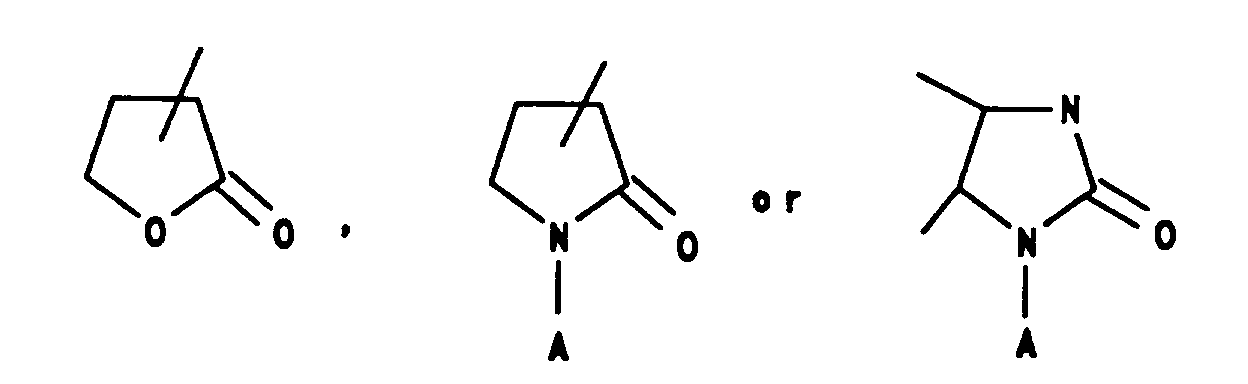
(A is selected from hydrogen; straight or branched (C₁-C₄)alkyl; C₆-aryl; substituted C₆-aryl (substitution selected from halo,(C₁-C₄)alkoxy, trihalo(C₁-C₃)alkyl, nitro, amino, cyano, (C₁-C₄)alkoxycarbonyl, (C₁-C₃)alkylamino or carboxy); (C₇-C₉)alkyl group selected from benzyl, 1-phenylethyl, 2-phenylethyl or phenylpropyl)
such as γ-butyrolactam, γ-butyrolactone, imidazolidinone or N-aminoimidazolidinone, or a six membered aromatic ring with one to three N heteroatoms such as pyridyl, pyridazinyl, pyrazinyl, sym-triazinyl, unsym-triazinyl, pyrimidinyl, or a six membered saturated ring with one or two N, O, S or Se heteroatoms and an adjacent appended O heteroatom such as 2,3-dioxo-1-piperazinyl, 4-ethyl-2,3-dioxo-1-piperazinyl, 4-methyl-2,3-dioxo-1-piperazinyl, 4-cyclopropyl-2-dioxo-1-piperazinyl, 2-dioxomorpholinyl or 2-dioxothiomorpholinyl; (C₁-C₄)alkoxycarbonyl group selected from methoxycarbonyl, ethoxycarbonyl, straight or branched propoxylcarbonyl, straight or branched butoxycarbonyl or allyloxycarbonyl; α-aminomethoxycarbonyl; halomethoxycarbonyl; vinyl or substituted vinyl group [substitution selected from (C₁-C₃)alkyl group, halogen, (C₆-C₁₀)aryl group selected from phenyl, α-naphthyl, β-naphthyl, substituted (C₆-C₁₀)aryl group (substitution selected from halo, (C₁-C₄)alkoxy, (C₁-C₄)alkoxycarbonyl, (C₁-C₃)alkylamino or carboxy), halo(C₁-C₃)alkyl group such as bromomethyl, fluoromethyl, difluoromethyl, trifluoromethyl, chloromethyl, dichloromethyl, trichloromethyl, 2-fluoroethyl, 2,2-difluoroethyl, 2,2,2-trifluoroethyl, 2-bromoethyl or 2-iodoethyl, a heterocycle group selected from a five membered aromatic or saturated ring with one N, O, S or Se heteroatom optionally having a benzo or pyrido ring fused thereto:
such as pyrrolyl, N-methylindolyl, indolyl, 2-pyrrolidinyl, 3-pyrrolidinyl, 2-pyrrolinyl, tetrahydrofuranyl, furanyl, benzofuranyl, tetrahydrothienyl, thienyl, or benzothienyl]; (C₁-C₄)alkoxy group such as allyloxy, methoxy, ethoxy, n-propoxy, n-butoxy or tert-butoxy; C₆-aryloxy group selected from phenoxy or substituted phenoxy (substitution selected from halo, (C₁-C₄)alkyl); (C₇-C₁₀)aralkyloxy group such as benzyloxy, 1-phenylethyloxy or 2-phenylethyloxy;
and when R³ = R⁴(CH₂)nCO- and n=1-4,
R⁴ is selected from hydrogen; (C₁-C₃)alkyl group selected from methyl, ethyl, n-propyl or 1-methylethyl; (C₆-C₁₀)aryl group selected from phenyl, α-naphthyl or β-naphthyl; substituted (C₆-C₁₀)aryl group (substitution selected from halo, (C₁-C₄)alkoxy, trihalo(C₁-C₃)alkyl, nitro, amino, cyano, (C₁-C₄)alkoxycarbonyl, (C₁-C₃)alkylamino or carboxy); acyloxy or haloacyloxy group, selected from acetyl, propionyl, chloroacetyl, trichloroacetyl, (C₃-C₆)cycloalkylcarbonyl, (C₆-C₁₀)aroyl selected from benzoyl or naphthoyl, halo substituted (C₆-C₁₀)aroyl such as pentafluorobenzoyl, 4-chlorobenzoyl, 3-bromobenzoyl or 3,4-difluorobenzoyl, (C₁-C₄)alkylbenzoyl such as 4-toluoyl, 2-toluoyl, 4-(1-methylethyl)benzoyl or (heterocycle)carbonyl, the heterocycle selected from a five membered aromatic or saturated ring with one N, O, S or Se heteroatom optionaly having a benzo or pyrido ring fused thereto:
such as pyrrolyl, N-methylindolyl, indolyl, 2-pyrrolidinyl, 3-pyrrolidinyl, 2-pyrrolinyl, tetrahydrofuranyl, furanyl, benzofuranyl, tetrahydrothienyl, thienyl or benzothienyl, or a five membered aromatic ring with two N, O, S or Se heteroatoms optionally having a benzo or pyrido ring fused thereto:
such as imidazolyl, pyrazolyl, benzimidazolyl, oxazolyl, benzoxazolyl, indazolyl, thiazolyl or benzothiazolyl, or a five membered saturated ring with one or two N, O, S or Se heteroatoms and an adjacent appended O heteroatom:
(A is selected from hydrogen; straight or branched (C₁-C₄)alkyl; C₆-aryl; substituted C₆-aryl (substitution selected from halo,(C₁-C₄)alkoxy, trihalo(C₁-C₃)alkyl, nitro, amino, cyano, (C₁-C₄)alkoxycarbonyl, (C₁-C₃)alkylamino or carboxy); (C₇-C₉)alkyl group selected from benzyl, 1-phenylethyl, 2-phenylethyl or phenylpropyl)
such as γ-butyrolactam, γ-butyrolactone, imidazolidinone or N-aminoimidazolidinone, or a six membered aromatic ring with one to three N heteroatoms such as pyridyl, pyridazinyl or pyrazinyl, or a six membered saturated ring with one or two N, O, S or Se heteroatoms and an adjacent appended O heteroatom such as 2,3-dioxo-1-piperazinyl, 4-ethyl-2,3-dioxo-1-piperazinyl, 4-methyl-2,3-dioxo-1-piperazinyl, 4-cyclopropyl-2-dioxo-1-piperazinyl, 2-dioxomorpholinyl or 2-dioxothiomorpholinyl; (C₁-C₄)alkoxy group such as allyloxy, methoxy, ethoxy, n-propoxy, n-butoxy or tert-butoxy; C₆-aryloxy group selected from phenoxy or substituted phenoxy (substitution selected from halo, (C₁-C₄)alkyl, nitro, cyano, thiol, amino, carboxy, di-(C₁-C₃)alkylamino); (C₁-C₃)alkylthio group selected from methylthio, ethylthio, propylthio or allylthio; C₆-arylthio group selected from phenylthio or substituted phenylthio (substitution selected from halo, (C₁-C₄)alkyl, nitro, cyano, thiol, amino, carboxy, di-(C₁-C₃)alkylamino); C₆-arylsulfonyl group selected from phenylsulfonyl or substituted phenylsulfonyl (substitution selected from halo, (C₁-C₄)alkoxy, trihalo(C₁-C₃)alkyl, nitro, amino, cyano, (C₁-C₄)alkoxycarbonyl, (C₁-C₃)alkylamino or carboxy); a heterocycle group selected from a five membered aromatic or saturated ring one N, O, S or Se heteroatom optionally having a benzo or pyrido ring fused thereto:
such as pyrrolyl, N-methylindolyl, indolyl, 2-pyrrolidinyl, 3-pyrrolidinyl, 2-pyrrolinyl, tetrahydrofuranyl, furanyl, benzofuranyl, tetrahydrothienyl, thienyl or benzothienyl, or a five membered aromatic ring with two N, O,S or Se heteroatoms optionally having a benzo or pyrido ring fused thereto:
such as imidazolyl, pyrazolyl, benzimidazolyl, oxazolyl, benzoxazolyl, indazolyl, thiazolyl or benzothiazolyl, or a five membered saturated ring with one or two N, O, S or Se heteroatoms and an adjacent appended O heteroatom:
(A is selected from hydrogen; straight or branched (C₁-C₄)alkyl; C₆-aryl; substituted C₆-aryl (substitution selected from halo,(C₁-C₄)alkoxy, trihalo(C₁-C₃)alkyl, nitro, amino, cyano, (C₁-C₄)alkoxycarbonyl, (C₁-C₃)alkylamino or carboxy); (C₇-C₉)aralkyl group selected from benzyl, 1-phenylethyl, 2-phenylethyl or phenylpropyl)
such as γ-butyrolactam, γ-butyrolactone, imidazolidinone or N-aminoimidazolidinone, or a six membered aromatic ring with one to three N heteroatoms such as pyridyl, pyridazinyl or pyrazinyl, or a six membered saturated ring with one or two N, O, S or Se heteroatoms and an adjacent appended O heteroatom such as 2,3-dioxo-1-piperazinyl, 4-ethyl-2,3-dioxo-1-piperazinyl, 4-methyl-2,3-dioxo-1-piperazinyl, 4-cyclopropyl-2-dioxo-1-piperazinyl, 2-dioxomorpholinyl or 2-dioxothiomorpholinyl; hydroxy group; α-hydroxy(C₁-C₃)alkyl group selected from hydroxymethyl, α-hydroxyethyl, α-hydroxy-1-methylethyl or α-hydroxypropyl; halo(C₁-C₃)alkyl group such as bromomethyl, fluoromethyl, difluoromethyl, trifluoroethyl, chloromethyl, dichloromethyl, trichloromethyl, 2-fluoroethyl, 2,2-difluoroethyl, 2,2,2-trifluoromethyl, 2-bromoethyl or 2-iodoethyl; acyl or haloacyl group selected from acetyl, propionyl, chloroacetyl, trifluoroacetyl, (C₃-C₆)cycloalkylcarbonyl, (C₆-C₁₀)aroyl selected from benzoyl or naphthoyl, halo substituted (C₆-C₁₀)aroyl such as pentafluorobenzoyl, 4-chlorobenzoyl, 3-bromophenylcarbonyl or 3,4-difluorobenzoyl, (C₁-C₄)alkylbenzoyl such as from 4-toluoyl, 2-toluoyl or 4-(1-methylethyl)benzoyl, or (heterocycle)carbonyl, the heterocycle selected from a five membered aromatic or saturated ring with one N, O, S or Se heteroatom optionally having a benzo or pyrido ring fused thereto:
such as pyrrolyl, N-methylindolyl, indolyl, 2-pyrrolidinyl, 3-pyrrolidinyl, 2-pyrrolinyl, tetrahydrofuranyl, furanyl, benzofuranyl, tetrahydrothienyl, thienyl, or benzothienyl, or a five membered aromatic ring with two N, O, S or Se heteroatoms optionally having a benzo or pyrido ring fused thereto:
such as imidazolyl, pyrazolyl, benzimidazolyl, oxazolyl, benzoxazolyl, indazolyl, thiazolyl or benzothiazolyl, or a five membered saturated ring with one or two N, O, S or Se heteroatoms and an adjacent appended O heteroatom: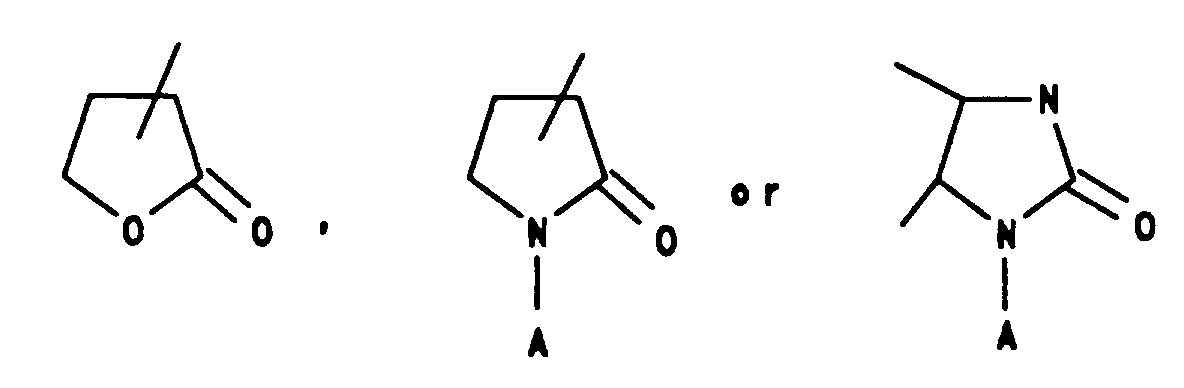
(A is selected from hydrogen; straight or branched (C₁-C₄)alkyl; C₆-aryl; substituted C₆-aryl (substitution selected from halo,(C₁-C₄)alkoxy, trihalo(C₁-C₃)alkyl, nitro, amino, cyano, (C₁-C₄)alkoxycarbonyl, (C₁-C₃)alkylamino or carboxy); (C₇-C₉)aralkyl group selected from benzyl, 1-phenylethyl, 2-phenylethyl or phenylpropyl)
such as γ-butyrolactam, γ-butyrolactone, imidazolidinone or N-aminoimidazolidinone, or a six membered aromatic ring with one to three N heteroatoms such as pyridyl, pyridazinyl or pyrazinyl, or a six membered saturated ring with one or two N, O, S or Se heteroatoms and an adjacent appended O heteroatom such as 2,3-dioxo-1-piperazinyl, 4-ethyl-2,3-dioxo-1-piperazinyl, 4-methyl-2,3-dioxo-1-piperazinyl, 4-cyclopropyl-2-dioxo-1-piperazinyl, 2-dioxomorpholinyl or 2-dioxothiomorpholinyl;
and when R³ = R⁴(CH₂)nCO- and n = 2-4,
R⁴ is selected from amino; hydroxyamino; straight or branched mono(C₁-C₆)alkylamino group selected from methyl, ethyl, n-propyl, 1-methylethyl, n-butyl, 1-methylpropyl, 2-methylpropyl, 1,1-dimethylethyl, n-pentyl, 2-methylbutyl, 1,1-dimethylpropyl, 2,2-dimethylpropyl, 3-methylbutyl, n-hexyl, 1-methylpentyl, 1,1-dimethylbutyl, 2,2-dimethylbutyl, 3-methylpentyl, 1,2-dimethylbutyl, 1,3-dimethylbutyl or 1-methyl-1-ethylpropylamino and where appropriate their diastereomers and enantiomers; (C₃-C₈)cycloalkylamino group selected from cyclopropyl, trans-1,2-dimethylcyclopropyl, cis-1,2-dimethylcyclopropyl, trans-2,3-dimethylcyclopropyl, cis-2,3-dimethylcyclopropyl, cyclobutyl, trans-2,3-dimethylcyclobutyl, cis-2,3-dimethylcyclobutyl, cyclopentyl, cyclohexyl, cycloheptyl, cyclooctyl, bicyclo[2.2.1]hept-2-yl, or bicyclo[2.2.2]oct-2-ylamino and where appropriate their diastereomers and enantiomers; straight or branched chain di-(C₁-C₆)-alkylamino group selected from dimethylamino, diethylamino, methyl(ethyl)amino, ethyl(1-methylethyl)amino or a combination of methyl, ethyl, n-propyl, 1-methylethyl, n-butyl, 1-methylpropyl, 2-methylpropyl, 1,1-dimethylethyl, n-pentyl, 2-methylbutyl, 1,1-dimethylpropyl, 2,2-dimethylpropyl, 3-methylbutyl, n-hexyl, 1-methylpentyl, 1,1-dimethylbutyl, 2,2-dimethylbutyl, 3-methylpentyl, 1,2-dimethylbutyl, 1,3-dimethylbutyl or 1-methyl-1-ethylpropylamino and where appropriate their diastereomers and enantiomers; (C₁-C₆)alkoxyamino group selected from methoxy, ethoxy, propoxy, butoxy, pentoxy or hexoxyamino; (C₃-C₈)cycloalkoxyamino group selected from cyclopropoxy, trans-1,2-dimethylcyclopropoxy, cis-1,2-dimethylcyclopropoxy, trans-2,3-dimethylcyclopropoxy, cis-2,3-dimethylcyclopropoxy, cyclobutoxy, trans-2,3-dimethylcyclobutoxy, cis-2,3-dimethylcyclobutoxy, cyclopentoxy, cyclohexoxy, cycloheptyloxy, cyclooctoxy, bicyclo[2.2.1]hept-2-yloxy, or bicyclo[2.2.1]oct-2-yloxyamino and where appropriate their diastereomers and enantiomers; (C₇-C₁₀)aralkoxyamino group selected from benzyloxy, 2-phenylethoxy, α-phenylethoxy, (2-naphthyl)methoxy, (1-naphthyl)methoxy, or phenylpropoxyamino; (C₂-C₈)azacycloalkyl group selected from aziridinyl, azetidinyl, pyrrolidinyl, pyrrolinyl, piperidinyl, 2-methylpyrrolidinyl, cis-3,4-dimethylpyrrolidinyl, trans-3,4-dimethylpyrrolidinyl, 2-azabicyclo[2.1.1]hex-2-yl, 5-azabicyclo[2.1.1]hex-5-yl, 2-azabicyclo[2.2.1]hept-2-yl, 7-azabicyclo[2.2.1]hept-7-yl, or 2-azabicyclo[2.2.2]oct-2-yl and where appropriate their diastereomers and enantiomers; azaheterocycloalkyl group selected from morpholinyl, piperazinyl, 4-methylpiperazinyl, 4-hydroxypiperazinyl, 4-(C₁-C₄)alkoxypiperazinyl, thiamorpholinyl, tetrahydro-1,2-oxazinyl, isoxazolidinyl, pyrazolidinyl, 2-methylpyrazolidinyl, 2,5-diazabicyclo[2.2.2]hept-2-yl, or 2,5-diaza-5-methylbicyclo[2.2.1]hept-2-yl and where appropriate their diastereomers and enantiomers; azaheterocyclic group selected from 1-imidazolyl, 1-pyrrolyl, 1-(1,2,3-triazolyl), 4-(1,2,4-triazolyl), 1-tetrazolyl, or 2-tetrazolyl; (C₆-C₁₀)arylamino group selected from phenylamino or naphthylamino; (C₇-C₁₀)arylalkylamino group selected from benzyl, 2-phenylethyl, α-phenylethyl, (2-naphthyl)methyl, (1-naphthyl)methyl or phenylpropylamino; (C₁-C₄)alkoxycarbonylamino group selected from tert-butoxycarbonylamino, allyloxycarbonylamino, methoxycarbonylamino, ethoxycarbonylamino or propoxycarbonylamino;
and when R³ = R4'(CH₂)nSO₂- and n = 0,
R4' is selected from amino; hydroxyamino; straight or branched mono(C₁-C₆)alkylamino group selected from methyl, ethyl, n-propyl, 1-methylethyl, n-butyl, 1-methylpropyl, 2-methylpropyl, 1,1-dimethylethyl, n-pentyl, 2-methylbutyl, 1,1-dimethylpropyl, 2,2-dimethylpropyl, 3-methylbutyl, n-hexyl, 1-methylpentyl, 1,1-dimethylbutyl, 2,2-dimethylbutyl, 3-methylpentyl, 1,2-dimethylbutyl, 1,3-dimethylbutyl or 1-methyl-1-ethylpropylamino and where appropriate their diastereomers and enantiomers; (C₃-C₈)cycloalkylamino group selected from cyclopropyl, trans-1,2-dimethylcyclopropyl, cis-1,2-dimethylcyclopropyl, trans-2,3-dimethylcyclopropyl, cis-2,3-dimethylcyclopropyl, cyclobutyl, trans-2,3-dimethylcyclobutyl, cis-2,3-dimethylcyclobutyl, cyclopentyl, cyclohexyl, cycloheptyl, cyclooctyl, bicyclo[2.2.1]hept-2-yl, or bicyclo[2.2.2]oct-2-ylamino and where appropriate their diastereomers and enantiomers; straight or branched chain di-(C₁-C₆)alkylamino group selected from dimethylamino, diethylamino, methyl(ethyl)amino, ethyl(1-methylethyl)amino or a combination of methyl, ethyl, n-propyl, 1-methylethyl, n-butyl, 1-methylpropyl, 2-methylpropyl, 1,1-dimethylethyl, n-pentyl, 2-methylbutyl, 1,1-dimethylpropyl, 2,2-dimethylpropyl, 3-methylbutyl, n-hexyl, 1-methylpentyl, 1,1-dimethylbutyl, 2,2-dimethylbutyl, 3-methylpentyl, 1,2-dimethylbutyl, 1,3-dimethylbutyl or 1-methyl-1-ethylpropylamino and where appropriate their diastereomers and enantiomers; (C₁-C₆)alkoxyamino group selected from methoxy, ethoxy, propoxy, butoxy, pentoxy or hexoxyamino; (C₃-C₈)cycloalkoxyamino group selected from cyclopropoxy, trans-1,2-dimethylcyclopropoxy, cis-1,2-dimethylcyclopropoxy, trans-2,3-dimethylcyclopropoxy, cis-2,3-dimethylcyclopropoxy, cyclobutoxy, trans-2,3-dimethylcyclobutoxy, cis-2,3-dimethylcyclobutoxy, cyclopentoxy, cyclohexoxy, cycloheptyloxy, cyclooctoxy, bicyclo[2.2.1]hept-2-yloxy, or bicyclo[2.2.1]oct-2-yloxyamino and where appropriate their diastereomers and enantiomers; (C₇-C₁₀)aralkoxyamino group selected from benzyloxy, 2-phenylethoxy, α-phenylethoxy, (2-naphthyl)methoxy, (1-naphthyl)methoxy, or phenylpropoxyamino; (C₂-C₈)azacycloalkyl group selected from aziridinyl, azetidinyl, pyrrolidinyl, pyrrolinyl, piperidinyl, 2-methylpyrrolidinyl, cis-3,4-dimethylpyrrolidinyl, trans-3,4-dimethylpyrrolidinyl, 2-azabicyclo[2.1.1]hex-2-yl, 5-azabicyclo[2.1.1]hex-5-yl, 2-azabicyclo[2.2.1]hept-2-yl, 7-azabicyclo[2.2.1]hept-7-yl, or 2-azabicyclo[2.2.2]oct-2-yl and where appropriate their diastereomers and enantiomers; azaheterocycloalkyl group selected from morpholinyl, piperazinyl, 4-methylpiperazinyl, 4-hydroxypiperazinyl, 4-(C₁-C₄)-alkoxypiperazinyl, thiamorpholinyl, tetrahydro-1,2-oxazinyl, isoxazolidinyl, pyrazolidinyl, 2-methylpyrazolidinyl, 2,5-diazabicyclo[2.2.2]hept-2-yl, or 2,5-diaza-5-methylbicyclo[2.2.1]hept-2-yl and where appropriate their diastereomers and enantiomers; azaheterocyclic group selected from 1-imidazolyl, 1-pyrrolyl, 1-(1,2,3-triazolyl), 4-(1,2,4-triazolyl), 1-tetrazolyl, or 2-tetrazolyl; (C₆-C₁₀)arylamino group selected from phenylamino or naphthylamino; (C₇-C₁₀)arylalkylamino group selected from benzyl, 2-phenylethyl, α-phenylethyl, (2-naphthyl)methyl, (1-naphthyl)methyl or phenylpropylamino; straight or branched (C₁-C₃)alkyl group selected from methyl, ethyl, n-propyl or 1-methylethyl; (C₆-C₁₀)aryl group selected from phenyl, α-naphthyl or β-naphthyl; substituted (C₆-C₁₀)aryl group (substitution selected from halo, (C₁-C₄)alkoxy, trihalo(C₁-C₃)alkyl, nitro, amino, cyano, (C₁-C₄)alkoxycarbonyl, (C₁-C₃)alkylamino or carboxy); a heterocycle group selected from a five membered aromatic or saturated ring with one N, O, S or Se heteroatom optionally having a benzo or pyrido ring fused thereto:
such as pyrrolyl, N-methylindolyl, indolyl, 2-pyrrolidinyl, 3-pyrrolidinyl, 2-pyrrolinyl, tetrahydrofuranyl, furanyl, benzofuranyl, tetrahydrothienyl, thienyl or benzothienyl;
and when R³ = R4' (CH₂)nSO₂- and n= 1-4,
R4' is selected from hydrogen; amino; hydroxyamino; straight or branched mono(C₁-C₆)alkylamino group selected from methyl, ethyl, n-propyl, 1-methylethyl, n-butyl, 1-methylpropyl, 2-methylpropyl, 1,1-dimethylethyl, n-pentyl, 2-methylbutyl, 1,1-dimethylpropyl, 2,2-dimethylpropyl, 3-methylbutyl, n-hexyl, 1-methylpentyl, 1,1-dimethylbutyl, 2,2-dimethylbutyl, 3-methylpentyl, 1,2-dimethylbutyl, 1,3-dimethylbutyl or 1-methyl-1-ethylpropylamino and where appropriate their diastereomers and enantiomers; (C₃-C₈)cycloalkylamino group selected from cyclopropyl, trans-1,2-dimethylcyclopropyl, cis-1,2-dimethylcyclopropyl, trans-2,3-dimethylcyclopropyl, cis-2,3-dimethylcyclopropyl, cyclobutyl, trans-2,3-dimethylcyclobutyl, cis-2,3-dimethylcyclobutyl, cyclopentyl, cyclohexyl, cycloheptyl, cyclooctyl, bicyclo[2.2.1]hept-2-yl, or bicyclo[2.2.2]oct-2-ylamino and where appropriate their diastereomers and enantiomers; straight or branched chain di-(C₁-C₆)alkylamino group selected from dimethylamino, diethylamino, methyl(ethyl)amino, ethyl(1-methylethyl)amino or a combination of methyl, ethyl, n-propyl, 1-methylethyl, n-butyl, 1-methylpropyl, 2-methylpropyl, 1,1-dimethylethyl, n-pentyl, 2-methylbutyl, 1,1-dimethylpropyl, 2,2-dimethylpropyl, 3-methylbutyl, n-hexyl, 1-methylpentyl, 1,1-dimethylbutyl, 2,2-dimethylbutyl, 3-methylpentyl, 1,2-dimethylbutyl, 1,3-dimethylbutyl or 1-methyl-1-ethylpropylamino and where appropriate their diastereomers and enantiomers; (C₁-C₆)alkoxyamino group selected from methoxy, ethoxy, propoxy, butoxy, pentoxy or hexoxyamino; (C₃-C₈)cycloalkoxyamino group selected from cyclopropoxy, trans-1,2-dimethylcyclopropoxy, cis-1,2-dimethylcyclopropoxy, trans-2,3-dimethylcyclopropoxy, cis-2,3-dimethylcyclopropoxy, cyclobutoxy, trans-2,3-dimethylcyclobutoxy, cis-2,3-dimethylcyclobutoxy, cyclopentoxy, cyclohexoxy, cycloheptyloxy, cyclooctoxy, bicyclo[2.2.1]hept-2-yloxy, or bicyclo[2.2.1]oct-2-yloxyamino and where appropriate their diastereomers and enantiomers; (C₇-C₁₀)aralkoxyamino group selected from benzyloxy, 2-phenylethoxy, α-phenylethoxy, (2-naphthyl)methoxy, (1-naphthyl)methoxy, or phenylpropoxyamino; (C₂-C₈)azacycloalkyl group selected from aziridinyl, azetidinyl, pyrrolidinyl, pyrrolinyl, piperidinyl, 2-methylpyrrolidinyl, cis-3,4-dimethylpyrrolidinyl, trans-3,4-dimethylpyrrolidinyl, 2-azabicyclo[2.1.1]hex-2-yl, 5-azabicyclo[2.1.1]hex-5-yl, 2-azabicyclo[2.2.1]hept-2-yl, 7-azabicyclo[2.2.1]hept-7-yl, or 2-azabicyclo[2.2.2]oct-2-yl and where appropriate their diastereomers and enantiomers; azaheterocycloalkyl group selected from morpholinyl, piperazinyl, 4-methylpiperazinyl, 4-hydroxypiperazinyl, 4-(C₁-C₄)-alkoxypiperazinyl, thiamorpholinyl, tetrahydro-1,2-oxazinyl, isoxazolidinyl, pyrazolidinyl, 2-methylpyrazolidinyl, 2,5-diazabicyclo[2.2.2]hept-2-yl, or 2,5-diaza-5-methylbicyclo[2.2.1]hept-2-yl and where appropriate their diastereomers and enantiomers; azaheterocyclic group selected from 1-imidazolyl, 1-pyrrolyl, 1-(1,2,3-triazolyl), 4-(1,2,4-triazolyl), 1-tetrazolyl, or 2-tetrazolyl; (C₆-C₁₀)arylamino group selected from phenylamino or naphthylamino; (C₇-C₁₀)arylalkylamino group selected from benzyl, 2-phenylethyl, α-phenylethyl, (2-naphthyl)methyl, (1-naphthyl)methyl or phenylpropylamino; straight or branched (C₁-C₃)alkyl group selected from methyl, ethyl, n-propyl or 1-methylethyl;
R⁵ is selected from hydrogen; straight or branched (C₁-C₃)alkyl group selected from methyl, ethyl, n-propyl or 1-methylethyl; (C₆-C₁₀)aryl group selected from phenyl, α-naphthyl or β-naphthyl; (C₇-C₉)aralkyl group such as benzyl, 1-phenylethyl, 2-phenylethyl or phenylpropyl; or -(CH₂)nCOOR⁷ where n=0-4 and R⁷ is selected from hydrogen; straight or branched (C₁-C₃)alkyl group selected from methyl, ethyl, n-propyl or 1-methylethyl; or (C₆-C₁₀)aryl group selected from phenyl, α-naphthyl or β-naphthyl;
R⁶ is selected from hydrogen; straight or branched (C₁-C₃)alkyl group selected from methyl, ethyl, n-propyl or 1-methylethyl; (C₆-C₁₀)aryl group selected from phenyl, α-naphthyl or β-naphthyl; (C₇-C₉)aralkyl group such as benzyl, 1-phenylethyl, 2-phenylethyl or phenylpropyl; or (CH₂)nCOOR7' where n=0-4 and R7' is selected from hydrogen; straight or branched (C₁-C₃)alkyl selected from methyl, ethyl, n-propyl or 1-methylethyl; or (C₆-C₁₀)aryl selected from phenyl, α-naphthyl or β-naphthyl; with the proviso that R⁵ and R⁶ cannot both be hydrogen;
or R⁵ and R⁶ taken together are -(CH₂)₂W(CH₂)₂-, wherein W is selected from (CH₂)n and n=0-1, -NH, -N(C₁-C₃)alkyl [straight or branched], -N(C₁-C₄)alkoxy, oxygen, sulfur or substituted congeners selected from (L or D)proline, ethyl(L or D)prolinate, morpholine, pyrrolidine or piperidine; and the pharmacologically acceptable organic and inorganic salts or metal complexes. - Most particularly preferred compounds are compounds according to the above formula I and II in which X is selected from halogen or trifluoromethanesulfonyloxy; the halogen is selected from bromine, chlorine, fluorine or iodine;
R and R¹ are the same or different and are selected from hydrogen; nitro; amino; halogen (selected from chlorine, bromine, fluorine or iodine); cyano; hydroxy; or -NR²R³;
and when R or R¹ = -NR²R³ and R² = hydrogen,
R³ = methyl, ethyl, n-propyl, 1-methylethyl, n-butyl, 1-methylpropyl, 2-methylpropyl or 1,1-dimethylethyl;
and when R² = methyl or ethyl,
R³ = methyl, ethyl, n-propyl, 1-methylethyl, n-butyl, 1-methylpropyl or 2-methylpropyl;
and when R or R¹ = -NR²R³ and R² = hydrogen,
R³ selected from R⁴(CH₂)nCO- or R4'(CH₂)nSO₂-;
and when R³ = R⁴(CH₂)nCO- and n=0,
R⁴ is selected from hydrogen; amino; hydroxyamino; straight or branched mono(C₁-C₆)alkylamino group selected from methyl, ethyl, n-propyl, 1-methylethyl, n-butyl, 1-methylpropyl, 2-methylpropyl, 1,1-dimethylethyl, n-pentyl, 2-methylbutyl, 1,1-dimethylpropyl, 2,2-dimethylpropyl, 3-methylbutyl, n-hexyl, 1-methylpentyl, 1,1-dimethylbutyl, 2,2-dimethylbutyl, 3-methylpentyl, 1,2-dimethylbutyl, 1,3-dimethylbutyl or 1-methyl-1-ethylpropylamino and where appropriate their diastereomers and enantiomers; (C₃-C₈)cycloalkylamino group selected from cyclopropyl, trans-1,2-dimethylcyclopropyl, cis-1,2-dimethylcyclopropyl, trans-2,3-dimethylcyclopropyl, cis-2,3-dimethylcyclopropyl, cyclobutyl, trans-2,3-dimethylcyclobutyl, cis-2,3-dimethylcyclobutyl, cyclopentyl, cyclohexyl, cycloheptyl, cyclooctyl, bicyclo[2.2.1]hept-2-yl, or bicyclo[2.2.2]oct-2-ylamino and where appropriate their diastereomers and enantiomers; straight or branched chain di-(C₁-C₆)alkylamino group selected from dimethylamino, diethylamino, methyl(ethyl)amino, ethyl(1-methylethyl)amino or a combination of methyl, ethyl, n-propyl, 1-methylethyl, n-butyl, 1-methylpropyl, 2-methylpropyl, 1,1-dimethylethyl, n-pentyl, 2-methylbutyl, 1,1-dimethylpropyl, 2,2-dimethylpropyl, 3-methylbutyl, n-hexyl, 1-methylpentyl, 1,1-dimethylbutyl, 2,2-dimethylbutyl, 3-methylpentyl, 1,2-dimethylbutyl, 1,3-dimethylbutyl or 1-methyl-1-ethylpropylamino and where appropriate their diastereomers and enantiomers; (C₁-C₆)alkoxyamino group selected from methoxy, ethoxy, propoxy, butoxy, pentoxy or hexoxyamino; (C₃-C₈)cycloalkoxyamino group selected from cyclopropoxy, trans-1,2-dimethylcyclopropoxy, cis-1,2-dimethylcyclopropoxy, trans-2,3-dimethylcyclopropoxy, cis-2,3-dimethylcyclopropoxy, cyclobutoxy, trans-2,3-dimethylcyclobutoxy, cis-2,3-dimethylcyclobutoxy, cyclopentoxy, cyclohexoxy, cycloheptyloxy, cyclooctoxy, bicyclo[2.2.1]hept-2-yloxy, or bicyclo[2.2.1]oct-2-yloxyamino and where appropriate their diastereomers and enantiomers; (C₇-C₁₀)aralkoxyamino group selected from benzyloxy, 2-phenylethoxy, α-phenylethoxy, (2-naphthyl)methoxy, (1-naphthyl)methoxy, or phenylpropoxyamino; (C₂-C₈)azacycloalkyl group selected from aziridinyl, azetidinyl, pyrrolidinyl, pyrrolinyl, piperidinyl, 2-methylpyrrolidinyl, cis-3,4-dimethylpyrrolidinyl, trans-3,4-dimethylpyrrolidinyl, 2-azabicyclo[2.1.1]hex-2-yl, 5-azabicyclo[2.1.1]hex-5-yl, 2-azabicyclo[2.2.1]hept-2-yl, 7-azabicyclo[2.2.1]hept-7-yl, or 2-azabicyclo[2.2.2]oct-2-yl and where appropriate their diastereomers and enantiomers; azaheterocycloalkyl group selected from morpholinyl, piperazinyl, 4-methylpiperazinyl, 4-hydroxypiperazinyl, 4-(C₁-C₄)alkoxypiperazinyl, thiamorpholinyl, tetrahydro-1,2-oxazinyl, isoxazolidinyl, pyrazolidinyl, 2-methylpyrazolidinyl, 2,5-diazabicyclo[2.2.2]hept-2-yl, or 2,5-diaza-5-methylbicyclo[2.2.1]hept-2-yl and where appropriate their diastereomers and enantiomers; (C₇-C₁₀)arylalkylamino group selected from benzyl, 2-phenylethyl, α-phenylethyl, (2-naphthyl)methyl, (1-naphthyl)methyl or phenylpropylamino; straight or branched (C₁-C₂)alkyl group selected from methyl or ethyl; (C₆-C₁₀)aryl group selected from phenyl, α-naphthyl or β-naphthyl; substituted (C₆-C₁₀)aryl group (substitution selected from halo, (C₁-C₄)alkoxy, nitro, amino); α-hydroxy(C₁-C₃)alkyl group selected from hydroxymethyl; halo(C₁-C₃)alkyl group such as bromomethyl, fluoromethyl, difluoromethyl, trifluoromethyl, chloromethyl, dichloromethyl, trichloromethyl, 2-fluoroethyl, 2,2-difluoroethyl, 2,2,2-trifluoroethyl, 2-bromoethyl or 2-iodoethyl; a heterocycle group selected from a five membered aromatic or saturated ring with one N, O, S or Se heteroatom optionally having a benzo or pyrido ring fused thereto: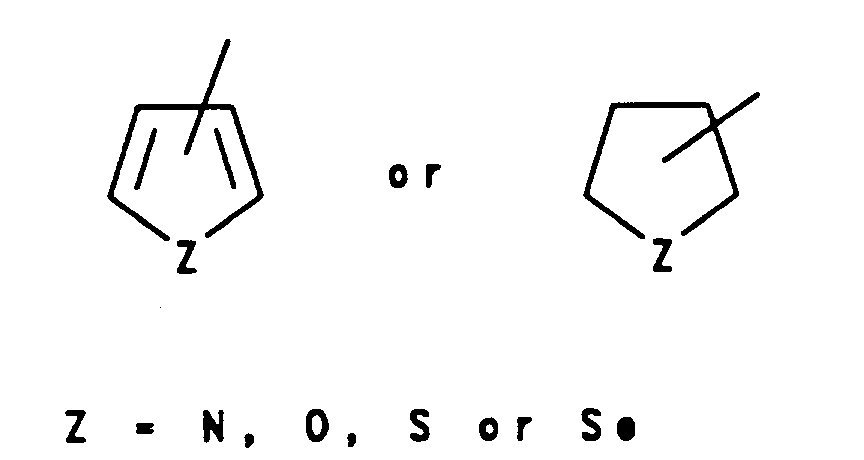
such as indolyl, 2-pyrrolidinyl, 3-pyrrolidinyl, 2-pyrrolinyl, tetrahydrofuranyl, furanyl, benzofuranyl, tetrahydrothienyl or thienyl, or a five membered aromatic ring with two N, O, S or Se heteroatoms optionally having a benzo or pyrido ring fused thereto:
such as imidazolyl, pyrazolyl, benzimidazolyl, indazolyl, thiazolyl or benzothiazolyl; (C₁-C₄)alkoxycarbonyl group selected from methoxycarbonyl, ethoxycarbonyl, straight or branched propoxycarbonyl, straight or branched butoxycarbonyl or allyloxycarbonyl; α-aminomethoxycarbonyl; halomethoxycarbonyl; vinyl or substituted vinyl group [substitution selected from (C₁-C₃)alkyl group, (C₆-C₁₀)aryl group selected from phenyl, α-naphthyl, β-naphthyl]; (C₁-C₄)alkoxy group such as allyloxy, methoxy, ethoxy, n-propoxy, n-butoxy or tert-butoxy; C₆-aryloxy group selected from phenoxy or substituted phenoxy (substitution selected from halo, (C₁-C₄)alkyl); (C₇-C₁₀)aralkyloxy group such as benzyloxy, 1-phenylethyloxy or 2-phenylethyloxy;
and when R³ = R⁴(CH₂)nCO- and n=1-4,
R⁴ is selected from hydrogen; (C₁-C₂)alkyl group selected from methyl or ethyl; (C₆-C₁₀)aryl group selected from phenyl, α-naphthyl or β-naphthyl; substituted(C₆-C₁₀)aryl group (substitution selected from halo, (C₁-C₄)alkoxy, trihalo(C₁-C₃)alkyl); acyloxy or haloacyloxy group, selected from acetyl, propionyl, chloroacetyl, trichloroacetyl, (C₃-C₆)cycloalkylcarbonyl, (C₆-C₁₀)aroyl selected from benzoyl or naphthoyl, halo substituted (C₆-C₁₀)aroyl such as pentafluorobenzoyl, 4-chlorobenzoyl, 3-bromobenzoyl or 3,4-difluorobenzoyl, (C₁-C₄)alkylbenzoyl such as 4-toluoyl, 2-toluoyl, 4-(1-methylethyl)benzoyl or (heterocycle)carbonyl, the heterocycle selected from a five membered aromatic or saturated ring with one N heteroatom optionally having a benzo or pyrido ring fused thereto:
such as tetrahydrofuranyl, furanyl, benzofuranyl, tetrahydrothienyl, thienyl or benzothienyl, or a five membered aromatic ring with two N, O, S or Se heteroatoms optionally having a benzo or pyrido ring fused thereto:
such as pyrazolyl, benzimidazolyl, benzoxazolyl, indazolyl, thiazolyl or benzothiazolyl, or a six membered aromatic ring with one or two N heteroatoms such as pyridyl or pyridazinyl; (C₁-C₄)alkoxy group such as allyloxy, methoxy, ethoxy, n-propoxy, n-butoxy or tert-butoxy; α-hydroxy(C₁-C₃)alkyl group selected from hydroxymethyl, α-hydroxyethyl, α-hydroxy-1-methylethyl or α-hydroxypropyl; halo(C₁-C₃)alkyl group such as bromomethyl, fluoromethyl, difluoromethyl, trifluoromethyl, chloromethyl, dichloromethyl, trichloromethyl, 2-fluoroethyl, 2,2-difluoroethyl, 2,2,2-trifluoroethyl, 2-bromoethyl or 2-iodoethyl;
and when R³ = R⁴(CH₂)nCO- and n = 2-4,
R⁴ is selected from amino; hydroxyamino; straight or branched mono(C₁-C₆)alkylamino group selected from methyl, ethyl, n-propyl, 1-methylethyl, n-butyl, 1-methylpropyl, 2-methylpropyl, 1,1-dimethylethyl, n-pentyl, 2-methylbutyl, 1,1-dimethylpropyl, 2,2-dimethylpropyl, 3-methylbutyl, n-hexyl, 1-methylpentyl, 1,1-dimethylbutyl, 2,2-dimethylbutyl, 3-methylpentyl, 1,2-dimethylbutyl, 1,3-dimethylbutyl or 1-methyl-1-ethylpropylamino and where appropriate their diastereomers and enantiomers; (C₃-C₈)cycloalkylamino group selected from cyclopropyl, trans-1,2-dimethylcyclopropyl, cis-1,2-dimethylcyclopropyl, trans-2,3-dimethylcyclopropyl, cis-2,3-dimethylcyclopropyl, cyclobutyl, trans-2,3-dimethylcyclobutyl, cis-2,3-dimethylcyclobutyl, cyclopentyl, cyclohexyl, cycloheptyl, cyclooctyl, bicyclo[2.2.1]hept-2-yl, or bicyclo[2.2.2]oct-2-ylamino and where appropriate their diastereomers and enantiomers; straight or branched chain di-(C₁-C₆)alkylamino group selected from dimethylamino, diethylamino, methyl(ethyl)amino, ethyl(1-methylethyl)amino or a combination of methyl, ethyl, n-propyl, 1-methylethyl, n-butyl, 1-methylpropyl, 2-methylpropyl, 1,1-dimethylethyl, n-pentyl, 2-methylbutyl, 1,1-dimethylpropyl, 2,2-dimethylpropyl, 3-methylbutyl, n-hexyl, 1-methylpentyl, 1,1-dimethylbutyl, 2,2-dimethylbutyl, 3-methylpentyl, 1,2-dimethylbutyl, 1,3-dimethylbutyl or 1-methyl-1-ethylpropylamino and where appropriate their diastereomers and enantiomers; (C₁-C₆)alkoxyamino group selected from methoxy, ethoxy, propoxy, butoxy, pentoxy or hexoxyamino; (C₃-C₈)cycloalkoxyamino group selected from cyclopropoxy, trans-1,2-dimethylcyclopropoxy, cis-1,2-dimethylcyclopropoxy, trans-2,3-dimethylcyclopropoxy, cis-2,3-dimethylcyclopropoxy, cyclobutoxy, trans-2,3-dimethylcyclobutoxy, cis-2,3-dimethylcyclobutoxy, cyclopentoxy, cyclohexoxy, cycloheptyloxy, cyclooctoxy, bicyclo[2.2.1]hept-2-yloxy, or bicyclo[2.2.1]oct-2-yloxyamino and where appropriate their diastereomers and enantiomers; (C₇-C₁₀)aralkoxyamino group selected from benzyloxy, 2-phenylethoxy, α-phenylethoxy, (2-naphthyl)methoxy, (1-naphthyl)methoxy, or phenylpropoxyamino; (C₂-C₈)azacycloalkyl group selected from aziridinyl, azetidinyl, pyrrolidinyl, pyrrolinyl, piperidinyl, 2-methylpyrrolidinyl, cis-3,4-dimethylpyrrolidinyl, trans-3,4-dimethylpyrrolidinyl, 2-azabicyclo[2.1.1]hex-2-yl, 5-azabicyclo[2.1.1]hex-5-yl, 2-azabicyclo[2.2.1]hept-2-yl, 7-azabicyclo[2.2.1]hept-7-yl, or 2-azabicyclo[2.2.2]oct-2-yl and where appropriate their diastereomers and enantiomers; azaheterocycloalkyl group selected from morpholinyl, piperazinyl, 4-methylpiperazinyl, 4-hydroxypiperazinyl, 4-(C₁-C₄)alkoxypiperazinyl, thiamorpholinyl, tetrahydro-1,2-oxazinyl, isoxazolidinyl, pyrazolidinyl, 2-methylpyrazolidinyl, 2,5-diazabicyclo[2.2.2]hept-2-yl, or 2,5-diaza-5-methylbicyclo[2.2.1]hept-2-yl and where appropriate their diastereomers and enantiomers; (C₇-C₁₀)arylalkylamino group selected from benzyl, 2-phenylethyl, α-phenylethyl, (2-naphthyl)methyl, (1-naphthyl)methyl or phenylpropylamino; (C₁-C₄)alkoxycarbonylamino group selected from tert-butoxycarbonylamino, allyloxycarbonylamino, methoxycarbonylamino, ethoxycarbonylamino or propoxycarbonylamino;
and when R³ = R4' (CH₂)nSO₂- and n = 0,
R4' is selected from amino; hydroxyamino; straight or branched mono(C₁-C₆)alkylamino group selected from methyl, ethyl, n-propyl, 1-methylethyl, n-butyl, 1-methylpropyl, 2-methylpropyl, 1,1-dimethylethyl, n-pentyl, 2-methylbutyl, 1,1-dimethylpropyl, 2,2-dimethylpropyl, 3-methylbutyl, n-hexyl, 1-methylpentyl, 1,1-dimethylbutyl, 2,2-dimethylbutyl, 3-methylpentyl, 1,2-dimethylbutyl, 1,3-dimethylbutyl or 1-methyl-1-ethylpropylamino and where appropriate their diastereomers and enantiomers; (C₃-C₈)cycloalkylamino group selected from cyclopropyl, trans-1,2-dimethylcyclopropyl, cis-1,2-dimethylcyclopropyl, trans-2,3-dimethylcyclopropyl, cis-2,3-dimethylcyclopropyl, cyclobutyl, trans-2,3-dimethylcyclobutyl, cis-2,3-dimethylcyclobutyl, cyclopentyl, cyclohexyl, cycloheptyl, cyclooctyl, bicyclo[2.2.1]hept-2-yl, or bicyclo[2.2.2]oct-2-ylamino and where appropriate their diastereomers and enantiomers; straight or branched chain di-(C₁-C₆)alkylamino group selected from dimethylamino, diethylamino, methyl(ethyl)amino, ethyl(1-methylethyl)amino or a combination of methyl, ethyl, n-propyl, 1-methylethyl, n-butyl, 1-methylpropyl, 2-methylpropyl, 1,1-dimethylethyl, n-pentyl, 2-methylbutyl, 1,1-dimethylpropyl, 2,2-dimethylpropyl, 3-methylbutyl, n-hexyl, 1-methylpentyl, 1,1-dimethylbutyl, 2,2-dimethylbutyl, 3-methylpentyl, 1,2-dimethylbutyl, 1,3-dimethylbutyl or 1-methyl-1-ethylpropylamino and where appropriate their diastereomers and enantiomers; (C₁-C₆)alkoxyamino group selected from methoxy, ethoxy, propoxy, butoxy, pentoxy or hexoxyamino; (C₃-C₈)cycloalkoxyamino group selected from cyclopropoxy, trans-1,2-dimethylcyclopropoxy, cis-1,2-dimethylcyclopropoxy, trans-2,3-dimethylcyclopropoxy, cis-2,3-dimethylcyclopropoxy, cyclobutoxy, trans-2,3-dimethylcyclobutoxy, cis-2,3-dimethylcyclobutoxy, cyclopentoxy, cyclohexoxy, cycloheptyloxy, cyclooctoxy, bicyclo[2.2.1]hept-2-yloxy, or bicyclo[2.2.1]oct-2-yloxyamino and where appropriate their diastereomers and enantiomers;
(C₇-C₁₀)aralkoxyamino group selected from benzyloxy, 2-phenylethoxy, α-phenylethoxy, (2-naphthyl)methoxy, (1-naphthyl)methoxy, or phenylpropoxyamino; (C₂-C₈)azacycloalkyl group selected from aziridinyl, azetidinyl, pyrrolidinyl, pyrrolinyl, piperidinyl, 2-methylpyrrolidinyl, cis-3,4-dimethylpyrrolidinyl, trans-3,4-dimethylpyrrolidinyl, 2-azabicyclo[2.1.1]hex-2-yl, 5-azabicyc1o[2.1.1]hex-5-yl, 2-azabicyclo[2.2.1]hept-2-yl, 7-azabicyclo[2.2.1]hept-7-yl, or 2-azabicyclo[2.2.2]oct-2-yl and where appropriate their diastereomers and enantiomers; azaheterocycloalkyl group selected from morpholinyl, piperazinyl, 4-methylpiperazinyl, 4-hydroxypiperazinyl, 4-(C₁-C₄)-alkoxypiperazinyl, thiamorpholinyl, tetrahydro-1,2-oxazinyl, isoxazolidinyl, pyrazolidinyl, 2-methylpyrazolidinyl, 2,5-diazabicyclo[2.2.2]hept-2-yl, or 2,5-diaza-5-methylbicyclo[2.2.1]hept-2-yl and where appropriate their diastereomers and enantiomers; (C₇-C₁₀)arylalkylamino group selected from benzyl, 2-phenylethyl, α-phenylethyl, (2-naphthyl)methyl, (1-naphthyl)methyl or phenylpropylamino; straight or branched (C₁-C₂)alkyl group selected from methyl or ethyl; (C₆-C₁₀)aryl group selected from phenyl, α-naphthyl or β-naphthyl;
and when R³ = R4' (CH₂)nSO₂- and n= 1-4,
R4' is selected from hydrogen; straight or branched (C₁-C₂)alkyl group selected from methyl or ethyl;
R⁵ is selected from hydrogen; straight or branched (C₁-C₃)alkyl group selected from methyl, ethyl, n-propyl or 1-methylethyl; (C₆-C₁₀)aryl group selected from phenyl, α-naphthyl or β-naphthyl; (C₇-C₉)aralkyl group such as benzyl; or -(CH₂)nCOOR⁷ where n=0-4 and R⁷ is selected from hydrogen; straight or branched (C₁-C₃)alkyl group selected from methyl, ethyl, n-propyl or 1-methylethyl; or (C₆-C₁₀)aryl group selected from phenyl, α-naphthyl, β-naphthyl;
R⁶ is selected from hydrogen; straight or branched (C₁-C₃)alkyl group selected from methyl, ethyl, n-propyl or 1-methylethyl; (C₆-C₁₀)aryl group selected from phenyl, α-naphthyl or β-naphthyl; (C₇-C₉)aralkyl group such as benzyl; or -(CH₂)nCOOR⁷ where n=0-4 and R⁷ is selected from hydrogen; straight or branched (C₁-C₃)alkyl group selected from methyl, ethyl, n-propyl or 1-methylethyl; or (C₆-C₁₀)aryl group selected from phenyl, α-naphthyl, β-naphthyl; with the proviso that R⁵ and R⁶ cannot both be hydrogen;
or R⁵ and R⁶ taken together are -(CH₂)₂W(CH₂)₂-, wherein W is selected from (CH₂)n and n=0-1, -NH, -N(C₁-C₃)alkyl [straight or branched], -N(C₁-C₄)alkoxy, oxygen, sulfur or substituted congeners selected from (L or D)proline, ethyl(L or D)prolinate, morpholine, pyrrolidine or piperidine; and the pharmacologically acceptable organic and inorganic salts or metal complexes. - Compounds of special interest are compounds according to the above formula I and II in which X is selected from halogen or trifluoromethanesulfonyloxy; the halogen is selected from bromine, chlorine, or fluorine;
R and R¹ are the same or different and are selected from hydrogen; amino; halogen (selected from chlorine, bromine, fluorine or iodine); or -NR²R³;
and when R or R¹ = -NR²R³ and R² = methyl or ethyl;
R³ = methyl or ethyl,
and when R or R¹ = -NR²R³ and R² = hydrogen,
R³ is selected from R⁴(CH₂)nCO- or R4' (CH₂)nSO₂-;
and when R³ = R⁴(CH₂)nCO- and n=0,
R⁴ is selected from hydrogen; straight or branched (C₁-C₂)alkyl group selected from methyl or ethyl; a heterocycle group selected from a five membered aromatic or saturated ring with one N, O, or S heteroatom optionally having a benzo or pyrido ring fused thereto:
such as furanyl or thienyl, or a five membered aromatic ring with two N, O or S heteroatoms optionally having a benzo or pyrido ring fused thereto:
such as pyrazolyl, benzimidazolyl or thiazolyl; (C₁-C₄)alkoxy group such as allyloxy, methoxy, ethoxy, n-propoxy, n-butoxy or tert-butoxy; C₆-aryloxy group selected from phenoxy or substituted phenoxy (substitution selected from halo, (C₁-C₄)alkyl); (C₇-C₁₀)aralkyloxy group such as benzyloxy, 1-phenylethyloxy or 2-phenylethyloxy; α-aminomethoxycarbonyl; or halomethoxycarbonyl;
and when R³ = R⁴(CH₂)nCO- and n=1-4,
R⁴ is selected from hydrogen; (C₁-C₂)alkyl group selected from methyl or ethyl; (C₆-C₁₀)aryl group selected from phenyl, α-naphthyl or β-naphthyl;
and when R³ = R4' (CH₂)nSO₂- and n = 0,
R4' is selected from straight or branched (C₁-C₂)alkyl group selected from methyl or ethyl; (C₆-C₁₀)aryl group selected from phenyl, α-naphthyl or β-naphthyl;
R⁵ is selected from hydrogen; straight or branched (C₁-C₃)alkyl group selected from methyl, ethyl, n-propyl or 1-methylethyl;
R⁶ is selected from hydrogen; straight or branched (C₁-C₃)alkyl group selected from methyl, ethyl, n-propyl or 1-methylethyl; with the proviso that R⁵ and R⁶ cannot both be hydrogen;
or R⁵ and R⁶ taken together are -(CH₂)₂W(CH₂)₂-, wherein W is selected from (CH₂)n and n=0-1, -NH, -N(C₁-C₃)alkyl [straight or branched], -N(C₁-C₄)alkoxy, oxygen, sulfur or substituted congeners selected from (L or D)proline, ethyl(L or D)prolinate, morpholine, pyrrolidine or piperidine;and the pharmacologically acceptable organic and inorganic salts or metal complexes. - Also included in the present invention are compounds useful as intermediates for producing the above compounds of formula I and II. Such intermediate compounds include those having the formula III and IV:

wherein:
Y is selected from -N₂⁺Cl⁻ or -N₃;
R or R¹ is selected from nitro; amino; halogen (selected from chlorine, bromine, fluorine or iodine); cyano; hydroxy; or -NR²R³;
and when R or R¹ = -NR²R³ and R² = hydrogen,
R³ = methyl, ethyl, n-propyl, 1-methylethyl, n-butyl, 1-methylpropyl, 2-methylpropyl or 1,1-dimethylethyl;
and when R² = methyl or ethyl,
R³ = methyl, ethyl, n-propyl, 1-methylethyl, n-butyl, 1-methylpropyl or 2-methylpropyl;
and when R² = n-propyl,
R³ = n-propyl, 1-methylethyl, n-butyl, 1-methylpropyl or 2-methylpropyl;
and when R² = 1-methylethyl,
R³ = n-butyl, 1-methylpropyl or 2-methylpropyl;
and when R² = n-butyl,
R³ = n-butyl, 1-methylpropyl or 2-methylpropyl;
and when R² = 1-methylpropyl,
R³ = 2-methylpropyl;
and when R or R¹ = -NR²R³ and R² = hydrogen,
R³ is selected from R⁴(CH₂)nCO- or R4' (CH₂)nSO₂-;
and when R³ = R⁴(CH₂)nCO- and n=0,
R⁴ is selected from hydrogen; amino; hydroxyamino; straight or branched mono(C₁-C₆)alkylamino group selected from methyl, ethyl, n-propyl, 1-methylethyl, n-butyl, 1-methylpropyl, 2-methylpropyl, 1,1-dimethylethyl, n-pentyl, 2-methylbutyl, 1,1-dimethylpropyl, 2,2-dimethylpropyl, 3-methylbutyl, n-hexyl, 1-methylpentyl, 1,1-dimethylbutyl, 2,2-dimethylbutyl, 3-methylpentyl, 1,2-dimethylbutyl, 1,3-dimethylbutyl or 1-methyl-1-ethylpropylamino and where appropriate their diastereomers and enantiomers; (C₃-C₈)cycloalkylamino group selected from cyclopropyl, trans-1,2-dimethylcyclopropyl, cis-1,2-dimethylcyclopropyl, trans-2,3-dimethylcyclopropyl, cis-2,3-dimethylcyclopropyl, cyclobutyl, trans-2,3-dimethylcyclobutyl, cis-2,3-dimethylcyclobutyl, cyclopentyl, cyclohexyl, cycloheptyl, cyclooctyl, bicyclo[2.2.1]hept-2-yl, or bicyclo[2.2.2]oct-2-ylamino and where appropriate their diastereomers and enantiomers; straight or branched chain di-(C₁-C₆)alkylamino group selected from dimethylamino, diethylamino, methyl(ethyl)amino, ethyl(1-methylethyl)amino or a combination of methyl, ethyl, n-propyl, 1-methylethyl, n-butyl, 1-methylpropyl, 2-methylpropyl, 1,1-dimethylethyl, n-pentyl, 2-methylbutyl, 1,1-dimethylpropyl, 2,2-dimethylpropyl, 3-methylbutyl, n-hexyl, 1-methylpentyl, 1,1-dimethylbutyl, 2,2-dimethylbutyl, 3-methylpentyl, 1,2-dimethylbutyl, 1,3-dimethylbutyl or 1-methyl-1-ethylpropylamino and where appropriate their diastereomers and enantiomers; (C₁-C₆)alkoxyamino group selected from methoxy, ethoxy, propoxy, butoxy, pentoxy or hexoxyamino; (C₃-C₈)cycloalkoxyamino group selected from cyclopropoxy, trans-1,2-dimethylcyclopropoxy, cis-1,2-dimethylcyclopropoxy, trans-2,3-dimethylcyclopropoxy, cis-2,3-dimethylcyclopropoxy, cyclobutoxy, trans-2,3-dimethylcyclobutoxy, cis-2,3-dimethylcyclobutoxy, cyclopentoxy, cyclohexoxy, cycloheptyloxy, cyclooctoxy, bicyclo[2.2.1]hept-2-yloxy, or bicyclo[2.2.1]oct-2-yloxyamino and where appropriate their diastereomers and enantiomers; (C₇-C₁₀)aralkoxyamino group selected from benzyloxy, 2-phenylethoxy, α-phenylethoxy, (2-naphthyl)methoxy, (1-naphthyl)methoxy, or phenylpropoxyamino; (C₂-C₈)azacycloalkyl group selected from aziridinyl, azetidinyl, pyrrolidinyl, pyrrolinyl, piperidinyl, 2-methylpyrrolidinyl, cis-3,4-dimethylpyrrolidinyl, trans-3,4-dimethylpyrrolidinyl, 2-azabicyclo[2.1.1]hex-2-yl, 5-azabicyclo[2.1.1]hex-5-yl, 2-azabicyclo[2.2.1]hept-2-yl, 7-azabicyclo[2.2.1]hept-7-yl, or 2-azabicyclo[2.2.2]oct-2-yl and where appropriate their diastereomers and enantiomers; azaheterocycloalkyl group selected from morpholinyl, piperazinyl, 4-methylpiperazinyl, 4-hydroxypiperazinyl, 4-(C₁-C₄)-alkoxypiperazinyl, thiamorpholinyl, tetrahydro-1,2-oxazinyl, isoxazolidinyl, pyrazolidinyl, 2-methylpyrazolidinyl, 2,5-diazabicyclo[2.2.2]hept-2-yl, or 2,5-diaza-5-methylbicyclo[2.2.1]hept-2-yl and where appropriate their diastereomers and enantiomers; azaheterocyclic group selected from 1-imidazolyl, 1-pyrrolyl, 1-(1,2,3-triazolyl), 4-(1,2,4-triazolyl), 1-tetrazolyl, or 2-tetrazolyl; (C₆-C₁₀)arylamino group selected from phenylamino or naphthylamino; (C₇-C₁₀)arylalkylamino group selected from benzyl, 2-phenylethyl, α-phenylethyl, (2-naphthyl)methyl, (1-naphthyl)methyl or phenylpropylamino; straight or branched (C₁-C₄)alkyl group selected from methyl, ethyl, n-propyl, 1-methylethyl, n-butyl, 1-methylpropyl, 2-methylpropyl or 1,1-dimethylethyl; (C₃-C₆)cycloalkyl group selected from cyclopropyl, cyclobutyl, cyclopentyl or cyclohexyl; substituted (C₃-C₆)cycloalkyl group (substitution selected from (C₁-C₃)alkyl, cyano, amino or (C₁-C₃)acyl); (C₆-C₁₀)aryl group selected from phenyl, α-naphthyl or β-naphthyl; substituted (C₆-C₁₀)aryl group (substitution selected from halo, (C₁-C₄)alkoxy, trihalo(C₁-C₃)alkyl, nitro, amino, cyano, (C₁-C₄)alkoxycarbonyl, (C₁-C₃)alkylamino or carboxy); (C₇-C₉)aralkyl group selected from benzyl, 1-phenylethyl, 2-phenylethyl or phenylpropyl; α-hydroxy(C₁-C₃)alkyl group selected from hydroxymethyl, α-hydroxyethyl, α-hydroxy-1-methylethyl or α-hydroxypropyl; α-mercapto(C₁-C₃)alkyl group selected from mercaptomethyl, α-mercaptoethyl, α-mercapto-1-methylethyl or α-mercaptopropyl; halo(C₁-C₃)alkyl group such as bromomethyl, fluoromethyl, difluoromethyl, trifluoromethyl, chloromethyl, dichloromethyl, trichloromethyl, 2-fluoroethyl, 2,2-difluoroethyl, 2,2,2-trifluoroethyl, 2-bromoethyl or 2-iodoethyl; a heterocycle group selected from a five membered aromatic or saturated ring with one N, O, S or Se heteroatom optionally having a benzo or pyrido ring fused thereto: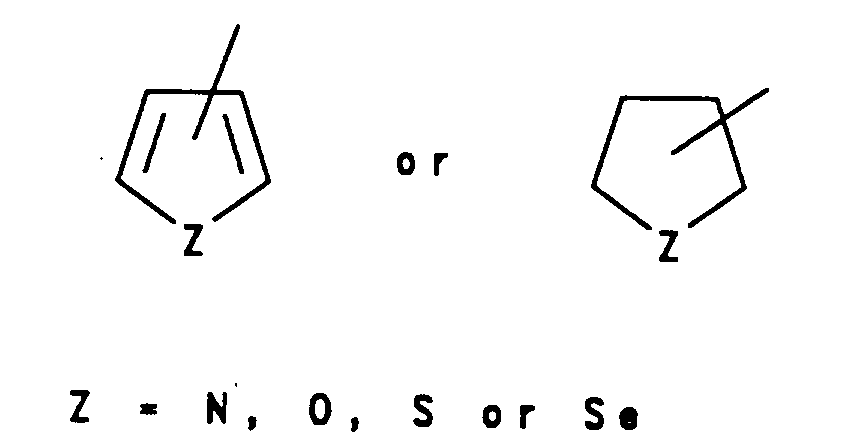
such as pyrrolyl, N-methylindolyl, indolyl, 2-pyrrolidinyl, 3-pyrrolidinyl, 2-pyrrolinyl, tetrahydrofuranyl, furanyl, benzofuranyl, tetrahydrothienyl, thienyl, benzothienyl or selenazolyl, or a five membered aromatic ring with two N, O, S or Se heteroatoms optionally having a benzo or pyrido ring fused thereto: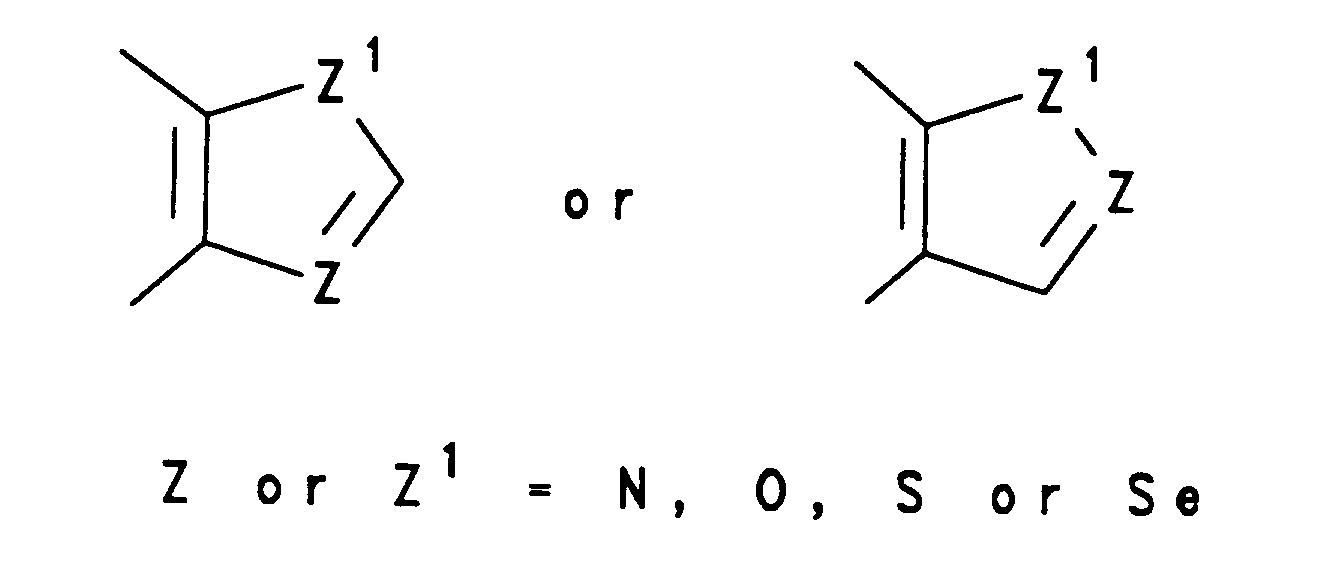
such as imidazolyl, pyrazolyl, benzimidazolyl, oxazolyl, benzoxazolyl, indazolyl, thiazolyl, benzothiazolyl, 3-alkyl-3H-imidazo[4,5-b]pyridyl or pyridylimidazolyl, or a five membered saturated ring with one or two N, O, S or Se heteroatoms and an adjacent appended O heteroatom:
(A is selected from hydrogen; straight or branched (C₁-C₄)alkyl; C₆-aryl; substituted C₆-aryl (substitution selected from halo,(C₁-C₄)alkoxy, trihalo(C₁-C₃)alkyl, nitro, amino, cyano, (C₁-C₄)alkoxycarbonyl, (C₁-C₃)alkylamino or carboxy); (C₇-C₉)aralkyl group selected from benzyl, 1-phenylethyl, 2-phenylethyl or phenylpropyl)
such as γ-butyrolactam, γ-butyrolactone, imidazolidinone or N-aminoimidazolidinone, or a six membered aromatic ring with one to three N heteroatoms such as pyridyl, pyridazinyl, pyrazinyl, sym-triazinyl, unsym-triazinyl, pyrimidinyl or (C₁-C₃)alkylthiopyridazinyl, or a six membered saturated ring with one or two N, O, S or Se heteroatoms and an adjacent appended O heteroatom such as 2,3-dioxo-1-piperazinyl, 4-ethyl-2,3-dioxo-1-piperazinyl, 4-methyl-2,3-dioxo-1-piperazinyl, 4-cyclopropyl-2-dioxo-1-piperazinyl, 2-dioxomorpholinyl or 2-dioxothiomorpholinyl; acyl or haloacyl group selected from acetyl, propionyl, chloroacetyl, trifluoroacetyl, (C₃-C₆)cycloalkylcarbonyl such as cyclopropylcarbonyl, cyclobutylcarbonyl, cyclopentylcarbonyl, cyclohexylcarbonyl, (2,3-dimethylcyclopropyl)carbonyl, (1,2-dimethylcyclopropyl)carbonyl, (2-ethylcyclopropyl)carbonyl, (2-methylcyclopentyl)carbonyl or (3-ethylcyclobutyl)carbonyl, (C₆-C₁₀)aroyl selected from benzoyl or naphthoyl, halo substituted (C₆-C₁₀)aroyl such as pentafluorobenzoyl, 4-chlorobenzoyl, 3-bromobenzoyl or 3,4-difluorobenzoyl, (C₁-C₄)alkylbenzoyl such as 4-toluoyl, 2-toluoyl or 4-(1-methylethyl)benzoyl, or (heterocycle)carbonyl, the heterocycle selected from a five membered aromatic or saturated ring with one N, O, S or Se heteroatom optionally having a benzo or pyrido ring fused thereto:
such as pyrrolyl, N-methylindolyl, indolyl, 2-pyrrolidinyl, 3-pyrrolidinyl, 2-pyrrolinyl, tetrahydrofuranyl, furanyl, benzofuranyl, tetrahydrothienyl, thienyl, benzothienyl or selenazolyl, or a five membered aromatic ring with two N, O, S or Se heteroatoms optionally having a benzo or pyrido ring fused thereto:
such as imidazolyl, pyrazolyl, benzimidazolyl, oxazolyl, benzoxazolyl, indazolyl, thiazolyl, benzothiazolyl, 3-alkyl-3H-imidazo[4,5-b]pyridyl or pyridylimidazolyl, or a five membered saturated ring with one or two N, O, S or Se heteroatoms and an adjacent appended O heteroatom:
(A is selected from hydrogen; straight or branched (C₁-C₄)alkyl; C₆-aryl; substituted C₆-aryl (substitution selected from halo,(C₁-C₄)alkoxy, trihalo(C₁-C₃)alkyl, nitro, amino, cyano, (C₁-C₄)alkoxycarbonyl, (C₁-C₃)alkylamino or carboxy); (C₇-C₉)aralkyl group selected from benzyl, 1-phenylethyl, 2-phenylethyl or phenylpropyl)
such as γ-butyrolactam, γ-butyrolactone, imidazolidinone or N-aminoimidazolidinone, or a six membered aromatic ring with one to three N heteroatoms such as pyridyl, pyridazinyl, pyrazinyl, sym-triazinyl, unsym-triazinyl, pyrimidinyl or (C₁-C₃)alkylthiopyridazinyl, or a six membered saturated ring with one or two N, O, S or Se heteroatoms and an adjacent appended O heteroatom such as 2,3-dioxo-1-piperazinyl, 4-ethyl-2,3-dioxo-1-piperazinyl, 4-methyl-2,3-dioxo-1-piperazinyl, 4-cyclopropyl-2-dioxo-1-piperazinyl, 2-dioxomorpholinyl or 2-dioxothiomorpholinyl; (C₁-C₄)alkoxycarbonyl group selected from methoxycarbonyl, ethoxycarbonyl, straight or branched propoxylcarbonyl, straight or branched butoxycarbonyl or allyloxycarbonyl; vinyl or substituted vinyl group [substitution selected from (C₁-C₃)alkyl group, halogen, (C₆-C₁₀)aryl group selected from phenyl, a-naphthyl, β-naphthyl, substituted (C₆-C₁₀)aryl group (substitution selected from halo, (C₁-C₄)alkoxy, trihalo(C₁-C₃)alkyl, nitro, amino, cyano, (C₁-C₄)alkoxycarbonyl, (C₁-C₃)alkylamino or carboxy), halo(C₁-C₃)alkyl group such as bromomethyl, fluoromethyl, difluoromethyl, trifluoromethyl, chloromethyl, dichloromethyl, trichloromethyl, 2-fluoroethyl, 2,2-difluoroethyl, 2,2,2-trifluoroethyl, 2-bromoethyl or 2-iodoethyl, a heterocycle group selected from a five membered aromatic or saturated ring with one N, O, S or Se heteroatom optionally having a benzo or pyrido ring fused thereto:
such as pyrrolyl, N-methylindolyl, indolyl, 2-pyrrolidinyl, 3-pyrrolidinyl, 2-pyrrolinyl, tetrahydrofuranyl, furanyl, benzofuranyl, tetrahydrothienyl, thienyl, benzothienyl or selenazolyl]; (C₁-C₄)alkoxy group such as allyloxy, methoxy, ethoxy, n-propoxy, n-butoxy or tert-butoxy; C₆-aryloxy group selected from phenoxy or substituted phenoxy (substitution selected from halo, (C₁-C₄)alkyl, nitro, cyano, thiol, amino, carboxy, di(C₁-C₃)alkylamino); (C₇-C₁₀)aralkyloxy group such as benzyloxy, 1-phenylethyloxy or 2-phenylethyloxy; vinyloxy or substituted vinyloxy group (substitution selected from (C₁-C₄)alkyl, cyano, carboxy, or (C₆-C₁₀)aryl selected from phenyl, α-naphthyl or β-naphthyl); RaRbamino (C₁-C₄) alkoxy group, wherein RaRb is a straight or branched (C₁-C₄)alkyl selected from methyl, ethyl, n-propyl, 1-methylethyl, n-butyl, 1-methylpropyl, 2-methylpropyl or 1,1-dimethylethyl or RaRb is (CH₂)n, n=2-6, or -(CH₂)₂W(CH₂)₂- wherein W is selected from -N(C₁-C₃)alkyl [straight or branched], -NH, -NOB [B is selected from hydrogen or (C₁-C₃)alkyl], O or S; or RaRbaminoxy group, wherein RaRb is a straight or branched (C₁-C₄)alkyl selected from methyl, ethyl, n-propyl, 1-methylethyl, n-butyl, 1-methylpropyl, or 2-methylpropyl or RaRb is (CH₂)n, n=2-6, or -(CH₂)₂W(CH₂)₂- wherein W is selected from -N(C₁-C₃)alkyl [straight or branched], -NH, -NOB [B is selected from hydrogen or (C₁-C₃)alkyl], O or S;
and when R³ = R⁴(CH₂)nCO- and n=1-4,
R⁴ is selected from hydrogen; straight or branched (C₁-C₄)alkyl group selected from methyl, ethyl, n-propyl, 1-methylethyl, n-butyl, 1-methylpropyl, 2-methylpropyl or 1,1-dimethylethyl; (C₃-C₆)cycloalkyl group selected from cyclopropyl, cyclobutyl, cyclopentyl or cyclohexyl; substituted (C₃-C₆)cycloalkyl group (substitution selected from (C₁-C₃)alkyl, cyano, amino or (C₁-C₃)acyl); (C₆-C₁₀)aryl group selected from phenyl, α-naphthyl or β-naphthyl; substituted(C₆-C₁₀)aryl group (substitution selected from halo, (C₁-C₄)alkoxy, trihalo(C₁-C₃)alkyl, nitro, amino, cyano, (C₁-C₄)alkoxycarbonyl, (C₁-C₃)alkylamino or carboxy); (C₇-C₉) aralkyl group such as benzyl, 1-phenylethyl, 2-phenylethyl or phenylpropyl; acyloxy or haloacyloxy group, selected from acetyl, propionyl, chloroacetyl, trichloroacetyl, (C₃-C₆)cycloalkylcarbonyl, (C₆-C₁₀)aroyl selected from benzoyl or naphthoyl, halo substituted (C₆-C₁₀)aroyl such as pentafluorobenzoyl, 4-chlorobenzoyl, 3-bromobenzoyl or 3,4-difluorobenzoyl, (C₁-C₄)alkylbenzoyl such as 4-toluoyl, 2-toluoyl or 4-(1-methylethyl)benzoyl, (heterocycle)carbonyl, the heterocycle selected from a five membered aromatic or saturated ring with one N, O, S or Se heteroatom optionally having a benzo or pyrido ring fused thereto:
such as pyrrolyl, N-methylindolyl, indolyl, 2-pyrrolidinyl, 3-pyrrolidinyl, 2-pyrrolinyl, tetrahydrofuranyl, furanyl, benzofuranyl, tetrahydrothienyl, thienyl, benzothienyl or selenazolyl, or a five membered aromatic ring with two N, O, S or Se heteroatoms optionally having a benzo or pyrido ring fused thereto:
such as imidazolyl, pyrazolyl, benzimidazolyl, oxazolyl, benzoxazolyl, indazolyl, thiazolyl, benzothiazolyl, 3-alkyl-3H-imidazo[4,5-b]pyridyl or pyridylimidazolyl, or a five membered saturated ring with one or two N, O, S or Se heteroatoms and an adjacent appended O heteroatom:
(A is selected from hydrogen; straight or branched (C₁-C₄)alkyl; C₆-aryl; substituted C₆-aryl (substitution selected from halo,(C₁-C₄)alkoxy, trihalo(C₁-C₃)alkyl, nitro, amino, cyano, (C₁-C₄)alkoxycarbonyl, (C₁-C₃)alkylamino or carboxy); (C₇-C₉)aralkyl group selected from benzyl, 1-phenylethyl, 2-phenylethyl or phenylpropyl)
such as γ-butyrolactam, γ-butyrolactone, imidazolidinone or N-aminoimidazolidinone, or a six membered aromatic ring with one to three N heteroatoms such as pyridyl, pyridazinyl, pyrazinyl, sym-triazinyl, unsym-triazinyl, pyrimidinyl or (C₁-C₃)alkylthiopyridazinyl, or a six membered saturated ring with one or two N, O, S or Se heteroatoms and an adjacent appended O heteroatom such as 2,3-dioxo-1-piperazinyl, 4-ethyl-2,3-dioxo-1-piperazinyl, 4-methyl-2,3-dioxo-1-piperazinyl, 4-cyclopropyl-2-dioxo-1-piperazinyl, 2-dioxomorpholinyl or 2-dioxothiomorpholinyl; (C₁-C₄)alkoxy group such as allyloxy, methoxy, ethoxy, n-propoxy,n-butoxy or tert-butoxy; C₆-aryloxy group selected from phenoxy or substituted phenoxy (substitution selected from halo, (C₁-C₄)alkyl, nitro, cyano, thiol, amino, carboxy, di-(C₁-C₃)alkylamino); (C₇-C₁₀)aralkyloxy group such as benzyloxy, 1-phenylethyloxy or 2-phenylethyloxy; (C₁-C₃)alkylthio group selected from methylthio, ethylthio, propylthio or allylthio; C₆-arylthio group selected from phenylthio or substituted phenylthio (substitution selected from halo, (C₁-C₄)alkyl, nitro, cyano, thiol, amino, carboxy, di-(C₁-C₃)alkylamino); C₆-arylsulfonyl group selected from phenylsulfonyl or substituted phenylsulfonyl (substitution selected from halo, (C₁-C₄)alkoxy, trihalo(C₁-C₃)alkyl, nitro, amino, cyano, (C₁-C₄)alkoxycarbonyl, (C₁-C₃)alkylamino or carboxy); (C₇-C₈)aralkylthio group such as benzylthio, 1-phenylethylthio or 2-phenylethylthio; a heterocycle group selected from a five membered aromatic or saturated ring with one N, O, S or Se heteroatom optionally having a benzo or pyrido ring fused thereto:
such as pyrrolyl, N-methylindolyl, indolyl, 2-pyrrolidinyl, 3-pyrrolidinyl, 2-pyrrolinyl, tetrahydrofuranyl, furanyl, benzofuranyl, tetrahydrothienyl, thienyl, benzothienyl or selenazolyl, or a five membered aromatic ring with two N, O,S or Se heteroatoms optionally having a benzo or pyrido ring fused thereto:
such as imidazolyl, pyrazolyl, benzimidazolyl, oxazolyl, benzoxazolyl, indazolyl, thiazolyl, benzothiazolyl, 3-alkyl-3H-imidazo[4,5-b]pyridyl or pyridylimidazolyl, or a five membered saturated ring with one or two N, O, S or Se heteroatoms and an adjacent appended O heteroatom:
(A is selected from hydrogen; straight or branched (C₁-C₄) alkyl; C₆-aryl; substituted C₆-aryl (substitution selected from halo,(C₁-C₄)alkoxy, trihalo(C₁-C₃)alkyl, nitro, amino, cyano, (C₁-C₄)alkoxycarbonyl, (C₁-C₃)alkylamino or carboxy); (C₇-C₉)aralkyl group selected from benzyl, 1-phenylethyl, 2-phenylethyl or phenylpropyl)
such as γ-butyrolactam, γ-butyrolactone, imidazolidinone or N-aminoimidazolidinone, or a six membered aromatic ring with one to three N heteroatoms such as pyridyl, pyridazinyl, pyrazinyl, sym-triazinyl, unsym-triazinyl, pyrimidinyl or (C₁-C₃)alkylthiopyridazinyl, or a six membered saturated ring with one or two N, O, S or Se heteroatoms and an adjacent appended O heteroatom such as 2,3-dioxo-1-piperazinyl, 4-ethyl-2,3-dioxo-1-piperazinyl, 4-methyl-2,3-dioxo-1-piperazinyl, 4-cyclopropyl-2-dioxo-1-piperazinyl, 2-dioxomorpholinyl or 2-dioxothiomorpholinyl; hydroxy group; mercapto group; α-hydroxy(C₁-C₃)alkyl group selected from hydroxymethyl, α-hydroxyethyl or α-hydroxy-1-methylethyl or α-hydroxypropyl; halo(C₁-C₃)alkyl group such as bromomethyl, fluoromethyl, difluoromethyl, trifluoromethyl, chloromethyl, dichloromethyl, trichloromethyl, 2-fluoroethyl, 2,2-difluoroethyl, 2,2,2-trifluoroethyl, 2-bromoethyl or 2-iodoethyl; acyl or haloacyl group selected from acetyl, propionyl, chloroacetyl, trifluoroacetyl, (C₃-C₆)cycloalkylcarbonyl, (C₆-C₁₀)aroyl selected from benzoyl or naphthoyl, halo substituted (C₆-C₁₀)aroyl such as pentafluorobenzoyl, 4-chlorobenzoyl, 3-bromobenzoyl, 3,4-difluorobenzoyl, (C₁-C₄)alkylbenzoyl such as 4-toluoyl, 2-toluoyl or 4-(1-methylethyl)benzoyl, or (heterocycle)carbonyl, the heterocycle selected from a five membered aromatic or saturated ring with one N, O, S or Se heteroatom optionally having a benzo or pyrido ring fused thereto:
such as pyrrolyl, N-methylindolyl, indolyl, 2-pyrrolidinyl, 3-pyrrolidinyl, 2-pyrrolinyl, tetrahydrofuranyl, furanyl,benzofuranyl, tetrahydrothienyl, thienyl, benzothienyl or selenazolyl, or a five membered aromatic ring with two N, O, S or Se heteroatoms optionally having a benzo or pyrido ring fused thereto: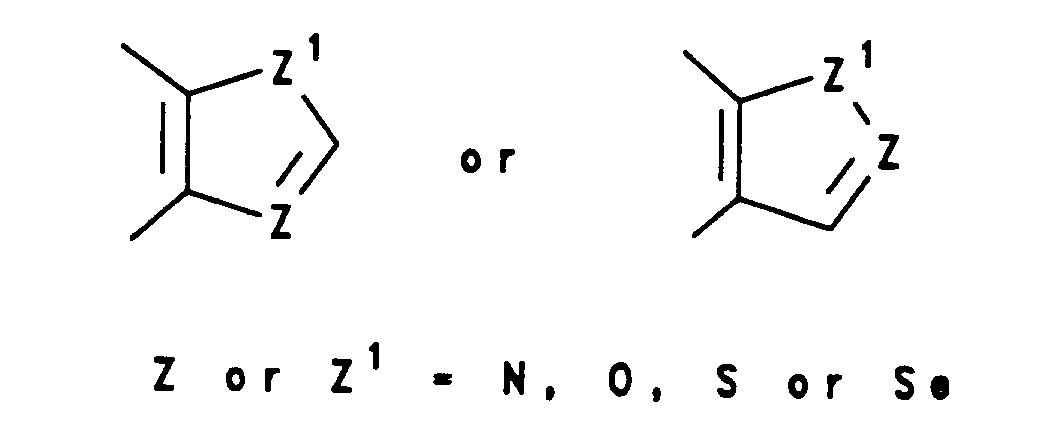
such as imidazolyl, pyrazolyl, benzimidazolyl, oxazolyl, benzoxazolyl, indazolyl, thiazolyl, benzothiazolyl, 3-alkyl-3H-imidazo[4,5-b]pyridyl or pyridylimidazolyl, or a five membered saturated ring with one or two N, O, S or Se heteroatoms and an adjacent appended O heteroatom:
(A is selected from hydrogen; straight or branched (C₁-C₄)alkyl; C₆-aryl; substituted C₆-aryl (substitution selected from halo,(C₁-C₄)alkoxy, trihalo(C₁-C₃)alkyl, nitro, amino, cyano, (C₁-C₄)alkoxycarbonyl, (C₁-C₃)alkylamino or carboxy); (C₇-C₉)aralkyl group selected from benzyl, 1-phenylethyl, 2-phenylethyl or phenylpropyl)
such as γ-butyrolactam, γ-butyrolactone, imidazolidinone or N-aminoimidazolidinone, or a six membered aromatic ring with one to three N heteroatoms such as pyridyl, pyridazinyl, pyrazinyl, sym-triazinyl, unsym-triazinyl, pyrimidinyl or (C₁-C₃)alkylthiopyridazinyl, or a six membered saturated ring with one or two N, O, S or Se heteroatoms and an adjacent appended O heteroatom such as 2,3-dioxo-1-piperazinyl, 4-ethyl-2,3-dioxo-1-piperazinyl, 4-methyl-2,3-dioxo-1-piperazinyl, 4-cyclopropyl-2-dioxo-1-piperazinyl, 2-dioxomorpholinyl or 2-dioxothiomorpholinyl; (C₁-C₄)alkoxycarbonyl group selected from methoxycarbonyl, ethoxycarbonyl, straight or branched propoxycarbonyl, allyloxycarbonyl or straight or branched butoxycarbonyl; RaRbamino(C₁-C₄)alkoxy group, wherein RaRb is a straight or branched (C₁-C₄)alkyl selected from methyl, ethyl, n-propyl, 1-methylethyl, n-butyl, 1-methylpropyl, or 2-methylpropyl or RaRb is (CH₂)n, n=2-6, or -(CH₂)₂W(CH₂)₂- wherein W is selected from -N(C₁-C₃)alkyl [straight or branched], -NH, -NOB [B is selected from hydrogen or (C₁-C₃)alkyl], O or S; or RaRbaminoxy group, wherein RaRb is a straight or branched (C₁-C₄)alkyl selected from methyl, ethyl, n-propyl, 1-methylethyl, n-butyl, 1-methylpropyl, or 2-methylpropyl or RaRb is (CH₂)n, n=2-6, or -(CH₂)₂W-(CH₂)₂- wherein W is selected from -N(C₁-C₃)alkyl [straight or branched], -NH, -NOB [B is selected from hydrogen or (C₁-C₃)alkyl], O or S;
and when R³ = R⁴(CH₂)nCO- and n = 2-4,
R⁴ is selected from amino; hydroxyamino; straight or branched mono(C₁-C₆)alkylamino group selected from methyl, ethyl, n-propyl, 1-methylethyl, n-butyl, 1-methylpropyl, 2-methylpropyl, 1,1-dimethylethyl, n-pentyl, 2-methylbutyl, 1,1-dimethylpropyl, 2,2-dimethylpropyl, 3-methylbutyl, n-hexyl, 1-methylpentyl, 1,1-dimethylbutyl, 2,2-dimethylbutyl, 3-methylpentyl, 1,2-dimethylbutyl, 1,3-dimethylbutyl or 1-methyl-1-ethylpropylamino and where appropriate their diastereomers and enantiomers; (C₃-C₈)cycloalkylamino group selected from cyclopropyl, trans-1,2-dimethylcyclopropyl, cis-1,2-dimethylcyclopropyl, trans-2,3-dimethylcyclopropyl, cis-2,3-dimethylcyclopropyl, cyclobutyl, trans-2,3-dimethylcyclobutyl, cis-2,3-dimethylcyclobutyl, cyclopentyl, cyclohexyl, cycloheptyl, cyclooctyl, bicyclo[2.2.1]hept-2-yl, or bicyclo[2.2.2]oct-2-ylamino and where appropriate their diastereomers and enantiomers; straight or branched chain di-(C₁-C₆)alkylamino group selected from dimethylamino, diethylamino, methyl(ethyl)amino, ethyl(1-methylethyl)amino or a combination of methyl, ethyl, n-propyl, 1-methylethyl, n-butyl, 1-methylpropyl, 2-methylpropyl, 1,1-dimethylethyl, n-pentyl, 2-methylbutyl, 1,1-dimethylpropyl, 2,2-dimethylpropyl, 3-methylbutyl, n-hexyl, 1-methylpentyl, 1,1-dimethylbutyl, 2,2-dimethylbutyl, 3-methylpentyl, 1,2-dimethylbutyl, 1,3-dimethylbutyl or 1-methyl-1-ethylpropylamino and where appropriate their diastereomers and enantiomers; (C₁-C₆)alkoxyamino group selected from methoxy, ethoxy, propoxy, butoxy, pentoxy or hexoxyamino; (C₃-C₈)cycloalkoxyamino group selected from cyclopropoxy, trans-1,2-dimethylcyclopropoxy, cis-1,2-dimethylcyclopropoxy, trans-2,3-dimethylcyclopropoxy, cis-2,3-dimethylcyclopropoxy, cyclobutoxy, trans-2,3-dimethylcyclobutoxy, cis-2,3-dimethylcyclobutoxy, cyclopentoxy, cyclohexoxy, cycloheptyloxy, cyclooctoxy, bicyclo[2.2.1]hept-2-yloxy, or bicyclo[2.2.1]oct-2-yloxyamino and where appropriate their diastereomers and enantiomers; (C₇-C₁₀)aralkoxyamino group selected from benzyloxy, 2-phenylethoxy, α-phenylethoxy, (2-naphthyl)methoxy, (1-naphthyl)methoxy, or phenylpropoxyamino; (C₂-C₈)azacycloalkyl group selected from aziridinyl, azetidinyl, pyrrolidinyl, pyrrolinyl, piperidinyl, 2-methylpyrrolidinyl, cis-3,4-dimethylpyrrolidinyl, trans-3,4-dimethylpyrrolidinyl, 2-azabicyclo[2.1.1]hex-2-yl, 5-azabicyclo[2.1.1]hex-5-yl, 2-azabicyclo[2.2.1]hept-2-yl, 7-azabicyclo[2.2.1]hept-7-yl, or 2-azabicyclo[2.2.2]oct-2-yl and where appropriate their diastereomers and enantiomers; azaheterocycloalkyl group selected from morpholinyl, piperazinyl, 4-methylpiperazinyl, 4-hydroxypiperazinyl, 4-(C₁-C₄)alkoxypiperazinyl, thiamorpholinyl, tetrahydro-1,2-oxazinyl, isoxazolidinyl, pyrazolidinyl, 2-methylpyrazolidinyl, 2,5-diazabicyclo[2.2.2]hept-2-yl, or 2,5-diaza-5-methylbicyclo[2.2.1]hept-2-yl and where appropriate their diastereomers and enantiomers; azaheterocyclic group selected from 1-imidazolyl, 1-pyrrolyl, 1-(1,2,3-triazolyl), 4-(1,2,4-triazolyl), 1-tetrazolyl, or 2-tetrazolyl; (C₆-C₁₀)arylamino group selected from phenylamino or naphthylamino; (C₇-C₁₀)arylalkylamino group selected from benzyl, 2-phenylethyl, α-phenylethyl, (2-naphthyl)methyl, (1-naphthyl)methyl or phenylpropylamino; (C₁-C₄)alkoxycarbonylamino group selected from tert-butoxycarbonylamino, allyloxycarbonylamino, methoxycarbonylamino, ethoxycarbonylamino or propoxycarbonylamino;
and when R³ = R4'(CH₂)nSO₂- and n = 0,
R4' is selected from amino; hydroxyamino; straight or branched mono(C₁-C₆)alkylamino group selected from methyl, ethyl, n-propyl, 1-methylethyl, n-butyl, 1-methylpropyl, 2-methylpropyl, 1,1-dimethylethyl, n-pentyl, 2-methylbutyl, 1,1-dimethylpropyl, 2,2-dimethylpropyl, 3-methylbutyl, n-hexyl, 1-methylpentyl, 1,1-dimethylbutyl, 2,2-dimethylbutyl, 3-methylpentyl, 1,2-dimethylbutyl, 1,3-dimethylbutyl or 1-methyl-1-ethylpropylamino and where appropriate their diastereomers and enantiomers; (C₃-C₈)cycloalkylamino group selected from cyclopropyl, trans-1,2-dimethylcyclopropyl, cis-1,2-dimethylcyclopropyl, trans2,3-dimethylcyclopropyl, cis-2,3-dimethylcyclopropyl, cyclobutyl, trans-2,3-dimethylcyclobutyl, cis-2,3-dimethylcyclobutyl, cyclopentyl, cyclohexyl, cycloheptyl, cyclooctyl, bicyclo[2.2.1]hept-2-yl, or bicyclo[2.2.2]oct-2-ylamino and where appropriate their diastereomers and enantiomers; straight or branched chain di-(C₁-C₆)alkylamino group selected from dimethylamino, diethylamino, methyl(ethyl)amino, ethyl(1-methylethyl)amino or a combination of methyl, ethyl, n-propyl, 1-methylethyl, n-butyl, 1-methylpropyl, 2-methylpropyl, 1,1-dimethylethyl, n-pentyl, 2-methylbutyl, 1,1-dimethylpropyl, 2,2-dimethylpropyl, 3-methylbutyl, n-hexyl, 1-methylpentyl, 1,1-dimethylbutyl, 2,2-dimethylbutyl, 3-methylpentyl, 1,2-dimethylbutyl, 1,3-dimethylbutyl or 1-methyl-1-ethylpropylamino and where appropriate their diastereomers and enantiomers; (C₁-C₆)alkoxyamino group selected from methoxy, ethoxy, propoxy, butoxy, pentoxy or hexoxyamino; (C₃-C₈)cycloalkoxyamino group selected from cyclopropoxy, trans-1,2-dimethylcyclopropoxy, cis-1,2-dimethylcyclopropoxy, trans-2,3-dimethylcyclopropoxy, cis-2,3-dimethylcyclopropoxy, cyclobutoxy, trans-2,3-dimethylcyclobutoxy, cis-2,3-dimethylcyclobutoxy, cyclopentoxy, cyclohexoxy, cycloheptyloxy, cyclooctoxy, bicyclo[2.2.1]hept-2-yloxy, or bicyclo[2.2.1]oct-2-yloxyamino and where appropriate their diastereomers and enantiomers; (C₇-C₁₀)aralkoxyamino group selected from benzyloxy, 2-phenylethoxy, α-phenylethoxy, (2-naphthyl)methoxy, (1-naphthyl)methoxy, or phenylpropoxyamino; (C₂-C₈)azacycloalkyl group selected from aziridinyl, azetidinyl, pyrrolidinyl, pyrrolinyl, piperidinyl, 2-methylpyrrolidinyl, cis-3,4-dimethylpyrrolidinyl, trans-3,4-dimethylpyrrolidinyl, 2-azabicyclo[2.1.1]hex-2-yl, 5-azabicyclo[2.1.1]hex-5-yl, 2-azabicyclo[2.2.1]hept-2-yl, 7-azabicyclo[2.2.1hept-7-yl, or 2-azabicyclo[2.2.2]oct-2-yl and where appropriate their diastereomers and enantiomers; azaheterocycloalkyl group selected from morpholinyl, piperazinyl, 4-methylpiperazinyl, 4-hydroxypiperazinyl, 4-(C₁-C₄)alkoxypiperazinyl, thiamorpholinyl, tetrahydro-1,2-oxazinyl, isoxazolidinyl, pyrazolidinyl, 2-methylpyrazolidinyl, 2,5-diazabicyclo[2.2.2]hept-2-yl, or 2,5-diaza-5-methylbicyclo[2.2.1]hept-2-yl and where appropriate their diastereomers and enantiomers; (C₆-C₁₀)arylamino group selected from phenylamino or naphthylamino; (C₇-C₁₀)arylalkylamino group selected from benzyl, 2-phenylethyl, α-phenylethyl, (2-naphthyl)methyl, (1-naphthyl)methyl or phenylpropylamino; straight or branched (C₁-C₄)alkyl group selected from methyl, ethyl, n-propyl, 1-methylethyl, n-butyl, 1-methylpropyl, 2-methylpropyl or 1,1-dimethylethyl; (C₃-C₆)cycloalkyl group selected from cyclopropyl, cyclobutyl, cyclopentyl or cyclohexyl; substituted (C₃-C₆)cycloalkyl group (substitution selected from (C₁-C₃)alkyl, cyano, amino or (C₁-C₃)acyl); (C₆-C₁₀)aryl group selected from phenyl, α-naphthyl or β-naphthyl; substituted (C₆-C₁₀)aryl group (substitution selected from halo, (C₁-C₄)alkoxy, trihalo(C₁-C₃)alkyl, nitro, amino, cyano, (C₁-C₄)alkoxycarbonyl, (C₁-C₃)alkylamino or carboxy); (C₇-C₉)aralkyl group such as benzyl, 1-phenylethyl, 2-phenylethyl or phenylpropyl; halo(C₁-C₃)alkyl group such as bromomethyl, fluoromethyl, difluoromethyl, trifluoromethyl, chloromethyl, dichloromethyl, trichloromethyl, 2-fluoroethyl, 2,2-difluoroethyl, 2,2,2-trifluoroethyl, 2-chloroethyl, 2,2-dichloroethyl, 2,2,2-trichloroethyl, 2-bromoethyl or 2-iodoethyl; a heterocycle group selected from a five membered aromatic or saturated ring with one N, O, S or Se heteroatom optionally having a benzo or pyrido ring fused thereto:
such as pyrrolyl, N-methylindolyl, indolyl, 2-pyrrolidinyl, 3-pyrrolidinyl, 2-pyrrolinyl, tetrahydrofuranyl, furanyl, benzofuranyl, tetrahydrothienyl, thienyl, benzothienyl or selenazolyl, or a five membered aromatic ring with two N, O, S or Se heteroatoms optionally having a benzo or pyrido ring fused thereto:
such as imidazolyl, pyrazolyl, benzimidazolyl, oxazolyl, benzoxazolyl, indazolyl, thiazolyl, benzothiazolyl, 3-alkyl-3H-imidazo[4,5-b]pyridyl or pyridylimidazolyl, or a five membered saturated ring with one or two N, O, S or Se heteroatoms and an adjacent appended O heteroatom:
(A is selected from hydrogen; straight or branched (C₁-C₄)alkyl; C₆-aryl; substituted C₆-aryl (substitution selected from halo,(C₁-C₄)alkoxy, trihalo(C₁-C₃)alkyl, nitro, amino, cyano, (C₁-C₄)-alkoxycarbonyl, (C₁-C₃)alkylamino or carboxy); (C₇-C₉)aralkyl group selected from benzyl, 1-phenylethyl, 2-phenylethyl or phenylpropyl)
such as γ-butyrolactam, γ-butyrolactone, imidazolidinone or N-aminoimidazolidinone, or a six membered aromatic ring with one to three N heteroatoms such as pyridyl, pyridazinyl, pyrazinyl, sym-triazinyl, unsym-triazinyl, pyrimidinyl or (C₁-C₃)alkylthiopyridazinyl, or a six membered saturated ring with one or two N, O, S or Se heteroatoms and an adjacent appended O heteroatom such as 2,3-dioxo-1-piperazinyl, 4-ethyl-2,3-dioxo-1-piperazinyl, 4-methyl-2,3-dioxo-1-piperazinyl, 4-cyclopropyl-2-dioxo-1-piperazinyl, 2-dioxomorpholinyl or 2-dioxothiomorpholinyl; RaRbamino(C₁-C₄)alkoxy group, wherein RaRb is a straight or branched (C₁-C₄)alkyl selected from methyl, ethyl, n-propyl, 1-methylethyl, n-butyl, 1-methylpropyl, or 2-methylpropyl or RaRb is (CH₂)n, n=2-6, or -(CH₂)₂W(CH₂)₂- wherein W is selected from -N(C₁-C₃)alkyl [straight or branched], -NH, -NOB [B is selected from hydrogen or (C₁-C₃)alkyl], O or S; or RaRbaminoxy group, wherein RaRb is a straight or branched (C₁-C₄)alkyl selected from methyl, ethyl, n-propyl, 1-methylethyl, n-butyl, 1-methylpropyl, or 2-methylpropyl or RaRb is (CH₂)n, n=2-6, or -(CH₂)₂W(CH₂)₂- wherein W is selected from -N(C₁-C₃)alkyl [straight or branched], -NH, -NOB [B is selected from hydrogen or (C₁-C₃)alkyl], O or S;
and when R³ = R4'(CH₂)nSO₂- and n= 1-4,
R4' is selected from hydrogen; amino; straight or branched (C₁-C₄)alkyl group selected from methyl, ethyl, n-propyl, 1-methylethyl, n-butyl, 1-methylpropyl, 2-methylpropyl or 1,1-dimethylethyl; (C₁-C₄)carboxyalkyl group; (C₃-C₆)cycloalkyl group selected from cyclopropyl, cyclobutyl, cyclopentyl or cyclohexyl; substituted (C₃-C₆)cycloalkyl group (substitution selected from (C₁-C₃)alkyl, cyano, amino or (C₁-C₃)acyl); (C₆-C₁₀)aryl group selected from phenyl, α-naphthyl or β-naphthyl; substituted (C₆-C₁₀)aryl group (substitution selected from halo, (C₁-C₄)alkoxy, trihalo(C₁-C₃)alkyl, nitro, amino, cyano, (C₁-C₄)alkoxycarbonyl, (C₁-C₃)alkylamino or carboxy); (C₇-C₉)aralkyl group selected from benzyl, 1-phenylethyl, 2-phenylethyl or phenylpropyl; (C₁-C₄)alkoxy group such as allyloxy, methoxy, ethoxy, n-propoxy or tert-butoxy; C₆-aryloxy group selected from phenoxy or substituted phenoxy (substitution selected from halo, (C₁-C₃)alkyl, nitro, cyano, thiol, amino, carboxy, di-(C₁-C₃)alkylamino); (C₇-C₁₀)aralkyloxy group such as benzyloxy, 1-phenylethyloxy or 2-phenylethyloxy; RaRbamino(C₁-C₄)alkoxy group, wherein RaRb is a straight or branched (C₁-C₄)alkyl selected from methyl, ethyl, n-propyl, 1-methylethyl, n-butyl, 1-methylpropyl, or 2-methylpropyl or RaRb is (CH₂)n, n=2-6, or -(CH₂)₂W(CH₂)₂- wherein W is selected from -N(C₁-C₃)alkyl [straight or branched], -NH, -NOB [B is selected from hydrogen or (C₁-C₃)alkyl], O or S; or RaRbaminoxy group, wherein RaRb is a straight or branched (C₁-C₄)alkyl selected from methyl, ethyl, n-propyl, 1-methylethyl, n-butyl, 1-methylpropyl, or 2-methylpropyl or RaRb is (CH₂)n, n=2-6, or -(CH₂)₂W(CH₂)₂- wherein W is selected from -N(C₁-C₃)alkyl [straight or branched], -NH, -NOB [B is selected from hydrogen or (C₁-C₃)alkyl], O or S; (C₁-C₃)alkylthio group selected from methylthio, ethylthio or n-propylthio; C₆-arylthio group selected from phenylthio or substituted phenylthio (substitution selected from halo, (C₁-C₃)alkyl, nitro, cyano, thiol, amino, carboxy, di-(C₁-C₃)alkylamino); (C₇-C₈)aralkylthio group such as benzylthio, 1-phenylethylthio or 2-phenylethylthio; a heterocycle group selected from a five membered aromatic or saturated ring with one N, O, S or Se heteroatom optionally having a benzo or pyrido ring fused thereto:
such as pyrrolyl, N-methylindolyl, indolyl, 2-pyrrolidinyl, 3-pyrrolidinyl, 2-pyrrolinyl, tetrahydrofuranyl, furanyl, benzofuranyl, tetrahydrothienyl, thienyl, benzothienyl or selenazolyl, or a five membered aromatic ring with two N, O, S or Se heteroatoms optionally having a benzo or pyrido ring fused thereto:
such as imidazolyl, pyrazolyl, benzimidazolyl, oxazolyl, benzoxazolyl, indazolyl, thiazolyl, benzothiazolyl, 3-alkyl-3H-imidazo[4,5-b]pyridyl or pyridylimidazolyl, or a five membered saturated ring with one or two N, O, S or Se heteroatoms and an adjacent appended O heteroatom:
(A is selected from hydrogen; straight or branched (C₁-C₄)alkyl; C₆-aryl; substituted C₆-aryl (substitution selected from halo,(C₁-C₄)alkoxy, trihalo(C₁-C₃)alkyl, nitro, amino, cyano, (C₁-C₄)-alkoxycarbonyl, (C₁-C₃)alkylamino or carboxy); (C₇-C₉)aralkyl group selected from benzyl, 1-phenylethyl, 2-phenylethyl or phenylpropyl)
such as γ-butyrolactam, γ-butyrolactone, imidazolidinone or N-aminoimidazolidinone, or a six membered aromatic ring with one to three N heteroatoms such as pyridyl, pyridazinyl, pyrazinyl, sym-triazinyl, unsym-triazinyl, pyrimidinyl or (C₁-C₃)alkylthiopyridazinyl, or a six membered saturated ring with one or two N, O, S or Se heteroatoms and an adjacent appended O heteroatom such as 2,3-dioxo-1-piperazinyl, 4-ethyl-2,3-dioxo-1-piperazinyl, 4-methyl-2,3-dioxo-1-piperazinyl, 4-cyclopropyl-2-dioxo-1-piperazinyl, 2-dioxomorpholinyl or 2-dioxothiomorpholinyl; hydroxy group; mercapto group; halo(C₁-C₃)alkyl group such as bromomethyl, fluoromethyl, difluoromethyl, trifluoromethyl, chloromethyl, dichloromethyl, trichloromethyl, 2-fluoroethyl, 2,2-difluoroethyl, 2,2,2-trifluoroethyl, 2-chloroethyl, 2,2-dichloroethyl, 2,2,2-trichloroethyl, 2-bromoethyl or 2-iodoethyl; acyl or haloacyl group selected from acetyl, propionyl, chloroacetyl, trifluoroacetyl, (C₃-C₆)cycloalkylcarbonyl, (C₆-C₁₀)aroyl selected from benzoyl or naphthoyl, halo substituted (C₆-C₁₀)aroyl such as pentafluorobenzoyl, 4-chlorobenzoyl, 3-bromobenzoyl or 3,4-difluorobenzoyl, (C₁-C₄)alkylbenzoyl such as 4-toluoyl, 2-toluoyl or 4-(1-methylethyl)benzoyl, or (heterocycle)carbonyl, the heterocycle selected from a five membered aromatic or saturated ring with one N, O, S or Se heteroatom optionally having a benzo or pyrido ring fused thereto: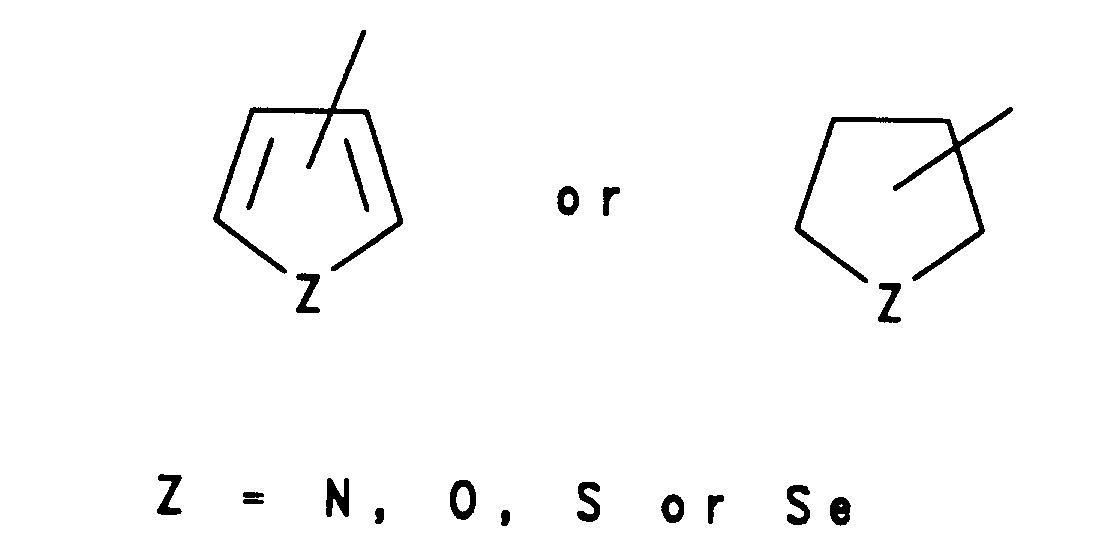
such as pyrrolyl, N-methylindolyl, indolyl, 2-pyrrolidinyl, 3-pyrrolidinyl, 2-pyrrolinyl, tetrahydrofuranyl, furanyl, benzofuranyl, tetrahydrothienyl, thienyl, benzothienyl or selenazolyl, or a five membered aromatic ring with two N, O, S or Se heteroatoms optionally having a benzo or pyrido ring fused thereto:
such as imidazolyl, pyrazolyl, benzimidazolyl, oxazolyl, benzoxazolyl, indazolyl, thiazolyl, benzothiazolyl, 3-alkyl-3H-imidazo[4,5-b]pyridyl or pyridylimidazolyl, or a five membered saturated ring with one or two N, O, S or Se heteroatoms and an adjacent appended O heteroatom:
(A is selected from hydrogen; straight or branched (C₁-C₄)alkyl; C₆-aryl; substituted C₆-aryl (substitution selected from halo,(C₁-C₄)alkoxy, trihalo(C₁-C₃)alkyl, nitro, amino, cyano, (C₁-C₄)alkoxycarbonyl, (C₁-C₃)alkylamino or carboxy); (C₇-C₉)aralkyl group selected from benzyl, 1-phenylethyl, 2-phenylethyl or phenylpropyl)
such as γ-butyrolactam, γ-butyrolactone, imidazolidinone or N-aminoimidazolidinone, or a six membered aromatic ring with one to three N heteroatoms such as pyridyl, pyridazinyl, pyrazinyl, sym-triazinyl, unsym-triazinyl, pyrimidinyl or (C₁-C₃)alkylthiopyridazinyl, or a six membered saturated ring with one or two N, O, S or Se heteroatoms and an adjacent appended O heteroatom such as 2,3-dioxo-1-piperazinyl, 4-ethyl-2,3-dioxo-1-piperazinyl, 4-methyl-2,3-dioxo-1-piperazinyl, 4-cyclopropyl-2-dioxo-1-piperazinyl, 2-dioxomorpholinyl or 2-dioxothiomorpholinyl; (C₁-C₄)alkoxycarbonyl group selected from methoxycarbonyl, ethoxycarbonyl, straight or branched propoxycarbonyl, allyloxycarbonyl or straight or branched butoxycarbonyl; and the pharmacologically acceptable organic and inorganic salts or metal complexes. - Preferred compounds are compounds according to the above formula III and IV in which Y is selected from -N₂⁺Cl⁻ or -N₃;
R and R¹ are the same or different and are selected from hydrogen; nitro; amino; halogen (selected from chlorine, bromine, fluorine or iodine); cyano; hydroxy or -NR²R³;
and when R or R¹ = -NR²R³ and R² = hydrogen,
R³ = methyl, ethyl, n-propyl, 1-methylethyl, n-butyl, 1-methylpropyl, 2-methylpropyl or 1,1-dimethylethyl; and when R² = methyl or ethyl,
R³ = methyl, ethyl, n-propyl, 1-methylethyl, n-butyl, 1-methylpropyl or 2-methylpropyl;
and when R or R¹ = -NR²R³ and R² = hydrogen,
R³ is selected from R⁴(CH₂)nCO- or R4' (CH₂)nSO₂-;
and when R³ = R⁴(CH₂)nCO- and n=0,
R⁴ is selected from hydrogen; amino; hydroxyamino; straight or branched mono(C₁-C₆)alkylamino group selected from methyl, ethyl, n-propyl, 1-methylethyl, n-butyl, 1-methylpropyl, 2-methylpropyl, 1,1-dimethylethyl, n-pentyl, 2-methylbutyl, 1,1-dimethylpropyl, 2,2-dimethylpropyl, 3-methylbutyl, n-hexyl, 1-methylpentyl, 1,1-dimethylbutyl, 2,2-dimethylbutyl, 3-methylpentyl, 1,2-dimethylbutyl, 1,3-dimethylbutyl or 1-methyl-1-ethylpropylamino and where appropriate their diastereomers and enantiomers; (C₃-C₈)cycloalkylamino group selected from cyclopropyl, trans-1,2-dimethylcyclopropyl, cis-1,2-dimethylcyclopropyl, trans-2,3-dimethylcyclopropyl, cis-2,3-dimethylcyclopropyl, cyclobutyl, trans-2,3-dimethylcyclobutyl, cis-2,3-dimethylcyclobutyl, cyclopentyl, cyclohexyl, cycloheptyl, cyclooctyl, bicyclo[2.2.1]hept-2-yl, or bicyclo[2.2.2]oct-2-ylamino and where appropriate their diastereomers and enantiomers; straight or branched chain di-(C₁-C₆)alkylamino group selected from dimethylamino, diethylamino, methyl(ethyl)amino, thyl(1-methylethyl)amino or a combination of methyl, ethyl, n-propyl, 1-methylethyl, n-butyl, 1-methylpropyl, 2-methylpropyl, 1,1-dimethylethyl, n-pentyl, 2-methylbutyl, 1,1-dimethylpropyl, 2,2-dimethylpropyl, 3-methylbutyl, n-hexyl, 1-methylpentyl, 1,1-dimethylbutyl, 2,2-dimethylbutyl, 3-methylpentyl, 1,2-dimethylbutyl, 1,3-dimethylbutyl or 1-methyl-1-ethylpropylamino and where appropriate their diastereomers and enantiomers; (C₁-C₆)alkoxyamino group selected from methoxy, ethoxy, propoxy, butoxy, pentoxy or hexoxyamino; (C₃-C₈)cycloalkoxyamino group selected from cyclopropoxy, trans-1,2-dimethylcyclopropoxy, cis-1,2-dimethylcyclopropoxy, trans-2,3-dimethylcyclo-propoxy, cis-2,3-dimethylcyclopropoxy, cyclobutoxy, trans-2,3-dimethylcyclobutory, cis-2,3-dimethylcyclobutoxy, cyclopentoxy, cyclohexoxy, cycloheptyloxy, cyclooctoxy, bicyclo[2.2.1]hept-2-yloxy, or bicyclo[2.2.1]oct-2-yloxyamino and where appropriate their diastereomers and enantiomers; (C₇-C₁₀)aralkoxyamino group selected from benzyloxy, 2-phenylethoxy, α-phenylethoxy, (2-naphthyl)methoxy, (1-naphthyl)methoxy, or phenylpropoxyamino; (C₂-C₈)azacycloalkyl group selected from aziridinyl, azetidinyl, pyrrolidinyl, pyrrolinyl, piperidinyl, 2-methylpyrrolidinyl, cis-3,4-dimethylpyrrolidinyl, trans-3,4-dimethylpyrrolidinyl, 2-azabicyclo[2.1.1]hex-2-yl, 5-azabicyclo[2.1.1]hex-5-yl, 2-azabicyclo[2.2.1]hept-2-yl, 7-azabicyclo[2.2.1]hept-7-yl, or 2-azabicyclo[2.2.2]oct-2-yl and where appropriate their diastereomers and enantiomers; azaheterocycloalkyl group selected from morpholinyl, piperazinyl, 4-methylpiperazinyl, 4-hydroxypiperazinyl, 4-(C₁-C₄)-alkoxypiperazinyl, thiamorpholinyl, tetrahydro-1,2-oxazinyl, isoxazolidinyl, pyrazolidinyl, 2-methylpyrazolidinyl, 2,5-diazabicyclo[2.2.2]hept-2-yl, or 2,5-diaza-5-methylbicyclo[2.2.1]hept-2-yl and where appropriate their diastereomers and enantiomers; azaheterocyclic group selected from 1-imidazolyl, 1-pyrrolyl, 1-(1,2,3-triasolyl), 4-(1,2,4-triazolyl), 1-tetrazolyl, or 2-tetrazolyl; (C₆-C₁₀)arylamino group selected from phenylamino or naphthylamino; (C₇-C₁₀)arylalkylamino group selected from benzyl, 2-phenylethyl, α-phenylethyl, (2-naphthyl)methyl, (1-naphthyl)methyl or phenylpropylamino; straight or branched (C₁-C₃)alkyl group selected from methyl, ethyl, n-propyl or 1-methylethyl; (C₃-C₆)cycloalkyl group selected from cyclopropyl, cyclobutyl, cyclopentyl or cyclohexyl; substituted (C₃-C₆)cycloalkyl group (substitution selected from (C₁-C₃)alkyl, cyano, amino or (C₁-C₃)acyl); (C₆-C₁₀)aryl group selected from phenyl, α-naphthyl or β-naphthyl; substituted (C₆-C₁₀)aryl group (substitution selected from halo,(C₁-C₄)alkoxy, trihalo(C₁-C₃)alkyl, nitro, amino, cyano, (C₁-C₄)alkoxycarbonyl, (C₁-C₃)alkylamino or carboxy); α-hydroxy(C₁-C₃)alkyl group selected from hydroxymethyl, α-hydroxyethyl, α-hydroxy-1-methylethyl or α-hydroxypropyl; halo(C₁-C₃)alkyl group such as bromomethyl, fluoromethyl, difluoromethyl, trifluoromethyl, chloromethyl, dichloromethyl, trichloromethyl, 2-fluoroethyl, 2,2-difluoroethyl, 2,2,2-trifluoroethyl, 2-bromoethyl or 2-iodoethyl; a heterocycle group selected from a five membered aromatic or saturated ring with one N, O, S or Se heteroatom optionally having a benzo or pyrido ring fused thereto:
such as pyrrolyl, N-methylindolyl, indolyl, 2-pyrrolidinyl, 3-pyrrolidinyl, 2-pyrrolinyl, tetrahydrofuranyl, furanyl, benzofuranyl, tetrahydrothienyl, thienyl, or benzothienyl, or a five membered aromatic ring with two N, O, S or Se heteroatoms optionally having a benzo or pyrido ring fused thereto:
such as imidazolyl, pyrazolyl, benzimidazolyl, oxazolyl, benzoxazolyl, indazolyl, thiazolyl or benzothiazolyl, or a five membered saturated ring with one or two N, O, S or Se heteroatoms and an adjacent appended O heteroatom:
(A is selected from hydrogen; straight or branched (C₁-C₄)alkyl; C₆-aryl; substituted C₆-aryl (substitution selected from halo,(C₁-C₄)alkoxy, trihalo(C₁-C₃)alkyl, nitro, amino, cyano, (C₁-C₄)alkoxycarbonyl, (C₁-C₃)alkylamino or carboxy); (C₇-C₉)aralkyl group selected from benzyl, 1-phenylethyl, 2-phenylethyl or phenylpropyl)
such as γ-butyrolactam, γ-butyrolactone, imidazolidinone or N-aminoimidazolidinone, or a six membered aromatic ring with one to three N heteroatoms such as pyridyl, pyridazinyl, pyrazinyl, sym-triazinyl, unsym-triazinyl, pyrimidinyl or (C₁-C₃)alkylthiopyridazinyl, or a six membered saturated ring with one or two N, O, S or Se heteroatoms and an adjacent appended O heteroatom such as 2,3-dioxo-1-piperazinyl, 4-ethyl-2,3-dioxo-1-piperazinyl, 4-methyl-2,3-dioxo-1-piperazinyl, 4-cyclopropyl-2-dioxo-1-piperazinyl, 2-dioxomorpholinyl or 2-dioxothiomorpholinyl; acyl or haloacyl group selected from acetyl, propionyl, chloroacetyl, trifluoroacetyl, (C₃-C₆)cycloalkylcarbonyl such as cyclopropylcarbonyl, cyclobutylcarbonyl, cyclopentylcarbonyl, cyclohexylcarbonyl, (2,3-dimethylcyclopropyl)carbonyl, (1,2-dimethylcyclopropyl)carbonyl, (2-ethylcyclopropyl)carbonyl, (2-methylcyclopentyl)carbonyl or (3-ethylcyclobutyl)carbonyl, (C₆-C₁₀)aroyl selected from benzoyl or naphthoyl, halo substituted (C₆-C₁₀)aroyl such as pentafluorobenzoyl, 4-chlorobenzoyl, 3-bromobenzoyl or 3,4-difluorobenzoyl, (C₁-C₄)alkylbenzoyl such as 4-toluoyl, 2-methyltoluoyl or 4-(1-methylethyl)benzoyl, or (heterocycle)carbonyl, the heterocycle selected from a five membered aromatic or saturated ring with one N, O, S or Se heteroatom optionally having a benzo or pyrido ring fused thereto:
such as pyrrolyl, N-methylindolyl, indolyl, 2-pyrrolidinyl, 3-pyrrolidinyl, 2-pyrrolinyl, tetrahydrofuranyl, furanyl, benzofuranyl, tetrahydrothienyl, thienyl, or benzothienyl, or a five membered aromatic ring with two N, O, S or Se heteroatoms optionally having a benzo or pyrido ring fused thereto: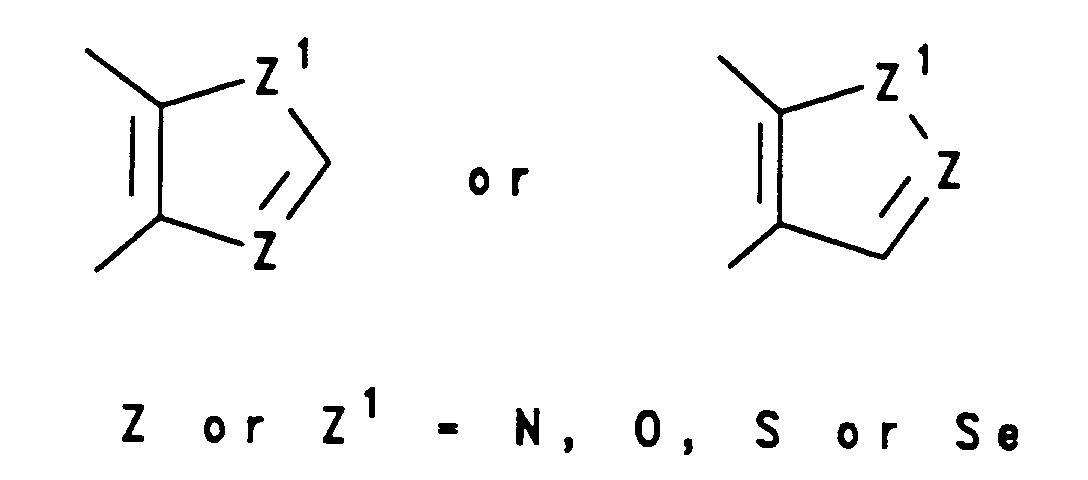
such as imidazolyl, pyrazolyl, benzimidazolyl, oxazolyl, benzoxazolyl, indazolyl, thiazolyl or benzothiazolyl, or a five membered saturated ring with one or two N, O, S or Se heteroatoms and an adjacent appended O heteroatom:
(A is selected from hydrogen; straight or branched (C₁-C₄)alkyl; C₆-aryl; substituted C₆-aryl (substitution selected from halo,(C₁-C₄)alkoxy, trihalo(C₁-C₃)alkyl, nitro, amino, cyano, (C₁-C₄)alkoxycarbonyl, (C₁-C₃)alkylamino or carboxy); (C₇-C₉)aralkyl group selected from benzyl, 1-phenylethyl, 2-phenylethyl or phenylpropyl)
such as γ-butyrolactam, γ-butyrolactone, imidazolidinone or N-aminoimidazolidinone, or a six membered aromatic ring with one to three N heteroatoms such as pyridyl, pyridazinyl, pyrazinyl, sym-triazinyl, unsymtriazinyl, pyrimidinyl or (C₁-C₃)alkylthiopyridazinyl, or a six membered saturated ring with one or two N, heteroatoms and an adjacent appended O heteroatom such as 2,3-dioxo-1-piperazinyl, 4-ethyl-2,3-dioxo-1-piperazinyl, 4-methyl-2,3-dioxo-1-piperazinyl, 4-cyclopropyl-2-dioxo-1-piperazinyl, 2-dioxomorpholinyl or 2-dioxothiomorpholinyl; (C₁-C₄)alkoxycarbonyl group selected from methoxycarbonyl, ethoxycarbonyl, straight or branched propoxylcarbonyl, straight or branched butoxycarbonyl or allyloxycarbonyl; vinyl or substituted vinyl group [substitution selected from (C₁-C₃)alkyl group, halogen, (C₆-C₁₀)aryl group selected from phenyl, α-naphthyl, β-naphthyl, substituted (C₆-C₁₀)aryl group (substitution selected from halo, (C₁-C₄)alkoxy, trihalo(C₁-C₃)alkyl, nitro, amino, cyano, (C₁-C₄)alkoxycarbonyl, (C₁-C₃)alkylamino or carboxy), halo(C₁-C₃)alkyl group such as bromomethyl, fluoromethyl, difluoromethyl, trifluoromethyl, chloromethyl, dichloromethyl, trichloromethyl, 2-fluoroethyl, 2,2-difluoroethyl, 2,2,2-trifluoroethyl, 2-bromoethyl or 2-iodoethyl, a heterocycle group selected from a five membered aromatic or saturated ring with one N, O, S or Se heteroatom optionally having a benzo or pyrido ring fused thereto:
such as pyrrolyl, N-methylindolyl, indolyl, 2-pyrrolidinyl, 3-pyrrolidinyl, 2-pyrrolinyl, tetrahydrofuranyl, furanyl, benzofuranyl, tetrahydrothienyl, thienyl, or benzothienyl]; (C₁-C₄)alkoxy group such as allyloxy, methoxy, ethoxy, n-propoxy, n-butoxy or tert-butoxy; C₆-aryloxy group selected from phenoxy or substituted phenoxy (substitution selected from halo, (C₁-C₄)alkyl, nitro, cyano, thiol, amino, carboxy, di(C₁-C₃)alkylamino); (C₇-C₁₀)aralkyloxy group such as benzyloxy, 1-phenylethyloxy or 2-phenylethyloxy; vinyloxy or substituted vinyloxy group (substitution selected from (C₁-C₄)alkyl, cyano, carboxy, or (C₆-C₁₀)aryl selected from phenyl, α-naphthyl or β-naphthyl); RaRbamino(C₁-C₄)alkoxy group, wherein RaRb is a straight or branched (C₁-C₄)alkyl selected from methyl, ethyl, n-propyl, 1-methylethyl, n-butyl, 1-methylpropyl, or 2-methylpropyl or RaRb is (CH₂)n, n=2-6, or -(CH₂)₂W(CH₂)₂- wherein W is selected from -N(C₁-C₃)alkyl [straight or branched], -NH, -NOB [B is selected from hydrogen or (C₁-C₃)alkyl], O or S; or RaRbaminoxy group, wherein RaRb is a straight or branched (C₁-C₄)alkyl selected from methyl, ethyl, n-propyl, 1-methylethyl, n-butyl, 1-methylpropyl, or 2-methylpropyl or RaRb is (CH₂)n, n=2-6, or -(CH₂)₂W(CH₂)₂- wherein W is selected from -N(C₁-C₃)alkyl [straight or branched], -NH, -NOB [B is selected from hydrogen or (C₁-C₃)alkyl], O or S;
and when R³ = R⁴(CH₂)nCO- and n=1-4,
R⁴ is selected from hydrogen; (C₁-C₃)alkyl group selected from methyl, ethyl, n-propyl or 1-methylethyl; (C₆-C₁₀)aryl group selected from phenyl, α-naphthyl or β-naphthyl; substituted (C₆-C₁₀)aryl group (substitution selected from halo, (C₁-C₄)alkoxy, trihalo(C₁-C₃)alkyl, nitro, amino, cyano, (C₁-C₄)alkoxycarbonyl, (C₁-C₃)alkylamino or carboxy); acyloxy or haloacyloxy group, selected from acetyl, propionyl, chloroacetyl, trichloroacetyl, (C₃-C₆)cycloalkylcarbonyl, (C₆-C₁₀)aroyl selected from benzoyl or naphthoyl, halo substituted (C₆-C₁₀)aroyl such as pentafluorobenzoyl, 4-chlorobenzoyl, 3-bromobenzoyl or 3,4-difluorobenzoyl, (C₁-C₄)alkylbenzoyl such as 4-toluoyl, 2-toluoyl, 4-(1-methylethyl)benzoyl or (heterocycle)carbonyl, the heterocycle selected from a five membered aromatic or saturated ring with one N, O, S or Se heteroatom optionally having a benzo or pyrido ring fused thereto:
such as pyrrolyl, N-methylindolyl, indolyl, 2-pyrrolidinyl, 3-pyrrolidinyl, 2-pyrrolinyl, tetrahydrofuranyl, furanyl, benzofuranyl, tetrahydrothienyl, thienyl, or benzothienyl, or a five membered aromatic ring with two N, O, S or Se heteroatoms optionally having a benzo or pyrido ring fused thereto:
such as imidazolyl, pyrazolyl, benzimidazolyl, oxazolyl, benzoxazolyl, indazolyl, thiazolyl or benzothiazolyl, or a five membered saturated ring with one or two N, O, S or Se heteroatoms and an adjacent appended O heteroatom:
(A is selected from hydrogen; straight or branched (C₁-C₄)alkyl; C₆-aryl; substituted C₆-aryl (substitution selected from halo,(C₁-C₄)alkoxy, trihalo(C₁-C₃)alkyl, nitro, amino, cyano, (C₁-C₄)alkoxycarbonyl, (C₁-C₃)alkylamino or carboxy); (C₇-C₉)aralkyl group selected from benzyl, 1-phenylethyl, 2-phenylethyl or phenylpropyl)
such as γ-butyrolactam, γ-butyrolactone, imidazolidinone or N-aminoimidazolidinone, or a six membered aromatic ring with one to three N heteroatoms such as pyridyl, pyridazinyl, pyrazinyl, sym-triazinyl, unsym-triazinyl, pyrimidinyl, or a six membered saturated ring with one or two N, O, S or Se heteroatoms and an adjacent appended O heteroatom such as 2,3-dioxo-1-piperazinyl, 4-ethyl-2,3-dioxo-1-piperazinyl, 4-methyl-2,3-dioxo-1-piperazinyl, 4-cyclopropyl-2-dioxo-1-piperazinyl, 2-dioxomorpholinyl or 2-dioxothiomorpholinyl; (C₁-C₄)alkoxy group such as allyloxy, methoxy, ethoxy, n-propoxy, n-butoxy or tert-butoxy; RaRbamino(C₁-C₄)alkoxy group, wherein RaRb is a straight or branched (C₁-C₄)alkyl selected from methyl, ethyl, n-propyl, 1-methylethyl, n-butyl, 1-methylpropyl, or 2-methylpropyl or RaRb is (CH₂)n, n=2-6, or -(CH₂)₂W(CH₂)₂- wherein W is selected from -N(C₁-C₃)alkyl [straight or branched], -NH, -NOB [B is selected from hydrogen or (C₁-C₃)alkyl], O or S; or RaRbaminoxy group, wherein RaRb is a straight or branched (C₁-C₄)alkyl selected from methyl, ethyl, n-propyl, 1-methylethyl, n-butyl, 1-methylpropyl, or 2-methylpropyl or RaRb is (CH₂)n, n=2-6, or -(CH₂)₂W(CH₂)₂- wherein W is selected from -N(C₁-C₃)alkyl [straight or branched], -NH, -NOB [B is selected from hydrogen or (C₁-C₃)alkyl], O or S; C₆-aryloxy group selected from phenoxy or substituted phenoxy (substitution selected from halo, (C₁-C₄)alkyl, nitro, cyano, thiol, amino, carboxy, di-(C₁-C₃)alkylamino); (C₁-C₃)alkylthio group selected from methylthio, ethylthio, propylthio or allylthio; C₆-arylthio group selected from phenylthio or substituted phenylthio (substitution selected from halo, (C₁-C₄)alkyl, nitro, cyano, thiol, amino, carboxy, di-(C₁-C₃)alkylamino); C₆-arylsulfonyl group selected from phenylsulfonyl or substituted phenylsulfonyl (substitution selected from halo, (C₁-C₄)alkoxy, trihalo(C₁-C₃)alkyl, nitro, amino, cyano, (C₁-C₄)alkoxycarbonyl, (C₁-C₃)alkylamino or carboxy); a heterocycle group selected from a five membered aromatic or saturated ring with one N, O, S or Se heteroatom optionally having a benzo or pyrido ring fused thereto:
such as pyrrolyl, N-methylindolyl, indolyl, 2-pyrrolidinyl, 3-pyrrolidinyl, 2-pyrrolinyl, tetrahydrofuranyl, furanyl, benzofuranyl, tetrahydrothienyl, thienyl or benzothienyl, or a five membered aromatic ring with two N, O,S or Se heteroatoms optionally having a benzo or pyrido ring fused thereto: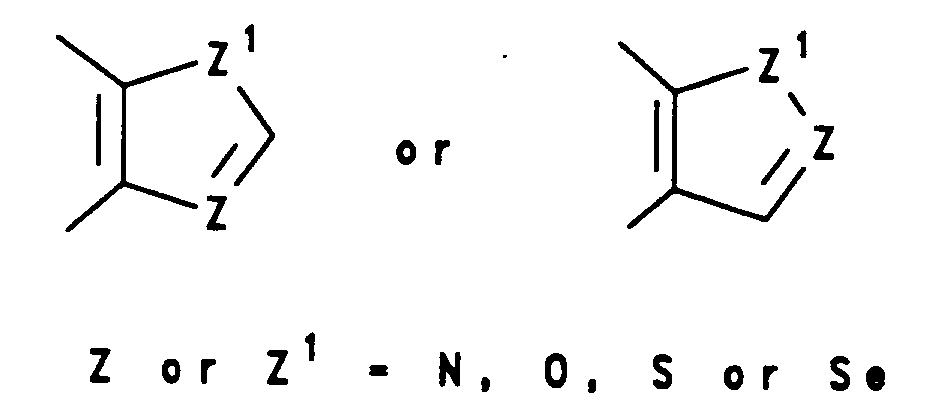
such as imidazolyl, pyrazolyl, benzimidazolyl, oxazolyl, benzoxazolyl, indazolyl, thiazolyl or benzothiazolyl, or a five membered saturated ring with one or two N, O, S or Se heteroatoms and an adjacent appended O heteroatom:
(A is selected from hydrogen; straight or branched (C₁-C₄)alkyl; C₆-aryl; substituted C₆-aryl (substitution selected from halo, (C₁-C₄)alkoxy, trihalo(C₁-C₃)alkyl, nitro, amino, cyano, (C₁-C₄)alkoxycarbonyl, (C₁-C₃)alkylamino or carboxy); (C₇-C₉)aralkyl group selected from benzyl, 1-phenylethyl, 2-phenylethyl or phenylpropyl)
such as γ-butyrolactam, γ-butyrolactone, imidazolidinone or N-aminoimidazolidinone, or a six membered aromatic ring with one to three N heteroatoms such as pyridyl, pyridazinyl, pyrazinyl, sym-triazinyl, unsymtriazinyl, pyrimidinyl, or a six membered saturated ring with one or two N, O, S or Se heteroatoms and an adjacent appended O heteroatom such as 2,3-dioxo-1-piperazinyl, 4-ethyl-2,3-dioxo-1-piperazinyl, 4-methyl-2,3-dioxo-1-piperazinyl, 4-cyclopropyl-2-dioxo-1-piperazinyl, 2-dioxomorpholinyl or 2-dioxothiomorpholinyl; hydroxy group; α-hydroxy(C₁-C₃)alkyl group selected from hydroxymethyl, α-hydroxyethyl, α-hydroxy-1-methylethyl or α-hydroxypropyl; halo(C₁-C₃)alkyl group such as bromomethyl, fluoromethyl, difluoromethyl, trifluoromethyl, chloromethyl, dichloromethyl, trichloromethyl, 2-fluoroethyl, 2,2-difluoroethyl, 2,2,2-trifluoroethyl, 2-bromoethyl or 2-iodoethyl; acyl or haloacyl group selected from acetyl, propionyl, chloroacetyl, trifluoroacetyl, (C₃-C₆)cycloalkylcarbonyl, (C₆-C₁₀)aroyl selected from benzoyl or naphthoyl, halo substituted (C₆-C₁₀)aroyl such as pentafluorobenzoyl, 4-chlorobenzoyl, 3-bromobenzoyl or 3,4-difluorobenzoyl, (C₁-C₄)alkylbenzoyl such as 4-toluoyl, 2-toluoyl, or 4-(1-methylethyl)benzoyl, or (heterocycle)carbonyl, the heterocycle selected from a five membered aromatic or saturated ring with one N, O, S or Se heteroatom optionally having a benzo or pyrido ring fused thereto:
such as pyrrolyl, N-methylindolyl, indolyl, 2-pyrrolidinyl, 3-pyrrolidinyl, 2-pyrrolinyl, tetrahydrofuranyl, furanyl, benzofuranyl, tetrahydrothienyl, thienyl or benzothienyl, or a five membered aromatic ring with two N, O, S or Se heteroatoms optionally having a benzo or pyrido ring fused thereto:
such as imidazolyl, pyrazolyl, benzimidazolyl, oxazolyl, benzoxazolyl, indazolyl, thiazolyl or benzothiazolyl, or a five membered saturated ring with one or two N, O, S or Se heteroatoms and an adjacent appended O heteroatom:
(A is selected from hydrogen; straight or branched (C₁-C₄)alkyl; C₆-aryl; substituted C₆-aryl (substitution selected from halo,(C₁-C₄)alkoxy, trihalo(C₁-C₃)alkyl, nitro, amino, cyano, (C₁-C₄)alkoxycarbonyl, (C₁-C₃)alkylamino or carboxy); (C₇-C₉)aralkyl group selected from benzyl, 1-phenylethyl, 2-phenylethyl or phenylpropyl)
such as γ-butyrolactam, γ-butyrolactone, imidazolidinone or N-aminoimidazolidinone, or a six membered aromatic ring with one to three N heteroatoms such as pyridyl, pyridazinyl, pyrazinyl, sym-triazinyl, unsym-triazinyl, pyrimidinyl, or a six membered saturated ring with one or two N, O, S or Se heteroatoms and an adjacent appended O heteroatom such as 2,3-dioxo-1-piperazinyl, 4-ethyl-2,3-dioxo-1-piperazinyl, 4-methyl-2,3-dioxo-1-piperazinyl, 4-cyclopropyl-2-dioxo-1-piperazinyl, 2-dioxomorpholinyl or 2-dioxothiomorpholinyl;
and when R³ = R⁴(CH₂)nCO- and n = 2-4,
R⁴ is selected from amino; hydroxyamino; straight or branched mono(C₁-C₆)alkylamino group selected from methyl, ethyl, n-propyl, 1-methylethyl, n-butyl, 1-methylpropyl, 2-methylpropyl, 1,1-dimethylethyl, n-pentyl, 2-methylbutyl, 1,1-dimethylpropyl, 2,2-dimethylpropyl, 3-methylbutyl, n-hexyl, 1-methylpentyl, 1,1-dimethylbutyl, 2,2-dimethylbutyl, 3-methylpentyl, 1,2-dimethylbutyl, 1,3-dimethylbutyl or 1-methyl-1-ethylpropylamino and where appropriate their diastereomers and enantiomers; (C₃-C₈)cycloalkylamino group selected from cyclopropyl, trans-1,2-dimethylcyclopropyl, cis-1,2-dimethylcyclopropyl, trans-2,3-dimethylcyclopropyl, cis-2,3-dimethylcyclopropyl, cyclobutyl, trans-2,3-dimethylcyclobutyl, cis-2,3-dimethylcyclobutyl, cyclopentyl, cyclohexyl, cycloheptyl, cyclooctyl, bicyclo[2.2.1]hept-2-yl, or bicyclo[2.2.2]oct-2-ylamino and where appropriate their diastereomers and enantiomers; straight or branched chain di-(C₁-C₆)alkylamino group selected from dimethylamino, diethylamino, methyl(ethyl)amino, ethyl(1-methylethyl)amino or a combination of methyl, ethyl, n-propyl, 1-methylethyl, n-butyl, 1-methylpropyl, 2-methylpropyl, 1,1-dimethylethyl, n-pentyl, 2-methylbutyl, 1,1-dimethylpropyl, 2,2-dimethylpropyl, 3-methylbutyl, n-hexyl, 1-methylpentyl, 1,1-dimethylbutyl, 2,2-dimethylbutyl, 3-methylpentyl, 1,2-dimethylbutyl, 1,3-dimethylbutyl or 1-methyl-1-ethylpropylamino and where appropriate their diastereomers and enantiomers; (C₁-C₆)alkoxyamino group selected from methoxy, ethoxy, propoxy, butoxy, pentoxy or hexoxyamino; (C₃-C₈)cycloalkoxyamino group selected from cyclopropoxy, trans-1,2-dimethylcyclopropoxy, cis-1,2-dimethylcyclopropoxy, trans-2,3-dimethylcyclopropoxy, cis-2,3-dimethylcyclopropoxy, cyclobutoxy, trans-2,3-dimethylcyclobutoxy, cis-2,3-dimethylcyclobutoxy, cyclopentoxy, cyclohexoxy, cycloheptyloxy, cyclooctoxy, bicyclo[2.2.1]hept-2-yloxy, or bicyclo[2.2.1]oct-2-yloxyamino and where appropriate their diastereomers and enantiomers; (C₇-C₁₀)aralkoxyamino group selected from benzyloxy, 2-phenylethoxy, α-phenylethoxy, (2-naphthyl)methoxy, (1-naphthyl)methoxy, or phenylpropoxyamino; (C₂-C₈)azacycloalkyl group selected from aziridinyl, azetidinyl, pyrrolidinyl, pyrrolinyl, piperidinyl, 2-methylpyrrolidinyl, cis-3,4-dimethylpyrrolidinyl, trans-3,4-dimethylpyrrolidinyl, 2-azabicyclo[2.1.1]-hex-2-yl, 5-azabicyclo[2.1.1]hex-5-yl, 2-azabicyclo[2.2.1]hept-2-yl, 7-azabicyclo[2.2.1]hept-7-yl, or 2-azabicyclo[2.2.2]oct-2-yl and where appropriate their diastereomers and enantiomers; azaheterocycloalkyl group selected from morpholinyl, piperazinyl, 4-methylpiperazinyl, 4-hydroxypiperazinyl, 4-(C₁-C₄)alkorypiperazinyl, thiamorpholinyl, tetrahydro-1,2-oxazinyl, isoxazolidinyl, pyrazolidinyl, 2-methylpyrazolidinyl, 2,5-diazabicyclo[2.2.2]hept-2-yl, or 2,5-diaza-5-methylbicyclo[2.2.1]hept-2-yl and where appropriate their diastereomers and enantiomers; azaheterocyclic group selected from 1-imidazolyl, 1-pyrrolyl, 1-(1,2,3-triazolyl), 4-(1,2,4-triazolyl), 1-tetrazolyl, or 2-tetrazolyl; (C₆-C₁₀)arylamino group selected from phenylamino or naphthylamino; (C₇-C₁₀)arylalkylamino group selected from benzyl, 2-phenylethyl, α-phenylethyl, (2-naphthyl)methyl, (1-naphthyl)methyl or phenylpropylamino; (C₁-C₄)alkoxycarbonylamino group selected from tert-butoxycarbonylamino, allyloxycarbonylamino, methoxycarbonylamino, ethoxycarbonylamino or propoxycarbonylamino;
and when R³ = R4' (CH₂)nSO₂- and n = 0,
R4' is selected from amino; hydroxyamino; straight or branched mono(C₁-C₆)alkylamino group selected from methyl, ethyl, n-propyl, 1-methylethyl, n-butyl, 1-methylpropyl, 2-methylpropyl, 1,1-dimethylethyl, n-pentyl, 2-methylbutyl, 1,1-dimethylpropyl, 2,2-dimethylpropyl, 3-methylbutyl, n-hexyl, 1-methylpentyl, 1,1-dimethylbutyl, 2,2-dimethylbutyl, 3-methylpentyl, 1,2-dimethylbutyl, 1,3-dimethylbutyl or 1-methyl-1-ethylpropylamino and where appropriate their diastereomers and enantiomers; (C₃-C₈)cycloalkylamino group selected from cyclopropyl, trans-1,2-dimethylcyclopropyl, cis-1,2-dimethylcyclopropyl, trans-2,3-dimethylcyclopropyl, cis-2,3-dimethylcyclopropyl, cyclobutyl, trans-2,3-dimethylcyclobutyl, cis-2,3-dimethylcyclobutyl, cyclopentyl, cyclohexyl, cycloheptyl, cyclooctyl, bicyclo[2.2.1]hept-2-yl, or bicyclo[2.2.2]oct-2-ylamino and where appropriate their diastereomers and enantiomers; straight or branched chain di-(C₁-C₆)alkylamino group selected from dimethylamino, diethylamino, methyl(ethyl)amino, ethyl(1-methylethyl)amino or a combination of methyl, ethyl, n-propyl, 1-methylethyl, n-butyl, 1-methylpropyl, 2-methylpropyl, 1,1-dimethylethyl, n-pentyl, 2-methylbutyl, 1,1-dimethylpropyl, 2,2-dimethylpropyl, 3-methylbutyl, n-hexyl, 1-methylpentyl, 1,1-dimethylbutyl, 2,2-dimethylbutyl, 3-methylpentyl, 1,2-dimethylbutyl, 1,3-dimethylbutyl or 1-methyl-1-ethylpropylamino and where appropriate their diastereomers and enantiomers; (C₁-C₆)alkoxyamino group selected from methoxy, ethoxy, propoxy, butoxy, pentoxy or hexoxyamino; (C₃-C₈)cycloalkoxyamino group selected from cyclopropoxy, trans-1,2-dimethylcyclopropoxy, cis-1,2-dimethylcyclopropoxy, trans-2,3-dimethylcyclopropoxy, cis-2,3-dimethylcyclopropoxy, cyclobutoxy, trans-2,3-dimethylcyclobutoxy, cis-2,3-dimethylcyclobutoxy, cyclopentoxy, cyclohexoxy, cycloheptyloxy, cyclooctoxy, bicyclo[2.2.1]hept-2-yloxy, or bicyclo[2.2.1]oct-2-yloxyamino and where appropriate their diastereomers and enantiomers; (C₇-C₁₀)aralkoxyamino group selected from benzyloxy, 2-phenylethoxy, α-phenylethoxy, (2-naphthyl)methoxy, (1-naphthyl)methoxy, or phenylpropoxyamino; (C₂-C₈)azacycloalkyl group selected from aziridinyl, azetidinyl, pyrrolidinyl, pyrrolinyl, piperidinyl, 2-methylpyrrolidinyl, cis-3,4-dimethylpyrrolidinyl, trans-3,4-dimethylpyrrolidinyl, 2-azabicyclo[2.1.1]hex-2-yl, 5-azabicyclo[2.1.1]hex-5-yl, 2-azabicyclo[2.2.1]hept-2-yl, 7-azabicyclo[2.2.1]hept-7-yl, or 2-azabicyclo[2.2.2]oct-2-yl and where appropriate their diastereomers and enantiomers; azaheterocycloalkyl group selected from morpholinyl, piperazinyl, 4-methylpiperazinyl, 4-hydroxypiperazinyl, 4-(C₁-C₄)alkoxypiperazinyl, thiamorpholinyl, tetrahydro-1,2-oxazinyl, isoxazolidinyl, pyrazolidinyl, 2-methylpyrazolidinyl, 2,5-diazabicyclo[2.2.2]hept-2-yl, or 2,5-diaza-5-methylbicyclo[2.2.1]hept-2-yl and where appropriate their diastereomers and enantiomers; (C₆-C₁₀)arylamino group selected from phenylamino or naphthylamino; (C₇-C₁₀)arylalkylamino group selected from benzyl, 2-phenylethyl, α-phenylethyl, (2-naphthyl)methyl, (1-naphthyl)methyl or phenylpropylamino; straight or branched (C₁-C₃)alkyl group selected from methyl, ethyl, n-propyl or 1-methylethyl; (C₆-C₁₀)aryl group selected from phenyl, α-naphthyl or β-naphthyl; substituted (C₆-C₁₀)aryl group (substitution selected from halo, (C₁-C₄)alkoxy, trihalo(C₁-C₃)alkyl, nitro, amino, cyano, (C₁-C₄)alkoxycarbonyl, (C₁-C₃)alkylamino or carboxy); a heterocycle group selected from a five membered aromatic or saturated ring with one N, O, S or Se heteroatom optionally having a benzo or pyrido ring fused thereto:
such as pyrrolyl, N-methylindolyl, indolyl, 2-pyrrolidinyl, 3-pyrrolidinyl, 2-pyrrolinyl, tetrahydrofuranyl, furanyl, benzofuranyl, tetrahydrothienyl, thienyl or benzothienyl, or a five membered aromatic ring with two N, O, S or Se heteroatoms optionally having a benzo or pyrido ring fused thereto:
such as imidazolyl, pyrazolyl, benzimidazolyl, oxazolyl, benzoxazolyl, indazolyl, thiazolyl or benzothiazolyl, or a five membered saturated ring with one or two N, O, S or Se heteroatoms and an adjacent appended O heteroatom:
(A is selected from hydrogen; straight or branched (C₁-C₄)alkyl; C₆-aryl; substituted C₆-aryl (substitution selected from halo,(C₁-C₄)alkoxy, trihalo(C₁-C₃)alkyl, nitro, amino, cyano, (C₁-C₄) alkoxycarbonyl, (C₁-C₃)alkylamino or carboxy); (C₇-C₉)aralkyl group selected from benzyl, 1-phenylethyl, 2-phenylethyl or phenylpropyl)
such as γ-butyrolactam, γ-butyrolactone, imidazolidinone or N-aminoimidazolidinone, or a six membered aromatic ring with one to three N heteroatoms such as pyridyl, pyridazinyl, pyrazinyl, sym-triazinyl, unsym-triazinyl, pyrimidinyl or a six membered saturated ring with one or two N, O, S or Se heteroatoms and an adjacent appended O heteroatom such as 2,3-dioxo-1-piperazinyl, 4-ethyl-2,3-dioxo-1-piperazinyl, 4-methyl-2,3-dioxo-1-piperazinyl, 4-cyclopropyl-2-dioxo-1-piperazinyl, 2-dioxomorpholinyl or 2-dioxothiomorpholinyl;
and when R³ = R4' (CH₂)nSO₂- and n= 1-4,
R4' is selected from hydrogen; amino; straight or branched (C₁-C₃)alkyl group selected from methyl, ethyl, n-propyl or 1-methylethyl; (C₆-C₁₀)aryl group selected from phenyl, α-naphthyl or β-naphthyl; substituted (C₆-C₁₀)aryl group (substitution selected from halo, (C₁-C₄)alkoxy, trihalo(C₁-C₃)alkyl, nitro, amino, cyano, (C₁-C₄)alkoxycarbonyl, (C₁-C₃)alkylamino or carboxy); (C₁-C₄)alkoxy group such as allyloxy, methoxy, ethoxy, n-propoxy, n-butoxy, iso-butoxy or tert-butoxy; C₆-aryloxy group selected from phenoxy or substituted phenoxy (substitution selected from halo, (C₁-C₄)alkyl, nitro cyano, thiol, amino, carboxy, di-(C₁-C₃)alkylamino; (C₇-C₁₀)aralkyloxy group such as benzyloxy, 1-phenylethyloxy or 2-phenylethyloxy; (C₁-C₄)carboxyalkyl group; and the pharmacologically acceptable organic and inorganic salts or metal complexes. - Particularly preferred compounds are compounds according to the above formula III and IV in which Y is selected from -N₂⁺Cl⁻ or -N₃;
R and R¹ are the same or different and are selected from hydrogen; nitro; amino; halogen (selected from chlorine, bromine, fluorine or iodine); cyano; hydroxy; or -NR²R³;
and when R or R¹ = -NR²R³ and R² = hydrogen,
R³ = methyl, ethyl, n-propyl, 1-methylethyl, n-butyl, 1-methylpropyl, 2-methylpropyl or 1,1-dimethylethyl;
and when R² = methyl or ethyl,
R³ = methyl, ethyl, n-propyl, 1-methylethyl, n-butyl, 1-methylpropyl or 2-methylpropyl;
and when R or R¹ = -NR²R³ and R² = hydrogen,
R³ is selected from R⁴(CH₂)nCO- or R4' (CH₂)nSO₂-;
and when R³ = R⁴(CH₂)nCO- and n=0,
R⁴ is selected from hydrogen; amino; hydroxyamino; straight or branched mono(C₁-C₆)alkylamino group selected from methyl, ethyl, n-propyl, 1-methylethyl, n-butyl, 1-methylpropyl, 2-methylpropyl, 1,1-dimethylethyl, n-pentyl, 2-methylbutyl, 1,1-dimethylpropyl, 2,2-dimethylpropyl, 3-methylbutyl, n-hexyl, 1-methylpentyl, 1,1-dimethylbutyl, 2,2-dimethylbutyl, 3-methylpentyl, 1,1-dimethylbutyl, 1,3-dimethylbutyl or 1-methyl-1-ethylpropylamino and where appropriate their diastereomers and enantiomers; (C₃-C₈)cycloalkylamino group selected from cyclopropyl, trans-1,2-dimethylcyclopropyl, cis-1,2-dimethylcyclopropyl, trans-2,3-dimethylcyclopropyl, cis-2,3-dimethylcyclopropyl, cyclobutyl, trans-2,3-dimethylcyclobutyl, cis-2,3-dimethylcyclobutyl, cyclopentyl, cyclohexyl, cycloheptyl, cyclooctyl, bicyclo[2.2.1]hept-2-yl, or bicyclo[2.2.2]oct-2-ylamino and where appropriate their diastereomers and enantiomers; straight or branched chain di-(C₁-C₆)alkylamino group selected from dimethylamino, diethylamino, methyl(ethyl)amino, ethyl(1-methylethyl)amino or a combination of methyl, ethyl, n-propyl, 1-methylethyl, n-butyl, 1-methylpropyl, 2-methylpropyl, 1,1-dimethylethyl, n-pentyl, 2-methylbutyl, 1,1-dimethylpropyl, 2,2-dimethylpropyl, 3-methylbutyl, n-hexyl, 1-methylpentyl, 1,1-dimethylbutyl, 2,2-dimethylbutyl, 3-methylpentyl, 1,2-dimethylbutyl, 1,3-dimethylbutyl or 1-methyl-1-ethylpropylamino and where appropriate their diastereomers and enantiomers; (C₁-C₆)alkoxyamino group selected from methoxy, ethoxy, propoxy, butoxy, pentoxy or hexoxyamino; (C₃-C₈)cycloalkoxyamino group selected from cyclopropoxy, trans-1,2-dimethylcyclopropoxy, cis-1,2-dimethylcyclopropoxy, trans-2,3-dimethylcyclopropoxy, cis-2,3-dimethylcyclopropoxy, cyclobutoxy, trans-2,3-dimethylcyclobutoxy, cis-2,3-dimethylcyclobutoxy, cyclopentoxy, cyclohexoxy, cycloheptyloxy, cyclooctoxy, bicyclo[2.2.1]hept-2-yloxy, or bicyclo[2.2.1]oct-2-yloxyamino and where appropriate their diastereomers and enantiomers; (C₇-C₁₀)aralkoxyamino group selected from benzyloxy, 2-phenylethoxy, α-phenylethoxy, (2-naphthyl)methoxy, (1-naphthyl)methoxy, or phenylpropoxyamino; (C₂-C₈)azacycloalkyl group selected from aziridinyl, azetidinyl, pyrrolidinyl, pyrrolinyl, piperidinyl, 2-methylpyrrolidinyl, cis-3,4-dimethylpyrrolidinyl, trans-3,4-dimethylpyrrolidinyl, 2-azabicyclo[2.1.1]hex-2-yl, 5-azabicyclo[2.1.1]hex-5-yl, 2-azabicyclo[2.2.1]hept-2-yl, 7-azabicyclo[2.2.1]hept-7-yl, or 2-azabicyclo[2.2.2]oct-2-yl and where appropriate their diastereomers and enantiomers; azaheterocycloalkyl group selected from morpholinyl, piperazinyl, 4-methylpiperazinyl, 4-hydroxypiperazinyl, 4-(C₁-C₄)alkoxypiperazinyl, thiamorpholinyl, tetrahydro-1,2-oxazinyl, isoxazolidinyl, pyrazolidinyl, 2-methylpyrazolidinyl, 2,5-diazabicyclo[2.2.2]hept-2-yl, or 2,5-diaza-5-methylbicyclo[2.2.1]hept-2-yl and where appropriate their diastereomers and enantiomers; azaheterocyclic group selected from 1-imidazolyl, 1-pyrrolyl, 1-(1,2,3-triazolyl), 4-(1,2,4-triazolyl), 1-tetrazolyl, or 2-tetrazolyl; (C₆-C₁₀)arylamino group selected from phenylamino or naphthylamino; (C₇-C₁₀)arylalkylamino group selected from benzyl, 2-phenylethyl, α-phenylethyl, (2-naphthyl)methyl, (1-naphthyl)methyl or phenylpropylamino; straight or branched (C₁-C₃)alkyl group selected from methyl, ethyl, n-propyl or 1-methylethyl; (C₃-C₆)cycloalkyl group selected from cyclopropyl, cyclobutyl, cyclopentyl or cyclohexyl; substituted (C₃-C₆)cycloalkyl group (substitution selected from (C₁-C₃)alkyl, cyano, amino or (C₁-C₃)acyl); (C₆-C₁₀)aryl group selected from phenyl, α-naphthyl or β-naphthyl; substituted (C₆-C₁₀)aryl group (substitution selected from halo, (C₁-C₄)alkoxy, trihalo(C₁-C₃)alkyl, nitro, amino, cyano, (C₁-C₄)alkoxycarbonyl, (C₁-C₃)alkylamino or carboxy); α-hydroxy(C₁-C₃)alkyl group selected from hydroxymethyl, α-hydroxyethyl, α-hydroxy-1-methylethyl or α-hydroxypropyl; halo(C₁-C₃)alkyl group such as bromomethyl, fluoromethyl, difluoromethyl, trifluoromethyl, chloromethyl, dichloromethyl, trichloromethyl, 2-fluoroethyl, 2,2-difluoroethyl, 2,2,2-trifluoroethyl, 2-bromoethyl or 2-iodoethyl; a heterocycle group selected from a five membered aromatic or saturated ring with one N, O, S or Se heteroatom optionally having a benzo or pyrido ring fused thereto:
such as pyrrolyl, N-methylindolyl, indolyl, 2-pyrrolidinyl, 3-pyrrolidinyl, 2-pyrrolinyl, tetrahydrofuranyl, furanyl, benzofuranyl, tetrahydrothienyl, thienyl or benzothienyl, or a five membered aromatic ring with two N, O, S or Se heteroatoms optionally having a benzo or pyrido ring fused thereto: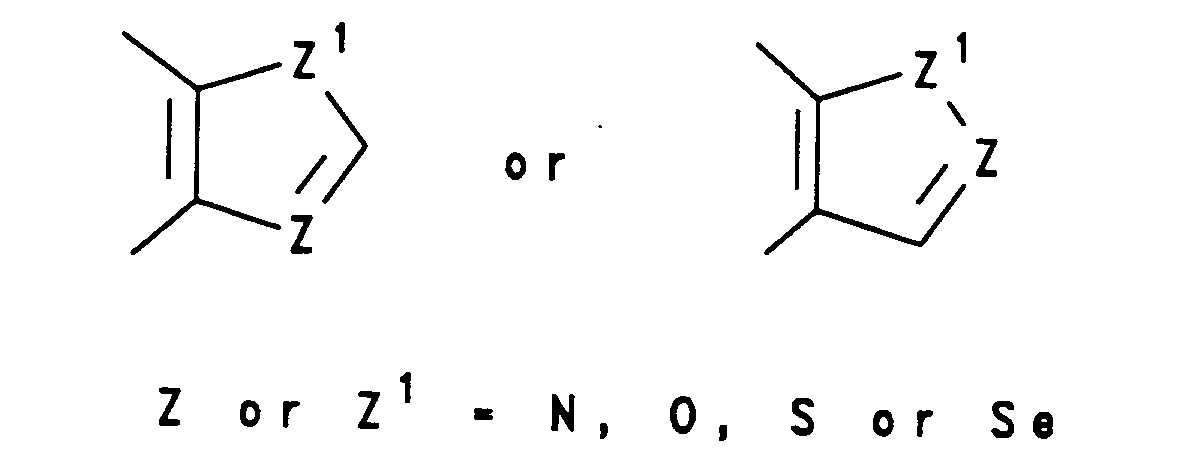
such as imidazolyl, pyrazolyl, benzimidazolyl, oxazolyl, benzoxazolyl, indazolyl, thiazolyl or benzothiazolyl, or a five membered saturated ring with one or two N, O, S or Se heteroatoms and an adjacent appended O heteroatom:
(A is selected from hydrogen; straight or branched (C₁-C₄)alkyl; C₆-aryl; substituted C₆-aryl (substitution selected from halo, (C₁-C₄)alkoxy, trihalo(C₁-C₃)alkyl, nitro, amino, cyano, (C₁-C₄)alkoxycarbonyl, (C₁-C₃)alkylamino or carboxy); (C₇-C₉)aralkyl group selected from benzyl, 1-phenylethyl, 2-phenylethyl or phenylpropyl)
such as γ-butyrolactam, γ-butyrolactone, imidazolidinone or N-aminoimidazolidinone, or a six membered aromatic ring with one to three N heteroatoms such as pyridyl, pyridazinyl, pyrazinyl, sym-triazinyl, unsym-triazinyl, pyrimidinyl, or a six membered saturated ring with one or two N, O, S or Se heteroatoms and an adjacent appended O heteroatom such as 2,3-dioxo-1-piperazinyl, 4-ethyl-2, 3-dioxo-1-piperazinyl, 4-methyl-2,3-dioxo-1-piperazinyl, 4-cyclopropyl-2-dioxo-1-piperazinyl, 2-dioxomorpholinyl or 2-dioxothiomorpholinyl; acyl or haloacyl group selected from acetyl, propionyl, chloroacetyl, trifluoroacetyl, (C₃-C₆)cycloalkylcarbonyl such as cyclopropylcarbonyl, cyclobutylcarbonyl, cyclopentylcarbonyl, cyclohexylcarbonyl, (2,3-dimethylcyclopropyl)carbonyl, (1,2-dimethylcyclopropyl)carbonyl, (2-ethylcyclopropyl)carbonyl, (2-methylcyclopentyl)carbonyl or (3-ethylcyclobutyl)carbonyl, (C₆-C₁₀)aroyl selected from benzoyl or naphthoyl, halo substituted (C₆-C₁₀)aroyl such as pentafluorobenzoyl, 4-chlorobenzoyl, 3-bromobenzoyl or 3,4-difluorobenzoyl, (C₁-C₄)alkylbenzoyl such as 4-toluoyl, 2-methylbenzoyl or 4-(1-methylethyl)benzoyl, or (heterocycle)carbonyl, the heterocycle selected from a five membered aromatic or saturated ring with one N, O, S or Se heteroatom optionally having a benzo or pyrido ring fused thereto:
such as pyrrolyl, N-methylindolyl, indolyl, 2-pyrrolidinyl, 3-pyrrolidinyl, 2-pyrrolinyl, tetrahydrofuranyl, furanyl, benzofuranyl, tetrahydrothienyl, thienyl, or benzothienyl, or a five membered aromatic ring with two N, O, S or Se heteroatoms optionally having a benzo or pyrido ring fused thereto:
such as imidazolyl, pyrazolyl, benzimidazolyl, oxazolyl, benzoxazolyl, indazolyl, thiazolyl or benzothiazolyl, or a five membered saturated ring with one or two N, O, S or Se heteroatoms and an adjacent appended O heteroatom:
(A is selected from hydrogen; straight or branched (C₁-C₄)alkyl; C₆-aryl; substituted C₆-aryl (substitution selected from halo,(C₁-C₄)alkoxy, trihalo(C₁-C₃)alkyl, nitro, amino, cyano, (C₁-C₄)alkoxycarbonyl, (C₁-C₃)alkylamino or carboxy); (C₇-C₉)aralkyl group selected from benzyl, 1-phenylethyl, 2-phenylethyl or phenylpropyl)
such as γ-butyrolactam, γ-butyrolactone, imidazolidinone or N-aminoimidazolidinone, or a six membered aromatic ring with one to three N heteroatoms such as pyridyl, pyridazinyl, pyrazinyl, sym-triazinyl, unsymtriazinyl, pyrimidinyl, or a six membered saturated ring with one or two N, O, S or Se heteroatoms and an adjacent appended O heteroatom such as 2,3-dioxo-1-piperazinyl, 4-ethyl-2,3-dioxo-1-piperazinyl, 4-methyl-2,3-dioxo-1-piperazinyl, 4-cyclopropyl-2-dioxo-1-piperazinyl, 2-dioxomorpholinyl or 2-dioxothiomorpholinyl; (C₁-C₄)alkoxycarbonyl group selected from methoxycarbonyl, ethoxycarbonyl, straight or branched propoxylcarbonyl, straight or branched butoxycarbonyl or allyloxycarbonyl; vinyl or substituted vinyl group [substitution selected from (C₁-C₃)alkyl group, halogen, (C₆-C₁₀)aryl group selected from phenyl, α-naphthyl, β-naphthyl, substituted (C₆-C₁₀)aryl group (substitution selected from halo, (C₁-C₄)alkoxy, (C₁-C₄)alkoxycarbonyl, (C₁-C₃)alkylamino or carboxy), halo(C₁-C₃)alkyl group such as bromomethyl, fluoromethyl, difluoromethyl, trifluoromethyl, chloromethyl, dichloromethyl, trichloromethyl, 2-fluoroethyl, 2,2-difluoroethyl, 2,2,2-trifluoroethyl, 2-bromoethyl or 2-iodoethyl, a heterocycle group selected from a five membered aromatic or saturated ring with one N, O, S or Se heteroatom optionally having a benzo or pyrido ring fused thereto:
such as pyrrolyl, N-methylindolyl, indolyl, 2-pyrrolidinyl, 3-pyrrolidinyl, 2-pyrrolinyl, tetrahydrofuranyl, furanyl, benzofuranyl, tetrahydrothienyl, thienyl, or benzothienyl]; (C₁-C₄)alkoxy group such as allyloxy, methoxy, ethoxy, n-propoxy, n-butoxy or tert-butoxy; C₆-aryloxy group selected from phenoxy or substituted phenoxy (substitution selected from halo, (C₁-C₄)alkyl); (C₇-C₁₀)aralkyloxy group such as benzyloxy, 1-phenylethyloxy or 2-phenylethyloxy;
and when R³ = R₄(CH₂)nCO- and n=1-4,
R⁴ is selected from hydrogen; (C₁-C₃)alkyl group selected from methyl, ethyl, n-propyl or 1-methylethyl; (C₆-C₁₀)aryl group selected from phenyl, α-naphthyl or β-naphthyl; substituted (C₆-C₁₀)aryl group (substitution selected from halo, (C₁-C₄)alkoxy, trihalo(C₁-C₃)alkyl, nitro, amino, cyano, (C₁-C₄)alkoxycarbonyl, (C₁-C₃)alkylamino or carboxy); acyloxy or haloacyloxy group, selected from acetyl, propionyl, chloroacetyl, trichloroacetyl, (C₃-C₆)cycloalkylcarbonyl, (C₆-C₁₀)aroyl selected from benzoyl or naphthoyl, halo substituted (C₆-C₁₀)aroyl such as pentafluorobenzoyl, 4-chlorobenzoyl, 3-bromobenzoyl or 3,4-difluorobenzoyl, (C₁-C₄)alkylbenzoyl such as 4-toluoyl, 2-toluoyl, 4-(1-methylethyl)benzoyl or (heterocycle)carbonyl, the heterocycle selected from a five membered aromatic or saturated ring with one N, O, S or Se heteroatom optionally having a benzo or pyrido ring fused thereto:
such as pyrrolyl, N-methylindolyl, indolyl, 2-pyrrolidinyl, 3-pyrrolidinyl, 2-pyrrolinyl, tetrahydrofuranyl, furanyl, benzofuranyl, tetrahydrothienyl, thienyl or benzothienyl, or a five membered aromatic ring with two N, O, S or Se heteroatoms optionally having a benzo or pyrido ring fused thereto:
such as imidazolyl, pyrazolyl, benzimidazolyl, oxazolyl, benzoxazolyl, indazolyl, thiazolyl or benzothiazolyl, or a five membered saturated ring with one or two N, O, S or Se heteroatoms and an adjacent appended O heteroatom:
(A is selected from hydrogen; straight or branched (C₁-C₄)alkyl; C₆-aryl; substituted C₆-aryl (substitution selected from halo,(C₁-C₄)alkoxy, trihalo(C₁-C₃)alkyl, nitro, amino, cyano, (C₁-C₄)alkoxycarbonyl, (C₁-C₃)alkylamino or carboxy); (C₇-C₉)aralkyl group selected from benzyl, 1-phenylethyl, 2-phenylethyl or phenylpropyl)
such as γ-butyrolactam, γ-butyrolactone, imidazolidinone or N-aminoimidazolidinone, or a six membered aromatic ring with one to three N heteroatoms such as pyridyl, pyridazinyl or pyrazinyl, or a six membered saturated ring with one or two N, O, S or Se heteroatoms and an adjacent appended O heteroatom such as 2,3-dioxo-1-piperazinyl, 4-ethyl-2,3-dioxo-1-piperazinyl, 4-methyl-2,3-dioxo-1-piperazinyl, 4-cyclopropyl-2-dioxo-1-piperazinyl, 2-dioxomorpholinyl or 2-dioxothiomorpholinyl; (C₁-C₄)alkoxy group such as allyloxy, methoxy, ethoxy, n-propoxy, n-butoxy or tert-butoxy; C₆-aryloxy group selected from phenoxy or substituted phenoxy (substitution selected from halo, (C₁-C₄)alkyl, nitro, cyano, thiol, amino, carboxy, di-(C₁-C₃)alkylamino); (C₁-C₃)alkylthio group selected from methylthio, ethylthio, propylthio or allylthio; C₆-arylthio group selected from phenylthio or substituted phenylthio (substitution selected from halo, (C₁-C₄)alkyl, nitro, cyano, thiol, amino, carboxy, di-(C₁-C₃)alkylamino); C₆-arylsulfonyl group selected from phenylsulfonyl or substituted phenylsulfonyl (substitution selected from halo, (C₁-C₄)alkoxy, trihalo(C₁-C₃)alkyl, nitro, amino, cyano, (C₁-C₄)alkoxycarbonyl, (C₁-C₃)alkylamino or carboxy); a heterocycle group selected from a five membered aromatic or saturated ring one N, O, S or Se heteroatom optionally having a benzo or pyrido ring fused thereto: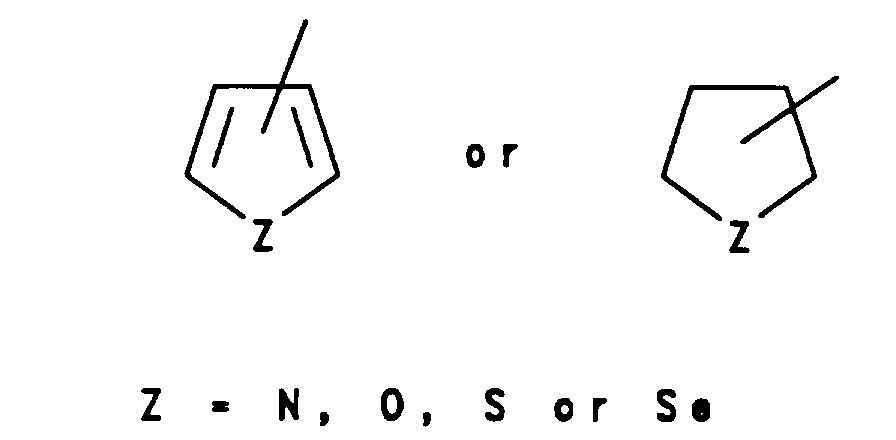
such as pyrrolyl, N-methylindolyl, indolyl, 2-pyrrolidinyl, 3-pyrrolidinyl, 2-pyrrolinyl, tetrahydrofuranyl, furanyl, benzofuranyl, tetrahydrothienyl, thienyl or benzothienyl, or a five membered aromatic ring with two N, O,S or Se heteroatoms optionally having a benzo or pyrido ring fused thereto:
such as imidazolyl, pyrazolyl, benzimidazolyl, oxazolyl, benzoxazolyl, indazolyl, thiazolyl or benzothiazolyl, or a five membered saturated ring with one or two N, O, S or Se heteroatoms and an adjacent appended O heteroatom: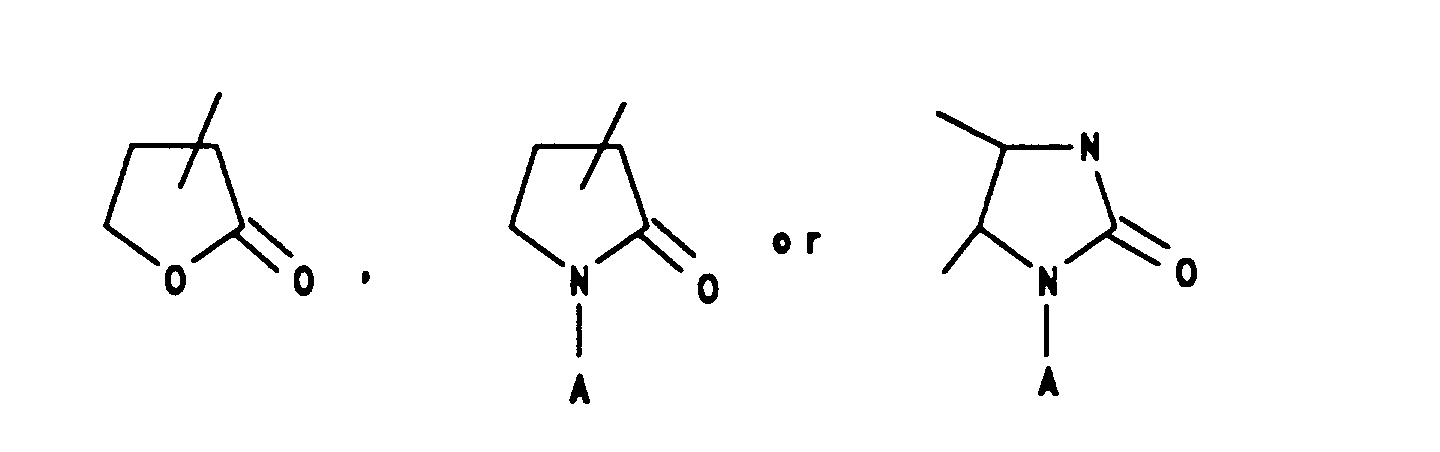
(A is selected from hydrogen; straight or branched (C₁-C₄)alkyl; C₆-aryl; substituted C₆-aryl (substitution selected from halo,(C₁-C₄)alkoxy, trihalo(C₁-C₃)alkyl, nitro, amino, cyano, (C₁-C₄)alkoxycarbonyl, (C₁-C₃)alkylamino or carboxy); (C₇-C₉)aralkyl group selected from benzyl, 1-phenylethyl, 2-phenylethyl or phenylpropyl)
such as γ-butyrolactam, γ-butyrolactone, imidazolidinone or N-aminoimidazolidinone, or a six membered aromatic ring with one to three N heteroatoms such as pyridyl, pyridazinyl or pyrazinyl, or a six membered saturated ring with one or two N, O, S or Se heteroatoms and an adjacent appended O heteroatom such as 2,3-dioxo-1-piperazinyl, 4-ethyl-2,3-dioxo-1-piperazinyl, 4-methyl-2,3-dioxo-1-piperazinyl, 4-cyclopropyl-2-dioxo-1-piperazinyl, 2-dioxomorpholinyl or 2-dioxothiomorpholinyl; hydroxy group; α-hydroxy(C₁-C₃)alkyl group selected from hydroxymethyl, α-hydroxyethyl, α-hydroxy-1-methylethyl or α-hydroxypropyl; halo(C₁-C₃)alkyl group such as bromomethyl, fluoromethyl, difluoromethyl, trifluoromethyl, chloromethyl, dichloromethyl, trichloromethyl, 2-fluoroethyl, 2,2-difluoroethyl, 2,2,2-trifluoroethyl, 2-bromoethyl or 2-iodoethyl; acyl or haloacyl group selected from acetyl, propionyl, chloroacetyl, trifluoroacetyl, (C₃-C₆)cycloalkylcarbonyl, (C₆-C₁₀)aroyl selected from benzoyl or naphthoyl, halo substituted (C₆-C₁₀)aroyl such as pentafluorobenzoyl, 4-chlorobenzoyl, 3-bromophenylcarbonyl or 3,4-difluorobenzoyl, (C₁-C₄)alkylbenzoyl such as from 4-toluoyl, 2-toluoyl or 4-(1-methylethyl)benzoyl, or (heterocycle)carbonyl, the heterocycle selected from a five membered aromatic or saturated ring with one N, O, S or Se heteroatom optionally having a benzo or pyrido ring fused thereto:
such as pyrrolyl, N-methylindolyl, indolyl, 2-pyrrolidinyl, 3-pyrrolidinyl, 2-pyrrolinyl, tetrahydrofuranyl, furanyl, benzofuranyl, tetrahydrothienyl, thienyl, or benzothienyl, or a five membered aromatic ring with two N, O, S or Se heteroatoms optionally having a benzo or pyrido ring fused thereto:
such as imidazolyl, pyrazolyl, benzimidazolyl, oxazolyl, benzoxazolyl, indazolyl, thiazolyl or benzothiazolyl, or a five membered saturated ring with one or two N, O, S or Se heteroatoms and an adjacent appended O heteroatom:
(A is selected from hydrogen; straight or branched (C₁-C₄)alkyl; C₆-aryl; substituted C₆-aryl (substitution selected from halo,(C₁-C₄)alkoxy, trihalo(C₁-C₃)alkyl, nitro, amino, cyano, (C₁-C₄)alkoxycarbonyl, (C₁-C₃)alkylamino or carboxy); (C₇-C₉)aralkyl group selected from benzyl, 1-phenylethyl, 2-phenylethyl or phenylpropyl)
such as γ-butyrolactam, γ-butyrolactone, imidazolidinone or N-aminoimidazolidinone, or a six membered aromatic ring with one to three N heteroatoms such as pyridyl, pyridazinyl or pyrazinyl, or a six membered saturated ring with one or two N, O, S or Se heteroatoms and an adjacent appended O heteroatom such as 2,3-dioxo-1-piperazinyl, 4-ethyl-2,3-dioxo-1-piperazinyl, 4-methyl-2,3-dioxo-1-piperazinyl, 4-cyclopropyl-2-dioxo-1-piperazinyl, 2-dioxomorpholinyl or 2-dioxothiomorpholinyl;
and when R³ = R⁴(CH₂)nCO- and n = 2-4,
R⁴ is selected from amino; hydroxyamino; straight or branched mono(C₁-C₆)alkylamino group selected from methyl, ethyl, n-propyl, 1-methylethyl, n-butyl, 1-methylpropyl, 2-methylpropyl, 1,1-dimethylethyl, n-pentyl, 2-methylbutyl, 1,1-dimethylpropyl, 2,2-dimethylpropyl, 3-methylbutyl, n-hexyl, 1-methylpentyl, 1,1-dimethylbutyl, 2,2-dimethylbutyl, 3-methylpentyl, 1,2-dimethylbutyl, 1,3-dimethylbutyl or 1-methyl-1-ethylpropylamino and where appropriate their diastereomers and enantiomers; (C₃-C₈)cycloalkylamino group selected from cyclopropyl, trans-1,2-dimethylcyclopropyl, cis-1,2-dimethylcyclopropyl, trans-2,3-dimethylcyclopropyl, cis-2,3-dimethylcyclopropyl, cyclobutyl, trans-2,3-dimethylcyclobutyl, cis-2,3-dimethylcyclobutyl, cyclopentyl, cyclohexyl, cycloheptyl, cyclooctyl, bicyclo[2.2.1]hept-2-yl, or bicyclo[2.2.2]oct-2-ylamino and where appropriate their diastereomers and enantiomers; straight or branched chain di-(C₁-C₆)alkylamino group selected from dimethylamino, diethylamino, methyl(ethyl)amino, ethyl(1-methylethyl)amino or a combination of methyl, ethyl, n-propyl, 1-methylethyl, n-butyl, 1-methylpropyl, 2-methylpropyl, 1,1-dimethylethyl, n-pentyl, 2-methylbutyl, 1,1-dimethylpropyl, 2,2-dimethylpropyl, 3-methylbutyl, n-hexyl, 1-methylpentyl, 1,1-dimethylbutyl, 2,2-dimethylbutyl, 3-methylpentyl, 1,2-dimethylbutyl, 1,3-dimethylbutyl or 1-methyl-1-ethylpropylamino and where appropriate their diastereomers and enantiomers; (C₁-C₆)alkoxyamino group selected from methoxy, ethoxy, propoxy, butoxy, pentoxy or hexoxyamino; (C₃-C₈)cycloalkoxyamino group selected from cyclopropoxy, trans-1,2-dimethylcyclopropoxy, cis-1,2-dimethylcyclopropoxy, trans-2,3-dimethylcyclopropoxy, cis-2,3-dimethylcyclopropoxy, cyclobutoxy, trans-2,3-dimethylcyclobutoxy, cis-2,3-dimethylcyclobutoxy, cyclopentoxy, cyclohexoxy, cycloheptyloxy, cyclooctoxy, bicyclo[2.2.1]hept-2-yloxy, or bicyclo[2.2.1]oct-2-yloxyamino and where appropriate their diastereomers and enantiomers; (C₇-C₁₀)aralkoxyamino group selected from benzyloxy, 2-phenylethoxy, α-phenylethoxy, (2-naphthyl)methoxy, (1-naphthyl)methoxy, or phenylpropoxyamino; (C₂-C₈)azacycloalkyl group selected from aziridinyl, azetidinyl, pyrrolidinyl, pyrrolinyl, piperidinyl, 2-methylpyrrolidinyl, cis-3,4-dimethylpyrrolidinyl, trans-3,4-dimethylpyrrolidinyl, 2-azabicyclo[2.1.1]hex-2-yl, 5-azabicyclo[2.1.1]hex-5-yl, 2-azabicyclo[2.2.1]hept-2-yl, 7-azabicyclo[2.2.1]hept-7-yl, or 2-azabicyclo[2.2.2]oct-2-yl and where appropriate their diastereomers and enantiomers; azaheterocycloalkyl group selected from morpholinyl, piperazinyl, 4-methylpiperazinyl, 4-hydroxypiperazinyl, 4-(C₁-C₄)alkoxypiperazinyl, thiamorpholinyl, tetrahydro-1,2-oxazinyl, isoxazolidinyl, pyrazolidinyl, 2-methylpyrazolidinyl, 2,5-diazabicyclo[2.2.2]hept-2-yl, or 2,5-diaza-5-methylbicyclo[2.2.1]hept-2-yl and where appropriate their diastereomers and enantiomers; azaheterocyclic group selected from 1-imidazolyl, 1-pyrrolyl, 1-(1,2,3-triazolyl), 4-(1,2,4-triazolyl), 1-tetrazolyl, or 2-tetrazolyl; (C₆-C₁₀)arylamino group selected from phenylamino or naphthylamino; (C₇-C₁₀)arylalkylamino group selected from benzyl, 2-phenylethyl, α-phenylethyl, (2-naphthyl)methyl, (1-naphthyl)methyl or phenylpropylamino; (C₁-C₄)alkoxycarbonylamino group selected from tert-butoxycarbonylamino, allyloxycarbonylamino, methoxycarbonylamino, ethoxycarbonylamino or propoxycarbonylamino;
and when R³ = R4' (CH₂)nSO₂- and n = 0,
R4' is selected from amino; hydroxyamino; straight or branched mono(C₁-C₆)alkylamino group selected from methyl, ethyl, n-propyl, 1-methylethyl, n-butyl, 1-methylpropyl, 2-methylpropyl, 1,1-dimethylethyl, n-pentyl, 2-methylbutyl, 1,1-dimethylpropyl, 2,2-dimethylpropyl, 3-methylbutyl, n-hexyl, 1-methylpentyl, 1,1-dimethylbutyl, 2,2-dimethylbutyl, 3-methylpentyl, 1,2-dimethylbutyl, 1,3-dimethylbutyl or 1-methyl-1-ethylpropylamino and where appropriate their diastereomers and enantiomers; (C₃-C₈)cycloalkylamino group selected from cyclopropyl, trans-1,2-dimethylcyclopropyl, cis-1,2-dimethylcyclopropyl, trans-2,3-dimethylcyclopropyl, cis-2,3-dimethylcyclopropyl, cyclobutyl, trans-2,3-dimethylcyclobutyl, cis-2,3-dimethylcyclobutyl, cyclopentyl, cyclohexyl, cycloheptyl, cyclooctyl, bicyclo[2.2.1]hept-2-yl, or bicyclo[2.2.2]oct-2-ylamino and where appropriate their diastereomers and enantiomers; straight or branched chain di-(C₁-C₆)alkylamino group selected from dimethylamino, diethylamino, methyl(ethyl)amino, ethyl(1-methylethyl)amino or a combination of methyl, ethyl, n-propyl, 1-methylethyl, n-butyl, 1-methylpropyl, 2-methylpropyl, 1,1-dimethylethyl, n-pentyl, 2-methylbutyl, 1,1-dimethylpropyl, 2,2-dimethylpropyl, 3-methylbutyl, n-hexyl, 1-methylpentyl, 1,1-dimethylbutyl, 2,2-dimethylbutyl, 3-methylpentyl, 1,2-dimethylbutyl, 1,3-dimethylbutyl or 1-methyl-1-ethylpropylamino and where appropriate their diastereomers and enantiomers; (C₁-C₆)alkoxyamino group selected from methoxy, ethoxy, propoxy, butoxy, pentoxy or hexoxyamino; (C₃-C₈)cycloalkoxyamino group selected from cyclopropoxy, trans-1,2-dimethylcyclopropoxy, cis-1,2-dimethylcyclopropoxy, trans-2,3-dimethylcyclopropoxy, cis-2,3-dimethylcyclopropoxy, cyclobutoxy, trans-2,3-dimethylcyclobutoxy, cis-2,3-dimethylcyclobutoxy, cyclopentoxy, cyclohexoxy, cycloheptyloxy, cyclooctoxy, bicyclo[2.2.1]hept-2-yloxy, or bicyclo[2.2.1]oct-2-yloxyamino and where appropriate their diastereomers and enantiomers; (C₇-C₁₀)aralkoxyamino group selected from benzyloxy, 2-phenylethoxy, α-phenylethoxy, (2-naphthyl)methoxy, (1-naphthyl)methoxy, or phenylpropoxyamino; (C₂-C₈)azacycloalkyl group selected from aziridinyl, azetidinyl, pyrrolidinyl, pyrrolinyl, piperidinyl, 2-methylpyrrolidinyl, cis-3,4-dimethylpyrrolidinyl, trans-3,4-dimethylpyrrolidinyl, 2-azabicyclo[2.1.1]hex-2-yl, 5-azabicyclo[2.1.1]hex-5-yl, 2-azabicyclo[2.2.1]hept-2-yl, 7-azabicyclo[2.2.1]hept-7-yl, or 2-azabicyclo[2.2.2]oct-2-yl and where appropriate their diastereomers and enantiomers; azaheterocycloalkyl group selected from morpholinyl, piperazinyl, 4-methylpiperazinyl, 4-hydroxypiperazinyl, 4-(C₁-C₄)alkoxypiperazinyl, thiamorpholinyl, tetrahydro-1,2-oxazinyl, isoxazolidinyl, pyrazolidinyl, 2-methylpyrazolidinyl, 2,5-diazabicyclo[2.2.2]hept-2-yl, or 2,5-diaza-5-methylbicyclo[2.2.1]hept-2-yl and where appropriate their diastereomers and enantiomers; azaheterocyclic group selected from 1-imidazolyl, 1-pyrrolyl, 1-(1,2,3-triazolyl), 4-(1,2,4-triazolyl), 1-tetrazolyl, or 2-tetrazolyl; (C₆-C₁₀)arylamino group selected from phenylamino or naphthylamino; (C₇-C₁₀)arylalkylamino group selected from benzyl, 2-phenylethyl, α-phenylethyl, (2-naphthyl)methyl, (1-naphthyl)methyl or phenylpropylamino; straight or branched (C₁-C₃)alkyl group selected from methyl, ethyl, n-propyl or 1-methylethyl; (C₆-C₁₀)aryl group selected from phenyl, α-naphthyl or β-naphthyl; substituted (C₆-C₁₀)aryl group (substitution selected from halo, (C₁-C₄)alkoxy, trihalo(C₁-C₃)alkyl, nitro, amino, cyano, (C₁-C₄)alkoxycarbonyl, (C₁-C₃)alkylamino or carboxy); a heterocycle group selected from a five membered aromatic or saturated ring with one N, O, S or Se heteroatom optionally having a benzo or pyrido ring fused thereto:
such as pyrrolyl, N-methylindolyl, indolyl, 2-pyrrolidinyl, 3-pyrrolidinyl, 2-pyrrolinyl, tetrahydrofuranyl, furanyl, benzofuranyl, tetrahydrothienyl, thienyl or benzothienyl;
and when R³ = R4' (CH₂)nSO₂- and n= 1-4,
R4' is selected from hydrogen; amino; straight or branched (C₁-C₃)alkyl group selected from methyl, ethyl, n-propyl or 1-methylethyl; and the pharmacologically acceptable organic and inorganic salts or metal complexes. - Most particularly preferred compounds are compounds according to the above formula III and IV in which Y is selected from -N₂⁺Cl⁻ or -N₃;
R and R¹ are the same or different and are selected from hydrogen; nitro; amino; halogen (selected from chlorine, bromine, fluorine or iodine); cyano; hydroxy; or -NR²R³;
and when R or R¹ = -NR²R³ and R² = hydrogen,
R³ = methyl, ethyl, n-propyl, 1-methylethyl, n-butyl, 1-methylpropyl, 2-methylpropyl or 1,1-dimethylethyl;
and when R² = methyl or ethyl,
R³ = methyl, ethyl, n-propyl, 1-methylethyl, n-butyl, 1-methylpropyl or 2-methylpropyl;
and when R or R¹ = -NR²R³ and R² = hydrogen,
R³ selected from R⁴(CH₂)nCO- or R4' (CH₂)nSO₂-;
and when R³ = R⁴(CH₂)nCO- and n=0,
R⁴ is selected from hydrogen; amino; hydroxyamino; straight or branched mono(C₁-C₆)alkylamino group selected from methyl, ethyl, n-propyl, 1-methylethyl, n-butyl, 1-methylpropyl, 2-methylpropyl, 1,1-dimethylethyl, n-pentyl, 2-methylbutyl, 1,1-dimethylpropyl, 2,2-dimethylpropyl, 3-methylbutyl, n-hexyl, 1-methylpentyl, 1,1-dimethylbutyl, 2,2-dimethylbutyl, 3-methylpentyl, 1,2-dimethylbutyl, 1,3-dimethylbutyl or 1-methyl-1-ethylpropylamino and where appropriate their diastereomers and enantiomers; (C₃-C₈)cycloalkylamino group selected from cyclopropyl, trans-1,2-dimethylcyclopropyl, cis-1,2-dimethylcyclopropyl, trans-2,3-dimethylcyclopropyl, cis-2,3-dimethylcyclopropyl, cyclobutyl, trans-2,3-dimethylcyclobutyl, cis-2,3-dimethylcyclobutyl, cyclopentyl, cyclohexyl, cycloheptyl, cyclooctyl, bicyclo[2.2.1]hept-2-yl, or bicyclo[2.2.2]-oct-2-ylamino and where appropriate their diastereomers and enantiomers; straight or branched chain di-(C₁-C₆)alkylamino group selected from dimethylamino, diethylamino, methyl(ethyl)amino, ethyl(1-methylethyl)amino or a combination of methyl, ethyl, n-propyl, 1-methylethyl, n-butyl, 1-methylpropyl, 2-methylpropyl, 1,1-dimethylethyl, n-pentyl, 2-methylbutyl, 1,1-dimethylpropyl, 2,2-dimethylpropyl, 3-methylbutyl, n-hexyl, 1-methylpentyl, 1,1-dimethylbutyl, 2,2-dimethylbutyl, 3-methylpentyl, 1,2-dimethylbutyl, 1,3-dimethylbutyl or 1-methyl-1-ethylpropylamino and where appropriate their diastereomers and enantiomers; (C₁-C₆)alkoxyamino group selected from methoxy, ethoxy, propoxy, butoxy, pentoxy or hexoxyamino; (C₃-C₈)cycloalkoxyamino group selected from cyclopropoxy, trans-1,2-dimethylcyclopropoxy, cis-1,2-dimethylcyclopropoxy, trans-2,3-dimethylcyclopropoxy, cis-2,3-dimethylcyclopropoxy, cyclobutoxy, trans-2,3-dimethylcyclobutoxy, cis-2,3-dimethylcyclobutoxy, cyclopentoxy, cyclohexoxy, cycloheptyloxy, cyclooctoxy, bicyclo[2.2.1]hept-2-yloxy, or bicyclo[2.2.1]oct-2-yloxyamino and where appropriate their diastereomers and enantiomers; (C₇-C₁₀)aralkoxyamino group selected from benzyloxy, 2-phenylethoxy, α-phenylethoxy, (2-naphthyl)methoxy, (1-naphthyl)methoxy, or phenylpropoxyamino; (C₂-C₈)azacycloalkyl group selected from aziridinyl, azetidinyl, pyrrolidinyl, pyrrolinyl, piperidinyl, 2-methylpyrrolidinyl, cis-3,4-dimethylpyrrolidinyl, trans-3,4-dimethylpyrrolidinyl, 2-azabicyclo[2.1.1]hex-2-yl, 5-azabicyclo[2.1.1]hex-5-yl, 2-azabicyclo[2.2.1]hept-2-yl, 7-azabicyclo[2.2.1]hept-7-yl, or 2-azabicyclo[2.2.2]oct-2-yl and where appropriate their diastereomers and enantiomers; azaheterocycloalkyl group selected from morpholinyl, piperazinyl, 4-methylpiperazinyl, 4-hydroxypiperazinyl, 4-(C₁-C₄)alkoxypiperazinyl, thiamorpholinyl, tetrahydro1,2-oxazinyl, isoxazolidinyl, pyrazolidinyl, 2-methylpyrazolidinyl, 2,5-diazabicyclo[2.2.2]hept-2-yl, or 2,5-diaza-5-methylbicyclo[2.2.1]hept-2-yl and where appropriate their diastereomers and enantiomers; (C₆-C₁₀)arylamino group selected from phenylamino or naphthylamino; (C₇-C₁₀)arylalkylamino group selected from benzyl, 2-phenylethyl, α-phenylethyl, (2-naphthyl)methyl, (1-naphthyl)methyl or phenylpropylamino; straight or branched (C₁-C₂)alkyl group selected from methyl or ethyl; (C₆-C₁₀)aryl group selected from phenyl, α-naphthyl or β-naphthyl; substituted (C₆-C₁₀)aryl group (substitution selected from halo, (C₁-C₄)alkoxy, nitro, amino); α-hydroxy(C₁-C₃)alkyl group selected from hydroxymethyl; halo(C₁-C₃)alkyl group such as bromomethyl, fluoromethyl, difluoro methyl, trifluoromethyl, chloromethyl, dichloromethyl, trichloromethyl, 2-fluoroethyl, 2,2-difluoroethyl, 2,2,2-trifluoroethyl, 2-bromoethyl or 2-iodoethyl; a heterocycle group selected from a five membered aromatic or saturated ring with one N, O, S or Se heteroatom optionally having a benzo or pyrido ring fused thereto:
such as indolyl, 2-pyrrolidinyl, 3-pyrrolidinyl, 2-pyrrolinyl, tetrahydrofuranyl, furanyl, benzofuranyl, tetrahydrothienyl or thienyl, or a five membered aromatic ring with two N, O, S or Se heteroatoms optionally having a benzo or pyrido ring fused thereto:
such as imidazolyl, pyrazolyl, benzimidazolyl, indazolyl, thiazolyl or benzothiazolyl; (C₁-C₄)alkoxycarbonyl group selected from methoxycarbonyl, ethoxycarbonyl, straight or branched propoxycarbonyl, straight or branched butoxycarbonyl or allyloxycarbonyl; vinyl or substituted vinyl group [substitution selected from (C₁-C₃)alkyl group, (C₆-C₁₀)aryl group selected from phenyl, α-naphthyl, β-naphthyl]; (C₁-C₄)alkoxy group such as allyloxy, methoxy, ethoxy, n-propoxy, n-butoxy or tert-butoxy; C₆-aryloxy group selected from phenoxy or substituted phenoxy (substitution selected from halo, (C₁-C₄)alkyl); (C₇-C₁₀)aralkyloxy group such as benzyloxy, 1-phenylethyloxy or 2-phenylethyloxy;
and when R³ = R⁴(CH₂)nCO- and n=1-4,
R⁴ is selected from hydrogen; (C₁-C₂)alkyl group selected from methyl or ethyl; (C₆-C₁₀)aryl group selected from phenyl, α-naphthyl or β-naphthyl; substituted(C₆-C₁₀)aryl group (substitution selected from halo, (C₁-C₄)alkoxy, trihalo(C₁-C₃)alkyl); acyloxy or haloacyloxy group, selected from acetyl, propionyl, chloroacetyl, trichloroacetyl, (C₃-C₆)cycloalkylcarbonyl, (C₆-C₁₀)aroyl selected from benzoyl or naphthoyl, halo substituted (C₆-C₁₀)aroyl such as pentafluorobenzoyl, 4-chlorobenzoyl, 3-bromobenzoyl or 3,4-difluorobenzoyl, (C₁-C₄)alkylbenzoyl such as 4-toluoyl, 2-toluoyl, 4-(1-methylethyl)benzoyl or (heterocycle)carbonyl, the heterocycle selected from a five membered aromatic or saturated ring with one N, O, S or Se heteroatom optionally having a benzo or pyrido ring fused thereto:
such as tetrahydrofuranyl, furanyl, benzofuranyl, tetrahydrothienyl, thienyl or benzothienyl, or a five membered aromatic ring with two N, O, S or Se heteroatoms optionally having a benzo or pyrido ring fused thereto:
such as pyrazolyl, benzimidazolyl, benzoxazolyl, indazolyl, thiazolyl or benzothiazolyl, or a six membered aromatic ring with one or two N heteroatoms such as pyridyl or pyridazinyl; (C₁-C₄)alkoxy group such as allyloxy, methoxy, ethoxy, n-propoxy, n-butoxy or tert-butoxy; α-hydroxy(C₁-C₃)alkyl group selected from hydroxymethyl, α-hydroxyethyl, α-hydroxy-1-methylethyl or α-hydroxypropyl; halo(C₁-C₃)alkyl group such as bromomethyl, fluoromethyl, difluoromethyl, trifluoromethyl, chloromethyl, dichloromethyl, trichloromethyl, 2-fluoroethyl, 2,2-difluoroethyl, 2,2,2-trifluoroethyl, 2-bromoethyl or 2-iodoethyl;
and when R³ = R⁴(CH₂)nCO- and n = 2-4,
R⁴ is selected from amino; hydroxyamino; straight or branched mono(C₁-C₆)alkylamino group selected from methyl, ethyl, n-propyl, 1-methylethyl, n-butyl, 1-methylpropyl, 2-methylpropyl, 1,1-dimethylethyl, n-pentyl, 2-methylbutyl, 1,1-dimethylpropyl, 2,2-dimethylpropyl, 3-methylbutyl, n-hexyl, 1-methylpentyl, 1,1-dimethylbutyl, 2,2-dimethylbutyl, 3-methylpentyl, 1,2-dimethylbutyl, 1,3-dimethylbutyl or 1-methyl-1-ethylpropylamino and where appropriate their diastereomers and enantiomers; (C₃-C₈)cycloalkylamino group selected from cyclopropyl, trans-1,2-dimethylcyclopropyl, cis-1,2-dimethylcyclopropyl, trans-2,3-dimethylcyclopropyl, cis-2,3-dimethylcyclopropyl, cyclobutyl, trans-2,3-dimethylcyclobutyl, cis-2,3-dimethylcyclobutyl, cyclopentyl, cyclohexyl, cycloheptyl, cyclooctyl, bicyclo[2.2.1]hept-2-yl, or bicyclo[2.2.2]oct-2-ylamino and where appropriate their diastereomers and enantiomers; straight or branched chain di-(C₁-C₆)alkylamino group selected from dimethylamino, diethylamino, methyl(ethyl)amino, ethyl(1-methylethyl)amino or a combination of methyl, ethyl, n-propyl, 1-methylethyl, n-butyl, 1-methylpropyl, 2-methylpropyl, 1,1-dimethylethyl, n-pentyl, 2-methylbutyl, 1,1-dimethylpropyl, 2,2-dimethylpropyl, 3-methylbutyl, n-hexyl, 1-methylpentyl, 1,1-dimethylbutyl, 2,2-dimethylbutyl, 3-methylpentyl, 1,2-dimethylbutyl, 1,3-dimethylbutyl or 1-methyl-1-ethylpropylamino and where appropriate their diastereomers and enantiomers; (C₁-C₆)alkoxyamino group selected from methoxy, ethoxy, propoxy, butoxy, pentoxy or hexoxyamino; (C₃-C₈)cycloalkoxyamino group selected from cyclopropoxy, trans-1,2-dimethylcyclopropoxy, cis-1,2-dimethylcyclopropoxy, trans-2,3-dimethylcyclopropoxy, cis-2,3-dimethylcyclopropoxy, cyclobutoxy, trans-2,3-dimethylcyclobutoxy, cis-2,3-dimethylcyclobutoxy, cyclopentoxy, cyclohexoxy, cycloheptyloxy, cyclooctoxy, bicyclo[2.2.1]hept-2-yloxy, or bicyclo[2.2.1]oct-2-yloxyamino and where appropriate their diastereomers and enantiomers; (C₇-C₁₀)aralkoxyamino group selected from benzyloxy, 2-phenylethoxy, α-phenylethoxy, (2-naphthyl)methoxy, (1-naphthyl)methoxy, or phenylpropoxyamino; (C₂-C₈)azacycloalkyl group selected from aziridinyl, azetidinyl, pyrrolidinyl, pyrrolinyl, piperidinyl, 2-methylpyrrolidinyl, cis-3,4-dimethylpyrrolidinyl, trans-3,4-dimethylpyrrolidinyl, 2-azabicyclo[2.1.1]hex-2-yl, 5-azabicyclo[2.1.1]hex-5-yl, 2-azabicyclo[2.2.1]hept-2-yl, 7-azabicyclo[2.2.1]hept-7-yl, or 2-azabicyclo[2.2.2]oct-2-yl and where appropriate their diastereomers and enantiomers; azaheterocycloalkyl group selected from morpholinyl, piperazinyl, 4-methylpiperazinyl, 4-hydroxypiperazinyl, 4-(C₁-C₄)alkoxypiperazinyl, thiamorpholinyl, tetrahydro-1,2-oxazinyl, isoxazolidinyl, pyrazolidinyl, 2-methylpyrazolidinyl, 2,5-diazabicyclo[2.2.2]hept-2-yl, or 2,5-diaza-5-methylbicyclo[2.2.1]hept-2-yl and where appropriate their diastereomers and enantiomers; (C₆-C₁₀)arylamino group selected from phenylamino or naphthylamino; (C₇-C₁₀)arylalkylamino group selected from benzyl, 2-phenylethyl, α-phenylethyl, (2-naphthyl)methyl, (1-naphthyl)methyl or phenylpropylamino; (C₁-C₄)alkoxycarbonylamino group selected from tert-butoxycarbonylamino, allyloxycarbonylamino, methoxycarbonylamino, ethoxycarbonylamino or propoxycarbonylamino;
and when R³ = R4' (CH₂)nSO₂- and n = 0,
R4' is selected from amino; straight or branched (C₁-C₂)alkyl group selected from methyl or ethyl; (C₆-C₁₀)aryl group selected from phenyl, α-naphthyl or β-naphthyl;
and when R³ = R4' (CH₂)nSO₂- and n= 1-4,
R4' is selected from hydrogen; straight or branched (C₁-C₂)alkyl group selected from methyl or ethyl; and the pharmacologically acceptable organic and inorganic salts or metal complexes. - Compounds of special interest are compounds according to the above formula III and IV in which Y is -N₂⁺Cl⁻ or -N₃;
R or R¹ are selected from nitro; amino; halogen (selected from chlorine, bromine, fluorine or iodine); cyano; hydroxy; or -NR²R³;
and when R or R¹ = -NR²R³ and R² = methyl or ethyl;
R³ = methyl or ethyl,
and when R or R¹ = -NR²R³ and R² = hydrogen,
R³ is selected from R⁴(CH₂)nCO- or R4' (CH₂)nSO₂-;
and when R³ = R⁴(CH₂)nCO- and n=0,
R⁴ is selected from hydrogen; straight or branched (C₁-C₂)alkyl group selected from methyl or ethyl; a heterocycle group selected from a five membered aromatic or saturated ring with one N, O, or S heteroatom optionally having a benzo or pyrido ring fused thereto:
such as furanyl or thienyl, or a five membered aromatic ring with two N, O or S heteroatoms optionally having a benzo or pyrido ring fused thereto:
such as pyrazolyl, benzimidazolyl or thiazolyl; (C₁-C₄)alkoxy group such as allyloxy, methoxy, ethoxy, n-propoxy, n-butoxy or tert-butoxy; C₆-aryloxy group selected from phenoxy or substituted phenoxy (substitution selected from halo, (C₁-C₄)alkyl); (C₇-C₁₀)aralkyloxy group such as benzyloxy, 1-phenylethyloxy or 2-phenylethyloxy;
and when R³ = R⁴(CH₂)nCO- and n=1-4,
R⁴ is selected from hydrogen; (C₁-C₂)alkyl group selected from methyl or ethyl; (C₆-C₁₀)aryl group selected from phenyl, α-naphthyl or β-naphthyl;
and when R³ = R4' (CH₂)nSO₂- and n = 0,
R4' is selected from straight or branched (C₁-C₂)alkyl group selected from methyl or ethyl; (C₆-C₁₀)aryl group selected from phenyl, α-naphthyl or β-naphthyl; and the pharmacologically acceptable organic and inorganic salts or metal complexes. - Additional intermediate compounds include those having the formula V and VI:

wherein:
Y is selected from -N₂⁺Cl⁻ or N₃;
X is selected from halogen or trifluoromethanesulfonyloxy; the halogen is selected from bromine, chlorine, fluorine or iodine;
R or R¹ is selected from nitro; amino; halogen (selected from chlorine, bromine, fluorine or iodine); cyano; hydroxy; or -NR²R³;
and when R or R¹ = -NR²R³ and R² = hydrogen,
R³ = methyl, ethyl, n-propyl, 1-methylethyl, n-butyl, 1-methylpropyl, 2-methylpropyl or 1,1-dimethylethyl;
and when R² = methyl or ethyl,
R³ = methyl, ethyl, n-propyl, 1-methylethyl, n-butyl, 1-methylpropyl or 2-methylpropyl;
and when R² = n-propyl,
R³ = n-propyl, 1-methylethyl, n-butyl, 1-methylpropyl or 2-methylpropyl;
and when R² = 1-methylethyl,
R³ = n-butyl, 1-methylpropyl or 2-methylpropyl;
and when R² = n-butyl,
R³ = n-butyl, 1-methylpropyl or 2-methylpropyl;
and when R² = 1-methylpropyl,
R³ = 2-methylpropyl;
and when R or R¹ = -NR²R³ and R² = hydrogen,
R³ is selected from R⁴(CH₂)nCO- or R4' (CH₂)nSO₂-;
and when R³ = R⁴(CH₂)nCO- and n=0,
R⁴ is selected from hydrogen; amino; hydroxyamino; straight or branched mono(C₁-C₆)alkylamino group selected from methyl, ethyl, n-propyl, 1-methylethyl, n-butyl, 1-methylpropyl, 2-methylpropyl, 1,1-dimethylethyl, n-pentyl, 2-methylbutyl, 1,1-dimethylpropyl, 2,2-dimethylpropyl, 3-methylbutyl, n-hexyl, 1-methylpentyl, 1,1-dimethylbutyl, 2,2-dimethylbutyl, 3-methylpentyl, 1,2-dimethylbutyl, 1,3-dimethylbutyl or 1-methyl-1-ethylpropylamino and where appropriate their diastereomers and enantiomers; (C₃-C₈)cycloalkylamino group selected from cyclopropyl, trans-1,2-dimethylcyclopropyl, cis-1,2-dimethylcyclopropyl, trans-2, 3-dimethylcyclopropyl, cis-2,3-dimethylcyclopropyl, cyclobutyl, trans-2,3-dimethylcyclobutyl, cis-2,3-dimethylcyclobutyl, cyclopentyl, cyclohexyl, cycloheptyl, cyclooctyl, bicyclo[2.2.1]hept-2-yl, or bicyclo[2.2.2]oct-2-ylamino and where appropriate their diastereomers and enantiomers; straight or branched chain di-(C₁-C₆)alkylamino group selected from dimethylamino, diethylamino, methyl(ethyl)amino, ethyl(1-methylethyl)amino or a combination of methyl, ethyl, n-propyl, 1-methylethyl, n-butyl, 1-methylpropyl, 2-methylpropyl, 1,1-dimethylethyl, n-pentyl, 2-methylbutyl, 1,1-dimethylpropyl, 2,2-dimethylpropyl, 3-methylbutyl, n-hexyl, 1-methylpentyl, 1,1-dimethylbutyl, 2,2-dimethylbutyl, 3-methylpentyl, 1,2-dimethylbutyl, 1,3-dimethylbutyl or 1-methyl-1-ethylpropylamino and where appropriate their diastereomers and enantiomers; (C₁-C₆)alkoxyamino group selected from methoxy, ethoxy, propoxy, butoxy, pentoxy or hexoxyamino; (C₃-C₈)cycloalkoxyamino group selected from cyclopropoxy, trans-1,2-dimethylcyclopropoxy, cis-1,2-dimethylcyclopropoxy, trans-2,3-dimethylcyclopropoxy, cis-2,3-dimethylcyclopropoxy, cyclobutoxy, trans-2,3-dimethylcyclobutoxy, cis-2,3-dimethylcyclobutoxy, cyclopentoxy, cyclohexoxy, cycloheptyloxy, cyclooctoxy, bicyclo[2.2.1]hept-2-yloxy, or bicyclo[2.2.1]oct-2-yloxyamino and where appropriate their diastereomers and enantiomers; (C₇-C₁₀)aralkoxyamino group selected from benzyloxy, 2-phenylethoxy, α-phenylethoxy, (2-naphthyl)methoxy, (1-naphthyl)methoxy, or phenylpropoxyamino; (C₂-C₈)azacycloalkyl group selected from aziridinyl, azetidinyl, pyrrolidinyl, pyrrolinyl, piperidinyl, 2-methylpyrrolidinyl, cis-3,4-dimethylpyrrolidinyl, trans-3,4-dimethylpyrrolidinyl, 2-azabicyclo[2.1.1]hex-2-yl, 5-azabicyclo[2.1.1]hex-5-yl, 2-azabicyclo[2.2.1]hept-2-yl, 7-azabicyclo[2.2.1]hept-7-yl, or 2-azabicyclo[2.2.2]oct-2-yl and where appropriate their diastereomers and enantiomers; azaheterocycloalkyl group selected from morpholinyl, piperazinyl, 4-methylpiperazinyl, 4-hydroxypiperazinyl, 4-(C₁-C₄)alkoxypiperazinyl, thiamorpholinyl, tetrahydro-1,2-oxazinyl, isoxazolidinyl, pyrazolidinyl, 2-methylpyrazolidinyl, 2,5-diazabicyclo[2.2.2]hept-2-yl, or 2,5-diaza-5-methylbicyclo[2.2.1]hept-2-yl and where appropriate their diastereomers and enantiomers; (C₆-C₁₀)arylamino group selected from phenylamino or naphthylamino; (C₇-C₁₀)arylalkylamino group selected from benzyl, 2-phenylethyl, α-phenylethyl, (2-naphthyl)methyl, (1-naphthyl)methyl or phenylpropylamino; straight or branched (C₁-C₄)alkyl group selected from methyl, ethyl, n-propyl, 1-methylethyl, n-butyl, 1-methylpropyl, 2-methylpropyl or 1,1-dimethylethyl; (C₃-C₆)cycloalkyl group selected from cyclopropyl, cyclobutyl, cyclo- pentyl or cyclohexyl; substituted (C₃-C₆)cycloalkyl group (substitution selected from (C₁-C₃)alkyl, cyano, amino or (C₁-C₃)acyl); (C₆-C₁₀)aryl group selected from phenyl, α-naphthyl or β-naphthyl; substituted (C₆-C₁₀)aryl group (substitution selected from halo, (C₁-C₄)alkoxy, trihalo(C₁-C₃)alkyl, nitro, amino, cyano, (C₁-C₄)alkoxycarbonyl, (C₁-C₃)alkylamino or carboxy); (C₇-C₉)aralkyl group selected from benzyl, 1-phenylethyl, 2-phenylethyl or phenylpropyl; α-hydroxy(C₁-C₃)alkyl group selected from hydroxymethyl, α-hydroxyethyl,α-hydroxy-1-methylethyl or α-hydroxypropyl; α-mercapto(C₁-C₃)alkyl group selected from mercaptomethyl, α-mercaptoethyl, α-mercapto-1-methylethyl or α-mercaptopropyl; halo(C₁-C₃)alkyl group such as bromomethyl, fluoromethyl, difluoromethyl, trifluoromethyl, chloromethyl, dichloromethyl, trichloromethyl, 2-fluoroethyl, 2,2-difluoroethyl, 2,2,2-trifluoroethyl, 2-bromoethyl or 2-iodoethyl; a heterocycle group selected from a five membered aromatic or saturated ring with one N, O, S or Se heteroatom optionally having a benzo or pyrido ring fused thereto:
such as pyrrolyl, N-methylindolyl, indolyl, 2-pyrrolidinyl, 3-pyrrolidinyl, 2-pyrrolinyl, tetrahydrofuranyl, furanyl, benzofuranyl, tetrahydrothienyl, thienyl, benzothienyl or selenazolyl, or a five membered aromatic ring with two N, O, S or Se heteroatoms optionally having a benzo or pyrido ring fused thereto:
such as imidazolyl, pyrazolyl, benzimidazolyl, oxazolyl, benzoxazolyl, indazolyl, thiazolyl, benzothiazolyl, 3-alkyl-3H-imidazo[4,5-b]pyridyl or pyridylimidazolyl, or a five membered saturated ring with one or two N, O, S or Se heteroatoms and an adjacent appended O heteroatom:
(A is selected from hydrogen; straight or branched (C₁-C₄)alkyl; C₆-aryl; substituted C₆-aryl (substitution selected from halo,(C₁-C₄)alkoxy, trihalo(C₁-C₃)alkyl, nitro, amino, cyano, (C₁-C₄)alkoxycarbonyl, (C₁-C₃)alkylamino or carboxy); (C₇-C₉)aralkyl group selected from benzyl, 1-phenylethyl, 2-phenylethyl or phenylpropyl)
such as γ-butyrolactam, γ-butyrolactone, imidazolidinone or N-aminoimidazolidinone, or a six membered aromatic ring with one to three N heteroatoms such as pyridyl, pyridazinyl, pyrazinyl, sym-triazinyl, unsymtriazinyl, pyrimidinyl or (C₁-C₃)alkylthiopyridazinyl, or a six membered saturated ring with one or two N, O, S or Se heteroatoms and an adjacent appended O heteroatom such as 2,3-dioxo-1-piperazinyl, 4-ethyl-2,3-dioxo-1-piperazinyl, 4-methyl-2,3-dioxo-1-piperazinyl, 4-cyclopropyl-2-dioxo-1-piperazinyl, 2-dioxomorpholinyl or 2-dioxothiomorpholinyl; acyl or haloacyl group selected from acetyl, propionyl, chloroacetyl, trifluoroacetyl, (C₃-C₆)cycloalkylcarbonyl such as cyclopropylcarbonyl, cyclobutylcarbonyl, cyclopentylcarbonyl, cyclohexylcarbonyl, (2,3-dimethylcyclopropyl)carbonyl, (1,2-dimethylcyclopropyl)carbonyl, (2-ethylcyclopropyl)carbonyl, (2-methylcyclopentyl)carbonyl or (3-ethylcyclobutyl)carbonyl, (C₆-C₁₀)aroyl selected from benzoyl or naphthoyl, halo substituted (C₆-C₁₀)aroyl such as pentafluorobenzoyl, 4-chlorobenzoyl, 3-bromobenzoyl or 3,4-difluorobenzoyl, (C₁-C₄)alkylbenzoyl such as 4-toluoyl, 2-toluoyl or 4-(1-methylethyl)benzoyl, or (heterocycle)carbonyl, the heterocycle selected from a five membered aromatic or saturated ring with one N, O, S or Se heteroatom optionally having a benzo or pyrido ring fused thereto:
such as pyrrolyl, N-methylindolyl, indolyl, 2-pyrrolidinyl, 3-pyrrolidinyl, 2-pyrrolinyl, tetrahydrofuranyl, furanyl, benzofuranyl, tetrahydrothienyl, thienyl, benzothienyl or selenazolyl, or a five membered aromatic ring with two N, O, S or Se heteroatoms optionally having a benzo or pyrido ring fused thereto:
such as imidazolyl, pyrazolyl, benzimidazolyl, oxazolyl, benzoxazolyl, indazolyl, thiazolyl, benzothiazolyl, 3-alkyl-3H-imidazo[4,5-b]pyridyl or pyridylimidazolyl, or a five membered saturated ring with one or two N, O, S or Se heteroatoms and an adjacent appended O heteroatom:
(A is selected from hydrogen; straight or branched (C₁-C₄)alkyl; C₆-aryl; substituted C₆-aryl (substitution selected from halo,(C₁-C₄)alkoxy, trihalo(C₁-C₃)alkyl, nitro, amino, cyano, (C₁-C₄)alkoxycarbonyl, (C₁-C₃)alkylamino or carboxy); (C₇-C₉)aralkyl group selected from benzyl, 1-phenylethyl, 2-phenylethyl or phenylpropyl)
such as γ-butyrolactam, γ-butyrolactone, imidazolidinone or N-aminoimidazolidinone, or a six membered aromatic ring with one to three N heteroatoms such as pyridyl, pyridazinyl, pyrazinyl, sym-triazinyl, unsym-triazinyl, pyrimidinyl or (C₁-C₃)alkylthiopyridazinyl, or a six membered saturated ring with one or two N, O, S or Se heteroatoms and an adjacent appended O heteroatom such as 2,3-dioxo-1-piperazinyl, 4-ethyl-2,3-dioxo-1-piperazinyl, 4-methyl-2,3-dioxo-1-piperazinyl, 4-cyclopropyl-2-dioxo-1-piperazinyl, 2-dioxomorpholinyl or 2-dioxothiomorpholinyl; (C₁-C₄)alkoxycarbonyl group selected from methoxycarbonyl, ethoxycarbonyl, straight or branched propoxylcarbonyl, straight or branched butoxycarbonyl or allyloxycarbonyl; vinyl or substituted vinyl group [substitution selected from (C₁-C₃)alkyl group, halogen, (C₆-C₁₀)aryl group selected from phenyl, α-naphthyl, β-naphthyl, substituted (C₆-C₁₀)aryl group (substitution selected from halo, (C₁-C₄)alkoxy, trihalo(C₁-C₃)alkyl, nitro, amino, cyano, (C₁-C₄)alkoxycarbonyl, (C₁-C₃)alkylamino or carboxy), halo(C₁-C₃)alkyl group such as bromomethyl, fluoromethyl, difluoromethyl, trifluoromethyl, chloromethyl, dichloromethyl, trichloromethyl, 2-fluoroethyl, 2,2-difluoroethyl, 2,2,2-trifluoroethyl, 2-bromoethyl or 2-iodoethyl, a heterocycle group selected from a five membered aromatic or saturated ring with one N, O, S or Se heteroatom optionally having a benzo or pyrido ring fused thereto:
such as pyrrolyl, N-methylindolyl, indolyl, 2-pyrrolidinyl, 3-pyrrolidinyl, 2-pyrrolinyl, tetrahydrofuranyl, furanyl, benzofuranyl, tetrahydrothienyl, thienyl, benzothienyl or selenazolyl]; (C₁-C₄)alkoxy group such as allyloxy, methoxy, ethoxy, n-propoxy, n-butoxy or tert-butoxy; C₆-aryloxy group selected from phenoxy or substituted phenoxy (substitution selected from halo, (C₁-C₄)alkyl, nitro, cyano, thiol, amino, carboxy, di-(C₁-C₃)alkylamino); (C₇-C₁₀)aralkyloxy group such as benzyloxy, 1-phenylethyloxy or 2-phenylethyloxy; vinyloxy or substituted vinyloxy group (substitution selected from (C₁-C₄)alkyl, cyano, carboxy, or (C₆-C₁₀)aryl selected from phenyl, α-naphthyl or β-naphthyl); RaRbamino(C₁-C₄) alkoxy group, wherein RaRb is a straight or branched (C₁-C₄)alkyl selected from methyl, ethyl, n-propyl, 1-methylethyl, n-butyl, 1-methylpropyl, 2-methylpropyl or 1,1-dimethylethyl or RaRb is (CH₂)n, n=2-6, or
-(CH₂)₂W(CH₂)₂- wherein W is selected from -N(C₁-C₃)alkyl [straight or branched], -NH, -NOB [B is selected from hydrogen or (C₁-C₃)alkyl], O or S; or RaRbaminoxy group, wherein RaRb is a straight or branched (C₁-C₄)alkyl selected from methyl, ethyl, n-propyl, 1-methylethyl, n-butyl, 1-methylpropyl, or 2-methylpropyl or RaRb is (CH₂)n, n=2-6, or
-(CH₂)₂W(CH₂)₂- wherein W is selected from -N(C₁-C₃)alkyl [straight or branched], -NH, -NOB [B is selected from hydrogen or (C₁-C₃)alkyl], O or S;
and when R³ = R⁴(CH₂)nCO- and n=1-4,
R⁴ is selected from hydrogen; straight or branched (C₁-C₄)alkyl group selected from methyl, ethyl, n-propyl, 1-methylethyl, n-butyl, 1-methylpropyl, 2-methylpropyl or 1,1-dimethylethyl; (C₃-C₆)cycloalkyl group selected from cyclopropyl, cyclobutyl, cyclopentyl or cyclohexyl; substituted (C₃-C₆)cycloalkyl group (substitution selected from (C₁-C₃)alkyl, cyano, amino or (C₁-C₃)acyl); (C₆-C₁₀)aryl group selected from phenyl, α-naphthyl or β-naphthyl; substituted(C₆-C₁₀)aryl group (substitution selected from halo, (C₁-C₄)alkoxy, trihalo(C₁-C₃)alkyl, nitro, amino, cyano, (C₁-C₄)alkoxycarbonyl, (C₁-C₃)alkylamino or carboxy); (C₇-C₉)aralkyl group such as benzyl, 1-phenylethyl, 2-phenylethyl or phenylpropyl; acyloxy or haloacyloxy group, selected from acetyl, propionyl, chloroacetyl, trichloroacetyl, (C₃-C₆)cycloalkylcarbonyl, (C₆-C₁₀)aroyl selected from benzoyl or naphthoyl, halo substituted (C₆-C₁₀)aroyl such as pentafluorobenzoyl, 4-chlorobenzoyl, 3-bromobenzoyl or 3,4-difluorobenzoyl, (C₁-C₄)alkylbenzoyl such as 4-toluoyl, 2-toluoyl or 4-(1-methylethyl)benzoyl, (heterocycle)carbonyl, the heterocycle selected from a five membered aromatic or saturated ring with one N, O, S or Se heteroatom optionally having a benzo or pyrido ring fused thereto: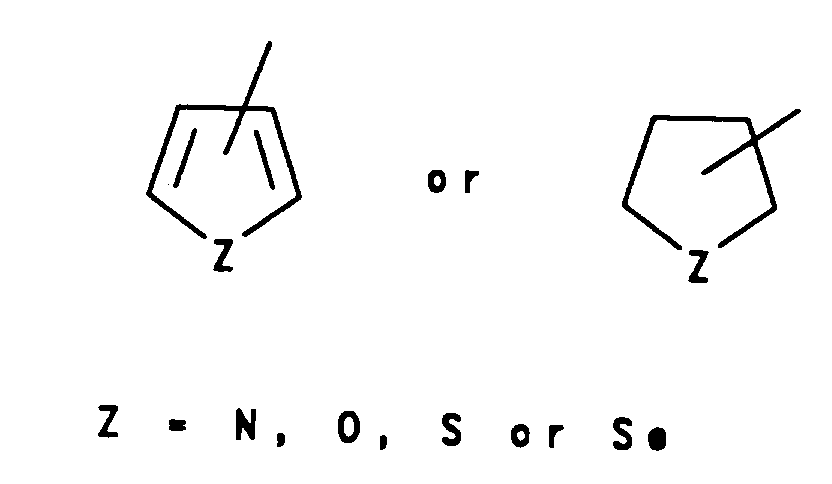
such as pyrrolyl, N-methylindolyl, indolyl, 2-pyrrolidinyl, 3-pyrrolidinyl, 2-pyrrolinyl, tetrahydrofuranyl, furanyl, benzofuranyl, tetrahydrothienyl, thienyl, benzothienyl or selenazolyl, or a five membered aromatic ring with two N, O, S or Se heteroatoms optionally having a benzo or pyrido ring fused thereto:
such as imidazolyl, pyrazolyl, benzimidazolyl, oxazolyl, benzoxazolyl, indazolyl, thiazolyl, benzothiazolyl, 3-alkyl-3H-imidazo[4,5-b]pyridyl or pyridylimidazolyl, or a five membered saturated ring with one or two N, O, S or Se heteroatoms and an adjacent appended O heteroatom: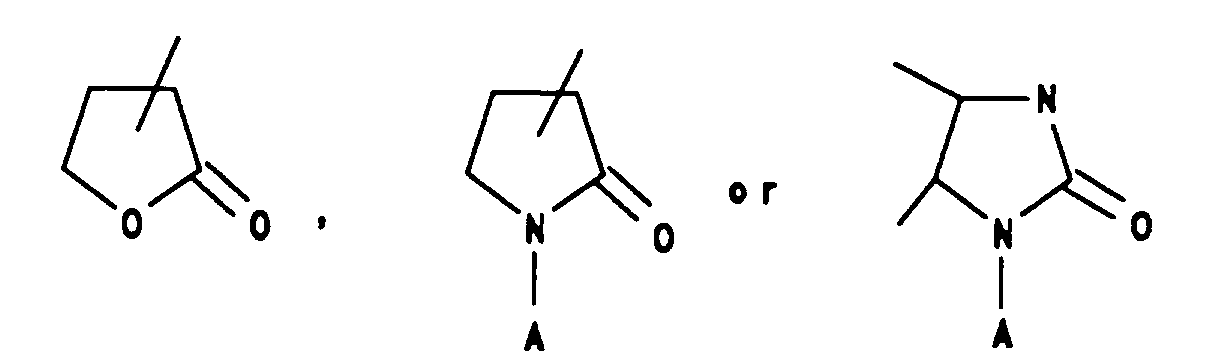
(A is selected from hydrogen; straight or branched (C₁-C₄)alkyl; C₆-aryl; substituted C₆-aryl (substitution selected from halo,(C₁-C₄)alkoxy, trihalo(C₁-C₃)alkyl, nitro, amino, cyano, (C₁-C₄)alkoxycarbonyl, (C₁-C₃)alkylamino or carboxy); (C₇-C₉)aralkyl group selected from benzyl, 1-phenylethyl, 2-phenylethyl or phenylpropyl)
such as γ-butyrolactam, γ-butyrolactone, imidazolidinone or N-aminoimidazolidinone, or a six membered aromatic ring with one to three N heteroatoms such as pyridyl, pyridazinyl, pyrazinyl, sym-triazinyl, unsym-triazinyl, pyrimidinyl or (C₁-C₃)alkylthiopyridazinyl, or a six membered saturated ring with one or two N, O, S or Se heteroatoms and an adjacent appended O heteroatom such as 2,3-dioxo-1-piperazinyl, 4-ethyl-2,3-dioxo-1-piperazinyl, 4-methyl-2,3-dioxo-1-piperazinyl, 4-cyclopropyl-2-dioxo-1-piperazinyl, 2-dioxomorpholinyl or 2-dioxothiomorpholinyl; (C₁-C₄)alkoxy group such as allyloxy, methoxy, ethoxy, n-propoxy, n-butoxy or tert-butoxy; C₆-aryloxy group selected from phenoxy or substituted phenoxy (substitution selected from halo, (C₁-C₄)alkyl, nitro, cyano, thiol, amino, carboxy, di-(C₁-C₃)alkylamino); (C₇-C₁₀)aralkyloxy group such as benzyloxy, 1-phenylethyloxy or 2-phenylethyloxy; (C₁-C₃)alkylthio group selected from methylthio, ethylthio, propylthio or allylthio; C₆-arylthio group selected from phenylthio or substituted phenylthio (substitution selected from halo, (C₁-C₄)alkyl, nitro, cyano, thiol, amino, carboxy, di-(C₁-C₃)alkylamino); C₆-arylsulfonyl group selected from phenylsulfonyl or substituted phenylsulfonyl (substitution selected from halo, (C₁-C₄)alkoxy, trihalo(C₁-C₃)alkyl, nitro, amino, cyano, (C₁-C₄)alkoxycarbonyl, (C₁-C₃)alkylamino or carboxy); (C₇-C₈)aralkylthio group such as benzylthio, 1-phenylethylthio or 2-phenylethylthio; a heterocycle group selected from a five membered aromatic or saturated ring with one N, O, S or Se heteroatom optionally having a benzo or pyrido ring fused thereto:
such as pyrrolyl, N-methylindolyl, indolyl, 2-pyrrolidinyl, 3-pyrrolidinyl, 2-pyrrolinyl, tetrahydrofuranyl, furanyl, benzofuranyl, tetrahydrothienyl, thienyl, benzothienyl or selenazolyl, or a five membered aromatic ring with two N, O,S or Se heteroatoms optionally having a benzo or pyrido ring fused thereto:
such as imidazolyl, pyrazolyl, benzimidazolyl, oxazolyl, benzoxazolyl, indazolyl, thiazolyl, benzothiazolyl, 3-alkyl-3H-imidazo[4,5-b]pyridyl or pyridylimidazolyl, or a five membered saturated ring with one or two N, O, S or Se heteroatoms and an adjacent appended O heteroatom:
(A is selected from hydrogen; straight or branched (C₁-C₄)alkyl; C₆-aryl; substituted C₆-aryl (substitution selected from halo,(C₁-C₄)alkoxy, trihalo(C₁-C₃)alkyl, nitro, amino, cyano, (C₁-C₄)alkoxycarbonyl, (C₁-C₃)alkylamino or carboxy); (C₇-C₉)aralkyl group selected from benzyl, 1-phenylethyl, 2-phenylethyl or phenylpropyl)
such as γ-butyrolactam, γ-butyrolactone, imidazolidinone or N-aminoimidazolidinone, or a six membered aromatic ring with one to three N heteroatoms such as pyridyl, pyridazinyl, pyrazinyl, sym-triazinyl, unsym-triazinyl, pyrimidinyl or (C₁-C₃)alkylthiopyridazinyl, or a six membered saturated ring with one or two N, O, S or Se heteroatoms and an adjacent appended O heteroatom such as 2,3-dioxo-1-piperazinyl, 4-ethyl-2,3-dioxo-1-piperazinyl, 4-methyl-2,3-dioxo-1-piperazinyl, 4-cyclopropyl-2-dioxo-1-piperazinyl, 2-dioxomorpholinyl or 2-dioxothiomorpholinyl; hydroxy group; mercapto group; α-hydroxy(C₁-C₃)alkyl group selected from hydroxymethyl, α-hydroxyethyl or α-hydroxy-1-methylethyl or α-hydroxypropyl; halo(C₁-C₃)alkyl group such as bromomethyl, fluoromethyl, difluoromethyl, trifluoromethyl, chloromethyl, dichloromethyl, trichloromethyl, 2-fluoroethyl, 2,2-difluoroethyl, 2,2,2-trifluoroethyl, 2-bromoethyl or 2-iodoethyl; acyl or haloacyl group selected from acetyl, propionyl, chloroacetyl, trifluoroacetyl, (C₃-C₆)cycloalkylcarbonyl, (C₆-C₁₀)aroyl selected from benzoyl or naphthoyl, halo substituted (C₆-C₁₀)aroyl such as pentafluorobenzoyl, 4-chlorobenzoyl, 3-bromobenzoyl, 3,4-difluorobenzoyl, (C₁-C₄)alkylbenzoyl such as 4-toluoyl, 2-toluoyl or 4-(1-methylethyl)benzoyl, or (heterocycle)carbonyl, the heterocycle selected from a five membered aromatic or saturated ring with one N, O, S or Se heteroatom optionally having a benzo or pyrido ring fused thereto:
such as pyrrolyl, N-methylindolyl, indolyl, 2-pyrrolidinyl, 3-pyrrolidinyl, 2-pyrrolinyl, tetrahydrofuranyl, furanyl,benzofuranyl, tetrahydrothienyl, thienyl, benzothienyl or selenazolyl, or a five membered aromatic ring with two N, O, S or Se heteroatoms optionally having a benzo or pyrido ring fused thereto: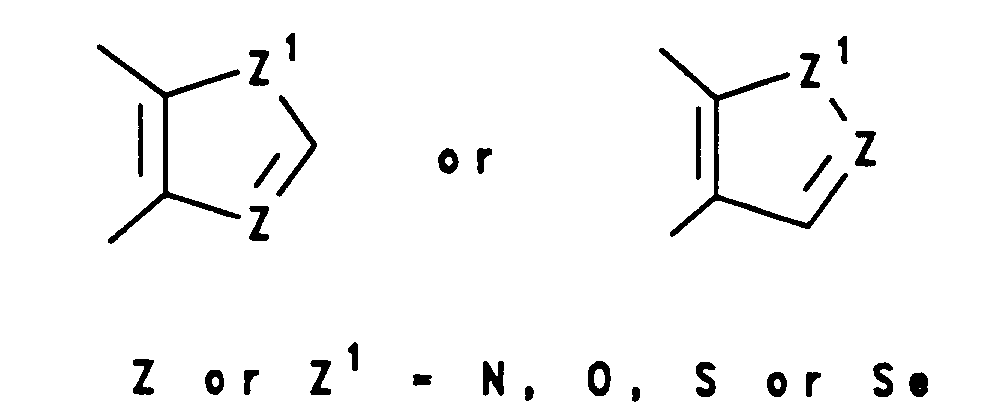
such as imidazolyl, pyrazolyl, benzimidazolyl, oxazolyl, benzoxazolyl, indazolyl, thiazolyl, benzothiazolyl, 3-alkyl-3H-imidazo[4,5-b]pyridyl or pyridylimidazolyl, or a five membered saturated ring with one or two N, O, S or Se heteroatoms and an adjacent appended O heteroatom: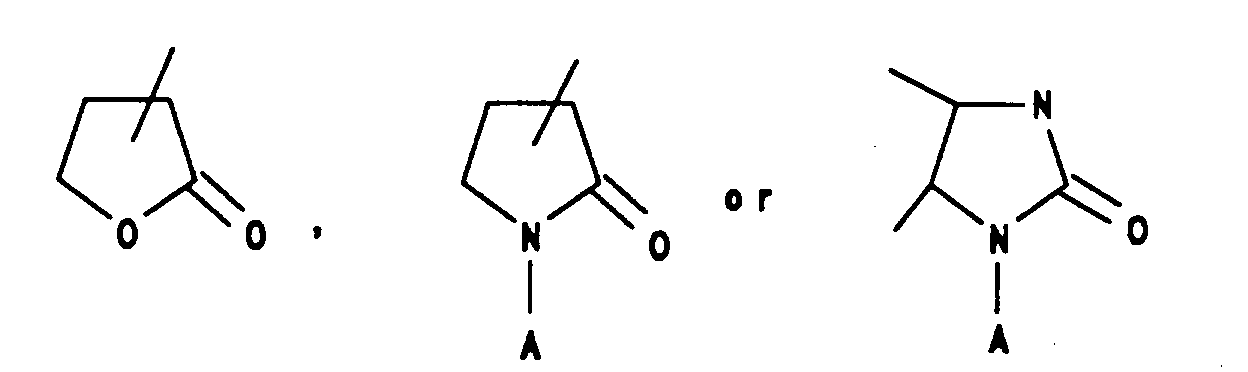
(A is selected from hydrogen; straight or branched (C₁-C₄)alkyl; C₆-aryl; substituted C₆-aryl (substitution selected from halo,(C₁-C₄)alkoxy, trihalo(C₁-C₃)alkyl, nitro, amino, cyano, (C₁-C₄)alkoxycarbonyl, (C₁-C₃)alkylamino or carboxy); (C₇-C₉)aralkyl group selected from benzyl, 1-phenylethyl, 2-phenylethyl or phenylpropyl)
such as γ-butyrolactam, γ-butyrolactone, imidazolidinone or N-aminoimidazolidinone, or a six membered aromatic ring with one to three N heteroatoms such as pyridyl, pyridazinyl, pyrazinyl, sym-triazinyl, unsym-triazinyl, pyrimidinyl or (C₁-C₃)alkylthiopyridazinyl, or a six membered saturated ring with one or two N, O, S or Se heteroatoms and an adjacent appended O heteroatom such as 2,3-dioxo-1-piperazinyl, 4-ethyl-2,3-dioxo-1-piperazinyl, 4-methyl-2,3-dioxo-1-piperazinyl, 4-cyclopropyl-2-dioxo-1-piperazinyl, 2-dioxomorpholinyl or 2-dioxothiomorpholinyl; (C₁-C₄)alkoxycarbonyl group selected from methoxycarbonyl, ethoxycarbonyl, straight or branched propoxycarbonyl, allyloxycarbonyl or straight or branched butoxycarbonyl; RaRbamino(C₁-C₄)alkoxy group, wherein RaRb is a straight or branched (C₁-C₄)alkyl selected from methyl, ethyl, n-propyl, 1-methylethyl, n-butyl, 1-methylpropyl, or 2-methylpropyl or RaRb is (CH₂)n, n=2-6, or -(CH₂)₂W(CH₂)₂- wherein W is selected from -N(C₁-C₃)alkyl [straight or branched], -NH, -NOB [B is selected from hydrogen or (C₁-C₃)alkyl], O or S; or RaRbaminoxy group, wherein RaRb is a straight or branched (C₁-C₄)alkyl selected from methyl, ethyl, n-propyl, 1-methylethyl, n-butyl, 1-methylpropyl, or 2-methylpropyl or RaRb is (CH₂)n, n=2-6, or -(CH₂)₂W-(CH₂)₂- wherein W is selected from -N(C₁-C₃)alkyl [straight or branched], -NH, -NOB [B is selected from hydrogen or (C₁-C₃)alkyl], O or S;
and when R³ = R⁴(CH₂)nCO- and n = 2-4,
R⁴ is selected from amino; hydroxyamino; straight or branched mono(C₁-C₆)alkylamino group selected from methyl, ethyl, n-propyl, 1-methylethyl, n-butyl, 1-methylpropyl, 2-methylpropyl, 1,1-dimethylethyl, n-pentyl, 2-methylbutyl, 1,1-dimethylpropyl, 2,2-dimethylpropyl, 3-methylbutyl, n-hexyl, 1-methylpentyl, 1,1-dimethylbutyl, 2,2-dimethylbutyl, 3-methylpentyl, 1,2-dimethylbutyl, 1,3-dimethylbutyl or 1-methyl-1-ethylpropylamino and where appropriate their diastereomers and enantiomers; (C₃-C₈)cycloalkylamino group selected from cyclopropyl, trans-1,2-dimethylcyclopropyl, cis-1,2-dimethylcyclopropyl, trans-2,3-dimethylcyclopropyl, cis-2,3-dimethylcyclopropyl, cyclobutyl, trans-2,3-dimethylcyclobutyl, cis-2,3-dimethylcyclobutyl, cyclopentyl, cyclohexyl, cycloheptyl, cyclooctyl, bicyclo[2.2.1]hept-2-yl, or bicyclo[2.2.2]oct-2-ylamino and where appropriate their diastereomers and enantiomers; straight or branched chain di-(C₁-C₆)alkylamino group selected from dimethylamino, diethylamino, methyl(ethyl)amino, ethyl(1-methylethyl)amino or a combination of methyl, ethyl, n-propyl, 1-methylethyl, n-butyl, 1-methylpropyl, 2-methylpropyl, 1,1-dimethylethyl, n-pentyl, 2-methylbutyl, 1,1-dimethylpropyl, 2,2-dimethylpropyl, 3-methylbutyl, n-hexyl, 1-methylpentyl, 1,1-dimethylbutyl, 2,2-dimethylbutyl, 3-methylpentyl, 1,2-dimethylbutyl, 1,3-dimethylbutyl or 1-methyl-1-ethylpropylamino and where appropriate their diastereomers and enantiomers; (C₁-C₆)alkoxyamino group selected from methoxy, ethoxy, propoxy, butoxy, pentoxy or hexoxyamino; (C₃-C₈)cycloalkoxyamino group selected from cyclopropoxy, trans-1,2-dimethylcyclopropoxy, cis-1,2-dimethylcyclopropoxy, trans-2,3-dimethylcyclopropoxy, cis-2,3-dimethylcyclopropoxy, cyclobutoxy, trans-2,3-dimethylcyclobutoxy, cis-2,3-dimethylcyclobutoxy, cyclopentoxy, cyclohexoxy, cycloheptyloxy, cyclooctoxy, bicyclo[2.2.1]hept-2-yloxy, or bicyclo[2.2.1]oct-2-yloxyamino and where appropriate their diastereomers and enantiomers; (C₇-C₁₀)aralkoxyamino group selected from benzyloxy, 2-phenylethoxy, α-phenylethoxy, (2-naphthyl)methoxy, (1-naphthyl)methoxy, or phenylpropoxyamino; (C₂-C₈)azacycloalkyl group selected from aziridinyl, azetidinyl, pyrrolidinyl, pyrrolinyl, piperidinyl, 2-methylpyrrolidinyl, cis-3,4-dimethylpyrrolidinyl, trans-3,4-dimethylpyrrolidinyl, 2-azabicyclo[2.1.1]hex-2-yl, 5-azabicyclo[2.1.1]hex-5-yl, 2-azabicyclo[2.2.1]hept-2-yl, 7-azabicyclo[2.2.1]hept-7-yl, or 2-azabicyclo[2.2.2]oct-2-yl and where appropriate their diastereomers and enantiomers; azaheterocycloalkyl group selected from morpholinyl, piperazinyl, 4-methylpiperazinyl, 4-hydroxypiperazinyl, 4-(C₁-C₄)alkoxypiperazinyl, thiamorpholinyl, tetrahydro-1,2-oxazinyl, isoxazolidinyl, pyrazolidinyl, 2-methylpyrazolidinyl, 2,5-diazabicyclo[2.2.2]hept-2-yl, or 2,5-diaza-5-methylbicyclo[2.2.1]hept-2-yl and where appropriate their diastereomers and enantiomers; (C₆-C₁₀)arylamino group selected from phenylamino or naphthylamino; (C₇-C₁₀)arylalkylamino group selected from benzyl, 2-phenylethyl, α-phenylethyl, (2-naphthyl)methyl, (1-naphthyl)methyl or phenylpropylamino; (C₁-C₄)alkoxycarbonylamino group selected from tert-butoxycarbonylamino, allyloxycarbonylamino, methoxycarbonylamino, ethoxycarbonylamino or propoxycarbonylamino;
and when R³ = R4' (CH₂)nSO₂- and n = 0,
R4' is selected from amino; hydroxyamino; straight or branched mono(C₁-C₆)alkylamino group selected from methyl, ethyl, n-propyl, 1-methylethyl, n-butyl, 1-methylpropyl, 2-methylpropyl, 1,1-dimethylethyl, n-pentyl, 2-methylbutyl, 1,1-dimethylpropyl, 2,2-dimethylpropyl, 3-methylbutyl, n-hexyl, 1-methylpentyl, 1,1-dimethylbutyl, 2,2-dimethylbutyl, 3-methylpentyl, 1,2-dimethylbutyl, 1,3-dimethylbutyl or 1-methyl-1-ethylpropylamino and where appropriate their diastereomers and enantiomers; (C₃-C₈)cycloalkylamino group selected from cyclopropyl, trans-1,2-dimethylcyclopropyl, cis-1,2-dimethylcyclopropyl, trans-2,3-dimethylcyclopropyl, cis-2,3-dimethylcyclopropyl, cyclobutyl, trans-2,3-dimethylcyclobutyl, cis-2,3-dimethylcyclobutyl, cyclopentyl, cyclohexyl, cycloheptyl, cyclooctyl, bicyclo[2.2.1]hept-2-yl, or bicyclo[2.2.2]oct-2-ylamino and where appropriate their diastereomers and enantiomers; straight or branched chain di-(C₁-C₆)alkylamino group selected from dimethylamino, diethylamino, methyl(ethyl)amino, ethyl(1-methylethyl)amino or a combination of methyl, ethyl, n-propyl, 1-methylethyl, n-butyl, 1-methylpropyl, 2-methylpropyl, 1,1-dimethylethyl, n-pentyl, 2-methylbutyl, 1,1-dimethylpropyl, 2,2-dimethylpropyl, 3-methylbutyl, n-hexyl, 1-methylpentyl, 1,1-dimethylbutyl, 2,2-dimethylbutyl, 3-methylpentyl, 1,2-dimethylbutyl, 1,3-dimethylbutyl or 1-methyl-1-ethylpropylamino and where appropriate their diastereomers and enantiomers; (C₁-C₆)alkoxyamino group selected from methoxy, ethoxy, propoxy, butoxy, pentoxy or hexoxyamino; (C₃-C₈)cycloalkoxyamino group selected from cyclopropoxy, trans-1,2-dimethylcyclopropoxy, cis-1,2-dimethylcyclopropoxy, trans-2,3-dimethylcyclopropoxy, cis-2,3-dimethylcyclopropoxy, cyclobutoxy, trans-2,3-dimethylcyclobutoxy, cis-2,3-dimethylcyclobutoxy, cyclopentoxy, cyclohexoxy, cycloheptyloxy, cyclooctoxy, bicyclo[2.2.1]hept-2-yloxy, or bicyclo[2.2.1]oct-2-yloxyamino and where appropriate their diastereomers and enantiomers; (C₇-C₁₀)aralkoxyamino group selected from benzyloxy, 2-phenylethoxy, α-phenylethoxy, (2-naphthyl)methoxy, (1-naphthyl)methoxy, or phenylpropoxyamino; straight or branched (C₁-C₄)alkyl group selected from methyl, ethyl, n-propyl, 1-methylethyl, n-butyl, 1-methylpropyl, 2-methylpropyl or 1,1-dimethylethyl; (C₃-C₆)cycloalkyl group selected from cyclopropyl, cyclobutyl, cyclopentyl or cyclohexyl; substituted (C₃-C₆)cycloalkyl group (substitution selected from (C₁-C₃)alkyl, cyano, amino or (C₁-C₃)acyl); (C₆-C₁₀)aryl group selected from phenyl, α-naphthyl or β-naphthyl; substituted (C₆-C₁₀)aryl group (substitution selected from halo, (C₁-C₄)alkoxy, trihalo(C₁-C₃)alkyl, nitro, amino, cyano, (C₁-C₄)alkoxycarbonyl, (C₁-C₃)alkylamino or carboxy); (C₇-C₉)aralkyl group such as benzyl, 1-phenylethyl, 2-phenylethyl or phenylpropyl; halo(C₁-C₃)alkyl group such as bromomethyl, fluoromethyl, difluoromethyl, trifluoromethyl, chloromethyl, dichloromethyl, trichloromethyl, 2-fluoroethyl, 2,2-difluoroethyl, 2,2,2-trifluoroethyl, 2-chloroethyl, 2,2-dichloroethyl, 2,2,2-trichloroethyl, 2-bromoethyl or 2-iodoethyl; a heterocycle group selected from a five membered aromatic or saturated ring with one N, O, S or Se heteroatom optionally having a benzo or pyrido ring fused thereto:
such as pyrrolyl, N-methylindolyl, indolyl, 2-pyrrolidinyl, 3-pyrrolidinyl, 2-pyrrolinyl, tetrahydrofuranyl, furanyl, benzofuranyl, tetrahydrothienyl, thienyl, benzothienyl or selenazolyl, or a five membered aromatic ring with two N, O, S or Se heteroatoms optionally having a benzo or pyrido ring fused thereto:
such as imidazolyl, pyrazolyl, benzimidazolyl, oxazolyl, benzoxazolyl, indazolyl, thiazolyl, benzothiazolyl, 3-alkyl-3H-imidazo[4,5-b]pyridyl or pyridylimidazolyl, or a five membered saturated ring with one or two N, O, S or Se heteroatoms and an adjacent appended O heteroatom:
(A is selected from hydrogen; straight or branched (C₁-C₄)alkyl; C₆-aryl; substituted C₆-aryl (substitution selected from halo,(C₁-C₄)alkoxy, trihalo(C₁-C₃)alkyl, nitro, amino, cyano, (C₁-C₄)alkoxycarbonyl, (C₁-C₃)alkylamino or carboxy); (C₇-C₉)aralkyl group selected from benzyl, 1-phenylethyl, 2-phenylethyl or phenylpropyl)
such as γ-butyrolactam, γ-butyrolactone, imidazolidinone or N-aminoimidazolidinone, or a six membered aromatic ring with one to three N heteroatoms such as pyridyl, pyridazinyl, pyrazinyl, sym-triazinyl, unsym-triazinyl, pyrimidinyl or (C₁-C₃)alkylthiopyridazinyl, or a six membered saturated ring with one or two N, O, S or Se heteroatoms and an adjacent appended O heteroatom such as 2,3-dioxo-1-piperazinyl, 4-ethyl-2,3-dioxo-1-piperazinyl, 4-methyl-2,3-dioxo-1-piperazinyl, 4-cyclopropyl-2-dioxo-1-piperazinyl, 2-dioxomorpholinyl or 2-dioxothiomorpholinyl; RaRbamino(C₁-C₄)alkoxy group, wherein RaRb is a straight or branched (C₁-C₄)alkyl selected from methyl, ethyl, n-propyl, 1-methylethyl, n-butyl, 1-methylpropyl, or 2-methylpropyl or RaRb is (CH₂)n, n=2-6, or -(CH₂)₂W(CH₂)₂- wherein W is selected from -N(C₁-C₃)alkyl [straight or branched], -NH, -NOB [B is selected from hydrogen or (C₁-C₃)alkyl], O or S; or RaRbaminoxy group, wherein RaRb is a straight or branched (C₁-C₄)alkyl selected from methyl, ethyl, n-propyl, 1-methylethyl, n-butyl, 1-methylpropyl, or 2-methylpropyl or RaRb is (CH₂)n, n=2-6, or -(CH₂)₂W(CH₂)₂- wherein W is selected from -N(C₁-C₃)alkyl [straight or branched], -NH, -NOB [B is selected from hydrogen or (C₁-C₃)alkyl], O or S;
and when R³ = R4' (CH₂)nSO₂- and n= 1-4,
R4' is selected from hydrogen; amino; straight or branched (C₁-C₄)alkyl group selected from methyl, ethyl, n-propyl, 1-methylethyl, n-butyl, 1-methylpropyl, 2-methylpropyl or 1,1-dimethylethyl; (C₁-C₄)carboxyalkyl group; (C₃-C₆)cycloalkyl group selected from cyclopropyl, cyclobutyl, cyclopentyl or cyclohexyl; substituted (C₃-C₆)cycloalkyl group (substitution selected from (C₁-C₃)alkyl, cyano, amino or (C₁-C₃)acyl); (C₆-C₁₀)aryl group selected from phenyl, α-naphthyl or β-naphthyl; substituted (C₆-C₁₀)aryl group (substitution selected from halo, (C₁-C₄)alkoxy, trihalo(C₁-C₃)alkyl, nitro, amino, cyano, (C₁-C₄)alkoxycarbonyl, (C₁-C₃)alkylamino or carboxy); (C₇-C₉)aralkyl group selected from benzyl, 1-phenylethyl, 2-phenylethyl or phenylpropyl; (C₁-C₄)alkoxy group such as allyloxy, methoxy, ethoxy, n-propoxy or tert-butoxy; C₆-aryloxy group selected from phenoxy or substituted phenoxy (substitution selected from halo, (C₁-C₃)alkyl, nitro, cyano, thiol, amino, carboxy, di-(C₁-C₃)alkylamino); (C₇-C₁₀)aralkyloxy group such as benzyloxy, 1-phenylethyloxy or 2-phenylethyloxy; RaRbamino(C₁-C₄)alkoxy group, wherein RaRb is a straight or branched (C₁-C₄)alkyl selected from methyl, ethyl, n-propyl, 1-methylethyl, n-butyl, 1-methylpropyl, or 2-methylpropyl or RaRb is (CH₂)n, n=2-6, or -(CH₂)₂W(CH₂)₂- wherein W is selected from -N(C₁-C₃)alkyl [straight or branched], -NH, -NOB [B is selected from hydrogen or (C₁-C₃)alkyl], O or S; or RaRbaminoxy group, wherein RaRb is a straight or branched (C₁-C₄)alkyl selected from methyl, ethyl, n-propyl, 1-methylethyl, n-butyl, 1-methylpropyl, or 2-methylpropyl or RaRb is (CH₂)n, n=2-6, or -(CH₂)₂W(CH₂)₂-wherein W is selected from -N(C₁-C₃)alkyl [straight or branched], -NH, -NOB [B is selected from hydrogen or (C₁-C₃)alkyl], O or S;(C₁-C₃)alkylthio group selected from methylthio, ethylthio or n-propylthio; C₆-arylthio group selected from phenylthio or substituted phenylthio (substitution selected from halo, (C₁-C₃)alkyl, nitro, cyano, thiol, amino, carboxy, di-(C₁-C₃)alkylamino); (C₇-C₈)aralkylthio group such as benzylthio, 1-phenylethylthio or 2-phenylethylthio; a heterocycle group selected from a five membered aromatic or saturated ring with one N, O, S or Se heteroatom optionally having a benzo or pyrido ring fused thereto:
such as pyrrolyl, N-methylindolyl, indolyl, 2-pyrrolidinyl, 3-pyrrolidinyl, 2-pyrrolinyl, tetrahydrofuranyl, furanyl, benzofuranyl, tetrahydrothienyl, thienyl, benzothienyl or selenazolyl, or a five membered aromatic ring with two N, O, S or Se heteroatoms optionally having a benzo or pyrido ring fused thereto:
such as imidazolyl, pyrazolyl, benzimidazolyl, oxazolyl, benzoxazolyl, indazolyl, thiazolyl, benzothiazolyl, 3-alkyl-3H-imidazo[4,5-b]pyridyl or pyridylimidazolyl, or a five membered saturated ring with one or two N, O, S or Se heteroatoms and an adjacent appended O heteroatom: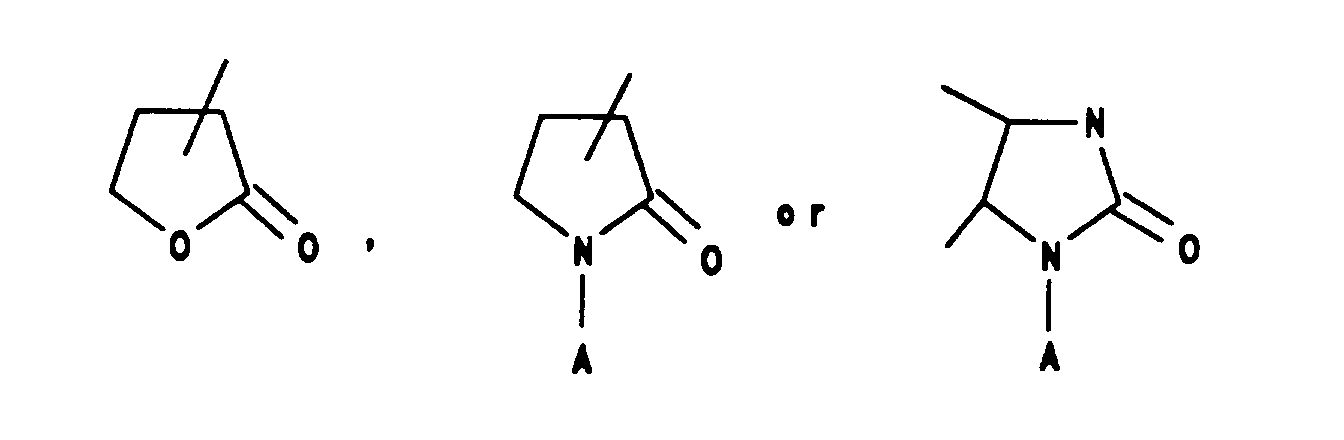
(A is selected from hydrogen; straight or branched (C₁-C₄)alkyl; C₆-aryl; substituted C₆-aryl (substitution selected from halo,(C₁-C₄)alkoxy, trihalo(C₁-C₃)alkyl, nitro, amino, cyano, (C₁-C₄)alkoxycarbonyl, (C₁-C₃)alkylamino or carboxy); (C₇-C₉)aralkyl group selected from benzyl, 1-phenylethyl, 2-phenylethyl or phenylpropyl)
such as γ-butyrolactam, γ-butyrolactone, imidazolidinone or N-aminoimidazolidinone, or a six membered aromatic ring with one to three N heteroatoms such as pyridyl, pyridazinyl, pyrazinyl, sym-triazinyl, unsym-triazinyl, pyrimidinyl or (C₁-C₃)alkylthiopyridazinyl, or a six membered saturated ring with one or two N, O, S or Se heteroatoms and an adjacent appended O heteroatom such as 2,3-dioxo-1-piperazinyl, 4-ethyl-2,3-dioxo-1-piperazinyl, 4-methyl-2,3-dioxo-1-piperazinyl, 4-cyclopropyl-2-dioxo-1-piperazinyl, 2-dioxomorpholinyl or 2-dioxothiomorpholinyl; hydroxy group; mercapto group; halo(C₁-C₃)alkyl group such as bromomethyl, fluoromethyl, difluoromethyl, trifluoromethyl, chloromethyl, dichloromethyl, trichloromethyl, 2-fluoroethyl, 2,2-difluoroethyl, 2,2,2-trifluoroethyl, 2-chloroethyl, 2,2-dichloroethyl, 2,2,2-trichloroethyl, 2-bromoethyl or 2-iodoethyl; acyl or haloacyl group selected from acetyl, propionyl, chloroacetyl, trifluoroacetyl, (C₃-C₆)cycloalkylcarbonyl, (C₆-C₁₀)aroyl selected from benzoyl or naphthoyl, halo substituted (C₆-C₁₀)aroyl such as pentafluorobenzoyl, 4-chlorobenzoyl, 3-bromobenzoyl or 3,4-difluorobenzoyl, (C₁-C₄)alkylbenzoyl such as 4-toluoyl, 2-toluoyl or 4-(1-methylethyl)benzoyl, or (heterocycle)carbonyl, the heterocycle selected from a five membered aromatic or saturated ring with one N, O, S or Se heteroatom optionally having a benzo or pyrido ring fused thereto:
such as pyrrolyl, N-methylindolyl, indolyl, 2-pyrrolidinyl, 3-pyrrolidinyl, 2-pyrrolinyl, tetrahydrofuranyl, furanyl, benzofuranyl, tetrahydrothienyl, thienyl, benzothienyl or selenazolyl, or a five membered aromatic ring with two N, O, S or Se heteroatoms optionally having a benzo or pyrido ring fused thereto:
such as imidazolyl, pyrazolyl, benzimidazolyl, oxazolyl, benzoxazolyl, indazolyl, thiazolyl, benzothiazolyl, 3-alkyl-3H-imidazo[4,5-b]pyridyl or pyridylimidazolyl, or a five membered saturated ring with one or two N, O, S or Se heteroatoms and an adjacent appended O heteroatom:
(A is selected from hydrogen; straight or branched (C₁-C₄)alkyl; C₆-aryl; substituted C₆-aryl (substitution selected from halo,(C₁-C₄)alkoxy, trihalo(C₁-C₃)alkyl, nitro, amino, cyano, (C₁-C₄)alkoxycarbonyl, (C₁-C₃)alkylamino or carboxy); (C₇-C₉)aralkyl group selected from benzyl, 1-phenylethyl, 2-phenylethyl or phenylpropyl)
such as γ-butyrolactam, γ-butyrolactone, imidazolidinone or N-aminoimidazolidinone, or a six membered aromatic ring with one to three N heteroatoms such as pyridyl, pyridazinyl, pyrazinyl, sym-triazinyl, unsym-triazinyl, pyrimidinyl or (C₁-C₃)alkylthiopyridazinyl, or a six membered saturated ring with one or two N, O, S or Se heteroatoms and an adjacent appended O heteroatom such as 2,3-dioxo-1-piperazinyl, 4-ethyl-2,3-dioxo-1-piperazinyl, 4-methyl-2,3-dioxo-1-piperazinyl, 4-cyclopropyl-2-dioxo-1-piperazinyl, 2-dioxomorpholinyl or 2-dioxothiomorpholinyl; (C₁-C₄)alkoxycarbonyl group selected from methoxycarbonyl, ethoxycarbonyl, straight or branched propoxycarbonyl, allyloxycarbonyl or straight or branched butoxycarbonyl; and the pharmacologically acceptable organic and inorganic salts or metal complexes. - Preferred compounds are compounds according to the above formula V and VI in which X is selected from halogen or trifluoromethanesulfonyloxy; the halogen is selected from bromine, chlorine, fluorine or iodine;
Y is selected from -N₂⁺Cl⁻ or N₃;
R or R¹ are selected from nitro; amino; halogen (selected from chlorine, bromine, fluorine or iodine); cyano; hydroxy or -NR²R³;
and when R or R¹ = -NR²R³ and R² = hydrogen,
R³ = methyl, ethyl, n-propyl, 1-methylethyl, n-butyl, 1-methylpropyl, 2-methylpropyl or 1,1-dimethylethyl;
and when R² = methyl or ethyl,
R³ = methyl, ethyl, n-propyl, 1-methylethyl, n-butyl, 1-methylpropyl or 2-methylpropyl;
and when R or R¹ = -NR²R³ and R² = hydrogen,
R³ is selected from R⁴(CH₂)nCO- or R4' (CH₂)nSO₂-;
and when R³ = R⁴(CH₂)nCO- and n=0,
R⁴ is selected from hydrogen; amino; hydroxyamino; straight or branched mono(C₁-C₆)alkylamino group selected from methyl, ethyl, n-propyl, 1-methylethyl, n-butyl, 1-methylpropyl, 2-methylpropyl, 1,1-dimethylethyl, n-pentyl, 2-methyl-butyl, 1,1-dimethylpropyl, 2,2-dimethylpropyl, 3-methylbutyl, n-hexyl, 1-methylpentyl, 1,1-dimethylbutyl, 2,2-dimethylbutyl, 3-methylpentyl, 1,2-dimethylbutyl, 1,3-dimethylbutyl or 1-methyl-1-ethylpropylamino and where appropriate their diastereomers and enantiomers; (C₃-C₈)cycloalkylamino group selected from cyclopropyl, trans-1,2-dimethylcyclopropyl, cis-1,2-dimethylcyclopropyl, trans-2,3-dimethylcyclopropyl, cis-2,3-dimethylcyclopropyl, cyclobutyl, trans-2,3-dimethylcyclobutyl, cis-2,3-dimethylcyclobutyl, cyclopentyl, cyclohexyl, cycloheptyl, cyclooctyl, bicyclo[2.2.1]hept-2-yl, or bicyclo[2.2.2]oct-2-ylamino and where appropriate their diastereomers and enantiomers; straight or branched chain di-(C₁-C₆)alkylamino group selected from dimethylamino, diethylamino, methyl(ethyl)amino, ethyl(1-methylethyl)amino or a combination of methyl, ethyl, n-propyl, 1-methylethyl, n-butyl, 1-methylpropyl, 2-methylpropyl, 1,1-dimethylethyl, n-pentyl, 2-methylbutyl, 1,1-dimethylpropyl, 2,2-dimethylpropyl, 3-methylbutyl, n-hexyl, 1-methylpentyl, 1,1-dimethylbutyl, 2,2-dimethylbutyl, 3-methylpentyl, 1,2-dimethylbutyl, 1,3-dimethylbutyl or 1-methyl-1-ethylpropylamino and where appropriate their diastereomers and enantiomers; (C₁-C₆)alkoxyamino group selected from methoxy, ethoxy, propoxy, butoxy, pentoxy or hexoxyamino; (C₃-C₈)cycloalkoxyamino group selected from cyclopropoxy, trans-1,2-dimethylcyclopropoxy, cis-1,2-dimethylcyclopropoxy, trans-2,3-dimethylcyclopropoxy, cis-2,3-dimethylcyclopropoxy, cyclobutoxy, trans2,3-dimethylcyclobutoxy, cis-2,3-dimethylcyclobutoxy, cyclopentoxy, cyclohexoxy, cycloheptyloxy, cyclooctoxy, bicyclo[2.2.1]hept-2-yloxy, or bicyclo[2.2.1]oct-2-yloxyamino and where appropriate their diastereomers and enantiomers; (C₇-C₁₀)aralkoxyamino group selected from benzyloxy, 2-phenylethoxy, α-phenylethoxy, (2-naphthyl)methoxy, (1-naphthyl)methoxy, or phenylpropoxyamino; (C₂-C₈)azacycloalkyl group selected from aziridinyl, azetidinyl, pyrrolidinyl, pyrrolinyl, piperidinyl, 2-methylpyrrolidinyl, cis-3,4-dimethylpyrrolidinyl, trans-3,4-dimethylpyrrolidinyl, 2-azabicyclo[2.1.1]hex-2-yl, 5-azabicyclo[2.1.1]hex-5-yl, 2-azabicyclo[2.2.1]hept-2-yl, 7-azabicyclo[2.2.1]hept-7-yl, or 2-azabicyclo[2.2.2]oct-2-yl and where appropriate their diastereomers and enantiomers; azaheterocycloalkyl group selected from morpholinyl, piperazinyl, 4-methylpiperazinyl, 4-hydroxypiperazinyl, 4-(C₁-C₄)alkoxypiperazinyl, thiamorpholinyl, tetrahydro-1,2-oxazinyl, isoxazolidinyl, pyrazolidinyl, 2-methylpyrazolidinyl, 2,5-diazabicyclo[2.2.2]hept-2-yl, or 2,5-diaza-5-methylbicyclo[2.2.1]hept-2-yl and where appropriate their diastereomers and enantiomers; (C₆-C₁₀)arylamino group selected from phenylamino or naphthylamino; (C₇-C₁₀)arylalkylamino group selected from benzyl, 2-phenylethyl, α-phenylethyl, (2-naphthyl)methyl, (1-naphthyl)methyl or phenylpropylamino; straight or branched (C₁-C₃)alkyl group selected from methyl, ethyl, n-propyl or 1-methylethyl; (C₃-C₆)cycloalkyl group selected from cyclopropyl, cyclobutyl, cyclopentyl or cyclohexyl; substituted (C₃-C₆)cycloalkyl group (substitution selected from (C₁-C₃)alkyl, cyano, amino or (C₁-C₃)acyl); (C₆-C₁₀)aryl group selected from phenyl, α-naphthyl or β-naphthyl; substituted (C₆-C₁₀)aryl group (substitution selected from halo,(C₁-C₄)alkoxy, trihalo(C₁-C₃)alkyl, nitro, amino, cyano, (C₁-C₄)alkoxycarbonyl, (C₁-C₃)alkylamino or carboxy); α-hydroxy(C₁-C₃)alkyl group selected from hydroxymethyl, α-hydroxyethyl, α-hydroxy-1-methylethyl or α-hydroxypropyl; halo(C₁-C₃)alkyl group such as bromomethyl, fluoromethyl, difluoromethyl, trifluoromethyl, chloromethyl, dichloromethyl, trichloromethyl, 2-fluoroethyl, 2,2-difluoroethyl, 2,2,2-trifluoroethyl, 2-bromoethyl or 2-iodoethyl; a heterocycle group selected from a five membered aromatic or saturated ring with one N, O, S or Se heteroatom optionally having a benzo or pyrido ring fused thereto:
such as pyrrolyl, N-methylindolyl, indolyl, 2-pyrrolidinyl, 3-pyrrolidinyl, 2-pyrrolinyl, tetrahydrofuranyl, furanyl, benzofuranyl, tetrahydrothienyl, thienyl, or benzothienyl, or a five membered aromatic ring with two N, O, S or Se heteroatoms optionally having a benzo or pyrido ring fused thereto:
such as imidazolyl, pyrazolyl, benzimidazolyl, oxazolyl, benzoxazolyl, indazolyl, thiazolyl or benzothiazolyl, or a five membered saturated ring with one or two N, O, S or Se heteroatoms and an adjacent appended O heteroatom: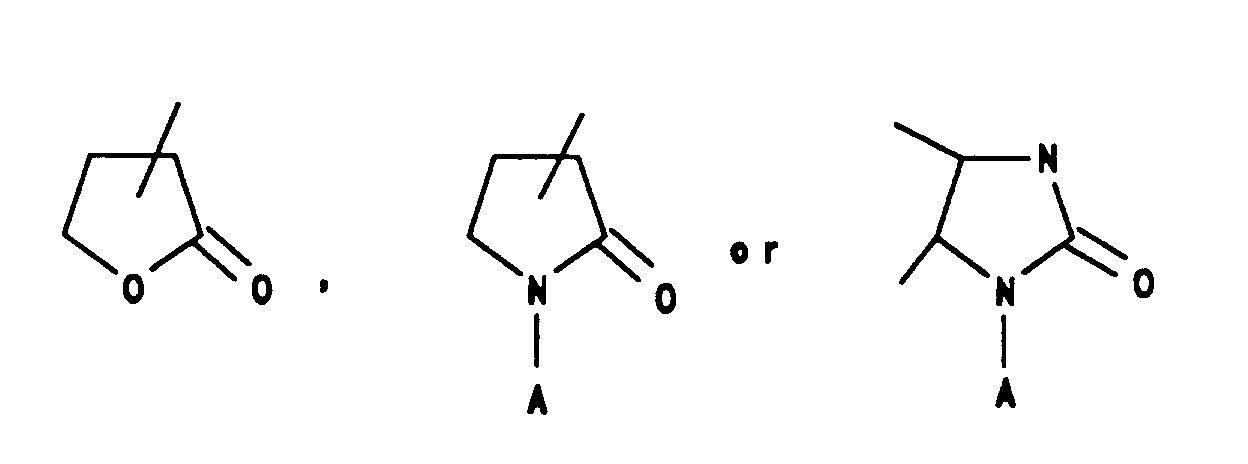
(A is selected from hydrogen; straight or branched (C₁-C₄)alkyl; C₆-aryl; substituted C₆-aryl (substitution selected from halo,(C₁-C₄)alkoxy, trihalo(C₁-C₃)alkyl, nitro, amino, cyano, (C₁-C₄)alkoxycarbonyl, (C₁-C₃)alkylamino or carboxy); (C₇-C₉)aralkyl group selected from benzyl, 1-phenylethyl, 2-phenylethyl or phenylpropyl)
such as γ-butyrolactam, γ-butyrolactone, imidazolidinone or N-aminoimidazolidinone, or a six membered aromatic ring with one to three N heteroatoms such as pyridyl, pyridazinyl, pyrazinyl, sym-triazinyl, unsym-triazinyl, pyrimidinyl or (C₁-C₃)alkylthiopyridazinyl, or a six membered saturated ring with one or two N, O, S or Se heteroatoms and an adjacent appended O heteroatom such as 2,3-dioxo-1-piperazinyl, 4-ethyl-2,3-dioxo-1-piperazinyl, 4-methyl-2,3-dioxo-1-piperazinyl, 4-cyclopropyl-2-dioxo-1-piperazinyl, 2-dioxomorpholinyl or 2-dioxothiomorpholinyl; acyl or haloacyl group selected from acetyl, propionyl, chloroacetyl, trifluoroacetyl, (C₃-C₆)cycloalkylcar- bonyl such as cyclopropylcarbonyl, cyclobutylcarbonyl, cyclopentylcarbonyl, cyclohexylcarbonyl, (2,3-dimethylcyclopropyl)carbonyl, (1,2-dimethylcyclopropyl)carbonyl, (2-ethylcyclopropyl)carbonyl, (2-methylcyclopentyl)carbonyl or (3-ethylcyclobutyl)carbonyl, (C₆-C₁₀)aroyl selected from benzoyl or naphthoyl, halo substituted (C₆-C₁₀)aroyl such as pentafluorobenzoyl, 4-chlorobenzoyl, 3-bromobenzoyl or 3,4-difluorobenzoyl, (C₁-C₄)alkylbenzoyl such as 4-toluoyl, 2-methyltoluoyl or 4-(1-methylethyl)benzoyl, or (heterocycle)carbonyl, the heterocycle selected from a five membered aromatic or saturated ring with one N, O, S or Se heteroatom optionally having a benzo or pyrido ring fused thereto:
such as pyrrolyl, N-methylindolyl, indolyl, 2-pyrrolidinyl, 3-pyrrolidinyl, 2-pyrrolinyl, tetrahydrofuranyl, furanyl, benzofuranyl, tetrahydrothienyl, thienyl, or benzothienyl, or a five membered aromatic ring with two N, O, S or Se heteroatoms optionally having a benzo or pyrido ring fused thereto:
such as imidazolyl, pyrazolyl, benzimidazolyl, oxazolyl, benzoxazolyl, indazolyl, thiazolyl or benzothiazolyl, or a five membered saturated ring with one or two N, O, S or Se heteroatoms and an adjacent appended O heteroatom:
(A is selected from hydrogen; straight or branched (C₁-C₄)alkyl; C₆-aryl; substituted C₆-aryl (substitution selected from halo,(C₁-C₄)alkoxy, trihalo(C₁-C₃)alkyl, nitro, amino, cyano, (C₁-C₄)-alkoxycarbonyl, (C₁-C₃)alkylamino or carboxy); (C₇-C₉)aralkyl group selected from benzyl, 1-phenylethyl, 2-phenylethyl or phenylpropyl)
such as γ-butyrolactam, γ-butyrolactone, imidazolidinone or N-aminoimidazolidinone, or a six membered aromatic ring with one to three N heteroatoms such as pyridyl, pyridazinyl, pyrazinyl, sym-triazinyl, unsym-triazinyl, pyrimidinyl or (C₁-C₃)alkylthiopyridazinyl, or a six membered saturated ring with one or two N, O, S or Se heteroatoms and an adjacent appended O heteroatom such as 2,3-dioxo-1-piperazinyl, 4-ethyl-2,3-dioxo-1-piperazinyl, 4-methyl-2,3-dioxo-1-piperazinyl, 4-cyclopropyl-2-dioxo-1-piperazinyl, 2-dioxomorpholinyl or 2-dioxothiomorpholinyl; (C₁-C₄)alkoxycarbonyl group selected from methoxycarbonyl, ethoxycarbonyl, straight or branched propoxylcarbonyl, straight or branched butoxycarbonyl or allyloxycarbonyl; vinyl or substituted vinyl group [substitution selected from (C₁-C₃)alkyl group, halogen, (C₆-C₁₀)aryl group selected from phenyl, α-naphthyl, β-naphthyl, substituted (C₆-C₁₀)aryl group (substitution selected from halo, (C₁-C₄)alkoxy, trihalo(C₁-C₃)alkyl, nitro, amino, cyano, (C₁-C₄)alkoxycarbonyl, (C₁-C₃)alkylamino or carboxy), halo(C₁-C₃)alkyl group such as bromomethyl, fluoromethyl, difluoromethyl, trifluoromethyl, chloromethyl, dichloromethyl, trichloromethyl, 2-fluoroethyl, 2,2-difluoroethyl, 2,2,2-trifluoroethyl, 2-bromoethyl or 2-iodoethyl, a heterocycle group selected from a five membered aromatic or saturated ring with one N, O, S or Se heteroatom optionally having a benzo or pyrido ring fused thereto:
such as pyrrolyl, N-methylindolyl, indolyl, 2-pyrrolidinyl, 3-pyrrolidinyl, 2-pyrrolinyl, tetrahydrofuranyl, furanyl, benzofuranyl, tetrahydrothienyl, thienyl, or benzothienyl]; (C₁-C₄)alkoxy group such as allyloxy, methoxy, ethoxy, n-propoxy, n-butoxy or tert-butoxy; C₆-aryloxy group selected from phenoxy or substituted phenoxy (substitution selected from halo, (C₁-C₄)alkyl, nitro, cyano, thiol, amino, carboxy, di-(C₁-C₃)alkylamino); (C₇-C₁₀)aralkyloxy group such as benzyloxy, 1-phenylethyloxy or 2-phenylethyloxy; vinyloxy or substituted vinyloxy group (substitution selected from (C₁-C₄)alkyl, cyano, carboxy, or (C₆-C₁₀)aryl selected from phenyl, α-naphthyl or β-naphthyl); RaRbamino(C₁-C₄)alkoxy group, wherein RaRb is a straight or branched (C₁-C₄)alkyl selected from methyl, ethyl, n-propyl, 1-methylethyl, n-butyl, 1-methylpropyl, or 2-methylpropyl or RaRb is (CH₂)n, n=2-6, or -(CH₂)₂W(CH₂)₂- wherein W is selected from -N(C₁-C₃)alkyl [straight or branched], -NH, -NOB [B is selected from hydrogen or (C₁-C₃)alkyl], O or S; or RaRbaminoxy group, wherein RaRb is a straight or branched (C₁-C₄)alkyl selected from methyl, ethyl, n-propyl, 1-methylethyl, n-butyl, 1-methylpropyl, or 2-methylpropyl or RaRb is (CH₂)n, n=2-6, or -(CH₂)₂W-(CH₂)₂- wherein W is selected from -N(C₁-C₃)alkyl [straight or branched], -NH, -NOB [B is selected from hydrogen or (C₁-C₃)alkyl], O or S;
and when R³ = R⁴(CH₂)nCO- and n=1-4,
R⁴ is selected from hydrogen; (C₁-C₃)alkyl group selected from methyl, ethyl, n-propyl or 1-methylethyl; (C₆-C₁₀)aryl group selected from phenyl, α-naphthyl or β-naphthyl; substituted (C₆-C₁₀)aryl group (substitution selected from halo, (C₁-C₄)alkoxy, trihalo(C₁-C₃)alkyl, nitro, amino, cyano, (C₁-C₄)alkoxycarbonyl, (C₁-C₃)alkylamino or carboxy); acyloxy or haloacyloxy group, selected from acetyl, propionyl, chloroacetyl, trichloroacetyl, (C₃-C₆)cycloalkylcarbonyl, (C₆-C₁₀)aroyl selected from benzoyl or naphthoyl, halo substituted (C₆-C₁₀)aroyl such as pentafluorobenzoyl, 4-chlorobenzoyl, 3-bromobenzoyl or 3,4-difluorobenzoyl, (C₁-C₄)alkylbenzoyl such as 4-toluoyl, 2-toluoyl, 4-(1-methylethyl)benzoyl or (heterocycle)carbonyl, the heterocycle selected from a five membered aromatic or saturated ring with one N, O, S or Se heteroatom optionally having a benzo or pyrido ring fused thereto:
such as pyrrolyl, N-methylindolyl, indolyl, 2-pyrrolidinyl, 3-pyrrolidinyl, 2-pyrrolinyl, tetrahydrofuranyl, furanyl, benzofuranyl, tetrahydrothienyl, thienyl, or benzothienyl, or a five membered aromatic ring with two N, O, S or Se heteroatoms optionally having a benzo or pyrido ring fused thereto:
such as imidazolyl, pyrazolyl, benzimidazolyl, oxazolyl, benzoxazolyl, indazolyl, thiazolyl or benzothiazolyl, or a five membered saturated ring with one or two N, O, S or Se heteroatoms and an adjacent appended O heteroatom:
(A is selected from hydrogen; straight or branched (C₁-C₄)alkyl; C₆-aryl; substituted C₆-aryl (substitution selected from halo,(C₁-C₄)alkoxy, trihalo(C₁-C₃)alkyl, nitro, amino, cyano, (C₁-C₄)alkoxycarbonyl, (C₁-C₃)alkylamino or carboxy); (C₇-C₉)aralkyl group selected from benzyl, 1-phenylethyl, 2-phenylethyl or phenylpropyl)
such as γ-butyrolactam, γ-butyrolactone, imidazolidinone or N-aminoimidazolidinone, or a six membered aromatic ring with one to three N heteroatoms such as pyridyl, pyridazinyl, pyrazinyl, sym-triazinyl, unsym-triazinyl, pyrimidinyl, or a six membered saturated ring with one or two N, O, S or Se heteroatoms and an adjacent appended O heteroatom such as 2,3-dioxo-1-piperazinyl, 4-ethyl-2,3-dioxo-1-piperazinyl, 4-methyl-2,3-dioxo-1-piperazinyl, 4-cyclopropyl-2-dioxo-1-piperazinyl, 2-dioxomorpholinyl or 2-dioxothiomorpholinyl; (C₁-C₄)alkoxy group such as allyloxy, methoxy, ethoxy, n-propoxy, n-butoxy or tert-butoxy; RaRbamino(C₁-C₄)alkoxy group, wherein RaRb is a straight or branched (C₁-C₄)alkyl selected from methyl, ethyl, n-propyl, 1-methylethyl, n-butyl, 1-methylpropyl, or 2-methylpropyl or RaRb is (CH₂)n, n=2-6, or -(CH₂)₂W(CH₂)₂- wherein W is selected from -N(C₁-C₃)alkyl [straight or branched], -NH, -NOB [B is selected from hydrogen or (C₁-C₃)alkyl], O or S; or RaRbaminoxy group, wherein RaRb is a straight or branched (C₁-C₄)alkyl selected from methyl, ethyl, n-propyl, 1-methylethyl, n-butyl, 1-methylpropyl, or 2-methylpropyl or RaRb is (CH₂)n, n=2-6, or -(CH₂)₂W-(CH₂)₂- wherein W is selected from -N(C₁-C₃)alkyl [straight or branched], -NH, -NOB [B is selected from hydrogen or (C₁-C₃)alkyl], O or S; C₆-aryloxy group selected from phenoxy or substituted phenoxy (substitution selected from halo, (C₁-C₄)alkyl, nitro, cyano, thiol, amino, carboxy, di-(C₁-C₃)alkylamino); (C₁-C₃)alkylthio group selected from methylthio, ethylthio, propylthio or allylthio; C₆-arylthio group selected from phenylthio or substituted phenylthio (substitution selected from halo, (C₁-C₄)alkyl, nitro, cyano, thiol, amino, carboxy, di-(C₁-C₃)alkylamino); C₆-arylsulfonyl group selected from phenylsulfonyl or substituted phenylsulfonyl (substitution selected from halo, (C₁-C₄)alkoxy, trihalo(C₁-C₃)alkyl, nitro, amino, cyano, (C₁-C₄)alkoxycarbonyl, (C₁-C₃)alkylamino or carboxy); a heterocycle group selected from a five membered aromatic or saturated ring with one N, O, S or Se heteroatom optionally having a benzo or pyrido ring fused thereto:
such as pyrrolyl, N-methylindolyl, indolyl, 2-pyrrolidinyl, 3-pyrrolidinyl, 2-pyrrolinyl, tetrahydrofuranyl, furanyl, benzofuranyl, tetrahydrothienyl, thienyl or benzothienyl, or a five membered aromatic ring with two N, O, S or Se heteroatoms optionally having a benzo or pyrido ring fused thereto:
such as imidazolyl, pyrazolyl, benzimidazolyl, oxazolyl, benzoxazolyl, indazolyl, thiazolyl or benzothiazolyl, or a five membered saturated ring with one or two N, O, S or Se heteroatoms and an adjacent appended O heteroatom:
(A is selected from hydrogen; straight or branched (C₁-C₄)alkyl; C₆-aryl; substituted C₆-aryl (substitution selected from halo,(C₁-C₄)alkoxy, trihalo(C₁-C₃)alkyl, nitro, amino, cyano, (C₁-C₄)-alkoxycarbonyl, (C₁-C₃)alkylamino or carboxy); (C₇-C₉)aralkyl group selected from benzyl, 1-phenylethyl, 2-phenylethyl or phenylpropyl)
such as γ-butyrolactam, γ-butyrolactone, imidazolidinone or N-aminoimidazolidinone, or a six membered aromatic ring with one to three N heteroatoms such as pyridyl, pyridazinyl, pyrazinyl, sym-triazinyl, unsymtriazinyl, pyrimidinyl, or a six membered saturated ring with one or two N, O, S or Se heteroatoms and an adjacent appended O heteroatom such as 2,3-dioxo-1-piperazinyl, 4-ethyl-2,3-dioxo-1-piperazinyl, 4-methyl-2,3-dioxo-1-piperazinyl, 4-cyclopropyl-2-dioxo-1-piperazinyl, 2-dioxomorpholinyl or 2-dioxothiomorpholinyl; hydroxy group; α-hydroxy(C₁-C₃)alkyl group selected from hydroxymethyl, α-hydroxyethyl, α-hydroxy-1-methylethyl or α-hydroxypropyl; halo(C₁-C₃)alkyl group such as bromomethyl, fluoromethyl, difluoromethyl, trifluoromethyl, chloromethyl, dichloromethyl, trichloromethyl, 2-fluoroethyl, 2,2-difluoroethyl, 2,2,2-trifluoroethyl, 2-bromoethyl or 2-iodoethyl; acyl or haloacyl group selected from acetyl, propionyl, chloroacetyl, trifluoroacetyl, (C₃-C₆)cycloalkylcarbonyl, (C₆-C₁₀)aroyl selected from benzoyl or naphthoyl, halo substituted (C₆-C₁₀)aroyl such as pentafluorobenzoyl, 4-chlorobenzoyl, 3-bromobenzoyl or 3,4-difluorobenzoyl, (C₁-C₄)alkylbenzoyl such as 4-toluoyl, 2-toluoyl,or 4-(1-methylethyl)-benzoyl, or (heterocycle)carbonyl, the heterocycle selected from a five membered aromatic or saturated ring with one N, O, S or Se heteroatom optionally having a benzo or pyrido ring fused thereto:
such as pyrrolyl, N-methylindolyl, indolyl, 2-pyrrolidinyl, 3-pyrrolidinyl, 2-pyrrolinyl, tetrahydrofuranyl, furanyl, benzofuranyl, tetrahydrothienyl, thienyl or benzothienyl, or a five membered aromatic ring with two N, O, S or Se heteroatoms optionally having a benzo or pyrido ring fused thereto:
such as imidazolyl, pyrazolyl, benzimidazolyl, oxazolyl, benzoxazolyl, indazolyl, thiazolyl or benzothiazolyl, or a five membered saturated ring with one or two N, O, S or Se heteroatoms and an adjacent appended O heteroatom:
(A is selected from hydrogen; straight or branched (C₁-C₄)alkyl; C₆-aryl; substituted C₆-aryl (substitution selected from halo,(C₁-C₄)alkoxy, trihalo(C₁-C₃)alkyl, nitro, amino, cyano, (C₁-C₄)alkoxycarbonyl, (C₁-C₃)alkylamino or carboxy); (C₇-C₉)aralkyl group selected from benzyl, 1-phenylethyl, 2-phenylethyl or phenylpropyl)
such as γ-butyrolactam, γ-butyrolactone, imidazolidinone or N-aminoimidazolidinone, or a six membered aromatic ring with one to three N heteroatoms such as pyridyl, pyridazinyl, pyrazinyl, sym-triazinyl, unsym-triazinyl, pyrimidinyl, or a six membered saturated ring with one or two N, O, S or Se heteroatoms and an adjacent appended O heteroatom such as 2,3-dioxo-1-piperazinyl, 4-ethyl-2,3-dioxo-1-piperazinyl, 4-methyl-2,3-dioxo-1-piperazinyl, 4-cyclopropyl-2-dioxo-1-piperazinyl, 2-dioxomorpholinyl or 2-dioxothiomorpholinyl;
and when R³ = R⁴(CH₂)nCO- and n = 2-4,
R⁴ is selected from amino; hydroxyamino; straight or branched mono(C₁-C₆)alkylamino group selected from methyl, ethyl, n-propyl, 1-methylethyl, n-butyl, 1-methylpropyl, 2-methylpropyl, 1,1-dimethylethyl, n-pentyl, 2-methylbutyl, 1,1-dimethylpropyl, 2,2-dimethylpropyl, 3-methylbutyl, n-hexyl, 1-methylpentyl, 1,1-dimethylbutyl, 2,2-dimethylbutyl, 3-methylpentyl, 1,2-dimethylbutyl, 1,3-dimethylbutyl or 1-methyl-1-ethylpropylamino and where appropriate their diastereomers and enantiomers; (C₃-C₈)cycloalkylamino group selected from cyclopropyl, trans-1,2-dimethylcyclopropyl, cis-1,2-dimethylcyclopropyl, trans-2,3-dimethylcyclopropyl, cis-2,3-dimethylcyclopropyl, cyclobutyl, trans-2,3-dimethylcyclobutyl, cis-2,3-dimethylcyclobutyl, cyclopentyl, cyclohexyl, cycloheptyl, cyclooctyl, bicyclo[2.2.1]hept-2-yl, or bicyclo[2.2.2]-oct-2-ylamino and where appropriate their diastereomers and enantiomers; straight or branched chain di-(C₁-C₆)alkylamino group selected from dimethylamino, diethylamino, methyl(ethyl)amino, ethyl(1-methylethyl)amino or a combination of methyl, ethyl, n-propyl, 1-methylethyl, n-butyl, 1-methylpropyl, 2-methylpropyl, 1,1-dimethylethyl, n-pentyl, 2-methylbutyl, 1,1-dimethylpropyl, 2,2-dimethylpropyl, 3-methylbutyl, n-hexyl, 1-methylpentyl, 1,1-dimethylbutyl, 2,2-dimethylbutyl, 3-methylpentyl, 1,2-dimethylbutyl, 1,3-dimethylbutyl or 1-methyl-1-ethylpropylamino and where appropriate their diastereomers and enantiomers; (C₁-C₆)alkoxyamino group selected from methoxy, ethoxy, propoxy, butoxy, pentoxy or hexoxyamino; (C₃-C₈)cycloalkoxyamino group selected from cyclopropoxy, trans-1,2-dimethylcyclopropoxy, cis-1,2-dimethylcyclopropoxy, trans-2,3-dimethylcyclopropoxy, cis-2,3-dimethylcyclopropoxy, cyclobutoxy, trans-2,3-dimethylcyclobutoxy, cis-2,3-dimethylcyclobutoxy, cyclopentoxy, cyclohexoxy, cycloheptyloxy, cyclooctoxy, bicyclo[2.2.1]hept-2-yloxy, or bicyclo[2.2.1]oct-2-yloxyamino and where appropriate their diastereomers and enantiomers; (C₇-C₁₀)aralkoxyamino group selected from benzyloxy, 2-phenylethoxy, α-phenylethoxy, (2-naphthyl)methoxy, (1-naphthyl)methoxy, or phenylpropoxyamino; (C₂-C₈)azacycloalkyl group selected from aziridinyl, azetidinyl, pyrrolidinyl, pyrrolinyl, piperidinyl, 2-methylpyrrolidinyl, cis-3,4-dimethylpyrrolidinyl, trans-3,4-dimethylpyrrolidinyl, 2-azabicyclo[2.1.1]hex-2-yl, 5-azabicyclo[2.1.1]hex-5-yl, 2-azabicyclo[2.2.1]hept-2-yl, 7-azabicyclo[2.2.1]hept-7-yl, or 2-azabicyclo[2.2.2]oct-2-yl and where appropriate their diastereomers and enantiomers; azaheterocycloalkyl group selected from morpholinyl, piperazinyl, 4-methylpiperazinyl, 4-hydroxypiperazinyl, 4-(C₁-C₄)alkoxypiperazinyl, thiamorpholinyl, tetrahydro-1,2-oxazinyl, isoxazolidinyl, pyrazolidinyl, 2-methylpyrazolidinyl, 2,5-diazabicyclo[2.2.2]hept-2-yl, or 2,5-diaza-5-methylbicyclo[2.2.1]hept-2-yl and where appropriate their diastereomers and enantiomers; (C₆-C₁₀)arylamino group selected from phenylamino or naphthylamino; (C₇-C₁₀)arylalkylamino group selected from benzyl, 2-phenylethyl, α-phenylethyl, (2-naphthyl)methyl, (1-naphthyl)methyl or phenylpropylamino; (C₁-C₄)alkoxycarbonylamino group selected from tert-butoxycarbonylamino, allyloxycarbonylamino, methoxycarbonylamino, ethoxycarbonylamino or propoxycarbonylamino;
and when R³ =R4' (CH₂)nSO₂- and n = 0,
R4' is selected from amino; hydroxyamino; straight or branched mono(C₁-C₆)alkylamino group selected from methyl, ethyl, n-propyl, 1-methylethyl, n-butyl, 1-methylpropyl, 2-methylpropyl, 1,1-dimethylethyl, n-pentyl, 2-methylbutyl, 1,1-dimethylpropyl, 2,2-dimethylpropyl, 3-methylbutyl, n-hexyl, 1-methylpentyl, 1,1-dimethylbutyl, 2,2-dimethylbutyl, 3-methylpentyl, 1,2-dimethylbutyl, 1,3-dimethylbutyl or 1-methyl-1-ethylpropylamino and where appropriate their diastereomers and enantiomers; (C₃-C₈)cycloalkylamino group selected from cyclopropyl, trans-1,2-dimethylcyclopropyl, cis-1,2-dimethylcyclopropyl, trans-2,3-dimethylcyclopropyl, cis-2,3-dimethylcyclopropyl, cyclobutyl, trans-2,3-dimethylcyclobutyl, cis-2,3-dimethylcyclobutyl, cyclopentyl, cyclohexyl, cycloheptyl, cyclooctyl, bicyclo[2.2.1]hept-2-yl, or bicyclo[2.2.2]oct-2-ylamino and where appropriate their diastereomers and enantiomers; straight or branched chain di(C₁-C₆)alkylamino group selected from dimethylamino, diethylamino, methyl(ethyl)amino, ethyl(1-methylethyl)amino or a combination of methyl, ethyl, n-propyl, 1-methylethyl, n-butyl, 1-methylpropyl, 2-methylpropyl, 1,1-dimethylethyl, n-pentyl, 2-methylbutyl, 1,1-dimethylpropyl, 2,2-dimethylpropyl, 3-methylbutyl, n-hexyl, 1-methylpentyl, 1,1-dimethylbutyl, 2,2-dimethylbutyl, 3-methylpentyl, 1,2-dimethylbutyl, 1,3-dimethylbutyl or 1-methyl-1-ethylpropylamino and where appropriate their diastereomers and enantiomers; (C₁-C₆)alkoxyamino group selected from methoxy, ethoxy, propoxy, butoxy, pentoxy or hexoxyamino; (C₃-C₈)cycloalkoxyamino group selected from cyclopropoxy, trans-1,2-dimethylcyclopropoxy, cis-1,2-dimethylcyclopropoxy, trans-2,3-dimethylcyclopropoxy, cis-2,3-dimethylcyclopropoxy, cyclobutoxy, trans-2,3-dimethylcyclobutoxy, cis-2,3-dimethylcyclobutoxy, cyclopentoxy, cyclohexoxy, cycloheptyloxy, cyclooctoxy, bicyclo[2.2.1]hept-2-yloxy, or bicyclo[2.2.1]oct-2-yloxyamino and where appropriate their diastereomers and enantiomers; (C₇-C₁₀)aralkoxyamino group selected from benzyloxy, 2-phenylethoxy, α-phenylethoxy, (2-naphthyl)methoxy, (1-naphthyl)methoxy, or phenylpropoxyamino; straight or branched (C₁-C₃)alkyl group selected from methyl, ethyl, n-propyl or 1-methylethyl; (C₆-C₁₀)aryl group selected from phenyl, α-naphthyl or β-naphthyl; substituted (C₆-C₁₀)aryl group (substitution selected from halo, (C₁-C₄)alkoxy, trihalo(C₁-C₃)alkyl, nitro, amino, cyano, (C₁-C₄)alkoxycarbonyl, (C₁-C₃)alkylamino or carboxy); a heterocycle group selected from a five membered aromatic or saturated ring with one N, O, S or Se heteroatom optionally having a benzo or pyrido ring fused thereto:
such as pyrrolyl, N-methylindolyl, indolyl, 2-pyrrolidinyl, 3-pyrrolidinyl, 2-pyrrolinyl, tetrahydrofuranyl, furanyl, benzofuranyl, tetrahydrothienyl, thienyl or benzothienyl, or a five membered aromatic ring with two N, O, S or Se heteroatoms optionally having a benzo or pyrido ring fused thereto:
such as imidazolyl, pyrazolyl, benzimidazolyl, oxazolyl, benzoxazolyl, indazolyl, thiazolyl or benzothiazolyl, or a five membered saturated ring with one or two N, O, S or Se heteroatoms and an adjacent appended O heteroatom:
(A is selected from hydrogen; straight or branched (C₁-C₄)alkyl; C₆-aryl; substituted C₆-aryl (substitution selected from halo,(C₁-C₄)alkoxy, trihalo(C₁-C₃)alkyl, nitro, amino, cyano, (C₁-C₄)alkoxycarbonyl, (C₁-C₃)alkylamino or carboxy); (C₇-C₉)aralkyl group selected from benzyl, 1-phenylethyl, 2-phenylethyl or phenylpropyl)
such as γ-butyrolactam, γ-butyrolactone, imidazolidinone or N-aminoimidazolidinone, or a six membered aromatic ring with one to three N heteroatoms such as pyridyl, pyridazinyl, pyrazinyl, sym-triazinyl, unsym-triazinyl, pyrimidinyl or a six membered saturated ring with one or two N, O, S or Se heteroatoms and an adjacent appended O heteroatom such as 2,3-dioxo-1-piperazinyl, 4-ethyl-2,3-dioxo-1-piperazinyl, 4-methyl-2,3-dioxo-1-piperazinyl, 4-cyclopropyl-2-dioxo-1-piperazinyl, 2-dioxomorpholinyl or 2-dioxo-thiomorpholinyl;
and when R³ = R4' (CH₂)nSO₂- and n= 1-4,
R4' is selected from hydrogen; amino; straight or branched (C₁-C₃)alkyl group selected from methyl, ethyl, n-propyl or 1-methylethyl; (C₆-C₁₀)aryl group selected from phenyl, α-naphthyl or β-naphthyl; substituted (C₆-C₁₀)aryl group (substitution selected from halo, (C₁-C₄)alkoxy, trihalo(C₁-C₃)alkyl, nitro, amino, cyano, (C₁-C₄)alkoxycarbonyl, (C₁-C₃)alkylamino or carboxy); (C₁-C₄)alkoxy group such as allyloxy, methoxy, ethoxy, n-propoxy, n-butoxy, iso-butoxy or tert-butoxy; C₆-aryloxy group selected from phenoxy or substituted phenoxy (substitution selected from halo, (C₁-C₄)alkyl, nitro cyano, thiol, amino, carboxy, di-(C₁-C₃)alkylamino; (C₇-C₁₀)aralkyloxy group such as benzyloxy, 1-phenylethyloxy or 2-phenylethyloxy; (C₁-C₄)carboxyalkyl group; and the pharmacologically acceptable organic and inorganic salts or metal complexes. - Particularly preferred compounds are compounds according to the above formula V and VI in which X is selected from halogen or trifluoromethanesulfonyloxy; the halogen is selected from bromine, chlorine, fluorine or iodine;
Y is selected from -N₂⁺Cl⁻ or N₃;
R or R¹ are selected from nitro; amino; halogen (selected from chlorine, bromine, fluorine or iodine); cyano; hydroxy; or -NR²R³;
and when R or R¹ = -NR²R³ and R² = hydrogen,
R³ = methyl, ethyl, n-propyl, 1-methylethyl, n-butyl, 1-methylpropyl, 2-methylpropyl or 1,1-dimethylethyl;
and when R² = methyl or ethyl,
R³ = methyl, ethyl, n-propyl, 1-methylethyl, n-butyl, 1-methylpropyl or 2-methylpropyl;
and when R or R¹ = -NR²R³ and R² = hydrogen,
R³ is selected from R⁴(CH₂)nCO- or R4' (CH₂)nSO-;
and when R³ = R⁴(CH₂)nCO- and n=0,
R⁴ is selected from hydrogen; amino; hydroxyamino; straight or branched mono(C₁-C₆)alkylamino group selected from methyl, ethyl, n-propyl, 1-methylethyl, n-butyl, 1-methylpropyl, 2-methylpropyl, 1,1-dimethylethyl, n-pentyl, 2-methylbutyl, 1,1-dimethylpropyl, 2,2-dimethylpropyl, 3-methylbutyl, n-hexyl, 1-methylpentyl, 1,1-dimethylbutyl, 2,2-dimethylbutyl, 3-methylpentyl, 1,2-dimethylbutyl, 1,3-dimethylbutyl or 1-methyl-1-ethylpropylamino and where appropriate their diastereomers and enantiomers; (C₃-C₈)cycloalkylamino group selected from cyclopropyl, trans-1,2-dimethylcyclopropyl, cis-1,2-dimethylcyclopropyl, trans-2,3-dimethylcyclopropyl, cis-2,3-dimethylcyclopropyl, cyclobutyl, trans-2,3-dimethylcyclobutyl, cis-2,3-dimethylcyclobutyl, cyclopentyl, cyclohexyl, cycloheptyl, cyclooctyl, bicyclo[2.2.1]hept-2-yl, or bicyclo[2.2.2]oct-2-ylamino and where appropriate their diastereomers and enantiomers; straight or branched chain di-(C₁-C₆)alkylamino group selected from dimethylamino, diethylamino, methyl(ethyl)amino, ethyl(1-methylethyl)amino or a combination of methyl, ethyl, n-propyl, 1-methylethyl, n-butyl, 1-methylpropyl, 2-methylpropyl, 1,1-dimethylethyl, n-pentyl, 2-methylbutyl, 1,1-dimethylpropyl, 2,2-dimethylpropyl, 3-methylbutyl, n-hexyl, 1-methylpentyl, 1,1-dimethylbutyl, 2,2-dimethylbutyl, 3-methylpentyl, 1,2-dimethylbutyl, 1,3-dimethylbutyl or 1-methyl-1-ethylpropylamino and where appropriate their diastereomers and enantiomers; (C₁-C₆)alkoxyamino group selected from methoxy, ethoxy, propoxy, butoxy, pentoxy or hexoxyamino; (C₃-C₈)cycloalkoxyamino group selected from cyclopropoxy, trans-1,2-dimethylcyclopropoxy, cis-1,2-dimethylcyclopropoxy, trans-2,3-dimethylcyclopropoxy, cis-2,3-dimethylcyclopropoxy, cyclobutoxy, trans-2,3-dimethylcyclobutoxy, cis-2,3-dimethylcyclobutoxy, cyclopentoxy, cyclohexoxy, cycloheptyloxy, cyclooctoxy, bicyclo[2.2.1]hept-2-yloxy, or bicyclo[2.2.1]oct-2-yloxyamino and where appropriate their diastereomers and enantiomers; (C₇-C₁₀)aralkoxyamino group selected from benzyloxy, 2-phenylethoxy, α-phenylethoxy, (2-naphthyl)methoxy, (1-naphthyl)methoxy, or phenylpropoxyamino; (C₂-C₈)azacycloalkyl group selected from aziridinyl, azetidinyl, pyrrolidinyl, pyrrolinyl, piperidinyl, 2-methylpyrrolidinyl, cis-3,4-dimethylpyrrolidinyl, trans-3,4-dimethylpyrrolidinyl, 2-azabicyclo[2.1.1]hex-2-yl, 5-azabicyclo[2.1.1]hex-5-yl, 2-azabicyclo[2.2.1]hept-2-yl, 7-azabicyclo[2.2.1]hept-7-yl, or 2-azabicyclo[2.2.2]oct-2-yl and where appropriate their diastereomers and enantiomers; azaheterocycloalkyl group selected from morpholinyl, piperazinyl, 4-methylpiperazinyl, 4-hydroxypiperazinyl, 4-(C₁-C₄)alkoxypiperazinyl, thiamorpholinyl, tetrahydro-1,2-oxazinyl, isoxazolidinyl, pyrazolidinyl, 2-methylpyrazolidinyl, 2,5-diazabicyclo[2.2.2]hept-2-yl, or 2,5-diaza-5-methylbicyclo[2.2.1]hept-2-yl and where appropriate their diastereomers and enantiomers; (C₇-C₁₀)arylalkylamino group selected from benzyl, 2-phenylethyl, α-phenylethyl, (2-naphthyl)methyl, (1-naphthyl)methyl or phenylpropylamino; straight or branched (C₁-C₃)alkyl group selected from methyl, ethyl, n-propyl or 1-methylethyl; (C₃-C₆)cycloalkyl group selected from cyclopropyl, cyclobutyl, cyclopentyl or cyclohexyl; substituted (C₃-C₆)cycloalkyl group (substitution selected from (C₁-C₃)alkyl, cyano, amino or (C₁-C₃)acyl); (C₆-C₁₀)aryl group selected from phenyl, α-naphthyl or β-naphthyl; substituted (C₆-C₁₀)aryl group (substitution selected from halo, (C₁-C₄)alkoxy, trihalo(C₁-C₃)alkyl, nitro, amino, cyano, (C₁-C₄)alkoxycarbonyl, (C₁-C₃)alkylamino or carboxy); α-hydroxy(C₁-C₃)alkyl group selected from hydroxymethyl, α-hydroxyethyl, α-hydroxy-1-methylethyl or α-hydroxypropyl; halo(C₁-C₃)alkyl group such as bromomethyl, fluoromethyl, difluoromethyl, trifluoromethyl, chloromethyl, dichloromethyl, trichloromethyl, 2-fluoroethyl, 2,2-difluoroethyl, 2,2,2-trifluoroethyl, 2-bromoethyl or 2-iodoethyl; a heterocycle group selected from a five membered aromatic or saturated ring with one N, O, S or Se heteroatom optionally having a benzo or pyrido ring fused thereto:
such as pyrrolyl, N-methylindolyl, indolyl, 2-pyrrolidinyl, 3-pyrrolidinyl, 2-pyrrolinyl, tetrahydrofuranyl, furanyl, benzofuranyl, tetrahydrothienyl, thienyl or benzothienyl, or a five membered aromatic ring with two N, O, S or Se heteroatoms optionally having a benzo or pyrido ring fused thereto:
such as imidazolyl, pyrazolyl, benzimidazolyl, oxazolyl, benzoxazolyl, indazolyl, thiazolyl or benzothiazolyl, or a five membered saturated ring with one or two N, O, S or Se heteroatoms and an adjacent appended O heteroatom:
(A is selected from hydrogen; straight or branched (C₁-C₄)alkyl; C₆-aryl; substituted C₆-aryl (substitution selected from halo, (C₁-C₄)alkoxy, trihalo(C₁-C₃)alkyl, nitro, amino, cyano, (C₁-C₄)alkoxycarbonyl, (C₁-C₃)alkylamino or carboxy); (C₇-C₉)aralkyl group selected from benzyl, 1-phenylethyl, 2-phenylethyl or phenylpropyl)
such as γ-butyrolactam, γ-butyrolactone, imidazolidinone or N-aminoimidazolidinone, or a six membered aromatic ring with one to three N heteroatoms such as pyridyl, pyridazinyl, pyrazinyl, sym-triazinyl, unsym-triazinyl, pyrimidinyl, or a six membered saturated ring with one or two N, O, S or Se heteroatoms and an adjacent appended O heteroatom such as 2,3-dioxo-1-piperazinyl, 4-ethyl-2,3-dioxo-1-piperazinyl, 4-methyl-2,3-dioxo-1-piperazinyl, 4-cyclopropyl-2-dioxo-1-piperazinyl, 2-dioxomorpholinyl or 2-dioxothiomorpholinyl; acyl or haloacyl group selected from acetyl, propionyl, chloroacetyl, trifluoroacetyl, (C₃-C₆)cycloalkylcarbonyl such as cyclopropylcarbonyl, cyclobutylcarbonyl, cyclopentylcarbonyl, cyclohexylcarbonyl, (2,3-dimethylcyclopropyl)carbonyl, (1,2-dimethylcyclopropyl)carbonyl, (2-ethylcyclopropyl)carbonyl, (2-methylcyclopentyl)carbonyl or (3-ethylcyclobutyl)carbonyl, (C₆-C₁₀)aroyl selected from benzoyl or naphthoyl, halo substituted (C₆-C₁₀)aroyl such as pentafluorobenzoyl, 4-chlorobenzoyl, 3-bromobenzoyl or 3,4-difluorobenzoyl, (C₁-C₄)alkylbenzoyl such as 4-toluoyl, 2-methylbenzoyl or 4-(1-methylethyl)benzoyl, or (heterocycle)carbonyl, the heterocycle selected from a five membered aromatic or saturated ring with one N, O, S or Se heteroatom optionally having a benzo or pyrido ring fused thereto:
such as pyrrolyl, N-methylindolyl, indolyl, 2-pyrrolidinyl, 3-pyrrolidinyl, 2-pyrrolinyl, tetrahydrofuranyl, furanyl, benzofuranyl, tetrahydrothienyl, thienyl, or benzothienyl, or a five membered aromatic ring with two N, O, S or Se heteroatoms optionally having a benzo or pyrido ring fused thereto:
such as imidazolyl, pyrazolyl, benzimidazolyl, oxazolyl, benzoxazolyl, indazolyl, thiazolyl or benzothiazolyl, or a five membered saturated ring with one or two N, O, S or Se heteroatoms and an adjacent appended O heteroatom: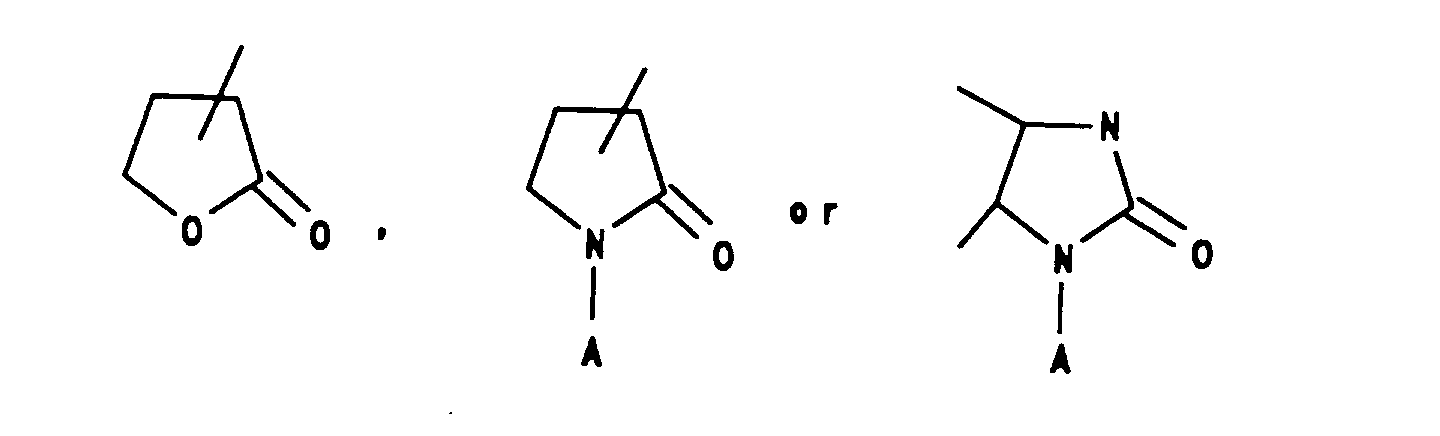
(A is selected from hydrogen; straight or branched (C₁-C₄)alkyl; C₆-aryl; Substituted C₆-aryl (substitution selected from halo,(C₁-C₄)alkoxy, trihalo(C₁-C₃)alkyl, nitro, amino, cyano, (C₁-C₄)alkoxycarbonyl, (C₁-C₃)alkylamino or carboxy); (C₇-C₉)aralkyl group selected from benzyl, 1-phenylethyl, 2-phenylethyl or phenylpropyl)
such as γ-butyrolactam, γ-butyrolactone, imidazolidinone or N-aminoimidazolidinone, or a six membered aromatic ring with one to three N heteroatoms such as pyridyl, pyridazinyl, pyrazinyl, sym-triazinyl, unsym-triazinyl, pyrimidinyl, or a six membered saturated ring with one or two N, O, S or Se heteroatoms and an adjacent appended O heteroatom such as 2,3-dioxo-1-piperazinyl, 4-ethyl-2,3-dioxo-1-piperazinyl, 4-methyl-2,3-dioxo-1-piperazinyl, 4-cyclopropyl-2-dioxo-1-piperazinyl, 2-dioxomorpholinyl or 2-dioxothiomorpholinyl; (C₁-C₄)alkoxycarbonyl group selected from methoxycarbonyl, ethoxycarbonyl, straight or branched propoxylcarbonyl, straight or branched butoxycarbonyl or allyloxycarbonyl; vinyl or substituted vinyl group [substitution selected from (C₁-C₃)alkyl group, halogen, (C₆-C₁₀)aryl group selected from phenyl, α-naphthyl, β-naphthyl, substituted (C₆-C₁₀)aryl group (substitution selected from halo, (C₁-C₄)alkoxy, (C₁-C₄)alkoxycarbonyl, (C₁-C₃)alkylamino or carboxy), halo(C₁-C₃)alkyl group such as bromomethyl, fluoromethyl, difluoromethyl, trifluoromethyl, chloromethyl, dichloromethyl, trichloromethyl, 2-fluoroethyl, 2,2-difluoroethyl, 2,2,2-trifluoroethyl, 2-bromoethyl or 2-iodoethyl, a heterocycle group selected from a five membered aromatic or saturated ring with one N, O, S or Se heteroatom optionally having a benzo or pyrido ring fused thereto:
such as pyrrolyl, N-methylindolyl, indolyl, 2-pyrrolidinyl, 3-pyrrolidinyl, 2-pyrrolinyl, tetrahydrofuranyl, furanyl, benzofuranyl, tetrahydrothienyl, thienyl, or benzothienyl]; (C₁-C₄)alkoxy group such as allyloxy, methoxy, ethoxy, n-propoxy, n-butoxy or tert-butoxy; C₆-aryloxy group selected from phenoxy or substituted phenoxy (substitution selected from halo, (C₁-C₄)alkyl); (C₇-C₁₀)aralkyloxy group such as benzyloxy, 1-phenylethyloxy or 2-phenylethyloxy;
and when R³ = R⁴(CH₂)nCO- and n=1-4,
R⁴ is selected from hydrogen; (C₁-C₃)alkyl group selected from methyl, ethyl, n-propyl or 1-methylethyl; (C₆-C₁₀)aryl group selected from phenyl, α-naphthyl or β-naphthyl; substituted (C₆-C₁₀)aryl group (substitution selected from halo, (C₁-C₄)alkoxy, trihalo(C₁-C₃)alkyl, nitro, amino, cyano, (C₁-C₄)alkoxycarbonyl, (C₁-C₃)alkylamino or carboxy); acyloxy or haloacyloxy group, selected from acetyl, propionyl, chloroacetyl, trichloroacetyl, (C₃-C₆)cycloalkylcarbonyl, (C₆-C₁₀)aroyl selected from benzoyl or naphthoyl, halo substituted (C₆-C₁₀)aroyl such as pentafluorobenzoyl, 4-chlorobenzoyl, 3-bromobenzoyl or 3,4-difluorobenzoyl, (C₁-C₄)alkylbenzoyl such as 4-toluoyl, 2-toluoyl, 4-(1-methylethyl)benzoyl or (heterocycle)carbonyl, the heterocycle selected from a five membered aromatic or saturated ring with one N, O, S or Se heteroatom optionaly having a benzo or pyrido ring fused thereto:
such as pyrrolyl, N-methylindolyl, indolyl, 2-pyrrolidinyl, 3-pyrrolidinyl, 2-pyrrolinyl, tetrahydrofuranyl, furanyl, benzofuranyl, tetrahydrothienyl, thienyl or benzothienyl, or a five membered aromatic ring with two N, O, S or Se heteroatoms optionally having a benzo or pyrido ring fused thereto:
such as imidazolyl, pyrazolyl, benzimidazolyl, oxazolyl, benzoxazolyl, indazolyl, thiazolyl or benzothiazolyl, or a five membered saturated ring with one or two N, O, S or Se heteroatoms and an adjacent appended O heteroatom:
(A is selected from hydrogen; straight or branched (C₁-C₄)alkyl; C₆-aryl; substituted C₆-aryl (substitution selected from halo,(C₁-C₄)alkoxy, trihalo(C₁-C₃)alkyl, nitro, amino, cyano, (C₁-C₄)alkoxycarbonyl, (C₁-C₃)alkylamino or carboxy); (C₇-C₉)aralkyl group selected from benzyl, 1-phenylethyl, 2-phenylethyl or phenylpropyl)
such as γ-butyrolactam, γ-butyrolactone, imidazolidinone or N-aminoimidazolidinone, or a six membered aromatic ring with one to three N heteroatoms such as pyridyl, pyridazinyl or pyrazinyl, or a six membered saturated ring with one or two N, O, S or Se heteroatoms and an adjacent appended O heteroatom such as 2,3-dioxo-1-piperazinyl, 4-ethyl-2,3-dioxo-1-piperazinyl, 4-methyl-2,3-dioxo-1-piperazinyl, 4-cyclopropyl-2-dioxo-1-piperazinyl, 2-dioxomorpholinyl or 2-dioxothiomorpholinyl; (C₁-C₄)alkoxy group such as allyloxy, methoxy, ethoxy, n-propoxy, n-butoxy or tert-butoxy; C₆-aryloxy group selected from phenoxy or substituted phenoxy (substitution selected from halo, (C₁-C₄)alkyl, nitro, cyano, thiol, amino, carboxy, di-(C₁-C₃)alkylamino); (C₁-C₃)alkylthio group selected from methylthio, ethylthio, propylthio or allylthio; C₆-arylthio group selected from phenylthio or substituted phenylthio (substitution selected from halo, (C₁-C₄)alkyl, nitro, cyano, thiol, amino, carboxy, di-(C₁-C₃)alkylamino); C₆-arylsulfonyl group selected from phenylsulfonyl or substituted phenylsulfonyl (substitution selected from halo, (C₁-C₄)alkoxy, trihalo(C₁-C₃)alkyl, nitro, amino, cyano, (C₁-C₄)alkoxycarbonyl, (C₁-C₃)alkylamino or carboxy); a heterocycle group selected from a five membered aromatic or saturated ring one N, O, S or Se heteroatom optionally having a benzo or pyrido ring fused thereto:
such as pyrrolyl, N-methylindolyl, indolyl, 2-pyrrolidinyl, 3-pyrrolidinyl, 2-pyrrolinyl, tetrahydrofuranyl, furanyl, benzofuranyl, tetrahydrothienyl, thienyl or benzothienyl, or a five membered aromatic ring with two N, O,S or Se heteroatoms optionally having a benzo or pyrido ring fused thereto:
such as imidazolyl, pyrazolyl, benzimidazolyl, oxazolyl, benzoxazolyl, indazolyl, thiazolyl or benzothiazolyl, or a five membered saturated ring with one or two N, O, S or Se heteroatoms and an adjacent appended O heteroatom:
(A is selected from hydrogen; straight or branched (C₁-C₄)alkyl; C₆-aryl; substituted C₆-aryl (substitution selected from halo,(C₁-C₄)alkoxy, trihalo(C₁-C₃)alkyl, nitro, amino, cyano, (C₁-C₄)alkoxycarbonyl, (C₁-C₃)alkylamino or carboxy); (C₇-C₉)aralkyl group selected from benzyl, 1-phenylethyl, 2-phenylethyl or phenylpropyl)
such as γ-butyrolactam, γ-butyrolactone, imidazolidinone or N-aminoimidazolidinone, or a six membered aromatic ring with one to three N heteroatoms such as pyridyl, pyridazinyl or pyrazinyl, or a six membered saturated ring with one or two N, O, S or Se heteroatoms and an adjacent appended O heteroatom such as 2,3-dioxo-1-piperazinyl, 4-ethyl-2,3-dioxo-1-piperazinyl, 4-methyl-2,3-dioxo-1-piperazinyl, 4-cyclopropyl-2-dioxo-1-piperazinyl, 2-dioxomorpholinyl or 2-dioxothiomorpholinyl; hydroxy group; α-hydroxy(C₁-C₃)alkyl group selected from hydroxymethyl, α-hydroxyethyl, α-hydroxy-1-methylethyl or α-hydroxypropyl; halo(C₁-C₃)alkyl group such as bromomethyl, fluoromethyl, difluoromethyl, trifluoromethyl, chloromethyl, dichloromethyl, trichloromethyl, 2-fluoroethyl, 2,2-difluoroethyl, 2,2,2-trifluoromethyl, 2-bromoethyl or 2-iodoethyl; acyl or haloacyl group selected from acetyl, propionyl, chloroacetyl, trifluoroacetyl, (C₃-C₆)cycloalkylcarbonyl, (C₆-C₁₀)aroyl selected from benzoyl or naphthoyl, halo substituted (C₆-C₁₀)aroyl such as pentafluorobenzoyl, 4-chlorobenzoyl, 3-bromophenylcarbonyl or 3,4-difluorobenzoyl, (C₁-C₄)alkylbenzoyl such as from 4-toluoyl, 2-toluoyl or 4-(1-methylethyl)benzoyl, or (heterocycle)carbonyl, the heterocycle selected from a five membered aromatic or saturated ring with one N, O, S or Se heteroatom optionally having a benzo or pyrido ring fused thereto:
such as pyrrolyl, N-methylindolyl, indolyl, 2-pyrrolidinyl, 3-pyrrolidinyl, 2-pyrrolinyl, tetrahydrofuranyl, furanyl, benzofuranyl, tetrahydrothienyl, thienyl, or benzothienyl, or a five membered aromatic ring with two N, O, S or Se heteroatoms optionally having a benzo or pyrido ring fused thereto:
such as imidazolyl, pyrazolyl, benzimidazolyl, oxazolyl, benzoxazolyl, indazolyl, thiazolyl or benzothiazolyl, or a five membered saturated ring with one or two N, O, S or Se heteroatoms and an adjacent appended O heteroatom:
(A is selected from hydrogen; straight or branched (C₁-C₄) alkyl; C₆-aryl; substituted C₆-aryl (substitution selected from halo,(C₁-C₄)alkoxy, trihalo(C₁-C₃)alkyl, nitro, amino, cyano, (C₁-C₄)alkoxycarbonyl, (C₁-C₃)alkylamino or carboxy); (C₇-C₉)aralkyl group selected from benzyl, 1-phenylethyl, 2-phenylethyl or phenylpropyl)
such as γ-butyrolactam, γ-butyrolactone, imidazolidinone or N-aminoimidazolidinone, or a six membered aromatic ring with one to three N heteroatoms such as pyridyl, pyridazinyl or pyrazinyl, or a six membered saturated ring with one or two N, O, S or Se heteroatoms and an adjacent appended O heteroatom such as 2,3-dioxo-1-piperazinyl, 4-ethyl-2,3-dioxo-1-piperazinyl, 4-methyl-2,3-dioxo-1-piperazinyl, 4-cyclopropyl-2-dioxo-1-piperazinyl, 2-dioxomorpholinyl or 2-dioxothiomorpholinyl;
and when R³ =R⁴(CH₂)nCO- and n = 2-4,
R⁴ is selected from amino; hydroxyamino; straight or branched mono(C₁-C₆)alkylamino group selected from methyl, ethyl, n-propyl, 1-methylethyl, n-butyl, 1-methylpropyl, 2-methylpropyl, 1,1-dimethylethyl, n-pentyl, 2-methylbutyl, 1,1-dimethylpropyl, 2,2-dimethylpropyl, 3-methylbutyl, n-hexyl, 1-methylpentyl, 1,1-dimethylbutyl, 2,2-dimethylbutyl, 3-methylpentyl, 1,2-dimethylbutyl, 1,3-dimethylbutyl or 1-methyl-1-ethylpropylamino and where appropriate their diastereomers and enantiomers; (C₃-C₈)cycloalkylamino group selected from cyclopropyl, trans-1,2-dimethylcyclopropyl, cis-1,2-dimethylcyclopropyl, trans-2,3-dimethylcyclopropyl, cis-2,3-dimethylcyclopropyl, cyclobutyl, trans-2,3-dimethylcyclobutyl, cis-2,3-dimethylcyclobutyl, cyclopentyl, cyclohexyl, cycloheptyl, cyclooctyl, bicyclo[2.2.1]hept-2-yl, or bicyclo[2.2.2]oct-2-ylamino and where appropriate their diastereomers and enantiomers; straight or branched chain di-(C₁-C₆)alkylamino group selected from dimethylamino, diethylamino, methyl(ethyl)amino, ethyl(1-methylethyl)amino or a combination of methyl, ethyl, n-propyl, 1-methylethyl, n-butyl, 1-methylpropyl, 2-methylpropyl, 1,1-dimethylethyl, n-pentyl, 2-methylbutyl, 1,1-dimethylpropyl, 2,2-dimethylpropyl, 3-methylbutyl, n-hexyl, 1-methylpentyl, 1,1-dimethylbutyl, 2,2-dimethylbutyl, 3-methylpentyl, 1,2-dimethylbutyl, 1,3-dimethylbutyl or 1-methyl-1-ethylpropylamino and where appropriate their diastereomers and enantiomers; (C₁-C₆)alkoxyamino group selected from methoxy, ethoxy, propoxy, butoxy, pentoxy or hexoxyamino; (C₃-C₈)cycloalkoxyamino group selected from cyclopropoxy, trans-1,2-dimethylcyclopropoxy, cis-1,2-dimethyl-cyclopropoxy, trans-2,3-dimethylcyclopropoxy, cis-2,3-dimethylcyclopropoxy, cyclobutoxy, trans-2,3-dimethylcyclobutoxy, cis-2,3-dimethylcyclobutoxy, cyclopentoxy, cyclohexoxy, cycloheptyloxy, cyclooctoxy, bicyclo[2.2.1]hept-2-yloxy, or bicyclo[2.2.1]oct-2-yloxyamino and where appropriate their diastereomers and enantiomers; (C₇-C₁₀)aralkoxyamino group selected from benzyloxy, 2-phenylethoxy, α-phenylethoxy, (2-naphthyl)methoxy, (1-naphthyl)methoxy, or phenylpropoxyamino; (C₂-C₈)azacycloalkyl group selected from aziridinyl, azetidinyl, pyrrolidinyl, pyrrolinyl, piperidinyl, 2-methylpyrrolidinyl, cis-3,4-dimethylpyrrolidinyl, trans-3,4-dimethylpyrrolidinyl, 2-azabicyclo[2.1.1]hex-2-yl, 5-azabicyclo[2.1.1]hex-5-yl, 2-azabicyclo[2.2.1]hept-2-yl, 7-azabicyclo[2.2.1]hept-7-yl, or 2-azabicyclo[2.2.2]oct-2-yl and where appropriate their diastereomers and enantiomers; azaheterocycloalkyl group selected from morpholinyl, piperazinyl, 4-methylpiperazinyl, 4-hydroxypiperazinyl, 4-(C₁-C₄)alkoxypiperazinyl, thiamorpholinyl, tetrahydro-1,2-oxazinyl, isoxazolidinyl, pyrazolidinyl, 2-methylpyrazolidinyl, 2,5-diazabicyclo[2.2.2]hept-2-yl, or 2,5-diaza-5-methyl bicyclo[2.2.1]hept-2-yl and where appropriate their diastereomers and enantiomers; (C₇-C₁₀)arylalkylamino group selected from benzyl, 2-phenylethyl, α-phenylethyl, (2-naphthyl)methyl, (1-naphthyl)methyl or phenylpropylamino; (C₁-C₄)alkoxycarbonylamino group selected from tert-butoxycarbonylamino, allyloxycarbonylamino, methoxycarbonylamino, ethoxycarbonylamino or propoxycarbonylamino;
and when R³ =R4' (CH₂)nSO₂- and n = 0,
R4' is selected from amino; hydroxyamino; straight or branched mono(C₁-C₆)alkylamino group selected from methyl, ethyl, n-propyl, 1-methylethyl, n-butyl, 1-methylpropyl, 2-methylpropyl, 1,1-dimethylethyl, n-pentyl, 2-methylbutyl, 1,1-dimethylpropyl, 2,2-dimethylpropyl, 3-methylbutyl, n-hexyl, 1-methylpentyl, 1,1-dimethylbutyl, 2,2-dimethylbutyl, 3-methylpentyl, 1,2-dimethylbutyl, 1,3-dimethylbutyl or 1-methyl-1-ethylpropylamino and where appropriate their diastereomers and enantiomers; (C₃-C₈)cycloalkylamino group selected from cyclopropyl, trans-1,2-dimethylcyclopropyl, cis-1,2-dimethylcyclopropyl, trans-2,3-dimethylcyclopropyl, cis-2,3-dimethylcyclopropyl, cyclobutyl, trans-2,3-dimethylcyclobutyl, cis-2,3-dimethylcyclobutyl, cyclopentyl, cyclohexyl, cycloheptyl, cyclooctyl, bicyclo[2.2.1]hept-2-yl, or bicyclo[2.2.2]oct-2-ylamino and where appropriate their diastereomers and enantiomers; straight or branched chain di-(C₁-C₆)alkylamino group selected from dimethylamino, diethylamino, methyl(ethyl)amino, ethyl(1-methylethyl)amino or a combination of methyl, ethyl, n-propyl, 1-methylethyl, n-butyl, 1-methylpropyl, 2-methylpropyl, 1,1-dimethylethyl, n-pentyl, 2-methylbutyl, 1,1-dimethylpropyl, 2,2-dimethylpropyl, 3-methylbutyl, n-hexyl, 1-methylpentyl, 1,1-dimethylbutyl, 2,2-dimethylbutyl, 3-methylpentyl, 1,2-dimethylbutyl, 1,3-dimethylbutyl or 1-methyl-1-ethylpropylamino and where appropriate their diastereomers and enantiomers; (C₁-C₆)alkoxyamino group selected from methoxy, ethoxy, propoxy, butoxy, pentoxy or hexoxyamino; (C₃-C₈)cycloalkoxyamino group selected from cyclopropoxy, trans-1,2-dimethylcyclopropoxy, cis-1,2-dimethylcyclopropoxy, trans-2,3-dimethylcyclopropoxy, cis-2,3-dimethylcyclopropoxy, cyclobutoxy, trans-2,3-dimethylcyclobutoxy, cis-2,3-dimethylcyclobutoxy, cyclopentoxy, cyclohexoxy, cycloheptyloxy, cyclooctoxy, bicyclo[2.2.1]hept-2-yloxy, or bicyclo[2.2.1]oct-2-yloxyamino and where appropriate their diastereomers and enantiomers; (C₇-C₁₀)aralkoxyamino group selected from benzyloxy, 2-phenylethoxy, α-phenylethoxy, (2-naphthyl)methoxy, (1-naphthyl)methoxy, or phenylpropoxyamino; straight or branched (C₁-C₃)alkyl group selected from methyl, ethyl, n-propyl or 1-methylethyl; (C₆-C₁₀)aryl group selected from phenyl, α-naphthyl or β-naphthyl; substituted (C₆-C₁₀)aryl group (substitution selected from halo, (C₁-C₄)alkoxy, trihalo(C₁-C₃)alkyl, nitro, amino, cyano, (C₁-C₄)alkoxycarbonyl, (C₁-C₃)alkylamino or carboxy); a heterocycle group selected from a five membered aromatic or saturated ring with one N, O, S or Se heteroatom optionally having a benzo or pyrido ring fused thereto:
such as pyrrolyl, N-methylindolyl, indolyl, 2-pyrrolidinyl, 3-pyrrolidinyl, 2-pyrrolinyl, tetrahydrofuranyl, furanyl, benzofuranyl, tetrahydrothienyl, thienyl or benzothienyl;
and when R³ = R4' (CH₂)nSO₂- and n= 1-4,
R4' is selected from hydrogen; amino; straight or branched (C₁-C₃)alkyl group selected from methyl, ethyl, n-propyl or 1-methylethyl; and the pharmacologically acceptable organic and inorganic salts or metal complexes. - Most particularly preferred compounds are compounds according to the above formula V and VI in which X is selected from halogen or trifluoromethanesulfonyloxy; the halogen is selected from bromine, chlorine, fluorine or iodine;
Y is selected from -N₂⁺Cl⁻ or N₃;
R or R¹ are selected from nitro; amino; halogen (selected from chlorine, bromine, fluorine or iodine); cyano; hydroxy; or -NR²R³;
and when R or R¹ = -NR²R³ and R² = hydrogen,
R³ = methyl, ethyl, n-propyl, 1-methylethyl, n-butyl, 1-methylpropyl, 2-methylpropyl or 1,1-dimethylethyl;
and when R² = methyl or ethyl,
R³ = methyl, ethyl, n-propyl, 1-methylethyl, n-butyl, 1-methylpropyl or 2-methylpropyl;
and when R or R¹ = -NR²R³ and R² = hydrogen,
R³ selected from R⁴(CH₂)nCO- or R4' (CH₂)nSO₂-;
and when R³ = R⁴(CH₂)nCO- and n=0,
R⁴ is selected from hydrogen; amino; hydroxyamino; straight or branched mono(C₁-C₆)alkylamino group selected from methyl, ethyl, n-propyl, 1-methylethyl, n-butyl, 1-methylpropyl, 2-methylpropyl, 1,1-dimethylethyl, n-pentyl, 2-methylbutyl, 1,1-dimethylpropyl, 2,2-dimethylpropyl, 3-methylbutyl, n-hexyl, 1-methylpentyl, 1,1-dimethylbutyl, 2,2-dimethylbutyl, 3-methylpentyl, 1,2-dimethylbutyl, 1,3-dimethylbutyl or 1-methyl-1-ethylpropylamino and where appropriate their diastereomers and enantiomers; (C₃-C₈)cycloalkylamino group selected from cyclopropyl, trans-1,2-dimethylcyclopropyl, cis-1,2-dimethylcyclopropyl, trans-2,3-dimethylcyclopropyl, cis-2,3-dimethylcyclopropyl, cyclobutyl, trans-2,3-dimethylcyclobutyl, cis-2,3-dimethylcyclobutyl, cyclopentyl, cyclohexyl, cycloheptyl, cyclooctyl, bicyclo[2.2.1]hept-2-yl, or bicyclo[2.2.2]oct-2-ylamino and where appropriate their diastereomers and enantiomers; straight or branched chain di-(C₁-C₆)alkylamino group selected from dimethylamino, diethylamino, methyl(ethyl)amino, ethyl(1-methylethyl)amino or a combination of methyl, ethyl, n-propyl, 1-methylethyl, n-butyl, 1-methylpropyl, 2-methylpropyl, 1,1-dimethylethyl, n-pentyl, 2-methylbutyl, 1,1-dimethylpropyl, 2,2-dimethylpropyl, 3-methylbutyl, n-hexyl, 1-methylpentyl, 1,1-dimethylbutyl, 2,2-dimethylbutyl, 3-methylpentyl, 1,2-dimethylbutyl, 1,3-dimethylbutyl or 1-methyl-1-ethylpropylamino and where appropriate their diastereomers and enantiomers; (C₁-C₆)alkoxyamino group selected from methoxy, ethoxy, propoxy, butoxy, pentoxy or hexoxyamino; (C₃-C₈)cycloalkoxyamino group selected from cyclopropoxy, trans-1,2-dimethylcyclopropoxy, cis-1,2-dimethylcyclopropoxy, trans-2,3-dimethylcyclopropoxy, cis-2,3-dimethylcyclopropoxy, cyclobutoxy, trans-2,3-dimethylcyclobutoxy, cis-2,3-dimethylcyclobutoxy, cyclopentoxy, cyclohexoxy, cycloheptyloxy, cyclooctoxy, bicyclo[2.2.1]hept-2-yloxy, or bicyclo[2.2.1]oct-2-yloxyamino and where appropriate their diastereomers and enantiomers; (C₇-C₁₀)aralkoxyamino group selected from benzyloxy, 2-phenylethoxy, α-phenylethoxy, (2-naphthyl)methoxy, (1-naphthyl)methoxy, or phenylpropoxyamino; (C₂-C₈)azacycloalkyl group selected from aziridinyl, azetidinyl, pyrrolidinyl, pyrrolinyl, piperidinyl, 2-methylpyrrolidinyl, cis-3,4-dimethylpyrrolidinyl, trans-3,4-dimethylpyrrolidinyl, 2-azabicyclo[2.1.1]hex-2-yl, 5-azabicyclo[2.1.1]hex-5-yl, 2-azabicyclo[2.2.1]hept-2-yl, 7-azabicyclo[2.2.1]hept-7-yl, or 2-azabicyclo[2.2.2]oct-2-yl and where appropriate their diastereomers and enantiomers; azaheterocycloalkyl group selected from morpholinyl, piperazinyl, 4-methylpiperazinyl, 4-hydroxypiperazinyl, 4-(C₁-C₄)alkoxypiperazinyl, thiamorpholinyl, tetrahydro-1,2-oxazinyl, isoxazolidinyl, pyrazolidinyl, 2-methylpyrazolidinyl, 2,5-diazabicyclo[2.2.2]hept-2-yl, or 2,5-diaza-5-methylbicyclo[2.2.1]hept-2-yl and where appropriate their diastereomers and enantiomers; straight or branched (C₁-C₂)alkyl group selected from methyl or ethyl; (C₆-C₁₀)aryl group selected from phenyl, a-naphthyl or β-naphthyl; substituted (C₆-C₁₀)aryl group (substitution selected from halo, (C₁-C₄)alkoxy, nitro, amino); α-hydroxy(C₁-C₃)alkyl group selected from hydroxymethyl; halo(C₁-C₃)alkyl group such as bromomethyl, fluoromethyl, difluoromethyl, trifluoromethyl, chloromethyl, dichloromethyl, trichloromethyl, 2-fluoroethyl, 2,2-difluoroethyl, 2,2,2-trifluoroethyl, 2-bromoethyl or 2-iodoethyl; a heterocycle group selected from a five membered aromatic or saturated ring with one N, O, S or Se heteroatom optionally having a benzo or pyrido ring fused thereto:
such as indolyl, 2-pyrrolidinyl, 3-pyrrolidinyl, 2-pyrrolinyl, tetrahydrofuranyl, furanyl, benzofuranyl, tetrahydrothienyl or thienyl, or a five membered aromatic ring with two N, O, S or Se heteroatoms optionally having a benzo or pyrido ring fused thereto:
such as imidazolyl, pyrazolyl, benzimidazolyl, indazolyl, thiazolyl or benzothiazolyl; (C₁-C₄)alkoxycarbonyl group selected from methoxycarbonyl, ethoxycarbonyl, straight or branched propoxycarbonyl, straight or branched butoxycarbonyl or allyloxycarbonyl; vinyl or substituted vinyl group [substitution selected from (C₁-C₃)alkyl group, (C₆-C₁₀)aryl group selected from phenyl, α-naphthyl, β-naphthyl]; (C₁-C₄)alkoxy group such as allyloxy, methoxy, ethoxy, n-propoxy, n-butoxy or tert-butoxy; C₆-aryloxy group selected from phenoxy or substituted phenoxy (substitution selected from halo, (C₁-C₄)alkyl); (C₇-C₁₀)aralkyloxy group such as benzyloxy, 1-phenylethyloxy or 2-phenylethyloxy;
and when R³ = R⁴(CH₂)nCO- and n=1-4,
R⁴ is selected from hydrogen; (C₁-C₂)alkyl group selected from methyl or ethyl; (C₆-C₁₀)aryl group selected from phenyl, α-naphthyl or β-naphthyl; substituted(C₆-C₁₀)aryl group (substitution selected from halo, (C₁-C₄)alkoxy, trihalo(C₁-C₃)alkyl); acyloxy or haloacyloxy group, selected from acetyl, propionyl, chloroacetyl, trichloroacetyl, (C₃-C₆)cycloalkylcarbonyl, (C₆-C₁₀)aroyl selected from benzoyl or naphthoyl, halo substituted (C₆-C₁₀)aroyl such as pentafluorobenzoyl, 4-chlorobenzoyl, 3-bromobenzoyl or 3,4-difluorobenzoyl, (C₁-C₄)alkylbenzoyl such as 4-toluoyl, 2-toluoyl, 4-(1-methylethyl)benzoyl or (heterocycle)carbonyl, the heterocycle selected from a five membered aromatic or saturated ring with one N, O, S or Se heteroatom optionally having a benzo or pyrido ring fused thereto:
such as tetrahydrofuranyl, furanyl, benzofuranyl, tetrahydrothienyl, thienyl or benzothienyl, or a five membered aromatic ring with two N, O, S or Se heteroatoms optionally having a benzo or pyrido ring fused thereto: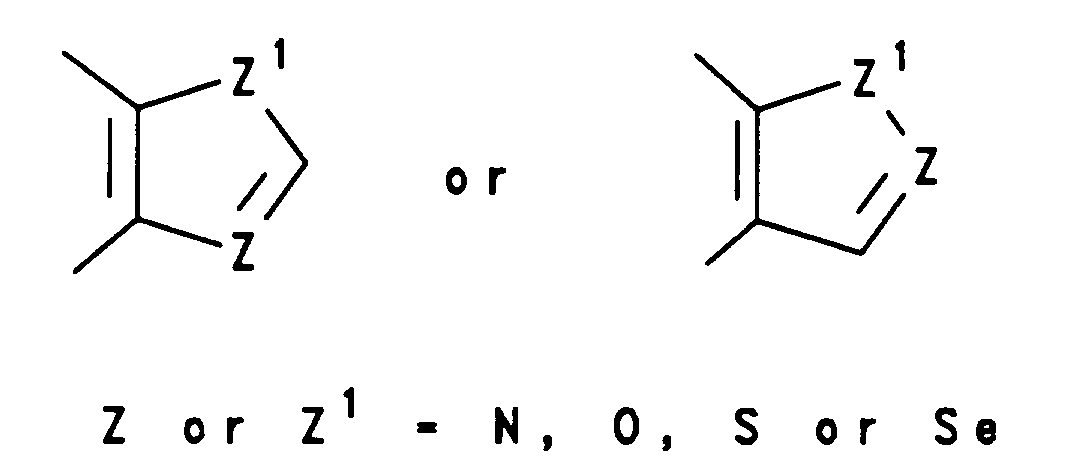
such as pyrazolyl, benzimidazolyl, benzoxazolyl, indazolyl, thiazolyl or benzothiazolyl, or a six membered aromatic ring with one or two N heteroatoms such as pyridyl or pyridazinyl; (C₁-C₄)alkoxy group such as allyloxy, methoxy, ethoxy, n-propoxy, n-butoxy or tert-butoxy; α-hydroxy(C₁-C₃)alkyl group selected from hydroxymethyl, α-hydroxyethyl, α-hydroxy-1-methylethyl or α-hydroxypropyl; halo(C₁-C₃)alkyl group such as bromomethyl, fluoromethyl, difluoromethyl, trifluoro- methyl, chloromethyl, dichloromethyl, trichloromethyl, 2-fluoroethyl, 2,2-difluoroethyl, 2,2,2-trifluoroethyl, 2-bromoethyl or 2-iodoethyl;
and when R³ = R⁴(CH₂)nCO- and n = 2-4,
R⁴ is selected from amino; hydroxyamino; straight or branched mono(C₁-C₆)alkylamino group selected from methyl, ethyl, n-propyl, 1-methylethyl, n-butyl, 1-methylpropyl, 2-methylpropyl, 1,1-dimethylethyl, n-pentyl, 2-methylbutyl, 1,1-dimethylpropyl, 2,2-dimethylpropyl, 3-methylbutyl, n-hexyl, 1-methylpentyl, 1,1-dimethylbutyl, 2,2-dimethylbutyl, 3-methylpentyl, 1,2-dimethylbutyl, 1,3-dimethylbutyl or 1-methyl-1-ethylpropylamino and where appropriate their diastereomers and enantiomers; (C₃-C₈)cycloalkylamino group selected from cyclopropyl, trans-1,2-dimethylcyclopropyl, cis-1,2-dimethylcyclopropyl, trans-2,3-dimethylcyclopropyl, cis-2,3-dimethylcyclopropyl, cyclobutyl, trans-2,3-dimethylcyclobutyl, cis-2,3-dimethylcyclobutyl, cyclopentyl, cyclohexyl, cycloheptyl, cyclooctyl, bicyclo[2.2.1]hept-2-yl, or bicyclo[2.2.2]oct-2-ylamino and where appropriate their diastereomers and enantiomers; straight or branched chain di-(C₁-C₆)alkylamino group selected from dimethylamino, diethylamino, methyl(ethyl)amino, ethyl(1-methylethyl)amino or a combination of methyl, ethyl, n-propyl, 1-methylethyl, n-butyl, 1-methylpropyl, 2-methylpropyl, 1,1-dimethylethyl, n-pentyl, 2-methylbutyl, 1,1-dimethylpropyl, 2,2-dimethylpropyl, 3-methylbutyl, n-hexyl, 1-methylpentyl, 1,1-dimethylbutyl, 2,2-dimethylbutyl, 3-methylpentyl, 1,2-dimethylbutyl, 1,3-dimethylbutyl or 1-methyl-1-ethylpropylamino and where appropriate their diastereomers and enantiomers; (C₁-C₆)alkoxyamino group selected from methoxy, ethoxy, propoxy, butoxy, pentoxy or hexoxyamino; (C₃-C₈)cycloalkoxyamino group selected from cyclopropoxy, trans-1,2-dimethylcyclopropoxy, cis-1,2-dimethylcyclopropoxy, trans-2,3-dimethylcyclopropoxy, cis-2,3-dimethylcyclopropoxy, cyclobutoxy, trans-2,3-dimethylcyclobutoxy, cis-2,3-dimethylcyclobutoxy, cyclopentoxy, cyclohexoxy, cycloheptyloxy, cyclooctoxy, bicyclo[2.2.1]hept-2-yloxy, or bicyclo[2.2.1]oct-2-yloxyamino and where appropriate their diastereomers and enantiomers; (C₇-C₁₀)aralkoxyamino group selected from benzyloxy, 2-phenylethoxy, α-phenylethoxy, (2-naphthyl)methoxy, (1-naphthyl)methoxy, or phenylpropoxyamino; (C₂-C₈)azacycloalkyl group selected from aziridinyl, azetidinyl, pyrrolidinyl, pyrrolinyl, piperidinyl, 2-methylpyrrolidinyl, cis-3,4-dimethylpyrrolidinyl, trans-3,4-dimethylpyrrolidinyl, 2-azabicyclo[2.1.1]hex-2-yl, 5-azabicyclo[2.1.1]hex-5-yl, 2-azabicyclo[2.2.1]hept-2-yl, 7-azabicyclo[2.2.1]hept-7-yl, or 2-azabicyclo[2.2.2]oct-2-yl and where appropriate their diastereomers and enantiomers; azaheterocycloalkyl group selected from morpholinyl, piperazinyl, 4-methylpiperazinyl, 4-hydroxypiperazinyl, 4-(C₁-C₄)alkoxypiperazinyl, thiamorpholinyl, tetrahydro-1,2-oxazinyl, isoxazolidinyl, pyrazolidinyl, 2-methylpyrazolidinyl, 2,5-diazabicyclo[2.2.2]hept-2-yl, or 2,5-diaza-5-methylbicyclo[2.2.1]hept-2-yl and where appropriate their diastereomers and enantiomers; (C₁-C₄)alkoxycarbonylamino group selected from tert-butoxycarbonylamino, allyloxycarbonylamino, methoxycarbonylamino, ethoxycarbonylamino or propoxycarbonylamino;
and when R³ = R4' (CH₂)nSO₂- and n = 0,
R4' is selected from amino; hydroxyamino; straight or branched mono(C₁-C₆)alkylamino group selected from methyl, ethyl, n-propyl, 1-methylethyl, n-butyl, 1-methylpropyl, 2-methylpropyl, 1,1-dimethylethyl, n-pentyl, 2-methylbutyl, 1,1-dimethylpropyl, 2,2-dimethylpropyl, 3-methylbutyl, n-hexyl, 1-methylpentyl, 1,1-dimethylbutyl, 2,2-dimethylbutyl, 3-methylpentyl, 1,2-dimethylbutyl, 1,3-dimethylbutyl or 1-methyl-1-ethylpropylamino and where appropriate their diastereomers and enantiomers; straight or branched chain di-(C₁-C₆)alkylamino group selected from dimethylamino, diethylamino, methyl(ethyl)amino, ethyl(1-methylethyl)amino or a combination of methyl, ethyl, n-propyl, 1-methylethyl, n-butyl, 1-methyl- propyl, 2-methylpropyl, 1,1-dimethylethyl, n-pentyl-2-methylbutyl, 1,1-dimethylpropyl, 2,2-dimethylpropyl, 3-methylbutyl, n-hexyl, 1-methylpentyl, 1,1-dimethylbutyl, 2,2-dimethylbutyl, 3-methylpentyl, 1,2-dimethylbutyl, 1,3-dimethylbutyl or 1-methyl-1-ethylpropylamino and where appropriate their diastereomers and enantiomers; straight or branched (C₁-C₂)alkyl group selected from methyl or ethyl; (C₆-C₁₀)aryl group selected from phenyl, α-naphthyl or β-naphthyl;
and when R³ = R4' (CH₂)nSO₂- and n= 1-4,
R4' is selected from hydrogen; straight or branched (C₁-C₂)alkyl group selected from methyl or ethyl; and the pharmacologically acceptable organic and inorganic salts or metal complexes. - Compounds of special interest are compound according to the above formula in which X is selected from halogen or trifluoromethanesulfonyloxy; the halogen is selected from bromine, chlorine, fluorine or iodine;
Y is selected from -N₂⁺Cl⁻ or N₃;
R or R¹ are selected from nitro; amino; halogen (selected from chlorine, bromine, fluorine or iodine); cyano; hydroxy; or -NR²R³;
and when R or R¹ = -NR²R³ and R² = methyl or ethyl;
R³ = methyl or ethyl,
and when R or R¹ = -NR²R³ and R² = hydrogen,
R³ is selected from R⁴(CH₂)nCO- or R4' (CH₂)nSO₂-;
and when R³ = R⁴(CH₂)nCO- and n=0,
R⁴ is selected from hydrogen; straight or branched (C₁-C₂)alkyl group selected from methyl or ethyl; a heterocycle group selected from a five membered aromatic or saturated ring with one N, O, or S heteroatom optionally having a benzo or pyrido ring fused thereto:
such as furanyl or thienyl, or a five membered aromatic ring with two N, O or S heteroatoms optionally having a benzo or pyrido ring fused thereto:
such as pyrazolyl, benzimidazolyl or thiazolyl; (C₁-C₄)alkoxy group such as allyloxy, methoxy, ethoxy, n-propoxy, n-butoxy or tert-butoxy; C₆-aryloxy group selected from phenoxy or substituted phenoxy (substitution selected from halo, (C₁-C₄)alkyl); (C₇-C₁₀)aralkyloxy group such as benzyloxy, 1-phenylethyloxy or 2-phenylethyloxy;
and when R³ = R⁴(CH₂)nCO- and n=1-4,
R⁴ is selected from hydrogen; (C₁-C₂)alkyl group selected from methyl or ethyl; (C₆-C₁₀)aryl group selected from phenyl, α-naphthyl or β-naphthyl;
and when R³ = R4' (CH₂)nSO₂- and n = 0,
R4' is selected from straight or branched (C₁-C₂)alkyl group selected from methyl or ethyl; (C₆-C₁₀)aryl group selected from phenyl, α-naphthyl or β-naphthyl; and the pharmacologically acceptable organic and inorganic salts or metal complexes. - The novel compounds of the present invention may be readily prepared in accordance with the following schemes.
- The starting 7-azido-9-(substituted)-6-demethyl-6-deoxytetracyclines or 9-azido-7-(substituted)-6-demethyl-6-deoxytetracyclines described in formula 1 or the salts thereof are prepared by procedures known to those skilled in the art including those described in J. J. Hlavka, et al., J. Am. Chem. Soc., 84, 1426(1962).

- 1a. R¹ = N₃ and R = NR²R³, R² = R³
- 1b. R¹ = N₃ and R = NR²R³, R² ≠ R³
- 1c. R = N₃ and R¹ = NR²R³, R² = R³
- 1d. R = N₃ and R¹ = NR²R³, R² ≠ R³
- 1e. R¹ = N₃ and R = X, X = halogen, hydrogen
- 1f. R = N₃ and R¹ = X, X = halogen, hydrogen
- The 7-amino-8-(substituted)-9-(substituted)-6-demethyl-6-deoxytetracycline, 4, or 9-amino-8-(substituted)-7-(substituted)-6-demethyl-6-deoxytetracycline, 4', or their mineral acid or halide salt, can be further converted as described in Schemes 5, 6, 7 and 8.


In accordance with Scheme 5 or 6, a 7-amino-8-(substituted)-9-(substituted)-6-demethyl-6-deoxytetracycline, 4, or a 9-amino-8-(substituted)-7-(substituted)-6-demethyl-6-deoxytetracycline, 4', or their mineral acid or halide salt, is treated with an acyl chloride, acyl anhydride, mixed acyl anhydride, sulfonyl chloride or sulfonyl anhydride in the presence of a suitable acid scavenger in a variety of solvents to form the corresponding 7-(acyl or sulfonyl amino)-8-(substituted)-9-(substituted)-6-demethyl-6-deoxytetracycline, 5, or 9-(acyl or sulfonyl amino)-8-(substituted)-7-(substituted)-6-demethyl-6-deoxytetracycline, 5' , or their mineral acid or halide salt. The acid scavenger is selected from sodium bicarbonate, sodium acetate, pyridine, triethylamine, N,O-bis(trimethylsilyl)acetamide, N,O-bis(trimethylsilyl)trifluoroacetamide, potassium carbonate or a basic ion-exchange resin. The solvents are selected from water-tetrahydrofuran, N-methylpyrrolidone, 1,3-dimethyl-2-imidazolidinone, hexamethylphosphoramide, 1,3-dimethyl-3,4,5,6-tetrahydro-2(1H)pyrimidinone or 1,2-dimethoxyethane.

In accordance with Scheme 7 or 8, a 7-amino-8-(substituted)-9-(substituted)-6-demethyl-6-deoxytetracycline, 4, or 9-amino-8-(substituted)-7-(substituted)-6-demethyl-6-deoxytetracycline, 4', or their mineral acid or halide salt, is converted to the respective diazonium salt, 6 or 6', using procedures known to those skilled in the art including those described in J. J. Hlavka, et al., J. Am. Chem. Soc., 84, 1420(1962). - The diazonium salts, 6 or 6', are reduced to their respective 8-(substituted)-7-(substituted)-6-demethyl-6-deoxytetracycline, 7, or 8-(substituted)-9-(substituted)-6-demethyl-6-deoxytetracycline, 7', by heating in an alcohol.


In accordance with Scheme 9 or 10, a 7-azido-9-(substituted)-6-demethyl-6-deoxytetracycline, 1, or a 9-azido-7-(substituted)-6-demethyl-6-deoxytetracycline, 1', is treated with trifluoromethanesulfonic acid to give the desired 7-amino-9-(substituted)-8-(trifluoromethanylsulfonyloxy)-6-demethyl-6-deoxytetracycline, 8, or 9-amino-7-(substituted)-8-(trifluoromethanylsulfonyloxy)-6-demethyl-6-deoxytetracycline, 8'.


In accordance with Schemes 11-14, Compounds 5, 5', 7, or 7' are selectively N-alkylated in the presence of formaldehyde and either a primary amine such as methylamine, ethylamine, benzylamine, methyl glycinate, (L or D)lysine, (L or D)alanine or their substituted congeners; or a secondary amine such as morpholine, pyrrolidine, piperidine or their substituted congeners to give their corresponding Mannich base adduct, 9, 9', 10,or 10'. - The 7-(substituted)-8-(substituted)-9-(substituted)-6-demethyl-6-deoxytetracyclines may be obtained as metal complexes such as aluminum, calcium, iron, magnesium, manganese and complex salts; inorganic and organic salts and corresponding Mannich base adducts using methods known to those skilled in the art (Richard C. Larock Comprehensive Organic Transformations, VCH Publishers, 411-415, 1989). Preferably, the 7-(substituted)-8-(substituted)-9-(substituted)-6-demethyl-6-deoxytetracyclines are obtained as inorganic salts such as hydrochloric, hydrobromic, hydroiodic, phosphoric, nitric or sulfate; or organic salts such as acetate, benzoate, citrate, cysteine or other amino acids, fumarate, glycolate, maleate, succinate, tartrate, alkylsulfonate or arysulfonate. In all cases the salt formation occurs with the C(4)-dimethylamino group. The salts are preferred for oral and parenteral administration.
- The minimum inhibitory concentration (MIC), the lowest concentration of the antibiotic which inhibits growth of the test organism, is determined by the agar dilution method using Muller-Hinton II agar (Baltimore Biological Laboratories). An inoculum density of 1-5 x 10⁵ CFU/ml and an antibiotic concentration (32-≦0.015 µg/ml) is used. The plates are incubated for 18 hours at 35oC in a forced air incubator. The test organisms comprise strains sensitive to tetracycline and genetically defined strains that are resistant to tetracycline, due to inability to bind bacterial ribosomes (tetM).
- An in vitro, cell free, protein translation system using extracts from E. coli strain MRE 600 (tetracycline sensitive) and a derivative of MRE 600 containing the tetM determinant has been developed based on literature methods [J.M. Pratt, Coupled Transcription-translation in Prokaryotic Cell-free Systems, Transcription and Translation, a Practical Approach, (B.D. Hames and S.J. Higgins, eds) p. 179-209, IRL Press, Oxford-Washington, 1984].
- Using the system described above, the tetracycline compounds of the present invention are tested for their ability to inhibit protein synthesis in vitro. Briefly, each 10 µl reaction contains S30 extract (a whole extract) made from either tetracycline sensitive cells or an isogenic tetracycline resistant (tetM) strain, low molecular weight components necessary for transcription and translation (i.e., ATP and GTP), a mix of 19 amino acids (no methionine), ³⁵S labeled methionine, DNA template (either pBR322 or pUC119), and either DMSO (control) or the novel tetracycline compound to be tested ("novel TC") dissolved in DMSO.
- The reactions are incubated for 30 minutes at 37oC. Timing is initiated with the addition of the S30 extract, the last component to be added. After 30 minutes, 2.5 µl of the reaction is removed and mixed with 0.5 ml of 1N NaOH to destroy RNA and tRNA. Two to three ml of 25% trichloroacetic acid is added and the mixture incubated at room temperature for 15 minutes. The trichloroacetic acid precipitated material is collected on Whatman GF/C filters and washed with a solution of 10% trichloroacetic acid. The filters are dried and the retained radioactivity, representing incorporation of ³⁵S-methionine into polypeptides, is counted using standard liquid scintillation methods.
- The percent inhibition (P.I.) of protein synthesis is determined to be:

- The therapeutic effects of tetracyclines are determined against an acute lethal infection with Staphylococcus aureus strain Smith (tetracycline sensitive). Female, mice, strain CD-1 (Charles River Laboratories), 20 ± 2 grams, are challenged by an intraperitoneal injection of sufficient bacteria (suspended in hog mucin) to kill non-treated controls within 24-48 hours. Antibacterial agents, contained in 0.5 ml of 0.2% aqueous agar, are administered subcutaneously or orally 30 minutes after infection. When an oral dosing schedule is used, animals are deprived of food for 5 hours before and 2 hours after infection. Five mice are treated at each dose level. The 7 day survival ratios from 3 separate tests are pooled for calculation of median effective dose (ED₅₀).
- The claimed compounds exhibit antibacterial activity against a spectrum of tetracycline sensitive and resistant Gram-positive and Gram-negative bacteria, especially, strains of E. coli, S. aureus and E. faecalis, containing the tetM resistance determinants (Table I). Notable is 8-chloro-9-(formylamino)-4-(dimethylamino)-6-demethyl-6-deoxytetracycline, compound A in Table I, which has good in vitro activity against tetracycline resistant strains containing the tetM resistance determinant (such as S. aureus UBMS 88-5 and S. aureus UBMS 90-1 and 90-2) and is equally as effective as minocycline against tetracycline susceptible strains.
- Protein synthesis, determined using cell-free extracts from the tetracycline susceptible strain MRE600, is inhibited by tetracycline, minocycline and the 8-chloro-9-(formylamino)-4-(dimethylamino)-6-demethyl-6-deoxytetracycline of this invention (Table II). Protein synthesis, determined using cell-free extracts from strain MRE600 (tetM), is resistant to tetracycline and minocycline, since less than 20% inhibition is achieved even at 1mg/ml concentration of minocycline vs 90% inhibition at 0.3mg/ml of the tetracycline sensitive ribosome extracts prepared from strain MRE600 (Table II). In contrast, 8-chloro-9-(formylamino)-4-(dimethylamino)-6-demethyl-6-deoxytetracycline effectively inhibited protein synthesis in extracts prepared from either MRE600 or MRE600 (tetM) (Table II). The evidence presented indicates that 8-chloro-9-(formylamino)-4-(dimethylamino)-6-demethyl-6-deoxytetracycline is an inhibitor of protein synthesis at the ribosome level. The ability of 8-chloro-9-(formylamino)-4-(dimethylamino)-6-demethyl-6-deoxytetracycline to inhibit bacterial growth almost certainly reflects directed inhibition of bacterial protein synthesis. Therefore, it is expected to exhibit a bacteriostatic effect against susceptible bacteria, as is the case with other tetracyclines.
- The antibacterial activity of 8-chloro-9-(formylamino)-4-(dimethylamino)-6-demethyl-6-deoxytetracycline is also demonstrated by in vivo efficacy in animals infected with S. aureus Smith (Table III).
- The improved efficacy of 8-chloro-9-(formylamino)-4-(dimethylamino)-6-demethyl-6-deoxytetracycline is demonstrated by the in vitro activity against isogenic strains into which the resistance determinants, such as tetM, were cloned (Table I); the inhibition of protein synthesis by tetM ribosomes (Table II); and the in vivo activity against experimental infections (Table III).


TABLE II INHIBITION OF PROTEIN SYNTHESIS BY E. COLI CELL-FREE RIBOSOMES WITH TETRACYCLINES Compound Conc. % Inhibition Wild Type S30 tetM S30 H 1.0 mg/ml 57 29 0.3 mg/ml 62 21 0.1 mg/ml 52 19 L 1.0 mg/ml 90 19 0.3 mg/ml 91 0 0.1 mg/ml 66 0 A 1.0 ml/ml 93 NT 0.3 mg/ml 98 NT NT = Not Tested TABLE III PROTECTIVE ACTIVITY IN MICE INFECTED WITH STAPHYLOCOCCUS AUREUS SMITH Compound ED₅₀ (mg/kg) H 4-8 B >16 M >16 A HCL 4-8 A H₂SO₄ 4-8 J >16 - When the compounds are employed as anti-bacterials, they can be combined with one or more pharmaceutically acceptable carriers, for example, solvents, diluents and the like, and may be administered orally in such forms as tablets, capsules, dispersible powders, granules, or suspensions containing, for example, from about 0.05 to 5% of suspending agent, syrups containing, for example, from about 10 to 50% of sugar, and elixirs containing, for example, from about 20 to 50% ethanol, and the like, or parenterally in the form of sterile injectable solutions or suspensions containing from about 0.05 to 5% suspending agent in an isotonic medium. Such pharmaceutical preparations may contain, for example, from about 25 to about 90% of the active ingredient in combination with the carrier, more usually between about 5% and 60% by weight.
- An effective amount of compound from 2.0 mg/kg of body weight to 100.0 mg/kg of body weight should be administered one to five times per day via any typical route of administration including but not limited to oral, parenteral (including subcutaneous, intravenous, intramuscular, intrasternal injection or infusion techniques), topical or rectal, in dosage unit formulations containing conventional non-toxic pharmaceutically acceptable carriers, adjuvants and vehicles. It will be understood, however, that the specific dose level and frequency of dosage for any particular patient may be varied and will depend upon a variety of factors including the activity of the specific compound employed, the metabolic stability and length of action of that compound, the age, body weight, general health, sex, diet, mode and time of administration, rate of excretion, drug combination, the severity of the particular condition, and the host undergoing therapy.
- These active compounds may be administered orally as well as by intravenous, intramuscular, or subcutaneous routes. Solid carriers include starch, lactose, dicalcium phosphate, microcrystalline cellulose, sucrose and kaolin, while liquid carriers include sterile water, polyethylene glycols, non-ionic surfactants and edible oils such as corn, peanut and sesame oils, as are appropriate to the nature of the active ingredient and the particular form of administration desired. Adjuvants customarily employed in the preparation of pharmaceutical compositions may be advantageously included, such as flavoring agents, coloring agents, preserving agents, and antioxidants, for example, vitamin E, ascorbic acid, BHT and BHA.
- The preferred pharmaceutical compositions from the standpoint of ease of preparation and administration are solid compositions, particularly tablets and hard-filled or liquid-filled capsules. Oral administration of the compounds is preferred.
- These active compounds may also be administered parenterally or intraperitoneally. Solutions or suspensions of these active compounds as a free base or pharmacologically acceptable salt can be prepared in water suitably mixed with a surfactant such as hydroxypropylcellulose. Dispersions can also be prepared in glycerol, liquid, polyethylene glycols and mixtures thereof in oils. Under ordinary conditions of storage and use, these preparations contain a preservative to prevent the growth of microorganisms.
- The pharmaceutical forms suitable for injectable use include sterile aqueous solutions or dispersions and sterile powders for the extemporaneous preparation of sterile injectable solutions or dispersions. In all cases, the form must be sterile and fluid. It must be stable under the conditions of manufacture and storage and must be preserved against the contaminating action of microorganisms such as bacteria and fungi. The carrier can be a solvent or dispersion medium containing, for example, water, ethanol, polyol (e.g., glycerol, propylene glycol and liquid polyethylene glycol), suitable mixtures thereof, and vegetable oil.
- The invention will be more fully described in conjunction with the following specific examples which are not to be construed as limiting the scope of the invention.
- To a OoC solution of 3.0 g of 9-amino-4,7-bis(dimethylamino)-1,4,4a,5,5a,6,11,12a-octahydro-3,-10,12,12a-tetrahydroxy-1,11-dioxo-2-naphthacenecarboxamide sulfate dissolved in 100 ml of 0.1N methanolic hydrogen chloride is added, dropwise, 6.6 ml of butyl nitrite. The reaction is stirred at OoC for 1 hour, poured into 400 ml of diethyl ether, collected and dried to give 2.64 g of the desired product.
MS(FAB): m/z 484 (M + H) - To a room temperature solution of 2.64 g of product from Example 1 dissolved in 84 ml of 0.1N methanolic hydrogen chloride is added 0.353 g of sodium azide. The mixture is stirred at room temperature for 4 hours, poured into 500 ml of diethyl ether and collected to give 2.5 g of the desired product.
IR(KBr): 2080 cm⁻¹. - One gram of product from Example 2 is added to 10 ml of OoC concentrated sulfuric acid. The reaction is stirred at OoC for 1.5 hours, poured into 500 ml of diethyl ether, collected and dried to give 1.1 g of the desired product.
MS(FAB): m/z 507 (M + H). - To a OoC solution of 0.092 g of product from Example 3 dissolved in 5.0 ml of 98% formic acid is added 0.0164 g of sodium acetate. The resulting mixture is stirred at OoC for 10 minutes, followed by the addition of 0.23 ml of acetic anhydride. The reaction is stirred at room temperature of 1 hour, poured into diethyl ether and collected to give 0.045 g of solid. The collected solid is triturated with 50 ml of ethyl acetate and filtered. The filtrate is concentrated in vacuo to give 0.019 g of the desired product.
MS(FAB): m/z 535 (M + H). - To a OoC solution of 0.090 g of product from Example 3 dissolved in 35 ml of 0.1N methanolic hydrogen chloride is added 0.2 ml of butyl nitrite. The reaction is stirred at room temperature for 1 hour, poured into 70 ml of diethyl ether and collected give 0.070 g of the desired diazonium chloride intermediate.
- A solution of 0.070 g of the above intermediate dissolved in 20 ml of methyl alcohol is heated at the reflux temperature for 45 minutes, poured into diethyl ether and collected to give 0.056 g of the desired product.
MS(FAB): m/z 491 (M⁺). - Three grams of 7-azido-6-demethyl-6-deoxytetracycline hydrochloride, prepared by the procedure described in J. Am. Chem. Soc., 84:1426-1430, is added to 120 ml of cold concentrated hydrochloric acid and stirred for 1 3/4 hours at ice bath temperature. The reaction mixture is concentrated in vacuo to give 2.9 g of the desired product.
MS(FAB): m/z 464 (M + H). - To a OoC solution of 0.50 g of product from Example 6 dissolved in 15 ml of 0.1N methanolic hydrogen chloride is added 1.0 ml of butyl nitrite. The reaction is stirred at OoC for 1 hour, poured into 500 ml of diethyl ether and collected to give 0.48 g of the desired product.
IR(KBr): 2200 cm⁻¹. - To a room temperature solution of 0.48 g of product from Example 7 dissolved in 20 ml of 0.1N methanolic hydrogen chloride is added 0.055 g of sodium azide. The reaction mixture is stirred at room temperature for 4 hours, poured into 100 ml of diethyl ether and collected to give 0.366 g of the desired product.
MS(FAB): m/z 490 (M + H) - To a OoC solution of 0.095 g of product from Example 6 dissolved in 5 ml of 0.1N methanolic hydrogen chloride is added 0.3 ml of butyl nitrite. The reaction mixture is stirred at OoC for 1 hour, poured into diethyl ether and collected to give 0.070 g of the desired intermediate.
- A solution of 0.050 g of the above intermediate dissolved in 15 ml of methyl alcohol is heated at the reflux temperature for 1 hour and concentrated in vacuo to give 0.035 g of the desired product.
MS(FAB): m/z 449 (M + H). - To 10 ml of concentrated hydrochloric acid at OoC is added 0.20 g of 9-azido-6-demethyl-6-deoxytetracycline hydrochloride prepared by the procedure described in J. Am. Chem. Soc., 84: 1426-1430. The reaction is stirred at OoC for 1 1/2 hours and concentrated in vacuo to give 0.195 g of the desired product.
MS(FAB): m/z 464 (M + H). - To a OoC solution of 0.103 g of product from Example 10, as the hydrochloride, dissolved in 6 ml of 98% formic acid is added 0.23 ml of acetic anhydride. The resulting mixture is stirred OoC for 5 minutes followed by 1 hour at room temperature. The reaction is poured into 500 ml of diethyl ether and collected to give 0.090 g of the desired product.
MS(FAB): m/z 492 (M + H). - To a OoC solution of 0.285 g of 7-amino-6-demethyl-6-deoxytetracycline dissolved in 5 ml of concentrated sulfuric acid is added 1.2 equivalents of N-iodosuccinimide. The reaction is stirred at OoC for 15 minutes then poured into 400 ml of diethyl ether. The resulting solid is collected and dried to give 0.23 g of the desired product.
¹H NMR(DMSO-d₆): δ8.0 (C-8 H). - To a OoC solution of 0.15 g of product from Example 12 dissolved in sufficient 0.1N methanolic hydrogen chloride to affect solution is added, dropwise, 0.143 ml of n-butyl nitrite. The reaction is stirred at OoC for 30-45 minutes then poured into cold, stirring diethyl ether. The resulting solid is collected, washed with diethyl ether and dried to give 0.12 g of the desired product.
¹H NMR(DMSO-d₆): δ8.52 (C-8 H). - The title compound is prepared by the procedure of Example 8, using 2.2 g of product from Example 13, 60 ml of 0.1N methanolic hydrogen chloride and 0.203 g of sodium azide to give (after purification) 0.65 g of the desired product.
IR(KBr): 2100 cm ⁻¹.
MS(FAB): m/z 582 (M + H). - A mixture of 0.2 g of product from Example 14 and 1 ml of concentrated hydrochloric acid is stirred at room temperature for 2 hours. The reaction mixture is triturated with iso-propanol and ether, collected and dried to give 0.18 g of the desired product.
MS(FAB): m/z 590 (M + H). - To a OoC solution of 1.85 g 9-amino-7-(diethylamino)-6-demethyl-6-deoxytetracycline, prepared by the procedure described in U.S. Patent Application Serial No. 07/771,697, filed October 4, 1991 dissolved in 40 ml of 0.1N methanolic hydrogen chloride is added 1.85 ml of n-butyl nitrite. The reaction mixture is stirred at OoC for 2 hours, poured into diethyl ether, the solid is collected and washed with diethyl ether to give 2.1 g of the desired product.
¹H NMR(DMSO-d₆): δ7.9 (C-8 H). - To a room temperature solution of 1.192 g of product from Example 16 dissolved in 75 ml of 0.1N methanolic hydrogen chloride is added 0.104 g of sodium azide. The reaction is stirred at room temperature for 2 hours, poured slowly into diethyl ether and collected to give 0.8 g of the desired product.
¹H NMR(DMSO-d₆): δ7.5 (C-8 H). - To a room temperature solution of 0.6 g of product from Example 17 dissolved in water is added solid sodium acetate to achieve pH 5. The mixture is extracted 2 times with chloroform, the organic layer is dried over sodium sulfate and concentrated in vacuo. The residue is redissolved in 5 ml of methanol and 2 drops of concentrated hydrochloric acid is added. The reaction solution is then added dropwise to 120 ml of diethyl ether. The resulting solid is collected to give 0.4 g of the desired product.
IR(KBr): 2100 cm⁻¹. - A mixture of 0.23 g of product from Example 18 and 5 ml of concentrated hydrochloric acid is stirred at room temperature for 2 hours. The resulting solid is triturated with isopropanol and diethyl ether. The solid is collected, washed with diethyl ether and dried to give 0.21 g of the desired product.
MS(FAB): m/z 535 (M + H). - To a room temperature solution of 0.20 g of product from Example 10, dissolved in 4 ml of 1-methyl-2-pyrrolidinone, is added 0.30 g of sodium bicarbonate. The mixture is stirred for 5 minutes followed by the addition of 34 µl of methyl chloroformate. The reaction is stirred at room temperature for 1 hour, filtered into 200 ml of diethyl ether and collected to give 0.066 g of the desired product.
MS(FAB): m/z 522 ( M + H). - To 0.30 g of product from Example 10, dissolved in 8 ml of 0.10 N methanolic hydrogen chloride, is added 0.60 ml of n-butyl nitrite. The reaction is stirred at ice bath temperature for 1 hour, poured into 200 ml of diethyl ether and collected to give 0.260 g. Fifty milligrams of the collected material is added to 3 ml of 6% sulfurous acid, stirred at room temperature for 1 hour and concentrated in vacuo to give 0.037 g of the desired product.
CI-MS: m/z 479 (M + H). - The title compound is prepared by the procedure of Example 3, using the product from Example 2 and liquid hydrogen fluoride.
- The title compound is prepared by the procedure of Example 3, using 9-azido-6-demethyl-6-deoxytetracycline prepared by the procedure described in J. Am. Chem. Soc., 84:1426-1430 and trifluoromethanesulfonic acid.
- The title compound is prepared by the procedure of Example 22, using 9-azido-6-demethyl-6-deoxytetracycline prepared by the procedure described in the above reference.
- The title compound is prepared by the procedure of Example 4, using the product from Example 24.
- The title compound is prepared by the procedures described in Examples 1 and 5, using the product from Example 24.
- The title compound is prepared by the procedure of Example 5, using the product of Example 22.
- The title compound is prepared by the procedure of Example 20, using the product from Example 24.
- The title compound is prepared by the procedure of Example 3, using the product from Example 3 and trifluoromethanesulfonic acid.
- The title compound is prepared by the procedure of Example 3, using 7-azido-6-demethyl-6-deoxytetracycline prepared by the procedure described in J. Am. Chem. Soc., 84:1426-1430 and liquid hydrogen fluoride at -30oC.
- The title compound is prepared by the procedure of Example 27, using the product from the Example 3 and beta-dimethylaminoethyl chloroformate.
- The title compound is prepared by the procedure of Example 27, using the product from Example 3 and diethylaminoxy chloroformate.
- The title compound is prepared by the procedure of Example 4, using the product from Example 19.
- The title compound is prepared by the procedure of Example 20, using the product from Example 6.
- The title compound is prepared by the procedure of Example 4, using the product from Example 8.
- The title compound is prepared by the procedure of Example 20, using the product from Example 24.
- The title compound is prepared by the procedure of Example 33, using the product of Example 24.
- The title compound is prepared by the procedure of Example 20, using the product from Example 23.
- The title compound is prepared by the procedure of Example 20, using the product from Example 10 and dimethylaminoxy chloroformate.
- The title compound is prepared by the procedure of Example 20, using the product from Example 10 and diethylamino chloroformate.
- The title compound is prepared by the procedure of Example 3, using 9-azido-6-demethyl-6-deoxytetracycline prepared by the procedure described on J. Am. Chem. Soc., 84:1426-1430 and a solution of hydrogen bromide in acetic acid (30 wt%).
- The title compound is prepared by the procedure of Example 3, using the product from Example 2 and a solution of hydrogen bromide in acetic acid (30 wt%).
- The title compound is prepared by the procedure of Example 3, using the product from Example 2 and hydroiodic acid.
- The title compound is prepared by the procedure of Example 3, using 9-azido-6-demethyl-6-deoxytetracycline prepared by the procedure describefd on J. Am. Chem. Soc., 84:1426-1430 and hydroiodic acid.
- The title compound is prepared by the procedure of Example 20, using the product from Example 44.
- The title compound is prepared by the procedure of Example 20, using the product from Example 41.


In accordance with Scheme 1 or 2, a 7-amino-9-(substituted)-6-demethyl-6-deoxytetracycline 2, or 9-amino-7-(substituted)-6-demethyl-6-deoxytetracycline 2', or their mineral acid or halide salt, dissolved in 0.1N methanolic hydrogen chloride, is treated with an excess of n-butyl nitrite to give a 7-diazonium-9-(substituted)-6-demethyl-6-deoxytetracycline, 3, or 9-diazonium-7-(substituted)-6-demethyl-6-deoxytetracycline, 3', or their mineral acid or halide salt. The formed diazonium compound, 3 or 3', or their mineral acid or halide salt, dissolved in 0.1 N methanolic hydrogen chloride, is treated with one equivalent of sodium azide to give the corresponding 7-azido-9-(substituted)-6-demethyl-6-deorytetracycline, 1, or 9-azido-7-(substituted)-6-demethyl-6-deoxytetracycline, 1', or their mineral acid or halide salt.


In accordance with Scheme 3 or 4, a 7-azido-9-(substituted)-6-demethyl-6-deoxytetracycline, 1, or 9-azido-7-(substituted)-6-demethyl-6-deoxytetracycline, 1', or their mineral acid or halide salt, is treated with a strong acid, such as sulfuric acid, hydrochloric acid, methanesulfonic acid, trifluoromethanesulfonic acid, hydrobromic, hydroiodic, or hydrogen fluoride to produce a 7-amino-8-(substituted)-9-(substituted)-6-demethyl-6-deoxytetracycline, 4, or 9-amino-8-(substituted)-7-(substituted)-6-demethyl-6-deoxytetracycline, 4', or their mineral acid or halide salt.
Claims (15)
- A compound of the formula:

X is selected from halogen or trifluoromethanesulfonyloxy; the halogen is selected from bromine, chlorine, fluorine or iodine; R and R¹ are the same or different and are selected from hydrogen; nitro; amino; halogen (selected from chlorine, bromine, fluorine or iodine); cyano; hydroxy; or -NR²R³;
and when R or R¹ = -NR²R³ and R² = hydrogen,
R³ = methyl, ethyl, n-propyl, 1-methylethyl, n-butyl, 1-methylpropyl, 2-methylpropyl or 1,1-dimethylethyl; and when R² = methyl or ethyl,
R³ = methyl, ethyl, n-propyl, 1-methylethyl, n-butyl, 1-methylpropyl or 2-methylpropyl;
and when R² = n-propyl,
R³ = n-propyl, 1-methylethyl, n-butyl, 1-methylpropyl or 2-methylpropyl;
and when R² = 1-methylethyl,
R³ = n-butyl, 1-methylpropyl or 2-methylpropyl;
and when R² = n-butyl,
R³ = n-butyl, 1-methylpropyl or 2-methylpropyl;
and when R² = 1-methylpropyl,
R³ = 2-methylpropyl;
and when R or R¹ = -NR²R³ and R² = hydrogen,
R³ is selected from R⁴(CH₂)nCO- or R4' (CH₂)nSO₂-;
and when R³ = R⁴(CH₂)nCO- and n=0,
R⁴ is selected from hydrogen; amino; hydroxyamino; straight or branched mono(C₁-C₆)alkylamino group selected from methyl, ethyl, n-propyl, 1-methylethyl, n-butyl, 1-methylpropyl, 2-methylpropyl, 1,1-dimethylethyl, n-pentyl, 2-methylbutyl, 1,1-dimethylpropyl, 2,2-dimethylpropyl, 3-methylbutyl, n-hexyl, 1-methylpentyl, 1,1-dimethylbutyl, 2,2-dimethylbutyl, 3-methylpentyl, 1,2-dimethylbutyl, 1,3-dimethylbutyl, 1-methyl-1-ethylpropylamino and the diastereomers and enantiomers of said straight or branched mono(C₁-C₆)alkylamino group; (C₃-C₈)cycloalkylamino group selected from cyclopropyl, trans-1,2-dimethylcyclopropyl, cis-1,2-dimethylcyclopropyl, trans-2,3-dimethylcyclopropyl, cis-2,3-dimethylcyclopropyl, cyclobutyl, trans-2,3-dimethylcyclobutyl, cis-2,3-dimethylcyclobutyl, cyclopentyl, cyclohexyl, cycloheptyl, cyclooctyl, bicyclo[2.2.1]hept-2-yl, bicyclo[2.2.2]oct-2-ylamino and the diastereomers and enantiomers of said (C₃-C₈)cycloalkylamino group; straight or branched chain di-(C₁-C₆)alkylamino group selected from dimethylamino, diethylamino, methyl(ethyl)amino, ethyl(1-methylethyl)amino or a combination of methyl, ethyl, n-propyl, 1-methylethyl, n-butyl, 1-methylpropyl, 2-methylpropyl, 1,1-dimethylethyl, n-pentyl, 2-methylbutyl, 1,1-dimethylpropyl, 2,2-dimethylpropyl, 3-methylbutyl, n-hexyl, 1-methylpentyl, 1,1-dimethylbutyl, 2,2-dimethylbutyl, 3-methylpentyl, 1,2-dimethylbutyl, 1,3-dimethylbutyl, 1-methyl-1-ethylpropylamino and the diastereomers and enantiomers of said straight or branched chain di-(C₁-C₆)alkylamino group; (C₁-C₆)alkoxyamino group selected from methoxy, ethoxy, propoxy, butoxy, pentoxy or hexoxyamino; (C₃-C₈)cyclo- alkoxyamino group selected from cyclopropoxy, trans-1,2-dimethylcyclopropoxy, cis-1,2-dimethylcyclo- propoxy, trans-2,3-dimethylcyclopropoxy, cis-2,3-dimethylcyclopropoxy, cyclobutoxy, trans-2,3-dimethylcyclobutoxy, cis-2,3-dimethylcyclobutoxy, cyclopentoxy, cyclohexoxy, cycloheptyloxy, cyclooctoxy, bicyclo[2.2.1]hept-2-yloxy, bicyclo[2.2.1]oct-2-yloxyamino and the diastereomers and enantiomers of said (C₃-C₈)cycloalkoxyamino group; (C₇-C₁₀)aralkoxyamino group selected from benzyloxy, 2-phenylethoxy, α-phenylethoxy, (2-naphthyl)methoxy, (1-naphthyl)methoxy, or phenylpropoxyamino; (C₂-C₈)azacycloalkyl group selected from aziridinyl, azetidinyl, pyrrolidinyl, pyrrolinyl, piperidinyl, 2-methylpyrrolidinyl, cis-3,4-dimethylpyrrolidinyl, trans-3,4-dimethylpyrrolidinyl, 2-azabicyclo[2.1.1]hex-2-yl, 5-azabicyclo[2.1.1]hex-5-yl, 2-azabicyclo[2.2.1]hept-2-yl, 7-azabicyclo[2.2.1]hept-7-yl, 2-azabicyclo[2.2.2]oct-2-yl and the diastereomers and enantiomers of said (C₂-C₈)azacycloalkyl group; azaheterocycloalkyl group selected from morpholinyl, piperazinyl, 4-methylpiperazinyl, 4-hydroxypiperazinyl, 4-(C₁-C₄)alkoxypiperazinyl, thiamorpholinyl, tetrahydro-1,2-oxazinyl, isoxazolidinyl, pyrazolidinyl, 2-methylpyrazolidinyl, 2,5-diazabicyclo[2.2.2]hept-2-yl, 2,5-diaza-5-methylbicyclo[2.2.1]hept-2-yl and the diastereomers and enantiomers of said azaheterocycloalkyl group; azaheterocyclic group selected from 1-imidazolyl, 1-pyrrolyl, 1-(1,2,3-triazolyl), 4-(1,2,4-triazolyl), 1-tetrazolyl, and 2-tetrazolyl; carboxy(C₂-C₄)alkylamino group selected from aminoacetic acid, α-aminopropionic acid, or α-aminobutyric acid and their optical isomers; (heterocyclo)amino group selected from 2- or 3-furyl, 2- or 3-thienyl, 2-, 3- or 4-pyridyl, 2- or 5-pyridazinyl, 2-pyrazinyl, 2-(imidazolyl)amino and their substituted analogues (substitution selected from straight or branched (C₁-C₆)alkyl); (C₆-C₁₀)arylamino group selected from phenylamino or naphthylamino; substituted (C₆-C₁₀)arylamino group selected from 4-(acetamido)phenyl, 2-,3- or 4-halophenyl, 2-,3-, or 4-(C₁-C₄)alkylphenyl, or 2-,3- or 4-carboxyphenylamino; (C₇-C₁₀)arylalkylamino group selected from benzyl, 2-phenylethyl, α-phenylethyl, (2-naphthyl)methyl, (1-naphthyl)methyl or phenylpropylamino; straight or branched (C₁-C₄)alkyl group selected from methyl, ethyl, n-propyl, 1-methylethyl, n-butyl, 1-methylpropyl, 2-methylpropyl or 1,1-dimethylethyl; (C₃-C₆)cycloalkyl group selected from cyclopropyl, cyclobutyl, cyclopentyl or cyclohexyl; substituted (C₃-C₆)cycloalkyl group (substitution selected from (C₁-C₃)alkyl, cyano, amino or (C₁-C₃)acyl); (C₆-C₁₀)aryl group selected from phenyl, α-naphthyl or β-naphthyl; substituted (C₆-C₁₀)aryl group (substitution selected from halo, (C₁-C₄)alkoxy, trihalo(C₁-C₃)alkyl, nitro, amino, cyano, (C₁-C₄)alkoxycarbonyl, (C₁-C₃)alkylamino or carboxy); (C₇-C₉)aralkyl group selected from benzyl, 1-phenylethyl, 2-phenylethyl or phenylpropyl; α-hydroxy(C₁-C₃)alkyl group selected from hydroxymethyl, α-hydroxyethyl, α-hydroxy-1-methylethyl or α-hydroxypropyl; α-mercapto(C₁-C₃)alkyl group selected from mercaptomethyl, α-mercaptoethyl, α-mercapto-1-methylethyl or α-mercaptopropyl; halo(C₁-C₃)alkyl group; a heterocycle group selected from a five membered aromatic or saturated ring with one N, O, S or Se heteroatom optionally having a benzo or pyrido ring fused thereto:


or a six membered aromatic ring with one to three N heteroatoms, or a six membered saturated ring with one or two N, O, S or Se heteroatoms and an adjacent appended O heteroatom; acyl or haloacyl group selected from acetyl, propionyl, chloroacetyl, trifluoroacetyl, (C₃-C₆)cycloalkylcarbonyl, (C₆-C₁₀)aroyl selected from benzoyl or naphthoyl, halo substituted (C₆-C₁₀)aroyl, (C₁-C₄)alkylbenzoyl, or (heterocycle)carbonyl, the heterocycle selected from a five membered aromatic or saturated ring with one N, O, S or Se heteroatom optionally having a benzo or pyrido ring fused thereto:


or a six membered aromatic ring with one to three N heteroatoms, or a six membered saturated ring with one or two N, O, S or Se heteroatoms and an adjacent appended O heteroatom; (C₁-C₄)alkoxycarbonyl group selected from methoxycarbonyl, ethoxycarbonyl, straight or branched propoxylcarbonyl, straight or branched butoxycarbonyl or allyloxycarbonyl; α-aminomethoxycarbonyl; halomethoxycarbonyl; vinyl or substituted vinyl group [substitution selected from (C₁-C₃)alkyl group, halogen, (C₆-C₁₀)aryl group selected from phenyl, α-naphthyl, β-naphthyl, substituted (C₆-C₁₀)aryl group (substitution selected from halo, (C₁-C₄)alkoxy, trihalo(C₁-C₃)alkyl, nitro, amino, cyano, (C₁-C₄)alkoxycarbonyl, (C₁-C₃)alkylamino or carboxy), halo(C₁-C₃)alkyl group, a heterocycle group selected from a five membered aromatic or saturated ring with one N, O, S or Se heteroatom optionally having a benzo or pyrido ring fused thereto:
and when R³ = R⁴(CH₂)nCO- and n=1-4,
R⁴ is selected from hydrogen; straight or branched (C₁-C₄)alkyl group selected from methyl, ethyl, n-propyl, 1-methylethyl, n-butyl, 1-methylpropyl, 2-methylpropyl or 1,1-dimethylethyl; (C₃-C₆)cycloalkyl group selected from cyclopropyl, cyclobutyl, cyclopentyl or cyclohexyl; substituted (C₃-C₆)cycloalkyl group (substitution selected from (C₁-C₃)alkyl, cyano, amino or (C₁-C₃)acyl); (C₆-C₁₀)aryl group selected from phenyl, α-naphthyl or β-naphthyl; substituted(C₆-C₁₀)aryl group (substitution selected from halo, (C₁-C₄)alkoxy, trihalo(C₁-C₃)alkyl, nitro, amino, cyano, (C₁-C₄)alkoxycarbonyl, (C₁-C₃)alkylamino or carboxy); (C₇-C₉)aralkyl group; acyloxy or haloacyloxy group, selected from acetyl, propionyl, chloroacetyl, trichloroacetyl, (C₃-C₆)cycloalkylcarbonyl, (C₆-C₁₀)aroyl selected from benzoyl or naphthoyl, halo substituted (C₆-C₁₀)aroyl, (C₁-C₄)alkylbenzoyl, (heterocycle)carbonyl, the heterocycle selected from a five membered aromatic or saturated ring with one N, O, S or Se heteroatom optionally having a benzo or pyrido ring fused thereto:


or a six membered aromatic ring with one to three N heteroatoms, or a six membered saturated ring with one or two N, O, S or Se heteroatoms and an adjacent appended O heteroatom; (C₁-C₄)alkoxy group; C₆-aryloxy group selected from phenoxy or substituted phenoxy (substitution selected from halo, (C₁-C₄)alkyl, nitro, cyano, thiol, amino, carboxy, di-(C₁-C₃)alkylamino); (C₇-C₁₀)aralkyloxy group; (C₁-C₃)alkylthio group selected from methylthio, ethylthio, propylthio or allylthio; C₆-arylthio group selected from phenylthio or substituted phenylthio (substitution selected from halo, (C₁-C₄)alkyl, nitro, cyano, thiol, amino, carboxy, di(C₁-C₃)alkylamino); C₆-arylsulfonyl group selected from phenylsulfonyl or substituted phenylsulfonyl (substitution selected from halo, (C₁-C₄)alkoxy, trihalo(C₁-C₃)alkyl, nitro, amino, cyano, (C₁-C₄)alkoxycarbonyl, (C₁-C₃)alkylamino or carboxy); (C₇-C₈)aralkylthio group; a heterocycle group selected from a five membered aromatic or saturated ring with one N, O, S or Se heteroatom optionally having a benzo or pyrido ring fused thereto:


or a six membered aromatic ring with one to three N heteroatoms, or a six membered saturated ring with one or two N, O, S or Se heteroatoms and an adjacent appended O heteroatom; hydroxy group; mercapto group; α-hydroxy(C₁-C₃)alkyl group selected from hydroxymethyl, α-hydroxyethyl or α-hydroxy-1-methylethyl or α-hydroxypropyl; halo(C₁-C₃)alkyl group; acyl or haloacyl group selected from acetyl, propionyl, chloroacetyl, trifluoroacetyl, (C₃-C₆)cycloalkylcarbonyl, (C₆-C₁₀)aroyl selected from benzoyl or naphthoyl, halo substituted (C₆-C₁₀)aroyl, (C₁-C₄)alkylbenzoyl, or (heterocycle)carbonyl, the heterocycle selected from a five membered aromatic or saturated ring with one N, O, S or Se heteroatom optionally having a benzo or pyrido ring fused thereto:
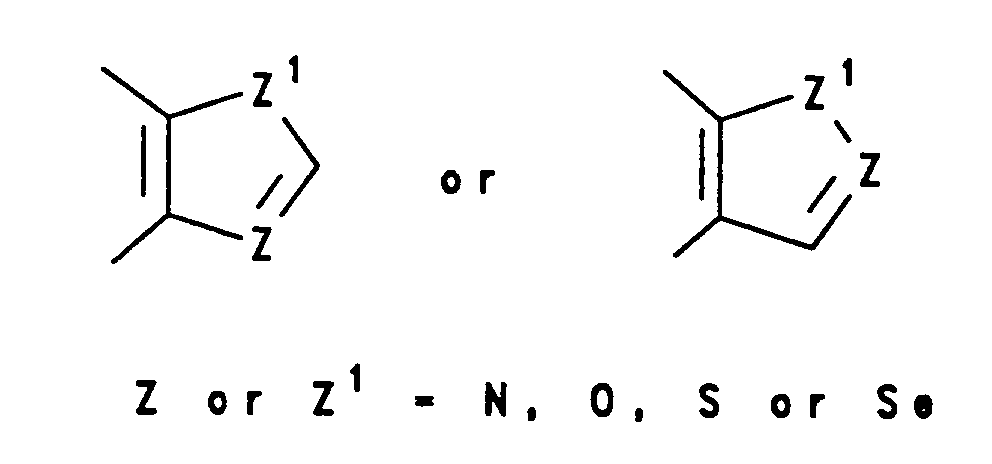
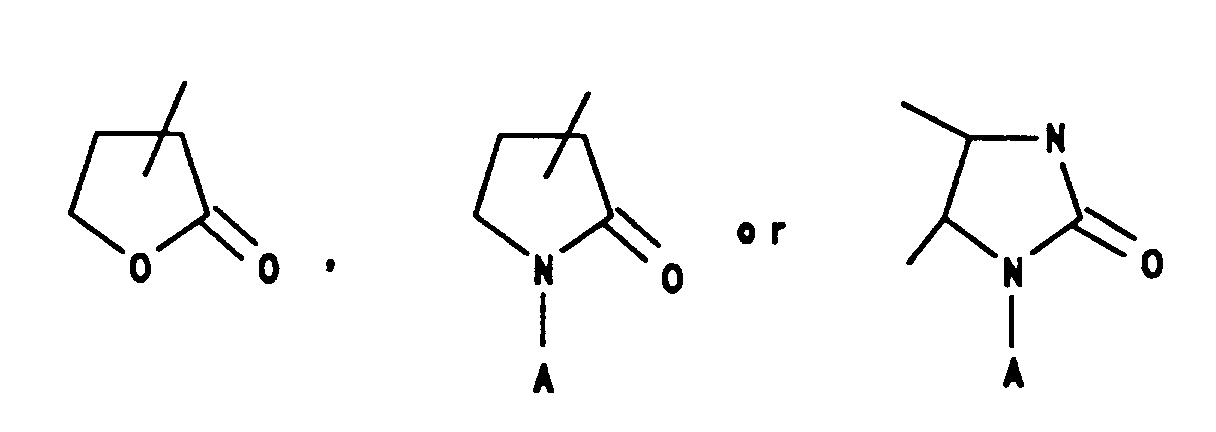
or a six membered aromatic ring with one to three N heteroatoms, or a six membered saturated ring with one or two N, O, S or Se heteroatoms and an adjacent appended O heteroatom; (C₁-C₄)alkoxycarbonyl group selected from methoxycarbonyl, ethoxycarbonyl, straight or branched propoxycarbonyl, allyloxycarbonyl or straight or branched butoxycarbonyl; RaRbamino(C₁-C₄)alkoxy group, wherein RaRb is a straight or branched (C₁-C₄)alkyl selected from methyl, ethyl, n-propyl, 1-methylethyl, n-butyl, 1-methylpropyl, or 2-methylpropyl or RaRb is (CH₂)n, n=2-6, or -(CH₂)₂W(CH₂)₂- wherein W is selected from -N(C₁-C₃)alkyl [straight or branched], -NH, -NOB [B is selected from hydrogen or (C₁-C₃)alkyl], O or S; or RaRbaminoxy group, wherein RaRb is a straight or branched (C₁-C₄)alkyl selected from methyl, ethyl, n-propyl, 1-methylethyl, n-butyl, 1-methylpropyl, or 2-methylpropyl or RaRb is (CH₂)n, n=2-6, or -(CH₂)₂W(CH₂)₂- wherein W is selected from -N(C₁-C₃)alkyl [straight or branched], -NH, -NOB [B is selected from hydrogen or (C₁-C₃)alkyl], O or S;
and when R³ = R⁴(CH₂)nCO- and n = 2-4,
R⁴ is selected from amino; hydroxyamino; straight or branched mono(C₁-C₆)alkylamino group selected from methyl, ethyl, n-propyl, 1-methylethyl, n-butyl, 1-methylpropyl, 2-methylpropyl, 1,1-dimethylethyl, n-pentyl, 2-methylbutyl, 1,1-dimethylpropyl, 2,2-dimethylpropyl, 3-methylbutyl, n-hexyl, 1-methylpentyl, 1,1-dimethylbutyl, 2,2-dimethylbutyl, 3-methylpentyl, 1,2-dimethylbutyl, 1,3-dimethylbutyl or 1-methyl-1-ethylpropylamino and the diastereomers and enantiomers of said straight or branched mono(C₁-C₆)alkylamino group; (C₃-C₈)cycloalkylamino group selected from cyclopropyl, trans-1,2-dimethylcyclopropyl, cis-1,2-dimethylcyclopropyl, trans-2,3-dimethylcyclopropyl, cis-2,3-dimethylcyclopropyl, cyclobutyl, trans2,3-dimethylcyclobutyl, cis-2,3-dimethylcyclobutyl, cyclopentyl, cyclohexyl, cycloheptyl, cyclooctyl, bicyclo[2.2.1]hept-2-yl, bicyclo[2.2.2]oct-2-ylamino and the diastereomers and enantiomers of said (C₃-C₈)cycloalkylamino group; straight or branched chain di-(C₁-C₆)alkylamino group selected from dimethylamino, diethylamino, methyl(ethyl)amino, ethyl(1-methylethyl)amino or a combination of methyl, ethyl, n-propyl, 1-methylethyl, n-butyl, 1-methylpropyl, 2-methylpropyl, 1,1-dimethylethyl, n-pentyl, 2-methylbutyl, 1,1-dimethylpropyl, 2,2-dimethylpropyl, 3-methylbutyl, n-hexyl, 1-methylpentyl, 1,1-dimethylbutyl, 2,2-dimethylbutyl, 3-methylpentyl, 1,2-dimethylbutyl, 1,3-dimethylbutyl, 1-methyl-1-ethylpropylamino and the diastereomers and enantiomers straight or branched chain di-(C₁-C₆)alkylamino group; (C₁-C₆)alkoxyamino group selected from methoxy, ethoxy, propoxy, butoxy, pentoxy or hexoxyamino; (C₃-C₈)cycloalkoxyamino group selected from cyclopropoxy, trans-1,2-dimethylcyclopropoxy, cis-1,2-dimethylcyclopropoxy, trans-2,3-dimethylcyclopropoxy, cis-2,3-dimethylcyclopropoxy, cyclobutoxy, trans-2,3-dimethylcyclobutoxy, cis-2,3-dimethylcyclobutoxy, cyclopentoxy, cyclohexoxy, cycloheptyloxy, cyclooctoxy, bicyclo[2.2.1]hept-2-yloxy, bicyclo[2.2.1]oct-2-yloxyamino and the diastereomers and enantiomers of said (C₃-C₈)cycloalkoxyamino group; (C₇-C₁₀)aralkoxyamino group selected from benzyloxy, 2-phenylethoxy, α-phenylethoxy, (2-naphthyl)methoxy, (1-naphthyl)methoxy, or phenylpropoxyamino; (C₂-C₈)azacycloalkyl group selected from aziridinyl, azetidinyl, pyrrolidinyl, pyrrolinyl, piperidinyl, 2-methylpyrrolidinyl, cis-3,4-dimethylpyrrolidinyl, trans-3,4-dimethylpyrrolidinyl, 2-azabicyclo[2.1.1]hex-2-yl, 5-azabicyclo[2.1.1]hex-5-yl, 2-azabicyclo[2.2.1]hept-2-yl, 7-azabicyclo[2.2.1]hept-7-yl, 2-azabicyclo[2.2.2]oct-2-yl and the diastereomers and enantiomers of said (C₂-C₈)azacycloalkyl group; azaheterocycloalkyl group selected from morpholinyl, piperazinyl, 4-methylpiperazinyl, 4-hydroxypiperazinyl, 4-(C₁-C₄)alkoxypiperazinyl, thiamorpholinyl, tetrahydro-1,2-oxazinyl, isoxazolidinyl, pyrazolidinyl, 2-methylpyrazolidinyl, 2,5-diazabicyclo[2.2.2]hept-2-yl, 2,5-diaza-5-methylbicyclo[2.2.1]hept-2-yl and the diastereomers and enantiomers of said azaheterocycloalkyl group; azaheterocyclic group selected from 1-imidazolyl, 1-pyrrolyl, 1-(1,2,3-triazolyl), 4-(1,2,4-triazolyl), 1-tetrazolyl, or 2-tetrazolyl; carboxy(C₂-C₄)alkylamino group selected from aminoacetic acid, α-aminopropionic acid, or α-aminobutyric acid and their optical isomers; (heterocyclo)amino group selected from 2- or 3-furyl, 2- or 3-thienyl,2-, 3- or 4-pyridyl, 2- or 5-pyridazinyl, 2-pyrazinyl, or 2-(imidazolyl)amino and their substituted analogues (substitution selected from straight or branched (C₁-C₆)alkyl); (C₆-C₁₀)arylamino group selected from phenylamino or naphthylamino; substituted (C₆-C₁₀)arylamino group selected from 4-(acetamido)phenyl, 2-,3- or 4-halophenyl, 2-,3-, or 4-(C₁-C₄)alkylphenyl, or 2-,3- or 4-carboxyphenylamino; (C₇-C₁₀)arylalkylamino group selected from benzyl, 2-phenylethyl, α-phenylethyl, (2-naphthyl)methyl, (1-naphthyl)methyl or phenylpropylamino; (C₁-C₄)alkoxycarbonylamino group selected from tert-butoxycarbonylamino, allyloxycarbonylamino, methoxycarbonylamino, ethoxycarbonylamino or propoxycarbonylamino;
and when R³ = R4' (CH₂)nSO₂- and n = 0,
R4' is selected from amino; hydroxyamino; straight or branched mono(C₁-C₆)alkylamino group selected from methyl, ethyl, n-propyl, 1-methylethyl, n-butyl, 1-methylpropyl, 2-methylpropyl, 1,1-dimethylethyl, n-pentyl, 2-methylbutyl, 1,1-dimethylpropyl, 2,2-dimethylpropyl, 3-methylbutyl, n-hexyl, 1-methylpentyl, 1,1-dimethyl-butyl, 2,2-dimethylbutyl, 3-methylpentyl, 1,2-dimethylbutyl, 1,3-dimethylbutyl, 1-methyl-1-ethylpropylamino and the diastereomers and enantiomers of said straight or branched mono(C₁-C₆)alkylamino group; (C₃-C₈)cycloalkylamino group selected from cyclopropyl, trans-1,2-dimethylcyclopropyl, cis-1,2-dimethylcyclopropyl, trans-2,3-dimethylcyclopropyl, cis-2,3-dimethylcyclopropyl, cyclobutyl, trans-2,3-dimethylcyclobutyl, cis-2,3-dimethylcyclobutyl, cyclopentyl, cyclohexyl, cycloheptyl, cyclooctyl, bicyclo[2.2.1]hept-2-yl, bicyclo[2.2.2]oct-2-ylamino and the diastereomers and enantiomers of said (C₃-C₈)cycloalkylamino group; straight or branched chain di-(C₁-C₆)alkylamino group selected from dimethylamino, diethylamino, methyl(ethyl)amino, ethyl(1-methylethyl)amino or a combination of methyl, ethyl, n-propyl, 1-methylethyl, n-butyl, 1-methylpropyl, 2-methylpropyl, 1,1-dimethylethyl, n-pentyl, 2-methylbutyl, 1,1-dimethylpropyl, 2,2-dimethylpropyl, 3-methylbutyl, n-hexyl, 1-methylpentyl, 1,1-dimethylbutyl, 2,2-dimethylbutyl, 3-methylpentyl, 1,2-dimethylbutyl, 1,3-dimethylbutyl, 1-methyl-1-ethylpropylamino and the diastereomers and enantiomers of said straight or branched chain di-(C₁-C₆)alkylamino group; (C₁-C₆)alkoxyamino group selected from methoxy, ethoxy, propoxy, butoxy, pentoxy or hexoxyamino; (C₃-C₈)cycloalkoxyamino group selected from cyclopropoxy, trans-1,2-dimethylcyclopropoxy, cis-1,2-dimethylcyclopropoxy, trans-2,3-dimethylcyclopropoxy, cis-2,3-dimethylcyclopropoxy, cyclobutoxy, trans-2,3-dimethylcyclobutoxy, cis-2,3-dimethylcyclobutoxy, cyclopentoxy, cyclohexoxy, cycloheptyloxy, cyclooctoxy, bicyclo[2.2.1]hept-2-yloxy, bicyclo[2.2.1]oct-2-yl-oxyamino and the diastereomers and enantiomers of said (C₃-C₈)cycloalkoxyamino group; (C₇-C₁₀)aralkoxyamino group selected from benzyloxy, 2-phenylethoxy, α-phenylethoxy, (2-naphthyl)methoxy, (1-naphthyl)methoxy, or phenylpropoxyamino; (C₂-C₈)azacycloalkyl group selected from aziridinyl, azetidinyl, pyrrolidinyl, pyrrolinyl, piperidinyl, 2-methylpyrrolidinyl, cis-3,4-dimethylpyrrolidinyl, trans-3,4-dimethylpyrrolidinyl, 2-azabicyclo[2.1.1]hex-2-yl, 5-azabicyclo[2.1.1]hex-5-yl, 2-azabicyclo[2.2.1]hept-2-yl, 7-azabicyclo[2.2.1]hept-7-yl, 2-azabicyclo[2.2.2]oct-2-yl and the diastereomers and enantiomers of said (C₂-C₈)azacycloalkyl group; azaheterocycloalkyl group selected from morpholinyl, piperazinyl, 4-methylpiperazinyl, 4-hydroxypiperazinyl, 4-(C₁-C₄)alkoxypiperazinyl, thiamorpholinyl, tetrahydro-1,2-oxazinyl, isoxazolidinyl, pyrazolidinyl, 2-methylpyrazolidinyl, 2,5-diazabicyclo[2.2.2]hept-2-yl, 2,5-diaza-5-methylbicyclo[2.2.1]hept-2-yl and the diastereomers and enantiomers of said azaheterocycloalkyl group; azaheterocyclic group selected from 1-imidazolyl, 1-pyrrolyl, 1-(1,2,3-triazolyl), 4-(1,2,4-triazolyl), 1-tetrazolyl, or 2-tetrazolyl; (C₆-C₁₀)arylamino group selected from phenylamino or naphthylamino; (C₇-C₁₀)arylalkylamino group selected from benzyl, 2-phenylethyl, α-phenylethyl, (2-naphthyl)methyl, (1-naphthyl)methyl or phenylpropylamino; straight or branched (C₁-C₄)alkyl group selected from methyl, ethyl, n-propyl, 1-methylethyl, n-butyl, 1-methylpropyl, 2-methylpropyl or 1,1-dimethylethyl; (C₃-C₆)cycloalkyl group selected from cyclopropyl, cyclobutyl, cyclopentyl or cyclohexyl; substituted (C₃-C₆)cycloalkyl group (substitution selected from (C₁-C₃)alkyl, cyano, amino or (C₁-C₃)acyl); (C₆-C₁₀)aryl group selected from phenyl, α-naphthyl or β-naphthyl; substituted (C₆-C₁₀)aryl group (substitution selected from halo, (C₁-C₄)alkoxy, trihalo(C₁-C₃)alkyl, nitro, amino, cyano, (C₁-C₄)alkoxycarbonyl, (C₁-C₃)alkylamino or carboxy); (C₇-C₉)aralkyl group; halo(C₁-C₃)alkyl group; a heterocycle group selected from a five membered aromatic or saturated ring with one N, O, S or Se heteroatom optionally having a benzo or pyrido ring fused thereto:


or a six membered aromatic ring with one to three N heteroatoms, or a six membered saturated ring with one or two N, O, S or Se heteroatoms and an adjacent appended O heteroatom; RaRbamino(C₁-C₄)alkoxy group, wherein RaRb is a straight or branched (C₁-C₄)alkyl selected from methyl, ethyl, n-propyl, 1-methylethyl, n-butyl, 1-methylpropyl, or 2-methylpropyl or RaRb is (CH₂)n, n=2-6, or -(CH₂)₂W(CH₂)₂- wherein W is selected from -N(C₁-C₃)alkyl [straight or branched], -NH, -NOB [B is selected from hydrogen or (C₁-C₃)alkyl], O or S; or RaRbaminoxy group, wherein RaRb is a straight or branched (C₁-C₄)alkyl selected from methyl, ethyl, n-propyl, 1-methylethyl, n-butyl, 1-methylpropyl, or 2-methylpropyl or RaRb is (CH₂)n, n=2-6, or -(CH₂)₂W(CH₂)₂- wherein W is selected from -N(C₁-C₃)alkyl [straight or branched], -NH, -NOB [B is selected from hydrogen or (C₁-C₃)alkyl], O or S;
and when R³ = R4' (CH₂)nSO₂- and n= 1-4,
R4' is selected from hydrogen; straight or branched (C₁-C₄)alkyl group selected from methyl, ethyl, n-propyl, 1-methylethyl, n-butyl, 1-methylpropyl, 2-methylpropyl or 1,1-dimethylethyl; (C₁-C₄)carboxyalkyl group; (C₃-C₆)cycloalkyl group selected from cyclopropyl, cyclobutyl, cyclopentyl or cyclohexyl; substituted (C₃-C₆)cycloalkyl group (substitution selected from (C₁-C₃)alkyl, cyano, amino or (C₁-C₃)acyl); (C₆-C₁₀)aryl group selected from phenyl, α-naphthyl or β-naphthyl; substituted (C₆-C₁₀)aryl group (substitution selected from halo, (C₁-C₄)alkoxy, trihalo(C₁-C₃)alkyl, nitro, amino, cyano, (C₁-C₄)alkoxycarbonyl, (C₁-C₃)alkylamino or carboxy); (C₇-C₉)aralkyl group selected from benzyl, 1-phenylethyl, 2-phenylethyl or phenylpropyl; (C₁-C₄)alkoxy group; C₆-aryloxy group selected from phenoxy or substituted phenoxy (substitution selected from halo, (C₁-C₃)alkyl, nitro, cyano, thiol, amino, carboxy, di-(C₁-C₃)alkylamino); (C₇-C₁₀)aralkyloxy group; RaRbamino(C₁-C₄)alkoxy group, wherein RaRb is a straight or branched (C₁-C₄)alkyl selected from methyl, ethyl, n-propyl, 1-methylethyl, n-butyl, 1-methylpropyl, or 2-methylpropyl or RaRb is (CH₂)n, n=2-6, or -(CH₂)₂W(CH₂)₂- wherein W is selected from -N(C₁-C₃)alkyl [straight or branched], -NH, -NOB [B is selected from hydrogen or (C₁-C₃)alkyl], O or S; or RaRbaminoxy group, wherein RaRb is a straight or branched (C₁-C₄)alkyl selected from methyl, ethyl, n-propyl, 1-methylethyl, n-butyl, 1-methylpropyl, or 2-methylpropyl or RaRb is (CH₂)n, n=2-6, or -(CH₂)₂W(CH₂)₂- wherein W is selected from -N(C₁-C₃)alkyl [straight or branched], -NH, -NOB [B is selected from hydrogen or (C₁-C₃)alkyl], O or S; (C₁-C₃)alkylthio group selected from methylthio, ethylthio or n-propylthio; C₆-arylthio group selected from phenylthio or substituted phenylthio (substitution selected from halo, (C₁-C₃)alkyl, nitro, cyano, thiol, amino, carboxy, di-(C₁-C₃)alkylamino); (C₇-C₈)aralkylthio group; a heterocycle group selected from a five membered aromatic or saturated ring with one N, O, S or Se heteroatom optionally having a benzo or pyrido ring fused thereto:


or a six membered aromatic ring with one to three N heteroatoms, or a six membered saturated ring with one or two N, O, S or Se heteroatoms and an adjacent appended O heteroatom; hydroxy group; mercapto group; amino; hydroxyamino; straight or branched mono(C₁-C₆)alkylamino group selected from methyl, ethyl, n-propyl, 1-methylethyl, n-butyl, 1-methylpropyl, 2-methylpropyl, 1,1-dimethylethyl, n-pentyl, 2-methylbutyl, 1,1-dimethylpropyl, 2,2-dimethylpropyl, 3-methylbutyl, n-hexyl, 1-methylpentyl, 1,1-dimethylbutyl, 2,2-dimethylbutyl, 3-methylpentyl, 1,2-dimethylbutyl, 1,3-dimethylbutyl, 1-methyl-1-ethylpropylamino and the diastereomers and enantiomers of said straight or branched mono(C₁-C₆)alkylamino group; (C₃-C₈)cycloalkylamino group selected from cyclopropyl, trans-1,2-dimethylcyclopropyl, cis-1,2-dimethylcyclopropyl, trans-2,3-dimethylcyclopropyl, cis-2,3-dimethylcyclopropyl, cyclobutyl, trans-2,3-dimethylcyclobutyl, cis-2,3-dimethylcyclobutyl, cyclopentyl, cyclohexyl, cycloheptyl, cyclooctyl, bicyclo[2.2.1]hept-2-yl, bicyclo[2.2.2]oct-2-ylamino and the diastereomers and enantiomers of said (C₃-C₈)cycloalkylamino group; straight or branched chain di-(C₁-C₆)alkylamino group selected from dimethylamino, diethylamino, methyl(ethyl)amino, ethyl(1-methylethyl)amino or a combination of methyl, ethyl, n-propyl, 1-methylethyl, n-butyl, 1-methylpropyl, 2-methylpropyl, 1,1-dimethylethyl, n-pentyl, 2-methylbutyl, 1,1-dimethylpropyl, 2,2-dimethylpropyl, 3-methylbutyl, n-hexyl, 1-methylpentyl, 1,1-dimethylbutyl, 2,2-dimethylbutyl, 3-methylpentyl, 1,2-dimethylbutyl, 1,3-dimethylbutyl, 1-methyl-1-ethylpropylamino and the diastereomers and enantiomers of said straight or branched chain di-(C₁-C₆)alkylamino group; (C₁-C₆)alkoxyamino group selected from methoxy, ethoxy, propoxy, butoxy, pentoxy or hexoxyamino; (C₃-C₈)cycloalkoxyamino group selected from cyclopropoxy, trans-1,2-dimethylcyclopropoxy, cis-1,2-dimethylcyclopropoxy, trans-2,3-dimethylcyclopropoxy, cis-2,3-dimethylcyclopropoxy, cyclobutoxy, trans-2,3-dimethylcyclobutoxy, cis-2,3-dimethylcyclobutoxy, cyclopentoxy, cyclohexoxy, cycloheptyloxy, cyclooctoxy, bicyclo[2.2.1]hept-2-yloxy, bicyclo[2.2.1]oct-2-yl-oxyamino and the diastereomers and enantiomers of said (C₃-C₈)cycloalkoxyamino group; (C₇-C₁₀)aralkoxyamino group selected from benzyloxy, 2-phenylethoxy, α-phenylethoxy, (2-naphthyl)methoxy, (1-naphthyl)methoxy, or phenylpropoxyamino; (C₂-C₈)azacycloalkyl group selected from aziridinyl, azetidinyl, pyrrolidinyl, pyrrolinyl, piperidinyl, 2-methylpyrrolidinyl, cis-3,4-dimethylpyrrolidinyl, trans-3,4-dimethylpyrrolidinyl, 2-azabicyclo[2.1.1]hex-2-yl, 5-azabicyclo[2.1.1]hex-5-yl, 2-azabicyclo[2.2.1]hept-2-yl, 7-azabicyclo[2.2.1]hept-7-yl, 2-azabicyclo[2.2.2]oct-2-yl and the diastereomers and enantiomers of said (C₂-C₈)azacycloalkyl group; azaheterocycloalkyl group selected from morpholinyl, piperazinyl, 4-methylpiperazinyl, 4-hydroxypiperazinyl, 4-(C₁-C₄)alkoxypiperazinyl, thiamorpholinyl, tetrahydro-1,2-oxazinyl, isoxazolidinyl, pyrazolidinyl, 2-methylpyrazolidinyl, 2,5-diazabicyclo[2.2.2]hept-2-yl, 2,5-diaza-5-methylbicyclo[2.2.1]hept-2-yl and their diastereomers and enantiomers of said azaheterocycloalkyl group; azaheterocyclic group selected from 1-imidazolyl, 1-pyrrolyl, 1-(1,2,3-triazolyl), 4-(1,2,4-triazolyl), 1-tetrazolyl, or 2-tetrazolyl; (C₆-C₁₀)arylamino group selected from phenylamino or naphthylamino; (C₇-C₁₀)arylalkylamino group selected from benzyl, 2-phenylethyl, α-phenylethyl, (2-naphthyl)methyl, (1-naphthyl)methyl or phenylpropylamino; halo(C₁-C₃)alkyl group; acyl or haloacyl group selected from acetyl, propionyl, chloroacetyl, trifluoroacetyl, (C₃-C₆)cycloalkylcarbonyl, (C₆-C₁₀)aroyl selected from benzoyl or naphthoyl, halo substituted (C₆-C₁₀)aroyl, or (heterocycle)carbonyl, the heterocycle selected from a five membered aromatic or saturated ring with one N, O, S or Se heteroatom optionally having a benzo or pyrido ring fused thereto:


or a six membered aromatic ring with one to three N heteroatoms, or a six membered saturated ring with one or two N, O, S or Se heteroatoms and an adjacent appended O heteroatom; (C₁-C₄)alkoxycarbonyl group selected from methoxycarbonyl, ethoxycarbonyl, straight or branched propoxycarbonyl, allyloxycarbonyl or straight or branched butoxycarbonyl; R⁵ is selected from hydrogen; straight or branched (C₁-C₃)alkyl group selected from methyl, ethyl, n-propyl or 1-methylethyl; (C₆-C₁₀)aryl group selected from phenyl, α-naphthyl or β-naphthyl; (C₇-C₉)aralkyl group; a heterocycle group selected from a five membered aromatic or saturated ring with one N, O, S or Se heteroatom optionally having a benzo or pyrido ring fused thereto:


or a six membered aromatic ring with one to three N heteroatoms, or a six membered saturated ring with one or two N, O, S or Se heteroatoms and an adjacent appended O heteroatom; or -(CH₂)nCOOR⁷ where n=0-4 and R⁷ is selected from hydrogen; straight or branched (C₁-C₃)alkyl group selected from methyl, ethyl, n-propyl or 1-methylethyl; or (C₆-C₁₀)aryl group selected from phenyl, α-naphthyl, β-naphthyl; R⁶ is selected from hydrogen; straight or branched (C₁-C₃)alkyl group selected from methyl, ethyl, n-propyl or 1-methylethyl; (C₆-C₁₀)aryl group selected from phenyl, α-naphthyl or β-naphthyl; (C₇-C₉)aralkyl group; a heterocycle group selected from a five membered aromatic or saturated ring with one N, O, S or Se heteroatom optionally having a benzo or pyrido ring fused thereto: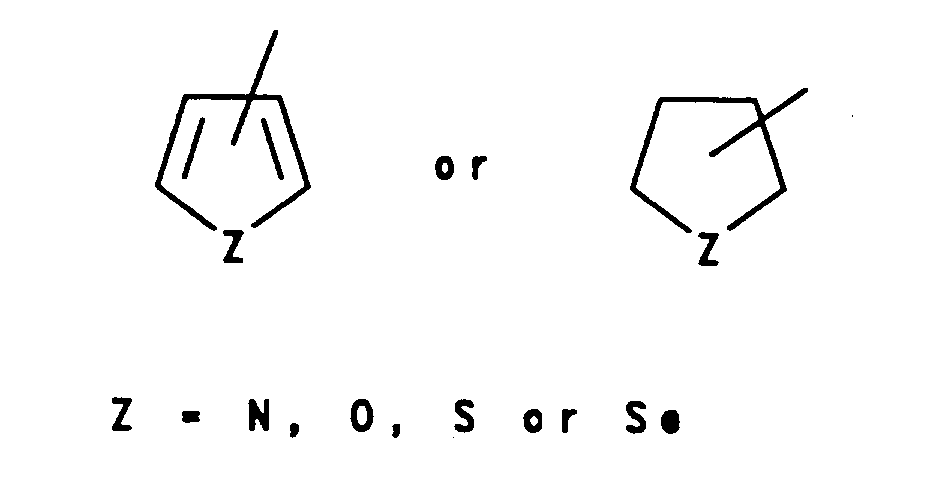


or a six membered aromatic ring with one to three N heteroatoms, or a six membered saturated ring with one or two N, O, S or Se heteroatoms and an adjacent appended O heteroatom; or -(CH₂)nCOOR7' where n=0-4 and R7' is selected from hydrogen; straight or branched (C₁-C₃)alkyl selected from methyl, ethyl, n-propyl or 1-methylethyl; or (C₆-C₁₀)aryl selected from phenyl, α-naphthyl or β-naphthyl; with the proviso that R⁵ and R⁶ cannot both be hydrogen;
or R⁵ and R⁶ taken together are -(CH₂)₂W(CH₂)₂-, wherein W is selected from (CH₂)n and n=0-1, -NH, -N(C₁-C₃)alkyl [straight or branched], -N(C₁-C₄)alkoxy, oxygen, sulfur or substituted congeners selected from (L or D)proline, ethyl(L or D)prolinate, morpholine, pyrrolidine or piperidine; and the pharmacologically acceptable organic and inorganic salts or metal complexes. - A compound according to Claim 1, wherein:
X is selected from halogen or trifluoromethylsulfonyloxy; the halogen is selected from bromine, chlorine, or fluorine;
R and R¹ are the same or different and are selected from hydrogen; amino; halogen (selected from chlorine, bromine, fluorine or iodine); or -NR²R³;
and when R or R¹ = -NR²R³ and R² = methyl or ethyl;
R³ = methyl or ethyl,
and when R or R¹ = -NR²R³ and R² = hydrogen,
R³ is selected from R⁴(CH₂)nCO- or R4' (CH₂)nSO₂-;
and when R³ = R⁴(CH₂)nCO- and n=0,
R⁴ is selected from hydrogen; straight or branched (C₁-C₂)alkyl group selected from methyl or ethyl; a heterocycle group selected from a five membered aromatic or saturated ring with one N, O, or S heteroatom optionally having a benzo or pyrido ring fused thereto:

and when R³ = R⁴(CH₂)nCO- and n=1-4,
R⁴ is selected from hydrogen; (C₁-C₂)alkyl group selected from methyl or ethyl; (C₆-C₁₀)aryl group selected from phenyl, α-naphthyl or β-naphthyl;
and when R³ = R4' (CH₂)nSO₂- and n = 0,
R4' is selected from straight or branched (C₁-C₂)alkyl group selected from methyl or ethyl; (C₆-C₁₀)aryl group selected from phenyl, α-naphthyl or β-naphthyl;
R⁵ is selected from hydrogen; straight or branched (C₁-C₃)alkyl group selected from methyl, ethyl, n-propyl or 1-methylethyl;
R⁶ is selected from hydrogen; straight or branched (C₁-C₃)alkyl group selected from methyl, ethyl, n-propyl or 1-methylethyl; with the proviso that R⁵ and R⁶ cannot both be hydrogen;
or R⁵ and R⁶ taken together are -(CH₂)₂W(CH₂)₂-, wherein W is selected from (CH₂)n and n=0-1, -NH, -N(C₁-C₃)alkyl [straight or branched], -N(C₁-C₄)alkoxy, oxygen, sulfur or substituted congeners selected from (L or D)proline, ethyl(L or D)prolinate, morpholine, pyrrolidine or piperidine; and the pharmacologically acceptable organic and inorganic salts or metal complexes. - A compound of the formula:

Y is selected from -N₂⁺Cl⁻ or -N₃;
R or R¹ is selected from nitro; amino; halogen (selected from chlorine, bromine, fluorine or iodine); cyano; hydroxy; or -NR²R³;
and when R or R¹ = -NR²R³ and R² = hydrogen,
R³ = methyl, ethyl, n-propyl, 1-methylethyl, n-butyl, 1-methylpropyl, 2-methylpropyl or 1,1-dimethylethyl;
and when R² = methyl or ethyl,
R³ = methyl, ethyl, n-propyl, 1-methylethyl, n-butyl, 1-methylpropyl or 2-methylpropyl;
and when R² = n-propyl,
R³ = n-propyl, 1-methylethyl, n-butyl, 1-methylpropyl or 2-methylpropyl;
and when R² = 1-methylethyl,
R³ = n-butyl, 1-methylpropyl or 2-methylpropyl;
and when R² = n-butyl,
R³ = n-butyl, 1-methylpropyl or 2-methylpropyl;
and when R² = 1-methylpropyl,
R³ = 2-methylpropyl;
and when R or R¹ = -NR²R³ and R² = hydrogen,
R³ is selected from R⁴(CH₂)nCO- or R4' (CH₂)nSO₂-;
and when R³ = R⁴(CH₂)nCO- and n=0,
R⁴ is selected from hydrogen; amino; hydroxyamino; straight or branched mono(C₁-C₆)alkylamino group selected from methyl, ethyl, n-propyl, 1-methylethyl, n-butyl, 1-methylpropyl, 2-methylpropyl, 1,1-dimethylethyl, n-pentyl, 2-methylbutyl, 1,1-dimethylpropyl, 2,2-dimethylpropyl, 3-methylbutyl, n-hexyl, 1-methylpentyl, 1,1-dimethylbutyl, 2,2-dimethylbutyl, 3-methylpentyl, 1,2-dimethylbutyl, 1,3-dimethylbutyl, 1-methyl-1-ethylpropylamino and the diastereomers and enantiomers of said straight or branched mono(C₁-C₆)alkylamino group; (C₃-C₈)cycloalkylamino group selected from cyclopropyl, trans-1,2-dimethylcyclopropyl, cis-1,2-dimethylcyclopropyl, trans-2,3-dimethylcyclopropyl, cis-2,3-dimethylcyclopropyl, cyclobutyl, trans-2,3-dimethylcyclobutyl, cis-2,3-dimethylcyclobutyl, cyclopentyl, cyclohexyl, cycloheptyl, cyclooctyl, bicyclo[2.2.1]hept-2-yl, bicyclo[2.2.2]oct-2-ylamino and the diastereomers and enantiomers of said (C₃-C₈)cycloalkylamino group; straight or branched chain di-(C₁-C₆)alkylamino group selected from dimethylamino, diethylamino, methyl(ethyl)amino, ethyl(1-methylethyl)amino or a combination of methyl, ethyl, n-propyl, 1-methylethyl, n-butyl, 1-methylpropyl, 2-methylpropyl, 1,1-dimethylethyl, n-pentyl, 2-methylbutyl, 1,1-dimethylpropyl, 2,2-dimethylpropyl, 3-methylbutyl, n-hexyl, 1-methylpentyl, 1,1-dimethylbutyl, 2,2-dimethylbutyl, 3-methylpentyl, 1,2-dimethylbutyl, 1,3-dimethylbutyl, 1-methyl-1-ethylpropylamino and the diastereomers and enantiomers of said straight or branched chain di(C₁-C₆)alkylamino group; (C₁-C₆)alkoxyamino group selected from methoxy, ethoxy, propoxy, butoxy, pentoxy or hexoxyamino; (C₃-C₈)cycloalkoxyamino group selected from cyclopropoxy, trans-1,2-dimethylcyclopropoxy, cis-1,2-dimethylcyclopropoxy, trans-2,3-dimethylcyclopropoxy, cis-2,3-dimethylcyclopropoxy, cyclobutoxy, trans-2,3-dimethylcyclobutoxy, cis-2,3-dimethylcyclobutoxy, cyclopentoxy, cyclohexoxy, cycloheptyloxy, cyclooctoxy, bicyclo[2.2.1]hept-2-yloxy, bicyclo[2.2.1]oct-2-yloxyamino and the diastereomers and enantiomers of said (C₃-C₈)cycloalkoxyamino group; (C₇-C₁₀)aralkoxyamino group selected from benzyloxy, 2-phenylethoxy, α-phenylethoxy, (2-naphthyl)methoxy, (1-naphthyl)methoxy, or phenylpropoxyamino; (C₂-C₈)azacycloalkyl group selected from aziridinyl, azetidinyl, pyrrolidinyl, pyrrolinyl, piperidinyl, 2-methylpyrrolidinyl, cis-3,4-dimethylpyrrolidinyl, trans-3,4-dimethylpyrrolidinyl, 2-azabicyclo[2.1.1]hex-2-yl, 5-azabicyclo[2.1.1]hex-5-yl, 2-azabicyclo[2.2.1]hept-2-yl, 7-azabicyclo[2.2.1]hept-7-yl, or 2-azabicyclo[2.2.2]oct-2-yl and where appropriate their diastereomers and enantiomers; azaheterocycloalkyl group selected from morpholinyl, piperazinyl, 4-methylpiperazinyl, 4-hydroxypiperazinyl, 4-(C₁-C₄)alkoxypiperazinyl, thiamorpholinyl, tetrahydro-1,2-oxazinyl, isoxazolidinyl, pyrazolidinyl, 2-methylpyrazolidinyl, 2,5-diazabicyclo[2.2.2]hept-2-yl, or 2,5-diaza-5-methylbicyclo[2.2.1]hept-2-yl and where appropriate their diastereomers and enantiomers; azaheterocyclic group selected from 1-imidazolyl, 1-pyrrolyl, 1-(1,2,3-triazolyl), 4-(1,2,4-triazolyl), 1-tetrazolyl, or 2-tetrazolyl; (C₆-C₁₀)arylamino group selected from phenylamino or naphthylamino; (C₇-C₁₀)arylalkylamino group selected from benzyl, 2-phenylethyl, α-phenylethyl, (2-naphthyl)methyl, (1-naphthyl)methyl or phenylpropylamino; straight or branched (C₁-C₄)alkyl group selected from methyl, ethyl, n-propyl, 1-methylethyl, n-butyl, 1-methylpropyl, 2-methylpropyl or 1,1-dimethylethyl; (C₃-C₆)cycloalkyl group selected from cyclopropyl, cyclobutyl, cyclopentyl or cyclohexyl; substituted (C₃-C₆)cycloalkyl group (substitution selected from (C₁-C₃)alkyl, cyano, amino or (C₁-C₃)acyl); (C₆-C₁₀)aryl group selected from phenyl, α-naphthyl or β-naphthyl; substituted (C₆-C₁₀)aryl group (substitution selected from halo, (C₁-C₄)alkoxy, trihalo(C₁-C₃)alkyl, nitro, amino, cyano, (C₁-C₄)alkoxycarbonyl, (C₁-C₃)alkylamino or carboxy); (C₇-C₉)aralkyl group selected from benzyl, 1-phenylethyl, 2-phenylethyl or phenylpropyl; α-hydroxy(C₁-C₃)alkyl group selected from hydroxymethyl, α-hydroxyethyl, α-hydroxy-1-methylethyl or α-hydroxypropyl; α-mercapto(C₁-C₃)alkyl group selected from mercaptomethyl, α-mercaptoethyl, α-mercapto-1-methylethyl or α-mercaptopropyl; halo(C₁-C₃)alkyl group; a heterocycle group selected from a five membered aromatic or saturated ring with one N, O, S or Se heteroatom optionally having a benzo or pyrido ring fused thereto:


or a six membered aromatic ring with one to three N heteroatoms, or a six membered saturated ring with one or two N, O, S or Se heteroatoms and an adjacent appended O heteroatom; acyl or haloacyl group selected from acetyl, propionyl, chloroacetyl, trifluoroacetyl, (C₃-C₆)cycloalkylcarbonyl, (C₆-C₁₀)aroyl selected from benzoyl or naphthoyl, halo substituted (C₆-C₁₀)aroyl, (C₁-C₄)alkylbenzoyl, or (heterocycle)carbonyl, the heterocycle selected from a five membered aromatic or saturated ring with one N, O, S or Se heteroatom optionally having a benzo or pyrido ring fused thereto:


or a six membered aromatic ring with one to three N heteroatoms, or a six membered saturated ring with one or two N, O, S or Se heteroatoms and an adjacent appended O heteroatom; (C₁-C₄)alkoxycarbonyl group selected from methoxycarbonyl, ethoxycarbonyl, straight or branched propoxylcarbonyl, straight or branched butoxycarbonyl or allyloxycarbonyl; vinyl or substituted vinyl group [substitution selected from (C₁-C₃)alkyl group, halogen, (C₆-C₁₀)aryl group selected from phenyl, α-naphthyl, β-naphthyl, substituted (C₆-C₁₀)aryl group (substitution selected from halo, (C₁-C₄)alkoxy, trihalo(C₁-C₃)alkyl, nitro, amino, cyano, (C₁-C₄)alkoxycarbonyl, (C₁-C₃)alkylamino or carboxy), halo(C₁-C₃)alkyl group, a heterocycle group selected from a five membered aromatic or saturated ring with one N, O, S or Se heteroatom optionally having a benzo or pyrido ring fused thereto:
and when R³ = R⁴(CH₂)nCO- and n=1-4,
R⁴ is selected from hydrogen; straight or branched (C₁-C₄)alkyl group selected from methyl, ethyl, n-propyl, 1-methylethyl, n-butyl, 1-methylpropyl, 2-methylpropyl or 1,1-dimethylethyl; (C₃-C₆)cycloalkyl group selected from cyclopropyl, cyclobutyl, cyclopentyl or cyclohexyl; substituted (C₃-C₆)cycloalkyl group (substitution selected from (C₁-C₃)alkyl, cyano, amino or (C₁-C₃)acyl); (C₆-C₁₀)aryl group selected from phenyl, α-naphthyl or β-naphthyl; substituted(C₆-C₁₀)aryl group (substitution selected from halo, (C₁-C₄)alkoxy, trihalo(C₁-C₃)alkyl, nitro, amino, cyano, (C₁-C₄)alkoxy-carbonyl, (C₁-C₃)alkylamino or carboxy); (C₇-C₉)aralkyl group; acyloxy or haloacyloxy group, selected from acetyl, propionyl, chloroacetyl, trichloroacetyl, (C₃-C₆)cycloalkylcarbonyl, (C₆-C₁₀)aroyl selected from benzoyl or naphthoyl, halo substituted (C₆-C₁₀)aroyl, (C₁-C₄)alkylbenzoyl, (heterocycle)carbonyl, the heterocycle selected from a five membered aromatic or saturated ring with one N, O, S or Se heteroatom optionally having a benzo or pyrido ring fused thereto:


or a six membered aromatic ring with one to three N heteroatoms, or a six membered saturated ring with one or two N, O, S or Se heteroatoms and an adjacent appended O heteroatom; (C₁-C₄)alkoxy group; C₆-aryloxy group selected from phenoxy or substituted phenoxy (substitution selected from halo, (C₁-C₄)alkyl, nitro, cyano, thiol, amino, carboxy, di-(C₁-C₃)alkylamino); (C₇-C₁₀)aralkyloxy group; (C₁-C₃)alkylthio group selected from methylthio, ethylthio, propylthio or allylthio; C₆-arylthio group selected from phenylthio or substituted phenylthio (substitution selected from halo, (C₁-C₄)alkyl, nitro, cyano, thiol, amino, carboxy, di-(C₁-C₃)alkylamino); C₆-arylsulfonyl group selected from phenylsulfonyl or substituted phenylsulfonyl (substitution selected from halo, (C₁-C₄)alkoxy, trihalo(C₁-C₃)alkyl, nitro, amino, cyano, (C₁-C₄)alkoxycarbonyl, (C₁-C₃)alkylamino or carboxy); (C₇-C₈)aralkylthio group; a heterocycle group selected from a five membered aromatic or saturated ring with one N, O, S or Se heteroatom optionally having a benzo or pyrido ring fused thereto:


or a six membered aromatic ring with one to three N heteroatoms, or a six membered saturated ring with one or two N, O, S or Se heteroatoms and an adjacent appended O heteroatom; hydroxy group; mercapto group; α-hydroxy(C₁-C₃)alkyl group selected from hydroxymethyl, α-hydroxyethyl or α-hydroxy-1-methylethyl or α-hydroxypropyl; halo(C₁-C₃)alkyl group; acyl or haloacyl group selected from acetyl, propionyl, chloroacetyl, trifluoroacetyl, (C₃-C₆)cycloalkylcarbonyl, (C₆-C₁₀)aroyl selected from benzoyl or naphthoyl, halo substituted (C₆-C₁₀)aroyl, (C₁-C₄)alkylbenzoyl, or (heterocycle)carbonyl, the heterocycle selected from a five membered aromatic or saturated ring with one N, O, S or Se heteroatom optionally having a benzo or pyrido ring fused thereto:


or a six membered aromatic ring with one to three N heteroatoms, or a six membered saturated ring with one or two N, O, S or Se heteroatoms and an adjacent appended O heteroatom; (C₁-C₄)alkoxycarbonyl group selected from methoxycarbonyl, ethoxycarbonyl, straight or branched propoxycarbonyl, allyloxycarbonyl or straight butoxycarbonyl; RaRbamino(C₁-C₄)alkoxy group, wherein RaRb is a straight or branched (C₁-C₄)alkyl selected from methyl, ethyl, n-propyl, 1-methylethyl, n-butyl, 1-methylpropyl, or 2-methylpropyl or RaRb is (CH₂)n, n=2-6, or -(CH₂)₂W(CH₂)₂- wherein W is selected from -N(C₁-C₃)alkyl [straight or branched], -NH, -NOB [B is selected from hydrogen or (C₁-C₃)alkyl], O or S; or RaRbaminoxy group, wherein RaRb is a straight or branched (C₁-C₄)alkyl selected from methyl, ethyl, n-propyl, 1-methylethyl, n-butyl, 1-methylpropyl, or 2-methylpropyl or RaRb is (CH₂)n, n=2-6, or -(CH₂)₂W(CH₂)₂- wherein W is selected from -N(C₁-C₃)alkyl [straight or branched], -NH, -NOB [B is selected from hydrogen or (C₁-C₃)alkyl], O or S;
and when R³ = R⁴(CH₂)nCO- and n = 2-4,
R⁴ is selected from amino; hydroxyamino; straight or branched mono(C₁-C₆)alkylamino group selected from methyl, ethyl, n-propyl, 1-methylethyl, n-butyl, 1-methylpropyl, 2-methylpropyl, 1,1-dimethylethyl, n-pentyl, 2-methylbutyl, 1,1-dimethylpropyl, 2,2-dimethylpropyl, 3-methylbutyl, n-hexyl, 1-methylpentyl, 1,1-dimethyl-butyl, 2,2-dimethylbutyl, 3-methylpentyl, 1,2-dimethylbutyl, 1,3-dimethylbutyl, 1-methyl-1-ethylpropylamino and the diastereomers and enantiomers of said straight or branched mono(C₁-C₆)alkylamino group; (C₃-C₈)cycloalkylamino group selected from cyclopropyl, trans-1,2-dimethylcyclopropyl, cis-1,2-dimethylcyclopropyl, trans-2,3-dimethylcyclopropyl, cis-2,3-dimethylcyclopropyl, cyclobutyl, trans-2,3-dimethylcyclobutyl, cis-2,3-dimethylcyclobutyl, cyclopentyl, cyclohexyl, cycloheptyl, cyclooctyl, bicyclo[2.2.1]hept-2-yl, bicyclo[2.2.2]oct-2-ylamino and the diastereomers and enantiomers of said (C₃-C₈)cycloalkylamino group; straight or branched chain di-(C₁-C₆)alkylamino group selected from dimethylamino, diethylamino, methyl(ethyl)amino, ethyl(1-methylethyl)amino or a combination of methyl, ethyl, n-propyl, 1-methylethyl, n-butyl, 1-methylpropyl, 2-methylpropyl, 1,1-dimethylethyl, n-pentyl, 2-methylbutyl, 1,1-dimethylpropyl, 2,2-dimethylpropyl, 3-methylbutyl, n-hexyl, 1-methylpentyl, 1,1-dimethylbutyl, 2,2-dimethylbutyl, 3-methylpentyl, 1,2-dimethylbutyl, 1,3-dimethylbutyl, 1-methyl-1-ethylpropylamino and the diastereomers and enantiomers of said straight or branched chain di-(C₁-C₆)alkylamino group; (C₁-C₆)alkoxyamino group selected from methoxy, ethoxy, propoxy, butoxy, pentoxy or hexoxyamino; (C₃-C₈)cycloalkoxyamino group selected from cyclopropoxy, trans-1,2-dimethylcyclopropoxy, cis-1,2-dimethylcyclopropoxy, trans-2,3-dimethylcyclopropoxy, cis-2,3-dimethylcyclopropoxy, cyclobutoxy, trans-2,3-dimethylcyclobutoxy, cis-2,3-dimethylcyclobutoxy, cyclopentoxy, cyclohexoxy, cycloheptyloxy, cyclooctoxy, bicyclo[2.2.1]hept-2-yloxy, bicyclo[2.2.1]oct-2-yloxyamino and the diastereomers and enantiomers of said (C₃-C₈)cycloalkoxyamino group; (C₇-C₁₀)aralkoxyamino group selected from benzyloxy, 2-phenylethoxy, α-phenylethoxy, (2-naphthyl)methoxy, (1-naphthyl)methoxy, or phenylpropoxyamino; (C₂-C₈)azacycloalkyl group selected from aziridinyl, azetidinyl, pyrrolidinyl, pyrrolinyl, piperidinyl, 2-methylpyrrolidinyl, cis-3,4-dimethylpyrrolidinyl, trans-3,4-dimethylpyrrolidinyl, 2-azabicyclo[2.1.1]hex-2-yl, 5-azabicyclo[2.1.1]hex-5-yl, 2-azabicyclo[2.2.1]hept-2-yl, 7-azabicyclo[2.2.1]hept-7-yl, 2-azabicyclo[2.2.2]oct-2-yl and the diastereomers and enantiomers of said (C₂-C₈)azacycloalkyl group; azaheterocycloalkyl group selected from morpholinyl, piperazinyl, 4-methylpiperazinyl, 4-hydroxypiperazinyl, 4-(C₁-C₄)alkoxypiperazinyl, thiamorpholinyl, tetrahydro-1,2-oxazinyl, isoxazolidinyl, pyrazolidinyl, 2-methylpyrazolidinyl, 2,5-diazabicyclo[2.2.2]hept-2-yl, 2,5-diaza-5-methylbicyclo[2.2.1]hept-2-yl and the diastereomers and enantiomers of said azaheterocycloalkyl group; azaheterocyclic group selected from 1-imidazolyl, 1-pyrrolyl, 1-(1,2,3-triazolyl), 4-(1,2,4-triazolyl), 1-tetrazolyl, or 2-tetrazolyl; (C₆-C₁₀)arylamino group selected from phenylamino or naphthylamino; (C₇-C₁₀)arylalkylamino group selected from benzyl, 2-phenylethyl, α-phenylethyl, (2-naphthyl)methyl, (1-naphthyl)methyl or phenylpropylamino; (C₁-C₄)alkoxycarbonylamino group selected from allyloxycarbonylamino, methoxycarbonylamino, ethoxycarbonylamino or propoxycarbonylamino;
and when R³ = R4' (CH₂)nSO₂- and n = 0,
R4' is selected from amino; hydroxyamino; straight or branched mono(C₁-C₆)alkylamino group selected from methyl, ethyl, n-propyl, 1-methylethyl, n-butyl, 1-methylpropyl, 2-methylpropyl, 1,1-dimethylethyl, n-pentyl, 2-methylbutyl, 1,1-dimethylpropyl, 2,2-dimethylpropyl, 3-methylbutyl, n-hexyl, 1-methylpentyl, 1,1-dimethylbutyl, 2,2-dimethylbutyl, 3-methylpentyl, 1,2-dimethylbutyl, 1,3-dimethylbutyl, 1-methyl-1-ethylpropylamino and the diastereomers and enantiomers of said straight or branched mono(C₁-C₆)alkylamino group; (C₃-C₈)cycloalkylamino group selected from cyclopropyl, trans-1,2-dimethylcyclopropyl, cis-1,2-dimethylcyclopropyl, trans-2,3-dimethylcyclopropyl, cis-2,3-dimethylcyclopropyl, cyclobutyl, trans-2,3-dimethylcyclobutyl, cis-2,3-dimethylcyclobutyl, cyclopentyl, cyclohexyl, cycloheptyl, cyclooctyl, bicyclo[2.2.1]hept-2-yl, bicyclo[2.2.2]oct-2-ylamino and the diastereomers and enantiomers of said (C₃-C₈)cycloalkylamino group; straight or branched chain di-(C₁-C₆)alkylamino group selected from dimethylamino, diethylamino, methyl(ethyl)amino, ethyl(1-methylethyl)amino or a combination of methyl, ethyl, n-propyl, 1-methylethyl, n-butyl, 1-methylpropyl, 2-methylpropyl, 1,1-dimethylethyl, n-pentyl, 2-methylbutyl, 1,1-dimethylpropyl, 2,2-dimethylpropyl, 3-methylbutyl, n-hexyl, 1-methylpentyl, 1,1-dimethylbutyl, 2,2-dimethylbutyl, 3-methylpentyl, 1,2-dimethylbutyl, 1,3-dimethylbutyl, 1-methyl-1-ethylpropylamino and the diastereomers and enantiomers of said straight or branched chain di-(C₁-C₆)alkylamino group; (C₁-C₆)alkoxyamino group selected from methoxy, ethoxy, propoxy, butoxy, pentoxy or hexoxyamino; (C₃-C₈)cycloalkoxyamino group selected from cyclopropoxy, trans-1,2-dimethylcyclopropoxy, cis-1,2-dimethylcyclopropoxy, trans-2,3-dimethylcyclopropoxy, cis-2,3-dimethylcyclopropoxy, cyclobutoxy, trans-2,3-dimethylcyclobutoxy, cis-2,3-dimethylcyclobutoxy, cyclopentoxy, cyclohexoxy, cycloheptyloxy, cyclooctoxy, bicyclo[2.2.1]hept-2-yloxy, bicyclo[2.2.1]oct-2-yloxyamino and the diastereomers and enantiomers of said (C₃-C₈)cycloalkoxyamino group; (C₇-C₁₀)aralkoxyamino group selected from benzyloxy, 2-phenylethoxy, α-phenylethoxy, (2-naphthyl)methoxy, (1-naphthyl)methoxy, or phenylpropoxyamino; (C₂-C₈)azacycloalkyl group selected from aziridinyl, azetidinyl, pyrrolidinyl, pyrrolinyl, piperidinyl, 2-methylpyrrolidinyl, cis-3,4-dimethylpyrrolidinyl, trans-3,4-dimethylpyrrolidinyl, 2-azabicyclo[2.1.1]hex-2-yl, 5-azabicyclo[2.1.1]hex-5-yl, 2-azabicyclo[2.2.1]hept-2-yl, 7-azabicyclo[2.2.1]hept-7-yl, 2-azabicyclo[2.2.2]oct-2-yl and the diastereomers and enantiomers of said (C₂-C₈)azacycloalkyl group; azaheterocycloalkyl group selected from morpholinyl, piperazinyl, 4-methylpiperazinyl, 4-hydroxypiperazinyl, 4-(C₁-C₄)alkoxypiperazinyl, thiamorpholinyl, tetrahydro-1,2-oxazinyl, isoxazolidinyl, pyrazolidinyl, 2-methylpyrazolidinyl, 2,5-diazabicyclo[2.2.2]hept-2-yl, 2,5-diaza-5-methylbicyclo[2.2.1]hept-2-yl and the diastereomers and enantiomers of said azaheterocycloalkyl group; (C₆-C₁₀)arylamino group selected from phenylamino or naphthylamino; (C₇-C₁₀)arylalkylamino group selected from benzyl, 2-phenylethyl, α-phenylethyl, (2-naphthyl)methyl, (1-naphthyl)methyl or phenylpropylamino; straight or branched (C₁-C₄)alkyl group selected from methyl, ethyl, n-propyl, 1-methylethyl, n-butyl, 1-methylpropyl, 2-methylpropyl or 1,1-dimethylethyl; (C₃-C₆)cycloalkyl group selected from cyclopropyl, cyclobutyl, cyclopentyl or cyclohexyl; substituted (C₃-C₆)cycloalkyl group (substitution selected from (C₁-C₃)alkyl, cyano, amino or (C₁-C₃)acyl); (C₆-C₁₀)aryl group selected from phenyl, α-naphthyl or β-naphthyl; substituted (C₆-C₁₀)aryl group (substitution selected from halo, (C₁-C₄)alkoxy, trihalo(C₁-C₃)alkyl, nitro, amino, cyano, (C₁-C₄)alkoxycarbonyl, (C₁-C₃)alkylamino or carboxy); (C₇-C₉)aralkyl group; halo(C₁-C₃)alkyl group; a heterocycle group selected from a five membered aromatic or saturated ring with one N, O, S or Se heteroatom optionally having a benzo or pyrido ring fused thereto:


or a six membered aromatic ring with one to three N heteroatoms, or a six membered saturated ring with one or two N, O, S or Se heteroatoms and an adjacent appended O heteroatom; RaRbamino(C₁-C₄)alkoxy group, wherein RaRb is a straight or branched (C₁-C₄)alkyl selected from methyl, ethyl, n-propyl, 1-methylethyl, n-butyl, 1-methylpropyl, or 2-methylpropyl or RaRb is (CH₂)n, n=2-6, or -(CH₂)₂W(CH₂)₂- wherein W is selected from -N(C₁-C₃)alkyl [straight or branched], -NH, -NOB [B is selected from hydrogen or (C₁-C₃)alkyl], O or S; or RaRbaminoxy group, wherein RaRb is a straight or branched (C₁-C₄)alkyl selected from methyl, ethyl, n-propyl, 1-methylethyl, n-butyl, 1-methylpropyl, or 2-methylpropyl or RaRb is (CH₂)n, n=2-6, or -(CH₂)₂W(CH₂)₂- wherein W is selected from -N(C₁-C₃)alkyl [straight or branched], -NH, -NOB [B is selected from hydrogen or (C₁-C₃)alkyl), O or S;
and when R³ = R4' (CH₂)nSO₂- and n= 1-4,
R4' is selected from hydrogen; amino; straight or branched (C₁-C₄)alkyl group selected from methyl, ethyl, n-propyl, 1-methylethyl, n-butyl, 1-methylpropyl, 2-methylpropyl or 1,1-dimethylethyl; (C₁-C₄)carboxyalkyl group; (C₃-C₆)cycloalkyl group selected from cyclopropyl, cyclobutyl, cyclopentyl or cyclohexyl; substituted (C₃-C₆)cycloalkyl group substitution selected from (C₁-C₃)alkyl, cyano, amino or (C₁-C₃)acyl); (C₆-C₁₀)aryl group selected from phenyl, α-naphthyl or β-naphthyl; substituted (C₆-C₁₀)aryl group (substitution selected from halo, (C₁-C₄)alkoxy, trihalo(C₁-C₃)alkyl, nitro, amino, cyano, (C₁-C₄)alkoxycarbonyl, (C₁-C₃)alkylamino or carboxy); (C₇-C₉)aralkyl group selected from benzyl, 1-phenylethyl, 2-phenylethyl or phenylpropyl; (C₁-C₄)alkoxy group; C₆-aryloxy group selected from phenoxy or substituted phenoxy (substitution selected from halo, (C₁-C₃)alkyl, nitro, cyano, thiol, amino, carboxy, di-(C₁-C₃)alkylamino); (C₇-C₁₀)aralkyloxy group; RaRbamino(C₁-C₄)alkoxy group, wherein RaRb is a straight or branched (C₁-C₄)alkyl selected from methyl, ethyl, n-propyl, 1-methylethyl, n-butyl, 1-methylpropyl, or 2-methylpropyl or RaRb is (CH₂)n, n=2-6, or -(CH₂)₂W(CH₂)₂- wherein W is selected from -N(C₁-C₃)alkyl [straight or branched], -NH, -NOB [B is selected from hydrogen or (C₁-C₃)alkyl), O or S; or RaRbaminoxy group, wherein RaRb is a straight or branched (C₁-C₄)alkyl selected from methyl, ethyl, n-propyl, 1-methylethyl, n-butyl, 1-methylpropyl, or 2-methylpropyl or RaRb is (CH₂)n, n=2-6, or -(CH₂)₂W(CH₂)₂- wherein W is selected from -N(C₁-C₃)alkyl [straight or branched], -NH, -NOB [B is selected from hydrogen or (C₁-C₃)alkyl), O or S; (C₁-C₃)alkylthio group selected from methylthio, ethylthio or n-propylthio; C₆-arylthio group selected from phenylthio or substituted phenylthio (substitution selected from halo, (C₁-C₃)alkyl, nitro, cyano, thiol, amino, carboxy, di(C₁-C₃)alkylamino); (C₇-C₈)aralkylthio group; a heterocycle group selected from a five membered aromatic or saturated ring with one N, O, S or Se heteroatom optionally having a benzo or pyrido ring fused thereto: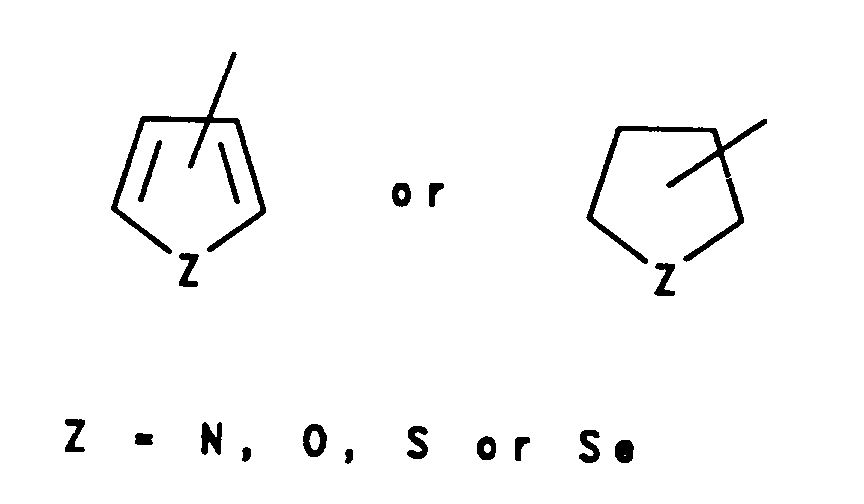

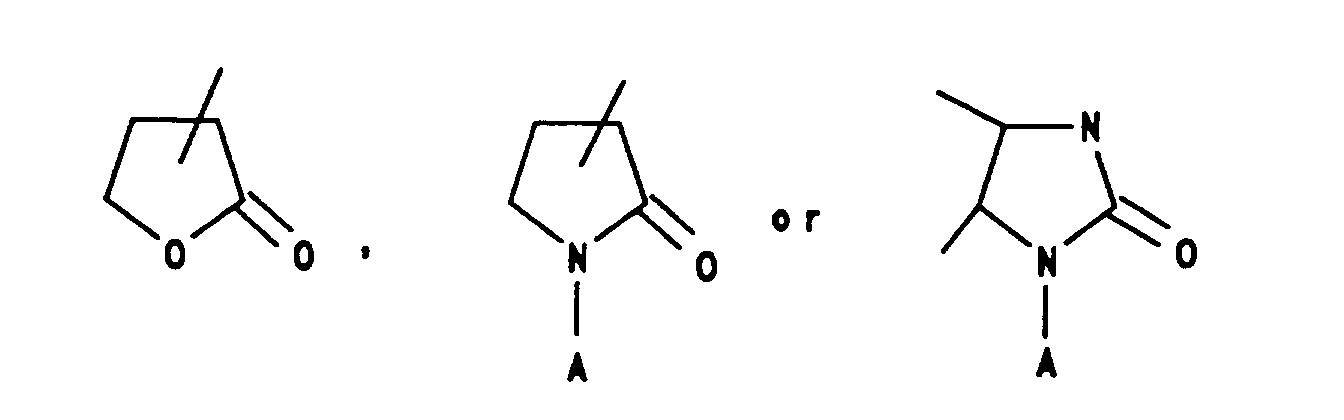
or a six membered aromatic ring with one to three N heteroatoms, or a six membered saturated ring with one or two N, O, S or Se heteroatoms and an adjacent appended O heteroatom; hydroxy group; mercapto group; halo(C₁-C₃)alkyl group; acyl or haloacyl group selected from acetyl, propionyl, chloroacetyl, trifluoroacetyl, (C₃-C₆)cycloalkylcarbonyl, (C₆-C₁₀)aroyl selected from benzoyl or naphthoyl, halo substituted (C₆-C₁₀)aroyl, (C₁-C₄)alkylbenzoyl, or (heterocycle)carbonyl, the heterocycle selected from a five membered aromatic or saturated ring with one N, O, S or Se heteroatom optionally having a benzo or pyrido ring fused thereto:


or a six membered aromatic ring with one to three heteroatoms, or a six membered saturated ring with one or two N, O, S or Se heteroatoms and an adjacent appended O heteroatom; (C₁-C₄)alkoxycarbonyl group selected from methoxycarbonyl, ethoxycarbonyl, straight or branched propoxycarbonyl, allyloxycarbonyl or straight butoxycarbonyl; and the pharmacologically acceptable organic and inorganic salts or metal complexes. - A compound according to Claim 3 wherein:
Y is -N₂⁺Cl⁻ or -N₃;
R or R¹ are selected from nitro; amino; halogen (selected from chlorine, bromine, fluorine or iodine); cyano; hydroxy; or -NR²R³;
and when R or R¹ = -NR²R³ and R² = methyl or ethyl;
R³ = methyl or ethyl,
and when R or R¹ = -NR²R³ and R² = hydrogen,
R³ is selected from R⁴(CH₂)nCO- or R4' (CH₂)nSO₂-;
and when R³ = R⁴(CH₂)nCO- and n=0,
R⁴ is selected from hydrogen; straight or branched (C₁-C₂)alkyl group selected from methyl or ethyl; a heterocycle group selected from a five membered aromatic or saturated ring with one N, O, or S heteroatom optionally having a benzo or pyrido ring fused thereto:

R⁴ is selected from hydrogen; (C₁-C₂)alkyl group selected from methyl or ethyl; (C₆-C₁₀)aryl group selected from phenyl, α-naphthyl or β-naphthyl;
and when R³ = R4' (CH₂)nSO₂- and n = 0,
R4' is selected from straight or branched (C₁-C₂)alkyl group selected from methyl or ethyl; (C₆-C₁₀)aryl group selected from phenyl, α-naphthyl or β-naphthyl; and the pharmacologically acceptable organic and inorganic salts or metal complexes. - A compound of the formula:

Y is selected from -N₂⁺Cl⁻ or N₃;
X is selected from halogen or trifluoromethanesulfonyloxy; the halogen is selected from bromine, chlorine, fluorine or iodine;
R or R¹ is selected from nitro; amino; halogen (selected from chlorine, bromine, fluorine or iodine); cyano; hydroxy; or -NR²R³;
and when R or R¹ = -NR²R³ and R² = hydrogen,
R³ = methyl, ethyl, n-propyl, 1-methylethyl, n-butyl, 1-methylpropyl, 2-methylpropyl or 1,1-dimethylethyl; and when R² = methyl or ethyl,
R³ = methyl, ethyl, n-propyl, 1-methylethyl, n-butyl, 1-methylpropyl or 2-methylpropyl;
and when R² = n-propyl,
R³ = n-propyl, 1-methylethyl, n-butyl, 1-methylpropyl or 2-methylpropyl;
and when R² = 1-methylethyl,
R³ = n-butyl, 1-methylpropyl or 2-methylpropyl;
and when R² = n-butyl,
R³ = n-butyl, 1-methylpropyl or 2-methylpropyl;
and when R² = 1-methylpropyl,
R³ = 2-methylpropyl;
and when R or R¹ = -NR²R³ and R² = hydrogen,
R³ is selected from R⁴(CH₂)nCO- or R4' (CH₂)nSO₂-;
and when R³ = R⁴(CH₂)nCO- and n=0,
R⁴ is selected from hydrogen; amino; hydroxyamino; straight or branched mono(C₁-C₆)alkylamino group selected from methyl, ethyl, n-propyl, 1-methylethyl, n-butyl, 1-methylpropyl, 2-methylpropyl, 1,1-dimethylethyl, n-pentyl, 2-methylbutyl, 1,1-dimethylpropyl, 2,2-dimethylpropyl, 3-methylbutyl, n-hexyl, 1-methylpentyl, 1,1-dimethylbutyl, 2,2-dimethylbutyl, 3-methylpentyl, 1,2-dimethylbutyl, 1,3-dimethylbutyl, 1-methyl-1-ethylpropylamino and the diastereomers and enantiomers of said straight or branched mono(C₁-C₆)alkylamino group; (C₃-C₈)cycloalkylamino group selected from cyclopropyl, trans-1,2-dimethylcyclopropyl, cis-1,2-dimethylcyclopropyl, trans-2,3-dimethylcyclopropyl, cis-2,3-dimethylcyclopropyl, cyclobutyl, trans-2,3-dimethylcyclobutyl, cis-2,3-dimethylcyclobutyl, cyclopentyl, cyclohexyl, cycloheptyl, cyclooctyl, bicyclo[2.2.1]hept-2-yl, bicyclo[2.2.2]oct-2-ylamino and the diastereomers and enantiomers of said (C₃-C₈)cycloalkylamino group; straight or branched chain di-(C₁-C₆)alkylamino group selected from dimethylamino, diethylamino, methyl(ethyl)amino, ethyl(1-methylethyl)amino or a combination of methyl, ethyl, n-propyl, 1-methylethyl, n-butyl, 1-methylpropyl, 2-methylpropyl, 1,1-dimethylethyl, n-pentyl, 2-methylbutyl, 1,1-dimethylpropyl, 2,2-dimethylpropyl, 3-methylbutyl, n-hexyl, 1-methylpentyl, 1,1-dimethylbutyl, 2,2-dimethylbutyl, 3-methylpentyl, 1,2-dimethylbutyl, 1,3-dimethylbutyl, 1-methyl-1-ethylpropylamino and the diastereomers and enantiomers of said straight or branched chain di-(C₁-C₆)alkylamino group; (C₁-C₆)alkoxyamino group selected from methoxy, ethoxy, propoxy, butoxy, pentoxy or hexoxyamino; (C₃-C₈)cycloalkoxyamino group selected from cyclopropoxy, trans-1,2-dimethylcyclopropoxy, cis-1,2-dimethylcyclopropoxy, trans-2,3-dimethylcyclopropoxy, cis-2,3-dimethylcyclopropoxy, cyclobutoxy, trans-2,3-dimethylcyclobutoxy, cis-2,3-dimethylcyclobutoxy, cyclopentoxy, cyclohexoxy, cycloheptyloxy, cyclooctoxy, bicyclo[2.2.1]hept-2-yloxy, bicyclo[2.2.1]oct-2-yloxyamino and the diastereomers and enantiomers of said (C₃-C₈)cycloalkoxyamino group; (C₇-C₁₀)aralkoxyamino group selected from benzyloxy, 2-phenylethoxy, α-phenylethoxy, (2-naphthyl)methoxy, (1-naphthyl)methoxy, or phenylpropoxyamino; (C₂-C₈)azacycloalkyl group selected from aziridinyl, azetidinyl, pyrrolidinyl, pyrrolinyl, piperidinyl, 2-methylpyrrolidinyl, cis-3,4-dimethylpyrrolidinyl, trans-3,4-dimethylpyrrolidinyl, 2-azabicyclo[2.1.1]hex-2-yl, 5-azabicyclo[2.1.1]hex-5-yl, 2-azabicyclo[2.2.1]hept-2-yl, 7-azabicyclo[2.2.1]hept-7-yl, 2-azabicyclo[2.2.2]oct-2-yl and the diastereomers and enantiomers of said (C₂-C₈)azacycloalkyl group; azaheterocycloalkyl group selected from morpholinyl, piperazinyl, 4-methylpiperazinyl, 4-hydroxypiperazinyl, 4-(C₁-C₄)alkoxypiperazinyl, thiamorpholinyl, tetrahydro-1,2-oxazinyl, isoxazolidinyl, pyrazolidinyl, 2-methylpyrazolidinyl, 2,5-diazabicyclo[2.2.2]hept-2-yl, 2,5-diaza-5-methylbicyclo[2.2.1]hept-2-yl and the diastereomers and enantiomers of said azaheterocycloalkyl group; (C₆-C₁₀)arylamino group selected from phenylamino or naphthylamino; (C₇-C₁₀)arylalkylamino group selected from benzyl, 2-phenylethyl, α-phenylethyl, (2-naphthyl)methyl, (1-naphthyl)methyl or phenylpropylamino; straight or branched (C₁-C₄)alkyl group selected from methyl, ethyl, n-propyl, 1-methylethyl, n-butyl, 1-methylpropyl, 2-methylpropyl or 1,1-dimethylethyl; (C₃-C₆)cycloalkyl group selected from cyclopropyl, cyclobutyl, cyclopentyl or cyclohexyl; substituted (C₃-C₆)cycloalkyl group (substitution selected from (C₁-C₃)alkyl, cyano, amino or (C₁-C₃)acyl); (C₆-C₁₀)aryl group selected from phenyl, α-naphthyl or β-naphthyl; substituted (C₆-C₁₀)aryl group (substitution selected from halo, (C₁-C₄)alkoxy, trihalo(C₁-C₃)alkyl, nitro, amino, cyano, (C₁-C₄)alkoxycarbonyl, (C₁-C₃)alkylamino or carboxy); (C₇-C₉)aralkyl group selected from benzyl, 1-phenylethyl, 2-phenylethyl or phenylpropyl; α-hydroxy(C₁-C₃)alkyl group selected from hydroxymethyl, α-hydroxyethyl, α-hydroxy-1-methylethyl or α-hydroxypropyl; α-mercapto(C₁-C₃)alkyl group selected from mercaptomethyl, α-mercaptoethyl, α-mercapto-1-methylethyl or α-mercaptopropyl; halo(C₁-C₃)alkyl group; a heterocycle group selected from a five membered aromatic or saturated ring with one N, O, S or Se heteroatom optionally having a benzo or pyrido ring fused thereto:


or a six membered aromatic ring with one to three N heteroatoms, or a six membered saturated ring with one or two N, O, S or Se heteroatoms and an adjacent appended O heteroatom; acyl or haloacyl group selected from acetyl, propionyl, chloroacetyl, trifluoroacetyl, (C₃-C₆)cycloalkylcarbonyl, (C₆-C₁₀)aroyl selected from benzoyl or naphthoyl, halo substituted (C₆-C₁₀)aroyl, (C₁-C₄)alkylbenzoyl, or (heterocycle)carbonyl, the heterocycle selected from a five membered aromatic or saturated ring with one N, O, S or Se heteroatom optionally having a benzo or pyrido ring fused thereto:
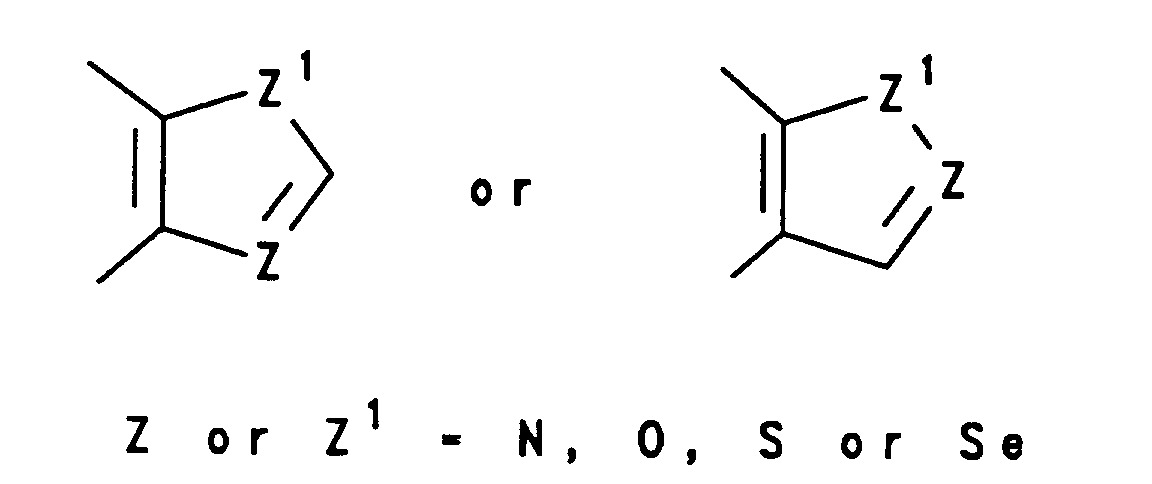

or a six membered aromatic ring with one to three N heteroatoms, or a six membered saturated ring with one or two N, O, S or Se heteroatoms and an adjacent appended O heteroatom; (C₁-C₄)alkoxycarbonyl group selected from methoxycarbonyl, ethoxycarbonyl, straight or branched propoxylcarbonyl, straight butoxycarbonyl or allyloxycarbonyl; vinyl or substituted vinyl group [substitution selected from (C₁-C₃)alkyl group, halogen, (C₆-C₁₀)aryl group selected from phenyl, α-naphthyl, β-naphthyl, substituted (C₆-C₁₀)aryl group (substitution selected from halo, (C₁-C₄)alkoxy, trihalo(C₁-C₃)alkyl, nitro, amino, cyano, (C₁-C₄)alkoxycarbonyl, (C₁-C₃)alkylamino or carboxy), halo(C₁-C₃)alkyl group, a heterocycle group selected from a five membered aromatic or saturated ring with one N, O, S or Se heteroatom optionally having a benzo or pyrido ring fused thereto:
and when R³ = R⁴(CH₂)nCO- and n=1-4,
R⁴ is selected from hydrogen; straight or branched (C₁-C₄)alkyl group selected from methyl, ethyl, n-propyl, 1-methylethyl, n-butyl, 1-methylpropyl, 2-methylpropyl or 1,1-dimethylethyl; (C₃-C₆)cycloalkyl group selected from cyclopropyl, cyclobutyl, cyclopentyl or cyclohexyl; substituted (C₃-C₆)cycloalkyl group (substitution selected from (C₁-C₃)alkyl, cyano, amino or (C₁-C₃)acyl); (C₆-C₁₀)aryl group selected from phenyl, α-naphthyl or β-naphthyl; substituted(C₆-C₁₀)aryl group (substitution selected from halo, (C₁-C₄)alkoxy, trihalo(C₁-C₃)alkyl, nitro, amino, cyano, (C₁-C₄)alkoxycarbonyl, (C₁-C₃)alkylamino or carboxy); (C₇-C₉)aralkyl group; acyloxy or haloacyloxy group, selected from acetyl, propionyl, chloroacetyl, trichloroacetyl, (C₃-C₆)cycloalkylcarbonyl, (C₆-C₁₀)aroyl selected from benzoyl or naphthoyl, halo substituted (C₆-C₁₀)aroyl, (C₁-C₄)alkylbenzoyl, (heterocycle)carbonyl, the heterocycle selected from a five membered aromatic or saturated ring with one N, O, S or Se heteroatom optionally having a benzo or pyrido ring fused thereto:


or a six membered aromatic ring with one to three N, heteroatoms, or a six membered saturated ring with one or two N, O, S or Se heteroatoms and an adjacent appended O heteroatom; (C₁-C₄)alkoxy group; C₆-aryloxy group selected from phenoxy or substituted phenoxy (substitution selected from halo, (C₁-C₄)alkyl, nitro, cyano, thiol, amino, carboxy, di-(C₁-C₃)alkylamino); (C₇-C₁₀)aralkyloxy group; (C₁-C₃)alkylthio group selected from methylthio, ethylthio, propylthio or allylthio; C₆-arylthio group selected from phenylthio or substituted phenylthio (substitution selected from halo, (C₁-C₄)alkyl, nitro, cyano, thiol, amino, carboxy, di-(C₁-C₃)alkylamino); C₆-arylsulfonyl group selected from phenylsulfonyl or substituted phenylsulfonyl (substitution selected from halo, (C₁-C₄)alkoxy, trihalo(C₁-C₃)alkyl, nitro, amino, cyano, (C₁-C₄)alkoxycarbonyl, (C₁-C₃)alkylamino or carboxy); (C₇-C₈)aralkylthio group; a heterocycle group selected from a five membered aromatic or saturated ring with one N, O, S or Se heteroatom optionally having a benzo or pyrido ring fused thereto:


or a six membered aromatic ring with one to three N heteroatoms, or a six membered saturated ring with one or two N, O, S or Se heteroatoms and an adjacent appended O heteroatom; hydroxy group; mercapto group; α-hydroxy(C₁-C₃)alkyl group selected from hydroxymethyl, α-hydroxyethyl or α-hydroxy-1-methylethyl or α-hydroxypropyl; halo(C₁-C₃)alkyl group; acyl or haloacyl group selected from acetyl, propionyl, chloroacetyl, trifluoroacetyl, (C₃-C₆)cycloalkylcarbonyl, (C₆-C₁₀)aroyl selected from benzoyl or naphthoyl, halo substituted (C₆-C₁₀)aroyl, (C₁-C₄)alkylbenzoyl, or (heterocycle)carbonyl, the heterocycle selected from a five membered aromatic or saturated ring with one N, O, S or Se heteroatom optionally having a benzo or pyrido ring fused thereto:


or a six membered aromatic ring with one to three N, heteroatoms, or a six membered saturated ring with one or two N, O, S or Se heteroatoms and an adjacent appended O heteroatom; (C₁-C₄)alkoxycarbonyl group selected from methoxycarbonyl, ethoxycarbonyl, straight or branched propoxycarbonyl, allyloxycarbonyl or straight butoxycarbonyl; RaRbamino(C₁-C₄)alkoxy group, wherein RaRb is a straight or branched (C₁-C₄)alkyl selected from methyl, ethyl, n-propyl, 1-methylethyl, n-butyl, 1-methylpropyl, or 2-methylpropyl or RaRb is (CH₂)n, n=2-6, or -(CH₂)₂W(CH₂)₂- wherein W is selected from -N(C₁-C₃)alkyl [straight or branched], -NH, -NOB [B is selected from hydrogen or (C₁-C₃)alkyl], O or S; or RaRbaminoxy group, wherein RaRb is a straight or branched (C₁-C₄)alkyl selected from methyl, ethyl, n-propyl, 1-methylethyl, n-butyl, 1-methylpropyl, or 2-methylpropyl or RaRb is (CH₂)n, n=2-6, or -(CH₂)₂W-(CH₂)₂-wherein W is selected from -N(C₁-C₃)alkyl [straight or branched], -NH, -NOB [B is selected from hydrogen or (C₁-C₃)alkyl], O or S;
and when R³ = R⁴(CH₂)nCO- and n = 2-4,
R⁴ is selected from amino; hydroxyamino; straight or branched mono(C₁-C₆)alkylamino group selected from methyl, ethyl, n-propyl, 1-methylethyl, n-butyl, 1-methylpropyl, 2-methylpropyl, 1,1-dimethylethyl, n-pentyl, 2-methylbutyl, 1,1-dimethylpropyl, 2,2-dimethylpropyl, 3-methylbutyl, n-hexyl, 1-methylpentyl, 1,1-dimethylbutyl, 2,2-dimethylbutyl, 3-methylpentyl, 1,2-dimethylbutyl, 1,3-dimethylbutyl, 1-methyl-1-ethylpropylamino and the diastereomers and enantiomers of said straight or branched mono(C₁-C₆)alkylamino group; (C₃-C₈)cycloalkylamino group selected from cyclopropyl, trans-1,2-dimethylcyclopropyl, cis-1,2-dimethylcyclopropyl, trans-2,3-dimethylcyclopropyl, cis-2,3-dimethylcyclopropyl, cyclobutyl, trans-2,3-dimethylcyclobutyl, cis-2,3-dimethylcyclobutyl, cyclopentyl, cyclohexyl, cycloheptyl, cyclooctyl, bicyclo[2.2.1]hept-2-yl, bicyclo[2.2.2]oct-2-ylamino and the diastereomers and enantiomers of said (C₃-C₈)cycloalkylamino group; straight or branched chain di-(C₁-C₆)alkylamino group selected from dimethylamino, diethylamino, methyl(ethyl)amino, ethyl(1-methylethyl)amino or a combination of methyl, ethyl, n-propyl, 1-methylethyl, n-butyl, 1-methylpropyl, 2-methylpropyl, 1,1-dimethylethyl, n-pentyl, 2-methylbutyl, 1,1-dimethylpropyl, 2,2-dimethylpropyl, 3-methylbutyl, n-hexyl, 1-methylpentyl, 1,1-dimethylbutyl, 2,2-dimethylbutyl, 3-methylpentyl, 1,2-dimethylbutyl, 1,3-dimethylbutyl, 1-methyl-1-ethylpropylamino and the diastereomers and enantiomers of said straight or branched chain di-(C₁-C₆)alkylamino group; (C₁-C₆)alkoxyamino group selected from methoxy, ethoxy, propoxy, butoxy, pentoxy or hexoxyamino; (C₃-C₈)cycloalkoxyamino group selected from cyclopropoxy, trans-1,2-dimethylcyclopropoxy, cis-1,2-dimethylcyclopropoxy, trans-2,3-dimethylcyclopropoxy, cis-2,3-dimethylcyclopropoxy, cyclobutoxy, trans-2,3-dimethylcyclobutoxy, cis-2,3-dimethylcyclobutoxy, cyclopentoxy, cyclohexoxy, cycloheptyloxy, cyclooctoxy, bicyclo[2.2.1]hept-2-yloxy, bicyclo[2.2.1]oct-2-yloxyamino and the diastereomers and enantiomers of said (C₃-C₈)cycloalkoxyamino group; (C₇-C₁₀)aralkoxyamino group selected from benzyloxy, 2-phenylethoxy, α-phenylethoxy, (2-naphthyl)methoxy, (1-naphthyl)methoxy, or phenylpropoxyamino; (C₂-C₈)azacycloalkyl group selected from aziridinyl, azetidinyl, pyrrolidinyl, pyrrolinyl, piperidinyl, 2-methylpyrrolidinyl, cis-3,4-dimethylpyrrolidinyl, trans-3,4-dimethylpyrrolidinyl, 2-azabicyclo[2.1.1]hex-2-yl, 5-azabicyclo[2.1.1]hex-5-yl, 2-azabicyclo[2.2.1]hept-2-yl, 7-azabicyclo[2.2.1]hept-7-yl, 2-azabicyclo[2.2.2]oct-2-yl and the diastereomers and enantiomers of said (C₂-C₈)azacycloalkyl group; azaheterocycloalkyl group selected from morpholinyl, piperazinyl, 4-methylpiperazinyl, 4-hydroxypiperazinyl, 4-(C₁-C₄)alkoxypiperazinyl, thiamorpholinyl, tetrahydro-1,2-oxazinyl, isoxazolidinyl, pyrazolidinyl, 2-methylpyrazolidinyl, 2,5-diazabicyclo[2.2.2]hept-2-yl, 2,5-diaza-5-methylbicyclo[2.2.1]hept-2-yl and the diastereomers and enantiomers of said azaheterocycloalkyl group; (C₆-C₁₀)arylamino group selected from phenylamino or naphthylamino; (C₇-C₁₀)arylalkylamino group selected from benzyl, 2-phenylethyl, α-phenylethyl, (2-naphthyl)methyl, (1-naphthyl)methyl or phenylpropylamino; (C₁-C₄)alkoxycarbonylamino group selected from n-butoxycarbonylamino, allyloxycarbonylamino, methoxycarbonylamino, ethoxycarbonylamino or propoxycarbonylamino;
and when R³ = R4' (CH₂)nSO₂- and n = 0,
R4' is selected from amino; hydroxyamino; straight or branched mono(C₁-C₆)alkylamino group selected from methyl, ethyl, n-propyl, 1-methylethyl, n-butyl, 1-methylpropyl, 2-methylpropyl, 1,1-dimethylethyl, n-pentyl, 2-methylbutyl, 1,1-dimethylpropyl, 2,2-dimethylpropyl, 3-methylbutyl, n-hexyl, 1-methylpentyl, 1,1-dimethylbutyl, 2,2-dimethylbutyl, 3-methylpentyl, 1,2-dimethylbutyl, 1,3-dimethylbutyl, 1-methyl-1-ethylpropylamino and the diastereomers and enantiomers of said straight or branched mono(C₁-C₆)alkylamino group; (C₃-C₈)cycloalkylamino group selected from cyclopropyl, trans-1,2-dimethylcyclopropyl, cis-1,2-dimethylcyclopropyl, trans-2,3-dimethylcyclopropyl, cis-2,3-dimethylcyclopropyl, cyclobutyl, trans-2,3-dimethylcyclobutyl, cis-2,3-dimethylcyclobutyl, cyclopentyl, cyclohexyl, cycloheptyl, cyclooctyl, bicyclo[2.2.1]hept-2-yl, bicyclo[2.2.2]oct-2-ylamino and the diastereomers and enantiomers of said (C₃-C₈)cycloalkylamino group; straight or branched chain di-(C₁-C₆)alkylamino group selected from dimethylamino, diethylamino, methyl(ethyl)amino, ethyl(1-methylethyl)amino or a combination of methyl, ethyl, n-propyl, 1-methylethyl, n-butyl, 1-methylpropyl, 2-methylpropyl, 1,1-dimethylethyl, n-pentyl, 2-methylbutyl, 1,1-dimethylpropyl, 2,2-dimethylpropyl, 3-methylbutyl, n-hexyl, 1-methylpentyl, 1,1-dimethylbutyl, 2,2-dimethylbutyl, 3-methylpentyl, 1,2-dimethylbutyl, 1,3-dimethylbutyl, 1-methyl-1-ethylpropylamino and the diastereomers and enantiomers of said straight or branched chain di-(C₁-C₆)alkylamino group; (C₁-C₆)alkoxyamino group selected from methoxy, ethoxy, propoxy, butoxy, pentoxy or hexoxyamino; (C₃-C₈)cycloalkoxyamino group selected from cyclopropoxy, trans-1,2-dimethylcyclopropoxy, cis-1,2-dimethylcyclopropoxy, trans-2,3-dimethylcyclopropoxy, cis-2,3-dimethylcyclopropoxy, cyclobutoxy, trans-2,3-dimethylcyclobutoxy, cis-2,3-dimethylcyclobutoxy, cyclopentoxy, cyclohexoxy, cycloheptyloxy, cyclooctoxy, bicyclo[2.2.1]hept-2-yloxy, bicyclo[2.2.1]oct-2-yloxyamino and the diastereomers and enantiomers of said (C₃-C₈)cycloalkoxyamino group; (C₇-C₁₀)aralkoxyamino group selected from benzyloxy, 2-phenylethoxy, α-phenylethoxy, (2-naphthyl)methoxy, (1-naphthyl)methoxy, or phenylpropoxyamino; straight or branched (C₁-C₄)alkyl group selected from methyl, ethyl, n-propyl, 1-methylethyl, n-butyl, 1-methylpropyl, 2-methylpropyl or 1,1-dimethylethyl; (C₃-C₆)cycloalkyl group selected from cyclopropyl, cyclobutyl, cyclopentyl or cyclohexyl; substituted (C₃-C₆)cycloalkyl group (substitution selected from (C₁-C₃)alkyl, cyano, amino or (C₁-C₃)acyl); (C₆-C₁₀)aryl group selected from phenyl, α-naphthyl or β-naphthyl; substituted (C₆-C₁₀)aryl group (substitution selected from halo, (C₁-C₄)alkoxy, trihalo(C₁-C₃)alkyl, nitro, amino, cyano, (C₁-C₄)alkoxycarbonyl, (C₁-C₃)alkylamino or carboxy); (C₇-C₉)aralkyl group; halo(C₁-C₃)alkyl group; a heterocycle group selected from a five membered aromatic or saturated ring with one N, O, S or Se heteroatom optionally having a benzo or pyrido ring fused thereto:

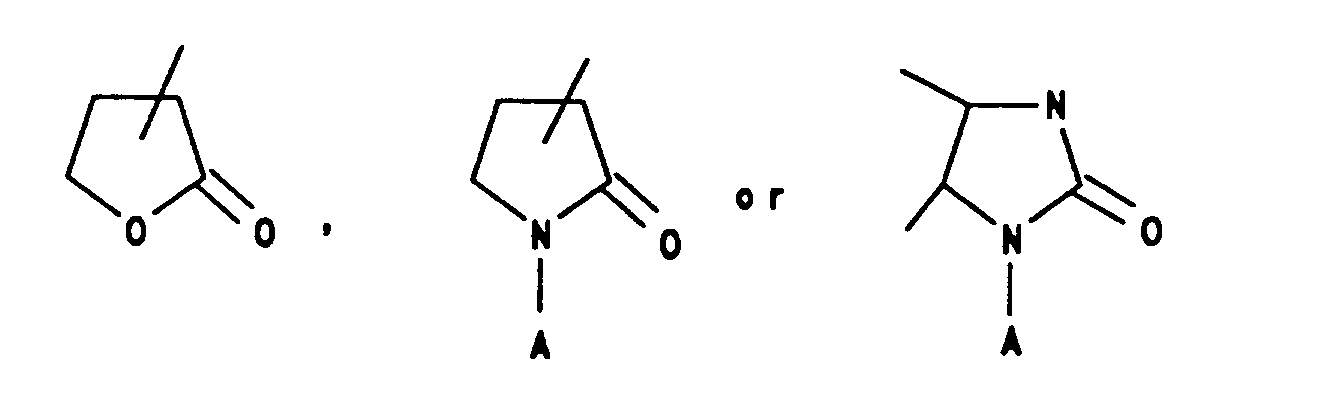
or a six membered aromatic ring with one to three N heteroatoms, or a six membered saturated ring with one or two N, O, S or Se heteroatoms and an adjacent appended O heteroatom; RaRbamino(C₁-C₄)alkoxy group, wherein RaRb is a straight or branched (C₁-C₄)alkyl selected from methyl, ethyl, n-propyl, 1-methylethyl, n-butyl, 1-methylpropyl, or 2-methylpropyl or RaRb is (CH₂)n, n=2-6, or -(CH₂)₂W(CH₂)₂- wherein W is selected from -N(C₁-C₃)alkyl [straight or branched], -NH, -NOB [B is selected from hydrogen or (C₁-C₃)alkyl), O or S; or RaRbaminoxy group, wherein RaRb is a straight or branched (C₁-C₄)alkyl selected from methyl, ethyl, n-propyl, 1-methylethyl, n-butyl, 1-methylpropyl, or 2-methylpropyl or RaRb is (CH₂)n, n=2-6, or -(CH₂)₂W-(CH₂)₂- wherein W is selected from -N(C₁-C₃)alkyl [straight or branched], -NH, -NOB [B is selected from hydrogen or (C₁-C₃)alkyl], O or S;
and when R³ = R4' (CH₂)nSO₂- and n= 1-4,
R4' is selected from hydrogen; amino; straight or branched (C₁-C₄)alkyl group selected from methyl, ethyl, n-propyl, 1-methylethyl, n-butyl, 1-methylpropyl, 2-methylpropyl or 1,1-dimethylethyl; (C₁-C₄)carboxyalkyl group; (C₃-C₆)cycloalkyl group selected from cyclopropyl, cyclobutyl, cyclopentyl or cyclohexyl; substituted (C₃-C₆)cycloalkyl group (substitution selected from (C₁-C₃)alkyl, cyano, amino or (C₁-C₃)acyl); (C₆-C₁₀)aryl group selected from phenyl, α-naphthyl or β-naphthyl; substituted (C₆-C₁₀)aryl group (substitution selected from halo, (C₁-C₄)alkoxy, trihalo(C₁-C₃)alkyl, nitro, amino, cyano, (C₁-C₄)alkoxycarbonyl, (C₁-C₃)alkylamino or carboxy); (C₇-C₉)aralkyl group selected from benzyl, 1-phenylethyl, 2-phenylethyl or phenylpropyl; (C₁-C₄)alkoxy group; C₆-aryloxy group selected from phenoxy or substituted phenoxy (substitution selected from halo, (C₁-C₃)alkyl, nitro, cyano, thiol, amino, carboxy, di(C₁-C₃)alkylamino); (C₇-C₁₀)aralkyloxy group; RaRbamino(C₁-C₄)alkoxy group, wherein RaRb is a straight or branched (C₁-C₄)alkyl selected from methyl, ethyl, n-propyl, 1-methylethyl, n-butyl, 1-methylpropyl, or 2-methylpropyl or RaRb is (CH₂)n, n=2-6, or -(CH₂)₂W(CH₂)₂- wherein W is selected from -N(C₁-C₃)alkyl [straight or branched], -NH, -NOB [B is selected from hydrogen or (C₁-C₃)alkyl], O or S; or RaRbaminoxy group, wherein RaRb is a straight or branched (C₁-C₄)alkyl selected from methyl, ethyl, n-propyl, 1-methylethyl, n-butyl, 1-methylpropyl, or 2-methylpropyl or RaRb is (CH₂)n, n=2-6, or -(CH₂)₂W(CH₂)₂-wherein W is selected from -N(C₁-C₃)alkyl [straight or branched], -NH, -NOB [B is selected from hydrogen or (C₁-C₃)alkyl), O or S;(C₁-C₃)alkylthio group selected from methylthio, ethylthio or n-propylthio; C₆-arylthio group selected from phenylthio or substituted phenylthio (substitution selected from halo, (C₁-C₃)alkyl, nitro, cyano, thiol, amino, carboxy, di-(C₁-C₃)alkylamino); (C₇-C₈)aralkylthio group; a heterocycle group selected from a five membered aromatic or saturated ring with one N, O, S or Se heteroatom optionally having a benzo or pyrido ring fused thereto: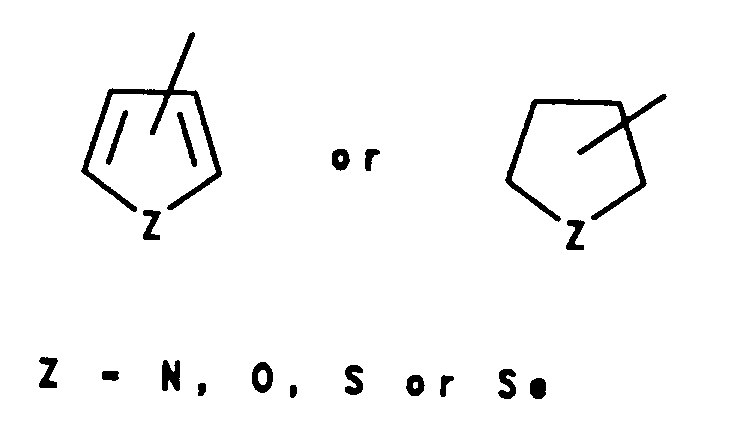


or a six membered aromatic ring with one to three N heteroatoms, or a six membered saturated ring with one or two N, O, S or Se heteroatoms and an adjacent appended O heteroatom; hydroxy group; mercapto group; halo(C₁-C₃)alkyl group; acyl or haloacyl group selected from acetyl, propionyl, chloroacetyl, trifluoroacetyl, (C₃-C₆)cycloalkylcarbonyl, (C₆-C₁₀)aroyl selected from benzoyl or naphthoyl, halo substituted (C₆-C₁₀)aroyl, (C₁-C₄)alkylbenzoyl, or (heterocycle)carbonyl, the heterocycle selected from a five membered aromatic or saturated ring with one N, O, S or Se heteroatom optionally having a benzo or pyrido ring fused thereto:


or a six membered aromatic ring with one to three N heteroatoms, or a six membered saturated ring with one or two N, O, S or Se heteroatoms and an adjacent appended O heteroatom; (C₁-C₄)alkoxycarbonyl group selected from methoxycarbonyl, ethoxycarbonyl, straight or branched propoxycarbonyl, allyloxycarbonyl or straight butoxycarbonyl; and the pharmacologically acceptable organic and inorganic salts or metal complexes. - A compound according to Claim 5 wherein:
X is selected from halogen or trifluoromethanesulfonyloxy; the halogen (halo) is selected from bromine, chlorine, fluorine or iodine;
Y is selected from -N₂⁺Cl⁻ or N₃;
R or R¹ are selected from nitro; amino; halogen (selected from chlorine, bromine, fluorine or iodine); cyano; hydroxy; or -NR²R³;
and when R or R¹ = -NR²R³ and R² = methyl or ethyl;
R³ = methyl or ethyl,
and when R or R¹ = -NR²R³ and R² = hydrogen,
R³ is selected from R⁴(CH₂)nCO- or R4' (CH₂)nSO₂-;
and when R³ = R⁴(CH₂)nCO- and n=0,
R⁴ is selected from hydrogen; straight or branched (C₁-C₂)alkyl group selected from methyl or ethyl; a heterocycle group selected from a five membered aromatic or saturated ring with one N, O, or S heteroatom optionally having a benzo or pyrido ring fused thereto:

R⁴ is selected from hydrogen; (C₁-C₂)alkyl group selected from methyl or ethyl; (C₆-C₁₀)aryl group selected from phenyl, α-naphthyl or β-naphthyl;
and when R³ = R4' (CH₂)nSO₂- and n = 0,
R4' is selected from straight or branched (C₁-C₂)alkyl group selected from methyl or ethyl; (C₆-C₁₀)aryl group selected from phenyl, α-naphthyl or β-naphthyl; and the pharmacologically acceptable organic and inorganic salts or metal complexes. - A compound according to Claim 1, [4S-(4α,12aα)]-8-Chloro-4-(dimethylamino)-9-(formylamino)-1,4,4a,5,5a,6,11,12a-octahydro-3,10,12,12a-tetrahydroxy-1,11-dioxo-2-naphthancenecarboxamide hydrochloride (1:1);
[4S-(4α,12aα)]-8-Chloro-4,7-bis(dimethylamino)-1,4,4a,5,5a,6,11,12a-octahydro-3,10,12,12a-tetrahydroxy-1,11-dioxo-2-naphthacenecarboxamide sulfate (1:1);
[4S-(4α,12aα)]-7-Amino-8-chloro-4-(dimethylamino)-1,4,4a,5,5a,6,11,12a-octahydro-3,10,12,12a-tetrahydroxy-1,11-dioxo-2-naphthacenecarboxamide hydrochloride (1:1);
[4S-(4α,12aα)]-8-Chloro-4-(dimethylamino)-1,4,4a,5,-5a,6,11,12a-octahydro-3,10,12,12a-tetrahydroxy-1, 11-d-ioxo-2-naphthacenecarboxamide hydrochloride (1:1);
[4S-(4α,12aα)]-8-Chloro-4,7-bis(dimethylamino)-9-(formylamino)-1,4,4a,5,5a,6,11,12a-octahydro-3,10,12,-12a-tetrahydroxy-1,11-dioxo-2-naphthacenecarboxamide sulfate (1:1);
[4S-(4α,12aα)]-9-Amino-8-chloro-4-(dimethylamino)-1,4,-4a,5,5a,6,11,12a-octahydro-3,10,12,12a-tetrahydroxy-1,11-dioxo-2-naphthacenecarboxamide hydrochloride (1:1);
[4S-(4α,12aα)]-9-Amino-8-chloro-4,7-bis(dimethylamino)-1,4,4a,5,5a,6,11,12a-octahydro-3,10,12,12a-tetra hydroxy-1,11-dioxo-2-naphthacenecarboxamide sulfate;
[7S-(7alpha, 10aalpha)]-[9-(Aminocarbonyl)-3-chloro-7-(dimethylamino)-5,5a,6,6a,7,10,10a,12-octahydro-1,8,-10a,11-tetrahydroxy-10,12-dioxo-2-naphthacenyl]carbamic acid methyl ester;
[4S-(4alpha, 12aalpha)]-8-Chloro-4-(dimethylamino)-9-hydrazino-1,4,4a,5,5a,6,11,12a-octahydro-3,10,12,12a-tetrahydroxy-1,11-dioxo-2-naphthacenecarboxamide monohydrochloride;
[4S-(4α,12aα)]-8-Chloro-4-(dimethylamino)-9-(formylamino)-1,4,4a,5,5a,6,11,12a-octahydro-3,10,12,12a-tetrahydroxy-1,11-dioxo-2-naphthancenecarboxamide sulfate (1:1);
[4S-(4α,12aα)]-8-Chloro-4-(dimethylamino)-1,4,4a, 5,5a,6,11,12a-octahydro-3,10,12,12a-tetrahydroxy-1,11-dioxo-2-naphthacenecarboxamide hydrochloride (1:1);
[4S-(4alpha, 12aalpha)]-7-Amino-8-chloro-4-(dimethylamino)-1,4,4a,5,5a,6,11,12a-octahydro-3,10,12,12a-tetrahydroxy-9-iodo-1,11-dioxo-2-naphthacenecarboxamide sulfate (1:1);
[4S-(alpha, 12aalpha)]-9-Amino-8-chloro-7-(diethylamino)-4-(dimethylamino)-1,4,4a,5,5a,6,11,12a-octahydro-3,10,12,12a-tetrahydroxy-1,11-dioxo-2-naphthacenecarboxamide sulfate;
[4S-(4alpha, 12aalpha)]-9-Amino-4,7-bis(dimethylamino)-8-fluoro-1,4,4a,5,5a,6,11,12a-octahydro-3,10,12,12a-tetrahydroxy-1,11-dioxo-2-naphthacenecarboxamide hydrochloride;
[4S-(4alpha, 12aalpha)]-9-Amino-4-(dimethylamino)-8-fluoro-1,4,4a,5,5a,6,11,12a-octahydro-3,10,12,12a-tetrahydroxy-1,11-dioxo-2-naphthacenecarboxamide hydrochloride;
[4S-(4alpha, 12aalpha)]-4-(Dimethylamino)-8-fluoro-9-(formylamino)-1,4,4a,5,5a,6,11,12a-octahydro-3,10,12-12a-tetrahydroxy-1,11-dioxo-2-naphthacenecarboxamide hydrochloride;
[4S-(4alpha, 12aalpha)]-4-(Dimethylamino)-8-fluoro-1,4,4a,5,5a,6,11,12a-octahydro-3,10,12,12a-tetra hydroxy-1,11-dioxo-2-naphthacenecarboxamide hydrochloride;
[7S-(7alpha, 10aalpha)]-[9-(Aminocarbonyl)-7-(dimethylamino)-3-fluoro-5,5a,6,6a,7,10,10a,12-octahydro-1,8-10a,11-tetrahydroxy-10,12-dioxo-2-naphthacenyl]carbamic acid methyl ester;
[6aS-(6aalpha, 10alpha)]-3-Amino-8-(aminocarbonyl)-1-10-bis(dimethylamino)-5,6a,7,10,10a,11,11a,12-octahydro-4,6,6a,9-tetrahydroxy-5,7-dioxo-2-naphthacenylester trifluoromethanesulfonic acid;
[6aS-(6aalpha, 10alpha)]-3-Amino-8(aminocarbonyl)-10-(dimethylamino)-5,6a,7,10,10a,11,11a,12-octahydro-4,6,6a,9-tetrahydroxy-5,7-dioxo-2-naphthacenyl ester trifluoromethanesulfonic acid;
[4S-(4alpha, 12alpha)]-4,7-Bis(dimethylamino)-8-fluoro-1,4,4a,5,5a,6,11,12a-octahydro-3,10,12,12a-tetrahydroxy-1,11-dioxo-2-naphthacenecarboxamide;
[4S-(4alpha, 12aalpha)]-4-(Dimethylamino)-8-fluoro-1,4,4a,5,5a,6,11,12a-octahydro-3,10,12,12a-tetrahydroxy-1,11-dioxo-2-naphthacenecarboxamide hydrochloride;
[7S-(7alpha, 10aalpha)]-[9-(Aminocarbonyl)-3-chloro-4,7-bis(dimethylamino)-5,5a,6,6a,7,10,10a,12-octahydro-1,8,10a,11-tetrahydroxy-10,12-dioxo-2-naphthacenyl]carbamic acid 2-(dimethylamino)ethyl ester;
[4S-(4alpha,12aalpha)]-8-Chloro-9-[[[(diethylamino)oxy]carbonyl]amino]-4,7-bis(dimethylamino)-1,4,4a,5,-5a,6,11,12a-octahydro-3,10,12,12a-tetrahydroxy-1,11-dioxo-2-naphthacenecarboxamide;
[4S-(4alpha,12aalpha)]-8-Chloro-7-(diethylamino)-4-(dimethylamino)-9-(formylamino)-1,4,4a,5,5a,6,11,-12a-octahydro-3,10,12,12a-tetrahydroxy-1,11-dioxo2-naphthacenecarboxamide sulfate;
[6aS-(6aalpha,10alpha)]-[8-(Aminocarbonyl)-2-chloro-10-(dimethylamino)-5,6a,7,10,10a,11,11a,12-octahydro-4,6,6a,9-tetrahydroxy-5,7-dioxo-1-naphthacenyl]carbamic acid methyl ester;
[4S-(4α,12aα)]-4-(Dimethylamino)-8-fluoro-7-(formylamino)-1,4,4a,5,-5a,6,11,12a-octahydro-3,10,12,12a-tetrahydroxy-1,11-dioxo-2-naphthacenecarboxamide hydrochloride;
[7S-(7alpha,10aalpha)]-[9-(Aminocarbonyl)-7-(dimethylamino)-3-fluoro-5,5a,6,6a,7,10,10a,12-octahydro-1,8,-10a,11-tetrahydroxy-10,12-dioxo-2-naphthacenyl]carbamic acid methyl ester;
[4S-(4α,12aα)]-4-(Dimethylamino)-8-fluoro-7-(formylamino)-1,4,4a,5,5a,6,11,12a-octahydro-3,10,12,12a-tetrahydroxy-1,11-dioxo-2-naphthacenecarboxamide hydrochloride;
[6S-(6aalpha,10alpha)]-8-(Aminocarbonyl)-10-(dimethylamino)-5,6a,7,10,10a,11,11a,12-octahydro-4,6,6a,9-tetrahydroxy-3-[(methoxycarbonyl)amino]-5,7-dioxo-2-naphthacenyl ester trifluoromethanesulfonic acid;
[4S-(4alpha,12aalpha)]-8-Chloro-4-(dimethylamino)-9-[[[(dimethylamino)oxy]carbonyl]amino]-1,4,4a,5,5a,6,-11,12a-octahydro-3,10,12,12a-tetrahydroxy-1,11-dioxo-2-naphthacenecarboxamide;
[4S-(4alpha,12aalpha)]-8-Chloro-9-[[[(diethylamino)oxy]carbonyl]amino]-4-(dimethylamino)-1,4,4a,5,5a,6,-11,12a-octahydro-3,10,12,12a-tetrahydroxy-1,11-dioxo-2-naphthacenecarboxamide;
[4S-(4α,12aα)]-9-Amino-8-bromo-4-(dimethylamino)-1,4,4a,5,5a,6,11,12a-octahydro-3,10,12,12a-tetrahydroxy-1,11-dioxo-2-naphthacenecarboxamide hydrobromide (1:1);
[4S-(4α,12aα)]-9-Amino-8-bromo-4,7-bis(dimethylamino)-1,4,4a,5,5a,6,11,12a-octahydro-3,10,12,12a-tetrahydroxy-1,11-dioxo-2-naphthacenecarboxamine hydrobromide;
[4S-(4alpha,12aalpha)]-9-Amino-4,7-bis(dimethylamino)-8-iodo-1,4,4a,5,5a,6,11,12a-octahydro-3,10,12,12a-tetrahydroxy-1,11-dioxo-2-naphthacenecarboxamide hydroiodide;
[4S-(4alpha,12aalpha)]-9-Amino-4-(dimethylamino)-8-iodo-1,4,4a,5,5a,11,12,12a-octahydro-3,10,12,12a-tetrahydroxy-1,11-dioxo-2-naphthacenecarboxamide hydroiodide;
[7S-(7alpha,10aalpha)]-[9-(Aminocarbonyl)-7-(dimethylamino)-3-iodo-5,5a,6,7,10,10a,12-octahydro-1,8,10a,11-tetrahydroxy-10,12-dioxo-2-naphthacenyl]carbamic acid methyl ester; or
[7S-(7alpha,10aalpha)]-[9-(Aminocarbonyl)-3-bromo-7-(dimethylamino)-5,5a,6,7,10,10a,12-octahydro-1,8,10a,-11-tetrahydroxy-10,12-dioxo-2-naphthacenyl]carbamic acid methyl ester. - A compound according to Claim 3 [4S-(4alpha, 12aalpha)]-9-Azido-4,7-bis(dimethylamino)-1,4,4a,5,5a,6,11,12a-octahydro-3,10,12,12a-tetrahydroxy-1,11,dioxo-2-naphthacenecarboxamide hydrochloride (1:1);
[4S-(4alpha, 12aalpha)]-9-Azido-7-(diethylamino)-4-(dimethylamino)-1,4,4a,5,5a,6,11,12a-octahydro-3,10, 12,12a-tetrahydroxy-1,11-dioxo-2-naphthacenecarboxamide disulfate; oR
[4S-(4alpha, 12aalpha)]-9-Azido-7-(diethylamino)-4-(dimethylamino)-1,4,4a,5,5a,5,11,12a-octahydro-3,10, 12,12a-tetrahydroxy-1,11-dioxo-2-napthacenecarboxamide dihydrochloride. - A compound according to Claim 5 [4S-(4alpha, 12aalpha)]-7-Azido-8-chloro-4-(dimethylamino)-1,4,4a,5,5a,6,11,12a-octahydro-3,10,12,12a tetrahydroxy-1,11-dioxo-2-napthacenecarboxamide hydrochloride oR
[4S-(4alpha, 12aalpha)]-7-Azido-4-(dimethylamino)-1,4,4a,5,5a,6,11,12a-octahydro-3,10,12,12a-tetrahydroxy-9-iodo-1,11-dioxo-2-naphthacenecarboxamide sulfate (1:1). - A method of producing a compound of the formula:
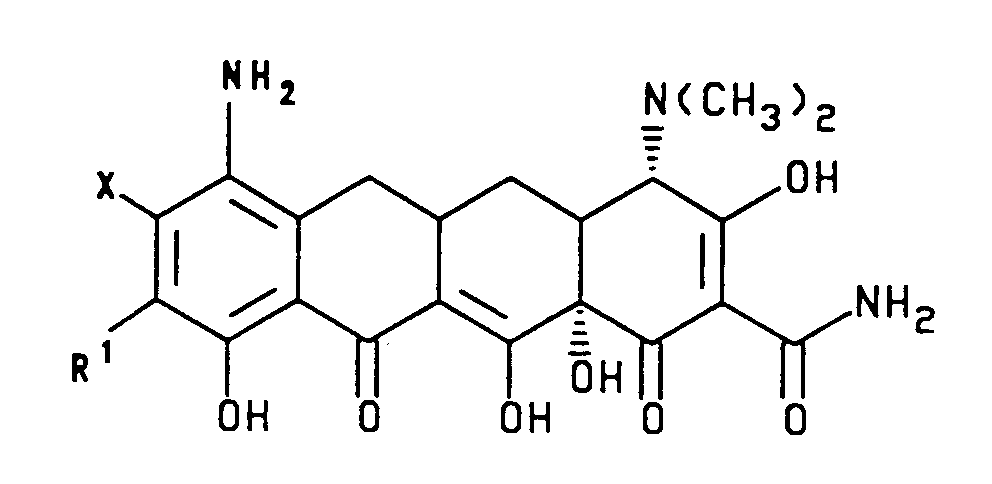

- A method of producing a compound of the formula:


- A method of producing a compound of the formula:


- A method of producing a compound of the formula:


- A method for the prevention, treatment or control of bacterial infections in warm-blooded animals which comprises administering to said aminal a pharmacologically effective amount of a compound according to Claim 1.
- A pharmaceutical composition of matter comprising a compound according to Claim 1 in association with a pharmaceutically acceptible carrier.
Applications Claiming Priority (2)
| Application Number | Priority Date | Filing Date | Title |
|---|---|---|---|
| US92859892A | 1992-08-13 | 1992-08-13 | |
| US928598 | 1992-08-13 |
Publications (2)
| Publication Number | Publication Date |
|---|---|
| EP0582810A1 true EP0582810A1 (en) | 1994-02-16 |
| EP0582810B1 EP0582810B1 (en) | 2002-04-03 |
Family
ID=25456505
Family Applications (1)
| Application Number | Title | Priority Date | Filing Date |
|---|---|---|---|
| EP93109850A Expired - Lifetime EP0582810B1 (en) | 1992-08-13 | 1993-06-21 | Novel 7-(substituted)-8-(substituted)-9-(substituted amino)-6-demethyl-6-deoxyetracyclines as antibiotic agents |
Country Status (24)
| Country | Link |
|---|---|
| US (4) | US5430162A (en) |
| EP (1) | EP0582810B1 (en) |
| JP (1) | JP3639313B2 (en) |
| KR (1) | KR100309540B1 (en) |
| CN (1) | CN1048719C (en) |
| AT (1) | ATE215530T1 (en) |
| AU (1) | AU674524B2 (en) |
| CA (1) | CA2103861C (en) |
| CZ (1) | CZ289195B6 (en) |
| DE (1) | DE69331774T2 (en) |
| DK (1) | DK0582810T3 (en) |
| ES (1) | ES2173876T3 (en) |
| FI (1) | FI933567L (en) |
| HU (2) | HU213269B (en) |
| IL (4) | IL106677A (en) |
| NO (1) | NO302568B1 (en) |
| NZ (1) | NZ248359A (en) |
| PH (1) | PH31210A (en) |
| PL (4) | PL174127B1 (en) |
| PT (1) | PT582810E (en) |
| RU (1) | RU2127255C1 (en) |
| SG (1) | SG47520A1 (en) |
| SK (1) | SK281871B6 (en) |
| ZA (1) | ZA935892B (en) |
Cited By (17)
| Publication number | Priority date | Publication date | Assignee | Title |
|---|---|---|---|---|
| WO2002004406A3 (en) * | 2000-07-07 | 2002-06-06 | Tufts College | 9-substituted minocycline compounds |
| US7001918B2 (en) | 2001-03-13 | 2006-02-21 | Paratek Pharmaceuticals, Inc. | 7-pyrrolyl tetracycline compounds and methods of use thereof |
| US7056902B2 (en) | 2002-01-08 | 2006-06-06 | Paratek Pharmaceuticals, Inc. | 4-dedimethylamino tetracycline compounds |
| US7534766B2 (en) | 2004-11-05 | 2009-05-19 | Wyeth | Glucuronide metabolites and epimers thereof of tigecycline |
| WO2010129057A3 (en) * | 2009-05-08 | 2011-01-06 | Tetraphase Pharmaceuticals, Inc. | Tetracycline compounds |
| EP2332550A1 (en) | 2001-07-13 | 2011-06-15 | Paratek Pharmaceuticals, Inc. | Tetracyclines for the treatment of neurodegenerative diseases |
| US8101591B2 (en) | 2001-03-13 | 2012-01-24 | Paratek Pharmaceuticals, Inc. | 9-aminoacyl tetracycline compounds and methods of use thereof |
| US8252777B2 (en) | 2000-07-07 | 2012-08-28 | Trustees Of Tufts College | 7, 8 and 9-substituted tetracycline compounds |
| US8372995B2 (en) | 2005-05-27 | 2013-02-12 | Wyeth Llc | Crystalline solid forms of tigecycline and methods of preparing same |
| US8501716B2 (en) | 2008-08-08 | 2013-08-06 | Tetraphase Pharmaceuticals, Inc. | C7-fluoro substituted tetracycline compounds |
| US9365500B2 (en) | 2001-03-13 | 2016-06-14 | Paratek Pharmaceuticals, Inc. | 9-aminomethyl substituted minocycline compounds |
| US9533943B2 (en) | 2003-07-09 | 2017-01-03 | Paratek Pharmaceuticals, Inc. | Substituted tetracycline compounds |
| US9573895B2 (en) | 2012-08-31 | 2017-02-21 | Tetraphase Pharmaceuticals, Inc. | Tetracycline compounds |
| US9624166B2 (en) | 2009-08-28 | 2017-04-18 | Tetraphase Pharmaceuticals, Inc. | Tetracycline compounds |
| US9688644B2 (en) | 2009-04-30 | 2017-06-27 | President And Fellows Of Harvard College | Synthesis of Tetracyclines and intermediates thereto |
| US9884830B2 (en) | 2004-05-21 | 2018-02-06 | President And Fellows Of Harvard College | Synthesis of tetracyclines and analogues thereof |
| US10961190B2 (en) | 2016-10-19 | 2021-03-30 | Tetraphase Pharmaceuticals, Inc. | Crystalline forms of eravacycline |
Families Citing this family (45)
| Publication number | Priority date | Publication date | Assignee | Title |
|---|---|---|---|---|
| US5494903A (en) * | 1991-10-04 | 1996-02-27 | American Cyanamid Company | 7-substituted-9-substituted amino-6-demethyl-6-deoxytetracyclines |
| USRE40183E1 (en) | 1991-10-04 | 2008-03-25 | Wyeth Holdings Corporation | 7-Substituted-9-substituted amino-6-demethyl-6-deoxytetracyclines |
| SG47520A1 (en) * | 1992-08-13 | 1998-04-17 | American Cyanamid Co | New method for the production of 9-amino-6-demethyl-6-deoxytetracycline |
| US5420272A (en) * | 1992-08-13 | 1995-05-30 | American Cyanamid Company | 7-(substituted)-8-(substituted)-9-](substituted glycyl)amido]-6-demethyl-6-deoxytetracyclines |
| US5442059A (en) * | 1992-08-13 | 1995-08-15 | American Cyanamid Company | 9-[(substituted glycyl)amido)]-6-demethyl-6-deoxytetracyclines |
| US5248797A (en) * | 1992-08-13 | 1993-09-28 | American Cyanamid Company | Method for the production of 9-amino-6-demethyl-6-deoxytetracycline |
| GB9416007D0 (en) * | 1994-08-08 | 1994-09-28 | Erba Carlo Spa | Anthracyclinone derivatives |
| GB9418260D0 (en) * | 1994-09-09 | 1994-10-26 | Erba Carlo Spa | Anthracycline derivatives |
| US6506740B1 (en) * | 1998-11-18 | 2003-01-14 | Robert A. Ashley | 4-dedimethylaminotetracycline derivatives |
| PT1240133E (en) * | 1999-09-14 | 2006-07-31 | Tufts College | PROCESSES FOR PREPARING TETRACYCLINES SUBSTITUTED WITH CHEMICALS BASED ON TRANSITIONAL METALS |
| US6946118B1 (en) | 1999-09-14 | 2005-09-20 | Orapharma, Inc. | Formulations for treating or preventing mucositis |
| US8106225B2 (en) * | 1999-09-14 | 2012-01-31 | Trustees Of Tufts College | Methods of preparing substituted tetracyclines with transition metal-based chemistries |
| RU2154084C1 (en) * | 1999-11-09 | 2000-08-10 | Открытое акционерное общество "ПермНИПИнефть" | Reagent for treatment of drilling mud |
| WO2001074761A1 (en) * | 2000-03-31 | 2001-10-11 | Trustees Of Tufts College | 7-and 9-carbamate, urea, thiourea, thiocarbamate, and heteroaryl-amino substituted tetracycline compounds |
| KR20030024683A (en) * | 2000-06-02 | 2003-03-26 | 유 리우 | Non-antibacterial tetracycline as anti-fungal agents |
| WO2001098236A2 (en) * | 2000-06-16 | 2001-12-27 | Trustees Of Tufts College | 7-phenyl-substituted tetracycline compounds |
| US20020132798A1 (en) * | 2000-06-16 | 2002-09-19 | Nelson Mark L. | 7-phenyl-substituted tetracycline compounds |
| ATE504562T1 (en) * | 2000-07-07 | 2011-04-15 | Tufts College | 7-, 8- AND 9-SUBSTITUTED TETRACYCLINE COMPOUNDS |
| IL153672A0 (en) * | 2000-07-07 | 2003-07-06 | Tufts College | 7-substituted tetracycline compounds |
| EP1368305B1 (en) | 2001-03-13 | 2008-08-13 | Paratek Pharmaceuticals, Inc. | 7, 9-substituted tetracycline compounds |
| DE60235083D1 (en) * | 2001-04-24 | 2010-03-04 | Paratek Pharm Innc | SUBSTITUTED TETRACYCLIN COMPOUNDS FOR THE TREATMENT OF MALARIA |
| US20060194773A1 (en) * | 2001-07-13 | 2006-08-31 | Paratek Pharmaceuticals, Inc. | Tetracyline compounds having target therapeutic activities |
| WO2003055441A2 (en) | 2001-08-02 | 2003-07-10 | Paratek Pharmaceuticals, Inc. | Medicaments |
| EP1482926A4 (en) * | 2002-03-08 | 2006-04-12 | Paratek Pharm Innc | Amino-methyl substituted tetracycline compounds |
| WO2003079984A2 (en) | 2002-03-21 | 2003-10-02 | Paratek Pharmaceuticals, Inc. | Substituted tetracycline compounds |
| KR20050005466A (en) * | 2002-05-06 | 2005-01-13 | 콜라제넥스 파마슈티칼스, 인크 | Methods of simultaneously treating mucositis and fungal infecion |
| AU2003256284A1 (en) * | 2002-06-20 | 2004-01-06 | Orapharma, Inc. | Rapidly disintegrating formulations for treating or preventing mucositis |
| EA200900540A1 (en) | 2002-07-12 | 2009-12-30 | Пэрэтек Фамэсьютикэлс, Инк. | SUBSTITUTED COMPOUNDS OF TETRACYCLINE, PHARMACEUTICAL COMPOSITION AND METHOD FOR TREATMENT OF TETRACYCLINE-SENSITIVE CONDITION IN SUBJECT |
| AU2003287218C1 (en) * | 2002-10-24 | 2010-07-15 | Paratek Pharmaceuticals, Inc. | Substituted tetracycline compounds for the treatment of malaria |
| US20060287283A1 (en) * | 2003-07-09 | 2006-12-21 | Paratek Pharmaceuticals, Inc. | Prodrugs of 9-aminomethyl tetracycline compounds |
| US7786099B2 (en) * | 2004-01-15 | 2010-08-31 | Paratek Pharmaceuticals, Inc. | Aromatic a-ring derivatives of tetracycline compounds |
| EP2269991A3 (en) | 2004-10-25 | 2011-09-21 | Paratek Pharmaceuticals, Inc. | Substituted tetracycline compounds |
| WO2006047671A2 (en) | 2004-10-25 | 2006-05-04 | Paratek Pharmaceuticals, Inc. | 4-aminotetracyclines and methods of use thereof |
| WO2006084265A1 (en) * | 2005-02-04 | 2006-08-10 | Paratek Pharmaceuticals, Inc. | 11a, 12-DERIVATIVES OF TETRACYCLINE COMPOUNDS |
| US20060183758A1 (en) * | 2005-02-17 | 2006-08-17 | Cb Research And Development, Inc. | Method for synthesis of AZA-annelated pyrroles, thiophenes, and furans |
| AR057034A1 (en) * | 2005-05-27 | 2007-11-14 | Wyeth Corp | METHODS TO PURIFY TIGECICLINE |
| AR057032A1 (en) * | 2005-05-27 | 2007-11-14 | Wyeth Corp | TIGECICLINE AND PREPARATION METHODS |
| AR057033A1 (en) * | 2005-05-27 | 2007-11-14 | Wyeth Corp | TIGECICLINE AND METHODS TO PREPARE 9-NITROMINOCICLINE |
| AR057324A1 (en) * | 2005-05-27 | 2007-11-28 | Wyeth Corp | TIGECICLINE AND METHODS TO PREPARE 9-AMINOMINOCICLINE |
| JP2009502809A (en) * | 2005-07-21 | 2009-01-29 | パラテック ファーマシューティカルズ インコーポレイテッド | 10-Substituted Tetracycline and Method of Use |
| CN101340895A (en) * | 2005-12-22 | 2009-01-07 | 惠氏公司 | Oral formulations comprising tigecycline |
| BRPI0620430A2 (en) * | 2005-12-22 | 2011-11-08 | Wyeth Corp | Methods for Treating Tigecycline Gastrointestinal Tract Infections |
| CA2652347A1 (en) | 2006-05-15 | 2007-11-22 | Paratek Pharmaceuticals, Inc. | Methods of regulating expression of genes or of gene products using substituted tetracycline compounds |
| US20080039433A1 (en) * | 2006-06-15 | 2008-02-14 | Smith Alexander D | Stabilized Tetracycline Compositions |
| BRPI0819696B1 (en) | 2007-11-29 | 2018-10-23 | Actelion Pharmaceuticals Ltd | 2-phenyl pyrimidine derivative compounds, pharmaceutical composition and use of a compound |
Citations (2)
| Publication number | Priority date | Publication date | Assignee | Title |
|---|---|---|---|---|
| US3226436A (en) * | 1963-05-17 | 1965-12-28 | American Cyanamid Co | 7-and 9-alkylamino-6-deoxytetracycline |
| US3338963A (en) * | 1960-10-28 | 1967-08-29 | American Cyanamid Co | Tetracycline compounds |
Family Cites Families (17)
| Publication number | Priority date | Publication date | Assignee | Title |
|---|---|---|---|---|
| USRE26271E (en) * | 1967-09-26 | Reductive alkylation process | ||
| US2482055A (en) * | 1948-02-11 | 1949-09-13 | American Cyanamid Co | Aureomycin and preparation of same |
| US3007965A (en) * | 1959-02-13 | 1961-11-07 | American Cyanamid Co | New tetracyclines produced by streptomyces aureofaciens |
| US3043875A (en) * | 1959-10-22 | 1962-07-10 | Pfizer & Co C | Halogenated tetracycline derivatives and processes for their preparation |
| FR1430859A (en) * | 1960-05-23 | 1966-05-25 | ||
| US3829453A (en) * | 1961-08-18 | 1974-08-13 | Pfizer | Octahydroanthracene-2-aminoacetic acids and esters and mixed anhydrides thereof |
| US3360557A (en) * | 1963-05-10 | 1967-12-26 | American Cyanamid Co | 9-hydroxytetracyclines and a process of preparing same |
| US3341585A (en) * | 1966-05-06 | 1967-09-12 | American Cyanamid Co | Substituted 7-and/or 9-amino-6-deoxytetracyclines |
| US3360561A (en) * | 1967-06-19 | 1967-12-26 | American Cyanamid Co | Nitration of tetracyclines |
| US3518306A (en) * | 1968-02-19 | 1970-06-30 | American Cyanamid Co | 7- and/or 9-(n-nitrosoalkylamino)-6-demethyl-6-deoxytetracyclines |
| US3579579A (en) * | 1968-04-18 | 1971-05-18 | American Cyanamid Co | Substituted 7- and/or 9-amino-6-demethyl-6-deoxytetracyclines |
| US4806529A (en) * | 1982-11-18 | 1989-02-21 | Trustees Of Tufts College, Tufts University | Tetracycline activity enhancement |
| US4518960A (en) * | 1982-11-23 | 1985-05-21 | Burroughs Corporation | Speed independent selector switch employing M-out-of-N codes |
| SG47520A1 (en) * | 1992-08-13 | 1998-04-17 | American Cyanamid Co | New method for the production of 9-amino-6-demethyl-6-deoxytetracycline |
| US5328902A (en) * | 1992-08-13 | 1994-07-12 | American Cyanamid Co. | 7-(substituted)-9-[(substituted glycyl)amido]-6-demethyl-6-deoxytetracyclines |
| US5284963A (en) * | 1992-08-13 | 1994-02-08 | American Cyanamid Company | Method of producing 7-(substituted)-9-[(substituted glycyl)-amidol]-6-demethyl-6-deoxytetra-cyclines |
| US5420272A (en) * | 1992-08-13 | 1995-05-30 | American Cyanamid Company | 7-(substituted)-8-(substituted)-9-](substituted glycyl)amido]-6-demethyl-6-deoxytetracyclines |
-
1993
- 1993-05-12 SG SG1996002634A patent/SG47520A1/en unknown
- 1993-06-21 ES ES93109850T patent/ES2173876T3/en not_active Expired - Lifetime
- 1993-06-21 DE DE69331774T patent/DE69331774T2/en not_active Expired - Fee Related
- 1993-06-21 EP EP93109850A patent/EP0582810B1/en not_active Expired - Lifetime
- 1993-06-21 AT AT93109850T patent/ATE215530T1/en not_active IP Right Cessation
- 1993-06-21 DK DK93109850T patent/DK0582810T3/en active
- 1993-06-21 PT PT93109850T patent/PT582810E/en unknown
- 1993-08-04 CZ CZ19931575A patent/CZ289195B6/en not_active IP Right Cessation
- 1993-08-09 NZ NZ248359A patent/NZ248359A/en unknown
- 1993-08-09 SK SK857-93A patent/SK281871B6/en unknown
- 1993-08-11 JP JP21792793A patent/JP3639313B2/en not_active Expired - Fee Related
- 1993-08-11 CA CA002103861A patent/CA2103861C/en not_active Expired - Fee Related
- 1993-08-12 ZA ZA935892A patent/ZA935892B/en unknown
- 1993-08-12 KR KR1019930015645A patent/KR100309540B1/en not_active Expired - Fee Related
- 1993-08-12 RU RU93048636A patent/RU2127255C1/en not_active IP Right Cessation
- 1993-08-12 AU AU44601/93A patent/AU674524B2/en not_active Ceased
- 1993-08-12 PL PL93318908A patent/PL174127B1/en not_active IP Right Cessation
- 1993-08-12 PL PL93316768A patent/PL175487B1/en not_active IP Right Cessation
- 1993-08-12 IL IL106677A patent/IL106677A/en not_active IP Right Cessation
- 1993-08-12 NO NO932872A patent/NO302568B1/en not_active IP Right Cessation
- 1993-08-12 HU HU9302333A patent/HU213269B/en not_active IP Right Cessation
- 1993-08-12 PL PL93300066A patent/PL174022B1/en not_active IP Right Cessation
- 1993-08-12 FI FI933567A patent/FI933567L/en unknown
- 1993-08-12 IL IL11975093A patent/IL119750A/en not_active IP Right Cessation
- 1993-08-12 PH PH46683A patent/PH31210A/en unknown
- 1993-08-12 PL PL93316767A patent/PL174230B1/en not_active IP Right Cessation
- 1993-08-12 IL IL11975193A patent/IL119751A/en not_active IP Right Cessation
- 1993-08-13 CN CN93109819A patent/CN1048719C/en not_active Expired - Fee Related
-
1994
- 1994-03-21 US US08/214,992 patent/US5430162A/en not_active Expired - Lifetime
- 1994-12-08 US US08/352,407 patent/US5495018A/en not_active Expired - Lifetime
- 1994-12-08 US US08/352,310 patent/US5886175A/en not_active Expired - Fee Related
-
1995
- 1995-05-31 US US08/454,966 patent/US5512553A/en not_active Expired - Lifetime
- 1995-06-30 HU HU95P/P00672P patent/HU211303A9/en unknown
-
1996
- 1996-12-03 IL IL11975096A patent/IL119750A0/en unknown
Patent Citations (2)
| Publication number | Priority date | Publication date | Assignee | Title |
|---|---|---|---|---|
| US3338963A (en) * | 1960-10-28 | 1967-08-29 | American Cyanamid Co | Tetracycline compounds |
| US3226436A (en) * | 1963-05-17 | 1965-12-28 | American Cyanamid Co | 7-and 9-alkylamino-6-deoxytetracycline |
Non-Patent Citations (3)
| Title |
|---|
| J.J. HLAVKA ET AL.: "THE 6 -DEOXYTETRACYCLINES. IV. S PHOTOCHEMICAL DISPLACEMENT OF A DIAZONIUM GROUP", JOURNAL OF ORGANIC CHEMISTRY., vol. 27, October 1962 (1962-10-01), WASHINGTON US, pages 3674 - 3675, XP055238558, DOI: doi:10.1021/jo01057a501 * |
| J.J. HLAVKA ET AL.: "THE 6-DEOXYTETRACYCLINES. III. ELECTROPHILIC AND NUCLEOPHILIC SUBSTITUTION", JOURNAL OF THE AMERICAN CHEMICAL SOCIETY., vol. 84, 20 April 1962 (1962-04-20), GASTON, PA US, pages 1426 - 1430, XP002679337, DOI: doi:10.1021/ja00867a018 * |
| J.L. SPENCER ET AL.: "6-DEOXYTETRACYCLINES. V. 7,9-DISUBSTITUTED PRODUCTS", JOURNAL OF MEDICINAL CHEMISTRY, vol. 6, July 1963 (1963-07-01), WASHINGTON US, pages 405 - 407 * |
Cited By (39)
| Publication number | Priority date | Publication date | Assignee | Title |
|---|---|---|---|---|
| US8252777B2 (en) | 2000-07-07 | 2012-08-28 | Trustees Of Tufts College | 7, 8 and 9-substituted tetracycline compounds |
| EA013908B1 (en) * | 2000-07-07 | 2010-08-30 | Трастис Оф Тафтс Коллидж | 9-substituted minocycline compounds (embodiments), a pharmaceutical composition and a method for treating a tetracycline responsive state in a mammal |
| AU2001286388B2 (en) * | 2000-07-07 | 2005-07-14 | Paratek Pharmaceuticals, Inc. | 9-substituted minocycline compounds |
| US9090541B2 (en) | 2000-07-07 | 2015-07-28 | Paratek Pharmaceuticals, Inc. | 9-substituted minocycline compounds |
| EP3461808A1 (en) * | 2000-07-07 | 2019-04-03 | Trustees of Tufts College | 9-substituted minocycline compounds |
| EP1679305A1 (en) * | 2000-07-07 | 2006-07-12 | Trustees Of Tufts College | 9-Substituted minocycline compounds |
| EA009175B1 (en) * | 2000-07-07 | 2007-12-28 | Трастис Оф Тафтс Коллидж | 9-substituted minocycline compounds, a pharmaceutical composition thereof and a method for treating a tetracycline responsive state in a mammal |
| US8258120B2 (en) | 2000-07-07 | 2012-09-04 | Paratek Pharmaceuticals, Inc. | 9-substituted minocycline compounds |
| EP2308832A1 (en) * | 2000-07-07 | 2011-04-13 | Trustees Of Tufts College | 9-Substituted minocycline compounds |
| WO2002004406A3 (en) * | 2000-07-07 | 2002-06-06 | Tufts College | 9-substituted minocycline compounds |
| US6846939B2 (en) | 2000-07-07 | 2005-01-25 | Paratek Pharmaceuticals, Inc. | 9-substituted minocycline compounds |
| HRP20030091B1 (en) * | 2000-07-07 | 2011-10-31 | Trustees Of Tufts College | 9-substituted minocycline compounds |
| US7897784B2 (en) | 2001-03-13 | 2011-03-01 | Paratek Pharmaceuticals, Inc. | Process for preparing five-membered heterocyclyl tetracycline compounds and methods of use thereof |
| US8101591B2 (en) | 2001-03-13 | 2012-01-24 | Paratek Pharmaceuticals, Inc. | 9-aminoacyl tetracycline compounds and methods of use thereof |
| US8304445B2 (en) | 2001-03-13 | 2012-11-06 | Paratek Pharmaceuticals, Inc. | 7-pyrazolyl tetracycline compounds and methods of use thereof |
| US9365500B2 (en) | 2001-03-13 | 2016-06-14 | Paratek Pharmaceuticals, Inc. | 9-aminomethyl substituted minocycline compounds |
| US7001918B2 (en) | 2001-03-13 | 2006-02-21 | Paratek Pharmaceuticals, Inc. | 7-pyrrolyl tetracycline compounds and methods of use thereof |
| EP2332550A1 (en) | 2001-07-13 | 2011-06-15 | Paratek Pharmaceuticals, Inc. | Tetracyclines for the treatment of neurodegenerative diseases |
| US7056902B2 (en) | 2002-01-08 | 2006-06-06 | Paratek Pharmaceuticals, Inc. | 4-dedimethylamino tetracycline compounds |
| US9533943B2 (en) | 2003-07-09 | 2017-01-03 | Paratek Pharmaceuticals, Inc. | Substituted tetracycline compounds |
| US9884830B2 (en) | 2004-05-21 | 2018-02-06 | President And Fellows Of Harvard College | Synthesis of tetracyclines and analogues thereof |
| US11192866B2 (en) | 2004-05-21 | 2021-12-07 | President And Fellows Of Harvard College | Synthesis of tetracyclines and analogues thereof |
| US10669244B2 (en) | 2004-05-21 | 2020-06-02 | President And Fellows Of Harvard College | Synthesis of tetracyclines and analogues thereof |
| US7534766B2 (en) | 2004-11-05 | 2009-05-19 | Wyeth | Glucuronide metabolites and epimers thereof of tigecycline |
| US8372995B2 (en) | 2005-05-27 | 2013-02-12 | Wyeth Llc | Crystalline solid forms of tigecycline and methods of preparing same |
| US8906887B2 (en) | 2008-08-08 | 2014-12-09 | Tetraphase Pharmaceuticals, Inc. | C7-fluoro substituted tetracycline compounds |
| US8796245B2 (en) | 2008-08-08 | 2014-08-05 | Tetraphase Pharmaceuticals, Inc. | C7-fluoro substituted tetracycline compounds |
| US8501716B2 (en) | 2008-08-08 | 2013-08-06 | Tetraphase Pharmaceuticals, Inc. | C7-fluoro substituted tetracycline compounds |
| US9688644B2 (en) | 2009-04-30 | 2017-06-27 | President And Fellows Of Harvard College | Synthesis of Tetracyclines and intermediates thereto |
| WO2010129057A3 (en) * | 2009-05-08 | 2011-01-06 | Tetraphase Pharmaceuticals, Inc. | Tetracycline compounds |
| US10072007B2 (en) | 2009-05-08 | 2018-09-11 | Tetraphase Pharmaceuticals, Inc. | Tetracycline compounds |
| US9315451B2 (en) | 2009-05-08 | 2016-04-19 | Tetraphase Pharmaceuticals, Inc. | Tetracycline compounds |
| US9624166B2 (en) | 2009-08-28 | 2017-04-18 | Tetraphase Pharmaceuticals, Inc. | Tetracycline compounds |
| US10315992B2 (en) | 2012-08-31 | 2019-06-11 | Tetraphase Pharmaceuticals, Inc. | Tetracyline compounds |
| US9573895B2 (en) | 2012-08-31 | 2017-02-21 | Tetraphase Pharmaceuticals, Inc. | Tetracycline compounds |
| US10913712B2 (en) | 2012-08-31 | 2021-02-09 | Tetraphase Pharmaceuticals, Inc. | Tetracycline compounds |
| US10961190B2 (en) | 2016-10-19 | 2021-03-30 | Tetraphase Pharmaceuticals, Inc. | Crystalline forms of eravacycline |
| US11578044B2 (en) | 2016-10-19 | 2023-02-14 | Tetraphase Pharmaceuticals, Inc. | Crystalline forms of eravacycline |
| US12269807B2 (en) | 2016-10-19 | 2025-04-08 | Tetraphase Pharmaceuticals, Inc. | Crystalline forms of eravacycline |
Also Published As
Similar Documents
| Publication | Publication Date | Title |
|---|---|---|
| JP3639313B2 (en) | Novel 7- (substituted) -8- (substituted) -9- (substituted amino) -6-demethyl-6-deoxytetracyclines | |
| AU680616B2 (en) | 9-{substituted glycyl)amido}-6-demethyl-6-deoxyte tracyclines | |
| DE69232302T4 (en) | 7-Substituted-9-substituted amino-6-demethyl-6-deoxy-tetracyclines | |
| AU673366B2 (en) | Novel 7-(substituted)-8-(substituted-9-{(substituted glycyl) amido}-6-demethyl-6-deoxytetracyclines | |
| EP0582788B1 (en) | 7-(Substituted)-9- (substituted glycyl)-amido)-6-demethyl-6-deoxytetracyclines | |
| USRE40086E1 (en) | Method for treating bacterial infection with novel 7-substituted-9-substituted amino 6-demethyl-6-deoxytetracyclines | |
| HK1011348B (en) | Novel 7-substituted-9-substituted amino-6-demethyl-6-deoxytetracyclines | |
| HK1009598B (en) | 7-(substituted)-9-(substituted glycyl)-amido)-6-demethyl-6-deoxytetracyclines | |
| HU211343A9 (en) | 7-(substituted)-8-(substituted)-9-[(substituted glycyl)amido]-6-demethyl-6-deoxytetracyclines |
Legal Events
| Date | Code | Title | Description |
|---|---|---|---|
| PUAI | Public reference made under article 153(3) epc to a published international application that has entered the european phase |
Free format text: ORIGINAL CODE: 0009012 |
|
| AK | Designated contracting states |
Kind code of ref document: A1 Designated state(s): AT BE CH DE DK ES FR GB GR IE IT LI LU NL PT SE |
|
| 17P | Request for examination filed |
Effective date: 19940517 |
|
| 17Q | First examination report despatched |
Effective date: 19950512 |
|
| GRAG | Despatch of communication of intention to grant |
Free format text: ORIGINAL CODE: EPIDOS AGRA |
|
| RAP1 | Party data changed (applicant data changed or rights of an application transferred) |
Owner name: AMERICAN CYANAMID COMPANY |
|
| GRAG | Despatch of communication of intention to grant |
Free format text: ORIGINAL CODE: EPIDOS AGRA |
|
| GRAH | Despatch of communication of intention to grant a patent |
Free format text: ORIGINAL CODE: EPIDOS IGRA |
|
| GRAH | Despatch of communication of intention to grant a patent |
Free format text: ORIGINAL CODE: EPIDOS IGRA |
|
| REG | Reference to a national code |
Ref country code: GB Ref legal event code: IF02 |
|
| GRAA | (expected) grant |
Free format text: ORIGINAL CODE: 0009210 |
|
| AK | Designated contracting states |
Kind code of ref document: B1 Designated state(s): AT BE CH DE DK ES FR GB GR IE IT LI LU NL PT SE |
|
| REF | Corresponds to: |
Ref document number: 215530 Country of ref document: AT Date of ref document: 20020415 Kind code of ref document: T |
|
| REG | Reference to a national code |
Ref country code: CH Ref legal event code: NV Representative=s name: E. BLUM & CO. PATENTANWAELTE Ref country code: CH Ref legal event code: EP |
|
| REF | Corresponds to: |
Ref document number: 69331774 Country of ref document: DE Date of ref document: 20020508 |
|
| REG | Reference to a national code |
Ref country code: IE Ref legal event code: FG4D |
|
| REG | Reference to a national code |
Ref country code: DK Ref legal event code: T3 |
|
| ET | Fr: translation filed | ||
| REG | Reference to a national code |
Ref country code: PT Ref legal event code: SC4A Free format text: AVAILABILITY OF NATIONAL TRANSLATION Effective date: 20020523 |
|
| REG | Reference to a national code |
Ref country code: GR Ref legal event code: EP Ref document number: 20020402008 Country of ref document: GR |
|
| REG | Reference to a national code |
Ref country code: ES Ref legal event code: FG2A Ref document number: 2173876 Country of ref document: ES Kind code of ref document: T3 |
|
| PLBE | No opposition filed within time limit |
Free format text: ORIGINAL CODE: 0009261 |
|
| STAA | Information on the status of an ep patent application or granted ep patent |
Free format text: STATUS: NO OPPOSITION FILED WITHIN TIME LIMIT |
|
| 26N | No opposition filed |
Effective date: 20030106 |
|
| REG | Reference to a national code |
Ref country code: CH Ref legal event code: PFA Owner name: WYETH HOLDINGS CORPORATION Free format text: AMERICAN CYANAMID COMPANY#FIVE GIRALDA FARMS#MADISON, NEW JERSEY 07940-0874 (US) -TRANSFER TO- WYETH HOLDINGS CORPORATION#FIVE GIRALDA FARMS#MADISON, NJ 07940 (US) |
|
| NLT1 | Nl: modifications of names registered in virtue of documents presented to the patent office pursuant to art. 16 a, paragraph 1 |
Owner name: WYETH HOLDINGS CORPORATION |
|
| REG | Reference to a national code |
Ref country code: PT Ref legal event code: PD4A Free format text: WYETH HOLDINGS CORPORATION US Effective date: 20031117 |
|
| REG | Reference to a national code |
Ref country code: FR Ref legal event code: CD |
|
| PGFP | Annual fee paid to national office [announced via postgrant information from national office to epo] |
Ref country code: PT Payment date: 20050414 Year of fee payment: 13 |
|
| PGFP | Annual fee paid to national office [announced via postgrant information from national office to epo] |
Ref country code: GR Payment date: 20050422 Year of fee payment: 13 |
|
| PGFP | Annual fee paid to national office [announced via postgrant information from national office to epo] |
Ref country code: AT Payment date: 20050506 Year of fee payment: 13 |
|
| PGFP | Annual fee paid to national office [announced via postgrant information from national office to epo] |
Ref country code: BE Payment date: 20050628 Year of fee payment: 13 |
|
| PG25 | Lapsed in a contracting state [announced via postgrant information from national office to epo] |
Ref country code: AT Free format text: LAPSE BECAUSE OF NON-PAYMENT OF DUE FEES Effective date: 20060621 |
|
| PG25 | Lapsed in a contracting state [announced via postgrant information from national office to epo] |
Ref country code: BE Free format text: LAPSE BECAUSE OF NON-PAYMENT OF DUE FEES Effective date: 20060630 |
|
| PG25 | Lapsed in a contracting state [announced via postgrant information from national office to epo] |
Ref country code: PT Free format text: LAPSE BECAUSE OF NON-PAYMENT OF DUE FEES Effective date: 20061221 |
|
| REG | Reference to a national code |
Ref country code: PT Ref legal event code: MM4A Free format text: LAPSE DUE TO NON-PAYMENT OF FEES Effective date: 20061221 |
|
| REG | Reference to a national code |
Ref country code: CH Ref legal event code: PFA Owner name: WYETH HOLDINGS CORPORATION Free format text: WYETH HOLDINGS CORPORATION#FIVE GIRALDA FARMS#MADISON, NJ 07940 (US) -TRANSFER TO- WYETH HOLDINGS CORPORATION#FIVE GIRALDA FARMS#MADISON, NJ 07940 (US) |
|
| BERE | Be: lapsed |
Owner name: *WYETH HOLDINGS CORPORATION Effective date: 20060630 |
|
| PGFP | Annual fee paid to national office [announced via postgrant information from national office to epo] |
Ref country code: LU Payment date: 20080508 Year of fee payment: 16 Ref country code: ES Payment date: 20080616 Year of fee payment: 16 Ref country code: DK Payment date: 20080508 Year of fee payment: 16 Ref country code: CH Payment date: 20080425 Year of fee payment: 16 |
|
| PGFP | Annual fee paid to national office [announced via postgrant information from national office to epo] |
Ref country code: IT Payment date: 20080621 Year of fee payment: 16 |
|
| PG25 | Lapsed in a contracting state [announced via postgrant information from national office to epo] |
Ref country code: GR Free format text: LAPSE BECAUSE OF NON-PAYMENT OF DUE FEES Effective date: 20070104 |
|
| PGFP | Annual fee paid to national office [announced via postgrant information from national office to epo] |
Ref country code: SE Payment date: 20080609 Year of fee payment: 16 Ref country code: NL Payment date: 20080530 Year of fee payment: 16 Ref country code: IE Payment date: 20080424 Year of fee payment: 16 Ref country code: DE Payment date: 20080630 Year of fee payment: 16 |
|
| PGFP | Annual fee paid to national office [announced via postgrant information from national office to epo] |
Ref country code: GB Payment date: 20080506 Year of fee payment: 16 |
|
| REG | Reference to a national code |
Ref country code: CH Ref legal event code: PL |
|
| REG | Reference to a national code |
Ref country code: DK Ref legal event code: EBP |
|
| GBPC | Gb: european patent ceased through non-payment of renewal fee |
Effective date: 20090621 |
|
| NLV4 | Nl: lapsed or anulled due to non-payment of the annual fee |
Effective date: 20100101 |
|
| REG | Reference to a national code |
Ref country code: FR Ref legal event code: ST Effective date: 20100226 |
|
| REG | Reference to a national code |
Ref country code: IE Ref legal event code: MM4A |
|
| PG25 | Lapsed in a contracting state [announced via postgrant information from national office to epo] |
Ref country code: LI Free format text: LAPSE BECAUSE OF NON-PAYMENT OF DUE FEES Effective date: 20090630 Ref country code: IE Free format text: LAPSE BECAUSE OF NON-PAYMENT OF DUE FEES Effective date: 20090622 Ref country code: FR Free format text: LAPSE BECAUSE OF NON-PAYMENT OF DUE FEES Effective date: 20090630 Ref country code: CH Free format text: LAPSE BECAUSE OF NON-PAYMENT OF DUE FEES Effective date: 20090630 |
|
| PGFP | Annual fee paid to national office [announced via postgrant information from national office to epo] |
Ref country code: FR Payment date: 20080424 Year of fee payment: 16 |
|
| PG25 | Lapsed in a contracting state [announced via postgrant information from national office to epo] |
Ref country code: GB Free format text: LAPSE BECAUSE OF NON-PAYMENT OF DUE FEES Effective date: 20090621 |
|
| PG25 | Lapsed in a contracting state [announced via postgrant information from national office to epo] |
Ref country code: DE Free format text: LAPSE BECAUSE OF NON-PAYMENT OF DUE FEES Effective date: 20100101 |
|
| PG25 | Lapsed in a contracting state [announced via postgrant information from national office to epo] |
Ref country code: NL Free format text: LAPSE BECAUSE OF NON-PAYMENT OF DUE FEES Effective date: 20100101 Ref country code: DK Free format text: LAPSE BECAUSE OF NON-PAYMENT OF DUE FEES Effective date: 20090630 |
|
| REG | Reference to a national code |
Ref country code: ES Ref legal event code: FD2A Effective date: 20090622 |
|
| PG25 | Lapsed in a contracting state [announced via postgrant information from national office to epo] |
Ref country code: ES Free format text: LAPSE BECAUSE OF NON-PAYMENT OF DUE FEES Effective date: 20090622 |
|
| PG25 | Lapsed in a contracting state [announced via postgrant information from national office to epo] |
Ref country code: IT Free format text: LAPSE BECAUSE OF NON-PAYMENT OF DUE FEES Effective date: 20090621 |
|
| PG25 | Lapsed in a contracting state [announced via postgrant information from national office to epo] |
Ref country code: LU Free format text: LAPSE BECAUSE OF NON-PAYMENT OF DUE FEES Effective date: 20090621 |
|
| PG25 | Lapsed in a contracting state [announced via postgrant information from national office to epo] |
Ref country code: SE Free format text: LAPSE BECAUSE OF NON-PAYMENT OF DUE FEES Effective date: 20090622 |