EP0580650B1 - Novel 2-spirocyclopropyl 4-acylcephems and processes for the preparation thereof - Google Patents
Novel 2-spirocyclopropyl 4-acylcephems and processes for the preparation thereof Download PDFInfo
- Publication number
- EP0580650B1 EP0580650B1 EP92907957A EP92907957A EP0580650B1 EP 0580650 B1 EP0580650 B1 EP 0580650B1 EP 92907957 A EP92907957 A EP 92907957A EP 92907957 A EP92907957 A EP 92907957A EP 0580650 B1 EP0580650 B1 EP 0580650B1
- Authority
- EP
- European Patent Office
- Prior art keywords
- compound
- formula
- methyl
- cephem
- cyclopropyl
- Prior art date
- Legal status (The legal status is an assumption and is not a legal conclusion. Google has not performed a legal analysis and makes no representation as to the accuracy of the status listed.)
- Expired - Lifetime
Links
- 0 *C(C1=C(*)CNC(C2*=C)C1C2=O)=O Chemical compound *C(C1=C(*)CNC(C2*=C)C1C2=O)=O 0.000 description 4
Classifications
-
- C—CHEMISTRY; METALLURGY
- C07—ORGANIC CHEMISTRY
- C07D—HETEROCYCLIC COMPOUNDS
- C07D501/00—Heterocyclic compounds containing 5-thia-1-azabicyclo [4.2.0] octane ring systems, i.e. compounds containing a ring system of the formula:, e.g. cephalosporins; Such ring systems being further condensed, e.g. 2,3-condensed with an oxygen-, nitrogen- or sulfur-containing hetero ring
-
- A—HUMAN NECESSITIES
- A61—MEDICAL OR VETERINARY SCIENCE; HYGIENE
- A61P—SPECIFIC THERAPEUTIC ACTIVITY OF CHEMICAL COMPOUNDS OR MEDICINAL PREPARATIONS
- A61P11/00—Drugs for disorders of the respiratory system
-
- A—HUMAN NECESSITIES
- A61—MEDICAL OR VETERINARY SCIENCE; HYGIENE
- A61P—SPECIFIC THERAPEUTIC ACTIVITY OF CHEMICAL COMPOUNDS OR MEDICINAL PREPARATIONS
- A61P19/00—Drugs for skeletal disorders
- A61P19/06—Antigout agents, e.g. antihyperuricemic or uricosuric agents
-
- A—HUMAN NECESSITIES
- A61—MEDICAL OR VETERINARY SCIENCE; HYGIENE
- A61P—SPECIFIC THERAPEUTIC ACTIVITY OF CHEMICAL COMPOUNDS OR MEDICINAL PREPARATIONS
- A61P29/00—Non-central analgesic, antipyretic or antiinflammatory agents, e.g. antirheumatic agents; Non-steroidal antiinflammatory drugs [NSAID]
Definitions
- Serine proteases are an important class of enzymes which have a serine residue at the active site.
- Elastase is one such serine protease which is released from azurophilic granules of human polymorphonuclear leukocytes (PMN) and macrophages by inflammatory stimuli.
- PMN polymorphonuclear leukocytes
- HLE Human leukocyte elastase
- pulmonary emphysema rheumatoid arthritis, spondylitis, psoriasis, osteoarthritis, chronic bronchitis, cystic fibrosis, and respiratory distress syndrome (RDS).
- RDS respiratory distress syndrome
- ⁇ 1 protease inhibitor ⁇ 1 PI
- ⁇ 2 macroglobulin Marked reduction in serum ⁇ 1 PI either genetic or due to oxidants, results in protease-antiprotease imbalance and thus leads to uncontrolled proteolysis of connective tissue, primarily of the lung and joints [J. Travis et al. Ann. Rev.
- Pulmonary emphysema is a disease characterized by a progressive loss of lung elasticity and resulting in respiratory difficulty. This loss of lung elasticity is caused by progressive destruction of the structure of lung tissue by elastase released from leukocytes.
- Use of low molecular weight synthetic human leukocyte elastase (HLE) inhibitors would be an ideal therapeutic approach in controlling the various inflammatory conditions.
- Cephem sulfones have been described as elastase inhibitors in various patents and publications. See, for example, US patent no. 4,547,371; EP patent nos. 124,081, 267,723 and 337,704; AU patent nos. 80624/87 and 32762/89; J. Med. Chem. , 33 , 2513 (1990); J. Med. Chem. , 33 2522 (1990); J. Med. Chem., 33, 2529 (1990); J. Org. Chem., 54 , 3907 (1989), Eur. J. Med. Chem., 24 , 599 (1989); Am. Rev. Respir. Dis., 141, 672 (1990); J. Cell. Biochem., 39 , 47 (1989); and Nature, 322, 192 (1986).
- an object of this invention is to provide new elastase inhibitors which are useful for controlling various clinically important inflammatory or degenerative conditions mediated particularly by elastase.
- the present invention relates to 2-spirocyclopropyl 4-acylcephem sulfones, their preparation, and to pharmaceutical and veterinary compositions containing them.
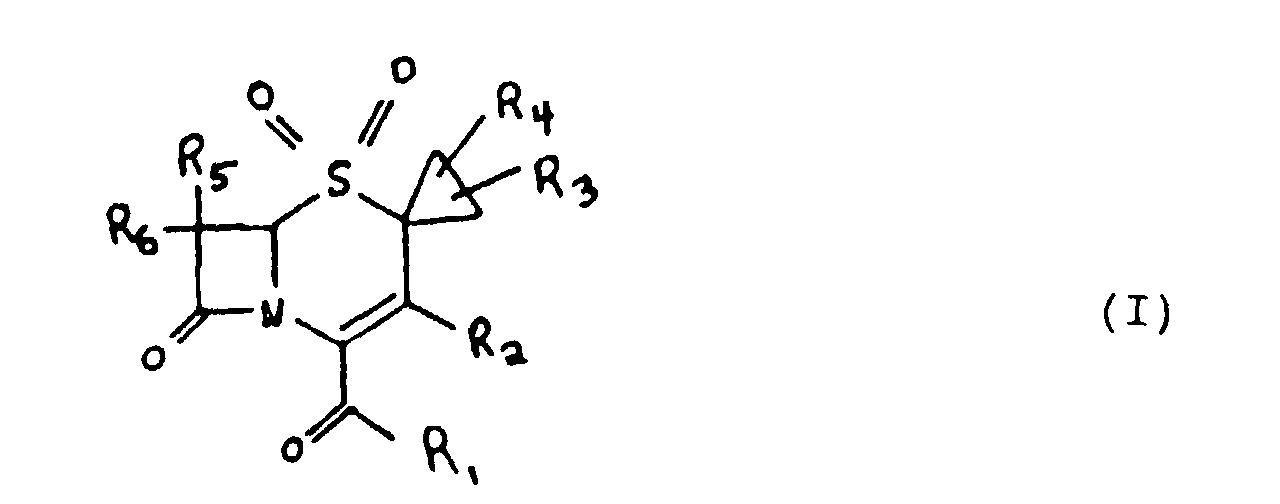
- the present invention relates to a 2-spirocyclopropyl 4-acylcephem sulfone of the formula wherein R 1 , R 2 , R 3 , R 4 and R 5 have meanings set out in Claim 1.
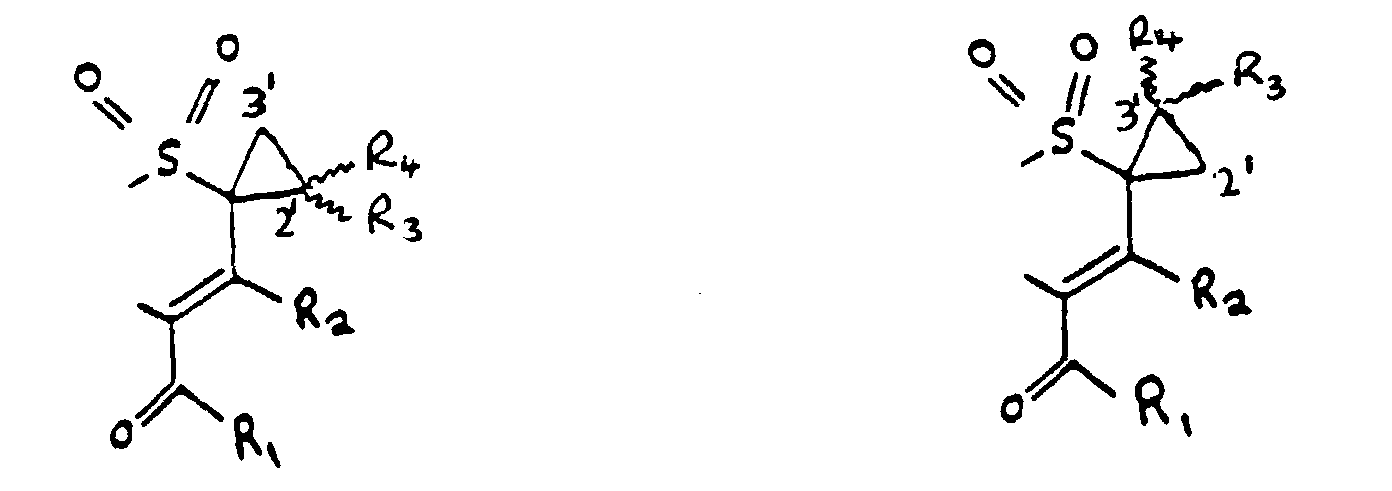
- R 3 and R 4 in formula (I) may be present in the form of an optical isomer, for example, l,d- or dl- forms.
- the most preferred embodiments of the present invention include the following compounds:
- the present invention relates to a process for preparing a compound of formula (I) as defined above comprising:
- the present invention relates to an alternative process for preparing a compound of Formula (I), comprising:
- the carboxylic acid group is typically activated as the acyl halide, anhydride, mixed anhydride, thioester etc.
- the preferred organometallic derivatives of R 1 include Grignard reagents (R 1 MgX), organolithium reagents (R 1 Li) , lithium dialkylcopper reagents [(R 1 ) 2 CuLi)], organocadmium reagents [(R 1 ) 2 Cd)], organozinc reagents (R 1 ZnBr), and cuprous reagents (R 1 Cu e.g. cuprous acetylides).
- Grignard reagents R 1 MgX
- organolithium reagents R 1 Li
- lithium dialkylcopper reagents [(R 1 ) 2 CuLi)
- organocadmium reagents [(R 1 ) 2 Cd)
- organozinc reagents R 1 ZnBr
- cuprous reagents R 1 Cu e.g. cuprous acetylides
- Still other suitable reagents include organomanganese compounds, organotin reagents, lithium aryltrialkyl-borates, bis(triphenylphosphine)carbonylalkylrhodium(I), a magnesium dialkylcopper reagent (R 1 CH 3 CuMgX), and PhS(R 1 )CuLi.
- Certain metallic halides notably ferric and cuprous halides and AlX 3 , may be used as catalysts to improve the yields.
- the carboxyl group of compound (II) or compound (IV) can be converted to a suitable reactive derivative according to the conventional methods described in the cephalosporin or penicillin literature.
- the carboxylic acid group can be converted to an acid halide by treatment with a halogenating agent such as phosphorus oxychloride, thionyl chloride, phosphorus pentachloride, oxalyl chloride, or oxalyl bromide.
- the reactions are usually carried out in a conventional solvent such as acetone, dioxane, acetonitrile, chloroform, methylene chloride, ethylene chloride, tetrahydrofuran, ethyl acetate, N, N-dimethyl formamide or any other organic solvent which does not adversely influence the reaction.
- a conventional solvent such as acetone, dioxane, acetonitrile, chloroform, methylene chloride, ethylene chloride, tetrahydrofuran, ethyl acetate, N, N-dimethyl formamide or any other organic solvent which does not adversely influence the reaction.
- the present reaction is preferably carried out under mild conditions such as under cooling, at ambient, or slightly elevated temperature.
- the reactions of activated acid derivatives of formula (III) and (V) with organometallic reagents can be carried out according to the conditions described in "Advanced organic Chemistry", J. March, McGraw-Hill, incorporated herein by reference.
- the reactions are usually carried out in an inert solvent like ether, hexane, tetrahydrofuran and the like.
- the reaction is usually carried out at a low temperature, preferably between -78° to 10° C.
- 2-spirocyclopropyl groups which may be substituted with suitable substituents, may be performed by reacting the compound (VII) with a compound of the formula R 3 R 4 CN 2 wherein R 3 and R 4 may be the same or different and represent the groups as defined before.
- the reaction is usually carried out in a solvent such as methylene chloride, chloroform, carbon tetrachloride, benzene, ether, ethyl acetate, or any other solvent which does not adversely affect the reaction.
- a solvent such as methylene chloride, chloroform, carbon tetrachloride, benzene, ether, ethyl acetate, or any other solvent which does not adversely affect the reaction.
- the reaction is usually carried out under cooling to ambient temperature.
- the compounds of the present invention are characterized by high inhibitory activity on HLE.
- the in vitro test data on anti-elastase activity of exemplary derivatives having the formula (I) are shown in the Table.
- the compounds of the present invention can be used in the treatment of inflammatory or degenerative diseases caused by proteolytic enzymes in mammals, including humans.
- the compounds of the present invention may be administered to a warm-blooded mammalian in need thereof, particularly a human, to prevent or arrest the progression of diseases such as emphysema, pulmonary emphysema, lupus, rheumatoid arthritis, osteoarthritis, cystic fibrosis, spondylitis, gout, psoriasis, chronic bronchitis, and acute respiratory distress syndrome caused by proteolytic degradation of lungs and other connective tissues.
- diseases such as emphysema, pulmonary emphysema, lupus, rheumatoid arthritis, osteoarthritis, cystic fibrosis, spondylitis, gout, psoriasis, chronic bronchitis, and acute respiratory distress syndrome caused by proteolytic degradation
- the mode of administration may be oral, parenteral, topical, rectal or by inhalation.
- the compounds may be conventionally formulated in an oral or parenteral dosage form by compounding about 10 to 250 mg per unit of dosage with conventional vehicle excipients, binders, preservatives, stabilizers, flavoring agents, coloring agents, and sweetening agents or the like as called for by accepted pharmaceutical or veterinary practice.
- a 1 to 10 ml intravenous, intramascular or subcutaneous injection would be given containing about 0.02 to 10 mg/kg of body weight of a compound of the present invention three to four times daily.
- the injection would contain a compound of the present invention in an aqueous isotonic sterile solution or suspension, optionally with a preservative such as phenol or a solubilizing agent such as ethylenediaminetetraacetic acid (EDTA).
- EDTA ethylenediaminetetraacetic acid
- acceptable vehicles and solvents that may be employed are water, Ringer's solution and isotonic sodium chloride solution.
- sterile, fixed oils are conventionally employed as a solvent or suspending medium. Synthetic monoglycerides, diglycerides, and fatty acids such as oleic acid find use as fixed oil in the preparation of injectables.
- the compounds of the present invention can be prepared in the form of suppositories by mixing with a suitable non-irritating excipient such as cocoa butter or polyethylene glycols.
- the compounds of the present invention can be prepared in the form of ointments, jellies, solutions or suspensions.
- the compounds of the invention may be administered as a powdered aerosol by a Spinhaler turbo-inhaler device commercially available from Fisons Corp. of Bedford, Massachusetts at a rate of about 0.1 to 50 mg per capsule, 1 to 8 capsules being administered daily for an average human.
- a liquid aerosol the compounds of the present invention are administered at the rate of about 100 to 1000 micrograms per "puff" or activated release of a standard volume of propellant.
- the liquid aerosol would be given at the rate of 1 to 8 puffs per day with variation in dosages due to the severity of the condition being treated, the weight of the patient and the particle size distribution of the aerosol.
- a fluorinated hydrocarbon or isobutane may find use as propellants for liquid aerosols.
- Daily dose are in the range of about 0.01 to about 100 mg per kg of body weight, depending on the activity of the specific compound, the age, weight, sex and condition of the subject to be treated, the type and severity of the disease, and the frequency and route of admistration.
- the amount of active ingradient that may be combined with the carrier materials to produce a single dosage will vary depending upon the host treated and the particular mode of administration.
- Step A 7 ⁇ -Chloro-3-methyl-3-cephem-4-phenylcarbonyl 1,1-dioxide
- Step B 7 ⁇ -Chloro-2-exomethylene-3-methyl-3-cephem-4-phenylcarbonyl 1,1-dioxide
- Step C 7 ⁇ -Chloro-2-spiro (2',2'-diphenyl)cyclopropyl-3-methyl-3-cephem-4-phenylcarbonyl 1,1-dioxide
Landscapes
- Health & Medical Sciences (AREA)
- Chemical & Material Sciences (AREA)
- Organic Chemistry (AREA)
- General Health & Medical Sciences (AREA)
- Veterinary Medicine (AREA)
- General Chemical & Material Sciences (AREA)
- Medicinal Chemistry (AREA)
- Nuclear Medicine, Radiotherapy & Molecular Imaging (AREA)
- Chemical Kinetics & Catalysis (AREA)
- Pharmacology & Pharmacy (AREA)
- Life Sciences & Earth Sciences (AREA)
- Animal Behavior & Ethology (AREA)
- Public Health (AREA)
- Pain & Pain Management (AREA)
- Rheumatology (AREA)
- Engineering & Computer Science (AREA)
- Bioinformatics & Cheminformatics (AREA)
- Pulmonology (AREA)
- Physical Education & Sports Medicine (AREA)
- Pharmaceuticals Containing Other Organic And Inorganic Compounds (AREA)
- Nitrogen And Oxygen Or Sulfur-Condensed Heterocyclic Ring Systems (AREA)
- Detergent Compositions (AREA)
- Addition Polymer Or Copolymer, Post-Treatments, Or Chemical Modifications (AREA)
- Cephalosporin Compounds (AREA)
Abstract
Description




IR (KBr) 1793, 1664 cm-1.
IR(KBr) 1797, 1715, 1615 cm-1.
Claims (13)
- A 2-spirocyclopropyl 4-acylcephem sulfone of the formulawherein
 R1 is hydrogen; or methyl; or ethyl; or tert-butyl; or n-butyl; or phenyl; or benzyl; or dimethylphenyl; or diphenyl-methyl; or propenyl;R2 is selected from hydrogen; or chloro; or methyl; or trifluoromethyl, chloromethyl; or bromomethyl; or hydroxymethyl; or acetoxymethyl; or acetylthiomethyl; or carbamoyloxymethyl; or hydroxy, methoxy, vinyl (substituted or unsubstituted), cyclopropyl; or formyl; or carboxy, methoxycarbonyl; or ethoxycarbonyl; or methoxymethyl; or ethoxymethyl; or phenoxymethyl; or 3-pyridyloxymethyl; or methylthiomethyl; or phenylthiomethyl; or methylsulphonylmethyl; or phenylsulphonylmethyl; or aminomethyl; or C1-4 alkylamino methyl wherein the alkyl is either unsubstituted or substituted by a carboxy group; or a quaternary ammonium group, wherein the quaternary ammonium group is selected from the group consisting of:
 or CH2-S(O)nHet, wherein the group Het is selected from
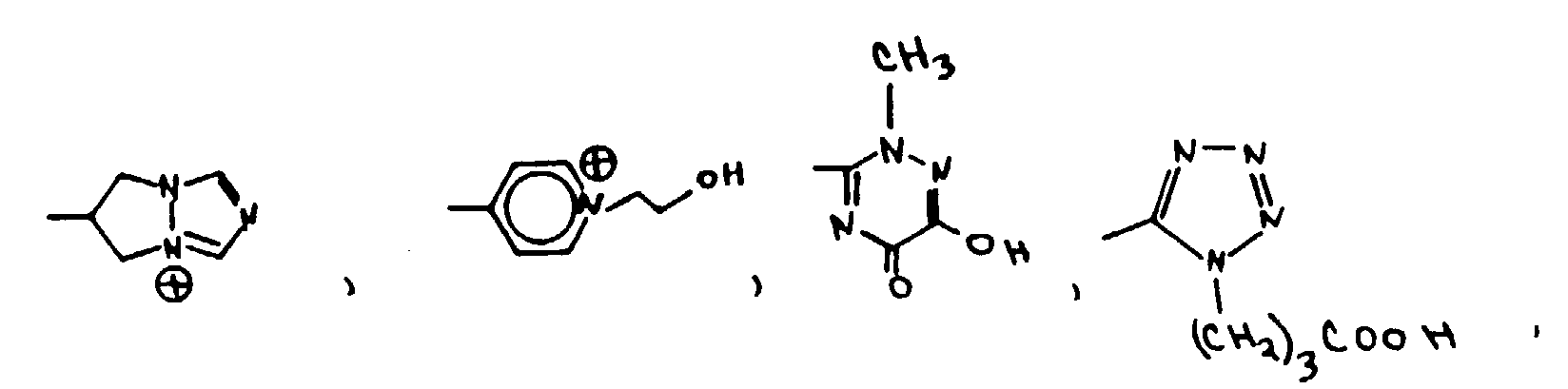
 and n is 0,1 or 2;
 R3 and R4 are the same or different and are hydrogen; or methyl; or ethyl; or phenyl; or cycloalkyl; or aralkyl; or saturated or unsaturated monocyclic or fused polycyclic 3-8 membered heterocyclic groups containing at least one heteratom chosen from 0, S, and N; or -COOH; or -CH2COOH; or -COOC1-6 alkyl; or -CH2COOC1-6 alkyl;R5 is selected from hydrogen; or chloro; or fluoro; or bromo; or C1-4 alkyl; or methoxy; or ethoxy; or isopropoxy or phenoxy; or methylthio; or formyloxy; or acetoxy; or phenylacetoxy; or mesyloxy; or tosyloxy; or formamido; or acetamido; or trifluoro-acetamido; or chloroacetamido; andR6 is hydrogen; or chloro; or bromo; or fluoro; or C1-4 alkyl; or C1-4 alkoxy.
 - A compound according to claim 1, which is selected from the group consisting of:7α-methoxy-2-spiro(2',2'-diphenyl)cyclopropyl-3-methyl-3-cephem-4-ethylcarbonyl 1,1-dioxide;7α-methoxy-2-spiro (2',2'-diphenyl)cyclopropyl-3-methyl-3-cephem-4-butylcarbonyl 1,1-dioxide;7α-methoxy-2-spiro (2',2'-diphenyl)cyclopropyl-3-methyl-3-cephem-4-methylcarbonyl 1,1-dioxide;7α-methoxy-2-spiro (2',2'-diphenyl)cyclopropyl-3-methyl-3-cephem-4-phenylcarbonyl 1,1-dioxide;7α-methoxy-2-spiro (2',2'-diphenyl)cyclopropyl-3-methyl-3-cephem-4-tert-butylcarbonyl 1,1-dioxide;7α-chloro-2-spiro (2',2'-diphenyl)cyclopropyl-3-methyl-3-cephem-4-phenylcarbonyl 1,1-dioxide; and7α-chloro-2-spiro (2', 2'-diphenyl)cyclopropyl-3-methyl-3-cephem-4-tert-butylcarbonyl 1,1-dioxide.
- The compound of claim 1, wherein R2 is a carboxy-substituted CH2-NH(C1-4alkyl) group.
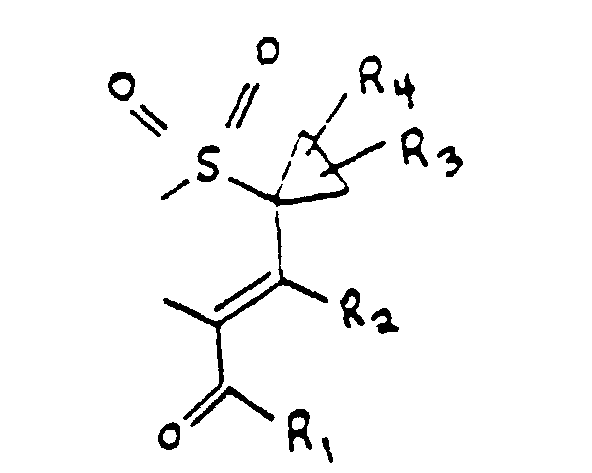
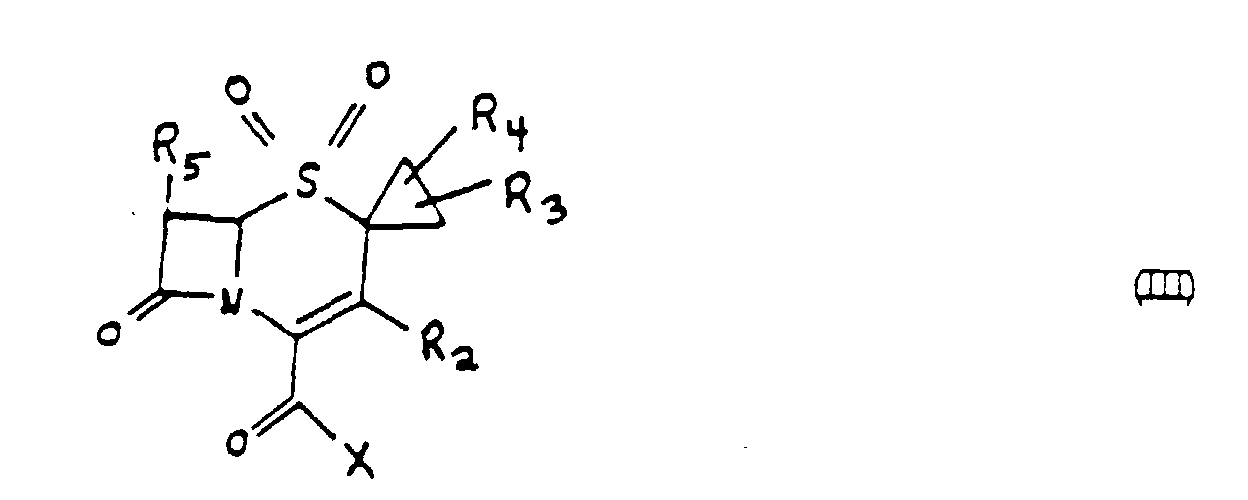
- A process for preparing a compound of the formula (I) as defined in claim 1, comprising:i) providing a compound having the formula (II)
 ii) converting the carboxyl group at the 4-position of the cephem nucleus of the formula (II) into an activated acid derivative having the formula (III)
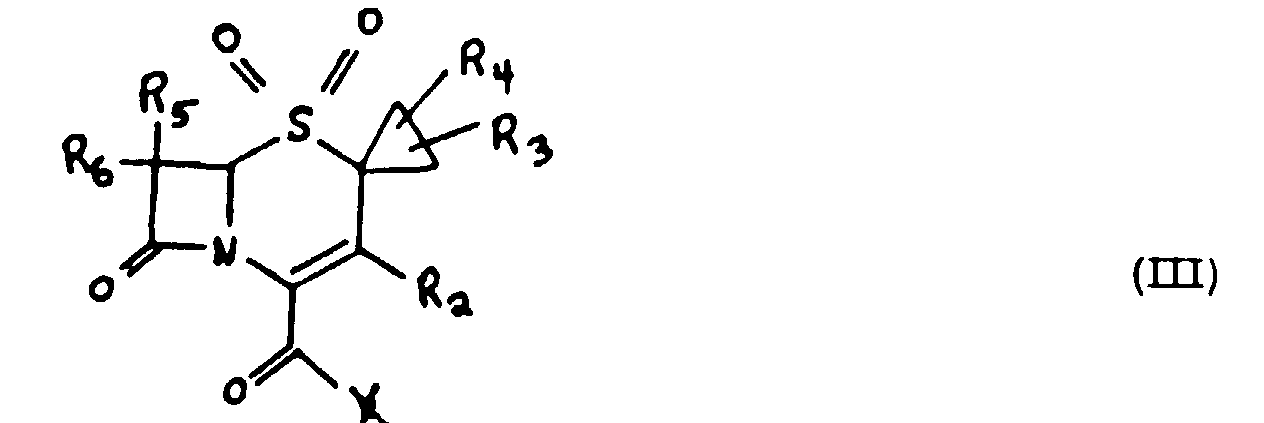 iii) treating the activated acid derivative of formula (III) with an organometallic derivative of R1 to provide a compound having the formula (I).
 - A process for preparing a compound of the Formula (I) as defined in claim 1, comprising:i) providing a compound having the formula (IV)
 ii) converting the carboxyl group at the 4-position of the cephem nucleus of formula (IV) into an activated acid derivative having the formula (V)
 iii) treating the activated acid derivative of formula (V) with an organometallic derivative of R1 to provide a compound of the formula (VI)
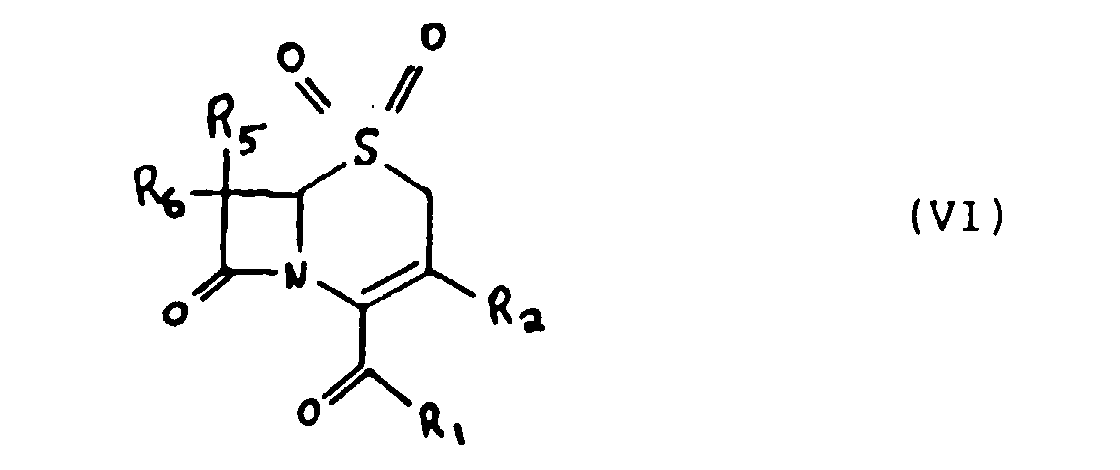 iv) aminomethylating the compound of formula (VI) to provide a compound having the formula (VII)
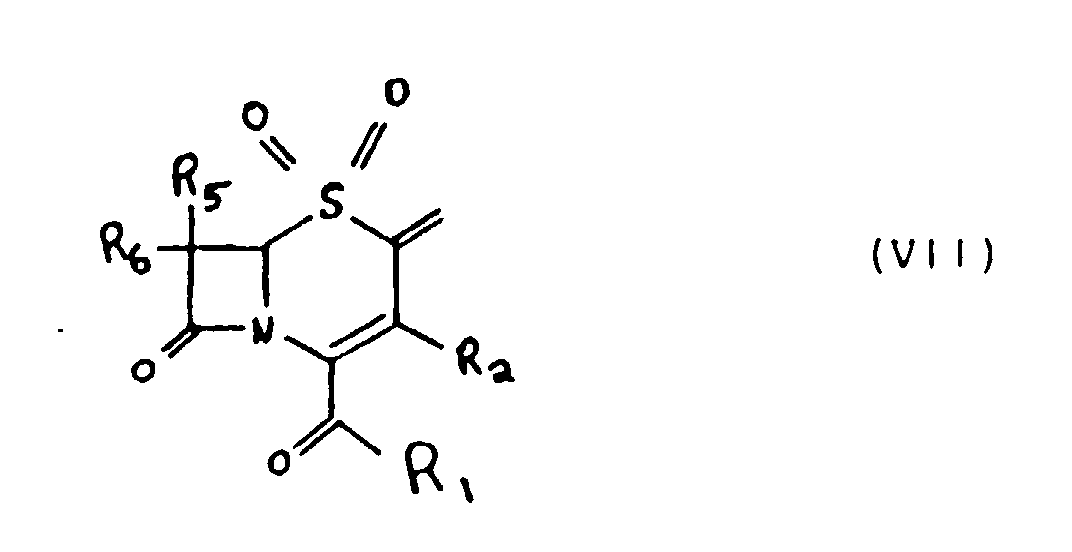 v) carrying out a cycloaddition reaction to the compound of formula (VII) with R3R4CN2 to provide a compound of the formula (I).
 - The process of claim 4 or 5, further comprising converting the resulting compound of formula (I) into a pharmaceutically or veterinarily acceptable salt.
- A pharmaceutical or veterinary composition comprising of an effective amount of a compound of any of claims 1 to 3, or a compound prepared by the process of any of claims 4 to 6, in admixture with a pharmaceutically or veterinarily acceptable carrier.
- A compound as claimed in any of claims 1 to 3, or a compound prepared by a process as claimed any of claims 4 to 6, or a composition as claimed in claim 7, for use in a method of treatment for a mammal suffering from an inflammatory or degenerative disease and in need of such treatment, which method comprises administering an effective amount of the said compound or composition, to said mammal.
- A compound or composition as claimed in claim 8, wherein said disease is selected from the group consisting of emphysema, pulmonary emphysema, lupus, rheumatoid arthritis, osteoarthritis, cystic fibrosis, spondylitis, gout, psoriasis, chronic bronchitis, and acute respiratory distress syndrome.
- A compound or composition as claimed in claim 8 or 9, wherein said compound or composition is adapted for oral administration in a unit-dose amount ranging from 10 to 250 mg of the compound.
- A compound or composition as claimed in claim 8 or 9, wherein said compound or composition is adapted for parenteral administration in a unit-dose amount ranging from 0.02 to 10 mg of the compound, per kilogram of body weight of said mammal.
- A compound or composition as claimed in claim 8 or 9, wherein said compound or composition is adapted for rectal administration.
- A compound as claimed in any of claims 1 to 3, or a compound prepared by a process as claimed in any of claims 4 to 6, for use in the manufacture of a medicament for the treatment of a disease selected from emphysema, pulmonary emphysema, lupus, rheumatoid arthritis, osteoarthritis, cystic fibrosis, spondylitis, gout, psoriasis, chronic bronchitis, and acute respiratory distress syndrome.
Applications Claiming Priority (3)
| Application Number | Priority Date | Filing Date | Title |
|---|---|---|---|
| US07/681,680 US5258377A (en) | 1991-04-08 | 1991-04-08 | 2-spirocyclopropyl 4-acylcephems |
| PCT/CA1992/000145 WO1992017482A1 (en) | 1991-04-08 | 1992-04-07 | Novel 2-spirocyclopropyl 4-acylcephems and processes for the preparation thereof |
| US681680 | 1996-07-29 |
Publications (2)
| Publication Number | Publication Date |
|---|---|
| EP0580650A1 EP0580650A1 (en) | 1994-02-02 |
| EP0580650B1 true EP0580650B1 (en) | 1998-07-29 |
Family
ID=24736298
Family Applications (1)
| Application Number | Title | Priority Date | Filing Date |
|---|---|---|---|
| EP92907957A Expired - Lifetime EP0580650B1 (en) | 1991-04-08 | 1992-04-07 | Novel 2-spirocyclopropyl 4-acylcephems and processes for the preparation thereof |
Country Status (10)
| Country | Link |
|---|---|
| US (1) | US5258377A (en) |
| EP (1) | EP0580650B1 (en) |
| JP (1) | JPH06506207A (en) |
| AT (1) | ATE169023T1 (en) |
| CA (1) | CA2107892A1 (en) |
| DE (1) | DE69226432D1 (en) |
| FI (1) | FI934395L (en) |
| HU (1) | HUT66046A (en) |
| WO (1) | WO1992017482A1 (en) |
| ZA (1) | ZA922504B (en) |
Families Citing this family (10)
| Publication number | Priority date | Publication date | Assignee | Title |
|---|---|---|---|---|
| GB8811388D0 (en) * | 1988-05-13 | 1988-06-15 | Erba Carlo Spa | 1,1-dioxo-cephem-4-carbothiolic acid derivatives |
| GB8928373D0 (en) * | 1989-12-15 | 1990-02-21 | Erba Carlo Spa | Beta-lactam derivatives |
| US5439904A (en) * | 1993-12-07 | 1995-08-08 | Synphar Laboratories, Inc. | 2-spiro(2'-spirocycloalkyl)cyclopropyl cephalosporin sulfones as antiinflammatory and antigenerative agents |
| US5629306A (en) | 1994-12-09 | 1997-05-13 | Research Corporation Technologies, Inc. | 7-alkylidene cephalosporanic acid derivatives and methods of using the same |
| US5597817A (en) * | 1994-12-09 | 1997-01-28 | Southern Methodist University | 7-vinylidene cephalosporins and methods of using the same |
| US5760027A (en) * | 1996-12-06 | 1998-06-02 | Research Corporation Technologies, Inc. | Use of 7-alkylidene cephalosporins to inhibit elastase activity |
| US6407091B1 (en) * | 1999-04-15 | 2002-06-18 | Research Corporation Technologies, Inc. | β-lactamase inhibiting compounds |
| CA2536910A1 (en) * | 2003-08-25 | 2005-03-10 | Revaax Pharmaceuticals, Llc | Oral neurotherapeutic cefazolin compositions |
| BR112020002804A2 (en) | 2017-08-24 | 2020-07-28 | Novo Nordisk A/S | liquid pharmaceutical composition and kit |
| IL294521A (en) | 2020-02-18 | 2022-09-01 | Novo Nordisk As | Glp-1 compositions and uses thereof |
Family Cites Families (9)
| Publication number | Priority date | Publication date | Assignee | Title |
|---|---|---|---|---|
| CH563396A5 (en) * | 1970-06-05 | 1975-06-30 | Ciba Geigy Ag | |
| US4547371A (en) * | 1983-04-18 | 1985-10-15 | Merck & Co., Inc. | Substituted cephalosporin sulfones as anti-inflammatory and anti-degenerative agents |
| EP0124081A3 (en) * | 1983-05-02 | 1986-11-26 | Merck & Co. Inc. | New substituted cephalosporin sulfones as antiinflammatory and antidegenerative agents, pharmaceutical compositions containing the same and processes for making them |
| US4717722A (en) * | 1984-05-07 | 1988-01-05 | Merck & Co., Inc. | Substituted 1-oxa-dethiacephalosporins as anti-inflammatory and antidegenerative agents |
| NZ222399A (en) * | 1986-11-12 | 1991-07-26 | Merck & Co Inc | Cephalosporin derivatives; pharmaceutical compositions and processes for preparation |
| JPH01226887A (en) * | 1988-03-07 | 1989-09-11 | Takeda Chem Ind Ltd | Tricyclic cepham or isocepham compound, production thereof and elastase inhibitor |
| GB8808701D0 (en) * | 1988-04-13 | 1988-05-18 | Erba Carlo Spa | Beta-lactam derivatives |
| GB8811388D0 (en) * | 1988-05-13 | 1988-06-15 | Erba Carlo Spa | 1,1-dioxo-cephem-4-carbothiolic acid derivatives |
| NZ235589A (en) * | 1989-10-06 | 1993-05-26 | Synphar Lab Inc | 2-spirocyclopropylcephalosporinsulphone (and sulphoxide) derivatives; preparatory processes and pharmaceutical compositions |
-
1991
- 1991-04-08 US US07/681,680 patent/US5258377A/en not_active Expired - Fee Related
-
1992
- 1992-04-07 HU HU9302717A patent/HUT66046A/en unknown
- 1992-04-07 WO PCT/CA1992/000145 patent/WO1992017482A1/en not_active Ceased
- 1992-04-07 ZA ZA922504A patent/ZA922504B/en unknown
- 1992-04-07 DE DE69226432T patent/DE69226432D1/en not_active Expired - Lifetime
- 1992-04-07 AT AT92907957T patent/ATE169023T1/en not_active IP Right Cessation
- 1992-04-07 CA CA002107892A patent/CA2107892A1/en not_active Abandoned
- 1992-04-07 FI FI934395A patent/FI934395L/en not_active Application Discontinuation
- 1992-04-07 JP JP4507471A patent/JPH06506207A/en active Pending
- 1992-04-07 EP EP92907957A patent/EP0580650B1/en not_active Expired - Lifetime
Also Published As
| Publication number | Publication date |
|---|---|
| AU1556092A (en) | 1992-11-02 |
| FI934395A0 (en) | 1993-10-06 |
| EP0580650A1 (en) | 1994-02-02 |
| DE69226432D1 (en) | 1998-09-03 |
| JPH06506207A (en) | 1994-07-14 |
| ZA922504B (en) | 1993-12-07 |
| WO1992017482A1 (en) | 1992-10-15 |
| HUT66046A (en) | 1994-09-28 |
| HU9302717D0 (en) | 1993-12-28 |
| FI934395A7 (en) | 1993-10-21 |
| FI934395L (en) | 1993-10-21 |
| AU668503B2 (en) | 1996-05-09 |
| ATE169023T1 (en) | 1998-08-15 |
| CA2107892A1 (en) | 1992-10-09 |
| US5258377A (en) | 1993-11-02 |
Similar Documents
| Publication | Publication Date | Title |
|---|---|---|
| US4547371A (en) | Substituted cephalosporin sulfones as anti-inflammatory and anti-degenerative agents | |
| JPH06279452A (en) | New cephem compound | |
| US5077286A (en) | Beta-lactam derivatives of the 4-acylcephem sulphone and 3-acylpenam sulphone-type | |
| JPH0149271B2 (en) | ||
| CA1090806A (en) | Oxazolines | |
| US5258377A (en) | 2-spirocyclopropyl 4-acylcephems | |
| US5081116A (en) | Cephalosporin derivatives | |
| JPS609515B2 (en) | 3'-Noroxacephalosporins | |
| JPH09506100A (en) | 2-Spiro (2'-spirocycloalkyl) cyclopropyl cephalosporin sulfones as anti-inflammatory and anti-modifying agents | |
| KR930007416B1 (en) | Process for preparing 3-(substituted) propenylaminothiazolyl cephalosporanic acids | |
| US5089489A (en) | 6-substituted penem esters as anti-inflammatory and anti-degenerative agents | |
| AU668503C (en) | Novel 2-spirocyclopropyl 4-acylcephems and processes for the preparation thereof | |
| US5446037A (en) | 2-[(substituted) methylene]cephalosporin sulfones as antiinflammatory, antidegenerative and antithrombin agents | |
| JPH09506854A (en) | Novel 2-spirocyclopropyl cephalosporin sulfone derivative and method for producing the same | |
| JPH05306281A (en) | Novel method for producing phenylalkanoate hydrochloride and its intermediate | |
| US5585372A (en) | Tricyclic cefem sulphones | |
| EP0457381B1 (en) | Delta 2-cephem sulphones | |
| JPH11152286A (en) | Phenyl alkanoate hydrochloride and method for producing the same | |
| US5587373A (en) | 2-acyloxycephem derivatives | |
| WO1997022609A1 (en) | 4-substituted cephem derivatives as elastase inhibitors | |
| JPH0358351B2 (en) | ||
| US4761409A (en) | Cephem derivatives | |
| JPS6141918B2 (en) | ||
| WO1997002268A1 (en) | 7,7-disubstituted cephem-4-ketones | |
| JPH06228152A (en) | 4-alkyl- and 4-alkenyl-delta-3-cephem sulfone |
Legal Events
| Date | Code | Title | Description |
|---|---|---|---|
| PUAI | Public reference made under article 153(3) epc to a published international application that has entered the european phase |
Free format text: ORIGINAL CODE: 0009012 |
|
| 17P | Request for examination filed |
Effective date: 19931028 |
|
| AK | Designated contracting states |
Kind code of ref document: A1 Designated state(s): AT BE CH DE DK ES FR GB GR IT LI LU MC NL SE |
|
| RIN1 | Information on inventor provided before grant (corrected) |
Inventor name: MICETICH, RONALD, G. Inventor name: FIAKPUI, CHARLES Inventor name: SPEVAK, PAUL Inventor name: CZAJKOWSKI, DAVID Inventor name: REDDY, NARENDER, A., V. Inventor name: MAITI, SAMARENDRA, N. |
|
| 17Q | First examination report despatched |
Effective date: 19940505 |
|
| GRAG | Despatch of communication of intention to grant |
Free format text: ORIGINAL CODE: EPIDOS AGRA |
|
| GRAG | Despatch of communication of intention to grant |
Free format text: ORIGINAL CODE: EPIDOS AGRA |
|
| GRAH | Despatch of communication of intention to grant a patent |
Free format text: ORIGINAL CODE: EPIDOS IGRA |
|
| GRAH | Despatch of communication of intention to grant a patent |
Free format text: ORIGINAL CODE: EPIDOS IGRA |
|
| GRAA | (expected) grant |
Free format text: ORIGINAL CODE: 0009210 |
|
| AK | Designated contracting states |
Kind code of ref document: B1 Designated state(s): AT BE CH DE DK ES FR GB GR IT LI LU MC NL SE |
|
| PG25 | Lapsed in a contracting state [announced via postgrant information from national office to epo] |
Ref country code: NL Free format text: LAPSE BECAUSE OF FAILURE TO SUBMIT A TRANSLATION OF THE DESCRIPTION OR TO PAY THE FEE WITHIN THE PRESCRIBED TIME-LIMIT Effective date: 19980729 Ref country code: LI Free format text: LAPSE BECAUSE OF FAILURE TO SUBMIT A TRANSLATION OF THE DESCRIPTION OR TO PAY THE FEE WITHIN THE PRESCRIBED TIME-LIMIT Effective date: 19980729 Ref country code: IT Free format text: LAPSE BECAUSE OF FAILURE TO SUBMIT A TRANSLATION OF THE DESCRIPTION OR TO PAY THE FEE WITHIN THE PRESCRIBED TIME-LIMIT;WARNING: LAPSES OF ITALIAN PATENTS WITH EFFECTIVE DATE BEFORE 2007 MAY HAVE OCCURRED AT ANY TIME BEFORE 2007. THE CORRECT EFFECTIVE DATE MAY BE DIFFERENT FROM THE ONE RECORDED. Effective date: 19980729 Ref country code: GR Free format text: LAPSE BECAUSE OF NON-PAYMENT OF DUE FEES Effective date: 19980729 Ref country code: FR Free format text: LAPSE BECAUSE OF FAILURE TO SUBMIT A TRANSLATION OF THE DESCRIPTION OR TO PAY THE FEE WITHIN THE PRESCRIBED TIME-LIMIT Effective date: 19980729 Ref country code: ES Free format text: THE PATENT HAS BEEN ANNULLED BY A DECISION OF A NATIONAL AUTHORITY Effective date: 19980729 Ref country code: CH Free format text: LAPSE BECAUSE OF FAILURE TO SUBMIT A TRANSLATION OF THE DESCRIPTION OR TO PAY THE FEE WITHIN THE PRESCRIBED TIME-LIMIT Effective date: 19980729 Ref country code: BE Free format text: LAPSE BECAUSE OF FAILURE TO SUBMIT A TRANSLATION OF THE DESCRIPTION OR TO PAY THE FEE WITHIN THE PRESCRIBED TIME-LIMIT Effective date: 19980729 Ref country code: AT Free format text: LAPSE BECAUSE OF FAILURE TO SUBMIT A TRANSLATION OF THE DESCRIPTION OR TO PAY THE FEE WITHIN THE PRESCRIBED TIME-LIMIT Effective date: 19980729 |
|
| REF | Corresponds to: |
Ref document number: 169023 Country of ref document: AT Date of ref document: 19980815 Kind code of ref document: T |
|
| REG | Reference to a national code |
Ref country code: CH Ref legal event code: EP |
|
| REF | Corresponds to: |
Ref document number: 69226432 Country of ref document: DE Date of ref document: 19980903 |
|
| PG25 | Lapsed in a contracting state [announced via postgrant information from national office to epo] |
Ref country code: SE Free format text: LAPSE BECAUSE OF FAILURE TO SUBMIT A TRANSLATION OF THE DESCRIPTION OR TO PAY THE FEE WITHIN THE PRESCRIBED TIME-LIMIT Effective date: 19981029 Ref country code: DK Free format text: LAPSE BECAUSE OF FAILURE TO SUBMIT A TRANSLATION OF THE DESCRIPTION OR TO PAY THE FEE WITHIN THE PRESCRIBED TIME-LIMIT Effective date: 19981029 |
|
| PG25 | Lapsed in a contracting state [announced via postgrant information from national office to epo] |
Ref country code: DE Free format text: LAPSE BECAUSE OF FAILURE TO SUBMIT A TRANSLATION OF THE DESCRIPTION OR TO PAY THE FEE WITHIN THE PRESCRIBED TIME-LIMIT Effective date: 19981030 |
|
| EN | Fr: translation not filed | ||
| NLV1 | Nl: lapsed or annulled due to failure to fulfill the requirements of art. 29p and 29m of the patents act | ||
| REG | Reference to a national code |
Ref country code: CH Ref legal event code: PL |
|
| PG25 | Lapsed in a contracting state [announced via postgrant information from national office to epo] |
Ref country code: LU Free format text: LAPSE BECAUSE OF NON-PAYMENT OF DUE FEES Effective date: 19990407 |
|
| PLBE | No opposition filed within time limit |
Free format text: ORIGINAL CODE: 0009261 |
|
| 26N | No opposition filed | ||
| PG25 | Lapsed in a contracting state [announced via postgrant information from national office to epo] |
Ref country code: MC Free format text: LAPSE BECAUSE OF NON-PAYMENT OF DUE FEES Effective date: 19991031 |
|
| REG | Reference to a national code |
Ref country code: GB Ref legal event code: IF02 |
|
| PGFP | Annual fee paid to national office [announced via postgrant information from national office to epo] |
Ref country code: GB Payment date: 20020419 Year of fee payment: 11 |
|
| PG25 | Lapsed in a contracting state [announced via postgrant information from national office to epo] |
Ref country code: GB Free format text: LAPSE BECAUSE OF NON-PAYMENT OF DUE FEES Effective date: 20030407 |
|
| GBPC | Gb: european patent ceased through non-payment of renewal fee |
Effective date: 20030407 |