EP0577171B1 - Use of piperazine acetamide derivatives against reperfusion damage - Google Patents
Use of piperazine acetamide derivatives against reperfusion damage Download PDFInfo
- Publication number
- EP0577171B1 EP0577171B1 EP19930201656 EP93201656A EP0577171B1 EP 0577171 B1 EP0577171 B1 EP 0577171B1 EP 19930201656 EP19930201656 EP 19930201656 EP 93201656 A EP93201656 A EP 93201656A EP 0577171 B1 EP0577171 B1 EP 0577171B1
- Authority
- EP
- European Patent Office
- Prior art keywords
- formula
- bis
- aminocarbonyl
- fluorophenyl
- compound
- Prior art date
- Legal status (The legal status is an assumption and is not a legal conclusion. Google has not performed a legal analysis and makes no representation as to the accuracy of the status listed.)
- Expired - Lifetime
Links
Classifications
-
- A—HUMAN NECESSITIES
- A61—MEDICAL OR VETERINARY SCIENCE; HYGIENE
- A61K—PREPARATIONS FOR MEDICAL, DENTAL OR TOILETRY PURPOSES
- A61K31/00—Medicinal preparations containing organic active ingredients
- A61K31/33—Heterocyclic compounds
- A61K31/395—Heterocyclic compounds having nitrogen as a ring hetero atom, e.g. guanethidine or rifamycins
- A61K31/495—Heterocyclic compounds having nitrogen as a ring hetero atom, e.g. guanethidine or rifamycins having six-membered rings with two or more nitrogen atoms as the only ring heteroatoms, e.g. piperazine or tetrazines
-
- A—HUMAN NECESSITIES
- A61—MEDICAL OR VETERINARY SCIENCE; HYGIENE
- A61K—PREPARATIONS FOR MEDICAL, DENTAL OR TOILETRY PURPOSES
- A61K38/00—Medicinal preparations containing peptides
- A61K38/16—Peptides having more than 20 amino acids; Gastrins; Somatostatins; Melanotropins; Derivatives thereof
- A61K38/164—Peptides having more than 20 amino acids; Gastrins; Somatostatins; Melanotropins; Derivatives thereof from bacteria
- A61K38/166—Streptokinase
-
- A—HUMAN NECESSITIES
- A61—MEDICAL OR VETERINARY SCIENCE; HYGIENE
- A61K—PREPARATIONS FOR MEDICAL, DENTAL OR TOILETRY PURPOSES
- A61K38/00—Medicinal preparations containing peptides
- A61K38/16—Peptides having more than 20 amino acids; Gastrins; Somatostatins; Melanotropins; Derivatives thereof
- A61K38/43—Enzymes; Proenzymes; Derivatives thereof
- A61K38/46—Hydrolases (3)
- A61K38/48—Hydrolases (3) acting on peptide bonds (3.4)
- A61K38/49—Urokinase; Tissue plasminogen activator
-
- A—HUMAN NECESSITIES
- A61—MEDICAL OR VETERINARY SCIENCE; HYGIENE
- A61P—SPECIFIC THERAPEUTIC ACTIVITY OF CHEMICAL COMPOUNDS OR MEDICINAL PREPARATIONS
- A61P43/00—Drugs for specific purposes, not provided for in groups A61P1/00-A61P41/00
-
- A—HUMAN NECESSITIES
- A61—MEDICAL OR VETERINARY SCIENCE; HYGIENE
- A61P—SPECIFIC THERAPEUTIC ACTIVITY OF CHEMICAL COMPOUNDS OR MEDICINAL PREPARATIONS
- A61P7/00—Drugs for disorders of the blood or the extracellular fluid
- A61P7/02—Antithrombotic agents; Anticoagulants; Platelet aggregation inhibitors
-
- C—CHEMISTRY; METALLURGY
- C07—ORGANIC CHEMISTRY
- C07D—HETEROCYCLIC COMPOUNDS
- C07D241/00—Heterocyclic compounds containing 1,4-diazine or hydrogenated 1,4-diazine rings
- C07D241/02—Heterocyclic compounds containing 1,4-diazine or hydrogenated 1,4-diazine rings not condensed with other rings
- C07D241/04—Heterocyclic compounds containing 1,4-diazine or hydrogenated 1,4-diazine rings not condensed with other rings having no double bonds between ring members or between ring members and non-ring members
Definitions
- a recurring problem during reperfusion i.e. the restoration of blood flow through tissue or organs previously deprived of blood supply, (e.g. after thrombolysis, in hearts after open heart surgery or in hearts for transplantation) is the further degeneration of this tissue or organ by leukocytes and their cytotoxic products.
- the present invention provides a novel method of preventing or limiting reperfusion damage by application of particular N -aryl-piperazinealkanamide derivatives and also a novel method for preserving hearts for transplantation significantly longer.
- the present invention is concerned with a composition for use in a method of preventing and/or limiting reperfusion damage upon reperfusion of an organ or muscular tissue wherein blood perfusion is diminished or absent, which method comprises administering to said organ or muscular tissue an effective reperfusion damage preventing and/or limiting amount of a compound within the formula a stereochemically isomeric form thereof or a pharmaceutically acceptable acid addition salt form thereof, wherein
- halo is generic to fluoro, chloro, bromo and iodo
- C 1-4 alkyl defines straight and branched chain saturated hydrocarbon radicals having from 1 to 4 carbon atoms, such as, for example, methyl, ethyl, propyl, 1-methylethyl, butyl, 1,1-dimethylethyl and the like
- C 3-5 alkanediyl defines straight and branched chain saturated bivalent hydrocarbon radicals having from 3 to 5 carbon atoms, such as, for example, 1,3-propanediyl, 1,4-butanediyl and 1,5-pentanediyl.
- the compounds of formula (I) have at least one asymmetric carbon atom in their structure, namely the piperazine carbon atom bearing the R 1 -radical which may be present in a R- or a S-configuration. Consequently, the compounds of formula (I) may be present in two different enantiomeric forms, which may be separated from each other, for example, by converting the mixture of enantiomers into the acid addition salt form thereof with an optically active acid, separating the diastereomeric salts, e.g., by selective crystallization, and liberating the pure enantiomers by treatment with alkali.
- each of these chiral centers may be present in the R- or S-configuration and the compounds of formula (I) may have different diastereochemical forms, which may be separated from each other by physical separation methods such as, selective crystallization and chromatographic techniques, e.g. counter current distribution, column-chromatography and the like techniques.
- Pure stereochemically isomeric forms may also be derived from the corresponding pure stereochemically isomeric forms of the appropriate starting materials, provided that the reaction occurs stereospecifically.
- the compounds of formula (I) can be used as such or in a pharmaceutically acceptable acid addition salt form, the latter being conveniently obtained by treating the base form with an appropriate acid.
- Appropriate acids comprise, for example, inorganic acids such as hydrohalic acids, e.g.
- hydrochloric or hydrobromic acid sulfuric acid; nitric acid; phosphoric acid and the like; or organic acids, such as, for example, acetic, propanoic, hydroxyacetic, 2-hydroxypropanoic, 2-oxopropanoic, ethanedioic, propanedioic, butanedioic, (Z)-2-butenedioic, (E)-2-butenedioic, 2-hydroxybutanedioic, 2,3-dihydroxybutanedioic, 2-hydroxy-1,2,3-propanetricarboxylic, methanesulfonic, ethanesulfonic, benzenesulfonic, 4-methylbenzenesulfonic, cyclohexanesulfamic, 2-hydroxybenzoic, 4-amino-2-hydroxybenzoic and the like acids.
- acid addition salt form as used hereinabove also comprises the solvates which the compounds of formula (I) and their acid addition salts are
- the actual compounds of the present invention are ( l )-(-)-2-(aminocarbonyl)- N -(4-amino-2,6-dichlorophenyl)-4-[5,5-bis(4-fluorophenyl)pentyl]-1-piperazineacetamide (I-b), the pharmaceutically acceptable acid addition salt forms thereof and the hydrated forms thereof, in particular the mono- and the hemihydrate thereof.
- Said compounds possess a unique combination of pharmacological selectivity and advantageous characteristics, which is not shared with the previously known N -aryl piperazinealkanamide compounds. Besides being potent, selective nucleoside transport inhibitors, they do not have Ca 2+ -antagonistic properties. Their acute and chronic toxicity is very low.
- said compounds do not bind to any large extent to plasma proteins and consequently their bioavailability is excellent.
- Greatly simplifying and broadening their application in therapy is the fact that they are easily resorted and thus can be administered orally.
- this convenient route of administering said compounds renders them particularly suitable for prolonged use, e.g. as prophylactics in high risk patients or in maintenance therapy as set forth hereinafter.
- a further advantage of using enantiomerically pure compounds resides in the fact that the amount of drug to be administered may be lowered because the undesired inactive enantiomorph is not any longer present. This approach is particularly advantageous as it reduces the likelihood of overdosing and its potentially undesired side-effects such as cardiodepression at said overdoses.
- the novel enantiomerically pure compounds of formula (I) can conveniently be prepared from enantiomerically pure piperazines of formula wherein R 1 is as defined under formula (I), and wherein one or two piperazine nitrogen atoms may optionally be protected with a selectively removable group such as, for example, a 1-aryl alkyl group, e.g., phenylmethyl, 1-phenylethyl and the like, an (aryl or C 1-4 alkyl)oxycarbonyl group, e.g. phenoxycarbonyl, methoxycarbonyl, ethoxycarbonyl, tert. butyloxycarbonyl and the like protecting groups.
- Said protective groups can be removed following art-known procedures, such as hydrogenolysis and hydrolysis.
- Said preparation generally involves the consecutive N -alkylation or reductive N -alkylation of each piperazine nitrogen atom with the appropriate L-moiety or N -arylalkanamide moiety following art-known procedures. Typically said preparation proceeds as follows:
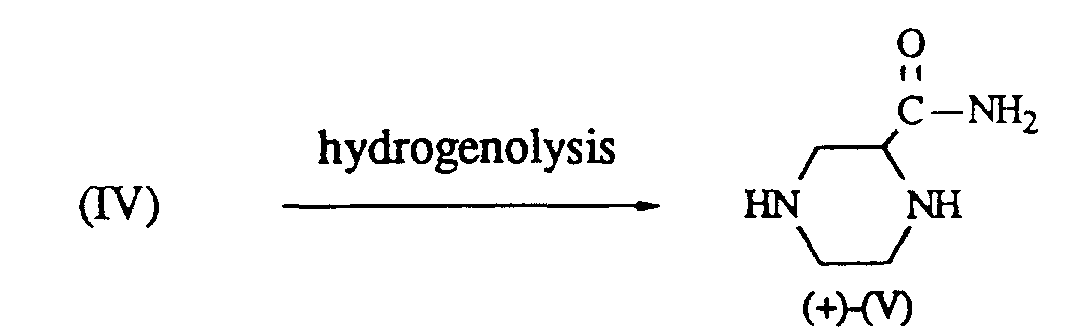
- the intermediate of formula (IV) is converted into the piperazine (+)-(V) by hydrogenolysis under a hydrogen atmosphere in an alkanol such as, for example, methanol, ethanol and the like, and in the presence of a hydrogenation catalyst such as palladium-on-charcoal, platinum-on-charcoal and the like.
- an alkanol such as, for example, methanol, ethanol and the like
- a hydrogenation catalyst such as palladium-on-charcoal, platinum-on-charcoal and the like.
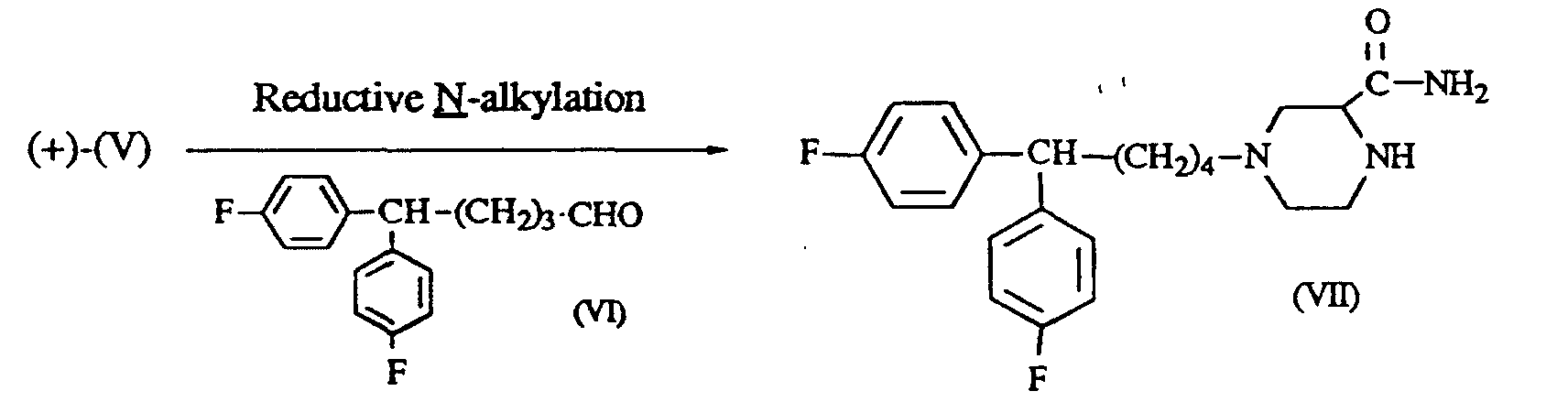
- the intermediate (+)-(V) is reductively N -alkylated by reaction with 5,5-bis(4-fluorophenyl)pentaldehyde (VI) under a hydrogen atmosphere in an alkanol such as, for example, methanol, ethanol and the like, in the presence of a hydrogenation catalyst such as, for example, palladium-on-charcoal, platinum-on-charcoal and the like.
- a catalyst poison such as thiophene
- the reaction mixture is heated slightly, in particular to about 40°C to 60°C.
- intermediate (VII) can be prepared by N -alkylating intermediate (+)-(V) with a 5,5-bis(4-fluorophenyl)pentane-1-halide or sulfonate of formula wherein W is halo, e.g. chloro or bromo, or sulfonyloxy, e.g. methanesulfonyloxy, 4-methylbenzenesulfonyloxy and the like.
- Said alkylation can conveniently be conducted in a reaction-inert solvent such as, for example, an alkanol, e.g. methanol, butanol, cyclohexanol and the like, a dipolar aprotic solvent, e.g.
- N , N -dimethylformamide, dimethylsulfoxide and the like in the presence of a base, e.g. an alkali or earth alkaline metal hydroxide, carbonate, e.g. sodium or potassium hydroxide or carbonate.
- a base e.g. an alkali or earth alkaline metal hydroxide, carbonate, e.g. sodium or potassium hydroxide or carbonate.
- the thus obtained intermediate (VII) is N -alkylated with a reagent of formula (VIII) wherein W represents a reactive leaving group such as chloro, bromo and the like, in a reaction-inert solvent in the presence of a base.
- Said N -alkylation reaction can conveniently be conducted by stirring and heating the reactants, in particular by heating at about 70°C to 100°C.
- Suitable solvents are, for example, alkanols, e.g., methanol, ethanol, butanol and the like, dipolar aprotic solvents, e.g. N , N -dimethylformamide, dimethyl sulfoxide and the like, or mixtures of said solvents.
- Appropriate bases are alkali and earth alkaline metal hydroxides, carbonates, hydrogen carbonates and the like, and organic amines, such as, for example, N , N -diethylethanamide, pyridine, morpholine and the like bases.
- An alkali metal iodide, e.g. potassium iodide may be added in order to enhance the reaction rate.
- intermediate (IX) is finally converted to the novel compound ( l )-(-)-(I-b) by a nitro-to-amino reduction step.
- Said reduction can conveniently be conducted in a reaction-inert solvent following art-known reduction procedures.
- intermediate (IX) may be stirred under a hydrogen atmosphere in an alkanol such as, methanol, ethanol and the like, in the presence of a hydrogenation catalyst such as palladium-on-charcoal, platinum-on-charcoal, Raney nickel and the like.
- said reduction may also be accom-plished by treatment of the intermediate (IX) within a reagent such as, for example, sodium sulfite, sodium sulfide, sodium hydrogen sulfide, titanium (III) chloride and the like.
- a reagent such as, for example, sodium sulfite, sodium sulfide, sodium hydrogen sulfide, titanium (III) chloride and the like.
- the intermediates and final compounds may be isolated and purified following art-known procedures, in particular by liquid chromatography and crystallization.
- the compounds of formula (I) are known to protect the heart from myocardial injury and to improve sleep and counteract sleep disorders.
- a number of said compounds, more particularly 3-(aminocarbonyl)-4-[4,4-bis(4-fluorophenyl)-butyl]- N -(2,6-dichlorophenyl)-1-piperazineacetamide dihydrochloride, monohydrate, generically known as mioflazine, is described as an inhibitor of nucleoside transport through membranes [Molecular Physiology, 8,615-630 (1985)].
- An important, advantage of the present compounds of formula (I-b) for use in the methods described hereinbelow is the fact that they are orally active and, contrary to mioflazine, have an excellent bioavailability because they do not generally bind to plasma proteins.
- the organ or muscular tissue as mentioned hereinabove in particular is the heart or heart tissue.
- Typical situations wherein blood reperfusion in said organ or muscular tissue is diminished or absent comprise, for example, thrombosis and cardioplegia, i.e. arresting a heart before open heart surgery or before transplantation.
- Reperfusion damage generally occurs whenever blood perfusion is restored to normal after the occurence of any of the above mentioned situations, e.g. upon natural or stimulated thrombolysis or upon reperfusion of the heart after cardioplegia
- reperfusion damage also designated reperfusion injury, as used in the instant application defines the damage to tissues and organs which have been previously deprived of blood supply upon reperfusion, i.e. the restoration of blood flow through said tissues and organs.
- Reperfusion damage is an acute phenomenon which arises immediately upon reperfusion and therefore must be attended to timely.
- the amount of active ingredient of formula (I-b) is such that effective prevention or limitation of reperfusion damage is obtained upon administration to said organ or muscular tissue.
- the compounds of the present invention can be used in a method of treating a patient undergoing natural thrombolysis, stimulated thrombolysis (thrombolytic therapy) or reperfusion of the heart after open heart surgery or after receiving a donor heart in an amount, effective in preventing and/or limiting reperfusion damage.
- Thrombolysis as used hereinabove defines the lysis of thrombi, in particular lysis effected by the local action the proteolytic enzyme plasmin within the substance of the thrombi.
- the term thrombolytic therapy as used herein defines the administration to a patient suffering from a thrombus or thrombi, an effective thrombolytic amount of a thrombolytic agent, optionally followed by a maintenance therapy with an anticoagulant, such as, for example, heparin, ethyl biscoumacetate, ticlopidin and the like.
- thrombolytic agents in said therapy comprise for example, urokinase, streptokinase, tissue plasminogen activator (t-PA), fibrinolysin and the like agents.
- the method for use of the compositions of the present invention thus provides a method of preventing or limiting reperfusion damage upon reperfusion following stimulated thrombolysis, said method comprising administering to the patient undergoing thrombolytic therapy an amount of a compound having the formula (I-b), effective in preventing or limiting reperfusion damage.
- said method comprises administering to the patient simultaneously, separately or sequentially an effective thrombolytic amount of a thrombolytic agent, particularly a thrombolytic agent specifically mentioned hereinabove, and an effective reperfusion damage preventing and/or limiting amount of a compound having the formula (I-b).
- Said method also comprises administering to the patient prophylactically or during maintenance therapy simultaneously, separately or sequentially an effective anticoagulant amount of an anticoagulant agent, particularly an anticoagulant agent specifically mentioned hereinabove, and an effective amount of a compound of formula (I-b).
- the amount of each of the active ingredients, the thrombolytic agent and the compound of formula (I-b) in the method is such that effective thrombolysis is obtained, concomitant with effective prevention or limitation of reperfusion damage, upon administration to said patients.
- the amount of each of the active ingredients, the anticoagulant agent and the compound of formula (I-b) in the method is such that effective prevention of formation of thrombi is obtained, concomitant with effective prevention or limitation of reperfusion damage, upon administration of each active ingredient to said patients.
- the amount of the thrombolytic agent for use in the present method may satisfactorily be equal to the amount of thrombolytic agent commonly used in art-known thrombolytic therapy.
- streptokinase may be administered in a loading dose of 250.000 to 600.000 units over 30 to 60 minutes, followed by a maintenance dose of about 100.000 units per hour for up to 72 hours, sometimes up to 144 hours;
- urokinase may be administered by intravenous infusion starting with an initial dose of about 4400 units per kg bodyweight over 10 minutes followed by a maintenance dose of about 4400 units per kg bodyweight each hour for up to 12 hours;
- tissue plasminogen activator may be administered by intravenous infusion of about 100 mg over 3 hours.
- the amount of the compound of formula (I-b) for use in the present method may typically range from about 0.01 to about 100 mg/kg bodyweight, particularly from about 0.1 to about 10 mg/kg bodyweight and more particularly from about 0.2 to about 5 mg/kg bodyweight.
- the compounds of formula (I-b) or the pharmaceutically acceptable acid addition salts thereof may be administered before, during or shortly after the administration of the thrombolytic agent, provided that the time between the administration of the thrombolytic agent and the administration of the compound of formula (I-b) is such that reperfusion damage is effectively prevented or limited.
- a composition containing both a thrombolytic agent and a compound of formula (I-b) may be particularly convenient.
- the thrombolytic agent and the compound of formula (I-b) may be administered separately in the form of suitable compositions.
- the compounds of formula (I-b) may be administered before, during or after the administration of the anticoagulant agent.
- compositions for preventing or limiting reperfusion damage upon reperfusion following natural or stimulated thrombolysis, or after cardioplegia comprising a pharmaceutically acceptable carrier and as active ingredient an effective reperfusion damage preventing or limiting amount of the compound of formula (I-b).
- Compositions for preventing or limiting reperfusion damage upon reperfusion following stimulated thrombolysis may further comprise an effective thrombolytic amount of a thrombolytic agent, in particular a thrombolytic agent specifically mentioned hereinabove.
- compositions for prophylactic use or for maintenance therapy may further comprise an effective anticoagulant amount of an anticoagulant, in particular an anticoagulant specifically mentioned hereinabove.
- the amount of each of the active ingredients, the compound of formula (I-b) and optionally the thrombolytic agent or the anticoagulant, in the foregoing compositions is such that effective prevention or limitation of perfusion damage upon administration is obtained, where applicable concomitant with effective thrombolysis or with effective prevention of coagulation.
- compositions among the groups of compositions described hereinbefore and -after are those comprising a cyclodextrin (CD) or an ether derivative thereof, as a complexant and/or solubilizer.
- a cyclodextrin CD
- an ether derivative thereof as a complexant and/or solubilizer.
- ⁇ -CD cyclodextrin
- ⁇ -CD cyclodextrin
- ⁇ -CD ⁇ -CD
- ⁇ -CD ⁇ -CD
- ether or mixed ether derivatives thereof Particular such cyclodextrin derivatives are described in US-3,459,731, EP-A-0,149,197 and EP-A-0,197,571.
- such ether or mixed ether derivatives comprise ⁇ -, ⁇ - or ⁇ -CD wherein one or more hydroxylgroups are substituted with C 1-6 alkyl, particularly methyl, ethyl or isopropyl; hydroxyC 1-6 alkyl, particularly hydroxyethyl, hydroxypropyl or hydroxybutyl; carboxyC 1-6 alkyl, particularly carboxymethyl or carboxyethyl; or C 1-6 alkyloxycarbonylC 1-6 alkyl.
- complexants and/or solubilizers are ⁇ -CD, 2,6-dimethyl- ⁇ -CD and in particular 2-hydroxypropyl- ⁇ -CD, 2-hydroxyethyl- ⁇ -CD, 2-hydroxyethyl- ⁇ -CD and 2-hydroxypropyl- ⁇ -CD.
- the DS degree of substitution, i.e. the average number of substituted hydroxy functions per glucose unit
- the MS molar degree of substitution, i.e.
- compositions may conveniently be prepared by dissolving the cyclodextrin or ether derivative thereof in water and adding thereto a compound of formula (I) as well as other adjuvants and components such as, for example, sodium chloride, potassium nitrate, glucose, mannitol, sorbitol, xylitol and buffers such as, for example, phosphate, acetate or citrate buffers; and optionally concentrating or drying the solution by evaporation under reduced pressure or by lyophilization.
- the amount of the cyclodextrin or ether derivative thereof in the final composition generally ranges from about 1% to about 40% by weight, particularly from 2.5% to 25% and more particularly from 5 % to 20%.
- the amount of the active ingredient of formula (I-b) in said final compositions generally ranges from about 0.01% to about 1.0% by weight, particularly from 0.025% to 0.5% and more particularly from 0.05% to 0.2%.
- compositions are those comprising ( l )-(-)2-(aminocarbonyl)- N -(4-amino-2,6-dichlorophenyl)-4-[5,5-bis(4-fluorophenyl)pentyl]-1-piperazineacetamide as active ingredient and 2-hydroxypropyl- ⁇ -cyclodextrin as complexant and/or solubilizer.
- compositions of this invention an effective amount of the active ingredients, in acid or base addition salt form or base form, is combined in intimate admixture with a pharmaceutically acceptable carrier, which can take a wide variety of forms depending on the form of preparation desired for administration.
- a pharmaceutically acceptable carrier which can take a wide variety of forms depending on the form of preparation desired for administration.
- These pharmaceutical compositions are desirably in unitary dosage form suitable, preferably, for administration orally, rectally, percutaneously, or by parenteral injection.
- any of the usual pharmaceutical media may be employed, such as, for example, water, glycols, oils, alcohols and the like in the case of oral liquid preparations such as suspensions, syrups, elixirs and solutions; or solid carriers such as starches, sugars, kaolin, lubricants, binders, disintegrating agents and the like in the case of powders, pills, capsules and tablets. Because of their ease in administration, tablets and capsules represent the most advantageous oral dosage unit form, in which case solid pharmaceutical carriers are obviously employed.
- the carrier will usually comprise sterile water, at least in large part, though other ingredients, for example, to aid solubility, may be included.
- Injectable solutions may be prepared in which the carrier comprises saline solution, glucose solution or a mixture of saline and glucose solution. Injectable suspensions may also be prepared in which case appropriate liquid carriers, suspending agents and the like may be employed.
- the carrier optionally comprises a penetration enhancing agent and/or a suitable wettable agent, optionally combined with suitable additives of any nature in minor proportions, which additives do not cause any significant deleterious effects on the skin. Said additives may facilitate the administration to the skin and/or may be helpful for preparing the desired compositions.
- These compositions may be administered in various ways, e.g., as a transdermal patch, as a spot-on or as an ointment. Acid addition salts of (I-b) due to their increased water solubility over the corresponding base form, are obviously more suitable in the preparation of aqueous compositions.
- An especially interesting feature of the compounds of formula (I-b) is the fact that said compounds can be administered orally thus substantially simplifying the administration of said compounds to high risk patients, more in particular to patients receiving maintenance therapy or anticoagulants.
- Dosage unit form as used in the specification and claims herein refers to physically discrete units suitable as unitary dosages, each unit containing a predetermined quantity of active ingredient calculated to produce the desired therapeutic effect, in association with the required pharmaceutical carrier.
- dosage unit forms are tablets (including scored or coated tablets), capsules, pills, powder packets, wafers, injectable solutions or suspensions, teaspoonfuls, tablespoonfuls and the like, and segregated multiples thereof.
- the present invention further also comprises products containing a compound of formula (I-b) and a thrombolytic agent as a combined preparation for simultaneous, separate or sequential use in thrombolytic therapy with concomitant prevention or limitation of reperfusion damage.
- Such products may comprise, for example, a kit comprising a container with a suitable composition containing a compound of formula (I-b) or a pharmaceutically acceptable acid addition salt thereof and another container containing a composition with a thrombolytic agent.
- a product may have the advantage that a physician wishing to administer thrombolytic therapy with concomitant prevention or limitation of reperfusion damage, can select on the basis of the diagnosis of the patient to be treated, the appropriate amounts of each component and the sequence and timing of the administration thereof.
- the term open heart surgery as used herein defines the surgical intervention on a heart temporarily relieved of circulatory function.
- the method for use of the composition of the present invention particularly provides a method of preventing or limiting reperfusion damage upon reperfusion of the operated heart, said method comprising administering to the patient undergoing open heart surgery an amount of a compound of formula (I-b) effective in preventing or limiting reperfusion damage. More particularly, said method comprises treating said patient before, during and after surgery with an effective reperfusion damage preventing and/or limiting amount of a compound of formula (I-b).
- a particularly advantageous practice consists of arresting the heart whereupon surgery will be performed with a cardioplegic solution comprising an effective reperfusion damage preventing and/or limiting amount of a compound of formula (I-b).
- transplantation as used herein defines the transplantation of tissues, in particular of organs and more in particular of hearts from one warm-blooded animal to an identical recipient site within another warm-blooded animal, said warm-blooded animals in particular being humans.
- the method for use of the composition of the present invention particularly provides a method of preventing or limiting reperfusion damage upon reperfusion of a transplanted heart, said method comprising administering to the patient receiving the donor heart, as well as administering to the heart to be transplanted an effective amount of a compound of formula (I-b).
- said method comprises arresting a donor heart for transplantation with a cardioplegic solution, whereby said cardioplegic solution comprises an effective amount of a compound of formula (I-b), storing said heart in the cold in said cardioplegic solution and transplanting said heart in another subject pre-treated with an effective amount of compound of formula (I-b) and subsequently reperfusing said heart with oxygenated blood.
- cardioplegic solution as used herein defined the normal balanced-salt formulations generally used for cardioplegia.
- Commonly used cardioplegic solutions for arresting a heart comprise for example, hyperkalemic NIH cardioplegic solutions, UW cardioplegic solution, Collins cardioplegic solution M (115 meq K + /L), St. Thomas' Hospital cardioplegic solution, Ringer's injection buffered with tromethamine (3.6%), Plegisol® (Abbott) buffered with sodium hydrogen carbonate injection (8.4%), Modified Krebs high K (34 meq/L) solution and the like cardioplegic solutions.
- Typical temperatures for storing a heart for transplantation may range from 0°C to about 10°C, particularly from about 0°C to about 7°C and more particularly from about 0°C to about 4°C.
- the amount of each of the active ingredients, the cardioplegic solution and the compound of formula (I-b), in the method is such that effective cardioplegia is obtained upon administration, concomitant with effective prevention or limitation of reperfusion damage upon reperfusion of the heart whereupon surgery was performed and upon reperfusion of the transplanted heart.
- the amount of the compound of formula (I-b) in the cardioplegic solution for use in the method may typically range from about 0.1 ⁇ M to about 10 ⁇ M, particularly from about 0.5 ⁇ M to about 5 ⁇ M and more particularly from about 0.8 ⁇ M to about 2 ⁇ M.
- the amount of the active ingredient, the compound of formula (I-b), upon administration to the patient receiving a donor heart is such that effective prevention or limitation of reperfusion damage upon reperfusion of the transplanted heart is obtained.
- the amount of the compound of formula (I-b) for use in the present method may typically range from about 0.01 to about 100 mg/kg bodyweight, particularly from about 0.1 to about 10 mg/kg bodyweight and more particularly from about 0.2 to about 5 mg/kg bodyweight.
- a method of storing a heart for transplantation in a cardioplegic solution in the cold comprises administering to said cardioplegic solution an amount, effective in prolonging the storage of said heart, of a compound of formula (I-b) as defined hereinabove.
- An especially interesting feature of the method of storing a heart for transplantation is the fact that the duration of successfully storing a heart for transplantation in a cardioplegic solution comprising a compound of formula (I-b) can be prolonged drastically.
- a heart for transplantation can be stored successfully for about 4 hours in a usual cardioplegic solution without a compound of formula (I-b) in the cold
- the novel method of storing a heart for transplantation in a cardioplegic solution comprising a compound of formula (I-b) in the cold allows one to store said heart for at least 24 hours and to transplant said heart subsequently successfully.
- the present invention further provides a method of storing a heart for transplantation in the cold in a cardioplegic solution, particularly a cardioplegic solution specifically mentioned hereinabove, comprising an effective donor heart protecting amount of a compound of formula (I-b).
- the effective donor heart protecting amount of the compound of formula (I-b) in the cardioplegic solution for use in the present method of storing a heart for transplantation may typically range from about 0.1 ⁇ M to about 10 ⁇ M, particularly from about 0.5 ⁇ M to about 5 ⁇ M and more particularly from about 0.8 ⁇ M to about 2 ⁇ M.
- Example 2 Biological Example
- the hearts were stored cold for 24 hours at 0-5°C (ice-water) in the cardioplegic solution and then transplanted orthotopically.
- HEP high energy phosphates
- Example 3 Composition Examples
- active ingredient 1g hydrochloric acid 0.1N 0.04 l 2-hydroxypropyl- ⁇ -cyclodextrin 50g sodium chloride 5.5g sodium hydroxide 1N ad pH 3.7 - 3.9 water ad 1 l
- active ingredient 1g 2-hydroxypropyl- ⁇ -cyclodextrin 50g hydrochloric acid 0.1N 0.04 l sorbitol 70% 0.1 l propylenegiycol 0.1 l disodium ethylenediaminetetraacetate 2g benzoic acid 3g mouth wash flavour 1g sodium hydroxide 1N ad pH 4.0 purified water ad 1 l
Landscapes
- Health & Medical Sciences (AREA)
- Chemical & Material Sciences (AREA)
- Organic Chemistry (AREA)
- Life Sciences & Earth Sciences (AREA)
- Medicinal Chemistry (AREA)
- Public Health (AREA)
- Veterinary Medicine (AREA)
- Pharmacology & Pharmacy (AREA)
- Animal Behavior & Ethology (AREA)
- General Health & Medical Sciences (AREA)
- Engineering & Computer Science (AREA)
- Epidemiology (AREA)
- Bioinformatics & Cheminformatics (AREA)
- Immunology (AREA)
- Nuclear Medicine, Radiotherapy & Molecular Imaging (AREA)
- Gastroenterology & Hepatology (AREA)
- General Chemical & Material Sciences (AREA)
- Proteomics, Peptides & Aminoacids (AREA)
- Chemical Kinetics & Catalysis (AREA)
- Biomedical Technology (AREA)
- Diabetes (AREA)
- Hematology (AREA)
- Pharmaceuticals Containing Other Organic And Inorganic Compounds (AREA)
- Protection Of Pipes Against Damage, Friction, And Corrosion (AREA)
- Dicing (AREA)
- Branch Pipes, Bends, And The Like (AREA)
- Golf Clubs (AREA)
- Professional, Industrial, Or Sporting Protective Garments (AREA)
- Suspension Of Electric Lines Or Cables (AREA)
- Plural Heterocyclic Compounds (AREA)
- Medicines That Contain Protein Lipid Enzymes And Other Medicines (AREA)
- Production Of Liquid Hydrocarbon Mixture For Refining Petroleum (AREA)
- Paper (AREA)
- External Artificial Organs (AREA)
Abstract
Description
- A recurring problem during reperfusion, i.e. the restoration of blood flow through tissue or organs previously deprived of blood supply, (e.g. after thrombolysis, in hearts after open heart surgery or in hearts for transplantation) is the further degeneration of this tissue or organ by leukocytes and their cytotoxic products.
- The present invention provides a novel method of preventing or limiting reperfusion damage by application of particular N-aryl-piperazinealkanamide derivatives and also a novel method for preserving hearts for transplantation significantly longer.
- Some compounds which can be used in the present invention are known from U.S. Pat. No. 4,766,125 as agents useful for protecting the heart from myocardial injury caused by ischaemia, anoxia or hypoxia.
- Some compounds are also described in U.S. Pat. No. 4,880,808 as useful therapeutical agents which improve sleep and counteract sleep disorders.
- The present invention is concerned with a composition for use in a method of preventing and/or limiting reperfusion damage upon reperfusion of an organ or muscular tissue wherein blood perfusion is diminished or absent, which method comprises administering to said organ or muscular tissue an effective reperfusion damage preventing and/or limiting amount of a compound within the formulaa stereochemically isomeric form thereof or a pharmaceutically acceptable acid addition salt form thereof, wherein

- L is a radical of formula



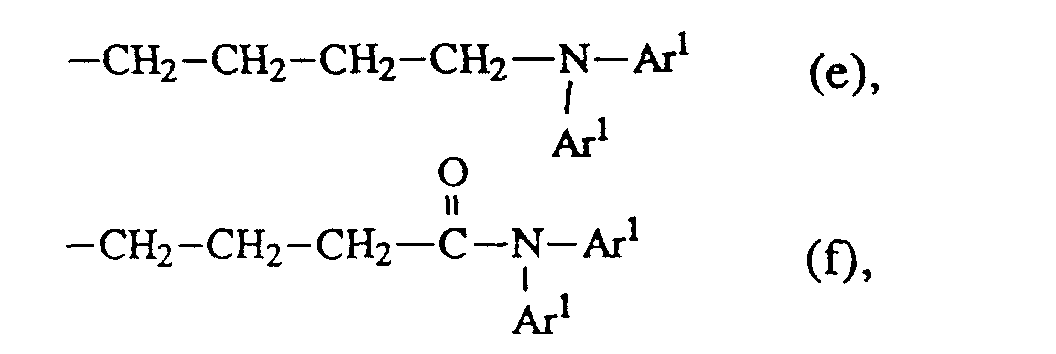
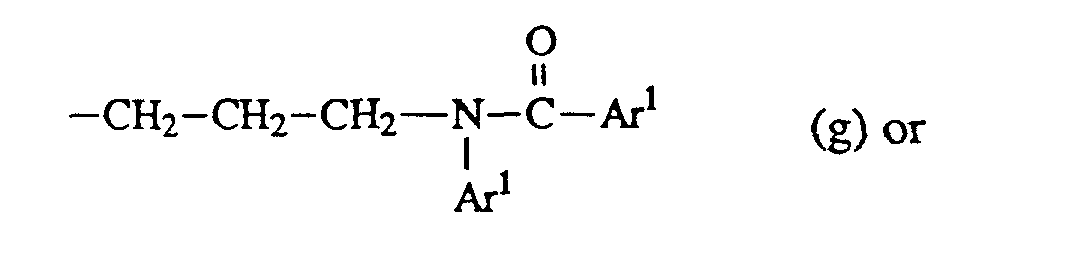
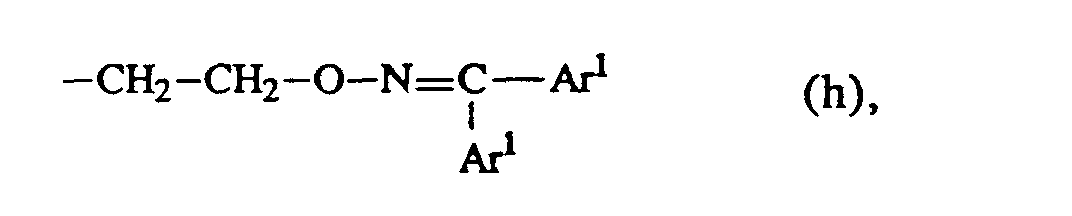
- Ar1 is phenyl optionally substituted with halo or C1-4alkyloxy;
- Ar2 is phenyl optionally substituted with halo or C1-4alkyloxy, or pyridinyl;
- R1 is C1-4alkyl, aminocarbonyl or (C1-4alkyl)aminocarbonyl;
- Ar is a radical of formula
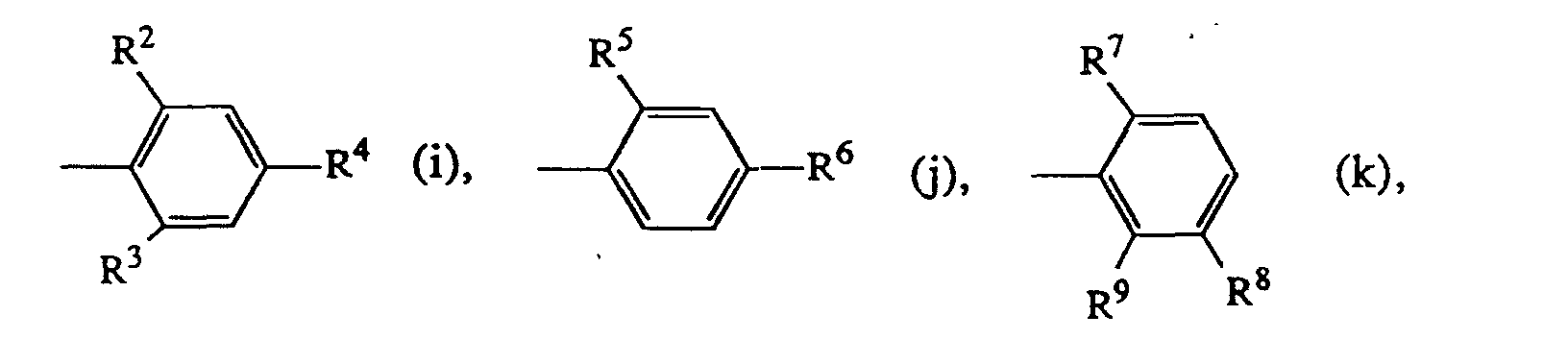

- R2 and R3 each independently are halo or C1-4alkyl;
- R4 is hydrogen, halo, nitro, amino, mono- or di(C1-4alkyl)amino, C1-4alkylcarbonylamino, aminocarbonylamino, C1-4alkyl, C1-4alkyloxy, C1-4alkyloxycarbonyl, C1-4alkylcarbonyl, aminocarbonyl, mono- or di(C1-4alkyl)aminocarbonyl, cyano or aminomethyl;
- R5 is C1-4alkylcarbonyl;
- R6 is hydrogen, amino, mono- or di(C1-4alkyl)amino, C1-4alkylcarbonylamino, aminocarbonylamino, aminocarbonyl or cyano;
- R7 is C1-4alkyl;
- R8 is halo or C1-4alkylcarbonyl;
- R9 is hydrogen or C1-4alkyl;
- R10 is halo or C1-4alkyl;
- R11 is hydrogen, hydroxy or C1-4alkyl;
- R12 is halo or C1-4alkyl;
- R13 is hydrogen or
- R12 and R13 taken together may also form a C3-5alkanediyl radical;
- each R14 is C1-4alkyl; and
- R15 is C1-4alkyl or amino.
-
- In the foregoing definitions the term halo is generic to fluoro, chloro, bromo and iodo; the term C1-4alkyl defines straight and branched chain saturated hydrocarbon radicals having from 1 to 4 carbon atoms, such as, for example, methyl, ethyl, propyl, 1-methylethyl, butyl, 1,1-dimethylethyl and the like; the term C3-5alkanediyl defines straight and branched chain saturated bivalent hydrocarbon radicals having from 3 to 5 carbon atoms, such as, for example, 1,3-propanediyl, 1,4-butanediyl and 1,5-pentanediyl.
- The compounds of formula (I) wherein R11 is hydroxy may also exist in the tautomeric oxo-form.
- The compounds of formula (I) have at least one asymmetric carbon atom in their structure, namely the piperazine carbon atom bearing the R1-radical which may be present in a R- or a S-configuration. Consequently, the compounds of formula (I) may be present in two different enantiomeric forms, which may be separated from each other, for example, by converting the mixture of enantiomers into the acid addition salt form thereof with an optically active acid, separating the diastereomeric salts, e.g., by selective crystallization, and liberating the pure enantiomers by treatment with alkali.
- When L has one or more additional chiral centers, each of these chiral centers may be present in the R- or S-configuration and the compounds of formula (I) may have different diastereochemical forms, which may be separated from each other by physical separation methods such as, selective crystallization and chromatographic techniques, e.g. counter current distribution, column-chromatography and the like techniques.
- Pure stereochemically isomeric forms may also be derived from the corresponding pure stereochemically isomeric forms of the appropriate starting materials, provided that the reaction occurs stereospecifically.
- The compounds of formula (I) can be used as such or in a pharmaceutically acceptable acid addition salt form, the latter being conveniently obtained by treating the base form with an appropriate acid. Appropriate acids comprise, for example, inorganic acids such as hydrohalic acids, e.g. hydrochloric or hydrobromic acid; sulfuric acid; nitric acid; phosphoric acid and the like; or organic acids, such as, for example, acetic, propanoic, hydroxyacetic, 2-hydroxypropanoic, 2-oxopropanoic, ethanedioic, propanedioic, butanedioic, (Z)-2-butenedioic, (E)-2-butenedioic, 2-hydroxybutanedioic, 2,3-dihydroxybutanedioic, 2-hydroxy-1,2,3-propanetricarboxylic, methanesulfonic, ethanesulfonic, benzenesulfonic, 4-methylbenzenesulfonic, cyclohexanesulfamic, 2-hydroxybenzoic, 4-amino-2-hydroxybenzoic and the like acids.
The term acid addition salt form as used hereinabove also comprises the solvates which the compounds of formula (I) and their acid addition salts are able to form. Examples of such solvates are e.g. the hydrates, alcoholates and the like. - The actual compounds of the present invention are (l)-(-)-2-(aminocarbonyl)-N-(4-amino-2,6-dichlorophenyl)-4-[5,5-bis(4-fluorophenyl)pentyl]-1-piperazineacetamide (I-b), the pharmaceutically acceptable acid addition salt forms thereof and the hydrated forms thereof, in particular the mono- and the hemihydrate thereof. Said compounds possess a unique combination of pharmacological selectivity and advantageous characteristics, which is not shared with the previously known N-aryl piperazinealkanamide compounds. Besides being potent, selective nucleoside transport inhibitors, they do not have Ca2+-antagonistic properties. Their acute and chronic toxicity is very low. Furthermore, said compounds do not bind to any large extent to plasma proteins and consequently their bioavailability is excellent. Greatly simplifying and broadening their application in therapy, is the fact that they are easily resorted and thus can be administered orally. In conjunction with the above properties, this convenient route of administering said compounds, renders them particularly suitable for prolonged use, e.g. as prophylactics in high risk patients or in maintenance therapy as set forth hereinafter. A further advantage of using enantiomerically pure compounds resides in the fact that the amount of drug to be administered may be lowered because the undesired inactive enantiomorph is not any longer present. This approach is particularly advantageous as it reduces the likelihood of overdosing and its potentially undesired side-effects such as cardiodepression at said overdoses.
- A number of compounds of formula (I) as well as their syntheses and their pharmacological properties, are known from U.S. Patent No. 4,766,125 and EP-A-0,285,219. The novel enantiomerically pure compounds of formula (I) can conveniently be prepared from enantiomerically pure piperazines of formulawherein R1 is as defined under formula (I), and wherein one or two piperazine nitrogen atoms may optionally be protected with a selectively removable group such as, for example, a 1-aryl alkyl group, e.g., phenylmethyl, 1-phenylethyl and the like, an (aryl or C1-4alkyl)oxycarbonyl group, e.g. phenoxycarbonyl, methoxycarbonyl, ethoxycarbonyl, tert. butyloxycarbonyl and the like protecting groups. Said protective groups can be removed following art-known procedures, such as hydrogenolysis and hydrolysis.

- Said preparation generally involves the consecutive N-alkylation or reductive N-alkylation of each piperazine nitrogen atom with the appropriate L-moiety or N-arylalkanamide moiety following art-known procedures. Typically said preparation proceeds as follows:
- (a) in unprotected piperazine derivatives, the most reactive, least sterically hindered nitrogen at the 4-position is N-alkylated first and then the remaining free nitrogen atom at the original 1-position of the starting piperazine is reacted;
- (b) in monoprotected piperazine derivatives, the free nitrogen atom is N-alkylated, the protective group is removed and the now unprotected nitrogen atom is reacted; or
- (c) in bis-protected piperazine derivatives, both protective groups are removed and one proceeds as under (a), or one group is selectively removed, whereupon one proceeds as in (b). For example, the novel compound (l)-(-)-2-(aminocarbonyl)-N-(4-amino-2,6-dichlorophenyl)-4-[5,5-bis(4-fluorophenyl)pentyl]-1-piperazineacetamide of formula
-
- The intermediate of formula (IV) is converted into the piperazine (+)-(V) by hydrogenolysis under a hydrogen atmosphere in an alkanol such as, for example, methanol, ethanol and the like, and in the presence of a hydrogenation catalyst such as palladium-on-charcoal, platinum-on-charcoal and the like.Next the intermediate (+)-(V) is reductively N-alkylated by reaction with 5,5-bis(4-fluorophenyl)pentaldehyde (VI) under a hydrogen atmosphere in an alkanol such as, for example, methanol, ethanol and the like, in the presence of a hydrogenation catalyst such as, for example, palladium-on-charcoal, platinum-on-charcoal and the like. In order to prevent the further reaction of the reaction product it is advantageous to add a catalyst poison such as thiophene to the reaction mixture. In order to enhance the rate of the reaction, the reaction mixture is heated slightly, in particular to about 40°C to 60°C.
 Alternatively, intermediate (VII) can be prepared by N-alkylating intermediate (+)-(V) with a 5,5-bis(4-fluorophenyl)pentane-1-halide or sulfonate of formula
 wherein W is halo, e.g. chloro or bromo, or sulfonyloxy, e.g. methanesulfonyloxy, 4-methylbenzenesulfonyloxy and the like. Said alkylation can conveniently be conducted in a reaction-inert solvent such as, for example, an alkanol, e.g. methanol, butanol, cyclohexanol and the like, a dipolar aprotic solvent, e.g. N, N-dimethylformamide, dimethylsulfoxide and the like, in the presence of a base, e.g. an alkali or earth alkaline metal hydroxide, carbonate, e.g. sodium or potassium hydroxide or carbonate.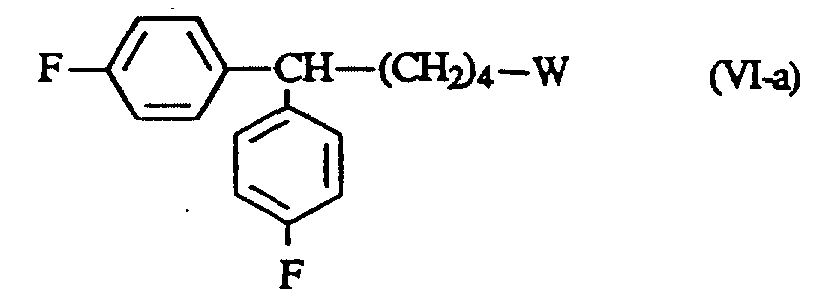
- The thus obtained intermediate (VII) is N-alkylated with a reagent of formula (VIII) wherein W represents a reactive leaving group such as chloro, bromo and the like, in a reaction-inert solvent in the presence of a base.Said N-alkylation reaction can conveniently be conducted by stirring and heating the reactants, in particular by heating at about 70°C to 100°C. Suitable solvents are, for example, alkanols, e.g., methanol, ethanol, butanol and the like, dipolar aprotic solvents, e.g. N,N-dimethylformamide, dimethyl sulfoxide and the like, or mixtures of said solvents. Appropriate bases are alkali and earth alkaline metal hydroxides, carbonates, hydrogen carbonates and the like, and organic amines, such as, for example, N,N-diethylethanamide, pyridine, morpholine and the like bases. An alkali metal iodide, e.g. potassium iodide may be added in order to enhance the reaction rate.

- The intermediate of formula (IX) is finally converted to the novel compound (l)-(-)-(I-b) by a nitro-to-amino reduction step.Said reduction can conveniently be conducted in a reaction-inert solvent following art-known reduction procedures. For example, intermediate (IX) may be stirred under a hydrogen atmosphere in an alkanol such as, methanol, ethanol and the like, in the presence of a hydrogenation catalyst such as palladium-on-charcoal, platinum-on-charcoal, Raney nickel and the like. Alternatively said reduction may also be accom-plished by treatment of the intermediate (IX) within a reagent such as, for example, sodium sulfite, sodium sulfide, sodium hydrogen sulfide, titanium (III) chloride and the like.

- In all of the preceding reaction steps, the intermediates and final compounds may be isolated and purified following art-known procedures, in particular by liquid chromatography and crystallization.
- As previously mentioned the compounds of formula (I) are known to protect the heart from myocardial injury and to improve sleep and counteract sleep disorders. A number of said compounds, more particularly 3-(aminocarbonyl)-4-[4,4-bis(4-fluorophenyl)-butyl]-N-(2,6-dichlorophenyl)-1-piperazineacetamide dihydrochloride, monohydrate, generically known as mioflazine, is described as an inhibitor of nucleoside transport through membranes [Molecular Physiology, 8,615-630 (1985)]. An important, advantage of the present compounds of formula (I-b) for use in the methods described hereinbelow is the fact that they are orally active and, contrary to mioflazine, have an excellent bioavailability because they do not generally bind to plasma proteins.
- The organ or muscular tissue as mentioned hereinabove in particular is the heart or heart tissue. Typical situations wherein blood reperfusion in said organ or muscular tissue is diminished or absent, comprise, for example, thrombosis and cardioplegia, i.e. arresting a heart before open heart surgery or before transplantation. Reperfusion damage generally occurs whenever blood perfusion is restored to normal after the occurence of any of the above mentioned situations, e.g. upon natural or stimulated thrombolysis or upon reperfusion of the heart after cardioplegia The term reperfusion damage, also designated reperfusion injury, as used in the instant application defines the damage to tissues and organs which have been previously deprived of blood supply upon reperfusion, i.e. the restoration of blood flow through said tissues and organs. Reperfusion damage is an acute phenomenon which arises immediately upon reperfusion and therefore must be attended to timely.
- The amount of active ingredient of formula (I-b) is such that effective prevention or limitation of reperfusion damage is obtained upon administration to said organ or muscular tissue.
- The compounds of the present invention can be used in a method of treating a patient undergoing natural thrombolysis, stimulated thrombolysis (thrombolytic therapy) or reperfusion of the heart after open heart surgery or after receiving a donor heart in an amount, effective in preventing and/or limiting reperfusion damage.
- Thrombolysis as used hereinabove defines the lysis of thrombi, in particular lysis effected by the local action the proteolytic enzyme plasmin within the substance of the thrombi. The term thrombolytic therapy as used herein defines the administration to a patient suffering from a thrombus or thrombi, an effective thrombolytic amount of a thrombolytic agent, optionally followed by a maintenance therapy with an anticoagulant, such as, for example, heparin, ethyl biscoumacetate, ticlopidin and the like. Commonly used thrombolytic agents in said therapy comprise for example, urokinase, streptokinase, tissue plasminogen activator (t-PA), fibrinolysin and the like agents. The method for use of the compositions of the present invention thus provides a method of preventing or limiting reperfusion damage upon reperfusion following stimulated thrombolysis, said method comprising administering to the patient undergoing thrombolytic therapy an amount of a compound having the formula (I-b), effective in preventing or limiting reperfusion damage.
- More in particular, said method comprises administering to the patient simultaneously, separately or sequentially an effective thrombolytic amount of a thrombolytic agent, particularly a thrombolytic agent specifically mentioned hereinabove, and an effective reperfusion damage preventing and/or limiting amount of a compound having the formula (I-b). Said method also comprises administering to the patient prophylactically or during maintenance therapy simultaneously, separately or sequentially an effective anticoagulant amount of an anticoagulant agent, particularly an anticoagulant agent specifically mentioned hereinabove, and an effective amount of a compound of formula (I-b).
- The amount of each of the active ingredients, the thrombolytic agent and the compound of formula (I-b) in the method is such that effective thrombolysis is obtained, concomitant with effective prevention or limitation of reperfusion damage, upon administration to said patients. When maintenance therapy is envisaged, the amount of each of the active ingredients, the anticoagulant agent and the compound of formula (I-b) in the method is such that effective prevention of formation of thrombi is obtained, concomitant with effective prevention or limitation of reperfusion damage, upon administration of each active ingredient to said patients. The amount of the thrombolytic agent for use in the present method may satisfactorily be equal to the amount of thrombolytic agent commonly used in art-known thrombolytic therapy. For example, streptokinase may be administered in a loading dose of 250.000 to 600.000 units over 30 to 60 minutes, followed by a maintenance dose of about 100.000 units per hour for up to 72 hours, sometimes up to 144 hours; urokinase may be administered by intravenous infusion starting with an initial dose of about 4400 units per kg bodyweight over 10 minutes followed by a maintenance dose of about 4400 units per kg bodyweight each hour for up to 12 hours; tissue plasminogen activator may be administered by intravenous infusion of about 100 mg over 3 hours. The amount of the compound of formula (I-b) for use in the present method may typically range from about 0.01 to about 100 mg/kg bodyweight, particularly from about 0.1 to about 10 mg/kg bodyweight and more particularly from about 0.2 to about 5 mg/kg bodyweight.
- The compounds of formula (I-b) or the pharmaceutically acceptable acid addition salts thereof may be administered before, during or shortly after the administration of the thrombolytic agent, provided that the time between the administration of the thrombolytic agent and the administration of the compound of formula (I-b) is such that reperfusion damage is effectively prevented or limited. When simultaneous administration of the thrombolytic agent and a compound of formula (I-b) is envisaged, a composition containing both a thrombolytic agent and a compound of formula (I-b) may be particularly convenient. Or, the thrombolytic agent and the compound of formula (I-b) may be administered separately in the form of suitable compositions. Similarly, when maintenance therapy or prophylaxis with an anticoagulant is envisaged, the compounds of formula (I-b) may be administered before, during or after the administration of the anticoagulant agent.
- The present invention provides compositions for preventing or limiting reperfusion damage upon reperfusion following natural or stimulated thrombolysis, or after cardioplegia, said compositions comprising a pharmaceutically acceptable carrier and as active ingredient an effective reperfusion damage preventing or limiting amount of the compound of formula (I-b).
- Compositions for preventing or limiting reperfusion damage upon reperfusion following stimulated thrombolysis may further comprise an effective thrombolytic amount of a thrombolytic agent, in particular a thrombolytic agent specifically mentioned hereinabove.
- Compositions for prophylactic use or for maintenance therapy may further comprise an effective anticoagulant amount of an anticoagulant, in particular an anticoagulant specifically mentioned hereinabove.
- The amount of each of the active ingredients, the compound of formula (I-b) and optionally the thrombolytic agent or the anticoagulant, in the foregoing compositions is such that effective prevention or limitation of perfusion damage upon administration is obtained, where applicable concomitant with effective thrombolysis or with effective prevention of coagulation.
- Interesting compositions among the groups of compositions described hereinbefore and -after, are those comprising a cyclodextrin (CD) or an ether derivative thereof, as a complexant and/or solubilizer. As examples of such cyclodextrins there may be mentioned α-CD, β-CD, γ-CD, and ether or mixed ether derivatives thereof. Particular such cyclodextrin derivatives are described in US-3,459,731, EP-A-0,149,197 and EP-A-0,197,571.
- Typically such ether or mixed ether derivatives comprise α-, β- or γ-CD wherein one or more hydroxylgroups are substituted with C1-6alkyl, particularly methyl, ethyl or isopropyl; hydroxyC1-6alkyl, particularly hydroxyethyl, hydroxypropyl or hydroxybutyl; carboxyC1-6alkyl, particularly carboxymethyl or carboxyethyl; or C1-6alkyloxycarbonylC1-6alkyl. Especially noteworthy as complexants and/or solubilizers are β-CD, 2,6-dimethyl-β-CD and in particular 2-hydroxypropyl-β-CD, 2-hydroxyethyl-β-CD, 2-hydroxyethyl-γ-CD and 2-hydroxypropyl-γ-CD. In the aforementioned cyclodextrin derivatives, the DS (degree of substitution, i.e. the average number of substituted hydroxy functions per glucose unit) preferably is in the range of 0.125 to 3, in particular 0.3 to 2, more in particular 0.3 to 1. The MS (molar degree of substitution, i.e. the average number of moles of the substituting agent per glucose unit) is in the range of 0.125 to 10, in particular 0.3 to 3 and more in particular 0.3 to 1.5, preferably 0.35 to 0.50. Said compositions may conveniently be prepared by dissolving the cyclodextrin or ether derivative thereof in water and adding thereto a compound of formula (I) as well as other adjuvants and components such as, for example, sodium chloride, potassium nitrate, glucose, mannitol, sorbitol, xylitol and buffers such as, for example, phosphate, acetate or citrate buffers; and optionally concentrating or drying the solution by evaporation under reduced pressure or by lyophilization. The amount of the cyclodextrin or ether derivative thereof in the final composition generally ranges from about 1% to about 40% by weight, particularly from 2.5% to 25% and more particularly from 5 % to 20%. The amount of the active ingredient of formula (I-b) in said final compositions generally ranges from about 0.01% to about 1.0% by weight, particularly from 0.025% to 0.5% and more particularly from 0.05% to 0.2%. Particularly interesting compositions are those comprising (l)-(-)2-(aminocarbonyl)-N-(4-amino-2,6-dichlorophenyl)-4-[5,5-bis(4-fluorophenyl)pentyl]-1-piperazineacetamide as active ingredient and 2-hydroxypropyl-β-cyclodextrin as complexant and/or solubilizer.
- To prepare the pharmaceutical compositions of this invention, an effective amount of the active ingredients, in acid or base addition salt form or base form, is combined in intimate admixture with a pharmaceutically acceptable carrier, which can take a wide variety of forms depending on the form of preparation desired for administration. These pharmaceutical compositions are desirably in unitary dosage form suitable, preferably, for administration orally, rectally, percutaneously, or by parenteral injection. For example, in preparing the compositions in oral dosage form, any of the usual pharmaceutical media may be employed, such as, for example, water, glycols, oils, alcohols and the like in the case of oral liquid preparations such as suspensions, syrups, elixirs and solutions; or solid carriers such as starches, sugars, kaolin, lubricants, binders, disintegrating agents and the like in the case of powders, pills, capsules and tablets. Because of their ease in administration, tablets and capsules represent the most advantageous oral dosage unit form, in which case solid pharmaceutical carriers are obviously employed. For parenteral compositions, the carrier will usually comprise sterile water, at least in large part, though other ingredients, for example, to aid solubility, may be included. Injectable solutions, for example, may be prepared in which the carrier comprises saline solution, glucose solution or a mixture of saline and glucose solution. Injectable suspensions may also be prepared in which case appropriate liquid carriers, suspending agents and the like may be employed. In the compositions suitable for percutaneous administration, the carrier optionally comprises a penetration enhancing agent and/or a suitable wettable agent, optionally combined with suitable additives of any nature in minor proportions, which additives do not cause any significant deleterious effects on the skin. Said additives may facilitate the administration to the skin and/or may be helpful for preparing the desired compositions. These compositions may be administered in various ways, e.g., as a transdermal patch, as a spot-on or as an ointment. Acid addition salts of (I-b) due to their increased water solubility over the corresponding base form, are obviously more suitable in the preparation of aqueous compositions.
- An especially interesting feature of the compounds of formula (I-b) is the fact that said compounds can be administered orally thus substantially simplifying the administration of said compounds to high risk patients, more in particular to patients receiving maintenance therapy or anticoagulants.
- It is especially advantageous to formulate the aforementioned pharmaceutical compositions in dosage unit form for ease of administration and uniformity of dosage. Dosage unit form as used in the specification and claims herein refers to physically discrete units suitable as unitary dosages, each unit containing a predetermined quantity of active ingredient calculated to produce the desired therapeutic effect, in association with the required pharmaceutical carrier. Examples of such dosage unit forms are tablets (including scored or coated tablets), capsules, pills, powder packets, wafers, injectable solutions or suspensions, teaspoonfuls, tablespoonfuls and the like, and segregated multiples thereof.
- The present invention further also comprises products containing a compound of formula (I-b) and a thrombolytic agent as a combined preparation for simultaneous, separate or sequential use in thrombolytic therapy with concomitant prevention or limitation of reperfusion damage. Such products may comprise, for example, a kit comprising a container with a suitable composition containing a compound of formula (I-b) or a pharmaceutically acceptable acid addition salt thereof and another container containing a composition with a thrombolytic agent. Such a product may have the advantage that a physician wishing to administer thrombolytic therapy with concomitant prevention or limitation of reperfusion damage, can select on the basis of the diagnosis of the patient to be treated, the appropriate amounts of each component and the sequence and timing of the administration thereof.
- The term open heart surgery as used herein defines the surgical intervention on a heart temporarily relieved of circulatory function. The method for use of the composition of the present invention particularly provides a method of preventing or limiting reperfusion damage upon reperfusion of the operated heart, said method comprising administering to the patient undergoing open heart surgery an amount of a compound of formula (I-b) effective in preventing or limiting reperfusion damage. More particularly, said method comprises treating said patient before, during and after surgery with an effective reperfusion damage preventing and/or limiting amount of a compound of formula (I-b). A particularly advantageous practice consists of arresting the heart whereupon surgery will be performed with a cardioplegic solution comprising an effective reperfusion damage preventing and/or limiting amount of a compound of formula (I-b).
- The term transplantation as used herein defines the transplantation of tissues, in particular of organs and more in particular of hearts from one warm-blooded animal to an identical recipient site within another warm-blooded animal, said warm-blooded animals in particular being humans. The method for use of the composition of the present invention particularly provides a method of preventing or limiting reperfusion damage upon reperfusion of a transplanted heart, said method comprising administering to the patient receiving the donor heart, as well as administering to the heart to be transplanted an effective amount of a compound of formula (I-b).
- More in particular, said method comprises arresting a donor heart for transplantation with a cardioplegic solution, whereby said cardioplegic solution comprises an effective amount of a compound of formula (I-b), storing said heart in the cold in said cardioplegic solution and transplanting said heart in another subject pre-treated with an effective amount of compound of formula (I-b) and subsequently reperfusing said heart with oxygenated blood.
- The term cardioplegic solution as used herein defined the normal balanced-salt formulations generally used for cardioplegia. Commonly used cardioplegic solutions for arresting a heart comprise for example, hyperkalemic NIH cardioplegic solutions, UW cardioplegic solution, Collins cardioplegic solution M (115 meq K+/L), St. Thomas' Hospital cardioplegic solution, Ringer's injection buffered with tromethamine (3.6%), Plegisol® (Abbott) buffered with sodium hydrogen carbonate injection (8.4%), Modified Krebs high K (34 meq/L) solution and the like cardioplegic solutions. Typical temperatures for storing a heart for transplantation may range from 0°C to about 10°C, particularly from about 0°C to about 7°C and more particularly from about 0°C to about 4°C.
- The amount of each of the active ingredients, the cardioplegic solution and the compound of formula (I-b), in the method is such that effective cardioplegia is obtained upon administration, concomitant with effective prevention or limitation of reperfusion damage upon reperfusion of the heart whereupon surgery was performed and upon reperfusion of the transplanted heart. For example, the amount of the compound of formula (I-b) in the cardioplegic solution for use in the method may typically range from about 0.1 µM to about 10 µM, particularly from about 0.5 µM to about 5 µM and more particularly from about 0.8 µM to about 2 µM.
- The amount of the active ingredient, the compound of formula (I-b), upon administration to the patient receiving a donor heart is such that effective prevention or limitation of reperfusion damage upon reperfusion of the transplanted heart is obtained. For example, the amount of the compound of formula (I-b) for use in the present method may typically range from about 0.01 to about 100 mg/kg bodyweight, particularly from about 0.1 to about 10 mg/kg bodyweight and more particularly from about 0.2 to about 5 mg/kg bodyweight.
- In still a further aspect provided by the present invention there is a method of storing a heart for transplantation in a cardioplegic solution in the cold, which method comprises administering to said cardioplegic solution an amount, effective in prolonging the storage of said heart, of a compound of formula (I-b) as defined hereinabove.
- An especially interesting feature of the method of storing a heart for transplantation, is the fact that the duration of successfully storing a heart for transplantation in a cardioplegic solution comprising a compound of formula (I-b) can be prolonged drastically. Whereas a heart for transplantation can be stored successfully for about 4 hours in a usual cardioplegic solution without a compound of formula (I-b) in the cold, the novel method of storing a heart for transplantation in a cardioplegic solution comprising a compound of formula (I-b) in the cold allows one to store said heart for at least 24 hours and to transplant said heart subsequently successfully. Thus the present invention further provides a method of storing a heart for transplantation in the cold in a cardioplegic solution, particularly a cardioplegic solution specifically mentioned hereinabove, comprising an effective donor heart protecting amount of a compound of formula (I-b). The effective donor heart protecting amount of the compound of formula (I-b) in the cardioplegic solution for use in the present method of storing a heart for transplantation may typically range from about 0.1µM to about 10µM, particularly from about 0.5µM to about 5µM and more particularly from about 0.8µM to about 2µM.
- A mixture of 108.4 parts of (-)-(S,S)-N 1,N 2-bis(1-phenylethyl)-1,2-ethanediamine, 93.8 parts of 2,3-dibromopropanamide, 334.5 parts of potassium carbonate and 2958 parts of methylbenzene was refluxed for 24 hours using a water separator. The reaction mixture was filtered while hot and the precipitate was partitioned between water and dichloromethane. The organic layer was separated and combined with the filtrate. The whole was dried, filtered and evaporated. The residue was purified by column chromatography (Lichroprep RP18 ; H2O (0.5% CH3COONH4) / CH3CN 55:45). The eluent of the desired fraction was evaporated, yielding 20.8 parts (15.4%) of [1(S), 2A, 4(S)]-1,4-bis(1-phenylethyl)-2-piperazinecarboxamide (interm. 1).
- A mixture of 20.8 parts of intermediate (1) and 198 parts of methanol was hydrogenated at normal pressure and room temperature with 2 parts of palladium-on-charcoal catalyst 10%. After the calculated amount of hydrogen was taken up, the catalyst was filtered off and the filtrate was evaporated, yielding 7.8 parts (98.0%) of (+)-2-piperazinecarboxamide (interm. 2).
- A mixture of 3.9 parts of intermediate (2), 8.3 parts of 5,5-bis(4-fluorophenyl)-pentaldehyde, 2 parts of a solution of thiophene in methanol (4%) and 198 parts of methanol was hydrogenated at normal pressure and 50°C with 2 parts of palladium-on-charcoal catalyst 10%. After the calculated amount of hydrogen was taken up, the catalyst was filtered off and the filtrate was evaporated. The residue was converted into the ethanedioate salt in ethanol. The salt was recrystallized from a mixture of ethanol and methanol. The product was filtered off and dried, yielding 8.82 parts (61.6%) of (+)-4-[5,5-bis(4-fluorophenyl)pentyl]-2-piperazinecarboxamide ethanedioate (1:1); [α] 20 / D = +10.02° (conc. = 0.5% in DMF) (interm. 3).
- 8.82 Parts of intermediate (3) were taken up in water and converted into the free base with NH4OH. The base was extracted with dichloromethane (3x) and the combined extracts were dried, filtered and evaporated. To the residue there were added 6.5 parts of 1-chloro-N-(2,6-dichloro-4-nitrophenyl)acetamide, 3.75 parts of N,N-diethylethanamine and 113 parts of N,N-dimethylformamide. The whole was stirred over weekend at 70°C and was then evaporated. The residue was partitioned between NaHCO3 (5% aq.) and dichloromethane. The organic layer was separated, dried, filtered and evaporated. The residue was purified by column chromatography (silica gel; CH2Cl2/ (CH2Cl2 + 10% CH3OH) 70:30). The eluent of the desired fraction was evaporated and the residue was converted into the hydrochloride salt in 2-propanol. The product was filtered off and dried in vacuo at 50°C, yielding 3.78 parts (30.5%) of (-)-2-(aminocarbonyl)-4-[5,5-bis(4-fluorophenyl)pentyl]-N-(2,6-dichloro-4-nitrophenyl)-1-piperazineacetamide monohydrochloride; [α] 20 / D = -18.47° (conc. = 0.5% in CH3OH) (interm. 4).
- A mixture of 3.6 parts intermediate (4), 1 part of a solution of thiophene in methanol (4%) and 119 parts of methanol was hydrogenated at normal pressure and room temperature with 2 parts of palladium-on-charcoal catalyst 10%. After the calculated amount of hydrogen was taken up, the catalyst was filtered off and the filtrate was evaporated. The residue was purified by column chromatography (Lichroprep RP-18 ; H2O(0.5% CH3COONH4)/CH3OH/CH3CN 40:20:40). The desired fractions were concentrated and the product was allowed to crystallize from the resulting aqueous solution. It was filtered off and dried in vacuo at 60°C, yielding 1.49 parts (43.4%) of (-)-2-(aminocarbonyl)-N-(4-amino-2,6-dichlorophenyl)-4-[5,5-bis(4-fluorophenyl)-pentyl]-1-piperazineacetamide hemihydrate; mp. 123.4°C; [α] 20 / D = -29.63°
(conc. = 0.5% in CH3OH) (comp. I-b). - Dog hearts were arrested either with hyperkalemic NIH cardioplegia (group I, n=6) or with the same cardioplegia after addition of 2-(aminocarbonyl)-N-(4-amino-2,6-dichlorophenyl)-4-[5,5-bis(4-fluorophenyl)pentyl]-1-piperazineacetamide (group II, n=6). The hearts were stored cold for 24 hours at 0-5°C (ice-water) in the cardioplegic solution and then transplanted orthotopically. To the recipient dogs was administered 0.1 mg/kg bodyweight of 2-(aminocarbonyl)-N-(4-amino-2,6-dichlorophenyl)-4-[5,5-bis(4-fluorophenyl)pentyl]-1-piperazineacetamide before transplantation.
Myocardial content of high energy phosphates (HEP) was determined in serial biopsies. In group I ATP was 50% and CrP 18% of control after 24 hours storage. During 60 minutes reperfusion on cardiopulmonary bypass (CPB) HEP content decreased (p<0.05) and all animals developed a "stone heart" after transplantation. After 24 hours storage in group II ATP was 82% and CrP 28% of control (p<0.05 vs. group I). After transplantation HEP content remained stable and all hearts could be weaned from CPB without inotropic support except for isoprenaline. Thus, optimal myocardial preservation was obtained with the combination of cardioplegia and nucleoside transport inhibition. -
active ingredient 1g hydrochloric acid 0.1N 0.04 l 2-hydroxypropyl-β-cyclodextrin 50g sodium chloride 5.5g sodium hydroxide 1N ad pH 3.7 - 3.9 water ad 1 l - 50 g of HP-β-cyclodextrin are dissolved in 0.5 l of water. There are added successively 0.04 of hydrochloric acid 0.1N and 1 g of 2-(aminocarbonyl)-N-(4-amino-2,6-dichlorophenyl)-4-[5,5-bis(4-fluorophenyl)pentyl]-1-piperazineacetamide. The whole is stirred until a clear solution is obtained. After diluting with water to 0.9 l, there are dissolved 5.5 parts of sodium chloride with stirring. The acidity is adjusted with sodium hydroxide 1N to pH 3.7 - 3.9. The solution is diluted with water to 1 l, thus yielding an injectable solution containing 1 mg/ml of active ingredient.
-
active ingredient 1g 2-hydroxypropyl-β-cyclodextrin 50g hydrochloric acid 0.1N 0.04 l sorbitol 70% 0.1 l propylenegiycol 0.1 l disodium ethylenediaminetetraacetate 2g benzoic acid 3g mouth wash flavour 1g sodium hydroxide 1N ad pH 4.0 purified water ad 1 l - 50 g of HP-β-cyclodextrin are dissolved in 0.6 l of water. There are added successively 0.04 of hydrochloric acid 0.1N and 1 g of 2-(aminocarbonyl)-N-(4-amino-2,6-dichlorophenyl)-4-[5,5-bis(4-fluorophenyl)pentyl]-1-piperazineacetamide. The whole is stirred until a clear solution is obtained. There are dissolved 2g of Na2(EDTA) with stirring and then there is added 0.1 of sorbitol 70%. To the homogeneous solution there are successively added a solution of 3g of benzoic acid in 0.1 of propyleneglycol and 1g of mouth wash flavour. The acidity is adjusted with sodium hydroxide IN to pH 3.7 - 3.9. The solution is diluted with water to 1 l, thus yielding an oral solution containing 1 mg/ml of active ingredient.


Claims (7)
- A pharmaceutical composition comprising an inert carrier and as an active ingredient an effective reperfusion damage preventing or limiting amount of enantiomerically pure (l)-(-)-2-(aminocarbonyl)-N-(4-amino-2,6-dichlorophenyl)-4-[5,5-bis(4-fluorophenyl)pentyl]-1-piperazineacetamide, a pharmaceutically acceptable acid addition salt thereof or a hydrate thereof.
- A composition according to claim 1 further comprising an effective thrombolytic amount of a thrombolytic agent.
- A composition according to claim 1 or 2 further comprising from 1% to 40% of a cyclodextrin or an ether derivative thereof.
- A composition according to claim 3 comprising from 0.01% to 1.0% of the active ingredient (l)-(-)-2-(aminocarbonyl)-N-(4-amino-2,6-dichlorophenyl)-4-[5,5-bis(4-fluorophenyl)pentyl]-1-piperazineacetamide.
- A process of preparing a composition as claimed in any of claims 1 to 4, characterized in that the active ingredient is intimately mixed with the carrier.
- A product containing a thrombolytic agent and a compostion as defined in claim 1, as a combined preparation for simultaneous, separate or sequential use in thrombolytic therapy with concomitant preventing or limiting of reperfusion damage.
- A process of preparing the compound enantiomerically pure (l)-(-)-2-(aminocarbonyl)-N-(4-amino-2,6-dichlorophenyl)-4-[5,5-bis(4-fluorophenyl)pentyl]-1-piperazineacetamidecharacterized by ,
 cyclizing (-)-(S,S)-N 1,N 2-bis(1-phenylethyl)-1,2-ethanediamine (II) with 2,3-dibromopropanamide (III) in a reaction-inert solvent in the presence of a base, thus yielding an intermediate of formula
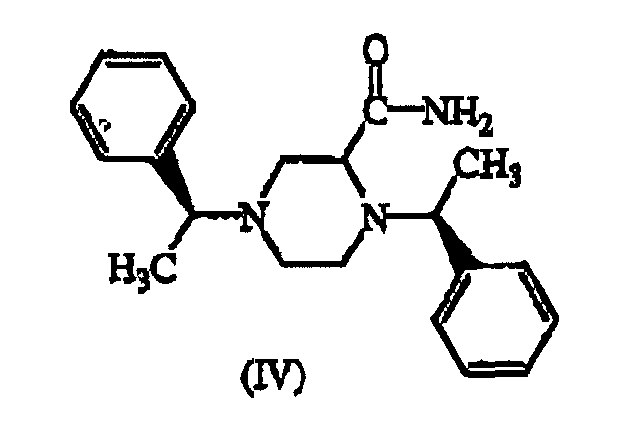 hydrogenolyzing intermediate (IV) under a hydrogen atmosphere in an alkanol in the presence of a hydrogenation catalyst;reductively N-alkylating the thus obtained (+)-2-aminocarbonyl piperazine (V) with 5,5-bis(4-fluorophenyl)pentaldehyde under a hydrogen atmosphere in an alkanol in the presence of a hydrogenation catalyst;N-alkylating the thus obtained piperazine derivative of formulawith an alkylating reagent of formula
 wherein W represents a reactive leaving group, in a reaction-inert solvent in the presence of a base; and
 reducing the thus obtained intermediate of formulain the presence of a reducing agent in a reaction-inert solvent.
Priority Applications (1)
| Application Number | Priority Date | Filing Date | Title |
|---|---|---|---|
| EP19930201656 EP0577171B1 (en) | 1989-11-22 | 1990-11-19 | Use of piperazine acetamide derivatives against reperfusion damage |
Applications Claiming Priority (5)
| Application Number | Priority Date | Filing Date | Title |
|---|---|---|---|
| US44014289A | 1989-11-22 | 1989-11-22 | |
| EP90917677A EP0455789B1 (en) | 1989-11-22 | 1990-11-19 | Method of preventing or limiting reperfusion damage |
| EP19930201656 EP0577171B1 (en) | 1989-11-22 | 1990-11-19 | Use of piperazine acetamide derivatives against reperfusion damage |
| SG118494A SG118494G (en) | 1989-11-22 | 1994-08-20 | Method of preventing or limiting reperfusion damage |
| US440142 | 2006-05-24 |
Related Parent Applications (2)
| Application Number | Title | Priority Date | Filing Date |
|---|---|---|---|
| EP90917677A Division EP0455789B1 (en) | 1989-11-22 | 1990-11-19 | Method of preventing or limiting reperfusion damage |
| EP90917677.8 Division | 1990-11-19 |
Publications (3)
| Publication Number | Publication Date |
|---|---|
| EP0577171A2 EP0577171A2 (en) | 1994-01-05 |
| EP0577171A3 EP0577171A3 (en) | 1994-06-29 |
| EP0577171B1 true EP0577171B1 (en) | 2002-03-06 |
Family
ID=26664237
Family Applications (2)
| Application Number | Title | Priority Date | Filing Date |
|---|---|---|---|
| EP19930201656 Expired - Lifetime EP0577171B1 (en) | 1989-11-22 | 1990-11-19 | Use of piperazine acetamide derivatives against reperfusion damage |
| EP90917677A Expired - Lifetime EP0455789B1 (en) | 1989-11-22 | 1990-11-19 | Method of preventing or limiting reperfusion damage |
Family Applications After (1)
| Application Number | Title | Priority Date | Filing Date |
|---|---|---|---|
| EP90917677A Expired - Lifetime EP0455789B1 (en) | 1989-11-22 | 1990-11-19 | Method of preventing or limiting reperfusion damage |
Country Status (22)
| Country | Link |
|---|---|
| EP (2) | EP0577171B1 (en) |
| JP (1) | JP2574585B2 (en) |
| KR (1) | KR0165686B1 (en) |
| AT (2) | ATE102831T1 (en) |
| AU (1) | AU632888B2 (en) |
| CA (1) | CA2044143C (en) |
| CY (1) | CY1869A (en) |
| DE (2) | DE69033926T2 (en) |
| DK (2) | DK0577171T3 (en) |
| ES (2) | ES2053208T3 (en) |
| FI (1) | FI109694B (en) |
| HK (1) | HK115095A (en) |
| HU (1) | HU215847B (en) |
| IE (1) | IE65121B1 (en) |
| IL (1) | IL96390A (en) |
| NO (2) | NO304519B1 (en) |
| NZ (1) | NZ236168A (en) |
| PT (2) | PT95959B (en) |
| RU (1) | RU2093156C1 (en) |
| SG (1) | SG118494G (en) |
| WO (1) | WO1991007967A2 (en) |
| ZA (1) | ZA909345B (en) |
Families Citing this family (18)
| Publication number | Priority date | Publication date | Assignee | Title |
|---|---|---|---|---|
| SE9202266D0 (en) * | 1992-07-31 | 1992-07-31 | Kabi Pharmacia Ab | NOVEL PIPERAZINE CARBOXAMIDES |
| SE9504661D0 (en) | 1995-12-22 | 1995-12-22 | Astra Pharma Inc | New compounds |
| CN1278269A (en) * | 1997-11-07 | 2000-12-27 | 第一制药株式会社 | Piperazine-cyclodextrin complexes |
| US6683100B2 (en) | 1999-01-19 | 2004-01-27 | Novartis Ag | Organic compounds |
| US6194181B1 (en) | 1998-02-19 | 2001-02-27 | Novartis Ag | Fermentative preparation process for and crystal forms of cytostatics |
| SE9904673D0 (en) | 1999-12-20 | 1999-12-20 | Astra Pharma Inc | Novel compounds |
| SE9904674D0 (en) | 1999-12-20 | 1999-12-20 | Astra Pharma Inc | Novel compounds |
| SE0001209D0 (en) | 2000-04-04 | 2000-04-04 | Astrazeneca Canada Inc | Novel compounds |
| US6573264B1 (en) * | 2000-10-23 | 2003-06-03 | Cv Therapeutics, Inc. | Heteroaryl alkyl piperazine derivatives |
| US7229994B2 (en) | 2001-05-18 | 2007-06-12 | Astrazeneca Ab | 4(phenyl-piperazinyl-methyl) benzamide derivatives and their use for the treatment of pain anxiety or gastrointestinal disorders |
| SE0203303D0 (en) | 2002-11-07 | 2002-11-07 | Astrazeneca Ab | Novel Compounds |
| SE0203300D0 (en) | 2002-11-07 | 2002-11-07 | Astrazeneca Ab | Novel Compounds |
| SE0203302D0 (en) | 2002-11-07 | 2002-11-07 | Astrazeneca Ab | Novel Compounds |
| CA2575975A1 (en) * | 2003-11-12 | 2005-05-26 | Dr. Reddy's Laboratories, Inc. | Preparation of escitalopram |
| DK1781631T3 (en) | 2004-08-02 | 2012-05-14 | Astrazeneca Ab | Diarylmethylpiperazine derivatives, their preparations and their applications |
| FR2946340B1 (en) | 2009-06-05 | 2011-06-24 | Galderma Res & Dev | NOVEL N-PHENYL ACETAMIA, INHIBITORS OF ENZYME SOAT-1, PHARMACEUTICAL AND COSMETIC COMPOSITIONS CONTAINING SAME |
| KR101900124B1 (en) | 2014-06-25 | 2018-09-18 | 전남대학교산학협력단 | Compositon for abalone exfoliation agent |
| KR101644299B1 (en) | 2014-07-22 | 2016-08-02 | 주식회사 엔바이로젠 | Compositon for abalone exfoliation agent comprising schizandra chinensis extract and allilum hookeri extract |
Family Cites Families (2)
| Publication number | Priority date | Publication date | Assignee | Title |
|---|---|---|---|---|
| US4766125A (en) * | 1981-06-23 | 1988-08-23 | Janssen Pharmaceutica N.V. | N-aryl-piperazinealkanamides useful for protecting hearts from myocardial injury caused by ischaemia, anoxia or hypoxia |
| NZ223847A (en) * | 1987-04-01 | 1989-12-21 | Janssen Pharmaceutica Nv | Substituted piperazine derivatives and pharmaceutical compositions |
-
1990
- 1990-11-19 HU HU2436/91A patent/HU215847B/en not_active IP Right Cessation
- 1990-11-19 ES ES90917677T patent/ES2053208T3/en not_active Expired - Lifetime
- 1990-11-19 ES ES93201656T patent/ES2173883T3/en not_active Expired - Lifetime
- 1990-11-19 DE DE69033926T patent/DE69033926T2/en not_active Expired - Fee Related
- 1990-11-19 KR KR1019910700758A patent/KR0165686B1/en not_active Expired - Fee Related
- 1990-11-19 DE DE69007471T patent/DE69007471T2/en not_active Expired - Fee Related
- 1990-11-19 JP JP3500097A patent/JP2574585B2/en not_active Expired - Fee Related
- 1990-11-19 EP EP19930201656 patent/EP0577171B1/en not_active Expired - Lifetime
- 1990-11-19 DK DK93201656T patent/DK0577171T3/en active
- 1990-11-19 AU AU68763/91A patent/AU632888B2/en not_active Ceased
- 1990-11-19 DK DK90917677.8T patent/DK0455789T3/en active
- 1990-11-19 AT AT90917677T patent/ATE102831T1/en not_active IP Right Cessation
- 1990-11-19 RU SU905001085A patent/RU2093156C1/en active
- 1990-11-19 EP EP90917677A patent/EP0455789B1/en not_active Expired - Lifetime
- 1990-11-19 CA CA002044143A patent/CA2044143C/en not_active Expired - Fee Related
- 1990-11-19 IL IL9639090A patent/IL96390A/en not_active IP Right Cessation
- 1990-11-19 AT AT93201656T patent/ATE213943T1/en not_active IP Right Cessation
- 1990-11-19 WO PCT/EP1990/001985 patent/WO1991007967A2/en not_active Ceased
- 1990-11-20 NZ NZ236168A patent/NZ236168A/en unknown
- 1990-11-21 IE IE420990A patent/IE65121B1/en not_active IP Right Cessation
- 1990-11-21 ZA ZA909345A patent/ZA909345B/en unknown
- 1990-11-22 PT PT95959A patent/PT95959B/en not_active IP Right Cessation
-
1991
- 1991-06-26 NO NO912511A patent/NO304519B1/en unknown
- 1991-07-16 FI FI913433A patent/FI109694B/en active
-
1994
- 1994-08-20 SG SG118494A patent/SG118494G/en unknown
-
1995
- 1995-07-13 HK HK115095A patent/HK115095A/en not_active IP Right Cessation
-
1996
- 1996-04-05 CY CY186996A patent/CY1869A/en unknown
-
1998
- 1998-04-20 PT PT102145A patent/PT102145B/en not_active IP Right Cessation
- 1998-05-07 NO NO19982078A patent/NO311701B1/en unknown
Also Published As
Similar Documents
| Publication | Publication Date | Title |
|---|---|---|
| AU632888B2 (en) | Use of piperazine acetamide derivatives against reperfusion damage | |
| US5030644A (en) | Imidazole compounds and their use as transglutaminase inhibitors | |
| JP2000095686A (en) | 2-alkylpyrrolidines | |
| JP2001506239A (en) | New compound | |
| JPH04503524A (en) | Medications for preventing or limiting reperfusion injury | |
| US5098707A (en) | Imidazole compounds and their use as transglutaminase inhibitors | |
| US5840896A (en) | Method of preventing or limiting reperfusion damage | |
| FI120403B (en) | 4- (2-Amino-6- (cyclopropylamino) -9H-purin-9-yl) -2-cyclopenten-1-methanol succinate as antiviral agents | |
| PL183595B1 (en) | New compounds and method of their production as well as pharmaceutical compounds and method of its production | |
| EP0682947A1 (en) | Medicament for therapeutic and prophylactic treatment of diseases caused by smooth muscle cell hyperplasia | |
| US4968713A (en) | Certain imidazole compounds as transglutaminase inhibitors | |
| JPH029894A (en) | Niccomycin derivative and fungicidal composition consisting of said derivative and azole fungicide | |
| JPH03128360A (en) | Imidazole compound and its use as transglutaminase inhibitor | |
| IE83628B1 (en) | Topical compositions comprising benzimidazoles and benzotriazoles | |
| AU2002250939B2 (en) | Novel benzoylguanidine salt | |
| US5047416A (en) | Triazole compounds and their use as transglutaminase inhibitors | |
| IE19950407A1 (en) | Use of piperazine acetamide derivatives against reperfusion damage | |
| US5602123A (en) | Therapeutic agent for myocardial ischemic damages or reperfusion | |
| JP2005314348A (en) | Facial nerve palsy treatment | |
| JP2018080113A (en) | Treatment agent of cerebral infarction | |
| JPH08208485A (en) | Remedy for myocardial ischemia and / or reperfusion injury | |
| CA2022116A1 (en) | Imidazole compounds and their use as transglutaminase inhibitors |
Legal Events
| Date | Code | Title | Description |
|---|---|---|---|
| PUAI | Public reference made under article 153(3) epc to a published international application that has entered the european phase |
Free format text: ORIGINAL CODE: 0009012 |
|
| AC | Divisional application: reference to earlier application |
Ref document number: 455789 Country of ref document: EP |
|
| AK | Designated contracting states |
Kind code of ref document: A2 Designated state(s): AT BE CH DE DK ES FR GB GR IT LI LU NL SE |
|
| RHK1 | Main classification (correction) |
Ipc: A61K 31/495 |
|
| PUAL | Search report despatched |
Free format text: ORIGINAL CODE: 0009013 |
|
| AK | Designated contracting states |
Kind code of ref document: A3 Designated state(s): AT BE CH DE DK ES FR GB GR IT LI LU NL SE |
|
| 17P | Request for examination filed |
Effective date: 19941207 |
|
| 17Q | First examination report despatched |
Effective date: 19990505 |
|
| RIC1 | Information provided on ipc code assigned before grant |
Free format text: 7A 61K 31/495 A, 7C 07D 241/04 B, 7A 61K 31/495 J, 7A 61K 31:00 J |
|
| GRAG | Despatch of communication of intention to grant |
Free format text: ORIGINAL CODE: EPIDOS AGRA |
|
| GRAG | Despatch of communication of intention to grant |
Free format text: ORIGINAL CODE: EPIDOS AGRA |
|
| GRAH | Despatch of communication of intention to grant a patent |
Free format text: ORIGINAL CODE: EPIDOS IGRA |
|
| GRAH | Despatch of communication of intention to grant a patent |
Free format text: ORIGINAL CODE: EPIDOS IGRA |
|
| REG | Reference to a national code |
Ref country code: GB Ref legal event code: IF02 |
|
| GRAA | (expected) grant |
Free format text: ORIGINAL CODE: 0009210 |
|
| AC | Divisional application: reference to earlier application |
Ref document number: 455789 Country of ref document: EP |
|
| REF | Corresponds to: |
Ref document number: 213943 Country of ref document: AT Date of ref document: 20020315 Kind code of ref document: T |
|
| REG | Reference to a national code |
Ref country code: CH Ref legal event code: EP |
|
| REF | Corresponds to: |
Ref document number: 69033926 Country of ref document: DE Date of ref document: 20020411 |
|
| REG | Reference to a national code |
Ref country code: DK Ref legal event code: T3 |
|
| REG | Reference to a national code |
Ref country code: GR Ref legal event code: EP Ref document number: 20020401005 Country of ref document: GR |
|
| ET | Fr: translation filed | ||
| REG | Reference to a national code |
Ref country code: ES Ref legal event code: FG2A Ref document number: 2173883 Country of ref document: ES Kind code of ref document: T3 |
|
| PLBE | No opposition filed within time limit |
Free format text: ORIGINAL CODE: 0009261 |
|
| STAA | Information on the status of an ep patent application or granted ep patent |
Free format text: STATUS: NO OPPOSITION FILED WITHIN TIME LIMIT |
|
| 26N | No opposition filed |
Effective date: 20021209 |
|
| PGFP | Annual fee paid to national office [announced via postgrant information from national office to epo] |
Ref country code: BE Payment date: 20060803 Year of fee payment: 17 |
|
| PGFP | Annual fee paid to national office [announced via postgrant information from national office to epo] |
Ref country code: GR Payment date: 20061012 Year of fee payment: 17 |
|
| PGFP | Annual fee paid to national office [announced via postgrant information from national office to epo] |
Ref country code: NL Payment date: 20061105 Year of fee payment: 17 |
|
| PGFP | Annual fee paid to national office [announced via postgrant information from national office to epo] |
Ref country code: SE Payment date: 20061106 Year of fee payment: 17 |
|
| PGFP | Annual fee paid to national office [announced via postgrant information from national office to epo] |
Ref country code: FR Payment date: 20061108 Year of fee payment: 17 |
|
| PGFP | Annual fee paid to national office [announced via postgrant information from national office to epo] |
Ref country code: AT Payment date: 20061113 Year of fee payment: 17 |
|
| PGFP | Annual fee paid to national office [announced via postgrant information from national office to epo] |
Ref country code: DK Payment date: 20061114 Year of fee payment: 17 |
|
| PGFP | Annual fee paid to national office [announced via postgrant information from national office to epo] |
Ref country code: GB Payment date: 20061115 Year of fee payment: 17 Ref country code: CH Payment date: 20061115 Year of fee payment: 17 |
|
| PGFP | Annual fee paid to national office [announced via postgrant information from national office to epo] |
Ref country code: DE Payment date: 20061116 Year of fee payment: 17 |
|
| PGFP | Annual fee paid to national office [announced via postgrant information from national office to epo] |
Ref country code: IT Payment date: 20061130 Year of fee payment: 17 |
|
| PGFP | Annual fee paid to national office [announced via postgrant information from national office to epo] |
Ref country code: LU Payment date: 20061205 Year of fee payment: 17 |
|
| PGFP | Annual fee paid to national office [announced via postgrant information from national office to epo] |
Ref country code: ES Payment date: 20061222 Year of fee payment: 17 |
|
| BERE | Be: lapsed |
Owner name: *JANSSEN PHARMACEUTICA N.V. Effective date: 20071130 |
|
| REG | Reference to a national code |
Ref country code: DK Ref legal event code: EBP |
|
| EUG | Se: european patent has lapsed | ||
| GBPC | Gb: european patent ceased through non-payment of renewal fee |
Effective date: 20071119 |
|
| PG25 | Lapsed in a contracting state [announced via postgrant information from national office to epo] |
Ref country code: LI Free format text: LAPSE BECAUSE OF NON-PAYMENT OF DUE FEES Effective date: 20071130 Ref country code: CH Free format text: LAPSE BECAUSE OF NON-PAYMENT OF DUE FEES Effective date: 20071130 |
|
| REG | Reference to a national code |
Ref country code: CH Ref legal event code: PL |
|
| NLV4 | Nl: lapsed or anulled due to non-payment of the annual fee |
Effective date: 20080601 |
|
| PG25 | Lapsed in a contracting state [announced via postgrant information from national office to epo] |
Ref country code: AT Free format text: LAPSE BECAUSE OF NON-PAYMENT OF DUE FEES Effective date: 20071119 |
|
| PG25 | Lapsed in a contracting state [announced via postgrant information from national office to epo] |
Ref country code: BE Free format text: LAPSE BECAUSE OF NON-PAYMENT OF DUE FEES Effective date: 20071130 |
|
| PG25 | Lapsed in a contracting state [announced via postgrant information from national office to epo] |
Ref country code: DK Free format text: LAPSE BECAUSE OF NON-PAYMENT OF DUE FEES Effective date: 20071130 Ref country code: DE Free format text: LAPSE BECAUSE OF NON-PAYMENT OF DUE FEES Effective date: 20080603 Ref country code: SE Free format text: LAPSE BECAUSE OF NON-PAYMENT OF DUE FEES Effective date: 20071120 Ref country code: NL Free format text: LAPSE BECAUSE OF NON-PAYMENT OF DUE FEES Effective date: 20080601 |
|
| REG | Reference to a national code |
Ref country code: FR Ref legal event code: ST Effective date: 20080930 |
|
| PG25 | Lapsed in a contracting state [announced via postgrant information from national office to epo] |
Ref country code: GB Free format text: LAPSE BECAUSE OF NON-PAYMENT OF DUE FEES Effective date: 20071119 |
|
| REG | Reference to a national code |
Ref country code: ES Ref legal event code: FD2A Effective date: 20071120 |
|
| PG25 | Lapsed in a contracting state [announced via postgrant information from national office to epo] |
Ref country code: FR Free format text: LAPSE BECAUSE OF NON-PAYMENT OF DUE FEES Effective date: 20071130 Ref country code: ES Free format text: LAPSE BECAUSE OF NON-PAYMENT OF DUE FEES Effective date: 20071120 |
|
| PG25 | Lapsed in a contracting state [announced via postgrant information from national office to epo] |
Ref country code: GR Free format text: LAPSE BECAUSE OF NON-PAYMENT OF DUE FEES Effective date: 20080605 |
|
| PG25 | Lapsed in a contracting state [announced via postgrant information from national office to epo] |
Ref country code: LU Free format text: LAPSE BECAUSE OF NON-PAYMENT OF DUE FEES Effective date: 20071119 Ref country code: IT Free format text: LAPSE BECAUSE OF NON-PAYMENT OF DUE FEES Effective date: 20071119 |