EP0571337B1 - Process to purify proteins from cell systems - Google Patents
Process to purify proteins from cell systems Download PDFInfo
- Publication number
- EP0571337B1 EP0571337B1 EP93830191A EP93830191A EP0571337B1 EP 0571337 B1 EP0571337 B1 EP 0571337B1 EP 93830191 A EP93830191 A EP 93830191A EP 93830191 A EP93830191 A EP 93830191A EP 0571337 B1 EP0571337 B1 EP 0571337B1
- Authority
- EP
- European Patent Office
- Prior art keywords
- isoelectric point
- recombinant proteins
- point according
- purify recombinant
- basic isoelectric
- Prior art date
- Legal status (The legal status is an assumption and is not a legal conclusion. Google has not performed a legal analysis and makes no representation as to the accuracy of the status listed.)
- Expired - Lifetime
Links
- 102000004169 proteins and genes Human genes 0.000 title claims abstract description 34
- 108090000623 proteins and genes Proteins 0.000 title claims abstract description 34
- 238000000034 method Methods 0.000 title claims abstract description 29
- 108010008281 Recombinant Fusion Proteins Proteins 0.000 claims abstract description 29
- 102000007056 Recombinant Fusion Proteins Human genes 0.000 claims abstract description 28
- 238000004587 chromatography analysis Methods 0.000 claims abstract description 14
- 239000002253 acid Substances 0.000 claims abstract description 9
- 239000003960 organic solvent Substances 0.000 claims abstract description 8
- 239000008188 pellet Substances 0.000 claims abstract description 7
- 239000003795 chemical substances by application Substances 0.000 claims abstract description 6
- 239000000203 mixture Substances 0.000 claims abstract description 6
- 230000001376 precipitating effect Effects 0.000 claims abstract description 3
- 238000012545 processing Methods 0.000 claims abstract description 3
- 210000004027 cell Anatomy 0.000 claims description 37
- WEVYAHXRMPXWCK-UHFFFAOYSA-N Acetonitrile Chemical compound CC#N WEVYAHXRMPXWCK-UHFFFAOYSA-N 0.000 claims description 35
- DTQVDTLACAAQTR-UHFFFAOYSA-N Trifluoroacetic acid Chemical compound OC(=O)C(F)(F)F DTQVDTLACAAQTR-UHFFFAOYSA-N 0.000 claims description 22
- 239000000427 antigen Substances 0.000 claims description 12
- 102000036639 antigens Human genes 0.000 claims description 12
- 108091007433 antigens Proteins 0.000 claims description 12
- 239000006228 supernatant Substances 0.000 claims description 12
- 230000001580 bacterial effect Effects 0.000 claims description 7
- 241000588724 Escherichia coli Species 0.000 claims description 6
- VYPSYNLAJGMNEJ-UHFFFAOYSA-N Silicium dioxide Chemical compound O=[Si]=O VYPSYNLAJGMNEJ-UHFFFAOYSA-N 0.000 claims description 6
- 229960000789 guanidine hydrochloride Drugs 0.000 claims description 6
- PJJJBBJSCAKJQF-UHFFFAOYSA-N guanidinium chloride Chemical group [Cl-].NC(N)=[NH2+] PJJJBBJSCAKJQF-UHFFFAOYSA-N 0.000 claims description 6
- 238000004366 reverse phase liquid chromatography Methods 0.000 claims description 6
- 241000238631 Hexapoda Species 0.000 claims description 3
- 241000256251 Spodoptera frugiperda Species 0.000 claims description 3
- 150000002357 guanidines Chemical class 0.000 claims description 3
- 239000011347 resin Substances 0.000 claims description 3
- 229920005989 resin Polymers 0.000 claims description 3
- 239000000377 silicon dioxide Substances 0.000 claims description 3
- 240000004808 Saccharomyces cerevisiae Species 0.000 claims description 2
- 210000004962 mammalian cell Anatomy 0.000 claims description 2
- 241000894006 Bacteria Species 0.000 claims 2
- 241000206602 Eukaryota Species 0.000 claims 2
- 235000018102 proteins Nutrition 0.000 description 27
- 208000037262 Hepatitis delta Diseases 0.000 description 10
- 238000003556 assay Methods 0.000 description 8
- 238000001556 precipitation Methods 0.000 description 8
- 238000000746 purification Methods 0.000 description 8
- 108020004707 nucleic acids Proteins 0.000 description 7
- 102000039446 nucleic acids Human genes 0.000 description 7
- 150000007523 nucleic acids Chemical class 0.000 description 7
- 239000000243 solution Substances 0.000 description 7
- QTBSBXVTEAMEQO-UHFFFAOYSA-N Acetic acid Chemical compound CC(O)=O QTBSBXVTEAMEQO-UHFFFAOYSA-N 0.000 description 6
- 241000724709 Hepatitis delta virus Species 0.000 description 6
- 239000012071 phase Substances 0.000 description 6
- 210000002966 serum Anatomy 0.000 description 6
- 239000000725 suspension Substances 0.000 description 6
- 230000003993 interaction Effects 0.000 description 5
- 239000000463 material Substances 0.000 description 5
- 239000000872 buffer Substances 0.000 description 4
- 230000009089 cytolysis Effects 0.000 description 4
- 239000000499 gel Substances 0.000 description 4
- 210000003000 inclusion body Anatomy 0.000 description 4
- 229920001184 polypeptide Polymers 0.000 description 4
- 102000004196 processed proteins & peptides Human genes 0.000 description 4
- 108090000765 processed proteins & peptides Proteins 0.000 description 4
- 238000002415 sodium dodecyl sulfate polyacrylamide gel electrophoresis Methods 0.000 description 4
- 239000003643 water by type Substances 0.000 description 4
- 101710132601 Capsid protein Proteins 0.000 description 3
- 108700039791 Hepatitis C virus nucleocapsid Proteins 0.000 description 3
- DBMJMQXJHONAFJ-UHFFFAOYSA-M Sodium laurylsulphate Chemical compound [Na+].CCCCCCCCCCCCOS([O-])(=O)=O DBMJMQXJHONAFJ-UHFFFAOYSA-M 0.000 description 3
- 210000000805 cytoplasm Anatomy 0.000 description 3
- 238000010828 elution Methods 0.000 description 3
- 239000012528 membrane Substances 0.000 description 3
- 239000000047 product Substances 0.000 description 3
- 235000019624 protein content Nutrition 0.000 description 3
- 235000019333 sodium laurylsulphate Nutrition 0.000 description 3
- 241001227713 Chiron Species 0.000 description 2
- 238000002965 ELISA Methods 0.000 description 2
- 108010052285 Membrane Proteins Proteins 0.000 description 2
- 108091005804 Peptidases Proteins 0.000 description 2
- 239000004365 Protease Substances 0.000 description 2
- 102100037486 Reverse transcriptase/ribonuclease H Human genes 0.000 description 2
- 241000700605 Viruses Species 0.000 description 2
- 238000004458 analytical method Methods 0.000 description 2
- 238000005119 centrifugation Methods 0.000 description 2
- 238000007796 conventional method Methods 0.000 description 2
- 230000000694 effects Effects 0.000 description 2
- 210000003527 eukaryotic cell Anatomy 0.000 description 2
- 230000005714 functional activity Effects 0.000 description 2
- 230000001900 immune effect Effects 0.000 description 2
- 238000001262 western blot Methods 0.000 description 2
- QKNYBSVHEMOAJP-UHFFFAOYSA-N 2-amino-2-(hydroxymethyl)propane-1,3-diol;hydron;chloride Chemical compound Cl.OCC(N)(CO)CO QKNYBSVHEMOAJP-UHFFFAOYSA-N 0.000 description 1
- QFVHZQCOUORWEI-UHFFFAOYSA-N 4-[(4-anilino-5-sulfonaphthalen-1-yl)diazenyl]-5-hydroxynaphthalene-2,7-disulfonic acid Chemical compound C=12C(O)=CC(S(O)(=O)=O)=CC2=CC(S(O)(=O)=O)=CC=1N=NC(C1=CC=CC(=C11)S(O)(=O)=O)=CC=C1NC1=CC=CC=C1 QFVHZQCOUORWEI-UHFFFAOYSA-N 0.000 description 1
- KCXVZYZYPLLWCC-UHFFFAOYSA-N EDTA Chemical compound OC(=O)CN(CC(O)=O)CCN(CC(O)=O)CC(O)=O KCXVZYZYPLLWCC-UHFFFAOYSA-N 0.000 description 1
- 241000711549 Hepacivirus C Species 0.000 description 1
- 108010062010 N-Acetylmuramoyl-L-alanine Amidase Proteins 0.000 description 1
- 108091034117 Oligonucleotide Proteins 0.000 description 1
- 101710093543 Probable non-specific lipid-transfer protein Proteins 0.000 description 1
- 241000555745 Sciuridae Species 0.000 description 1
- 206010042618 Surgical procedure repeated Diseases 0.000 description 1
- 241000473945 Theria <moth genus> Species 0.000 description 1
- JLCPHMBAVCMARE-UHFFFAOYSA-N [3-[[3-[[3-[[3-[[3-[[3-[[3-[[3-[[3-[[3-[[3-[[5-(2-amino-6-oxo-1H-purin-9-yl)-3-[[3-[[3-[[3-[[3-[[3-[[5-(2-amino-6-oxo-1H-purin-9-yl)-3-[[5-(2-amino-6-oxo-1H-purin-9-yl)-3-hydroxyoxolan-2-yl]methoxy-hydroxyphosphoryl]oxyoxolan-2-yl]methoxy-hydroxyphosphoryl]oxy-5-(5-methyl-2,4-dioxopyrimidin-1-yl)oxolan-2-yl]methoxy-hydroxyphosphoryl]oxy-5-(6-aminopurin-9-yl)oxolan-2-yl]methoxy-hydroxyphosphoryl]oxy-5-(6-aminopurin-9-yl)oxolan-2-yl]methoxy-hydroxyphosphoryl]oxy-5-(6-aminopurin-9-yl)oxolan-2-yl]methoxy-hydroxyphosphoryl]oxy-5-(6-aminopurin-9-yl)oxolan-2-yl]methoxy-hydroxyphosphoryl]oxyoxolan-2-yl]methoxy-hydroxyphosphoryl]oxy-5-(5-methyl-2,4-dioxopyrimidin-1-yl)oxolan-2-yl]methoxy-hydroxyphosphoryl]oxy-5-(4-amino-2-oxopyrimidin-1-yl)oxolan-2-yl]methoxy-hydroxyphosphoryl]oxy-5-(5-methyl-2,4-dioxopyrimidin-1-yl)oxolan-2-yl]methoxy-hydroxyphosphoryl]oxy-5-(5-methyl-2,4-dioxopyrimidin-1-yl)oxolan-2-yl]methoxy-hydroxyphosphoryl]oxy-5-(6-aminopurin-9-yl)oxolan-2-yl]methoxy-hydroxyphosphoryl]oxy-5-(6-aminopurin-9-yl)oxolan-2-yl]methoxy-hydroxyphosphoryl]oxy-5-(4-amino-2-oxopyrimidin-1-yl)oxolan-2-yl]methoxy-hydroxyphosphoryl]oxy-5-(4-amino-2-oxopyrimidin-1-yl)oxolan-2-yl]methoxy-hydroxyphosphoryl]oxy-5-(4-amino-2-oxopyrimidin-1-yl)oxolan-2-yl]methoxy-hydroxyphosphoryl]oxy-5-(6-aminopurin-9-yl)oxolan-2-yl]methoxy-hydroxyphosphoryl]oxy-5-(4-amino-2-oxopyrimidin-1-yl)oxolan-2-yl]methyl [5-(6-aminopurin-9-yl)-2-(hydroxymethyl)oxolan-3-yl] hydrogen phosphate Polymers Cc1cn(C2CC(OP(O)(=O)OCC3OC(CC3OP(O)(=O)OCC3OC(CC3O)n3cnc4c3nc(N)[nH]c4=O)n3cnc4c3nc(N)[nH]c4=O)C(COP(O)(=O)OC3CC(OC3COP(O)(=O)OC3CC(OC3COP(O)(=O)OC3CC(OC3COP(O)(=O)OC3CC(OC3COP(O)(=O)OC3CC(OC3COP(O)(=O)OC3CC(OC3COP(O)(=O)OC3CC(OC3COP(O)(=O)OC3CC(OC3COP(O)(=O)OC3CC(OC3COP(O)(=O)OC3CC(OC3COP(O)(=O)OC3CC(OC3COP(O)(=O)OC3CC(OC3COP(O)(=O)OC3CC(OC3COP(O)(=O)OC3CC(OC3COP(O)(=O)OC3CC(OC3COP(O)(=O)OC3CC(OC3COP(O)(=O)OC3CC(OC3CO)n3cnc4c(N)ncnc34)n3ccc(N)nc3=O)n3cnc4c(N)ncnc34)n3ccc(N)nc3=O)n3ccc(N)nc3=O)n3ccc(N)nc3=O)n3cnc4c(N)ncnc34)n3cnc4c(N)ncnc34)n3cc(C)c(=O)[nH]c3=O)n3cc(C)c(=O)[nH]c3=O)n3ccc(N)nc3=O)n3cc(C)c(=O)[nH]c3=O)n3cnc4c3nc(N)[nH]c4=O)n3cnc4c(N)ncnc34)n3cnc4c(N)ncnc34)n3cnc4c(N)ncnc34)n3cnc4c(N)ncnc34)O2)c(=O)[nH]c1=O JLCPHMBAVCMARE-UHFFFAOYSA-N 0.000 description 1
- 239000008351 acetate buffer Substances 0.000 description 1
- 125000001931 aliphatic group Chemical group 0.000 description 1
- 235000001014 amino acid Nutrition 0.000 description 1
- 150000001413 amino acids Chemical class 0.000 description 1
- NUZWLKWWNNJHPT-UHFFFAOYSA-N anthralin Chemical compound C1C2=CC=CC(O)=C2C(=O)C2=C1C=CC=C2O NUZWLKWWNNJHPT-UHFFFAOYSA-N 0.000 description 1
- 230000006399 behavior Effects 0.000 description 1
- 229910052799 carbon Inorganic materials 0.000 description 1
- 230000006037 cell lysis Effects 0.000 description 1
- 210000000170 cell membrane Anatomy 0.000 description 1
- 238000001739 density measurement Methods 0.000 description 1
- 230000003292 diminished effect Effects 0.000 description 1
- 230000006862 enzymatic digestion Effects 0.000 description 1
- 230000002255 enzymatic effect Effects 0.000 description 1
- 239000012634 fragment Substances 0.000 description 1
- 230000008014 freezing Effects 0.000 description 1
- 238000007710 freezing Methods 0.000 description 1
- 230000005764 inhibitory process Effects 0.000 description 1
- 239000002198 insoluble material Substances 0.000 description 1
- 230000003834 intracellular effect Effects 0.000 description 1
- 238000001696 ion exchange chromatographie Methods 0.000 description 1
- 210000004185 liver Anatomy 0.000 description 1
- 239000006166 lysate Substances 0.000 description 1
- 239000013612 plasmid Substances 0.000 description 1
- 238000002264 polyacrylamide gel electrophoresis Methods 0.000 description 1
- 210000001236 prokaryotic cell Anatomy 0.000 description 1
- 230000004952 protein activity Effects 0.000 description 1
- 238000001742 protein purification Methods 0.000 description 1
- 239000007790 solid phase Substances 0.000 description 1
- 230000007928 solubilization Effects 0.000 description 1
- 238000005063 solubilization Methods 0.000 description 1
- 238000003756 stirring Methods 0.000 description 1
- 238000012360 testing method Methods 0.000 description 1
- 238000010257 thawing Methods 0.000 description 1
- 230000008646 thermal stress Effects 0.000 description 1
- XLYOFNOQVPJJNP-UHFFFAOYSA-N water Substances O XLYOFNOQVPJJNP-UHFFFAOYSA-N 0.000 description 1
- DGVVWUTYPXICAM-UHFFFAOYSA-N β‐Mercaptoethanol Chemical compound OCCS DGVVWUTYPXICAM-UHFFFAOYSA-N 0.000 description 1
Images


Classifications
-
- C—CHEMISTRY; METALLURGY
- C07—ORGANIC CHEMISTRY
- C07K—PEPTIDES
- C07K14/00—Peptides having more than 20 amino acids; Gastrins; Somatostatins; Melanotropins; Derivatives thereof
- C07K14/005—Peptides having more than 20 amino acids; Gastrins; Somatostatins; Melanotropins; Derivatives thereof from viruses
-
- C—CHEMISTRY; METALLURGY
- C07—ORGANIC CHEMISTRY
- C07K—PEPTIDES
- C07K1/00—General methods for the preparation of peptides, i.e. processes for the organic chemical preparation of peptides or proteins of any length
- C07K1/14—Extraction; Separation; Purification
- C07K1/16—Extraction; Separation; Purification by chromatography
- C07K1/20—Partition-, reverse-phase or hydrophobic interaction chromatography
-
- C—CHEMISTRY; METALLURGY
- C07—ORGANIC CHEMISTRY
- C07K—PEPTIDES
- C07K1/00—General methods for the preparation of peptides, i.e. processes for the organic chemical preparation of peptides or proteins of any length
- C07K1/14—Extraction; Separation; Purification
- C07K1/36—Extraction; Separation; Purification by a combination of two or more processes of different types
-
- C—CHEMISTRY; METALLURGY
- C12—BIOCHEMISTRY; BEER; SPIRITS; WINE; VINEGAR; MICROBIOLOGY; ENZYMOLOGY; MUTATION OR GENETIC ENGINEERING
- C12N—MICROORGANISMS OR ENZYMES; COMPOSITIONS THEREOF; PROPAGATING, PRESERVING, OR MAINTAINING MICROORGANISMS; MUTATION OR GENETIC ENGINEERING; CULTURE MEDIA
- C12N2770/00—MICROORGANISMS OR ENZYMES; COMPOSITIONS THEREOF; PROPAGATING, PRESERVING, OR MAINTAINING MICROORGANISMS; MUTATION OR GENETIC ENGINEERING; CULTURE MEDIA ssRNA viruses positive-sense
- C12N2770/00011—Details
- C12N2770/24011—Flaviviridae
- C12N2770/24211—Hepacivirus, e.g. hepatitis C virus, hepatitis G virus
- C12N2770/24222—New viral proteins or individual genes, new structural or functional aspects of known viral proteins or genes
-
- C—CHEMISTRY; METALLURGY
- C12—BIOCHEMISTRY; BEER; SPIRITS; WINE; VINEGAR; MICROBIOLOGY; ENZYMOLOGY; MUTATION OR GENETIC ENGINEERING
- C12N—MICROORGANISMS OR ENZYMES; COMPOSITIONS THEREOF; PROPAGATING, PRESERVING, OR MAINTAINING MICROORGANISMS; MUTATION OR GENETIC ENGINEERING; CULTURE MEDIA
- C12N2770/00—MICROORGANISMS OR ENZYMES; COMPOSITIONS THEREOF; PROPAGATING, PRESERVING, OR MAINTAINING MICROORGANISMS; MUTATION OR GENETIC ENGINEERING; CULTURE MEDIA ssRNA viruses positive-sense
- C12N2770/00011—Details
- C12N2770/24011—Flaviviridae
- C12N2770/24211—Hepacivirus, e.g. hepatitis C virus, hepatitis G virus
- C12N2770/24261—Methods of inactivation or attenuation
- C12N2770/24264—Methods of inactivation or attenuation by serial passage
Definitions
- This invention relates to a process to purify proteins, more generally polypeptides, with a basic isoelectric point from both prokaryotic and eukaryotic heterologous cell systems.
- Recombinant proteins obtained by introduction and expression of nucleic acids in heterologous cell systems, allow to produce polypeptides on an industrial scale basis. Either the expression level and the functional activity of the recombinant protein are largely affected by the chosen cell system. In prokaryotic systems, particularly Escherichia coli, the protein activity is often either diminished or inhibited by the occurrence of insoluble aggregate occurrence (1-4), known as "inclusion bodies". In the inclusion body forming process, interchain interactions between the newly synthesised recombinant protein and host proteins, rather than physiological intrachain interactions, are promoted, both by the reducing environment of E. coli cytoplasm and by the lack of cell compartments into bacterial cells. Furthermore, proteins of the bacterial plasmatic membrane have been found to associate with the expressed recombinant protein (5), and are therefore involved in forming such inclusion bodies.
- insoluble aggregate occurrence 1-4
- either the protein expression level and the immunological and enzymatic activity may result to be affected by host co-purifying protease activities (6,7), and cause a significant lowering of the process yield. This occurs on both prokaryotic and eukaryotic expression systems.
- nucleic acid binding recombinant proteins (8-11), or the interaction thereof with cytoplasm nucleic acids, in eukaryotic systems make difficult to establish a standard purification procedure.
- SDS sodium dodecylsulphate
- oligonucleotides deriving by the enzymatic digestion of nucleic acids are still able to react with proteins having a basic isoelectric point and to form nucleic acid-protein aggregates. Such aggregates have very large variability chromatography behaviours and thus negatively affect the repeatability of the purifying process on different batches.
- a scope of this invention is to solve the purification and poor stability protein troubles of intracellular proteins having a basic isoelectric point, both from prokaryotic or eukaryotic systems.
- a further scope of this invention is to supply a protein purification method, which allows to obtain highly purified and homogeneous proteins, stabilised against thermal stresses (such as frequent freezing/thawing procedures) and showing functional and/or immunologic activities similar to polypeptides from natural sources.
- basic protein means a protein having an isoelectric point or a pH higher than 7.0
- acid protein means a protein having an isoelectric point or a pH lower than 7.0
- said denaturing agent comprises a guanidine salt, more preferably guanidine hydrochloride, still more preferably at a concentration comprised between 6M and 8M, most preferably 7M.
- said organic solvent comprises acetonitrile in the presence of a volatile acid; preferably said volatile acid is trifluoro acetic acid; more preferably the acetonitrile final concentration is in the range from 20 % to 30 % v/v, most preferably 25 % v/v; and the trifluoroacetic acid final concentration is most preferably in the range from 0.02 % and 0.25 % v/v.
- said phase chromatography comprises a chromatography on an inert resin, preferably silica having carbon aliphatic chains, preferably on a reverse phase, wherein said protein is eluted with said organic solvent.
- said heterologous cell systems are prokaryotic cells, more preferably bacterial cells, most preferably E. coli cells.
- heterologous cell systems are eukaryotic cells, preferably yeast, insect or mammalian cells, most preferably Spodoptera frugiperda cells.
- said protein having a basic isoelectric point is the recombinant delta antigen of Hepatitis D Virus (r-HDAg); alternatively, is the recombinant core antigen of Hepatitis C Virus (r-p22).
- the cell paste (10 g of bacterial cells, or 1 x 10 9 eukaryotic cells) is suspended in 7M guanidine hydrochloride, 50 mM acetate buffer pH 5 (A buffer; 0.5 g/ml of cell paste or 1 x 10 8 cells/ml).
- the suspension is submitted to 100 W ultrasonic impulses for one min, using a 10 nm tip, and the procedure repeated four times. Then the suspension is centrifuged at 100,000 x g for 30 minutes at 5°C. The supernatant shows a protein contents in the range from 15 up to 30 mg/ml.
- the supernatant is 1:1 diluted with B solution, comprising: 50 % CH 3 CN (acetonitrile) and 0.2 % TFA (trifluoroacetic acid) in water.
- B solution comprising: 50 % CH 3 CN (acetonitrile) and 0.2 % TFA (trifluoroacetic acid) in water.
- the suspension is stirred for 60 minutes at 5°C and then centrifuged at 100,000 x g for 30 minutes.
- the supernatant from the centrifugation shows a protein contents 10-30 fold lower than the lysis protein contents (total proteins: 1-3 mg/ml).
- the supernatant from the organic precipitation is loaded on C2 reverse phase silica column (19 mm x 300 mm, WATERS, Massachussets, USA).
- a fraction of the unadsorbed protein material is analysed on western blot , using conventional methods, for the immunoreactivity of the recombinant protein.
- the remaining unadsorbed protein material is loaded on a C4 reverse phase column (19 mm x 300 mm).
- a fraction of the unadsorbed protein material is analysed on western blot for the presence of the recombinant protein. Then the remaining material is treated on reverse phase columns with aliphatic chains of different length until conditions, under which the recombinant protein is adsorbed on the resin, are found. Then the protein is eluted by an acetonitrile gradient.
- the protein that is obtained from this procedure shows a purity level in the range from 70 to 90 % (the purity level having been established following to a density measurement analysis of Coomassie Blue dyed SDS PAGE gels).
- Example 1 The suspension is treated as in Example 1.
- the insoluble material from the centrifugation is then resuspended in 5 ml of the A buffer and centrifuged at 100,000 x g for 15 minutes at 10°C.
- the clarified supernatant from the lysis, as well as the supernatant from the second cell membrane, are then pooled (Pool-1).
- the Pool-1 is 1:1 diluted with the B solution and incubated at 5°C under stirring for 60 minutes. Then the suspension is centrifuged at 100,000 x g for 15 minutes.
- the supernatant from the organic precipitation (A, fig.2) is loaded on a C18 column (1.9 cm x 30 cm, 300 A Deltapac-Waters), balanced with 25 % CH 3 CN in 0.1 % TFA (flow-rate: 10 ml/min; detector: 215 nm).
- the column is washed with 25 % CH 3 CN and 0.1 % TFA until the base line reached the zero (O).
- the column is eluted with a 25-30 % CH 3 CN gradient in a 0.1 % TFA gradient (gradient time: 30 minutes; flow rate: 10 ml/min.; detector: 215 nm).
- the outlined peak on the curve of the fig.3 contains the recombinant r-HDAg at a 60 % purity level (B in fig.2).
- the r-HDAg from the reverse phase chromatography is lyophilised and resuspended in the B solution, with 500 ⁇ l (0.5 %) of ⁇ -mercaptoethanol.
- the r-HDAg is loaded on TSK SW4000 column (7.8 mm x 600 mm, Waters, Massachussets, USA), balanced with the B solution (flow rate: 1 ml/min.; detector: 215 nm).
- the elution products are collected as 250 ⁇ l fractions.
- These fractions, after having been lyophilised, are dissolved in 2 % acetic acid and analysed on 12.5% PAGE SDS.
- the fractions containing r-HDAg (31 kD) are pooled (Pool-2; C in fig.2); the protein shows a purity level higher than 90 %.
- the r-HDAg purified as above is used in commercially available assays to define the total HDV antibodies (ETI-B-DELTAK and AB-DELTAK(RIA), SORIN Biomedica, Italy), for comparison purpose with the natural antigen from a lysate from HDV-infected marmot liver. Both antigens are used to analyse a series of anti-HDV immunoreactive serums (fig.4).
- the recombinant antigen has a comparable ability to recognise the HDV antibodies in the RIA assay as the natural source antigen; in the immunoenzymatic assay, r-HDAg is able to bind the HDV antibodies in PP2 and PP3 serums, that could not be detected by the natural antigen (fig.4).
- Sf9 cells (ATCC CRL1711) are infected with pVL1393 baculum-type virus vector (Invitrogen, California, USA), wherein a 380 bp fragment coding for the first 120 aminoacids of the rp-22 protein (capsidic) of HCV virus is cloned in the EcoRI/PstI sites.
- the cells are cultivated by conventional methods.
- the cell pellet (1 x 10 9 cells) is resuspended in 15 ml TE (10 mM Tris-HCl; pH 8.0; 1 mM EDTA) and submitted to 100 W ultrasonic impulses for 1 minute; the procedure as above is repeated 4 times.
- the cell lysis is centrifuged at 100,000 x g for 60 minutes at 5°C.
- the pellet (membrane fraction) is resuspended in 10 ml of an A buffer. The solution is then stirred for 60 minutes at 5°C.
- the suspension is added with 11 ml of B solution and stirred for 60 minutes at 5°C and then centrifuged at 100,000 x g at 10°C.
- the supernatant (21 ml, fig.2) is loaded on a C4 reverse phase column (19 mm x 300 mm, Waters, C4 300 A), balanced with 25 % CH 3 CN in 0.1 % TFA.
- the C4 column is eluted with a linear 25-30 % CH 3 CN in 0.1 % TFA gradient (time: 30 minutes; flow rate: 10 ml/min.; detector: 280 nm); and as soon as the procedure is completed, all unadsorbed material is removed.
- the outlined peak in fig.6 shows r-p22 immunoreactivity.
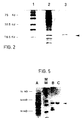
- the r-p22 recombinant antigen (HCV core protein), after having been lyophilised and then resuspended in 2 % acetic acid, is analysed on a 15 % SDS PAGE , showing a purity level higher than 90 % (lane 3, fig.5).
- the HCV antibody binding ability of the recombinant antigen is checked on a anti-HCV certified serum panel (Anti-HCV Mixed Titer Performance Panel (PHV201), Boston Biomedica, Inc., USA).
- the purified r-p22 protein, adsorbed on microtiter plates (Nunc, Danemark) is tested on a commercially available assay (ETI-AB-HCVK, SORIN Biomedica, Italy), by substituting the kit solid phase.
- the assay, modified as above, is compared with the commercially available ORTHO ELISA Second Generation (Ortho Diagnostic Systems, USA, fig.7).
- the ability of the r-p22 polypeptide in recognising HCV core protein antibodies is significant higher than the recognising ability of the used antigen in the Ortho Diagnostic System's assay (fig.7).
Landscapes
- Chemical & Material Sciences (AREA)
- Organic Chemistry (AREA)
- Health & Medical Sciences (AREA)
- Life Sciences & Earth Sciences (AREA)
- Proteomics, Peptides & Aminoacids (AREA)
- Biochemistry (AREA)
- Biophysics (AREA)
- Medicinal Chemistry (AREA)
- General Health & Medical Sciences (AREA)
- Molecular Biology (AREA)
- Genetics & Genomics (AREA)
- Analytical Chemistry (AREA)
- Virology (AREA)
- Gastroenterology & Hepatology (AREA)
- Peptides Or Proteins (AREA)
- Preparation Of Compounds By Using Micro-Organisms (AREA)
Abstract
Description
- This invention relates to a process to purify proteins, more generally polypeptides, with a basic isoelectric point from both prokaryotic and eukaryotic heterologous cell systems.
- Recombinant proteins, obtained by introduction and expression of nucleic acids in heterologous cell systems, allow to produce polypeptides on an industrial scale basis. Either the expression level and the functional activity of the recombinant protein are largely affected by the chosen cell system. In prokaryotic systems, particularly Escherichia coli, the protein activity is often either diminished or inhibited by the occurrence of insoluble aggregate occurrence (1-4), known as "inclusion bodies". In the inclusion body forming process, interchain interactions between the newly synthesised recombinant protein and host proteins, rather than physiological intrachain interactions, are promoted, both by the reducing environment of E. coli cytoplasm and by the lack of cell compartments into bacterial cells. Furthermore, proteins of the bacterial plasmatic membrane have been found to associate with the expressed recombinant protein (5), and are therefore involved in forming such inclusion bodies.
- Moreover, either the protein expression level and the immunological and enzymatic activity may result to be affected by host co-purifying protease activities (6,7), and cause a significant lowering of the process yield. This occurs on both prokaryotic and eukaryotic expression systems.
- Further, as noted by the authors of the present invention, the transport into nuclei of nucleic acid binding recombinant proteins (8-11), or the interaction thereof with cytoplasm nucleic acids, in eukaryotic systems, make difficult to establish a standard purification procedure. Although the nucleic acid-protein interaction could be destroyed by using SDS (sodium dodecylsulphate), this prevents the use of both ion exchange and reverse phase chromatographies, very advantageous and largely used as purification techniques.
- On the other side, use of DNAse or RNAse does not succeed in fully removing the nucleic acids. Furthermore, oligonucleotides deriving by the enzymatic digestion of nucleic acids, are still able to react with proteins having a basic isoelectric point and to form nucleic acid-protein aggregates. Such aggregates have very large variability chromatography behaviours and thus negatively affect the repeatability of the purifying process on different batches.
- A scope of this invention is to solve the purification and poor stability protein troubles of intracellular proteins having a basic isoelectric point, both from prokaryotic or eukaryotic systems.
- A further scope of this invention is to supply a protein purification method, which allows to obtain highly purified and homogeneous proteins, stabilised against thermal stresses (such as frequent freezing/thawing procedures) and showing functional and/or immunologic activities similar to polypeptides from natural sources.
- The authors found that, treatment of protein expressing cells, both from prokaryotic or eukaryotic systems, or a membrane fraction thereof, with a denaturing agent, such as the guanidine hydrochloride (CH6ClN3), in an acid environment, followed by precipitation with an organic solvent, such as acetonitrile (CH3CN), causes the breaking of the interactions between the nucleic acids and the recombinant protein; a solubilization of aggregates between recombinant and membrane proteins ("inclusion bodies" in the case of E. coli) ; the inhibition of protease activities and the removal of nucleic acids and of most of cytoplasm and membrane proteins from the solution.
- When used in the context of this invention, the term "basic protein" means a protein having an isoelectric point or a pH higher than 7.0; the term "acid protein " means a protein having an isoelectric point or a pH lower than 7.0.
- processing cells, or an already purified fraction thereof, containing said proteins with basic isoelectric point, with a denaturing agent under acid environment conditions, in order to obtain a mixture;
- precipitating said mixture by using an organic solvent so to obtain a pellet and a supernatant;
- fractionating said supernatant by chromatography.
- According to this invention, said denaturing agent comprises a guanidine salt, more preferably guanidine hydrochloride, still more preferably at a concentration comprised between 6M and 8M, most preferably 7M.
- Furthermore, according to this invention, said organic solvent comprises acetonitrile in the presence of a volatile acid; preferably said volatile acid is trifluoro acetic acid; more preferably the acetonitrile final concentration is in the range from 20 % to 30 % v/v, most preferably 25 % v/v; and the trifluoroacetic acid final concentration is most preferably in the range from 0.02 % and 0.25 % v/v.
- According to a preferred embodiment of this invention, said phase chromatography comprises a chromatography on an inert resin, preferably silica having carbon aliphatic chains, preferably on a reverse phase, wherein said protein is eluted with said organic solvent.
- In a preferred embodiment of this invention, said heterologous cell systems are prokaryotic cells, more preferably bacterial cells, most preferably E. coli cells.
- Alternatively said heterologous cell systems are eukaryotic cells, preferably yeast, insect or mammalian cells, most preferably Spodoptera frugiperda cells.
- According to a preferred embodiment of this invention, said protein having a basic isoelectric point is the recombinant delta antigen of Hepatitis D Virus (r-HDAg); alternatively, is the recombinant core antigen of Hepatitis C Virus (r-p22).
- This invention will be described in the following explanatory, but not limiting, Examples, by making reference to the enclosed drawings, wherein:
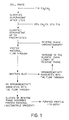
- fig. 1 shows the step purification process according to this invention;
- fig. 2 shows a 12.5 % SDS-PAGE gel; the arrow indicates the r-HDAg corresponding band (31 kD); lane A: total proteins following an acetonitrile precipitation; MW: molecular weight standards (BioRad, USA); lane B: rHDAg after chromatography on C18; lane C: r-HDAg after chromatography on TSK SW 4000;
- fig. 3 shows a chromatography profile of the C18 elution product, wherein the outlined peak contains rHDAg;
- fig. 4 shows a RIA assay (AB-DELTAK (RIA), SORIN Biomedica, Italy) with HDV-antibodies, wherein samples from PP1 to PP6 are HDV immunoreactive; serums from SN7 to SN9 are HDV immunoreactivity free; values of immunoinhibition higher than 50 % are considered to be anti-HDV positive;
- fig. 5 shows a 15% SDS PAGE gel; the arrow indicates the r-p22 corresponding band (22 kD); lane 1: molecular weight standards (BioRad, USA); lane 2: total proteins after a CH3CN (acetonitrile) precipitation; lane 3: r-p22 after a chromatography on C4;
- fig.6 shows a chromatography profile of the elution product from C4, wherein the outlined peak contains r-p22;
- fig.7 shows a panel of commercially available anti-HCV certified serums (1-25 BBI, USA), EIA assayed (ETI-AB-HCVK, SORIN Biomedica, Italy) with r-p22 protein (HCV core protein) as purified according to this invention when compared with a commercially available assay to detect HCV antibodies (ORTHO HCV ELISA Second Generation, Ortho Diagnostic Systems, USA). The 0 to 4 values on the histogram show the antiHCV core protein immunoreactivity of the serum panel, as defined by the CHIRON RIBA HCV Second Generation Control Test (CHIRON, USA).
- A scheme of the process is shown in fig.1.
- The cell paste (10 g of bacterial cells, or 1 x 10⁹ eukaryotic cells) is suspended in 7M guanidine hydrochloride, 50 mM acetate buffer pH 5 (A buffer; 0.5 g/ml of cell paste or 1 x 10⁸ cells/ml). The suspension is submitted to 100 W ultrasonic impulses for one min, using a 10 nm tip, and the procedure repeated four times. Then the suspension is centrifuged at 100,000 x g for 30 minutes at 5°C. The supernatant shows a protein contents in the range from 15 up to 30 mg/ml.
- The supernatant is 1:1 diluted with B solution, comprising: 50 % CH3CN (acetonitrile) and 0.2 % TFA (trifluoroacetic acid) in water. The suspension is stirred for 60 minutes at 5°C and then centrifuged at 100,000 x g for 30 minutes. The supernatant from the centrifugation shows a protein contents 10-30 fold lower than the lysis protein contents (total proteins: 1-3 mg/ml).
- The supernatant from the organic precipitation is loaded on C2 reverse phase silica column (19 mm x 300 mm, WATERS, Massachussets, USA). A fraction of the unadsorbed protein material is analysed on western blot , using conventional methods, for the immunoreactivity of the recombinant protein. The remaining unadsorbed protein material is loaded on a C4 reverse phase column (19 mm x 300 mm). A fraction of the unadsorbed protein material is analysed on western blot for the presence of the recombinant protein. Then the remaining material is treated on reverse phase columns with aliphatic chains of different length until conditions, under which the recombinant protein is adsorbed on the resin, are found. Then the protein is eluted by an acetonitrile gradient.
- The protein that is obtained from this procedure shows a purity level in the range from 70 to 90 % (the purity level having been established following to a density measurement analysis of Coomassie Blue dyed SDS PAGE gels).
- The cell paste from 500 ml of bacterial culture (2 g appr.) of W3110 (ATCC 27325), transformed with the plasmid pSORIN delta (DSM 6774, EP Application No. 0485347),is resuspended in 5 ml of A buffer.
- The suspension is treated as in Example 1. The insoluble material from the centrifugation is then resuspended in 5 ml of the A buffer and centrifuged at 100,000 x g for 15 minutes at 10°C. The clarified supernatant from the lysis, as well as the supernatant from the second cell membrane, are then pooled (Pool-1).
- The Pool-1 is 1:1 diluted with the B solution and incubated at 5°C under stirring for 60 minutes. Then the suspension is centrifuged at 100,000 x g for 15 minutes.
- The supernatant from the organic precipitation (A, fig.2) is loaded on a C18 column (1.9 cm x 30 cm, 300 A Deltapac-Waters), balanced with 25 % CH3CN in 0.1 % TFA (flow-rate: 10 ml/min; detector: 215 nm). The column is washed with 25 % CH3CN and 0.1 % TFA until the base line reached the zero (O). Then the column is eluted with a 25-30 % CH3CN gradient in a 0.1 % TFA gradient (gradient time: 30 minutes; flow rate: 10 ml/min.; detector: 215 nm). The outlined peak on the curve of the fig.3 contains the recombinant r-HDAg at a 60 % purity level (B in fig.2).
- The r-HDAg from the reverse phase chromatography is lyophilised and resuspended in the B solution, with 500 µl (0.5 %) of β-mercaptoethanol. The r-HDAg is loaded on TSK SW4000 column (7.8 mm x 600 mm, Waters, Massachussets, USA), balanced with the B solution (flow rate: 1 ml/min.; detector: 215 nm). The elution products are collected as 250 µl fractions. These fractions, after having been lyophilised, are dissolved in 2 % acetic acid and analysed on 12.5% PAGE SDS. The fractions containing r-HDAg (31 kD) are pooled (Pool-2; C in fig.2); the protein shows a purity level higher than 90 %.
- The r-HDAg purified as above is used in commercially available assays to define the total HDV antibodies (ETI-B-DELTAK and AB-DELTAK(RIA), SORIN Biomedica, Italy), for comparison purpose with the natural antigen from a lysate from HDV-infected marmot liver. Both antigens are used to analyse a series of anti-HDV immunoreactive serums (fig.4). The recombinant antigen (r-HDAg) has a comparable ability to recognise the HDV antibodies in the RIA assay as the natural source antigen; in the immunoenzymatic assay, r-HDAg is able to bind the HDV antibodies in PP2 and PP3 serums, that could not be detected by the natural antigen (fig.4).
- Sf9 cells (ATCC CRL1711) are infected with pVL1393 baculum-type virus vector (Invitrogen, California, USA), wherein a 380 bp fragment coding for the first 120 aminoacids of the rp-22 protein (capsidic) of HCV virus is cloned in the EcoRI/PstI sites. The cells are cultivated by conventional methods.
- The cell pellet (1 x 10⁹ cells) is resuspended in 15 ml TE (10 mM Tris-HCl; pH 8.0; 1 mM EDTA) and submitted to 100 W ultrasonic impulses for 1 minute; the procedure as above is repeated 4 times. The cell lysis is centrifuged at 100,000 x g for 60 minutes at 5°C. The pellet (membrane fraction) is resuspended in 10 ml of an A buffer. The solution is then stirred for 60 minutes at 5°C.
- The suspension is added with 11 ml of B solution and stirred for 60 minutes at 5°C and then centrifuged at 100,000 x g at 10°C.
- The supernatant (21 ml, fig.2) is loaded on a C4 reverse phase column (19 mm x 300 mm, Waters, C4 300 A), balanced with 25 % CH3CN in 0.1 % TFA. The C4 column is eluted with a linear 25-30 % CH3CN in 0.1 % TFA gradient (time: 30 minutes; flow rate: 10 ml/min.; detector: 280 nm); and as soon as the procedure is completed, all unadsorbed material is removed. The outlined peak in fig.6 shows r-p22 immunoreactivity. The r-p22 recombinant antigen (HCV core protein), after having been lyophilised and then resuspended in 2 % acetic acid, is analysed on a 15 % SDS PAGE , showing a purity level higher than 90 % (
lane 3, fig.5). - The HCV antibody binding ability of the recombinant antigen is checked on a anti-HCV certified serum panel (Anti-HCV Mixed Titer Performance Panel (PHV201), Boston Biomedica, Inc., USA). The purified r-p22 protein, adsorbed on microtiter plates (Nunc, Danemark) is tested on a commercially available assay (ETI-AB-HCVK, SORIN Biomedica, Italy), by substituting the kit solid phase. The assay, modified as above, is compared with the commercially available ORTHO ELISA Second Generation (Ortho Diagnostic Systems, USA, fig.7). The ability of the r-p22 polypeptide in recognising HCV core protein antibodies is significant higher than the recognising ability of the used antigen in the Ortho Diagnostic System's assay (fig.7).
-
- 1. Mitraki, A. and King, J. "Biotechology", 690-697 (1989).
- 2. Bowdwn, G.A, Paredes, A.M. and Georgiu, G., "Biotecnology" 9, 725-730 (1991).
- 3. Haase-Pettingell, C.A and King. J., "J. of Biol. Chem.", 263, 4977-4983 (1988).
- 4. Hartley, D.L, and Kane, J.F., "Biochem. Soc. Trans", 16, 101-102 (1988).
- 5 . Frankel, S. ,Sohn, R. and Leinwand, L. "Proc . Natl . Acad. Sci. USA", 88, 1192-1196 (1991).
- 6. Hellebust , H ., Murby, M., Abramsen, L ., Uhlen M. and S-V Enfors "Biotechnology", 7, 165-168 (1989).
- 7 . Babbitt, P . C, West, B . L ., Buechter, D . D ., Kuntz, I.D. and Kenyon, G.L., "Biotechnology" 8, 945-949 (1990).
- 8 . Chang , M . F ., Baker , S . C ., Soe L . H ., Kamahora , T ., Keck , J . G ., Makino , S ., Gonvidara j an , S . and Lai , M.M.C., "J. Virol.", 62, 2403-2410, (1988).
- 9. Chao, M., Hsien, S.Y. and Taylor, J.M., "J. Virol.", C4, 5066-5069 (1990).
- 10. Kos, A., Molijn, A.C.M., Blauw, B. and Schellekens, H., "J. Gen. Virol. ", 72, 833-842, (1991) .
- 11. Xia, Y.P., Yeh, C.T., Ou J.H. and Lai M.M.C., "J. Virol.", 66, 914-921, (1992).
-
Claims (18)
- A process to purify recombinant proteins having a basic isoelectric point from heterologous cell systems, comprising the steps of:processing cells, or an already purified fraction thereof, containing said proteins with basic isoelectric point, with a denaturing agent under acid environment conditions, in order to obtain a mixture;precipitating said mixture by using an organic solvent so to obtain a pellet and a supernatant;fractionating said supernatant by phase chromatography.
- A process to purify recombinant proteins with basic isoelectric point according to claim 1, wherein said denaturing agent comprises a guanidine salt.
- A process to purify recombinant proteins with basic isoelectric point according to claim 2, wherein said guanidine salt is guanidine hydrochloride.
- A process to purify recombinant proteins with basic isoelectric point according to claim 3, wherein said guanidine hydrochloride is at a concentration comprised between 6 M and 8 M.
- A process to purify recombinant proteins with basic isoelectric point according to claim 4, wherein said guanidine hydrochloride is at a concentration of 7 M.
- A process to purify recombinant proteins with basic isoelectric point according to any of previous claim, wherein said organic solvent comprises acetonitrile in the presence of a volatile acid.
- A process to purify recombinant proteins with basic isoelectric point according to claim 6, wherein said volatile acid is trifluoroacetic acid.
- A process to purify recombinant proteins with basic isoelectric point according to claim 7, wherein the acetonitrile final concentration is in the range from 20 to 30 % v/v, and the trifluoroacetic acid concentration is in the range from 0.02 to 0.25% v/v.
- A process to purify recombinant proteins with basic isoelectric point according to any of previous claim, wherein said phase chromatography comprises a chromatography on an inert silica resin.
- A process to purify recombinant proteins with basic isoelectric point according to any previous claim, wherein said chromatography is a reverse phase chromatography and said protein is eluted with said organic solvent.
- A process to purify recombinant proteins with basic isoelectric point according to any of previous claim, wherein said heterologous cell systems are prokaryote cells.
- A process to purify recombinant proteins with basic isoelectric point according to any of previous claim, wherein said prokaryote cells are bacterial cells.
- A process to purify recombinant proteins with basic isoelectric point according to claim 12, wherein said bacterial cells are E. coli cells.
- A process to purify recombinant proteins with basic isoelectric point according to any of claims from 1 to 10, wherein said heterologous cell systems are eukaryote cells.
- A process to purify recombinant proteins with basic isoelectric point according to claim 14, wherein said eukaryote cells are yeast, or insect or mammalian cells.
- A process to purify recombinant proteins with basic isoelectric point according to claim 15, wherein said cells are S. frugiperda cells.
- A process to purify recombinant proteins with basic isoelectric point according to any of previous claims, wherein said protein is r-HDAg of HDV.
- A process to purify recombinant proteins with basic isoelectric point according to any of claims from 1 to 16, wherein said protein is r-p22 ("core"antigen) of HCV.
Applications Claiming Priority (2)
| Application Number | Priority Date | Filing Date | Title |
|---|---|---|---|
| ITRM920385 | 1992-05-22 | ||
| ITRM920385A IT1254370B (en) | 1992-05-22 | 1992-05-22 | PROCEDURE FOR THE PURIFICATION OF PROTEINS FROM CELL SYSTEMS. |
Publications (3)
| Publication Number | Publication Date |
|---|---|
| EP0571337A2 EP0571337A2 (en) | 1993-11-24 |
| EP0571337A3 EP0571337A3 (en) | 1994-07-06 |
| EP0571337B1 true EP0571337B1 (en) | 1999-06-30 |
Family
ID=11401017
Family Applications (1)
| Application Number | Title | Priority Date | Filing Date |
|---|---|---|---|
| EP93830191A Expired - Lifetime EP0571337B1 (en) | 1992-05-22 | 1993-05-03 | Process to purify proteins from cell systems |
Country Status (5)
| Country | Link |
|---|---|
| EP (1) | EP0571337B1 (en) |
| AT (1) | ATE181736T1 (en) |
| DE (1) | DE69325479T2 (en) |
| ES (1) | ES2135455T3 (en) |
| IT (1) | IT1254370B (en) |
Families Citing this family (1)
| Publication number | Priority date | Publication date | Assignee | Title |
|---|---|---|---|---|
| JP4588960B2 (en) | 2000-02-22 | 2010-12-01 | メルク セローノ ソシエテ アノニム | Purification method of hCG and recombinant hCG purified by this method |
Family Cites Families (2)
| Publication number | Priority date | Publication date | Assignee | Title |
|---|---|---|---|---|
| JPH01300898A (en) * | 1988-05-28 | 1989-12-05 | Ajinomoto Co Inc | Purification of physiologically active protein |
| WO1991015502A1 (en) * | 1990-03-30 | 1991-10-17 | Shiseido Company, Ltd. | Process for purifying polypeptide |
-
1992
- 1992-05-22 IT ITRM920385A patent/IT1254370B/en active
-
1993
- 1993-05-03 EP EP93830191A patent/EP0571337B1/en not_active Expired - Lifetime
- 1993-05-03 AT AT93830191T patent/ATE181736T1/en not_active IP Right Cessation
- 1993-05-03 DE DE69325479T patent/DE69325479T2/en not_active Expired - Fee Related
- 1993-05-03 ES ES93830191T patent/ES2135455T3/en not_active Expired - Lifetime
Also Published As
| Publication number | Publication date |
|---|---|
| DE69325479D1 (en) | 1999-08-05 |
| ITRM920385A0 (en) | 1992-05-22 |
| IT1254370B (en) | 1995-09-14 |
| ITRM920385A1 (en) | 1993-11-22 |
| EP0571337A2 (en) | 1993-11-24 |
| ES2135455T3 (en) | 1999-11-01 |
| EP0571337A3 (en) | 1994-07-06 |
| DE69325479T2 (en) | 2000-01-05 |
| ATE181736T1 (en) | 1999-07-15 |
Similar Documents
| Publication | Publication Date | Title |
|---|---|---|
| Van Hoy et al. | The acidic activation domains of the GCN4 and GAL4 proteins are not α helical but form β sheets | |
| EP0174367B1 (en) | Hosts and methods for producing recombinant products in high yields | |
| Wang et al. | Three human RNA polymerase III-specific subunits form a subcomplex with a selective function in specific transcription initiation. | |
| Lucast et al. | Large-scale purification of a stable form of recombinant tobacco etch virus protease | |
| Osman et al. | The tobacco mosaic virus RNA polymerase complex contains a plant protein related to the RNA-binding subunit of yeast eIF-3 | |
| US6471500B1 (en) | Process for producing erythropoietin containing no animal proteins | |
| Pavlakis et al. | Expression of two human growth hormone genes in monkey cells infected by simian virus 40 recombinants. | |
| EP0013828A1 (en) | Recombinant DNA, hosts transformed with it and processes for the preparation of polypeptides | |
| Simpson et al. | Complete amino acid sequence of the goose-type lysozyme from the egg white of the black swan | |
| Beachy et al. | Isolation of polyribosomes and messenger RNA active in in vitro synthesis of soybean seed proteins | |
| Pastrana et al. | Overproduction and purification of protein p6 of Bacillus subtilis phage φ29: role in the initiation of DNA replication | |
| Ott et al. | Cloning and expression in Saccharomyces cerevisiae of a synthetic gene for the type-I trophoblast interferon ovine trophoblast protein-1: purification and antiviral activity | |
| GB2188322A (en) | Aprotinin and analogues thereof produced by a recombinant host | |
| EP0390252A2 (en) | Purification of recombinant human interleukin-3 | |
| US5037744A (en) | Process for the microbiological preparation of human serum albumin | |
| Moser et al. | Expression of the synthetic gene of an artificial DDT-binding polypeptide in Escherichia coli | |
| Green et al. | Identification and purification of a protein encoded by the human adenovirus type 2 transforming region | |
| Shire et al. | Preparation and properties of recombinant DNA derived tobacco mosaic virus coat protein | |
| US5561221A (en) | Methods and compositions for promoting protein folding | |
| JPS6299399A (en) | Biologically active derivatives of human γ-interferon | |
| CA2016018A1 (en) | Purification of proteins employing ctap-iii fusions | |
| US4874703A (en) | Expression vectors for use in E. coli | |
| EP0571337A2 (en) | Process to purify proteins from cell systems | |
| Schweinfest et al. | Molecular cloning of a DNA sequence complementary to creatine kinase M mRNA from chickens. | |
| Liao et al. | Characterization, cloning, and expression of porcine αB crystallin |
Legal Events
| Date | Code | Title | Description |
|---|---|---|---|
| PUAI | Public reference made under article 153(3) epc to a published international application that has entered the european phase |
Free format text: ORIGINAL CODE: 0009012 |
|
| AK | Designated contracting states |
Kind code of ref document: A2 Designated state(s): AT BE CH DE DK ES FR GB GR IE LI LU MC NL PT SE |
|
| PUAL | Search report despatched |
Free format text: ORIGINAL CODE: 0009013 |
|
| AK | Designated contracting states |
Kind code of ref document: A3 Designated state(s): AT BE CH DE DK ES FR GB GR IE LI LU MC NL PT SE |
|
| 17P | Request for examination filed |
Effective date: 19941107 |
|
| 17Q | First examination report despatched |
Effective date: 19961018 |
|
| RAP1 | Party data changed (applicant data changed or rights of an application transferred) |
Owner name: SORIN BIOMEDICA DIAGNOSTICS S.P.A. |
|
| RAP1 | Party data changed (applicant data changed or rights of an application transferred) |
Owner name: WABCO B.V. |
|
| RHK1 | Main classification (correction) |
Ipc: C07K 3/02 |
|
| GRAG | Despatch of communication of intention to grant |
Free format text: ORIGINAL CODE: EPIDOS AGRA |
|
| GRAG | Despatch of communication of intention to grant |
Free format text: ORIGINAL CODE: EPIDOS AGRA |
|
| GRAH | Despatch of communication of intention to grant a patent |
Free format text: ORIGINAL CODE: EPIDOS IGRA |
|
| GRAH | Despatch of communication of intention to grant a patent |
Free format text: ORIGINAL CODE: EPIDOS IGRA |
|
| GRAA | (expected) grant |
Free format text: ORIGINAL CODE: 0009210 |
|
| AK | Designated contracting states |
Kind code of ref document: B1 Designated state(s): AT BE CH DE DK ES FR GB GR IE LI LU MC NL PT SE |
|
| PG25 | Lapsed in a contracting state [announced via postgrant information from national office to epo] |
Ref country code: GR Free format text: LAPSE BECAUSE OF NON-PAYMENT OF DUE FEES Effective date: 19990630 |
|
| REF | Corresponds to: |
Ref document number: 181736 Country of ref document: AT Date of ref document: 19990715 Kind code of ref document: T |
|
| REG | Reference to a national code |
Ref country code: CH Ref legal event code: EP |
|
| RIC1 | Information provided on ipc code assigned before grant |
Free format text: 6C 07K 1/20 A, 6C 07K 1/30 B, 6C 07K 1/36 B |
|
| REF | Corresponds to: |
Ref document number: 69325479 Country of ref document: DE Date of ref document: 19990805 |
|
| REG | Reference to a national code |
Ref country code: IE Ref legal event code: FG4D |
|
| PG25 | Lapsed in a contracting state [announced via postgrant information from national office to epo] |
Ref country code: PT Free format text: LAPSE BECAUSE OF FAILURE TO SUBMIT A TRANSLATION OF THE DESCRIPTION OR TO PAY THE FEE WITHIN THE PRESCRIBED TIME-LIMIT Effective date: 19990930 Ref country code: DK Free format text: LAPSE BECAUSE OF FAILURE TO SUBMIT A TRANSLATION OF THE DESCRIPTION OR TO PAY THE FEE WITHIN THE PRESCRIBED TIME-LIMIT Effective date: 19990930 |
|
| REG | Reference to a national code |
Ref country code: CH Ref legal event code: NV Representative=s name: E. BLUM & CO. PATENTANWAELTE |
|
| ET | Fr: translation filed | ||
| REG | Reference to a national code |
Ref country code: ES Ref legal event code: FG2A Ref document number: 2135455 Country of ref document: ES Kind code of ref document: T3 |
|
| PGFP | Annual fee paid to national office [announced via postgrant information from national office to epo] |
Ref country code: IE Payment date: 20000314 Year of fee payment: 8 |
|
| PGFP | Annual fee paid to national office [announced via postgrant information from national office to epo] |
Ref country code: SE Payment date: 20000323 Year of fee payment: 8 |
|
| PGFP | Annual fee paid to national office [announced via postgrant information from national office to epo] |
Ref country code: DE Payment date: 20000329 Year of fee payment: 8 |
|
| PGFP | Annual fee paid to national office [announced via postgrant information from national office to epo] |
Ref country code: CH Payment date: 20000412 Year of fee payment: 8 |
|
| PLBE | No opposition filed within time limit |
Free format text: ORIGINAL CODE: 0009261 |
|
| STAA | Information on the status of an ep patent application or granted ep patent |
Free format text: STATUS: NO OPPOSITION FILED WITHIN TIME LIMIT |
|
| PG25 | Lapsed in a contracting state [announced via postgrant information from national office to epo] |
Ref country code: LU Free format text: LAPSE BECAUSE OF NON-PAYMENT OF DUE FEES Effective date: 20000503 |
|
| PGFP | Annual fee paid to national office [announced via postgrant information from national office to epo] |
Ref country code: GB Payment date: 20000503 Year of fee payment: 8 |
|
| PGFP | Annual fee paid to national office [announced via postgrant information from national office to epo] |
Ref country code: ES Payment date: 20000516 Year of fee payment: 8 |
|
| PGFP | Annual fee paid to national office [announced via postgrant information from national office to epo] |
Ref country code: FR Payment date: 20000519 Year of fee payment: 8 |
|
| PGFP | Annual fee paid to national office [announced via postgrant information from national office to epo] |
Ref country code: BE Payment date: 20000524 Year of fee payment: 8 |
|
| PGFP | Annual fee paid to national office [announced via postgrant information from national office to epo] |
Ref country code: AT Payment date: 20000529 Year of fee payment: 8 |
|
| PGFP | Annual fee paid to national office [announced via postgrant information from national office to epo] |
Ref country code: NL Payment date: 20000531 Year of fee payment: 8 |
|
| 26N | No opposition filed | ||
| PG25 | Lapsed in a contracting state [announced via postgrant information from national office to epo] |
Ref country code: MC Free format text: LAPSE BECAUSE OF NON-PAYMENT OF DUE FEES Effective date: 20001130 |
|
| REG | Reference to a national code |
Ref country code: CH Ref legal event code: PUE Owner name: WABCO B.V. TRANSFER- DIASORIN INTERNATIONAL, INC. |
|
| BECA | Be: change of holder's address |
Free format text: 20001108 *DIASORIN INTERNATIONAL INC.:15 WEST 54TH STREET, NEW YORK NY 10019 |
|
| NLS | Nl: assignments of ep-patents |
Owner name: DIASORIN INTERNATIONAL, INC. |
|
| REG | Reference to a national code |
Ref country code: GB Ref legal event code: 732E |
|
| REG | Reference to a national code |
Ref country code: FR Ref legal event code: TP |
|
| PG25 | Lapsed in a contracting state [announced via postgrant information from national office to epo] |
Ref country code: IE Free format text: LAPSE BECAUSE OF NON-PAYMENT OF DUE FEES Effective date: 20010503 Ref country code: GB Free format text: LAPSE BECAUSE OF NON-PAYMENT OF DUE FEES Effective date: 20010503 Ref country code: AT Free format text: LAPSE BECAUSE OF NON-PAYMENT OF DUE FEES Effective date: 20010503 |
|
| PG25 | Lapsed in a contracting state [announced via postgrant information from national office to epo] |
Ref country code: SE Free format text: LAPSE BECAUSE OF NON-PAYMENT OF DUE FEES Effective date: 20010504 Ref country code: ES Free format text: LAPSE BECAUSE OF NON-PAYMENT OF DUE FEES Effective date: 20010504 |
|
| PG25 | Lapsed in a contracting state [announced via postgrant information from national office to epo] |
Ref country code: BE Free format text: LAPSE BECAUSE OF NON-PAYMENT OF DUE FEES Effective date: 20010531 |
|
| PG25 | Lapsed in a contracting state [announced via postgrant information from national office to epo] |
Ref country code: LI Free format text: LAPSE BECAUSE OF NON-PAYMENT OF DUE FEES Effective date: 20010602 Ref country code: CH Free format text: LAPSE BECAUSE OF NON-PAYMENT OF DUE FEES Effective date: 20010602 |
|
| BERE | Be: lapsed |
Owner name: DIASORIN INTERNATIONAL INC. Effective date: 20010531 |
|
| PG25 | Lapsed in a contracting state [announced via postgrant information from national office to epo] |
Ref country code: NL Free format text: LAPSE BECAUSE OF NON-PAYMENT OF DUE FEES Effective date: 20011201 |
|
| GBPC | Gb: european patent ceased through non-payment of renewal fee |
Effective date: 20010503 |
|
| REG | Reference to a national code |
Ref country code: CH Ref legal event code: PL |
|
| PG25 | Lapsed in a contracting state [announced via postgrant information from national office to epo] |
Ref country code: FR Free format text: LAPSE BECAUSE OF NON-PAYMENT OF DUE FEES Effective date: 20020131 |
|
| NLV4 | Nl: lapsed or anulled due to non-payment of the annual fee |
Effective date: 20011201 |
|
| PG25 | Lapsed in a contracting state [announced via postgrant information from national office to epo] |
Ref country code: DE Free format text: LAPSE BECAUSE OF NON-PAYMENT OF DUE FEES Effective date: 20020301 |
|
| REG | Reference to a national code |
Ref country code: IE Ref legal event code: MM4A |
|
| REG | Reference to a national code |
Ref country code: ES Ref legal event code: FD2A Effective date: 20030303 |