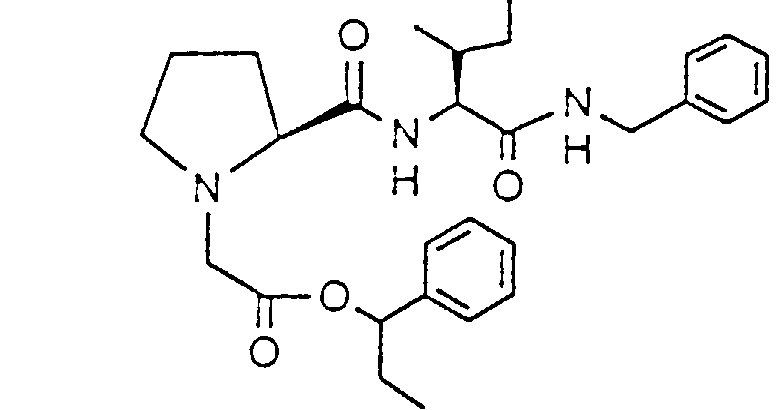
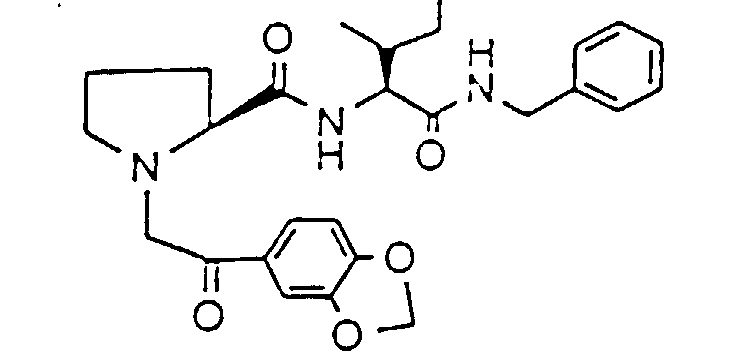
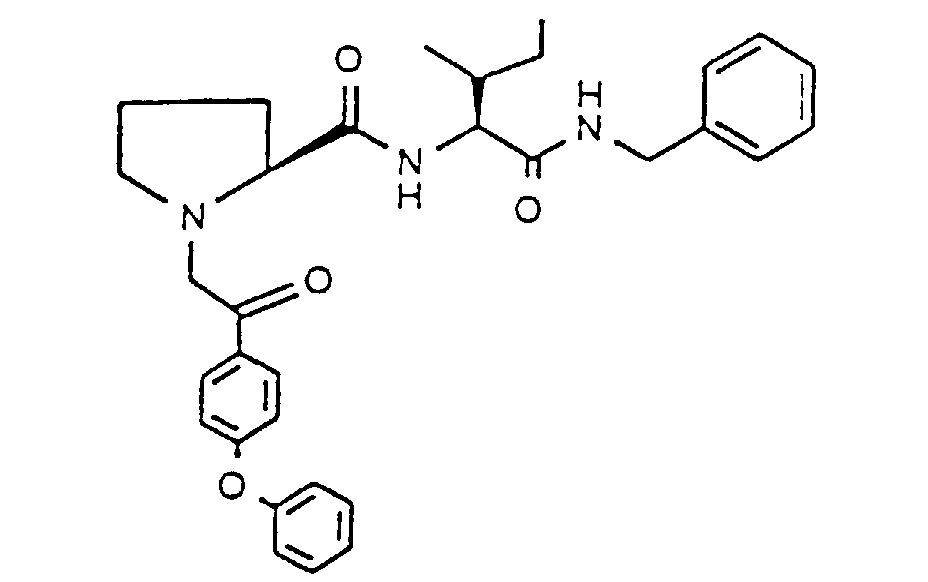
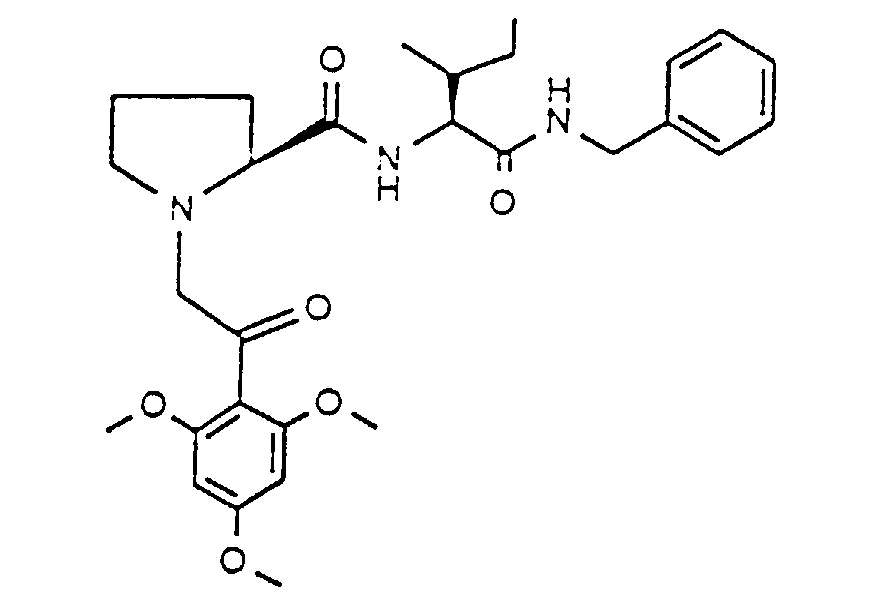
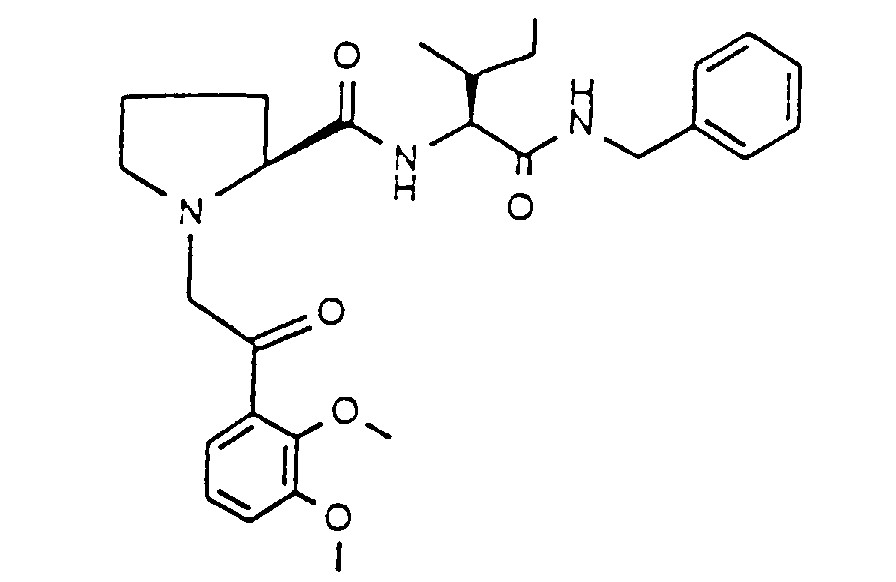
EP0564924B1 - 2-Oxoethyl derivatives as immunosuppressants - Google Patents

2-Oxoethyl derivatives as immunosuppressants Download PDF

Info

Publication number
EP0564924B1
EP0564924B1 EP93105035A EP93105035A EP0564924B1 EP 0564924 B1 EP0564924 B1 EP 0564924B1 EP 93105035 A EP93105035 A EP 93105035A EP 93105035 A EP93105035 A EP 93105035A EP 0564924 B1 EP0564924 B1 EP 0564924B1
Authority
EP
European Patent Office
Prior art keywords
oxoethyl
benzylamide
isoleucine
prolyl
straight
Prior art date
Legal status (The legal status is an assumption and is not a legal conclusion. Google has not performed a legal analysis and makes no representation as to the accuracy of the status listed.)
Expired - Lifetime
Application number
EP93105035A
Other languages
German (de)
French (fr)
Other versions
EP0564924A2 (en
EP0564924A3 (en
Inventor
Richard D. Connell
David D. Osterman
Michael E. Katz
Current Assignee (The listed assignees may be inaccurate. Google has not performed a legal analysis and makes no representation or warranty as to the accuracy of the list.)
Bayer Corp
Original Assignee
Bayer AG
Bayer Corp
Priority date (The priority date is an assumption and is not a legal conclusion. Google has not performed a legal analysis and makes no representation as to the accuracy of the date listed.)
Filing date
Publication date
Application filed by Bayer AG, Bayer Corp filed Critical Bayer AG
Publication of EP0564924A2 publication Critical patent/EP0564924A2/en
Publication of EP0564924A3 publication Critical patent/EP0564924A3/en
Application granted granted Critical
Publication of EP0564924B1 publication Critical patent/EP0564924B1/en
Anticipated expiration legal-status Critical
Expired - Lifetime legal-status Critical Current

Links

Classifications

    • C—CHEMISTRY; METALLURGY
    • C07—ORGANIC CHEMISTRY
    • C07D—HETEROCYCLIC COMPOUNDS
    • C07D401/00—Heterocyclic compounds containing two or more hetero rings, having nitrogen atoms as the only ring hetero atoms, at least one ring being a six-membered ring with only one nitrogen atom
    • C07D401/02—Heterocyclic compounds containing two or more hetero rings, having nitrogen atoms as the only ring hetero atoms, at least one ring being a six-membered ring with only one nitrogen atom containing two hetero rings
    • C07D401/12—Heterocyclic compounds containing two or more hetero rings, having nitrogen atoms as the only ring hetero atoms, at least one ring being a six-membered ring with only one nitrogen atom containing two hetero rings linked by a chain containing hetero atoms as chain links
    • A—HUMAN NECESSITIES
    • A61—MEDICAL OR VETERINARY SCIENCE; HYGIENE
    • A61P—SPECIFIC THERAPEUTIC ACTIVITY OF CHEMICAL COMPOUNDS OR MEDICINAL PREPARATIONS
    • A61P29/00—Non-central analgesic, antipyretic or antiinflammatory agents, e.g. antirheumatic agents; Non-steroidal antiinflammatory drugs [NSAID]
    • A—HUMAN NECESSITIES
    • A61—MEDICAL OR VETERINARY SCIENCE; HYGIENE
    • A61P—SPECIFIC THERAPEUTIC ACTIVITY OF CHEMICAL COMPOUNDS OR MEDICINAL PREPARATIONS
    • A61P43/00—Drugs for specific purposes, not provided for in groups A61P1/00-A61P41/00
    • C—CHEMISTRY; METALLURGY
    • C07—ORGANIC CHEMISTRY
    • C07D—HETEROCYCLIC COMPOUNDS
    • C07D207/00—Heterocyclic compounds containing five-membered rings not condensed with other rings, with one nitrogen atom as the only ring hetero atom
    • C07D207/02—Heterocyclic compounds containing five-membered rings not condensed with other rings, with one nitrogen atom as the only ring hetero atom with only hydrogen or carbon atoms directly attached to the ring nitrogen atom
    • C07D207/04—Heterocyclic compounds containing five-membered rings not condensed with other rings, with one nitrogen atom as the only ring hetero atom with only hydrogen or carbon atoms directly attached to the ring nitrogen atom having no double bonds between ring members or between ring members and non-ring members
    • C07D207/10—Heterocyclic compounds containing five-membered rings not condensed with other rings, with one nitrogen atom as the only ring hetero atom with only hydrogen or carbon atoms directly attached to the ring nitrogen atom having no double bonds between ring members or between ring members and non-ring members with hetero atoms or with carbon atoms having three bonds to hetero atoms with at the most one bond to halogen, e.g. ester or nitrile radicals, directly attached to ring carbon atoms
    • C07D207/16—Carbon atoms having three bonds to hetero atoms with at the most one bond to halogen, e.g. ester or nitrile radicals
    • C—CHEMISTRY; METALLURGY
    • C07—ORGANIC CHEMISTRY
    • C07D—HETEROCYCLIC COMPOUNDS
    • C07D211/00—Heterocyclic compounds containing hydrogenated pyridine rings, not condensed with other rings
    • C07D211/04—Heterocyclic compounds containing hydrogenated pyridine rings, not condensed with other rings with only hydrogen or carbon atoms directly attached to the ring nitrogen atom
    • C07D211/06—Heterocyclic compounds containing hydrogenated pyridine rings, not condensed with other rings with only hydrogen or carbon atoms directly attached to the ring nitrogen atom having no double bonds between ring members or between ring members and non-ring members
    • C07D211/36—Heterocyclic compounds containing hydrogenated pyridine rings, not condensed with other rings with only hydrogen or carbon atoms directly attached to the ring nitrogen atom having no double bonds between ring members or between ring members and non-ring members with hetero atoms or with carbon atoms having three bonds to hetero atoms with at the most one bond to halogen, e.g. ester or nitrile radicals, directly attached to ring carbon atoms
    • C07D211/60—Carbon atoms having three bonds to hetero atoms with at the most one bond to halogen, e.g. ester or nitrile radicals
    • C—CHEMISTRY; METALLURGY
    • C07—ORGANIC CHEMISTRY
    • C07D—HETEROCYCLIC COMPOUNDS
    • C07D405/00—Heterocyclic compounds containing both one or more hetero rings having oxygen atoms as the only ring hetero atoms, and one or more rings having nitrogen as the only ring hetero atom
    • C07D405/02—Heterocyclic compounds containing both one or more hetero rings having oxygen atoms as the only ring hetero atoms, and one or more rings having nitrogen as the only ring hetero atom containing two hetero rings
    • C07D405/12—Heterocyclic compounds containing both one or more hetero rings having oxygen atoms as the only ring hetero atoms, and one or more rings having nitrogen as the only ring hetero atom containing two hetero rings linked by a chain containing hetero atoms as chain links
    • C—CHEMISTRY; METALLURGY
    • C07—ORGANIC CHEMISTRY
    • C07K—PEPTIDES
    • C07K5/00—Peptides containing up to four amino acids in a fully defined sequence; Derivatives thereof
    • C07K5/04—Peptides containing up to four amino acids in a fully defined sequence; Derivatives thereof containing only normal peptide links
    • C07K5/06—Dipeptides
    • C07K5/06139—Dipeptides with the first amino acid being heterocyclic
    • C—CHEMISTRY; METALLURGY
    • C07—ORGANIC CHEMISTRY
    • C07K—PEPTIDES
    • C07K5/00—Peptides containing up to four amino acids in a fully defined sequence; Derivatives thereof
    • C07K5/04—Peptides containing up to four amino acids in a fully defined sequence; Derivatives thereof containing only normal peptide links
    • C07K5/06—Dipeptides
    • C07K5/06139—Dipeptides with the first amino acid being heterocyclic
    • C07K5/06165—Dipeptides with the first amino acid being heterocyclic and Pro-amino acid; Derivatives thereof
    • C—CHEMISTRY; METALLURGY
    • C07—ORGANIC CHEMISTRY
    • C07K—PEPTIDES
    • C07K5/00—Peptides containing up to four amino acids in a fully defined sequence; Derivatives thereof
    • C07K5/04—Peptides containing up to four amino acids in a fully defined sequence; Derivatives thereof containing only normal peptide links
    • C07K5/06—Dipeptides
    • C07K5/06191—Dipeptides containing heteroatoms different from O, S, or N
    • A—HUMAN NECESSITIES
    • A61—MEDICAL OR VETERINARY SCIENCE; HYGIENE
    • A61K—PREPARATIONS FOR MEDICAL, DENTAL OR TOILETRY PURPOSES
    • A61K38/00—Medicinal preparations containing peptides

Definitions

  • the invention relates to compounds for controlling inflammatory processes in humans through mediation of inflammatory cell proliferation. More particularly, the present invention relates to a class of novel compounds which bind to the FKBP-type family of immunophilins and which are useful for suppressing T-lymphocytes.
  • EP - 0 038 758 discloses amino acid derivatives which inhibit enkephalinase and have analgesic and hypotensive activity.
  • CsA Cyclosporin A
  • FK506 Feptidyl Prolyl Isomerase
  • This disclosure presents a new class of synthetic compounds that both suppress the proliferation of T-cells and inhibit the isomerase activity of the FKBP-type of PPIases.
  • CsA a cyclic undecapeptide
  • CsA has received FDA approval for use as an adjunct to organ transplant procedures.
  • CsA is administered with caution due to its known toxicity.
  • CsA is prescribed in situations where the risks of non treatment outweigh the risks of its therapeutic complications.
  • CsA chronic maintenance of autoimmune disorders
  • nephrotoxicity such as impairment of glomerular filtration and irreversible interstitial fibrosis (Kopp et al., 1991, J. Am. Soc. Nephrol. 1 :162)
  • neurological deficits such as involuntary tremors, or non-specific cerebral angina such as non-localized headaches
  • vascular hypertension with complications resulting therefrom (Kahan et al., 1989, N. Engl. J. Med. 321 :1725).
  • inhibitor compounds that do not resemble CsA structurally, yet bind to PPIases, should be more amenable to therapeutic applications.
  • Such non-toxic immunosuppressors would benefit the art, especially for chronic administration such as required in the treatment of autoimmune disorders.
  • the compound FK506 is structurally different from CsA and does not produce the same type of toxic metabolites. FK506 has been shown to be effective in some transplant patients who do not respond to CsA (Tucci et al., 1989, J. Immunol. 143 :718).
  • the toxicity of FK506 is postulated to be based on its structure and not due to its binding activity with the immunophilin FKBP. It is further postulated that the toxicity of compounds such as CsA and FK506 are due to various chemical groups found in these structures which do not participate in the immunosuppressive activity, such as those groups which result in the toxic metabolites of CsA bio-processing. Thus, relatively compact molecules which do not resemble either CsA or FK506, and which have both immuno-suppressive and PPIase binding activity should be free of side effects associated with CsA and FK506.
  • the compound FK506 and its derivatives (for example such as disclosed in WIPO Publication No. WO92/00278 assigned to VERTEX Pharmaceuticals Inc.) all share the following homo-proline (6-membered, proline-like) dicarbonyl backbone stucture:
  • FK506 and its derivatives all preferably rely on the two carbonyl groups at positions 8 and 9, with the presence of the carbonyl at the number 8 carbon being essential.
  • the presence of the double bond oxygen in proximity to number 7 nitrogen creates an amide type linkage between the nitrogen at position 7 and carbon at position 8.
  • the present description proposes that the carbonyl group at the number 8 position is non-essential for T-cell suppression, and the compounds of the present invention do not rely on this carbonyl group.
  • the present invention presents a novel class of synthetic inhibitor compounds.
  • the novel class includes synthetic 2-oxoethylene derivatives that bind to human FKBP-type PPIases and demonstrate human peripheral T-lymphocyte inhibitory activity.
  • the absence of a carbonyl attached directly to the nitrogen in the proline ring provides compounds that possess stability to hydrolysis by proteases at the N-terminus of proline.
  • pathological immune responses such as the hyperimmune response in organ transplantation rejection, the self-destructive autoimmune diseases, and the overproduction and excessive proliferation of immune cells such as in infectious disease states.
  • More specific objects include provisions for compounds, compositions and methods for treatment and prevention of rejection of transplanted organs or tissues such as kidney, heart, lung, liver, bone marrow, skin grafts, and corneal replacement.
  • autoimmune, degenerative, inflammatory, proliferative and hyperproliferative diseases such as rheumatoid arthritis, osteoarthritis, other degenerative joint diseases, joint inflammation such as associated with infectious diseases such as suppurative arthritis, and secondary arthritis such as those associated with gout, hemochromatosis, rheumatic fever, Sjörgens syndrome and tuberculosis.
  • Another object is to provide compounds, compositions and methods for use in the treatment of lupus erythematosus, systemic lupus erythematosus, Hashimoto's thyroiditis, multiple sclerosis, myasthenia gravis, type 1 diabetes, uveitis, nephrotic syndrome, and of cutaneous manifestations of immunologically-mediated diseases such as psoriasis, atopic dermatitis, contact dermatitis, eczematous dermatitides, seborrheic dermatitis, lichen planus, pemphigus, bollous pemphigoid, epidermolysis bullosa, urticaria, angioedemas, vasculitides, erythemas, cutaneous eosinophilias, and alopecia areata.
  • immunologically-mediated diseases such as psoriasis, atopic dermatitis, contact dermatitis, eczematous der
  • Yet another object is to provide compounds, compositions and methods for use in the treatment of abnormal T-cell proliferation such as lymphocytic leukemia; Hodgkin's disease, especially those subtypes involving abnormal T-cell subpopulations; non-Hodgkin's lymphomas, such as mycosis fungoides, convulated lymphocytic lymphoma, and immunoblastic sarcoma; and chronic lymphadenitis.
  • abnormal T-cell proliferation such as lymphocytic leukemia; Hodgkin's disease, especially those subtypes involving abnormal T-cell subpopulations; non-Hodgkin's lymphomas, such as mycosis fungoides, convulated lymphocytic lymphoma, and immunoblastic sarcoma; and chronic lymphadenitis.
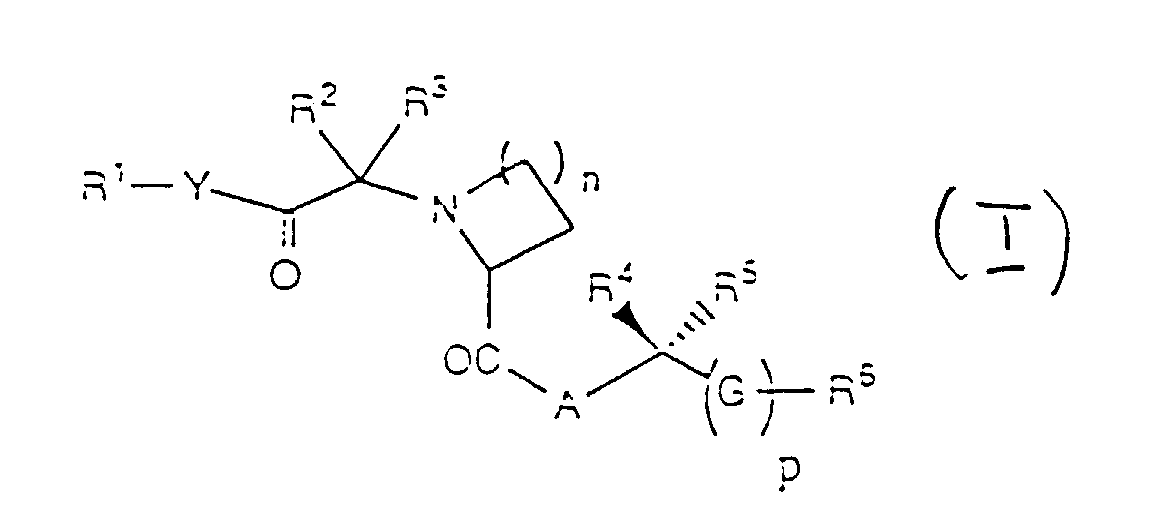
  • the presently claimed invention relates to compounds comprising at least one of the following structures: wherein
  • R 4 and R 5 taken together can be -(CH 2 ) r -- where
  • Pharmaceutically acceptable salts of the above mentioned compounds can be derived from mineral acids, carboxylic acids or sulfuric acids preferred from hydrochloric acid, hydrobromic acid, sulfuric acid, methane sulfuric acid, ethane sulfonic acid, toluene sulfonic acid, benzene sulfonic acid, naphthalene disulfonic acid, acetic acid, propionic acid, lactic acid, tartaric acid, citric acid, fumaric acid, maleic acid or benzoic acid. Most preferred are the hydrochlorides.
  • the invention includes metal salts and ammonium salts. Preferred are sodium, potassium or ammonium salts.
  • the compounds of this invention exist as stereoisomeric forms, which either behave like image and mirror image (enantiomers) or not (diastereomers). Included within the scope of the invention are the enantiomers, the racemic form as well as diastereomeric mixtures. Enantiomers as well as diastereomers can be separated by methods known to those skilled in the art (compare E.L. Eliel, Stereochemistry of Carbon Compounds, McGraw Hill, 1962).
  • compositions can be derived from mineral acids, carboxylic acids or sulfuric acids preferred from hydrochloric acid, hydrobromic acid, sulfuric acid, methane sulfuric acid, ethane sulfonic acid, toluene sulfonic acid, benzene sulfonic acid, naphthalene disulfonic acid, acetic acid, propionic acid, lactic acid, tartaric acid, citric acid, fumaric acid, maleic acid or benzoic acid.
  • hydrochlorides derived from mineral acids, carboxylic acids or sulfuric acids preferred from hydrochloric acid, hydrobromic acid, sulfuric acid, methane sulfuric acid, ethane sulfonic acid, toluene sulfonic acid, benzene sulfonic acid, naphthalene disulfonic acid, acetic acid, propionic acid, lactic acid, tartaric acid, citric acid, fumaric acid, maleic acid or benzoic acid.
  • the invention also concerns a method for making the compounds of formula (I), comprising the following steps: which are
  • a convenient route to prepare the present compounds was to alkylate selected cyclic imino acids with ⁇ -substituted methyl carbonyl compounds (Eq. 1.0).
  • the ⁇ -substitution could be in the form of halides such as chloride, bromide and iodide, but can be extended to other groups that are ameanable for displacement.
  • Solvents useful for effecting this transform include ethyl ether, tetrahydrofuran, alcohol solvents, or nitrile solvents such as acetonitrile. In certain cases, it may be advantageous not to use solvents.
  • solvents There are a number of possible conditions and variations that could be used for this type of synthesis route, such possibilities being well known to those skilled in the art. (For example, see Miyazawa, 1980, T. Bull. Chem. Soc. Japan 53 :2555).
  • substituted 2-oxoethyl derivatives may be converted to active embodiments of this invention by coupling to an appropriate A-R derivative using methods described in the literature (Bodanszky The Practice of Peptide Synthesis: Springer-Verlag, Vol 21, 1984).
  • the alpha-halo ketones and esters used are either commercially available or can be prepared from steps available in current literature.
  • the alpha-halo esters can be prepared from the corresponding alcohols by treatment with alpha-halo acetylhalides such as alpha-chloro acetylchloride, and the alpha-halo ketones can be prepared from the corresponding carboxylic acids.
  • the carboxy groups are transformed. into either an acid chloride or an anhydride and treated with diazomethane to provide the corresponding alpha-diazo ketone.
  • the diazo ketones are converted to alpha-halo ketones upon treatment with hydrogen halides such as HCI.
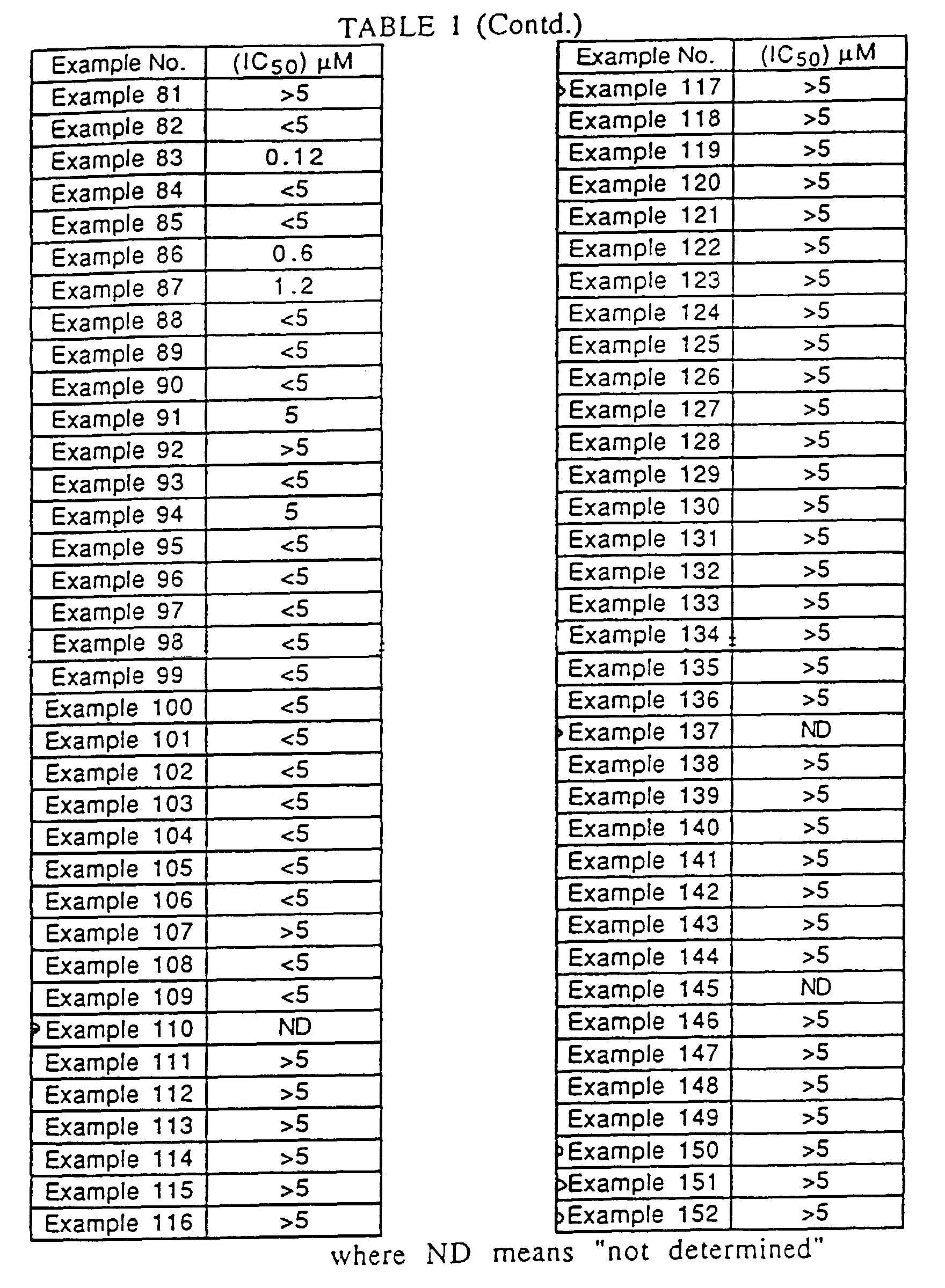
  • the presently claimed compounds were found to be effective at low micromolar doses in both in vitro PPIase enzyme inhibition assays and in vivo assays for inhibition of mitogen-induced human T-cell proliferation. Moreover, the results from the graft vs. host assay (described in detail further below) indicate that the present class of compounds exhibit desirable biological properties (prophylactic prevention of lymph node swelling), with no obvious toxicity at 100 mg/kg concentrations.
  • the present invention encompasses pharmaceutical formulations which, in addition to non-toxic, inert pharmaceutically suitable excipients, contain the compounds of the invention.
  • the present invention also includes pharmaceutical formulations in dosage units.
  • the formulations are present in the form of individual part, for example, tablets, dragees, capsules, caplets, pills, suppositories and ampules, the active compound content of which corresponds to a fraction or a multiple of an individual dose.
  • the dosage units can contain, for example, 1, 2, 3 or 4 individual doses; or 1/2, 1/3 or 1/4 of an individual dose.
  • An individual dose preferably contains the amount of active compound which is given in one administration and which usually corresponds to a whole, one half, one third or one quarter of a daily dose.
  • non-toxic inert pharmaceutically suitable excipients there are to be understood solid, semi-solid or liquid diluents, fillers and formulation auxiliaries of all types.
  • Preferred pharmaceutical formulations which may be mentioned are tablets, dragees, capsules, caplets, pills, granules, suppositories, solutions, suspensions and emulsions, paste, ointments, glues, creams, lotions, dusting powders and sprays.
  • Tablets, dragees, capsules, caplets, pills and granules can contain the active compounds in addition to the customary excipients, such as (a) fillers and extenders, for example, starches, lactose, sucrose, glucose, mannitol and silicic acid, (b) binders, for example, carboxymethylcellulose, alginates, gelatin and polyvinylpyrrolidone, (c) humectants, for example, glycerol, (d) disintegrating agents, for example, agar-agar, calcium carbonate and sodium carbonate, (e) solution retarders, for example, paraffin and (f) absorption accelerators, for example, quaternary ammonium compounds, (g) wetting agents, for example, cetyl alcohol and glycerol monostearate, (h) absorbents, for example, kaolin and bentonite and (i) lubricants, for example, talc, calcium stearate, magnesium stearate
  • the tablets, dragees, capsules, caplets, pills and granules can be provided with the customary coatings and shells, optionally containing opacifying agents and can also be of such composition that they release the active compounds only or preferentially in a certain part of the intestinal tract, optionally in a delayed manner.
  • opacifying agents can also be of such composition that they release the active compounds only or preferentially in a certain part of the intestinal tract, optionally in a delayed manner.
  • embedding compositions which can be used are polymeric substances and waxes.
  • the active compounds can also be present in microencapsulated form, if appropriate with one or more of the abovementioned excipients.
  • Suppositories can contain, in addition to the active compounds, the customary water-soluble or water-insoluble excipients, for example, polyethylene glycols, fats, for example, cacao fat and higher esters (for example, C 14 -alcohol with C 16 -fatty acid), or mixtures of these substances.
  • the customary water-soluble or water-insoluble excipients for example, polyethylene glycols, fats, for example, cacao fat and higher esters (for example, C 14 -alcohol with C 16 -fatty acid), or mixtures of these substances.
  • Ointments, pastes, creams and gels can contain, in addition to the active compounds, the customary excipients, for example, animal and vegetable fats, waxes, paraffins, starch tragacanth, cellulose derivatives, polyethylene glycols, silicones, bentonites, silicic acid, talc and zinc oxide, or mixtures of these substances.
  • the customary excipients for example, animal and vegetable fats, waxes, paraffins, starch tragacanth, cellulose derivatives, polyethylene glycols, silicones, bentonites, silicic acid, talc and zinc oxide, or mixtures of these substances.
  • Dusting powders and sprays can contain, in addition to the active compounds, the customary excipients, for example, lactose, talc, silicic acid, aluminum hydroxide, calcium silicate and polyamide powder, or mixtures of these substances.
  • Sprays can additionally contain customary propellants, for example, chlorofluorohydrocarbons.
  • Solutions and emulsions can contain, in addition to the active compounds, customary excipients, such as solvents, solubilizing agents and emulsifiers, for example, water, ethyl alcohol, isopropyl alcohol, ethyl carbonate, ethyl acetate, benzyl alcohol, benzyl benzoate, propylene glycol, 1,3-butylene glycol, dimethylformamide, oils, in particular, cottonseed oil, groundnut oil, corn germ oil, olive oil, castor oil and sesame oil, glycerol, glycerol formal, tetrahydrofurfuryl alcohol, polyethylene glycols and fatty acid esters of sorbitan, or mixtures of these substances.
  • customary excipients such as solvents, solubilizing agents and emulsifiers, for example, water, ethyl alcohol, isopropyl alcohol, ethyl carbonate, ethyl acetate,
  • solutions and emulsions can also be in a sterile form which is isotonic with blood.
  • Suspensions can contain, in addition to the active compounds, customary excipients, such as liquid diluents, for example, water, ethyl alcohol or propylene glycol and suspending agents, for example, ethoxylated isostearyl alcohols, polyoxyethylene sorbitol and sorbitan esters, microcrystalline cellulose, aluminum methydroxide, bentonite, agar-agar, and tragacanth, or mixtures of these substances.
  • customary excipients such as liquid diluents, for example, water, ethyl alcohol or propylene glycol and suspending agents, for example, ethoxylated isostearyl alcohols, polyoxyethylene sorbitol and sorbitan esters, microcrystalline cellulose, aluminum methydroxide, bentonite, agar-agar, and tragacanth, or mixtures of these substances.
  • compositions can also contain other pharmaceutical active compounds in addition to the claimed compounds of the present invention.
  • the aforementioned pharmaceutical formulations are prepared in the customary manner by known methods, for example, by mixing the active compound or compounds with the excipient or excipients.
  • the formulations mentioned can be used either with humans and animals, orally, rectally, bucally, parenterally (intra-venously, intramuscularly or subcutaneously), intracisternally, intravaginally, intraperitoneally or locally (dusting powder, ointment or drops) and for the therapy of infection in hollow spaces or body cavities.
  • Suitable formulations are injection solutions, solutions and suspensions for oral therapy, gels, pour-on formulations, emulsions, ointments or drops.
  • Ophthalmological and dermatological formulations, silver salts and other salts, ear drops, eye ointments, powders or solutions can be used for local therapy.
  • the solution was cooled to -5 °C, and cannulated into a cold (-5 °C), ethereal solution of diazomethane (40 mL). After the solution was stirred at -5 °C for 30 min, the flask was removed from the cold bath and the yellow solution was allowed to stir at 22 °C for 2 hrs (preferably in the dark). The solution was concentrated in vacuo, and purified by flash chromatography (5% ethyl acetate in hexane) to provide 33 mg (1.3%) of 2-chloro-4'-(n-pentyl) acetophenone and 586 mg (44%) of 4'-(n-pentyl) diazoacetophenone as a bright yellow oil.
  • the diazo compound was quickly taken up in ethyl acetate (120 mL), and the solution was cooled to -5 °C. To this was added a 1.0 M solution of HCl in ether (Aldrich, 6.0 mL). Gas evolution was observed, and the yellow solution became colorless. The flask was removed from the cold bath and the solution was allowed to stir at 22 °C for 2 hrs.
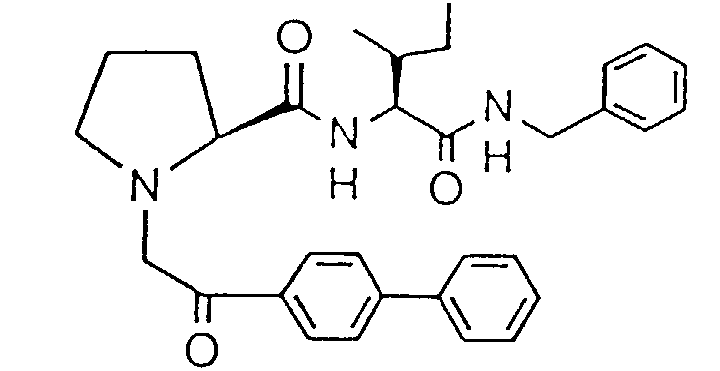
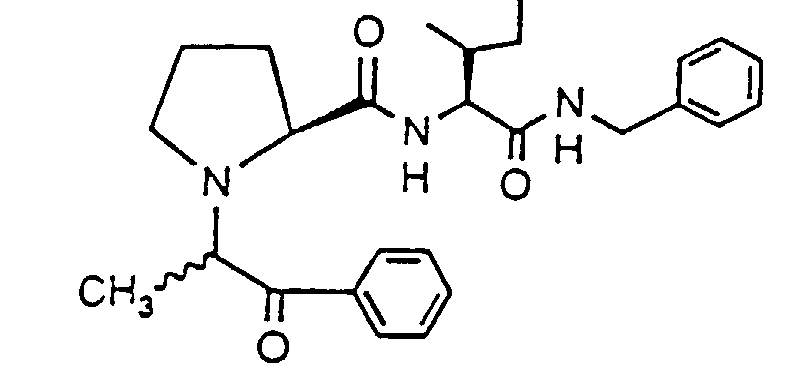
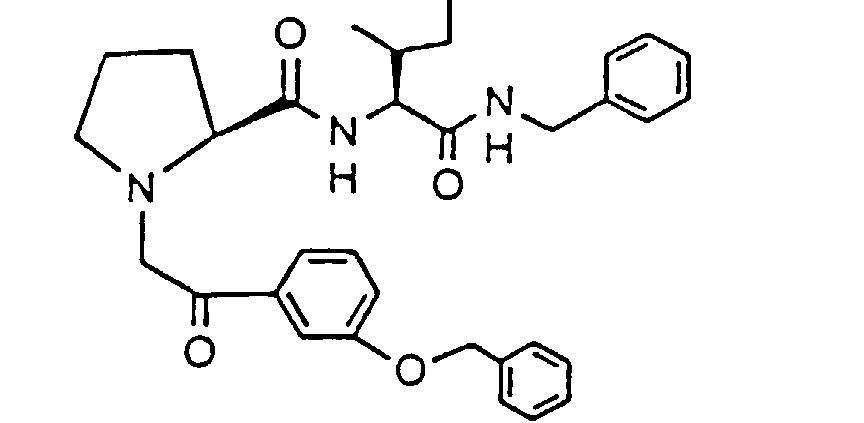
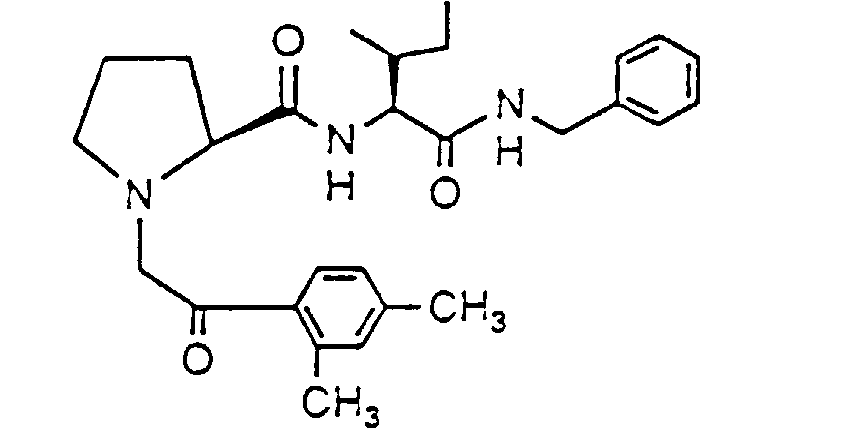
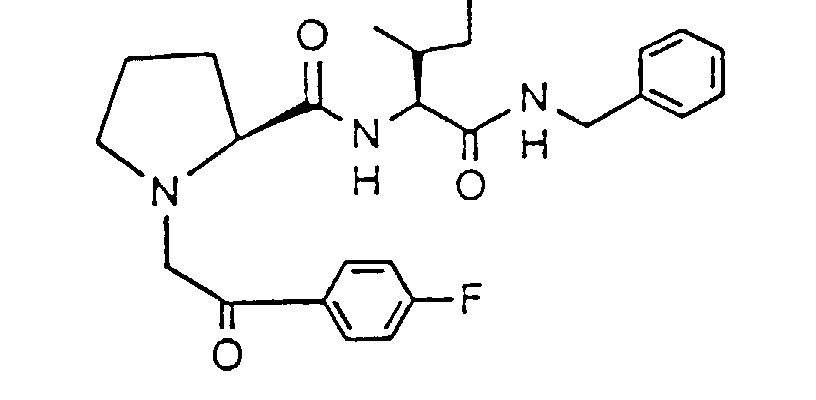
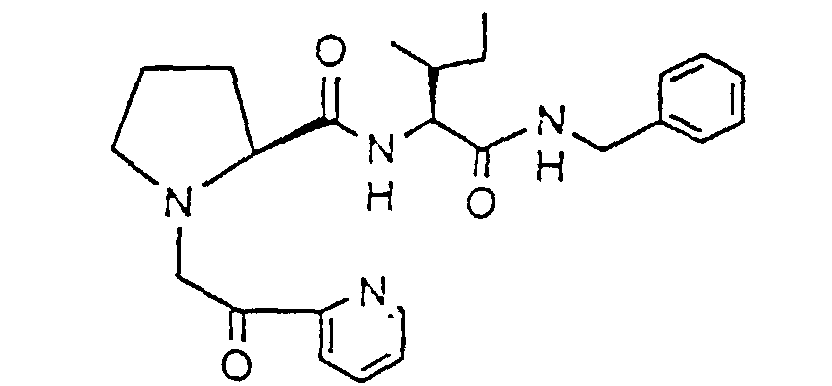
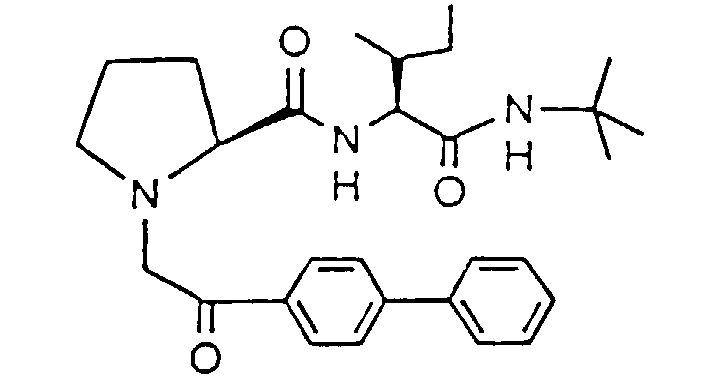
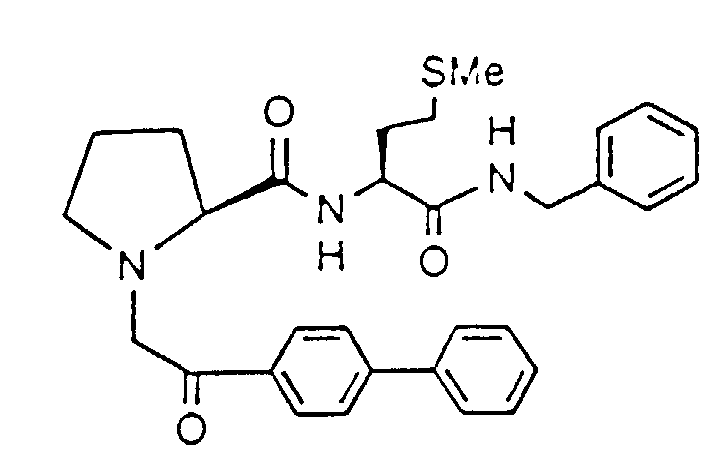
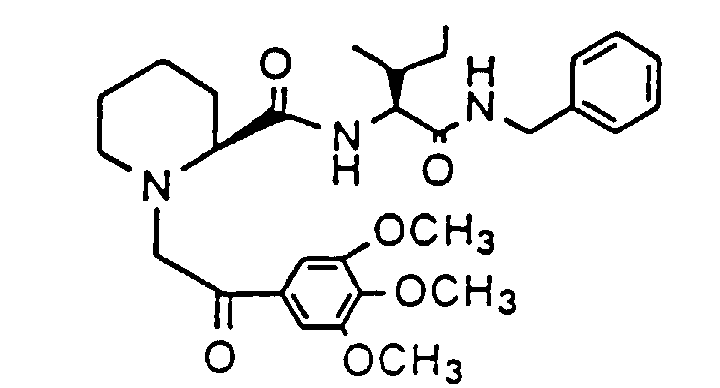
  • L-Isoleucine, N-[1-(2-(trans,trans-Hexa-2,4-dienyl-1-oxy)-2-Oxoethyl)-L-Prolyl] Benzylamide Using the procedure described in example 1e, treatment of L-proline-L-isoleucine benzylamide (201 mg, 0.63 mmol), with cesium carbonate (412 mg, 1.26 mmol), and 1-(2-chloroacetoxy)-2E,4E-hexadiene (prepared from 2E,4E-hexadien-1-ol and 2-chloro acetylchloride: 221 mg, 1.26 mmol, 2.0 eq) in acetonitrile (8 mL), provided 132 mg (46%) of the title compound as a colorless oil that formed a waxy solid on standing.
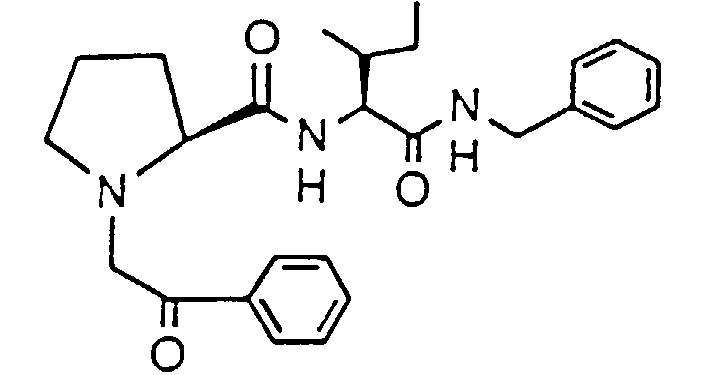
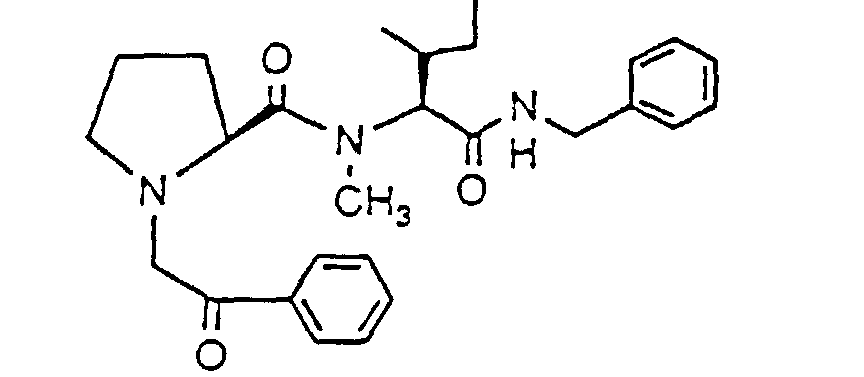
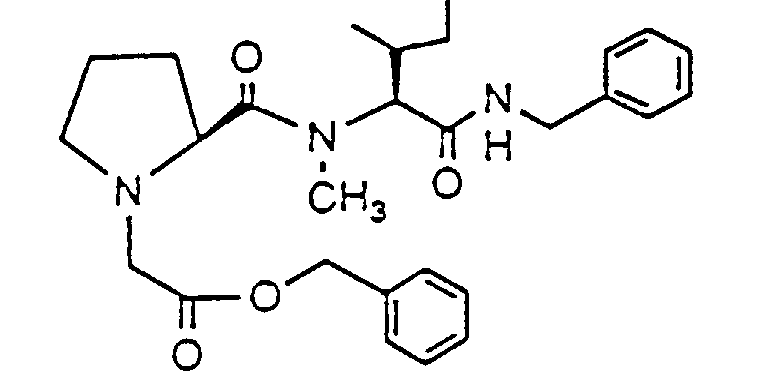
  • L-Isoleucine, N-Methyl-N-[1-(2-Phenyl-2-Oxoethyl)-L-Prolyl] Benzylamide Using the procedure described in example 1e, 56 mg (0.17 mmol) of L-proline-L-(N-methyl)-isoleucine benzylamide (prepared from N-alpha-t-Boc-N-methyl-L-isoleucine (Schweizerhall, Piscataway, NJ.)) was treated with sodium carbonate (41 mg, 0.40 mmol), and 2-bromoacetophenone (52 mg, 0.26 mmol, 1.5 eq) in methanol (5 mL).
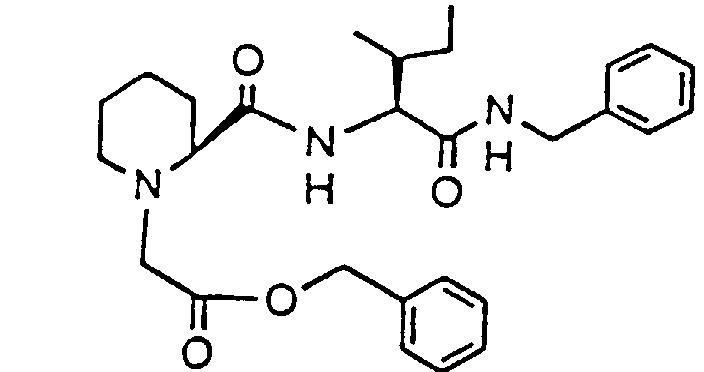
  • L-Isoleucine, N-[1-(2-Phenyl-2-Oxoethyl)-L-Homoproline] Benzylamide Using the procedure described in example 1e, 55 mg (0.17 mmol) of L-homoproline-L-isoleucine benzylamide (prepared from L-homoproline (Bachem Bioscience, Philadelphia, PA.)), was treated with sodium carbonate (39 mg, 0.37 mmol), and 2-bromoacetophenone (59 mg, 0.29 mmol, 1.7 eq) in methanol (5 mL). A sample of the crude mixture was purified by preparative TLC to provide 34 mg (45%) of the title compound.
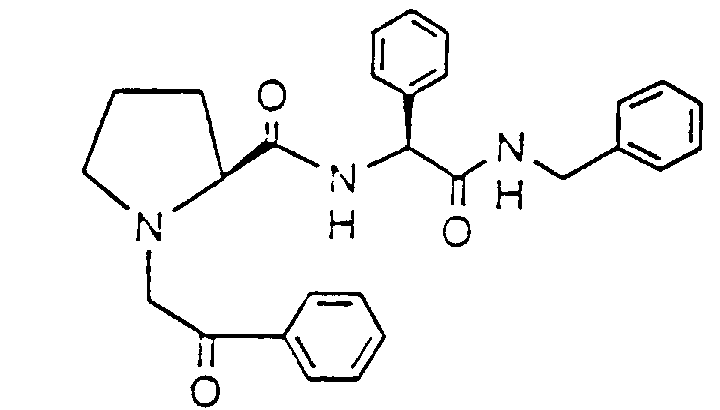
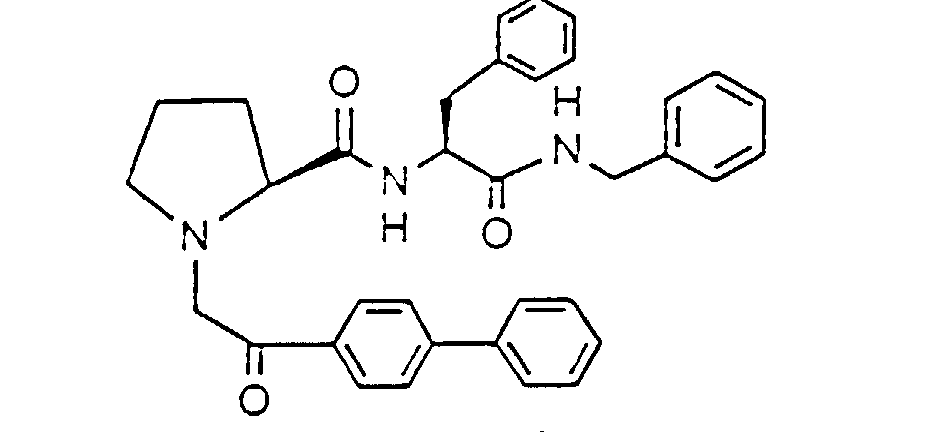
  • L-Phenylglycine, N-[1-(2-Phenyl-2-Oxoethyl)-L-Proline Benzylamide Using the procedure described in example 1e, 285 mg (0.84 mmol) of L-proline-L-phenylglycine benzylamide (prepared from L-phenylglycine. (Bachem Bioscience, Philadelphia, PA.)), was treated with triethylamine (0.59 mL 4.23 mmol, 5 eq), and 2-bromoacetophenone (185 mg, 0.93 mmol, 1.1 eq) in THF (20 mL). A sample of the crude mixture was purified by preparative TLC to provide 50 mg of the title compound.
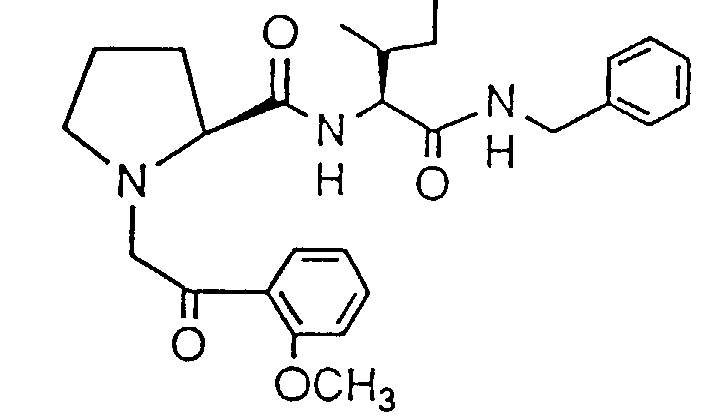
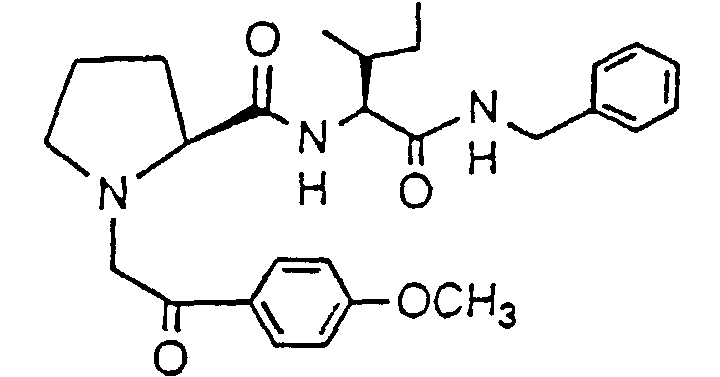
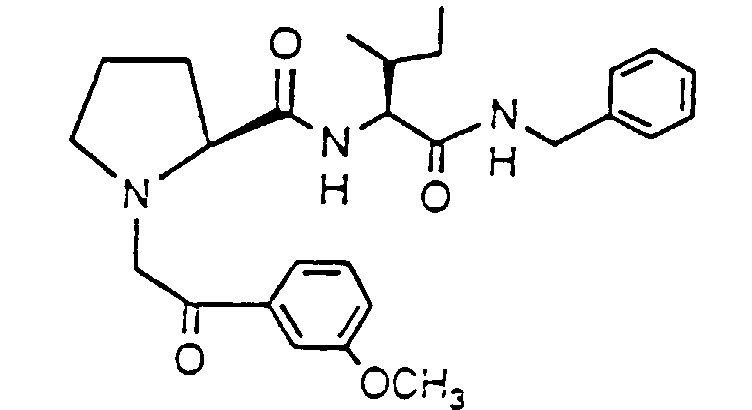
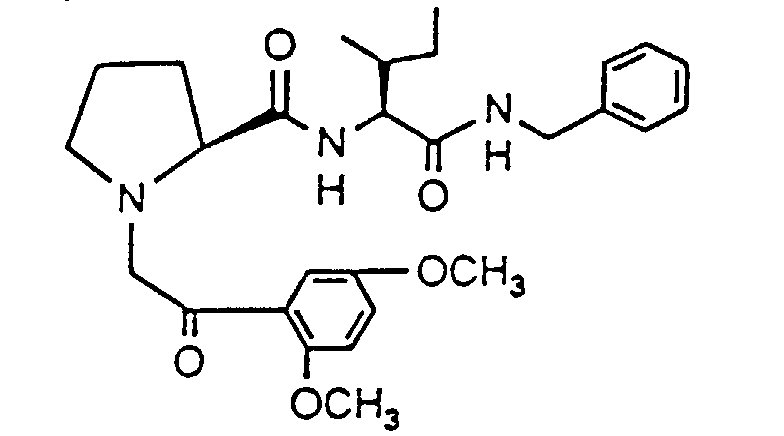
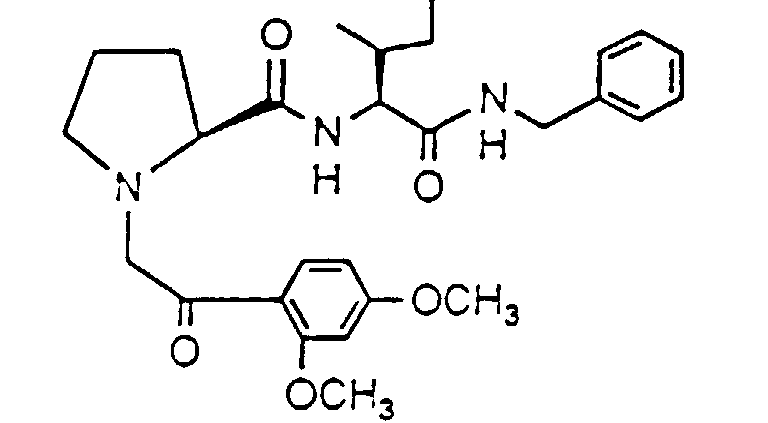
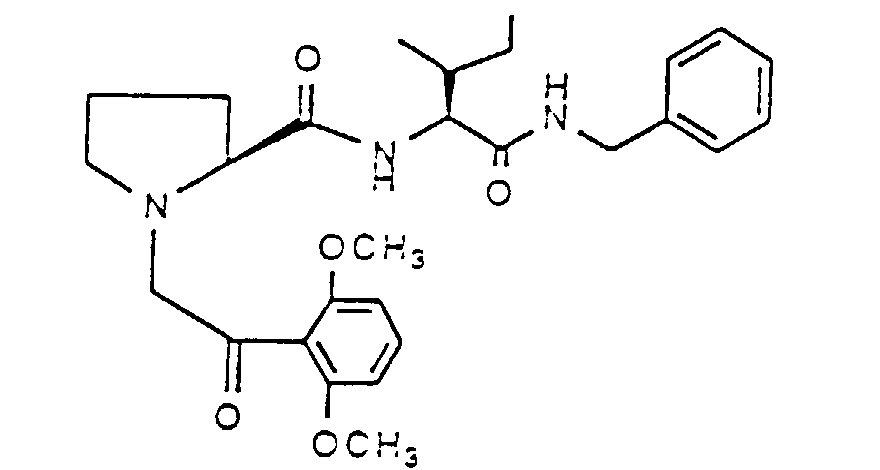
  • L-Isoleucine, N-[1-(2-(2,5-Dimethoxyphenyl)-2-Oxoethyl)-L-Prolyl] Benzylamide Using the procedure described in example 1e, treatment of a solution of L-proline-L-isoleucine benzylamide (51 mg, 0.16 mmol), with triethylamine (113 uL, 0.81 mmol, 5.0 eq), and 2-bromo-2'-5'-dimethoxyacetophenone (50 mg, 0.19 mmol, 1.2 eq) in THF (5 mL), provided 60 mg (75%) of the title compound as a colorless oil.
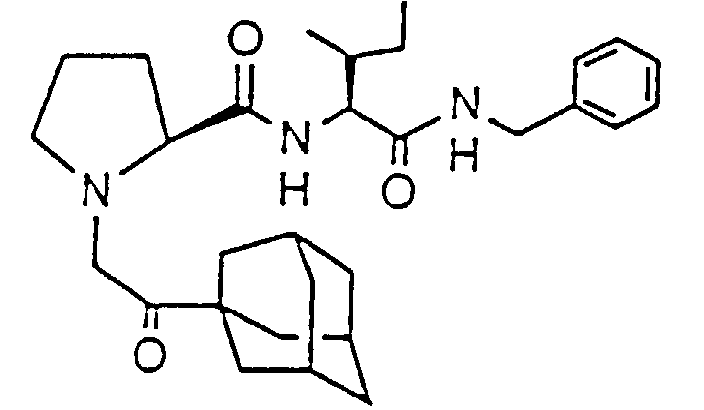
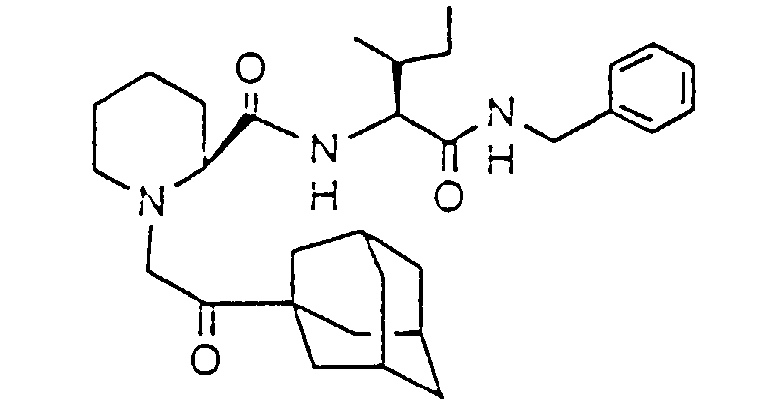
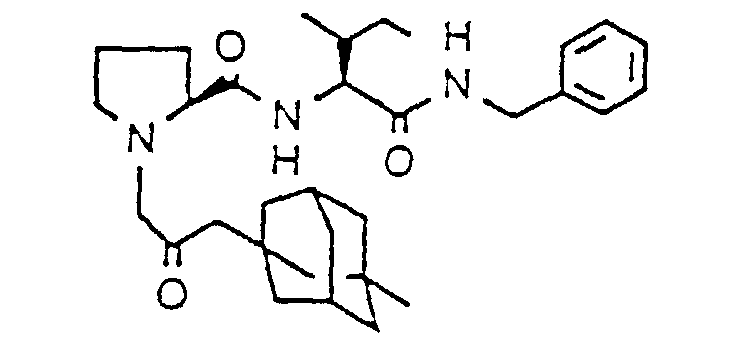
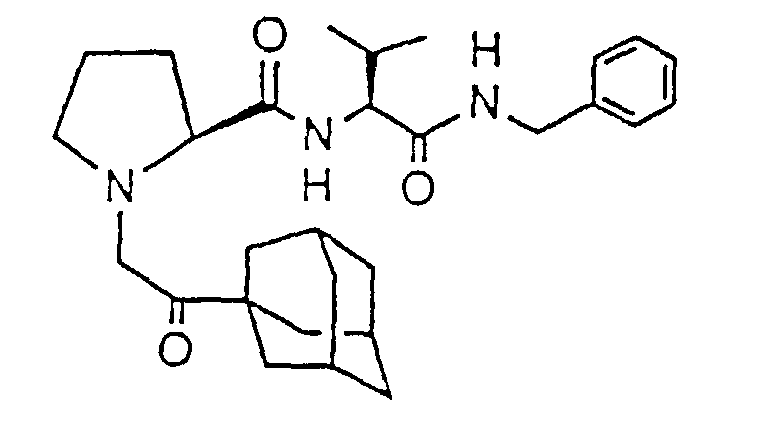
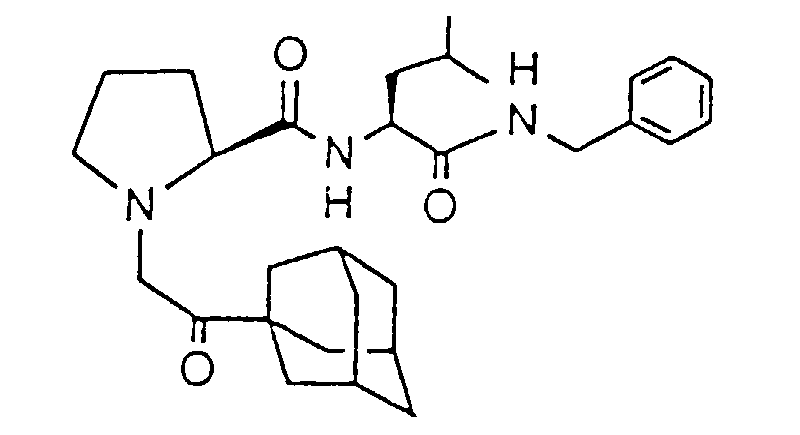
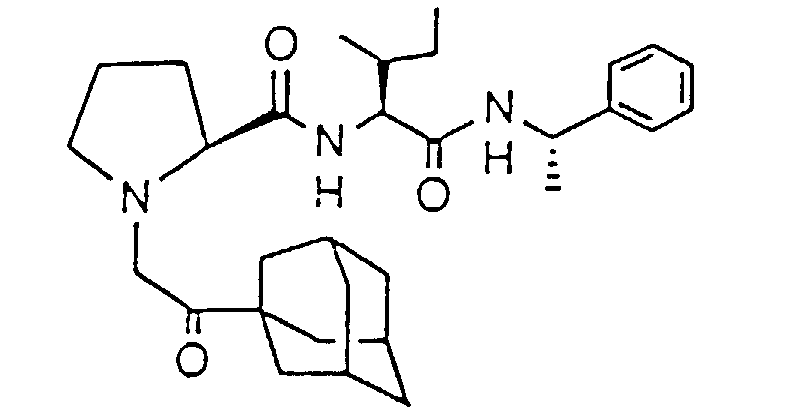
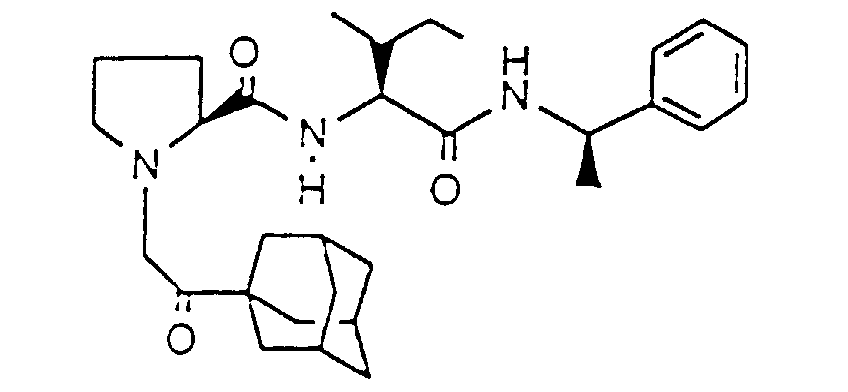
  • L-Isoleucine, N-[1-(2-Adamantan-1-yl-2-Oxoethyl)-L-Homoproline] Benzylamide Using the procedure described in example 1e, L-homoproline-L-isoleucine benzylamide (75 mg, 0.22 mmol), was treated with triethylamine (0.15 mL, 1.12 mmol, 5 eq), 1-adamantyl bromomethyl ketone (92 mg, 0.36 mmol, 1.6 eq), and THF (10 mL), to provide 64 mg (56%) of the title compound. The 300 MHz, 1 H NMR analysis of this compound was consistent with the structure.
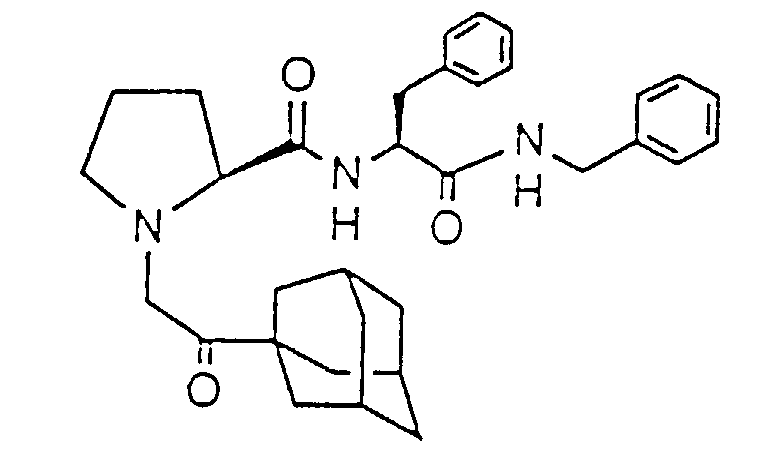
  • L-Phenylalanine, N-[1-(2-Adamantan-1-yl-2-Oxoethyl)-L-Prolyl] Benzylamide Using the procedure described previously, a solution of 1-(2-adamantan-1-yl-2-oxoethyl) L-proline (100 mg, 0.34 mmol, 1.0 eq), L-phenylalanine N-benzylamide (175 mg, 686 umol, 2.0 eq) and dichloromethane (1.0 mL), was cooled to 0 °C, and treated with triethylamine (286 uL, 2.0 mmol, 6.0 eq).
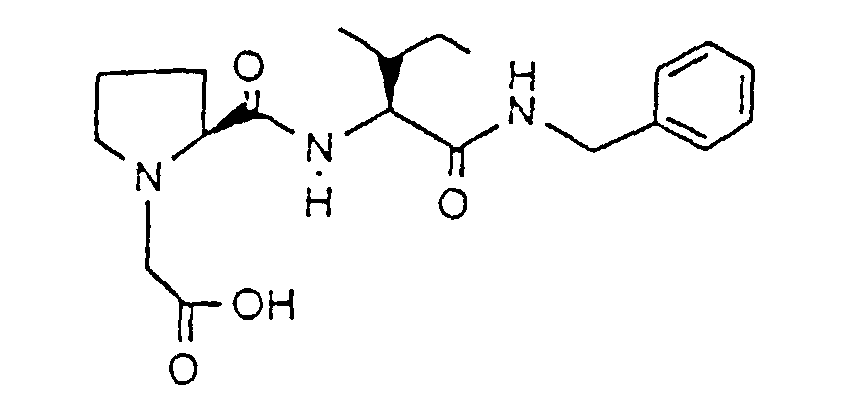
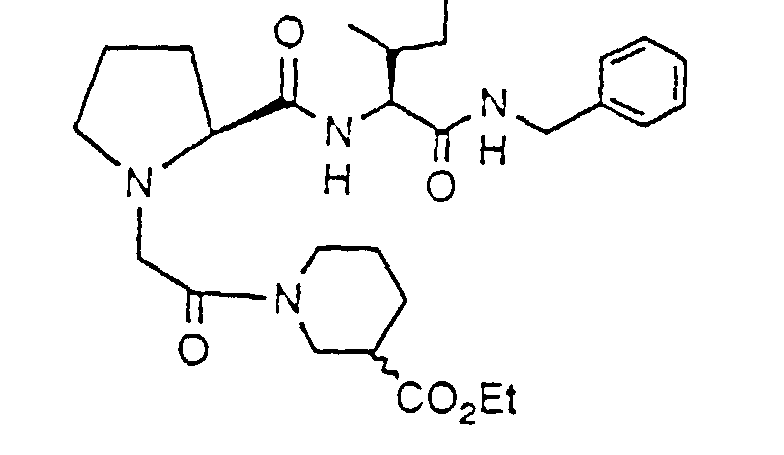
  • L-Isoleucine, N-[1-[2-(N-(4-Benzylpiperidyl))-2-Oxoethyl]-L-Prolyl] Benzylamide A -5 °C solution of L-isoleucine, N-[1-(carboxymethyl)-L-prolyl] benzylamide (321 mg, 0.85 mmol, 1.0 eq), N-methylmorpholine (122 uL, 1.11 mmol, 1.30 eq) in acetonitrile (8 mL) was treated with isobutyl chloroformate (127 uL, 0.98 mmol, 1.15 eq) followed by 4-benzylpiperidine (0.299 g, 1.71 mmol, 2.0 eq).
  • L-Isoleucine, N-[1-[2-(2-Methylpiperidine)-2-Oxoethyl]-L-Prolyl] Benzylamide A -5 °C solution of L-isoleucine, N-[1-(carboxymethyl)-L-prolyl] benzylamide (202 mg, 0.53 mmol, 1.0 eq), N-ethylmorpholine (82 uL, 0.64 mmol, 1.20 eq) in acetonitrile (8 mL) was treated with isobutyl chloroformate (80 uL, 0.62 mmol, 1.15 eq) followed by 2-methylpiperidine (0.106 g, 1.07 mmol, 2.0 eq).
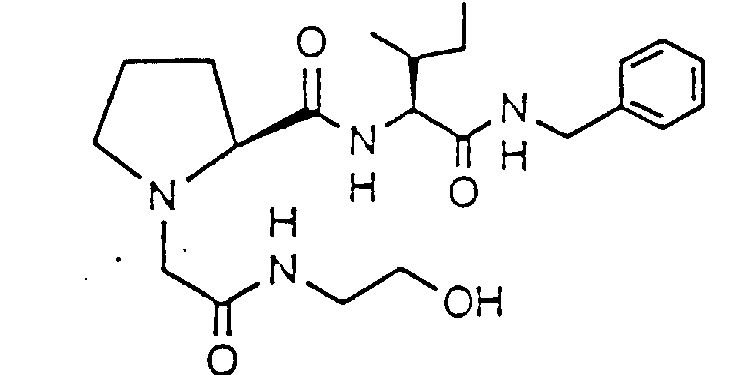
  • L-Isoleucine, N-[1-(2-(2-Hydroxyethylamine)-2-Oxoethyl)-L-Prolyl] Benzylamide A -5 °C solution of L-isoleucine, N-[1-(carboxymethyl)-L-prolyl] benzylamide (0.215 g, 0.58 mmol, 1.0 eq), and triethylamine (96 uL, 70 mg, 0.64 mmol, 1.20 eq), in acetonitrile (10 mL) was treated with isobutyl chloroformate (83 uL, 86 mg, 0.63 mmol, 1.1 eq) followed by 2-aminoethanol (69 uL, 70 mg, 1.15 mmol, 2.0 eq).
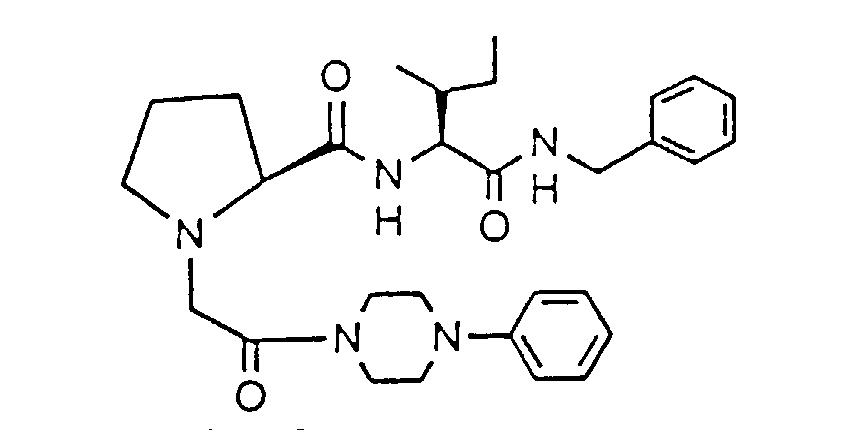
  • L-Isoleucine, N-[1-[2-(4 Phenylpiperazine)-2-Oxoethyl]-L-Prolyl] Benzylamide A -5 °C solution of L-isoleucine, N-[1-(carboxymethyl)-L-prolyl] benzylamide (0.214 g, 0.58 mmol, 1.0 eq), and triethylamine (96 uL, 70 mg, 0.64 mmol, 1.20 eq), in acetonitrile (6 mL) was treated with isobutyl chloroformate (83 uL, 86 mg, 0.63 mmol, 1.1 eq) followed by 4-phenylpiperazine (170 uL, 186 mg, 1.15 mmol, 2.0 eq).
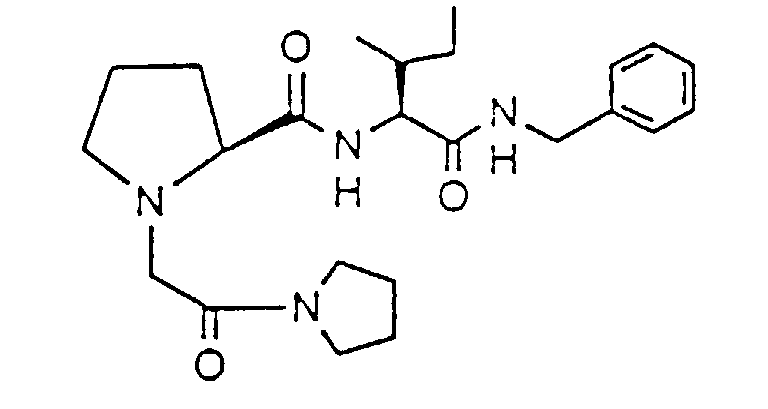
  • L-Isoleucine, N-[1-[2-(1-Pyrrolidine)-2-Oxoethyl]-L-Prolyl] Benzylamide A-5 °C solution of L-isoleucine, N-[1-(carboxymethyl)-L-prolyl] benzylamide (0.212 g, 0.56 mmol, 1.0 eq), and triethylamine (96 uL, 65 mg, 0.65 mmol, 1.15 eq), in acetonitrile (10 mL) was treated with isobutyl chloroformate (77 uL, 80 mg, 0.59 mmol, 1.05 eq) followed by pyrrolidine (94 uL, 80 mg, 1.13 mmol, 2.0 eq).
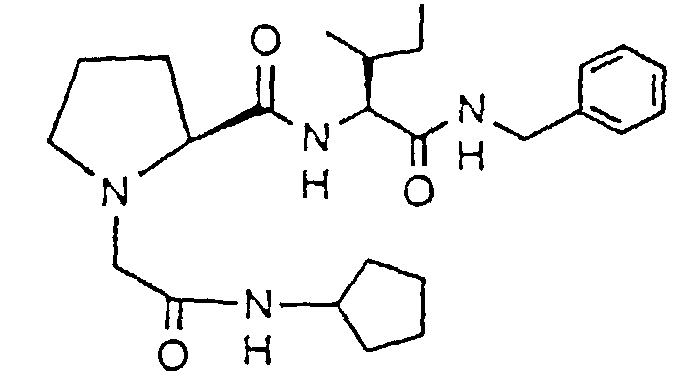
  • L-Isoleucine, N-[1-[2-(N-Cyclopentylamino)-2-Oxoethyl]-L-Prolyl] Benzylamide A -5 °C solution of L-isoleucine, N-[1-(carboxymethyl)-L-prolyl] benzylamide (0.212 g, 0.56 mmol, 1.0 eq), and triethylamine (96 uL, 65 mg, 0.65 mmol, 1.15 eq), in acetonitrile (10 mL) was treated with isobutyl chloroformate (77 uL, 86 mg, 0.59 mmol, 1.05 eq) followed by cyclopentylamine (111 uL, 96 mg, 1.13 mmol, 2.0 eq).
  • L-Isoleucine, N-[1-[2-(N-(Phenylmethylamino))-2-Oxoethyl]-L-Prolyl] Benzylamide A -5 °C solution of L-isoleucine, N-[1-(carboxymethyl)-L-prolyl] benzylamide (0.218 g, 0.58 mmol, 1.0 eq), and triethylamine (89 uL, 64 mg, 0.64 mmol, 1.10 eq), in acetonitrile (10 mL) was treated with isobutyl chloroformate (79 uL, 83 mg, 0.61 mmol, 1.05 eq) followed by benzylamine (82 uL, 80 mg, 0.75 mmol, 1.3 eq).
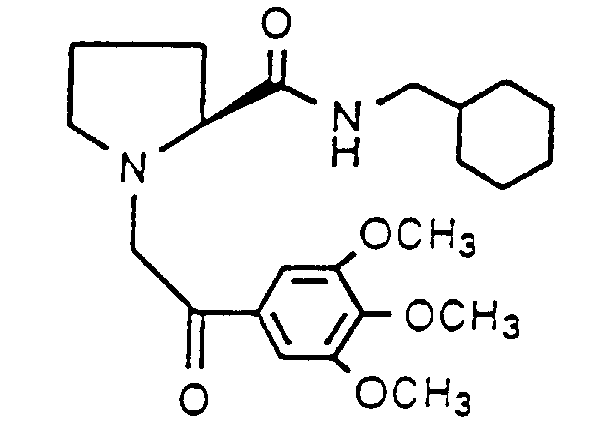
  • L-Isoleucine, N-[1-[2-(N-(Cyclohexylmethylamino))-2-Oxoethyl]-L-Prolyl] Benzylamide Using the procedure described previously, a solution of L-isoleucine, N-[1-(carboxymethyl)-L-prolyl] benzylamide (0.220 g, 0.58 mmol, 1.0 eq), and triethylamine (89 uL, 64 mg, 0.64 mmol, 1.10 eq), in acetonitrile (10 mL) was treated with isobutyl chloroformate (79 uL, 83 mg, 0.61 mmol, 1.05 eq) followed by cyclohexylmethylamine (99 uL, 86 mg, 0.75 mmol, 1.30 eq).
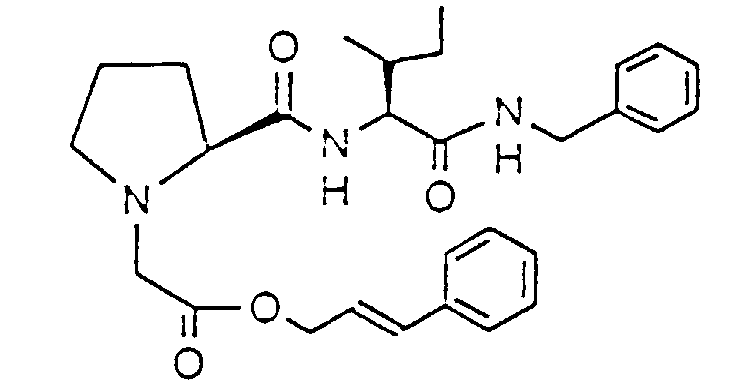
  • L-Isoleucine, N-[1-(2-(3-Phenyl-2-Propen-1-Oxy)-2-Oxoethyl)-L-Prolyl] Benzylamide Using the procedure described previously, a solution of L-isoleucine, N-[1-(carboxymethyl)-L-prolyl] benzylamide (65 mg, 0.17 mmol), 4-N,N-dimethylaminopyridine (12.5 mg, 0.10 mmol, 0.6 eq), 1,3-dicyclohexylcarbodiimide (64 mg, 0.31 mmol, 1.8 eq) in dichloromethane (5.0 mL) was treated with trans cinnamyl alcohol (29 uL, 0.22 mmol, 1.3 eq).
  • L-Isoleucine, N-[1-(2-(3-Phenyl-3-Methyl-2-Propen-1-Oxy)-2-Oxoethyl)-L-Prolyl] Benzylamide Using the procedure described previously, a solution of L-isoleucine, N-[1-(carboxymethyl)-L-prolyl] benzylamide (56 mg, 0.15 mmol), 4-N,N-dimethylaminopyridine (3.6 mg, 0.03 mmol, 0.2 eq), 1,3-dicyclohexylcarbodiimide (54 mg, 0.26 mmol, 1.7 eq) in dichloromethane (5.0 mL) was treated with trans 2-methyl-3-phenyl-2-propen-1-ol (28 uL, 0.19 mmol, 1.3 eq).
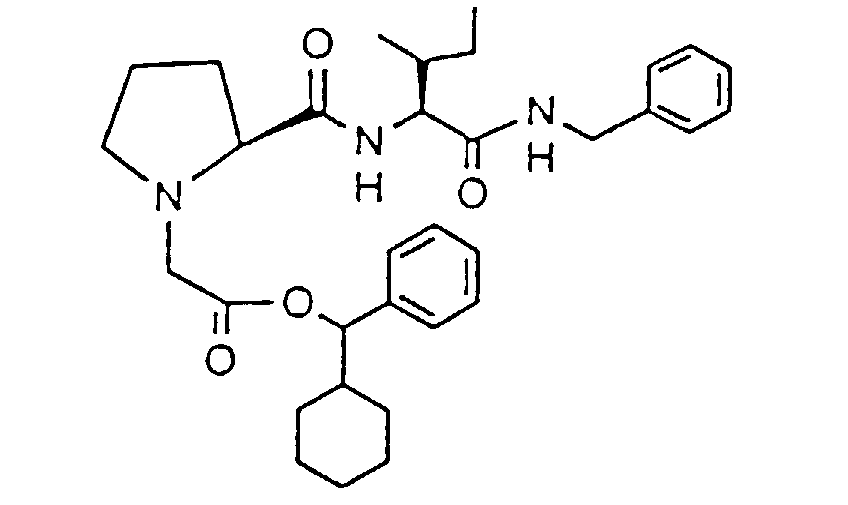
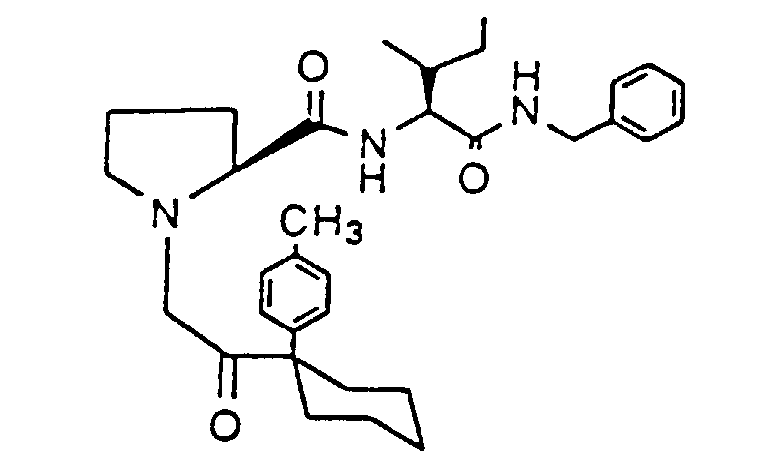
  • L-Isoleucine, N-[1-(2-(1-Phenyl-1-Cyclohexylmethoxy)-2-2-Oxoethyl)-L-Prolyl] Benzylamide Using the procedure described previously, a solution of L-isoleucine, N-[1-(carboxymethyl)-L-prolyl] benzylamide (71 mg, 0.19 mmol), 4-N,N-dimethylaminopyridine (7.5 mg, 0.06 mmol, 0.3 eq), 1,3-dicyclohexylcarbodiimide (64 mg, 0.31 mmol, 1.6 eq) in dichloromethane (5.0 mL) was treated with (+/-) cyclohexylphenylcarbinol (45 mg, 0.24 mmol, 1.3 eq).
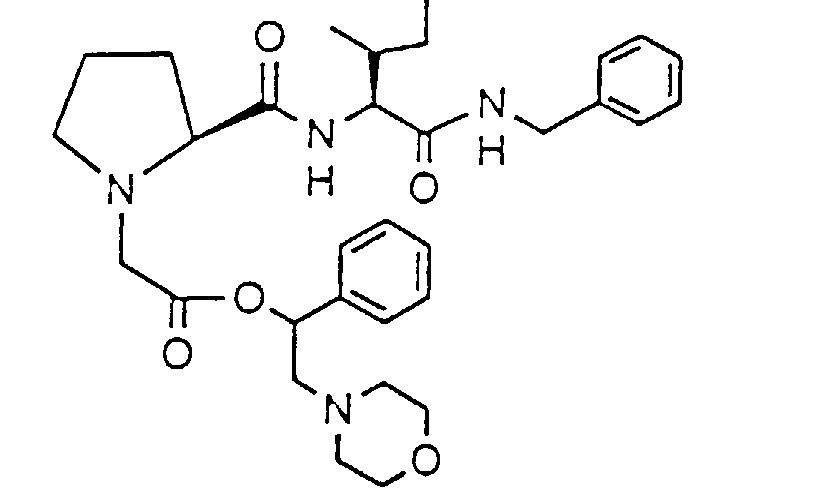
  • L-Isoleucine, N-[1-(2-(1-Phenyl-2-(4-Morpholino)Ethoxy)-2-Oxoethyl)-L-Prolyl] Benzylamide Using the procedure described previously, a solution of L-isoleucine, N-[1-(carboxymethyl)-L-prolyl] benzylamide (58 mg, 0.15 mmol), 4-N,N-dimethylaminopyridine (13.2 mg, 0.10 mmol, 0.7 eq), 1,3-dicyclohexylcarbodiimide (57 mg, 0.27 mmol, 1.8 eq) in dichloromethane (5.0 mL) was treated with (+/-) alpha-phenyl-4-morpholinoethanol (60 mg, 0.29 mmol, 1.9 eq).
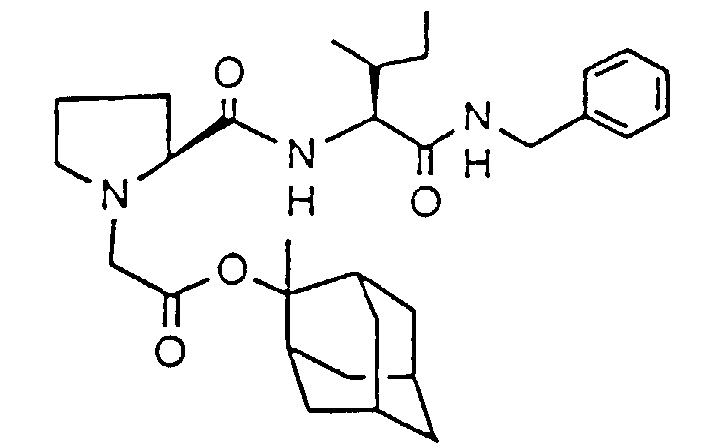
  • L-Isoleucine, N-[1-(2-(2-Oxy-2-Methyladamant-2-yl)-2-Oxoethyl)-L-Prolyl] Benzylamide Using the procedure described previously, a solution of L-isoleucine, N-[1-(carboxymethyl)-L-prolyl] benzylamide (61 mg, 0.16 mmol), 4-N,N-dimethylaminopyridine (26 mg, 0.21 mmol, 1.3 eq), 1,3-dicyclohexylcarbodiimide (51 mg, 0.25 mmol, 1.5 eq) in dichloromethane (3.0 mL) was treated with 2-methyl-2-adamantanol (33 mg, 0.21 mmol, 1.3 eq).
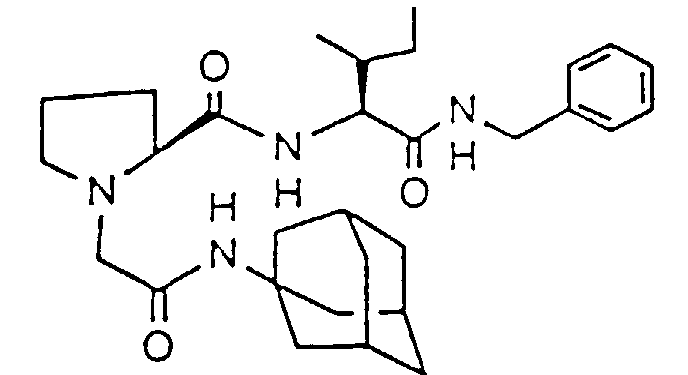
  • L-Isoleucine, N-[1-(Adamantan-2-ylcarbamoylmethyl)-L-Prolyl] Benzylamide Using the procedure described previously, a solution of L-isoleucine, N-[1-(carboxymethyl)-L-prolyl] benzylamide (113 mg, 0.30 mmol), triethylamine (168 uL, 1.20 mmol, 4 eq) in acetonitrile (1.5 mL), was cooled to 0 °C and treated with isobutyl chloroformate (43 uL, 0.33 mmol, 1.1 eq) followed by the hydrochloride salt of 2-adamantylamine (113.2 mg, 0.60 mmol, 2 eq).
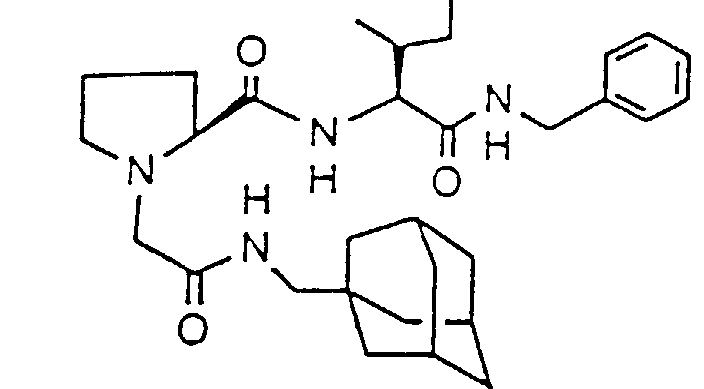
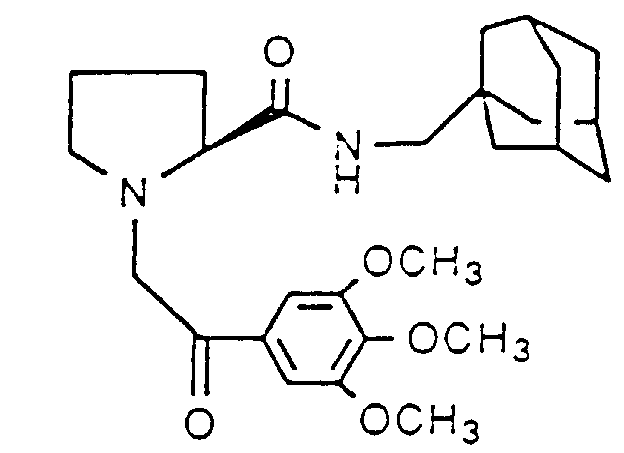
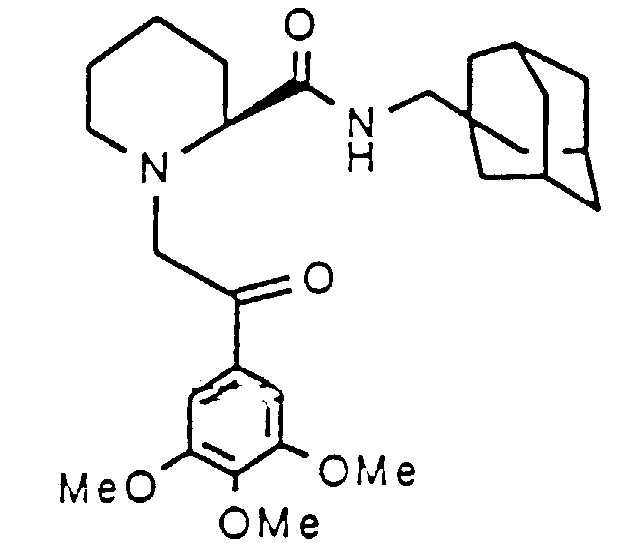
  • L-Isoleucine, N-[1-(Adamant-1-ylmethylcarbamoylmethyl)-L-Prolyl] Benzylamide Using the procedure described previously, a solution of L-isoleucine, N-[1-(carboxymethyl)-L-prolyl] benzylamide (106 mg, 0.28 mmol), triethylamine (158 uL, 1.13 mmol, 4 eq) in acetonitrile (1.5 mL, was cooled to 0 °C and treated with isobutyl chloroformate (40.5 uL, 0.31 mmol, 1.1 eq) followed by 1-adamantanemethylamine (100 uL, 0.57 mmol, 2 eq).
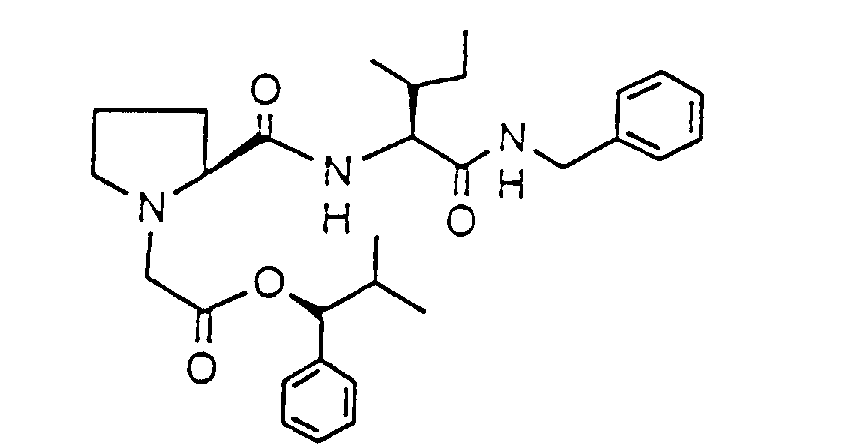
  • L-Isoleucine, N-[1-(2-(2-Methyl-1-(S)-Phenyl-1-Propoxy)-2-Oxoethyl)-L-Prolyl] Benzylamide Using the procedure described previously, a solution of L-isoleucine, N-[1-(carboxymethyl)-L-prolyl] benzylamide (298 mg, 0.73 mmol), 4-N,N-dimethylaminopyridine (95 mg, 0.77 mmol, 1.2 eq), 1,3-dicyclohexylcarbodiimide (243 mg, 1.18 mmol, 1.8 eq) in dichloromethane (10 mL) was treated with (S)-2-methyl-1-phenyl-1-propanol (100 mg, 0.64 mmol, 1.3 eq).
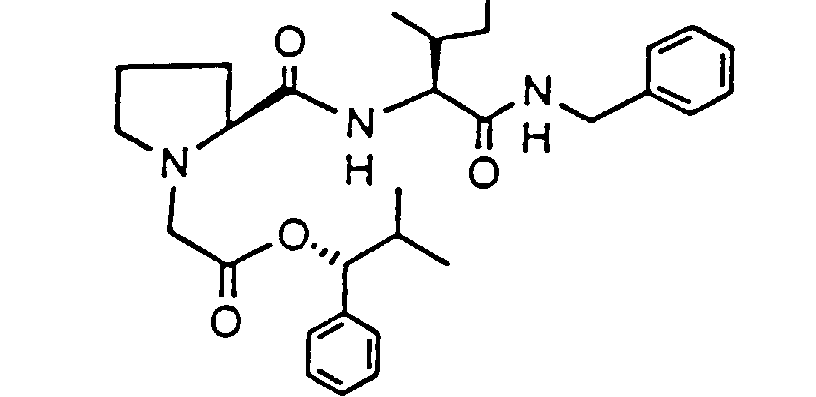
  • L-Isoleucine, N-[1-(2-(2-Methyl-1-(R)-Phenyl-1-Propoxy)-2-Oxoethyl)-L-Prolyl] Benzylamide Using the procedure described previously, a solution of L-isoleucine, N-[1-(carboxymethyl)-L-prolyl] benzylamide (298 mg, 0.73 mmol), 4-N,N-dimethylaminopyridine (100 mg, 0.82 mmol, 1.3 eq), 1,3-dicyclohexylcarbodiimide (242 mg, 1.17 mmol, 1.8 eq) in dichloromethane (10 mL) was treated with (R)-2-methyl-1-phenyl1-propanol (100 mg, 0.64 mmol, 1.3 eq).
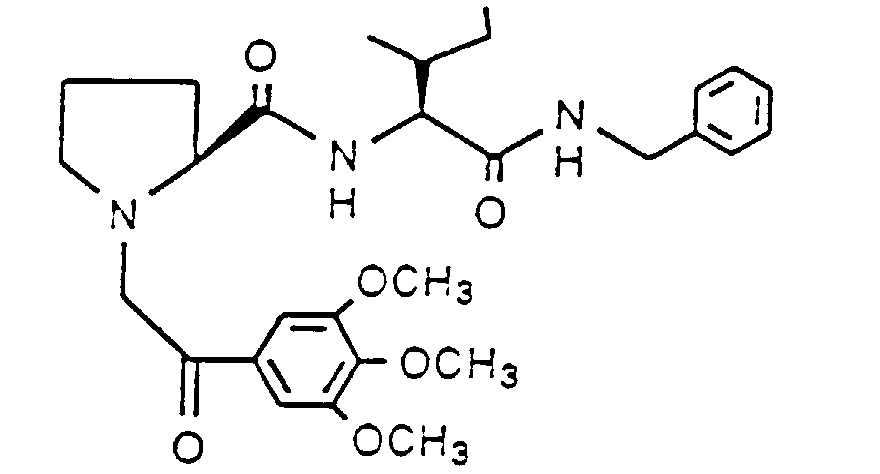
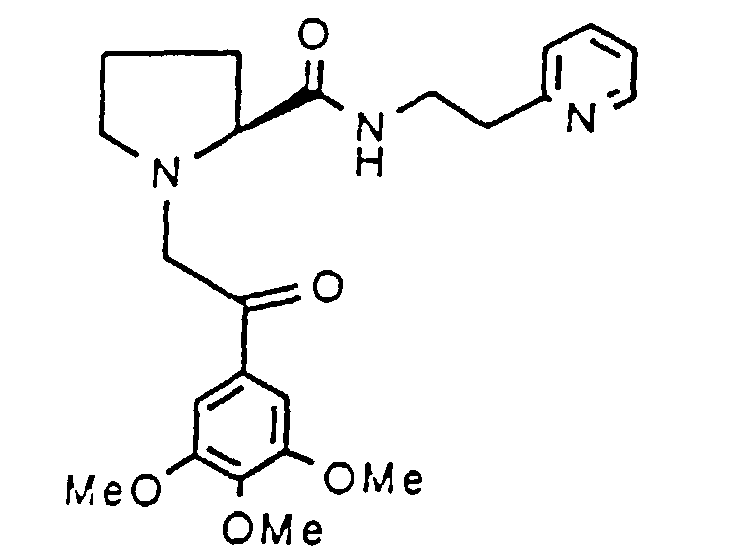
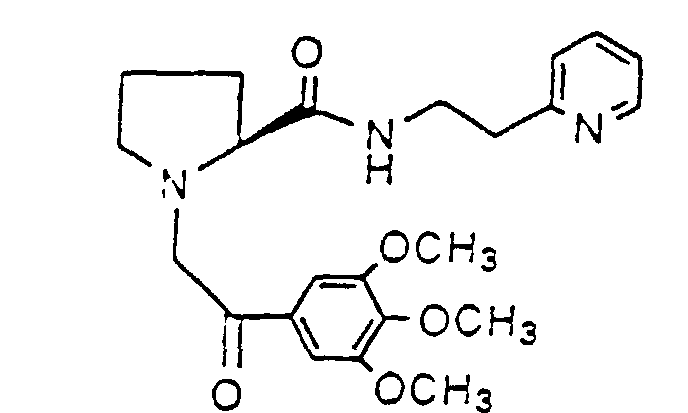
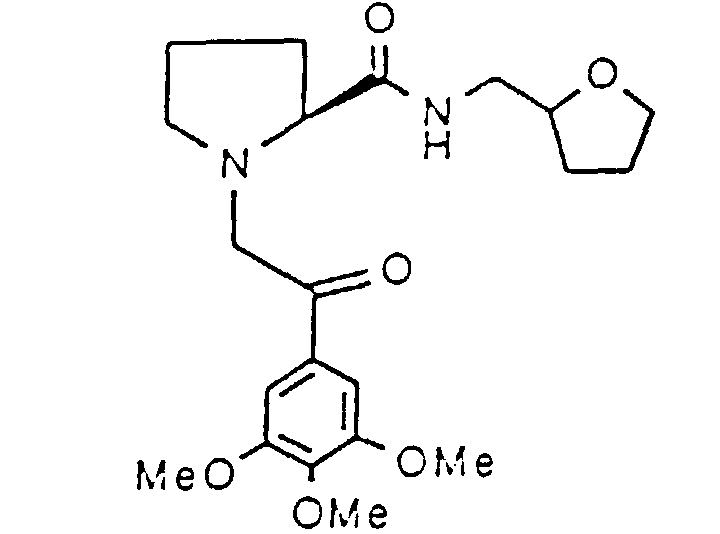
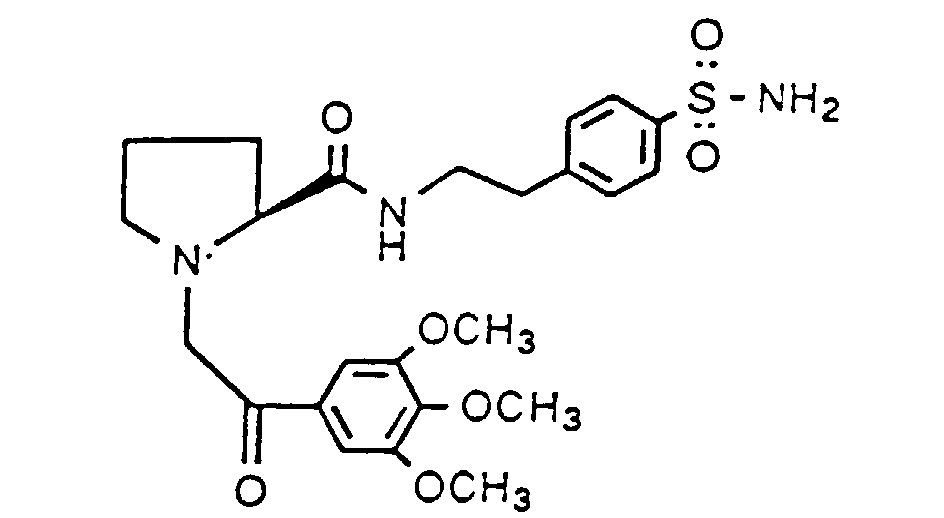
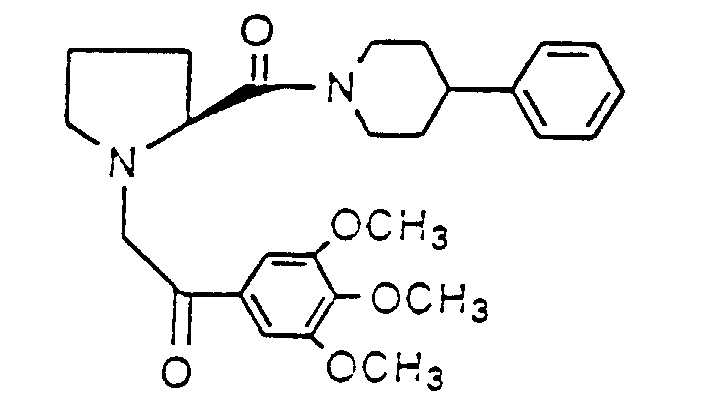
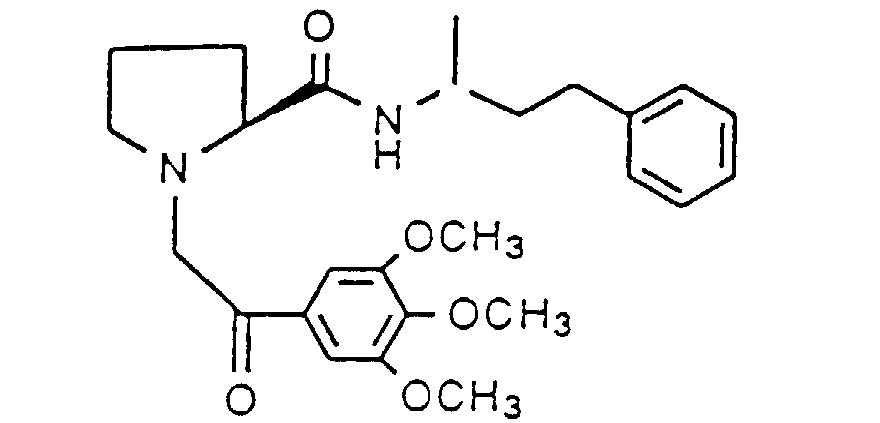
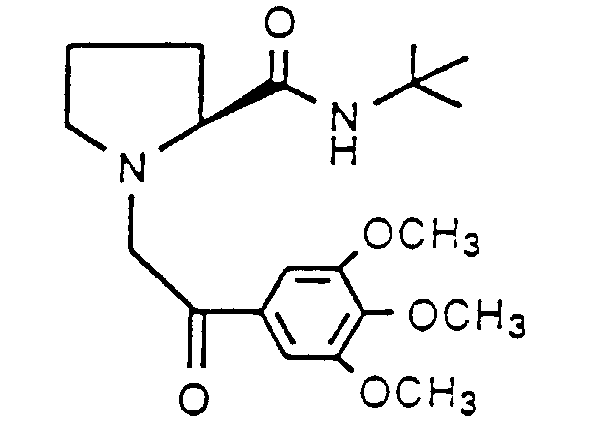
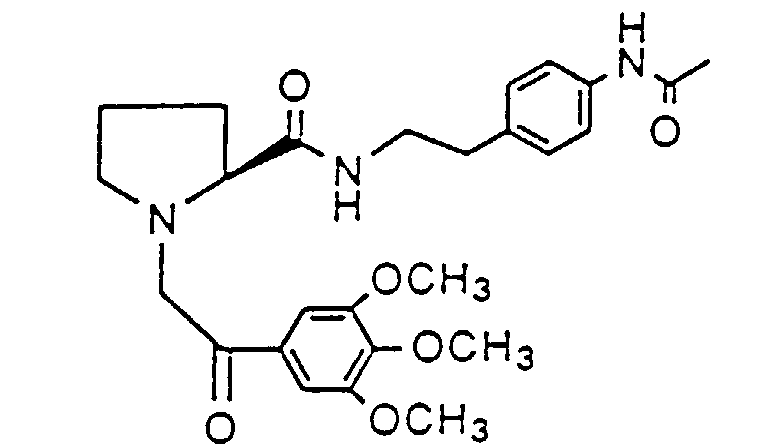
  • L-Proline 1-[2-(3,4,5-Trimethoxyphenyl)-2-Oxoethyl] 2-(4-(N-Acetyl)aminophenyl)ethylamide.
  • L-proline 1-[2-(3,4,5-trimethoxyphenyl)-2-oxoethyl] 2-(4-aminophenyl)ethylamide (100 mg, 0.23 mmol), and tetrahydrofuran (5 mL).
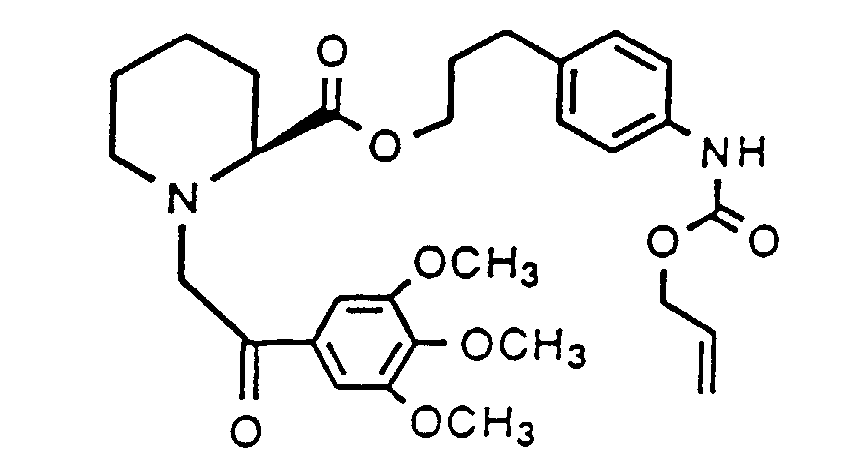
  • L-Proline 1-[2-(3,4,5-Trimethoxyphenyl)-2-Oxoethyl] 2-(4-(N-carboalloxy)aminophenyl)ethylamide.
  • the 300 MHz, 1 H NMR analysis of this compound was consistent with the structure.
  • Rf 0.42 (EtOAc)
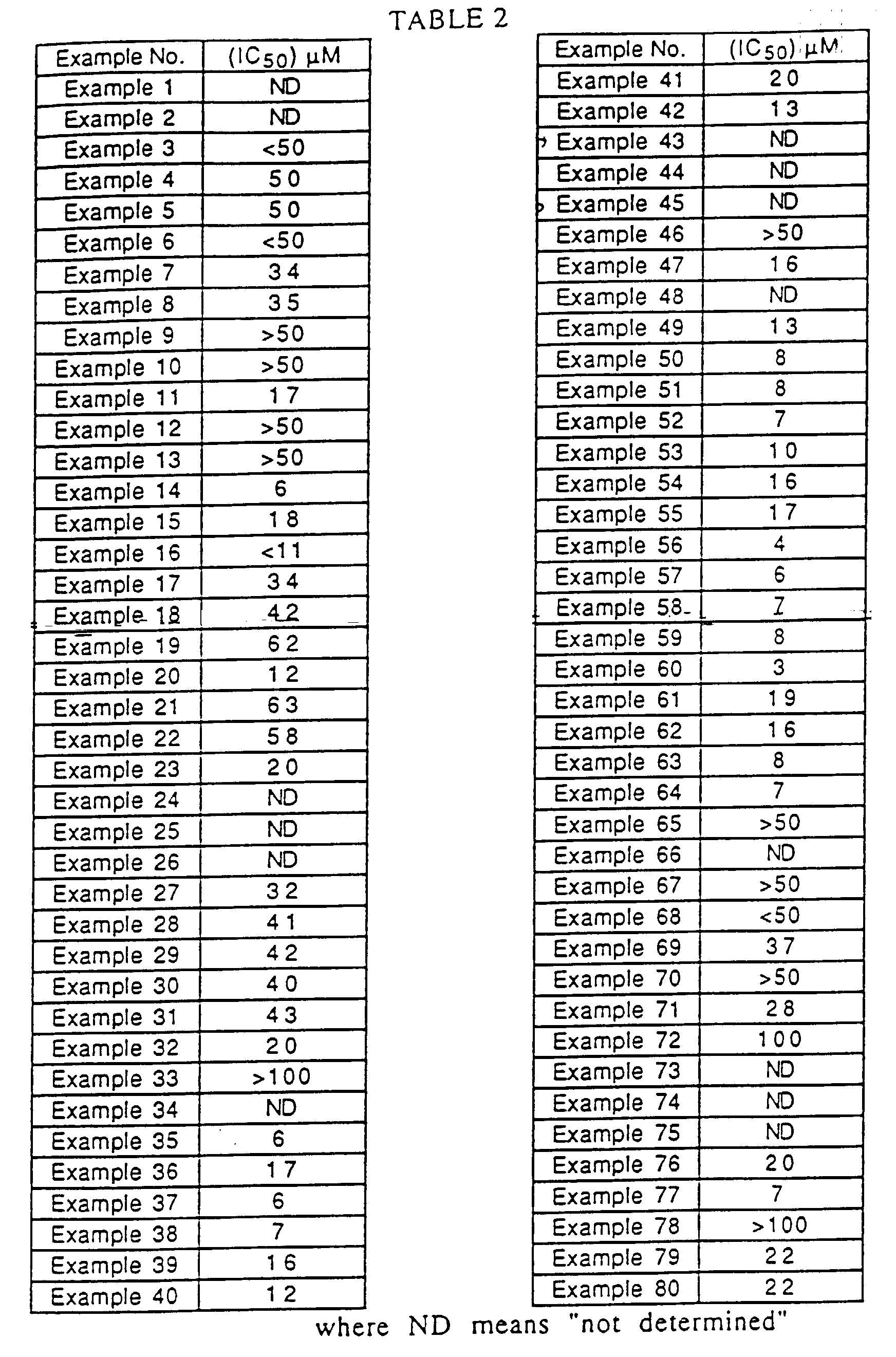
  • the immunosuppressive properties of the present compounds were evaluated in the following assays:
  • the three main reagents used are PPIase, a substrate for PPIase, and a selected inhibitor compound of the present invention.
  • the basic principle behind this assay is the conversion of the cis isomer of the substrate to the trans form, which conversion is catalyzed by PPIase. Essentially, inhibition of this PPIase activity is measured for the selected compounds.
  • a peptide chymotrypsin substrate containing a proline in the P2 position is only cleaved by chymotrypsin when the Phe-Pro bond is in the trans isomeric configuration. In the presence of excess chymotrypsin, all of the trans peptide isomers are cleaved within approximately five seconds, leaving only cis forms.
  • the cis peptide will spontaneously convert to the trans isomer at a slow rate.
  • the cis to trans conversion is catalyzed by isomerases at a much faster rate than this spontaneous conversion. Proteins with PPIase activity are examples of such isomerases.
  • the peptide is cleaved by chymotrypsin releasing p-nitroaniline which can be monitored at 390 nm. The rate of release is then calculated using a first order rate plus offset equation utilizing the ENZFITTER program (Leatherbarrow, BIOSOFT, Cambridge, United Kingdom).
  • a plastic cuvette In a plastic cuvette are added 950 ul of ice cold assay buffer (25 mM HEPES, pH 7.8, 100 mM NaCl), 10 uL of FKBP (2.5 uM in 10 mM Tris-Cl pH 7.5, 100 mM NaCl, 1 mM dithiothreitol), 25 ul of chymotrypsin (50 mg/ml in 1 mM HCl) and 10 ul of the test compound at various concentrations in dimethyl sulphoxide.
  • the reaction is initiated by addition of 5 ul of substrate (Succinyl-Ala-Phe-Pro-Phe-para-nitroanilide, 5 mg/ml in 235 mM LiCI in trifluoroethanol).
  • the absorbance at 390 nm versus time is monitored for 90 sec using a Beckman DU70 spectrophotometer.
  • the absorbance versus time data files are transferred to an IBM XT computer and the rate constants determined using the commercial Enzfitter program.
  • the uncatalyzed rate of conversion is measured and the uninhibited enzymatic rate determined.
  • the data are expressed as % Inhibition and are calculated as follows: where k obs is the rate in the presence of a selected test compound, k uncat is the rate in the absence of enzyme, and k uninh is the rate in the presence of enzyme and absence of inhibitor. Data are plotted as percent inhibition versus concentration of inhibitor.
  • Inhibition of mitogen-induced T-cell proliferation can be used to profile immunosuppressive activity of test compounds.
  • mitogen-induced T-cell proliferation was used to test the inhibitory potencies of select compounds of the present invention.
  • T-cells were stimulated by incubation with phytohemagglutinin (PHA) with binds to cell surface molecules, including the T-cell receptor. This stimulation results in proliferation which can be measured by incorporation of [ 3 H]-thymidine into cellular DNA.
  • PHA phytohemagglutinin
  • the immunosuppressive properties of the compounds of the present invention can be determined by adding various concentrations of the compounds to these cultures and measuring the effect on T-cell proliferation.
  • Fresh LeukoPaks were obtained from the New York Blood Center, New York, NY.
  • the cells including erythrocytes and leukocytes, were diluted with Hank's Balanced Salt Solution (HBSS) (GIBCO, Grand Island, NY) and layered over Lymphoprep (Nycomed Pharma AS, Oslo, Norway) in sterile 50 ml conical centrifuge tubes. Lymphocytes were isolated at the Hank's/Nycomed interface after centrifugation at 2000 X g, 4 oC for 15 min. The lymphocytes were washed with Minimal Essential Medium (GIBCO) containing 2% fetal bovine serum (FBS) (Sigma Chemical Co., St. Louis, MO), 1% HEPES buffer (GIBCO) and 1% Penicillin-Stretomycin solution (GIBCO).
  • HBSS Hank's Balanced Salt Solution
  • FBS fetal bovine serum
  • HEPES buffer 1% Penicillin-Stretomycin solution
  • T-cells were further purified essentially by sheep erythrocyte (SRBC) rosetting as described by Morimoto et al., 1983, J. Immunol. 130:157.
  • the isolated lymphocytes were adjusted to 2 X 10 7 cells/ml and 5 ml aliquots of the cell suspension were incubated for 10 minutes at room temperature with 5 ml of a 5% SRBC (Cappel, Organontechnika Corp., West Chester, PA) suspension.
  • the cells were gently pelleted by centrifugation at 300 rpm for 10 minutes, followed by a 1 hour incubation at room temperature to allow rosette formation.
  • the cells were gently resuspended, layered over Lymphoprep and centrifuged for 30 minutes at 500 X g.
  • the pellet, containing rosetted T-cells and SRBC was treated with ice cold buffered ammonium chloride (GIBCO) to lyse the erythrocytes. T-cells were was
  • T-cells were resuspended at 2 X 10 6 cells /ml in complete culture medium composed of RPMI-1640 (Whittaker Bioproducts, Walkerville, MD) with 10% FBS (Sigma), 2 mM L-glutamine (GIBCO), 1% Penicillin-Streptomycin (GIBCO) and 15 mM HEPES (GIBCO).
  • complete culture medium composed of RPMI-1640 (Whittaker Bioproducts, Walkerville, MD) with 10% FBS (Sigma), 2 mM L-glutamine (GIBCO), 1% Penicillin-Streptomycin (GIBCO) and 15 mM HEPES (GIBCO).
  • GIBCO 2 mM L-glutamine
  • Penicillin-Streptomycin GIBCO
  • 15 mM HEPES 15 mM HEPES
  • the compounds of this invention were dissolved in dimethylsulfoxide at 10 mM and various dilutions in complete medium were added in duplicate wells (0.05 ml/well). The plates were incubated at 37 °C in a humidified atmosphere of 5% carbon dioxide and 95% air for 72 hours.
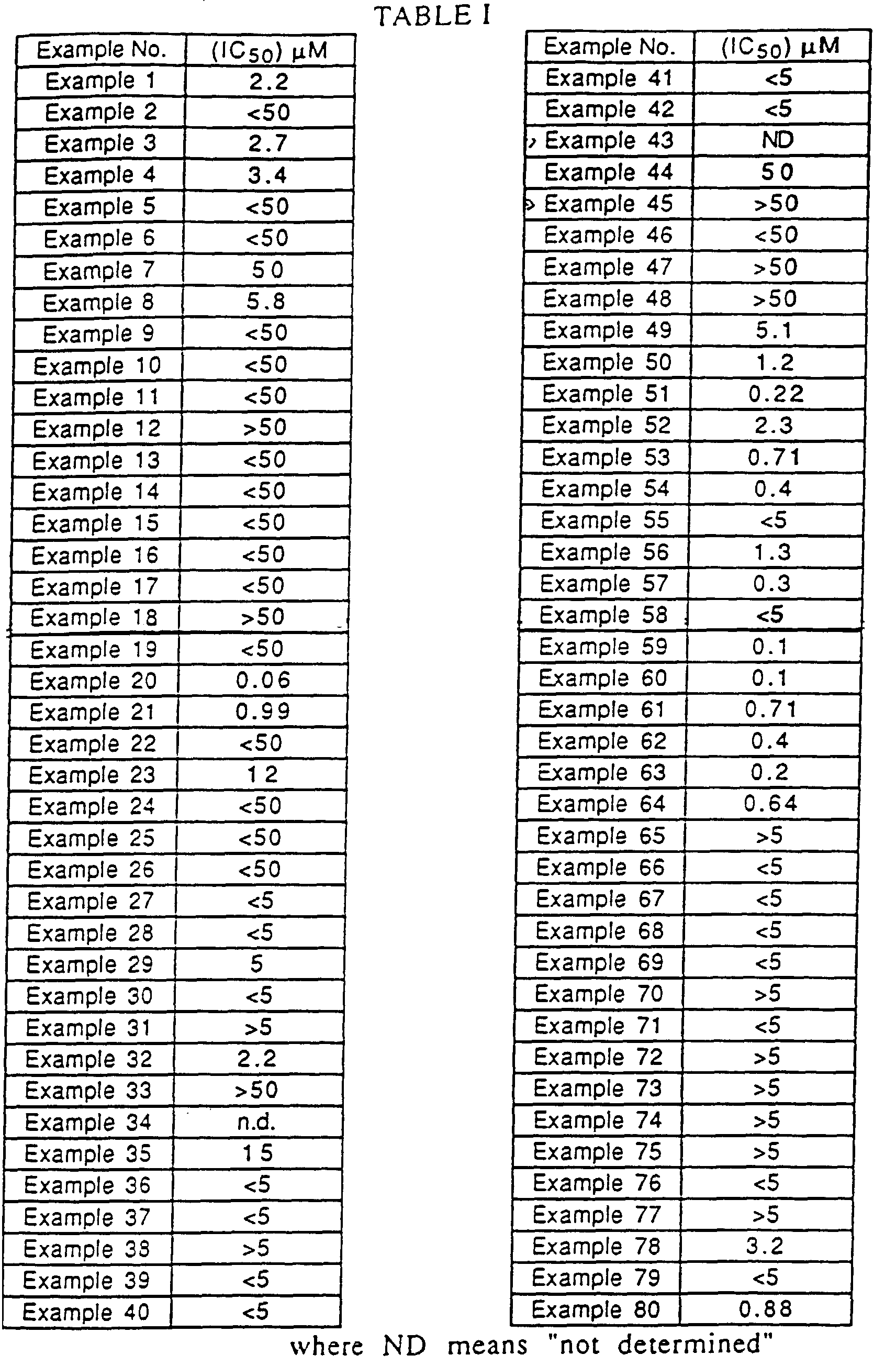
  • Proliferation was assessed by measurement of [ 3 H]-thymidine incorporation. During the last 6 hours of incubation, the cells were pulse labelled with 1 ⁇ Ci/well of [ 3 H]-thymidine (New England Nuclear, Boston, MA). The cells were harvested onto glass fiber paper using a plate harvester and the radioactivity incorporated into cellular DNA corresponding to individual wells was measured by standard liquid scintillation counting methods. The mean counts per minute (CPM) of replicate wells was calculated and linear regression analysis of mean CPM versus compound concentration was used to determine the concentration of compound which would inhibit [ 3 H]-thymidine incorporation of T-cells by 50% (IC 50 ).
  • CPM mean counts per minute
  • NF-AT transcription factor-associated transcription factor
  • these factors are involved in regulation of gene expression required for immunologic activation. Some of these transcription factors appear to have functions in a wide variety of cell types.
  • NF-AT is found primarily in T-cells and its role is restricted to early gene activation.
  • NF-AT activity is inhibited by the immunosuppressant drugs, Cyclosporin A and FK506 (Schreiber and Crabtree, 1992, Immunology Today 13:136).
  • FGL-5 is a cloned line of stably transfected Jurkat T-cells that contain a construct in which three tandem copies of the NF-AT DNA binding site direct transcription of the lacZ gene, encoding ⁇ -galactosidase (Fiering et al., 1990, Genes & Development 4:1823).
  • ⁇ -galactosidase encoding ⁇ -galactosidase (Fiering et al., 1990, Genes & Development 4:1823).
  • phorbol esters which activate protein kinase C and calcium ionophore to raise the intracellular calcium concentration
  • transcriptionally active NF-AT is produced in T-cells. In T-cells, this normally leads to the expression of IL-2, T-cell growth factor.
  • NF-AT activation leads of the production of ⁇ -galactosidase which can be detected using an appropriate substrate.
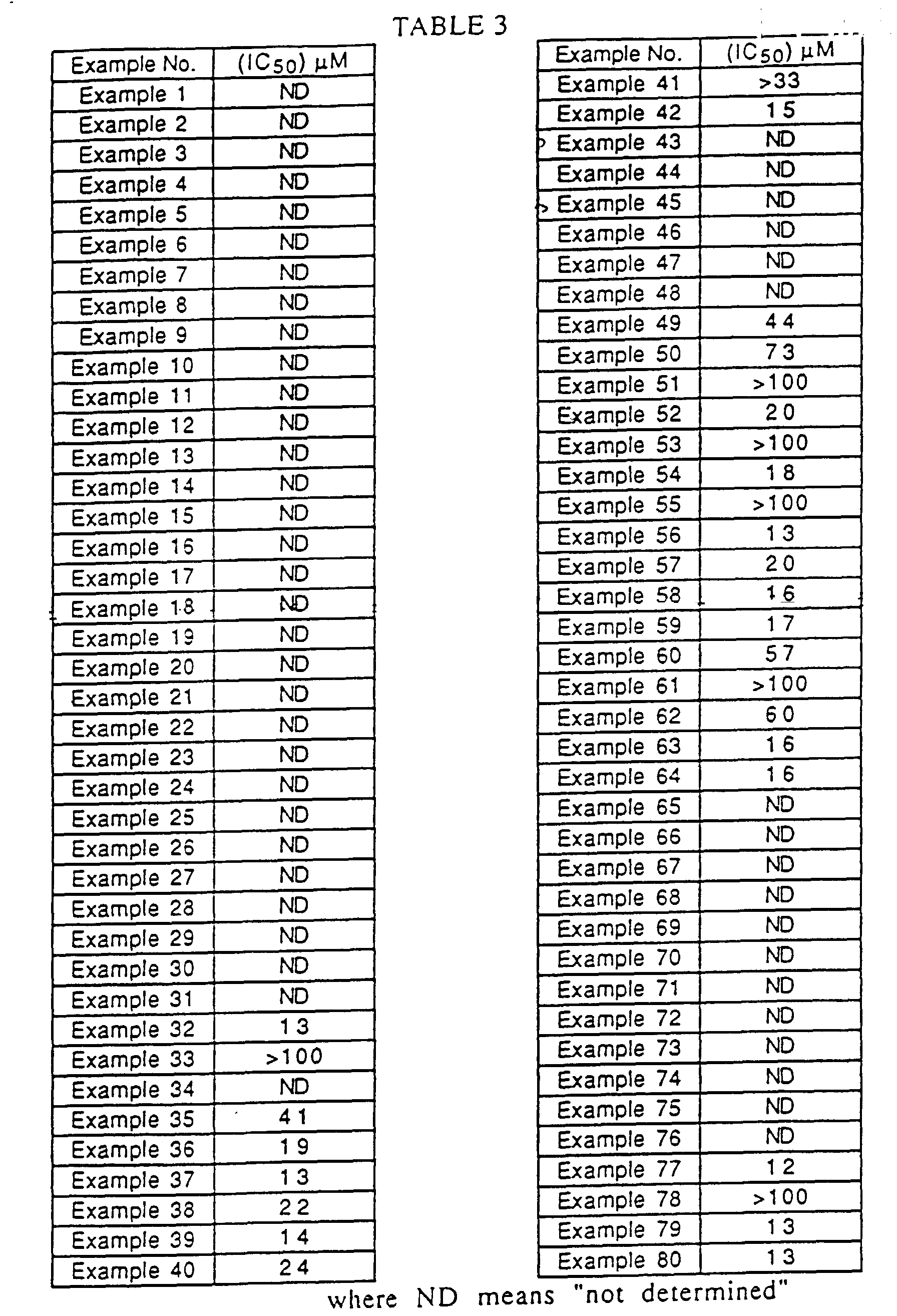
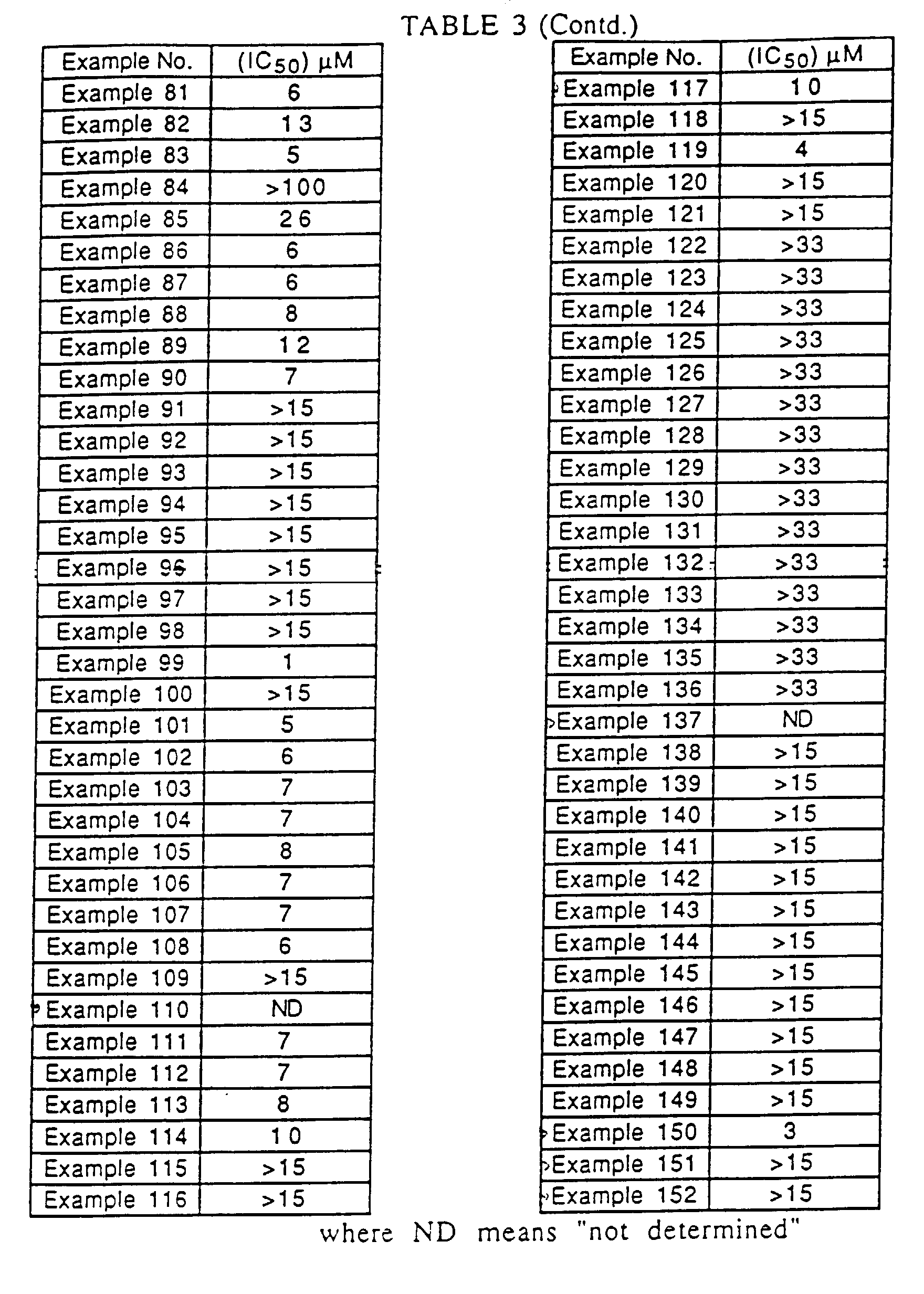
  • FGL-5 cells were cultured with phorbol ester, calcium ionophore and the compounds of the present invention to measure inhibition of ⁇ -galactosidase activity, as shown below.
  • FGL-5 cells were maintained in medium consisting of RPMI-1640 with 10% FBS, 2 mM L-glutamine, 1% Penicillin-Streptomycin and 15 mM HEPES buffer. The assays were done with exponentially growing cells whose density was not greater than 0.5 million cells/ml. The cells were resuspended to 3 million cells/ml in medium and 0.1 ml was added to wells of a 96-well plate.
  • the compounds of the present invention were dissolved in either ethanol or dimethylsulfoxide at 10 mM and 0.05 ml/well of various dilutions in medium were added to cells in duplicate wells.
  • Treatment controls consisted of duplicate wells to which 0.05 ml/well of either medium, ethanol or dimethylsulfoxide was added. The ethanol and dimethyl sulfoxide were at the same concentration as was used for the compounds.
  • Cells were incubated with compounds at room temperature for 10 - 15 minutes. Phorbol dibutyrate (Sigma) and Ionomycin (Calbiochem) were dissolved at 50 ⁇ g/ml and 2 mM, respectively and stored at -70 °C.
  • FGL-5 cells were stimulated by diluting these reagents with medium to 200 ng/ml and 8 ⁇ M, respectively and adding of 0.05 ml/well.
  • 0.05 ml/well of medium was added to duplicate wells. The plates were incubated overnight (16-18 hours) at 37 °C in a humidified atmosphere of 5% CO 2 and air.
  • ⁇ -galactosidase activity was measured as the fluorescence generated by the cleavage of 4-methyl umbelliferyl- ⁇ -D-galactoside (Sigma) at the ⁇ -galactoside bond. After overnight incubation, the cells were centrifuged at 500 x g for 3 minutes in the 96-well plates and washed 3 times with PBS.
  • the cells were then resuspended in 0.18 ml/well of reaction medium containing 100 mM sodium phosphate buffer, pH 7.0, 10 mM potassium chloride, 1 mM magnesium sulfate, 0.1% Triton X-100 (Pierce, Rockford, IL), and 0.5 mM 4-methylumbelliferyl- ⁇ -D- galactoside.
  • the fluorescence at 460 nm using 355 nm excitation was measured at intervals over 1-2 hours (during which fluorescence increased linearly with time) with a LS50 Luminescence Spectrometer (Perkin Elmer).
  • % Inhibition 1-(fluorescence with compound - unstimulated control) (fluorescence with solvent alone - unstimulated control) X 100
  • results of this assay presented in TABLE 3 are representative of the intrinsic immunosuppresive activity of the compounds of the present invention.
  • Compounds that inhibited NF-AT directed ⁇ -galactosidase expression by stimulated FGL-5 cells with IC 50 of 10 ⁇ M or less also inhibited mitogen induced T-cell proliferation.
  • GVHR graft versus host response
  • graft T-cells When given systemically in sufficient numbers, the graft T-cells cause a progressive, generally fatal, wasting syndrome.
  • a local, nonfatal GVHR marked by enlargement of the draining popliteal lymph nodes, ensues when graft T-cells are administered via the footpad as described by Ford et al., 1970, Transplantation 10 :258.
  • the GVHR is regarded as a correlate of allograft rejections where specific T-cells of either host or allograft origin are activated after recognition of allogeneic MHC gene product, leading to an immune inflammatory response which ultimately results in the destruction (rejection) of the allograft.
  • PBS phosphate buffered saline
  • mice received intraperitoneal injections (0.2 ml/injection) of either ethanol:olive oil alone (vehicle control group) or compound at 100 mg/kg per day, beginning on the same day as the spleen cell injections.
  • the magnitude of the GVHR was expressed as the ratio of the mean weight of lymph nodes from the limb injected with semi-allogeneic C57B1/6 cells divided by the mean weight of lymph nodes from the limb injected with syngeneic BDF1 cells.

Landscapes

  • Chemical & Material Sciences (AREA)
  • Organic Chemistry (AREA)
  • Health & Medical Sciences (AREA)
  • General Health & Medical Sciences (AREA)
  • Medicinal Chemistry (AREA)
  • Life Sciences & Earth Sciences (AREA)
  • Proteomics, Peptides & Aminoacids (AREA)
  • Molecular Biology (AREA)
  • Genetics & Genomics (AREA)
  • Biophysics (AREA)
  • Biochemistry (AREA)
  • Veterinary Medicine (AREA)
  • Chemical Kinetics & Catalysis (AREA)
  • Public Health (AREA)
  • Animal Behavior & Ethology (AREA)
  • Pharmacology & Pharmacy (AREA)
  • Nuclear Medicine, Radiotherapy & Molecular Imaging (AREA)
  • General Chemical & Material Sciences (AREA)
  • Pain & Pain Management (AREA)
  • Bioinformatics & Cheminformatics (AREA)
  • Engineering & Computer Science (AREA)
  • Rheumatology (AREA)
  • Pharmaceuticals Containing Other Organic And Inorganic Compounds (AREA)
  • Acyclic And Carbocyclic Compounds In Medicinal Compositions (AREA)
  • Nitrogen And Oxygen Or Sulfur-Condensed Heterocyclic Ring Systems (AREA)
  • Medicines That Contain Protein Lipid Enzymes And Other Medicines (AREA)
  • Nitrogen Condensed Heterocyclic Rings (AREA)
  • Hydrogenated Pyridines (AREA)
  • Plural Heterocyclic Compounds (AREA)
  • Pyrrole Compounds (AREA)

Abstract

A class of compounds which suppress human T-lymphocyte proliferation is disclosed. The active compounds essentially contain at least the following structure: <CHEM>

Description

Background
The invention relates to compounds for controlling inflammatory processes in humans through mediation of inflammatory cell proliferation. More particularly, the present invention relates to a class of novel compounds which bind to the FKBP-type family of immunophilins and which are useful for suppressing T-lymphocytes.
EP - 0 038 758 discloses amino acid derivatives which inhibit enkephalinase and have analgesic and hypotensive activity.
In IL Farmaco, Ed. Sc., Vol. 43 (12), pp. 989-1003, R. Ciabatti and coworkers describe the synthesis of prolyl derivatives of enalapril as potential angiotensin converting enzyme inhibitors. However, the tested compounds showed no in vivo activity and only a weak in vitro inhibitory activity.
Compounds which retard the production of cytokines such as interleukin-2 (IL-2) are known. For instance, U.S. Patent No. 4,764,503 assigned to Sandoz Ltd., Basel, Switzerland, describes a compound generically referred to as Cyclosporin A (hereinafter referred to as "CsA"), and U.S. Patent No. 4,894,366 assigned to Fujisawa Pharmaceuticals, Osaka, Japan, describes a compound they designate as "FK506". Both CsA and FK 506 are claimed to inhibit IL-2 production and bind to cellular receptor proteins that possess Peptidyl Prolyl Isomerase (PPlase) activity (Johansson et al., 1990, Trans-plantation 50:10017).
It was initially postulated by those skilled in the art that the specific binding by such compounds to PPlase type proteins led to inhibition of the protein's isomerase activity which, in turn, led to inhibition of T-cell proliferation. Thus, these PPlase type proteins were referred to as "immunophilins", with the cellular receptor proteins that bound to CsA and FK506 being referred to as "cyclophilin" and "FK506 binding protein", respectively. FK506 binding protein is also simply referred to as "FKBP" (Harding et al., 1989, Nature 341:758).
Recent publications report that the inhibition of PPlase activity, in and of itself, is not sufficient for immunosuppressant activity. However, there is support in the literature that inhibitory binding to PPlase-type enzymes probably contributes to ultimate T-cell suppression (Sigal et al. 1991, J. Exp. Med. 173:619).
This disclosure presents a new class of synthetic compounds that both suppress the proliferation of T-cells and inhibit the isomerase activity of the FKBP-type of PPIases.
CsA, a cyclic undecapeptide, has received FDA approval for use as an adjunct to organ transplant procedures. However, CsA is administered with caution due to its known toxicity. Currently, CsA is prescribed in situations where the risks of non treatment outweigh the risks of its therapeutic complications.
As a result, efforts to expand the application of CsA into non life threatening indications such as chronic maintenance of autoimmune disorders have been limited by the well-known side effects of this drug. The use of CsA leads to a variety of disorders including: nephrotoxicity, such as impairment of glomerular filtration and irreversible interstitial fibrosis (Kopp et al., 1991, J. Am. Soc. Nephrol. 1:162); neurological deficits, such as involuntary tremors, or non-specific cerebral angina such as non-localized headaches (De Groen et al, 1987, N. Engl. J. Med. 317:861); and vascular hypertension with complications resulting therefrom (Kahan et al., 1989, N. Engl. J. Med. 321:1725).
Recent efforts to investigate the cause of the adverse effects of CsA administration have centered on the role of CsA breakdown into toxic metabolites (Bowers et al., 1990, Clin. Chem. 36:1875; Burke et al., 1990, Transplantation 50:901). The prevailing thought is that CsA toxicity is due to such metabolites and not due to the nature of the CsA binding to the PPIase, cyclophilin (Akagi et al., 1991, J. Int. Med. Res. 19:1; Ryffel et al., 1988, Transplantation 46:905).
Thus, inhibitor compounds that do not resemble CsA structurally, yet bind to PPIases, should be more amenable to therapeutic applications. Such non-toxic immunosuppressors would benefit the art, especially for chronic administration such as required in the treatment of autoimmune disorders.
The compound FK506 is structurally different from CsA and does not produce the same type of toxic metabolites. FK506 has been shown to be effective in some transplant patients who do not respond to CsA (Tucci et al., 1989, J. Immunol. 143:718).
However, testing of FK506 in humans was delayed due to severe vasculitis observed in treatment regimens in dogs and baboons (Collier et al., 1988, Transplant Proc. 20:226). Furthermore, other clinical side effects and complications of FK506 administration are being reported (Frayha et al., 1991, Lancet 337:296; Kitahara et al., 1991, Lancet 337:1234). It has also been reported that "overall, the absolute rate of clinical rejection in FK506 [post-organ transplantation] patients is only slightly lower than with current standard therapies" (Holechek, 1991, Anna. J. 18:199).
In an attempt to alleviate the FK506 side effects, many minor modifications to the base structure have been reported. For example, U.S. Patent No. 5,057,608 assigned to Merck & Co. and WIPO Publication No. WO89/05304 assigned to FISONS PLC Inc. both disclose chemical variations of the FK506 compound.
To date only a few studies on the metabolism of FK506 have been published, and little information has been reported on the toxicity of its metabolites (Johansson et al., 1990, Transplantation 50:1001; Christians et al., 1991, Clinical Bio-chemistry 24:271; Lhoest et al., 1991, Pharmaceutica Acta Helveticae 66:302). Since it is likely that the pattern of metabolism of the FK506 analogs and derivatives are similar to the parent compound, it is also likely that many of the side effects of FK506 will be shared by the derivatives.
As is true for CsA, the toxicity of FK506 is postulated to be based on its structure and not due to its binding activity with the immunophilin FKBP. It is further postulated that the toxicity of compounds such as CsA and FK506 are due to various chemical groups found in these structures which do not participate in the immunosuppressive activity, such as those groups which result in the toxic metabolites of CsA bio-processing. Thus, relatively compact molecules which do not resemble either CsA or FK506, and which have both immuno-suppressive and PPIase binding activity should be free of side effects associated with CsA and FK506.
Furthermore, the compound FK506 and its derivatives (for example such as disclosed in WIPO Publication No. WO92/00278 assigned to VERTEX Pharmaceuticals Inc.) all share the following homo-proline (6-membered, proline-like) dicarbonyl backbone stucture:
Figure 00040001
FK506 and its derivatives all preferably rely on the two carbonyl groups at positions 8 and 9, with the presence of the carbonyl at the number 8 carbon being essential. The presence of the double bond oxygen in proximity to number 7 nitrogen creates an amide type linkage between the nitrogen at position 7 and carbon at position 8.
Recent reports have suggested that the nitrogen at position 7, along with the number 8 and 9 carbonyl groups of FK506 represent "a twist-bond amide" (Michnick et al., 1991, Science 252:836). Based on the data presented in the Michnick et al. article, it was assumed and accepted by those skilled in this art that the carbonyl at position 8 was the functional species. Jorgensen, 1991, Science 254:954, teaches that this keto-amide moiety is critical to activity because the moiety allegedly serves as a transition state analog.
The present description proposes that the carbonyl group at the number 8 position is non-essential for T-cell suppression, and the compounds of the present invention do not rely on this carbonyl group.
The present invention presents a novel class of synthetic inhibitor compounds. The novel class includes synthetic 2-oxoethylene derivatives that bind to human FKBP-type PPIases and demonstrate human peripheral T-lymphocyte inhibitory activity. Moreover, the absence of a carbonyl attached directly to the nitrogen in the proline ring (see formula II, below) provides compounds that possess stability to hydrolysis by proteases at the N-terminus of proline.
It is therefore an object of the present invention to provide for compounds and compositions containing such 2-oxo- ethylene derivatives for suppression of pathological and abnormal human peripheral T-lymphocyte proliferation.
It is also an object of the present invention to provide a novel class of compounds suitable for therapeutic compositions designed to suppress pathological immune responses, such as the hyperimmune response in organ transplantation rejection, the self-destructive autoimmune diseases, and the overproduction and excessive proliferation of immune cells such as in infectious disease states.
More specific objects include provisions for compounds, compositions and methods for treatment and prevention of rejection of transplanted organs or tissues such as kidney, heart, lung, liver, bone marrow, skin grafts, and corneal replacement.
It is a further object to provide compounds, compositions and methods for use in the treatment of autoimmune, degenerative, inflammatory, proliferative and hyperproliferative diseases, such as rheumatoid arthritis, osteoarthritis, other degenerative joint diseases, joint inflammation such as associated with infectious diseases such as suppurative arthritis, and secondary arthritis such as those associated with gout, hemochromatosis, rheumatic fever, Sjörgens syndrome and tuberculosis.
Another object is to provide compounds, compositions and methods for use in the treatment of lupus erythematosus, systemic lupus erythematosus, Hashimoto's thyroiditis, multiple sclerosis, myasthenia gravis, type 1 diabetes, uveitis, nephrotic syndrome, and of cutaneous manifestations of immunologically-mediated diseases such as psoriasis, atopic dermatitis, contact dermatitis, eczematous dermatitides, seborrheic dermatitis, lichen planus, pemphigus, bollous pemphigoid, epidermolysis bullosa, urticaria, angioedemas, vasculitides, erythemas, cutaneous eosinophilias, and alopecia areata.
Yet another object is to provide compounds, compositions and methods for use in the treatment of abnormal T-cell proliferation such as lymphocytic leukemia; Hodgkin's disease, especially those subtypes involving abnormal T-cell subpopulations; non-Hodgkin's lymphomas, such as mycosis fungoides, convulated lymphocytic lymphoma, and immunoblastic sarcoma; and chronic lymphadenitis.
The above lists are non-limiting, and one skilled in the art could easily adapt the compounds, compositions and methods of the present invention to other indications, such adaptations being within the spirit and scope of the invention which will be described hereinbelow.
SUMMARY OF THE INVENTION
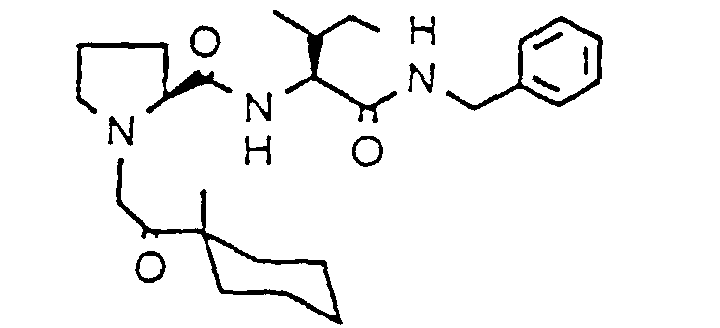
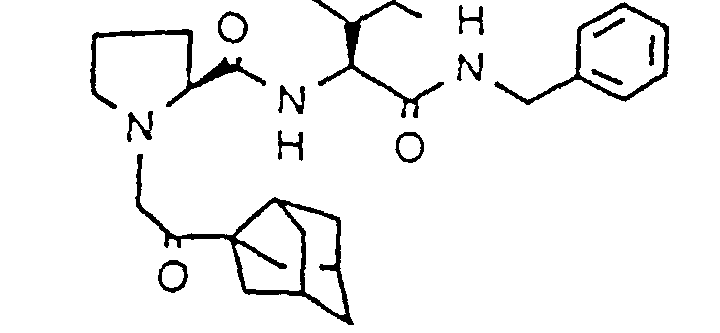
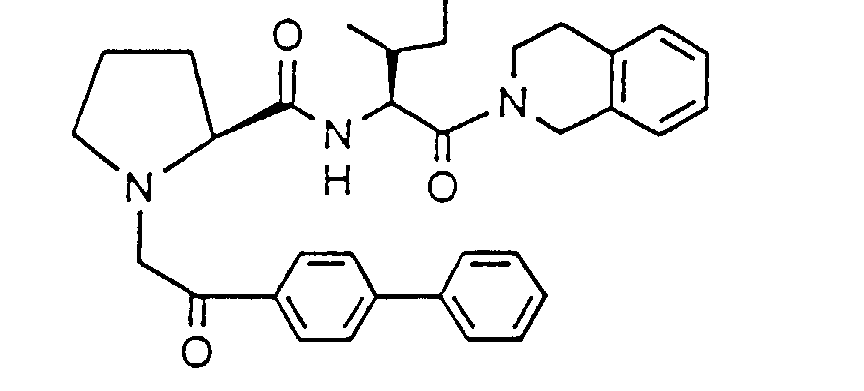
The presently claimed invention relates to compounds comprising at least one of the following structures:
Figure 00060001
wherein
  • R1 is
  • a) hydrogen,
  • b) linear or branched alkyl (C1-C8) which may be substituted independently or simultaneously up to two times by
  • i) hydroxy,
  • ii) phenyl which may be substituted by straight or branched alkyl (C1-C8), or straight or branched alkoxy (C1-C6),
  • iii) cycloalkyl (C3-C10) which may be substituted by straight or branched alkyl (C1-C8), or straight or branched alkoxy (C1-C6),
  • iv) bicycloalkyl (C6-C12) which may be substituted by straight or branched alkyl (C1-C10), or straight or branched alkoxy (C1-C6),
  • v) tricycloalkyl (C7-C14) which may be substituted by straight or branched alkyl (C1-C8), or straight or branched alkoxy (C1-C6),
  • vi) tetracycloalkyl (C10-C14), which may be substituted by straight or branched alkyl (C1-C8), or straight or branched alkoxy (C1-C6), or
  • vii) morpholinyl,
  • c) alkene (C3-C10), diene (C4-C10), or triene (C8-C18), which may be substituted independently or simultaneously, up to three times by
  • i) phenyl,
  • ii) straight or branched alkyl(C1-C6), or
  • iii) straight or branched alkoxy (C1-C6),
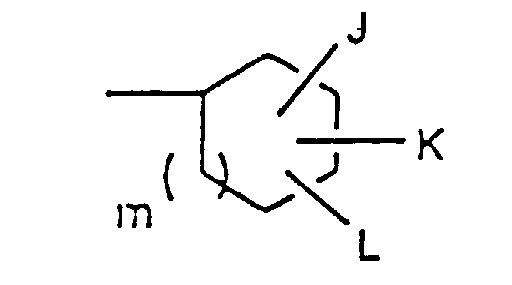
  • d) cycloalkyl (C5-C10), or the cycloalkyl fragment
    Figure 00060002
  • where
    • m is an integer of 0, 1, or 2,
    • J, K, and L are independently or simultaneously
    • i) hydrogen,
    • ii) straight or branched alkyl (C1-C5), which may be substituted by phenyl, or straight or branched alkoxy (C1-C6),
    • iii) straight or branched alkoxy (C1-C5),
    • iii) phenyl, or
    • iv) phenyl substituted by straight or branched alkyl (C1-C6), or chlorine, or straight or branched alkoxy (C1-C6),
  • e) bicycloalkyl (C7-10), tricycloalkyl (C7-14), tetracycloalkyl (C10-C16), or pentacycloalkyl (C11-C20), which may be independently or simultaneously substituted up to 3 times with straight or branched alkyl (C1-C6), or straight or branched alkoxy (C1-C6), or phenyl,
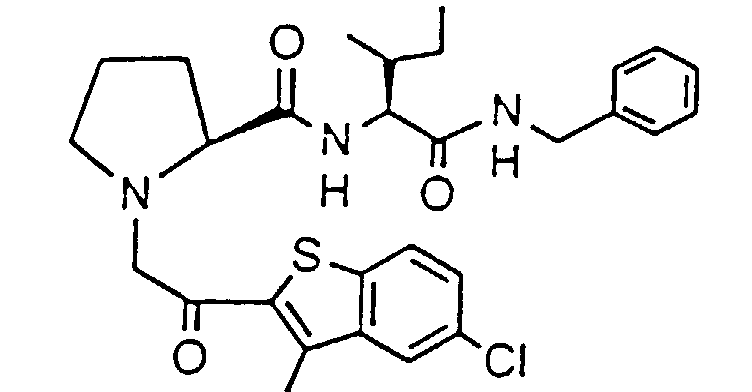
  • f) the aryl derivatives tetrahydronaphthyl, benzothienyl, benzofuryl, benzopyranyl, furyl, pyridyl, pyranyl, 1,3-oxazolyl, or naphthyl, said aryl derivatives may be independently or simultaneously substituted up to two times by
  • i) straight or branched alkyl (C1-C6),
  • ii) straight or branched alkoxy (C1-C6),
  • iii) halogen, where halogen is fluoro, chloro, bromo, or iodo,
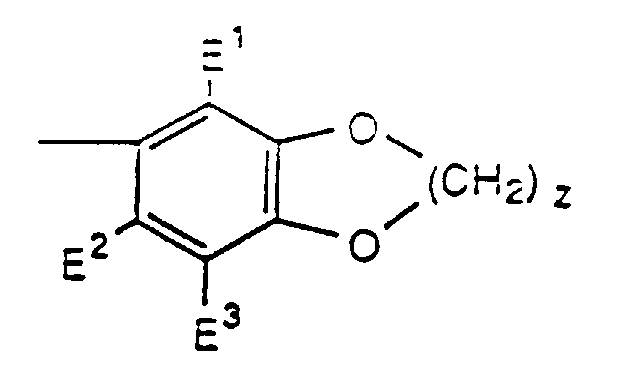
  • g) the piperonyl fragment
    Figure 00070001
    where
  • z is an integer of 1, or 2,
  • and E1, E2, and E3 can independently or simultaneously be hydrogen, straight or branched alkyl (C1-C6), straight or branched alkoxy (C1-C6), or chlorine, or
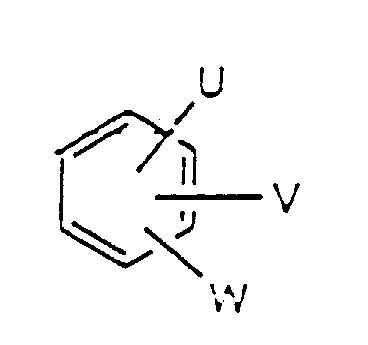
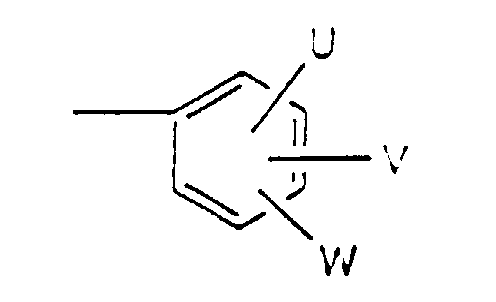
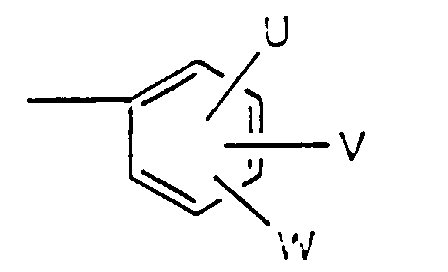
  • h) the aryl derivative
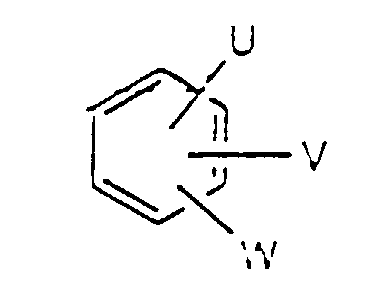
    Figure 00070002
    where
  • U, V, and W can be independently or simultaneously
  • i) hydrogen,
  • ii) straight or branched alkyl (C1-C6), straight or branched alkoxy (C1-C6), phenyl, or phenoxy, these groups may be substituted by phenyl, straight or branched alkoxy (C1-C6), or phenoxy,
  • iii) hydroxy,
  • iv) halogen,
  • v) nitro, or
  • vi) benzoyl;
  • Y is a covalent bond, oxygen, NR7, where R7 is hydrogen, in addition,
  • R1-Y- may also be
    Figure 00080001
    where
  • k is an integer of 1 or 2,
  • R8 is
  • a) hydrogen,
  • b) carboalkoxy with a straight or branched alkoxy (C1-C6),
  • c) straight or branched alkyl (C1-C6) which may be substituted by phenyl, or straight or branched alkoxy (C1-C6),
  • d) phenyl, or phenyl substituted by halogen,
  • R9 is phenyl which may be substituted by straight or branched alkyl (C1-C6);
  • R2 and R3 are defined as follows: one of R2 and R3 are hydrogen, and the other is hydrogen or straight or branched alkyl (C1-C6);
  • n is an integer of 2 or 3;
  • A is NR10, where R10 is hydrogen or straight or branched alkyl (C1-C6);
  • R4 and R5 may independently or simultaneously be
  • a) hydrogen,
  • b) straight or branched alkyl (C1-C8) which may be substituted by
  • i) phenyl, or phenyl substituted by hydroxy or alkoxy (C1-C2),
  • ii) cycloalkyl (C5-C6),
  • iii) alkylthio (C1-C6),
  • iv) carboxamido,
  • v) straight or branched alkoxy (C1-C6) which may be substituted by phenyl,
  • c) phenyl, or
  • d) cycloalkyl (C3-C7), which may be substituted by straight or branched alkyl (C1-C6),
  • in addition, R4 and R5, taken together can be -(CH2)r-- where
  • r is an integer of 4 or 5;
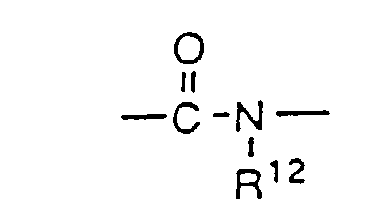
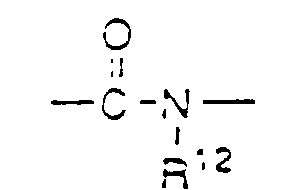
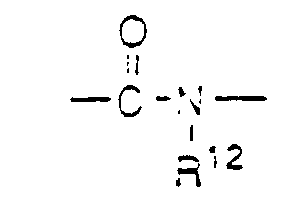
  • G is one of the following fragments -HC=CH-, -CH2·CH2-, or -CH2- or the following fragment
    Figure 00090001
    where R12 is hydrogen or methyl, such that the carbonyl group is attached to the carbon bearing R4 and R5 and that NR12 is connected to R6;
  • p is an integer of 0 or 1;
  • R6 is
  • a) hydrogen,
  • b) straight or branched alkyl (C1-C6) which may be substituted by
  • i) phenyl,
  • ii) phenyl substituted with straight or branched alkyl (C1-C6), straight or branched alkoxy (C1-C6), or
  • iii) pyridyl, or
  • c) phenyl, naphthyl, furyl, thiofuryl, cycloalkyl (C5-C8), bicycloalkyl (C6-C10), tricycloalkyl (C7-C12), tetracycloalkyl (C10-C16), pentacycloalkyl (C11-C20) or benzoyl, such groups may be substituted by
  • i) an amine,
  • ii) amino substituted by a straight or branched alkoxycarbonyl (C1-C6) that may be substituted by phenyl or an alkene (C2-C6),
  • iii) amino substituted by alkanoyl (C1-C6), or benzoyl,
  • iv) sulfonamide (-SO2NH2), or
  • v) hydroxy, or a straight or branched alkoxy (C1-C6), that may be substituted by phenyl;
  • and pharmaceutically acceptable salts thereof.
    Included within the scope of the present invention are pharmaceutically acceptable salts of the above mentioned compounds. Pharmaceutically acceptable salts can be derived from mineral acids, carboxylic acids or sulfuric acids preferred from hydrochloric acid, hydrobromic acid, sulfuric acid, methane sulfuric acid, ethane sulfonic acid, toluene sulfonic acid, benzene sulfonic acid, naphthalene disulfonic acid, acetic acid, propionic acid, lactic acid, tartaric acid, citric acid, fumaric acid, maleic acid or benzoic acid. Most preferred are the hydrochlorides.
    In the case of the present compounds being carboxylic acids or containing acidic functional groups, the invention includes metal salts and ammonium salts. Preferred are sodium, potassium or ammonium salts. The compounds of this invention exist as stereoisomeric forms, which either behave like image and mirror image (enantiomers) or not (diastereomers). Included within the scope of the invention are the enantiomers, the racemic form as well as diastereomeric mixtures. Enantiomers as well as diastereomers can be separated by methods known to those skilled in the art (compare E.L. Eliel, Stereochemistry of Carbon Compounds, McGraw Hill, 1962).
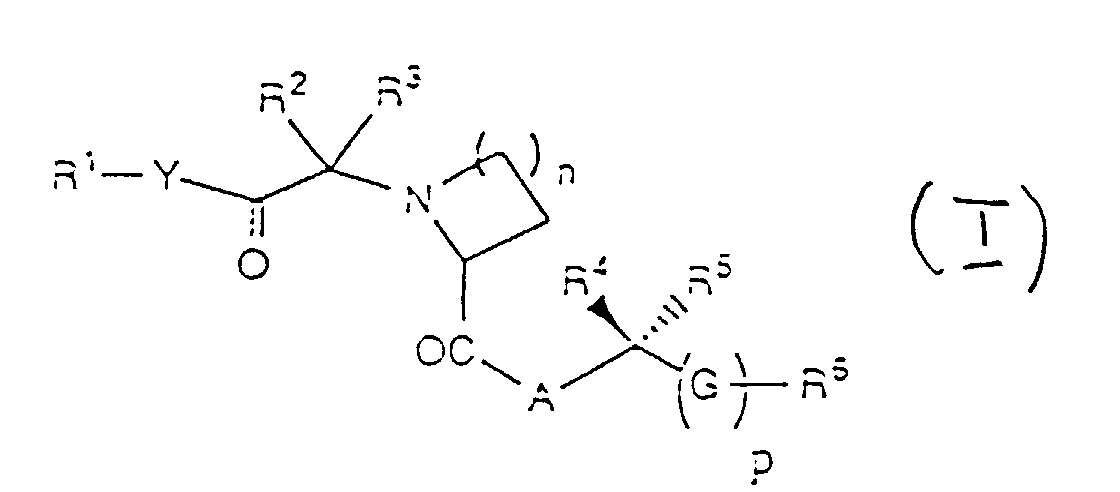
    Preferred are compounds of formula (I)
    Figure 00110001
    wherein
  • R1 is
  • a) hydrogen,
  • b) linear or branched alkyl (C1-C6) which may be substituted
  • i) once by hydroxy,
  • ii) once by phenyl which may be substituted by straight or branched alkyl (C1-C4), or straight or branched alkoxy (C1-C6),
  • iii) once by cycloalkyl (C3-C8) which may be substituted by straight or branched alkyl (C1-C6), or straight or branched alkoxy (C1-C4),
  • iv) once by bicycloalkyl (C6-C10) which may be substituted by straight or branched alkyl (C1-C8), or straight or branched alkoxy (C1-C4),
  • v) once by tricycloalkyl (C7-C12) which may be substituted by straight or branched alkyl (C1-C6), or straight or branched alkoxy (C1-C4),
  • vi) once by tetracycloalkyl (C10-C12), which may be substituted by straight or branched alkyl (C1-C8), or straight or branched alkoxy (C1-C4),
  • vii) up to two times by phenyl and cycloalkyl (C5-C7), or
  • viii) up to two times by phenyl and morpholinyl,
  • c) alkene (C3-C8), which may be substituted by phenyl, straight or branched alkyl (C1-C4), or straight or branched alkoxy (C1-C4),
  • d) diene (C4-C7) substituted by straight or branched alkyl (C1-C6), or straight or branched alkoxy (C1-C4),
  • e) triene (C10-C16) substituted up to three times by straight or branched alkyl (C1-C6), or straight or branched alkoxy (C1-C4),or
  • f) cycloalkyl (C5-C10), or the cycloalkyl fragment
    Figure 00120001
  • where
    • m is an integer of 0, 1, or 2,
    • J, K, and L are independently or simultaneously
    • i) hydrogen,
    • ii) straight or branched alkyl (C1-C5), which may be substituted by phenyl, or straight or branched alkoxy (C1-C4),
    • iii) phenyl, or
    • iv) phenyl substituted by straight or branched alkyl (C1-C4), or chlorine, or straight or branched alkoxy (C1-C4),
  • g) bicycloalkyl (C7-10) which may be substituted up to 3 times with straight or branched alkyl (C1-C6), or straight or branched alkoxy (C1-C4),
  • h) tricycloalkyl (C7-14) which may be substituted up to 3 times with straight or branched alkyl (C1-C6), or straight or branched alkoxy (C1-C4),
  • i) tetracycloalkyl (C10-C15) which may be substituted up to 3 times by straight or branched alkyl (C1-C6), or straight or branched alkoxy (C1-C4),
  • j) naphthyl derivatives, or the heteroaryl derivatives benzothienyl, benzofuryl, benzopyranyl, furyl, pyridyl, pyranyl, or 1,3-oxazolyl, said derivatives may be substituted up to two times by
  • i) straight or branched alkyl (C1-C6),
  • ii) halogen,
  • iii) or both,
  • k) 1,2,3,4-tetrahydronaphthyl,
  • l) the piperonyl fragment
    Figure 00120002
  • where
    • z is an integer of 1, or 2,
    • and E1, E2, and E3 can be independently or simultaneously hydrogen, straight or branched alkyl (C1-C4), straight or branched alkoxy (C1-C4), or chlorine,
  • m) the aryl derivative
    Figure 00130001
    where
  • U, V, and W can be independently or simultaneously
  • i) hydrogen,
  • ii) straight or branched alkyl (C1-C4), which may be substituted by phenyl,
  • iii) straight or branched alkoxy (C1-C6) which may be substituted by phenyl, straight or branched alkoxy (C1-C4), or phenoxy,
  • iv) hydroxy,
  • v) phenyl,
  • vi) halogen,
  • vii) nitro,
  • viii) benzoyl, or
  • ix) phenoxy;
  • Y is a covalent bond, oxygen, NR7, where R7 is hydrogen,
    in addition,
  • R1-Y- may also be
    Figure 00130002
    where
  • k is an integer of 1, or 2,
  • R8 is
  • a) hydrogen,
  • b) carboalkoxy with a straight or branched alkoxy (C1-C4),
  • c) straight or branched alkyl (C1-C4) which may be substituted by phenyl, or straight or branched alkoxy (C1-C4), or
  • d) phenyl, or phenyl substituted by halogen,
  • R9 is phenyl which may be substituted by alkyl (C1-C4);
  • R2 and R3 are defined as follows: one of R2 and R3 are hydrogen, and the other is hydrogen or straight or branched alkyl (C1-C6);
  • n is an integer of 2 or 3;
  • A is NR10, where R10 is hydrogen or straight or branched alkyl (C1-C4);
  • R4 is
  • a) hydrogen,
  • b) straight or branched alkyl (C1-C6) which may be substituted by
  • i) phenyl, or phenyl substituted by hydroxy or methoxy,
  • ii) cycloalkyl (C5-C6),
  • iii) alkylthio (C1-C6),
  • iv) carboxamido, or
  • v) straight or branched alkoxy (C1-C6) which may be substituted by phenyl,
  • c) phenyl, or
  • d) cycloalkyl (C3-C7), which may be substituted by straight or branched alkyl (C1-C6);
  • R5 is hydrogen or straight or branched alkyl (C1-C4), and R4 and R5, taken together can be -(CH2)r-- where r is an integer of 4 or 5;
  • G is one of the following fragments -HC=CH- , -CH2·CH2-, or -CH2- or the following fragment
    Figure 00140001
    where the carbonyl group is attached to the carbon bearing R4 and R5 and NR12- is connected to R6,
  • R12 is hydrogen or methyl;
  • p is an integer of 0 or 1;
  • R6 is
  • a) hydrogen,
  • b) straight or branched alkyl (C1-C4) which may be substituted by
  • i) phenyl,
  • ii) phenyl substituted with straight or branched alkyl (C1-C4), straight or branched alkoxy (C1-C4), or
  • iii) 2- or 4-pyridyl,
  • c) phenyl or naphthyl, which may be substituted by
  • i) amine,
  • ii) amino substituted by a straight or branched alkoxycarbonyl (C1-C6) that may be substituted by phenyl or an alkene (C2-C6),
  • iii) amino substituted by alkanoyl (C1-C6), or benzoyl,
  • iv) sulfonamide (-SO2NH2), or
  • v) straight or branched alkoxy (C1-C6), that may be substituted by phenyl,
  • d) benzoyl,
  • e) furyl, or thiofuryl, or
  • f) cycloalkyl (C5-C8), bicycloalkyl (C6-C10), tricycloalkyl (C7-C12), or tetracycloalkyl (C10-C14);
  • and pharmaceutically acceptable salts thereof.
    Included within the scope of the present invention are pharmaceutically acceptable salts of the above mentioned compounds. Pharmaceutically acceptable salts can be derived from mineral acids, carboxylic acids or sulfuric acids preferred from hydrochloric acid, hydrobromic acid, sulfuric acid, methane sulfuric acid, ethane sulfonic acid, toluene sulfonic acid, benzene sulfonic acid, naphthalene disulfonic acid, acetic acid, propionic acid, lactic acid, tartaric acid, citric acid, fumaric acid, maleic acid or benzoic acid. Most preferred are the hydrochlorides
    Most preferred are compounds of formula (I)
    Figure 00160001
    wherein
  • R1 is
  • a) hydrogen,
  • b) linear or branched alkyl (C1-C6) which may be substituted by
  • i) hydroxy,
  • ii) phenyl, or phenyl substituted by straight or branched alkyl (C1-C4),
  • iii) cycloalkyl (C3-C8) which may be substituted by straight or branched alkyl (C1-C4),
  • iv) bicycloalkyl (C6-C9) which may be substituted by straight or branched alkyl (C1-C6),
  • v) tricycloalkyl (C7-C12) which may be substituted by straight or branched alkyl (C1-C4),
  • vi) tetracycloalkyl (C10-C12), which may be substituted by straight or branched alkyl (C1-C6),
  • vii) both phenyl and cycloalkyl (C5-C6), or
  • viii) both phenyl and morpholinyl,
  • c) alkene (C3-C6), which may be substituted by phenyl,
  • d) diene (C5-C6) substituted by straight or branched alkyl (C1-C4),
  • e) triene (C13-C16) substituted up to three times by straight or branched alkyl (C1-C4),
  • f) cycloalkyl (C5-C6), or the cycloalkyl fragment
    Figure 00170001
    where
  • m is an integer of 0, 1, or 2,
  • J, K, and L are independently or simultaneously
  • i) hydrogen,
  • ii) straight or branched alkyl (C1-C5),
  • iii) phenyl, or
  • iv) phenyl substituted by straight or branched alkyl (C1-C4), or chlorine, or straight or branched alkoxy (C1-C4),
  • g) bicycloalkyl (C7-8) which may be substituted up to 3 times with straight or branched alkyl (C1-C4),
  • h) tricycloalkyl (C7- 12) which may be substituted up to 2 times with straight or branched alkyl (C1-C6),
  • i) tetracycloalkyl (C10-C12) which may be substituted up to 3 times by straight or branched alkyl (C1-C4),
  • j) 2-benzothienyl substituted independently or simultaneously at least twice by either
  • i) straight or branched alkyl (C1-C3),
  • ii) chlorine,
  • iii) or both,
  • k) 2-furyl,
  • l) 2-pyridyl,
  • m) 2-naphthyl,
  • n) 1,2,3,4-tetrahydronaphthyl,
  • o) 2-benzopyranyl,
  • p) 2-benzofuryl,
  • q) the piperonyl fragment
    Figure 00180001
    where
  • z is an integer of 1, or 2,
  • and E1, E2, and E3 are hydrogen, or
  • r) the aryl derivative
    Figure 00180002
    where
  • U, V, and W can be independently or simultaneously
  • i) hydrogen,
  • i) straight or branched alkyl (C1-C4),
  • ii) straight or branched alkoxy (C1-C4),
  • iii) alkoxy (C2) substituted by alkoxy (C2), or phenoxy,
  • iv) hydroxy,
  • v) phenyl,
  • vi) fluorine,
  • vii) chlorine,
  • viii) bromine,
  • ix) nitro,
  • x) benzyloxy,
  • xi) benzoyl,
  • xii) phenoxy;
  • Y is a covalent bond, oxygen, NR7, where R7 is hydrogen; in addition,
  • R1-Y- may also be
    Figure 00190001
    where
  • k is an integer of 1, or 2,
  • R8 is
  • a) hydrogen,
  • b) carboalkoxy with alkoxy (C1-C2),
  • c) straight or branched alkyl (C1-C4) which may be substituted by phenyl,
  • d) phenyl,
  • R9 is phenyl;
  • R2 and R3 are defined as follows: one of R2 and R3 is hydrogen, and the other is hydrogen or straight or branched alkyl (C1-C4);
  • n is an integer of 2 or 3:
  • A is NR10, where R10 is hydrogen or methyl;
  • R4 is
  • a) hydrogen,
  • b) straight or branched alkyl (C1-C4) which may be substituted by
  • i) phenyl,
  • ii) cycloalkyl (C5-C6),
  • iii) alkylthio (C1-C4),
  • iv) carboxamido, or
  • v) benzyloxy, or
  • c) phenyl;
  • R5 is hydrogen or straight or branched alkyl (C1-C4), and R4 and R5, taken together can be -(CH2)r-- where r is integer 5;
  • G is one of the following fragments -HC=CH-, -CH2·CH2-, or -CH2- or the following fragment
    Figure 00200001
    where the carbonyl group is attached to the carbon bearing R4 and R5 and NR12 is connected to R6,
  • R12 is hydrogen or methyl;
  • p is an integer of 0 or 1;
  • R6 is
  • a) hydrogen,
  • b) straight or branched alkyl (C1-C4) which may be substituted by
  • i) phenyl,
  • ii) phenyl substituted with alkoxy (C1-C2),
  • iii) 2- or 4-pyridyl,
  • c) phenyl which may be substituted by
  • i) amino,
  • ii) amino substituted by allyloxycarbonyl,
  • iii) amino substituted by acetyl,
  • iv) amino substituted by benzoyl,
  • v) amino substituted by benzyloxycarbonyl,
  • iii) sulfonamide (-SO2NH2), or
  • iv) straight or branched alkoxy (C1-C4),
  • d) benzoyl,
  • e) furyl,
  • f) naphthyl,
  • g) cycloalkyl (C5-C8), or
  • h) tetracycloalkyl (C10-C12);
  • and pharmaceutically acceptable salts thereof.
    Included within the scope of the present invention are pharmaceutically acceptable salts of the above mentioned compounds. Most preferred are the hydrochlorides.
    The following examples of compounds according to the invention are particularly preferred:
  • L-Isoleucine, N-[1(2-Benzyloxy-2-Oxoethyl)-L-Prolyl]Benzylamide;
  • L-Isoleucine, N-[1-(2-Methoxy-2-Oxoethyl)-L-Prolyl]Benzylamide;
  • L-Isoleucine, N-[1-(2-Phenyl-2-Oxoethyl)-L-Prolyl]Benzylamide;
  • L-Isoleucine, N-[1-(2-Naphth-2-yl-2-Oxoethyl)-L-Prolyl]Benzylamide;
  • L-Isoleucine, N-[1-(2-(Biphenyl-4-yl)-2-Oxoethyl)-L-Prolyl]Benzylamide;
  • L-Isoleucine, N-[1-(2-(2-Methoxyphenyl)-2-Oxoethyl)-L-Prolyl] Benzylamide;
  • L-Isoleucine, N-[1-(2-(5-Chloro-3-Methyl-benzo[B]thiophene-2-yl)-2-Oxoethyl)-L-Prolyl]Benzylamide;
  • L-Isoleucine, N-[1-(2-(trans,trans-Hexa-2,4-dienyl-1-oxy)-2-Oxoethyl)-L-Prolyl] Benzylamide;
  • L-Isoleucine, N-[1-(2-(4-Chlorophenyl)-2-Oxoethyl)-L-Prolyl]Benzylamide;
  • L-Isoleucine, N-[1-(2-(4-Methylphenyl)-2-Oxoethyl)-L-Prolyl] Benzylamide;
  • L-Isoleucine, N-[1-(2-(4-Methoxyphenyl)-2-Oxoethyl)-L-Prolyl] Benzylamide;
  • L-Isoleucine, N-Methyl-N-[1-(2-Phenyl-2-Oxoethyl)-L-Prolyl] Benzylamide;
  • L-Isoleucine, N-[1-(2-Phenyl-2-Oxoethyl)-L-Homoproline] Benzylamide;
  • L-Phenylglycine, N-[1-(2-Phenyl-2-Oxoethyl)-L-Proline Benzylamide;
  • L-Isoleucine, N-[1-(1-Methyl-2-Phenyl-2-Oxoethyl)-L-Prolyl] Benzylamide;
  • L-lsoleucine, N-[1-(2-(3-Methoxyphenyl)-2-Oxoethyl)-L-Prolyl] Benzylamide;
  • L-Isoleucine, N-[1-(2-(3,4-Dihydroxyphenyl)-2-Oxoethyl)-L-Prolyl] Benzylamide;
  • L-Isoleucine, N-Methyl-N-[1-(2-Benzyloxy-2-Oxoethyl)-L-Prolyl] Benzylamide;
  • L-Isoleucine, N-[1-(Carbobenzyloxymethylene)-L-Homoproline Benzylamide;
  • L-Isoleucine, N-[1-(2-Adamantan-1-yl-2-Oxoethyl)-L-Prolyl] Benzylamide;
  • L-Isoleucine, N-[1-(Carbo-tert-Butoxymethylene)-L-Proline] Benzylamide;
  • L-Isoleucine, N-[1-(2-tert-Butyl-2-Oxoethyl)-L-Proline] Benzylamide;
  • L-Isoleucine, N-[1-(2-(2,5-Dimethoxyphenyl)-2-Oxoethyl)-L-Prolyl] Benzylamide;
  • L-Isoleucine, N-[1-(2-(2,4-Dimethoxyphenyl)-2-Oxoethyl)-L-Prolyl] Benzylamide;
  • L-Isoleucine, N-[1-(2-(2-Nitrophenyl)-2-Oxoethyl)-L-Propyl] Benzylamide;
  • L-Isoleucine, N-[1-(2-(4-Nitrophenyl)-2-Oxoethyl)-L-Prolyl] Benzylamide;
  • L-Isoleucine, N-[1-(2-(3-Benzyloxyphenyl)-2-Oxoethyl)-L-Prolyl] Benzylamide;
  • L-Isoleucine, N-[1-(2-(2,4-Dimethylphenyl)-2-Oxoethyl)-L-Prolyl] Benzylamide;
  • L-lsoleucine, N-[1-(2-(4-Fluorophenyl)-2-Oxoethyl)-L-Propyl] Benzylamide;
  • L-Isoleucine, N-[1-(2-(4-Bromophenyl)-2-Oxoethyl)-L-Propyl] Benzylamide;
  • L-Isoleucine, N-[1-(2,4-Dichlorophenylcarbamoylmethyl)-L-Proline] Benzylamide;
  • L-Isoleucine, N-[1-(2-Adamantan-1-yl-2-Oxoethyl)-L-Homoproline] Benzylamide;
  • L-Isoleucine, N-[1-(2-Furan-2-yl-2-Oxoethyl)-L-Prolyl] Benzylamide;
  • L-Isoleucine, N-[1-(2-Pyrid-2-yl-2-Oxoethyl)-L-Prolyl] Benzylamide;
  • L-Isoleucine, N-[1-(Adamant-1-ylcarbamoylmethyl)-L-Prolyl] Benzylamide;
  • L-Isoleucine, N-[1-(2-(cis-Octahydro-pentalen-1-yl)-2-Oxoethyl)-L-Prolyl] Benzylamide;
  • L-Isoleucine, N-[1-[2-(2,6,6-Trimethyl-Bicyclo[3.1.1]hept-3-yl)-2-Oxoethyl]-L-Prolyl] Benzylamide;
  • L-Isoleucine, N-[1-(2-(4-Pentylcyclohexyl)-2-Oxoethyl)-L-Prolyl] Benzylamide;
  • L-Isoleucine, N-[1-(2-(1,2,3,4-tetrahydro-Napththalen-2-yl)-2-Oxoethyl)-L-Prolyl] Benzylamide;
  • L-Isoleucine, N-[1-(2-(1-Methyl-Cyclohexyl)-2-Oxoethyl)-L-Prolyl] Benzylamide;
  • L-Isoleucine, N-[1-(2-Oxo-2-Tricyclo[3.3.1.0 3,7]Non-3-yl-Ethyl)-L-Prolyl] Benzylamide;
  • L-Isoleucine, N-[1-(2-Oxo-3-(3-Methyl-Adamantan-1-yl)-Propyl)-L-Prolyl] Benzylamide;
  • L-Proline, 1-(2-Adamantan-1-yl-2-Oxoethyl) Benzyl Ester;
  • L-Isoleucine, N-[1-(2-(Biphenyl-4-yl)-2-Oxoethyl)-L-Prolyl] 1,2,3,4-Tetrahydroisoquinolinamide;
  • L-Isoleucine, N-[1-(2-(Biphenyl-4-yl)-2-Oxoethyl)-L-Prolyl] Benzyl Ester;
  • L-Isoleucine, N-[1-(2-(Biphenyl-4-yl)-2-Oxoethyl)-L-Prolyl] tert-Butylamide;
  • L-Phenylalanine, N-[1-(2-(Biphenyl-4-yl)-2-Oxoethyl)-L-Prolyl] Benzylamide;
  • L-Methionine, N-[1-(2-(Biphenyl-4-yl)-2-Oxoethyl)-L-Prolyl] Benzylamide;
  • Glycine, N-[1-(2-Adamantan-1-yl-2-Oxoethyl)-L-Prolyl] Benzylamide;
  • L-Valine, N-[1-(2-Adamantan-1-yl-2-Oxoethyl)-L-Prolyl] Benzylamide;
  • L-Leucine, N-[1-(2-Adamantan-1-yl-2-Oxoethyl)-L-Prolyl] Benzylamide;
  • L-Phenylalanine, N-[1-(2-Adamantan-1-yl-2-Oxoethyl)-L-Prolyl] Benzylamide;
  • L-Norvaline, N-[1-(2-Adamantan-1-yl-2-Oxoethyl)-L-Prolyl] Benzylamide;
  • L-Norleucine, N-[1-(2-Adamantan-1-yl-2-Oxoethyl)-L-Prolyl] Benzylamide;
  • L-Asparagine, N-[1-(2-Adamantan-1-yl-2-Oxoethyl)-L-Prolyl] Benzylamide;
  • L-Serine-(O-Benzyl Ether), N-[1(2-Adamantan-1-yl-2-Oxoethyl)-L-Prolyl] Benzylamide;
  • L-β-Phenylalanine, N-[1-(2-Adamantan-1-yl-2-Oxoethyl)-L-Prolyl] Benzylamide;
  • L-Cyclohexylalanine, N-[1-(2-Adamantan-1-yl-2-Oxoethyl)-L-Prolyl] Benzylamide;
  • L-Isoleucine, N-[1-(2-Adamantan-1-yl-2-Oxoethyl)-L-Prolyl] alpha-(S)-methylbenzylamide;
  • L-Isoleucine, N-[1-(2-Adamantan-1-yl-2-Oxoethyl)-L-Prolyl] alpha-(R)-methylbenzylamide;
  • L-Isoleucine, N-[1-(2-Adamantan-1-yl-2-Oxoethyl)-L-Prolyl] Pyridin-4-ylmethylamide;
  • L-Isoleucine, N-[1-(2-Adamantan-1-yl-2-Oxoethyl]-L-Prolyl] Pyridin-2-ylmethylamide;
  • L-Isoleucine, N-[1-(2-Adamantan-1-yl-2-Oxoethyl)-L-Prolyl] 4-methoxybenzylamide;
  • L-Isoleucine, N-[1-(2-Adamantan-1-yl-2-Oxoethyl)-L-Prolyl] 2-methoxybenzylamide;
  • L-Isoleucine, N-[1-(Carboxymethyl)-L-Prolyl] Benzylamide;
  • L-Isoleucine, N-[1-[2-[N-(Piperidine-3-Carboxylic Acid Ethyl Ester)]-2-Oxoethyl]-L-Prolyl] Benzylamide;
  • L-Isoleucine, N-[1-(2-(1,4-Dioxa-8-aza-spiro[4.5]dec-8-yl)-2-Oxoethyl)-L-Prolyl] Benzylamide;
  • L-Isoleucine, N-[1-[2-(N-(4-Benzylpiperidyl))-2-Oxoethyl]-L-Prolyl] Benzylamide;
  • L-Isoleucine, N-[1-[2-(2-Methylpiperidine)-2-Oxoethyl]-L-Prolyl] Benzylamide;
  • L-Isoleucine, N-[1-(2-(2-Hydroxyethylamine)-2-Oxoethyl)-L-Prolyl] Benzylamide;
  • L-Isoleucine, N-[1-[2-(4-Phenylpiperazine)-2-Oxoethyl]-L-Prolyl] Benzylamide;
  • L-Isoleucine, N-[1-[2-(1-Pyrrolidine)-2-Oxoethyl]-L-Prolyl] Benzylamide;
  • L-Isoleucine, N-[1-[2-(N-Cyclopentylamino)-2-Oxoethyl]-L-Prolyl] Benzylamide;
  • L-Isoleucine, N-[1-[2-(N-(Phenylmethylamino))-2-Oxoethyl]-L-Prolyl] Benzylamide;
  • L-Isoleucine, N-[1-[2-(N-(Cyclohexylmethylamino))-2-Oxoethyl]-L-Prolyl] Benzylamide;
  • L-Isoleucine, N-[1-(2-(4-Phenylpiperidyl)-2-Oxoethyl)-L-Prolyl] Benzylamide;
  • L-Isoleucine, N-[1-(2-[1-(3,7,11-Trimethyldodeca-2,6,10-trien-1-ol)]-2-Oxoethyl)-L-Proline] Benzylamide;
  • L-Isoleucine, N-[1-(2-(3-Phenyl-2-Propen-1-Oxy)-2-Oxoethyl)-L-Prolyl] Benzylamide;
  • L-Isoleucine, N-[1-(2-(3-Phenyl-3-Methyl-2-Propen-1-Oxy)-2-Oxoethyl)-L-Prolyl] Benzylamide;
  • L-Isoleucine, N-[1-(2-(1-Phenylpropoxy)-2-Oxoethyl)-L-Prolyl] Benzylamide;
  • L-Isoleucine, N-[1-(2-(1-Phenyl-1-Cyclohexylmethoxy)-2-Oxoethyl)-L-Prolyl] Benzylamide;
  • L-Isoleucine, N-[1-(2-(1-Phenyl-2-(4-Morpholino)Ethoxy)-2-Oxoethyl)-L-Prolyl] Benzylamide;
  • L-Isoleucine, N-[1-(2-(2-Oxy-2-Methyladamant-2-yl)-2-Oxoethyl)-L-Prolyl] Benzylamide;
  • L-Isoleucine, N-[1-(Adamantan-2-ylcarbamoylmethyl)-L-Prolyl] Benzylamide;
  • L-Isoleucine, N-[1-(Adamant-1-ylmethylcarbamoylmethyl)-L-Prolyl] Benzylamide;
  • L-Isoleucine, N-[1-(2-(2-Methyl-1-(S)-Phenyl-1-Propoxy)-2-Oxoethyl)-L-Prolyl] Benzylamide;
  • L-Isoleucine, N-[1-(2-(2-Methyl-1-(R)-Phenyl-1-Propoxy)-2-Oxoethyl)-L-Prolyl] Benzylamide;
  • L-Isoleucine, N-[1-(2-(4-tert-Butylcyclohexyl)-2-Oxoethyl)-L-Prolyl] Benzylamide;
  • L-Isoleucine, N-[1-(2-Bicyclo[2.2.1]hept-2-yl)-2-Oxoethyl)-L-Prolyl] Benzylamide;
  • L-Isoleucine, N-[1-(2-(3,4,5-Trimethoxyphenyl)-2-Oxoethyl)-L-Prolyl] Benzylamide;
  • L-Isoleucine, N-[1-(2-(Chroman-2-yl)-2-Oxoethyl)-L-Prolyl] Benzylamide Hydrochloride Salt;
  • L-Isoleucine, N-[1-(2-(Benzofuran-2-yl)-2-Oxoethyl)-L-Prolyl] Benzylamide Hydrochloride Salt;
  • L-Isoleucine, N-[1-(2-(3-Benzoyloxyphenyl)-2-Oxoethyl)-L-Prolyl] Benzylamide;
  • L-Isoleucine, N-[1-(2-(4-Benzoyloxaphenyl)-2-Oxoethyl)-L-Prolyl] Benzylamide;
  • L-Isoleucine, N-[1-(2-(2-Benzoyloxyphenyl)-2-Oxoethyl)-L-Prolyl] Benzylamide;
  • L-Isoleucine, N-[1-(2-(3-Phenoxyphenyl)-2-Oxoethyl)-L-Prolyl] Benzylamide;
  • L-Isoleucine, N-[1-(2-(2-Phenoxyphenyl)-2-Oxoethyl)-L-Prolyl] Benzylamide;
  • L-Isoleucine, N-[1-(2-(3,4,5-Triethoxyphenyl)-2-Oxoethyl)-L-Prolyl] Benzylamide;
  • L-Isoleucine, N-[1-(2-(Benzo[1,3]dioxol-5-yl)-2-Oxoethyl)-L-Prolyl] Benzylamide;
  • L-Isoleucine, N-[1-{2-Oxo-2-[4-(2-Phenoxyethoxy)-Phenyl]-Ethyl}-L-Prolyl] Benzylamide;
  • L-Isoleucine, N-[1-(2-(4-Phenoxyphenyl)-2-Oxoethyl)-L-Prolyl] Benzylamide;
  • L-Isoleucine, N-[1-(2-(2,4,6-Trimethoxyphenyl)-2-Oxoethyl)-L-Prolyl] Benzylamide;
  • L-Isoleucine, N-[1-(2-(2,3-Dimethoxyphenyl)-2-Oxoethyl)-L-Prolyl] Benzylamide;
  • L-Isoleucine, N-[1-(2-(2,6-Dimethoxyphenyl)-2-Oxoethyl)-L-Prolyl] Benzylamide;
  • L-Isoleucine, N-[1-(2-(1-(4-Methylphenyl)cyclohexyl)-2-Oxoethyl)-L-Prolyl] Benzylamide;
  • L-Isoleucine, N-[1-(2-(1-(4-Chlorophenyl)cyclohexyl)-2-Oxoethyl)-L-Prolyl] Benzylamide;
  • L-Isoleucine, N-[1-(2-(2,3,4-Trimethoxyphenyl)-2-Oxoethyl)-L-Prolyl] Benzylamide;
  • L-Isoleucine, N-[1-(2-(1-Phenylcyclohexyl)-2-Oxoethyl)-L-Prolyl] Benzylamide;
  • L-Isoleucine, N-[1-(2-(2,4,5-Trimethoxyphenyl)-2-Oxoethyl)-L-Prolyl] Benzylamide;
  • 1-[2-(3,4,5-Trimethoxyphenyl)-2-Oxoethyl] L-Proline Benzyl Ester Hydrochloride;
  • L-Proline, 1-[2-(3,4,5-Trimethoxyphenyl)-2-Oxoethyl] Benzylamide Hydrochloride;
  • L-Proline, 1-[2-(3,4,5-Trimethoxyphenyl)-2-Oxoethyl] 2-Phenethylamide Hydrochloride;
  • L-Proline, 1-[2-(3,4,5-Trimethoxyphenyl)-2-Oxoethyl] 3-Phenylpropylamide Hydrochloride;
  • L-Proline, 1-[2-(3,4,5-Trimethoxyphenyl)-2-Oxoethyl] 4-Phenylbutylamide Hydrochloride;
  • L-Proline, 1-[2-(3,4,5-Trimethoxyphenyl)-2-Oxoethyl] 2-(Pyrid-2-yl)ethylamide Dihydrochloride;
  • L-Proline, 1-[2-(3,4,5-Trimethoxyphenyl)-3-Oxoethyl] 2-(4-aminophenyl)ethylamide Dihydrochloride;
  • L-Proline, 1-[2-(3,4,5-Trimethoxyphenyl)-2-Oxoethyl] 3-(4-[N-Carballyloxy]aminophenyl)propyl Ester Hydrochloride;
  • L-Proline, 1-[2-(3,4,5-Trimethoxyphenyl)-2-Oxoethyl] 2-Phenyl-2-oxoethylamide;
  • L-Proline, 1-[2-(3,4,5-Trimethoxyphenyl)-2-Oxoethyl] Tetrahydrofurfurylamide;
  • L-Proline, 1-[2-(3,4,5-Trimethoxyphenyl)-2-Oxoethyl] Naphthalen-1-ylmethylamide;
  • L-Proline, 1-[2-(3,4,5-Trimethoxyphenyl)-2-Oxoethyl] 2-(4-Sulfamoylphenyl)ethylamide;
  • L-Proline, 1-[2-(3,4,5-Trimethoxyphenyl)-2-Oxoethyl] 4-Phenylpiperidenylamide;
  • L-Proline, 1-[2-(3,4,5-Trimethoxyphenyl)-2-Oxoethyl] 4-Methoxybenzamide Hydrochloride;
  • L-Proline, 1-[2-(3,4,5-Trimethoxyphenyl)-2-Oxoethyl] 3-Methoxybenzamide Hydrochloride;
  • L-Proline, 1-[2-(3,4,5-Trimethoxyphenyl)-2-Oxoethyl] 2-Methoxybenzamide Hydrochloride;
  • L-Proline, 1-[2-(3,4,5-Trimethoxyphenyl)-2-Oxoethyl] N-Methylphenethylamide Hydrochloride;
  • L-Proline, 1-[2-(3,4,5-Trimethoxyphenyl)-2-Oxoethyl] (S)-α-methylbenzylamide Hydrochloride;
  • L-Proline, 1-[2-(3,4,5-Trimethoxyphenyl)-2-Oxoethyl] (R)-α-methylbenzylamide Hydrochloride;
  • L-Proline, 1-[2-(3,4,5-Trimethoxyphenyl)-2-Oxoethyl] 1-methyl-3-phenylpropylamide Hydrochloride;
  • L-Proline, 1-[2-(3,4,5-Trimethoxyphenyl)-2-Oxoethyl] Adamant-1-ylmethylamide Hydrochloride;
  • L-Proline, 1-[2-(3,4,5-Trimethoxyphenyl)-2-Oxoethyl] 1-(R)-(1-naphthyl)ethylamide Hydrochloride;
  • L-Proline, 1-[2-(3,4,5-Trimethoxyphenyl)-2-Oxoethyl] Cyclohexylmethylamide;
  • L-Proline, 1-[2-(3,4,5-Trimethoxyphenyl)-2-Oxoethyl] Diphenylmethylamide Hydrochloride;
  • L-Proline, 1-[2-(3,4,5-Trimethoxyphenyl)-2-Oxoethyl] tert-Butylamide Hydrochloride;
  • L-Proline, 1-[2-(3,4,5-Trimethoxyphenyl)-2-Oxoethyl] 1,2-Diphenylethylamide Hydrochloride;
  • L-Proline, 1-[2-(3,4,5-Trimethoxyphenyl)-2-Oxoethyl] Cyclohexyl amide Hydrochloride;
  • 1-[2-(3,4,5-Trimethoxyphenyl)-2-Oxoethyl] L-Homoproline Benzyl Ester Hydrochloride;
  • L-Homoproline, 1-[2-(3,4,5-Trimethoxyphenyl)-2-Oxoethyl] Benzylamide Hydrochloride;
  • L-Homoproline, 1-[2-(3,4,5-Trimethoxyphenyl)-2-Oxoethyl] Adamant-1-ylmethylamide Hydrochloride;
  • L-Homoproline, 1-[2-(3,4,5-Trimethoxyphenyl)-2-Oxoethyl] tetrahydrofurfurylamide;
  • L-Homoproline, 1-[2-(3,4,5-Trimethoxyphenyl)-2-Oxoethyl] 2-(4-Sulfamoylphenyl)ethylamide;
  • L-Homoproline, 1-[2-(3,4,5-Trimethoxyphenyl)-2-Oxoethyl] (S)-α-methylbenzylamide Hydrochloride;
  • L-Homoproline, 1-[2-(3,4,5-Trimethoxyphenyl)-2-Oxoethyl] (1-(S)-[2'-(S)-methylpropyl]-3-phenylprop-2-E-enyl)-amide;
  • L-Homoproline, 1-[2-(3,4,5-Trimethoxyphenyl)-2-Oxoethyl] (1-(S)-[2'-(S)-methylpropyl]-3-phenylpropyl)-amide;
  • L-Isoleucine, N-[1-(2-(3,4,5-Trimethoxyphenyl)-2-Oxoethyl)-L-Homoprolyl] Benzylamide;
  • L-Proline, 1-[2-(3,4,5-Trimethoxyphenyl)-2-Oxoethyl] 2-(4-(N-Acetyl)aminophenyl)ethylamide;
  • L-Proline, 1-[2-(3,4,5-Trimethoxyphenyl)-2-Oxoethyl] 2-(4-(N-Benzoyl)aminophenyl)ethylamide;
  • L-Proline, 1-[2-(3,4,5-Trimethoxyphenyl)-2-Oxoethyl] 2-(4-(N-carboalloxy)aminophenyl)ethylamide;
  • L-Proline, 1-[2-(3,4,5-Trimethoxyphenyl)-2-Oxoethyl] 2-(4-(N-Carbobenzyloxy)aminophenyl)ethylamide;
  • L-Homoproline, 1-[2-(3,4,5-Trimethoxyphenyl)-2-Oxoethyl] 3-(4-(N-Carboallyloxy)aminophenyl)propyl Ester Hydrochloride;
  • L-Proline, 1-[2-Adamantan-1-yl-2-Oxoethyl] 3-(4-(N-Carboallyloxy) aminophenyl)propyl Ester Hydrochloride; and
  • L-Homoproline, 1-[2-Adamant-1-yl-2-Oxoethyl] 3-(4-(N-Carboallyloxy)aminophenyl)propyl Ester Hydrochloride.
  • According to another aspect the invention also concerns a method for making the compounds of formula (I),
    comprising the following steps:
    Figure 00300001
    which are
  • (a) coupling an N-protected imino acid to an amine or an alcohol to form a C-substituted, N-protected imino acid;
  • (b) removing the protecting group from said C-substituted, N-projected imino acid; and
  • (c) alkylating the resulting imino acid from step (b) at the nitrogen position with an α-halo ester, α-halo ketone, or an α-halo amide.
  • According to another aspect of the invention there is provided another method for making the compounds of formula (I), comprising the following steps:
    Figure 00310001
    which are
  • a) deprotecting the 2-position of a first 2-oxoethyl derivative; and
  • b) coupling the resulting acid derivative from step (a) to form a second 2-oxoethyl derivative.
  • According to still another aspect of the invention there is provided another method for making the compounds of formula (I) comprising the following steps:
    Figure 00310002
    which are
  • a) deprotecting the imino acid C-termini of a 2-oxoethyl derivative to form a 2-oxoethyl imino acid; and
  • b) coupling said 2-oxoethyl imino acid resulting from step (a) with an amine or an alcohol to form a C-substituted, 2-oxoethyl imino acid derivative.
  • Preferred Method of Synthesis
    Figure 00320001
    A convenient route to prepare the present compounds was to alkylate selected cyclic imino acids with α-substituted methyl carbonyl compounds (Eq. 1.0). The α-substitution could be in the form of halides such as chloride, bromide and iodide, but can be extended to other groups that are ameanable for displacement. Solvents useful for effecting this transform include ethyl ether, tetrahydrofuran, alcohol solvents, or nitrile solvents such as acetonitrile. In certain cases, it may be advantageous not to use solvents. There are a number of possible conditions and variations that could be used for this type of synthesis route, such possibilities being well known to those skilled in the art. (For example, see Miyazawa, 1980, T. Bull. Chem. Soc. Japan 53:2555).
    When properly substituted, the products from the reaction depicted in Eq. 1.0 can themselves serve as intermediates for the synthesis of other analogs. Hence 2-alkoxy derivatives of these 2-oxoethyl analogs can be converted to the corresponding acid derivatives using methods known in the art (T. W. Greene et al, Protective Groups in Organic Synthesis, 2nd Edition; John Wiley & Sons, 1991). The acid functionality that results may be converted to an activated acyl derivative and coupled to an appropriate Y-R1 derivative using methods described earlier (Bodanszky The Practice of Peptide Synthesis: Springer-Verlag, Vol 21, 1984).
    Figure 00320002
    In another embodiment, substituted 2-oxoethyl derivatives may be converted to active embodiments of this invention by coupling to an appropriate A-R derivative using methods described in the literature (Bodanszky The Practice of Peptide Synthesis: Springer-Verlag, Vol 21, 1984).
    Figure 00330001
    The alpha-halo ketones and esters used are either commercially available or can be prepared from steps available in current literature. For example, the alpha-halo esters can be prepared from the corresponding alcohols by treatment with alpha-halo acetylhalides such as alpha-chloro acetylchloride, and the alpha-halo ketones can be prepared from the corresponding carboxylic acids. Thus, the carboxy groups are transformed. into either an acid chloride or an anhydride and treated with diazomethane to provide the corresponding alpha-diazo ketone. The diazo ketones are converted to alpha-halo ketones upon treatment with hydrogen halides such as HCI.
    The presently claimed compounds were found to be effective at low micromolar doses in both in vitro PPIase enzyme inhibition assays and in vivo assays for inhibition of mitogen-induced human T-cell proliferation. Moreover, the results from the graft vs. host assay (described in detail further below) indicate that the present class of compounds exhibit desirable biological properties (prophylactic prevention of lymph node swelling), with no obvious toxicity at 100 mg/kg concentrations.
    The present invention encompasses pharmaceutical formulations which, in addition to non-toxic, inert pharmaceutically suitable excipients, contain the compounds of the invention.
    The present invention also includes pharmaceutical formulations in dosage units. This means that the formulations are present in the form of individual part, for example, tablets, dragees, capsules, caplets, pills, suppositories and ampules, the active compound content of which corresponds to a fraction or a multiple of an individual dose. The dosage units can contain, for example, 1, 2, 3 or 4 individual doses; or 1/2, 1/3 or 1/4 of an individual dose. An individual dose preferably contains the amount of active compound which is given in one administration and which usually corresponds to a whole, one half, one third or one quarter of a daily dose.
    By non-toxic inert pharmaceutically suitable excipients there are to be understood solid, semi-solid or liquid diluents, fillers and formulation auxiliaries of all types.
    Preferred pharmaceutical formulations which may be mentioned are tablets, dragees, capsules, caplets, pills, granules, suppositories, solutions, suspensions and emulsions, paste, ointments, glues, creams, lotions, dusting powders and sprays. Tablets, dragees, capsules, caplets, pills and granules can contain the active compounds in addition to the customary excipients, such as (a) fillers and extenders, for example, starches, lactose, sucrose, glucose, mannitol and silicic acid, (b) binders, for example, carboxymethylcellulose, alginates, gelatin and polyvinylpyrrolidone, (c) humectants, for example, glycerol, (d) disintegrating agents, for example, agar-agar, calcium carbonate and sodium carbonate, (e) solution retarders, for example, paraffin and (f) absorption accelerators, for example, quaternary ammonium compounds, (g) wetting agents, for example, cetyl alcohol and glycerol monostearate, (h) absorbents, for example, kaolin and bentonite and (i) lubricants, for example, talc, calcium stearate, magnesium stearate and solid polyethylene glycols, or mixtures of the substances listed under (a) to (i) directly hereinabove.
    The tablets, dragees, capsules, caplets, pills and granules can be provided with the customary coatings and shells, optionally containing opacifying agents and can also be of such composition that they release the active compounds only or preferentially in a certain part of the intestinal tract, optionally in a delayed manner. Examples of embedding compositions which can be used are polymeric substances and waxes.
    The active compounds can also be present in microencapsulated form, if appropriate with one or more of the abovementioned excipients.
    Suppositories can contain, in addition to the active compounds, the customary water-soluble or water-insoluble excipients, for example, polyethylene glycols, fats, for example, cacao fat and higher esters (for example, C14 -alcohol with C16 -fatty acid), or mixtures of these substances.
    Ointments, pastes, creams and gels can contain, in addition to the active compounds, the customary excipients, for example, animal and vegetable fats, waxes, paraffins, starch tragacanth, cellulose derivatives, polyethylene glycols, silicones, bentonites, silicic acid, talc and zinc oxide, or mixtures of these substances.
    Dusting powders and sprays can contain, in addition to the active compounds, the customary excipients, for example, lactose, talc, silicic acid, aluminum hydroxide, calcium silicate and polyamide powder, or mixtures of these substances. Sprays can additionally contain customary propellants, for example, chlorofluorohydrocarbons.
    Solutions and emulsions can contain, in addition to the active compounds, customary excipients, such as solvents, solubilizing agents and emulsifiers, for example, water, ethyl alcohol, isopropyl alcohol, ethyl carbonate, ethyl acetate, benzyl alcohol, benzyl benzoate, propylene glycol, 1,3-butylene glycol, dimethylformamide, oils, in particular, cottonseed oil, groundnut oil, corn germ oil, olive oil, castor oil and sesame oil, glycerol, glycerol formal, tetrahydrofurfuryl alcohol, polyethylene glycols and fatty acid esters of sorbitan, or mixtures of these substances.
    For parenteral administration, the solutions and emulsions can also be in a sterile form which is isotonic with blood.
    Suspensions can contain, in addition to the active compounds, customary excipients, such as liquid diluents, for example, water, ethyl alcohol or propylene glycol and suspending agents, for example, ethoxylated isostearyl alcohols, polyoxyethylene sorbitol and sorbitan esters, microcrystalline cellulose, aluminum methydroxide, bentonite, agar-agar, and tragacanth, or mixtures of these substances.
    The abovementioned pharmaceutical formulations can also contain other pharmaceutical active compounds in addition to the claimed compounds of the present invention.
    The aforementioned pharmaceutical formulations are prepared in the customary manner by known methods, for example, by mixing the active compound or compounds with the excipient or excipients.
    The formulations mentioned can be used either with humans and animals, orally, rectally, bucally, parenterally (intra-venously, intramuscularly or subcutaneously), intracisternally, intravaginally, intraperitoneally or locally (dusting powder, ointment or drops) and for the therapy of infection in hollow spaces or body cavities. Suitable formulations are injection solutions, solutions and suspensions for oral therapy, gels, pour-on formulations, emulsions, ointments or drops. Ophthalmological and dermatological formulations, silver salts and other salts, ear drops, eye ointments, powders or solutions can be used for local therapy.
    It is furthermore possible to use gels, powders, dusting powders, tablets, sustained release tablets, premixes, concentrates, granules, pellets, capsules, caplets, aerosols, sprays and inhalates on humans and animals. The compounds according to the invention can furthermore be incorporated into other carrier materials, such as, for example, plastics (e.g., chains of plastic for local therapy), collagen or bone cement.
    DETAILED DESCRIPTION
    The following describes a preferred way to prepare the compounds of the present invention.
    REAGENTS AND INSTRUMENTS:
    Anhydrous tetrahydrofuran (THF), ethyl ether (Et2O), and acetonitrile were distilled from calcium hydride prior to use. Unless otherwise stated, all reagents discussed in the following examples were commercially available from Aldrich Chemical Co, Milwakee, WI, or Janssen Chimica through the U.S. vender Spectrum Chemicals Mfg. Corp., New Brunswick, NJ. The general procedure for converting methyl-ketones to α-bromoketones (unless otherwise specified) was according to steps described in Jaques et al., 1988, Org. Synth. Coll. 6:175-178.
    All reactions were carried out in oven-dried glassware (140 °C) which were cooled under argon prior to use. Crude products were purified by flash column chromatography using 230-400 mesh silica gel (35-70 um) or medium/high pressure liquid chromatography using Shimadzu LC-8A Preparative liquid chromatography system equipped with columns packed with either 20 um or 10 um silica. Thin layer chromatography (TLC) was performed on aluminum-backed silica gel plates, and visualization was accomplished with a UV light or an iodine vapor chamber.
    Proton (1H) nuclear magnetic resonance (NMR) spectra were obtained on GE-OMEGA-300 spectrometers at 300 MHz. Carbon (13C) NMR were obtained on these same spectrometers at 75 MHz. Mass spectral data were obtained on a Kratos-MS 80RFA spectrometer using electron impact ionization (EI), chemical ionization (Cl), or fast atom bombardment (FAB). Mass Spectral (MS) data were obtained on a Kratos CONCEPT I-H spectrometer, using liquid-cesium secondary ion (LSI) technique, a more modern version of fast atom bombardment (FAB).
    Melting points were obtained on a Thomas Hoover capillary melting point apparatus in open-ended capillaries and are not corrected.
    General Process for Preparing alpha-halo Ketones from Carboxylic Acids.
    2-Chloro-4'-(n-Pentyl) Acetophenone. A solution of 4-pentyl-benzoic acid (1.178 g, 6.13 mmol) and oxalyl chloride (630 uL, 855 mg, 6.74 mmol, 1.1 eq) in dichloromethane (15 mL) was stirred at 22 °C for 10 min, then treated with one drop of N,N-dimethylformamide at 22 °C {Caution, gas evolution may become brisk}. After gas evolution was no longer observed, the flask was fitted with a condenser and warmed to reflux for 30 min. The solution was cooled to -5 °C, and cannulated into a cold (-5 °C), ethereal solution of diazomethane (40 mL). After the solution was stirred at -5 °C for 30 min, the flask was removed from the cold bath and the yellow solution was allowed to stir at 22 °C for 2 hrs (preferably in the dark). The solution was concentrated in vacuo, and purified by flash chromatography (5% ethyl acetate in hexane) to provide 33 mg (1.3%) of 2-chloro-4'-(n-pentyl) acetophenone and 586 mg (44%) of 4'-(n-pentyl) diazoacetophenone as a bright yellow oil.
    Rf (10% ethyl acetate in hexane) = 0.37
    1H NMR (300 MHz, CDCl3) δ 7.65 (d, J = 8.1 Hz, 2 H), 7.20 (d, J = 7.9 Hz, 2 H), 5.93 (s, 1 H, CHN2), 2.60 (m, 2 H), 1.58 (m, 2 H), 1.27 (m, 4 H), 0.86 (t, J = 6.9 Hz, 3 H). 13C NMR (75 MHz, CDCl3) δ 186.78 (C=O), 149.05, 134.92, 129.31, 127.43, 54.47 (C=N2), 36.53, 32.06, 31.46, 23.14, 14.64.
    The diazo compound was quickly taken up in ethyl acetate (120 mL), and the solution was cooled to -5 °C. To this was added a 1.0 M solution of HCl in ether (Aldrich, 6.0 mL). Gas evolution was observed, and the yellow solution became colorless. The flask was removed from the cold bath and the solution was allowed to stir at 22 °C for 2 hrs. The solution was poured into a separatory funnel, washed with satd aq NaHCO3, dried (MgSO4) and concentrated in vacuo to provide 0.595 g (98% based on starting diazo compd.) of 2-chloro-4'-(n-pentyl) acetophenone as a colorless oil.
    1H NMR (300 MHz, CDCl3) δ 7.82 (d, J = 6.5 Hz, 2 H), 7.23 (d, J = 6.5 Hz, 2 H), 4.64 (s, 2 H, CH 2Cl), 2.60 (m, 2 H), 1.58 (m, 2 H), 1.28 (m, 4 H), 0.86 (t, J = 7.1 Hz, 3 H). 13C NMR (75 MHz, CDCl3) δ 191.25 (C=O), 150.55, 132.55, 129.55, 129.27, 46.85 (CH2Cl), 36.63, 32.06, 31.34, 23.14, 14.65.
    Example 1
    Figure 00380001
    L-Isoleucine, N-[1-(2-Benzyloxy-2-Oxoethyl)-L-Prolyl] Benzylamide.
  • a) N-(tert-Butoxycarbonyl)-L-Isoleucine Benzylamide. Into a 500 mL round bottomed flask equipped with a magnetic stirrer was added N-(tert-butoxycarbonyl)-L-isoleucine (22.53 g, 97.39 mmol, 1.0 eq) and THF (300 mL). The solution was stirred until homogeneous, cooled to -5 °C, and treated with N-ethylmorpholine (14.23 mL, 12.88 g, 112.0 mmol, 1.15 eq). The solution was stirred at -5 °C for 20 min and isobutyl chloroformate (13.24 mL, 13.90 g, 102 mmol, 1.05 eq) was added dropwise over 10 min. After stirring at -5 °C for 30 min, benzylamine (12.24 mL, 12.0 g, 112.0 mmol, 1.15 eq) was added dropwise over 10 min. After the addition was complete, the flask was removed from the cold bath and the solution was stirred at 22 °C for 2.5 hrs. The solution was concentrated to a residue, and partitioned between ethyl acetate (200 mL) and water (100 mL). The aqueous layer was extracted with ethyl ether (2 X 100 mL) and discarded. The organic extracts were combined, washed with 1N HCl (5 X 50 mL), 1 N NaOH (3 X 50 mL), satd. aq NaCl (50 mL), and dried (MgSO4). The solution was concentrated in vacuo to provide 29.93 g (96 %) of N-(tert-butoxycarbonyl)-L-isoleucine benzylamide as a white solid.
    mp = 125-126 °C
    Rf(100% ethyl acetate) = 0.74
    Rf (50 % ethyl acetate in hexane) = 0.60
  • b) L-Isoleucine Benzylamide. Into a 500 mL round bottomed flask equipped with a magnetic stirrer was added N-(tert-butoxycarbonyl)-L-isoleucine benzylamide (29.93 g, 93.53 mmol, 1.0 eq) and dichloromethane (300 mL). The solution was stirred at 22 °C for 10 min until homogeneous, and trifluoroacetic acid (43.22 mL, 63.97 g, 0.57 mol, 6.0 eq) was added (Caution: gas evolution may be brisk!). After TLC analysis indicated that the reaction was complete, the solution was concentrated to an oil, and used directly in the next experiment.
  • c) N-Carbobenzyloxy-L-Proline-L-Isoleucine Benzylamide. Into a 1-L round bottomed flask equipped with a magnetic stirrer was added N-carbobenzyloxy-L-proline (25.618 g, 102 mmol, 1.0 eq), and dichloromethane (300 mL). The solution was cooled to 0 °C, and oxalyl chloride (10.15 mL, 15.02 g, 118.31 mmol, 1.15 eq) was added. After stirring at 0 °C for 5 min, five drops of N,N-dimethylformamide were added (Caution: gas evolution may be brisk!). The solution was stirred at 0 °C for 5 min, the flask was removed from the cold bath, and the solution was stirred at 22 °C for 9 hrs. The solution was concentrated in vacuo to remove all volatiles, dissolved in fresh dichloromethane (300 mL), and cooled to -5 °C. This solution was cannulated into a cooled (0 °C) solution containing L-isoleucine N-benzylamide and triethylamine (75.71 g, 748 mmol) dissolved in dichloromethane (100 mL). After the addition was complete, the flask was removed from the cold bath, and the solution was stirred at 22 °C for 3 hrs. The solution was poured into a seperatory funnel and washed with water (3 X 75 mL), 1 N HCl (7 X 100 mL), 1 N NaOH (4 X 100 mL), satd. aq NaCl (100 mL), and dried (MgSO4). The solution was concentrated in vacuo to provide a crude residue. The residue was recrystallized (ethyl acetate/hexane) to provide 28.72 g (68%) of the product as a white solid. The mother liquor was concentrated to an oil and purified by flash chromatography (20 % ethyl acetate) to provide 7.88 g (18.6%) of additional product, or 36.60 g (86%) of the title compound as a white solid.
    mp = 151-153 °C
    Rf (50 % ethyl acetate in hexane) = 0.18
    Mass Spectrum (+EI) m/e (rel intensity) 451 (20,M+), 395 (18), 345 (8), 317 (100) 232 (42), 204 (63).
  • d) L-Proline-L-Isoleucine Benzylamide. A solution of N-carbobenzyloxy-L-proline-L-isoleucine benzylamide (36.60 g, 80.95 mmol), 10% palladium on carbon (0.957 g), and methanol (700 mL) was degassed and purged repeatedly (15 times) with hydrogen, and stirred under an atmosphere of hydrogen at 22 °C. When TLC analysis indicated the reaction was complete, the solution was purged with argon, filtered through a plug of celite, and concentrated in vacuo to provide 23.71 g, (92%) of the title compound as a white solid.
    mp = 135-136 °C
    Rf(100% ethyl acetate) = 0.08
  • e) L-Isoleucine N-[1-(2-Benzyloxy-2-Oxoethyl)-L-Prolyl] Benzylamide. A solution of L-proline-L-isoleucine benzylamide (10.22 g, 32.20 mmol), and sodium carbonate (6.824 g, 64.39 mmol, 2.0 eq), in acetonitrile (150 mL) was warmed to reflux until homogeneous, cooled to 22 °C, and treated with benzyl 2-bromoacetate (14.75 g, 64.39 mmol, 2.0 eq). The flask was returned to the oil bath and warmed to reflux until TLC indicated the reaction was complete. The heterogeneous solution was filtered, concentrated to a residue, taken up in ethyl acetate (400 mL), and washed with satd aq NaHCO3 (2 X 50 mL). The solution was dried (MgSO4), concentrated to a residue, and purified by flash chromatography (20% ethyl acetate in hexane) to provide 14.80 g (99%) of the title compound as a colorless oil. The 1H NMR analysis of this compound was consistent with the structure.
    Rf (100% ethyl acetate) = 0.63
  • Example 2
    Figure 00400001
    L-Isoleucine, N-[1-(2-Methoxy-2-Oxoethyl)-L-Prolyl] Benzylamide. Using the procedure described in example 1e, treatment of L-proline-L-isoleucine benzylamide (47 mg, 0.15 mmol), with sodium carbonate (31 mg, 0.29 mmol, 2.0 eq), and methyl alpha-bromoacetate (113 mg, 0.74 mmol, 5.0 eq) in acetonitrile (5 mL), provided 50 mg (87%) of the title compound as a white foam. The 300 MHz, 1H NMR analysis of this compound was consistent with the structure.
    Rf (50% dichloromethane in ethyl acetate) = 0.50
    Example 3
    Figure 00410001
    L-Isoleucine, N-[1-(2-Phenyl-2-Oxoethyl)-L-Prolyl] Benzylamide. Using the procedure described in example 1e, treatment of L-proline-L-isoleucine benzylamide (361 mg, 1.14 mmol), with cesium. carbonate (0.74 g, 2.28 mmol), and 2-bromoacetophenone (1.134 g, 5.69 mmol, 5.0 eq) in acetonitrile (12 mL), provided 466 mg (94%) of the title compound as a pale yellow oil. The 300 MHz, 1H NMR analysis of this compound was consistent with the structure.
    Rf (50% ethyl acetate in hexane) = 0.14
    Rf (100% ethyl acetate) = 0.54
    Example 4
    Figure 00410002
    L-Isoleucine, N-[1-(2-Naphth-2-yl-2-Oxoethyl)-L-Prolyl] Benzylamide. Using the procedure described in example 1e, treatment of L-proline-L-isoleucine benzylamide (296 mg, 0.93 mmol), with cesium carbonate (0.61 g, 1.87 mmol), and 2-bromo-2'-acetonaphthone (697 mg, 2.80 mmol, 3.0 eq) in acetonitrile (12 mL), provided 364 mg (80%) of the title compound as a pale yellow oil. The 300 MHz, 1H NMR analysis of this compound was consistent with the structure.
    Rf (50% ethyl acetate in hexane) = 0.25
    Rf (100% ethyl acetate) = 0.65
    Example 5
    Figure 00420001
    L-Isoleucine, N-[1-(2-Biphenyl-4-yl-2-Oxoethyl)-L-Prolyl] Benzylamide. Using the procedure described in example 1e, treatment of L-proline-L-isoleucine benzylamide (300 mg, 0.95 mmol), with sodium carbonate (200 mg, 1.89 mmol), and 2-bromo-4'-phenylacetophenone (520 mg, 1.89 mmol, 2.0 eq) in acetonitrile (10 mL), provided 484 mg (87%) of the title compound as a colorless oil. The 300 MHz, 1H NMR analysis of this compound was consistent with the structure.
    Rf (100% ethyl acetate) = 0.62
    Example 6
    Figure 00420002
    L-Isoleucine, N-[1-(2-(2-Methoxyphenyl)-2-Oxoethyl)-L-Prolyl] Benzylamide. Using the procedure described in example 1e, treatment of L-proline-L-isoleucine benzylamide (317 mg, 0.99 mmol), with sodium carbonate (211 mg, 1.99 mmol), and 2-bromo-2'-methoxyacetophenone (457 mg, 1.99 mmol, 2.0 eq) in acetonitrile (10 mL), provided 410 mg (88%) of the title compound as a pale yellow oil. The 300 MHz, 1H NMR analysis of this compound was consistent with the structure.
    Rf (100% ethyl acetate) = 0.46
    Mass Spectrum (+EI) m/e (rel intensity) 346 (100), 328 (38).
    Example 7
    Figure 00430001
    L-Isoleucine, N-[1-(2-(5-Chloro-3-Methyl-benzo[B]thiophene-2-yl)-2-Oxoethyl)-L-Prolyl] Benzylamide. Using the procedure described in example 1e, treatment of L-proline-L-isoleucine benzylamide (200 mg, 0.63 mmol), with sodium carbonate (100 mg, 0.94 mmol), and 2-chloroacetyl-5-chloro-3-methylbenzo[B]thiophene (Ryan Scientific; Columbia, SC: 244 mg, 0.941 mmol, 1.5 eq) in acetonitrile (10 mL), provided 170 mg (50%) of the title compound as a pale yellow oil that formed a waxy solid on standing. The 300 MHz, 1H NMR analysis of this compound was consistent with the structure.
    Rf (50% ethyl acetate in hexane) = 0.17
    Rf (100% ethyl acetate) = 0.66
    Mass Spectrum (+EI) m/e (rel intensity) 540 (5, M+), 539 (10), 330 (100).
    Example 8
    Figure 00430002
    L-Isoleucine, N-[1-(2-(trans,trans-Hexa-2,4-dienyl-1-oxy)-2-Oxoethyl)-L-Prolyl] Benzylamide. Using the procedure described in example 1e, treatment of L-proline-L-isoleucine benzylamide (201 mg, 0.63 mmol), with cesium carbonate (412 mg, 1.26 mmol), and 1-(2-chloroacetoxy)-2E,4E-hexadiene (prepared from 2E,4E-hexadien-1-ol and 2-chloro acetylchloride: 221 mg, 1.26 mmol, 2.0 eq) in acetonitrile (8 mL), provided 132 mg (46%) of the title compound as a colorless oil that formed a waxy solid on standing. The 300 MHz, 1H NMR analysis of this compound was consistent with the structure.
    Rf (50% ethyl acetate in hexane) = 0.29
    Rf (70% ethyl acetate in hexane) = 0.43
    Mass Spectrum (+EI) m/e (rel intensity) 456 (5, M+), 374 (100), 330 (58).
    Example 9
    Figure 00440001
    L-Isoleucine, N-[1-(2-(4-Chlorophenyl)-2-Oxoethyl)-L-Prolyl] Benzylamide. Using the procedure described in example 1e, treatment of L-proline-L-isoleucine benzylamide (182 mg, 0.57 mmol), with sodium carbonate (60 mg, 0.57 mmol), and 2-bromo-4'-chloroacetophenone (147 mg, 0.63 mmol, 1.0 eq), in methanol (10 mL), provided 237 mg (88%) of the title compound as a pale yellow oil. The 300 MHz, 1H NMR analysis of this compound was consistent with the structure.
    Rf (100% ethyl acetate) = 0.46
    Example 10
    Figure 00440002
    L-Isoleucine, N-[1-(2-(4-Methylphenyl)-2-Oxoethyl)-L-Prolyl] Benzylamide. Using the procedure described in example 1e, treatment of L-proline-L-isoleucine benzylamide (191 mg, 0.60 mmol), with sodium carbonate (70 mg, 0.66 mmol), and 2-bromo-4'-methylacetophenone (141 mg, 0.66 mmol, 1.1 eq), in methanol (5 mL), provided 210 mg (78%) of the title compound as a pale yellow oil. The 300 MHz, 1H NMR analysis of this compound was consistent with the structure.
    Rf (70% ethyl acetate in hexane) = 0.30
    Rf (100% ethylacetate) = 0.52
    Example 11
    Figure 00450001
    L-Isoleucine, N-[1-(2-(4-Methoxyphenyl)-2-Oxoethyl)-L-Prolyl] Benzylamide. Using the procedure described in example 1e, treatment of L-proline-L-isoleucine benzylamide (208 mg, 0.65 mmol), with sodium carbonate (104 mg, 0.98 mmol), and 2-bromo-4'-methoxyacetophenone (195 mg, 0.85 mmol, 1.3 eq) in MeOH (10 mL), provided 248 mg (81%) of the title compound as a pale yellow oil. The 300 MHz, 1H NMR analysis of this compound was consistent with the structure.
    Rf (100% ethyl acetate) = 0.40
    Example 12
    Figure 00450002
    L-Isoleucine, N-Methyl-N-[1-(2-Phenyl-2-Oxoethyl)-L-Prolyl] Benzylamide. Using the procedure described in example 1e, 56 mg (0.17 mmol) of L-proline-L-(N-methyl)-isoleucine benzylamide (prepared from N-alpha-t-Boc-N-methyl-L-isoleucine (Schweizerhall, Piscataway, NJ.)) was treated with sodium carbonate (41 mg, 0.40 mmol), and 2-bromoacetophenone (52 mg, 0.26 mmol, 1.5 eq) in methanol (5 mL). A sample of the crude mixture was purified by preparative TLC to provide 2.2 mg of the title compound. The 300 MHz, 1H NMR analysis of this compound was consistent with the structure.
    Rf (20% ethyl acetate in dichloromethane) = 0.24
    HRMS calcd for (M+H)+ [(C27H36N3O3 + H)+] ion 450.6057; found 450.2760
    Example 13
    Figure 00460001
    L-Isoleucine, N-[1-(2-Phenyl-2-Oxoethyl)-L-Homoproline] Benzylamide. Using the procedure described in example 1e, 55 mg (0.17 mmol) of L-homoproline-L-isoleucine benzylamide (prepared from L-homoproline (Bachem Bioscience, Philadelphia, PA.)), was treated with sodium carbonate (39 mg, 0.37 mmol), and 2-bromoacetophenone (59 mg, 0.29 mmol, 1.7 eq) in methanol (5 mL). A sample of the crude mixture was purified by preparative TLC to provide 34 mg (45%) of the title compound. The 300 MHz, 1H NMR analysis of this compound was consistent with the structure.
    Rf (20% ethyl acetate in dichloromethane) = 0.31
    HRMS calcd for (M+H)+ [(C27H36N3O3 + H)+] ion 450.6057; found 450.2760
    Example 14
    Figure 00460002
    L-Phenylglycine, N-[1-(2-Phenyl-2-Oxoethyl)-L-Proline Benzylamide. Using the procedure described in example 1e, 285 mg (0.84 mmol) of L-proline-L-phenylglycine benzylamide (prepared from L-phenylglycine. (Bachem Bioscience, Philadelphia, PA.)),was treated with triethylamine (0.59 mL 4.23 mmol, 5 eq), and 2-bromoacetophenone (185 mg, 0.93 mmol, 1.1 eq) in THF (20 mL). A sample of the crude mixture was purified by preparative TLC to provide 50 mg of the title compound. The 300 MHz, 1H NMR analysis of this compound was consistent with the structure.
    Rf (50% ethyl acetate in hexane) = 0.09
    HRMS calcd for (M+H)+ [(C28H30N3O3 + H)+] ion 456.5688; found 456.2289
    Example 15
    Figure 00470001
    L-Isoleucine, N-[1-(1-Methyl-2-Phenyl-2-Oxoethyl)-L-Prolyl] Benzylamide. Using the procedure described in example 1e, treatment of L-proline-L-isoleucine benzylamide (196 mg, 0.62 mmol), with sodium carbonate (85 mg, 0.80 mmol), and 2-bromopropiophenone (210 mg, 0.98 mmol, 1.6 eq) in MeOH (12 mL), provided 72 mg (26%) of the title compound. The 300 MHz, 1H NMR analysis of this compound was consistent with the structure.
    Rf (100% ethyl acetate) = 0.54
    Example 16
    Figure 00470002
    L-Isoleucine, N-[1-(2-(3-Methoxyphenyl)-2-Oxoethyl)-L-Prolyl] Benzylamide. Using the procedure described in example 1e, treatment of L-proline-L-isoleucine benzylamide (125 mg, 0.39 mmol), with triethylamine (275 uL, 1,97 mmol, 5 eq), and 2-bromo-3'-methoxyacetophenone (107 mg, 0.47 mmol, 1.2 eq) in THF (20 mL), provided 149.2 mg (81%) of the title compound as a pale yellow oil. The 300 MHz, 1H NMR analysis of this compound was consistent with the structure.
    Rf (50% ethyl acetate in dichloromethane) = 0.32
    Example 17
    Figure 00480001
    L-Isoleucine, N-[1-(2-(3,4-Dihydroxyphenyl)-2-Oxoethyl)-L-Prolyl] Benzylamide. Using the procedure described in example 1e, treatment of L-proline-L-isoleucine benzylamide (100 mg, 0.31 mmol), with triethylamine (220 uL, 1.58 mmol, 5 eq), and 2-chloro-3'-4'-dihydroxyacetophenone (73 mg, 0.39 mmol, 1.2 eq) in THF (10 mL), provided 54 mg (81%) of the title compound. The 300 MHz, 1H NMR analysis of this compound was consistent with the structure.
    Rf (10% MeOH in dichloromethane) = 0.51
    Example 18
    Figure 00480002
    L-Isoleucine, N-Methyl-N-[1-(2-Benzyloxy-2-Oxoethyl)-L-Prolyl] Benzylamide. Using the procedure similiar to that described in example 1e, treatment of L-proline-L-(N-methyl)-isoleucine benzylamide (43 mg, 0.13 mmol), with triethylamine (90 uL, 0.65 mmol, 1.5 eq), and benzyl 2-bromoacetate (52 mg, 0.26 mmol, 2.0 eq) in THF (2.5 mL), provided 90 mg (64%) of the title compound. The 300 MHz, 1H NMR analysis of this compound was consistent with the structure.
    Rf (50% ethyl acetate in dichloromethane) = 0.43
    HRMS calcd for (M+H)+ [(C28H38N3O4 +H)+] ion 480.6328; found 480.2864.
    Example 19
    Figure 00490001
    L-Isoleucine, N-[1-(Carbobenzyloxymethylene)-L-Homoproline Benzylamide. Using the procedure described in example 1e, L-homoproline-L-isoleucine benzylamide (43 mg, 0.13 mmol), was treated with triethylamine (91 uL, 0.65 mmol, 1.5 eq), and benzyl 2-bromoacetate (41 uL, 0.26 mmol, 2.0 eq) in THF (2.5 mL). Purification by HPLC provided 54.3 mg of the title compound. The 300 MHz, 1H NMR analysis of this compound was consistent with the structure.
    Rf (50% ethyl acetate in dichloromethane) = 0.52
    HRMS calcd for (M+H)+ [(C28H38N3O4 + H)+] ion 480.6328; found 480.2864.
    Example 20
    Figure 00490002
    L-Isoleucine, N-[1-(2-Adamantan-1-yl-2-Oxoethyl)-L-Prolyl] Benzylamide. Using the procedure described in example 1e, treatment of a solution of L-proline-L-isoleucine benzylamide (160.7 mg, 0.50 mmol), with triethylamine (3.53 mL, 2.53 mmol, 5.0 eq), and 1-adamantyl bromomethyl ketone (156 mg, 0.61 mmol, 1.2 eq) in THF (20 mL), provided 180 mg (99%) of the title compound as a white foam. The 300 MHz, 1H NMR analysis of this compound was consistent with the structure.
    Rf (50% dichloromethane in ethyl acetate) = 0.45
    HRMS calcd for (M+H)+ [(C30H44N3O3 + H)+] ion 494.7030; found 494.3385.
    Example 21
    Figure 00500001
    L-Isoleucine, N-[1-(Carbo-tert-Butoxymethylene)-L-Proline] Benzylamide. Using the procedure described in example 1e, treatment of a solution of L-proline-L-isoleucine benzylamide (66 mg, 0.21 mmol), with triethylamine (147 uL, 1.05 mmol, 5.0 eq), and alpha-bromo-tert-butylacetate (68 uL, 0.42 mmol, 2 eq) in THF (5 mL), provided 70 mg (77%) of the title compound. The 300 MHz, 1H NMR analysis of this compound was consistent with the structure.
    Rf (50% dichloromethane in ethyl acetate) = 0.51
    HRMS calcd for (M+H)+ [(C24H38N3O4 + H)+] ion 432.5884; found 432.2864
    Example 22
    Figure 00500002
    L-Isoleucine, N-[1-(2-tert-Butyl-2-Oxoethyl)-L-Proline] Benzylamide. Using the procedure described in example 1e, treatment of a solution of L-proline-L-isoleucine benzylamide (69 mg, 0.21 mmol), with triethylamine (151 uL, 1.08 mmol, 5.0 eq), and 1-bromopinacolone (58 uL, 0.43 mmol, 2 eq) in THF (5 mL), provided 35 mg (39%) of the title compound as a colorless oil. The 300 MHz, 1H NMR analysis of this compound was consistent with the structure.
    Rf (50% dichloromethane in ethyl acetate) = 0.42
    HRMS calcd for (M+H)+ [(C24H38N3O4 + H)+] ion 416.5863; found 416.2915
    Example 23
    Figure 00510001
    L-Isoleucine, N-[1-(2-(2,5-Dimethoxyphenyl)-2-Oxoethyl)-L-Prolyl] Benzylamide. Using the procedure described in example 1e, treatment of a solution of L-proline-L-isoleucine benzylamide (51 mg, 0.16 mmol), with triethylamine (113 uL, 0.81 mmol, 5.0 eq), and 2-bromo-2'-5'-dimethoxyacetophenone (50 mg, 0.19 mmol, 1.2 eq) in THF (5 mL), provided 60 mg (75%) of the title compound as a colorless oil. The 300 MHz, 1H NMR analysis of this compound was consistent with the structure.
    Rf (50% dichloromethane in ethyl acetate) = 0.36
    HRMS calcd for (M+H)+ [(C28H38N3O5 + H)+] ion 496.6307; found 496.2813
    Example 24
    Figure 00510002
    L-Isoleucine, N-[1-(2-(2,4-Dimethoxyphenyl)-2-Oxoethyl)-L-Prolyl] Benzylamide. Using the procedure described in example 1e, treatment of a solution of L-proline-L-isoleucine benzylamide (51 mg, 0.16 mmol), with triethylamine (112 uL, 0.81 mmol, 5.0 eq), and 2-bromo-2'-4'-dimethoxyacetophenone (50 mg, 0.19 mmol, 1.2 eq) in THF (5 mL), provided 55 mg (70%) of the title compound as a colorless oil. The 300 MHz, 1H NMR analysis of this compound was consistent with the structure.
    Rf (50% dichloromethane in ethyl acetate) = 0.34
    Example 25
    Figure 00520001
    L-Isoleucine, N-[1-(2-(2-Nitrophenyl)-2-Oxoethyl)-L-Prolyl] Benzylamide. Using the procedure described in example 1e, treatment of a solution of L-proline-L-isoleucine benzylamide (54 mg, 0.17 mmol), with triethylamine (118 uL, 0.84 mmol, 5.0 eq), and 2-bromo-2'-nitroacetophenone (50 mg, 0.20 mmol, 1.2 eq) in THF (5 mL), provided 46 mg (57%) of the title compound. The 300 MHz, 1H NMR analysis of this compound was consistent with the structure.
    Rf (50% dichloromethane in ethyl acetate) = 0.29
    Example 26
    Figure 00520002
    L-Isoleucine, N-[1-(2-(4-Nitrophenyl)-2-Oxoethyl)-L-Prolyl] Benzylamide. Using the procedure described in example 1e, treatment of a solution of L-proline-L-isoleucine benzylamide (50 mg, 0.16 mmol), with triethylamine (110 uL, 0.79 mmol, 5.0 eq), and 2-bromo-4'-nitroacetophenone (48 mg, 0.20 mmol, 1.2 eq) in THF (5 mL), provided crude material that was additionally purified by preparative TLC to provide 8.8 mg (12%) of the title compound. The 300 MHz, 1H NMR analysis of this compound was consistent with the structure.
    Rf (50% dichloromethane in ethyl acetate) = 0.30
    HRMS calcd for (M+H)+ [(C26H33N4O5 + H)+] ion 481.5754; found 481.2453
    Example 27
    Figure 00530001
    L-Isoleucine, N-[1-(2-(3-Benzyloxyphenyl)-2-Oxoethyl)-L-Prolyl] Benzylamide. Using the procedure described in example 1e, treatment of a solution of L-proline-L-isoleucine benzylamide (111 mg, 0.35 mmol), with triethylamine (245 uL, 1.75 mmol, 5.0 eq), and 2-bromo-3'-benzloxyacetophenone (129 mg, 0.42 mmol, 1.2 eq) in THF (10 mL), provided 147 mg (76%) of the title compound. The 300 MHz, 1H NMR analysis of this compound was consistent with the structure.
    Rf (50% dichloromethane in ethyl acetate) = 0.38
    HRMS calcd for (M+H)+ [(C33H40N3O4 + H)+] ion 542.7028; found 542.3021
    Example 28
    Figure 00530002
    L-Isoleucine, N-[1-(2-(2,4-Dimethylphenyl)-2-Oxoethyl)-L-Prolyl] Benzylamide. Using the procedure described in example 1e, treatment of a solution of L-proline-L-isoleucine benzylamide (60 mg, 0.19 mmol), with triethylamine (130 uL, 0.94 mmol, 5.0 eq), and 2-bromo-2',4'-dimethylacetophenone (52 mg, 0.23 mmol, 1.2 eq) in THF (7 mL), provided a crude product. A portion of the product was purified by preparative TLC to provide 19 mg (21%) of the title compound. The 300 MHz, 1H NMR analysis of this compound was consistent with the structure.
    Rf (50% dichloromethane in ethyl acetate) = 0.38
    HRMS calcd for (M+H)+ [(C28H38N3O3 + H)+] ion 464.6319; found 464.2915
    Example 29
    Figure 00540001
    L-Isoleucine, N-[1-(2-(4-Fluorophenyl)-2-Oxoethyl)-L-Prolyl] Benzylamide. Using the procedure described in example 1e, treatment of a solution of L-proline-L-isoleucine benzylamide (56 mg, 0.18 mmol), with triethylamine (123 uL, 0.88 mmol, 5.0 eq), and 2-bromo-4'-fluoroacetophenone (37 mg, 0.21 mmol, 1.2 eq) in THF (7 mL), provided a crude product. A portion of the product was purified by preparative TLC to provide 28 mg (35%) of the title compound. The 300 MHz, 1H NMR analysis of this compound was consistent with the structure.
    Rf (50% dichloromethane in ethyl acetate) = 0.35
    Example 30
    Figure 00540002
    L-Isoleucine, N-[1-(2-(4-Bromophenyl)-2-Oxoethyl)-L-Prolyl] Benzylamide. Using the procedure described in example 1e, treatment of a solution of L-proline-L-isoleucine benzylamide (57 mg, 0.18 mmol), with triethylamine (130 uL, 0.93 mmol, 5.0 eq), and 2,-4'-dibromoacetophenone (63 mg, 0.22 mmol, 1.2 eq) in THF (7 mL), provided a crude product. A portion of the product was purified by preparative TLC to provide 62 mg (67%) of the title compound. The 300 MHz, 1H NMR analysis of this compound was consistent with the structure.
    Rf (10% MeOH in dichloromethane) = 0.70
    Example 31
    Figure 00550001
    L-Isoleucine, N-[1-(2,4-Dichlorophenylcarbamoylmethyl)-L-Proline] Benzylamide. Using the procedure described in example 1e, treatment of a solution of L-proline-L-isoleucine benzylamide (58 mg, 0.18 mmol), with triethylamine (130 uL, 0.93 mmol, 5.0 eq), and N-chloroacetyl-2,4-dichloroaniline (53 mg, 0.22 mmol, 1.2 eq) in THF (7 mL), provided a crude product. A portion of the product was purified by preparative TLC to provide 30 mg (32%) of the title compound. The 300 MHz, 1H NMR analysis of this compound was consistent with the structure.
    Rf (10% MeHO in dichloromethane) = 0.70
    Example 32
    Figure 00550002
    L-Isoleucine, N-[1-(2-Adamantan-1-yl-2-Oxoethyl)-L-Homoproline] Benzylamide. Using the procedure described in example 1e, L-homoproline-L-isoleucine benzylamide (75 mg, 0.22 mmol), was treated with triethylamine (0.15 mL, 1.12 mmol, 5 eq), 1-adamantyl bromomethyl ketone (92 mg, 0.36 mmol, 1.6 eq), and THF (10 mL), to provide 64 mg (56%) of the title compound. The 300 MHz, 1H NMR analysis of this compound was consistent with the structure.
    Rf (50% ethyl acetate in dichloromethane) = 0.56
    HRMS calcd for (M+H)+ [(C31H46N3O3 + H)+] ion 508.7290; found 508.3532
    Example 33
    Figure 00560001
    L-Isoleucine, N-[1-(2-Furan-2-yl-2-Oxoethyl)-L-Prolyl] Benzylamide. Using the procedure described in example 1e, a solution of L-proline-L-isoleucine benzylamide (114 mg, 0.36 mmol), and triethylamine (0.10 mL, 0.78 mmol, 2.0 eq), in THF (10 mL),was treated with 255 mg (1.76 mmol, 5.0 eq) of 2-(alpha-chloroacyl)furan (prepared from 2-furoic acid) to provide 130 mg, (85%) of the title compound. The 300 MHz, 1H NMR analysis of this compound was consistent with the structure.
    Rf (100% ethyl acetate) = 0.25
    Example 34
    Figure 00560002
    L-Isoleucine, N-[1-(2-Pyrid-2-yl-2-Oxoethyl)-L-Prolyl] Benzylamide. Using the procedure described in example 1e, a solution of L-proline-L-isoleucine benzylamide (148 mg, 0.47 mmol), and triethylamine (0.13 mL, 0.93 mmol, 2.0 eq) in THF (10 mL), was treated with 234 mg (1.50 mmol) of 2-(alpha-chloroacyl)pyridine (prepared from picolinic acid) to provide 20 mg, (10%) of the title compound. The 300 MHz, 1H NMR analysis of this compound was consistent with the structure.
    Rf (50% ethyl acetate in hexane) 0.47
    Example 35
    Figure 00570001
    L-Isoleucine, N-[1-(Adamant-1-ylcarbamoylmethyl)-L-Prolyl] Benzylamide. Using the procedure described in example 1e, a solution of L-proline-L-isoleucine benzylamide (115 mg, 0.36 mmol), and triethylamine (253 uL, 1.8 mmol, 5.0 eq) in THF (5 mL) was treated with 93 mg (0.43 mmol) of N-(alpha-chloroacyl)1-aminoadamantane (prepared from 1-adamantanamine and 2-chloroacetyl chloride) to provide 135 mg, (73%) of the title compound. The 300 MHz, 1H NMR analysis of this compound was consistent with the structure.
    Rf (100% ethyl acetate) = 0.12
    HRMS calcd for (M+H)+ [(C30H45N4O3 + H)+] ion 509.7166; found 509.3494
    Example 36
    Figure 00570002
    L-Isoleucine, N-[1-(2-(cis-Octahydro-pentalen-1-yl)-2-Oxoethyl)-L-Prolyl] Benzylamide. Using the procedure described in example 1e, a solution of L-proline-L-isoleucine benzylamide (115 mg, 0.36 mmol), and triethylamine (346 uL, 2.5 mmol, 5.0 eq), in THF (2 mL), was treated with 181 mg (0.97 mmol) of 1-chloro-2-(octahydro-pentalen-1-yl)-2-oxoethane (prepared from cis-bicyclo[3.3.0]octane-2-carboxylic acid) to provide 52 mg, (23%) of the title compound. The 300 MHz, 1H NMR analysis of this compound was consistent with the structure.
    Rf (50% ethyl acetate in dichloromethane) = 0.36
    Example 37
    Figure 00580001
    L-Isoleucine, N-[1-[2-(2,6,6-Trimethyl-Bicyclo[3.1.1]hept-3-yl)-2-Oxoethyl]-L-Prolyl] Benzylamide. Using the procedure described in example 1e, a solution of L-proline-L-isoleucine benzylamide (153 mg, 0.48 mmol) and triethylamine (337 uL, 5.0 eq), in THF (2 mL), was treated with 205 mg (0.95 mmol) of 1-chloro-2-(2,6,6-trimethylbicyclo[3.1.1]hept-3-yl)-2-oxoethane (prepared from (-)-3-pinanecarboxylic acid) to provide 164 mg, (68%) of the title compound. The 300 MHz, 1H NMR analysis of this compound was consistent with the structure.
    Rf (50% ethyl acetate in dichloromethane) = 0.42
    Example 38
    Figure 00580002
    L-Isoleucine, N-[1-(2-(4-Pentylcyclohexyl)-2-Oxoethyl)-L-Prolyl] Benzylamide. Using the procedure described in example 1e, a solution of L-proline-L-isoleucine benzylamide (160 mg, 0.50 mmol), and triethylamine (352 uL, 2.53 mmol, 5.0 eq), in THF (2 mL), was treated with 232 mg (1.0 mmol) of 1-chloro-2-(4-pentylcyclohexyl)-2-oxoethane (prepared from trans-4-pentylcyclohexanecarboxylic acid) to provide 154 mg (25%) of the title compound. The 300 MHz, 1H NMR analysis of this compound was consistent with the structure.
    Rf (50% ethyl acetate in dichloromethane) = 0.45
    Example 39
    Figure 00590001
    L-Isoleucine, N-[1-(2-(1,2,3,4-tetrahydro-Napththalen-2-yl)-2-Oxoethyl)-L-Prolyl] Benzylamide. Using the procedure described in example 1e, a solution of L-proline-L-isoleucine benzylamide (162 mg, 0.51 mmol), and triethylamine (355 uL, 5.0 eq), THF (2 mL), was treated with 212 mg (2.0 eq) of 1-chloro-2-(1,2,3,4-tetrahydro-napththalen-2-yl)-2-oxoethane (prepared from 1,2,3,4-tetrahydro-2-napththoic acid) to provide 191 mg (77%) of the title compound. The 300 MHz, 1H NMR analysis of this compound was consistent with the structure.
    Rf (50% ethyl acetate in dichloromethane) = 0.42
    Example 40
    Figure 00590002
    L-Isoleucine, N-[1-(2-(1-Methyl-Cyclohexyl)-2-Oxoethyl)-L-Prolyl] Benzylamide. Using the procedure described in example 1e, a solution of L-proline-L-isoleucine benzylamide (164 mg, 0.51 mmol), and triethylamine (355 uL, 5.0 eq) in THF (2 mL), was treated with 180 mg (2.0 eq) of 1-chloro-2-(1-methyl-cyclohexyl)-2-oxoethane (prepared from 1-methyl-1-cyclohexanecarboxylic acid) to provide 183 mg (93%) of the title compound as a colorless residue. The 300 MHz, 1H NMR analysis of this compound was consistent with the structure.
    Rf (66% ethyl acetate in hexane) = 0.32
    Example 41
    Figure 00600001
    L-Isoleucine, N-[1-(2-Oxo-2-Tricyclo[3.3.1.0 3,7]Non-3-yl-Ethyl)-L-Prolyl] Benzylamide. Using the procedure described in example 1e, a solution of L-proline-L-isoleucine benzylamide (167 mg, 0.52 mmol), and triethylamine (367 uL, 5.0 eq) in THF (2 mL), was treated with 209 mg (1.2 eq) of 1-chloro-2-oxo-2-tricyclo[3.3.1.0 3,7]non-3-yl-ethane (prepared from 3-noradamantanecarboxylic acid) to provide 181 mg of the title compound as a colorless residue. The 300 MHz, 1H NMR analysis of this compound was consistent with the structure.
    Rf (9% methanol in dichloromethane) = 0.70
    Example 42
    Figure 00600002
    L-Isoleucine, N-[1-(2-Oxo-3-(3-Methyl-Adamantan-1-yl)-Propyl)-L-Prolyl] Benzylamide. Using the procedure described in example 1e, a solution of L-proline-L-isoleucine benzylamide (162 mg, 0.51 mmol), and triethylamine (358 uL, 5.0 eq), in THF (2 mL), was treated with 246 mg (1.0 eq) of 1-chloro-2-oxo-3-(3-methyl-adamantan-1-yl)-propane (prepared from 3-methyl-1-adamantaneacetic acid) to provide 210 mg (78%) of the title compound as a colorless residue. The 300 MHz, 1H NMR analysis of this compound was consistent with the structure.
    Rf (50% ethyl acetate in hexane) = 0.43 /
    Example 43 (Not within the scope of the claims)
    Figure 00610001
    L-Proline, 1-(2-Adamantan-1-yl-2-Oxoethyl) Benzyl Ester. Using the procedure described in example 1e, a solution containing the hydrochloride salt of L-proline benzyl ester (25.46 g, 105.3 mmol), triethylamine (58.0 mL, 414 mmol, 4.0 eq), 1-adamantyl bromomethyl ketone (26.6 g, 103.4 mmol, 1.0 eq) and THF (500 mL), was warmed to reflux, cooled, and purified by flash chromatography to provide 30.0 g (76%) of the title compound as a white foam. The 300 MHz, 1H NMR analysis of this compound was consistent with the structure.
    Rf (50% dichloromethane in ethyl acetate) = 0.42
    Example 44
    L-Isoleucine, N-[1-(2-(Biphenyl-4-yl)-2-Oxoethyl)-L-Prolyl] 1,2,3,4-Tetrahydroisoquinolinamide.
    Figure 00610002
  • a) N-[2-(Biphenyl-4-yl)-2-Oxoethyl] L-Proline Benzyl Ester. Using the procedure described in Example 1e, a solution of the hydrochloride salt of L-proline benzyl ester (20.75 g, 98.0 mmol), was treated with cesium carbonate (87.1 g, 267 mmol, 3.0 eq), 2-bromo-4'-phenylacetophenone (24.5 g, 89.0 mmol, 1.0 eq) in acetonitrile (500 mL), to provide 10.07 g (28%) of L-proline, N-[2-(biphenyl-4-yl)-2-oxoethyl] benzyl ester.
  • b) N-[2-(Biphenyl-4-yl)-2-Oxoethyl] L-Proline. A solution of N-[2-(biphenyl-4-yl)-2-oxoethyl] L-proline benzyl ester in methanol (300 mL) and treated with 10% palladium on carbon (908 mg). Hydrogenation as described in example 1d, followed by recrystallization from ethyl ether provided 1.72 g (6.2 % overall) of the title compound as a white solid. The 300 MHz, 1H NMR analysis of this compound was consistent with the structure.
    mp = 182-184 °C
    Rf (17% MeOH in dichloromethane) = 0.38
  • c) L-Isoleucine, N-[1-(2-(Biphenyl-4-yl)-2-Oxoethyl)-L-Prolyl] 1,2,3,4-Tetrahydroisoquinolinamide. A solution of N-[2-(biphenyl-4-yl)-2-oxoethyl] L-proline (50 mg, 0.16 mmol, 1.0 eq), N-ethylmorpholine (125 uL, 0.97 mmol, 6 eq) in acetonitrile (0.5 mL) was cooled to 0 °C and treated with a 50% solution of 1-n-propylphosphonic acid cyclic anhydride in dichloromethane (170 uL, 0.26 mmol, 1.6 eq) followed by the L-isoleucine 1,2,3,4-tetrahydroisoquinolinamide (prepared as described in example 1a; 47.9 mg, 0.19 mmol, 1.2 eq). Purification by HPLC procided 5.53 mg (6.3 %) of the title compound. The 300 MHz, 1H NMR analysis of this compound was consistent with the structure.
    Rf (50 % ethyl acetate in hexane)= 0.51
    HRMS calcd for (M+H)+ [(C34H40N3O3 + H)+] ion 538.7154; found 538.3072
  • Example 45 (Not within the scope of the claims)
    Figure 00620001
    L-Isoleucine, N-[1-(2-(Biphenyl-4-yl)-2-Oxoethyl)-L-Prolyl] Benzyl Ester. A solution of N-[2-(biphenyl-4-yl)-2-oxoethyl] L-proline (102 mg, 0.33 mmol, 1.0 eq), N-ethylmorpholine (270 uL, 2.12 mmol, 6.4 eq) in acetonitrile (1.0 mL) was cooled to 0 °C and treated with a 50% solution of 1-n-propylphosphonic acid cyclic anhydride in dichloromethane (340 uL, 0.53 mmol, 1.6 eq) followed by the tosylate salt of L-isoleucine benzyl ester (143 mg, 0.36 mmol, 1.1 eq). Purification by HPLC provided 45 mg (26%) of the title compound. The 300 MHz, 1H NMR analysis of this compound was consistent with the structure.
    Rf 50 % ethyl acetate in hexane)= 0.29
    Example 46
    Figure 00630001
    L-Isoleucine, N-[1-(2-(Biphenyl-4-yl)-2-Oxoethyl)-L-Prolyl] tert-Butylamide. A solution of N-[2-(biphenyl-4-yl)-2-oxoethyl] L-proline (50 mg, 0.16 mmol, 1.0 eq), N-ethylmorpholine (125 uL, 0.98 mmol, 6 eq) in acetonitrile (0.5 mL) was cooled to 0 °C and treated with a 50% solution of 1-n-propylphosphonic acid cyclic anhydride in dichloromethane (170 uL, 0.27 mmol, 1.6 eq) followed by L-isoleucine tert-butylamide (49 mg, 0.19 mmol, 1.1 eq). Purification by HPLC provided 12 mg (16%) of the title compound. The 300 MHz, 1H NMR analysis of this compound was consistent with the structure.
    Rf 50 % ethyl acetate in hexane)= 0.38
    HRMS calcd for (M+H)+ [(C29H40N3O3 + H)+] ion 478.6604; found 478.3072
    Example 47
    Figure 00630002
    L-Phenylalanine, N-[1-(2-(Biphenyl-4-yl)-2-Oxoethyl)-L-Prolyl] Benzylamide. A solution of N-[2-(biphenyl-4-yl)-2-oxoethyl] L-proline (51 mg, 0.16 mmol, 1.0 eq), N-ethylmorpholine (125 uL, 0.98 mmol, 6 eq) in acetonitrile (0.5 mL) was cooled to 0 °C and treated with a 50% solution of 1-n-propylphosphonic acid cyclic anhydride in dichloromethane (170 uL, 0.27 mmol, 1.6 eq) followed by phenylalanine benzylamide (49 mg, 0.19 mmol, 1.1 eq). Purification by HPLC provided 12 mg (14%) of the title compound. The 300 MHz, 1H NMR analysis of this compound was consistent with the structure.
    Rf 50 % ethyl acetate in hexane)= 0.38
    Example 48
    Figure 00640001
    L-Methionine, N-[1-(2-(Biphenyl-4-yl)-2-Oxoethyl)-L-Prolyl] Benzylamide. A solution of N-[2-(biphenyl-4-yl)-2-oxoethyl] L-proline (54 mg, 0.17 mmol, 1.0 eq), N-ethylmorpholine (133 uL, 1.04 mmol, 6 eq) in acetonitrile (0.5 mL) was cooled to 0 °C and treated with a 50% solution of 1-n-propylphosphonic acid cyclic anhydride in dichloromethane (180 uL, 0.27 mmol, 1.6 eq) followed by the L-methionine benzylamide (71.36 mg, 0.30 mmol, 1.7 eq). Purification by HPLC provided 35 mg (38%) of the title compound. The 300 MHz, 1H NMR analysis of this compound was consistent with the structure.
    Rf 50 % ethyl acetate in hexane) = 0.40
    HRMS calcd for (M+H)+ [(C31H35N3O3S + H)+] ion 530.711; found 530.2480
    Example 49
    Figure 00640002
    Glycine, N-[1-(2-Adamantan-1-yl-2-Oxoethyl)-L-Prolyl] Benzylamide.
  • a) 1-(2-Adamantan-1-yl-2-Oxoethyl) L-Proline. Using the procedure described in example 1d, a solution of L-proline, 1-(2-adamantan-1-yl-2-oxoethyl) benzyl ester (30.0 g, 76.63 mmol), 10% palladium on carbon (4.2 g), and methanol (100 mL) was purged with hydrogen, and stirred under an atmosphere of hydrogen until no more benzyl ester was observed by TLC. The solution was purged with argon, filtered through a plug of celite, and concentrated in vacuo, and recrystallized from ethyl ether to provide 19.45 g, (85%) of the title compound as a white solid. The 300 MHz, 1H NMR analysis of this compound was consistent with the structure.
    mp 130-142 (sweat), 143-145 (melt)
    Rf (20% MeOH in dichloromethane) = 0.32
  • b) Glycine, N-[1-(2-Adamantan-1-yl-2-Oxoethyl)-L-Prolyl] Benzylamide. Using the procedure described in example 1a, a solution of 1-(2-adamantan-1-yl-2-oxoethyl) L-proline (104.6 mg, 0.36 mmol, 1.0 eq), triethylamine (150 uL, 1.07 mmol, 3.0 eq), and THF (1.5 mL), was treated with isobutyl chloroformate (51 uL, 0.39 mL, 1.1 eq), then with glycine N-benzylamide (88.2 mg, 537 umol, 1.5 eq). Workup as before provided 53.9 mg (34%) of the title compound as a white foam. The 300 MHz, 1H NMR analysis of this compound was consistent with the structure.
    Rf (50 % ethyl acetate in dichloromethane) = 0.22
  • Example 50
    Figure 00650001
    L-Valine, N-[1-(2-Adamantan-1-yl-2-Oxoethyl)-L-Prolyl] Benzylamide. Using the procedure described in example 1a, a solution of 1-(2-adamantan-1-yl-2-oxoethyl) L-proline (109.1 mg, 0.37 mmol, 1.0 eq), triethylamine (156 uL, 1.12 mmol, 3.0 eq), and THF (1.5 mL), was treated with isobutyl chloroformate (53 uL, 0.41 mL, 1.1 eq), then with L-valine benzylamide (117.5 mg, 570 umol, 1.5 eq). Workup as before provided 127 mg (71%) of the title compound as a white foam. The 300 MHz, 1H NMR analysis of this compound was consistent with the structure.
    Rf (50 % ethyl acetate in dichloromethane) = 0.40
    Example 51
    Figure 00660001
    L-Leucine, N-[1-(2-Adamantan-1-yl-2-Oxoethyl)-L-Prolyl] Benzylamide. Using the procedure described previously, a solution of 1-(2-adamantan-1-yl-2-oxoethyl) L-proline (108 mg, 0.37 mmol, 1.0 eq), triethylamine (156 uL, 1.11 mmol, 3.0 eq), and THF (1.5 mL), was treated with isobutyl chloroformate (53 uL, 0.41 mL, 1.1 eq), then with L-leucine N-benzylamide (123 mg, 570 umol, 1.5 eq). Workup as before provided 124 mg (68%) of the title compound. The 300 NHz, 1H NMR analysis of this compound was consistent with the structure.
    Rf (50 % ethyl acetate in dichloromethane) = 0.48
    Example 52
    Figure 00660002
    L-Phenylalanine, N-[1-(2-Adamantan-1-yl-2-Oxoethyl)-L-Prolyl] Benzylamide. Using the procedure described previously, a solution of 1-(2-adamantan-1-yl-2-oxoethyl) L-proline (100 mg, 0.34 mmol, 1.0 eq), L-phenylalanine N-benzylamide (175 mg, 686 umol, 2.0 eq) and dichloromethane (1.0 mL), was cooled to 0 °C, and treated with triethylamine (286 uL, 2.0 mmol, 6.0 eq). To this chilled solution was added a 50 % solution of 1-n-propylphosphonic acid cyclic anhydride in dichloromethane (436 uL, 0.68 mL, 2.0 eq). When TLC indicated the reaction was complete, the solution was allowed to warm to 22 °C, washed with satd aq NaHCO3, concentrated in vacuo, and purified by flash chromatography to provide 144 mg (80%) of the title compound. The 300 MHz, 1H NMR analysis of this compound was consistent with the structure.
    Rf (50 % ethyl acetate in dichloromethane) = 0.36
    Example 53
    Figure 00670001
    L-Norvaline, N-[1-(2-Adamantan-1-yl-2-Oxoethyl)-L-Prolyl] Benzylamide. Using the procedure described previously, a solution of 1-(2-adamantan-1-yl-2-oxoethyl)L-proline (155 mg, 0.53 mmol, 1.0 eq), L-norvaline N-benzylamide (220 mg, 1.07 mmol, 2.0 eq) and dichloromethane (1.0 mL), was treated with triethylamine (446 uL, 3.2 mmol, 6.0 eq), and a 50 % solution of 1-n-propylphosphonic acid cyclic anhydride in dichloromethane (680 uL, 1.07 mL, 2.0 eq), to provide 372 mg (70%) of the title compound. The 300 MHz, 1H NMR analysis of this compound was consistent with the structure.
    Rf (50 % ethyl acetate in dichloromethane) = 0.37
    Example 54
    Figure 00670002
    L-Norleucine, N-[1-(2-Adamantan-1-yl-2-Oxoethyl)-L-Prolyl] Benzylamide. Using the procedure described previously, a solution of 1-(2-adamantan-1-yl-2-oxoethyl) L-proline (154 mg, 0.53 mmol, 1.0 eq), L-norleucine N-benzylamide (234 mg, 1.07 mmol, 2.0 eq) and dichloromethane (1.0 mL), was treated with triethylamine (446 uL, 3.2 mmol, 6.0 eq), and a 50 % solution of 1-n-propylphosphonic acid cyclic anhydride in dichloromethane (680 uL, 1.07 mL, 2.0 eq), to provide 210 mg (80%) of the title compound as a white foam. The 300 MHz, 1H NMR analysis of this compound was consistent with the structure.
    Rf (50 % ethyl acetate in dichloromethane) = 0.44
    Example 55
    Figure 00680001
    L-Asparagine, N-[1-(2-Adamantan-1-yl-2-Oxoethyl)-L-Prolyl] Benzylamide. Using the procedure described previously, heterogeneous solution of 1-(2-adamantan-1-yl-2-oxoethyl) L-proline (152 mg, 0.52 mmol, 1.0 eq), L-asparagine N-benzylamide (231 mg, 1.04 mmol, 2.0 eq) and dichloromethane (1.5 mL), was treated with triethylamine (436 uL, 3.1 mmol, 6.0 eq), and a 50 % solution of 1-n-propylphosphonic acid cyclic anhydride in dichloromethane (663 uL, 1.04 mL, 2.0 eq), to provide 130.7 mg (51%) of the title compound as a white foam. The 300 MHz, 1H NMR analysis of this compound was consistent with the structure.
    Rf (10% MeOH in dichloromethane) = 0.41
    Example 56
    Figure 00680002
    L-Serine-(O-Benzyl Ether), N-[1-(2-Adamantan-1-yl-2-Oxoethyl)-L-Prolyl] Benzylamide. Using the procedure described previously, a solution of 1-(2-adamantan-1-yl-2-oxoethyl) L-proline (151 mg, 0.52 mmol, 1.0 eq), L-serine-(O-benzyl ether)-N-benzylamide (294 mg, 1.03 mmol, 2.0 eq) and dichloromethane (1.5 mL), was treated with triethylamine (432 uL, 3.1 mmol, 6.0 eq), and a 50 % solution of 1-n-propylphosphonic acid cyclic anhydride in dichloromethane (658 uL, 2.0 eq), to provide 220 mg (76%) of the title compound. The 300 MHz, 1H NMR analysis of this compound was consistent with the structure.
    Rf (50% ethyl acetate in dichloromethane) = 0.30
    Example 57
    Figure 00690001
    L-β-Phenylalanine, N-[1-(2-Adamantan-1-yl-2-Oxoethyl)-L-Prolyl] Benzylamide. Using the procedure described previously, a solution of 1-(2-adamantan-1-yl-2-oxoethyl) L-proline (154 mg, 0.53 mmol, 1.0 eq), L-β-phenylalanine N-benzylamide (286 mg, 1.06 mmol, 2.0 eq) and dichloromethane (1.5 mL), was treated with triethylamine (442 uL, 3.2 mmol, 6.0 eq), and a 50 % solution of 1-n-propylphosphonic acid cyclic anhydride in dichloromethane (673 uL, 2.0 eq), to provide 229 mg (81%) of the title compound. The 300 MHz, 1H NMR analysis of this compound was consistent with the structure.
    Rf (50% ethyl acetate in dichloromethane) = 0.40
    Example 58
    Figure 00690002
    L-Cyclohexylalanine, N-[1-(2-Adamantan-1-yl-2-Oxoethyl)-L-Prolyl] Benzylamide. Using the procedure described previously, a solution of 1-(2-adamantan-1-yl-2-oxoethyl) L-proline (155 mg, 0.53 mmol, 1.0 eq), L-cyclohexylalanine N-benzylamide (248 mg) and dichloromethane (1.5 mL), was treated with triethylamine (444 uL, 3.2 mmol, 6.0 eq), and a 50 % solution of 1-n-propylphosphonic acid cyclic anhydride in dichloromethane (676 uL, 2.0 eq), to provide 148 mg (52%) of the title compound. The 300 MHz, 1H NMR analysis of this compound was consistent with the structure.
    Rf (50% ethyl acetate in dichloromethane) = 0.42
    Example 59
    Figure 00700001
    L-Isoleucine, N-[1-(2-Adamantan-1-yl-2-Oxoethyl)-L-Prolyl] alpha-(S)-methylbenzylamide. Using the procedure described previously, a solution of 1-(2-adamantan-1-yl-2-oxoethyl) L-proline (154 mg, 0.53 mmol, 1.0 eq), L-isoleucine alpha-(S)-methylbenzylamide (247 mg, 1.05 mmol) and dichloromethane (1.5 mL), was treated with triethylamine (441 uL, 3.2 mmol, 6.0 eq), and a 50 % solution of 1-n-propylphosphonic acid cyclic anhydride in dichloromethane (671 uL, 2.0 eq), to provide 192 mg (72%) of the title compound. The 300 MHz, 1H NMR analysis of this compound was consistent with the structure.
    Rf (50 % ethyl acetate in dichloromethane) = 0.44
    Example 60
    Figure 00700002
    L-Isoleucine, N-[1-(2-Adamantan-1-yl-2-Oxoethyl)-L-Prolyl] alpha-(R)-methylbenzylamide. Using the procedure described previously, a solution of 1-(2-adamantan-1-yl-2-oxoethyl) L-proline (146 mg, 0.53 mmol, 1.0 eq), L-isoleucine alpha-(R)-methylbenzylamide (234 mg, 1.05 mmol) and dichloromethane (1.5 mL), was treated with triethylamine (420 uL, 6.0 eq), and a 50 % solution of 1-n-propylphosphonic acid cyclic anhydride in dichloromethane (638 uL, 2.0 eq), to provide 108 mg (43%) of the title compound. The 300 MHz, 1H NMR analysis of this compound was consistent with the structure.
    Rf (15% methanol in dichloromethane) = 0.47
    Example 61
    Figure 00710001
    L-Isoleucine, N-[1-(2-Adamantan-1-yl-2-Oxoethyl)-L-Prolyl] Pyridin-4-ylmethylamide. Using the procedure described previously, a solution of 1-(2-adamantan-1-yl-2-oxoethyl) L-proline (230 mg, 0.78 mmol, 1.0 eq), L-isoleucine pyridin-4-ylmethylamide (266 mg, 1.5 mmol) and dichloromethane (2 mL), was treated with triethylamine (660 uL, 6.0 eq), and a 50 % solution of 1-n-propylphosphonic acid cyclic anhydride in dichloromethane (1.0 mL, 2.0 eq), to provide 180 mg (46%) of the title compound. The 300 MHz, 1H NMR analysis of this compound was consistent with the structure.
    Rf (4% methanol in dichloromethane) = 0.23
    Example 62
    Figure 00710002
    L-Isoleucine, N-[1-(2-Adamantan-1-yl-2-Oxoethyl)-L-Prolyl] Pyridin-2-ylmethylamide. Using the procedure described previously, a solution of 1-(2-adamantan-1-yl-2-oxoethyl) L-proline (165 mg, 0.56 mmol, 1.0 eq), L-isoleucine pyridin-2-ylmethylamide (246 mg, 1.11 mmol) and dichloromethane (2 mL), was treated with triethylamine (475 uL, 6.0 eq), and a 50 % solution of 1-n-propylphosphonic acid cyclic anhydride in dichloromethane (721 uL, 2.0 eq), to provide 214 mg (77%) of the title compound. The 300 MHz, 1H NMR analysis of this compound was consistent with the structure.
    Rf (5% methanol in dichloromethane) = 0.21
    Example 63
    Figure 00720001
    L-Isoleucine, N-[1-(2-Adamantan-1-yl-2-Oxoethyl)-L-Prolyl] 4-methoxybenzylamide. Using the procedure described previously, a solution of 1-(2-adamantan-1-yl-2-oxoethyl) L-proline (140 mg, 0.48 mmol, 1.0 eq), L-isoleucine 4-methoxybenzylamide (238 mg, 0.95 mmol) and dichloromethane (2 mL), was treated with triethylamine (400 uL, 6.0 eq), and a 50 % solution of 1-n-propylphosphonic acid cyclic anhydride in dichloromethane (610 uL, 2.0 eq), to provide 207 mg (82%) of the title compound. The 300 MHz, 1H NMR analysis of this compound was consistent with the structure.
    Rf (50% ethyl acetate in dichloromethane) = 0.31
    Example 64
    Figure 00720002
    L-Isoleucine, N-[1-(2-Adamantan-1-yl-2-Oxoethyl)-L-Prolyl] 2-methoxybenzylamide. Using the procedure described previously, a solution of 1-(2-adamantan-1-yl-2-oxoethyl) L-proline (179 mg, 0.61 mmol, 1.0 eq), L-isoleucine 2-methoxybenzylamide (308 mg, 1.23 mmol) and dichloromethane (2 mL), was treated with triethylamine (515 uL, 6.0 eq), and a 50 % solution of 1-n-propylphosphonic acid cyclic anhydride in dichloromethane (783 uL, 2.0 eq), to provide 254 mg (79%) of the title compound. The 300 MHz, 1H NMR analysis of this compound was consistent with the structure.
    Rf (50% ethyl acetate in dichloromethane) = 0.31
    Example 65
    Figure 00730001
    L-Isoleucine, N-[1-(Carboxymethyl)-L-Prolyl] Benzylamide. Using the hydrogenation conditions described in example 1d, a solution of L-isoleucine, N-[1-(2-benzyloxy-2-oxoethyl)-L-prolyl] benzylamide (14.80 g, 31.76 mmol), 10% palladium on carbon (0.80 g), and methanol (350 mL), was purged with hydrogen, and stirred under an atmosphere of hydrogen at 22 °C. After 8 hrs, the solution was purged with argon, filtered through a plug of celite, and concentrated in vacuo to provide 11.47 g (96%) of the title compound as a white solid. The 300 MHz, 1H NMR and mass spectrum analysis of this compound was consistent with the structure.
    mp = 76-80 °C
    Rf (100% ethyl acetate) = 0.04
    Mass Spectrum (EI) m/e (rel intensity) 376 (20, M+H), 307 (38), 154 (100), 136 (82).
    Example 66
    Figure 00730002
    L-Isoleucine, N-[1-[2-[N-(Piperidine-3-Carboxylic Acid Ethyl Ester)]-2-Oxoethyl]-L-Prolyl] Benzylamide. A -5 °C solution of L-isoleucine, N-[1-(carboxymethyl)-L-prolyl] benzylamide (266 mg, 0.71 mmol, 1.0 eq), N-ethylmorpholine (135 uL, 1.06 mmol, 1.5 eq) in acetonitrile (5.0 mL) was treated with isobutyl chloroformate (101 uL, 0.78 mmol, 1.1 eq) followed by ethyl nipecotate (220 uL, 1.40 mmol, 2.0 eq). Purification by flash chromatography provided 150 mg (41%) of the title compound as a colorless oil. The 300 MHz, 1H NMR analysis of this compound was consistent with the structure.
    Rf (100% ethyl acetate) = 0.22
    Example 67
    Figure 00740001
    L-Isoleucine, N-[1-(2-(1,4-Dioxa-8-aza-spiro[4.5]dec-8-yl)-2-Oxoethyl)-L-Prolyl] Benzylamide. A-5°C solution of L-isoleucine, N-[1-(carboxymethyl)-L-prolyl] benzylamide (254 mg, 0.67 mmol, 1.0 eq), N-methylmorpholine (96 uL, 0.88 mmol, 1.30 eq) in acetonitrile (7 mL) was treated with isobutyl chloroformate (96 uL, 0.74 mmol, 1.1 eq) followed by 1,4-dioxa-8-aza-spiro[4.5] decane (0.193 g, 1.35 mmol, 2.0 eq). Purification by flash chromatography provided 280 mg (83%) of the title compound as a colorless oil. The 300 MHz, 1H NMR and mass spectrum analysis of this compound was consistent with the structure.
    Rf (100% ethyl acetate) = 0.13
    Rf (20% MeOH in ethyl acetate) = 0.68
    Mass Spectrum (+EI) m/e (rel intensity) 500 (10,M+), 330 (12), 253 (100), 142 (18).
    Example 68
    Figure 00740002
    L-Isoleucine, N-[1-[2-(N-(4-Benzylpiperidyl))-2-Oxoethyl]-L-Prolyl] Benzylamide. A -5 °C solution of L-isoleucine, N-[1-(carboxymethyl)-L-prolyl] benzylamide (321 mg, 0.85 mmol, 1.0 eq), N-methylmorpholine (122 uL, 1.11 mmol, 1.30 eq) in acetonitrile (8 mL) was treated with isobutyl chloroformate (127 uL, 0.98 mmol, 1.15 eq) followed by 4-benzylpiperidine (0.299 g, 1.71 mmol, 2.0 eq). Purification by flash chromatography provided 401 mg (88%) of the title compound as a colorless oil. The 300 MHz, 1H NMR and mass spectrum analysis of this compound was consistent with the structure.
    Rf (100% ethyl acetate) = 0.29: Rf (20% MeOH in ethyl acetate) = 0.69
    Mass Spectrum (+CI) m/e (rel intensity) 532 (70,M+), 425 (30), 357 (22), 330 (100).
    Example 69
    Figure 00750001
    L-Isoleucine, N-[1-[2-(2-Methylpiperidine)-2-Oxoethyl]-L-Prolyl] Benzylamide. A -5 °C solution of L-isoleucine, N-[1-(carboxymethyl)-L-prolyl] benzylamide (202 mg, 0.53 mmol, 1.0 eq), N-ethylmorpholine (82 uL, 0.64 mmol, 1.20 eq) in acetonitrile (8 mL) was treated with isobutyl chloroformate (80 uL, 0.62 mmol, 1.15 eq) followed by 2-methylpiperidine (0.106 g, 1.07 mmol, 2.0 eq). The solution was warmed to 22 °C, concentrated to a residue, and purified by flash chromatography to provide 80 mg (32%) of the title compound as a colorless oil. The 300 MHz, 1H NMR and mass spectrum analysis of this compound was consistent with the structure.
    Rf (100% ethyl acetate) = 0.26
    Rf (20% MeOH in ethyl acetate) = 0.61
    Mass Spectrum (+EI) m/e (rel intensity) 456 (10,M+), 330 (14), 209 (100), 82 (82)
    Example 70
    Figure 00750002
    L-Isoleucine, N-[1-(2-(2-Hydroxyethylamine)-2-Oxoethyl)-L-Prolyl] Benzylamide. A -5 °C solution of L-isoleucine, N-[1-(carboxymethyl)-L-prolyl] benzylamide (0.215 g, 0.58 mmol, 1.0 eq), and triethylamine (96 uL, 70 mg, 0.64 mmol, 1.20 eq), in acetonitrile (10 mL) was treated with isobutyl chloroformate (83 uL, 86 mg, 0.63 mmol, 1.1 eq) followed by 2-aminoethanol (69 uL, 70 mg, 1.15 mmol, 2.0 eq). Workup as above provided 127 mg (53 %) of the title compound. The 300 MHz, 1H NMR and mass spectrum analysis of this compound was consistent with the structure. Rf(100% ethyl acetate) = 0.05
    Mass Spectrum (+EI) m/e (rel intensity) 418 (10, M+), 330 (10), 171 (100), 153 (30).
    Example 71
    Figure 00760001
    L-Isoleucine, N-[1-[2-(4 Phenylpiperazine)-2-Oxoethyl]-L-Prolyl] Benzylamide. A -5 °C solution of L-isoleucine, N-[1-(carboxymethyl)-L-prolyl] benzylamide (0.214 g, 0.58 mmol, 1.0 eq), and triethylamine (96 uL, 70 mg, 0.64 mmol, 1.20 eq), in acetonitrile (6 mL) was treated with isobutyl chloroformate (83 uL, 86 mg, 0.63 mmol, 1.1 eq) followed by 4-phenylpiperazine (170 uL, 186 mg, 1.15 mmol, 2.0 eq). Workup as above provided 170 mg (57 %) of the title compound. The 300 MHz, 1H NMR and mass spectrum analysis of this compound was consistent with the structure.
    Rf(100% ethyl acetate) = 0.18
    Mass Spectrum (+EI) m/e (rel intensity) 519 (30, M+), 330 (22), 272 (100), 161 (20), 136 (25).
    Example 72
    Figure 00760002
    L-Isoleucine, N-[1-[2-(1-Pyrrolidine)-2-Oxoethyl]-L-Prolyl] Benzylamide. A-5 °C solution of L-isoleucine, N-[1-(carboxymethyl)-L-prolyl] benzylamide (0.212 g, 0.56 mmol, 1.0 eq), and triethylamine (96 uL, 65 mg, 0.65 mmol, 1.15 eq), in acetonitrile (10 mL) was treated with isobutyl chloroformate (77 uL, 80 mg, 0.59 mmol, 1.05 eq) followed by pyrrolidine (94 uL, 80 mg, 1.13 mmol, 2.0 eq). Workup as above provided 205 mg (85 %) of the title compound. The 300 MHz, 1H NMR and mass spectrum analysis of this compound was consistent with the structure.
    Rf(100% ethyl acetate) = 0.14
    Mass Spectrum (+EI) m/e (rel intensity) 428 (13, M+), 330 (10), 208 (10), 181 (100), 82 (85).
    Example 73
    Figure 00770001
    L-Isoleucine, N-[1-[2-(N-Cyclopentylamino)-2-Oxoethyl]-L-Prolyl] Benzylamide. A -5 °C solution of L-isoleucine, N-[1-(carboxymethyl)-L-prolyl] benzylamide (0.212 g, 0.56 mmol, 1.0 eq), and triethylamine (96 uL, 65 mg, 0.65 mmol, 1.15 eq), in acetonitrile (10 mL) was treated with isobutyl chloroformate (77 uL, 86 mg, 0.59 mmol, 1.05 eq) followed by cyclopentylamine (111 uL, 96 mg, 1.13 mmol, 2.0 eq). Workup as above provided 198 mg (79 %) of the title compound. The 300 MHz, 1H NMR and mass spectrum analysis of this compound was consistent with the structure.
    Rf(100% ethyl acetate) = 0.22
    Rf(20% MeOH in ethyl acetate) = 0.55
    Mass Spectrum (+EI) m/e (rel intensity) 442 (28, M+), 375 (11), 330 (35), 297 (28), 212 (100).
    Example 74
    Figure 00770002
    L-Isoleucine, N-[1-[2-(N-(Phenylmethylamino))-2-Oxoethyl]-L-Prolyl] Benzylamide. A -5 °C solution of L-isoleucine, N-[1-(carboxymethyl)-L-prolyl] benzylamide (0.218 g, 0.58 mmol, 1.0 eq), and triethylamine (89 uL, 64 mg, 0.64 mmol, 1.10 eq), in acetonitrile (10 mL) was treated with isobutyl chloroformate (79 uL, 83 mg, 0.61 mmol, 1.05 eq) followed by benzylamine (82 uL, 80 mg, 0.75 mmol, 1.3 eq). After the addition was complete, the flask was removed from the cold bath and the solution was stirred at 22 °C for 3 hrs. Workup as above provide 227 mg (84%) of the title compound as a white solid. The 300 MHz, 1H NMR analysis of this compound was consistent with the structure.
    mp = 76-80 °C
    Rf(100% ethyl acetate) = 0.25
    Example 75
    Figure 00780001
    L-Isoleucine, N-[1-[2-(N-(Cyclohexylmethylamino))-2-Oxoethyl]-L-Prolyl] Benzylamide. Using the procedure described previously, a solution of L-isoleucine, N-[1-(carboxymethyl)-L-prolyl] benzylamide (0.220 g, 0.58 mmol, 1.0 eq), and triethylamine (89 uL, 64 mg, 0.64 mmol, 1.10 eq), in acetonitrile (10 mL) was treated with isobutyl chloroformate (79 uL, 83 mg, 0.61 mmol, 1.05 eq) followed by cyclohexylmethylamine (99 uL, 86 mg, 0.75 mmol, 1.30 eq). Workup as above provided 201 mg (73 %) of the title compound. The 300 MHz, 1H NMR analysis of this compound was consistent with the structure.
    Rf(100% ethyl acetate) = 0.23
    Rf(20% MeOH in ethyl acetate) = 0.64
    Example 76
    Figure 00780002
    L-Isoleucine, N-[1-(2-(4-Phenylpiperidyl)-2-Oxoethyl)-L-Prolyl] Benzylamide. Using the procedure described above, a solution of L-isoleucine, N-[1-(carboxymethyl)-L-prolyl] benzylamide (0.124 g, 0.33 mmol, 1.0 eq), and N-methylmorpholine (43 uL, 40 mg, 0.40 mmol, 1.20 eq), in acetonitrile (3 mL) was treated with isobutyl chloroformate (45 uL, 47 mg, 0.35 mmol, 1.05 eq) followed by 4-phenylpiperidine (69 mg, 0.43 mmol, 1.3 eq). Workup as above provided 101 mg (59 %) of the title compound. The 300 MHz, 1H NMR analysis of this compound was consistent with the structure.
    Rf(100% ethyl acetate) = 0.18
    Example 77
    Figure 00790001
    L-Isoleucine, N-[1-(2-[1-(3,7,11-Trimethyldodeca-2,6,10-trien-1-ol)]-2-Oxoethyl)-L-Proline] Benzylamide. A solution of L-isoleucine, N-[1-(carboxymethyl)-L-prolyl] benzylamide (67 mg, 0.18 mmol), 4-N,N-dimethylaminopyridine (6.1 mg, 0.05 mmol, 0.3 eq), 1,3-dicyclohexylcarbodiimide (64 mg, 0.31 mmol, 1.8 eq) in dichloromethane (2.0 mL) was treated with trans,trans farnesol (55 uL, 0.22 mmol, 1.2 eq). After TLC indicated the reaction was complete, the mixture was purified by HPLC to provide 27 mg (26%) of the title compound. The 300 MHz, 1H NMR analysis of this compound was consistent with the structure.
    Rf (50% ethyl acetate in dichloromethane) = 0.50
    HRMS calcd for (M+H)+ [(C35H53N3O4 + H)+] ion 580.8365; found 550.4117
    Example 78
    Figure 00790002
    L-Isoleucine, N-[1-(2-(3-Phenyl-2-Propen-1-Oxy)-2-Oxoethyl)-L-Prolyl] Benzylamide. Using the procedure described previously, a solution of L-isoleucine, N-[1-(carboxymethyl)-L-prolyl] benzylamide (65 mg, 0.17 mmol), 4-N,N-dimethylaminopyridine (12.5 mg, 0.10 mmol, 0.6 eq), 1,3-dicyclohexylcarbodiimide (64 mg, 0.31 mmol, 1.8 eq) in dichloromethane (5.0 mL) was treated with trans cinnamyl alcohol (29 uL, 0.22 mmol, 1.3 eq). After TLC indicated the reaction was complete, the mixture was purified by HPLC to provide 32 mg (38%) of the title compound. The 300 MHz, 1H NMR analysis of this compound was consistent with the structure.
    Rf (50% ethyl acetate in dichloromethane) = 0.47
    HRMS calcd for (M+H)+ [(C29H38N3O4 + H)+] ion 492.6424; found 492.2864
    Example 79
    Figure 00800001
    L-Isoleucine, N-[1-(2-(3-Phenyl-3-Methyl-2-Propen-1-Oxy)-2-Oxoethyl)-L-Prolyl] Benzylamide. Using the procedure described previously, a solution of L-isoleucine, N-[1-(carboxymethyl)-L-prolyl] benzylamide (56 mg, 0.15 mmol), 4-N,N-dimethylaminopyridine (3.6 mg, 0.03 mmol, 0.2 eq), 1,3-dicyclohexylcarbodiimide (54 mg, 0.26 mmol, 1.7 eq) in dichloromethane (5.0 mL) was treated with trans 2-methyl-3-phenyl-2-propen-1-ol (28 uL, 0.19 mmol, 1.3 eq). After TLC indicated the reaction was complete, the mixture was purified by HPLC to provide 32 mg (42%) of the title compound. The 300 MHz, 1H NMR analysis of this compound was consistent with the structure.
    Rf (50% ethyl acetate in dichloromethane) = 0.52
    HRMS calcd for (M+H)+ [(C30H40N3O4 + H)+] ion 506.6695; found 506.3021
    Example 80
    Figure 00800002
    L-Isoleucine, N-[1-(2-(1-Phenylpropoxy)-2-Oxoethyl)-L-Prolyl], Benzylamide. A solution of L-isoleucine, N-[1-(carboxymethyl)-L-prolyl] benzylamide (59 mg, 0.16 mmol), 4-N,N-dimethylaminopyridine (7.9 mg, 0.06 mmol, 0.4 eq), 1,3-dicyclohexylcarbodiimide (49 mg, 0.23 mmol, 1.5 eq) in dichloromethane (5.0 mL) was treated with (+/-) 1-phenyl-1-propanol (28 uL, 0.20 mmol, 1.3 eq). After TLC indicated the reaction was complete, the mixture was purified by HPLC to provide 32 mg (41%) of the title compound. The 300 MHz, 1H NMR analysis of this compound was consistent with the structure.
    Rf (50% ethyl acetate in dichloromethane) = 0.51
    HRMS calcd for (M+H)+ [(C29H40N3O4 + H)+] ion 494.6584; found 494.3021
    Example 81
    Figure 00810001
    L-Isoleucine, N-[1-(2-(1-Phenyl-1-Cyclohexylmethoxy)-2-2-Oxoethyl)-L-Prolyl] Benzylamide. Using the procedure described previously, a solution of L-isoleucine, N-[1-(carboxymethyl)-L-prolyl] benzylamide (71 mg, 0.19 mmol), 4-N,N-dimethylaminopyridine (7.5 mg, 0.06 mmol, 0.3 eq), 1,3-dicyclohexylcarbodiimide (64 mg, 0.31 mmol, 1.6 eq) in dichloromethane (5.0 mL) was treated with (+/-) cyclohexylphenylcarbinol (45 mg, 0.24 mmol, 1.3 eq). After TLC indicated the reaction was complete, the mixture was purified by HPLC to provide 27 mg (26%) of the title compound. The 300 MHz, 1H NMR analysis of this compound was consistent with the structure.
    Rf (50% ethyl acetate in dichloromethane) = 0.51
    HRMS calcd for (M+H)+ [(C33H46N3O3 + H)+] ion 548.7506; found 548.3491
    Example 82
    Figure 00810002
    L-Isoleucine, N-[1-(2-(1-Phenyl-2-(4-Morpholino)Ethoxy)-2-Oxoethyl)-L-Prolyl] Benzylamide. Using the procedure described previously, a solution of L-isoleucine, N-[1-(carboxymethyl)-L-prolyl] benzylamide (58 mg, 0.15 mmol), 4-N,N-dimethylaminopyridine (13.2 mg, 0.10 mmol, 0.7 eq), 1,3-dicyclohexylcarbodiimide (57 mg, 0.27 mmol, 1.8 eq) in dichloromethane (5.0 mL) was treated with (+/-) alpha-phenyl-4-morpholinoethanol (60 mg, 0.29 mmol, 1.9 eq). After TLC indicated the reaction was complete, the mixture was purified by HPLC to provide 20 mg (22%) of the title compound. The 300 MHz, 1H NMR analysis of this compound was consistent with the structure.
    Rf (50% ethyl acetate in dichloromethane) = 0.32
    Example 83
    Figure 00820001
    L-Isoleucine, N-[1-(2-(2-Oxy-2-Methyladamant-2-yl)-2-Oxoethyl)-L-Prolyl] Benzylamide. Using the procedure described previously, a solution of L-isoleucine, N-[1-(carboxymethyl)-L-prolyl] benzylamide (61 mg, 0.16 mmol), 4-N,N-dimethylaminopyridine (26 mg, 0.21 mmol, 1.3 eq), 1,3-dicyclohexylcarbodiimide (51 mg, 0.25 mmol, 1.5 eq) in dichloromethane (3.0 mL) was treated with 2-methyl-2-adamantanol (33 mg, 0.21 mmol, 1.3 eq). After TLC indicated the reaction was complete, the mixture was purified by HPLC to provide 20 mg (23%) of the title compound. The 300 MHz, 1H NMR analysis of this compound was consistent with the structure.
    Rf (50% ethyl acetate in dichloromethane) = 0.45
    HRMS calcd for (M+H)+ [(C31H46N3O3 + H)+] ion 524.7284; found 524.3491
    Example 84
    Figure 00820002
    L-Isoleucine, N-[1-(Adamantan-2-ylcarbamoylmethyl)-L-Prolyl] Benzylamide. Using the procedure described previously, a solution of L-isoleucine, N-[1-(carboxymethyl)-L-prolyl] benzylamide (113 mg, 0.30 mmol), triethylamine (168 uL, 1.20 mmol, 4 eq) in acetonitrile (1.5 mL), was cooled to 0 °C and treated with isobutyl chloroformate (43 uL, 0.33 mmol, 1.1 eq) followed by the hydrochloride salt of 2-adamantylamine (113.2 mg, 0.60 mmol, 2 eq). After TLC indicated the reaction was complete, the mixture was purified by HPLC to provide 10 mg (6.5%) of the title compound. The 300 MHz, 1H NMR analysis of this compound was consistent with the structure.
    Rf (100% ethyl acetate) = 0.26
    Example 85
    Figure 00830001
    L-Isoleucine, N-[1-(Adamant-1-ylmethylcarbamoylmethyl)-L-Prolyl] Benzylamide. Using the procedure described previously, a solution of L-isoleucine, N-[1-(carboxymethyl)-L-prolyl] benzylamide (106 mg, 0.28 mmol), triethylamine (158 uL, 1.13 mmol, 4 eq) in acetonitrile (1.5 mL, was cooled to 0 °C and treated with isobutyl chloroformate (40.5 uL, 0.31 mmol, 1.1 eq) followed by 1-adamantanemethylamine (100 uL, 0.57 mmol, 2 eq). After TLC indicated the reaction was complete, the mixture was purified by HPLC to provide 15 mg (10%) of the title compound. The 300 MHz, 1H NMR analysis of this compound was consistent with the structure.
    Rf (100% ethyl acetate) = 0.25
    HRMS calcd for (M+H)+ [(C31H47N4O3 + H)+] ion 523.7436; found 523.3651
    Example 86
    Figure 00830002
    L-Isoleucine, N-[1-(2-(2-Methyl-1-(S)-Phenyl-1-Propoxy)-2-Oxoethyl)-L-Prolyl] Benzylamide. Using the procedure described previously, a solution of L-isoleucine, N-[1-(carboxymethyl)-L-prolyl] benzylamide (298 mg, 0.73 mmol), 4-N,N-dimethylaminopyridine (95 mg, 0.77 mmol, 1.2 eq), 1,3-dicyclohexylcarbodiimide (243 mg, 1.18 mmol, 1.8 eq) in dichloromethane (10 mL) was treated with (S)-2-methyl-1-phenyl-1-propanol (100 mg, 0.64 mmol, 1.3 eq). After TLC indicated the reaction was complete, the mixture was purified by HPLC to provide 104 mg (32%) of the title compound. The 300 MHz, 1H NMR analysis of this compound was consistent with the structure.
    Rf (50% ethyl acetate in dichloromethane) = 0.57
    Example 87
    Figure 00840001
    L-Isoleucine, N-[1-(2-(2-Methyl-1-(R)-Phenyl-1-Propoxy)-2-Oxoethyl)-L-Prolyl] Benzylamide. Using the procedure described previously, a solution of L-isoleucine, N-[1-(carboxymethyl)-L-prolyl] benzylamide (298 mg, 0.73 mmol), 4-N,N-dimethylaminopyridine (100 mg, 0.82 mmol, 1.3 eq), 1,3-dicyclohexylcarbodiimide (242 mg, 1.17 mmol, 1.8 eq) in dichloromethane (10 mL) was treated with (R)-2-methyl-1-phenyl1-propanol (100 mg, 0.64 mmol, 1.3 eq). After TLC indicated the reaction was complete, the mixture was purified by HPLC to provide 96.2 mg (30%) of the title compound. The 300 MHz, 1H NMR analysis of this compound was consistent with the structure.
    Rf (50% ethyl acetate in dichloromethane) = 0.57
    Example 88
    Figure 00840002
    L-Isoleucine, N-[1-(2-(4-tert-Butylcyclohexyl)-2-Oxoethyl)-L-Prolyl] Benzylamide. Using the procedure described in example 1e, treatment of L-proline-L-isoleucine benzylamide (200 mg, 0.63 mmol) with 4-(t-butyl)cyclohexyl α-chloromethyl ketone (164 mg, 0.76 mmol, 1.2 eq; prepared from 4-tert-butylcyclohexane-carboxylic acid), provided 160 mg of the title compound as a white foam. The 300 MHz, 1H NMR analysis of this compound was consistent with the structure.
    Rf = 0.45 (50% EtOAc in CH2Cl2).
    LSIMS = 498 (mass calculated for C30H47N3O3 = 497.73).
    Example 89
    Figure 00850001
    L-Isoleucine, N-[1-(2-Bicyclo[2.2.1]hept-2-yl)-2-Oxoethyl)-L-Prolyl] Benzylamide. Using the procedure described in example 1e, treatment of L-proline-L-isoleucine benzylamide (100 mg, 0.32 mmol) with 2-norbornyl α-chloromethyl ketone (82 mg, 0.48 mmol, 1.5 eq; prepared from 2-norbornanecarboxylic acid) provided 69 mg of the title compound. The 300 MHz, 1H NMR analysis of this compound was consistent with the structure.
    Rf = 0.28 (70% EtOAc in hexane).
    LSIMS = 454 (mass calculated for C27H39N3O3 = 453.63).
    Example 90
    Figure 00850002
    L-Isoleucine, N-[1-(2-(3,4,5-Trimethoxyphenyl)-2-Oxoethyl)-L-Prolyl] Benzylamide. Using the procedure described in example 1e, treatment of L-proline-L-isoleucine benzylamide (100 mg, 0.32 mmol) with 3,4,5-trimethoxyphenyl α-chloromethyl ketone (116 mg, 0.47 mmol, 1.5 eq; prepared from 3,4,5-trimethoxybenzoic acid) provided 190 mg of the title compound. The 300 MHz, 1H NMR analysis of this compound was consistent with the structure.
    Rf = 0.33 (50% EtOAc in CH2Cl2).
    Example 91
    Figure 00860001
    L-Isoleucine, N-[1-(2-(Chroman-2-yl)-2-Oxoethyl)-L-Prolyl] Benzylamide Hydrochloride Salt. Using the procedure described in example 1e, treatment of L-proline-L-isoleucine benzylamide (200 mg, 0.63 mmol) with benzopyranyl α-chloromethyl ketone (266 mg, 1.26 mmol, 2 eq; prepared from 3,4-dihydro-2H-1-benzopyran-2-carboxylic acid) provided the amine which was treated with HCl in ether to provide 200 mg of the hydrochloride salt of the title compound as a mixture of diastereomers. The 300 MHz, 1H NMR analysis of this compoud was consistent with the structure.
    Rf = 0.38 (for free base: 80% EtOAc in hexane).
    LSIMS [M-HCl] = 491 (mass calculated for C29H37N3O4 + HCl = 528.09).
    Example 92
    Figure 00860002
    L-Isoleucine, N-[1-(2-(Benzofuran-2-yl)-2-Oxoethyl)-L-Prolyl] Benzylamide Hydrochloride Salt. Using the procedure described in example 1e, treatment of L-proline-L-isoleucine benzylamide (200 mg, 0.63 mmol) with benzofuranyl α-chloromethyl ketone (246 mg, 1.26 mmol, 2 eq; prepared from 2-benzofurancarboxylic acid) provided the amine which was treated with HCl in ether to provide 200 mg of the hydrochloride salt of the title compound as a solid. The 300 MHz, 1H NMR analysis of this compound was consistent with the structure.
    Rf = 0.13 (for free base: 50% EtOAc in hexane).
    LSIMS [M-HCI] = 476 (mass calculated for C28H33N3O4 + HCl = 512.05).
    Example 93
    Figure 00870001
    L-Isoleucine, N-[1-(2-(3-Benzoyloxyphenyl)-2-Oxoethyl)-L-Prolyl] Benzylamide. Using the procedure described in example 1e, treatment of L-proline-L-isoleucine benzylamide (200 mg, 0.63 mmol) with 3'-benzoyloxy-2-bromoacetophenone (302 mg, 0.95 mmol, 1.5 eq) provided 57 mg of the title compound as a solid. The 300 MHz, 1H NMR analysis of this compound was consistent with the structure.
    LIMS = 556 (mass calculated for C33H37N3O5 = 555.68).
    Example 94
    Figure 00870002
    L-Isoleucine, N-[1-(2-(4-Benzoyloxyphenyl)-2-Oxoethyl)-L-Prolyl] Benzylamide. Using the procedure described in example 1e, treatment of L-proline-L-isoleucine benzylamide (200 mg, 0.63 mmol) with 4'-benzoyloxy-2-bromoacetophenone (302 mg, 0.95 mmol, 1.5 eq) provided 171 mg of the title compound as a foam. The 300 MHz, 1H NMR analysis of this compound was consistent with the structure.
    LSIMS = 556 (mass calculated for C33H37N3O5 = 555.68).
    Example 95
    Figure 00880001
    L-Isoleucine, N-[1-(2-(2-Benzoyloxyphenyl)-2-Oxoethyl)-L-Prolyl] Benzylamide. Using the procedure described in example 1e, treatment of L-proline-L-isoleucine benzylamide (200 mg, 0.63 mmol) with 2'-benzoyloxy-2-bromoacetophenone (302 mg, 0.95 mmol, 1.5 eq) provided 120 mg of the title compound as a foam. The 300 MHz, 1H NMR analysis of this compound was consistent with the structure.
    LSIMS = 556 (mass calculated for C33H37N3O5 = 555.68).
    Example 96
    Figure 00880002
    L-Isoleucine, N-[1-(2-(3-Phenoxyphenyl)-2-Oxoethyl)-L-Prolyl] Benzylamide. Using the procedure described in example 1e, treatment of L-proline-L-isoleucine benzylamide (200 mg, 0.63 mmol) with 3'-phenoxy-2-chloroacetophenone (233 mg, 0.95 mmol, 1.5 eq; prepared from 3-phenoxybenzoic acid) provided 80 mg of the title compound as a foam. The 300 MHz, 1H NMR analysis of this compound was consistent with the structure.
    Rf = 0.26 (70% EtOAc in hexane).
    LSIMS = 528 (mass calculated for C32H37N3O4 = 527.67).
    Example 97
    Figure 00890001
    L-Isoleucine, N-[1-(2-(2-Phenoxyphenyl)-2-Oxoethyl)-L-Prolyl] Benzylamide. Using the procedure described in example 1e, treatment of L-proline-L-isoleucine benzylamide (200 mg, 0.63 mmol) with 2'-phenoxy-2-chloroacetophenone (233 mg, 0.95 mmol, 1.5 eq; prepared from 2-phenoxybenzoic acid) provided 40 mg of the title compound as a foam. The 300 MHz, 1H NMR analysis of this compound was consistent with the structure.
    Rf = 0.31 (70% EtOAc in hexane).
    LSIMS = 528 (mass calculated for C32H37N3O4 = 527.67).
    Example 98
    Figure 00890002
    L-Isoleucine, N-[1-(2-(3,4,5-Triethoxyphenyl)-2-Oxoethyl)-L-Prolyl] Benzylamide. Using the procedure described in example 1e, treatment of L-proline-L-isoleucine benzylamide (200 mg, 0.63 mmol) with 3,4,5-triethoxyphenyl α-chloromethyl ketone (271 mg, 0.95 mmol, 1.5 eq; prepared from 3,4,5-triethoxybenzoic acid), provided 45 mg of the title compound as a foam. The 300 MHz, 1H NMR analysis of this compound was consistent with the structure.
    Rf = 0.19 (70% EtOAc in hexane).
    LSIMS = 568 (mass calculated for C32H45N3O6 = 567.73).
    Example 99
    Figure 00900001
    L-Isoleucine, N-[1-(2-(Benzo[1,3]dioxol-5-yl)-2-Oxoethyl)-L-Prolyl] Benzylamide. Using the procedure described in example 1e, treatment of L-proline-L-isoleucine benzylamide (200 mg, 0.63 mmol) with piperonyl α-chloromethyl ketone (188 mg, 0.95 mmol, 1.5 eq; prepared from piperonylic acid), provided 84 mg of the title compound as a foam. The 300 MHz, 1H NMR analysis of this compound was consistent with the structure.
    Rf = 0.24 (70% EtOAc in hexane).
    LSIMS = 480 (mass calculated for C27H33N3O5 = 479.58).
    Example 100
    Figure 00900002
    L-Isoleucine, N-[1-{2-Oxo-2-[4-(2-Phenoxyethoxy)-Phenyl]-Ethyl}-L-Prolyl] Benzylamide. Using the procedure described in example 1e, treatment of L-proline-L-isoleucine benzylamide (200 mg, 0.63 mmol) with 4'-phenoxyethoxy-2-chloroacetophenone, (275 mg, 0.95 mmol, 1.5 eq; prepared from 4-(2-phenoxyethoxy)benzoic acid), provided 80 mg of the title compound as a crystalline solid. The 300 MHz, 1H NMR analysis of this compound was consistent with the structure.
    LSIMS = 572 (mass calculated for C34H41N3O5 = 571.72).
    Example 101
    Figure 00910001
    L-Isoleucine, N-[1-(2-(4-Phenoxyphenyl)-2-Oxoethyl)-L-Prolyl] Benzylamide. Using the procedure described in example 1e, treatment of L-proline-L-isoleucine benzylamide (200 mg, 0.63 mmol) with 4'-phenoxy-2-bromoacetophenone (275 mg, 0.95 mmol, 1.5 eq) provided 142 mg of the title compound. The 300 MHz, 1H NMR analysis of this compound was consistent with the structure.
    LSIMS = 528 (mass calculated for C32H37N3O4 = 527.67).
    Example 102
    Figure 00910002
    L-Isoleucine, N-[1-(2-(2,4,6-Trimethoxyphenyl)-2-Oxoethyl)-L-Prolyl] Benzylamide. Using the procedure described in example 1e, treatment of L-proline-L-isoleucine benzylamide (200 mg, 0.63 mmol) with 2',4',6'-trimethoxyphenyl α-bromomethyl ketone (273 mg, 0.95 mmol, 1.5 eq) provided 88 mg of the title compound. The 300 MHz, 1H NMR analysis of this compound was consistent with the structure.
    LSIMS = 526 (mass calculated for C29H39N3O6 = 525.65).
    Example 103
    Figure 00920001
    L-Isoleucine, N-[1-(2-(2,3-Dimethoxyphenyl)-2-Oxoethyl)-L-Prolyl] Benzylamide. Using the procedure described in example 1e, treatment of L-proline-L-isoleucine benzylamide (200 mg, 0.63 mmol) with 2',3'-dimethoxyphenyl α-chloromethyl ketone (190 mg, 0.88 mmol, 1.4 eq; prepared from 2,3-dimethoxybenzoic acid) provided 34 mg of the title compound. The 300 MHz, 1H NMR analysis of this compound was consistent with the structure.
    LSIMS = 496 (mass calculated for C28H37N3O5 = 495.62).
    Example 104
    Figure 00920002
    L-Isoleucine, N-[1-(2-(2,6-Dimethoxyphenyl)-2-Oxoethyl)-L-Prolyl] Benzylamide. Using the procedure described in example 1e, treatment of L-proline-L-isoleucine benzylamide (200 mg, 0.63 mmol) with 2',6'-dimethoxyphenyl α-bromomethyl ketone (326 mg, 1.26 mmol, 2.0 eq) provided 80 mg of the title compound. The 300 MHz, 1H NMR analysis of this compound was consistent with the structure.
    LSIMS = 496 (mass calculated for C28H37N3O5 = 495.62).
    Example 105
    Figure 00930001
    L-Isoleucine, N-[1-(2-(1-(4-Methylphenyl)cyclohexyl)-2-Oxoethyl)-L-Prolyl] Benzylamide. Using the procedure described in example 1e, treatment of L-proline-L-isoleucine benzylamide (200 mg, 0.63 mmol) with 1-(4-methylphenyl)cyclohexyl α-chloromethyl ketone (237 mg, 1.26 mmol, 2.0 eq; prepared from 1-(4-methylphenyl)-1-cyclohexanecarboxylic acid) provided 30 mg of the title compound. The 300 MHz, 1H NMR analysis of this compound was consistent with the structure.
    LSIMS = 532 (mass calculated for C33H45N3O3 = 531.74).
    Example 106
    Figure 00930002
    L-Isoleucine, N-[1-(2-(1-(4-Chlorophenyl)cyclohexyl)-2-Oxoethyl)-L-Prolyl] Benzylamide. Using the procedure described in example 1e, treatment of L-proline-L-isoleucine benzylamide (200 mg, 0.63 mmol) with 1-(4-chlorophenyl)cyclohexyl α-chloromethyl ketone (342 mg, 1.26 mmol, 2.0 eq; prepared from 1-(4-chlorophenyl)-1-cyclohexanecarboxylic acid) provided 30 mg of the title compound. The 300 MHz, 1H NMR analysis of this compound was consistent with the structure.
    LSIMS = 552 (mass calculated for C32H42ClN3O3 = 552.16).
    Example 107
    Figure 00940001
    L-Isoleucine, N-[1-(2-(2,3,4-Trimethoxyphenyl)-2-Oxoethyl)-L-Prolyl] Benzylamide. Using the procedure described in example 1e, treatment of L-proline-L-isoleucine benzylamide (200 mg, 0.63 mmol) with 2,3,4-trimethoxyphenyl α-chloromethyl ketone (273 mg, 0.95 mmol, 1.5 eq) provided 100 mg of the title compound. The 300 MHz, 1H NMR analysis of this compound was consistent with the structure.
    LSIMS = 526 (mass calculated for C29H39N3O6 = 525.65).
    Example 108
    Figure 00940002
    L-Isoleucine, N-[1-(2-(1-Phenylcyclohexyl)-2-Oxoethyl)-L-Prolyl] Benzylamide. Using the procedure described in example 1e, treatment of L-proline-L-isoleucine benzylamide (200 mg, 0.63 mmol) with 1-phenylcyclohexyl α-chloromethyl ketone (224 mg, 0.95 mmol, 1.5 eq; prepared from 1-phenyl-1-cyclohexanecarboxylic acid) provided 40 mg of the title compound. The 300 MHz, 1H NMR analysis of this compound was consistent with the structure.
    LSIMS = 518 (mass calculated for C32H43N3O3 = 517.72).
    Example 109
    Figure 00950001
    L-Isoleucine, N-[1-(2-(2,4,5-Trimethoxyphenyl)(-2-(Oxoethyl)-L-Prolyl] Benzylamide. Using the procedure described in example 1e, treatment of L-proline-L-isoleucine benzylamide (200 mg, 0.63 mmol) with 2',4',5'-trimethoxyphenyl α-bromomethyl ketone (274 mg, 0.95 mmol, 1.5 eq) provided 40 mg of the title compound. The 300 MHz, 1H NMR analysis of this compound was consistent with the structure.
    LSIMS = 526 (mass calculated for C29H39N3O6 = 525.65).
    Example 110 (Not within the scope of the claims)
    Figure 00950002
    1-[2-(3,4,5-Trimethoxyphenyl)-2-Oxoethyl] L-Proline Benzyl Ester Hydrochloride. Using the procedure described in example 1e, treatment of L-proline benzyl ester hydrochloride (1.00 g, 4.14 mmol) and 3,4,5-trimethoxyphenyl α-bromomethyl ketone (2.4 g, 8.27 mmol) provided the amine (Rf = 0.37: 50% EtOAc in hexane). The amine intermediate was treated with HCl in ether and dried in vacuo to provided 1.58 g of the title compound as a solid. The 300 MHz, 1H NMR analysis of this compound was consistent with the structure.
    Example 111
    Figure 00960001
    L-Proline, 1-[2-(3,4,5-Trimethoxyphenyl)-2-Oxoethyl] Benzylamide Hydrochloride.
  • a) 1-[2-(3,4,5-Trimethoxyphenyl)-2-Oxoethyl] L-Proline Hydrochloride. The hydrochloride salt of 1-[2-(3,4,5-trimethoxyphenyl)-2-oxoethyl] L-proline benzyl ester (1.53 g), was dissoved in ethanol (100 mL) and treated with 10% palladium on carbon (150 mg). The flask was purged with argon, purged with hydrogen and left to stir under hydrogen atmosphere (1 atm) until the reaction appeared complete by TLC. The catalyst was removed by filtration through Celite and solvent removed in vacuo to provide 1.15 g of the title compound as a solid. The 300 MHz, 1H NMR analysis of this compound was consistent with the structure.
  • b) L-Proline, 1-[2-(3,4,5-Trimethoxyphenyl)-2-Oxoethyl] Benzylamide Hydrochloride. To an oven-dried round bottomed flask was added N-[2-(3,4,5-trimethoxyphenyl)-2-oxoethyl]-L-proline hydrochloride, (300 mg, 0.83 mmol, 1.0 eq), benzotriazol-1-yloxy-tris(dimethylamino)phosphonium hexafluorophosphate (369 mg, 0.83 mmol, 1.0 eq.) and anhydrous tetrahydrofuran (10 mL). The slurry was cooled to 0 oC and treated with triethylamine (3.0 eq). After stirring 10 minutes at 0 °C, benzylamine (0.27 mL, 2.5 mmol, 3.0 eq) was added and the reaction mixture was allowed to warm to 22 °C over a one hour period. The solvent was removed in vacuo and the resulting residue was taken up in EtOAc (100 mL). The organic layer was washed with 5% citric acid (100 mL), sat. NaHCO3 (100 mL), sat. aq. NaCl (100 mL), dried (MgSO4) and concentrated in vacuo. The residue was purified by flash chromatography, and treated with HCl in ether to provide 128 mg of the title compound as a powder. The 300 MHz, 1H NMR analysis of this compound was consistent with the structure.
    LSIMS [M-HCl] = 413 (mass calculated for C23H28N2O5 + HCl = 448.93).
  • Example 112
    Figure 00970001
    L-Proline, 1-[2-(3,4,5-Trimethoxyphenyl)-2-Oxoethyl] 2-Phenethylamide Hydrochloride. Following the procedure described in Example 111b, the coupling of N-[2-(3,4,5-trimethoxyphenyl)-2-oxoethyl]-L-proline hydrochloride (300 mg, 0.53 mmol) and phenethylamine (0.31 mL, 2.5 mmol) provided, after treatment with HCl in Et2O, 199 mg of the title compound as a powder. The 300 MHz, 1H NMR analysis of this compound was consistent with the structure.
    LSIMS [M-HCl]= 427 (mass calculated for C24H30N2O5 + HCl = 462.98).
    Example 113
    Figure 00970002
    L-Proline, 1-[2-(3,4,5-Trimethoxyphenyl)-2-Oxoethyl] 3-Phenylpropylamide Hydrochloride. Following the procedure described in Example 111b, the coupling of N-[2-(3,4,5-trimethoxyphenyl)-2-oxoethyl]-L-proline hydrochloride (300 mg, 0.83 mmol) and 3-phenylpropylamine (0.36 mL, 2.5 mmol) provided, after treatment with HCl in Et2O, 120 mg of the title compound as a powder. The 300 MHz, 1H NMR analysis of this compound was consistent with the structure.
    LSIMS [M-HCl]= 441 (mass calculated for C25H32N2O5 + HCl = 477.00).
    Example 114
    Figure 00980001
    L-Proline, 1-[2-(3,4,5-Trimethoxyphenyl)-2-Oxoethyl] 4-Phenylbutylamide Hydrochloride. Following the procedure described in Example 111b, the coupling of N-[2-(3,4,5-trimethoxyphenyl)-2-oxoethyl]-L-proline hydrochloride (300 mg, 0.83 mmol) and 4-phenylbutylamine (0.39 mL, 2.5 mmol) provided, after treatment with HCl in Et2O, 170 mg of the title compound as a powder. The 300 MHz, 1H NMR analysis of this compound was consistent with the structure.
    LSIMS [M-HCl]= 455 (mass calculated for C26H34N2O5 + HCl = 491.03).
    Example 115
    Figure 00980002
    L-Proline, 1-[2-(3,4,5-Trimethoxyphenyl)-2-Oxoethyl] 2-(Pyrid-2-yl)ethylamide Dihydrochloride. Following the procedure described in Example 111b, the coupling of N-[2-(3,4,5-trimethoxyphenyl)-2-oxoethyl]-L-proline hydrochloride (300 mg, 0.83 mmol) and 2(2-aminoethyl)pyridine (0.4 mL, 2.5 mmol) provided, after treatment with HCl in Et2O, 193 mg of the title compound as a powder. The 300 MHz, 1H NMR analysis of this compound was consistent with the structure.
    LSIMS [M-2HCl]= 429 (mass calculated for C23H29N3O5 x 2HCl = 500.43).
    Example 116
    Figure 00990001
    L-Proline, 1-[2-(3,4,5-Trimethoxyphenyl)-2-Oxoethyl] 2-(4-aminophenyl)ethylamide Dihydrochloride. Following the procedure described in Example 111b, the coupling of N-[2-(3,4,5-trimethoxyphenyl)-2-oxoethyl]-L-proline hydrochloride (300 mg, 0.83 mmol) and (4-aminophenyl)ethylamine (0.4 mL, 2.5 mmol) provided, after treatment with HCl in Et2O, 102 mg of the title compound as a powder. The 300 MHz, 1H NMR analysis of this compound was consistent with the structure. Rf = 0.27 (for free base: EtOAc)
    LSIMS [M-2HCl]= 442 (mass calculated for C24H31N3O5x2HCl = 514.45)
    Example 117 (Not within the scope of the claims)
    Figure 00990002
    L-Proline, 1-[2-(3,4,5-Trimethoxyphenyl)-2-Oxoethyl] 3-(4-[N-Carboallyloxy]aminophenyl)propyl Ester Hydrochloride.
  • a) 3-(4-Aminophenyl)propanol. To a round bottomed flask equipped with a magnetic stirrer was added 4-nitrocinnamyl alcohol (2.0 g, 11.16 mmol), 10% Pd on carbon (200 mg) and absolute ethanol (150 mL). The solution was purged with hydrogen and stirred at 22 °C under a hydrogen atmosphere. When TLC indicated the reaction was complete (4 h), the solution was purged with argon and filtered through Celite. The filtrate was concentrated in vacuo to provide 3-(4-aminophenyl)propanol, 1.72 g (>100%), as a viscous oil which solidified on standing. Rf = 0.17 (50% EtOAc in hexane).
  • b) 3-(4-(N-Carboallyloxy)-aminophenyl)propanol. To a round bottomed flask was added the 3-(4-aminophenyl)propanol (1.3 g, 8.6 mmol), pyridine (1.0 mL, 12 mmol) and dichloromethane (25 mL). The solution was cooled to 0 °C and treated with allyl chloroformate (1.0 mL, 9.4 mmol). After allowing to warm to 22 °C over 1 hour, the reaction mixture was diluted with dichloromethane and washed twice with 1N HCl, followed by sat. NaHCO3, water and sat. aq. NaCl. The organic extract was dried (MgSO4) and concentrated in vacuo. Purification by flash chromatography (50% EtOAc in hexane), provided 1.77 g (88%) of the title compound as a clear oil which solidified on standing. The 1H NMR analysis of this compound was consistent with the structure.
    Rf = 0.37 (60% EtOAc in hexane).
  • c) L-Proline, 1-[2-(3,4,5-Trimethoxyphenyl)-2-Oxoethyl] 3-(4-[N-Carboallyloxylaminophenyl)propyl Ester Hydrochloride. Following the procedure described in Example 111b, the coupling of N-[2-(3,4,5-trimethoxyphenyl)-2-oxoethy]-L-proline hydrochloride (300 mg, 0.83 mmol) and 3-(4-(N-carboallyloxy)aminophenyl)propanol (218 mg, 0.83 mmol) provided, after treatment with HCl in Et2O, 65 mg of the title compound as a foam. The 300 MHz, 1H NMR analysis of this compound was consistent with the structure.
    LSIMS [M-HCl]= 542 (mass calculated for C29H36N2O8 + HCl = 577.08).
  • Example 118
    Figure 01000001
    L-Proline, 1-[2-(3,4,5-Trimethoxyphenyl)-2-Oxoethyl] 2-Phenyl-2-oxoethylamide. Following the procedure described in Example 111b, the coupling of N-[2-(3,4,5-trimethoxyphenyl)-2-oxoethyl]-L-proline hydrochloride (200 mg, 0.56 mmol) and 2-aminoacetophenone hydrochlride (286 mg, 1.67 mmol) provided 54 mg of the title compound as a powder. The 300 MHz, 1H NMR analysis of this compound was consistent with the structure.
    Rf = 0.46 (EtOAc)
    LSIMS = 442 (mass calculated for C24H28N2O6 = 440.50).
    Example 119
    Figure 01010001
    L-Proline, 1-[2-(3,4,5-Trimethoxyphenyl)-2-Oxoethyl] Tetrahydrofurfurylamide. Following the procedure described in Example 111b, the coupling of N-[2-(3,4,5-trimethoxyphenyl)-2-oxoethyl]-L-proline hydrochloride (200 mg, 0.56 mmol) and tetrahydrofurfurylamine (0.17 mL, 1.67 mmol) provided 104 mg of the title compound as a powder. The 300 MHz, 1H NMR analysis of this compound was consistent with the structure.
    Rf = 0.20 (EtOAc)
    LSIMS = 407 (mass calculated for C21H30N2O6 = 406.48).
    Example 120
    Figure 01010002
    L-Proline, 1-[2-(3,4,5-Trimethoxyphenyl)-2-Oxoethyl] Naphthalen-1-ylmethylamide. Following the procedure described in Example 111b, the coupling of N-[2-(3,4,5-trimethoxyphenyl)-2-oxoethyl]-L-proline hydrochloride (300 mg, 0.83 mmol) and 1-naphthyl methylamine (0.37 mL, 2.5 mmol) provided 150 mg of the title compound as a powder. The 300 MHz, 1H NMR analysis of this compound was consistent with the structure.
    LSIMS = 463 (mass calculated for C27H30N2O5 = 462.55).
    Example 121
    Figure 01020001
    L-Proline, 1-[2-(3,4,5-Trimethoxyphenyl)-2-Oxoethyl] 2-(4-Sulfamoylphenyl)ethylamide. Following the procedure described in Example 111b, the coupling of N-[2-(3,4,5-trimethoxyphenyl)-2-oxoethyl]-L-proline hydrochloride (300 mg, 0.83 mmol) and 4-(2-aminoethyl)benzene sulfonamide (334 mg, 1.67 mmol) provided 300 mg of the title compound as a powder. The 300 MHz, 1H NMR analysis of this compound was consistent with the structure.
    LSIMS = 506 (mass calculated for C24H31N3SO7 = 505.60).
    Example 122
    Figure 01020002
    L-Proline, 1-[2-(3,4,5-Trimethoxyphenyl)-2-Oxoethyl] 4-Phenylpiperidenylamide. Following the procedure described in Example 111b, the coupling of N-[2-(3,4,5-trimethoxyphenyl)-2-oxoethyl]-L-proline hydrochloride (250 mg, 0.69 mmol) and 4-phenylpiperidine (336 mg, 2.1 mmol) provided 67 mg of the title compound as a foam. The 300 MHz, 1H NMR analysis of this compound was consistent,vith the structure.
    Rf = 0.22 (EtOAc)
    LSIMS = 467 (mass calculated for C27H34N2O5 = 466.58).
    Example 123
    Figure 01030001
    L-Proline, 1-[2-(3,4,5-Trimethoxyphenyl)-2-Oxoethyl] 4Methoxybenzamide Hydrochloride. Following the procedure described in Example 111b, the coupling of N-[2-(3,4,5-trimethoxyphenyl)-2-oxoethyl]-L-proline hydrochloride (250 mg, 0.69 mmol) and 4-methoxybenzylamine (0.27 mL, 2.1 mmol) provided, after treatment with HCl in Et2O, 90 mg of the title compound as a powder. The 300 MHz, 1H NMR analysis of this compound was consistent with the structure. Rf = 0.38 (free base in EtOAc)
    LSIMS [M-HCl] = 443 (mass calculated for C24H30N2O6 + HCl = 478.98).
    Example 124
    Figure 01030002
    L-Proline, 1-[2-(3,4,5-Trimethoxyphenyl)-2-Oxoethyl] 3-Methoxybenzamide Hydrochloride. Following the procedure described in Example 111b, the coupling of N-[2-(3,4,5-trimethoxyphenyl)-2-oxoethyl]-L-proline hydrochloride (250 mg, 0.69 mmol) and 3-methoxybenzylamine (0.27 mL, 2.1 mmol) provided, after treatment with HCl in Et2O, 90 mg of the title compound as a powder. The 300 MHz, 1H NMR analysis of this compound was consistent with the structure.
    Rf = 0.38 (free base in EtOAc)
    LSIMS [M-HCl] = 443 (mass calculated for C24H30N2O6 + HCl = 478.98).
    Example 125
    Figure 01040001
    L-Proline, 1-[2-(3,4,5-Trimethoxyphenyl)-2-Oxoethyl] 2-Methoxybenzamide Hydrochloride. Following the procedure described in Example 111b, the coupling of N-[2-(3,4,5-trimethoxyphenyl)-2-oxoethyl]-L-proline hydrochloride (250 mg, 0.69 mmol) and 2-methoxybenzylamine (0.27 mL, 2.1 mmol) provided, after treatment with HCl in Et2O, 120 mg of the title compound as a powder. The 300 MHz, 1H NMR analysis of this compound was consistent with the structure.
    Rf = 0.38 (free base in EtOAc)
    LSIMS [M-HCl] = 443 (mass calculated for C24H30N2O6 + HCl = 478.98).
    Example 126
    Figure 01040002
    L-Proline, 1-[2-(3,4,5-Trimethoxyphenyl)-2-Oxoethyl] N-Methylphenethylamide Hydrochloride. Following the procedure described in Example 111b, the coupling of N-[2-(3,4,5-trimethoxyphenyl)-2-oxoethyl]-L-proline hydrochloride (250 mg, 0.69 mmol) and N-methyl phenethylamine (0.30 mL, 2.1 mmol) provided, after treatment with HCl in Et2O, 20 mg of the title compound as a powder. The 300 MHz, 1H NMR analysis of this compound was consistent with the structure. LSIMS [M-HCl] = 441 (mass calculated for C25H32N2O5 + HCl = 477.00).
    Example 127
    Figure 01050001
    L-Proline, 1-[2-(3,4,5-Trimethoxyphenyl)-2-Oxoethyl] (S)-α-methylbenzylamide Hydrochloride. Following the procedure described in Example 111b, the coupling of N-[2-(3,4,5-trimethoxyphenyl)-2-oxoethyl]-L-proline hydrochloride (250 mg, 0.69 mmol) and (S)-(-)-α-methylbenzylamine (0.27 mL, 2.1 mmol) provided, after treatment with HCl in Et2O, 160 mg of the title compound as a powder. The 300 MHz, 1H NMR analysis of this compound was consistent with the structure.
    LSIMS [M-HCl] = 427 (mass calculated for C24H30N2O5 + HCl = 462.98).
    Example 128
    Figure 01050002
    L-Proline, 1-[2-(3,4,5-Trimethoxyphenyl)-2-Oxoethyl] (R)-α-methylbenzylamide Hydrochloride. Following the procedure described in Example 111b, the coupling of N-[2-(3,4,5-trimethoxyphenyl)-2-oxoethyl]-L-proline hydrochloride (250 mg, 0.69 mmol) and (R)-(+)-α-methylbenzylamine (0.27 mL, 2.1 mmol) provided, after treatment with HCl in Et2O, 190 mg of the title compound as a powder. The 300 MHz, 1H NMR analysis of this compound was consistent with the structure.
    LSIMS [M-HCl] = 427 (mass calculated for C24H30N2O5 + HCl = 462.98).
    Example 129
    Figure 01060001
    L-Proline, 1-[2-(3,4,5-Trimethoxyphenyl)-2-Oxoethyl] 1-methyl-3-phenylpropylamide Hydrochloride. Following the procedure described in Example 111b, the coupling of N-[2-(3,4,5-trimethoxyphenyl)-2-oxoethyl]-L-proline hydrochloride (250 mg, 0.69 mmol) and 1-methyl-3-phenylpropylamine (0.34 mL, 2.1 mmol) provided, after treatment with HCl in Et2O, 40 mg of the title compound as a foam. The 300 MHz, 1H NMR analysis of this compound was consistent with the structure.
    LSIMS [M-HCl] = 455 (mass calculated for C26H34N2O5 + HCl = 491.03).
    Example 130
    Figure 01060002
    L-Proline, 1-[2-(3,4,5-Trimethoxyphenyl)-2-Oxoethyl] Adamant-1-ylmethylamide Hydrochloride. Following the procedure described in Example 111b, the coupling of N-[2-(3,4,5-trimethoxyphenyl)-2-oxoethyl]-L-proline hydrochloride (250 mg, 0.69 mmol) and 1-adamantylmethylamine (0.37 mL, 2.1 mmol) provided, after treatment with HCl in Et2O, 100 mg of the title compound as a powder. The 300 MHz, 1H NMR analysis of this compound was consistent with the structure.
    LSIMS [M-HCl] = 471 (mass calculated for C27H38N2O5 + HCl = 507.07).
    Example 131
    Figure 01070001
    L-Proline, 1-[2-(3,4,5-Trimethoxyphenyl)-2-Oxoethyl] 1-(R)-(1-naphthyl)ethylamide Hydrochloride. Following the procedure described in Example 111b, the coupling of N-[2-(3,4,5-trimethoxyphenyl)-2-oxoethyl]-L-proline hydrochloride (250 mg, 0.69 mmol) and (R)-1-(1-naphthyl)ethylamine (0.34 mL, 2.1 mmol) provided, after treatment with HCl in Et2O, 137 mg of the title compound as a powder. The 300 MHz, 1H NMR analysis of this compound was consistent with the structure.
    LSIMS [M-HCl] = 477 (mass calculated for C28H32N2O5 + HCl = 513.04).
    Example 132
    Figure 01070002
    L-Proline, 1-[2-(3,4,5-Trimethoxyphenyl)-2-Oxoethyl] Cyclohexylmethylamide. Following the procedure described in Example 111b, the coupling of N-[2-(3,4,5-trimethoxyphenyl)-2-oxoethyl]-L-proline hydrochloride (250 mg, 0.69 mmol) and cyclohexylmethylamine (0.27 mL, 2.1 mmol), provided 138 mg of the title compound as a powder. The 300 MHz, 1H NMR analysis of this compound was consistent with the structure.
    LSIMS = 419 (mass calculated for C24H34N2O5 = 418.54).
    Example 133
    Figure 01080001
    L-Proline, 1-[2-(3,4,5-Trimethoxyphenyl)-2-Oxoethyl] Diphenylmethylamide Hydrochloride. Following the procedure described in Example 111b, the coupling of N-[2-(3,4,5-trimethoxyphenyl)-2-oxoethyl]-L-proline hydrochloride (250 mg, 0.69 mmol) and aminodiphenylmethane (0.12 mL, 0.69 mmol) provided, after treatment with HCl in Et2O, 132 mg of the title compound as a powder. The 300 MHz, 1H NMR analysis of this compound was consistent with the structure.
    LSIMS [M-HCl] = 489 (mass calculated for C29H32N2O5 + HCl = 525.05).
    Example 134
    Figure 01080002
    L-Proline, 1-[2-(3,4,5-Trimethoxyphenyl)-2-Oxoethyl] tert-Butylamide Hydrochloride. Following the procedure described in Example 111b, the coupling of N-[2-(3,4,5-trimethoxyphenyl)-2-oxoethyl]-L-proline hydrochloride (250 mg, 0.69 mmol) and t-butylamine (0.22 mL, 2.1 mmol) provided, after treatment with HCl in Et2O, 146 mg of the title compound as a powder. The 300 MHz, 1H NMR analysis of this compound was consistent with the structure.
    Rf = 0.42 (for free base: EtOAc)
    LSIMS [M-HCl] = 379 (mass calculated for C20H30N2O5 + HCl = 414.93).
    Example 135
    Figure 01090001
    L-Proline, 1-[2-(3,4,5-Trimethoxyphenyl)-2-Oxoethyl] 1,2 Diphenylethylamide Hydrochloride. Following the procedure described in Example 111b, the coupling of N-[2-(3,4,5-trimethoxyphenyl)-2-oxoethyl]-L-proline hydrochloride (250 mg, 0.69 mmol) and 1,2-diphenylethylamine (0.40 mL, 2.1 mmol) provided, after treatment with HCl in Et2O, 95 mg of the title compound as a powder. The 300 MHz, 1H NMR analysis of this compound was consistent with the structure.
    Rf = 0.56 (free base in EtOAc)
    LSIMS [M-HCl] = 503 (mass calculated for C30H34N2O5 + HCl = 539.07).
    Example 136
    Figure 01090002
    L-Proline, 1-[2-(3,4,5-Trimethoxyphenyl)-2-Oxoethyl] Cyclohexyl amide Hydrochloride. Following the procedure described in Example 111b, the coupling of N-[2-(3,4,5-trimethoxyphenyl)-2-oxoethyl]-L-proline hydrochloride (250 mg, 0.69 mmol) and cyclohexylamine (0.24 mL, 2.1 mmol) provided, after treatment with HCl in Et2O, 147 mg of the title compound as a powder. The 300 MHz, 1H NMR analysis of this compound was consistent with the structure.
    Rf = 0.34 (free base in EtOAc)
    LSIMS [M-HCl] = 405 (mass calculated for C22H32N2O5 + HCl = 440.97).
    Example 137 (Not within the scope of the claims)
    Figure 01100001
    1-[2-(3,4,5-Trimethoxyphenyl)-2-Oxoethyl] L-Homoproline Benzyl Ester Hydrochloride. Using the procedure described in example 1e, L-homoproline benzyl ester tosylate salt (5.0 g, 12.77 mmol) and 3,4,5-trimethoxyphenyl α-bromomethyl ketone (7.4 g, 25.6 mmol) provided 5.4 g of the title compound. The 300 MHz, 1H NMR analysis of this compound was consistent with the structure.
    Example 138
    Figure 01100002
    L-Homoproline, 1-[2-(3,4,5-Trimethoxyphenyl)-2-Oxoethyl] Benzylamide Hydrochloride.
  • a) 1-[2-(3,4,5-Trimethoxyphenyl)-2-Oxoethyl] L-Homoproline Benzyl Ester Hydrochloride. 1-[2-(3,4,5-Trimethoxyphenyl)-2-Oxoethyl] L-Homoproline Benzyl Ester Hydrochloride was reductively cleaved using the procedure described in Example 118 to provide 4.46 g of the title compound. The 300 MHz, 1H NMR analysis of this compound was consistent with the structure.
  • b) L-Homoproline, 1-[2-(3,4,5-Trimethoxyphenyl)-2-Oxoethyl] Benzylamide Hydrochloride. Following the procedure described in Example 111b, the coupling of N-[2-(3,4,5-trimethoxyphenyl)-2-oxoethyl]-L-homoproline hydrochloride (200 mg, 0.53 mmol) and benzylamine (0.09 mL, 0.80 mmol) provided, after treatment with HCl in Et2O, 112 mg of the title compound as a powder. The 300 MHz, 1H NMR analysis of this compound was consistent with the structure.
    LSIMS [M-HCl] = 427 (mass calculated for C24H30N2O5 + HCl = 462.98).
  • Example 139
    Figure 01110001
    L-Homoproline, 1-[2-(3,4,5-Trimethoxyphenyl)-2-Oxoethyl] Adamant-1-ylmethylamide Hydrochloride. Following the procedure described in Example 111b, the coupling of N-[2-(3,4,5-trimethoxyphenyl)-2-oxoethyl]-L-homoproline hydrochloride (200 mg, 0.53 mmol) and 1-adamantylmethylamine (0.19 mL, 1.07 mmol) provided, after treatment with HCl in Et2O, 59 mg of the title compound as a powder. The 300 MHz, 1H NMR analysis of this compound was consistent with the structure.
    LSIMS [M-HCl] = 485 (mass calculated for C28H40N2O5 + HCl = 521.10).
    Example 140
    L-Homoproline, 1-[2-(3,4,5-Trimethoxyphenyl)-2-Oxoethyl] tetrahydrofurfurylamide. Following the procedure described in Example 111b, the coupling of N-[2-(3,4,5-trimethoxyphenyl)-2-oxoethyl]-L-homoproline hydrochloride (200 mg, 0.53 mmol) and tetrahydrofurfurylamine (0.17 mL, 1.6 mmol), provided 100 mg of the title compound as a sticky solid. The 300 MHz, 1H NMR analysis of this compound was consistent with the structure.
    LSIMS = 421 (mass calculated for C22H32N2O6 = 420.51).
    Example 141
    Figure 01120001
    L-Homoproline, 1-[2-(3,4,5-Trimethoxyphenyl)-2-Oxoethyl] 2-(4-Sulfamoylphenyl)ethylamide. Following the procedure described in Example 111b, the coupling of N-[2-(3,4,5-trimethoxyphenyl)-2-oxoethyl]-L-homoproline hydrochloride (200 mg, 0.53 mmol) and 4-(2-aminoethyl)benzenesulfonamide (214 mg, 1.06 mmol) provided 25 mg of the title compound as a solid. The 300 MHz, 1H NMR analysis of this compound was consistent with the structure.
    LSIMS = 520 (mass calculated for C25H33N3O7S = 519.62).
    Example 142
    Figure 01120002
    L-Homoproline, 1-[2-(3,4,5-Trimethoxyphenyl)-2-Oxoethyl] (S)-α-methylbenzylamide Hydrochloride. Following the procedure described in Example 111b, the coupling of N-[2-(3,4,5-trimethoxyphenyl)-2-oxoethyl]-L-homoproline hydrochloride (200 mg, 0.53 mmol) and (S)-(-)-α-methylbenzylamine (0.21 mL, 1.6 mmol) provided, after treatment with HCl in Et2O, 107 mg of the title compound as a powder. The 300 MHz, 1H NMR analysis of this compound was consistent with the structure.
    LSIMS [M-HCl] = 441 (mass calculated for C25H32N2O5 + HCl = 477.00).
    Example 143
    Figure 01130001
    L-Homoproline, 1-[2-(3,4,5-Trimethoxyphenyl)-2-Oxoethyl] (1-(S)-[2'-(S)-methylpropyl]-3-phenylprop-2-E-enyl)-amide.
  • a) trans 1-Phenyl-3-(S)-[[(1,1-dimethylethoxy)carbonyl]-amino]-4-(S)-methylhexa-1-ene. Into a 1-L round bottomed flask equipped with a magnetic stirrer was added diethyl benzylphosphonate (14.3 mL, 15.8 g, 69.37 mmol, 1.2 eq.) and THF (500 mL). The flask was purged with argon and cooled to -78 °C. A 1 M solution of NaN(SiMe3)2 in THF (74.1 mL, 74.1 mmol, 1.2 eq.) was added dropwise to the phosphonate, and the color changed from colorless to pale yellow. After stirring 30 min at -78 °C, a solution of Boc-L-isoleucinal (13.6 g, 63.1 mmol, prepared as described earlier: Saari, W.S.; Fisher, T. E. Synthesis 1990, 453-454.) in THF (50 mL) was added dropwise. The reaction mixture was stirred at -78 °C for 30 min, then allowed to warm up to 0 °C over a 2 hour period. The solution was evaporated to dryness and the resulting colorless oil was dissolved in Et2O (250 mL). The ether solution was washed with sat. aq. NH4Cl (50 mL), sat. aq. NaCl (25 mL), dried (MgSO4) and evaporated to a residue. The residue was purified by flash chromatography (5% EtOAc in hexane) to provide 8.7 g (48%) of the title compound as a colorless oil.
    Rf = 0.63 (30% EtOAc in hexane).
  • b) trans 1-Phenyl-3-(S)-amino-4-(S)-methylhexa-1-ene. A solution of trans 1-phenyl-3-(S)-[[(1,1-dimethylethoxy)carbonyl]-amino]-4-(S)-methylhexa-1--ene (8.7 g, 30.27 mmol) was dissolved in CH2Cl2 (50 mL) and treated with trifluoroacetic acid (20 mL). After 20 min stirring at 22 °C, the reaction appeared complete (TLC). The reaction mixture was neutralized with excess sat. aq. NaHCO3, washed with sat. aq. NaCl (20 mL), dried (MgSO4) and evaporated to a residue. The resulting colorless oil was dissolved in Et2O (100 mL) and extracted with 1 N HCl (3 x 50 mL). The aqueous layer was neutralized with 1 N NaOH and extracted with Et2O (3 x 50 mL). The organic layer was dried (MgSO4) and concentrated in vacuo to provide 2.8 g (50%) of the title compound as a colorless oil that solidified on standing. The 1H NMR and Mass spectrum analysis of this compound was consistent with the structure. Rf = 0.04 (30% EtOAc in hexane).
  • c) L-Homoproline, 1-[2-(3,4,5-Trimethoxyphenyl)-2-Oxoethyl] (1-(S)-[2'-(S)-methylpropyl]-3-phenylprop-2-E-enyl)-amide. Following the procedure described in Example 111b, the coupling of N-[2-(3,4,5-trimethoxyphenyl)-2-oxoethyl]-L-homoproline hydrochloride (300 mg, 0.80 mmol) and trans 1-phenyl-3-(S)-amino-4-(S)-methylhexa-1-ene (228 mg, 1.2 mmol) provided 280 mg of the title compound as a solid. The 300 MHz, 1H NMR analysis of this compound was consistent with the structure. LSIMS = 509 (mass calculated for C30H40N2O5 = 508.66).
  • Example 144
    Figure 01140001
    L-Homoproline, 1-[2-(3,4,5-Trimethoxyphenyl)-2-Oxoethyl] (1-(S)-[2'-(S)-methylpropyl]-3-phenylpropyl)-amide. In a round bottomed flask equipped with a magnetic stirrer was added L-homoproline, 1-[2-(3,4,5-trimethoxyphenyl)-2-oxoethyl] (1-(S)-[2'-(S)-methylpropyl]-3-phenylprop-2-enyl)-amide (220 mg, 0.43 mmol), 10% palladium on carbon (22 mg), and methanol (50 mL) The flask was purged with hydrogen and the slurry stirred under an atmosphere of H2 for 2 hours. The catalyst was removed by filtration through celite and the solvent removed in vacuo to provide 220 mg of the title compound. The 300 MHz, 1H NMR analysis of this compound was consistent with the structure.
    LSIMS = 511 (mass calculated for C30H42N2O5 = 510.68).
    Example 145
    Figure 01150001
    L-Isoleucine, N-[1-(2-(3,4,5-Trimethoxyphenyl)-2-Oxoethyl)-L-Homoprolyl] Benzylamide. Following the procedure described in Example 111b, the coupling of N-[2-(3,4,5-trimethoxyphenyl)-2-oxoethyl]-L-homoproline hydrochloride (200 mg, 0.53 mmol) and L-isoleucine benzylamide (118 mg, 0.53 mmol) provided 190 mg of the title compound as a solid. The 300 MHz, 1H NMR analysis of this compound was consistent with the structure.
    LSIMS = 540 (mass calculated for C30H41N3O6 = 539.68).
    Example 146
    Figure 01150002
    L-Proline, 1-[2-(3,4,5-Trimethoxyphenyl)-2-Oxoethyl] 2-(4-(N-Acetyl)aminophenyl)ethylamide. In an oven-dried round bottomed flask was added L-proline, 1-[2-(3,4,5-trimethoxyphenyl)-2-oxoethyl] 2-(4-aminophenyl)ethylamide (100 mg, 0.23 mmol), and tetrahydrofuran (5 mL). The solution was stirred at 22 °C, and treated with pyridine (0.037 mL, 0.45 mmol, 2.0 eq) followed by acetyl chloride (0.024 mL, 0.34 mmol, 1.5 eq). The reaction mixture was allowed to stir for one hour. The solvent was removed in vacuo and the residue partitioned between EtOAc (50 mL) and sat. NaHCO3 (50 mL). The organic layer was washed with sat. aq. NaCl, dried (MgSO4) and concentrated to an oil. The oil was purified by flash chromatography to provide 70 mg of the title compound as a foam. The 300 MHz, 1H NMR analysis of this compound was consistent with the structure.
    LSIMS = 484 (mass calculated for C26H33N3O6 = 483.57).
    Example 147
    L-Proline, 1-[2-(3,4,5-Trimethoxyphenyl)-2-Oxoethyl] )-2-(4-(N-Benzoyl)aminophenyl)ethylamide. Following the procedure described in Example 146, treatment of L-proline, 1-[2-(3,4,5-trimethoxyphenyl)-2-oxoethyl] 2-(4-aminophenyl)ethylamide (100 mg, 0.23 mmol) with benzoyl chloride (0.039 mL, 0.34 mmol) provided 67 mg of the title compound as a foam. The 300 MHz, 1H NMR analysis of this compound was consistent with the structure.
    Rf = 0.35 (EtOAc)
    LSIMS = 546 (mass calculated for C31H35N3O6 = 545.64).
    Example 148
    L-Proline, 1-[2-(3,4,5-Trimethoxyphenyl)-2-Oxoethyl] 2-(4-(N-carboalloxy)aminophenyl)ethylamide. Following the procedure described in example 146, treatment of L-proline, 1-[2-(3,4,5-trimethoxyphenyl)-2-oxoethyl] 2-(4-aminophenyl)ethylamide (100 mg, 0.23 mmol) with allyl chloroformate (0.036 mL, 0.34 mmol) provided 90 mg of the title compound as a foam. The 300 MHz, 1H NMR analysis of this compound was consistent with the structure.
    Rf = 0.42 (EtOAc)
    LSIMS = 526 (mass calculated for C28H35N3O7 = 525.61).
    Example 149
    L-Proline, 1-[2-(3,4,5-Trimethoxyphenyl)-2-Oxoethyl] 2-(4-(N-Carbobenzyloxy)aminophenyl)ethylamide. Following the procedure described in Example 146, treatment of L-proline, 1-[2-(3,4,5-trimethoxyphenyl)-2-oxoethyl] 2-(4-aminophenyl)ethylamide (80 mg, 0.18 mmol) with benzyl chloroformate (0.039 mL, 0.27 mmol) provided 72 mg of the title compound as a foam. The 300 MHz, 1H NMR analysis of this compound was consistent with the structure.
    Rf = 0.42 (EtOAc)
    LSIMS = 577 (mass calculated for C32H37N3O7 = 575.67).
    Example 150 (Not within the scope of the claims)
    Figure 01170001
    L-Homoproline, 1-[2-(3,4,5-Trimethoxyphenyl)-2-Oxoethyl] 3-(4-(N-Carboallyloxy)aminophenyl)propyl Ester Hydrochloride.
  • a) N-Carbo- tert -butoxy-L-homoproline 3-(4-(N-Carboallyloxy)aminophenyl)propyl Ester. To an oven-dried round bottomed flask was added N-carbotertbutoxy-L-pipecolinc acid (500 mg, 2.2 mmol), 1.0 eq benzotriazol-1-yloxy-tris(dimethylamino)phosphonium hexafluorophosphate (966 mg, 2.2 mmol), 3-(4-(N-carboallyloxy)aminophenyl)-propanol (514 mg, 2.2 mmol) and anhydrous dichloromethane (20 mL). The solution was cooled to 0 °C and treated with triethylamine (0.92 mL, 6.6 mmol, 3.0 eq). After stirring for 3 hours at 0 °C, the reaction mixture was diluted with dichloromethane (100 mL), washed with 5% citric acid (100 mL), sat. NaHCO3 (100 mL), sat. aq. NaCl (100 mL), and dried (MgSO4). The solution was concentrated in vacuo, and purified by flash chromatography to provide 740 mg of the title compound. This material was used directly for the next reaction.
  • b) L-Homoproline 3-(4-(N-Carboallyloxy)aminophenyl)propyl Ester Trifluoroacetate Salt. This material from example 150a was dissolved in ether (20 mL) and treated with trifluoroacetic acid (2 mL) and allowed to stir at 22 °C for 17 hours. The solvent was removed in vacuo and the residue triturated three times with ether and dried to provide 220 mg of L-homoproline 3-(4-(N-carboallyloxy)aminophenyl)propyl ester as the trifluoroacetic acid salt. This compound was used directly for the next reaction.
  • c) L-Homoproline, 1-[2-(3,4,5-Trimethoxyphenyl)-2-Oxoethyl] 3-(4-(N-Carboallyloxy)aminophenyl)propyl Ester Hydrochloride. In an oven-dried flask, was added L-homoproline 3-(4-(N-carboallyloxy)aminophenyl)-propyl ester as the trifluoroacetic acid salt (200 mg), 3,4,5-trimethoxyphenyl-2-bromoacetophenone, and THF (20 mL). The slurry was treated with triethylamine (0.3 mL, 2.2 mmol, 5 eq) and heated to reflux for 4 hours. The solvent was removed in vacuo and the residue was taken up in EtOAc (100 mL) and washed with sat. NaHCO3 (100 mL), sat. aq. NaCl (100 mL), dried (MgSO4) and concentrated in vacuo. The residue was purified by flash chromatography to provide the free amine (Rf = 0.44: 30% EtOAc in hexane) which was treated with HCl in ether and dried in vacuo to provide 60 mg of the title compound as a solid. The 300 MHz, 1H NMR analysis of this compound was consistent with the structure.
    LSIMS [M-HCl] = 555 (mass calculated for C30H38N2O8 + HCl = 591.10).
  • Example 151 (Not within the scope of the claims)
    Figure 01180001
    L-Proline, 1-[2-Adamantan-1-yl-2-Oxoethyl] 3-(4-(N-Carboallyloxy) aminophenyl)propyl Ester Hydrochloride.
  • a) N-Carbo- tert -butoxy-L-proline 3-(4-(N-Carboallyloxy) aminophenyl)-propyl ester. Following the procedure described in Example 150a, the coupling of N-Carbo-tert-butoxy-L-proline (457 mg, 2.1 mmol) and 3-(4-(N-carboallyloxy)aminophenyl)propanol (500 mg, 2.1 mmol) provided 580 mg of the Boc-protected intermediate.
  • b) This intermediate from Example 151a was deprotected with 1 N HCl in ether (20 mL) and the mixture was allowed to stir for 17 hours at 22 °C. The solution was concentrated in vacuo to provide 490 mg of the corresponding hydrochloride salt.
  • c) L-Proline, 1-[2-Adamantan-1-yl-2-Oxoethyl] 3-(4-(N-Carboallyloxy) aminophenyl)propyl Ester Hydrochloride. A portion of the hydrochloride salt (195 mg, 0.53 mmol) was treated with 1-adamantyl α-bromomethyl ketone (272 mg, 1.06 mmol), using the procedure described in Example 150c. This provided the free amine which was treated with HCl in ether and dried in vacuo to provide 90 mg of the title compound as a solid. The 300 MHz, 1H NMR analysis of this compound was consistent with the structure.
    Rf = 0.38 (for free base: 50% EtOAc in hexane).
    LSIMS [M-HCl] = 509 (mass calculated for C30H40N2O5 + HCI = 545.12).
  • Example 152 (Not within the scope of the claims)
    Figure 01190001
    L-Homoproline, 1-[2-Adamant-1-yl-2-Oxoethyl] 3-(4-(N-Carboallyloxy)aminophenyl)propyl Ester Hydrochloride. Following the procedure described in Example 150c, 3-(4-(N-carboallyloxy) aminophenyl)propyl pipecolinate, trifluoroacetic acid salt (220 mg, 0,48 mmol) and 1-adamantyl α-bromomethyl ketone (250 mg, 0.97 mmol) provided the amine which was treated with HCl in ether to provide 40 mg of the title compound as a powder. The 300 MHz, 1H NMR analysis of this compound was consistent with the structure.
    LSIMS [M-Cl] = 523 (mass calculated for C31H42N2O5 + HCl = 559.15).
    The immunosuppressive properties of the present compounds were evaluated in the following assays:
    1) Inhibition of PPIase Activity
    This assay follows in principle the procedure described in Kofron et al., 1991, Biochemistry 30:6127.
    The three main reagents used are PPIase, a substrate for PPIase, and a selected inhibitor compound of the present invention. The basic principle behind this assay is the conversion of the cis isomer of the substrate to the trans form, which conversion is catalyzed by PPIase. Essentially, inhibition of this PPIase activity is measured for the selected compounds. A peptide chymotrypsin substrate containing a proline in the P2 position is only cleaved by chymotrypsin when the Phe-Pro bond is in the trans isomeric configuration. In the presence of excess chymotrypsin, all of the trans peptide isomers are cleaved within approximately five seconds, leaving only cis forms.
    The cis peptide will spontaneously convert to the trans isomer at a slow rate. The cis to trans conversion is catalyzed by isomerases at a much faster rate than this spontaneous conversion. Proteins with PPIase activity are examples of such isomerases. After isomerization, the peptide is cleaved by chymotrypsin releasing p-nitroaniline which can be monitored at 390 nm. The rate of release is then calculated using a first order rate plus offset equation utilizing the ENZFITTER program (Leatherbarrow, BIOSOFT, Cambridge, United Kingdom).
    Example 153 PPIase Inhibition Assay
    In a plastic cuvette are added 950 ul of ice cold assay buffer (25 mM HEPES, pH 7.8, 100 mM NaCl), 10 uL of FKBP (2.5 uM in 10 mM Tris-Cl pH 7.5, 100 mM NaCl, 1 mM dithiothreitol), 25 ul of chymotrypsin (50 mg/ml in 1 mM HCl) and 10 ul of the test compound at various concentrations in dimethyl sulphoxide. The reaction is initiated by addition of 5 ul of substrate (Succinyl-Ala-Phe-Pro-Phe-para-nitroanilide, 5 mg/ml in 235 mM LiCI in trifluoroethanol).
    The absorbance at 390 nm versus time is monitored for 90 sec using a Beckman DU70 spectrophotometer. The absorbance versus time data files are transferred to an IBM XT computer and the rate constants determined using the commercial Enzfitter program. For each set of data, the uncatalyzed rate of conversion is measured and the uninhibited enzymatic rate determined. The data are expressed as % Inhibition and are calculated as follows:
    Figure 01200001
    where kobs is the rate in the presence of a selected test compound, kuncat is the rate in the absence of enzyme, and kuninh is the rate in the presence of enzyme and absence of inhibitor. Data are plotted as percent inhibition versus concentration of inhibitor. The values of the concentration of inhibitor required for 50% inhibition of enzyme activity (IC50) were determined by nonlinear least squares regression analysis.
    Figure 01210001
    Figure 01220001
    Results: The results of the compound testing are presented in TABLE 1, above. As stated previously, it was not initially apparent whether or not inhibition of PPIase activity was necessary and sufficient for immunosuppression. Presently, the prevailing thought is that binding to the PPIase enzyme may be necessary but is not sufficient. Therefore, the data on PPIase inhibition may be viewed as an assay to detect whether or not a given compound is capable of interacting productively with FKBP.
    2) Human T Lymphocyte Inhibition
    Inhibition of mitogen-induced T-cell proliferation can be used to profile immunosuppressive activity of test compounds. In the description of the assay which follows, mitogen-induced T-cell proliferation was used to test the inhibitory potencies of select compounds of the present invention.
    In an assay similar to that described by Bradley in Mishell et al. (Eds.), 1980, Selected Methods in Cellular Immunology, pp 156-161, W.H. Freeman & Co., San Fransisco, CA., T-cells were stimulated by incubation with phytohemagglutinin (PHA) with binds to cell surface molecules, including the T-cell receptor. This stimulation results in proliferation which can be measured by incorporation of [3H]-thymidine into cellular DNA.
    The immunosuppressive properties of the compounds of the present invention can be determined by adding various concentrations of the compounds to these cultures and measuring the effect on T-cell proliferation.
    Example 154 Suppression of Human T-Cell Proliferation Assay
    Fresh LeukoPaks were obtained from the New York Blood Center, New York, NY. The cells, including erythrocytes and leukocytes, were diluted with Hank's Balanced Salt Solution (HBSS) (GIBCO, Grand Island, NY) and layered over Lymphoprep (Nycomed Pharma AS, Oslo, Norway) in sterile 50 ml conical centrifuge tubes. Lymphocytes were isolated at the Hank's/Nycomed interface after centrifugation at 2000 X g, 4 oC for 15 min. The lymphocytes were washed with Minimal Essential Medium (GIBCO) containing 2% fetal bovine serum (FBS) (Sigma Chemical Co., St. Louis, MO), 1% HEPES buffer (GIBCO) and 1% Penicillin-Stretomycin solution (GIBCO).
    T-cells were further purified essentially by sheep erythrocyte (SRBC) rosetting as described by Morimoto et al., 1983, J. Immunol. 130:157. The isolated lymphocytes were adjusted to 2 X 10⁷ cells/ml and 5 ml aliquots of the cell suspension were incubated for 10 minutes at room temperature with 5 ml of a 5% SRBC (Cappel, Organon Technika Corp., West Chester, PA) suspension. The cells were gently pelleted by centrifugation at 300 rpm for 10 minutes, followed by a 1 hour incubation at room temperature to allow rosette formation. The cells were gently resuspended, layered over Lymphoprep and centrifuged for 30 minutes at 500 X g. The pellet, containing rosetted T-cells and SRBC was treated with ice cold buffered ammonium chloride (GIBCO) to lyse the erythrocytes. T-cells were washed twice with HBSS.
    Purified T-cells were resuspended at 2 X 10⁶ cells /ml in complete culture medium composed of RPMI-1640 (Whittaker Bioproducts, Walkerville, MD) with 10% FBS (Sigma), 2 mM L-glutamine (GIBCO), 1% Penicillin-Streptomycin (GIBCO) and 15 mM HEPES (GIBCO). In 96-well plates (Becton Dickinson, Lincoln Park, NJ), 0.1 ml aliquots of T-cell suspension were mixed with 0.05 ml of 40 µg/ml PHA-M (Sigma). The compounds of this invention were dissolved in dimethylsulfoxide at 10 mM and various dilutions in complete medium were added in duplicate wells (0.05 ml/well). The plates were incubated at 37 °C in a humidified atmosphere of 5% carbon dioxide and 95% air for 72 hours.
    Proliferation was assessed by measurement of [3H]-thymidine incorporation. During the last 6 hours of incubation, the cells were pulse labelled with 1µCi/well of [3H]-thymidine (New England Nuclear, Boston, MA). The cells were harvested onto glass fiber paper using a plate harvester and the radioactivity incorporated into cellular DNA corresponding to individual wells was measured by standard liquid scintillation counting methods. The mean counts per minute (CPM) of replicate wells was calculated and linear regression analysis of mean CPM versus compound concentration was used to determine the concentration of compound which would inhibit [3H]-thymidine incorporation of T-cells by 50% (IC50).
    The results of this assay, presented in Table 2, are representative of the intrinsic immunosuppresive activity of the compounds of the present invention. Thus, concentrations less than 10 µM of some of the preferred compounds suppress the T-cell proliferative response by 50%.
    Figure 01250001
    Figure 01260001
    3) NF-AT Assay
    Stimulation of T-cells leads to the appearance of several transcription factors, including one designated "NF-AT". These factors are involved in regulation of gene expression required for immunologic activation. Some of these transcription factors appear to have functions in a wide variety of cell types. By contrast, NF-AT is found primarily in T-cells and its role is restricted to early gene activation. In addition, NF-AT activity is inhibited by the immunosuppressant drugs, Cyclosporin A and FK506 (Schreiber and Crabtree, 1992, Immunology Today 13:136).
    Inhibition of NF-AT activity is measured using FGL-5 cells. FGL-5 is a cloned line of stably transfected Jurkat T-cells that contain a construct in which three tandem copies of the NF-AT DNA binding site direct transcription of the lacZ gene, encoding β-galactosidase (Fiering et al., 1990, Genes & Development 4:1823). When these cells are stimulated with phorbol esters which activate protein kinase C and calcium ionophore to raise the intracellular calcium concentration, transcriptionally active NF-AT is produced. In T-cells, this normally leads to the expression of IL-2, T-cell growth factor. However, in FGL-S cells NF-AT activation leads of the production of β-galactosidase which can be detected using an appropriate substrate.
    FGL-5 cells were cultured with phorbol ester, calcium ionophore and the compounds of the present invention to measure inhibition of β-galactosidase activity, as shown below.
    Example 155 NF-AT Inhibition Assay Directed β-Galactosidase Expression
    This assay was performed essentially as described (Bierer et al., 1990, Proc. Natl. Acad. Sci. 87:9231). FGL-5 cells were maintained in medium consisting of RPMI-1640 with 10% FBS, 2 mM L-glutamine, 1% Penicillin-Streptomycin and 15 mM HEPES buffer. The assays were done with exponentially growing cells whose density was not greater than 0.5 million cells/ml. The cells were resuspended to 3 million cells/ml in medium and 0.1 ml was added to wells of a 96-well plate.
    The compounds of the present invention were dissolved in either ethanol or dimethylsulfoxide at 10 mM and 0.05 ml/well of various dilutions in medium were added to cells in duplicate wells. Treatment controls consisted of duplicate wells to which 0.05 ml/well of either medium, ethanol or dimethylsulfoxide was added. The ethanol and dimethyl sulfoxide were at the same concentration as was used for the compounds. Cells were incubated with compounds at room temperature for 10 - 15 minutes. Phorbol dibutyrate (Sigma) and Ionomycin (Calbiochem) were dissolved at 50 µg/ml and 2 mM, respectively and stored at -70 °C.
    FGL-5 cells were stimulated by diluting these reagents with medium to 200 ng/ml and 8 µM, respectively and adding of 0.05 ml/well. For unstimulated cell controls, 0.05 ml/well of medium was added to duplicate wells. The plates were incubated overnight (16-18 hours) at 37 °C in a humidified atmosphere of 5% CO2 and air.
    β-galactosidase activity was measured as the fluorescence generated by the cleavage of 4-methyl umbelliferyl-β-D-galactoside (Sigma) at the β-galactoside bond. After overnight incubation, the cells were centrifuged at 500 x g for 3 minutes in the 96-well plates and washed 3 times with PBS. The cells were then resuspended in 0.18 ml/well of reaction medium containing 100 mM sodium phosphate buffer, pH 7.0, 10 mM potassium chloride, 1 mM magnesium sulfate, 0.1% Triton X-100 (Pierce, Rockford, IL), and 0.5 mM 4-methylumbelliferyl-β-D- galactoside.
    The fluorescence at 460 nm using 355 nm excitation was measured at intervals over 1-2 hours (during which fluorescence increased linearly with time) with a LS50 Luminescence Spectrometer (Perkin Elmer).
    The percent inhibition by each concentration of the compounds was calculated as: % Inhibition = 1-(fluorescence with compound - unstimulated control) (fluorescence with solvent alone - unstimulated control) X 100
    The values of the concentration of compounds required for 50% inhibition (IC50) were determined by linear regression analysis of the percent inhibition at various compound concentrations.
    The results of this assay presented in TABLE 3 are representative of the intrinsic immunosuppresive activity of the compounds of the present invention. Compounds that inhibited NF-AT directed β-galactosidase expression by stimulated FGL-5 cells with IC50 of 10 µM or less also inhibited mitogen induced T-cell proliferation.
    Figure 01290001
    Figure 01300001
    4) Graft versus Host Assay
    Inhibition of the graft versus host response (herinafter "GVHR") by the compounds of the present invention is another means to demonstrate their immunosuppressive activity. Transfer of parental strain T-cells (the graft) into F1 hybrid animals (the host) different with respect to gene products of the major histocompatibility complex (MHC) causes a GVHR. This reaction results from recognition of host allogeneic MHC gene products by specific clones of graft T-cells.
    When given systemically in sufficient numbers, the graft T-cells cause a progressive, generally fatal, wasting syndrome. A local, nonfatal GVHR, marked by enlargement of the draining popliteal lymph nodes, ensues when graft T-cells are administered via the footpad as described by Ford et al., 1970, Transplantation 10:258. The GVHR is regarded as a correlate of allograft rejections where specific T-cells of either host or allograft origin are activated after recognition of allogeneic MHC gene product, leading to an immune inflammatory response which ultimately results in the destruction (rejection) of the allograft.
    Example 156 Mouse Lymph Node Assay for Modulation of Graft versus Host Response
    Single cell suspensions in phosphate buffered saline (PBS) were prepared from the spleens of BDF1 and C57B1\6 mice (Jackson Labs, Bar Harbor, ME). The cells were pelleted by centifugation at 500 X g for 5 minutes and the pellet resuspended in 0.9 ml distilled water to lyse erythrocytes. After 5 seconds, 0.1 ml 10X concentrated PBS was added, resulting in an isotonic solution. The cells were washed with PBS and resuspended at 2 X 10⁸ cells/ml. 1 X 10⁷ cells in 0.05 ml PBS were injected subcutaneously into the hind footpads (BDF1 cells in one footpad, C57B1/6 cells in the other). The test compounds were dissolved in ethanol, mixed with olive oil (1:7, ethanol:olive oil). Some mice received intraperitoneal injections (0.2 ml/injection) of either ethanol:olive oil alone (vehicle control group) or compound at 100 mg/kg per day, beginning on the same day as the spleen cell injections.
    After 7 days, the draining popliteal lymph nodes from the hind limbs were dissected out and weighed. The magnitude of the GVHR was expressed as the ratio of the mean weight of lymph nodes from the limb injected with semi-allogeneic C57B1/6 cells divided by the mean weight of lymph nodes from the limb injected with syngeneic BDF1 cells.
    The results presented in TABLE 4 show that a representative compound of this invention which is a potent inhibitor of both FKBP activity and mitogen-induced T-cell proliferation also inhibited the localized GVHR. Thus, for the untreated or vehicle control groups, the mean lymph node weights from BDF1-sensitized limbs were 2.2 - 3.1 times that of C57B1/6-sensitized limbs. By contrast, in mice treated with the test compound, virtually no GVHR was detected (ratio=1.2). For comparison, in this example a group of mice was treated with 100 mg/kg/day of cyclosporin A (Sandoz Ltd., Basel, Switzerland). Cyclosporin A also inhibited the GVHR (ratio=1.6).
    Treatment Lymph Node Weight Ratio
    None 3.1
    Vehicle alone 2.2
    Compound of Example 16 1.2
    Cyclosporin A 1.6

    Claims (10)

    1. A compound of the following structure
      Figure 01330001
      wherein
      R1 is
      a) hydrogen,
      b) linear or branched alkyl (C1-C8) which may be substituted independently or simultaneously up to two times by
      i) hydroxy,
      ii) phenyl which may be substituted by straight or branched alkyl (C1-C8), or straight or branched alkoxy (C1-C6),
      iii) cycloalkyl (C3-C10) which may be substituted by straight or branched alkyl (C1-C8), or straight or branched alkoxy (C1-C6),
      iv) bicycloalkyl (C6-C12) which may be substituted by straight or branched alkyl (C1-C10), or straight or branched alkoxy (C1-C6),
      v) tricycloalkyl (C7-C14) which may be substituted by straight or branched alkyl (C1-C8), or straight or branched alkoxy (C1-C6),
      vi) tetracycloalkyl (C10-C14), which may be substituted by straight or branched alkyl (C1-C8), or straight or branched alkoxy (C1-C6), or
      vii) morpholinyl,
      c) alkene (C3-C10), diene (C4-C10), or triene (C8-C18), which may be substituted independently or simultaneously up to three times by
      i) phenyl,
      ii) straight or branched alkyl (C1-C6), or
      iii) straight or branched alkoxy (C1-C6),
      d) cycloalkyl (C5-C10), or the cycloalkyl fragment
      Figure 01330002
      where
      m is an integer of 0, 1, or 2,
      J, K, and L are independently or simultaneously
      i) hydrogen,
      ii) straight or branched alkyl (C1-C5), which may be substituted by phenyl, or straight or branched alkoxy (C1-C6),
      iii) straight or branched alkoxy (C1-C5),
      iii) phenyl, or
      iv) phenyl substituted by straight or branched alkyl (C1-C6), or chlorine, or straight or branched alkoxy (C1-C6),
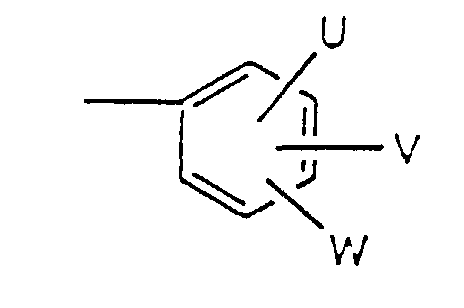
      e) bicycloalkyl (C7-10), tricycloalkyl (C7-14), tetracycloalkyl (C10-C16), or pentacycloalkyl (C11-C20), which may be independently or simultaneously substituted up to 3 times with straight or branched alkyl (C1-C6), or straight or branched alkoxy (C1-C6), or phenyl,
      f) the aryl derivatives tetrahydronaphthyl, benzothienyl, benzofuryl, benzopyranyl, furyl, pyridyl, pyranyl, 1,3-oxazolyl, or naphthyl, said aryl derivatives may be independently or simultaneously substituted up to two times by
      i) straight or branched alkyl (C1-C6),
      ii) straight or branched alkoxy (C1-C6),
      iii) halogen, where halogen is fluoro, chloro, bromo, or iodo,
      g) the piperonyl fragment
      Figure 01340001
      where
      z is an integer of 1, or 2,
      and E1, E2, and E3 can independently or simultaneously be hydrogen, straight or branched alkyl (C1-C6), straight or branched alkoxy (C1-C6), or chlorine, or
      h) the aryl derivative
      Figure 01340002
      where
      U, V, and W can be independently or simultaneously
      i) hydrogen,
      ii) straight or branched alkyl (C1-C6), straight or branched alkoxy (C1-C6), phenyl, or phenoxy, these groups may be substituted by phenyl, straight or branched alkoxy (C1-C6), or phenoxy,
      iii) hydroxy,
      iv) halogen,
      v) nitro, or
      vi) benzoyl;
      Y is a covalent bond, oxygen, NR7, where R7 is hydrogen,
      in addition,
      R1-Y- may also be
      Figure 01350001
      where
      k is an integer of 1 or 2,
      R8 is
      a) hydrogen,
      b) carboalkoxy with a straight or branched alkoxy (C1-C6),
      c) straight or branched akyl (C1-C6) which may be substituted by phenyl, or straight or branched alkoxy (C1-C6),
      d) phenyl, or phenyl substituted by halogen,
      R9 is phenyl which may be substituted by straight or branched alkyl (C1-C6);
      R2 and R3 are defined as follows: one of R2 and R3 are hydrogen, and the other is hydrogen or straight or branched alkyl (C1-C6);
      n is an integer of 2 or 3;
      A is NR10, where R10 is hydrogen or straight or branched alkyl (C1-C6);
      R4 and R5 may independently or simultaneously, be
      a) hydrogen,
      b) straight or branched alkyl (C1-C8) which may be substituted by
      i) phenyl, or phenyl substituted by hydroxy or alkoxy (C1-C2),
      ii) cycloalkyl (C5-C6).
      iii) alkylthio (C1-C6),
      iv) carboxamido,
      v) straight or branched alkoxy (C1-C6) which may be substituted by phenyl,
      c) phenyl, or
      d) cycloalkyl (C3-C7), which may be substituted by straight or branched alkyl (C1-C6),
      in addition, R4 and R5, taken together can be -(CH2)r-- where
      r is an integer of 4 or 5;
      G is one of the following fragments -HC=CH-, -CH2·CH2-, or -CH2- or the following fragment
      Figure 01360001
      where R12 is hydrogen or methyl, such that the carbonyl group is attached to the carbon bearing R4 and R5 and that NR12 is connected to R6;
      p is an integer of 0 or 1;
      R6 is
      a) hydrogen,
      b) straight or branched alkyl (C1-C6) which may be substituted by
      i) phenyl,
      ii) phenyl substituted with straight or branched alkyl (C1-C6), straight or branched alkoxy (C1-C6), or
      iii) pyridyl, or
      c) phenyl, naphthyl, furyl, thiofuryl, cycloalkyl (C5-C8), bicycloalkyl (C6-C10), tricycloalkyl (C7-C12), tetracycloalkyl (C10-C16), pentacycloalkyl (C11-C20) or benzoyl, such groups may be substituted by
      i) an amine,
      ii) amino substituted by a straight or branched alkoxycarbonyl (C1-C6) that may be substituted by phenyl or an alkene (C2-C6),
      iii) amino substituted by alkanoyl (C1-C6), or benzoyl,
      iv) sulfonamide (-SO2NH2), or
      v) hydroxy, or a straight or branched alkoxy (C1-C6), that may be substituted by phenyl;
      and pharmaceutically acceptable salts thereof.
    2. A compound of formula (I) according to claim 1
      Figure 01370001
      wherein
      R1 is
      a) hydrogen,
      b) linear or branched alkyl (C1-C6) which may be substituted
      i) once by hydroxy,
      ii) once by phenyl which may be substituted by straight or branched alkyl (C1-C4), or straight or branched alkoxy (C1-C6),
      iii) once by cycloalkyl (C3-C8) which may be substituted by straight or branched alkyl (C1-C6), or straight or branched alkoxy (C1-C4),
      iv) once by bicycloalkyl (C6-C10) which may be substituted by straight or branched alkyl (C1-C8), or straight or branched alkoxy (C1-C4),
      v) once by tricycloalkyl (C7-C12) which may be substituted by straight or branched alkyl (C1-C6), or straight or branched alkoxy (C1-C4),
      vi) once by tetracycloalkyl (C10-C12), which may be substituted by straight or branched alkyl (C1-C8), or straight or branched alkoxy (C1-C4),
      vii) up to two times by phenyl and cycloalkyl (C5-C7), or
      viii) up to two times by phenyl and morpholinyl,
      c) alkene (C3-C8), which may be substituted by phenyl, straight or branched alkyl (C1-C4), or straight or branched alkoxy (C1-C4),
      d) diene (C4-C7) substituted by straight or branched alkyl (C1-C6), or straight or branched alkoxy (C1-C4),
      e) triene (C10-C16) substituted up to three times by straight or branched alkyl (C1-C6), or straight or branched alkoxy (C1-C4), or
      f) cycloalkyl (C5-C10), or the cycloalkyl fragment
      Figure 01380001
      where
      m is an integer of 0, 1, or 2,
      J, K, and L are independently or simultaneously
      i) hydrogen,
      ii) straight or branched alkyl (C1-C5), which may be substituted by phenyl, or straight or branched alkoxy (C1-C4),
      iii) phenyl, or
      iv) phenyl substituted by straight or branched alkyl (C1-C4), or chlorine, or straight or branched alkoxy (C1-C4),
      g) bicycloalkyl (C7-10) which may be substituted up to 3 times with straight or branched alkyl (C1-C6), or straight or branched alkoxy (C1-C4),
      h) tricycloalkyl (C7-14) which may be substituted up to 3 times with straight or branched alkyl (C1-C6), or straight or branched alkoxy (C1-C4),
      i) tetracycloalkyl (C10-C15) which may be substituted up to 3 times by straight or branched alkyl (C1-C6), or straight or branched alkoxy (C1-C4),
      j) naphthyl derivatives, or the heteroaryl derivatives benzothienyl, benzofuryl, benzopyranyl, furyl, pyridyl, pyranyl, or 1,3-oxazolyl, said derivatives may be substituted up to two times by
      i) straight or branched alkyl (C1-C6),
      ii) halogen,
      iii) or both:
      k) 1,2,3,4-tetrahydronaphthyl,
      l) the piperonyl fragment
      Figure 01380002
      where
      z is an integer of 1, or 2,
      and E1, E2, and E3 can be independently or simultaneously hydrogen, straight or branched alkyl (C1-C4), straight or branched alkoxy (C1-C4), or chlorine,
      m) the aryl derivative
      Figure 01390001
      where
      U, V, and W can be independently or simultaneously
      i) hydrogen,
      ii) straight or branched alkyl (C1-C4), which may be substituted by phenyl,
      iii) straight or branched alkoxy (C1-C6), which may be substituted by phenyl, straight or branched alkoxy (C1-C4), or phenoxy,
      iv) hydroxy,
      v) phenyl,
      vi) halogen,
      vii) nitro.
      viii) benzoyl, or
      ix) phenoxy;
      Y is a covalent bond, oxygen, NR7, where R7 is hydrogen,
      in addition,
      R1-Y- may also be
      Figure 01390002
      where
      k is an integer of 1, or 2,
      R8 is
      a) hydrogen,
      b) carboalkoxy with a straight or branched alkoxy (C1-C4),
      c) straight or branched alkyl (C1-C4) which may be substituted by phenyl, or straight or branched alkoxy (C1-C4), or
      d) phenyl, or phenyl substituted by halogen,
      R9 is phenyl which may be substituted by alkyl (C1-C4);
      R2 and R3 are defined as follows: one of R2 and R3 are hydrogen, and the other is hydrogen or straight or branched alkyl (C1-C6);
      n is an integer of 2 or 3;
      A is NR10, where R10 is hydrogen or straight or branched alkyl (C1-C4);
      R4 is
      a) hydrogen,
      b) straight or branched alkyl (C1-C6) which may be substituted by
      i) phenyl, or phenyl substituted by hydroxy or methoxy,
      ii) cycloalkyl (C5-C6),
      iii) alkylthio (C1-C6),
      iv) carboxamido, or
      v) straight or branched alkoxy (C1-C6) which may be substituted by phenyl,
      c) phenyl, or
      d) cycloalkyl (C3-C7), which may be substituted by straight or branched alkyl (C1-C6);
      R5 is hydrogen or straight or branched alkyl (C1-C4), and R4 and R5, taken together can be -(CH2)r-- where r is an integer of 4 or 5;
      G is one of the following fragments -HC=CH-, -CH2·CH2-, or -CH2- or the following fragment
      Figure 01400001
      where the carbonyl group is attached to the carbon bearing R4 and R5 and NR12- is connected to R6,
      R12 is hydrogen or methyl;
      p is an integer of 0 or 1;
      R6 is
      a) hydrogen,
      b) straight or branched alkyl (C1-C4) which may be substituted by
      i) phenyl,
      ii) phenyl substituted with straight or branched alkyl (C1-C4), straight or branched alkoxy (C1-C4), or
      iii) 2- or 4-pyridyl,
      c) phenyl or naphthyl, which may be substituted by
      i) amine,
      ii) amino substituted by a straight or branched alkoxycarbonyl (C1-C6) that may be substituted by phenyl or an alkene (C2-C6),
      iii) amino substituted by alkanoyl (C1-C6), or benzoyl,
      iv) sulfonamide (-SO2NH2), or
      v) straight or branched alkoxy (C1-C6), that may be substituted by phenyl,
      d) benzoyl,
      e) furyl, or thiofuryl, or
      f) cycloalkyl (C5-C8), bicycloalkyl (C6-C10), tricycloalkyl (C7-C12), or tetracycloalkyl (C10-C14);
      and pharmaceutically acceptable salts thereof.
    3. A compound of formula (I) according to claim 1
      Figure 01410001
      wherein
      R1 is
      a) hydrogen,
      b) linear or branched alkyl (C1-C6) which may be substituted by
      i) hydroxy,
      ii) phenyl, or phenyl substituted by straight or branched alkyl (C1-C4),
      iii) cycloalkyl (C3-C8) which may be substituted by straight or branched alkyl (C1-C4),
      iv) bicycloalkyl (C6-C9) which may be substituted by straight or branched alkyl (C1-C6),
      v) tricycloalkyl (C7-C12) which may be substituted by straight or branched alkyl (C1-C4),
      vi) tetracycloalkyl (C10-C12), which may be substituted by straight or branched alkyl (C1-C6),
      vii) both phenyl and cycloalkyl (C5-C6), or
      viii) both phenyl and morpholinyl,
      c) alkene (C3-C6), which may be substituted by phenyl,
      d) diene (C5-C6) substituted by straight or branched alkyl (C1-C4),
      e) triene (C13-C16) substituted up to three times by straight or branched alkyl (C1-C4),
      f) cycloalkyl (C5-C6), or the cycloalkyl fragment
      Figure 01420001
      where
      m is an integer of 0, 1, or 2,
      J, K, and L are independently or simultaneously,
      i) hydrogen,
      ii) straight or branched alkyl (C1-C5),
      iii) phenyl, or
      iv) phenyl substituted by straight or branched alkyl (C1-C4), or chlorine, or straight or branched alkoxy (C1-C4),
      g) bicycloalkyl (C7-8) which may be substituted up to 3 times with straight or branched alkyl (C1-C4),
      h) tricycloalkyl (C7-C12) which may be substituted up to 2 times with straight or branched alkyl (C1-C6),
      i) tetracycloalkyl (C10-C12), which may be substituted up to 3 times by straight or branched alkyl (C1-C4),
      j) 2-benzothienyl substituted independently or simultaneously at least twice by either
      i) straight or branched alkyl (C1-C3),
      ii) chlorine,
      iii) or both,
      k) 2-furyl,
      l) 2-pyridyl,
      m) 2-naphthyl,
      n) 1,2,3,4-tetrahydronaphthyl,
      o) 2-benzopyranyl,
      p) 2-benzofuryl,
      q) the piperonyl fragment
      Figure 01430001
      where
      z is an integer of 1, or 2,
      and E1, E2, and E3 are hydrogen, or
      r) the aryl derivative
      Figure 01430002
      where
      U, V, and W can be independently or simultaneously
      i) hydrogen,
      i) straight or branched alkyl (C1-C4),
      ii) straight or branched alkoxy (C1-C4),
      iii) alkoxy (C2) substituted by alkoxy (C2), or phenoxy,
      iv) hydroxy,
      v) phenyl,
      vi) fluorine,
      vii) chlorine,
      viii) bromine,
      ix) nitro,
      x) benzyloxy,
      xi) benzoyl,
      xii) phenoxy;
      Y is a covalent bond, oxygen, NR7, where R7 is hydrogen;
      in addition,
      R1-Y- may also be
      Figure 01440001
      where
      k is an integer of 1, or 2,
      R8 is
      a) hydrogen,
      b) carboalkoxy with alkoxy (C1-C2),
      c) straight or branched alkyl (C1-C4) which may be substituted by phenyl,
      d) phenyl,
      R9 is phenyl;
      R2 and R3 are defined as follows: one of R2 and R3 is hydrogen, and the other is hydrogen or straight or branched alkyl (C1-C4);
      n is an integer of 2 or 3:
      A is NR10, where R10 is hydrogen or methyl;
      R4 is
      a) hydrogen,
      b) straight or branched alkyl (C1-C4) which may be substituted by
      i) phenyl,
      ii) cycloalkyl (C5-C6),
      iii) alkylthio (C1-C4),
      iv) carboxamido, or
      v) benzyloxy, or
      c) phenyl;
      R5 is hydrogen or straight or branched alkyl (C1-C4), and R4 and R5, taken together can be -(CH2)r-- where r is integer 5;
      G is one of the following fragments -HC=CH-, -CH2·CH2-, or -CH2- or the following fragment
      Figure 01450001
      where the carbonyl group is attached to the carbon bearing R4 and R5 and NR12 is connected to R6,
      R12 is hydrogen or methyl;
      p is an integer of 0 or 1;
      R6 is
      a) hydrogen,
      b) straight or branched alkyl (C1-C4) which may be substituted by
      i) phenyl,
      ii) phenyl substituted with alkoxy (C1-C2),
      iii) 2- or 4-pyridyl,
      c) phenyl which may be substituted by
      i) amino,
      ii) amino substituted by allyloxycarbonyl,
      iii) amino substituted by acetyl,
      iv) amino substituted by benzoyl,
      v) amino substituted by benzyloxycarbonyl,
      iii) sulfonamide (-SO2NH2), or
      iv) straight or branched alkoxy (C1-C4),
      d) benzoyl,
      e) furyl,
      f) naphthyl,
      g) cycloalkyl (C5-C8), or
      h) tetracycloalkyl (C10-C12);
      and pharmaceutically acceptable salts thereof.
    4. A compound according to claims 1-3 selected from the group consisting of:
      L-Isoleucine, N-[1-(2-Benzyloxy-2-Oxoethyl)-L-Prolyl] Benzylamide;
      L-Isoleucine, N-[1-(2-Methoxy-2-Oxoethyl)-L-Prolyl] Benzylamide;
      L-Isoleucine, N-[1-(2-Phenyl-2-Oxoethyl)-L-Prolyl] Benzylamide;
      L-Isoleucine, N-[1-(2-Naphth-2-yl-2-Oxoethyl)-L-Prolyl] Benzylamide;
      L-isoleucine, N-[1-(2-(Biphenyl-4-yl)-2-Oxoethyl)-L-Prolyl] Benzylamide;
      L-Isoleucine, N-[1-(2-(2-Methoxyphenyl)-2-Oxoethyl)-L-Prolyl] Benzylamide;
      L-Isoleucine, N-[1-(2-(5-Chloro-3-Methyl-benzo[B]thiophene-2-yl)-2-Oxoethyl)-L-Prolyl] Benzylamide;
      L-Isoleucine, N-[1-(2-(trans,trans-Hexa-2,4-dienyl-1-oxy)-2-Oxoethyl)-L-Prolyl] Benzylamide;
      L-Isoleucine, N-[1-(2-(4-Chlorophenyl)-2-Oxoethyl])-L-Prolyl] Benzylamide;
      L-Isoleucine, N-[1-(2-(4-Methylphenyl)-2-Oxoethyl)-L-Prolyl] Benzylamide;
      L-Isoleucine, N-[1-(2-(4-Methoxyphenyl)-2-Oxoethyl)-L-Prolyl] Benzylamide;
      L-Isoleucine, N-Methyl-N-[1-(2-Phenyl-2-Oxoethyl)-L-Prolyl] Benzylamide;
      L-Isoleucine, N-[1-(2-Phenyl-2-Oxoethyl)-L-Homoproline] Benzylamide;
      L-Phenylglycine, N-[1-(2-Phenyl-2-Oxoethyl)-L-Proline Benzylamide;
      L-Isoleucine, N-[1-(1-Methyl-2-Phenyl-2-Oxoethyl)-L-Prolyl] Benzylamide;
      L-Isoleucine, N-[1-(2-(3-Methoxyphenyl)-2-Oxoethyl)-L-Prolyl] Benzylamide;
      L-Isoleucine, N-[1-(2-(3,4-Dihydroxyphenyl)-2-Oxoethyl)-L-Prolyl] Benzylamide;
      L-Isoleucine, N-Methyl-N-[1-(2-Benzyloxy-2-Oxoethyl)-L-Prolyl] Benzylamide;
      L-Isoleucine, N-[1-(Carbobenzyloxymethylene)-L-Homoproline Benzylamide;
      L-Isoleucine, N-[1-(2-Adamantan-1-yl-2-Oxoethyl)-L-Prolyl] Benzylamide;
      L-Isoleucine, N-[1-(Carbo-tert-Butoxymethylene)-L-Proline] Benzylamide;
      L-Isoleucine, N-[1-(2-tert-Butyl-2-Oxoethyl)-L-Proline] Benzylamide;
      L-Isoleucine, N[1-(2-(2,5-Dimethoxyphenyl)-2-Oxoethyl)-L-Prolyl] Benzylamide;
      L-Isoleucine, N-[1-(2-(2,4-Dimethoxyphenyl)-2-Oxoethyl)-L-Prolyl] Benzylamide;
      L-Isoleucine, N-[1-(2-(2-Nitrophenyl)-2-Oxoethyl)-L-Prolyl] Benzylamide;
      L-Isoleucine, N-[1-(2-(4-Nitrophenyl)-2-Oxoethyl)-L-Prolyl] Benzylamide;
      L-Isoleucine, N-[1-(2-(3-Benzyloxyphenyl)-2-Oxoethyl)-L-Prolyl] Benzylamide;
      L-Isoleucine, N-[1-(2-(2,4-Dimethylphenyl)-2-Oxoethyl)-L-Prolyl] Benzylamide;
      L-Isoleucine, N-[1-(2-(4-Fluorophenyl)-2-Oxoethyl)-L-Prolyl] Benzylamide;
      L-Isoleucine, N-[1-(2-(4-Bromophenyl)-2-Oxoethyl)-L-Prolyl] Benzylamide;
      L-Isoleucine, N-[1-(2,4-Dichlorophenylcarbamoylmethyl)-L-Proline] Benzylamide;
      L-Isoleucine, N-[1-(2-Adamantan-1-yl-2-Oxoethyl)-L-Homoproline] Benzylamide;
      L-Isoleucine, N-[1-(2-Furan-2-yl-2-Oxoethyl)-L-Prolyl] Benzylamide;
      L-Isoleucine, N-[1-(2-Pyrid-2-yl-2-Oxoethyl)-L-Prolyl] Benzylamide;
      L-Isoleucine, N-[1-(Adamant-1-ylcarbamoylmethyl)-L-Prolyl] Benzylamide;
      L-Isoleucine, N-[1-(2-(cis-Octahydro-pentalen-1-yl)-2-Oxoethyl)-L-Prolyl] Benzylamide;
      L-Isoleucine, N-[1-[2-(2,6,6-Trimethyl-Bicyclo[3.1.1]hept-3-yl)-2-Oxoethyl]-L-Prolyl] Benzylamide;
      L-Isoleucine, N-[1-(2-(4-Pentylcyclohexyl)-2-Oxoethyl)-L-Prolyl] Benzylamide;
      L-Isoleucine, N-[1-(2-(1,2,3,4-tetrahydro-Napththalen-2-yl)-2-Oxoethyl)-L-Prolyl] Benzylamide;
      L-lsoleucine, N-[1-(2-(1-Methyl-Cyclohexyl)-2-Oxoethyl)-L-Prolyl] Benzylamide;
      L-Isoleucine, N-[1-(2-Oxo-2-Tricyclo[3.3.1.0 3,7]Non-3-yl-Ethyl)-L-Prolyl] Benzylamide;
      L-Isoleucine, N-[1-(2-Oxo-3-(3-Methyl-Adamantan-1-yl)-Propyl)-L-Prolyl] Benzylamide;
      L-Proline, 1-(2-Adamantan-1-yl-2-Oxoethyl) Benzyl Ester;
      L-Isoleucine, N-[1-(2-(Biphenyl-4-yl)-2-Oxoethyl)-L-Prolyl] 1,2,3,4-Tetrahydroisoquinolinamide;
      L-Isoleucine, N-[1-(2-(Biphenyl-4-yl)-2-Oxoethyl)-L-Prolyl] Benzyl Ester;
      L-Isoleucine, N-[1-(2-(Biphenyl-4-yl)-2-Oxoethyl)-L-Prolyl] tert-Butylamide;
      L-Phenylalanine, N-[1-(2-(Biphenyl-4-yl)-2-Oxoethyl)-L-Prolyl] Benzylamide;
      L-Methionine, N-[1-(2-(Biphenyl-4-yl])-2-Oxoethyl)-L Prolyl] Benzylamide;
      Glycine, N-[1-(2-Adamantan-1-yl-2-Oxoethyl)-L-Prolyl] Benzylamide;
      L-Valine, N-[1-(2-Adamantan-1-yl-2-Oxoethyl)-L-Prolyl] Benzylamide;
      L-Leucine, N-[1-(2-Adamantan-1-yl-2-Oxoethyl)-L-Prolyl] Benzylamide;
      L-Phenylalanine, N-[1-(2-Adamantan-1-yl-2-Oxoethyl)-L-Prolyl] Benzylamide;
      L-Norvaline, N-[1-(2-Adamantan-1-yl-2-Oxoethyl)-L-Prolyl] Benzylamide;
      L-Norleucine, N-[1-(2-Adamantan-1-yl-2-Oxoethyl)-L-Prolyl] Benzylamide;
      L-Asparagine, N-[1-(2-Adamantan-1-yl-2-Oxoethyl)-L-Prolyl] Benzylamide;
      L-Serine-(O-Benzyl Ether), N-[1-(2-Adamantan-1-yl-2-Oxoethyl)-L-Prolyl] Benzylamide;
      L-β-Phenylalanine, N-[1-(2-Adamantan-1-yl-2-Oxoethyl)-L-Prolyl] Benzylamide;
      L-Cyclohexylalanine, N-[1-(2-Adamantan-1-yl-2-Oxoethyl)-L-Prolyl] Benzylamide;
      L-Isoleucine, N-[1-(2-Adamantan-1-yl-2-Oxoethyl)-L-Prolyl] alpha-(S)-methylbenzylamide;
      L-Isoleucine, N-[1-(2-Adamantan-1-yl-2-Oxoethyl)-L-Prolyl] alpha-(R)-methylbenzylamide;
      L-Isoleucine, N-[1-(2-Adamantan-1-yl-2-Oxoethyl)-L-Prolyl] Pyridin-4-ylmethylamide;
      L-Isoleucine, N-[1-(2-Adamantan-1-yl-2-Oxoethyl)-L-Prolyl] Pyridin-2-ylmethylamide;
      L-Isoleucine, N-[1-(2-Adamantan-1-yl-2-Oxoethyl)-L-Prolyl] 4-methoxybenzylamide;
      L-Isoleucine, N-[1-(2-Adamantan-1-yl-2-Oxoethyl)-L-Prolyl] 2-methoxybenzylamide;
      L-Isoleucine, N-[1-(Carboxymetyl)-L-Prolyl] Benzylamide;
      L-Isoleucine, N-[1-[2-[N-(Piperidine-3-Carboxyic Acid Ethyl Ester)]-2-Oxoethyl]-L-Prolyl] Benzylamide;
      L-Isoleucine, N-[1-(2-(1,4-Dioxa-8-aza-spiro[4.5]dec-8-yl)-2-Oxoethyl)-L-Prolyl] Benzylamide;
      L-Isoleucine, N-[1-[2-(N-4-Benzylpiperidyl))-2-Oxoethyl]-L-Prolyl] Benzylamide;
      L-Isoleucine, N-[1-[2-(2-Methylpiperidine)-2-Oxoethyl)-L-Prolyl] Benzylamide;
      L-Isoleucine, N-[1-(2-(2-Hydroxyethylamine)-2-Oxoethyl)-L-Prolyl] Benzylamide;
      L-Isoleucine, N-[1-[2-(4-Phenylpiperazine)-2-Oxoethyl]-L-Prolyl] Benzylamide;
      L-Isoleucine, N-[1-[2-(1-Pyrrolidine)-2-Oxoethyl]-L-Prolyl] Benzylamide;
      L-Isoleucine, N-[1-[2-(N-Cyclopentylamino)-2-Oxoethyl]-L-Prolyl] Benzylamide;
      L-Isoleucine, N-[1-[2-(N-(Phenylmethylamino))-2-Oxoethyl]-L-Prolyl] Benzylamide;
      L-Isoleucine, N-[1-(2-(N-(Cyclohexylmethylamino))-2-Oxoethyl]-L-Prolyl] Benzylamide;
      L-Isoleucine, N-[1-(2-(4-Phenylpiperazine)-2-Oxoethyl]-L-Prolyl] Benzylamide;
      L-Isoleucine, N[1-(2-[1-(3,7,11-Trimethyldodeca-2,6,10-trien-1-ol)]-2-Oxoethyl)-L-Proline] Benzylamide;
      L-Isoleucine, N-[1-(2-(3-Phenyl-2-Propen-1-Oxy)-2-Oxoethyl)-L-Prolyl] Benzylamide;
      L-Isoleucine, N-[1-(2-(3-Phenyl-3-Methyl-2-Propen-1-Oxy)-2-Oxoethyl)-L-Prolyl] Benzylamide;
      L-Isoleucine, N-[1-(2-(1-Phenylpropoxy)-2-Oxoethyl)-L-Prolyl] Benzylamide;
      L-Isoleucine, N-[1-(2-(1-Phenyl-1-Cyclohexylmethoxy)-2-Oxoethyl)-L-Prolyl] Benzylamide;
      L-Isoleucine, N-[1-(2-(1-Phenyl-2-(4-Morpholino)Ethoxy)-2-Oxoethyl)-L-Prolyl] Benzylamide;
      L-Isoleucine, N-[1-(2-(2-Oxy-2-Methyladamant-2-yl)-2-Oxoethyl)-L-Prolyl] Benzylamide;
      L-Isoleucine, N-[1-(Adamantan-2-ylcarbamoylmethyl)-L-Prolyl] Benzylamide;
      L-Isoleucine, N-[1-(Adamant-1-ylmethylcarbamoylmethyl)-L-Prolyl] Benzylamide;
      L-Isoleucine, N-[1-(2-(2-Methyl-1-(S)-Phenyl-1-Propoxy)-2-Oxoethyl)-L-Prolyl] Benzylamide;
      L-Isoleucine, N-[1-(2-(2-Methyl-1-(R)-Phenyl-1-Propoxy)-2-Oxoethyl)-L-Prolyl] Benzylamide;
      L-Isoleucine, N-[1-(2-(4-tert-Butylcyclohexyl)-2-Oxoethyl)-L-Prolyl] Benzylamide;
      L-Isoleucine, N-[1-(2-Bicyclo[2.2.1]hept-2-yl)-2-Oxoethyl)-L-Prolyl] Benzylamide;
      L-Isoleucine, N-[1-(2-(3,4,5-Trimethoxyphenyl)-2-Oxoethyl)-L-Prolyl] Benzylamide;
      L-Isoleucine, N-[1-(2-(Chroman-2-yl)-2-Oxoethyl)-L-Prolyl] Benzylamide Hydrochloride Salt;
      L-Isoleucine, N-[1-(2-(Benzofuran-2-yl)-2-Oxoethyl)-L-Prolyl] Benzylamide Hydrochloride Salt;
      L-Isoleucine, N-[1-(2-(3-Benzoyloxyphenyl)-2-Oxoethyl)-L-Prolyl] Benzylamide;
      L-Isoleucine, N-[1-(2-(4-Benzoyloxyphenyl)-2-Oxoethyl)-L-Prolyl] Benzylamide;
      L-Isoleucine, N-[1-(2-(2-Benzoyloxyphenyl)-2-Oxoethyl)-L-Prolyl] Benzylamide;
      L-Isoleucine, N-[1-(2-(3-Phenoxyphenyl)-2-Oxoethyl)-L-Prolyl] Benzylamide;
      L-Isoleucine, N-[1-(2-(2-Phenoxyphenyl)-2-Oxoethyl)-L-Prolyl] Benzylamide;
      L-Isoleucine, N-[1-(2-(3,4,5-Triethoxyphenyl)-2-Oxoethyl)-L-Prolyl] Benzylamide;
      L-Isoleucine, N-[1-(2-(Benzo[1,3]dioxol-5-yl)-2-Oxoethyl)-L-Prolyl] Benzylamide;
      L-Isoleucine, N-[1-{2-Oxo-2-[4-(2-Phenoxyethoxy)-Phenyl]-Ethyl}-L-Prolyl] Benzylamide;
      L-Isoleucine, N-[1-(2-(4-Phenoxyphenyl)-2-Oxoethyl)-L-Prolyl] Benzylamide;
      L-Isoleucine, N-[1-(2-(2,4,6-Trimethoxyphenyl)-2-Oxoethyl)-L-Prolyl] Benzylamide;
      L-Isoleucine, N-[1-(2-(2,3-Dimethoxyphenyl)-2-Oxoethyl)-L-Prolyl] Benzylamide;
      L-Isoleucine, N-[1-(2-(2,6-Dimethoxyphenyl)-2-Oxoethyl)-L-Prolyl] Benzylamide;
      L-Isoleucine, N-[1-(2-(1-(4-Methylphenyl)cyclohexyl)-2-Oxoethyl)-L-Prolyl] Benzylamide;
      L-Isoleucine, N-[1-(2-(1-(4-Chlorophenyl)cyclohexyl)-2-Oxoethyl)-L-Prolyl] Benzylamide;
      L-Isoleucine, N-[1-(2-(2,3,4-Trimethoxyphenyl)-2-Oxoethyl)-L-Prolyl] Benzylamide;
      L-Isoleucine, N-[1-(2-(1-Phenylcyclohexyl)-2-Oxoethyl)-L-Prolyl] Benzylamide;
      L-Isoleucine, N-[1-(2-(2,4,5-Trimethoxyphenyl)-2-Oxoethyl)-L-Prolyl] Benzylamide;
      1-[2-(3,4,5-Trimethoxyphenyl)-2-Oxoethyl] L-Proline Benzyl Ester Hydrochloride;
      L-Proline, 1-[2-(3,4,5-Trimethoxyphenyl)-2-Oxoethyl] Benzylamide Hydrochloride;
      L-Proline, 1-[2-(3,4,5-Trimethoxyphenyl)-2-Oxoethyl] 2-Phenethylamide Hydrochloride;
      L-Proline, 1-[2-(3,4,5-Trimethoxyphenyl)-2-Oxoethyl] 3-Phenylpropylamide Hydrochloride;
      L-Proline, 1-[2,(3,4,5-Trimethoxyphenyl)-2-Oxoethyl) 4-Phenylbutylamide Hydrochloride;
      L-Proline, 1-[2-(3,4,5-Trimethoxyphenyl)-2-Oxoethyl] 2-(Pyrid-2-yl)ethylamide Dihydrochloride;
      L-Proline, 1-[2-(3,4,5-Trimethoxyphenyl)-2-Oxoethyl) 2-(4-aminophenyl)ethylamide Dihydrochloride;
      L-Proline, 1-[2-(3,4,5-Trimethoxyphenyl)-2-Oxoethyl] 3-(4-[N-Carballyloxy]aminophenyl)propyl Ester Hydrochloride;
      L-Proline, 1-[2-(3,4,5-Trimethoxyphenyl)-2-Oxoethyl] 2-Phenyl-2-oxoethylamide;
      L-Proline, 1-[2-(3,4,5-Trimethoxyphenyl)-2-Oxoethyl] Tetrahydrofurfurylamide;
      L-Proline, 1-[2-(3,4,5-Trimethoxyphenyl)-2-Oxoethyl] Naphthalen-1-ylmethylamide;
      L-Proline, 1-[2-(3,4,5-Trimethoxyphenyl)-2-Oxoethyl] 2-(4-Sulfamoylphenyl)ethylamide;
      L-Proline, 1-[2-(3,4,5-Trimethoxyphenyl)-2-Oxoethyl] 4-Phenylpiperidenylamide;
      L-Proline, 1-[2-(3,4,5-Trimethoxyphenyl)-2-Oxoethyl] 4-Methoxybenzamide Hydrochloride;
      L-Proline, 1-[2-(3,4,5-Trimethoxyphenyl)-2-Oxoethyl] 3-Methoxybenzamide Hydrochloride;
      L-Proline, 1-[2-(3,4,5-Trimethoxyphenyl)-2-Oxoethyl] 2-Methoxybenzamide Hydrochloride;
      L-Proline, 1-[2-(3,4,5-Trimethoxyphenyl)-2-Oxoethyl] N-Methylphenethylamide Hydrochloride;
      L-Proline, 1-[2-(3,4,5-Trimethoxyphenyl)-2-Oxoethyl] (S)-α-methylbenzylamide Hydrochloride;
      L-Proline, 1-[2-(3,4,5-Trimethoxyphenyl)-2-Oxoethyl)] (R)-α-methylbenzylamide Hydrochloride;
      L-Proline, 1-[2-(3,4,5-Trimethoxyphenyl)-2-Oxoethyl] 1-methyl-3-phenylpropylamide Hydrochloride;
      L-Proline, 1-[2-(3,4,5-Trimethoxyphenyl)-2-Oxoethyl] Adamant-1-ylmethylamide Hydrochloride;
      L-Proline 1-[2-(3,4,5-Trimethoxyphenyl)-2-Oxoethyl) 1-(R)-(1-naphthyl)ethylamide Hydrochloride;
      L-Proline, 1-[2-(3,4,5-Trimethoxyphenyl)-2-Oxoethyl] Cyclohexylmethylamide;
      L-Proline, 1-[2-(3,4,5-Trimethoxyphenyl)-2-Oxoethyl] Diphenylmethylamide Hydrochloride;
      L-Proline, 1-[2-(3,4,5-Trimethoxyphenyl)-2-Oxoethyl] tert-Butylamide Hydrochloride;
      L-Proline, 1-[2-(3,4,5-Trimethoxyphenyl)-2-Oxoethyl] 1,2-Diphenylethylamide Hydrochloride;
      L-Proline, 1-[2-(3,4,5-Trimethoxyphenyl)-2-Oxoethyl] Cyclohexyl amide Hydrochloride;
      1-[2-(3,4,5-Trimethoxyphenyl)-2-Oxoethyl] L-Homoproline Benzyl Ester Hydrochloride;
      L-Homoproline, 1-[2-(3,4,5,Trimethoxyphenyl)-2-Oxoethyl] Benzylamide Hydrochloride;
      L-Homoproline 1-[2-(3,4,5-Trimethoxyphenyl)-2-Oxoethyl] Adamant-1-ylmethylamide Hydrochloride;
      L-Homoproline, 1-[2-(3,4,5-Trimethoxyphenyl)-2-Oxoethyl] tetrahydrofurfurylamide;
      L-Homoproline, 1-[2-(3,4,5-Trimethoxyphenyl)-2-Oxoethyl] 2-(4-Sulfamoylphenyl)ethylamide;
      L-Homoproline, 1-[2-(3,4,5,Trimethoxyphenyl)-2-Oxoethyl] (S)-α-methylbenzylamide Hydrochloride;
      L-Homoproline, 1-[2-(3,4,5-Trimethoxyphenyl)-2-Oxoethyl] (1-(S)-[2'-(S)-methylpropyl]-3-phenylprop-2-E-enyl)-amide;
      L-Homoproline, 1-[2-(3,4,5-Trimethoxyphenyl)-2-Oxoethyl] (1-(S)-[2'-(S)-methylpropyl]-3-phenylpropyl)-amide;
      L-Isoleucine, N-[1-(2-(3,4,5-Trimethoxyphenyl)-2-Oxoethyl)-L-Homoprolyl] Benzylamide;
      L-Proline 1-[2-(3,4,5-Trimethoxyphenyl)-2-Oxoethyl] 2-(4-(N-Acetyl)aminophenyl)ethylamide;
      L-Proline, 1-[2-(3,4,5-Trimethoxyphenyl)-2-Oxoethyl] 2-(4-(N-Benzoyl)aminophenyl)ethylamide;
      L-Proline, 1-[2-(3,4,5-Trimethoxyphenyl)-2-Oxoethyl] 2-(4-(N-carboalloxy)aminophenyl)ethylamide;
      L-Proline, 1-[2-(3,4,5-Trimethoxyphenyl)-2-Oxoethyl] 2-(4-(N-Carbobenzyloxy)aminophenyl)ethylamide;
      L-Homoproline, 1-[2-(3,4,5-Trimethoxyphenyl)-2-Oxoethyl] 3-(4-(N-Carboallyloxy)aminophenyl)propyl Ester Hydrochloride;
      L-Proline, 1-[2-Adamantan-1-yl-2-Oxoethyl] 3-(4-(N-Carboallyloxy) aminophenyl)propyl Ester Hydrochloride; and
      L-Homoproline, 1-[2-Adamant-1-yl-2-Oxoethyl] 3-(4-(N-Carboallyloxy)aminophenyl)propyl Ester Hydrochloride.
    5. A compound according to claims 1 to 4 for the treatment of inflammations.
    6. A medicament containing at least one compound according to claims 1 to 4.
    7. Use of the compounds according to claims 1 to 4 for the manufacturing of a composition for the treatment of inflammation.
    8. A method for making the compounds of claims 1 to 4, comprising the following steps:
      Figure 01550001
      which are
      (a) coupling an N-protected imino acid to an amine or an alcohol to form a C-substituted, N-protected imino acid;
      (b) removing the protecting group from said C-substituted, N-protected imino acid; and
      (c) alkylating the resulting imino acid from step (b) at the nitrogen position with an α-halo ester, α-halo ketone, or an α-halo amide.
    9. A method for making the compounds of claims 1 to 4, comprising the following steps:

      Figure 01560001
      which are
      a) deprotecting the 2-position of a first 2-oxoethyl derivative; and
      b) coupling the resulting acid derivative from step (a) to form a second 2-oxoethyl derivative.
    10. A method for making the compounds of claims 1 to 4 comprising the following steps:

      Figure 01560002
      which are
      a) deprotecting the imino acid C-termini of a 2-oxoethyl derivative to form a 2-oxoethyl imino acid; and
      b) coupling said 2-oxoethyl imino acid resulting from step (a) with an amine or an alcohol to form a C-substituted, 2-oxoethyl imino acid derivative.
    EP93105035A 1992-04-08 1993-03-26 2-Oxoethyl derivatives as immunosuppressants Expired - Lifetime EP0564924B1 (en)

    Applications Claiming Priority (4)

    Application Number Priority Date Filing Date Title
    US86499892A 1992-04-08 1992-04-08
    US98156592A 1992-11-25 1992-11-25
    US864998 1992-11-25
    US981565 1992-11-25

    Publications (3)

    Publication Number Publication Date
    EP0564924A2 EP0564924A2 (en) 1993-10-13
    EP0564924A3 EP0564924A3 (en) 1993-12-29
    EP0564924B1 true EP0564924B1 (en) 1998-09-09

    Family

    ID=27127869

    Family Applications (1)

    Application Number Title Priority Date Filing Date
    EP93105035A Expired - Lifetime EP0564924B1 (en) 1992-04-08 1993-03-26 2-Oxoethyl derivatives as immunosuppressants

    Country Status (9)

    Country Link
    US (1) US5686424A (en)
    EP (1) EP0564924B1 (en)
    JP (1) JPH0641064A (en)
    AT (1) ATE170870T1 (en)
    AU (1) AU666179B2 (en)
    CA (1) CA2091194A1 (en)
    DE (1) DE69320858T2 (en)
    DK (1) DK0564924T3 (en)
    ES (1) ES2119826T3 (en)

    Cited By (9)

    * Cited by examiner, † Cited by third party
    Publication number Priority date Publication date Assignee Title
    US5614547A (en) * 1995-06-07 1997-03-25 Guilford Pharmaceuticals Inc. Small molecule inhibitors of rotamase enzyme
    GB2305176A (en) * 1995-06-07 1997-04-02 Guilford Pharm Inc Small molecule inhibitors of rotamase enzyme activity
    US5846979A (en) * 1997-02-28 1998-12-08 Gpi Nil Holdings, Inc. N-oxides of heterocyclic esters, amides, thioesters, and ketones
    US6096762A (en) * 1998-06-02 2000-08-01 Bristol-Myers Squibb Company Neurotrophic difluoroamide agents
    US6200972B1 (en) * 1996-09-25 2001-03-13 Gpi Nil Holdings, Inc. Heterocyclic esters and amides
    US6509477B1 (en) 1998-11-12 2003-01-21 Guilford Pharmaceuticals Inc. Small molecule inhibitors of rotamase enzyme activity
    US6818643B1 (en) 1999-12-08 2004-11-16 Bristol-Myers Squibb Company Neurotrophic bicyclic diamides
    US6943187B2 (en) 1997-06-04 2005-09-13 Gpi Nil Holdings, Inc. Pyrrolidine derivative hair growth compositions and uses
    WO2017138838A1 (en) * 2016-02-08 2017-08-17 Акционерное Общество "Вертекс" Arylcycloalkylamine derivatives exhibiting a neuroprotective, analgesic and antidepressant effect

    Families Citing this family (44)

    * Cited by examiner, † Cited by third party
    Publication number Priority date Publication date Assignee Title
    EP0610745A3 (en) * 1993-02-09 1994-09-28 Miles Inc Novel aminomethylene derivatives as immunosuppressants.
    US5798355A (en) * 1995-06-07 1998-08-25 Gpi Nil Holdings, Inc. Inhibitors of rotamase enzyme activity
    AU708620B2 (en) * 1995-03-29 1999-08-05 Merck & Co., Inc. Inhibitors of farnesyl-protein transferase
    AT500193B1 (en) * 1995-06-07 2007-11-15 Guilford Pharm Inc Rotamase inhibiting N-glyoxyl prolyl ester derivs. - are useful for stimulating growth of damaged nerves and treating neurological disorders
    US7056935B2 (en) 1995-06-07 2006-06-06 Gpi Nil Holdings, Inc. Rotamase enzyme activity inhibitors
    AT500192B1 (en) * 1995-06-07 2008-05-15 Guilford Pharm Inc NEUROTROPHE COMPOUND, PHARMACEUTICAL MASS CONTAINING THEREOF, USE OF THE COMPOUND, AND METHOD FOR THE PRODUCTION THEREOF
    US5696135A (en) 1995-06-07 1997-12-09 Gpi Nil Holdings, Inc. Inhibitors of rotamase enzyme activity effective at stimulating neuronal growth
    RU2269514C9 (en) * 1995-06-07 2006-05-27 Джи-Пи-Ай Эн-Ай-Эл Холдингз, Инк. Small molecules as rotamase enzyme activity inhibitors
    ES2170628B1 (en) * 1995-06-07 2003-06-16 Guilford Pharm Inc SMALL INHIBITORS OF MOLECULES OF THE ACTIVITY OF ENZYMES OF ROTAMASA
    US6271244B1 (en) 1998-06-03 2001-08-07 Gpi Nil Holdings, Inc. N-linked urea or carbamate of heterocyclic thioester hair growth compositions and uses
    US6187796B1 (en) 1998-06-03 2001-02-13 Gpi Nil Holdings, Inc. Sulfone hair growth compositions and uses
    US6274602B1 (en) 1998-06-03 2001-08-14 Gpi Nil Holdings, Inc. Heterocyclic thioester and ketone hair growth compositions and uses
    US6187784B1 (en) 1998-06-03 2001-02-13 Gpi Nil Holdings, Inc. Pipecolic acid derivative hair growth compositions and uses
    US5945441A (en) 1997-06-04 1999-08-31 Gpi Nil Holdings, Inc. Pyrrolidine carboxylate hair revitalizing agents
    US6166037A (en) * 1997-08-28 2000-12-26 Merck & Co., Inc. Pyrrolidine and piperidine modulators of chemokine receptor activity
    SE9704544D0 (en) 1997-12-05 1997-12-05 Astra Pharma Prod Novel compounds
    SE9704545D0 (en) 1997-12-05 1997-12-05 Astra Pharma Prod Novel compounds
    US6429215B1 (en) 1998-06-03 2002-08-06 Gpi Nil Holdings, Inc. N-oxide of heterocyclic ester, amide, thioester, or ketone hair growth compositions and uses
    EP1085853A1 (en) 1998-06-03 2001-03-28 GPI NIL Holdings, Inc. Heterocyclic ester and amide hair growth compositions and uses
    US6172087B1 (en) 1998-06-03 2001-01-09 Gpi Nil Holding, Inc. N-oxide of heterocyclic ester, amide, thioester, or ketone hair growth compositions and uses
    US6331537B1 (en) 1998-06-03 2001-12-18 Gpi Nil Holdings, Inc. Carboxylic acids and carboxylic acid isosteres of N-heterocyclic compounds
    US6462072B1 (en) * 1998-09-21 2002-10-08 Gpi Nil Holdings, Inc. Cyclic ester or amide derivatives
    US6307049B1 (en) 1998-09-30 2001-10-23 The Procter & Gamble Co. Heterocyclic 2-substituted ketoamides
    US6300341B1 (en) 1998-09-30 2001-10-09 The Procter & Gamble Co. 2-substituted heterocyclic sulfonamides
    US6228872B1 (en) 1998-11-12 2001-05-08 Bristol-Myers Squibb Company Neurotrophic diamide and carbamate agents
    US6855715B1 (en) 1999-06-14 2005-02-15 Eli Lilly And Company Serine protease inhibitors
    SE9904505D0 (en) 1999-12-09 1999-12-09 Astra Pharma Prod Novel compounds
    TWI258462B (en) 1999-12-17 2006-07-21 Astrazeneca Ab Adamantane derivative compounds, process for preparing the same and pharmaceutical composition comprising the same
    AU2002322720B2 (en) 2001-07-25 2008-11-13 Raptor Pharmaceutical Inc. Compositions and methods for modulating blood-brain barrier transport
    US20100222316A1 (en) 2004-04-29 2010-09-02 Abbott Laboratories Inhibitors of the 11-beta-hydroxysteroid dehydrogenase type 1 enzyme
    US8415354B2 (en) 2004-04-29 2013-04-09 Abbott Laboratories Methods of use of inhibitors of the 11-beta-hydroxysteroid dehydrogenase type 1 enzyme
    US20050245534A1 (en) * 2004-04-29 2005-11-03 Link James T Inhibitors of the 11-beta-hydroxysteroid dehydrogenase Type 1 enzyme
    US7880001B2 (en) 2004-04-29 2011-02-01 Abbott Laboratories Inhibitors of the 11-beta-hydroxysteroid dehydrogenase Type 1 enzyme
    EP1745019A1 (en) * 2004-05-06 2007-01-24 Pfizer Inc. Novel compounds of proline and morpholine derivatives
    KR101496190B1 (en) 2005-01-05 2015-02-26 애브비 인코포레이티드 Adamantyl derivatives as inhibitors of 11-beta-hydroxysteroid dehydrogenase type 1 enzyme
    US8198331B2 (en) 2005-01-05 2012-06-12 Abbott Laboratories Inhibitors of the 11-beta-hydroxysteroid dehydrogenase type 1 enzyme
    US20090192198A1 (en) 2005-01-05 2009-07-30 Abbott Laboratories Inhibitors of the 11-beta-hydroxysteroid dehydrogenase type 1 enzyme
    CN102379684B (en) 2005-04-28 2014-11-19 普罗透斯数字保健公司 Pharma-informatics system
    US7775859B2 (en) * 2005-07-25 2010-08-17 Tipper Tie, Inc. Low profile ruckers capable of rucking fixed diameter coverings and associated devices, methods, systems and computer program products
    KR20090071598A (en) 2006-09-18 2009-07-01 랩터 파마슈티컬 인코포레이티드 Treatment of liver disease by administration of receptor binding protein (RAP) -conjugates
    JP5736098B2 (en) 2007-08-21 2015-06-17 アッヴィ・インコーポレイテッド Pharmaceutical composition for treating central nervous system disorders
    ES2942923T3 (en) 2009-05-06 2023-06-07 Laboratory Skin Care Inc Dermal delivery compositions comprising complexes of active agent-calcium phosphate particles and methods of use thereof
    US20120077778A1 (en) 2010-09-29 2012-03-29 Andrea Bourdelais Ladder-Frame Polyether Conjugates
    WO2026030444A1 (en) * 2024-07-30 2026-02-05 Otsuka America Pharmaceutical, Inc Compounds useful for the treatment of disorders and methods related thereto

    Family Cites Families (24)

    * Cited by examiner, † Cited by third party
    Publication number Priority date Publication date Assignee Title
    FR2480747A1 (en) * 1980-04-17 1981-10-23 Roques Bernard AMINO ACID DERIVATIVES AND THEIR THERAPEUTIC APPLICATION
    US4894366A (en) * 1984-12-03 1990-01-16 Fujisawa Pharmaceutical Company, Ltd. Tricyclo compounds, a process for their production and a pharmaceutical composition containing the same
    US4764503A (en) * 1986-11-19 1988-08-16 Sandoz Ltd. Novel cyclosporins
    JP2799208B2 (en) * 1987-12-09 1998-09-17 フアイソンズ・ピーエルシー Macrocyclic compound
    US4981792A (en) * 1988-06-29 1991-01-01 Merck & Co., Inc. Immunosuppressant compound
    EP0358508A3 (en) * 1988-09-08 1991-03-20 Merck & Co. Inc. Novel immunosuppressant compound
    US5057608A (en) * 1989-04-21 1991-10-15 Merck & Co., Inc. Immunoregulants, immunosuppressants, process to make ring expanded macrolide related to FK-506/FK-520
    EP0396400A1 (en) * 1989-05-05 1990-11-07 Merck & Co. Inc. Microbial transformation product
    AU6286690A (en) * 1989-08-18 1991-04-03 Fisons Plc Macrocyclic compounds
    US5011943A (en) * 1989-08-28 1991-04-30 Merck Frosst Canada, Inc. FK-506 C10 -C24 process intermediates
    DK0427680T3 (en) * 1989-11-09 1995-12-18 Sandoz Ltd Heteroatom-containing cyclic compounds
    IE904050A1 (en) * 1989-11-13 1991-05-22 Merck & Co Inc Aminomacrolides and derivatives having immunosuppressive¹activity
    EP0594600A1 (en) * 1990-03-13 1994-05-04 FISONS plc Immunosuppressive macrocyclic compounds
    EP0455427A1 (en) * 1990-04-30 1991-11-06 Merck & Co. Inc. Deoxymacrolide derivatives having immunosuppressive activity
    GB2244991A (en) * 1990-06-11 1991-12-18 Fujisawa Pharmaceutical Co Tricyclo compounds
    WO1991019495A1 (en) * 1990-06-11 1991-12-26 Fujisawa Pharmaceutical Co., Ltd. Use of a macrolide compound such as fk 506 for manufacturing a medicament for treating idiopathic thrombocytopenic purpura and basedow's disease
    CA2044846A1 (en) * 1990-06-25 1991-12-26 Thomas R. Beattie Antagonists of immunosuppressive macrolides
    US5192773A (en) * 1990-07-02 1993-03-09 Vertex Pharmaceuticals, Inc. Immunosuppressive compounds
    GB9014681D0 (en) * 1990-07-02 1990-08-22 Fujisawa Pharmaceutical Co Tricyclo compounds,a process for their production and a pharmaceutical composition containing the same
    MY110418A (en) * 1990-07-02 1998-05-30 Novartis Ag Heteroatoms-containing tricyclic compounds.
    EP0466365A3 (en) * 1990-07-03 1992-04-15 Merck & Co. Inc. Novel immunosuppressant fermentation products of a microorganism
    GB9014881D0 (en) * 1990-07-05 1990-08-22 Fujisawa Pharmaceutical Co Tricyclo compounds,a process for their production and a pharmaceutical composition containing the same
    GB2245891A (en) * 1990-07-09 1992-01-15 Fujisawa Pharmaceutical Co Tricyclo compounds
    GB2246350A (en) * 1990-07-23 1992-01-29 Fujisawa Pharmaceutical Co Tricyclo compounds

    Cited By (15)

    * Cited by examiner, † Cited by third party
    Publication number Priority date Publication date Assignee Title
    SG94722A1 (en) * 1995-06-07 2003-03-18 Guilford Pharm Inc Inhibitors of ratamaze enzyme activity
    US5614547A (en) * 1995-06-07 1997-03-25 Guilford Pharmaceuticals Inc. Small molecule inhibitors of rotamase enzyme
    AU703118B2 (en) * 1995-06-07 1999-03-18 Guilford Pharmaceuticals Inc. Small molecule inhibitors of rotamase enzyme activity
    SG94343A1 (en) * 1995-06-07 2003-02-18 Guilford Pharm Inc Inhibitors of romatase enzyme activity
    GB2305176A (en) * 1995-06-07 1997-04-02 Guilford Pharm Inc Small molecule inhibitors of rotamase enzyme activity
    SG99293A1 (en) * 1995-06-07 2003-10-27 Guilford Pharm Inc Inhibitors of rotamase enzyme activity
    US6200972B1 (en) * 1996-09-25 2001-03-13 Gpi Nil Holdings, Inc. Heterocyclic esters and amides
    US5846979A (en) * 1997-02-28 1998-12-08 Gpi Nil Holdings, Inc. N-oxides of heterocyclic esters, amides, thioesters, and ketones
    US6943187B2 (en) 1997-06-04 2005-09-13 Gpi Nil Holdings, Inc. Pyrrolidine derivative hair growth compositions and uses
    US6096762A (en) * 1998-06-02 2000-08-01 Bristol-Myers Squibb Company Neurotrophic difluoroamide agents
    US6239146B1 (en) 1998-06-02 2001-05-29 Bristol-Myers Squibb Company Neurotrophic difluoroamide agents
    US6509477B1 (en) 1998-11-12 2003-01-21 Guilford Pharmaceuticals Inc. Small molecule inhibitors of rotamase enzyme activity
    US6818643B1 (en) 1999-12-08 2004-11-16 Bristol-Myers Squibb Company Neurotrophic bicyclic diamides
    WO2017138838A1 (en) * 2016-02-08 2017-08-17 Акционерное Общество "Вертекс" Arylcycloalkylamine derivatives exhibiting a neuroprotective, analgesic and antidepressant effect
    RU2637928C2 (en) * 2016-02-08 2017-12-08 Закрытое Акционерное Общество "Вертекс" Arylcycloalkylamines derivatives neuroprotector (versions), substances with combined neuroprotector, analgetic and antidepressive action, pharmaceutical compositions based thereon

    Also Published As

    Publication number Publication date
    ATE170870T1 (en) 1998-09-15
    CA2091194A1 (en) 1993-10-09
    ES2119826T3 (en) 1998-10-16
    DE69320858T2 (en) 1999-02-04
    EP0564924A2 (en) 1993-10-13
    DE69320858D1 (en) 1998-10-15
    EP0564924A3 (en) 1993-12-29
    DK0564924T3 (en) 1999-06-07
    AU666179B2 (en) 1996-02-01
    AU3677393A (en) 1993-10-14
    JPH0641064A (en) 1994-02-15
    US5686424A (en) 1997-11-11

    Similar Documents

    Publication Publication Date Title
    US5686424A (en) 2-oxoethyl derivatives as immunosuppressants
    US5385918A (en) Aminomethylene-peptides as immunosuppressants
    JP3948753B2 (en) Protease inhibitor
    CA2086428A1 (en) Immunosuppressive compounds
    WO1998009987A1 (en) Lactam inhibitors of thrombin
    EP1076055A1 (en) 1- (1-substituted-4-piperidinyl)methyl]-4-piperidine derivatives, process for producing the same, medicinal compositions containing the same and intermediates of these compounds
    SK160996A3 (en) Inhibitors of interleukin-1&#39;beta&#39; converting enzyme, a method for their selection and pharmaceutical compositions containing them
    CA2327282A1 (en) Treatment of parasitic diseases by inhibition of cysteine proteases of the papain superfamily
    SK287188B6 (en) Pyrrolo[2,3-d]pyrimidine compound, its use and pharmaceutical composition or combination containing the same
    US5633277A (en) Sulfonamide aminomethylene derivatives as immunosuppressants
    US6184243B1 (en) N-linked ureas and carbamates of heterocyclic thioesters
    EP0721941A1 (en) Novel compound having platelet aggregation inhibitor effect
    AU2005318597A1 (en) 4-aminopiperidine derivatives
    US5686469A (en) Aminomethylene derivaties as immunosuppressants
    US6274607B1 (en) N-linked ureas and carbamates of heterocyclic thioesters
    US7342007B2 (en) Lactams and uses thereof
    CA2115224A1 (en) Aminomethylene derivatives as immunosuppressants
    RU2166503C2 (en) Derivatives of thiazole, method of their synthesis, composition based on thereof and intermediate compound
    AU2004202858B2 (en) FSH mimetics for the treatment of infertility
    CZ20003721A3 (en) A method of treating parasitic diseases by inhibiting papain superfamily cysteine proteases

    Legal Events

    Date Code Title Description
    PUAI Public reference made under article 153(3) epc to a published international application that has entered the european phase

    Free format text: ORIGINAL CODE: 0009012

    AK Designated contracting states

    Kind code of ref document: A2

    Designated state(s): AT BE CH DE DK ES FR GB GR IE IT LI LU MC NL PT SE

    PUAL Search report despatched

    Free format text: ORIGINAL CODE: 0009013

    AK Designated contracting states

    Kind code of ref document: A3

    Designated state(s): AT BE CH DE DK ES FR GB GR IE IT LI LU MC NL PT SE

    17P Request for examination filed

    Effective date: 19940525

    17Q First examination report despatched

    Effective date: 19950222

    RAP1 Party data changed (applicant data changed or rights of an application transferred)

    Owner name: BAYER CORPORATION

    RAP1 Party data changed (applicant data changed or rights of an application transferred)

    Owner name: BAYER CORPORATION

    RAP1 Party data changed (applicant data changed or rights of an application transferred)

    Owner name: BAYER CORPORATION

    GRAG Despatch of communication of intention to grant

    Free format text: ORIGINAL CODE: EPIDOS AGRA

    GRAG Despatch of communication of intention to grant

    Free format text: ORIGINAL CODE: EPIDOS AGRA

    GRAH Despatch of communication of intention to grant a patent

    Free format text: ORIGINAL CODE: EPIDOS IGRA

    GRAH Despatch of communication of intention to grant a patent

    Free format text: ORIGINAL CODE: EPIDOS IGRA

    GRAA (expected) grant

    Free format text: ORIGINAL CODE: 0009210

    AK Designated contracting states

    Kind code of ref document: B1

    Designated state(s): AT BE CH DE DK ES FR GB GR IE IT LI LU MC NL PT SE

    REF Corresponds to:

    Ref document number: 170870

    Country of ref document: AT

    Date of ref document: 19980915

    Kind code of ref document: T

    REG Reference to a national code

    Ref country code: CH

    Ref legal event code: NV

    Representative=s name: E. BLUM & CO. PATENTANWAELTE

    Ref country code: CH

    Ref legal event code: EP

    REF Corresponds to:

    Ref document number: 69320858

    Country of ref document: DE

    Date of ref document: 19981015

    REG Reference to a national code

    Ref country code: ES

    Ref legal event code: FG2A

    Ref document number: 2119826

    Country of ref document: ES

    Kind code of ref document: T3

    ET Fr: translation filed
    REG Reference to a national code

    Ref country code: IE

    Ref legal event code: FG4D

    REG Reference to a national code

    Ref country code: PT

    Ref legal event code: SC4A

    Free format text: AVAILABILITY OF NATIONAL TRANSLATION

    Effective date: 19981116

    REG Reference to a national code

    Ref country code: DK

    Ref legal event code: T3

    PLBE No opposition filed within time limit

    Free format text: ORIGINAL CODE: 0009261

    26N No opposition filed
    PGFP Annual fee paid to national office [announced via postgrant information from national office to epo]

    Ref country code: DE

    Payment date: 20000302

    Year of fee payment: 8

    Ref country code: GB

    Payment date: 20000302

    Year of fee payment: 8

    Ref country code: FR

    Payment date: 20000302

    Year of fee payment: 8

    PGFP Annual fee paid to national office [announced via postgrant information from national office to epo]

    Ref country code: AT

    Payment date: 20000303

    Year of fee payment: 8

    PGFP Annual fee paid to national office [announced via postgrant information from national office to epo]

    Ref country code: DK

    Payment date: 20000306

    Year of fee payment: 8

    Ref country code: MC

    Payment date: 20000306

    Year of fee payment: 8

    PGFP Annual fee paid to national office [announced via postgrant information from national office to epo]

    Ref country code: NL

    Payment date: 20000307

    Year of fee payment: 8

    Ref country code: CH

    Payment date: 20000307

    Year of fee payment: 8

    PGFP Annual fee paid to national office [announced via postgrant information from national office to epo]

    Ref country code: SE

    Payment date: 20000308

    Year of fee payment: 8

    PGFP Annual fee paid to national office [announced via postgrant information from national office to epo]

    Ref country code: LU

    Payment date: 20000317

    Year of fee payment: 8

    PGFP Annual fee paid to national office [announced via postgrant information from national office to epo]

    Ref country code: PT

    Payment date: 20000321

    Year of fee payment: 8

    PGFP Annual fee paid to national office [announced via postgrant information from national office to epo]

    Ref country code: ES

    Payment date: 20000323

    Year of fee payment: 8

    PGFP Annual fee paid to national office [announced via postgrant information from national office to epo]

    Ref country code: IE

    Payment date: 20000327

    Year of fee payment: 8

    PGFP Annual fee paid to national office [announced via postgrant information from national office to epo]

    Ref country code: BE

    Payment date: 20000328

    Year of fee payment: 8

    PGFP Annual fee paid to national office [announced via postgrant information from national office to epo]

    Ref country code: GR

    Payment date: 20000331

    Year of fee payment: 8

    PG25 Lapsed in a contracting state [announced via postgrant information from national office to epo]

    Ref country code: LU

    Free format text: LAPSE BECAUSE OF NON-PAYMENT OF DUE FEES

    Effective date: 20010326

    Ref country code: IE

    Free format text: LAPSE BECAUSE OF NON-PAYMENT OF DUE FEES

    Effective date: 20010326

    Ref country code: GB

    Free format text: LAPSE BECAUSE OF NON-PAYMENT OF DUE FEES

    Effective date: 20010326

    Ref country code: DK

    Free format text: LAPSE BECAUSE OF NON-PAYMENT OF DUE FEES

    Effective date: 20010326

    Ref country code: AT

    Free format text: LAPSE BECAUSE OF NON-PAYMENT OF DUE FEES

    Effective date: 20010326

    PG25 Lapsed in a contracting state [announced via postgrant information from national office to epo]

    Ref country code: SE

    Free format text: LAPSE BECAUSE OF NON-PAYMENT OF DUE FEES

    Effective date: 20010327

    Ref country code: ES

    Free format text: LAPSE BECAUSE OF NON-PAYMENT OF DUE FEES

    Effective date: 20010327

    PG25 Lapsed in a contracting state [announced via postgrant information from national office to epo]

    Ref country code: MC

    Free format text: LAPSE BECAUSE OF NON-PAYMENT OF DUE FEES

    Effective date: 20010331

    Ref country code: LI

    Free format text: LAPSE BECAUSE OF NON-PAYMENT OF DUE FEES

    Effective date: 20010331

    Ref country code: GR

    Free format text: LAPSE BECAUSE OF NON-PAYMENT OF DUE FEES

    Effective date: 20010331

    Ref country code: CH

    Free format text: LAPSE BECAUSE OF NON-PAYMENT OF DUE FEES

    Effective date: 20010331

    Ref country code: BE

    Free format text: LAPSE BECAUSE OF NON-PAYMENT OF DUE FEES

    Effective date: 20010331

    BERE Be: lapsed

    Owner name: BAYER CORP.

    Effective date: 20010331

    PG25 Lapsed in a contracting state [announced via postgrant information from national office to epo]

    Ref country code: PT

    Free format text: LAPSE BECAUSE OF NON-PAYMENT OF DUE FEES

    Effective date: 20010930

    PG25 Lapsed in a contracting state [announced via postgrant information from national office to epo]

    Ref country code: NL

    Free format text: LAPSE BECAUSE OF NON-PAYMENT OF DUE FEES

    Effective date: 20011001

    EUG Se: european patent has lapsed

    Ref document number: 93105035.5

    GBPC Gb: european patent ceased through non-payment of renewal fee

    Effective date: 20010326

    REG Reference to a national code

    Ref country code: CH

    Ref legal event code: PL

    REG Reference to a national code

    Ref country code: DK

    Ref legal event code: EBP

    PG25 Lapsed in a contracting state [announced via postgrant information from national office to epo]

    Ref country code: FR

    Free format text: LAPSE BECAUSE OF NON-PAYMENT OF DUE FEES

    Effective date: 20011130

    NLV4 Nl: lapsed or anulled due to non-payment of the annual fee

    Effective date: 20011001

    REG Reference to a national code

    Ref country code: FR

    Ref legal event code: ST

    PG25 Lapsed in a contracting state [announced via postgrant information from national office to epo]

    Ref country code: DE

    Free format text: LAPSE BECAUSE OF NON-PAYMENT OF DUE FEES

    Effective date: 20020101

    REG Reference to a national code

    Ref country code: IE

    Ref legal event code: MM4A

    REG Reference to a national code

    Ref country code: PT

    Ref legal event code: MM4A

    Free format text: LAPSE DUE TO NON-PAYMENT OF FEES

    Effective date: 20010930

    REG Reference to a national code

    Ref country code: ES

    Ref legal event code: FD2A

    Effective date: 20030303

    PG25 Lapsed in a contracting state [announced via postgrant information from national office to epo]

    Ref country code: IT

    Free format text: LAPSE BECAUSE OF NON-PAYMENT OF DUE FEES;WARNING: LAPSES OF ITALIAN PATENTS WITH EFFECTIVE DATE BEFORE 2007 MAY HAVE OCCURRED AT ANY TIME BEFORE 2007. THE CORRECT EFFECTIVE DATE MAY BE DIFFERENT FROM THE ONE RECORDED.

    Effective date: 20050326