EP0563233B1 - Microporous elastic segmented polyurethane shaped structure - Google Patents
Microporous elastic segmented polyurethane shaped structure Download PDFInfo
- Publication number
- EP0563233B1 EP0563233B1 EP92902415A EP92902415A EP0563233B1 EP 0563233 B1 EP0563233 B1 EP 0563233B1 EP 92902415 A EP92902415 A EP 92902415A EP 92902415 A EP92902415 A EP 92902415A EP 0563233 B1 EP0563233 B1 EP 0563233B1
- Authority
- EP
- European Patent Office
- Prior art keywords
- solution
- bath
- polyurethane
- segmented polyurethane
- shaped structure
- Prior art date
- Legal status (The legal status is an assumption and is not a legal conclusion. Google has not performed a legal analysis and makes no representation as to the accuracy of the status listed.)
- Expired - Lifetime
Links
Images


Classifications
-
- C—CHEMISTRY; METALLURGY
- C08—ORGANIC MACROMOLECULAR COMPOUNDS; THEIR PREPARATION OR CHEMICAL WORKING-UP; COMPOSITIONS BASED THEREON
- C08J—WORKING-UP; GENERAL PROCESSES OF COMPOUNDING; AFTER-TREATMENT NOT COVERED BY SUBCLASSES C08B, C08C, C08F, C08G or C08H
- C08J3/00—Processes of treating or compounding macromolecular substances
- C08J3/12—Powdering or granulating
-
- C—CHEMISTRY; METALLURGY
- C08—ORGANIC MACROMOLECULAR COMPOUNDS; THEIR PREPARATION OR CHEMICAL WORKING-UP; COMPOSITIONS BASED THEREON
- C08G—MACROMOLECULAR COMPOUNDS OBTAINED OTHERWISE THAN BY REACTIONS ONLY INVOLVING UNSATURATED CARBON-TO-CARBON BONDS
- C08G18/00—Polymeric products of isocyanates or isothiocyanates
- C08G18/06—Polymeric products of isocyanates or isothiocyanates with compounds having active hydrogen
- C08G18/08—Processes
- C08G18/10—Prepolymer processes involving reaction of isocyanates or isothiocyanates with compounds having active hydrogen in a first reaction step
-
- C—CHEMISTRY; METALLURGY
- C08—ORGANIC MACROMOLECULAR COMPOUNDS; THEIR PREPARATION OR CHEMICAL WORKING-UP; COMPOSITIONS BASED THEREON
- C08G—MACROMOLECULAR COMPOUNDS OBTAINED OTHERWISE THAN BY REACTIONS ONLY INVOLVING UNSATURATED CARBON-TO-CARBON BONDS
- C08G18/00—Polymeric products of isocyanates or isothiocyanates
- C08G18/06—Polymeric products of isocyanates or isothiocyanates with compounds having active hydrogen
- C08G18/28—Polymeric products of isocyanates or isothiocyanates with compounds having active hydrogen characterised by the compounds used containing active hydrogen
- C08G18/40—High-molecular-weight compounds
- C08G18/48—Polyethers
- C08G18/4854—Polyethers containing oxyalkylene groups having four carbon atoms in the alkylene group
-
- C—CHEMISTRY; METALLURGY
- C08—ORGANIC MACROMOLECULAR COMPOUNDS; THEIR PREPARATION OR CHEMICAL WORKING-UP; COMPOSITIONS BASED THEREON
- C08J—WORKING-UP; GENERAL PROCESSES OF COMPOUNDING; AFTER-TREATMENT NOT COVERED BY SUBCLASSES C08B, C08C, C08F, C08G or C08H
- C08J3/00—Processes of treating or compounding macromolecular substances
- C08J3/12—Powdering or granulating
- C08J3/126—Polymer particles coated by polymer, e.g. core shell structures
-
- C—CHEMISTRY; METALLURGY
- C08—ORGANIC MACROMOLECULAR COMPOUNDS; THEIR PREPARATION OR CHEMICAL WORKING-UP; COMPOSITIONS BASED THEREON
- C08J—WORKING-UP; GENERAL PROCESSES OF COMPOUNDING; AFTER-TREATMENT NOT COVERED BY SUBCLASSES C08B, C08C, C08F, C08G or C08H
- C08J9/00—Working-up of macromolecular substances to porous or cellular articles or materials; After-treatment thereof
- C08J9/28—Working-up of macromolecular substances to porous or cellular articles or materials; After-treatment thereof by elimination of a liquid phase from a macromolecular composition or article, e.g. drying of coagulum
-
- D—TEXTILES; PAPER
- D01—NATURAL OR MAN-MADE THREADS OR FIBRES; SPINNING
- D01D—MECHANICAL METHODS OR APPARATUS IN THE MANUFACTURE OF ARTIFICIAL FILAMENTS, THREADS, FIBRES, BRISTLES OR RIBBONS
- D01D5/00—Formation of filaments, threads, or the like
- D01D5/24—Formation of filaments, threads, or the like with a hollow structure; Spinnerette packs therefor
- D01D5/247—Discontinuous hollow structure or microporous structure
-
- D—TEXTILES; PAPER
- D01—NATURAL OR MAN-MADE THREADS OR FIBRES; SPINNING
- D01F—CHEMICAL FEATURES IN THE MANUFACTURE OF ARTIFICIAL FILAMENTS, THREADS, FIBRES, BRISTLES OR RIBBONS; APPARATUS SPECIALLY ADAPTED FOR THE MANUFACTURE OF CARBON FILAMENTS
- D01F6/00—Monocomponent artificial filaments or the like of synthetic polymers; Manufacture thereof
- D01F6/58—Monocomponent artificial filaments or the like of synthetic polymers; Manufacture thereof from homopolycondensation products
- D01F6/70—Monocomponent artificial filaments or the like of synthetic polymers; Manufacture thereof from homopolycondensation products from polyurethanes
-
- C—CHEMISTRY; METALLURGY
- C08—ORGANIC MACROMOLECULAR COMPOUNDS; THEIR PREPARATION OR CHEMICAL WORKING-UP; COMPOSITIONS BASED THEREON
- C08J—WORKING-UP; GENERAL PROCESSES OF COMPOUNDING; AFTER-TREATMENT NOT COVERED BY SUBCLASSES C08B, C08C, C08F, C08G or C08H
- C08J2301/00—Characterised by the use of cellulose, modified cellulose or cellulose derivatives
- C08J2301/02—Cellulose; Modified cellulose
-
- C—CHEMISTRY; METALLURGY
- C08—ORGANIC MACROMOLECULAR COMPOUNDS; THEIR PREPARATION OR CHEMICAL WORKING-UP; COMPOSITIONS BASED THEREON
- C08J—WORKING-UP; GENERAL PROCESSES OF COMPOUNDING; AFTER-TREATMENT NOT COVERED BY SUBCLASSES C08B, C08C, C08F, C08G or C08H
- C08J2475/00—Characterised by the use of polyureas or polyurethanes; Derivatives of such polymers
- C08J2475/04—Polyurethanes
-
- Y—GENERAL TAGGING OF NEW TECHNOLOGICAL DEVELOPMENTS; GENERAL TAGGING OF CROSS-SECTIONAL TECHNOLOGIES SPANNING OVER SEVERAL SECTIONS OF THE IPC; TECHNICAL SUBJECTS COVERED BY FORMER USPC CROSS-REFERENCE ART COLLECTIONS [XRACs] AND DIGESTS
- Y10—TECHNICAL SUBJECTS COVERED BY FORMER USPC
- Y10T—TECHNICAL SUBJECTS COVERED BY FORMER US CLASSIFICATION
- Y10T428/00—Stock material or miscellaneous articles
- Y10T428/29—Coated or structually defined flake, particle, cell, strand, strand portion, rod, filament, macroscopic fiber or mass thereof
- Y10T428/2913—Rod, strand, filament or fiber
- Y10T428/2933—Coated or with bond, impregnation or core
- Y10T428/2935—Discontinuous or tubular or cellular core
-
- Y—GENERAL TAGGING OF NEW TECHNOLOGICAL DEVELOPMENTS; GENERAL TAGGING OF CROSS-SECTIONAL TECHNOLOGIES SPANNING OVER SEVERAL SECTIONS OF THE IPC; TECHNICAL SUBJECTS COVERED BY FORMER USPC CROSS-REFERENCE ART COLLECTIONS [XRACs] AND DIGESTS
- Y10—TECHNICAL SUBJECTS COVERED BY FORMER USPC
- Y10T—TECHNICAL SUBJECTS COVERED BY FORMER US CLASSIFICATION
- Y10T428/00—Stock material or miscellaneous articles
- Y10T428/29—Coated or structually defined flake, particle, cell, strand, strand portion, rod, filament, macroscopic fiber or mass thereof
- Y10T428/2982—Particulate matter [e.g., sphere, flake, etc.]
- Y10T428/2991—Coated
- Y10T428/2998—Coated including synthetic resin or polymer
Definitions
- Elastic segmented polyurethane filaments are well known for their resistance to hydrolysis and other desirable properties such as stretch, recovery and power. These properties make the filaments invaluable for swim suits and other end-use applications.
- the present invention provides the elastic segmented polyurethane in a novel form which lends itself to a broad spectrum of new uses.
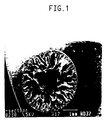
- Fig. 1 is a scanning electron micrograph (SEM) of a cross-section view at 17X magnification of a shaped structure (a bead) of the invention.
- Fig. 2 is an SEM of a surface view of a bead of the invention at 17X magnification showing a substantially continuous sheath encapsulating the bead.
- Fig. 3 is an SEM of a surface view of a bead of the invention at 5000X magnification.
- Fig. 4 is a view of a partial cross-section by SEM of a bead at 100X magnification showing a portion of the skin of the bead from which thickness may be readily measured.
- This invention provides shaped structures consisting essentially of microporous elastic segmented polyurethane having a void content of from 60 to 90% encapsulated by a substantially continuous sheath having a thickness of less than about 3 ⁇ m and having essentially no pores visible at the surface at a magnification of 5000 X.
- the shaped structures may be substantially spherical having a diameter of from about 1 mm. to about 4 mm. or can be filamentary in form of 66 to 2000 dtex (denier from 60 to 1800), in which event only the cut ends will lack the sheath material.
- Also encompassed by this invention is the method for preparing the shaped structures.
- the products can be employed as insulation, as carriers for the slow release of imbibed substances, cushioning materials, absorbents for organic solvent spills, etc.
- the elastic shaped structures of this invention are manufactured from fiber-forming, long chain, synthetic polymer comprised of at least 85% of a segmented polyurethane.
- segmented polyurethane is one based on polyether or polyester.
- Such polymers are prepared by well-known methods such as those described in U.S. 4,296,174 and in EPO Application No. 343,985 published on November 29, 1989.
- Suitable solvents include amide solvents, such as dimethylacetamide (DMAc), dimethylformamide (DMF) and N-methylpyrrolidone (NMP).
- Suitable solutions have a viscosity of between 0.125 and 2.0 Pa s (125 and 2000 centipoises), preferably from about 0.500 to 0.800 Pa s (500 to 800 centipoises), at room temperature.
- polymer is added to the solvent until the desired viscosity is achieved. Generally, from about 8 to 20% by weight of polymer will result in a suitable viscosity.
- the solution is then be introduced as droplets of from about 0.01 to 0.05 cubic centimeters (cc.) into a coagulating bath which solidifies the polymer in the form of small substantially spherical beads having a diameter of from about 1 to 4 mm.
- the coagulating bath comprises a liquid that extracts the solvent of the polymer solution but is a non-solvent for the polymer. Water is suitable for this purpose.
- the polymer solution may be spun through a spinneret directly into the coagulating bath and withdrawn therefrom as filament.
- Still other shaped structures can be obtained by agitation of the coagulating bath as the stream of polymer solution is introduced into the coagulating bath.
- nonporous In the case of beads, essentially the entire surface comprises a nonporous sheath having a thickness of less than about 3 ⁇ m (see Figs. 2 and 4)
- nonporous is meant that essentially no pores are visible at the surface in a scanning electron micrograph at a magnification of 5000 X (see Fig. 3).
- a pore is defined as a passage through the sheath to a void beneath the sheath. Such passages, if present, would be visible in cross-section under a microscope.
- the sheath may be crenulated or in collapsed form giving the appearance of one or more pores,but the absence of pores can be confirmed by examining a cross-section of the sphere through the suspect zone. If the sheath is intact, no passageway to the voids below will be observed.
- the material under the sheath is in the form of cells or voids (see Fig. 1) left by extraction of the polymer solvent.
- a measure of the void content is obtained by density measurement as described below.
- the product of the invention When in the form of filaments, the product of the invention has a sheath similar to that present in the beads which will of course be absent at the filament ends where lengths of filament ends have been cut. Filaments having a dtex of from 66 to 2000 (denier of from 60 to 1800) have been made although filaments of substantially greater denier could be prepared if desired.
- the beads may be prepared as follows:
- a 10% solution of a segmented polyurethane in dimethylacetamide (DMAc) is prepared.
- a particularly preferred polyurethane is comprised of polytetramethylene ether glycol of molecular weight between 600 and 5000, preferably between 1500 and 2500, end-capped with methylene diphenylene diisocyanate and chain extended with aliphatic diamine.
- Droplets of about 0.04 cc. are released from about 45 cm. above through a non-coagulating zone, e.g., air, and into a container of water (depth about 30 cm.) at 25°C. Coagulation takes place almost immediately upon contact with the water and substantially spherical beads form which are collected from the bottom of the container.
- the coagulated beads are then separated from the coagulation bath, washed to ensure substantially complete removal of DMAc and subjected to drying. Temperatures and time for drying may vary considerably. Typically, a temperature range of from 25 to 80°C is used, with drying best accomplished by passing heated air over the wet beads.
- the spinneret surface is preferably kept in contact with the water coagulant as in a wet-spinning operation and the coagulated filament is withdrawn from the bath. Freeze-drying of the filament allows best retention of shape.
- Sheath thickness - Scanning electron micrographs of the beads at magnifications of 100X to 5000X show a continuous skin or sheath at the surface with virtually no pores or openings to the interior.
- the beads can be cut in half and viewed in cross-section. AT 100-3000X, the sheath thickness can be conveniently measured.
- the samples are prepared for measurement as follows:
- the bead sample was mounted directly onto an aluminum stub with double-face tape.
- the cross-section of the bead was obtained by submerging it in liquid nitrogen and cutting it with a razor blade.
- the sectioned bead was then mounted on an aluminum stub with double-faced tape.
- a drop of carbon paint was applied to the samples, which were then sputter-coated with gold/palladium.
- a scanning electron microscope (SEM) that was used in obtaining the micrographs was a JEOL 840.
- the images were acquired from secondary electrons.
- the accelerating voltage was 5 KV.
- Micrographs were taken at various magnifications.
- Void content The shaped structures, e.g., beads, have numerous voids.
- the void content is calculated by the equation Bead density is determined by dividing its mass by its volume. Assuming a spherical bead, the volume will be 4/3 X ⁇ r 3 where r is the measured radius (as with a micrometer).
- the bulk polymer density if not known, may be readily measured by techniques known in the art.
- Viscosity Measured in centipoises using a Brookfield Viscometer.
- This example illustrates the preparation of microporous elastic segmented polyurethane beads of the invention.
- a homogeneous solution was prepared of DMAc and the polyurethane described in Example 1 of U.S. Patent No. 4,296,174 (Col. 5 and 6) namely, a polyurethane comprising a polytetramethylene ether glycol of molecular weight about 1800, end-capped with methylene diphenylene diisocyanate and chain extended with a mixture of aliphatic diamines, except that the ethylene diamine/1,3-cyclohexylenediamine ratio was 90/10 and the capping ratio was 1.62.
- the solution had a viscosity of 0.583 Pa s (583 centipoise) at room temperature as measured by a Brookfield Viscometer.
- the solution was loaded into a 500 ml pressure equalizing dropping funnel which was placed at least 45.7 cm (18 inches) above the surface of ⁇ 10 liters of distilled water contained in a 14 liter bucket.
- a double helical agitator connected to an air motor. The agitator was kept moving at a medium to high rate.
- the dropping funnel was placed over the outer perimeter of moving water, and the solution was dripped into the water at a rate which did not exceed 1 drop per second.
- the resulting droplets were initially quite gel-like; however, within 15 minutes they would become opaque white and elastic.
- the droplets were agitated until all of the solution was used (5-8 hours). They were then isolated and put into a bucket of agitated fresh water.
- This example illustrates the preparation of a microporous elastic segmented urethane fiber with reduced density using the invention described herein.
- a 15% solids spinning solution in DMAc (about 1.0 Pa s (1000 centipoises)) was used.
- the polymer employed is the same as in Example 1.
- the solution was charged into a wet spinning cell which is equipped with a gear-driven piston on one end to force the solution out of the spinneret at a rate of 2.82 ml per minute.
- the single-hole spinneret having a length and diameter dimension of 0.381 x 0.381 cm (0.015 inch X 0.015 inch), was totally immersed in coagulant water bath.
- the bath was controlled at 9.5°C degree, and the solution was maintained at room temperature.
- the extruded filament was immediately coagulated and remained immersed for a distance of 91.4 cm (36 inches) before withdrawing and winding on bobbin at a speed of 15 meters per minute.
- the wound filament was left on bobbin and soaked in water overnight. Freeze drying was found the most effective method of removing water and any solvent from the fiber while preserving the porous structure. Such dried filament can be rewound with minimum fiber sticking.
- the fiber has a density of 0.181 g/cc, versus a density of 0.975 g/cc for a solid polymer fiber.
- SEM of the porous fiber exhibited a non-porous skin with highly voided interior.
Landscapes
- Chemical & Material Sciences (AREA)
- Chemical Kinetics & Catalysis (AREA)
- Polymers & Plastics (AREA)
- Health & Medical Sciences (AREA)
- Medicinal Chemistry (AREA)
- Organic Chemistry (AREA)
- Engineering & Computer Science (AREA)
- Textile Engineering (AREA)
- Mechanical Engineering (AREA)
- General Chemical & Material Sciences (AREA)
- Crystallography & Structural Chemistry (AREA)
- Materials Engineering (AREA)
- Artificial Filaments (AREA)
- Manufacture Of Porous Articles, And Recovery And Treatment Of Waste Products (AREA)
Abstract
Description
- Elastic segmented polyurethane filaments are well known for their resistance to hydrolysis and other desirable properties such as stretch, recovery and power. These properties make the filaments invaluable for swim suits and other end-use applications. The present invention provides the elastic segmented polyurethane in a novel form which lends itself to a broad spectrum of new uses.
- Fig. 1 is a scanning electron micrograph (SEM) of a cross-section view at 17X magnification of a shaped structure (a bead) of the invention.
- Fig. 2 is an SEM of a surface view of a bead of the invention at 17X magnification showing a substantially continuous sheath encapsulating the bead.
- Fig. 3 is an SEM of a surface view of a bead of the invention at 5000X magnification.
- Fig. 4 is a view of a partial cross-section by SEM of a bead at 100X magnification showing a portion of the skin of the bead from which thickness may be readily measured.
- This invention provides shaped structures consisting essentially of microporous elastic segmented polyurethane having a void content of from 60 to 90% encapsulated by a substantially continuous sheath having a thickness of less than about 3 µm and having essentially no pores visible at the surface at a magnification of 5000 X. The shaped structures may be substantially spherical having a diameter of from about 1 mm. to about 4 mm. or can be filamentary in form of 66 to 2000 dtex (denier from 60 to 1800), in which event only the cut ends will lack the sheath material. Also encompassed by this invention is the method for preparing the shaped structures. The products can be employed as insulation, as carriers for the slow release of imbibed substances, cushioning materials, absorbents for organic solvent spills, etc.
- The elastic shaped structures of this invention are manufactured from fiber-forming, long chain, synthetic polymer comprised of at least 85% of a segmented polyurethane. Preferably the segmented polyurethane is one based on polyether or polyester. Such polymers are prepared by well-known methods such as those described in U.S. 4,296,174 and in EPO Application No. 343,985 published on November 29, 1989.
- To obtain the products of this invention, a solution of the polyurethane is first prepared. Suitable solvents include amide solvents, such as dimethylacetamide (DMAc), dimethylformamide (DMF) and N-methylpyrrolidone (NMP). Suitable solutions have a viscosity of between 0.125 and 2.0 Pa s (125 and 2000 centipoises), preferably from about 0.500 to 0.800 Pa s (500 to 800 centipoises), at room temperature. In practice, polymer is added to the solvent until the desired viscosity is achieved. Generally, from about 8 to 20% by weight of polymer will result in a suitable viscosity.
- The solution is then be introduced as droplets of from about 0.01 to 0.05 cubic centimeters (cc.) into a coagulating bath which solidifies the polymer in the form of small substantially spherical beads having a diameter of from about 1 to 4 mm. The coagulating bath comprises a liquid that extracts the solvent of the polymer solution but is a non-solvent for the polymer. Water is suitable for this purpose.
- Alternatively, the polymer solution may be spun through a spinneret directly into the coagulating bath and withdrawn therefrom as filament. Still other shaped structures can be obtained by agitation of the coagulating bath as the stream of polymer solution is introduced into the coagulating bath.
- In the case of beads, essentially the entire surface comprises a nonporous sheath having a thickness of less than about 3 µm (see Figs. 2 and 4) By "nonporous" is meant that essentially no pores are visible at the surface in a scanning electron micrograph at a magnification of 5000 X (see Fig. 3). A pore is defined as a passage through the sheath to a void beneath the sheath. Such passages, if present, would be visible in cross-section under a microscope. At times, the sheath may be crenulated or in collapsed form giving the appearance of one or more pores,but the absence of pores can be confirmed by examining a cross-section of the sphere through the suspect zone. If the sheath is intact, no passageway to the voids below will be observed.
- The material under the sheath is in the form of cells or voids (see Fig. 1) left by extraction of the polymer solvent. A measure of the void content is obtained by density measurement as described below.
- When in the form of filaments, the product of the invention has a sheath similar to that present in the beads which will of course be absent at the filament ends where lengths of filament ends have been cut. Filaments having a dtex of from 66 to 2000 (denier of from 60 to 1800) have been made although filaments of substantially greater denier could be prepared if desired.
- In a typical procedure, the beads may be prepared as follows:
- A 10% solution of a segmented polyurethane in dimethylacetamide (DMAc) is prepared. A particularly preferred polyurethane is comprised of polytetramethylene ether glycol of molecular weight between 600 and 5000, preferably between 1500 and 2500, end-capped with methylene diphenylene diisocyanate and chain extended with aliphatic diamine. Droplets of about 0.04 cc. are released from about 45 cm. above through a non-coagulating zone, e.g., air, and into a container of water (depth about 30 cm.) at 25°C. Coagulation takes place almost immediately upon contact with the water and substantially spherical beads form which are collected from the bottom of the container.
- As the droplets of solution enter the coagulation bath, solidification of the polymer of the droplet begins. Large droplets will, of course, produce large beads. Droplet size will also influence porosity of the final product because of the effect of the time it takes to extract solvent from the droplet. The distance between the point the droplet is released to the surface of the coagulation bath as well as the force with which it contacts the bath will affect the shape of the final bead. Distances of from 20 to 60 cm. have given satisfactory results.
- The coagulated beads are then separated from the coagulation bath, washed to ensure substantially complete removal of DMAc and subjected to drying. Temperatures and time for drying may vary considerably. Typically, a temperature range of from 25 to 80°C is used, with drying best accomplished by passing heated air over the wet beads.
- A technique similar to the above can be employed to prepare filaments, however, the spinneret surface is preferably kept in contact with the water coagulant as in a wet-spinning operation and the coagulated filament is withdrawn from the bath. Freeze-drying of the filament allows best retention of shape.
- Sheath thickness - Scanning electron micrographs of the beads at magnifications of 100X to 5000X show a continuous skin or sheath at the surface with virtually no pores or openings to the interior. The beads can be cut in half and viewed in cross-section. AT 100-3000X, the sheath thickness can be conveniently measured.
- The samples are prepared for measurement as follows:
- For the surface view, the bead sample was mounted directly onto an aluminum stub with double-face tape. The cross-section of the bead was obtained by submerging it in liquid nitrogen and cutting it with a razor blade. The sectioned bead was then mounted on an aluminum stub with double-faced tape. A drop of carbon paint was applied to the samples, which were then sputter-coated with gold/palladium.
- A scanning electron microscope (SEM) that was used in obtaining the micrographs was a JEOL 840. The images were acquired from secondary electrons. The accelerating voltage was 5 KV. Micrographs were taken at various magnifications.
- Void content - The shaped structures, e.g., beads, have numerous voids. The void content is calculated by the equation

πr3 where r is the measured radius (as with a micrometer). The bulk polymer density, if not known, may be readily measured by techniques known in the art. - Viscosity - Measured in centipoises using a Brookfield Viscometer.
- This example illustrates the preparation of microporous elastic segmented polyurethane beads of the invention.
- A homogeneous solution was prepared of DMAc and the polyurethane described in Example 1 of U.S. Patent No. 4,296,174 (Col. 5 and 6) namely, a polyurethane comprising a polytetramethylene ether glycol of molecular weight about 1800, end-capped with methylene diphenylene diisocyanate and chain extended with a mixture of aliphatic diamines, except that the ethylene diamine/1,3-cyclohexylenediamine ratio was 90/10 and the capping ratio was 1.62. The solution had a viscosity of 0.583 Pa s (583 centipoise) at room temperature as measured by a Brookfield Viscometer. The solution was loaded into a 500 ml pressure equalizing dropping funnel which was placed at least 45.7 cm (18 inches) above the surface of ∼10 liters of distilled water contained in a 14 liter bucket. Into the center of the bucket of water was placed a double helical agitator connected to an air motor. The agitator was kept moving at a medium to high rate. The dropping funnel was placed over the outer perimeter of moving water, and the solution was dripped into the water at a rate which did not exceed 1 drop per second. The resulting droplets were initially quite gel-like; however, within 15 minutes they would become opaque white and elastic. The droplets were agitated until all of the solution was used (5-8 hours). They were then isolated and put into a bucket of agitated fresh water. This process was repeated hourly for at least 4 hours. Often the beads were washed overnight (without changing water). After the beads were thoroughly washed they were drained and excess water was pressed out. They were then loaded into aluminum pans. The beads were then placed into a vacuum oven at 60-80°C for 4-7 days. During this time the beads were occasionally agitated. The resulting dry beads were non-tacky, well separated, uniform spheres approximately 2-4 mm in diameter. Approximate yield was 30-40g per batch (∼750 ml in volume).
- Scanning electron micrographs of a sampling of the beads were made. They were found to have continuous skins less than 3 µm thick. Essentially no pores were visible at the surface of the beads at 5000X magnification. The beads had a void content in the range of 60 to 90%.
- This example illustrates the preparation of a microporous elastic segmented urethane fiber with reduced density using the invention described herein.
- A 15% solids spinning solution in DMAc (about 1.0 Pa s (1000 centipoises)) was used. The polymer employed is the same as in Example 1. The solution was charged into a wet spinning cell which is equipped with a gear-driven piston on one end to force the solution out of the spinneret at a rate of 2.82 ml per minute. The single-hole spinneret having a length and diameter dimension of 0.381 x 0.381 cm (0.015 inch X 0.015 inch), was totally immersed in coagulant water bath. The bath was controlled at 9.5°C degree, and the solution was maintained at room temperature. The extruded filament was immediately coagulated and remained immersed for a distance of 91.4 cm (36 inches) before withdrawing and winding on bobbin at a speed of 15 meters per minute.
- The wound filament was left on bobbin and soaked in water overnight. Freeze drying was found the most effective method of removing water and any solvent from the fiber while preserving the porous structure. Such dried filament can be rewound with minimum fiber sticking.
- The fiber has a density of 0.181 g/cc, versus a density of 0.975 g/cc for a solid polymer fiber. SEM of the porous fiber exhibited a non-porous skin with highly voided interior.
- While the above examples illustrate shaped structures of pure microporous elastic segmented polyurethane, it will be apparent to those skilled in the art that dyes, pigments and other additives may be incorporated in minor amounts in the polymer solution prior to producing the droplets or prior to spinning to the extent they are compatible with or soluble in the solvent. Also, structures of polymer blends may be prepared by dissolving other polymers in the polyurethane solution before formation of the shaped structures. In general, these other polymers, such as poly(m-phenylene isophthalamide) are added in minor amounts to not adversely affect the utility of the structure while imparting other desired qualities.
Claims (8)
- A substantially spherical bead consisting essentially of microporous elastic segmented polyurethane having a void content of from 60 to 90% and encapsulated by a substantially continuous sheath having a thickness of less than about 3 µm and having essentially no pores visible at the surface at a magnification of 5000 X.
- A filament having a dtex of from 66-2000 (denier of from 60-1800), essentially of microporous elastic segmented polyurethane having a void content of from 60 to 90% and encapsulated by a substantially continuous sheath having a thickness of less than about 3 µm and having essentially no pores visible at the surface at a magnification of 5000 X.
- The shaped structure of Claim 1 wherein the polyurethane is comprised of polytetramethylene ether glycol of molecular weight between 600 and 5000, end-capped with methylene diphenylene diisocyanate and chain extended with aliphatic diamine.
- The shaped structure of Claim 1 or 3 wherein the polyurethane is comprised of polytetramethylene ether glycol of molecular weight about 1800, end-capped with methylene diphenylene diisocyanate and chain-extended with 90/10 ratio of ethylene diamine/1,3-cyclohexylenediamine and with a capping ratio of the diisocyanate to glycol of 1.62.
- A process for preparing shaped structures according to Claim 1 comprising, forming a solution of a segmented polyurethane in an amide solvent, said solution having a viscosity between 0.125 and 2.0 Pa s (125 and 2000 centipoises) at room temperature, introducing droplets thereof into a coagulation bath and withdrawing the resulting shaped structures from the bath.
- A process according to Claim 5 wherein the coagulation bath is water.
- A process according to Claim 5 wherein the solution viscosity is from about 0.500 to 0.800 Pa s (500 to 800 centipoises).
- A process for preparing the shaped structure of Claim 2 comprising forming a solution of a segmented polyurethane in an amide solvent, said solution having a viscosity between 0.125 and 2.0 Pa s (125 and 2000 centipoises) at room temperature, extruding the solution directly into a coagulated bath and withdrawing coagulated filament from the bath.
Applications Claiming Priority (3)
| Application Number | Priority Date | Filing Date | Title |
|---|---|---|---|
| US631269 | 1985-07-16 | ||
| US07/631,269 US5094914A (en) | 1990-12-20 | 1990-12-20 | Microporous elastic segmented polyurethane shaped structure |
| PCT/US1991/009169 WO1992011313A1 (en) | 1990-12-20 | 1991-12-17 | Microporous elastic segmented polyurethane shaped structure |
Publications (2)
| Publication Number | Publication Date |
|---|---|
| EP0563233A1 EP0563233A1 (en) | 1993-10-06 |
| EP0563233B1 true EP0563233B1 (en) | 1996-09-04 |
Family
ID=24530488
Family Applications (1)
| Application Number | Title | Priority Date | Filing Date |
|---|---|---|---|
| EP92902415A Expired - Lifetime EP0563233B1 (en) | 1990-12-20 | 1991-12-17 | Microporous elastic segmented polyurethane shaped structure |
Country Status (5)
| Country | Link |
|---|---|
| US (1) | US5094914A (en) |
| EP (1) | EP0563233B1 (en) |
| JP (1) | JP3137336B2 (en) |
| DE (1) | DE69121906T2 (en) |
| WO (1) | WO1992011313A1 (en) |
Families Citing this family (6)
| Publication number | Priority date | Publication date | Assignee | Title |
|---|---|---|---|---|
| JP2509870B2 (en) * | 1993-06-30 | 1996-06-26 | 千代田株式会社 | Polishing cloth |
| US6368533B1 (en) | 1997-12-22 | 2002-04-09 | Kimberly-Clark Worldwide, Inc. | Process for forming films, fibers and base webs from thermoset polymers |
| US20070185003A1 (en) * | 2006-01-18 | 2007-08-09 | Invista North America S.A.R.L. | Non-textile polymer compositions and methods |
| CN101400850B (en) * | 2006-01-18 | 2012-08-15 | 因维斯塔技术有限公司 | Nonwoven polymer compositions and methods |
| US20110059143A1 (en) | 2007-08-15 | 2011-03-10 | INVISTA North Americ S.a.r.l. | Non-textile polymer compositions and methods |
| JP6862772B2 (en) * | 2016-11-04 | 2021-04-21 | 東ソー株式会社 | Method for producing porous polyurethane particles |
Family Cites Families (8)
| Publication number | Priority date | Publication date | Assignee | Title |
|---|---|---|---|---|
| FR1242020A (en) * | 1958-11-25 | 1960-09-23 | Hoechst Ag | Process for isolating high molecular weight materials of rubbery nature from their solutions |
| US4296174A (en) * | 1980-08-08 | 1981-10-20 | E. I. Du Pont De Nemours And Company | Spandex filaments containing certain metallic soaps |
| US4515906A (en) | 1983-02-28 | 1985-05-07 | Bend Research, Inc. | Anisotropic microporous supports impregnated with polymeric ion-exchange materials |
| US4859711A (en) * | 1986-10-01 | 1989-08-22 | Alcan International Limited | Hollow microspheres |
| DE3727252A1 (en) * | 1987-08-15 | 1989-02-23 | Bayer Ag | METHOD FOR PRODUCING AQUEOUS POLYURETHANE DISPERSIONS |
| US5000899A (en) * | 1988-05-26 | 1991-03-19 | E. I. Du Pont De Nemours And Company | Spandex fiber with copolymer soft segment |
| US4905367A (en) * | 1988-11-08 | 1990-03-06 | Corvita Corporation | Manufacture of stretchable porous sutures |
| US4898913A (en) * | 1989-04-07 | 1990-02-06 | Dow Corning Corporation | Method of making hydrophobic copolymers hydrophilic |
-
1990
- 1990-12-20 US US07/631,269 patent/US5094914A/en not_active Expired - Lifetime
-
1991
- 1991-12-17 DE DE69121906T patent/DE69121906T2/en not_active Expired - Lifetime
- 1991-12-17 JP JP04502715A patent/JP3137336B2/en not_active Expired - Lifetime
- 1991-12-17 EP EP92902415A patent/EP0563233B1/en not_active Expired - Lifetime
- 1991-12-17 WO PCT/US1991/009169 patent/WO1992011313A1/en not_active Ceased
Also Published As
| Publication number | Publication date |
|---|---|
| JPH06504564A (en) | 1994-05-26 |
| DE69121906D1 (en) | 1996-10-10 |
| DE69121906T2 (en) | 1997-03-13 |
| WO1992011313A1 (en) | 1992-07-09 |
| US5094914A (en) | 1992-03-10 |
| JP3137336B2 (en) | 2001-02-19 |
| EP0563233A1 (en) | 1993-10-06 |
Similar Documents
| Publication | Publication Date | Title |
|---|---|---|
| Craig et al. | Characterization of acrylic fiber structure | |
| DE2920762C2 (en) | Microporous polyvinyl alcohol membrane | |
| US20090324950A1 (en) | Method of manufacturing a continuous filament by electrospinning and continuous filament manufactured thereby | |
| US5120598A (en) | Fibrous material for oil spill clean-up | |
| EP3051011B1 (en) | Lyocell material for cigarette filter and method for preparing same | |
| DE69637390T2 (en) | POROUS FILM | |
| AU2006321466B2 (en) | A braid-reinforced composite hollow fiber membrane | |
| EP0946798B1 (en) | Dispersion spinning process for poly(tetrafluoroethylene) and related polymers | |
| CA1194263A (en) | Splittable hollow polyester filament | |
| DE3016542A1 (en) | AETHYLENE / VINYL ALCOHOL COPOLYMER HOLLOW FIBER MEMBRANE AND METHOD FOR THE PRODUCTION THEREOF | |
| US5094914A (en) | Microporous elastic segmented polyurethane shaped structure | |
| CN108474142A (en) | Lyocell fibers and its manufacturing method | |
| US5126181A (en) | Microporous discs of elastic segmented polyurethane | |
| KR880001261B1 (en) | Process for the preparation of polyvinyl alcohol articles of high strength and modulus | |
| EP0037185A1 (en) | A semipermeable membrane | |
| CN100385048C (en) | A kind of preparation method of anti-ultraviolet, moisture-absorbing quick-drying polyester fiber | |
| EP0951591B1 (en) | Fibers flash-spun from fully halogenated polymers | |
| CN116024734B (en) | A sheet material prepared by flash spinning | |
| JPS6047923B2 (en) | Method for producing hydrophilic filaments and fibers by dry jet wet spinning method | |
| DE4038247A1 (en) | CELLULOSE HOLLOW DIALYSIS THREAD | |
| IE780839L (en) | Hygroscopic fibers and filaments | |
| US5393477A (en) | Air gap spinning process for aramids | |
| US4265971A (en) | Hydrophilic filaments and fibres of polycarbonates with a high second order transition temperature | |
| CA1090520A (en) | Hollow fiber having selective gas permeability and process for preparation thereof | |
| JPS63126911A (en) | Ultrafine fiber of tetrafluoroethylene resin and production thereof |
Legal Events
| Date | Code | Title | Description |
|---|---|---|---|
| PUAI | Public reference made under article 153(3) epc to a published international application that has entered the european phase |
Free format text: ORIGINAL CODE: 0009012 |
|
| 17P | Request for examination filed |
Effective date: 19930614 |
|
| AK | Designated contracting states |
Kind code of ref document: A1 Designated state(s): DE FR GB IT |
|
| 17Q | First examination report despatched |
Effective date: 19950522 |
|
| GRAH | Despatch of communication of intention to grant a patent |
Free format text: ORIGINAL CODE: EPIDOS IGRA |
|
| GRAH | Despatch of communication of intention to grant a patent |
Free format text: ORIGINAL CODE: EPIDOS IGRA |
|
| GRAA | (expected) grant |
Free format text: ORIGINAL CODE: 0009210 |
|
| AK | Designated contracting states |
Kind code of ref document: B1 Designated state(s): DE FR GB IT |
|
| ET | Fr: translation filed | ||
| REF | Corresponds to: |
Ref document number: 69121906 Country of ref document: DE Date of ref document: 19961010 |
|
| ITF | It: translation for a ep patent filed | ||
| PLBE | No opposition filed within time limit |
Free format text: ORIGINAL CODE: 0009261 |
|
| 26N | No opposition filed | ||
| REG | Reference to a national code |
Ref country code: GB Ref legal event code: IF02 |
|
| REG | Reference to a national code |
Ref country code: GB Ref legal event code: 732E Free format text: REGISTERED BETWEEN 20090115 AND 20090121 |
|
| REG | Reference to a national code |
Ref country code: FR Ref legal event code: TP |
|
| REG | Reference to a national code |
Ref country code: GB Ref legal event code: 732E Free format text: REGISTERED BETWEEN 20090507 AND 20090513 |
|
| PGFP | Annual fee paid to national office [announced via postgrant information from national office to epo] |
Ref country code: FR Payment date: 20101224 Year of fee payment: 20 |
|
| PGFP | Annual fee paid to national office [announced via postgrant information from national office to epo] |
Ref country code: IT Payment date: 20101224 Year of fee payment: 20 Ref country code: GB Payment date: 20101215 Year of fee payment: 20 |
|
| PGFP | Annual fee paid to national office [announced via postgrant information from national office to epo] |
Ref country code: DE Payment date: 20101215 Year of fee payment: 20 |
|
| REG | Reference to a national code |
Ref country code: DE Ref legal event code: R071 Ref document number: 69121906 Country of ref document: DE |
|
| REG | Reference to a national code |
Ref country code: DE Ref legal event code: R071 Ref document number: 69121906 Country of ref document: DE |
|
| REG | Reference to a national code |
Ref country code: GB Ref legal event code: PE20 Expiry date: 20111216 |
|
| PG25 | Lapsed in a contracting state [announced via postgrant information from national office to epo] |
Ref country code: GB Free format text: LAPSE BECAUSE OF EXPIRATION OF PROTECTION Effective date: 20111216 |
|
| PG25 | Lapsed in a contracting state [announced via postgrant information from national office to epo] |
Ref country code: DE Free format text: LAPSE BECAUSE OF EXPIRATION OF PROTECTION Effective date: 20111218 |