EP0558170B1 - Tape volume partitioning - Google Patents
Tape volume partitioning Download PDFInfo
- Publication number
- EP0558170B1 EP0558170B1 EP93250059A EP93250059A EP0558170B1 EP 0558170 B1 EP0558170 B1 EP 0558170B1 EP 93250059 A EP93250059 A EP 93250059A EP 93250059 A EP93250059 A EP 93250059A EP 0558170 B1 EP0558170 B1 EP 0558170B1
- Authority
- EP
- European Patent Office
- Prior art keywords
- partition
- formatted
- formatting
- length
- zone
- Prior art date
- Legal status (The legal status is an assumption and is not a legal conclusion. Google has not performed a legal analysis and makes no representation as to the accuracy of the status listed.)
- Expired - Lifetime
Links
Images


Classifications
-
- G—PHYSICS
- G11—INFORMATION STORAGE
- G11B—INFORMATION STORAGE BASED ON RELATIVE MOVEMENT BETWEEN RECORD CARRIER AND TRANSDUCER
- G11B20/00—Signal processing not specific to the method of recording or reproducing; Circuits therefor
- G11B20/10—Digital recording or reproducing
- G11B20/12—Formatting, e.g. arrangement of data block or words on the record carriers
-
- G—PHYSICS
- G11—INFORMATION STORAGE
- G11B—INFORMATION STORAGE BASED ON RELATIVE MOVEMENT BETWEEN RECORD CARRIER AND TRANSDUCER
- G11B20/00—Signal processing not specific to the method of recording or reproducing; Circuits therefor
- G11B20/10—Digital recording or reproducing
- G11B20/12—Formatting, e.g. arrangement of data block or words on the record carriers
- G11B20/1201—Formatting, e.g. arrangement of data block or words on the record carriers on tapes
- G11B20/1207—Formatting, e.g. arrangement of data block or words on the record carriers on tapes with transverse tracks only
- G11B20/1209—Formatting, e.g. arrangement of data block or words on the record carriers on tapes with transverse tracks only for discontinuous data, e.g. digital information signals or computer program data
-
- G—PHYSICS
- G11—INFORMATION STORAGE
- G11B—INFORMATION STORAGE BASED ON RELATIVE MOVEMENT BETWEEN RECORD CARRIER AND TRANSDUCER
- G11B20/00—Signal processing not specific to the method of recording or reproducing; Circuits therefor
- G11B20/10—Digital recording or reproducing
- G11B20/12—Formatting, e.g. arrangement of data block or words on the record carriers
- G11B20/1201—Formatting, e.g. arrangement of data block or words on the record carriers on tapes
- G11B20/1207—Formatting, e.g. arrangement of data block or words on the record carriers on tapes with transverse tracks only
-
- G—PHYSICS
- G11—INFORMATION STORAGE
- G11B—INFORMATION STORAGE BASED ON RELATIVE MOVEMENT BETWEEN RECORD CARRIER AND TRANSDUCER
- G11B2220/00—Record carriers by type
- G11B2220/90—Tape-like record carriers
Definitions
- This invention relates to the storage of data on a magnetic tape, and more specifically to the partitioning of a magnetic tape into sequentially occurring units of the same length in and around regularly occurring system zones.
- EP-A-0 429 727 and EP-A-0 386 362 disclose a tape with a plurality of partitions. The beginning portions of each partition contains a lead-in area for storing tape usage information.
- the present invention overcomes the foregoing and other problems associated with the prior art by providing for methods as claimed in claims 1, 2 and 4.
- Controlling software of a peripheral recording device prompts a host computer system to instruct the recording device to format a tape with selectively spaced multiple system zones as designated by the host throughout the tape length.
- the controlling software prompts the host system to designate the number and length of partitions to be formatted onto a magnetic tape by the recording device.
- the controlling software includes routines to allow the host system to choose three options for placing partitions. Two of the options are used to minimize the number of discontinuities in the data recording area of a partition. Under the "Pack Option”, a second partition is always placed immediately behind a first partition disregarding the effect of system zones. Under the "Stretch Option”, the boundary of the previously formatted partition is extended to the boundary of the system zone, and the next partition begins on the end-of-tape side of the system zone. Finally, under the "Waste Option", the area between the end of the last completely formatted partition and the beginning of the system zone is left unformatted and no data may be stored in this area. The next partition begins on the end-of-tape side of the system zone.
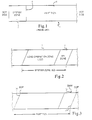
- FIGURE 1 wherein there is shown an illustration of the prior art formatting of the length of a magnetic tape for data storage.
- a single system zone 2 is placed at the beginning of a magnetic tape 4. This zone contains the information necessary for system use during loading and threading operations.
- the system zone 2 is immediately followed by a single partition 6 starting at the beginning of media (BOM) and continuing until the end-of-media warning (EMW).
- EMW end-of-media warning
- the area for user data storage begins at the partition boundary 8.
- the controlling software instructs a peripheral recording device to prompt a host computer system for the desired number of system zones and for the tape length interval between the system zones.
- System zones are fixed-length areas on tape, occurring at regular intervals, which are reserved for system use.
- the system zones are formatted onto the magnetic tape by the peripheral recording device as indicated by the responses of the host computer system. Once the plurality of system zones have been formatted onto the tape, system loading and threading operations may be carried out at any of the system zones.
- the peripheral recording device and the host computer system are conventional hardware and do not form a part of the present invention.
- the format of a system zone is illustrated in FIGURE 2.
- the system zone is comprised of two areas.
- the Load Operation Zone (LOZ) 3 is used during loading and unloading of the tape from a peripheral recording device.
- the Volume Format Information Zone (VFI) 5 is an area containing information on the data volume format. This information allows the peripheral recording device to locate any partition on the magnetic tape. All system zones contain substantially identical information.
- the magnetic tape is also being formatted with a plurality of partitions.
- This process is initiated by a prompt from the controlling software of the peripheral recording device to the host computer system requesting the number of partitions and the length of partitions to be formatted onto the magnetic tape.
- the software also instructs the peripheral recording device to request the host computer system to choose a Pack, Waste, or Stretch format option.
- the software then formats partitions onto the tape in accordance with the responses received from the host computer system.
- the first partition is formatted starting at the Physical Beginning of Medium (PBOM) and may be immediately followed by the next partition or a system zone.
- PBOM Physical Beginning of Medium
- the beginning of partition (BOP) 10 is a location on the tape that denotes the physical beginning of a partition.
- the BOP 10 is not an actual recording area on the tape but indicates the first track of the beginning of the partition.
- the end of media warning (EMW) 16 is a recording area that contains a warning recording to be sent to the peripheral recording device when there is an attempt to record data in the area. This notifies the recording device that available recording area on the partition is about the end.
- the end of partition (EOP) 18 is a location on the tape denoting the physical end of a partition. There is no recorded or physical marking of EOP 18 on a tape.
- the data track after the last data track of a partition is considered the EOP 18. Therefore, if two partitions are physically adjacent, the BOP 10 of the second partition also denotes the EOP 18 of the previous partition.
- a condition may arise where a partition (P n ) will be formatted across an area of tape containing a system zone.
- the procedure for responding to this condition is illustrated by FIGURE 4.
- the host computer system makes a determination at step 20 as to whether the formatting of P n will cause a discontinuity in the partition. If the formatting of a partition will not cause a discontinuity, P n is formatted onto the tape at step 22 and the recorder then returns the partitioning sequence to the step 20 to attempt to format the next partition.
- the controlling software determines at step 26 whether the host system has chosen the Pack Option, which will be discussed more fully later. If the Pack Option has been chosen, the partition is formatted across the system zones at step 28 such that the partition consists of two segments on either side of each system zone. The recording device then attempts to format the next partition and returns to step 20.
- the routine for partitioning begins a series of Partition Optimization Steps 25 designed to minimize the number of system zone interruptions for any single partition.
- the first step 30 divides the size of the Partition by the system zone spacing specified by the host computer system to generate a partition remainder.
- An inquiry 32 is then made to determine if the remainder is equal to zero. If the remainder is equal to zero, the Partition Optimization Steps 25 are completed and control will pass to step 34.
- the routine determines at step 36 if the remainder is greater than or less than the area remaining between the end of partition (EOP) 18 of the previous partition and the boundary of the next system zone. If the remainder from step 30 is less than the area remaining between the EOP 18 of the previous partition and the system zone, the Partition Optimization Steps 25 are exited and control passes to step 28 where the partition is formatted across the system zone and then seeks to format the next partition by returning to step 20. If the remainder is greater than the area remaining between EOP 18 of previous partition and the system zone, the Partition Optimization Steps 25 are exited and control passes to step 34.
- EOP end of partition
- Partition Optimization Steps 25 The function of the Partition Optimization Steps 25 is to determine if the partition is to be formatted with a discontinuity despite a choice by the host computer system of the Stretch or Waste option or if the partition is to be formatted on the end-of-tape (EOT) side of the system zone. Partitions to be formatted with a discontinuity are passed through step 20 to step 28. Partitions that will be formatted on the EOT side of a system zone pass to step 34.
- EOT end-of-tape
- step 34 an inquiry is made to determine if the Stretch or Waste option was chosen by the host computer system. If the Stretch option was chosen, the boundary of previous partition is expanded up to the boundary of the system zone at step 38, thus making the previous partition larger by the difference between its original boundary and the boundary of the system zone. The extended area is available for the storage of user data. The next partition is then formatted on the EOT side of the system zone at step 40. An attempt is then made to format the next partition by returning to step 26.
- Waste option was chosen at step 34, the area between the previous partition and the system zone is not formatted as a result of step 42. Therefore, the area is unavailable for data storage and is wasted.
- the next partition is then formatted on the EOT side of the system zone at step 40 and control passes to step 26.
- FIGURE 5 there is illustrated the routine run when the last partition P n on the tape cannot be completely formatted in the area between the EOP 18 of the previous partition and the physical end of the tape medium (PEOM).
- a command is received at step 60 to format the last partition P n that cannot be completely formatted in the remaining tape area
- an inquiry 62 is made to determine if the Stretch option was chosen by the host computer system. If the Stretch option was chosen, the last partition P n is not formatted at the end of the tape and the boundary of the previous partition is expanded at step 64 to the PEOM making this area available for data storage. The expanded partition is then declared the last partition on the volume at step 65. If the Pack or Waste option was specified, the area between the EOP 18 of the previous partition and the PEOM is not formatted (step 66) and is not available for data storage. The previous partition is then declared the last partition on the volume at step 65.
- an inquiry 82 is made to determine if the system zone can be completely formatted before the PEOM. If sufficient area is available to format the zone, the system zone is formatted at step 84 and the routine returns to inquiry 82 to format the next partition. If there is not enough space before the PEOM for another system zone, an inquiry 86 determines if another partition P n can be formatted after the previous partition.
- the boundary of the last partition is extended at step 94 to the PEOM, and the partition is declared at step 90 the last partition on the tape. If the Pack or Waste option was specified, the final area of tape is not formatted (step 96) and is not available for data storage. The previously formatted partition is then declared the final partition on the tape at step 90.
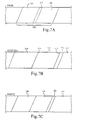
- the partition 100 is formatted on both sides of the system zone 102 such that the partition consists of two segments 104 and 106.
- the EOP boundary 108 of the last formatted partition 110 is extended to the boundary 112 of the system zone 114.
- the next partition 116 is then formatted immediately after the system zone 114. This format increases the storage area of the partition 110 by the expanded area 118.
- the Waste option is chosen and a partition discontinuity occurs, the next partition 120 is formatted on the EOT side of the system zone 122.
- the area 124 between the last formatted partition 126 and the system zone 122 is left unformatted and is not available for user data storage.
Landscapes
- Engineering & Computer Science (AREA)
- Signal Processing (AREA)
- General Engineering & Computer Science (AREA)
- Signal Processing For Digital Recording And Reproducing (AREA)
- Separation By Low-Temperature Treatments (AREA)
Abstract
Description
Claims (5)
- A method for formatting one or more partitions and system zones along a length of a magnetic tape (4) the system zones enabling unloading and loading of the tape, characterized by:the formatting being controlled by predetermined data defining the length of a plurality of system zones, the interval between successive system zones. the number of the partitions and the length of the partitions,determining when a partition (100) to be formatted overlaps a system zone (102);dividing the partition (100) into first and second segments (104, 106) when a partition to be formatted overlaps a system zone (102); andformatting the first segment (104) before the system zone to be overlapped and formatting the second segment (106) after the system zone (102) to be overlapped.
- A method for formatting one or more partitions and system zones along a length of magnetic tape (4) the system zones enabling unloading and loading of the tape, characterized by:the formatting being controlled by predetermined data defining the length of a plurality of system zones, the interval between successive system zones. the number of the partitions and the length of the partitions,determining when a partition (110) next to be formatted overlaps a system zone (114);extending the length of a preceding partition (110) up to a said system zone (114) when the partition next to be formatted would overlap said system zone (114); andformatting the whole partition (116) next to be formatted after said system zone (114).
- The method as in claim 2 further characterized by:dividing the size of the partition next to be formatted by a value representing the distance between a pair of spaced apart system zones (012, 114) to identify a partition remainder;testing for a partition remainder equal to less than a length between a previously formatted partition and a next system zone:when the remainder is less than the length between a previously formatted partition and a next system zone;skipping the step of extending the length of a partition and the step of formatting the whole partition next to be formatted after the system zone;dividing the next partition into first and second segments; andformatting the first segment (104) before said system zone (102, 114) and formatting the second segment (106) after said system zone (102, 114).
- A method for formatting one or more partitions and system zones, along a length of magnetic tape (4) enabling loading and unloading of the tape, characterized by:the formatting being controlled by predetermined data defining the length of a plurality of system zones, the interval between successive system zones. the number of the partitions and the length of the partitions,determining when a partition (120) next to be formatted overlaps a system partitions and the length of the partitions,determining when a partition (120) next to be formatted overlaps a system zone (122);leaving the area (124) from the end of the preceding partition up to said system zone unrecorded; andformatting the next partition (120) to begin after a system zone (122) if the next to be formatted partition would overlap the system zone (122).
- The method as in claim 4 further characterized by:dividing the size of the partition next to be formatted by a value representing the distance between a pair of spaced apart system zones (102, 122) to identify a partition remainder:testing for a partition remainder equal to less than a length between a previously formatted partition and a next system zone:when the remainder is less than the length between a previously formatted partition and a next system zone;skipping the step of formatting the next partition to begin after a system zone;dividing the next partition into first and second segments: andformatting the first segment (104) before said system zone (102, 122) and formatting the second segment (106) after said system zone (102, 122).
Applications Claiming Priority (2)
| Application Number | Priority Date | Filing Date | Title |
|---|---|---|---|
| US07/843,390 US5388012A (en) | 1992-02-28 | 1992-02-28 | Partitioning of magnetic tape into sequentially occurring partitions between and around regularly occurring system zones |
| US843390 | 1992-02-28 |
Publications (2)
| Publication Number | Publication Date |
|---|---|
| EP0558170A1 EP0558170A1 (en) | 1993-09-01 |
| EP0558170B1 true EP0558170B1 (en) | 1998-09-02 |
Family
ID=25289831
Family Applications (1)
| Application Number | Title | Priority Date | Filing Date |
|---|---|---|---|
| EP93250059A Expired - Lifetime EP0558170B1 (en) | 1992-02-28 | 1993-02-22 | Tape volume partitioning |
Country Status (12)
| Country | Link |
|---|---|
| US (1) | US5388012A (en) |
| EP (1) | EP0558170B1 (en) |
| JP (1) | JP3368292B2 (en) |
| KR (1) | KR100261928B1 (en) |
| CN (1) | CN1076794A (en) |
| AT (1) | ATE170660T1 (en) |
| AU (1) | AU655871B2 (en) |
| CA (1) | CA2090049A1 (en) |
| DE (1) | DE69320671T2 (en) |
| IL (1) | IL104861A (en) |
| MX (1) | MX9301096A (en) |
| NO (1) | NO930655L (en) |
Families Citing this family (3)
| Publication number | Priority date | Publication date | Assignee | Title |
|---|---|---|---|---|
| US5572378A (en) * | 1994-06-13 | 1996-11-05 | Imation Corp. | Direct file access system for magnetic tape |
| JP4061727B2 (en) * | 1998-08-14 | 2008-03-19 | ソニー株式会社 | Tape drive device |
| US6937411B2 (en) * | 2001-08-06 | 2005-08-30 | International Business Machines Corporation | Method, system, program, and storage cartridge for storing data in a storage medium |
Citations (1)
| Publication number | Priority date | Publication date | Assignee | Title |
|---|---|---|---|---|
| EP0386362A2 (en) * | 1989-03-09 | 1990-09-12 | Hewlett-Packard Limited | Data storage apparatus |
Family Cites Families (9)
| Publication number | Priority date | Publication date | Assignee | Title |
|---|---|---|---|---|
| BE792641A (en) * | 1971-12-16 | 1973-03-30 | Ibm | METHOD AND SYSTEM FOR OBTAINING MAGNETIC RECORDINGS THAT CAN BE UPDATED |
| US5034914A (en) * | 1986-05-15 | 1991-07-23 | Aquidneck Systems International, Inc. | Optical disk data storage method and apparatus with buffered interface |
| US4775969A (en) * | 1986-05-15 | 1988-10-04 | Aquidneck Systems International, Inc. | Optical disk storage format, method and apparatus for emulating a magnetic tape drive |
| DE3702490A1 (en) * | 1987-01-28 | 1988-08-11 | Thomson Brandt Gmbh | METHOD AND DEVICE FOR DIGITAL MESSAGE TRANSMISSION AND / OR RECORDING AND REPLAYING |
| US4899232A (en) * | 1987-04-07 | 1990-02-06 | Sony Corporation | Apparatus for recording and/or reproducing digital data information |
| GB8800349D0 (en) * | 1988-01-08 | 1988-02-10 | Hewlett Packard Ltd | Method of storing data on recording tape |
| US5200864A (en) * | 1989-06-28 | 1993-04-06 | International Business Machines Corporation | Combining small records into a single record block for recording on a record media |
| EP0429727B1 (en) * | 1989-11-30 | 1996-01-17 | Sony Corporation | Data recorder |
| US5210660A (en) * | 1990-01-17 | 1993-05-11 | International Business Machines Corporation | Sectored servo independent of data architecture |
-
1992
- 1992-02-28 US US07/843,390 patent/US5388012A/en not_active Expired - Lifetime
-
1993
- 1993-02-22 AU AU33706/93A patent/AU655871B2/en not_active Ceased
- 1993-02-22 CA CA002090049A patent/CA2090049A1/en not_active Abandoned
- 1993-02-22 EP EP93250059A patent/EP0558170B1/en not_active Expired - Lifetime
- 1993-02-22 DE DE69320671T patent/DE69320671T2/en not_active Expired - Lifetime
- 1993-02-22 AT AT93250059T patent/ATE170660T1/en active
- 1993-02-24 NO NO93930655A patent/NO930655L/en unknown
- 1993-02-25 IL IL10486193A patent/IL104861A/en not_active IP Right Cessation
- 1993-02-26 MX MX9301096A patent/MX9301096A/en not_active IP Right Cessation
- 1993-02-26 KR KR1019930002806A patent/KR100261928B1/en not_active Expired - Fee Related
- 1993-02-27 CN CN93102162A patent/CN1076794A/en active Pending
- 1993-03-01 JP JP08001293A patent/JP3368292B2/en not_active Expired - Fee Related
Patent Citations (1)
| Publication number | Priority date | Publication date | Assignee | Title |
|---|---|---|---|---|
| EP0386362A2 (en) * | 1989-03-09 | 1990-09-12 | Hewlett-Packard Limited | Data storage apparatus |
Also Published As
| Publication number | Publication date |
|---|---|
| KR100261928B1 (en) | 2000-07-15 |
| US5388012A (en) | 1995-02-07 |
| NO930655D0 (en) | 1993-02-24 |
| DE69320671D1 (en) | 1998-10-08 |
| CN1076794A (en) | 1993-09-29 |
| AU655871B2 (en) | 1995-01-12 |
| EP0558170A1 (en) | 1993-09-01 |
| NO930655L (en) | 1993-08-30 |
| DE69320671T2 (en) | 1999-02-04 |
| IL104861A (en) | 1996-10-16 |
| AU3370693A (en) | 1993-09-02 |
| JP3368292B2 (en) | 2003-01-20 |
| ATE170660T1 (en) | 1998-09-15 |
| CA2090049A1 (en) | 1993-08-29 |
| KR930018558A (en) | 1993-09-22 |
| IL104861A0 (en) | 1993-12-28 |
| MX9301096A (en) | 1993-09-01 |
| JPH06318372A (en) | 1994-11-15 |
Similar Documents
| Publication | Publication Date | Title |
|---|---|---|
| JP2993994B2 (en) | Data storage device and data storage method | |
| US5450250A (en) | Method for transparently marking the location of data files on recording media | |
| EP0327188B1 (en) | Method of storing data on recording tape | |
| EP0628205B1 (en) | Volume format table for data recording system | |
| EP0429727B1 (en) | Data recorder | |
| EP0628200B1 (en) | Data recording system having improved longitudinal and helical search capability | |
| JPH08501169A (en) | Digital servo track format | |
| EP0628196B1 (en) | Data recording system having unique end-of-recording and start-of-recording format indicators | |
| US5388012A (en) | Partitioning of magnetic tape into sequentially occurring partitions between and around regularly occurring system zones | |
| EP0628198B1 (en) | Data recording system having improved bookkeeping capability | |
| EP0628207B1 (en) | Longitudinal track format for helical data recording system | |
| EP0628203B1 (en) | Data recording system having demarking capability and method | |
| EP0628206B1 (en) | Data recording system having logical overrecording capability | |
| US5872667A (en) | Mechanical operations and volume format identifying system zones for tape media | |
| EP0628202B1 (en) | Data recording system having improved automatic rewrite capability | |
| EP0558171B1 (en) | Volume format information in system zones of a tape | |
| US6714375B2 (en) | Magnetic recording and reproducing apparatus and magnetic tape accessing method | |
| EP0628208B1 (en) | Data tape recording system having longitudinal address and servo tracks | |
| JPH08501404A (en) | Data recording system with recording partition group |
Legal Events
| Date | Code | Title | Description |
|---|---|---|---|
| PUAI | Public reference made under article 153(3) epc to a published international application that has entered the european phase |
Free format text: ORIGINAL CODE: 0009012 |
|
| AK | Designated contracting states |
Kind code of ref document: A1 Designated state(s): AT BE CH DE DK ES FR GB GR IT LI LU MC NL PT SE |
|
| RAP1 | Party data changed (applicant data changed or rights of an application transferred) |
Owner name: AMPEX SYSTEMS CORPORATION Owner name: E-SYSTEMS INC. |
|
| 17P | Request for examination filed |
Effective date: 19940223 |
|
| 17Q | First examination report despatched |
Effective date: 19961114 |
|
| GRAG | Despatch of communication of intention to grant |
Free format text: ORIGINAL CODE: EPIDOS AGRA |
|
| GRAG | Despatch of communication of intention to grant |
Free format text: ORIGINAL CODE: EPIDOS AGRA |
|
| GRAH | Despatch of communication of intention to grant a patent |
Free format text: ORIGINAL CODE: EPIDOS IGRA |
|
| GRAH | Despatch of communication of intention to grant a patent |
Free format text: ORIGINAL CODE: EPIDOS IGRA |
|
| GRAA | (expected) grant |
Free format text: ORIGINAL CODE: 0009210 |
|
| AK | Designated contracting states |
Kind code of ref document: B1 Designated state(s): AT BE CH DE DK ES FR GB GR IT LI LU MC NL PT SE |
|
| PG25 | Lapsed in a contracting state [announced via postgrant information from national office to epo] |
Ref country code: NL Free format text: LAPSE BECAUSE OF FAILURE TO SUBMIT A TRANSLATION OF THE DESCRIPTION OR TO PAY THE FEE WITHIN THE PRESCRIBED TIME-LIMIT Effective date: 19980902 Ref country code: LI Free format text: LAPSE BECAUSE OF FAILURE TO SUBMIT A TRANSLATION OF THE DESCRIPTION OR TO PAY THE FEE WITHIN THE PRESCRIBED TIME-LIMIT Effective date: 19980902 Ref country code: IT Free format text: LAPSE BECAUSE OF FAILURE TO SUBMIT A TRANSLATION OF THE DESCRIPTION OR TO PAY THE FEE WITHIN THE PRESCRIBED TIME-LIMIT;WARNING: LAPSES OF ITALIAN PATENTS WITH EFFECTIVE DATE BEFORE 2007 MAY HAVE OCCURRED AT ANY TIME BEFORE 2007. THE CORRECT EFFECTIVE DATE MAY BE DIFFERENT FROM THE ONE RECORDED. Effective date: 19980902 Ref country code: GR Free format text: LAPSE BECAUSE OF NON-PAYMENT OF DUE FEES Effective date: 19980902 Ref country code: FR Free format text: LAPSE BECAUSE OF FAILURE TO SUBMIT A TRANSLATION OF THE DESCRIPTION OR TO PAY THE FEE WITHIN THE PRESCRIBED TIME-LIMIT Effective date: 19980902 Ref country code: ES Free format text: THE PATENT HAS BEEN ANNULLED BY A DECISION OF A NATIONAL AUTHORITY Effective date: 19980902 Ref country code: CH Free format text: LAPSE BECAUSE OF FAILURE TO SUBMIT A TRANSLATION OF THE DESCRIPTION OR TO PAY THE FEE WITHIN THE PRESCRIBED TIME-LIMIT Effective date: 19980902 Ref country code: BE Free format text: LAPSE BECAUSE OF FAILURE TO SUBMIT A TRANSLATION OF THE DESCRIPTION OR TO PAY THE FEE WITHIN THE PRESCRIBED TIME-LIMIT Effective date: 19980902 |
|
| REF | Corresponds to: |
Ref document number: 170660 Country of ref document: AT Date of ref document: 19980915 Kind code of ref document: T |
|
| REG | Reference to a national code |
Ref country code: CH Ref legal event code: EP |
|
| REF | Corresponds to: |
Ref document number: 69320671 Country of ref document: DE Date of ref document: 19981008 |
|
| PG25 | Lapsed in a contracting state [announced via postgrant information from national office to epo] |
Ref country code: SE Free format text: LAPSE BECAUSE OF FAILURE TO SUBMIT A TRANSLATION OF THE DESCRIPTION OR TO PAY THE FEE WITHIN THE PRESCRIBED TIME-LIMIT Effective date: 19981202 Ref country code: PT Free format text: LAPSE BECAUSE OF FAILURE TO SUBMIT A TRANSLATION OF THE DESCRIPTION OR TO PAY THE FEE WITHIN THE PRESCRIBED TIME-LIMIT Effective date: 19981202 Ref country code: DK Free format text: LAPSE BECAUSE OF FAILURE TO SUBMIT A TRANSLATION OF THE DESCRIPTION OR TO PAY THE FEE WITHIN THE PRESCRIBED TIME-LIMIT Effective date: 19981202 |
|
| EN | Fr: translation not filed | ||
| NLV1 | Nl: lapsed or annulled due to failure to fulfill the requirements of art. 29p and 29m of the patents act | ||
| PG25 | Lapsed in a contracting state [announced via postgrant information from national office to epo] |
Ref country code: LU Free format text: LAPSE BECAUSE OF NON-PAYMENT OF DUE FEES Effective date: 19990222 |
|
| REG | Reference to a national code |
Ref country code: CH Ref legal event code: PL |
|
| PLBE | No opposition filed within time limit |
Free format text: ORIGINAL CODE: 0009261 |
|
| 26N | No opposition filed | ||
| PG25 | Lapsed in a contracting state [announced via postgrant information from national office to epo] |
Ref country code: MC Free format text: LAPSE BECAUSE OF NON-PAYMENT OF DUE FEES Effective date: 19990831 |
|
| REG | Reference to a national code |
Ref country code: GB Ref legal event code: 732E |
|
| REG | Reference to a national code |
Ref country code: GB Ref legal event code: IF02 |
|
| PGFP | Annual fee paid to national office [announced via postgrant information from national office to epo] |
Ref country code: DE Payment date: 20110216 Year of fee payment: 19 Ref country code: AT Payment date: 20110126 Year of fee payment: 19 |
|
| PGFP | Annual fee paid to national office [announced via postgrant information from national office to epo] |
Ref country code: GB Payment date: 20110216 Year of fee payment: 19 |
|
| GBPC | Gb: european patent ceased through non-payment of renewal fee |
Effective date: 20120222 |
|
| REG | Reference to a national code |
Ref country code: AT Ref legal event code: MM01 Ref document number: 170660 Country of ref document: AT Kind code of ref document: T Effective date: 20120222 |
|
| REG | Reference to a national code |
Ref country code: DE Ref legal event code: R119 Ref document number: 69320671 Country of ref document: DE Effective date: 20120901 |
|
| PG25 | Lapsed in a contracting state [announced via postgrant information from national office to epo] |
Ref country code: AT Free format text: LAPSE BECAUSE OF NON-PAYMENT OF DUE FEES Effective date: 20120222 Ref country code: GB Free format text: LAPSE BECAUSE OF NON-PAYMENT OF DUE FEES Effective date: 20120222 |
|
| PG25 | Lapsed in a contracting state [announced via postgrant information from national office to epo] |
Ref country code: DE Free format text: LAPSE BECAUSE OF NON-PAYMENT OF DUE FEES Effective date: 20120901 |