EP0540717B1 - UNSATURATED 17$g(b)-SUBSTITUTED 3-CARBOXY STEROIDS - Google Patents
UNSATURATED 17$g(b)-SUBSTITUTED 3-CARBOXY STEROIDS Download PDFInfo
- Publication number
- EP0540717B1 EP0540717B1 EP92910992A EP92910992A EP0540717B1 EP 0540717 B1 EP0540717 B1 EP 0540717B1 EP 92910992 A EP92910992 A EP 92910992A EP 92910992 A EP92910992 A EP 92910992A EP 0540717 B1 EP0540717 B1 EP 0540717B1
- Authority
- EP
- European Patent Office
- Prior art keywords
- group
- compound
- formula
- carbamoyl
- diene
- Prior art date
- Legal status (The legal status is an assumption and is not a legal conclusion. Google has not performed a legal analysis and makes no representation as to the accuracy of the status listed.)
- Expired - Lifetime
Links
- 150000001875 compounds Chemical class 0.000 claims abstract description 129
- 239000001257 hydrogen Substances 0.000 claims abstract description 40
- 229910052739 hydrogen Inorganic materials 0.000 claims abstract description 40
- 125000004169 (C1-C6) alkyl group Chemical group 0.000 claims abstract description 33
- 150000003839 salts Chemical class 0.000 claims abstract description 22
- IJGRMHOSHXDMSA-UHFFFAOYSA-N Atomic nitrogen Chemical group N#N IJGRMHOSHXDMSA-UHFFFAOYSA-N 0.000 claims abstract description 18
- 150000002431 hydrogen Chemical group 0.000 claims abstract description 18
- 229910052757 nitrogen Inorganic materials 0.000 claims abstract description 17
- QVGXLLKOCUKJST-UHFFFAOYSA-N atomic oxygen Chemical group [O] QVGXLLKOCUKJST-UHFFFAOYSA-N 0.000 claims abstract description 13
- 125000000753 cycloalkyl group Chemical group 0.000 claims abstract description 13
- 229910052760 oxygen Inorganic materials 0.000 claims abstract description 13
- 239000001301 oxygen Substances 0.000 claims abstract description 13
- UFHFLCQGNIYNRP-UHFFFAOYSA-N Hydrogen Chemical compound [H][H] UFHFLCQGNIYNRP-UHFFFAOYSA-N 0.000 claims abstract description 11
- 125000004435 hydrogen atom Chemical group [H]* 0.000 claims abstract description 11
- 125000001316 cycloalkyl alkyl group Chemical group 0.000 claims abstract description 8
- 125000002911 monocyclic heterocycle group Chemical group 0.000 claims abstract description 8
- 125000004433 nitrogen atom Chemical group N* 0.000 claims abstract description 8
- NINIDFKCEFEMDL-UHFFFAOYSA-N Sulfur Chemical group [S] NINIDFKCEFEMDL-UHFFFAOYSA-N 0.000 claims abstract description 7
- 125000003118 aryl group Chemical group 0.000 claims abstract description 7
- 239000002677 5-alpha reductase inhibitor Substances 0.000 claims abstract description 6
- 239000005864 Sulphur Chemical group 0.000 claims abstract description 6
- 125000005842 heteroatom Chemical group 0.000 claims abstract description 6
- 125000001997 phenyl group Chemical group [H]C1=C([H])C([H])=C(*)C([H])=C1[H] 0.000 claims abstract description 6
- 125000001797 benzyl group Chemical group [H]C1=C([H])C([H])=C(C([H])=C1[H])C([H])([H])* 0.000 claims abstract description 5
- 125000003917 carbamoyl group Chemical group [H]N([H])C(*)=O 0.000 claims description 74
- 125000002496 methyl group Chemical group [H]C([H])([H])* 0.000 claims description 61
- 125000001449 isopropyl group Chemical group [H]C([H])([H])C([H])(*)C([H])([H])[H] 0.000 claims description 39
- -1 Acetyloxymethyl Chemical group 0.000 claims description 34
- 238000000034 method Methods 0.000 claims description 33
- 239000000203 mixture Substances 0.000 claims description 29
- UYOVRYGHWYJIGX-TXTPUJOMSA-N (8s,9s,10r,13s,14s)-10,13-dimethyl-2,7,8,9,11,12,14,15,16,17-decahydro-1h-cyclopenta[a]phenanthrene-3-carboxylic acid Chemical compound C1C=C2C=C(C(O)=O)CC[C@]2(C)[C@@H]2[C@@H]1[C@@H]1CCC[C@@]1(C)CC2 UYOVRYGHWYJIGX-TXTPUJOMSA-N 0.000 claims description 21
- 125000001495 ethyl group Chemical group [H]C([H])([H])C([H])([H])* 0.000 claims description 17
- UGFAIRIUMAVXCW-UHFFFAOYSA-N Carbon monoxide Chemical compound [O+]#[C-] UGFAIRIUMAVXCW-UHFFFAOYSA-N 0.000 claims description 14
- 229910002091 carbon monoxide Inorganic materials 0.000 claims description 14
- 150000001412 amines Chemical class 0.000 claims description 8
- 125000000999 tert-butyl group Chemical group [H]C([H])([H])C(*)(C([H])([H])[H])C([H])([H])[H] 0.000 claims description 8
- 125000000113 cyclohexyl group Chemical group [H]C1([H])C([H])([H])C([H])([H])C([H])(*)C([H])([H])C1([H])[H] 0.000 claims description 7
- 239000008194 pharmaceutical composition Substances 0.000 claims description 7
- 108010029908 3-oxo-5-alpha-steroid 4-dehydrogenase Proteins 0.000 claims description 5
- 102000001779 3-oxo-5-alpha-steroid 4-dehydrogenase Human genes 0.000 claims description 5
- 206010004446 Benign prostatic hyperplasia Diseases 0.000 claims description 5
- 208000004403 Prostatic Hyperplasia Diseases 0.000 claims description 5
- 206010006187 Breast cancer Diseases 0.000 claims description 4
- 208000026310 Breast neoplasm Diseases 0.000 claims description 4
- 208000000236 Prostatic Neoplasms Diseases 0.000 claims description 4
- 125000005843 halogen group Chemical group 0.000 claims description 4
- 238000002360 preparation method Methods 0.000 claims description 4
- JVXOMRUGITYPPY-TXTPUJOMSA-N (8s,9s,10r,13s,14s)-10,13-dimethyl-2,7,8,9,11,12,14,15,16,17-decahydro-1h-cyclopenta[a]phenanthrene-3-carboxamide Chemical compound C1C=C2C=C(C(N)=O)CC[C@]2(C)[C@@H]2[C@@H]1[C@@H]1CCC[C@@]1(C)CC2 JVXOMRUGITYPPY-TXTPUJOMSA-N 0.000 claims description 3
- 206010060862 Prostate cancer Diseases 0.000 claims description 3
- 239000003085 diluting agent Substances 0.000 claims description 3
- 239000003937 drug carrier Substances 0.000 claims description 3
- SYSQUGFVNFXIIT-UHFFFAOYSA-N n-[4-(1,3-benzoxazol-2-yl)phenyl]-4-nitrobenzenesulfonamide Chemical class C1=CC([N+](=O)[O-])=CC=C1S(=O)(=O)NC1=CC=C(C=2OC3=CC=CC=C3N=2)C=C1 SYSQUGFVNFXIIT-UHFFFAOYSA-N 0.000 claims description 3
- 230000007062 hydrolysis Effects 0.000 claims description 2
- 238000006460 hydrolysis reaction Methods 0.000 claims description 2
- 125000000956 methoxy group Chemical group [H]C([H])([H])O* 0.000 claims description 2
- 229940113178 5 Alpha reductase inhibitor Drugs 0.000 claims 1
- 108010066551 Cholestenone 5 alpha-Reductase Proteins 0.000 abstract description 11
- 239000003098 androgen Substances 0.000 abstract description 7
- 230000001419 dependent effect Effects 0.000 abstract description 2
- 230000002401 inhibitory effect Effects 0.000 abstract description 2
- XEKOWRVHYACXOJ-UHFFFAOYSA-N Ethyl acetate Chemical compound CCOC(C)=O XEKOWRVHYACXOJ-UHFFFAOYSA-N 0.000 description 55
- YMWUJEATGCHHMB-UHFFFAOYSA-N Dichloromethane Chemical compound ClCCl YMWUJEATGCHHMB-UHFFFAOYSA-N 0.000 description 47
- ZMXDDKWLCZADIW-UHFFFAOYSA-N N,N-Dimethylformamide Chemical compound CN(C)C=O ZMXDDKWLCZADIW-UHFFFAOYSA-N 0.000 description 39
- ZMANZCXQSJIPKH-UHFFFAOYSA-N Triethylamine Chemical compound CCN(CC)CC ZMANZCXQSJIPKH-UHFFFAOYSA-N 0.000 description 24
- PMZURENOXWZQFD-UHFFFAOYSA-L Sodium Sulfate Chemical compound [Na+].[Na+].[O-]S([O-])(=O)=O PMZURENOXWZQFD-UHFFFAOYSA-L 0.000 description 22
- HEDRZPFGACZZDS-MICDWDOJSA-N Trichloro(2H)methane Chemical compound [2H]C(Cl)(Cl)Cl HEDRZPFGACZZDS-MICDWDOJSA-N 0.000 description 22
- 239000000243 solution Substances 0.000 description 20
- 229940093499 ethyl acetate Drugs 0.000 description 18
- 235000019439 ethyl acetate Nutrition 0.000 description 18
- VYPSYNLAJGMNEJ-UHFFFAOYSA-N Silicium dioxide Chemical compound O=[Si]=O VYPSYNLAJGMNEJ-UHFFFAOYSA-N 0.000 description 15
- 239000002904 solvent Substances 0.000 description 15
- XLYOFNOQVPJJNP-UHFFFAOYSA-N water Chemical compound O XLYOFNOQVPJJNP-UHFFFAOYSA-N 0.000 description 15
- 238000006243 chemical reaction Methods 0.000 description 14
- VLKZOEOYAKHREP-UHFFFAOYSA-N n-Hexane Chemical compound CCCCCC VLKZOEOYAKHREP-UHFFFAOYSA-N 0.000 description 14
- 239000000741 silica gel Substances 0.000 description 13
- 229910002027 silica gel Inorganic materials 0.000 description 13
- CSCPPACGZOOCGX-UHFFFAOYSA-N Acetone Chemical compound CC(C)=O CSCPPACGZOOCGX-UHFFFAOYSA-N 0.000 description 12
- OKKJLVBELUTLKV-UHFFFAOYSA-N Methanol Chemical compound OC OKKJLVBELUTLKV-UHFFFAOYSA-N 0.000 description 12
- FVAUCKIRQBBSSJ-UHFFFAOYSA-M sodium iodide Chemical compound [Na+].[I-] FVAUCKIRQBBSSJ-UHFFFAOYSA-M 0.000 description 12
- 229910052938 sodium sulfate Inorganic materials 0.000 description 11
- 235000011152 sodium sulphate Nutrition 0.000 description 11
- 239000007787 solid Substances 0.000 description 11
- RTZKZFJDLAIYFH-UHFFFAOYSA-N Diethyl ether Chemical compound CCOCC RTZKZFJDLAIYFH-UHFFFAOYSA-N 0.000 description 10
- MUMGGOZAMZWBJJ-DYKIIFRCSA-N Testostosterone Chemical compound O=C1CC[C@]2(C)[C@H]3CC[C@](C)([C@H](CC4)O)[C@@H]4[C@@H]3CCC2=C1 MUMGGOZAMZWBJJ-DYKIIFRCSA-N 0.000 description 10
- WYURNTSHIVDZCO-UHFFFAOYSA-N Tetrahydrofuran Chemical compound C1CCOC1 WYURNTSHIVDZCO-UHFFFAOYSA-N 0.000 description 10
- 238000003818 flash chromatography Methods 0.000 description 10
- WEVYAHXRMPXWCK-UHFFFAOYSA-N Acetonitrile Chemical compound CC#N WEVYAHXRMPXWCK-UHFFFAOYSA-N 0.000 description 9
- YXFVVABEGXRONW-UHFFFAOYSA-N Toluene Chemical compound CC1=CC=CC=C1 YXFVVABEGXRONW-UHFFFAOYSA-N 0.000 description 9
- YQACAXHKQZCEOI-UDCWSGSHSA-N (8s,9s,10r,13s,14s,17s)-10,13-dimethyl-3-oxo-1,2,6,7,8,9,11,12,14,15,16,17-dodecahydrocyclopenta[a]phenanthrene-17-carboxylic acid Chemical compound O=C1CC[C@]2(C)[C@H]3CC[C@](C)([C@H](CC4)C(O)=O)[C@@H]4[C@@H]3CCC2=C1 YQACAXHKQZCEOI-UDCWSGSHSA-N 0.000 description 8
- 0 CC=CC=C*=N Chemical compound CC=CC=C*=N 0.000 description 8
- VEXZGXHMUGYJMC-UHFFFAOYSA-N Hydrochloric acid Chemical compound Cl VEXZGXHMUGYJMC-UHFFFAOYSA-N 0.000 description 8
- 239000011541 reaction mixture Substances 0.000 description 8
- 239000000725 suspension Substances 0.000 description 7
- HEDRZPFGACZZDS-UHFFFAOYSA-N Chloroform Chemical compound ClC(Cl)Cl HEDRZPFGACZZDS-UHFFFAOYSA-N 0.000 description 6
- WMFOQBRAJBCJND-UHFFFAOYSA-M Lithium hydroxide Chemical compound [Li+].[OH-] WMFOQBRAJBCJND-UHFFFAOYSA-M 0.000 description 6
- JUJWROOIHBZHMG-UHFFFAOYSA-N Pyridine Chemical compound C1=CC=NC=C1 JUJWROOIHBZHMG-UHFFFAOYSA-N 0.000 description 6
- 239000000284 extract Substances 0.000 description 6
- 239000003112 inhibitor Substances 0.000 description 6
- 239000012298 atmosphere Substances 0.000 description 5
- 230000015572 biosynthetic process Effects 0.000 description 5
- 239000012267 brine Substances 0.000 description 5
- 230000005764 inhibitory process Effects 0.000 description 5
- 230000002829 reductive effect Effects 0.000 description 5
- HPALAKNZSZLMCH-UHFFFAOYSA-M sodium;chloride;hydrate Chemical compound O.[Na+].[Cl-] HPALAKNZSZLMCH-UHFFFAOYSA-M 0.000 description 5
- 239000007858 starting material Substances 0.000 description 5
- 238000003756 stirring Methods 0.000 description 5
- 229960003604 testosterone Drugs 0.000 description 5
- NVKAWKQGWWIWPM-ABEVXSGRSA-N 17-β-hydroxy-5-α-Androstan-3-one Chemical compound C1C(=O)CC[C@]2(C)[C@H]3CC[C@](C)([C@H](CC4)O)[C@@H]4[C@@H]3CC[C@H]21 NVKAWKQGWWIWPM-ABEVXSGRSA-N 0.000 description 4
- KEAYESYHFKHZAL-UHFFFAOYSA-N Sodium Chemical compound [Na] KEAYESYHFKHZAL-UHFFFAOYSA-N 0.000 description 4
- WQDUMFSSJAZKTM-UHFFFAOYSA-N Sodium methoxide Chemical compound [Na+].[O-]C WQDUMFSSJAZKTM-UHFFFAOYSA-N 0.000 description 4
- 239000002585 base Substances 0.000 description 4
- 125000006297 carbonyl amino group Chemical group [H]N([*:2])C([*:1])=O 0.000 description 4
- 125000004210 cyclohexylmethyl group Chemical group [H]C([H])(*)C1([H])C([H])([H])C([H])([H])C([H])([H])C([H])([H])C1([H])[H] 0.000 description 4
- 239000003480 eluent Substances 0.000 description 4
- 239000002207 metabolite Substances 0.000 description 4
- 239000012299 nitrogen atmosphere Substances 0.000 description 4
- 239000003960 organic solvent Substances 0.000 description 4
- 239000012312 sodium hydride Substances 0.000 description 4
- 229910000104 sodium hydride Inorganic materials 0.000 description 4
- 235000009518 sodium iodide Nutrition 0.000 description 4
- 239000003826 tablet Substances 0.000 description 4
- RIOQSEWOXXDEQQ-UHFFFAOYSA-N triphenylphosphine Chemical compound C1=CC=CC=C1P(C=1C=CC=CC=1)C1=CC=CC=C1 RIOQSEWOXXDEQQ-UHFFFAOYSA-N 0.000 description 4
- ZAMOUSCENKQFHK-UHFFFAOYSA-N Chlorine atom Chemical compound [Cl] ZAMOUSCENKQFHK-UHFFFAOYSA-N 0.000 description 3
- LFQSCWFLJHTTHZ-UHFFFAOYSA-N Ethanol Chemical compound CCO LFQSCWFLJHTTHZ-UHFFFAOYSA-N 0.000 description 3
- WQZGKKKJIJFFOK-GASJEMHNSA-N Glucose Natural products OC[C@H]1OC(O)[C@H](O)[C@@H](O)[C@@H]1O WQZGKKKJIJFFOK-GASJEMHNSA-N 0.000 description 3
- KWYUFKZDYYNOTN-UHFFFAOYSA-M Potassium hydroxide Chemical compound [OH-].[K+] KWYUFKZDYYNOTN-UHFFFAOYSA-M 0.000 description 3
- DNIAPMSPPWPWGF-UHFFFAOYSA-N Propylene glycol Chemical compound CC(O)CO DNIAPMSPPWPWGF-UHFFFAOYSA-N 0.000 description 3
- HEMHJVSKTPXQMS-UHFFFAOYSA-M Sodium hydroxide Chemical compound [OH-].[Na+] HEMHJVSKTPXQMS-UHFFFAOYSA-M 0.000 description 3
- 229930006000 Sucrose Natural products 0.000 description 3
- CZMRCDWAGMRECN-UGDNZRGBSA-N Sucrose Chemical compound O[C@H]1[C@H](O)[C@@H](CO)O[C@@]1(CO)O[C@@H]1[C@H](O)[C@@H](O)[C@H](O)[C@@H](CO)O1 CZMRCDWAGMRECN-UGDNZRGBSA-N 0.000 description 3
- 150000001263 acyl chlorides Chemical class 0.000 description 3
- 229910052783 alkali metal Inorganic materials 0.000 description 3
- 239000000460 chlorine Substances 0.000 description 3
- 229910052801 chlorine Inorganic materials 0.000 description 3
- 238000001816 cooling Methods 0.000 description 3
- 235000013681 dietary sucrose Nutrition 0.000 description 3
- 239000005457 ice water Substances 0.000 description 3
- PNDPGZBMCMUPRI-UHFFFAOYSA-N iodine Chemical compound II PNDPGZBMCMUPRI-UHFFFAOYSA-N 0.000 description 3
- 229920000609 methyl cellulose Polymers 0.000 description 3
- 239000001923 methylcellulose Substances 0.000 description 3
- 235000010981 methylcellulose Nutrition 0.000 description 3
- 239000000047 product Substances 0.000 description 3
- UMJSCPRVCHMLSP-UHFFFAOYSA-N pyridine Natural products COC1=CC=CN=C1 UMJSCPRVCHMLSP-UHFFFAOYSA-N 0.000 description 3
- 150000003431 steroids Chemical class 0.000 description 3
- 229960004793 sucrose Drugs 0.000 description 3
- 238000003786 synthesis reaction Methods 0.000 description 3
- 239000006188 syrup Substances 0.000 description 3
- 235000020357 syrup Nutrition 0.000 description 3
- TUMNHQRORINJKE-UHFFFAOYSA-N 1,1-diethylurea Chemical compound CCN(CC)C(N)=O TUMNHQRORINJKE-UHFFFAOYSA-N 0.000 description 2
- BDNKZNFMNDZQMI-UHFFFAOYSA-N 1,3-diisopropylcarbodiimide Chemical compound CC(C)N=C=NC(C)C BDNKZNFMNDZQMI-UHFFFAOYSA-N 0.000 description 2
- IIZPXYDJLKNOIY-JXPKJXOSSA-N 1-palmitoyl-2-arachidonoyl-sn-glycero-3-phosphocholine Chemical compound CCCCCCCCCCCCCCCC(=O)OC[C@H](COP([O-])(=O)OCC[N+](C)(C)C)OC(=O)CCC\C=C/C\C=C/C\C=C/C\C=C/CCCCC IIZPXYDJLKNOIY-JXPKJXOSSA-N 0.000 description 2
- HVHZEKKZMFRULH-UHFFFAOYSA-N 2,6-ditert-butyl-4-methylpyridine Chemical compound CC1=CC(C(C)(C)C)=NC(C(C)(C)C)=C1 HVHZEKKZMFRULH-UHFFFAOYSA-N 0.000 description 2
- CQQUWTMMFMJEFE-UHFFFAOYSA-N 2-chloro-n,n-diethylacetamide Chemical compound CCN(CC)C(=O)CCl CQQUWTMMFMJEFE-UHFFFAOYSA-N 0.000 description 2
- 208000002874 Acne Vulgaris Diseases 0.000 description 2
- 201000004384 Alopecia Diseases 0.000 description 2
- PAYRUJLWNCNPSJ-UHFFFAOYSA-N Aniline Chemical compound NC1=CC=CC=C1 PAYRUJLWNCNPSJ-UHFFFAOYSA-N 0.000 description 2
- WKBOTKDWSSQWDR-UHFFFAOYSA-N Bromine atom Chemical compound [Br] WKBOTKDWSSQWDR-UHFFFAOYSA-N 0.000 description 2
- 229920002134 Carboxymethyl cellulose Polymers 0.000 description 2
- 229920002261 Corn starch Polymers 0.000 description 2
- FBPFZTCFMRRESA-FSIIMWSLSA-N D-Glucitol Natural products OC[C@H](O)[C@H](O)[C@@H](O)[C@H](O)CO FBPFZTCFMRRESA-FSIIMWSLSA-N 0.000 description 2
- 108090000790 Enzymes Proteins 0.000 description 2
- 102000004190 Enzymes Human genes 0.000 description 2
- QUSNBJAOOMFDIB-UHFFFAOYSA-N Ethylamine Chemical compound CCN QUSNBJAOOMFDIB-UHFFFAOYSA-N 0.000 description 2
- LYCAIKOWRPUZTN-UHFFFAOYSA-N Ethylene glycol Chemical compound OCCO LYCAIKOWRPUZTN-UHFFFAOYSA-N 0.000 description 2
- PEDCQBHIVMGVHV-UHFFFAOYSA-N Glycerine Chemical compound OCC(O)CO PEDCQBHIVMGVHV-UHFFFAOYSA-N 0.000 description 2
- 206010020112 Hirsutism Diseases 0.000 description 2
- RRHGJUQNOFWUDK-UHFFFAOYSA-N Isoprene Chemical compound CC(=C)C=C RRHGJUQNOFWUDK-UHFFFAOYSA-N 0.000 description 2
- WHXSMMKQMYFTQS-UHFFFAOYSA-N Lithium Chemical compound [Li] WHXSMMKQMYFTQS-UHFFFAOYSA-N 0.000 description 2
- FYYHWMGAXLPEAU-UHFFFAOYSA-N Magnesium Chemical compound [Mg] FYYHWMGAXLPEAU-UHFFFAOYSA-N 0.000 description 2
- BAVYZALUXZFZLV-UHFFFAOYSA-N Methylamine Chemical compound NC BAVYZALUXZFZLV-UHFFFAOYSA-N 0.000 description 2
- FXHOOIRPVKKKFG-UHFFFAOYSA-N N,N-Dimethylacetamide Chemical compound CN(C)C(C)=O FXHOOIRPVKKKFG-UHFFFAOYSA-N 0.000 description 2
- KDLHZDBZIXYQEI-UHFFFAOYSA-N Palladium Chemical compound [Pd] KDLHZDBZIXYQEI-UHFFFAOYSA-N 0.000 description 2
- XYFCBTPGUUZFHI-UHFFFAOYSA-N Phosphine Chemical compound P XYFCBTPGUUZFHI-UHFFFAOYSA-N 0.000 description 2
- NQRYJNQNLNOLGT-UHFFFAOYSA-N Piperidine Chemical compound C1CCNCC1 NQRYJNQNLNOLGT-UHFFFAOYSA-N 0.000 description 2
- ZLMJMSJWJFRBEC-UHFFFAOYSA-N Potassium Chemical compound [K] ZLMJMSJWJFRBEC-UHFFFAOYSA-N 0.000 description 2
- 206010039792 Seborrhoea Diseases 0.000 description 2
- UIIMBOGNXHQVGW-UHFFFAOYSA-M Sodium bicarbonate Chemical compound [Na+].OC([O-])=O UIIMBOGNXHQVGW-UHFFFAOYSA-M 0.000 description 2
- 229920002472 Starch Polymers 0.000 description 2
- DKGAVHZHDRPRBM-UHFFFAOYSA-N Tert-Butanol Chemical compound CC(C)(C)O DKGAVHZHDRPRBM-UHFFFAOYSA-N 0.000 description 2
- XSQUKJJJFZCRTK-UHFFFAOYSA-N Urea Chemical compound NC(N)=O XSQUKJJJFZCRTK-UHFFFAOYSA-N 0.000 description 2
- SRSWYIOMNDXENW-JRZBRKEGSA-N [(8s,9s,10r,13s,14s,17s)-10,13-dimethyl-17-[propan-2-yl(propan-2-ylcarbamoyl)carbamoyl]-2,7,8,9,11,12,14,15,16,17-decahydro-1h-cyclopenta[a]phenanthren-3-yl] trifluoromethanesulfonate Chemical compound C1C=C2C=C(OS(=O)(=O)C(F)(F)F)CC[C@]2(C)[C@@H]2[C@@H]1[C@@H]1CC[C@H](C(=O)N(C(C)C)C(=O)NC(C)C)[C@@]1(C)CC2 SRSWYIOMNDXENW-JRZBRKEGSA-N 0.000 description 2
- 206010000496 acne Diseases 0.000 description 2
- 230000003213 activating effect Effects 0.000 description 2
- 239000013543 active substance Substances 0.000 description 2
- 235000010443 alginic acid Nutrition 0.000 description 2
- 229920000615 alginic acid Polymers 0.000 description 2
- 229910000102 alkali metal hydride Inorganic materials 0.000 description 2
- 150000008046 alkali metal hydrides Chemical class 0.000 description 2
- 229910001516 alkali metal iodide Inorganic materials 0.000 description 2
- 125000000217 alkyl group Chemical group 0.000 description 2
- 206010068168 androgenetic alopecia Diseases 0.000 description 2
- 229940030486 androgens Drugs 0.000 description 2
- 229960003473 androstanolone Drugs 0.000 description 2
- GDTBXPJZTBHREO-UHFFFAOYSA-N bromine Substances BrBr GDTBXPJZTBHREO-UHFFFAOYSA-N 0.000 description 2
- 229910052794 bromium Inorganic materials 0.000 description 2
- QARVLSVVCXYDNA-UHFFFAOYSA-N bromobenzene Chemical compound BrC1=CC=CC=C1 QARVLSVVCXYDNA-UHFFFAOYSA-N 0.000 description 2
- 239000000872 buffer Substances 0.000 description 2
- CJZGTCYPCWQAJB-UHFFFAOYSA-L calcium stearate Chemical compound [Ca+2].CCCCCCCCCCCCCCCCCC([O-])=O.CCCCCCCCCCCCCCCCCC([O-])=O CJZGTCYPCWQAJB-UHFFFAOYSA-L 0.000 description 2
- 239000008116 calcium stearate Substances 0.000 description 2
- 235000013539 calcium stearate Nutrition 0.000 description 2
- 239000001768 carboxy methyl cellulose Substances 0.000 description 2
- 235000010948 carboxy methyl cellulose Nutrition 0.000 description 2
- 239000008112 carboxymethyl-cellulose Substances 0.000 description 2
- 239000008120 corn starch Substances 0.000 description 2
- HPNMFZURTQLUMO-UHFFFAOYSA-N diethylamine Chemical compound CCNCC HPNMFZURTQLUMO-UHFFFAOYSA-N 0.000 description 2
- 238000000921 elemental analysis Methods 0.000 description 2
- 239000000839 emulsion Substances 0.000 description 2
- OAYLNYINCPYISS-UHFFFAOYSA-N ethyl acetate;hexane Chemical compound CCCCCC.CCOC(C)=O OAYLNYINCPYISS-UHFFFAOYSA-N 0.000 description 2
- 238000001704 evaporation Methods 0.000 description 2
- 230000008020 evaporation Effects 0.000 description 2
- 239000000706 filtrate Substances 0.000 description 2
- 239000008103 glucose Substances 0.000 description 2
- 238000001802 infusion Methods 0.000 description 2
- 238000010253 intravenous injection Methods 0.000 description 2
- 235000010445 lecithin Nutrition 0.000 description 2
- 239000000787 lecithin Substances 0.000 description 2
- 229940067606 lecithin Drugs 0.000 description 2
- 229910052744 lithium Inorganic materials 0.000 description 2
- 229910052749 magnesium Inorganic materials 0.000 description 2
- 239000002480 mineral oil Substances 0.000 description 2
- 235000010446 mineral oil Nutrition 0.000 description 2
- 125000004108 n-butyl group Chemical group [H]C([H])([H])C([H])([H])C([H])([H])C([H])([H])* 0.000 description 2
- 230000007935 neutral effect Effects 0.000 description 2
- 239000003921 oil Substances 0.000 description 2
- 235000019198 oils Nutrition 0.000 description 2
- 150000007530 organic bases Chemical class 0.000 description 2
- 239000012044 organic layer Substances 0.000 description 2
- CTSLXHKWHWQRSH-UHFFFAOYSA-N oxalyl chloride Chemical compound ClC(=O)C(Cl)=O CTSLXHKWHWQRSH-UHFFFAOYSA-N 0.000 description 2
- 230000020477 pH reduction Effects 0.000 description 2
- 150000002940 palladium Chemical class 0.000 description 2
- UVBXZOISXNZBLY-UHFFFAOYSA-L palladium(2+);triphenylphosphane;diacetate Chemical compound [Pd+2].CC([O-])=O.CC([O-])=O.C1=CC=CC=C1P(C=1C=CC=CC=1)C1=CC=CC=C1.C1=CC=CC=C1P(C=1C=CC=CC=1)C1=CC=CC=C1 UVBXZOISXNZBLY-UHFFFAOYSA-L 0.000 description 2
- YJVFFLUZDVXJQI-UHFFFAOYSA-L palladium(ii) acetate Chemical compound [Pd+2].CC([O-])=O.CC([O-])=O YJVFFLUZDVXJQI-UHFFFAOYSA-L 0.000 description 2
- 229920001223 polyethylene glycol Polymers 0.000 description 2
- 239000011591 potassium Substances 0.000 description 2
- 229910052700 potassium Inorganic materials 0.000 description 2
- LPNYRYFBWFDTMA-UHFFFAOYSA-N potassium tert-butoxide Chemical compound [K+].CC(C)(C)[O-] LPNYRYFBWFDTMA-UHFFFAOYSA-N 0.000 description 2
- 125000001436 propyl group Chemical group [H]C([*])([H])C([H])([H])C([H])([H])[H] 0.000 description 2
- 210000002307 prostate Anatomy 0.000 description 2
- 108090000623 proteins and genes Proteins 0.000 description 2
- 102000004169 proteins and genes Human genes 0.000 description 2
- 238000010992 reflux Methods 0.000 description 2
- QDRKDTQENPPHOJ-UHFFFAOYSA-N sodium ethoxide Chemical compound [Na+].CC[O-] QDRKDTQENPPHOJ-UHFFFAOYSA-N 0.000 description 2
- WRVHPSSSTBDGRK-UHFFFAOYSA-N sodium;sulfane;hydrate Chemical compound O.[Na].S WRVHPSSSTBDGRK-UHFFFAOYSA-N 0.000 description 2
- 239000011343 solid material Substances 0.000 description 2
- 239000000600 sorbitol Substances 0.000 description 2
- 235000019698 starch Nutrition 0.000 description 2
- 239000008223 sterile water Substances 0.000 description 2
- 125000001424 substituent group Chemical group 0.000 description 2
- 125000000472 sulfonyl group Chemical group *S(*)(=O)=O 0.000 description 2
- 239000000829 suppository Substances 0.000 description 2
- 210000001519 tissue Anatomy 0.000 description 2
- QAEDZJGFFMLHHQ-UHFFFAOYSA-N trifluoroacetic anhydride Chemical compound FC(F)(F)C(=O)OC(=O)C(F)(F)F QAEDZJGFFMLHHQ-UHFFFAOYSA-N 0.000 description 2
- 125000002023 trifluoromethyl group Chemical group FC(F)(F)* 0.000 description 2
- GETQZCLCWQTVFV-UHFFFAOYSA-N trimethylamine Chemical compound CN(C)C GETQZCLCWQTVFV-UHFFFAOYSA-N 0.000 description 2
- 239000003039 volatile agent Substances 0.000 description 2
- MLPGZRVFTNWGPH-UXJQAVHOSA-N (5r,8s,9s,10r,13s,14s,17r)-4-diazonio-17-[(2r)-1-hydroxypropan-2-yl]-10,13-dimethyl-2,5,6,7,8,9,11,12,14,15,16,17-dodecahydro-1h-cyclopenta[a]phenanthren-3-olate Chemical compound N#[N+]C([C@@H]1CC2)=C([O-])CC[C@]1(C)[C@@H]1[C@@H]2[C@@H]2CC[C@H]([C@H](CO)C)[C@@]2(C)CC1 MLPGZRVFTNWGPH-UXJQAVHOSA-N 0.000 description 1
- MUMGGOZAMZWBJJ-WLRIMQDWSA-N (8r,9s,10r,13s,14s,17s)-10,13-dimethyl-17-oxidanyl-1,2,6,7,8,9,11,12,14,15,16,17-dodecahydrocyclopenta[a]phenanthren-3-one Chemical compound O=C1CC[C@]2(C)[C@H]3CC[C@](C)([C@H](CC4)O)[C@@H]4[C@@H]3CCC2=[14CH]1 MUMGGOZAMZWBJJ-WLRIMQDWSA-N 0.000 description 1
- MSEZLHAVPJYYIQ-VMXHOPILSA-N (8s,9s,10r,13s,14s)-10,13-dimethyl-1,2,6,7,8,9,11,12,14,15,16,17-dodecahydrocyclopenta[a]phenanthren-3-one Chemical compound C1CC2=CC(=O)CC[C@]2(C)[C@@H]2[C@@H]1[C@@H]1CCC[C@@]1(C)CC2 MSEZLHAVPJYYIQ-VMXHOPILSA-N 0.000 description 1
- LCXWGDKPBJOJDK-UDCWSGSHSA-N (8s,9s,10r,13s,14s,17s)-10,13-dimethyl-3-oxo-1,2,6,7,8,9,11,12,14,15,16,17-dodecahydrocyclopenta[a]phenanthrene-17-carbonyl chloride Chemical compound O=C1CC[C@]2(C)[C@H]3CC[C@](C)([C@H](CC4)C(Cl)=O)[C@@H]4[C@@H]3CCC2=C1 LCXWGDKPBJOJDK-UDCWSGSHSA-N 0.000 description 1
- VVZYSYAECBQTSG-UDCWSGSHSA-N (8s,9s,10r,13s,14s,17s)-10,13-dimethyl-3-oxo-1,2,6,7,8,9,11,12,14,15,16,17-dodecahydrocyclopenta[a]phenanthrene-17-carbothioic s-acid Chemical compound O=C1CC[C@]2(C)[C@H]3CC[C@](C)([C@H](CC4)C(O)=S)[C@@H]4[C@@H]3CCC2=C1 VVZYSYAECBQTSG-UDCWSGSHSA-N 0.000 description 1
- QFNQGNJVCVJKBE-JRZBRKEGSA-N (8s,9s,10r,13s,14s,17s)-10,13-dimethyl-3-oxo-n-propan-2-yl-n-(propan-2-ylcarbamothioyl)-1,2,6,7,8,9,11,12,14,15,16,17-dodecahydrocyclopenta[a]phenanthrene-17-carboxamide Chemical compound C1CC2=CC(=O)CC[C@]2(C)[C@@H]2[C@@H]1[C@@H]1CC[C@H](C(=O)N(C(C)C)C(=S)NC(C)C)[C@@]1(C)CC2 QFNQGNJVCVJKBE-JRZBRKEGSA-N 0.000 description 1
- FMZXNQPMFMMNQC-JRZBRKEGSA-N (8s,9s,10r,13s,14s,17s)-10,13-dimethyl-3-oxo-n-propan-2-yl-n-(propan-2-ylcarbamoyl)-1,2,6,7,8,9,11,12,14,15,16,17-dodecahydrocyclopenta[a]phenanthrene-17-carboxamide Chemical compound C1CC2=CC(=O)CC[C@]2(C)[C@@H]2[C@@H]1[C@@H]1CC[C@H](C(=O)N(C(C)C)C(=O)NC(C)C)[C@@]1(C)CC2 FMZXNQPMFMMNQC-JRZBRKEGSA-N 0.000 description 1
- JDFLVLXSOMOSQH-RJBKZOIGSA-N (8s,9s,10r,13s,14s,17s)-n-(butylcarbamoyl)-10,13-dimethyl-3-oxo-1,2,6,7,8,9,11,12,14,15,16,17-dodecahydrocyclopenta[a]phenanthrene-17-carboxamide Chemical compound C1CC2=CC(=O)CC[C@]2(C)[C@@H]2[C@@H]1[C@@H]1CC[C@H](C(=O)NC(=O)NCCCC)[C@@]1(C)CC2 JDFLVLXSOMOSQH-RJBKZOIGSA-N 0.000 description 1
- ZVNYBHNHXBCFHQ-RJBKZOIGSA-N (8s,9s,10r,13s,14s,17s)-n-(diethylcarbamoyl)-10,13-dimethyl-3-oxo-1,2,6,7,8,9,11,12,14,15,16,17-dodecahydrocyclopenta[a]phenanthrene-17-carboxamide Chemical compound C1CC2=CC(=O)CC[C@]2(C)[C@@H]2[C@@H]1[C@@H]1CC[C@H](C(=O)NC(=O)N(CC)CC)[C@@]1(C)CC2 ZVNYBHNHXBCFHQ-RJBKZOIGSA-N 0.000 description 1
- CCASNAUQLKHSSR-YBYOAESISA-N (8s,9s,10r,13s,14s,17s)-n-(diethylcarbamoyl)-n,10,13-trimethyl-3-oxo-1,2,6,7,8,9,11,12,14,15,16,17-dodecahydrocyclopenta[a]phenanthrene-17-carboxamide Chemical compound C1CC2=CC(=O)CC[C@]2(C)[C@@H]2[C@@H]1[C@@H]1CC[C@H](C(=O)N(C)C(=O)N(CC)CC)[C@@]1(C)CC2 CCASNAUQLKHSSR-YBYOAESISA-N 0.000 description 1
- XDIZDYBMMUETNY-JRZBRKEGSA-N (8s,9s,10r,13s,14s,17s)-n-(diethylcarbamoyl)-n-ethyl-10,13-dimethyl-3-oxo-1,2,6,7,8,9,11,12,14,15,16,17-dodecahydrocyclopenta[a]phenanthrene-17-carboxamide Chemical compound C1CC2=CC(=O)CC[C@]2(C)[C@@H]2[C@@H]1[C@@H]1CC[C@H](C(=O)N(CC)C(=O)N(CC)CC)[C@@]1(C)CC2 XDIZDYBMMUETNY-JRZBRKEGSA-N 0.000 description 1
- RVAZYPFXDBPPRL-XAFQUIJGSA-N (8s,9s,10r,13s,14s,17s)-n-(dimethylcarbamoyl)-10,13-dimethyl-3-oxo-1,2,6,7,8,9,11,12,14,15,16,17-dodecahydrocyclopenta[a]phenanthrene-17-carboxamide Chemical compound C1CC2=CC(=O)CC[C@]2(C)[C@@H]2[C@@H]1[C@@H]1CC[C@H](C(=O)NC(=O)N(C)C)[C@@]1(C)CC2 RVAZYPFXDBPPRL-XAFQUIJGSA-N 0.000 description 1
- CUTKONMTBBRBID-ZEQQQVMLSA-N (8s,9s,10r,13s,14s,17s)-n-(dimethylcarbamoyl)-n,10,13-trimethyl-3-oxo-1,2,6,7,8,9,11,12,14,15,16,17-dodecahydrocyclopenta[a]phenanthrene-17-carboxamide Chemical compound C1CC2=CC(=O)CC[C@]2(C)[C@@H]2[C@@H]1[C@@H]1CC[C@H](C(=O)N(C)C(=O)N(C)C)[C@@]1(C)CC2 CUTKONMTBBRBID-ZEQQQVMLSA-N 0.000 description 1
- DEDKQWTWHQTBBN-RJBKZOIGSA-N (8s,9s,10r,13s,14s,17s)-n-(dimethylcarbamoyl)-n-ethyl-10,13-dimethyl-3-oxo-1,2,6,7,8,9,11,12,14,15,16,17-dodecahydrocyclopenta[a]phenanthrene-17-carboxamide Chemical compound C1CC2=CC(=O)CC[C@]2(C)[C@@H]2[C@@H]1[C@@H]1CC[C@H](C(=O)N(CC)C(=O)N(C)C)[C@@]1(C)CC2 DEDKQWTWHQTBBN-RJBKZOIGSA-N 0.000 description 1
- IFKXZTVFSUBTNN-GQDVPIKJSA-N (8s,9s,10r,13s,14s,17s)-n-carbamoyl-10,13-dimethyl-3-oxo-1,2,6,7,8,9,11,12,14,15,16,17-dodecahydrocyclopenta[a]phenanthrene-17-carboxamide Chemical compound O=C1CC[C@]2(C)[C@H]3CC[C@](C)([C@H](CC4)C(=O)NC(N)=O)[C@@H]4[C@@H]3CCC2=C1 IFKXZTVFSUBTNN-GQDVPIKJSA-N 0.000 description 1
- BRQZYTKIXLFIMN-IJSUORRQSA-N (8s,9s,10r,13s,14s,17s)-n-cyclohexyl-n-(cyclohexylcarbamothioyl)-10,13-dimethyl-3-oxo-1,2,6,7,8,9,11,12,14,15,16,17-dodecahydrocyclopenta[a]phenanthrene-17-carboxamide Chemical compound O=C([C@H]1CC[C@H]2[C@H]3[C@@H]([C@]4(CCC(=O)C=C4CC3)C)CC[C@@]21C)N(C(=S)NC1CCCCC1)C1CCCCC1 BRQZYTKIXLFIMN-IJSUORRQSA-N 0.000 description 1
- BTJRCPNVVHSEHI-IJSUORRQSA-N (8s,9s,10r,13s,14s,17s)-n-cyclohexyl-n-(cyclohexylcarbamoyl)-10,13-dimethyl-3-oxo-1,2,6,7,8,9,11,12,14,15,16,17-dodecahydrocyclopenta[a]phenanthrene-17-carboxamide Chemical compound O=C([C@H]1CC[C@H]2[C@H]3[C@@H]([C@]4(CCC(=O)C=C4CC3)C)CC[C@@]21C)N(C(=O)NC1CCCCC1)C1CCCCC1 BTJRCPNVVHSEHI-IJSUORRQSA-N 0.000 description 1
- NMTHFHVIDHDNSN-XAPYVLTDSA-N (8s,9s,10r,13s,14s,17s)-n-tert-butyl-n-(tert-butylcarbamothioyl)-10,13-dimethyl-3-oxo-1,2,6,7,8,9,11,12,14,15,16,17-dodecahydrocyclopenta[a]phenanthrene-17-carboxamide Chemical compound C1CC2=CC(=O)CC[C@]2(C)[C@@H]2[C@@H]1[C@@H]1CC[C@H](C(=O)N(C(=S)NC(C)(C)C)C(C)(C)C)[C@@]1(C)CC2 NMTHFHVIDHDNSN-XAPYVLTDSA-N 0.000 description 1
- USSFUIZRSSKOEE-XAPYVLTDSA-N (8s,9s,10r,13s,14s,17s)-n-tert-butyl-n-(tert-butylcarbamoyl)-10,13-dimethyl-3-oxo-1,2,6,7,8,9,11,12,14,15,16,17-dodecahydrocyclopenta[a]phenanthrene-17-carboxamide Chemical compound C1CC2=CC(=O)CC[C@]2(C)[C@@H]2[C@@H]1[C@@H]1CC[C@H](C(=O)N(C(=O)NC(C)(C)C)C(C)(C)C)[C@@]1(C)CC2 USSFUIZRSSKOEE-XAPYVLTDSA-N 0.000 description 1
- 125000004178 (C1-C4) alkyl group Chemical group 0.000 description 1
- APQIUTYORBAGEZ-UHFFFAOYSA-N 1,1-dibromoethane Chemical compound CC(Br)Br APQIUTYORBAGEZ-UHFFFAOYSA-N 0.000 description 1
- RYHBNJHYFVUHQT-UHFFFAOYSA-N 1,4-Dioxane Chemical compound C1COCCO1 RYHBNJHYFVUHQT-UHFFFAOYSA-N 0.000 description 1
- IXPNQXFRVYWDDI-UHFFFAOYSA-N 1-methyl-2,4-dioxo-1,3-diazinane-5-carboximidamide Chemical compound CN1CC(C(N)=N)C(=O)NC1=O IXPNQXFRVYWDDI-UHFFFAOYSA-N 0.000 description 1
- KKFDCBRMNNSAAW-UHFFFAOYSA-N 2-(morpholin-4-yl)ethanol Chemical compound OCCN1CCOCC1 KKFDCBRMNNSAAW-UHFFFAOYSA-N 0.000 description 1
- QKNYBSVHEMOAJP-UHFFFAOYSA-N 2-amino-2-(hydroxymethyl)propane-1,3-diol;hydron;chloride Chemical compound Cl.OCC(N)(CO)CO QKNYBSVHEMOAJP-UHFFFAOYSA-N 0.000 description 1
- 150000000520 4-azasteroids Chemical class 0.000 description 1
- RGUKYNXWOWSRET-UHFFFAOYSA-N 4-pyrrolidin-1-ylpyridine Chemical compound C1CCCN1C1=CC=NC=C1 RGUKYNXWOWSRET-UHFFFAOYSA-N 0.000 description 1
- ZCYVEMRRCGMTRW-UHFFFAOYSA-N 7553-56-2 Chemical compound [I] ZCYVEMRRCGMTRW-UHFFFAOYSA-N 0.000 description 1
- 229920001817 Agar Polymers 0.000 description 1
- GUBGYTABKSRVRQ-XLOQQCSPSA-N Alpha-Lactose Chemical compound O[C@@H]1[C@@H](O)[C@@H](O)[C@@H](CO)O[C@H]1O[C@@H]1[C@@H](CO)O[C@H](O)[C@H](O)[C@H]1O GUBGYTABKSRVRQ-XLOQQCSPSA-N 0.000 description 1
- QGZKDVFQNNGYKY-UHFFFAOYSA-N Ammonia Chemical compound N QGZKDVFQNNGYKY-UHFFFAOYSA-N 0.000 description 1
- NLXLAEXVIDQMFP-UHFFFAOYSA-N Ammonium chloride Substances [NH4+].[Cl-] NLXLAEXVIDQMFP-UHFFFAOYSA-N 0.000 description 1
- XSKYFJWLDCJAQH-YHMJZVADSA-N CC(C)(CC1)C2[C@@H]1CCCC2 Chemical compound CC(C)(CC1)C2[C@@H]1CCCC2 XSKYFJWLDCJAQH-YHMJZVADSA-N 0.000 description 1
- OYPRJOBELJOOCE-UHFFFAOYSA-N Calcium Chemical compound [Ca] OYPRJOBELJOOCE-UHFFFAOYSA-N 0.000 description 1
- OKTJSMMVPCPJKN-UHFFFAOYSA-N Carbon Chemical compound [C] OKTJSMMVPCPJKN-UHFFFAOYSA-N 0.000 description 1
- FBPFZTCFMRRESA-KVTDHHQDSA-N D-Mannitol Chemical compound OC[C@@H](O)[C@@H](O)[C@H](O)[C@H](O)CO FBPFZTCFMRRESA-KVTDHHQDSA-N 0.000 description 1
- QOSSAOTZNIDXMA-UHFFFAOYSA-N Dicylcohexylcarbodiimide Chemical compound C1CCCCC1N=C=NC1CCCCC1 QOSSAOTZNIDXMA-UHFFFAOYSA-N 0.000 description 1
- RWSOTUBLDIXVET-UHFFFAOYSA-N Dihydrogen sulfide Chemical compound S RWSOTUBLDIXVET-UHFFFAOYSA-N 0.000 description 1
- LVGKNOAMLMIIKO-UHFFFAOYSA-N Elaidinsaeure-aethylester Natural products CCCCCCCCC=CCCCCCCCC(=O)OCC LVGKNOAMLMIIKO-UHFFFAOYSA-N 0.000 description 1
- 108010010803 Gelatin Proteins 0.000 description 1
- 241000282412 Homo Species 0.000 description 1
- DGAQECJNVWCQMB-PUAWFVPOSA-M Ilexoside XXIX Chemical compound C[C@@H]1CC[C@@]2(CC[C@@]3(C(=CC[C@H]4[C@]3(CC[C@@H]5[C@@]4(CC[C@@H](C5(C)C)OS(=O)(=O)[O-])C)C)[C@@H]2[C@]1(C)O)C)C(=O)O[C@H]6[C@@H]([C@H]([C@@H]([C@H](O6)CO)O)O)O.[Na+] DGAQECJNVWCQMB-PUAWFVPOSA-M 0.000 description 1
- GUBGYTABKSRVRQ-QKKXKWKRSA-N Lactose Natural products OC[C@H]1O[C@@H](O[C@H]2[C@H](O)[C@@H](O)C(O)O[C@@H]2CO)[C@H](O)[C@@H](O)[C@H]1O GUBGYTABKSRVRQ-QKKXKWKRSA-N 0.000 description 1
- 229930195725 Mannitol Natural products 0.000 description 1
- 206010028980 Neoplasm Diseases 0.000 description 1
- 239000002202 Polyethylene glycol Substances 0.000 description 1
- 229920001214 Polysorbate 60 Polymers 0.000 description 1
- 239000004372 Polyvinyl alcohol Substances 0.000 description 1
- 208000025844 Prostatic disease Diseases 0.000 description 1
- 229940124639 Selective inhibitor Drugs 0.000 description 1
- UIIMBOGNXHQVGW-DEQYMQKBSA-M Sodium bicarbonate-14C Chemical compound [Na+].O[14C]([O-])=O UIIMBOGNXHQVGW-DEQYMQKBSA-M 0.000 description 1
- FAPWRFPIFSIZLT-UHFFFAOYSA-M Sodium chloride Chemical compound [Na+].[Cl-] FAPWRFPIFSIZLT-UHFFFAOYSA-M 0.000 description 1
- 239000004133 Sodium thiosulphate Substances 0.000 description 1
- 235000021355 Stearic acid Nutrition 0.000 description 1
- HCHKCACWOHOZIP-UHFFFAOYSA-N Zinc Chemical compound [Zn] HCHKCACWOHOZIP-UHFFFAOYSA-N 0.000 description 1
- SEEZPIRTCSFSGM-JRZBRKEGSA-N [(8s,9s,10r,13s,14s,17s)-10,13-dimethyl-17-[propan-2-yl(propan-2-ylcarbamothioyl)carbamoyl]-2,7,8,9,11,12,14,15,16,17-decahydro-1h-cyclopenta[a]phenanthren-3-yl] trifluoromethanesulfonate Chemical compound C1C=C2C=C(OS(=O)(=O)C(F)(F)F)CC[C@]2(C)[C@@H]2[C@@H]1[C@@H]1CC[C@H](C(=O)N(C(C)C)C(=S)NC(C)C)[C@@]1(C)CC2 SEEZPIRTCSFSGM-JRZBRKEGSA-N 0.000 description 1
- CZFIPOXJURIPMC-IJSUORRQSA-N [(8s,9s,10r,13s,14s,17s)-17-[cyclohexyl(cyclohexylcarbamothioyl)carbamoyl]-10,13-dimethyl-2,7,8,9,11,12,14,15,16,17-decahydro-1h-cyclopenta[a]phenanthren-3-yl] trifluoromethanesulfonate Chemical compound O=C([C@H]1CC[C@H]2[C@H]3[C@@H]([C@]4(CCC(=CC4=CC3)OS(=O)(=O)C(F)(F)F)C)CC[C@@]21C)N(C(=S)NC1CCCCC1)C1CCCCC1 CZFIPOXJURIPMC-IJSUORRQSA-N 0.000 description 1
- XGUGYIOUPRFNCG-IJSUORRQSA-N [(8s,9s,10r,13s,14s,17s)-17-[cyclohexyl(cyclohexylcarbamoyl)carbamoyl]-10,13-dimethyl-2,7,8,9,11,12,14,15,16,17-decahydro-1h-cyclopenta[a]phenanthren-3-yl] trifluoromethanesulfonate Chemical compound O=C([C@H]1CC[C@H]2[C@H]3[C@@H]([C@]4(CCC(=CC4=CC3)OS(=O)(=O)C(F)(F)F)C)CC[C@@]21C)N(C(=O)NC1CCCCC1)C1CCCCC1 XGUGYIOUPRFNCG-IJSUORRQSA-N 0.000 description 1
- IQVDGQDVTPYTON-YBYOAESISA-N [(8s,9s,10r,13s,14s,17s)-17-[diethylcarbamoyl(methyl)carbamoyl]-10,13-dimethyl-2,7,8,9,11,12,14,15,16,17-decahydro-1h-cyclopenta[a]phenanthren-3-yl] trifluoromethanesulfonate Chemical compound C1C=C2C=C(OS(=O)(=O)C(F)(F)F)CC[C@]2(C)[C@@H]2[C@@H]1[C@@H]1CC[C@H](C(=O)N(C)C(=O)N(CC)CC)[C@@]1(C)CC2 IQVDGQDVTPYTON-YBYOAESISA-N 0.000 description 1
- XJLXINKUBYWONI-DQQFMEOOSA-N [[(2r,3r,4r,5r)-5-(6-aminopurin-9-yl)-3-hydroxy-4-phosphonooxyoxolan-2-yl]methoxy-hydroxyphosphoryl] [(2s,3r,4s,5s)-5-(3-carbamoylpyridin-1-ium-1-yl)-3,4-dihydroxyoxolan-2-yl]methyl phosphate Chemical compound NC(=O)C1=CC=C[N+]([C@@H]2[C@H]([C@@H](O)[C@H](COP([O-])(=O)OP(O)(=O)OC[C@@H]3[C@H]([C@@H](OP(O)(O)=O)[C@@H](O3)N3C4=NC=NC(N)=C4N=C3)O)O2)O)=C1 XJLXINKUBYWONI-DQQFMEOOSA-N 0.000 description 1
- TUCNEACPLKLKNU-UHFFFAOYSA-N acetyl Chemical compound C[C]=O TUCNEACPLKLKNU-UHFFFAOYSA-N 0.000 description 1
- 239000008272 agar Substances 0.000 description 1
- 235000010419 agar Nutrition 0.000 description 1
- 239000000783 alginic acid Substances 0.000 description 1
- 229960001126 alginic acid Drugs 0.000 description 1
- 150000004781 alginic acids Chemical class 0.000 description 1
- 150000008044 alkali metal hydroxides Chemical class 0.000 description 1
- 150000001340 alkali metals Chemical class 0.000 description 1
- 229910052784 alkaline earth metal Inorganic materials 0.000 description 1
- 150000001342 alkaline earth metals Chemical class 0.000 description 1
- 125000005233 alkylalcohol group Chemical group 0.000 description 1
- 230000029936 alkylation Effects 0.000 description 1
- 238000005804 alkylation reaction Methods 0.000 description 1
- 239000004411 aluminium Substances 0.000 description 1
- 229910052782 aluminium Inorganic materials 0.000 description 1
- XAGFODPZIPBFFR-UHFFFAOYSA-N aluminium Chemical compound [Al] XAGFODPZIPBFFR-UHFFFAOYSA-N 0.000 description 1
- 235000011114 ammonium hydroxide Nutrition 0.000 description 1
- 230000001548 androgenic effect Effects 0.000 description 1
- 150000008064 anhydrides Chemical class 0.000 description 1
- 239000007864 aqueous solution Substances 0.000 description 1
- 238000003556 assay Methods 0.000 description 1
- 230000002238 attenuated effect Effects 0.000 description 1
- WQZGKKKJIJFFOK-VFUOTHLCSA-N beta-D-glucose Chemical compound OC[C@H]1O[C@@H](O)[C@H](O)[C@@H](O)[C@@H]1O WQZGKKKJIJFFOK-VFUOTHLCSA-N 0.000 description 1
- 239000011230 binding agent Substances 0.000 description 1
- YNHIGQDRGKUECZ-UHFFFAOYSA-L bis(triphenylphosphine)palladium(ii) dichloride Chemical compound [Cl-].[Cl-].[Pd+2].C1=CC=CC=C1P(C=1C=CC=CC=1)C1=CC=CC=C1.C1=CC=CC=C1P(C=1C=CC=CC=1)C1=CC=CC=C1 YNHIGQDRGKUECZ-UHFFFAOYSA-L 0.000 description 1
- NHYXMAKLBXBVEO-UHFFFAOYSA-N bromomethyl acetate Chemical compound CC(=O)OCBr NHYXMAKLBXBVEO-UHFFFAOYSA-N 0.000 description 1
- 239000011575 calcium Substances 0.000 description 1
- 229910052791 calcium Inorganic materials 0.000 description 1
- 239000002775 capsule Substances 0.000 description 1
- 239000004202 carbamide Substances 0.000 description 1
- 229910052799 carbon Inorganic materials 0.000 description 1
- 125000003178 carboxy group Chemical group [H]OC(*)=O 0.000 description 1
- 239000000969 carrier Substances 0.000 description 1
- 239000001913 cellulose Substances 0.000 description 1
- 229920002678 cellulose Polymers 0.000 description 1
- 235000010980 cellulose Nutrition 0.000 description 1
- 239000003153 chemical reaction reagent Substances 0.000 description 1
- 239000003795 chemical substances by application Substances 0.000 description 1
- 229940110456 cocoa butter Drugs 0.000 description 1
- 235000019868 cocoa butter Nutrition 0.000 description 1
- 235000008504 concentrate Nutrition 0.000 description 1
- 239000012141 concentrate Substances 0.000 description 1
- 239000012050 conventional carrier Substances 0.000 description 1
- 238000007796 conventional method Methods 0.000 description 1
- 239000006071 cream Substances 0.000 description 1
- 239000013058 crude material Substances 0.000 description 1
- 239000010779 crude oil Substances 0.000 description 1
- 125000001511 cyclopentyl group Chemical group [H]C1([H])C([H])([H])C([H])([H])C([H])(*)C1([H])[H] 0.000 description 1
- 239000008121 dextrose Substances 0.000 description 1
- 206010012601 diabetes mellitus Diseases 0.000 description 1
- 235000014113 dietary fatty acids Nutrition 0.000 description 1
- FPAFDBFIGPHWGO-UHFFFAOYSA-N dioxosilane;oxomagnesium;hydrate Chemical compound O.[Mg]=O.[Mg]=O.[Mg]=O.O=[Si]=O.O=[Si]=O.O=[Si]=O.O=[Si]=O FPAFDBFIGPHWGO-UHFFFAOYSA-N 0.000 description 1
- 239000006185 dispersion Substances 0.000 description 1
- VHJLVAABSRFDPM-QWWZWVQMSA-N dithiothreitol Chemical compound SC[C@@H](O)[C@H](O)CS VHJLVAABSRFDPM-QWWZWVQMSA-N 0.000 description 1
- MOTZDAYCYVMXPC-UHFFFAOYSA-N dodecyl hydrogen sulfate Chemical class CCCCCCCCCCCCOS(O)(=O)=O MOTZDAYCYVMXPC-UHFFFAOYSA-N 0.000 description 1
- 239000002552 dosage form Substances 0.000 description 1
- 239000008298 dragée Substances 0.000 description 1
- 230000000694 effects Effects 0.000 description 1
- 201000010063 epididymitis Diseases 0.000 description 1
- LVGKNOAMLMIIKO-QXMHVHEDSA-N ethyl oleate Chemical compound CCCCCCCC\C=C/CCCCCCCC(=O)OCC LVGKNOAMLMIIKO-QXMHVHEDSA-N 0.000 description 1
- 229940093471 ethyl oleate Drugs 0.000 description 1
- 238000000605 extraction Methods 0.000 description 1
- 239000000194 fatty acid Substances 0.000 description 1
- 229930195729 fatty acid Natural products 0.000 description 1
- 239000007941 film coated tablet Substances 0.000 description 1
- 239000007888 film coating Substances 0.000 description 1
- 238000009501 film coating Methods 0.000 description 1
- 239000006260 foam Substances 0.000 description 1
- 235000003599 food sweetener Nutrition 0.000 description 1
- 238000009472 formulation Methods 0.000 description 1
- 239000008273 gelatin Substances 0.000 description 1
- 229920000159 gelatin Polymers 0.000 description 1
- 235000019322 gelatine Nutrition 0.000 description 1
- 235000011852 gelatine desserts Nutrition 0.000 description 1
- 238000007429 general method Methods 0.000 description 1
- 235000011187 glycerol Nutrition 0.000 description 1
- 239000008187 granular material Substances 0.000 description 1
- 229910000037 hydrogen sulfide Inorganic materials 0.000 description 1
- 150000004679 hydroxides Chemical class 0.000 description 1
- WGCNASOHLSPBMP-UHFFFAOYSA-N hydroxyacetaldehyde Natural products OCC=O WGCNASOHLSPBMP-UHFFFAOYSA-N 0.000 description 1
- 238000000338 in vitro Methods 0.000 description 1
- 238000011065 in-situ storage Methods 0.000 description 1
- 238000011534 incubation Methods 0.000 description 1
- 239000004615 ingredient Substances 0.000 description 1
- 150000007529 inorganic bases Chemical class 0.000 description 1
- 239000007927 intramuscular injection Substances 0.000 description 1
- 238000010255 intramuscular injection Methods 0.000 description 1
- 239000011630 iodine Substances 0.000 description 1
- 229910052740 iodine Inorganic materials 0.000 description 1
- INQOMBQAUSQDDS-UHFFFAOYSA-N iodomethane Chemical compound IC INQOMBQAUSQDDS-UHFFFAOYSA-N 0.000 description 1
- 230000002427 irreversible effect Effects 0.000 description 1
- 239000008101 lactose Substances 0.000 description 1
- 229960004393 lidocaine hydrochloride Drugs 0.000 description 1
- YECIFGHRMFEPJK-UHFFFAOYSA-N lidocaine hydrochloride monohydrate Chemical compound O.[Cl-].CC[NH+](CC)CC(=O)NC1=C(C)C=CC=C1C YECIFGHRMFEPJK-UHFFFAOYSA-N 0.000 description 1
- 239000007788 liquid Substances 0.000 description 1
- 239000006193 liquid solution Substances 0.000 description 1
- 239000006194 liquid suspension Substances 0.000 description 1
- 239000000314 lubricant Substances 0.000 description 1
- 239000011777 magnesium Substances 0.000 description 1
- HQKMJHAJHXVSDF-UHFFFAOYSA-L magnesium stearate Substances [Mg+2].CCCCCCCCCCCCCCCCCC([O-])=O.CCCCCCCCCCCCCCCCCC([O-])=O HQKMJHAJHXVSDF-UHFFFAOYSA-L 0.000 description 1
- 235000019359 magnesium stearate Nutrition 0.000 description 1
- 239000000594 mannitol Substances 0.000 description 1
- 235000010355 mannitol Nutrition 0.000 description 1
- 230000001404 mediated effect Effects 0.000 description 1
- 230000002503 metabolic effect Effects 0.000 description 1
- 229910052751 metal Inorganic materials 0.000 description 1
- 239000002184 metal Substances 0.000 description 1
- 150000004702 methyl esters Chemical class 0.000 description 1
- 125000004674 methylcarbonyl group Chemical group CC(=O)* 0.000 description 1
- 210000001589 microsome Anatomy 0.000 description 1
- 210000003470 mitochondria Anatomy 0.000 description 1
- 238000002156 mixing Methods 0.000 description 1
- SKECXRFZFFAANN-UHFFFAOYSA-N n,n-dimethylmethanethioamide Chemical compound CN(C)C=S SKECXRFZFFAANN-UHFFFAOYSA-N 0.000 description 1
- 229920001206 natural gum Polymers 0.000 description 1
- 125000001971 neopentyl group Chemical group [H]C([*])([H])C(C([H])([H])[H])(C([H])([H])[H])C([H])([H])[H] 0.000 description 1
- 229930027945 nicotinamide-adenine dinucleotide Natural products 0.000 description 1
- 231100000252 nontoxic Toxicity 0.000 description 1
- 230000003000 nontoxic effect Effects 0.000 description 1
- 210000004940 nucleus Anatomy 0.000 description 1
- RQPPZOLLXULLCZ-RJBKZOIGSA-N o-pyridin-2-yl (8s,9s,10r,13s,14s,17s)-10,13-dimethyl-3-oxo-1,2,6,7,8,9,11,12,14,15,16,17-dodecahydrocyclopenta[a]phenanthrene-17-carbothioate Chemical compound S=C([C@H]1CC[C@H]2[C@H]3[C@@H]([C@]4(CCC(=O)C=C4CC3)C)CC[C@@]21C)OC1=CC=CC=N1 RQPPZOLLXULLCZ-RJBKZOIGSA-N 0.000 description 1
- QIQXTHQIDYTFRH-UHFFFAOYSA-N octadecanoic acid Chemical compound CCCCCCCCCCCCCCCCCC(O)=O QIQXTHQIDYTFRH-UHFFFAOYSA-N 0.000 description 1
- OQCDKBAXFALNLD-UHFFFAOYSA-N octadecanoic acid Natural products CCCCCCCC(C)CCCCCCCCC(O)=O OQCDKBAXFALNLD-UHFFFAOYSA-N 0.000 description 1
- 239000004006 olive oil Substances 0.000 description 1
- 235000008390 olive oil Nutrition 0.000 description 1
- 239000012074 organic phase Substances 0.000 description 1
- 229910052763 palladium Inorganic materials 0.000 description 1
- LXNAVEXFUKBNMK-UHFFFAOYSA-N palladium(II) acetate Substances [Pd].CC(O)=O.CC(O)=O LXNAVEXFUKBNMK-UHFFFAOYSA-N 0.000 description 1
- PIBWKRNGBLPSSY-UHFFFAOYSA-L palladium(II) chloride Chemical compound Cl[Pd]Cl PIBWKRNGBLPSSY-UHFFFAOYSA-L 0.000 description 1
- 230000037361 pathway Effects 0.000 description 1
- 239000001814 pectin Substances 0.000 description 1
- 229920001277 pectin Polymers 0.000 description 1
- 235000010987 pectin Nutrition 0.000 description 1
- 239000008188 pellet Substances 0.000 description 1
- 239000000546 pharmaceutical excipient Substances 0.000 description 1
- 239000000825 pharmaceutical preparation Substances 0.000 description 1
- 229910000073 phosphorus hydride Inorganic materials 0.000 description 1
- 229920000136 polysorbate Polymers 0.000 description 1
- 229940068965 polysorbates Drugs 0.000 description 1
- 229920002451 polyvinyl alcohol Polymers 0.000 description 1
- 235000019422 polyvinyl alcohol Nutrition 0.000 description 1
- 239000001267 polyvinylpyrrolidone Substances 0.000 description 1
- 229920000036 polyvinylpyrrolidone Polymers 0.000 description 1
- 235000013855 polyvinylpyrrolidone Nutrition 0.000 description 1
- NTTOTNSKUYCDAV-UHFFFAOYSA-N potassium hydride Chemical compound [KH] NTTOTNSKUYCDAV-UHFFFAOYSA-N 0.000 description 1
- 229910000105 potassium hydride Inorganic materials 0.000 description 1
- 229920001592 potato starch Polymers 0.000 description 1
- 239000002244 precipitate Substances 0.000 description 1
- 239000002243 precursor Substances 0.000 description 1
- 239000000583 progesterone congener Substances 0.000 description 1
- 238000000746 purification Methods 0.000 description 1
- 239000002516 radical scavenger Substances 0.000 description 1
- 229920006395 saturated elastomer Polymers 0.000 description 1
- 239000000377 silicon dioxide Substances 0.000 description 1
- 229910052708 sodium Inorganic materials 0.000 description 1
- 235000015424 sodium Nutrition 0.000 description 1
- 239000011734 sodium Substances 0.000 description 1
- 235000010413 sodium alginate Nutrition 0.000 description 1
- 239000000661 sodium alginate Substances 0.000 description 1
- 229940005550 sodium alginate Drugs 0.000 description 1
- 229910000030 sodium bicarbonate Inorganic materials 0.000 description 1
- 229920003109 sodium starch glycolate Polymers 0.000 description 1
- 229940079832 sodium starch glycolate Drugs 0.000 description 1
- 239000008109 sodium starch glycolate Substances 0.000 description 1
- AKHNMLFCWUSKQB-UHFFFAOYSA-L sodium thiosulfate Chemical compound [Na+].[Na+].[O-]S([O-])(=O)=S AKHNMLFCWUSKQB-UHFFFAOYSA-L 0.000 description 1
- 235000019345 sodium thiosulphate Nutrition 0.000 description 1
- 238000010561 standard procedure Methods 0.000 description 1
- 239000008107 starch Substances 0.000 description 1
- 229940032147 starch Drugs 0.000 description 1
- 239000008117 stearic acid Substances 0.000 description 1
- 239000000126 substance Substances 0.000 description 1
- 239000000758 substrate Substances 0.000 description 1
- 238000000967 suction filtration Methods 0.000 description 1
- 235000000346 sugar Nutrition 0.000 description 1
- 239000007940 sugar coated tablet Substances 0.000 description 1
- 238000009495 sugar coating Methods 0.000 description 1
- 229910052717 sulfur Inorganic materials 0.000 description 1
- 239000011593 sulfur Substances 0.000 description 1
- 239000004094 surface-active agent Substances 0.000 description 1
- 239000003765 sweetening agent Substances 0.000 description 1
- 239000000454 talc Substances 0.000 description 1
- 229910052623 talc Inorganic materials 0.000 description 1
- 235000012222 talc Nutrition 0.000 description 1
- JLEHSYHLHLHPAL-UHFFFAOYSA-N tert-butylurea Chemical compound CC(C)(C)NC(N)=O JLEHSYHLHLHPAL-UHFFFAOYSA-N 0.000 description 1
- 238000010998 test method Methods 0.000 description 1
- 238000012360 testing method Methods 0.000 description 1
- 150000003515 testosterones Chemical class 0.000 description 1
- 238000002560 therapeutic procedure Methods 0.000 description 1
- 150000003566 thiocarboxylic acids Chemical class 0.000 description 1
- 239000012049 topical pharmaceutical composition Substances 0.000 description 1
- 231100000419 toxicity Toxicity 0.000 description 1
- 230000001988 toxicity Effects 0.000 description 1
- WJKHJLXJJJATHN-UHFFFAOYSA-N triflic anhydride Chemical compound FC(F)(F)S(=O)(=O)OS(=O)(=O)C(F)(F)F WJKHJLXJJJATHN-UHFFFAOYSA-N 0.000 description 1
- 125000001889 triflyl group Chemical group FC(F)(F)S(*)(=O)=O 0.000 description 1
- 230000036967 uncompetitive effect Effects 0.000 description 1
- 239000000080 wetting agent Substances 0.000 description 1
- 229910052725 zinc Inorganic materials 0.000 description 1
- 239000011701 zinc Substances 0.000 description 1
Classifications
-
- C—CHEMISTRY; METALLURGY
- C07—ORGANIC CHEMISTRY
- C07J—STEROIDS
- C07J43/00—Normal steroids having a nitrogen-containing hetero ring spiro-condensed or not condensed with the cyclopenta(a)hydrophenanthrene skeleton
- C07J43/003—Normal steroids having a nitrogen-containing hetero ring spiro-condensed or not condensed with the cyclopenta(a)hydrophenanthrene skeleton not condensed
-
- A—HUMAN NECESSITIES
- A61—MEDICAL OR VETERINARY SCIENCE; HYGIENE
- A61P—SPECIFIC THERAPEUTIC ACTIVITY OF CHEMICAL COMPOUNDS OR MEDICINAL PREPARATIONS
- A61P13/00—Drugs for disorders of the urinary system
- A61P13/02—Drugs for disorders of the urinary system of urine or of the urinary tract, e.g. urine acidifiers
-
- A—HUMAN NECESSITIES
- A61—MEDICAL OR VETERINARY SCIENCE; HYGIENE
- A61P—SPECIFIC THERAPEUTIC ACTIVITY OF CHEMICAL COMPOUNDS OR MEDICINAL PREPARATIONS
- A61P15/00—Drugs for genital or sexual disorders; Contraceptives
-
- A—HUMAN NECESSITIES
- A61—MEDICAL OR VETERINARY SCIENCE; HYGIENE
- A61P—SPECIFIC THERAPEUTIC ACTIVITY OF CHEMICAL COMPOUNDS OR MEDICINAL PREPARATIONS
- A61P17/00—Drugs for dermatological disorders
-
- A—HUMAN NECESSITIES
- A61—MEDICAL OR VETERINARY SCIENCE; HYGIENE
- A61P—SPECIFIC THERAPEUTIC ACTIVITY OF CHEMICAL COMPOUNDS OR MEDICINAL PREPARATIONS
- A61P17/00—Drugs for dermatological disorders
- A61P17/02—Drugs for dermatological disorders for treating wounds, ulcers, burns, scars, keloids, or the like
-
- A—HUMAN NECESSITIES
- A61—MEDICAL OR VETERINARY SCIENCE; HYGIENE
- A61P—SPECIFIC THERAPEUTIC ACTIVITY OF CHEMICAL COMPOUNDS OR MEDICINAL PREPARATIONS
- A61P17/00—Drugs for dermatological disorders
- A61P17/14—Drugs for dermatological disorders for baldness or alopecia
-
- A—HUMAN NECESSITIES
- A61—MEDICAL OR VETERINARY SCIENCE; HYGIENE
- A61P—SPECIFIC THERAPEUTIC ACTIVITY OF CHEMICAL COMPOUNDS OR MEDICINAL PREPARATIONS
- A61P35/00—Antineoplastic agents
-
- A—HUMAN NECESSITIES
- A61—MEDICAL OR VETERINARY SCIENCE; HYGIENE
- A61P—SPECIFIC THERAPEUTIC ACTIVITY OF CHEMICAL COMPOUNDS OR MEDICINAL PREPARATIONS
- A61P43/00—Drugs for specific purposes, not provided for in groups A61P1/00-A61P41/00
-
- A—HUMAN NECESSITIES
- A61—MEDICAL OR VETERINARY SCIENCE; HYGIENE
- A61P—SPECIFIC THERAPEUTIC ACTIVITY OF CHEMICAL COMPOUNDS OR MEDICINAL PREPARATIONS
- A61P5/00—Drugs for disorders of the endocrine system
- A61P5/24—Drugs for disorders of the endocrine system of the sex hormones
-
- A—HUMAN NECESSITIES
- A61—MEDICAL OR VETERINARY SCIENCE; HYGIENE
- A61P—SPECIFIC THERAPEUTIC ACTIVITY OF CHEMICAL COMPOUNDS OR MEDICINAL PREPARATIONS
- A61P5/00—Drugs for disorders of the endocrine system
- A61P5/24—Drugs for disorders of the endocrine system of the sex hormones
- A61P5/28—Antiandrogens
-
- C—CHEMISTRY; METALLURGY
- C07—ORGANIC CHEMISTRY
- C07J—STEROIDS
- C07J41/00—Normal steroids containing one or more nitrogen atoms not belonging to a hetero ring
- C07J41/0033—Normal steroids containing one or more nitrogen atoms not belonging to a hetero ring not covered by C07J41/0005
- C07J41/0066—Normal steroids containing one or more nitrogen atoms not belonging to a hetero ring not covered by C07J41/0005 the 17-beta position being substituted by a carbon atom forming part of an amide group
Definitions
- the present invention relates to new derivatives of unsaturated 17 ⁇ -substituted 3-carboxy steroids, to a process for their preparation, to pharmaceutical compositions containing them and to the use of said compounds as inhibitors of androgen action, by means of testosterone 5 ⁇ -reductase inhibition.
- DHT dihydrotestosterone
- the conversion of testosterone to dihydrotestosterone is catalyzed by the enzyme 5 ⁇ -reductase and if 5 ⁇ -reductase is inhibited, the formation of dihydrotestosterone is reduced and its specific androgenic effect is attenuated or prevented.
- the 5 ⁇ -reductase inhibitors may find medical application for the treatment of hyperandrogenic conditions, e.g. certain prostatic diseases, such as benign prostatic hyperplasia and prostatic cancer, and certain skin-hair conditions, such as acne, seborrhoea, female hirsutism and male pattern baldness (Siiteri P.K., Wilson J.D., J. Clin. Invest. 49, 1737, 1970; Price V.H., Arch. Dermatol. III, 1496, 1975; Sandberg A.A., Urology 17, 34, 1981).
- breast cancer treatment can take advantage from use of 5 ⁇ -reductase inhibitors as the said tumor is known to be aggravated by presence of androgens.
- Androst-4-en-3-one-17 ⁇ -carboxylic acid and its methyl ester are among the first steroidic compounds described as 5 ⁇ -reductase inhibitors.
- the (20R)-4-diazo-21-hydroxy-20-methyl-5 ⁇ -pregnan-3-one and its analogs are reported to be enzyme activated inhibitors of testosterone 5 ⁇ -reductase (Blohm et al., Biochem. Biophys. Res. Comm. 95 , 273-80 (1980); United States Patent 4,317,817).
- the present invention provides novel derivatives of unsaturated 17 ⁇ -substituted 3-carboxy steroids of the following formula (I): wherein Y is oxygen or sulphur; R is a group
- the dotted line (“""") indicates a substituent in the ⁇ configuration, i.e. below the plane of the ring
- the wedged line indicates a substituent in the ⁇ - configuration, i.e. above the plane of the ring.
- the invention includes also the pharmaceutically acceptable salts of the compounds of formula (I) as well as all the possible isomers of formula (I) and their mixtures.
- alkyl groups and the alkyl moiety of the cycloalkylalkyl groups may be straight or branched chain.
- a C 1 -C 6 alkyl group may be, for example, methyl, ethyl, isopropyl, n-butyl, tert-butyl or tert-butylmethyl (i.e. neopentyl).
- a C 5 -C 6 cycloalkyl group is cyclopentyl or cyclohexyl, preferably cyclohexyl.
- a C 6 -C 9 cycloalkylalkyl group may be, for example, cyclohexylmethyl.
- An aryl group may be, for example, phenyl or benzyl.
- R 4 is hydrogen, methyl or ethyl, most preferably hydrogen; when R is a group as defined above, preferably each of R 5 and R 6 is, independently, methyl or ethyl.
- R 7 is preferably hydrogen or methyl.
- R 8 is preferably methyl, ethyl, propyl, n-butyl, t-butyl, cyclohexylmethyl, phenyl or benzyl.
- R 9 is preferably methyl, ethyl, i-propyl or cyclohexyl.
- each of R 5 and R 6 is, independently, methyl or ethyl.
- R is a group preferably each of R 10 and R 11 is, independently, hydrogen, methyl, ethyl, propyl, isopropyl or when R 10 and R 11 taken together with the nitrogen atom to which they are linked, form a pentatomic or hexatomic saturated heteromonocyclic ring as defined above, the group preferably represents n is preferably 2,3 R 1 is, preferably, methyl, ethyl, isopropyl, tert-butyl, cyclohexyl or cyclohexylmethyl.
- each of R 2 and R 3 is, independently, hydrogen, methyl, ethyl, isopropyl, tert-butyl, cyclohexyl, cyclohexylmethyl, phenyl or when R 2 and R 3 , taken together with the nitrogen atom to which they are linked, form a pentatomic or hexatomic saturated heteromonocyclic ring as defined above, the group preferably represents
- Pharmaceutically acceptable salts of the compounds of the invention are salts with pharmaceutically acceptable bases, either inorganic bases such as, for instance, alkali metal, e.g. sodium or potassium, or alkaline-earth metal, e.g. calcium or magnesium, or zinc or aluminium, hydroxides, or organic bases, such as, e.g., aliphatic amines as, e.g., methylamine, diethylamine, trimethylamine, ethylamine, and heterocyclic amines as, e.g., piperidine.
- inorganic bases such as, for instance, alkali metal, e.g. sodium or potassium, or alkaline-earth metal, e.g. calcium or magnesium, or zinc or aluminium, hydroxides
- organic bases such as, e.g., aliphatic amines as, e.g., methylamine, diethylamine, trimethylamine, ethylamine, and heterocyclic amines as, e
- a preferred class of compounds according to the invention are the compounds of formula (I) wherein:
- a compound of formula (I) may be obtained by a process comprising
- the reaction of a compound of formula (II) with carbon monoxide in the presence of a C 1 -C 6 alkyl alcohol, according to the process variant A may be carried out, e.g., by treating a solution of the compound of formula (II) in a suitable organic solvent, preferably dimethylformamide (DMF), with an organic base such as, for example, triethylamine (TEA), a palladium complex such as, for example, bis (triphenylphoshine) palladium (II) acetate or bis (triphenylphosphine) palladium (II) chloride, and a C 1 -C 4 alkyl alcohol.
- a suitable organic solvent preferably dimethylformamide (DMF)
- an organic base such as, for example, triethylamine (TEA)
- a palladium complex such as, for example, bis (triphenylphoshine) palladium (II) acetate or bis (triphenylphosphin
- the palladium complexes can be formed in situ, by adding, separately, a phosphine, such as triphenylphosphine, and a palladium salt, such as, for example, palladium (II) acetate or palladium (II) chloride.
- a phosphine such as triphenylphosphine
- a palladium salt such as, for example, palladium (II) acetate or palladium (II) chloride.
- reaction mixture is purged with carbon monoxide (CO) for some minutes and then stirred under a CO balloon for a time varying from one hour to 48 hours, at a temperature ranging from 0°C to 40°C.
- CO carbon monoxide
- reaction of a compound of formula (II) with carbon r noxide and an amine of formula (III), according to the process variant B), may be carried out following the same procedure reported above wherein, instead of an alkyl alcohol, an amine of formula (III) is used.
- the halogen atom X in the compound of formula (IV) and (V) is preferably chlorine, bromine, iodine, most preferably chlorine or bromine.
- the reaction of a compound of formula (I) with a compound of formula (IV), according to the process variant C), may be carried out in a solvent such as, for example, dimethylformamide, dimethylacetamide, acetonitrile, in the presence of a base such as, for example, an alkali metal hydride, preferably sodium hydride, or an alkali metal alkoxide, preferably sodium methoxide, sodium ethoxide, potassium tert-butoxide, or an amine, preferably pyridine or triethylamine, optionally, when X is not iodine, in the presence of an alkali metal iodide, preferably sodium iodide, at a temperature ranging from about 0°C to about room temperature, for a time varying from about, for example, 2 hours to about 24 hours, preferably under an inert atmosphere of, for example, nitrogen.
- a base such as, for example, an alkali metal hydride, preferably sodium
- the reaction of a compound of formula (I) with a compound of formula (V), according to the process variant D), may be carried out in a solvent such as, for example, ethyl acetate, dimethylformamide, dimethylacetamide, acetonitrile, in the presence of a base such as, for example, an alkali metal hydride, preferably sodium hydride, or an alkali metal alkoxide, preferably sodium methoxide, sodium ethoxide, potassium tert-butoxide, or an amine, preferably pyridine or triethylamine, optionally, when X is not iodine, in the presence of an alkali metal iodide, preferably sodium iodide, at a temperature ranging from about 0°C to about 80°C, for a time varying, for example, from one hour to eight hours.
- a base such as, for example, an alkali metal hydride, preferably sodium hydride, or an alkal
- Standard procedures may be used for converting a compound of formula (I) into a pharmaceutically acceptable salt thereof as well as for obtaining a free compound from the corresponding salt and for separating a mixture of isomers of formula (I) into the single isomers.
- a compound of formula (II) wherein the symbol ---- is a single bond and Y, R 1 , R 2 , R 3 are as defined above, may be obtained from a compound of formula (VI) wherein Y, R 1 , R 2 and R 3 are as defined above according to the following procedure.
- a compound of formula (VI) is dissolved in a suitable organic solvent such as, for example, tetrahydrofurane (THF), in the presence of a suitable organic proton donor, such as, for example, tert-butanol or aniline; then a reducing metal amine solution, e.g. a lithium/liquid ammonia solution, is added to the obtained mixture and then the reaction mixture is stirred at a temperature ranging from about -100°C to about -30°C, preferably at about -78°C, for a time of about 2 or 3 hours.
- a suitable organic solvent such as, for example, tetrahydrofurane (THF)
- a suitable organic proton donor such as, for example, tert-butanol or aniline
- a reducing metal amine solution e.g. a lithium/liquid ammonia solution
- reaction is quenched with an organic lithium scavenger, such as, for example, bromobenzene, dibromoetane or, preferably, isoprene and the solvent is removed in vacuo.
- organic lithium scavenger such as, for example, bromobenzene, dibromoetane or, preferably, isoprene and the solvent is removed in vacuo.
- the solid residue is redissolved in an organic solvent such as, for example, tetrahydrofurane or diethyl ether, and treated with an N-aryltrifluoroalkylsulfonimide, preferably with N-phenyltrifluoromethylsulfonimide, at a temperature ranging from about -20°C to about -30°C, for a time varying from about 2 hours to about 24 hours.
- organic solvent such as, for example, tetrahydrofurane or diethyl ether
- a compound of formula (II), wherein the symbol ---- is a double bond and Y, R 1 , R 2 , R 3 are as defined above, may be obtained from a corresponding compound of formula (VI), wherein R 1 , R 2 and R 3 are as defined above and .... is a single bond, e.g.
- the compounds of formula (VI) can be in their turn synthesized using known procedures, for instance according to the three pathways a), b) and c) reported in the scheme depicted herebelow.
- a compound of formula (VI) wherein Y, R 1 , R 2 and R 3 are as defined above, provided that R 1 and R 2 are not hydrogen and R 3 is hydrogen may be obtained reacting a compound of formula (VII), wherein Y is as defined above, with a carbodiimmide of formula (VIII) wherein R 1 and R 2 are as defined above.
- a compound of formula (VI), wherein R 1 is as defined above, provided that it is not hydrogen, and Y, R 2 and R 3 are as defined above, may be obtained from a compound of formula (IX), wherein R 2 and R 3 are as defined above, by alkylation with a compound of formula (X) wherein R 1 is as defined above provided that it is not hydrogen, and X is a halogen atom, e.g., iodine.
- a compound of formula (VI), wherein R 3 is hydrogen and Y, R 1 , R 2 are as defined above, provided that R 2 is not hydrogen may be obtained from a compound of formula (XI), wherein R 1 is as defined above, by reaction with a compound of formula (XII) wherein R 2 and Y are as defined above, provided that R 2 is not hydrogen.
- the compounds of formula (VII) wherein Y is sulfur may be, e.g., obtained from compounds of formula (XIII) according to known procedures.
- One procedure may involve, for example, reacting a compound of formula (XIII) wherein A is chlorine, with gaseous hydrogen sulfide in the presence of dimethylthioformamide, in a solvent such as, for example, CH 2 Cl 2 , at room temperature for a time varying from, e.g., ten minutes to some hours under vigorous stirring, according to the method described in Synthesis, 671-2 (1985).
- Another procedure may involve, e.g., reacting a compound of formula (XIII) wherein A is that is the S-2-pyridylthioate derivative, with an excess of sodium hydrogen sulfide monohydrate.
- the reaction may be performed in a solvent such as, for example, methylene chloride, tetrahydrofurane, acetonitrile, at a temperature ranging from, e.g., about 0°C to about 50°C, for a time varying, e.g., from about one hour to about 48 hours.
- a compound of formula (VII) wherein Y is sulphur may also be synthetized according to the general methods described in the literature for the synthesis of thiocarboxylic acids, for example in analogous way as described in Houben Weyl, Bd E 5, pages 832-842, or by Duns F. in Barton and Ollis, Comprehensive Organic chemistry, Vol. 3 Pergamon Press, Oxford, 1979, pages 420-32.
- a compound of formula (IX), as defined above, may be obtained reacting a compound of formula (XIII), as defined above, with an urea of formula (XIV), wherein R 2 and R 3 , as as defined above.
- a compound of formula (XI) may be obtained reacting a compound of formula (XIII), with an amine of formula (XV) R 1 -NH 2 (XV) wherein R 1 is as defined above.
- a compound of formula (XIII) may be obtained from a compound of formula (VII) wherein Y is oxygen by well known procedures.
- the compounds of the present invention inhibit specifically the testosterone 5 ⁇ -reductase enzyme and, therefore, can be useful for the treatment of androgen-dependent conditions.
- the inhibitory effect of the compounds of the invention on 5 ⁇ -reductase was determined in vitro, according to the test procedure reported herebelow.
- Inhibition of 5 ⁇ -reductase was evaluated using the particulate fraction (containing nuclei, microsomes and mitochondria) from homogenates of human benign prostatic hypertrophyc tissue as the enzyme source.
- the particulate fraction was prepared centrifuging prostate homogenate at 140,000 x g.
- the resulting pellet washed several times, was resuspended in buffer and stored at -80°C in aliquots containing 10 mg protein/ml.
- the assay for 5 ⁇ -reductase was done in a final volume of 0.5 ml, containing 1 mM dithiothreitol, 40 mM TRIS-HCl buffer pH 5.5, 5 mM NADPH, 1 ⁇ m [4- 14 C]testosterone, 0.3 mg protein of the prostate particulate fraction and various concentrations of the inhibitors. After 30 min incubation at 37°C the reaction was terminated by addition of 2.0 ml diethyl ether and the organic phase was separated, evaporated under N 2 and resuspended in ethyl acetate.
- Testosterone metabolites in this extract were separated in TLC on silica gel F 254 plates (Merck) using chloroform, acetone and n-hexane (2:1:2) as developing solvent system. Radioactivity on the plate was scanned and analyzed from quantitative plots printed by a TLC-analizer (Berthold). The fractional 5 ⁇ -reduction of testosterone was calculated by relating the 14 C-radioactivity in the 5 ⁇ -reduced metabolites (5 ⁇ -dihydrotestosterone, 3 ⁇ - and 3 ⁇ -androstanediols) regions to the total radioactivity in the testosterone and 5 ⁇ -reduced metabolites regions.
- the concentration of each compound required to reduce control 5 ⁇ -reductase by 50%(IC 50 ) was determined by plotting % inhibition versus log of inhibitor concentration.
- a representative compound of the invention namely 17 ⁇ -[N-isopropyl-N-(N-isopropylcarbamoyl)carbamoyl] androst-3,5-diene-3-carboxylic acid was found to produce 50% inhibition on human prostatic 5 ⁇ -reductase at the dose of 3nM.
- the compounds of the invention can be therapeutically useful in the situations in which a decrease in androgen action, by means of 5 ⁇ -reductase inhibition, is desirable such as, for example, benign prostatic hyperplasia, prostatic and breast cancers and certain skin-hair conditions such as, e.g., acne, seborrhoea, female hirsutism and male pattern baldness.
- the toxicity of the compounds of the invention is quite negligible so that they can be safely used in therapy.
- the compounds of the invention can be administered in a variety of dosage forms, e.g. orally, in the form of tablets, capsules, sugar or film coated tablets, liquid solutions or suspensions; rectally, in the form of suppositories; parenterally, e.g. intramuscularly, or by intravenous injection or infusion; topically, e.g. in the form of creams.
- dosage forms e.g. orally, in the form of tablets, capsules, sugar or film coated tablets, liquid solutions or suspensions; rectally, in the form of suppositories; parenterally, e.g. intramuscularly, or by intravenous injection or infusion; topically, e.g. in the form of creams.
- the dosage depends on the age, weight, conditions of the patient and administration route; for example the dosage adopted for oral administration to adult humans may range from about 0.2 to about 100 mg pro dose, from 1 to 3 times daily.
- the invention includes pharmaceutical compositions comprising a compound of the invention in association with a pharmaceutically acceptable excipient (which can be a carrier or diluent).
- a pharmaceutically acceptable excipient which can be a carrier or diluent.
- compositions containing the compounds of the invention are usually prepared following conventional methods and are administerd in a pharmaceutically suitable form.
- the solid oral forms may contain, together with the active compound, diluents, e.g., lactose, dextrose, saccharose, cellulose, corn starch or potato starch; lubricants, e.g. silica, talc, stearic acid, magnesium or calcium stearate, and/or polyethylene glycols; binding agents, e.g. starches, arabic gums, gelatin, methylcellulose, carboxymethylcellulose or polyvinyl pyrrolidone; disaggregating agents, e.g.
- diluents e.g., lactose, dextrose, saccharose, cellulose, corn starch or potato starch
- lubricants e.g. silica, talc, stearic acid, magnesium or calcium stearate, and/or polyethylene glycols
- binding agents e.g. starches, arabic gums, gelatin, methylcellulose, carboxymethylcellulose or polyvinyl
- a starch alginic acid, alginates or sodium starch glycolate; effervescing mixtures; dyestuffs; sweeteners; wetting agents, such as lecithin, polysorbates, laurylsulphates; and, in general, non-toxic and pharmacologically inactive substances used in pharmaceutical formulations.
- Said pharmaceutical preparations may be manufactured in known manner, for example, by means of mixing granulating, tabletting, sugar-coating, or film-coating processes.
- liquid dispersions for oral administration may be, e.g., syrups, emulsions and suspensions.
- the syrups may contain as carrier, for example, saccharose or saccharose with glycerine and/or mannitol and/or sorbitol; in particular a syrup to be administered to diabetic patients can contain as carriers only products not metabolizable to glucose, or metabolizable in very small amount to glucose, for example sorbitol.
- carrier for example, saccharose or saccharose with glycerine and/or mannitol and/or sorbitol
- a syrup to be administered to diabetic patients can contain as carriers only products not metabolizable to glucose, or metabolizable in very small amount to glucose, for example sorbitol.
- the suspensions and the emulsions may contain as carrier, for example, a natural gum, agar, sodium alginate, pectin, methylcellulose, carboxymethylcellulose, or polyvinyl alcohol.
- the suspensions or solutions for intramuscular injections may contain, together with the active compound, a pharmaceutically acceptable carrier, e.g. sterile water, olive oil, ethyl oleate, glycol, e.g. propylene glycol and if desired, a suitable amount of lidocaine hydrochloride.
- a pharmaceutically acceptable carrier e.g. sterile water, olive oil, ethyl oleate, glycol, e.g. propylene glycol and if desired, a suitable amount of lidocaine hydrochloride.
- the solutions for intravenous injections of infusions may contain as carrier, for example, sterile water or preferably they may be in the form of sterile, aqueous, isotonic saline solutions.
- the suppositories may contain together with the active compound a pharmaceutically acceptable carrier, e.g. cocoa-butter, polyethylene glycol, a polyoxyethylene sorbitan fatty acid ester surfactant or lecithin.
- a pharmaceutically acceptable carrier e.g. cocoa-butter, polyethylene glycol, a polyoxyethylene sorbitan fatty acid ester surfactant or lecithin.
- Conventional carriers may be used for topical formulations.
- reaction mixture is diluted with methylene chloride and washed with saturated aqueous sodium bicarbonate, with 1N HCl, with water until neutrality and anhydrified over sodium sulphate.
- the foam which is obtained is purified by flash chromatography on silica gel (eluent: n-hexane/ethylacetate 75:25), so obtaining 4.6 g of the title compound (m.p. 135-140°C).
- the methanol is evaporated under vacuum and water is added; the mixture is acidified with 1N HCl and extracted with methylene chloride; the organic layers are washed with brine, water until neutrality, anhydrified over sodium sulphate and the solvent removed under vacuum.
- the crude is purified by flash chromatography on silica gel (eluent n-hexane-ethyl acetate 60/40) so obtaining 310 mg of the title compound.
- N,N-Diethyl-2-chloroacetamide (409.8 mg) and sodium iodide (410.6 mg) are added at 0°C and then the mixture is stirred at room temperature for 3 hours.
- reaction mixture is poured into ice-water (250 ml) and extracted with toluene (4 x 50 ml); the combined organic extracts are treated with triethylamine (1 ml) and washed with water (3 x 20 ml), 0.1N sodium thiosulphate, brine and anhydrified over sodium sulphate.
- reaction mixture is poured into ice-water (60 ml) and extracted with methylene chloride; the combined organic extracts are washed with 1N hydrochloric acid, brine, water and anhydrified over sodium sulphate.
- acyl chloride prepared from 95.0 mg of 3-oxoandrost-4-ene-17 ⁇ -carboxylic acid, following the procedure described in the example 10
- anhydrous tetrahydrofurane 9 ml
- Scored tablets for oral use each containing 250 mg of the active substance, were manufactured as follows. Composition (for 10,000 tablets) 17 ⁇ -[N-isopropyl-N-(N-isopropylcarbamoyl)carbamoyl]androst-3,5-diene-3-carboxylic acid; 2500 g corn starch 275 g talc powder 187 g calcium stearate 38 g
- the active substance was granulated with a 4% w/v aqueous solution of methyl cellulose.
Landscapes
- Health & Medical Sciences (AREA)
- Organic Chemistry (AREA)
- Chemical & Material Sciences (AREA)
- General Health & Medical Sciences (AREA)
- Medicinal Chemistry (AREA)
- Nuclear Medicine, Radiotherapy & Molecular Imaging (AREA)
- Chemical Kinetics & Catalysis (AREA)
- Pharmacology & Pharmacy (AREA)
- Life Sciences & Earth Sciences (AREA)
- Animal Behavior & Ethology (AREA)
- Public Health (AREA)
- Veterinary Medicine (AREA)
- General Chemical & Material Sciences (AREA)
- Engineering & Computer Science (AREA)
- Bioinformatics & Cheminformatics (AREA)
- Dermatology (AREA)
- Endocrinology (AREA)
- Diabetes (AREA)
- Reproductive Health (AREA)
- Urology & Nephrology (AREA)
- Steroid Compounds (AREA)
- Pharmaceuticals Containing Other Organic And Inorganic Compounds (AREA)
- Medicines Containing Plant Substances (AREA)
- Details Of Garments (AREA)
- Ceramic Products (AREA)
- Dental Preparations (AREA)
Abstract
Description
- The present invention relates to new derivatives of unsaturated 17β-substituted 3-carboxy steroids, to a process for their preparation, to pharmaceutical compositions containing them and to the use of said compounds as inhibitors of androgen action, by means of testosterone 5α-reductase inhibition.
- In certain androgen responsive tissues the action of testosterone is mediated primarily through its 5α-reduced metabolite, dihydrotestosterone (DHT) (Bruchowsky N., Wilson J.D.; J. Biol. Chem. 243, 5953, 1968). The conversion of testosterone to dihydrotestosterone is catalyzed by the enzyme 5α-reductase and if 5α-reductase is inhibited, the formation of dihydrotestosterone is reduced and its specific androgenic effect is attenuated or prevented.
- The 5α-reductase inhibitors may find medical application for the treatment of hyperandrogenic conditions, e.g. certain prostatic diseases, such as benign prostatic hyperplasia and prostatic cancer, and certain skin-hair conditions, such as acne, seborrhoea, female hirsutism and male pattern baldness (Siiteri P.K., Wilson J.D., J. Clin. Invest. 49, 1737, 1970; Price V.H., Arch. Dermatol. III, 1496, 1975; Sandberg A.A., Urology 17, 34, 1981). Also breast cancer treatment can take advantage from use of 5α-reductase inhibitors as the said tumor is known to be aggravated by presence of androgens. Androst-4-en-3-one-17β-carboxylic acid and its methyl ester (Voigt and Hsia, Endocrinology, 92, 1216 (1973); Canadian Patent No. 970,692) are among the first steroidic compounds described as 5α-reductase inhibitors.
- Two 5,10-secosteroids having a 3-keto-4,5-diene system in the expanded ring have been found to be selective inhibitors of rat epididymal 5α-reductase (Robaire et al., J. Steroid Biochem. 8, 307-310 (1977)).
- The (20R)-4-diazo-21-hydroxy-20-methyl-5α-pregnan-3-one and its analogs are reported to be enzyme activated inhibitors of testosterone 5α-reductase (Blohm et al., Biochem. Biophys. Res. Comm. 95, 273-80 (1980); United States Patent 4,317,817).
- Another series of enzyme-directed irreversible inhibitors of 5α-reductase have been prepared by introducing a 6-methylene moiety into substrates type 3-keto-Δ4-progestins and androgens (Petrow et al., Steroids 38, 352-53 (1981); United States Patent 4,396,615)).
- More recently 4-aza-steroids have also been reported as inhibitors of steroid 5α-reductase (Liang et al., J. Steroid. Biochem. 19, 385-90 (1983); United States Patent 4,377,584 and published European Patent Application no. 155,096).
- In the end, unsaturated derivatives of 3-carboxy steroids have been reported as uncompetitive 5α-reductase inhibitors versus testosterone (Biorg. Chem. 17, 372-376 (1989); Eur. Pat. Appln. no. 0289327).
- The present invention provides novel derivatives of unsaturated 17β-substituted 3-carboxy steroids of the following formula (I):

R is a group - a) -OR4, wherein R4 is hydrogen or a C1-C6 alkyl group; or
- b)

- c)
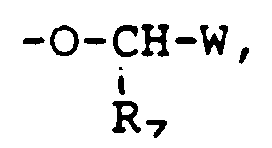
- (i)

- (ii)

- (iii)

- (i)
- d)

R1 is hydrogen, a C1-C6 alkyl group, a C5-C6 cycloalkyl group, a C6-C9 cycloalkyalkyl group or an aryl group;
each of R2 and R3 is, independently, selected from the group consisting of hydrogen, C1-C6 alkyl, C5-C6 cycloalkyl, C6-C9 cycloalkylalkyl and aryl or R2 and R3, taken together with the nitrogen atom to which they are linked, form a pentatomic or hexatomic saturated heteromonocyclic ring, optionally containing at least one additional heteroatom selected from oxygen and nitrogen; and the symbol (----) represents a single or a double bond provided that when it is a double bond the hydrogen in the 5α position doesn't exist. - In the formulae of this specification the dotted line ("""") indicates a substituent in the α configuration, i.e. below the plane of the ring, and the wedged lineindicates a substituent in the β- configuration, i.e. above the plane of the ring.

- The invention includes also the pharmaceutically acceptable salts of the compounds of formula (I) as well as all the possible isomers of formula (I) and their mixtures.
- Also the metabolites and the metabolic precursors of the compounds of formula (I) are within the scope of the present invention.
- In this specification the alkyl groups and the alkyl moiety of the cycloalkylalkyl groups may be straight or branched chain.
- A C1-C6 alkyl group may be, for example, methyl, ethyl, isopropyl, n-butyl, tert-butyl or tert-butylmethyl (i.e. neopentyl).
- A C5-C6 cycloalkyl group is cyclopentyl or cyclohexyl, preferably cyclohexyl.
- A C6-C9 cycloalkylalkyl group may be, for example, cyclohexylmethyl.
- An aryl group may be, for example, phenyl or benzyl.
- When R is a group-OR4 as defined above, preferably R4 is hydrogen, methyl or ethyl, most preferably hydrogen; when R is a group

- When R is a group

- When W is a group

- When W is a group

- When W is a group

- When R is a group


R1 is, preferably, methyl, ethyl, isopropyl, tert-butyl, cyclohexyl or cyclohexylmethyl. - Preferably each of R2 and R3 is, independently, hydrogen, methyl, ethyl, isopropyl, tert-butyl, cyclohexyl, cyclohexylmethyl, phenyl or when R2 and R3, taken together with the nitrogen atom to which they are linked, form a pentatomic or hexatomic saturated heteromonocyclic ring as defined above, the group


- Pharmaceutically acceptable salts of the compounds of the invention are salts with pharmaceutically acceptable bases, either inorganic bases such as, for instance, alkali metal, e.g. sodium or potassium, or alkaline-earth metal, e.g. calcium or magnesium, or zinc or aluminium, hydroxides, or organic bases, such as, e.g., aliphatic amines as, e.g., methylamine, diethylamine, trimethylamine, ethylamine, and heterocyclic amines as, e.g., piperidine.
- A preferred class of compounds according to the invention are the compounds of formula (I) wherein:
- Y is oxygen or sulphur;
- R is-OH, -OCH3, -O CH2CH3,


- R1 is methyl, ethyl, isopropyl, tert-butyl, cyclohexyl; the group


- the symbol ---- represents a single or double bond, and the pharmaceutically acceptable salts thereof.
- Examples of specific compounds preferred under this invention are:
- 17β-[N-isopropyl-N-(N-isopropylcarbamoyl)carbamoyl]androsta-3,5-diene-3-carboxylic acid;
- 17β-[N-cyclohexyl-N-(N-cyclohexylcarbamoyl)carbamoyl]androsta-3,5-diene-3-carboxylic acid;
- 17β-[N-tert-butyl-N-(N-tert-butylcarbamoyl)carbamoyl]androsta-3,5-diene-3-carboxylic acid;
- 17β-[N-isopropyl-N-(N-isopropylthiocarbamoyl)carbamoyl] androsta-3,5-diene-3-carboxylic acid;
- 17β-[N-cyclohexyl-N-(N-cyclohexylthiocarbamoyl)carbamoyl] androsta-3,5-diene-3-carboxylic acid;
- 17β-[N-methyl-N-(N,N-diethylcarbamoyl)carbamoyl]androsta-3,5-diene-3-carboxylic acid;
- methyl 17β-[N-isopropyl-N-(N-isopropylcarbamoyl)carbamoyl] androsta-3,5-diene-3-carboxylate;
- methyl 17β-[N-isopropyl-N-(N-isopropylthiocarbamoyl)carbamoyl] androsta-3,5-diene-3-carboxylate;
- methyl 17β-[N-cyclohexyl-N-(N-cyclohexylcarbamoyl)carbamoyl] androsta-3,5-diene-3-carboxylate;
- methyl 17β-[N-cyclohexyl-N-(N-cyclohexylthiocarbamoyl) carbamoyl]androsta-3,5-diene-3-carboxylate;
- methyl 17β-[N-tert-butyl-N-(N-tert-butylcarbamoyl)carbamoyl] androsta-3,5-diene-3-carboxylate;
- methyl 17β-[N-methyl-N-(N,N-diethylcarbamoyl)carbamoyl] androsta-3,5-diene-3-carboxylate;
- N,N-diethyl 17β-[N-isopropyl-N-(N-isopropylcarbamoyl) carbamoyl]androsta-3,5-diene-3-carboxamide;
- N,N-diethyl 17β-[N-isopropyl-N-(N-isopropylthiocarbamoyl) carbamoyl]androsta-3,5-diene-3-carboxamide;
- N,N-diethyl 17β-[N-cyclohexyl-N-(N-cyclohexylcarbamoyl) carbamoyl]androsta-3,5-diene-3-carboxamide;
- N,N-diethyl 17β-[N-cyclohexyl-N-(N-cyclohexylthiocarbamoyl) carbamoyl]androsta-3,5-diene-3-carboxamide;
- N,N-diethyl 17β-[N-methyl-N-(N,N-diethylcarbamoyl)carbamoyl] androsta-3,5-diene-3-carboxamide;
- Acetyloxymethyl 17β-[N-isopropyl-N-(N-isopropylcarbamoyl) carbamoyl]androsta-3,5-diene-3-carboxylate;
- Pivaloyloxymethyl 17β-[N-isopropyl-N-(N-isopropylcarbamoyl) carbamoyl]androsta-3,5-diene-3-carboxylate;
- Ethoxycarbonyloxymethyl 17β-[N-isopropyl-N-(N-isopropylcarbamoyl)carbamoyl]androsta-3,5-diene-3-carboxylate;
- (N,N-diethylcarbamoyl)methyl 17β-[N-isopropyl-N-(N-isopropylcarbamoyl)carbamoyl]androsta-3,5-diene-3-carboxylate;
- 2-(N-morpholino)ethyl 17β-[N-isopropyl-N-(N-isopropylcarbamoyl) carbamoyl]androsta-3,5-diene-3-carboxylate;
- A compound of formula (I) may be obtained by a process comprising
- A) reacting a compound of formula (II)

- B) reacting a compound of formula (II) as defined above, with carbon monoxide in the presence of an amine of formula (III)


- C) reacting a compound of formula (I), wherein the symbol ---- is a single or a double bond, Y, R1, R2, R3 are as defined above and R is a group OR4, wherein R4 is hydrogen, with a compound of formula (IV)


- D) reacting a compound of formula (I), wherein the symbol ---- is a single or a double bond, Y, R1, R2, R3 are as defined above and R is a group OR4 wherein R4 is hydrogen, with a compound of formula (V)


- The reaction of a compound of formula (II) with carbon monoxide in the presence of a C1-C6 alkyl alcohol, according to the process variant A may be carried out, e.g., by treating a solution of the compound of formula (II) in a suitable organic solvent, preferably dimethylformamide (DMF), with an organic base such as, for example, triethylamine (TEA), a palladium complex such as, for example, bis (triphenylphoshine) palladium (II) acetate or bis (triphenylphosphine) palladium (II) chloride, and a C1-C4 alkyl alcohol.
- Optionally the palladium complexes, can be formed in situ, by adding, separately, a phosphine, such as triphenylphosphine, and a palladium salt, such as, for example, palladium (II) acetate or palladium (II) chloride.
- Then the reaction mixture is purged with carbon monoxide (CO) for some minutes and then stirred under a CO balloon for a time varying from one hour to 48 hours, at a temperature ranging from 0°C to 40°C. Analogous procedure is described, e.g., in Tetr. Lett. 26 (8), 1109-12, (1985).
- The reaction of a compound of formula (II) with carbon r noxide and an amine of formula (III), according to the process variant B), may be carried out following the same procedure reported above wherein, instead of an alkyl alcohol, an amine of formula (III) is used.
- The halogen atom X in the compound of formula (IV) and (V) is preferably chlorine, bromine, iodine, most preferably chlorine or bromine.
- The reaction of a compound of formula (I) with a compound of formula (IV), according to the process variant C), may be carried out in a solvent such as, for example, dimethylformamide, dimethylacetamide, acetonitrile, in the presence of a base such as, for example, an alkali metal hydride, preferably sodium hydride, or an alkali metal alkoxide, preferably sodium methoxide, sodium ethoxide, potassium tert-butoxide, or an amine, preferably pyridine or triethylamine, optionally, when X is not iodine, in the presence of an alkali metal iodide, preferably sodium iodide, at a temperature ranging from about 0°C to about room temperature, for a time varying from about, for example, 2 hours to about 24 hours, preferably under an inert atmosphere of, for example, nitrogen.
- The reaction of a compound of formula (I) with a compound of formula (V), according to the process variant D), may be carried out in a solvent such as, for example, ethyl acetate, dimethylformamide, dimethylacetamide, acetonitrile, in the presence of a base such as, for example, an alkali metal hydride, preferably sodium hydride, or an alkali metal alkoxide, preferably sodium methoxide, sodium ethoxide, potassium tert-butoxide, or an amine, preferably pyridine or triethylamine, optionally, when X is not iodine, in the presence of an alkali metal iodide, preferably sodium iodide, at a temperature ranging from about 0°C to about 80°C, for a time varying, for example, from one hour to eight hours.
- The conversion of a compound of formula (I), wherein the symbol ---- is a single or a double bond, Y, R1, R2, R3 are as defined above and R is a group OR4 wherein R4 is a C1-C6 alkyl group, into a corresponding compound of formula (I), wherein the symbol ---- is a single or a double bond, Y, R1, R2, R3 are as defined above and R is a group OR4 wherein R4 is hydrogen may be carried out, e.g., in a suitable solvent, such as, for example, methanol, ethanol, tetrahydrofurane, dioxane, in the presence of an aqueous concentrate solution of an alkali metal hydroxide such as, for example, potassium hydroxide, sodium hydroxide or, preferably, lithium hydroxide, for a time varying from some hours to some days, at a temperature ranging from about 0°C to the reflux temperature of the solvent, optionally under an inert atmosphere of nitrogen.
- Standard procedures may be used for converting a compound of formula (I) into a pharmaceutically acceptable salt thereof as well as for obtaining a free compound from the corresponding salt and for separating a mixture of isomers of formula (I) into the single isomers.
- A compound of formula (II) wherein the symbol ---- is a single bond and Y, R1, R2, R3 are as defined above, may be obtained from a compound of formula (VI)

- A compound of formula (VI) is dissolved in a suitable organic solvent such as, for example, tetrahydrofurane (THF), in the presence of a suitable organic proton donor, such as, for example, tert-butanol or aniline; then a reducing metal amine solution, e.g. a lithium/liquid ammonia solution, is added to the obtained mixture and then the reaction mixture is stirred at a temperature ranging from about -100°C to about -30°C, preferably at about -78°C, for a time of about 2 or 3 hours.
- Then the reaction is quenched with an organic lithium scavenger, such as, for example, bromobenzene, dibromoetane or, preferably, isoprene and the solvent is removed in vacuo.
- The solid residue is redissolved in an organic solvent such as, for example, tetrahydrofurane or diethyl ether, and treated with an N-aryltrifluoroalkylsulfonimide, preferably with N-phenyltrifluoromethylsulfonimide, at a temperature ranging from about -20°C to about -30°C, for a time varying from about 2 hours to about 24 hours.
- The method is reported, e.g., in Tetr.Lett, 1983, 24, 979-982. A compound of formula (II), wherein the symbol ---- is a double bond and Y, R1, R2, R3 are as defined above, may be obtained from a corresponding compound of formula (VI), wherein R1, R2 and R3 are as defined above and .... is a single bond, e.g. by adding to a solution containing a compound of formula (VI), as defined above, and an organic hindered base such as, 2,6-di-tert-butyl-4-methylpyridine, in a suitable organic solvent such as, e.g., methylene chloride, a trifluorosulphonic anhydride, preferably trifluoromethanesulphonic anhydride, according to the procedure reported in Synthesis 438-440, 1979.
- The compounds of formula (VI) can be in their turn synthesized using known procedures, for instance according to the three pathways a), b) and c) reported in the scheme depicted herebelow.

- According to reaction (a), a compound of formula (VI) wherein Y, R1, R2 and R3 are as defined above, provided that R1 and R2 are not hydrogen and R3 is hydrogen, may be obtained reacting a compound of formula (VII), wherein Y is as defined above, with a carbodiimmide of formula (VIII) wherein R1 and R2 are as defined above.
- According to reaction (b), a compound of formula (VI), wherein R1 is as defined above, provided that it is not hydrogen, and Y, R2 and R3 are as defined above, may be obtained from a compound of formula (IX), wherein R2 and R3 are as defined above, by alkylation with a compound of formula (X) wherein R1 is as defined above provided that it is not hydrogen, and X is a halogen atom, e.g., iodine.
- According to reaction (c), a compound of formula (VI), wherein R3 is hydrogen and Y, R1, R2 are as defined above, provided that R2 is not hydrogen, may be obtained from a compound of formula (XI), wherein R1 is as defined above, by reaction with a compound of formula (XII) wherein R2 and Y are as defined above, provided that R2 is not hydrogen.
- Compounds of formula (VII), wherein Y=S, formula (IX) and formula (XI) may be obtained reacting a compound of formula (XIII)


- In particular, the compounds of formula (VII) wherein Y is sulfur, may be, e.g., obtained from compounds of formula (XIII) according to known procedures.
- One procedure may involve, for example, reacting a compound of formula (XIII) wherein A is chlorine, with gaseous hydrogen sulfide in the presence of dimethylthioformamide, in a solvent such as, for example, CH2Cl2, at room temperature for a time varying from, e.g., ten minutes to some hours under vigorous stirring, according to the method described in Synthesis, 671-2 (1985).
- Another procedure may involve, e.g., reacting a compound of formula (XIII) wherein A is

- A compound of formula (VII) wherein Y is sulphur may also be synthetized according to the general methods described in the literature for the synthesis of thiocarboxylic acids, for example in analogous way as described in Houben Weyl, Bd E 5, pages 832-842, or by Duns F. in Barton and Ollis, Comprehensive Organic chemistry, Vol. 3 Pergamon Press, Oxford, 1979, pages 420-32.
- A compound of formula (IX), as defined above, may be obtained reacting a compound of formula (XIII), as defined above, with an urea of formula (XIV),

- A compound of formula (XI), may be obtained reacting a compound of formula (XIII), with an amine of formula (XV)
R1-NH2 (XV)
wherein R1 is as defined above. - A compound of formula (XIII) may be obtained from a compound of formula (VII) wherein Y is oxygen by well known procedures.
- The compounds of formulae (III), (IV), (V), (VII), wherein Y is oxygen, (VIII), (X), (XII), (XIV) and (XV) are commercially available compounds or can be prepared by known procedures from known compounds.
- The compounds of the present invention inhibit specifically the testosterone 5α-reductase enzyme and, therefore, can be useful for the treatment of androgen-dependent conditions.
- For example, the inhibitory effect of the compounds of the invention on 5α-reductase was determined in vitro, according to the test procedure reported herebelow.
- Inhibition of 5α-reductase was evaluated using the particulate fraction (containing nuclei, microsomes and mitochondria) from homogenates of human benign prostatic hypertrophyc tissue as the enzyme source.
- The particulate fraction was prepared centrifuging prostate homogenate at 140,000 x g.
- The resulting pellet, washed several times, was resuspended in buffer and stored at -80°C in aliquots containing 10 mg protein/ml.
- The assay for 5α-reductase was done in a final volume of 0.5 ml, containing 1 mM dithiothreitol, 40 mM TRIS-HCl buffer pH 5.5, 5 mM NADPH, 1µm [4-14C]testosterone, 0.3 mg protein of the prostate particulate fraction and various concentrations of the inhibitors. After 30 min incubation at 37°C the reaction was terminated by addition of 2.0 ml diethyl ether and the organic phase was separated, evaporated under N2 and resuspended in ethyl acetate. Testosterone metabolites in this extract were separated in TLC on silica gel F 254 plates (Merck) using chloroform, acetone and n-hexane (2:1:2) as developing solvent system. Radioactivity on the plate was scanned and analyzed from quantitative plots printed by a TLC-analizer (Berthold). The fractional 5α-reduction of testosterone was calculated by relating the 14C-radioactivity in the 5α-reduced metabolites (5α-dihydrotestosterone, 3α- and 3β-androstanediols) regions to the total radioactivity in the testosterone and 5α-reduced metabolites regions.
- The concentration of each compound required to reduce control 5α-reductase by 50%(IC50) was determined by plotting % inhibition versus log of inhibitor concentration.
- Thus, for example in the above test, a representative compound of the invention, namely 17β-[N-isopropyl-N-(N-isopropylcarbamoyl)carbamoyl] androst-3,5-diene-3-carboxylic acid was found to produce 50% inhibition on human prostatic 5α-reductase at the dose of 3nM.
- In view of the before indicated activity the compounds of the invention can be therapeutically useful in the situations in which a decrease in androgen action, by means of 5α-reductase inhibition, is desirable such as, for example, benign prostatic hyperplasia, prostatic and breast cancers and certain skin-hair conditions such as, e.g., acne, seborrhoea, female hirsutism and male pattern baldness.
- They are useful both in the pharmaceutical field and, e.g. for the treatment of prostatic hyperplasia, in the veterinary field.
- The toxicity of the compounds of the invention is quite negligible so that they can be safely used in therapy.
- The compounds of the invention can be administered in a variety of dosage forms, e.g. orally, in the form of tablets, capsules, sugar or film coated tablets, liquid solutions or suspensions; rectally, in the form of suppositories; parenterally, e.g. intramuscularly, or by intravenous injection or infusion; topically, e.g. in the form of creams.
- The dosage depends on the age, weight, conditions of the patient and administration route; for example the dosage adopted for oral administration to adult humans may range from about 0.2 to about 100 mg pro dose, from 1 to 3 times daily.
- The invention includes pharmaceutical compositions comprising a compound of the invention in association with a pharmaceutically acceptable excipient (which can be a carrier or diluent).
- The pharmaceutical compositions containing the compounds of the invention are usually prepared following conventional methods and are administerd in a pharmaceutically suitable form.
- For example, the solid oral forms may contain, together with the active compound, diluents, e.g., lactose, dextrose, saccharose, cellulose, corn starch or potato starch; lubricants, e.g. silica, talc, stearic acid, magnesium or calcium stearate, and/or polyethylene glycols; binding agents, e.g. starches, arabic gums, gelatin, methylcellulose, carboxymethylcellulose or polyvinyl pyrrolidone; disaggregating agents, e.g. a starch, alginic acid, alginates or sodium starch glycolate; effervescing mixtures; dyestuffs; sweeteners; wetting agents, such as lecithin, polysorbates, laurylsulphates; and, in general, non-toxic and pharmacologically inactive substances used in pharmaceutical formulations. Said pharmaceutical preparations may be manufactured in known manner, for example, by means of mixing granulating, tabletting, sugar-coating, or film-coating processes.
- The liquid dispersions for oral administration may be, e.g., syrups, emulsions and suspensions.
- The syrups may contain as carrier, for example, saccharose or saccharose with glycerine and/or mannitol and/or sorbitol; in particular a syrup to be administered to diabetic patients can contain as carriers only products not metabolizable to glucose, or metabolizable in very small amount to glucose, for example sorbitol.
- The suspensions and the emulsions may contain as carrier, for example, a natural gum, agar, sodium alginate, pectin, methylcellulose, carboxymethylcellulose, or polyvinyl alcohol.
- The suspensions or solutions for intramuscular injections may contain, together with the active compound, a pharmaceutically acceptable carrier, e.g. sterile water, olive oil, ethyl oleate, glycol, e.g. propylene glycol and if desired, a suitable amount of lidocaine hydrochloride.
- The solutions for intravenous injections of infusions may contain as carrier, for example, sterile water or preferably they may be in the form of sterile, aqueous, isotonic saline solutions.
- The suppositories may contain together with the active compound a pharmaceutically acceptable carrier, e.g. cocoa-butter, polyethylene glycol, a polyoxyethylene sorbitan fatty acid ester surfactant or lecithin.
- Conventional carriers may be used for topical formulations.
- The terms "pharmaceutical" and the like as used in the present specification are meant to include also the meanings "veterinary and the like".
- The following examples illustrate but do not limit the invention.
- To a stirred-solution of androst-4-en-3-one-17β-carboxylic acid (50 g) in ethylacetate (1.5 l) and triethylamine (33 ml) N,N-diisopropylcarbodiimide (32.4 ml) is added dropwise during 5 minutes and then the reaction mixture is refluxed for 1 h. The reaction mixture is cooled and filtered on buckner; the filtrate is washed with 1N HCl, 0.5N NaHCO3, brine and anhydrified over sodium sulphate and concentrated to about 150 ml; by cooling the title product precipitates and it is filtered by suction filtration, washed with isopropylic ether so affording 54 g of white crystalline compound (m.p. 172-175°C), [α]D +89° (c=1, DMF).
- Following an analogous procedure the below listed compounds can be prepared:
- 1-(3-oxoandrost-4-ene-17β-carbonyl)-1,3-dicyclohexylurea (m.p. 178-180°C), [α]D +77° (c=1, DMF) and
- 1-(3-oxoandrost-4-ene-17β-carbonyl)-1,3-ditertbutylurea (m.p. 175-177°C), [α]D +53° (c=0.5, DMF).
- A solution of 2-pyridyl 3-oxoandrost-4-ene-17β-carbothioate

- After acidification with 1N hydrochloric acid, the mixture is extracted thoroughly with methylene chloride.
- The combined organic extracts are washed with water till neutrality, dried over sodium sulphate and evaporated to dryness.
- Further purification by flash chromatography on silica gel (eluant: methylene chloride/acetone 95:5) affords 3.5 g of 3-oxoandrost-4-ene-17β-carbothioic acid [(VII) Y=S].
- NMR (CDCl3) δ :
- 5.70 (s, 1H, H(4)), 1.2 (s, 3H, CH3(19)), 0.75 (s, 3H, CH3(18)).
- MS (m/z) :
- 332 M+·
299 M-·SH¬+ (100 %)
271 M-·COSH¬+ - A solution of the thioacid so obtained (2.54 g) in ethyl acetate (59 ml) is treated first with triethylamine (1.6 ml) and then with N,N'-diisopropylcarbodiimide (1.54 ml) and the mixture is stirred for 5 hours at room temperature.
- The reaction mixture is directly chromatographed on a column of silica gel, eluting with methylene chloride/ethyl acetate 90:10, so obtaining the title compound (2.03 g, recrystallized from methylene chloride/ethyl acetate; m.p. 180-183°C), [α]D +146° (c=1, DMF).
- NMR (CDCl3) δ :
- 6.8 (d, 1H, NH), 5.75 (s, 1H, H(4)), 4.2-4.8
(m, 2H, NH-CH(CH3)2), 1.3 (2d, 12H, 4 isopropylic CH3), 1.2 (s, 3H, CH3(19)), 0.85 (s, 3H, CH3(18)). - MS (m/z) :
- 458 M+·
357 M- S=C=N-CH(CH3)2 ¬+·
299 357- ·NH-CH(CH3)2 ¬+ (100 %) - Following an analogous procedure, the compounds listed below can be obtained:
- 1-(3-oxoandrost-4-ene-17β-carbonyl)-1,3-dicyclohexylthiourea (m.p. 209-212°C) and
- 1-(3-oxoandrost-4-ene-17β-carbonyl)-1,3-ditertbutylthiourea.
- To a stirred solution of 17β-[N-isopropyl-N-(N-isopropylcarbamoyl)carbamoyl]androst-4-en-3-one (6.0 g) and 2,6-ditertbutyl-4-methylpyridine (3.63 g) in methylene chloride (54 ml), maintained under inert atmosphere of nitrogen at room temperature, the trifluoroacetic anhydride (2.54 ml) is added dropwise during 10 minutes.
- After stirring for 30 minutes, the reaction mixture is diluted with methylene chloride and washed with saturated aqueous sodium bicarbonate, with 1N HCl, with water until neutrality and anhydrified over sodium sulphate.
- The foam which is obtained is purified by flash chromatography on silica gel (eluent: n-hexane/ethylacetate 75:25), so obtaining 4.6 g of the title compound (m.p. 135-140°C).
- NMR (CDCl3) δ:
- 5.80 (m, 1H, H(4)), 5.45 (m, 1H, H(6))
- MS (m/z) :
- 574 M+·, 489 M- O=C=N-CH(CH3)2 ¬+·,
474 489- ·CH3 ¬+, 403 489 - ·CO-NH-CH(CH3)2 ¬+,
356 489- ·SO2CF3 ¬+ (100%) - Following an analogous procedure the below listed compounds can be prepared:
- 3-{[(trifluoromethyl)sulfonyl]oxy}-17β-[N-isopropyl-N-(N-isopropylthiocarbamoyl)carbamoyl]androsta-3,5-diene;
- 3-{[(trifluoromethyl)sulfonyl]oxy}-17β-[N-cyclohexyl-N-(N-cyclohexylcarbamoyl)carbamoyl]androsta-3,5-diene; (m.p. 140-145°C)
- 3-{[(trifluoromethyl)sulfonyl]oxy}-17β-[N-cyclohexyl-N-(N-cyclohexylthiocarbamoyl)carbamoyl]androsta-3,5-diene;
- 3-{[(trifluoromethyl)sulfonyl]oxy}-17β-[N-tert-butyl-N-tert-butylcarbamoyl)carbamoyl]androsta-3,5-diene; (m.p. 123-124°C) and
- 3-{[(trifluoromethyl)sulphonyl]oxy}-17β-[N-methyl-N-(N,N-diethylcarbamoyl)carbamoyl]androsta-3,5-diene.
- To a solution of 3-{[trifluoromethyl)sulfonyl]oxy}-17β-[N-isopropyl-N-(N-isopropylcarbamoyl)carbamoyl]androsta-3,5-diene (4.6 g) in dimethylformamide (17 ml), methanol (17 ml) and triethylamine (2.23 ml) bis(triphenylphosphine) palladium (II) acetate (180 mg) is added; the mixture is purged with carbon monoxide for 5 minutes and then is stirred overnight at room temperature under a carbon monoxide atmosphere (maintained by means of a balloon).
- Ethyl acetate is then added and the organic solution is washed with water until neutral, anhydrified over sodium sulphate and the solvent is removed under vacuum. The crude is purified by flash chromatography on silica gel (eluent n-hexane-ethylacetate 75:25) so obtaining 3.5 g of the title product (m.p. 150-155°C).
- NMR (CDCl3) δ:
- 7.05 (m, 1H, H(4)), 5.80 (m, 1H, H(6)), 3.75 (s, 3H, COOCH3)
- MS (m/z) :
- 484 M+·, 399 M- 0=C-N-CH(CH3)2 ¬+·,
384 399-·CH3 ¬+, 367 399-CH3OH¬+·,
352 384-CH3OH¬+. - Following an analogous procedure the below listed compounds can be prepared:
- Methyl 17β-[N-isopropyl-N-(N-isopropylthiocarbamoyl)carbamoyl] androsta-3,5-diene-3-carboxylate;
- Methyl 17β-[N-cyclohexyl-N-(N-cyclohexylcarbamoyl)carbamoyl] androsta-3,5-diene-3-carboxylate; (m.p. 168-170°C)
- Methyl 17β-[N-cyclohexyl-N-(N-cyclohexylthiocarbamoyl) carbamoyl]androsta-3,5-diene-3-carboxylate;
- Methyl 17β-[N-tert-butyl-N-(N-tert-butylcarbamoyl)carbamoyl] androsta-3,5-diene-3-carboxylate; (m.p. 110-115°C) and
- Methyl 17β-[N-methyl-N-(N,N-diethylcarbamoyl)carbamoyl] androsta-3,5-diene-3-carboxylate.
- A mixture of methyl 17β-[N-isopropyl-N-(N-isopropylcarbamoyl) carbamoyl]androsta-3,5-diene-3-carboxylate (3.29 g), methanol (136 ml) and aqueous lithium hydroxide (1.424 g in 36 ml of water) is stirred at room temperature for 5 days.
- The methanol is evaporated under vacuum and water is added; the mixture is acidified with 1N HCl and extracted with methylene chloride; the organic layers are washed with brine, water until neutrality, anhydrified over sodium sulphate and the solvent removed under vacuum.
- The yellow solid obtained is purified by flash chromatography on silica gel (eluent: methylene chloride/acetone 9:1) so obtaining 1.66 g. of a white solid, which is crystallized from methylene chloride/ethylacetate (1.15 g, m.p. 173-175°C dec.).
[α]D -132° (c=1, CHCl3) - NMR (CDCl3) δ:
- 7.13 (m, 1H, H(4)), 6.50 (bm, 1H, CONH), 5.82 (m, 1H, H(6)), 4.48 (m, 1H,

- MS (m/z) :
- 385 M- O=C=N-CH(CH3)2 ¬+· (100%)
370 385- ·CH3 ¬+·
352 385- ·CH3- H2O¬+ - Following an analogous procedure the below listed compounds can be prepared:
- 17β-[N-isopropyl-N-(N-isopropylthiocarbamoyl)carbamoyl]androsta -3,5-diene-3-carboxylic acid (m.p. 125-130°C);
- 17β-[N-cyclohexyl-N-(N-cyclohexylcarbamoyl)carbamoyl]androsta-3,5-diene-3-carboxylic acid; (m.p. 253-255°C, AcOEt); [α]D -110° (c=1, CHCl3)
- 17β-[N-cyclohexyl-N-(N-cyclohexylthiocarbamoyl)carbamoyl] androsta-3,5-diene-3-carboxylic acid;
- 17β-[N-tert-butyl-N-(N-tert-butylcarbamoyl)carbamoyl]androsta-3,5-diene-3-carboxylic acid; (m.p. 118-120°C), [α] -134° (c=0.5, DMF) and
- 17β-[N-methyl-N-(N,N-diethylcarbamoyl)carbamoyl]androsta-3,5-diene-3-carboxylic acid.
- N,N-diethylcarbamoyl 17β-[N-isopropyl-N-(N-isopropylcarbamoyl)carbamoyl]androsta-3,5-diene-3-carboxamide.
- [(I): Y=O, R1=iPr, R2=iPr, R3=H, ----=double bond,

- A mixture of 3-{[(trifluoromethyl)sulfonyl]oxy}-17β-[N-isopropyl-N-(N-isopropylcarbamoyl)carbamoyl]androsta-3,5-diene (574 mg), palladium acetate (6 mg), triphenylphosphine (16 mg) and diethylamine (4.2 ml) in dimethylformamide (4 ml) is purged with carbon monoxide for 10 minutes and then is stirred overnight at room temperature under a carbon monoxide atmosphere (mantained by means of a balloon).
- Ethyl acetate is then added and the organic solution is washed with water until neutral, anhydrified over sodium sulphate and the solvent is removed under vacuum.
- The crude is purified by flash chromatography on silica gel (eluent n-hexane-ethyl acetate 60/40) so obtaining 310 mg of the title compound.
- Following an analogous procedure the below listed compounds can be prepared:
- N,N-diethyl 17β-[N-isopropyl-N-(N-isopropylthio carbamoyl) carbamoyl]androsta-3,5-diene-3-carboxamide;
- N,N-diethyl 17β-[N-cyclohexyl-N-(N-cyclohexylcarbamoyl) carbamoyl]androsta-3,5-diene-3-carboxamide;
- N,N-diethyl 17β-[N-cyclohexyl-N-(N-cyclohexylthiocarbamoyl) carbamoyl]androsta-3,5-diene-3-carboxamide and
- N,N-diethyl 7β-[N-methyl-N-(N,N-diethylcarbamoyl)carbamoyl] androsta-3,5-diene-3-carboxamide.
- 2-(N-morpholino)ethyl 17β-[N-isopropyl-N-(N-isopropylcarbamoyl)carbamoyl]androsta-3,5-diene-3-carboxylate [(I): Y=O, R1=iPr, R2=iPr, R3=H, ----=double bond,
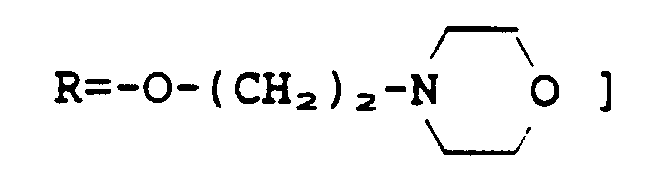
- To a solution of 17β-[N-isopropyl-N-(N-isopropylcarbamoyl) carbamoyl]androsta-3,5-diene-3-carboxylic acid (235 mg) in methylene chloride (2.5 ml), 4-(2-hydroxyethyl)morpholine (7.4 µl) and 4-pyrrolidinopyridine (3.7 mg) are added slowly, followed by dicyclohexylcarbodiimide (124 mg). After some minutes the clear solution becomes cloudy. The stirring is continued at room temperature for 3 hours. The mixture is filtered on a paper-filter and the solid is washed with methylene chloride; the filtrate is evaporated to dryness. The crude oil so obtained (394 mg) is purified by flash chromatography on silica gel (eluant: methylene chloride/acetone 8:2) so obtaining 170 mg of the title compound.
- NMR (CDCl3) δ:
- 7.00 (m, 1H, H(4)), 6.50 (bm, 1H, CONH), 5.78 (m, 1H, H(6)), 4.48


- MS (m/z) :
- 583 M+·
498 M - O=C=N-CH(CH3)2)¬+·


- To a solution of 17β-[N-isopropyl-N-(N-isopropylcarbamoyl) carbamoyl]androsta-3,5-diene-3-carboxylic acid (500 mg) in anhydrous dimethylformamide (15 ml), maintained under nitrogen atmosphere and cooled to about 0°C with an ice-bath, sodium hydride (47.8 mg of a 80 % suspension in mineral oil) is added and the mixture is stirred at 0°C for 1 hour. Bromomethylacetate (0.31 ml) is added dropwise and the solution is stirred at room temperature for 3 hours. Then the mixture is poured into ice-water and extracted with toluene (3 x 50 ml); the combined organic extracts are washed with water, with brine and anhydrified over sodium sulphate. The solvent is removed under vacuum, thus affording 500 mg of crude material that is purified by flash chromatography on silica gel (eluant: n-hexane/ethyl acetate 65:35) so obtaining 270 mg of the title compound as a white solid (m.p. 183-185°C).
Elemental analysis: calculated for C31H46N2O6 C 68.61 H 8.54 N 5.16 found C 68.34 H 8.76 N 5.08 - NMR (CDCl3) δ:
- 7.05 (m, 1H, H(4)), 6.40 (bm, 1H, CONH), 5.80 (m, 1H, H(6)), 5.75 (s, 2H, CH3COOCH 2OCO-),
4.48
- MS (m/z) :
- 542 M+·
457 M - O=C=N-CH(CH3)2 ¬+·
367 M - O=C=N-CH(CH3)2 - CH3COOCH2OH¬+· (100 %)
352 367-·CH3 ¬+ - Following an analogous procedure and using the appropriate starting materials, the compounds listed below can be prepared: Pivaloyloxymethyl 17β-[N-isopropyl-N-(N-isopropylcarbamoyl) carbamoyl]androsta-3,5-diene-3-carboxylate and Ethoxycarbonyloxymethyl 17β-[N-isopropyl-N-(N-isopropylcarbamoyl)carbamoyl]androsta-3,5-diene-3-carboxylate.
- N,N-diethylcarbamoylmethyl 17β-[N-isopropyl-N-(N-isopropylcarbamoyl)carbamoyl]androsta-3,5-diene-3-carboxylate [(I): Y=O, R1=iPr, R2=iPr, R3=H, ----=double bond,
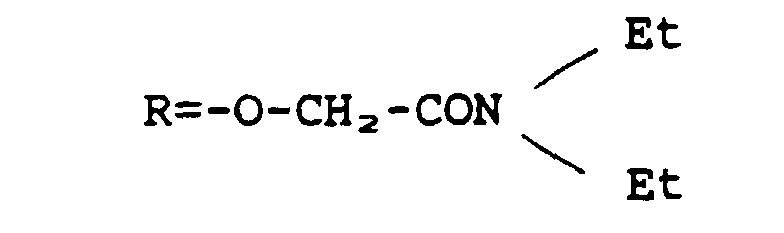
- To a solution of 17β-[N-isopropyl-N-(N-isopropylcarbamoyl) carbamoyl]androsta-3,5-diene-3-carboxylic acid (480 mg) in anhydrous dimethylformamide (13 ml), maintained under nitrogen atmosphere and cooled to about 0°C with an ice-bath, sodium hydride (41.1 mg of a 80 % suspension in mineral oil) is added and the mixture is stirred at about 0°C for 1 hour.
- N,N-Diethyl-2-chloroacetamide (409.8 mg) and sodium iodide (410.6 mg) are added at 0°C and then the mixture is stirred at room temperature for 3 hours.
- As some starting material is still unreacted, a further amount of N,N-diethyl-2-chloroacetamide (132.9 mg) and sodium iodide (136.8 mg) are added and the mixture is stirred for additional 3 hours at room temperature.
- The reaction mixture is poured into ice-water (250 ml) and extracted with toluene (4 x 50 ml); the combined organic extracts are treated with triethylamine (1 ml) and washed with water (3 x 20 ml), 0.1N sodium thiosulphate, brine and anhydrified over sodium sulphate.
- After removing the solvent under vacuum, the crude dark oil so obtained (500 mg) is purified by flash chromatography on silica gel (eluant: n-hexane/ethyl acetate 40:60), so obtaining 380 mg of a slightly yellow solid material that is triturated with ether, so affording 320 mg of the title compound as a white solid material (m.p. 103-105°C).
Elemental analysis: calculated for C34H53N2O5 C 69.95 H 9.15 N 7.20 found C 69.42 H 9.41 N 7.03 - NMR (CDCl3) δ:
- 7.17 (m, 1H, H(4)), 6.51 (d, 1H, CONH), 5.85 (m, 1H, H(6)), 4.80 (s, 1H, COOCH2CO), 4.48 (m, 1H,

- MS (m/z) :
- 498 M - O=C=N-CH(CH3)2 ¬+·
367 M - O=C=N-CH(CH3)2 - Et2NCO-CH2OH¬+· (100%) - To a mixture of 3-oxo-androst-4-ene-17β-carboxylic acid (284 mg) in anhydrous toluene (6.0 ml), oxalyl chloride (0.72 ml) is added dropwise.
- The mixture is stirred at room temperature for 1.5 hours and then the volatiles are removed under vacuum, so obtaining a yellowish solid residue of 3-oxoandrost-4-ene-17β-carbonyl chloride.
- To a solution of the acyl chloride so obtained in pyridine (4.1 ml), solid tertbutylurea (105 mg) is added.
- After stirring for 2 hours, the reaction mixture is poured into ice-water (60 ml) and extracted with methylene chloride; the combined organic extracts are washed with 1N hydrochloric acid, brine, water and anhydrified over sodium sulphate.
- Evaporation of the solvent leaves 330 mg of a dark solid which is chromatographed on silica gel (eluant: n-hexane/ethyl acetate 50:50), so affording 230 mg of the title compound (m.p. 210-217°C).
- NMR (CDCl3) :
- 8.5 (s, 1H, -CONH-), 8.1 (s, 1H, -CONH-), 5.7 (m, 1H, H(4)), 1.35 (s, 9H, tBu), 1.1 (s, 3H, CH3(19)), 0.8 (s, 3H, CH3(18)).
- Following an analogous procedure and using the appropriate starting materials, the compounds listed below can be prepared: (3-oxoandrost-4-ene-17β-carbonyl)urea (m.p. 242-245°C) and 1-(3-oxoandrost-4-ene-17β-carbonyl)-3-n-butylurea.
- To a suspension of potassium nydride (275 mg) in anhydrous tetrahydrofurane (2 ml), under nitrogen atmosphere, solid N,N-diethylurea (110 mg) is added; the mixture is stirred at room temperature for 10 minutes, then it is refluxed for 2 hours.
- After cooling at room temperature, the acyl chloride (prepared from 95.0 mg of 3-oxoandrost-4-ene-17β-carboxylic acid, following the procedure described in the example 10), dissolved in anhydrous tetrahydrofurane (2 ml) is added dropwise.
- The mixture is stirred at room temperature for 2 hours, the volatiles are removed under reduced pressure and the residue is taken up with ethyl acetate and water.
- After acidification with 1N HCl, the organic layer is separated and the aqueous is extracted twice with ethyl acetate. The combined organic extracts are washed with water, anhydrified over sodium sulphate and evaporated under vacuum.
- The crude so obtained (180 mg) is purified by flash chromatography on silica gel (eluant: n-hexane/ethyl acetate 75:25), so affording 80 mg of the title compound (m.p. 187-190°C).
- NMR (CDCl3) :
- 7.1 (s, 1H, -CONHCO-), 5.7 (m, 1H, H(4)), 3.3

- Following an analogous procedure and using the appropriate starting materials, 1-(3-oxoandrost-4-ene-17β-carbonyl)-3,3-dimethylurea, is prepared.
- To a suspension of potassium hydride (275 mg) in anhydrous tetrahydrofurane (2 ml), under nitrogen atmosphere, solid N,N-diethylurea (39 mg) is added; the mixture is stirred at room temperature for 10 minutes and then it is refluxed for 2 hours.
- After cooling at room temperature, the acyl chloride (prepared from 95.0 mg of 3-oxoandrost-4-ene-17β-carboxylic acid, following the procedure described in the example 10), dissolved in anhydrous tetrahydrofurane (9 ml) is added dropwise over 5 minutes.
- The mixture is stirred at room temperature for 1.5 hours and then methyl iodide (0.168 ml) is added dropwise.
- After stirring at room temperature for 1.5 h the reaction is cooled to about 0°C and water is added slowly.
- Extraction with ethyl acetate, anhydrification over sodium sulphate and evaporation of the solvent under vacuum affords 115 mg of a crude yellow oil that is purified by flash chromatography on silica gel (eluant: n-hexane/ethyl acetate 65:35), so obtaining 52 mg of the title compound (m.p. 142-145°C).
- NMR (CDCl3) :
- 5.7 (m, 1H, H(4)), 3.3

- Following an analogous procedure and using the appropriate starting materials, the compounds listed below are prepared:
- 1-Ethyl-1-(3-oxoandrost-4-ene-17β-carbonyl)-3,3-diethylurea;
- 1-Methyl-1-(3-oxoandrost-4-ene-17β-carbonyl)-3,3-dimethylurea and
- 1-Ethyl-1-(3-oxoandrost-4-ene-17β-carbonyl)-3,3-dimethylurea.
- Scored tablets for oral use, each containing 250 mg of the active substance, were manufactured as follows.
Composition (for 10,000 tablets) 17β-[N-isopropyl-N-(N-isopropylcarbamoyl)carbamoyl]androst-3,5-diene-3-carboxylic acid; 2500 g corn starch 275 g talc powder 187 g calcium stearate 38 g - The active substance was granulated with a 4% w/v aqueous solution of methyl cellulose.
- To the dried granules a mixture of the remainder of the ingredients is added and the final mixture compressed into tablets of proper weight.
Claims (13)
- A compound of the following formula (I)

R is a group:a) -OR4, wherein R4 is hydrogen or a C1-C6 alkyl group;b) c)
c) (i)
(i) (ii)
(ii) (iii)
(iii) d)R1 is hydrogen, a C1-C6 alkyl group, a C5-C6 cycloalkyl group, a C6-C9 cycloalkyalkyl group or an aryl group;
each of R2 and R3 is, independently, selected from the group consisting of hydrogen, C1-C6 alkyl, C5-C6 cycloalkyl, C6-C9 cycloalkylalkyl and aryl or R2 and R3, taken together with the nitrogen atom to which they are linked, form a pentatomic or hexatomic saturated heteromonocyclic ring, optionally containing at least one additional heteroatom selected from oxygen and nitrogen; and the symbol (----) represents a single or a double bond provided that when it is a double bond the hydrogen in the 5α position doesn't exist and the pharmaceutically acceptable salts thereof. - A compound of formula I, according to claim I wherein Y is oxygen or sulphur;R is OH, OCH3, O CH2CH3,


 R1 is methyl, ethyl, isopropyl, tert-butyl, cyclohexyl;the group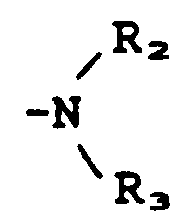


- A compound selected from the group consisting of:17β-[N-isopropyl-N-(N-isopropylcarbamoyl)carbamoyl]androsta-3,5-diene-3-carboxylic acid;17β-[N-cyclohexyl-N-(N-cyclohexylcarbamoyl)carbamoyl]androsta-3,5-diene-3-carboxylic acid;17β-[N-tert-butyl-N-(N-tert-butylcarbamoyl)carbamoyl]androsta-3,5-diene-3-carboxylic acid;17β-[N-isopropyl-N-(N-isopropylthiocarbamoyl)carbamoyl] androsta-3,5-diene-3-carboxylic acid;17β-[N-cyclohexyl-N-(N-cyclohexylthiocarbamoyl)carbamoyl] androsta-3,5-diene-3-carboxylic acid;17β-[N-methyl-N-(N,N-diethylcarbamoyl)carbamoyl]androsta-3,5-diene-3-carboxylic acid;methyl 17β-[N-isopropyl-N-(N-isopropylcarbamoyl)carbamoyl] androsta-3,5-diene-3-carboxylate;methyl 17β-[N-isopropyl-N-(N-isopropylthiocarbamoyl)carbamoyl] androsta-3,5-diene-3-carboxylate;methyl 17β-[N-cyclohexyl-N-(N-cyclohexylcarbamoyl)carbamoyl] androsta-3,5-diene-3-carboxylate;methyl 17β-[N-cyclohexyl-N-(N-cyclohexylthiocarbamoyl) carbamoyl]androsta-3,5-diene-3-carboxylate;methyl 17β-[N-tert-butyl-N-(N-tert-butylcarbamoyl)carbamoyl] androsta-3,5-diene-3-carboxylate;methyl 17β-[N-methyl-N-(N,N-diethylcarbamoyl)carbamoyl] androsta-3,5-diene-3-carboxylate;N,N-diethyl 17β-[N-isopropyl-N-(N-isopropylcarbamoyl) carbamoyl]androsta-3,5-diene-3-carboxamide;N,N-diethyl 17β-[N-isopropyl-N-(N-isopropylthiocarbamoyl) carbamoyl]androsta-3,5-diene-3-carboxamide;N,N-diethyl 17β-[N-cyclohexyl-N-(N-cyclohexylcarbamoyl) carbamoyl]androsta-3,5-diene-3-carboxamide;N,N-diethyl 17β-[N-cyclohexyl-N-(N-cyclohexylthiocarbamoyl) carbamoyl]androsta-3,5-diene-3-carboxamide;N,N-diethyl 17β-[N-methyl-N-(N,N-diethylcarbamoyl)carbamoyl] androsta-3,5-diene-3-carboxamide;Acetyloxymethyl 17β-[N-isopropyl-N-(N-isopropylcarbamoyl) carbamoyl]androsta-3,5-diene-3-carboxylate;Pivaloyloxymethyl 17β-[N-isopropyl-N-(N-isopropylcarbamoyl) carbamoyl]androsta-3,5-diene-3-carboxylate;Ethoxycarbonyloxymethyl 17β-[N-isopropyl-N-(N-isopropylcarbamoyl)carbamoyl]androsta-3,5-diene-3-carboxylate;(N,N-diethylcarbamoyl)methyl 17β-[N-isopropyl-N-(N-isopropylcarbamoyl)carbamoyl]androsta-3,5-diene-3-carboxylate;2-(N-morpholino)ethyl 17β-[N-isopropyl-N-(N-isopropylcarbamoyl) carbamoyl]androsta-3,5-diene-3-carboxylate;and, where appropriate, the pharmaceutically acceptable salts thereof.
- A process for the preparation of a compound of formula (I), according to claim 1, or a pharmaceutically acceptable salt thereof, the process comprising:A) reacting a compound of formula (II)
 B) reacting a compound of formula (II) as defined above with carbon monoxide in the presence of an amine of formula (III)
bond, Y, R1, R2, R3 are as defined in claim 1 and R is a group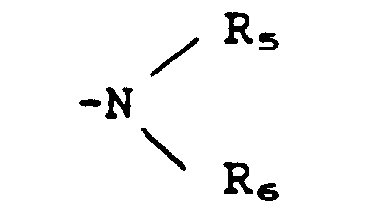 C) reacting a compound of formula (I), wherein the symbol ---- is a single or a double bond, Y, R1, R2, R3 are as defined in claim 1 and R is a group OR4, wherein R4 is hydrogen with a compound of formula (IV)
 D) reacting a compound of formula (I), wherein the symbol ---- is a single or a double bond, Y, R1, R2, R3 are as defined in claim 1 and R is a group OR4 wherein R4 is hydrogen, with a compound of formula (V)
R is a group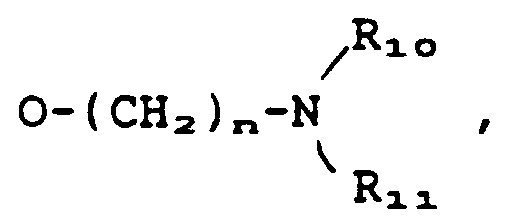
- A pharmaceutical composition comprising a pharmaceutically acceptable carrier and/or diluent and, as an active principle, a compound of formula (I) according to claim 1 or a pharmaceutically acceptable salt thereof.
- A compound of formula (I) according to claim 1, or a pharmaceutically acceptable salt thereof, for use as a testosterone 5α-reductase inhibitor.
- A compound fo formula (I) according to claim 1, or a pharmaceutically acceptable salt thereof, for use in the treatment of prostatic or breast cancer.
- A compound of formula (I) according to claim 1, or. a pharmaceutically acceptable salt thereof, for use in the treatment of benign prostatic hyperplasia.
- The use of a compound of formula (I) according to claim 1, or a pharmaceutically acceptable salt thereof, in the preparation of a pharmaceutical composition for the treatment of prostatic or breast cancer.
- The use of a compound of formula (I) according to claim 1, or a pharmaceutically acceptable salt thereof, in the preparation of a pharmaceutical composition for the treatment of benign prostatic hyperplasia.
Applications Claiming Priority (3)
| Application Number | Priority Date | Filing Date | Title |
|---|---|---|---|
| ITMI911432A IT1259419B (en) | 1991-05-24 | 1991-05-24 | 3-CARBOSE STEROIDS 17B - UNSATURATED SUBSTITUTES USEFUL AS INHIBITORS OF TESTOSTERONE 5 IN REDUCTASE |
| ITMI911432 | 1991-05-24 | ||
| PCT/EP1992/001153 WO1992020700A1 (en) | 1991-05-24 | 1992-05-22 | UNSATURATED 17β-SUBSTITUTED 3-CARBOXY STEROIDS |
Publications (2)
| Publication Number | Publication Date |
|---|---|
| EP0540717A1 EP0540717A1 (en) | 1993-05-12 |
| EP0540717B1 true EP0540717B1 (en) | 1997-07-23 |
Family
ID=11359980
Family Applications (2)
| Application Number | Title | Priority Date | Filing Date |
|---|---|---|---|
| EP92108670A Pending EP0517047A1 (en) | 1991-05-24 | 1992-05-22 | Unsaturated 17beta-substituted 3-carboxy steroids |
| EP92910992A Expired - Lifetime EP0540717B1 (en) | 1991-05-24 | 1992-05-22 | UNSATURATED 17$g(b)-SUBSTITUTED 3-CARBOXY STEROIDS |
Family Applications Before (1)
| Application Number | Title | Priority Date | Filing Date |
|---|---|---|---|
| EP92108670A Pending EP0517047A1 (en) | 1991-05-24 | 1992-05-22 | Unsaturated 17beta-substituted 3-carboxy steroids |
Country Status (26)
| Country | Link |
|---|---|
| US (1) | US5212166A (en) |
| EP (2) | EP0517047A1 (en) |
| JP (1) | JP3226919B2 (en) |
| CN (1) | CN1035055C (en) |
| AT (1) | ATE155792T1 (en) |
| AU (1) | AU655280B2 (en) |
| CA (1) | CA2087953A1 (en) |
| CZ (1) | CZ281309B6 (en) |
| DE (1) | DE69221074T2 (en) |
| DK (1) | DK0540717T3 (en) |
| ES (1) | ES2106185T3 (en) |
| FI (1) | FI930277A0 (en) |
| HU (1) | HUT64083A (en) |
| ID (1) | ID954B (en) |
| IE (1) | IE921634A1 (en) |
| IL (1) | IL101947A (en) |
| IT (1) | IT1259419B (en) |
| MX (1) | MX9202438A (en) |
| MY (1) | MY131089A (en) |
| NO (1) | NO930244L (en) |
| NZ (1) | NZ242850A (en) |
| RU (1) | RU2104283C1 (en) |
| TW (1) | TW213467B (en) |
| WO (1) | WO1992020700A1 (en) |
| YU (1) | YU52992A (en) |
| ZA (1) | ZA923758B (en) |
Families Citing this family (17)
| Publication number | Priority date | Publication date | Assignee | Title |
|---|---|---|---|---|
| AU4291993A (en) * | 1992-04-30 | 1993-11-29 | Smithkline Beecham Corporation | 17alpha and 17beta -substituted estra-1,3,5(10)-triene-3-carboxylic acid |
| US5683995A (en) * | 1992-11-18 | 1997-11-04 | Smithkline Beecham Corporation | 17 substituted acyl-3-carboxy 3,5-diene steroidals as α-reductase inhibitors |
| US5641765A (en) * | 1992-11-18 | 1997-06-24 | Smithkline Beecham Corporation | 17-αand 17-βsubstituted acyl-3-carboxy-3,5-dienes and use in inhibiting 5-α-reductase |
| ES2185666T3 (en) * | 1993-09-03 | 2003-05-01 | Smithkline Beecham Corp | FORMULATION STABILIZED FOR TABLETS. |
| GB9324371D0 (en) * | 1993-11-26 | 1994-01-12 | Erba Carlo Spa | Side chain fluoro substituted 3-carboxysteroids |
| US5430157A (en) * | 1993-12-13 | 1995-07-04 | Eli Lilly And Company | Reduced phenanthrenes |
| GB9402041D0 (en) * | 1994-02-03 | 1994-03-30 | Smithkline Beecham Corp | Compounds |
| US5714480A (en) * | 1994-03-31 | 1998-02-03 | Smithkline Beecham Corporation | Treating cardiovascular disease with steroidal 5-alpha-reductase inhibitors |
| WO1995028413A1 (en) * | 1994-04-15 | 1995-10-26 | Smithkline Beecham Corporation | 17β-SUBSTITUTED 3-CARBOXY STEROIDS THAT INHIBIT 5-α-REDUCTASE |
| GB9415183D0 (en) * | 1994-07-28 | 1994-09-21 | Erba Carlo Spa | 3-carboxysteroids with a fluorinated side-chain |
| US5543417A (en) * | 1994-10-21 | 1996-08-06 | Merck & Co., Inc. | Combination method of treating acne using 4-AZA-5α-cholestan-ones and 4-AZA-5α-androstan-ones as selective 5α-reductase inhibitors with anti-bacterial, keratolytic, or anti-inflammatory agents |
| US6372712B1 (en) | 1998-05-22 | 2002-04-16 | The Board Of Trustees Of The Leland Stanford Jr. University | Synthetic bifunctional molecules containing a drug moiety and presenter protein ligand |
| WO2001021642A1 (en) * | 1999-09-22 | 2001-03-29 | Aventis Pharma Deutschland Gmbh | 4-benzylaminoquinoline conjugates with bile acid and their heteroanalogues, methods for producing the same, medicaments containing these compounds and their use |
| EP2671508B1 (en) | 2005-04-28 | 2020-09-16 | Proteus Digital Health, Inc. | Pharma-informatics system |
| US9062126B2 (en) | 2005-09-16 | 2015-06-23 | Raptor Pharmaceuticals Inc. | Compositions comprising receptor-associated protein (RAP) variants specific for CR-containing proteins and uses thereof |
| ES2919563T3 (en) | 2009-02-20 | 2022-07-27 | Enhanx Biopharm Inc | Glutathione-based drug delivery system |
| KR20180114970A (en) | 2009-05-06 | 2018-10-19 | 라보라토리 스킨 케어, 인크. | Dermal delivery compositions comprising active agent-calcium phosphate particle complexes and methods of using the same |
Citations (1)
| Publication number | Priority date | Publication date | Assignee | Title |
|---|---|---|---|---|
| EP0567271A2 (en) * | 1992-04-20 | 1993-10-27 | Sankyo Company Limited | Steroid derivatives for the treatment of prostatic hypertrophy, their preparation and uses |
Family Cites Families (5)
| Publication number | Priority date | Publication date | Assignee | Title |
|---|---|---|---|---|
| US4377584A (en) * | 1978-04-13 | 1983-03-22 | Merck & Co., Inc. | 4-Aza-17β-substituted-5α-androstan-3-one-reductase inhibitors |
| US4910226A (en) * | 1987-04-29 | 1990-03-20 | Smithkline Beckman Corporation | Steroid 5-alpha-reductase inhibitors |
| US5041433A (en) * | 1987-04-29 | 1991-08-20 | Smithkline Beecham Corporation | 11-keto or hydroxy 3,5-diene steroids as inhibitors of steriod 5-α-reductase |
| US5032586A (en) * | 1989-08-24 | 1991-07-16 | Smithkline Beecham Corporation | 7-keto or hydroxy 3,5-diene steroids as inhibitors of steroid 5-alpha reductase |
| US5091380A (en) * | 1990-06-28 | 1992-02-25 | Merck & Co., Inc. | N-monosubstituted adamantyl/norbornanyl 17β-carbamides of 3-carboxy-androst-3,5-dienes as testosterone 5α-reductase inhibitors |
-
1991
- 1991-05-24 IT ITMI911432A patent/IT1259419B/en active IP Right Grant
-
1992
- 1992-05-20 YU YU52992A patent/YU52992A/en unknown
- 1992-05-20 MY MYPI92000863A patent/MY131089A/en unknown
- 1992-05-21 US US07/886,574 patent/US5212166A/en not_active Expired - Lifetime
- 1992-05-21 IL IL10194792A patent/IL101947A/en active IP Right Grant
- 1992-05-21 NZ NZ242850A patent/NZ242850A/en unknown
- 1992-05-22 RU RU93004939A patent/RU2104283C1/en active
- 1992-05-22 WO PCT/EP1992/001153 patent/WO1992020700A1/en not_active Ceased
- 1992-05-22 TW TW081104019A patent/TW213467B/zh active
- 1992-05-22 MX MX9202438A patent/MX9202438A/en unknown
- 1992-05-22 AU AU17781/92A patent/AU655280B2/en not_active Ceased
- 1992-05-22 CA CA002087953A patent/CA2087953A1/en not_active Abandoned
- 1992-05-22 EP EP92108670A patent/EP0517047A1/en active Pending
- 1992-05-22 CZ CZ93265A patent/CZ281309B6/en unknown
- 1992-05-22 EP EP92910992A patent/EP0540717B1/en not_active Expired - Lifetime
- 1992-05-22 JP JP50978992A patent/JP3226919B2/en not_active Expired - Fee Related
- 1992-05-22 HU HU9300176A patent/HUT64083A/en unknown
- 1992-05-22 ID IDP308292A patent/ID954B/en unknown
- 1992-05-22 AT AT92910992T patent/ATE155792T1/en active
- 1992-05-22 DE DE69221074T patent/DE69221074T2/en not_active Expired - Fee Related
- 1992-05-22 ES ES92910992T patent/ES2106185T3/en not_active Expired - Lifetime
- 1992-05-22 DK DK92910992.4T patent/DK0540717T3/en active
- 1992-05-22 ZA ZA923758A patent/ZA923758B/en unknown
- 1992-05-23 CN CN92103919A patent/CN1035055C/en not_active Expired - Fee Related
- 1992-07-01 IE IE163492A patent/IE921634A1/en unknown
-
1993
- 1993-01-25 NO NO93930244A patent/NO930244L/en unknown
- 1993-05-22 FI FI930277A patent/FI930277A0/en not_active Application Discontinuation
Patent Citations (1)
| Publication number | Priority date | Publication date | Assignee | Title |
|---|---|---|---|---|
| EP0567271A2 (en) * | 1992-04-20 | 1993-10-27 | Sankyo Company Limited | Steroid derivatives for the treatment of prostatic hypertrophy, their preparation and uses |
Also Published As
Similar Documents
| Publication | Publication Date | Title |
|---|---|---|
| US5155107A (en) | 17β-substituted-4-aza-5α-androstan-3-one derivatives and process for their preparation | |
| US5418238A (en) | 17β-substituted 4-aza-5α-androstan-3-one derivatives | |
| US5212166A (en) | Unsaturated 17β-subsituted 3-carboxy steroids | |
| US4732897A (en) | Steroidic 5α-reductase inhibitors | |
| EP0607400B1 (en) | Fluorinated 17-beta substituted-4-aza-5-alpha- andostran-3one derivatives. | |
| US5091380A (en) | N-monosubstituted adamantyl/norbornanyl 17β-carbamides of 3-carboxy-androst-3,5-dienes as testosterone 5α-reductase inhibitors | |
| EP0462662A2 (en) | 17beta-N-monosubstituted adamantyl/norbornanyl carbamoyl-4-aza-5alpha-androst-1-en-3-ones and androstan-3-ones | |
| WO1994003474A1 (en) | Steroids with a fluorinated acylureidic type side chain | |
| EP0721460A1 (en) | 3-carboxysteroids with a fluorinated side chain | |
| WO1995021185A1 (en) | Acyl 3-carboxy aromatic a ring steroid as 5-alpha reductase inhibitors | |
| EP0681587A1 (en) | Side chain fluoro substituted 3-carboxysteroids | |
| HK1011693B (en) | Fluorinated 17-beta substituted-4-aza-5-alpha-andostran-3one derivatives | |
| GB2273096A (en) | Piperido(4',3':16,17)-4-aza-5 alpha-androstan-3-one derivatives and process for their preparation |
Legal Events
| Date | Code | Title | Description |
|---|---|---|---|
| PUAI | Public reference made under article 153(3) epc to a published international application that has entered the european phase |
Free format text: ORIGINAL CODE: 0009012 |
|
| AK | Designated contracting states |
Kind code of ref document: A1 Designated state(s): AT BE CH DE DK ES FR GB GR IT LI NL SE |
|
| 17P | Request for examination filed |
Effective date: 19930115 |
|
| XX | Miscellaneous (additional remarks) |
Free format text: VERBUNDEN MIT 92108670.8/0517047 (EUROPAEISCHE ANMELDENUMMER/VEROEFFENTLICHUNGSNUMMER) DURCH ENTSCHEIDUNG VOM 05.01.95. |
|
| RAP1 | Party data changed (applicant data changed or rights of an application transferred) |
Owner name: PHARMACIA S.P.A. |
|
| 17Q | First examination report despatched |
Effective date: 19950801 |
|
| GRAG | Despatch of communication of intention to grant |
Free format text: ORIGINAL CODE: EPIDOS AGRA |
|
| GRAH | Despatch of communication of intention to grant a patent |
Free format text: ORIGINAL CODE: EPIDOS IGRA |
|
| GRAH | Despatch of communication of intention to grant a patent |
Free format text: ORIGINAL CODE: EPIDOS IGRA |
|
| GRAH | Despatch of communication of intention to grant a patent |
Free format text: ORIGINAL CODE: EPIDOS IGRA |
|
| RAP1 | Party data changed (applicant data changed or rights of an application transferred) |
Owner name: PHARMACIA & UPJOHN S.P.A. |
|
| GRAH | Despatch of communication of intention to grant a patent |
Free format text: ORIGINAL CODE: EPIDOS IGRA |
|
| GRAH | Despatch of communication of intention to grant a patent |
Free format text: ORIGINAL CODE: EPIDOS IGRA |
|
| GRAA | (expected) grant |
Free format text: ORIGINAL CODE: 0009210 |
|
| AK | Designated contracting states |
Kind code of ref document: B1 Designated state(s): AT BE CH DE DK ES FR GB GR IT LI NL PT SE |
|
| PG25 | Lapsed in a contracting state [announced via postgrant information from national office to epo] |
Ref country code: NL Free format text: LAPSE BECAUSE OF FAILURE TO SUBMIT A TRANSLATION OF THE DESCRIPTION OR TO PAY THE FEE WITHIN THE PRESCRIBED TIME-LIMIT Effective date: 19970723 Ref country code: GR Free format text: LAPSE BECAUSE OF FAILURE TO SUBMIT A TRANSLATION OF THE DESCRIPTION OR TO PAY THE FEE WITHIN THE PRESCRIBED TIME-LIMIT Effective date: 19970723 Ref country code: AT Effective date: 19970723 |
|
| REF | Corresponds to: |
Ref document number: 155792 Country of ref document: AT Date of ref document: 19970815 Kind code of ref document: T |
|
| XX | Miscellaneous (additional remarks) |
Free format text: VERBUNDEN MIT 92108670.8/0517047 (EUROPAEISCHE ANMELDENUMMER/VEROEFFENTLICHUNGSNUMMER) DURCH ENTSCHEIDUNG VOM 05.01.95. |
|
| REG | Reference to a national code |
Ref country code: CH Ref legal event code: NV Representative=s name: A. BRAUN, BRAUN, HERITIER, ESCHMANN AG PATENTANWAE Ref country code: CH Ref legal event code: EP |
|
| REG | Reference to a national code |
Ref country code: DK Ref legal event code: T3 |
|
| ITF | It: translation for a ep patent filed | ||
| REF | Corresponds to: |
Ref document number: 69221074 Country of ref document: DE Date of ref document: 19970904 |
|
| ET | Fr: translation filed | ||
| REG | Reference to a national code |
Ref country code: ES Ref legal event code: FG2A Ref document number: 2106185 Country of ref document: ES Kind code of ref document: T3 |
|
| REG | Reference to a national code |
Ref country code: PT Ref legal event code: SC4A Free format text: AVAILABILITY OF NATIONAL TRANSLATION Effective date: 19970807 |
|
| NLV1 | Nl: lapsed or annulled due to failure to fulfill the requirements of art. 29p and 29m of the patents act | ||
| PLBE | No opposition filed within time limit |
Free format text: ORIGINAL CODE: 0009261 |
|
| STAA | Information on the status of an ep patent application or granted ep patent |
Free format text: STATUS: NO OPPOSITION FILED WITHIN TIME LIMIT |
|
| PG25 | Lapsed in a contracting state [announced via postgrant information from national office to epo] |
Ref country code: LI Free format text: LAPSE BECAUSE OF NON-PAYMENT OF DUE FEES Effective date: 19980531 Ref country code: DK Free format text: LAPSE BECAUSE OF NON-PAYMENT OF DUE FEES Effective date: 19980531 Ref country code: CH Free format text: LAPSE BECAUSE OF NON-PAYMENT OF DUE FEES Effective date: 19980531 Ref country code: BE Free format text: LAPSE BECAUSE OF NON-PAYMENT OF DUE FEES Effective date: 19980531 |
|
| 26N | No opposition filed | ||
| BERE | Be: lapsed |
Owner name: PHARMACIA & UPJOHN S.P.A. Effective date: 19980531 |
|
| PG25 | Lapsed in a contracting state [announced via postgrant information from national office to epo] |
Ref country code: PT Free format text: LAPSE BECAUSE OF NON-PAYMENT OF DUE FEES Effective date: 19981130 |
|
| REG | Reference to a national code |
Ref country code: CH Ref legal event code: PL |
|
| REG | Reference to a national code |
Ref country code: PT Ref legal event code: MM4A Free format text: LAPSE DUE TO NON-PAYMENT OF FEES Effective date: 19981130 |
|
| REG | Reference to a national code |
Ref country code: DK Ref legal event code: EBP |
|
| REG | Reference to a national code |
Ref country code: GB Ref legal event code: IF02 |
|
| PGFP | Annual fee paid to national office [announced via postgrant information from national office to epo] |
Ref country code: GB Payment date: 20050406 Year of fee payment: 14 |
|
| PGFP | Annual fee paid to national office [announced via postgrant information from national office to epo] |
Ref country code: SE Payment date: 20050503 Year of fee payment: 14 |
|
| PGFP | Annual fee paid to national office [announced via postgrant information from national office to epo] |
Ref country code: FR Payment date: 20050517 Year of fee payment: 14 |
|
| PGFP | Annual fee paid to national office [announced via postgrant information from national office to epo] |
Ref country code: ES Payment date: 20050518 Year of fee payment: 14 |
|
| PGFP | Annual fee paid to national office [announced via postgrant information from national office to epo] |
Ref country code: DE Payment date: 20050531 Year of fee payment: 14 |
|
| PG25 | Lapsed in a contracting state [announced via postgrant information from national office to epo] |
Ref country code: GB Free format text: LAPSE BECAUSE OF NON-PAYMENT OF DUE FEES Effective date: 20060522 |
|
| PG25 | Lapsed in a contracting state [announced via postgrant information from national office to epo] |
Ref country code: SE Free format text: LAPSE BECAUSE OF NON-PAYMENT OF DUE FEES Effective date: 20060523 Ref country code: ES Free format text: LAPSE BECAUSE OF NON-PAYMENT OF DUE FEES Effective date: 20060523 |
|
| PGFP | Annual fee paid to national office [announced via postgrant information from national office to epo] |
Ref country code: IT Payment date: 20060531 Year of fee payment: 15 |
|
| PG25 | Lapsed in a contracting state [announced via postgrant information from national office to epo] |
Ref country code: DE Free format text: LAPSE BECAUSE OF NON-PAYMENT OF DUE FEES Effective date: 20061201 |
|
| EUG | Se: european patent has lapsed | ||
| GBPC | Gb: european patent ceased through non-payment of renewal fee |
Effective date: 20060522 |
|
| REG | Reference to a national code |
Ref country code: FR Ref legal event code: ST Effective date: 20070131 |
|
| REG | Reference to a national code |
Ref country code: ES Ref legal event code: FD2A Effective date: 20060523 |
|
| PG25 | Lapsed in a contracting state [announced via postgrant information from national office to epo] |
Ref country code: FR Free format text: LAPSE BECAUSE OF NON-PAYMENT OF DUE FEES Effective date: 20060531 |
|
| PG25 | Lapsed in a contracting state [announced via postgrant information from national office to epo] |
Ref country code: IT Free format text: LAPSE BECAUSE OF NON-PAYMENT OF DUE FEES Effective date: 20070522 |