EP0540547B1 - Prophylactic and therapeutic applications of peroxidases - Google Patents
Prophylactic and therapeutic applications of peroxidases Download PDFInfo
- Publication number
- EP0540547B1 EP0540547B1 EP91912539A EP91912539A EP0540547B1 EP 0540547 B1 EP0540547 B1 EP 0540547B1 EP 91912539 A EP91912539 A EP 91912539A EP 91912539 A EP91912539 A EP 91912539A EP 0540547 B1 EP0540547 B1 EP 0540547B1
- Authority
- EP
- European Patent Office
- Prior art keywords
- peroxidase
- medicament
- medicaments
- substrate
- virus
- Prior art date
- Legal status (The legal status is an assumption and is not a legal conclusion. Google has not performed a legal analysis and makes no representation as to the accuracy of the status listed.)
- Expired - Lifetime
Links
- 102000003992 Peroxidases Human genes 0.000 title abstract description 115
- 230000001225 therapeutic effect Effects 0.000 title abstract description 20
- 108700020962 Peroxidase Proteins 0.000 title abstract description 18
- 230000000069 prophylactic effect Effects 0.000 title abstract description 18
- 239000003814 drug Substances 0.000 claims abstract description 116
- 108040007629 peroxidase activity proteins Proteins 0.000 claims abstract description 100
- 239000000758 substrate Substances 0.000 claims abstract description 53
- 108010023244 Lactoperoxidase Proteins 0.000 claims abstract description 30
- 229940057428 lactoperoxidase Drugs 0.000 claims abstract description 30
- 150000002978 peroxides Chemical class 0.000 claims abstract description 27
- 238000011282 treatment Methods 0.000 claims abstract description 26
- 102000003896 Myeloperoxidases Human genes 0.000 claims abstract description 24
- 108090000235 Myeloperoxidases Proteins 0.000 claims abstract description 24
- 230000002265 prevention Effects 0.000 claims abstract description 15
- 238000004519 manufacturing process Methods 0.000 claims abstract description 10
- 102100038609 Lactoperoxidase Human genes 0.000 claims abstract description 8
- 230000009385 viral infection Effects 0.000 claims abstract description 7
- 230000000699 topical effect Effects 0.000 claims abstract description 6
- 208000009889 Herpes Simplex Diseases 0.000 claims abstract description 5
- 102000013415 peroxidase activity proteins Human genes 0.000 claims abstract 5
- MHAJPDPJQMAIIY-UHFFFAOYSA-N Hydrogen peroxide Chemical compound OO MHAJPDPJQMAIIY-UHFFFAOYSA-N 0.000 claims description 53
- 241000700605 Viruses Species 0.000 claims description 53
- QVGXLLKOCUKJST-UHFFFAOYSA-N atomic oxygen Chemical compound [O] QVGXLLKOCUKJST-UHFFFAOYSA-N 0.000 claims description 41
- 239000001301 oxygen Substances 0.000 claims description 36
- 229910052760 oxygen Inorganic materials 0.000 claims description 36
- 241000725303 Human immunodeficiency virus Species 0.000 claims description 26
- 239000004366 Glucose oxidase Substances 0.000 claims description 22
- 229940116332 glucose oxidase Drugs 0.000 claims description 22
- 108010015776 Glucose oxidase Proteins 0.000 claims description 21
- 235000019420 glucose oxidase Nutrition 0.000 claims description 21
- 102000004190 Enzymes Human genes 0.000 claims description 16
- 108090000790 Enzymes Proteins 0.000 claims description 16
- 229940088598 enzyme Drugs 0.000 claims description 16
- WQZGKKKJIJFFOK-GASJEMHNSA-N Glucose Natural products OC[C@H]1OC(O)[C@H](O)[C@@H](O)[C@@H]1O WQZGKKKJIJFFOK-GASJEMHNSA-N 0.000 claims description 11
- 230000002255 enzymatic effect Effects 0.000 claims description 11
- 239000008103 glucose Substances 0.000 claims description 11
- XMBWDFGMSWQBCA-UHFFFAOYSA-N hydrogen iodide Chemical compound I XMBWDFGMSWQBCA-UHFFFAOYSA-N 0.000 claims description 11
- 241000700584 Simplexvirus Species 0.000 claims description 9
- 239000000551 dentifrice Substances 0.000 claims description 8
- VEXZGXHMUGYJMC-UHFFFAOYSA-M Chloride anion Chemical compound [Cl-] VEXZGXHMUGYJMC-UHFFFAOYSA-M 0.000 claims description 5
- 244000005700 microbiome Species 0.000 claims description 4
- 150000003567 thiocyanates Chemical class 0.000 claims description 4
- CPELXLSAUQHCOX-UHFFFAOYSA-M Bromide Chemical compound [Br-] CPELXLSAUQHCOX-UHFFFAOYSA-M 0.000 claims description 3
- 150000001451 organic peroxides Chemical class 0.000 claims description 2
- 125000002791 glucosyl group Chemical group C1([C@H](O)[C@@H](O)[C@H](O)[C@H](O1)CO)* 0.000 claims 1
- 150000004820 halides Chemical class 0.000 claims 1
- 239000003937 drug carrier Substances 0.000 abstract description 11
- 206010061598 Immunodeficiency Diseases 0.000 abstract 1
- 208000029462 Immunodeficiency disease Diseases 0.000 abstract 1
- 230000007813 immunodeficiency Effects 0.000 abstract 1
- 239000000203 mixture Substances 0.000 description 62
- 238000009472 formulation Methods 0.000 description 37
- 102000045576 Lactoperoxidases Human genes 0.000 description 30
- 208000015181 infectious disease Diseases 0.000 description 25
- XLYOFNOQVPJJNP-UHFFFAOYSA-N water Substances O XLYOFNOQVPJJNP-UHFFFAOYSA-N 0.000 description 22
- ZMZDMBWJUHKJPS-UHFFFAOYSA-M Thiocyanate anion Chemical compound [S-]C#N ZMZDMBWJUHKJPS-UHFFFAOYSA-M 0.000 description 21
- 230000000694 effects Effects 0.000 description 20
- 210000004027 cell Anatomy 0.000 description 19
- 230000000840 anti-viral effect Effects 0.000 description 16
- 239000000499 gel Substances 0.000 description 16
- 239000004615 ingredient Substances 0.000 description 16
- 229910001868 water Inorganic materials 0.000 description 16
- ZMZDMBWJUHKJPS-UHFFFAOYSA-N hydrogen thiocyanate Natural products SC#N ZMZDMBWJUHKJPS-UHFFFAOYSA-N 0.000 description 15
- WQZGKKKJIJFFOK-VFUOTHLCSA-N beta-D-glucose Chemical compound OC[C@H]1O[C@@H](O)[C@H](O)[C@@H](O)[C@@H]1O WQZGKKKJIJFFOK-VFUOTHLCSA-N 0.000 description 12
- 210000003296 saliva Anatomy 0.000 description 12
- PEDCQBHIVMGVHV-UHFFFAOYSA-N Glycerine Chemical compound OCC(O)CO PEDCQBHIVMGVHV-UHFFFAOYSA-N 0.000 description 11
- 230000000845 anti-microbial effect Effects 0.000 description 11
- 239000000243 solution Substances 0.000 description 11
- 241000700588 Human alphaherpesvirus 1 Species 0.000 description 10
- 102000004316 Oxidoreductases Human genes 0.000 description 10
- 108090000854 Oxidoreductases Proteins 0.000 description 10
- UIIMBOGNXHQVGW-UHFFFAOYSA-M Sodium bicarbonate Chemical group [Na+].OC([O-])=O UIIMBOGNXHQVGW-UHFFFAOYSA-M 0.000 description 10
- 238000000034 method Methods 0.000 description 10
- ZNNZYHKDIALBAK-UHFFFAOYSA-M potassium thiocyanate Chemical compound [K+].[S-]C#N ZNNZYHKDIALBAK-UHFFFAOYSA-M 0.000 description 10
- 229940116357 potassium thiocyanate Drugs 0.000 description 10
- 238000010790 dilution Methods 0.000 description 9
- 239000012895 dilution Substances 0.000 description 9
- 238000002474 experimental method Methods 0.000 description 9
- 210000004698 lymphocyte Anatomy 0.000 description 9
- FAPWRFPIFSIZLT-UHFFFAOYSA-M Sodium chloride Chemical compound [Na+].[Cl-] FAPWRFPIFSIZLT-UHFFFAOYSA-M 0.000 description 8
- 150000001875 compounds Chemical class 0.000 description 8
- 230000003902 lesion Effects 0.000 description 8
- 101100042631 Saccharomyces cerevisiae (strain ATCC 204508 / S288c) SIN3 gene Proteins 0.000 description 7
- 238000003556 assay Methods 0.000 description 7
- 229940058573 b-d glucose Drugs 0.000 description 7
- 239000007853 buffer solution Substances 0.000 description 7
- 229940112822 chewing gum Drugs 0.000 description 7
- 235000015218 chewing gum Nutrition 0.000 description 7
- 238000001727 in vivo Methods 0.000 description 7
- 230000005764 inhibitory process Effects 0.000 description 7
- 239000007937 lozenge Substances 0.000 description 7
- 235000013336 milk Nutrition 0.000 description 7
- 239000008267 milk Substances 0.000 description 7
- 210000004080 milk Anatomy 0.000 description 7
- 239000000126 substance Substances 0.000 description 7
- 101001099464 Homo sapiens Lactoperoxidase Proteins 0.000 description 6
- DNIAPMSPPWPWGF-UHFFFAOYSA-N Propylene glycol Chemical compound CC(O)CO DNIAPMSPPWPWGF-UHFFFAOYSA-N 0.000 description 6
- 239000000872 buffer Substances 0.000 description 6
- 230000003647 oxidation Effects 0.000 description 6
- 238000007254 oxidation reaction Methods 0.000 description 6
- 230000001590 oxidative effect Effects 0.000 description 6
- 125000002577 pseudohalo group Chemical group 0.000 description 6
- 208000033610 salivary peroxidase Diseases 0.000 description 6
- 239000000725 suspension Substances 0.000 description 6
- 241000894006 Bacteria Species 0.000 description 5
- FBPFZTCFMRRESA-FSIIMWSLSA-N D-Glucitol Natural products OC[C@H](O)[C@H](O)[C@@H](O)[C@H](O)CO FBPFZTCFMRRESA-FSIIMWSLSA-N 0.000 description 5
- 102000003886 Glycoproteins Human genes 0.000 description 5
- 108090000288 Glycoproteins Proteins 0.000 description 5
- 239000012981 Hank's balanced salt solution Substances 0.000 description 5
- 239000006071 cream Substances 0.000 description 5
- 239000000796 flavoring agent Substances 0.000 description 5
- 235000019634 flavors Nutrition 0.000 description 5
- 239000001963 growth medium Substances 0.000 description 5
- 229910052736 halogen Inorganic materials 0.000 description 5
- 150000002367 halogens Chemical class 0.000 description 5
- 238000000338 in vitro Methods 0.000 description 5
- 238000011534 incubation Methods 0.000 description 5
- 235000017557 sodium bicarbonate Nutrition 0.000 description 5
- 229910000030 sodium bicarbonate Inorganic materials 0.000 description 5
- VGTPCRGMBIAPIM-UHFFFAOYSA-M sodium thiocyanate Chemical compound [Na+].[S-]C#N VGTPCRGMBIAPIM-UHFFFAOYSA-M 0.000 description 5
- 239000000600 sorbitol Substances 0.000 description 5
- 239000006228 supernatant Substances 0.000 description 5
- ZTOJFFHGPLIVKC-YAFCTCPESA-N (2e)-3-ethyl-2-[(z)-(3-ethyl-6-sulfo-1,3-benzothiazol-2-ylidene)hydrazinylidene]-1,3-benzothiazole-6-sulfonic acid Chemical group S\1C2=CC(S(O)(=O)=O)=CC=C2N(CC)C/1=N/N=C1/SC2=CC(S(O)(=O)=O)=CC=C2N1CC ZTOJFFHGPLIVKC-YAFCTCPESA-N 0.000 description 4
- GVJHHUAWPYXKBD-UHFFFAOYSA-N (±)-α-Tocopherol Chemical compound OC1=C(C)C(C)=C2OC(CCCC(C)CCCC(C)CCCC(C)C)(C)CCC2=C1C GVJHHUAWPYXKBD-UHFFFAOYSA-N 0.000 description 4
- 241000700198 Cavia Species 0.000 description 4
- 238000002965 ELISA Methods 0.000 description 4
- 108010001336 Horseradish Peroxidase Proteins 0.000 description 4
- 238000006243 chemical reaction Methods 0.000 description 4
- 229960001231 choline Drugs 0.000 description 4
- 230000000120 cytopathologic effect Effects 0.000 description 4
- 231100000050 cytotoxic potential Toxicity 0.000 description 4
- 230000001419 dependent effect Effects 0.000 description 4
- 235000011187 glycerol Nutrition 0.000 description 4
- 230000002401 inhibitory effect Effects 0.000 description 4
- 230000003834 intracellular effect Effects 0.000 description 4
- JVTAAEKCZFNVCJ-UHFFFAOYSA-N lactic acid Chemical compound CC(O)C(O)=O JVTAAEKCZFNVCJ-UHFFFAOYSA-N 0.000 description 4
- 210000002540 macrophage Anatomy 0.000 description 4
- 238000002360 preparation method Methods 0.000 description 4
- WDGFFVCWBZVLCE-UHFFFAOYSA-N purpurogallin Chemical compound C1=CC=C(O)C(=O)C2=C1C=C(O)C(O)=C2O WDGFFVCWBZVLCE-UHFFFAOYSA-N 0.000 description 4
- 239000000376 reactant Substances 0.000 description 4
- 239000011780 sodium chloride Substances 0.000 description 4
- 238000012360 testing method Methods 0.000 description 4
- 230000001988 toxicity Effects 0.000 description 4
- 231100000419 toxicity Toxicity 0.000 description 4
- 230000029812 viral genome replication Effects 0.000 description 4
- 230000003612 virological effect Effects 0.000 description 4
- DBHODFSFBXJZNY-UHFFFAOYSA-N 2,4-dichlorobenzyl alcohol Chemical compound OCC1=CC=C(Cl)C=C1Cl DBHODFSFBXJZNY-UHFFFAOYSA-N 0.000 description 3
- 241000714266 Bovine leukemia virus Species 0.000 description 3
- 108010000659 Choline oxidase Proteins 0.000 description 3
- 241000711573 Coronaviridae Species 0.000 description 3
- 241000701022 Cytomegalovirus Species 0.000 description 3
- 108010003989 D-amino-acid oxidase Proteins 0.000 description 3
- 102000004674 D-amino-acid oxidase Human genes 0.000 description 3
- 229930195713 D-glutamate Natural products 0.000 description 3
- 108010004365 D-glutamate oxidase Proteins 0.000 description 3
- 241000701074 Human alphaherpesvirus 2 Species 0.000 description 3
- 241000701085 Human alphaherpesvirus 3 Species 0.000 description 3
- 241000701044 Human gammaherpesvirus 4 Species 0.000 description 3
- 241000701027 Human herpesvirus 6 Species 0.000 description 3
- 229920000663 Hydroxyethyl cellulose Polymers 0.000 description 3
- XQFRJNBWHJMXHO-RRKCRQDMSA-N IDUR Chemical compound C1[C@H](O)[C@@H](CO)O[C@H]1N1C(=O)NC(=O)C(I)=C1 XQFRJNBWHJMXHO-RRKCRQDMSA-N 0.000 description 3
- 241000725643 Respiratory syncytial virus Species 0.000 description 3
- 241000702670 Rotavirus Species 0.000 description 3
- 108010092464 Urate Oxidase Proteins 0.000 description 3
- 229910021538 borax Inorganic materials 0.000 description 3
- KGBXLFKZBHKPEV-UHFFFAOYSA-N boric acid Chemical compound OB(O)O KGBXLFKZBHKPEV-UHFFFAOYSA-N 0.000 description 3
- 239000004327 boric acid Substances 0.000 description 3
- 238000004113 cell culture Methods 0.000 description 3
- OEYIOHPDSNJKLS-UHFFFAOYSA-N choline Chemical compound C[N+](C)(C)CCO OEYIOHPDSNJKLS-UHFFFAOYSA-N 0.000 description 3
- 231100000135 cytotoxicity Toxicity 0.000 description 3
- 230000003013 cytotoxicity Effects 0.000 description 3
- 230000007123 defense Effects 0.000 description 3
- 239000008367 deionised water Substances 0.000 description 3
- 229910021641 deionized water Inorganic materials 0.000 description 3
- 238000011161 development Methods 0.000 description 3
- BEFDCLMNVWHSGT-UHFFFAOYSA-N ethenylcyclopentane Chemical compound C=CC1CCCC1 BEFDCLMNVWHSGT-UHFFFAOYSA-N 0.000 description 3
- 239000003889 eye drop Substances 0.000 description 3
- 235000020256 human milk Nutrition 0.000 description 3
- 239000001257 hydrogen Substances 0.000 description 3
- 229910052739 hydrogen Inorganic materials 0.000 description 3
- 235000019447 hydroxyethyl cellulose Nutrition 0.000 description 3
- ZCZCOXLLICTZAH-UHFFFAOYSA-N hypothiocyanous acid Chemical compound OSC#N ZCZCOXLLICTZAH-UHFFFAOYSA-N 0.000 description 3
- 210000000214 mouth Anatomy 0.000 description 3
- 238000011533 pre-incubation Methods 0.000 description 3
- 239000000047 product Substances 0.000 description 3
- 230000010076 replication Effects 0.000 description 3
- 230000028327 secretion Effects 0.000 description 3
- 235000010339 sodium tetraborate Nutrition 0.000 description 3
- 235000010199 sorbic acid Nutrition 0.000 description 3
- 239000004334 sorbic acid Substances 0.000 description 3
- 229940075582 sorbic acid Drugs 0.000 description 3
- 239000007921 spray Substances 0.000 description 3
- 238000011200 topical administration Methods 0.000 description 3
- BSVBQGMMJUBVOD-UHFFFAOYSA-N trisodium borate Chemical compound [Na+].[Na+].[Na+].[O-]B([O-])[O-] BSVBQGMMJUBVOD-UHFFFAOYSA-N 0.000 description 3
- 241001529453 unidentified herpesvirus Species 0.000 description 3
- 241001430294 unidentified retrovirus Species 0.000 description 3
- 229940005267 urate oxidase Drugs 0.000 description 3
- YBJHBAHKTGYVGT-ZKWXMUAHSA-N (+)-Biotin Chemical compound N1C(=O)N[C@@H]2[C@H](CCCCC(=O)O)SC[C@@H]21 YBJHBAHKTGYVGT-ZKWXMUAHSA-N 0.000 description 2
- WQZGKKKJIJFFOK-SVZMEOIVSA-N (+)-Galactose Chemical compound OC[C@H]1OC(O)[C@H](O)[C@@H](O)[C@H]1O WQZGKKKJIJFFOK-SVZMEOIVSA-N 0.000 description 2
- FPIPGXGPPPQFEQ-UHFFFAOYSA-N 13-cis retinol Natural products OCC=C(C)C=CC=C(C)C=CC1=C(C)CCCC1(C)C FPIPGXGPPPQFEQ-UHFFFAOYSA-N 0.000 description 2
- 244000144927 Aloe barbadensis Species 0.000 description 2
- 235000002961 Aloe barbadensis Nutrition 0.000 description 2
- IJGRMHOSHXDMSA-UHFFFAOYSA-N Atomic nitrogen Chemical compound N#N IJGRMHOSHXDMSA-UHFFFAOYSA-N 0.000 description 2
- 108091003079 Bovine Serum Albumin Proteins 0.000 description 2
- LVDKZNITIUWNER-UHFFFAOYSA-N Bronopol Chemical compound OCC(Br)(CO)[N+]([O-])=O LVDKZNITIUWNER-UHFFFAOYSA-N 0.000 description 2
- OYPRJOBELJOOCE-UHFFFAOYSA-N Calcium Chemical group [Ca] OYPRJOBELJOOCE-UHFFFAOYSA-N 0.000 description 2
- 229920002261 Corn starch Polymers 0.000 description 2
- QNAYBMKLOCPYGJ-UHFFFAOYSA-N D-alpha-Ala Natural products CC([NH3+])C([O-])=O QNAYBMKLOCPYGJ-UHFFFAOYSA-N 0.000 description 2
- RGHNJXZEOKUKBD-SQOUGZDYSA-N D-gluconic acid Chemical compound OC[C@@H](O)[C@@H](O)[C@H](O)[C@@H](O)C(O)=O RGHNJXZEOKUKBD-SQOUGZDYSA-N 0.000 description 2
- WHUUTDBJXJRKMK-GSVOUGTGSA-N D-glutamic acid Chemical compound OC(=O)[C@H](N)CCC(O)=O WHUUTDBJXJRKMK-GSVOUGTGSA-N 0.000 description 2
- 241000196324 Embryophyta Species 0.000 description 2
- DHMQDGOQFOQNFH-UHFFFAOYSA-N Glycine Chemical compound NCC(O)=O DHMQDGOQFOQNFH-UHFFFAOYSA-N 0.000 description 2
- 208000001688 Herpes Genitalis Diseases 0.000 description 2
- 241000714260 Human T-lymphotropic virus 1 Species 0.000 description 2
- UFHFLCQGNIYNRP-UHFFFAOYSA-N Hydrogen Chemical compound [H][H] UFHFLCQGNIYNRP-UHFFFAOYSA-N 0.000 description 2
- 239000007836 KH2PO4 Substances 0.000 description 2
- OUYCCCASQSFEME-QMMMGPOBSA-N L-tyrosine Chemical compound OC(=O)[C@@H](N)CC1=CC=C(O)C=C1 OUYCCCASQSFEME-QMMMGPOBSA-N 0.000 description 2
- 108700037001 Lactoperoxidases Proteins 0.000 description 2
- FYYHWMGAXLPEAU-UHFFFAOYSA-N Magnesium Chemical compound [Mg] FYYHWMGAXLPEAU-UHFFFAOYSA-N 0.000 description 2
- 208000002606 Paramyxoviridae Infections Diseases 0.000 description 2
- 108020004511 Recombinant DNA Proteins 0.000 description 2
- 239000006146 Roswell Park Memorial Institute medium Substances 0.000 description 2
- WINXNKPZLFISPD-UHFFFAOYSA-M Saccharin sodium Chemical compound [Na+].C1=CC=C2C(=O)[N-]S(=O)(=O)C2=C1 WINXNKPZLFISPD-UHFFFAOYSA-M 0.000 description 2
- 241000713311 Simian immunodeficiency virus Species 0.000 description 2
- 235000019486 Sunflower oil Nutrition 0.000 description 2
- LEHOTFFKMJEONL-UHFFFAOYSA-N Uric Acid Chemical compound N1C(=O)NC(=O)C2=C1NC(=O)N2 LEHOTFFKMJEONL-UHFFFAOYSA-N 0.000 description 2
- FPIPGXGPPPQFEQ-BOOMUCAASA-N Vitamin A Natural products OC/C=C(/C)\C=C\C=C(\C)/C=C/C1=C(C)CCCC1(C)C FPIPGXGPPPQFEQ-BOOMUCAASA-N 0.000 description 2
- 229930003427 Vitamin E Natural products 0.000 description 2
- TVXBFESIOXBWNM-UHFFFAOYSA-N Xylitol Natural products OCCC(O)C(O)C(O)CCO TVXBFESIOXBWNM-UHFFFAOYSA-N 0.000 description 2
- FPIPGXGPPPQFEQ-OVSJKPMPSA-N all-trans-retinol Chemical compound OC\C=C(/C)\C=C\C=C(/C)\C=C\C1=C(C)CCCC1(C)C FPIPGXGPPPQFEQ-OVSJKPMPSA-N 0.000 description 2
- 235000011399 aloe vera Nutrition 0.000 description 2
- 239000004599 antimicrobial Substances 0.000 description 2
- 230000015572 biosynthetic process Effects 0.000 description 2
- 229960003168 bronopol Drugs 0.000 description 2
- 239000006172 buffering agent Substances 0.000 description 2
- 239000011575 calcium Substances 0.000 description 2
- 229910052791 calcium Inorganic materials 0.000 description 2
- 239000000969 carrier Substances 0.000 description 2
- 239000008120 corn starch Substances 0.000 description 2
- 231100000433 cytotoxic Toxicity 0.000 description 2
- 230000001472 cytotoxic effect Effects 0.000 description 2
- 230000003292 diminished effect Effects 0.000 description 2
- BNIILDVGGAEEIG-UHFFFAOYSA-L disodium hydrogen phosphate Chemical compound [Na+].[Na+].OP([O-])([O-])=O BNIILDVGGAEEIG-UHFFFAOYSA-L 0.000 description 2
- 229910000397 disodium phosphate Inorganic materials 0.000 description 2
- 235000019800 disodium phosphate Nutrition 0.000 description 2
- 239000012153 distilled water Substances 0.000 description 2
- 229940012356 eye drops Drugs 0.000 description 2
- 239000012894 fetal calf serum Substances 0.000 description 2
- 210000002950 fibroblast Anatomy 0.000 description 2
- WIGCFUFOHFEKBI-UHFFFAOYSA-N gamma-tocopherol Natural products CC(C)CCCC(C)CCCC(C)CCCC1CCC2C(C)C(O)C(C)C(C)C2O1 WIGCFUFOHFEKBI-UHFFFAOYSA-N 0.000 description 2
- 201000004946 genital herpes Diseases 0.000 description 2
- 108010046301 glucose peroxidase Proteins 0.000 description 2
- 238000011554 guinea pig model Methods 0.000 description 2
- 210000004251 human milk Anatomy 0.000 description 2
- 230000002458 infectious effect Effects 0.000 description 2
- 206010022000 influenza Diseases 0.000 description 2
- 239000007972 injectable composition Substances 0.000 description 2
- 235000014655 lactic acid Nutrition 0.000 description 2
- 239000004310 lactic acid Substances 0.000 description 2
- 210000000265 leukocyte Anatomy 0.000 description 2
- 230000000670 limiting effect Effects 0.000 description 2
- 150000002632 lipids Chemical class 0.000 description 2
- 239000007788 liquid Substances 0.000 description 2
- 239000011777 magnesium Substances 0.000 description 2
- 229910052749 magnesium Inorganic materials 0.000 description 2
- 238000005259 measurement Methods 0.000 description 2
- 230000007246 mechanism Effects 0.000 description 2
- HEBKCHPVOIAQTA-UHFFFAOYSA-N meso ribitol Natural products OCC(O)C(O)C(O)CO HEBKCHPVOIAQTA-UHFFFAOYSA-N 0.000 description 2
- 229910000402 monopotassium phosphate Inorganic materials 0.000 description 2
- 235000019796 monopotassium phosphate Nutrition 0.000 description 2
- 230000003472 neutralizing effect Effects 0.000 description 2
- 150000007524 organic acids Chemical class 0.000 description 2
- GNSKLFRGEWLPPA-UHFFFAOYSA-M potassium dihydrogen phosphate Chemical compound [K+].OP(O)([O-])=O GNSKLFRGEWLPPA-UHFFFAOYSA-M 0.000 description 2
- 239000000843 powder Substances 0.000 description 2
- 238000012545 processing Methods 0.000 description 2
- 210000002966 serum Anatomy 0.000 description 2
- 239000002600 sunflower oil Substances 0.000 description 2
- -1 the family of orthomyxoviruses Species 0.000 description 2
- 231100000331 toxic Toxicity 0.000 description 2
- 230000002588 toxic effect Effects 0.000 description 2
- 235000019155 vitamin A Nutrition 0.000 description 2
- 239000011719 vitamin A Substances 0.000 description 2
- 235000019165 vitamin E Nutrition 0.000 description 2
- 229940046009 vitamin E Drugs 0.000 description 2
- 239000011709 vitamin E Substances 0.000 description 2
- 229940045997 vitamin a Drugs 0.000 description 2
- 239000000811 xylitol Substances 0.000 description 2
- 235000010447 xylitol Nutrition 0.000 description 2
- 229960002675 xylitol Drugs 0.000 description 2
- PMTMAFAPLCGXGK-JMTMCXQRSA-N (15Z)-12-oxophyto-10,15-dienoic acid Chemical compound CC\C=C/C[C@H]1[C@@H](CCCCCCCC(O)=O)C=CC1=O PMTMAFAPLCGXGK-JMTMCXQRSA-N 0.000 description 1
- XDIYNQZUNSSENW-UUBOPVPUSA-N (2R,3S,4R,5R)-2,3,4,5,6-pentahydroxyhexanal Chemical compound OC[C@@H](O)[C@@H](O)[C@H](O)[C@@H](O)C=O.OC[C@@H](O)[C@@H](O)[C@H](O)[C@@H](O)C=O XDIYNQZUNSSENW-UUBOPVPUSA-N 0.000 description 1
- ZTOJFFHGPLIVKC-UHFFFAOYSA-N 3-ethyl-2-[(3-ethyl-6-sulfo-1,3-benzothiazol-2-ylidene)hydrazinylidene]-1,3-benzothiazole-6-sulfonic acid Chemical compound S1C2=CC(S(O)(=O)=O)=CC=C2N(CC)C1=NN=C1SC2=CC(S(O)(=O)=O)=CC=C2N1CC ZTOJFFHGPLIVKC-UHFFFAOYSA-N 0.000 description 1
- 108010025188 Alcohol oxidase Proteins 0.000 description 1
- 240000003291 Armoracia rusticana Species 0.000 description 1
- 235000011330 Armoracia rusticana Nutrition 0.000 description 1
- 108010011485 Aspartame Proteins 0.000 description 1
- 241000222122 Candida albicans Species 0.000 description 1
- 150000008574 D-amino acids Chemical class 0.000 description 1
- RGHNJXZEOKUKBD-UHFFFAOYSA-N D-gluconic acid Natural products OCC(O)C(O)C(O)C(O)C(O)=O RGHNJXZEOKUKBD-UHFFFAOYSA-N 0.000 description 1
- KCXVZYZYPLLWCC-UHFFFAOYSA-N EDTA Chemical compound OC(=O)CN(CC(O)=O)CCN(CC(O)=O)CC(O)=O KCXVZYZYPLLWCC-UHFFFAOYSA-N 0.000 description 1
- 108010092408 Eosinophil Peroxidase Proteins 0.000 description 1
- 102100028471 Eosinophil peroxidase Human genes 0.000 description 1
- 108010015133 Galactose oxidase Proteins 0.000 description 1
- 239000004471 Glycine Substances 0.000 description 1
- 108010004237 Glycine oxidase Proteins 0.000 description 1
- 241000282412 Homo Species 0.000 description 1
- 108091006905 Human Serum Albumin Proteins 0.000 description 1
- 102000008100 Human Serum Albumin Human genes 0.000 description 1
- 241000713772 Human immunodeficiency virus 1 Species 0.000 description 1
- 108060003951 Immunoglobulin Proteins 0.000 description 1
- 108010044467 Isoenzymes Proteins 0.000 description 1
- QNAYBMKLOCPYGJ-REOHCLBHSA-N L-alanine Chemical class C[C@H](N)C(O)=O QNAYBMKLOCPYGJ-REOHCLBHSA-N 0.000 description 1
- AGPKZVBTJJNPAG-WHFBIAKZSA-N L-isoleucine Chemical class CC[C@H](C)[C@H](N)C(O)=O AGPKZVBTJJNPAG-WHFBIAKZSA-N 0.000 description 1
- COLNVLDHVKWLRT-QMMMGPOBSA-N L-phenylalanine Chemical class OC(=O)[C@@H](N)CC1=CC=CC=C1 COLNVLDHVKWLRT-QMMMGPOBSA-N 0.000 description 1
- 108030001032 L-sorbose oxidases Proteins 0.000 description 1
- KZSNJWFQEVHDMF-BYPYZUCNSA-N L-valine Chemical class CC(C)[C@H](N)C(O)=O KZSNJWFQEVHDMF-BYPYZUCNSA-N 0.000 description 1
- 241000186660 Lactobacillus Species 0.000 description 1
- SPAGIJMPHSUYSE-UHFFFAOYSA-N Magnesium peroxide Chemical compound [Mg+2].[O-][O-] SPAGIJMPHSUYSE-UHFFFAOYSA-N 0.000 description 1
- 241001529936 Murinae Species 0.000 description 1
- 241000699670 Mus sp. Species 0.000 description 1
- 102000004722 NADPH Oxidases Human genes 0.000 description 1
- 108010002998 NADPH Oxidases Proteins 0.000 description 1
- LGWMKCUYFMMKFF-BATDIGMQSA-N OC[C@@H]([C@H]([C@@H](C(CO)=O)O)O)O.OC[C@@H]([C@H]([C@@H](C(CO)=O)O)O)O.O Chemical compound OC[C@@H]([C@H]([C@@H](C(CO)=O)O)O)O.OC[C@@H]([C@H]([C@@H](C(CO)=O)O)O)O.O LGWMKCUYFMMKFF-BATDIGMQSA-N 0.000 description 1
- PMTMAFAPLCGXGK-UHFFFAOYSA-N OPDA Natural products CCC=CCC1C(CCCCCCCC(O)=O)C=CC1=O PMTMAFAPLCGXGK-UHFFFAOYSA-N 0.000 description 1
- 101100028078 Oryza sativa subsp. japonica OPR1 gene Proteins 0.000 description 1
- ONIBWKKTOPOVIA-UHFFFAOYSA-N Proline Natural products OC(=O)C1CCCN1 ONIBWKKTOPOVIA-UHFFFAOYSA-N 0.000 description 1
- 244000088415 Raphanus sativus Species 0.000 description 1
- 235000006140 Raphanus sativus var sativus Nutrition 0.000 description 1
- 229920002472 Starch Polymers 0.000 description 1
- 241000194017 Streptococcus Species 0.000 description 1
- 241000194019 Streptococcus mutans Species 0.000 description 1
- 210000001744 T-lymphocyte Anatomy 0.000 description 1
- 229920004890 Triton X-100 Polymers 0.000 description 1
- 239000013504 Triton X-100 Substances 0.000 description 1
- KZSNJWFQEVHDMF-UHFFFAOYSA-N Valine Chemical class CC(C)C(N)C(O)=O KZSNJWFQEVHDMF-UHFFFAOYSA-N 0.000 description 1
- 239000005862 Whey Substances 0.000 description 1
- 102000007544 Whey Proteins Human genes 0.000 description 1
- 108010046377 Whey Proteins Proteins 0.000 description 1
- 240000008042 Zea mays Species 0.000 description 1
- 235000005824 Zea mays ssp. parviglumis Nutrition 0.000 description 1
- 235000002017 Zea mays subsp mays Nutrition 0.000 description 1
- 238000002835 absorbance Methods 0.000 description 1
- 238000010521 absorption reaction Methods 0.000 description 1
- 238000009825 accumulation Methods 0.000 description 1
- 230000002378 acidificating effect Effects 0.000 description 1
- NIXOWILDQLNWCW-UHFFFAOYSA-N acrylic acid group Chemical group C(C=C)(=O)O NIXOWILDQLNWCW-UHFFFAOYSA-N 0.000 description 1
- 235000004279 alanine Nutrition 0.000 description 1
- SOIFLUNRINLCBN-UHFFFAOYSA-N ammonium thiocyanate Chemical compound [NH4+].[S-]C#N SOIFLUNRINLCBN-UHFFFAOYSA-N 0.000 description 1
- 230000003377 anti-microbal effect Effects 0.000 description 1
- 230000002421 anti-septic effect Effects 0.000 description 1
- 239000000427 antigen Substances 0.000 description 1
- 102000036639 antigens Human genes 0.000 description 1
- 108091007433 antigens Proteins 0.000 description 1
- 239000000605 aspartame Substances 0.000 description 1
- IAOZJIPTCAWIRG-QWRGUYRKSA-N aspartame Chemical compound OC(=O)C[C@H](N)C(=O)N[C@H](C(=O)OC)CC1=CC=CC=C1 IAOZJIPTCAWIRG-QWRGUYRKSA-N 0.000 description 1
- 235000010357 aspartame Nutrition 0.000 description 1
- 229960003438 aspartame Drugs 0.000 description 1
- 230000001580 bacterial effect Effects 0.000 description 1
- 229960001716 benzalkonium Drugs 0.000 description 1
- 229960000686 benzalkonium chloride Drugs 0.000 description 1
- CADWTSSKOVRVJC-UHFFFAOYSA-N benzyl(dimethyl)azanium;chloride Chemical compound [Cl-].C[NH+](C)CC1=CC=CC=C1 CADWTSSKOVRVJC-UHFFFAOYSA-N 0.000 description 1
- KQNZLOUWXSAZGD-UHFFFAOYSA-N benzylperoxymethylbenzene Chemical compound C=1C=CC=CC=1COOCC1=CC=CC=C1 KQNZLOUWXSAZGD-UHFFFAOYSA-N 0.000 description 1
- 229960002685 biotin Drugs 0.000 description 1
- 235000020958 biotin Nutrition 0.000 description 1
- 239000011616 biotin Substances 0.000 description 1
- 210000005178 buccal mucosa Anatomy 0.000 description 1
- 239000007975 buffered saline Substances 0.000 description 1
- 229940095731 candida albicans Drugs 0.000 description 1
- 230000015556 catabolic process Effects 0.000 description 1
- 238000006555 catalytic reaction Methods 0.000 description 1
- 238000005119 centrifugation Methods 0.000 description 1
- 239000007910 chewable tablet Substances 0.000 description 1
- 239000000460 chlorine Substances 0.000 description 1
- 229910052801 chlorine Inorganic materials 0.000 description 1
- 239000003593 chromogenic compound Substances 0.000 description 1
- 235000005822 corn Nutrition 0.000 description 1
- 235000013365 dairy product Nutrition 0.000 description 1
- 230000006378 damage Effects 0.000 description 1
- 230000003247 decreasing effect Effects 0.000 description 1
- 238000006731 degradation reaction Methods 0.000 description 1
- 230000003111 delayed effect Effects 0.000 description 1
- 229960004698 dichlorobenzyl alcohol Drugs 0.000 description 1
- 229940009662 edetate Drugs 0.000 description 1
- 229940124274 edetate disodium Drugs 0.000 description 1
- 238000005516 engineering process Methods 0.000 description 1
- 210000002919 epithelial cell Anatomy 0.000 description 1
- 235000013305 food Nutrition 0.000 description 1
- 239000012634 fragment Substances 0.000 description 1
- 210000004392 genitalia Anatomy 0.000 description 1
- 239000000174 gluconic acid Substances 0.000 description 1
- 235000012208 gluconic acid Nutrition 0.000 description 1
- 108010062584 glycollate oxidase Proteins 0.000 description 1
- 150000003278 haem Chemical class 0.000 description 1
- 238000011597 hartley guinea pig Methods 0.000 description 1
- 230000009215 host defense mechanism Effects 0.000 description 1
- 150000002431 hydrogen Chemical class 0.000 description 1
- 238000010166 immunofluorescence Methods 0.000 description 1
- 102000018358 immunoglobulin Human genes 0.000 description 1
- 229940099472 immunoglobulin a Drugs 0.000 description 1
- 229940027941 immunoglobulin g Drugs 0.000 description 1
- 229940072221 immunoglobulins Drugs 0.000 description 1
- 230000002779 inactivation Effects 0.000 description 1
- 238000010348 incorporation Methods 0.000 description 1
- 239000003112 inhibitor Substances 0.000 description 1
- 229940102223 injectable solution Drugs 0.000 description 1
- 238000011081 inoculation Methods 0.000 description 1
- 230000003993 interaction Effects 0.000 description 1
- 238000010255 intramuscular injection Methods 0.000 description 1
- 239000007927 intramuscular injection Substances 0.000 description 1
- 150000004694 iodide salts Chemical class 0.000 description 1
- 230000026045 iodination Effects 0.000 description 1
- 238000006192 iodination reaction Methods 0.000 description 1
- 150000008040 ionic compounds Chemical class 0.000 description 1
- 150000002500 ions Chemical class 0.000 description 1
- SUBFIBLJQMMKBK-UHFFFAOYSA-K iron(3+);trithiocyanate Chemical compound [Fe+3].[S-]C#N.[S-]C#N.[S-]C#N SUBFIBLJQMMKBK-UHFFFAOYSA-K 0.000 description 1
- 229960000310 isoleucine Drugs 0.000 description 1
- AGPKZVBTJJNPAG-UHFFFAOYSA-N isoleucine Natural products CCC(C)C(N)C(O)=O AGPKZVBTJJNPAG-UHFFFAOYSA-N 0.000 description 1
- 239000002502 liposome Substances 0.000 description 1
- 239000008176 lyophilized powder Substances 0.000 description 1
- 229920002521 macromolecule Polymers 0.000 description 1
- 229960004995 magnesium peroxide Drugs 0.000 description 1
- 239000000463 material Substances 0.000 description 1
- 150000002736 metal compounds Chemical class 0.000 description 1
- 230000000813 microbial effect Effects 0.000 description 1
- 230000003278 mimic effect Effects 0.000 description 1
- 238000002156 mixing Methods 0.000 description 1
- 238000012544 monitoring process Methods 0.000 description 1
- 239000002324 mouth wash Substances 0.000 description 1
- 229940051866 mouthwash Drugs 0.000 description 1
- 239000005445 natural material Substances 0.000 description 1
- 239000013642 negative control Substances 0.000 description 1
- 210000002569 neuron Anatomy 0.000 description 1
- 229910052757 nitrogen Inorganic materials 0.000 description 1
- VIKNJXKGJWUCNN-XGXHKTLJSA-N norethisterone Chemical group O=C1CC[C@@H]2[C@H]3CC[C@](C)([C@](CC4)(O)C#C)[C@@H]4[C@@H]3CCC2=C1 VIKNJXKGJWUCNN-XGXHKTLJSA-N 0.000 description 1
- 230000003287 optical effect Effects 0.000 description 1
- ZCZCOXLLICTZAH-UHFFFAOYSA-M oxido thiocyanate Chemical compound [O-]SC#N ZCZCOXLLICTZAH-UHFFFAOYSA-M 0.000 description 1
- 238000004806 packaging method and process Methods 0.000 description 1
- 210000003681 parotid gland Anatomy 0.000 description 1
- 230000036961 partial effect Effects 0.000 description 1
- 239000002245 particle Substances 0.000 description 1
- 239000008188 pellet Substances 0.000 description 1
- 230000000737 periodic effect Effects 0.000 description 1
- 210000004261 periodontium Anatomy 0.000 description 1
- 230000003617 peroxidasic effect Effects 0.000 description 1
- COLNVLDHVKWLRT-UHFFFAOYSA-N phenylalanine Chemical class OC(=O)C(N)CC1=CC=CC=C1 COLNVLDHVKWLRT-UHFFFAOYSA-N 0.000 description 1
- 230000035479 physiological effects, processes and functions Effects 0.000 description 1
- 239000013641 positive control Substances 0.000 description 1
- 239000003755 preservative agent Substances 0.000 description 1
- 150000003138 primary alcohols Chemical class 0.000 description 1
- 235000018102 proteins Nutrition 0.000 description 1
- 102000004169 proteins and genes Human genes 0.000 description 1
- 108090000623 proteins and genes Proteins 0.000 description 1
- 239000008213 purified water Substances 0.000 description 1
- 230000007420 reactivation Effects 0.000 description 1
- 238000006722 reduction reaction Methods 0.000 description 1
- 230000002829 reductive effect Effects 0.000 description 1
- 230000003014 reinforcing effect Effects 0.000 description 1
- 238000011160 research Methods 0.000 description 1
- 150000003839 salts Chemical class 0.000 description 1
- 238000000926 separation method Methods 0.000 description 1
- 239000002453 shampoo Substances 0.000 description 1
- 239000007974 sodium acetate buffer Substances 0.000 description 1
- 235000010378 sodium ascorbate Nutrition 0.000 description 1
- PPASLZSBLFJQEF-RKJRWTFHSA-M sodium ascorbate Substances [Na+].OC[C@@H](O)[C@H]1OC(=O)C(O)=C1[O-] PPASLZSBLFJQEF-RKJRWTFHSA-M 0.000 description 1
- 229960005055 sodium ascorbate Drugs 0.000 description 1
- PFUVRDFDKPNGAV-UHFFFAOYSA-N sodium peroxide Chemical compound [Na+].[Na+].[O-][O-] PFUVRDFDKPNGAV-UHFFFAOYSA-N 0.000 description 1
- 239000001488 sodium phosphate Substances 0.000 description 1
- 229910000162 sodium phosphate Inorganic materials 0.000 description 1
- 235000011008 sodium phosphates Nutrition 0.000 description 1
- 239000007787 solid Substances 0.000 description 1
- 238000010561 standard procedure Methods 0.000 description 1
- 235000019698 starch Nutrition 0.000 description 1
- 239000008107 starch Substances 0.000 description 1
- 238000004659 sterilization and disinfection Methods 0.000 description 1
- 238000003756 stirring Methods 0.000 description 1
- BZWKPZBXAMTXNQ-UHFFFAOYSA-N sulfurocyanidic acid Chemical class OS(=O)(=O)C#N BZWKPZBXAMTXNQ-UHFFFAOYSA-N 0.000 description 1
- 230000002459 sustained effect Effects 0.000 description 1
- 239000003826 tablet Substances 0.000 description 1
- 125000003396 thiol group Chemical group [H]S* 0.000 description 1
- 230000036962 time dependent Effects 0.000 description 1
- 239000000606 toothpaste Substances 0.000 description 1
- 229940034610 toothpaste Drugs 0.000 description 1
- 239000012049 topical pharmaceutical composition Substances 0.000 description 1
- 230000032258 transport Effects 0.000 description 1
- RYFMWSXOAZQYPI-UHFFFAOYSA-K trisodium phosphate Chemical compound [Na+].[Na+].[Na+].[O-]P([O-])([O-])=O RYFMWSXOAZQYPI-UHFFFAOYSA-K 0.000 description 1
- 229960004441 tyrosine Drugs 0.000 description 1
- AQLJVWUFPCUVLO-UHFFFAOYSA-N urea hydrogen peroxide Chemical compound OO.NC(N)=O AQLJVWUFPCUVLO-UHFFFAOYSA-N 0.000 description 1
- 229940044959 vaginal cream Drugs 0.000 description 1
- 239000000522 vaginal cream Substances 0.000 description 1
- 239000004474 valine Chemical class 0.000 description 1
- 235000013311 vegetables Nutrition 0.000 description 1
- 210000003905 vulva Anatomy 0.000 description 1
- 101150117224 washc1 gene Proteins 0.000 description 1
- 230000003313 weakening effect Effects 0.000 description 1
- HEBKCHPVOIAQTA-SCDXWVJYSA-N xylitol Chemical compound OC[C@H](O)[C@@H](O)[C@H](O)CO HEBKCHPVOIAQTA-SCDXWVJYSA-N 0.000 description 1
Images

Classifications
-
- A—HUMAN NECESSITIES
- A61—MEDICAL OR VETERINARY SCIENCE; HYGIENE
- A61K—PREPARATIONS FOR MEDICAL, DENTAL OR TOILETRY PURPOSES
- A61K8/00—Cosmetics or similar toiletry preparations
- A61K8/18—Cosmetics or similar toiletry preparations characterised by the composition
- A61K8/30—Cosmetics or similar toiletry preparations characterised by the composition containing organic compounds
- A61K8/64—Proteins; Peptides; Derivatives or degradation products thereof
- A61K8/66—Enzymes
-
- A—HUMAN NECESSITIES
- A61—MEDICAL OR VETERINARY SCIENCE; HYGIENE
- A61K—PREPARATIONS FOR MEDICAL, DENTAL OR TOILETRY PURPOSES
- A61K33/00—Medicinal preparations containing inorganic active ingredients
- A61K33/40—Peroxides
-
- A—HUMAN NECESSITIES
- A61—MEDICAL OR VETERINARY SCIENCE; HYGIENE
- A61K—PREPARATIONS FOR MEDICAL, DENTAL OR TOILETRY PURPOSES
- A61K38/00—Medicinal preparations containing peptides
- A61K38/16—Peptides having more than 20 amino acids; Gastrins; Somatostatins; Melanotropins; Derivatives thereof
- A61K38/43—Enzymes; Proenzymes; Derivatives thereof
- A61K38/44—Oxidoreductases (1)
-
- A—HUMAN NECESSITIES
- A61—MEDICAL OR VETERINARY SCIENCE; HYGIENE
- A61K—PREPARATIONS FOR MEDICAL, DENTAL OR TOILETRY PURPOSES
- A61K38/00—Medicinal preparations containing peptides
- A61K38/16—Peptides having more than 20 amino acids; Gastrins; Somatostatins; Melanotropins; Derivatives thereof
- A61K38/43—Enzymes; Proenzymes; Derivatives thereof
- A61K38/44—Oxidoreductases (1)
- A61K38/443—Oxidoreductases (1) acting on CH-OH groups as donors, e.g. glucose oxidase, lactate dehydrogenase (1.1)
-
- A—HUMAN NECESSITIES
- A61—MEDICAL OR VETERINARY SCIENCE; HYGIENE
- A61P—SPECIFIC THERAPEUTIC ACTIVITY OF CHEMICAL COMPOUNDS OR MEDICINAL PREPARATIONS
- A61P31/00—Antiinfectives, i.e. antibiotics, antiseptics, chemotherapeutics
- A61P31/12—Antivirals
-
- A—HUMAN NECESSITIES
- A61—MEDICAL OR VETERINARY SCIENCE; HYGIENE
- A61P—SPECIFIC THERAPEUTIC ACTIVITY OF CHEMICAL COMPOUNDS OR MEDICINAL PREPARATIONS
- A61P31/00—Antiinfectives, i.e. antibiotics, antiseptics, chemotherapeutics
- A61P31/12—Antivirals
- A61P31/14—Antivirals for RNA viruses
- A61P31/18—Antivirals for RNA viruses for HIV
-
- A—HUMAN NECESSITIES
- A61—MEDICAL OR VETERINARY SCIENCE; HYGIENE
- A61P—SPECIFIC THERAPEUTIC ACTIVITY OF CHEMICAL COMPOUNDS OR MEDICINAL PREPARATIONS
- A61P31/00—Antiinfectives, i.e. antibiotics, antiseptics, chemotherapeutics
- A61P31/12—Antivirals
- A61P31/20—Antivirals for DNA viruses
- A61P31/22—Antivirals for DNA viruses for herpes viruses
-
- A—HUMAN NECESSITIES
- A61—MEDICAL OR VETERINARY SCIENCE; HYGIENE
- A61Q—SPECIFIC USE OF COSMETICS OR SIMILAR TOILETRY PREPARATIONS
- A61Q11/00—Preparations for care of the teeth, of the oral cavity or of dentures; Dentifrices, e.g. toothpastes; Mouth rinses
Definitions
- the present invention relates to the use of non-conjugated peroxidases for the manufacture of a medicament for the prevention or treatment of enveloped virus infections.
- HSV's Herpes Simplex Viruses
- HSV's Human Immunodeficiency Viruses
- Herpes Simplex Viruses such as HSV-1 and HSV-2) are widespread. Prophylactic and therapeutic medicaments and methods developed for the prevention and treatment of infections of herpes simplex viruses have, in general, only been partially successful.
- the primary source of the antiviral activity of milk has been attributed to the presence of immunoglobins (IgG's) therein.
- Other sources that have been suggested as the origin of this antiviral activity includes a non-lipid macromolecule that is relatively stable to heat (Matthews et al., and Micheals, both supra) and/or a molecule having a molecular weight of 400,000 daltons (Laegried et al., supra) and/or a component of the lipid layer that effects only encapsulated viruses (Issacs et al., supra).
- This inability to definitely characterize the antiviral origins(s) of milk limits the use thereof, or of components or systems thereof, for antiviral purposes.
- the antiviral activity may be more of a cell-protective activity than a virus neutralizing activity -- that is to say, the saliva directly affects the oral epithelial cells, protecting them against infection [see Heineman, H.S., and M.S. Greenberg, Archs Oral Biol. 225: 257-261 (1980)]. Unfortunately, the origin of such activity still remains unknown.
- HIV human immunodeficiency viruses
- saliva samples can insure a 100% inhibition of HIV-1 infectivity [see Fox et al., JADA, 118: 709-711 (1989)].
- enveloped viruses that are particularly troublesome to effectively prevent and treat include other herpes viruses (such as Varicella-zoster virus, cytomegalovirus, Epstein-Barr virus and human herpes virus-6), the paramyxoviruses (such as human parainfluenza viruses), the family of orthomyxoviruses (such as the influenza type viruses A and B), rotaviruses, coronaviruses and retroviruses (such as Human T-cell leukemia virus-1, bovine leukemia virus and simian immunodeficiency virus).
- herpes viruses such as Varicella-zoster virus, cytomegalovirus, Epstein-Barr virus and human herpes virus-6
- paramyxoviruses such as human parainfluenza viruses
- the family of orthomyxoviruses such as the influenza type viruses A and B
- rotaviruses such as the influenza type viruses A and B
- coronaviruses and retroviruses such as Human T-cell le
- the antimicrobial efficiency of the thiocyanate/peroxidase/hydrogen peroxide system has been demonstrated "in vitro" against several bacteria known to be responsible for frequent destruction of teeth and/or periodontium [See Carlsson, supra, and Courtois et al., J. Dent. Res. 68 (spec. issue):1002 (1989)].
- the antimicrobial efficiency of this system was also demonstrated “in vivo” in cases of aphtous lesions of the buccal mucosa [Hoogendoorn and Piessens, J. Oral Pathol., 16: 425-427 (1987)].
- Pellico '519 discloses a di-enzymatic chewable orally-activated antimicrobial dentifrice that includes a thiocyanate salt and lactoperoxidase which, through interaction with hydrogen peroxide formed by another enzymatic system in the dentifrice, produces a bacterial inhibitor in the form of a negative, monovalent hypothiocyanite ion (OSCN-) which exists in solution in acid-base equilibrium with hypothiocyanous acid (HOSCN).
- OSCN- monovalent hypothiocyanite ion
- antimicrobial enzymatic bandages and pads for disinfection purposes.
- These pads include a serum-activated oxidoreductase enzyme for producing hydrogen peroxide upon contact of the enzymatic materials with serum.
- these antimicrobial bandages are formulated to also include as peroxidatic peroxidase, such as lactoperoxidase.
- myeloproxidase is disclosed for administration to humans for reinforcing the natural antibody activity thereof at the macrophage level.
- purified myeloperoxidase is linked with a carrier that has an affinity for the macrophage, so that the carrier will transport the myeloperoxidase to where it may be captured and utilized by the macrophage for antibody defense.
- Carriers disclosed include antibodies, or fragments thereof that have an affinity for the macrophages.
- Other suggested carriers include particular liposomes and human serum albumin.
- the myeloperoxidase and the linked carrier are formed utilizing recombinant DNA technologies. Such a composition is provided to aid, augment and reinforce the bodies natural antibody defenses and is believed to be useful in combatting various infections, including HIV.
- prophylactic and therapeutic peroxidase medicaments which prevent and/or treat infections of enveloped viruses, including HSV and HIV, and for prophylactic and therapeutic applications of peroxidases in a medicament that may be administered to an individual in need thereof without depending upon naturally-occurring concentrations of substrate, oxygen donors or peroxidases for their inhibitory effect.
- methods for the prevention and treatment of infections of enveloped viruses, including HSV's and HIV's by the administration of prophylactic and therapeutic effective amounts of such peroxidase medicaments to an individual in need thereof.
- the preferred peroxidase medicament (hereinafter sometimes referred to as the "peroxidase composition” or simply as the “composition”) of the present invention, is a substantially self-contained antiviral system that may operate without depending upon naturally-occuring "in vivo" compounds, or concentrations thereof, of the user thereof.
- This medicament includes: an oxygen donor, which is preferrably a glucose-glucose oxidase enzymatic system that generates hydrogen peroxide; a peroxidase, such as lactoperoxidase; and a substrate, chosen from a group consisting of halogens and pseudo-halogens.
- peroxidase medicaments are formulated, such that comparatively short-term administration thereof is effective for the prevention and treatment of enveloped viruses, such as the HSV's and HIV's.
- concentrations and/or formulations of these various components have been chosen to maximize oxygen donor and peroxidase-generated compound production, while simultaneously maintaining the oxygen donor concentrations at levels which do not impede with the activity of the peroxidase.
- the peroxidase medicaments of the present invention so as to include various components of, and mimic somewhat, the salivary thiocyanate-peroxidase system.
- Such a formulation is preferred since the components thereof would be genuine components of human external secretions.
- This formulation is further preferred since the antiviral activity thereof can possibly be further enhanced through the absorption of foods enriched with any of the various components thereof.
- the present invention most preferably provides substantially self-contained hypothiocyanite-generating, prophylactic and therapeutic peroxidase/thiocyanate/hydrogen peroxide medicaments that may be applied and utilized without depending upon the users naturally-occuring "in vivo" oral concentrations thereof, for the prevention and treatment of infections of enveloped viruses.
- enveloped viruses to be prevented and/or treated by the peroxidase medicaments of the present invention include the paramyxoviruses (such as human parainfluenza viruses), the family of orthomyxoviruses (such as the influenza type viruses A and B), rotaviruses, coronaviruses, herpes viruses (such as Varicella-zoster virus, cytomegalovirus, Epstein-Barr virus and HHV6) and retroviruses (such as Human T-cell leukemia virus-1, bovine leukemia virus and SIV).
- paramyxoviruses such as human parainfluenza viruses
- the family of orthomyxoviruses such as the influenza type viruses A and B
- rotaviruses such as the influenza type viruses A and B
- coronaviruses such as the influenza type viruses A and B
- herpes viruses such as Varicella-zoster virus, cytomegalovirus, Epstein-Barr virus and HHV6
- retroviruses
- a method for the manufacture of a medicament for prevention and treatment of infections of enveloped viruses such as herpes simplex viruses and human immunodeficiency viruses.
- Prophylactic and therapeutic effective amounts of the peroxidase medicaments of the present invention are administered to an individual in need thereof.
- Figure 1 is a bar chart diagrammatically representing the results obtained after 20, 30 and 120 minutes of pretreatment of HSV-1 with the peroxidase/thiocyanate/hydrogen peroxide system of the medicaments of the present invention.
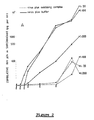
- Figure 2 is a line chart diagrammatically representing the results obtained of growth of HIV-generated p24 in lymphocyte cultures in the supernatant after treatment with the peroxidase/thiocyanate/hydrogen peroxide system of the medicaments of the present invention.
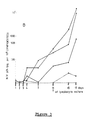
- Figure 3 is a line chart diagrammatically illustrating the results obtained of intracellular growth of p24 per 106 cells after treatment with the peroxidase/thiocyanate/hydrogen peroxide system of the medicaments of the present invention.
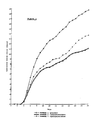
- Figure 4 is a line chart diagrammatically illustrating the results of lactoperoxidase and myeloperoxidase assays.
- the peroxidase medicaments of the present invention include a non-conjugated peroxidase.
- peroxidase refers only to non-conjugated peroxidases.
- the peroxidase medicaments include peroxidase/oxidizable substrate/oxygen donor system that exhibits antiviral properties against enveloped viruses, including HSV's and HIV's.
- peroxidase catalyzes oxidation of the substrate (a halogen or pseudo-halogen) by the oxygen donor (a peroxide) to form negatively-charged, monovalent oxidizing compounds.
- the medicaments may be formulated for prophylactic and/or therapeutic purposes, as desired and needed, for permitting the administration of prophylactic and/or therapeutic effective amounts thereof to an individual in need thereof for preventing and/or treating infections of enveloped viruses, such as the HSV's and the HIV's.
- the peroxidase medicaments of the present invention are also useful for prophylactic and therapeutic applications against infections of enveloped viruses, such as paramyxoviruses, the family of orthomyxoviruses, rotaviruses, coronaviruses, herpes viruses (such as varicella-zoster virus, cytomegalovirus, Epstein-Barr virus and human herpes virus-6) and retroviruses (such as human T-cell virus-1, bovine leukemia virus and simian immunodeficiency virus).
- enveloped viruses such as paramyxoviruses, the family of orthomyxoviruses, rotaviruses, coronaviruses, herpes viruses (such as varicella-zoster virus, cytomegalovirus, Epstein-Barr virus and human herpes virus-6) and retroviruses (such as human T-cell virus-1, bovine leukemia virus and simian immunodeficiency virus).
- the substrate of the medicaments of the present invention is chosen from a group consisting of negatively-charged halogens, and their derivatives, and negatively-charged pseudo-halogens, and their derivatives.
- halogens refers to certain of those elements, in their negatively-charged monovalent states, that belong to Group VII of the Periodic Table of Elements and, as is well known to those skilled in the art, includes bromide, chloride and iodide.
- pseudo-halogens refers to certain negatively-charged ions and ionic compounds that are monovalent.
- the "pseudo-halogens" of the present invention include the thiocyanate salts, such as sodium thiocyanate, potassium thiocyanate, ammonium thiocyanate, ferric thiocyanate and mixtures thereof. These substrates and their derivatives are able to be extracted (isolated) from natural material (for example, saliva and human milk) or produced by natural or chemical methods, all of which are well known to those skilled in the art.
- the peroxidases in the medicaments of the present invention catalyze the oxidation of the substrate by the oxygen donor for generating the oxidizing compounds.
- These peroxidases include plant (vegetable) peroxidase, such as horseradish peroxidase, and mammalian peroxidases, such as salivary peroxidases, lactoperoxidases, myeloperoxidases and eosinophil peroxidase.
- the peroxidases for the medicaments of the present invention may be extracted, by methods and techniques well known to those skilled in the art, from natural milieu, such as those peroxidases extracted from horseradish and saliva [for example, as described in Mansson-Rademtulla et al., Biochemistry, 27:233-239 (1988)], as well as the lactoperoxidases extracted from milk derivatives (i.e., whey) and myeloperoxidases produced by leukocytes. These peroxidases also include those peroxidases (including myeloperoxidases) that are produced by recombinant DNA techniques, also well known to those skilled in the art.
- the term "International Unit(s)" identifies that amount of the enzyme that will effect catalysis of 1 micromole of substrate per minute at pH 7 and 25°C. Enzymes are supplied in dry or liquid form with the label specifying the concentration in IU's on a per gram or per milliliter basis, as appropiate.]
- Lactoperoxidase is a glycoprotein which, in one commercial embodiment is a lyophilized powder derived from milk. This commercial peroxidase has an activity of 80 International Units (hereinafter sometimes referred to as IU's) and a projected molecular weight of 93,000 for L-Tyrosine Iodination.
- IU's International Units
- the physical-chemical properties reported for lactoperoxidase includes: a molecular weight of 78,000; partial specific volume 0.74; and heme/mole 1.0.
- Salivary peroxidase is a glycoprotein which may be derived from the saliva or the acini of the parotid glands.
- the chemical characteristics of salivary peroxidase are not well known. However, the physical-chemical properties reported for salivary peroxidase includes a molecular weight ranging from approximately 80,000-100,000.
- Myeloperoxidase is also a glycoprotein.
- myeloperoxidase may be obtained from human leukocytes, being lyophilized from 0.02 M sodium acetate buffer. This commercial embodiment has an activity of 40-100 I.U.'s.
- Horseradish peroxidase is a glycoprotein.
- SIGMA St. Louis, Mo., U.S.A.
- This commercial embodiment has an activity of 250-330 units per mg. solid.
- Preliminary studies of this embodiment have indicated the presence of two basic and no acidic isoenzymes therein.
- unit refers to that amount of the horseradish peroxidase that will form 1.0 mg purpurogallin in 20 sec. at pH 6.0 at 20°C. This purpurogallin (20 sec.) unit is equivalent to approx. 18 »M units per min. at 25°C.
- the oxygen donor of the present invention provides (supplies) the peroxide (for example, hydrogen peroxide) in the medicament necessary for oxidation of the substrate.
- the peroxide for example, hydrogen peroxide
- the oxygen donor is an enzymatic system including a substrate, an enzyme specific to such substrate and other necessary reactants, such as water and/or oxygen and/or hydrogen.
- microorganisms such as the Steptococci and Lactobacilli that are commonly referred to as lactic acid bacteria may be utilized in the medicaments of the present invention to supply the peroxide (in the form of hydrogen peroxide).
- lactic acid bacteria include Lactobaccillus casei and Streptococcus facecalis and Streptococcus mutans.
- Use of such microorganisms (microbes) is especially preferred in the medicaments formulated for use as a vaginal cream for topical application.
- inorganic peroxides such as sodium peroxide and magnesium peroxide
- organic peroxides such as benzyl peroxide and urea peroxide
- chemicals that, upon reaction, produce hydrogen peroxide may be utilized. Indeed, even hydrogen peroxide itself may be utilized as the oxygen donor.
- the precise oxygen donor to be utilized will vary depending upon several factors, including the formulation into which the medicament is to be made for administration.
- the oxygen donor is an enzymatic system including an oxidizable substrate, an oxidoreductase enzyme specific to such substrate and other necessary reactants, such as oxygen and/or water.
- oxidizable substrates, and oxidoreductase enzymes specific therefor include those enumerated in United States Patent No. 4,564,519 issued to Pellico et al. (hereinafter referred to as Pellico '519).
- Pellico '519 Such examples are set forth below in Table IIA: TABLE IIA Oxidizable Substrate Oxidoreductase Enzyme Other Reactants .
- the peroxidase medicaments of the present invention include either lactoperoxidase or myeloperoxidase in combination with a thiocyanate (SCN ⁇ ) substrate and of a glucose/glucose oxidase enzymatic system oxygen donor.
- SCN ⁇ thiocyanate
- the above-mentioned peroxidase/substrate/peroxide systems by formulated into the prophylactic and therapeutic medicaments for "in vivo" use as a substantially self-contained system that may be applied or used substantially without depending upon the users naturally-occurring "in vivo" concentrations of substrate, oxygen donors, peroxidases or other ingredients.
- the effectiveness of the peroxidase medicaments of the present invention may be effected by the naturally-occuring environment in which the medicament is to be administered.
- the concentration of hydrogen peroxide varies as a direct function of biological production and salivary flow.
- salivary flow is at a diminished level, either as a natural event or as an event arising out of certain types of medical treatment, the oral concentrations of various elements, such as potassium thiocyanate and peroxidase, will be correspondingly reduced. This, in turn, may be a limiting factor in the prophylactic or therapeutic effectiveness of the medicament when it is orally administered.
- oral concentrations of hydrogen peroxide may increase to a threshold level, wherein the hydrogen peroxide can impede the effectiveness of peroxidase of the medicament.
- the concentrations of the substrate, oxygen donor and peroxidase in the medicaments described above should be adjusted and controlled to harmonize hydrogen peroxide and peroxidase concentrations, so as to limit the hydrogen peroxide concentrations to levels which do not impede with the activity of the peroxidase.
- millimole identifies that quantity in grams corresponding to the molecular weight of the medicament divided by one thousand.
- the oxygen donor is hydrogen peroxide itself, it is generally present in the medicament of the present invention in an amount from about 2 to about 300 millimole per gram or per milliliter of medicament and, preferably, from about 3 to about 30 millimole per gram or per milliliter of medicament.
- the oxygen donor is an oxidizable substrate and an oxidoreductase enzyme specific to the substrate
- the oxidizable substrate is generally present in the peroxidase medicament in an amount from about 0.015 to about 0.6 millimole per gram or per milliliter of medicament and, preferably, from about 0.025 to about 0.1 millimole per gram or per milliliter of medicament while the oxidoreductase is generally present in the medicament in an amount from about 0.5 to about 500 IU's per gram or per milliliter of the medicament and, preferably, from about 1.0 to about 40 IU per gram or per milliliter of the medicament.
- oxygen donor is an organic or inorganic peroxide
- peroxide is generally present in the medicament in an amount from about 0.000006 to about 0.6 millimole per gram or per milliliter of medicament and, preferably, from about 0.00006 to about 0.06 millimole per gram or per milliliter of medicament.
- the substrate is generally present in the medicament in an amount ranging from about 0.0000008 to about 0.01 millimole per gram or per milliliter of medicament and, preferably, from about 0.000008 to about 0.006 millimole per gram or per milliliter of medicament.
- the substrate is a thiocyanate salt (a pseudo-halogen)
- it is generally present in the medicament in an amount from about 0.0001 to about 0.01 millimole per gram or per milliliter of medicament and, preferably, from about 0.001 to about 0.006 millimole per gram or per milliliter of medicament. Care should be taken in formulating the medicament, so as to avoid the use of metal compounds which inhibit or impair the effectiveness of the enzymes.
- the substrate is a halogen
- it is generally present in the medicament in an amount from about 0.0000008 to about 0.008 millimole per gram or milliliter of medicament and, preferably, from about 0.000008 to about 0.004 millimole per gram or per milliliter of medicament.
- the peroxidase is generally present in the medicaments in an amount from about 0.01 to about 50 IU per gram or per milliliter of medicament and, preferably, in an amount from about 0.2 to about 4.0 IU per gram or per milliliter of medicament.
- the peroxidase medicament may be formulated for "in vivo" use as a system that relies upon certain naturally-occurring “in vivo” concentrations of any one or combination of compounds of the system for obtaining the peroxidase-generated antiviral compound.
- the antiviral prophylactic and therapeutic qualities of the peroxidase medicaments of the present invention may be dependent on the concentration of compounds that are produced by the formulation of the medicament of the present invention.
- the produced concentrations of these compounds may vary between 1 micro molar and 100 millimolar, with concentrations of between 5 micro molar and 1 millimolar being preferred.
- concentration of peroxidase units relative to the concentrations of the oxygen donor and/or of the substrate is able to be varied over a large range.
- water promotes the oxidation/reduction reactions of the peroxidase medicaments of this invention. It also is a reactant in certain reactions.
- the use of water in formulating the said medicaments should be at a relatively low concentration levels in order to impart maximum stability and shelf life thereto.
- the products of the activated enzyme systems in the medicaments include a weak organic acid
- a buffering agent is sodium bicarbonate.
- the peroxidase medicaments of the present invention should be formulated, so as to have a pH that substantially approximates physiological pH.
- the medicaments of the present invention have a pH ranging from 4.5 to 6.5, with a pH of from 6 to 6.5 being especially preferred.
- the ingredients of the medicament must be disposed together in the formulation with at least some of the ingredients thereof being maintained chemically-separated from one another until the use thereof.
- the peroxidase, oxygen donors may be immobilized or microencapsulated, so that until the use thereof, they will not react with one another. If none of the substances of the systems described above are destroyed or inhibited by any ingredients, the medicament will have activity against enveloped viruses, including herpes simplex viruses and HIV's.
- the peroxidase medicaments of the present invention may be formulated with a pharmaceutically-acceptable carrier in any suitable manner desired for administration in the particular situation.
- the medicaments may be formulated as a dentifrice (such as a chewing gum, mouthwash, toothpaste, spray, lozenge or edible bonbon) for oral administration in the treatment of mouth infections.
- the medicaments may be formulated in a topical formulation (such as a spray, gel, cream, eye drops, shampoo, etc.) and/or incorporated in a bandage or a pad for topical administration to the skin, eyes, hair, etc., of individuals in need thereof.
- the medicaments may also be formulated as an injectable solution for internal application.
- Formulations, equipment and processing techniques have been well developed and are well known in the art for preparing and packaging the medicaments of the present invention as either topical, oral or injectable formulations.
- the peroxidase/substrate/peroxide systems in the medicaments of this invention are adapted to be incorporated into these formulations.
- the enzymes described herein are subject to degradation and inactivation under conditions such as high shear and elevated temperatures. Accordingly, processing conditions should be controlled during the time span that the enzymes are being admixed with the other ingredients of the formulation of the medicaments and converted into finished products, so that the temperature does not rise above 55°C. for any extended period of time.
- the admixture used in the preparation of the formulations of the peroxidase medicaments of the present invention should be substantially free of unbound water and the finished product should be packaged in a manner, so as to minimize exposure to air and moisture.
- Illustrative base formulations for pharmaceutically-acceptable carriers for the peroxidase medicaments to be formulated with as a dentifrice for oral administration, such as a chewing gum and chewable tablets and lozenges are set forth in Table III, as follows: TABLE III Ingredients Weight, Percent (a) (b) (c) (d) Sorbitol, crystalline 75 -- 98 28 Corn sugar -- 75 -- 70 Gum base 23 23 -- -- Flavor 1 1 1 1 Color 0.5 0.5 0.5 0.5 0.5 Buffer -- -- 0.5 0.5 Saccharin, sodium 0.005 -- 0.005 -- In Table III, formulations (a) and (b) illustrate pharmaceutically-acceptable carriers in the form of chewing gum compositions while formulations (c) and (d) illustrate pharmaceutically-acceptable carriers in the form of tablet and lozenge compositions. Aspartame can be substituted for sodium saccharin in these formulations.
- Illustrative base formulations for pharmaceutically-acceptable carriers for the peroxidase medicaments of the present invention to be formulated as a topical medicament for topical administration, such as a cream, a gel or to be incorporated in a bandage or pad, are set forth in Table VIII, as follows: TABLE VIII Ingredients Weight, Percent (a) (b) Deionized water 19.02 20.0 Corn Starch1 38.04 --- Lubrajel DV2 38.04 --- Aloe vera 0.000021 --- Natrosol 250 M3 0.1 --- Xylitol 4.76 --- Cirami N.14 --- 20.0 Sunflower Oil --- 40.0 Vitamin E --- 0.05 Tensami 4/074 --- 2.0 Tensami 1/054 --- 3.0 Bronopol4 --- 2.0 Myacide SP4 --- 2.0 Propylene Glycol --- 10.0 1
- An example of such a corn starch is the hydrogenated starch solution marketed under the name HYSTAR TPF by Alban Muller
- Lubragel DV is a Glycerine and acrylic solution marketed by Alban Muller International, Montreuil, France.
- 3 Natrosol 250 M is a hydroxyethycellulose marketed by Aqualon, Inc., of Hopewell, Virgina, U.S.A. 4 Cirami N.1, Tensami 4/07 Tensami 1/05, Bronopol and Myacide SP are all marketed by Alban Muller International, Montreuil, France.
- formulation (a) illustrates pharmaceutically-acceptable carriers in the form of a gel
- (b) illustrates pharmaceutically-acceptable carriers in the form of a cream.
- Illustrative formulations for pharmaceutically-acceptable carriers for the peroxidase medicaments of the present invention to be formulated as an eye wash solution for topical administration as an eye drop or an eye wash are set forth in Table XI, as follows: TABLE XI Ingredients Weight, Percent (a) (b) Sorbic Acid 0.0025% --- 0.0002 Purified Water 99.4 98.1 Boric acid 0.018 0.0176 Sodium Borate (Hydrated 10 H2O) 0.0015 0.0013 Sodium chloride 0.0025 --- Benzalkonium chloride1 0.0001 --- Edetate disodium1 0.001 --- 1 Benzalkonium chloride and Edetate disodium are added as preservatives.
- the following Table shows the varying ingredients and the prophylactic and therapeutic effective amounts (quantities) which can be used in the preparation of eye wash medicaments, according to the present invention: TABLE XII Ingredient Amounts per 5 ml Eye Wash1 Glucose oxidase 2,500 units2 Glucose 20 milligrams Lactoperoxidase 150,000 ABTS units3 Potassium thiocyanate 200 micrograms 1
- the eye wash solution is a 5 ml solution of: 90 milligrams of Boric acid; 6.6 milligrams of hydrated sodium borate (10 H2O); 2500 units Vitamin A and 0.125 ug of sorbic acid 0.0025% 2
- the term "unit" of Glucose oxidase identifies that amount of Glucose oxidase that oxidizes 3.0 milligram glucose to gluconic acid in one minute at pH 5.10 and 37°C.
- the assay conditions are set forth in Assay method FS 250 of Finnish Sugar Co. Ltd., of Finland.
- 1 milligram of glucose oxidase has an activity of 100-120 units at 37°C at pH 5.
- the term "ABTS units” identifies that amount of lactoperoxidase that catalyzes the oxidation of 1mM of the ABTS substrate [2,2'-Azino-bis (3-Ethylbenzthiazoline-6-Sulfonic Acid)] in one minute at pH 5 and 37°C.
- the assay conditions are set forth by Mansson-Rahemtulla, B., et al., Biochemistry , Vol. 27, at pages 233-239 (1988). In this Example, 1 milligram of lactoperoxidase has an activity of 600 ABTS units at 37°C and 5 pH.
- composition is formulated separately in two parts, which, before application, are combined and shaken to dissolve and mix the two parts.
- the first part is a mixture of the lactoperoxidase and the glucose oxidase.
- the second part is a 5 ml solution of the boric acid, hydrated sodium borate (10 H2O), vitamin A, 0.0025% sorbic acid, potassium thiocyanate, water and glucose.
- the 5 ml solution (the second part) is mixed with the first part and shaken to dissolve the powder. Administration may be made as normal eye drops.
- the base composition is a buffer solution (pH 7) of 0.15 molar sodium chloride and 60 millimolar sodium phosphate.
- pH 7 a buffer solution
- myeloperoxidase is added and the solution is mixed to form the medicament.
- a unit refers to that quantity of the enzyme necessary for catalyzing the increase of 1 unit of absorbance at 470 nm in one minute at room temperature using auto-dianisidine, see Krawicz, et al., Gastroenterology , vol. 87, pps. 1344-1350 (1984). In this context, 1 microgram equals 1 unit].
- a prophylatic or therapeutic effective amount (for example, approximately, 0.5 ml) of this medicament is then administered to a patient in need thereof.
- this administration will be by intramuscular injection.
- This example shows the effectiveness of the peroxidase/substrate/peroxide system of the peroxidase medicaments of the present invention against an enveloped virus and, in particular, against herpes simplex virus-1.
- the peroxidase/substrate/peroxide system of the peroxidase medicaments was prepared having the formulation set forward in Table XIII below: TABLE XIII Ingredient Amounts per 100 ml buffer solution1 Glucose oxidase 0.02 milligrams Glucose 1.20 millimoles SCN ⁇ 0.06 millimoles Lactoperoxidase 4.00 milligrams 1
- the buffer solution is a Hank's-Balanced Salt Solution that is calcium, magnesium and glucose free.
- the pH of the buffer solution is 7.4.
- the weights of the contents of the HBSS buffer solution is as follows, for every 1000 ml of distilled water: 8 grams NaCl; 0.4 grams KCl; 0.06 grams Na2HPO4; and 0.06 grams of KH2PO4.
- HSV-1 viruses Four (4) strains of HSV-1 viruses were collected from exsudates of herpetic lesions on tongue, nasopharyngeal cavity and vulva. These samples were pooled then typed as HSV-1 using immunofluorescence. They were subsequently allowed to multiply in MRC5 cells and growth medium. Separation from cells and cell debris was performed by centrifugation. Viruses were then stocked in aliquots in liquid nitrogen.
- Samples from the HSV-1 pool were then diluted from ten to ten fold down to the antepenultimate cytotoxic titre which was taken as base line for each experiment or control.
- Controls were settled by substituting the oxidizing moiety with an equal volume of the HBSS buffer. On the contrary, blanks held the complete oxidative system of the formulations but the virus moiety was replaced by the growth medium.
- the cytotoxity of pretreated virus was compared with that of suspensions which had not been in contact with the peroxidase formulation. This comparison allowed to express the results in terms of:
- This example shows the effectiveness of the peroxidase/substrate/peroxide system of the peroxidase medicaments of the present invention against an enveloped virus and, in particular, against human immunodeficiency virus.
- the peroxidase/substrate/peroxide system of the peroxidase medicaments was prepared having the formulation set forward in Table XIV below: TABLE XIV Ingredient Amounts per 100 ml buffer solution1 Glucose oxidase 0.02 milligrams Glucose 1.20 millimoles SCN ⁇ 0.06 millimoles Lactoperoxidase 4.00 milligrams 1
- the buffer solution is a Hank's-Balanced Salt Solution that is calcium, magnesium and glucose free.
- the pH of the buffer solution is 7.4.
- the weights of the contents of the HBSS buffer solution is as follows, for every 1000 ml of distilled water: 8 grams NaCl; 0.4 grams KCl; 0.06 grams Na2HPO4; and 0.06 grams of KH2PO4.
- HIV aliquots were obtained from a supernatant of ARV-4 cell line. The aliquots were then extemporaneously mingled with an equal volume of the peroxidase formulation set forth in Table XIV and incubated from 1 hour down to 2 minute at 37°C.
- HIV plus the peroxidase formulation was then inoculated to phytohaemagglutinin-stimulated human lymphocyte cultures. Final dilution of the aliquots was 1:20, 1:100 and 1:200. Controls were obtained by preincubating the virus in the buffer alone. The cultures were supplied again with fresh lymphocytes on day 11 (arrows in figure 2). Virus growth was monitored with an ELISA detecting p24 either intra-cellular (per 106 cells) or in the supernatant.
- lymphocyte culture yielded 90 pg of p24 per 106 in controls inoculated with 1:200 diluted virus, while 25 pg only were detected after innoculation of virus treated within the peroxidase formulation for one (1) hour and diluted 1:20. With higher dilutions, no p24 was detected in 106 cells. But the whole culture of 107 cells had nevertheless been contaminated by infectious particles since p24 had been shed later on into the supernatant.
- This example also shows the effectiveness of the peroxidase/substrate/peroxide system of the peroxidase medicaments of the present invention against an enveloped virus and, in particular, against human immunodeficiency virus.
- the peroxidase utilized in this example is purified human recombinant myeloperoxidase.
- MPO-MIX An MPO-MIX was prepared. This MPO-MIX included 500 ul of culture medium (RPMI, Gibco and 5% fetal calf serum, Seralab), supplemented with sodium thiocyanate (20 ug/ml), glucose 1%, glucose oxidase (6 mU/ml) and from 10 to 40 ug/ml of purified human recombinant myeloperoxidase. This human recombinant myeloperoxidase was produced utilizing the method described in patent application no. PCT/EP89/00668. However, it is to be understood that this myeloperoxidase may be obtained from any suitable source.
- a 60 ul viral suspension of HTLVIIIB virus, derived from infected Molt3 cells, i.e., 1200 TCID50 (Tcells infectious dosis 50%) is prepared.
- the standard procedure was performed as follows: The HTLVIIIB viral suspension (60 ul) was added to the MPO-MIX (500 ul) and the resulting mixture was incubated for 15 minutes at 37°C. The mixture was then transferred onto a Sup T1 cell pellet (containing 2.106 cells) and further incubated for 30 minutes at 37°C with gentle stirring. Cells were there washed twice with culture medium RPMI and fetal calf serum), pelleted and resuspended in 10 ml of the same culture medium, i.e., at a cell density of 2.105 cells/ml. These resuspended cells were then cultivated at 37°C for ten (10) days.
- the chosen ELISA measures the amount of HTLVIIIB p24 protein and uses as primary antibody a murine monoclonal antibody raised against p24 (Dupont, U.S.A.) and, as secondary antibody, human anti HTLVIIIB immunoglobulins labelled with biotin. Specific complexes were revealed using a streptavidin-horse radish peroxidase conjugate (Amersham) and the OPDA chromogenic substrate (Sigma). Optical denisities were read at 490 nm.
- Virus HTLVIIIB + MPO-MIX 40 ug/ml MPO) (no Glucose Oxidase) CPE1 nd (+) + ++ nd ELISA2 nd 87 115 193 835 7.
- Virus HTLVIIIB + MPO-MIX (no MPO) CPE1 nd (+) + ++ nd ELISA2 nd 115 394 658 800 1 CPE (Cytopathic effects): - means no syncitia was observed. ⁇ means a few small syncitia was observed. + -> ++ means an increase in the number and size of syncitia was observed. 2 ELISA: are expressed in milli units OD490
- This example demonstrates the anti-viral effectiveness of the lactoperoxidase/substrate/peroxide system and of the myeloperoxidase/substrate/peroxide system against genital herpes in the genital herpes guinea pig model (the intravaginal guinea pig model).
- the development of herpes lesions occurs in two successive phases: the first phase (primary infection) is due to the innoculated virus; and the second phase (recurrences) is due to the reactivation, more or less frequent, of the virus present in the nerve cells in a latent form.
- Figure 2 is illustrative of the growth of HIV-generated p24 in lymphocyte cultures by measurement of the p24 in the supernatant.
- Figure 3 is illustrative of the growth of HIV-generated p24 in lymphocyte cultures by measurement of intracellular p24 per 106 cells.
Landscapes
- Health & Medical Sciences (AREA)
- Life Sciences & Earth Sciences (AREA)
- Veterinary Medicine (AREA)
- Public Health (AREA)
- General Health & Medical Sciences (AREA)
- Animal Behavior & Ethology (AREA)
- Pharmacology & Pharmacy (AREA)
- Medicinal Chemistry (AREA)
- Chemical & Material Sciences (AREA)
- Epidemiology (AREA)
- Virology (AREA)
- Engineering & Computer Science (AREA)
- Immunology (AREA)
- Proteomics, Peptides & Aminoacids (AREA)
- Bioinformatics & Cheminformatics (AREA)
- Gastroenterology & Hepatology (AREA)
- Chemical Kinetics & Catalysis (AREA)
- Oncology (AREA)
- Communicable Diseases (AREA)
- General Chemical & Material Sciences (AREA)
- Nuclear Medicine, Radiotherapy & Molecular Imaging (AREA)
- Organic Chemistry (AREA)
- Inorganic Chemistry (AREA)
- Birds (AREA)
- Oral & Maxillofacial Surgery (AREA)
- Molecular Biology (AREA)
- Tropical Medicine & Parasitology (AREA)
- AIDS & HIV (AREA)
- Biotechnology (AREA)
- Medicines That Contain Protein Lipid Enzymes And Other Medicines (AREA)
- Pharmaceuticals Containing Other Organic And Inorganic Compounds (AREA)
- Medicinal Preparation (AREA)
- Cosmetics (AREA)
- Compounds Of Unknown Constitution (AREA)
- Medicines Containing Material From Animals Or Micro-Organisms (AREA)
- Organic Low-Molecular-Weight Compounds And Preparation Thereof (AREA)
- Liquid Crystal Substances (AREA)
- Acyclic And Carbocyclic Compounds In Medicinal Compositions (AREA)
Abstract
Description
- The present invention relates to the use of non-conjugated peroxidases for the manufacture of a medicament for the prevention or treatment of enveloped virus infections.
- The development of effective prophylactic and therapeutic medicaments for preventing and inhibiting the cytotoxic potential of infections of enveloped viruses, and in particular of Herpes Simplex Viruses (HSV's) and Human Immunodeficiency Viruses (HIV's), have proven problematic.
- Herpes Simplex Viruses (such as HSV-1 and HSV-2) are widespread. Prophylactic and therapeutic medicaments and methods developed for the prevention and treatment of infections of herpes simplex viruses have, in general, only been partially successful.
- Secretions of human milk have long been known to exhibit antiviral activity [see Matthews et al., Lancet, 2: 1388-1390 (1976); Micheals, R.H., J. Immunol., 94: 262-271 (1964); Laegried et al., Acta Paedriatz Scand., 75: 696-701 (1986); and Isaacs et al., J. Infect. Dis., 154: 969-971 (1986)]. In particular, whole human breast milk has "in vitro" been noted to exhibit antiviral neutralizing activity against herpes simplex virus 2. [Lopez et al., Arch. Fr. Pediatr., 46: 263-265 (1989)]. While the origins of this antiviral activity has been attributed to several varying sources, it has never been able to be definitively characterized.
- The primary source of the antiviral activity of milk has been attributed to the presence of immunoglobins (IgG's) therein. Other sources that have been suggested as the origin of this antiviral activity includes a non-lipid macromolecule that is relatively stable to heat (Matthews et al., and Micheals, both supra) and/or a molecule having a molecular weight of 400,000 daltons (Laegried et al., supra) and/or a component of the lipid layer that effects only encapsulated viruses (Issacs et al., supra). This inability to definitely characterize the antiviral origins(s) of milk limits the use thereof, or of components or systems thereof, for antiviral purposes.
- Human saliva has also long been known to be active against a number of viruses, including
herpes simplex virus 1. [see Gyselink, et al., J. Infect. Dis., 137: 583-586 (1978)]. Unfortunately, the origin of the anti-viral activity of human saliva has not been definitively characterized, being ascribed variously to glycoproteins [Learner, et al., J. Immunol. 96: 59-63 (1966)], immunoglobulin A [Tomasi, J. clin. Invest. 42: 1552-1560 (1963)] or immunoglobulin G (Gyselink, et al., supra). More recently, it has further been suggested that the antiviral activity may be more of a cell-protective activity than a virus neutralizing activity -- that is to say, the saliva directly affects the oral epithelial cells, protecting them against infection [see Heineman, H.S., and M.S. Greenberg, Archs Oral Biol. 225: 257-261 (1980)]. Unfortunately, the origin of such activity still remains unknown. - No medicament has been successful in preventing and inhibiting infections of, and the cytotoxic potential of, herpes simplex viruses in all stages.
- The human immunodeficiency viruses (HIV's) are fatal and widespread viruses that have only relatively recently been identified. The biochemistry and physiology of these HIV's are poorly known and understood. It has been reported that "in vitro" contact, for at least one-half hour or more, with whole human saliva inhibits the ability of human immunodeficiency virus (HIV) to infect phytohaemagglutinin-stimulated lymphocytes. [Fultz, Lancet, 2:1215 (1986)]. However, shorter periods of incubation have failed to demonstrate an impressive antiseptic effect (see Fultz, supra). Moreover, not all of the saliva samples reported can insure a 100% inhibition of HIV-1 infectivity [see Fox et al., JADA, 118: 709-711 (1989)].
- As yet, no medicaments or methods of which we are aware have proven to be consistently successful for preventing and treating infections of, and the cytotoxic potential, of the HIV's.
- Other enveloped viruses that are particularly troublesome to effectively prevent and treat include other herpes viruses (such as Varicella-zoster virus, cytomegalovirus, Epstein-Barr virus and human herpes virus-6), the paramyxoviruses (such as human parainfluenza viruses), the family of orthomyxoviruses (such as the influenza type viruses A and B), rotaviruses, coronaviruses and retroviruses (such as Human T-cell leukemia virus-1, bovine leukemia virus and simian immunodeficiency virus).
- It is well known that natural antimicrobial agents are contained in most natural external mammalian secretions. In particular, the naturally-occuring antimicrobial thiocyanate/peroxidase/H₂O₂ systems present in saliva and in milk have been extensively studied.
- In saliva, an antimicrobial peroxidase-dependent system has been described which can generate hypothiocyanite (OSCN-), as follows:

[Oram and Reiter, Biochem. J., 100:373-381 (1966); Hogg and Jago, Biochem. J., 117: 779-790 (1970); and Carlsson et al., Infect. Immun., 44: 581-586 (1984)]. The peroxidases thought to be present in saliva that oxidize thiocyanate in this system include salivary peroxidase arid lactoperoxidase. A similar antimicrobial lactoperoxidase-dependent system has also been identified in milk. [Oram and Reiter, Biochem, J., 100:382 (1966)]. Indeed, it has been suggested that the same peroxidase/thiocyanate/hydrogen peroxide system that operates in saliva also operates in milk. [see Klebanoff, S.J., et al., J. Dent Res. (supp.) p.86 (1965).] - The antimicrobial efficiency of the thiocyanate/peroxidase/hydrogen peroxide system has been demonstrated "in vitro" against several bacteria known to be responsible for frequent destruction of teeth and/or periodontium [See Carlsson, supra, and Courtois et al., J. Dent. Res. 68 (spec. issue):1002 (1989)]. The antimicrobial efficiency of this system was also demonstrated "in vivo" in cases of aphtous lesions of the buccal mucosa [Hoogendoorn and Piessens, J. Oral Pathol., 16: 425-427 (1987)].
- Unfortunately, the precise antimicrobal mechanism of the thiocyanate/peroxidase/H₂O₂ system has not been definitely characterized. However, it is believed that at physiological pH, hypothiocyanite (generated by this system mediates the oxidation of essential proteins and enzymes sulfhydryls groups of the bacteria, resulting in microbial inhibition. Additionally, it has been suggested that lactoperoxidase may be responsible for the formation of higher oxyacids of the thiocyanate ion, such as cyanosulfurous and cyanosulfuric acids, which may also be responsible for antimicrobial inhibition. [Bjoerck, L., and O. Claesson, J. Dairy Sci. 63:919-921 (1980); Hogg, et al., supra; and Pruitt, et al., Biochemistry 21:562-567 (1982)].
- It is also known to provide orally-activated antimicrobial dentifrices that contain a thiocyanate/peroxidase/hydrogen peroxide system. Upon oral administration, the enzyme-dependent systems in these antimicrobial dentifrices are activated by various components (such as oxygen and/or water) of the natural chemical environment of the oral cavity. In particular, United States Letters Patent No. 4,564,519 issued to Pellico et al., (hereinafter sometimes referred to as Pellico '519) discloses a di-enzymatic chewable orally-activated antimicrobial dentifrice that includes a thiocyanate salt and lactoperoxidase which, through interaction with hydrogen peroxide formed by another enzymatic system in the dentifrice, produces a bacterial inhibitor in the form of a negative, monovalent hypothiocyanite ion (OSCN-) which exists in solution in acid-base equilibrium with hypothiocyanous acid (HOSCN).
- Also, in United States Letters Patent No. 4,576,817 issued to Montgomery et al., it was disclosed to provide antimicrobial enzymatic bandages and pads for disinfection purposes. These pads include a serum-activated oxidoreductase enzyme for producing hydrogen peroxide upon contact of the enzymatic materials with serum. In one embodiment, these antimicrobial bandages are formulated to also include as peroxidatic peroxidase, such as lactoperoxidase.
- In the journal BIOFUTUR (February, 1990, at page 52), a system is disclosed having two enzymes that, in tandem, generates toxic radicals that may be useful for the treatment of various infections. This system includes glucose oxidase which, in the presence of glucose, generates H₂O₂. This system also includes a peroxidase which, with the H₂O₂, generates iodides that are highly toxic for the cell. Unfortunately, the precise mechanism of this toxicity is not known. It was further reported therein that this glucose oxidase/peroxidase system has been coupled to a monoclonal antibody against Candida albicans and has been found effective for protecting against such infections in mice. This glucose oxidase/peroxidase system has also been coupled to a monoclonal antibody for the epitope of the
gp 120 fraction of HIV and has been found to be effective against infections of Sacharomyces expressing this epitope. - In the journal CLINICAL RESEARCH, vol. 36, No. 5 (1988) at 809A, a lactoperoxidase-halide-hydrogen peroxide (LHHP) system was reported to be effective, in vitro, on respiratory syncytial virus (RSV) replication. It was also suggested that a myeloperoxidase-halide-peroxidase system (that plays an important role in host defense mechanisms against phagocytosed bacteria) may also have a role in host defense against RSV.
- Finally, in PCT patent application no. WO 8912457, the incorporation of myeloproxidase with a carrier is disclosed for administration to humans for reinforcing the natural antibody activity thereof at the macrophage level. In this disclosure, purified myeloperoxidase is linked with a carrier that has an affinity for the macrophage, so that the carrier will transport the myeloperoxidase to where it may be captured and utilized by the macrophage for antibody defense. Carriers disclosed include antibodies, or fragments thereof that have an affinity for the macrophages. Other suggested carriers include particular liposomes and human serum albumin. Preferably, the myeloperoxidase and the linked carrier are formed utilizing recombinant DNA technologies. Such a composition is provided to aid, augment and reinforce the bodies natural antibody defenses and is believed to be useful in combatting various infections, including HIV.
- Despite the long-standing coexistence of the knowledge of the properties of the perioxidases and the thiocyanate/peroxidase/hydrogen peroxide system, as well as the need for prophylatic and therapeutic medicaments for the prevention and treatment of infections of enveloped viruses (and in particular/of herpes simplex and human immunodeficiency viruses), to the best of our knowledge no one has utilized medicaments incorporating such peroxidases or peroxide systems for the prevention or treatment of infections of enveloped viruses and, in particular, for the prevention and treatment of herpes simplex and human immunodeficiency virus infections.
- Thus, it can be seen that there remains a need for prophylactic and therapeutic peroxidase medicaments which prevent and/or treat infections of enveloped viruses, including HSV and HIV, and for prophylactic and therapeutic applications of peroxidases in a medicament that may be administered to an individual in need thereof without depending upon naturally-occurring concentrations of substrate, oxygen donors or peroxidases for their inhibitory effect. Finally, there remains a need for methods for the prevention and treatment of infections of enveloped viruses, including HSV's and HIV's, by the administration of prophylactic and therapeutic effective amounts of such peroxidase medicaments to an individual in need thereof.
- It is a primary object of the present invention to provide uses (applications) for non-conjugated peroxidases in the formulation (manufacture) of medicaments for the prevention and treatment of enveloped virus infections.
- In accordance with the teaching of the present invention there is disclosed herein the use of a non-conjugated peroxidase, in association with a oxygen donor and an oxidizable substrate for which the peroxidase is specific, for the manufacture of a medicament for the prevention or treatment of enveloped virus infections.
- There is also disclosed the use of a non-conjugated peroxidase for the manufacture of a medicament for the prevention or treatment of a herpes simplex virus infection.
- The preferred peroxidase medicament (hereinafter sometimes referred to as the "peroxidase composition" or simply as the "composition") of the present invention, is a substantially self-contained antiviral system that may operate without depending upon naturally-occuring "in vivo" compounds, or concentrations thereof, of the user thereof. This medicament includes: an oxygen donor, which is preferrably a glucose-glucose oxidase enzymatic system that generates hydrogen peroxide; a peroxidase, such as lactoperoxidase; and a substrate, chosen from a group consisting of halogens and pseudo-halogens. These peroxidase medicaments are formulated, such that comparatively short-term administration thereof is effective for the prevention and treatment of enveloped viruses, such as the HSV's and HIV's. Preferably, the concentrations and/or formulations of these various components have been chosen to maximize oxygen donor and peroxidase-generated compound production, while simultaneously maintaining the oxygen donor concentrations at levels which do not impede with the activity of the peroxidase.
- It is noted that it is preferred to formulate the peroxidase medicaments of the present invention, so as to include various components of, and mimic somewhat, the salivary thiocyanate-peroxidase system. Such a formulation is preferred since the components thereof would be genuine components of human external secretions. This formulation is further preferred since the antiviral activity thereof can possibly be further enhanced through the absorption of foods enriched with any of the various components thereof.
- Accordingly, the present invention most preferably provides substantially self-contained hypothiocyanite-generating, prophylactic and therapeutic peroxidase/thiocyanate/hydrogen peroxide medicaments that may be applied and utilized without depending upon the users naturally-occuring "in vivo" oral concentrations thereof, for the prevention and treatment of infections of enveloped viruses.
- Other enveloped viruses to be prevented and/or treated by the peroxidase medicaments of the present invention include the paramyxoviruses (such as human parainfluenza viruses), the family of orthomyxoviruses (such as the influenza type viruses A and B), rotaviruses, coronaviruses, herpes viruses (such as Varicella-zoster virus, cytomegalovirus, Epstein-Barr virus and HHV6) and retroviruses (such as Human T-cell leukemia virus-1, bovine leukemia virus and SIV).
- In still further accordance with the teachings of the present invention, there is disclosed a method for the manufacture of a medicament for prevention and treatment of infections of enveloped viruses, such as herpes simplex viruses and human immunodeficiency viruses. Prophylactic and therapeutic effective amounts of the peroxidase medicaments of the present invention are administered to an individual in need thereof.
- These and other objects of the present invention will become apparent from the following specification, when taken in conjunction with the enclosed figures.
- Figure 1 is a bar chart diagrammatically representing the results obtained after 20, 30 and 120 minutes of pretreatment of HSV-1 with the peroxidase/thiocyanate/hydrogen peroxide system of the medicaments of the present invention.
- Figure 2 is a line chart diagrammatically representing the results obtained of growth of HIV-generated p24 in lymphocyte cultures in the supernatant after treatment with the peroxidase/thiocyanate/hydrogen peroxide system of the medicaments of the present invention.
- Figure 3 is a line chart diagrammatically illustrating the results obtained of intracellular growth of p24 per 10⁶ cells after treatment with the peroxidase/thiocyanate/hydrogen peroxide system of the medicaments of the present invention.
- Figure 4 is a line chart diagrammatically illustrating the results of lactoperoxidase and myeloperoxidase assays.
- The peroxidase medicaments of the present invention include a non-conjugated peroxidase.
- As utilized hereafter the term peroxidase refers only to non-conjugated peroxidases.
- Preferably, the peroxidase medicaments include peroxidase/oxidizable substrate/oxygen donor system that exhibits antiviral properties against enveloped viruses, including HSV's and HIV's. In these antiviral medicaments, peroxidase catalyzes oxidation of the substrate (a halogen or pseudo-halogen) by the oxygen donor (a peroxide) to form negatively-charged, monovalent oxidizing compounds. The medicaments may be formulated for prophylactic and/or therapeutic purposes, as desired and needed, for permitting the administration of prophylactic and/or therapeutic effective amounts thereof to an individual in need thereof for preventing and/or treating infections of enveloped viruses, such as the HSV's and the HIV's.
- The peroxidase medicaments of the present invention are also useful for prophylactic and therapeutic applications against infections of enveloped viruses, such as paramyxoviruses, the family of orthomyxoviruses, rotaviruses, coronaviruses, herpes viruses (such as varicella-zoster virus, cytomegalovirus, Epstein-Barr virus and human herpes virus-6) and retroviruses (such as human T-cell virus-1, bovine leukemia virus and simian immunodeficiency virus).
- The substrate of the medicaments of the present invention is chosen from a group consisting of negatively-charged halogens, and their derivatives, and negatively-charged pseudo-halogens, and their derivatives. The term "halogens" refers to certain of those elements, in their negatively-charged monovalent states, that belong to Group VII of the Periodic Table of Elements and, as is well known to those skilled in the art, includes bromide, chloride and iodide. The term "pseudo-halogens" refers to certain negatively-charged ions and ionic compounds that are monovalent. The "pseudo-halogens" of the present invention include the thiocyanate salts, such as sodium thiocyanate, potassium thiocyanate, ammonium thiocyanate, ferric thiocyanate and mixtures thereof. These substrates and their derivatives are able to be extracted (isolated) from natural material (for example, saliva and human milk) or produced by natural or chemical methods, all of which are well known to those skilled in the art.
- The peroxidases in the medicaments of the present invention catalyze the oxidation of the substrate by the oxygen donor for generating the oxidizing compounds. These peroxidases include plant (vegetable) peroxidase, such as horseradish peroxidase, and mammalian peroxidases, such as salivary peroxidases, lactoperoxidases, myeloperoxidases and eosinophil peroxidase. The peroxidases for the medicaments of the present invention may be extracted, by methods and techniques well known to those skilled in the art, from natural milieu, such as those peroxidases extracted from horseradish and saliva [for example, as described in Mansson-Rademtulla et al., Biochemistry, 27:233-239 (1988)], as well as the lactoperoxidases extracted from milk derivatives (i.e., whey) and myeloperoxidases produced by leukocytes. These peroxidases also include those peroxidases (including myeloperoxidases) that are produced by recombinant DNA techniques, also well known to those skilled in the art.
- [As utilized herein, the term "International Unit(s)" identifies that amount of the enzyme that will effect catalysis of 1 micromole of substrate per minute at pH 7 and 25°C. Enzymes are supplied in dry or liquid form with the label specifying the concentration in IU's on a per gram or per milliliter basis, as appropiate.]
- Lactoperoxidase is a glycoprotein which, in one commercial embodiment is a lyophilized powder derived from milk. This commercial peroxidase has an activity of 80 International Units (hereinafter sometimes referred to as IU's) and a projected molecular weight of 93,000 for L-Tyrosine Iodination. The physical-chemical properties reported for lactoperoxidase includes: a molecular weight of 78,000; partial specific volume 0.74; and heme/mole 1.0.
- Salivary peroxidase is a glycoprotein which may be derived from the saliva or the acini of the parotid glands. The chemical characteristics of salivary peroxidase are not well known. However, the physical-chemical properties reported for salivary peroxidase includes a molecular weight ranging from approximately 80,000-100,000.
- Myeloperoxidase is also a glycoprotein. In one commercial embodiment (from SIGMA corp., St. Louis, Missouri, U.S.A.), myeloperoxidase may be obtained from human leukocytes, being lyophilized from 0.02 M sodium acetate buffer. This commercial embodiment has an activity of 40-100 I.U.'s.
- Horseradish peroxidase is a glycoprotein. In one commercial embodiment (SIGMA, corp., St. Louis, Mo., U.S.A.), it is an essentially salt free powder. This commercial embodiment has an activity of 250-330 units per mg. solid. Preliminary studies of this embodiment have indicated the presence of two basic and no acidic isoenzymes therein. [As utilized herein, the term "unit" refers to that amount of the horseradish peroxidase that will form 1.0 mg purpurogallin in 20 sec. at pH 6.0 at 20°C. This purpurogallin (20 sec.) unit is equivalent to approx. 18 »M units per min. at 25°C.]
- Examples of the preferred peroxidase/substrate combinations to utilize in the medicament of the present invention are set forth below in Table IA:
TABLE IA Peroxidase Substrates (1) Salivary peroxidase thiocyanate, iodide (2) Lactoperoxidase thiocyanate, iodide (3) Myeloperoxidase chloride, iodide, thiocyanate (4) Horseradish peroxidase chloride, iodide (5) Plant peroxidase chloride, iodide, bromide - The reactions of representative enzyme systems from Table IA (in the presence of a peroxide -which for purposes of illustration herein, will be hydrogen peroxide- from the oxygen donor) to produce either a hypohalite or hypothiocyanate compound, are set forth in Table IB, as follows:


- The oxygen donor of the present invention provides (supplies) the peroxide (for example, hydrogen peroxide) in the medicament necessary for oxidation of the substrate.
- Preferably, the oxygen donor is an enzymatic system including a substrate, an enzyme specific to such substrate and other necessary reactants, such as water and/or oxygen and/or hydrogen. Alternatively, microorganisms, such as the Steptococci and Lactobacilli that are commonly referred to as lactic acid bacteria may be utilized in the medicaments of the present invention to supply the peroxide (in the form of hydrogen peroxide). Specific examples of such lactic acid bacteria include Lactobaccillus casei and Streptococcus facecalis and Streptococcus mutans. Use of such microorganisms (microbes) is especially preferred in the medicaments formulated for use as a vaginal cream for topical application.
- It is also contemplated herein that inorganic peroxides (such as sodium peroxide and magnesium peroxide) or organic peroxides (such as benzyl peroxide and urea peroxide) may be utilized. Also, chemicals that, upon reaction, produce hydrogen peroxide may be utilized. Indeed, even hydrogen peroxide itself may be utilized as the oxygen donor. The precise oxygen donor to be utilized will vary depending upon several factors, including the formulation into which the medicament is to be made for administration.
- Most preferably, the oxygen donor is an enzymatic system including an oxidizable substrate, an oxidoreductase enzyme specific to such substrate and other necessary reactants, such as oxygen and/or water. Examples of such oxidizable substrates, and oxidoreductase enzymes specific therefor, include those enumerated in United States Patent No. 4,564,519 issued to Pellico et al. (hereinafter referred to as Pellico '519). Such examples are set forth below in Table IIA:
TABLE IIA Oxidizable Substrate Oxidoreductase Enzyme Other Reactants . (a) B-D-glucose glucose oxidase Water, Oxygen (b) D-galactose galactose oxidase Oxygen (c) urate urate oxidase Water, Oxygen (d) choline choline oxidase Oxygen (e) D-amino acids¹ D-amino acid oxidase Water, Oxygen (f) D-glutamate D-glutamate oxidase Water, Oxygen (g) glycine glycine oxidase Water, Oxygen (h) glycollate glycollate oxidase Water, Oxygen (i) L-sorbose L-sorbose oxidase (j) primary alcohol alcohol oxidase (k) primary amine amine oxidase (l) NAD(P)H NAD(P)H oxidase ¹ D-amino acids includes D isomers of proline, methioine, isoleucine, alanine, valine and phenylalanine. - The reactions of representative enzyme systems from Table IIA to produce hydrogen proxide are set forth in Table IIB.


- The characteristics of representative oxidoreductase enzymes identified in Table IIA, from specific sources, are recited in Pellico '519, which recitations relating to these characteristics are hereby incorporated herein as part hereof.
- Most preferably, the peroxidase medicaments of the present invention include either lactoperoxidase or myeloperoxidase in combination with a thiocyanate (SCN⁻) substrate and of a glucose/glucose oxidase enzymatic system oxygen donor.
- It is preferred that the above-mentioned peroxidase/substrate/peroxide systems by formulated into the prophylactic and therapeutic medicaments for "in vivo" use as a substantially self-contained system that may be applied or used substantially without depending upon the users naturally-occurring "in vivo" concentrations of substrate, oxygen donors, peroxidases or other ingredients.
- It is noted that the effectiveness of the peroxidase medicaments of the present invention may be effected by the naturally-occuring environment in which the medicament is to be administered. For example in the human mouth, the concentration of hydrogen peroxide varies as a direct function of biological production and salivary flow. When salivary flow is at a diminished level, either as a natural event or as an event arising out of certain types of medical treatment, the oral concentrations of various elements, such as potassium thiocyanate and peroxidase, will be correspondingly reduced. This, in turn, may be a limiting factor in the prophylactic or therapeutic effectiveness of the medicament when it is orally administered. Moreover, when the oral concentration of peroxidase is suppressed through diminished salivary flow, oral concentrations of hydrogen peroxide may increase to a threshold level, wherein the hydrogen peroxide can impede the effectiveness of peroxidase of the medicament.
- Accordingly, it can be seen that the concentrations of the substrate, oxygen donor and peroxidase in the medicaments described above should be adjusted and controlled to harmonize hydrogen peroxide and peroxidase concentrations, so as to limit the hydrogen peroxide concentrations to levels which do not impede with the activity of the peroxidase.
- [As utilized herein, the term millimole identifies that quantity in grams corresponding to the molecular weight of the medicament divided by one thousand.]
- When the oxygen donor is hydrogen peroxide itself, it is generally present in the medicament of the present invention in an amount from about 2 to about 300 millimole per gram or per milliliter of medicament and, preferably, from about 3 to about 30 millimole per gram or per milliliter of medicament.
- In the event the oxygen donor is an oxidizable substrate and an oxidoreductase enzyme specific to the substrate, then the oxidizable substrate is generally present in the peroxidase medicament in an amount from about 0.015 to about 0.6 millimole per gram or per milliliter of medicament and, preferably, from about 0.025 to about 0.1 millimole per gram or per milliliter of medicament while the oxidoreductase is generally present in the medicament in an amount from about 0.5 to about 500 IU's per gram or per milliliter of the medicament and, preferably, from about 1.0 to about 40 IU per gram or per milliliter of the medicament.
- In the event the oxygen donor is an organic or inorganic peroxide, then such peroxide is generally present in the medicament in an amount from about 0.000006 to about 0.6 millimole per gram or per milliliter of medicament and, preferably, from about 0.00006 to about 0.06 millimole per gram or per milliliter of medicament.
- The substrate is generally present in the medicament in an amount ranging from about 0.0000008 to about 0.01 millimole per gram or per milliliter of medicament and, preferably, from about 0.000008 to about 0.006 millimole per gram or per milliliter of medicament.
- In the event that the substrate is a thiocyanate salt (a pseudo-halogen), then it is generally present in the medicament in an amount from about 0.0001 to about 0.01 millimole per gram or per milliliter of medicament and, preferably, from about 0.001 to about 0.006 millimole per gram or per milliliter of medicament. Care should be taken in formulating the medicament, so as to avoid the use of metal compounds which inhibit or impair the effectiveness of the enzymes.
- In the event that the substrate is a halogen, then it is generally present in the medicament in an amount from about 0.0000008 to about 0.008 millimole per gram or milliliter of medicament and, preferably, from about 0.000008 to about 0.004 millimole per gram or per milliliter of medicament.
- The peroxidase is generally present in the medicaments in an amount from about 0.01 to about 50 IU per gram or per milliliter of medicament and, preferably, in an amount from about 0.2 to about 4.0 IU per gram or per milliliter of medicament.
- It is noted that, if desired, the peroxidase medicament may be formulated for "in vivo" use as a system that relies upon certain naturally-occurring "in vivo" concentrations of any one or combination of compounds of the system for obtaining the peroxidase-generated antiviral compound.
- The antiviral prophylactic and therapeutic qualities of the peroxidase medicaments of the present invention may be dependent on the concentration of compounds that are produced by the formulation of the medicament of the present invention. The produced concentrations of these compounds may vary between 1 micro molar and 100 millimolar, with concentrations of between 5 micro molar and 1 millimolar being preferred. For achieving this, the concentration of peroxidase units relative to the concentrations of the oxygen donor and/or of the substrate is able to be varied over a large range.
- The presence of water promotes the oxidation/reduction reactions of the peroxidase medicaments of this invention. It also is a reactant in certain reactions. Thus, preferably, the use of water in formulating the said medicaments should be at a relatively low concentration levels in order to impart maximum stability and shelf life thereto.
- Where the products of the activated enzyme systems in the medicaments include a weak organic acid, it is advantageous to formulate the medicament with a buffering agent to neturalize the organic acid. A suitable buffering agent is sodium bicarbonate.
- In this regard, it is preferred that the peroxidase medicaments of the present invention should be formulated, so as to have a pH that substantially approximates physiological pH. In particular, it is preferred that the medicaments of the present invention have a pH ranging from 4.5 to 6.5, with a pH of from 6 to 6.5 being especially preferred.
- It is to be understood that to be formulated as a self-contained active medicament, the ingredients of the medicament must be disposed together in the formulation with at least some of the ingredients thereof being maintained chemically-separated from one another until the use thereof. For example, the peroxidase, oxygen donors (the oxygen donor enzymatic systems or the microorganisms) may be immobilized or microencapsulated, so that until the use thereof, they will not react with one another. If none of the substances of the systems described above are destroyed or inhibited by any ingredients, the medicament will have activity against enveloped viruses, including herpes simplex viruses and HIV's.
- The peroxidase medicaments of the present invention may be formulated with a pharmaceutically-acceptable carrier in any suitable manner desired for administration in the particular situation. For example, the medicaments may be formulated as a dentifrice (such as a chewing gum, mouthwash, toothpaste, spray, lozenge or edible bonbon) for oral administration in the treatment of mouth infections. Alternatively, the medicaments may be formulated in a topical formulation (such as a spray, gel, cream, eye drops, shampoo, etc.) and/or incorporated in a bandage or a pad for topical administration to the skin, eyes, hair, etc., of individuals in need thereof. Finally, the medicaments may also be formulated as an injectable solution for internal application.
- Formulations, equipment and processing techniques have been well developed and are well known in the art for preparing and packaging the medicaments of the present invention as either topical, oral or injectable formulations. The peroxidase/substrate/peroxide systems in the medicaments of this invention are adapted to be incorporated into these formulations. However, the enzymes described herein are subject to degradation and inactivation under conditions such as high shear and elevated temperatures. Accordingly, processing conditions should be controlled during the time span that the enzymes are being admixed with the other ingredients of the formulation of the medicaments and converted into finished products, so that the temperature does not rise above 55°C. for any extended period of time.
- In order to enhance shelf stability, the admixture used in the preparation of the formulations of the peroxidase medicaments of the present invention should be substantially free of unbound water and the finished product should be packaged in a manner, so as to minimize exposure to air and moisture.
- The peroxidase medicaments of the present invention will better understood by reference to the following examples, which are illustrative only and are not meant to be limiting in any manner:
- Illustrative base formulations for pharmaceutically-acceptable carriers for the peroxidase medicaments to be formulated with as a dentifrice for oral administration, such as a chewing gum and chewable tablets and lozenges are set forth in Table III, as follows:
TABLE III Ingredients Weight, Percent (a) (b) (c) (d) Sorbitol, crystalline 75 -- 98 28 Corn sugar -- 75 -- 70 Gum base 23 23 -- -- Flavor 1 1 1 1 Color 0.5 0.5 0.5 0.5 Buffer -- -- 0.5 0.5 Saccharin, sodium 0.005 -- 0.005 --
In Table III, formulations (a) and (b) illustrate pharmaceutically-acceptable carriers in the form of chewing gum compositions while formulations (c) and (d) illustrate pharmaceutically-acceptable carriers in the form of tablet and lozenge compositions. Aspartame can be substituted for sodium saccharin in these formulations. - The following examples show varying ingredients and concentration levels which can be used in the preparation of dentifrices for providing the prophylactic and therapeutic effective amounts for oral administration according to the present invention:
TABLE IV Weight, grams 4A 4B 4C Chewing Gum Sorbitol, Crystalline 70 70 70 Gum base 23 23 23 Glycerol 5 5 5 Flavor 1 1 1 Color 0.5 0.5 0.5 Sodium Bicarbonate 0.5 0.5 0.5 100.0 100.0 100.0 Peroxidase/Substrate/Peroxide System (per 100g. chewing gum) Glucose oxidase 40,000 IU -- -- B-D glucose 1.0 g -- -- Chlorine oxidase -- 8,000 IU -- Choline -- 1.0 g -- D-glutamate oxidase -- -- 2,500 IU D-glutamate -- -- 0.1 g Lactoperoxidase 4,000 IU 1,500 IU 1,000 IU Potassium thiocyanate 0.01 g 0.005 g -- Sodium thiocyanate -- -- 0.01 g TABLE V Weight, grams 5A 5B 5C Chewing Gum Sorbitol, Cryst. 43 43 43 Gum Base 20 20 20 Glycerol 25 25 25 Flavor 1 1 1 Color 0.5 0.5 0.5 Sodium Bicarbonate 0.5 0.5 0.5 100.0 100.0 100.0 Peroxidase/Substrate/Peroxide System (per 100 g chewing gum) D-Amino acid oxidase 5,000 IU -- -- D-Alanine 0.1 g -- -- Glucose oxidase -- 20,000 IU 2,000 IU B-D-Glucose -- 0.5 g 0.5 g Lactoperoxidase 500 IU 2,500 IU 1,000 IU Potassium thiocyanate -- 0.01 g 0.005 g Sodium thiocyanate 0.01 g -- -- Sodium ascorbate -- 0.01 g -- TABLE VI Weight, grams 6A 6B 6C Lozenge Sorbitol, Crystalline 97 97 97 Glycerol 1 1 1 Flavor 1 1 1 Color 0.5 0.5 0.5 Sodium Bicarbonate 0.5 0.5 0.5 100.0 100.0 100.0 Peroxidase/Substrate/Peroxide System (per 100g. lozenge) Glucose oxidase 10,000 IU -- -- B-D glucose 1.0 g -- -- Choline oxidase -- -- 2,000 IU Choline -- -- 0.5 g Urate oxidase -- 10,00 IU -- Urate -- 0.75 g -- Lactoperoxidase 200 IU 200 IU 1,500 IU Potassium thiocyanate -- -- 0.01 g Sodium thiocyanate 0.05 g 0.08 g -- TABLE VII Weight, grams 7A 7B 7C Lozenge Sorbitol, Crystalline 80 80 80 Corn sugar 17 17 17 Flavor 1 1 1 Color 0.5 0.5 0.5 Sodium Bicarbonate 0.5 0.5 0.5 100.0 100.0 100.0 Peroxidase/Substrate/Peroxide System (per 100g. lozenge) Glucose oxidase -- 5,000 IU 1,000 IU B-D glucose -- 0.5 g 1 g D-glutamate oxidase 10,000 IU -- -- D-glutamate 0.05 g -- -- Lactoperoxidase 1,500 IU 2,000 IU 1,000 IU Potassium thiocyanate 0.001 g 0.005 g -- Sodium thiocyanate -- -- 0.005 g - Illustrative base formulations for pharmaceutically-acceptable carriers for the peroxidase medicaments of the present invention to be formulated as a topical medicament for topical administration, such as a cream, a gel or to be incorporated in a bandage or pad, are set forth in Table VIII, as follows:
TABLE VIII Ingredients Weight, Percent (a) (b) Deionized water 19.02 20.0 Corn Starch¹ 38.04 --- Lubrajel DV² 38.04 --- Aloe vera 0.000021 --- Natrosol 250 M³ 0.1 --- Xylitol 4.76 --- Cirami N.1⁴ --- 20.0 Sunflower Oil --- 40.0 Vitamin E --- 0.05 Tensami 4/07⁴ --- 2.0 Tensami 1/05⁴--- 3.0 Bronopol⁴ --- 2.0 Myacide SP⁴ --- 2.0 Propylene Glycol --- 10.0 ¹ An example of such a corn starch is the hydrogenated starch solution marketed under the name HYSTAR TPF by Alban Muller International, Montreuil, France. ² Lubragel DV is a Glycerine and acrylic solution marketed by Alban Muller International, Montreuil, France. ³ Natrosol 250 M is a hydroxyethycellulose marketed by Aqualon, Inc., of Hopewell, Virgina, U.S.A. ⁴ Cirami N.1, Tensami 4/07 Tensami 1/05, Bronopol and Myacide SP are all marketed by Alban Muller International, Montreuil, France. - In Table VIII, formulation (a) illustrates pharmaceutically-acceptable carriers in the form of a gel, and (b) illustrates pharmaceutically-acceptable carriers in the form of a cream.
- The following Tables show varying ingredients and prophylactic and therapeutic effective amounts (quantities) which can be used in the preparation of topical peroxidase medicaments, according to the present invention:
TABLE IX Ingredients Weight, grams 9A 9B Gel Deionized water 19.03 19.03 Corn Starch 38.054 38.054 Lubrajel DV 38.054 38.054 Aloe vera 0.001 0.001 Natrosol 250 M 0.1 0.1 Xylitol 4.76 4.76 100.00 100.00 Peroxidase/Substrate/Peroxide System (per 100 g Gel) Glucose oxidase 10,000 IU -- B-D Glucose 1.0 g -- Choline oxidase -- 8,000 IU Choline -- 1.0 g Lacteroperoxidase 200 IU 1,500 IU Potassium thiocyanate -- 0.005 g Sodium thiocyanate 0.05 g -- TABLE X Ingredients Weight, grams 10A 10B 10C Cream Deionized Water 21.51 21.51 21.51 Cirami N. 20.0 20.0 20.0 Sunflower Oil 40.0 40.0 40.0 Vitamin E 0.04 0.04 0.04 Tensami 4/07 2.0 2.0 2.0 Tensami 1/053.0 3.0 3.0 Bronopol 2.0 2.0 2.0 Myacide SP 2.0 2.0 2.0 Propylene Glycol 10.0 10.0 10.0 100.00 100.00 100.00 Peroxidase/Substrate/Peroxide System (per 100 g Cream) Glucose oxidase 5,000 IU -- -- B-D glucose 0.5 g -- -- D-Amino acid oxidase -- 5,000 IU -- D-Alanine -- 0.1 g -- Urate oxidase -- -- 10,000 IU Urate -- -- 0.75 g Lactoperoxidase 2,000 500 IU 200 IU Potassium thiocyanate 0.005 g -- -- Sodium thiocyanate -- 0.01 g 0.08 g - Illustrative formulations for pharmaceutically-acceptable carriers for the peroxidase medicaments of the present invention to be formulated as an eye wash solution for topical administration as an eye drop or an eye wash, are set forth in Table XI, as follows:
TABLE XI Ingredients Weight, Percent (a) (b) Sorbic Acid 0.0025% --- 0.0002 Purified Water 99.4 98.1 Boric acid 0.018 0.0176 Sodium Borate (Hydrated 10 H₂O) 0.0015 0.0013 Sodium chloride 0.0025 --- Benzalkonium chloride¹ 0.0001 --- Edetate disodium¹ 0.001 --- ¹ Benzalkonium chloride and Edetate disodium are added as preservatives. - The following Table shows the varying ingredients and the prophylactic and therapeutic effective amounts (quantities) which can be used in the preparation of eye wash medicaments, according to the present invention:
TABLE XII Ingredient Amounts per 5 ml Eye Wash¹ Glucose oxidase 2,500 units² Glucose 20 milligrams Lactoperoxidase 150,000 ABTS units³ Potassium thiocyanate 200 micrograms ¹ The eye wash solution is a 5 ml solution of: 90 milligrams of Boric acid; 6.6 milligrams of hydrated sodium borate (10 H₂O); 2500 units Vitamin A and 0.125 ug of sorbic acid 0.0025% ² As utilized in this example, the term "unit" of Glucose oxidase identifies that amount of Glucose oxidase that oxidizes 3.0 milligram glucose to gluconic acid in one minute at pH 5.10 and 37°C. The assay conditions are set forth in Assay method FS 250 of Finnish Sugar Co. Ltd., of Finland. In this Example, 1 milligram of glucose oxidase has an activity of 100-120 units at 37°C at pH 5. ³ As utilized herein, the term "ABTS units" identifies that amount of lactoperoxidase that catalyzes the oxidation of 1mM of the ABTS substrate [2,2'-Azino-bis (3-Ethylbenzthiazoline-6-Sulfonic Acid)] in one minute at pH 5 and 37°C. The assay conditions are set forth by Mansson-Rahemtulla, B., et al., Biochemistry, Vol. 27, at pages 233-239 (1988). In this Example, 1 milligram of lactoperoxidase has an activity of 600 ABTS units at 37°C and 5 pH. - The composition is formulated separately in two parts, which, before application, are combined and shaken to dissolve and mix the two parts.
- The first part is a mixture of the lactoperoxidase and the glucose oxidase. The second part is a 5 ml solution of the boric acid, hydrated sodium borate (10 H₂O), vitamin A, 0.0025% sorbic acid, potassium thiocyanate, water and glucose. The 5 ml solution (the second part) is mixed with the first part and shaken to dissolve the powder. Administration may be made as normal eye drops.
- An illustrative base formulation for a pharmaceutically-acceptable carrier for the peroxidase medicaments to be formulated as an injectable composition (solution) for internal (injectable) administration. The base composition is a buffer solution (pH 7) of 0.15 molar sodium chloride and 60 millimolar sodium phosphate. To this
composition 30 units of myeloperoxidase is added and the solution is mixed to form the medicament. [As utilized in this Example, a unit refers to that quantity of the enzyme necessary for catalyzing the increase of 1 unit of absorbance at 470 nm in one minute at room temperature using auto-dianisidine, see Krawicz, et al., Gastroenterology, vol. 87, pps. 1344-1350 (1984). In this context, 1 microgram equals 1 unit]. - A prophylatic or therapeutic effective amount (for example, approximately, 0.5 ml) of this medicament is then administered to a patient in need thereof. Preferably, this administration will be by intramuscular injection.
- It is noted that this same solution may be used as a spray when nebulized as normally authorized.
- This example shows the effectiveness of the peroxidase/substrate/peroxide system of the peroxidase medicaments of the present invention against an enveloped virus and, in particular, against herpes simplex virus-1. The peroxidase/substrate/peroxide system of the peroxidase medicaments was prepared having the formulation set forward in Table XIII below:
TABLE XIII Ingredient Amounts per 100 ml buffer solution¹ Glucose oxidase 0.02 milligrams Glucose 1.20 millimoles SCN⁻ 0.06 millimoles Lactoperoxidase 4.00 milligrams ¹ The buffer solution is a Hank's-Balanced Salt Solution that is calcium, magnesium and glucose free. The pH of the buffer solution is 7.4. The weights of the contents of the HBSS buffer solution is as follows, for every 1000 ml of distilled water: 8 grams NaCl; 0.4 grams KCl; 0.06 grams Na₂HPO₄; and 0.06 grams of KH₂PO₄. - Four (4) strains of HSV-1 viruses were collected from exsudates of herpetic lesions on tongue, nasopharyngeal cavity and vulva. These samples were pooled then typed as HSV-1 using immunofluorescence. They were subsequently allowed to multiply in MRC5 cells and growth medium. Separation from cells and cell debris was performed by centrifugation. Viruses were then stocked in aliquots in liquid nitrogen.
- Samples from the HSV-1 pool were then diluted from ten to ten fold down to the antepenultimate cytotoxic titre which was taken as base line for each experiment or control.
- The peroxidase formulation set forth above in Table XV was then mixed with an equal volume of the HSV-1 pool suspension at the base line titre (1ml/1ml).
- These virus and the peroxidase formulation mixtures were allowed 30, 60 or 120 minutes incubation at 37°C. They were then diluted from 10 to 10 fold to obtain suspensions at 5 exponentially decreasing concentrations. Of each of these suspensions, 50 microliters were sampled to inoculate a layer of fibroblasts grown "in vitro".
- After inoculation, the cell cultures were examined daily up to seven days. Marks of cytotoxity were semiquantitatively quoted, as follows: 1+ being from 0 to 25%; 2+ being from 25 to 50%; 3+ being from 50 to 75%; 4+ being from 75 to 100%.
- Controls were settled by substituting the oxidizing moiety with an equal volume of the HBSS buffer. On the contrary, blanks held the complete oxidative system of the formulations but the virus moiety was replaced by the growth medium.
- The cytotoxity of pretreated virus was compared with that of suspensions which had not been in contact with the peroxidase formulation. This comparison allowed to express the results in terms of:
- 1. no effect: that is, no difference of cytotoxity between experiments and controls;
- 2. delaying effect: when a minimum 24 hour delay lengthened the lag phase before the onset of cytotoxity;
- 3. inhibiting effect: when a complete inhibition of the virus cytotoxicity was noticed.
- Twenty samples of the HSV-1 pool, were dispersed each into five(5) consecutive dilutions (from 10⁻⁴ to 10⁻⁸) which were treated by mixing in the peroxidase formulations. These tests were compared with the equivalent number of controls which yield the results plotted in Figure 1.
- As can be seen by reference to Figure 1, a one hundred and twenty (120) minute incubation period in the presence of the peroxidase formulation induced complete inhibition of HSV-1 cytotoxic potential. Sixty (60) and thirty (30) minutes of incubation yield 2/3 and 1/3 of complete inhibition, 1/3 and 1/6 delaying effect, respectively. However, 1/2 of the samples which had sustained thirty (30) minutes incubation with the oxidase formulation, showed no loss of cytotoxicity.
- A direct toxicity on the fibroblast layers, due to the oxidative moiety, could not be avoided in few cases, when assaying the highest concentration (H) of the mixtures. This toxicity, however, was no more found while using the ensuing dilutions (that is from
H x 10⁻¹), so that it never disturbed the reading of viral toxicity itself. - The results nonetheless disclose an obvious weakening of the viruses cytotoxicity power. They appear to be time dependent.
- This example shows the effectiveness of the peroxidase/substrate/peroxide system of the peroxidase medicaments of the present invention against an enveloped virus and, in particular, against human immunodeficiency virus. The peroxidase/substrate/peroxide system of the peroxidase medicaments was prepared having the formulation set forward in Table XIV below:
TABLE XIV Ingredient Amounts per 100 ml buffer solution¹ Glucose oxidase 0.02 milligrams Glucose 1.20 millimoles SCN⁻ 0.06 millimoles Lactoperoxidase 4.00 milligrams ¹ The buffer solution is a Hank's-Balanced Salt Solution that is calcium, magnesium and glucose free. The pH of the buffer solution is 7.4. The weights of the contents of the HBSS buffer solution is as follows, for every 1000 ml of distilled water: 8 grams NaCl; 0.4 grams KCl; 0.06 grams Na₂HPO₄; and 0.06 grams of KH₂PO₄. - HIV aliquots were obtained from a supernatant of ARV-4 cell line. The aliquots were then extemporaneously mingled with an equal volume of the peroxidase formulation set forth in Table XIV and incubated from 1 hour down to 2 minute at 37°C.
- HIV plus the peroxidase formulation was then inoculated to phytohaemagglutinin-stimulated human lymphocyte cultures. Final dilution of the aliquots was 1:20, 1:100 and 1:200. Controls were obtained by preincubating the virus in the buffer alone. The cultures were supplied again with fresh lymphocytes on day 11 (arrows in figure 2). Virus growth was monitored with an ELISA detecting p24 either intra-cellular (per 10⁶ cells) or in the supernatant.
- In control experiments experiments, the virus produced early intracellular p24 when inoculated to human lymphocytes, at final dilutions 1:20 and 1:100. Dilution 1:200 however yielded both delayed and lower amounts of p24. By contrast, virus treated with the peroxidase formulation only produced low amounts of p24 at dilution 1:20. The results of these experiments are summarized and can be seen with reference to Figures 2 and 3.
- Fifteen (15) days lymphocyte culture yielded 90 pg of p24 per 10⁶ in controls inoculated with 1:200 diluted virus, while 25 pg only were detected after innoculation of virus treated within the peroxidase formulation for one (1) hour and diluted 1:20. With higher dilutions, no p24 was detected in 10⁶ cells. But the whole culture of 10⁷ cells had nevertheless been contaminated by infectious particles since p24 had been shed later on into the supernatant.
- Cytopathic effect brought forth by the virus in control experiments was not observed after treatment of lymphocytes with the peroxide formulation alone. By contrast, leaving SCN⁻ out the mixture (and therefor allowing H₂O₂ accumulation), proved to be cytotoxic at the lowest dilution (1:20).
- Kinetic experiments were preformed with preincubation at 2, 10, 20, 30 and 60 minutes. These showed that 2 minutes contact with the undiluted peroxidase formulation was enough to reduce the HIV infectivity exhibited in the samples.
- This example also shows the effectiveness of the peroxidase/substrate/peroxide system of the peroxidase medicaments of the present invention against an enveloped virus and, in particular, against human immunodeficiency virus. The peroxidase utilized in this example is purified human recombinant myeloperoxidase.
- An MPO-MIX was prepared. This MPO-MIX included 500 ul of culture medium (RPMI, Gibco and 5% fetal calf serum, Seralab), supplemented with sodium thiocyanate (20 ug/ml),
glucose 1%, glucose oxidase (6 mU/ml) and from 10 to 40 ug/ml of purified human recombinant myeloperoxidase. This human recombinant myeloperoxidase was produced utilizing the method described in patent application no. PCT/EP89/00668. However, it is to be understood that this myeloperoxidase may be obtained from any suitable source. - A 60 ul viral suspension of HTLVIIIB virus, derived from infected Molt3 cells, i.e., 1200 TCID₅₀ (Tcells infectious dosis 50%) is prepared.
- Finally, 2.10⁶ reporter Sup T1 cells are obtained. In Hoaxie, Univ. of Pennslyvania, Philadelphia, Pennslyvania, U.S.A.) were utilized.
- The standard procedure was performed as follows:
The HTLVIIIB viral suspension (60 ul) was added to the MPO-MIX (500 ul) and the resulting mixture was incubated for 15 minutes at 37°C. The mixture was then transferred onto a Sup T1 cell pellet (containing 2.10⁶ cells) and further incubated for 30 minutes at 37°C with gentle stirring. Cells were there washed twice with culture medium RPMI and fetal calf serum), pelleted and resuspended in 10 ml of the same culture medium, i.e., at a cell density of 2.10⁵ cells/ml. These resuspended cells were then cultivated at 37°C for ten (10) days. - Microscopic examination (monitoring) of the cultures was done at days 3, 5 and 7 to record cytopathic effects, such as the formation of syncitia. On
day 10, 450 »l of the cell culture was collected. This 450 »l of the cell culture was then mixed with 50 »l of buffered saline containing 10% Triton X-100 and stored at -20°C before use. The samples were subsequently analyzed by ELISA to quantify the p24 HTLVIIIB antigen (the viral progeny). More precisely, the chosen ELISA measures the amount of HTLVIIIB p24 protein and uses as primary antibody a murine monoclonal antibody raised against p24 (Dupont, U.S.A.) and, as secondary antibody, human anti HTLVIIIB immunoglobulins labelled with biotin. Specific complexes were revealed using a streptavidin-horse radish peroxidase conjugate (Amersham) and the OPDA chromogenic substrate (Sigma). Optical denisities were read at 490 nm. - The results of these experiments are set forth below in Table XV. These results show that the peroxidase medicament of the present invention containing human recombinant myeloperoxidase at concentrations ranging from 10 to 40 »g/ml, comletely inhibits the replication of the HTLVIIIB virus.
TABLE XV Test Days of Culture Following exposure of virus to rMPO 0 3 5 7 10 1. Virus HTLVIIIB + MPO-MIX (10 ug/ml MPO) CPE¹ nd -- -- -- nd ELISA² nd 15 18 19 13 2. Virus HTLVIIIB + MPO-MIX (20 ug/ml MPO) CPE¹ nd -- -- -- nd LISA² nd 26 23 18 19 3. Virus HTLVIIIB + MPO-MIX (40 ug/ml MPO) CPE¹ nd -- -- -- nd ELISA² nd 20 14 17 13 4. Virus HTLVIIIB alone CPE¹ nd (+) + ++ nd ELISA² nd 73 170 354 1000 5. SupT1 cells + MPO-MIX (40 ug/ml MPO) (no HTLVIIIB) CPE¹ nd -- -- -- nd ELISA² nd 18 23 19 16 6. Virus HTLVIIIB + MPO-MIX (40 ug/ml MPO) (no Glucose Oxidase) CPE¹ nd (+) + ++ nd ELISA² nd 87 115 193 835 7. Virus HTLVIIIB + MPO-MIX (no MPO) CPE¹ nd (+) + ++ nd ELISA² nd 115 394 658 800 ¹ CPE (Cytopathic effects):
- means no syncitia was observed.
± means a few small syncitia was observed.
+ -> ++ means an increase in the number and size of syncitia was observed.² ELISA: are expressed in milli units OD₄₉₀ - As can be from Table XV, in
samples 1, 2 and 3 no syncitia was observed and inhibition of viral replication was noted. Sample 4 exhibited positive control: both syncitia and viral replication were observed. Sample 5 exhibited negative control: no virus in the assay. In Sample 6 the MPO enzyme lacked one of its substrates (H₂O₂). Thus, no effect on viral replication was noted. Finally, in sample 7, since there was no MPO in the assay, no effect on viral replication was observed. - The sum total of the above assays is to demonstrate that use of myeloperoxidase, in appropiate concentrations, in the peroxidase system of the medicament of the present invention completely inhibits the replication of HTLVIIIB virus.
- This example demonstrates the anti-viral effectiveness of the lactoperoxidase/substrate/peroxide system and of the myeloperoxidase/substrate/peroxide system against genital herpes in the genital herpes guinea pig model (the intravaginal guinea pig model).
- 20 female Hartley guinea pigs received an intravaginal innoculation of 10⁵ pfu of HSV2 MS virus. Beginning with day 4 and thereafter continuing daily until
day 24, these guinea pigs were monitored for the appearance and development of herpes lesions (based on a scale from 0 to 4) and were treated by use of one of the three following gels: - 1. A control gel (for a group of four guinea pigs) prepared having the formulation set forth for the gel only in example 9A of Table IX;
- 2. A gel containing a lactoperoxidase/substrate/peroxide system (for a group of eight guinea pigs) prepared having the formulation set forth in example 9A of Table IX, except that 88 IU of lactoperoxidase (per 100g of gel) was utilized and not 200 IU of lactoperoxidase;
- 3. A gel containing a myeloperoxidase/substrate/peroxidase system (for a group of eight guinea pigs) prepared having the formulation set forth in example 9A of Table IX, except that 70.8 IU of myeloperoxidase (per 100g of gel) was utilized and not 200 IU of lactoperoxidase;
- The development of herpes lesions occurs in two successive phases: the first phase (primary infection) is due to the innoculated virus; and the second phase (recurrences) is due to the reactivation, more or less frequent, of the virus present in the nerve cells in a latent form.
- The treatment consisted of applying 0.6 grams of gel on the herpes lesions appearing around the external genital organs. The results of these experiments are summarized in Table XVI (wherein the effect of the treatments on the primary infection are summarized) and in Table XVII (wherein the effect of the treatments on the recurrences are summarized) and can be seen with reference to the graph set forth in figure 4.
Table XVI Gel Average Severity¹ Average Maximal Score Average Duration of Primary Infection 1 12.7 2.5 11 2 7.4 p 0.02² 1.8 p 0.03² 6.5 p 0.01² 3 8.4 p 0.02² 1.9 p 0.01² 7.9 p 0.05² ¹ Severity = The sum of the scores from day 4 to day 12² Significant according to the Student's Test -
Table XVII Gel Average Number of Recurrences¹ Average Duration of a Recurrence (in days) 1 1.5 4.3 2 1.4 N.S.² 3 N.S.² 3 1.9 N.S.² 3.3 N.S.² ¹ These is a recurrence if one measures, during two successive days, a score equal to 0.5 (erythma) or, during one day, at least one score equal to one (vesicule). A recurrence is preceeded and followed by a day without lesions. ² Not significant according to the Students Test. - As can be seen from Table XVI and from figure 4, lesions from the primary infections were generally severe (maximal score 2.5-3) and persisted from day 4 to days 12-14, while lesions from the recurrences were relatively benign (maximal score 0.5-1) and disappeared after 3-4 days on average. The results of these treatments clearly show that the gels containing the lactoperoxidase or the myeloperoxidase significantly reduce the severity, the maximal scores and the duration of the primary infection.
- Figure 2 is illustrative of the growth of HIV-generated p24 in lymphocyte cultures by measurement of the p24 in the supernatant. Figure 3 is illustrative of the growth of HIV-generated p24 in lymphocyte cultures by measurement of intracellular p24 per 10⁶ cells.
- Symbols utilized in figures 2 and 3 are as follows: Solid lines (_______):
preincubation 1 hour, in buffer alone (controls); Stppled lines (-----):preincubation 1 hour, in oxidizing complex. Final dilutions of HIV initial pool: 1:20 (·0); 1:100 (■ □); and 1:200 (▲△).
Claims (10)
- The use of a non-conjugated peroxidase, in association with a oxygen donor and an oxidizable substrate for which the peroxidase is specific, for the manufacture of a medicament for the prevention or treatment of enveloped virus infections.
- The use of a non-conjugated peroxidase for the manufacture of a medicament for the prevention or treatment of a herpes simplex virus infection.
- The use of claim 1 or 2, further characterised in that the peroxidase is lactoperoxidase or myeloperoxidase.
- The use of claim 1, further characterised in that the enveloped virus is a herpes simplex virus or a human immunodeficiency virus.
- The use of claim 1, further characterised in that the oxygen donor is chosen among the group consisting of hydrogen peroxide, an inorganic peroxide, a organic peroxide or a microorganism.
- The use of claim 1 further characterised in that the oxygen donor is an enzymatic system including a substrate and an enzyme specific for the substrate, such that hydrogen peroxide is formed thereby.
- The use of claim 6, further characterized in that the substrate of the enzymatic system is glucose, and the enzyme of the enzymatic system is glucose oxidase.
- The use of claim 1 further characterized in that the oxidizable substrate is a thiocyanate salt or a halide chosen from the group consisting of chloride, bromide or iodide.
- The use of claim 1 or 2 further characterized in that the medicament is an oral dentifrice.
- The use of claim 1 or 2 further characterized in that the medicament is a topical medicament.
Applications Claiming Priority (3)
| Application Number | Priority Date | Filing Date | Title |
|---|---|---|---|
| GB9015910 | 1990-07-19 | ||
| GB909015910A GB9015910D0 (en) | 1990-07-19 | 1990-07-19 | Novel use |
| PCT/BE1991/000048 WO1992001466A1 (en) | 1990-07-19 | 1991-07-18 | Prophylactic and therapeutic applications of peroxidases |
Publications (2)
| Publication Number | Publication Date |
|---|---|
| EP0540547A1 EP0540547A1 (en) | 1993-05-12 |
| EP0540547B1 true EP0540547B1 (en) | 1995-06-21 |
Family
ID=10679356
Family Applications (1)
| Application Number | Title | Priority Date | Filing Date |
|---|---|---|---|
| EP91912539A Expired - Lifetime EP0540547B1 (en) | 1990-07-19 | 1991-07-18 | Prophylactic and therapeutic applications of peroxidases |
Country Status (7)
| Country | Link |
|---|---|
| US (1) | US5503853A (en) |
| EP (1) | EP0540547B1 (en) |
| JP (1) | JP3478821B2 (en) |
| AT (1) | ATE123950T1 (en) |
| DE (1) | DE69110678T2 (en) |
| GB (1) | GB9015910D0 (en) |
| WO (1) | WO1992001466A1 (en) |
Families Citing this family (33)
| Publication number | Priority date | Publication date | Assignee | Title |
|---|---|---|---|---|
| USRE36605E (en) * | 1988-09-06 | 2000-03-07 | Symboollon Corporation | Method to clean and disinfect pathogens on the epidermis by applying a composition containing peroxidase, an iodide compound, a peroxide and a surfactant |
| FR2695034B1 (en) * | 1992-09-01 | 1994-10-07 | Oreal | Cosmetic or pharmaceutical composition comprising in combination a peroxidase and a singlet anti-oxygen agent. |
| NL9401048A (en) * | 1994-03-31 | 1995-11-01 | Stichting Scheikundig Onderzoe | Haloperoxidases. |
| DE19547991A1 (en) * | 1995-12-21 | 1997-06-26 | Beiersdorf Ag | Use of combinations of uricase and uric acid |
| DE69714594T2 (en) * | 1996-05-09 | 2003-04-24 | Novozymes A/S, Bagsvaerd | ANTIMICROBIAL PEROXIDASE COMPOSITIONS |
| DE19710068A1 (en) * | 1997-03-12 | 1998-09-17 | Kramer Axel | Oral hygiene and oral health promoters |
| GB9708641D0 (en) * | 1997-04-29 | 1997-06-18 | Knoll Ag | Enzyme concentrate |
| US5972355A (en) * | 1997-09-30 | 1999-10-26 | E-L Management Corp. | Stable compositions containing biologically active components |
| US6211243B1 (en) | 1999-09-22 | 2001-04-03 | B. Ron Johnson | Methods for treating cold sores with anti-infective compositions |
| US8173709B2 (en) * | 1999-09-22 | 2012-05-08 | Quadex Pharmaceuticals, Llc | Anti-infective methods for treating pathogen-induced disordered tissues |
| US6759434B2 (en) | 1999-09-22 | 2004-07-06 | B. Ron Johnson | Anti-infective compositions, methods and systems for treating disordered tissue |
| WO2002041885A2 (en) * | 2000-11-03 | 2002-05-30 | Regents Of The University Of Minnesota | Treatment of inflammation and associated complications using pseudohalides |
| US6702998B2 (en) | 2001-05-15 | 2004-03-09 | Gregory E. Conner | Methods and devices for treating lung dysfunction |
| US7770577B2 (en) * | 2001-05-15 | 2010-08-10 | Gregory E Conner | Methods and devices for treating lung dysfunction |
| RU2200561C1 (en) * | 2001-11-05 | 2003-03-20 | Воейков Владимир Леонидович | Method for treating and preventing diseases |
| CA2489208C (en) | 2003-02-24 | 2012-11-06 | Morinaga Milk Industry Co., Ltd. | Interleukin-6 suppressive agent |
| DE10338735B3 (en) * | 2003-08-22 | 2005-05-25 | Fachhochschule Neubrandenburg | Process for the removal of aloin, emodin and / or iso-emodin from aloe vera |
| FR2860154B1 (en) * | 2003-09-29 | 2006-02-03 | Chris Cardon | COMPOSITION FOR THE TREATMENT OF MALE BREATH |
| JP3946747B2 (en) * | 2004-02-17 | 2007-07-18 | 森永乳業株式会社 | Method for producing lactoperoxidase |
| US20080188757A1 (en) | 2005-02-21 | 2008-08-07 | Ave Eugenio Garza Sada #2501 Sur, Col. Tecnologic | Optoelectronic Device For The Detection Of Uterine Cancer, Comprising A Self-Positioning Attachment |
| US20060289354A1 (en) * | 2005-06-15 | 2006-12-28 | Buckman Laboratories International, Inc. | Method and composition to control the growth of microorganisms in aqueous systems and on substrates |
| KR101204260B1 (en) | 2006-01-20 | 2012-11-23 | 모리나가 뉴교 가부시키가이샤 | Pharmaceutical composition, food or drink, or feed for intestinal disease |
| WO2007134180A2 (en) | 2006-05-10 | 2007-11-22 | Laclede, Inc. | Compositions and methods for enzymatic treatment of lung disorders |
| AU2012216497B2 (en) * | 2006-05-10 | 2013-09-12 | Laclede, Inc. | Compositions and Methods for Enzymatic Treatment of Lung Disorders |
| JP5337701B2 (en) * | 2006-10-10 | 2013-11-06 | ラクリード、インコーポレイテッド | Methods and compositions for the treatment of vaginal diseases using peroxide-generating enzymes and peroxidases |
| GB0705557D0 (en) * | 2007-03-23 | 2007-05-02 | Stead Richard G | A treatment |
| US20090246146A1 (en) * | 2008-01-25 | 2009-10-01 | Botond Banfi | Halides in the treatment of pathogenic infection |
| US9549930B2 (en) | 2013-03-14 | 2017-01-24 | Quadex Pharmaceuticals, Llc | Combined systemic and topical treatment of disordered and/or prodromal stage tissue |
| US9125911B2 (en) | 2013-03-14 | 2015-09-08 | Quadex Pharmaceuticals, Llc | Combined systemic and topical treatment of disordered tissues |
| US9463180B2 (en) | 2013-03-14 | 2016-10-11 | Quadex Pharmaceuticals, Llc | Treatment of molluscum contagiosum |
| ES2685002B1 (en) * | 2017-03-31 | 2019-07-17 | Itf Res Pharma Slu | Lubricant formulations |
| WO2022103565A1 (en) * | 2020-11-13 | 2022-05-19 | Exoxemis, Inc. | Myeloperoxidase-containing compositions and uses thereof |
| EP4598562A4 (en) * | 2022-10-07 | 2026-04-22 | Texas A & M Univ Sys | COMPOSITIONS AND METHOD FOR THE DEGRADE OF LIPOFUSCIN-CYCLORETINAL BY MSP1 |
Family Cites Families (4)
| Publication number | Priority date | Publication date | Assignee | Title |
|---|---|---|---|---|
| AT382078B (en) * | 1983-05-31 | 1987-01-12 | Immuno Ag | METHOD FOR PRODUCING PREPARATIONS FROM HUMAN BLOOD PLASMA |
| US4564519A (en) * | 1983-06-06 | 1986-01-14 | Laclede Professional Products, Inc. | Di-enzymatic chewable dentifrice |
| FR2632525B1 (en) | 1988-06-14 | 1992-07-31 | Improbio | THERAPEUTIC APPLICATION OF HUMAN MYELOPEROXYDASE |
| AU4402589A (en) * | 1988-09-28 | 1990-04-18 | Ideon Corporation | Combination enzyme immunotherapeutics |
-
1990
- 1990-07-19 GB GB909015910A patent/GB9015910D0/en active Pending
-
1991
- 1991-07-18 JP JP51158791A patent/JP3478821B2/en not_active Expired - Fee Related
- 1991-07-18 AT AT91912539T patent/ATE123950T1/en not_active IP Right Cessation
- 1991-07-18 US US07/966,069 patent/US5503853A/en not_active Expired - Lifetime
- 1991-07-18 WO PCT/BE1991/000048 patent/WO1992001466A1/en not_active Ceased
- 1991-07-18 DE DE69110678T patent/DE69110678T2/en not_active Expired - Fee Related
- 1991-07-18 EP EP91912539A patent/EP0540547B1/en not_active Expired - Lifetime
Non-Patent Citations (1)
| Title |
|---|
| Belding et al.: "Peroxidase-mediated virucidal systems", see page 129, abstractno. 76065g, & Sciences, 1970, 167(3915), 195-6 * |
Also Published As
| Publication number | Publication date |
|---|---|
| EP0540547A1 (en) | 1993-05-12 |
| GB9015910D0 (en) | 1990-09-05 |
| US5503853A (en) | 1996-04-02 |
| WO1992001466A1 (en) | 1992-02-06 |
| DE69110678D1 (en) | 1995-07-27 |
| DE69110678T2 (en) | 1996-03-14 |
| JPH06501453A (en) | 1994-02-17 |
| JP3478821B2 (en) | 2003-12-15 |
| ATE123950T1 (en) | 1995-07-15 |
Similar Documents
| Publication | Publication Date | Title |
|---|---|---|
| US5503853A (en) | Prophylactic and therapeutic applications of peroxidases | |
| CA2377674C (en) | Novel methods and medicament for treating infectious diseases involving microbial biofilms | |
| Kettle et al. | Superoxide is an antagonist of anti-inflammatory drugs that inhibit hypochlorous acid production by myeloperoxidase | |
| EP0133736B1 (en) | Di-enzymatic dentifrice | |
| US5176899A (en) | Antimicrobial dentifrice | |
| US4082841A (en) | Dentifrice | |
| US4507281A (en) | Interferon-containing compositions | |
| US6214339B1 (en) | Di-enzymatic treatment of outer ear infection in dogs and cats | |
| EP0746303B1 (en) | Stabilized enzymatic antimicrobial compositions | |
| AU2007307921B2 (en) | Methods and compositions for the treatment of vaginal diseases employing peroxide-producing enzymes and peroxidases | |
| WO1991011105A1 (en) | Anti-microbial compositions | |
| RU2287322C2 (en) | Antibacterial preparation for cleaning teeth of improved properties against dental covering and for refreshed breathing | |
| Dekigai et al. | Mechanism of Helicobacter pylori-associated gastric mucosal injury | |
| US5270033A (en) | Antimicrobial composition and method of making same | |
| AU719332B2 (en) | Method and composition for treating mammalian diseases caused by inflammatory response | |
| Tauber et al. | O2‐AND HOST DEFENSE: THE PRODUCTION AND FATE OF O2‐IN NEUTROPHILS*, § | |
| Malkin et al. | On the interactions between macrophages and developmental stages of Schistosoma mansoni: the cytotoxic mechanisms involved in macrophage-mediated killing of schistosomula in vitro | |
| GRISHAM et al. | The role of pyridine nucleotides in phagocytosis | |
| AU2013204669A1 (en) | Methods and Compositions for the Treatment of Vaginal Diseases Employing Peroxide-Producing Enzymes and Peroxidases | |
| WO2022103565A1 (en) | Myeloperoxidase-containing compositions and uses thereof |
Legal Events
| Date | Code | Title | Description |
|---|---|---|---|
| PUAI | Public reference made under article 153(3) epc to a published international application that has entered the european phase |
Free format text: ORIGINAL CODE: 0009012 |
|
| 17P | Request for examination filed |
Effective date: 19930218 |
|
| AK | Designated contracting states |
Kind code of ref document: A1 Designated state(s): AT BE CH DE DK ES FR GB GR IT LI LU NL SE |
|
| 17Q | First examination report despatched |
Effective date: 19930930 |
|
| GRAA | (expected) grant |
Free format text: ORIGINAL CODE: 0009210 |
|
| AK | Designated contracting states |
Kind code of ref document: B1 Designated state(s): AT BE CH DE DK ES FR GB GR IT LI LU NL SE |
|
| PG25 | Lapsed in a contracting state [announced via postgrant information from national office to epo] |
Ref country code: IT Free format text: LAPSE BECAUSE OF FAILURE TO SUBMIT A TRANSLATION OF THE DESCRIPTION OR TO PAY THE FEE WITHIN THE PRESCRIBED TIME-LIMIT;WARNING: LAPSES OF ITALIAN PATENTS WITH EFFECTIVE DATE BEFORE 2007 MAY HAVE OCCURRED AT ANY TIME BEFORE 2007. THE CORRECT EFFECTIVE DATE MAY BE DIFFERENT FROM THE ONE RECORDED. Effective date: 19950621 Ref country code: GR Free format text: LAPSE BECAUSE OF FAILURE TO SUBMIT A TRANSLATION OF THE DESCRIPTION OR TO PAY THE FEE WITHIN THE PRESCRIBED TIME-LIMIT Effective date: 19950621 Ref country code: AT Effective date: 19950621 Ref country code: ES Free format text: THE PATENT HAS BEEN ANNULLED BY A DECISION OF A NATIONAL AUTHORITY Effective date: 19950621 Ref country code: DK Effective date: 19950621 |
|
| REF | Corresponds to: |
Ref document number: 123950 Country of ref document: AT Date of ref document: 19950715 Kind code of ref document: T |
|
| REF | Corresponds to: |
Ref document number: 69110678 Country of ref document: DE Date of ref document: 19950727 |
|
| PG25 | Lapsed in a contracting state [announced via postgrant information from national office to epo] |
Ref country code: SE Effective date: 19950921 |
|
| ET | Fr: translation filed | ||
| PLBE | No opposition filed within time limit |
Free format text: ORIGINAL CODE: 0009261 |
|
| STAA | Information on the status of an ep patent application or granted ep patent |
Free format text: STATUS: NO OPPOSITION FILED WITHIN TIME LIMIT |
|
| 26N | No opposition filed | ||
| REG | Reference to a national code |
Ref country code: GB Ref legal event code: 732E |
|
| REG | Reference to a national code |
Ref country code: CH Ref legal event code: PUE Owner name: UNIVERSITE LIBRE DE BRUXELLES TRANSFER- BIOPOLE S. Ref country code: CH Ref legal event code: NV Representative=s name: ISLER & PEDRAZZINI AG |
|
| REG | Reference to a national code |
Ref country code: GB Ref legal event code: IF02 |
|
| NLS | Nl: assignments of ep-patents |
Owner name: BIOPOLE S.A.;LA REGION WALLONNE, REPRESENTEE PAR M |
|
| REG | Reference to a national code |
Ref country code: FR Ref legal event code: TQ |
|
| PGFP | Annual fee paid to national office [announced via postgrant information from national office to epo] |
Ref country code: DE Payment date: 20070719 Year of fee payment: 17 |
|
| PGFP | Annual fee paid to national office [announced via postgrant information from national office to epo] |
Ref country code: LU Payment date: 20070723 Year of fee payment: 17 |
|
| REG | Reference to a national code |
Ref country code: CH Ref legal event code: PCAR Free format text: ISLER & PEDRAZZINI AG;POSTFACH 1772;8027 ZUERICH (CH) |
|
| PGFP | Annual fee paid to national office [announced via postgrant information from national office to epo] |
Ref country code: CH Payment date: 20070713 Year of fee payment: 17 |
|
| PGFP | Annual fee paid to national office [announced via postgrant information from national office to epo] |
Ref country code: GB Payment date: 20070720 Year of fee payment: 17 |
|
| PGFP | Annual fee paid to national office [announced via postgrant information from national office to epo] |
Ref country code: NL Payment date: 20070716 Year of fee payment: 17 |
|
| PGFP | Annual fee paid to national office [announced via postgrant information from national office to epo] |
Ref country code: FR Payment date: 20070710 Year of fee payment: 17 |
|
| REG | Reference to a national code |
Ref country code: CH Ref legal event code: PL |
|
| GBPC | Gb: european patent ceased through non-payment of renewal fee |
Effective date: 20080718 |
|
| NLV4 | Nl: lapsed or anulled due to non-payment of the annual fee |
Effective date: 20090201 |
|
| PG25 | Lapsed in a contracting state [announced via postgrant information from national office to epo] |
Ref country code: DE Free format text: LAPSE BECAUSE OF NON-PAYMENT OF DUE FEES Effective date: 20090203 |
|
| REG | Reference to a national code |
Ref country code: FR Ref legal event code: ST Effective date: 20090331 |
|
| PG25 | Lapsed in a contracting state [announced via postgrant information from national office to epo] |
Ref country code: NL Free format text: LAPSE BECAUSE OF NON-PAYMENT OF DUE FEES Effective date: 20090201 |
|
| PG25 | Lapsed in a contracting state [announced via postgrant information from national office to epo] |
Ref country code: CH Free format text: LAPSE BECAUSE OF NON-PAYMENT OF DUE FEES Effective date: 20080731 Ref country code: LI Free format text: LAPSE BECAUSE OF NON-PAYMENT OF DUE FEES Effective date: 20080731 Ref country code: GB Free format text: LAPSE BECAUSE OF NON-PAYMENT OF DUE FEES Effective date: 20080718 |
|
| PG25 | Lapsed in a contracting state [announced via postgrant information from national office to epo] |
Ref country code: FR Free format text: LAPSE BECAUSE OF NON-PAYMENT OF DUE FEES Effective date: 20080731 |
|
| PGFP | Annual fee paid to national office [announced via postgrant information from national office to epo] |
Ref country code: BE Payment date: 20090818 Year of fee payment: 19 |
|
| PG25 | Lapsed in a contracting state [announced via postgrant information from national office to epo] |
Ref country code: LU Free format text: LAPSE BECAUSE OF NON-PAYMENT OF DUE FEES Effective date: 20080718 |
|
| BERE | Be: lapsed |
Owner name: S.A. *BIOPOLE Effective date: 20100731 |
|
| PG25 | Lapsed in a contracting state [announced via postgrant information from national office to epo] |
Ref country code: BE Free format text: LAPSE BECAUSE OF NON-PAYMENT OF DUE FEES Effective date: 20100731 |