EP0536177B1 - Thrombin inhibitors based on the amino acid sequence of hirudin - Google Patents
Thrombin inhibitors based on the amino acid sequence of hirudin Download PDFInfo
- Publication number
- EP0536177B1 EP0536177B1 EP91910717A EP91910717A EP0536177B1 EP 0536177 B1 EP0536177 B1 EP 0536177B1 EP 91910717 A EP91910717 A EP 91910717A EP 91910717 A EP91910717 A EP 91910717A EP 0536177 B1 EP0536177 B1 EP 0536177B1
- Authority
- EP
- European Patent Office
- Prior art keywords
- amino acid
- glu
- group
- leu
- phe
- Prior art date
- Legal status (The legal status is an assumption and is not a legal conclusion. Google has not performed a legal analysis and makes no representation as to the accuracy of the status listed.)
- Expired - Lifetime
Links
- 229940006607 hirudin Drugs 0.000 title claims abstract description 37
- 108010007267 Hirudins Proteins 0.000 title claims abstract description 36
- WQPDUTSPKFMPDP-OUMQNGNKSA-N hirudin Chemical compound C([C@@H](C(=O)N[C@@H](CCC(O)=O)C(=O)N[C@@H](CCC(O)=O)C(=O)N[C@@H]([C@@H](C)CC)C(=O)N1[C@@H](CCC1)C(=O)N[C@@H](CCC(O)=O)C(=O)N[C@@H](CCC(O)=O)C(=O)N[C@@H](CC=1C=CC(OS(O)(=O)=O)=CC=1)C(=O)N[C@@H](CC(C)C)C(=O)N[C@@H](CCC(N)=O)C(O)=O)NC(=O)[C@H](CC(O)=O)NC(=O)CNC(=O)[C@H](CC(O)=O)NC(=O)[C@H](CC(N)=O)NC(=O)[C@H](CC=1NC=NC=1)NC(=O)[C@H](CO)NC(=O)[C@H](CCC(N)=O)NC(=O)[C@H]1N(CCC1)C(=O)[C@H](CCCCN)NC(=O)[C@H]1N(CCC1)C(=O)[C@@H](NC(=O)CNC(=O)[C@H](CCC(O)=O)NC(=O)CNC(=O)[C@@H](NC(=O)[C@@H](NC(=O)[C@H]1NC(=O)[C@H](CCC(N)=O)NC(=O)[C@H](CC(N)=O)NC(=O)[C@H](CCCCN)NC(=O)[C@H](CCC(O)=O)NC(=O)CNC(=O)[C@H](CC(O)=O)NC(=O)[C@H](CO)NC(=O)CNC(=O)[C@H](CC(C)C)NC(=O)[C@H]([C@@H](C)CC)NC(=O)[C@@H]2CSSC[C@@H](C(=O)N[C@@H](CCC(O)=O)C(=O)NCC(=O)N[C@@H](CO)C(=O)N[C@@H](CC(N)=O)C(=O)N[C@H](C(=O)N[C@H](C(NCC(=O)N[C@@H](CCC(N)=O)C(=O)NCC(=O)N[C@@H](CC(N)=O)C(=O)N[C@@H](CCCCN)C(=O)N2)=O)CSSC1)C(C)C)NC(=O)[C@H](CC(C)C)NC(=O)[C@H]1NC(=O)[C@H](CC(C)C)NC(=O)[C@H](CC(N)=O)NC(=O)[C@H](CCC(N)=O)NC(=O)CNC(=O)[C@H](CO)NC(=O)[C@H](CCC(O)=O)NC(=O)[C@H]([C@@H](C)O)NC(=O)[C@@H](NC(=O)[C@H](CC(O)=O)NC(=O)[C@@H](NC(=O)[C@H](CC=2C=CC(O)=CC=2)NC(=O)[C@@H](NC(=O)[C@@H](N)C(C)C)C(C)C)[C@@H](C)O)CSSC1)C(C)C)[C@@H](C)O)[C@@H](C)O)C1=CC=CC=C1 WQPDUTSPKFMPDP-OUMQNGNKSA-N 0.000 title claims abstract description 36
- 102000007625 Hirudins Human genes 0.000 title claims abstract description 35
- 229940122388 Thrombin inhibitor Drugs 0.000 title claims abstract description 14
- 239000003868 thrombin inhibitor Substances 0.000 title claims abstract description 14
- 125000003275 alpha amino acid group Chemical group 0.000 title description 5
- 150000001413 amino acids Chemical class 0.000 claims abstract description 49
- 230000002209 hydrophobic effect Effects 0.000 claims abstract description 28
- 125000005647 linker group Chemical group 0.000 claims abstract description 16
- 125000004432 carbon atom Chemical group C* 0.000 claims abstract description 10
- 238000011282 treatment Methods 0.000 claims abstract description 10
- 208000007536 Thrombosis Diseases 0.000 claims abstract description 8
- 230000002378 acidificating effect Effects 0.000 claims abstract description 6
- 101000712605 Theromyzon tessulatum Theromin Proteins 0.000 claims abstract 5
- 108090000765 processed proteins & peptides Proteins 0.000 claims description 112
- 235000001014 amino acid Nutrition 0.000 claims description 49
- 125000000217 alkyl group Chemical group 0.000 claims description 34
- 125000003118 aryl group Chemical group 0.000 claims description 28
- 239000000203 mixture Substances 0.000 claims description 22
- -1 ethylene, butylene Chemical group 0.000 claims description 19
- 150000007649 L alpha amino acids Chemical class 0.000 claims description 17
- WHUUTDBJXJRKMK-VKHMYHEASA-N L-glutamic acid Chemical compound OC(=O)[C@@H](N)CCC(O)=O WHUUTDBJXJRKMK-VKHMYHEASA-N 0.000 claims description 17
- ROHFNLRQFUQHCH-YFKPBYRVSA-N L-leucine Chemical compound CC(C)C[C@H](N)C(O)=O ROHFNLRQFUQHCH-YFKPBYRVSA-N 0.000 claims description 17
- 239000002253 acid Substances 0.000 claims description 17
- 125000001424 substituent group Chemical group 0.000 claims description 17
- 235000008206 alpha-amino acids Nutrition 0.000 claims description 16
- 125000002915 carbonyl group Chemical group [*:2]C([*:1])=O 0.000 claims description 16
- WHUUTDBJXJRKMK-UHFFFAOYSA-N Glutamic acid Chemical group OC(=O)C(N)CCC(O)=O WHUUTDBJXJRKMK-UHFFFAOYSA-N 0.000 claims description 15
- CKLJMWTZIZZHCS-REOHCLBHSA-N L-aspartic acid Chemical compound OC(=O)[C@@H](N)CC(O)=O CKLJMWTZIZZHCS-REOHCLBHSA-N 0.000 claims description 15
- 125000000174 L-prolyl group Chemical group [H]N1C([H])([H])C([H])([H])C([H])([H])[C@@]1([H])C(*)=O 0.000 claims description 14
- COLNVLDHVKWLRT-QMMMGPOBSA-N L-phenylalanine Chemical group OC(=O)[C@@H](N)CC1=CC=CC=C1 COLNVLDHVKWLRT-QMMMGPOBSA-N 0.000 claims description 13
- 125000004429 atom Chemical group 0.000 claims description 13
- 125000003178 carboxy group Chemical group [H]OC(*)=O 0.000 claims description 13
- 125000001165 hydrophobic group Chemical group 0.000 claims description 13
- 150000001370 alpha-amino acid derivatives Chemical class 0.000 claims description 12
- 229910052739 hydrogen Inorganic materials 0.000 claims description 11
- 125000002887 hydroxy group Chemical group [H]O* 0.000 claims description 11
- 150000003839 salts Chemical class 0.000 claims description 11
- ODKSFYDXXFIFQN-BYPYZUCNSA-N L-arginine Chemical compound OC(=O)[C@@H](N)CCCN=C(N)N ODKSFYDXXFIFQN-BYPYZUCNSA-N 0.000 claims description 9
- HXEACLLIILLPRG-YFKPBYRVSA-N L-pipecolic acid Chemical group [O-]C(=O)[C@@H]1CCCC[NH2+]1 HXEACLLIILLPRG-YFKPBYRVSA-N 0.000 claims description 9
- 125000004122 cyclic group Chemical group 0.000 claims description 9
- 239000001257 hydrogen Substances 0.000 claims description 9
- HXEACLLIILLPRG-RXMQYKEDSA-N l-pipecolic acid Chemical group OC(=O)[C@H]1CCCCN1 HXEACLLIILLPRG-RXMQYKEDSA-N 0.000 claims description 9
- QQONPFPTGQHPMA-UHFFFAOYSA-N propylene Natural products CC=C QQONPFPTGQHPMA-UHFFFAOYSA-N 0.000 claims description 9
- 125000004805 propylene group Chemical group [H]C([H])([H])C([H])([*:1])C([H])([H])[*:2] 0.000 claims description 9
- 125000004435 hydrogen atom Chemical group [H]* 0.000 claims description 8
- 125000002496 methyl group Chemical group [H]C([H])([H])* 0.000 claims description 8
- 229910052760 oxygen Inorganic materials 0.000 claims description 8
- 229910052717 sulfur Inorganic materials 0.000 claims description 8
- ONIBWKKTOPOVIA-UHFFFAOYSA-N Proline Natural products OC(=O)C1CCCN1 ONIBWKKTOPOVIA-UHFFFAOYSA-N 0.000 claims description 7
- 229910052799 carbon Inorganic materials 0.000 claims description 7
- 229910052757 nitrogen Inorganic materials 0.000 claims description 7
- COLNVLDHVKWLRT-MRVPVSSYSA-N D-phenylalanine Chemical compound OC(=O)[C@H](N)CC1=CC=CC=C1 COLNVLDHVKWLRT-MRVPVSSYSA-N 0.000 claims description 6
- 125000001711 D-phenylalanine group Chemical group [H]N([H])[C@@]([H])(C(=O)[*])C([H])([H])C1=C([H])C([H])=C([H])C([H])=C1[H] 0.000 claims description 6
- 239000003937 drug carrier Substances 0.000 claims description 6
- FSYKKLYZXJSNPZ-UHFFFAOYSA-N sarcosine Chemical group C[NH2+]CC([O-])=O FSYKKLYZXJSNPZ-UHFFFAOYSA-N 0.000 claims description 6
- OKTJSMMVPCPJKN-UHFFFAOYSA-N Carbon Chemical group [C] OKTJSMMVPCPJKN-UHFFFAOYSA-N 0.000 claims description 5
- RWRDLPDLKQPQOW-UHFFFAOYSA-N Pyrrolidine Chemical group C1CCNC1 RWRDLPDLKQPQOW-UHFFFAOYSA-N 0.000 claims description 5
- 150000001408 amides Chemical group 0.000 claims description 5
- 125000003277 amino group Chemical group 0.000 claims description 5
- 125000001797 benzyl group Chemical group [H]C1=C([H])C([H])=C(C([H])=C1[H])C([H])([H])* 0.000 claims description 5
- 150000001721 carbon Chemical group 0.000 claims description 5
- 125000005842 heteroatom Chemical group 0.000 claims description 5
- 125000001997 phenyl group Chemical group [H]C1=C([H])C([H])=C(*)C([H])=C1[H] 0.000 claims description 5
- 125000003386 piperidinyl group Chemical group 0.000 claims description 5
- 125000001500 prolyl group Chemical group [H]N1C([H])(C(=O)[*])C([H])([H])C([H])([H])C1([H])[H] 0.000 claims description 5
- NQRYJNQNLNOLGT-UHFFFAOYSA-N tetrahydropyridine hydrochloride Natural products C1CCNCC1 NQRYJNQNLNOLGT-UHFFFAOYSA-N 0.000 claims description 5
- 150000002148 esters Chemical class 0.000 claims description 4
- 125000004433 nitrogen atom Chemical group N* 0.000 claims description 4
- 208000019553 vascular disease Diseases 0.000 claims description 4
- YLJHCWNDBKKOEB-IHRRRGAJSA-N Glu-Glu-Phe Chemical group [H]N[C@@H](CCC(O)=O)C(=O)N[C@@H](CCC(O)=O)C(=O)N[C@@H](CC1=CC=CC=C1)C(O)=O YLJHCWNDBKKOEB-IHRRRGAJSA-N 0.000 claims description 3
- 108010077895 Sarcosine Chemical group 0.000 claims description 3
- 230000021736 acetylation Effects 0.000 claims description 3
- 238000006640 acetylation reaction Methods 0.000 claims description 3
- 125000003368 amide group Chemical group 0.000 claims description 3
- 238000006480 benzoylation reaction Methods 0.000 claims description 3
- 239000003814 drug Substances 0.000 claims description 3
- 125000003170 phenylsulfonyl group Chemical group C1(=CC=CC=C1)S(=O)(=O)* 0.000 claims description 3
- 238000011321 prophylaxis Methods 0.000 claims description 3
- 229940043230 sarcosine Drugs 0.000 claims description 3
- 125000005147 toluenesulfonyl group Chemical group C=1(C(=CC=CC1)S(=O)(=O)*)C 0.000 claims description 3
- 125000002987 valine group Chemical group [H]N([H])C([H])(C(*)=O)C([H])(C([H])([H])[H])C([H])([H])[H] 0.000 claims description 3
- 125000000094 2-phenylethyl group Chemical group [H]C1=C([H])C([H])=C(C([H])=C1[H])C([H])([H])C([H])([H])* 0.000 claims description 2
- 125000004108 n-butyl group Chemical group [H]C([H])([H])C([H])([H])C([H])([H])C([H])([H])* 0.000 claims description 2
- 229920006395 saturated elastomer Polymers 0.000 claims description 2
- GVNVAWHJIKLAGL-UHFFFAOYSA-N 2-(cyclohexen-1-yl)cyclohexan-1-one Chemical compound O=C1CCCCC1C1=CCCCC1 GVNVAWHJIKLAGL-UHFFFAOYSA-N 0.000 claims 3
- 101150065749 Churc1 gene Proteins 0.000 claims 3
- 102100038239 Protein Churchill Human genes 0.000 claims 3
- 125000006355 carbonyl methylene group Chemical group [H]C([H])([*:2])C([*:1])=O 0.000 claims 3
- 238000004519 manufacturing process Methods 0.000 claims 1
- 108090000190 Thrombin Proteins 0.000 abstract description 57
- 229960004072 thrombin Drugs 0.000 abstract description 43
- 150000001875 compounds Chemical class 0.000 abstract description 33
- 230000003197 catalytic effect Effects 0.000 abstract description 11
- 210000004899 c-terminal region Anatomy 0.000 abstract description 8
- 230000017854 proteolysis Effects 0.000 abstract description 8
- 102000004196 processed proteins & peptides Human genes 0.000 description 62
- 229940024606 amino acid Drugs 0.000 description 43
- 238000003786 synthesis reaction Methods 0.000 description 24
- 230000015572 biosynthetic process Effects 0.000 description 22
- 239000000243 solution Substances 0.000 description 22
- RTZKZFJDLAIYFH-UHFFFAOYSA-N Diethyl ether Chemical compound CCOCC RTZKZFJDLAIYFH-UHFFFAOYSA-N 0.000 description 18
- DTQVDTLACAAQTR-UHFFFAOYSA-N Trifluoroacetic acid Chemical compound OC(=O)C(F)(F)F DTQVDTLACAAQTR-UHFFFAOYSA-N 0.000 description 18
- 239000003112 inhibitor Substances 0.000 description 18
- XLYOFNOQVPJJNP-UHFFFAOYSA-N water Substances O XLYOFNOQVPJJNP-UHFFFAOYSA-N 0.000 description 18
- 238000000034 method Methods 0.000 description 17
- 229910001868 water Inorganic materials 0.000 description 17
- XEKOWRVHYACXOJ-UHFFFAOYSA-N Ethyl acetate Chemical compound CCOC(C)=O XEKOWRVHYACXOJ-UHFFFAOYSA-N 0.000 description 15
- ZMANZCXQSJIPKH-UHFFFAOYSA-N Triethylamine Chemical compound CCN(CC)CC ZMANZCXQSJIPKH-UHFFFAOYSA-N 0.000 description 15
- 230000027455 binding Effects 0.000 description 15
- YMWUJEATGCHHMB-UHFFFAOYSA-N Dichloromethane Chemical compound ClCCl YMWUJEATGCHHMB-UHFFFAOYSA-N 0.000 description 14
- WYURNTSHIVDZCO-UHFFFAOYSA-N Tetrahydrofuran Chemical compound C1CCOC1 WYURNTSHIVDZCO-UHFFFAOYSA-N 0.000 description 14
- 230000035602 clotting Effects 0.000 description 13
- UHOVQNZJYSORNB-UHFFFAOYSA-N Benzene Chemical compound C1=CC=CC=C1 UHOVQNZJYSORNB-UHFFFAOYSA-N 0.000 description 12
- 238000002360 preparation method Methods 0.000 description 12
- 230000005764 inhibitory process Effects 0.000 description 11
- 210000002381 plasma Anatomy 0.000 description 11
- DHMQDGOQFOQNFH-UHFFFAOYSA-N Glycine Chemical compound NCC(O)=O DHMQDGOQFOQNFH-UHFFFAOYSA-N 0.000 description 10
- FAPWRFPIFSIZLT-UHFFFAOYSA-M Sodium chloride Chemical compound [Na+].[Cl-] FAPWRFPIFSIZLT-UHFFFAOYSA-M 0.000 description 10
- 238000004458 analytical method Methods 0.000 description 10
- 239000000047 product Substances 0.000 description 10
- QOSSAOTZNIDXMA-UHFFFAOYSA-N Dicylcohexylcarbodiimide Chemical compound C1CCCCC1N=C=NC1CCCCC1 QOSSAOTZNIDXMA-UHFFFAOYSA-N 0.000 description 9
- 108010049003 Fibrinogen Proteins 0.000 description 9
- 102000008946 Fibrinogen Human genes 0.000 description 9
- AGPKZVBTJJNPAG-WHFBIAKZSA-N L-isoleucine Chemical compound CC[C@H](C)[C@H](N)C(O)=O AGPKZVBTJJNPAG-WHFBIAKZSA-N 0.000 description 9
- OUYCCCASQSFEME-QMMMGPOBSA-N L-tyrosine Chemical compound OC(=O)[C@@H](N)CC1=CC=C(O)C=C1 OUYCCCASQSFEME-QMMMGPOBSA-N 0.000 description 9
- ZMXDDKWLCZADIW-UHFFFAOYSA-N N,N-Dimethylformamide Chemical compound CN(C)C=O ZMXDDKWLCZADIW-UHFFFAOYSA-N 0.000 description 9
- 239000000872 buffer Substances 0.000 description 9
- 229940012952 fibrinogen Drugs 0.000 description 9
- 239000002904 solvent Substances 0.000 description 9
- 108090000790 Enzymes Proteins 0.000 description 8
- 102000004190 Enzymes Human genes 0.000 description 8
- 230000000694 effects Effects 0.000 description 8
- 229940088598 enzyme Drugs 0.000 description 8
- 125000006850 spacer group Chemical group 0.000 description 8
- 241000283690 Bos taurus Species 0.000 description 7
- 206010053567 Coagulopathies Diseases 0.000 description 7
- 238000003556 assay Methods 0.000 description 7
- 238000006243 chemical reaction Methods 0.000 description 7
- 235000019439 ethyl acetate Nutrition 0.000 description 7
- 230000002401 inhibitory effect Effects 0.000 description 7
- 235000018102 proteins Nutrition 0.000 description 7
- 108090000623 proteins and genes Proteins 0.000 description 7
- 102000004169 proteins and genes Human genes 0.000 description 7
- PGOHTUIFYSHAQG-LJSDBVFPSA-N (2S)-6-amino-2-[[(2S)-5-amino-2-[[(2S)-2-[[(2S)-2-[[(2S)-2-[[(2S)-4-amino-2-[[(2S)-2-[[(2S)-2-[[(2S)-2-[[(2S)-2-[[(2S)-5-amino-2-[[(2S)-5-amino-2-[[(2S)-2-[[(2S)-2-[[(2S)-2-[[(2S,3R)-2-[[(2S)-5-amino-2-[[(2S)-2-[[(2S)-2-[[(2S,3R)-2-[[(2S)-2-[[(2S)-2-[[(2S)-2-[[(2S)-2-[[(2S)-5-amino-2-[[(2S)-1-[(2S,3R)-2-[[(2S)-2-[[(2S)-2-[[(2R)-2-[[(2S)-2-[[(2S)-2-[[2-[[(2S)-2-[[(2S)-2-[[(2S)-2-[[(2S)-1-[(2S)-2-[[(2S)-2-[[(2S)-2-[[(2S)-2-amino-4-methylsulfanylbutanoyl]amino]-3-(1H-indol-3-yl)propanoyl]amino]-5-carbamimidamidopentanoyl]amino]propanoyl]pyrrolidine-2-carbonyl]amino]-3-methylbutanoyl]amino]-4-methylpentanoyl]amino]-4-methylpentanoyl]amino]acetyl]amino]-3-hydroxypropanoyl]amino]-4-methylpentanoyl]amino]-3-sulfanylpropanoyl]amino]-4-methylsulfanylbutanoyl]amino]-5-carbamimidamidopentanoyl]amino]-3-hydroxybutanoyl]pyrrolidine-2-carbonyl]amino]-5-oxopentanoyl]amino]-3-hydroxypropanoyl]amino]-3-hydroxypropanoyl]amino]-3-(1H-imidazol-5-yl)propanoyl]amino]-4-methylpentanoyl]amino]-3-hydroxybutanoyl]amino]-3-(1H-indol-3-yl)propanoyl]amino]-5-carbamimidamidopentanoyl]amino]-5-oxopentanoyl]amino]-3-hydroxybutanoyl]amino]-3-hydroxypropanoyl]amino]-3-carboxypropanoyl]amino]-3-hydroxypropanoyl]amino]-5-oxopentanoyl]amino]-5-oxopentanoyl]amino]-3-phenylpropanoyl]amino]-5-carbamimidamidopentanoyl]amino]-3-methylbutanoyl]amino]-4-methylpentanoyl]amino]-4-oxobutanoyl]amino]-5-carbamimidamidopentanoyl]amino]-3-(1H-indol-3-yl)propanoyl]amino]-4-carboxybutanoyl]amino]-5-oxopentanoyl]amino]hexanoic acid Chemical compound CSCC[C@H](N)C(=O)N[C@@H](Cc1c[nH]c2ccccc12)C(=O)N[C@@H](CCCNC(N)=N)C(=O)N[C@@H](C)C(=O)N1CCC[C@H]1C(=O)N[C@@H](C(C)C)C(=O)N[C@@H](CC(C)C)C(=O)N[C@@H](CC(C)C)C(=O)NCC(=O)N[C@@H](CO)C(=O)N[C@@H](CC(C)C)C(=O)N[C@@H](CS)C(=O)N[C@@H](CCSC)C(=O)N[C@@H](CCCNC(N)=N)C(=O)N[C@@H]([C@@H](C)O)C(=O)N1CCC[C@H]1C(=O)N[C@@H](CCC(N)=O)C(=O)N[C@@H](CO)C(=O)N[C@@H](CO)C(=O)N[C@@H](Cc1cnc[nH]1)C(=O)N[C@@H](CC(C)C)C(=O)N[C@@H]([C@@H](C)O)C(=O)N[C@@H](Cc1c[nH]c2ccccc12)C(=O)N[C@@H](CCCNC(N)=N)C(=O)N[C@@H](CCC(N)=O)C(=O)N[C@@H]([C@@H](C)O)C(=O)N[C@@H](CO)C(=O)N[C@@H](CC(O)=O)C(=O)N[C@@H](CO)C(=O)N[C@@H](CCC(N)=O)C(=O)N[C@@H](CCC(N)=O)C(=O)N[C@@H](Cc1ccccc1)C(=O)N[C@@H](CCCNC(N)=N)C(=O)N[C@@H](C(C)C)C(=O)N[C@@H](CC(C)C)C(=O)N[C@@H](CC(N)=O)C(=O)N[C@@H](CCCNC(N)=N)C(=O)N[C@@H](Cc1c[nH]c2ccccc12)C(=O)N[C@@H](CCC(O)=O)C(=O)N[C@@H](CCC(N)=O)C(=O)N[C@@H](CCCCN)C(O)=O PGOHTUIFYSHAQG-LJSDBVFPSA-N 0.000 description 6
- QTBSBXVTEAMEQO-UHFFFAOYSA-N Acetic acid Chemical compound CC(O)=O QTBSBXVTEAMEQO-UHFFFAOYSA-N 0.000 description 6
- CSCPPACGZOOCGX-UHFFFAOYSA-N Acetone Chemical compound CC(C)=O CSCPPACGZOOCGX-UHFFFAOYSA-N 0.000 description 6
- IJGRMHOSHXDMSA-UHFFFAOYSA-N Atomic nitrogen Chemical compound N#N IJGRMHOSHXDMSA-UHFFFAOYSA-N 0.000 description 6
- QMMFVYPAHWMCMS-UHFFFAOYSA-N Dimethyl sulfide Chemical compound CSC QMMFVYPAHWMCMS-UHFFFAOYSA-N 0.000 description 6
- HEMHJVSKTPXQMS-UHFFFAOYSA-M Sodium hydroxide Chemical compound [OH-].[Na+] HEMHJVSKTPXQMS-UHFFFAOYSA-M 0.000 description 6
- 108010000499 Thromboplastin Proteins 0.000 description 6
- 102000002262 Thromboplastin Human genes 0.000 description 6
- 235000004279 alanine Nutrition 0.000 description 6
- 229960003767 alanine Drugs 0.000 description 6
- 239000003146 anticoagulant agent Substances 0.000 description 6
- 229940127219 anticoagulant drug Drugs 0.000 description 6
- 150000001793 charged compounds Chemical class 0.000 description 6
- 239000012634 fragment Substances 0.000 description 6
- 230000004048 modification Effects 0.000 description 6
- 238000012986 modification Methods 0.000 description 6
- VLKZOEOYAKHREP-UHFFFAOYSA-N n-Hexane Chemical compound CCCCCC VLKZOEOYAKHREP-UHFFFAOYSA-N 0.000 description 6
- 229920005989 resin Polymers 0.000 description 6
- 239000011347 resin Substances 0.000 description 6
- JQWHASGSAFIOCM-UHFFFAOYSA-M sodium periodate Chemical compound [Na+].[O-]I(=O)(=O)=O JQWHASGSAFIOCM-UHFFFAOYSA-M 0.000 description 6
- QKNYBSVHEMOAJP-UHFFFAOYSA-N 2-amino-2-(hydroxymethyl)propane-1,3-diol;hydron;chloride Chemical compound Cl.OCC(N)(CO)CO QKNYBSVHEMOAJP-UHFFFAOYSA-N 0.000 description 5
- QNAYBMKLOCPYGJ-REOHCLBHSA-N L-alanine Chemical compound C[C@H](N)C(O)=O QNAYBMKLOCPYGJ-REOHCLBHSA-N 0.000 description 5
- 239000007832 Na2SO4 Substances 0.000 description 5
- 108010094028 Prothrombin Proteins 0.000 description 5
- 102100027378 Prothrombin Human genes 0.000 description 5
- VYPSYNLAJGMNEJ-UHFFFAOYSA-N Silicium dioxide Chemical compound O=[Si]=O VYPSYNLAJGMNEJ-UHFFFAOYSA-N 0.000 description 5
- PMZURENOXWZQFD-UHFFFAOYSA-L Sodium Sulfate Chemical compound [Na+].[Na+].[O-]S([O-])(=O)=O PMZURENOXWZQFD-UHFFFAOYSA-L 0.000 description 5
- 230000002429 anti-coagulating effect Effects 0.000 description 5
- 239000000284 extract Substances 0.000 description 5
- 230000003993 interaction Effects 0.000 description 5
- 239000012071 phase Substances 0.000 description 5
- 229910052700 potassium Inorganic materials 0.000 description 5
- 230000008569 process Effects 0.000 description 5
- 125000006239 protecting group Chemical group 0.000 description 5
- 229940039716 prothrombin Drugs 0.000 description 5
- 239000011780 sodium chloride Substances 0.000 description 5
- 229910052938 sodium sulfate Inorganic materials 0.000 description 5
- WEVYAHXRMPXWCK-UHFFFAOYSA-N Acetonitrile Chemical compound CC#N WEVYAHXRMPXWCK-UHFFFAOYSA-N 0.000 description 4
- XKRFYHLGVUSROY-UHFFFAOYSA-N Argon Chemical compound [Ar] XKRFYHLGVUSROY-UHFFFAOYSA-N 0.000 description 4
- KRHYYFGTRYWZRS-UHFFFAOYSA-N Fluorane Chemical compound F KRHYYFGTRYWZRS-UHFFFAOYSA-N 0.000 description 4
- HTTJABKRGRZYRN-UHFFFAOYSA-N Heparin Chemical compound OC1C(NC(=O)C)C(O)OC(COS(O)(=O)=O)C1OC1C(OS(O)(=O)=O)C(O)C(OC2C(C(OS(O)(=O)=O)C(OC3C(C(O)C(O)C(O3)C(O)=O)OS(O)(=O)=O)C(CO)O2)NS(O)(=O)=O)C(C(O)=O)O1 HTTJABKRGRZYRN-UHFFFAOYSA-N 0.000 description 4
- VEXZGXHMUGYJMC-UHFFFAOYSA-N Hydrochloric acid Chemical compound Cl VEXZGXHMUGYJMC-UHFFFAOYSA-N 0.000 description 4
- UIIMBOGNXHQVGW-UHFFFAOYSA-M Sodium bicarbonate Chemical compound [Na+].OC([O-])=O UIIMBOGNXHQVGW-UHFFFAOYSA-M 0.000 description 4
- 150000008064 anhydrides Chemical class 0.000 description 4
- RDOXTESZEPMUJZ-UHFFFAOYSA-N anisole Chemical compound COC1=CC=CC=C1 RDOXTESZEPMUJZ-UHFFFAOYSA-N 0.000 description 4
- 238000001704 evaporation Methods 0.000 description 4
- 230000008020 evaporation Effects 0.000 description 4
- 238000002474 experimental method Methods 0.000 description 4
- 239000011521 glass Substances 0.000 description 4
- 229960002897 heparin Drugs 0.000 description 4
- 229920000669 heparin Polymers 0.000 description 4
- 229910000040 hydrogen fluoride Inorganic materials 0.000 description 4
- 238000010348 incorporation Methods 0.000 description 4
- 230000014508 negative regulation of coagulation Effects 0.000 description 4
- 239000012074 organic phase Substances 0.000 description 4
- 230000036961 partial effect Effects 0.000 description 4
- 230000003389 potentiating effect Effects 0.000 description 4
- 208000010110 spontaneous platelet aggregation Diseases 0.000 description 4
- 238000003756 stirring Methods 0.000 description 4
- 239000000758 substrate Substances 0.000 description 4
- 108010073385 Fibrin Proteins 0.000 description 3
- 102000009123 Fibrin Human genes 0.000 description 3
- BWGVNKXGVNDBDI-UHFFFAOYSA-N Fibrin monomer Chemical compound CNC(=O)CNC(=O)CN BWGVNKXGVNDBDI-UHFFFAOYSA-N 0.000 description 3
- 239000007818 Grignard reagent Substances 0.000 description 3
- FYYHWMGAXLPEAU-UHFFFAOYSA-N Magnesium Chemical compound [Mg] FYYHWMGAXLPEAU-UHFFFAOYSA-N 0.000 description 3
- OKKJLVBELUTLKV-UHFFFAOYSA-N Methanol Chemical compound OC OKKJLVBELUTLKV-UHFFFAOYSA-N 0.000 description 3
- 206010047249 Venous thrombosis Diseases 0.000 description 3
- 230000009102 absorption Effects 0.000 description 3
- 238000010521 absorption reaction Methods 0.000 description 3
- 230000003024 amidolytic effect Effects 0.000 description 3
- 230000002785 anti-thrombosis Effects 0.000 description 3
- 239000008346 aqueous phase Substances 0.000 description 3
- 230000001588 bifunctional effect Effects 0.000 description 3
- 230000008878 coupling Effects 0.000 description 3
- 238000010168 coupling process Methods 0.000 description 3
- 238000005859 coupling reaction Methods 0.000 description 3
- 238000010511 deprotection reaction Methods 0.000 description 3
- UAOMVDZJSHZZME-UHFFFAOYSA-N diisopropylamine Chemical compound CC(C)NC(C)C UAOMVDZJSHZZME-UHFFFAOYSA-N 0.000 description 3
- 229950003499 fibrin Drugs 0.000 description 3
- 239000000706 filtrate Substances 0.000 description 3
- 150000004795 grignard reagents Chemical class 0.000 description 3
- 238000004128 high performance liquid chromatography Methods 0.000 description 3
- 230000001404 mediated effect Effects 0.000 description 3
- 230000035772 mutation Effects 0.000 description 3
- 229920001184 polypeptide Polymers 0.000 description 3
- 229920005990 polystyrene resin Polymers 0.000 description 3
- YBCAZPLXEGKKFM-UHFFFAOYSA-K ruthenium(iii) chloride Chemical compound [Cl-].[Cl-].[Cl-].[Ru+3] YBCAZPLXEGKKFM-UHFFFAOYSA-K 0.000 description 3
- 238000002741 site-directed mutagenesis Methods 0.000 description 3
- 239000007787 solid Substances 0.000 description 3
- 238000010532 solid phase synthesis reaction Methods 0.000 description 3
- 239000000126 substance Substances 0.000 description 3
- 229940086542 triethylamine Drugs 0.000 description 3
- ZSKRGRXWAIAOSO-JXKVUTFHSA-N (2s)-5-amino-2-[[(2s)-2-[[(2s)-2-[[(2s)-2-[[(2s)-2-[[(2s)-1-[(2s,3s)-2-[[(2s)-2-[[(2s)-2-[[(2s)-2-[[(2s)-2-amino-3-carboxypropanoyl]amino]-3-phenylpropanoyl]amino]-4-carboxybutanoyl]amino]-4-carboxybutanoyl]amino]-3-methylpentanoyl]pyrrolidine-2-carbonyl] Chemical compound C([C@@H](C(=O)N[C@@H](CCC(O)=O)C(=O)N[C@@H](CCC(O)=O)C(=O)N[C@@H]([C@@H](C)CC)C(=O)N1[C@@H](CCC1)C(=O)N[C@@H](CCC(O)=O)C(=O)N[C@@H](CCC(O)=O)C(=O)N[C@@H](CC=1C=CC(O)=CC=1)C(=O)N[C@@H](CC(C)C)C(=O)N[C@@H](CCC(N)=O)C(O)=O)NC(=O)[C@@H](N)CC(O)=O)C1=CC=CC=C1 ZSKRGRXWAIAOSO-JXKVUTFHSA-N 0.000 description 2
- ASOKPJOREAFHNY-UHFFFAOYSA-N 1-Hydroxybenzotriazole Chemical compound C1=CC=C2N(O)N=NC2=C1 ASOKPJOREAFHNY-UHFFFAOYSA-N 0.000 description 2
- DMAYBPBPEUFIHJ-UHFFFAOYSA-N 4-bromobut-1-ene Chemical compound BrCCC=C DMAYBPBPEUFIHJ-UHFFFAOYSA-N 0.000 description 2
- NLXLAEXVIDQMFP-UHFFFAOYSA-N Ammonia chloride Chemical compound [NH4+].[Cl-] NLXLAEXVIDQMFP-UHFFFAOYSA-N 0.000 description 2
- UXVMQQNJUSDDNG-UHFFFAOYSA-L Calcium chloride Chemical compound [Cl-].[Cl-].[Ca+2] UXVMQQNJUSDDNG-UHFFFAOYSA-L 0.000 description 2
- 206010051055 Deep vein thrombosis Diseases 0.000 description 2
- 108090000371 Esterases Proteins 0.000 description 2
- 239000004471 Glycine Substances 0.000 description 2
- ONIBWKKTOPOVIA-BYPYZUCNSA-N L-Proline Chemical compound OC(=O)[C@@H]1CCCN1 ONIBWKKTOPOVIA-BYPYZUCNSA-N 0.000 description 2
- DCXYFEDJOCDNAF-REOHCLBHSA-N L-asparagine Chemical compound OC(=O)[C@@H](N)CC(N)=O DCXYFEDJOCDNAF-REOHCLBHSA-N 0.000 description 2
- HNDVDQJCIGZPNO-YFKPBYRVSA-N L-histidine Chemical compound OC(=O)[C@@H](N)CC1=CN=CN1 HNDVDQJCIGZPNO-YFKPBYRVSA-N 0.000 description 2
- QIVBCDIJIAJPQS-VIFPVBQESA-N L-tryptophane Chemical compound C1=CC=C2C(C[C@H](N)C(O)=O)=CNC2=C1 QIVBCDIJIAJPQS-VIFPVBQESA-N 0.000 description 2
- ROHFNLRQFUQHCH-UHFFFAOYSA-N Leucine Natural products CC(C)CC(N)C(O)=O ROHFNLRQFUQHCH-UHFFFAOYSA-N 0.000 description 2
- KDXKERNSBIXSRK-UHFFFAOYSA-N Lysine Natural products NCCCCC(N)C(O)=O KDXKERNSBIXSRK-UHFFFAOYSA-N 0.000 description 2
- 241001465754 Metazoa Species 0.000 description 2
- 239000008118 PEG 6000 Substances 0.000 description 2
- ISWSIDIOOBJBQZ-UHFFFAOYSA-N Phenol Chemical compound OC1=CC=CC=C1 ISWSIDIOOBJBQZ-UHFFFAOYSA-N 0.000 description 2
- 239000004698 Polyethylene Substances 0.000 description 2
- 229920002584 Polyethylene Glycol 6000 Polymers 0.000 description 2
- 239000004793 Polystyrene Substances 0.000 description 2
- 208000010378 Pulmonary Embolism Diseases 0.000 description 2
- 241000700159 Rattus Species 0.000 description 2
- 206010038563 Reocclusion Diseases 0.000 description 2
- PXIPVTKHYLBLMZ-UHFFFAOYSA-N Sodium azide Chemical compound [Na+].[N-]=[N+]=[N-] PXIPVTKHYLBLMZ-UHFFFAOYSA-N 0.000 description 2
- DKGAVHZHDRPRBM-UHFFFAOYSA-N Tert-Butanol Chemical compound CC(C)(C)O DKGAVHZHDRPRBM-UHFFFAOYSA-N 0.000 description 2
- 102000003978 Tissue Plasminogen Activator Human genes 0.000 description 2
- 108090000373 Tissue Plasminogen Activator Proteins 0.000 description 2
- QIVBCDIJIAJPQS-UHFFFAOYSA-N Tryptophan Natural products C1=CC=C2C(CC(N)C(O)=O)=CNC2=C1 QIVBCDIJIAJPQS-UHFFFAOYSA-N 0.000 description 2
- KZSNJWFQEVHDMF-UHFFFAOYSA-N Valine Natural products CC(C)C(N)C(O)=O KZSNJWFQEVHDMF-UHFFFAOYSA-N 0.000 description 2
- SORGEQQSQGNZFI-UHFFFAOYSA-N [azido(phenoxy)phosphoryl]oxybenzene Chemical compound C=1C=CC=CC=1OP(=O)(N=[N+]=[N-])OC1=CC=CC=C1 SORGEQQSQGNZFI-UHFFFAOYSA-N 0.000 description 2
- 229960000583 acetic acid Drugs 0.000 description 2
- 150000007513 acids Chemical class 0.000 description 2
- 125000003295 alanine group Chemical group N[C@@H](C)C(=O)* 0.000 description 2
- 150000001371 alpha-amino acids Chemical class 0.000 description 2
- 239000004019 antithrombin Substances 0.000 description 2
- 229910052786 argon Inorganic materials 0.000 description 2
- 230000023555 blood coagulation Effects 0.000 description 2
- 239000001110 calcium chloride Substances 0.000 description 2
- 229910001628 calcium chloride Inorganic materials 0.000 description 2
- 108010018472 chromozym TH Proteins 0.000 description 2
- 230000000052 comparative effect Effects 0.000 description 2
- 230000003247 decreasing effect Effects 0.000 description 2
- 125000001495 ethyl group Chemical group [H]C([H])([H])C([H])([H])* 0.000 description 2
- 230000006624 extrinsic pathway Effects 0.000 description 2
- 230000002349 favourable effect Effects 0.000 description 2
- 239000003527 fibrinolytic agent Substances 0.000 description 2
- 238000007478 fluorogenic assay Methods 0.000 description 2
- 238000004108 freeze drying Methods 0.000 description 2
- 230000006870 function Effects 0.000 description 2
- 239000012362 glacial acetic acid Substances 0.000 description 2
- HNDVDQJCIGZPNO-UHFFFAOYSA-N histidine Natural products OC(=O)C(N)CC1=CN=CN1 HNDVDQJCIGZPNO-UHFFFAOYSA-N 0.000 description 2
- 229960002885 histidine Drugs 0.000 description 2
- 230000007062 hydrolysis Effects 0.000 description 2
- 238000006460 hydrolysis reaction Methods 0.000 description 2
- NPZTUJOABDZTLV-UHFFFAOYSA-N hydroxybenzotriazole Substances O=C1C=CC=C2NNN=C12 NPZTUJOABDZTLV-UHFFFAOYSA-N 0.000 description 2
- 238000000338 in vitro Methods 0.000 description 2
- 238000001727 in vivo Methods 0.000 description 2
- 238000001990 intravenous administration Methods 0.000 description 2
- 230000006623 intrinsic pathway Effects 0.000 description 2
- 238000002955 isolation Methods 0.000 description 2
- AGPKZVBTJJNPAG-UHFFFAOYSA-N isoleucine Natural products CCC(C)C(N)C(O)=O AGPKZVBTJJNPAG-UHFFFAOYSA-N 0.000 description 2
- 229960000310 isoleucine Drugs 0.000 description 2
- 229960003136 leucine Drugs 0.000 description 2
- 239000007788 liquid Substances 0.000 description 2
- 210000004185 liver Anatomy 0.000 description 2
- 239000003055 low molecular weight heparin Substances 0.000 description 2
- 229940127215 low-molecular weight heparin Drugs 0.000 description 2
- 239000011777 magnesium Substances 0.000 description 2
- 229910052749 magnesium Inorganic materials 0.000 description 2
- UZKWTJUDCOPSNM-UHFFFAOYSA-N methoxybenzene Substances CCCCOC=C UZKWTJUDCOPSNM-UHFFFAOYSA-N 0.000 description 2
- 238000002156 mixing Methods 0.000 description 2
- CTSLXHKWHWQRSH-UHFFFAOYSA-N oxalyl chloride Chemical compound ClC(=O)C(Cl)=O CTSLXHKWHWQRSH-UHFFFAOYSA-N 0.000 description 2
- 230000001590 oxidative effect Effects 0.000 description 2
- COLNVLDHVKWLRT-UHFFFAOYSA-N phenylalanine Natural products OC(=O)C(N)CC1=CC=CC=C1 COLNVLDHVKWLRT-UHFFFAOYSA-N 0.000 description 2
- 229960005190 phenylalanine Drugs 0.000 description 2
- 229920002223 polystyrene Polymers 0.000 description 2
- 125000001436 propyl group Chemical group [H]C([*])([H])C([H])([H])C([H])([H])[H] 0.000 description 2
- 238000000746 purification Methods 0.000 description 2
- 230000002829 reductive effect Effects 0.000 description 2
- 238000010992 reflux Methods 0.000 description 2
- 238000004366 reverse phase liquid chromatography Methods 0.000 description 2
- 238000010898 silica gel chromatography Methods 0.000 description 2
- 229910000030 sodium bicarbonate Inorganic materials 0.000 description 2
- 239000007790 solid phase Substances 0.000 description 2
- 238000010183 spectrum analysis Methods 0.000 description 2
- 239000007858 starting material Substances 0.000 description 2
- 238000012360 testing method Methods 0.000 description 2
- YLQBMQCUIZJEEH-UHFFFAOYSA-N tetrahydrofuran Natural products C=1C=COC=1 YLQBMQCUIZJEEH-UHFFFAOYSA-N 0.000 description 2
- 229960000103 thrombolytic agent Drugs 0.000 description 2
- 229960000187 tissue plasminogen activator Drugs 0.000 description 2
- JOXIMZWYDAKGHI-UHFFFAOYSA-N toluene-4-sulfonic acid Chemical compound CC1=CC=C(S(O)(=O)=O)C=C1 JOXIMZWYDAKGHI-UHFFFAOYSA-N 0.000 description 2
- YHGNXQAFNHCBTK-OWOJBTEDSA-N trans-3-hexenedioic acid Chemical compound OC(=O)C\C=C\CC(O)=O YHGNXQAFNHCBTK-OWOJBTEDSA-N 0.000 description 2
- 229960004799 tryptophan Drugs 0.000 description 2
- OUYCCCASQSFEME-UHFFFAOYSA-N tyrosine Natural products OC(=O)C(N)CC1=CC=C(O)C=C1 OUYCCCASQSFEME-UHFFFAOYSA-N 0.000 description 2
- 229960004441 tyrosine Drugs 0.000 description 2
- BVAUMRCGVHUWOZ-ZETCQYMHSA-N (2s)-2-(cyclohexylazaniumyl)propanoate Chemical compound OC(=O)[C@H](C)NC1CCCCC1 BVAUMRCGVHUWOZ-ZETCQYMHSA-N 0.000 description 1
- IFPQOXNWLSRZKX-VKHMYHEASA-N (2s)-2-amino-4-(diaminomethylideneamino)butanoic acid Chemical compound OC(=O)[C@@H](N)CCN=C(N)N IFPQOXNWLSRZKX-VKHMYHEASA-N 0.000 description 1
- BGGHCRNCRWQABU-JTQLQIEISA-N (2s)-2-amino-5-oxo-5-phenylmethoxypentanoic acid Chemical compound OC(=O)[C@@H](N)CCC(=O)OCC1=CC=CC=C1 BGGHCRNCRWQABU-JTQLQIEISA-N 0.000 description 1
- VYLJFJGMPYBPMN-VXKWHMMOSA-N (2s)-n-[(2s)-5-(diaminomethylideneamino)-1-(4-nitroanilino)-1-oxopentan-2-yl]-1-[2-[(4-methylphenyl)sulfonylamino]acetyl]pyrrolidine-2-carboxamide Chemical compound C1=CC(C)=CC=C1S(=O)(=O)NCC(=O)N1[C@H](C(=O)N[C@@H](CCCN=C(N)N)C(=O)NC=2C=CC(=CC=2)[N+]([O-])=O)CCC1 VYLJFJGMPYBPMN-VXKWHMMOSA-N 0.000 description 1
- VJZRBVVLWLEXBB-VROPFNGYSA-N (2s)-n-[(2s)-5-(diaminomethylideneamino)-1-(4-nitroanilino)-1-oxopentan-2-yl]-1-[2-[(4-methylphenyl)sulfonylamino]acetyl]pyrrolidine-2-carboxamide;hydrochloride Chemical compound Cl.C1=CC(C)=CC=C1S(=O)(=O)NCC(=O)N1[C@H](C(=O)N[C@@H](CCCN=C(N)N)C(=O)NC=2C=CC(=CC=2)[N+]([O-])=O)CCC1 VJZRBVVLWLEXBB-VROPFNGYSA-N 0.000 description 1
- JWICNZAGYSIBAR-LEEGLKINSA-N (4s)-4-[[2-[[(2s)-2-[[(2s)-2-[[(2s)-2-aminopropanoyl]amino]-3-carboxypropanoyl]amino]-3-hydroxypropanoyl]amino]acetyl]amino]-5-[[2-[[(2s)-3-carboxy-1-[[(2s)-1-[[1-[[(2s)-1-[[(2s)-4-carboxy-1-[[2-[[2-[[2-[[(2s)-1-[[(1s)-1-carboxy-4-(diaminomethylideneamino Chemical compound NC(N)=NCCC[C@@H](C(O)=O)NC(=O)[C@H](C(C)C)NC(=O)CNC(=O)CNC(=O)CNC(=O)[C@H](CCC(O)=O)NC(=O)[C@H](C)NC(=O)C(CC(C)C)NC(=O)[C@@H](NC(=O)[C@H](CC(O)=O)NC(=O)CNC(=O)[C@H](CCC(O)=O)NC(=O)CNC(=O)[C@H](CO)NC(=O)[C@H](CC(O)=O)NC(=O)[C@H](C)N)CC1=CC=CC=C1 JWICNZAGYSIBAR-LEEGLKINSA-N 0.000 description 1
- NWUYHJFMYQTDRP-UHFFFAOYSA-N 1,2-bis(ethenyl)benzene;1-ethenyl-2-ethylbenzene;styrene Chemical compound C=CC1=CC=CC=C1.CCC1=CC=CC=C1C=C.C=CC1=CC=CC=C1C=C NWUYHJFMYQTDRP-UHFFFAOYSA-N 0.000 description 1
- KDSLUVIUYZTOOM-UHFFFAOYSA-N 2-(diaminomethylideneamino)-10-(4-methylphenyl)sulfonyl-7-[(2-methylpropan-2-yl)oxycarbonyl]-6-oxodecanoic acid Chemical compound CC1=CC=C(S(=O)(=O)CCCC(C(=O)CCCC(N=C(N)N)C(O)=O)C(=O)OC(C)(C)C)C=C1 KDSLUVIUYZTOOM-UHFFFAOYSA-N 0.000 description 1
- OMWCMESDAKEUQV-UHFFFAOYSA-N 2-(diaminomethylideneamino)-8-(4-methylphenyl)sulfonyl-5-[(2-methylpropan-2-yl)oxycarbonyl]-4-oxooctanoic acid Chemical compound CC1=CC=C(S(=O)(=O)CCCC(C(=O)CC(N=C(N)N)C(O)=O)C(=O)OC(C)(C)C)C=C1 OMWCMESDAKEUQV-UHFFFAOYSA-N 0.000 description 1
- BRBYYCQHHVUQHX-UHFFFAOYSA-N 2-(diaminomethylideneamino)-9-(4-methylphenyl)sulfonyl-6-[(2-methylpropan-2-yl)oxycarbonyl]-5-oxononanoic acid Chemical compound CC1=CC=C(S(=O)(=O)CCCC(C(=O)CCC(N=C(N)N)C(O)=O)C(=O)OC(C)(C)C)C=C1 BRBYYCQHHVUQHX-UHFFFAOYSA-N 0.000 description 1
- MGMQUNKBBTVXOL-UHFFFAOYSA-N 2-amino-3-[2-(diaminomethylideneamino)phenyl]propanoic acid Chemical compound OC(=O)C(N)CC1=CC=CC=C1NC(N)=N MGMQUNKBBTVXOL-UHFFFAOYSA-N 0.000 description 1
- CFWRDBDJAOHXSH-SECBINFHSA-N 2-azaniumylethyl [(2r)-2,3-diacetyloxypropyl] phosphate Chemical compound CC(=O)OC[C@@H](OC(C)=O)COP(O)(=O)OCCN CFWRDBDJAOHXSH-SECBINFHSA-N 0.000 description 1
- YOETUEMZNOLGDB-UHFFFAOYSA-N 2-methylpropyl carbonochloridate Chemical compound CC(C)COC(Cl)=O YOETUEMZNOLGDB-UHFFFAOYSA-N 0.000 description 1
- 125000003682 3-furyl group Chemical group O1C([H])=C([*])C([H])=C1[H] 0.000 description 1
- 125000003349 3-pyridyl group Chemical group N1=C([H])C([*])=C([H])C([H])=C1[H] 0.000 description 1
- 125000001541 3-thienyl group Chemical group S1C([H])=C([*])C([H])=C1[H] 0.000 description 1
- 125000000339 4-pyridyl group Chemical group N1=C([H])C([H])=C([*])C([H])=C1[H] 0.000 description 1
- LPNANKDXVBMDKE-UHFFFAOYSA-N 5-bromopent-1-ene Chemical compound BrCCCC=C LPNANKDXVBMDKE-UHFFFAOYSA-N 0.000 description 1
- RIMXEJYJXDBLIE-UHFFFAOYSA-N 6-bromohex-1-ene Chemical compound BrCCCCC=C RIMXEJYJXDBLIE-UHFFFAOYSA-N 0.000 description 1
- 241000024188 Andala Species 0.000 description 1
- XUUXCWCKKCZEAW-YFKPBYRVSA-N Arg-Gly Chemical group OC(=O)CNC(=O)[C@@H](N)CCCN=C(N)N XUUXCWCKKCZEAW-YFKPBYRVSA-N 0.000 description 1
- 239000004475 Arginine Substances 0.000 description 1
- 206010003178 Arterial thrombosis Diseases 0.000 description 1
- QZRVDRRFVBKMIA-UHFFFAOYSA-N BN1N=C(C)NN1 Chemical compound BN1N=C(C)NN1 QZRVDRRFVBKMIA-UHFFFAOYSA-N 0.000 description 1
- CPELXLSAUQHCOX-UHFFFAOYSA-M Bromide Chemical compound [Br-] CPELXLSAUQHCOX-UHFFFAOYSA-M 0.000 description 1
- OYPRJOBELJOOCE-UHFFFAOYSA-N Calcium Chemical compound [Ca] OYPRJOBELJOOCE-UHFFFAOYSA-N 0.000 description 1
- 241000282472 Canis lupus familiaris Species 0.000 description 1
- 208000024172 Cardiovascular disease Diseases 0.000 description 1
- VEXZGXHMUGYJMC-UHFFFAOYSA-M Chloride anion Chemical compound [Cl-] VEXZGXHMUGYJMC-UHFFFAOYSA-M 0.000 description 1
- 229910021595 Copper(I) iodide Inorganic materials 0.000 description 1
- FBPFZTCFMRRESA-KVTDHHQDSA-N D-Mannitol Chemical compound OC[C@@H](O)[C@@H](O)[C@H](O)[C@H](O)CO FBPFZTCFMRRESA-KVTDHHQDSA-N 0.000 description 1
- YXHKONLOYHBTNS-UHFFFAOYSA-N Diazomethane Chemical compound C=[N+]=[N-] YXHKONLOYHBTNS-UHFFFAOYSA-N 0.000 description 1
- IAZDPXIOMUYVGZ-UHFFFAOYSA-N Dimethylsulphoxide Chemical compound CS(C)=O IAZDPXIOMUYVGZ-UHFFFAOYSA-N 0.000 description 1
- 206010014522 Embolism venous Diseases 0.000 description 1
- 241000283086 Equidae Species 0.000 description 1
- JOYRKODLDBILNP-UHFFFAOYSA-N Ethyl urethane Chemical compound CCOC(N)=O JOYRKODLDBILNP-UHFFFAOYSA-N 0.000 description 1
- 101800000974 Fibrinopeptide A Proteins 0.000 description 1
- 102400000525 Fibrinopeptide A Human genes 0.000 description 1
- KRHYYFGTRYWZRS-UHFFFAOYSA-M Fluoride anion Chemical compound [F-] KRHYYFGTRYWZRS-UHFFFAOYSA-M 0.000 description 1
- WQZGKKKJIJFFOK-GASJEMHNSA-N Glucose Natural products OC[C@H]1OC(O)[C@H](O)[C@@H](O)[C@@H]1O WQZGKKKJIJFFOK-GASJEMHNSA-N 0.000 description 1
- 241000545744 Hirudinea Species 0.000 description 1
- 241000237902 Hirudo medicinalis Species 0.000 description 1
- 241000282412 Homo Species 0.000 description 1
- UFHFLCQGNIYNRP-UHFFFAOYSA-N Hydrogen Chemical compound [H][H] UFHFLCQGNIYNRP-UHFFFAOYSA-N 0.000 description 1
- 206010020751 Hypersensitivity Diseases 0.000 description 1
- DGAQECJNVWCQMB-PUAWFVPOSA-M Ilexoside XXIX Chemical compound C[C@@H]1CC[C@@]2(CC[C@@]3(C(=CC[C@H]4[C@]3(CC[C@@H]5[C@@]4(CC[C@@H](C5(C)C)OS(=O)(=O)[O-])C)C)[C@@H]2[C@]1(C)O)C)C(=O)O[C@H]6[C@@H]([C@H]([C@@H]([C@H](O6)CO)O)O)O.[Na+] DGAQECJNVWCQMB-PUAWFVPOSA-M 0.000 description 1
- 239000007836 KH2PO4 Substances 0.000 description 1
- QUOGESRFPZDMMT-UHFFFAOYSA-N L-Homoarginine Natural products OC(=O)C(N)CCCCNC(N)=N QUOGESRFPZDMMT-UHFFFAOYSA-N 0.000 description 1
- AHLPHDHHMVZTML-BYPYZUCNSA-N L-Ornithine Chemical compound NCCC[C@H](N)C(O)=O AHLPHDHHMVZTML-BYPYZUCNSA-N 0.000 description 1
- 235000014852 L-arginine Nutrition 0.000 description 1
- 229930064664 L-arginine Natural products 0.000 description 1
- QUOGESRFPZDMMT-YFKPBYRVSA-N L-homoarginine Chemical compound OC(=O)[C@@H](N)CCCCNC(N)=N QUOGESRFPZDMMT-YFKPBYRVSA-N 0.000 description 1
- FFEARJCKVFRZRR-BYPYZUCNSA-N L-methionine Chemical compound CSCC[C@H](N)C(O)=O FFEARJCKVFRZRR-BYPYZUCNSA-N 0.000 description 1
- KZSNJWFQEVHDMF-BYPYZUCNSA-N L-valine Chemical compound CC(C)[C@H](N)C(O)=O KZSNJWFQEVHDMF-BYPYZUCNSA-N 0.000 description 1
- 239000004472 Lysine Substances 0.000 description 1
- 229930195725 Mannitol Natural products 0.000 description 1
- AHLPHDHHMVZTML-UHFFFAOYSA-N Orn-delta-NH2 Natural products NCCCC(N)C(O)=O AHLPHDHHMVZTML-UHFFFAOYSA-N 0.000 description 1
- UTJLXEIPEHZYQJ-UHFFFAOYSA-N Ornithine Natural products OC(=O)C(C)CCCN UTJLXEIPEHZYQJ-UHFFFAOYSA-N 0.000 description 1
- 108010033276 Peptide Fragments Proteins 0.000 description 1
- 102000007079 Peptide Fragments Human genes 0.000 description 1
- 208000030831 Peripheral arterial occlusive disease Diseases 0.000 description 1
- 229920002582 Polyethylene Glycol 600 Polymers 0.000 description 1
- ZLMJMSJWJFRBEC-UHFFFAOYSA-N Potassium Chemical compound [K] ZLMJMSJWJFRBEC-UHFFFAOYSA-N 0.000 description 1
- 101800004937 Protein C Proteins 0.000 description 1
- APTGPWJUOYMUCE-UHFFFAOYSA-N S-Ethyl thioacetate Chemical compound CCSC(C)=O APTGPWJUOYMUCE-UHFFFAOYSA-N 0.000 description 1
- 101800001700 Saposin-D Proteins 0.000 description 1
- 102400000827 Saposin-D Human genes 0.000 description 1
- MTCFGRXMJLQNBG-UHFFFAOYSA-N Serine Natural products OCC(N)C(O)=O MTCFGRXMJLQNBG-UHFFFAOYSA-N 0.000 description 1
- 108010022999 Serine Proteases Proteins 0.000 description 1
- 102000012479 Serine Proteases Human genes 0.000 description 1
- 239000004809 Teflon Substances 0.000 description 1
- 229920006362 Teflon® Polymers 0.000 description 1
- AYFVYJQAPQTCCC-UHFFFAOYSA-N Threonine Natural products CC(O)C(N)C(O)=O AYFVYJQAPQTCCC-UHFFFAOYSA-N 0.000 description 1
- 239000004473 Threonine Substances 0.000 description 1
- YXFVVABEGXRONW-UHFFFAOYSA-N Toluene Chemical compound CC1=CC=CC=C1 YXFVVABEGXRONW-UHFFFAOYSA-N 0.000 description 1
- 108090000631 Trypsin Proteins 0.000 description 1
- 102000004142 Trypsin Human genes 0.000 description 1
- 239000006035 Tryptophane Substances 0.000 description 1
- PBCJIPOGFJYBJE-UHFFFAOYSA-N acetonitrile;hydrate Chemical compound O.CC#N PBCJIPOGFJYBJE-UHFFFAOYSA-N 0.000 description 1
- 239000012190 activator Substances 0.000 description 1
- 239000004480 active ingredient Substances 0.000 description 1
- 239000008186 active pharmaceutical agent Substances 0.000 description 1
- 150000001294 alanine derivatives Chemical class 0.000 description 1
- 125000000266 alpha-aminoacyl group Chemical group 0.000 description 1
- 230000004075 alteration Effects 0.000 description 1
- 125000000539 amino acid group Chemical group 0.000 description 1
- 125000000129 anionic group Chemical group 0.000 description 1
- 150000001450 anions Chemical class 0.000 description 1
- ODKSFYDXXFIFQN-UHFFFAOYSA-N arginine Natural products OC(=O)C(N)CCCNC(N)=N ODKSFYDXXFIFQN-UHFFFAOYSA-N 0.000 description 1
- 235000009697 arginine Nutrition 0.000 description 1
- 125000000637 arginyl group Chemical group N[C@@H](CCCNC(N)=N)C(=O)* 0.000 description 1
- 210000001367 artery Anatomy 0.000 description 1
- 125000004391 aryl sulfonyl group Chemical group 0.000 description 1
- 235000003704 aspartic acid Nutrition 0.000 description 1
- 230000008901 benefit Effects 0.000 description 1
- 125000003354 benzotriazolyl group Chemical group N1N=NC2=C1C=CC=C2* 0.000 description 1
- 125000001584 benzyloxycarbonyl group Chemical group C(=O)(OCC1=CC=CC=C1)* 0.000 description 1
- WQZGKKKJIJFFOK-VFUOTHLCSA-N beta-D-glucose Chemical compound OC[C@H]1O[C@@H](O)[C@H](O)[C@@H](O)[C@@H]1O WQZGKKKJIJFFOK-VFUOTHLCSA-N 0.000 description 1
- OQFSQFPPLPISGP-UHFFFAOYSA-N beta-carboxyaspartic acid Natural products OC(=O)C(N)C(C(O)=O)C(O)=O OQFSQFPPLPISGP-UHFFFAOYSA-N 0.000 description 1
- 230000008275 binding mechanism Effects 0.000 description 1
- 230000004071 biological effect Effects 0.000 description 1
- 210000004369 blood Anatomy 0.000 description 1
- 239000008280 blood Substances 0.000 description 1
- 230000036760 body temperature Effects 0.000 description 1
- 230000037396 body weight Effects 0.000 description 1
- 238000009835 boiling Methods 0.000 description 1
- 125000006278 bromobenzyl group Chemical group 0.000 description 1
- 125000000484 butyl group Chemical group [H]C([*])([H])C([H])([H])C([H])([H])C([H])([H])[H] 0.000 description 1
- 210000004900 c-terminal fragment Anatomy 0.000 description 1
- 239000011575 calcium Substances 0.000 description 1
- 229910052791 calcium Inorganic materials 0.000 description 1
- 229910002091 carbon monoxide Inorganic materials 0.000 description 1
- 210000001715 carotid artery Anatomy 0.000 description 1
- 239000000969 carrier Substances 0.000 description 1
- 230000015556 catabolic process Effects 0.000 description 1
- 230000002490 cerebral effect Effects 0.000 description 1
- 208000026106 cerebrovascular disease Diseases 0.000 description 1
- 239000003610 charcoal Substances 0.000 description 1
- 229910052729 chemical element Inorganic materials 0.000 description 1
- 238000007385 chemical modification Methods 0.000 description 1
- 239000003153 chemical reaction reagent Substances 0.000 description 1
- 238000004587 chromatography analysis Methods 0.000 description 1
- 230000002860 competitive effect Effects 0.000 description 1
- 230000006957 competitive inhibition Effects 0.000 description 1
- 239000012141 concentrate Substances 0.000 description 1
- 230000009146 cooperative binding Effects 0.000 description 1
- LSXDOTMGLUJQCM-UHFFFAOYSA-M copper(i) iodide Chemical compound I[Cu] LSXDOTMGLUJQCM-UHFFFAOYSA-M 0.000 description 1
- 208000029078 coronary artery disease Diseases 0.000 description 1
- 210000004351 coronary vessel Anatomy 0.000 description 1
- GLNDAGDHSLMOKX-UHFFFAOYSA-N coumarin 120 Chemical compound C1=C(N)C=CC2=C1OC(=O)C=C2C GLNDAGDHSLMOKX-UHFFFAOYSA-N 0.000 description 1
- 238000002425 crystallisation Methods 0.000 description 1
- 230000008025 crystallization Effects 0.000 description 1
- 230000001186 cumulative effect Effects 0.000 description 1
- 125000000113 cyclohexyl group Chemical group [H]C1([H])C([H])([H])C([H])([H])C([H])(*)C([H])([H])C1([H])[H] 0.000 description 1
- 235000018417 cysteine Nutrition 0.000 description 1
- XUJNEKJLAYXESH-UHFFFAOYSA-N cysteine Natural products SCC(N)C(O)=O XUJNEKJLAYXESH-UHFFFAOYSA-N 0.000 description 1
- 238000006731 degradation reaction Methods 0.000 description 1
- 238000013461 design Methods 0.000 description 1
- 238000001514 detection method Methods 0.000 description 1
- 150000005690 diesters Chemical class 0.000 description 1
- 229940043279 diisopropylamine Drugs 0.000 description 1
- MKRTXPORKIRPDG-UHFFFAOYSA-N diphenylphosphoryl azide Chemical compound C=1C=CC=CC=1P(=O)(N=[N+]=[N-])C1=CC=CC=C1 MKRTXPORKIRPDG-UHFFFAOYSA-N 0.000 description 1
- 230000008034 disappearance Effects 0.000 description 1
- 208000037265 diseases, disorders, signs and symptoms Diseases 0.000 description 1
- 208000035475 disorder Diseases 0.000 description 1
- 231100000673 dose–response relationship Toxicity 0.000 description 1
- 238000001035 drying Methods 0.000 description 1
- 230000009977 dual effect Effects 0.000 description 1
- 125000006575 electron-withdrawing group Chemical group 0.000 description 1
- 238000010828 elution Methods 0.000 description 1
- 239000006260 foam Substances 0.000 description 1
- 238000009472 formulation Methods 0.000 description 1
- 239000007789 gas Substances 0.000 description 1
- 230000000762 glandular Effects 0.000 description 1
- 239000008103 glucose Substances 0.000 description 1
- 235000013922 glutamic acid Nutrition 0.000 description 1
- 239000004220 glutamic acid Substances 0.000 description 1
- ZDXPYRJPNDTMRX-UHFFFAOYSA-N glutamine Natural products OC(=O)C(N)CCC(N)=O ZDXPYRJPNDTMRX-UHFFFAOYSA-N 0.000 description 1
- 229940093915 gynecological organic acid Drugs 0.000 description 1
- 229910052736 halogen Inorganic materials 0.000 description 1
- 150000002367 halogens Chemical class 0.000 description 1
- 238000010438 heat treatment Methods 0.000 description 1
- 230000002439 hemostatic effect Effects 0.000 description 1
- 230000003301 hydrolyzing effect Effects 0.000 description 1
- USZLCYNVCCDPLQ-UHFFFAOYSA-N hydron;n-methoxymethanamine;chloride Chemical compound Cl.CNOC USZLCYNVCCDPLQ-UHFFFAOYSA-N 0.000 description 1
- 230000008105 immune reaction Effects 0.000 description 1
- 230000000977 initiatory effect Effects 0.000 description 1
- 239000007924 injection Substances 0.000 description 1
- 238000002347 injection Methods 0.000 description 1
- 239000000543 intermediate Substances 0.000 description 1
- 238000010255 intramuscular injection Methods 0.000 description 1
- 239000007927 intramuscular injection Substances 0.000 description 1
- 239000003456 ion exchange resin Substances 0.000 description 1
- 229920003303 ion-exchange polymer Polymers 0.000 description 1
- 210000004731 jugular vein Anatomy 0.000 description 1
- 238000012417 linear regression Methods 0.000 description 1
- OTCKOJUMXQWKQG-UHFFFAOYSA-L magnesium bromide Chemical compound [Mg+2].[Br-].[Br-] OTCKOJUMXQWKQG-UHFFFAOYSA-L 0.000 description 1
- 229910001623 magnesium bromide Inorganic materials 0.000 description 1
- 239000000594 mannitol Substances 0.000 description 1
- 235000010355 mannitol Nutrition 0.000 description 1
- 238000001819 mass spectrum Methods 0.000 description 1
- 230000007246 mechanism Effects 0.000 description 1
- 229910052751 metal Inorganic materials 0.000 description 1
- 239000002184 metal Substances 0.000 description 1
- 229930182817 methionine Natural products 0.000 description 1
- OJURWUUOVGOHJZ-UHFFFAOYSA-N methyl 2-[(2-acetyloxyphenyl)methyl-[2-[(2-acetyloxyphenyl)methyl-(2-methoxy-2-oxoethyl)amino]ethyl]amino]acetate Chemical compound C=1C=CC=C(OC(C)=O)C=1CN(CC(=O)OC)CCN(CC(=O)OC)CC1=CC=CC=C1OC(C)=O OJURWUUOVGOHJZ-UHFFFAOYSA-N 0.000 description 1
- IOPLHGOSNCJOOO-UHFFFAOYSA-N methyl 3,4-diaminobenzoate Chemical compound COC(=O)C1=CC=C(N)C(N)=C1 IOPLHGOSNCJOOO-UHFFFAOYSA-N 0.000 description 1
- 150000004702 methyl esters Chemical class 0.000 description 1
- 229910000402 monopotassium phosphate Inorganic materials 0.000 description 1
- 208000010125 myocardial infarction Diseases 0.000 description 1
- HNHVTXYLRVGMHD-UHFFFAOYSA-N n-butyl isocyanate Chemical compound CCCCN=C=O HNHVTXYLRVGMHD-UHFFFAOYSA-N 0.000 description 1
- FEMOMIGRRWSMCU-UHFFFAOYSA-N ninhydrin Chemical compound C1=CC=C2C(=O)C(O)(O)C(=O)C2=C1 FEMOMIGRRWSMCU-UHFFFAOYSA-N 0.000 description 1
- 150000007524 organic acids Chemical class 0.000 description 1
- 235000005985 organic acids Nutrition 0.000 description 1
- 239000012044 organic layer Substances 0.000 description 1
- 229960003104 ornithine Drugs 0.000 description 1
- 239000007800 oxidant agent Substances 0.000 description 1
- 230000001575 pathological effect Effects 0.000 description 1
- 238000010647 peptide synthesis reaction Methods 0.000 description 1
- 239000008194 pharmaceutical composition Substances 0.000 description 1
- 230000000144 pharmacologic effect Effects 0.000 description 1
- UYWQUFXKFGHYNT-UHFFFAOYSA-N phenylmethyl ester of formic acid Natural products O=COCC1=CC=CC=C1 UYWQUFXKFGHYNT-UHFFFAOYSA-N 0.000 description 1
- RGCLLPNLLBQHPF-HJWRWDBZSA-N phosphamidon Chemical compound CCN(CC)C(=O)C(\Cl)=C(/C)OP(=O)(OC)OC RGCLLPNLLBQHPF-HJWRWDBZSA-N 0.000 description 1
- 239000008363 phosphate buffer Substances 0.000 description 1
- 239000002504 physiological saline solution Substances 0.000 description 1
- 210000004623 platelet-rich plasma Anatomy 0.000 description 1
- 229920000573 polyethylene Polymers 0.000 description 1
- 230000009124 positive feedback regulation Effects 0.000 description 1
- 239000011591 potassium Substances 0.000 description 1
- GNSKLFRGEWLPPA-UHFFFAOYSA-M potassium dihydrogen phosphate Chemical compound [K+].OP(O)([O-])=O GNSKLFRGEWLPPA-UHFFFAOYSA-M 0.000 description 1
- 239000000843 powder Substances 0.000 description 1
- 229960000856 protein c Drugs 0.000 description 1
- 238000010926 purge Methods 0.000 description 1
- 239000011541 reaction mixture Substances 0.000 description 1
- 230000010410 reperfusion Effects 0.000 description 1
- 230000004044 response Effects 0.000 description 1
- 238000004007 reversed phase HPLC Methods 0.000 description 1
- 230000028327 secretion Effects 0.000 description 1
- 239000000741 silica gel Substances 0.000 description 1
- 229910002027 silica gel Inorganic materials 0.000 description 1
- 239000000377 silicon dioxide Substances 0.000 description 1
- 229910052708 sodium Inorganic materials 0.000 description 1
- 239000011734 sodium Substances 0.000 description 1
- 230000009870 specific binding Effects 0.000 description 1
- 230000003595 spectral effect Effects 0.000 description 1
- 238000010561 standard procedure Methods 0.000 description 1
- 238000006467 substitution reaction Methods 0.000 description 1
- ZERULLAPCVRMCO-UHFFFAOYSA-N sulfure de di n-propyle Natural products CCCSCCC ZERULLAPCVRMCO-UHFFFAOYSA-N 0.000 description 1
- 239000006228 supernatant Substances 0.000 description 1
- 230000002195 synergetic effect Effects 0.000 description 1
- 230000002194 synthesizing effect Effects 0.000 description 1
- LMBFAGIMSUYTBN-MPZNNTNKSA-N teixobactin Chemical compound C([C@H](C(=O)N[C@@H]([C@@H](C)CC)C(=O)N[C@@H](CO)C(=O)N[C@H](CCC(N)=O)C(=O)N[C@H]([C@@H](C)CC)C(=O)N[C@@H]([C@@H](C)CC)C(=O)N[C@@H](CO)C(=O)N[C@H]1C(N[C@@H](C)C(=O)N[C@@H](C[C@@H]2NC(=N)NC2)C(=O)N[C@H](C(=O)O[C@H]1C)[C@@H](C)CC)=O)NC)C1=CC=CC=C1 LMBFAGIMSUYTBN-MPZNNTNKSA-N 0.000 description 1
- VBZOLPGESFIFCE-UHFFFAOYSA-N tert-butyl 7-(diaminomethylideneamino)-2-[3-(4-methylphenyl)sulfonylpropyl]-3-oxohept-6-enoate Chemical compound CC1=CC=C(S(=O)(=O)CCCC(C(=O)CCC=CN=C(N)N)C(=O)OC(C)(C)C)C=C1 VBZOLPGESFIFCE-UHFFFAOYSA-N 0.000 description 1
- 125000005931 tert-butyloxycarbonyl group Chemical group [H]C([H])([H])C(OC(*)=O)(C([H])([H])[H])C([H])([H])[H] 0.000 description 1
- WROMPOXWARCANT-UHFFFAOYSA-N tfa trifluoroacetic acid Chemical compound OC(=O)C(F)(F)F.OC(=O)C(F)(F)F WROMPOXWARCANT-UHFFFAOYSA-N 0.000 description 1
- 230000001225 therapeutic effect Effects 0.000 description 1
- 150000007970 thio esters Chemical class 0.000 description 1
- 230000002885 thrombogenetic effect Effects 0.000 description 1
- 230000002537 thrombolytic effect Effects 0.000 description 1
- 231100000419 toxicity Toxicity 0.000 description 1
- 230000001988 toxicity Effects 0.000 description 1
- 238000002834 transmittance Methods 0.000 description 1
- YNJBWRMUSHSURL-UHFFFAOYSA-N trichloroacetic acid Chemical compound OC(=O)C(Cl)(Cl)Cl YNJBWRMUSHSURL-UHFFFAOYSA-N 0.000 description 1
- 239000012588 trypsin Substances 0.000 description 1
- 239000004474 valine Substances 0.000 description 1
- 230000002792 vascular Effects 0.000 description 1
- 208000004043 venous thromboembolism Diseases 0.000 description 1
- 239000003643 water by type Substances 0.000 description 1
- 238000010626 work up procedure Methods 0.000 description 1
Images

Classifications
-
- C—CHEMISTRY; METALLURGY
- C07—ORGANIC CHEMISTRY
- C07K—PEPTIDES
- C07K14/00—Peptides having more than 20 amino acids; Gastrins; Somatostatins; Melanotropins; Derivatives thereof
- C07K14/81—Protease inhibitors
- C07K14/815—Protease inhibitors from leeches, e.g. hirudin, eglin
-
- A—HUMAN NECESSITIES
- A61—MEDICAL OR VETERINARY SCIENCE; HYGIENE
- A61P—SPECIFIC THERAPEUTIC ACTIVITY OF CHEMICAL COMPOUNDS OR MEDICINAL PREPARATIONS
- A61P7/00—Drugs for disorders of the blood or the extracellular fluid
- A61P7/02—Antithrombotic agents; Anticoagulants; Platelet aggregation inhibitors
-
- C—CHEMISTRY; METALLURGY
- C07—ORGANIC CHEMISTRY
- C07K—PEPTIDES
- C07K7/00—Peptides having 5 to 20 amino acids in a fully defined sequence; Derivatives thereof
- C07K7/02—Linear peptides containing at least one abnormal peptide link
-
- A—HUMAN NECESSITIES
- A61—MEDICAL OR VETERINARY SCIENCE; HYGIENE
- A61K—PREPARATIONS FOR MEDICAL, DENTAL OR TOILETRY PURPOSES
- A61K38/00—Medicinal preparations containing peptides
Definitions
- the present invention relates to peptide derivatives useful as thrombin inhibitors. These peptides are based on the sequence of the segment of hirudin containing amino acids 45 to 65 having appropriate modifications conferring enhanced binding up to three orders of magnitude greater than the corresponding native peptide fragment.
- the peptides of the present invention are designated "bifunctional" thrombin inhibitors as they attach to two different binding sites on the thrombin molecule.
- Thrombin is an important serine proteinase component of the blood coagulation cascade. Besides initiating blood clotting by cleaving fibrinogen, thrombin activates other hemocoagulant factors including factors V, VIII and XIII and the anticoagulant enzyme protein C. Thrombin is also a potent platelet activator that impairs thrombolysis mediated by tissue plasminogen activator in vivo. Thus, thrombin's positive feedback regulation serves to amplify hemostatic events but causes life-threatening thrombi in response to aberrations with vascular and cerebrovascular arteries.
- hirudin a family of iso-proteins isolated from the glandular secretions of the leech Hirudo Medicinalis.
- the anticoagulant properties of hirudin have been known for a long time. However, it has so far been of little therapeutic value since the formulation of this protein in a readily efficient and administrable form seems to be difficult as both enteral and cutaneous absorptions are very low so it has not been possible to produce adequate levels of the protein in the bloodstream.
- hirudin isolated from leech extracts is unlikely because of its limited quantity, expense and allergic reactions which may commonly occur upon administration of foreign proteins having the size of hirudin.
- hirudin which contains a highly acidic C-terminal portion, is highly specific for ⁇ -thrombin. He then concludes that the C-terminal portion of hirudin is likely to bind to the anionic binding site region of the enzyme whereas the compact N-terminal portion appears to bind to the active site region of the enzyme.
- WO-A-9102750 considered as prior art only with respect to Article 54(3) and (4) EPC discloses an inhibitor of thrombin, but the structure of this inhibitor is entirely different from the structure of the inhibitor and peptides of the present invention.
- Compounds having anticoagulating properties are valuable therapeutics which may be used in the treatment of various pathologic states.
- myocardial infarction myocardial infarction
- pulmonary embolism and cerebral vascular diseases
- deep vein thrombosis and other indications of thrombotic disorders.
- heparin has been employed to inhibit the activity of thrombin and therefore in the treatment of conditions such as venous thrombosis and thrombo embolism.
- heparin exhibits a wide array of undesirable side effects that demonstrate the need for anticoagulants presenting more favorable toxicity levels.
- thrombin inhibitors composed of two portions, a bulky hydrophobic portion and a highly acidic portion linked together by a suitable linker, are provided.
- the invention relates to peptide derivatives represented by the following formula (I): wherein
- the anticoagulant properties of hirudin 45- 65 have been found to be substantially enhanced by modifying the N-terminal catalytic portion of N-acetyl-hirudin 45-65 to include a bulky hydrophobic portion preferably comprising at least one amino acid of D configuration, by incorporating a non-proteogenic pseudodipeptide, preferably an isostere of arginylglycine in position 47-48, and by at least maintaining the hydrophilic character of amino acids 55 to 60 of native hirudin at the C-terminal non-catalytic portion of N-acetyl-hirudin 45-65 .
- the compounds of the present invention therefore comprise peptides that correspond to but are not limited by the carboxyl domain of hirudin comprising residues 45-65.
- the present invention also relates to a composition for treating indications of thrombotic disorders.
- This composition comprises an effective amount of a peptide derivative of formula I in admixture with a pharmaceutically acceptable carrier.
- the method comprises administering to a patient an effective amount of a composition comprising a peptide derivative of formula I in admixture with a pharmaceutically acceptable carrier.
- the invention also relates to a method for decreasing reperfusion time or increasing reocclusion time in a patient treated with a thrombolytic agent.
- the method comprises administering to a patient an effective amount of a composition comprising a peptide derivative of formula I and a thrombolytic agent in admixture with a pharmaceutically acceptable carrier.
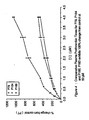
- Figure 1 represents activated partial thromboplastin time and prothrombin time inhibition curves of normal human plasma for peptides P53, P79, P102, P103 and r-hirudin (HV-2).
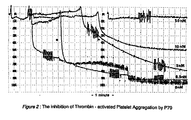
- Figure 2 represents the inhibition of thrombin-activated platelet aggregation by peptide P79.
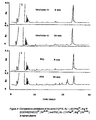
- Figure 3 represents the stability of various polypeptides in plasma.
- Figure 4 represents the prothrombin time inhibition curves of normal human plasma for peptides P79, P184 and P185.
- peptide derivatives of this invention are designated hereinafter simply as peptides.
- reduct when applied to an ⁇ -amino acid, means a radical derived from the corresponding ⁇ -amino acid by removing the hydroxyl of the carboxyl group and one hydrogen from the ⁇ -amino group.
- amino acid used herein includes naturally-occurring amino acids as well as non natural analogs as those commonly used by those skilled in the art of chemical synthesis and peptide chemistry. A list of non natural amino acids may be found in "The Peptides", vol. 5, 1983, Academic Press, Chapter 6 by D.C. Roberts and F. Vellaccio.
- proteogenic or non-proteogenic ⁇ -amino acid as used in the present application is meant to include those amino acids commonly used by those skilled in the art of peptide chemistry and includes, but is not limited to, naturally occurring ⁇ -amino acids.
- the naturally occurring amino acids are: Glycine (Gly), Alanine (Ala), Valine (Val), Leucine (Leu), Isoleucine (Ile), Serine (Ser), Methionine (Met), Threonine (Thr), Phenylalanine (Phe), Tyrosine (Tyr), Tryptophan (Trp), Cysteine (Cys), Proline (Pro), Histidine (His), Aspartic acid (Asp), Glutamic acid (Glu), Aspargine (Asn), Glutamine (Gln), Arginine (Arg), Ornithine (Orn) and Lysine (Lys).
- hydrophobic amino acid is usually meant an acid that bears an alkyl or aryl group attached to the ⁇ -carbon atom.
- glycine which has no such group attached to the ⁇ -carbon atom, is not a hydrophobic amino acid.
- the alkyl or aryl groups impart hydrophobic character to the amino acid.
- the alkyl or aryl group can be substituted, provided that the substituent or substituents present do not detract from the overall hydrophobic character of the acid. Water-solubilizing substituents such as OH, COOH and NH 2 are preferably to be avoided.
- hydrophobic amino acids include natural amino acid residues such as alanine, histidine, isoleucine, leucine, phenylalanine, tryptophane, tyrosine and unnatural amino acids such as those described in "The Peptides", Vol. 5, 1983, Academic Press, Chapter 6 by D.C. Roberts and F. Vellaccio.
- SubPhe represents the phenylalanine residue bearing substituents on the aromatic ring.
- alkyl as used herein means alkyl radicals having preferably from 1 to 6 carbon atoms and includes for example: methyl, ethyl, propyl, butyl. Except when otherwise indicated, alkyl groups containing 3 or more carbon atoms can be branched or straight.
- the present invention therefore relates to peptides useful as thrombin inhibitors comprising:
- the divalent linker moiety Z is composed, at least in part, of ⁇ -amino acids linked by normal peptide linkages, and can be the acids 49 to 54 of native hirudin;
- linker Z has the following formula wherein
- shorter peptides for example, "truncated" peptides lacking amino acids Glu 61 , Glu 62 , Tyr 63 and Gln 65 of native hirudin present interesting biological properties.
- the "truncated” peptides exhibit better bioavailability as shorter molecules are less likely to cause immune reactions and are less likely to undergo proteolysis.
- administration of shorter peptides having lower molecular weights is facilitated and absorption is usually better than for longer peptides.
- the use of a synthetic linker further prevents degradation of the peptides through proteolysis.
- the peptides of the present invention may be synthesized using a variety of methods which are well known to those skilled in the art.
- the peptides may be synthesized by the solid phase method such as that described by Stewart et al. in "Solid phase peptide synthesis", Freeman & Co., San Francisco, 1969 on a suitable peptide synthesizer.
- regions (i), (ii) or (iii) of the peptides of the present invention may be a synthetic moiety for which chemical synthesis is required prior to linking this moiety with other amino acids to yield the desired peptide through conventional solid phase synthesis.
- Examples 1 to 6 appearing further in the specification illustrate the type of chemical synthesis needed to synthesize one of the preferred embodiments in region (i) while example 7 describes the synthesis of a synthetic linker to be used in region (iii). It will be appreciated by those skilled in the art that a skilled organic chemist can readily prepare the chemical moiety which may be required for regions (i), (ii) and (iii) of the peptides of the present invention.
- peptides of the present invention were specifically synthesized on an Applied Biosystems 430A peptide synthesizer.
- BOC-GlnPAM resin (Applied Biosystems; 0.64 mmol/gram) was used as the solid phase support.
- Amino acid coupling was mediated by dicyclohexylcarbodiimide/N-hydroxybenzoltriazole and deprotection was carried out with 50% trifluoroacetic acid (TFA) in methylene chloride for 3 minutes followed by an additional 20 minute cycle.
- Side chain protecting groups were as follows: Asp(Chx), Glu(Bzl), His(Bom), Arg(Tos), Tyr(2-BrZ), Ser(Bzl).
- the fully protected peptide resin was then treated with liquid hydrogen fluoride containing anisole and dimethyl sulfide (10% by volume) at -5°C for 60 minutes. Excess HF was removed under a stream of nitrogen and the residual solid was extracted with ether and filtered. The resin was extracted three times with glacial acetic acid and water followed by lyophilization.
- the resulting lyophilized crude peptides may be purified to homogeneity by using generally accepted peptide purification techniques.
- One suitable technique is reverse phase chromatography on a Vydac octadecyl silica glass column (15 ⁇ , 1.5 X 30 cm, 40 psi) using a linear gradient of the solvent system: A, 500 ml 500 ml 0.1% TFA/H 2 O and B, 1L 60% Acetonitrite/H 2 O containing 0.1% TFA.
- the fractions are analyzed by reverse phase HPLC on a Varian LC using a Vydac C 18 analytical column and 215 nm detection. Fractions corresponding to greater than 99% purity may be pooled and lyophilized.
- Peptide content is determined by amino acid analysis on a Beckman model 6300 amino acid analyzer. Samples are then dried in a Waters Pico-Tag Work Station. Constant boiling HCl (200 ⁇ l) containing 1% phenol was added to the vial and alternatively purged (with dry nitrogen) and evacuated after three purges. Finally, the vial containing the sample is heated at 150°C for 1 hour under vacuum. Mass spectral analyses were carried out on a SCIEX API III spectrometer equipped with an ionspray inlet source.
- the structure and sequence of the peptides synthesized in the context of the present invention may be confirmed by correct amino acid composition and mass spectra in order to show agreement with the calculated molecular weights.
- BOC tert-butoxycarbonyl
- Tos p-toluene sulfonyl
- CH 2 Cl 2 methylene chloride
- TEA triethylamine
- BOP benzotriazolyl N-oxytrisdimethylamino phosphonium hexafluorophosphate
- DMF dimethyl formamide
- EtOAc ethyl acetate
- DCC N,N'-dicyclohexylcarbodiimide
- DPPA diphenyl-phosphoryl azide
- THF tetrahydrofuran
- HF hydrogen fluoride
- CBZ benzyloxycarbonyl.
- the title compound of this example was prepared in a manner analogous to examples 1 to 4.
- the product from example 1 was reacted with the Grignard reagent prepared from Magnesium and 6-bromo-1-hexene.
- the adduct was reacted with sodium periodate and ruthenium chloride. Isolation of the product afforded the title compound as an oil.
- the protected arginyl statone from example 6 (2 equivalents) was dissolved in CH 2 Cl 2 and added to a mixture of ⁇ -amino acid ester (1 equivalent) or polystyrene resin containing the growing polypeptide chain. To this mixture was added Cuprous Iodide (2 equivalents) and triethyl amine (2 equivalents). The reaction is monitored by HPLC in the case of amino acid ester or by conventional ninhydrin test in the case of polystyrene bound peptides.
- the protecting groups were removed by treatment of the peptide with liquid hydrogen fluoride at 0°C for 1 hour. Following evaporation of excess HF, the residue was dissolved in 50 ml of 10% AcOH and extracted with ether (3 times). The aqueous phase was lyophilized affording a powder corresponding to the title compound of this example.
- M/Z 489.2 (M+H) + .
- step d) The product from step d) is then used as a unit in the preparation of synthetic spacer II. These units are assembled to form spacer (II) using techniques that are well known to those skilled in the art.
- peptides P24, P51, P53, P73, P52 and P54 which are shown in Table I below, were synthesized using the standard procedure described previously under the heading "Synthesis of the peptides".
- peptide P79 corresponding to synthetic peptide of formula I where X is D-Phe, Z is D is propyl, Y is -CO, W is H and R is -Glu-Gly-Tyr-Leu-Gln-OH, was prepared by first chemically synthesizing 5-BOC-4-oxo-8-tosylguinadinooctanoic acid as described in example 3, followed by appropriate peptide assembly using the procedure described under the heading "Synthesis of the peptides".
- tert-Butyloxycarbonyl-Gln phenylacetamidomethyl resin (Applied Biosystems; 0.64 mmol/g) was carried through 16 cycles of synthesis involving n ⁇ -side chain deprotection (50% TFA in CH 2 CL 2 and coupling using 2.5 meq of protected amino acid/DCC and N-hydroxybenzotriazole.
- Side chain protecting groups of standard amino acids were as follows: Asp (cyclohexyl), Glu (benzyl), His (benzyloxymethyl), Tyr (bromobenzyl), Ser (benzyl).
- the fully protected peptide resin (500 mg) was treated with hydrogen fluoride in a teflon vessel containing anisole and dimethyl sulfide (10% by volume) at -5°C for 60 minutes. Excess HF was removed under a stream of N 2 and the residual mass was extracted with ether and filtered. The resin was extracted three times with glacial acetic acid and water, followed by lyophilization.
- the lyophilized crude peptide was purified to homogeneity by reverse phase chromatography on an octadecyl silica (15 ⁇ , Vydac) glass column (1.5 X 30 cm), 40 psi using a linear gradient of a solvent system consisting of (a) 500 ml of 0.1% TFA/H 20 and (B) 1 liter of 60% acetonitrile H 2 O containing 0.1% TFA. Fractions corresponding to 98% purity or higher were pooled and lyophilized.
- the resulting peptide showed a pseudo molecular ion corresponding to 2548.6.
- the title peptide of this example was synthesized and purified essentially as described for P79 and its homologs with minor modifications.
- the solid phase synthesis began with tert-butyloxycarb-onyl-Leu phenylacetamidomethyl polystyrene resin (Applied Biosystems, 0.64 mmol/g).
- 50% TFA in CH 2 Cl 2 containing 10% ethylmethyl sulfide was used. In this way, the yield of the title peptide was optimized to greater than 60%, by HPLC (UV absorption at 215 nm).
- Thrombin-catalyzed hydrolysis of Tos-Gly-Pro-Arg-pNA was monitored at 405 nm on a Varian Cary 2000 double beam spectrophotometer using substrate concentrations of 2.5, 3.5, 5 and 10 ⁇ M in a final volume of 1mL.
- the hydrolytic reactions were performed at 25°C in 0.1 M Tris-HCl buffer, pH 7.8, containing 0.1 M NaCl and 0.1% PEG 6000.
- the reactions were initiated by addition of the substrate dissolved in 0.1 M Tris-HCl buffer, pH 7.8 to a preincubated solution of enzyme (0.4 or 0.04 nM) and variable concentrations of inhibitor dissolved in the same buffer.
- the specificity of the synthetic peptides of the present invention for human ⁇ -thrombin may also be determined by comparing their relative inhibitory activities towards both human ⁇ -thrombin and bovine ⁇ -thrombin and trypsin by comparing K 1 values obtained in the amidolytic assay of thrombin activity.
- the inhibitory activity of the synthetic peptides of the present invention towards thrombin may also be assayed by determination of prothrombin time (PT, extrinsic pathway) or activated partial thromboplastin time (APTT, intrinsic pathway) of pooled reconstituted normal human plasma using a Coag-A-Mate 2001 instrument (General Diagnostics Inc., Morris Planes, New Jersey) or other suitable spectrophotometer.
- PT prothrombin time
- APTT activated partial thromboplastin time
- prothrombin time 50 ⁇ l of reconstituted citrated normal human plasma (Sigma, St-Louis, MO.) is mixed with 50 ⁇ l of thromboplastin solution at 37 °C in a 400 ⁇ l cuvette. The mixture is then treated with either 200 ⁇ l of Tris-HCl buffer pH 7.8 (containing 0.1M NaCl, 0.1% PEG 6000) or variable concentrations of inhibitor in the same buffer. The clotting time is recorded following recalcification with 100 ⁇ l of 25 mM CaCl 2 . The clotting time in the absence of inhibitor was between 19-22 sec.
- the inhibitory activity of some of the peptides of the present invention toward thrombin is reflected by their ability to inhibit thrombin-mediated platelet aggregation as shown in Figure 2.
- Platelet aggregation reflected by increased light transmittance which is measured on a Bio Data PAP-4 aggregometer.
- the inhibitory activity of the synthetic peptides of the present invention towards thrombin may also be assayed by the inhibition of activated partial thromboplastin times (APTT intrinsic pathway or prothrombin time PT extrinsic pathway).
- APTT intrinsic pathway or prothrombin time PT extrinsic pathway activated partial thromboplastin times
- the anticoagulant activity may be determined by assaying APTT of pooled, normal human plasma with a Coag-A-Mate 2001 instrument (General Diagnostics Inc., Morris Planes, New Jersey).
- the synthetic peptides of the present invention may be tested for inhibition of thrombin-catalyzed hydrolysis of the tripeptidyl P-nitroanilide substrate tosyl-Gly-Pro-Arg-P-nitroanilide (Chromozym TH, Boehringer-Mannheim, Indianapolis, In.) spectrophotometrically at 420 nm on a Cary 219 double-beam spectrophotometer.
- the reactions may be prepared by mixing a thrombin solution with a Tris-HCl, pH 7.4, NaCl buffer.
- the enhanced enzyme affinity and in vitro anticoagulant effect may be attributed directly to a cooperative intramolecular binding mechanism.
- substituent X of the compound of formula I is D-Phe, this will render region (i) suitable to bind with the extended hydrophobic region of the active site of thrombin.
- the requirements for region (ii) to bind to a non-catalytic site of thrombin are different from those of region (i).
- the linker serves as a suitable spacer for the bridging of an auxiliary site (region (ii)) and a catalytic site (region (i)) as well as an apolar binding site adjacent to the catalytic site.
- the rat anaesthetized with urethane is fixed in supine position on a temperature-controlled heating plate.
- the right carotid artery and the left jugular vein are catheterized with short polyethylene catheters (Portex, PE 50).
- the catheters are filled with physiological saline solution and clamped.
- the two ends of the catheters are connected with a 2-cm glass capillary (internal diameter 1.0 mm) acting as a thrombogenic surface, 5 min after intravenous administration of the test substance or its solvent (control) the clamps occluding the arteriovenous shunt are opened.
- the blood flowing through the shunt leads to a rapid rise in temperature of the glass capillary from room temperature to body temperature.
- the temperature of the capillary serves as an indicator for the patency of the shunt.
- the temperature is measured by means of a NiCrNi-thermo-couple.
- the peptides of this invention were evaluated for in vitro plasma stability against proteolysis.
- the results in the accompanying figure are an illustrative example of the comparative stability of P53 and P79 (otherwise designated as hirutonin II).
- 600 ⁇ g of peptide was mixed with 250 ⁇ l of reconstituted normal human plasma, 250 ⁇ l of thromboplastin, 600 ⁇ g of calcium chloride and 50 mM NaHPO 4 buffer ph 7.8 to a final volume of 900 ⁇ l.
- the peptides of the present invention may be obtained in the form of therapeutically acceptable salts. Since the peptides of the present invention have residues that function both as acids and/or bases, then salts of organic acids (e.g. acetic, lactic, succinic or malic) or bases (e.g. sodium, potassium or calcium) could be derived. These salts of the peptides of formula I are fully biologically active. Therapeutically acceptable salts may be converted from one salt form to another by employing a suitable ion exchange resin in a manner described by R.A. Boissonas et al., Helv. Chim. Acta. 43, 1849 (1960).
- the peptides of the present invention are employed alone or in combinations for the treatment of prophylaxis of vascular diseases due to thromboses. They are administered systemically to warm blooded animals, e.g. humans, horses or dogs, with pharmaceutically acceptable carriers, the proportion of composition of which depends on solubility and chosen route of administration.
- the peptides of the present invention are administered either intravenously, subcutaneously or by intramuscular injection in combination with pharmaceutically acceptable carriers. Examples of suitable carriers are found in standard pharmaceutical texts, e.g. "Remington's Pharmaceutical Sciences", 16th edition, Mack Publishing Company, Easton, Penn., 1980.
- the dosage of the peptides will vary depending on the form of administration and particular compound. In the case of an injection, the therapeutically effective dose of peptide is in a dosage range of approximately 0.05 mg/kg to 10 mg/kg body weight.
- the compositions usually also contain suitable buffers, for example phosphate buffer, to maintain an appropriate pH and sodium chloride, glucose or mannitol to make the solution isotonic.
- the peptides of the present invention may be administered alone or in combination with other pharmaceuticals.
- the peptides may be administered in combination with tissue plasminogen activator to prevent reocclusion of coronary arteries.
- the peptides of the present invention could be administered with heparin or low molecular weight heparin, a combination which could advantageously lower the dosage of heparin or low molecular weight heparin.
- n is an integer ranging from 1 to 4 and K and K' are the same or different and are suitable protecting groups such as Boc and Tos.
- the process comprises oxidizing a compound having the following formula: wherein
- the invention further comprises a process for the preparation of a compound having the following formula III:
- the process comprises treating a compound having the following formula: with an enzyme having the ability to effect removal of one methyl group and recovering the desired product.
- the compounds of formula II and III are useful as intermediates in the preparation of peptide derivatives such as the peptide derivatives of the present invention.
Landscapes
- Health & Medical Sciences (AREA)
- Chemical & Material Sciences (AREA)
- Organic Chemistry (AREA)
- Medicinal Chemistry (AREA)
- General Health & Medical Sciences (AREA)
- Life Sciences & Earth Sciences (AREA)
- Biophysics (AREA)
- Biochemistry (AREA)
- Proteomics, Peptides & Aminoacids (AREA)
- Molecular Biology (AREA)
- Genetics & Genomics (AREA)
- Diabetes (AREA)
- Engineering & Computer Science (AREA)
- Animal Behavior & Ethology (AREA)
- Bioinformatics & Cheminformatics (AREA)
- Public Health (AREA)
- Veterinary Medicine (AREA)
- Pharmacology & Pharmacy (AREA)
- General Chemical & Material Sciences (AREA)
- Hematology (AREA)
- Nuclear Medicine, Radiotherapy & Molecular Imaging (AREA)
- Chemical Kinetics & Catalysis (AREA)
- Tropical Medicine & Parasitology (AREA)
- Gastroenterology & Hepatology (AREA)
- Medicines That Contain Protein Lipid Enzymes And Other Medicines (AREA)
- Peptides Or Proteins (AREA)
- Acyclic And Carbocyclic Compounds In Medicinal Compositions (AREA)
Abstract
Description
- The present invention relates to peptide derivatives useful as thrombin inhibitors. These peptides are based on the sequence of the segment of hirudin containing
amino acids 45 to 65 having appropriate modifications conferring enhanced binding up to three orders of magnitude greater than the corresponding native peptide fragment. The peptides of the present invention are designated "bifunctional" thrombin inhibitors as they attach to two different binding sites on the thrombin molecule. - Thrombin is an important serine proteinase component of the blood coagulation cascade. Besides initiating blood clotting by cleaving fibrinogen, thrombin activates other hemocoagulant factors including factors V, VIII and XIII and the anticoagulant enzyme protein C. Thrombin is also a potent platelet activator that impairs thrombolysis mediated by tissue plasminogen activator in vivo. Thus, thrombin's positive feedback regulation serves to amplify hemostatic events but causes life-threatening thrombi in response to aberrations with vascular and cerebrovascular arteries.
- Given the diverse functions of this enzyme, its inhibition by potent and specific compounds could provide an invaluable addition to the treatment of disorders related to thrombosis. These include: coronary artery disease, cerebrovascular disease, peripheral arterial occlusive disease, deep vein thrombosis and pulmonary embolism.
- The most potent inhibitor of thrombin known is hirudin, a family of iso-proteins isolated from the glandular secretions of the leech Hirudo Medicinalis. The anticoagulant properties of hirudin have been known for a long time. However, it has so far been of little therapeutic value since the formulation of this protein in a readily efficient and administrable form seems to be difficult as both enteral and cutaneous absorptions are very low so it has not been possible to produce adequate levels of the protein in the bloodstream.
- Furthermore, clinical use of hirudin isolated from leech extracts is unlikely because of its limited quantity, expense and allergic reactions which may commonly occur upon administration of foreign proteins having the size of hirudin.
- In his publication entitled "Pharmacology of selective thrombin inhibitors", (1988), Nouv. Rev. Fr. Hematol., 30, pages 161-165, Markwardt provided further clinical information on hirudin based on results of pharmacological studies performed for both natural and synthetic thrombin inhibitors.
- The author makes general observations concerning hirudin, mentioning that the peptide, which contains a highly acidic C-terminal portion, is highly specific for α-thrombin. He then concludes that the C-terminal portion of hirudin is likely to bind to the anionic binding site region of the enzyme whereas the compact N-terminal portion appears to bind to the active site region of the enzyme.
- It has been found that native desulfo hirudin45- 65 inhibits fibrinogen clotting by both bovine and human α-thrombin in a dose dependent manner. The IC50 value of 940±200 nM for bovine α-thrombin is in good agreement with the reported value of plasma fibrin clot formation for the same fragment and three times lower than hirudin55-65, which had been assigned as the minimum core required for anticoagulant activity. It has also been demonstrated that the same peptides were consistently more potent against human α-thrombin than bovine α-thrombin.
- Various prior art documents have also demonstrated that the active fragment of the amino acid sequence of hirudin appears to be the amino acid sequence including
amino acids 45 to 65. Hence, efforts have been made to enhance the inhibitory activities of the peptide by substituting some of the amino acids present in this sequence. - Krstenansky et al., in "Antithrombin properties of C-terminus of hirudin using synthetic unsulfated Nα-acetyl-hirudin", (1987), Febs Letters, Vol. 211, No. 1, pages 10-16, describe the synthesis of the C-terminal fragment unsulfated Nα-acetyl-hirudin45-65. The authors refer to previous work (Chang, J.-V., FEBS Letters, 164, 307 (1983)) and mention that this fragment could potentially contain two specific binding domains, one binding to the catalytic site of thrombin and the other binding to another recognition site on thrombin. This was concluded not to be the case by either authors.
- Still, the authors demonstrated that the 45-65 sequence of hirudin has the ability to inhibit clotting activity as well as the release of fibrinopeptide A by thrombin. They also suggested that the same sequence of hirudin45-65 may not be directly involved in the binding with the catalytic site of thrombin since the amidolytic properties of thrombin toward synthetic substrates is not perturbed.
- In the Krstenansky et al. article entitled "Anticoagulant peptides: nature of the interaction of the C-terminal region of hirudin with a noncatalytic site on thrombin", (1987), J. Med. Chem., 30, pages 1688-1691, the authors report that the minimum active sequence at the noncatalytic binding site of thrombin is hirudin56-64. Based on this assumption, the authors report the synthesis of several C-terminal hirudin54-65 analogs and their ability to inhibit thrombin-induced fibrin clot formation for the purpose of establishing the nature of the interaction between hirudin56-64 and a noncatalytic binding site of thrombin.
- In their conclusion, the authors mention that the C-terminal region of hirudin may bind to a region of fibrinogen binding on thrombin that is not the region proposed so far in the literature.
- In the articles by Dodt et al. (Interaction of site specific hirudin variants with α-thrombin, (1988), Febs Letters, Vol. 229, No. 1, pages 87-90), Degryse et al. (Point mutations modifying the thrombin inhibition kinetics and antithrombotic activity in vivo of recombinant hirudin, (1989), Protein Engineering, Vol. 2, No. 6, pages 459-465) and Braun et al. (Use of site-directed mutagenesis to investigate the basis for the specificity of hirudin, (1988), Biochemistry, 27, pages 6517-6522), the authors report the results of site-directed mutagenesis performed on the hirudin gene. The inhibition of thrombin by mutant hirudin peptides is studied.
- In these publications, the authors studied mutations effected on the whole protein and did not restrict themselves to the 45-65 segment of hirudin. Furthermore, the modifications performed on the 45-65 segment were restricted to a single modification, usually at
position 47, to illustrate that this residue does not interact with the active site, although these publications also show mutations at positions 51, 57, 58, 61 and 62. - In a similar fashion, the article by Dodt et al. entitled "Distinct binding sites of Ala48-Hirudin1-47 and Ala48-Hirudin48-65 on α-thrombin", (1990), The Journal of Biological Chemistry, Vol. 265, No. 2, pp. 713-718, describes experiments aimed at conducting site-directed mutagenesis of hirudin at position 48 in the sequence. The work done by Dodt et al. in this case seems to have been restricted to the substitution of alanine for proline at this position in order to facilitate the required proteolysis necessary for their experiment.
- Maraganore et al., in "Anticoagulant activity of synthetic hirudin peptides", (1989), The Journal of Biological Chemistry, Vol. 264, No. 15, pages 8692-8698, Dennis et al. in "Use of fragments of hirudin to investigate thrombin-hirudin interaction", (1990), Eur. J. Biochem. 188, pages 61-66 and Chang et al. in "The structural elements of hirudin which bind to the fibrinogen recognition site of thrombin are exclusively located within its acidic C-terminal tail", (1990), Febs., Vol. 261, No. 2, pages 287-290, describe the synthesis and anticoagulant properties of a number of peptides whose sequences are based on the sequence of various fragments of native hirudin.
- WO-A-9102750, considered as prior art only with respect to Article 54(3) and (4) EPC discloses an inhibitor of thrombin, but the structure of this inhibitor is entirely different from the structure of the inhibitor and peptides of the present invention.
- FEBS Letters, vol. 282 (1991), pages 47-52 and The Journal of Biological Chemistry, vol. 265 (199), pages 21698-21703 also disclose thrombin inhibitors; however, the compounds described in these references are different in structure from the inhibitors and peptides of the present invention and are not considered an obvious variation thereof.
- Compounds having anticoagulating properties are valuable therapeutics which may be used in the treatment of various pathologic states. Among the most important conditions in which an anticoagulant treatment may be useful, there may be mentioned myocardial infarction, pulmonary embolism and cerebral vascular diseases, deep vein thrombosis and other indications of thrombotic disorders.
- Currently available anticoagulants are in many respects unsatisfactory. For example, heparin has been employed to inhibit the activity of thrombin and therefore in the treatment of conditions such as venous thrombosis and thrombo embolism. However, heparin exhibits a wide array of undesirable side effects that demonstrate the need for anticoagulants presenting more favorable toxicity levels.
- The design of low molecular weight and specific inhibitors of thrombin that utilize accessory binding loci remote from or in conjunction with the catalytic center, similar to the way fibrinogen or hirudin binds to thrombin, constitutes a challenge in protein chemistry. Conceivably, such a multifunctional inhibitor integrates two or more recognitive elements, separated by a suitable spacer, that favour multiple simultaneous interactions and which could manifest enhanced potency and specificity. Incorporation of "foreign" chemical elements embodied in a structure of low molecular weight could confer resistance against proteolysis and favourable bioavailability.
- In accordance with the present invention, thrombin inhibitors composed of two portions, a bulky hydrophobic portion and a highly acidic portion linked together by a suitable linker, are provided. In one aspect, the invention relates to peptide derivatives represented by the following formula (I):
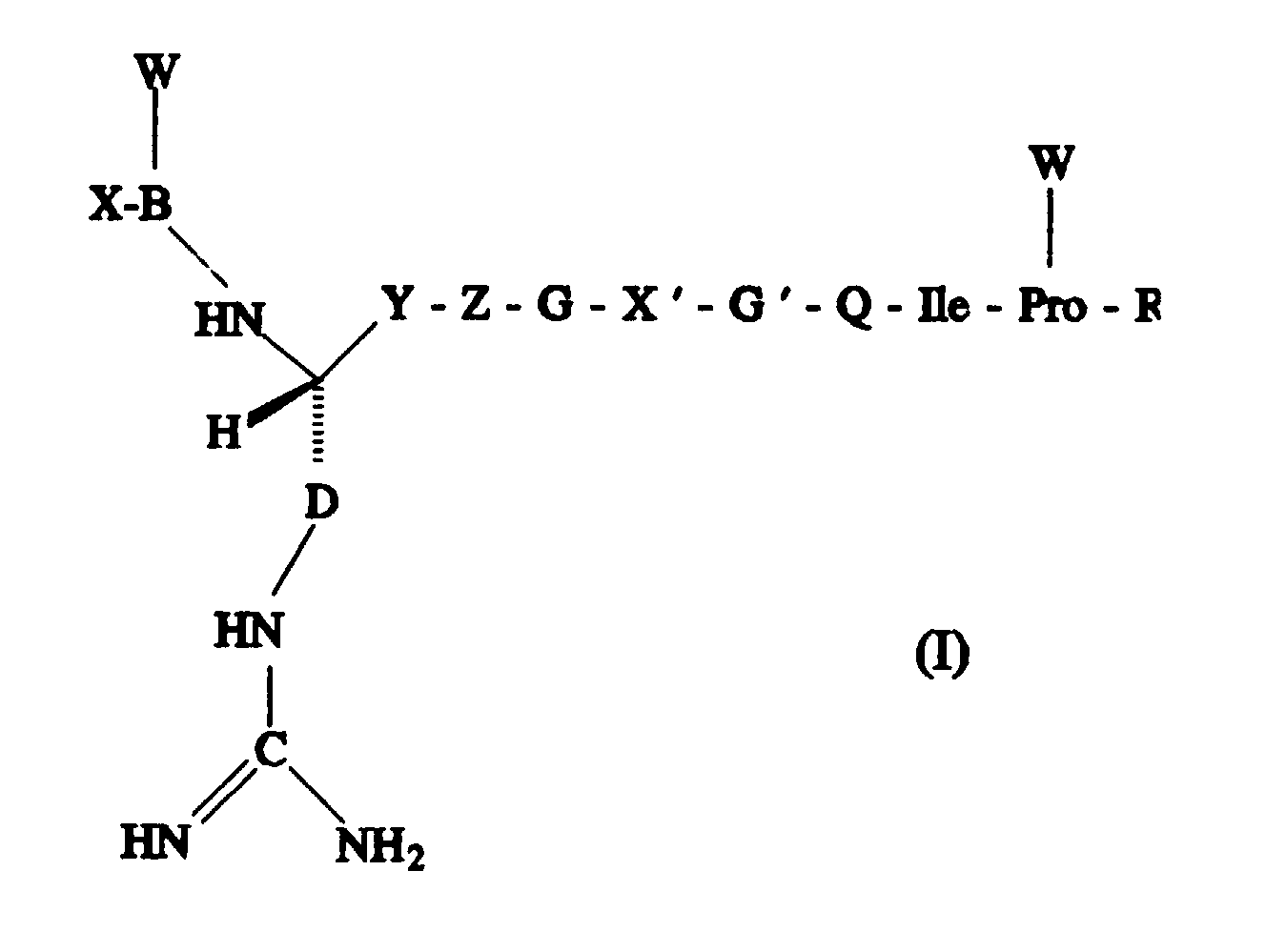
- X is a hydrophobic group;
- B is a residue of a hydrophobic amino acid;
- D is a linear carbon chain having 2 to 4 carbon atoms which can be substituted by loweralkyl, or D is a p-phenylmethyl or a p-phenylethyl group;
- Y is carbonyl;
- Z is a divalent straight chained linker moiety having a chain length of at least 10 atoms, the atom adjacent to the carbon atom of Y may be unsubstituted or mono- or di-fluoro-substituted, and
- Z can be composed of a carbon chain that is interrupted by one or more O, S, NH, carbonyl, ester or amide groups, the terminal atom of the chain being a carbon atom that is part of a carbonyl group that forms a peptide linkage with the L-α-amino acid G;
- G and G' are the same or different and are an L-α-amino acid having a pk value of about 5 or below;
- X' is a hydrophobic L-α-amino acid;
- Q is a residue of a L-α-amino acid or a cyclic L-imino acid;
- W is H, or a branched or straight chain alkyl, aryl or aralkyl radical;
- R is a hydrophobic group comprising 1 to 5 amino acids or an alkyl, aryl or aralkyl radical which can be substituted by a carboxyl or amide function or,
- R is

- We have found that the native fragment of hirudin comprising residues 45-65 can interact concurrently with two independent and remote sites on thrombin, one site being the putative anion exosite while the other is the catalytic site responsible for proteolysis. This binding mode simulates but is different from the mechanism of the native hirudin molecule which has now been shown to interact with thrombin's active site through its N-terminal three residues. Thus, it appears that
residues - Based on this observation, we have synthesized novel peptides that bear modifications in both inhibitory components of the molecule and which exhibit anti-thrombin activity beyond the level of either portions alone. Furthermore, chemical modification of the newly formed scissile bond affords more active compounds that have the advantage of being proteolytically stable to thrombin. The peptides are useful as anticoagulants and as inhibitors of platelet aggregation, thereby decreasing the risk factor in indication of arterial thrombosis and other related cardiovascular disorders.
- Hence, the anticoagulant properties of hirudin45- 65 have been found to be substantially enhanced by modifying the N-terminal catalytic portion of N-acetyl-hirudin45-65 to include a bulky hydrophobic portion preferably comprising at least one amino acid of D configuration, by incorporating a non-proteogenic pseudodipeptide, preferably an isostere of arginylglycine in position 47-48, and by at least maintaining the hydrophilic character of amino acids 55 to 60 of native hirudin at the C-terminal non-catalytic portion of N-acetyl-hirudin45-65.
- The compounds of the present invention therefore comprise peptides that correspond to but are not limited by the carboxyl domain of hirudin comprising residues 45-65.
- The present invention also relates to a composition for treating indications of thrombotic disorders. This composition comprises an effective amount of a peptide derivative of formula I in admixture with a pharmaceutically acceptable carrier.
- Also within the scope of the present invention is a method for the treatment or prophylaxis of vascular diseases related to thrombosis. The method comprises administering to a patient an effective amount of a composition comprising a peptide derivative of formula I in admixture with a pharmaceutically acceptable carrier.
- The invention also relates to a method for decreasing reperfusion time or increasing reocclusion time in a patient treated with a thrombolytic agent. The method comprises administering to a patient an effective amount of a composition comprising a peptide derivative of formula I and a thrombolytic agent in admixture with a pharmaceutically acceptable carrier.
- Figure 1 represents activated partial thromboplastin time and prothrombin time inhibition curves of normal human plasma for peptides P53, P79, P102, P103 and r-hirudin (HV-2).
- Figure 2 represents the inhibition of thrombin-activated platelet aggregation by peptide P79.
- Figure 3 represents the stability of various polypeptides in plasma.
- Figure 4 represents the prothrombin time inhibition curves of normal human plasma for peptides P79, P184 and P185.
- The present invention will be more readily illustrated by referring to the following description.
- For convenience, the peptide derivatives of this invention are designated hereinafter simply as peptides.
- The term "residue", when applied to an α-amino acid, means a radical derived from the corresponding α-amino acid by removing the hydroxyl of the carboxyl group and one hydrogen from the α-amino group.
- The abbreviations used herein for designating individual residues are based on the recommendations of the IUPAC-IUB Commission on Biochemical Nomenclature [Biochemistry, 11, 1726-1732, (1972)]. The term "amino acid" used herein includes naturally-occurring amino acids as well as non natural analogs as those commonly used by those skilled in the art of chemical synthesis and peptide chemistry. A list of non natural amino acids may be found in "The Peptides", vol. 5, 1983, Academic Press, Chapter 6 by D.C. Roberts and F. Vellaccio.
- The term "proteogenic or non-proteogenic α-amino acid" as used in the present application is meant to include those amino acids commonly used by those skilled in the art of peptide chemistry and includes, but is not limited to, naturally occurring α-amino acids. The naturally occurring amino acids are: Glycine (Gly), Alanine (Ala), Valine (Val), Leucine (Leu), Isoleucine (Ile), Serine (Ser), Methionine (Met), Threonine (Thr), Phenylalanine (Phe), Tyrosine (Tyr), Tryptophan (Trp), Cysteine (Cys), Proline (Pro), Histidine (His), Aspartic acid (Asp), Glutamic acid (Glu), Aspargine (Asn), Glutamine (Gln), Arginine (Arg), Ornithine (Orn) and Lysine (Lys).
- By a hydrophobic amino acid is usually meant an acid that bears an alkyl or aryl group attached to the α-carbon atom. Thus glycine, which has no such group attached to the α-carbon atom, is not a hydrophobic amino acid. The alkyl or aryl groups impart hydrophobic character to the amino acid. The alkyl or aryl group can be substituted, provided that the substituent or substituents present do not detract from the overall hydrophobic character of the acid. Water-solubilizing substituents such as OH, COOH and NH2 are preferably to be avoided. Examples of hydrophobic amino acids include natural amino acid residues such as alanine, histidine, isoleucine, leucine, phenylalanine, tryptophane, tyrosine and unnatural amino acids such as those described in "The Peptides", Vol. 5, 1983, Academic Press, Chapter 6 by D.C. Roberts and F. Vellaccio. For example, one may cite β-(2-and 3-thienyl)alanine, β-(2-and 3-furanyl)alanine, β-(2-and 3- and 4-pyridyl)alanine, cyclohexylalanine and SubPhe. SubPhe represents the phenylalanine residue bearing substituents on the aromatic ring. Common substituents used by those skilled in the art of amino acid chemistry are halogens (fluoride, bromide, chloride), electron withdrawing groups (NO2) or lower alkyl or aryl substituents in the 2, 3 or 4 position. It is to be noted that, unless indicated otherwise, the amino acids used in the context of the present invention are those in the L-configuration.
- The term "alkyl" as used herein means alkyl radicals having preferably from 1 to 6 carbon atoms and includes for example: methyl, ethyl, propyl, butyl. Except when otherwise indicated, alkyl groups containing 3 or more carbon atoms can be branched or straight.
- The present invention therefore relates to peptides useful as thrombin inhibitors comprising:
- (a) a first bulky hydrophobic moiety comprising the formula:

- X is a hydrophobic group, preferably a hydrophobic α-amino acid in the D-configuration attached by a peptide linkage to substituent B, or X is a hydrophobic group attached to the nitrogen atom of substituent B;
- B is a residue of a hydrophobic amino acid, preferably an α-amino acid of the L-configuration or a cyclic imino acid, which can bear one or more alkyl substituents attached to the ring, which substituents may bridge to form a cyclic structure;
- D is p-phenylmethyl, p-phenylethyl, ethylene, butylene, or propylene;
- Y is a carbonyl;
- W is H or a lower alkyl, aryl or aralkyl substituent on the 3, 4 or 5 position of the piperidine or pyrrolidine ring; and
- (b) a second moiety comprising the formula:

- G and G' are the same or different and are an L-α-amino acid having a pk value of about 5 or below;
- X' is a hydrophobic L-α-amino acid;
- Q is a residue of a L-α-amino acid or a cyclic L-imino acid;
- W is H, or a branched or straight chain alkyl, aryl or aralkyl radical;
- R is a hydrophobic group comprising 1 to 5 amino acids or an alkyl, aryl or aralkyl radical which can be substituted by a carboxyl or amide function or,
- R is* is H, OH, -O-SO2-OH, -CH2-SO2-OH or -O-PO2-OH, or -CH2-PO2-OH substituted at the para position of the phenyl ring, or

- R and R' are the same or different and are an amino acid or an amine group having the following formula:
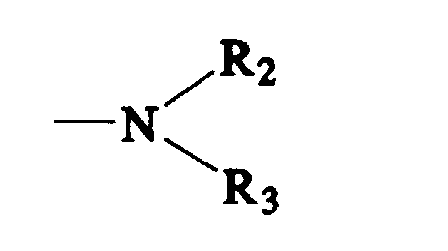
- wherein R2 and R3 are each independently hydrogen, lower alkyl or aryl, or may be joined to form a ring of 5-6 members, which ring can optionally contain an additional heteroatom selected from O, S and NH, or
- R' is a hydroxyl group attached to Leu to form a carboxyl group, or a therapeutically acceptable salt thereof; and between moieties (a) and (b):
- (c) a divalent linker moiety having a chain length of at least 10 carbon atoms.
- In some embodiments, the divalent linker moiety Z is composed, at least in part, of α-amino acids linked by normal peptide linkages, and can be the acids 49 to 54 of native hirudin;
- G and G' are the same or different and are an L-α-amino acid having a pk value of about 5 or below;
- X' is a hydrophobic L-α-amino acid;
- Q is a residue of an L-α-amino acid or a cyclic L-imino acid;
- W is H, or a branched or straight chain alkyl, aryl or aralkyl radical;
- R is a hydrophobic group comprising 1 to 5 amino acids or an alkyl, aryl or aralkyl radical which can be substituted by a carboxyl or amide function or,
- R is


- A preferred group of peptides is represented by formula I wherein
- X is a hydrophobic α-amino acid in the D-configuration. The acid X is attached by a peptide linkage to the α-amino acid B. Alternatively X is another large, hydrophobic group that will attach to the nitrogen atom of the α-amino group of the acid B such as an aryl-sulfonyl group; B is a residue of a hydrophobic α-amino acid of the L-configuration or a cyclic imino acid, which can bear one or more alkyl substituents attached to the ring, which substituents may bridge to form a cyclic structure;
- D is p-phenylmethyl, p-phenylethyl ethylene, butylene, or propylene.
- Y is carbonyl;
- Z has a chain length ranging between 12 and 40 and preferably 20 atoms;
- G and G' are Asp, Glu,

- n is 1 or 2
- X' is L-Phe, L-4FPhe or L-4ClPhe;
- Q is proline, pipecolic acid, sarcosine or Glu;
- W is H or a lower alkyl, aryl or aralkyl substituent on the 3, 4 or 5 position of the piperidine or pyrrolidine ring; R is Glu-Glu-Phe*-Leu-R' or Leu-R', wherein
* is H, -CH2-SO2-OH, -OH, -O-SO2-OH, or -O-PO2-OH or CH2-PO2-OH substituted in the para position - and R' is a hydroxyl group or

- A more preferred group of peptides is represented by formula I wherein
- X is D-Phe, D-4FPhe or D-4ClPhe wherein the α-amino group is neutralized by acetylation or benzoylation, or
- X is naphtalenesulfonyl, benzenesulfonyl, toluenesulfonyl;
- B is Val, pipecolic acid or Pro;
- W is hydrogen or a lower alkyl, aryl or aralky substituent on the 3,4 or 5 position of the ring when B is Pro or pipecolic acid;
- D is propylene or phenylmethyl;
- Y is carbonyl;
- Z is

- n is an integer ranging from 1 to 4; and
- L is a hexapeptide or saturated or unsaturated alkyl chain corresponding to 18 atoms or less of a hexapeptide.
- Preferably, linker Z has the following formula

- n and m are integers ranging from 1 to 4; and
- A1, A2 are each independently H or des H in the cis or trans configuration; with the proviso that when m is 1, n is 3 or 4;
- if A1, A2 are des H, then Z is

- n and p are integers ranging from 1 to 4. Thus, the linker to be used in the context of the present invention is required to have sufficient length to permit the peptides of formula I to interact with two different and independent binding sites separated by a critical distance (approximately 15 Å) from each other on the thrombin surface. Therefore, Z is a linker whose cumulative number of atoms comprising the unit is the same as the number of atoms corresponding to the amino acid sequence of hirudin49-54 or lower; and
- R is Glu-Glu-Tyr-Leu-Gln-OH, Leu-OH or Glu-Glu-Tyr-Leu-R' wherein R' is a hydroxyl group or a group having the following formula:

- R2 is -CH3 or phenethyl,
- R3 is H or -CH3 or R2 and R3 may be joined together to form -CH2-CH2-CH2-CH2-, -CH2-CH2-CH2-CH2-CH2- or -CH2-CH2-O-CH2-CH2-.
- An even more preferred group of compounds of formula I are those whereby
- X is D-Phe;
- B is proline;
- D is propylene;
- Y is carbonyl;
- G is Asp;
- G' is Glu;
- X' is Phe;
- Q is Glu or Pro;
- Z is



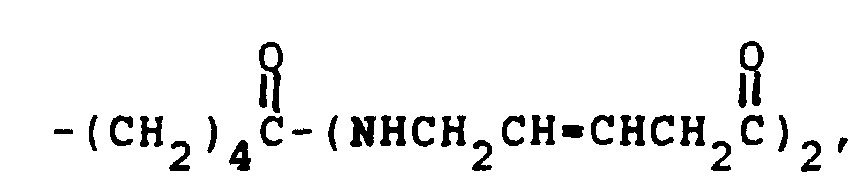

- W is H, n-butyl or methyl; and
- R is Glu-Glu-Tyr-Leu-Gln-OH; or -Leu-OH.
- It has been found that shorter peptides, for example, "truncated" peptides lacking amino acids Glu61, Glu62, Tyr63 and Gln65 of native hirudin present interesting biological properties. Hence, the "truncated" peptides exhibit better bioavailability as shorter molecules are less likely to cause immune reactions and are less likely to undergo proteolysis. Also, administration of shorter peptides having lower molecular weights is facilitated and absorption is usually better than for longer peptides. It should also be noted that the use of a synthetic linker further prevents degradation of the peptides through proteolysis.
- The peptides of the present invention may be synthesized using a variety of methods which are well known to those skilled in the art. For example, the peptides may be synthesized by the solid phase method such as that described by Stewart et al. in "Solid phase peptide synthesis", Freeman & Co., San Francisco, 1969 on a suitable peptide synthesizer.
- In some instances however, regions (i), (ii) or (iii) of the peptides of the present invention may be a synthetic moiety for which chemical synthesis is required prior to linking this moiety with other amino acids to yield the desired peptide through conventional solid phase synthesis. Examples 1 to 6 appearing further in the specification illustrate the type of chemical synthesis needed to synthesize one of the preferred embodiments in region (i) while example 7 describes the synthesis of a synthetic linker to be used in region (iii). It will be appreciated by those skilled in the art that a skilled organic chemist can readily prepare the chemical moiety which may be required for regions (i), (ii) and (iii) of the peptides of the present invention.
- Some of the peptides of the present invention were specifically synthesized on an Applied Biosystems 430A peptide synthesizer. BOC-GlnPAM resin (Applied Biosystems; 0.64 mmol/gram) was used as the solid phase support. Amino acid coupling was mediated by dicyclohexylcarbodiimide/N-hydroxybenzoltriazole and deprotection was carried out with 50% trifluoroacetic acid (TFA) in methylene chloride for 3 minutes followed by an additional 20 minute cycle. Side chain protecting groups were as follows: Asp(Chx), Glu(Bzl), His(Bom), Arg(Tos), Tyr(2-BrZ), Ser(Bzl). The fully protected peptide resin was then treated with liquid hydrogen fluoride containing anisole and dimethyl sulfide (10% by volume) at -5°C for 60 minutes. Excess HF was removed under a stream of nitrogen and the residual solid was extracted with ether and filtered. The resin was extracted three times with glacial acetic acid and water followed by lyophilization.
- The resulting lyophilized crude peptides may be purified to homogeneity by using generally accepted peptide purification techniques. One suitable technique is reverse phase chromatography on a Vydac octadecyl silica glass column (15 Å, 1.5 X 30 cm, 40 psi) using a linear gradient of the solvent system: A, 500 ml 500 ml 0.1% TFA/H2O and B, 1L 60% Acetonitrite/H2O containing 0.1% TFA. The fractions are analyzed by reverse phase HPLC on a Varian LC using a Vydac C18 analytical column and 215 nm detection. Fractions corresponding to greater than 99% purity may be pooled and lyophilized. Peptide content is determined by amino acid analysis on a Beckman model 6300 amino acid analyzer. Samples are then dried in a Waters Pico-Tag Work Station. Constant boiling HCl (200 µl) containing 1% phenol was added to the vial and alternatively purged (with dry nitrogen) and evacuated after three purges. Finally, the vial containing the sample is heated at 150°C for 1 hour under vacuum. Mass spectral analyses were carried out on a SCIEX API III spectrometer equipped with an ionspray inlet source.
- Thus, the structure and sequence of the peptides synthesized in the context of the present invention may be confirmed by correct amino acid composition and mass spectra in order to show agreement with the calculated molecular weights.
- The following examples are provided to further illustrate rather than limit the scope of the present invention.
- Abbreviations used in the examples include BOC: tert-butoxycarbonyl; Tos: p-toluene sulfonyl; CH2Cl2: methylene chloride; TEA: triethylamine; BOP: benzotriazolyl N-oxytrisdimethylamino phosphonium hexafluorophosphate; DMF: dimethyl formamide; EtOAc: ethyl acetate; DCC: N,N'-dicyclohexylcarbodiimide; DPPA: diphenyl-phosphoryl azide; THF: tetrahydrofuran; HF: hydrogen fluoride, CBZ: benzyloxycarbonyl.
- To a solution of Nα-BOC-NG-Tosyl Arginine (428 mg, 1 mmol) in 30 ml of DMF, at 0°C in an ice bath, containing TEA (0.4 ml, 3 mmol) and N,O-dimethylhydroxyl-amine hydrochloride (146 mg, 1.5 mmol) was added BOP reagent (500 mg, 1.1 mmol) (B. Castro, J.R. Dormoy, G. Elvin, C. Selve, Tetrahedron Letters # 14, pp. 1219-1222, 1975). The reaction was stirred for 15 hours at 4°C after which the solvent was evaporated under high vacuum. The residue was dissolved in 50 ml of EtOAc and washed with H2O. The organic phase was extracted further with 5% NaHCO3 (3 times), 1N HCl (3 times) and dried over Na2SO4. The solvent was filtered over celite and concentrated in vacuo. Addition of a small amount of hexane to the concentrate, deposited a white solid (500 mg) corresponding to the title compound. Mass spectral analysis: M/Z = 472 (M+H)+
- To a solution of the product from example 1 (600 mg, 1.3 mmol) in 25 ml of THF was added 10 equivalents of the Grignard reagent prepared from 4-bromo-1-butene (Note on preparation: 312 mg of Magnesium turnings (13 mmol) in 50 ml of anhydrous ether was treated with 1.75 g of 4-bromo-1-butene dropwise to maintain a gentle reflux) after total consumption of the metal the Grignard solution was transferred by syringe under argon to the THF mixture. The entire THF mixture was quenched with aqueous NH4Cl after TLC showed disappearance of starting material (TLC was performed on Kieselgel 60F 254, Merck, glass plates). The phases were separated and the organic phase was washed further with 1N HCl and H2O, dried (NA2SO4) and evaporated under vacuum. Chromatography on silica gel (eluting with 4:1 EtOAc/hexane afforded a clear oil corresponding to the title compound. Mass spectral analysis M/Z - 469 (M+H)+.
- The product from example 2 (2.5 g, 5.3 mmol) was dissolved in 50 ml of acetonitrile followed by addition of sodium periodate (8 g, 37.5 mmol) dissolved in 50 ml of water. The whole mixture was treated with 100 mg of ruthenium chloride. After one hour vigorous stirring at room temperature, no starting material was observed by TLC. The mixture was diluted with 100 ml of H2O and 100 ml of ether. The phases were separated and the aqueous phase was extracted further with ether. The combined organic extracts were washed with H2O, dried ((NA2SO4) and evaporated to dryness affording 1.5 g of a foam corresponding to the title compound. M/Z = 485 (M+H)+.
- The title compound of this example was synthesized in a manner analogous to examples 1 to 3. Briefly the product from example 1 was reacted with a Grignard reagent prepared from Magnesium and 5-bromo-1-pentene. The resulting adduct isolated as an oil analogous to example 3 was subsequently treated with a combination of sodium periodate and ruthenium chloride to afford the title homologue of this example. M/Z - 499 (M+H)+.
- The title compound of this example was prepared in a manner analogous to examples 1 to 4. In this example, the product from example 1 was reacted with the Grignard reagent prepared from Magnesium and 6-bromo-1-hexene. Following isolation of the adduct by silica gel chromatography as described in example 2, the adduct was reacted with sodium periodate and ruthenium chloride.
Isolation of the product afforded the title compound as an oil. M/Z - 513 (M+H)+. -

- Formation of mixed anhydride: to a stirring solution of 1 g (2.4 mmol) of (L)-Nα-BOC-Arg(Nw)TOS)OH and 0.66 ml (0.48 mmol) of triethylamine in 15 ml of anhydrous tetrahydrofuran at -20°C was added 0.40 ml (0.3 mmol) of isobutylchloroformate dropwise over 15 minutes. After 1 hour the mixture was diluted with 15 ml of ether and the precipitated solid was filtered. The filtrate containing the mixed anhydride was stored at 0°C.
- Meanwhile, to a stirred solution of diisopropylamine (3.4 ml, 24 mmol) in 25 ml of anhydrous ether under argon at 0°C was treated with one equivalent of N-But Li in THF dropwise over 30 minutes. After, the reqction mixture was cooled to -60°C and treated with 2.5 ml of ethyl thioacetate. After stirring at -60°C for 30 minutes, the mixture was treated with 6 g of MgBr2 etherate and stirred for an additional 30 minutes. Finally, this mixture was treated with the preformed mixed anhydride and stirring was continued for 5 hours until reaction was complete by HPLC.
- The reaction mixture was treated dropwise with 6 M NH4Cl and the phases were separated. The organic phase was diluted with 50 ml of EtOAc and extracted with INHCl (3 X), H2O (3 X) dried with Na2SO4 and evaporated under high vacuum affording the title compound as an oil M/Z = 515 (M + H)+.
- The protected arginyl statone from example 6 (2 equivalents) was dissolved in CH2Cl2 and added to a mixture of α-amino acid ester (1 equivalent) or polystyrene resin containing the growing polypeptide chain. To this mixture was added Cuprous Iodide (2 equivalents) and triethyl amine (2 equivalents). The reaction is monitored by HPLC in the case of amino acid ester or by conventional ninhydrin test in the case of polystyrene bound peptides.
-

- The amino acid from example 3 (200 mg, 0.4 mmol) was dissolved in 10 ml of EtOAc and treated with an ethereal solution of diazomethane until gas evolution ceased. The methyl ester thus formed was isolated by evaporation and deprotected with 10 ml of 50% TFA/CH2Cl2 at 0°C for one hour. Evaporation of the solvent under high vacuum afforded 200 mg of a viscous oil that resisted crystallization and was used directly. The obtained oil (200 mg, 0.33 mmol) was dissolved in 20 ml of DMF cooled in an ice bath and treated with 158 mg (0.4 mmol) of Cbz-(D)-Phe-Pro-OH, 0.14 ml (1 mmol) of TEA and 110 mg (0.4 mmol) of DPPA. The whole solution was allowed to stand at 4°C for 15 hours and evaporated under high vacuum. The residue was partitioned between water and EtOAc and the phases were separated. The organic phase was treated further as described in example 3 and after evaporation of the solvent, a residue was obtained which was purified by silica gel chromatography (150 mg).
- The protecting groups were removed by treatment of the peptide with liquid hydrogen fluoride at 0°C for 1 hour. Following evaporation of excess HF, the residue was dissolved in 50 ml of 10% AcOH and extracted with ether (3 times). The aqueous phase was lyophilized affording a powder corresponding to the title compound of this example. M/Z = 489.2 (M+H)+.
-

- The synthesis was modeled upon (Cox M.T., Heston D.W. and Horbury J., J. Chem. Soc. Chem. Comm., 1980, 799-800) with major modifications. The complete process is outlined as follows.
- 22 g (153 mmol) of trans-β-hydromuconic acid was dissolved in 200 ml of benzene containing 500 mg of p-toluene sulfonic acid and 100 ml of methanol. The solution was maintained at reflux for 6 hours and treated with 100 ml of water. The phases were separated and the organic layer was extracted further with 5% NaHCO3 and H2O. After drying (Na2SO4), the solvent was evaporated under vacuum and the residue was distilled (83-85°C) 0.5 mm Hg) affording 19 g of the title compound.
- 5 g (27.5) mmol) of the product from step a) was suspended in 100 ml of a solution of 0.1 M KH2PO4 followed by addition of 20 mg of pig liver esterase. The pH of the solution was maintained at 7 by dropwise addition of a solution of 1 M NaOH. Following the addition of 1 M NaOH corresponding to 1 mole equivalent of the diester, the solution was treated with charcoal, stirred for 5 minutes and fittered over celite. The filtrate was extracted with ether and the combined organic extracts were discarded. The aqueous phase was made acidic with 3 N HCl and reextracted with ether. The combined ethereal extracts were dried (Na2SO4) and evaporated in vacuo. The residue was distilled under reduced pressure (105-110°C, 0.5 mmHg) leaving 4 g of an oil corresponding to the title compound.
- 1.22 g (7.3 mmol) of the mono ester from step b) was dissolved in 25 ml of benzene. 0.76 ml (8.7 mmol) of oxalyl chloride was added dropwise over 15 minutes and the solution was stirred vigorously for 3 hours. The solution was evaporated under vacuum. The residue dissolved in 10 ml of acetone was added to a precooled solution (0°C) of sodium azide 1 g in 20
ml 50% water/acetone. After 30 minutes the mixture was diluted with water (50 ml) and extracted 3 times with 20 ml portions of benzene. The combined organic extracts were dried (Na2SO4) and filtered. The filtrate was heated in an oil bath at 80°C until no further nitrogen evolution was observed. The solvent was evaporated under vacuum and the residue distilled under reduced pressure (80-85°C, 0.5 mmHg) affording 700 mg of the title compound. - Tert-butanol 890 mg (12.2 mmol) was added to a solution containing the product from step c) (1 g, 6.1 mmol) in 25 ml of benzene. The whole solution was refluxed for 10 hours after which it was evaporated under vacuum. The residue was treated with pig liver esterase as described in step b) and work up as described in that step afforded 700 mg of the title compound.
- The product from step d) is then used as a unit in the preparation of synthetic spacer II. These units are assembled to form spacer (II) using techniques that are well known to those skilled in the art.
- The peptides P24, P51, P53, P73, P52 and P54, which are shown in Table I below, were synthesized using the standard procedure described previously under the heading "Synthesis of the peptides". Also, peptide P79, corresponding to synthetic peptide of formula I where X is D-Phe, Z is
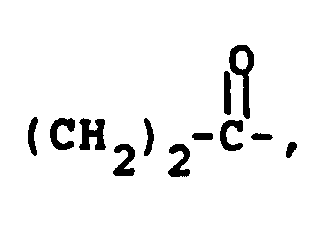
Y is -CO, W is H and R is -Glu-Gly-Tyr-Leu-Gln-OH, was prepared by first chemically synthesizing 5-BOC-4-oxo-8-tosylguinadinooctanoic acid as described in example 3, followed by appropriate peptide assembly using the procedure described under the heading "Synthesis of the peptides". -

- 1 g of tert-Butyloxycarbonyl-Gln phenylacetamidomethyl resin (Applied Biosystems; 0.64 mmol/g) was carried through 16 cycles of synthesis involving nα-side chain deprotection (50% TFA in CH2CL2 and coupling using 2.5 meq of protected amino acid/DCC and N-hydroxybenzotriazole. Side chain protecting groups of standard amino acids were as follows: Asp (cyclohexyl), Glu (benzyl), His (benzyloxymethyl), Tyr (bromobenzyl), Ser (benzyl).
- The synthetic protected amino acid from example 3 was coupled to Gln49 also using DCC/N-hydroxybenzotriazole. For optimum results, N-BOC-(D)-Phe-Pro-OH could be added at a single unit instead of individual amino acids.
- The fully protected peptide resin (500 mg) was treated with hydrogen fluoride in a teflon vessel containing anisole and dimethyl sulfide (10% by volume) at -5°C for 60 minutes. Excess HF was removed under a stream of N2 and the residual mass was extracted with ether and filtered. The resin was extracted three times with glacial acetic acid and water, followed by lyophilization.
- The lyophilized crude peptide was purified to homogeneity by reverse phase chromatography on an octadecyl silica (15 Å, Vydac) glass column (1.5 X 30 cm), 40 psi using a linear gradient of a solvent system consisting of (a) 500 ml of 0.1% TFA/H20 and (B) 1 liter of 60% acetonitrile H2O containing 0.1% TFA. Fractions corresponding to 98% purity or higher were pooled and lyophilized.
- Amino acid analysis indicated: Asp (3), Ser (1), Glu (6), Gly (1), Ile (1), Leu (1), Tyr (1), Phe (2), His (1), Pro (2).
- The resulting peptide showed a pseudo molecular ion corresponding to 2548.6.
-

- Amino acid analysis indicated: Asp (3.20), Ser (0.86), Gly (6.60), Gly (0.8), Ile (1.00), Leu (1.06), Tyr (0.86), Phe (1.84), His (0.88), Pro (2.10).
- Pseudo molecular ion: 2562.4.
-

- Amino acid analysis indicated: Asp (3.15), Ser (0.84), Gly (6.84), Gly (1.00), Ile (1.04), Leu (1.26), Tyr (0.99), Phe (2.12), His (1.00), Pro (1.55).
- Pseudo molecular ion: 2576.8.
-
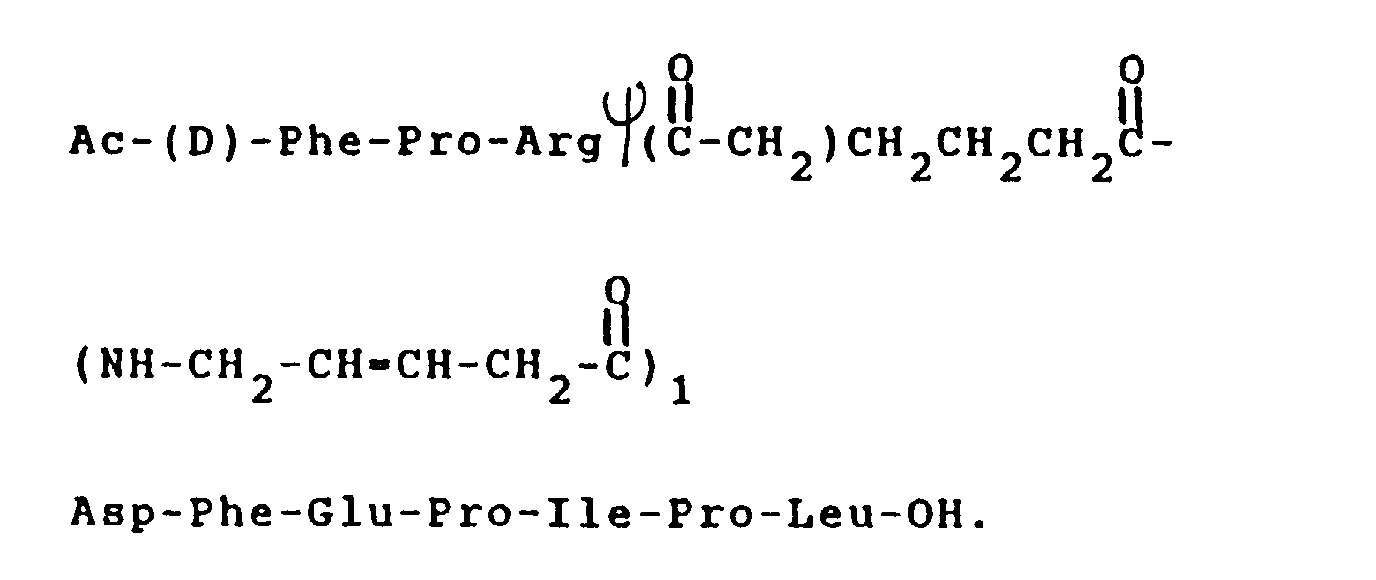
- The title peptide of this example was synthesized and purified essentially as described for P79 and its homologs with minor modifications. For example, the solid phase synthesis began with tert-butyloxycarb-onyl-Leu phenylacetamidomethyl polystyrene resin (Applied Biosystems, 0.64 mmol/g). For deprotection of the t-BOC group following the Asp residue, 50% TFA in CH2Cl2 containing 10% ethylmethyl sulfide was used. In this way, the yield of the title peptide was optimized to greater than 60%, by HPLC (UV absorption at 215 nm).
- Amino acid analysis indicated: Asp (1.00), Glu (1.07), Ile (0.94), Leu (1), Phe (1.82), Pro (3.29).
- Pseudo molecular ion: 1455.
-
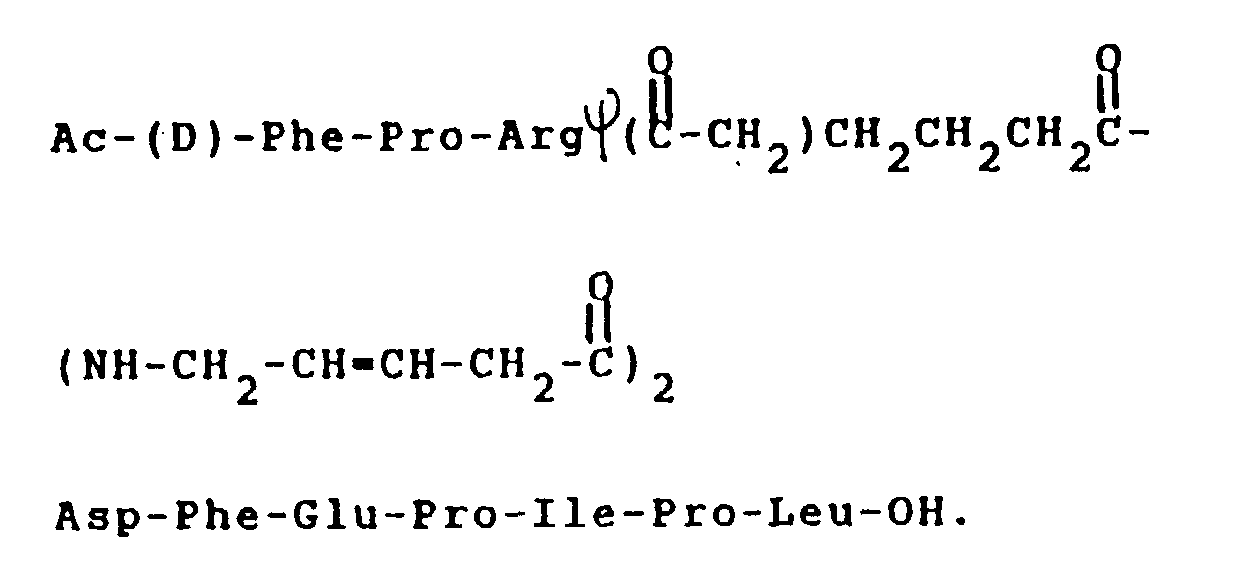
- Amino acid analysis indicated: Asp (1.00), Glu (1.08), Ile (0.96), Leu (1.01), Phe (1.91), Pro (3.48).
- Pseudo molecular ion: 1553.
-

- Amino acid analysis indicated: Asp (1.00), Glu (1.06), Ile (0.93), Leu (0.98), Phe (1.88), Pro (3.6).
- Pseudo molecular ion: 1647.
- Thrombin-catalyzed hydrolysis of Tos-Gly-Pro-Arg-pNA was monitored at 405 nm on a Varian Cary 2000 double beam spectrophotometer using substrate concentrations of 2.5, 3.5, 5 and 10 µM in a final volume of 1mL. The hydrolytic reactions were performed at 25°C in 0.1 M Tris-HCl buffer, pH 7.8, containing 0.1 M NaCl and 0.1% PEG 6000. The reactions were initiated by addition of the substrate dissolved in 0.1 M Tris-HCl buffer, pH 7.8 to a preincubated solution of enzyme (0.4 or 0.04 nM) and variable concentrations of inhibitor dissolved in the same buffer. Initial velocities were recorded and Ki values were determined graphically by weighted linear regression of Dixon plots in the case of competitive inhibition, or by the method of Baici (Baici, 1981) for hyperbolic inhibition. Fluorogenic assays were conducted using the same conditions and instrument as above operating in the fluorescence mode in the Ratio (λex=383 nm, λem=455 nm). Fluorescence intensities were calibrated with 7-amino-4-methyl coumarin solution of known concentration. The specificity of the synthetic peptides of the present invention for human α-thrombin may also be determined by comparing their relative inhibitory activities towards both human α-thrombin and bovine α-thrombin and trypsin by comparing K1 values obtained in the amidolytic assay of thrombin activity.
- Hence, the inhibitory activity of the synthetic peptides of the present invention towards thrombin may also be assayed by determination of prothrombin time (PT, extrinsic pathway) or activated partial thromboplastin time (APTT, intrinsic pathway) of pooled reconstituted normal human plasma using a Coag-A-Mate 2001 instrument (General Diagnostics Inc., Morris Planes, New Jersey) or other suitable spectrophotometer.
- Thus, for the determination of prothrombin time, 50 µl of reconstituted citrated normal human plasma (Sigma, St-Louis, MO.) is mixed with 50 µl of thromboplastin solution at 37 °C in a 400 µl cuvette. The mixture is then treated with either 200 µl of Tris-HCl buffer pH 7.8 (containing 0.1M NaCl, 0.1% PEG 6000) or variable concentrations of inhibitor in the same buffer. The clotting time is recorded following recalcification with 100 µl of 25 mM CaCl2. The clotting time in the absence of inhibitor was between 19-22 sec.
- The same procedure is adopted for the determination of activated partial thromboplastin time except that reconstituted plasma is activated for 3 minutes with cephalin (Sigma, St-Louis, MO.).
- Typical APTT and PT inhibition curves are shown in Figured 1 and 4.
- The inhibitory activity of some of the peptides of the present invention toward thrombin is reflected by their ability to inhibit thrombin-mediated platelet aggregation as shown in Figure 2. Platelet rich plasma containing variable concentrations of P79 which is treated with thrombin. Platelet aggregation, reflected by increased light transmittance which is measured on a Bio Data PAP-4 aggregometer.
- Inhibition of fibrinogen clot formation was measured spectrophotometrically at 405 nm on a Varian DMS 90 at 37°C. 300 µL of 0.1% fibrinogen (Sigma) in 0.1M Tris-HCl, pH 7.8, containing 0.1M NaCl, 0.1
% PEG 600 and variable concentrations of inhibitor in the same buffer were mixed in polystyrene cuvettes and the reaction was initiated by the addition of the enzyme (human or bovine α-thrombin 0.4 nM) in a total volume of 1 mL. The time from mixing to inflection due to clot formation was recorded for various inhibitor concentrations and IC50 values were calculated by log probit analysis. The concentrations of the inhibitors in the assays was based on the peptide content. - Various other assays may be used to determine the anticoagulant activity of the peptides of the present invention. Hence, the inhibitory activity of the synthetic peptides of the present invention towards thrombin may also be assayed by the inhibition of activated partial thromboplastin times (APTT intrinsic pathway or prothrombin time PT extrinsic pathway). Thus, the anticoagulant activity may be determined by assaying APTT of pooled, normal human plasma with a Coag-A-Mate 2001 instrument (General Diagnostics Inc., Morris Planes, New Jersey).
- Furthermore, the synthetic peptides of the present invention may be tested for inhibition of thrombin-catalyzed hydrolysis of the tripeptidyl P-nitroanilide substrate tosyl-Gly-Pro-Arg-P-nitroanilide (Chromozym TH, Boehringer-Mannheim, Indianapolis, In.) spectrophotometrically at 420 nm on a Cary 219 double-beam spectrophotometer. The reactions may be prepared by mixing a thrombin solution with a Tris-HCl, pH 7.4, NaCl buffer.
- These assays, when performed using some of the synthetic peptides of the present invention, demonstrated that these peptides act as bifunctional inhibitors of thrombin. Indeed, it was demonstrated that the incorporation of the two critical regions of the peptides separated by a suitable spacer provided strong thrombin inhibitors. Results are shown in Table I.
- Therefore, the enhanced enzyme affinity and in vitro anticoagulant effect may be attributed directly to a cooperative intramolecular binding mechanism. For example, if substituent X of the compound of formula I is D-Phe, this will render region (i) suitable to bind with the extended hydrophobic region of the active site of thrombin. The requirements for region (ii) to bind to a non-catalytic site of thrombin are different from those of region (i).
- It is clear that the incorporation of these two regions into a single molecule separated by a suitable linker substantially increases the affinity of the compounds for thrombin. In fact, the combination of separate IC50 doses of the two independent regions results in the exact doubling of the clotting time whereas greater activity is obtained if the two regions are joined by a linker. It therefore appears that dual cooperative binding of the bifunctional inhibitors of the present invention takes place when these are contacted with thrombin. The linker serves as a suitable spacer for the bridging of an auxiliary site (region (ii)) and a catalytic site (region (i)) as well as an apolar binding site adjacent to the catalytic site.
- The various experiments have also demonstrated that while D-Phe-Pro-Arg-Pro-OH and Nα-acetyl desulfo hirudin55-65 independently inhibited fibrin clot formation by bovine α-thrombin with IC50 values of 250 µM and 3.5 µM respectively, their incorporation into a single molecule separated by a spacer corresponding to hirudin residues 49-54 afforded an inhibitor with an IC50 =70±20 nM (bovine α-thrombin) and 4±0.8 nM (human α-thrombin). The effect of combining separate IC50 doses of hirudin45-65 and D-Phe-Pro-Arg-Pro-OH resulted only in the doubling of the fibrinogen clotting time, while the contribution of the spacer was negligible. The synergistic effect observed for P53 in the clotting assay was corroborated by results of the fluorogenic assay where this analog emerged as a pure competitive inhibitor compared to P51 with Ki values almost 50 fold lower than the latter. Interesting thrombin inhibitory activities have been obtained with peptides P79, P102, P103 as well as "truncated" peptides P184 and P185.
- The rat anaesthetized with urethane is fixed in supine position on a temperature-controlled heating plate. The right carotid artery and the left jugular vein are catheterized with short polyethylene catheters (Portex, PE 50). The catheters are filled with physiological saline solution and clamped. The two ends of the catheters are connected with a 2-cm glass capillary (internal diameter 1.0 mm) acting as a thrombogenic surface, 5 min after intravenous administration of the test substance or its solvent (control) the clamps occluding the arteriovenous shunt are opened. The blood flowing through the shunt leads to a rapid rise in temperature of the glass capillary from room temperature to body temperature. The temperature of the capillary serves as an indicator for the patency of the shunt. The temperature is measured by means of a NiCrNi-thermo-couple.
- Antithrombotic effect of P79 compared to recombinant hirudin in the arteriovenous shunt model in rats 5 min. after intravenous administration (n - number of animals used. Results are shown in Table II below.
TABLE II Substance *ED15 mg/kg (95% confidence limits) n P79 0.42 (0.27 - 1.19) 15 r-hirudin 1.42 (1.14 - 1.92) 32 * dose which causes a prolongation of the time until occlusion of the shunt by 15 min. - The peptides of this invention were evaluated for in vitro plasma stability against proteolysis. The results in the accompanying figure are an illustrative example of the comparative stability of P53 and P79 (otherwise designated as hirutonin II).
- 600 µg of peptide was mixed with 250 µl of reconstituted normal human plasma, 250 µl of thromboplastin, 600 µg of calcium chloride and 50 mM NaHPO4 buffer ph 7.8 to a final volume of 900 µl.
- The mixture was incubated at 37°C and 100 µl aliquots were removed at designated time intervals. 20 µl of 10% trichloroacetic acid was added to individual aliquot and centrifuged at 12 X K for 10 minutes. The supernatant was injected on a C18 analytical column and chromatographed by standard elution procedure (i.e. at 60% 0.1% TFA/H2O to 0.1 TFA in CH3CN).
- The comparative results shown in Figure 3 illustrate that whereas P53 is greater than 50% degraded after 30 minutes, P79 (hirutonin II) showed minimal or no proteolysis.
- The peptides of the present invention may be obtained in the form of therapeutically acceptable salts. Since the peptides of the present invention have residues that function both as acids and/or bases, then salts of organic acids (e.g. acetic, lactic, succinic or malic) or bases (e.g. sodium, potassium or calcium) could be derived. These salts of the peptides of formula I are fully biologically active. Therapeutically acceptable salts may be converted from one salt form to another by employing a suitable ion exchange resin in a manner described by R.A. Boissonas et al., Helv. Chim. Acta. 43, 1849 (1960).
- The peptides of the present invention, or their therapeutically acceptable salts, are employed alone or in combinations for the treatment of prophylaxis of vascular diseases due to thromboses. They are administered systemically to warm blooded animals, e.g. humans, horses or dogs, with pharmaceutically acceptable carriers, the proportion of composition of which depends on solubility and chosen route of administration. The peptides of the present invention are administered either intravenously, subcutaneously or by intramuscular injection in combination with pharmaceutically acceptable carriers. Examples of suitable carriers are found in standard pharmaceutical texts, e.g. "Remington's Pharmaceutical Sciences", 16th edition, Mack Publishing Company, Easton, Penn., 1980.
- The dosage of the peptides will vary depending on the form of administration and particular compound. In the case of an injection, the therapeutically effective dose of peptide is in a dosage range of approximately 0.05 mg/kg to 10 mg/kg body weight. In addition to the active ingredient, the compositions usually also contain suitable buffers, for example phosphate buffer, to maintain an appropriate pH and sodium chloride, glucose or mannitol to make the solution isotonic.
- The peptides of the present invention may be administered alone or in combination with other pharmaceuticals. For example, the peptides may be administered in combination with tissue plasminogen activator to prevent reocclusion of coronary arteries. Alternatively, the peptides of the present invention could be administered with heparin or low molecular weight heparin, a combination which could advantageously lower the dosage of heparin or low molecular weight heparin.
- Within the scope of the present invention is a process for the preparation of a compound having the following formula II:

n is an integer ranging from 1 to 4 and K and K' are the same or different and are suitable protecting groups such as Boc and Tos. - The process comprises oxidizing a compound having the following formula:

- n is an integer ranging from 1 to 4 and K and K' are the same or different and are suitable protecting groups such as Boc and Tos,
- with an oxidant having the ability to oxidize double bonds, and recovering the desired product.
- The compound of formula II also falls within the scope of the present invention.
- The invention further comprises a process for the preparation of a compound having the following formula III:

- The process comprises treating a compound having the following formula:


* is H, OH, -O-SO2-OH, -CH2-SO2-OH or -O-PO2-OH, or CH2-PO2-OH,
substituted at the para position of the phenyl ring, or
R and R' are the same or different and are an amino acid or an amine group having the following formula:

R' is a hydroxyl group attached to Leu to form a carboxyl group, or a therapeutically acceptable salt thereof.
* is H, OH, -O-SO2-OH, -CH2-SO2-OH or -O-PO2-OH, CH2-PO2-OH substituted at the para position of the phenyl ring; and
R' is a hydroxyl group attached to Leu to form a carboxyl group, or a therapeutically acceptable salt thereof, or R' is an amino acid or an amine group having the following formula:


n is an integer ranging from 1 to 4, the native hirudin48-54 sequence, or a synthetic spanner of the general formula

Claims (12)
- A thrombin inhibitor comprising:(a) a first bulky hydrophobic moiety comprising the formula:
 X is a hydrophobic group, preferably a hydrophobic α-amino acid in the D-configuration attached by a peptide linkage to substituent B, or X is a hydrophobic group attached to the nitrogen atom of substituent B;B is a residue of a hydrophobic amino acid, preferably an α-amino acid of the L-configuration or a cyclic imino acid, which can bear one or more alkyl substituents attached to the ring, which substituents may bridge to form a cyclic structure;D is p-phenylmethyl, p-phenylethyl, ethylene, butylene, or propylene;Y is a carbonyl;W is H or a lower alkyl, aryl or aralkyl substituent on the 3, 4 or 5 position of the piperidine or pyrrolidine ring; and(b) a second moiety comprising the formula:wherein
 G and G' are the same or different and are an L-α-amino acid having a pk value of 5 or below;X' is a hydrophobic L-α-amino acid;Q is a residue of a L-α-amino acid or a cyclic L-imino acid;W is H, or a branched or straight chain alkyl, aryl or aralkyl radical;R is a hydrophobic group comprising 1 to 5 amino acids or an alkyl, aryl or aralkyl radical which can be substituted by a carboxyl or amide function or,R iswherein
* is H, OH, -O-SO2-OH, -CH2-SO2-OH or -O-PO2-OH, or -CH2-PO2-OH substituted at the para position of the phenyl ring, orR and R' are the same or different and are an amino acid or an amine group having the following formula: R' is a hydroxyl group attached to Leu to form a carboxyl group, or a therapeutically acceptable salt thereof; and between moieties (a) and (b):(c) a divalent linker moiety having a chain length of at least 10 carbon atoms.
 - A thrombin inhibitor according to claim 1, wherein said divalent linker moiety is composed of a carbon chain that is interrupted by one or more O, S, NH, carbonyl, ester or amide groups, the terminal atom of the chain being a carbon atom that is part of a carbonyl group that forms a peptide linkage with said acidic portion.
- A thrombin inhibitor according to claim 1, wherein
G and G' are the same or different and are Asp, Glu, n is 1 or 2X' is L-Phe, L-4FPhe or L-4ClPhe;Q is proline, pipecolic acid, sarcosine or Glu;W is H or a lower alkyl, aryl or aralkyl substituent on the 3, 4 or 5 position of the piperidine or pyrrolidine ring;R is Glu-Glu-Phe*-Leu-R' or Leu-R', wherein
* is H, -CH2-SO2-OH, -OH, -O-SO2-OH, or -O-PO2-OH, -CH2-PO2-OH substituted in the para position and R' is a hydroxyl group or
- A thrombin inhibitor according to claim 1, whereinX is D-Phe, D-4FPhe or D-4ClPhe wherein the α-amino group is neutralized by acetylation or benzoylation, or X is naphthalenesulfonyl, benzenesulfonyl, toluenesulfonyl;B is Val, pipecolic acid or Pro;W is hydrogen or a lower alkyl, aryl or aralkyl substituent on the 3, 4 or 5 position of the ring when B is Pro or pipecolic acid;D is propylene or phenylmethyl.
- A peptide derivative having the following formula I:
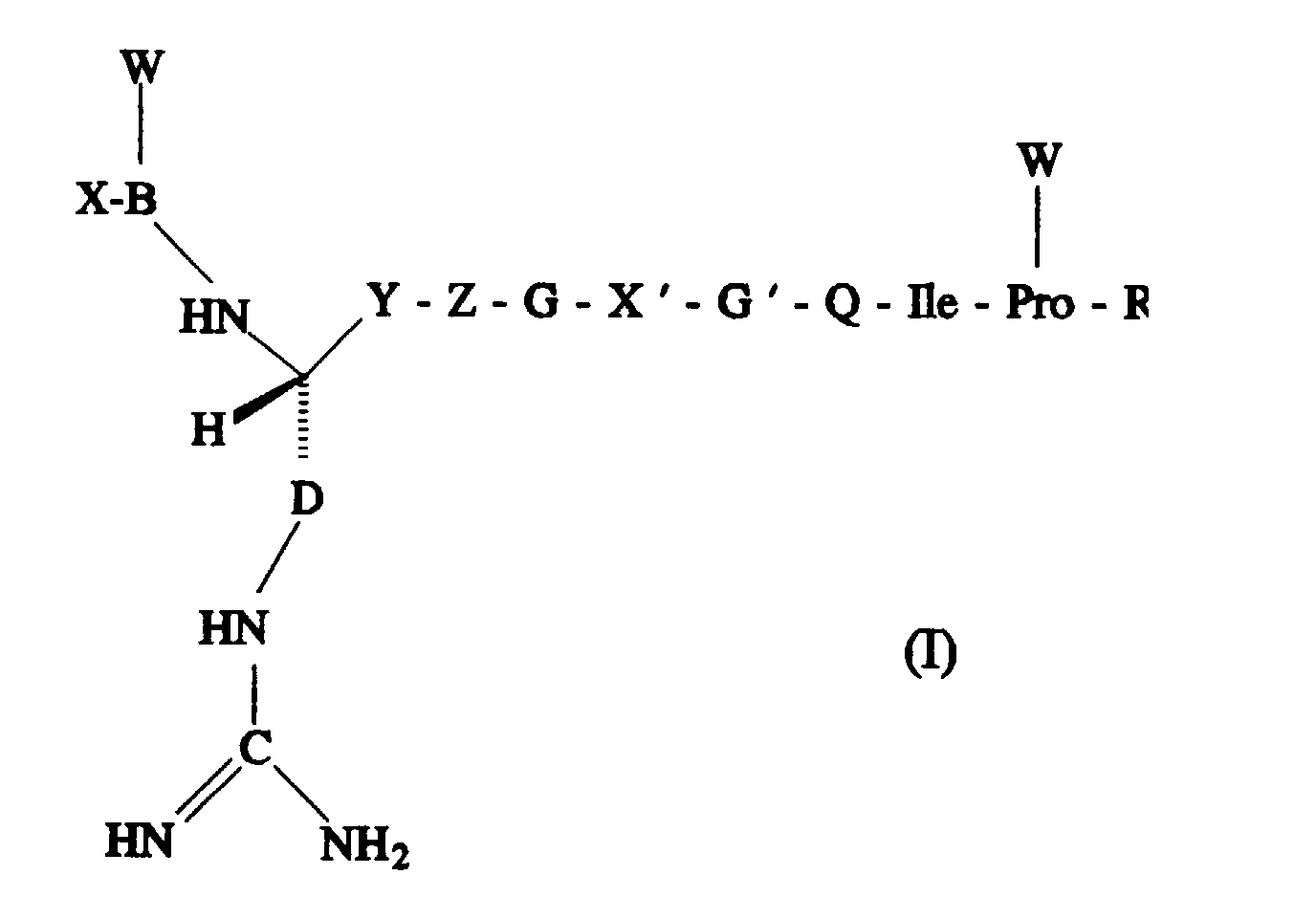 X is a hydrophobic group;B is a residue of a hydrophobic amino acid;D is a linear carbon chain having 2 to 4 carbon atoms which can be substituted by loweralkyl, or D is a p-phenylmethyl or a p-phenylethyl group;Y is carbonyl;Z is a divalent straight chained linker moiety having a chain length of at least 10 atoms, wherein the atom adjacent to the carbon atom of Y may be unsubstituted or mono- or di-fluoro-substituted, and Z can be composed of a carbon chain that is interrupted by one or more O, S, NH, carbonyl, ester or amide groups, the terminal atom of the chain being a carbon atom that is part of a carbonyl group that forms a peptide linkage with the L-α-amino acid G, G and G' are the same or different and are an L-α-amino acid having a pk value of 5 or below;X' is a hydrophobic L-α-amino acid;Q is a residue of an L-α-amino acid or a cyclic L-imino acid;W is H, or a branched or straight chain alkyl, aryl or aralkyl radical;R is a hydrophobic group comprising 1 to 5 amino acids or an alkyl, aryl or aralkyl radical which can be substituted by a carboxyl or amide function or,R iswherein
* is H, OH, -O-SO2-OH, -CH2-SO2-OH or -O-PO2-OH, or -CH2-PO2-OH substituted at the para position of the phenyl ring; or
R and R' are the same or different and are an amino acid or an amine group having the following formula:
R' is a hydroxyl group attached to Leu to form a carboxyl group, or a therapeutically acceptable salt thereof. - A peptide derivative according to claim 5, whereinX is a hydrophobic α-amino acid in the D-configuration, attached by a peptide linkage to substituent B or a hydrophobic group attached to the nitrogen atom of substituent B;B is a residue of a hydrophobic α-amino acid of the L-configuration or a cyclic imino acid, which can bear one or more alkyl substituents attached to the ring, which substituents may bridge to form a cyclic structure;D is p-phenylmethyl, p-phenylethyl, ethylene, butylene, or propylene;Y is carbonyl;Z has a chain length ranging between 12 and 40 and preferably 20 atoms;G and G' are the same or different and are Asp, Glu,wherein
 n is 1 or 2X' is L-Phe, L-4FPhe or L-4ClPhe;Q is proline, pipecolic acid, sarcosine or Glu;W is H or a lower alkyl, aryl or aralkyl substituent on the 3, 4 or 5 position of the piperidine or pyrrolidine ring;R is Glu-Glu-Phe*-Leu-R' or Leu-R',wherein
* is H, -CH2-SO2-OH, -OH, -O-SO2-OH, or -O-PO2-OH, or -CH2-PO2-OH substituted in the para position and R' is a hydroxyl group or
- A peptide derivative according to claim 5,
whereinX is D-Phe, D-4FPhe or D-4ClPhe wherein the α-amino group is neutralized by acetylation or benzoylation, or X is naphthalenesulfonyl, benzenesulfonyl, toluenesulfonyl;B is Val, pipecolic acid or Pro;W is hydrogen or a lower alkyl, aryl or aralkyl substituent on the 3, 4 or 5 position of the ring;D is propylene when B is Pro or pipecolic acid or phenylmethyl;Y is carbonyl;Z is -(CH2)nCO-Gln-Ser-His-Asn-Asp-Gly-wherein
n is an integer ranging from 1 to 4, the native hirudin 48-54 sequence, or a synthetic spanner of the general formula
(-CH2-)nCO-NH-L-CO-
whereinn is an integer ranging from 1 to 4; andL is a hexapeptide or saturated or unsaturated alkyl chain corresponding to 18 atoms or less of a hexapeptide;R is Glu-Glu-Tyr-Leu-Gln-OH, Leu-OH or Glu-Glu-Tyr-Leu-R' wherein R' is a hydroxyl group or a group having the following formula:wherein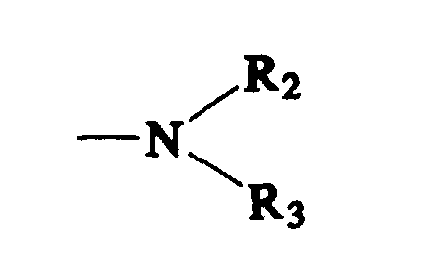 R2 is -CH3 or phenethyl,R3 is H or -CH3 or R2 and R3 may be joined together to form -CH2-CH2-CH2-CH2-, -CH2-CH2-CH2-CH2-CH2- or CH2-CH2-O-CH2-CH2.
 - A peptide derivative according to claim 7, wherein Z has the following formula:
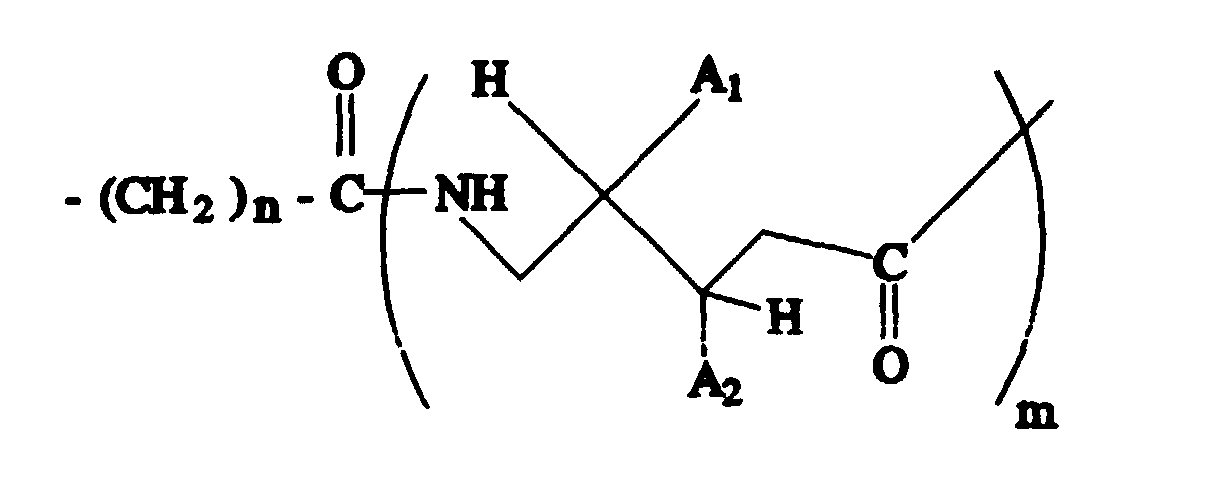 n and m are integers ranging from 1 to 4; andA1 and A2 are each independently H or des H in the cis or trans configuration; with the proviso that when m is 1, n is 3 or 4;if A1 and A2 are des H, then Z is
- A peptide derivative according to claim 5, whereinX is D-Phe;B is proline;D is propylene;Y is carbonyl;G is Asp;G' is Glu;X' is Phe;Q is Glu or Pro;Z is-(CH2)2-CO-Gln-Ser-His-Asp-Asp-Gly-,- (CH2)3-CO-Gln-Ser-His-Asp-Asp-Gly-,-(CH2)4-CO-Gln-Ser-His-Asp-Asp-Gly-,-(CH2)4(CO)-(NHCH2CH=CHCH2CO),-(CH2)4(CO)-(NHCH2CH=CHCH2CO)2, or-(CH2)4(CO)-(NHCH2CH=CHCH2CO)3,;W is H, n-butyl or methyl; andR' is Glu-Glu-Tyr-Leu-OH; or -Leu-OH.
- A peptide derivative according to claim 5, wherein said peptide of formula I is selected from the group consisting of:
P79 [D-Phe45, Arg47 Ψ (COCH2)CH2CH2CO47]hirudin45-65;
P109 [D-Phe45, Arg47 Ψ (COCH2)CO47]hirudin45-65;
P103 [D-Phe45, Arg47 Ψ (COCH2)CH2CH2CH2CH2CO47]hirudin45-65;



- A composition for the treatment of thrombotic disorders which comprises an effective amount of a synthetic peptide according to claim 5 in admixture with a pharmaceutically acceptable carrier.
- Use of a peptide derivative according to claim 5, for the manufacture of a medicament for the treatment or prophylaxis of vascular diseases related to thrombosis in a patient.
Applications Claiming Priority (3)
| Application Number | Priority Date | Filing Date | Title |
|---|---|---|---|
| US53832290A | 1990-06-15 | 1990-06-15 | |
| US538322 | 1990-06-15 | ||
| PCT/CA1991/000213 WO1991019734A2 (en) | 1990-06-15 | 1991-06-14 | Thrombin inhibitors based on the amino acid sequence of hirudin |
Publications (2)
| Publication Number | Publication Date |
|---|---|
| EP0536177A1 EP0536177A1 (en) | 1993-04-14 |
| EP0536177B1 true EP0536177B1 (en) | 1997-11-19 |
Family
ID=24146434
Family Applications (1)
| Application Number | Title | Priority Date | Filing Date |
|---|---|---|---|
| EP91910717A Expired - Lifetime EP0536177B1 (en) | 1990-06-15 | 1991-06-14 | Thrombin inhibitors based on the amino acid sequence of hirudin |
Country Status (14)
| Country | Link |
|---|---|
| EP (1) | EP0536177B1 (en) |
| JP (1) | JP2669510B2 (en) |
| KR (1) | KR100212162B1 (en) |
| AT (1) | ATE160356T1 (en) |
| AU (1) | AU654820B2 (en) |
| CA (1) | CA2085465C (en) |
| DE (1) | DE69128247T2 (en) |
| DK (1) | DK0536177T3 (en) |
| ES (1) | ES2111567T3 (en) |
| FI (1) | FI925696A7 (en) |
| GR (1) | GR3026150T3 (en) |
| HU (1) | HUT63440A (en) |
| NO (1) | NO309040B1 (en) |
| WO (1) | WO1991019734A2 (en) |
Families Citing this family (12)
| Publication number | Priority date | Publication date | Assignee | Title |
|---|---|---|---|---|
| US5240913A (en) * | 1989-08-18 | 1993-08-31 | Biogen, Inc. | Inhibitors of thrombin |
| US5196404B1 (en) * | 1989-08-18 | 1996-09-10 | Biogen Inc | Inhibitors of thrombin |
| US6060451A (en) * | 1990-06-15 | 2000-05-09 | The National Research Council Of Canada | Thrombin inhibitors based on the amino acid sequence of hirudin |
| DK0540574T3 (en) * | 1990-07-24 | 1996-09-30 | Merrell Pharma Inc | Anticoagulant peptides |
| US5242810A (en) * | 1990-12-07 | 1993-09-07 | Biogen, Inc. | Bifunctional inhibitors of thrombin and platelet activation |
| US5656600A (en) * | 1993-03-25 | 1997-08-12 | Corvas International, Inc. | α-ketoamide derivatives as inhibitors of thrombosis |
| IT1265023B1 (en) * | 1993-04-16 | 1996-10-28 | Dev Biotechnological Processes | THROMBIN INHIBITORS, THEIR PREPARATION AND USE FOR THERAPEUTIC, PROPHYLACTIC AND DIAGNOSTIC APPLICATIONS |
| NZ268159A (en) * | 1993-06-11 | 1997-03-24 | Merrell Pharma Inc | Anticoagulant and antiplatelet peptides and their use |
| WO1995011921A1 (en) * | 1993-10-25 | 1995-05-04 | National Research Council Of Canada | Bivalent thrombin inhibitors |
| GB9506212D0 (en) * | 1995-03-27 | 1995-05-17 | Iaf Biochem Int | Bifunctional thrombin inhibitors bearing highly truncated fibrinogen recognition exosite binding component |
| EP1278549B1 (en) | 2000-05-02 | 2008-12-10 | Theravance, Inc. | Composition containing a cyclodextrin and a glycopeptide antibiotic |
| WO2025262265A1 (en) | 2024-06-21 | 2025-12-26 | Etablissement Francais Du Sang | Chimeric molecules comprising an anti-fibrin antibody and an antithrombotic molecule |
Family Cites Families (3)
| Publication number | Priority date | Publication date | Assignee | Title |
|---|---|---|---|---|
| GB8305985D0 (en) * | 1983-03-04 | 1983-04-07 | Szelke M | Enzyme inhibition |
| JPS606647A (en) * | 1983-06-17 | 1985-01-14 | Microbial Chem Res Found | Alphamenine, its relating compound and their synthesis |
| US5196404B1 (en) * | 1989-08-18 | 1996-09-10 | Biogen Inc | Inhibitors of thrombin |
-
1991
- 1991-06-14 JP JP3510319A patent/JP2669510B2/en not_active Expired - Fee Related
- 1991-06-14 AU AU80855/91A patent/AU654820B2/en not_active Ceased
- 1991-06-14 KR KR1019920703243A patent/KR100212162B1/en not_active Expired - Fee Related
- 1991-06-14 EP EP91910717A patent/EP0536177B1/en not_active Expired - Lifetime
- 1991-06-14 DK DK91910717T patent/DK0536177T3/en active
- 1991-06-14 WO PCT/CA1991/000213 patent/WO1991019734A2/en not_active Ceased
- 1991-06-14 CA CA002085465A patent/CA2085465C/en not_active Expired - Fee Related
- 1991-06-14 FI FI925696A patent/FI925696A7/en unknown
- 1991-06-14 ES ES91910717T patent/ES2111567T3/en not_active Expired - Lifetime
- 1991-06-14 DE DE69128247T patent/DE69128247T2/en not_active Expired - Fee Related
- 1991-06-14 AT AT91910717T patent/ATE160356T1/en not_active IP Right Cessation
- 1991-06-14 HU HU923968A patent/HUT63440A/en unknown
-
1992
- 1992-12-14 NO NO924834A patent/NO309040B1/en unknown
-
1998
- 1998-02-16 GR GR980400324T patent/GR3026150T3/en unknown
Non-Patent Citations (1)
| Title |
|---|
| JOURNAL OF BIOLOGICAL CHEMISTRY, vol. 265, no. 35, 15 December 1990, Baltimore, MD (US); J. DiMAIO et al., pp. 21698-21703/ * |
Also Published As
| Publication number | Publication date |
|---|---|
| WO1991019734A2 (en) | 1991-12-26 |
| NO924834L (en) | 1992-12-15 |
| AU8085591A (en) | 1992-01-07 |
| JP2669510B2 (en) | 1997-10-29 |
| ATE160356T1 (en) | 1997-12-15 |
| JPH06500073A (en) | 1994-01-06 |
| NO924834D0 (en) | 1992-12-14 |
| ES2111567T3 (en) | 1998-03-16 |
| EP0536177A1 (en) | 1993-04-14 |
| FI925696L (en) | 1992-12-15 |
| DE69128247T2 (en) | 1998-03-19 |
| KR100212162B1 (en) | 1999-08-02 |
| GR3026150T3 (en) | 1998-05-29 |
| NO309040B1 (en) | 2000-12-04 |
| CA2085465C (en) | 2001-07-24 |
| DK0536177T3 (en) | 1998-07-27 |
| FI925696A0 (en) | 1992-12-15 |
| HUT63440A (en) | 1993-08-30 |
| FI925696A7 (en) | 1992-12-15 |
| CA2085465A1 (en) | 1991-12-16 |
| HU9203968D0 (en) | 1993-03-29 |
| WO1991019734A3 (en) | 1992-02-20 |
| AU654820B2 (en) | 1994-11-24 |
| DE69128247D1 (en) | 1998-01-02 |
Similar Documents
| Publication | Publication Date | Title |
|---|---|---|
| US6060451A (en) | Thrombin inhibitors based on the amino acid sequence of hirudin | |
| US5384309A (en) | Cyclized peptides and their use as platelet aggregation inhibitors | |
| FI102183B (en) | A process for the preparation of novel thrombin inhibitors | |
| EP0341915B1 (en) | Anti-aggregatory peptides | |
| KR100259759B1 (en) | Inhibitors of thrombin | |
| JPH08502493A (en) | Arginine keto-amide enzyme inhibitor | |
| KR20010075130A (en) | Factor VIIa inhibitors | |
| IE61569B1 (en) | Novel polypeptides with a blood coagulation-inhibiting action, proceses for their preparation and isolation, their use and agents containing them | |
| CA2085465C (en) | Thrombin inhibitors based on the amino acid sequence of hirudin | |
| WO1991011458A1 (en) | CYCLIC PEPTIDES CONTAINING Arg-Gly-Asp FLANKED BY PROLINE | |
| CA2175388A1 (en) | Bivalent thrombin inhibitors | |
| US5858972A (en) | Antithrombotic agents and methods of use | |
| DE69420574T2 (en) | DERIVATIVES OF THERAPEUTICALLY EFFECTIVE PEPTIDES IN THE BLOOD COLLECTING CASCADE, METHOD FOR THE PRODUCTION AND PHARMACEUTICAL PREPARATIONS CONTAINING THE SAME | |
| WO1996030407A1 (en) | Bifunctional thrombin inhibitors bearing highly truncated fibrinogen recognition exosite binding component | |
| US5262521A (en) | Isolated atrial peptide-degrading enzyme and novel compounds useful as inhibitors thereof | |
| HK1005511B (en) | Thrombin inhibitors based on the amino acid sequence of hirudin | |
| JPH05286996A (en) | Novel peptides and pseudopeptide compounds with therapeutic activity on the coagulation cascade | |
| JP2002506432A (en) | Peptides that inhibit thrombin | |
| JPWO1992015610A1 (en) | Hirudin analogues or salts thereof, method for producing the same, and anticoagulant containing the same as an active ingredient |
Legal Events
| Date | Code | Title | Description |
|---|---|---|---|
| PUAI | Public reference made under article 153(3) epc to a published international application that has entered the european phase |
Free format text: ORIGINAL CODE: 0009012 |
|
| 17P | Request for examination filed |
Effective date: 19921211 |
|
| AK | Designated contracting states |
Kind code of ref document: A1 Designated state(s): AT BE CH DE DK ES FR GB GR IT LI LU NL SE |
|
| 17Q | First examination report despatched |
Effective date: 19950102 |
|
| GRAG | Despatch of communication of intention to grant |
Free format text: ORIGINAL CODE: EPIDOS AGRA |
|
| GRAH | Despatch of communication of intention to grant a patent |
Free format text: ORIGINAL CODE: EPIDOS IGRA |
|
| GRAH | Despatch of communication of intention to grant a patent |
Free format text: ORIGINAL CODE: EPIDOS IGRA |
|
| GRAA | (expected) grant |
Free format text: ORIGINAL CODE: 0009210 |
|
| AK | Designated contracting states |
Kind code of ref document: B1 Designated state(s): AT BE CH DE DK ES FR GB GR IT LI LU NL SE |
|
| REF | Corresponds to: |
Ref document number: 160356 Country of ref document: AT Date of ref document: 19971215 Kind code of ref document: T |
|
| REG | Reference to a national code |
Ref country code: CH Ref legal event code: EP |
|
| ET | Fr: translation filed | ||
| REF | Corresponds to: |
Ref document number: 69128247 Country of ref document: DE Date of ref document: 19980102 |
|
| ITF | It: translation for a ep patent filed | ||
| REG | Reference to a national code |
Ref country code: CH Ref legal event code: NV Representative=s name: E. BLUM & CO. PATENTANWAELTE |
|
| REG | Reference to a national code |
Ref country code: ES Ref legal event code: FG2A Ref document number: 2111567 Country of ref document: ES Kind code of ref document: T3 |
|
| REG | Reference to a national code |
Ref country code: DK Ref legal event code: T3 |
|
| PLBE | No opposition filed within time limit |
Free format text: ORIGINAL CODE: 0009261 |
|
| STAA | Information on the status of an ep patent application or granted ep patent |
Free format text: STATUS: NO OPPOSITION FILED WITHIN TIME LIMIT |
|
| 26N | No opposition filed | ||
| REG | Reference to a national code |
Ref country code: GB Ref legal event code: IF02 |
|
| PGFP | Annual fee paid to national office [announced via postgrant information from national office to epo] |
Ref country code: GR Payment date: 20020516 Year of fee payment: 12 |
|
| PGFP | Annual fee paid to national office [announced via postgrant information from national office to epo] |
Ref country code: SE Payment date: 20020524 Year of fee payment: 12 |
|
| PGFP | Annual fee paid to national office [announced via postgrant information from national office to epo] |
Ref country code: FR Payment date: 20020531 Year of fee payment: 12 |
|
| PGFP | Annual fee paid to national office [announced via postgrant information from national office to epo] |
Ref country code: CH Payment date: 20020606 Year of fee payment: 12 |
|
| PGFP | Annual fee paid to national office [announced via postgrant information from national office to epo] |
Ref country code: ES Payment date: 20020607 Year of fee payment: 12 |
|
| PGFP | Annual fee paid to national office [announced via postgrant information from national office to epo] |
Ref country code: GB Payment date: 20020613 Year of fee payment: 12 |
|
| PGFP | Annual fee paid to national office [announced via postgrant information from national office to epo] |
Ref country code: DK Payment date: 20020617 Year of fee payment: 12 |
|
| PGFP | Annual fee paid to national office [announced via postgrant information from national office to epo] |
Ref country code: LU Payment date: 20020619 Year of fee payment: 12 |
|
| PGFP | Annual fee paid to national office [announced via postgrant information from national office to epo] |
Ref country code: AT Payment date: 20020624 Year of fee payment: 12 |
|
| PGFP | Annual fee paid to national office [announced via postgrant information from national office to epo] |
Ref country code: DE Payment date: 20020627 Year of fee payment: 12 Ref country code: BE Payment date: 20020627 Year of fee payment: 12 |
|
| PGFP | Annual fee paid to national office [announced via postgrant information from national office to epo] |
Ref country code: NL Payment date: 20020628 Year of fee payment: 12 |
|
| PG25 | Lapsed in a contracting state [announced via postgrant information from national office to epo] |
Ref country code: LU Free format text: LAPSE BECAUSE OF NON-PAYMENT OF DUE FEES Effective date: 20030614 Ref country code: AT Free format text: LAPSE BECAUSE OF NON-PAYMENT OF DUE FEES Effective date: 20030614 Ref country code: GB Free format text: LAPSE BECAUSE OF NON-PAYMENT OF DUE FEES Effective date: 20030614 |
|
| PG25 | Lapsed in a contracting state [announced via postgrant information from national office to epo] |
Ref country code: SE Free format text: LAPSE BECAUSE OF NON-PAYMENT OF DUE FEES Effective date: 20030615 |
|
| PG25 | Lapsed in a contracting state [announced via postgrant information from national office to epo] |
Ref country code: ES Free format text: LAPSE BECAUSE OF NON-PAYMENT OF DUE FEES Effective date: 20030616 |
|
| PG25 | Lapsed in a contracting state [announced via postgrant information from national office to epo] |
Ref country code: LI Free format text: LAPSE BECAUSE OF NON-PAYMENT OF DUE FEES Effective date: 20030630 Ref country code: BE Free format text: LAPSE BECAUSE OF NON-PAYMENT OF DUE FEES Effective date: 20030630 Ref country code: DK Free format text: LAPSE BECAUSE OF NON-PAYMENT OF DUE FEES Effective date: 20030630 Ref country code: CH Free format text: LAPSE BECAUSE OF NON-PAYMENT OF DUE FEES Effective date: 20030630 |
|
| BERE | Be: lapsed |
Owner name: *MAJESTY (HER) IN RIGHT OF CANADA AS REPRESENTED B Effective date: 20030630 |
|
| PG25 | Lapsed in a contracting state [announced via postgrant information from national office to epo] |
Ref country code: NL Free format text: LAPSE BECAUSE OF NON-PAYMENT OF DUE FEES Effective date: 20040101 Ref country code: DE Free format text: LAPSE BECAUSE OF NON-PAYMENT OF DUE FEES Effective date: 20040101 |
|
| PG25 | Lapsed in a contracting state [announced via postgrant information from national office to epo] |
Ref country code: GR Free format text: LAPSE BECAUSE OF NON-PAYMENT OF DUE FEES Effective date: 20040107 |
|
| EUG | Se: european patent has lapsed | ||
| GBPC | Gb: european patent ceased through non-payment of renewal fee |
Effective date: 20030614 |
|
| REG | Reference to a national code |
Ref country code: DK Ref legal event code: EBP |
|
| REG | Reference to a national code |
Ref country code: CH Ref legal event code: PL |
|
| PG25 | Lapsed in a contracting state [announced via postgrant information from national office to epo] |
Ref country code: FR Free format text: LAPSE BECAUSE OF NON-PAYMENT OF DUE FEES Effective date: 20040227 |
|
| NLV4 | Nl: lapsed or anulled due to non-payment of the annual fee |
Effective date: 20040101 |
|
| REG | Reference to a national code |
Ref country code: FR Ref legal event code: ST |
|
| REG | Reference to a national code |
Ref country code: ES Ref legal event code: FD2A Effective date: 20030616 |
|
| PG25 | Lapsed in a contracting state [announced via postgrant information from national office to epo] |
Ref country code: IT Free format text: LAPSE BECAUSE OF NON-PAYMENT OF DUE FEES;WARNING: LAPSES OF ITALIAN PATENTS WITH EFFECTIVE DATE BEFORE 2007 MAY HAVE OCCURRED AT ANY TIME BEFORE 2007. THE CORRECT EFFECTIVE DATE MAY BE DIFFERENT FROM THE ONE RECORDED. Effective date: 20050614 |