EP0532725B1 - Isoxazole derivatives as light screening agent - Google Patents
Isoxazole derivatives as light screening agent Download PDFInfo
- Publication number
- EP0532725B1 EP0532725B1 EP92907129A EP92907129A EP0532725B1 EP 0532725 B1 EP0532725 B1 EP 0532725B1 EP 92907129 A EP92907129 A EP 92907129A EP 92907129 A EP92907129 A EP 92907129A EP 0532725 B1 EP0532725 B1 EP 0532725B1
- Authority
- EP
- European Patent Office
- Prior art keywords
- alkyl
- methylisoxazol
- oxy
- alkenyl
- optionally
- Prior art date
- Legal status (The legal status is an assumption and is not a legal conclusion. Google has not performed a legal analysis and makes no representation as to the accuracy of the status listed.)
- Expired - Lifetime
Links
- 0 *C(*)=C(C(I)=NO1)C1=O Chemical compound *C(*)=C(C(I)=NO1)C1=O 0.000 description 2
Classifications
-
- C—CHEMISTRY; METALLURGY
- C08—ORGANIC MACROMOLECULAR COMPOUNDS; THEIR PREPARATION OR CHEMICAL WORKING-UP; COMPOSITIONS BASED THEREON
- C08G—MACROMOLECULAR COMPOUNDS OBTAINED OTHERWISE THAN BY REACTIONS ONLY INVOLVING UNSATURATED CARBON-TO-CARBON BONDS
- C08G65/00—Macromolecular compounds obtained by reactions forming an ether link in the main chain of the macromolecule
- C08G65/02—Macromolecular compounds obtained by reactions forming an ether link in the main chain of the macromolecule from cyclic ethers by opening of the heterocyclic ring
- C08G65/32—Polymers modified by chemical after-treatment
- C08G65/329—Polymers modified by chemical after-treatment with organic compounds
- C08G65/333—Polymers modified by chemical after-treatment with organic compounds containing nitrogen
- C08G65/33396—Polymers modified by chemical after-treatment with organic compounds containing nitrogen having oxygen in addition to nitrogen
-
- C—CHEMISTRY; METALLURGY
- C07—ORGANIC CHEMISTRY
- C07D—HETEROCYCLIC COMPOUNDS
- C07D261/00—Heterocyclic compounds containing 1,2-oxazole or hydrogenated 1,2-oxazole rings
- C07D261/02—Heterocyclic compounds containing 1,2-oxazole or hydrogenated 1,2-oxazole rings not condensed with other rings
- C07D261/06—Heterocyclic compounds containing 1,2-oxazole or hydrogenated 1,2-oxazole rings not condensed with other rings having two or more double bonds between ring members or between ring members and non-ring members
- C07D261/10—Heterocyclic compounds containing 1,2-oxazole or hydrogenated 1,2-oxazole rings not condensed with other rings having two or more double bonds between ring members or between ring members and non-ring members with hetero atoms or with carbon atoms having three bonds to hetero atoms with at the most one bond to halogen, e.g. ester or nitrile radicals, directly attached to ring carbon atoms
- C07D261/12—Oxygen atoms
-
- C—CHEMISTRY; METALLURGY
- C07—ORGANIC CHEMISTRY
- C07D—HETEROCYCLIC COMPOUNDS
- C07D413/00—Heterocyclic compounds containing two or more hetero rings, at least one ring having nitrogen and oxygen atoms as the only ring hetero atoms
- C07D413/02—Heterocyclic compounds containing two or more hetero rings, at least one ring having nitrogen and oxygen atoms as the only ring hetero atoms containing two hetero rings
- C07D413/04—Heterocyclic compounds containing two or more hetero rings, at least one ring having nitrogen and oxygen atoms as the only ring hetero atoms containing two hetero rings directly linked by a ring-member-to-ring-member bond
-
- C—CHEMISTRY; METALLURGY
- C07—ORGANIC CHEMISTRY
- C07D—HETEROCYCLIC COMPOUNDS
- C07D413/00—Heterocyclic compounds containing two or more hetero rings, at least one ring having nitrogen and oxygen atoms as the only ring hetero atoms
- C07D413/02—Heterocyclic compounds containing two or more hetero rings, at least one ring having nitrogen and oxygen atoms as the only ring hetero atoms containing two hetero rings
- C07D413/10—Heterocyclic compounds containing two or more hetero rings, at least one ring having nitrogen and oxygen atoms as the only ring hetero atoms containing two hetero rings linked by a carbon chain containing aromatic rings
-
- C—CHEMISTRY; METALLURGY
- C07—ORGANIC CHEMISTRY
- C07D—HETEROCYCLIC COMPOUNDS
- C07D413/00—Heterocyclic compounds containing two or more hetero rings, at least one ring having nitrogen and oxygen atoms as the only ring hetero atoms
- C07D413/02—Heterocyclic compounds containing two or more hetero rings, at least one ring having nitrogen and oxygen atoms as the only ring hetero atoms containing two hetero rings
- C07D413/12—Heterocyclic compounds containing two or more hetero rings, at least one ring having nitrogen and oxygen atoms as the only ring hetero atoms containing two hetero rings linked by a chain containing hetero atoms as chain links
Definitions
- the invention is concerned with light screening compositions which contain isoxazolones, namely compounds of the formula wherein
- the compounds of formula I are particularly suitable as light screening agents.
- the invention is accordingly also concerned with the use of I as light screening agents.
- the compound of formula I are partly novel and partly known.
- the process comprises appropriately substituting an isoxazolone of the formula wherein R 1 has the above significance, in the 4-position.
- R 3 can also be introduced by reaction with a halide R 3 Hal (F, Cl, Br, I) or a corresponding epoxide such as e.g. (CH 2 ) 2 O, etc.
- the secondary reaction step can be effected, e.g. in E, simultaneously with the primary reaction.
- One such amine would be e.g. a polyoxypropylenediamine, e.g. of the formula NH 2 CH[CH 3 ]CH 2 (OCH 2 CH 2 [CH 3 ]) n NH 2 , or a polyoxy- ethylenediamine, e.g. of the formula NH 2 CH 2 CH 2 (OCH 2 CH 2 ) n NH 2, in which n signifies e.g. a whole number of 1 to 30.
- a or the primary step of B-E is conveniently carried out in a temperature range of about 0-150°C. It is carried out, if desired, in the presence of an inert solvent, e.g. diethyl ether, tetrahydrofuran, dioxan, toluene, xylene, dichloromethane, dichloroethane, etc.
- an inert solvent e.g. diethyl ether, tetrahydrofuran, dioxan, toluene, xylene, dichloromethane, dichloroethane, etc.
- the reaction is carried out in the presence of a base, preferably a weak base such as e.g. a tertiary amine, e.g. triethylamine, dimethylaniline, dimethylaminopyridine or diazabicyclooctane, or an inorganic base such as e.g. sodium phosphate, soda, potash, magnesium hydroxide or oxide; although sodium hydroxide or potassium hydroxide also comes into consideration.
- a base preferably a weak base such as e.g. a tertiary amine, e.g. triethylamine, dimethylaniline, dimethylaminopyridine or diazabicyclooctane
- an inorganic base such as e.g. sodium phosphate, soda, potash, magnesium hydroxide or oxide; although sodium hydroxide or potassium hydroxide also comes into consideration.
- the reaction is conveniently carried out in a temperature range of 0-200°C, especially of 20-150°C.
- the addition of the primary amine R 3 NH 2 is conveniently effected in a temperature range of about 0-200°C, especially of 50-160°C, optionally under pressure.
- the use of a solvent is optional. The aforementioned solvents come into consideration.
- the addition of this halide is optionally effected in the presence of a base, preferably a strong base, e.g. an alcoholate, an amide, an alkali hydroxide, etc.
- a base preferably a strong base, e.g. an alcoholate, an amide, an alkali hydroxide, etc.
- the convenient temperature range is that given above.
- the addition of a solvent is optional.
- a catalyst e.g. a strong base or a strong acid.
- a catalyst e.g. a strong base or a strong acid.
- alkali hydroxides, alcoholates, mineral acids, Lewis acids, etc. alkali hydroxides, etc.
- the purification of the resulting compound I can be effected, for example, by crystallization or distillation.
- Suitable C 1-29 -alkyl residues are, for example:
- C 1-12 -alkyl residues but also higher, e.g. C 15 -, C 18 -, C 20 -, C 21 -, C 24 -, C 27 -, C 29 - residues, and also lower alkyl, namely (C 1-6 ) residues, e.g. methyl, ethyl, propyl, butyl, hexyl, etc.
- Suitable C 2-29 -alkenyl residues are, for example:
- Suitable C 2-29 -alkynyl residues are in particular C 2-6 -alkinyl residues, e.g. 2-propynyl, 3-butynyl, 4-pentynyl, 1,1-dimethylpropynyl, ⁇ -hexinyl, etc.
- C 1-6 -alkyl and, respectively, the C 1-6 -alkyl part of oxy-C 1-6 alkyl are: OCH 3 , OC 2 H 5 , OC 5 H 11 , OC 6 H 13 , etc.
- R 2 and R 3 together with the N atom can also form a - saturated or unsaturated- ring, e.g. a 6-membered ring namely the pyrrolidinyl ring.
- the total number of carbon atoms of R 1 and R 2 and R 3 conveniently does not exceed 30; because otherwise the relationship of the sizes of the residues R 1 , R 2 and R 3 compared with the light-absorbing part of the molecule (chromophore, i.e. the isoxazolone part) is unfavourable.
- the compounds I' are very well suited as light screening agents because they generally fulfil a majority of the foregoing requirements, especially parameters (1), (2), (3), (4), (5), (6) and (7) set forth above.
- UV filters of structure I are novel chromophores having a high photostability.
- EP-A 199 323 describes isoxazolones of the formula wherein R is (substituted) phenyl, and their use as medicaments.
- EP 349 418 describes compounds of the formula as medicaments, inter alia against damages due to the sunlight.
- the manufacture of the novel light screening compositions comprises incorporating a compound of general formula I into a cosmetic base which is suitable for light screening compositions.
- a cosmetic base which is suitable for light screening compositions.
- other conventional UV A or UV B filters can also be combined during this incorporation.
- UV A filters are, for example:
- UV B filters such as, for example, the following organic compounds belonging to the widest classes of substances can be mentioned as UV B filters i.e. as substances having absorption maxima between about 290 and 320 nm:
- any usual preparation which corresponds to the cosmetic requirements e.g. creams, lotions, emulsions, salves, gels, solutions, sprays, sticks, milks and the like.
- the light screening effect will, of course, also be dependent on the base which is used.
- the intensity of the light screening activity also depends in the case of the same base on the concentration of active ingredient. Suitable concentrations are e.g. between 1-6%, preferably between 2-5%, of a compound of formula I in the cosmetic preparation.
- the light screening agents are, however, also suitable against the damaging influence of light on other substrates to be protected.
- further substrates there come into consideration e.g.: plastics and synthetic resins, soft resins, e.g. for contact lenses, varnishes, oils, waxes, furniture and car polishes, etc.
- 3-n-Hexylisoxazol-5(4H)-one is obtained in 99% yield as a reddish liquid by holding ethyl 3-oxo-pelargonate at reflux temperature for 1 hour with one equivalent of hydroxylamine hydrochloride and one equivalent of pyridine and thereafter working-up in the usual manner.
- Example 1 The procedure described in Example 1 is repeated, but in section a) aniline is used in place of n-pentylamine and n-heptanoyl chloride is used in place of caproyl chloride.
- N-isopropyl-caproamide is prepared in the same manner as in Example 1, section a), from caproyl chloride and isopropylamine (yield 80%, b.p. 87°C/0.1 Torr). 11 g thereof are added dropwise to 7 ml of dimethyl sulphate and the mixture is stirred at 25°C for 24 hours. By partition between aqueous potash solution and ether and subsequent concentration and distillation of the organic phase there are obtained 6.7 g (56%) of a yellowish liquid of N-isopropylcaproamide iminomethyl ether (b.p. 50°C/16 Torr).
- Oil/water sunscreen cream % wt.%wt A) Cetyl alcohol 1.00 Glyceryl stearate 4.00 Dimethicone 0.30 Coco caprylate/caproate 8.00 Compound of Example 15 3.00 B) Amphisol K 2.00 C) Water q.s. to 100 Carbomer 951 1) 0.10 Na 2 EDTA 0.10 Methylparaben 0.15 D) KOH 10% 0.60 E) Phenoxyethanol & methylparaben & ethylparaben & propylparaben 0.35 F) Odorant q.s. 1) Synthetic polymer from acrylic acid, cross-linked with an allyl ether of pentaerythritol.
Landscapes
- Chemical & Material Sciences (AREA)
- Organic Chemistry (AREA)
- General Chemical & Material Sciences (AREA)
- Health & Medical Sciences (AREA)
- Chemical Kinetics & Catalysis (AREA)
- Medicinal Chemistry (AREA)
- Polymers & Plastics (AREA)
- Heterocyclic Carbon Compounds Containing A Hetero Ring Having Nitrogen And Oxygen As The Only Ring Hetero Atoms (AREA)
- Cosmetics (AREA)
- Pharmaceuticals Containing Other Organic And Inorganic Compounds (AREA)
- Investigating Or Analysing Biological Materials (AREA)
- Nitrogen And Oxygen Or Sulfur-Condensed Heterocyclic Ring Systems (AREA)
Abstract
Description
- The invention is concerned with light screening compositions which contain isoxazolones, namely compounds of the formula

- R1
- represents H, C1-19-alkyl, C2-29-alkenyl, C2-29-alkynyl, optionally C1-6-alkyl or oxy-C1-6 alkyl substituted phenyl,
- R2
- represents H, C1-29-alkyl, C2-29-alkenyl, C2-29-alkynyl, optionally C1-6-alkyl or oxy-C1-6 alkyl substituted phenyl,
- R3
- represents H, C1-29-alkyl, C1-19-hydroxyalkyl, C1-19-polyhydroxyalkyl, C2-29-alkenyl, C2-29-alkynyl, optionally C1-6-alkyl or oxy-C1-6 alkyl substituted phenyl or optionally C1-6-alkyl or oxy-C1-6 alkyl substituted pyridyl, a polyether residue as defined below, a phenylsulphonic acid residue,
- The compounds of formula I are particularly suitable as light screening agents. The invention is accordingly also concerned with the use of I as light screening agents.
- The compound of formula I are partly novel and partly known.
- The novel compound I, namely the compounds I', correspond to those compounds of formula I above in which the sum of the carbon atoms of R1 + R2 + R3 = 9-30 and the number of phenyl residues per molecule does not exceed 1, and the radicals R1 and R2 cannot be unsubstituted or substituted phenyl.
- These novel compounds I and the process for their manufacture form further objects of the present invention.
- The process comprises appropriately substituting an isoxazolone of the formula

- This substitution is conveniently effected with a R2-substituted carboxylic acid derivative. There is thus formed a compound of the formula

- Examples of the aforementioned carboxylic acid derivatives are
- A R2-C(=NR3)(-X) wherein X = -halogen, -OR4 (in which R4 = lower alkyl) -NHR3
- B R2-C(=NR5)(-X) R5 = H, lower alkyl; ≠ R3
- C R2-C(=NH2 +)(-X)
- D R-C(=O)(-X)
- E R2-C(OR4)3
- There are thereby formed:





- Where Y = NHR3 in formula III the desired end product I' therefore results directly.
- If, however, Y ≠ NHR3 then the grouping Y = NHR3 is conveniently introduced in a subsequent, secondary reaction step and the compound I' is thus obtained.
- This is carried out e.g. by reacting the compound III with an amine R3NH2. In case C, R3 can also be introduced by reaction with a halide R3Hal (F, Cl, Br, I) or a corresponding epoxide such as e.g. (CH2)2O, etc.
- The secondary reaction step can be effected, e.g. in E, simultaneously with the primary reaction.
- Depending on the structure of the amine R3NH2 or its residue R3, which can carry more than one amino substituent, molecules with several, e.g. 2 or 3, isoxazole residues can also be formed.
- One such amine would be e.g. a polyoxypropylenediamine, e.g. of the formula NH2CH[CH3]CH2(OCH2CH2[CH3])nNH2, or a polyoxy- ethylenediamine, e.g. of the formula NH2CH2CH2(OCH2CH2)nNH2, in which n signifies e.g. a whole number of 1 to 30.
- The reactions are conveniently carried out using methods per se.
- A or the primary step of B-E is conveniently carried out in a temperature range of about 0-150°C. It is carried out, if desired, in the presence of an inert solvent, e.g. diethyl ether, tetrahydrofuran, dioxan, toluene, xylene, dichloromethane, dichloroethane, etc.
- If desired, the reaction is carried out in the presence of a base, preferably a weak base such as e.g. a tertiary amine, e.g. triethylamine, dimethylaniline, dimethylaminopyridine or diazabicyclooctane, or an inorganic base such as e.g. sodium phosphate, soda, potash, magnesium hydroxide or oxide; although sodium hydroxide or potassium hydroxide also comes into consideration. The reaction is conveniently carried out in a temperature range of 0-200°C, especially of 20-150°C.
- In the case of the secondary step of B to E, the addition of the primary amine R3NH2 is conveniently effected in a temperature range of about 0-200°C, especially of 50-160°C, optionally under pressure. The use of a solvent is optional. The aforementioned solvents come into consideration.
- In case of the halide R3Hal, the addition of this halide is optionally effected in the presence of a base, preferably a strong base, e.g. an alcoholate, an amide, an alkali hydroxide, etc. The convenient temperature range is that given above. The addition of a solvent is optional.
- In the case of the epoxide, its addition is conveniently effected in the presence of a catalyst, e.g. a strong base or a strong acid. Examples are: alkali hydroxides, alcoholates, mineral acids, Lewis acids, etc. The convenient reaction conditions are as given above.
- The purification of the resulting compound I can be effected, for example, by crystallization or distillation.
- The above reactions are in principle reactions with activated carboxylic acid derivatives, which are reacted with isoxazolones II which are unsubstituted in the 4-position.
- The starting materials are known or can be prepared according to methods known per se. Thus, e.g., activated carboxylic acid derivatives are described in Houben-Weyl, Methoden der organischen Chemie [Volume E5 (1985)] by J. Falbe, and [Volume E4 (1983)] by H. Hagmann.
- Suitable C1-29-alkyl residues are, for example:
- C1-12-alkyl residues, but also higher, e.g. C15-, C18-, C20-, C21-, C24-, C27-, C29- residues, and also lower alkyl, namely (C1-6) residues, e.g. methyl, ethyl, propyl, butyl, hexyl, etc.
- Suitable C2-29-alkenyl residues are, for example:
- C2-12-α-alkenyl, C2-12-ω-alkenyl, C2-6-alkenyl, especially allyl, methallyl, Δ2-butenyl, Δ3-butenyl, ω-hexenyl, etc.
- Suitable C2-29-alkynyl residues are in particular C2-6-alkinyl residues, e.g. 2-propynyl, 3-butynyl, 4-pentynyl, 1,1-dimethylpropynyl, ω-hexinyl, etc.
- Examples of C1-6-alkyl and, respectively, the C1-6-alkyl part of oxy-C1-6 alkyl are: OCH3, OC2H5, OC5H11, OC6H13, etc.
- Examples of C1-29-hydroxyalkyl residues are CH2CH2OH, CH2CH2(CH3)OH, CH(OH)(CH2)nH with n = 2-28, or as illustrated e.g. in Example 16.
- Examples of C1-29-polyhydroxyalkyl residues are CH2CH(OHCH2OH, CH2(CHOH)nCH2OH,(CHOH)n-CH2OH, CH(CHOH)nCH2OCHOH, CH(CHOH)nCH(CH2OH)OCHOH with n = 1-28, especially 1-4.
- The polyether residues are polyethylene glycol or polypropylene glycol residues of the formula (CH2CH2O)nH or [CH(CH3)CH2O]nH with n = 2-20, as illustrated e.g. in Examples 18 and 19.
- All the residues R1, R2 and R3 can be straight-chain or branched.
- R2 and R3 together with the N atom can also form a - saturated or unsaturated- ring, e.g. a 6-membered ring namely the pyrrolidinyl ring.
- The total number of carbon atoms of R1 and R2 and R3 conveniently does not exceed 30; because otherwise the relationship of the sizes of the residues R1, R2 and R3 compared with the light-absorbing part of the molecule (chromophore, i.e. the isoxazolone part) is unfavourable.
- The preferred residues in the case of the different substituents are as follows:
- 1)
- R1 = methyl, but also hexyl and phenyl,
- R2 = H or C3-11-alkyl,
- R3 = C3-20-alkyl, substituted phenyl;
- 2) as 1) whereby R2 and R3 together have 5-15, especially 9-13, C atoms;
- 3) as 1), whereby R2 = H and R3 = C8-16-alkyl, especially C10-12-alkyl;
- 4)
- R1 = methyl, but also hexyl and phenyl,
- R2 or R3 = phenyl, pyridyl, optionally substituted, and the other residue (R3 or R2) = C5-20-alkyl, especially C7-14- or C9-12-alkyl.
- Essential requirements of (especially cosmetic) UV filters are e.g.:
- high extinction (1) (and associated therewith low dosing and therefore reduced toxicological risk);
- high stability against the influence of light (2);
- stability against acids, bases, air and other chemical or thermal influences (3);
- good oil solubility (4) and/or good water solubility;
- low tendency to crystallize-out, e.g. from emulsions even at low temperatures (e.g. in snow);
- toxicological safety;
- lack of colour and lack of smell (5);
- favourable price, inexpensive to use (6);
- water resistance (substantivity);
- very good compatibility with other cosmetic ingredients and simplicity in handling (7).
- The compounds I' are very well suited as light screening agents because they generally fulfil a majority of the foregoing requirements, especially parameters (1), (2), (3), (4), (5), (6) and (7) set forth above.
- It is quite generally true that the UV filters of structure I are novel chromophores having a high photostability.
- The compounds of Examples 1, 2, 3, 4, 10, 11, 12, 14, 15, 16, 18, 20 and 21 hereinafter are especially preferred because they fulfil these requirements in a particular manner.
- 3,4-Substituted 5-isoxazolones and isoxazoles respectively are known. EP-A 199 323 describes isoxazolones of the formula

- EP 349 418 describes compounds of the formula

- The manufacture of the novel light screening compositions (especially of skin protection and, respectively, sunscreen preparations for everyday cosmetics) comprises incorporating a compound of general formula I into a cosmetic base which is suitable for light screening compositions. Where convenient, other conventional UV A or UV B filters can also be combined during this incorporation.
- Such UV A filters are, for example:
- 1-(4-methoxyphenyl)-3-(4-tert.-butylphenyl)propane-1,3-dione CTFA name: butylmethoxydibenzoylmethane
- 4-Isopropyl-dibenzoylmethane
- 2,2'-Hydroxy-4-methoxybenzophenone (= dioxybenzone or benzophenone-δ)
- 2-Hydroxy-4-methoxybenzophenone-5-sulphonic acid (= sulisobenzone, benzophenone-4)
- 2-Hydroxy-4-methoxybenzophenone (= oxybenzone, benzophenone-3)
- 3,3,5-Trimethyl-cyclohexyl-N-acetyl-anthranilate (= homomenthyl N-acetyl-anthranilate)
- 2-Methylanthranilate
- Usual UV B filters such as, for example, the following organic compounds belonging to the widest classes of substances can be mentioned as UV B filters i.e. as substances having absorption maxima between about 290 and 320 nm:
- 1) p-Aminobenzoic acid derivatives, such as e.g. ethyl p-aminobenzoate and other esters, such as propyl, butyl, isobutyl p-aminobenzoate, ethyl p-dimethylaminobenzoate, glyceryl p-aminobenzoate, amyl p-dimethylaminobenzoate.
- 2) Cinnamic acid derivatives such as e.g. 2-ethoxyethyl p-methoxycinnamate, 2-ethylhexyl p-methoxycinnamate, p-methoxycinnamic acid ester mixtures, cinnamic acid ester mixtures.
- 3 ) Dibenzalazine.
- 4) Heterocyclic nitrogen compounds such as 2-phenylbenzimidazole derivatives, e.g. 2-phenylbenzimidazole-5-sulphonic acid.
- 5) Salicylic acid derivatives such as e.g. menthyl salicylate, homomenthyl salicylate, phenyl salicylate.
- 6) Benzophenone derivatives such as e.g. 4-phenylbenzophenone, 4-phenylbenzophenone-2-carboxylic acid isooctyl ester, 2-hydroxy-4-methoxybenzophenone-5-sulphonic acid.
- 7) Coumarin derivatives such as e.g. 7-oxycoumarin, β-umbelliferoneacetic acid, 6,7-dioxycoumarin.
- 8) Gallic acid derivatives such as e.g. digalloyl trioleate.
- 9) Arylidenecycloalkanones such as e.g. benzylidenecamphor.
- 10) Anthranilic acid derivatives such as e.g. menthyl anthranilate.
- 11) Hydroxyphenylbentriazole.
- As usual cosmetic bases for the light screening compositions in the scope of the present invention there can be used any usual preparation which corresponds to the cosmetic requirements, e.g. creams, lotions, emulsions, salves, gels, solutions, sprays, sticks, milks and the like. The light screening effect will, of course, also be dependent on the base which is used. The intensity of the light screening activity also depends in the case of the same base on the concentration of active ingredient. Suitable concentrations are e.g. between 1-6%, preferably between 2-5%, of a compound of formula I in the cosmetic preparation.
- The light screening agents are, however, also suitable against the damaging influence of light on other substrates to be protected. As such further substrates there come into consideration e.g.: plastics and synthetic resins, soft resins, e.g. for contact lenses, varnishes, oils, waxes, furniture and car polishes, etc.
-
- a) N-Pentyl-caproamide:
275 g of caproyl chloride are added dropwise within 30 minutes to a solution of 500 ml of n-pentylamine in 1.4 l of methylene chloride while cooling with ice and stirring. After standing at room temperature for 4 hours the reaction solution is washed in succession with 11 of 0.1N HCl, 11 of 0.1N NaOH and 1.51 of NaCl solution. The organic phase is concentrated on a rotary evaporator and dried in a high vacuum and gives 370 g of a crystalline mass (98% of theory). M.p. 37°C. - b) N-Pentyl-hexaneiminoyl chloride:
81 g of the amide prepared above are dissolved in 800 ml of CCl4 and treated portionwise with 91 g of phosphorus pentachloride. This mixture is held at reflux temperature for 3 hours, whereby HCl evolves. Now, CCl4 and POCl3 are distilled off and finally the product is fractionated in a high vacuum at 80-85°C/0.2 mbar. Yield 62 g of a colourless oil (70% of theory). NMR (CDCl3): 3.44 (t/2H); 2.62 (t/2H); 1.8-1.55 (multiplet/4H); 1.5-1.2 (multiplet/8H); 1.0-0.82 (multiplet/6H). - c) 4-[1-(N-Pentylamino])-1-hexylidene]-3-methylisoxazol-5(4H)-one: 8 g 3-methylisoxazol-5(4H)-on [prepared according to A.R. Katritzky et al., Tetrahedron 18, 777 (1962)] and 17.9 g of triethylamine are stirred in 320 ml of dioxan for 15 minutes and now treated with 16.5 g of the N-pentyl-hexaneiminoyl chloride prepared above. The reaction mixture is held at reflux temperature for 150 minutes and, after cooling, poured into 800 ml of 2N HCl. Now, the mixture is extracted three times with ether and back-washed with NaCl solution. The organic phases, dried over Na2SO4, are concentrated and dried in a high vacuum and give 20 g (93%) of a brown mass which is recrystallized in hexane. M.p. 36°C. IR (KBr): 1670; 1620; 1547. NMR (CDCl3): 10.4 ppm (s,broad/NH); 3.42 (Q/2H); 2.62 (symmetr. multiplet/2H); 2.30 (s/3H); 1.8-1.3 (multiplet/12H); 0.94 (symmetr. multiplet/6H). MS: 266(100%), 223, 209, 112. UV (EtOH): 311 nm (ε = 17900).
- The procedure described in Example 1 is repeated, but 3-phenylisoxazol-5(4H)-one [prepared according to A.Hanzsch, Berichte 24, 502 (1891)] is used in section c) in place of 3-methylisoxazol-5(4H)-one. The named product is obtained in 74% yield as a crystalline powder (m.p. 71°C). (UV EtOH): 314nm (ε = 18000).
- The procedure described in Example 1 is repeated, but 3-n-hexylisoxazol-5(4H)-one is used in section c) in place of 3-methylisoxazol-5(4H)-one. The named product is obtained in 51% yield as a yellowish oil. UV (EtOH): 313 nm (ε = 17593).
- 3-n-Hexylisoxazol-5(4H)-one is obtained in 99% yield as a reddish liquid by holding ethyl 3-oxo-pelargonate at reflux temperature for 1 hour with one equivalent of hydroxylamine hydrochloride and one equivalent of pyridine and thereafter working-up in the usual manner.
- The procedure described in Example 1 is repeated, but in section a) aniline is used in place of n-pentylamine and n-heptanoyl chloride is used in place of caproyl chloride. N-Phenyl-n-heptenamide (m.p. 50°C) is obtained in 94% yield. This is reacted with PCl5 as in Example 1, section b), and gives in quantitative yield N-phenyl-heptaneiminoyl chloride as a yellowish oil which is converted according to section c) into the desired product and purified by chromatography on silica gel in hexane/ether = 1:1. M.p. 83-84°C. UV (EtOH): 320 nm (ε = 19502).
- 2 g of 3-methylisoxazol-5(4H)-one [prepared according to A. Katritzky et al., Tetrahedron 18, 777(1962)] are treated with 2 g of 2-methoxy-Δ1-pyrroline [prepared according to A.E. Wick et al., Helv. 54, 513 (1971)] and left to stand for 2 days. The resulting crystal mass is recrystallized in ethanol and gives white crystals of the desired product in 60% yield. M.p. 188-190°C. UV: 302 nm (ε = 18100).
- N-isopropyl-caproamide is prepared in the same manner as in Example 1, section a), from caproyl chloride and isopropylamine (yield 80%, b.p. 87°C/0.1 Torr). 11 g thereof are added dropwise to 7 ml of dimethyl sulphate and the mixture is stirred at 25°C for 24 hours. By partition between aqueous potash solution and ether and subsequent concentration and distillation of the organic phase there are obtained 6.7 g (56%) of a yellowish liquid of N-isopropylcaproamide iminomethyl ether (b.p. 50°C/16 Torr). When this iminoether is now held at reflux temperature in an analogous manner to that in Example 1, section c), with one equivalent of 3-methylisoxazol-5(4H)-one and 0.03 equivalent of 1,4-diazabicydo[2.2.2]octane for 40 hours in toluene, then, after working-up and recrystallization from hexane/ether = 1:1, the desired product is obtained in 20% yield. M.p. 99-101°C, UV (EtOH): 310 nm (ε = 17350).
- Gaseous hydrochloric acid is conducted into a solution of 90g of lauronitrile and 23 g of ethanol while cooling with ice for 60 minutes. A crystalline mass forms after standing for 48 hours and this is freed from excess HCl and ethanol on a rotary evaporator. The procedure described in Example 1, section c), is repeated with the crude lauramide iminoethyl ether hydrochloride obtained, i.e. it is added dropwise to a solution of 3-methylisoxazol-5(4H)-one and triethylamine in dioxan and stirred at 25°C for 24 hours. After the usual working-up the desired product is obtained in 98% yield as orange crystals and is recrystallized from hexane/ethyl acetate = 1:1. M.p. 105-106°C, UV: 302 nm (ε = 15000).
- When the procedure described in Example 7 is repeated using valeronitrile in place of lauronitrile, then the above product is obtained as a white crystalline powder. M.p. 113-115°C, UV: 302 nm (ε = 16270).
- 3.6 g of lauronitrile are held at reflux temperature for 24 hours with 7.6 g of triethyloxonium fluoroborate in 20 ml of methylene chloride. Now, the reaction mixture is added dropwise to a solution of 2 g of 3-methylisoxazol-5(4H)-one and 6 g of triethylamine in 60 ml of toluene and the mixture is held at reflux temperature overnight. By partitioning between 2N hydrochloric acid and ether and concentration of the organic phase there is obtained a brown oil which, by purification using chromatography with CH2Cl2/methanol = 100:1, gives the desired product as yellow crystals in 60% yield. M.p. 67°C, UV (EtOH): 312 nm (ε = 20405).
- 4(Z)-[1'-(2"-Ethylhexyl)-amino-1'-heptylidene]-3-methylisoxazol-5(4H)-one, (m.p. 0-5°C), is obtained in an analogous manner when there is used as the starting material in place of 4-(1'-amino-1'-dodecylidene)-3-methylisoxazol-5(4H)-one in accordance with Example 7 4-(1'-amino-1'-heptylidene)-3-methylisoxazol-5(4H)-one (m.p. 91°C, prepared with n-heptanonitrile in place of lauronitrile).
- Likewise, 4(Z)-(1'-hexylamino-2'-methyl-1'-butylidene)-3-methylisoxazol-5(4H)-one is obtained in an analogous manner as a colourless liquid when there is used as the starting material in place of 4-(1'-amino-1'-dodecylidene)-3-methylisoxazol-5(4H)-one in accordance with Example 7 4-(1'-amino-2'-methyl-1'-butylidene)-3-methylisoxazol-5(4H)-one (m.p. 132°C, prepared with 2-methyl-butyronitrile in place of lauronitrile). [In this latter case, n-hexylamine is used in place of 2-ethyl-1-hexylamine].
- 2.8 g of 4-(1'-amino-1'-dodecylidine)-3-methylisoxazol-5(4H)-one, prepared in Example 7, are heated at 100°C for 4 hours with 2 g of 2-ethyl-1-hexylamine, whereby ammonia is liberated. The reaction mixture is partitioned between aqueous NaH2PO4 solution and ether and the ether phases are concentrated and filtered over silica gel in hexane/ether = 1:1. 2.9 g (74% yield) of the desired product are obtained as a yellow oil. MS: 392, 293(100%), 265, 154. UV (ethanol): 313 nm (ε = 18600).
- 1 g of 4-benzoyl-5-hydroxy-3-methylisoxazole [prepared according to K. Sato et al., Chem. Pharm. Bull 34, 3153 (1986)] is heated at 150°C for 15 minutes with 1 g of n-dodecylamine and thereupon the reaction mixture is partitioned between aqueous NaH2PO4 solution and ether. After evaporation of the ether phases the desired product is obtained as a yellow cyrstalline powder. M.p. 52°C. MS: 370, 369, 341, 215(100%), 185. UV (EtOH): 317 nm (ε = 17235).
- 3 g of triethyl orthoformate are added to 3.7 g of n-dodecylamine and 2g of 3-methylisoxazol-5(4H)-one and the reaction mixture is heated at 60°C for 20 hours. Thereupon, it is filtered over silica gel in hexanelether/CH2Cl2 = 1:1:3 and the desired product obtained is recrystallized in hexane. Yield 29%, m.p. 57°C, UV (EtOH): 311 nm (ε = 18530).
- 3.25 g of triethyl orthoacetate are added to 2.7 g of p-isopropylaniline and 2 g of 3-methylisoxazol-5(4H)-one and the reaction mixture is heated at 80°C for 24 hours. The cooled, crystallized-out reaction mixture is recrystallized in ethanol/ether/hexane/ethyl acetate = 1:1:1:1, whereby the desired product is obtained in 65% yield as yellow crystals. M.p. 170°C, UV (EtOH): 324 nm (ε = 21800).
- 1.7 g of 3-n-hexylisoxazol-5(4H)-one (prepared in accordance with Example 3) are dissolved in 10 ml of triethyl orthoformate and heated at 80°C for 2 hours together with 2.65 g of p-hexylaniline. The dark reaction solution is concentrated and recrystallized in 100 ml of hexane. 1.8 g (50% of theory) of the above-named crystalline compound are obtained. M.p. 88-90°C, UV (EtOH): 356 nm (ε = 26469). This compound is especially suitable as a UV A filter.
-
- a) 4-(1'-Oxy-1'-hexylidene)-3-methylisoxazol-5(4H)-one:
9.9 g of 3-methylisoxazol-5(4H)-one [prepared according to A.R. Katritzky et al., Tetrahedron 18, 777 (1962)] in 200 ml of dichloromethane are treated with 48 g of 4-N,N-dimethylaminopyridine and subsequently with 16.9 g of caproyl chloride and the mixture is held at reflux temperature for 5 hours. The red coloured reaction solution obtained is partitioned between 1N hydrochloric acid and ethyl acetate and the ethyl acetate phases are back-extracted, dried over Na2SO4 and concentrated on a rotary evaporator. A crude oil is obtained in quantitative yield: NMR (CDCl3): 0.92 (t/3H); 1.38 (multiplet/4H); 1.75 (multiplet/2H); 2.36 (s/3H); 2.67 (dxd/2H); 8.9 (s,broad/1H); UV (EtOH): 280 nm (ε = 13714). - b) 4-(1'-[N-Butylamino]-1'-hexylidene)-3-methylisoxazol-5(4H)-one:
4.9 g of the crude product obtained above are treated with 3.7 g of n-butylamine while cooling and heated at 150°C in an autoclave for 30 minutes. After cooling, the cooled crude product is recrystallized three times from a mixture of methyl tert.butyl ether and hexane, there being obtained 2.8 g (45%) of beige coloured crystals. M.p. 62-63°C. UV (EtOH): 312 nm (ε = 17980). - 49.5 g of 3-methylisoxazol-5(4H)-one are dissolved in 125 ml of orthoformic acid and treated slowly at 0°C with 30.5 g of 2-aminoethanol. After stirring for 60 minutes the mixture is cooled to 5°C and the resulting crystals are filtered off under suction and washed with ether. There are thus obtained 60 g of the desired water-soluble product which is recrystallized in methanol. M.p. 135°C, UV (EtOH): 310nm (ε = 17,800). Having regard to the good water solubility, this UV-filter is especially suitable for use in the aqueous phase of sunscreen emulsions.
-
- a) 4-(1'-Ethoxy-1'-ethylidene)-3-methylisoxazol-5(4H)-one:
19.8 g of 3-methylisoxazol-5(4H)-one are dissolved in 50 ml of triethyl orthoacetate and, after 10 minutes, the resulting crystallizate is filtered off under suction and rinsed with hexane. There are obtained 32.6 g of pale coloured crystals of the desired intermediate. M.p. 126-127°C; UV (EtOH): 294 nm (ε = 12,000). - b) Bis-[3-methylisoxazol-5(4H)-ono-4-(1'-ethylidene-1'-amino-2"-propyl-1"-oxy)]-polypropylene glycol ether:
8.45 g of the heterocyclic enol ether obtained above are held at reflux temperature for 200 minutes together with 12 g (0.6 equivalents) of polyoxypropylenediamine (BASF; Ludwigshafen, Aetheramin 400; CAS Reg. No. 9046-10-0) in 50 ml of toluene. The reaction mixture is shaken several times between methylene chloride and 1N aqueous sulphuric acid and the organic phases are concentrated. The desired product is obtained as a clear yellowish resin in almost quantitative yield. UV (EtOH): 309 nm (E = 505): NMR (CDCl3): 1.1 m/18H(CH3); 1.3 m/6H(CH3); 2.3 s/6H(CH3); 2.4 s/6H(CH3); 3.3-4.1 m, broad/24H; 10.4 s/2H(NH). - 1.8 g of the 4-(1'-amino-1'-pentylidene)-3-methyl- isoxazol-5(4H)-one are heated to reflux temperature in 200 ml of ethanol and treated with 1.58 g of 2-(2'-aminoethoxy)ethanol. After 30 minutes the reaction mixture is cooled and the separated crystals are filtered off under suction and recrystallized in 50 ml of ethanol. There are obtained 1.1 g of white crystals of the desired product. M.p. 100°C; UV (EtOH): 312 nm (ε = 17709).
- 9.1 g of the 4-(1'-amino-1'-pentylidene)-3-methylisoxazol-5(4H)-one are heated to 100°C in an autoclave for 2 hours together with 8 equivalents (17.6 g) of ethylene oxide and 40 mg of sodium methylate. The crude product obtained is partitioned between methylene chloride and water, the methylene chloride phase is concentrated and chromatographed over silica gel. There is obtained the desired product as the main component in addition to 4(Z)-[1'-(1"-desoxypolyethyleneglycol-1"-amino)-1'-heptylidene-3-methylisoxazol-5(4H)-one.
- 9.9 g of 3-methylisoxazol-5(4H)-one are stirred in 25 ml of triethyl orthoformate for 10 minutes and subsequently treated with 17.3 g of p-sulphanilic acid. After heating to reflux temperature for 15 minutes the mixture is cooled and the resulting crystalline mass is washed with ether and thereupon treated with one equivalent of aqueous KOH and concentrated. There are obtained 16.5 g of yellow crystals of the desired product which still contains sulphanilic acid salt. The pure product is obtained by recrystallization in ethanol. M.p. >240°C. This is a water-soluble UV-A filter. UV (EtOH): 349 nm (ε = 21513).
- 49.5 g of 3-methylisoxazol-5(4H)-one are heated to 75°C in 125 ml of trimethyl orthoformate and treated simultaneously with 64.5 g of 2-ethyl-1-hexylamine and with 23 g of formic acid. After heating to reflux temperature for 2 hours the reaction mixture is partitioned between ice-water and methyl t-butyl ether (MTBE) and the organic phase is concentrated. There are obtained 95.7 g of a red, viscous oil which is recrystallized from MTBE/hexane. M.p. 40°C; UV (EtOH): 312nm (ε = 19040).
- 3.3 g of the 4-(1'-ethoxy-1'-ethylidene)-3-methylisoxazol5(4H)-one prepared in Example 17a) and 1.9 g of 2-aminopyridine are heated to 60°C. Now, the oil bath heating is adjusted to 100°C for 30 minutes. The cooled product is now recrystallized in methylene chloride and diethyl ether. Yield 2.4 g of desired product. M.p. 132°C; UV (EtOH): 342 nm (ε = 23516). It is a UV-A filter.
- All compounds of the above Examples are novel compounds I. Preferred derivatives are those of Examples 1, 2, 3, 4, 10, 11, 12, 14, 15, 16, 18, 20, 21.
-


B. Oil/water sunscreen cream % wt./wt. A) Compound of Example 1 6.00 Glyceryl stearate 10.00 PEG-1000 stearate 1) 3.00 Isopropyl myristate 3.00 PEG-7 glyceryl cocoate 2) 6.00 Methyl/propylparaben 0.25 B) Water 66.65 Na2 EDTA 0.10 Propylene glycol 5.00 C) Odorant q.s. 
1) Polyoxyethylene(1000)glycol monostearic acid ester 2) Fatty acid glycerol monoester polyethylene(7)glycol ether C. Oil/water sunscreen cream % wt.%wt A) Cetyl alcohol 1.00 Glyceryl stearate 4.00 Dimethicone 0.30 Coco caprylate/caproate 8.00 Compound of Example 15 3.00 B) Amphisol K 2.00 C) Water q.s. to 100 Carbomer 9511) 0.10 Na2 EDTA 0.10 Methylparaben 0.15 D) KOH 10% 0.60 E) Phenoxyethanol & methylparaben & ethylparaben & propylparaben 0.35 F) Odorant q.s. 1) Synthetic polymer from acrylic acid, cross-linked with an allyl ether of pentaerythritol.
R2 and R3 together with the N atom can also form a pyrrolidinyl ring.
Claims (12)
- A light screening composition which contains a compound of the formula
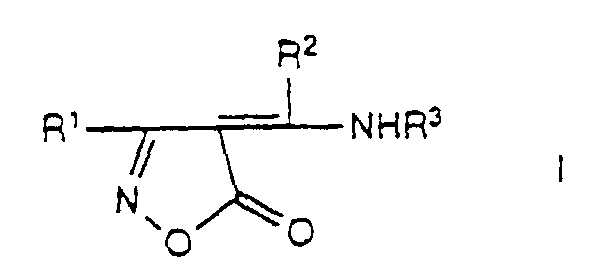 R1 represents H, C1-19-alkyl, C2-29-alkenyl, C2-29-alkynyl, optionally C1-6-alkyl or oxy-C1-6 alkyl substituted phenyl,R2 represents H, C1-29-alkyl, C2-29-alkenyl, C2-29-alkynyl, optionally C1-6-alkyl or oxy-C1-6 alkyl substituted phenyl,R3 represents H, C1-19-alkyl, C1-19-hydroxyalkyl, C1-19-polyhydroxyalkyl, C2-29-alkenyl, C2-29-alkynyl, optionally C1-6-alkyl or oxy-C1-6 alkyl substituted phenyl or optionally C1-6 alkyl or oxy-C1-6 alkyl substituted pyridyl, a polyether residue being a polyethylene glycol or polypropylene glycol residue of the formula (CH2CH2O)nH or [CH(CH3)CH2O)nH with n = 2 - 20, a phenylsulphonic acid residueand
R2 and R3 together with the N atom can also form a pyrrolidinyl ring. - A light screening composition which contains a compound of the formula
 R1 represents H, C1-19-alkyl, C2-19-alkenyl, C2-29-alkynyl, optionally C1-6-alkyl or oxy-C1-6 alkyl substituted phenyl,R2 represents H, C1-29-alkyl, C2-29-alkenyl, C2-29-alkyny], optionally C1-6-alkyl or oxy-C1-6-alkyl substituted phenyl,R3 represents H, C1-19-alkyl, C2-29-alkenyl, C2-29-alkynyl, optionally C1-6-alkyl or oxy-C1-6 alkyl substituted phenyl or optionally C1-6-alkyl or oxy-C1-6 alkyl substituted pyridyl,and
R2 and R3 together with the N atom can also form a pyrrolidinyl ring. - A light screening composition which contains4-[1-(N-pentylamino)-1-hexylidene]-3-methylisoxazol-5(4H)-one,4-[1'-(N-pentylamino)-1-hexylidene]-3-phenylisoxazol-5(4H)-one,4-[1'-(N-pentylamino)-1-hexylidene]-3-n-hexylisoxazol-5(4H)-one,4-[1'-(N-phenylamino)-1-heptylidene]-3-methylisoxazol-5(4H)-one,4-[1-N-(2"-ethylhexyl)-1'-dodecylidene]-3-methylisoxazol-5(4H)-one,4-(1'-N-(2-dodecylaminobenzylidene)-3-methylisoxazol5(4H)-one,4-(N-n-dodecylaminomethylidene)-3-methylisoxazol-5(4H)-one,4-(p-n-hexylanilinomethylidene)-3-hexylisoxazol-5(4H)-one or4-[1'-(N-butylamino)-1'-hexylidene)-3-methylisoxazol-5(4H)-one.
- A light screening composition which contains4-(ethanolamino-methylidene)-3-methylisoxazol-5(4H)-one,4-[1'-(2"-hydroxyethoxy-2"-ethylamino)-1'-pentylidene]-3-methylisoxazol-5(4H)-one,4-[p-potassium sulphonato-anilinomethylidene]-3-methylisoxazol-5(4H)-one or4-[1'-(2"-ethyl)-hexylaminomethylidene]-3-methylisoxazol-5(4H)-one.
- Compounds of the formula
 R1 represents H, C1-19-alkyl, C2-29-alkenyl, C2-29-alkynyl,R2 represents H, C1-29-alkyl, C2-29-alkenyl, C2-29-alkynyl,R3 represents H, C1-19-alkyl, C1-19-hydroxyalkyl, C1-19-polyhydroxyalkyl, C2-29-alkenyl,C2-29-alkynyl, optionally C1-6-alkyl or oxy-C1-6 alkyl substituted phenyl or optionally C1-6-alkyl or oxy-C1-6 alkyl substituted pyridyl, a polyether residue being a polyethylene glycol or polypropylene glycol residue of the formula (CH2CH2O)nH or [CH(CH3)CH2O]nH with n = 2 - 20, a phenylsulphonic acid residueand
R2 and R3 together with the N atom can also form a pyrrolidinyl ring, and the sum of the carbon atoms R1 + R2 + R3 = 9-30 and the number of phenyl residues per molecule does not exceed 1. - Compounds of the formula
 R1 represents H, C1-19-alkyl, C2-29-alkenyl, C2-29-alkynyl,R2 represents H, C1-29-alkyl, C2-29-alkenyl, C2-29-alkynyl,R3 represents H, C1-19-alkyl, C2-29-alkenyl, C2-29-alkynyl, optionally C1-6-alkyl or oxy-C1-6 alkyl substituted phenyl or optionally C1-6-alkyl or oxy-C1-6 alkyl substituted pyridyl,and
R2 and R3 together with the N atom can also form a pyrrolidinyl ring, and the sum of the carbon atoms R1 + R2 + R3 = 9-30 and the number of phenyl residues per molecule does not exceed 1. - A compound selected from4-[1-(N-pentylamino)-1-hexylidene]-3-methylisoxazol-5(4H)-one,4-[1'-(N-phenylamino)-1-heptylidene]-3-methylisoxazol-5(4H)-one,4-[1'-N-(2"-ethylhexyl)-1'-dodecylidene]-3-methyl-isoxazol-5(4H)-one,4-(1'-N-2-dodecylaminobenzylidene)-3-methylisoxazol-5(4H)-one,4-(N-n-dodecylaminomethylidene)-3-methylisoxazol-5(4H)-one,4-(p-n-hexylanilinomethylidene)-3-hexylisoxazol-5(4H)-one and4-[1'-(N-butylamino)-1'-hexylidene]-3-methylisoxazol-5(4H)-one.
- A compound selected from4-(ethanolamino-methylidene)-3-methylisoxazol-5(4H)-one,4-[1'-(2"-hydroxyethoxy-2"-ethylamino)-1'-pentylidene]-3-methylisoxazol-5(4H)-one,4-[p-potassiumsulphonato-anilinomethylidene]-3-methylisoxazol-5(4H)-one and4-[1'-(2"-ethyl)-hexylaminomethylidene]-3-methylisoxazol-5(4H)-one.
- A process for the manufacture of the compounds of formula I' in accordance with claim 5, which process comprises appropriately substituting an isoxazolone

- A process for the manufacture of the compounds of formula I' in accordance with claim 6, which process comprises appropriately substituting an isoxazolone of the formula

- The use of the compounds of the formula I according to claim 1

- The use of compounds of the formula I' according to claim 5
Applications Claiming Priority (5)
| Application Number | Priority Date | Filing Date | Title |
|---|---|---|---|
| CH94891 | 1991-03-28 | ||
| CH948/91 | 1991-03-28 | ||
| CH512/92 | 1992-02-20 | ||
| CH51292 | 1992-02-20 | ||
| PCT/EP1992/000635 WO1992017461A1 (en) | 1991-03-28 | 1992-03-23 | Light screening agent |
Publications (2)
| Publication Number | Publication Date |
|---|---|
| EP0532725A1 EP0532725A1 (en) | 1993-03-24 |
| EP0532725B1 true EP0532725B1 (en) | 1997-01-29 |
Family
ID=25684793
Family Applications (1)
| Application Number | Title | Priority Date | Filing Date |
|---|---|---|---|
| EP92907129A Expired - Lifetime EP0532725B1 (en) | 1991-03-28 | 1992-03-23 | Isoxazole derivatives as light screening agent |
Country Status (11)
| Country | Link |
|---|---|
| US (2) | US5481001A (en) |
| EP (1) | EP0532725B1 (en) |
| JP (1) | JP3122465B2 (en) |
| AT (1) | ATE148462T1 (en) |
| AU (1) | AU653010B2 (en) |
| DE (1) | DE69217148T2 (en) |
| DK (1) | DK0532725T3 (en) |
| ES (1) | ES2097319T3 (en) |
| IL (1) | IL101379A (en) |
| SG (1) | SG47940A1 (en) |
| WO (1) | WO1992017461A1 (en) |
Families Citing this family (2)
| Publication number | Priority date | Publication date | Assignee | Title |
|---|---|---|---|---|
| US6420349B1 (en) * | 1998-08-24 | 2002-07-16 | Bristol-Myers Squibb Company | Isoxazolinone antibacterial agents |
| DE19904329A1 (en) * | 1999-01-28 | 2000-08-03 | Cognis Deutschland Gmbh | Cosmetic and / or pharmaceutical preparations |
Family Cites Families (2)
| Publication number | Priority date | Publication date | Assignee | Title |
|---|---|---|---|---|
| DE3515093A1 (en) * | 1985-04-26 | 1986-10-30 | Hoechst Ag, 6230 Frankfurt | 4-AMINOALKYLIDE-SUBSTITUTED 3-ARYL-5 (4H) -ISOXAZOLONE, METHOD FOR THE PRODUCTION THEREOF, MEDICINAL PRODUCTS CONTAINING THESE COMPOUNDS AND THEIR USE |
| FR2633291B1 (en) * | 1988-06-27 | 1990-09-07 | Oreal | 4-HYDROXY ISOXAZOL DERIVATIVES, THEIR PREPARATION PROCESS AND COSMETIC AND PHARMACEUTICAL COMPOSITIONS CONTAINING THEM |
-
1992
- 1992-03-23 ES ES92907129T patent/ES2097319T3/en not_active Expired - Lifetime
- 1992-03-23 EP EP92907129A patent/EP0532725B1/en not_active Expired - Lifetime
- 1992-03-23 DE DE69217148T patent/DE69217148T2/en not_active Expired - Fee Related
- 1992-03-23 AU AU14171/92A patent/AU653010B2/en not_active Ceased
- 1992-03-23 DK DK92907129.8T patent/DK0532725T3/en not_active Application Discontinuation
- 1992-03-23 JP JP04506514A patent/JP3122465B2/en not_active Expired - Fee Related
- 1992-03-23 SG SG1996005565A patent/SG47940A1/en unknown
- 1992-03-23 AT AT92907129T patent/ATE148462T1/en not_active IP Right Cessation
- 1992-03-23 WO PCT/EP1992/000635 patent/WO1992017461A1/en not_active Ceased
- 1992-03-26 IL IL10137992A patent/IL101379A/en not_active IP Right Cessation
-
1994
- 1994-12-22 US US08/361,869 patent/US5481001A/en not_active Expired - Lifetime
-
1995
- 1995-09-25 US US08/533,335 patent/US5536453A/en not_active Expired - Lifetime
Also Published As
| Publication number | Publication date |
|---|---|
| US5536453A (en) | 1996-07-16 |
| IL101379A0 (en) | 1992-11-15 |
| JPH05507730A (en) | 1993-11-04 |
| IL101379A (en) | 1996-05-14 |
| AU1417192A (en) | 1992-11-02 |
| ES2097319T3 (en) | 1997-04-01 |
| JP3122465B2 (en) | 2001-01-09 |
| DE69217148D1 (en) | 1997-03-13 |
| WO1992017461A1 (en) | 1992-10-15 |
| US5481001A (en) | 1996-01-02 |
| ATE148462T1 (en) | 1997-02-15 |
| SG47940A1 (en) | 1998-04-17 |
| DK0532725T3 (en) | 1997-06-02 |
| AU653010B2 (en) | 1994-09-15 |
| DE69217148T2 (en) | 1997-08-14 |
| EP0532725A1 (en) | 1993-03-24 |
Similar Documents
| Publication | Publication Date | Title |
|---|---|---|
| KR840002141B1 (en) | Process for preparing benzoxazine derivatives | |
| US4588839A (en) | Sulphonamides derived from 3-benzylidene-camphor and their application as UV filters | |
| EP0570838A1 (en) | S-triazine derivatives as light stabilisers | |
| IL22669A (en) | (lower alkoxy-benzamido)-pyrrolidines and piperidines | |
| AU674542B2 (en) | Process for obtaining benzoxazines useful for the synthesis of ofloxacin, levofloxacin and derivatives thereof | |
| US5536453A (en) | Light screening agent | |
| Guang‐Fu et al. | Syntheses and properties of new herbicidal 2‐arylthio‐l, 2, 4‐triazolo [l, 5‐a] pyrimidine derivatives | |
| Heindel et al. | 7H-[1, 2, 4] Triazolo [5, 1-b][1, 3] thiazin-7-ones by deamination cyclization of S-acrylates of 4-amino-3 (3H)-1, 2, 4-triazolethiones | |
| EP0173050B1 (en) | Selected 2,2,6,6-tetramethyl-4-piperidinyl derivatives and their use as light stabilizers | |
| US3966760A (en) | 2-Substituted-5,6-dimethoxyindazoles | |
| US3054794A (en) | Process for preparing 3-(aminoalkyl)-oxazolidine-2, 4-diones | |
| US2621162A (en) | J-propargyl-x-quinazolones and acid | |
| US5600007A (en) | Use of α-hydroxyketoalkyl derivatives as light protection filters | |
| KR20010005943A (en) | Process for preparing 0-(3-amino-2-hydroxy-propyl)-hydroxymic acid halides | |
| EP1626046A1 (en) | Photochromic oxazine compounds and methods for their manufacture | |
| US4940575A (en) | 4-hydroxyisoxazole derivatives, method of preparing same, and cosmetic and pharmaceutical compositions containing them | |
| GB2105190A (en) | Light-screen compositions | |
| Ito et al. | Retro‐ene reactions in heterocyclic synthesis. II. A facile synthetic method for 4‐hydroxy‐2‐pyridones | |
| Gray et al. | Methyl β-(m-Chloroanilino)-acrylate | |
| US4014886A (en) | 2-Substituted-5,6-dimethoxyindazoles | |
| JPH02193961A (en) | Aniline derivative and production thereof | |
| US5973189A (en) | Monoesters of carboxymethylene anthranilic acids and process for preparing the same | |
| Bhatnagar et al. | A SINGLE-STEP SYNTHESIS OF 5-AND 7-SUBSTITUTED 2-(p-BROMOBENZOYL)-3-METHYL-4H-1, 4-BENZOTHIAZINES | |
| Franco et al. | Structural effects in ion pairs from 1, 3-diarylbenzo [c] furans and alkali metals: an electron paramagnetic resonance and ENDOR study | |
| WO1986002350A1 (en) | Ultra violet agents |
Legal Events
| Date | Code | Title | Description |
|---|---|---|---|
| PUAI | Public reference made under article 153(3) epc to a published international application that has entered the european phase |
Free format text: ORIGINAL CODE: 0009012 |
|
| 17P | Request for examination filed |
Effective date: 19921121 |
|
| AK | Designated contracting states |
Kind code of ref document: A1 Designated state(s): AT BE CH DE DK ES FR GB IT LI MC NL |
|
| 17Q | First examination report despatched |
Effective date: 19950613 |
|
| GRAG | Despatch of communication of intention to grant |
Free format text: ORIGINAL CODE: EPIDOS AGRA |
|
| GRAH | Despatch of communication of intention to grant a patent |
Free format text: ORIGINAL CODE: EPIDOS IGRA |
|
| GRAH | Despatch of communication of intention to grant a patent |
Free format text: ORIGINAL CODE: EPIDOS IGRA |
|
| GRAA | (expected) grant |
Free format text: ORIGINAL CODE: 0009210 |
|
| AK | Designated contracting states |
Kind code of ref document: B1 Designated state(s): AT BE CH DE DK ES FR GB IT LI MC NL |
|
| REF | Corresponds to: |
Ref document number: 148462 Country of ref document: AT Date of ref document: 19970215 Kind code of ref document: T |
|
| REG | Reference to a national code |
Ref country code: CH Ref legal event code: EP |
|
| REF | Corresponds to: |
Ref document number: 69217148 Country of ref document: DE Date of ref document: 19970313 |
|
| REG | Reference to a national code |
Ref country code: ES Ref legal event code: FG2A Ref document number: 2097319 Country of ref document: ES Kind code of ref document: T3 |
|
| ITF | It: translation for a ep patent filed | ||
| ET | Fr: translation filed | ||
| REG | Reference to a national code |
Ref country code: DK Ref legal event code: T3 |
|
| PG25 | Lapsed in a contracting state [announced via postgrant information from national office to epo] |
Ref country code: MC Effective date: 19970930 |
|
| PLBE | No opposition filed within time limit |
Free format text: ORIGINAL CODE: 0009261 |
|
| 26N | No opposition filed | ||
| REG | Reference to a national code |
Ref country code: CH Ref legal event code: PUE Owner name: GIVAUDAN-ROURE (INTERNATIONAL) S.A. TRANSFER- F. H |
|
| REG | Reference to a national code |
Ref country code: GB Ref legal event code: 732E |
|
| REG | Reference to a national code |
Ref country code: FR Ref legal event code: TP |
|
| NLS | Nl: assignments of ep-patents |
Owner name: F. HOFFMANN-LA ROCHE AG |
|
| REG | Reference to a national code |
Ref country code: GB Ref legal event code: IF02 |
|
| PGFP | Annual fee paid to national office [announced via postgrant information from national office to epo] |
Ref country code: AT Payment date: 20030312 Year of fee payment: 12 |
|
| PGFP | Annual fee paid to national office [announced via postgrant information from national office to epo] |
Ref country code: DK Payment date: 20030318 Year of fee payment: 12 |
|
| PGFP | Annual fee paid to national office [announced via postgrant information from national office to epo] |
Ref country code: NL Payment date: 20030327 Year of fee payment: 12 |
|
| PGFP | Annual fee paid to national office [announced via postgrant information from national office to epo] |
Ref country code: BE Payment date: 20030516 Year of fee payment: 12 |
|
| REG | Reference to a national code |
Ref country code: CH Ref legal event code: PUE Owner name: DSM IP ASSETS B.V. Free format text: F. HOFFMANN-LA ROCHE AG#GRENZACHERSTRASSE 124#4070 BASEL (CH) -TRANSFER TO- DSM IP ASSETS B.V.#HET OVERLOON 1#6411 TE HEERLEN (NL) |
|
| PG25 | Lapsed in a contracting state [announced via postgrant information from national office to epo] |
Ref country code: AT Free format text: LAPSE BECAUSE OF NON-PAYMENT OF DUE FEES Effective date: 20040323 |
|
| PG25 | Lapsed in a contracting state [announced via postgrant information from national office to epo] |
Ref country code: DK Free format text: LAPSE BECAUSE OF NON-PAYMENT OF DUE FEES Effective date: 20040331 Ref country code: BE Free format text: LAPSE BECAUSE OF NON-PAYMENT OF DUE FEES Effective date: 20040331 |
|
| REG | Reference to a national code |
Ref country code: CH Ref legal event code: NV Representative=s name: DSM NUTRITIONAL PRODUCTS |
|
| REG | Reference to a national code |
Ref country code: GB Ref legal event code: 732E |
|
| REG | Reference to a national code |
Ref country code: FR Ref legal event code: TP |
|
| BERE | Be: lapsed |
Owner name: F. *HOFFMANN-LA-ROCHE A.G. Effective date: 20040331 |
|
| PG25 | Lapsed in a contracting state [announced via postgrant information from national office to epo] |
Ref country code: NL Free format text: LAPSE BECAUSE OF NON-PAYMENT OF DUE FEES Effective date: 20041001 |
|
| NLV4 | Nl: lapsed or anulled due to non-payment of the annual fee |
Effective date: 20041001 |
|
| REG | Reference to a national code |
Ref country code: ES Ref legal event code: PC2A |
|
| PGFP | Annual fee paid to national office [announced via postgrant information from national office to epo] |
Ref country code: ES Payment date: 20080326 Year of fee payment: 17 Ref country code: CH Payment date: 20080328 Year of fee payment: 17 |
|
| PGFP | Annual fee paid to national office [announced via postgrant information from national office to epo] |
Ref country code: GB Payment date: 20080327 Year of fee payment: 17 |
|
| PGFP | Annual fee paid to national office [announced via postgrant information from national office to epo] |
Ref country code: FR Payment date: 20080317 Year of fee payment: 17 Ref country code: DE Payment date: 20080430 Year of fee payment: 17 |
|
| PGFP | Annual fee paid to national office [announced via postgrant information from national office to epo] |
Ref country code: IT Payment date: 20080329 Year of fee payment: 17 |
|
| REG | Reference to a national code |
Ref country code: CH Ref legal event code: PL |
|
| GBPC | Gb: european patent ceased through non-payment of renewal fee |
Effective date: 20090323 |
|
| REG | Reference to a national code |
Ref country code: FR Ref legal event code: ST Effective date: 20091130 |
|
| PG25 | Lapsed in a contracting state [announced via postgrant information from national office to epo] |
Ref country code: LI Free format text: LAPSE BECAUSE OF NON-PAYMENT OF DUE FEES Effective date: 20090331 Ref country code: DE Free format text: LAPSE BECAUSE OF NON-PAYMENT OF DUE FEES Effective date: 20091001 Ref country code: CH Free format text: LAPSE BECAUSE OF NON-PAYMENT OF DUE FEES Effective date: 20090331 |
|
| PG25 | Lapsed in a contracting state [announced via postgrant information from national office to epo] |
Ref country code: GB Free format text: LAPSE BECAUSE OF NON-PAYMENT OF DUE FEES Effective date: 20090323 Ref country code: FR Free format text: LAPSE BECAUSE OF NON-PAYMENT OF DUE FEES Effective date: 20091123 |
|
| REG | Reference to a national code |
Ref country code: ES Ref legal event code: FD2A Effective date: 20090324 |
|
| PG25 | Lapsed in a contracting state [announced via postgrant information from national office to epo] |
Ref country code: ES Free format text: LAPSE BECAUSE OF NON-PAYMENT OF DUE FEES Effective date: 20090324 |
|
| PG25 | Lapsed in a contracting state [announced via postgrant information from national office to epo] |
Ref country code: IT Free format text: LAPSE BECAUSE OF NON-PAYMENT OF DUE FEES Effective date: 20090323 |