EP0529010B1 - Mammalian cells expressing a hybrid receptor - Google Patents
Mammalian cells expressing a hybrid receptor Download PDFInfo
- Publication number
- EP0529010B1 EP0529010B1 EP91920970A EP91920970A EP0529010B1 EP 0529010 B1 EP0529010 B1 EP 0529010B1 EP 91920970 A EP91920970 A EP 91920970A EP 91920970 A EP91920970 A EP 91920970A EP 0529010 B1 EP0529010 B1 EP 0529010B1
- Authority
- EP
- European Patent Office
- Prior art keywords
- receptor
- dna sequence
- sequence encoding
- fragment
- igf
- Prior art date
- Legal status (The legal status is an assumption and is not a legal conclusion. Google has not performed a legal analysis and makes no representation as to the accuracy of the status listed.)
- Expired - Lifetime
Links
- 210000004962 mammalian cell Anatomy 0.000 title claims abstract description 14
- 108091028043 Nucleic acid sequence Proteins 0.000 claims abstract description 56
- 108020004414 DNA Proteins 0.000 claims abstract description 34
- 230000012010 growth Effects 0.000 claims abstract description 26
- 239000004017 serum-free culture medium Substances 0.000 claims abstract description 10
- 210000004027 cell Anatomy 0.000 claims description 107
- 239000012634 fragment Substances 0.000 claims description 43
- 102000005962 receptors Human genes 0.000 claims description 41
- 108020003175 receptors Proteins 0.000 claims description 41
- 102000003746 Insulin Receptor Human genes 0.000 claims description 40
- 108010001127 Insulin Receptor Proteins 0.000 claims description 40
- 108010031794 IGF Type 1 Receptor Proteins 0.000 claims description 31
- 102100039688 Insulin-like growth factor 1 receptor Human genes 0.000 claims description 26
- 238000000034 method Methods 0.000 claims description 24
- NOESYZHRGYRDHS-UHFFFAOYSA-N insulin Chemical compound N1C(=O)C(NC(=O)C(CCC(N)=O)NC(=O)C(CCC(O)=O)NC(=O)C(C(C)C)NC(=O)C(NC(=O)CN)C(C)CC)CSSCC(C(NC(CO)C(=O)NC(CC(C)C)C(=O)NC(CC=2C=CC(O)=CC=2)C(=O)NC(CCC(N)=O)C(=O)NC(CC(C)C)C(=O)NC(CCC(O)=O)C(=O)NC(CC(N)=O)C(=O)NC(CC=2C=CC(O)=CC=2)C(=O)NC(CSSCC(NC(=O)C(C(C)C)NC(=O)C(CC(C)C)NC(=O)C(CC=2C=CC(O)=CC=2)NC(=O)C(CC(C)C)NC(=O)C(C)NC(=O)C(CCC(O)=O)NC(=O)C(C(C)C)NC(=O)C(CC(C)C)NC(=O)C(CC=2NC=NC=2)NC(=O)C(CO)NC(=O)CNC2=O)C(=O)NCC(=O)NC(CCC(O)=O)C(=O)NC(CCCNC(N)=N)C(=O)NCC(=O)NC(CC=3C=CC=CC=3)C(=O)NC(CC=3C=CC=CC=3)C(=O)NC(CC=3C=CC(O)=CC=3)C(=O)NC(C(C)O)C(=O)N3C(CCC3)C(=O)NC(CCCCN)C(=O)NC(C)C(O)=O)C(=O)NC(CC(N)=O)C(O)=O)=O)NC(=O)C(C(C)CC)NC(=O)C(CO)NC(=O)C(C(C)O)NC(=O)C1CSSCC2NC(=O)C(CC(C)C)NC(=O)C(NC(=O)C(CCC(N)=O)NC(=O)C(CC(N)=O)NC(=O)C(NC(=O)C(N)CC=1C=CC=CC=1)C(C)C)CC1=CN=CN1 NOESYZHRGYRDHS-UHFFFAOYSA-N 0.000 claims description 22
- 108700024394 Exon Proteins 0.000 claims description 19
- 229920001184 polypeptide Polymers 0.000 claims description 19
- 102000004196 processed proteins & peptides Human genes 0.000 claims description 19
- 108090000765 processed proteins & peptides Proteins 0.000 claims description 19
- 108090000723 Insulin-Like Growth Factor I Proteins 0.000 claims description 17
- 102000013275 Somatomedins Human genes 0.000 claims description 17
- 239000002609 medium Substances 0.000 claims description 14
- 229940125396 insulin Drugs 0.000 claims description 11
- 230000008569 process Effects 0.000 claims description 6
- 239000012679 serum free medium Substances 0.000 claims description 6
- 230000001976 improved effect Effects 0.000 claims description 4
- 238000012986 modification Methods 0.000 claims description 4
- 230000004048 modification Effects 0.000 claims description 4
- 238000012258 culturing Methods 0.000 claims description 2
- 235000015097 nutrients Nutrition 0.000 claims description 2
- 210000002966 serum Anatomy 0.000 abstract description 23
- 239000003446 ligand Substances 0.000 abstract description 7
- 230000001413 cellular effect Effects 0.000 abstract description 6
- 230000002349 favourable effect Effects 0.000 abstract description 4
- 239000002299 complementary DNA Substances 0.000 description 41
- 239000013615 primer Substances 0.000 description 15
- 239000013598 vector Substances 0.000 description 15
- 238000002474 experimental method Methods 0.000 description 11
- 238000003752 polymerase chain reaction Methods 0.000 description 11
- 238000004113 cell culture Methods 0.000 description 10
- 108020004999 messenger RNA Proteins 0.000 description 8
- 108090000623 proteins and genes Proteins 0.000 description 8
- 101000852815 Homo sapiens Insulin receptor Proteins 0.000 description 7
- 150000001413 amino acids Chemical class 0.000 description 7
- 239000013604 expression vector Substances 0.000 description 7
- 102000047882 human INSR Human genes 0.000 description 7
- 101000976075 Homo sapiens Insulin Proteins 0.000 description 6
- PBGKTOXHQIOBKM-FHFVDXKLSA-N insulin (human) Chemical compound C([C@@H](C(=O)N[C@@H](CC(C)C)C(=O)N[C@H]1CSSC[C@H]2C(=O)N[C@H](C(=O)N[C@@H](CO)C(=O)N[C@H](C(=O)N[C@H](C(N[C@@H](CO)C(=O)N[C@@H](CC(C)C)C(=O)N[C@@H](CC=3C=CC(O)=CC=3)C(=O)N[C@@H](CCC(N)=O)C(=O)N[C@@H](CC(C)C)C(=O)N[C@@H](CCC(O)=O)C(=O)N[C@@H](CC(N)=O)C(=O)N[C@@H](CC=3C=CC(O)=CC=3)C(=O)N[C@@H](CSSC[C@H](NC(=O)[C@H](C(C)C)NC(=O)[C@H](CC(C)C)NC(=O)[C@H](CC=3C=CC(O)=CC=3)NC(=O)[C@H](CC(C)C)NC(=O)[C@H](C)NC(=O)[C@H](CCC(O)=O)NC(=O)[C@H](C(C)C)NC(=O)[C@H](CC(C)C)NC(=O)[C@H](CC=3NC=NC=3)NC(=O)[C@H](CO)NC(=O)CNC1=O)C(=O)NCC(=O)N[C@@H](CCC(O)=O)C(=O)N[C@@H](CCCNC(N)=N)C(=O)NCC(=O)N[C@@H](CC=1C=CC=CC=1)C(=O)N[C@@H](CC=1C=CC=CC=1)C(=O)N[C@@H](CC=1C=CC(O)=CC=1)C(=O)N[C@@H]([C@@H](C)O)C(=O)N1[C@@H](CCC1)C(=O)N[C@@H](CCCCN)C(=O)N[C@@H]([C@@H](C)O)C(O)=O)C(=O)N[C@@H](CC(N)=O)C(O)=O)=O)CSSC[C@@H](C(N2)=O)NC(=O)[C@H](CCC(N)=O)NC(=O)[C@H](CCC(O)=O)NC(=O)[C@H](C(C)C)NC(=O)[C@@H](NC(=O)CN)[C@@H](C)CC)[C@@H](C)CC)[C@@H](C)O)NC(=O)[C@H](CCC(N)=O)NC(=O)[C@H](CC(N)=O)NC(=O)[C@@H](NC(=O)[C@@H](N)CC=1C=CC=CC=1)C(C)C)C1=CN=CN1 PBGKTOXHQIOBKM-FHFVDXKLSA-N 0.000 description 6
- 239000002773 nucleotide Substances 0.000 description 6
- 125000003729 nucleotide group Chemical group 0.000 description 6
- 102000038455 IGF Type 1 Receptor Human genes 0.000 description 5
- FBOZXECLQNJBKD-ZDUSSCGKSA-N L-methotrexate Chemical compound C=1N=C2N=C(N)N=C(N)C2=NC=1CN(C)C1=CC=C(C(=O)N[C@@H](CCC(O)=O)C(O)=O)C=C1 FBOZXECLQNJBKD-ZDUSSCGKSA-N 0.000 description 4
- 108091034117 Oligonucleotide Proteins 0.000 description 4
- 238000010276 construction Methods 0.000 description 4
- 239000000047 product Substances 0.000 description 4
- 230000010076 replication Effects 0.000 description 4
- 238000010561 standard procedure Methods 0.000 description 4
- 102100031780 Endonuclease Human genes 0.000 description 3
- 102000016979 Other receptors Human genes 0.000 description 3
- 244000309466 calf Species 0.000 description 3
- 230000001086 cytosolic effect Effects 0.000 description 3
- 239000003814 drug Substances 0.000 description 3
- 238000007667 floating Methods 0.000 description 3
- 238000004519 manufacturing process Methods 0.000 description 3
- 229960000485 methotrexate Drugs 0.000 description 3
- 239000000203 mixture Substances 0.000 description 3
- 102000004169 proteins and genes Human genes 0.000 description 3
- 238000000746 purification Methods 0.000 description 3
- 238000006467 substitution reaction Methods 0.000 description 3
- 239000003155 DNA primer Substances 0.000 description 2
- 108010042407 Endonucleases Proteins 0.000 description 2
- 108700028146 Genetic Enhancer Elements Proteins 0.000 description 2
- 102000010789 Interleukin-2 Receptors Human genes 0.000 description 2
- 108010038453 Interleukin-2 Receptors Proteins 0.000 description 2
- 108010092799 RNA-directed DNA polymerase Proteins 0.000 description 2
- 108010022394 Threonine synthase Proteins 0.000 description 2
- 241000700605 Viruses Species 0.000 description 2
- JLCPHMBAVCMARE-UHFFFAOYSA-N [3-[[3-[[3-[[3-[[3-[[3-[[3-[[3-[[3-[[3-[[3-[[5-(2-amino-6-oxo-1H-purin-9-yl)-3-[[3-[[3-[[3-[[3-[[3-[[5-(2-amino-6-oxo-1H-purin-9-yl)-3-[[5-(2-amino-6-oxo-1H-purin-9-yl)-3-hydroxyoxolan-2-yl]methoxy-hydroxyphosphoryl]oxyoxolan-2-yl]methoxy-hydroxyphosphoryl]oxy-5-(5-methyl-2,4-dioxopyrimidin-1-yl)oxolan-2-yl]methoxy-hydroxyphosphoryl]oxy-5-(6-aminopurin-9-yl)oxolan-2-yl]methoxy-hydroxyphosphoryl]oxy-5-(6-aminopurin-9-yl)oxolan-2-yl]methoxy-hydroxyphosphoryl]oxy-5-(6-aminopurin-9-yl)oxolan-2-yl]methoxy-hydroxyphosphoryl]oxy-5-(6-aminopurin-9-yl)oxolan-2-yl]methoxy-hydroxyphosphoryl]oxyoxolan-2-yl]methoxy-hydroxyphosphoryl]oxy-5-(5-methyl-2,4-dioxopyrimidin-1-yl)oxolan-2-yl]methoxy-hydroxyphosphoryl]oxy-5-(4-amino-2-oxopyrimidin-1-yl)oxolan-2-yl]methoxy-hydroxyphosphoryl]oxy-5-(5-methyl-2,4-dioxopyrimidin-1-yl)oxolan-2-yl]methoxy-hydroxyphosphoryl]oxy-5-(5-methyl-2,4-dioxopyrimidin-1-yl)oxolan-2-yl]methoxy-hydroxyphosphoryl]oxy-5-(6-aminopurin-9-yl)oxolan-2-yl]methoxy-hydroxyphosphoryl]oxy-5-(6-aminopurin-9-yl)oxolan-2-yl]methoxy-hydroxyphosphoryl]oxy-5-(4-amino-2-oxopyrimidin-1-yl)oxolan-2-yl]methoxy-hydroxyphosphoryl]oxy-5-(4-amino-2-oxopyrimidin-1-yl)oxolan-2-yl]methoxy-hydroxyphosphoryl]oxy-5-(4-amino-2-oxopyrimidin-1-yl)oxolan-2-yl]methoxy-hydroxyphosphoryl]oxy-5-(6-aminopurin-9-yl)oxolan-2-yl]methoxy-hydroxyphosphoryl]oxy-5-(4-amino-2-oxopyrimidin-1-yl)oxolan-2-yl]methyl [5-(6-aminopurin-9-yl)-2-(hydroxymethyl)oxolan-3-yl] hydrogen phosphate Polymers Cc1cn(C2CC(OP(O)(=O)OCC3OC(CC3OP(O)(=O)OCC3OC(CC3O)n3cnc4c3nc(N)[nH]c4=O)n3cnc4c3nc(N)[nH]c4=O)C(COP(O)(=O)OC3CC(OC3COP(O)(=O)OC3CC(OC3COP(O)(=O)OC3CC(OC3COP(O)(=O)OC3CC(OC3COP(O)(=O)OC3CC(OC3COP(O)(=O)OC3CC(OC3COP(O)(=O)OC3CC(OC3COP(O)(=O)OC3CC(OC3COP(O)(=O)OC3CC(OC3COP(O)(=O)OC3CC(OC3COP(O)(=O)OC3CC(OC3COP(O)(=O)OC3CC(OC3COP(O)(=O)OC3CC(OC3COP(O)(=O)OC3CC(OC3COP(O)(=O)OC3CC(OC3COP(O)(=O)OC3CC(OC3COP(O)(=O)OC3CC(OC3CO)n3cnc4c(N)ncnc34)n3ccc(N)nc3=O)n3cnc4c(N)ncnc34)n3ccc(N)nc3=O)n3ccc(N)nc3=O)n3ccc(N)nc3=O)n3cnc4c(N)ncnc34)n3cnc4c(N)ncnc34)n3cc(C)c(=O)[nH]c3=O)n3cc(C)c(=O)[nH]c3=O)n3ccc(N)nc3=O)n3cc(C)c(=O)[nH]c3=O)n3cnc4c3nc(N)[nH]c4=O)n3cnc4c(N)ncnc34)n3cnc4c(N)ncnc34)n3cnc4c(N)ncnc34)n3cnc4c(N)ncnc34)O2)c(=O)[nH]c1=O JLCPHMBAVCMARE-UHFFFAOYSA-N 0.000 description 2
- 238000000137 annealing Methods 0.000 description 2
- 230000008901 benefit Effects 0.000 description 2
- 230000010261 cell growth Effects 0.000 description 2
- 238000010367 cloning Methods 0.000 description 2
- 239000000356 contaminant Substances 0.000 description 2
- 102000004419 dihydrofolate reductase Human genes 0.000 description 2
- 230000002255 enzymatic effect Effects 0.000 description 2
- 239000001963 growth medium Substances 0.000 description 2
- JYGXADMDTFJGBT-VWUMJDOOSA-N hydrocortisone Chemical compound O=C1CC[C@]2(C)[C@H]3[C@@H](O)C[C@](C)([C@@](CC4)(O)C(=O)CO)[C@@H]4[C@@H]3CCC2=C1 JYGXADMDTFJGBT-VWUMJDOOSA-N 0.000 description 2
- 238000003259 recombinant expression Methods 0.000 description 2
- 108091008146 restriction endonucleases Proteins 0.000 description 2
- 238000012360 testing method Methods 0.000 description 2
- 230000002103 transcriptional effect Effects 0.000 description 2
- 238000001890 transfection Methods 0.000 description 2
- GVHPKFPJQCQCAX-UHFFFAOYSA-N 3-morpholin-4-yl-4-piperidin-1-ylcyclobut-3-ene-1,2-dione Chemical compound C1COCCN1C=1C(=O)C(=O)C=1N1CCCCC1 GVHPKFPJQCQCAX-UHFFFAOYSA-N 0.000 description 1
- 241000894006 Bacteria Species 0.000 description 1
- 101100268670 Caenorhabditis elegans acc-3 gene Proteins 0.000 description 1
- 102000000844 Cell Surface Receptors Human genes 0.000 description 1
- 108010001857 Cell Surface Receptors Proteins 0.000 description 1
- 108020004635 Complementary DNA Proteins 0.000 description 1
- 108010014303 DNA-directed DNA polymerase Proteins 0.000 description 1
- 102000016928 DNA-directed DNA polymerase Human genes 0.000 description 1
- 239000006144 Dulbecco’s modified Eagle's medium Substances 0.000 description 1
- 102000001301 EGF receptor Human genes 0.000 description 1
- 102000004533 Endonucleases Human genes 0.000 description 1
- YQYJSBFKSSDGFO-UHFFFAOYSA-N Epihygromycin Natural products OC1C(O)C(C(=O)C)OC1OC(C(=C1)O)=CC=C1C=C(C)C(=O)NC1C(O)C(O)C2OCOC2C1O YQYJSBFKSSDGFO-UHFFFAOYSA-N 0.000 description 1
- 241000588724 Escherichia coli Species 0.000 description 1
- 241000287828 Gallus gallus Species 0.000 description 1
- 101000605403 Homo sapiens Plasminogen Proteins 0.000 description 1
- 101000851176 Homo sapiens Pro-epidermal growth factor Proteins 0.000 description 1
- 101500025568 Homo sapiens Saposin-D Proteins 0.000 description 1
- 101000801481 Homo sapiens Tissue-type plasminogen activator Proteins 0.000 description 1
- 102000002265 Human Growth Hormone Human genes 0.000 description 1
- 108010000521 Human Growth Hormone Proteins 0.000 description 1
- 239000000854 Human Growth Hormone Substances 0.000 description 1
- 241000701109 Human adenovirus 2 Species 0.000 description 1
- 241001135569 Human adenovirus 5 Species 0.000 description 1
- 108090001061 Insulin Proteins 0.000 description 1
- 102000004877 Insulin Human genes 0.000 description 1
- 241000699673 Mesocricetus auratus Species 0.000 description 1
- 108090000157 Metallothionein Proteins 0.000 description 1
- 241000204031 Mycoplasma Species 0.000 description 1
- 125000001429 N-terminal alpha-amino-acid group Chemical group 0.000 description 1
- 229930193140 Neomycin Natural products 0.000 description 1
- 108020005187 Oligonucleotide Probes Proteins 0.000 description 1
- 108091005804 Peptidases Proteins 0.000 description 1
- 239000004365 Protease Substances 0.000 description 1
- 108091034057 RNA (poly(A)) Proteins 0.000 description 1
- 108020004511 Recombinant DNA Proteins 0.000 description 1
- 102100037486 Reverse transcriptase/ribonuclease H Human genes 0.000 description 1
- 210000001744 T-lymphocyte Anatomy 0.000 description 1
- 108020005038 Terminator Codon Proteins 0.000 description 1
- 108091034131 VA RNA Proteins 0.000 description 1
- 241000269368 Xenopus laevis Species 0.000 description 1
- 230000003213 activating effect Effects 0.000 description 1
- 230000006978 adaptation Effects 0.000 description 1
- 238000001042 affinity chromatography Methods 0.000 description 1
- 102000030484 alpha-2 Adrenergic Receptor Human genes 0.000 description 1
- 108020004101 alpha-2 Adrenergic Receptor Proteins 0.000 description 1
- BFNBIHQBYMNNAN-UHFFFAOYSA-N ammonium sulfate Chemical compound N.N.OS(O)(=O)=O BFNBIHQBYMNNAN-UHFFFAOYSA-N 0.000 description 1
- 229910052921 ammonium sulfate Inorganic materials 0.000 description 1
- 235000011130 ammonium sulphate Nutrition 0.000 description 1
- 239000001166 ammonium sulphate Substances 0.000 description 1
- -1 ammonium sulphate Chemical class 0.000 description 1
- 238000004458 analytical method Methods 0.000 description 1
- 238000004873 anchoring Methods 0.000 description 1
- 108010058966 bacteriophage T7 induced DNA polymerase Proteins 0.000 description 1
- 102000016966 beta-2 Adrenergic Receptors Human genes 0.000 description 1
- 108010014499 beta-2 Adrenergic Receptors Proteins 0.000 description 1
- 230000005540 biological transmission Effects 0.000 description 1
- 239000003114 blood coagulation factor Substances 0.000 description 1
- 210000000170 cell membrane Anatomy 0.000 description 1
- 230000008614 cellular interaction Effects 0.000 description 1
- 238000005119 centrifugation Methods 0.000 description 1
- 238000006243 chemical reaction Methods 0.000 description 1
- 230000002759 chromosomal effect Effects 0.000 description 1
- 210000000349 chromosome Anatomy 0.000 description 1
- 150000001875 compounds Chemical class 0.000 description 1
- 238000011109 contamination Methods 0.000 description 1
- 230000007547 defect Effects 0.000 description 1
- 239000007857 degradation product Substances 0.000 description 1
- 238000012217 deletion Methods 0.000 description 1
- 230000037430 deletion Effects 0.000 description 1
- 238000004925 denaturation Methods 0.000 description 1
- 230000036425 denaturation Effects 0.000 description 1
- 238000011161 development Methods 0.000 description 1
- 229940079593 drug Drugs 0.000 description 1
- 239000003623 enhancer Substances 0.000 description 1
- 230000003203 everyday effect Effects 0.000 description 1
- 230000001747 exhibiting effect Effects 0.000 description 1
- 239000000706 filtrate Substances 0.000 description 1
- 238000001914 filtration Methods 0.000 description 1
- 238000009472 formulation Methods 0.000 description 1
- 239000011521 glass Substances 0.000 description 1
- 239000003102 growth factor Substances 0.000 description 1
- 238000002744 homologous recombination Methods 0.000 description 1
- 230000006801 homologous recombination Effects 0.000 description 1
- 229940100689 human protein c Drugs 0.000 description 1
- 238000009396 hybridization Methods 0.000 description 1
- 229960000890 hydrocortisone Drugs 0.000 description 1
- 230000002209 hydrophobic effect Effects 0.000 description 1
- 208000015181 infectious disease Diseases 0.000 description 1
- 230000002458 infectious effect Effects 0.000 description 1
- 238000003780 insertion Methods 0.000 description 1
- 230000037431 insertion Effects 0.000 description 1
- 230000003993 interaction Effects 0.000 description 1
- 238000004255 ion exchange chromatography Methods 0.000 description 1
- 210000003292 kidney cell Anatomy 0.000 description 1
- 108020001756 ligand binding domains Proteins 0.000 description 1
- 239000007788 liquid Substances 0.000 description 1
- 239000003550 marker Substances 0.000 description 1
- 239000000463 material Substances 0.000 description 1
- 239000002207 metabolite Substances 0.000 description 1
- 238000010369 molecular cloning Methods 0.000 description 1
- 229960004927 neomycin Drugs 0.000 description 1
- GVUGOAYIVIDWIO-UFWWTJHBSA-N nepidermin Chemical compound C([C@@H](C(=O)N[C@@H]([C@@H](C)CC)C(=O)NCC(=O)N[C@@H](CCC(O)=O)C(=O)N[C@@H](CCCNC(N)=N)C(=O)N[C@@H](CS)C(=O)N[C@@H](CCC(N)=O)C(=O)N[C@@H](CC=1C=CC(O)=CC=1)C(=O)N[C@@H](CCCNC(N)=N)C(=O)N[C@@H](CC(O)=O)C(=O)N[C@@H](CC(C)C)C(=O)N[C@@H](CCCCN)C(=O)N[C@@H](CC=1C2=CC=CC=C2NC=1)C(=O)N[C@@H](CC=1C2=CC=CC=C2NC=1)C(=O)N[C@@H](CCC(O)=O)C(=O)N[C@@H](CC(C)C)C(=O)N[C@@H](CCCNC(N)=N)C(O)=O)NC(=O)CNC(=O)[C@@H](NC(=O)[C@@H](NC(=O)[C@H](CS)NC(=O)[C@H](CC(N)=O)NC(=O)[C@H](CS)NC(=O)[C@H](C)NC(=O)[C@H](CC=1C=CC(O)=CC=1)NC(=O)[C@H](CCCCN)NC(=O)[C@H](CC(O)=O)NC(=O)[C@H](CC(C)C)NC(=O)[C@H](C)NC(=O)[C@H](CCC(O)=O)NC(=O)[C@@H](NC(=O)[C@H](CC=1C=CC(O)=CC=1)NC(=O)[C@H](CCSC)NC(=O)[C@H](CS)NC(=O)[C@@H](NC(=O)CNC(=O)[C@H](CC(O)=O)NC(=O)[C@H](CC=1NC=NC=1)NC(=O)[C@H](CC(C)C)NC(=O)[C@H](CS)NC(=O)[C@H](CC=1C=CC(O)=CC=1)NC(=O)CNC(=O)[C@H](CC(O)=O)NC(=O)[C@H](CC=1NC=NC=1)NC(=O)[C@H](CO)NC(=O)[C@H](CC(C)C)NC(=O)[C@H]1N(CCC1)C(=O)[C@H](CS)NC(=O)[C@H](CCC(O)=O)NC(=O)[C@H](CO)NC(=O)[C@H](CC(O)=O)NC(=O)[C@H](CO)NC(=O)[C@@H](N)CC(N)=O)C(C)C)[C@@H](C)CC)C(C)C)C(C)C)C1=CC=C(O)C=C1 GVUGOAYIVIDWIO-UFWWTJHBSA-N 0.000 description 1
- 239000002751 oligonucleotide probe Substances 0.000 description 1
- 210000000287 oocyte Anatomy 0.000 description 1
- 230000035479 physiological effects, processes and functions Effects 0.000 description 1
- 210000002826 placenta Anatomy 0.000 description 1
- 239000013612 plasmid Substances 0.000 description 1
- 230000008488 polyadenylation Effects 0.000 description 1
- 230000001376 precipitating effect Effects 0.000 description 1
- 238000004886 process control Methods 0.000 description 1
- 230000001737 promoting effect Effects 0.000 description 1
- 230000000644 propagated effect Effects 0.000 description 1
- 230000001105 regulatory effect Effects 0.000 description 1
- 230000003362 replicative effect Effects 0.000 description 1
- 230000004044 response Effects 0.000 description 1
- 238000010839 reverse transcription Methods 0.000 description 1
- 150000003839 salts Chemical class 0.000 description 1
- 238000012216 screening Methods 0.000 description 1
- 238000002741 site-directed mutagenesis Methods 0.000 description 1
- 210000001082 somatic cell Anatomy 0.000 description 1
- 230000000638 stimulation Effects 0.000 description 1
- 239000006228 supernatant Substances 0.000 description 1
- 230000008093 supporting effect Effects 0.000 description 1
- 239000000725 suspension Substances 0.000 description 1
- 238000013518 transcription Methods 0.000 description 1
- 230000035897 transcription Effects 0.000 description 1
- 230000009466 transformation Effects 0.000 description 1
- 230000001960 triggered effect Effects 0.000 description 1
- 241000701161 unidentified adenovirus Species 0.000 description 1
Images















Classifications
-
- C—CHEMISTRY; METALLURGY
- C07—ORGANIC CHEMISTRY
- C07K—PEPTIDES
- C07K14/00—Peptides having more than 20 amino acids; Gastrins; Somatostatins; Melanotropins; Derivatives thereof
- C07K14/435—Peptides having more than 20 amino acids; Gastrins; Somatostatins; Melanotropins; Derivatives thereof from animals; from humans
- C07K14/705—Receptors; Cell surface antigens; Cell surface determinants
- C07K14/71—Receptors; Cell surface antigens; Cell surface determinants for growth factors; for growth regulators
-
- C—CHEMISTRY; METALLURGY
- C07—ORGANIC CHEMISTRY
- C07K—PEPTIDES
- C07K14/00—Peptides having more than 20 amino acids; Gastrins; Somatostatins; Melanotropins; Derivatives thereof
- C07K14/435—Peptides having more than 20 amino acids; Gastrins; Somatostatins; Melanotropins; Derivatives thereof from animals; from humans
- C07K14/705—Receptors; Cell surface antigens; Cell surface determinants
-
- C—CHEMISTRY; METALLURGY
- C07—ORGANIC CHEMISTRY
- C07K—PEPTIDES
- C07K14/00—Peptides having more than 20 amino acids; Gastrins; Somatostatins; Melanotropins; Derivatives thereof
- C07K14/435—Peptides having more than 20 amino acids; Gastrins; Somatostatins; Melanotropins; Derivatives thereof from animals; from humans
- C07K14/705—Receptors; Cell surface antigens; Cell surface determinants
- C07K14/72—Receptors; Cell surface antigens; Cell surface determinants for hormones
-
- C—CHEMISTRY; METALLURGY
- C07—ORGANIC CHEMISTRY
- C07K—PEPTIDES
- C07K2319/00—Fusion polypeptide
-
- C—CHEMISTRY; METALLURGY
- C07—ORGANIC CHEMISTRY
- C07K—PEPTIDES
- C07K2319/00—Fusion polypeptide
- C07K2319/32—Fusion polypeptide fusions with soluble part of a cell surface receptor, "decoy receptors"
Definitions
- the present invention relates to a cell expressing a hybrid between different cellular receptors and a process of producing a desired polypeptide from the cell.
- Cell culture has been carried out for many years in order to invenstigate for instance the physiology of mammalian cells and the relationship between mammalian cells and other organisms such as viruses as well as the impact of a large number of different compounds on the cells.
- the equipment tranditionally used for cell culture includes glass vessels, petri dishes, T-flasks and the like.
- the media formulations used for cell culture experiments have been named for the persons who developed them (often on a trial-and-error basis) or modified them in various ways, i.a. Ham, Dulbecco, Leibovits, McCoy, Waymouth, Eagle, Iscove, etc.
- the composition of the standard media used for cultivation is substantially the same as in the early days of cell culture.
- the media still have a high serum content.
- a cell line which is able to grow at an increased growth rate than normally observed in serum-containing media, not only in serum-containing media, but also in serum-free media would therefore be of great potential interest for cell culture in the pharmaceutical industry.
- serum By omitting serum, it would be simpler to purify the product of interest resulting in improved yields and purity, and a stable faster cell growth rate would lead to a high process productivity, i.a. because rapid-growing cells would be less susceptible to infectious organisms.
- cells with favourable growth properties in serum-free media may be obtained by introducing into the cells a DNA construct which comprises a hybrid DNA sequence coding for parts of two different cell surface receptors.
- the present invention relates to a mammalian cell containing a hybrid DNA insert which comprises a first DNA sequence encoding part of the extracellular domain of the insulin receptor and a second DNA sequence encoding part of the extracellular domain of insulin-like growth factor (IGF) receptor, said cell having improved growth properties in serum-free culture media compared to cells which do not contain said hybrid DNA insert.
- a hybrid DNA insert which comprises a first DNA sequence encoding part of the extracellular domain of the insulin receptor and a second DNA sequence encoding part of the extracellular domain of insulin-like growth factor (IGF) receptor
- Cellular receptors which are typically located on cell surfaces mediate certain important cell to cell interactions involving the transmission of extracellular signals by the interaction with ligands.
- Such receptors are composed of an extracellular domain (in monomeric or dimeric form) which is capable of specifically recognizing and binding a particular ligand and which may have highly glycosylated and protease-resistant structure, a transmembrane domain which is responsible for anchoring the receptor in the cell membrane and which consists of a hydrophobic sequence of some 25 amino acids, and a cytoplasmic domain which is responsible for generating a cellular signal as a response to the binding of the ligand to the extracellular domain; the cytoplasmic domain(s) may define an enzymatic activity which is triggered by ligand binding.
- hybrid insulin/IGF-1 receptors of the invention may promote the growth of cells in serum-free media. It is, however, currently assumed that such hybrid receptor constructions provide a constant stimulation of the growth regulatory system of the cells so that their dependence on growth factors (e.g. those present in serum) is reduced. Furthermore, it is possible that hybrid receptors are less sensitive to non-activating ligands (e.g. degradation products or metabolites from the cells) and therefore less likely to be inhibited for binding than the natural receptor.
- non-activating ligands e.g. degradation products or metabolites from the cells
- European Patent Application, Publication No. 244 221 discloses receptors which are hybrids between the extracellular ligand-binding domain of one receptor fused to a heterologous reporter polypeptide which may be the cytoplasmic domain of another receptor.
- the DNA insert introduced into the cell of the present invention is one in which either the first or the second DNA sequence may encode a ligand-binding site of the insulin or IGF-1 receptor.
- a DNA sequence encoding one or more exons, or a fragment thereof, of the extracellular domain of the insulin receptor may be replaced by a DNA sequence encoding the corresponding exon or exons, or fragment thereof, of the extracellular domain of the IGF-1 receptor.
- a DNA sequence encoding one or more exons, or a fragment thereof, of the extracellular domain of the IGF-1 receptor may be replaced by a DNA sequence encoding the corresponding exon or exons, or fragment thereof, of the extracellular domain of the insulin receptor.
- the DNA sequence coding for exon 2, or a fragment thereof, of the insulin receptor may be replaced by the DNA sequence coding for exon 2, or a fragment thereof, of the IGF receptor.
- the DNA sequence coding for exon 3, or a fragment thereof, of the insulin receptor may be replaced by the DNA sequence coding for exon 3, or a fragment thereof, of the IGF receptor.
- the DNA sequence coding for exons 2 and 3, or a fragment thereof, of the insulin receptor may be replaced by the DNA sequence coding for exons 2 and 3, or a fragment thereof, of the IGF receptor.
- the DNA sequence coding for exon 2, or a fragment thereof, of the IGF receptor may be replaced by the DNA sequence coding for exon 2, or a fragment thereof, of the insulin receptor.
- the DNA sequence coding for exon 3, or a fragment thereof, of the IGF receptor may be replaced by the DNA sequence coding for exon 3, or a fragment thereof, of the insulin receptor.
- the DNA sequence coding for exons 2 and 3, or a fragment thereof, of the IGF receptor may be replaced by the DNA sequence coding for exons 2 and 3, or a fragment thereof, of the insulin receptor.
- a DNA sequence coding for exon 1 (preferably combined with exon 2 or a fragment thereof) or one or more of exons 4-11 or fragments thereof of the insulin receptor may be replaced by the corresponding DNA sequence from the IGF receptor, or vice versa .
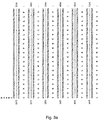
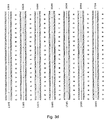
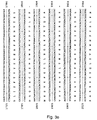
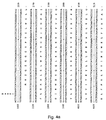
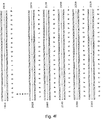
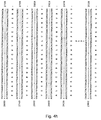
- a cell of the invention exhibiting favourable growth properties is one in which a DNA insert has been introduced, which has the partial DNA sequence shown in Fig. 4A-4F (encoding the extracellular domain of the hybrid receptor), or a suitable modification thereof.
- Suitable modifications of the DNA sequence may comprise nucleotide substitutions which do not give rise to another amino acid sequence of the hybrid polypeptide, but which facilitate the production of the polypeptide, or nucleotide substitutions which do give rise to a different amino acid sequence of the hybrid polypeptide.
- Other possible modifications may be insertion of one or more nucleotides into the sequence, addition of one or more nucleotides at either end of the sequence and deletion of one or more nucleotides at either end of or within the sequence.
- the DNA insert encoding the hybrid receptor may be prepared synthetically by established standard methods, e.g. the phosphoamidite method described by S.L. Beaucage and M.H. Caruthers, Tetrahedron Letters 22 , 1981, pp. 1859-1869, or the method described by Matthes et al., EMBO Journal 3 , 1984, pp. 801-805.
- phosphoamidite method oligonucleotides are synthesized, e.g. in an automatic DNA synthesizer, purified, annealed, ligated and cloned in suitable vectors.
- the DNA insert may also be of genomic or cDNA origin, for instance obtained by preparing a genomic or cDNA library and screening for DNA sequences coding for all or part of the hybrid receptor polypeptide by hybridization using synthetic oligonucleotide probes in accordance with standard techniques (cf. Sambrook et al., Molecular Cloning: A Laboratory Manual , 2nd Ed., Cold Spring Harbor, 1989).
- a genomic or cDNA sequence encoding a part of either receptor may be modified at a site corresponding to the site(s) at which it is desired to introduce amino acid substitutions, e.g. by site-directed mutagenesis using synthetic oligonucleotides encoding the desired amino acid sequence for homologous recombination in accordance with well-known procedures.
- the DNA insert may be of mixed synthetic and genomic, mixed synthetic and cDNA or mixed genomic and cDNA origin prepared by annealing fragments of synthetic, genomic or cDNA origin (as appropriate), the fragments corresponding to various parts of the entire DNA insert, in accordance with standard techniques.
- the DNA insert may also be prepared by polymerase chain reaction using specific primers, for instance as described in US 4,683,202.
- the hybrid DNA insert may be introduced into the cell by transfection of the cell with a recombinant expression vector comprising the insert.
- the expression vector may be any vector which may conveniently be subjected to recombinant DNA procedures, and the choice of vector will often depend on the host cell into which it is to be introduced.
- the vector may be an autonomously replicating vector, i.e. a vector which exists as an extrachromosomal entity, the replication of which is independent of chromosomal replication, e.g. a plasmid.
- the vector may be one which, when introduced into a host cell, is integrated into the host cell genome and replicated together with the chromosome(s) into which it has been integrated.
- the hybrid DNA insert should be operably connected to a suitable promoter sequence.
- the promoter may be any DNA sequence which shows transcriptional activity in the host cell of choice and may be derived from genes encoding proteins either homologous or heterologous to the host cell.
- suitable promoters for directing the transcription of the DNA insert in mammalian cells are the SV 40 promoter (Subramani et al., Mol. Cell Biol. 1 , 1981, pp. 854-864), the MT-1 (metallothionein gene) promoter (Palmiter et al., Science 222 , 1983, pp. 809-814) or the adenovirus 2 major late promoter.
- the DNA insert should also be operably connected to a suitable terminator, such as the human growth hormone terminator (Palmiter et al., op. cit. ).
- the vector may further comprise elements such as polyadenylation signals (e.g. from SV 40 or the adenovirus 5 Elb region), transcriptional enhancer sequences (e.g. the SV 40 enhancer) and translational enhancer sequences (e.g. the ones encoding adenovirus VA RNAs).
- the recombinant expression vector may also comprise a DNA sequence enabling the vector to replicate in the host cell in question.
- An examples of such a sequence is the SV 40 origin of replication.
- the vector may also comprise a selectable marker, e.g. a gene the product of which complements a defect in the host cell, such as the gene coding for dihydrofolate reductase (DHFR) or one which confers resistance to a drug, e.g. neomycin, hygromycin or methotrexate.
- DHFR dihydrofolate reductase
- the cell of the present invention may suitably be used for the production of proteins of polypeptides of interest.
- the cell may further contain an inserted DNA sequence encoding a desired polypeptide.
- polypeptides are the human blood clotting factors IX, VIII or VII, human tissue-type plasminogen activator, human protein C, human plasminogen, etc.
- suitable mammalian cells for transfection with expression vector containing the DNA insert described above are the COS (ATCC CRL 1650), BHK (ATCC CRL 1632, ATCC CCL 10) NIH/3T3 (ATCC CRL 1658) or CHO (ATCC CCL 61) cell lines.
- Methods of transfecting mammalian cells and expressing DNA sequences introduced in the cells are described in e.g. Kaufman and Sharp, J. Mol. Biol. 159 , 1982, pp. 601-621; Southern and Berg, J. Mol. Appl. Genet. 1 , 1982, pp. 327-341; Loyter et al., Proc. Natl. Acad. Sci. USA 79 , 1982, pp.
- the present invention relates to a process for producing a desired polypeptide, which comprises culturing a cell as described above in a suitable nutrient medium under conditions which are conducive to the expression of the polypeptide, and recovering the polypeptide from the culture.
- the medium used to culture the cells may be any conventional medium suitable for growing mammalian cells
- the cell of the invention has surprisingly been found to exhibit exceptionally favourable growth properties in serum-free medium which, as indicated above, is an advantage, i.a. because the purification of the desired polypeptide will be simplified, and the yield of the polypeptide will be improved.
- the polypeptide produced by the cells in this manner will often be secreted to the growth medium and may be recovered from the medium by conventional procedures including separating the host cells from the medium by centrifugation or filtration, precipitating the proteinaceous components of the supernatant or filtrate by means of a salt, e.g. ammonium sulphate, followed by purification by a variety of chromatographic procedures, e.g. ion exchange chromatography, affinity chromatography, or the like.
- a salt e.g. ammonium sulphate
- Insulin receptor cDNA was isolated from a cDNA library generated from poly(A)+ mRNA isolated from the human lymphoblastoid cell line IM9 (available from the American Type Culture Collection, Rockville, Maryland, under the catalogue number ATCC CCL 159) stimulated with 1.4 ⁇ g/ml cortisol for 20 hours, substantially according to the method described by Okayama and Berg, Mol. Cell Biol. 2 , 1982, p. 161 ff.; Okayama and Berg, Mol. Cell. Biol. 3 (2), Feb. 1983, pp. 280-289; and Noma et al., Nature 319 , 1986, p. 640 ff.
- primer extension was applied on mRNA from the IM9 cells using (10 ⁇ g total mRNA) AMV reverse transcriptase (60 U, available from Pharmacia LKB Biotechnology, Sweden) with 800 ng of the 3' oligonucleotide primer 5'-CATCTCAGCAAGATCTTGTCA-3'.
- the second strand was synthesized as described by Okayama and Berg, op. cit. , using the 5' oligonucleotide 5'-ACCGGGAGCGCGCGCTCTGATC-3' as primer.
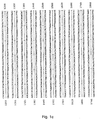
- the cDNA was digested with the restriction endonucleases BssHII and BglII and ligated into an appropriate vector. A 1550 bp clone containing the 5'end of the insulin receptor was isolated. The full-length insulin receptor was assembled in the mammalian expression vector Zem219b (described in DK Patent Application No. 3023/88) digested with NcoI and XbaI by ligating the 5' cDNA clone digested with NcoI and BglII and the 3' cDNA clone digested with SpaI and BglII. The DNA sequence of the full length insulin receptor cDNA is shown in Fig. 1A-1F.
- a soluble IGF-I receptor cDNA was prepared from mRNA from human term placenta by a method involving polymerase chain reaction (PCR) using specific oligonucleotide primers (cf. R.K. Saiki et al., Science 239 , 29 Jan., 1988, pp. 487-491, and US 4,683,202).
- mRNA was prepared by standard procedures as described in Sambrook et al., op. cit.
- the mRNA was reverse transcribed into cDNA with AMV reverse transcriptase (Pharmacia LKB Biotechnology, Sweden) using the appropriate specific primers or an oligo-dT-primer at a final concentration of 800 ng/3.5 ⁇ g mRNA.
- IGF-I receptor cDNA fragments were amplified by PCR using the Gene Amp kit (Perkin Elmer Cetus, Norwalk, CT, USA) as recommended by the manufacturer.
- each PCR approximately 1 ⁇ g of the reverse transcribed mRNA was used as template.
- the primers used for PCR all contained an endonuclease restriction site permitting subcloning and assembly of the soluble IGF-I receptor. the following specific primers were used for PCR
- the isolated cDNA fragments were digested with the endonucleases BamHI and XbaI (New England Biolabs, MA, USA) and subcloned into the PBSII vector (Stratagene, CA, USA) by the method described by Sambrook et al., op. cit.
- Cells of E. coli strain MC1061 T.V. Huynk et al., in DNA Cloning , Vol. 1 (D.M. Glover, ed.), IRL Press Ltd., Oxford, England, 1983, pp. 56-110) and SCS-1 (D. Hanahan, J. Mol. Biol. 166 , 1983, pp. 557-580) were made competent according to the method described by D.
- the soluble IGF-I receptor cDNA was assembled from four subcloned cDNA fragments as shown in Fig. 2 (BamHI-PstI, PstI-Asp718, Asp718-PstI, PstI-XbaI) according to the method described by Sambrook et al., op. cit.
- the cDNA fragment(s) were sequenced by the enzymatic chain termination method described by F. Sanger et al., op. cit. , using T4 DNA polymerase (Sequenase Kit, USB, Cleveland, Ohio, USA).
- the cDNA sequence of the soluble IGF-I receptor is shown in Fig. 3A-3E. The sequence was identical to the published sequence (A. Ullrich et al., The EMBO Journal 5 (10), 1986, pp. 2503-2512).
- Primer 2 (shown above), which includes the insulin receptor "compatible" restriction site EcoRI, was used to generate an IGF-I receptor cDNA fragment corresponding to the DNA sequence encoding exon 2 and 3 and the coding part of exon 1 of the insulin receptor which was inserted into the EcoRI site of the insulin receptor cDNA by the method described by Sambrook et al., op. cit. .
- the sequence of the cDNA fragment was established as described above, and the sequence of the IGF-I receptor cDNA fragment inserted into the insulin receptor was found to be identical with the published sequence (A. Ullrich et al., op. cit. ).
- the cDNA sequence of the hybrid receptor is shown in Fig. 4A-4F.
- the cDNA fragment encoding the hybrid insulin-IGF-I receptor constructed as described above was inserted in the mammalian expression vector Zem219b (described in DK Patent Application No. 3023/88) which carries a gene conferring methotrexate resistance to the host cell, and cDNA encoding the hybrid receptor was transfected into BHK cells, resulting in the cell line FCW 38-16. Resistant cells were selected with 0.4-2 ⁇ M methotrexate.
- the hybrid receptor (sIGF-I-R.1-68) comprising an IGF-I receptor in which the 68 N-terminal amino acids of the insulin receptor ⁇ -subunit have replaced the equivalent IGF-I receptor segment was constructed by means of restriction enzyme sites similarly positioned in the two receptor cDNAs.
- the BamHI-XhoI cDNA fragments were exchanged between the insulin receptor and the IGF-I receptor resulting in sIGF-I-R.1-68.
- This hybrid cDNA was inserted into the mammalian expression vector pZem 219b and transfected into BHK cells, resulting in the cell line FCW 110.
- the cell line FCW 110 formed grape-like clusters of loosely attached cells, forming many floating cells that stayed alive, indicating that this cell line may be adapted to grow in suspension with or without serum.
- Cells were grown in 1 ⁇ M MTX (only the transformed cell lines), DMEM, 10% FCS, 1% PS, 1% Gln.
- 104 cells from each cell line were divided among 25 different 5 cm culture dishes and grown in 5 % FCS on day 0. The cells were counted from 4 different plates every day. Two independent aliquots were sampled from each plate; where appropriate, floating or loosely attached cells were also counted in aspirated medium. Cells grown in this growth curve experiment were propagated in standard medium for growing mammalian cells.
- the growth curves for the three different cell lines in FCS-containing medium are shown in Fig. 5. Based on the counts from the first three days, the cell lines FCW 38-16 and hIR 12-14 show a doubling time of 9 hrs as opposed to 16 hrs for BHK cells.
- FCW 38-16 and hIR 12-14 double each 14.4 hr and BHK doubles each 20.4 hr. All three cell lines had the same cell counts on day four, and were not counted further.
- FCW 38-16 consistently grew to higher densities under these conditions, but ultimately died on day 8 - 9.
- hIR 12-14 formed grape-like clusters of loosely attached cells, forming many floating cells that stayed alive for 2 - 3 days.
- FCW 38-16 cell line performed far better than both the BHK and hIR 12-14 cell lines, supporting the utility of cells of the present invention expressing a hybrid insulin/IGF-I receptor.
Landscapes
- Health & Medical Sciences (AREA)
- Life Sciences & Earth Sciences (AREA)
- Chemical & Material Sciences (AREA)
- Organic Chemistry (AREA)
- Zoology (AREA)
- Molecular Biology (AREA)
- Gastroenterology & Hepatology (AREA)
- Immunology (AREA)
- Biochemistry (AREA)
- Biophysics (AREA)
- General Health & Medical Sciences (AREA)
- Genetics & Genomics (AREA)
- Medicinal Chemistry (AREA)
- Toxicology (AREA)
- Proteomics, Peptides & Aminoacids (AREA)
- Cell Biology (AREA)
- Endocrinology (AREA)
- Micro-Organisms Or Cultivation Processes Thereof (AREA)
- Medicines Containing Material From Animals Or Micro-Organisms (AREA)
- Testing Of Short-Circuits, Discontinuities, Leakage, Or Incorrect Line Connections (AREA)
- Tests Of Electronic Circuits (AREA)
- Peptides Or Proteins (AREA)
- External Artificial Organs (AREA)
Abstract
Description
- The present invention relates to a cell expressing a hybrid between different cellular receptors and a process of producing a desired polypeptide from the cell.
- Cell culture has been carried out for many years in order to invenstigate for instance the physiology of mammalian cells and the relationship between mammalian cells and other organisms such as viruses as well as the impact of a large number of different compounds on the cells. The equipment tranditionally used for cell culture includes glass vessels, petri dishes, T-flasks and the like. The media formulations used for cell culture experiments have been named for the persons who developed them (often on a trial-and-error basis) or modified them in various ways, i.a. Ham, Dulbecco, Leibovits, McCoy, Waymouth, Eagle, Iscove, etc.
- These conventional media all contain serum which was found to make the cells grow at a reasonable rate for experimentation purposes, and the serum which has generally been found to provide the best growth rate is foetal calf serum. The scarcity and variable quality of this serum has created serious problems for cell culture in that the experiments have often been difficult to reproduce.
- Although other aspects of cell culture, in particular the equipment used to culture the cells on a larger scale, have undergone a rapid development in recent years, the composition of the standard media used for cultivation is substantially the same as in the early days of cell culture. Thus, the media still have a high serum content.
- Modern concepts of producing pharmaceuticals on the basis of cell culture require a stringent process control, not only with respect to purification, but also with respect to culture conditions. The use of serum in media is inconsistent with this requirement: due to its biological nature, the composition of serum varies from batch to batch resulting in variability of the cultivation process. Serum also represents the single most important source of unrelated protein present in the culture liquid, which can only be removed from the product of interest by laborious methods resulting in a lower yield of the product of interest. Moreover, serum is the single most important source of contamination of the cell culture with mycoplasma, bacteria or viruses, and costly as well as time-consuming measures have to be taken to remove these contaminants from the serum and to test for their absence.
- It would therefore be highly desirable to omit serum from media used for mammalian cell culture. Attempts have been made to adapt cell lines already used in the production of pharmaceuticals or potentially useful cell lines to growth in serum-free media or media with a reduced serum content. It has, however, been observed that when adaptations to serum-free or low serum media have been made, this has been at the expense of growth performance, i.e. the cells grow at a slower rate than in serum-containing media, resulting in lower productivity and higher susceptibility to invading contaminants.
- A cell line which is able to grow at an increased growth rate than normally observed in serum-containing media, not only in serum-containing media, but also in serum-free media would therefore be of great potential interest for cell culture in the pharmaceutical industry. By omitting serum, it would be simpler to purify the product of interest resulting in improved yields and purity, and a stable faster cell growth rate would lead to a high process productivity, i.a. because rapid-growing cells would be less susceptible to infectious organisms.
- It has surprisingly been found that cells with favourable growth properties in serum-free media may be obtained by introducing into the cells a DNA construct which comprises a hybrid DNA sequence coding for parts of two different cell surface receptors.
- Accordingly, the present invention relates to a mammalian cell containing a hybrid DNA insert which comprises a first DNA sequence encoding part of the extracellular domain of the insulin receptor and a second DNA sequence encoding part of the extracellular domain of insulin-like growth factor (IGF) receptor, said cell having improved growth properties in serum-free culture media compared to cells which do not contain said hybrid DNA insert.
- Cellular receptors which are typically located on cell surfaces mediate certain important cell to cell interactions involving the transmission of extracellular signals by the interaction with ligands. Such receptors are composed of an extracellular domain (in monomeric or dimeric form) which is capable of specifically recognizing and binding a particular ligand and which may have highly glycosylated and protease-resistant structure, a transmembrane domain which is responsible for anchoring the receptor in the cell membrane and which consists of a hydrophobic sequence of some 25 amino acids, and a cytoplasmic domain which is responsible for generating a cellular signal as a response to the binding of the ligand to the extracellular domain; the cytoplasmic domain(s) may define an enzymatic activity which is triggered by ligand binding.
- The reason why hybrid insulin/IGF-1 receptors of the invention may promote the growth of cells in serum-free media has not yet been determined. It is, however, currently assumed that such hybrid receptor constructions provide a constant stimulation of the growth regulatory system of the cells so that their dependence on growth factors (e.g. those present in serum) is reduced. Furthermore, it is possible that hybrid receptors are less sensitive to non-activating ligands (e.g. degradation products or metabolites from the cells) and therefore less likely to be inhibited for binding than the natural receptor.
- A number of naturally occurring receptors have previously been identified. Thus, Rubin et al., J. Immun. 135, 1985, pp. 3172-3177, describe the release of large quantities of the inter-leukin-2 receptor (IL-2-R) into the culture medium of activated T-cells. The DNA sequence coding for the insulin receptor has been published by A. Ullrich et al., Nature 313, 28 Feb. 1985, pp. 756-761, and S. Seino, Proc. Natl. Acad. Sci. USA 86, 1989, pp. 114-118. Similarly, the DNA sequence coding for the IGF-I receptor has been published by A. Ullrich et al., The EMBO J. 5(10), 1986, pp. 2503-2512.
- European Patent Application, Publication No. 244 221 discloses receptors which are hybrids between the extracellular ligand-binding domain of one receptor fused to a heterologous reporter polypeptide which may be the cytoplasmic domain of another receptor.
- B. Kobilka et al, Science 240, 3 June 1988, pp. 1310-1316, disclose chimeras between α2 and β2 adrenergic receptors constructed by replacing DNA sequences encoding various parts of the membrane-spanning domain of one of the receptors by the DNA sequences encoding corresponding parts of the other receptor and expressing the sequences in Xenopus laevis oocytes.
- I. Lax et al., The EMBO J. 8(2), 1989, pp. 421-427, disclose chimeras between chicken and human EGF receptors constructed by replacing DNA sequences encoding various parts of one of the receptors by DNA sequences encoding the corresponding parts of the other receptor, and expressed on the surface of mammalian cells.
- However, none of these prior publications discloses or suggest any use of hybrid insulin/IGF-1 receptors for promoting the growth of mammalian cells in serum-free media.
- In particular, the DNA insert introduced into the cell of the present invention is one in which either the first or the second DNA sequence may encode a ligand-binding site of the insulin or IGF-1 receptor.
- When producing a cell of the invention, it may therefore be an advantage to initially replace one or more exons from one of the receptors by the corresponding exon or exons from the other receptor, and to test the growth properties of cells into which the DNA construct coding for each hybrid has been introduced.
- In this embodiment of the DNA insert introduced in the cell of the invention, a DNA sequence encoding one or more exons, or a fragment thereof, of the extracellular domain of the insulin receptor may be replaced by a DNA sequence encoding the corresponding exon or exons, or fragment thereof, of the extracellular domain of the IGF-1 receptor. Alternatively, a DNA sequence encoding one or more exons, or a fragment thereof, of the extracellular domain of the IGF-1 receptor may be replaced by a DNA sequence encoding the corresponding exon or exons, or fragment thereof, of the extracellular domain of the insulin receptor.
- More specifically, in the DNA insert introduced in the cell of the invention, the DNA sequence coding for
exon 2, or a fragment thereof, of the insulin receptor may be replaced by the DNA sequence coding forexon 2, or a fragment thereof, of the IGF receptor. Alternatively, the DNA sequence coding forexon 3, or a fragment thereof, of the insulin receptor may be replaced by the DNA sequence coding forexon 3, or a fragment thereof, of the IGF receptor. In a further alternative embodiment, the DNA sequence coding forexons exons - In another embodiment of the DNA insert, the DNA sequence coding for
exon 2, or a fragment thereof, of the IGF receptor may be replaced by the DNA sequence coding forexon 2, or a fragment thereof, of the insulin receptor. Alternatively, the DNA sequence coding forexon 3, or a fragment thereof, of the IGF receptor may be replaced by the DNA sequence coding forexon 3, or a fragment thereof, of the insulin receptor. As a further alternative, the DNA sequence coding forexons exons - Similarly, a DNA sequence coding for exon 1 (preferably combined with
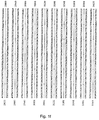
exon 2 or a fragment thereof) or one or more of exons 4-11 or fragments thereof of the insulin receptor may be replaced by the corresponding DNA sequence from the IGF receptor, or vice versa. - One example of a cell of the invention exhibiting favourable growth properties is one in which a DNA insert has been introduced, which has the partial DNA sequence shown in Fig. 4A-4F (encoding the extracellular domain of the hybrid receptor), or a suitable modification thereof. Suitable modifications of the DNA sequence may comprise nucleotide substitutions which do not give rise to another amino acid sequence of the hybrid polypeptide, but which facilitate the production of the polypeptide, or nucleotide substitutions which do give rise to a different amino acid sequence of the hybrid polypeptide. Other possible modifications may be insertion of one or more nucleotides into the sequence, addition of one or more nucleotides at either end of the sequence and deletion of one or more nucleotides at either end of or within the sequence.
- The DNA insert encoding the hybrid receptor may be prepared synthetically by established standard methods, e.g. the phosphoamidite method described by S.L. Beaucage and M.H. Caruthers, Tetrahedron Letters 22, 1981, pp. 1859-1869, or the method described by Matthes et al., EMBO Journal 3, 1984, pp. 801-805. According to the phosphoamidite method, oligonucleotides are synthesized, e.g. in an automatic DNA synthesizer, purified, annealed, ligated and cloned in suitable vectors.
- The DNA insert may also be of genomic or cDNA origin, for instance obtained by preparing a genomic or cDNA library and screening for DNA sequences coding for all or part of the hybrid receptor polypeptide by hybridization using synthetic oligonucleotide probes in accordance with standard techniques (cf. Sambrook et al., Molecular Cloning: A Laboratory Manual, 2nd Ed., Cold Spring Harbor, 1989). In this case, a genomic or cDNA sequence encoding a part of either receptor may be modified at a site corresponding to the site(s) at which it is desired to introduce amino acid substitutions, e.g. by site-directed mutagenesis using synthetic oligonucleotides encoding the desired amino acid sequence for homologous recombination in accordance with well-known procedures.
- Finally, the DNA insert may be of mixed synthetic and genomic, mixed synthetic and cDNA or mixed genomic and cDNA origin prepared by annealing fragments of synthetic, genomic or cDNA origin (as appropriate), the fragments corresponding to various parts of the entire DNA insert, in accordance with standard techniques. The DNA insert may also be prepared by polymerase chain reaction using specific primers, for instance as described in US 4,683,202.
- The hybrid DNA insert may be introduced into the cell by transfection of the cell with a recombinant expression vector comprising the insert. The expression vector may be any vector which may conveniently be subjected to recombinant DNA procedures, and the choice of vector will often depend on the host cell into which it is to be introduced. Thus, the vector may be an autonomously replicating vector, i.e. a vector which exists as an extrachromosomal entity, the replication of which is independent of chromosomal replication, e.g. a plasmid. Alternatively, the vector may be one which, when introduced into a host cell, is integrated into the host cell genome and replicated together with the chromosome(s) into which it has been integrated.
- In the vector, the hybrid DNA insert should be operably connected to a suitable promoter sequence. The promoter may be any DNA sequence which shows transcriptional activity in the host cell of choice and may be derived from genes encoding proteins either homologous or heterologous to the host cell. Examples of suitable promoters for directing the transcription of the DNA insert in mammalian cells are the
SV 40 promoter (Subramani et al., Mol. Cell Biol. 1, 1981, pp. 854-864), the MT-1 (metallothionein gene) promoter (Palmiter et al., Science 222, 1983, pp. 809-814) or theadenovirus 2 major late promoter. - The DNA insert should also be operably connected to a suitable terminator, such as the human growth hormone terminator (Palmiter et al., op. cit.). The vector may further comprise elements such as polyadenylation signals (e.g. from
SV 40 or theadenovirus 5 Elb region), transcriptional enhancer sequences (e.g. theSV 40 enhancer) and translational enhancer sequences (e.g. the ones encoding adenovirus VA RNAs). - The recombinant expression vector may also comprise a DNA sequence enabling the vector to replicate in the host cell in question. An examples of such a sequence is the
SV 40 origin of replication. The vector may also comprise a selectable marker, e.g. a gene the product of which complements a defect in the host cell, such as the gene coding for dihydrofolate reductase (DHFR) or one which confers resistance to a drug, e.g. neomycin, hygromycin or methotrexate. - The procedures used to ligate the hybrid DNA insert with the DNA sequences coding for the promoter and the terminator, respectively, and to insert them into suitable vectors containing the information necessary for replication, are well known to persons skilled in the art (cf., for instance, Sambrook et al., op.cit.).
- The cell of the present invention may suitably be used for the production of proteins of polypeptides of interest. Thus, the cell may further contain an inserted DNA sequence encoding a desired polypeptide. Examples of such polypeptides are the human blood clotting factors IX, VIII or VII, human tissue-type plasminogen activator, human protein C, human plasminogen, etc.
- Examples of suitable mammalian cells for transfection with expression vector containing the DNA insert described above are the COS (ATCC CRL 1650), BHK (ATCC CRL 1632, ATCC CCL 10) NIH/3T3 (ATCC CRL 1658) or CHO (ATCC CCL 61) cell lines. Methods of transfecting mammalian cells and expressing DNA sequences introduced in the cells are described in e.g. Kaufman and Sharp, J. Mol. Biol. 159, 1982, pp. 601-621; Southern and Berg, J. Mol. Appl. Genet. 1, 1982, pp. 327-341; Loyter et al., Proc. Natl. Acad. Sci. USA 79, 1982, pp. 422-426; Wigler et al., Cell 14, 1978, p. 725; Corsaro and Pearson,
Somatic Cell Genetics - In another aspect, the present invention relates to a process for producing a desired polypeptide, which comprises culturing a cell as described above in a suitable nutrient medium under conditions which are conducive to the expression of the polypeptide, and recovering the polypeptide from the culture. Although the medium used to culture the cells may be any conventional medium suitable for growing mammalian cells, the cell of the invention has surprisingly been found to exhibit exceptionally favourable growth properties in serum-free medium which, as indicated above, is an advantage, i.a. because the purification of the desired polypeptide will be simplified, and the yield of the polypeptide will be improved.
- The polypeptide produced by the cells in this manner will often be secreted to the growth medium and may be recovered from the medium by conventional procedures including separating the host cells from the medium by centrifugation or filtration, precipitating the proteinaceous components of the supernatant or filtrate by means of a salt, e.g. ammonium sulphate, followed by purification by a variety of chromatographic procedures, e.g. ion exchange chromatography, affinity chromatography, or the like.
- The invention is further described with reference to the drawings, wherein
- Fig. 1A-1I shows the full-length cDNA sequence of the human insulin receptor;
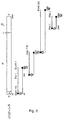
- Fig. 2 shows the assembly into the α-subunit and part of the β-subunit of the IGF-I receptor (sIGF-I-R) of cDNA fragments generated by reverse transcription and PCR using specific oligonucleotide primers; the circled numerals refer to the primers listed in Example 1;
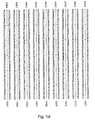
- Fig. 3A-3H shows the cDNA sequence of the soluble IGF-I receptor and the deduced amino acid sequence thereof, indicated in the conventional one-letter code;
- Fig. 4A-4I shows the cDNA sequence of the extracellular domain of a hybrid insulin/IGF-I receptor, wherein
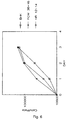
exons exons - Fig. 5 is a graph showing the growth curves (day 3-7) of three different cell lines, BHK, FCW 38-16 (BHK transfected with DNA encoding the hybrid insulin/IGF-I receptor according to Example 1) and hIR 12-14 (BHK transfected with DNA coding for the wild-type human insulin receptor), in medium containing 5% foetal calf serum;
- Fig. 6 is a graph showing the growth curves (day 1-3) of three different cell lines, BHK, FCW 38-16 (BHK transfected with DNA encoding the hybrid insulin/IGF-I receptor according to Example 1) and hIR 12-14 (BHK transfected with DNA coding for the wild-type human insulin receptor), in medium containing 5% foetal calf serum; and
- Fig. 7 is a graph showing the growth curves (day 1-8) of three different cell lines, BHK, FCW 38-16 (BHK transfected with DNA encoding the hybrid insulin/IGF-I receptor according to Example 1) and hIR 12-14 (BHK transfected with DNA coding for the wild-type human insulin receptor), in serum-free medium supplemented with human insulin (BHK cells were also grown in serum-free medium without any added human insulin).
- The invention is further illustrated in the following examples which are not in any way intended to limit the scope of the present invention.
- Insulin receptor cDNA was isolated from a cDNA library generated from poly(A)⁺ mRNA isolated from the human lymphoblastoid cell line IM9 (available from the American Type Culture Collection, Rockville, Maryland, under the catalogue number ATCC CCL 159) stimulated with 1.4 µg/ml cortisol for 20 hours, substantially according to the method described by Okayama and Berg, Mol. Cell Biol. 2, 1982, p. 161 ff.; Okayama and Berg, Mol. Cell. Biol. 3(2), Feb. 1983, pp. 280-289; and Noma et al., Nature 319, 1986, p. 640 ff. An approximately 4000 bp clone containing the 3'end of the insulin receptor was isolated. To obtain a full-length clone, primer extension was applied on mRNA from the IM9 cells using (10 µg total mRNA) AMV reverse transcriptase (60 U, available from Pharmacia LKB Biotechnology, Sweden) with 800 ng of the 3' oligonucleotide primer 5'-CATCTCAGCAAGATCTTGTCA-3'. The second strand was synthesized as described by Okayama and Berg, op. cit., using the 5' oligonucleotide 5'-ACCGGGAGCGCGCGCTCTGATC-3' as primer. The cDNA was digested with the restriction endonucleases BssHII and BglII and ligated into an appropriate vector. A 1550 bp clone containing the 5'end of the insulin receptor was isolated. The full-length insulin receptor was assembled in the mammalian expression vector Zem219b (described in DK Patent Application No. 3023/88) digested with NcoI and XbaI by ligating the 5' cDNA clone digested with NcoI and BglII and the 3' cDNA clone digested with SpaI and BglII. The DNA sequence of the full length insulin receptor cDNA is shown in Fig. 1A-1F.
- A soluble IGF-I receptor cDNA was prepared from mRNA from human term placenta by a method involving polymerase chain reaction (PCR) using specific oligonucleotide primers (cf. R.K. Saiki et al., Science 239, 29 Jan., 1988, pp. 487-491, and US 4,683,202). mRNA was prepared by standard procedures as described in Sambrook et al., op. cit. The mRNA was reverse transcribed into cDNA with AMV reverse transcriptase (Pharmacia LKB Biotechnology, Sweden) using the appropriate specific primers or an oligo-dT-primer at a final concentration of 800 ng/3.5 µg mRNA.
- IGF-I receptor cDNA fragments were amplified by PCR using the Gene Amp kit (Perkin Elmer Cetus, Norwalk, CT, USA) as recommended by the manufacturer.
- In each PCR, approximately 1µg of the reverse transcribed mRNA was used as template. The primers used for PCR all contained an endonuclease restriction site permitting subcloning and assembly of the soluble IGF-I receptor. the following specific primers were used for PCR
- 1. 5'-CCA AAT AGG ATC CAT GAA CTC TGG CTC CGG AGG-3'
- 2. 3'-CCC GAA GTA GGC CTT AAG GTC GGT CTC GT-5'
- 3. 5'-TGG GCA GCT GCA GCG CGC CTG-3'
- 4. 3'-ATT GGA CCG TGG CCA TGG CCG-5'
- 5. 5'-TAA CCT GGC ACC GGT ACC GGC-3'
- 6. 3'-TCA AAG AGT TGC TTC GAA GAC-5'
- 7. 5'-AAC ACC ACG GCC GCA GAC ACC-3'
- 8. 3'-TGT CCT ATA CTT TTG ATT AGA TCT GAC TAG T-5'
- The isolated cDNA fragments were digested with the endonucleases BamHI and XbaI (New England Biolabs, MA, USA) and subcloned into the PBSII vector (Stratagene, CA, USA) by the method described by Sambrook et al., op. cit. Cells of E. coli strain MC1061 (T.V. Huynk et al., in DNA Cloning, Vol. 1 (D.M. Glover, ed.), IRL Press Ltd., Oxford, England, 1983, pp. 56-110) and SCS-1 (D. Hanahan, J. Mol. Biol. 166, 1983, pp. 557-580) were made competent according to the method described by D. Hanahan, in DNA Cloning, Vol. 1, supra, pp. 110-135, and used for transformation with the vectors indicated above. The soluble IGF-I receptor cDNA was assembled from four subcloned cDNA fragments as shown in Fig. 2 (BamHI-PstI, PstI-Asp718, Asp718-PstI, PstI-XbaI) according to the method described by Sambrook et al., op. cit. The cDNA fragment(s) were sequenced by the enzymatic chain termination method described by F. Sanger et al., op. cit., using T4 DNA polymerase (Sequenase Kit, USB, Cleveland, Ohio, USA). The cDNA sequence of the soluble IGF-I receptor is shown in Fig. 3A-3E. The sequence was identical to the published sequence (A. Ullrich et al., The EMBO Journal 5(10), 1986, pp. 2503-2512).
- cDNA coding for a hybrid receptor composed of the human insulin receptor described above wherein the cDNA sequence coding for
exons exons sequence encoding exon exon 1 of the insulin receptor which was inserted into the EcoRI site of the insulin receptor cDNA by the method described by Sambrook et al., op. cit.. The sequence of the cDNA fragment was established as described above, and the sequence of the IGF-I receptor cDNA fragment inserted into the insulin receptor was found to be identical with the published sequence (A. Ullrich et al., op. cit.). The cDNA sequence of the hybrid receptor is shown in Fig. 4A-4F. - The cDNA fragment encoding the hybrid insulin-IGF-I receptor constructed as described above was inserted in the mammalian expression vector Zem219b (described in DK Patent Application No. 3023/88) which carries a gene conferring methotrexate resistance to the host cell, and cDNA encoding the hybrid receptor was transfected into BHK cells, resulting in the cell line FCW 38-16. Resistant cells were selected with 0.4-2 µM methotrexate.
- The hybrid receptor (sIGF-I-R.1-68) comprising an IGF-I receptor in which the 68 N-terminal amino acids of the insulin receptor α-subunit have replaced the equivalent IGF-I receptor segment was constructed by means of restriction enzyme sites similarly positioned in the two receptor cDNAs. The BamHI-XhoI cDNA fragments were exchanged between the insulin receptor and the IGF-I receptor resulting in sIGF-I-R.1-68. This hybrid cDNA was inserted into the mammalian expression vector pZem 219b and transfected into BHK cells, resulting in the cell line FCW 110.
- During cultivation in 5% FCS, the cell line FCW 110 formed grape-like clusters of loosely attached cells, forming many floating cells that stayed alive, indicating that this cell line may be adapted to grow in suspension with or without serum.
- Growth performance of cells transfected with the hybrid insulin/IGF-I receptor
-
- Cell lines:
- BHK (Baby Hamster Kidney cells, Syrian Hamster) FCW 38-16, according to Example 1,
hIR 12-14, BHK transfected with DNA coding for the wild-type human insulin receptor. - Cells were grown in 1 µM MTX (only the transformed cell lines), DMEM, 10% FCS, 1% PS, 1% Gln.
- In a first experiment, 10⁴ cells from each cell line were divided among 25 different 5 cm culture dishes and grown in 5 % FCS on
day 0. The cells were counted from 4 different plates every day. Two independent aliquots were sampled from each plate; where appropriate, floating or loosely attached cells were also counted in aspirated medium. Cells grown in this growth curve experiment were propagated in standard medium for growing mammalian cells. - In a second experiment, 10⁵ cells from each cell line were divided among 25 different 5 cm culture dishes on
day 0. The medium was changed onday 1 to 0% FCS, but was supplemented with 5 mg/l of human insulin. The cells were counted over the next days as described above. - The growth curves for the three different cell lines in FCS-containing medium are shown in Fig. 5. Based on the counts from the first three days, the cell lines FCW 38-16 and hIR 12-14 show a doubling time of 9 hrs as opposed to 16 hrs for BHK cells.
- This experiment was repeated the following week, but this time with additional cell counts on
day - When figures from the first two days are used to calculate the generation time, FCW 38-16 and hIR 12-14 double each 14.4 hr and BHK doubles each 20.4 hr. All three cell lines had the same cell counts on day four, and were not counted further.
- In the second week of experiment, all three cell lines had longer generation times; the ratio between the generation time for the transformed cell lines and BHK was 1.4 as compared to 1.7 for the first week.
- Three growth experiments with all three cell lines in serum-free medium supplemented with human insulin were performed over three weeks, and cell counts from these three experiments were averaged to generate the growth curves shown in Fig. 6.
- BHK cells grown without serum and without added human insulin were counted for one week.
- FCW 38-16 consistently grew to higher densities under these conditions, but ultimately died on day 8 - 9.
- hIR 12-14 formed grape-like clusters of loosely attached cells, forming many floating cells that stayed alive for 2 - 3 days.
- In two independent growth-curve experiments in serum supplemented with 5% FCS, the transformed cell lines showed a shorter generation time than BHK cells. At the end of each experiment all three cell lines showed the same cell density on the plates.
- Although the generation times obtained in both weeks of analysis are not the same, it may be concluded that the growth curves support the observed difference in growth rate of FCW 38-16 (and hIR 12-14) compared to BHK.
- Under serum-free conditions (supplemented with insulin), the FCW 38-16 cell line performed far better than both the BHK and hIR 12-14 cell lines, supporting the utility of cells of the present invention expressing a hybrid insulin/IGF-I receptor.
The following restriction sites native to the IGF-I receptor were part of the PCR primers: PstI, Asp718, XmaIII and HindIII. A BamHI site was incorporated in the
Claims (11)
- A mammalian cell containing a hybrid DNA insert which comprises a first DNA sequence encoding part of the extracellular domain of the insulin receptor and a second DNA sequence encoding part of the extracellular domain of insulin-like growth factor (IGF) receptor, said cell having improved growth properties in serum-free culture media compared to cells which do not contain said hybrid DNA insert.
- A cell according to claim 1, wherein a DNA sequence encoding exon 2, or a fragment thereof, of the insulin receptor is replaced by a DNA sequence encoding exon 2, or a fragment thereof, of the IGF receptor.
- A cell according to claim 1, wherein a DNA sequence encoding exon 3, or a fragment thereof, of the insulin receptor is replaced by a DNA sequence encoding exon 3, or a fragment thereof, of the IGF receptor.
- A cell according to claim 1, wherein a DNA sequence encoding exons 2 and 3, or a fragment thereof, of the insulin receptor is replaced by a DNA sequence encoding exons 2 and 3, or a fragment thereof, of the IGF receptor.
- A cell according to claim 1, wherein a DNA sequence encoding exon 2, or a fragment thereof, of the IGF receptor is replaced by a DNA sequence encoding exon 2, or a fragment thereof, of the insulin receptor.
- A cell according to claim 1, wherein a DNA sequence encoding exon 3, or a fragment thereof, of the IGF receptor is replaced by a DNA sequence encoding exon 3, or a fragment thereof, of the insulin receptor.
- A cell according to claim 1, wherein a DNA sequence encoding exons 2 and 3, or a fragment thereof, of the IGF receptor is replaced by a DNA sequence encoding exons 2 and 3, or a fragment thereof, of the insulin receptor.
- A cell according to claim 4, wherein the DNA insert has the partial DNA sequence shown in Fig. 4A-4F (encoding the extracellular domain of the hybrid insulin/IGF-I receptor), or a suitable modification thereof.
- A cell according to any of claims 1-8, which further contains an inserted DNA sequence encoding a desired polypeptide.
- A process for producing a desired polypeptide, which comprises culturing a cell according to claim 9 in a suitable nutrient medium under conditions conducive to the expression of the polypeptide and recovering the polypeptide from the culture.
- A process according to claim 10, wherein the medium is a serum-free medium.
Applications Claiming Priority (3)
| Application Number | Priority Date | Filing Date | Title |
|---|---|---|---|
| DK1064/90 | 1990-04-30 | ||
| DK106490A DK106490D0 (en) | 1990-04-30 | 1990-04-30 | CELL |
| PCT/DK1991/000116 WO1991017253A1 (en) | 1990-04-30 | 1991-04-30 | Mammalian cells expressing a hybrid receptor |
Publications (2)
| Publication Number | Publication Date |
|---|---|
| EP0529010A1 EP0529010A1 (en) | 1993-03-03 |
| EP0529010B1 true EP0529010B1 (en) | 1995-09-06 |
Family
ID=8100586
Family Applications (1)
| Application Number | Title | Priority Date | Filing Date |
|---|---|---|---|
| EP91920970A Expired - Lifetime EP0529010B1 (en) | 1990-04-30 | 1991-04-30 | Mammalian cells expressing a hybrid receptor |
Country Status (8)
| Country | Link |
|---|---|
| EP (1) | EP0529010B1 (en) |
| JP (1) | JPH05506153A (en) |
| AT (1) | ATE127521T1 (en) |
| AU (1) | AU7759791A (en) |
| DE (1) | DE69112829T2 (en) |
| DK (2) | DK106490D0 (en) |
| ES (1) | ES2079690T3 (en) |
| WO (1) | WO1991017253A1 (en) |
Families Citing this family (7)
| Publication number | Priority date | Publication date | Assignee | Title |
|---|---|---|---|---|
| US5861274A (en) * | 1990-03-22 | 1999-01-19 | The Salk Institute For Biological Studies | Nucleic acids encoding peroxisome proliferator-activated receptor |
| AU655417B2 (en) | 1990-03-22 | 1994-12-22 | Salk Institute For Biological Studies, The | Insect retinoid receptor compositions and methods |
| WO1994001558A2 (en) * | 1992-07-02 | 1994-01-20 | The Salk Institute For Biological Studies | Multimeric forms of members of the steroid/thyroid superfamily of receptors with the ultraspiracle receptor |
| US6340674B1 (en) | 1993-03-26 | 2002-01-22 | Thomas Jefferson University | Method of inhibiting the proliferation and causing the differentiation of cells with IGF-1 receptor antisense oligonucleotides |
| US5714170A (en) | 1994-11-16 | 1998-02-03 | Thomas Jefferson University | Method of inducing resistance to tumor growth |
| EP0861267A4 (en) * | 1995-11-14 | 2000-02-02 | Univ Jefferson | METHOD FOR PROVIDING RESISTANCE TO TUMOR GROWTH USING A SOLUBLE IGF-1 RECEPTOR |
| US6541036B1 (en) | 1997-05-29 | 2003-04-01 | Thomas Jefferson University | Treatment of tumors with oligonucleotides directed to insulin-like growth factor-I receptors (IGF-IR) |
Family Cites Families (3)
| Publication number | Priority date | Publication date | Assignee | Title |
|---|---|---|---|---|
| US4859609A (en) * | 1986-04-30 | 1989-08-22 | Genentech, Inc. | Novel receptors for efficient determination of ligands and their antagonists or agonists |
| US4981784A (en) * | 1987-12-02 | 1991-01-01 | The Salk Institute For Biological Studies | Retinoic acid receptor method |
| PT89484B (en) * | 1988-01-22 | 1994-03-31 | Gen Hospital Corp | GENE CLONED CODES OF FUSAO PROTEINS IG-CD4 AND ITS UTILIZATION |
-
1990
- 1990-04-30 DK DK106490A patent/DK106490D0/en not_active Application Discontinuation
-
1991
- 1991-04-30 ES ES91920970T patent/ES2079690T3/en not_active Expired - Lifetime
- 1991-04-30 EP EP91920970A patent/EP0529010B1/en not_active Expired - Lifetime
- 1991-04-30 AT AT91920970T patent/ATE127521T1/en not_active IP Right Cessation
- 1991-04-30 WO PCT/DK1991/000116 patent/WO1991017253A1/en not_active Ceased
- 1991-04-30 DK DK91920970.0T patent/DK0529010T3/en active
- 1991-04-30 AU AU77597/91A patent/AU7759791A/en not_active Abandoned
- 1991-04-30 JP JP91508451A patent/JPH05506153A/en active Pending
- 1991-04-30 DE DE69112829T patent/DE69112829T2/en not_active Expired - Fee Related
Non-Patent Citations (1)
| Title |
|---|
| Lax et al.(1989), EMBO J., 8(2), p.421-427. * |
Also Published As
| Publication number | Publication date |
|---|---|
| EP0529010A1 (en) | 1993-03-03 |
| DK0529010T3 (en) | 1996-01-08 |
| DK106490D0 (en) | 1990-04-30 |
| JPH05506153A (en) | 1993-09-16 |
| AU7759791A (en) | 1991-11-27 |
| DE69112829D1 (en) | 1995-10-12 |
| ES2079690T3 (en) | 1996-01-16 |
| DE69112829T2 (en) | 1996-03-21 |
| WO1991017253A1 (en) | 1991-11-14 |
| ATE127521T1 (en) | 1995-09-15 |
Similar Documents
| Publication | Publication Date | Title |
|---|---|---|
| EP1694850B1 (en) | Plasmid system for multigene expression | |
| JP3559281B2 (en) | CD27 ligand | |
| Dong et al. | A point mutation in the granulocyte colony-stimulating factor receptor (G-CSF-R) gene in a case of acute myeloid leukemia results in the overexpression of a novel G-CSF-R isoform | |
| Shao et al. | cDNA cloning and characterization of a ligand for the Cek5 receptor protein-tyrosine kinase. | |
| JPH10502810A (en) | Novel cytokine named LERK-5 | |
| EP0980432A1 (en) | Chimeric opg polypeptides | |
| WO1995033059A2 (en) | Receptor for oncostatin m | |
| IE913426A1 (en) | Hybrid growth factors | |
| US5639660A (en) | Polypeptide and DNA sequence corresponding to the human receptor with high affinity for IgE | |
| JPH0347078A (en) | Interleukin-7 receptor | |
| WO1991017253A1 (en) | Mammalian cells expressing a hybrid receptor | |
| CA2189581C (en) | Ice and ice-like compositions and methods of making same | |
| EP0211260A1 (en) | Chromosomal DNA sequence, expression vector for human tissue plasminogen activating factor, cultured cells transfected with same and method of producing said activating factor | |
| AU655767B2 (en) | A hybrid cellular receptor | |
| EP0266057A2 (en) | Plasmid containing an eucaryotic secretory signal sequence and process for secreting encoded proteins | |
| JP3287869B2 (en) | Method for producing human nerve growth factor 2 | |
| US4970161A (en) | Human interferon-gamma | |
| JPH02200189A (en) | Gene coding polypeptide having interleukin 2 activity | |
| DE69932247T2 (en) | HUMAN IL-1 EPSILON DNA AND POLYPEPTIDE | |
| JP2576200B2 (en) | Method for producing bioactive protein | |
| GB2249100A (en) | Expression of M-CSF deletion mutant polypeptides | |
| JP2839837B2 (en) | DNA encoding the ligand-binding domain protein of granulocyte colony-stimulating factor receptor | |
| WO1996033217A1 (en) | Cell adhesion protein, immunosuppressive agent containing the same, and immunosuppressive agent containing cells induced thereby | |
| AU604051B2 (en) | Recombinant human erythropoietin | |
| WO2000055205A1 (en) | ISOFORMS OF MOUSE SEROTONIN 5-HT2c RECEPTOR |
Legal Events
| Date | Code | Title | Description |
|---|---|---|---|
| PUAI | Public reference made under article 153(3) epc to a published international application that has entered the european phase |
Free format text: ORIGINAL CODE: 0009012 |
|
| 17P | Request for examination filed |
Effective date: 19920924 |
|
| AK | Designated contracting states |
Kind code of ref document: A1 Designated state(s): AT BE CH DE DK ES FR GB GR IT LI LU NL SE |
|
| 17Q | First examination report despatched |
Effective date: 19930823 |
|
| GRAA | (expected) grant |
Free format text: ORIGINAL CODE: 0009210 |
|
| AK | Designated contracting states |
Kind code of ref document: B1 Designated state(s): AT BE CH DE DK ES FR GB GR IT LI LU NL SE |
|
| PG25 | Lapsed in a contracting state [announced via postgrant information from national office to epo] |
Ref country code: GR Free format text: LAPSE BECAUSE OF FAILURE TO SUBMIT A TRANSLATION OF THE DESCRIPTION OR TO PAY THE FEE WITHIN THE PRESCRIBED TIME-LIMIT Effective date: 19950906 |
|
| REF | Corresponds to: |
Ref document number: 127521 Country of ref document: AT Date of ref document: 19950915 Kind code of ref document: T |
|
| REF | Corresponds to: |
Ref document number: 69112829 Country of ref document: DE Date of ref document: 19951012 |
|
| ITF | It: translation for a ep patent filed | ||
| ET | Fr: translation filed | ||
| REG | Reference to a national code |
Ref country code: DK Ref legal event code: T3 |
|
| REG | Reference to a national code |
Ref country code: ES Ref legal event code: FG2A Ref document number: 2079690 Country of ref document: ES Kind code of ref document: T3 |
|
| PGFP | Annual fee paid to national office [announced via postgrant information from national office to epo] |
Ref country code: CH Payment date: 19960619 Year of fee payment: 6 |
|
| PLBE | No opposition filed within time limit |
Free format text: ORIGINAL CODE: 0009261 |
|
| STAA | Information on the status of an ep patent application or granted ep patent |
Free format text: STATUS: NO OPPOSITION FILED WITHIN TIME LIMIT |
|
| 26N | No opposition filed | ||
| PGFP | Annual fee paid to national office [announced via postgrant information from national office to epo] |
Ref country code: DK Payment date: 19970326 Year of fee payment: 7 |
|
| PGFP | Annual fee paid to national office [announced via postgrant information from national office to epo] |
Ref country code: FR Payment date: 19970415 Year of fee payment: 7 |
|
| PGFP | Annual fee paid to national office [announced via postgrant information from national office to epo] |
Ref country code: SE Payment date: 19970416 Year of fee payment: 7 |
|
| PGFP | Annual fee paid to national office [announced via postgrant information from national office to epo] |
Ref country code: DE Payment date: 19970418 Year of fee payment: 7 |
|
| PGFP | Annual fee paid to national office [announced via postgrant information from national office to epo] |
Ref country code: GB Payment date: 19970421 Year of fee payment: 7 Ref country code: BE Payment date: 19970421 Year of fee payment: 7 |
|
| PGFP | Annual fee paid to national office [announced via postgrant information from national office to epo] |
Ref country code: ES Payment date: 19970423 Year of fee payment: 7 |
|
| PGFP | Annual fee paid to national office [announced via postgrant information from national office to epo] |
Ref country code: AT Payment date: 19970429 Year of fee payment: 7 |
|
| PG25 | Lapsed in a contracting state [announced via postgrant information from national office to epo] |
Ref country code: LI Free format text: LAPSE BECAUSE OF NON-PAYMENT OF DUE FEES Effective date: 19970430 Ref country code: CH Free format text: LAPSE BECAUSE OF NON-PAYMENT OF DUE FEES Effective date: 19970430 |
|
| PGFP | Annual fee paid to national office [announced via postgrant information from national office to epo] |
Ref country code: NL Payment date: 19970430 Year of fee payment: 7 |
|
| PGFP | Annual fee paid to national office [announced via postgrant information from national office to epo] |
Ref country code: LU Payment date: 19970507 Year of fee payment: 7 |
|
| REG | Reference to a national code |
Ref country code: CH Ref legal event code: PL |
|
| PG25 | Lapsed in a contracting state [announced via postgrant information from national office to epo] |
Ref country code: LU Free format text: LAPSE BECAUSE OF NON-PAYMENT OF DUE FEES Effective date: 19980430 Ref country code: GB Free format text: LAPSE BECAUSE OF NON-PAYMENT OF DUE FEES Effective date: 19980430 Ref country code: FR Free format text: THE PATENT HAS BEEN ANNULLED BY A DECISION OF A NATIONAL AUTHORITY Effective date: 19980430 Ref country code: DK Free format text: LAPSE BECAUSE OF NON-PAYMENT OF DUE FEES Effective date: 19980430 Ref country code: BE Free format text: LAPSE BECAUSE OF NON-PAYMENT OF DUE FEES Effective date: 19980430 Ref country code: AT Free format text: LAPSE BECAUSE OF NON-PAYMENT OF DUE FEES Effective date: 19980430 |
|
| PG25 | Lapsed in a contracting state [announced via postgrant information from national office to epo] |
Ref country code: SE Free format text: LAPSE BECAUSE OF NON-PAYMENT OF DUE FEES Effective date: 19980501 |
|
| PG25 | Lapsed in a contracting state [announced via postgrant information from national office to epo] |
Ref country code: ES Free format text: LAPSE BECAUSE OF EXPIRATION OF PROTECTION Effective date: 19980504 |
|
| BERE | Be: lapsed |
Owner name: NOVO NORDISK A/S Effective date: 19980430 |
|
| PG25 | Lapsed in a contracting state [announced via postgrant information from national office to epo] |
Ref country code: NL Free format text: LAPSE BECAUSE OF NON-PAYMENT OF DUE FEES Effective date: 19981101 |
|
| GBPC | Gb: european patent ceased through non-payment of renewal fee |
Effective date: 19980430 |
|
| NLV4 | Nl: lapsed or anulled due to non-payment of the annual fee |
Effective date: 19981101 |
|
| EUG | Se: european patent has lapsed |
Ref document number: 91920970.0 |
|
| PG25 | Lapsed in a contracting state [announced via postgrant information from national office to epo] |
Ref country code: DE Free format text: LAPSE BECAUSE OF NON-PAYMENT OF DUE FEES Effective date: 19990202 |
|
| REG | Reference to a national code |
Ref country code: FR Ref legal event code: ST |
|
| REG | Reference to a national code |
Ref country code: DK Ref legal event code: EBP |
|
| REG | Reference to a national code |
Ref country code: ES Ref legal event code: FD2A Effective date: 20000301 |
|
| PG25 | Lapsed in a contracting state [announced via postgrant information from national office to epo] |
Ref country code: IT Free format text: LAPSE BECAUSE OF NON-PAYMENT OF DUE FEES;WARNING: LAPSES OF ITALIAN PATENTS WITH EFFECTIVE DATE BEFORE 2007 MAY HAVE OCCURRED AT ANY TIME BEFORE 2007. THE CORRECT EFFECTIVE DATE MAY BE DIFFERENT FROM THE ONE RECORDED. Effective date: 20050430 |