EP0523978B1 - Modified phosphorous intermediates for providing functional groups on the 5' end of oligonucleotides - Google Patents
Modified phosphorous intermediates for providing functional groups on the 5' end of oligonucleotides Download PDFInfo
- Publication number
- EP0523978B1 EP0523978B1 EP92306477A EP92306477A EP0523978B1 EP 0523978 B1 EP0523978 B1 EP 0523978B1 EP 92306477 A EP92306477 A EP 92306477A EP 92306477 A EP92306477 A EP 92306477A EP 0523978 B1 EP0523978 B1 EP 0523978B1
- Authority
- EP
- European Patent Office
- Prior art keywords
- group
- carbon atoms
- formula
- atoms
- alkyl
- Prior art date
- Legal status (The legal status is an assumption and is not a legal conclusion. Google has not performed a legal analysis and makes no representation as to the accuracy of the status listed.)
- Expired - Lifetime
Links
- 108091034117 Oligonucleotide Proteins 0.000 title claims abstract description 75
- 125000000524 functional group Chemical group 0.000 title claims description 6
- JLCPHMBAVCMARE-UHFFFAOYSA-N [3-[[3-[[3-[[3-[[3-[[3-[[3-[[3-[[3-[[3-[[3-[[5-(2-amino-6-oxo-1H-purin-9-yl)-3-[[3-[[3-[[3-[[3-[[3-[[5-(2-amino-6-oxo-1H-purin-9-yl)-3-[[5-(2-amino-6-oxo-1H-purin-9-yl)-3-hydroxyoxolan-2-yl]methoxy-hydroxyphosphoryl]oxyoxolan-2-yl]methoxy-hydroxyphosphoryl]oxy-5-(5-methyl-2,4-dioxopyrimidin-1-yl)oxolan-2-yl]methoxy-hydroxyphosphoryl]oxy-5-(6-aminopurin-9-yl)oxolan-2-yl]methoxy-hydroxyphosphoryl]oxy-5-(6-aminopurin-9-yl)oxolan-2-yl]methoxy-hydroxyphosphoryl]oxy-5-(6-aminopurin-9-yl)oxolan-2-yl]methoxy-hydroxyphosphoryl]oxy-5-(6-aminopurin-9-yl)oxolan-2-yl]methoxy-hydroxyphosphoryl]oxyoxolan-2-yl]methoxy-hydroxyphosphoryl]oxy-5-(5-methyl-2,4-dioxopyrimidin-1-yl)oxolan-2-yl]methoxy-hydroxyphosphoryl]oxy-5-(4-amino-2-oxopyrimidin-1-yl)oxolan-2-yl]methoxy-hydroxyphosphoryl]oxy-5-(5-methyl-2,4-dioxopyrimidin-1-yl)oxolan-2-yl]methoxy-hydroxyphosphoryl]oxy-5-(5-methyl-2,4-dioxopyrimidin-1-yl)oxolan-2-yl]methoxy-hydroxyphosphoryl]oxy-5-(6-aminopurin-9-yl)oxolan-2-yl]methoxy-hydroxyphosphoryl]oxy-5-(6-aminopurin-9-yl)oxolan-2-yl]methoxy-hydroxyphosphoryl]oxy-5-(4-amino-2-oxopyrimidin-1-yl)oxolan-2-yl]methoxy-hydroxyphosphoryl]oxy-5-(4-amino-2-oxopyrimidin-1-yl)oxolan-2-yl]methoxy-hydroxyphosphoryl]oxy-5-(4-amino-2-oxopyrimidin-1-yl)oxolan-2-yl]methoxy-hydroxyphosphoryl]oxy-5-(6-aminopurin-9-yl)oxolan-2-yl]methoxy-hydroxyphosphoryl]oxy-5-(4-amino-2-oxopyrimidin-1-yl)oxolan-2-yl]methyl [5-(6-aminopurin-9-yl)-2-(hydroxymethyl)oxolan-3-yl] hydrogen phosphate Polymers Cc1cn(C2CC(OP(O)(=O)OCC3OC(CC3OP(O)(=O)OCC3OC(CC3O)n3cnc4c3nc(N)[nH]c4=O)n3cnc4c3nc(N)[nH]c4=O)C(COP(O)(=O)OC3CC(OC3COP(O)(=O)OC3CC(OC3COP(O)(=O)OC3CC(OC3COP(O)(=O)OC3CC(OC3COP(O)(=O)OC3CC(OC3COP(O)(=O)OC3CC(OC3COP(O)(=O)OC3CC(OC3COP(O)(=O)OC3CC(OC3COP(O)(=O)OC3CC(OC3COP(O)(=O)OC3CC(OC3COP(O)(=O)OC3CC(OC3COP(O)(=O)OC3CC(OC3COP(O)(=O)OC3CC(OC3COP(O)(=O)OC3CC(OC3COP(O)(=O)OC3CC(OC3COP(O)(=O)OC3CC(OC3COP(O)(=O)OC3CC(OC3CO)n3cnc4c(N)ncnc34)n3ccc(N)nc3=O)n3cnc4c(N)ncnc34)n3ccc(N)nc3=O)n3ccc(N)nc3=O)n3ccc(N)nc3=O)n3cnc4c(N)ncnc34)n3cnc4c(N)ncnc34)n3cc(C)c(=O)[nH]c3=O)n3cc(C)c(=O)[nH]c3=O)n3ccc(N)nc3=O)n3cc(C)c(=O)[nH]c3=O)n3cnc4c3nc(N)[nH]c4=O)n3cnc4c(N)ncnc34)n3cnc4c(N)ncnc34)n3cnc4c(N)ncnc34)n3cnc4c(N)ncnc34)O2)c(=O)[nH]c1=O JLCPHMBAVCMARE-UHFFFAOYSA-N 0.000 title description 7
- 239000000543 intermediate Substances 0.000 title description 6
- BHEPBYXIRTUNPN-UHFFFAOYSA-N hydridophosphorus(.) (triplet) Chemical class [PH] BHEPBYXIRTUNPN-UHFFFAOYSA-N 0.000 title description 3
- 125000006239 protecting group Chemical group 0.000 claims abstract description 27
- 150000002009 diols Chemical group 0.000 claims abstract description 26
- 125000002228 disulfide group Chemical group 0.000 claims abstract description 25
- 125000004432 carbon atom Chemical group C* 0.000 claims abstract description 23
- 125000003118 aryl group Chemical group 0.000 claims abstract description 16
- 125000000743 hydrocarbylene group Chemical group 0.000 claims abstract description 11
- 125000003396 thiol group Chemical group [H]S* 0.000 claims abstract description 11
- 229910052757 nitrogen Inorganic materials 0.000 claims abstract description 10
- 125000004122 cyclic group Chemical group 0.000 claims abstract description 8
- 125000004433 nitrogen atom Chemical group N* 0.000 claims abstract description 8
- 125000004434 sulfur atom Chemical group 0.000 claims abstract description 8
- 125000003277 amino group Chemical group 0.000 claims abstract description 7
- 125000000217 alkyl group Chemical group 0.000 claims abstract description 5
- -1 dimethoxytrityl Chemical group 0.000 claims description 30
- 125000004435 hydrogen atom Chemical group [H]* 0.000 claims description 21
- 125000002887 hydroxy group Chemical group [H]O* 0.000 claims description 21
- 150000001875 compounds Chemical class 0.000 claims description 19
- 238000006243 chemical reaction Methods 0.000 claims description 15
- 229910052760 oxygen Inorganic materials 0.000 claims description 14
- QVGXLLKOCUKJST-UHFFFAOYSA-N atomic oxygen Chemical compound [O] QVGXLLKOCUKJST-UHFFFAOYSA-N 0.000 claims description 13
- 239000001301 oxygen Substances 0.000 claims description 13
- LFQSCWFLJHTTHZ-UHFFFAOYSA-N Ethanol Chemical compound CCO LFQSCWFLJHTTHZ-UHFFFAOYSA-N 0.000 claims description 12
- NINIDFKCEFEMDL-UHFFFAOYSA-N Sulfur Chemical group [S] NINIDFKCEFEMDL-UHFFFAOYSA-N 0.000 claims description 12
- 125000001997 phenyl group Chemical group [H]C1=C([H])C([H])=C(*)C([H])=C1[H] 0.000 claims description 11
- 125000002947 alkylene group Chemical group 0.000 claims description 10
- 125000002496 methyl group Chemical group [H]C([H])([H])* 0.000 claims description 10
- BWGNESOTFCXPMA-UHFFFAOYSA-N Dihydrogen disulfide Chemical compound SS BWGNESOTFCXPMA-UHFFFAOYSA-N 0.000 claims description 9
- 125000003236 benzoyl group Chemical group [H]C1=C([H])C([H])=C(C([H])=C1[H])C(*)=O 0.000 claims description 9
- 125000003172 aldehyde group Chemical group 0.000 claims description 8
- 229920000642 polymer Polymers 0.000 claims description 8
- 125000004169 (C1-C6) alkyl group Chemical group 0.000 claims description 7
- 125000006552 (C3-C8) cycloalkyl group Chemical group 0.000 claims description 7
- 125000003837 (C1-C20) alkyl group Chemical group 0.000 claims description 5
- 125000002950 monocyclic group Chemical group 0.000 claims description 5
- 125000004429 atom Chemical group 0.000 claims description 4
- 229910052801 chlorine Inorganic materials 0.000 claims description 4
- 229910052739 hydrogen Inorganic materials 0.000 claims description 4
- 239000001257 hydrogen Substances 0.000 claims description 4
- 125000001449 isopropyl group Chemical group [H]C([H])([H])C([H])(*)C([H])([H])[H] 0.000 claims description 4
- 125000000956 methoxy group Chemical group [H]C([H])([H])O* 0.000 claims description 4
- 125000003107 substituted aryl group Chemical group 0.000 claims description 4
- 125000002221 trityl group Chemical group [H]C1=C([H])C([H])=C([H])C([H])=C1C([*])(C1=C(C(=C(C(=C1[H])[H])[H])[H])[H])C1=C([H])C([H])=C([H])C([H])=C1[H] 0.000 claims description 4
- 125000004209 (C1-C8) alkyl group Chemical group 0.000 claims description 3
- 125000004172 4-methoxyphenyl group Chemical group [H]C1=C([H])C(OC([H])([H])[H])=C([H])C([H])=C1* 0.000 claims description 3
- 125000003545 alkoxy group Chemical group 0.000 claims description 3
- 125000000732 arylene group Chemical group 0.000 claims description 3
- 125000001309 chloro group Chemical group Cl* 0.000 claims description 3
- 150000001413 amino acids Chemical class 0.000 claims description 2
- 125000006267 biphenyl group Chemical group 0.000 claims 2
- 125000005843 halogen group Chemical group 0.000 claims 2
- 125000000383 tetramethylene group Chemical group [H]C([H])([*:1])C([H])([H])C([H])([H])C([H])([H])[*:2] 0.000 claims 2
- 125000004836 hexamethylene group Chemical group [H]C([H])([*:2])C([H])([H])C([H])([H])C([H])([H])C([H])([H])C([H])([H])[*:1] 0.000 claims 1
- 150000008300 phosphoramidites Chemical class 0.000 abstract description 25
- 238000002515 oligonucleotide synthesis Methods 0.000 abstract description 10
- 125000000753 cycloalkyl group Chemical group 0.000 abstract description 2
- 150000001787 chalcogens Chemical group 0.000 abstract 1
- 125000002485 formyl group Chemical class [H]C(*)=O 0.000 abstract 1
- XEKOWRVHYACXOJ-UHFFFAOYSA-N Ethyl acetate Chemical compound CCOC(C)=O XEKOWRVHYACXOJ-UHFFFAOYSA-N 0.000 description 52
- YMWUJEATGCHHMB-UHFFFAOYSA-N Dichloromethane Chemical compound ClCCl YMWUJEATGCHHMB-UHFFFAOYSA-N 0.000 description 50
- HEDRZPFGACZZDS-MICDWDOJSA-N Trichloro(2H)methane Chemical compound [2H]C(Cl)(Cl)Cl HEDRZPFGACZZDS-MICDWDOJSA-N 0.000 description 40
- VLKZOEOYAKHREP-UHFFFAOYSA-N n-Hexane Chemical compound CCCCCC VLKZOEOYAKHREP-UHFFFAOYSA-N 0.000 description 29
- 239000000203 mixture Substances 0.000 description 27
- 235000019439 ethyl acetate Nutrition 0.000 description 25
- ZMANZCXQSJIPKH-UHFFFAOYSA-N Triethylamine Chemical compound CCN(CC)CC ZMANZCXQSJIPKH-UHFFFAOYSA-N 0.000 description 19
- FAPWRFPIFSIZLT-UHFFFAOYSA-M Sodium chloride Chemical class [Na+].[Cl-] FAPWRFPIFSIZLT-UHFFFAOYSA-M 0.000 description 18
- 239000003921 oil Substances 0.000 description 17
- 238000005160 1H NMR spectroscopy Methods 0.000 description 15
- UIIMBOGNXHQVGW-UHFFFAOYSA-M Sodium bicarbonate Chemical class [Na+].OC([O-])=O UIIMBOGNXHQVGW-UHFFFAOYSA-M 0.000 description 14
- OKKJLVBELUTLKV-UHFFFAOYSA-N Methanol Chemical compound OC OKKJLVBELUTLKV-UHFFFAOYSA-N 0.000 description 12
- JUJWROOIHBZHMG-UHFFFAOYSA-N Pyridine Chemical compound C1=CC=NC=C1 JUJWROOIHBZHMG-UHFFFAOYSA-N 0.000 description 12
- WYURNTSHIVDZCO-UHFFFAOYSA-N Tetrahydrofuran Chemical compound C1CCOC1 WYURNTSHIVDZCO-UHFFFAOYSA-N 0.000 description 12
- 239000010410 layer Substances 0.000 description 12
- 238000000034 method Methods 0.000 description 10
- XLYOFNOQVPJJNP-UHFFFAOYSA-N water Substances O XLYOFNOQVPJJNP-UHFFFAOYSA-N 0.000 description 10
- 150000001241 acetals Chemical class 0.000 description 9
- 238000000746 purification Methods 0.000 description 9
- CSNNHWWHGAXBCP-UHFFFAOYSA-L Magnesium sulfate Chemical compound [Mg+2].[O-][S+2]([O-])([O-])[O-] CSNNHWWHGAXBCP-UHFFFAOYSA-L 0.000 description 8
- 239000007787 solid Substances 0.000 description 7
- 238000003786 synthesis reaction Methods 0.000 description 7
- QTBSBXVTEAMEQO-UHFFFAOYSA-N Acetic acid Chemical compound CC(O)=O QTBSBXVTEAMEQO-UHFFFAOYSA-N 0.000 description 6
- VYPSYNLAJGMNEJ-UHFFFAOYSA-N Silicium dioxide Chemical compound O=[Si]=O VYPSYNLAJGMNEJ-UHFFFAOYSA-N 0.000 description 6
- 150000001299 aldehydes Chemical class 0.000 description 6
- 230000015572 biosynthetic process Effects 0.000 description 6
- UAOMVDZJSHZZME-UHFFFAOYSA-N diisopropylamine Chemical compound CC(C)NC(C)C UAOMVDZJSHZZME-UHFFFAOYSA-N 0.000 description 6
- UMJSCPRVCHMLSP-UHFFFAOYSA-N pyridine Natural products COC1=CC=CN=C1 UMJSCPRVCHMLSP-UHFFFAOYSA-N 0.000 description 6
- GFMIDCCZJUXASS-UHFFFAOYSA-N hexane-1,1,6-triol Chemical compound OCCCCCC(O)O GFMIDCCZJUXASS-UHFFFAOYSA-N 0.000 description 5
- 238000010898 silica gel chromatography Methods 0.000 description 5
- 239000011780 sodium chloride Substances 0.000 description 5
- 238000011282 treatment Methods 0.000 description 5
- 0 CC*IN(*C)P(O*)O** Chemical compound CC*IN(*C)P(O*)O** 0.000 description 4
- KDXKERNSBIXSRK-RXMQYKEDSA-N D-lysine Chemical compound NCCCC[C@@H](N)C(O)=O KDXKERNSBIXSRK-RXMQYKEDSA-N 0.000 description 4
- DHKHKXVYLBGOIT-UHFFFAOYSA-N acetaldehyde Diethyl Acetal Natural products CCOC(C)OCC DHKHKXVYLBGOIT-UHFFFAOYSA-N 0.000 description 4
- PNEYBMLMFCGWSK-UHFFFAOYSA-N aluminium oxide Inorganic materials [O-2].[O-2].[O-2].[Al+3].[Al+3] PNEYBMLMFCGWSK-UHFFFAOYSA-N 0.000 description 4
- 229910052799 carbon Inorganic materials 0.000 description 4
- 150000002019 disulfides Chemical class 0.000 description 4
- 238000001914 filtration Methods 0.000 description 4
- 229910052943 magnesium sulfate Inorganic materials 0.000 description 4
- 239000002773 nucleotide Substances 0.000 description 4
- 125000003729 nucleotide group Chemical group 0.000 description 4
- 238000002360 preparation method Methods 0.000 description 4
- 239000000047 product Substances 0.000 description 4
- FPGGTKZVZWFYPV-UHFFFAOYSA-M tetrabutylammonium fluoride Chemical compound [F-].CCCC[N+](CCCC)(CCCC)CCCC FPGGTKZVZWFYPV-UHFFFAOYSA-M 0.000 description 4
- 238000001644 13C nuclear magnetic resonance spectroscopy Methods 0.000 description 3
- 238000004679 31P NMR spectroscopy Methods 0.000 description 3
- CSCPPACGZOOCGX-UHFFFAOYSA-N Acetone Chemical compound CC(C)=O CSCPPACGZOOCGX-UHFFFAOYSA-N 0.000 description 3
- WEVYAHXRMPXWCK-UHFFFAOYSA-N Acetonitrile Chemical compound CC#N WEVYAHXRMPXWCK-UHFFFAOYSA-N 0.000 description 3
- WHUUTDBJXJRKMK-GSVOUGTGSA-N D-glutamic acid Chemical compound OC(=O)[C@H](N)CCC(O)=O WHUUTDBJXJRKMK-GSVOUGTGSA-N 0.000 description 3
- 229930182847 D-glutamic acid Natural products 0.000 description 3
- IAZDPXIOMUYVGZ-UHFFFAOYSA-N Dimethylsulphoxide Chemical compound CS(C)=O IAZDPXIOMUYVGZ-UHFFFAOYSA-N 0.000 description 3
- WSFSSNUMVMOOMR-UHFFFAOYSA-N Formaldehyde Chemical compound O=C WSFSSNUMVMOOMR-UHFFFAOYSA-N 0.000 description 3
- MHAJPDPJQMAIIY-UHFFFAOYSA-N Hydrogen peroxide Chemical compound OO MHAJPDPJQMAIIY-UHFFFAOYSA-N 0.000 description 3
- NBIIXXVUZAFLBC-UHFFFAOYSA-N Phosphoric acid Chemical compound OP(O)(O)=O NBIIXXVUZAFLBC-UHFFFAOYSA-N 0.000 description 3
- HEMHJVSKTPXQMS-UHFFFAOYSA-M Sodium hydroxide Chemical compound [OH-].[Na+] HEMHJVSKTPXQMS-UHFFFAOYSA-M 0.000 description 3
- DKGAVHZHDRPRBM-UHFFFAOYSA-N Tert-Butanol Chemical compound CC(C)(C)O DKGAVHZHDRPRBM-UHFFFAOYSA-N 0.000 description 3
- YQVISGXICTVSDQ-UHFFFAOYSA-O [c-]1nn[nH]n1.CC(C)[NH2+]C(C)C Chemical compound [c-]1nn[nH]n1.CC(C)[NH2+]C(C)C YQVISGXICTVSDQ-UHFFFAOYSA-O 0.000 description 3
- 230000021615 conjugation Effects 0.000 description 3
- 230000008878 coupling Effects 0.000 description 3
- 238000010168 coupling process Methods 0.000 description 3
- 238000005859 coupling reaction Methods 0.000 description 3
- RAXXELZNTBOGNW-UHFFFAOYSA-N imidazole Natural products C1=CNC=N1 RAXXELZNTBOGNW-UHFFFAOYSA-N 0.000 description 3
- 108010045069 keyhole-limpet hemocyanin Proteins 0.000 description 3
- 230000004048 modification Effects 0.000 description 3
- 238000012986 modification Methods 0.000 description 3
- 239000012299 nitrogen atmosphere Substances 0.000 description 3
- 239000000741 silica gel Substances 0.000 description 3
- 229910002027 silica gel Inorganic materials 0.000 description 3
- 229910000030 sodium bicarbonate Inorganic materials 0.000 description 3
- 238000003756 stirring Methods 0.000 description 3
- 125000001424 substituent group Chemical group 0.000 description 3
- 229910052717 sulfur Inorganic materials 0.000 description 3
- 201000000596 systemic lupus erythematosus Diseases 0.000 description 3
- HEVMDQBCAHEHDY-UHFFFAOYSA-N (Dimethoxymethyl)benzene Chemical compound COC(OC)C1=CC=CC=C1 HEVMDQBCAHEHDY-UHFFFAOYSA-N 0.000 description 2
- JBWYRBLDOOOJEU-UHFFFAOYSA-N 1-[chloro-(4-methoxyphenyl)-phenylmethyl]-4-methoxybenzene Chemical compound C1=CC(OC)=CC=C1C(Cl)(C=1C=CC(OC)=CC=1)C1=CC=CC=C1 JBWYRBLDOOOJEU-UHFFFAOYSA-N 0.000 description 2
- QGZKDVFQNNGYKY-UHFFFAOYSA-N Ammonia Chemical compound N QGZKDVFQNNGYKY-UHFFFAOYSA-N 0.000 description 2
- KFZMGEQAYNKOFK-UHFFFAOYSA-N Isopropanol Chemical compound CC(C)O KFZMGEQAYNKOFK-UHFFFAOYSA-N 0.000 description 2
- LSDPWZHWYPCBBB-UHFFFAOYSA-N Methanethiol Chemical compound SC LSDPWZHWYPCBBB-UHFFFAOYSA-N 0.000 description 2
- LFTLOKWAGJYHHR-UHFFFAOYSA-N N-methylmorpholine N-oxide Chemical compound CN1(=O)CCOCC1 LFTLOKWAGJYHHR-UHFFFAOYSA-N 0.000 description 2
- PMZURENOXWZQFD-UHFFFAOYSA-L Sodium Sulfate Chemical compound [Na+].[Na+].[O-]S([O-])(=O)=O PMZURENOXWZQFD-UHFFFAOYSA-L 0.000 description 2
- RYYWUUFWQRZTIU-UHFFFAOYSA-N Thiophosphoric acid Chemical class OP(O)(S)=O RYYWUUFWQRZTIU-UHFFFAOYSA-N 0.000 description 2
- XSTXAVWGXDQKEL-UHFFFAOYSA-N Trichloroethylene Chemical compound ClC=C(Cl)Cl XSTXAVWGXDQKEL-UHFFFAOYSA-N 0.000 description 2
- 125000002777 acetyl group Chemical group [H]C([H])([H])C(*)=O 0.000 description 2
- 230000002378 acidificating effect Effects 0.000 description 2
- 238000000137 annealing Methods 0.000 description 2
- 238000000376 autoradiography Methods 0.000 description 2
- HUMNYLRZRPPJDN-UHFFFAOYSA-N benzaldehyde Chemical compound O=CC1=CC=CC=C1 HUMNYLRZRPPJDN-UHFFFAOYSA-N 0.000 description 2
- PASDCCFISLVPSO-UHFFFAOYSA-N benzoyl chloride Chemical compound ClC(=O)C1=CC=CC=C1 PASDCCFISLVPSO-UHFFFAOYSA-N 0.000 description 2
- 125000001797 benzyl group Chemical group [H]C1=C([H])C([H])=C(C([H])=C1[H])C([H])([H])* 0.000 description 2
- 125000000484 butyl group Chemical group [H]C([*])([H])C([H])([H])C([H])([H])C([H])([H])[H] 0.000 description 2
- 239000000969 carrier Substances 0.000 description 2
- 238000005119 centrifugation Methods 0.000 description 2
- 239000003795 chemical substances by application Substances 0.000 description 2
- 239000000460 chlorine Substances 0.000 description 2
- 238000004587 chromatography analysis Methods 0.000 description 2
- 238000004440 column chromatography Methods 0.000 description 2
- 239000007859 condensation product Substances 0.000 description 2
- 229940043279 diisopropylamine Drugs 0.000 description 2
- ZUOUZKKEUPVFJK-UHFFFAOYSA-N diphenyl Chemical group C1=CC=CC=C1C1=CC=CC=C1 ZUOUZKKEUPVFJK-UHFFFAOYSA-N 0.000 description 2
- 238000001962 electrophoresis Methods 0.000 description 2
- 239000000499 gel Substances 0.000 description 2
- 150000002576 ketones Chemical class 0.000 description 2
- 239000003446 ligand Substances 0.000 description 2
- BDAGIHXWWSANSR-UHFFFAOYSA-N methanoic acid Natural products OC=O BDAGIHXWWSANSR-UHFFFAOYSA-N 0.000 description 2
- 239000012044 organic layer Substances 0.000 description 2
- 229910000489 osmium tetroxide Inorganic materials 0.000 description 2
- 238000007254 oxidation reaction Methods 0.000 description 2
- 239000008188 pellet Substances 0.000 description 2
- 150000008298 phosphoramidates Chemical class 0.000 description 2
- 238000011176 pooling Methods 0.000 description 2
- 229920006395 saturated elastomer Polymers 0.000 description 2
- 229910052710 silicon Inorganic materials 0.000 description 2
- SQGYOTSLMSWVJD-UHFFFAOYSA-N silver(1+) nitrate Chemical compound [Ag+].[O-]N(=O)=O SQGYOTSLMSWVJD-UHFFFAOYSA-N 0.000 description 2
- 235000017557 sodium bicarbonate Nutrition 0.000 description 2
- JQWHASGSAFIOCM-UHFFFAOYSA-M sodium periodate Chemical compound [Na+].[O-]I(=O)(=O)=O JQWHASGSAFIOCM-UHFFFAOYSA-M 0.000 description 2
- 125000006850 spacer group Chemical group 0.000 description 2
- 230000002194 synthesizing effect Effects 0.000 description 2
- BCNZYOJHNLTNEZ-UHFFFAOYSA-N tert-butyldimethylsilyl chloride Chemical compound CC(C)(C)[Si](C)(C)Cl BCNZYOJHNLTNEZ-UHFFFAOYSA-N 0.000 description 2
- UMGDCJDMYOKAJW-UHFFFAOYSA-N thiourea Chemical compound NC(N)=S UMGDCJDMYOKAJW-UHFFFAOYSA-N 0.000 description 2
- DGVVWUTYPXICAM-UHFFFAOYSA-N β‐Mercaptoethanol Chemical compound OCCS DGVVWUTYPXICAM-UHFFFAOYSA-N 0.000 description 2
- ZWVMLYRJXORSEP-UHFFFAOYSA-N 1,2,6-Hexanetriol Chemical compound OCCCCC(O)CO ZWVMLYRJXORSEP-UHFFFAOYSA-N 0.000 description 1
- WNXJIVFYUVYPPR-UHFFFAOYSA-N 1,3-dioxolane Chemical compound C1COCO1 WNXJIVFYUVYPPR-UHFFFAOYSA-N 0.000 description 1
- OAKPWEUQDVLTCN-NKWVEPMBSA-N 2',3'-Dideoxyadenosine-5-triphosphate Chemical compound C1=NC=2C(N)=NC=NC=2N1[C@H]1CC[C@@H](CO[P@@](O)(=O)O[P@](O)(=O)OP(O)(O)=O)O1 OAKPWEUQDVLTCN-NKWVEPMBSA-N 0.000 description 1
- 125000000453 2,2,2-trichloroethyl group Chemical group [H]C([H])(*)C(Cl)(Cl)Cl 0.000 description 1
- YQTCQNIPQMJNTI-UHFFFAOYSA-N 2,2-dimethylpropan-1-one Chemical group CC(C)(C)[C]=O YQTCQNIPQMJNTI-UHFFFAOYSA-N 0.000 description 1
- 125000004182 2-chlorophenyl group Chemical group [H]C1=C([H])C(Cl)=C(*)C([H])=C1[H] 0.000 description 1
- VNJOEUSYAMPBAK-UHFFFAOYSA-N 2-methylbenzenesulfonic acid;hydrate Chemical compound O.CC1=CC=CC=C1S(O)(=O)=O VNJOEUSYAMPBAK-UHFFFAOYSA-N 0.000 description 1
- OSWFIVFLDKOXQC-UHFFFAOYSA-N 4-(3-methoxyphenyl)aniline Chemical compound COC1=CC=CC(C=2C=CC(N)=CC=2)=C1 OSWFIVFLDKOXQC-UHFFFAOYSA-N 0.000 description 1
- 125000002672 4-bromobenzoyl group Chemical group BrC1=CC=C(C(=O)*)C=C1 0.000 description 1
- HPKCPHUCATZKGA-UHFFFAOYSA-N 6-(6-hydroxyhexyldisulfanyl)hexan-1-ol Chemical compound OCCCCCCSSCCCCCCO HPKCPHUCATZKGA-UHFFFAOYSA-N 0.000 description 1
- YGMNTPDYZVJPIJ-UHFFFAOYSA-N 6-[tert-butyl(dimethyl)silyl]oxyhexane-1,2-diol Chemical compound CC(C)(C)[Si](C)(C)OCCCCC(O)CO YGMNTPDYZVJPIJ-UHFFFAOYSA-N 0.000 description 1
- JNTPTNNCGDAGEJ-UHFFFAOYSA-N 6-chlorohexan-1-ol Chemical compound OCCCCCCCl JNTPTNNCGDAGEJ-UHFFFAOYSA-N 0.000 description 1
- UGZAJZLUKVKCBM-UHFFFAOYSA-N 6-sulfanylhexan-1-ol Chemical compound OCCCCCCS UGZAJZLUKVKCBM-UHFFFAOYSA-N 0.000 description 1
- WKBOTKDWSSQWDR-UHFFFAOYSA-N Bromine atom Chemical compound [Br] WKBOTKDWSSQWDR-UHFFFAOYSA-N 0.000 description 1
- AFKAECQZYYFRHO-UHFFFAOYSA-N CC(C)N(C(C)C)P(CCC#N)(O)(O)OCCCCC1=COC(C(C=CC=C2)=C2OC)O1 Chemical compound CC(C)N(C(C)C)P(CCC#N)(O)(O)OCCCCC1=COC(C(C=CC=C2)=C2OC)O1 AFKAECQZYYFRHO-UHFFFAOYSA-N 0.000 description 1
- NFAURPQRNXVPNS-UHFFFAOYSA-N CC(C)N(C(C)C)P(CCC#N)(O)(O)OCCCCC1=COC(C)(C2=CC=CC=C2)O1 Chemical compound CC(C)N(C(C)C)P(CCC#N)(O)(O)OCCCCC1=COC(C)(C2=CC=CC=C2)O1 NFAURPQRNXVPNS-UHFFFAOYSA-N 0.000 description 1
- ZGJYSCSGJCKNGJ-UHFFFAOYSA-N CC(C)N(C(C)C)P(CCC#N)(O)(O)OCCCCC1=COC(C2=CC=CC=C2)O1 Chemical compound CC(C)N(C(C)C)P(CCC#N)(O)(O)OCCCCC1=COC(C2=CC=CC=C2)O1 ZGJYSCSGJCKNGJ-UHFFFAOYSA-N 0.000 description 1
- CHGOPKLGXHPUJB-UHFFFAOYSA-N CCCCC1=CC=C(C2OC(CCCCOP(CCC#N)(N(C(C)C)C(C)C)(O)O)=CO2)C=C1 Chemical compound CCCCC1=CC=C(C2OC(CCCCOP(CCC#N)(N(C(C)C)C(C)C)(O)O)=CO2)C=C1 CHGOPKLGXHPUJB-UHFFFAOYSA-N 0.000 description 1
- PUPJJOISLDPIFM-UHFFFAOYSA-N CCCCCCOP(CCC#N)(N(C(C)C)C(C)C)(O)O Chemical compound CCCCCCOP(CCC#N)(N(C(C)C)C(C)C)(O)O PUPJJOISLDPIFM-UHFFFAOYSA-N 0.000 description 1
- QCMYYKRYFNMIEC-UHFFFAOYSA-N COP(O)=O Chemical class COP(O)=O QCMYYKRYFNMIEC-UHFFFAOYSA-N 0.000 description 1
- OKTJSMMVPCPJKN-UHFFFAOYSA-N Carbon Chemical compound [C] OKTJSMMVPCPJKN-UHFFFAOYSA-N 0.000 description 1
- ZAMOUSCENKQFHK-UHFFFAOYSA-N Chlorine atom Chemical compound [Cl] ZAMOUSCENKQFHK-UHFFFAOYSA-N 0.000 description 1
- 108010008286 DNA nucleotidylexotransferase Proteins 0.000 description 1
- 238000001712 DNA sequencing Methods 0.000 description 1
- 230000006820 DNA synthesis Effects 0.000 description 1
- 102100029764 DNA-directed DNA/RNA polymerase mu Human genes 0.000 description 1
- SNRUBQQJIBEYMU-UHFFFAOYSA-N Dodecane Natural products CCCCCCCCCCCC SNRUBQQJIBEYMU-UHFFFAOYSA-N 0.000 description 1
- PXGOKWXKJXAPGV-UHFFFAOYSA-N Fluorine Chemical compound FF PXGOKWXKJXAPGV-UHFFFAOYSA-N 0.000 description 1
- UFHFLCQGNIYNRP-UHFFFAOYSA-N Hydrogen Chemical compound [H][H] UFHFLCQGNIYNRP-UHFFFAOYSA-N 0.000 description 1
- 108060003951 Immunoglobulin Proteins 0.000 description 1
- PEEHTFAAVSWFBL-UHFFFAOYSA-N Maleimide Chemical compound O=C1NC(=O)C=C1 PEEHTFAAVSWFBL-UHFFFAOYSA-N 0.000 description 1
- OAICVXFJPJFONN-UHFFFAOYSA-N Phosphorus Chemical compound [P] OAICVXFJPJFONN-UHFFFAOYSA-N 0.000 description 1
- XUIMIQQOPSSXEZ-UHFFFAOYSA-N Silicon Chemical compound [Si] XUIMIQQOPSSXEZ-UHFFFAOYSA-N 0.000 description 1
- XSQUKJJJFZCRTK-UHFFFAOYSA-N Urea Natural products NC(N)=O XSQUKJJJFZCRTK-UHFFFAOYSA-N 0.000 description 1
- CPEAKNSTXGGMPF-UHFFFAOYSA-N [amino(6-hydroxyhexylsulfanyl)methylidene]azanium;chloride Chemical compound [Cl-].NC(=[NH2+])SCCCCCCO CPEAKNSTXGGMPF-UHFFFAOYSA-N 0.000 description 1
- 239000000370 acceptor Substances 0.000 description 1
- 239000003377 acid catalyst Substances 0.000 description 1
- 238000005903 acid hydrolysis reaction Methods 0.000 description 1
- 238000010306 acid treatment Methods 0.000 description 1
- 150000003926 acrylamides Chemical class 0.000 description 1
- 150000001252 acrylic acid derivatives Chemical class 0.000 description 1
- 230000004913 activation Effects 0.000 description 1
- 150000001298 alcohols Chemical class 0.000 description 1
- TZVCIWKYTWSEFL-UHFFFAOYSA-N aminophosphonous acid 4-(2-phenyl-1,3-dioxolan-4-yl)butan-1-ol Chemical compound NP(O)O.O1C(CCCCO)COC1C1=CC=CC=C1 TZVCIWKYTWSEFL-UHFFFAOYSA-N 0.000 description 1
- 229910021529 ammonia Inorganic materials 0.000 description 1
- 238000000211 autoradiogram Methods 0.000 description 1
- 239000004305 biphenyl Chemical group 0.000 description 1
- 235000010290 biphenyl Nutrition 0.000 description 1
- 230000000903 blocking effect Effects 0.000 description 1
- 238000009835 boiling Methods 0.000 description 1
- GDTBXPJZTBHREO-UHFFFAOYSA-N bromine Substances BrBr GDTBXPJZTBHREO-UHFFFAOYSA-N 0.000 description 1
- 229910052794 bromium Inorganic materials 0.000 description 1
- 150000001721 carbon Chemical group 0.000 description 1
- 239000003638 chemical reducing agent Substances 0.000 description 1
- QCVZGSPBPJXJJV-UHFFFAOYSA-N chloro-N-(4-cyano-2-methylbutan-2-yl)-N-propan-2-ylphosphonamidous acid Chemical compound CC(C)N(C(C)(C)CCC#N)P(O)Cl QCVZGSPBPJXJJV-UHFFFAOYSA-N 0.000 description 1
- DQTRYXANLKJLPK-UHFFFAOYSA-N chlorophosphonous acid Chemical compound OP(O)Cl DQTRYXANLKJLPK-UHFFFAOYSA-N 0.000 description 1
- 230000000295 complement effect Effects 0.000 description 1
- 239000012141 concentrate Substances 0.000 description 1
- 230000001268 conjugating effect Effects 0.000 description 1
- 238000007796 conventional method Methods 0.000 description 1
- 238000001816 cooling Methods 0.000 description 1
- 229920001577 copolymer Polymers 0.000 description 1
- 239000013078 crystal Substances 0.000 description 1
- 125000002993 cycloalkylene group Chemical group 0.000 description 1
- 125000001995 cyclobutyl group Chemical group [H]C1([H])C([H])([H])C([H])(*)C1([H])[H] 0.000 description 1
- 125000000113 cyclohexyl group Chemical group [H]C1([H])C([H])([H])C([H])([H])C([H])(*)C([H])([H])C1([H])[H] 0.000 description 1
- 125000004956 cyclohexylene group Chemical group 0.000 description 1
- 125000000640 cyclooctyl group Chemical group [H]C1([H])C([H])([H])C([H])([H])C([H])([H])C([H])(*)C([H])([H])C([H])([H])C1([H])[H] 0.000 description 1
- 125000001559 cyclopropyl group Chemical group [H]C1([H])C([H])([H])C1([H])* 0.000 description 1
- 230000003247 decreasing effect Effects 0.000 description 1
- 230000027832 depurination Effects 0.000 description 1
- 238000001212 derivatisation Methods 0.000 description 1
- 238000010586 diagram Methods 0.000 description 1
- 238000004821 distillation Methods 0.000 description 1
- VHJLVAABSRFDPM-QWWZWVQMSA-N dithiothreitol Chemical compound SC[C@@H](O)[C@H](O)CS VHJLVAABSRFDPM-QWWZWVQMSA-N 0.000 description 1
- 125000003438 dodecyl group Chemical group [H]C([H])([H])C([H])([H])C([H])([H])C([H])([H])C([H])([H])C([H])([H])C([H])([H])C([H])([H])C([H])([H])C([H])([H])C([H])([H])C([H])([H])* 0.000 description 1
- 238000001035 drying Methods 0.000 description 1
- 239000002024 ethyl acetate extract Substances 0.000 description 1
- 125000001495 ethyl group Chemical group [H]C([H])([H])C([H])([H])* 0.000 description 1
- 239000000706 filtrate Substances 0.000 description 1
- 239000011737 fluorine Substances 0.000 description 1
- 229910052731 fluorine Inorganic materials 0.000 description 1
- 235000019253 formic acid Nutrition 0.000 description 1
- 239000011521 glass Substances 0.000 description 1
- 125000005842 heteroatom Chemical group 0.000 description 1
- 125000000623 heterocyclic group Chemical group 0.000 description 1
- UIZVMOZAXAMASY-UHFFFAOYSA-N hex-5-en-1-ol Chemical compound OCCCCC=C UIZVMOZAXAMASY-UHFFFAOYSA-N 0.000 description 1
- 125000004051 hexyl group Chemical group [H]C([H])([H])C([H])([H])C([H])([H])C([H])([H])C([H])([H])C([H])([H])* 0.000 description 1
- 238000004128 high performance liquid chromatography Methods 0.000 description 1
- 230000007062 hydrolysis Effects 0.000 description 1
- 238000006460 hydrolysis reaction Methods 0.000 description 1
- 102000018358 immunoglobulin Human genes 0.000 description 1
- 238000004255 ion exchange chromatography Methods 0.000 description 1
- 125000005647 linker group Chemical group 0.000 description 1
- 239000000463 material Substances 0.000 description 1
- MYWUZJCMWCOHBA-VIFPVBQESA-N methamphetamine Chemical compound CN[C@@H](C)CC1=CC=CC=C1 MYWUZJCMWCOHBA-VIFPVBQESA-N 0.000 description 1
- CAAULPUQFIIOTL-UHFFFAOYSA-N methyl dihydrogen phosphate Chemical class COP(O)(O)=O CAAULPUQFIIOTL-UHFFFAOYSA-N 0.000 description 1
- 238000002156 mixing Methods 0.000 description 1
- 125000001624 naphthyl group Chemical group 0.000 description 1
- 125000001400 nonyl group Chemical group [H]C([*])([H])C([H])([H])C([H])([H])C([H])([H])C([H])([H])C([H])([H])C([H])([H])C([H])([H])C([H])([H])[H] 0.000 description 1
- 230000003647 oxidation Effects 0.000 description 1
- 125000000913 palmityl group Chemical group [H]C([*])([H])C([H])([H])C([H])([H])C([H])([H])C([H])([H])C([H])([H])C([H])([H])C([H])([H])C([H])([H])C([H])([H])C([H])([H])C([H])([H])C([H])([H])C([H])([H])C([H])([H])C([H])([H])[H] 0.000 description 1
- QNGNSVIICDLXHT-UHFFFAOYSA-N para-ethylbenzaldehyde Natural products CCC1=CC=C(C=O)C=C1 QNGNSVIICDLXHT-UHFFFAOYSA-N 0.000 description 1
- KHIWWQKSHDUIBK-UHFFFAOYSA-N periodic acid Chemical compound OI(=O)(=O)=O KHIWWQKSHDUIBK-UHFFFAOYSA-N 0.000 description 1
- 125000000843 phenylene group Chemical group C1(=C(C=CC=C1)*)* 0.000 description 1
- 150000004713 phosphodiesters Chemical class 0.000 description 1
- PTMHPRAIXMAOOB-UHFFFAOYSA-L phosphoramidate Chemical compound NP([O-])([O-])=O PTMHPRAIXMAOOB-UHFFFAOYSA-L 0.000 description 1
- 229910052698 phosphorus Inorganic materials 0.000 description 1
- 239000011574 phosphorus Substances 0.000 description 1
- 229920002401 polyacrylamide Polymers 0.000 description 1
- 238000002264 polyacrylamide gel electrophoresis Methods 0.000 description 1
- 239000011148 porous material Substances 0.000 description 1
- 238000002953 preparative HPLC Methods 0.000 description 1
- 230000008569 process Effects 0.000 description 1
- 230000009467 reduction Effects 0.000 description 1
- 239000000523 sample Substances 0.000 description 1
- 239000010703 silicon Substances 0.000 description 1
- 239000000377 silicon dioxide Substances 0.000 description 1
- 229910001961 silver nitrate Inorganic materials 0.000 description 1
- JVBXVOWTABLYPX-UHFFFAOYSA-L sodium dithionite Chemical compound [Na+].[Na+].[O-]S(=O)S([O-])=O JVBXVOWTABLYPX-UHFFFAOYSA-L 0.000 description 1
- 239000001488 sodium phosphate Substances 0.000 description 1
- 229910000162 sodium phosphate Inorganic materials 0.000 description 1
- 239000002904 solvent Substances 0.000 description 1
- 125000000547 substituted alkyl group Chemical group 0.000 description 1
- 239000000758 substrate Substances 0.000 description 1
- 239000011593 sulfur Substances 0.000 description 1
- ILMRJRBKQSSXGY-UHFFFAOYSA-N tert-butyl(dimethyl)silicon Chemical group C[Si](C)C(C)(C)C ILMRJRBKQSSXGY-UHFFFAOYSA-N 0.000 description 1
- CULNBWZYXPOFSD-UHFFFAOYSA-N tert-butyl-hexan-2-yloxy-dimethylsilane Chemical compound CCCCC(C)O[Si](C)(C)C(C)(C)C CULNBWZYXPOFSD-UHFFFAOYSA-N 0.000 description 1
- YLQBMQCUIZJEEH-UHFFFAOYSA-N tetrahydrofuran Natural products C=1C=COC=1 YLQBMQCUIZJEEH-UHFFFAOYSA-N 0.000 description 1
- 150000003536 tetrazoles Chemical class 0.000 description 1
- 125000005505 thiomorpholino group Chemical group 0.000 description 1
- 125000003944 tolyl group Chemical group 0.000 description 1
- 150000004072 triols Chemical class 0.000 description 1
- RYFMWSXOAZQYPI-UHFFFAOYSA-K trisodium phosphate Chemical compound [Na+].[Na+].[Na+].[O-]P([O-])([O-])=O RYFMWSXOAZQYPI-UHFFFAOYSA-K 0.000 description 1
- 238000005292 vacuum distillation Methods 0.000 description 1
- 238000003828 vacuum filtration Methods 0.000 description 1
- 239000003643 water by type Substances 0.000 description 1
- 125000005023 xylyl group Chemical group 0.000 description 1
Images


Classifications
-
- C—CHEMISTRY; METALLURGY
- C07—ORGANIC CHEMISTRY
- C07H—SUGARS; DERIVATIVES THEREOF; NUCLEOSIDES; NUCLEOTIDES; NUCLEIC ACIDS
- C07H21/00—Compounds containing two or more mononucleotide units having separate phosphate or polyphosphate groups linked by saccharide radicals of nucleoside groups, e.g. nucleic acids
-
- C—CHEMISTRY; METALLURGY
- C07—ORGANIC CHEMISTRY
- C07C—ACYCLIC OR CARBOCYCLIC COMPOUNDS
- C07C323/00—Thiols, sulfides, hydropolysulfides or polysulfides substituted by halogen, oxygen or nitrogen atoms, or by sulfur atoms not being part of thio groups
- C07C323/10—Thiols, sulfides, hydropolysulfides or polysulfides substituted by halogen, oxygen or nitrogen atoms, or by sulfur atoms not being part of thio groups containing thio groups and singly-bound oxygen atoms bound to the same carbon skeleton
- C07C323/11—Thiols, sulfides, hydropolysulfides or polysulfides substituted by halogen, oxygen or nitrogen atoms, or by sulfur atoms not being part of thio groups containing thio groups and singly-bound oxygen atoms bound to the same carbon skeleton having the sulfur atoms of the thio groups bound to acyclic carbon atoms of the carbon skeleton
- C07C323/12—Thiols, sulfides, hydropolysulfides or polysulfides substituted by halogen, oxygen or nitrogen atoms, or by sulfur atoms not being part of thio groups containing thio groups and singly-bound oxygen atoms bound to the same carbon skeleton having the sulfur atoms of the thio groups bound to acyclic carbon atoms of the carbon skeleton the carbon skeleton being acyclic and saturated
-
- C—CHEMISTRY; METALLURGY
- C07—ORGANIC CHEMISTRY
- C07D—HETEROCYCLIC COMPOUNDS
- C07D317/00—Heterocyclic compounds containing five-membered rings having two oxygen atoms as the only ring hetero atoms
- C07D317/08—Heterocyclic compounds containing five-membered rings having two oxygen atoms as the only ring hetero atoms having the hetero atoms in positions 1 and 3
- C07D317/10—Heterocyclic compounds containing five-membered rings having two oxygen atoms as the only ring hetero atoms having the hetero atoms in positions 1 and 3 not condensed with other rings
- C07D317/14—Heterocyclic compounds containing five-membered rings having two oxygen atoms as the only ring hetero atoms having the hetero atoms in positions 1 and 3 not condensed with other rings with substituted hydrocarbon radicals attached to ring carbon atoms
- C07D317/18—Radicals substituted by singly bound oxygen or sulfur atoms
- C07D317/20—Free hydroxyl or mercaptan
-
- C—CHEMISTRY; METALLURGY
- C07—ORGANIC CHEMISTRY
- C07F—ACYCLIC, CARBOCYCLIC OR HETEROCYCLIC COMPOUNDS CONTAINING ELEMENTS OTHER THAN CARBON, HYDROGEN, HALOGEN, OXYGEN, NITROGEN, SULFUR, SELENIUM OR TELLURIUM
- C07F9/00—Compounds containing elements of Groups 5 or 15 of the Periodic Table
- C07F9/02—Phosphorus compounds
- C07F9/06—Phosphorus compounds without P—C bonds
- C07F9/22—Amides of acids of phosphorus
- C07F9/24—Esteramides
- C07F9/2404—Esteramides the ester moiety containing a substituent or a structure which is considered as characteristic
- C07F9/2408—Esteramides the ester moiety containing a substituent or a structure which is considered as characteristic of hydroxyalkyl compounds
-
- C—CHEMISTRY; METALLURGY
- C07—ORGANIC CHEMISTRY
- C07F—ACYCLIC, CARBOCYCLIC OR HETEROCYCLIC COMPOUNDS CONTAINING ELEMENTS OTHER THAN CARBON, HYDROGEN, HALOGEN, OXYGEN, NITROGEN, SULFUR, SELENIUM OR TELLURIUM
- C07F9/00—Compounds containing elements of Groups 5 or 15 of the Periodic Table
- C07F9/02—Phosphorus compounds
- C07F9/547—Heterocyclic compounds, e.g. containing phosphorus as a ring hetero atom
- C07F9/655—Heterocyclic compounds, e.g. containing phosphorus as a ring hetero atom having oxygen atoms, with or without sulfur, selenium, or tellurium atoms, as the only ring hetero atoms
- C07F9/65515—Heterocyclic compounds, e.g. containing phosphorus as a ring hetero atom having oxygen atoms, with or without sulfur, selenium, or tellurium atoms, as the only ring hetero atoms the oxygen atom being part of a five-membered ring
-
- Y—GENERAL TAGGING OF NEW TECHNOLOGICAL DEVELOPMENTS; GENERAL TAGGING OF CROSS-SECTIONAL TECHNOLOGIES SPANNING OVER SEVERAL SECTIONS OF THE IPC; TECHNICAL SUBJECTS COVERED BY FORMER USPC CROSS-REFERENCE ART COLLECTIONS [XRACs] AND DIGESTS
- Y02—TECHNOLOGIES OR APPLICATIONS FOR MITIGATION OR ADAPTATION AGAINST CLIMATE CHANGE
- Y02P—CLIMATE CHANGE MITIGATION TECHNOLOGIES IN THE PRODUCTION OR PROCESSING OF GOODS
- Y02P20/00—Technologies relating to chemical industry
- Y02P20/50—Improvements relating to the production of bulk chemicals
- Y02P20/55—Design of synthesis routes, e.g. reducing the use of auxiliary or protecting groups
Definitions
- This invention is in the field of organophosphate chemistry and solid state oligonucleotide synthesis. More particularly, it concerne reactive phosphorous intermediates that may be stably attached to the 5' end of an oligonucleotide and which have an activatable moiety which, when activated, provides a functional aldehyde or sulfhydryl group that may be used to conjugate the oligonucleotide to any molecule having a free amino group.
- oligonucleotides with a free functional group in order to couple the oligonucleotide to labels, ligands, solid surfaces, polymers or other molecules or surfaces.
- One technique for providing oligonucleotides with a terminal functional group involves synthesizing the desired oligonucleotide by conventional solid-state automated synthesis procedures and incorporating the functional group at the 5' end of the oligonucleotide via a modified phosphoramidite.
- the linker (VIII on page 6236), O-(2-(9-fluorenylmethoxycarbonyl) aminoethyl) -O-(2-cyanoethyl)-N-N-diisopropyl phosphoramidite, is added to the end of the desired oligonucleotide on an automated DNA synthesizer using deoxynucleoside-2-cyanoethyl-N-N-diisopropyl phosphoramidites.
- the adduct is deprotected (the 9-fluorenylmethoxycarbonyl group is removed with ammonia) to provide a free amino group.
- Another functionalized phosphoramidite O-6-(4',4"-dimethoxytriphenylmethylthio)hexyl-O-(2-cyanoethyl) -N,N-diisopropylphosphoramidite, is available commercially from Clontech Laboratories. This molecule is incorporated into oligonucleotides using conventional phosphoramidite protocols. The dimethoxytrityl-protected sulfhydryl group may be deprotected with silver nitrate to yield a free sulfhydryl at the 5' end of the oligonucleotide chain.
- a principal object of the present invention is to provide novel modified phosphorous intermediates that may be employed in the various types of oligonucleotide synthesis methods and which have activatable groups that may be converted to a free aldehyde or sulfhydryl group once they have been added onto the 5' end of an oligonucleotide.
- the free aldehyde/ sulfhydryl group is useful for coupling or conjugating the oligonucleotide to labels, ligands, polymers or solid surfaces.
- the activatable group is compatible with all steps of conventional oligonucleotide synthesis procedures; 2) the activation is effected under conditions that do not damage the oligonucleotide; 3) the coupling is effected under conditions that do not damage the oligonucleotide or the moiety to which the oligonucleotide is coupled.
- novel phosphorus-containing compounds of the invention include intermediates that are useful in the H-phosphonate, phosphotriester, phosphorchloridite and phosphoramidite methods of oligonucleotide synthesis as well as intermediates that result in 5' modifications that involve phosphodiester analogs such as methyl phosphonates, methyl phosphates, phosphorothioates and phosphoramidates.
- H-phosphonates are employed in the H-phosphonate method of oligonucleotide synthesis (Sinha and Cook, NAR (1988) 16 :2659-2669).
- H-phosphonates may be converted to phosphite diesters, phosphorothioates, or phosphoramidates once they are incorporated onto the 5' end of the oligonucleotide (Miller et al., NAR (1983) 11 :5189-5204, Eckstein, Ann Rev Biochem (1985) 54 :367-402, and Froehler and Matteucci, NAR (1988) 16 :4831-4839).
- the above compounds where X is oxygen, X 1 is O - and X 2 is RO- are used in the phosphotriester approach to synthesizing oligonucleotides (Garegg, et al., Chemica Scripta (1985) 26 :5).
- X 1 is chlorine and X 2 is RO-
- the resulting compound is a phosphochloridite and it is used in the phosphochloridite technique for oligonucleotide synthesis (Wada et al., J Org Chem (1991) 56 :1243-1250).
- the phosphoramidites of the above formula are preferred.
- the preferred phosphoramidites of the invention may be represented by the formula:
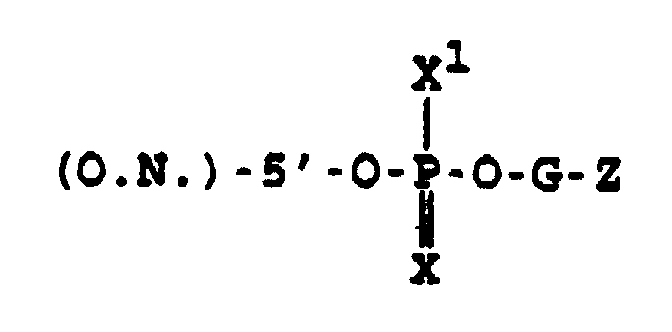
- Another aspect of the invention is a 5' modified oligonucleotide of the formula: where (O.N.) represents an oligonucleotide chain;
- a further aspect of the invention is the above-described modified oligonucleotides where the hydroxy protecting groups have been removed to leave free hydroxyl groups.
- Yet another aspect of the invention is the above-described 5'-modified oligonucleotide in which Z represents a deprotected vicinal diol group which has been oxidized to form a terminal aldehyde group on the oligonucleotide.
- Another aspect of the invention is a conjugate of the above-described oligonucleotide having a terminal aldehyde group and a free amino group-containing carrier molecule wherein the conjugate is formed by reaction between the aldehyde group and the free amino group.
- G is alkylene of 4 to 20 carbon atoms.
- Another aspect of the invention is a disulfide of the formula Y 3 -O-G-S-S-G-OH wherein Y 3 is a hydroxyl protecting group and G is as described above.
- the two divalent groups represented by G may be the same or different. Preferably they are the same, making the disulfide symmetrical.
- Y 3 is base stable.
- G is alkylene of 4 to 20 carbon atoms.
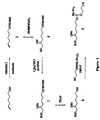
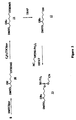
- Figures 1-3 are schematic diagrams of the synthesis schemes described in Examples 1-3.
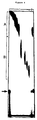
- Figures 4 and 5 are autoradiograms of the gels described in Examples 5 and 6.
- phosphoramidites of the invention may be represented by the formula:
- R is ⁇ -cyanoethyl
- R 1 and R 2 are both isopropyl
- G is -(CH 2 ) n - where n is an integer from 4 to 6, inclusive.
- R is ⁇ -nitroethyl, 2,2,2-trichloroethyl, methyl, 1,1-dimethyl-2,2,2-trichloroethyl, 2,2,2-tribromoethyl, benzyl, o -chlorophenyl, p -nitrophenylethyl, 2-methylsulfonylethyl, and 1,1-dimethyl-2-cyanoethyl.
- R 1 and R 2 examples are other alkyl groups such as butyl, hexyl, nonyl, dodecyl, and hexadecyl, cycloalkyl groups such as cyclopropyl, cyclobutyl, cyclohexyl and cyclooctyl, aryl groups such as phenyl, tolyl, benzyl, xylyl and naphthyl, and when joined together heterocyclic groups such as morpholino, piperidinyl and thiomorpholino.
- alkyl groups such as butyl, hexyl, nonyl, dodecyl, and hexadecyl
- cycloalkyl groups such as cyclopropyl, cyclobutyl, cyclohexyl and cyclooctyl
- aryl groups such as phenyl, tolyl, benzyl, xylyl and naphthy
- Examples of other hydrocarbylene radicals which G may represent are branched alkylene, and groups containing cycloalkylene (e.g., cyclohexylene) or phenylene. It will be appreciated that G functions primarily as an inert spacer moiety and that it may have substituents and/or heteroatoms (e.g., O, S, N) in its structure that do not affect its ability to act as an inert spacer.
- substituents and/or heteroatoms e.g., O, S, N
- Preferred hydroxy-protected vicinal diol groups represented by Z are those of the formula: where R 3 and R 4 are individually hydrogen, alkyl of 1 to 20 carbon atoms or monocyclic arylene of 6 to 20 carbon atoms and Y 1 and Y 2 are individual hydroxy-protecting groups or may be joined (designated by the dashed line) by a single-atom (C, S or Si) bridge to form a five-membered ring protecting group.
- Y 1 and Y 2 are of a nature that they are stable during the addition of the molecule to the 5' end of an oligonucleotide chain during chemical synthesis (i.e., conventional automated phosphoramidite synthesis) and can be removed thereafter without damaging the oligonucleotide chain. Further, as discussed below, the vicinal diol structure of the deprotected group permits it to be "activated” by oxidation to convert it from a diol to a functional aldehyde group. Y 1 and Y 2 may be the same or different and may be any of the individual hydroxy protecting groups that are compatible with conventional automated solid state oligonucleotide chemistry using phosphoramidite chemistry.
- blocking groups are dimethoxytrityl (DMT), trityl, pixyl, benzoyl, acetyl, isobutynyl, p -bromobenzoyl, t -butyldimethylsilyl, and pivaloyl.
- the protecting groups may be removed with the same or different treatments.
- Such vicinal diol groups in which R 3 and R 4 are hydrogen and Y 1 and Y 2 are benzoyl or DMT are particularly preferred.
- Y 1 and Y 2 may be linked by a one-atom bridge, thus forming a five-membered ring.
- Suitable bridging atoms include silicon, sulfur and carbon. It is preferred that the one-atom bridge be a carbon bridge.
- the diol group is preferred to be protected as an acetal or ketal, i.e.,
- Suitable groups R 6 and R 7 include aryl and substituted aryl groups of 6-30 carbon atoms, C 1 -C 20 alkyl groups, and aromatic substituted alkyl groups of less than 30 carbon atoms.
- acetals and ketals are easily prepared directly from the corresponding triols in one step. It is an important and unexpected feature of this embodiment of the present invention that the vicinal diol is selectively protected in the presence of another free alcohol in the molecule.
- the triol wherein Y 1 and Y 2 are H is simply contacted with an aldehyde to yield the acetal or a ketone to yield the ketal in the presence of an acid catalyst. It is preferred that the contacting take place under conditions where the water formed during the reaction is removed during the reaction, either by the application of vacuum or by solvent azeotrope.
- acetals or ketals of lower-boiling alcohols can be similarly employed in place of the aldehyde or ketone in an acetal exchange reaction.
- the phosphoramidites of the above-described acetals and ketals are prepared by the conventional methods described herein, and they are coupled to the oligonucleotide during the synthesis, as is also described herein.
- mild acid hydrolysis of the protecting group generates the diol that is the substrate for the oxidation reaction that produced the aldehyde used for the conjugation reaction.
- Typical mild hydrolysis conditions are 80% acetic acid/water at 25°C for 30 minutes, similar to those used to remove a dimethoxytrityl group in conventional oligonucleotide synthesis.
- Preferred disulfide groups represented by have the formula: -S-S-R 5 -O-Y 3 where R 5 is an alkylene group of 1 to 20 carbon atoms or a monocyclic arylene groups of 6 to 20 carbon atoms and Y 3 is a hydroxy protecting group (as described above).
- R 5 is alkylene of 4 to 6 carbon atoms
- -OY 3 is bound to the ⁇ carbon atom of the alkylene group
- Y 3 is trityl.
- the disulfide structure of the group permits it to be "activated” by reduction to cleave the disulfide bond and produce a free sulfhydryl group.
- the hydroxyl group of the alcohol is protected and the double bond is oxidized to form the diol group.
- the hydroxyls of the diol are then protected with an orthogonally removable protecting group (Y 2 and Y 3 ), i.e., the protecting group on the original hydroxy can be removed without removing the protecting groups on the vicinal diol.
- the protecting group on the original hydroxy is then removed and the resulting deprotected hydroxy is reacted with an appropriate phosphitylating agent.
- the phosphoramidites wherein Z represents a disulfide may be prepared from symmetrical or asymmetrical disulfides.
- the general reaction scheme employing symmetrical disulfides is shown in Figure 3 and exemplified by Example 3, infra .
- Asymmetrical disulfides may be prepared as described by Mannervik, B., and Larson, K., Meth. in Enzym. (1981) 77 :420-424, or Mukuiyama, T., and Takahashi, K., Tet Lett (1968) 5907-5908.
- a symmetrical disulfide (HO-G-SS-G-OH) is oxidized with hydrogen peroxide and formic acid to provide the corresponding thiolsulfinate.
- a mercaptan e.g., HS-G'-OY 3 where Y 3 is as described above and G' is a different G than in the starting symmetrical disulfide
- This disulfide may be reacted with a phosphitylating agent to yield the phosphoramidate.
- the phosphoramidites of the invention may be added to the 5' end of an oligonucleotide chain using the conventional automated phosphoramidite method used to prepare oligonucleotides. See Matteucci, M.D., and Caruthers, M.H., Tet Lett (1980) 521 :719, and U.S. Patent No. 4,500,707.
- the oligonucleotide chain itself may be made by the same method.
- the length and sequence of the oligonucleotide to which the phosphoramidite of the invention is added will depend upon the use of the resulting 5'-functionalized oligonucleotide.
- the oligonucleotide will have the ability of bind SLE antibodies. If the oligonucleotide is to be used as a labeled probe then the length and sequence will be such as to be capable of hybridizing to a nucleotide sequence of interest.
- SLE systemic lupus erythematosus
- the resulting modified oligonucleotide may be represented by the formula: where (O.N.) represents an oligonucleotide chain and X, X 1 , G and Z and an defined previously.
- the designation "5'” indicates that the modifying group is attached to the 5' end of the oligonucleotide chain.
- the chain will typically be 10 to 200 nucleotides in length, more usually 20 to 60 nucleotides in length.
- the protecting groups (Y 1 , Y 2 , Y 3 ) may be removed by appropriate treatment (e.g., base or acid treatment) to yield free hydroxy groups.
- appropriate treatment e.g., base or acid treatment
- the diol group is oxidized, e.g., with periodate, to form a terminal aldehyde group.
- the disulfide is reduced with on appropriate reducing agent, e.g., a mercaptan such as dithiothreitol or 2-mercaptoethanol or borohydride to cleave the disulfide bond to form a terminal sulfhydryl group.
- a mercaptan such as dithiothreitol or 2-mercaptoethanol or borohydride
- the resulting 5' modified oligonucleotide may be coupled via the aldehyde group to labels, carriers, or other molecules having a free amino group or via the sulfhydryl group to an electrophilic center such as maleimide or ⁇ -haloacetyl groups or other appropriate Michael acceptors such as acrylates or acrylamides.
- carriers are amino acid polymers such as copolymers of D -lysine and D -glutamic acid, or immunoglobulin, or other polymers that inherently have been derivatized to include such groups as recited above.
- FIG. 1 schematically depicts the invention scheme used to make this phosphoramidite. The details of this scheme are described below.
- 1-O-(tert-butyldimethylsilyl)-1,5,6-hexanetriol, 6 To a solution of 9.86 g (46.0 mmol) of 5 in 92 mL of acetone was added a solution of 6.46 g (55.2 mmol) of N-methylmorpholine oxide (NMMO) in 23 mL of H 2 O. To the mixture was added 443 uL of a 2.5% solution of OsO 4 in tert-butyl alcohol (360 mg of solution, 9.0 mg of OsO 4 , 35 ⁇ mol) and 50 uL of 30% H 2 O 2 .
- NMMO N-methylmorpholine oxide
- the mixture was stirred for 4 hours and partitioned between 25 mL of CH 2 Cl 2 and 25 mL of chilled saturated NaHCO 3 solution.
- the CH 2 Cl 2 layer was washed with saturated NaCl solution, dried (Na 2 SO 4 ), filtered, and concentrated.
- FIG. 2 schematically depicts the reaction scheme for making this phosphoramidite. The details of the scheme are described below.
- 6-O-(4',4"-dimethoxytriphenylmethyl)-1-O-(tert-butyldimethylsilyl)-1,5,6-hexanetriol, 10 was added 1.81 g (5.33 mmol) of 4,4'-dimethoxytriphenylmethyl chloride.
- the mixture was stirred for 2 hours and partitioned between 25 mL of CH 2 Cl 2 and 25 mL of chilled saturated NaHCO 3 solution.
- the CH 2 Cl 2 layer was washed with saturated NaCl solution, dried (Na 2 SO 4 ), filtered, and concentrated.
- FIG. 3 schematically shows the reaction scheme for this phosphoramidite. The details of the scheme are described below.
- 6-Mercaptohexan-1-ol 15 .
- a fivefold molar excess (760 mg) of the phosphoramidite of Example 1 was coupled to the 5' end of an oligonucleotide which was attached to 10 g (300 ⁇ moles) CPG (control pore glass) support. This synthesis was performed on a Milligen 8800 DNA synthesizer using the manufacturer's protocols for DNA synthesis.
- the CPG was suspended in 100 ml concentrated ammonia and kept at 55°C overnight. After filtration, the deprotected oligonucleotide was purified by sodium chloride gradient and ion-exchange chromatography.
- fractions were analyzed by polyacrylamide gel electrophoresis and the product containing fractions pooled, adjusted to 0.3 M NaCl with 3 M NaCl solution and precipitated by the addition of an equal volume of cold isopropanol.
- the product was collected by centrifugation and dried in vacuo.
- the pellet was then dissolved in 40 ml water and oxidized by treatment with a fivefold molar excess of sodium metaperiodate (83.6 mg for 2 g purified oligonucleotide in this example) at 0°C for 30 min.
- the solution was again adjusted to 0.3 M NaCl and precipitated as above to remove the formaldehyde produced in this reaction. After centrifugation and drying, this material wa used in the next step.
- oxidized oligonucleotide (2.5 ⁇ moles) was dissolved in 1.33 ml of 100 mM NaBO 3 , pH 8.0. Then, 2.5 mg of DEK (0.25 ⁇ moles, MWt 10,000, 60:40 weight ratio of D -glutamic acid to D -lysine) and 0.79 mg NaCNBH 3 (12.5 ⁇ moles) was added. The mixture (2.0 ml) was incubated at 37°C for 3 days. The condensation product was purified by S-200 (Pharmacia, Uppsala, Sweden) chromatography.
- fractions were labeled with alpha 32 P ddATP and terminal transferase for viewing on a standard 8% DNA sequencing polyacrylamide gel.
- Lanes labeled "1" are high molecular weight conjugates
- lanes labeled “2” contain mostly unconjugated oligo and the arrow indicates the position of the 50-mer.
- Modifications of the above-describes modes for carrying out the invention that are obvious to those of ordinary skill in the fields of organic chemistry, and particularly oligonucleotide synthesis and derivatization are intended to be within the scope of the following claims.
- the fractions which contained the oligo-KLH conjugate were pooled for subsequent annealing to the complimentary oligonucleotide strand to construct a double-stranded DNA-KLH conjugate.
- phosphoramidites are prepared: (4-(2-methoxyphenyl-1,3-dioxol-4-yl) butyl)-O-(2-cyanoethyl)-N,N-diisopropylphosphoramidite; (4-(2-p-butylphenyl-1,3-dioxol-4-yl)butyl)-O-(2-cyanoethyl)-N,N-diisopropylphosphoramidite;(4-(2-biphenyl-1-3-dioxol-4-yl) butyl)-O-(2-cyanoethyl)-N,N-diisopropylphosphoramidite; (4-(2-methyl-2-phenyl-1,3-dioxol-4-yl) butyl)-O-(2-cyanoethyl)-N,N-diisopropylphosphoramidite.
- Example 4 the phosphoramidite of Example 7 is coupled to the oligonucleotide. Following purification, the acetal protecting group is removed with 80% acetic acid/water for 40 minutes. The progress of the reaction is monitored by HPLC using a Gen Pak Fax column (Waters Associates), using 0.5M sodium phosphate at pH 7.5, with a 1.0M sodium chloride/10% methanol gradient. The starting acetal elutes at 20.1 minutes, and the hydrolyzed diol elutes at 18.9 minutes.
Landscapes
- Chemical & Material Sciences (AREA)
- Organic Chemistry (AREA)
- Biochemistry (AREA)
- Health & Medical Sciences (AREA)
- Molecular Biology (AREA)
- Life Sciences & Earth Sciences (AREA)
- General Health & Medical Sciences (AREA)
- Engineering & Computer Science (AREA)
- Biotechnology (AREA)
- Genetics & Genomics (AREA)
- Saccharide Compounds (AREA)
- Organic Low-Molecular-Weight Compounds And Preparation Thereof (AREA)
- Macromolecular Compounds Obtained By Forming Nitrogen-Containing Linkages In General (AREA)
Abstract
Description
- This invention is in the field of organophosphate chemistry and solid state oligonucleotide synthesis. More particularly, it concerne reactive phosphorous intermediates that may be stably attached to the 5' end of an oligonucleotide and which have an activatable moiety which, when activated, provides a functional aldehyde or sulfhydryl group that may be used to conjugate the oligonucleotide to any molecule having a free amino group.
- It is necessary to provide oligonucleotides with a free functional group in order to couple the oligonucleotide to labels, ligands, solid surfaces, polymers or other molecules or surfaces.
- One technique for providing oligonucleotides with a terminal functional group involves synthesizing the desired oligonucleotide by conventional solid-state automated synthesis procedures and incorporating the functional group at the 5' end of the oligonucleotide via a modified phosphoramidite.
- Agrawal, S., et al., Nucl. Acids Res. (1986) 14:6227-6245, describes a modified phosphoramidite that may be introduced on the 5' end of an oligonucleotide that has an activatable group that may be activated through deprotection to provide a free amino group on the 5' terminus of the oligonucleotide. The linker (VIII on page 6236), O-(2-(9-fluorenylmethoxycarbonyl) aminoethyl) -O-(2-cyanoethyl)-N-N-diisopropyl phosphoramidite, is added to the end of the desired oligonucleotide on an automated DNA synthesizer using deoxynucleoside-2-cyanoethyl-N-N-diisopropyl phosphoramidites. The adduct is deprotected (the 9-fluorenylmethoxycarbonyl group is removed with ammonia) to provide a free amino group.
- Kremsky, J.N., et al., Nucl, Acids Res. (1987) 15:2891-2909, describes a functionalized phosphoramidite (1 on page 2893) that is introduced onto the 5' end of an oligonucleotide and then modified to provide a 5' carboxy or aldehyde group that is used to immobilize the oligonucleotide.
- Another functionalized phosphoramidite, O-6-(4',4"-dimethoxytriphenylmethylthio)hexyl-O-(2-cyanoethyl) -N,N-diisopropylphosphoramidite, is available commercially from Clontech Laboratories. This molecule is incorporated into oligonucleotides using conventional phosphoramidite protocols. The dimethoxytrityl-protected sulfhydryl group may be deprotected with silver nitrate to yield a free sulfhydryl at the 5' end of the oligonucleotide chain.
- A principal object of the present invention is to provide novel modified phosphorous intermediates that may be employed in the various types of oligonucleotide synthesis methods and which have activatable groups that may be converted to a free aldehyde or sulfhydryl group once they have been added onto the 5' end of an oligonucleotide. The free aldehyde/ sulfhydryl group is useful for coupling or conjugating the oligonucleotide to labels, ligands, polymers or solid surfaces. These new intermediates meet the following criteria: 1) the activatable group is compatible with all steps of conventional oligonucleotide synthesis procedures; 2) the activation is effected under conditions that do not damage the oligonucleotide; 3) the coupling is effected under conditions that do not damage the oligonucleotide or the moiety to which the oligonucleotide is coupled.
- The novel phosphorus-containing compounds of the invention include intermediates that are useful in the H-phosphonate, phosphotriester, phosphorchloridite and phosphoramidite methods of oligonucleotide synthesis as well as intermediates that result in 5' modifications that involve phosphodiester analogs such as methyl phosphonates, methyl phosphates, phosphorothioates and phosphoramidates.
- These compounds are of the formula:where

- X is:
- (i) an oxygen or sulphur atom when X1 represents O-, methyl or -OCH3 and X2 represents a hydrogen atom or RO- where R represents a protecting group;
- (ii) not present when
- (a) X1 represents a chlorine atom and X2 represents methyl or RO-; or
- (b) X2 represents RO- and X1 represents NR1R2 where each R1 and R2 individually represents C1-6 alkyl, C3-8 cycloalkyl or a C6-20 aryl group or, when joined together, form with the nitrogen atom a C4-7 cyclic structure with 0 or 1 oxygen or sulphur atoms;
- G represents a C1-20 hydrocarbylene group; and
- Z represents a hydroxy protected vicinal diol group bound to G by one of the vicinal diol carbon atoms or a disulfide group bound to G by one of the sulfur atoms of the disulfide group;
- with the proviso that G has at least 4 carbon atoms when Z represents said disulfide group.
-
- The above compounds where X is oxygen, X1 is O-, and X2 is hydrogen are H-phosphonates and are employed in the H-phosphonate method of oligonucleotide synthesis (Sinha and Cook, NAR (1988) 16:2659-2669). H-phosphonates may be converted to phosphite diesters, phosphorothioates, or phosphoramidates once they are incorporated onto the 5' end of the oligonucleotide (Miller et al., NAR (1983) 11:5189-5204, Eckstein, Ann Rev Biochem (1985) 54:367-402, and Froehler and Matteucci, NAR (1988) 16:4831-4839). Correspondingly, the above compounds where X is oxygen, X1 is O- and X2 is RO- are used in the phosphotriester approach to synthesizing oligonucleotides (Garegg, et al., Chemica Scripta (1985) 26:5). When X is not present and X1 is chlorine and X2 is RO-, the resulting compound is a phosphochloridite and it is used in the phosphochloridite technique for oligonucleotide synthesis (Wada et al., J Org Chem (1991) 56:1243-1250). The phosphoramidites of the above formula are preferred.
- The preferred phosphoramidites of the invention may be represented by the formula:

- where R represents a methyl group or base-labile protecting group;
- each R1 and R2 individually represents a C1-6 alkyl, C3-8 cycloalkyl, or a C6-20 aryl group or, when joined together, form with the nitrogen atom C4-7 cyclic structure having 0 or 1 oxygen or sulphur atoms;
- G represents a C1-20 hydrocarbylene group; and
- Z represents a hydroxy-protected vicinal diol group bound to G by one of the vicinal diol carbon atoms or a disulfide group bound to G by one of the sulfur atoms of the disulfide group; with the proviso that G has at least 4 carbon atoms when Z represents said disulfide group.
-
- Another aspect of the invention is a 5' modified oligonucleotide of the formula:where (O.N.) represents an oligonucleotide chain;

- X is an oxygen or sulphur atom;
- X1 represents O-, methyl, -OCH3 or NR1R2 where each R1 and R2 individually represent a hydrogen atom or a C1-6 alkyl, C3-8 cycloalkyl or C6-20 aryl group or, when joined together, form with the nitrogen atom a C4-7 cyclic structure containing none or one oxygen or sulphur atoms; G is a C1-20 hydrocarbylene group; and
- Z is a hydroxy-protected vicinal diol group bound to G by one of the vicinal diol carbon atoms or a disulfide group bound to G by one of the sulfur atoms of the disulfide group.
-
- A further aspect of the invention is the above-described modified oligonucleotides where the hydroxy protecting groups have been removed to leave free hydroxyl groups.
- Yet another aspect of the invention is the above-described 5'-modified oligonucleotide in which Z represents a deprotected vicinal diol group which has been oxidized to form a terminal aldehyde group on the oligonucleotide.
- Another aspect of the invention is a conjugate of the above-described oligonucleotide having a terminal aldehyde group and a free amino group-containing carrier molecule wherein the conjugate is formed by reaction between the aldehyde group and the free amino group.
- A further aspect of the invention is a partially protected triol of the formula:where each Y1 and Y2 individually represents a hydroxy protecting group or are together joined by a single-atom bridge, other than a -C(=O)-bridging group, to form a five-membered ring protecting group and G represents a C2-20 hydrocarbylene group.

- Preferably G is alkylene of 4 to 20 carbon atoms.
- Another aspect of the invention is a disulfide of the formula
- Figures 1-3 are schematic diagrams of the synthesis schemes described in Examples 1-3.
- Figures 4 and 5 are autoradiograms of the gels described in Examples 5 and 6.
- As indicated above, the phosphoramidites of the invention may be represented by the formula:

- where R represents a methyl group or base-labile protecting group;
- each R1 and R2 individually represents a C1-6 alkyl, C3-8 cycloalkyl, or a C6-20 aryl group or, when joined together, form with the nitrogen atom C4-7 cyclic structure having 0 or 1 oxygen or sulphur atoms;
- G represents a C1-20 hydrocarbylene group; and
- Z represents a hydroxy-protected vicinal diol group bound to G by one of the vicinal diol carbon atoms or a disulfide group bound to G by one of the sulfur atoms of the disulfide group; with the proviso that G has at least 4 carbon atoms when Z represents said disulfide group.
-
- Preferably R is β-cyanoethyl, R1 and R2 are both isopropyl, and G is -(CH2)n- where n is an integer from 4 to 6, inclusive. Examples of other protecting groups represented by R are β-nitroethyl, 2,2,2-trichloroethyl, methyl, 1,1-dimethyl-2,2,2-trichloroethyl, 2,2,2-tribromoethyl, benzyl, o-chlorophenyl, p-nitrophenylethyl, 2-methylsulfonylethyl, and 1,1-dimethyl-2-cyanoethyl. Examples of other groups which R1 and R2 may represent are other alkyl groups such as butyl, hexyl, nonyl, dodecyl, and hexadecyl, cycloalkyl groups such as cyclopropyl, cyclobutyl, cyclohexyl and cyclooctyl, aryl groups such as phenyl, tolyl, benzyl, xylyl and naphthyl, and when joined together heterocyclic groups such as morpholino, piperidinyl and thiomorpholino. Examples of other hydrocarbylene radicals which G may represent are branched alkylene, and groups containing cycloalkylene (e.g., cyclohexylene) or phenylene. It will be appreciated that G functions primarily as an inert spacer moiety and that it may have substituents and/or heteroatoms (e.g., O, S, N) in its structure that do not affect its ability to act as an inert spacer.
- Preferred hydroxy-protected vicinal diol groups represented by Z are those of the formula:where R3 and R4 are individually hydrogen, alkyl of 1 to 20 carbon atoms or monocyclic arylene of 6 to 20 carbon atoms and Y1 and Y2 are individual hydroxy-protecting groups or may be joined (designated by the dashed line) by a single-atom (C, S or Si) bridge to form a five-membered ring protecting group. Y1 and Y2 are of a nature that they are stable during the addition of the molecule to the 5' end of an oligonucleotide chain during chemical synthesis (i.e., conventional automated phosphoramidite synthesis) and can be removed thereafter without damaging the oligonucleotide chain. Further, as discussed below, the vicinal diol structure of the deprotected group permits it to be "activated" by oxidation to convert it from a diol to a functional aldehyde group. Y1 and Y2 may be the same or different and may be any of the individual hydroxy protecting groups that are compatible with conventional automated solid state oligonucleotide chemistry using phosphoramidite chemistry. Examples of such blocking groups are dimethoxytrityl (DMT), trityl, pixyl, benzoyl, acetyl, isobutynyl, p-bromobenzoyl, t-butyldimethylsilyl, and pivaloyl. The protecting groups may be removed with the same or different treatments. Such vicinal diol groups in which R3 and R4 are hydrogen and Y1 and Y2 are benzoyl or DMT are particularly preferred.

- As indicated, Y1 and Y2 may be linked by a one-atom bridge, thus forming a five-membered ring. Suitable bridging atoms include silicon, sulfur and carbon. It is preferred that the one-atom bridge be a carbon bridge. Thus, the diol group is preferred to be protected as an acetal or ketal, i.e.,
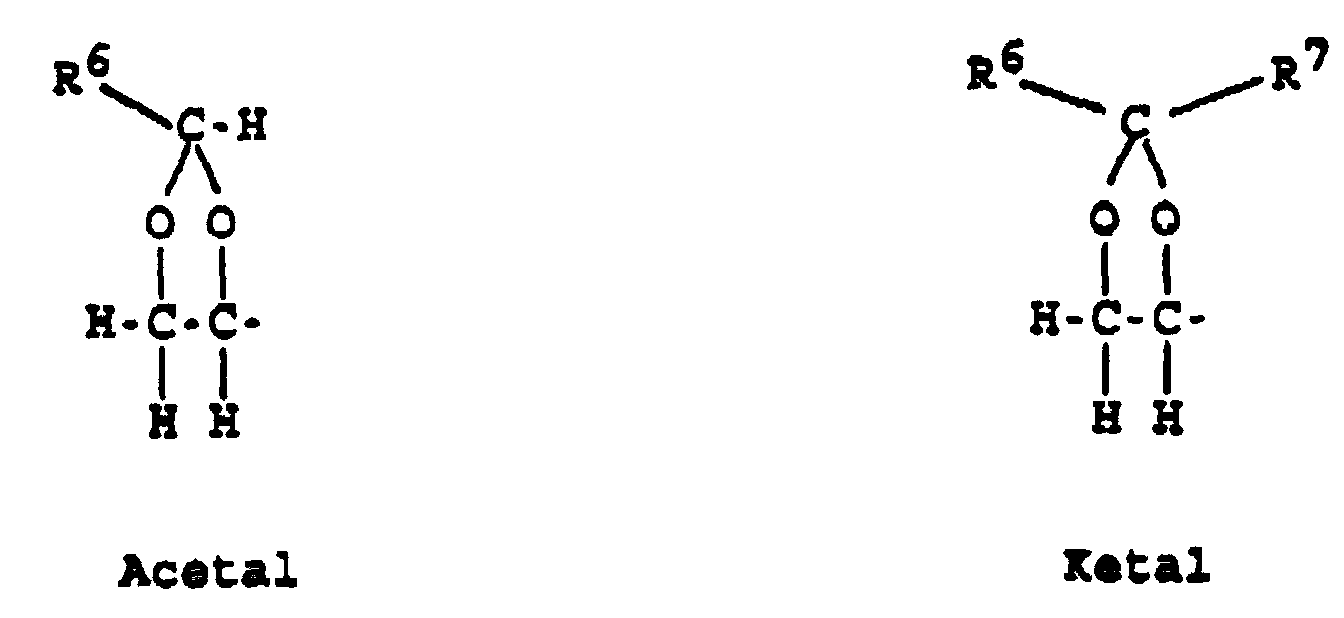
- It is important that the bridging atom and its substituents be stable to the subsequent reactions in the sequence used to add the linker to the oligonucleotide. The diol protecting group must also be capable of being removed under mild conditions that do not substantially degrade the oligonucleotide. For example, very acidic conditions will lead to depurination of the oligonucleotide. Suitable groups R6 and R7 include aryl and substituted aryl groups of 6-30 carbon atoms, C1-C20 alkyl groups, and aromatic substituted alkyl groups of less than 30 carbon atoms. Preferred is phenyl and phenyl substituted with C1-C8 alkyl, C1-C8 alkoxy; 1 to 4 atoms of fluorine, chlorine, bromine, nitro- or phenyl. Most preferred are acetal structures wherein R6 is phenyl, p-butylphenyl, p-methoxyphenyl, p-tert-butylphenyl, and biphenyl. It will be known to those skilled in the art that the stability of the protecting group can be adjusted for a particular use by a suitable choice of substituent(s).
- The above-described acetals and ketals are easily prepared directly from the corresponding triols in one step. It is an important and unexpected feature of this embodiment of the present invention that the vicinal diol is selectively protected in the presence of another free alcohol in the molecule. Thus, the triol wherein Y1 and Y2 are H is simply contacted with an aldehyde to yield the acetal or a ketone to yield the ketal in the presence of an acid catalyst. It is preferred that the contacting take place under conditions where the water formed during the reaction is removed during the reaction, either by the application of vacuum or by solvent azeotrope. Alternatively, acetals or ketals of lower-boiling alcohols can be similarly employed in place of the aldehyde or ketone in an acetal exchange reaction.
- The phosphoramidites of the above-described acetals and ketals are prepared by the conventional methods described herein, and they are coupled to the oligonucleotide during the synthesis, as is also described herein. Following the synthesis and purification of the free, coupled oligonucleotide, mild acid hydrolysis of the protecting group generates the diol that is the substrate for the oxidation reaction that produced the aldehyde used for the conjugation reaction. Typical mild hydrolysis conditions are 80% acetic acid/water at 25°C for 30 minutes, similar to those used to remove a dimethoxytrityl group in conventional oligonucleotide synthesis.
- Preferred disulfide groups represented by have the formula:
- Most preferably R5 is alkylene of 4 to 6 carbon atoms, -OY3 is bound to the ω carbon atom of the alkylene group and Y3 is trityl. As discussed below, the disulfide structure of the group permits it to be "activated" by reduction to cleave the disulfide bond and produce a free sulfhydryl group.
- The phosphoramidites wherein Z represents a vicinal diol may be prepared from an alcohol of the formula HC=CH-G-OH. The hydroxyl group of the alcohol is protected and the double bond is oxidized to form the diol group. The hydroxyls of the diol are then protected with an orthogonally removable protecting group (Y2 and Y3), i.e., the protecting group on the original hydroxy can be removed without removing the protecting groups on the vicinal diol. The protecting group on the original hydroxy is then removed and the resulting deprotected hydroxy is reacted with an appropriate phosphitylating agent.
- The phosphoramidites wherein Z represents a disulfide may be prepared from symmetrical or asymmetrical disulfides. The general reaction scheme employing symmetrical disulfides is shown in Figure 3 and exemplified by Example 3, infra. Asymmetrical disulfides may be prepared as described by Mannervik, B., and Larson, K., Meth. in Enzym. (1981) 77:420-424, or Mukuiyama, T., and Takahashi, K., Tet Lett (1968) 5907-5908. By way of example, a symmetrical disulfide (HO-G-SS-G-OH) is oxidized with hydrogen peroxide and formic acid to provide the corresponding thiolsulfinate. Treatment of the thiolsulfinate with a mercaptan (e.g., HS-G'-OY3 where Y3 is as described above and G' is a different G than in the starting symmetrical disulfide) at a pH greater than 3 yields an asymmetrical disulfide (HO-G-SS-G'-OY3). This disulfide may be reacted with a phosphitylating agent to yield the phosphoramidate.
- The phosphoramidites of the invention may be added to the 5' end of an oligonucleotide chain using the conventional automated phosphoramidite method used to prepare oligonucleotides. See Matteucci, M.D., and Caruthers, M.H., Tet Lett (1980) 521:719, and U.S. Patent No. 4,500,707. The oligonucleotide chain itself may be made by the same method. The length and sequence of the oligonucleotide to which the phosphoramidite of the invention is added will depend upon the use of the resulting 5'-functionalized oligonucleotide. For instance, if the oligonucleotide is to be used for the purposes described in EPA Publication No. 0438259 (i.e., systemic lupus erythematosus (SLE) treatment), then the oligonucleotide will have the ability of bind SLE antibodies. If the oligonucleotide is to be used as a labeled probe then the length and sequence will be such as to be capable of hybridizing to a nucleotide sequence of interest.
- As indicated above, the resulting modified oligonucleotide may be represented by the formula:where (O.N.) represents an oligonucleotide chain and X, X1, G and Z and an defined previously. The designation "5'" indicates that the modifying group is attached to the 5' end of the oligonucleotide chain. The chain will typically be 10 to 200 nucleotides in length, more usually 20 to 60 nucleotides in length.
- Once the phosphoramidite has been added to the 5' end of an oligonucleotide chain, the protecting groups (Y1, Y2, Y3) may be removed by appropriate treatment (e.g., base or acid treatment) to yield free hydroxy groups. In the case of the vicinal diol, the diol group is oxidized, e.g., with periodate, to form a terminal aldehyde group. In the case of the disulfide group, the disulfide is reduced with on appropriate reducing agent, e.g., a mercaptan such as dithiothreitol or 2-mercaptoethanol or borohydride to cleave the disulfide bond to form a terminal sulfhydryl group.
- The resulting 5' modified oligonucleotide may be coupled via the aldehyde group to labels, carriers, or other molecules having a free amino group or via the sulfhydryl group to an electrophilic center such as maleimide or α-haloacetyl groups or other appropriate Michael acceptors such as acrylates or acrylamides. Examples of such carriers are amino acid polymers such as copolymers of D-lysine and D-glutamic acid, or immunoglobulin, or other polymers that inherently have been derivatized to include such groups as recited above.
- The following examples further illustrate the invention. These examples are not intended to limit the invention in any manner. In the examples, Et = ethyl, Ac = acetyl, and THF = tetrahydrofuran.
- Figure 1 schematically depicts the invention scheme used to make this phosphoramidite. The details of this scheme are described below.
- O-(tert-butyldimethylsilyl)-5-hexanol, 5. To a solution of 12.47 mL (10.4 g, 104 mmol) of 5-hexene-1-ol in 104 mL of DMF was added 15.66 g (230 mmol) of imidazole and 20.0 g (130 mmol) of tert-butyldimethylsilyl chloride (TBDMSCl). The mixture was stirred at ambient temperature for 4 hours and partitioned between 200 mL of EtOAc and 100 mL of saturated NaHCO3 solution. The EtOAc layer was washed with 100 mL of saturated NaHCO3 solution, 100 mL of saturated NaCl solution, dried (MgSO4), filtered, and concentrated to a volume of approximately 100 mL. Distillation under vacuum provided 70.07 g of 5: bp 130-143°C @ 100 mmHg; 1H NMR (CDCl3) 0.11 (s, 6H), 0.95 (s, 9H), 1.48 (m, 2H), 1.57 (m, 2H), 2.11 (dt, 2H), 3.66 (t, 2H), 5.03 (m, 2H), 5.86 (m, 1H); 13C NMR (CDCl3) -5.25, 18.40, 25.21, 26.01, 32.35, 33.60, 63.09, 114.40, 138.92.
- 1-O-(tert-butyldimethylsilyl)-1,5,6-hexanetriol, 6. To a solution of 9.86 g (46.0 mmol) of 5 in 92 mL of acetone was added a solution of 6.46 g (55.2 mmol) of N-methylmorpholine oxide (NMMO) in 23 mL of H2O. To the mixture was added 443 uL of a 2.5% solution of OsO4 in tert-butyl alcohol (360 mg of solution, 9.0 mg of OsO4, 35 µmol) and 50 uL of 30% H2O2. The mixture was stirred for 16 hours and a solution of 474 mg of sodium dithionite in 14 mL of H2O was added. After another 0.5 hour the mixture was filtered through celite. The filtrate was dried with MgSO4 and filtered through 1" of silica gel in a 150 mL Buchner funnel using 250 mL portions of EtOAc to elute. Fractions containing product were concentrated to provide 11.0 g of 6 as a viscous oil: TLC Rf 0.2 (1:1 hexane/EtOAc); 1H NMR (CDCl3) 0.05 (s, 6H), 0.89 (s, 9H), 1.25 (m, 4H), 1.55 (m, 2H), 3.41 (dd, 2H), 3.62 (t, 2H), 3.71 (m, 1H); 13C NMR (CDCl3) 5.23, 18.42, 21.91, 26.02, 32.68, 32.81, 63.16, 66.74, 72.24.
- 5,6-(bis-O-benzoyl)-1-O-(tert-butyldimethylsilyl)-1,5,6-hexanetriol, 7. To a solution of 5.29 g (21.3 mmol) of 6 in 106 mL of pyridine was added 6.18 mL (7.48 g, 53.2 mmol) of benzoyl chloride. The mixture was stirred for 18 hours and concentrated on the rotary evaporator. The mixture was partitioned between 100 mL of cold 1 N HCl and 100 mL of EtOAc. This pH of the aqueous layer was checked to made sure it was acidic. The EtOAc layer was washed successively with 100 mL of H2O and 100 mL of saturated NaCl, dried (MgSO4), filtered, and concentrated to provide 10.33 g of 7 as a viscous yellow oil; TLC Rf 0.45 (1:4 EtOAc/hexanes); 1H NMR (CDCl3) 0.05 (s, 6H), 0.88 (s, 9H), 1.59 (m,4H), 1.85 (m, 2H), 3.14 (t, 2H), 4.49 (dd, 1H) 4.59 (dd, 1H), 5.54 (m, 1H), 7.45 (m, 4H), 7.58 (m, 2H), 8.05 (m, 4H).
- 5,6-(bis-O-benzoyl)-1,5,6-hexanetriol, 8. To a solution of 2.62 g (5.36 mmol) of 7 in 10.9 mL of THF was added 10.7 mL (10.7 mmol) of a 1 N solution of tetrabutylammonium fluoride (CTBAF) in THF. The mixture was allowed to stir for 16 hours. The mixture was partitioned between 25 mL of saturated NaHCO3 solution and 3 x 25 mL of EtOAc. The combined EtOAc extracts were washed with saturated NaCl solution, dried (MgSO4), filtered and concentrated to a viscous oil which was purified by silica gel chromatography (1:1 hexane/EtOAc) to provide 823 mg of 8 as a viscous oil; Rf .14 (1:1 hexane/ EtOAc); 1H NMR (CDCl3) 1.58 (m, 2H), 1.68 (m, 2H), 1.88 (m, 2H), 3.68 (t, 2H), 4.52 (dd, 1H), 4.62 (dd, 1H), 5.56 (m, 1H), 7.46 (m, 4H), 7.58 (m, 2H), 8.05 (m, 4H); 13C NMR (CDCl3) 22.08, 31.20, 31.30, 32.88, 62.92, 66.17, 72.63, 128.93, 130.19, 130.57, 133.62, 166.72, 166.86.
- O-(5-6-(bis-O-benzoyloxy)-hexyl)-O-(2-cyanoethyl)-N,N-diisopropylphosphoramidite, 9. To a solution of 1.02 g (2.98 mmol) of 8 and 255 mg (1.49 mg) of diisopropylammonium tetrazolide (DIPAT, prepared by mixing acetonitrile solutions of diisopropylamine and tetrazole in a one-to-one mole ratio and concentrating to a while solid) in 14.9 mL of CH2Cl2 was added a solution of 989 mg (3.28 mmol) of O-cyanoethyl-N,N,N',N'-tetraisopropylphosphorodiamidite in 2.0 mL of CH2Cl2. The mixture was stirred for 4 hours and partitioned between 25 mL of CH2Cl2 and 25 mL of chilled saturated NaHCO3 solution. The CH2Cl2 layer was washed with saturated NaCl solution, dried (Na2SO4), filtered, and concentrated. Purification by filtration through a 2" plug of basic alumina in a 25 mm column, eluting with 9:1 EtOAc/Et3N provided 1.5 g (93%) of 9 as a viscous oil: 1H NMR (CDCl3) 1.19 (m, 12H), 1.62 (m, 2H), 1.73 (m, 2H), 1.90 (m, 2H), 2.62 (dd, 2H), 3.53-3.92 (m, 6H), 4.53 (dd, 1H), 4.62 (dd, 1H), 5.58 (m, 1H), 7.48 (m, 4H), 7.60 (m, 2H), 8.09 (m, 4H); 31P NMR (CDCl3 with 15% H3PO4 internal standard) 148.2; HRMS (FAB, MH+), calculated for C29H40O6N2P1 543.2624, found 543.2619.
- Figure 2 schematically depicts the reaction scheme for making this phosphoramidite. The details of the scheme are described below.
- 6-O-(4',4"-dimethoxytriphenylmethyl)-1-O-(tert-butyldimethylsilyl)-1,5,6-hexanetriol, 10. To a solution of 1.11 g (4.47 mmol) of 6 and 891 uL (638 mg, 6.30 mmol) of Et3N in 22 mL of pyridine was added 1.81 g (5.33 mmol) of 4,4'-dimethoxytriphenylmethyl chloride. The mixture was stirred at ambient temperature for 16 hours, concentrated, and purified by silica gel chromatography (29;70:1 EtOAc/hexane/Et3N) to provide 2.06 g (85%) of 10 as a viscous oil; TLC Rf .35 (39:60:1 EtOAc/hexane/Et3N).
- 5-O-benzoyl-6-O-(4',4"-dimethoxytriphenylmethyl)-1-O-(tert-butyldimethylsilyl)-1,5,6-hexanetriol. 11. To a solution of 2.06 g (3.8 mmol) of 10 in 19 mL of pyridine was added 532 mL (644 mg, 4.58 mmol) of benzoyl chloride, and the mixture was stirred for 20 hours and concentrated on the rotary evaporator to remove most of the pyridine keeping the bath temperature below 30°C. The mixture was partitioned between 50 mL of EtOAc and 50 mL of saturated NaHCO3 solution. The EtOAc layer was washed with 50 mL of saturated NaHCO3 solution, 25 mL of saturated NaCl solution, dried (Na2SO4), filtered, and concentrated. Purification by silica gel chrommtoyraphy (10:89:1 EtOAc/hexane/Et3N) provided 1.66 g of 11 as a viscous oil: TLC Rf.27 (1:9 EtOAc/hexane); 1H NMR (CDCl3) 0.5 (s, 6H), 0.87 (s, 9H), 1.40 (m, 2H), 1.56 (m, 2H), 1.82 (m, 2H), 3.28 (dd, 2H), 3.60 (t, 2H), 3.80 (s, 6H), 5.38 (m, 1H), 6.79 (m, 4H), 7.17-7.65 (m, 12H), 8.11 (d, 2H).
- 5-O-benzoyl-6-O-(4',4"-dimethoxytriphenylmethyl)-1,5,6-hexanetriol, 12. To a solution of 1.66 g (2.56 mmol) of 11 in 5.2 mL of THF under N2 atmosphere was added 5.12 mL (5.12 mmol) of a 1 M solution of tetrabutylammonium fluoride in THF. The mixture was stirred for 3 hours at ambient temperature and concentrated on the rotary evaporator. Purification by silica gel chromatography (1:1 EtOAc/hexane) provided 1.18 g (86%) of 12 as a viscous oil. Further purification was possible by preparative HPLC (12 mL/min, 9:1 MeOH/H2O, 22.4 mm C18): TLC Rf.14 (1:1 hexane/ EtOAc); 1H NMR (CDCl3) 1.37 (m, 2H), 1.57 (m, 2H), 1.79 (m, 2H), 3.29 (dd, 2H), 3.60 (t, 2H), 3.75 (s, 6H), 5.36 (m, 1H), 6.80 (m, 4H), 7.17-7.60 (m, 12H), 8.12 (d, 2H).
- O-5-benzoyloxy-6-O-(4',4"-dimethoxytriphenylmethyl)hexyl-O-(2'-cyanoethyl)-N,N-diisopropylphosphoramidite,13. To a solution of 681 mg (1.26 mmol) of 12 and 111 mg (0.65 mmol) of diisopropylammonium tetrazolide in 6.5 mL of CH2Cl2 was added a solution of 417 mg (1.38 mmol) of O-cyanoethyl-N,N,N',N'-tetraisopropylphosphorodiamidite in 1.0 mL of CH2Cl2. The mixture was stirred for 2 hours and partitioned between 25 mL of CH2Cl2 and 25 mL of chilled saturated NaHCO3 solution. The CH2Cl2 layer was washed with saturated NaCl solution, dried (Na2SO4), filtered, and concentrated. Purification by filtration through a 2" plug of basic alumina in a 25 mm column, eluting with 9:1 CH2Cl2/Et3N provided 798 mg of 13 as a viscous oil: 1H NMR (CDCl3) 1.19 (m, 12H), 1.42 (m, 2H), 1.65 (m, 2H), 1.81 (m, 2H), 2.69 (m, 2H), 3.28 (dd, 2H), 3.57 (m, 4H), 3.78 (s, 6H) (underlying m, 2H), 5.40 (m, 1H), 6.79 (dd, 4H), 7.27-7.64 (m, 12H), 8.17 (d, 2H); 31P NMR (CDCl3, 15% H3PO4 internal standard) 148.0; HRMS (FAB, MH+), calc'd for C43H54O7N2P1 741.3669, found 741.3678.
- Figure 3 schematically shows the reaction scheme for this phosphoramidite. The details of the scheme are described below.
- S-(6-hydroxyhexyl)isothiuronium chloride, 14. To a solution of 16.6 mL (20.0 g, 146 mmol) of 6-chlorohexanol in 49 mL of ethanol was added 11.1 g (146 mmol) of thiourea, and the mixture was refluxed for 24 hours. The mixture was cooled to 0°C, and the product crystallized. The crystals were collected by vacuum filtration and dried to give 28.4 g (92%) of 14 as a white solid: mp 122-124°C; 1H NMR (DMSO) 1.40 (m, 4H), 1.65 (m, 2H), 3.21 (t, 2H) 3.41 (t, 2H), 9.27 and 9.33 (overlapping broad singlets, 4H).
- 6-Mercaptohexan-1-ol, 15. To a solution of 17.8 mg (83.6 mmol) of 14 in 120 mL of H2O and 120 mL of EtOH was added 9.25 g of NaOH pellets. The mixture was refluxed for 4 hours. The mixture was carefully concentrated to approximately 75 mL, and the concentrate was purified by vacuum distillation to provide 7.4 g (66%) of 15: bp 95-105°C @ 5 mm Hg; 1H NMR (CDCl3) 1.41 (m, 9H) 2.59 (dt, 2H), 3.69 (t with underlying brd s, 3H).
- Bis-(6-hydroxyhexyl)disulfide, 16. To a solution of 4.26 g (31.7 mmol) of 15 in 10 mL of MeOH and 13.7 mL (9.97 g, 98.5 mmol) of Et3N under N2 atmosphere and cooled in an ice bath was added dropwise over 10 min a solution of 4.02 g (15.8 mmol) of I2 in 90 mL of MeOH. The cooling bath was removed, and the mixture was Stirred at ambient temperature for 4 hours. The mixture was concentrated on the rotary evaporator and purified by silica gel chromatography (1:1 hexane/EtOAc) to provide 3.12 g (73%) of 16 as a pale yellow solid: TLC Rf .18 (1:1 hexane/EtOAc); mp 38-48°C; 1H NMR (CDCl3) 1.15-2.20 (m, 16H), 2.73 (t, 4H), 3.70 (t, 4H).
- Mono-O-(4',4"-dimethoxytriphenylmethyl)-bis-(6-hydroxyhexyl)disulfide, 17. To a solution of 3.12 g (11.7 mmol) of 16 and 45 mL of pyridine was added 3.97 g (11.7 mmol of 4,4'-dimethoxytriphenylmethyl chloride, and the mixture was stirred at ambient temperature for 16 hours. Most of the pyridine was removed on the rotary evaporator, and the residue was partitioned between 100 mL of saturated NaHCO3 solution and 100 mL of EtOAc. The EtOAc layer was washed with 50 mL of saturated NaCl solution, dried (Na2SO4), filtered and concentrated to an oil. Purification by silica gel chromatography (9:1 CH2Cl2/EtOAc) yielded 2.84 g (43%) of 17 as a viscous oil: TLC Rf .35 (9:1 CH2Cl2/EtOAc); 1H NMR (CDCl3) 1.41 (m, 8H), 1.65 (m, 8H), 2.70 (two overlapping triplets, 4H), 3.08 (t, 2H), 3.65 (t, 2H), 3.81 (s, 6H), 6.85 (d, 4H), 7.32 (m, 7H), 7.47 (d, 2H).
- O-(14-(4',4"-Dimethoxytriphenylmethoxy)-7,8-dithiotetradecyl)-O-(2-cyanoethyl)-N,N'-diisopropylphosphoramidite, 18. To a solution of 771 mg (1.36 mmol) of 17 and 116 mg (0.68 mmol) of diisopropylammonium tetrazolide in 6.8 mL of CH2Cl2 under N2 atmosphere was added a solution of 458 mg (1.52 mmol) of O-cyanoethyl-N,N,N',N'-tetraisopropylphosphorodiamidite in 0.5 mL of CH2Cl2.The mixture was stirred for 4 h and partitioned between 25 mL of NaHCO3 and 3 x 25 mL of CH2Cl2. The combined CH2Cl2 layers were washed with saturated NaCl solution, dried (Na2CO3), filtered and concentrated to an oil. Purification by filtration through a 2" plug of basic alumina in a 25 mm column, eluting with 9:1 CH2Cl2/Et3N provided 831 mg (80%) of 18 as a viscous oil; 1H NMR (CDCl3) 1.25 (m, 12H), 1.45 (m, 8H), 1.70 (m, 8H), 2.72 (m, 6H), 3.09 (t, 2H), 3.65 (m, 4H), 3.87 (s, 6H) 3.91 (m, 2H), 6.89 (d, 4H), 7.35 (m, 7H), 7.49 (d, 2H); 31P NMR (CDCl3 with 15% H3PO4 internal standard) 147.69; HRMS (FAB, MH+) calc'd for C42H62N2O5P1S2 769.3839, found 769.3853.
- A fivefold molar excess (760 mg) of the phosphoramidite of Example 1 was coupled to the 5' end of an oligonucleotide which was attached to 10 g (300 µmoles) CPG (control pore glass) support. This synthesis was performed on a Milligen 8800 DNA synthesizer using the manufacturer's protocols for DNA synthesis.
- In a separate instance, in a 1 µmole scale reaction on a Pharmacia Gene-Assembler DNA synthesizer, the coupling efficiency was determined to 96% by trityl release. For this determination, the phosphoramidite from Example 3 was used.
- After the reaction, the CPG was suspended in 100 ml concentrated ammonia and kept at 55°C overnight. After filtration, the deprotected oligonucleotide was purified by sodium chloride gradient and ion-exchange chromatography.
- The fractions were analyzed by polyacrylamide gel electrophoresis and the product containing fractions pooled, adjusted to 0.3 M NaCl with 3 M NaCl solution and precipitated by the addition of an equal volume of cold isopropanol. The product was collected by centrifugation and dried in vacuo.
- The pellet was then dissolved in 40 ml water and oxidized by treatment with a fivefold molar excess of sodium metaperiodate (83.6 mg for 2 g purified oligonucleotide in this example) at 0°C for 30 min. The solution was again adjusted to 0.3 M NaCl and precipitated as above to remove the formaldehyde produced in this reaction. After centrifugation and drying, this material wa used in the next step.
- 100 mg of oxidized oligonucleotide (2.5 µmoles) was dissolved in 1.33 ml of 100 mM NaBO3, pH 8.0. Then, 2.5 mg of DEK (0.25 µmoles, MWt 10,000, 60:40 weight ratio of D-glutamic acid to D-lysine) and 0.79 mg NaCNBH3 (12.5 µmoles) was added. The mixture (2.0 ml) was incubated at 37°C for 3 days. The condensation product was purified by S-200 (Pharmacia, Uppsala, Sweden) chromatography.
- The fractions were labeled with alpha 32P ddATP and terminal transferase for viewing on a standard 8% DNA sequencing polyacrylamide gel.
- The various radiolabeled fractions were visualized by electrophoresis and autoradiography as presented in Figure 4. The lanes labeled "2" contain unconjugated full length oligonucleotide and the arrow indicates the position of the 50-mer. Lanes labeled "1" contain conjugates of decreasing molecular weight. Fractions which contain the higher substitute (region A) oligo-DEK conjugate were pooled for subsequent annealing to the complementary oligonucleotide strand to construct a double stranded DNA-DEK conjugate.
- 100 mg crude oxidized oligonucleotide (2.5 µmoles) was dissolved in 1.33 ml of 50 mM NaBO3, pH 8.0. Then, 31.3 mg of KLH (0.208 µmoles) and 2.0 mg NaCNBH3 (31.8 µmoles) was added. The mixture (2.0 ml) was incubated at 37°C for 3 days. The condensation product was purified by S-200 chromatography. The various fractions were radiolabeled using the same process as described above for D-EK and were then visualized after electrophoresis and autoradiography as presented in Figure 5. Lanes labeled "1" are high molecular weight conjugates, lanes labeled "2" contain mostly unconjugated oligo and the arrow indicates the position of the 50-mer. Modifications of the above-describes modes for carrying out the invention that are obvious to those of ordinary skill in the fields of organic chemistry, and particularly oligonucleotide synthesis and derivatization are intended to be within the scope of the following claims. The fractions which contained the oligo-KLH conjugate were pooled for subsequent annealing to the complimentary oligonucleotide strand to construct a double-stranded DNA-KLH conjugate.
- A mixture of 1,2,6-trihydroxyhexane (2.58 g) and benzaldehyde dimethyl acetal (3.18 g) is treated with toluene sulfonic acid hydrate (2.08 g). The mixture is allowed to stir at room temperature for 60 hours, and is then partitioned between saturated aqueous sodium bicarbonate (50 ml) and methylene chloride (20 ml). The layers are separated, the aqueous layer is re-extracted with methylene chloride, the organic layers are dried over anhydrous sodium sulfate, filtered, and concentrated to an oil (2.66 g), which is purified by column chromatography (silica gel, 1:1 ethyl acetate/hexanes). Pooling and concentrating the appropriate fractions give the title compound as an oil (1.19 g): TLC Rf = 0.18 (silica, 1:1 ethyl acetate/hexanes); 1H NMR (CDCl3), δ, 1.62 (m, 6H), 3.67 (m, 3H), 3.25 (m, 2H), 6.37 (s, 0.6H), 6.50 (s, 0.4H), 8.04 (br, s, 5H).
- In a similar manner, but beginning with benzaldehyde in place of benzaldehyde dimethyl acetal, the title compound is also obtained.
- (4-(2-phenyl-1,3-dioxol-4-yl) butyl)-O-(2-cyanoethyl)-N,N-diisopropylphosphoramidite. A solution of the above dioxolane (1.19 g), and diisopropylamine (2.0 ml) in methylene chloride (22 ml) is treated with cyanoethyldiisopropylchlorophosphoramidite (0.92 ml) and allowed to stir at 24°C for 1.5 hours. The mixture is partitioned between saturated aqueous sodium bicarbonate (25 ml) and methylene chloride (25 ml). The layers are separated, the aqueous layer is re-extracted with methylene chloride, the organic layers are dried over anhydrous sodium sulfate, filtered, and concentrated to an oil (2.13 g), which is purified by column chromatography (basic alumina, 1:1 methylene chloride/hexanes, 1% triethylamine). Pooling and concentrating the appropriate fractions gives the title compound as an oil (1.28 g): 1H NMR (CDCl3), δ, 1.13 (12H), 1.5-1.9 (m, 8H), 2.58 (q, 2H), 3.5-3.8 (m, 8H), 4.0-4.3 (m, 2H), 5.8 (s, 0.6H), 5.92 (s, 0.4H), 7.3-7.5 (m, 5H).
- In a similar manner, the following phosphoramidites are prepared: (4-(2-methoxyphenyl-1,3-dioxol-4-yl) butyl)-O-(2-cyanoethyl)-N,N-diisopropylphosphoramidite; (4-(2-p-butylphenyl-1,3-dioxol-4-yl)butyl)-O-(2-cyanoethyl)-N,N-diisopropylphosphoramidite;(4-(2-biphenyl-1-3-dioxol-4-yl) butyl)-O-(2-cyanoethyl)-N,N-diisopropylphosphoramidite; (4-(2-methyl-2-phenyl-1,3-dioxol-4-yl) butyl)-O-(2-cyanoethyl)-N,N-diisopropylphosphoramidite.
- In the manner of Example 4, the phosphoramidite of Example 7 is coupled to the oligonucleotide. Following purification, the acetal protecting group is removed with 80% acetic acid/water for 40 minutes. The progress of the reaction is monitored by HPLC using a Gen Pak Fax column (Waters Associates), using 0.5M sodium phosphate at pH 7.5, with a 1.0M sodium chloride/10% methanol gradient. The starting acetal elutes at 20.1 minutes, and the hydrolyzed diol elutes at 18.9 minutes.
- Modifications of the above-described modes for carrying out the invention that are obvious to those of skill in the fields of organophosphorous chemistry, nucleotide chemistry, oligonucleotide synthesis, or related fields are intended to be within the scope of the following claims.
Claims (50)
- A compound of the formula:where
 with the proviso that G has at least 4 carbon atoms when Z represents said disulfide group.X is:(i) an oxygen or sulphur atom when X1 represents O-, methyl or -OCH3 and X2 represents a hydrogen atom or RO- where R represents a protecting group;(ii) not present when(a) X1 represents a chlorine atom and X2 represents methyl or RO-; or(b) X2 represents RO- and X1 represents NR1R2 where each R1 and R2 individually represents C1-6 alkyl, C3-8 cycloalkyl or a C6-20 aryl group or, when joined together, form with the nitrogen atom a C4-7 cyclic structure with 0 or 1 oxygen or sulphur atoms;G represents a C1-20 hydrocarbylene group; andZ represents a hydroxy protected vicinal diol group bound to G by one of the vicinal diol carbon atoms or a disulfide group bound to G by one of the sulfur atoms of the disulfide group;
 - A compound of the formula:
 where R represents a methyl group or base-labile protecting group;each R1 and R2 individually represents a C1-6 alkyl, C3-8 cycloalkyl, or a C6-20 aryl group or, when joined together, form with the nitrogen atom C4-7 cyclic structure having 0 or 1 oxygen or sulphur atoms;G represents a C1-20 hydrocarbylene group; andZ represents a hydroxy-protected vicinal diol group bound to G by one of the vicinal diol carbon atoms or a disulfide group bound to G by one of the sulfur atoms of the disulfide group;with the proviso that G has at least 4 carbon atoms when Z represents said disulfide group.
 - A compound according to claim 1 or 2 where Z has the formula:
 where each R3 and R4 individually represents a hydrogen atom, a C1-20 alkyl or C6-20 monocyclic aryl group, and each Y1 and Y2 individually represents a hydroxy-protecting group or are together joined by a single-atom bridge to form a five-membered ring protecting group;or Z representswhere R5 represents a C1-20 alkylene group or a C6-20 monocyclic arylene group and Y3 is a hydroxy protecting group.
 - A compound according to claim 3 wherein R5 represents a C4-6 alkylene group, -OY3 is bound to the ω atom of the alkylene group and Y3 is trityl.
- A compound according to any preceding claim wherein X1 represents NR1R2 and R1 and R2 are both isopropyl.
- A compound according to claim 3 or 5 wherein R3 and R4 are both hydrogen, R5 is -(CH2)6' and Y1, Y2 and Y3 are all benzoyl or dimethoxytrityl.
- A compound according to any of the preceding claims wherein X1 represents NR1R2 and R1 and R2 are both isopropyl, G is -(CH2)4, and either R is β-cyanoethyl or Z has the formula:
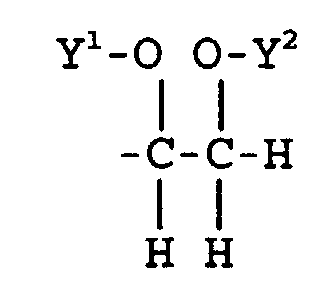 where Y1 and Y2 are both benzoyl or Y1 is benzoyl and Y2 is dimethoxytrityl.
 - A compound according to claim 1 or 2 wherein Z represents a hydroxy protected vicinal diol group of the formula:
 wherein each R6 and R7 individually represents a hydrogen atom, C6-30 aryl or substituted aryl, C1-20 alkyl or an aromatic-substituted alkyl group of less than 30 carbon atoms;with the proviso that R6 and R7 can not both be hydrogen atoms.
 - A compound according to claim 8 wherein each R6 and R7 individually represents a hydrogen atom or phenyl optionally substituted with C1-8 alkyl, C1-8 alkoxy, 1 to 4 halogen atoms each of atomic number of from 9 to 35, nitro-, or phenyl, with the proviso that R6 and R7 can not both be hydrogen atoms.
- A compound according to claim 8 or 9 wherein R6 represents a hydrogen atom and R7 represents a phenyl, p-butylphenyl, p-methoxyphenyl, p-t-butylphenyl or biphenyl group.
- A compound according to claim 1 or 2 wherein X1 represents NR1R2 and both R1 and R2 are isopropyl, G is -(CH2)6-, and Z has the formula:where R5 is -(CH2)6- and Y3 is dimethoxytrityl.
- A 5' -modified oligonucleotide of the formula:
 where (O.N.) represents an oligonucleotide chain;X is an oxygen or sulphur atom;X1 represents O-, methyl, -OCH3 or NR1R2 where each R1 and R2 individually represent a hydrogen atom or a C1-6 alkyl, C3-8 cycloalkyl or C6-20 aryl group or, when joined together, form with the nitrogen atom a C4-7 cyclic structure containing none or one oxygen or sulphur atoms; G is a C1-20 hydrocarbylene group; andZ is a hydroxy-protected vicinal diol group bound to G by one of the vicinal diol carbon atoms or a disulfide group bound to G by one of the sulfur atoms of the disulfide group.
 - A 5' -modified oligonucleotide according to claim 12 wherein Z has the formula:
 where each R3 and R4 individually represents a hydrogen atom, a C4-20 alkyl or C6-20 monocyclic aryl group and each Y1 and Y2 individually represents a hydroxy protecting group or are together joined by a single-atom bridge to form a five-membered ring protecting group, orwhere R5 represents a C1-20 alkylene group or a C6-20 monocyclic arylene group and Y3 is a hydroxy-protecting group.
 - A 5' -modified oligonucleotide according to claim 13 wherein Y1 and Y2 are removed to leave free hydroxy groups.
- A 5'-modified oligonucleotide according to claim 13 wherein G is -(CH2)4-, and Z has the formula:
 where Y1 and Y2 are both benzoyl or Y1 is benzoyl and Y2 is dimethoxytrityl.
 - A 5'-modified oligonucleotide according to claim 15 wherein Y1 and Y2 are removed to leave free hydroxyl groups.
- A 5'-modified oligonucleotide according to claim 12 or 13 wherein Z has the formula:
 wherein each R6 and R7 individually represent a hydrogen atom, C6-30 aryl or substituted aryl, C1-20 alkyl or aromatic-subtituted alkyl of less than 30 carbon atoms;with the proviso that R6 and R7 can not both be hydrogen atoms.
 - A 5'-modified oligonucleotide according to claim 17 wherein each R6 and R7 individually represents a hydrogen atom or phenyl optionally substituted with a C1-8 alkyl, C1-8 alkoxy, 1 to 4 halogen atoms each of atomic number 9 to 35, nitro-, or phenyl, with the proviso that both R6 and R7 can not both be hydrogen atoms.
- A 5' -modified oligonucleotide according to claim 17 or 18 wherein R6 is a hydrogen atom and R7 represents a phenyl, p-butylphenyl, p-methoxyphenyl, p-t-butylphenyl or biphenyl group.
- A 5' -modified oligonucleotide according to claim 12 or 13 wherein G is -(CH2)6-, and Z has the formula:where R5 is -(CH2)6- and Y3 is dimethoxytrityl.
- A 5' -modified oligonucleotide according to claim 14 or 16 wherein Z has been oxidized to form a terminal aldehyde group on the oligonucleotide.
- A 5' -modified oligonucleotide according to claim 20 wherein Z has been reduced to form a terminal thiol group on the oligonucleotide.
- A conjugate of an amino group-containing carrier molecule and a 5' -modified oligonucleotide according to claim 21, wherein the conjugate is formed by reaction between said amino group and said terminal aldehyde group.
- A conjugate of a carrier molecule having a functional group and a 5' -modified oligonucleotide according to claim 22, wherein the conjugate is formed by reaction between said functional group and said terminal thiol group.
- A conjugate according to claim 23 or 24 wherein the carrier molecule is a polymer.
- A conjugate according to claim 25 wherein the polymer is an amino acid polymer.
- A partially protected alcohol of the formula:
 where each Y1 and Y2 individually represents a hydroxy protecting group or are together joined by a single-atom bridge, other than a -C(=O)- bridging group, to form a five-membered ring protecting group and G represents a C2-20 hydrocarbylene group.
 - An alcohol according to claim 27 wherein both Y1 and Y2 are benzoyl and G is butylene.
- An alcohol according to claim 27 wherein Y1 is dimethoxytrityl, Y2 is benzoyl and G is butylene.
- An alcohol according to claim 27 wherein each Y1 and Y2 individually represents:
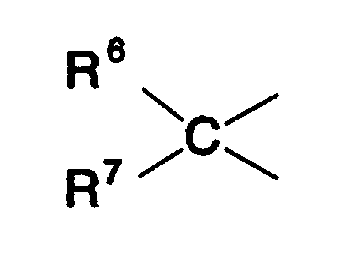 wherein each R6 and R7 individually represents a hydrogen atom, C6-30 aryl or substituted aryl, C1-20 alkyl or an aromatic-substituted alkyl group of less than 30 carbon atoms, with the proviso that both R6 and R7 can not both be hydrogen atoms.
 - A disulfide of the formulawherein G represents a C4-20 hydrocarbylene group and Y3 represents a hydroxyl protecting group.
- A disulfide according to claim 31 wherein Y3 is dimethoxytrityl and G is hexylene.
Applications Claiming Priority (2)
| Application Number | Priority Date | Filing Date | Title |
|---|---|---|---|
| US73105591A | 1991-07-15 | 1991-07-15 | |
| US731055 | 1991-07-15 |
Publications (2)
| Publication Number | Publication Date |
|---|---|
| EP0523978A1 EP0523978A1 (en) | 1993-01-20 |
| EP0523978B1 true EP0523978B1 (en) | 1999-05-12 |
Family
ID=24937868
Family Applications (1)
| Application Number | Title | Priority Date | Filing Date |
|---|---|---|---|
| EP92306477A Expired - Lifetime EP0523978B1 (en) | 1991-07-15 | 1992-07-15 | Modified phosphorous intermediates for providing functional groups on the 5' end of oligonucleotides |
Country Status (12)
| Country | Link |
|---|---|
| EP (1) | EP0523978B1 (en) |
| JP (3) | JP2899111B2 (en) |
| AT (1) | ATE179982T1 (en) |
| AU (3) | AU664184B2 (en) |
| CA (1) | CA2073846C (en) |
| DE (1) | DE69229149T2 (en) |
| DK (1) | DK0523978T3 (en) |
| ES (1) | ES2131060T3 (en) |
| GR (1) | GR3030260T3 (en) |
| IE (1) | IE922292A1 (en) |
| PT (1) | PT100691B (en) |
| WO (1) | WO1993002093A1 (en) |
Cited By (3)
| Publication number | Priority date | Publication date | Assignee | Title |
|---|---|---|---|---|
| US7115581B2 (en) | 1992-07-15 | 2006-10-03 | La Jolla Pharmaceutical Company | Chemically-defined non-polymeric valency platform molecules and conjugates thereof |
| US10633460B2 (en) | 2010-12-23 | 2020-04-28 | Roche Diagnostic Operations, Inc. | Binding agent |
| US10982007B2 (en) | 2010-12-23 | 2021-04-20 | Roche Diagnostics Operations, Inc. | Detection of a posttranslationally modified polypeptide by a bivalent binding agent |
Families Citing this family (26)
| Publication number | Priority date | Publication date | Assignee | Title |
|---|---|---|---|---|
| US5268454A (en) | 1991-02-08 | 1993-12-07 | La Jolla Pharmaceutical Company | Composition for inducing humoral anergy to an immunogen comprising a t cell epitope-deficient analog of the immunogen conjugated to a nonimmunogenic carrier |
| WO1993002093A1 (en) | 1991-07-15 | 1993-02-04 | La Jolla Pharmaceutical Company | Modified phosphorous intermediates for providing functional groups on the 5' end of oligonucleotides |
| AU2003200284B2 (en) * | 1998-03-27 | 2006-11-02 | The Regents Of The University Of California | Pharmacophore recombination for the identification of small molecule drug lead compounds |
| US6344330B1 (en) | 1998-03-27 | 2002-02-05 | The Regents Of The University Of California | Pharmacophore recombination for the identification of small molecule drug lead compounds |
| US6858210B1 (en) | 1998-06-09 | 2005-02-22 | La Jolla Pharmaceutical Co. | Therapeutic and diagnostic domain 1 β2GPI polypeptides and methods of using same |
| DE69928995T2 (en) * | 1998-06-22 | 2006-09-07 | Affymetrix, Inc., Santa Clara | Reagent and method for solid phase synthesis |
| US6399578B1 (en) | 1998-12-09 | 2002-06-04 | La Jolla Pharmaceutical Company | Conjugates comprising galactose α1,3 galactosyl epitopes and methods of using same |
| US6458953B1 (en) | 1998-12-09 | 2002-10-01 | La Jolla Pharmaceutical Company | Valency platform molecules comprising carbamate linkages |
| CN1399562A (en) | 1999-11-28 | 2003-02-26 | 拉卓拉药物公司 | Methods of treating lupus based on antibody affinity and screening methods and compositions using such methods |
| DE10013600A1 (en) * | 2000-03-18 | 2002-01-10 | Aventis Res & Tech Gmbh & Co | Reactive monomers for oligonucleotide and polynucleotide synthesis, modified oligonucleotides and polynucleotides and a process for their preparation |
| EP1404873B1 (en) | 2001-06-21 | 2013-05-22 | Dynavax Technologies Corporation | Chimeric immunomodulatory compounds and methods of using the same |
| DE10163836A1 (en) * | 2001-12-22 | 2003-07-10 | Friz Biochem Gmbh | Multifunctional reagent for the synthesis of thiol modified oligomers |
| JP4495670B2 (en) * | 2005-12-27 | 2010-07-07 | 三井化学株式会社 | Method for producing mercaptoalkylphosphonium compounds |
| MX2012003396A (en) | 2009-09-16 | 2012-04-10 | Genentech Inc | Coiled coil and/or tether containing protein complexes and uses thereof. |
| TW201138821A (en) | 2010-03-26 | 2011-11-16 | Roche Glycart Ag | Bispecific antibodies |
| JP5766296B2 (en) | 2010-12-23 | 2015-08-19 | エフ.ホフマン−ラ ロシュ アーゲーF. Hoffmann−La Roche Aktiengesellschaft | Polypeptide-polynucleotide complexes and their use in targeted delivery of effector components |
| CN104105711B (en) | 2012-02-10 | 2018-11-30 | 弗·哈夫曼-拉罗切有限公司 | Single-chain antibody and other heteromultimerics |
| FR2989089B1 (en) * | 2012-04-04 | 2020-02-07 | Etablissement Francais Du Sang | MODIFIED OLIGONUCLEOTIDES COMPRISING THIOL FUNCTIONS AND THEIR USE FOR THE DETECTION OF NUCLEIC ACIDS |
| FR2989086B1 (en) | 2012-04-04 | 2017-03-24 | Centre Nat De La Rech Scient (Cnrs) | THIOL COMPOUNDS AND THEIR USE FOR THE SYNTHESIS OF MODIFIED OLIGONUCLEOTIDES |
| MX2014014804A (en) | 2012-06-27 | 2015-02-12 | Hoffmann La Roche | Method for making antibody fc-region conjugates comprising at least one binding entity that specifically binds to a target and uses thereof. |
| EP2867253B1 (en) | 2012-06-27 | 2016-09-14 | F. Hoffmann-La Roche AG | Method for selection and production of tailor-made highly selective and multi-specific targeting entities containing at least two different binding entities and uses thereof |
| JP2016507484A (en) | 2012-12-06 | 2016-03-10 | メルク・シャープ・アンド・ドーム・コーポレーションMerck Sharp & Dohme Corp. | Disulfide masking prodrug compositions and methods |
| CN107001482B (en) | 2014-12-03 | 2021-06-15 | 豪夫迈·罗氏有限公司 | multispecific antibody |
| CA3140917A1 (en) | 2019-05-24 | 2020-12-03 | Empirico Inc. | Treatment of angiopoietin like 7 (angptl7) related diseases |
| US12258563B2 (en) | 2022-03-28 | 2025-03-25 | Empirico Inc. | Modified oligonucleotides |
| EP4499111A2 (en) * | 2022-03-28 | 2025-02-05 | Empirico Inc. | Compositions and methods for the treatment of angiopoietin like 7 (angptl7) related diseases |
Family Cites Families (14)
| Publication number | Priority date | Publication date | Assignee | Title |
|---|---|---|---|---|
| US3225063A (en) * | 1962-05-21 | 1965-12-21 | Scott Paper Co | Organic cyclic carbonates |
| US4191668A (en) * | 1977-02-03 | 1980-03-04 | Scripps Clinic And Research Foundation | Induction of immunological tolerance |
| US4220565A (en) * | 1979-01-18 | 1980-09-02 | Scripps Clinic & Research Foundation | Immunochemical conjugates: method and composition |
| US4650675A (en) * | 1983-08-18 | 1987-03-17 | The Children's Medical Center Corporation | Oligonucleotide conjugates |
| DK160818C (en) * | 1983-12-30 | 1991-10-07 | Hoffmann La Roche | N-RING containing glycerol derivatives, processes for their preparation, their use for the preparation of a platelet activation factor inhibitor, and drugs containing such a compound |
| US4575558A (en) * | 1984-02-15 | 1986-03-11 | American Hospital Supply Corporation | Preparation of optically active 1,3-dioxolane-4-methanol compounds |
| US4751181A (en) * | 1984-12-31 | 1988-06-14 | Duke University | Methods and compositions useful in the diagnosis and treatment of autoimmune diseases |
| US5122450A (en) * | 1985-10-24 | 1992-06-16 | Research Corporation Limited | Biochemical reagent |
| DE3811005A1 (en) * | 1988-03-31 | 1989-10-19 | Bayer Ag | THIONOPHOSPHOR (PHOSPHONE) ACID AMIDESTER |
| EP0354323A3 (en) * | 1988-08-12 | 1990-06-13 | American Cyanamid Company | Antidiabetic phosphates |
| DE3916871A1 (en) * | 1989-05-24 | 1990-11-29 | Boehringer Mannheim Gmbh | MODIFIED PHOSPHORAMIDITE PROCESS FOR THE PREPARATION OF MODIFIED NUCLEIC ACIDS |
| AU639008B2 (en) * | 1989-06-22 | 1993-07-15 | Alliance Pharmaceutical Corporation | Fluorine and phosphorous-containing amphiphilic molecules with surfactant properties |
| DE3937116A1 (en) * | 1989-11-03 | 1991-05-08 | Dainippon Ink & Chemicals | METHOD FOR PRODUCING ESTERS CONTAINING CYCLOCARBONATE |
| WO1993002093A1 (en) | 1991-07-15 | 1993-02-04 | La Jolla Pharmaceutical Company | Modified phosphorous intermediates for providing functional groups on the 5' end of oligonucleotides |
-
1992
- 1992-07-14 WO PCT/US1992/005897 patent/WO1993002093A1/en not_active Ceased
- 1992-07-14 AU AU19685/92A patent/AU664184B2/en not_active Ceased
- 1992-07-14 IE IE229292A patent/IE922292A1/en not_active IP Right Cessation
- 1992-07-14 CA CA002073846A patent/CA2073846C/en not_active Expired - Fee Related
- 1992-07-14 JP JP5502916A patent/JP2899111B2/en not_active Expired - Fee Related
- 1992-07-15 ES ES92306477T patent/ES2131060T3/en not_active Expired - Lifetime
- 1992-07-15 DE DE69229149T patent/DE69229149T2/en not_active Expired - Fee Related
- 1992-07-15 EP EP92306477A patent/EP0523978B1/en not_active Expired - Lifetime
- 1992-07-15 PT PT100691A patent/PT100691B/en not_active IP Right Cessation
- 1992-07-15 DK DK92306477T patent/DK0523978T3/en active
- 1992-07-15 AT AT92306477T patent/ATE179982T1/en not_active IP Right Cessation
-
1995
- 1995-12-20 AU AU40580/95A patent/AU686911B2/en not_active Ceased
-
1997
- 1997-11-12 AU AU45202/97A patent/AU703715B2/en not_active Ceased
-
1998
- 1998-12-02 JP JP34324698A patent/JP3188243B2/en not_active Expired - Fee Related
-
1999
- 1999-05-19 GR GR990401353T patent/GR3030260T3/en unknown
-
2001
- 2001-03-08 JP JP2001065808A patent/JP3488435B2/en not_active Expired - Fee Related
Cited By (4)
| Publication number | Priority date | Publication date | Assignee | Title |
|---|---|---|---|---|
| US7115581B2 (en) | 1992-07-15 | 2006-10-03 | La Jolla Pharmaceutical Company | Chemically-defined non-polymeric valency platform molecules and conjugates thereof |
| US7351855B2 (en) | 1992-07-15 | 2008-04-01 | La Jolla Pharmaceutical Company | Chemically defined non-polymeric valency platform molecules and conjugates thereof |
| US10633460B2 (en) | 2010-12-23 | 2020-04-28 | Roche Diagnostic Operations, Inc. | Binding agent |
| US10982007B2 (en) | 2010-12-23 | 2021-04-20 | Roche Diagnostics Operations, Inc. | Detection of a posttranslationally modified polypeptide by a bivalent binding agent |
Also Published As
| Publication number | Publication date |
|---|---|
| DE69229149D1 (en) | 1999-06-17 |
| HK1014369A1 (en) | 1999-09-24 |
| JPH07500576A (en) | 1995-01-19 |
| ATE179982T1 (en) | 1999-05-15 |
| EP0523978A1 (en) | 1993-01-20 |
| AU1968592A (en) | 1993-01-21 |
| AU4520297A (en) | 1998-02-19 |
| GR3030260T3 (en) | 1999-08-31 |
| AU703715B2 (en) | 1999-04-01 |
| AU664184B2 (en) | 1995-11-09 |
| CA2073846A1 (en) | 1993-01-16 |
| JPH11228592A (en) | 1999-08-24 |
| PT100691B (en) | 1999-06-30 |
| PT100691A (en) | 1993-10-29 |
| AU4058095A (en) | 1996-03-14 |
| DE69229149T2 (en) | 1999-12-09 |
| AU686911B2 (en) | 1998-02-12 |
| IE922292A1 (en) | 1993-01-27 |
| CA2073846C (en) | 2007-09-18 |
| ES2131060T3 (en) | 1999-07-16 |
| JP3188243B2 (en) | 2001-07-16 |
| WO1993002093A1 (en) | 1993-02-04 |
| JP3488435B2 (en) | 2004-01-19 |
| JP2001302684A (en) | 2001-10-31 |
| JP2899111B2 (en) | 1999-06-02 |
| DK0523978T3 (en) | 1999-11-01 |
Similar Documents
| Publication | Publication Date | Title |
|---|---|---|
| US5786512A (en) | Modified phosphorous intermediates for providing functional groups on the 5' end of oligonucleotides | |
| AU703715B2 (en) | Novel disulfide compounds useful in the synthesis of modified phosphorous intermediates for providing functional groups on the 5' end of oglionucleotides | |
| JP2552048B2 (en) | Reagent for nucleotide chain synthesis | |
| US5367066A (en) | Oligonucleotides with selectably cleavable and/or abasic sites | |
| JP5143872B2 (en) | Phosphonate nucleoside derivatives | |
| WO2019212061A1 (en) | Segment for oligonucleotide synthesis, production method for same, and oligonucleotide synthesis method using same | |
| US5039796A (en) | Process for 5'-phosphorylation of nucleic acids | |
| US12559516B2 (en) | Multi-fluorous blockmer for oligonucleotide synthesis, and oligonucleotide synthesis method using the same | |
| EP1272501B1 (en) | Process for the preparation of phosphorothioate triesters | |
| AU2001235766A1 (en) | Process for the preparation of phosphorothioate triesters | |
| US5807837A (en) | Composition and method for the treatment or prophylaxis of viral infections using modified oligodeoxyribonucleotides | |
| KR20030081303A (en) | Synthons for oligonucleotide synthesis | |
| HK1014369B (en) | Modified phosphorous intermediates for providing functional groups on the 5' end of oligonucleotides | |
| JPH0588240B2 (en) | ||
| JP3983691B2 (en) | Chemical synthesis of oligonucleotides |
Legal Events
| Date | Code | Title | Description |
|---|---|---|---|
| PUAI | Public reference made under article 153(3) epc to a published international application that has entered the european phase |
Free format text: ORIGINAL CODE: 0009012 |
|
| AK | Designated contracting states |
Kind code of ref document: A1 Designated state(s): AT BE CH DE DK ES FR GB GR IT LI LU MC NL PT SE |
|
| 17P | Request for examination filed |
Effective date: 19930622 |
|
| 17Q | First examination report despatched |
Effective date: 19950403 |
|
| GRAG | Despatch of communication of intention to grant |
Free format text: ORIGINAL CODE: EPIDOS AGRA |
|
| GRAG | Despatch of communication of intention to grant |
Free format text: ORIGINAL CODE: EPIDOS AGRA |
|
| GRAH | Despatch of communication of intention to grant a patent |
Free format text: ORIGINAL CODE: EPIDOS IGRA |
|
| GRAH | Despatch of communication of intention to grant a patent |
Free format text: ORIGINAL CODE: EPIDOS IGRA |
|
| GRAA | (expected) grant |
Free format text: ORIGINAL CODE: 0009210 |
|
| AK | Designated contracting states |
Kind code of ref document: B1 Designated state(s): AT BE CH DE DK ES FR GB GR IT LI LU MC NL PT SE |
|
| REF | Corresponds to: |
Ref document number: 179982 Country of ref document: AT Date of ref document: 19990515 Kind code of ref document: T |
|
| REG | Reference to a national code |
Ref country code: CH Ref legal event code: NV Representative=s name: R. A. EGLI & CO. PATENTANWAELTE Ref country code: CH Ref legal event code: EP |
|
| REF | Corresponds to: |
Ref document number: 69229149 Country of ref document: DE Date of ref document: 19990617 |
|
| REG | Reference to a national code |
Ref country code: ES Ref legal event code: FG2A Ref document number: 2131060 Country of ref document: ES Kind code of ref document: T3 |
|
| RAP2 | Party data changed (patent owner data changed or rights of a patent transferred) |
Owner name: LA JOLLA PHARMACEUTICAL COMPANY |
|
| ET | Fr: translation filed | ||
| NLXE | Nl: other communications concerning ep-patents (part 3 heading xe) |
Free format text: PAT. BUL. 08/99 PAGE 1099: CORR.: LA JOLLA PHARMACEUTICAL COMPANY. |
|
| REG | Reference to a national code |
Ref country code: PT Ref legal event code: SC4A Free format text: AVAILABILITY OF NATIONAL TRANSLATION Effective date: 19990716 |
|
| REG | Reference to a national code |
Ref country code: DK Ref legal event code: T3 |
|
| PLBE | No opposition filed within time limit |
Free format text: ORIGINAL CODE: 0009261 |
|
| STAA | Information on the status of an ep patent application or granted ep patent |
Free format text: STATUS: NO OPPOSITION FILED WITHIN TIME LIMIT |
|
| 26N | No opposition filed | ||
| REG | Reference to a national code |
Ref country code: GB Ref legal event code: IF02 |
|
| PGFP | Annual fee paid to national office [announced via postgrant information from national office to epo] |
Ref country code: DK Payment date: 20080617 Year of fee payment: 17 |
|
| PGFP | Annual fee paid to national office [announced via postgrant information from national office to epo] |
Ref country code: PT Payment date: 20080625 Year of fee payment: 17 Ref country code: MC Payment date: 20080620 Year of fee payment: 17 |
|
| PGFP | Annual fee paid to national office [announced via postgrant information from national office to epo] |
Ref country code: LU Payment date: 20080731 Year of fee payment: 17 Ref country code: ES Payment date: 20080704 Year of fee payment: 17 Ref country code: DE Payment date: 20080731 Year of fee payment: 17 Ref country code: CH Payment date: 20080708 Year of fee payment: 17 |
|
| PGFP | Annual fee paid to national office [announced via postgrant information from national office to epo] |
Ref country code: NL Payment date: 20080619 Year of fee payment: 17 Ref country code: IT Payment date: 20080718 Year of fee payment: 17 Ref country code: FR Payment date: 20080707 Year of fee payment: 17 Ref country code: AT Payment date: 20080616 Year of fee payment: 17 |
|
| PGFP | Annual fee paid to national office [announced via postgrant information from national office to epo] |
Ref country code: GB Payment date: 20080616 Year of fee payment: 17 |
|
| PGFP | Annual fee paid to national office [announced via postgrant information from national office to epo] |
Ref country code: SE Payment date: 20080708 Year of fee payment: 17 Ref country code: BE Payment date: 20080730 Year of fee payment: 17 |
|
| PGFP | Annual fee paid to national office [announced via postgrant information from national office to epo] |
Ref country code: GR Payment date: 20080704 Year of fee payment: 17 |
|
| REG | Reference to a national code |
Ref country code: PT Ref legal event code: MM4A Free format text: LAPSE DUE TO NON-PAYMENT OF FEES Effective date: 20100115 |
|
| BERE | Be: lapsed |
Owner name: *LA JOLLA PHARMACEUTICAL CY Effective date: 20090731 |
|
| PG25 | Lapsed in a contracting state [announced via postgrant information from national office to epo] |
Ref country code: MC Free format text: LAPSE BECAUSE OF NON-PAYMENT OF DUE FEES Effective date: 20090731 |
|
| REG | Reference to a national code |
Ref country code: CH Ref legal event code: PL |
|
| REG | Reference to a national code |
Ref country code: DK Ref legal event code: EBP |
|
| EUG | Se: european patent has lapsed | ||
| GBPC | Gb: european patent ceased through non-payment of renewal fee |
Effective date: 20090715 |
|
| NLV4 | Nl: lapsed or anulled due to non-payment of the annual fee |
Effective date: 20100201 |
|
| REG | Reference to a national code |
Ref country code: FR Ref legal event code: ST Effective date: 20100331 |
|
| PG25 | Lapsed in a contracting state [announced via postgrant information from national office to epo] |
Ref country code: PT Free format text: LAPSE BECAUSE OF NON-PAYMENT OF DUE FEES Effective date: 20100115 Ref country code: LI Free format text: LAPSE BECAUSE OF NON-PAYMENT OF DUE FEES Effective date: 20090731 Ref country code: FR Free format text: LAPSE BECAUSE OF NON-PAYMENT OF DUE FEES Effective date: 20090731 Ref country code: CH Free format text: LAPSE BECAUSE OF NON-PAYMENT OF DUE FEES Effective date: 20090731 |
|
| PG25 | Lapsed in a contracting state [announced via postgrant information from national office to epo] |
Ref country code: GB Free format text: LAPSE BECAUSE OF NON-PAYMENT OF DUE FEES Effective date: 20090715 |
|
| PG25 | Lapsed in a contracting state [announced via postgrant information from national office to epo] |
Ref country code: DE Free format text: LAPSE BECAUSE OF NON-PAYMENT OF DUE FEES Effective date: 20100202 Ref country code: BE Free format text: LAPSE BECAUSE OF NON-PAYMENT OF DUE FEES Effective date: 20090731 Ref country code: AT Free format text: LAPSE BECAUSE OF NON-PAYMENT OF DUE FEES Effective date: 20090715 |
|
| PG25 | Lapsed in a contracting state [announced via postgrant information from national office to epo] |
Ref country code: DK Free format text: LAPSE BECAUSE OF NON-PAYMENT OF DUE FEES Effective date: 20090731 |
|
| REG | Reference to a national code |
Ref country code: ES Ref legal event code: FD2A Effective date: 20090716 |
|
| PG25 | Lapsed in a contracting state [announced via postgrant information from national office to epo] |
Ref country code: GR Free format text: LAPSE BECAUSE OF NON-PAYMENT OF DUE FEES Effective date: 20100204 Ref country code: ES Free format text: LAPSE BECAUSE OF NON-PAYMENT OF DUE FEES Effective date: 20090716 |
|
| PG25 | Lapsed in a contracting state [announced via postgrant information from national office to epo] |
Ref country code: IT Free format text: LAPSE BECAUSE OF NON-PAYMENT OF DUE FEES Effective date: 20090715 |
|
| PG25 | Lapsed in a contracting state [announced via postgrant information from national office to epo] |
Ref country code: LU Free format text: LAPSE BECAUSE OF NON-PAYMENT OF DUE FEES Effective date: 20090715 |
|
| PG25 | Lapsed in a contracting state [announced via postgrant information from national office to epo] |
Ref country code: SE Free format text: LAPSE BECAUSE OF NON-PAYMENT OF DUE FEES Effective date: 20090716 |
|
| PG25 | Lapsed in a contracting state [announced via postgrant information from national office to epo] |
Ref country code: NL Free format text: LAPSE BECAUSE OF NON-PAYMENT OF DUE FEES Effective date: 20100201 |