EP0522136B1 - Protective malaria sporozoite surface protein immunogen and gene - Google Patents
Protective malaria sporozoite surface protein immunogen and gene Download PDFInfo
- Publication number
- EP0522136B1 EP0522136B1 EP92904372A EP92904372A EP0522136B1 EP 0522136 B1 EP0522136 B1 EP 0522136B1 EP 92904372 A EP92904372 A EP 92904372A EP 92904372 A EP92904372 A EP 92904372A EP 0522136 B1 EP0522136 B1 EP 0522136B1
- Authority
- EP
- European Patent Office
- Prior art keywords
- surface antigen
- sporozoite surface
- ssp2
- antigen
- seq
- Prior art date
- Legal status (The legal status is an assumption and is not a legal conclusion. Google has not performed a legal analysis and makes no representation as to the accuracy of the status listed.)
- Expired - Lifetime
Links
Images

Classifications
-
- C—CHEMISTRY; METALLURGY
- C07—ORGANIC CHEMISTRY
- C07K—PEPTIDES
- C07K14/00—Peptides having more than 20 amino acids; Gastrins; Somatostatins; Melanotropins; Derivatives thereof
- C07K14/435—Peptides having more than 20 amino acids; Gastrins; Somatostatins; Melanotropins; Derivatives thereof from animals; from humans
- C07K14/44—Peptides having more than 20 amino acids; Gastrins; Somatostatins; Melanotropins; Derivatives thereof from animals; from humans from protozoa
- C07K14/445—Plasmodium
-
- A—HUMAN NECESSITIES
- A61—MEDICAL OR VETERINARY SCIENCE; HYGIENE
- A61K—PREPARATIONS FOR MEDICAL, DENTAL OR TOILETRY PURPOSES
- A61K39/00—Medicinal preparations containing antigens or antibodies
-
- Y—GENERAL TAGGING OF NEW TECHNOLOGICAL DEVELOPMENTS; GENERAL TAGGING OF CROSS-SECTIONAL TECHNOLOGIES SPANNING OVER SEVERAL SECTIONS OF THE IPC; TECHNICAL SUBJECTS COVERED BY FORMER USPC CROSS-REFERENCE ART COLLECTIONS [XRACs] AND DIGESTS
- Y02—TECHNOLOGIES OR APPLICATIONS FOR MITIGATION OR ADAPTATION AGAINST CLIMATE CHANGE
- Y02A—TECHNOLOGIES FOR ADAPTATION TO CLIMATE CHANGE
- Y02A50/00—TECHNOLOGIES FOR ADAPTATION TO CLIMATE CHANGE in human health protection, e.g. against extreme weather
- Y02A50/30—Against vector-borne diseases, e.g. mosquito-borne, fly-borne, tick-borne or waterborne diseases whose impact is exacerbated by climate change
Definitions
- This invention relates to an immunologically active protein, and the gene which encodes it, useful in vaccination against malaria. More particularly, this invention relates to a protein antigen on the surface of Plasmodium yoelii sporozoites detected by a monoclonal antibody NYS4, clones of genomic and complementary DNA sequences specific for this and closely related proteins from malarial parasites which, when administered as vaccine components either alone or in combination with other malarial antigens, can confer protective immunity.
- Plasmodium Species of the genus Plasmodium are the etiological agents of malaria. These protozoan parasites have a complex life cycle involving reproduction in mammalian hosts and insect vectors. The infectious stage of the parasite is called the sporozoite. It is inoculated into a mammalian host by the bite of infected Anopheline mosquitos.
- One approach to producing a malaria vaccine is to attempt to induce an immune response against the infective sporozoites themselves. This has been done by immunization of human and animal models with radiation attenuated sporozoites. These attenuated sporozoites consistently protect against challenge with infectious sporozoites (Nussenzweig et al., Nature 216:160, 1969, Clyde et al, Am. J. Med. Sci. 266:160, 1973, Rieckmann et al., Bull. W.H.O. 57, Suppl.1:261, 1979).
- CSP circumsporozoite protein
- mice have been immunized with a variety of synthetic peptides and recombinant proteins based on the CSP (Lal et al. Proc. Natl. Acad. Sci. USA 84:8647, 1987, Sedegah et al. in Technological Advances in Vaccine Development L. Lasky editor, New York, 1988, Sedegah et al., Bull. W.H.O., in press, Charoenvit et al., Bull. W.H.O., in press). In the majority of experiments, mice developed high levels of antibodies to the CSP, but were not consistently protected against challenge with P. yoelii sporozoites.
- an object of this invention is a sporozoite surface antigen which is distinct from the CS protein.
- This antigen is designated Sporozoite Surface Protein 2 (SSP2).
- SSP2 we refer both to the P. yoelii protein whose sequence is here disclosed and to the homologs of this protein which exist in other species of Plasmodium, including the human pathogens, P. falciparum, P. vivax, P. ovale, and P. malariae. These homologs may be recognized by their having both a predicted general structure similar to that of the P. yoelii SSP2 (Fig.
- Another object of this invention is a vaccine containing a synthetic or recombinant fragment of the antigen SSP2 which may include all or part of the amino acid sequence shown as Sequence 2 and which causes the production of specific immune sera and immune cells and protects against malaria.
- a further object of the invention is a recombinant molecule containing all or part of the DNA and deduced amino acid sequence of SSP2.
- a recombinant sporozoite surface antigen or a synthetic sporozoite surface antigen which causes production of specific immune sera and immune cells for protection against malaria
- the sporozoite surface antigen comprises the amino acid sequence of SEQ ID NO:2, an active fragment of the amino acid sequence of SEQ ID NO:2, or a homolog of the amino acid sequence of SEQ ID NO:2, and wherein the sporozoite surface antigen is not a circumsporozoite protein.
- a vaccine providing immunity against malaria comprising a pharmaceutically effective amount of an antigen in a pharmacologically appropriate vaccine formulation, wherein the antigen is selected from the group consisting of the sporozoite surface antigen according to the invention in its first aspect and mixtures of the sporozoite surface antigen according to the invention in its first aspect with other malaria antigens.
- an antibody for identifying homologs of a sporozoite surface antigen according to the invention in its first aspect, wherein said antibody is specific for the sequence of SEQ ID NO:2 or an active fragment of SEQ ID NO:2.
- a method of identifying homologs of the sporozoite surface antigen in its first aspect which comprises using the DNA sequence of SEQ ID NO:1 ( P. yoelii SSP2) to identify homologous DNA in the human pathogens P. falciparum, P. vivax, P. malariae, and P. ovale.
- a method of identifying homologs of the sporozoite surface antigen in its first aspect which comprises using antibodies against the P. yoelii SSP2 to identify the homologous antigen in the human pathogens, P. falciparum , P. vivax, P. malariae , and P. ovale .
- a method of identifying homologs of the sporozoite surface antigen in its first aspect which comprises using T lymphocytes against the P. yoelii SSP2 to identify the homologous sporozoite antigen in the human pathogens, P. falciparum , P. vivax, P. malariae and P. ovale.
- Fig. 1 is a schematic diagram of the predicted general features of the amino acid sequence of P. yoelii SSP2.
- Sequences 1 and 2 are the DNA and amino acid sequences, respectively, of this invention.
- a protein antigen (SSP2) on the surface of Plasmodium sporozoites is a candidate immunogen for vaccination against malaria and facilitates research into host immunological responses to malaria.
- the P. yoelii SSP2 antigen is detected by a monoclonal antibody (NYS4) which is specific for a 140 kilodalton (kD) protein on the sporozoite cell surface.
- Immunoreactive genomic clones express epitopes of this surface antigen gene and were used to clone the complete gene for P. yoelii SSP2.
- the DNA sequence of the gene encoding P. yoelii SSP2 and the predicted amino acid sequence (Sequences 1 and 2, respectively) show that it is distinct from the CSP.
- a synthetic peptide contains repeating epitopes of SSP2 derived protein antigen and is substantially shorter in length than the intact antigen.
- the peptide when conjugated to an appropriate carrier molecule, for example keyhole limpet hemocyanin and administered to a host in an appropriate adjuvant, for example Freund's complete adjuvant, elicits antibodies which bind to the SSP2 protein on the sporozoite surface.
- an appropriate carrier molecule for example keyhole limpet hemocyanin and administered to a host in an appropriate adjuvant, for example Freund's complete adjuvant, elicits antibodies which bind to the SSP2 protein on the sporozoite surface.
- a recombinant mammalian expression plasmid bearing SSP2 DNA sequences expresses SSP2 epitopes in mammalian cells and the introduction of these transfected cells into mice elicits antibody and cytotoxic T-cell lymphocytic responses which confer partial protection to the recipient animals against challenge infection.
- P. yoelii 17X(NL) parasites were obtained by blood passage in Balb/C mice. DNA isolation from parasite infected blood was as described (Wortman et al., Micro . Path ., 6:227, 1989).
- P. yoelii genomic expression libraries were constructed using either 0.5-2.0 or 2.0-7.0 kb fragments generated by partial DNase I digestion, addition of Eco RI linker oligomers, and ligation into the lambda cloning vector gt11 by standard techniques.
- the recombinant phage were packaged in vitro and the resulting library was screened for antigen expressing clones with a 1:20 dilution of a sporozoite surface specific antibody, NYS4, (Charoenvit et al., Infect . Immun ., 55:604, 1989) .
- Immuno-fluorescence and Western blotting were carried out as previously described (Charoenvit et al., Infect. Immun., 55:604, 1987). Immunofluoresence showed that NYS4 reacts with a protein on the sporozoite surface. Western blotting showed that protein to have a molecular weight of 140 kD. Sequence analysis of the 140 kD antigen gene . A clone designated M4 reacted with NYS4. M4 was sequenced and used as a probe to screen the library containg 2.0-7.0 kb inserts. A clone, designated 10.1111, was found to contain a 4.7 kb insert which overlapped the complete sequence of M4.
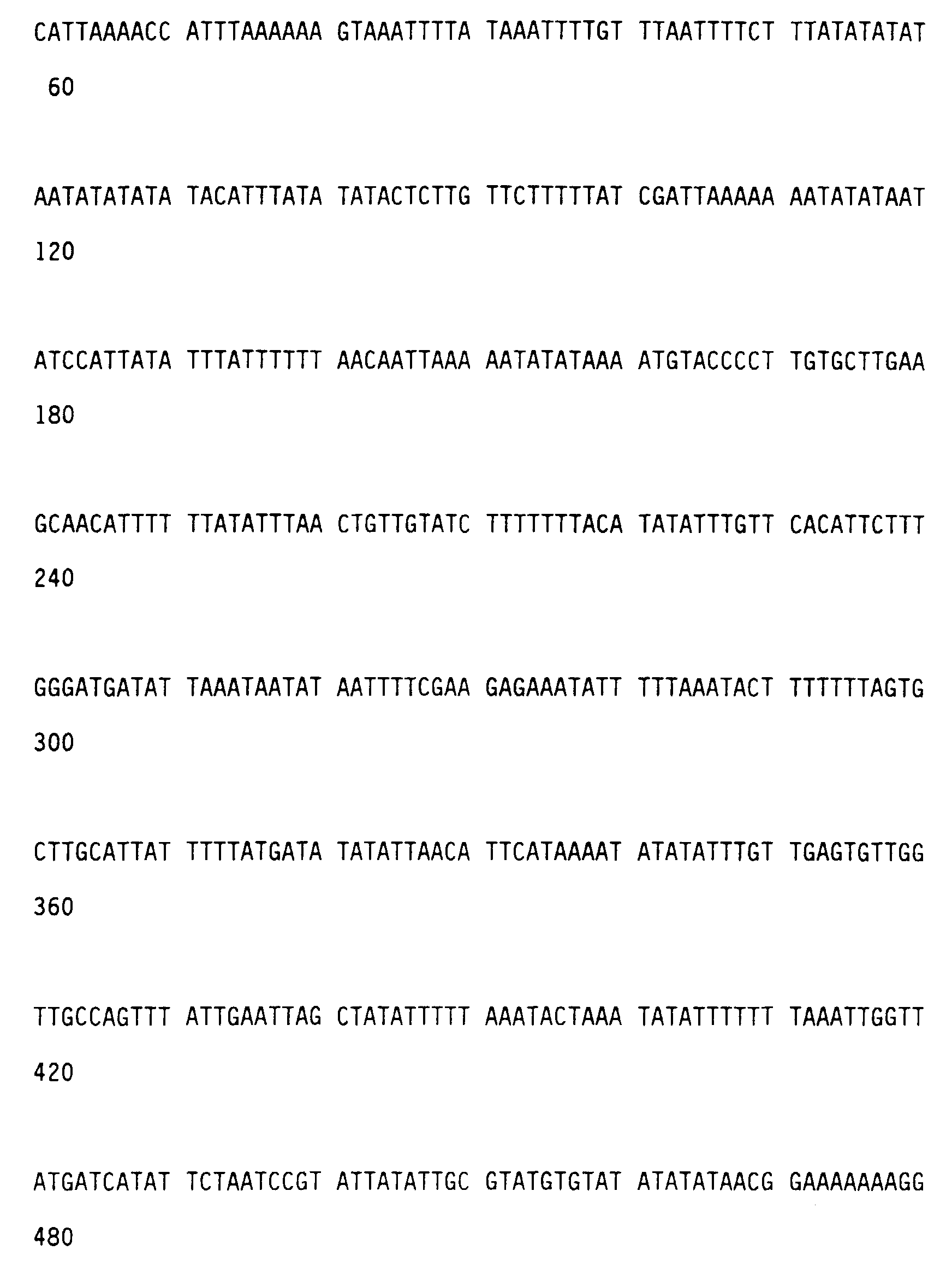
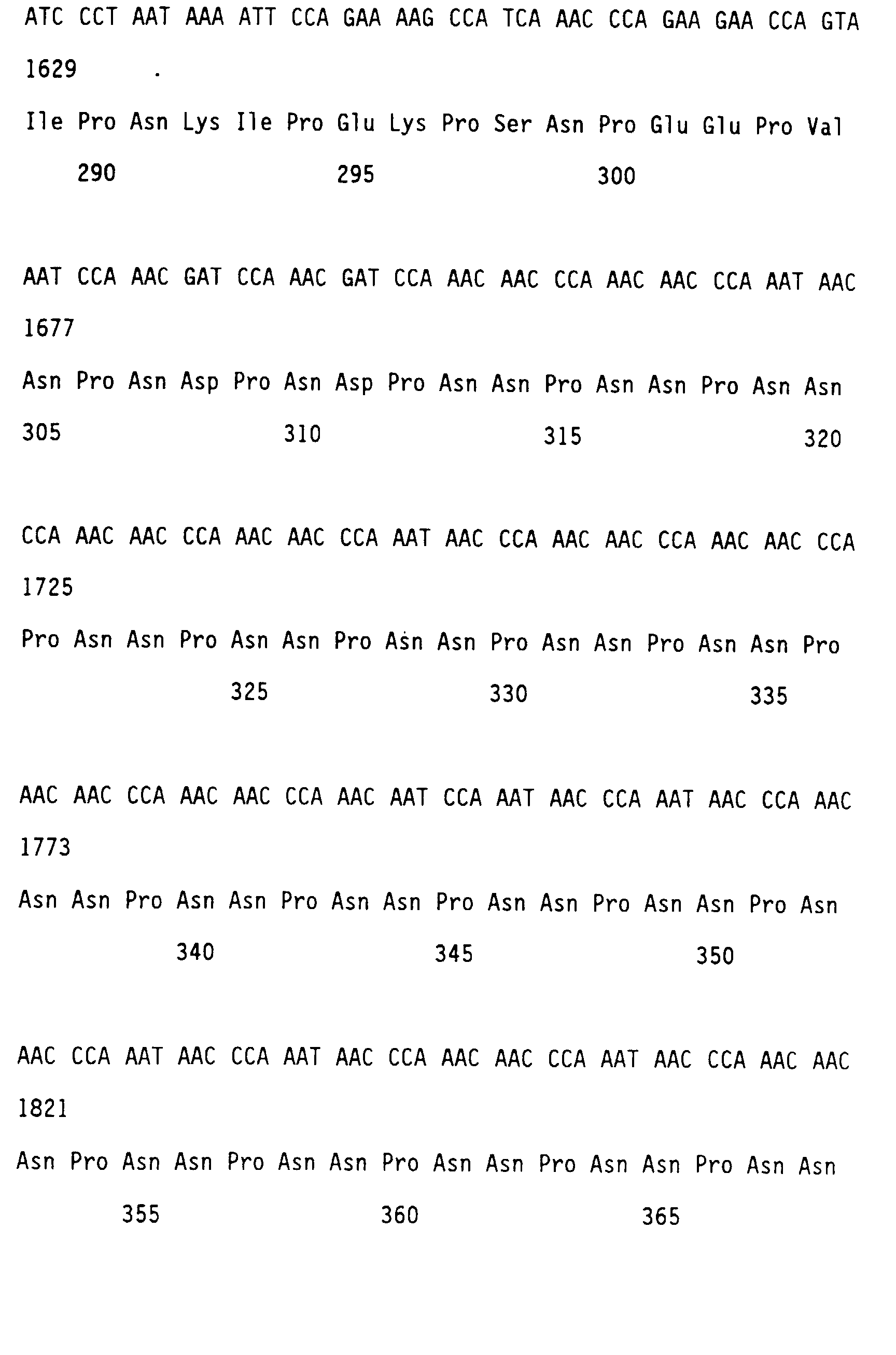
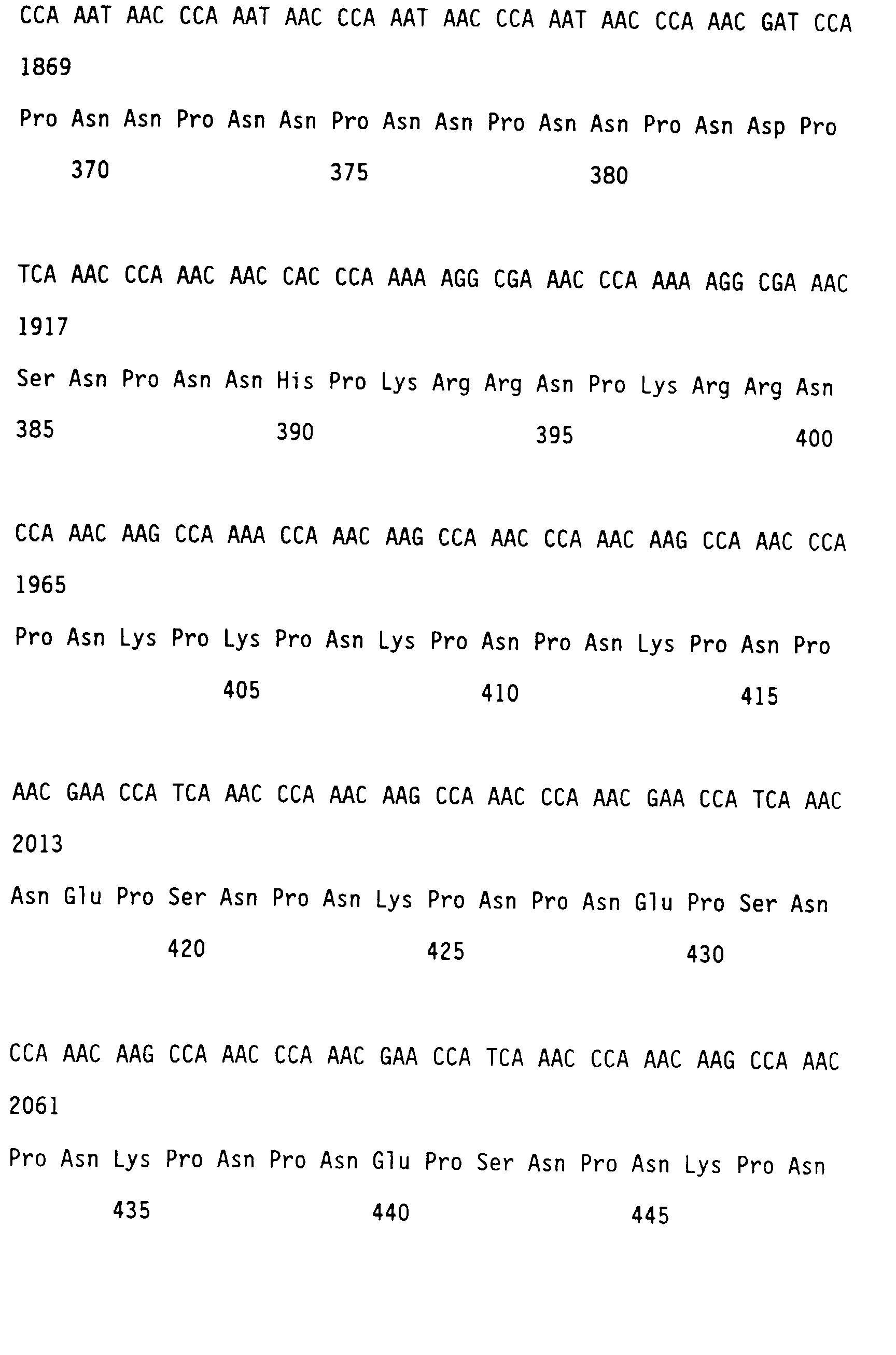
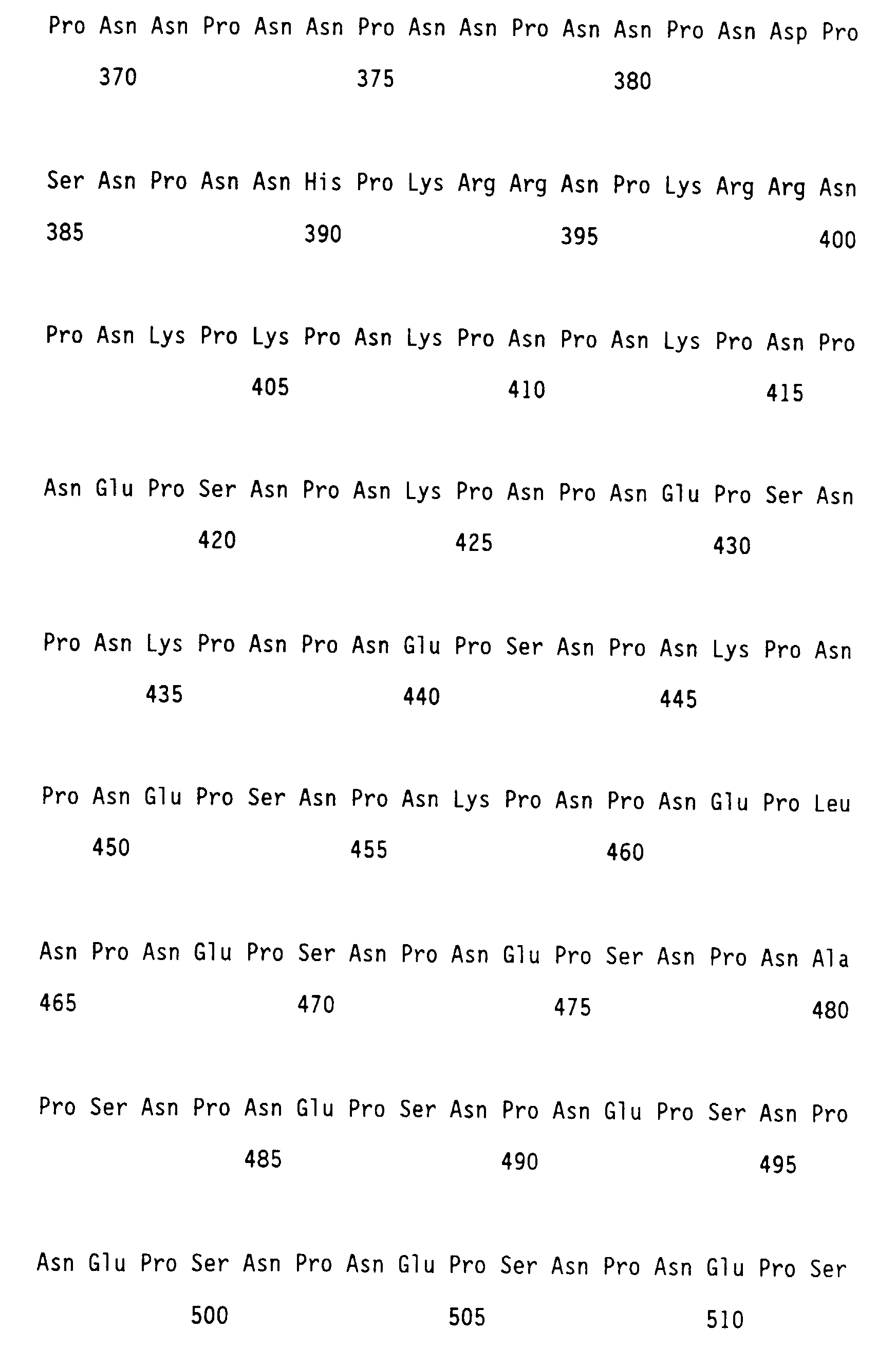
- the DNA sequence of 10.1111 was determined by standard techniques. It includes a 2481 bp open reading frame which encodes SSP2. The sequence of 10.1111 and the deduced amino acid sequence of SSP2 is shown in figure 1. Like most other malaria antigens, SSP2 contains regions of repeating amino acids. One region consists of a repeating trimer, ProAsnAsn and the other is largely composed of the hexamer, ProAsnGluProSerAsn.
- ProAsnLysProAsn alternates with the hexamer, ProAsnGluProSerAsn, as disclosed in sequence 2 and as depicted in Figure 1.
- Example 3 Antibodies to AsnProAsnGluProSer recognize the surface of sporozoites and the 140 kD antigen.
- mice were injected intraperitoneally 5 times at 2 week intervals with 2 x 10 8 irradiated (10 3 rads Cesium137) cells of a cloned line of P815 cells transfected with the SSP2 gene linked to pcEXV3. This cloned cell line is designated SSP2 3.9. Two weeks after the last dose, the mice were challenged with 200 P. yoelii sporozoites. After immunization with SSP2 3.9 cells, mice produced high levels of antibodies against SSP2 and sporozoites and CTL against SSP2.
- mice Four of the six mice were protected against challenge infection by immunization with mastocytoma cells expressing SSP2. Complete protection was demonstrated after immunization with a mixture of two transfected cell lines, SSP2 2.9, and an analogous line consisting of P815 cell transfected with the P. yoelii CSP gene and designated CSP 1.5. Furthermore, this regimen induced high levels of antibodies against sporozoites and antigen specific, CD8+ CTL. To determine if this protective immunity, like that found after immunization of BALB/c mice with irradiated sporozoites, was dependent on CD8+ T cells, we immunized mice with either SSP2 3.9 or CS 1.5 and then in vivo depleted with anti-CD8 antibody. The partial immunity induced by SSP2, or the CS protein, and the complete protection induced by the combination were completely reversed by depletion of CD8+ T cells.
- the protein characteristics, monoclonal antibody, and DNA sequence here disclosed can be used within the current art to detect proteins homologous to SSP2 in the human malaria species P. falciparum, P. malariae, P. vivax, and P. ovale.
- oligonucleotide probes based on the DNA sequence or cloned fragments of the SSP2 gene may be used by standard techniques to screen genomic libraries constructed from human malaria species, the cloned gene encoding SSP2 may be expressed in a variety of prokaryotic and eukaryotic expression systems and crude or purified recombinant expressed SSP2 used to produce additional poly or monoclonal antisera or immune T lymphocytes which can be used to screen genomic expression or cDNA libraries in order to identify SSP2 homologs in human malaria species.
- the original monoclonal antibody NYS4 cannot be used to identify the SSP2 homologs in species other than P. yoelii. This is so because NYS4 recognizes an epitope contained within the repeated amino acid sequence AsnProAsnGluProSer. Since the repeated regions of malaria surface antigens are not conserved between species (Weber, Exp. Parasit. 69:303, 1989) it is very unlikely that a monoclonal antibody directed at the repeat sequence of P. yoelii SSP2 will recognize SSP2 homologs in other Plasmodium species.
- Example 6 Use of human malaria homologs of SSP2 for vaccination of humans
- vaccine formulations including but not limited to 1) synthetic peptide vaccines based on the inferred amino acid sequence 2) recombinant proteins consisting of all or part of the SSP2 homolog protein expressed in any of a large number of protein expression systems including but not limited to phage lysogens, bacterial plasmids, yeast plasmids, mammalian cell expression plasmids and viruses, and insect viruses (e.g. baculovirus).
- Vaccines produced by these methods may be administered to humans in any pharmacologically active form and dosage with any pharmacologically appropriate adjuvant including but not limited to saline, aluminum hydroxide, and liposomes.
- any pharmacologically appropriate adjuvant including but not limited to saline, aluminum hydroxide, and liposomes.
- components derived from the CSP may be included, particulary in light of our finding of the additive effect of immunizing mice with both SSP2 and the CSP.
- Example 7 Use of transfected cells expressing SSP2 or its human malaria homologs to study the immune response of humans or animal models to malaria.
- Human or murine cell lines transfected with expression vectors containing the SSP2 gene may be used to study the immune response of humans or experimental animals to naturally acquired or laboratory induced malaria, or to assess the effects of immunization against malaria with irradiated sporozoites or any other putative malaria vaccine.
- Transfected cells for example, may serve as target cells in cytotoxicity assays to determine the presence of CTLs directed against SSP2 in humans or animals.
Landscapes
- Health & Medical Sciences (AREA)
- Chemical & Material Sciences (AREA)
- Organic Chemistry (AREA)
- Life Sciences & Earth Sciences (AREA)
- Biophysics (AREA)
- Medicinal Chemistry (AREA)
- Zoology (AREA)
- Biochemistry (AREA)
- Toxicology (AREA)
- General Health & Medical Sciences (AREA)
- Genetics & Genomics (AREA)
- Gastroenterology & Hepatology (AREA)
- Molecular Biology (AREA)
- Proteomics, Peptides & Aminoacids (AREA)
- Tropical Medicine & Parasitology (AREA)
- Peptides Or Proteins (AREA)
- Medicines Containing Antibodies Or Antigens For Use As Internal Diagnostic Agents (AREA)
- Preparation Of Compounds By Using Micro-Organisms (AREA)
Description
- This invention relates to an immunologically active protein, and the gene which encodes it, useful in vaccination against malaria. More particularly, this invention relates to a protein antigen on the surface of Plasmodium yoelii sporozoites detected by a monoclonal antibody NYS4, clones of genomic and complementary DNA sequences specific for this and closely related proteins from malarial parasites which, when administered as vaccine components either alone or in combination with other malarial antigens, can confer protective immunity.
- Prevention of infection by human malarias would alleviate a major health problem in the tropical and sub-tropical areas of the world. The most promising method for the control of malaria appears to be the development and use of vaccines.
- Species of the genus Plasmodium are the etiological agents of malaria. These protozoan parasites have a complex life cycle involving reproduction in mammalian hosts and insect vectors. The infectious stage of the parasite is called the sporozoite. It is inoculated into a mammalian host by the bite of infected Anopheline mosquitos.
- One approach to producing a malaria vaccine is to attempt to induce an immune response against the infective sporozoites themselves. This has been done by immunization of human and animal models with radiation attenuated sporozoites. These attenuated sporozoites consistently protect against challenge with infectious sporozoites (Nussenzweig et al., Nature 216:160, 1969, Clyde et al, Am. J. Med. Sci. 266:160, 1973, Rieckmann et al., Bull. W.H.O. 57, Suppl.1:261, 1979).
- A surface protein of Plasmodium sporozoites, designated the circumsporozoite protein (CSP) has been identified and well characterized (Nussenzweig and Nussenzweig, Cell 42:401, 1985). The CSPs of several Plasmodium species have been described. They all contain tandem repeats of short peptide sequences as well as regions of non-repetitive sequence. While the existence of tandem repeats is a conserved feature of all CSP genes, the particular amino acid sequences which are repeated vary both between and within species. On the other hand, the non-repetitive sequences are well conserved both within and between species.
- During the past decade, the primary strategy for malaria sporozoite vaccine development has been to produce vaccines that induce antibodies to the repeat region of the CSP. These antibodies are believed to prevent effective sporozoite invasion of hepatocytes (Mazier et al., Science 231:156, 1986, Young et al., Science 228:958,1985, Ballou et al., Science 228:996, 1985, Zavala, et al. Science 228: 1985, 1985). Thus far, protective immunity after immunization of humans (Ballou et al., Lancet 1:1277, 1987, Herrington et al, Nature 328:257, 1987) and non-human primates with CSP based vaccines (Collins, et al. Am. J. Trop. Med. Hyg. 40:455, 1989) has been disappointing. Mice immunized with P. berghei subunit vaccines based on the CSP have been protected against moderate, but not against large challenge doses of sporozoites (Egan et al. Science 236:453, 1987, Zavala et al. J. Ex. Med. 166:1591, 1987, Hoffman et al., J. Immunol. 142: 3581, 1989, Romero et al. Eur. J. Immunol. 18: 1951, 1988). In the P. yoelii model system, mice have been immunized with a variety of synthetic peptides and recombinant proteins based on the CSP (Lal et al. Proc. Natl. Acad. Sci. USA 84:8647, 1987, Sedegah et al. in Technological Advances in Vaccine Development L. Lasky editor, New York, 1988, Sedegah et al., Bull. W.H.O., in press, Charoenvit et al., Bull. W.H.O., in press). In the majority of experiments, mice developed high levels of antibodies to the CSP, but were not consistently protected against challenge with P. yoelii sporozoites.
- The failure of immunization with vaccines based on the CSP to provide the same solid immunity as immunization with radiation attenuated sporozoites suggests that although the CSP plays a role in immunity, there are other sporozoite antigens important in immunity to malaria. There is a need to identify, isolate and characterize these antigens so that they may be included in future malaria vaccines.
- Accordingly, an object of this invention is a sporozoite surface antigen which is distinct from the CS protein. This antigen is designated Sporozoite Surface Protein 2 (SSP2). By SSP2 we refer both to the P. yoelii protein whose sequence is here disclosed and to the homologs of this protein which exist in other species of Plasmodium, including the human pathogens, P. falciparum, P. vivax, P. ovale, and P. malariae. These homologs may be recognized by their having both a predicted general structure similar to that of the P. yoelii SSP2 (Fig. 1), including a short hydrophobic leader sequence, a region containing perfect or degenerate tandem repeats of short peptide motifs, flanking regions containing non-repetitive amino acid sequence, a membrane spanning domain and a cytoplasmic domain, and by their having an amino acid sequence which, at least in the non-repetitive regions of the sequence, bears substantial sequence similarity to the P. yoelii SSP2 amino acid sequence (Sequences 1 and 2).
- Another object of this invention is a vaccine containing a synthetic or recombinant fragment of the antigen SSP2 which may include all or part of the amino acid sequence shown as Sequence 2 and which causes the production of specific immune sera and immune cells and protects against malaria.
- A further object of the invention is a recombinant molecule containing all or part of the DNA and deduced amino acid sequence of SSP2.
- These and additional objects of the invention are accomplished by a protein antigen on the surface of Plasmodium sporozoites.
- Accordingly, in a first aspect of the invention, there is provided a recombinant sporozoite surface antigen or a synthetic sporozoite surface antigen, which causes production of specific immune sera and immune cells for protection against malaria, wherein the sporozoite surface antigen comprises the amino acid sequence of SEQ ID NO:2, an active fragment of the amino acid sequence of SEQ ID NO:2, or a homolog of the amino acid sequence of SEQ ID NO:2, and wherein the sporozoite surface antigen is not a circumsporozoite protein.
- In a second aspect of the invention, there is provided a vaccine providing immunity against malaria comprising a pharmaceutically effective amount of an antigen in a pharmacologically appropriate vaccine formulation, wherein the antigen is selected from the group consisting of the sporozoite surface antigen according to the invention in its first aspect and mixtures of the sporozoite surface antigen according to the invention in its first aspect with other malaria antigens.
- In a third aspect of the invention, there is provided an antibody for identifying homologs of a sporozoite surface antigen according to the invention in its first aspect, wherein said antibody is specific for the sequence of SEQ ID NO:2 or an active fragment of SEQ ID NO:2.
- In a fourth aspect of the invention, there is provided a method of identifying homologs of the sporozoite surface antigen according to the invention in its first aspect which comprises using the DNA sequence of SEQ ID NO:1 (P. yoelii SSP2) to identify homologous DNA in the human pathogens P. falciparum, P. vivax, P. malariae, and P. ovale.
- In a fifth aspect of the invention, there is provided a method of identifying homologs of the sporozoite surface antigen according to the invention in its first aspect which comprises using antibodies against the P. yoelii SSP2 to identify the homologous antigen in the human pathogens, P. falciparum, P. vivax, P. malariae, and P. ovale.
- In a sixth aspect of the invention, there is provided a method of identifying homologs of the sporozoite surface antigen according to the invention in its first aspect which comprises using T lymphocytes against the P. yoelii SSP2 to identify the homologous sporozoite antigen in the human pathogens, P. falciparum, P. vivax, P. malariae and P. ovale.
- Preferred embodiments of the invention in any of its various aspect are as defined in the sub-claims.
- A more complete appreciation of the invention will be readily obtained by reference to the following Description of the Preferred Embodiments and the accompaning drawings in which like numerals in different figures represent the same structures or elements. The representations in each of the figures is diagrammatic and no attempt is made to indicate actual scales or precise ratios. Proportional relationships are shown as approximations.
- Fig. 1 is a schematic diagram of the predicted general features of the amino acid sequence of P. yoelii SSP2.
- Sequences 1 and 2 are the DNA and amino acid sequences, respectively, of this invention.
- A protein antigen (SSP2) on the surface of Plasmodium sporozoites is a candidate immunogen for vaccination against malaria and facilitates research into host immunological responses to malaria. The P. yoelii SSP2 antigen is detected by a monoclonal antibody (NYS4) which is specific for a 140 kilodalton (kD) protein on the sporozoite cell surface. Immunoreactive genomic clones express epitopes of this surface antigen gene and were used to clone the complete gene for P. yoelii SSP2. The DNA sequence of the gene encoding P. yoelii SSP2 and the predicted amino acid sequence (Sequences 1 and 2, respectively) show that it is distinct from the CSP. A synthetic peptide contains repeating epitopes of SSP2 derived protein antigen and is substantially shorter in length than the intact antigen. The peptide, when conjugated to an appropriate carrier molecule, for example keyhole limpet hemocyanin and administered to a host in an appropriate adjuvant, for example Freund's complete adjuvant, elicits antibodies which bind to the SSP2 protein on the sporozoite surface. A recombinant mammalian expression plasmid bearing SSP2 DNA sequences expresses SSP2 epitopes in mammalian cells and the introduction of these transfected cells into mice elicits antibody and cytotoxic T-cell lymphocytic responses which confer partial protection to the recipient animals against challenge infection. In combination, the SSP2 protein and the CS protein elicit immunological responses in the mammalian host which confer 100% protection against challenge infection.
- The only previously characterized sporozoite surface antigen, the CSP (Nussenzweig and Nussenzweig, Cell 42:401, 1985), is present on all malaria species studied to date. It is likely that homologs of SSP2 exist in the human malaria species, and that with the current art and the use of the immunological reagents and DNA and protein sequence information disclosed here, they will be identified and used both as vaccine candidates and as reagents for studies of the immune response to malaria and to putative malaria vaccines.
- Having described the invention, the following examples are given to illustrate specific applications of the invention including the best mode now known to perform the invention. These specific examples are not intended to limit the scope of the invention described in this application.
- Parasites and DNA isolation. P. yoelii 17X(NL) parasites were obtained by blood passage in Balb/C mice. DNA isolation from parasite infected blood was as described (Wortman et al., Micro. Path., 6:227, 1989). P. yoelii genomic expression libraries were constructed using either 0.5-2.0 or 2.0-7.0 kb fragments generated by partial DNase I digestion, addition of Eco RI linker oligomers, and ligation into the lambda cloning vector gt11 by standard techniques. The recombinant phage were packaged in vitro and the resulting library was screened for antigen expressing clones with a 1:20 dilution of a sporozoite surface specific antibody, NYS4, (Charoenvit et al.,Infect.Immun., 55:604, 1989).
- Immuno-fluorescence and Western blotting. Immunofluorescence and Western blotting were carried out as previously described (Charoenvit et al., Infect. Immun., 55:604, 1987). Immunofluoresence showed that NYS4 reacts with a protein on the sporozoite surface. Western blotting showed that protein to have a molecular weight of 140 kD. Sequence analysis of the 140 kD antigen gene. A clone designated M4 reacted with NYS4. M4 was sequenced and used as a probe to screen the library containg 2.0-7.0 kb inserts. A clone, designated 10.1111, was found to contain a 4.7 kb insert which overlapped the complete sequence of M4. The DNA sequence of 10.1111 was determined by standard techniques. It includes a 2481 bp open reading frame which encodes SSP2. The sequence of 10.1111 and the deduced amino acid sequence of SSP2 is shown in figure 1. Like most other malaria antigens, SSP2 contains regions of repeating amino acids. One region consists of a repeating trimer, ProAsnAsn and the other is largely composed of the hexamer, ProAsnGluProSerAsn.
- In addition, a pentamer, ProAsnLysProAsn, alternates with the hexamer, ProAsnGluProSerAsn, as disclosed in sequence 2 and as depicted in Figure 1.
- The overall hydrophilicity of the repeating amino acid sequence AsnProAsnGluProSer suggested it as a potential antigenic determinant (Hopp and Woods, Proc. Natl. Acad. Sci. USA 78:3824, 1981). A synthetic peptide containing 3 copies of AsnProAsnGluProSer (18-mer) was strongly recognized by NYS4 in an ELISA and mice immunized with the peptide coupled to keyhole limpet hemocyanin produced antibodies that reacted with sporozoites in an IFAT and with the 140 kD antigen on western blots of sporozoite extracts. These results indicate that the deduced amino acid sequence of SSP2 corresponds to the 140 kD antigen recognized by NYS4 and that the antigenic determinant of NYS4 is contained within the repeating hexamer AsnProAsnGluProSer. It is notable that this repetitive sequence bears no similarity to the major repeats of the P. yoelii CS protein, in which the consensus repeating elements are GlnGlyProGlyAlaPro and GlnGlnProPro (Lal et al., J. Biol. Chem., 262:2937, 1987).
- We transfected a 1.5 kb fragment of the gene encoding SSP2 into P815 mouse mastocytoma cells. This fragment included amino acids 223 through 698 of Sequence 2 cloned into the mammalian expression vector, pcEXV3 (Miller and Germain, J. Exp. Med. 164:1578, 1986). Nine different clones were derived and each was used to stimulate in vitro spleen cells in culture from BALB/c mice immunized with irradiated P. yoelii sporozoites. SSP2 specific cytotoxic T lymphocytes (CTL) were only present in cultures of spleen cells from immunized mice. All cytotoxic activity was eliminated by in vitro depletion of CD8+ T cells, but was unaffected by in vitro depletion of CD4+ T cells. In BALB/c mice, the protective immunity induced by immunization with irradiated P. yoelii sporozoites is eliminated by in vivo treatment of immune mice with antibodies to CD8+ T cells, indicating that it is dependent on CTL.
- To determine if an immune response directed against SSP2 would provide protection, BALB/c mice were injected intraperitoneally 5 times at 2 week intervals with 2 x 10⁸ irradiated (103 rads Cesium137) cells of a cloned line of P815 cells transfected with the SSP2 gene linked to pcEXV3. This cloned cell line is designated SSP2 3.9. Two weeks after the last dose, the mice were challenged with 200 P. yoelii sporozoites. After immunization with SSP2 3.9 cells, mice produced high levels of antibodies against SSP2 and sporozoites and CTL against SSP2. Four of the six mice were protected against challenge infection by immunization with mastocytoma cells expressing SSP2. Complete protection was demonstrated after immunization with a mixture of two transfected cell lines, SSP2 2.9, and an analogous line consisting of P815 cell transfected with the P. yoelii CSP gene and designated CSP 1.5. Furthermore, this regimen induced high levels of antibodies against sporozoites and antigen specific, CD8+ CTL. To determine if this protective immunity, like that found after immunization of BALB/c mice with irradiated sporozoites, was dependent on CD8+ T cells, we immunized mice with either SSP2 3.9 or CS 1.5 and then in vivo depleted with anti-CD8 antibody. The partial immunity induced by SSP2, or the CS protein, and the complete protection induced by the combination were completely reversed by depletion of CD8+ T cells.
- The protein characteristics, monoclonal antibody, and DNA sequence here disclosed can be used within the current art to detect proteins homologous to SSP2 in the human malaria species P. falciparum, P. malariae, P. vivax, and P. ovale. For example, oligonucleotide probes based on the DNA sequence or cloned fragments of the SSP2 gene may be used by standard techniques to screen genomic libraries constructed from human malaria species, the cloned gene encoding SSP2 may be expressed in a variety of prokaryotic and eukaryotic expression systems and crude or purified recombinant expressed SSP2 used to produce additional poly or monoclonal antisera or immune T lymphocytes which can be used to screen genomic expression or cDNA libraries in order to identify SSP2 homologs in human malaria species. The original monoclonal antibody NYS4 cannot be used to identify the SSP2 homologs in species other than P. yoelii. This is so because NYS4 recognizes an epitope contained within the repeated amino acid sequence AsnProAsnGluProSer. Since the repeated regions of malaria surface antigens are not conserved between species (Weber, Exp. Parasit. 69:303, 1989) it is very unlikely that a monoclonal antibody directed at the repeat sequence of P. yoelii SSP2 will recognize SSP2 homologs in other Plasmodium species.
- Given the DNA sequence of the human malaria homologs, readily obtainable with the present art, it is possible to design a large number of vaccine formulations including but not limited to 1) synthetic peptide vaccines based on the inferred amino acid sequence 2) recombinant proteins consisting of all or part of the SSP2 homolog protein expressed in any of a large number of protein expression systems including but not limited to phage lysogens, bacterial plasmids, yeast plasmids, mammalian cell expression plasmids and viruses, and insect viruses (e.g. baculovirus). Vaccines produced by these methods may be administered to humans in any pharmacologically active form and dosage with any pharmacologically appropriate adjuvant including but not limited to saline, aluminum hydroxide, and liposomes. In any of the above vaccines, components derived from the CSP may be included, particulary in light of our finding of the additive effect of immunizing mice with both SSP2 and the CSP.
- Human or murine cell lines transfected with expression vectors containing the SSP2 gene may be used to study the immune response of humans or experimental animals to naturally acquired or laboratory induced malaria, or to assess the effects of immunization against malaria with irradiated sporozoites or any other putative malaria vaccine. Transfected cells, for example, may serve as target cells in cytotoxicity assays to determine the presence of CTLs directed against SSP2 in humans or animals.
-
- (1) GENERAL INFORMATION:
- (i) APPLICANT:
- Hoffman, Stephen L.
- Charoenvit, Yupin
- Hedstrom, Richard
- Khusmith, Srisin
- Rogers IV, William 0.
- (ii) TITLE OF INVENTION: Protective malaria sporozoite surface
protein
immunogen and gene - (iii) NUMBER OF SEQUENCES: 2
- (iv) CORRESPONDENCE ADDRESS:
- (A) ADDRESSEE: A. David Spevack
- (B) STREET:
- NMRDC Building 1 T-12 National Naval
- Medical Center
- (C) CITY: Bethesda
- (D) STATE: MD
- (E) COUNTRY: USA
- (F) ZIP: 20814-5044
- (v) COMPUTER READABLE FORM:
- (A) MEDIUM TYPE: Floppy disk
- (B) COMPUTER: IBM PC compatible
- (C) OPERATING SYSTEM: PC-DOS/MS-DOS
- (D) SOFTWARE: PatentIn Release #1.24
- (vi) CURRENT APPLICATION DATA:
- (A) APPLICATION NUMBER:
- (B) FILING DATE:
- (C) CLASSIFICATION:
- (viii) ATTORNEY/AGENT INFORMATION:
- (A) NAME: Spevack, Avrom D.
- (ix) TELECOMMUNICATION INFORMATION:
- (A) TELEPHONE: (301) 295-6759
- (B) TELEFAX: (301) 295-4033
- (2) INFORMATION FOR SEQ ID NO:1:
- (i) SEQUENCE CHARACTERISTICS:
- (A) LENGTH: 4673 base pairs
- (B) TYPE: nucleic acid
- (C) STRANDEDNESS: double
- (D) TOPOLOGY: linear
- (ii) MOLECULE TYPE: DNA (genomic)
- (iii) HYPOTHETICAL: N
- (iv) ANTI-SENSE: N
- (vi) ORIGINAL SOURCE:
- (A) ORGANISM: Plasmodium yoelii
- (B) STRAIN: 17X(NL)
- (D) DEVELOPMENTAL STAGE: erythrocytic stage
- (F) TISSUE TYPE: Blood
- (G) CELL TYPE: erythrocytic stage
- (vii) IMMEDIATE SOURCE:
- (A) LIBRARY: Py-lambdagt11-2-7 kb genomic expression
- (B) CLONE: Pyl0.1111
- (ix) FEATURE:
- (A) NAME/KEY: CDS
- (B) LOCATION: 718..3195
- (D) OTHER INFORMATION:
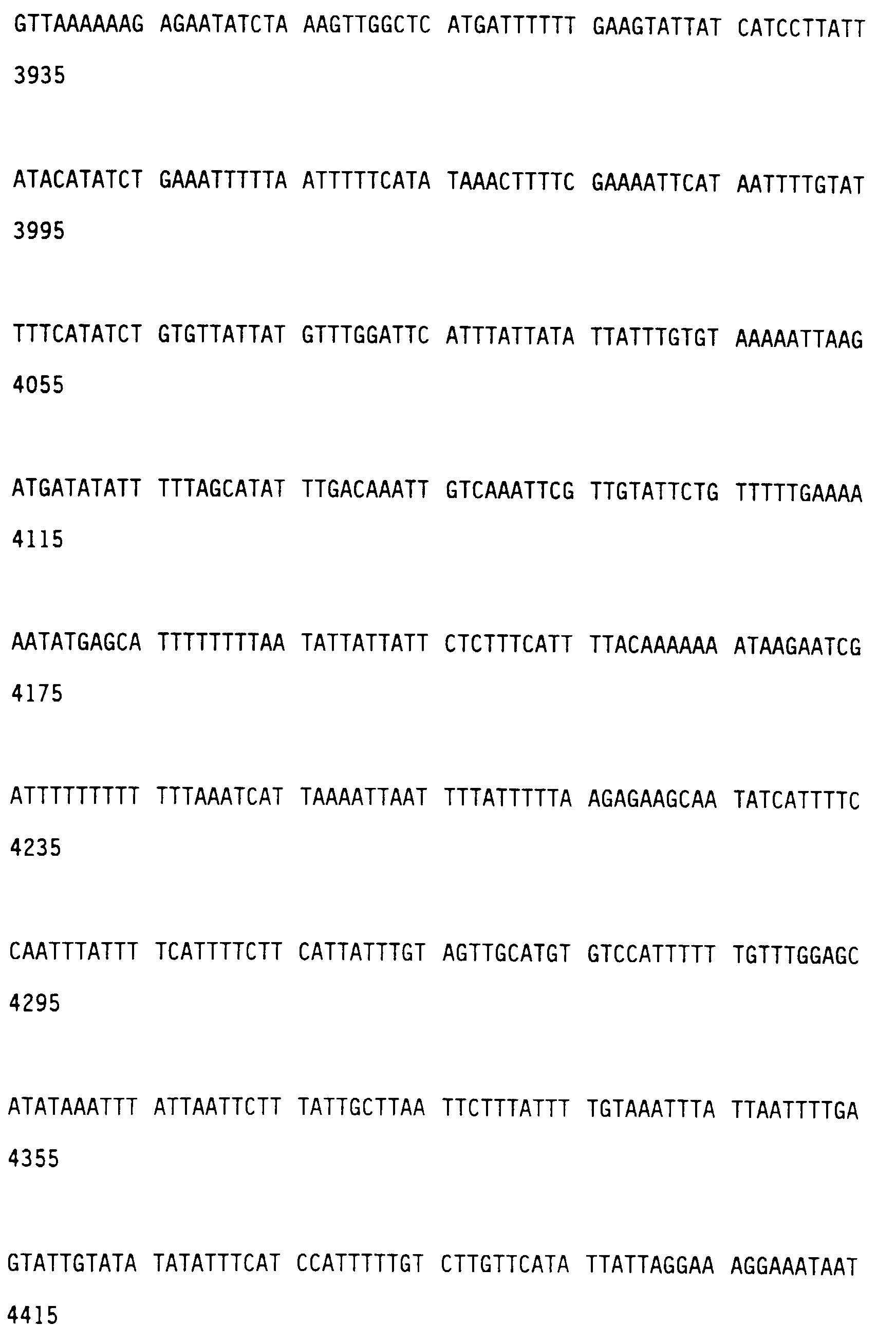
- (xi) SEQUENCE DESCRIPTION: SEQ ID NO:1:





- (2) INFORMATION FOR SEQ ID NO:2:
- (i) SEQUENCE CHARACTERISTICS:
- (A) LENGTH: 826 amino acids
- (B) TYPE: amino acid
- (D) TOPOLOGY: linear
- (ii) MOLECULE TYPE: protein
- (xi) SEQUENCE DESCRIPTION: SEQ ID NO:2:




-
- Obviously, many modifications and variations of the present invention are possible in light of the above teachings. It is therefore to be understood that, within the scope of the appended claims, the invention may be practiced otherwise than as specifically described.
Claims (9)
- A recombinant sporozoite surface antigen or a synthetic sporozoite surface antigen, which causes production of specific immune sera and immune cells for protection against malaria, wherein the sporozoite surface antigen comprises the amino acid sequence of SEQ ID NO:2, an active fragment of the amino acid sequence of SEQ ID NO:2, or a homolog of the amino acid sequence of SEQ ID NO:2, and wherein the sporozoite surface antigen is not a circumsporozoite protein.
- The sporozoite surface antigen of claim 1, wherein the active fragment consists of amino acids 223-698 of SEQ ID NO:2 and homologs of said active fragment of SEQ ID NO:2 in Plasmodium species.
- A vaccine providing immunity against malaria comprising a pharmaceutically effective amount of an antigen in a pharmacologically appropriate vaccine formulation, wherein the antigen is selected from the group consisting of the sporozoite surface antigen of claim 1 and mixtures of the sporozoite surface antigen of claim 1 with other malaria antigens.
- A vaccine providing immunity against malaria as claimed in claim 3 consisting essentially of a pharmaceutically effective amount of a sporozoite surface antigen of claim 1 in a pharmacologically appropriate vaccine formulation.
- The vaccine of claim 3, wherein the other malaria antigens are selected from the group consisting of circumsporazoite proteins of P. yoelii, P. falciparum, P. vivax, P. malariae and P. ovale.
- An antibody for identifying homologs of a sporozoite surface antigen according to claim 1, wherein said antibody is specific for the sequence of SEQ ID NO:2 or an active fragment of SEQ ID NO:2.
- A method of identifying homologs of the sporozoite surface antigen of claim 1 which comprises using the DNA sequence of SEQ ID NO:1 (P. yoelii SSP2) to identify homologous DNA in the human pathogens P. falciparum, P. vivax, P. malariae, and P. ovale.
- A method of identifying homologs of the sporozoite surface antigen of claim 1 which comprises using antibodies against the P. yoelii SSP2 to identify the homologous antigen in the human pathogens, P. falciparum, P. vivax, P. malariae, and P. ovale.
- A method of identifying homologs of the sporozoite surface antigen of claim 1 which comprises using T lymphocytes against the P. yoelii SSP2 to identify the homologous sporozoite antigen in the human pathogens, P. falciparum, P. vivax, P. malariae and P. ovale.
Applications Claiming Priority (3)
| Application Number | Priority Date | Filing Date | Title |
|---|---|---|---|
| US638431 | 1984-08-06 | ||
| US07/638,431 US5198535A (en) | 1991-01-10 | 1991-01-10 | Protective malaria sporozoite surface protein immunogen and gene |
| PCT/US1992/000018 WO1992011868A1 (en) | 1991-01-10 | 1992-01-03 | Protective malaria sporozoite surface protein immunogen and gene |
Publications (3)
| Publication Number | Publication Date |
|---|---|
| EP0522136A1 EP0522136A1 (en) | 1993-01-13 |
| EP0522136A4 EP0522136A4 (en) | 1993-07-14 |
| EP0522136B1 true EP0522136B1 (en) | 1999-09-01 |
Family
ID=24559996
Family Applications (1)
| Application Number | Title | Priority Date | Filing Date |
|---|---|---|---|
| EP92904372A Expired - Lifetime EP0522136B1 (en) | 1991-01-10 | 1992-01-03 | Protective malaria sporozoite surface protein immunogen and gene |
Country Status (5)
| Country | Link |
|---|---|
| US (1) | US5198535A (en) |
| EP (1) | EP0522136B1 (en) |
| AU (1) | AU1203092A (en) |
| DE (1) | DE69229899T2 (en) |
| WO (1) | WO1992011868A1 (en) |
Families Citing this family (7)
| Publication number | Priority date | Publication date | Assignee | Title |
|---|---|---|---|---|
| US5766597A (en) * | 1991-03-07 | 1998-06-16 | Virogenetics Corporation | Malaria recombinant poxviruses |
| US5866367A (en) * | 1997-07-01 | 1999-02-02 | Smithkline Beecham Corporation | Gidb |
| US20070134214A1 (en) * | 2003-08-13 | 2007-06-14 | Feng Xu | Inactivated host cell delivery of polynucleotides encoding immunogens |
| EP1664097B1 (en) * | 2003-09-14 | 2009-11-11 | Universiteit Utrecht Holding B.V. | Piroplasmid vaccine |
| GB0513421D0 (en) | 2005-06-30 | 2005-08-03 | Glaxosmithkline Biolog Sa | Vaccines |
| AU2008288508B2 (en) | 2007-08-13 | 2014-05-01 | Glaxosmithkline Biologicals S.A. | Vaccines |
| KR20190044587A (en) * | 2016-05-19 | 2019-04-30 | 아메드 에스.아이. 앨리 | Synthetic malaria immunogens, combinations thereof, and uses thereof for the prevention and treatment of malaria infection |
Family Cites Families (1)
| Publication number | Priority date | Publication date | Assignee | Title |
|---|---|---|---|---|
| GB8819209D0 (en) * | 1988-08-12 | 1988-09-14 | Research Corp Ltd | Polypeptide & dna encoding same |
-
1991
- 1991-01-10 US US07/638,431 patent/US5198535A/en not_active Expired - Lifetime
-
1992
- 1992-01-03 EP EP92904372A patent/EP0522136B1/en not_active Expired - Lifetime
- 1992-01-03 DE DE69229899T patent/DE69229899T2/en not_active Expired - Lifetime
- 1992-01-03 WO PCT/US1992/000018 patent/WO1992011868A1/en not_active Ceased
- 1992-01-03 AU AU12030/92A patent/AU1203092A/en not_active Abandoned
Also Published As
| Publication number | Publication date |
|---|---|
| DE69229899D1 (en) | 1999-10-07 |
| EP0522136A1 (en) | 1993-01-13 |
| EP0522136A4 (en) | 1993-07-14 |
| US5198535A (en) | 1993-03-30 |
| DE69229899T2 (en) | 2000-05-04 |
| AU1203092A (en) | 1992-08-17 |
| WO1992011868A1 (en) | 1992-07-23 |
Similar Documents
| Publication | Publication Date | Title |
|---|---|---|
| Culvenor et al. | Plasmodium falciparum ring-infected erythrocyte surface antigen is released from merozoite dense granules after erythrocyte invasion | |
| López et al. | What is known about the immune response induced by Plasmodium vivax malaria vaccine candidates? | |
| Chang et al. | A recombinant baculovirus 42-kilodalton C-terminal fragment of Plasmodium falciparum merozoite surface protein 1 protects Aotus monkeys against malaria | |
| US6472519B1 (en) | Plasmodium falciparum antigens inducing protective antibodies | |
| Renia et al. | Immunization with a recombinant C-terminal fragment of Plasmodium yoelii merozoite surface protein 1 protects mice against homologous but not heterologous P. yoelii sporozoite challenge | |
| JP2009000104A (en) | Pre-erythrocytic malaria polypeptide molecule | |
| Hollingdale et al. | Non-CS pre-erythrocytic protective antigens | |
| EP0172865B1 (en) | Dna sequences, recombinant dna and processes for producing antigens of plasmodium falciparum | |
| Sim et al. | Induction of biologically active antibodies in mice, rabbits, and monkeys by Plasmodium falciparum EBA-175 region II DNA vaccine | |
| Belperron et al. | Immune responses induced by gene gun or intramuscular injection of DNA vaccines that express immunogenic regions of the serine repeat antigen from Plasmodium falciparum | |
| US6551586B1 (en) | Malaria vaccine based upon the addition of a MSA1 peptide | |
| Fox et al. | Plasmodium falciparum: an epitope within a highly conserved region of the 47-kDa amino-terminal domain of the serine repeat antigen is a target of parasite-inhibitory antibodies | |
| Burns Jr et al. | Protective immunization with a novel membrane protein of Plasmodium yoelii-infected erythrocytes | |
| US5198535A (en) | Protective malaria sporozoite surface protein immunogen and gene | |
| Burns Jr et al. | A protective glycosylphosphatidylinositol-anchored membrane protein of Plasmodium yoelii trophozoites and merozoites contains two epidermal growth factor-like domains | |
| Wunderlich et al. | Genetic immunization of BALB/c mice with a plasmid bearing the gene coding for a hybrid merozoite surface protein 1-hepatitis B virus surface protein fusion protects mice against lethal Plasmodium chabaudi chabaudi PC1 infection | |
| Perraut et al. | Induction of opsonizing antibodies after injection of recombinant Plasmodium falciparum vaccine candidate antigens in preimmune Saimiri sciureus monkeys | |
| Lobo et al. | Novel proteins of Plasmodium falciparum identified by differential immunoscreening using immune and patient sera | |
| Burns et al. | An unusual tryptophan-rich domain characterizes two secreted antigens of Plasmodium yoelii-infected erythrocytes | |
| AU759316B2 (en) | Chimeric gene encoding the antigenic determinants of four proteins of L. infantum | |
| Scorza et al. | Induction of strain-transcending immunity against Plasmodium chabaudi adami malaria with a multiepitope DNA vaccine | |
| Mattei et al. | Pfl II and Pf332: two giant proteins synthesized in erythrocytes infected with Plasmodium falciparum | |
| US5422428A (en) | Immunization against babesiosis using purified surface antigens of Babesia bigemina and similar immunogens | |
| US6458359B1 (en) | Chimeric gene formed by the dna sequences that encode the antigenic determinants of four proteins of l. infantum and protein encoded by said gene, and pharmacuetical composition useful for preventing and/or treating leishmaniosis in animals or humans | |
| Nussenzweig et al. | Malaria vaccine against sporozoites? |
Legal Events
| Date | Code | Title | Description |
|---|---|---|---|
| PUAI | Public reference made under article 153(3) epc to a published international application that has entered the european phase |
Free format text: ORIGINAL CODE: 0009012 |
|
| 17P | Request for examination filed |
Effective date: 19921009 |
|
| AK | Designated contracting states |
Kind code of ref document: A1 Designated state(s): BE CH DE FR GB IT LI NL SE |
|
| RHK1 | Main classification (correction) |
Ipc: C12N 15/30 |
|
| A4 | Supplementary search report drawn up and despatched |
Effective date: 19930525 |
|
| AK | Designated contracting states |
Kind code of ref document: A4 Designated state(s): BE CH DE FR GB IT LI NL SE |
|
| 17Q | First examination report despatched |
Effective date: 19961105 |
|
| GRAG | Despatch of communication of intention to grant |
Free format text: ORIGINAL CODE: EPIDOS AGRA |
|
| GRAG | Despatch of communication of intention to grant |
Free format text: ORIGINAL CODE: EPIDOS AGRA |
|
| GRAH | Despatch of communication of intention to grant a patent |
Free format text: ORIGINAL CODE: EPIDOS IGRA |
|
| GRAH | Despatch of communication of intention to grant a patent |
Free format text: ORIGINAL CODE: EPIDOS IGRA |
|
| RHK1 | Main classification (correction) |
Ipc: C12N 15/30 |
|
| GRAA | (expected) grant |
Free format text: ORIGINAL CODE: 0009210 |
|
| AK | Designated contracting states |
Kind code of ref document: B1 Designated state(s): BE CH DE FR GB IT LI NL SE |
|
| REG | Reference to a national code |
Ref country code: CH Ref legal event code: EP |
|
| REF | Corresponds to: |
Ref document number: 69229899 Country of ref document: DE Date of ref document: 19991007 |
|
| ITF | It: translation for a ep patent filed | ||
| ET | Fr: translation filed | ||
| REG | Reference to a national code |
Ref country code: CH Ref legal event code: NV Representative=s name: MOINAS SAVOYE & CRONIN |
|
| PLBE | No opposition filed within time limit |
Free format text: ORIGINAL CODE: 0009261 |
|
| STAA | Information on the status of an ep patent application or granted ep patent |
Free format text: STATUS: NO OPPOSITION FILED WITHIN TIME LIMIT |
|
| 26N | No opposition filed | ||
| REG | Reference to a national code |
Ref country code: GB Ref legal event code: IF02 |
|
| PGFP | Annual fee paid to national office [announced via postgrant information from national office to epo] |
Ref country code: CH Payment date: 20100222 Year of fee payment: 19 |
|
| PGFP | Annual fee paid to national office [announced via postgrant information from national office to epo] |
Ref country code: IT Payment date: 20100213 Year of fee payment: 19 Ref country code: FR Payment date: 20100222 Year of fee payment: 19 |
|
| PGFP | Annual fee paid to national office [announced via postgrant information from national office to epo] |
Ref country code: GB Payment date: 20100208 Year of fee payment: 19 Ref country code: DE Payment date: 20100226 Year of fee payment: 19 |
|
| PGFP | Annual fee paid to national office [announced via postgrant information from national office to epo] |
Ref country code: BE Payment date: 20100402 Year of fee payment: 19 |
|
| PGFP | Annual fee paid to national office [announced via postgrant information from national office to epo] |
Ref country code: SE Payment date: 20100208 Year of fee payment: 19 |
|
| BERE | Be: lapsed |
Owner name: THE *GOVERNMENT OF THE UNITED STATES OF AMERICA AS Effective date: 20110131 |
|
| REG | Reference to a national code |
Ref country code: NL Ref legal event code: V1 Effective date: 20110801 |
|
| REG | Reference to a national code |
Ref country code: CH Ref legal event code: PL |
|
| REG | Reference to a national code |
Ref country code: SE Ref legal event code: EUG |
|
| GBPC | Gb: european patent ceased through non-payment of renewal fee |
Effective date: 20110103 |
|
| REG | Reference to a national code |
Ref country code: FR Ref legal event code: ST Effective date: 20110930 |
|
| PG25 | Lapsed in a contracting state [announced via postgrant information from national office to epo] |
Ref country code: LI Free format text: LAPSE BECAUSE OF NON-PAYMENT OF DUE FEES Effective date: 20110131 Ref country code: CH Free format text: LAPSE BECAUSE OF NON-PAYMENT OF DUE FEES Effective date: 20110131 Ref country code: FR Free format text: LAPSE BECAUSE OF NON-PAYMENT OF DUE FEES Effective date: 20110131 |
|
| PG25 | Lapsed in a contracting state [announced via postgrant information from national office to epo] |
Ref country code: GB Free format text: LAPSE BECAUSE OF NON-PAYMENT OF DUE FEES Effective date: 20110103 Ref country code: BE Free format text: LAPSE BECAUSE OF NON-PAYMENT OF DUE FEES Effective date: 20110131 |
|
| REG | Reference to a national code |
Ref country code: DE Ref legal event code: R119 Ref document number: 69229899 Country of ref document: DE Effective date: 20110802 |
|
| PG25 | Lapsed in a contracting state [announced via postgrant information from national office to epo] |
Ref country code: NL Free format text: LAPSE BECAUSE OF NON-PAYMENT OF DUE FEES Effective date: 20110801 Ref country code: IT Free format text: LAPSE BECAUSE OF NON-PAYMENT OF DUE FEES Effective date: 20110103 |
|
| PG25 | Lapsed in a contracting state [announced via postgrant information from national office to epo] |
Ref country code: SE Free format text: LAPSE BECAUSE OF NON-PAYMENT OF DUE FEES Effective date: 20110104 |
|
| PG25 | Lapsed in a contracting state [announced via postgrant information from national office to epo] |
Ref country code: DE Free format text: LAPSE BECAUSE OF NON-PAYMENT OF DUE FEES Effective date: 20110802 |
|
| PGFP | Annual fee paid to national office [announced via postgrant information from national office to epo] |
Ref country code: NL Payment date: 20100131 Year of fee payment: 19 |