EP0516313B1 - Automated process for preparing treated microparticles especially blood cell components - Google Patents
Automated process for preparing treated microparticles especially blood cell components Download PDFInfo
- Publication number
- EP0516313B1 EP0516313B1 EP92304374A EP92304374A EP0516313B1 EP 0516313 B1 EP0516313 B1 EP 0516313B1 EP 92304374 A EP92304374 A EP 92304374A EP 92304374 A EP92304374 A EP 92304374A EP 0516313 B1 EP0516313 B1 EP 0516313B1
- Authority
- EP
- European Patent Office
- Prior art keywords
- blood
- blood cell
- cells
- particles
- red
- Prior art date
- Legal status (The legal status is an assumption and is not a legal conclusion. Google has not performed a legal analysis and makes no representation as to the accuracy of the status listed.)
- Expired - Lifetime
Links
- 210000000601 blood cell Anatomy 0.000 title claims abstract description 43
- 238000004519 manufacturing process Methods 0.000 title description 2
- 239000011859 microparticle Substances 0.000 title 1
- 239000002245 particle Substances 0.000 claims abstract description 60
- 238000000034 method Methods 0.000 claims abstract description 50
- 210000004027 cell Anatomy 0.000 claims abstract description 48
- 210000003743 erythrocyte Anatomy 0.000 claims abstract description 26
- 239000003153 chemical reaction reagent Substances 0.000 claims abstract description 20
- 239000000463 material Substances 0.000 claims abstract description 20
- 239000006185 dispersion Substances 0.000 claims abstract description 19
- 108091005804 Peptidases Proteins 0.000 claims abstract description 12
- 102000035195 Peptidases Human genes 0.000 claims abstract description 12
- PEDCQBHIVMGVHV-UHFFFAOYSA-N glycerol group Chemical group OCC(O)CO PEDCQBHIVMGVHV-UHFFFAOYSA-N 0.000 claims description 27
- 239000004365 Protease Substances 0.000 claims description 20
- 108090000270 Ficain Proteins 0.000 claims description 16
- POTUGHMKJGOKRI-UHFFFAOYSA-N ficin Chemical compound FI=CI=N POTUGHMKJGOKRI-UHFFFAOYSA-N 0.000 claims description 16
- 235000019836 ficin Nutrition 0.000 claims description 16
- 239000004816 latex Substances 0.000 claims description 13
- 229920000126 latex Polymers 0.000 claims description 13
- 239000004005 microsphere Substances 0.000 claims description 6
- 230000002338 cryopreservative effect Effects 0.000 claims description 3
- 238000005406 washing Methods 0.000 abstract description 10
- 239000000243 solution Substances 0.000 description 40
- 102000004190 Enzymes Human genes 0.000 description 24
- 108090000790 Enzymes Proteins 0.000 description 24
- 239000010836 blood and blood product Substances 0.000 description 24
- 229940125691 blood product Drugs 0.000 description 24
- 229940088598 enzyme Drugs 0.000 description 24
- 210000004369 blood Anatomy 0.000 description 20
- 239000008280 blood Substances 0.000 description 20
- 239000000427 antigen Substances 0.000 description 12
- 102000036639 antigens Human genes 0.000 description 12
- 108091007433 antigens Proteins 0.000 description 12
- 239000000306 component Substances 0.000 description 11
- 239000011324 bead Substances 0.000 description 8
- 239000012503 blood component Substances 0.000 description 8
- 239000002699 waste material Substances 0.000 description 8
- 239000000872 buffer Substances 0.000 description 7
- 238000012545 processing Methods 0.000 description 7
- 230000004520 agglutination Effects 0.000 description 6
- 239000000203 mixture Substances 0.000 description 6
- 238000000926 separation method Methods 0.000 description 6
- 239000000725 suspension Substances 0.000 description 6
- 230000008569 process Effects 0.000 description 5
- 210000002966 serum Anatomy 0.000 description 5
- 238000012360 testing method Methods 0.000 description 5
- 108010004032 Bromelains Proteins 0.000 description 4
- 108090000526 Papain Proteins 0.000 description 4
- 102000004142 Trypsin Human genes 0.000 description 4
- 108090000631 Trypsin Proteins 0.000 description 4
- 238000013019 agitation Methods 0.000 description 4
- 238000005119 centrifugation Methods 0.000 description 4
- 229940055729 papain Drugs 0.000 description 4
- 235000019834 papain Nutrition 0.000 description 4
- 230000009257 reactivity Effects 0.000 description 4
- 239000012588 trypsin Substances 0.000 description 4
- BTBUEUYNUDRHOZ-UHFFFAOYSA-N Borate Chemical compound [O-]B([O-])[O-] BTBUEUYNUDRHOZ-UHFFFAOYSA-N 0.000 description 3
- 239000004793 Polystyrene Substances 0.000 description 3
- 210000001772 blood platelet Anatomy 0.000 description 3
- 210000000170 cell membrane Anatomy 0.000 description 3
- 238000006243 chemical reaction Methods 0.000 description 3
- LOKCTEFSRHRXRJ-UHFFFAOYSA-I dipotassium trisodium dihydrogen phosphate hydrogen phosphate dichloride Chemical compound P(=O)(O)(O)[O-].[K+].P(=O)(O)([O-])[O-].[Na+].[Na+].[Cl-].[K+].[Cl-].[Na+] LOKCTEFSRHRXRJ-UHFFFAOYSA-I 0.000 description 3
- 239000012530 fluid Substances 0.000 description 3
- 238000007710 freezing Methods 0.000 description 3
- 230000008014 freezing Effects 0.000 description 3
- 239000002502 liposome Substances 0.000 description 3
- 239000012528 membrane Substances 0.000 description 3
- 238000004806 packaging method and process Methods 0.000 description 3
- 239000002953 phosphate buffered saline Substances 0.000 description 3
- 229920002223 polystyrene Polymers 0.000 description 3
- 238000002360 preparation method Methods 0.000 description 3
- 239000000047 product Substances 0.000 description 3
- 229940024999 proteolytic enzymes for treatment of wounds and ulcers Drugs 0.000 description 3
- 239000006228 supernatant Substances 0.000 description 3
- 206010018910 Haemolysis Diseases 0.000 description 2
- 229910019142 PO4 Inorganic materials 0.000 description 2
- 230000009471 action Effects 0.000 description 2
- 238000003556 assay Methods 0.000 description 2
- 230000001580 bacterial effect Effects 0.000 description 2
- 239000007853 buffer solution Substances 0.000 description 2
- 230000006037 cell lysis Effects 0.000 description 2
- 230000000994 depressogenic effect Effects 0.000 description 2
- 238000010790 dilution Methods 0.000 description 2
- 239000012895 dilution Substances 0.000 description 2
- 239000012634 fragment Substances 0.000 description 2
- 230000008588 hemolysis Effects 0.000 description 2
- 230000008105 immune reaction Effects 0.000 description 2
- 210000000265 leukocyte Anatomy 0.000 description 2
- 239000007788 liquid Substances 0.000 description 2
- 230000007246 mechanism Effects 0.000 description 2
- BXGTVNLGPMZLAZ-UHFFFAOYSA-N n'-ethylmethanediimine;hydrochloride Chemical compound Cl.CCN=C=N BXGTVNLGPMZLAZ-UHFFFAOYSA-N 0.000 description 2
- 210000000056 organ Anatomy 0.000 description 2
- NBIIXXVUZAFLBC-UHFFFAOYSA-K phosphate Chemical compound [O-]P([O-])([O-])=O NBIIXXVUZAFLBC-UHFFFAOYSA-K 0.000 description 2
- 239000010452 phosphate Substances 0.000 description 2
- 238000003756 stirring Methods 0.000 description 2
- 239000000126 substance Substances 0.000 description 2
- 238000010998 test method Methods 0.000 description 2
- FPQQSJJWHUJYPU-UHFFFAOYSA-N 3-(dimethylamino)propyliminomethylidene-ethylazanium;chloride Chemical compound Cl.CCN=C=NCCCN(C)C FPQQSJJWHUJYPU-UHFFFAOYSA-N 0.000 description 1
- BDDLHHRCDSJVKV-UHFFFAOYSA-N 7028-40-2 Chemical compound CC(O)=O.CC(O)=O.CC(O)=O.CC(O)=O BDDLHHRCDSJVKV-UHFFFAOYSA-N 0.000 description 1
- 102000009027 Albumins Human genes 0.000 description 1
- 108010088751 Albumins Proteins 0.000 description 1
- 102000004506 Blood Proteins Human genes 0.000 description 1
- 108010017384 Blood Proteins Proteins 0.000 description 1
- BVKZGUZCCUSVTD-UHFFFAOYSA-L Carbonate Chemical compound [O-]C([O-])=O BVKZGUZCCUSVTD-UHFFFAOYSA-L 0.000 description 1
- 206010053567 Coagulopathies Diseases 0.000 description 1
- KCXVZYZYPLLWCC-UHFFFAOYSA-N EDTA Chemical compound OC(=O)CN(CC(O)=O)CCN(CC(O)=O)CC(O)=O KCXVZYZYPLLWCC-UHFFFAOYSA-N 0.000 description 1
- 108010010803 Gelatin Proteins 0.000 description 1
- 239000012981 Hank's balanced salt solution Substances 0.000 description 1
- 101710160107 Outer membrane protein A Proteins 0.000 description 1
- 239000004743 Polypropylene Substances 0.000 description 1
- FAPWRFPIFSIZLT-UHFFFAOYSA-M Sodium chloride Chemical compound [Na+].[Cl-] FAPWRFPIFSIZLT-UHFFFAOYSA-M 0.000 description 1
- PJANXHGTPQOBST-VAWYXSNFSA-N Stilbene Natural products C=1C=CC=CC=1/C=C/C1=CC=CC=C1 PJANXHGTPQOBST-VAWYXSNFSA-N 0.000 description 1
- 238000005576 amination reaction Methods 0.000 description 1
- 239000003146 anticoagulant agent Substances 0.000 description 1
- 229940127219 anticoagulant drug Drugs 0.000 description 1
- 230000000890 antigenic effect Effects 0.000 description 1
- 230000008901 benefit Effects 0.000 description 1
- SQVRNKJHWKZAKO-UHFFFAOYSA-N beta-N-Acetyl-D-neuraminic acid Natural products CC(=O)NC1C(O)CC(O)(C(O)=O)OC1C(O)C(O)CO SQVRNKJHWKZAKO-UHFFFAOYSA-N 0.000 description 1
- 238000004166 bioassay Methods 0.000 description 1
- 239000003124 biologic agent Substances 0.000 description 1
- 230000000903 blocking effect Effects 0.000 description 1
- 238000004159 blood analysis Methods 0.000 description 1
- 210000001185 bone marrow Anatomy 0.000 description 1
- 239000008366 buffered solution Substances 0.000 description 1
- 125000003178 carboxy group Chemical group [H]OC(*)=O 0.000 description 1
- 230000003197 catalytic effect Effects 0.000 description 1
- 210000003850 cellular structure Anatomy 0.000 description 1
- 230000008859 change Effects 0.000 description 1
- 239000003795 chemical substances by application Substances 0.000 description 1
- 230000035602 clotting Effects 0.000 description 1
- 239000011248 coating agent Substances 0.000 description 1
- 238000000576 coating method Methods 0.000 description 1
- 230000000295 complement effect Effects 0.000 description 1
- 150000001875 compounds Chemical class 0.000 description 1
- 238000011109 contamination Methods 0.000 description 1
- 230000003247 decreasing effect Effects 0.000 description 1
- 230000002939 deleterious effect Effects 0.000 description 1
- 238000002405 diagnostic procedure Methods 0.000 description 1
- 238000010586 diagram Methods 0.000 description 1
- 230000004069 differentiation Effects 0.000 description 1
- 239000000975 dye Substances 0.000 description 1
- 230000000694 effects Effects 0.000 description 1
- 230000002255 enzymatic effect Effects 0.000 description 1
- 230000009144 enzymatic modification Effects 0.000 description 1
- 239000000834 fixative Substances 0.000 description 1
- GNBHRKFJIUUOQI-UHFFFAOYSA-N fluorescein Chemical compound O1C(=O)C2=CC=CC=C2C21C1=CC=C(O)C=C1OC1=CC(O)=CC=C21 GNBHRKFJIUUOQI-UHFFFAOYSA-N 0.000 description 1
- 229920000159 gelatin Polymers 0.000 description 1
- 239000008273 gelatin Substances 0.000 description 1
- 235000019322 gelatine Nutrition 0.000 description 1
- 235000011852 gelatine desserts Nutrition 0.000 description 1
- 239000011521 glass Substances 0.000 description 1
- 230000007062 hydrolysis Effects 0.000 description 1
- 238000006460 hydrolysis reaction Methods 0.000 description 1
- 238000003018 immunoassay Methods 0.000 description 1
- 238000011534 incubation Methods 0.000 description 1
- 230000003993 interaction Effects 0.000 description 1
- 238000010412 laundry washing Methods 0.000 description 1
- 239000006193 liquid solution Substances 0.000 description 1
- 238000002156 mixing Methods 0.000 description 1
- 230000004048 modification Effects 0.000 description 1
- 238000012986 modification Methods 0.000 description 1
- 238000012544 monitoring process Methods 0.000 description 1
- 239000002773 nucleotide Substances 0.000 description 1
- 125000003729 nucleotide group Chemical group 0.000 description 1
- 239000003960 organic solvent Substances 0.000 description 1
- 230000003647 oxidation Effects 0.000 description 1
- 238000007254 oxidation reaction Methods 0.000 description 1
- 239000008363 phosphate buffer Substances 0.000 description 1
- 239000008055 phosphate buffer solution Substances 0.000 description 1
- 108060006184 phycobiliprotein Proteins 0.000 description 1
- 239000002504 physiological saline solution Substances 0.000 description 1
- 229920000193 polymethacrylate Polymers 0.000 description 1
- -1 polypropylene Polymers 0.000 description 1
- 229920001155 polypropylene Polymers 0.000 description 1
- 239000003761 preservation solution Substances 0.000 description 1
- 108090000765 processed proteins & peptides Proteins 0.000 description 1
- 102000004169 proteins and genes Human genes 0.000 description 1
- 108090000623 proteins and genes Proteins 0.000 description 1
- 238000009877 rendering Methods 0.000 description 1
- 210000001995 reticulocyte Anatomy 0.000 description 1
- PYWVYCXTNDRMGF-UHFFFAOYSA-N rhodamine B Chemical compound [Cl-].C=12C=CC(=[N+](CC)CC)C=C2OC2=CC(N(CC)CC)=CC=C2C=1C1=CC=CC=C1C(O)=O PYWVYCXTNDRMGF-UHFFFAOYSA-N 0.000 description 1
- 230000035945 sensitivity Effects 0.000 description 1
- SQVRNKJHWKZAKO-OQPLDHBCSA-N sialic acid Chemical compound CC(=O)N[C@@H]1[C@@H](O)C[C@@](O)(C(O)=O)OC1[C@H](O)[C@H](O)CO SQVRNKJHWKZAKO-OQPLDHBCSA-N 0.000 description 1
- 239000011780 sodium chloride Substances 0.000 description 1
- 239000007787 solid Substances 0.000 description 1
- PJANXHGTPQOBST-UHFFFAOYSA-N stilbene Chemical compound C=1C=CC=CC=1C=CC1=CC=CC=C1 PJANXHGTPQOBST-UHFFFAOYSA-N 0.000 description 1
- 235000021286 stilbenes Nutrition 0.000 description 1
- 239000011550 stock solution Substances 0.000 description 1
- 239000000758 substrate Substances 0.000 description 1
- 235000000346 sugar Nutrition 0.000 description 1
- 150000008163 sugars Chemical class 0.000 description 1
- 238000006277 sulfonation reaction Methods 0.000 description 1
- 238000010257 thawing Methods 0.000 description 1
- 229920002554 vinyl polymer Polymers 0.000 description 1
- 210000000605 viral structure Anatomy 0.000 description 1
- 230000003612 virological effect Effects 0.000 description 1
- XLYOFNOQVPJJNP-UHFFFAOYSA-N water Substances O XLYOFNOQVPJJNP-UHFFFAOYSA-N 0.000 description 1
Images
Classifications
-
- G—PHYSICS
- G01—MEASURING; TESTING
- G01N—INVESTIGATING OR ANALYSING MATERIALS BY DETERMINING THEIR CHEMICAL OR PHYSICAL PROPERTIES
- G01N33/00—Investigating or analysing materials by specific methods not covered by groups G01N1/00 - G01N31/00
- G01N33/48—Biological material, e.g. blood, urine; Haemocytometers
- G01N33/50—Chemical analysis of biological material, e.g. blood, urine; Testing involving biospecific ligand binding methods; Immunological testing
- G01N33/53—Immunoassay; Biospecific binding assay; Materials therefor
- G01N33/543—Immunoassay; Biospecific binding assay; Materials therefor with an insoluble carrier for immobilising immunochemicals
- G01N33/54313—Immunoassay; Biospecific binding assay; Materials therefor with an insoluble carrier for immobilising immunochemicals the carrier being characterised by its particulate form
-
- G—PHYSICS
- G01—MEASURING; TESTING
- G01N—INVESTIGATING OR ANALYSING MATERIALS BY DETERMINING THEIR CHEMICAL OR PHYSICAL PROPERTIES
- G01N33/00—Investigating or analysing materials by specific methods not covered by groups G01N1/00 - G01N31/00
- G01N33/48—Biological material, e.g. blood, urine; Haemocytometers
- G01N33/50—Chemical analysis of biological material, e.g. blood, urine; Testing involving biospecific ligand binding methods; Immunological testing
- G01N33/5005—Chemical analysis of biological material, e.g. blood, urine; Testing involving biospecific ligand binding methods; Immunological testing involving human or animal cells
-
- G—PHYSICS
- G01—MEASURING; TESTING
- G01N—INVESTIGATING OR ANALYSING MATERIALS BY DETERMINING THEIR CHEMICAL OR PHYSICAL PROPERTIES
- G01N33/00—Investigating or analysing materials by specific methods not covered by groups G01N1/00 - G01N31/00
- G01N33/48—Biological material, e.g. blood, urine; Haemocytometers
- G01N33/50—Chemical analysis of biological material, e.g. blood, urine; Testing involving biospecific ligand binding methods; Immunological testing
- G01N33/53—Immunoassay; Biospecific binding assay; Materials therefor
- G01N33/543—Immunoassay; Biospecific binding assay; Materials therefor with an insoluble carrier for immobilising immunochemicals
- G01N33/554—Immunoassay; Biospecific binding assay; Materials therefor with an insoluble carrier for immobilising immunochemicals the carrier being a biological cell or cell fragment, e.g. bacteria, yeast cells
-
- Y—GENERAL TAGGING OF NEW TECHNOLOGICAL DEVELOPMENTS; GENERAL TAGGING OF CROSS-SECTIONAL TECHNOLOGIES SPANNING OVER SEVERAL SECTIONS OF THE IPC; TECHNICAL SUBJECTS COVERED BY FORMER USPC CROSS-REFERENCE ART COLLECTIONS [XRACs] AND DIGESTS
- Y10—TECHNICAL SUBJECTS COVERED BY FORMER USPC
- Y10T—TECHNICAL SUBJECTS COVERED BY FORMER US CLASSIFICATION
- Y10T436/00—Chemistry: analytical and immunological testing
- Y10T436/25—Chemistry: analytical and immunological testing including sample preparation
Definitions
- Blood cell components form a major class of naturally-occurring particles. Blood cell components from a patient are frequently the subject matter of diagnostic testing, or are the basic components of a blood cell diagnostic reagent.
- the field of blood group serology requires the determination of blood cell compatibility between donor and patient before a transfusion or organ transplant. Blood cell compatibility is determined by the non-occurrence of an immunological reaction between antibodies contained in the blood serum of a patient and antigens present on blood cells from a donor.
- a patient whose red blood cells are Type A i.e., having "A" antigens on the red cells, will have Anti-B antibodies in his or her serum. Thus, if such a person is given type B blood, an immunological reaction will occur with possible serious clinical consequences.
- Tests for blood cell typing and compatibility are generally of two types: (1) agglutination tests which determine whether a specific antibody added to the cells will cause their agglutination, and (2) cell lysis tests which determine whether a specific antibody added to the tested cells together with serum complement results in hemolysis.
- both agglutination and cell lysis tests are carried out either manually by a trained technician or using sophisticated automated devices. However, these tests may not be sensitive enough to detect weakly reacting antibodies or to differentiate complex mixtures of antibodies.
- Enzymes are catalytic proteins which accelerate certain biological reactions.
- proteolytic enzymes such as ficin, bromelin, papain, and trypsin remove sialic acid from the red cell surface.
- Enhanced red cell agglutination may be observed after enzyme treatment due to the exposure of latent antigen sites.
- the surface charge of the red cell is reduced, decreasing cell-cell repulsion.
- Certain other antigen-antibody reactions may be depressed or eliminated, due to the removal of some antigen sites after enzyme treatment.
- Enzymes can be used in two different ways in blood group serology.
- An enzyme solution can be added directly to a serum-cell mixture (one stage method), or the red cells can be pretreated with enzyme before serum is added (two stage method).
- the one stage method is faster and more convenient, but is not as sensitive as the two stage method.
- An advantage of the latter is better modification of the red cell membrane due to the absence of serum proteins. Accordingly, there exists in the art a need for a faster, more accurate method of commercially preparing enzyme treated cells for use as reagents in blood analysis techniques.
- blood is generally treated with a solution to protect the cell membranes and their components prior to freezing.
- it may be desirable to treat large quantities of blood on a continuous basis.
- It may also be useful to treat other blood components, such as white blood cells, platelets and the like with fixative solutions, preservation solutions, and other similar types of treatment.
- Automated blood cell processors are known to the clinical art as automated blood component processing devices. These are generally used in hospital and other clinical settings to purify blood components by eliminating the majority of unwanted formed elements of blood, debris and fluids. Plasma, red cells, white cells, and platelets may be separated and discarded, or harvested for use. Blood components are separated by centrifugation, and cleansed through mixing and dilution with saline and other red cell washing solutions.
- the present invention relates to a method of treating particles dispersed in a medium, using a blood cell processor.
- the present method is particularly suitable for treating naturally-occurring particles, such as blood cell components.
- a method for the preparation of enzyme-treated red blood cells is disclosed.
- the resulting enzyme-treated red cells are useful for selecting compatible blood for patient transfusion.
- the method of the invention comprises using a blood cell processor to treat selected particles disposed in a medium, and prior to or following such treatment, to optionally wash and/or separate a selected volume of such particles.
- a blood cell processor is used to wash such particles; to separate a selected volume of said particles; and to treat one or more portions said separated washed particles with a selected treatment material.
- the treated particle suspension may be further washed and diluted prior to use.
- a blood cell processor is used to wash a collected volume of blood cells, to separate such volume into two or more parts, and to treat one or more parts of such separated volumes with a proteolytic enzyme.
- An automated blood component processing device may be used manually or electronically programmed to add and mix the particles with an appropriate gaseous or liquid solution containing the treatment material and optionally various wash solutions in a specified manner.
- the particles are red blood cells and the treatment material is a proteolytic enzyme solution.
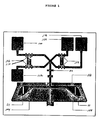
- Figure 1 is a block diagram of a COBE 2991 Blood Cell Processor.
- Red blood cells treated in accordance with the present invention may be used in a diagnostic reagent that demonstrates excellent stability, accuracy, and sensitivity.
- an automated blood component processing device may be directed manually by the user or may be electronically programmed using conventional random logic controls, often provided commercially as part of the equipment, to add and mix the particles dispersed in a carrier medium with the selected treatment material.
- the instrument may operate in a continuous flow manner, or on the basis of a batch method.
- These blood cell processors have been known to the art for the washing of red cells, such as in washing frozen blood units prior to use.
- the equipment provides means for adding blood units to a "bowl" area, that acts as a centrifuge. In some respects, the instrument setup resembles the common laundry washing machine.
- Means to add solutions, means of agitating the particle dispersion added, (along with the solutions if desired), means for expressing out solutions and/or particle dispersions, thereby separating such units, are critical features of these devices that render the presently claimed method superior to the art-accepted treatment of particles to coat them or modify their surface properties, and so on.
- a generally accepted method of treating red blood cells with a proteolytic enzyme to modify the blood cell surface antigen is to accomplish this by manual handling of the blood unit.
- the presently claimed process offers a superior alternative to this accepted technique.
- means of incubating the particle dispersions and/or various solutions is also provided.
- the method of the invention comprises one or more of the following steps, using a blood cell processor.
- a particle dispersion is washed or otherwise contacted with a wash solution in a blood cell processor with specified settings.
- a selected volume of the particle dispersion may also be separated into two or more parts, with one or more of the parts treated in the same manner or differently than the other separated parts.
- one or more of the separated parts may be treated with a treatment material, while other separated parts are not.
- the separated parts may be treated in sequential fashion with the same treatment material, or individual separated parts may be treated with differing treatment materials. Additional washing and/or dilution steps may also be included.
- the resulting treated particles can then be further processed for ultimate use, or, are ready to be used diagnostically, for example, in prepared red cell reagents, latex bead reagents, polystyrene bead reagents, magnetic bead reagents, liposome reagents, and the like.
- Suitable blood cell processors for use herein will provide great flexibility, reliability, and accuracy in the separation and treatment of a particle dispersion.
- Blood cell processors suitable for use herein will provide great flexibility in the adding of various solutions at various time periods, agitating such solutions and particle dispersions, and expressing off waste after such addition and agitation.
- the cell processor can be directed to "wash off" excess enzyme, thereby avoiding any contamination or deleterious effect such excess may have on the portion so treated, rendering a useful and stable reagent.
- Blood cell processors useful in the method of the invention may be obtained commercially.
- a cell washer is available from Baxter Travenol of McGaw, Illinois; Haemonetics 15 Cell Washer SystemTM is available from Haemonetics of Braintree, Massachusetts; the Cobe 2991 Blood Cell ProcessorTM is available in the United States from COBE Laboratories, Inc. of Lakewood, Colorado, and internationally from many other COBE affiliates.
- One skilled in the art of such instrumentation may also devise their own instrument set up, capable of performing the steps and meeting the criteria as described throughout this specification.
- Preferred for use herein is the COBE 2991 model as described above.
- a "particle dispersion” refers to naturally occurring or synthetic particles dispersed, dissolved, suspended, or the like in a medium that is compatible, such as water, physiological buffers, naturally occurring plasma, organic solvents, organic or inorganic solutions, and the like.
- This particle dispersion is of such a nature that it may be metered through a tube or other appropriate linefeed contained on the blood cell processor, as for example those leading into and away from the bowl area of the cell processor. Accordingly, the dispersion should be of a viscosity that will not impede its flow too greatly, and somewhat mimics the viscosity of a unit of blood (defined below).
- particles such as bacterial, viral and other biological particles, cell membrane fragments, formal elements of blood such as red blood cells, white blood cells, platelets, reticulocytes, and the like.
- synthetic particles those particles of such a size that they would ultimately be suitable for use as solid supports, labels, or other components in biological assay formats, such as for example, microspheres such as latex beads, magnetic beads, polymethacrylate microspheres, liposomes, polystyrene beads, glass beads, and the like.
- the particles may be treated in accordance with the invention at any stage in their overall processing. For example, they could already be coated particles, wherein the coating has been carried out through another technique. These pre-coated particles could then be further treated in accordance with the present process.
- wash solution any medium, gaseous or liquid, that would not contain a treatment material (as hereinafter defined) but would be contacted with the particle dispersion to remove unwanted debris and other components, would wet the particles, would penetrate into the particles, dilute the particle treatment material, and the like.
- treatment material is meant that material whether in gaseous form or liquid form of suitable viscosity and/or of a granular nature or not, useful in treating particles in accordance with the invention to coat them, activate them, or otherwise modify them in some way.
- the particles may be treated with a suitable treatment medium so as to charge their surface or change their surface charge, and thereby activate them for further processing such as subsequent ionic or covalent linkages with other substances.
- the particles may be coated with various organic, inorganic, biological agents, and the like, such as albumin, gelatin, blood sera from various sources, nucleotides, antibodies, photofluorescent compounds, sugars, dyes of all kinds such as phycobiliproteins, rhodamine, fluorescein, stilbene, and the like, and, enzymes, bacterial or viral components, and the like.
- the surface properties of the particles may be modified by contact with a material that will strip or modify surface antigens, or by contact with chemicals or gas resulting in sulfonation, amination, hydrolysis, oxidation, and the like.
- blood cell components of all kinds and particularly a "blood product”.
- blood product means any product containing red blood cells in whole or any portion thereof, that one desires to separate into select quantities and to treat with a treatment material.
- units of blood are particularly suitable for the treatment provided herein.
- a “unit of blood” is the term generally ascribed by those skilled in the art as a volume of blood drawn from a donor containing red cells and plasma and an anticoagulant to prevent clotting, and typically ranges in volume from about 400 ml to about 500 ml for adult units and about 100 mls to about 200mls for low volume units.
- Packed red cells refers to those units wherein plasma is removed, typically in the range of about 20%-40% by volume.
- the blood cell processor is capable, upon direction by the user, of separating a unit of blood product into approximately equal quantities, most preferably into two parts, each resulting in quantities between about 45% and 55% of the starting quantity.
- the preferred method requires that the blood be separated into two parts of approximately equal size, one skilled in the art will understand that the volume ratio that a particular unit of blood product could be separated into could vary tremendously, as could the number of parts the unit is separated into.
- the number of units and volume ratios will depend on the intended treatment of each of the parts the unit is broken down into, as well as the intended use of the parts or resulting reagent, after treatment.
- the treatment material is a proteolytic enzyme such as bromelin, papain, trypsin, and ficin, with the latter particularly preferred.
- the ficin treated red blood cells in accordance with a preferred embodiment of the invention are useful in the production of a ficin blood cell reagent panel, such as that sold by Ortho Diagnostic Systems Inc., under the tradename Resolve Panel CTM.
- the preferred method of the invention has been optimized to direct the blood cell processor to treat approximately one half of a blood unit with ficin, resulting in an accurate and reliable equal quantity of treated and non-treated red blood cells ultimately provided in the aforementioned commercially available reagent kit.
- Proteolytic enzymes such as ficin, bromelin, papain and trypsin modify red cell antigens in ways that enhance the reactivity of some antigen/antibody reactions and destroy or alter antigenic determinants of others.
- Enzyme modification of red blood cells can increase the reactivity of some antibodies with their corresponding antigens such as Rh, Kidd, Lewis, Vel and I.
- the exact mechanism by which antibody enhancement occurs is unknown. It has been suggested that the mechanism may involve either exposure of latent antigen sites on the red cell surface or that the removal of peptide chains reduces the net negative charge of the red cell allowing agglutination to occur.
- a blood product is added to the COBE Blood Cell Processor depicted therein at the blood product receptacle, 100.
- a suitable tube allows the blood product to feed down through the pinch valve 102 and into the centrifuge bowl 104.
- a wash solution is provided at the wash solution receptacle, 106 and allowed to feed through an appropriate tube through the wash solution pinch valve 108 into the centrifuge bowl 104.
- Suitable tubing for the controlled addition of these components may be selection from polypropylene tubing, polyvinyl tubing, TeflonTM tubing, siliconized tubing, and the like.
- Suitable wash solutions for this portion of the method are those compatible with red blood cells, and facilitate the washing of debris and other undesirable blood components while preserving the red blood cell membranes intact.
- These buffers include phosphate buffered saline, Alsevers Solution, physiological saline, Hanks Balanced Salt Solution, Ortho Resuspension SolutionTM available from Ortho Diagnostic Systems Inc., combination Alsevers and ethylenediamamine tetraacetic acid, and the like.
- Excess wash solution containing the undesired waste components, 113 leaves through an appropriate line via the waste collect pinch valve 110 into a waste collecting receptacle 112, or other suitable means for a container or continuous egress.
- the waste line opens to allow the egress of the waste fluid, as a diaphragm (not pictured) moves up through the centrifuge bowl to push the fluid up and out.
- a red cell detector 114 forces the line of egress closed when all the solution is expressed and red cells are starting to be forced up into the waste line.
- the centrifugation is halted, and the wash line allowed to add more wash solution for resuspension of the red cells and a repeat of this washing process.
- this washing procedure is preferably repeated for a total of three times.
- the instrument is then adjusted manually, or programmed to allow approximately one-half of this thoroughly washed unit to exit via a fourth, separation line, through a separation pinch valve, and into a clean container (all not pictured on the cell processor in Figure 1).
- This clean container may also comprise a separate bulk unit useful in collecting huge quantities of separated blood product units for further processing and packaging for commercial reagent.
- the portion of the blood product still remaining in the centrifuge bowl is washed one additional time, with excess wash solution expressed almost completely, and the remaining red blood cells packed once again.
- proteolytic enzymes are very delicate processes that must employ a balance of buffers and the like. Accordingly, use of the blood cell processing instrument as provided herein affords the opportunity to carefully and adequately wash the blood product and to ensure that no excess wash remains that could possibly interfere with subsequent treatment of the blood product.
- a proteolytic enzyme solution is then added in the same manner as the original blood product had been added, through blood product receptacle 100, and so forth.
- Suitable enzymes for treatment of the blood product in accordance with the methods taught herein are papain, bromelin, trypsin, ficin, and the like, in a suitable solution that preserves the activity and stability of the enzyme such as phosphate buffered solution with or without EDTA.
- a ficin treatment with ficin provided in a phosphate/Ortho Resuspension SolutionTM solution at a diluted concentration of about 0.02% to about .25%, and more preferably about 0.05 to 0.1%.
- the enzyme solution must be compatible with the wash solutions, and at a concentration that has been optimized with respect to time, temperature, and other assay parameters.
- the treatment is conducted at ambient temperature by allowing contact and agitation of the blood product with the enzyme solution for a period of time that allows optimal enzyme-substrate interactions, generally about 2 minutes to about 30 minutes. After this suitable incubation period, wash solution is again introduced to dilute out the enzyme solution and to stop the action of the enzyme.
- This shortened wash phase is preferably a cold wash to ensure that the enzyme action is stopped as completely as possible at the moment desired by the user. Additional washes are then performed, preferably about three, to ensure that all the enzyme is removed and to preserve the stability and integrity of the final reagent product. Left-over enzyme is undesirable in that the membranes of the treated red blood cells could be destroyed over time.
- the thus treated portion of the blood product is then expressed out into a second clean holding container (not pictured) through a separation line, and diluted with a suitable buffer for optimal packaging concentrations for final reagent product containing untreated and treated red blood cells (such as Resolve Panel CTM as referred to above).
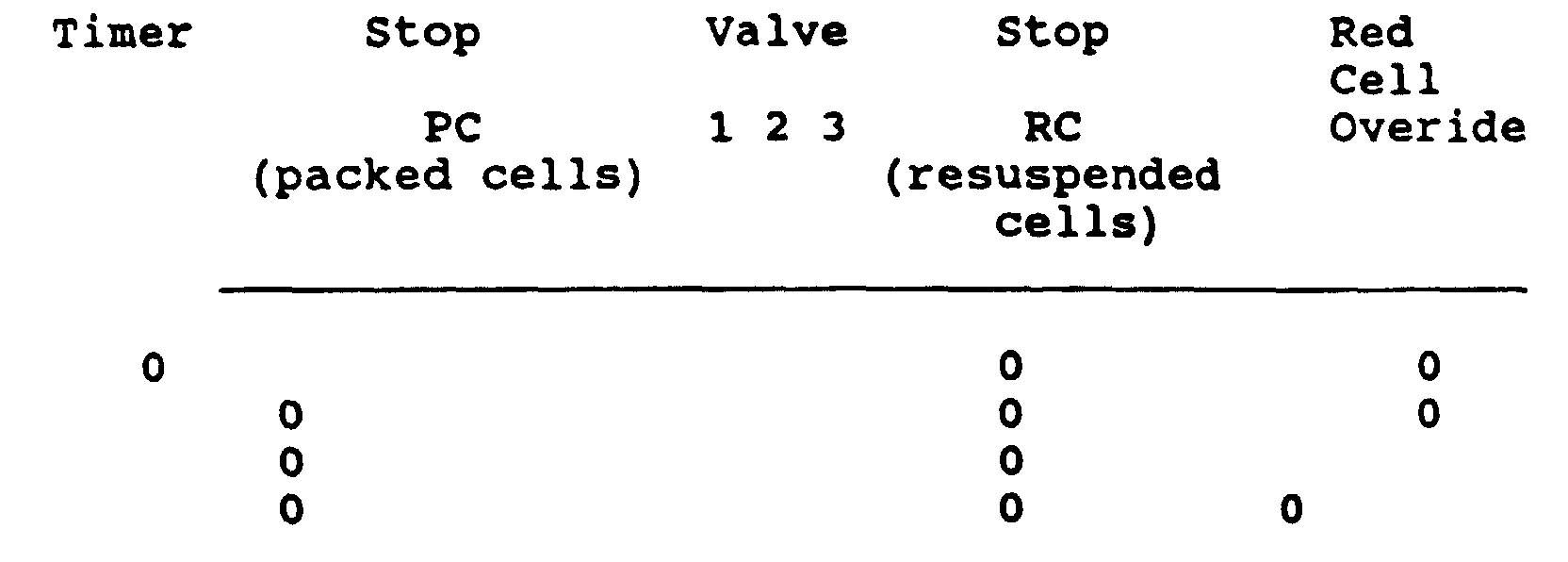
- the COBE 2991 Blood Cell Processor is manually programmed as follows:
- the COBE 2991 Blood Cell Processor is set up for washing of a blood product unit as follows:
- the start/spin button is pushed.
- the stop button is pushed when the alarm sounds.
- the cells are then divided.
- the device is then programmed as follows for separation of the blood product unit:
- the blood product unit is agitated immediately before separation (next step) to avoid settling of the red blood cells.
- the ficin stored as a frozen concentrated stock solution in phosphate buffered saline is diluted with ORSTM to approximately a 0.07% solution.
- the PIN setting in Section B above ensures that excess phosphate buffered saline solution removed. This solution is then added to the separated cells.
- the device is then programmed as follows:
- the ficin is allowed to enter the system for approximately 5 to 7 minutes and allowed to agitate with the red cells for approximately 80 seconds.
- the agitate time can be set back to 60 seconds.
- the step/reset button is depressed when the alarm sounds.
- the device is then programmed as follows:
- the start/spin button is then pushed.
- the stop button is pushed when the alarm sounds.
- the treated cells are then removed from the device.
- a Cell Processor is used in the preparation of coated latex particles. PIN settings are adjusted to carry out the following steps: Add approximately 240 ml of a 2.5% suspension of 3 u Latex-COOH particles (Polysciences of Warrington, Pennsylvania) to the cell processor. Centrifuge and remove the supernatant. Wash two times with a carbonate buffer solution, pH 9.5, and three times with a phosphate buffer solution, pH 4.5. Resuspend the latex with agitation with the phosphate buffer and add 1-(3-Dimethylaminopropyl)-3 ethyl carbodiimide hydrochloride (ECDI) so that the final mixture in the cell processor is approximately 1% latex and 1% ECDI. Agitate for approximately three hours.
- ECDI 1-(3-Dimethylaminopropyl)-3 ethyl carbodiimide hydrochloride
- Glycerol is used as a cryopreservative agent in preparing red cells for freezing.
- the COBE 2991 cell processor is used as an aid in this process, by monitoring the amount and speed of addition of the glycerol. Rapid introduction of glycerol can cause damage to the red cell, resulting in hemolysis after thawing.
- Blood is allowed to enter the centrifuge bowl of the cell processor. Red cells are separated from the plasma by centrifuging at approximately 3000 rpm for 3 to 5 minutes. As much plasma as possible is expressed into the waste bag. While agitating, add 100ml of 6.2M glycerol to the packed cells. Allow to equilibrate for 5 minutes, then add approximately 300 ml more of glycerol, with agitation. Final concentration should be 40% weight to volume. If desired, extracellular glycerol may be removed by centrifugation. Remove blood/glycerol solution to a freezing bag, label, and place in a -65°C or below freezer.
- Pin and dial settings are changed and set as appropriate for this application.
Landscapes
- Health & Medical Sciences (AREA)
- Life Sciences & Earth Sciences (AREA)
- Immunology (AREA)
- Engineering & Computer Science (AREA)
- Biomedical Technology (AREA)
- Molecular Biology (AREA)
- Urology & Nephrology (AREA)
- Chemical & Material Sciences (AREA)
- Hematology (AREA)
- Cell Biology (AREA)
- Microbiology (AREA)
- Biotechnology (AREA)
- General Health & Medical Sciences (AREA)
- Food Science & Technology (AREA)
- Medicinal Chemistry (AREA)
- Physics & Mathematics (AREA)
- Analytical Chemistry (AREA)
- Biochemistry (AREA)
- Pathology (AREA)
- General Physics & Mathematics (AREA)
- Tropical Medicine & Parasitology (AREA)
- Mycology (AREA)
- Medicines Containing Material From Animals Or Micro-Organisms (AREA)
- Investigating Or Analysing Biological Materials (AREA)
- Micro-Organisms Or Cultivation Processes Thereof (AREA)
Abstract
Description


Add approximately 240 ml of a 2.5% suspension of 3 u Latex-COOH particles (Polysciences of Warrington, Pennsylvania) to the cell processor. Centrifuge and remove the supernatant. Wash two times with a carbonate buffer solution, pH 9.5, and three times with a phosphate buffer solution, pH 4.5. Resuspend the latex with agitation with the phosphate buffer and add 1-(3-Dimethylaminopropyl)-3 ethyl carbodiimide hydrochloride (ECDI) so that the final mixture in the cell processor is approximately 1% latex and 1% ECDI. Agitate for approximately three hours. Wash three times with borate buffer solution, pH 8.5. Resuspend the latex in the borate buffer and add 320 ug/ml anti-IgG. Agitate intermittently overnight. (Alternately superout the mixture and stir overnight. Add back to the cell processor after stirring.) Centrifuge the latex suspension and remove the supernatant. Resuspend the latex in the borate buffer to approximately it suspension. Block with BSA. Add the BSA to the latex suspension and agitate for approximately twenty minutes. Remove the supernatant and repeat blocking with BSA. Centrifuge and resuspend to an approximate 2.5% latex suspension in the final resuspension buffer. Remove from the cell processor to a bulk container.
Claims (12)
- A method for treating a particle dispersion using a blood cell processor, comprising adjusting said blood cell processor to contact all or a portion of said particle dispersion with one or more treatment materials at ambient temperature, in a concentration and for a period of time sufficient to modify at least a portion of the surface of all or a portion of said particle dispersion.
- The method of claim 1 wherein the particle dispersion is red blood cells and wherein the treatment material is a proteolytic enzyme solution.
- The method of claim 2 wherein the proteolytic enzyme solution is a ficin solution.
- The method of claim 3 wherein the ficin solution is at a concentration between 0.02% and 0.25%.
- The method of claim 4 wherein the ficin solution is at a concentration between 0.05% and 0.1%.
- The method of any one of claims 1 to 5 wherein the period of time is between 60 seconds and 30 minutes.
- The method of claim 6 wherein the period of time is between approximately 5 minutes to 7 minutes.
- The method of claim 1 wherein the particle dispersion is packed red cells and the treatment material is a cryopreservative.
- The method of claim 8 wherein the cryopreservative is glycerol.
- The method of claim 9 wherein the glycerol concentration is 40% w/v.
- The method of claim 1 wherein the particle dispersion is latex microspheres and the treatment material is anti-IgG and BSA.
- A red blood cell reagent useful in blood cell typing and compatibility procedures comprising untreated red blood cells and proteolytic enzyme-treated red blood cells prepared in accordance with the method of any one of claims 2 to 7.
Applications Claiming Priority (2)
| Application Number | Priority Date | Filing Date | Title |
|---|---|---|---|
| US70068891A | 1991-05-15 | 1991-05-15 | |
| US700688 | 1991-05-15 |
Publications (3)
| Publication Number | Publication Date |
|---|---|
| EP0516313A2 EP0516313A2 (en) | 1992-12-02 |
| EP0516313A3 EP0516313A3 (en) | 1993-05-12 |
| EP0516313B1 true EP0516313B1 (en) | 1998-09-23 |
Family
ID=24814509
Family Applications (1)
| Application Number | Title | Priority Date | Filing Date |
|---|---|---|---|
| EP92304374A Expired - Lifetime EP0516313B1 (en) | 1991-05-15 | 1992-05-14 | Automated process for preparing treated microparticles especially blood cell components |
Country Status (8)
| Country | Link |
|---|---|
| US (1) | US5681709A (en) |
| EP (1) | EP0516313B1 (en) |
| AT (1) | ATE171544T1 (en) |
| CA (2) | CA2474714C (en) |
| DE (1) | DE69227067T2 (en) |
| DK (1) | DK0516313T3 (en) |
| ES (1) | ES2121823T3 (en) |
| GR (1) | GR1002286B (en) |
Families Citing this family (8)
| Publication number | Priority date | Publication date | Assignee | Title |
|---|---|---|---|---|
| DE10117205A1 (en) * | 2001-04-06 | 2002-10-17 | Martin Winkemann | Device for preparing cells for cryopreservation |
| US7405036B2 (en) * | 2001-05-21 | 2008-07-29 | Safety Art, Llc | Process for reducing pathogens in a biological sample and removing a sample pellet from a sample tube |
| DE10146371A1 (en) * | 2001-09-20 | 2003-04-17 | Georg S Wengler | Mobile unit, for harvesting human or animal stem cells, comprises a container divided into sections for the extraction, preservation and storage of stem cells from donor materials |
| JP2010148450A (en) * | 2008-12-25 | 2010-07-08 | Olympus Corp | Method for cleaning cell |
| US8986238B2 (en) | 2012-08-15 | 2015-03-24 | Cyclone Medtech, Inc. | Systems and methods for salvaging red blood cells for autotransfusion |
| US10159980B2 (en) | 2013-08-02 | 2018-12-25 | All Cell Recovery LLC | Systems and methods for recovering blood cells, in a controlled environment, for storage |
| US8945376B1 (en) | 2013-08-02 | 2015-02-03 | All Cell Recovery LLC | Systems, methods, and apparatus for resuspending cells in solution |
| US9452021B2 (en) | 2013-08-02 | 2016-09-27 | All Cell Recovery LLC | Systems, methods, and apparatus for resuspending cells from surgical laundry |
Family Cites Families (6)
| Publication number | Priority date | Publication date | Assignee | Title |
|---|---|---|---|---|
| US3737096A (en) * | 1971-12-23 | 1973-06-05 | Ibm | Blood processing control apparatus |
| US4107287A (en) * | 1976-04-12 | 1978-08-15 | University Of Pennsylvania | GC Antigen-specific immunochemical indicator reagent and method for preparing same |
| US4306556A (en) * | 1980-02-07 | 1981-12-22 | Rensselaer Polytechnic Institute | Method and apparatus for storing and preparing cryopreserved blood |
| US4839058A (en) * | 1982-09-13 | 1989-06-13 | Cawley Leo P | On-line plasma modification method |
| GB2138132B (en) * | 1983-04-12 | 1987-02-18 | Robin Royston Amos Coombs | Storage-stable antibody-linked erythrocytes |
| US4804363A (en) * | 1986-07-16 | 1989-02-14 | Autologous Blood Corporation | Apparatus and method for storing and processing blood |
-
1992
- 1992-04-28 GR GR920100168A patent/GR1002286B/en not_active IP Right Cessation
- 1992-05-13 CA CA2474714A patent/CA2474714C/en not_active Expired - Lifetime
- 1992-05-13 CA CA002068548A patent/CA2068548C/en not_active Expired - Lifetime
- 1992-05-14 AT AT92304374T patent/ATE171544T1/en active
- 1992-05-14 DE DE69227067T patent/DE69227067T2/en not_active Expired - Lifetime
- 1992-05-14 ES ES92304374T patent/ES2121823T3/en not_active Expired - Lifetime
- 1992-05-14 DK DK92304374T patent/DK0516313T3/en active
- 1992-05-14 EP EP92304374A patent/EP0516313B1/en not_active Expired - Lifetime
-
1995
- 1995-01-17 US US08/375,082 patent/US5681709A/en not_active Expired - Lifetime
Also Published As
| Publication number | Publication date |
|---|---|
| GR1002286B (en) | 1996-05-02 |
| EP0516313A3 (en) | 1993-05-12 |
| US5681709A (en) | 1997-10-28 |
| DE69227067D1 (en) | 1998-10-29 |
| ES2121823T3 (en) | 1998-12-16 |
| CA2474714C (en) | 2011-07-12 |
| CA2068548A1 (en) | 1992-11-16 |
| EP0516313A2 (en) | 1992-12-02 |
| ATE171544T1 (en) | 1998-10-15 |
| DK0516313T3 (en) | 1999-06-14 |
| DE69227067T2 (en) | 1999-04-08 |
| CA2068548C (en) | 2004-11-02 |
| GR920100168A (en) | 1993-03-31 |
| CA2474714A1 (en) | 1992-11-16 |
Similar Documents
| Publication | Publication Date | Title |
|---|---|---|
| JP2510932B2 (en) | Method and apparatus for determining the presence of biological material in a sample | |
| CA2182367C (en) | Density gradient medium for separating cells | |
| US5646004A (en) | Methods for enriching fetal cells from maternal body fluids | |
| US7943368B2 (en) | Reducing time to result for blood bank diagnostic testing | |
| US4060597A (en) | Serological reagent and preparation thereof | |
| JPH09509312A (en) | Method for separating diluted cells from a population of cells | |
| JPH01163662A (en) | Detection of antigen and/or antibody and test kit for detection | |
| US4297104A (en) | Method of detecting or identifying virus antigens, erythrocyte or cell antigens or antibodies in a biological medium | |
| Jiang et al. | A micro-technique for detection of leukocyte agglutinins | |
| EP0194156B1 (en) | Method of measuring the amount of immune antibody in serum | |
| US5681709A (en) | Automated process for preparing treated microparticles especially blood cell components | |
| Sebring et al. | Detection of fetal hemorrhage in Rh immune globulin candidates. A rosetting technique using enzyme‐treated Rh2Rh2 indicator erythrocytes | |
| US3992517A (en) | Detection of hepatitis B surface antigen by latex agglutination | |
| RU2012888C1 (en) | Method of producing latex diagnosticum | |
| US4816413A (en) | Solid phase indicator red blood cells and method | |
| EP0079145B1 (en) | Reagent for use in diagnosis of syphilis and preparation thereof | |
| US3840655A (en) | Diagnostic methods and reagents for infectous mononucleosis | |
| JP2532670B2 (en) | Immunological measurement method using magnetic marker particles | |
| WO2009118551A1 (en) | Ultrasound method for analysis of blood for blood typing, antibody detection and flow cytometry | |
| US4623620A (en) | Enucleated granulocytes, their preparation and use | |
| Lane et al. | Serological and biochemical analysis of the PlA1 alloantigen of human platelets | |
| US5288610A (en) | Detecting reagent for antiplatelet antibody | |
| JP2614997B2 (en) | Reaction accelerator for agglutination reaction | |
| JPH02141667A (en) | Particle of blood corpuscle | |
| JP2001330614A (en) | Solid phase to which biological activity is imparted, and method for manufacturing the same |
Legal Events
| Date | Code | Title | Description |
|---|---|---|---|
| PUAI | Public reference made under article 153(3) epc to a published international application that has entered the european phase |
Free format text: ORIGINAL CODE: 0009012 |
|
| AK | Designated contracting states |
Kind code of ref document: A2 Designated state(s): AT BE CH DE DK ES FR GB IT LI LU NL SE |
|
| PUAL | Search report despatched |
Free format text: ORIGINAL CODE: 0009013 |
|
| AK | Designated contracting states |
Kind code of ref document: A3 Designated state(s): AT BE CH DE DK ES FR GB IT LI LU NL SE |
|
| 17P | Request for examination filed |
Effective date: 19931022 |
|
| 17Q | First examination report despatched |
Effective date: 19950926 |
|
| GRAG | Despatch of communication of intention to grant |
Free format text: ORIGINAL CODE: EPIDOS AGRA |
|
| GRAG | Despatch of communication of intention to grant |
Free format text: ORIGINAL CODE: EPIDOS AGRA |
|
| GRAH | Despatch of communication of intention to grant a patent |
Free format text: ORIGINAL CODE: EPIDOS IGRA |
|
| GRAH | Despatch of communication of intention to grant a patent |
Free format text: ORIGINAL CODE: EPIDOS IGRA |
|
| GRAH | Despatch of communication of intention to grant a patent |
Free format text: ORIGINAL CODE: EPIDOS IGRA |
|
| ITF | It: translation for a ep patent filed | ||
| GRAA | (expected) grant |
Free format text: ORIGINAL CODE: 0009210 |
|
| AK | Designated contracting states |
Kind code of ref document: B1 Designated state(s): AT BE CH DE DK ES FR GB IT LI LU NL SE |
|
| REF | Corresponds to: |
Ref document number: 171544 Country of ref document: AT Date of ref document: 19981015 Kind code of ref document: T |
|
| REG | Reference to a national code |
Ref country code: CH Ref legal event code: NV Representative=s name: E. BLUM & CO. PATENTANWAELTE Ref country code: CH Ref legal event code: EP |
|
| REF | Corresponds to: |
Ref document number: 69227067 Country of ref document: DE Date of ref document: 19981029 |
|
| REG | Reference to a national code |
Ref country code: ES Ref legal event code: FG2A Ref document number: 2121823 Country of ref document: ES Kind code of ref document: T3 |
|
| ET | Fr: translation filed | ||
| REG | Reference to a national code |
Ref country code: DK Ref legal event code: T3 |
|
| PLBE | No opposition filed within time limit |
Free format text: ORIGINAL CODE: 0009261 |
|
| STAA | Information on the status of an ep patent application or granted ep patent |
Free format text: STATUS: NO OPPOSITION FILED WITHIN TIME LIMIT |
|
| 26N | No opposition filed | ||
| REG | Reference to a national code |
Ref country code: GB Ref legal event code: IF02 |
|
| REG | Reference to a national code |
Ref country code: CH Ref legal event code: PFA Owner name: ORTHO DIAGNOSTIC SYSTEMS INC. Free format text: ORTHO DIAGNOSTIC SYSTEMS INC.#U.S. ROUTE 202#RARITAN NEW JERSEY 08869 (US) -TRANSFER TO- ORTHO DIAGNOSTIC SYSTEMS INC.#U.S. ROUTE 202#RARITAN NEW JERSEY 08869 (US) |
|
| PGFP | Annual fee paid to national office [announced via postgrant information from national office to epo] |
Ref country code: ES Payment date: 20110617 Year of fee payment: 20 Ref country code: SE Payment date: 20110512 Year of fee payment: 20 Ref country code: FR Payment date: 20110523 Year of fee payment: 20 Ref country code: CH Payment date: 20110512 Year of fee payment: 20 Ref country code: LU Payment date: 20110531 Year of fee payment: 20 |
|
| PGFP | Annual fee paid to national office [announced via postgrant information from national office to epo] |
Ref country code: BE Payment date: 20110511 Year of fee payment: 20 Ref country code: NL Payment date: 20110526 Year of fee payment: 20 Ref country code: GB Payment date: 20110511 Year of fee payment: 20 Ref country code: DK Payment date: 20110512 Year of fee payment: 20 Ref country code: AT Payment date: 20110427 Year of fee payment: 20 |
|
| PGFP | Annual fee paid to national office [announced via postgrant information from national office to epo] |
Ref country code: DE Payment date: 20110511 Year of fee payment: 20 Ref country code: IT Payment date: 20110519 Year of fee payment: 20 |
|
| REG | Reference to a national code |
Ref country code: DE Ref legal event code: R071 Ref document number: 69227067 Country of ref document: DE |
|
| REG | Reference to a national code |
Ref country code: DE Ref legal event code: R071 Ref document number: 69227067 Country of ref document: DE |
|
| REG | Reference to a national code |
Ref country code: NL Ref legal event code: V4 Effective date: 20120514 |
|
| BE20 | Be: patent expired |
Owner name: *ORTHO DIAGNOSTIC SYSTEMS INC. Effective date: 20120514 |
|
| REG | Reference to a national code |
Ref country code: CH Ref legal event code: PL |
|
| REG | Reference to a national code |
Ref country code: DK Ref legal event code: EUP |
|
| REG | Reference to a national code |
Ref country code: GB Ref legal event code: PE20 Expiry date: 20120513 |
|
| REG | Reference to a national code |
Ref country code: SE Ref legal event code: EUG |
|
| PG25 | Lapsed in a contracting state [announced via postgrant information from national office to epo] |
Ref country code: DE Free format text: LAPSE BECAUSE OF EXPIRATION OF PROTECTION Effective date: 20120515 |
|
| PG25 | Lapsed in a contracting state [announced via postgrant information from national office to epo] |
Ref country code: GB Free format text: LAPSE BECAUSE OF EXPIRATION OF PROTECTION Effective date: 20120513 |
|
| REG | Reference to a national code |
Ref country code: AT Ref legal event code: MK07 Ref document number: 171544 Country of ref document: AT Kind code of ref document: T Effective date: 20120514 |
|
| REG | Reference to a national code |
Ref country code: ES Ref legal event code: FD2A Effective date: 20130725 |
|
| PG25 | Lapsed in a contracting state [announced via postgrant information from national office to epo] |
Ref country code: ES Free format text: LAPSE BECAUSE OF EXPIRATION OF PROTECTION Effective date: 20120515 |