EP0513149B1 - Pyridylphenyl nitrogen heterocycle-substituted carbinols and derivatives thereof with anti-inflammatory activity - Google Patents
Pyridylphenyl nitrogen heterocycle-substituted carbinols and derivatives thereof with anti-inflammatory activity Download PDFInfo
- Publication number
- EP0513149B1 EP0513149B1 EP91903786A EP91903786A EP0513149B1 EP 0513149 B1 EP0513149 B1 EP 0513149B1 EP 91903786 A EP91903786 A EP 91903786A EP 91903786 A EP91903786 A EP 91903786A EP 0513149 B1 EP0513149 B1 EP 0513149B1
- Authority
- EP
- European Patent Office
- Prior art keywords
- compound
- formula
- phenyl
- pyridyl
- ethanol
- Prior art date
- Legal status (The legal status is an assumption and is not a legal conclusion. Google has not performed a legal analysis and makes no representation as to the accuracy of the status listed.)
- Expired - Lifetime
Links
- IJGRMHOSHXDMSA-UHFFFAOYSA-N Atomic nitrogen Chemical compound N#N IJGRMHOSHXDMSA-UHFFFAOYSA-N 0.000 title claims abstract description 22
- 229910052757 nitrogen Inorganic materials 0.000 title claims abstract description 17
- 230000003110 anti-inflammatory effect Effects 0.000 title claims description 6
- 150000001875 compounds Chemical class 0.000 claims abstract description 78
- 239000008194 pharmaceutical composition Substances 0.000 claims abstract description 7
- 238000000034 method Methods 0.000 claims description 56
- 239000000203 mixture Substances 0.000 claims description 43
- -1 R7 Chemical group 0.000 claims description 25
- RAXXELZNTBOGNW-UHFFFAOYSA-N imidazole Natural products C1=CNC=N1 RAXXELZNTBOGNW-UHFFFAOYSA-N 0.000 claims description 23
- 230000008569 process Effects 0.000 claims description 23
- 125000004178 (C1-C4) alkyl group Chemical group 0.000 claims description 14
- 125000001424 substituent group Chemical group 0.000 claims description 14
- 150000003839 salts Chemical class 0.000 claims description 13
- ZMANZCXQSJIPKH-UHFFFAOYSA-N Triethylamine Chemical compound CCN(CC)CC ZMANZCXQSJIPKH-UHFFFAOYSA-N 0.000 claims description 12
- 229910052794 bromium Inorganic materials 0.000 claims description 11
- 239000003153 chemical reaction reagent Substances 0.000 claims description 11
- 125000002883 imidazolyl group Chemical group 0.000 claims description 11
- 125000001997 phenyl group Chemical group [H]C1=C([H])C([H])=C(*)C([H])=C1[H] 0.000 claims description 11
- 239000000460 chlorine Substances 0.000 claims description 9
- 229910052801 chlorine Inorganic materials 0.000 claims description 9
- LFQSCWFLJHTTHZ-UHFFFAOYSA-N Ethanol Chemical compound CCO LFQSCWFLJHTTHZ-UHFFFAOYSA-N 0.000 claims description 8
- 239000003054 catalyst Substances 0.000 claims description 8
- 229910052751 metal Inorganic materials 0.000 claims description 8
- 239000002184 metal Substances 0.000 claims description 8
- UGLNASZSIGGGKN-UHFFFAOYSA-N bis(2-pyridin-2-ylphenyl)methanone Chemical compound C=1C=CC=C(C=2N=CC=CC=2)C=1C(=O)C1=CC=CC=C1C1=CC=CC=N1 UGLNASZSIGGGKN-UHFFFAOYSA-N 0.000 claims description 6
- 229910052731 fluorine Inorganic materials 0.000 claims description 6
- 125000004769 (C1-C4) alkylsulfonyl group Chemical group 0.000 claims description 5
- 125000000229 (C1-C4)alkoxy group Chemical group 0.000 claims description 5
- 125000002252 acyl group Chemical group 0.000 claims description 5
- 150000001336 alkenes Chemical class 0.000 claims description 5
- 125000004414 alkyl thio group Chemical group 0.000 claims description 5
- 125000002485 formyl group Chemical group [H]C(*)=O 0.000 claims description 5
- 125000000623 heterocyclic group Chemical group 0.000 claims description 5
- 150000003852 triazoles Chemical group 0.000 claims description 5
- 125000004105 2-pyridyl group Chemical group N1=C([*])C([H])=C([H])C([H])=C1[H] 0.000 claims description 4
- 125000003349 3-pyridyl group Chemical group N1=C([H])C([*])=C([H])C([H])=C1[H] 0.000 claims description 4
- 125000000339 4-pyridyl group Chemical group N1=C([H])C([H])=C([*])C([H])=C1[H] 0.000 claims description 4
- NSPMIYGKQJPBQR-UHFFFAOYSA-N 4H-1,2,4-triazole Chemical group C=1N=CNN=1 NSPMIYGKQJPBQR-UHFFFAOYSA-N 0.000 claims description 4
- JUJWROOIHBZHMG-UHFFFAOYSA-N Pyridine Chemical compound C1=CC=NC=C1 JUJWROOIHBZHMG-UHFFFAOYSA-N 0.000 claims description 4
- KAESVJOAVNADME-UHFFFAOYSA-N Pyrrole Chemical group C=1C=CNC=1 KAESVJOAVNADME-UHFFFAOYSA-N 0.000 claims description 4
- 125000000217 alkyl group Chemical group 0.000 claims description 4
- GDTBXPJZTBHREO-UHFFFAOYSA-N bromine Substances BrBr GDTBXPJZTBHREO-UHFFFAOYSA-N 0.000 claims description 4
- JRZJOMJEPLMPRA-UHFFFAOYSA-N olefin Natural products CCCCCCCC=C JRZJOMJEPLMPRA-UHFFFAOYSA-N 0.000 claims description 4
- 239000007800 oxidant agent Substances 0.000 claims description 4
- 229910052700 potassium Inorganic materials 0.000 claims description 4
- 229910052708 sodium Inorganic materials 0.000 claims description 4
- 229910052723 transition metal Inorganic materials 0.000 claims description 4
- 150000003624 transition metals Chemical class 0.000 claims description 4
- DZGMNXWTQWGZTK-UHFFFAOYSA-N 1-(4-fluorophenyl)-2-imidazol-1-yl-1-(4-pyridin-4-ylphenyl)ethanol Chemical compound C=1C=C(F)C=CC=1C(C=1C=CC(=CC=1)C=1C=CN=CC=1)(O)CN1C=CN=C1 DZGMNXWTQWGZTK-UHFFFAOYSA-N 0.000 claims description 3
- HYZJCKYKOHLVJF-UHFFFAOYSA-N 1H-benzimidazole Chemical group C1=CC=C2NC=NC2=C1 HYZJCKYKOHLVJF-UHFFFAOYSA-N 0.000 claims description 3
- WPTRTKHRBVAGNS-UHFFFAOYSA-N 2-imidazol-1-yl-1-(4-pyridin-4-ylphenyl)-1-[4-(trifluoromethyl)phenyl]ethanol Chemical compound C=1C=C(C=2C=CN=CC=2)C=CC=1C(C=1C=CC(=CC=1)C(F)(F)F)(O)CN1C=CN=C1 WPTRTKHRBVAGNS-UHFFFAOYSA-N 0.000 claims description 3
- ZAMOUSCENKQFHK-UHFFFAOYSA-N Chlorine atom Chemical group [Cl] ZAMOUSCENKQFHK-UHFFFAOYSA-N 0.000 claims description 3
- 239000003937 drug carrier Substances 0.000 claims description 3
- 239000011777 magnesium Substances 0.000 claims description 3
- 229910052749 magnesium Inorganic materials 0.000 claims description 3
- 230000001590 oxidative effect Effects 0.000 claims description 3
- IAJFYMVLKYAWBA-UHFFFAOYSA-N 1-(2,4-difluorophenyl)-2-imidazol-1-yl-1-(4-pyridin-4-ylphenyl)ethanol Chemical compound C=1C=C(C=2C=CN=CC=2)C=CC=1C(C=1C(=CC(F)=CC=1)F)(O)CN1C=CN=C1 IAJFYMVLKYAWBA-UHFFFAOYSA-N 0.000 claims description 2
- ANUBNQDGNKWPKW-UHFFFAOYSA-N 1-(4-chlorophenyl)-2-imidazol-1-yl-1-(4-pyridin-4-ylphenyl)ethanol Chemical compound C=1C=C(Cl)C=CC=1C(C=1C=CC(=CC=1)C=1C=CN=CC=1)(O)CN1C=CN=C1 ANUBNQDGNKWPKW-UHFFFAOYSA-N 0.000 claims description 2
- NUNXWFKSFWEVCT-UHFFFAOYSA-N 1-(4-fluorophenyl)-2-imidazol-1-yl-1-(3-pyridin-4-ylphenyl)ethanol Chemical compound C=1C=C(F)C=CC=1C(C=1C=C(C=CC=1)C=1C=CN=CC=1)(O)CN1C=CN=C1 NUNXWFKSFWEVCT-UHFFFAOYSA-N 0.000 claims description 2
- XXVSCXWFPLJIDG-UHFFFAOYSA-N 2-imidazol-1-yl-1-(4-methoxyphenyl)-1-(4-pyridin-4-ylphenyl)ethanol Chemical compound C1=CC(OC)=CC=C1C(O)(C=1C=CC(=CC=1)C=1C=CN=CC=1)CN1C=NC=C1 XXVSCXWFPLJIDG-UHFFFAOYSA-N 0.000 claims description 2
- DSPVMSJCMXFRKW-UHFFFAOYSA-N 2-imidazol-1-yl-1-(4-methylphenyl)-1-(4-pyridin-4-ylphenyl)ethanol Chemical compound C1=CC(C)=CC=C1C(O)(C=1C=CC(=CC=1)C=1C=CN=CC=1)CN1C=NC=C1 DSPVMSJCMXFRKW-UHFFFAOYSA-N 0.000 claims description 2
- 229910052684 Cerium Inorganic materials 0.000 claims description 2
- WHXSMMKQMYFTQS-UHFFFAOYSA-N Lithium Chemical compound [Li] WHXSMMKQMYFTQS-UHFFFAOYSA-N 0.000 claims description 2
- 239000012359 Methanesulfonyl chloride Substances 0.000 claims description 2
- WTKZEGDFNFYCGP-UHFFFAOYSA-N Pyrazole Chemical group C=1C=NNC=1 WTKZEGDFNFYCGP-UHFFFAOYSA-N 0.000 claims description 2
- 230000002378 acidificating effect Effects 0.000 claims description 2
- 125000001246 bromo group Chemical group Br* 0.000 claims description 2
- 125000001475 halogen functional group Chemical group 0.000 claims description 2
- 229910052744 lithium Inorganic materials 0.000 claims description 2
- QARBMVPHQWIHKH-UHFFFAOYSA-N methanesulfonyl chloride Chemical compound CS(Cl)(=O)=O QARBMVPHQWIHKH-UHFFFAOYSA-N 0.000 claims description 2
- 125000004433 nitrogen atom Chemical group N* 0.000 claims description 2
- 150000002902 organometallic compounds Chemical class 0.000 claims description 2
- 229910052760 oxygen Inorganic materials 0.000 claims description 2
- UMJSCPRVCHMLSP-UHFFFAOYSA-N pyridine Natural products COC1=CC=CN=C1 UMJSCPRVCHMLSP-UHFFFAOYSA-N 0.000 claims description 2
- 229910052717 sulfur Inorganic materials 0.000 claims description 2
- 125000005010 perfluoroalkyl group Chemical group 0.000 claims 3
- YYROPELSRYBVMQ-UHFFFAOYSA-N 4-toluenesulfonyl chloride Chemical compound CC1=CC=C(S(Cl)(=O)=O)C=C1 YYROPELSRYBVMQ-UHFFFAOYSA-N 0.000 claims 2
- 238000004519 manufacturing process Methods 0.000 claims 2
- YBBRCQOCSYXUOC-UHFFFAOYSA-N sulfuryl dichloride Chemical compound ClS(Cl)(=O)=O YBBRCQOCSYXUOC-UHFFFAOYSA-N 0.000 claims 1
- 208000027866 inflammatory disease Diseases 0.000 abstract description 8
- 241000124008 Mammalia Species 0.000 abstract description 3
- YMWUJEATGCHHMB-UHFFFAOYSA-N Dichloromethane Chemical compound ClCCl YMWUJEATGCHHMB-UHFFFAOYSA-N 0.000 description 36
- XLYOFNOQVPJJNP-UHFFFAOYSA-N water Substances O XLYOFNOQVPJJNP-UHFFFAOYSA-N 0.000 description 29
- 239000000243 solution Substances 0.000 description 28
- 238000005481 NMR spectroscopy Methods 0.000 description 24
- WYURNTSHIVDZCO-UHFFFAOYSA-N Tetrahydrofuran Chemical compound C1CCOC1 WYURNTSHIVDZCO-UHFFFAOYSA-N 0.000 description 24
- CSNNHWWHGAXBCP-UHFFFAOYSA-L Magnesium sulfate Chemical compound [Mg+2].[O-][S+2]([O-])([O-])[O-] CSNNHWWHGAXBCP-UHFFFAOYSA-L 0.000 description 18
- OKKJLVBELUTLKV-UHFFFAOYSA-N Methanol Chemical compound OC OKKJLVBELUTLKV-UHFFFAOYSA-N 0.000 description 18
- 239000004480 active ingredient Substances 0.000 description 18
- 238000002360 preparation method Methods 0.000 description 16
- XEKOWRVHYACXOJ-UHFFFAOYSA-N Ethyl acetate Chemical compound CCOC(C)=O XEKOWRVHYACXOJ-UHFFFAOYSA-N 0.000 description 15
- 238000006243 chemical reaction Methods 0.000 description 14
- ZMXDDKWLCZADIW-UHFFFAOYSA-N N,N-Dimethylformamide Chemical compound CN(C)C=O ZMXDDKWLCZADIW-UHFFFAOYSA-N 0.000 description 12
- 201000010099 disease Diseases 0.000 description 12
- 208000037265 diseases, disorders, signs and symptoms Diseases 0.000 description 12
- YLQBMQCUIZJEEH-UHFFFAOYSA-N tetrahydrofuran Natural products C=1C=COC=1 YLQBMQCUIZJEEH-UHFFFAOYSA-N 0.000 description 12
- 238000011282 treatment Methods 0.000 description 12
- QTBSBXVTEAMEQO-UHFFFAOYSA-N Acetic acid Chemical compound CC(O)=O QTBSBXVTEAMEQO-UHFFFAOYSA-N 0.000 description 9
- DNIAPMSPPWPWGF-UHFFFAOYSA-N Propylene glycol Chemical compound CC(O)CO DNIAPMSPPWPWGF-UHFFFAOYSA-N 0.000 description 9
- YXFVVABEGXRONW-UHFFFAOYSA-N Toluene Chemical compound CC1=CC=CC=C1 YXFVVABEGXRONW-UHFFFAOYSA-N 0.000 description 9
- 229910052943 magnesium sulfate Inorganic materials 0.000 description 9
- 235000019341 magnesium sulphate Nutrition 0.000 description 9
- 239000002904 solvent Substances 0.000 description 9
- 239000007858 starting material Substances 0.000 description 9
- HEDRZPFGACZZDS-UHFFFAOYSA-N Chloroform Chemical compound ClC(Cl)Cl HEDRZPFGACZZDS-UHFFFAOYSA-N 0.000 description 8
- 239000012074 organic phase Substances 0.000 description 8
- 239000000047 product Substances 0.000 description 8
- HIXDQWDOVZUNNA-UHFFFAOYSA-N 2-(3,4-dimethoxyphenyl)-5-hydroxy-7-methoxychromen-4-one Chemical compound C=1C(OC)=CC(O)=C(C(C=2)=O)C=1OC=2C1=CC=C(OC)C(OC)=C1 HIXDQWDOVZUNNA-UHFFFAOYSA-N 0.000 description 7
- RTZKZFJDLAIYFH-UHFFFAOYSA-N ether Substances CCOCC RTZKZFJDLAIYFH-UHFFFAOYSA-N 0.000 description 7
- VLKZOEOYAKHREP-UHFFFAOYSA-N n-Hexane Chemical compound CCCCCC VLKZOEOYAKHREP-UHFFFAOYSA-N 0.000 description 7
- 239000000126 substance Substances 0.000 description 7
- CSCPPACGZOOCGX-UHFFFAOYSA-N Acetone Chemical compound CC(C)=O CSCPPACGZOOCGX-UHFFFAOYSA-N 0.000 description 6
- WEVYAHXRMPXWCK-UHFFFAOYSA-N Acetonitrile Chemical compound CC#N WEVYAHXRMPXWCK-UHFFFAOYSA-N 0.000 description 6
- IAZDPXIOMUYVGZ-WFGJKAKNSA-N Dimethyl sulfoxide Chemical compound [2H]C([2H])([2H])S(=O)C([2H])([2H])[2H] IAZDPXIOMUYVGZ-WFGJKAKNSA-N 0.000 description 6
- KFZMGEQAYNKOFK-UHFFFAOYSA-N Isopropanol Chemical compound CC(C)O KFZMGEQAYNKOFK-UHFFFAOYSA-N 0.000 description 6
- KDLHZDBZIXYQEI-UHFFFAOYSA-N Palladium Chemical compound [Pd] KDLHZDBZIXYQEI-UHFFFAOYSA-N 0.000 description 6
- 239000012267 brine Substances 0.000 description 6
- 239000003795 chemical substances by application Substances 0.000 description 6
- 239000003085 diluting agent Substances 0.000 description 6
- 239000003814 drug Substances 0.000 description 6
- HQKMJHAJHXVSDF-UHFFFAOYSA-L magnesium stearate Chemical compound [Mg+2].CCCCCCCCCCCCCCCCCC([O-])=O.CCCCCCCCCCCCCCCCCC([O-])=O HQKMJHAJHXVSDF-UHFFFAOYSA-L 0.000 description 6
- 238000004949 mass spectrometry Methods 0.000 description 6
- 239000000463 material Substances 0.000 description 6
- HPALAKNZSZLMCH-UHFFFAOYSA-M sodium;chloride;hydrate Chemical compound O.[Na+].[Cl-] HPALAKNZSZLMCH-UHFFFAOYSA-M 0.000 description 6
- PEDCQBHIVMGVHV-UHFFFAOYSA-N Glycerine Chemical compound OCC(O)CO PEDCQBHIVMGVHV-UHFFFAOYSA-N 0.000 description 5
- 239000002775 capsule Substances 0.000 description 5
- 150000002576 ketones Chemical class 0.000 description 5
- 239000003921 oil Substances 0.000 description 5
- 235000019198 oils Nutrition 0.000 description 5
- 125000002524 organometallic group Chemical group 0.000 description 5
- 239000000843 powder Substances 0.000 description 5
- 238000010561 standard procedure Methods 0.000 description 5
- 239000003826 tablet Substances 0.000 description 5
- GUBGYTABKSRVRQ-XLOQQCSPSA-N Alpha-Lactose Chemical compound O[C@@H]1[C@@H](O)[C@@H](O)[C@@H](CO)O[C@H]1O[C@@H]1[C@@H](CO)O[C@H](O)[C@H](O)[C@H]1O GUBGYTABKSRVRQ-XLOQQCSPSA-N 0.000 description 4
- NLXLAEXVIDQMFP-UHFFFAOYSA-N Ammonia chloride Chemical compound [NH4+].[Cl-] NLXLAEXVIDQMFP-UHFFFAOYSA-N 0.000 description 4
- VEXZGXHMUGYJMC-UHFFFAOYSA-N Hydrochloric acid Chemical compound Cl VEXZGXHMUGYJMC-UHFFFAOYSA-N 0.000 description 4
- 206010061218 Inflammation Diseases 0.000 description 4
- GUBGYTABKSRVRQ-QKKXKWKRSA-N Lactose Natural products OC[C@H]1O[C@@H](O[C@H]2[C@H](O)[C@@H](O)C(O)O[C@@H]2CO)[C@H](O)[C@@H](O)[C@H]1O GUBGYTABKSRVRQ-QKKXKWKRSA-N 0.000 description 4
- PXHVJJICTQNCMI-UHFFFAOYSA-N Nickel Chemical compound [Ni] PXHVJJICTQNCMI-UHFFFAOYSA-N 0.000 description 4
- 201000004681 Psoriasis Diseases 0.000 description 4
- 239000002253 acid Substances 0.000 description 4
- 239000013078 crystal Substances 0.000 description 4
- 230000000694 effects Effects 0.000 description 4
- 239000007903 gelatin capsule Substances 0.000 description 4
- 230000004054 inflammatory process Effects 0.000 description 4
- 239000008101 lactose Substances 0.000 description 4
- LXCFILQKKLGQFO-UHFFFAOYSA-N p-hydroxybenzoic acid methyl ester Natural products COC(=O)C1=CC=C(O)C=C1 LXCFILQKKLGQFO-UHFFFAOYSA-N 0.000 description 4
- PHEDXBVPIONUQT-RGYGYFBISA-N phorbol 13-acetate 12-myristate Chemical compound C([C@]1(O)C(=O)C(C)=C[C@H]1[C@@]1(O)[C@H](C)[C@H]2OC(=O)CCCCCCCCCCCCC)C(CO)=C[C@H]1[C@H]1[C@]2(OC(C)=O)C1(C)C PHEDXBVPIONUQT-RGYGYFBISA-N 0.000 description 4
- QELSKZZBTMNZEB-UHFFFAOYSA-N propylparaben Chemical compound CCCOC(=O)C1=CC=C(O)C=C1 QELSKZZBTMNZEB-UHFFFAOYSA-N 0.000 description 4
- 239000000725 suspension Substances 0.000 description 4
- 230000000699 topical effect Effects 0.000 description 4
- LCQWVYDFAHJHLM-UHFFFAOYSA-N 1-(4-pyridin-4-ylphenyl)ethanone Chemical compound C1=CC(C(=O)C)=CC=C1C1=CC=NC=C1 LCQWVYDFAHJHLM-UHFFFAOYSA-N 0.000 description 3
- HBAQYPYDRFILMT-UHFFFAOYSA-N 8-[3-(1-cyclopropylpyrazol-4-yl)-1H-pyrazolo[4,3-d]pyrimidin-5-yl]-3-methyl-3,8-diazabicyclo[3.2.1]octan-2-one Chemical class C1(CC1)N1N=CC(=C1)C1=NNC2=C1N=C(N=C2)N1C2C(N(CC1CC2)C)=O HBAQYPYDRFILMT-UHFFFAOYSA-N 0.000 description 3
- UHOVQNZJYSORNB-UHFFFAOYSA-N Benzene Chemical compound C1=CC=CC=C1 UHOVQNZJYSORNB-UHFFFAOYSA-N 0.000 description 3
- 241001465754 Metazoa Species 0.000 description 3
- KWYUFKZDYYNOTN-UHFFFAOYSA-M Potassium hydroxide Chemical compound [OH-].[K+] KWYUFKZDYYNOTN-UHFFFAOYSA-M 0.000 description 3
- HEMHJVSKTPXQMS-UHFFFAOYSA-M Sodium hydroxide Chemical compound [OH-].[Na+] HEMHJVSKTPXQMS-UHFFFAOYSA-M 0.000 description 3
- 239000012298 atmosphere Substances 0.000 description 3
- YNHIGQDRGKUECZ-UHFFFAOYSA-L bis(triphenylphosphine)palladium(ii) dichloride Chemical compound [Cl-].[Cl-].[Pd+2].C1=CC=CC=C1P(C=1C=CC=CC=1)C1=CC=CC=C1.C1=CC=CC=C1P(C=1C=CC=CC=1)C1=CC=CC=C1 YNHIGQDRGKUECZ-UHFFFAOYSA-L 0.000 description 3
- 239000000969 carrier Substances 0.000 description 3
- KRKNYBCHXYNGOX-UHFFFAOYSA-N citric acid Chemical compound OC(=O)CC(O)(C(O)=O)CC(O)=O KRKNYBCHXYNGOX-UHFFFAOYSA-N 0.000 description 3
- 238000005859 coupling reaction Methods 0.000 description 3
- 239000012043 crude product Substances 0.000 description 3
- 210000005069 ears Anatomy 0.000 description 3
- 150000002084 enol ethers Chemical class 0.000 description 3
- 125000000524 functional group Chemical group 0.000 description 3
- 230000002757 inflammatory effect Effects 0.000 description 3
- 239000008297 liquid dosage form Substances 0.000 description 3
- 235000019359 magnesium stearate Nutrition 0.000 description 3
- 235000010270 methyl p-hydroxybenzoate Nutrition 0.000 description 3
- 239000002674 ointment Substances 0.000 description 3
- 229910052763 palladium Inorganic materials 0.000 description 3
- LPNYRYFBWFDTMA-UHFFFAOYSA-N potassium tert-butoxide Chemical compound [K+].CC(C)(C)[O-] LPNYRYFBWFDTMA-UHFFFAOYSA-N 0.000 description 3
- 239000003755 preservative agent Substances 0.000 description 3
- 235000010232 propyl p-hydroxybenzoate Nutrition 0.000 description 3
- 206010039073 rheumatoid arthritis Diseases 0.000 description 3
- 239000002002 slurry Substances 0.000 description 3
- 239000007921 spray Substances 0.000 description 3
- 239000000454 talc Substances 0.000 description 3
- 229910052623 talc Inorganic materials 0.000 description 3
- 231100000331 toxic Toxicity 0.000 description 3
- 230000002588 toxic effect Effects 0.000 description 3
- VBICKXHEKHSIBG-UHFFFAOYSA-N 1-monostearoylglycerol Chemical compound CCCCCCCCCCCCCCCCCC(=O)OCC(O)CO VBICKXHEKHSIBG-UHFFFAOYSA-N 0.000 description 2
- WAZPLXZGZWWXDQ-UHFFFAOYSA-N 4-methyl-4-oxidomorpholin-4-ium;hydrate Chemical compound O.C[N+]1([O-])CCOCC1 WAZPLXZGZWWXDQ-UHFFFAOYSA-N 0.000 description 2
- CIWBSHSKHKDKBQ-JLAZNSOCSA-N Ascorbic acid Chemical compound OC[C@H](O)[C@H]1OC(=O)C(O)=C1O CIWBSHSKHKDKBQ-JLAZNSOCSA-N 0.000 description 2
- WKBOTKDWSSQWDR-UHFFFAOYSA-N Bromine atom Chemical compound [Br] WKBOTKDWSSQWDR-UHFFFAOYSA-N 0.000 description 2
- 206010006811 Bursitis Diseases 0.000 description 2
- 206010010741 Conjunctivitis Diseases 0.000 description 2
- FBPFZTCFMRRESA-FSIIMWSLSA-N D-Glucitol Natural products OC[C@H](O)[C@H](O)[C@@H](O)[C@H](O)CO FBPFZTCFMRRESA-FSIIMWSLSA-N 0.000 description 2
- 206010012438 Dermatitis atopic Diseases 0.000 description 2
- 206010012442 Dermatitis contact Diseases 0.000 description 2
- DGAQECJNVWCQMB-PUAWFVPOSA-M Ilexoside XXIX Chemical compound C[C@@H]1CC[C@@]2(CC[C@@]3(C(=CC[C@H]4[C@]3(CC[C@@H]5[C@@]4(CC[C@@H](C5(C)C)OS(=O)(=O)[O-])C)C)[C@@H]2[C@]1(C)O)C)C(=O)O[C@H]6[C@@H]([C@H]([C@@H]([C@H](O6)CO)O)O)O.[Na+] DGAQECJNVWCQMB-PUAWFVPOSA-M 0.000 description 2
- 208000022559 Inflammatory bowel disease Diseases 0.000 description 2
- MZRVEZGGRBJDDB-UHFFFAOYSA-N N-Butyllithium Chemical compound [Li]CCCC MZRVEZGGRBJDDB-UHFFFAOYSA-N 0.000 description 2
- OFBQJSOFQDEBGM-UHFFFAOYSA-N Pentane Chemical compound CCCCC OFBQJSOFQDEBGM-UHFFFAOYSA-N 0.000 description 2
- ZLMJMSJWJFRBEC-UHFFFAOYSA-N Potassium Chemical compound [K] ZLMJMSJWJFRBEC-UHFFFAOYSA-N 0.000 description 2
- VYPSYNLAJGMNEJ-UHFFFAOYSA-N Silicium dioxide Chemical compound O=[Si]=O VYPSYNLAJGMNEJ-UHFFFAOYSA-N 0.000 description 2
- PMZURENOXWZQFD-UHFFFAOYSA-L Sodium Sulfate Chemical compound [Na+].[Na+].[O-]S([O-])(=O)=O PMZURENOXWZQFD-UHFFFAOYSA-L 0.000 description 2
- 229920002472 Starch Polymers 0.000 description 2
- 208000000491 Tendinopathy Diseases 0.000 description 2
- 206010043255 Tendonitis Diseases 0.000 description 2
- HEDRZPFGACZZDS-MICDWDOJSA-N Trichloro(2H)methane Chemical compound [2H]C(Cl)(Cl)Cl HEDRZPFGACZZDS-MICDWDOJSA-N 0.000 description 2
- 206010046851 Uveitis Diseases 0.000 description 2
- XLOMVQKBTHCTTD-UHFFFAOYSA-N Zinc monoxide Chemical compound [Zn]=O XLOMVQKBTHCTTD-UHFFFAOYSA-N 0.000 description 2
- 239000003377 acid catalyst Substances 0.000 description 2
- 239000000443 aerosol Substances 0.000 description 2
- 150000001298 alcohols Chemical class 0.000 description 2
- 235000019270 ammonium chloride Nutrition 0.000 description 2
- 229940121363 anti-inflammatory agent Drugs 0.000 description 2
- 239000002260 anti-inflammatory agent Substances 0.000 description 2
- 230000003064 anti-oxidating effect Effects 0.000 description 2
- 230000001028 anti-proliverative effect Effects 0.000 description 2
- 201000008937 atopic dermatitis Diseases 0.000 description 2
- 208000010668 atopic eczema Diseases 0.000 description 2
- 238000009835 boiling Methods 0.000 description 2
- 125000004432 carbon atom Chemical group C* 0.000 description 2
- OSASVXMJTNOKOY-UHFFFAOYSA-N chlorobutanol Chemical compound CC(C)(O)C(Cl)(Cl)Cl OSASVXMJTNOKOY-UHFFFAOYSA-N 0.000 description 2
- 238000004587 chromatography analysis Methods 0.000 description 2
- 239000007891 compressed tablet Substances 0.000 description 2
- 208000010247 contact dermatitis Diseases 0.000 description 2
- 230000008878 coupling Effects 0.000 description 2
- 238000010168 coupling process Methods 0.000 description 2
- 239000006071 cream Substances 0.000 description 2
- ZUOUZKKEUPVFJK-UHFFFAOYSA-N diphenyl Chemical class C1=CC=CC=C1C1=CC=CC=C1 ZUOUZKKEUPVFJK-UHFFFAOYSA-N 0.000 description 2
- 239000002552 dosage form Substances 0.000 description 2
- 229940079593 drug Drugs 0.000 description 2
- 239000000284 extract Substances 0.000 description 2
- 230000000855 fungicidal effect Effects 0.000 description 2
- 239000000499 gel Substances 0.000 description 2
- 238000007429 general method Methods 0.000 description 2
- 235000011187 glycerol Nutrition 0.000 description 2
- 238000011065 in-situ storage Methods 0.000 description 2
- 239000002502 liposome Substances 0.000 description 2
- 239000007788 liquid Substances 0.000 description 2
- 210000004072 lung Anatomy 0.000 description 2
- VNWKTOKETHGBQD-UHFFFAOYSA-N methane Chemical compound C VNWKTOKETHGBQD-UHFFFAOYSA-N 0.000 description 2
- 125000002496 methyl group Chemical group [H]C([H])([H])* 0.000 description 2
- 239000004292 methyl p-hydroxybenzoate Substances 0.000 description 2
- 229960002216 methylparaben Drugs 0.000 description 2
- 239000007922 nasal spray Substances 0.000 description 2
- 229940097496 nasal spray Drugs 0.000 description 2
- 229910052759 nickel Inorganic materials 0.000 description 2
- 210000000056 organ Anatomy 0.000 description 2
- 239000003791 organic solvent mixture Substances 0.000 description 2
- 239000012285 osmium tetroxide Substances 0.000 description 2
- 229910000489 osmium tetroxide Inorganic materials 0.000 description 2
- 201000008482 osteoarthritis Diseases 0.000 description 2
- 239000003182 parenteral nutrition solution Substances 0.000 description 2
- 239000006072 paste Substances 0.000 description 2
- 235000019271 petrolatum Nutrition 0.000 description 2
- 229920001223 polyethylene glycol Polymers 0.000 description 2
- 239000000244 polyoxyethylene sorbitan monooleate Substances 0.000 description 2
- 235000010482 polyoxyethylene sorbitan monooleate Nutrition 0.000 description 2
- 229940068968 polysorbate 80 Drugs 0.000 description 2
- 229920000053 polysorbate 80 Polymers 0.000 description 2
- 239000011591 potassium Substances 0.000 description 2
- 239000004405 propyl p-hydroxybenzoate Substances 0.000 description 2
- 229960003415 propylparaben Drugs 0.000 description 2
- ZCCUUQDIBDJBTK-UHFFFAOYSA-N psoralen Chemical compound C1=C2OC(=O)C=CC2=CC2=C1OC=C2 ZCCUUQDIBDJBTK-UHFFFAOYSA-N 0.000 description 2
- 239000011541 reaction mixture Substances 0.000 description 2
- 238000010992 reflux Methods 0.000 description 2
- 229920006395 saturated elastomer Polymers 0.000 description 2
- RMAQACBXLXPBSY-UHFFFAOYSA-N silicic acid Chemical compound O[Si](O)(O)O RMAQACBXLXPBSY-UHFFFAOYSA-N 0.000 description 2
- 235000012239 silicon dioxide Nutrition 0.000 description 2
- 239000011734 sodium Substances 0.000 description 2
- 229910052938 sodium sulfate Inorganic materials 0.000 description 2
- GEHJYWRUCIMESM-UHFFFAOYSA-L sodium sulfite Chemical compound [Na+].[Na+].[O-]S([O-])=O GEHJYWRUCIMESM-UHFFFAOYSA-L 0.000 description 2
- 235000011152 sodium sulphate Nutrition 0.000 description 2
- YNJORDSKPXMABC-UHFFFAOYSA-M sodium;2-hydroxypropane-2-sulfonate Chemical compound [Na+].CC(C)(O)S([O-])(=O)=O YNJORDSKPXMABC-UHFFFAOYSA-M 0.000 description 2
- 239000000600 sorbitol Substances 0.000 description 2
- 238000001228 spectrum Methods 0.000 description 2
- 239000003381 stabilizer Substances 0.000 description 2
- 239000008107 starch Substances 0.000 description 2
- 235000019698 starch Nutrition 0.000 description 2
- 238000003756 stirring Methods 0.000 description 2
- 239000012730 sustained-release form Substances 0.000 description 2
- 230000008961 swelling Effects 0.000 description 2
- 230000009885 systemic effect Effects 0.000 description 2
- 201000004415 tendinitis Diseases 0.000 description 2
- 238000012360 testing method Methods 0.000 description 2
- CZDYPVPMEAXLPK-UHFFFAOYSA-N tetramethylsilane Chemical compound C[Si](C)(C)C CZDYPVPMEAXLPK-UHFFFAOYSA-N 0.000 description 2
- 229940124597 therapeutic agent Drugs 0.000 description 2
- 210000001519 tissue Anatomy 0.000 description 2
- 230000009466 transformation Effects 0.000 description 2
- PYOKUURKVVELLB-UHFFFAOYSA-N trimethyl orthoformate Chemical compound COC(OC)OC PYOKUURKVVELLB-UHFFFAOYSA-N 0.000 description 2
- 235000019871 vegetable fat Nutrition 0.000 description 2
- JIAARYAFYJHUJI-UHFFFAOYSA-L zinc dichloride Chemical compound [Cl-].[Cl-].[Zn+2] JIAARYAFYJHUJI-UHFFFAOYSA-L 0.000 description 2
- XDIYNQZUNSSENW-UUBOPVPUSA-N (2R,3S,4R,5R)-2,3,4,5,6-pentahydroxyhexanal Chemical compound OC[C@@H](O)[C@@H](O)[C@H](O)[C@@H](O)C=O.OC[C@@H](O)[C@@H](O)[C@H](O)[C@@H](O)C=O XDIYNQZUNSSENW-UUBOPVPUSA-N 0.000 description 1
- LJRDOKAZOAKLDU-UDXJMMFXSA-N (2s,3s,4r,5r,6r)-5-amino-2-(aminomethyl)-6-[(2r,3s,4r,5s)-5-[(1r,2r,3s,5r,6s)-3,5-diamino-2-[(2s,3r,4r,5s,6r)-3-amino-4,5-dihydroxy-6-(hydroxymethyl)oxan-2-yl]oxy-6-hydroxycyclohexyl]oxy-4-hydroxy-2-(hydroxymethyl)oxolan-3-yl]oxyoxane-3,4-diol;sulfuric ac Chemical compound OS(O)(=O)=O.N[C@@H]1[C@@H](O)[C@H](O)[C@H](CN)O[C@@H]1O[C@H]1[C@@H](O)[C@H](O[C@H]2[C@@H]([C@@H](N)C[C@@H](N)[C@@H]2O)O[C@@H]2[C@@H]([C@@H](O)[C@H](O)[C@@H](CO)O2)N)O[C@@H]1CO LJRDOKAZOAKLDU-UDXJMMFXSA-N 0.000 description 1
- NWUYHJFMYQTDRP-UHFFFAOYSA-N 1,2-bis(ethenyl)benzene;1-ethenyl-2-ethylbenzene;styrene Chemical compound C=CC1=CC=CC=C1.CCC1=CC=CC=C1C=C.C=CC1=CC=CC=C1C=C NWUYHJFMYQTDRP-UHFFFAOYSA-N 0.000 description 1
- DDMOUSALMHHKOS-UHFFFAOYSA-N 1,2-dichloro-1,1,2,2-tetrafluoroethane Chemical compound FC(F)(Cl)C(F)(F)Cl DDMOUSALMHHKOS-UHFFFAOYSA-N 0.000 description 1
- PIMNFNXBTGPCIL-UHFFFAOYSA-N 1-(2-bromophenyl)ethanone Chemical compound CC(=O)C1=CC=CC=C1Br PIMNFNXBTGPCIL-UHFFFAOYSA-N 0.000 description 1
- JTROGWFWKYVJRD-UHFFFAOYSA-N 1-(2-pyridin-2-ylphenyl)ethanone Chemical compound CC(=O)C1=CC=CC=C1C1=CC=CC=N1 JTROGWFWKYVJRD-UHFFFAOYSA-N 0.000 description 1
- ATYHPHFCJWYNKH-UHFFFAOYSA-N 1-(2-pyridin-3-ylphenyl)ethanone Chemical compound CC(=O)C1=CC=CC=C1C1=CC=CN=C1 ATYHPHFCJWYNKH-UHFFFAOYSA-N 0.000 description 1
- RUBMRMNNGFSEKY-UHFFFAOYSA-N 1-(2-pyridin-4-ylphenyl)ethanone Chemical compound CC(=O)C1=CC=CC=C1C1=CC=NC=C1 RUBMRMNNGFSEKY-UHFFFAOYSA-N 0.000 description 1
- KFQOPYPXFREYFN-UHFFFAOYSA-N 1-(4-bromophenyl)-1-(4-fluorophenyl)-2-imidazol-1-ylethanol Chemical compound C=1C=C(F)C=CC=1C(C=1C=CC(Br)=CC=1)(O)CN1C=CN=C1 KFQOPYPXFREYFN-UHFFFAOYSA-N 0.000 description 1
- WYECURVXVYPVAT-UHFFFAOYSA-N 1-(4-bromophenyl)ethanone Chemical compound CC(=O)C1=CC=C(Br)C=C1 WYECURVXVYPVAT-UHFFFAOYSA-N 0.000 description 1
- GCJZNSYLVFKBEN-UHFFFAOYSA-N 1-(4-fluorophenyl)-1-(4-pyridin-4-ylphenyl)ethane-1,2-diol Chemical compound C=1C=C(C=2C=CN=CC=2)C=CC=1C(O)(CO)C1=CC=C(F)C=C1 GCJZNSYLVFKBEN-UHFFFAOYSA-N 0.000 description 1
- OHLVLRXFSBTSNM-UHFFFAOYSA-N 1-(4-fluorophenyl)-1-(4-pyridin-4-ylphenyl)ethanol Chemical compound C=1C=C(C=2C=CN=CC=2)C=CC=1C(O)(C)C1=CC=C(F)C=C1 OHLVLRXFSBTSNM-UHFFFAOYSA-N 0.000 description 1
- WFMKOULAYUNIIA-UHFFFAOYSA-N 1-[4-(hydroxymethyl)phenyl]-2-imidazol-1-yl-1-(4-pyridin-4-ylphenyl)ethanol Chemical compound C1=CC(CO)=CC=C1C(O)(C=1C=CC(=CC=1)C=1C=CN=CC=1)CN1C=NC=C1 WFMKOULAYUNIIA-UHFFFAOYSA-N 0.000 description 1
- XLQSXGGDTHANLN-UHFFFAOYSA-N 1-bromo-4-(trifluoromethyl)benzene Chemical compound FC(F)(F)C1=CC=C(Br)C=C1 XLQSXGGDTHANLN-UHFFFAOYSA-N 0.000 description 1
- AITNMTXHTIIIBB-UHFFFAOYSA-N 1-bromo-4-fluorobenzene Chemical compound FC1=CC=C(Br)C=C1 AITNMTXHTIIIBB-UHFFFAOYSA-N 0.000 description 1
- XHCAGOVGSDHHNP-UHFFFAOYSA-N 1-bromo-4-tert-butylbenzene Chemical compound CC(C)(C)C1=CC=C(Br)C=C1 XHCAGOVGSDHHNP-UHFFFAOYSA-N 0.000 description 1
- VFWCMGCRMGJXDK-UHFFFAOYSA-N 1-chlorobutane Chemical compound CCCCCl VFWCMGCRMGJXDK-UHFFFAOYSA-N 0.000 description 1
- XQJUXZOQLLZSGL-UHFFFAOYSA-N 2-(benzimidazol-1-yl)-1-(4-fluorophenyl)-1-(4-pyridin-4-ylphenyl)ethanol Chemical compound C1=NC2=CC=CC=C2N1CC(O)(C=1C=CC(=CC=1)C=1C=CN=CC=1)C1=CC=C(F)C=C1 XQJUXZOQLLZSGL-UHFFFAOYSA-N 0.000 description 1
- WUJQWXDMCDWIJE-UHFFFAOYSA-N 2-bromo-1-(4-pyridin-4-ylphenyl)ethanone;hydrobromide Chemical compound Br.C1=CC(C(=O)CBr)=CC=C1C1=CC=NC=C1 WUJQWXDMCDWIJE-UHFFFAOYSA-N 0.000 description 1
- GSWTWDDVJDPFLY-UHFFFAOYSA-N 2-imidazol-1-yl-1-(4-pyridin-4-ylphenyl)ethanone Chemical compound C=1C=C(C=2C=CN=CC=2)C=CC=1C(=O)CN1C=CN=C1 GSWTWDDVJDPFLY-UHFFFAOYSA-N 0.000 description 1
- BMYNFMYTOJXKLE-UHFFFAOYSA-N 3-azaniumyl-2-hydroxypropanoate Chemical compound NCC(O)C(O)=O BMYNFMYTOJXKLE-UHFFFAOYSA-N 0.000 description 1
- NYPYPOZNGOXYSU-UHFFFAOYSA-N 3-bromopyridine Chemical compound BrC1=CC=CN=C1 NYPYPOZNGOXYSU-UHFFFAOYSA-N 0.000 description 1
- VXGRJERITKFWPL-UHFFFAOYSA-N 4',5'-Dihydropsoralen Natural products C1=C2OC(=O)C=CC2=CC2=C1OCC2 VXGRJERITKFWPL-UHFFFAOYSA-N 0.000 description 1
- PUJPJWIPTAZNGW-UHFFFAOYSA-N 4-[4-[1-(4-fluorophenyl)ethenyl]phenyl]pyridine Chemical group C1=CC(F)=CC=C1C(=C)C1=CC=C(C=2C=CN=CC=2)C=C1 PUJPJWIPTAZNGW-UHFFFAOYSA-N 0.000 description 1
- HIQIXEFWDLTDED-UHFFFAOYSA-N 4-hydroxy-1-piperidin-4-ylpyrrolidin-2-one Chemical compound O=C1CC(O)CN1C1CCNCC1 HIQIXEFWDLTDED-UHFFFAOYSA-N 0.000 description 1
- FJKROLUGYXJWQN-UHFFFAOYSA-N 4-hydroxybenzoic acid Chemical compound OC(=O)C1=CC=C(O)C=C1 FJKROLUGYXJWQN-UHFFFAOYSA-N 0.000 description 1
- VHUUQVKOLVNVRT-UHFFFAOYSA-N Ammonium hydroxide Chemical compound [NH4+].[OH-] VHUUQVKOLVNVRT-UHFFFAOYSA-N 0.000 description 1
- BSYNRYMUTXBXSQ-UHFFFAOYSA-N Aspirin Chemical compound CC(=O)OC1=CC=CC=C1C(O)=O BSYNRYMUTXBXSQ-UHFFFAOYSA-N 0.000 description 1
- 229920002261 Corn starch Polymers 0.000 description 1
- FBPFZTCFMRRESA-KVTDHHQDSA-N D-Mannitol Chemical compound OC[C@@H](O)[C@@H](O)[C@H](O)[C@H](O)CO FBPFZTCFMRRESA-KVTDHHQDSA-N 0.000 description 1
- 201000004624 Dermatitis Diseases 0.000 description 1
- OKKJLVBELUTLKV-MZCSYVLQSA-N Deuterated methanol Chemical compound [2H]OC([2H])([2H])[2H] OKKJLVBELUTLKV-MZCSYVLQSA-N 0.000 description 1
- 108010010803 Gelatin Proteins 0.000 description 1
- CPELXLSAUQHCOX-UHFFFAOYSA-N Hydrogen bromide Chemical compound Br CPELXLSAUQHCOX-UHFFFAOYSA-N 0.000 description 1
- HEFNNWSXXWATRW-UHFFFAOYSA-N Ibuprofen Chemical compound CC(C)CC1=CC=C(C(C)C(O)=O)C=C1 HEFNNWSXXWATRW-UHFFFAOYSA-N 0.000 description 1
- 239000004166 Lanolin Substances 0.000 description 1
- 239000000232 Lipid Bilayer Substances 0.000 description 1
- FYYHWMGAXLPEAU-UHFFFAOYSA-N Magnesium Chemical compound [Mg] FYYHWMGAXLPEAU-UHFFFAOYSA-N 0.000 description 1
- 229930195725 Mannitol Natural products 0.000 description 1
- 229920000168 Microcrystalline cellulose Polymers 0.000 description 1
- 241000699670 Mus sp. Species 0.000 description 1
- LFTLOKWAGJYHHR-UHFFFAOYSA-N N-methylmorpholine N-oxide Chemical compound CN1(=O)CCOCC1 LFTLOKWAGJYHHR-UHFFFAOYSA-N 0.000 description 1
- 206010030113 Oedema Diseases 0.000 description 1
- 239000004264 Petrolatum Substances 0.000 description 1
- 239000004952 Polyamide Substances 0.000 description 1
- 239000002202 Polyethylene glycol Substances 0.000 description 1
- UIIMBOGNXHQVGW-DEQYMQKBSA-M Sodium bicarbonate-14C Chemical compound [Na+].O[14C]([O-])=O UIIMBOGNXHQVGW-DEQYMQKBSA-M 0.000 description 1
- DWAQJAXMDSEUJJ-UHFFFAOYSA-M Sodium bisulfite Chemical compound [Na+].OS([O-])=O DWAQJAXMDSEUJJ-UHFFFAOYSA-M 0.000 description 1
- FAPWRFPIFSIZLT-UHFFFAOYSA-M Sodium chloride Chemical compound [Na+].[Cl-] FAPWRFPIFSIZLT-UHFFFAOYSA-M 0.000 description 1
- 235000021355 Stearic acid Nutrition 0.000 description 1
- CZMRCDWAGMRECN-UGDNZRGBSA-N Sucrose Chemical compound O[C@H]1[C@H](O)[C@@H](CO)O[C@@]1(CO)O[C@@H]1[C@H](O)[C@@H](O)[C@H](O)[C@@H](CO)O1 CZMRCDWAGMRECN-UGDNZRGBSA-N 0.000 description 1
- 229930006000 Sucrose Natural products 0.000 description 1
- 238000010521 absorption reaction Methods 0.000 description 1
- DPXJVFZANSGRMM-UHFFFAOYSA-N acetic acid;2,3,4,5,6-pentahydroxyhexanal;sodium Chemical compound [Na].CC(O)=O.OCC(O)C(O)C(O)C(O)C=O DPXJVFZANSGRMM-UHFFFAOYSA-N 0.000 description 1
- 229960001138 acetylsalicylic acid Drugs 0.000 description 1
- 238000005903 acid hydrolysis reaction Methods 0.000 description 1
- 230000009471 action Effects 0.000 description 1
- 239000013543 active substance Substances 0.000 description 1
- WNROFYMDJYEPJX-UHFFFAOYSA-K aluminium hydroxide Chemical compound [OH-].[OH-].[OH-].[Al+3] WNROFYMDJYEPJX-UHFFFAOYSA-K 0.000 description 1
- 150000001412 amines Chemical class 0.000 description 1
- QGZKDVFQNNGYKY-UHFFFAOYSA-N ammonia Natural products N QGZKDVFQNNGYKY-UHFFFAOYSA-N 0.000 description 1
- 239000003430 antimalarial agent Substances 0.000 description 1
- 239000008346 aqueous phase Substances 0.000 description 1
- 239000007864 aqueous solution Substances 0.000 description 1
- 239000007900 aqueous suspension Substances 0.000 description 1
- YZXBAPSDXZZRGB-DOFZRALJSA-N arachidonic acid Chemical class CCCCC\C=C/C\C=C/C\C=C/C\C=C/CCCC(O)=O YZXBAPSDXZZRGB-DOFZRALJSA-N 0.000 description 1
- 150000001502 aryl halides Chemical class 0.000 description 1
- 150000004792 aryl magnesium halides Chemical class 0.000 description 1
- 235000010323 ascorbic acid Nutrition 0.000 description 1
- 239000011668 ascorbic acid Substances 0.000 description 1
- 229960005070 ascorbic acid Drugs 0.000 description 1
- 230000005784 autoimmunity Effects 0.000 description 1
- 238000010533 azeotropic distillation Methods 0.000 description 1
- 235000012216 bentonite Nutrition 0.000 description 1
- 229960000686 benzalkonium chloride Drugs 0.000 description 1
- CADWTSSKOVRVJC-UHFFFAOYSA-N benzyl(dimethyl)azanium;chloride Chemical compound [Cl-].C[NH+](C)CC1=CC=CC=C1 CADWTSSKOVRVJC-UHFFFAOYSA-N 0.000 description 1
- 150000005347 biaryls Chemical group 0.000 description 1
- 238000001574 biopsy Methods 0.000 description 1
- 230000015572 biosynthetic process Effects 0.000 description 1
- 235000010290 biphenyl Nutrition 0.000 description 1
- 239000004305 biphenyl Substances 0.000 description 1
- JCVYQVHAGOZGIX-UHFFFAOYSA-N bis(2-bromophenyl)methanone Chemical class BrC1=CC=CC=C1C(=O)C1=CC=CC=C1Br JCVYQVHAGOZGIX-UHFFFAOYSA-N 0.000 description 1
- PZJBKAHJSLIGIV-UHFFFAOYSA-N bis(2-iodophenyl)methanone Chemical class IC1=CC=CC=C1C(=O)C1=CC=CC=C1I PZJBKAHJSLIGIV-UHFFFAOYSA-N 0.000 description 1
- SIPUZPBQZHNSDW-UHFFFAOYSA-N bis(2-methylpropyl)aluminum Chemical compound CC(C)C[Al]CC(C)C SIPUZPBQZHNSDW-UHFFFAOYSA-N 0.000 description 1
- 230000037396 body weight Effects 0.000 description 1
- 150000004768 bromobenzenes Chemical class 0.000 description 1
- 125000004799 bromophenyl group Chemical group 0.000 description 1
- 239000000872 buffer Substances 0.000 description 1
- 239000000378 calcium silicate Substances 0.000 description 1
- 229910052918 calcium silicate Inorganic materials 0.000 description 1
- OYACROKNLOSFPA-UHFFFAOYSA-N calcium;dioxido(oxo)silane Chemical compound [Ca+2].[O-][Si]([O-])=O OYACROKNLOSFPA-UHFFFAOYSA-N 0.000 description 1
- 229910052799 carbon Inorganic materials 0.000 description 1
- 239000001768 carboxy methyl cellulose Substances 0.000 description 1
- 239000001913 cellulose Substances 0.000 description 1
- 235000010980 cellulose Nutrition 0.000 description 1
- 229920002678 cellulose Polymers 0.000 description 1
- VYLVYHXQOHJDJL-UHFFFAOYSA-K cerium trichloride Chemical compound Cl[Ce](Cl)Cl VYLVYHXQOHJDJL-UHFFFAOYSA-K 0.000 description 1
- 238000000451 chemical ionisation Methods 0.000 description 1
- 238000001311 chemical methods and process Methods 0.000 description 1
- 229960004926 chlorobutanol Drugs 0.000 description 1
- 239000011280 coal tar Substances 0.000 description 1
- 238000000576 coating method Methods 0.000 description 1
- 238000004040 coloring Methods 0.000 description 1
- 238000004440 column chromatography Methods 0.000 description 1
- 210000002808 connective tissue Anatomy 0.000 description 1
- 239000008120 corn starch Substances 0.000 description 1
- 229940099112 cornstarch Drugs 0.000 description 1
- 230000002950 deficient Effects 0.000 description 1
- 230000018044 dehydration Effects 0.000 description 1
- 238000006297 dehydration reaction Methods 0.000 description 1
- 238000006356 dehydrogenation reaction Methods 0.000 description 1
- OKKJLVBELUTLKV-MICDWDOJSA-N deuteriomethanol Chemical compound [2H]CO OKKJLVBELUTLKV-MICDWDOJSA-N 0.000 description 1
- 229940087091 dichlorotetrafluoroethane Drugs 0.000 description 1
- 235000014113 dietary fatty acids Nutrition 0.000 description 1
- 150000002009 diols Chemical group 0.000 description 1
- 238000006073 displacement reaction Methods 0.000 description 1
- 238000004821 distillation Methods 0.000 description 1
- 238000001035 drying Methods 0.000 description 1
- 239000003480 eluent Substances 0.000 description 1
- 239000003995 emulsifying agent Substances 0.000 description 1
- 239000000839 emulsion Substances 0.000 description 1
- 230000007717 exclusion Effects 0.000 description 1
- 239000000194 fatty acid Substances 0.000 description 1
- 229930195729 fatty acid Natural products 0.000 description 1
- 238000011049 filling Methods 0.000 description 1
- 239000000706 filtrate Substances 0.000 description 1
- 238000001640 fractional crystallisation Methods 0.000 description 1
- 210000001035 gastrointestinal tract Anatomy 0.000 description 1
- 239000008273 gelatin Substances 0.000 description 1
- 229920000159 gelatin Polymers 0.000 description 1
- 235000019322 gelatine Nutrition 0.000 description 1
- 235000011852 gelatine desserts Nutrition 0.000 description 1
- YQEMORVAKMFKLG-UHFFFAOYSA-N glycerine monostearate Natural products CCCCCCCCCCCCCCCCCC(=O)OC(CO)CO YQEMORVAKMFKLG-UHFFFAOYSA-N 0.000 description 1
- SVUQHVRAGMNPLW-UHFFFAOYSA-N glycerol monostearate Natural products CCCCCCCCCCCCCCCCC(=O)OCC(O)CO SVUQHVRAGMNPLW-UHFFFAOYSA-N 0.000 description 1
- 150000002334 glycols Chemical class 0.000 description 1
- 210000000224 granular leucocyte Anatomy 0.000 description 1
- 150000004820 halides Chemical class 0.000 description 1
- 150000005748 halopyridines Chemical class 0.000 description 1
- 230000036541 health Effects 0.000 description 1
- 239000008240 homogeneous mixture Substances 0.000 description 1
- 229910052739 hydrogen Inorganic materials 0.000 description 1
- 229960001680 ibuprofen Drugs 0.000 description 1
- 230000004941 influx Effects 0.000 description 1
- 230000005764 inhibitory process Effects 0.000 description 1
- 239000007924 injection Substances 0.000 description 1
- 238000002347 injection Methods 0.000 description 1
- 239000003456 ion exchange resin Substances 0.000 description 1
- 229920003303 ion-exchange polymer Polymers 0.000 description 1
- 150000002500 ions Chemical class 0.000 description 1
- 229940039717 lanolin Drugs 0.000 description 1
- 235000019388 lanolin Nutrition 0.000 description 1
- 150000002641 lithium Chemical class 0.000 description 1
- UBJFKNSINUCEAL-UHFFFAOYSA-N lithium;2-methylpropane Chemical compound [Li+].C[C-](C)C UBJFKNSINUCEAL-UHFFFAOYSA-N 0.000 description 1
- 239000006210 lotion Substances 0.000 description 1
- BRKADVNLTRCLOW-UHFFFAOYSA-M magnesium;fluorobenzene;bromide Chemical compound [Mg+2].[Br-].FC1=CC=[C-]C=C1 BRKADVNLTRCLOW-UHFFFAOYSA-M 0.000 description 1
- 239000000594 mannitol Substances 0.000 description 1
- 235000010355 mannitol Nutrition 0.000 description 1
- 238000001819 mass spectrum Methods 0.000 description 1
- 239000011159 matrix material Substances 0.000 description 1
- 230000001404 mediated effect Effects 0.000 description 1
- 239000012528 membrane Substances 0.000 description 1
- FEIHQFWMBNKXPK-UHFFFAOYSA-N methyl 4-[1-hydroxy-2-imidazol-1-yl-1-(4-pyridin-4-ylphenyl)ethyl]benzoate Chemical compound C1=CC(C(=O)OC)=CC=C1C(O)(C=1C=CC(=CC=1)C=1C=CN=CC=1)CN1C=NC=C1 FEIHQFWMBNKXPK-UHFFFAOYSA-N 0.000 description 1
- 229920000609 methyl cellulose Polymers 0.000 description 1
- 239000001923 methylcellulose Substances 0.000 description 1
- 229940016286 microcrystalline cellulose Drugs 0.000 description 1
- 235000019813 microcrystalline cellulose Nutrition 0.000 description 1
- 239000008108 microcrystalline cellulose Substances 0.000 description 1
- 238000002156 mixing Methods 0.000 description 1
- CQDGTJPVBWZJAZ-UHFFFAOYSA-N monoethyl carbonate Chemical compound CCOC(O)=O CQDGTJPVBWZJAZ-UHFFFAOYSA-N 0.000 description 1
- 238000010172 mouse model Methods 0.000 description 1
- YCWSUKQGVSGXJO-NTUHNPAUSA-N nifuroxazide Chemical group C1=CC(O)=CC=C1C(=O)N\N=C\C1=CC=C([N+]([O-])=O)O1 YCWSUKQGVSGXJO-NTUHNPAUSA-N 0.000 description 1
- 239000000041 non-steroidal anti-inflammatory agent Substances 0.000 description 1
- 229940021182 non-steroidal anti-inflammatory drug Drugs 0.000 description 1
- QIQXTHQIDYTFRH-UHFFFAOYSA-N octadecanoic acid Chemical compound CCCCCCCCCCCCCCCCCC(O)=O QIQXTHQIDYTFRH-UHFFFAOYSA-N 0.000 description 1
- OQCDKBAXFALNLD-UHFFFAOYSA-N octadecanoic acid Natural products CCCCCCCC(C)CCCCCCCCC(O)=O OQCDKBAXFALNLD-UHFFFAOYSA-N 0.000 description 1
- KJIFKLIQANRMOU-UHFFFAOYSA-N oxidanium;4-methylbenzenesulfonate Chemical compound O.CC1=CC=C(S(O)(=O)=O)C=C1 KJIFKLIQANRMOU-UHFFFAOYSA-N 0.000 description 1
- 230000003647 oxidation Effects 0.000 description 1
- 238000007254 oxidation reaction Methods 0.000 description 1
- 235000019629 palatability Nutrition 0.000 description 1
- 238000007911 parenteral administration Methods 0.000 description 1
- 229960001639 penicillamine Drugs 0.000 description 1
- 229940066842 petrolatum Drugs 0.000 description 1
- 239000003208 petroleum Substances 0.000 description 1
- 239000000546 pharmaceutical excipient Substances 0.000 description 1
- 230000003285 pharmacodynamic effect Effects 0.000 description 1
- QARVLSVVCXYDNA-UHFFFAOYSA-N phenyl bromide Natural products BrC1=CC=CC=C1 QARVLSVVCXYDNA-UHFFFAOYSA-N 0.000 description 1
- WVDDGKGOMKODPV-ZQBYOMGUSA-N phenyl(114C)methanol Chemical compound O[14CH2]C1=CC=CC=C1 WVDDGKGOMKODPV-ZQBYOMGUSA-N 0.000 description 1
- 229960002702 piroxicam Drugs 0.000 description 1
- QYSPLQLAKJAUJT-UHFFFAOYSA-N piroxicam Chemical compound OC=1C2=CC=CC=C2S(=O)(=O)N(C)C=1C(=O)NC1=CC=CC=N1 QYSPLQLAKJAUJT-UHFFFAOYSA-N 0.000 description 1
- 229920001467 poly(styrenesulfonates) Polymers 0.000 description 1
- 229920002401 polyacrylamide Polymers 0.000 description 1
- 229920002647 polyamide Polymers 0.000 description 1
- 229920000642 polymer Polymers 0.000 description 1
- 229920001296 polysiloxane Polymers 0.000 description 1
- 239000002244 precipitate Substances 0.000 description 1
- 150000003138 primary alcohols Chemical class 0.000 description 1
- 239000003380 propellant Substances 0.000 description 1
- 235000013772 propylene glycol Nutrition 0.000 description 1
- 125000006239 protecting group Chemical group 0.000 description 1
- 238000001953 recrystallisation Methods 0.000 description 1
- WXMKPNITSTVMEF-UHFFFAOYSA-M sodium benzoate Chemical compound [Na+].[O-]C(=O)C1=CC=CC=C1 WXMKPNITSTVMEF-UHFFFAOYSA-M 0.000 description 1
- 235000010234 sodium benzoate Nutrition 0.000 description 1
- 239000004299 sodium benzoate Substances 0.000 description 1
- 239000012279 sodium borohydride Substances 0.000 description 1
- 229910000033 sodium borohydride Inorganic materials 0.000 description 1
- 235000019812 sodium carboxymethyl cellulose Nutrition 0.000 description 1
- 229920001027 sodium carboxymethylcellulose Polymers 0.000 description 1
- 239000011780 sodium chloride Substances 0.000 description 1
- 235000010267 sodium hydrogen sulphite Nutrition 0.000 description 1
- 235000010265 sodium sulphite Nutrition 0.000 description 1
- 239000007787 solid Substances 0.000 description 1
- 239000007909 solid dosage form Substances 0.000 description 1
- 239000011877 solvent mixture Substances 0.000 description 1
- 235000012424 soybean oil Nutrition 0.000 description 1
- 239000003549 soybean oil Substances 0.000 description 1
- 239000008117 stearic acid Substances 0.000 description 1
- 239000005720 sucrose Substances 0.000 description 1
- 230000001629 suppression Effects 0.000 description 1
- 239000004094 surface-active agent Substances 0.000 description 1
- 238000013268 sustained release Methods 0.000 description 1
- 208000024891 symptom Diseases 0.000 description 1
- 238000003786 synthesis reaction Methods 0.000 description 1
- 239000006188 syrup Substances 0.000 description 1
- 235000020357 syrup Nutrition 0.000 description 1
- 150000003509 tertiary alcohols Chemical class 0.000 description 1
- 238000010998 test method Methods 0.000 description 1
- UEUXEKPTXMALOB-UHFFFAOYSA-J tetrasodium;2-[2-[bis(carboxylatomethyl)amino]ethyl-(carboxylatomethyl)amino]acetate Chemical compound [Na+].[Na+].[Na+].[Na+].[O-]C(=O)CN(CC([O-])=O)CCN(CC([O-])=O)CC([O-])=O UEUXEKPTXMALOB-UHFFFAOYSA-J 0.000 description 1
- 238000002560 therapeutic procedure Methods 0.000 description 1
- 238000000844 transformation Methods 0.000 description 1
- 238000006478 transmetalation reaction Methods 0.000 description 1
- HDWHGDDNMJOCCU-UHFFFAOYSA-N trimethyl(pyridin-2-yl)stannane Chemical class C[Sn](C)(C)C1=CC=CC=N1 HDWHGDDNMJOCCU-UHFFFAOYSA-N 0.000 description 1
- YCBWXJZXFUKDPU-UHFFFAOYSA-N trimethyl(pyridin-4-yl)stannane Chemical compound C[Sn](C)(C)C1=CC=NC=C1 YCBWXJZXFUKDPU-UHFFFAOYSA-N 0.000 description 1
- 238000005292 vacuum distillation Methods 0.000 description 1
- MWOOGOJBHIARFG-UHFFFAOYSA-N vanillin Chemical compound COC1=CC(C=O)=CC=C1O MWOOGOJBHIARFG-UHFFFAOYSA-N 0.000 description 1
- FGQOOHJZONJGDT-UHFFFAOYSA-N vanillin Natural products COC1=CC(O)=CC(C=O)=C1 FGQOOHJZONJGDT-UHFFFAOYSA-N 0.000 description 1
- 235000012141 vanillin Nutrition 0.000 description 1
- 239000003981 vehicle Substances 0.000 description 1
- 239000001993 wax Substances 0.000 description 1
- 239000003871 white petrolatum Substances 0.000 description 1
- 239000011592 zinc chloride Substances 0.000 description 1
- 235000005074 zinc chloride Nutrition 0.000 description 1
- 239000011787 zinc oxide Substances 0.000 description 1
Classifications
-
- C—CHEMISTRY; METALLURGY
- C07—ORGANIC CHEMISTRY
- C07D—HETEROCYCLIC COMPOUNDS
- C07D231/00—Heterocyclic compounds containing 1,2-diazole or hydrogenated 1,2-diazole rings
- C07D231/02—Heterocyclic compounds containing 1,2-diazole or hydrogenated 1,2-diazole rings not condensed with other rings
- C07D231/10—Heterocyclic compounds containing 1,2-diazole or hydrogenated 1,2-diazole rings not condensed with other rings having two or three double bonds between ring members or between ring members and non-ring members
- C07D231/12—Heterocyclic compounds containing 1,2-diazole or hydrogenated 1,2-diazole rings not condensed with other rings having two or three double bonds between ring members or between ring members and non-ring members with only hydrogen atoms, hydrocarbon or substituted hydrocarbon radicals, directly attached to ring carbon atoms
-
- A—HUMAN NECESSITIES
- A61—MEDICAL OR VETERINARY SCIENCE; HYGIENE
- A61P—SPECIFIC THERAPEUTIC ACTIVITY OF CHEMICAL COMPOUNDS OR MEDICINAL PREPARATIONS
- A61P29/00—Non-central analgesic, antipyretic or antiinflammatory agents, e.g. antirheumatic agents; Non-steroidal antiinflammatory drugs [NSAID]
-
- C—CHEMISTRY; METALLURGY
- C07—ORGANIC CHEMISTRY
- C07D—HETEROCYCLIC COMPOUNDS
- C07D233/00—Heterocyclic compounds containing 1,3-diazole or hydrogenated 1,3-diazole rings, not condensed with other rings
- C07D233/54—Heterocyclic compounds containing 1,3-diazole or hydrogenated 1,3-diazole rings, not condensed with other rings having two double bonds between ring members or between ring members and non-ring members
- C07D233/56—Heterocyclic compounds containing 1,3-diazole or hydrogenated 1,3-diazole rings, not condensed with other rings having two double bonds between ring members or between ring members and non-ring members with only hydrogen atoms or radicals containing only hydrogen and carbon atoms, attached to ring carbon atoms
-
- C—CHEMISTRY; METALLURGY
- C07—ORGANIC CHEMISTRY
- C07D—HETEROCYCLIC COMPOUNDS
- C07D249/00—Heterocyclic compounds containing five-membered rings having three nitrogen atoms as the only ring hetero atoms
- C07D249/02—Heterocyclic compounds containing five-membered rings having three nitrogen atoms as the only ring hetero atoms not condensed with other rings
- C07D249/08—1,2,4-Triazoles; Hydrogenated 1,2,4-triazoles
-
- C—CHEMISTRY; METALLURGY
- C07—ORGANIC CHEMISTRY
- C07D—HETEROCYCLIC COMPOUNDS
- C07D401/00—Heterocyclic compounds containing two or more hetero rings, having nitrogen atoms as the only ring hetero atoms, at least one ring being a six-membered ring with only one nitrogen atom
- C07D401/02—Heterocyclic compounds containing two or more hetero rings, having nitrogen atoms as the only ring hetero atoms, at least one ring being a six-membered ring with only one nitrogen atom containing two hetero rings
- C07D401/10—Heterocyclic compounds containing two or more hetero rings, having nitrogen atoms as the only ring hetero atoms, at least one ring being a six-membered ring with only one nitrogen atom containing two hetero rings linked by a carbon chain containing aromatic rings
-
- C—CHEMISTRY; METALLURGY
- C07—ORGANIC CHEMISTRY
- C07D—HETEROCYCLIC COMPOUNDS
- C07D401/00—Heterocyclic compounds containing two or more hetero rings, having nitrogen atoms as the only ring hetero atoms, at least one ring being a six-membered ring with only one nitrogen atom
- C07D401/14—Heterocyclic compounds containing two or more hetero rings, having nitrogen atoms as the only ring hetero atoms, at least one ring being a six-membered ring with only one nitrogen atom containing three or more hetero rings
Definitions
- This invention relates to pyridylphenyl nitrogen heterocycle-substituted carbinols, pharmaceutical compositions containing them and processes for preparing said compounds.
- Inflammatory diseases are a widespread cause of human suffering and loss of function. Additionally, the treatment of patients with these diseases represents a very large expense in terms of money, facilities and personnel. The incidence of many such diseases is expected to rise in the future as life expectancy and the median age of the population continue to increase.
- Inflammatory diseases are known which affect many diverse tissues and organs in the body. Examples of diseases in which the inflammation is most apparent in the joints and related connective tissue are diseases such us osteoarthritis, rheumatoid arthritis, tendonitis and bursitis. These diseases are most often treated with nonsteroidal anti-inflammatory agents such as aspirin, ibuprofen, and piroxicam, or with anti-inflammatory glucocorticosteroids, However, these treatments are deficient either due to a lack of efficacy in completely controlling the disease process, or due to unacceptable toxic side effects.
- Rheumatoid arthritis in particular is a representative of a class of systemic diseases thought to possess an auto-immunity component, which are treated additionally with anti-proliferative agents and with so-called disease-modifying agents such as gold salts, penicillamine and antimalarial agents. These drugs also possess severe toxic effects which limit their utility.
- Examples of diseases in which the inflammation is most apparent in the skin are psoriasis, contact dermatitis, atopic dermatitis, and eczema. These diseases are usually treated with anti-inflammatory glucocorticosteroids, or (in the case of psoriasis) with psoralen in combination with UV-A Light (PUVA), or with coal tar preparations or antiproliferative agents. Again, these treatments are often unacceptable to patients and also have a poor degree of efficacy and/or unacceptable side effects.
- PUVA UV-A Light
- Inflammatory diseases of other tissues and organs are also of concern, for example inflammatory bowel disease and ocular inflammation such as uveitis and conjunctivitis. Treatments for these diseases, primarily using glucocorticosteroids, also lack efficacy and freedom from toxic effects.
- German Patent 2920375 and U.S. Patent 4,301,166 disclose, inter alia, fungicidal compounds with the structure wherein R1 is optionally substituted phenyl and R2 is optionally substituted biphenyl.
- German Patent 2920374 discloses compounds of the same structure except that the imidazole group is replaced with triazole. These triazoles also have fungicidal activity.
- R1 is 2-, 3-, or 4-pyridyl, R7, or phenyl optionally substituted with 1-3 substituents independently selected from the group consisting of F, Cl, Br, C1-C4 alkyl, C1-C4 perfluroalkyl, C1-C4 alkylthio, C1-C4 alkylsulfonyl, CHO, COOR4, C1-C4 acyl, NR5R6, C1-C4 alkoxy or CH2OR8; R2 and R7 independently are phenyl substituted in the ortho, meta, or para position with R9; R3 is imidazole, 1,2,4-triazole, 1,3,4-triazole, benzimidazole, pyrrole, or pyrazole provided that R3 is bonded to
- compositions comprising compounds of Formula I as individual stereoisomers, non-racemic stereoisomer mixtures, racemic mixtures or pharmaceutically acceptable salts thereof and a pharmaceutically acceptable carrier.
- Preferred compounds are those compounds of Formula I as described above wherein:
- More preferred compounds are those preferred compounds wherein:
- the compounds of Formula (I) can be prepared using the reactions and techniques described below.
- the reactions are usually performed in a solvent appropriate to the reagents and materials employed, and suitable for the transformation being effected.
- functional groups on the starting materials may need to be protected by standard protecting groups reported in the chemical literature which are well known to one skilled in the art.
- substituents on the starting materials may be incompatible with some of the reaction conditions required in some of the methods described. Such restrictions to the substituents which are compatible with the reaction conditions will be readily apparent to one skilled in the art and alternative methods described herein must then be used.
- the separate enantiomers may be obtained in pure or enantiomerically enriched form either by starting from a single enantiomer of a starting material (in those cases where the starting material also possesses the chiral carbon atom), or by resolution of the racemic mixture using standard methods. Diastereomers may generally also be separated using standard methods such as chromatography or fractional crystallization.
- the compounds of Formula (I) may be converted to acid addition salts by treatment with a suitable pharmaceutically acceptable acid, using standard methods.
- a transition metal catalyst examples include complexes of palladium and nickel, such as bis(triphenylphosphine) palladium(II) chloride.
- the reactions are usually conducted in a suitable organic solvent or solvent mixture such as tetrahydrofuran, N,N-dimethylformamide, or mixtures of N,N-dimethylformamide and an amine such as triethylamine.
- a suitable organic solvent or solvent mixture such as tetrahydrofuran, N,N-dimethylformamide, or mixtures of N,N-dimethylformamide and an amine such as triethylamine.
- the reactions are usually conducted at temperatures above room temperature but below the boiling point of the solvent, preferably between about 50 and 100°C.
- An example of such a transition-metal mediated coupling between a pyridylstannane and a substituted bromobenzene from the chemical literature is given by Bailey, Tetrahedron Lett. 1986, 27 , 4407.
- the starting materials for this method are known in the chemical literature, or may be prepared using known methods.
- Bromophenyl compounds of formula (II) may be prepared, for example, using methods disclosed by commonly assigned U.S. Patent 4,859,693. Trimethylstannylpyridines have also been reported in the chemical literature, for example by Yamamoto and Yanagi, Heterocycles 1981, 16 , 1161. Method A is exemplified by the procedure of Example 1. A second method (Method B) for preparing those compounds of Formula (I) wherein p is 1 is shown in Scheme 2. A pyridylphenyl ketone of formula (III) may be converted to the alpha-halo derivative (IV) where X is bromine or chlorine.
- halo-derivative (IV) may then be reacted with a nitrogen heterocycle R3H or with a metal salt of a heterocycle R3M where M is, for example, sodium or potassium to give the substituted compound (V).
- the nitrogen heterocycle may be converted to the metal salt and subsequently be reacted with the compound of formula (IV), or the nitrogen heterocycle may be combined with a suitable base such as potassium tert -butoxide directly in the reaction mixture to form the metal salt in situ .
- the desired compound of formula (I) may be prepared from the intermediate of formula (V) by treatment with an organometallic compound R1M1, where M1 may be, for example, lithium, magnesium halide, or cerium halide.
- Organocerium halides are preferred for this reaction, since hydrogen abstraction from (V), which leads to recovered starting material, is often minimized by the use of these reagents.
- the general method of preparation of 1,1-diaryl-2-azolylethanols and derivatives by organometallic addition to an aryl azolylmethyl ketone has been disclosed previously, for example, in U.S. Patent 4,301,166 and U.S. Patent 4,689,337. Method B is exemplified by the procedure of Example 21.
- Method C Another method for preparing those compounds of Formula (I) wherein p is 1 is shown in Scheme 3.
- a pyridylphenyl ketone of formula (III) may be reacted with an aryl organometallic reagent such as an arylmagnesium halide or aryllithium reagent to provide the tertiary alcohol of formula (VI).
- Dehydration of this alcohol to the olefin of formula (VII) may be performed using standard chemical techniques, for example by treatment with an acid catalyst and azeotropic removal of the water formed in the reaction.
- the olefin may be converted to the vicinal diol of formula (VIII) using standard oxidation techniques, for example, by treatment with osmium tetroxide, optionally in the presence of an auxiliary oxidant such as N-methylmorpholine N-oxide.
- the compound of formula (VIII) may be converted to the desired compound of formula (I) by conversion of the less sterically-hindered alcohol to a better leaving group, for example by conversion to a sulfonate ester such as the methanesulfonate ester, using well known methods.
- This intermediate may then be reacted with a nitrogen heterocycle R3H, or with a metal salt of a nitrogen heterocycle R3M where M is, for example, sodium or potassium.
- the nitrogen heterocycle may be converted to the metal salt and subsequently be reacted with the compound of formula (VIII), or the nitrogen heterocycle may be combined with a suitable base such as potassium tert -butoxide directly in the reaction mixture to form the metal salt in situ .
- a suitable base such as potassium tert -butoxide directly in the reaction mixture to form the metal salt in situ .
- Method C is exemplified by the procedure of Example 41.
- Certain substituents on R1 in compounds of Formula (I) wherein R1 is substituted phenyl may be prepared from other compounds of Formula (I) by standard chemical manipulations of substituents which are well known to one skilled in the art.
- the preparation of a compound of Formula (I) by functional group manipulation of another compound of Formula (I) is demonstrated by Examples 61 and 62.
- the pyridylphenyl ketones which are starting materials for Methods B and C may be prepared from bromophenyl ketones or iodophenyl ketones of formula (IX), wherein X is Br or I, as shown in Scheme 4.
- the ketone of formula (IX) may be first converted to a protected form of the ketone by treatment with a primary alcohol in the presence of an aliphatic orthoester of this alcohol and an acid catalyst, using standard methods.
- either the ketal (X) or the enol ether (XI) may be obtained. Both of these are suitable for use in the subsequent reaction.
- the protected ketone of formula (X) or (XI) may then be converted to an organometallic derivative such as the magnesium halide or lithium derivative using standard methods.
- This organometallic reagent may be used directly, or may preferably be further converted by transmetallation to a different organometallic derivative such as the organozinc reagent, which is more suitable for use in the subsequent coupling reaction.
- the organometallic reagent may then be treated with a halopyridine in the presence of a transition metal catalyst, such as a nickel or palladium catalyst, to provide after acid hydrolysis the corresponding compound of formula (III).
- NMR Nuclear magnetic resonance
- NMR Nuclear magnetic resonance
- Part A A solution of 4-(4-acetylphenyl)-pyridine (9.85 g, 0.05 mol) in acetic acid (500 mL) was treated with a 30% solution of hydrogen bromide in acetic acid (50 mL) and warmed to 75° to dissolve the resulting precipitate. The solution was cooled to 35°, and treated slowly with a solution of bromine in acetic acid (1.0 M; 50 mL, 0.05 mol). The mixture was then stirred for 30 min, warmed to 70° for 5 min, cooled to room temperature and stirred overnight. The mixture was concentrated and the residue was twice taken up in toluene and re-concentrated.
- Part B A slurry of the product of Part A (35.0 g, 0.098 mol) in tetrahydrofuran (300 mL) was treated with a solution of imidazole (40.0 g, 0.588 mol) in tetrahydrofuran (100 mL) and stirred at room temperature for 2 h. The mixture was concentrated and the residue was partitioned between water and methylene chloride. The aqueous layer was extracted with additional methylene chloride and the combined organic phases were were washed with water, dried over sodium sulfate and concentrated.
- Part A A solution of 4-fluorophenylmagnesium bromide (prepared from 7.6 ml (0.070 mol) 4-bromofluorobenzene and 3.40 g (0.14 mol) magnesium turnings) in tetrahydrofuran (150 mL) was added to a suspension of 4-(4-acetylphenyl)pyridine (9.85 g, 0.050 mol) in tetrahydrofuran (50 mL) at 0°. The mixture was stirred for 30 min at 0° and for 30 min at room temperature, then was poured into saturated aqueous ammonium chloride.
- 4-fluorophenylmagnesium bromide prepared from 7.6 ml (0.070 mol) 4-bromofluorobenzene and 3.40 g (0.14 mol) magnesium turnings
- Part B A solution of the product of Part A (9.50 g, 0.032 mol) and p -toluenesulfonic acid hydrate (13.00 g, 0.068 mol) in chloroform (250 mL) was heated to boiling. Water and chloroform were removed by distillation, with additional chloroform added to maintain the volume as needed. After 30 min, the mixture was cooled, concentrated to about 100 mL and diluted with ethyl acetate.
- Part C A solution of the product of Part B (6.30 g, 0.023 mol) in acetone (45 mL) was treated with N-methylmorpholine N-oxide hydrate (3.40 g, 0.025 mol) and water (15 mL). The resulting solution was treated with pyridine (7.5 mL) and a few crystals of osmium tetroxide and was heated at reflux for 24 h. Additional N-methylmorpholine N-oxide hydrate (0.34 g) was added and the solution was heated for an additional 16 h. The mixture was cooled to room temperature, diluted with ethyl acetate and washed with water.
- Part D A solution of the product of Part C (0.48 g, 1.52 mmol) in chloroform (8 mL) was treated with triethylamine (1.10 mL, 7.90 mmol). The solution was cooled to -25° and treated with methanesulfonyl chloride (0.15 mL, 1.98 mmol). The mixture was warmed to room temperature and stirred for 45 min. Water was added, the layers were separated and the organic phase was washed with water and brine and was dried over magnesium sulfate and concentrated. The residue was taken up in benzene and concentrated, then was dissolved in N,N-dimethylformamide (7 mL).
- Benzimidazole (0.314 g, 2.66 mmol) and potassium tert -butoxide (0.298 g, 2.66 mmol) were added and the mixture was heated at 90° overnight. It was cooled to room temperature, diluted with water and extracted with ethyl acetate. The organic phase was washed with water and brine and was dried over magnesium sulfate and concentrated. The residue was chromatographed (95:5 methylene chloride/isopropanol) and the crude product was recrystallized (acetonitrile) to give the title compound, (0.283 g, 45%) as a tan-yellow powder.
- the compounds of Formula (I) have been shown to be efficacious in murine models of skin inflammatory diseases.
- One such model is inflammation induced by tetradecanoyl phorbol acetate (TPA), modified from the method of Kuehl et al., Nature , 1977, 265 , 170; and Van Arman, Clin. Pharmacol. Ther. , 1974, 16 , 900.
- TPA tetradecanoyl phorbol acetate
- the TPA model mimics many of the inflammatory changes which occur in human diseases such as psoriasis, since elevated levels of inflammatory arachidonic acid metabolites are found and an influx of polymorphonuclear leukocytes is observed.
- test procedure used to evaluate the compounds of formula (I) is as follows: the test compound (100 mg/ear) was applied to the ears of mice in an appropriate vehicle, such as acetone, and then TPA, the inflammatory stimulus was applied to the right ear. Four hours later, the edema was measured by removing standard size discs from the ears using a biopsy punch. The weights of the ears were determined, and the suppression of the swelling observed in animals not treated with the test compound was determined.
- the compounds of the invention are useful in the treatment of inflammatory diseases, including but not limited to rheumatoid arthritis, osteoarthritis, tendonitis, bursitis, psoriasis, contact dermatitis, eczema, inflammatory bowel disease, uveitis and conjunctivitis.
- Administration of the compounds of this invention can be by any means that produces contact of the active agent with the agent's site of action in the body of a mammal. They can be administered by any conventional means available for use in conjunction with pharmaceuticals, either as individual therapeutic agents or in a combination of therapeutic agents. They can be administered alone, but are generally administered with a pharmaceutical carrier selected on the basis of the chosen route of administration and standard pharmaceutical practice.
- the dosage administered will, of course, vary depending upon known factors such as the pharmacodynamic characteristics of the particular agent and its mode and route of administration; age, health and weight of the recipient; nature and extent of symptoms, kind of concurrent treatment, frequency of treatment and the effect desired.
- a daily dosage of active ingredient can be about 0.1 to 100 milligrams per kilogram of body weight.
- 0.5 to 50, and preferably 1 to 25 milligrams per kilogram per day given in divided doses 1 to 6 times a day or in sustained release form is effective to obtain desired results.
- compositions suitable for internal administration contain from about 1 milligram to about 500 milligrams of active ingredient per unit.
- the active ingredient will ordinarily be present in an amount of about 0.5-95% by weight based on the total weight of the composition.
- the active ingredient can be administered orally in solid dosage forms, such as capsules, tablets, and powders, or in liquid dosage forms, such as elixirs, syrups, and suspensions. It can also be administered parenterally, in sterile liquid dosage forms. It can also be administered by inhalation in the form of a nasal spray or lung inhaler. It can also be administered topically as an ointment, cream, gel, paste, lotion, solution, spray, aerosol, liposome, or patch. Dosage forms used to administer the active ingredient usually contain suitable carriers, diluents, preservatives or other excipients, as described in Remington's Pharmaceutical Sciences , 17th Edition (1985) A. Osol, a standard reference text in the field.
- Gelatin capsules contain the active ingredient and powdered carriers, such as lactose, sucrose, mannitol, starch, cellulose derivatives, magnesium stearate, stearic acid and the like. Similar diluents can be used to make compressed tablets and powders. Both tablets and capsules can be manufactured as sustained release products to provide for continuous release of medication over a period of hours. Compressed tablets can be sugar coated or film coated to mask any unpleasant taste and protect the tablet from the atmosphere or enteric coated for selective disintegration in the gastrointestinal tract.
- powdered carriers such as lactose, sucrose, mannitol, starch, cellulose derivatives, magnesium stearate, stearic acid and the like. Similar diluents can be used to make compressed tablets and powders. Both tablets and capsules can be manufactured as sustained release products to provide for continuous release of medication over a period of hours. Compressed tablets can be sugar coated or film coated to mask any unpleasant taste and protect the tablet from the atmosphere or enteric coated for selective disintegration
- Liquid dosage forms for oral administration can contain coloring and flavoring to increase patient acceptance.
- parenteral solutions In general, water, a suitable oil, saline, aqueous dextrose (glucose) and related sugar solutions and glycols such as propylene glycol or polyethylene glycols are suitable carriers for parenteral solutions.
- Solutions for parenteral administration contain the active ingredient, suitable stabilizing agents and if necessary, buffer substances.
- Anti-oxidizing agents such as sodium bisulfite, sodium sulfite or ascorbic acid either alone or combined are suitable stabilizing agents.
- citric acid and its salts and sodium EDTA are also used.
- parenteral solutions can contain preservatives, such as benzalkonium chloride, methyl- or propyl-paraben and chloro-butanol.
- the topical ointments, creams, gels and pastes can contain diluents such as waxes, paraffins, starch, polyethylene glycol, silicones, bentonites, silicic acid, animal and vegetable fats, talc and zinc oxide or mixtures of these or other diluents.
- diluents such as waxes, paraffins, starch, polyethylene glycol, silicones, bentonites, silicic acid, animal and vegetable fats, talc and zinc oxide or mixtures of these or other diluents.
- Topical solutions and emulsions can, for example, contain the customary diluents (with the exclusion of solvents having a molecular weight below 200 except in the presence of a surface-active agent), such as solvents, dissolving agents and emulsifiers; specific examples are water, ethanol, isopropanol, ethyl carbonate, benzyl alcohol, propylene glycol, oils, glycerol and fatty acid esters of sorbitol or mixtures thereof.
- Compositions for topical dosing may also contain preservatives or anti-oxidizing agents.
- Powders and sprays can contain the usual diluents, such as lactose, talc, silicic acid, aluminum hydroxide, calcium silicate and polyamide powders or mixtures of these materials.
- Aerosol sprays can contain the usual propellants.
- Liposomes can be made from such materials as animal or vegetable fats which will form lipid bilayers in which the active ingredient can be incorporated.
- Patches can be made of a matrix such as polyacrylamide and a semipermeable membrane made from a suitable polymer to control the rate at which the material is delivered to the skin.
- CAPSULES A large number of unit capsules are prepared by filling standard two-piece hard gelatin capsules each with 50 mg of powdered active ingredient, 175 mg of lactose, 24 mg of talc and 6 mg of magnesium stearate.
- SOFT GELATIN CAPSULES A mixture of active ingredient in soybean oil is prepared and injected by means of a positive displacement pump into gelatin to form soft gelatin capsules containing 50 mg of the active ingredient. The capsules are washed in petroleum ether and dried.
- a large number of tablets are prepared by conventional procedures so that the dosage unit is 50 mg of active ingredient, 6 mg of magnesium stearate, 70 mg of microcrystalline cellulose, 11 mg of cornstarch and 225 mg of lactose. Appropriate coatings may be applied to increase palatability or delay absorption.
- SUSPENSION An aqueous suspension is prepared for oral administration so that each 5 mL contain 25 mg of finely divided active ingredient, 200 mg of sodium carboxymethyl cellulose, 5 mg of sodium benzoate, 1.0 g of sorbitol solution, U.S.P. and 0.025 mg of vanillin.
- a parenteral composition suitable for administration by injection is prepared by stirring 1.5% by weight of active ingredient in 10% by volume propylene glycol and water. The solution is sterilized by commonly used techniques.
- NASAL SPRAY An aqueous solution is prepared such that each 1 mL contains 10 mg of active ingredient, 1.8 mg methylparaben, 0.2 mg propyl-paraben and 10 mg methylcellulose. The solution is dispensed into 1 mL vials.
- LUNG INHALER A homogeneous mixture of the active ingredient in polysorbate 80 is prepared such that the final concentration of the active ingredient will be 10 mg per container and the final concentration of polysorbate 80 in the container will be 1% by weight. The mixture is dispensed into each can, the valves are crimped onto the can and the required amount of dichlorotetrafluoroethane is added under pressure.
- OINTMENT The active ingredient is added to a mixture of 48% by weight white petrolatum, 10% liquid petrolatum, 8% glycerol monostearate, 3% isopropyl myristate and 20% lanolin at 70°C. After thorough mixing, a warm solution of methyl and propyl parabens in water containing sodium acetone bisulfite is added such that the final concentrations of each paraben is 0.15%, of water is 8%, and of sodium acetone bisulfite is 0.5%. The mixture is stirred until it has reached room temperature.
Landscapes
- Chemical & Material Sciences (AREA)
- Organic Chemistry (AREA)
- Health & Medical Sciences (AREA)
- Chemical Kinetics & Catalysis (AREA)
- Life Sciences & Earth Sciences (AREA)
- General Chemical & Material Sciences (AREA)
- Medicinal Chemistry (AREA)
- Nuclear Medicine, Radiotherapy & Molecular Imaging (AREA)
- Pain & Pain Management (AREA)
- Pharmacology & Pharmacy (AREA)
- Rheumatology (AREA)
- Animal Behavior & Ethology (AREA)
- General Health & Medical Sciences (AREA)
- Public Health (AREA)
- Veterinary Medicine (AREA)
- Plural Heterocyclic Compounds (AREA)
- Pharmaceuticals Containing Other Organic And Inorganic Compounds (AREA)
- Pyridine Compounds (AREA)
- Indole Compounds (AREA)
Abstract
Description
- This invention relates to pyridylphenyl nitrogen heterocycle-substituted carbinols, pharmaceutical compositions containing them and processes for preparing said compounds.
- Inflammatory diseases are a widespread cause of human suffering and loss of function. Additionally, the treatment of patients with these diseases represents a very large expense in terms of money, facilities and personnel. The incidence of many such diseases is expected to rise in the future as life expectancy and the median age of the population continue to increase.
- Inflammatory diseases are known which affect many diverse tissues and organs in the body. Examples of diseases in which the inflammation is most apparent in the joints and related connective tissue are diseases such us osteoarthritis, rheumatoid arthritis, tendonitis and bursitis. These diseases are most often treated with nonsteroidal anti-inflammatory agents such as aspirin, ibuprofen, and piroxicam, or with anti-inflammatory glucocorticosteroids, However, these treatments are deficient either due to a lack of efficacy in completely controlling the disease process, or due to unacceptable toxic side effects. Rheumatoid arthritis in particular is a representative of a class of systemic diseases thought to possess an auto-immunity component, which are treated additionally with anti-proliferative agents and with so-called disease-modifying agents such as gold salts, penicillamine and antimalarial agents. These drugs also possess severe toxic effects which limit their utility.
- Examples of diseases in which the inflammation is most apparent in the skin are psoriasis, contact dermatitis, atopic dermatitis, and eczema. These diseases are usually treated with anti-inflammatory glucocorticosteroids, or (in the case of psoriasis) with psoralen in combination with UV-A Light (PUVA), or with coal tar preparations or antiproliferative agents. Again, these treatments are often unacceptable to patients and also have a poor degree of efficacy and/or unacceptable side effects.
- Inflammatory diseases of other tissues and organs are also of concern, for example inflammatory bowel disease and ocular inflammation such as uveitis and conjunctivitis. Treatments for these diseases, primarily using glucocorticosteroids, also lack efficacy and freedom from toxic effects.
- Thus, there is a continuing medical need for safe, efficacious anti-inflammatory agents for use as systemic and/or topical therapy for inflammatory diseases.
- Commonly assigned U.S. Patent 4,859,693 discloses the anti-inflammatory activity of carbinoloimidazoles with the structure

wherein R¹ and R² are H, F, Cl, Br, CH₃, CF₃, or S(O)nR³ (n = 0, 1, or 2); R³ is C₁-C₄ alkyl; m is 1 to 3; and R⁴ is H or C₁-C₄ alkyl, provided that when R⁴ is alkyl then m is 1. - German Patent 2920375 and U.S. Patent 4,301,166 disclose, inter alia, fungicidal compounds with the structure

wherein R¹ is optionally substituted phenyl and R² is optionally substituted biphenyl. German Patent 2920374 discloses compounds of the same structure except that the imidazole group is replaced with triazole. These triazoles also have fungicidal activity. - None of the above-described references disclose the compounds of the present invention or suggest that such compounds would possess activity as anti-inflammatory agents.
- According to the present invention provided are compounds having the formula:

in the form of an individual stereoisomer, a non-racemic stereoisomer mixture or a racemic mixture or a pharmaceutically acceptable salt thereof wherein:
R¹ is 2-, 3-, or 4-pyridyl,
R⁷, or phenyl optionally substituted with 1-3 substituents independently selected from the group consisting of F, Cl, Br, C₁-C₄ alkyl,
C₁-C₄ perfluroalkyl, C₁-C₄ alkylthio, C₁-C₄ alkylsulfonyl, CHO, COOR⁴, C₁-C₄ acyl, NR⁵R⁶, C₁-C₄ alkoxy or CH₂OR⁸;
R² and R⁷ independently are phenyl substituted in the ortho, meta, or para position with R⁹;
R³ is imidazole, 1,2,4-triazole, 1,3,4-triazole, benzimidazole, pyrrole, or pyrazole provided that R³ is bonded to the remainder of the structure through a nitrogen atom;
R⁴, R⁸, and R¹⁰ independently are H or C₁-C₄ alkyl;
R⁵ and R⁶ independently are H, C₁-C₄ alkyl, or taken together are (CH₂)m wherein m is 4-5;
R⁹ is 2-, 3-, or 4-pyridyl;
Y is N or CH:
Z is S, O, or NR¹¹;
R¹¹ is H or C₁-C₄ alkyl; and
p is 1-4 provided that when p is greater than 1, then R¹⁰ is H. - Also provided are pharmaceutical compositions comprising compounds of Formula I as individual stereoisomers, non-racemic stereoisomer mixtures, racemic mixtures or pharmaceutically acceptable salts thereof and a pharmaceutically acceptable carrier.
- Further provided is the use of the above compounds of Formula I for preparing a medicament for treating an inflammatory disease in a mammal.
- Additionally provided are processes for preparing the compounds of Formula I as described hereinafter.
- Preferred compounds are those compounds of Formula I as described above wherein:
- (a) p is 1; and/or
- (b) R³ is imidazole or triazole.
- More preferred compounds are those preferred compounds wherein:
- (a) R³ is imidazole; and/or
- (b) R¹⁰ is H; and/or
- (c) R¹ is phenyl optionally substituted by one or two of the substituents listed above, and those compounds and preferred compounds wherein:
- (a) R³ is imidazole;
- (b) R¹⁰ is H; and
- (c) R¹ is phenyl optionally substituted by one or two substituents listed above.
- Most preferred compounds are those more preferred compounds wherein:
- (a) R¹ is mono- or di-substituted phenyl with one of the substituents at the 4-position; and/or
- (b) R² is 4-(4-pyridylphenyl) or 3-(4-pyridylphenyl). Specifically preferred compounds are :
- a) 1-(4-fluorophenyl)-1-[4-(4-pyridyl)phenyl]-2-(1-imidazolyl)ethanol.
- b) 1-(2,4-difluorophenyl)-1-[4-(4-pyridyl)phenyl]-2-(1-imidazolyl)ethanol.
- c) 1-(4-fluorophenyl)-1-[3-(4-pyridyl)phenyl]-2-(1-imidazolyl)ethanol.
- d) 1-(4-methylphenyl)-1-[4-(4-pyridyl)phenyl]-2-(1-imidazolyl)ethanol.
- e) 1-(4-methoxyphenyl)-1-[4-(4-pyridyl)phenyl]-2-(1-imidazolyl)ethanol.
- f) 1-(4-trifluoromethylphenyl)-1-[4-(4-pyridyl)phenyl]-2-(1-imidazolyl)ethanol.
- g) 1-(4-chlorophenyl)-1-[4-(4-pyridyl)phenyl]-2-(1-imidazolyl)ethanol.
- The compounds of Formula (I) can be prepared using the reactions and techniques described below. The reactions are usually performed in a solvent appropriate to the reagents and materials employed, and suitable for the transformation being effected. In some cases functional groups on the starting materials may need to be protected by standard protecting groups reported in the chemical literature which are well known to one skilled in the art. In some cases, substituents on the starting materials may be incompatible with some of the reaction conditions required in some of the methods described. Such restrictions to the substituents which are compatible with the reaction conditions will be readily apparent to one skilled in the art and alternative methods described herein must then be used.
- Many of the compounds of Formula (I) possess one or more chiral carbon atoms, allowing the occurrence of different enantiomers and/or diastereomers. In those cases where enantiomers are possible, the separate enantiomers may be obtained in pure or enantiomerically enriched form either by starting from a single enantiomer of a starting material (in those cases where the starting material also possesses the chiral carbon atom), or by resolution of the racemic mixture using standard methods. Diastereomers may generally also be separated using standard methods such as chromatography or fractional crystallization.
- The compounds of Formula (I) may be converted to acid addition salts by treatment with a suitable pharmaceutically acceptable acid, using standard methods.
- Several methods may be used to prepare the compounds of Formula (I). In Method A (Scheme 1), a bromophenyl compound (II) may be reacted with a pyridylstannane (R⁹SnR, where R = C₁-C₄ alkyl) such as a pyridyltrimethylstannane in the presence of an appropriate transition metal catalyst to provide the desired compound of Formula (I). Examples of suitable catalysts are complexes of palladium and nickel, such as bis(triphenylphosphine) palladium(II) chloride. The reactions are usually conducted in a suitable organic solvent or solvent mixture such as tetrahydrofuran, N,N-dimethylformamide, or mixtures of N,N-dimethylformamide and an amine such as triethylamine. The reactions are usually conducted at temperatures above room temperature but below the boiling point of the solvent, preferably between about 50 and 100°C. An example of such a transition-metal mediated coupling between a pyridylstannane and a substituted bromobenzene from the chemical literature is given by Bailey, Tetrahedron Lett. 1986, 27, 4407. The starting materials for this method are known in the chemical literature, or may be prepared using known methods. Bromophenyl compounds of formula (II) may be prepared, for example, using methods disclosed by commonly assigned U.S. Patent 4,859,693. Trimethylstannylpyridines have also been reported in the chemical literature, for example by Yamamoto and Yanagi, Heterocycles 1981, 16, 1161. Method A is exemplified by the procedure of Example 1.

A second method (Method B) for preparing those compounds of Formula (I) wherein p is 1 is shown in Scheme 2. A pyridylphenyl ketone of formula (III) may be converted to the alpha-halo derivative (IV) where X is bromine or chlorine. These transformations are well known in the chemical literature, and may be performed using reagents such as bromine or chlorine in the presence of an acidic catalyst such as hydrobromic acid. A useful solvent for these reactions is acetic acid. The halo-derivative (IV) may then be reacted with a nitrogen heterocycle R³H or with a metal salt of a heterocycle R³M where M is, for example, sodium or potassium to give the substituted compound (V). The nitrogen heterocycle may be converted to the metal salt and subsequently be reacted with the compound of formula (IV), or the nitrogen heterocycle may be combined with a suitable base such as potassium tert-butoxide directly in the reaction mixture to form the metal salt in situ. The desired compound of formula (I) may be prepared from the intermediate of formula (V) by treatment with an organometallic compound R¹M¹, where M¹ may be, for example, lithium, magnesium halide, or cerium halide. Organocerium halides are preferred for this reaction, since hydrogen abstraction from (V), which leads to recovered starting material, is often minimized by the use of these reagents. The general method of preparation of 1,1-diaryl-2-azolylethanols and derivatives by organometallic addition to an aryl azolylmethyl ketone has been disclosed previously, for example, in U.S. Patent 4,301,166 and U.S. Patent 4,689,337. Method B is exemplified by the procedure of Example 21.
Another method (Method C) for preparing those compounds of Formula (I) wherein p is 1 is shown in Scheme 3. A pyridylphenyl ketone of formula (III) may be reacted with an aryl organometallic reagent such as an arylmagnesium halide or aryllithium reagent to provide the tertiary alcohol of formula (VI). Dehydration of this alcohol to the olefin of formula (VII) may be performed using standard chemical techniques, for example by treatment with an acid catalyst and azeotropic removal of the water formed in the reaction. The olefin may be converted to the vicinal diol of formula (VIII) using standard oxidation techniques, for example, by treatment with osmium tetroxide, optionally in the presence of an auxiliary oxidant such as N-methylmorpholine N-oxide. The compound of formula (VIII) may be converted to the desired compound of formula (I) by conversion of the less sterically-hindered alcohol to a better leaving group, for example by conversion to a sulfonate ester such as the methanesulfonate ester, using well known methods. This intermediate may then be reacted with a nitrogen heterocycle R³H, or with a metal salt of a nitrogen heterocycle R³M where M is, for example, sodium or potassium. The nitrogen heterocycle may be converted to the metal salt and subsequently be reacted with the compound of formula (VIII), or the nitrogen heterocycle may be combined with a suitable base such as potassium tert-butoxide directly in the reaction mixture to form the metal salt in situ. (The general method for converting a diaryl alkanediol such as (VIII) to a diarylimidazolylethanol such as (I) is disclosed in U.S. Patent 4,859,693.) Method C is exemplified by the procedure of Example 41.
Certain substituents on R¹ in compounds of Formula (I) wherein R¹ is substituted phenyl may be prepared from other compounds of Formula (I) by standard chemical manipulations of substituents which are well known to one skilled in the art. The preparation of a compound of Formula (I) by functional group manipulation of another compound of Formula (I) is demonstrated by Examples 61 and 62. - The pyridylphenyl ketones which are starting materials for Methods B and C may be prepared from bromophenyl ketones or iodophenyl ketones of formula (IX), wherein X is Br or I, as shown in Scheme 4. The ketone of formula (IX) may be first converted to a protected form of the ketone by treatment with a primary alcohol in the presence of an aliphatic orthoester of this alcohol and an acid catalyst, using standard methods. Depending on the nature of the ketone (IX), either the ketal (X) or the enol ether (XI) may be obtained. Both of these are suitable for use in the subsequent reaction. The protected ketone of formula (X) or (XI) may then be converted to an organometallic derivative such as the magnesium halide or lithium derivative using standard methods. This organometallic reagent may be used directly, or may preferably be further converted by transmetallation to a different organometallic derivative such as the organozinc reagent, which is more suitable for use in the subsequent coupling reaction. The organometallic reagent may then be treated with a halopyridine in the presence of a transition metal catalyst, such as a nickel or palladium catalyst, to provide after acid hydrolysis the corresponding compound of formula (III). (An example of forming an unsymmetrical biaryl using the nickel- or palladium-catalyzed coupling of an arylzinc reagent with an aryl halide has been reported by Negishi et al., J. Org. Chem. 1977, 42, 1821.)

Examples of the preparation of pyridylphenyl ketone starting materials are given below. All temperatures are in degrees Celsius. All reactions are performed under an atmosphere of dry nitrogen. Concentration under reduced pressure is performed with a rotary evaporator using a water aspirator. Nuclear magnetic resonance (NMR) spectra were obtained at a field strength of 200 or 300 MHz; abbreviations for NMR data are as follows: s = singlet, d = doublet, m = multiplet, CDCl₃ = deuterochloroform solvent. Peak positions for NMR data are reported as parts per million downfield from the internal standard tetramethylsilane. All parts and percentages are by weight unless otherwise indicated. -
- a. Preparation of 3-(2-Acetylphenyl)pyridine A mixture of 2'-bromoacetophenone (75.0 g, 0.375 mol), trimethyl orthoformate (210 mL, 1.91 mol), methanol (210 mL), and Dowex® 50X2-400 acid ion exchange resin (7.5 g) was heated at reflux for 1.5 h. The mixture was cooled, filtered through Celite®, and concentrated. Vacuum distillation of the residue gave 1-methoxy-2'-bromostyrene (71.66 g, 90%). NMR (CDCl₃) 7.8-7.1 (4H), 4.40 (d, 1H), 4.30 (d, 1H), 3.75 (s, 3H). A solution of this material (1.84 g, 7.5 mmol) in tetrahydrofuran (10 mL) was cooled to -78° and treated over 4 min with tert-butyllithium (1.7 M in pentane; 8.8 mL, 15 mmol). After stirring for 30 min, the solution was warmed to 0° and added by cannula to a slurry of zinc chloride (freshly fused and powdered; 1.02 g, 7.5 mmol) in tetrahydrofuran (15 mL) at 0°. The mixture was stirred for 60 min at room temperature. In a separate flask, a suspension of bis(triphenylphosphine) palladium (II) chloride (0.165 g, 0.23 mmol) in tetrahydrofuran (7.5 mL) was treated with diisobutylaluminum hydride (1.0 M in toluene; 0.50 mL, 0.50 mmol). The organozinc solution was added to the palladium catalyst mixture by cannula, and the resulting mixture was treated with 3-bromopyridine (0.72 mL, 7.5 mmol). The mixture was stirred at room temperature overnight, and was concentrated. The residue was partitioned between ether and 6M aqueous sodium hydroxide. The ether layer was washed with water and brine, then was dried over magnesium sulfate and concentrated to give a yellow oil. This was stirred in 1 N hydrochloric acid (5 mL) and tetrahydrofuran (10 mL) at room temperature for 1 h. The mixture was concentrated, and the aqueous residue was washed with 1:1 hexane/ether. The aqueous phase was made basic with potassium hydroxide and extracted with methylene chloride. Drying over magnesium sulfate and concentration provided the title product as a yellow oil (1.33 g, 90%); NMR (CDCl₃) 8.65 (m, 2H), 7.70-7.25 (6H), 2.20 (s, 3H).
- b. Preparation of 4-(2-Acetylphenyl)pyridine. Using the same procedure, the title compound was prepared in 66% yield. NMR (CDCl₃) 8.65 (m, 2H), 7.66-7.25 (6H), 2.23 (s, 3H).
- c. Preparation of 2-(2-Acetylphenyl)pyridine. Using the same procedure, the title compound was prepared in 29% yield. NMR (CDCl₃) 8.65 (m, 2H), 7.8-7.25 (6H), 2.20 (s, 3H).
- d. Preparation of 4-(4-Acetylphenyl)pyridine. Using the same procedure, 4'-bromoacetophenone was converted to 1-(4-bromophenyl)-1,1-dimethylethane as a colorless liquid in 72% yield; NMR (CDCl₃) 7.55-7.30 (4H), 3.15 (s, 6H), 1.50 (s, 3H). This material was converted to the title compound in 97% yield: MP 94°C; NMR (CDCl₃) 8.75 (d, 2H), 8.10 (d, 2H), 7.70 (d, 2H), 7.50 (d, 2H), 2.65 (s, 3H).
- The preparation of the compounds of Formula (I) by Methods A through C is described in greater detail in Examples 1 to 62. In these examples, all temperatures are in degrees Celsius. All reactions are performed under an atmosphere of dry nitrogen. Concentration under reduced pressure is performed with a rotary evaporator using a water aspirator. Chromatography refers to the method of medium-pressure column chromatography described by Still et al., J. Org. Chem. 1978, 43, 2923. The composition of solvent mixtures used as chromatographic eluents are given in percentages by volume. Nuclear magnetic resonance (NMR) spectra were obtained at a field strength of 200 or 300 MHz; abbreviations for NMR data are as follows: s = singlet, d = doublet, dd = doublet of doublets, t = triplet, m = multiplet, CDCl₃ = deuterochloroform solvent, DMSO-d₆ = deutero-dimethylsulfoxide solvent, MeOH-d₄ = deuteromethanol solvent. Peak positions for NMR data are reported as parts per million downfield from the internal standard tetramethylsilane. Mass spectra were obtained using methane chemical ionization; data are reported as the ratio of charge to mass of the parent ion.
- A mixture of 1-(4-fluorophenyl)-1-(4-bromophenyl)-2-(1-imidazolyl)ethanol (4.0 g, 0.011 mol), 4-pyridyltrimethylstannane (4.02 g, 0.016 mol), and bis(triphenylphosphine) palladium(II) chloride (0.7 g, 0.001 mol) was combined in 10:1 N,N-dimethylformamide/triethylamine (40 mL) and heated at 70° for 72 h. The mixture was cooled to room temperature, filtered through Celite® and the filter rinsed with methylene chloride. The filtrate was concentrated and the residue was dissolved in methylene chloride. The organic phase was washed with water and extracted with 1N hydrochloric acid. The acid extract was washed with ether and made basic with concentrated aqueous ammonia. The mixture was extracted with methylene chloride, the organic phase was washed with water, dried over magnesium sulfate and concentrated. The residue was chromatographed (9:1 methylene chloride/methanol) and the crude product was triturated in ether/hexane to provide the title product as a solid in 23% yield. MP 206-208°; NMR (CDCl₃) 8.65 (d, 2H), 7.72-6.92 (13H), 6.60 (d, 2H), 4.68 (s, 2H); Mass spec 360; Calcd. for C₂₂H₁₈FN3O: C-72.84, H-4.96, N-11.58; Found: C-72.73, H-5.05, N-11.56.
- Additional compounds of Formula (I) which were or may be prepared using the method of Example 1 are shown in Table 1.

- Part A. A solution of 4-(4-acetylphenyl)-pyridine (9.85 g, 0.05 mol) in acetic acid (500 mL) was treated with a 30% solution of hydrogen bromide in acetic acid (50 mL) and warmed to 75° to dissolve the resulting precipitate. The solution was cooled to 35°, and treated slowly with a solution of bromine in acetic acid (1.0 M; 50 mL, 0.05 mol). The mixture was then stirred for 30 min, warmed to 70° for 5 min, cooled to room temperature and stirred overnight. The mixture was concentrated and the residue was twice taken up in toluene and re-concentrated. The residue (17.4 g, 97%) was 2-bromo-4'-(4-pyridyl)-acetophenone hydrobromide. MP > 250°; NMR (MeOH-d₄) 8.90 (broad, 2H), 8.37 (d, 2H), 8.26 (d, 2H), 8.10 (d, 2H), 4.72 (S, 2H); Mass spec 358.
- Part B. A slurry of the product of Part A (35.0 g, 0.098 mol) in tetrahydrofuran (300 mL) was treated with a solution of imidazole (40.0 g, 0.588 mol) in tetrahydrofuran (100 mL) and stirred at room temperature for 2 h. The mixture was concentrated and the residue was partitioned between water and methylene chloride. The aqueous layer was extracted with additional methylene chloride and the combined organic phases were were washed with water, dried over sodium sulfate and concentrated. The residue was chromatographed (9:1 methylene chloride/methanol) and the crude product was twice taken up in toluene and concentrated, to provide 2-(1-imidazolyl)-4'-(4-pyridyl)-acetophenone (17.2 g, 66%) as yellow crystals. MP 144-146°; NMR (CDCl₃) 8.92 (d, 2H), 8.10 (d, 2H), 7.80 (d, 2H), 7.55 (m, 3H), 7.15 (s, 1H), 6.97 (s, 1H); Mass spec 264.
- Part C. A solution of 4-bromotrifluoromethylbenzene (8.54 g, 0.038 mol) in tetrahydrofuran (25 mL) was treated dropwise at -78° with n-butyllithium (1.6 M in hexane; 23.7 mL, 0.038 mol) and the mixture was stirred for 30 min. This was then transferred by a cannula to a second flask containing a slurry of cerium chloride (flame-dried under vacuum; 9.35 g, 0.038 mol) in tetrahydrofuran (25 mL) at -78°. The mixture was stirred at -78° for 60 min, then was treated with a solution of the product of Part B (2.0 g, 0.0076 mol) in tetrahydrofuran (30 mL) and the mixture was warmed to room temperature and stirred overnight. Saturated aqueous ammonium chloride (60 mL) was added, the mixture was diluted with water and extracted with methylene chloride. The organic phase was washed with water, dried over sodium sulfate and concentrated. The residue was chromatographed twice (3:1 ethanol/isopropanol, then 9:1 methylene chloride/methanol. Recrystallization (acetonitrile) provided the title compound as off-white crystals (0.50 g, 16%). MP 221-223°; NMR (CDCl₃) 8.70 (d, 2H), 7.70 (10H), 7.32 (s, 1H), 6.90 (s, 1H), 6.70 (s, 1H), 6.55 (s, 1H), 4.95 (dd, 2H); Mass spec 410; Calcd. for C₂₃H₁₈F₃N₃O: C-67.48, H-4.43, N-10.26, F-13.92; Found: C-67.34, H-4.57, N-10.09, F-14.02.
- Additional compounds which may be prepared using the method of Example 21 are shown in Table 2.
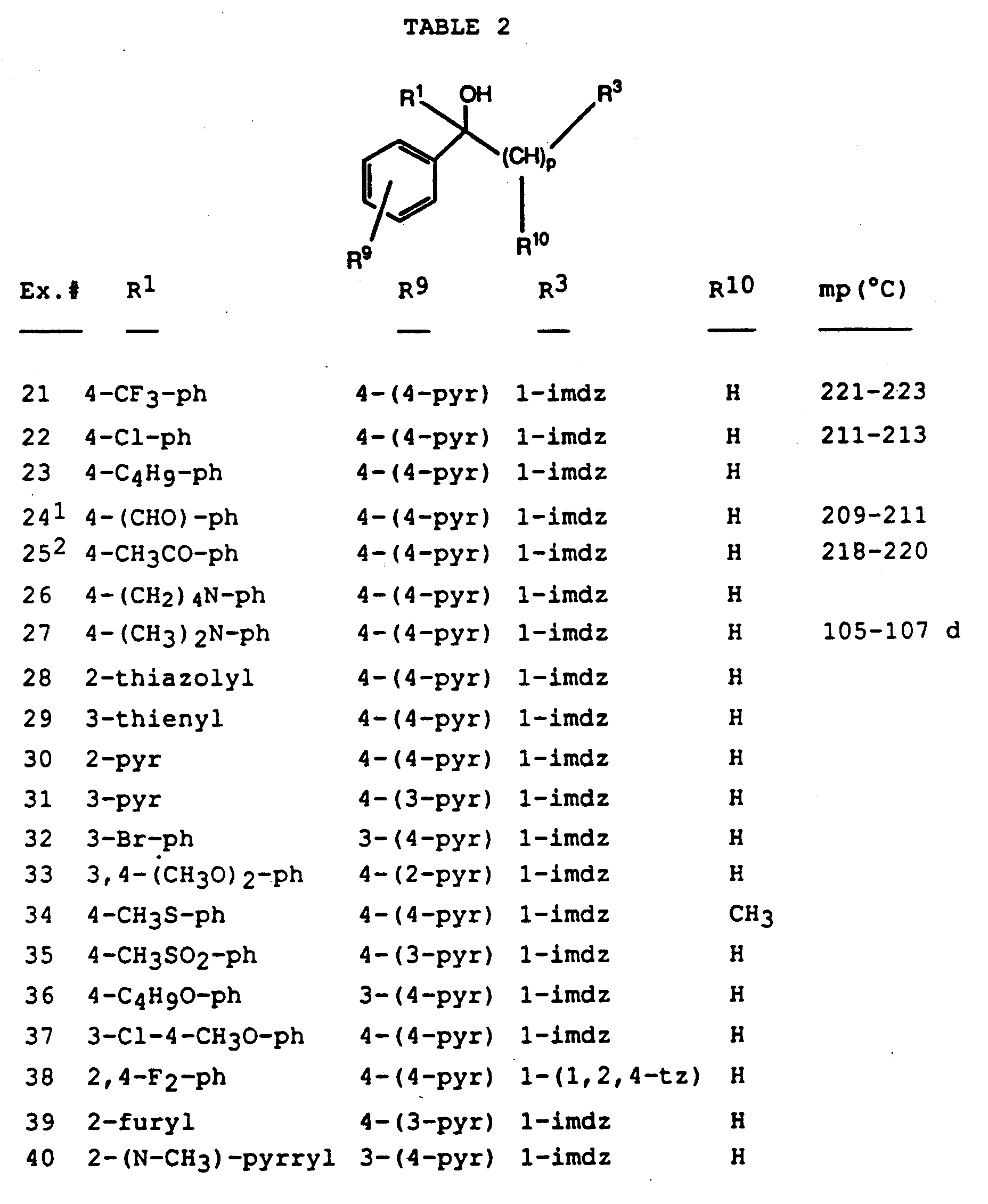

- Part A. A solution of 4-fluorophenylmagnesium bromide (prepared from 7.6 ml (0.070 mol) 4-bromofluorobenzene and 3.40 g (0.14 mol) magnesium turnings) in tetrahydrofuran (150 mL) was added to a suspension of 4-(4-acetylphenyl)pyridine (9.85 g, 0.050 mol) in tetrahydrofuran (50 mL) at 0°. The mixture was stirred for 30 min at 0° and for 30 min at room temperature, then was poured into saturated aqueous ammonium chloride. The mixture was extracted with ether, the organic phase was washed with water and brine, then was dried over magnesium sulfate and concentrated. The residue was recrystallized (1-chlorobutane) to give 1-(4-fluorophenyl)-1-[4-(4-pyridyl)phenyl]ethanol colorless needles (10.0 g, 68%). MP 166-170°; NMR (CDCl₃) 8.60 (d, 2H), 7.60-7.40 (8H), 7.00 (t, 2H), 2.00 (s, 3H).
- Part B. A solution of the product of Part A (9.50 g, 0.032 mol) and p-toluenesulfonic acid hydrate (13.00 g, 0.068 mol) in chloroform (250 mL) was heated to boiling. Water and chloroform were removed by distillation, with additional chloroform added to maintain the volume as needed. After 30 min, the mixture was cooled, concentrated to about 100 mL and diluted with ethyl acetate. The solution was washed with 1 M aqueous sodium bicarbonate, water and brine and was dried over magnesium sulfate and concentrated to provide 1-(4-fluorophenyl)-1-[4-(4-pyridyl)phenyl]ethylene (7.4 g, 84%) as a yellow oil. NMR (CDCl₃) 8.65 (m, 2H), 7.60 - 7.25 (8H), 7.00 (t, 2H), 5.50 (d, 2H).
- Part C. A solution of the product of Part B (6.30 g, 0.023 mol) in acetone (45 mL) was treated with N-methylmorpholine N-oxide hydrate (3.40 g, 0.025 mol) and water (15 mL). The resulting solution was treated with pyridine (7.5 mL) and a few crystals of osmium tetroxide and was heated at reflux for 24 h. Additional N-methylmorpholine N-oxide hydrate (0.34 g) was added and the solution was heated for an additional 16 h. The mixture was cooled to room temperature, diluted with ethyl acetate and washed with water. The water was back-extracted with ethyl acetate and the combined organic phases were washed with 95:5 water/glycerin, water and brine and dried over magnesium sulfate. The residue was 1-(4-fluorophenyl)-1-[4-(4-pyridyl)phenyl]-2-hydroxyethanol (6.8 g, 96%). NMR (CDCl₃) 8.50 (d, 2H), 7.60-7.10 (8H), 7.00 (t, 2H), 4.20 (dd, 2H), 2.35 (s, 2H).
- Part D. A solution of the product of Part C (0.48 g, 1.52 mmol) in chloroform (8 mL) was treated with triethylamine (1.10 mL, 7.90 mmol). The solution was cooled to -25° and treated with methanesulfonyl chloride (0.15 mL, 1.98 mmol). The mixture was warmed to room temperature and stirred for 45 min. Water was added, the layers were separated and the organic phase was washed with water and brine and was dried over magnesium sulfate and concentrated. The residue was taken up in benzene and concentrated, then was dissolved in N,N-dimethylformamide (7 mL). Benzimidazole (0.314 g, 2.66 mmol) and potassium tert-butoxide (0.298 g, 2.66 mmol) were added and the mixture was heated at 90° overnight. It was cooled to room temperature, diluted with water and extracted with ethyl acetate. The organic phase was washed with water and brine and was dried over magnesium sulfate and concentrated. The residue was chromatographed (95:5 methylene chloride/isopropanol) and the crude product was recrystallized (acetonitrile) to give the title compound, (0.283 g, 45%) as a tan-yellow powder. NMR (DMSO-d₆) 8.60 (m, 2H), 8.85-7.40 (10H), 7.10-7.00 (4H), 6.55 (m, 1H), 5.15 (broad s, 2H); Calcd for C₂₆H₂0FN₃O·H₂O: C-74.76, H-5.06, N-10.04; Found: C-74.36, H-4.87, N-10.12.
- Additional compounds which may be prepared using the method of Example 41 are shown in Table 3.

- Examples of the preparation of compounds of formula (I) by functional group manipulation of other compounds of formula (I) are given in Examples 61 and 62.
- A solution of the compound of Example 24 (0.20 g, 0.54 mmol) in methanol (25 mL) was treated with sodium borohydride (65 mg, 1.72 mmol) and stirred overnight at room temperature. The solution was concentrated, taken up in water and extracted with ethyl acetate. The extracts were washed with water, dried over magnesium sulfate and concentrated. The residue was chromatographed with 9:1 methylene chloride/methanol to give the title compound as off-white crystals (0.12 g, 60%). MP 173-175°C; NMR (DMSO-d₆) 8.62 (d, 2H), 7.70 (m, 4H), 7.60 (d, 2H), 7.45 (d, 2H), 7.32 (s, 1H), 7.25 (d, 2H), 6.87 (s, 1H), 6.65 (s, 1H), 6.25 (s, 1H), 5.15 (t, 1H), 4.87 (dd, 2H), 4.45 (d, 2H); Mass spec 371; Calcd. for C₂₃H₂₁N₃O₂: C-70.95, H-5.90, N-10.79; Found: C-71.13, H-5.89, N-10.30.
- Using the method of McDonald et al., J. Org. Chem. 1989, 54, 1213, the compound of Example 24 was converted to the title compound in 65% yield. MP 229-231°; NMR (DMSO-d₆) 8.9 (d, 2H), 8.62 (d, 2H), 7.75 (d, 2H), 7.7-7.6 (6H), 7.3 (s, 1H), 6.85 (s, 1H), 6.65 (s, 1H), 6.5 (s, 1H), 4.92 (dd, 2H), 3.82 (s, 3H); Mass spec 400; Calcd. for C₂₄H₂₁N₃O₃·3H₂O: C-71.21, H-5.19, N-10.38; Found: C-71.20, H-5.22, N-10.33.
- The compounds of Formula (I) have been shown to be efficacious in murine models of skin inflammatory diseases. One such model is inflammation induced by tetradecanoyl phorbol acetate (TPA), modified from the method of Kuehl et al., Nature, 1977, 265, 170; and Van Arman, Clin. Pharmacol. Ther., 1974, 16, 900. The TPA model mimics many of the inflammatory changes which occur in human diseases such as psoriasis, since elevated levels of inflammatory arachidonic acid metabolites are found and an influx of polymorphonuclear leukocytes is observed.
- The test procedure used to evaluate the compounds of formula (I) is as follows: the test compound (100 mg/ear) was applied to the ears of mice in an appropriate vehicle, such as acetone, and then TPA, the inflammatory stimulus was applied to the right ear. Four hours later, the edema was measured by removing standard size discs from the ears using a biopsy punch. The weights of the ears were determined, and the suppression of the swelling observed in animals not treated with the test compound was determined.
- Results obtained in this model for selected compounds of Formula (I) are shown in Table I.
TABLE I Example % inhibition of control swelling 1 72 2 51 3 63 4 52 5 73 6 61 7 64 8 69 9 46 10 63 11 62 12 74 21 66 22 79 - The compounds of the invention are useful in the treatment of inflammatory diseases, including but not limited to rheumatoid arthritis, osteoarthritis, tendonitis, bursitis, psoriasis, contact dermatitis, eczema, inflammatory bowel disease, uveitis and conjunctivitis. Administration of the compounds of this invention can be by any means that produces contact of the active agent with the agent's site of action in the body of a mammal. They can be administered by any conventional means available for use in conjunction with pharmaceuticals, either as individual therapeutic agents or in a combination of therapeutic agents. They can be administered alone, but are generally administered with a pharmaceutical carrier selected on the basis of the chosen route of administration and standard pharmaceutical practice.
- The dosage administered will, of course, vary depending upon known factors such as the pharmacodynamic characteristics of the particular agent and its mode and route of administration; age, health and weight of the recipient; nature and extent of symptoms, kind of concurrent treatment, frequency of treatment and the effect desired. Usually a daily dosage of active ingredient can be about 0.1 to 100 milligrams per kilogram of body weight. Ordinarily 0.5 to 50, and preferably 1 to 25 milligrams per kilogram per day given in divided doses 1 to 6 times a day or in sustained release form is effective to obtain desired results.
- Compositions (dosage forms) suitable for internal administration contain from about 1 milligram to about 500 milligrams of active ingredient per unit. In these pharmaceutical compositions the active ingredient will ordinarily be present in an amount of about 0.5-95% by weight based on the total weight of the composition.
- The active ingredient can be administered orally in solid dosage forms, such as capsules, tablets, and powders, or in liquid dosage forms, such as elixirs, syrups, and suspensions. It can also be administered parenterally, in sterile liquid dosage forms. It can also be administered by inhalation in the form of a nasal spray or lung inhaler. It can also be administered topically as an ointment, cream, gel, paste, lotion, solution, spray, aerosol, liposome, or patch. Dosage forms used to administer the active ingredient usually contain suitable carriers, diluents, preservatives or other excipients, as described in Remington's Pharmaceutical Sciences, 17th Edition (1985) A. Osol, a standard reference text in the field.
- Gelatin capsules contain the active ingredient and powdered carriers, such as lactose, sucrose, mannitol, starch, cellulose derivatives, magnesium stearate, stearic acid and the like. Similar diluents can be used to make compressed tablets and powders. Both tablets and capsules can be manufactured as sustained release products to provide for continuous release of medication over a period of hours. Compressed tablets can be sugar coated or film coated to mask any unpleasant taste and protect the tablet from the atmosphere or enteric coated for selective disintegration in the gastrointestinal tract.
- Liquid dosage forms for oral administration can contain coloring and flavoring to increase patient acceptance.
- In general, water, a suitable oil, saline, aqueous dextrose (glucose) and related sugar solutions and glycols such as propylene glycol or polyethylene glycols are suitable carriers for parenteral solutions. Solutions for parenteral administration contain the active ingredient, suitable stabilizing agents and if necessary, buffer substances. Anti-oxidizing agents such as sodium bisulfite, sodium sulfite or ascorbic acid either alone or combined are suitable stabilizing agents. Also used are citric acid and its salts and sodium EDTA. In addition, parenteral solutions can contain preservatives, such as benzalkonium chloride, methyl- or propyl-paraben and chloro-butanol.
- The topical ointments, creams, gels and pastes can contain diluents such as waxes, paraffins, starch, polyethylene glycol, silicones, bentonites, silicic acid, animal and vegetable fats, talc and zinc oxide or mixtures of these or other diluents. Topical solutions and emulsions can, for example, contain the customary diluents (with the exclusion of solvents having a molecular weight below 200 except in the presence of a surface-active agent), such as solvents, dissolving agents and emulsifiers; specific examples are water, ethanol, isopropanol, ethyl carbonate, benzyl alcohol, propylene glycol, oils, glycerol and fatty acid esters of sorbitol or mixtures thereof. Compositions for topical dosing may also contain preservatives or anti-oxidizing agents.
- Powders and sprays can contain the usual diluents, such as lactose, talc, silicic acid, aluminum hydroxide, calcium silicate and polyamide powders or mixtures of these materials. Aerosol sprays can contain the usual propellants. Liposomes can be made from such materials as animal or vegetable fats which will form lipid bilayers in which the active ingredient can be incorporated.
- Patches can be made of a matrix such as polyacrylamide and a semipermeable membrane made from a suitable polymer to control the rate at which the material is delivered to the skin.
- Examples of useful pharmaceutical compositions for administration of the compounds of this invention can be illustrated as follows:
CAPSULES: A large number of unit capsules are prepared by filling standard two-piece hard gelatin capsules each with 50 mg of powdered active ingredient, 175 mg of lactose, 24 mg of talc and 6 mg of magnesium stearate. - SOFT GELATIN CAPSULES: A mixture of active ingredient in soybean oil is prepared and injected by means of a positive displacement pump into gelatin to form soft gelatin capsules containing 50 mg of the active ingredient. The capsules are washed in petroleum ether and dried.
- TABLETS: A large number of tablets are prepared by conventional procedures so that the dosage unit is 50 mg of active ingredient, 6 mg of magnesium stearate, 70 mg of microcrystalline cellulose, 11 mg of cornstarch and 225 mg of lactose. Appropriate coatings may be applied to increase palatability or delay absorption.
- SUSPENSION: An aqueous suspension is prepared for oral administration so that each 5 mL contain 25 mg of finely divided active ingredient, 200 mg of sodium carboxymethyl cellulose, 5 mg of sodium benzoate, 1.0 g of sorbitol solution, U.S.P. and 0.025 mg of vanillin.
- INJECTABLE: A parenteral composition suitable for administration by injection is prepared by stirring 1.5% by weight of active ingredient in 10% by volume propylene glycol and water. The solution is sterilized by commonly used techniques.
- NASAL SPRAY: An aqueous solution is prepared such that each 1 mL contains 10 mg of active ingredient, 1.8 mg methylparaben, 0.2 mg propyl-paraben and 10 mg methylcellulose. The solution is dispensed into 1 mL vials.
- LUNG INHALER: A homogeneous mixture of the active ingredient in polysorbate 80 is prepared such that the final concentration of the active ingredient will be 10 mg per container and the final concentration of polysorbate 80 in the container will be 1% by weight. The mixture is dispensed into each can, the valves are crimped onto the can and the required amount of dichlorotetrafluoroethane is added under pressure.
- OINTMENT: The active ingredient is added to a mixture of 48% by weight white petrolatum, 10% liquid petrolatum, 8% glycerol monostearate, 3% isopropyl myristate and 20% lanolin at 70°C. After thorough mixing, a warm solution of methyl and propyl parabens in water containing sodium acetone bisulfite is added such that the final concentrations of each paraben is 0.15%, of water is 8%, and of sodium acetone bisulfite is 0.5%. The mixture is stirred until it has reached room temperature.
Claims (25)
- A process for preparing a compound having the formula:
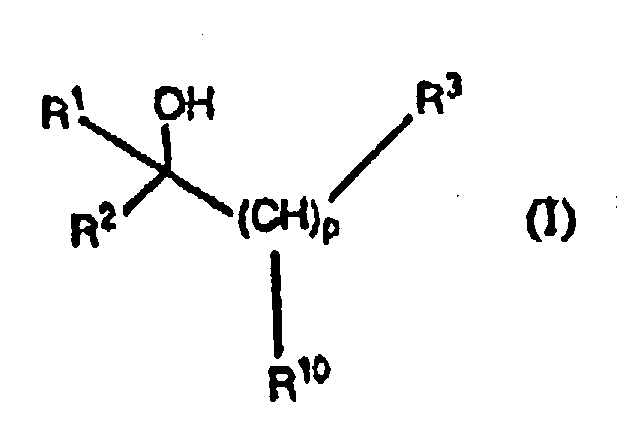
R¹ is 2-, 3-, or 4-pyridyl,
C₁-C₄ perfluroalkyl, C₁-C₄ alkylthio, C₁-C₄ alkylsulfonyl, CHO, COOR⁴, C₁-C₄ acyl, NR⁵R⁶, C₁-C₄ alkoxy or CH₂OR⁸;
R² and R⁷ independently are phenyl substituted in the ortho, meta, or para position with R⁹;
R³ is imidazole, 1,2,4-triazole, 1,3,4-triazole, benzimidazole, pyrrole, or pyrazole provided that R³ is bonded to the remainder of the structure through a nitrogen atom;
R⁴, R⁸, and R¹⁰ independently are H or C₁-C₄ alkyl;
R⁵ and R⁶ independently are H, C₁-C₄ alkyl, or taken together are (CH₂)m wherein m is 4-5;
R⁹ is 2-, 3-, or 4-pyridyl;
Y is N or CH;
Z is S, O, or NR¹¹;
R¹¹ is H or C₁-C₄ alkyl; and
p is 1-4 provided that when p is greater than 1, then R¹⁰ is H which process comprisesa) reacting in the presence of an appropriate transition metal catalyst, a compound of the formula: b) with a compound of the formula:
R⁹SnR
where R⁹ is as defined in above and R is alkyl of 1-4 carbons; and
for preparing compounds wherein p is 1 :1a) reacting a pyridylphenyl ketone of the formula:
with an appropriate reagent in the presence of an acidic catalyst to yield an alpha-halo derivative of the formula: 1b) reacting the halo-derivative with a nitrogen heterocycle (R³H) or optionally with a metal salt of a heterocycle R³M (where M is Na or K) to yield a compound of formula:
 1c) reacting the compound of step b with an organometallic compound R¹M¹ (where M¹ is lithium, magnesium halide or cerium halide) and R¹ is as defined in above; or2a) reacting a pyridylphenyl ketone of the formula:
with an appropriate aryl organometallic reagent to yield a compound of formula: 2b) dehydrating the alcohol (VI) to yield the olefin of formula:
 2c) oxidizing the olefin (VII) optionally in the presence of an auxiliary oxidant to yield a compound of formula:
 2d) reacting a compound of formula (VIII) with a sulfonyl chloride such as methanesulfonyl chloride or p-toluenesulfonyl chloride in the presence of pyridine or triethylamine, followed by reacting the intermediate with a nitrogen heterocycle R³H or optionally a metal salt of a nitrogen heterocycle R³M (where M is Na or K and R³ is as defined above).
 - A process of claim 1 wherein p is 1.
- A process of claim 1 wherein R³ is imidazole or triazole.
- A process of claim 1 wherein p is 1 and R³ is imidazole or triazole.
- A process of claim 3 or 4 wherein R³ is imidazole.
- A process of claim 1 or 4 wherein R¹⁰ is H.
- A process of claim 1 or 4 wherein R¹ is phenyl optionally substituted by one or two substituents independently selected from the group consisting of F, Cl, Br, C₁-C₄ alkyl, C₁-C₄ perfluoroalkyl, C₁-C₄ alkylthio, C₁-C₄ alkylsulfonyl, CHO, COOR⁴, C₁-C₄ acyl, NR⁵R⁶, C₁-C₄ alkoxy or CH₂OR⁸.
- A process of claim 1 wherein:
R³ is imidazole;
R¹⁰ is H; and
R¹ is phenyl optionally substituted by one or two substituents independently selected form the group consisting of F, Cl, Br, C₁-C₄ alkyl, C₁-C₄ perfluoroalkyl, C₁-C₄ alkylthio, C₁-C₄ alkylsulfonyl, CHO, COOR⁴, C₁-C₄ acyl, NR⁵R⁶, C₁-C₄ alkoxy or CH₂OR⁸. - A process of claim 4 wherein:
R³ is imidazole;
R¹⁰ is H; and
R¹ is phenyl optionally substituted by one or two substituents independently selected form the group consisting of F, Cl, Br, C₁-C₄ alkyl, C₁-C₄ perfluoroalkyl, C₁-C₄ alkylthio, C₁-C₄ alkylsulfonyl, CHO, COOR⁴, C₁-C₄ acyl, NR⁵R⁶, C₁-C₄ alkoxy or CH₂OR⁸. - A process of claim 8 wherein R¹ is mono- or di-substituted phenyl with one of the substituents at the 4-position.
- A process of claim 8 wherein R² is 4-(4-pyridylphenyl) or 3-(4-pyridylphenyl).
- A process of claim 8 wherein:
R¹ is mono- or di-substituted phenyl with one of the substituents at the 4-position; and
R² is 4-(4-pyridylphenyl) or 3-(4-pyridylphenyl). - The process of claim 12 wherein the prepared compound is 1-(4-fluorophenyl)-1-[4-(4-pyridyl)phenyl]-2-(1-imidazolyl)ethanol.
- The process of claim 12 wherein the prepared compound is 1-(2,4-difluorophenyl)-1-[4-(4-pyridyl)phenyl]-2-(1-imidazolyl)ethanol.
- The process of claim 12 wherein the prepared compound is 1-(4-fluorophenyl)-1-[3-(4-pyridyl)phenyl]-2-(1-imidazolyl)ethanol.
- The process of claim 12 wherein the prepared compound is 1-(4-methylphenyl)-1-[4-(4-pyridyl)phenyl]-2-(1-imidazolyl)ethanol.
- The process of claim 12 wherein the prepared compound is 1-(4-methoxyphenyl)-1-[4-(4-pyridyl)phenyl]-2-(1-imidazolyl)ethanol.
- The process of claim 12 wherein the prepared compound is 1-(4-trifluoromethylphenyl)-1-[4-(4-pyridyl)phenyl]-2-(1-imidazolyl)ethanol.
- The process of claim 12 wherein the prepared compound is 1-(4-chlorophenyl)-1-[4-(4-pyridyl)phenyl]-2-(1-imidazolyl)ethanol.
- A process for preparing a pharmaceutical composition comprising a pharmaceutically acceptable carrier and an anti-inflammatory effective amount of a compound as prepared in accordance with any one of claims 1-19, which process comprises admixing said carrier with the anti-inflammatory compound.
Applications Claiming Priority (3)
| Application Number | Priority Date | Filing Date | Title |
|---|---|---|---|
| US07/469,854 US5049570A (en) | 1990-01-23 | 1990-01-23 | Pyridylphenyl nitrogen heterocycle-substituted carbinols and derivatives thereof with anti-inflammatory activity |
| US469854 | 1990-01-23 | ||
| PCT/US1991/000022 WO1991011445A1 (en) | 1990-01-23 | 1991-01-09 | Pyridylphenyl nitrogen heterocycle-substituted carbinols and derivatives thereof with anti-inflammatory activity |
Publications (2)
| Publication Number | Publication Date |
|---|---|
| EP0513149A1 EP0513149A1 (en) | 1992-11-19 |
| EP0513149B1 true EP0513149B1 (en) | 1995-12-13 |
Family
ID=23865295
Family Applications (1)
| Application Number | Title | Priority Date | Filing Date |
|---|---|---|---|
| EP91903786A Expired - Lifetime EP0513149B1 (en) | 1990-01-23 | 1991-01-09 | Pyridylphenyl nitrogen heterocycle-substituted carbinols and derivatives thereof with anti-inflammatory activity |
Country Status (14)
| Country | Link |
|---|---|
| US (1) | US5049570A (en) |
| EP (1) | EP0513149B1 (en) |
| JP (1) | JP3053428B2 (en) |
| KR (1) | KR927003575A (en) |
| AT (1) | ATE131475T1 (en) |
| AU (1) | AU632905B2 (en) |
| CA (1) | CA2074723C (en) |
| DE (1) | DE69115468T2 (en) |
| GR (1) | GR3019121T3 (en) |
| IE (1) | IE910207A1 (en) |
| IL (1) | IL97007A0 (en) |
| NZ (1) | NZ236850A (en) |
| WO (1) | WO1991011445A1 (en) |
| ZA (1) | ZA91490B (en) |
Families Citing this family (10)
| Publication number | Priority date | Publication date | Assignee | Title |
|---|---|---|---|---|
| NZ270418A (en) * | 1994-02-07 | 1997-09-22 | Eisai Co Ltd | Polycyclic triazole & imidazole derivatives, antifungal compositions |
| US6265584B1 (en) * | 1998-05-22 | 2001-07-24 | Bristol-Myers Squibb Company | Water soluble prodrugs of azole compounds |
| NZ547696A (en) | 2003-12-23 | 2009-12-24 | Astex Therapeutics Ltd | Pyrazole derivatives as protein kinase modulators |
| AU2005245386B2 (en) * | 2004-05-07 | 2008-11-27 | Amgen Inc. | Nitrogenated heterocyclic derivatives as protein kinase modulators and use for the treatment of angiogenesis and cancer |
| WO2006136823A1 (en) * | 2005-06-21 | 2006-12-28 | Astex Therapeutics Limited | Heterocyclic containing amines as kinase b inhibitors |
| EP1902032A1 (en) | 2005-06-22 | 2008-03-26 | Astex Therapeutics Limited | Pharmaceutical compounds |
| EP1933832A2 (en) | 2005-06-23 | 2008-06-25 | Astex Therapeutics Limited | Pharmaceutical combinations comprising pyrazole derivatives as protein kinase modulators |
| GB0704932D0 (en) | 2007-03-14 | 2007-04-25 | Astex Therapeutics Ltd | Pharmaceutical compounds |
| RU2685723C1 (en) | 2013-12-05 | 2019-04-23 | Байер Кропсайенс Акциенгезелльшафт | N-cycloalkyl-n-{[2-(1-substituted cycloalkyl)phenyl]methylene}-(thio)carboxamide derivatives |
| EP3077377B1 (en) | 2013-12-05 | 2020-01-22 | Bayer CropScience Aktiengesellschaft | N-cycloalkyl-n-{[2-(1-substitutedcycloalkyl)phenyl]methylene}-(thio)carboxamide derivatives |
Family Cites Families (8)
| Publication number | Priority date | Publication date | Assignee | Title |
|---|---|---|---|---|
| DE2732750A1 (en) * | 1977-07-20 | 1979-02-08 | Merck Patent Gmbh | BASIC THIOAETHERS AND METHOD FOR THEIR PRODUCTION |
| DE2851116A1 (en) * | 1978-11-25 | 1980-06-12 | Bayer Ag | HYDROXYETHYL AZOLE, METHOD FOR THE PRODUCTION THEREOF AND THEIR USE AS A MEDICINAL PRODUCT |
| DE2920374A1 (en) * | 1979-05-19 | 1980-11-20 | Bayer Ag | FUNGICIDES, METHOD FOR THE PRODUCTION THEREOF AND THEIR USE AS FUNGICIDES |
| DE2920375A1 (en) * | 1979-05-19 | 1980-11-20 | Bayer Ag | FUNGICIDES, METHOD FOR THE PRODUCTION THEREOF AND THEIR USE AS FUNGICIDES |
| DE3345813A1 (en) * | 1983-12-17 | 1985-06-27 | Boehringer Ingelheim KG, 6507 Ingelheim | NEW 2- (1-IMIDAZOLYL) ETHANOL DERIVATIVES |
| DE3413173A1 (en) * | 1984-04-07 | 1985-10-17 | Bayer Ag, 5090 Leverkusen | (1,2,4-TRIAZOL-1-YL) METHYL CARBINOLE |
| DE3813841A1 (en) * | 1987-06-03 | 1988-12-15 | Bayer Ag | HETEROCYCLIC HYDROXYETHYLAZOLES |
| US4859693A (en) * | 1988-08-10 | 1989-08-22 | E. I. Du Pont De Nemours And Company | Antiinflammatory carbinoloimidazoles |
-
1990
- 1990-01-23 US US07/469,854 patent/US5049570A/en not_active Expired - Lifetime
-
1991
- 1991-01-09 AU AU72228/91A patent/AU632905B2/en not_active Ceased
- 1991-01-09 WO PCT/US1991/000022 patent/WO1991011445A1/en not_active Ceased
- 1991-01-09 JP JP3503531A patent/JP3053428B2/en not_active Expired - Lifetime
- 1991-01-09 KR KR1019920701744A patent/KR927003575A/en not_active Withdrawn
- 1991-01-09 EP EP91903786A patent/EP0513149B1/en not_active Expired - Lifetime
- 1991-01-09 CA CA002074723A patent/CA2074723C/en not_active Expired - Fee Related
- 1991-01-09 DE DE69115468T patent/DE69115468T2/en not_active Expired - Fee Related
- 1991-01-09 AT AT91903786T patent/ATE131475T1/en active
- 1991-01-22 IE IE020791A patent/IE910207A1/en unknown
- 1991-01-22 NZ NZ236850A patent/NZ236850A/en unknown
- 1991-01-23 ZA ZA91490A patent/ZA91490B/en unknown
- 1991-01-23 IL IL97007A patent/IL97007A0/en unknown
-
1996
- 1996-02-28 GR GR960400545T patent/GR3019121T3/en unknown
Non-Patent Citations (1)
| Title |
|---|
| S. W. Wright, J. Med. Chem., 1992, 35(17), 3148-3155 * |
Also Published As
| Publication number | Publication date |
|---|---|
| AU632905B2 (en) | 1993-01-14 |
| GR3019121T3 (en) | 1996-05-31 |
| KR927003575A (en) | 1992-12-18 |
| HK1006840A1 (en) | 1999-03-19 |
| ZA91490B (en) | 1992-09-30 |
| IE910207A1 (en) | 1991-07-31 |
| US5049570A (en) | 1991-09-17 |
| DE69115468D1 (en) | 1996-01-25 |
| JPH05507904A (en) | 1993-11-11 |
| WO1991011445A1 (en) | 1991-08-08 |
| AU7222891A (en) | 1991-08-21 |
| DE69115468T2 (en) | 1996-05-23 |
| JP3053428B2 (en) | 2000-06-19 |
| EP0513149A1 (en) | 1992-11-19 |
| ATE131475T1 (en) | 1995-12-15 |
| NZ236850A (en) | 1994-01-26 |
| CA2074723A1 (en) | 1991-07-24 |
| CA2074723C (en) | 2001-10-30 |
| IL97007A0 (en) | 1992-03-29 |
Similar Documents
| Publication | Publication Date | Title |
|---|---|---|
| US5773443A (en) | Triazole antifungal agents | |
| JP3210017B2 (en) | Trisubstituted tetrahydrofuran antifungal compounds | |
| JPS60115523A (en) | Antimicrobial | |
| JPS62212369A (en) | Trinitrile compound, manufacture and use | |
| JPH0717634B2 (en) | Tri- and tetra-substituted-oxetanes and tetrahydrofuran and its intermediates | |
| US5049570A (en) | Pyridylphenyl nitrogen heterocycle-substituted carbinols and derivatives thereof with anti-inflammatory activity | |
| EP0679647B1 (en) | Novel antifungal triazole compound and production and use thereof | |
| HK1006840B (en) | Pyridylphenyl nitrogen heterocycle-substituted carbinols and derivatives thereof with anti-inflammatory activity | |
| US5126359A (en) | Substituted bisazoles and their use as medicaments | |
| JP2002503650A (en) | Farnesyltransferase inhibitor | |
| IE50962B1 (en) | Substituted phenoxy-aminopropanol derivatives,intermediates,process for preparing said derivatives and medicaments containing them | |
| US4038404A (en) | 1,2,4-triazole antimycotic compositions and use thereof | |
| US4642311A (en) | β-adrenergic blocking imidazolylphenoxy propanolamines | |
| US4038406A (en) | 1,2,4-triazole antimycotic compositions and use thereof | |
| US4060623A (en) | 1,2,4-Triazole antimycotic compositions and use thereof | |
| EP0354539B1 (en) | Antiinflammatory carbinoloimidazoles | |
| WO1991012000A1 (en) | ANILINE DERIVATIVES OF α-STYRYL CARBINOLS AS ANTIFUNGAL AGENTS | |
| US4036966A (en) | 1,2,4-Triazole antimycotic compositions and use thereof | |
| US4036967A (en) | 1,2,4-Triazole antimycotic compositions and use thereof | |
| JPH072801A (en) | Novel triazole compound, production method thereof, and antifungal agent containing the compound as an active ingredient | |
| EP0388691A1 (en) | Azole-1-alkanamides as antiarrhytmic agents and preparation thereof | |
| JPH01102065A (en) | Antimycotic | |
| JPH01102069A (en) | Antimycotic | |
| JPH07316140A (en) | Novel triazole compound, process for producing the same and use thereof | |
| DE3307479A1 (en) | Azolylmethylcycloalkanes, process for their preparation and their use as medicaments |
Legal Events
| Date | Code | Title | Description |
|---|---|---|---|
| PUAI | Public reference made under article 153(3) epc to a published international application that has entered the european phase |
Free format text: ORIGINAL CODE: 0009012 |
|
| 17P | Request for examination filed |
Effective date: 19920720 |
|
| AK | Designated contracting states |
Kind code of ref document: A1 Designated state(s): AT BE CH DE DK ES FR GB GR IT LI LU NL SE |
|
| 17Q | First examination report despatched |
Effective date: 19940322 |
|
| GRAA | (expected) grant |
Free format text: ORIGINAL CODE: 0009210 |
|
| RAP1 | Party data changed (applicant data changed or rights of an application transferred) |
Owner name: THE DU PONT MERCK PHARMACEUTICAL COMPANY |
|
| AK | Designated contracting states |
Kind code of ref document: B1 Designated state(s): AT BE CH DE DK ES FR GB GR IT LI LU NL SE |
|
| PG25 | Lapsed in a contracting state [announced via postgrant information from national office to epo] |
Ref country code: NL Free format text: LAPSE BECAUSE OF FAILURE TO SUBMIT A TRANSLATION OF THE DESCRIPTION OR TO PAY THE FEE WITHIN THE PRESCRIBED TIME-LIMIT Effective date: 19951213 Ref country code: LI Free format text: LAPSE BECAUSE OF FAILURE TO SUBMIT A TRANSLATION OF THE DESCRIPTION OR TO PAY THE FEE WITHIN THE PRESCRIBED TIME-LIMIT Effective date: 19951213 Ref country code: ES Free format text: THE PATENT HAS BEEN ANNULLED BY A DECISION OF A NATIONAL AUTHORITY Effective date: 19951213 Ref country code: DK Effective date: 19951213 Ref country code: CH Free format text: LAPSE BECAUSE OF FAILURE TO SUBMIT A TRANSLATION OF THE DESCRIPTION OR TO PAY THE FEE WITHIN THE PRESCRIBED TIME-LIMIT Effective date: 19951213 Ref country code: BE Effective date: 19951213 Ref country code: AT Effective date: 19951213 |
|
| REF | Corresponds to: |
Ref document number: 131475 Country of ref document: AT Date of ref document: 19951215 Kind code of ref document: T |
|
| REF | Corresponds to: |
Ref document number: 69115468 Country of ref document: DE Date of ref document: 19960125 |
|
| ET | Fr: translation filed | ||
| ITF | It: translation for a ep patent filed | ||
| PG25 | Lapsed in a contracting state [announced via postgrant information from national office to epo] |
Ref country code: SE Effective date: 19960313 |
|
| REG | Reference to a national code |
Ref country code: GR Ref legal event code: FG4A Free format text: 3019121 |
|
| NLV1 | Nl: lapsed or annulled due to failure to fulfill the requirements of art. 29p and 29m of the patents act | ||
| REG | Reference to a national code |
Ref country code: CH Ref legal event code: PL |
|
| PLBE | No opposition filed within time limit |
Free format text: ORIGINAL CODE: 0009261 |
|
| STAA | Information on the status of an ep patent application or granted ep patent |
Free format text: STATUS: NO OPPOSITION FILED WITHIN TIME LIMIT |
|
| 26N | No opposition filed | ||
| REG | Reference to a national code |
Ref country code: FR Ref legal event code: CD Ref country code: FR Ref legal event code: CA |
|
| PGFP | Annual fee paid to national office [announced via postgrant information from national office to epo] |
Ref country code: DE Payment date: 20010102 Year of fee payment: 11 |
|
| PGFP | Annual fee paid to national office [announced via postgrant information from national office to epo] |
Ref country code: GB Payment date: 20010103 Year of fee payment: 11 |
|
| PGFP | Annual fee paid to national office [announced via postgrant information from national office to epo] |
Ref country code: LU Payment date: 20010109 Year of fee payment: 11 |
|
| PGFP | Annual fee paid to national office [announced via postgrant information from national office to epo] |
Ref country code: FR Payment date: 20010125 Year of fee payment: 11 |
|
| PGFP | Annual fee paid to national office [announced via postgrant information from national office to epo] |
Ref country code: GR Payment date: 20010129 Year of fee payment: 11 |
|
| REG | Reference to a national code |
Ref country code: GB Ref legal event code: IF02 |
|
| PG25 | Lapsed in a contracting state [announced via postgrant information from national office to epo] |
Ref country code: LU Free format text: LAPSE BECAUSE OF NON-PAYMENT OF DUE FEES Effective date: 20020109 Ref country code: GB Free format text: LAPSE BECAUSE OF NON-PAYMENT OF DUE FEES Effective date: 20020109 |
|
| PG25 | Lapsed in a contracting state [announced via postgrant information from national office to epo] |
Ref country code: DE Free format text: LAPSE BECAUSE OF NON-PAYMENT OF DUE FEES Effective date: 20020801 |
|
| PG25 | Lapsed in a contracting state [announced via postgrant information from national office to epo] |
Ref country code: GR Free format text: LAPSE BECAUSE OF NON-PAYMENT OF DUE FEES Effective date: 20020812 |
|
| GBPC | Gb: european patent ceased through non-payment of renewal fee |
Effective date: 20020109 |
|
| PG25 | Lapsed in a contracting state [announced via postgrant information from national office to epo] |
Ref country code: FR Free format text: LAPSE BECAUSE OF NON-PAYMENT OF DUE FEES Effective date: 20020930 |
|
| REG | Reference to a national code |
Ref country code: FR Ref legal event code: ST |
|
| PG25 | Lapsed in a contracting state [announced via postgrant information from national office to epo] |
Ref country code: IT Free format text: LAPSE BECAUSE OF NON-PAYMENT OF DUE FEES;WARNING: LAPSES OF ITALIAN PATENTS WITH EFFECTIVE DATE BEFORE 2007 MAY HAVE OCCURRED AT ANY TIME BEFORE 2007. THE CORRECT EFFECTIVE DATE MAY BE DIFFERENT FROM THE ONE RECORDED. Effective date: 20050109 |