EP0512790B1 - Treatment of alkali treated pulp for use in papermaking - Google Patents
Treatment of alkali treated pulp for use in papermaking Download PDFInfo
- Publication number
- EP0512790B1 EP0512790B1 EP92304028A EP92304028A EP0512790B1 EP 0512790 B1 EP0512790 B1 EP 0512790B1 EP 92304028 A EP92304028 A EP 92304028A EP 92304028 A EP92304028 A EP 92304028A EP 0512790 B1 EP0512790 B1 EP 0512790B1
- Authority
- EP
- European Patent Office
- Prior art keywords
- pulp
- pectinase
- pectins
- bleached
- process according
- Prior art date
- Legal status (The legal status is an assumption and is not a legal conclusion. Google has not performed a legal analysis and makes no representation as to the accuracy of the status listed.)
- Expired - Lifetime
Links
- 239000003513 alkali Substances 0.000 title claims description 23
- 238000011282 treatment Methods 0.000 title description 24
- 229920001277 pectin Polymers 0.000 claims abstract description 68
- 239000001814 pectin Substances 0.000 claims abstract description 66
- 235000010987 pectin Nutrition 0.000 claims abstract description 66
- 108010059820 Polygalacturonase Proteins 0.000 claims abstract description 61
- 108010093305 exopolygalacturonase Proteins 0.000 claims abstract description 56
- 239000000835 fiber Substances 0.000 claims abstract description 19
- 238000000034 method Methods 0.000 claims abstract description 19
- 239000008346 aqueous phase Substances 0.000 claims abstract description 17
- 230000008569 process Effects 0.000 claims abstract description 13
- 235000013311 vegetables Nutrition 0.000 claims abstract description 9
- 150000002978 peroxides Chemical class 0.000 claims description 21
- XLYOFNOQVPJJNP-UHFFFAOYSA-N water Substances O XLYOFNOQVPJJNP-UHFFFAOYSA-N 0.000 claims description 20
- 229920001131 Pulp (paper) Polymers 0.000 claims description 17
- 230000014759 maintenance of location Effects 0.000 claims description 13
- 239000000945 filler Substances 0.000 claims description 6
- 238000005406 washing Methods 0.000 claims description 5
- LSNNMFCWUKXFEE-UHFFFAOYSA-N Sulfurous acid Chemical compound OS(O)=O LSNNMFCWUKXFEE-UHFFFAOYSA-N 0.000 claims description 2
- QVGXLLKOCUKJST-UHFFFAOYSA-N atomic oxygen Chemical compound [O] QVGXLLKOCUKJST-UHFFFAOYSA-N 0.000 claims description 2
- 229910052760 oxygen Inorganic materials 0.000 claims description 2
- 239000001301 oxygen Substances 0.000 claims description 2
- 239000002023 wood Substances 0.000 abstract description 14
- 238000004519 manufacturing process Methods 0.000 abstract description 5
- 238000004061 bleaching Methods 0.000 description 29
- 239000000725 suspension Substances 0.000 description 27
- 125000002091 cationic group Chemical group 0.000 description 24
- IAJILQKETJEXLJ-UHFFFAOYSA-N Galacturonsaeure Natural products O=CC(O)C(O)C(O)C(O)C(O)=O IAJILQKETJEXLJ-UHFFFAOYSA-N 0.000 description 20
- AEMOLEFTQBMNLQ-YMDCURPLSA-N D-galactopyranuronic acid Chemical compound OC1O[C@H](C(O)=O)[C@H](O)[C@H](O)[C@H]1O AEMOLEFTQBMNLQ-YMDCURPLSA-N 0.000 description 19
- 229920006317 cationic polymer Polymers 0.000 description 15
- 108090000790 Enzymes Proteins 0.000 description 14
- 102000004190 Enzymes Human genes 0.000 description 14
- 239000000126 substance Substances 0.000 description 13
- 229920002230 Pectic acid Polymers 0.000 description 9
- 150000001720 carbohydrates Chemical class 0.000 description 8
- 239000000463 material Substances 0.000 description 8
- 125000000129 anionic group Chemical group 0.000 description 7
- 235000014633 carbohydrates Nutrition 0.000 description 7
- 230000000593 degrading effect Effects 0.000 description 7
- 230000000694 effects Effects 0.000 description 7
- 241000218657 Picea Species 0.000 description 5
- 150000002772 monosaccharides Chemical class 0.000 description 5
- 108020004410 pectinesterase Proteins 0.000 description 5
- 239000010318 polygalacturonic acid Substances 0.000 description 5
- 241000894007 species Species 0.000 description 5
- 235000008124 Picea excelsa Nutrition 0.000 description 4
- 230000008859 change Effects 0.000 description 4
- 239000000203 mixture Substances 0.000 description 4
- 239000010813 municipal solid waste Substances 0.000 description 4
- 239000007844 bleaching agent Substances 0.000 description 3
- 230000003247 decreasing effect Effects 0.000 description 3
- 238000002474 experimental method Methods 0.000 description 3
- 229920000642 polymer Polymers 0.000 description 3
- 238000004537 pulping Methods 0.000 description 3
- 239000000243 solution Substances 0.000 description 3
- 241000609240 Ambelania acida Species 0.000 description 2
- 235000017166 Bambusa arundinacea Nutrition 0.000 description 2
- 235000017491 Bambusa tulda Nutrition 0.000 description 2
- 244000025254 Cannabis sativa Species 0.000 description 2
- 235000012766 Cannabis sativa ssp. sativa var. sativa Nutrition 0.000 description 2
- 235000012765 Cannabis sativa ssp. sativa var. spontanea Nutrition 0.000 description 2
- 240000000797 Hibiscus cannabinus Species 0.000 description 2
- MHAJPDPJQMAIIY-UHFFFAOYSA-N Hydrogen peroxide Chemical compound OO MHAJPDPJQMAIIY-UHFFFAOYSA-N 0.000 description 2
- 244000082204 Phyllostachys viridis Species 0.000 description 2
- 235000015334 Phyllostachys viridis Nutrition 0.000 description 2
- 239000000654 additive Substances 0.000 description 2
- 238000004458 analytical method Methods 0.000 description 2
- 229920006318 anionic polymer Polymers 0.000 description 2
- 239000007864 aqueous solution Substances 0.000 description 2
- 239000010905 bagasse Substances 0.000 description 2
- 239000011425 bamboo Substances 0.000 description 2
- AEMOLEFTQBMNLQ-UHFFFAOYSA-N beta-D-galactopyranuronic acid Natural products OC1OC(C(O)=O)C(O)C(O)C1O AEMOLEFTQBMNLQ-UHFFFAOYSA-N 0.000 description 2
- 235000009120 camo Nutrition 0.000 description 2
- 230000015556 catabolic process Effects 0.000 description 2
- 235000005607 chanvre indien Nutrition 0.000 description 2
- 230000007423 decrease Effects 0.000 description 2
- 238000006731 degradation reaction Methods 0.000 description 2
- 239000012153 distilled water Substances 0.000 description 2
- 238000005189 flocculation Methods 0.000 description 2
- 230000016615 flocculation Effects 0.000 description 2
- 239000013505 freshwater Substances 0.000 description 2
- 239000011121 hardwood Substances 0.000 description 2
- 239000011487 hemp Substances 0.000 description 2
- 230000006872 improvement Effects 0.000 description 2
- 229920005610 lignin Polymers 0.000 description 2
- 239000012071 phase Substances 0.000 description 2
- 239000010346 polypectate Substances 0.000 description 2
- 238000007670 refining Methods 0.000 description 2
- 238000009877 rendering Methods 0.000 description 2
- 239000011122 softwood Substances 0.000 description 2
- OKTJSMMVPCPJKN-UHFFFAOYSA-N Carbon Chemical compound [C] OKTJSMMVPCPJKN-UHFFFAOYSA-N 0.000 description 1
- 108010084185 Cellulases Proteins 0.000 description 1
- 102000005575 Cellulases Human genes 0.000 description 1
- VEXZGXHMUGYJMC-UHFFFAOYSA-M Chloride anion Chemical compound [Cl-] VEXZGXHMUGYJMC-UHFFFAOYSA-M 0.000 description 1
- 108090000371 Esterases Proteins 0.000 description 1
- 229920002488 Hemicellulose Polymers 0.000 description 1
- 229920000209 Hexadimethrine bromide Polymers 0.000 description 1
- 229920002522 Wood fibre Polymers 0.000 description 1
- 238000013019 agitation Methods 0.000 description 1
- 239000007900 aqueous suspension Substances 0.000 description 1
- 230000008901 benefit Effects 0.000 description 1
- 229910052799 carbon Inorganic materials 0.000 description 1
- 229920002678 cellulose Polymers 0.000 description 1
- 239000001913 cellulose Substances 0.000 description 1
- 239000012141 concentrate Substances 0.000 description 1
- 238000007796 conventional method Methods 0.000 description 1
- 239000007857 degradation product Substances 0.000 description 1
- 230000001627 detrimental effect Effects 0.000 description 1
- 238000007865 diluting Methods 0.000 description 1
- 150000002016 disaccharides Chemical class 0.000 description 1
- 239000003792 electrolyte Substances 0.000 description 1
- 150000004676 glycans Polymers 0.000 description 1
- 108010002430 hemicellulase Proteins 0.000 description 1
- 230000003993 interaction Effects 0.000 description 1
- 235000015110 jellies Nutrition 0.000 description 1
- 239000008274 jelly Substances 0.000 description 1
- 239000000178 monomer Substances 0.000 description 1
- 230000020477 pH reduction Effects 0.000 description 1
- -1 pectins Chemical class 0.000 description 1
- 230000000149 penetrating effect Effects 0.000 description 1
- 150000004804 polysaccharides Polymers 0.000 description 1
- 238000002360 preparation method Methods 0.000 description 1
- 239000002994 raw material Substances 0.000 description 1
- 238000005070 sampling Methods 0.000 description 1
- 239000002002 slurry Substances 0.000 description 1
- 238000010561 standard procedure Methods 0.000 description 1
- 238000003756 stirring Methods 0.000 description 1
- 230000003313 weakening effect Effects 0.000 description 1
- 239000002025 wood fiber Substances 0.000 description 1
Images




Classifications
-
- D—TEXTILES; PAPER
- D21—PAPER-MAKING; PRODUCTION OF CELLULOSE
- D21C—PRODUCTION OF CELLULOSE BY REMOVING NON-CELLULOSE SUBSTANCES FROM CELLULOSE-CONTAINING MATERIALS; REGENERATION OF PULPING LIQUORS; APPARATUS THEREFOR
- D21C5/00—Other processes for obtaining cellulose, e.g. cooking cotton linters ; Processes characterised by the choice of cellulose-containing starting materials
- D21C5/005—Treatment of cellulose-containing material with microorganisms or enzymes
-
- D—TEXTILES; PAPER
- D21—PAPER-MAKING; PRODUCTION OF CELLULOSE
- D21C—PRODUCTION OF CELLULOSE BY REMOVING NON-CELLULOSE SUBSTANCES FROM CELLULOSE-CONTAINING MATERIALS; REGENERATION OF PULPING LIQUORS; APPARATUS THEREFOR
- D21C9/00—After-treatment of cellulose pulp, e.g. of wood pulp, or cotton linters ; Treatment of dilute or dewatered pulp or process improvement taking place after obtaining the raw cellulosic material and not provided for elsewhere
- D21C9/001—Modification of pulp properties
- D21C9/002—Modification of pulp properties by chemical means; preparation of dewatered pulp, e.g. in sheet or bulk form, containing special additives
Definitions
- the present invention relates to the treatment of pulp for use in papermaking and, especially, to an improvement in making paper from alkali treated pulp by dewatering a pulp containing alkali treated vegetable fibers.
- Pulping techniques commonly used today include chemical, semichemical, chemimechanical, and mechanical pulping of different wood materials, including softwood and hardwood, as well as non-wood materials such as bagasse, hemp, kenaf, bamboo, etc.
- Various additives are used in order to improve the quality of the paper obtained as well as the economy of the papermaking and pulping processes.
- the Japanese published patent application 2-118191 by Jujo Paper Company, Limited discloses treating a mechanical pulp with pectinase in order to degrade pectins on the fibers thus weakening the bond between lignin and cellulose and further refining the pulp before bleaching. It is alleged that this treatment will improve the brightness of the mechanical pulp by facilitating removal of lignin from the surface of the fibers during subsequent refining of the pulp.
- Finnish Patent Specification FI-A-805041 discloses a process for treating water separated from an untreated (unbleached) mechanical pulp/water suspension in the production of paper, with a hemicellulose enzyme in order to degrade substances dissolved or dispersed from the fibers. The enzyme treated water is then recirculated to be re-used for slurrying new pulp fed to the system.
- FI-A-805041 also suggests using enzymes other than hemicellulases, such as cellulases, esterases or pectinases, but there is no specific or experimental disclosure with respect to these other enzymes.
- the aqueous phase of alkali treated pulp contains a substantial amount of pectins irrespective of whether pectin degrading pectinases have been added to the pulp before the alkali treatment or not.
- alkali treatment such as bleaching, particularly alkaline peroxide bleaching, will effectively release pectins from the fiber phase into the aqueous phase of a mechanical pulp.
- No significant amounts of pectins have been found in the aqueous phase of unbleached mechanical pulps. Treating unbleached pulps with pectinase, as suggested in the above Japanese publication, did not prevent pectins from later being released from the fibers upon bleaching.
- pectins were present in substantial amounts in the aqueous phase of bleached pulps even when pectin degrading pectinases were added prior to bleaching. Active pectinases added to the pulp before bleaching were found to be destroyed by the severe conditions prevailing in bleaching and therefore were not able to degrade those pectins released in bleaching. Degradation of the enzymatically active pectinases is probably caused by high temperature, bleaching agent, degradation products of the bleaching agent, as well as high pH.
- the object of the present invention is thus to provide an improved method of making paper from pulp containing alkali treated vegetable fibers. According to the present invention this improvement is achieved by incorporating pectinase in the alkali treated pulp to decompose any pectins in the aqueous phase of the pulp.
- the present invention is useful in making paper from any pulps including chemical, semichemical, chemimechanical and mechanical pulps containing any type of vegetable fibers, including wood and non-wood fibers, and treated at alkaline conditions or bleached by any bleaching method using such bleaching agents as alkaline hydrogen peroxide, oxygen or sulfite.
- pulp refers to an aqueous mixture of vegetable fibers in which the water content can vary within a very wide range and which in addition to fibers can also contain additives such as fillers and retention aids.
- pectinase simply means that pectinase should be present in the aqueous phase of the pulp after the alkali treatment such as bleaching and before dewatering the bleached pulp.
- the present invention essentially improves the dewatering properties of any pulp containing bleached vegetable fibers, it is especially useful for treating such pulps that in addition to bleached vegetable fibers also contain cationic retention aids used to improve retention of fines and filler in the sheet since anionic trash, such as pectins, are known to render these less effective in retaining filler materials in the paper.
- the pectinase is preferably added to the alkali treated pulp at such an early stage as to allow the pectinase to substantially degrade the pectins in the aqueous phase of the alkali treated pulp before adding said retention aids.
- the effective amount of pectinase to be added to bleached pulps in order to obtain the objectives of the present invention may vary within a large range depending upon the specific pectinase used and the bleached pulp to be treated, the man skilled in the art will find no difficulties in establishing the optimal amount of pectinase, as calculated on dry pulp, in each case by using standard procedures well known in the art and thus without undue experimentation.
- pectinase mixture containing polygalacturonase (EC 3.2.1.15) and pectin methylesterase (EC 3.1.1.11) in the treatment of a thermomechanical pulp of spruce from alkaline peroxide bleaching, an amount of 0.4% to 4% of pectinases, calculated on dry pulp, was found sufficient.
- the treatment of the present invention it is sufficient to add the pectinase to the aqueous phase of the alkali treated pulp. It should be noted that the treatment of the present invention will not significantly affect pulp yield because the treatment concentrates on pectins that have already been dissolved from the pulp fibers. Accordingly, it is also possible to add the pectinase to either wash water obtained from washing alkali treated pulp or to water obtained in dewatering the alkali treated pulp in papermaking.
- Pulp washing is gaining popularity in mills utilizing peroxide bleaching of mechanical pulps because of the observed negative effects peroxide bleaching has on papermaking, which now, unexpectedly, has been found to be due to the pectins released in peroxide bleaching. Pulp washing is carried out in order to remove water containing dissolved and colloidal substances from the bleached pulp. Mills utilizing pulp washing have to find ways to treat the dirty water prior to reusing it in their pulp mill system. It should also be noted that substances other than pectins are found as dissolved and colloidal substances in mechanical pulp suspensions.
- One type of internal treatment method may include flocculation using a cationic polymer, followed by mechanical removal of the flocculated material. The enzyme treatment of the present invention will thus result in more efficient use of the cationic flocculant by preventing its consumption by the anionic pectins.
- White water is the water remaining after making the paper sheet. This water is always reused for diluting new pulp fed to the paper machine to obtain the proper consistency prior to forming the sheet. Fresh water is added to the paper machine when it is necessary to make up for water losses caused by sewering some of the dirty white paper.
- Pectins have an effect on the drainage properties of pulp suspensions, especially when large amounts buld up in highly closed papermaking systems, i.e. systems utilizing small amounts of fresh water make-up in the paper manufacturing process. At high concentrations, pectins are known to have a jelly forming capability, greatly increasing the viscosity of the aqueous solution.
- Treating the white water from a paper machine will prevent the pectins from building up in highly closed pulp systems and will result in better drainage properties of pulp fed to the machine. This will result in greater water removal in the wet end of the paper machine, and hence, less steam required to further dry the sheet, which is an important advantage because steam costs are one of the most substantial operational costs of a paper machine.
- the present invention is especially useful in the treatment of mechanical pulps bleached at alkaline conditions since high pH has been found to effectively release pectins into the aqueous phase of the pulp.
- the present invention is also especially useful in treating bleached pulp from non-wood raw materials such as bagasse, hemp, kenaf, bamboo, etc., since such non-wood materials contain much more pectins than wood materials and thus will cause a substantially greater release of pectins into the aqueous phase of the bleached pulp thus produced.
- pectinases refers to any kind of enzymes that are capable of degrading pectins. Especially suitable pectinases are mixtures of polygalacturonases and pectin methylesterases. On the other hand, all major wood species contain some pectins and some non-wood species are very rich in pectins, which are chemically known as polygalacturonic acids or galacturonans.
- pectin polygalacturonic acid
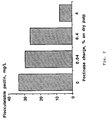
- Fig. 1 shows the amount of pectin and galacturonic acid in bleached pulp suspensions treated with various amounts of pectinase
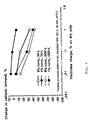
- Fig. 2 shows the amount of pectin flocculatable by a cationic polymer added to the pulp at 0.5% on dry pulp
- Fig. 3 illustrates the effects of treating unbleached pulp with 4% pectinase, calculated on dry pulp, prior to peroxide bleaching
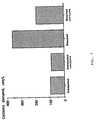
- Fig. 4 shows the cationic demand of bleached pulp suspensions treated with various amounts of pectinase
- Fig. 1 shows the amount of pectin and galacturonic acid in bleached pulp suspensions treated with various amounts of pectinase
- Fig. 2 shows the amount of pectin flocculatable by a cationic polymer added to the pulp at 0.5% on dry pulp
- Fig. 3 illustrates the effects of treating unbleached pulp with 4% pectinase, calculated on dry pulp,
- Fig. 5 shows the change in cationic demand of bleached pulp suspensions treated with various amounts of various pectinases
- Fig. 6 shows the change in cationic demand of bleached pulp suspensions treated with various amounts of pectinase at various temperatures
- Fig. 7 shows the cationic demand of bleached and unbleached pulp suspensions before and after a treatment with pectinase.
- a mechanical pulp more specifically Norway spruce TMP (thermomechanicl pulp) was used.
- Peroxide bleaching was carried out with 10 dry g of the TMP sample. After bleaching and acidification, the resulting pulp was diluted to 1% with distilled water and agitated for 3 h. The TMP suspension was then divided into four 250 ml portions.
- a pectinase mixture containing polygalacturonase (EC 3.2.1.15) and pectin methylesterase (EC 3.1.1.11) and having an activity of 0.007 U/mg was added in the following amount: 0, 0.04, 0.4, 4.0% on dry pulp (U is defined as the number of ⁇ moles of galacturonic acid that can be released from polygalacturonic acid per min at pH 4-5 and 50°C).
- U is defined as the number of ⁇ moles of galacturonic acid that can be released from polygalacturonic acid per min at pH 4-5 and 50°C).
- the four suspensions were then agitated for 1 h at 50°C and 500 min -1 with a magnetic stirrer. The pH was at its normal value of about pH 5.
- Half of each suspension was then removed and centrifuged to obtain dissolved and colloidal substances (DCS) samples.
- DCS dissolved and colloidal substances
- Fig. 1 shows that the total amount of pectin and galacturonic acid remained fairly constant at increased pectinase charges. However, galacturonic acid was clearly formed in increasing amounts with increased pectinase charges. These results show that pectin present in the bleached pulp suspension was degraded, ultimately to galacturonic acid, upon treatment with pectinase.
- Example 2 To 100 ml of each of the remaining four suspensions in Example 2, was added 5 mg of a cationic polymer known as poly-DMDAAC or polydimethylallylammonium chloride per dry g pulp and allowed to react for 15 min under gentle agitation (250 min -1 ). The suspensions were then centrifuged under normal conditions to obtain DCS samples (dissolved and colloidal samples). All of the DCS samples were frozen immediately upon sampling to prevent residual enzyme from further reacting with any remaining pectic material. Carbohydrate and monosaccharide analyses were performed on each of the four DCS samples. Total organic carbon (TOC) was used to measure the amount of organic DCS in the DCS samples.
- TOC Total organic carbon
- Unbleached TMP was diluted to 1% with distilled water and agitated for 3 h.
- the same pectinase (4% on dry pulp) as used in Example 2 was then added and allowed to react with the pulp under the same conditions used for the bleached pulp in Example 2.
- the resulting slurry was then divided into two parts. The first part was centrifuged to obtain a DCS sample. The second part was bleached with a standard peroxide bleaching solution at 1% consistency and centrifuged to obtain a DCS sample. Carbohydrate and monosaccharide analyses were performed on both DCS samples. As a comparison to these values, a DCS sample was taken from unbleached pulp and analyzed for carbohydrates and monosaccharides.
- the possible sources of dissolved and colloidal galacturonic acid include mono- and polymeric galacturonic acid (also known as polygalacturonic acid or pectin), as well as galacturonic acid units located on other polysaccharide chains. For Norway spruce, most of the carbohydrates present are as dissolved substances. Monosaccharides (and some disaccharides) can be analyzed in order to differentiate between monomeric galacturonic acid (or simply galacturonic acid) and galacturonic acid bound to other carbohydrate units (including polygalacturonic acid).
- Groundwood pulp bleached (peroxide/alkaline) in industrial scale was diluted to consistency of about 5%.
- the pulp suspension was divided into four portions. To three of these portions a pectinase (marketed under the trademark Pectinex 3X-L) was added in the following amounts: 0.001%, 0.01% and 0.1% on dry pulp. The fourth portion was not enzyme-treated. The four suspensions were then agitated for 30 min at 55°C.
- the cationic demand of the aqueous phase in the suspension can be decreased by about one-third if the bleached pulp is treated with 0.1% pectinase.
- the first suspension comprised unbleached TMP.
- the second suspension comprised unbleached TMP treated with Pectinex USP-L (1 kg/ton dry pulp) at 55°C, pH 5.0 for 30 min followed by 3 h stirring at 60°C.
- the third suspension comprised peroxide bleached TMP.
- the fourth suspension comprised peroxide bleached TMP treated with pectinex USP-L in the same manner as the second suspension.
- the cationic demand for unbleached TMP is not significantly affected by a pectinase treatment.
- a pectinase treatment of peroxide bleached TMP decreases the cationic demand by about 50%.
- Anionic trash or detrimental substances have long been blamed for decreased efficiency of retention aids because of their interaction with, or consumption of, cationic retention aids.
- the polygalacturonic acids (pectin) released in alkaline peroxide bleaching of Norway spruce can therefore be considered as anionic trash.
- pectinase By degrading the polygalacturonic acids with pectinase, rendering them inert to the cationic polymer, the efficiency of the polymer as a retention aid will increase.
- Both softwoods and hardwoods contains pectins.
- the barks of various wood species are also known to contain pectins.
- Alkaline conditions of peroxide bleaching were found to be the major cause for the release of polygalacturonic acids from Norway spruce TMP. Therefore, it follows that such a release of polygalacturonic acid from mechanical pulps of other wood species would also take place in alkaline peroxide bleaching.
- the proposed enzyme treatment should prove to be useful in improving the efficiency of cationic retention aids in papermaking systems utilizing alkaline peroxide bleaching of mechanical pulp from many different wood and non-wood species.
Landscapes
- Life Sciences & Earth Sciences (AREA)
- Chemical & Material Sciences (AREA)
- Biochemistry (AREA)
- Microbiology (AREA)
- Chemical Kinetics & Catalysis (AREA)
- General Chemical & Material Sciences (AREA)
- Engineering & Computer Science (AREA)
- Wood Science & Technology (AREA)
- Paper (AREA)
- Coloring Foods And Improving Nutritive Qualities (AREA)
- Organic Low-Molecular-Weight Compounds And Preparation Thereof (AREA)
Abstract
Description
- The present invention relates to the treatment of pulp for use in papermaking and, especially, to an improvement in making paper from alkali treated pulp by dewatering a pulp containing alkali treated vegetable fibers.
- Pulping techniques commonly used today include chemical, semichemical, chemimechanical, and mechanical pulping of different wood materials, including softwood and hardwood, as well as non-wood materials such as bagasse, hemp, kenaf, bamboo, etc. Various additives are used in order to improve the quality of the paper obtained as well as the economy of the papermaking and pulping processes.
- The Japanese published patent application 2-118191 by Jujo Paper Company, Limited discloses treating a mechanical pulp with pectinase in order to degrade pectins on the fibers thus weakening the bond between lignin and cellulose and further refining the pulp before bleaching. It is alleged that this treatment will improve the brightness of the mechanical pulp by facilitating removal of lignin from the surface of the fibers during subsequent refining of the pulp.
- Finnish Patent Specification FI-A-805041 (corresponding to FR-A-2 641 803) discloses a process for treating water separated from an untreated (unbleached) mechanical pulp/water suspension in the production of paper, with a hemicellulose enzyme in order to degrade substances dissolved or dispersed from the fibers. The enzyme treated water is then recirculated to be re-used for slurrying new pulp fed to the system. FI-A-805041 also suggests using enzymes other than hemicellulases, such as cellulases, esterases or pectinases, but there is no specific or experimental disclosure with respect to these other enzymes.
- It has now been surprisingly found that the aqueous phase of alkali treated pulp contains a substantial amount of pectins irrespective of whether pectin degrading pectinases have been added to the pulp before the alkali treatment or not. It has been observed that alkali treatment such as bleaching, particularly alkaline peroxide bleaching, will effectively release pectins from the fiber phase into the aqueous phase of a mechanical pulp. No significant amounts of pectins have been found in the aqueous phase of unbleached mechanical pulps. Treating unbleached pulps with pectinase, as suggested in the above Japanese publication, did not prevent pectins from later being released from the fibers upon bleaching. This may be because the enzymes are not accessible to the pectins that are released upon bleaching since the enzymes may be sterically hindered from penetrating deep within the fiber structure where pectins are also located. Accordingly, pectins were present in substantial amounts in the aqueous phase of bleached pulps even when pectin degrading pectinases were added prior to bleaching. Active pectinases added to the pulp before bleaching were found to be destroyed by the severe conditions prevailing in bleaching and therefore were not able to degrade those pectins released in bleaching. Degradation of the enzymatically active pectinases is probably caused by high temperature, bleaching agent, degradation products of the bleaching agent, as well as high pH.
- It is known that carbohydrates, like pectins, present in the aqueous phase of alkaline treated pulp will have negative effects on the dewatering rate of the pulp in paper making and the quality of the paper obtained. The negative effects are due to the fact that pectins are polymeric substances, making dewatering cumbersome, and that anionic pectins will form complexes with cationic papermaking polymers, including cationic retention aids used to improve retention of fines and filler in the paper sheet. These cationic papermaking polymers are known to be consumed by such anionic polymers, rendering the cationic polymers less effective in retaining fines and filler materials in the paper. Anionic polymers, such as pectins, have been commonly referred to as anionic trash.
- The object of the present invention is thus to provide an improved method of making paper from pulp containing alkali treated vegetable fibers. According to the present invention this improvement is achieved by incorporating pectinase in the alkali treated pulp to decompose any pectins in the aqueous phase of the pulp. The present invention is useful in making paper from any pulps including chemical, semichemical, chemimechanical and mechanical pulps containing any type of vegetable fibers, including wood and non-wood fibers, and treated at alkaline conditions or bleached by any bleaching method using such bleaching agents as alkaline hydrogen peroxide, oxygen or sulfite.
- The term "pulp" refers to an aqueous mixture of vegetable fibers in which the water content can vary within a very wide range and which in addition to fibers can also contain additives such as fillers and retention aids.
- The term "incorporating pectinase" in this context simply means that pectinase should be present in the aqueous phase of the pulp after the alkali treatment such as bleaching and before dewatering the bleached pulp.
- Although the present invention essentially improves the dewatering properties of any pulp containing bleached vegetable fibers, it is especially useful for treating such pulps that in addition to bleached vegetable fibers also contain cationic retention aids used to improve retention of fines and filler in the sheet since anionic trash, such as pectins, are known to render these less effective in retaining filler materials in the paper.
- The pectinase is preferably added to the alkali treated pulp at such an early stage as to allow the pectinase to substantially degrade the pectins in the aqueous phase of the alkali treated pulp before adding said retention aids.
- Although the effective amount of pectinase to be added to bleached pulps in order to obtain the objectives of the present invention may vary within a large range depending upon the specific pectinase used and the bleached pulp to be treated, the man skilled in the art will find no difficulties in establishing the optimal amount of pectinase, as calculated on dry pulp, in each case by using standard procedures well known in the art and thus without undue experimentation. For example when using a pectinase mixture containing polygalacturonase (EC 3.2.1.15) and pectin methylesterase (EC 3.1.1.11) in the treatment of a thermomechanical pulp of spruce from alkaline peroxide bleaching, an amount of 0.4% to 4% of pectinases, calculated on dry pulp, was found sufficient.
- In the treatment of the present invention it is sufficient to add the pectinase to the aqueous phase of the alkali treated pulp. It should be noted that the treatment of the present invention will not significantly affect pulp yield because the treatment concentrates on pectins that have already been dissolved from the pulp fibers. Accordingly, it is also possible to add the pectinase to either wash water obtained from washing alkali treated pulp or to water obtained in dewatering the alkali treated pulp in papermaking.
- Pulp washing is gaining popularity in mills utilizing peroxide bleaching of mechanical pulps because of the observed negative effects peroxide bleaching has on papermaking, which now, unexpectedly, has been found to be due to the pectins released in peroxide bleaching. Pulp washing is carried out in order to remove water containing dissolved and colloidal substances from the bleached pulp. Mills utilizing pulp washing have to find ways to treat the dirty water prior to reusing it in their pulp mill system. It should also be noted that substances other than pectins are found as dissolved and colloidal substances in mechanical pulp suspensions. One type of internal treatment method may include flocculation using a cationic polymer, followed by mechanical removal of the flocculated material. The enzyme treatment of the present invention will thus result in more efficient use of the cationic flocculant by preventing its consumption by the anionic pectins.
- White water is the water remaining after making the paper sheet. This water is always reused for diluting new pulp fed to the paper machine to obtain the proper consistency prior to forming the sheet. Fresh water is added to the paper machine when it is necessary to make up for water losses caused by sewering some of the dirty white paper. Pectins have an effect on the drainage properties of pulp suspensions, especially when large amounts buld up in highly closed papermaking systems, i.e. systems utilizing small amounts of fresh water make-up in the paper manufacturing process. At high concentrations, pectins are known to have a jelly forming capability, greatly increasing the viscosity of the aqueous solution. Treating the white water from a paper machine will prevent the pectins from building up in highly closed pulp systems and will result in better drainage properties of pulp fed to the machine. This will result in greater water removal in the wet end of the paper machine, and hence, less steam required to further dry the sheet, which is an important advantage because steam costs are one of the most substantial operational costs of a paper machine.
- The present invention is especially useful in the treatment of mechanical pulps bleached at alkaline conditions since high pH has been found to effectively release pectins into the aqueous phase of the pulp. The present invention is also especially useful in treating bleached pulp from non-wood raw materials such as bagasse, hemp, kenaf, bamboo, etc., since such non-wood materials contain much more pectins than wood materials and thus will cause a substantially greater release of pectins into the aqueous phase of the bleached pulp thus produced.
- In this context the term "pectinases" refers to any kind of enzymes that are capable of degrading pectins. Especially suitable pectinases are mixtures of polygalacturonases and pectin methylesterases. On the other hand, all major wood species contain some pectins and some non-wood species are very rich in pectins, which are chemically known as polygalacturonic acids or galacturonans.
- Thus, in accordance with the present invention it was unexpectedly found that substantial amounts of pectin (polygalacturonic acid) were released from a fiber phase of mechanical pulps in alkaline peroxide bleaching. It was speculated that because of this carbohydrate's anionic nature, that it could significantly consume cationic polymers used as retention aids in paper manufacturing processes. Experiments were conducted to confirm the presence of pectins by treating a bleached pulp suspension with pectinase and analyzing the monosaccharides and total dissolved and colloidal carbohydrates resulting from the treatment. Also, experiments were conducted to determine whether these pectic substances, before and after enzyme treatment, could interact with a cationic polymer used by the paper industry. Finally, experiments were conducted to determine whether treating unbleached pulp with pectinase would prevent the release of pectins upon subsequent peroxide bleaching.
- The invention is discussed in more detail in the following examples with reference to the enclosed drawings in which Fig. 1 shows the amount of pectin and galacturonic acid in bleached pulp suspensions treated with various amounts of pectinase, Fig. 2 shows the amount of pectin flocculatable by a cationic polymer added to the pulp at 0.5% on dry pulp, Fig. 3 illustrates the effects of treating unbleached pulp with 4% pectinase, calculated on dry pulp, prior to peroxide bleaching, Fig. 4 shows the cationic demand of bleached pulp suspensions treated with various amounts of pectinase, Fig. 5 shows the change in cationic demand of bleached pulp suspensions treated with various amounts of various pectinases, Fig. 6 shows the change in cationic demand of bleached pulp suspensions treated with various amounts of pectinase at various temperatures, and Fig. 7 shows the cationic demand of bleached and unbleached pulp suspensions before and after a treatment with pectinase.
- In this example the cationic demand of pectin and galacturonic acid was determined.
- Solutions containing 100 mg/l of Na-polypectate and 100 mg/l of D(+) galacturonic acid were prepared. Thereafter the cationic demand was evaluated by conventional methods by adding a cationic polymer, also known as polybrene, to these solutions. The obtained results are shown in Table I.
Table I Tested substance Cationic demand µeq/l Na-polypectate 472 D(+) galacturonic acid 1 - The above results confirm that pectin in water forms complexes with cationic polymers, i.e. consumes cationic polymers, and that an aqueous solution of galacturonic acid does not consume cationic polymers.
- Thus, it can be concluded that if pectin can be degraded to monomers, i.e. galacturonic acid, the cationic demand of the system can be eliminated.
- In this example a mechanical pulp, more specifically Norway spruce TMP (thermomechanicl pulp), was used. Peroxide bleaching was carried out with 10 dry g of the TMP sample. After bleaching and acidification, the resulting pulp was diluted to 1% with distilled water and agitated for 3 h. The TMP suspension was then divided into four 250 ml portions. To the four portions, a pectinase mixture containing polygalacturonase (EC 3.2.1.15) and pectin methylesterase (EC 3.1.1.11) and having an activity of 0.007 U/mg was added in the following amount: 0, 0.04, 0.4, 4.0% on dry pulp (U is defined as the number of µmoles of galacturonic acid that can be released from polygalacturonic acid per min at pH 4-5 and 50°C). The four suspensions were then agitated for 1 h at 50°C and 500 min-1 with a magnetic stirrer. The pH was at its normal value of about pH 5. Half of each suspension was then removed and centrifuged to obtain dissolved and colloidal substances (DCS) samples.
- The amount of pectin and galacturonic acid in each sample was evaluated. The obtained results are shown in Fig. 1.
- Fig. 1 shows that the total amount of pectin and galacturonic acid remained fairly constant at increased pectinase charges. However, galacturonic acid was clearly formed in increasing amounts with increased pectinase charges. These results show that pectin present in the bleached pulp suspension was degraded, ultimately to galacturonic acid, upon treatment with pectinase.
- To 100 ml of each of the remaining four suspensions in Example 2, was added 5 mg of a cationic polymer known as poly-DMDAAC or polydimethylallylammonium chloride per dry g pulp and allowed to react for 15 min under gentle agitation (250 min-1). The suspensions were then centrifuged under normal conditions to obtain DCS samples (dissolved and colloidal samples). All of the DCS samples were frozen immediately upon sampling to prevent residual enzyme from further reacting with any remaining pectic material. Carbohydrate and monosaccharide analyses were performed on each of the four DCS samples. Total organic carbon (TOC) was used to measure the amount of organic DCS in the DCS samples.
- The amount of flocculatable pectin in each sample was evaluated. The obtained results are shown in Fig. 2.
- It can be seen that most of the original pectin in the aqueous phase of the bleached pulp was flocculated and centrifuged away upon addition of the cationic polymer. However, this effect was reversed upon treatment with pectinase. This was probably due to depolymerization of pectins by the pectinase. As the pectins were depolymerized (Example 2, Fig. 1), they became less able to form poly-electrolyte complexes with the cationic polymer. Upon degrading the pectins to monomeric galacturonic acid, the flocculation of pectins with the cationic polymer decreased considerably. It was observed that monomeric galacturonic acid did not form noticeable complexes with the cationic polymer used in this example.
- Unbleached TMP was diluted to 1% with distilled water and agitated for 3 h. The same pectinase (4% on dry pulp) as used in Example 2 was then added and allowed to react with the pulp under the same conditions used for the bleached pulp in Example 2. The resulting slurry was then divided into two parts. The first part was centrifuged to obtain a DCS sample. The second part was bleached with a standard peroxide bleaching solution at 1% consistency and centrifuged to obtain a DCS sample. Carbohydrate and monosaccharide analyses were performed on both DCS samples. As a comparison to these values, a DCS sample was taken from unbleached pulp and analyzed for carbohydrates and monosaccharides. The possible sources of dissolved and colloidal galacturonic acid include mono- and polymeric galacturonic acid (also known as polygalacturonic acid or pectin), as well as galacturonic acid units located on other polysaccharide chains. For Norway spruce, most of the carbohydrates present are as dissolved substances. Monosaccharides (and some disaccharides) can be analyzed in order to differentiate between monomeric galacturonic acid (or simply galacturonic acid) and galacturonic acid bound to other carbohydrate units (including polygalacturonic acid).
- The amount of pectin and galacturonic acid in each of the three samples was evaluated. The results are shown in Fig. 3.
- It can be seen that treating unbleached pulp with 4% pectinase did not substantially increase the amount of dissolved pectin and galacturonic acid. This shows that although pectin is present in unbleached pulp, it is not in the form of accessible pectin. Thus the enzyme was not capable of significantly degrading pectins present on or within the unbleached mechanical pulp fibers. Subsequent bleaching of the pectinase-treated unbleached pulp yielded mainly pectin, as also seen in the 0% pectinase treatment of the bleached pulp (Fig. 2). This shows that the pectinase added prior to bleaching was rendered ineffective in degrading pectins released during alkaline peroxide bleaching. Therefore, any pectinase treatment intended to degrade pectins released from bleached or alkali treated pulp must be done following said bleaching or alkali treatments.
- Groundwood pulp bleached (peroxide/alkaline) in industrial scale was diluted to consistency of about 5%. The pulp suspension was divided into four portions. To three of these portions a pectinase (marketed under the
trademark Pectinex 3X-L) was added in the following amounts: 0.001%, 0.01% and 0.1% on dry pulp. The fourth portion was not enzyme-treated. The four suspensions were then agitated for 30 min at 55°C. - Thereafter the cationic demand was determined for each suspension as described in Example 1. The obtained results are shown in Fig. 4.
- It can be seen that the cationic demand of the aqueous phase in the suspension can be decreased by about one-third if the bleached pulp is treated with 0.1% pectinase.
- Following the procedure described in Example 5 the change in cationic demand was determined for suspensions of laboratory bleached TMP (
consistency 1% or 9%) treated with various amounts (0.01%, 0.1% and 1% on dry pulp) ofPectinex 3X-L or Pectinex USP-L at 55°C for 30 min at pH 5.3. The obtained results are shown in Fig. 5. - It can be seen that the degree of pectin degradation is affected by the consistency of the pulp and the amount of charged pectinase. There are also differences in the ability to degrade pectin between different pectinase preparations. The best results were obtained for Pectinex USP-L at high pulp consistency and higher charges of the pectinase.
- Following the procedure described in Example 5 the change in cationic demand was determined for suspensions of laboratory bleached TMP (
consistency 9%) treated with various amounts of Pectinex USP-L (0.0001, 0.001, 0.01, 0.1 and 1 mg/mg dissolved and colloidal substances) at temperatures of 50°C, 55°C and 60°C for 30 min at pH 5.0. The results are shown in Fig. 6. - The maximum decrease in the cationic demand of about 60% was obtained at 50°C with a Pectinex USP-L charge of 0.9. The results also show that smaller enzyme charges are needed at lower temperatures.
- Following the procedure described in Example 5 the cationic demand for various TMP suspensions (9% consistency) was determined.
- The first suspension comprised unbleached TMP.
- The second suspension comprised unbleached TMP treated with Pectinex USP-L (1 kg/ton dry pulp) at 55°C, pH 5.0 for 30 min followed by 3 h stirring at 60°C.
- The third suspension comprised peroxide bleached TMP.
- The fourth suspension comprised peroxide bleached TMP treated with pectinex USP-L in the same manner as the second suspension.
- The obtained results are shown in Fig. 7.
- The results confirm that the cationic demand of the aqueous phase in a suspension of unbleached TMP is low compared to a corresponding sample of peroxide bleached (i.e. alkaline treated) TMP. The cationic demand for unbleached TMP is not significantly affected by a pectinase treatment. On the contrary, a pectinase treatment of peroxide bleached TMP decreases the cationic demand by about 50%.
- Anionic trash or detrimental substances have long been blamed for decreased efficiency of retention aids because of their interaction with, or consumption of, cationic retention aids. The polygalacturonic acids (pectin) released in alkaline peroxide bleaching of Norway spruce can therefore be considered as anionic trash. By degrading the polygalacturonic acids with pectinase, rendering them inert to the cationic polymer, the efficiency of the polymer as a retention aid will increase.
- Both softwoods and hardwoods contains pectins. The barks of various wood species are also known to contain pectins. Alkaline conditions of peroxide bleaching were found to be the major cause for the release of polygalacturonic acids from Norway spruce TMP. Therefore, it follows that such a release of polygalacturonic acid from mechanical pulps of other wood species would also take place in alkaline peroxide bleaching. The proposed enzyme treatment should prove to be useful in improving the efficiency of cationic retention aids in papermaking systems utilizing alkaline peroxide bleaching of mechanical pulp from many different wood and non-wood species.
Claims (10)
- Process for making paper by dewatering a pulp containing in pulped form alkali treated vegetable fibers, characterized in that pectinase is incorporated in the alkali treated pulp to decompose any pectins in the aqueous phase of the pulp.
- Process according to claim 1, wherein a pulp containing bleached vegetable fibers is dewatered.
- Process according to claim 1 or 2, wherein the pulp contains in addition a filler and/or a retention aid.
- Process according to claim 3, wherein a retention aid is added after allowing the pectinase to substantially degrade the pectins in the aqueous phase of the alkali treated pulp.
- Process according to any one of the preceding claims wherein from 0.4% to 4% of pectinase, by weight of the dry pulp, is incorporated in the alkali treated pulp.
- Process according to any one of the preceding claims, wherein the pectinase is added to water obtained from the said alkali treated pulp before the water is recycled.
- Process according to claim 6, wherein the pectinase is added to wash water obtained from washing the said alkali treated pulp.
- Process according to claim 6, wherein the pectinase is added to water obtained in dewatering the said alkali treated pulp.
- Process according to any one of the preceding claims, wherein the pulp used is mechanical pulp bleached under alkaline conditions.
- Process according to claim 9, wherein the pulp used is mechanical pulp bleached by peroxide, oxygen or sulfite.
Applications Claiming Priority (2)
| Application Number | Priority Date | Filing Date | Title |
|---|---|---|---|
| FI912136A FI90670C (en) | 1991-05-02 | 1991-05-02 | Treatment of alkali-treated pulp for use in papermaking |
| FI912136 | 1991-05-02 |
Publications (2)
| Publication Number | Publication Date |
|---|---|
| EP0512790A1 EP0512790A1 (en) | 1992-11-11 |
| EP0512790B1 true EP0512790B1 (en) | 1996-07-31 |
Family
ID=8532435
Family Applications (1)
| Application Number | Title | Priority Date | Filing Date |
|---|---|---|---|
| EP92304028A Expired - Lifetime EP0512790B1 (en) | 1991-05-02 | 1992-05-05 | Treatment of alkali treated pulp for use in papermaking |
Country Status (7)
| Country | Link |
|---|---|
| US (1) | US5487812A (en) |
| EP (1) | EP0512790B1 (en) |
| AT (1) | ATE140985T1 (en) |
| DE (1) | DE69212529T2 (en) |
| ES (1) | ES2092636T3 (en) |
| FI (1) | FI90670C (en) |
| NO (1) | NO179842C (en) |
Families Citing this family (7)
| Publication number | Priority date | Publication date | Assignee | Title |
|---|---|---|---|---|
| WO1998006892A1 (en) * | 1996-08-16 | 1998-02-19 | International Paper Company | Enzymatic freeness enhancement |
| US5912407A (en) * | 1996-12-04 | 1999-06-15 | Novo Nordisk Biochem North America, Inc. | Alkaline enzyme scouring of cotton textiles |
| SE525872C2 (en) * | 2002-09-06 | 2005-05-17 | Stora Enso Ab | Method of producing mechanical pulp with reduced energy consumption |
| US20050003516A1 (en) * | 2003-04-16 | 2005-01-06 | Novozymes A/S | Enzymatic treatment of paper making |
| US20110108222A1 (en) * | 2009-11-11 | 2011-05-12 | International Paper Company | Effect of low dose xylanase on pulp in prebleach treatment process |
| US9856606B2 (en) * | 2011-12-12 | 2018-01-02 | Enzymatic Deinking Technologies, L.L.C. | Enzymatic pre-treatment of market pulp to improve fiber drainage and physical properties |
| CN104233893B (en) * | 2014-09-03 | 2016-07-06 | 稼禾生物股份有限公司 | One cleans efficient paper pulp cleaning |
Family Cites Families (10)
| Publication number | Priority date | Publication date | Assignee | Title |
|---|---|---|---|---|
| US4617383A (en) * | 1983-11-22 | 1986-10-14 | Helmic, Inc. | Method for degumming and bleaching decorticated plant bast fiber |
| US4687745A (en) * | 1985-07-15 | 1987-08-18 | Repligen Corporation | Use of rLDM™ 1-6 and other ligninolytic enzymes in the treatment of mechanical pulps |
| FR2588886B1 (en) * | 1985-10-18 | 1988-06-24 | Comite Eco Agric Prod Chanvre | PROCESS FOR THE BIOCHEMICAL TREATMENT OF LIBERIAN OR CELLULOSIC AND RELATED FIBROUS PLANTS |
| FR2604198B1 (en) * | 1986-09-22 | 1989-07-07 | Du Pin Cellulose | PROCESS FOR TREATING A PAPER PULP WITH AN ENZYMATIC SOLUTION. |
| US4964955A (en) * | 1988-12-21 | 1990-10-23 | Cyprus Mines Corporation | Method of reducing pitch in pulping and papermaking operations |
| JPH02118191A (en) * | 1988-10-26 | 1990-05-02 | Jujo Paper Co Ltd | Production of mechanical pulp for papermaking and production of paper |
| FI85041C (en) * | 1989-01-16 | 1992-02-25 | Enso Gutzeit Oy | Method of bringing pulp onto a paper machine's wire |
| FI86896B (en) * | 1989-05-04 | 1992-07-15 | Enso Gutzeit Oy | FOERFARANDE FOER BLEKNING AV CELLULOSAMASSA. |
| NZ235679A (en) * | 1989-10-18 | 1993-01-27 | Int Paper Co | Bleaching lignocellulosic pulp using (a) treatment with xylanase and (b) one or more chemical bleaching stages |
| FI89814C (en) * | 1990-02-02 | 1993-11-25 | Enso Gutzeit Oy | Process for bleaching cellulose pulp |
-
1991
- 1991-05-02 FI FI912136A patent/FI90670C/en active
-
1992
- 1992-04-30 NO NO921737A patent/NO179842C/en not_active IP Right Cessation
- 1992-05-05 EP EP92304028A patent/EP0512790B1/en not_active Expired - Lifetime
- 1992-05-05 ES ES92304028T patent/ES2092636T3/en not_active Expired - Lifetime
- 1992-05-05 DE DE69212529T patent/DE69212529T2/en not_active Expired - Fee Related
- 1992-05-05 AT AT92304028T patent/ATE140985T1/en not_active IP Right Cessation
-
1994
- 1994-08-23 US US08/294,876 patent/US5487812A/en not_active Expired - Lifetime
Also Published As
| Publication number | Publication date |
|---|---|
| FI90670B (en) | 1993-11-30 |
| FI912136L (en) | 1992-11-03 |
| NO921737L (en) | 1992-11-03 |
| NO921737D0 (en) | 1992-04-30 |
| ATE140985T1 (en) | 1996-08-15 |
| FI90670C (en) | 1994-03-10 |
| NO179842B (en) | 1996-09-16 |
| US5487812A (en) | 1996-01-30 |
| EP0512790A1 (en) | 1992-11-11 |
| DE69212529D1 (en) | 1996-09-05 |
| FI912136A0 (en) | 1991-05-02 |
| NO179842C (en) | 1996-12-27 |
| DE69212529T2 (en) | 1996-11-28 |
| ES2092636T3 (en) | 1996-12-01 |
Similar Documents
| Publication | Publication Date | Title |
|---|---|---|
| Oksanen et al. | The effect of Trichoderma reesei cellulases and hemicellulases on the paper technical properties of never-dried bleached kraft pulp | |
| Oksanen et al. | Treatment of recycled kraft pulps with Trichoderma reesei hemicellulases and cellulases | |
| RU2126862C1 (en) | Method of removing groups of hexenuronic acids from cellulose by heat treatment | |
| US6066233A (en) | Method of improving pulp freeness using cellulase and pectinase enzymes | |
| CA1084207A (en) | Process for the bleaching of cellulose pulp | |
| KR20120093144A (en) | Process for producing microfibrillated cellulose | |
| WO2004022842A1 (en) | A method of producing mechanical pulp and the mechanical pulp thus produced | |
| US7125471B2 (en) | Papermaking process using enzyme-treated sludge, and products | |
| US5004523A (en) | Delignification of lignocellulosic materials with monoperoxysulfuric acid | |
| CA2079000C (en) | Method for the use of enzymes in processing and bleaching of paper pulp, and apparatus for use thereof | |
| US5487812A (en) | Treatment of alkaline bleached mechanical wood pulp with pectinase | |
| US20100006245A1 (en) | Pulp and process for pulping | |
| Thornton et al. | Effects of alkaline treatment on dissolved carbohydrates in suspensions of Norway spruce thermomechanical pulp | |
| US20100269994A1 (en) | Method for treating ligno-cellulosic materials | |
| EP0576470B1 (en) | A method for reducing pitch trouble in mechanical pulp | |
| WO1992021813A1 (en) | Biobleaching process | |
| CA1147909A (en) | Method for delignifying and/or bleaching cellulose pulp | |
| Kundu et al. | Enhanced bleaching and softening of jute pretreated with polysaccharide degrading enzymes | |
| FI97733C (en) | New way to treat mechanical masses | |
| JPH0931880A (en) | Bleaching and modifying methods for chemical pulp | |
| Rashmi et al. | Enzymatic treatment of secondary fibres for improving drainage: An overview | |
| Abubakr et al. | Papermachine runnability of never dried, dried, and enzymatically treated dried pulp | |
| CA2130906A1 (en) | A method for the enzymatic treatment of chemical pulp before bleaching | |
| Kutacova | Enzymatic modification of kenaf pulp | |
| JPH06280179A (en) | Paper manufacturing method |
Legal Events
| Date | Code | Title | Description |
|---|---|---|---|
| PUAI | Public reference made under article 153(3) epc to a published international application that has entered the european phase |
Free format text: ORIGINAL CODE: 0009012 |
|
| AK | Designated contracting states |
Kind code of ref document: A1 Designated state(s): AT BE CH DE DK ES FR GB GR IT LI LU MC NL PT SE |
|
| 17P | Request for examination filed |
Effective date: 19930503 |
|
| 17Q | First examination report despatched |
Effective date: 19941221 |
|
| GRAH | Despatch of communication of intention to grant a patent |
Free format text: ORIGINAL CODE: EPIDOS IGRA |
|
| GRAA | (expected) grant |
Free format text: ORIGINAL CODE: 0009210 |
|
| AK | Designated contracting states |
Kind code of ref document: B1 Designated state(s): AT BE CH DE DK ES FR GB GR IT LI LU MC NL PT SE |
|
| PG25 | Lapsed in a contracting state [announced via postgrant information from national office to epo] |
Ref country code: GR Free format text: LAPSE BECAUSE OF FAILURE TO SUBMIT A TRANSLATION OF THE DESCRIPTION OR TO PAY THE FEE WITHIN THE PRESCRIBED TIME-LIMIT Effective date: 19960731 Ref country code: DK Effective date: 19960731 |
|
| REF | Corresponds to: |
Ref document number: 140985 Country of ref document: AT Date of ref document: 19960815 Kind code of ref document: T |
|
| REG | Reference to a national code |
Ref country code: CH Ref legal event code: NV Representative=s name: SCHAAD, BALASS & PARTNER AG |
|
| ITF | It: translation for a ep patent filed | ||
| REF | Corresponds to: |
Ref document number: 69212529 Country of ref document: DE Date of ref document: 19960905 |
|
| ET | Fr: translation filed | ||
| PG25 | Lapsed in a contracting state [announced via postgrant information from national office to epo] |
Ref country code: PT Effective date: 19961031 |
|
| REG | Reference to a national code |
Ref country code: ES Ref legal event code: FG2A Ref document number: 2092636 Country of ref document: ES Kind code of ref document: T3 |
|
| PG25 | Lapsed in a contracting state [announced via postgrant information from national office to epo] |
Ref country code: LU Free format text: LAPSE BECAUSE OF NON-PAYMENT OF DUE FEES Effective date: 19970531 |
|
| PLBE | No opposition filed within time limit |
Free format text: ORIGINAL CODE: 0009261 |
|
| STAA | Information on the status of an ep patent application or granted ep patent |
Free format text: STATUS: NO OPPOSITION FILED WITHIN TIME LIMIT |
|
| 26N | No opposition filed | ||
| PG25 | Lapsed in a contracting state [announced via postgrant information from national office to epo] |
Ref country code: MC Effective date: 19971130 |
|
| REG | Reference to a national code |
Ref country code: GB Ref legal event code: IF02 |
|
| REG | Reference to a national code |
Ref country code: CH Ref legal event code: PUE Owner name: ONDEO NALCO COMPANY Free format text: METSAE-SERLA OY##SF-35800 MAENTTAE (FI) -TRANSFER TO- ONDEO NALCO COMPANY#ONDEO NALCO CENTER#NAPERVILLE, IL 60563 (US) |
|
| REG | Reference to a national code |
Ref country code: ES Ref legal event code: PC2A |
|
| NLT1 | Nl: modifications of names registered in virtue of documents presented to the patent office pursuant to art. 16 a, paragraph 1 |
Owner name: M-REAL OYJ Owner name: METSAE-SERLA OYJ |
|
| NLS | Nl: assignments of ep-patents |
Owner name: ONDEO NALCO COMPANY |
|
| GBPC | Gb: european patent ceased through non-payment of renewal fee |
Effective date: 20040505 |
|
| REG | Reference to a national code |
Ref country code: FR Ref legal event code: TP Ref country code: FR Ref legal event code: TQ |
|
| REG | Reference to a national code |
Ref country code: GB Ref legal event code: 732E |
|
| REG | Reference to a national code |
Ref country code: GB Ref legal event code: 728V |
|
| REG | Reference to a national code |
Ref country code: GB Ref legal event code: 732E |
|
| REG | Reference to a national code |
Ref country code: GB Ref legal event code: 728Y |
|
| PGFP | Annual fee paid to national office [announced via postgrant information from national office to epo] |
Ref country code: AT Payment date: 20070419 Year of fee payment: 16 |
|
| PGFP | Annual fee paid to national office [announced via postgrant information from national office to epo] |
Ref country code: NL Payment date: 20070524 Year of fee payment: 16 |
|
| PGFP | Annual fee paid to national office [announced via postgrant information from national office to epo] |
Ref country code: ES Payment date: 20070528 Year of fee payment: 16 |
|
| PGFP | Annual fee paid to national office [announced via postgrant information from national office to epo] |
Ref country code: CH Payment date: 20070530 Year of fee payment: 16 |
|
| PGFP | Annual fee paid to national office [announced via postgrant information from national office to epo] |
Ref country code: DE Payment date: 20070702 Year of fee payment: 16 |
|
| PGFP | Annual fee paid to national office [announced via postgrant information from national office to epo] |
Ref country code: IT Payment date: 20070526 Year of fee payment: 16 |
|
| PGFP | Annual fee paid to national office [announced via postgrant information from national office to epo] |
Ref country code: BE Payment date: 20080624 Year of fee payment: 17 |
|
| REG | Reference to a national code |
Ref country code: CH Ref legal event code: PL |
|
| PG25 | Lapsed in a contracting state [announced via postgrant information from national office to epo] |
Ref country code: CH Free format text: LAPSE BECAUSE OF NON-PAYMENT OF DUE FEES Effective date: 20080531 Ref country code: LI Free format text: LAPSE BECAUSE OF NON-PAYMENT OF DUE FEES Effective date: 20080531 Ref country code: NL Free format text: LAPSE BECAUSE OF NON-PAYMENT OF DUE FEES Effective date: 20081201 |
|
| PG25 | Lapsed in a contracting state [announced via postgrant information from national office to epo] |
Ref country code: AT Free format text: LAPSE BECAUSE OF NON-PAYMENT OF DUE FEES Effective date: 20080505 |
|
| PG25 | Lapsed in a contracting state [announced via postgrant information from national office to epo] |
Ref country code: DE Free format text: LAPSE BECAUSE OF NON-PAYMENT OF DUE FEES Effective date: 20081202 |
|
| REG | Reference to a national code |
Ref country code: ES Ref legal event code: FD2A Effective date: 20080506 |
|
| PG25 | Lapsed in a contracting state [announced via postgrant information from national office to epo] |
Ref country code: IT Free format text: LAPSE BECAUSE OF NON-PAYMENT OF DUE FEES Effective date: 20080505 |
|
| PG25 | Lapsed in a contracting state [announced via postgrant information from national office to epo] |
Ref country code: ES Free format text: LAPSE BECAUSE OF NON-PAYMENT OF DUE FEES Effective date: 20080506 |
|
| BERE | Be: lapsed |
Owner name: *ONDEO NALCO CY Effective date: 20090531 |
|
| PG25 | Lapsed in a contracting state [announced via postgrant information from national office to epo] |
Ref country code: BE Free format text: LAPSE BECAUSE OF NON-PAYMENT OF DUE FEES Effective date: 20090531 |
|
| PGFP | Annual fee paid to national office [announced via postgrant information from national office to epo] |
Ref country code: FR Payment date: 20110607 Year of fee payment: 20 Ref country code: SE Payment date: 20110527 Year of fee payment: 20 |
|
| PGFP | Annual fee paid to national office [announced via postgrant information from national office to epo] |
Ref country code: GB Payment date: 20110525 Year of fee payment: 20 |
|
| REG | Reference to a national code |
Ref country code: GB Ref legal event code: PE20 Expiry date: 20120504 |
|
| REG | Reference to a national code |
Ref country code: SE Ref legal event code: EUG |
|
| PG25 | Lapsed in a contracting state [announced via postgrant information from national office to epo] |
Ref country code: GB Free format text: LAPSE BECAUSE OF EXPIRATION OF PROTECTION Effective date: 20120504 |