EP0510913A2 - Pharmaceutical compositions comprising calcitonin - Google Patents
Pharmaceutical compositions comprising calcitonin Download PDFInfo
- Publication number
- EP0510913A2 EP0510913A2 EP92303554A EP92303554A EP0510913A2 EP 0510913 A2 EP0510913 A2 EP 0510913A2 EP 92303554 A EP92303554 A EP 92303554A EP 92303554 A EP92303554 A EP 92303554A EP 0510913 A2 EP0510913 A2 EP 0510913A2
- Authority
- EP
- European Patent Office
- Prior art keywords
- calcitonin
- fibrils
- fibrillated
- fragmented
- water
- Prior art date
- Legal status (The legal status is an assumption and is not a legal conclusion. Google has not performed a legal analysis and makes no representation as to the accuracy of the status listed.)
- Granted
Links
Images



Classifications
-
- A—HUMAN NECESSITIES
- A61—MEDICAL OR VETERINARY SCIENCE; HYGIENE
- A61K—PREPARATIONS FOR MEDICAL, DENTAL OR TOILETRY PURPOSES
- A61K38/00—Medicinal preparations containing peptides
- A61K38/16—Peptides having more than 20 amino acids; Gastrins; Somatostatins; Melanotropins; Derivatives thereof
- A61K38/17—Peptides having more than 20 amino acids; Gastrins; Somatostatins; Melanotropins; Derivatives thereof from animals; from humans
- A61K38/22—Hormones
- A61K38/23—Calcitonins
-
- A—HUMAN NECESSITIES
- A61—MEDICAL OR VETERINARY SCIENCE; HYGIENE
- A61P—SPECIFIC THERAPEUTIC ACTIVITY OF CHEMICAL COMPOUNDS OR MEDICINAL PREPARATIONS
- A61P3/00—Drugs for disorders of the metabolism
-
- A—HUMAN NECESSITIES
- A61—MEDICAL OR VETERINARY SCIENCE; HYGIENE
- A61P—SPECIFIC THERAPEUTIC ACTIVITY OF CHEMICAL COMPOUNDS OR MEDICINAL PREPARATIONS
- A61P3/00—Drugs for disorders of the metabolism
- A61P3/12—Drugs for disorders of the metabolism for electrolyte homeostasis
- A61P3/14—Drugs for disorders of the metabolism for electrolyte homeostasis for calcium homeostasis
-
- A—HUMAN NECESSITIES
- A61—MEDICAL OR VETERINARY SCIENCE; HYGIENE
- A61P—SPECIFIC THERAPEUTIC ACTIVITY OF CHEMICAL COMPOUNDS OR MEDICINAL PREPARATIONS
- A61P43/00—Drugs for specific purposes, not provided for in groups A61P1/00-A61P41/00
Definitions
- the present invention relates to pharmaceutical compositions comprising calcitonin.
- Calcitonin is a 32 amino acid polypeptide hormone secreted by the parafollicular cells of the thyroid gland in mammals and by the ultimobrachial gland of birds and fish. It is a potent drug for the treatment of Paget's disease, some aspects of hypercalcaemia, and for postmenopausal osteoporosis. Calcitonins of different origins, mainly salmon, pig, eel, and human are currently used therapeutically.
- human calcitonin In physiological saline solutions or buffers, human calcitonin is not stable, it precipitates and forms gels which consist of calcitonin fibrils. Since fibrillated calcitonin does not redissolve in physiologically compatible solutions, the calcitonin fibrils per se have not been considered for therapeutic use. Due to the fibril formation phenomenon, which was perceived to be undesirable, various steps have been adopted to avoid the problem. In particular, the injectable dosage form of human calcitonin is made up only as and when required by mixing hCT powder and the aqueous solution immediately prior to injection. This procedure is not required for salmon calcitonin which is provided in stable solution.
- the present invention provides fibrillated calcitonin for use in treating calcium deficiency diseases.
- the calcitonin is preferably human calcitonin (hCT) which may be synthetic or it may be produced by recombinant DNA technology, it may be salmon, eel or porcine calcitonin.
- hCT human calcitonin
- human calcitonin is used in a broad sense in the context of this description and is intended to comprise not only natural human calcitonin as described in Helv. Chim. Acta, Vol 53, loc. cit., which can also be obtained synthetically, but also pharmaceutically acceptable derivatives and analogues thereof, e.g. those in which one or more of the amino acid groups occurring in the natural compounds are replaced or the N- or C-terminal group has been structually modified.
- Human calcitonin can exist in the free form or in the form of a pharmaceutically acceptable acid addition salt. Such salts are known and their activity and compatibility are comparable to those of the free forms. Typical suitable acid addition salts are the hydrochlorides or acetates.
- Calcitonin may be fibrillated by adding water or an aqueous solution to calcitonin powder and then stirring to dissolve.
- Suitable aqueous solutions include dilute solutions of NaCl, e.g. 0.9% NaCl; weak acids, e.g. 0.001% to 0.5% acetic acid; and buffers, e.g. phosphate saline buffer at pH 7.4 or other biologically compatible buffers.
- the solution may then be incubated at a temperature from 2°-50°C, preferably at room temperature for the fibrillation reaction to be completed, i.e. when there are no more changes in the samples turbidity.
- the incubation time is dependent on the aqueous medium, the temperature and on the concentration of calcitonin.
- the concentration of calcitonin may be from 1 to 200 mg/ml, preferably from 5 to 100 mg/ml. Solutions of higher concentration fibrillate faster and fibrillation occurs faster at higher temperatures. It has been found that, for the fibrillation process to be completed, an incubation period of 1 hour is needed for a 200 mg/ml hCT solution in water.
- the fibrillated calcitonin may be used in the gel form. In this form it acts as a depot and can be administered intra-muscularly, intra-nasally, sub-cutaneously, or orally, e.g. intra-colonically.
- the fibrillated gels can be squeezed through injection needles.
- the solution is preferably placed in the syringe at a low temperature to delay fibrillation. When in the syringe the temperature can be raised.
- the calcitonin fibrils may be fragmented or disrupted by any suitable method such as in a blender or homogeniser or preferably by ultrasound treatment (sonication). Electron microscopy analysis of a sonicated hCT fibril suspension shows that it consists of small rods of about 15nm diameter and 26 to 130 nm in length.
- a further volume of water or aqueous solution is added to the fibrils and the resulting mass is subjected, preferably, to sonication using, for example, a tip sonicator until the fibrils are completely disrupted and no further changes in the sample's turbidity occurs with further sonication.
- the temperature is preferably maintained below 37°C. Constant temperature conditions are preferred, e.g. by surrounding the sample with ice.
- the sonication is also preferably carried out under an inert gas atmosphere such as nitrogen or argon.
- the aqueous solution added to the gel may be one such as is used in forming the original solution.
- the fragmentation is preferably carried out within 24 hours of the end of the incubation.
- the resulting product is a dispersion of fragmented fibrils in the water or aqueous solution and this dispersion forms a further aspect of the present invention.
- the concentration of calcitonin When used as a gel, the concentration of calcitonin may be from 1 to 200 mg/ml, preferably from 5 to 100 mg/ml. When used as a dispersion of fragmented fibrils the concentration of calcitonin may be up to 50 mg/ml.
- Preferred ranges for fragmented hCT fibril suspensions are from 3 to 10 mg/ml for nasal or oral solutions and from 0.5 to 3 mg/ml for injectable solutions.
- compositions of the invention have a prolonged hypocalcemic effect such that in calcitonin therapy the number of injections required, or doses to be taken can be reduced, compared to those needed when conventional calcitonin solutions are used.
- compositions of the invention may also contain viscosity-increasing swelling agents an/or sugars an/or other pharmaceutically acceptable additives.
- viscosity-increasing swelling agents there may be used hydrophilic partially etherified cellulose derivatives, hydrophilic polyacrylates, polymethacrylates, polyethylene glycols, polyvinyl alcohols or mixtures thereof.
- Suitable compounds include methyl cellulose, hydroxypropylmethylcellulose, polyethylene glycol, dextran, which may have a molecular weight of 20,000 to 80,000, but preferably about 40,000, sugars such as sucrose, fructose, glucose, lactose, mannitol and trehalose, ethanol, serum albumin, lysozyme and preservatives such as benzalkonium chloride, benzethonium chloride and chlorhexidine diacetate.
- additives used can vary and may depend on the intended use. For example for nasal or oral solutions, 0.5 to 10% by weight of additive may be used. In the case of injectable solutions, sugars, polyethylene glycols or dextran would be used as the additive, usually in amounts of 0.5 to 10% by weight.
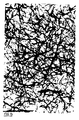
- Electron micrographs of negatively stained sonicated hCT fibrils show the presence of rods as in Figure 1a.
- the original hCT fibrils are shown in Figure 1b.
- the rods of sonicated hCT fibrils were, on average, 15 nm in diameter and 26-130 nm long.
- hCT fibrillated gels are formed from a solution of 20 mg hCT in 100 ⁇ l.0.1% acetic acid. 10ml water are then added and sonication performed as described in Example 1 with similar results.
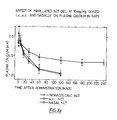
- Example 2 The product from Example 2 is diluted with 0.9% aqueous NaCl solution to give a solution having an hCT concentration of 5 ⁇ g/ml. This is injected intravenously into a hypocalcaemic rat model and compared with a similar injection of a solution of hCT made up in the conventional manner by dissolving hCT powder. The dosage in each case is 5 ⁇ g/kg body weight. The results are shown in Fig 2.
- the solution of Example 2 is biologically active and has a longer time dose response than the conventional solution.
- hCT fibrillated gels are formed by placing aqueous hCT solutions: (50 mg/ml hCT in 0. 1 % acetic acid or in 0.9% NaCl) in syringes and allowing the hCT to fibrillate in the syringes overnight.
- the sub-cutaneous (s.c.) intra-nasal (i.n.) intra-rectum (i.r.), intra-ileum (i.i.) or intra-colonical (i.c.) injection of hCT fibrillated gel can be done easily since the hardened fibrillated hCT gels can be squeezed through injection needles.
- Figures 3a and 3b shows that in the hypocalcaemic rat model s.c., i.n., i.r, i.i. and i.c. injected hCT fibrillated-gel have a strong and prolonged biological effect. Fibrils formed in 0.9% NaCl were used for s.c. and i.n. experiments and fibrils formed in 0.1% acetic acid were used for the i.r., i.i. and i.c. experiments.
- hypocalcaemic rat model In the in vivo experiments in Examples 3 and 4 the following hypocalcaemic rat model is used:-Female Wistar rats 80-100g body weight are fed a normal diet. hCT is administered as mentioned to animals anaesthetised with Hypnorm then sodium pentabarbitone i.m. Blood samples (250 ⁇ l) are taken from a cannulated carotid artery at each time point. Change in calcium level after the administration of hCT formulations is measured by a colorimetric method using a Ca measuring kit (Sigma Chem. Co.). For each time point three to five animals are used.
Landscapes
- Health & Medical Sciences (AREA)
- Life Sciences & Earth Sciences (AREA)
- General Health & Medical Sciences (AREA)
- Veterinary Medicine (AREA)
- Public Health (AREA)
- Chemical & Material Sciences (AREA)
- Engineering & Computer Science (AREA)
- Bioinformatics & Cheminformatics (AREA)
- Animal Behavior & Ethology (AREA)
- Medicinal Chemistry (AREA)
- Pharmacology & Pharmacy (AREA)
- General Chemical & Material Sciences (AREA)
- Chemical Kinetics & Catalysis (AREA)
- Organic Chemistry (AREA)
- Nuclear Medicine, Radiotherapy & Molecular Imaging (AREA)
- Endocrinology (AREA)
- Immunology (AREA)
- Diabetes (AREA)
- Hematology (AREA)
- Obesity (AREA)
- Epidemiology (AREA)
- Zoology (AREA)
- Proteomics, Peptides & Aminoacids (AREA)
- Gastroenterology & Hepatology (AREA)
- Rheumatology (AREA)
- Medicines That Contain Protein Lipid Enzymes And Other Medicines (AREA)
- Acyclic And Carbocyclic Compounds In Medicinal Compositions (AREA)
- Pharmaceuticals Containing Other Organic And Inorganic Compounds (AREA)
- Peptides Or Proteins (AREA)
Abstract
Description
- The present invention relates to pharmaceutical compositions comprising calcitonin.
- Calcitonin is a 32 amino acid polypeptide hormone secreted by the parafollicular cells of the thyroid gland in mammals and by the ultimobrachial gland of birds and fish. It is a potent drug for the treatment of Paget's disease, some aspects of hypercalcaemia, and for postmenopausal osteoporosis. Calcitonins of different origins, mainly salmon, pig, eel, and human are currently used therapeutically.
- Human calcitonin, although considered less potent and thus required at higher concentrations or doses than salmon calcitonin, has the advantage of not generating neutralizing antibodies after prolonged administration as the salmon calcitonin does (Grauer et al. 1990, J. Bone Min. Res. 5,387-391, Levy et al. 1988, J. Clin. Endocrinol. Metab. 67,541-545 and the references therein).
- In physiological saline solutions or buffers, human calcitonin is not stable, it precipitates and forms gels which consist of calcitonin fibrils. Since fibrillated calcitonin does not redissolve in physiologically compatible solutions, the calcitonin fibrils per se have not been considered for therapeutic use. Due to the fibril formation phenomenon, which was perceived to be undesirable, various steps have been adopted to avoid the problem. In particular, the injectable dosage form of human calcitonin is made up only as and when required by mixing hCT powder and the aqueous solution immediately prior to injection. This procedure is not required for salmon calcitonin which is provided in stable solution.
- We have now found, surprisingly that calcitonin fibrils per se are biologically active and give a longer-time dose response than calcitonin in solution.
- Accordingly the present invention provides fibrillated calcitonin for use in treating calcium deficiency diseases.
- The calcitonin is preferably human calcitonin (hCT) which may be synthetic or it may be produced by recombinant DNA technology, it may be salmon, eel or porcine calcitonin.
- The term "human calcitonin" is used in a broad sense in the context of this description and is intended to comprise not only natural human calcitonin as described in Helv. Chim. Acta, Vol 53, loc. cit., which can also be obtained synthetically, but also pharmaceutically acceptable derivatives and analogues thereof, e.g. those in which one or more of the amino acid groups occurring in the natural compounds are replaced or the N- or C-terminal group has been structually modified.
- Human calcitonin can exist in the free form or in the form of a pharmaceutically acceptable acid addition salt. Such salts are known and their activity and compatibility are comparable to those of the free forms. Typical suitable acid addition salts are the hydrochlorides or acetates.
- Calcitonin may be fibrillated by adding water or an aqueous solution to calcitonin powder and then stirring to dissolve. Suitable aqueous solutions include dilute solutions of NaCl, e.g. 0.9% NaCl; weak acids, e.g. 0.001% to 0.5% acetic acid; and buffers, e.g. phosphate saline buffer at pH 7.4 or other biologically compatible buffers. The solution may then be incubated at a temperature from 2°-50°C, preferably at room temperature for the fibrillation reaction to be completed, i.e. when there are no more changes in the samples turbidity. The incubation time is dependent on the aqueous medium, the temperature and on the concentration of calcitonin. The concentration of calcitonin may be from 1 to 200 mg/ml, preferably from 5 to 100 mg/ml. Solutions of higher concentration fibrillate faster and fibrillation occurs faster at higher temperatures. It has been found that, for the fibrillation process to be completed, an incubation period of 1 hour is needed for a 200 mg/ml hCT solution in water.
- The fibrillated calcitonin may be used in the gel form. In this form it acts as a depot and can be administered intra-muscularly, intra-nasally, sub-cutaneously, or orally, e.g. intra-colonically. The fibrillated gels can be squeezed through injection needles. In this case it is preferred to place the calcitonin solution in a syringe, sterilise it and then allow it to fibrillate in the syringe, after which it is ready for use. The solution is preferably placed in the syringe at a low temperature to delay fibrillation. When in the syringe the temperature can be raised.
- If desired the calcitonin fibrils may be fragmented or disrupted by any suitable method such as in a blender or homogeniser or preferably by ultrasound treatment (sonication). Electron microscopy analysis of a sonicated hCT fibril suspension shows that it consists of small rods of about 15nm diameter and 26 to 130 nm in length.
- In order to fragment or disrupt the fibrils, a further volume of water or aqueous solution is added to the fibrils and the resulting mass is subjected, preferably, to sonication using, for example, a tip sonicator until the fibrils are completely disrupted and no further changes in the sample's turbidity occurs with further sonication. During the sonication, the temperature is preferably maintained below 37°C. Constant temperature conditions are preferred, e.g. by surrounding the sample with ice. The sonication is also preferably carried out under an inert gas atmosphere such as nitrogen or argon.
- The aqueous solution added to the gel may be one such as is used in forming the original solution.
- The fragmentation is preferably carried out within 24 hours of the end of the incubation.
- The resulting product is a dispersion of fragmented fibrils in the water or aqueous solution and this dispersion forms a further aspect of the present invention.
- When used as a gel, the concentration of calcitonin may be from 1 to 200 mg/ml, preferably from 5 to 100 mg/ml. When used as a dispersion of fragmented fibrils the concentration of calcitonin may be up to 50 mg/ml.
- Preferred ranges for fragmented hCT fibril suspensions are from 3 to 10 mg/ml for nasal or oral solutions and from 0.5 to 3 mg/ml for injectable solutions.
- The compositions of the invention have a prolonged hypocalcemic effect such that in calcitonin therapy the number of injections required, or doses to be taken can be reduced, compared to those needed when conventional calcitonin solutions are used.
- The compositions of the invention may also contain viscosity-increasing swelling agents an/or sugars an/or other pharmaceutically acceptable additives. As viscosity-increasing swelling agents there may be used hydrophilic partially etherified cellulose derivatives, hydrophilic polyacrylates, polymethacrylates, polyethylene glycols, polyvinyl alcohols or mixtures thereof. Suitable compounds include methyl cellulose, hydroxypropylmethylcellulose, polyethylene glycol, dextran, which may have a molecular weight of 20,000 to 80,000, but preferably about 40,000, sugars such as sucrose, fructose, glucose, lactose, mannitol and trehalose, ethanol, serum albumin, lysozyme and preservatives such as benzalkonium chloride, benzethonium chloride and chlorhexidine diacetate.
- The amount of additives used can vary and may depend on the intended use. For example for nasal or oral solutions, 0.5 to 10% by weight of additive may be used. In the case of injectable solutions, sugars, polyethylene glycols or dextran would be used as the additive, usually in amounts of 0.5 to 10% by weight.
- The invention is illustrated in the following examples.
- 200 µl of 0.001% acetic acid/water is added to 20mg hCT powder and solubilisation is performed using a vortex mixer for 1-2 min. The resulting solution is allowed to fibrillate for 1 hour. Over the hard turbid gel of hCT-fibril are added 4 ml of 0.001% acetic acid; then ultrasonication is performed for 2 min. Electron micrographs of negatively stained sonicated hCT fibrils show the presence of rods as in Figure 1a. The original hCT fibrils are shown in Figure 1b. The rods of sonicated hCT fibrils were, on average, 15 nm in diameter and 26-130 nm long.
- Following the procedure of Example 1, hCT fibrillated gels are formed from a solution of 20 mg hCT in 100 µl.0.1% acetic acid. 10ml water are then added and sonication performed as described in Example 1 with similar results.
- The product from Example 2 is diluted with 0.9% aqueous NaCl solution to give a solution having an hCT concentration of 5 µg/ml. This is injected intravenously into a hypocalcaemic rat model and compared with a similar injection of a solution of hCT made up in the conventional manner by dissolving hCT powder. The dosage in each case is 5 µg/kg body weight. The results are shown in Fig 2. The solution of Example 2 is biologically active and has a longer time dose response than the conventional solution.
- hCT fibrillated gels are formed by placing aqueous hCT solutions: (50 mg/ml hCT in 0. 1 % acetic acid or in 0.9% NaCl) in syringes and allowing the hCT to fibrillate in the syringes overnight. The sub-cutaneous (s.c.) intra-nasal (i.n.) intra-rectum (i.r.), intra-ileum (i.i.) or intra-colonical (i.c.) injection of hCT fibrillated gel can be done easily since the hardened fibrillated hCT gels can be squeezed through injection needles. Figures 3a and 3b shows that in the hypocalcaemic rat model s.c., i.n., i.r, i.i. and i.c. injected hCT fibrillated-gel have a strong and prolonged biological effect. Fibrils formed in 0.9% NaCl were used for s.c. and i.n. experiments and fibrils formed in 0.1% acetic acid were used for the i.r., i.i. and i.c. experiments.
- In the in vivo experiments in Examples 3 and 4 the following hypocalcaemic rat model is used:-Female Wistar rats 80-100g body weight are fed a normal diet. hCT is administered as mentioned to animals anaesthetised with Hypnorm then sodium pentabarbitone i.m. Blood samples (250 µl) are taken from a cannulated carotid artery at each time point. Change in calcium level after the administration of hCT formulations is measured by a colorimetric method using a Ca measuring kit (Sigma Chem. Co.). For each time point three to five animals are used.
Claims (13)
- Fibrillated calcitonin for use in treating calcium deficiency diseases.
- Fibrillated calcitonin as claimed in claim 1 which is human, salmon, eel or porcine calcitonin.
- Fibrillated calcitonin as claimed in claim 1 or 2 which comprises calcitonin and water and optionally NaCl, a weak acid or a buffer.
- Fibrillated calcitonin as claimed in any preceding claim which also comprises a viscosity-increasing gelling agent and/or a sugar and/or other pharmaceutically acceptable additive.
- Fibrillated calcitonin as claimed in any preceding claim in which the fibrils are fragmented.
- Fibrillated calcitonin as claimed in claim 5 in which the fragmented fibrils are in the form of rods having an average diameter of about 15 nm and a length of 26 to 130 nm.
- A process for preparing fibrillated calcitonin which comprises dissolving calcitonin in water, optionally containing one or more other compounds as given in claim 3 or 4 and allowing fibrillation to occur.
- A process as claimed in claim 7 which comprises the further steps of adding a further volume of water, optionally containing one or more of said other compounds and fragmenting the fibrils.
- A process as claimed in claim 8 in which the fibrils are fragmented by means of a blender, homogeniser or by sonication.
- A process as claimed in claim 8 or 9 in which the fragmentation is carried out at a temperature below 37°C.
- A process as claimed in any of claims 8 to 10 in which the fragmentation is carried out under an inert gas atmosphere.
- A process as claimed in claim 7 in which the fibrillation is carried out in a syringe which is used to administer the calcitonin.
- A dispersion of fragmented calcitonin fibrils in water, optionally containing one or more other compounds as given in claim 3 or 4.
Applications Claiming Priority (2)
| Application Number | Priority Date | Filing Date | Title |
|---|---|---|---|
| GB9108634 | 1991-04-23 | ||
| GB919108634A GB9108634D0 (en) | 1991-04-23 | 1991-04-23 | Pharmaceutical compositions |
Publications (3)
| Publication Number | Publication Date |
|---|---|
| EP0510913A2 true EP0510913A2 (en) | 1992-10-28 |
| EP0510913A3 EP0510913A3 (en) | 1993-12-15 |
| EP0510913B1 EP0510913B1 (en) | 2000-07-19 |
Family
ID=10693744
Family Applications (1)
| Application Number | Title | Priority Date | Filing Date |
|---|---|---|---|
| EP92303554A Expired - Lifetime EP0510913B1 (en) | 1991-04-23 | 1992-04-21 | Pharmaceutical compositions comprising calcitonin |
Country Status (19)
| Country | Link |
|---|---|
| US (1) | US5593962A (en) |
| EP (1) | EP0510913B1 (en) |
| JP (1) | JP3532580B2 (en) |
| KR (1) | KR100245534B1 (en) |
| AT (1) | ATE194775T1 (en) |
| AU (1) | AU653395B2 (en) |
| CA (1) | CA2066532C (en) |
| CY (1) | CY2246B1 (en) |
| DE (1) | DE69231263T2 (en) |
| DK (1) | DK0510913T3 (en) |
| ES (1) | ES2150418T3 (en) |
| GB (1) | GB9108634D0 (en) |
| GR (1) | GR3034414T3 (en) |
| IE (1) | IE921278A1 (en) |
| IL (1) | IL101622A (en) |
| MX (1) | MX9201825A (en) |
| NZ (1) | NZ242440A (en) |
| PT (1) | PT510913E (en) |
| ZA (1) | ZA922899B (en) |
Cited By (5)
| Publication number | Priority date | Publication date | Assignee | Title |
|---|---|---|---|---|
| WO1996007398A3 (en) * | 1994-09-02 | 1996-05-17 | Scras | Sustained release of peptides from pharmaceutical compositions |
| US6649168B2 (en) | 1999-03-17 | 2003-11-18 | Novartis Ag | Pharmaceutical compositions comprising TGF-beta |
| WO2006040114A1 (en) * | 2004-10-12 | 2006-04-20 | Novartis Ag | Use of organic compounds |
| CN100509053C (en) * | 2002-09-27 | 2009-07-08 | 赞塔里斯有限公司 | Administration form for pharmaceutically active peptides with sustained release and method for the production thereof |
| WO2009125423A2 (en) | 2008-04-07 | 2009-10-15 | National Institute Of Immunology | Compositions useful for the treatment of diabetes and other chronic disorder |
Families Citing this family (2)
| Publication number | Priority date | Publication date | Assignee | Title |
|---|---|---|---|---|
| WO2001056594A1 (en) | 2000-02-04 | 2001-08-09 | Unigene Laboratories, Inc. | Nasal calcitonin formulations |
| GB0511269D0 (en) | 2005-06-02 | 2005-07-13 | Creative Peptides Sweden Ab | Sustained release preparation of pro-insulin C-peptide |
Family Cites Families (2)
| Publication number | Priority date | Publication date | Assignee | Title |
|---|---|---|---|---|
| JPS61267528A (en) * | 1984-11-26 | 1986-11-27 | Yamanouchi Pharmaceut Co Ltd | Transnasal calcitonin agent containing absorbefacient |
| MY102411A (en) * | 1986-12-23 | 1992-06-17 | Ciba Geigy Ag | Nasal solutions |
-
1991
- 1991-04-23 GB GB919108634A patent/GB9108634D0/en active Pending
-
1992
- 1992-04-16 IL IL10162292A patent/IL101622A/en active IP Right Grant
- 1992-04-21 DE DE69231263T patent/DE69231263T2/en not_active Expired - Fee Related
- 1992-04-21 MX MX9201825A patent/MX9201825A/en not_active IP Right Cessation
- 1992-04-21 DK DK92303554T patent/DK0510913T3/en active
- 1992-04-21 AT AT92303554T patent/ATE194775T1/en not_active IP Right Cessation
- 1992-04-21 PT PT92303554T patent/PT510913E/en unknown
- 1992-04-21 ES ES92303554T patent/ES2150418T3/en not_active Expired - Lifetime
- 1992-04-21 EP EP92303554A patent/EP0510913B1/en not_active Expired - Lifetime
- 1992-04-21 CA CA002066532A patent/CA2066532C/en not_active Expired - Fee Related
- 1992-04-22 KR KR1019920006719A patent/KR100245534B1/en not_active Expired - Fee Related
- 1992-04-22 NZ NZ242440A patent/NZ242440A/en not_active IP Right Cessation
- 1992-04-22 IE IE127892A patent/IE921278A1/en not_active IP Right Cessation
- 1992-04-22 JP JP12794192A patent/JP3532580B2/en not_active Expired - Fee Related
- 1992-04-22 AU AU15066/92A patent/AU653395B2/en not_active Ceased
- 1992-04-22 ZA ZA922899A patent/ZA922899B/en unknown
-
1993
- 1993-08-04 US US08/102,117 patent/US5593962A/en not_active Expired - Lifetime
-
2000
- 2000-09-15 GR GR20000402102T patent/GR3034414T3/en not_active IP Right Cessation
-
2001
- 2001-11-19 CY CY0100038A patent/CY2246B1/en unknown
Cited By (14)
| Publication number | Priority date | Publication date | Assignee | Title |
|---|---|---|---|---|
| EP1595532A3 (en) * | 1994-09-02 | 2007-05-30 | Societe De Conseils De Recherches Et D'applications Scientifiques S.A.S. | Sustained release of peptides from pharmaceutical compositions |
| US5595760A (en) * | 1994-09-02 | 1997-01-21 | Delab | Sustained release of peptides from pharmaceutical compositions |
| AU713066B2 (en) * | 1994-09-02 | 1999-11-25 | Delab | Sustained release of peptides from pharmaceutical compositions |
| EP1157703A3 (en) * | 1994-09-02 | 2002-01-30 | Delab | Sustained release of peptides from pharmaceutical compositions |
| WO1996007398A3 (en) * | 1994-09-02 | 1996-05-17 | Scras | Sustained release of peptides from pharmaceutical compositions |
| US6649168B2 (en) | 1999-03-17 | 2003-11-18 | Novartis Ag | Pharmaceutical compositions comprising TGF-beta |
| US7884071B2 (en) | 2002-09-27 | 2011-02-08 | Zentaris Gmbh | Administration form for pharmaceutically active peptides with sustained release and method for the production thereof |
| CN100509053C (en) * | 2002-09-27 | 2009-07-08 | 赞塔里斯有限公司 | Administration form for pharmaceutically active peptides with sustained release and method for the production thereof |
| WO2006040114A1 (en) * | 2004-10-12 | 2006-04-20 | Novartis Ag | Use of organic compounds |
| US8426362B2 (en) | 2008-04-07 | 2013-04-23 | National Institute Of Immunology | Compositions comprising SIA for the treatment of diabetes |
| WO2009125423A2 (en) | 2008-04-07 | 2009-10-15 | National Institute Of Immunology | Compositions useful for the treatment of diabetes and other chronic disorder |
| WO2009125423A3 (en) * | 2008-04-07 | 2010-03-04 | National Institute Of Immunology | Compositions useful for the treatment of diabetes and other chronic disorder |
| US20110034385A1 (en) * | 2008-04-07 | 2011-02-10 | National Institute Of Immunology | Compositions Useful for the Treatment of Diabetes and Other Chronic Disorder |
| AU2008354530B2 (en) * | 2008-04-07 | 2014-02-27 | Indian Institute Of Science | Compositions useful for the treatment of diabetes and other chronic disorder |
Also Published As
| Publication number | Publication date |
|---|---|
| IE921278A1 (en) | 1992-11-04 |
| GR3034414T3 (en) | 2000-12-29 |
| MX9201825A (en) | 1992-10-01 |
| NZ242440A (en) | 1993-10-26 |
| DK0510913T3 (en) | 2000-10-16 |
| AU653395B2 (en) | 1994-09-29 |
| CY2246B1 (en) | 2003-07-04 |
| EP0510913A3 (en) | 1993-12-15 |
| PT510913E (en) | 2000-12-29 |
| CA2066532A1 (en) | 1992-10-24 |
| ATE194775T1 (en) | 2000-08-15 |
| DE69231263D1 (en) | 2000-08-24 |
| EP0510913B1 (en) | 2000-07-19 |
| DE69231263T2 (en) | 2000-12-21 |
| KR100245534B1 (en) | 2000-03-02 |
| US5593962A (en) | 1997-01-14 |
| GB9108634D0 (en) | 1991-06-12 |
| ZA922899B (en) | 1993-10-22 |
| JP3532580B2 (en) | 2004-05-31 |
| IL101622A0 (en) | 1992-12-30 |
| JPH05139993A (en) | 1993-06-08 |
| IL101622A (en) | 1996-06-18 |
| AU1506692A (en) | 1992-10-29 |
| CA2066532C (en) | 2003-08-19 |
| ES2150418T3 (en) | 2000-12-01 |
Similar Documents
| Publication | Publication Date | Title |
|---|---|---|
| EP1417972B2 (en) | Stabilized teriparatide solutions | |
| US7144861B2 (en) | Stabilized teriparatide solutions | |
| US5374620A (en) | Growth-promoting composition and its use | |
| JP2828250B2 (en) | Treatment of diabetes mellitus | |
| US5681814A (en) | Formulated IGF-I Composition | |
| EP1028746B1 (en) | Method for producing igf-i sustained-release formulations | |
| JP2003525846A (en) | Aggregates of human insulin derivatives | |
| JP2000504696A (en) | Stabilized growth hormone formulation and method of making same | |
| JPH10507181A (en) | Pharmaceutical formulation comprising growth hormone and valine | |
| EP0510913B1 (en) | Pharmaceutical compositions comprising calcitonin | |
| US6767892B1 (en) | Compositions providing for increased IGF-I solubility | |
| JPH08505617A (en) | Stable solution containing insulin-like growth factor | |
| IE83304B1 (en) | Pharmaceutical compositions comprising calcitonin | |
| JP2002510653A (en) | Injectable IGF formulation containing succinic acid as buffer | |
| JP2001522813A (en) | Novel IGF-I Compositions and Uses Thereof | |
| EP1028748B1 (en) | Compositions providing for increased igf-i solubility | |
| JP2007161702A (en) | Aqueous pharmaceutical composition for inhalation | |
| EP0381345A1 (en) | Aqueous liquid desmopressin-CMC pharmaceutical composition | |
| JPH0565231A (en) | Sustained release pharmaceutical of erythropoietin | |
| WO1998005358A1 (en) | Sustained release preparations for injection containing gabexate mesylate | |
| AU2003213511A1 (en) | Stabilized Teriparatide Solutions | |
| HK1021798B (en) | Stabilized teriparatide solutions |
Legal Events
| Date | Code | Title | Description |
|---|---|---|---|
| PUAI | Public reference made under article 153(3) epc to a published international application that has entered the european phase |
Free format text: ORIGINAL CODE: 0009012 |
|
| AK | Designated contracting states |
Kind code of ref document: A2 Designated state(s): AT BE CH DE DK ES FR GB GR IT LI LU NL PT SE |
|
| PUAL | Search report despatched |
Free format text: ORIGINAL CODE: 0009013 |
|
| AK | Designated contracting states |
Kind code of ref document: A3 Designated state(s): AT BE CH DE DK ES FR GB GR IT LI LU NL PT SE |
|
| 17P | Request for examination filed |
Effective date: 19940613 |
|
| 17Q | First examination report despatched |
Effective date: 19970109 |
|
| RAP1 | Party data changed (applicant data changed or rights of an application transferred) |
Owner name: NOVARTIS AG |
|
| GRAG | Despatch of communication of intention to grant |
Free format text: ORIGINAL CODE: EPIDOS AGRA |
|
| RAP1 | Party data changed (applicant data changed or rights of an application transferred) |
Owner name: NOVARTIS-ERFINDUNGEN VERWALTUNGSGESELLSCHAFT M.B. Owner name: NOVARTIS AG |
|
| GRAG | Despatch of communication of intention to grant |
Free format text: ORIGINAL CODE: EPIDOS AGRA |
|
| GRAH | Despatch of communication of intention to grant a patent |
Free format text: ORIGINAL CODE: EPIDOS IGRA |
|
| GRAH | Despatch of communication of intention to grant a patent |
Free format text: ORIGINAL CODE: EPIDOS IGRA |
|
| RIC1 | Information provided on ipc code assigned before grant |
Free format text: 7A 61K 38/23 A, 7C 07K 14/585 B |
|
| GRAH | Despatch of communication of intention to grant a patent |
Free format text: ORIGINAL CODE: EPIDOS IGRA |
|
| GRAA | (expected) grant |
Free format text: ORIGINAL CODE: 0009210 |
|
| AK | Designated contracting states |
Kind code of ref document: B1 Designated state(s): AT BE CH DE DK ES FR GB GR IT LI LU NL PT SE |
|
| REF | Corresponds to: |
Ref document number: 194775 Country of ref document: AT Date of ref document: 20000815 Kind code of ref document: T |
|
| REG | Reference to a national code |
Ref country code: CH Ref legal event code: EP |
|
| ITF | It: translation for a ep patent filed | ||
| ET | Fr: translation filed | ||
| REF | Corresponds to: |
Ref document number: 69231263 Country of ref document: DE Date of ref document: 20000824 |
|
| REG | Reference to a national code |
Ref country code: DK Ref legal event code: T3 |
|
| REG | Reference to a national code |
Ref country code: ES Ref legal event code: FG2A Ref document number: 2150418 Country of ref document: ES Kind code of ref document: T3 |
|
| REG | Reference to a national code |
Ref country code: PT Ref legal event code: SC4A Free format text: AVAILABILITY OF NATIONAL TRANSLATION Effective date: 20001003 |
|
| PLBE | No opposition filed within time limit |
Free format text: ORIGINAL CODE: 0009261 |
|
| STAA | Information on the status of an ep patent application or granted ep patent |
Free format text: STATUS: NO OPPOSITION FILED WITHIN TIME LIMIT |
|
| 26N | No opposition filed | ||
| REG | Reference to a national code |
Ref country code: GB Ref legal event code: IF02 |
|
| PGFP | Annual fee paid to national office [announced via postgrant information from national office to epo] |
Ref country code: GR Payment date: 20090316 Year of fee payment: 18 |
|
| PGFP | Annual fee paid to national office [announced via postgrant information from national office to epo] |
Ref country code: ES Payment date: 20090508 Year of fee payment: 18 Ref country code: DK Payment date: 20090415 Year of fee payment: 18 |
|
| PGFP | Annual fee paid to national office [announced via postgrant information from national office to epo] |
Ref country code: SE Payment date: 20090407 Year of fee payment: 18 Ref country code: PT Payment date: 20090420 Year of fee payment: 18 Ref country code: NL Payment date: 20090405 Year of fee payment: 18 Ref country code: LU Payment date: 20090522 Year of fee payment: 18 Ref country code: IT Payment date: 20090422 Year of fee payment: 18 Ref country code: DE Payment date: 20090420 Year of fee payment: 18 Ref country code: AT Payment date: 20090415 Year of fee payment: 18 Ref country code: FR Payment date: 20090417 Year of fee payment: 18 |
|
| PGFP | Annual fee paid to national office [announced via postgrant information from national office to epo] |
Ref country code: BE Payment date: 20090422 Year of fee payment: 18 |
|
| PGFP | Annual fee paid to national office [announced via postgrant information from national office to epo] |
Ref country code: CH Payment date: 20090416 Year of fee payment: 18 |
|
| PGFP | Annual fee paid to national office [announced via postgrant information from national office to epo] |
Ref country code: GB Payment date: 20090415 Year of fee payment: 18 |
|
| PG25 | Lapsed in a contracting state [announced via postgrant information from national office to epo] |
Ref country code: GR Free format text: LAPSE BECAUSE OF NON-PAYMENT OF DUE FEES Effective date: 20100504 |
|
| BERE | Be: lapsed |
Owner name: *NOVARTIS A.G. Effective date: 20100430 |
|
| REG | Reference to a national code |
Ref country code: NL Ref legal event code: V1 Effective date: 20101101 |
|
| EUG | Se: european patent has lapsed | ||
| REG | Reference to a national code |
Ref country code: CH Ref legal event code: PL |
|
| REG | Reference to a national code |
Ref country code: DK Ref legal event code: EBP |
|
| GBPC | Gb: european patent ceased through non-payment of renewal fee |
Effective date: 20100421 |
|
| REG | Reference to a national code |
Ref country code: FR Ref legal event code: ST Effective date: 20101230 |
|
| PG25 | Lapsed in a contracting state [announced via postgrant information from national office to epo] |
Ref country code: NL Free format text: LAPSE BECAUSE OF NON-PAYMENT OF DUE FEES Effective date: 20101101 Ref country code: AT Free format text: LAPSE BECAUSE OF NON-PAYMENT OF DUE FEES Effective date: 20100421 Ref country code: FR Free format text: LAPSE BECAUSE OF NON-PAYMENT OF DUE FEES Effective date: 20100430 |
|
| PG25 | Lapsed in a contracting state [announced via postgrant information from national office to epo] |
Ref country code: PT Free format text: LAPSE BECAUSE OF NON-PAYMENT OF DUE FEES Effective date: 20101021 Ref country code: CH Free format text: LAPSE BECAUSE OF NON-PAYMENT OF DUE FEES Effective date: 20100430 Ref country code: DE Free format text: LAPSE BECAUSE OF NON-PAYMENT OF DUE FEES Effective date: 20101103 Ref country code: LI Free format text: LAPSE BECAUSE OF NON-PAYMENT OF DUE FEES Effective date: 20100430 |
|
| PG25 | Lapsed in a contracting state [announced via postgrant information from national office to epo] |
Ref country code: GB Free format text: LAPSE BECAUSE OF NON-PAYMENT OF DUE FEES Effective date: 20100421 Ref country code: IT Free format text: LAPSE BECAUSE OF NON-PAYMENT OF DUE FEES Effective date: 20100421 Ref country code: BE Free format text: LAPSE BECAUSE OF NON-PAYMENT OF DUE FEES Effective date: 20100430 |
|
| PG25 | Lapsed in a contracting state [announced via postgrant information from national office to epo] |
Ref country code: DK Free format text: LAPSE BECAUSE OF NON-PAYMENT OF DUE FEES Effective date: 20100503 |
|
| REG | Reference to a national code |
Ref country code: ES Ref legal event code: FD2A Effective date: 20110708 |
|
| PG25 | Lapsed in a contracting state [announced via postgrant information from national office to epo] |
Ref country code: ES Free format text: LAPSE BECAUSE OF NON-PAYMENT OF DUE FEES Effective date: 20110628 |
|
| PG25 | Lapsed in a contracting state [announced via postgrant information from national office to epo] |
Ref country code: ES Free format text: LAPSE BECAUSE OF NON-PAYMENT OF DUE FEES Effective date: 20100422 |
|
| PG25 | Lapsed in a contracting state [announced via postgrant information from national office to epo] |
Ref country code: SE Free format text: LAPSE BECAUSE OF NON-PAYMENT OF DUE FEES Effective date: 20100422 Ref country code: LU Free format text: LAPSE BECAUSE OF NON-PAYMENT OF DUE FEES Effective date: 20100421 |