EP0502979B1 - Beta retinoic acid response elements compositions and assays - Google Patents
Beta retinoic acid response elements compositions and assays Download PDFInfo
- Publication number
- EP0502979B1 EP0502979B1 EP91901044A EP91901044A EP0502979B1 EP 0502979 B1 EP0502979 B1 EP 0502979B1 EP 91901044 A EP91901044 A EP 91901044A EP 91901044 A EP91901044 A EP 91901044A EP 0502979 B1 EP0502979 B1 EP 0502979B1
- Authority
- EP
- European Patent Office
- Prior art keywords
- retinoic acid
- promoter
- production
- dna
- dna segment
- Prior art date
- Legal status (The legal status is an assumption and is not a legal conclusion. Google has not performed a legal analysis and makes no representation as to the accuracy of the status listed.)
- Expired - Lifetime
Links
- 108091027981 Response element Proteins 0.000 title claims abstract description 30
- SHGAZHPCJJPHSC-YCNIQYBTSA-N all-trans-retinoic acid Chemical compound OC(=O)\C=C(/C)\C=C\C=C(/C)\C=C\C1=C(C)CCCC1(C)C SHGAZHPCJJPHSC-YCNIQYBTSA-N 0.000 title claims description 60
- 238000003556 assay Methods 0.000 title description 6
- 239000000203 mixture Substances 0.000 title 1
- 210000004027 cell Anatomy 0.000 claims abstract description 45
- 108090000623 proteins and genes Proteins 0.000 claims abstract description 33
- 238000000034 method Methods 0.000 claims abstract description 22
- 239000013598 vector Substances 0.000 claims abstract description 22
- 210000004962 mammalian cell Anatomy 0.000 claims abstract description 19
- 230000000694 effects Effects 0.000 claims abstract description 14
- 150000001875 compounds Chemical class 0.000 claims abstract description 12
- 239000000556 agonist Substances 0.000 claims abstract description 4
- 239000005557 antagonist Substances 0.000 claims abstract description 4
- 229960001727 tretinoin Drugs 0.000 claims description 55
- 229930002330 retinoic acid Natural products 0.000 claims description 54
- 108020004414 DNA Proteins 0.000 claims description 45
- 102000004169 proteins and genes Human genes 0.000 claims description 18
- 238000013518 transcription Methods 0.000 claims description 14
- 230000035897 transcription Effects 0.000 claims description 14
- 230000004043 responsiveness Effects 0.000 claims description 13
- 238000012360 testing method Methods 0.000 claims description 13
- 108010005774 beta-Galactosidase Proteins 0.000 claims description 11
- 230000029279 positive regulation of transcription, DNA-dependent Effects 0.000 claims description 10
- 102000005936 beta-Galactosidase Human genes 0.000 claims description 7
- 238000012258 culturing Methods 0.000 claims description 7
- 210000002950 fibroblast Anatomy 0.000 claims description 6
- 108060001084 Luciferase Proteins 0.000 claims description 4
- 239000005089 Luciferase Substances 0.000 claims description 4
- 241000286209 Phasianidae Species 0.000 claims description 3
- 210000003837 chick embryo Anatomy 0.000 claims description 3
- 241000713333 Mouse mammary tumor virus Species 0.000 claims description 2
- 108010035563 Chloramphenicol O-acetyltransferase Proteins 0.000 claims 1
- 239000013604 expression vector Substances 0.000 abstract description 13
- 230000022532 regulation of transcription, DNA-dependent Effects 0.000 abstract description 12
- 230000004913 activation Effects 0.000 abstract description 7
- 229940088597 hormone Drugs 0.000 abstract description 5
- 239000005556 hormone Substances 0.000 abstract description 5
- 102000005962 receptors Human genes 0.000 description 21
- 108020003175 receptors Proteins 0.000 description 21
- 230000002103 transcriptional effect Effects 0.000 description 20
- 102000003702 retinoic acid receptors Human genes 0.000 description 18
- 108090000064 retinoic acid receptors Proteins 0.000 description 18
- 235000018102 proteins Nutrition 0.000 description 13
- 102000004217 thyroid hormone receptors Human genes 0.000 description 13
- 108090000721 thyroid hormone receptors Proteins 0.000 description 13
- 102000015694 estrogen receptors Human genes 0.000 description 11
- 108010038795 estrogen receptors Proteins 0.000 description 11
- 102000003676 Glucocorticoid Receptors Human genes 0.000 description 9
- 108090000079 Glucocorticoid Receptors Proteins 0.000 description 9
- 108091008761 retinoic acid receptors β Proteins 0.000 description 9
- 102100033909 Retinoic acid receptor beta Human genes 0.000 description 7
- 230000006698 induction Effects 0.000 description 7
- 238000011144 upstream manufacturing Methods 0.000 description 7
- 239000012634 fragment Substances 0.000 description 6
- 102000009310 vitamin D receptors Human genes 0.000 description 6
- 108050000156 vitamin D receptors Proteins 0.000 description 6
- 230000027455 binding Effects 0.000 description 5
- 230000001419 dependent effect Effects 0.000 description 5
- 238000002474 experimental method Methods 0.000 description 5
- 239000003446 ligand Substances 0.000 description 5
- 239000002773 nucleotide Substances 0.000 description 5
- 125000003729 nucleotide group Chemical group 0.000 description 5
- 239000013612 plasmid Substances 0.000 description 5
- 230000004568 DNA-binding Effects 0.000 description 4
- 239000000427 antigen Substances 0.000 description 4
- 102000036639 antigens Human genes 0.000 description 4
- 108091007433 antigens Proteins 0.000 description 4
- WQZGKKKJIJFFOK-FPRJBGLDSA-N beta-D-galactose Chemical compound OC[C@H]1O[C@@H](O)[C@H](O)[C@@H](O)[C@H]1O WQZGKKKJIJFFOK-FPRJBGLDSA-N 0.000 description 4
- 239000002299 complementary DNA Substances 0.000 description 4
- 230000004044 response Effects 0.000 description 4
- 108091034117 Oligonucleotide Proteins 0.000 description 3
- 102100023606 Retinoic acid receptor alpha Human genes 0.000 description 3
- 239000000284 extract Substances 0.000 description 3
- 210000003292 kidney cell Anatomy 0.000 description 3
- 108091008726 retinoic acid receptors α Proteins 0.000 description 3
- 150000003431 steroids Chemical class 0.000 description 3
- 241000282693 Cercopithecidae Species 0.000 description 2
- 101001132698 Homo sapiens Retinoic acid receptor beta Proteins 0.000 description 2
- 101001132697 Mus musculus Retinoic acid receptor beta Proteins 0.000 description 2
- 108091028043 Nucleic acid sequence Proteins 0.000 description 2
- RJKFOVLPORLFTN-LEKSSAKUSA-N Progesterone Chemical compound C1CC2=CC(=O)CC[C@]2(C)[C@@H]2[C@@H]1[C@@H]1CC[C@H](C(=O)C)[C@@]1(C)CC2 RJKFOVLPORLFTN-LEKSSAKUSA-N 0.000 description 2
- 108020004511 Recombinant DNA Proteins 0.000 description 2
- 108700008625 Reporter Genes Proteins 0.000 description 2
- QYSXJUFSXHHAJI-XFEUOLMDSA-N Vitamin D3 Natural products C1(/[C@@H]2CC[C@@H]([C@]2(CCC1)C)[C@H](C)CCCC(C)C)=C/C=C1\C[C@@H](O)CCC1=C QYSXJUFSXHHAJI-XFEUOLMDSA-N 0.000 description 2
- 239000002253 acid Substances 0.000 description 2
- 150000007513 acids Chemical class 0.000 description 2
- 235000001014 amino acid Nutrition 0.000 description 2
- 150000001413 amino acids Chemical class 0.000 description 2
- 238000004458 analytical method Methods 0.000 description 2
- 230000003915 cell function Effects 0.000 description 2
- 230000008859 change Effects 0.000 description 2
- 238000012217 deletion Methods 0.000 description 2
- 230000037430 deletion Effects 0.000 description 2
- 239000003623 enhancer Substances 0.000 description 2
- 230000002708 enhancing effect Effects 0.000 description 2
- 239000013613 expression plasmid Substances 0.000 description 2
- 239000003862 glucocorticoid Substances 0.000 description 2
- 108020001756 ligand binding domains Proteins 0.000 description 2
- 210000004185 liver Anatomy 0.000 description 2
- 239000002395 mineralocorticoid Substances 0.000 description 2
- 230000010076 replication Effects 0.000 description 2
- 108091008146 restriction endonucleases Proteins 0.000 description 2
- 239000000523 sample Substances 0.000 description 2
- 102000005969 steroid hormone receptors Human genes 0.000 description 2
- 108020003113 steroid hormone receptors Proteins 0.000 description 2
- 239000005495 thyroid hormone Substances 0.000 description 2
- 229940036555 thyroid hormone Drugs 0.000 description 2
- 238000001890 transfection Methods 0.000 description 2
- 238000012546 transfer Methods 0.000 description 2
- 108091032973 (ribonucleotides)n+m Proteins 0.000 description 1
- 101100007328 Cocos nucifera COS-1 gene Proteins 0.000 description 1
- 102000052510 DNA-Binding Proteins Human genes 0.000 description 1
- 108700020911 DNA-Binding Proteins Proteins 0.000 description 1
- 102000004190 Enzymes Human genes 0.000 description 1
- 108090000790 Enzymes Proteins 0.000 description 1
- 108090000331 Firefly luciferases Proteins 0.000 description 1
- 108700028146 Genetic Enhancer Elements Proteins 0.000 description 1
- 108700039691 Genetic Promoter Regions Proteins 0.000 description 1
- XQFRJNBWHJMXHO-RRKCRQDMSA-N IDUR Chemical compound C1[C@H](O)[C@@H](CO)O[C@H]1N1C(=O)NC(=O)C(I)=C1 XQFRJNBWHJMXHO-RRKCRQDMSA-N 0.000 description 1
- 102000012745 Immunoglobulin Subunits Human genes 0.000 description 1
- 108010079585 Immunoglobulin Subunits Proteins 0.000 description 1
- 102000008072 Lymphokines Human genes 0.000 description 1
- 108010074338 Lymphokines Proteins 0.000 description 1
- 108090000375 Mineralocorticoid Receptors Proteins 0.000 description 1
- 102100021316 Mineralocorticoid receptor Human genes 0.000 description 1
- 108020005497 Nuclear hormone receptor Proteins 0.000 description 1
- 108091081548 Palindromic sequence Proteins 0.000 description 1
- 102100025803 Progesterone receptor Human genes 0.000 description 1
- 238000012300 Sequence Analysis Methods 0.000 description 1
- 108091081024 Start codon Proteins 0.000 description 1
- 102000006601 Thymidine Kinase Human genes 0.000 description 1
- 108020004440 Thymidine kinase Proteins 0.000 description 1
- AUYYCJSJGJYCDS-LBPRGKRZSA-N Thyrolar Chemical class IC1=CC(C[C@H](N)C(O)=O)=CC(I)=C1OC1=CC=C(O)C(I)=C1 AUYYCJSJGJYCDS-LBPRGKRZSA-N 0.000 description 1
- 102000040945 Transcription factor Human genes 0.000 description 1
- 108091023040 Transcription factor Proteins 0.000 description 1
- 229930003316 Vitamin D Natural products 0.000 description 1
- 108010090932 Vitellogenins Proteins 0.000 description 1
- JLCPHMBAVCMARE-UHFFFAOYSA-N [3-[[3-[[3-[[3-[[3-[[3-[[3-[[3-[[3-[[3-[[3-[[5-(2-amino-6-oxo-1H-purin-9-yl)-3-[[3-[[3-[[3-[[3-[[3-[[5-(2-amino-6-oxo-1H-purin-9-yl)-3-[[5-(2-amino-6-oxo-1H-purin-9-yl)-3-hydroxyoxolan-2-yl]methoxy-hydroxyphosphoryl]oxyoxolan-2-yl]methoxy-hydroxyphosphoryl]oxy-5-(5-methyl-2,4-dioxopyrimidin-1-yl)oxolan-2-yl]methoxy-hydroxyphosphoryl]oxy-5-(6-aminopurin-9-yl)oxolan-2-yl]methoxy-hydroxyphosphoryl]oxy-5-(6-aminopurin-9-yl)oxolan-2-yl]methoxy-hydroxyphosphoryl]oxy-5-(6-aminopurin-9-yl)oxolan-2-yl]methoxy-hydroxyphosphoryl]oxy-5-(6-aminopurin-9-yl)oxolan-2-yl]methoxy-hydroxyphosphoryl]oxyoxolan-2-yl]methoxy-hydroxyphosphoryl]oxy-5-(5-methyl-2,4-dioxopyrimidin-1-yl)oxolan-2-yl]methoxy-hydroxyphosphoryl]oxy-5-(4-amino-2-oxopyrimidin-1-yl)oxolan-2-yl]methoxy-hydroxyphosphoryl]oxy-5-(5-methyl-2,4-dioxopyrimidin-1-yl)oxolan-2-yl]methoxy-hydroxyphosphoryl]oxy-5-(5-methyl-2,4-dioxopyrimidin-1-yl)oxolan-2-yl]methoxy-hydroxyphosphoryl]oxy-5-(6-aminopurin-9-yl)oxolan-2-yl]methoxy-hydroxyphosphoryl]oxy-5-(6-aminopurin-9-yl)oxolan-2-yl]methoxy-hydroxyphosphoryl]oxy-5-(4-amino-2-oxopyrimidin-1-yl)oxolan-2-yl]methoxy-hydroxyphosphoryl]oxy-5-(4-amino-2-oxopyrimidin-1-yl)oxolan-2-yl]methoxy-hydroxyphosphoryl]oxy-5-(4-amino-2-oxopyrimidin-1-yl)oxolan-2-yl]methoxy-hydroxyphosphoryl]oxy-5-(6-aminopurin-9-yl)oxolan-2-yl]methoxy-hydroxyphosphoryl]oxy-5-(4-amino-2-oxopyrimidin-1-yl)oxolan-2-yl]methyl [5-(6-aminopurin-9-yl)-2-(hydroxymethyl)oxolan-3-yl] hydrogen phosphate Polymers Cc1cn(C2CC(OP(O)(=O)OCC3OC(CC3OP(O)(=O)OCC3OC(CC3O)n3cnc4c3nc(N)[nH]c4=O)n3cnc4c3nc(N)[nH]c4=O)C(COP(O)(=O)OC3CC(OC3COP(O)(=O)OC3CC(OC3COP(O)(=O)OC3CC(OC3COP(O)(=O)OC3CC(OC3COP(O)(=O)OC3CC(OC3COP(O)(=O)OC3CC(OC3COP(O)(=O)OC3CC(OC3COP(O)(=O)OC3CC(OC3COP(O)(=O)OC3CC(OC3COP(O)(=O)OC3CC(OC3COP(O)(=O)OC3CC(OC3COP(O)(=O)OC3CC(OC3COP(O)(=O)OC3CC(OC3COP(O)(=O)OC3CC(OC3COP(O)(=O)OC3CC(OC3COP(O)(=O)OC3CC(OC3COP(O)(=O)OC3CC(OC3CO)n3cnc4c(N)ncnc34)n3ccc(N)nc3=O)n3cnc4c(N)ncnc34)n3ccc(N)nc3=O)n3ccc(N)nc3=O)n3ccc(N)nc3=O)n3cnc4c(N)ncnc34)n3cnc4c(N)ncnc34)n3cc(C)c(=O)[nH]c3=O)n3cc(C)c(=O)[nH]c3=O)n3ccc(N)nc3=O)n3cc(C)c(=O)[nH]c3=O)n3cnc4c3nc(N)[nH]c4=O)n3cnc4c(N)ncnc34)n3cnc4c(N)ncnc34)n3cnc4c(N)ncnc34)n3cnc4c(N)ncnc34)O2)c(=O)[nH]c1=O JLCPHMBAVCMARE-UHFFFAOYSA-N 0.000 description 1
- 108700010039 chimeric receptor Proteins 0.000 description 1
- WIIZWVCIJKGZOK-RKDXNWHRSA-N chloramphenicol Chemical compound ClC(Cl)C(=O)N[C@H](CO)[C@H](O)C1=CC=C([N+]([O-])=O)C=C1 WIIZWVCIJKGZOK-RKDXNWHRSA-N 0.000 description 1
- 229960005091 chloramphenicol Drugs 0.000 description 1
- 230000001276 controlling effect Effects 0.000 description 1
- 230000009133 cooperative interaction Effects 0.000 description 1
- 235000018417 cysteine Nutrition 0.000 description 1
- 150000001945 cysteines Chemical class 0.000 description 1
- 229940011871 estrogen Drugs 0.000 description 1
- 239000000262 estrogen Substances 0.000 description 1
- 230000006870 function Effects 0.000 description 1
- 238000010353 genetic engineering Methods 0.000 description 1
- 230000003054 hormonal effect Effects 0.000 description 1
- 108091008039 hormone receptors Proteins 0.000 description 1
- 239000012133 immunoprecipitate Substances 0.000 description 1
- 238000001727 in vivo Methods 0.000 description 1
- 238000003780 insertion Methods 0.000 description 1
- 230000037431 insertion Effects 0.000 description 1
- 238000007689 inspection Methods 0.000 description 1
- 230000003993 interaction Effects 0.000 description 1
- 238000002955 isolation Methods 0.000 description 1
- 210000003734 kidney Anatomy 0.000 description 1
- 238000005259 measurement Methods 0.000 description 1
- 230000000869 mutational effect Effects 0.000 description 1
- 102000006255 nuclear receptors Human genes 0.000 description 1
- 108020004017 nuclear receptors Proteins 0.000 description 1
- 230000030648 nucleus localization Effects 0.000 description 1
- 229920001184 polypeptide Polymers 0.000 description 1
- 125000002924 primary amino group Chemical group [H]N([H])* 0.000 description 1
- 102000004196 processed proteins & peptides Human genes 0.000 description 1
- 108090000765 processed proteins & peptides Proteins 0.000 description 1
- 239000000047 product Substances 0.000 description 1
- 239000000186 progesterone Substances 0.000 description 1
- 229960003387 progesterone Drugs 0.000 description 1
- 108090000468 progesterone receptors Proteins 0.000 description 1
- 230000001105 regulatory effect Effects 0.000 description 1
- 238000000926 separation method Methods 0.000 description 1
- 238000002741 site-directed mutagenesis Methods 0.000 description 1
- 239000002904 solvent Substances 0.000 description 1
- 230000009870 specific binding Effects 0.000 description 1
- 230000002194 synthesizing effect Effects 0.000 description 1
- 208000001608 teratocarcinoma Diseases 0.000 description 1
- 238000010998 test method Methods 0.000 description 1
- 210000001685 thyroid gland Anatomy 0.000 description 1
- 230000037426 transcriptional repression Effects 0.000 description 1
- 238000013519 translation Methods 0.000 description 1
- 230000014621 translational initiation Effects 0.000 description 1
- 235000019166 vitamin D Nutrition 0.000 description 1
- 239000011710 vitamin D Substances 0.000 description 1
- 150000003710 vitamin D derivatives Chemical class 0.000 description 1
- 235000005282 vitamin D3 Nutrition 0.000 description 1
- 239000011647 vitamin D3 Substances 0.000 description 1
- QYSXJUFSXHHAJI-YRZJJWOYSA-N vitamin D3 Chemical compound C1(/[C@@H]2CC[C@@H]([C@]2(CCC1)C)[C@H](C)CCCC(C)C)=C\C=C1\C[C@@H](O)CCC1=C QYSXJUFSXHHAJI-YRZJJWOYSA-N 0.000 description 1
- 229940046008 vitamin d Drugs 0.000 description 1
- 229940021056 vitamin d3 Drugs 0.000 description 1
Images


Classifications
-
- G—PHYSICS
- G01—MEASURING; TESTING
- G01N—INVESTIGATING OR ANALYSING MATERIALS BY DETERMINING THEIR CHEMICAL OR PHYSICAL PROPERTIES
- G01N33/00—Investigating or analysing materials by specific methods not covered by groups G01N1/00 - G01N31/00
- G01N33/48—Biological material, e.g. blood, urine; Haemocytometers
- G01N33/50—Chemical analysis of biological material, e.g. blood, urine; Testing involving biospecific ligand binding methods; Immunological testing
- G01N33/5005—Chemical analysis of biological material, e.g. blood, urine; Testing involving biospecific ligand binding methods; Immunological testing involving human or animal cells
- G01N33/5008—Chemical analysis of biological material, e.g. blood, urine; Testing involving biospecific ligand binding methods; Immunological testing involving human or animal cells for testing or evaluating the effect of chemical or biological compounds, e.g. drugs, cosmetics
- G01N33/502—Chemical analysis of biological material, e.g. blood, urine; Testing involving biospecific ligand binding methods; Immunological testing involving human or animal cells for testing or evaluating the effect of chemical or biological compounds, e.g. drugs, cosmetics for testing non-proliferative effects
- G01N33/5023—Chemical analysis of biological material, e.g. blood, urine; Testing involving biospecific ligand binding methods; Immunological testing involving human or animal cells for testing or evaluating the effect of chemical or biological compounds, e.g. drugs, cosmetics for testing non-proliferative effects on expression patterns
-
- C—CHEMISTRY; METALLURGY
- C07—ORGANIC CHEMISTRY
- C07K—PEPTIDES
- C07K14/00—Peptides having more than 20 amino acids; Gastrins; Somatostatins; Melanotropins; Derivatives thereof
- C07K14/435—Peptides having more than 20 amino acids; Gastrins; Somatostatins; Melanotropins; Derivatives thereof from animals; from humans
- C07K14/705—Receptors; Cell surface antigens; Cell surface determinants
- C07K14/70567—Nuclear receptors, e.g. retinoic acid receptor [RAR], RXR, nuclear orphan receptors
-
- C—CHEMISTRY; METALLURGY
- C12—BIOCHEMISTRY; BEER; SPIRITS; WINE; VINEGAR; MICROBIOLOGY; ENZYMOLOGY; MUTATION OR GENETIC ENGINEERING
- C12N—MICROORGANISMS OR ENZYMES; COMPOSITIONS THEREOF; PROPAGATING, PRESERVING, OR MAINTAINING MICROORGANISMS; MUTATION OR GENETIC ENGINEERING; CULTURE MEDIA
- C12N15/00—Mutation or genetic engineering; DNA or RNA concerning genetic engineering, vectors, e.g. plasmids, or their isolation, preparation or purification; Use of hosts therefor
- C12N15/09—Recombinant DNA-technology
- C12N15/63—Introduction of foreign genetic material using vectors; Vectors; Use of hosts therefor; Regulation of expression
- C12N15/79—Vectors or expression systems specially adapted for eukaryotic hosts
- C12N15/85—Vectors or expression systems specially adapted for eukaryotic hosts for animal cells
-
- G—PHYSICS
- G01—MEASURING; TESTING
- G01N—INVESTIGATING OR ANALYSING MATERIALS BY DETERMINING THEIR CHEMICAL OR PHYSICAL PROPERTIES
- G01N33/00—Investigating or analysing materials by specific methods not covered by groups G01N1/00 - G01N31/00
- G01N33/48—Biological material, e.g. blood, urine; Haemocytometers
- G01N33/50—Chemical analysis of biological material, e.g. blood, urine; Testing involving biospecific ligand binding methods; Immunological testing
- G01N33/5005—Chemical analysis of biological material, e.g. blood, urine; Testing involving biospecific ligand binding methods; Immunological testing involving human or animal cells
- G01N33/5008—Chemical analysis of biological material, e.g. blood, urine; Testing involving biospecific ligand binding methods; Immunological testing involving human or animal cells for testing or evaluating the effect of chemical or biological compounds, e.g. drugs, cosmetics
-
- G—PHYSICS
- G01—MEASURING; TESTING
- G01N—INVESTIGATING OR ANALYSING MATERIALS BY DETERMINING THEIR CHEMICAL OR PHYSICAL PROPERTIES
- G01N33/00—Investigating or analysing materials by specific methods not covered by groups G01N1/00 - G01N31/00
- G01N33/48—Biological material, e.g. blood, urine; Haemocytometers
- G01N33/50—Chemical analysis of biological material, e.g. blood, urine; Testing involving biospecific ligand binding methods; Immunological testing
- G01N33/74—Chemical analysis of biological material, e.g. blood, urine; Testing involving biospecific ligand binding methods; Immunological testing involving hormones or other non-cytokine intercellular protein regulatory factors such as growth factors, including receptors to hormones and growth factors
- G01N33/743—Steroid hormones
-
- C—CHEMISTRY; METALLURGY
- C12—BIOCHEMISTRY; BEER; SPIRITS; WINE; VINEGAR; MICROBIOLOGY; ENZYMOLOGY; MUTATION OR GENETIC ENGINEERING
- C12N—MICROORGANISMS OR ENZYMES; COMPOSITIONS THEREOF; PROPAGATING, PRESERVING, OR MAINTAINING MICROORGANISMS; MUTATION OR GENETIC ENGINEERING; CULTURE MEDIA
- C12N2830/00—Vector systems having a special element relevant for transcription
- C12N2830/001—Vector systems having a special element relevant for transcription controllable enhancer/promoter combination
- C12N2830/002—Vector systems having a special element relevant for transcription controllable enhancer/promoter combination inducible enhancer/promoter combination, e.g. hypoxia, iron, transcription factor
-
- C—CHEMISTRY; METALLURGY
- C12—BIOCHEMISTRY; BEER; SPIRITS; WINE; VINEGAR; MICROBIOLOGY; ENZYMOLOGY; MUTATION OR GENETIC ENGINEERING
- C12N—MICROORGANISMS OR ENZYMES; COMPOSITIONS THEREOF; PROPAGATING, PRESERVING, OR MAINTAINING MICROORGANISMS; MUTATION OR GENETIC ENGINEERING; CULTURE MEDIA
- C12N2830/00—Vector systems having a special element relevant for transcription
- C12N2830/60—Vector systems having a special element relevant for transcription from viruses
-
- C—CHEMISTRY; METALLURGY
- C12—BIOCHEMISTRY; BEER; SPIRITS; WINE; VINEGAR; MICROBIOLOGY; ENZYMOLOGY; MUTATION OR GENETIC ENGINEERING
- C12N—MICROORGANISMS OR ENZYMES; COMPOSITIONS THEREOF; PROPAGATING, PRESERVING, OR MAINTAINING MICROORGANISMS; MUTATION OR GENETIC ENGINEERING; CULTURE MEDIA
- C12N2830/00—Vector systems having a special element relevant for transcription
- C12N2830/80—Vector systems having a special element relevant for transcription from vertebrates
- C12N2830/85—Vector systems having a special element relevant for transcription from vertebrates mammalian
Definitions
- the present invention relates generally to the superfamily of nuclear receptors known as the steroid/thyroid hormone receptors and their cognate response elements. More particularly, the present invention relates to discovery of ⁇ -retinoic acid response elements ( ⁇ RAREs), which may be used to enhance transcriptional activity of promoters.
- ⁇ RAREs ⁇ -retinoic acid response elements
- a central question in eukaryotic molecular biology is how specific DNA-binding proteins bind regulatory sequences to influence cell function and fate.
- the steroid/thyroid hormore receptors form a superfamily of ligand-dependent transcription factors that are believed to play a part in such cell function and fate. For example, it is known that these receptors transduce extracellular hormonal signal to target genes that contain specific enhancer sequences referred to as hormone-response elements (HREs).
- HREs hormone-response elements
- the receptor undergoes a conformational change when it binds ligand which conformational change permits the receptor-ligand complex to bind its cognate response element and thereby regulate transcriptional activity of an associated promoter, which drives transcription of an operatively associated structural gene.
- glucocorticoid receptor GR
- the DNA binding domain which is required in order to activate transcription, consists of 66-68 amino acids of which about 20 sites, including nine cysteines (C 1 to C 9 ), are invariant among different receptors.
- the modular structure of members of this receptor superfamily allows the exchange of one domain for another to create functional, chimeric receptors.
- the hormone response elements are generally structurally related but in fact are functionally distinct.
- the response elements for GR (GRE), estrogen receptor (ERE), and thyroid hormone receptor (TRE) have been characterized in detail; they consist of a palindromic pair of 'half sites' (Evans, Science 240 , 889 (1988); Green and Chambon, Trends In Genetics 4 , 309 (1988)).
- GRE GR
- ERE estrogen receptor
- TRE thyroid hormone receptor
- TRE has been shown to mediate transcriptional activation by transfected retinoic acid receptors (RARs) in CV-1 cells whereas non-transfected cells show no response.
- RARs transfected retinoic acid receptors
- ⁇ -retinoic acid response elements ⁇ RAREs
- ER estrogen receptor
- TR thyroid hormone receptor
- TRE ⁇ -retinoic acid response elements
- constructs having ⁇ RAREs in a wide variety of mammalian cells have shown robust retinoic acid (RA)-dependent induction in the absence of cotransfected retinoic acid receptor (RAR)-encoding expression vector. This discovery suggests that virtually all mammalian cells express a low level of endogenous ⁇ RAR that is sufficient for efficient activation of vectors containing the ⁇ RARE, but apparently below a threshold for activation of the previously studied TREs.
- RAR ⁇ or ⁇ RAR means retinoic acid receptor beta.
- CAT chloramphenicol acetyltransferease
- LUC firefly luciferase
- ⁇ -Gal ⁇ galactosidase
- COS monkey kidney cells which express T antigen (Tag). See Gluzman, Cell , 23:175 (1981).
- CV-1 means mouse kidney cells from the cell line referred to as "CV-1".
- CV-1 is the parental line of COS. Unlike COS cells, which have been transformed to express SV40 T antigen (Tag), CV-1 cells do not express T antigen.
- ⁇ RARE's mean ⁇ retinoic acid response elements.
- ⁇ RARE's are enhancer-like DNA sequences that confer retinoic acid (RA) responsiveness via interaction with the ⁇ RAR-RA complex, to transcriptional activity of promoters linked operatively for such responsiveness to a ⁇ RARE.
- RA retinoic acid
- transcriptional control region or “transcriptional control element” means a DNA segment comprising a ⁇ RARE operatively linked to a promoter to confer retinoic acid responsiveness to transcriptional activity of the promoter.
- operatively linked means that the linkage (i.e., DNA segment) between the DNA segments so linked is such that the described effect of one of the linked segments on the other is capable of occuring.
- promoter being naturally unresponsive to RA means that RA does not enhance transcription from the promoter to an observable extent in a mammalian cell unless a ⁇ RARE is spliced or inserted, by recombinant DNA or genetic engineering methods, into a DNA segment comprising the promoter upstream of the promoter (relative to the direction of transcription therefrom) and linked to the promoter in a manner which makes operative responsiveness to RA of the transcriptional activity from the promoter.
- nucleotides which occur in the various nucleotide sequences appearing herein have their usual single-letter designations (A, G, T, C or U) used routinely in the art.
- the invention is a vector for expression in a mammalian cell of a protein, said expression under control of a transcriptional control region of the vector, said transcriptional control region comprising (1) a promoter, which is linked operatively for transcription to a first DNA segment, which is expressed as the protein, and (2) a second DNA segment, which comprises a subsegment of sequence 5'-GTTCACn 1 n 2 n 3 n 4 n 5 GTTCAC-3', wherein n 1 , n 2 , n 3 , n 4 and n 5 are independently A, T, C or G, said subsegment of said second DNA segment being linked operatively to said promoter to confer responsiveness to retinoic acid on transcriptional activity from the promoter, provided that the transcriptional activity of the promoter is naturally unresponsive to retinoic acid.
- promoter which is part of a transcriptional control region of the invention
- any promoter may be used, so long as the transcriptional activity of such a promoter may be enhanced by a ⁇ RARE-containing DNA segment suitably positioned upstream from the promoter and provided that such promoter is naturally unresponsive, in its transcriptional activity, to retinoic acid.
- promoters are Delta-MTV promoter, Herpes thymidine kinase (tk) promoter and basal SV-40 promoter.
- Very desirable are promoters which require a response element for activity.
- very strong promoters which drive transcription in the absence of enhancers, are not desirable promoters for use in the transcription control regions, and vectors, of the invention.
- any protein or polypeptide of interest can be made with mammalian cell transformed with an expression vector of the invention.
- proteins include hormones, lymphokines, receptors or receptor subunits, immunoglobulin chains and the like.
- Indicator proteins such as LUC, CAT and ⁇ -Gal can also be made.
- the invention entails a mammalian cell transformed to express a protein from a vector for expression of said protein, said vector comprising a transcriptional control region comprising (1) a promoter, which is linked operatively for transcription to a first DNA segment, which is expressed as the protein, and (2) a second DNA segment, which comprises a subsegment of sequence 5'-GTTCACn 1 n 2 n 3 n 4 n 5 CTTCAC-3', wherein n 1 , n 2 , n 3 , n 4 and n 5 are independently A, T, C or G, said subsegment of said second DNA segment being linked operatively to said promoter to confer responsiveness to retinoic acid on transcriptional activity from the promoter, provided that the transcriptional activity of the promoter is naturally unresponsive to retinoic acid.
- the invention entails method for testing activity of a test compound as an agonist or antagonist of retinoic acid, said method comprising:
- the cells of the invention including those employed in the method of testing compounds for RA activity, can optionally be co-transformed with an expression vector which expresses ⁇ RAR.
- ⁇ RAREs in enhancing transcription from an operatively linked promoter
- VD3R vitamin D3 receptor
- agonists and antagonists of thyroid hormones and vitamin D3 can be screened for by testing compounds, as described above, but using cells transfected with a suitable vector of the present invention and a vector expressing TR or VD3R.
- the present invention entails a DNA segment for controlling transcription of a gene in a mammalian cell, said segment comprising a promoter linked operatively for transcription to the gene and a subsegment with the sequence 5'-GTTCACn 1 n 2 n 3 n 4 n 5 GTTCAC-3', wherein n 1 , n 2 , n 3 , n 4 and n 5 are independently A, T, G or C, said subsegment linked operatively to said promoter to confer responsiveness to retinoic acid on transcriptional activity from the promoter, provided that transcriptional activity from the promoter is naturally unresponsive to retinoic acid.
- ⁇ RARE may be provided on a DNA segment which possesses a tandem repeat of the 6 bp motif 5'-GTTCAC separated by 5 bp sequence, which sequence may be any randomly chosen nucleotide sequence.
- Especially preferred ⁇ RAREs are provided on the segments which DNA segments are adapted at the 5'- and 3'- ends to include a convenient restriction endonuclease site.
- the DNA segments which comprise the ⁇ RARE are relatively short, they may be provided synthetically, that is by synthesizing the ⁇ RARE-containing oligonucleotide on a DNA synthesizer as is known in the art. It is very desirable to provide restriction endonuclease sites at the 3' and 5' end of the oligomer, such that the synthetic ⁇ RARE may be conveniently inserted into a DNA expression vector at a site upstream from the promoter, whose transcriptional activity is to be enhanced and which drive transcription of the desired gene.
- ⁇ RAREs like other response elements, are orientation and, with wide latitude, position independent. Thus, ⁇ RARE is functional in either orientation and may be placed in any convenient location from about 30 nucleotides upstream to about 10,000 nucleotides upstream from the promoter to be affected.
- COS cells for use with the enhanced expression systems of the invention employing transcriptional control regions comprising beta-retinoic acid response element are COS cells and CV-1 cells.
- COS-1 referred to as COS
- COS cells are mouse kidney cells that express SV40 T antigen (Tag); CV-1 cells do not express SV40 Tag.
- CV-1 cells are convenient because they lack any endogenous glucocorticoid or mineralocorticoid or other known steroid or thyroid hormone receptors, except that they do produce low levels of ⁇ RAR.
- Expression plasmids containing the SV40 origin of replication can propagate to high copy number in any host cell which expresses SV40 Tag.
- expression plasmids carrying the SV40 origin of replication can replicate in COS cells, but not in CV-1 cells.
- increased expression afforded by high copy number is desirable, it is not critical to the disclosed assay system.
- the use of any particular cell line as a host is also not critical, although CV-1 cells are preferred because they are particularly convenient for gene transfer studies and provide a sensitive and well described host cell system.
- the following demonstrates that the sequences in the promoter of the mouse RAR ⁇ gene confer RA responsiveness, and that these sequences represent a target specific for the three RA receptor subclasses (alpha-, beta- and gamma-RAR).
- the RA response element does not mediate significant transcriptional activation by estrogen, glucocorticoid, but does weakly (about one order of magnitude less) mediate transcriptional activatin by vitamin D or thyroid hormone receptors (complexed with cognate ligands).
- a mouse liver genomic DNA library (Clonetech) in lambda vector EMBL3 was screened with a human RAR ⁇ cDNA probe to localize the RARE in the RAR ⁇ gene. This resulted in the isolation of a genomic fragment containing approximately 10 kb of upstream sequence, the complete first exon, and 10 kb of the first intron. The sequence of a portion of this clone containing the first exon and proximal 5' DNA is shown in Figure 1. The 10 kb upstream region was fused in-frame just downstream of the RAR ⁇ translation initiation codon to a ⁇ -galactosidase reporter gene (Fig. 2a).
- RAR-PL- ⁇ GAL was introduced into monkey kidney CV-1 cells cotransfected with RAR expression vector. Enzyme activity was induced upon retinoic acid addition, indicating that this region of genomic DNA contains a functional promoter which is responsive to retinoic acid. This was accomplished by introducing a SalI restriction site into the genomic clone at the indicated position by site-directed mutagenesis; the 10 kb genomic fragment was then excised and cloned into the ⁇ -galactosidase vector pLSV (a derivative of pGH101 (Herman, G.E., O'Brien, W.E. and Beaudet, A.L. Nucl. Acids Res., 14, 7130 (1986), modified to contain a SalI site and a polylinker sequence by oligo addition, to yield RAR-PL- ⁇ GAL.
- pLSV a derivative of pGH101 (Herman, G.E., O'Brien, W.E. and Beaudet, A.L.
- Thyroid hormone response element has been shown to mediate transcriptional activation by transfected RARs in CV-1 cells, whereas non-transfected cells show no response.
- Umesono et al Nature 336 , 262-265 (1988).
- Delta-MTV-CAT constructs ⁇ RE1, ⁇ RE2, and ⁇ RE3 Figure 2 showed robust RA-dependent induction in the absence of cotransfected RAR expression vector.
- Cotransfection of RAR-alpha expression vector increased induction by only two-fold, which demonstrates that CV-1 cells express a low level of endogenous RA receptor that is sufficient for efficient activation of vectors containing the ⁇ RARE, but apparently below a threshold for activation of the previously studied TREs.
- Binding of GRR to ⁇ RE2 in this assay is not affected by the addition of an excess of unlabeled GRE competitor, but is competed by an excess of either the ⁇ -response element itself or a TRE sequence, another known RAR binding site.
- GR extract specifically binds to labeled GRE, is competed by excess unlabeled GRE, and does not recognize the ⁇ RE2 sequence.
- specific binding to the ⁇ -response element is observed by the hybrid GRR receptor.
- response elements are targets of more than one type of receptor: both the RAR and the TR are able to activate a TRE; the RAR, TR, and estrogen receptor all activate the vitellogenin ERE; the progesterone, mineralocorticoid, and glucocorticoid receptor all activate the GRE (Ham et al., Nucl. Acids Res. 16 , 5263-5276 (1988)).
- the response element of the RAR ⁇ gene would reciprocally be responsive to the TR, ER, and/or other members of the receptor superfamily.
- each of the constructs indicated in the Table below were transfected into CV-1 cells with either RSV-LUC or RSV- ⁇ GAL to normalize transfection efficiencies. Transfections also included RAR ⁇ expression vector. Each value represents duplicate measurements of plates treated with 10 -7 M RA ( ⁇ GAL experiments) or 10 -6 M RA (luciferase experiments) relative to plates treated with solvent only.
- the 183 bp SmaI restriction fragment (shown in Figure 1) was inserted either in the forward (F) or reverse (R) orientation relative to the Delta-MTV promoter.
- the (NR) construct contains a 45 bp oligo sequence located 24 bp 3' of bREl in the RAR ⁇ promoter which was nonresponsive to RA.
- Plasmids were transfected into CV-1 cells and assayed for ⁇ -galactosidase activity either without or with the addition of 10 -7 M RA. Negative responses were two-fold induction or less; positive inductions were seven-fold or greater.
- Cells were transfected in 10 cm dishes with 10 ug DNA containing 5 ug reporter plasmid, 1-2 ug either RSV-LUC (a), or RSV- ⁇ GAL or pCH110 (c and d), pGEM4 as carrier DNA, and for the experiments shown in a and d, 1 ug RSV-RAR expression vector or the same amount of an RSV vector generating a nonsense transcript.
- Cells were harvested 1 day after addition of retinoic acid. All CAT assays represent equivalent amounts of ⁇ -galactosidase activity; ⁇ GAL assays were normalized to luciferase activity.
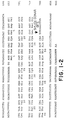
- Figure 1 represents the sequence of the mouse ⁇ RAR promoter region and first exon.
- the TATA and GTTCAC motifs are underlined; the first exon splice site is indicated with an arrow.
- a mouse liver genomic DNA library (Clonetech) in the lambda vector EMBL3 was screened with the BamHI-SphI fragment of the human RAR ⁇ cDNA clone Bl-RARe. See, Benbrook et al, Nature 333 , 669-672 (1988). This probe contains only first exon sequences, which are unique to the ⁇ RAR gene.
- a clone harboring a 20 kb insert was isolated, and the region surrounding the first exon subcloned and subjected to dideoxy sequence analysis.
- Figure 2(a) represents the in vivo analysis of RAR ⁇ RA response element sequences, following a series of deletions from the 5' end of the sequence including the ⁇ retinoic acid response element.
- the sequence at the junction between the mouse RAR ⁇ gene and the ⁇ -galactosidase reporter gene is as shown. Numbered amino acids correspond to the native RAR ⁇ translation product. Restriction sites are N, NotI; X, XhoI; K, KpnI; S, SalI; Nh, NheI; Sc, SacII.
- the dotted line represents plasmid sequences.
- Figure 2(b) represents sequences of oligonucleotides including the ⁇ retinoic acid response element used in these experiments.
- the terminal lower case bases are foreign to the RAR ⁇ promoter, and were included to allow insertion into the unique HindIII site of the Delta-MTV vector.
Landscapes
- Health & Medical Sciences (AREA)
- Life Sciences & Earth Sciences (AREA)
- Engineering & Computer Science (AREA)
- Chemical & Material Sciences (AREA)
- Biomedical Technology (AREA)
- Immunology (AREA)
- Molecular Biology (AREA)
- Hematology (AREA)
- Urology & Nephrology (AREA)
- Biotechnology (AREA)
- Genetics & Genomics (AREA)
- Physics & Mathematics (AREA)
- General Health & Medical Sciences (AREA)
- Biochemistry (AREA)
- Organic Chemistry (AREA)
- Microbiology (AREA)
- Bioinformatics & Cheminformatics (AREA)
- Cell Biology (AREA)
- Medicinal Chemistry (AREA)
- Zoology (AREA)
- Analytical Chemistry (AREA)
- Food Science & Technology (AREA)
- General Physics & Mathematics (AREA)
- Pathology (AREA)
- Toxicology (AREA)
- Biophysics (AREA)
- Tropical Medicine & Parasitology (AREA)
- General Engineering & Computer Science (AREA)
- Wood Science & Technology (AREA)
- Gastroenterology & Hepatology (AREA)
- High Energy & Nuclear Physics (AREA)
- Proteomics, Peptides & Aminoacids (AREA)
- Endocrinology (AREA)
- Plant Pathology (AREA)
- Micro-Organisms Or Cultivation Processes Thereof (AREA)
- Steroid Compounds (AREA)
- Measuring Or Testing Involving Enzymes Or Micro-Organisms (AREA)
- Investigating Or Analyzing Non-Biological Materials By The Use Of Chemical Means (AREA)
- Application Of Or Painting With Fluid Materials (AREA)
- Inorganic Compounds Of Heavy Metals (AREA)
Abstract
Description
- The present invention relates generally to the superfamily of nuclear receptors known as the steroid/thyroid hormone receptors and their cognate response elements. More particularly, the present invention relates to discovery of β-retinoic acid response elements (βRAREs), which may be used to enhance transcriptional activity of promoters.
- A central question in eukaryotic molecular biology is how specific DNA-binding proteins bind regulatory sequences to influence cell function and fate. The steroid/thyroid hormore receptors form a superfamily of ligand-dependent transcription factors that are believed to play a part in such cell function and fate. For example, it is known that these receptors transduce extracellular hormonal signal to target genes that contain specific enhancer sequences referred to as hormone-response elements (HREs). Each receptor contains a ligand-binding domain and a DNA-binding domain. The receptor undergoes a conformational change when it binds ligand which conformational change permits the receptor-ligand complex to bind its cognate response element and thereby regulate transcriptional activity of an associated promoter, which drives transcription of an operatively associated structural gene.
- Sequence comparison and mutational analyses of hormone receptors such as glucocorticoid receptor (GR) have identified functional domains responsible for transcriptional activation and repression, nuclear localization, DNA binding, and hormone binding. The DNA binding domain, which is required in order to activate transcription, consists of 66-68 amino acids of which about 20 sites, including nine cysteines (C1 to C9), are invariant among different receptors. The modular structure of members of this receptor superfamily allows the exchange of one domain for another to create functional, chimeric receptors.
- The hormone response elements are generally structurally related but in fact are functionally distinct. The response elements for GR (GRE), estrogen receptor (ERE), and thyroid hormone receptor (TRE) have been characterized in detail; they consist of a palindromic pair of 'half sites' (Evans, Science 240, 889 (1988); Green and Chambon, Trends In Genetics 4, 309 (1988)). With optimized pseudo- or consensus response elements, only two nucleotides per half site are different in GRE and ERE (Klock, et al., Nature 329, 734 (1987)). On the other hand, identical half sites can be seen in ERE and TRE, but their spacing is different (Glass, et al., Cell 54, 313 (1988)). Moreover, TRE has been shown to mediate transcriptional activation by transfected retinoic acid receptors (RARs) in CV-1 cells whereas non-transfected cells show no response. (Umesono et al., Nature 336, 262 (1988)). In other words, both TRs and RARs can activate TREs.
- It is, thus, surprising that the β-retinoic acid response elements (βRAREs) disclosed herein have a tandem repeat sequence as opposed to a palindromic sequence, and are much less susceptible to transcriptional activation by non-cognate receptors (e.g., estrogen receptor (ER), GR, thyroid hormone receptor (TR), etc.) than the known response elements (GRE, ERE, TRE). Also surprising is that constructs having βRAREs in a wide variety of mammalian cells have shown robust retinoic acid (RA)-dependent induction in the absence of cotransfected retinoic acid receptor (RAR)-encoding expression vector. This discovery suggests that virtually all mammalian cells express a low level of endogenous βRAR that is sufficient for efficient activation of vectors containing the βRARE, but apparently below a threshold for activation of the previously studied TREs.
- Thus, using transcriptional control regions comprising βRARE and a functional promoter, it is now possible to provide recombinant DNA vectors containing a gene, the transcription (and, thereby, also expression) of which is under the control of a promoter, the transcriptional activity of which is responsive to (and increased by) retinoic acid, without the necessity of cotransfection with a vector providing expression of RAR.
- We have discovered, and characterized by sequence, DNA segments which are βRAREs and linkages, between said segments and promoters, which are operative to confer responsiveness to retinoic acid on transcriptional activities of the promoters in mammalian cells. We have also discovered that the transcriptional activity enhancing effect of βRAREs occurs in all mammalian cells in the presence of retinoic acid, indicating that βRAR is present endogenously in all of these cells.
- In the present specification and claims, reference will be made to phrases and terms of art which are expressly defined for use herein as follows:
- As used herein, RARβ or βRAR means retinoic acid receptor beta.
- As used herein, CAT means chloramphenicol acetyltransferease; LUC mean firefly luciferase; β-Gal means βgalactosidase.
- As used herein, COS means monkey kidney cells which express T antigen (Tag). See Gluzman, Cell, 23:175 (1981).
- As used herein, CV-1 means mouse kidney cells from the cell line referred to as "CV-1". CV-1 is the parental line of COS. Unlike COS cells, which have been transformed to express SV40 T antigen (Tag), CV-1 cells do not express T antigen.
- As used herein, βRARE's mean β retinoic acid response elements. βRARE's are enhancer-like DNA sequences that confer retinoic acid (RA) responsiveness via interaction with the βRAR-RA complex, to transcriptional activity of promoters linked operatively for such responsiveness to a βRARE.
- As used herein, the terms "transcriptional control region" or "transcriptional control element", means a DNA segment comprising a βRARE operatively linked to a promoter to confer retinoic acid responsiveness to transcriptional activity of the promoter.
- As used herein, the phrase "operatively linked" means that the linkage (i.e., DNA segment) between the DNA segments so linked is such that the described effect of one of the linked segments on the other is capable of occuring.
- Effecting operable linkages for the various purposes stated herein is well within the skill of those of ordinary skill in the art, particularly with the teaching of the instant specification.
- As used herein, the phrase "promoter being naturally unresponsive to RA" means that RA does not enhance transcription from the promoter to an observable extent in a mammalian cell unless a βRARE is spliced or inserted, by recombinant DNA or genetic engineering methods, into a DNA segment comprising the promoter upstream of the promoter (relative to the direction of transcription therefrom) and linked to the promoter in a manner which makes operative responsiveness to RA of the transcriptional activity from the promoter.
- Use of the term "substantial sequence homology" in the present specification and claims means it is intended that DNA or RNA sequences which have de minimus sequence variations from, and retain the same functions as, the actual sequences disclosed and claimed herein are within the scope of the appended claims.
- The nucleotides which occur in the various nucleotide sequences appearing herein have their usual single-letter designations (A, G, T, C or U) used routinely in the art.
- In the textual portion of the present specification and claims, references to Greek letters may be written as alpha, beta, etc. In the Figures and elsewhere in the specification, the corresponding Greek letter symbols are sometimes used.
- In one of its aspects, the invention is a vector for expression in a mammalian cell of a protein, said expression under control of a transcriptional control region of the vector, said transcriptional control region comprising (1) a promoter, which is linked operatively for transcription to a first DNA segment, which is expressed as the protein, and (2) a second DNA segment, which comprises a subsegment of sequence 5'-GTTCACn1n2n3n4n5GTTCAC-3', wherein n1, n2, n3, n4 and n5 are independently A, T, C or G, said subsegment of said second DNA segment being linked operatively to said promoter to confer responsiveness to retinoic acid on transcriptional activity from the promoter, provided that the transcriptional activity of the promoter is naturally unresponsive to retinoic acid.
- With respect to the promoter which is part of a transcriptional control region of the invention, practically any promoter may be used, so long as the transcriptional activity of such a promoter may be enhanced by a βRARE-containing DNA segment suitably positioned upstream from the promoter and provided that such promoter is naturally unresponsive, in its transcriptional activity, to retinoic acid. Among such promoters are Delta-MTV promoter, Herpes thymidine kinase (tk) promoter and basal SV-40 promoter. Very desirable are promoters which require a response element for activity. On the other hand, very strong promoters, which drive transcription in the absence of enhancers, are not desirable promoters for use in the transcription control regions, and vectors, of the invention.
- Virtually any protein or polypeptide of interest can be made with mammalian cell transformed with an expression vector of the invention. Such proteins include hormones, lymphokines, receptors or receptor subunits, immunoglobulin chains and the like. Indicator proteins such as LUC, CAT and β-Gal can also be made.
- In another of its aspects, the invention entails a mammalian cell transformed to express a protein from a vector for expression of said protein, said vector comprising a transcriptional control region comprising (1) a promoter, which is linked operatively for transcription to a first DNA segment, which is expressed as the protein, and (2) a second DNA segment, which comprises a subsegment of sequence 5'-GTTCACn1n2n3n4n5CTTCAC-3', wherein n1, n2, n3, n4 and n5 are independently A, T, C or G, said subsegment of said second DNA segment being linked operatively to said promoter to confer responsiveness to retinoic acid on transcriptional activity from the promoter, provided that the transcriptional activity of the promoter is naturally unresponsive to retinoic acid.
- Among the types of mammalian cells that can be transformed in accordance with the invention are CV-1, COS, F9, P19, CHO, HeLa, NIH 3T3, Rat2 fibroblast, HT1080.T, chick embryo fibroblasts and quail QT6 cells.
- In still another aspect, the invention entails method for testing activity of a test compound as an agonist or antagonist of retinoic acid, said method comprising:
- (a) culturing (i) in the presence of retinoic acid and the absence of test compound and (ii) in the presence of both retinoic acid and test compound, a mammalian cell transformed to express a protein from a vector for expression of said protein, said vector comprising a transcriptional control region comprising (1) a promoter, which is linked operatively for transcription to a first DNA segment, which is expressed as the protein, and (2) a second DNA segment, which comprises a subsegment of sequence 5'-GTTCACn1n2n3n4n5GTTCAC-3', wherein n1, n2, n3, n4 and n5 are independently A, T, C or G, said subsegment of said second DNA segment being linked operatively to said promoter to confer responsiveness to retinoic acid on transcriptional activity from the promoter, provided that the transcriptional activity of the promoter is naturally unresponsive to retinoic acid; and
- (b) comparing the amount of said protein expressed during the two culturings of step (a).
- The cells of the invention, including those employed in the method of testing compounds for RA activity, can optionally be co-transformed with an expression vector which expresses βRAR.
- Indeed, because a low level of responsiveness of βRAREs (in enhancing transcription from an operatively linked promoter) has also been observed with TR's and vitamin D3 receptor (VD3R), agonists and antagonists of thyroid hormones and vitamin D3 can be screened for by testing compounds, as described above, but using cells transfected with a suitable vector of the present invention and a vector expressing TR or VD3R.
- Receptors, assay methods, and other subject matter pertinent to the subject matter of the present specification may be found in the following references, which are incorporated herein by reference: Commonly assigned United States Patent Application Serial No. 108,471, filed October 20, 1987 and published as PCT International Publication No. WO 88/03168; commonly assigned United States Patent Application Serial No. 276,536, filed November 30, 1988 and published as European Patent Application Publication No. 0 325 849; commonly assigned United States Patent Application Serial No. 370,407, filed June 22, 1989, said Application listing a Budapest Treaty Deposit of a plasmid harboring a cDNA encoding a gamma-retinoic acid receptor, said deposit having been made June 22, 1989 and bearing American Type Culture Collection Accession No. 40623; Zelent et al., Nature 339, 714 (1989); Petkovich et al., Nature 330, 444 (1987); Brand et al., Nature 332, 850 (1988).
- In another of its aspects, the present invention entails a DNA segment for controlling transcription of a gene in a mammalian cell, said segment comprising a promoter linked operatively for transcription to the gene and a subsegment with the sequence 5'-GTTCACn1n2n3n4n5GTTCAC-3', wherein n1, n2, n3, n4 and n5 are independently A, T, G or C, said subsegment linked operatively to said promoter to confer responsiveness to retinoic acid on transcriptional activity from the promoter, provided that transcriptional activity from the promoter is naturally unresponsive to retinoic acid.
- βRARE may be provided on a DNA segment which possesses a tandem repeat of the 6 bp motif 5'-GTTCAC separated by 5 bp sequence, which sequence may be any randomly chosen nucleotide sequence. Especially preferred βRAREs are provided on the segmentswhich DNA segments are adapted at the 5'- and 3'- ends to include a convenient restriction endonuclease site.

- Because the DNA segments which comprise the βRARE are relatively short, they may be provided synthetically, that is by synthesizing the βRARE-containing oligonucleotide on a DNA synthesizer as is known in the art. It is very desirable to provide restriction endonuclease sites at the 3' and 5' end of the oligomer, such that the synthetic βRARE may be conveniently inserted into a DNA expression vector at a site upstream from the promoter, whose transcriptional activity is to be enhanced and which drive transcription of the desired gene. As those of ordinary skill in the art will understand, βRAREs, like other response elements, are orientation and, with wide latitude, position independent. Thus, βRARE is functional in either orientation and may be placed in any convenient location from about 30 nucleotides upstream to about 10,000 nucleotides upstream from the promoter to be affected.
- Preferred mammalian cells for use with the enhanced expression systems of the invention employing transcriptional control regions comprising beta-retinoic acid response element are COS cells and CV-1 cells. COS-1 (referred to as COS) cells are mouse kidney cells that express SV40 T antigen (Tag); CV-1 cells do not express SV40 Tag. CV-1 cells are convenient because they lack any endogenous glucocorticoid or mineralocorticoid or other known steroid or thyroid hormone receptors, except that they do produce low levels of βRAR. Thus, via gene transfer with appropriate expression vectors comprising a heterologous gene under the control of a transcriptional control region of the invention, it is possible to convert these host cells into transformed cells which produce increased quantities of a desired protein in response to induction by retinoic acid.
- Expression plasmids containing the SV40 origin of replication, can propagate to high copy number in any host cell which expresses SV40 Tag. Thus, expression plasmids carrying the SV40 origin of replication can replicate in COS cells, but not in CV-1 cells. Although increased expression afforded by high copy number is desirable, it is not critical to the disclosed assay system. The use of any particular cell line as a host is also not critical, although CV-1 cells are preferred because they are particularly convenient for gene transfer studies and provide a sensitive and well described host cell system.
- The following demonstrates that the sequences in the promoter of the mouse RARβ gene confer RA responsiveness, and that these sequences represent a target specific for the three RA receptor subclasses (alpha-, beta- and gamma-RAR). The RA response element (RARE) does not mediate significant transcriptional activation by estrogen, glucocorticoid, but does weakly (about one order of magnitude less) mediate transcriptional activatin by vitamin D or thyroid hormone receptors (complexed with cognate ligands).
- A mouse liver genomic DNA library (Clonetech) in lambda vector EMBL3 was screened with a human RARβ cDNA probe to localize the RARE in the RARβ gene. This resulted in the isolation of a genomic fragment containing approximately 10 kb of upstream sequence, the complete first exon, and 10 kb of the first intron. The sequence of a portion of this clone containing the first exon and proximal 5' DNA is shown in Figure 1. The 10 kb upstream region was fused in-frame just downstream of the RARβ translation initiation codon to a β-galactosidase reporter gene (Fig. 2a). RAR-PL-βGAL was introduced into monkey kidney CV-1 cells cotransfected with RAR expression vector. Enzyme activity was induced upon retinoic acid addition, indicating that this region of genomic DNA contains a functional promoter which is responsive to retinoic acid. This was accomplished by introducing a SalI restriction site into the genomic clone at the indicated position by site-directed mutagenesis; the 10 kb genomic fragment was then excised and cloned into the β-galactosidase vector pLSV (a derivative of pGH101 (Herman, G.E., O'Brien, W.E. and Beaudet, A.L. Nucl. Acids Res., 14, 7130 (1986), modified to contain a SalI site and a polylinker sequence by oligo addition, to yield RAR-PL-βGAL.
- A series of deletions from the 5' end of RAR-PL-βGAL reveal that sequences mediating RA induction reside within the 2 kb NheI-SacII fragment (Fig. 2a; Table below). Subfragments of this region were cloned into the enhancer-dependent luciferase reporter plasmid DMTV-LUC, which contains the mouse mammary tumor virus promoter with the natural GR response elements deleted (Hollenberg, S.M. and Evans, R.M. Cell, 55, 899-906 (1988)). A 183 bp SmaI fragment (see Fig. 1) is able to confer retinoic acid responsiveness to this heterologous promoter in either orientation (Table). Oligonucleotide sequences (Fig. 2b) derived from this region were then used to further define the RA response element, either in DMTV-LUC or DMTV-CAT (Table below).
- Thyroid hormone response element (TRE) has been shown to mediate transcriptional activation by transfected RARs in CV-1 cells, whereas non-transfected cells show no response. Umesono et al, Nature 336, 262-265 (1988). Surprisingly, when Delta-MTV-CAT constructs βRE1, βRE2, and βRE3 (Figure 2) showed robust RA-dependent induction in the absence of cotransfected RAR expression vector. Cotransfection of RAR-alpha expression vector increased induction by only two-fold, which demonstrates that CV-1 cells express a low level of endogenous RA receptor that is sufficient for efficient activation of vectors containing the βRARE, but apparently below a threshold for activation of the previously studied TREs. A survey of the following cell lines indicated that all were able to efficiently transactivate the βRARE in an RA-dependent fashion in the absence of transfected RAR expression vector: CV-1, F9 and P19 (mouse teratocarcinomas), CHO, HeLa, NIH 3T3, Rat2 fibroblasts, HT1080.T (human lymphoid), chick embryo fibroblasts, and quail QT6 cells. No cell line has yet been tested which does not express this activity.
- Inspection of the sequences of βRE1, βRE2 and βRE3 (Fig. 2b) identifies a tandem repeat of the 6 bp motif GTTCAC. The center to center separation of 11 bp between these repeats is one turn of the DNA helix. Constructs containing single copies of either the 5' or 3' half site (βRE4 and βRE5) are functional only upon cotransfection of RAR expression vectors (Figure 2d). Not only does this indicate that the RARE is a bonafide target of all three RAR subtypes expressed from cloned cDNA, but also demonstrates that these half sites can serve as a minimal RA response element in the context of the Delta-MTV promoter. Apparently a single half-site (5'-GTTCAC-3') is a low affinity target requiring high levels of receptor for activation, and two sequences, when juxtaposed as a tandem repeat, create a high affinity binding site (via cooperative interactions) which is able to respond to the low level of endogenous RAR present in CV-1 and other cells.
- To demonstrate that the sequences described above are direct binding sites for the RAR, extracts from transfected cells were mixed with 32P-labeled RARE, and the resulting complex immunoprecipitated with antibody specific to the transfected receptor. For this purpose, a hybrid receptor (termed GRR) was created in which the amino terminus of the glucocorticoid receptor was coupled to the DNA binding and ligand binding domains of RARα. This hybrid receptor exhibits the RA dependence and target gene specificity of the RAR. (D. Mangelsdorf et al. unpublished observations). COS cell extracts containing the hybrid receptor specifically immunoprecipitate labeled βRE2 oligo. Binding of GRR to βRE2 in this assay is not affected by the addition of an excess of unlabeled GRE competitor, but is competed by an excess of either the β-response element itself or a TRE sequence, another known RAR binding site. In a parallel set of experiments, GR extract specifically binds to labeled GRE, is competed by excess unlabeled GRE, and does not recognize the βRE2 sequence. Thus, specific binding to the β-response element is observed by the hybrid GRR receptor.
- Many previously characterized response elements are targets of more than one type of receptor: both the RAR and the TR are able to activate a TRE; the RAR, TR, and estrogen receptor all activate the vitellogenin ERE; the progesterone, mineralocorticoid, and glucocorticoid receptor all activate the GRE (Ham et al., Nucl. Acids Res. 16, 5263-5276 (1988)). Thus, it might be expected that the response element of the RARβ gene would reciprocally be responsive to the TR, ER, and/or other members of the receptor superfamily. Cotransfection of the ER, GR, in CV-1 cells with construct βRE1 failed to result in appreciable activation in the absence or following addition of the appropriate ligand, although cotransfection with TR and vitamin D receptor (VD3R) CV-1 cells with construct βRE1 did weakly (about 10- to 20-fold less) activate their cognate response elements.
- 5 ug of each of the constructs indicated in the Table below were transfected into CV-1 cells with either RSV-LUC or RSV-βGAL to normalize transfection efficiencies. Transfections also included RARα expression vector. Each value represents duplicate measurements of plates treated with 10-7M RA (βGAL experiments) or 10-6M RA (luciferase experiments) relative to plates treated with solvent only. The 183 bp SmaI restriction fragment (shown in Figure 1) was inserted either in the forward (F) or reverse (R) orientation relative to the Delta-MTV promoter. The (NR) construct contains a 45 bp oligo sequence located 24 bp 3' of bREl in the RARβ promoter which was nonresponsive to RA.
- Plasmids were transfected into CV-1 cells and assayed for β-galactosidase activity either without or with the addition of 10-7M RA. Negative responses were two-fold induction or less; positive inductions were seven-fold or greater.
- Cells were transfected in 10 cm dishes with 10 ug DNA containing 5 ug reporter plasmid, 1-2 ug either RSV-LUC (a), or RSV-βGAL or pCH110 (c and d), pGEM4 as carrier DNA, and for the experiments shown in a and d, 1 ug RSV-RAR expression vector or the same amount of an RSV vector generating a nonsense transcript. Cells were harvested 1 day after addition of retinoic acid. All CAT assays represent equivalent amounts of β-galactosidase activity; βGAL assays were normalized to luciferase activity.
-
Construct Fold increase RAR-PL-βGAL 14 RAR-DXN-βGAL 22 RAR-DNhSc-βGAL 2 DMTV-LUC 2 DMTV-Sma183F-LUC 10 DMTV-Sma183R-LUC 9 DMTV-LUC 2 DMTV-(NR)-LUC 2 DMTV-bRE1-LUC 14 - Figure 1 represents the sequence of the mouse βRAR promoter region and first exon. The TATA and GTTCAC motifs are underlined; the first exon splice site is indicated with an arrow. A mouse liver genomic DNA library (Clonetech) in the lambda vector EMBL3 was screened with the BamHI-SphI fragment of the human RARβ cDNA clone Bl-RARe. See, Benbrook et al, Nature 333, 669-672 (1988). This probe contains only first exon sequences, which are unique to the βRAR gene. A clone harboring a 20 kb insert was isolated, and the region surrounding the first exon subcloned and subjected to dideoxy sequence analysis.
- Figure 2(a) represents the in vivo analysis of RARβ RA response element sequences, following a series of deletions from the 5' end of the sequence including the β retinoic acid response element. The sequence at the junction between the mouse RARβ gene and the β-galactosidase reporter gene is as shown. Numbered amino acids correspond to the native RARβ translation product. Restriction sites are N, NotI; X, XhoI; K, KpnI; S, SalI; Nh, NheI; Sc, SacII. The dotted line represents plasmid sequences.
- Figure 2(b) represents sequences of oligonucleotides including the β retinoic acid response element used in these experiments. The terminal lower case bases are foreign to the RARβ promoter, and were included to allow insertion into the unique HindIII site of the Delta-MTV vector.
Claims (16)
- A method for the production of a DNA segment comprising a β-retinoic acid response element operative to confer responsiveness to retinoic acid on the transcriptional activation of promoters in mammalian cells, said segment having the sequence:wherein n1, n2, n3, n4, and n5 are each independently selected from A, T, C, or G.

- A method for the production of a DNA segment according to Claim 1 wherein n1 is C, n2 is G, n3 is A, n4 is A, and n5 is A.
- A method for the production of a DNA segment according to Claim 2 having the sequence:

- A method for the production of a DNA segment according to Claim 3 having the sequence:

- A method for the production of a DNA segment according to Claim 4 having the sequence:

- A method for the production of a DNA construct comprising the DNA segment of any one of Claims 1-5 operatively linked to a promoter which is not normally subject to transcriptional activation by retinoic acid; wherein the DNA and the promoter are operatively linked so as to confer transcriptional activation activity on said promoter in the presence of retinoic acid.
- A method for the production of a DNA construct comprising a DNA segment selected from:wherein said DNA segment is operatively linked to a promoter which is not normally subject to transcriptional activation by retinoic acid; wherein said DNA segment and said promoter are operatively linked so as to confer transcriptional activation activity on said promoter in the presence of retinoic acid.

- A method for the production of a DNA construct according to Claim 6 or 7 wherein the promoter is the delta-MTV promoter of mouse mammary tumor virus.
- A method for the production of a DNA construct comprising the DNA construct of Claim 8 linked operatively for transcription to a gene.
- A method for the production of a vector for the expression of a protein of interest in a mammalian cell, said vector comprising the DNA construct of Claim 9, wherein said gene encodes the protein of interest.
- A method according to Claim 10 wherein the protein of interest is selected from luciferase, chloramphenicol acetyltransferase, or beta-galactosidase.
- A method for the production of a mammalian cell transformed with the vector of Claim 10 or 11.
- A method according to Claim 12 wherein the cell is of a type selected from CV-1, COS, F9, CHO, HeLa, NIH 3T3, Rat2 fibroblasts, HT1080.T, chick embryo fibroblast, or quail QT6 cells.
- A method for the controlled expression of a gene of interest, said method comprising culturing cells of Claim 12 or 13 in the presence or absence of retinoic acid.
- A method for testing the activity of a test compound as an agonist of retinoic acid, said method comprising:(a) culturing a mammalian cell according to Claim 12 or 13 in the presence, or in the absence, of the test compound; and thereafter(b) comparing the amount of said protein expressed during the culturing in the presence, or in the absence, of the test compound.
- A method for testing the activity of a test compound as an antagonist of retinoic acid, said method comprising:(a) culturing a mammalian cell according to Claim 12 or 13 in the presence of retinoic acid, and further:(i) in the presence of the test compound, or(ii) in the absence of the test compound; and thereafter(b) comparing the amount of said protein expressed during the (i) and (ii) culturing steps.
Applications Claiming Priority (3)
| Application Number | Priority Date | Filing Date | Title |
|---|---|---|---|
| US07/438,757 US5091518A (en) | 1989-11-16 | 1989-11-16 | Beta retinoic acid response elements compositions and assays |
| US438757 | 1989-11-16 | ||
| PCT/US1990/006626 WO1991007488A1 (en) | 1989-11-16 | 1990-11-13 | Beta retinoic acid response elements compositions and assays |
Publications (3)
| Publication Number | Publication Date |
|---|---|
| EP0502979A1 EP0502979A1 (en) | 1992-09-16 |
| EP0502979A4 EP0502979A4 (en) | 1993-02-10 |
| EP0502979B1 true EP0502979B1 (en) | 1997-01-22 |
Family
ID=23741886
Family Applications (1)
| Application Number | Title | Priority Date | Filing Date |
|---|---|---|---|
| EP91901044A Expired - Lifetime EP0502979B1 (en) | 1989-11-16 | 1990-11-13 | Beta retinoic acid response elements compositions and assays |
Country Status (11)
| Country | Link |
|---|---|
| US (1) | US5091518A (en) |
| EP (1) | EP0502979B1 (en) |
| JP (1) | JPH05504474A (en) |
| AT (1) | ATE148166T1 (en) |
| AU (1) | AU637871B2 (en) |
| CA (1) | CA2072644A1 (en) |
| DE (1) | DE69029812T2 (en) |
| DK (1) | DK0502979T3 (en) |
| ES (1) | ES2095931T3 (en) |
| GR (1) | GR3022358T3 (en) |
| WO (1) | WO1991007488A1 (en) |
Cited By (1)
| Publication number | Priority date | Publication date | Assignee | Title |
|---|---|---|---|---|
| US6184256B1 (en) | 1997-04-24 | 2001-02-06 | INSTITUT NATIONAL DE LA SANTé DE LA RECHERCHE MéDICALE | Methods and compositions for use in modulating expression of matrix metalloproteinase genes |
Families Citing this family (26)
| Publication number | Priority date | Publication date | Assignee | Title |
|---|---|---|---|---|
| US5260432A (en) * | 1989-06-22 | 1993-11-09 | Sloan-Kettering Institute For Cancer Research | Human gamma retinoic acid receptor DNA |
| US5091518A (en) * | 1989-11-16 | 1992-02-25 | The Salk Institute For Biological Studies | Beta retinoic acid response elements compositions and assays |
| US6492137B1 (en) * | 1989-11-16 | 2002-12-10 | The Salk Institute For Biological Studies | Response element compositions and assays employing same |
| US5861274A (en) * | 1990-03-22 | 1999-01-19 | The Salk Institute For Biological Studies | Nucleic acids encoding peroxisome proliferator-activated receptor |
| US5369028A (en) * | 1990-04-03 | 1994-11-29 | The Salk Institute Biotechnology/Industrial Associates, Inc. | DNA and mRNA encoding human neuronal nicotinic acetylcholine receptor compositions and cells transformed with same |
| US6440681B1 (en) | 1990-04-03 | 2002-08-27 | Merck & Co., Inc. | Methods for identifying agonists and antagonists for human neuronal nicotinic acetylcholine receptors |
| US5401629A (en) * | 1990-08-07 | 1995-03-28 | The Salk Institute Biotechnology/Industrial Associates, Inc. | Assay methods and compositions useful for measuring the transduction of an intracellular signal |
| WO1992006715A1 (en) * | 1990-10-12 | 1992-04-30 | Seragen, Inc. | Mammalian model of a malignant disorder |
| AU665939B2 (en) * | 1990-12-21 | 1996-01-25 | Rockefeller University, The | Liver enriched transcription factor |
| CA2100582A1 (en) * | 1991-03-18 | 1992-09-19 | David J. Mangelsdorf | Response element compositions and assays employing same |
| SE500453C2 (en) * | 1991-10-07 | 1994-06-27 | Karobio Ab | An in vitro method for the evaluation of a substance's effects |
| EP0552612A3 (en) * | 1992-01-22 | 1993-10-20 | Hoffmann La Roche | Methods for determining and isolating compounds which bind directly to nucleosolic proteins |
| US5756448A (en) * | 1992-02-26 | 1998-05-26 | The General Hospital Corporation | Constitute activator of retinoid (CAR) receptor polypeptides |
| US6989242B1 (en) | 1992-02-26 | 2006-01-24 | The General Hospital Coporation | Car receptors and related molecules and methods |
| GB2286397B (en) | 1993-03-08 | 1997-09-10 | Salk Inst Biotech Ind | Human neuronal nicotinic acetylcholine receptor compositions and methods of employing same |
| WO1995013299A1 (en) * | 1993-11-08 | 1995-05-18 | The Salk Institute Biotechnology/Industrial Associates, Inc. | Human neuronal nicotinic acetylcholine receptor compositions and methods employing same |
| AU2952695A (en) * | 1994-07-01 | 1996-01-25 | Salk Institute For Biological Studies, The | Mammalian peroxisome proliferator-activated receptors and uses thereof |
| US5702914A (en) * | 1994-12-21 | 1997-12-30 | The Salk Institute For Biological Studies | Use of reporter genes for retinoid receptor screening assays having novel retinoid-associated response elements |
| FR2732035B1 (en) * | 1995-03-23 | 1997-05-30 | Agronomique Inst Nat Rech | METHOD FOR REGULATING THE EXPRESSION OF A GENE IN A BACULOVIRUS, BY A FIXATION SITE OF A RETINOIC ACID RECEPTOR, AND VECTOR FOR CARRYING OUT SAID METHOD |
| US6485967B1 (en) | 1995-06-07 | 2002-11-26 | Merck & Co., Inc. | Human neuronal nicotinic acetylcholine receptor α6 and β3 nucleic acid |
| FR2735371B1 (en) * | 1995-06-19 | 1997-07-18 | Cird Galderma | METHOD FOR IDENTIFYING RAR RECEPTOR ANTAGONIST COMPOUNDS |
| US6489441B1 (en) | 1995-09-01 | 2002-12-03 | The Salk Institute For Biological Studies | Transcriptional co-repressor that interacts with nuclear hormone receptors |
| AU2287397A (en) * | 1996-03-14 | 1997-10-01 | Schering Aktiengesellschaft | Method of detecting the effect of test substances using hen urokinase |
| US6387673B1 (en) | 1997-05-01 | 2002-05-14 | The Salk Institute For Biological Studies | Compounds useful for the modulation of processes mediated by nuclear hormone receptors, methods for the identification and use of such compounds |
| EP1037533A1 (en) * | 1997-11-10 | 2000-09-27 | The Salk Institute for Biological Studies | Methods for the use of inhibitors of co-repressors for the treatment of neoplastic diseases |
| CN106480024B (en) * | 2015-08-30 | 2020-10-20 | 南通大学附属医院 | Recombinant promoter with concentration-dependent effect regulated by retinoic acid and its use |
Family Cites Families (4)
| Publication number | Priority date | Publication date | Assignee | Title |
|---|---|---|---|---|
| AU7802587A (en) * | 1986-08-01 | 1988-02-24 | Genetics Institute Inc. | High level inducible expression of heterologous genes |
| US5091518A (en) * | 1989-11-16 | 1992-02-25 | The Salk Institute For Biological Studies | Beta retinoic acid response elements compositions and assays |
| ES2152920T3 (en) * | 1990-02-09 | 2001-02-16 | Salk Inst For Biological Studi | RECEIVING COMPOSITIONS OF RETINOIDS AND METHODS. |
| AU655417B2 (en) * | 1990-03-22 | 1994-12-22 | Salk Institute For Biological Studies, The | Insect retinoid receptor compositions and methods |
-
1989
- 1989-11-16 US US07/438,757 patent/US5091518A/en not_active Expired - Lifetime
-
1990
- 1990-11-13 JP JP3501472A patent/JPH05504474A/en active Pending
- 1990-11-13 EP EP91901044A patent/EP0502979B1/en not_active Expired - Lifetime
- 1990-11-13 ES ES91901044T patent/ES2095931T3/en not_active Expired - Lifetime
- 1990-11-13 CA CA002072644A patent/CA2072644A1/en not_active Abandoned
- 1990-11-13 AT AT91901044T patent/ATE148166T1/en not_active IP Right Cessation
- 1990-11-13 DE DE69029812T patent/DE69029812T2/en not_active Expired - Fee Related
- 1990-11-13 WO PCT/US1990/006626 patent/WO1991007488A1/en not_active Ceased
- 1990-11-13 DK DK91901044.7T patent/DK0502979T3/en active
- 1990-11-13 AU AU69568/91A patent/AU637871B2/en not_active Ceased
-
1997
- 1997-01-23 GR GR960402829T patent/GR3022358T3/en unknown
Non-Patent Citations (1)
| Title |
|---|
| NUCLEIC ACIDS RESEARCH, vol. 16, no. 2, 25 January 1988; KLEIN-HITPASS et al., pp. 547-663 * |
Cited By (1)
| Publication number | Priority date | Publication date | Assignee | Title |
|---|---|---|---|---|
| US6184256B1 (en) | 1997-04-24 | 2001-02-06 | INSTITUT NATIONAL DE LA SANTé DE LA RECHERCHE MéDICALE | Methods and compositions for use in modulating expression of matrix metalloproteinase genes |
Also Published As
| Publication number | Publication date |
|---|---|
| AU6956891A (en) | 1991-06-13 |
| GR3022358T3 (en) | 1997-04-30 |
| EP0502979A1 (en) | 1992-09-16 |
| DE69029812T2 (en) | 1997-06-05 |
| CA2072644A1 (en) | 1991-05-17 |
| DE69029812D1 (en) | 1997-03-06 |
| ATE148166T1 (en) | 1997-02-15 |
| WO1991007488A1 (en) | 1991-05-30 |
| EP0502979A4 (en) | 1993-02-10 |
| JPH05504474A (en) | 1993-07-15 |
| US5091518A (en) | 1992-02-25 |
| DK0502979T3 (en) | 1997-04-07 |
| ES2095931T3 (en) | 1997-03-01 |
| AU637871B2 (en) | 1993-06-10 |
Similar Documents
| Publication | Publication Date | Title |
|---|---|---|
| US5091518A (en) | Beta retinoic acid response elements compositions and assays | |
| Sucov et al. | Characterization of an autoregulated response element in the mouse retinoic acid receptor type beta gene. | |
| Damm et al. | Protein encoded by v-erbA functions as a thyroid-hormone receptor antagonist | |
| US5298429A (en) | Bioassay for identifying ligands for steroid hormone receptors | |
| EP0371820B1 (en) | Novel receptors: their identification, characterization, preparation and use | |
| Rishi et al. | Estradiol regulation of the human retinoic acid receptor α gene in human breast carcinoma cells is mediated via an imperfect half-palindromic estrogen response element and Sp1 motifs | |
| Chesnokov et al. | p53 inhibits RNA polymerase III-directed transcription in a promoter-dependent manner | |
| Ohno et al. | The Drosophila nuclear receptors FTZ-Flα and FTZ-F1β compete as monomers for binding to a site in the fushi tarazu gene | |
| JPH11514842A (en) | Modified steroid hormones for gene therapy and their use | |
| US5707800A (en) | Retinoic acid response elements and assays employing same | |
| WO2000017334A9 (en) | Analysis of ligand activated nuclear receptors i(in vivo) | |
| US5834213A (en) | Screening system and assay for identifying compounds that regulate steroid and orphan receptors mediation of DNA transcription | |
| US7189510B2 (en) | Response element compositions and assays employing same | |
| Junker et al. | Both immunoglobulin promoter and enhancer sequences are targets for suppression in myeloma‐fibroblast hybrid cells. | |
| Shin et al. | An adenoviral vector system for functional identification of nuclear receptor ligands | |
| Lee et al. | TR4 orphan receptor represses the human steroid 21-hydroxylase gene expression through the monomeric AGGTCA motif | |
| JP2001299374A (en) | Method for producing novel heterodimeric protein | |
| US6794160B1 (en) | Hormone receptor compositions and methods | |
| US20040076995A1 (en) | Nurr1 transcription factor 1-box mutants having monomeric transcriptional activation activity | |
| Zhou | Half site, spacing and orientation: The DNA binding specificity of nuclear receptors with zinc fingers | |
| Sprung | Interactions of the thyroid hormone receptor, retinoid X receptor, and other nuclear factors with the thyroid hormone response elements of the rat growth hormone gene | |
| Kuo | Molecular and genetic analysis of glucocorticoid-responsive mouse mammary tumor virus gene expression | |
| Morley et al. | Experiment Station, College Station, TX 77843, USA |
Legal Events
| Date | Code | Title | Description |
|---|---|---|---|
| PUAI | Public reference made under article 153(3) epc to a published international application that has entered the european phase |
Free format text: ORIGINAL CODE: 0009012 |
|
| 17P | Request for examination filed |
Effective date: 19920522 |
|
| AK | Designated contracting states |
Kind code of ref document: A1 Designated state(s): AT BE CH DE DK ES FR GB GR IT LI LU NL SE |
|
| A4 | Supplementary search report drawn up and despatched |
Effective date: 19921221 |
|
| AK | Designated contracting states |
Kind code of ref document: A4 Designated state(s): AT BE CH DE DK ES FR GB GR IT LI LU NL SE |
|
| 17Q | First examination report despatched |
Effective date: 19941028 |
|
| GRAG | Despatch of communication of intention to grant |
Free format text: ORIGINAL CODE: EPIDOS AGRA |
|
| GRAH | Despatch of communication of intention to grant a patent |
Free format text: ORIGINAL CODE: EPIDOS IGRA |
|
| GRAH | Despatch of communication of intention to grant a patent |
Free format text: ORIGINAL CODE: EPIDOS IGRA |
|
| GRAA | (expected) grant |
Free format text: ORIGINAL CODE: 0009210 |
|
| AK | Designated contracting states |
Kind code of ref document: B1 Designated state(s): AT BE CH DE DK ES FR GB GR IT LI LU NL SE |
|
| PG25 | Lapsed in a contracting state [announced via postgrant information from national office to epo] |
Ref country code: GR Free format text: LAPSE BECAUSE OF FAILURE TO SUBMIT A TRANSLATION OF THE DESCRIPTION OR TO PAY THE FEE WITHIN THE PRESCRIBED TIME-LIMIT Effective date: 19970122 |
|
| REF | Corresponds to: |
Ref document number: 148166 Country of ref document: AT Date of ref document: 19970215 Kind code of ref document: T |
|
| REG | Reference to a national code |
Ref country code: CH Ref legal event code: NV Representative=s name: E. BLUM & CO. PATENTANWAELTE Ref country code: CH Ref legal event code: EP |
|
| ET | Fr: translation filed | ||
| REG | Reference to a national code |
Ref country code: ES Ref legal event code: FG2A Ref document number: 2095931 Country of ref document: ES Kind code of ref document: T3 |
|
| REF | Corresponds to: |
Ref document number: 69029812 Country of ref document: DE Date of ref document: 19970306 |
|
| ITF | It: translation for a ep patent filed | ||
| REG | Reference to a national code |
Ref country code: GR Ref legal event code: FG4A Free format text: 3022358 |
|
| REG | Reference to a national code |
Ref country code: DK Ref legal event code: T3 |
|
| PG25 | Lapsed in a contracting state [announced via postgrant information from national office to epo] |
Ref country code: LU Free format text: LAPSE BECAUSE OF NON-PAYMENT OF DUE FEES Effective date: 19971113 Ref country code: AT Free format text: LAPSE BECAUSE OF NON-PAYMENT OF DUE FEES Effective date: 19971113 |
|
| PG25 | Lapsed in a contracting state [announced via postgrant information from national office to epo] |
Ref country code: SE Free format text: LAPSE BECAUSE OF NON-PAYMENT OF DUE FEES Effective date: 19971114 Ref country code: ES Free format text: LAPSE BECAUSE OF NON-PAYMENT OF DUE FEES Effective date: 19971114 |
|
| PLBE | No opposition filed within time limit |
Free format text: ORIGINAL CODE: 0009261 |
|
| STAA | Information on the status of an ep patent application or granted ep patent |
Free format text: STATUS: NO OPPOSITION FILED WITHIN TIME LIMIT |
|
| PG25 | Lapsed in a contracting state [announced via postgrant information from national office to epo] |
Ref country code: BE Free format text: LAPSE BECAUSE OF NON-PAYMENT OF DUE FEES Effective date: 19971130 |
|
| PG25 | Lapsed in a contracting state [announced via postgrant information from national office to epo] |
Ref country code: DK Free format text: LAPSE BECAUSE OF NON-PAYMENT OF DUE FEES Effective date: 19971231 |
|
| 26N | No opposition filed | ||
| BERE | Be: lapsed |
Owner name: THE SALK INSTITUTE FOR BIOLOGICAL STUDIES Effective date: 19971130 |
|
| EUG | Se: european patent has lapsed |
Ref document number: 91901044.7 |
|
| PGFP | Annual fee paid to national office [announced via postgrant information from national office to epo] |
Ref country code: FR Payment date: 19991117 Year of fee payment: 10 |
|
| PGFP | Annual fee paid to national office [announced via postgrant information from national office to epo] |
Ref country code: GB Payment date: 19991118 Year of fee payment: 10 Ref country code: DE Payment date: 19991118 Year of fee payment: 10 |
|
| PGFP | Annual fee paid to national office [announced via postgrant information from national office to epo] |
Ref country code: NL Payment date: 19991122 Year of fee payment: 10 Ref country code: CH Payment date: 19991122 Year of fee payment: 10 |
|
| PG25 | Lapsed in a contracting state [announced via postgrant information from national office to epo] |
Ref country code: GB Free format text: LAPSE BECAUSE OF NON-PAYMENT OF DUE FEES Effective date: 20001113 |
|
| PG25 | Lapsed in a contracting state [announced via postgrant information from national office to epo] |
Ref country code: LI Free format text: LAPSE BECAUSE OF NON-PAYMENT OF DUE FEES Effective date: 20001130 Ref country code: CH Free format text: LAPSE BECAUSE OF NON-PAYMENT OF DUE FEES Effective date: 20001130 |
|
| PG25 | Lapsed in a contracting state [announced via postgrant information from national office to epo] |
Ref country code: NL Free format text: LAPSE BECAUSE OF NON-PAYMENT OF DUE FEES Effective date: 20010601 |
|
| GBPC | Gb: european patent ceased through non-payment of renewal fee |
Effective date: 20001113 |
|
| REG | Reference to a national code |
Ref country code: CH Ref legal event code: PL |
|
| PG25 | Lapsed in a contracting state [announced via postgrant information from national office to epo] |
Ref country code: FR Free format text: LAPSE BECAUSE OF NON-PAYMENT OF DUE FEES Effective date: 20010731 |
|
| NLV4 | Nl: lapsed or anulled due to non-payment of the annual fee |
Effective date: 20010601 |
|
| PG25 | Lapsed in a contracting state [announced via postgrant information from national office to epo] |
Ref country code: DE Free format text: LAPSE BECAUSE OF NON-PAYMENT OF DUE FEES Effective date: 20010801 |
|
| REG | Reference to a national code |
Ref country code: FR Ref legal event code: ST |
|
| REG | Reference to a national code |
Ref country code: DK Ref legal event code: EBP |
|
| REG | Reference to a national code |
Ref country code: ES Ref legal event code: FD2A Effective date: 19981212 |
|
| PG25 | Lapsed in a contracting state [announced via postgrant information from national office to epo] |
Ref country code: IT Free format text: LAPSE BECAUSE OF NON-PAYMENT OF DUE FEES;WARNING: LAPSES OF ITALIAN PATENTS WITH EFFECTIVE DATE BEFORE 2007 MAY HAVE OCCURRED AT ANY TIME BEFORE 2007. THE CORRECT EFFECTIVE DATE MAY BE DIFFERENT FROM THE ONE RECORDED. Effective date: 20051113 |