EP0501532A2 - Novel block copolymer and preparation thereof - Google Patents
Novel block copolymer and preparation thereof Download PDFInfo
- Publication number
- EP0501532A2 EP0501532A2 EP92109052A EP92109052A EP0501532A2 EP 0501532 A2 EP0501532 A2 EP 0501532A2 EP 92109052 A EP92109052 A EP 92109052A EP 92109052 A EP92109052 A EP 92109052A EP 0501532 A2 EP0501532 A2 EP 0501532A2
- Authority
- EP
- European Patent Office
- Prior art keywords
- block
- repeating units
- block copolymer
- formula
- fluorine
- Prior art date
- Legal status (The legal status is an assumption and is not a legal conclusion. Google has not performed a legal analysis and makes no representation as to the accuracy of the status listed.)
- Granted
Links
Images

Classifications
-
- C—CHEMISTRY; METALLURGY
- C08—ORGANIC MACROMOLECULAR COMPOUNDS; THEIR PREPARATION OR CHEMICAL WORKING-UP; COMPOSITIONS BASED THEREON
- C08F—MACROMOLECULAR COMPOUNDS OBTAINED BY REACTIONS ONLY INVOLVING CARBON-TO-CARBON UNSATURATED BONDS
- C08F293/00—Macromolecular compounds obtained by polymerisation on to a macromolecule having groups capable of inducing the formation of new polymer chains bound exclusively at one or both ends of the starting macromolecule
-
- C—CHEMISTRY; METALLURGY
- C08—ORGANIC MACROMOLECULAR COMPOUNDS; THEIR PREPARATION OR CHEMICAL WORKING-UP; COMPOSITIONS BASED THEREON
- C08G—MACROMOLECULAR COMPOUNDS OBTAINED OTHERWISE THAN BY REACTIONS ONLY INVOLVING UNSATURATED CARBON-TO-CARBON BONDS
- C08G65/00—Macromolecular compounds obtained by reactions forming an ether link in the main chain of the macromolecule
- C08G65/002—Macromolecular compounds obtained by reactions forming an ether link in the main chain of the macromolecule from unsaturated compounds
- C08G65/005—Macromolecular compounds obtained by reactions forming an ether link in the main chain of the macromolecule from unsaturated compounds containing halogens
-
- C—CHEMISTRY; METALLURGY
- C08—ORGANIC MACROMOLECULAR COMPOUNDS; THEIR PREPARATION OR CHEMICAL WORKING-UP; COMPOSITIONS BASED THEREON
- C08G—MACROMOLECULAR COMPOUNDS OBTAINED OTHERWISE THAN BY REACTIONS ONLY INVOLVING UNSATURATED CARBON-TO-CARBON BONDS
- C08G65/00—Macromolecular compounds obtained by reactions forming an ether link in the main chain of the macromolecule
- C08G65/02—Macromolecular compounds obtained by reactions forming an ether link in the main chain of the macromolecule from cyclic ethers by opening of the heterocyclic ring
- C08G65/04—Macromolecular compounds obtained by reactions forming an ether link in the main chain of the macromolecule from cyclic ethers by opening of the heterocyclic ring from cyclic ethers only
- C08G65/22—Cyclic ethers having at least one atom other than carbon and hydrogen outside the ring
- C08G65/223—Cyclic ethers having at least one atom other than carbon and hydrogen outside the ring containing halogens
-
- C—CHEMISTRY; METALLURGY
- C08—ORGANIC MACROMOLECULAR COMPOUNDS; THEIR PREPARATION OR CHEMICAL WORKING-UP; COMPOSITIONS BASED THEREON
- C08G—MACROMOLECULAR COMPOUNDS OBTAINED OTHERWISE THAN BY REACTIONS ONLY INVOLVING UNSATURATED CARBON-TO-CARBON BONDS
- C08G65/00—Macromolecular compounds obtained by reactions forming an ether link in the main chain of the macromolecule
- C08G65/02—Macromolecular compounds obtained by reactions forming an ether link in the main chain of the macromolecule from cyclic ethers by opening of the heterocyclic ring
- C08G65/32—Polymers modified by chemical after-treatment
- C08G65/321—Polymers modified by chemical after-treatment with inorganic compounds
-
- C—CHEMISTRY; METALLURGY
- C08—ORGANIC MACROMOLECULAR COMPOUNDS; THEIR PREPARATION OR CHEMICAL WORKING-UP; COMPOSITIONS BASED THEREON
- C08G—MACROMOLECULAR COMPOUNDS OBTAINED OTHERWISE THAN BY REACTIONS ONLY INVOLVING UNSATURATED CARBON-TO-CARBON BONDS
- C08G65/00—Macromolecular compounds obtained by reactions forming an ether link in the main chain of the macromolecule
- C08G65/02—Macromolecular compounds obtained by reactions forming an ether link in the main chain of the macromolecule from cyclic ethers by opening of the heterocyclic ring
- C08G65/32—Polymers modified by chemical after-treatment
- C08G65/321—Polymers modified by chemical after-treatment with inorganic compounds
- C08G65/323—Polymers modified by chemical after-treatment with inorganic compounds containing halogens
- C08G65/3233—Molecular halogen
-
- C—CHEMISTRY; METALLURGY
- C08—ORGANIC MACROMOLECULAR COMPOUNDS; THEIR PREPARATION OR CHEMICAL WORKING-UP; COMPOSITIONS BASED THEREON
- C08G—MACROMOLECULAR COMPOUNDS OBTAINED OTHERWISE THAN BY REACTIONS ONLY INVOLVING UNSATURATED CARBON-TO-CARBON BONDS
- C08G65/00—Macromolecular compounds obtained by reactions forming an ether link in the main chain of the macromolecule
- C08G65/02—Macromolecular compounds obtained by reactions forming an ether link in the main chain of the macromolecule from cyclic ethers by opening of the heterocyclic ring
- C08G65/32—Polymers modified by chemical after-treatment
- C08G65/321—Polymers modified by chemical after-treatment with inorganic compounds
- C08G65/324—Polymers modified by chemical after-treatment with inorganic compounds containing oxygen
-
- C—CHEMISTRY; METALLURGY
- C08—ORGANIC MACROMOLECULAR COMPOUNDS; THEIR PREPARATION OR CHEMICAL WORKING-UP; COMPOSITIONS BASED THEREON
- C08L—COMPOSITIONS OF MACROMOLECULAR COMPOUNDS
- C08L53/00—Compositions of block copolymers containing at least one sequence of a polymer obtained by reactions only involving carbon-to-carbon unsaturated bonds; Compositions of derivatives of such polymers
-
- C—CHEMISTRY; METALLURGY
- C08—ORGANIC MACROMOLECULAR COMPOUNDS; THEIR PREPARATION OR CHEMICAL WORKING-UP; COMPOSITIONS BASED THEREON
- C08L—COMPOSITIONS OF MACROMOLECULAR COMPOUNDS
- C08L71/00—Compositions of polyethers obtained by reactions forming an ether link in the main chain; Compositions of derivatives of such polymers
- C08L71/02—Polyalkylene oxides
-
- C—CHEMISTRY; METALLURGY
- C10—PETROLEUM, GAS OR COKE INDUSTRIES; TECHNICAL GASES CONTAINING CARBON MONOXIDE; FUELS; LUBRICANTS; PEAT
- C10M—LUBRICATING COMPOSITIONS; USE OF CHEMICAL SUBSTANCES EITHER ALONE OR AS LUBRICATING INGREDIENTS IN A LUBRICATING COMPOSITION
- C10M107/00—Lubricating compositions characterised by the base-material being a macromolecular compound
- C10M107/38—Lubricating compositions characterised by the base-material being a macromolecular compound containing halogen
-
- C—CHEMISTRY; METALLURGY
- C10—PETROLEUM, GAS OR COKE INDUSTRIES; TECHNICAL GASES CONTAINING CARBON MONOXIDE; FUELS; LUBRICANTS; PEAT
- C10M—LUBRICATING COMPOSITIONS; USE OF CHEMICAL SUBSTANCES EITHER ALONE OR AS LUBRICATING INGREDIENTS IN A LUBRICATING COMPOSITION
- C10M107/00—Lubricating compositions characterised by the base-material being a macromolecular compound
- C10M107/50—Lubricating compositions characterised by the base-material being a macromolecular compound containing silicon
-
- C—CHEMISTRY; METALLURGY
- C10—PETROLEUM, GAS OR COKE INDUSTRIES; TECHNICAL GASES CONTAINING CARBON MONOXIDE; FUELS; LUBRICANTS; PEAT
- C10M—LUBRICATING COMPOSITIONS; USE OF CHEMICAL SUBSTANCES EITHER ALONE OR AS LUBRICATING INGREDIENTS IN A LUBRICATING COMPOSITION
- C10M111/00—Lubrication compositions characterised by the base-material being a mixture of two or more compounds covered by more than one of the main groups C10M101/00 - C10M109/00, each of these compounds being essential
- C10M111/04—Lubrication compositions characterised by the base-material being a mixture of two or more compounds covered by more than one of the main groups C10M101/00 - C10M109/00, each of these compounds being essential at least one of them being a macromolecular organic compound
-
- C—CHEMISTRY; METALLURGY
- C10—PETROLEUM, GAS OR COKE INDUSTRIES; TECHNICAL GASES CONTAINING CARBON MONOXIDE; FUELS; LUBRICANTS; PEAT
- C10M—LUBRICATING COMPOSITIONS; USE OF CHEMICAL SUBSTANCES EITHER ALONE OR AS LUBRICATING INGREDIENTS IN A LUBRICATING COMPOSITION
- C10M119/00—Lubricating compositions characterised by the thickener being a macromolecular compound
- C10M119/22—Lubricating compositions characterised by the thickener being a macromolecular compound containing halogen
-
- C—CHEMISTRY; METALLURGY
- C10—PETROLEUM, GAS OR COKE INDUSTRIES; TECHNICAL GASES CONTAINING CARBON MONOXIDE; FUELS; LUBRICANTS; PEAT
- C10M—LUBRICATING COMPOSITIONS; USE OF CHEMICAL SUBSTANCES EITHER ALONE OR AS LUBRICATING INGREDIENTS IN A LUBRICATING COMPOSITION
- C10M119/00—Lubricating compositions characterised by the thickener being a macromolecular compound
- C10M119/30—Lubricating compositions characterised by the thickener being a macromolecular compound containing atoms of elements not provided for in groups C10M119/02 - C10M119/28
-
- C—CHEMISTRY; METALLURGY
- C10—PETROLEUM, GAS OR COKE INDUSTRIES; TECHNICAL GASES CONTAINING CARBON MONOXIDE; FUELS; LUBRICANTS; PEAT
- C10M—LUBRICATING COMPOSITIONS; USE OF CHEMICAL SUBSTANCES EITHER ALONE OR AS LUBRICATING INGREDIENTS IN A LUBRICATING COMPOSITION
- C10M147/00—Lubricating compositions characterised by the additive being a macromolecular compound containing halogen
- C10M147/04—Monomer containing carbon, hydrogen, halogen and oxygen
-
- C—CHEMISTRY; METALLURGY
- C10—PETROLEUM, GAS OR COKE INDUSTRIES; TECHNICAL GASES CONTAINING CARBON MONOXIDE; FUELS; LUBRICANTS; PEAT
- C10M—LUBRICATING COMPOSITIONS; USE OF CHEMICAL SUBSTANCES EITHER ALONE OR AS LUBRICATING INGREDIENTS IN A LUBRICATING COMPOSITION
- C10M155/00—Lubricating compositions characterised by the additive being a macromolecular compound containing atoms of elements not provided for in groups C10M143/00 - C10M153/00
- C10M155/02—Monomer containing silicon
-
- C—CHEMISTRY; METALLURGY
- C10—PETROLEUM, GAS OR COKE INDUSTRIES; TECHNICAL GASES CONTAINING CARBON MONOXIDE; FUELS; LUBRICANTS; PEAT
- C10M—LUBRICATING COMPOSITIONS; USE OF CHEMICAL SUBSTANCES EITHER ALONE OR AS LUBRICATING INGREDIENTS IN A LUBRICATING COMPOSITION
- C10M169/00—Lubricating compositions characterised by containing as components a mixture of at least two types of ingredient selected from base-materials, thickeners or additives, covered by the preceding groups, each of these compounds being essential
- C10M169/02—Mixtures of base-materials and thickeners
-
- G—PHYSICS
- G11—INFORMATION STORAGE
- G11B—INFORMATION STORAGE BASED ON RELATIVE MOVEMENT BETWEEN RECORD CARRIER AND TRANSDUCER
- G11B5/00—Recording by magnetisation or demagnetisation of a record carrier; Reproducing by magnetic means; Record carriers therefor
- G11B5/62—Record carriers characterised by the selection of the material
- G11B5/72—Protective coatings, e.g. anti-static or antifriction
- G11B5/725—Protective coatings, e.g. anti-static or antifriction containing a lubricant, e.g. organic compounds
- G11B5/7253—Fluorocarbon lubricant
-
- C—CHEMISTRY; METALLURGY
- C10—PETROLEUM, GAS OR COKE INDUSTRIES; TECHNICAL GASES CONTAINING CARBON MONOXIDE; FUELS; LUBRICANTS; PEAT
- C10M—LUBRICATING COMPOSITIONS; USE OF CHEMICAL SUBSTANCES EITHER ALONE OR AS LUBRICATING INGREDIENTS IN A LUBRICATING COMPOSITION
- C10M2203/00—Organic non-macromolecular hydrocarbon compounds and hydrocarbon fractions as ingredients in lubricant compositions
- C10M2203/003—Organic non-macromolecular hydrocarbon compounds and hydrocarbon fractions as ingredients in lubricant compositions used as base material
-
- C—CHEMISTRY; METALLURGY
- C10—PETROLEUM, GAS OR COKE INDUSTRIES; TECHNICAL GASES CONTAINING CARBON MONOXIDE; FUELS; LUBRICANTS; PEAT
- C10M—LUBRICATING COMPOSITIONS; USE OF CHEMICAL SUBSTANCES EITHER ALONE OR AS LUBRICATING INGREDIENTS IN A LUBRICATING COMPOSITION
- C10M2207/00—Organic non-macromolecular hydrocarbon compounds containing hydrogen, carbon and oxygen as ingredients in lubricant compositions
- C10M2207/04—Ethers; Acetals; Ortho-esters; Ortho-carbonates
- C10M2207/044—Cyclic ethers having four or more ring atoms, e.g. furans, dioxolanes
-
- C—CHEMISTRY; METALLURGY
- C10—PETROLEUM, GAS OR COKE INDUSTRIES; TECHNICAL GASES CONTAINING CARBON MONOXIDE; FUELS; LUBRICANTS; PEAT
- C10M—LUBRICATING COMPOSITIONS; USE OF CHEMICAL SUBSTANCES EITHER ALONE OR AS LUBRICATING INGREDIENTS IN A LUBRICATING COMPOSITION
- C10M2207/00—Organic non-macromolecular hydrocarbon compounds containing hydrogen, carbon and oxygen as ingredients in lubricant compositions
- C10M2207/04—Ethers; Acetals; Ortho-esters; Ortho-carbonates
- C10M2207/046—Hydroxy ethers
-
- C—CHEMISTRY; METALLURGY
- C10—PETROLEUM, GAS OR COKE INDUSTRIES; TECHNICAL GASES CONTAINING CARBON MONOXIDE; FUELS; LUBRICANTS; PEAT
- C10M—LUBRICATING COMPOSITIONS; USE OF CHEMICAL SUBSTANCES EITHER ALONE OR AS LUBRICATING INGREDIENTS IN A LUBRICATING COMPOSITION
- C10M2207/00—Organic non-macromolecular hydrocarbon compounds containing hydrogen, carbon and oxygen as ingredients in lubricant compositions
- C10M2207/08—Aldehydes; Ketones
-
- C—CHEMISTRY; METALLURGY
- C10—PETROLEUM, GAS OR COKE INDUSTRIES; TECHNICAL GASES CONTAINING CARBON MONOXIDE; FUELS; LUBRICANTS; PEAT
- C10M—LUBRICATING COMPOSITIONS; USE OF CHEMICAL SUBSTANCES EITHER ALONE OR AS LUBRICATING INGREDIENTS IN A LUBRICATING COMPOSITION
- C10M2211/00—Organic non-macromolecular compounds containing halogen as ingredients in lubricant compositions
- C10M2211/02—Organic non-macromolecular compounds containing halogen as ingredients in lubricant compositions containing carbon, hydrogen and halogen only
- C10M2211/022—Organic non-macromolecular compounds containing halogen as ingredients in lubricant compositions containing carbon, hydrogen and halogen only aliphatic
-
- C—CHEMISTRY; METALLURGY
- C10—PETROLEUM, GAS OR COKE INDUSTRIES; TECHNICAL GASES CONTAINING CARBON MONOXIDE; FUELS; LUBRICANTS; PEAT
- C10M—LUBRICATING COMPOSITIONS; USE OF CHEMICAL SUBSTANCES EITHER ALONE OR AS LUBRICATING INGREDIENTS IN A LUBRICATING COMPOSITION
- C10M2211/00—Organic non-macromolecular compounds containing halogen as ingredients in lubricant compositions
- C10M2211/06—Perfluorinated compounds
-
- C—CHEMISTRY; METALLURGY
- C10—PETROLEUM, GAS OR COKE INDUSTRIES; TECHNICAL GASES CONTAINING CARBON MONOXIDE; FUELS; LUBRICANTS; PEAT
- C10M—LUBRICATING COMPOSITIONS; USE OF CHEMICAL SUBSTANCES EITHER ALONE OR AS LUBRICATING INGREDIENTS IN A LUBRICATING COMPOSITION
- C10M2213/00—Organic macromolecular compounds containing halogen as ingredients in lubricant compositions
-
- C—CHEMISTRY; METALLURGY
- C10—PETROLEUM, GAS OR COKE INDUSTRIES; TECHNICAL GASES CONTAINING CARBON MONOXIDE; FUELS; LUBRICANTS; PEAT
- C10M—LUBRICATING COMPOSITIONS; USE OF CHEMICAL SUBSTANCES EITHER ALONE OR AS LUBRICATING INGREDIENTS IN A LUBRICATING COMPOSITION
- C10M2213/00—Organic macromolecular compounds containing halogen as ingredients in lubricant compositions
- C10M2213/02—Organic macromolecular compounds containing halogen as ingredients in lubricant compositions obtained from monomers containing carbon, hydrogen and halogen only
-
- C—CHEMISTRY; METALLURGY
- C10—PETROLEUM, GAS OR COKE INDUSTRIES; TECHNICAL GASES CONTAINING CARBON MONOXIDE; FUELS; LUBRICANTS; PEAT
- C10M—LUBRICATING COMPOSITIONS; USE OF CHEMICAL SUBSTANCES EITHER ALONE OR AS LUBRICATING INGREDIENTS IN A LUBRICATING COMPOSITION
- C10M2213/00—Organic macromolecular compounds containing halogen as ingredients in lubricant compositions
- C10M2213/02—Organic macromolecular compounds containing halogen as ingredients in lubricant compositions obtained from monomers containing carbon, hydrogen and halogen only
- C10M2213/023—Organic macromolecular compounds containing halogen as ingredients in lubricant compositions obtained from monomers containing carbon, hydrogen and halogen only used as base material
-
- C—CHEMISTRY; METALLURGY
- C10—PETROLEUM, GAS OR COKE INDUSTRIES; TECHNICAL GASES CONTAINING CARBON MONOXIDE; FUELS; LUBRICANTS; PEAT
- C10M—LUBRICATING COMPOSITIONS; USE OF CHEMICAL SUBSTANCES EITHER ALONE OR AS LUBRICATING INGREDIENTS IN A LUBRICATING COMPOSITION
- C10M2213/00—Organic macromolecular compounds containing halogen as ingredients in lubricant compositions
- C10M2213/04—Organic macromolecular compounds containing halogen as ingredients in lubricant compositions obtained from monomers containing carbon, hydrogen, halogen and oxygen
-
- C—CHEMISTRY; METALLURGY
- C10—PETROLEUM, GAS OR COKE INDUSTRIES; TECHNICAL GASES CONTAINING CARBON MONOXIDE; FUELS; LUBRICANTS; PEAT
- C10M—LUBRICATING COMPOSITIONS; USE OF CHEMICAL SUBSTANCES EITHER ALONE OR AS LUBRICATING INGREDIENTS IN A LUBRICATING COMPOSITION
- C10M2213/00—Organic macromolecular compounds containing halogen as ingredients in lubricant compositions
- C10M2213/04—Organic macromolecular compounds containing halogen as ingredients in lubricant compositions obtained from monomers containing carbon, hydrogen, halogen and oxygen
- C10M2213/043—Organic macromolecular compounds containing halogen as ingredients in lubricant compositions obtained from monomers containing carbon, hydrogen, halogen and oxygen used as base material
-
- C—CHEMISTRY; METALLURGY
- C10—PETROLEUM, GAS OR COKE INDUSTRIES; TECHNICAL GASES CONTAINING CARBON MONOXIDE; FUELS; LUBRICANTS; PEAT
- C10M—LUBRICATING COMPOSITIONS; USE OF CHEMICAL SUBSTANCES EITHER ALONE OR AS LUBRICATING INGREDIENTS IN A LUBRICATING COMPOSITION
- C10M2213/00—Organic macromolecular compounds containing halogen as ingredients in lubricant compositions
- C10M2213/06—Perfluoro polymers
-
- C—CHEMISTRY; METALLURGY
- C10—PETROLEUM, GAS OR COKE INDUSTRIES; TECHNICAL GASES CONTAINING CARBON MONOXIDE; FUELS; LUBRICANTS; PEAT
- C10M—LUBRICATING COMPOSITIONS; USE OF CHEMICAL SUBSTANCES EITHER ALONE OR AS LUBRICATING INGREDIENTS IN A LUBRICATING COMPOSITION
- C10M2213/00—Organic macromolecular compounds containing halogen as ingredients in lubricant compositions
- C10M2213/06—Perfluoro polymers
- C10M2213/0606—Perfluoro polymers used as base material
-
- C—CHEMISTRY; METALLURGY
- C10—PETROLEUM, GAS OR COKE INDUSTRIES; TECHNICAL GASES CONTAINING CARBON MONOXIDE; FUELS; LUBRICANTS; PEAT
- C10M—LUBRICATING COMPOSITIONS; USE OF CHEMICAL SUBSTANCES EITHER ALONE OR AS LUBRICATING INGREDIENTS IN A LUBRICATING COMPOSITION
- C10M2213/00—Organic macromolecular compounds containing halogen as ingredients in lubricant compositions
- C10M2213/06—Perfluoro polymers
- C10M2213/062—Polytetrafluoroethylene [PTFE]
-
- C—CHEMISTRY; METALLURGY
- C10—PETROLEUM, GAS OR COKE INDUSTRIES; TECHNICAL GASES CONTAINING CARBON MONOXIDE; FUELS; LUBRICANTS; PEAT
- C10M—LUBRICATING COMPOSITIONS; USE OF CHEMICAL SUBSTANCES EITHER ALONE OR AS LUBRICATING INGREDIENTS IN A LUBRICATING COMPOSITION
- C10M2213/00—Organic macromolecular compounds containing halogen as ingredients in lubricant compositions
- C10M2213/06—Perfluoro polymers
- C10M2213/062—Polytetrafluoroethylene [PTFE]
- C10M2213/0623—Polytetrafluoroethylene [PTFE] used as base material
-
- C—CHEMISTRY; METALLURGY
- C10—PETROLEUM, GAS OR COKE INDUSTRIES; TECHNICAL GASES CONTAINING CARBON MONOXIDE; FUELS; LUBRICANTS; PEAT
- C10M—LUBRICATING COMPOSITIONS; USE OF CHEMICAL SUBSTANCES EITHER ALONE OR AS LUBRICATING INGREDIENTS IN A LUBRICATING COMPOSITION
- C10M2215/00—Organic non-macromolecular compounds containing nitrogen as ingredients in lubricant Compositions
- C10M2215/02—Amines, e.g. polyalkylene polyamines; Quaternary amines
- C10M2215/04—Amines, e.g. polyalkylene polyamines; Quaternary amines having amino groups bound to acyclic or cycloaliphatic carbon atoms
-
- C—CHEMISTRY; METALLURGY
- C10—PETROLEUM, GAS OR COKE INDUSTRIES; TECHNICAL GASES CONTAINING CARBON MONOXIDE; FUELS; LUBRICANTS; PEAT
- C10M—LUBRICATING COMPOSITIONS; USE OF CHEMICAL SUBSTANCES EITHER ALONE OR AS LUBRICATING INGREDIENTS IN A LUBRICATING COMPOSITION
- C10M2215/00—Organic non-macromolecular compounds containing nitrogen as ingredients in lubricant Compositions
- C10M2215/08—Amides [having hydrocarbon substituents containing less than thirty carbon atoms]
-
- C—CHEMISTRY; METALLURGY
- C10—PETROLEUM, GAS OR COKE INDUSTRIES; TECHNICAL GASES CONTAINING CARBON MONOXIDE; FUELS; LUBRICANTS; PEAT
- C10M—LUBRICATING COMPOSITIONS; USE OF CHEMICAL SUBSTANCES EITHER ALONE OR AS LUBRICATING INGREDIENTS IN A LUBRICATING COMPOSITION
- C10M2215/00—Organic non-macromolecular compounds containing nitrogen as ingredients in lubricant Compositions
- C10M2215/08—Amides [having hydrocarbon substituents containing less than thirty carbon atoms]
- C10M2215/082—Amides [having hydrocarbon substituents containing less than thirty carbon atoms] containing hydroxyl groups; Alkoxylated derivatives
-
- C—CHEMISTRY; METALLURGY
- C10—PETROLEUM, GAS OR COKE INDUSTRIES; TECHNICAL GASES CONTAINING CARBON MONOXIDE; FUELS; LUBRICANTS; PEAT
- C10M—LUBRICATING COMPOSITIONS; USE OF CHEMICAL SUBSTANCES EITHER ALONE OR AS LUBRICATING INGREDIENTS IN A LUBRICATING COMPOSITION
- C10M2215/00—Organic non-macromolecular compounds containing nitrogen as ingredients in lubricant Compositions
- C10M2215/24—Organic non-macromolecular compounds containing nitrogen as ingredients in lubricant Compositions having hydrocarbon substituents containing thirty or more carbon atoms, e.g. nitrogen derivatives of substituted succinic acid
- C10M2215/26—Amines
-
- C—CHEMISTRY; METALLURGY
- C10—PETROLEUM, GAS OR COKE INDUSTRIES; TECHNICAL GASES CONTAINING CARBON MONOXIDE; FUELS; LUBRICANTS; PEAT
- C10M—LUBRICATING COMPOSITIONS; USE OF CHEMICAL SUBSTANCES EITHER ALONE OR AS LUBRICATING INGREDIENTS IN A LUBRICATING COMPOSITION
- C10M2215/00—Organic non-macromolecular compounds containing nitrogen as ingredients in lubricant Compositions
- C10M2215/24—Organic non-macromolecular compounds containing nitrogen as ingredients in lubricant Compositions having hydrocarbon substituents containing thirty or more carbon atoms, e.g. nitrogen derivatives of substituted succinic acid
- C10M2215/28—Amides; Imides
-
- C—CHEMISTRY; METALLURGY
- C10—PETROLEUM, GAS OR COKE INDUSTRIES; TECHNICAL GASES CONTAINING CARBON MONOXIDE; FUELS; LUBRICANTS; PEAT
- C10M—LUBRICATING COMPOSITIONS; USE OF CHEMICAL SUBSTANCES EITHER ALONE OR AS LUBRICATING INGREDIENTS IN A LUBRICATING COMPOSITION
- C10M2229/00—Organic macromolecular compounds containing atoms of elements not provided for in groups C10M2205/00, C10M2209/00, C10M2213/00, C10M2217/00, C10M2221/00 or C10M2225/00 as ingredients in lubricant compositions
- C10M2229/02—Unspecified siloxanes; Silicones
- C10M2229/025—Unspecified siloxanes; Silicones used as base material
-
- C—CHEMISTRY; METALLURGY
- C10—PETROLEUM, GAS OR COKE INDUSTRIES; TECHNICAL GASES CONTAINING CARBON MONOXIDE; FUELS; LUBRICANTS; PEAT
- C10M—LUBRICATING COMPOSITIONS; USE OF CHEMICAL SUBSTANCES EITHER ALONE OR AS LUBRICATING INGREDIENTS IN A LUBRICATING COMPOSITION
- C10M2229/00—Organic macromolecular compounds containing atoms of elements not provided for in groups C10M2205/00, C10M2209/00, C10M2213/00, C10M2217/00, C10M2221/00 or C10M2225/00 as ingredients in lubricant compositions
- C10M2229/04—Siloxanes with specific structure
- C10M2229/0405—Siloxanes with specific structure used as base material
-
- C—CHEMISTRY; METALLURGY
- C10—PETROLEUM, GAS OR COKE INDUSTRIES; TECHNICAL GASES CONTAINING CARBON MONOXIDE; FUELS; LUBRICANTS; PEAT
- C10M—LUBRICATING COMPOSITIONS; USE OF CHEMICAL SUBSTANCES EITHER ALONE OR AS LUBRICATING INGREDIENTS IN A LUBRICATING COMPOSITION
- C10M2229/00—Organic macromolecular compounds containing atoms of elements not provided for in groups C10M2205/00, C10M2209/00, C10M2213/00, C10M2217/00, C10M2221/00 or C10M2225/00 as ingredients in lubricant compositions
- C10M2229/04—Siloxanes with specific structure
- C10M2229/041—Siloxanes with specific structure containing aliphatic substituents
- C10M2229/0415—Siloxanes with specific structure containing aliphatic substituents used as base material
-
- C—CHEMISTRY; METALLURGY
- C10—PETROLEUM, GAS OR COKE INDUSTRIES; TECHNICAL GASES CONTAINING CARBON MONOXIDE; FUELS; LUBRICANTS; PEAT
- C10M—LUBRICATING COMPOSITIONS; USE OF CHEMICAL SUBSTANCES EITHER ALONE OR AS LUBRICATING INGREDIENTS IN A LUBRICATING COMPOSITION
- C10M2229/00—Organic macromolecular compounds containing atoms of elements not provided for in groups C10M2205/00, C10M2209/00, C10M2213/00, C10M2217/00, C10M2221/00 or C10M2225/00 as ingredients in lubricant compositions
- C10M2229/04—Siloxanes with specific structure
- C10M2229/042—Siloxanes with specific structure containing aromatic substituents
- C10M2229/0425—Siloxanes with specific structure containing aromatic substituents used as base material
-
- C—CHEMISTRY; METALLURGY
- C10—PETROLEUM, GAS OR COKE INDUSTRIES; TECHNICAL GASES CONTAINING CARBON MONOXIDE; FUELS; LUBRICANTS; PEAT
- C10M—LUBRICATING COMPOSITIONS; USE OF CHEMICAL SUBSTANCES EITHER ALONE OR AS LUBRICATING INGREDIENTS IN A LUBRICATING COMPOSITION
- C10M2229/00—Organic macromolecular compounds containing atoms of elements not provided for in groups C10M2205/00, C10M2209/00, C10M2213/00, C10M2217/00, C10M2221/00 or C10M2225/00 as ingredients in lubricant compositions
- C10M2229/04—Siloxanes with specific structure
- C10M2229/043—Siloxanes with specific structure containing carbon-to-carbon double bonds
- C10M2229/0435—Siloxanes with specific structure containing carbon-to-carbon double bonds used as base material
-
- C—CHEMISTRY; METALLURGY
- C10—PETROLEUM, GAS OR COKE INDUSTRIES; TECHNICAL GASES CONTAINING CARBON MONOXIDE; FUELS; LUBRICANTS; PEAT
- C10M—LUBRICATING COMPOSITIONS; USE OF CHEMICAL SUBSTANCES EITHER ALONE OR AS LUBRICATING INGREDIENTS IN A LUBRICATING COMPOSITION
- C10M2229/00—Organic macromolecular compounds containing atoms of elements not provided for in groups C10M2205/00, C10M2209/00, C10M2213/00, C10M2217/00, C10M2221/00 or C10M2225/00 as ingredients in lubricant compositions
- C10M2229/04—Siloxanes with specific structure
- C10M2229/044—Siloxanes with specific structure containing silicon-to-hydrogen bonds
- C10M2229/0445—Siloxanes with specific structure containing silicon-to-hydrogen bonds used as base material
-
- C—CHEMISTRY; METALLURGY
- C10—PETROLEUM, GAS OR COKE INDUSTRIES; TECHNICAL GASES CONTAINING CARBON MONOXIDE; FUELS; LUBRICANTS; PEAT
- C10M—LUBRICATING COMPOSITIONS; USE OF CHEMICAL SUBSTANCES EITHER ALONE OR AS LUBRICATING INGREDIENTS IN A LUBRICATING COMPOSITION
- C10M2229/00—Organic macromolecular compounds containing atoms of elements not provided for in groups C10M2205/00, C10M2209/00, C10M2213/00, C10M2217/00, C10M2221/00 or C10M2225/00 as ingredients in lubricant compositions
- C10M2229/04—Siloxanes with specific structure
- C10M2229/045—Siloxanes with specific structure containing silicon-to-hydroxyl bonds
- C10M2229/0455—Siloxanes with specific structure containing silicon-to-hydroxyl bonds used as base material
-
- C—CHEMISTRY; METALLURGY
- C10—PETROLEUM, GAS OR COKE INDUSTRIES; TECHNICAL GASES CONTAINING CARBON MONOXIDE; FUELS; LUBRICANTS; PEAT
- C10M—LUBRICATING COMPOSITIONS; USE OF CHEMICAL SUBSTANCES EITHER ALONE OR AS LUBRICATING INGREDIENTS IN A LUBRICATING COMPOSITION
- C10M2229/00—Organic macromolecular compounds containing atoms of elements not provided for in groups C10M2205/00, C10M2209/00, C10M2213/00, C10M2217/00, C10M2221/00 or C10M2225/00 as ingredients in lubricant compositions
- C10M2229/04—Siloxanes with specific structure
- C10M2229/046—Siloxanes with specific structure containing silicon-oxygen-carbon bonds
- C10M2229/0465—Siloxanes with specific structure containing silicon-oxygen-carbon bonds used as base material
-
- C—CHEMISTRY; METALLURGY
- C10—PETROLEUM, GAS OR COKE INDUSTRIES; TECHNICAL GASES CONTAINING CARBON MONOXIDE; FUELS; LUBRICANTS; PEAT
- C10M—LUBRICATING COMPOSITIONS; USE OF CHEMICAL SUBSTANCES EITHER ALONE OR AS LUBRICATING INGREDIENTS IN A LUBRICATING COMPOSITION
- C10M2229/00—Organic macromolecular compounds containing atoms of elements not provided for in groups C10M2205/00, C10M2209/00, C10M2213/00, C10M2217/00, C10M2221/00 or C10M2225/00 as ingredients in lubricant compositions
- C10M2229/04—Siloxanes with specific structure
- C10M2229/047—Siloxanes with specific structure containing alkylene oxide groups
- C10M2229/0475—Siloxanes with specific structure containing alkylene oxide groups used as base material
-
- C—CHEMISTRY; METALLURGY
- C10—PETROLEUM, GAS OR COKE INDUSTRIES; TECHNICAL GASES CONTAINING CARBON MONOXIDE; FUELS; LUBRICANTS; PEAT
- C10M—LUBRICATING COMPOSITIONS; USE OF CHEMICAL SUBSTANCES EITHER ALONE OR AS LUBRICATING INGREDIENTS IN A LUBRICATING COMPOSITION
- C10M2229/00—Organic macromolecular compounds containing atoms of elements not provided for in groups C10M2205/00, C10M2209/00, C10M2213/00, C10M2217/00, C10M2221/00 or C10M2225/00 as ingredients in lubricant compositions
- C10M2229/04—Siloxanes with specific structure
- C10M2229/048—Siloxanes with specific structure containing carboxyl groups
- C10M2229/0485—Siloxanes with specific structure containing carboxyl groups used as base material
-
- C—CHEMISTRY; METALLURGY
- C10—PETROLEUM, GAS OR COKE INDUSTRIES; TECHNICAL GASES CONTAINING CARBON MONOXIDE; FUELS; LUBRICANTS; PEAT
- C10M—LUBRICATING COMPOSITIONS; USE OF CHEMICAL SUBSTANCES EITHER ALONE OR AS LUBRICATING INGREDIENTS IN A LUBRICATING COMPOSITION
- C10M2229/00—Organic macromolecular compounds containing atoms of elements not provided for in groups C10M2205/00, C10M2209/00, C10M2213/00, C10M2217/00, C10M2221/00 or C10M2225/00 as ingredients in lubricant compositions
- C10M2229/04—Siloxanes with specific structure
- C10M2229/05—Siloxanes with specific structure containing atoms other than silicon, hydrogen, oxygen or carbon
- C10M2229/0505—Siloxanes with specific structure containing atoms other than silicon, hydrogen, oxygen or carbon used as base material
-
- C—CHEMISTRY; METALLURGY
- C10—PETROLEUM, GAS OR COKE INDUSTRIES; TECHNICAL GASES CONTAINING CARBON MONOXIDE; FUELS; LUBRICANTS; PEAT
- C10M—LUBRICATING COMPOSITIONS; USE OF CHEMICAL SUBSTANCES EITHER ALONE OR AS LUBRICATING INGREDIENTS IN A LUBRICATING COMPOSITION
- C10M2229/00—Organic macromolecular compounds containing atoms of elements not provided for in groups C10M2205/00, C10M2209/00, C10M2213/00, C10M2217/00, C10M2221/00 or C10M2225/00 as ingredients in lubricant compositions
- C10M2229/04—Siloxanes with specific structure
- C10M2229/05—Siloxanes with specific structure containing atoms other than silicon, hydrogen, oxygen or carbon
- C10M2229/051—Siloxanes with specific structure containing atoms other than silicon, hydrogen, oxygen or carbon containing halogen
-
- C—CHEMISTRY; METALLURGY
- C10—PETROLEUM, GAS OR COKE INDUSTRIES; TECHNICAL GASES CONTAINING CARBON MONOXIDE; FUELS; LUBRICANTS; PEAT
- C10M—LUBRICATING COMPOSITIONS; USE OF CHEMICAL SUBSTANCES EITHER ALONE OR AS LUBRICATING INGREDIENTS IN A LUBRICATING COMPOSITION
- C10M2229/00—Organic macromolecular compounds containing atoms of elements not provided for in groups C10M2205/00, C10M2209/00, C10M2213/00, C10M2217/00, C10M2221/00 or C10M2225/00 as ingredients in lubricant compositions
- C10M2229/04—Siloxanes with specific structure
- C10M2229/05—Siloxanes with specific structure containing atoms other than silicon, hydrogen, oxygen or carbon
- C10M2229/051—Siloxanes with specific structure containing atoms other than silicon, hydrogen, oxygen or carbon containing halogen
- C10M2229/0515—Siloxanes with specific structure containing atoms other than silicon, hydrogen, oxygen or carbon containing halogen used as base material
-
- C—CHEMISTRY; METALLURGY
- C10—PETROLEUM, GAS OR COKE INDUSTRIES; TECHNICAL GASES CONTAINING CARBON MONOXIDE; FUELS; LUBRICANTS; PEAT
- C10M—LUBRICATING COMPOSITIONS; USE OF CHEMICAL SUBSTANCES EITHER ALONE OR AS LUBRICATING INGREDIENTS IN A LUBRICATING COMPOSITION
- C10M2229/00—Organic macromolecular compounds containing atoms of elements not provided for in groups C10M2205/00, C10M2209/00, C10M2213/00, C10M2217/00, C10M2221/00 or C10M2225/00 as ingredients in lubricant compositions
- C10M2229/04—Siloxanes with specific structure
- C10M2229/05—Siloxanes with specific structure containing atoms other than silicon, hydrogen, oxygen or carbon
- C10M2229/052—Siloxanes with specific structure containing atoms other than silicon, hydrogen, oxygen or carbon containing nitrogen
- C10M2229/0525—Siloxanes with specific structure containing atoms other than silicon, hydrogen, oxygen or carbon containing nitrogen used as base material
-
- C—CHEMISTRY; METALLURGY
- C10—PETROLEUM, GAS OR COKE INDUSTRIES; TECHNICAL GASES CONTAINING CARBON MONOXIDE; FUELS; LUBRICANTS; PEAT
- C10M—LUBRICATING COMPOSITIONS; USE OF CHEMICAL SUBSTANCES EITHER ALONE OR AS LUBRICATING INGREDIENTS IN A LUBRICATING COMPOSITION
- C10M2229/00—Organic macromolecular compounds containing atoms of elements not provided for in groups C10M2205/00, C10M2209/00, C10M2213/00, C10M2217/00, C10M2221/00 or C10M2225/00 as ingredients in lubricant compositions
- C10M2229/04—Siloxanes with specific structure
- C10M2229/05—Siloxanes with specific structure containing atoms other than silicon, hydrogen, oxygen or carbon
- C10M2229/053—Siloxanes with specific structure containing atoms other than silicon, hydrogen, oxygen or carbon containing sulfur
- C10M2229/0535—Siloxanes with specific structure containing atoms other than silicon, hydrogen, oxygen or carbon containing sulfur used as base material
-
- C—CHEMISTRY; METALLURGY
- C10—PETROLEUM, GAS OR COKE INDUSTRIES; TECHNICAL GASES CONTAINING CARBON MONOXIDE; FUELS; LUBRICANTS; PEAT
- C10M—LUBRICATING COMPOSITIONS; USE OF CHEMICAL SUBSTANCES EITHER ALONE OR AS LUBRICATING INGREDIENTS IN A LUBRICATING COMPOSITION
- C10M2229/00—Organic macromolecular compounds containing atoms of elements not provided for in groups C10M2205/00, C10M2209/00, C10M2213/00, C10M2217/00, C10M2221/00 or C10M2225/00 as ingredients in lubricant compositions
- C10M2229/04—Siloxanes with specific structure
- C10M2229/05—Siloxanes with specific structure containing atoms other than silicon, hydrogen, oxygen or carbon
- C10M2229/054—Siloxanes with specific structure containing atoms other than silicon, hydrogen, oxygen or carbon containing phosphorus
- C10M2229/0545—Siloxanes with specific structure containing atoms other than silicon, hydrogen, oxygen or carbon containing phosphorus used as base material
-
- C—CHEMISTRY; METALLURGY
- C10—PETROLEUM, GAS OR COKE INDUSTRIES; TECHNICAL GASES CONTAINING CARBON MONOXIDE; FUELS; LUBRICANTS; PEAT
- C10N—INDEXING SCHEME ASSOCIATED WITH SUBCLASS C10M RELATING TO LUBRICATING COMPOSITIONS
- C10N2040/00—Specified use or application for which the lubricating composition is intended
-
- C—CHEMISTRY; METALLURGY
- C10—PETROLEUM, GAS OR COKE INDUSTRIES; TECHNICAL GASES CONTAINING CARBON MONOXIDE; FUELS; LUBRICANTS; PEAT
- C10N—INDEXING SCHEME ASSOCIATED WITH SUBCLASS C10M RELATING TO LUBRICATING COMPOSITIONS
- C10N2040/00—Specified use or application for which the lubricating composition is intended
- C10N2040/14—Electric or magnetic purposes
-
- C—CHEMISTRY; METALLURGY
- C10—PETROLEUM, GAS OR COKE INDUSTRIES; TECHNICAL GASES CONTAINING CARBON MONOXIDE; FUELS; LUBRICANTS; PEAT
- C10N—INDEXING SCHEME ASSOCIATED WITH SUBCLASS C10M RELATING TO LUBRICATING COMPOSITIONS
- C10N2040/00—Specified use or application for which the lubricating composition is intended
- C10N2040/14—Electric or magnetic purposes
- C10N2040/16—Dielectric; Insulating oil or insulators
-
- C—CHEMISTRY; METALLURGY
- C10—PETROLEUM, GAS OR COKE INDUSTRIES; TECHNICAL GASES CONTAINING CARBON MONOXIDE; FUELS; LUBRICANTS; PEAT
- C10N—INDEXING SCHEME ASSOCIATED WITH SUBCLASS C10M RELATING TO LUBRICATING COMPOSITIONS
- C10N2040/00—Specified use or application for which the lubricating composition is intended
- C10N2040/14—Electric or magnetic purposes
- C10N2040/17—Electric or magnetic purposes for electric contacts
-
- C—CHEMISTRY; METALLURGY
- C10—PETROLEUM, GAS OR COKE INDUSTRIES; TECHNICAL GASES CONTAINING CARBON MONOXIDE; FUELS; LUBRICANTS; PEAT
- C10N—INDEXING SCHEME ASSOCIATED WITH SUBCLASS C10M RELATING TO LUBRICATING COMPOSITIONS
- C10N2040/00—Specified use or application for which the lubricating composition is intended
- C10N2040/14—Electric or magnetic purposes
- C10N2040/175—Pantographs, i.e. printing devices
-
- C—CHEMISTRY; METALLURGY
- C10—PETROLEUM, GAS OR COKE INDUSTRIES; TECHNICAL GASES CONTAINING CARBON MONOXIDE; FUELS; LUBRICANTS; PEAT
- C10N—INDEXING SCHEME ASSOCIATED WITH SUBCLASS C10M RELATING TO LUBRICATING COMPOSITIONS
- C10N2040/00—Specified use or application for which the lubricating composition is intended
- C10N2040/14—Electric or magnetic purposes
- C10N2040/18—Electric or magnetic purposes in connection with recordings on magnetic tape or disc
-
- C—CHEMISTRY; METALLURGY
- C10—PETROLEUM, GAS OR COKE INDUSTRIES; TECHNICAL GASES CONTAINING CARBON MONOXIDE; FUELS; LUBRICANTS; PEAT
- C10N—INDEXING SCHEME ASSOCIATED WITH SUBCLASS C10M RELATING TO LUBRICATING COMPOSITIONS
- C10N2040/00—Specified use or application for which the lubricating composition is intended
- C10N2040/14—Electric or magnetic purposes
- C10N2040/185—Magnetic fluids
-
- C—CHEMISTRY; METALLURGY
- C10—PETROLEUM, GAS OR COKE INDUSTRIES; TECHNICAL GASES CONTAINING CARBON MONOXIDE; FUELS; LUBRICANTS; PEAT
- C10N—INDEXING SCHEME ASSOCIATED WITH SUBCLASS C10M RELATING TO LUBRICATING COMPOSITIONS
- C10N2040/00—Specified use or application for which the lubricating composition is intended
- C10N2040/25—Internal-combustion engines
-
- C—CHEMISTRY; METALLURGY
- C10—PETROLEUM, GAS OR COKE INDUSTRIES; TECHNICAL GASES CONTAINING CARBON MONOXIDE; FUELS; LUBRICANTS; PEAT
- C10N—INDEXING SCHEME ASSOCIATED WITH SUBCLASS C10M RELATING TO LUBRICATING COMPOSITIONS
- C10N2040/00—Specified use or application for which the lubricating composition is intended
- C10N2040/25—Internal-combustion engines
- C10N2040/251—Alcohol-fuelled engines
-
- C—CHEMISTRY; METALLURGY
- C10—PETROLEUM, GAS OR COKE INDUSTRIES; TECHNICAL GASES CONTAINING CARBON MONOXIDE; FUELS; LUBRICANTS; PEAT
- C10N—INDEXING SCHEME ASSOCIATED WITH SUBCLASS C10M RELATING TO LUBRICATING COMPOSITIONS
- C10N2040/00—Specified use or application for which the lubricating composition is intended
- C10N2040/25—Internal-combustion engines
- C10N2040/255—Gasoline engines
-
- C—CHEMISTRY; METALLURGY
- C10—PETROLEUM, GAS OR COKE INDUSTRIES; TECHNICAL GASES CONTAINING CARBON MONOXIDE; FUELS; LUBRICANTS; PEAT
- C10N—INDEXING SCHEME ASSOCIATED WITH SUBCLASS C10M RELATING TO LUBRICATING COMPOSITIONS
- C10N2040/00—Specified use or application for which the lubricating composition is intended
- C10N2040/25—Internal-combustion engines
- C10N2040/255—Gasoline engines
- C10N2040/28—Rotary engines
-
- C—CHEMISTRY; METALLURGY
- C10—PETROLEUM, GAS OR COKE INDUSTRIES; TECHNICAL GASES CONTAINING CARBON MONOXIDE; FUELS; LUBRICANTS; PEAT
- C10N—INDEXING SCHEME ASSOCIATED WITH SUBCLASS C10M RELATING TO LUBRICATING COMPOSITIONS
- C10N2040/00—Specified use or application for which the lubricating composition is intended
- C10N2040/30—Refrigerators lubricants or compressors lubricants
-
- C—CHEMISTRY; METALLURGY
- C10—PETROLEUM, GAS OR COKE INDUSTRIES; TECHNICAL GASES CONTAINING CARBON MONOXIDE; FUELS; LUBRICANTS; PEAT
- C10N—INDEXING SCHEME ASSOCIATED WITH SUBCLASS C10M RELATING TO LUBRICATING COMPOSITIONS
- C10N2040/00—Specified use or application for which the lubricating composition is intended
- C10N2040/32—Wires, ropes or cables lubricants
-
- C—CHEMISTRY; METALLURGY
- C10—PETROLEUM, GAS OR COKE INDUSTRIES; TECHNICAL GASES CONTAINING CARBON MONOXIDE; FUELS; LUBRICANTS; PEAT
- C10N—INDEXING SCHEME ASSOCIATED WITH SUBCLASS C10M RELATING TO LUBRICATING COMPOSITIONS
- C10N2040/00—Specified use or application for which the lubricating composition is intended
- C10N2040/34—Lubricating-sealants
-
- C—CHEMISTRY; METALLURGY
- C10—PETROLEUM, GAS OR COKE INDUSTRIES; TECHNICAL GASES CONTAINING CARBON MONOXIDE; FUELS; LUBRICANTS; PEAT
- C10N—INDEXING SCHEME ASSOCIATED WITH SUBCLASS C10M RELATING TO LUBRICATING COMPOSITIONS
- C10N2040/00—Specified use or application for which the lubricating composition is intended
- C10N2040/36—Release agents or mold release agents
-
- C—CHEMISTRY; METALLURGY
- C10—PETROLEUM, GAS OR COKE INDUSTRIES; TECHNICAL GASES CONTAINING CARBON MONOXIDE; FUELS; LUBRICANTS; PEAT
- C10N—INDEXING SCHEME ASSOCIATED WITH SUBCLASS C10M RELATING TO LUBRICATING COMPOSITIONS
- C10N2040/00—Specified use or application for which the lubricating composition is intended
- C10N2040/38—Conveyors or chain belts
-
- C—CHEMISTRY; METALLURGY
- C10—PETROLEUM, GAS OR COKE INDUSTRIES; TECHNICAL GASES CONTAINING CARBON MONOXIDE; FUELS; LUBRICANTS; PEAT
- C10N—INDEXING SCHEME ASSOCIATED WITH SUBCLASS C10M RELATING TO LUBRICATING COMPOSITIONS
- C10N2040/00—Specified use or application for which the lubricating composition is intended
- C10N2040/40—Generators or electric motors in oil or gas winning field
-
- C—CHEMISTRY; METALLURGY
- C10—PETROLEUM, GAS OR COKE INDUSTRIES; TECHNICAL GASES CONTAINING CARBON MONOXIDE; FUELS; LUBRICANTS; PEAT
- C10N—INDEXING SCHEME ASSOCIATED WITH SUBCLASS C10M RELATING TO LUBRICATING COMPOSITIONS
- C10N2040/00—Specified use or application for which the lubricating composition is intended
- C10N2040/42—Flashing oils or marking oils
-
- C—CHEMISTRY; METALLURGY
- C10—PETROLEUM, GAS OR COKE INDUSTRIES; TECHNICAL GASES CONTAINING CARBON MONOXIDE; FUELS; LUBRICANTS; PEAT
- C10N—INDEXING SCHEME ASSOCIATED WITH SUBCLASS C10M RELATING TO LUBRICATING COMPOSITIONS
- C10N2040/00—Specified use or application for which the lubricating composition is intended
- C10N2040/44—Super vacuum or supercritical use
-
- C—CHEMISTRY; METALLURGY
- C10—PETROLEUM, GAS OR COKE INDUSTRIES; TECHNICAL GASES CONTAINING CARBON MONOXIDE; FUELS; LUBRICANTS; PEAT
- C10N—INDEXING SCHEME ASSOCIATED WITH SUBCLASS C10M RELATING TO LUBRICATING COMPOSITIONS
- C10N2040/00—Specified use or application for which the lubricating composition is intended
- C10N2040/50—Medical uses
Definitions
- the present invention relates to a novel iodine-containing compound, a process for preparing the same and a block copolymer comprising the same. More particularly, it relates to a novel halogen-containing polyether compound which has an iodine atom at at least one end of a molecule, a process for preparing the sane, and a fluorine-containing block copolymer comprising repeating units derived from said halogen-containing compound.
- a linear polyether comprising repeating units of the formulae: wherein a, b, c, d, e and f are each 0 or a positive integer and satisfy the following equations: and (cf. Japanese Patent Kokai Publication Nos. 137928/1985, 202122/1985 and 113616/1986 and EP-A-0148482).
- Japanese Patent Kokai Publication No. 3495/1978 or U.S. Patent No. 4,158,678 discloses a fluorine-containing polysegmented polymer.
- any block copolymer comprising the above described repeating units has not been known.
- One object of the present invention is to provide a novel iodine-containing compound.
- Another object of the present invention is to provide a process for preparing said novel iodine-containing compound.
- Further object of the present invention is to provide a novel block copolymer which is useful as a grease or an ingredient or a grease composition.
- Figs. 1 and 2 show shear Stress-shear rate curves for the blocked grease and the non-blocked grease in Example 10, respectively.
- a novel iodine-containing compound consisting of at least two repeating units selected from the formulae: wherein a, b, c, d, e and f are each 0 or a positive integer and satisfy the following equations: and and an iodine atom at at least one end of a molecule.
- the sequence of the repeating units is homo or random.
- the iodine-containing compound of the present invention is prepared by reacting a metal salt of a mono- or di-carboxylic acid comprising at least two repeating units selected from the formulae: wherein a, b, c, d, e and f are the same as defined above and iodine (1 2 ).
- a metal salt of such carboxylic acid are alkali metal salts (e.g. sodium salt, potassium salt, etc.) and copper group metal salts (e.g. copper salt, silver salt, etc.).
- the iodine-containing compound of the present invention When the carboxylate salt is a salt of monocarboxylic acid, the iodine-containing compound of the present invention has an iodine atom at one end of the molecule, and when the carboxylic salt is a salt of dicarboxlic acid, the iodine-containing compound of the present invention has iodine atoms at both ends of the molecule.
- the iodine atom bonds to the molecule generally in the form of -CF 2 CF 2 l, although it may be bond to the molecule in other form such as -OCF 2 1 and -OCF 2 CF 2 CF 2 1.
- the carboxylate salt to be used as a starting material can be prepared by converting the corresponding carboxylic acid comprising the above described repeating units into the salt by a conventional method.
- the carboxylic acid comprising the above described repeating units can be prepared by hydrolyzing an acyl fluoride compound comprising the above described repeating units and an acyl fluoride group at at least one end of the molecule which is disclosed in Japanese patent Kokai Publication No. 113616/1986 and EP-A-0148482.
- the other molecular end has an end group corresponding to a kind of an initiator which is used in the preparation of a polymer which comprises the above described repeating units.
- an acyl fluoride of the formula: wherein Rf is fluorine or a straight or branched fluoroalkyl group including a halogen-containing fluoroalkyl group such as CF 2 CICFCICF 2 - is usually used as an initiator, although an initiator having a hydrocarbon chain such as CH 3 CF 2 COF and C 12 H 25 CF 2 COF may be used.
- a polyfunctional compound of the formula: wherein R f ' is a fluorine-containing alkylene group which may have hydrogen and/or chlorine at a position other than a and a' positions cf. Japanese Patent Kokai Publication No. 137928/1985).
- the reaction of the carboxylate salt and iodine is carried out usually at a temperature of from 150 to 250 C, preferably from 180 to 230 C.
- the reaction is usually carried out in the presence of a solvent.
- a solvent are 1,1,2-trichloro-1,2,2-trifluoroethane, tetrachlorodifluoroethane, CI(CF 2 CFCI) 2 CI and N(C 3 F 7 ) 3 .
- reaction time varies with other reaction conditions such as reaction temperature, and is usually in a range from 1.5 to 15 hours.
- the ratio of the carboxylate salt and iodine is not critical. Preferably, 0.001 to 0.1 mole of said salt is used per mole of iodine.
- the reaction product is recovered from the reaction mixture by a per se conventional method, for example, by adding a solvent to the reaction mixture and filtering off insoluble materials followed by evaporation of the solvent.
- the iodine-containing compound of the present invention can be used as a prepolymer for the production of various block copolymers which are useful as a grease or wax. This is because the carbon-iodine bonding at the molecular end is relatively weak, and olefinic repeating units can be easily added by cleaving said bonding in the presence of a radical-generating source and an olefin.
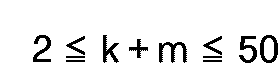
- block A a block copolymer comprising at least two kinds of blocks in a molecule wherein at least one kind of the blocks (hereinafter referred to as "block A”) is a homopolymeric or random copolymeric block comprising at least one block selected from the group consisting of:
- a typical block copolymer of the present invention has a block structure of A-B or A-B-A.
- the block copolymer of the present invention may be prepared by polymerizing at least one fluorine-containing olefin of the formula: wherein X and Y are the same as defined above in the presence of an iodinated compound comprising the block A and an iodine atom at at least one end, and a radical-generating source.
- Chain propagation of the fluorine-containing olefin is stopped by the elimination of iodine atom from the iodine-containing compound, namely a chain transfer reaction.
- a bonding between the polymer end and the iodine atom formed by the chain transfer reaction at the chain end has substantially the same reactivity as the above described carbon-iodine bonding in the iodine-containing compound
- the chain propagation reaction can be reinitiated in the presence of a radically polymerizable compound, when a radical is formed at the chain end by the radical-generating source. Therefore, the polymer chain end acts as if it were a living end in an ionic polymerization.
- the block copolymer of the present invention has an iodine atom at at least one chain end.
- the iodine atom may be substituted with other atom or an atomic group to stabilize or activate the block copolymer.
- other atom or atomic group are hydrogen, fluorine, chlorine, bromine, -CF 2 H, -CF 2 Z, -CH 2 0H, -CH 2 CH 2 0H, -COZ, -COR, -COOH, -COOM, -COOR, -CF 2 R, -CH 2 NH 2 , -CH 2 CH 2 NH 2 , -CH 2 NCO, -CH 2 CH 2 -NCO, -CN, -N 3 , -CH 2 0COR, -S0 3 H, -S0 3 M, -PO(OH) 2 , wherein Z is fluorine, chlorine or bromine, M is ammonium or monovalent metal, and R is alkyl or ary
- block copolymer other than the iodine atom
- the other end of block copolymer varies with the kind of the initiator as described in the above in connection with the iodine-containing compound of the present invention.
- the iodinated compound to be used for the preparation of the block copolymer of the present invention may be prepared by iodinating a known compound comprising at least one of the blocks (a) to (d).
- the compound comprising the block (a) is disclosed in Japanese Patent Kokai Publication Nos. 137928/1985, 202122/1985 and 113616/1986 and EP-A-0148482, the compound comprising the block (b) is disclosed in Japanese Patent Publication No. 45719/1974 and U.S. Patent No. 3,250,807, the compound comprising the block (c) is disclosed in Japanese Patent Kokai Publication No. 189210/1983 and U.S. Patent No. 4,499,249, and the compound comprising the block (d) is disclosed in "Telomerization", U.S. Newcastle Res. Lab. Rept. PB131910.
- fluorine-containing olefin examples include vinylidene fluoride, tetrafluoroethylene, trifluoroethylene, trifluorochloroethylene, hexafluoropropylene, pentafluoropropylene, perfluoromethyl vinyl ether, perfluoroethyl vinyl ether and perfluoropropyl vinyl ether.
- a ratio of the iodinated compound and the fluorine-containing olefin depends on the ratio of the block A and the block B in the block copolymer.
- radical-generating source Any conventional radical-generating source may be used according to the present invention.
- the preferred radical-generating sources are light and heat, which can selectively cleave the I-C bonding in the iodinated compound.
- As light one having a wavelength of from infrared range to ultraviolet range can be used.
- actinic ultraviolet light may be used, it cleaves not only the I-C bonding but also other bondings to generate radicals. The same phenomenon is observed when ionizing radiation is used as the radical-generating source.
- heat preferably a temperature not lower than 200 ° C is applied.
- radical-generating source a conventional radical polymerization initiator which induces substantially no chain transfer reaction and is decomposed at a moderate rate under radical polymerization conditions.
- radical polymerization initiator organic or inorganic peroxides, azo compounds, organometallic compounds, metals, etc.
- the organometallic compounds are less preferred, since they generate radicals by eliminating not only the iodine atom but also other atoms or atomic groups.
- Preferred examples of the radical polymerization initiator are persulfates (e.g.
- a polymerization temperature may be any temperature insofar as the reaction is initiated and the produced polymer chain is not thermally decomposed. Preferably, it is from -20°C to +150°C when the radical-generating source other than heat is used. When heat is used, a temperature not lower than 200 C, preferably not lower than 250 ° C is applied.
- a polymerization pressure is not critical in the present invention. Preferably, it is from atmospheric pressure to autogenous pressure.
- the radical polymerization may be carried out in any conventional manner such as bulk, solution, suspension and emulsion polymerization. All the steps of the polymerization can be carried out in the same manner, although the steps may be carried out in different manners from each other. In view of homogeneity of the reaction system, emulsion polymerization is most preferred. Other preferred polymerization methods are solution polymerization and suspension polymerization utilizing a solvent which is essentially inactive against radical.
- solvent examples include perfluoro(dimethylcyclobutane), perfluorocyclohexane, dichlorotetrafluoroethane, trichlorotrifluoropropane, polyfluoroalkanes, perfluoro(ethylene glycol methyl ethyl ether), etc.
- the novel block copolymer of the present invention has good lubrication and protective properties and finds many applications.
- the block polymer can be used as a grease.
- it can be used as a thickening agent to be added to a base oil, it can be used as a grease as such.
- the block copolymer of the present invention has the block having good lubricity like an oil (block A) and the block which acts as a thickening agent (block B).
- a grease which comprises a block copolymer comprising at least two kinds of blocks at least one of which consists of a homopolymeric or random copolymeric block which acts as a viscous liquid component and at least one of other of which consists of a homopolymeric or random copolymeric block bonded to the former block to make the block copolymer solid or semi-solid.
- a block which acts as a viscous liquid is intended to mean that the a compound comprising said block is a liquid having a viscosity of 10 to 500 cSt at 37.8 C.
- “To make the block polymer solid or semi-solid” is intended to mean that said block makes the block copolymer to have a consistency of 85 to 475 according to ASTM D 271-60T.
- a grease is defined as a solid or semi-solid lubricating composition comprising a liquid lubricant (base oil) and a thickening agent.
- a grease composition comprising perfluoropolyether as a base oil and polytetrafluoroethylene powder as a thickening agent is known as a heat resistant grease composition.
- such conventional composition type grease inevitably has a drawback that the liquid lubricant (base oil) and the thickening agent separate from each other after long time use, since they are not completely compatible with each other.
- the content of block B is preferably from 10 to 30 % by weight.
- the polymer terminal has -COOM group in which M is metal.
- the number average molecular weight is preferably from 1 x 10 3 to 3 x 10 4 .
- block copolymer has good compatibility with an organic solvent and forms a useful grease composition.
- the homopolymer or random copolymer which acts as the viscous liquid component may be selected from a wide range of conventional synthetic lubricants. Examples of such lubricants are
- polyolefins e.g. polyethylene and polypropylene
- polystyrene polystyrene
- polyacrylate e.g. polymethyl (meth)acrylate and polyethyl (meth)acrylate
- fluororesin e.g. fluororesin and the like.
- Preferred combinations of the polymeric block which acts as a viscous liquid component and the polymer block bonded to the former block to make the block copolymer solid or semi-solid are
- the combination (i) corresponds to the novel block copolymer according to the present invention.
- a block copolymer having such structure may be prepared by radically adding a halogenated hydrocarbon of the formula: wherein z is an integer of 5 to 100 to a hydrocarbon, an ester, a phosphate and a silicone which have a vinyl, vinylene or allyl group.
- the obtained block copolymer can be stabilized by removing the iodine atom at the molecular end by a catalytic hydrogenation in the presence of a metal hydride (e.g. LiAIH 4 ), a combination of zinc and hydrogen chloride or a catalyst such as Ni and Pd.
- a metal hydride e.g. LiAIH 4
- the block copolymer can be prepared according to following reaction: or
- the block can be prepared according to the following reaction:
- the block copolymer can be prepared according to the following reaction: (iii) A fluorine-containing polymeric block and a non-fluorine containing resin block
- This kind of block copolymer can be prepared according to the following reaction: When styrene is used in place or methyl acrylate in the above reaction, can be prepared
- Such the block copolymer is useful not only as the grease but also as an additive for an automobile engine oil.
- a lubricant composition comprising 0.5 to 60 % by weight of the above described block copolymer and the rest of an organic liquid.
- Such composition is also useful as a lubricant for a surface of a magnetic recording medium such as a recording tape, a video tape, a magnetic disc, a magnetic card, etc.
- the organic liquid can be selected from a wide variety of organic liquids. Specific examples of the organic liquid are trichlorotrifluoroethane, tetrachlorodifluoroethane, dichlorotetrafluoroethane, perfluorohexane, perfluorotributylamine, acetone, tetrahydrofuran, dimethylformamide and diglyme.
- the block copolymer in the form of from grease to wax can be prepared.
- block copolymer may be used as a thickening agent for a conventional grease or as a mold release agent, or in the preparation of an ink composition. Further, some block copolymers can be used as a water- and oil-repellent, a leveling agent, a toner aid (an off-set preventing agent) and the like.
- the autoclave was pressurized with the same gaseous mixture of vinylidene fluoride and tetrafluoroethylene with stirring and polymerization was continued at 80°C under pressure of from 3 to 5 kg/cm 2 for 12.56 hours to give a waxy polymeric product having a number average molecular weight of 5,520 (9.33 g).
- the content of the vinylidene fluoride/tetrafluoroethylene copolymer block was 18 % by weight.
- the produced block copolymer is soluble in tetrahydrofuran as well as trichlorotrifluoroethane.
- the greasy block copolymer prepared in Example 5 (50 g) was dispersed in trichlorotrifluoroethane (225 ml) and heated to 50 °C. To the heated dispersion, a gaseous mixture of fluorine and nitrogen containing 10 % by weight of fluorine was bubbled at a rate of from 20 to 30 ml/min. for 8.6 hours to fluorinate the block copolymer. In the IR spectrum of the fluorinated copolymer, a peak for -CF2CF2 at 910 cm- 1 completely disappeared. The product was not colored by the addition of ethanol, which indicated no liberation of iodine. Therefore, the complete substitution of the terminal iodine with fluorine was confirmed.
- Block copolymer prepared in Example 9 (hereinafter referred to as "Blocked grease”) was examined on the following properties.
- the blocked grease was transparent, while the non-blocked grease was white. This may be because the blocked grease had such structure that the base oil element and the thickening agent element were chemically bonded in the molecule and their compatibility was increased, whereby the grease was transparent.
- the particle size in the grease was inspected by a polarization microscope (x 200).
- x 200 a polarization microscope
- polytetrafluoroethylene particles having a diameter of from 1 x 10- 5 to 5 x 10- 5 m were observed, while in the blocked grease, no particle was observed.
- the particles of the blocked grease according to the present invention is smaller and more homogeneous than those of the non-blocked grease.
- the blocked or non-blocked grease was added to trichlorotrifluoroethane to prepare a dispersion with a concentration of 10 % by weight and kept standing to observe the settling state.
- the blocked grease is less separated from an organic solvent than the non-blocked grease.
- the viscosity measurement was carried out as follows:
- the grease does not flow under a small shear stress, namely it has a yield value, but once it begins to flow, it easily flows.
- the blocked grease of the present invention has better properties than the non-blocked grease.
- Example 9 the blocked polymer prepared in Example 6 was fluorinated.
- the obtained grease composition was a semi-solid material with good transparency. It had no dropping point not higher than 200 ° C. A degree of oil separation measured at 200 ° C for 200 hours was 0 (zero).
- a filter paper dipped in the product and dried had water- and oil-repellency.
Landscapes
- Chemical & Material Sciences (AREA)
- Chemical Kinetics & Catalysis (AREA)
- Organic Chemistry (AREA)
- General Chemical & Material Sciences (AREA)
- Polymers & Plastics (AREA)
- Medicinal Chemistry (AREA)
- Health & Medical Sciences (AREA)
- Oil, Petroleum & Natural Gas (AREA)
- Inorganic Chemistry (AREA)
- Graft Or Block Polymers (AREA)
- Addition Polymer Or Copolymer, Post-Treatments, Or Chemical Modifications (AREA)
- Polymers With Sulfur, Phosphorus Or Metals In The Main Chain (AREA)
- Lubricants (AREA)
Abstract
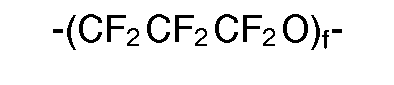
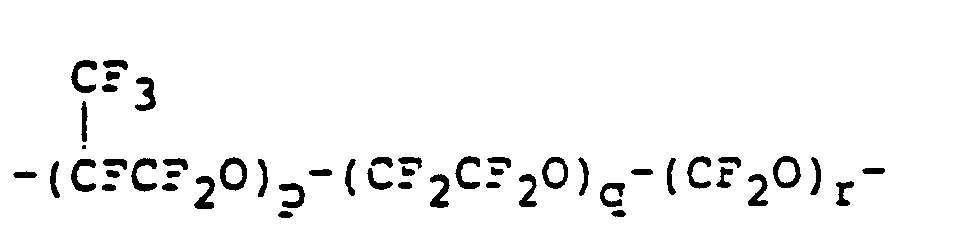
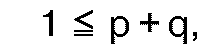
- (a) a block consisting of at least two repeating units selected from the formulae:







- (b) a block consisting of the repeating units of the formula:

- (c) a block consisting of the repeating units of the formula:
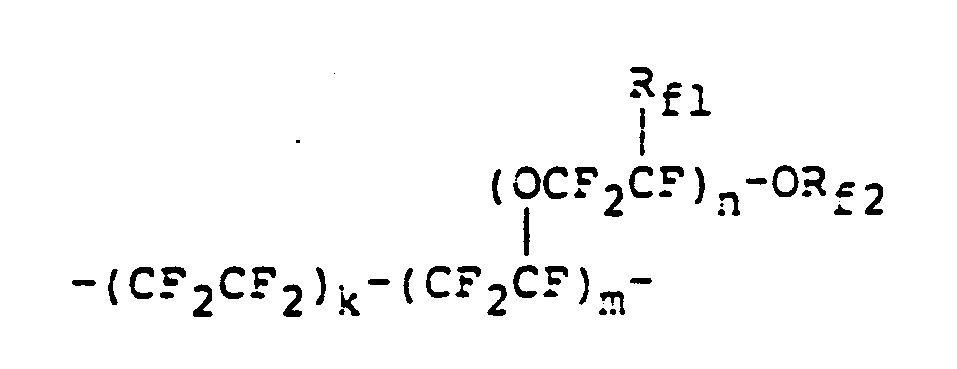


- (d) a block consisting of repeating units of the formula:

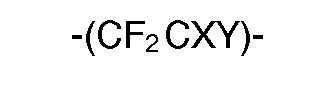
Description
- The present invention relates to a novel iodine-containing compound, a process for preparing the same and a block copolymer comprising the same. More particularly, it relates to a novel halogen-containing polyether compound which has an iodine atom at at least one end of a molecule, a process for preparing the sane, and a fluorine-containing block copolymer comprising repeating units derived from said halogen-containing compound.
- A linear polyether comprising repeating units of the formulae:


- However none of the publications discloses a compound comprising the above described repeating units and having an iodine atom at at least one end of a molecule or a process for preparing it.
- Japanese Patent Kokai Publication No. 3495/1978 or U.S. Patent No. 4,158,678 discloses a fluorine-containing polysegmented polymer. However, any block copolymer comprising the above described repeating units has not been known.
- One object of the present invention is to provide a novel iodine-containing compound.
- Another object Of the present invention is to provide a process for preparing said novel iodine-containing compound.
- Further object of the present invention is to provide a novel block copolymer which is useful as a grease or an ingredient or a grease composition.
- Figs. 1 and 2 show shear Stress-shear rate curves for the blocked grease and the non-blocked grease in Example 10, respectively.
- According to one aspect of the present invention, there is provided a novel iodine-containing compound consisting of at least two repeating units selected from the formulae:






- The sequence of the repeating units is homo or random.
- The iodine-containing compound of the present invention is prepared by reacting a metal salt of a mono- or di-carboxylic acid comprising at least two repeating units selected from the formulae:




- When the carboxylate salt is a salt of monocarboxylic acid, the iodine-containing compound of the present invention has an iodine atom at one end of the molecule, and when the carboxylic salt is a salt of dicarboxlic acid, the iodine-containing compound of the present invention has iodine atoms at both ends of the molecule. At the end of the molecule, the iodine atom bonds to the molecule generally in the form of -CF2CF2l, although it may be bond to the molecule in other form such as -
OCF 21 and -OCF2CF2CF21. - The carboxylate salt to be used as a starting material can be prepared by converting the corresponding carboxylic acid comprising the above described repeating units into the salt by a conventional method. The carboxylic acid comprising the above described repeating units can be prepared by hydrolyzing an acyl fluoride compound comprising the above described repeating units and an acyl fluoride group at at least one end of the molecule which is disclosed in Japanese patent Kokai Publication No. 113616/1986 and EP-A-0148482.
- When the iodine-containing compound of the present invention has one iodine atom at one molecular end, the other molecular end has an end group corresponding to a kind of an initiator which is used in the preparation of a polymer which comprises the above described repeating units. When 2,2,3,3-tetrafluoroox- etane is ring opening polymerized, an acyl fluoride of the formula:
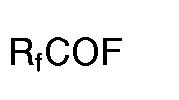

- When the monofunctional acyl fluoride is used as an initiator, one end of the molecule has a residue derived from the initiator, which is Rf- in case of RfCOF. When the polyfunctional acyl fluoride is used, both ends of the molecule are occupied by -CFO groups.
- The reaction of the carboxylate salt and iodine is carried out usually at a temperature of from 150 to 250 C, preferably from 180 to 230 C.
- The reaction is usually carried out in the presence of a solvent. Preferred examples of the solvent are 1,1,2-trichloro-1,2,2-trifluoroethane, tetrachlorodifluoroethane, CI(CF2CFCI)2CI and N(C3F7)3.
- The reaction time varies with other reaction conditions such as reaction temperature, and is usually in a range from 1.5 to 15 hours.
- The ratio of the carboxylate salt and iodine is not critical. Preferably, 0.001 to 0.1 mole of said salt is used per mole of iodine.
- The reaction product is recovered from the reaction mixture by a per se conventional method, for example, by adding a solvent to the reaction mixture and filtering off insoluble materials followed by evaporation of the solvent.
- The iodine-containing compound of the present invention can be used as a prepolymer for the production of various block copolymers which are useful as a grease or wax. This is because the carbon-iodine bonding at the molecular end is relatively weak, and olefinic repeating units can be easily added by cleaving said bonding in the presence of a radical-generating source and an olefin.
- Thus, according to another aspect of the present invention, there is provided a block copolymer comprising at least two kinds of blocks in a molecule wherein at least one kind of the blocks (hereinafter referred to as "block A") is a homopolymeric or random copolymeric block comprising at least one block selected from the group consisting of:
- (a) a block consisting of at least two repeating units selected from the formulae:






- (b) a block consisting of the repeating units of the formula:


- (c) a block consisting of the repeating units of the formula:


- (d) a block consisting of repeating units of the formula:

- A typical block copolymer of the present invention has a block structure of A-B or A-B-A.
- The block copolymer of the present invention may be prepared by polymerizing at least one fluorine-containing olefin of the formula:

- Chain propagation of the fluorine-containing olefin is stopped by the elimination of iodine atom from the iodine-containing compound, namely a chain transfer reaction. However, since a bonding between the polymer end and the iodine atom formed by the chain transfer reaction at the chain end has substantially the same reactivity as the above described carbon-iodine bonding in the iodine-containing compound, the chain propagation reaction can be reinitiated in the presence of a radically polymerizable compound, when a radical is formed at the chain end by the radical-generating source. Therefore, the polymer chain end acts as if it were a living end in an ionic polymerization.
- The block copolymer of the present invention has an iodine atom at at least one chain end. If desired, the iodine atom may be substituted with other atom or an atomic group to stabilize or activate the block copolymer. Examples of other atom or atomic group are hydrogen, fluorine, chlorine, bromine, -CF2H, -CF2Z, -CH20H, -CH2CH20H, -COZ, -COR, -COOH, -COOM, -COOR, -CF2R, -CH2NH2, -CH2CH2NH2, -CH2NCO, -CH2CH2-NCO, -CN, -N3, -CH20COR, -S03H, -S03M, -PO(OH)2,

- The other end of block copolymer (other than the iodine atom) varies with the kind of the initiator as described in the above in connection with the iodine-containing compound of the present invention.
- The iodinated compound to be used for the preparation of the block copolymer of the present invention (namely, the block A having an iodine atom at at least one end) may be prepared by iodinating a known compound comprising at least one of the blocks (a) to (d). The compound comprising the block (a) is disclosed in Japanese Patent Kokai Publication Nos. 137928/1985, 202122/1985 and 113616/1986 and EP-A-0148482, the compound comprising the block (b) is disclosed in Japanese Patent Publication No. 45719/1974 and U.S. Patent No. 3,250,807, the compound comprising the block (c) is disclosed in Japanese Patent Kokai Publication No. 189210/1983 and U.S. Patent No. 4,499,249, and the compound comprising the block (d) is disclosed in "Telomerization", U.S. Naval Res. Lab. Rept. PB131910.
- Examples of the fluorine-containing olefin are vinylidene fluoride, tetrafluoroethylene, trifluoroethylene, trifluorochloroethylene, hexafluoropropylene, pentafluoropropylene, perfluoromethyl vinyl ether, perfluoroethyl vinyl ether and perfluoropropyl vinyl ether.
- A ratio of the iodinated compound and the fluorine-containing olefin depends on the ratio of the block A and the block B in the block copolymer.
- Any conventional radical-generating source may be used according to the present invention. The preferred radical-generating sources are light and heat, which can selectively cleave the I-C bonding in the iodinated compound. As light, one having a wavelength of from infrared range to ultraviolet range can be used. Although actinic ultraviolet light may be used, it cleaves not only the I-C bonding but also other bondings to generate radicals. The same phenomenon is observed when ionizing radiation is used as the radical-generating source. When heat is used as the radical-generating source, preferably a temperature not lower than 200 ° C is applied.
- It is possible to use, as the radical-generating source, a conventional radical polymerization initiator which induces substantially no chain transfer reaction and is decomposed at a moderate rate under radical polymerization conditions. As the radical polymerization initiator, organic or inorganic peroxides, azo compounds, organometallic compounds, metals, etc.
- Among them, the organometallic compounds are less preferred, since they generate radicals by eliminating not only the iodine atom but also other atoms or atomic groups. Preferred examples of the radical polymerization initiator are persulfates (e.g. potassium persulfate and amminium persulfate), hydrogen peroxide, (RfCO)202, RfOORf, RfC(O)OORf, (Rf)3COOC(O)OC(Rf)3, N2F2, Rf-N-N-Rf, Hg(R,)2, Li, K, Na, Mg, Zn, Hg and AI wherein Rt is polyfluoroalkyl. When the radical polymerization initiator is used, it is preferred to keep its concentration as low as possible so as to suppress a termination reaction caused by bonding of the radicals and to predominantly proceed the chain propagation.
- A polymerization temperature may be any temperature insofar as the reaction is initiated and the produced polymer chain is not thermally decomposed. Preferably, it is from -20°C to +150°C when the radical-generating source other than heat is used. When heat is used, a temperature not lower than 200 C, preferably not lower than 250 ° C is applied.
- A polymerization pressure is not critical in the present invention. Preferably, it is from atmospheric pressure to autogenous pressure.
- The radical polymerization may be carried out in any conventional manner such as bulk, solution, suspension and emulsion polymerization. All the steps of the polymerization can be carried out in the same manner, although the steps may be carried out in different manners from each other. In view of homogeneity of the reaction system, emulsion polymerization is most preferred. Other preferred polymerization methods are solution polymerization and suspension polymerization utilizing a solvent which is essentially inactive against radical. Examples of such solvent are perfluoro(dimethylcyclobutane), perfluorocyclohexane, dichlorotetrafluoroethane, trichlorotrifluoropropane, polyfluoroalkanes, perfluoro(ethylene glycol methyl ethyl ether), etc.
- The novel block copolymer of the present invention has good lubrication and protective properties and finds many applications. Particularly, the block polymer can be used as a grease. Although it can be used as a thickening agent to be added to a base oil, it can be used as a grease as such. This is because the block copolymer of the present invention has the block having good lubricity like an oil (block A) and the block which acts as a thickening agent (block B).
- Therefore, according to further aspect of the present invention, there is provided a grease which comprises a block copolymer comprising at least two kinds of blocks at least one of which consists of a homopolymeric or random copolymeric block which acts as a viscous liquid component and at least one of other of which consists of a homopolymeric or random copolymeric block bonded to the former block to make the block copolymer solid or semi-solid.
- In this specification, "a block which acts as a viscous liquid" is intended to mean that the a compound comprising said block is a liquid having a viscosity of 10 to 500 cSt at 37.8 C. "To make the block polymer solid or semi-solid" is intended to mean that said block makes the block copolymer to have a consistency of 85 to 475 according to ASTM D 271-60T.
- According to a conventional definition of "grease" according to JIS, a grease is defined as a solid or semi-solid lubricating composition comprising a liquid lubricant (base oil) and a thickening agent. A grease composition comprising perfluoropolyether as a base oil and polytetrafluoroethylene powder as a thickening agent is known as a heat resistant grease composition. However, such conventional composition type grease inevitably has a drawback that the liquid lubricant (base oil) and the thickening agent separate from each other after long time use, since they are not completely compatible with each other.
- When the block copolymer as defined above is used as a single component grease, the grease does not suffer from such drawback, so that it can be stably used for a long time. In such case, the content of block B is preferably from 10 to 30 % by weight. When the content of block B is from 1 to 10 % by weight, preferably the polymer terminal has -COOM group in which M is metal. The number average molecular weight is preferably from 1 x 10³ to 3 x 10⁴.
- Further, such block copolymer has good compatibility with an organic solvent and forms a useful grease composition.
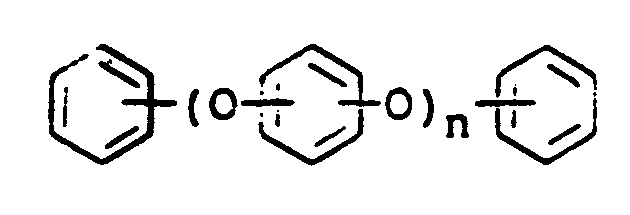
- In addition to the novel block polymer comprising one of the blocks (a), (b), (c) and (d) according to the present invention, the homopolymer or random copolymer which acts as the viscous liquid component may be selected from a wide range of conventional synthetic lubricants. Examples of such lubricants are
- (1) synthetic hydrocarbon lubricants (e.g. an a-olefin oligomer of the formula:


- (2) polyethers (e.g. polyalkylene glycol of the formula:

- (3) esters (e.g. a diester of the formula:


- (4) silicone oils (e.g. alkylmethylsilicone of the formula:


- As the homopolymeric or random copolymeric block bonded to the former block which acts as a viscous liquid component to make the block copolymer solid or semi-solid, exemplified are polyolefins (e.g. polyethylene and polypropylene), polystyrene, polyacrylate (e.g. polymethyl (meth)acrylate and polyethyl (meth)acrylate), fluororesin and the like.
- Preferred combinations of the polymeric block which acts as a viscous liquid component and the polymer block bonded to the former block to make the block copolymer solid or semi-solid are
- (i) A fluorine-containing polymeric block and a fluororesin block,
- (ii) A non-fluorine containing polymer block and a fluororesin block, and
- (iii) A fluorine-containing polymer block and a non-fluorine containing resin block.
- The combination (i) corresponds to the novel block copolymer according to the present invention.
- Thus, the combinations (ii) and (iii) are now explained in detail.
- (ii) A non-fluorine containing polymer block and a fluororesin block
- A block copolymer having such structure may be prepared by radically adding a halogenated hydrocarbon of the formula:
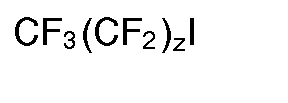
- For example, in case of the silicone oil, the block copolymer can be prepared according to following reaction:


- In case of the a-olefin oligomer, the block can be prepared according to the following reaction:

- In case of the ester, from an ally ester, the block copolymer can be prepared according to the following reaction:
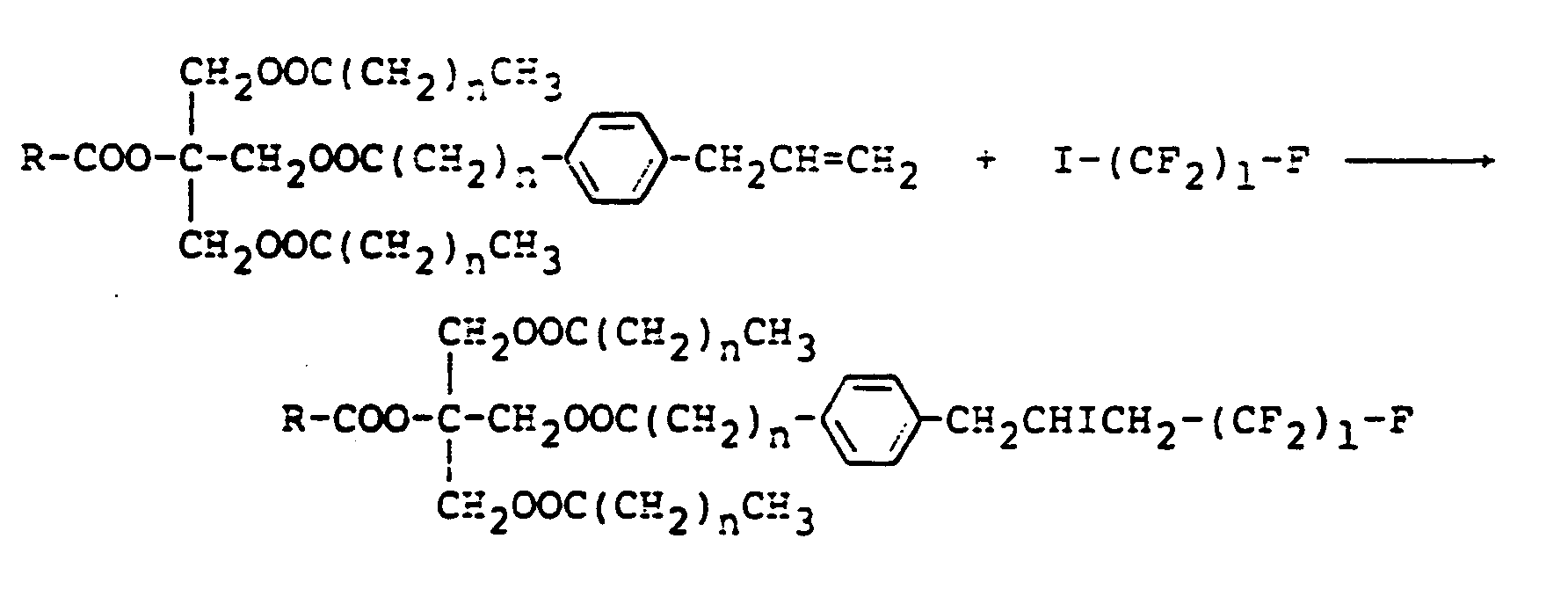
- This kind of block copolymer can be prepared according to the following reaction:


- Such the block copolymer is useful not only as the grease but also as an additive for an automobile engine oil.
- It is known that combustion efficiency in the engine is increased by improving lubricity between a cylinder and a piston of the engine by the addition of a solid lubricant comprising polytetrafluoroethylene powder. However, isolation of polytetrafluoroethylene powder is problem. The above described block copolymer can provide a lubricant to be used in the engine oil.
- Therefore, according to a yet further aspect of the present invention, there is provided a lubricant composition comprising 0.5 to 60 % by weight of the above described block copolymer and the rest of an organic liquid.
- Such composition is also useful as a lubricant for a surface of a magnetic recording medium such as a recording tape, a video tape, a magnetic disc, a magnetic card, etc.
- The organic liquid can be selected from a wide variety of organic liquids. Specific examples of the organic liquid are trichlorotrifluoroethane, tetrachlorodifluoroethane, dichlorotetrafluoroethane, perfluorohexane, perfluorotributylamine, acetone, tetrahydrofuran, dimethylformamide and diglyme.
- By selecting the ratio of the block A and the block B, the block copolymer in the form of from grease to wax can be prepared.
- The above described block copolymer may be used as a thickening agent for a conventional grease or as a mold release agent, or in the preparation of an ink composition. Further, some block copolymers can be used as a water- and oil-repellent, a leveling agent, a toner aid (an off-set preventing agent) and the like.
- The present invention will be illustrated by following Examples.
- To F(CF2CF2CF20)nCF2CF2COOH (n = 25 on the average) (200 g, 4.46 x 10⁻² mole) in trichlorotrifluoroethane (100 ml), 80 ml of an aqueous solution of potassium hydroxide (containing 4.87 g of KOH) was added with stirring to form a potassium salt. It was confirmed that, in the IR spectrum, a peak for -C(=O)-OH at 1,770 cm-1 completely shifted to a peak for -C(=O)-OK at 1,680 cm-1.
- The obtained potassium salt was dried at 100°C under reduced pressure to form particles. Then, the particulate potassium salt (200 g, 0.044 mole) was dispersed in trichlorotrifluoroethane (600 ml) in a nitrogen stream followed by the addition of iodine (100 g, 0.39 mole). The mixture was heated at 200°C for 1.5 hours to iodinate the molecular end. While the unreacted potassium salt was in the particle form, the resulting product was a white opaque oil. In the IR spectrum, the peak for -C(=O)-OK at 1,680 cm-1 disappeared and a peak for -CF2CF2l appeared at 910 cm-1. 19F-NMR spectrum of the resulting oil had a chemical shift at -12.5 ppm, which indicated the formation of -OCF2CF21.
- When the white opaque oil was dissolved in trichlorotrifluoroethane and kept standing at -20°C, the white material was precipitated to form a transparent supernatant. The precipitate was filtered off. From the filtrate, trichlorotrifluoroethane was evaporated off to give transparent F(CF2CF2CF20)nCF2CF21 (n = 26 on the average) (176 g).
- To F(CF2CF2CF20)nCF2CF2COOH (n = 26 on the average) (87 g, 4.46 x 10⁻² mole), silver oxide (249 g, 1.07 x 10⁻² mole) and trichlorotrifluoroethane (120 ml) were added and reacted with stirring for 3 hours. It was confirmed that, in the IR spectrum, a peak for -C(=O)-OH at 1,770 cm-1 shifted to a peak for -C(=O)-OAg at 1,680 cm-1.
- The obtained silver salt was dried at 50°C under reduced pressure to form particles. Then, the particulate silver salt (101.0 g) was dispersed in trichlorotrifluoroethane (300 ml) followed by the addition of iodine (100 g, 0.39 mole). The mixture was heated at 170°C for 2 hours to iodinate the molecular end. Undissolved materials were filtered off. From the filtrate, trichlorotrifluoroethane was evaporated off to give F(CF2CF2CF2O)nCF2CF2l (n = 26 on the average) (90.1 g). In the IR spectrum, the peak for -C(=O)-OAg at 1,680 cm-1 disappeared and a peak for -CF2CF21 appeared at 910 cm-1. 19F-NMR spectrum of the resulting compound had a chemical shift at -12.4 ppm, which indicated the formation of -OCF2CF21.
- To F(CF2CF2CF20)nCF2CF2COOH (n = 26 on the average) (260 g, 6.05 x 10⁻² mole) in methanol (1260 ml), sodium methoxide (4.90 g, 9.08 x 10⁻² mole) was added with stirring to form a sodium salt. It was confirmed that, in the IR spectrum, a peak for -C(=O)-OH at 1,770 cm-1 completely shifted to a peak for -C(=O)-ONa at 1,680 cm-1.
- The obtained sodium salt was dried at 100°C under reduced pressure to form particles. Then, the particulate sodium salt (261 g) was dispersed in Cl(CF2CFCl)n'Cl (n' = 2 on the average) (250 ml) followed by the addition of iodine (261 g, 0.03 mole). The mixture was heated at 240 °C for 5.2 hours to iodinate the molecular end. After adding trichlorotrifluoroethane to the reaction mixture, undissolved materials were filtered off. From the filtrate, trichlorotrifluoroethane was evaporated off to give F(CF2CF2CF20)n-CF2CF21 (n = 26 on the average) (54.0 g). In the IR spectrum, the peak for -C(=0)-ONa at 1,680 cm-1 disappeared and a peak for -CF2 CF21 appeared at 910 cm-1.
- To F(CF2CF2CF20)nCF2CF2COOH (n = 26 on the average) (50 g, 1.12 x 10⁻² mole), cuprous oxide (6.0 g, 4.19 x 10⁻² mole) was added with stirring in the presence of trichlorotrifluoroethane (50 ml) to form a copper salt. It was confirmed that, in the IR spectrum, a peak for -C(=O)-OH at 1,770 cm-1 completely shifted to a peak for -C(=O)-OCu at 1,680 cm-1.
- The obtained copper salt was dried at 100°C under reduced pressure to form particles. Then, the particulate copper salt (10.8 g) was dispersed in trichlorotrifluoroethane (50 ml) followed by the addition of iodine (10.2 g, 4.02 mole). The mixture was gradually heated to 210°C and kept at the same temperature for 2.0 hours to iodinate the molecular end. After adding trichlorotrifluoroethane to the reaction mixture, undissolved materials were filtered off. From the filtrate, trichlorotrifluoroethane was evaporated off to give F(CF2CF2CF2O)nCF2CF2l (n = 26 on the average) (5.4 g). In the IR spectrum, the peak for -C(=O)-OCu at 1,680 cm-1 disappeared and a peak for -CF2 CF21 appeared at 910 cm-1.
-


- In a one liter autoclave, F(CF2CF2CF20)nCF2CF21 (n = 26 on the average) prepared in Example 1 (140 g, 3.07 x 10⁻² mole), trichlorotrifluoroethane (600 ml) and di-tert.-butyl peroxide (8.25 x 10⁻² g, 5.65 x 10⁻⁴ mole) were charged. After purging the interior space with tetrafluoroethylene, the autoclave content was heated to 120°C. Then, the autoclave was pressurized with tetrafluoroethylene with stirring and polymerization was continued at 120°C under pressure of from 6.1 to 6.4 kg/cm2 for 27.6 hours. The solution in the autoclave which was transparent before polymerization was converted to a white opaque mixture after polymerization. Complete evaporation of trichlorotrifluoroethane from the reaction mixture gave a greasy polymeric product having a number average molecular weight of 5,240 (161 g). The content of the polytetrafluoroethylene block was 13 % by weight.
- In the same autoclave as used in Example 5, F(CF2CF2CF20)nCF2CF21 (n = 26 on the average) prepared in Example 1 (200 g, 4.89 x 10⁻² mole), trichlorotrifluoroethane (500 ml) and di-tert.-butyl peroxide (0.19 g, 1.32 x 10⁻³ mole) were charged. After purging the interior space with tetrafluoroethylene, the autoclave content was heated to 120°C. Then, the autoclave was pressurized with tetrafluoroethylene with stirring and polymerization was continued at 120°C under pressure of from 6.6 to 7.1 kg/cm2 for 54.4 hours. Evaporation of trichlorotrifluoroethane from the reaction mixture gave a greasy (almost waxy) polymeric product having a number average molecular weight of 6,200 (303 g). The content of the polytetrafluoroethylene block was 34 % by weight.
- In a 100 ml autoclave, F(CF2CF2CF20)nCF2CF21 (n = 26 on the average) prepared in Example 1 (7.69 g, 1.69 x 10⁻³ mole), trichlorotrifluoroethane (30 ml) and tert.-butylperoxy isobutyrate (2.20 x 10⁻² g, 1.51 x 10⁻⁴ mole) were charged. After purging the interior space with a gaseous mixture of vinylidene fluoride and trifluoroethylene (molar ratio of 75/25), the autoclave content was heated to 80 C. Then, the autoclave was pressurized with the same gaseous mixture of vinylidene fluoride and tetrafluoroethylene with stirring and polymerization was continued at 80°C under pressure of from 3 to 5 kg/cm2 for 12.56 hours to give a waxy polymeric product having a number average molecular weight of 5,520 (9.33 g). The content of the vinylidene fluoride/tetrafluoroethylene copolymer block was 18 % by weight. The produced block copolymer is soluble in tetrahydrofuran as well as trichlorotrifluoroethane.
- In a one liter autoclave,
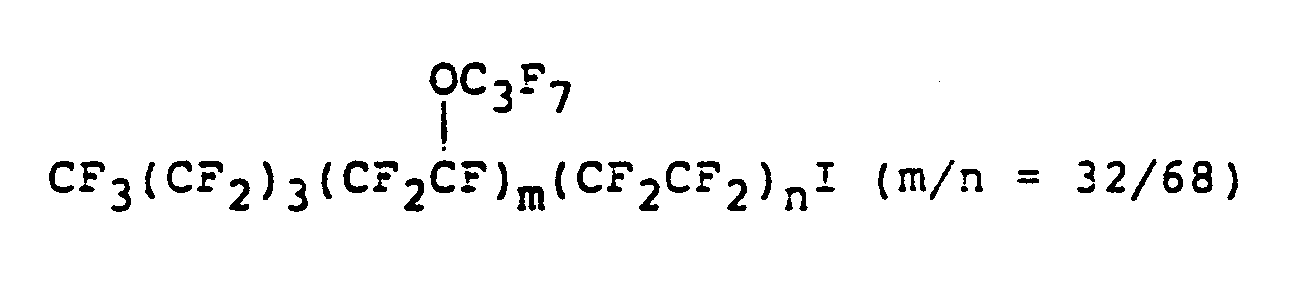
- The greasy block copolymer prepared in Example 5 (50 g) was dispersed in trichlorotrifluoroethane (225 ml) and heated to 50 °C. To the heated dispersion, a gaseous mixture of fluorine and nitrogen containing 10 % by weight of fluorine was bubbled at a rate of from 20 to 30 ml/min. for 8.6 hours to fluorinate the block copolymer. In the IR spectrum of the fluorinated copolymer, a peak for -CF2CF2 at 910 cm-1 completely disappeared. The product was not colored by the addition of ethanol, which indicated no liberation of iodine. Therefore, the complete substitution of the terminal iodine with fluorine was confirmed.
- The block copolymer prepared in Example 9 (hereinafter referred to as "Blocked grease") was examined on the following properties. For comparison, a grease comprising F(CF2CF2CF20)nCF2CF3 (n = 28 on the average) as a base oil and polytetrafluoroethylene powder as a thickening agent in a weight ratio of 67:33 (hereinafter referred to as "Non-blocked grease") was used.
- By visual inspection, the blocked grease was transparent, while the non-blocked grease was white. This may be because the blocked grease had such structure that the base oil element and the thickening agent element were chemically bonded in the molecule and their compatibility was increased, whereby the grease was transparent.
- The particle size in the grease was inspected by a polarization microscope (x 200). In the non-blocked grease, polytetrafluoroethylene particles having a diameter of from 1 x 10⁻⁵ to 5 x 10⁻⁵ m were observed, while in the blocked grease, no particle was observed.
- From the above results, it can be concluded that the particles of the blocked grease according to the present invention is smaller and more homogeneous than those of the non-blocked grease.
- The blocked or non-blocked grease was added to trichlorotrifluoroethane to prepare a dispersion with a concentration of 10 % by weight and kept standing to observe the settling state.
- While in case of the non-blocked grease, the particles settled immediately, while in case of the blocked grease, the dispersion was stable at least two days.
- From these results, it can be said that the blocked grease is less separated from an organic solvent than the non-blocked grease.
- By using a cone-plate type viscometer, viscosity was measured and expressed in the form of a shear stress-shear rate curve. The results for the blocked grease and the non-blocked grease are shown in Figs. 1 and 2, respectively.
- The viscosity measurement was carried out as follows:
- At a temperature of 30 ° C or 80 ° C, the shear rate was increased to 307.2 sec-1 for the blocked grease or 3072 sec-1 for the non-blocked grease over 3 minutes and kept at said rate for 0.2 minute. Then, the shear rate was decreased to 0 (zero) over 3 minutes.
- In Figs. 1 and 2, in both cases of the blocked and non-blocked grease, the shear stress during increasing the shear rate is smaller than that during decreasing the shear rate at 30 ° C and 80 C. This showed that both greases had thixotropy.
- In case of the non-blocked grease, the shear stress increased substantially linearly as the shear rate was increased, while in case of the blocked grease, as the shear rate was increased, the shear stress reached the maximum value and thereafter gradually decreased with the increase of the shear rate. In addition, a rather clear yield value was observed in the blocked grease, but no clear yield value was observed In the non-blocked grease.
- In view of the properties of a grease, it is preferred that the grease does not flow under a small shear stress, namely it has a yield value, but once it begins to flow, it easily flows. Thus, the blocked grease of the present invention has better properties than the non-blocked grease.
- In the same manner as in Example 9, the blocked polymer prepared in Example 6 was fluorinated. To the fluorinated block polymer (70.0 g), F(CF2CF2CF20)nCF2CF3 (n = 28 on the average) (49.8 g) was added as a lubricant oil to prepare a grease composition.
- The obtained grease composition was a semi-solid material with good transparency. It had no dropping point not higher than 200 ° C. A degree of oil separation measured at 200 ° C for 200 hours was 0 (zero).
- To CI(CF2CF2)2CI (20 ml), C3F70-(CF2CF2CF20)24-CF2CF2-1 (10 g) and azobisisobutyronitrile (0.05 g) were dissolved and charged in a 50 ml airtight reactor. Then, methyl acrylate (10 g) was added and reacted at 70 ° C with stirring in the absence of air. In less than 10 minutes, the reactor content became white opaque, which indicated initiation of polymerization. After 3 hours, the temparature was raised to 80°C and the reaction mixture was stirred for another 3 hours to complete the polymerization. While the starting material C3F70-(CF2CF2CF20)24-CF2CF2-1 was soluble in CI(CF2CF2)2CI, the opaque viscous greasy product contained a large amount of materials insoluble in CI(CF2CF2)2CI. Further, the product is soluble in acetone, in which C3F7-(CF2CF2CF20)24-CF2CF2-1 is insoluble. According to GPC analysis of the product, the formation of a block polymer was confirmed.
- A filter paper dipped in the product and dried had water- and oil-repellency.
wherein X is hydrogen or fluorine, Y is hydrogen, chlorine, fluorine, difluoromethyl or C1-C8 perfluoroalkyl or perfluoroalkoxy provided that when the former block consists of the repeating unit (d) alone, the combination of X = fluorine and Y=chlorine is excluded, the content of the latter block being 1 to 95 % by weight based on the whole weight of the block copolymer and a number average molecular weight of the whole block copolymer being from 1 x 10³ to 1 x 10⁶.
Claims (2)
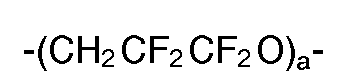





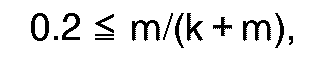
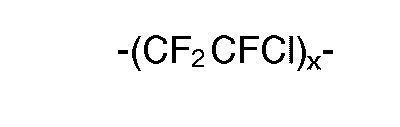


Applications Claiming Priority (7)
| Application Number | Priority Date | Filing Date | Title |
|---|---|---|---|
| JP310398/86 | 1986-12-23 | ||
| JP31039786 | 1986-12-23 | ||
| JP31039786 | 1986-12-23 | ||
| JP31039886A JPS63159336A (en) | 1986-12-23 | 1986-12-23 | Novel iodine compound and production thereof |
| JP31039886 | 1986-12-23 | ||
| JP310397/86 | 1986-12-23 | ||
| EP87119110A EP0272698B1 (en) | 1986-12-23 | 1987-12-23 | Novel iodine-containing compound and preparation thereof |
Related Parent Applications (3)
| Application Number | Title | Priority Date | Filing Date |
|---|---|---|---|
| EP87119110A Division EP0272698B1 (en) | 1986-12-23 | 1987-12-23 | Novel iodine-containing compound and preparation thereof |
| EP87119110A Division-Into EP0272698B1 (en) | 1986-12-23 | 1987-12-23 | Novel iodine-containing compound and preparation thereof |
| EP87119110.2 Division | 1987-12-23 |
Publications (3)
| Publication Number | Publication Date |
|---|---|
| EP0501532A2 true EP0501532A2 (en) | 1992-09-02 |
| EP0501532A3 EP0501532A3 (en) | 1993-08-11 |
| EP0501532B1 EP0501532B1 (en) | 1999-09-22 |
Family
ID=26566302
Family Applications (3)
| Application Number | Title | Priority Date | Filing Date |
|---|---|---|---|
| EP87119110A Expired - Lifetime EP0272698B1 (en) | 1986-12-23 | 1987-12-23 | Novel iodine-containing compound and preparation thereof |
| EP92109052A Expired - Lifetime EP0501532B1 (en) | 1986-12-23 | 1987-12-23 | Novel block copolymer and preparation thereof |
| EP19920109061 Ceased EP0501533A3 (en) | 1986-12-23 | 1987-12-23 | Grease |
Family Applications Before (1)
| Application Number | Title | Priority Date | Filing Date |
|---|---|---|---|
| EP87119110A Expired - Lifetime EP0272698B1 (en) | 1986-12-23 | 1987-12-23 | Novel iodine-containing compound and preparation thereof |
Family Applications After (1)
| Application Number | Title | Priority Date | Filing Date |
|---|---|---|---|
| EP19920109061 Ceased EP0501533A3 (en) | 1986-12-23 | 1987-12-23 | Grease |
Country Status (4)
| Country | Link |
|---|---|
| US (2) | US4861836A (en) |
| EP (3) | EP0272698B1 (en) |
| CA (1) | CA1318690C (en) |
| DE (2) | DE3752293T2 (en) |
Families Citing this family (21)
| Publication number | Priority date | Publication date | Assignee | Title |
|---|---|---|---|---|
| US5198136A (en) * | 1986-12-23 | 1993-03-30 | Daikin Industries Ltd. | Iodine-containing compound, preparation thereof and block copolymer comprising the same |
| JP2705105B2 (en) * | 1988-05-21 | 1998-01-26 | ダイキン工業株式会社 | New polymers and their manufacturing methods and applications |
| JPH029826A (en) * | 1988-06-28 | 1990-01-12 | Daikin Ind Ltd | Preparation of polyfluoroiodide |
| JP2795699B2 (en) * | 1989-10-06 | 1998-09-10 | 日本メクトロン株式会社 | Method for producing fluorine-containing block copolymer |
| IT1237887B (en) * | 1989-12-12 | 1993-06-18 | Ausimont Spa | PERFLUOROPOLIETEREI LUBRICANTS WITH WEAR PROPERTIES |
| ES2094136T3 (en) * | 1989-12-19 | 1997-01-16 | Pharmacia Spa | CHIRAL INTERMEDIARIES OF 1,5-DIYODO-2-METOXI OR BENCILOXI. |
| JP3022614B2 (en) * | 1990-03-01 | 2000-03-21 | イー・アイ・デュポン・ドウ・ヌムール・アンド・カンパニー | Thermoplastic fluoroelastomer with improved stability to bases |
| US5439980A (en) * | 1990-11-29 | 1995-08-08 | Daikin Industries | Process for preparing polymer |
| US6635717B1 (en) | 1997-11-06 | 2003-10-21 | Daikin Industries, Ltd. | Molding material |
| US7517486B2 (en) | 2003-05-16 | 2009-04-14 | Du Pont Performance Elastomers L.L.C. | Process for preparing UV curable sealing assemblies |
| MXPA05012437A (en) * | 2003-05-19 | 2006-01-30 | Procter & Gamble | Compositions, devices and methods for stabilizing and increasing the efficacy of halogen dioxide solutions. |
| ITMI20031105A1 (en) * | 2003-06-03 | 2004-12-04 | Solvay Solexis Spa | USE FOR THE OIL REPELLENT TREATMENT OF CARBOSSYL PERFLUOROPOLYET PAPER |
| JP5258779B2 (en) | 2006-11-30 | 2013-08-07 | ソルヴェイ・スペシャルティ・ポリマーズ・イタリー・エッセ・ピ・ア | Fluorinated lubricant |
| US9127111B2 (en) | 2009-07-16 | 2015-09-08 | Daikin Industries, Ltd. | Process for production of fluorine-containing block copolymer |
| US9403954B2 (en) | 2012-01-20 | 2016-08-02 | Daikin Industries, Ltd. | Fluororubber composition and method for producing same |
| US11898661B2 (en) | 2012-02-24 | 2024-02-13 | Daikin Industries, Ltd. | Fluororubber composition |
| US9976016B2 (en) | 2012-02-24 | 2018-05-22 | Daikin Industries, Ltd. | Fluororubber composition |
| US9499678B2 (en) | 2012-02-24 | 2016-11-22 | Daikin Industries, Ltd. | Fluororubber composition |
| EP3420014A1 (en) | 2016-02-23 | 2019-01-02 | Solvay Specialty Polymers Italy S.p.A. | Method for the manufacture of fluorinated polymers and polymers obtainable therefrom |
| EP4377288A1 (en) | 2021-07-30 | 2024-06-05 | Basf Se | A composition and its application in controlled living water-based emulsion polymerization |
| CN121925430A (en) | 2023-09-27 | 2026-04-24 | 巴斯夫欧洲公司 | Method of reversible complex-mediated polymerization and products obtained therefrom |
Family Cites Families (15)
| Publication number | Priority date | Publication date | Assignee | Title |
|---|---|---|---|---|
| US3501534A (en) * | 1966-09-27 | 1970-03-17 | Allied Chem | Azeotropic distillation of fluorinated ether |
| US3505411A (en) * | 1966-10-11 | 1970-04-07 | Minnesota Mining & Mfg | Perfluoroalkylene oxide polymers |
| US3558721A (en) * | 1967-12-22 | 1971-01-26 | Allied Chem | Method for the preparation of fluorinated ethers |
| US3995465A (en) * | 1975-03-21 | 1976-12-07 | Sun Oil Company Of Pennsylvania | Method of coldworking metal pieces |
| JPS584728B2 (en) * | 1976-06-30 | 1983-01-27 | ダイキン工業株式会社 | Method for producing fluorine-containing multi-segmented polymer |
| JPS55108410A (en) * | 1979-02-14 | 1980-08-20 | Daikin Ind Ltd | Fluorine-containing polymer and composition thereof |
| US4315093A (en) * | 1979-04-04 | 1982-02-09 | The United States Of America As Represented By The Secretary Of The Navy | Fluorinated polyphthalocyanines |
| CA1156450A (en) * | 1981-01-30 | 1983-11-08 | John M. R. Hagger | Electric cables and compositions for use in them |
| JPS5968363A (en) * | 1982-09-28 | 1984-04-18 | Daikin Ind Ltd | Improved fluororubber composition |
| US4594458A (en) * | 1983-03-04 | 1986-06-10 | E. I. Du Pont De Nemours And Company | Vinyl ether monomers derived from alkyl perfluoro-ω-(2-iodoethoxy) compounds |
| US4472557A (en) * | 1983-05-19 | 1984-09-18 | Central Glass Company, Limited | Elastic fluorohydrocarbon resin and method of producing same |
| DE3486428T2 (en) * | 1983-12-26 | 1996-10-10 | Daikin Ind Ltd | Halogen containing polyether |
| IT1174205B (en) * | 1984-06-19 | 1987-07-01 | Montedison Spa | FLUOROPLIETERI CONTAINING TERMINAL GROUPS EQUIPPED WITH ANCHORS |
| JPS61113694A (en) * | 1984-11-07 | 1986-05-31 | Daikin Ind Ltd | Fluorine-containing grease composition |
| US4836944A (en) * | 1987-06-02 | 1989-06-06 | Daikin Industries Ltd. | Halogen-containing polyether and its use |
-
1987
- 1987-12-22 US US07/136,916 patent/US4861836A/en not_active Expired - Lifetime
- 1987-12-23 EP EP87119110A patent/EP0272698B1/en not_active Expired - Lifetime
- 1987-12-23 DE DE3752293T patent/DE3752293T2/en not_active Expired - Lifetime
- 1987-12-23 DE DE3789431T patent/DE3789431T2/en not_active Expired - Lifetime
- 1987-12-23 EP EP92109052A patent/EP0501532B1/en not_active Expired - Lifetime
- 1987-12-23 EP EP19920109061 patent/EP0501533A3/en not_active Ceased
- 1987-12-24 CA CA000555380A patent/CA1318690C/en not_active Expired - Fee Related
-
1989
- 1989-05-01 US US07/345,571 patent/US4962236A/en not_active Expired - Lifetime
Also Published As
| Publication number | Publication date |
|---|---|
| US4861836A (en) | 1989-08-29 |
| DE3752293D1 (en) | 1999-10-28 |
| EP0501532B1 (en) | 1999-09-22 |
| EP0272698A2 (en) | 1988-06-29 |
| CA1318690C (en) | 1993-06-01 |
| EP0272698B1 (en) | 1994-03-23 |
| EP0501533A2 (en) | 1992-09-02 |
| DE3789431D1 (en) | 1994-04-28 |
| DE3752293T2 (en) | 2000-02-03 |
| US4962236A (en) | 1990-10-09 |
| DE3789431T2 (en) | 1994-08-04 |
| EP0501533A3 (en) | 1993-07-14 |
| EP0272698A3 (en) | 1990-10-03 |
| EP0501532A3 (en) | 1993-08-11 |
Similar Documents
| Publication | Publication Date | Title |
|---|---|---|
| US4962236A (en) | Novel iodine-containing compound, preparation thereof and block copolymer comprising the same | |
| JP5258779B2 (en) | Fluorinated lubricant | |
| JP5345066B2 (en) | Fluorinated lubricant | |
| US7399735B2 (en) | Perfluoropolyether additives | |
| JP2004504428A (en) | Perfluoropolyethers and methods of making and using same | |
| US5198136A (en) | Iodine-containing compound, preparation thereof and block copolymer comprising the same | |
| RU2164925C2 (en) | Dispersion of polytetrafluoroethylene in organic solvent and dispersants involved | |
| EP1336614A1 (en) | Cyclic phosphazene compounds and use thereof as additives of perfluoropolyether oils | |
| CN117561283A (en) | Copolymers containing (per)fluoropolyether chains | |
| EP3233965A1 (en) | Water-based composition comprising a fluorinated polymer | |
| JP2615724B2 (en) | Grease and grease composition | |
| JPH0859762A (en) | Novel fluorinated block copolymer and method for producing the same | |
| EP4363458B1 (en) | Copolymers comprising (per)fluoropolyether chains | |
| JP2008179793A (en) | A method of lubricating metal. | |
| JP2024524359A5 (en) | ||
| JP2026503102A (en) | Perfluoropolyether Polymer | |
| ITMI20062309A1 (en) | LUBRICANT COMPOSITIONS | |
| JP2016535768A (en) | Modified hydrocarbon |
Legal Events
| Date | Code | Title | Description |
|---|---|---|---|
| PUAI | Public reference made under article 153(3) epc to a published international application that has entered the european phase |
Free format text: ORIGINAL CODE: 0009012 |
|
| AC | Divisional application: reference to earlier application |
Ref document number: 272698 Country of ref document: EP |
|
| AK | Designated contracting states |
Kind code of ref document: A2 Designated state(s): DE FR GB NL |
|
| PUAL | Search report despatched |
Free format text: ORIGINAL CODE: 0009013 |
|
| AK | Designated contracting states |
Kind code of ref document: A3 Designated state(s): DE FR GB NL |
|
| 17P | Request for examination filed |
Effective date: 19940211 |
|
| 17Q | First examination report despatched |
Effective date: 19960311 |
|
| RHK1 | Main classification (correction) |
Ipc: C08G 65/32 |
|
| GRAG | Despatch of communication of intention to grant |
Free format text: ORIGINAL CODE: EPIDOS AGRA |
|
| GRAG | Despatch of communication of intention to grant |
Free format text: ORIGINAL CODE: EPIDOS AGRA |
|
| GRAH | Despatch of communication of intention to grant a patent |
Free format text: ORIGINAL CODE: EPIDOS IGRA |
|
| GRAH | Despatch of communication of intention to grant a patent |
Free format text: ORIGINAL CODE: EPIDOS IGRA |
|
| GRAA | (expected) grant |
Free format text: ORIGINAL CODE: 0009210 |
|
| AC | Divisional application: reference to earlier application |
Ref document number: 272698 Country of ref document: EP |
|
| AK | Designated contracting states |
Kind code of ref document: B1 Designated state(s): DE FR GB NL |
|
| REF | Corresponds to: |
Ref document number: 3752293 Country of ref document: DE Date of ref document: 19991028 |
|
| ET | Fr: translation filed | ||
| PLBE | No opposition filed within time limit |
Free format text: ORIGINAL CODE: 0009261 |
|
| STAA | Information on the status of an ep patent application or granted ep patent |
Free format text: STATUS: NO OPPOSITION FILED WITHIN TIME LIMIT |
|
| 26N | No opposition filed | ||
| PGFP | Annual fee paid to national office [announced via postgrant information from national office to epo] |
Ref country code: NL Payment date: 20011228 Year of fee payment: 15 |
|
| REG | Reference to a national code |
Ref country code: GB Ref legal event code: IF02 |
|
| PG25 | Lapsed in a contracting state [announced via postgrant information from national office to epo] |
Ref country code: NL Free format text: LAPSE BECAUSE OF NON-PAYMENT OF DUE FEES Effective date: 20030701 |
|
| NLV4 | Nl: lapsed or anulled due to non-payment of the annual fee |
Effective date: 20030701 |
|
| PGFP | Annual fee paid to national office [announced via postgrant information from national office to epo] |
Ref country code: FR Payment date: 20061208 Year of fee payment: 20 |
|
| PGFP | Annual fee paid to national office [announced via postgrant information from national office to epo] |
Ref country code: GB Payment date: 20061220 Year of fee payment: 20 |
|
| PGFP | Annual fee paid to national office [announced via postgrant information from national office to epo] |
Ref country code: DE Payment date: 20061221 Year of fee payment: 20 |
|
| REG | Reference to a national code |
Ref country code: GB Ref legal event code: PE20 |
|
| PG25 | Lapsed in a contracting state [announced via postgrant information from national office to epo] |
Ref country code: GB Free format text: LAPSE BECAUSE OF EXPIRATION OF PROTECTION Effective date: 20071222 |