EP0497978B1 - Cephalosporin compounds and production thereof - Google Patents
Cephalosporin compounds and production thereof Download PDFInfo
- Publication number
- EP0497978B1 EP0497978B1 EP90915817A EP90915817A EP0497978B1 EP 0497978 B1 EP0497978 B1 EP 0497978B1 EP 90915817 A EP90915817 A EP 90915817A EP 90915817 A EP90915817 A EP 90915817A EP 0497978 B1 EP0497978 B1 EP 0497978B1
- Authority
- EP
- European Patent Office
- Prior art keywords
- compound
- acid
- formula
- defined above
- pharmaceutically acceptable
- Prior art date
- Legal status (The legal status is an assumption and is not a legal conclusion. Google has not performed a legal analysis and makes no representation as to the accuracy of the status listed.)
- Expired - Lifetime
Links
- -1 Cephalosporin compounds Chemical class 0.000 title claims abstract description 127
- 229930186147 Cephalosporin Natural products 0.000 title claims abstract description 16
- 229940124587 cephalosporin Drugs 0.000 title claims abstract description 16
- 238000004519 manufacturing process Methods 0.000 title claims abstract 4
- 150000001875 compounds Chemical class 0.000 claims abstract description 164
- 150000003839 salts Chemical class 0.000 claims abstract description 45
- 238000000034 method Methods 0.000 claims abstract description 35
- 125000000217 alkyl group Chemical group 0.000 claims abstract description 10
- 229910052739 hydrogen Inorganic materials 0.000 claims abstract description 4
- 239000001257 hydrogen Substances 0.000 claims abstract description 4
- KRKNYBCHXYNGOX-UHFFFAOYSA-N citric acid Chemical compound OC(=O)CC(O)(C(O)=O)CC(O)=O KRKNYBCHXYNGOX-UHFFFAOYSA-N 0.000 claims description 39
- 239000003795 chemical substances by application Substances 0.000 claims description 21
- 239000002253 acid Substances 0.000 claims description 17
- 235000015165 citric acid Nutrition 0.000 claims description 13
- 238000011282 treatment Methods 0.000 claims description 11
- 125000003178 carboxy group Chemical group [H]OC(*)=O 0.000 claims description 10
- 238000011321 prophylaxis Methods 0.000 claims description 10
- MUBZPKHOEPUJKR-UHFFFAOYSA-N Oxalic acid Chemical compound OC(=O)C(O)=O MUBZPKHOEPUJKR-UHFFFAOYSA-N 0.000 claims description 9
- 208000022362 bacterial infectious disease Diseases 0.000 claims description 8
- 125000004435 hydrogen atom Chemical group [H]* 0.000 claims description 8
- OFOBLEOULBTSOW-UHFFFAOYSA-N Propanedioic acid Natural products OC(=O)CC(O)=O OFOBLEOULBTSOW-UHFFFAOYSA-N 0.000 claims description 7
- 125000004432 carbon atom Chemical group C* 0.000 claims description 7
- 150000007524 organic acids Chemical class 0.000 claims description 7
- VZCYOOQTPOCHFL-OWOJBTEDSA-N Fumaric acid Chemical compound OC(=O)\C=C\C(O)=O VZCYOOQTPOCHFL-OWOJBTEDSA-N 0.000 claims description 6
- VZCYOOQTPOCHFL-UHFFFAOYSA-N trans-butenedioic acid Natural products OC(=O)C=CC(O)=O VZCYOOQTPOCHFL-UHFFFAOYSA-N 0.000 claims description 6
- FEWJPZIEWOKRBE-UHFFFAOYSA-N Tartaric acid Natural products [H+].[H+].[O-]C(=O)C(O)C(O)C([O-])=O FEWJPZIEWOKRBE-UHFFFAOYSA-N 0.000 claims description 5
- 235000002906 tartaric acid Nutrition 0.000 claims description 5
- 239000011975 tartaric acid Substances 0.000 claims description 5
- 125000004178 (C1-C4) alkyl group Chemical group 0.000 claims description 4
- WPYMKLBDIGXBTP-UHFFFAOYSA-N benzoic acid Chemical compound OC(=O)C1=CC=CC=C1 WPYMKLBDIGXBTP-UHFFFAOYSA-N 0.000 claims description 4
- FEWJPZIEWOKRBE-JCYAYHJZSA-N Dextrotartaric acid Chemical compound OC(=O)[C@H](O)[C@@H](O)C(O)=O FEWJPZIEWOKRBE-JCYAYHJZSA-N 0.000 claims description 3
- 125000004423 acyloxy group Chemical group 0.000 claims description 3
- 125000005194 alkoxycarbonyloxy group Chemical group 0.000 claims description 3
- 150000001735 carboxylic acids Chemical class 0.000 claims description 3
- 239000001530 fumaric acid Substances 0.000 claims description 3
- VZCYOOQTPOCHFL-UPHRSURJSA-N maleic acid Chemical compound OC(=O)\C=C/C(O)=O VZCYOOQTPOCHFL-UPHRSURJSA-N 0.000 claims description 3
- 239000011976 maleic acid Substances 0.000 claims description 3
- 235000006408 oxalic acid Nutrition 0.000 claims description 3
- 239000000546 pharmaceutical excipient Substances 0.000 claims description 3
- QBYIENPQHBMVBV-HFEGYEGKSA-N (2R)-2-hydroxy-2-phenylacetic acid Chemical compound O[C@@H](C(O)=O)c1ccccc1.O[C@@H](C(O)=O)c1ccccc1 QBYIENPQHBMVBV-HFEGYEGKSA-N 0.000 claims description 2
- BJEPYKJPYRNKOW-REOHCLBHSA-N (S)-malic acid Chemical compound OC(=O)[C@@H](O)CC(O)=O BJEPYKJPYRNKOW-REOHCLBHSA-N 0.000 claims description 2
- 239000005711 Benzoic acid Substances 0.000 claims description 2
- IWYDHOAUDWTVEP-UHFFFAOYSA-N R-2-phenyl-2-hydroxyacetic acid Natural products OC(=O)C(O)C1=CC=CC=C1 IWYDHOAUDWTVEP-UHFFFAOYSA-N 0.000 claims description 2
- KDYFGRWQOYBRFD-UHFFFAOYSA-N Succinic acid Natural products OC(=O)CCC(O)=O KDYFGRWQOYBRFD-UHFFFAOYSA-N 0.000 claims description 2
- BJEPYKJPYRNKOW-UHFFFAOYSA-N alpha-hydroxysuccinic acid Natural products OC(=O)C(O)CC(O)=O BJEPYKJPYRNKOW-UHFFFAOYSA-N 0.000 claims description 2
- 235000010233 benzoic acid Nutrition 0.000 claims description 2
- KDYFGRWQOYBRFD-NUQCWPJISA-N butanedioic acid Chemical compound O[14C](=O)CC[14C](O)=O KDYFGRWQOYBRFD-NUQCWPJISA-N 0.000 claims description 2
- 229910052799 carbon Inorganic materials 0.000 claims description 2
- 235000011087 fumaric acid Nutrition 0.000 claims description 2
- 239000001630 malic acid Substances 0.000 claims description 2
- 235000011090 malic acid Nutrition 0.000 claims description 2
- 229960002510 mandelic acid Drugs 0.000 claims description 2
- 229940124531 pharmaceutical excipient Drugs 0.000 claims description 2
- 239000004480 active ingredient Substances 0.000 claims 1
- 210000001035 gastrointestinal tract Anatomy 0.000 abstract description 15
- 208000035473 Communicable disease Diseases 0.000 abstract description 7
- 229930006000 Sucrose Natural products 0.000 abstract description 5
- CZMRCDWAGMRECN-UGDNZRGBSA-N Sucrose Chemical compound O[C@H]1[C@H](O)[C@@H](CO)O[C@@]1(CO)O[C@@H]1[C@H](O)[C@@H](O)[C@H](O)[C@@H](CO)O1 CZMRCDWAGMRECN-UGDNZRGBSA-N 0.000 abstract description 5
- 239000005720 sucrose Substances 0.000 abstract description 5
- UFHFLCQGNIYNRP-UHFFFAOYSA-N Hydrogen Chemical compound [H][H] UFHFLCQGNIYNRP-UHFFFAOYSA-N 0.000 abstract 1
- 230000000844 anti-bacterial effect Effects 0.000 abstract 1
- 238000001727 in vivo Methods 0.000 abstract 1
- XEKOWRVHYACXOJ-UHFFFAOYSA-N Ethyl acetate Chemical compound CCOC(C)=O XEKOWRVHYACXOJ-UHFFFAOYSA-N 0.000 description 96
- 239000000203 mixture Substances 0.000 description 52
- 238000006243 chemical reaction Methods 0.000 description 38
- ZMXDDKWLCZADIW-UHFFFAOYSA-N N,N-Dimethylformamide Chemical compound CN(C)C=O ZMXDDKWLCZADIW-UHFFFAOYSA-N 0.000 description 37
- YMWUJEATGCHHMB-UHFFFAOYSA-N Dichloromethane Chemical compound ClCCl YMWUJEATGCHHMB-UHFFFAOYSA-N 0.000 description 36
- FZWLAAWBMGSTSO-UHFFFAOYSA-N Thiazole Chemical compound C1=CSC=N1 FZWLAAWBMGSTSO-UHFFFAOYSA-N 0.000 description 29
- 125000002496 methyl group Chemical group [H]C([H])([H])* 0.000 description 19
- WEVYAHXRMPXWCK-UHFFFAOYSA-N Acetonitrile Chemical compound CC#N WEVYAHXRMPXWCK-UHFFFAOYSA-N 0.000 description 18
- 238000010521 absorption reaction Methods 0.000 description 17
- 239000007864 aqueous solution Substances 0.000 description 17
- UIIMBOGNXHQVGW-UHFFFAOYSA-M Sodium bicarbonate Chemical compound [Na+].OC([O-])=O UIIMBOGNXHQVGW-UHFFFAOYSA-M 0.000 description 16
- XLYOFNOQVPJJNP-UHFFFAOYSA-N water Substances O XLYOFNOQVPJJNP-UHFFFAOYSA-N 0.000 description 16
- CSCPPACGZOOCGX-UHFFFAOYSA-N Acetone Chemical compound CC(C)=O CSCPPACGZOOCGX-UHFFFAOYSA-N 0.000 description 15
- IAZDPXIOMUYVGZ-UHFFFAOYSA-N Dimethylsulphoxide Chemical compound CS(C)=O IAZDPXIOMUYVGZ-UHFFFAOYSA-N 0.000 description 15
- 125000000956 methoxy group Chemical group [H]C([H])([H])O* 0.000 description 13
- PMZURENOXWZQFD-UHFFFAOYSA-L Sodium Sulfate Chemical compound [Na+].[Na+].[O-]S([O-])(=O)=O PMZURENOXWZQFD-UHFFFAOYSA-L 0.000 description 12
- WYURNTSHIVDZCO-UHFFFAOYSA-N Tetrahydrofuran Chemical compound C1CCOC1 WYURNTSHIVDZCO-UHFFFAOYSA-N 0.000 description 12
- HPALAKNZSZLMCH-UHFFFAOYSA-M sodium;chloride;hydrate Chemical class O.[Na+].[Cl-] HPALAKNZSZLMCH-UHFFFAOYSA-M 0.000 description 12
- JUJWROOIHBZHMG-UHFFFAOYSA-N Pyridine Chemical compound C1=CC=NC=C1 JUJWROOIHBZHMG-UHFFFAOYSA-N 0.000 description 10
- HQKMJHAJHXVSDF-UHFFFAOYSA-L magnesium stearate Chemical compound [Mg+2].CCCCCCCCCCCCCCCCCC([O-])=O.CCCCCCCCCCCCCCCCCC([O-])=O HQKMJHAJHXVSDF-UHFFFAOYSA-L 0.000 description 10
- XHXFXVLFKHQFAL-UHFFFAOYSA-N phosphoryl trichloride Chemical compound ClP(Cl)(Cl)=O XHXFXVLFKHQFAL-UHFFFAOYSA-N 0.000 description 10
- HEMHJVSKTPXQMS-UHFFFAOYSA-M Sodium hydroxide Chemical compound [OH-].[Na+] HEMHJVSKTPXQMS-UHFFFAOYSA-M 0.000 description 9
- 230000000845 anti-microbial effect Effects 0.000 description 9
- 238000009472 formulation Methods 0.000 description 9
- VHYFNPMBLIVWCW-UHFFFAOYSA-N 4-Dimethylaminopyridine Chemical compound CN(C)C1=CC=NC=C1 VHYFNPMBLIVWCW-UHFFFAOYSA-N 0.000 description 8
- 229920002472 Starch Polymers 0.000 description 8
- ZMANZCXQSJIPKH-UHFFFAOYSA-N Triethylamine Chemical compound CCN(CC)CC ZMANZCXQSJIPKH-UHFFFAOYSA-N 0.000 description 8
- 239000008280 blood Substances 0.000 description 8
- 210000004369 blood Anatomy 0.000 description 8
- 238000001816 cooling Methods 0.000 description 8
- 239000000047 product Substances 0.000 description 8
- 125000006239 protecting group Chemical class 0.000 description 8
- 229910000030 sodium bicarbonate Inorganic materials 0.000 description 8
- 235000017557 sodium bicarbonate Nutrition 0.000 description 8
- 239000002904 solvent Substances 0.000 description 8
- 239000008107 starch Substances 0.000 description 8
- 235000019698 starch Nutrition 0.000 description 8
- LFQSCWFLJHTTHZ-UHFFFAOYSA-N Ethanol Chemical compound CCO LFQSCWFLJHTTHZ-UHFFFAOYSA-N 0.000 description 7
- VEXZGXHMUGYJMC-UHFFFAOYSA-N Hydrochloric acid Chemical compound Cl VEXZGXHMUGYJMC-UHFFFAOYSA-N 0.000 description 7
- UHOVQNZJYSORNB-UHFFFAOYSA-N Benzene Chemical compound C1=CC=CC=C1 UHOVQNZJYSORNB-UHFFFAOYSA-N 0.000 description 6
- OAKJQQAXSVQMHS-UHFFFAOYSA-N Hydrazine Chemical compound NN OAKJQQAXSVQMHS-UHFFFAOYSA-N 0.000 description 6
- DTQVDTLACAAQTR-UHFFFAOYSA-N Trifluoroacetic acid Chemical compound OC(=O)C(F)(F)F DTQVDTLACAAQTR-UHFFFAOYSA-N 0.000 description 6
- RTEXIPZMMDUXMR-UHFFFAOYSA-N benzene;ethyl acetate Chemical compound CCOC(C)=O.C1=CC=CC=C1 RTEXIPZMMDUXMR-UHFFFAOYSA-N 0.000 description 6
- MDHYEMXUFSJLGV-UHFFFAOYSA-N beta-phenethyl acetate Natural products CC(=O)OCCC1=CC=CC=C1 MDHYEMXUFSJLGV-UHFFFAOYSA-N 0.000 description 6
- 150000001732 carboxylic acid derivatives Chemical class 0.000 description 6
- 238000007796 conventional method Methods 0.000 description 6
- 238000000354 decomposition reaction Methods 0.000 description 6
- RAXXELZNTBOGNW-UHFFFAOYSA-N imidazole Natural products C1=CNC=N1 RAXXELZNTBOGNW-UHFFFAOYSA-N 0.000 description 6
- 238000010898 silica gel chromatography Methods 0.000 description 6
- 239000000243 solution Substances 0.000 description 6
- 125000001495 ethyl group Chemical group [H]C([H])([H])C([H])([H])* 0.000 description 5
- 235000019359 magnesium stearate Nutrition 0.000 description 5
- UMJSCPRVCHMLSP-UHFFFAOYSA-N pyridine Natural products COC1=CC=CN=C1 UMJSCPRVCHMLSP-UHFFFAOYSA-N 0.000 description 5
- 229920006395 saturated elastomer Polymers 0.000 description 5
- 125000002221 trityl group Chemical group [H]C1=C([H])C([H])=C([H])C([H])=C1C([*])(C1=C(C(=C(C(=C1[H])[H])[H])[H])[H])C1=C([H])C([H])=C([H])C([H])=C1[H] 0.000 description 5
- HEDRZPFGACZZDS-UHFFFAOYSA-N Chloroform Chemical compound ClC(Cl)Cl HEDRZPFGACZZDS-UHFFFAOYSA-N 0.000 description 4
- FXHOOIRPVKKKFG-UHFFFAOYSA-N N,N-Dimethylacetamide Chemical compound CN(C)C(C)=O FXHOOIRPVKKKFG-UHFFFAOYSA-N 0.000 description 4
- ATHHXGZTWNVVOU-UHFFFAOYSA-N N-methylformamide Chemical compound CNC=O ATHHXGZTWNVVOU-UHFFFAOYSA-N 0.000 description 4
- NBIIXXVUZAFLBC-UHFFFAOYSA-N Phosphoric acid Chemical compound OP(O)(O)=O NBIIXXVUZAFLBC-UHFFFAOYSA-N 0.000 description 4
- 150000008065 acid anhydrides Chemical class 0.000 description 4
- 230000002411 adverse Effects 0.000 description 4
- 150000001408 amides Chemical class 0.000 description 4
- 239000002775 capsule Substances 0.000 description 4
- 238000001914 filtration Methods 0.000 description 4
- 239000008187 granular material Substances 0.000 description 4
- CQDGTJPVBWZJAZ-UHFFFAOYSA-N monoethyl carbonate Chemical compound CCOC(O)=O CQDGTJPVBWZJAZ-UHFFFAOYSA-N 0.000 description 4
- YLQBMQCUIZJEEH-UHFFFAOYSA-N tetrahydrofuran Natural products C=1C=COC=1 YLQBMQCUIZJEEH-UHFFFAOYSA-N 0.000 description 4
- FYSNRJHAOHDILO-UHFFFAOYSA-N thionyl chloride Chemical compound ClS(Cl)=O FYSNRJHAOHDILO-UHFFFAOYSA-N 0.000 description 4
- QVHJQCGUWFKTSE-YFKPBYRVSA-N (2s)-2-[(2-methylpropan-2-yl)oxycarbonylamino]propanoic acid Chemical compound OC(=O)[C@H](C)NC(=O)OC(C)(C)C QVHJQCGUWFKTSE-YFKPBYRVSA-N 0.000 description 3
- RYHBNJHYFVUHQT-UHFFFAOYSA-N 1,4-Dioxane Chemical compound C1COCCO1 RYHBNJHYFVUHQT-UHFFFAOYSA-N 0.000 description 3
- ZAFNJMIOTHYJRJ-UHFFFAOYSA-N Diisopropyl ether Chemical compound CC(C)OC(C)C ZAFNJMIOTHYJRJ-UHFFFAOYSA-N 0.000 description 3
- 229920002153 Hydroxypropyl cellulose Polymers 0.000 description 3
- GUBGYTABKSRVRQ-QKKXKWKRSA-N Lactose Natural products OC[C@H]1O[C@@H](O[C@H]2[C@H](O)[C@@H](O)C(O)O[C@@H]2CO)[C@H](O)[C@@H](O)[C@H]1O GUBGYTABKSRVRQ-QKKXKWKRSA-N 0.000 description 3
- OKKJLVBELUTLKV-UHFFFAOYSA-N Methanol Chemical compound OC OKKJLVBELUTLKV-UHFFFAOYSA-N 0.000 description 3
- 230000010933 acylation Effects 0.000 description 3
- 238000005917 acylation reaction Methods 0.000 description 3
- 229910000147 aluminium phosphate Inorganic materials 0.000 description 3
- 125000003277 amino group Chemical group 0.000 description 3
- 239000006227 byproduct Substances 0.000 description 3
- 235000009508 confectionery Nutrition 0.000 description 3
- 201000010099 disease Diseases 0.000 description 3
- 208000037265 diseases, disorders, signs and symptoms Diseases 0.000 description 3
- 150000002148 esters Chemical group 0.000 description 3
- HHLFWLYXYJOTON-UHFFFAOYSA-N glyoxylic acid Chemical compound OC(=O)C=O HHLFWLYXYJOTON-UHFFFAOYSA-N 0.000 description 3
- 239000001863 hydroxypropyl cellulose Substances 0.000 description 3
- 235000010977 hydroxypropyl cellulose Nutrition 0.000 description 3
- 239000008101 lactose Substances 0.000 description 3
- 239000003960 organic solvent Substances 0.000 description 3
- 239000002244 precipitate Substances 0.000 description 3
- 239000007858 starting material Substances 0.000 description 3
- 0 *OC(C1=CCSC(C2N)*1C2=*)=O Chemical compound *OC(C1=CCSC(C2N)*1C2=*)=O 0.000 description 2
- WSLDOOZREJYCGB-UHFFFAOYSA-N 1,2-Dichloroethane Chemical compound ClCCCl WSLDOOZREJYCGB-UHFFFAOYSA-N 0.000 description 2
- CFGDUGSIBUXRMR-UHFFFAOYSA-N 1,2-dihydropyrrol-2-ide Chemical class C=1C=[C-]NC=1 CFGDUGSIBUXRMR-UHFFFAOYSA-N 0.000 description 2
- LMDZBCPBFSXMTL-UHFFFAOYSA-N 1-ethyl-3-(3-dimethylaminopropyl)carbodiimide Chemical compound CCN=C=NCCCN(C)C LMDZBCPBFSXMTL-UHFFFAOYSA-N 0.000 description 2
- UBWSOXSPKAQVFH-LHIURRSHSA-N 2,2-dimethylpropanoyloxymethyl (6r)-7-amino-8-oxo-5-thia-1-azabicyclo[4.2.0]oct-2-ene-2-carboxylate Chemical compound CC(C)(C)C(=O)OCOC(=O)C1=CCS[C@@H]2C(N)C(=O)N12 UBWSOXSPKAQVFH-LHIURRSHSA-N 0.000 description 2
- NGNBDVOYPDDBFK-UHFFFAOYSA-N 2-[2,4-di(pentan-2-yl)phenoxy]acetyl chloride Chemical compound CCCC(C)C1=CC=C(OCC(Cl)=O)C(C(C)CCC)=C1 NGNBDVOYPDDBFK-UHFFFAOYSA-N 0.000 description 2
- FPQQSJJWHUJYPU-UHFFFAOYSA-N 3-(dimethylamino)propyliminomethylidene-ethylazanium;chloride Chemical compound Cl.CCN=C=NCCCN(C)C FPQQSJJWHUJYPU-UHFFFAOYSA-N 0.000 description 2
- IGIJSFNBEUBMGB-UHFFFAOYSA-N 4-(cyclohexyliminomethylideneamino)-n,n-diethylcyclohexan-1-amine Chemical compound C1CC(N(CC)CC)CCC1N=C=NC1CCCCC1 IGIJSFNBEUBMGB-UHFFFAOYSA-N 0.000 description 2
- 241000894006 Bacteria Species 0.000 description 2
- CPELXLSAUQHCOX-UHFFFAOYSA-M Bromide Chemical compound [Br-] CPELXLSAUQHCOX-UHFFFAOYSA-M 0.000 description 2
- OYPRJOBELJOOCE-UHFFFAOYSA-N Calcium Chemical compound [Ca] OYPRJOBELJOOCE-UHFFFAOYSA-N 0.000 description 2
- VTYYLEPIZMXCLO-UHFFFAOYSA-L Calcium carbonate Chemical compound [Ca+2].[O-]C([O-])=O VTYYLEPIZMXCLO-UHFFFAOYSA-L 0.000 description 2
- QOSSAOTZNIDXMA-UHFFFAOYSA-N Dicylcohexylcarbodiimide Chemical compound C1CCCCC1N=C=NC1CCCCC1 QOSSAOTZNIDXMA-UHFFFAOYSA-N 0.000 description 2
- 102000004190 Enzymes Human genes 0.000 description 2
- 108090000790 Enzymes Proteins 0.000 description 2
- 241000588724 Escherichia coli Species 0.000 description 2
- 241000192125 Firmicutes Species 0.000 description 2
- DGAQECJNVWCQMB-PUAWFVPOSA-M Ilexoside XXIX Chemical compound C[C@@H]1CC[C@@]2(CC[C@@]3(C(=CC[C@H]4[C@]3(CC[C@@H]5[C@@]4(CC[C@@H](C5(C)C)OS(=O)(=O)[O-])C)C)[C@@H]2[C@]1(C)O)C)C(=O)O[C@H]6[C@@H]([C@H]([C@@H]([C@H](O6)CO)O)O)O.[Na+] DGAQECJNVWCQMB-PUAWFVPOSA-M 0.000 description 2
- KFZMGEQAYNKOFK-UHFFFAOYSA-N Isopropanol Chemical compound CC(C)O KFZMGEQAYNKOFK-UHFFFAOYSA-N 0.000 description 2
- AFVFQIVMOAPDHO-UHFFFAOYSA-N Methanesulfonic acid Chemical compound CS(O)(=O)=O AFVFQIVMOAPDHO-UHFFFAOYSA-N 0.000 description 2
- XNPOFXIBHOVFFH-UHFFFAOYSA-N N-cyclohexyl-N'-(2-(4-morpholinyl)ethyl)carbodiimide Chemical compound C1CCCCC1N=C=NCCN1CCOCC1 XNPOFXIBHOVFFH-UHFFFAOYSA-N 0.000 description 2
- YGYAWVDWMABLBF-UHFFFAOYSA-N Phosgene Chemical compound ClC(Cl)=O YGYAWVDWMABLBF-UHFFFAOYSA-N 0.000 description 2
- ZLMJMSJWJFRBEC-UHFFFAOYSA-N Potassium Chemical compound [K] ZLMJMSJWJFRBEC-UHFFFAOYSA-N 0.000 description 2
- QAOWNCQODCNURD-UHFFFAOYSA-N Sulfuric acid Chemical compound OS(O)(=O)=O QAOWNCQODCNURD-UHFFFAOYSA-N 0.000 description 2
- 150000007513 acids Chemical class 0.000 description 2
- 229910052783 alkali metal Inorganic materials 0.000 description 2
- 229910052784 alkaline earth metal Inorganic materials 0.000 description 2
- 125000005910 alkyl carbonate group Chemical group 0.000 description 2
- RDOXTESZEPMUJZ-UHFFFAOYSA-N anisole Chemical compound COC1=CC=CC=C1 RDOXTESZEPMUJZ-UHFFFAOYSA-N 0.000 description 2
- 239000004599 antimicrobial Substances 0.000 description 2
- 239000002585 base Substances 0.000 description 2
- 125000001797 benzyl group Chemical group [H]C1=C([H])C([H])=C(C([H])=C1[H])C([H])([H])* 0.000 description 2
- 125000001584 benzyloxycarbonyl group Chemical group C(=O)(OCC1=CC=CC=C1)* 0.000 description 2
- 239000011575 calcium Substances 0.000 description 2
- 229910052791 calcium Inorganic materials 0.000 description 2
- 159000000007 calcium salts Chemical class 0.000 description 2
- 150000001718 carbodiimides Chemical class 0.000 description 2
- PFKFTWBEEFSNDU-UHFFFAOYSA-N carbonyldiimidazole Chemical compound C1=CN=CN1C(=O)N1C=CN=C1 PFKFTWBEEFSNDU-UHFFFAOYSA-N 0.000 description 2
- 239000003153 chemical reaction reagent Substances 0.000 description 2
- QQVDYSUDFZZPSU-UHFFFAOYSA-M chloromethylidene(dimethyl)azanium;chloride Chemical compound [Cl-].C[N+](C)=CCl QQVDYSUDFZZPSU-UHFFFAOYSA-M 0.000 description 2
- 238000001035 drying Methods 0.000 description 2
- 125000002485 formyl group Chemical group [H]C(*)=O 0.000 description 2
- 150000004820 halides Chemical class 0.000 description 2
- 150000002366 halogen compounds Chemical class 0.000 description 2
- 230000007062 hydrolysis Effects 0.000 description 2
- 238000006460 hydrolysis reaction Methods 0.000 description 2
- 239000012442 inert solvent Substances 0.000 description 2
- 238000002347 injection Methods 0.000 description 2
- 239000007924 injection Substances 0.000 description 2
- 125000001449 isopropyl group Chemical group [H]C([H])([H])C([H])(*)C([H])([H])[H] 0.000 description 2
- BDAGIHXWWSANSR-UHFFFAOYSA-N methanoic acid Natural products OC=O BDAGIHXWWSANSR-UHFFFAOYSA-N 0.000 description 2
- LWFWUJCJKPUZLV-UHFFFAOYSA-N n-trimethylsilylacetamide Chemical compound CC(=O)N[Si](C)(C)C LWFWUJCJKPUZLV-UHFFFAOYSA-N 0.000 description 2
- UYWQUFXKFGHYNT-UHFFFAOYSA-N phenylmethyl ester of formic acid Natural products O=COCC1=CC=CC=C1 UYWQUFXKFGHYNT-UHFFFAOYSA-N 0.000 description 2
- 150000003016 phosphoric acids Chemical class 0.000 description 2
- XKJCHHZQLQNZHY-UHFFFAOYSA-N phthalimide Chemical compound C1=CC=C2C(=O)NC(=O)C2=C1 XKJCHHZQLQNZHY-UHFFFAOYSA-N 0.000 description 2
- 125000000612 phthaloyl group Chemical group C(C=1C(C(=O)*)=CC=CC1)(=O)* 0.000 description 2
- 239000011591 potassium Substances 0.000 description 2
- 229910052700 potassium Inorganic materials 0.000 description 2
- SCVFZCLFOSHCOH-UHFFFAOYSA-M potassium acetate Chemical compound [K+].CC([O-])=O SCVFZCLFOSHCOH-UHFFFAOYSA-M 0.000 description 2
- XAEFZNCEHLXOMS-UHFFFAOYSA-M potassium benzoate Chemical compound [K+].[O-]C(=O)C1=CC=CC=C1 XAEFZNCEHLXOMS-UHFFFAOYSA-M 0.000 description 2
- 239000008213 purified water Substances 0.000 description 2
- 150000003222 pyridines Chemical class 0.000 description 2
- 238000011084 recovery Methods 0.000 description 2
- 238000009877 rendering Methods 0.000 description 2
- 239000011734 sodium Substances 0.000 description 2
- 229910052708 sodium Inorganic materials 0.000 description 2
- 159000000000 sodium salts Chemical class 0.000 description 2
- 208000024891 symptom Diseases 0.000 description 2
- 239000000454 talc Substances 0.000 description 2
- 229910052623 talc Inorganic materials 0.000 description 2
- 238000010998 test method Methods 0.000 description 2
- 125000004044 trifluoroacetyl group Chemical group FC(C(=O)*)(F)F 0.000 description 2
- 125000000026 trimethylsilyl group Chemical group [H]C([H])([H])[Si]([*])(C([H])([H])[H])C([H])([H])[H] 0.000 description 2
- 210000002700 urine Anatomy 0.000 description 2
- VIKZIPIQNIJTFL-WMZJFQQLSA-N (2z)-2-(2-amino-1,3-thiazol-4-yl)-2-methoxyiminoacetamide Chemical compound CO\N=C(/C(N)=O)C1=CSC(N)=N1 VIKZIPIQNIJTFL-WMZJFQQLSA-N 0.000 description 1
- RJFPBECTFIUTHB-INEUFUBQSA-N (6r,7r)-7-azaniumyl-8-oxo-5-thia-1-azabicyclo[4.2.0]oct-2-ene-2-carboxylate Chemical compound S1CC=C(C(O)=O)N2C(=O)[C@@H](N)[C@H]21 RJFPBECTFIUTHB-INEUFUBQSA-N 0.000 description 1
- UTQNKKSJPHTPBS-UHFFFAOYSA-N 2,2,2-trichloroethanone Chemical group ClC(Cl)(Cl)[C]=O UTQNKKSJPHTPBS-UHFFFAOYSA-N 0.000 description 1
- 125000000453 2,2,2-trichloroethyl group Chemical group [H]C([H])(*)C(Cl)(Cl)Cl 0.000 description 1
- NLARCUDOUOQRPB-UHFFFAOYSA-N 2-(2-amino-1,3-thiazol-4-yl)-2-methoxyiminoacetic acid Chemical compound CON=C(C(O)=O)C1=CSC(N)=N1 NLARCUDOUOQRPB-UHFFFAOYSA-N 0.000 description 1
- LBLYYCQCTBFVLH-UHFFFAOYSA-N 2-Methylbenzenesulfonic acid Chemical compound CC1=CC=CC=C1S(O)(=O)=O LBLYYCQCTBFVLH-UHFFFAOYSA-N 0.000 description 1
- WFIYPADYPQQLNN-UHFFFAOYSA-N 2-[2-(4-bromopyrazol-1-yl)ethyl]isoindole-1,3-dione Chemical compound C1=C(Br)C=NN1CCN1C(=O)C2=CC=CC=C2C1=O WFIYPADYPQQLNN-UHFFFAOYSA-N 0.000 description 1
- OSWFIVFLDKOXQC-UHFFFAOYSA-N 4-(3-methoxyphenyl)aniline Chemical compound COC1=CC=CC(C=2C=CC(N)=CC=2)=C1 OSWFIVFLDKOXQC-UHFFFAOYSA-N 0.000 description 1
- ZCYVEMRRCGMTRW-UHFFFAOYSA-N 7553-56-2 Chemical compound [I] ZCYVEMRRCGMTRW-UHFFFAOYSA-N 0.000 description 1
- 208000035143 Bacterial infection Diseases 0.000 description 1
- 241000283690 Bos taurus Species 0.000 description 1
- WKBOTKDWSSQWDR-UHFFFAOYSA-N Bromine atom Chemical compound [Br] WKBOTKDWSSQWDR-UHFFFAOYSA-N 0.000 description 1
- 241000282472 Canis lupus familiaris Species 0.000 description 1
- 229920002134 Carboxymethyl cellulose Polymers 0.000 description 1
- ZAMOUSCENKQFHK-UHFFFAOYSA-N Chlorine atom Chemical compound [Cl] ZAMOUSCENKQFHK-UHFFFAOYSA-N 0.000 description 1
- XBPCUCUWBYBCDP-UHFFFAOYSA-N Dicyclohexylamine Chemical compound C1CCCCC1NC1CCCCC1 XBPCUCUWBYBCDP-UHFFFAOYSA-N 0.000 description 1
- 241000283086 Equidae Species 0.000 description 1
- 241000282326 Felis catus Species 0.000 description 1
- 229920000084 Gum arabic Polymers 0.000 description 1
- 241000588747 Klebsiella pneumoniae Species 0.000 description 1
- 241001465754 Metazoa Species 0.000 description 1
- GMPKIPWJBDOURN-UHFFFAOYSA-N Methoxyamine Chemical compound CON GMPKIPWJBDOURN-UHFFFAOYSA-N 0.000 description 1
- 241000588772 Morganella morganii Species 0.000 description 1
- 241000699670 Mus sp. Species 0.000 description 1
- RJFPBECTFIUTHB-UHFFFAOYSA-N NC(C1SCC=C(C(O)=O)N11)C1=O Chemical compound NC(C1SCC=C(C(O)=O)N11)C1=O RJFPBECTFIUTHB-UHFFFAOYSA-N 0.000 description 1
- GRYLNZFGIOXLOG-UHFFFAOYSA-N Nitric acid Chemical compound O[N+]([O-])=O GRYLNZFGIOXLOG-UHFFFAOYSA-N 0.000 description 1
- 241000283973 Oryctolagus cuniculus Species 0.000 description 1
- 229930182555 Penicillin Natural products 0.000 description 1
- 241000588769 Proteus <enterobacteria> Species 0.000 description 1
- 241000588767 Proteus vulgaris Species 0.000 description 1
- 241000700159 Rattus Species 0.000 description 1
- 241000978776 Senegalia senegal Species 0.000 description 1
- 241000191967 Staphylococcus aureus Species 0.000 description 1
- 241000191963 Staphylococcus epidermidis Species 0.000 description 1
- 239000000205 acacia gum Substances 0.000 description 1
- 235000010489 acacia gum Nutrition 0.000 description 1
- VJHCJDRQFCCTHL-UHFFFAOYSA-N acetic acid 2,3,4,5,6-pentahydroxyhexanal Chemical compound CC(O)=O.OCC(O)C(O)C(O)C(O)C=O VJHCJDRQFCCTHL-UHFFFAOYSA-N 0.000 description 1
- 239000000654 additive Substances 0.000 description 1
- 230000000274 adsorptive effect Effects 0.000 description 1
- 125000003545 alkoxy group Chemical group 0.000 description 1
- 125000005205 alkoxycarbonyloxyalkyl group Chemical group 0.000 description 1
- 125000005278 alkyl sulfonyloxy group Chemical group 0.000 description 1
- 230000000202 analgesic effect Effects 0.000 description 1
- 239000002260 anti-inflammatory agent Substances 0.000 description 1
- 230000001741 anti-phlogistic effect Effects 0.000 description 1
- 230000001754 anti-pyretic effect Effects 0.000 description 1
- 239000002221 antipyretic Substances 0.000 description 1
- 125000005279 aryl sulfonyloxy group Chemical group 0.000 description 1
- 239000011230 binding agent Substances 0.000 description 1
- 238000004166 bioassay Methods 0.000 description 1
- 230000037396 body weight Effects 0.000 description 1
- GDTBXPJZTBHREO-UHFFFAOYSA-N bromine Substances BrBr GDTBXPJZTBHREO-UHFFFAOYSA-N 0.000 description 1
- 229910052794 bromium Inorganic materials 0.000 description 1
- 229910000019 calcium carbonate Inorganic materials 0.000 description 1
- 239000001506 calcium phosphate Substances 0.000 description 1
- 229910000389 calcium phosphate Inorganic materials 0.000 description 1
- 235000011010 calcium phosphates Nutrition 0.000 description 1
- 125000001589 carboacyl group Chemical group 0.000 description 1
- 239000001768 carboxy methyl cellulose Substances 0.000 description 1
- 235000010948 carboxy methyl cellulose Nutrition 0.000 description 1
- 239000008112 carboxymethyl-cellulose Substances 0.000 description 1
- 229940105329 carboxymethylcellulose Drugs 0.000 description 1
- 229940084030 carboxymethylcellulose calcium Drugs 0.000 description 1
- 239000003054 catalyst Substances 0.000 description 1
- 238000010531 catalytic reduction reaction Methods 0.000 description 1
- 239000001913 cellulose Substances 0.000 description 1
- 229920002678 cellulose Polymers 0.000 description 1
- 150000001780 cephalosporins Chemical class 0.000 description 1
- 229920001429 chelating resin Polymers 0.000 description 1
- 239000000460 chlorine Substances 0.000 description 1
- 229910052801 chlorine Inorganic materials 0.000 description 1
- 238000004587 chromatography analysis Methods 0.000 description 1
- 239000013078 crystal Substances 0.000 description 1
- 238000002425 crystallisation Methods 0.000 description 1
- 230000008025 crystallization Effects 0.000 description 1
- 125000001559 cyclopropyl group Chemical group [H]C1([H])C([H])([H])C1([H])* 0.000 description 1
- ZZVUWRFHKOJYTH-UHFFFAOYSA-N diphenhydramine Chemical group C=1C=CC=CC=1C(OCCN(C)C)C1=CC=CC=C1 ZZVUWRFHKOJYTH-UHFFFAOYSA-N 0.000 description 1
- 238000004090 dissolution Methods 0.000 description 1
- 230000008030 elimination Effects 0.000 description 1
- 238000003379 elimination reaction Methods 0.000 description 1
- 230000032050 esterification Effects 0.000 description 1
- 238000005886 esterification reaction Methods 0.000 description 1
- 125000003754 ethoxycarbonyl group Chemical group C(=O)(OCC)* 0.000 description 1
- 125000005745 ethoxymethyl group Chemical group [H]C([H])([H])C([H])([H])OC([H])([H])* 0.000 description 1
- XNVRKLCQBZTGNA-UHFFFAOYSA-N ethyl 2-(2-amino-1,3-thiazol-4-yl)-2-oxoacetate Chemical compound CCOC(=O)C(=O)C1=CSC(N)=N1 XNVRKLCQBZTGNA-UHFFFAOYSA-N 0.000 description 1
- WKZBJUJNODQHFO-UHFFFAOYSA-N ethyl 2-[(2-amino-1,3-thiazol-4-yl)methoxyimino]acetate Chemical compound CCOC(=O)C=NOCC1=CSC(N)=N1 WKZBJUJNODQHFO-UHFFFAOYSA-N 0.000 description 1
- 238000011049 filling Methods 0.000 description 1
- 235000019253 formic acid Nutrition 0.000 description 1
- 229910052736 halogen Inorganic materials 0.000 description 1
- 150000002367 halogens Chemical class 0.000 description 1
- IXCSERBJSXMMFS-UHFFFAOYSA-N hydrogen chloride Substances Cl.Cl IXCSERBJSXMMFS-UHFFFAOYSA-N 0.000 description 1
- 229910000041 hydrogen chloride Inorganic materials 0.000 description 1
- 229940018158 hydroxypropylcellulose 5 mg Drugs 0.000 description 1
- 229910052500 inorganic mineral Inorganic materials 0.000 description 1
- 238000011835 investigation Methods 0.000 description 1
- 239000011630 iodine Substances 0.000 description 1
- 229910052740 iodine Inorganic materials 0.000 description 1
- PELJISAVHGXLAL-UHFFFAOYSA-N iodomethyl 2,2-dimethylpropanoate Chemical compound CC(C)(C)C(=O)OCI PELJISAVHGXLAL-UHFFFAOYSA-N 0.000 description 1
- 231100000053 low toxicity Toxicity 0.000 description 1
- 239000000314 lubricant Substances 0.000 description 1
- UKVIEHSSVKSQBA-UHFFFAOYSA-N methane;palladium Chemical compound C.[Pd] UKVIEHSSVKSQBA-UHFFFAOYSA-N 0.000 description 1
- 229940098779 methanesulfonic acid Drugs 0.000 description 1
- 125000005948 methanesulfonyloxy group Chemical group 0.000 description 1
- UZKWTJUDCOPSNM-UHFFFAOYSA-N methoxybenzene Substances CCCCOC=C UZKWTJUDCOPSNM-UHFFFAOYSA-N 0.000 description 1
- 125000001160 methoxycarbonyl group Chemical group [H]C([H])([H])OC(*)=O 0.000 description 1
- 125000004184 methoxymethyl group Chemical group [H]C([H])([H])OC([H])([H])* 0.000 description 1
- XELZGAJCZANUQH-UHFFFAOYSA-N methyl 1-acetylthieno[3,2-c]pyrazole-5-carboxylate Chemical compound CC(=O)N1N=CC2=C1C=C(C(=O)OC)S2 XELZGAJCZANUQH-UHFFFAOYSA-N 0.000 description 1
- 125000004092 methylthiomethyl group Chemical group [H]C([H])([H])SC([H])([H])* 0.000 description 1
- 239000011707 mineral Substances 0.000 description 1
- 235000010755 mineral Nutrition 0.000 description 1
- 238000002156 mixing Methods 0.000 description 1
- 125000004108 n-butyl group Chemical group [H]C([H])([H])C([H])([H])C([H])([H])C([H])([H])* 0.000 description 1
- 125000004123 n-propyl group Chemical group [H]C([H])([H])C([H])([H])C([H])([H])* 0.000 description 1
- 229910017604 nitric acid Inorganic materials 0.000 description 1
- 210000000056 organ Anatomy 0.000 description 1
- 235000005985 organic acids Nutrition 0.000 description 1
- 125000006503 p-nitrobenzyl group Chemical group [H]C1=C([H])C(=C([H])C([H])=C1[N+]([O-])=O)C([H])([H])* 0.000 description 1
- 125000000636 p-nitrophenyl group Chemical group [H]C1=C([H])C(=C([H])C([H])=C1*)[N+]([O-])=O 0.000 description 1
- 150000002960 penicillins Chemical class 0.000 description 1
- 239000008194 pharmaceutical composition Substances 0.000 description 1
- 239000000825 pharmaceutical preparation Substances 0.000 description 1
- 125000001997 phenyl group Chemical group [H]C1=C([H])C([H])=C(*)C([H])=C1[H] 0.000 description 1
- UHZYTMXLRWXGPK-UHFFFAOYSA-N phosphorus pentachloride Chemical compound ClP(Cl)(Cl)(Cl)Cl UHZYTMXLRWXGPK-UHFFFAOYSA-N 0.000 description 1
- 239000001267 polyvinylpyrrolidone Substances 0.000 description 1
- 229920000036 polyvinylpyrrolidone Polymers 0.000 description 1
- 235000013855 polyvinylpyrrolidone Nutrition 0.000 description 1
- 235000011056 potassium acetate Nutrition 0.000 description 1
- 239000000843 powder Substances 0.000 description 1
- 238000002360 preparation method Methods 0.000 description 1
- 108090000765 processed proteins & peptides Proteins 0.000 description 1
- 125000001436 propyl group Chemical group [H]C([*])([H])C([H])([H])C([H])([H])[H] 0.000 description 1
- 229940007042 proteus vulgaris Drugs 0.000 description 1
- 238000000746 purification Methods 0.000 description 1
- 239000011541 reaction mixture Substances 0.000 description 1
- 229920005989 resin Polymers 0.000 description 1
- 239000011347 resin Substances 0.000 description 1
- 230000000241 respiratory effect Effects 0.000 description 1
- 210000002966 serum Anatomy 0.000 description 1
- 238000003786 synthesis reaction Methods 0.000 description 1
- 235000020357 syrup Nutrition 0.000 description 1
- 239000006188 syrup Substances 0.000 description 1
- 230000009885 systemic effect Effects 0.000 description 1
- 125000000999 tert-butyl group Chemical group [H]C([H])([H])C(*)(C([H])([H])[H])C([H])([H])[H] 0.000 description 1
- QORWJWZARLRLPR-UHFFFAOYSA-H tricalcium bis(phosphate) Chemical compound [Ca+2].[Ca+2].[Ca+2].[O-]P([O-])([O-])=O.[O-]P([O-])([O-])=O QORWJWZARLRLPR-UHFFFAOYSA-H 0.000 description 1
- 210000001635 urinary tract Anatomy 0.000 description 1
- 150000003952 β-lactams Chemical class 0.000 description 1
Classifications
-
- C—CHEMISTRY; METALLURGY
- C07—ORGANIC CHEMISTRY
- C07D—HETEROCYCLIC COMPOUNDS
- C07D501/00—Heterocyclic compounds containing 5-thia-1-azabicyclo [4.2.0] octane ring systems, i.e. compounds containing a ring system of the formula:, e.g. cephalosporins; Such ring systems being further condensed, e.g. 2,3-condensed with an oxygen-, nitrogen- or sulfur-containing hetero ring
-
- A—HUMAN NECESSITIES
- A61—MEDICAL OR VETERINARY SCIENCE; HYGIENE
- A61P—SPECIFIC THERAPEUTIC ACTIVITY OF CHEMICAL COMPOUNDS OR MEDICINAL PREPARATIONS
- A61P31/00—Antiinfectives, i.e. antibiotics, antiseptics, chemotherapeutics
- A61P31/04—Antibacterial agents
-
- Y—GENERAL TAGGING OF NEW TECHNOLOGICAL DEVELOPMENTS; GENERAL TAGGING OF CROSS-SECTIONAL TECHNOLOGIES SPANNING OVER SEVERAL SECTIONS OF THE IPC; TECHNICAL SUBJECTS COVERED BY FORMER USPC CROSS-REFERENCE ART COLLECTIONS [XRACs] AND DIGESTS
- Y02—TECHNOLOGIES OR APPLICATIONS FOR MITIGATION OR ADAPTATION AGAINST CLIMATE CHANGE
- Y02P—CLIMATE CHANGE MITIGATION TECHNOLOGIES IN THE PRODUCTION OR PROCESSING OF GOODS
- Y02P20/00—Technologies relating to chemical industry
- Y02P20/50—Improvements relating to the production of bulk chemicals
- Y02P20/55—Design of synthesis routes, e.g. reducing the use of auxiliary or protecting groups
Definitions
- the present invention relates to novel cephalosporin compounds which are useful for the prophylaxis and treatment of bacterial infectious diseases and are noticeably sweet, and to methods for producing same. More specifically, the present invention relates to cephalosporin compounds which are excellent in absorption from the digestive tract, show a wide range of antimicrobial activities in the body after being absorbed from the digestive tract, and have 10-400 times greater sweetness than sucrose, to their pharmaceutically acceptable salts, and to methods for producing them.
- cephalosporin compounds are poor in absorption from digestive tract, and therefore, are usually administered by injection.
- cephalosporin compounds which have a wide range of excellent antimicrobial activities and are represented by the following formula (A) wherein R 1 is hydrogen atom or lower alkyl, and salts thereof [hereinafter the compounds encompassed in formula (A) including known compounds are referred to as Compound (A)].
- said Compound (A) is also poor in absorption from digestive tract, rendering administration by injections inevitable.
- Cephalosporin compounds which allow absorption from digestive tract by oral administration are described in EP-A-054 512 and JP-A-58-180491.
- the object of the present invention is to provide cephalosporin compounds having good solubility in water, easily absorbed from digestive tract, extremely good in taste (sweet), and capable of exerting excellent antimicrobial activities of Compound (A) in the body, which can be obtained by chemically modifying Compound (A).
- the present inventors have conducted various investigations for the purpose of producing cephalosporin compounds, wherein the basic structure is formula (A), which allow absorption from digestive tract by oral administration, and found that the cephalosporin compounds of the following formula (I) and salts thereof are soluble in water and markedly superior in absorption from digestive tract, that upon absorption, they are converted into Compound (A) or salt thereof in blood, and high concentration of the Compound (A) or salt thereof in blood lasts for a long period, and that said compounds have extremely strong sweetness; with these findings, the present inventors further developed and completed the present invention.
- formula (A) formula (I)
- the present invention relates to cephalosporin compounds of the formula (I) wherein R 1 is hydrogen or C 1-4 alkyl, and R 2 is 1-(C 2-10 )alkanoyloxy(C 1-2 )alkyl or 1-(C 1-10 )alkoxycarbonyloxy(C 1-2 )alkyl [hereinafter sometimes referred to as Compound (I)], pharmaceutically acceptable salts thereof, and methods for producing them.
- the C 1-4 alkyl may be straight- or branched-chain, and preferably exemplified by those having 1 to 3 carbon atoms such as methyl, ethyl, propyl, isopropyl and cyclopropyl.
- the alkanoyl moiety of 1-alkanoyloxyalkyl has 2 to 10, preferably 2 to 7 carbon atoms, and the alkyl moiety has 1 or 2 carbon atoms.
- Such group includes, for example, acetoxymethyl, propionyloxymethyl, iso-propionyloxymethyl, n-butyryloxymethyl, iso-butyryloxymethyl, pivaloyloxymethyl, n-valeryloxymethyl, 2-methylbutyryloxymethyl, isovaleryloxymethyl, n-hexanoyloxymethyl, 3-methylvaleryloxymethyl, neohexanoyloxymethyl, 2-methylhexanoyloxymethyl, 2,2-dimethylbutyryloxymethyl, diethylacetoxymethyl, dipropylacetoxymethyl, 2,2-dimethylvaleryloxymethyl, neoheptanoyloxymethyl, cyclohexanoyloxymethyl, cyclohexylacetoxymethyl, 1-ace
- the alkoxy moiety of alkoxycarbonyloxyalkyl represented by R 2 has 1 to 10, preferably 1 to 7 carbon atoms, and the alkyl moiety has 1 or 2 carbon atoms.
- Such group includes, for example, 1-methoxycarbonyloxyethyl, 1-ethoxycarbonyloxyethyl, 1-n-propoxycarbonyloxyethyl, 1-isopropoxycarbonyloxyethyl, 1-n-butoxycarbonyloxyethyl, 1-tertbutoxycarbonyloxyethyl, 1-pentyloxycarbonyloxyethyl and 1-cyclohexyloxycarbonyloxyethyl.
- R 2 are acetoxymethyl, propionyloxymethyl, n-butyryloxymethyl, iso-valeryloxymethyl, pivaloyloxymethyl, 1-acetoxyethyl, 1-propionyloxyethyl, 1-iso-butyryloxyethyl, 1-n-valeryloxyethyl, 1-iso-valeryloxyethyl, 1-pivaloyloxyethyl, 1-ethoxycarbonyloxyethyl, 1-iso-propoxycarbonyloxyethyl and 1-cyclohexyloxycarbonyloxyethyl.
- Compound (I) forms pharmaceutically acceptable salts, preferably acid addition salts at the amino group.
- the acids for forming such acid addition salts are subject to no particular limitation as long as they are capable of forming salts with the amino group and are pharmaceutically acceptable, and are exemplified by mineral acids such as hydrochloric acid, sulfuric acid, phosphoric acid and nitric acid, and organic acids such as oxalic acid, fumaric acid, maleic acid, citric acid, tartaric acid, methanesulfonic acid and toluenesulfonic acid.
- Compound (I) and its pharmaceutically acceptable salt are preferably syn-isomers.
- Compound (I) has optically active isomers at the carbon atom marked with ⁇ in formula (I), and the present invention embraces L-compound, D-compound, and DL-compound, with preference given to L-compound.
- Compound (I) and its pharmaceutically acceptable salt can be produced as in the following.
- Compound (II) A method wherein a compound of the formula (II) wherein R 2 is as defined above [hereinafter referred to as Compound (II)] is reacted with a compound of the formula (III) wherein R 1 is as defined above, and R 3 is hydrogen atom or amino-protecting group [hereinafter referred to as Compound (III)] or its reactive derivative.
- Compound (III) is used in the instant reaction as a free carboxylic acid, or its reactive derivative, and both modes are encompassed in the present invention. Namely, Compound (III) is used in said acylation in the form of a free acid, or a reactive derivative such as a salt of sodium, potassium, calcium, triethylamine or pyridine, acid halide thereof (acid chloride, acid bromide, etc.), acid anhydride, mixed acid anhydride such as substituted phosphoric acid (e.g. dialkylphosphoric acid), alkyl carbonate (e.g. monoethyl carbonate), active amide (e.g. amide with imidazole), and ester (e.g. cyanomethyl ester, 4-nitrophenyl ester).
- a reactive derivative such as a salt of sodium, potassium, calcium, triethylamine or pyridine, acid halide thereof (acid chloride, acid bromide, etc.), acid anhydride, mixed acid anhydride such
- the reaction is preferably conducted in the presence of a condensing agent.
- the condensing agent includes, for example, N,N-di-substituted carbodiimides such as N,N-dicyclohexylcarbodiimide, carbodiimide compounds such as 1-ethyl-3-(3'-dimethylaminopropyl)carbodiimide, N-cyclohexyl-N'-morpholinoethylcarbodiimide and N-cyclohexyl-N'-(4-diethylaminocyclohexyl)carbodiimide, azolide compounds such as N,N-carbonyldiimidazole and N,N-thionyldiimidazole and reagents prepared by reacting an amide compound such as N-methylformamide and N,N-dimethylformamide and a halogen compound such as thi
- R 3 of formula (III) representing Compound (III) is preferably an amino-protecting group.
- Compound (I) is obtained in a protected form as a result of the reaction of Compound (II) and Compound (III). This protecting group can be eliminated by a method known per se.
- the amino-protecting group includes phthaloyl, formyl, monochloroacetyl, dichloroacetyl, trichloroacetyl, trifluoroacetyl, methoxycarbonyl, ethoxycarbonyl, benzyloxycarbonyl, p-nitrobenzyloxycarbonyl, diphenylmethyloxycarbonyl, methoxymethylcarbonyl, methoxymethyloxycarbonyl, trimethylsilyl, 2,2,2-trichloroethoxycarbonyl, 2-methylsulfonylethyloxycarbonyl, t-butoxycarbonyl (hereinafter sometimes referred to as BOC) and trityl.
- BOC 2,2,2-trichloroethoxycarbonyl
- 2-methylsulfonylethyloxycarbonyl t-butoxycarbonyl
- the present reaction is normally conducted in an inert solvent which is exemplified by water, organic solvents such as acetone, dioxane, acetonitrile, chloroform, benzene, methylene chloride, ethylene chloride, tetrahydrofuran, ethyl acetate, N,N-dimethylformamide and pyridine, and mixtures thereof.
- inert solvent which is exemplified by water, organic solvents such as acetone, dioxane, acetonitrile, chloroform, benzene, methylene chloride, ethylene chloride, tetrahydrofuran, ethyl acetate, N,N-dimethylformamide and pyridine, and mixtures thereof.
- the present reaction is preferably conducted at room temperature to under cooling (-20°C-0°C).
- the protecting group can be eliminated in various manners according to the kind of the protecting group, such as by decomposition with acid (e.g. hydrochloric acid, trifluoroacetic acid for formyl, t-butoxycarbonyl and trityl), decomposition with base (e.g. sodium hydroxide, sodium bicarbonate for dichloroacetyl and trifluoroacetyl), decomposition with hydrazine (e.g. hydrazine for phthaloyl), and by catalytic reduction such as decomposition with palladium-carbon for benzyl and benzyloxycarbonyl, which may be conducted by methods conventionally used for the syntheses of ⁇ -lactam and peptide.
- acid e.g. hydrochloric acid, trifluoroacetic acid for formyl, t-butoxycarbonyl and trityl
- base e.g. sodium hydroxide, sodium bicarbonate for dichloroacetyl and triflu
- Compound (II) can be produced by esterification of a compound of the formula (II-1) wherein R 4 is hydrogen atom or amino-protecting group [hereinafter referred to as Compound (II-1)], specifically by reacting Compound (II-1) with a compound of the formula (VII) X ⁇ R 2 (VII) wherein R 2 is as defined above, and X is a group reactive, with carboxyl or a group reactive with a reactive group of carboxyl [hereinafter referred to as Compound (VII)].
- the amino-protecting group includes amino-protecting groups known per se, such as benzylcarbonyl, 2-thienylacetyl, 2-furylacetyl, D-5-amino-5-carboxyvaleryl, trityl, phthalimide and o-hydroxybenzylidene.
- the group reactive with carboxyl or a group reactive with a reactive group of carboxyl, which is represented by X includes, for example, halogen (e.g. bromine, chlorine, iodine), alkylsulfonyloxy (e.g. methanesulfonyloxy) and arylsulfonyloxy (e.g. p-toluenesulfonyloxy).
- halogen e.g. bromine, chlorine, iodine
- alkylsulfonyloxy e.g. methanesulfonyloxy
- arylsulfonyloxy e.g. p-toluenesulfonyloxy
- Compound (II-1) is preferably subjected to the reaction after being converted into its reactive derivative such as alkali metal salt (e.g. sodium salt, potassium salt), alkaline earth metal salt (e.g. calcium salt), triethylamine salt and pyridine salt.
- alkali metal salt e.g. sodium salt, potassium salt
- alkaline earth metal salt e.g. calcium salt
- triethylamine salt e.g. triethylamine salt and pyridine salt.
- This reaction is easily conducted in the presence of a solvent which does not adversely affect the reaction, such as dimethylformamide, dimethylacetamide, hexamethylenephosphoric triamide, acetone and acetonitrile, normally under cooling at -20-40°C, preferably at -20-0°C, to avoid by-product of ⁇ 2 -isomer.
- a solvent which does not adversely affect the reaction such as dimethylformamide, dimethylacetamide, hexamethylenephosphoric triamide, acetone and acetonitrile
- R 4 in formula (II-1) is preferably an amino-protecting group.
- a compound wherein the 7-position amino group of formula (II) is protected can be obtained as a result of the reaction of Compound (II-1) and Compound (VII). This protecting group can be eliminated by a method known per se.
- the means for eliminating the protecting group include decomposition with methanol to be conducted following conversion into iminochloro compound by phosphorus pentachloride for benzylcarbonyl, 2-thienylacetyl, 2-furylacetyl and D-5-amino-5-carboxyvaleryl, treating with an acid such as hydrochloric acid, formic acid and trifluoroacetic acid for trityl and o-hydroxybenzilidene, and the Ing-Manske method using hydrazine for phthalimide.
- Compound (III) can be produced by reacting a compound of the formula (X) wherein R 1 is as defined above, and R 5 is hydrogen atom or carboxyl-protecting group [hereinafter referred to as Compound (X)] with a compound of the formula (V) wherein R 3 is as defined above [hereinafter referred to as Compound (V)], or by reacting a compound of the formula (XI) wherein R 5 is as defined above [hereinafter referred to as Compound (XI)] with a compound of Compound (V) to obtain a compound of the formula (XII) wherein R 3 and R 5 are as defined above [hereinafter referred to as Compound (XII)], which is then reacted with a compound of the formula (IX) H 2 NOR 1 (IX) wherein R 1 is as defined above [hereinafter referred to as Compound (IX)], followed by elimination of R 5 as necessary when R 5 is a carboxyl-protecting group.
- the carboxyl-protecting group is exemplified by, for example, methyl, ethyl, n-propyl, isopropyl, n-butyl, t-butyl, benzyl, p-nitrobenzyl, p-methoxybenzyl, benzhydryl, phenyl, p-nitrophenyl, methoxymethyl, ethoxymethyl, benzyloxymethyl, acetoxymethyl, methylthiomethyl, trityl, 2,2,2-trichloroethyl, trimethylsilyl, diphenylmethoxybenzenesulfonylmethyl and dimethylaminoethyl.
- reaction of Compound (X) or Compound (XI) and Compound (V) can be conducted in the same manner as in the reaction of Compound (IV) and Compound (V) to be described later in Method 2. In this reaction, it is preferable that the carboxyl group should be protected.
- reaction of Compound (XII) and Compound (IX) can be conducted in the same manner as in the reaction of Compound (VIII) and Compound (IX) to be described later in Method 4.
- the present reaction generally proceeds rapidly with a free carboxylic acid.
- Compound (V) is subjected to the reaction as a free carboxylic acid or its reactive derivative, both of which modes are encompassed in the present invention. Namely, Compound (V) is subjected to acylation in the form of a free acid, or a reactive derivative such as a salt of sodium, potassium, calcium, triethylamine or pyridine, acid halide thereof (e.g. acid chloride, acid bromide, etc.), acid anhydride, mixed acid anhydride such as substituted phosphoric acid (e.g. dialkylphosphoric acid), alkyl carbonate (e.g. monoethyl carbonate), active amide (e.g. amide with imidazole), and ester (e.g. cyanomethyl ester, 4-nitrophenyl ester).
- a reactive derivative such as a salt of sodium, potassium, calcium, triethylamine or pyridine, acid halide thereof (e.g. acid chloride, acid bromide, etc.), acid anhydr
- the reaction is preferably carried out in the presence of a suitable condensing agent.
- the condensing agent includes, for example, N,N-di-substituted carbodiimides such as N,N-dicyclohexylcarbodiimide, carbodiimide compounds such as 1-ethyl-3-(3'-dimethylaminopropyl)carbodiimide, N-cyclohexyl-N'-morpholinoethylcarbodiimide and N-cyclohexyl-N'-(4-diethylaminocyclohexyl)carbodiimide, azolide compounds such as N,N-carbonyldiimidazole and N,N-thionyldiimidazole, and reagents prepared by reacting an amide compound such as N-methylformamide and N,N-dimethylformamide, and a halogen compound
- R 3 of formula (V) is preferably an amino-protecting group.
- Compound (I) is obtained in a protected form as a result of the reaction of Compound (IV) and Compound (V). This protecting group can be eliminated by a method known per se.
- the amino-protecting group includes those mentioned above.
- the present reaction is normally conducted in an inert solvent which is exemplified by water, organic solvents such as acetone, dioxane, acetonitrile, chloroform, benzene, methylene chloride, ethylene chloride, tetrahydrofuran, ethyl acetate, N,N-dimethylformamide and pyridine, and mixtures thereof.
- inert solvent which is exemplified by water, organic solvents such as acetone, dioxane, acetonitrile, chloroform, benzene, methylene chloride, ethylene chloride, tetrahydrofuran, ethyl acetate, N,N-dimethylformamide and pyridine, and mixtures thereof.
- This reaction is easily conducted in the presence of a solvent which does not adversely affect the reaction, such as dimethylformamide, dimethylacetamide, dimethyl sulfoxide, hexamethylenephosphoric triamide, acetone and acetonitrile under cooling to avoid by-product of ⁇ 2 -isomer.
- a solvent which does not adversely affect the reaction such as dimethylformamide, dimethylacetamide, dimethyl sulfoxide, hexamethylenephosphoric triamide, acetone and acetonitrile under cooling to avoid by-product of ⁇ 2 -isomer.
- the starting compound (IV) can be prepared by reacting Compound (II) and Compound (X) in the same manner as in Method 1.
- Compound (VI) is preferably subjected to the reaction in the form of a reactive derivative such as alkali metal salt (e.g. sodium salt, potassium salt), alkaline earth metal salt (e.g. calcium salt), triethylamine salt and pyridine salt.
- alkali metal salt e.g. sodium salt, potassium salt
- alkaline earth metal salt e.g. calcium salt
- triethylamine salt e.g. triethylamine salt and pyridine salt.
- the present reaction is easily conducted in the presence of a solvent which does not adversely affect the reaction, such as dimethylformamide, dimethylacetamide, hexamethylenephosphoric triamide, acetone and acetonitrile, normally under cooling at -20-40°C, preferably at -20-0°C to avoid by-product of ⁇ 2 -isomer.
- a solvent which does not adversely affect the reaction such as dimethylformamide, dimethylacetamide, hexamethylenephosphoric triamide, acetone and acetonitrile
- R 3 of formula (VI) is preferably an amino-protecting group.
- Compound (I) is obtained in a protected form as a result of the reaction between Compound (VI) and Compound (VII). This protecting group can be eliminated by a method known per se.
- the starting compound (VI) can be prepared by reacting Compound (II-1) and Compound (III) in the same manner as in Method 1.
- the starting compound (VIII) can be prepared by a method known per se, namely, by acylation of Compound (II) using Compound (XII).
- Compound (I) can be converted to its pharmaceutically acceptable salt by a method known per se.
- Compound (I) and pharmaceutically acceptable salt thereof obtained by the methods described above are separated from the reaction mixture by conventional methods.
- adsorptive resins such as Amberlite XAD-2 (Rohm and Haas) and Diaion HP-20 (Mitsubishi Kasei), and eluted with aqueous organic solvents, followed by purification.
- adsorptive resins such as Amberlite XAD-2 (Rohm and Haas) and Diaion HP-20 (Mitsubishi Kasei)
- chromatography using Sephadex LH-20 or G-10 may be employed.
- Compound (I) and pharmaceutically acceptable salt thereof are superior in absorption from digestive tract, and upon absorption, they are hydrolyzed by enzymes in the body into Compound (A) or its pharmaceutically acceptable salt.
- Said Compound (A) and its salt possess excellent antimicrobial activities, and show markedly superior antimicrobial activities against Gram-positive bacteria such as Staphylococcus aureus and Staphylococcus epidermidis , and Gram-negative bacteria such as Escherichia coli , Klebsiella pneumoniae , Proteus vulgaris , Proteus mirabillis , and Proteus morganii .
- Compound (A) and its salt obtained by hydrolysis of Compound (I) and its pharmaceutically acceptable salt are markedly improved in antimicrobial activities against Gram-positive bacteria, while retaining antimicrobial activities against Gram-negative bacteria, and are valuable antimicrobial agents with extremely low toxicity.
- Compound (I) and its pharmaceutically acceptable salt can be swiftly absorbed into blood by oral administration, permitting high concentration of Compound (A), a metabolized compound thereof, or its pharmaceutically acceptable salt in blood, and long duration of the high concentration.
- Compound (I) By converting Compound (I) into its salt, solubility in digestive tract can be greatly enhanced, which in turn leads to improved absorption efficiency and improved absorption of Compound (I) into blood.
- Another characteristic property of the present invention lies in the fact that Compound (I) and its pharmaceutically acceptable salt have noticeable sweetness which is normally 10 to 400 times greater than that of sucrose.
- Compound (I) and its pharmaceutically acceptable salt are useful for the prophylaxis and treatment of bacterial infectious diseases.
- Said agents for the prophylaxis and treatment of bacterial infectious diseases can be used as agents for preventing and treating bacteria-caused diseases of warm-blooded animals including humans (e.g. dogs, cats, cows, horses, rats, mice), such as suppurative diseases, infectious diseases of respiratory organs, biliary infectious diseases and infectious diseases in the urinary tract.
- Compound (I) and its pharmaceutically acceptable salt of the present invention can be used solely or after being formulated into pharmaceutical compositions for the prophylaxis and treatment of infectious diseases.
- the agent for the prophylaxis and treatment of infectious diseases comprising Compound (I) or its pharmaceutically acceptable salt of the present invention exhibits the above-mentioned excellent actions by oral administration, and is normally administered orally as an oral agent. Since Compound (I) and its pharmaceutically acceptable salt are noticeably sweet, oral agents which are easily taken can be prepared.
- the agent for the prophylaxis and treatment of infectious diseases of the present invention can be prepared by means known per se by admixing with pharmaceutical excipients.
- Said excipients include starch, lactose, sugar, calcium carbonate and calcium phosphate.
- the agent for the prophylaxis and treatment of bacterial infectious diseases to be administered orally preferably also contains an organic acid, by which solubility of Compound (I) and its pharmaceutically acceptable salt in digestive tract can be enhanced, rendering absorption into blood easier.
- the organic acid is subject to no particular limitation so long as it is pharmaceutically acceptable, and preferably includes, for example, organic carboxylic acids such as maleic acid, fumaric acid, tartaric acid, citric acid, succinic acid, malic acid, oxalic acid, mandelic acid, malonic acid and benzoic acid. Said organic acid is present in amounts varying from 0. 01 to 20 moles, preferably from 0.02 to 2 moles based on one mole of Compound (I) or its salt.
- the agent for the prophylaxis and treatment of bacterial infectious diseases to be administered orally preferably further contains other additives such as binders (e.g. starch, gum arabic, carboxymethylcellulose, hydroxypropylcellulose, crystalline cellulose), lubricants (e.g. magnesium stearate, talc), and disintegrators (e.g. carboxymethylcellulose calcium, talc).
- binders e.g. starch, gum arabic, carboxymethylcellulose, hydroxypropylcellulose, crystalline cellulose
- lubricants e.g. magnesium stearate, talc
- disintegrators e.g. carboxymethylcellulose calcium, talc
- the agent for the prophylaxis and treatment of bacterial infectious diseases containing Compound (I) or its pharmaceutically acceptable salt of the present invention is swiftly absorbed from the digestive tract when administered orally, and immediately after absorption, hydrolyzed by enzymes in the body into Compound (A) or its pharmaceutically acceptable salt, enabling exertion of its superior antimicrobial activities.
- Compound (I) and its pharmaceutically acceptable salt varies depending on administration target, symptom, and so on, it is about 1 to 40 mg/kg body weight on the basis of Compound (A) for single dose which is orally administered 1 to 4 times per day in case of an adult with suppurative diseases.
- Compound (I) and its pharmaceutically acceptable salt of the present invention may be co-administered with, for example, agents having antimicrobial activities such as antimicrobial agent (e.g. penicillins, aminoglucosides, cephalosporins), and agents for the treatment of systemic symptoms caused by bacterial infections (e.g. antipyretic, analgesic, antiphlogistic).
- agents having antimicrobial activities such as antimicrobial agent (e.g. penicillins, aminoglucosides, cephalosporins), and agents for the treatment of systemic symptoms caused by bacterial infections (e.g. antipyretic, analgesic, antiphlogistic).
- the compound of the present invention (20 mg/kg) to be mentioned in the following Examples was orally administered to rabbits (3 per group), and recovery from urine and concentration in serum of Compound (A) converted by hydrolysis were determined by the bioassay method using Escherichia coli .
- aqueous solutions of the compounds of Example 3 and Example 6 were respectively prepared, and compared with 1, 2, 3, 4, 5, 6, 7, 8, 9 and 10% aqueous solutions of sucrose for the sweetness.
- Tablets of the following composition are prepared by a conventional method.
- Compound of Example 3 125 mg potency Polyvinylpyrrolidone 20 mg Starch 20 mg Magnesium stearate 2.0 mg
- Tablets of the following composition are prepared by a conventional method.
- Compound of Example 3 250 mg potency Citric acid 50 mg Starch 20 mg Magnesium stearate 3.0 mg
- Tablets of the following composition are prepared by a conventional method.
- Compound of Example 3 500 mg potency Starch 20 mg Hydroxypropylcellulose 3 mg Magnesium stearate 5 mg
- Capsules are prepared by mixing the compound of Example 3 with tartaric acid, followed by a conventional capsule filling.
- Compound of Example 3 125 mg potency Tartaric acid 25 mg Magnesium stearate 1 mg Starch sufficient amount Total amount 300 mg
- Capsules of the followng composition are prepared according to Formulation Example 4.
- Fine granules of the followng composition are prepared by a conventional method.
- Compound of Example 3 62.5 mg potency Lactose 22 mg Purified water 0.03 ml Starch 10 mg Hydroxypropylcellulose 3 mg
- Granules of the followng composition are prepared by a conventional method.
- Compound of Example 3 62.5 mg potency Lactose 25 mg Starch 5 mg Purified water 0.03 ml Hydroxypropylcellulose 5 mg
Landscapes
- Chemical & Material Sciences (AREA)
- Organic Chemistry (AREA)
- Health & Medical Sciences (AREA)
- Communicable Diseases (AREA)
- Oncology (AREA)
- Chemical Kinetics & Catalysis (AREA)
- General Chemical & Material Sciences (AREA)
- Medicinal Chemistry (AREA)
- Nuclear Medicine, Radiotherapy & Molecular Imaging (AREA)
- Pharmacology & Pharmacy (AREA)
- Life Sciences & Earth Sciences (AREA)
- Animal Behavior & Ethology (AREA)
- General Health & Medical Sciences (AREA)
- Public Health (AREA)
- Veterinary Medicine (AREA)
- Cephalosporin Compounds (AREA)
- Pharmaceuticals Containing Other Organic And Inorganic Compounds (AREA)
Abstract
Description
- The present invention relates to novel cephalosporin compounds which are useful for the prophylaxis and treatment of bacterial infectious diseases and are noticeably sweet, and to methods for producing same. More specifically, the present invention relates to cephalosporin compounds which are excellent in absorption from the digestive tract, show a wide range of antimicrobial activities in the body after being absorbed from the digestive tract, and have 10-400 times greater sweetness than sucrose, to their pharmaceutically acceptable salts, and to methods for producing them.
- In general, cephalosporin compounds are poor in absorption from digestive tract, and therefore, are usually administered by injection. For example, there have been known cephalosporin compounds which have a wide range of excellent antimicrobial activities and are represented by the following formula (A)

- Although various attempts to introduce a liposoluble ester residue into the 4-position carboxylic acid of Compound (A) to improve absorption from the digestive tract, and to produce compounds capable of converting into Compound (A) by decomposition upon absorption into blood are currently in progress, such compounds are all unsatisfactory since they permit no improvement in absorption from the digestive tract and show inconsistent absorption due to their poor solubility in water. In addition, the compounds obtained as a result of such attempts are generally poor in taste, particularly bitter, making formulation of pharmaceutical preparations easily taken very difficult.
- Cephalosporin compounds which allow absorption from digestive tract by oral administration are described in EP-A-054 512 and JP-A-58-180491.
- The object of the present invention is to provide cephalosporin compounds having good solubility in water, easily absorbed from digestive tract, extremely good in taste (sweet), and capable of exerting excellent antimicrobial activities of Compound (A) in the body, which can be obtained by chemically modifying Compound (A).
- The present inventors have conducted various investigations for the purpose of producing cephalosporin compounds, wherein the basic structure is formula (A), which allow absorption from digestive tract by oral administration, and found that the cephalosporin compounds of the following formula (I) and salts thereof are soluble in water and markedly superior in absorption from digestive tract, that upon absorption, they are converted into Compound (A) or salt thereof in blood, and high concentration of the Compound (A) or salt thereof in blood lasts for a long period, and that said compounds have extremely strong sweetness; with these findings, the present inventors further developed and completed the present invention.
- That is, the present invention relates to cephalosporin compounds of the formula (I)
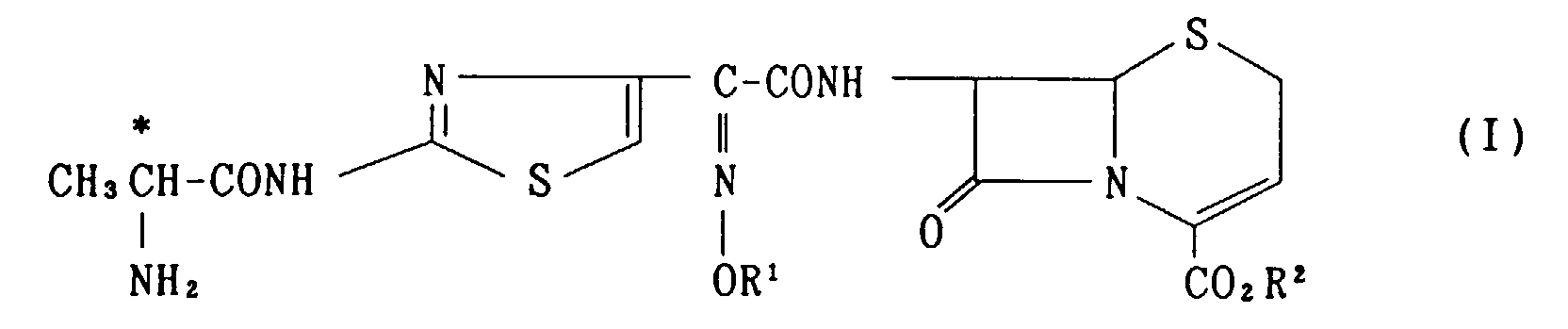
- In the present specification, each symbol stands for the following.
- As regards R1, the C1-4alkyl may be straight- or branched-chain, and preferably exemplified by those having 1 to 3 carbon atoms such as methyl, ethyl, propyl, isopropyl and cyclopropyl.
- As regards R2, the alkanoyl moiety of 1-alkanoyloxyalkyl has 2 to 10, preferably 2 to 7 carbon atoms, and the alkyl moiety has 1 or 2 carbon atoms. Such group includes, for example, acetoxymethyl, propionyloxymethyl, iso-propionyloxymethyl, n-butyryloxymethyl, iso-butyryloxymethyl, pivaloyloxymethyl, n-valeryloxymethyl, 2-methylbutyryloxymethyl, isovaleryloxymethyl, n-hexanoyloxymethyl, 3-methylvaleryloxymethyl, neohexanoyloxymethyl, 2-methylhexanoyloxymethyl, 2,2-dimethylbutyryloxymethyl, diethylacetoxymethyl, dipropylacetoxymethyl, 2,2-dimethylvaleryloxymethyl, neoheptanoyloxymethyl, cyclohexanoyloxymethyl, cyclohexylacetoxymethyl, 1-acetoxyethyl, 1-n-propionyloxyethyl, 1-n-butyryloxyethyl, 1-isobutyryloxyethyl, 1-n-valeryloxyethyl, 1-pivaloyloxyethyl, 1-iso-valeryloxyethyl, 1-n-hexanoyloxyethyl and 1-cyclohexanoyloxyethyl.
- The alkoxy moiety of alkoxycarbonyloxyalkyl represented by R2 has 1 to 10, preferably 1 to 7 carbon atoms, and the alkyl moiety has 1 or 2 carbon atoms. Such group includes, for example, 1-methoxycarbonyloxyethyl, 1-ethoxycarbonyloxyethyl, 1-n-propoxycarbonyloxyethyl, 1-isopropoxycarbonyloxyethyl, 1-n-butoxycarbonyloxyethyl, 1-tertbutoxycarbonyloxyethyl, 1-pentyloxycarbonyloxyethyl and 1-cyclohexyloxycarbonyloxyethyl.
- Preferred as R2 are acetoxymethyl, propionyloxymethyl, n-butyryloxymethyl, iso-valeryloxymethyl, pivaloyloxymethyl, 1-acetoxyethyl, 1-propionyloxyethyl, 1-iso-butyryloxyethyl, 1-n-valeryloxyethyl, 1-iso-valeryloxyethyl, 1-pivaloyloxyethyl, 1-ethoxycarbonyloxyethyl, 1-iso-propoxycarbonyloxyethyl and 1-cyclohexyloxycarbonyloxyethyl.
- Compound (I) forms pharmaceutically acceptable salts, preferably acid addition salts at the amino group. The acids for forming such acid addition salts are subject to no particular limitation as long as they are capable of forming salts with the amino group and are pharmaceutically acceptable, and are exemplified by mineral acids such as hydrochloric acid, sulfuric acid, phosphoric acid and nitric acid, and organic acids such as oxalic acid, fumaric acid, maleic acid, citric acid, tartaric acid, methanesulfonic acid and toluenesulfonic acid.
- Compound (I) and its pharmaceutically acceptable salt are preferably syn-isomers.
- Compound (I) has optically active isomers at the carbon atom marked with ∗ in formula (I), and the present invention embraces L-compound, D-compound, and DL-compound, with preference given to L-compound.
- Compound (I) and its pharmaceutically acceptable salt can be produced as in the following.
- A method wherein a compound of the formula (II)


- Compound (III) is used in the instant reaction as a free carboxylic acid, or its reactive derivative, and both modes are encompassed in the present invention. Namely, Compound (III) is used in said acylation in the form of a free acid, or a reactive derivative such as a salt of sodium, potassium, calcium, triethylamine or pyridine, acid halide thereof (acid chloride, acid bromide, etc.), acid anhydride, mixed acid anhydride such as substituted phosphoric acid (e.g. dialkylphosphoric acid), alkyl carbonate (e.g. monoethyl carbonate), active amide (e.g. amide with imidazole), and ester (e.g. cyanomethyl ester, 4-nitrophenyl ester).
- When using Compound (III) in the form of a free acid or a salt, the reaction is preferably conducted in the presence of a condensing agent. The condensing agent includes, for example, N,N-di-substituted carbodiimides such as N,N-dicyclohexylcarbodiimide, carbodiimide compounds such as 1-ethyl-3-(3'-dimethylaminopropyl)carbodiimide, N-cyclohexyl-N'-morpholinoethylcarbodiimide and N-cyclohexyl-N'-(4-diethylaminocyclohexyl)carbodiimide, azolide compounds such as N,N-carbonyldiimidazole and N,N-thionyldiimidazole and reagents prepared by reacting an amide compound such as N-methylformamide and N,N-dimethylformamide and a halogen compound such as thionyl chloride, phosphorus oxychloride and phosgene, so-called Vilsmeier Reagent. When these condensing agents are used, the reaction is believed to proceed via reactive derivative of carboxylic acid.
- In the present reaction, R3 of formula (III) representing Compound (III) is preferably an amino-protecting group. In this case, Compound (I) is obtained in a protected form as a result of the reaction of Compound (II) and Compound (III). This protecting group can be eliminated by a method known per se.
- The amino-protecting group includes phthaloyl, formyl, monochloroacetyl, dichloroacetyl, trichloroacetyl, trifluoroacetyl, methoxycarbonyl, ethoxycarbonyl, benzyloxycarbonyl, p-nitrobenzyloxycarbonyl, diphenylmethyloxycarbonyl, methoxymethylcarbonyl, methoxymethyloxycarbonyl, trimethylsilyl, 2,2,2-trichloroethoxycarbonyl, 2-methylsulfonylethyloxycarbonyl, t-butoxycarbonyl (hereinafter sometimes referred to as BOC) and trityl.
- The present reaction is normally conducted in an inert solvent which is exemplified by water, organic solvents such as acetone, dioxane, acetonitrile, chloroform, benzene, methylene chloride, ethylene chloride, tetrahydrofuran, ethyl acetate, N,N-dimethylformamide and pyridine, and mixtures thereof.
- The present reaction is preferably conducted at room temperature to under cooling (-20°C-0°C).
- The protecting group can be eliminated in various manners according to the kind of the protecting group, such as by decomposition with acid (e.g. hydrochloric acid, trifluoroacetic acid for formyl, t-butoxycarbonyl and trityl), decomposition with base (e.g. sodium hydroxide, sodium bicarbonate for dichloroacetyl and trifluoroacetyl), decomposition with hydrazine (e.g. hydrazine for phthaloyl), and by catalytic reduction such as decomposition with palladium-carbon for benzyl and benzyloxycarbonyl, which may be conducted by methods conventionally used for the syntheses of β-lactam and peptide.
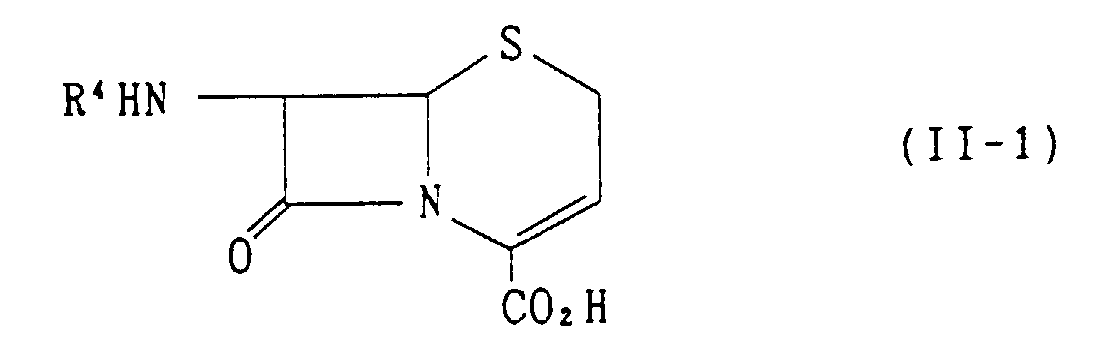
- Compound (II) can be produced by esterification of a compound of the formula (II-1)
X ― R2 (VII)
wherein R2 is as defined above, and X is a group reactive, with carboxyl or a group reactive with a reactive group of carboxyl [hereinafter referred to as Compound (VII)]. - As regards R4 of formula (II-1), the amino-protecting group includes amino-protecting groups known per se, such as benzylcarbonyl, 2-thienylacetyl, 2-furylacetyl, D-5-amino-5-carboxyvaleryl, trityl, phthalimide and o-hydroxybenzylidene.
- With regard to formula (VII), the group reactive with carboxyl or a group reactive with a reactive group of carboxyl, which is represented by X includes, for example, halogen (e.g. bromine, chlorine, iodine), alkylsulfonyloxy (e.g. methanesulfonyloxy) and arylsulfonyloxy (e.g. p-toluenesulfonyloxy).
- In the present reaction, Compound (II-1) is preferably subjected to the reaction after being converted into its reactive derivative such as alkali metal salt (e.g. sodium salt, potassium salt), alkaline earth metal salt (e.g. calcium salt), triethylamine salt and pyridine salt.
- This reaction is easily conducted in the presence of a solvent which does not adversely affect the reaction, such as dimethylformamide, dimethylacetamide, hexamethylenephosphoric triamide, acetone and acetonitrile, normally under cooling at -20-40°C, preferably at -20-0°C, to avoid by-product of Δ2-isomer.
- In the present reaction, R4 in formula (II-1) is preferably an amino-protecting group. In this case, a compound wherein the 7-position amino group of formula (II) is protected can be obtained as a result of the reaction of Compound (II-1) and Compound (VII). This protecting group can be eliminated by a method known per se.
- The means for eliminating the protecting group include decomposition with methanol to be conducted following conversion into iminochloro compound by phosphorus pentachloride for benzylcarbonyl, 2-thienylacetyl, 2-furylacetyl and D-5-amino-5-carboxyvaleryl, treating with an acid such as hydrochloric acid, formic acid and trifluoroacetic acid for trityl and o-hydroxybenzilidene, and the Ing-Manske method using hydrazine for phthalimide.
- Compound (III) can be produced by reacting a compound of the formula (X)


H2NOR1 (IX)
wherein R1 is as defined above [hereinafter referred to as Compound (IX)], followed by elimination of R5 as necessary when R5 is a carboxyl-protecting group. - As regards R5, the carboxyl-protecting group is exemplified by, for example, methyl, ethyl, n-propyl, isopropyl, n-butyl, t-butyl, benzyl, p-nitrobenzyl, p-methoxybenzyl, benzhydryl, phenyl, p-nitrophenyl, methoxymethyl, ethoxymethyl, benzyloxymethyl, acetoxymethyl, methylthiomethyl, trityl, 2,2,2-trichloroethyl, trimethylsilyl, diphenylmethoxybenzenesulfonylmethyl and dimethylaminoethyl.
- The reaction of Compound (X) or Compound (XI) and Compound (V) can be conducted in the same manner as in the reaction of Compound (IV) and Compound (V) to be described later in Method 2. In this reaction, it is preferable that the carboxyl group should be protected.
- The reaction of Compound (XII) and Compound (IX) can be conducted in the same manner as in the reaction of Compound (VIII) and Compound (IX) to be described later in Method 4. The present reaction generally proceeds rapidly with a free carboxylic acid.
- A method wherein a compound of the formula (lV)
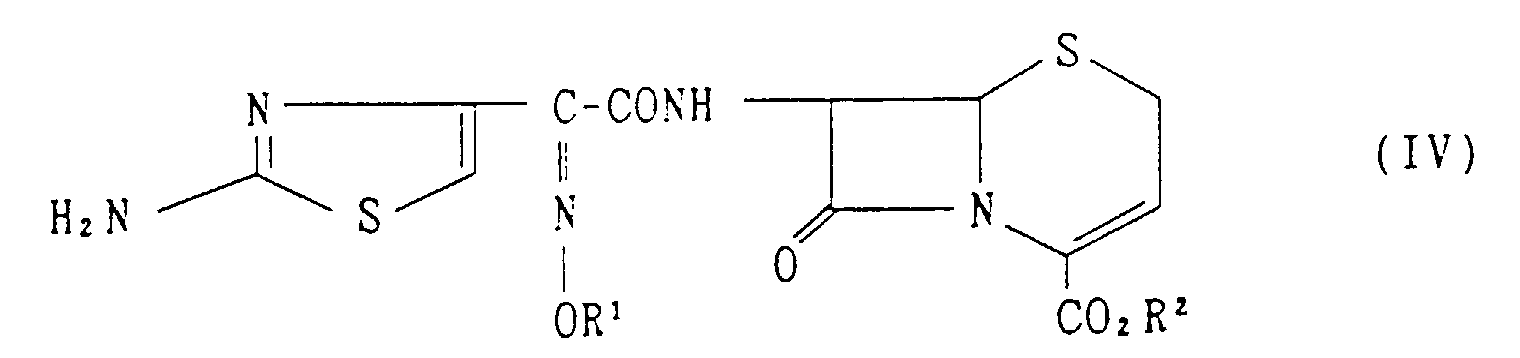
- Compound (V) is subjected to the reaction as a free carboxylic acid or its reactive derivative, both of which modes are encompassed in the present invention. Namely, Compound (V) is subjected to acylation in the form of a free acid, or a reactive derivative such as a salt of sodium, potassium, calcium, triethylamine or pyridine, acid halide thereof (e.g. acid chloride, acid bromide, etc.), acid anhydride, mixed acid anhydride such as substituted phosphoric acid (e.g. dialkylphosphoric acid), alkyl carbonate (e.g. monoethyl carbonate), active amide (e.g. amide with imidazole), and ester (e.g. cyanomethyl ester, 4-nitrophenyl ester).
- When using Compound (V) in the form of a free acid or a salt, the reaction is preferably carried out in the presence of a suitable condensing agent. The condensing agent includes, for example, N,N-di-substituted carbodiimides such as N,N-dicyclohexylcarbodiimide, carbodiimide compounds such as 1-ethyl-3-(3'-dimethylaminopropyl)carbodiimide, N-cyclohexyl-N'-morpholinoethylcarbodiimide and N-cyclohexyl-N'-(4-diethylaminocyclohexyl)carbodiimide, azolide compounds such as N,N-carbonyldiimidazole and N,N-thionyldiimidazole, and reagents prepared by reacting an amide compound such as N-methylformamide and N,N-dimethylformamide, and a halogen compound such as thionyl chloride, phosphorus oxychloride and phosgene, so-called Vilsmeier Reagent. When these condensing agents are used, the reaction is believed to proceed via reactive derivative of carboxylic acid. In the present reaction, it is preferable that a base such as 4-dimethylaminopyridine should be used as a catalyst.
- In the present reaction, R3 of formula (V) is preferably an amino-protecting group. In this case, Compound (I) is obtained in a protected form as a result of the reaction of Compound (IV) and Compound (V). This protecting group can be eliminated by a method known per se.
- The amino-protecting group includes those mentioned above.
- The present reaction is normally conducted in an inert solvent which is exemplified by water, organic solvents such as acetone, dioxane, acetonitrile, chloroform, benzene, methylene chloride, ethylene chloride, tetrahydrofuran, ethyl acetate, N,N-dimethylformamide and pyridine, and mixtures thereof.
- This reaction is easily conducted in the presence of a solvent which does not adversely affect the reaction, such as dimethylformamide, dimethylacetamide, dimethyl sulfoxide, hexamethylenephosphoric triamide, acetone and acetonitrile under cooling to avoid by-product of Δ2-isomer.
- The starting compound (IV) can be prepared by reacting Compound (II) and Compound (X) in the same manner as in Method 1.
- A method wherein a compound of the formula (VI)

- Compound (VI) is preferably subjected to the reaction in the form of a reactive derivative such as alkali metal salt (e.g. sodium salt, potassium salt), alkaline earth metal salt (e.g. calcium salt), triethylamine salt and pyridine salt.
- The present reaction is easily conducted in the presence of a solvent which does not adversely affect the reaction, such as dimethylformamide, dimethylacetamide, hexamethylenephosphoric triamide, acetone and acetonitrile, normally under cooling at -20-40°C, preferably at -20-0°C to avoid by-product of Δ2-isomer.
- In the present reaction, R3 of formula (VI) is preferably an amino-protecting group. In this case, Compound (I) is obtained in a protected form as a result of the reaction between Compound (VI) and Compound (VII). This protecting group can be eliminated by a method known per se.
- The starting compound (VI) can be prepared by reacting Compound (II-1) and Compound (III) in the same manner as in Method 1.
- A method wherein a compound of the formula (VIII)

- Compounds (VIII) and (IX) are normally reacted in a solvent such as dimethylformamide, dimethylacetamide, acetonitrile, dioxane, tetrahydrofuran, alcohol, other solvents which do not adversely affect the reaction and mixtures thereof with water. The reaction normally proceeds at a temperature between room temperature and 60°C for 30 minutes to a dozen odd hours. By removing the protecting group from the compound thus obtained as necessary by a method similar to the one mentioned above, Compound (I) can be obtained.
- The starting compound (VIII) can be prepared by a method known per se, namely, by acylation of Compound (II) using Compound (XII).
- Compound (I) can be converted to its pharmaceutically acceptable salt by a method known per se.
- Compound (I) and pharmaceutically acceptable salt thereof obtained by the methods described above are separated from the reaction mixture by conventional methods. For example, they can be adsorbed onto adsorptive resins such as Amberlite XAD-2 (Rohm and Haas) and Diaion HP-20 (Mitsubishi Kasei), and eluted with aqueous organic solvents, followed by purification. When necessary, chromatography using Sephadex LH-20 or G-10 (Pharmacia) may be employed.
- Compound (I) and pharmaceutically acceptable salt thereof are superior in absorption from digestive tract, and upon absorption, they are hydrolyzed by enzymes in the body into Compound (A) or its pharmaceutically acceptable salt. Said Compound (A) and its salt possess excellent antimicrobial activities, and show markedly superior antimicrobial activities against Gram-positive bacteria such as Staphylococcus aureus and Staphylococcus epidermidis, and Gram-negative bacteria such as Escherichia coli, Klebsiella pneumoniae, Proteus vulgaris, Proteus mirabillis, and Proteus morganii. The Compound (A) and its salt obtained by hydrolysis of Compound (I) and its pharmaceutically acceptable salt are markedly improved in antimicrobial activities against Gram-positive bacteria, while retaining antimicrobial activities against Gram-negative bacteria, and are valuable antimicrobial agents with extremely low toxicity.
- In addition, Compound (I) and its pharmaceutically acceptable salt can be swiftly absorbed into blood by oral administration, permitting high concentration of Compound (A), a metabolized compound thereof, or its pharmaceutically acceptable salt in blood, and long duration of the high concentration. By converting Compound (I) into its salt, solubility in digestive tract can be greatly enhanced, which in turn leads to improved absorption efficiency and improved absorption of Compound (I) into blood.
- Another characteristic property of the present invention lies in the fact that Compound (I) and its pharmaceutically acceptable salt have noticeable sweetness which is normally 10 to 400 times greater than that of sucrose.
- Compound (I) and its pharmaceutically acceptable salt are useful for the prophylaxis and treatment of bacterial infectious diseases. Said agents for the prophylaxis and treatment of bacterial infectious diseases can be used as agents for preventing and treating bacteria-caused diseases of warm-blooded animals including humans (e.g. dogs, cats, cows, horses, rats, mice), such as suppurative diseases, infectious diseases of respiratory organs, biliary infectious diseases and infectious diseases in the urinary tract.
- Compound (I) and its pharmaceutically acceptable salt of the present invention can be used solely or after being formulated into pharmaceutical compositions for the prophylaxis and treatment of infectious diseases.
- The agent for the prophylaxis and treatment of infectious diseases comprising Compound (I) or its pharmaceutically acceptable salt of the present invention exhibits the above-mentioned excellent actions by oral administration, and is normally administered orally as an oral agent. Since Compound (I) and its pharmaceutically acceptable salt are noticeably sweet, oral agents which are easily taken can be prepared.
- The agent for the prophylaxis and treatment of infectious diseases of the present invention can be prepared by means known per se by admixing with pharmaceutical excipients. Said excipients include starch, lactose, sugar, calcium carbonate and calcium phosphate.
- The agent for the prophylaxis and treatment of bacterial infectious diseases to be administered orally preferably also contains an organic acid, by which solubility of Compound (I) and its pharmaceutically acceptable salt in digestive tract can be enhanced, rendering absorption into blood easier. The organic acid is subject to no particular limitation so long as it is pharmaceutically acceptable, and preferably includes, for example, organic carboxylic acids such as maleic acid, fumaric acid, tartaric acid, citric acid, succinic acid, malic acid, oxalic acid, mandelic acid, malonic acid and benzoic acid. Said organic acid is present in amounts varying from 0. 01 to 20 moles, preferably from 0.02 to 2 moles based on one mole of Compound (I) or its salt.
- The agent for the prophylaxis and treatment of bacterial infectious diseases to be administered orally preferably further contains other additives such as binders (e.g. starch, gum arabic, carboxymethylcellulose, hydroxypropylcellulose, crystalline cellulose), lubricants (e.g. magnesium stearate, talc), and disintegrators (e.g. carboxymethylcellulose calcium, talc). Each components are mixed, and formulated into preparation forms suitable for oral administration, such as capsules, tablets, fine granules, granules and dry syrups by means known per se.
- The agent for the prophylaxis and treatment of bacterial infectious diseases containing Compound (I) or its pharmaceutically acceptable salt of the present invention is swiftly absorbed from the digestive tract when administered orally, and immediately after absorption, hydrolyzed by enzymes in the body into Compound (A) or its pharmaceutically acceptable salt, enabling exertion of its superior antimicrobial activities.
- While the dose of Compound (I) and its pharmaceutically acceptable salt varies depending on administration target, symptom, and so on, it is about 1 to 40 mg/kg body weight on the basis of Compound (A) for single dose which is orally administered 1 to 4 times per day in case of an adult with suppurative diseases.
- Compound (I) and its pharmaceutically acceptable salt of the present invention may be co-administered with, for example, agents having antimicrobial activities such as antimicrobial agent (e.g. penicillins, aminoglucosides, cephalosporins), and agents for the treatment of systemic symptoms caused by bacterial infections (e.g. antipyretic, analgesic, antiphlogistic).
- The compound of the present invention (20 mg/kg) to be mentioned in the following Examples was orally administered to rabbits (3 per group), and recovery from urine and concentration in serum of Compound (A) converted by hydrolysis were determined by the bioassay method using Escherichia coli.
-
Compound Recovery from urine (0-8 hrs) Compound of Ex. 3 40.9% Compound Concentration in blood (µg/ml) 0.125 hr 0.25 hr 0.5 hr 1.0 hr 2.0 hr 4.0 hr 6.0 hr Compound of Ex. 3 0.6 2.5 6.0 5.5 2.3 0.5 0.1 - 0.01, 0.02, 0.03, 0.04 and 0.05% aqueous solutions of the compounds of Example 3 and Example 6 were respectively prepared, and compared with 1, 2, 3, 4, 5, 6, 7, 8, 9 and 10% aqueous solutions of sucrose for the sweetness.
-
Compound Sweetness (sucrose=1) Compound of Example 3 ca. 300 Compound of Example 6 ca. 10 -
- (1) Ethyl 2-(2-aminothiazol-4-yl)glyoxylate (4.0 g) and Boc-L-alanine (5.67 g) were dissolved in 40 ml of N,N-dimethylformamide(hereafter abbreviated as DMF), and thereto was added 1-ethyl-3-(3'-dimethylaminopropyl)carbodiimide hydrochloride (5.74 g) under ice-cooling followed by addition of 4-dimethylaminopyridine (0.4 g). The mixture was stirred at room temperature for 5 hours. Water (400 ml) was added thereto, and the mixture was extracted twice with ethyl acetate (300 ml). The ethyl acetate layer was washed with 10% aqueous solution of citric acid (200 ml), saturated aqueous solution of sodium bicarbonate (200 ml) and saturated brine (200ml) in this order, and dried over anhydrous sodium sulfate. The ethyl acetate was distilled off under reduced pressure, and the residue was subjected to silica gel column chromatography eluted with benzene-ethyl acetate. The object fraction was concentrated to give 5.30 g of ethyl 2-[2-(Boc-L-alanyl)aminothiazol-4-yl]glyoxylate.
- (2) The product obtained in (1) above (5.30 g) was dissolved in ethanol (28 ml), and thereto was added 2N aqueous solution of sodium hydroxide (7.13 ml), and the mixture was stirred at room temperature for 2 hours. Water (150 ml) was added thereto, and the mixture was extracted twice with ethyl acetate (50 ml). The ethyl acetate layer was extracted with saturated aqueous solution of sodium bicarbonate (50 ml). The combined water layer was acidified with citric acid and extracted four times with ethyl acetate (200 ml). The ethyl acetate layer was washed with saturated brine (100ml) and dried over anhydrous sodium sulfate. The ethyl acetate was distilled off under reduced pressure to give 4.88 g of 2-[2-(Boc-L-alanyl)aminothiazol-4-yl]glyoxylic acid.
IR (Nujol, cm-1): 1690, 1550
NMR (DMS0d-6, δ ppm): 1.26 (d, J=7.0Hz, 3H, -CH3), 1.42 (s, 9H, -OC(CH3)3), 3.80∼4.60 (m, 1H, -CH<) 5.00∼9.80 (br, 1H, -CO2H), 7.22 (d, J=9.0Hz, 1H, -NH-), 8.34 (s, 1H, thiazole C5-H), 12.60 (br, 1H, thiazole C2-NH-) - (3) The product obtained in (2) above (4.88 g) was dissolved in a mixture of tetrahydrofuran (hereafter abbreviated as THF) and water (2:1, 300 ml), and thereto was added methoxyamine (0.74 g), and the mixture was stirred at pH 5 for 2 hours. The THF was distilled off under reduced pressure, and the residue was acidified with citric acid and extracted three times with ethyl acetate (200ml). The ethyl acetate layer was washed with saturated brine (100ml) and dried over anhydrous sodium sulfate. The solution was concentrated under reduced pressure to 70 ml. Dicyclohexylamine (2.84 ml) was added thereto, and the mixture was stirred under ice-cooling for half an hour for crystallization. The precipitated crystals were separated by filtration, suspended in ethyl acetate (400 ml), washed with 10% aqueous solution of citric acid (200 ml) and saturated brine (200 ml) and then dried over anhydrous sodium sulfate. The ethyl acetate was distilled off under reduced pressure to give 3.71 g of the title compound.
IR (Nujol, cm-1): 1700, 1550
NMR (DMS0d-6, δ ppm): 1.26 (d, J=7.0Hz, 3H, -CH3), 1.42 (s, 9H, -OC(CH3)3), 3.85 (s, 3H, -OCH3), 3.90∼4.50 (m, 1H, -CH<), 6. 70∼7.36 (br, 1H, -NH-), 7.54 (s, 1H, thiazole C5-H), 5.00∼9.00 (br, 1H, -CO2H), 12.44 (br.s, 1H, thiazole C2-NH-) -
- (1) Ethyl 2-(2-aminothiazol-4-yl)methoxyiminoacetate (syn-isomer) (5.0 g) and Boc-L-alanine (6.19 g) were dissolved in DMF(50 ml), and thereto was added 1-ethyl-3-(3'-dimethylaminopropyl)-carbodiimide hydrochloride (6.27 g) under ice-cooling followed by addition of 4-dimethylaminopyridine (430 mg). The mixture was stirred at room temperature for 5 hours. Water (500 ml) was added thereto, and the mixture was extracted twice with ethyl acetate (300 ml). The ethyl acetate layer was washed with 10% aqueous solution of citric acid (200 ml), saturated aqueous solution of sodium bicarbonate (200 ml) and saturated brine (200ml) in this order, and dried over anhydrous sodium sulfate. The ethyl acetate was distilled off under reduced pressure, and the residue was subjected to silica gel column chromatography eluted with benzene-ethyl acetate. The object fraction was concentrated to give 5.90 g of ethyl 2-[2-(Boc-L-alanyl)aminothiazol-4-yl]-2-methoxyiminoacetate (syn-isomer).
IR (Nujol, cm-1); 1740, 1690
NMR (DMSOd-6, δ ppm); 1.17 (t, J=6Hz, 3H, -CH3), 1.25 (d, J=7Hz, 3H, -CH3), 1.44 (s, 9H, -OC(CH3)3), 3.88 (s, 3H, -OCH3), 3.90∼4.50 (m, 1H, -CH<), 4.00 (q, J=6Hz, 2H, -CH2-), 6.60∼7.40 (br, 1H, -NH-), 7.55 (s, 1H, thiazole C5-H), 12.45 (br.s, 1H, thiazole C2-NH-) - (2) The product obtained in (1) above (5.90 g) was dissolved in ethanol (29 ml), and thereto was added 2N aqueous solution of sodium hydroxide (7.35 ml), and the mixture was stirred at room temperature for 2 hours. Water (150 ml) was added thereto, and the mixture was washed twice with ethyl acetate (50 ml). The ethyl acetate layer was extracted with saturated aqueous solution of sodium bicarbonate (50 ml). The combined water layer was acidified with citric acid and extracted four times with ethyl acetate (200 ml). The ethyl acetate layer was washed with saturated brine (100ml) and dried over anhydrous sodium sulfate. The ethyl acetate was distilled off under reduced pressure to give 4.97 g of the title compound.
- The properties of the thus-obtained compound were identical with those of the title compound of Example 1.
-
- (1) A mixture of dry ethyl acetate (1.82 ml) and dry DMF (0.36 ml) was cooled to -10°C. Phosphorus oxychloride (0.37 ml) was added thereto, and the mixture was stirred at said temperature for 20 minutes. A solution of the compound of Example 1 (1.35 g) in dry methylene chloride (8.0 ml) was added thereto, and the mixture was stirred at a temperature between -10 to -5°C for 30 minutes. On the other hand, pivaloyloxymethyl 7-amino-3-cephem-4-carboxylate (0.95 g) was dissolved in dry methylene chloride (12 ml), and N-trimethylsilylacetamide(0.79 g) was added thereto, and the mixture was cooled to -15°C. Thereto was dropwise added the aforementioned solution, and the mixture was stirred at said temperature for 45 minutes. Ethyl acetate (200 ml) was added thereto, and the mixture was washed with 5% aqueous solution of sodium bicarbonate (100 ml) and saturated brine (100 ml). After drying over anhydrous sodium sulfate, the solvent was distilled off under reduced pressure. The residue was subjected to silica gel column chromatography eluted with benzene-ethyl acetate. The object fraction was concentrated to give 1.32 g of pivaloyloxymethyl 7-[2-(Boc-L-alanyl)aminothiazol-4-yl]-2-methoxyimino-3-cephem-4-carboxylate (synisomer).
IR (Nujol, cm-1) : 1790, 1750, 1685
NMR (DMSOd-6, δ ppm): 1.13 (d, J=7.0Hz, 3H, -CH3), 1.16 (s, 9H, -COC(CH3)3), 1.36 (s, 9H, -OC(CH3)3), 3.50∼3.80 (m, 2H, C2-H2), 3.90∼4.40 (m, 1H, -CH<), 5.14 (d, J=5.0Hz, 1H, C6-H), 5.70∼6.10 (m, 3H, C7-H, -CO2CH2-), 6.50∼6.80 (br, 1H, C3-H), 6.90∼7.20 (br, 1H, -NH-), 7.32 (s, 1H, thiazole C5-H), 9.17 (d, J=9.0Hz, 1H, -CONH-), 12.40 (br.s, 1H, thiazole C2-NH-) - (2) The product obtained in (1) above (1.30 g) was dissolved in methylene chloride (3.20 ml), and thereto was added anisole (1.30 ml) and trifluoroacetic acid (6.50 ml) at room temperature, and the mixture was stirred for 30 minutes at said temperature. The mixture was then poured into isopropyl ether (150 ml), and the precipitate was separated by filtration. A cooled ethyl acetate (100 ml) was added thereto, and the mixture was washed with cooled 1% aqueous solution of sodium bicarbonate (50 ml) and then with cooled saturated brine and dried over anhydrous sodium sulfate. The ethyl acetate was distilled off under reduced pressure. The residue was dissloved in methylene chloride (2.0 ml), and 0.3 ml of 6.1N hydrogen chloride in isopropanol was added thereto. The mixture was poured into isopropyl ether (50 ml), and the precipitate was separated by filtration to give 530 mg of the title compound.
IR (Nujol,cm-1) 1775, 1750, 1700, 1670
NMR (DMSOd-6, δ ppm) : 1.20 (s, 9H, -COC(CH3)3), 1.52 (d, J=7.0Hz, 3H, -CH3), 3.70 (br.s, 2H, C2-H2), 3.90 (s, 3H, -OCH3), 3.90∼4.30 (br, 1H, -CH<), 5.16 (d, J=5Hz, 1H, C6-H), 5.65∼6.10 (m, 3H, C7-H, -CO2CH2-), 6.65 (br, 1H, C3-H), 7.44 (s, 1H, thiazole C5-H), 8.4∼8.9 (br, 3H, -N+H3), 9.68 (d, J=8.4Hz, 1H, -CONH-), 13.00 (br, 1H, thiazole C2-NH-) -
- (1) 2-(2-aminothiazol-4-yl)-2-methoxyiminoacetic acid (syn-isomer) (2.85 g) and pivaloyloxymethyl 7-amino-3-cephem-4-carboxylate (4.0 g) were dissolved in methylene chloride (40 ml), and pyridine (3.40 ml) and phosphorus oxychloride (2.62 ml) were added thereto at -5°C, and the mixture was stirred at said temperature for 30 minutes. Thereto was added ethyl acetate (100 ml), and the mixture was washed with 10% aqueous solution of citric acid (50 ml) and saturated brine (50ml) in this order, and dried over anhydrous sodium sulfate. The solvent was distilled off under reduced pressure, and the residue was subjected to silica gel column chromatography eluted with benzene-ethyl acetate. The object fraction was concentrated to give 4.60 g of pivaloyloxymethyl 7-[2-(2-aminothiazol-4-yl)-2-methoxyiminoacetamide]-3-cephem-4-carboxylate (syn-isomer).
IR (Nujol, cm-1) : 1750, 1680,
NMR (DMSOd-6, δ ppm): 1.15 (s, 9H, -COC(CH3)3), 3.50∼3.80 (br, 2H, C2-H2), 3.85 (s, 3H, -OCH3), 5.15 (d, J=5.0Hz, 1H, C6-H), 5.87 (d×d, J=5.0Hz, 9.0Hz, 1H, C7-H), 5.70∼6.10 (m, 2H, -CO2CH2-), 6.50∼6.80 (m, 1H, C3-H), 6.80 (s, 1H, thiazole C5-H), 6.90 ∼7.30 (br, 2H, -NH2), 9.60 (d, J=9.0Hz, 1H, -CONH-) - (2) The product obtained in (1) above (4.51 g) and Boc-L-alanine (2.15 g) were dissolved in methylene chloride (50 ml), and thereto was added 1-ethyl-3-(3'-'dimethylaminopropyl)-carbodiimide hydrochloride (2.38 g) under ice-cooling followed by addition of 4-dimethylaminopyridine (220 mg). The mixture was stirred at room temperature for 2 hours. Methylene chloride (80 ml) was added thereto, and the mixture was washed with 10% aqueous solution of citric acid (100 ml), saturated aqueous solution of sodium bicarbonate (100 ml) and saturated brine (100ml) in this order and dried over anhydrous sodium sulfate. The methylene chloride was distilled off under reduced pressure, and the residue was subjected to silica gel column chromatography eluted with benzene-ethyl acetate. The object fraction was concentrated to give 2.25 g of pivaloyloxymethyl 7-[2-(Boc-L-alanylaminothiazol-4-yl)-2-methoxyiminoacetamide]-3-cephem-4-carboxylate (syn-isomer).
The properties of the thus-obtained compound were identical with those of the compound obtained in Example 3 (1). - (3) The product obtained in (2) above (2.20 g) was subjected to a reaction in the same manner as in Example 3 (2) to give 0.9 g of the title compound.
The properties of the thus-obtained compound were identical with those of the title compound of Example 3. -
- (1) A mixture of dry ethyl acetate (0.9 ml) and dry DMF (0.18 ml) was cooled to -10°C. Phosphorus oxychloride (0.19 ml) was added thereto, and the mixture was stirred at said temperature for 20 minutes. A solution of the title compound of Example 1 (1.35 g) in dry methylene chloride (4.0 ml) was added thereto, and the mixture was stirred at a temperature between -10 to -5°C for 30 minutes. On the other hand, 7-amino-3-cephem-4-carboxylic acid (0.31 g) was suspended in dry methylene chloride (6.0 ml), and N-trimethylsilylacetamide (1.42 g) was added thereto, and the mixture was stirred at 30°C for 30 minutes for homogeneous dissolution and then cooled to -5°C. Thereto was dropwise added the aforementioned solution, and the mixture was stirred at -10°C for 1 hour. Ethyl acetate (150 ml) was added thereto, and the mixture was washed with 10% aqueous solution of citric acid (50 ml), and the aqueous layer was further extracted with ethyl acetate (50 ml). The combined ethyl acetate layer was washed twice with saturated brine (70 ml). After drying over anhydrous sodium sulfate, the solution was concentrated under reduced pressure and poured into isopropyl ether (300 ml). The precipitate was separated by filtration to give 0.81 g of 7-[2-(Boc-L-alanylaminothiazol-4-yl)-2-methoxyiminoacetamide]-3-cephem-4-carboxylic acid (syn-isomer) as a powder.
IR (Nujol,cm-1) :1770, 1670
NMR (DMSOd-6, δ ppm) : 1.08 (d, J=7.0Hz, 3H, -CH3), 1.45 (s, 9H, -OC(CH3)3), 3.51∼3.7.9 (m, 2H, C2-H2), 3.89 (s, 3H, -OCH3), 3.92∼4.40 (m, 1H, -CH<), 4.57∼7.05 (br, 1H, -CO2H), 5.14 (d, J=5.0Hz, 1H, C6-H), 5.82 (d×d, J=5.0Hz, 9.0Hz, 1H, C7-H), 6.50∼6.80 (m, 1H, C3-H), 6.90∼7.21 (br, 1H, -NH-), 7.35 (s, 1H, thiazole C5-H), 9.20 (d, J=9.0Hz, 1H, -CONH-), 12.40 (br.s, 1H, thiazole C2-NH-) - (2) The product obtained in (1) above (0.81 g) was dissolved in DMF (10 ml), and thereto was added potassium acetate (130 mg), and the mixture was cooled to -20°C. Iodomethyl pivalate (481 mg) was added thereto, and the mixture was stirred at said temperature for 1 hour. Ethyl acetate (200 ml) was added thereto, and the mixture was washed with water (100 ml) and saturated brine (100ml) and dried over anhydrous sodium sulfate. The solvent was distilled off under reduced pressure, and the residue was subjected to silica gel column chromatography eluted with benzene-ethyl acetate. The object fraction was concentrated to give 0.56 g of pivaloyloxymethyl 7-[2-(Boc-L-alanyl)aminothiazol-4-yl)-2-methoxyiminoacetamide]-3-cephem-4-carboxylate (syn-isomer).
The properties of the thus-obtained compound were identical with those of the compound obtained in Example 3 (1). - (3) The product obtained in (2) above (0.56 g) was subjected to a reaction in the same manner as in Example 3 (2) to give 0.22 g of the title compound. The properties of the thus-obtained compound were identical with those of the title compound of Example 3.
In the same manner as in Examples 3 to 5, the following compound was synthesized. - IR (Nujol,cm-1) 1775, 1700, 1675
NMR (DMSOd-6, δ ppm) : 1.21 (t, J=7.0Hz, 3H, -CH3), 1.50 (d, J=6.0Hz, 6H, -CH3×2), 3.50∼3.78 (m, 2H, C2-H2), 3.88 (s, 3H, -OCH3), 3.90∼4.35 (m, 1H, -CH<), 4.13 (q, J=7.0Hz, 2H, -CH2-), 5.13 (d, J=5.0Hz, 1H, C6-H), 5.91 (d×d, J=5.0, 9.0Hz, 1H, C7-H), 6.47∼6.97 (m, 2H, -CO2CH<, C3-H), 7.42 (s, 1H, thiazole C5-H), 8.00∼8.90 (br, 3H, -N+H3), 9.63 (d, J=9.0Hz, 1H, -CONH-), 12.98 (br.s, 1H, thiazole C2-NH-) - In the same manner as in Examples 1 to 5, the following compound was synthesized.
- IR (Nujol, cm-1) : 3500, 1790, 1780, 1755, 1710, 1690, 1665
NMR (DMSOd-6, δ ppm) : 1.20 (s, 9H, -COC(CH3)3),
1.53 (d, J=7.0Hz, 3H, -CH3), 3.66 (br.s, 2H, C2-H2), 3.90∼4.50 (m, 1H, -CH<), 3.90 (s, 3H, -OCH3), 5.16 (d, J=5.0Hz, 1H, C6-H), 5.67∼6.20 (m, 3H, C7-H, -CO2CH2-), 6.44∼6.90 (m, 1H, C3-H), 7.45 (s, 1H, thiazole C5-H), 8.20∼9.20 (br, 3H, -N+H3), 9.75 (d, J=9.0Hz, 1H, -CONH-), 12.76∼13.40 (br, 1H, thiazole C2-NH-) - The following compounds are prepared according to any of the methods described in Examples 3 to 5.
- (1) 1-Acetoxyethyl 7-[2-(2-L-alanylaminothiazol-4-yl)-2-methoxyiminoacetamide]-3-cephem-4-carboxylate hydrochloride (syn-isomer)
- (2) 1-Ethoxycarbonyloxyethyl 7-[2-(2-L-alanylaminothiazol-4-yl)-2-ethoxyiminoacetamide]-3-cephem-4-carboxylate hydrochloride (syn-isomer)
- (3) Pivaloyloxymethyl 7-[2-(2-L-alanylaminothiazol-4-yl)-2-ethoxyiminoacetamide]-3-cephem-4-carboxylate hydrochloride (syn-isomer)
- (4) 1-Acetoxyethyl 7-[2-(2-L-alanylaminothiazol-4-yl)-2-ethoxyiminoacetamide]-3-cephem-4-carboxylate hydrochloride (syn-isomer)
- (5) 1-Ethoxycarbonyloxyethyl 7-[2-(2-L-alanylaminothiazol-4-yl)-2-hydroxyiminoacetamide]-3-cephem-4-carboxylate hydrochloride (syn-isomer)
- (6) 1-iso-Propoxycarbonyloxyethyl 7-[2-(2-L-alanylaminothiazol-4-yl)-2-hydroxyiminoacetamide]-3-cephem-4-carboxylate hydrochloride (syn-isomer)
- (7) 1-iso-Propoxycarbonyloxyethyl 7-[2-(2-L-alanylaminothiazol-4-yl)-2-ethoxyiminoacetamide]-3-cephem-4-carboxylate hydrochloride (syn-isomer)
- (8) 1-Pivaloyloxyethyl 7-[2-(2-L-alanylaminothiazol-4-yl)-2-methoxyiminoacetamide]-3-cephem-4-carboxylate hydrochloride (syn-isomer)
- (9) 1-Pivaloyloxyethyl 7-[2-(2-L-alanylaminothiazol-4-yl)-2-ethoxyiminoacetamide]-3-cephem-4-carboxylate hydrochloride (syn-isomer)
- IR (Nujol, cm-1) : 3250, 1790, 1760, 1690, 1660
NMR (DMSOd-6, δ ppm): 0.96∼2.20 (m, 10H,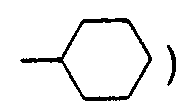
4.32∼4.86 (m, 1H,
- IR (Nujol, cm-1) : 3150, 1780, 1765, 1705, 1670
NMR (DMSOd-6, δ ppm) : 1.28 (d, J=7.0Hz, 6H, -(CH3)2),
1.54 (d, J=7.0Hz, 6H, -CH3 × 2), 3.50∼3.84 (m, 2H, C2-H2), 3.95 (s, 3H, -OCH3), 4.00∼4.40 (m, 1H, -CH<), 4.46∼5.10 (m, 1H, -CH<), 5.17 (d, J=5.0Hz, 1H, C6-H), 5.97 (d × d, J=5.0, 9.0Hz, 1H, C7-H), 5.49∼7.10 (m, 2H, -CH, C3-H), 7.51 (s, 1H, thiazole C5-H), 7.90∼10.20 (br. 3H, -N+H3), 9.75 (d, J=9.0Hz, 1H, -CONH-), 11.80∼14.00 (br, 1H, thiazole C2-NH-) - IR (Nujol, cm-1) : 3350, 1790, 1755, 1715, 1680
NMR (DMSOd-6, δ ppm) : 1.00 (s,9H,-(CH3)3),
1.52 (d, J=7.0Hz, 3H, -CH3), 2.28 (s, 2H, -CH2-), 3.72 (br.s, 2H, C2-H2), 3.94 (s, 3H, -OCH3), 3.90∼4.40 (m, 1H, -CH<), 5.18 (d, J=5.0Hz, 1H, C6-H), 5.60∼6.18 (m, 3H, -CO2CH2-, C7-H), 6.44∼6.85 (m, 1H, C3-H), 7.48 (s, 1H, thiazole C5-H), 7.98∼10.00 (br, 3H, -N+H3), 9.72 (d, J=9.0Hz, 1H, -CONH-), 11.00∼14.00 (br, 1H, thiazole C2-NH-) - IR (Nujol, cm-1) : 3140, 1780, 1750, 1705, 1670
NMR (DMSOd-6, δ ppm) : 1.15 (d, J=7.0Hz, 6H, -(CH3)2), 1.55 (d, J=7.0Hz, 3H, -CH3), 2.30∼3.00 (s, 1H, -CH<), 3.60∼3.85 (m, 2H, C2-H2), 3.95 (s, 3H, -OCH3), 3.85∼4.50 (m, 1H, -CH<), 5.20 (d, J=5.0Hz, 1H, C6-H), 5.60∼6.15 (m, 3H, C7-H, -CO2CH2-), 6.40∼6.90 (m, 1H, C3-H), 7.53 (s, 1H, thiazole C5-H), 8.00∼9.40 (br, 3H, -N+H3), 9.75 (d, J=9.0Hz, 1H, -CONH-), 13.10 (br, 1H, thiazole C2-NH-) - IR (Nujol, cm-1) : 3400, 3150, 1780, 1750, 1705, 1670
NMR (DMSOd-6, δ ppm) : 1.10 (d, J=7.0Hz, 6H, -(CH3)2), 1.50 (d, J=7.0Hz, 6H, -CH3, -CH3), 2.20 ∼2.90 (m, 1H, -CH<), 3.30∼3.80 (m, 2H, C2-H2), 3.90 (s, 3H, -OCH3), 3.80∼4.40 (m, 1H, -CH<), 5.25 (d, J=5.0Hz, 1H, C6-H), 5.95 (d × d, J=5.0Hz, 9.0Hz, 1H, C7-H), 6.50∼7.20 (m, 2H, C3-H, -CH<), 7.48 (s, 1H, thiazole C5-H), 8.20∼9.00 (br. 3H, -N+H3), 9.70 (d, J=9.0Hz, 1H, -CONH-), 13.10 (br, 1H, thiazole C2-NH-) - IR (Nujol, cm-1) : 1785, 1750, 1715, 1680
NMR (DMSOd-6, δ ppm) : 0.90 (d, J=6.0Hz, 6H, -(CH3)2), 1.45 (d, J=6.0Hz, 3H, -CH3), 1.70 ∼2.40 (m, 3H, -CH2CH<), 3.65 (br.s, 2H, C2-H2), 3.80∼4.30 (m, 1H, -CH<), 3.90 (s, 3H, -OCH3), 5.15 (d, J=5.0Hz, 1H, C6-H), 5.6∼6.1 (m, 1H, C7-H), 5.85 (s, 2H, -CO2CH2-), 6.40∼6.80 (m, 1H, C3-H), 7.45 (s, 1H, thiazole C5-H), 7.60∼11.00 (br, 4H, -N+H3, thiazole C2-NH-), 9.70 (d, J=8.0Hz, 1H, -CONH-) - Tablets of the following composition are prepared by a conventional method.
Compound of Example 3 125 mg potency Polyvinylpyrrolidone 20 mg Starch 20 mg Magnesium stearate 2.0 mg - Tablets of the following composition are prepared by a conventional method.
Compound of Example 3 250 mg potency Citric acid 50 mg Starch 20 mg Magnesium stearate 3.0 mg - Tablets of the following composition are prepared by a conventional method.
Compound of Example 3 500 mg potency Starch 20 mg Hydroxypropylcellulose 3 mg Magnesium stearate 5 mg - Capsules are prepared by mixing the compound of Example 3 with tartaric acid, followed by a conventional capsule filling.
Compound of Example 3 125 mg potency Tartaric acid 25 mg Magnesium stearate 1 mg Starch sufficient amount Total amount 300 mg - Capsules of the followng composition are prepared according to Formulation Example 4.


- Fine granules of the followng composition are prepared by a conventional method.
Compound of Example 3 62.5 mg potency Lactose 22 mg Purified water 0.03 ml Starch 10 mg Hydroxypropylcellulose 3 mg - Granules of the followng composition are prepared by a conventional method.
Compound of Example 3 62.5 mg potency Lactose 25 mg Starch 5 mg Purified water 0.03 ml Hydroxypropylcellulose 5 mg - The present invention has been properly and sufficiently explained in the foregoing specification including Examples, which can be changed or modified within the spirit and scope of the present invention.
Claims (10)
- A method for producing a cephalosporin compound of the formula (I)

which comprises one of the following methods i)-iv):i) reacting a compound of the formula (II)
 ii) reacting a compound of the formula (IV)
 iii) reacting a compound of the formula (VI)
X - R2 (VII)
wherein R2 is as defined above, and X is carboxyl or a group reactive with a reactive group of carboxyl, and iv) reacting a compound of the formula (VIII)
H2NOR1 (IX)
wherein R1 is as defined above. - The method according to claim 1 wherein R2 is selected from acetoxymethyl, propionyloxymethyl, n-butyryloxymethyl, isovaleryloxymethyl, pivaloyloxymethyl, 1-acetoxyethyl, 1-propionyloxyethyl, l-isobutyryloxyethyl, 1-n-valeryloxyethyl, l-iso-valeryloxyethyl, 1-pivaloyloxyethyl, 1-ethoxycarbonyloxyethyl, 1-iso-propoxycarbonyloxyethyl and 1-cyclohexyloxycarbonyloxyethyl, or its pharmaceutically acceptable salt.
- The method according to claim 1, wherein the produced cephalosporin compound or its pharmaceutically acceptable salt is a syn-isomer.
- The method according to claim 1, wherein the produced cephalosporin compound is an L compound at the carbon atom marked with * in formula (I) of claim 1, or its pharmaceutically acceptable salt.
- A method for producing an agent to be administered orally for the prophylaxis and treatment of bacterial infectious diseases, which contains a cephalosporin compound of the formula (I)

- The method according to claim 5, wherein the produced agent contains an organic acid.
- The method according to claim 6, wherein the organic acid is an organic carboxylic acid.
- The agent according to claim 7, wherein the organic carboxylic acid is at least one member selected from maleic acid, fumaric acid, tartaric acid, citric acid, succinic acid, malic acid, oxalic acid, mandelic acid, malonic acid and benzoic acid.
- The method according to claim 6, wherein the organic acid is contained in the produced agent in amounts varying from 0.01 to 20 moles based on one mole of the compound of formula (I) or its acid addition salt.
Applications Claiming Priority (3)
| Application Number | Priority Date | Filing Date | Title |
|---|---|---|---|
| JP28039789 | 1989-10-28 | ||
| JP280397/89 | 1989-10-28 | ||
| PCT/JP1990/001370 WO1991006549A1 (en) | 1989-10-28 | 1990-10-24 | Cephalosporin compounds and production thereof |
Publications (3)
| Publication Number | Publication Date |
|---|---|
| EP0497978A1 EP0497978A1 (en) | 1992-08-12 |
| EP0497978A4 EP0497978A4 (en) | 1993-03-10 |
| EP0497978B1 true EP0497978B1 (en) | 1997-04-16 |
Family
ID=17624461
Family Applications (1)
| Application Number | Title | Priority Date | Filing Date |
|---|---|---|---|
| EP90915817A Expired - Lifetime EP0497978B1 (en) | 1989-10-28 | 1990-10-24 | Cephalosporin compounds and production thereof |
Country Status (11)
| Country | Link |
|---|---|
| US (1) | US5389625A (en) |
| EP (1) | EP0497978B1 (en) |
| JP (1) | JPH06102667B2 (en) |
| KR (1) | KR0173796B1 (en) |
| AT (1) | ATE151770T1 (en) |
| AU (1) | AU636178B2 (en) |
| CA (1) | CA2072106C (en) |
| DE (1) | DE69030502T2 (en) |
| DK (1) | DK0497978T3 (en) |
| ES (1) | ES2100177T3 (en) |
| WO (1) | WO1991006549A1 (en) |
Families Citing this family (8)
| Publication number | Priority date | Publication date | Assignee | Title |
|---|---|---|---|---|
| US6119608A (en) * | 1998-07-14 | 2000-09-19 | Hiniker Company | Seed furrow closing and covering disk |
| US6723716B1 (en) * | 1999-09-22 | 2004-04-20 | Essential Therapeutics, Inc. | 7-acylamino-3-heteroarylthio-3-cephem carboxylic acid antibiotics and prodrugs thereof |
| CN100366625C (en) * | 2005-03-30 | 2008-02-06 | 中国医学科学院放射医学研究所 | Fmoc-L-alanine ceftizoxime proxetil and its preparation method and new process for synthesizing ceftizoxime propivoxil with the intermediate |
| CN1958591B (en) * | 2006-09-06 | 2010-08-11 | 珠海联邦制药股份有限公司 | Method for preparing intermediate in cephalosporins, and method for preparing ceftizoxime alapivoxil |
| CN101851248A (en) * | 2009-04-03 | 2010-10-06 | 上海冠杰生物医药科技有限公司 | A kind of preparation method of ceftizoxime proxetil |
| WO2013146967A1 (en) | 2012-03-29 | 2013-10-03 | 東レ株式会社 | Polyamide acid and resin composition containing same |
| CN103059047B (en) * | 2013-01-18 | 2015-03-25 | 郑州大学 | Method for preparing ceftizoxime alapivoxil hydrochloride |
| KR102718203B1 (en) * | 2019-06-20 | 2024-10-15 | 스미토모 덴키 고교 가부시키가이샤 | Resin composition, method for producing resin composition and insulating wire |
Family Cites Families (8)
| Publication number | Priority date | Publication date | Assignee | Title |
|---|---|---|---|---|
| EP0054512A3 (en) * | 1980-12-12 | 1983-08-03 | Ciba-Geigy Ag | Cephalosporin esters, process for their preparation and pharmaceutical compositions containing them |
| IT1142096B (en) * | 1980-12-15 | 1986-10-08 | Fujisawa Pharmaceutical Co | 7-ACHYLAMINE CEPHALOSPORANIC ACID DERIVATIVES AND PROCEDURES FOR THEIR PREPARATION |
| JPS5832885A (en) * | 1981-08-19 | 1983-02-25 | Asahi Chem Ind Co Ltd | Novel cephalosporin |
| US4465668A (en) * | 1981-02-27 | 1984-08-14 | Asahi Kasei Kogyo Kabushiki Kaisha | Method for improving intestinal absorption of cephalosporin derivatives |
| JPS57193489A (en) * | 1981-05-21 | 1982-11-27 | Fujisawa Pharmaceut Co Ltd | Syn-isomer of 7-substituted-3-cephem-4-carboxylic acid ester and its preparation |
| JPS58180491A (en) * | 1982-04-16 | 1983-10-21 | Banyu Pharmaceut Co Ltd | Cephalosporin derivative |
| JPS60178890A (en) * | 1984-02-23 | 1985-09-12 | Meiji Seika Kaisha Ltd | Novel cephalosporin derivative, and preparation thereof |
| JPS6150987A (en) * | 1984-08-16 | 1986-03-13 | Sumitomo Chem Co Ltd | Cephem derivative |
-
1990
- 1990-10-24 US US07/849,019 patent/US5389625A/en not_active Expired - Lifetime
- 1990-10-24 CA CA002072106A patent/CA2072106C/en not_active Expired - Fee Related
- 1990-10-24 DE DE69030502T patent/DE69030502T2/en not_active Expired - Fee Related
- 1990-10-24 KR KR1019920700985A patent/KR0173796B1/en not_active Expired - Fee Related
- 1990-10-24 AT AT90915817T patent/ATE151770T1/en not_active IP Right Cessation
- 1990-10-24 WO PCT/JP1990/001370 patent/WO1991006549A1/en not_active Ceased
- 1990-10-24 DK DK90915817.2T patent/DK0497978T3/en active
- 1990-10-24 EP EP90915817A patent/EP0497978B1/en not_active Expired - Lifetime
- 1990-10-24 AU AU66093/90A patent/AU636178B2/en not_active Ceased
- 1990-10-24 ES ES90915817T patent/ES2100177T3/en not_active Expired - Lifetime
- 1990-10-27 JP JP29050990A patent/JPH06102667B2/en not_active Expired - Fee Related
Also Published As
| Publication number | Publication date |
|---|---|
| ES2100177T3 (en) | 1997-06-16 |
| DE69030502D1 (en) | 1997-05-22 |
| CA2072106A1 (en) | 1991-04-29 |
| ATE151770T1 (en) | 1997-05-15 |
| JPH06102667B2 (en) | 1994-12-14 |
| JPH03204883A (en) | 1991-09-06 |
| KR927003607A (en) | 1992-12-18 |
| AU636178B2 (en) | 1993-04-22 |
| CA2072106C (en) | 2001-04-17 |
| US5389625A (en) | 1995-02-14 |
| WO1991006549A1 (en) | 1991-05-16 |
| AU6609390A (en) | 1991-05-31 |
| DE69030502T2 (en) | 1997-07-24 |
| DK0497978T3 (en) | 1997-10-20 |
| EP0497978A1 (en) | 1992-08-12 |
| KR0173796B1 (en) | 1999-02-01 |
| EP0497978A4 (en) | 1993-03-10 |
Similar Documents
| Publication | Publication Date | Title |
|---|---|---|
| US4839350A (en) | Cephalosporin compounds and the production thereof | |
| US5336673A (en) | 3-substituted cephem compounds | |
| SK278845B6 (en) | D-2-aminoacyl-3-(z)-propenyl cephalosporin derivatives, method for preparing it, and pharmaceutical compositions containing the same | |
| HU211830A9 (en) | Cephem compounds and a process for preparation thereof | |
| PL172835B1 (en) | 7- ß - [(Z) -2- (2-amino-4-thiazolyl) -2-hydroxyiminoacetamido] -3- (1,2,3-triazol-4-yl) -thiomethylthio-3-cephemo acid hydrochloride 4-carboxylic acid and the method of its preparation, the crystalline hydrate of the hydrochloride of 7- ß - (Z) -2- (2-amino-4-thiazolyl) -2-hydroxyiminoacetamido] -3- (1,2,3-triazol-4- yl) -thiomethylthio-3-ce-femo-4-carboxylic acid and the method of its preparation | |
| KR910000035B1 (en) | Cephalosporin compound, its preparation and pharmaceutical composition containing the same | |
| US5389625A (en) | Cephalosporin compounds | |
| US5081116A (en) | Cephalosporin derivatives | |
| FI74972B (en) | FOR EXAMINATION OF PHARMACEUTICAL PROPERTIES 7 - / (Z) -2- (2-AMINOTIAZOLE--4-YL) -2-OXYIMINO-ACETAMIDO / -3-CEFEM-4-CARBOXYL SYRA. | |
| US4866055A (en) | Cephalosporin derivatives and their crystalline derivatives | |
| HU188586B (en) | Process for producing new cepheme derivatives | |
| KR0166378B1 (en) | 7-acyl-3-substitued carbamoyloxy)cephem compounds and process for their preparation | |
| HU189763B (en) | Process for producing new cepheme-carboxylic acid derivatives and pharmaceutical compositions containing them as active ingredients | |
| US4645769A (en) | 1-oxa-1-dethia-cephalosporin compounds and antibacterial agent comprising the same | |
| EP0188781B1 (en) | 1-oxa-1-dethia-cephalosporin compounds and antibacterial agent comprising the same | |
| US4497811A (en) | 1-Oxadethiacephalosporin compound and antibacterial agent containing the _same | |
| JPH093074A (en) | Cephalosporin compound, its use and intermediate compound | |
| JPS609698B2 (en) | Cephalosporin for oral administration | |
| EP0492277A2 (en) | Cephalosporin derivatives | |
| EP0098615B1 (en) | 1-oxadethiacephalosporin compound and antibacterial agent containing the same | |
| EP0482657A2 (en) | Cephem compounds, their production and use | |
| WO1994029320A1 (en) | Cephalosporin compound, process for producing the same, and intermediate compound | |
| JPH0161114B2 (en) | ||
| JP2002332288A (en) | Cephalosporin compound, its application, and intermediate compound for the same | |
| US4761409A (en) | Cephem derivatives |
Legal Events
| Date | Code | Title | Description |
|---|---|---|---|
| PUAI | Public reference made under article 153(3) epc to a published international application that has entered the european phase |
Free format text: ORIGINAL CODE: 0009012 |
|
| 17P | Request for examination filed |
Effective date: 19920425 |
|
| AK | Designated contracting states |
Kind code of ref document: A1 Designated state(s): AT BE CH DE DK ES FR GB IT LI LU NL SE |
|
| A4 | Supplementary search report drawn up and despatched |
Effective date: 19930115 |
|
| AK | Designated contracting states |
Kind code of ref document: A4 Designated state(s): AT BE CH DE DK ES FR GB IT LI LU NL SE |
|
| 17Q | First examination report despatched |
Effective date: 19950221 |
|
| GRAG | Despatch of communication of intention to grant |
Free format text: ORIGINAL CODE: EPIDOS AGRA |
|
| GRAH | Despatch of communication of intention to grant a patent |
Free format text: ORIGINAL CODE: EPIDOS IGRA |
|
| GRAH | Despatch of communication of intention to grant a patent |
Free format text: ORIGINAL CODE: EPIDOS IGRA |
|
| GRAA | (expected) grant |
Free format text: ORIGINAL CODE: 0009210 |
|
| AK | Designated contracting states |
Kind code of ref document: B1 Designated state(s): AT BE CH DE DK ES FR GB IT LI LU NL SE |
|
| REF | Corresponds to: |
Ref document number: 151770 Country of ref document: AT Date of ref document: 19970515 Kind code of ref document: T |
|
| REG | Reference to a national code |
Ref country code: CH Ref legal event code: EP Ref country code: CH Ref legal event code: NV Representative=s name: A. BRAUN, BRAUN, HERITIER, ESCHMANN AG PATENTANWAE |
|
| REF | Corresponds to: |
Ref document number: 69030502 Country of ref document: DE Date of ref document: 19970522 |
|
| REG | Reference to a national code |
Ref country code: ES Ref legal event code: FG2A Ref document number: 2100177 Country of ref document: ES Kind code of ref document: T3 |
|
| ET | Fr: translation filed | ||
| REG | Reference to a national code |
Ref country code: DK Ref legal event code: T3 |
|
| PLBE | No opposition filed within time limit |
Free format text: ORIGINAL CODE: 0009261 |
|
| STAA | Information on the status of an ep patent application or granted ep patent |
Free format text: STATUS: NO OPPOSITION FILED WITHIN TIME LIMIT |
|
| 26N | No opposition filed | ||
| REG | Reference to a national code |
Ref country code: GB Ref legal event code: IF02 |
|
| PGFP | Annual fee paid to national office [announced via postgrant information from national office to epo] |
Ref country code: ES Payment date: 20061005 Year of fee payment: 17 |
|
| PGFP | Annual fee paid to national office [announced via postgrant information from national office to epo] |
Ref country code: SE Payment date: 20061009 Year of fee payment: 17 |
|
| PGFP | Annual fee paid to national office [announced via postgrant information from national office to epo] |
Ref country code: BE Payment date: 20061010 Year of fee payment: 17 |
|
| PGFP | Annual fee paid to national office [announced via postgrant information from national office to epo] |
Ref country code: DK Payment date: 20061013 Year of fee payment: 17 |
|
| PGFP | Annual fee paid to national office [announced via postgrant information from national office to epo] |
Ref country code: GB Payment date: 20061018 Year of fee payment: 17 |
|
| PGFP | Annual fee paid to national office [announced via postgrant information from national office to epo] |
Ref country code: AT Payment date: 20061019 Year of fee payment: 17 |
|
| PGFP | Annual fee paid to national office [announced via postgrant information from national office to epo] |
Ref country code: LU Payment date: 20061024 Year of fee payment: 17 |
|
| PGFP | Annual fee paid to national office [announced via postgrant information from national office to epo] |
Ref country code: CH Payment date: 20061025 Year of fee payment: 17 |
|
| PGFP | Annual fee paid to national office [announced via postgrant information from national office to epo] |
Ref country code: IT Payment date: 20061031 Year of fee payment: 17 Ref country code: NL Payment date: 20061031 Year of fee payment: 17 |
|
| PGFP | Annual fee paid to national office [announced via postgrant information from national office to epo] |
Ref country code: DE Payment date: 20061222 Year of fee payment: 17 |
|
| BERE | Be: lapsed |
Owner name: *KYOTO PHARMACEUTICAL INDUSTRIES LTD Effective date: 20071031 |
|
| PGFP | Annual fee paid to national office [announced via postgrant information from national office to epo] |
Ref country code: FR Payment date: 20071015 Year of fee payment: 18 |
|
| REG | Reference to a national code |
Ref country code: DK Ref legal event code: EBP |
|
| EUG | Se: european patent has lapsed | ||
| GBPC | Gb: european patent ceased through non-payment of renewal fee |
Effective date: 20071024 |
|
| REG | Reference to a national code |
Ref country code: CH Ref legal event code: PL |
|
| NLV4 | Nl: lapsed or anulled due to non-payment of the annual fee |
Effective date: 20080501 |
|
| PG25 | Lapsed in a contracting state [announced via postgrant information from national office to epo] |
Ref country code: DE Free format text: LAPSE BECAUSE OF NON-PAYMENT OF DUE FEES Effective date: 20080501 Ref country code: LI Free format text: LAPSE BECAUSE OF NON-PAYMENT OF DUE FEES Effective date: 20071031 Ref country code: CH Free format text: LAPSE BECAUSE OF NON-PAYMENT OF DUE FEES Effective date: 20071031 |
|
| PG25 | Lapsed in a contracting state [announced via postgrant information from national office to epo] |
Ref country code: AT Free format text: LAPSE BECAUSE OF NON-PAYMENT OF DUE FEES Effective date: 20071024 |
|
| PG25 | Lapsed in a contracting state [announced via postgrant information from national office to epo] |
Ref country code: BE Free format text: LAPSE BECAUSE OF NON-PAYMENT OF DUE FEES Effective date: 20071031 |
|
| PG25 | Lapsed in a contracting state [announced via postgrant information from national office to epo] |
Ref country code: SE Free format text: LAPSE BECAUSE OF NON-PAYMENT OF DUE FEES Effective date: 20071025 Ref country code: DK Free format text: LAPSE BECAUSE OF NON-PAYMENT OF DUE FEES Effective date: 20071031 Ref country code: NL Free format text: LAPSE BECAUSE OF NON-PAYMENT OF DUE FEES Effective date: 20080501 |
|
| PG25 | Lapsed in a contracting state [announced via postgrant information from national office to epo] |
Ref country code: GB Free format text: LAPSE BECAUSE OF NON-PAYMENT OF DUE FEES Effective date: 20071024 |
|
| REG | Reference to a national code |
Ref country code: ES Ref legal event code: FD2A Effective date: 20071025 |
|
| PG25 | Lapsed in a contracting state [announced via postgrant information from national office to epo] |
Ref country code: ES Free format text: LAPSE BECAUSE OF NON-PAYMENT OF DUE FEES Effective date: 20071025 |
|
| REG | Reference to a national code |
Ref country code: FR Ref legal event code: ST Effective date: 20090630 |
|
| PG25 | Lapsed in a contracting state [announced via postgrant information from national office to epo] |
Ref country code: LU Free format text: LAPSE BECAUSE OF NON-PAYMENT OF DUE FEES Effective date: 20071024 Ref country code: IT Free format text: LAPSE BECAUSE OF NON-PAYMENT OF DUE FEES Effective date: 20071024 |
|
| PG25 | Lapsed in a contracting state [announced via postgrant information from national office to epo] |
Ref country code: FR Free format text: LAPSE BECAUSE OF NON-PAYMENT OF DUE FEES Effective date: 20081031 |