EP0497890B1 - Antimicrobial polymeric materials - Google Patents
Antimicrobial polymeric materials Download PDFInfo
- Publication number
- EP0497890B1 EP0497890B1 EP90916942A EP90916942A EP0497890B1 EP 0497890 B1 EP0497890 B1 EP 0497890B1 EP 90916942 A EP90916942 A EP 90916942A EP 90916942 A EP90916942 A EP 90916942A EP 0497890 B1 EP0497890 B1 EP 0497890B1
- Authority
- EP
- European Patent Office
- Prior art keywords
- antimicrobial
- polyamide
- irradiated
- material prepared
- fabric
- Prior art date
- Legal status (The legal status is an assumption and is not a legal conclusion. Google has not performed a legal analysis and makes no representation as to the accuracy of the status listed.)
- Expired - Lifetime
Links
- 239000000463 material Substances 0.000 title claims abstract description 150
- 230000000845 anti-microbial effect Effects 0.000 title claims abstract description 110
- 238000000034 method Methods 0.000 claims abstract description 64
- -1 polyhydrazide Polymers 0.000 claims abstract description 57
- 230000008569 process Effects 0.000 claims abstract description 43
- 239000004952 Polyamide Substances 0.000 claims abstract description 39
- 229920002647 polyamide Polymers 0.000 claims abstract description 39
- 244000005700 microbiome Species 0.000 claims abstract description 21
- 229920002635 polyurethane Polymers 0.000 claims abstract description 9
- 239000004814 polyurethane Substances 0.000 claims abstract description 9
- 229920002396 Polyurea Polymers 0.000 claims abstract description 8
- 229920000642 polymer Polymers 0.000 claims description 46
- 125000002915 carbonyl group Chemical group [*:2]C([*:1])=O 0.000 claims description 29
- IJGRMHOSHXDMSA-UHFFFAOYSA-N nitrogen Substances N#N IJGRMHOSHXDMSA-UHFFFAOYSA-N 0.000 claims description 20
- 239000003638 chemical reducing agent Substances 0.000 claims description 17
- 241000894006 Bacteria Species 0.000 claims description 13
- 150000001412 amines Chemical class 0.000 claims description 11
- 229910052757 nitrogen Inorganic materials 0.000 claims description 11
- 239000012280 lithium aluminium hydride Substances 0.000 claims description 8
- 238000010521 absorption reaction Methods 0.000 claims description 7
- 239000007789 gas Substances 0.000 claims description 6
- OAKJQQAXSVQMHS-UHFFFAOYSA-N hydrazine group Chemical group NN OAKJQQAXSVQMHS-UHFFFAOYSA-N 0.000 claims description 6
- 238000004519 manufacturing process Methods 0.000 claims description 6
- 239000002609 medium Substances 0.000 claims description 6
- 230000001954 sterilising effect Effects 0.000 claims description 5
- 241000700605 Viruses Species 0.000 claims description 4
- UORVGPXVDQYIDP-UHFFFAOYSA-N borane Chemical compound B UORVGPXVDQYIDP-UHFFFAOYSA-N 0.000 claims description 4
- 238000000576 coating method Methods 0.000 claims description 4
- 229920001577 copolymer Polymers 0.000 claims description 4
- 235000013305 food Nutrition 0.000 claims description 4
- 239000007943 implant Substances 0.000 claims description 4
- 229920000620 organic polymer Polymers 0.000 claims description 4
- 239000003755 preservative agent Substances 0.000 claims description 4
- 230000002335 preservative effect Effects 0.000 claims description 4
- 241000195493 Cryptophyta Species 0.000 claims description 3
- 241000124008 Mammalia Species 0.000 claims description 3
- 102000029797 Prion Human genes 0.000 claims description 3
- 108091000054 Prion Proteins 0.000 claims description 3
- 241000726445 Viroids Species 0.000 claims description 3
- 239000012736 aqueous medium Substances 0.000 claims description 3
- 239000007864 aqueous solution Substances 0.000 claims description 3
- 229920002959 polymer blend Polymers 0.000 claims description 3
- 239000008174 sterile solution Substances 0.000 claims description 3
- 229910000085 borane Inorganic materials 0.000 claims description 2
- 239000011248 coating agent Substances 0.000 claims description 2
- QJGQUHMNIGDVPM-UHFFFAOYSA-N nitrogen group Chemical group [N] QJGQUHMNIGDVPM-UHFFFAOYSA-N 0.000 claims description 2
- ZDHXKXAHOVTTAH-UHFFFAOYSA-N trichlorosilane Chemical compound Cl[SiH](Cl)Cl ZDHXKXAHOVTTAH-UHFFFAOYSA-N 0.000 claims description 2
- 239000005052 trichlorosilane Substances 0.000 claims description 2
- 230000001678 irradiating effect Effects 0.000 claims 1
- 239000000126 substance Substances 0.000 abstract description 7
- 239000004744 fabric Substances 0.000 description 78
- 229920002302 Nylon 6,6 Polymers 0.000 description 44
- 239000000835 fiber Substances 0.000 description 32
- 239000000523 sample Substances 0.000 description 31
- 238000012360 testing method Methods 0.000 description 30
- 238000011282 treatment Methods 0.000 description 26
- 238000006722 reduction reaction Methods 0.000 description 24
- 230000005855 radiation Effects 0.000 description 22
- OKTJSMMVPCPJKN-UHFFFAOYSA-N Carbon Chemical compound [C] OKTJSMMVPCPJKN-UHFFFAOYSA-N 0.000 description 18
- 229910052799 carbon Inorganic materials 0.000 description 18
- 125000000217 alkyl group Chemical group 0.000 description 17
- 125000003118 aryl group Chemical group 0.000 description 16
- 239000000843 powder Substances 0.000 description 16
- 239000001257 hydrogen Substances 0.000 description 14
- 229910052739 hydrogen Inorganic materials 0.000 description 14
- 230000009467 reduction Effects 0.000 description 13
- 241000588747 Klebsiella pneumoniae Species 0.000 description 12
- 238000004833 X-ray photoelectron spectroscopy Methods 0.000 description 12
- QVGXLLKOCUKJST-UHFFFAOYSA-N atomic oxygen Chemical group [O] QVGXLLKOCUKJST-UHFFFAOYSA-N 0.000 description 12
- 238000010894 electron beam technology Methods 0.000 description 12
- 125000004435 hydrogen atom Chemical class [H]* 0.000 description 12
- 229910052760 oxygen Inorganic materials 0.000 description 12
- 239000001301 oxygen Substances 0.000 description 12
- 239000000203 mixture Substances 0.000 description 11
- 241000894007 species Species 0.000 description 11
- XLYOFNOQVPJJNP-UHFFFAOYSA-N water Chemical compound O XLYOFNOQVPJJNP-UHFFFAOYSA-N 0.000 description 11
- 229920001778 nylon Polymers 0.000 description 10
- OKKJLVBELUTLKV-UHFFFAOYSA-N Methanol Chemical compound OC OKKJLVBELUTLKV-UHFFFAOYSA-N 0.000 description 9
- 239000010408 film Substances 0.000 description 9
- WYURNTSHIVDZCO-UHFFFAOYSA-N Tetrahydrofuran Chemical compound C1CCOC1 WYURNTSHIVDZCO-UHFFFAOYSA-N 0.000 description 8
- 230000000694 effects Effects 0.000 description 8
- 239000004677 Nylon Substances 0.000 description 7
- 238000006243 chemical reaction Methods 0.000 description 7
- 230000035515 penetration Effects 0.000 description 7
- 239000000047 product Substances 0.000 description 7
- 125000003277 amino group Chemical group 0.000 description 6
- 239000007788 liquid Substances 0.000 description 6
- 241000701533 Escherichia virus T4 Species 0.000 description 5
- 239000004599 antimicrobial Substances 0.000 description 5
- 125000004429 atom Chemical group 0.000 description 5
- 230000001580 bacterial effect Effects 0.000 description 5
- 239000011888 foil Substances 0.000 description 5
- 125000000524 functional group Chemical group 0.000 description 5
- QZUPTXGVPYNUIT-UHFFFAOYSA-N isophthalamide Chemical compound NC(=O)C1=CC=CC(C(N)=O)=C1 QZUPTXGVPYNUIT-UHFFFAOYSA-N 0.000 description 5
- 239000008363 phosphate buffer Substances 0.000 description 5
- 239000007787 solid Substances 0.000 description 5
- 239000000243 solution Substances 0.000 description 5
- 238000005211 surface analysis Methods 0.000 description 5
- 239000004094 surface-active agent Substances 0.000 description 5
- XKRFYHLGVUSROY-UHFFFAOYSA-N Argon Chemical compound [Ar] XKRFYHLGVUSROY-UHFFFAOYSA-N 0.000 description 4
- 241000193752 Bacillus circulans Species 0.000 description 4
- 241000222122 Candida albicans Species 0.000 description 4
- 241000588724 Escherichia coli Species 0.000 description 4
- 241000588748 Klebsiella Species 0.000 description 4
- 230000007423 decrease Effects 0.000 description 4
- 238000001514 detection method Methods 0.000 description 4
- 230000000813 microbial effect Effects 0.000 description 4
- 239000005020 polyethylene terephthalate Substances 0.000 description 4
- YLQBMQCUIZJEEH-UHFFFAOYSA-N tetrahydrofuran Natural products C=1C=COC=1 YLQBMQCUIZJEEH-UHFFFAOYSA-N 0.000 description 4
- 239000006150 trypticase soy agar Substances 0.000 description 4
- 241001515965 unidentified phage Species 0.000 description 4
- 239000002759 woven fabric Substances 0.000 description 4
- XUSNPFGLKGCWGN-UHFFFAOYSA-N 3-[4-(3-aminopropyl)piperazin-1-yl]propan-1-amine Chemical compound NCCCN1CCN(CCCN)CC1 XUSNPFGLKGCWGN-UHFFFAOYSA-N 0.000 description 3
- RTZKZFJDLAIYFH-UHFFFAOYSA-N Diethyl ether Chemical compound CCOCC RTZKZFJDLAIYFH-UHFFFAOYSA-N 0.000 description 3
- IAYPIBMASNFSPL-UHFFFAOYSA-N Ethylene oxide Chemical compound C1CO1 IAYPIBMASNFSPL-UHFFFAOYSA-N 0.000 description 3
- 241000191967 Staphylococcus aureus Species 0.000 description 3
- 238000007792 addition Methods 0.000 description 3
- 229910052782 aluminium Inorganic materials 0.000 description 3
- XAGFODPZIPBFFR-UHFFFAOYSA-N aluminium Chemical compound [Al] XAGFODPZIPBFFR-UHFFFAOYSA-N 0.000 description 3
- 229940095731 candida albicans Drugs 0.000 description 3
- 239000003153 chemical reaction reagent Substances 0.000 description 3
- 230000000052 comparative effect Effects 0.000 description 3
- 239000008367 deionised water Substances 0.000 description 3
- 229910021641 deionized water Inorganic materials 0.000 description 3
- 239000011521 glass Substances 0.000 description 3
- 239000002054 inoculum Substances 0.000 description 3
- 239000000178 monomer Substances 0.000 description 3
- 239000012279 sodium borohydride Substances 0.000 description 3
- 229910000033 sodium borohydride Inorganic materials 0.000 description 3
- 239000002904 solvent Substances 0.000 description 3
- 238000003756 stirring Methods 0.000 description 3
- CSCPPACGZOOCGX-UHFFFAOYSA-N Acetone Chemical compound CC(C)=O CSCPPACGZOOCGX-UHFFFAOYSA-N 0.000 description 2
- 241000228245 Aspergillus niger Species 0.000 description 2
- 241001112741 Bacillaceae Species 0.000 description 2
- 241000222120 Candida <Saccharomycetales> Species 0.000 description 2
- 229920004934 Dacron® Polymers 0.000 description 2
- 241000588921 Enterobacteriaceae Species 0.000 description 2
- 241000588722 Escherichia Species 0.000 description 2
- 241000192017 Micrococcaceae Species 0.000 description 2
- 241000191940 Staphylococcus Species 0.000 description 2
- XSQUKJJJFZCRTK-UHFFFAOYSA-N Urea Chemical compound NC(N)=O XSQUKJJJFZCRTK-UHFFFAOYSA-N 0.000 description 2
- 238000000026 X-ray photoelectron spectrum Methods 0.000 description 2
- 125000003368 amide group Chemical group 0.000 description 2
- 150000001408 amides Chemical class 0.000 description 2
- 229910052786 argon Inorganic materials 0.000 description 2
- 230000015572 biosynthetic process Effects 0.000 description 2
- 239000000872 buffer Substances 0.000 description 2
- 230000001332 colony forming effect Effects 0.000 description 2
- 150000001875 compounds Chemical class 0.000 description 2
- 238000004590 computer program Methods 0.000 description 2
- 230000003247 decreasing effect Effects 0.000 description 2
- 229920006240 drawn fiber Polymers 0.000 description 2
- 238000005516 engineering process Methods 0.000 description 2
- 238000002474 experimental method Methods 0.000 description 2
- 238000001914 filtration Methods 0.000 description 2
- 229920000578 graft copolymer Polymers 0.000 description 2
- NAQMVNRVTILPCV-UHFFFAOYSA-N hexane-1,6-diamine Chemical compound NCCCCCCN NAQMVNRVTILPCV-UHFFFAOYSA-N 0.000 description 2
- 230000033001 locomotion Effects 0.000 description 2
- 238000000344 low-energy electron-beam lithography Methods 0.000 description 2
- 239000012528 membrane Substances 0.000 description 2
- 229910052751 metal Inorganic materials 0.000 description 2
- 239000002184 metal Substances 0.000 description 2
- BDAGIHXWWSANSR-UHFFFAOYSA-N methanoic acid Natural products OC=O BDAGIHXWWSANSR-UHFFFAOYSA-N 0.000 description 2
- 238000007747 plating Methods 0.000 description 2
- 229920000139 polyethylene terephthalate Polymers 0.000 description 2
- BDERNNFJNOPAEC-UHFFFAOYSA-N propan-1-ol Chemical compound CCCO BDERNNFJNOPAEC-UHFFFAOYSA-N 0.000 description 2
- 238000005086 pumping Methods 0.000 description 2
- 238000001228 spectrum Methods 0.000 description 2
- 238000009987 spinning Methods 0.000 description 2
- VZGDMQKNWNREIO-UHFFFAOYSA-N tetrachloromethane Chemical compound ClC(Cl)(Cl)Cl VZGDMQKNWNREIO-UHFFFAOYSA-N 0.000 description 2
- 239000001974 tryptic soy broth Substances 0.000 description 2
- 108010050327 trypticase-soy broth Proteins 0.000 description 2
- WFKWXMTUELFFGS-UHFFFAOYSA-N tungsten Chemical compound [W] WFKWXMTUELFFGS-UHFFFAOYSA-N 0.000 description 2
- 238000005406 washing Methods 0.000 description 2
- BOSAWIQFTJIYIS-UHFFFAOYSA-N 1,1,1-trichloro-2,2,2-trifluoroethane Chemical compound FC(F)(F)C(Cl)(Cl)Cl BOSAWIQFTJIYIS-UHFFFAOYSA-N 0.000 description 1
- RNFJDJUURJAICM-UHFFFAOYSA-N 2,2,4,4,6,6-hexaphenoxy-1,3,5-triaza-2$l^{5},4$l^{5},6$l^{5}-triphosphacyclohexa-1,3,5-triene Chemical compound N=1P(OC=2C=CC=CC=2)(OC=2C=CC=CC=2)=NP(OC=2C=CC=CC=2)(OC=2C=CC=CC=2)=NP=1(OC=1C=CC=CC=1)OC1=CC=CC=C1 RNFJDJUURJAICM-UHFFFAOYSA-N 0.000 description 1
- BIGOJJYDFLNSGB-UHFFFAOYSA-N 3-isocyanopropyl(trimethoxy)silane Chemical group CO[Si](OC)(OC)CCC[N+]#[C-] BIGOJJYDFLNSGB-UHFFFAOYSA-N 0.000 description 1
- OSWFIVFLDKOXQC-UHFFFAOYSA-N 4-(3-methoxyphenyl)aniline Chemical compound COC1=CC=CC(C=2C=CC(N)=CC=2)=C1 OSWFIVFLDKOXQC-UHFFFAOYSA-N 0.000 description 1
- 229920002972 Acrylic fiber Polymers 0.000 description 1
- NLHHRLWOUZZQLW-UHFFFAOYSA-N Acrylonitrile Chemical compound C=CC#N NLHHRLWOUZZQLW-UHFFFAOYSA-N 0.000 description 1
- VHUUQVKOLVNVRT-UHFFFAOYSA-N Ammonium hydroxide Chemical compound [NH4+].[OH-] VHUUQVKOLVNVRT-UHFFFAOYSA-N 0.000 description 1
- 241000203069 Archaea Species 0.000 description 1
- 241000193830 Bacillus <bacterium> Species 0.000 description 1
- 238000009631 Broth culture Methods 0.000 description 1
- 108010076119 Caseins Proteins 0.000 description 1
- 241001131785 Escherichia coli HB101 Species 0.000 description 1
- PXGOKWXKJXAPGV-UHFFFAOYSA-N Fluorine Chemical compound FF PXGOKWXKJXAPGV-UHFFFAOYSA-N 0.000 description 1
- 229920000544 Gore-Tex Polymers 0.000 description 1
- DGAQECJNVWCQMB-PUAWFVPOSA-M Ilexoside XXIX Chemical compound C[C@@H]1CC[C@@]2(CC[C@@]3(C(=CC[C@H]4[C@]3(CC[C@@H]5[C@@]4(CC[C@@H](C5(C)C)OS(=O)(=O)[O-])C)C)[C@@H]2[C@]1(C)O)C)C(=O)O[C@H]6[C@@H]([C@H]([C@@H]([C@H](O6)CO)O)O)O.[Na+] DGAQECJNVWCQMB-PUAWFVPOSA-M 0.000 description 1
- FYYHWMGAXLPEAU-UHFFFAOYSA-N Magnesium Chemical compound [Mg] FYYHWMGAXLPEAU-UHFFFAOYSA-N 0.000 description 1
- OAICVXFJPJFONN-UHFFFAOYSA-N Phosphorus Chemical compound [P] OAICVXFJPJFONN-UHFFFAOYSA-N 0.000 description 1
- 239000004698 Polyethylene Substances 0.000 description 1
- ZLMJMSJWJFRBEC-UHFFFAOYSA-N Potassium Chemical compound [K] ZLMJMSJWJFRBEC-UHFFFAOYSA-N 0.000 description 1
- 239000004772 Sontara Substances 0.000 description 1
- 239000004775 Tyvek Substances 0.000 description 1
- 229920000690 Tyvek Polymers 0.000 description 1
- 229920001807 Urea-formaldehyde Polymers 0.000 description 1
- 238000002835 absorbance Methods 0.000 description 1
- 239000011358 absorbing material Substances 0.000 description 1
- NIXOWILDQLNWCW-UHFFFAOYSA-N acrylic acid group Chemical group C(C=C)(=O)O NIXOWILDQLNWCW-UHFFFAOYSA-N 0.000 description 1
- 230000009471 action Effects 0.000 description 1
- GZCGUPFRVQAUEE-SLPGGIOYSA-N aldehydo-D-glucose Chemical compound OC[C@@H](O)[C@@H](O)[C@H](O)[C@@H](O)C=O GZCGUPFRVQAUEE-SLPGGIOYSA-N 0.000 description 1
- 125000001931 aliphatic group Chemical group 0.000 description 1
- 239000000908 ammonium hydroxide Substances 0.000 description 1
- 238000004458 analytical method Methods 0.000 description 1
- 238000013459 approach Methods 0.000 description 1
- 239000004760 aramid Substances 0.000 description 1
- 229920003235 aromatic polyamide Polymers 0.000 description 1
- 238000003556 assay Methods 0.000 description 1
- 239000012298 atmosphere Substances 0.000 description 1
- 239000003139 biocide Substances 0.000 description 1
- 239000004202 carbamide Substances 0.000 description 1
- 239000005018 casein Substances 0.000 description 1
- BECPQYXYKAMYBN-UHFFFAOYSA-N casein, tech. Chemical compound NCCCCC(C(O)=O)N=C(O)C(CC(O)=O)N=C(O)C(CCC(O)=N)N=C(O)C(CC(C)C)N=C(O)C(CCC(O)=O)N=C(O)C(CC(O)=O)N=C(O)C(CCC(O)=O)N=C(O)C(C(C)O)N=C(O)C(CCC(O)=N)N=C(O)C(CCC(O)=N)N=C(O)C(CCC(O)=N)N=C(O)C(CCC(O)=O)N=C(O)C(CCC(O)=O)N=C(O)C(COP(O)(O)=O)N=C(O)C(CCC(O)=N)N=C(O)C(N)CC1=CC=CC=C1 BECPQYXYKAMYBN-UHFFFAOYSA-N 0.000 description 1
- 235000021240 caseins Nutrition 0.000 description 1
- 230000008859 change Effects 0.000 description 1
- 239000003795 chemical substances by application Substances 0.000 description 1
- 239000000356 contaminant Substances 0.000 description 1
- 238000007334 copolymerization reaction Methods 0.000 description 1
- 230000001186 cumulative effect Effects 0.000 description 1
- 238000007405 data analysis Methods 0.000 description 1
- 238000013480 data collection Methods 0.000 description 1
- 239000000645 desinfectant Substances 0.000 description 1
- 238000010790 dilution Methods 0.000 description 1
- 239000012895 dilution Substances 0.000 description 1
- LLDFSHBCVFHQIV-UHFFFAOYSA-M dimethyl-octadecyl-propylazanium;chloride Chemical compound [Cl-].CCCCCCCCCCCCCCCCCC[N+](C)(C)CCC LLDFSHBCVFHQIV-UHFFFAOYSA-M 0.000 description 1
- 238000002845 discoloration Methods 0.000 description 1
- 238000009826 distribution Methods 0.000 description 1
- 238000001035 drying Methods 0.000 description 1
- 238000000921 elemental analysis Methods 0.000 description 1
- 238000001704 evaporation Methods 0.000 description 1
- 238000000605 extraction Methods 0.000 description 1
- 239000003063 flame retardant Substances 0.000 description 1
- 239000011737 fluorine Substances 0.000 description 1
- 229910052731 fluorine Inorganic materials 0.000 description 1
- 230000004907 flux Effects 0.000 description 1
- 235000019253 formic acid Nutrition 0.000 description 1
- 229910052736 halogen Inorganic materials 0.000 description 1
- 150000002367 halogens Chemical class 0.000 description 1
- 239000001307 helium Substances 0.000 description 1
- 229910052734 helium Inorganic materials 0.000 description 1
- SWQJXJOGLNCZEY-UHFFFAOYSA-N helium atom Chemical compound [He] SWQJXJOGLNCZEY-UHFFFAOYSA-N 0.000 description 1
- 238000007654 immersion Methods 0.000 description 1
- 238000009653 impedance microbiology technique Methods 0.000 description 1
- 238000011534 incubation Methods 0.000 description 1
- 230000002045 lasting effect Effects 0.000 description 1
- 239000012633 leachable Substances 0.000 description 1
- 239000011777 magnesium Substances 0.000 description 1
- 229910052749 magnesium Inorganic materials 0.000 description 1
- 230000007246 mechanism Effects 0.000 description 1
- 238000001471 micro-filtration Methods 0.000 description 1
- 238000004452 microanalysis Methods 0.000 description 1
- 238000012009 microbiological test Methods 0.000 description 1
- 238000003801 milling Methods 0.000 description 1
- 238000012544 monitoring process Methods 0.000 description 1
- 239000013642 negative control Substances 0.000 description 1
- 229910052754 neon Inorganic materials 0.000 description 1
- GKAOGPIIYCISHV-UHFFFAOYSA-N neon atom Chemical compound [Ne] GKAOGPIIYCISHV-UHFFFAOYSA-N 0.000 description 1
- 230000007935 neutral effect Effects 0.000 description 1
- 239000004745 nonwoven fabric Substances 0.000 description 1
- 235000019645 odor Nutrition 0.000 description 1
- 239000011368 organic material Substances 0.000 description 1
- 230000000399 orthopedic effect Effects 0.000 description 1
- 229910052698 phosphorus Inorganic materials 0.000 description 1
- 239000011574 phosphorus Substances 0.000 description 1
- 239000001967 plate count agar Substances 0.000 description 1
- 229920003223 poly(pyromellitimide-1,4-diphenyl ether) Polymers 0.000 description 1
- 229920000058 polyacrylate Polymers 0.000 description 1
- 229920000768 polyamine Polymers 0.000 description 1
- 229920000728 polyester Polymers 0.000 description 1
- 229920000573 polyethylene Polymers 0.000 description 1
- 239000013641 positive control Substances 0.000 description 1
- 229910052700 potassium Inorganic materials 0.000 description 1
- 239000011591 potassium Substances 0.000 description 1
- 238000002360 preparation method Methods 0.000 description 1
- 150000003141 primary amines Chemical class 0.000 description 1
- 238000010992 reflux Methods 0.000 description 1
- 238000011160 research Methods 0.000 description 1
- 238000005096 rolling process Methods 0.000 description 1
- 238000000682 scanning probe acoustic microscopy Methods 0.000 description 1
- 150000003335 secondary amines Chemical class 0.000 description 1
- 238000000926 separation method Methods 0.000 description 1
- 238000013207 serial dilution Methods 0.000 description 1
- XGVXKJKTISMIOW-ZDUSSCGKSA-N simurosertib Chemical compound N1N=CC(C=2SC=3C(=O)NC(=NC=3C=2)[C@H]2N3CCC(CC3)C2)=C1C XGVXKJKTISMIOW-ZDUSSCGKSA-N 0.000 description 1
- 229910052708 sodium Inorganic materials 0.000 description 1
- 239000011734 sodium Substances 0.000 description 1
- 230000003595 spectral effect Effects 0.000 description 1
- 239000003381 stabilizer Substances 0.000 description 1
- 229910001220 stainless steel Inorganic materials 0.000 description 1
- 239000010935 stainless steel Substances 0.000 description 1
- 238000004659 sterilization and disinfection Methods 0.000 description 1
- 238000006467 substitution reaction Methods 0.000 description 1
- 239000013589 supplement Substances 0.000 description 1
- 238000010189 synthetic method Methods 0.000 description 1
- 230000009897 systematic effect Effects 0.000 description 1
- 239000008399 tap water Substances 0.000 description 1
- 235000020679 tap water Nutrition 0.000 description 1
- 150000003512 tertiary amines Chemical class 0.000 description 1
- DJZKNOVUNYPPEE-UHFFFAOYSA-N tetradecane-1,4,11,14-tetracarboxamide Chemical compound NC(=O)CCCC(C(N)=O)CCCCCCC(C(N)=O)CCCC(N)=O DJZKNOVUNYPPEE-UHFFFAOYSA-N 0.000 description 1
- 238000005979 thermal decomposition reaction Methods 0.000 description 1
- 239000010409 thin film Substances 0.000 description 1
- 239000003053 toxin Substances 0.000 description 1
- 231100000765 toxin Toxicity 0.000 description 1
- 108700012359 toxins Proteins 0.000 description 1
- 229910052721 tungsten Inorganic materials 0.000 description 1
- 239000010937 tungsten Substances 0.000 description 1
- 125000000391 vinyl group Chemical group [H]C([*])=C([H])[H] 0.000 description 1
- 229920002554 vinyl polymer Polymers 0.000 description 1
- 238000003260 vortexing Methods 0.000 description 1
- 238000005303 weighing Methods 0.000 description 1
- 238000004804 winding Methods 0.000 description 1
- 210000002268 wool Anatomy 0.000 description 1
- 210000000707 wrist Anatomy 0.000 description 1
Classifications
-
- C—CHEMISTRY; METALLURGY
- C08—ORGANIC MACROMOLECULAR COMPOUNDS; THEIR PREPARATION OR CHEMICAL WORKING-UP; COMPOSITIONS BASED THEREON
- C08J—WORKING-UP; GENERAL PROCESSES OF COMPOUNDING; AFTER-TREATMENT NOT COVERED BY SUBCLASSES C08B, C08C, C08F, C08G or C08H
- C08J7/00—Chemical treatment or coating of shaped articles made of macromolecular substances
- C08J7/12—Chemical modification
-
- A—HUMAN NECESSITIES
- A61—MEDICAL OR VETERINARY SCIENCE; HYGIENE
- A61L—METHODS OR APPARATUS FOR STERILISING MATERIALS OR OBJECTS IN GENERAL; DISINFECTION, STERILISATION OR DEODORISATION OF AIR; CHEMICAL ASPECTS OF BANDAGES, DRESSINGS, ABSORBENT PADS OR SURGICAL ARTICLES; MATERIALS FOR BANDAGES, DRESSINGS, ABSORBENT PADS OR SURGICAL ARTICLES
- A61L15/00—Chemical aspects of, or use of materials for, bandages, dressings or absorbent pads
- A61L15/16—Bandages, dressings or absorbent pads for physiological fluids such as urine or blood, e.g. sanitary towels, tampons
- A61L15/22—Bandages, dressings or absorbent pads for physiological fluids such as urine or blood, e.g. sanitary towels, tampons containing macromolecular materials
- A61L15/26—Macromolecular compounds obtained otherwise than by reactions only involving carbon-to-carbon unsaturated bonds; Derivatives thereof
-
- A—HUMAN NECESSITIES
- A61—MEDICAL OR VETERINARY SCIENCE; HYGIENE
- A61L—METHODS OR APPARATUS FOR STERILISING MATERIALS OR OBJECTS IN GENERAL; DISINFECTION, STERILISATION OR DEODORISATION OF AIR; CHEMICAL ASPECTS OF BANDAGES, DRESSINGS, ABSORBENT PADS OR SURGICAL ARTICLES; MATERIALS FOR BANDAGES, DRESSINGS, ABSORBENT PADS OR SURGICAL ARTICLES
- A61L27/00—Materials for grafts or prostheses or for coating grafts or prostheses
- A61L27/14—Macromolecular materials
- A61L27/18—Macromolecular materials obtained otherwise than by reactions only involving carbon-to-carbon unsaturated bonds
-
- A—HUMAN NECESSITIES
- A61—MEDICAL OR VETERINARY SCIENCE; HYGIENE
- A61L—METHODS OR APPARATUS FOR STERILISING MATERIALS OR OBJECTS IN GENERAL; DISINFECTION, STERILISATION OR DEODORISATION OF AIR; CHEMICAL ASPECTS OF BANDAGES, DRESSINGS, ABSORBENT PADS OR SURGICAL ARTICLES; MATERIALS FOR BANDAGES, DRESSINGS, ABSORBENT PADS OR SURGICAL ARTICLES
- A61L29/00—Materials for catheters, medical tubing, cannulae, or endoscopes or for coating catheters
- A61L29/04—Macromolecular materials
- A61L29/06—Macromolecular materials obtained otherwise than by reactions only involving carbon-to-carbon unsaturated bonds
-
- B—PERFORMING OPERATIONS; TRANSPORTING
- B29—WORKING OF PLASTICS; WORKING OF SUBSTANCES IN A PLASTIC STATE IN GENERAL
- B29C—SHAPING OR JOINING OF PLASTICS; SHAPING OF MATERIAL IN A PLASTIC STATE, NOT OTHERWISE PROVIDED FOR; AFTER-TREATMENT OF THE SHAPED PRODUCTS, e.g. REPAIRING
- B29C59/00—Surface shaping of articles, e.g. embossing; Apparatus therefor
- B29C59/16—Surface shaping of articles, e.g. embossing; Apparatus therefor by wave energy or particle radiation, e.g. infrared heating
-
- B—PERFORMING OPERATIONS; TRANSPORTING
- B29—WORKING OF PLASTICS; WORKING OF SUBSTANCES IN A PLASTIC STATE IN GENERAL
- B29C—SHAPING OR JOINING OF PLASTICS; SHAPING OF MATERIAL IN A PLASTIC STATE, NOT OTHERWISE PROVIDED FOR; AFTER-TREATMENT OF THE SHAPED PRODUCTS, e.g. REPAIRING
- B29C35/00—Heating, cooling or curing, e.g. crosslinking or vulcanising; Apparatus therefor
- B29C35/02—Heating or curing, e.g. crosslinking or vulcanizing during moulding, e.g. in a mould
- B29C35/08—Heating or curing, e.g. crosslinking or vulcanizing during moulding, e.g. in a mould by wave energy or particle radiation
- B29C35/0805—Heating or curing, e.g. crosslinking or vulcanizing during moulding, e.g. in a mould by wave energy or particle radiation using electromagnetic radiation
- B29C2035/0827—Heating or curing, e.g. crosslinking or vulcanizing during moulding, e.g. in a mould by wave energy or particle radiation using electromagnetic radiation using UV radiation
-
- B—PERFORMING OPERATIONS; TRANSPORTING
- B29—WORKING OF PLASTICS; WORKING OF SUBSTANCES IN A PLASTIC STATE IN GENERAL
- B29C—SHAPING OR JOINING OF PLASTICS; SHAPING OF MATERIAL IN A PLASTIC STATE, NOT OTHERWISE PROVIDED FOR; AFTER-TREATMENT OF THE SHAPED PRODUCTS, e.g. REPAIRING
- B29C35/00—Heating, cooling or curing, e.g. crosslinking or vulcanising; Apparatus therefor
- B29C35/02—Heating or curing, e.g. crosslinking or vulcanizing during moulding, e.g. in a mould
- B29C35/08—Heating or curing, e.g. crosslinking or vulcanizing during moulding, e.g. in a mould by wave energy or particle radiation
- B29C35/0805—Heating or curing, e.g. crosslinking or vulcanizing during moulding, e.g. in a mould by wave energy or particle radiation using electromagnetic radiation
- B29C2035/0838—Heating or curing, e.g. crosslinking or vulcanizing during moulding, e.g. in a mould by wave energy or particle radiation using electromagnetic radiation using laser
-
- B—PERFORMING OPERATIONS; TRANSPORTING
- B29—WORKING OF PLASTICS; WORKING OF SUBSTANCES IN A PLASTIC STATE IN GENERAL
- B29C—SHAPING OR JOINING OF PLASTICS; SHAPING OF MATERIAL IN A PLASTIC STATE, NOT OTHERWISE PROVIDED FOR; AFTER-TREATMENT OF THE SHAPED PRODUCTS, e.g. REPAIRING
- B29C35/00—Heating, cooling or curing, e.g. crosslinking or vulcanising; Apparatus therefor
- B29C35/02—Heating or curing, e.g. crosslinking or vulcanizing during moulding, e.g. in a mould
- B29C35/08—Heating or curing, e.g. crosslinking or vulcanizing during moulding, e.g. in a mould by wave energy or particle radiation
- B29C35/0866—Heating or curing, e.g. crosslinking or vulcanizing during moulding, e.g. in a mould by wave energy or particle radiation using particle radiation
- B29C2035/0877—Heating or curing, e.g. crosslinking or vulcanizing during moulding, e.g. in a mould by wave energy or particle radiation using particle radiation using electron radiation, e.g. beta-rays
-
- B—PERFORMING OPERATIONS; TRANSPORTING
- B29—WORKING OF PLASTICS; WORKING OF SUBSTANCES IN A PLASTIC STATE IN GENERAL
- B29C—SHAPING OR JOINING OF PLASTICS; SHAPING OF MATERIAL IN A PLASTIC STATE, NOT OTHERWISE PROVIDED FOR; AFTER-TREATMENT OF THE SHAPED PRODUCTS, e.g. REPAIRING
- B29C2791/00—Shaping characteristics in general
- B29C2791/004—Shaping under special conditions
- B29C2791/009—Using laser
-
- B—PERFORMING OPERATIONS; TRANSPORTING
- B29—WORKING OF PLASTICS; WORKING OF SUBSTANCES IN A PLASTIC STATE IN GENERAL
- B29K—INDEXING SCHEME ASSOCIATED WITH SUBCLASSES B29B, B29C OR B29D, RELATING TO MOULDING MATERIALS OR TO MATERIALS FOR MOULDS, REINFORCEMENTS, FILLERS OR PREFORMED PARTS, e.g. INSERTS
- B29K2075/00—Use of PU, i.e. polyureas or polyurethanes or derivatives thereof, as moulding material
-
- B—PERFORMING OPERATIONS; TRANSPORTING
- B29—WORKING OF PLASTICS; WORKING OF SUBSTANCES IN A PLASTIC STATE IN GENERAL
- B29K—INDEXING SCHEME ASSOCIATED WITH SUBCLASSES B29B, B29C OR B29D, RELATING TO MOULDING MATERIALS OR TO MATERIALS FOR MOULDS, REINFORCEMENTS, FILLERS OR PREFORMED PARTS, e.g. INSERTS
- B29K2075/00—Use of PU, i.e. polyureas or polyurethanes or derivatives thereof, as moulding material
- B29K2075/02—Polyureas
-
- B—PERFORMING OPERATIONS; TRANSPORTING
- B29—WORKING OF PLASTICS; WORKING OF SUBSTANCES IN A PLASTIC STATE IN GENERAL
- B29K—INDEXING SCHEME ASSOCIATED WITH SUBCLASSES B29B, B29C OR B29D, RELATING TO MOULDING MATERIALS OR TO MATERIALS FOR MOULDS, REINFORCEMENTS, FILLERS OR PREFORMED PARTS, e.g. INSERTS
- B29K2077/00—Use of PA, i.e. polyamides, e.g. polyesteramides or derivatives thereof, as moulding material
-
- B—PERFORMING OPERATIONS; TRANSPORTING
- B29—WORKING OF PLASTICS; WORKING OF SUBSTANCES IN A PLASTIC STATE IN GENERAL
- B29L—INDEXING SCHEME ASSOCIATED WITH SUBCLASS B29C, RELATING TO PARTICULAR ARTICLES
- B29L2031/00—Other particular articles
- B29L2031/753—Medical equipment; Accessories therefor
Definitions
- the present invention relates to certain polymeric materials having substantially modified surfaces which are inherently antimicrobial.
- the invention also relates to selective irradiation and chemical reducing processes for preparing the antimicrobial materials of the invention, methods of using such antimicrobial materials to control microorganisms, and products and devices comprising such antimicrobial materials.
- Polyamide materials can also be irradiated with electron energy or treated chemically for grafting purposes, or for improving certain mechanical properties.
- United Kingdom Patent, 1,078,457 discloses treating polyamide materials with stabilizers such as sodium and potassium borohydride for protecting the materials from discoloration and loss of mechanical strength when exposed to heat or light.
- Nablo, United States Patent 3,799,706, discloses a process of using substantially monochromatic, short-period, high intensity electron beams at a dosage rate considerably in excess of 10 7 rads/second to bulk-sterilize a wide range of substances.
- Nablo, United States Patent 4,211,622 discloses using electron energy to graft phosphorus or halogen-rich double bonded molecules into materials such as nylon in order to impart flame retardant properties.
- Tamura et al. United States Patent 4,291,142, discloses crosslinked aromatic polyamide films which may be crosslinked by means of heat, ultraviolet (UV) rays, or electron beams.
- the crosslinked film shows an increased resistance to thermal decomposition.
- Calcaterra et al., United States Patent 4,810,567 discloses a class of antimicrobial fabrics having one or more antimicrobial agents covalently bonded to a graft copolymer of the fabric.
- the graft copolymer may be formed by electron beam irradiation of a fabric impregnated with a vinyl monomer.
- Pardini United States Patent, 4,708,870, discloses an antimicrobial composition of a) at least 85% by weight acrylonitrile, b) up to about 13% by weight of a neutral ethylenically unsaturated monomer, and c) from about 0.1 to 10% by weight of a protonated amine containing compound.
- the composition is formed by copolymerization of the acrylic protonated amine comonomer and/or by use of protonated amine end groups.
- US-A-3779706 discloses a process for bulk sterilization wherein viable micro-organisms are selectively destroyed from a medium of sample thickness of 1g/cm 2 or under wherein the medium is irradiated by pulsed monochromatic electron beams wherein the pulses are adjusted to produce an irradiation dose of from a few tenths to several megarads and with a dose greater than 10 7 rads per second.
- the present invention relates to a process for preparing certain polymeric materials having substantially modified surfaces which are inherently antimicrobial.
- These antimicrobial materials are natural and synthetic polyamides, polyureas, polyhydrazides, polyurethanes and copolymers and blends thereof. Each of these materials has a surface containing a sufficient amount of corresponding amine and/or hydrazine groups, to impart antimicrobial activity to the surface.
- the antimicrobial, polymeric materials of this invention may be formed by the following methods:
- the UV photons have a wavelength of no greater than 222 nm with an energy density of at least 300 mJ/cm 2 .
- Sources of suitable UV photon irradiation include lasers and UV lamps. For electron irradiation electrons having a kinetic energy of 6 eV to 5000 eV, at an energy absorption from the electrons of 10,000 erg/cm 3 to 250,000 erg/cm 3 of irradiated volume are used.
- the electrons have a kinetic energy between 100 to 5000 eV, at an energy absorption from the electrons of 50,000 to 250,000 erg/cm 3 of irradiated volume.
- the material is treated with a hereinafter specified reducing agent to form the corresponding functional groups on the surface of the material.
- This invention further relates to methods for controlling microorganisms using the antimicrobial materials of this invention, and to products comprising the antimicrobial materials of this invention.
- This invention relates to processes involving selective UV photon irradiation, electron irradiation, or chemical reducing agents to prepare a polymeric material having a substantially modified surface that is inherently antimicrobial.
- inherently antimicrobial it is meant that the addition of adventitious materials such as biocides, disinfectants, etc., is not necessary for the polymeric material to demonstrate antimicrobial activity.
- antimicrobial refers to the reduction of a Klebsiella pneumoniae microbial population by at least 99% in number after 24 hours exposure to the irradiated material produced by the processes of this invention using the Shake Flask Test described, infra.
- polymeric materials having substantially modified surfaces are antimicrobial.
- the polymeric materials may be in such forms as, for example, films, fibers, fibrids, powders, or articles made therefrom.
- This excision method may be performed by irradiation and involves excising enough carbonyl groups to form a sufficient amount of a new polymer species which imparts antimicrobial activity to the surface of the material.
- the polymer is a synthetic polyamide, (R 1 is either an alkyl group or an aryl group, R 2 is either an alkyl group or an aryl group, and R 3 is either hydrogen, an alkyl group, or an aryl group), or a natural polyamide, (R 1 is R 4 -CH(NH), R 2 is an alkyl group, and R 3 is hydrogen), excision of the carbonyl groups forms a surface containing a sufficient amount of amine groups to impart antimicrobial activity.
- R 3 is preferably hydrogen, because the hydrogen bonding provides the polymer with higher thermal stability and mechanical properties.
- the polymer is a polyurea, (R 1 is NH, R 2 is either an alkyl group or an aryl group, and R 3 is hydrogen)
- excision of the carbonyl groups forms a surface containing a sufficient amount of amine and hydrazine groups to impart antimicrobial activity.
- excision of the carbonyl groups forms a surface containing a sufficient amount of hydrazine groups to impart antimicrobial activity.
- the polymer is a polyurethane, (R 1 is oxygen, R 2 is either an alkyl group or an aryl group, and R 3 is hydrogen), excision of the carbonyl groups forms a surface containing a sufficient amount of amine groups to impart antimicrobial activity.
- the polymeric materials may be comprised of a polymer having the functional groups pendant to the polymer chain, rather than in the polymer backbone.
- the polymeric materials may also be comprised of copolymers and polymer blends of the above described polymers.
- the resulting polymer species are not equally distributed throughout the materials. Rather, selective irradiation of the material causes excision of the carbonyl groups and the formation of the new polymer species substantially on the material's surface.
- material's surface or surfactant of said material, it is meant the surface of the material and a depth extending below the surface of less than about 1 micrometer (1 ⁇ m).
- a sufficient number of carbonyl groups are excised to impart antimicrobial activity to the surface of the material. This change in surface chemistry allows the material to inhibit microbial activity, whenever its surface comes into sufficient contact with microorganisms.
- a sufficient amount of carbonyl groups may be excised by selective UV photon or electron irradiation.
- the surface of materials comprising an organic polymer preferably having repeating units of the structural formula, wherein, the polymer is selected from a synthetic or natural polyamide, polyurea, polyhydrazide, and polyurethane may be rendered antimicrobial via chemical reduction.
- the polymer is a synthetic polyamide, (R 4 is either an alkyl group or an aryl group, R 5 is either an alkyl group or an aryl group, and R 6 is either hydrogen, an alkyl group or an aryl group), or a natural polyamide, (R 4 is R 4 -CH(NH), R 5 is an alkyl group, and R 6 is hydrogen), chemical reduction forms a surface containing a sufficient amount of amine groups to impart antimicrobial activity.
- R 6 is preferably hydrogen, because the hydrogen bonding provides the polymer with higher thermal stability and mechanical properties.
- the polymer is a polyurea
- R 4 is NH
- R 5 is either an alkyl group or an aryl group
- R 6 is hydrogen
- chemical reduction forms a surface containing a sufficient amount of amine groups to impart antimicrobial activity.
- chemical reduction forms a surface containing a sufficient amount of hydrazine groups to impart antimicrobial activity.
- polymer is a polyurethane, (R 4 is oxygen, R 5 is either an alkyl group or an aryl group, and R 6 is hydrogen), chemical reduction forms a surface containing a sufficient amount of amine groups to impart antimicrobial activity.
- the polymeric material may be comprised of a polymer having the functional groups pendant to the polymer chain rather than in the polymer backbone.
- the polymeric materials may also be comprised of copolymers and polymer blends of the above-described polymers.
- Polyamides may be rendered antimicrobial by chemical reduction using certain reducing agents which are known to reduce amides to their corresponding amines in solution. These are lithium aluminum hydride (LiAlH 4 ) , borane, and trichlorosilane. These reagents may be used to reduce the amide groups located substantially on the surface of a polyamide material to amine groups according to the reaction: wherein,
- the resulting product is not identical to that species formed by excision of the carbonyl groups, the final result is the formation of a secondary or tertiary amine which renders the material's surface antimicrobial. If the amide groups are pendant to the polymer chain, rather than in the polymer backbone, a primary amine may also be formed depending upon the degree of nitrogen substitution.
- Reaction conditions should be chosen such that reduction occurs only at the functional groups located at or near the surface of the polymeric material.
- treatment of polyamide fibers using lithium aluminum hydride in refluxing tetrahydrofuran (THF) was found to result in significant loss in fiber weight. This may be due to excessive reduction of the amides over substantially the entire length of the polymer molecules resulting in soluble polyamine species.
- THF refluxing tetrahydrofuran
- the new polymer species formed by the above-described methods are chemically bound to the surface via the sub-surface portions of the polymeric chains which have not been transformed by irradiation or reduction. Thus, the new polymer species do not leach into solutions which are contacted with the treated materials.
- Suitable polymers for irradiation or reduction include, for example, synthetic polyamides such as poly(hexamethylene adipamide), poly( ⁇ -caproamide), and poly(metaphenylene isophthalamide); natural polyamides such as wool, silk, and casein; polyureas, polyhydrazides, and polyurethanes.
- the chemically reduced or irradiated material forms a new polymer species substantially on its surface which becomes progressively more protonated over a range of a pH of about 9 to a pH of about 5.
- the polymer species are largely protonated, and at a pH of about 5, they are effectively all protonated.
- the new polymer species are not protonated, and thus are not effective as antimicrobial agents.
- the polymeric material in order to achieve the desired antimicrobial activity by irradiation, the polymeric material must be in a form having a specific surface area such that at least 0.02 m 2 /g and preferably at least 0.20 m 2 /g of the material's surface area can be irradiated.
- Specific irradiated surface area refers to the specific surface area times the fraction irradiated. It is the irradiated specific surface area of a unit quantity of material.
- the fraction of the surface area irradiated for drawn fibers and stretched films is determined by examining the surface of the material with a scanning electron microscope. Drawn fibers and stretched films, when irradiated, exhibit characteristic features on the surface of the material such as transverse ridges as described in PCT Publication WO 87/03021.
- the fraction of the specific surface area irradiated is computed by dividing the fraction containing these ridges by the total surface area.
- Undrawn yarns and unstretched films, when irradiated are smooth and the specific irradiated surface area is inferred from the manner in which the material was irradiated.
- the specific irradiated surface area of the material approaches the specific surface area of the material when the form of the material is a card web or spunlaced fabric, a very open structure of low basis weight, and is a much smaller fraction, for example when the material is a fabric formed of a twisted yarn.
- the materials used in the processes of this invention can be, for example, in the shape of films, fibers, fibrids, powders, or articles made therefrom.
- a particularly preferred article is a spunlaced fabric produced in accordance with the general procedures of Evans, United States Patent 3,485,706, which is hereby incorporated by reference.
- Spunlaced fabrics generally have a suitable specific surface area for practicing the processes of this invention and are in a convenient form to be irradiated to the required fraction of the specific surface area.
- woven and knit fabrics are less preferred, since high overlap among the fibers causes large portions of the article's surface to be shaded from the irradiation. For such an article, chemical reduction would be more effective.
- one method for imparting antimicrobial activity to the material by irradiation is through ultraviolet (UV) photons.
- UV photons Any source of photons can be employed that generates light with the power and energy as described herein, and that emits a wavelength that the article is capable of strongly absorbing as defined herein.
- the UV photon wavelength is no greater than 222 nm, and preferably the wavelength is no greater than 193 nm.
- Suitable UV photon sources include, for example, Excimer lasers and ultraviolet (UV) lamps.
- an ArF Excimer laser which generate wavelengths of 193 nm is used.
- ArCl lamps which generates wavelengths of 222 nm, ArF lamps which generate wavelengths of 193, and Xe lamps which generate wavelengths of 172 nm may also be used.
- the photon source, particularly the UV lamp, is best operated in a non-absorbing, non-reactive gas or vacuum environment, e.g., not air.
- the material must be capable of strongly absorbing UV photon radiation.
- the phrase "the material must be capable of strongly absorbing” as used herein, is meant to include materials that directly absorb the UV photon energy.
- Materials that strongly absorb UV photon radiation will generally absorb at least about 50% of the photon energy in the first micrometer (1 ⁇ m) of the surface of the article being irradiated.
- the absorptivity at the wavelength of the UV photon radiation is measured in a spectrophotometer using a film of the material at a known thickness.
- I light intensity
- ⁇ in order for at least 50% of the energy to be absorbed in the first micrometre of the thickness of the material, ⁇ must be at least 1.5/D where D is the thickness of the material ( ⁇ *d must be at least 0.3 when d is 0.2*D).
- strongly absorbing materials include a 1 denier per filament (dpf) (0.111 Tex per filament) fiber with a diameter (thickness) of 11 micrometers having an ⁇ of at least 0.14 reciprocal micrometers ( ⁇ m -1 ).
- a 1 mil (25.4 ⁇ m) film having a thickness of 25 micrometers strongly absorbs UV photons when ⁇ is at least 0.06 ⁇ m -1 .
- a 20 dpf (2.22 Tex) fiber having a thickness of 50 micrometers strongly absorbs UV photons when ⁇ is at least 0.03 ⁇ m -1 .
- a higher absorbance of about 0.3 ( ⁇ m -1 ) is preferred.
- poly(hexamethylene adipamide) fibers irradiated by photons having a wavelength of 193 nm strongly absorb photons with an ⁇ of 0.86 ⁇ m -1 .
- poly(hexamethylene adipamide) weakly absorbs photons with an ⁇ of 0.0096 ⁇ m -1 .
- the material to be used in the present invention must be irradiated with a UV photon energy density of at least 300 mJ/cm 2 .
- Energy densities below 300 mJ/cm 2 either produce no antimicrobial activity or do not produce useful levels of antimicrobial activity.
- an energy density of at least about 1.0 J/cm 2 should be employed.
- a UV photon energy density of at least about 3 J/cm 2 should be employed to yield useful levels of antimicrobial activity.
- Upper limits on photon energy are governed by a desire to reasonably maintain the material's structural integrity.
- the UV photon energy is generally imparted to the material at an irradiance of about 200 kW/cm 2 , and more typically at 4 MW/cm 2 for 16 nanoseconds in order to achieve the antimicrobial activity of this invention. If an ultraviolet (UV) lamp is used, the UV photon energy is generally imparted to the material at an irradiance of about 1 W/cm 2 for 3,500 seconds.
- UV ultraviolet
- electron irradiation may be used to impart antimicrobial activity to the material.
- electron irradiation a flux of electrons impinges on materials passing through an electron beam.
- the extent to which the electrons impart antimicrobial activity to the material is a function of the number of electrons delivered per unit of specific surface area (dosage), and the probability that each electron will cause the desired effect (cross-section).
- the cross-section increases as the kinetic energy of the individual electrons decreases, until the energy falls below a critical minimum of about 6 electron volts (eV).
- eV electron volts
- the depth of electron penetration is a function of the initial kinetic energy of the electrons, i.e., electrons having lower energy have less penetration, and the composition of the material, i.e., electrons more easily penetrate materials having a low average atomic number, such as organics.
- irradiated volume is the product of the irradiated specific surface area by the penetration depth.
- the energy of the electrons is deposited on the surface of the material in order that any chemical changes may occur substantially on the surface, and thus maintain the material's structural integrity. As more electrons penetrate the material, the likelihood of structural damage increases.
- the new polymer species forms substantially on the surface of the material to impart useful antimicrobial activity. Therefore, the depth of electron energy penetration is less than about one micrometer (1 ⁇ m).
- an electron energy of 6.4 eV to 5000 eV at an energy absorption from the electrons of 10,000 to 250,000 erg/cm 3 of irradiated volume is required to impart antimicrobial activity to the surface of the material.
- the electron energy is from 100 to 5000 eV, and the energy absorbed from the electrons is preferably from 50,000 to 250,000 erg/cm 3 of irradiated volume.
- the present invention also provides processes for controlling microorganisms using the antimicrobial materials of the invention.
- Microorganisms can be controlled in a variety of media by contacting an effective amount of the antimicrobial material with a microorganism.
- a convenient medium is an aqueous medium and a gaseous medium would behave similarly.
- Contacting the skin or other parts of a mammal with an effective amount of the antimicrobial material would also be expected to control microorganisms.
- the antimicrobial material of the present invention controls a broad spectrum of microorganisms.
- the material has been found to be useful in controlling bacteria, myceteae and viruses using the Shake Flask Test described, infra.
- the antimicrobial material would also be expected to control algae, protozoa, viroids and prions in a similar manner.
- microorganisms are controlled by a process comprising contacting a microorganism in a gaseous medium with an effective amount of the antimicrobial, polyamide material prepared by the process of the present invention, or by a process comprising contacting a microorganism in an aqueous medium having a pH of less than about 9 with an effective amount of the antimicrobial, polyamide material prepared by the process of the present invention, or by a process comprising contacting skin or other parts of a mammal with an effective amount of the antimicrobial, polyamide material prepared by the process of the present invention.
- the microorganism may be selected from bacteria, Myceteae, viruses, algae, protozoa, viroids, and prions.
- bacteria By this term “bacteria” is meant eubacteria and archaebacteria.
- Eubacteria include fermicutes, gracilicutes and ternicutes.
- Gracilicutes include gram-negative, facultatively anaerobic rods.
- Gram-negative, facultatively anaerobic rods include Enterobacteriaceae.
- Enterobacteriaceae include Klebsiella and Escherichia .
- Klebsiella Klebsiella pneumoniae and Escherichia include Escherichia coli.
- Fermicutes include the group gram-positive cocci, and the group endospore-forming rods and cocci.
- Gram-positive cocci include Micrococcaceae.
- Micrococcaceae include Staphylococcus and Staphylococcus includes Staphylococcus aureus. Endospore-forming rods and cocci include Bacillaceae. Bacillaceae includes Bacillus which includes Bacillus circulans . All references herein to bacteria are in accordance with Bergey's Manual of Systematic Bacteriology, Williams & Wilkens, 1st ed. Vol. 1-4, (1984).
- Myceteae includes Amastigomycota.
- Amastigomycota include Deuteromycotina which includes Deuteromycetes.
- Deuteromycetes include Aspergillis and Candida .
- Aspergillis includes Aspergillis niger and Candida includes Candida albicans.
- virus includes bacteriophage.
- Bacteriophage includes T-series bacteriophage which includes T-even bacteriophage such as bacteriophage T4.
- suitable applications comprising the antimicrobial articles and materials of the present invention include medical applications, dental devices, food wrap, floor coverings such as carpet backings, and coatings. More specifically, examples of medical devices include wound closure devices, such as those sutures which are generally described in "Gore-Tex” Suture Bulletins, W.L. Gore & Assoc., Inc. (1986). Examples of devices for purifying or sterilizing aqueous solutions include those which are generally described in Gelman Sciences Process Microfiltration Catalog, (April 1986). Similarly, examples of devices for purifying or sterilizing a gas include those which are generally described in "Nonwovens in Filtration (1987) Worldwide,” Filter Media consulting, Inc., (April 1988).
- catheters examples include those generally described in “MEDSPEC 1989,” Medical Device Register, Inc., (1989).
- suitable devices for storing, transporting or dispensing sterile solutions, devices for controlling odors, wound dressings and garments such as gowns and masks are generally described in "Hospital Supply Index,” Product Analysis, Vol. 1A and 1D, IMS America Ltd., (Third Quarter 1986).
- medical implants are generally described in "The Orthopedic Implants and Allied Products Markets Outside the U.S,” Frost & Sullivan. Inc., (April 1985).
- floor coverings, such as carpet backing are generally described in Edwards, U.S. Patent 3,563,838, Hendersen, U.S. Patent 3,821,062 and Peterson, U.S.
- Patent 3,502,538 Examples of food wraps are generally described in Chemical Week, March 13, 1983, p. 11. Examples of coatings are generally described in Biomedical Business International, March 2, 1988, pp. 37-38 (Medical), Textiltechnik International, foreign edition with English supplement, 1980, vol 35, pp. XVI-XXIII (Consumer), and West Marine Products Catalog, (P.O. Box 1020 Watsonville, CA 95077) (Summer 1989) pp. 99-100 (Marine). Examples of tests in which a preservative comprising the antimicrobial material of the present invention could be used are described in "United States Pharmacopeia, Microbiological Tests (51)," Antimicrobial Preservative Effectiveness, Vol XXII pp. 1478-1479 (1990).
- the antimicrobial, polyamide material prepared by the process of the present invention may be included in a wound closure device, a device for controlling odours, a device for purifying or sterilizing a gas or aqueous solutions, a device for storing, transporting or dispensing sterile solutions, a food wrap, a catheter, a wound dressing, a garment, a floor covering, a coating, a medical implant or a medical device, or a preservative.
- Antimicrobial activity was measured using the Shake Flask Test described generally in U.S. Patent 4,708,870 and outlined in Malek and Speier, The Journal of Coated Fabrics, Vol. 12, July 1982, pp. 38-45.
- the Shake Flask Test requires the test material to be in a form having a high surface area to weight ratio. Furthermore, the surface area should be predominantly treated so as to detect antimicrobial activity. Articles having the form of powders, fibers, and thin films have proven to be acceptable. For instance, treating the surface of a polymer cube weighing 0.75 g and then milling this into a powder prior to the Shake Flask Test may not provide the necessary treated surface area to detect antimicrobial activity. However, treating the milled powder would be acceptable.
- the bacterial inoculum for the Shake Flask Test was prepared by transferring 2.0 ml of an overnight broth culture to a 300 ml nephyloculture flask (Bellco Glass Inc., Vineland, N.J.) containing 100 ml of Tryptic Soy Broth (TSB) (Remel, Lexena, KS). This flask was incubated at 37.3C with shaking (ca. 200 rpm). Growth of the culture was determined during incubation using a Klett-Summerson photoelectric colorimeter (Klett Mfg. Co., NY, NY). When the culture reached late-log phase (185-200 Klett units for Klebsiella Dneumoniae ATCC 4352), appropriate dilutions were made with sterile 0.2 mM phosphate buffer (pH 7).
- This inoculum was then placed into sterile, disposable 250 ml Erlenmeyer flasks (Corning Glass Co., Corning, NY) containing 0.75 g of the material produced by the process of this invention or a suitable control material as indicated below.
- Each flask contained a known concentration of bacteria in a final volume of 75 ml phosphate buffer.
- the initial concentration of bacteria used in the various examples was determined by serial dilution of the inoculum (0.2 mM Phosphate buffer, pH 7) and plating in triplicate on Trypticase Soy Agar (TSA) plates (sold commercially by BBL, Cockeysville, MD). The flasks were shaken on a Burrell wrist action shaker (Burrell Corp., Pittsburgh, PA). A 1.2 ml aliquot was removed from each flask after shaking for 1 hour (or other appropriate time interval as indicated). Duplicate petri plates containing TSA were inoculated via spread plating with 0.1 ml each of the sample. The remaining 1.0 ml was serial diluted and plated in duplicate.
- TSA Trypticase Soy Agar
- the TSA plates were incubated at 373C for 18 to 24 hours. Plates having between 30 and 300 colonies were counted and the bacterial concentration determined from the mean of the plate counts. If none of the plates contained at least 30 colonies, all colonies were counted and the bacterial concentration determined from the mean of the plate counts. Below the limit of detection of the procedure described herein, the colony count was said to be zero.
- microbial enumeration was performed using impedance techniques via a Bactometer Model 123 Microbial Monitoring System. Two Bactometer wells containing Double Strength Plate Count Agar were inoculated with 0.1 ml of sample from each flask. The modules were incubated at 353C and the impedence monitored. Densities of K . pneumoniae were calculated based upon comparing the sample impedence detection time to an impedence vs. cfu/ml (colony forming units per milliliter) standard curve. Detailed description of this methodology is found in R. Firstenberg-Eden, R. and G. Eden, Impedance Microbiology , (Letchworth, Hertfordshire, England: Research Studies Press Ltd., 1984), pp. 170.
- the organic polymer was tested substantially free of fiber finish.
- the finish was removed by known techniques such as washing with methanol and carbon tetrachloride either before or after irradiation.
- the finish was removed as described, infra.
- Laser irradiation for examples 1 to 76 was performed using Excimer laser models EMG 101MSC, EMG 202MSC or LPX 325iCC all manufactured by Lambda Physik, Goettingen, Federal Republic of Germany.
- the laser contained standard mixtures selected from the following gases: argon, fluorine, neon and helium.
- Light was emitted from the laser at a wavelength of 193 nm and in pulses of about 16 nanoseconds. All irradiation was carried out under ambient conditions.
- High energy electron beam irradiation for examples 77 to 90 was performed using an electron beam accelerator, Model KS, available from High Voltage Inc.
- the apparatus included a metal vacuum vessel having a pumping system capable of reducing pressure to 0.00002 torr (mm of Hg) (0.0027 Pa), a gauge for measuring pressure, a door that could be opened to introduce and remove samples, and such additional, conventional features which are known to those skilled in the art. These features are described in texts such as A.Roth, Vacuum Technology, 2nd ed. (New York: North-Holland Publishing Co., 1982), or in J.F.O'Hanlon, A User's Guide to Vacuum Technology, 2nd ed. (New York: Wiley, 1989).
- the apparatus also contained the following internal parts.
- a rotatable platen which was driven by a motor controlled externally by an operator.
- the sample material to be treated was attached to the lower surface of the platen by "Kapton" tape and applied only to regions of the sample that would be cut off after the treatment was complete.
- the platen was electrically connected to the vessel.
- a filament assembly having three strands of 0.01 inch (0.25 mm) diameter tungsten wire was connected in parallel between two insulated posts and positioned below the platen.
- the two posts were insulated from the vacuum vessel and from each other.
- the distance between the posts was such that the length of the filament assembly was approximately 3 inches (7.6 cm).
- the height of the posts was such that the filament assembly was approximately 1.5 inches (3.8 cm) above the base.
- the base was metal and electrically isolated.
- the platen was approximately 4.75 inches (12 cm) above the filament assembly.
- the posts to which the tungsten wires were attached were each connected electrically to an individual terminal external to the vacuum vessel.
- the filament assembly was located off-center with respect to the center of rotation of the platen such that the filament assembly's center was approximately at a horizontal distance of 2.5 inches (6.4 cm) from the center of the platen.
- the filament assembly was oriented such that the wires were approximately parallel to the radius of the platen above them.
- An 1.5 inch (3.8 cm) diameter circle of stainless steel sheet having no protrusions on its front face, a current probe was placed in various locations in the vessel and oriented such that the surface normal of the sheet pointed towards the filament assembly. The current probe was electrically isolated, except for being connected electrically to a terminal external to the vacuum vessel.
- the electrical connections of the apparatus were as follows.
- the vacuum vessel was connected to electrical ground.
- the beam power supply was connected so as to impress an adjustable voltage between the filament assembly and the ground such that the filament assembly was negative with respect to the ground. This voltage between the filament assembly and the ground was the beam voltage.
- the current drawn from the beam power supply was the beam current.
- the current probe was connected to the ground through a device to measure the current. This current flowing between the ground and the current probe was the probe current.
- a power supply which was isolated from the ground was connected such that it could impress a voltage between the two insulated posts that supported the filament assembly. This voltage was the filament power supply.
- the current drawn from the filament power supply was the filament current and could be adjusted by the operator.
- a sheet of the sample material to be treated was attached to the platen and the access to the vacuum vessel interior was closed. Valves to the pumps were opened and pumping continued until the pressure fell below 0.00004 torr (0.005 Pa).
- the platen rotation motor controller was set to the speed chosen for the sample, typically 60 rpm.
- the filament power supply was adjusted to obtain electron emission, typically 0.9 amperes.
- the beam power supply was adjusted to obtain the beam voltage chosen for the experiment.
- the beginning of treatment was defined as the instant when the beam current flow began. Treatment continued for the specific time chosen for the sample. Treatment ended when the flow of beam current was stopped. It will be appreciated that the rotation of the platen caused the sample to move above the filament assembly so that a ring of material was thus exposed to the strongest irradiation.
- X-ray Photoelectron Spectroscopy is well established as a means for obtaining elemental and chemical state information from solid surfaces, including polymers. See for example "Practical Surface Analysis by Auger and X-ray Photoelectron Spectroscopy", D.Briggs and M.P.Seah, eds., John Wiley & Sons, New York), 1983. Electrons are emitted and escape without energy loss from a depth of not less than a few nanometers below the solid surface. The kinetic energy of these electrons is the difference between the energy of the x-rays which were used to eject and the energy binding them in the orbitals of the atoms from which they came.
- the set of orbital energies is unique to each element, measuring the energy distribution of these emitted electrons provides a means of elemental analysis. Moreover, the orbital energies may shift by a small amount, typically a few electron volts or less, when the atoms are combined into chemical compounds, the "chemical shift".
- the x-ray photoelectron spectrum of 6/6 nylon shows electrons at energies corresponding to carbon, nitrogen and oxygen. Looking more closely in the energy range for electrons emitted from the 1s orbital of carbon (C 1s peak), two groups separated by about 3 eV are seen. It is known that the more numerous lower binding energy group corresponds to carbon in aliphatic bonds, while that of the higher energy group corresponds to carbon in a carbonyl environment.
- the surface analysis for the Examples was performed using an Escalab-2 surface analysis instrument available from VG Instruments, Inc., Danvers, MA.
- the instrument was operated according to the ordinary practice for such instruments as described in the operator's manual supplied by the vendor.
- XPS X-Ray Photoelectron Spectroscopy
- the magnesium anode was used with the power supply set to supply a current of 20 milliamperes at 15,000 volts.
- the electron energy analyzer iris was set to 14, the aperture to 3 mm, and the pass energy to 50 eV.
- a large enough sample was available to use a 15 mm x 6 mm aperture instead of the 3 mm aperture, and thus collect data at a faster rate.
- Samples were placed into the instrument by attaching them to one of the sample stubs supplied with the instrument.
- the stubs provided a flat, horizontal surface, about 10 mm in diameter, to which the samples were attached.
- a sample about 1 x 2 cm was cut from the fabric and washed with fresh, reagent grade trichlorotrifluoroethane, known commonly as "Freon" TF, purchased from Miller-Stephenson Co. Inc. of Danbury CT as type MS-182. After washing, the sample was handled only with similarly cleaned tweezers. Two pieces of fabric, each being at least 5 x 5 mm, but small enough not to extend beyond the perimeter of the stub, were cut from the washed sample of fabric and set one on top of the other on the sample holding stub of the surface analysis instrument.
- Reon trichlorotrifluoroethane
- the aluminum foil was then washed and handled subsequently in the same manner as the fabric sample.
- the aluminum foil was placed over the fabric pieces on the stub so that the hole in the foil was more or less at the center of the stub and the fabric was visible through it.
- the edges of the foil were crimped down over the top of the stub in order to hold the fabric pieces in place. The fabric pieces were then put into the surface analysis instrument.
- the standard data collection practice consisted of a survey scan extending in binding energy from 25 electron volts to 1125 electron volts in steps of 0.7 eV, counting for 200 milliseconds at each step.
- the purpose of the survey scan was to detect the presence of any unanticipated contaminants.
- Spectra were also collected from the neighborhood of the 1s peaks of carbon, oxygen and nitrogen. These spectra went from about 5 eV below the expected peak position to about 10 eV above it, in steps of 0.1 eV.
- Data was collected. Typically 1000, 8000, and 4000 milliseconds per data point were used for carbon, nitrogen and oxygen, respectively. These times were adjusted to compensate for variations in concentration, or to provide still better data quality when it was needed for more demanding forms of data analysis.
- the data was analyzed using the computer programs supplied with the instrument by the vendor in the manner described in the vendor's manuals. Applying these programs to the data from the carbon, nitrogen and oxygen 1s peaks gave the elemental composition of surface in terms of the atom percent of each element.
- the carbon 1s peak was further analyzed to quantitatively determine the relative amounts of individual contributions, especially carbonyl.
- the assignments of contributions were made according to accepted values appearing in the scientific literature. The separation of the peak into contributions was accomplished by means of the computer programs supplied by the vendor with the instrument used in the manner set forth in the vendor's manuals.
- a variety of organic polymeric materials were spunlaced according to the general procedure of Evans U.S. Patent 3,485,706.
- the spunlaced fabrics were irradiated by placing 1 m 2 samples on a drum roller having a 1 m circumference. Exposure of the sample to the light beam was controlled by rate of drum rotation and lateral movement of the drum. The fabric was turned over to expose the back of the spunlaced fabric to the laser light and the process of irradiation repeated. Greater than 90% of the specific surface area of the spunlaced fabrics were irradiated as determined by scanning electron microscope.
- an Excimer laser model EMG 202MSC was operated at 100 Hz with an energy output of 150 mJ/pulse.
- the beam area for treatment A shown in Table I was 1.76 cm 2 .
- the beam area was reduced for radiation treatments B, C, D and E using a MgFl 2 cylindrical lens with a focal length of 256 mm at a wavelength of 193 nm.
- the drum was rotated at 24 rpm. Lateral speed of the drum passing in front of the laser was varied as shown in Table I to result in 50% circumferential and 50% lateral overlap of beam area, so that any one point on each side of the fabric was exposed to 4 pulses of light in one pass of the drum in front of the beam.
- Irradiation conditions for spunlaced fabric examples are detailed in Table I. As an illustration, radiation treatment A1 results in greater than 90% of the specific surface area of the fabric receiving 0.34 J/cm 2 in one pass.
- Irradiation Conditions for Spunlaced Fabrics Radiation Treatment Lens Distance Lateral speed Irradiance Energy/ Total Pulse Energy Lens (mm) (cm/min) Passes (MW/cm 2 ) (mJ/cm 2 ) (J/cm 2 )
- Spunlaced Poly(hexamethylene adipamide) fabric Poly(hexamethylene adipamide) fibers sold commercially by E. I. du Pont de Nemours and Company as type 200SD having a dpf of 1.8 (0.2 Tex per filament) were spunlaced to yield a fabric with a basis weight of 44 g/m 2 .
- the spunlaced fabric had a specific surface area of 0.235 m 2 /g.
- Irradiated poly(hexamethylene adipamide) spunlaced fabric demonstrated antimicrobial activity as determined by the Shake Flask Test. In all cases except for Example 2, after 1 hour exposure to irradiated poly(hexamethylene adipamide) fabric, the population of Klebsiella pneumoniae was reduced by greater than 99%. Complete reduction was evident in poly(hexamethylene adipamide) spunlaced fabric examples irradiated with as little energy as 1.36 J/cm 2 . By 24 hours, all irradiated poly(hexamethylene adipamide) examples reduced the bacterial population below the limit of detection.
- Spunlaced fabric of poly(metaphenylene isophthalamide) fibers (1.5 dpf - 1.65 d.tex per filament) sold commercially as "Sontara" style E-88 by E. I. du Pont de Nemours and Company were irradiated in the following examples.
- the fabric had a basis weight of 31 g/m 2 and a specific surface area of 0.234 m 2 /g.
- Poly(metaphenylene isophthalamide) spunlaced fabric was irradiated at an energy of 10.9 J/cm 2 as detailed in the Radiation Conditions described in Table I. These examples did not evidence significant antimicrobial activity in 1 hour exposure to initial Klebsiella populations of 1.05E+03 to 1.05E+05 cfu/ml. After 24 hour exposure to irradiated samples, antimicrobial activity was evidenced in most examples as shown in Table III.
- Poly(hexamethylene adipamide) yarn (sold commercially by E. I. du Pont de Nemours and Company and designated 200-34-R35 Type 496 nylon yarn) having a denier per filament of 5.9 and a specific surface area of 0.130 m 2 /g was irradiated in accordance with the process of the invention.
- the yarn was drawn about 3.5X in the course of its manufacture. Results are detailed in Table IV.
- the untwisted yarn was spread so that most of its surface area was irradiated as determined by scanning electron microscope.
- the 34-filament yarn was spread into a double layer of filaments by first passing the yarn through a standard three roll tensioning device, adding enough tension (40 to 50 g), and then wrapping it 4.5 turns around a pair of air-bearing rolls, slightly canted to advance the yarn. Each wrap was advanced about 1 mm from the preceding wrap with 5 turns on the laser side and 4 behind. Thus, the yarn, spread into a ribbon, was passed at 1.10 meters per second directly in front of the laser beam positioned between the pair of air bearing rolls. All 4.5 wraps were in the 1.76 cm 2 beam area.
- a 193 nm mirror was mounted behind the yarn in the laser beam path to reflect the energy back to the spread yarn. Under these conditions, approximately 50% of the energy was returned from the mirror.
- the yarn was wound on a bobbin after being irradiated. After a pass, the ribbon was collapsed by unwinding under low tension using a rolling take off and was reformed with a different array on each succeeding pass. The procedure was repeated for a total of 20 passes.
- An Excimer laser model EMG 202MSC was operated without a lens at 100 Hz, 150 mJ/pulse and at an average power of 15W so that the energy per pass was 0.6 J/cm 2 .
- the irradiance was about 5.3 MW/cm 2 . It is inherent in multiple pass processes that some areas receive greater energy than others, so the total energy represents an average. It can be noted that for each pass, about 50% of the specific surface area of the yarn was exposed to both the direct and reflected laser radiation. After 5 passes, specific surface area exposure increased to nearly 100%.
- Antimicrobial activity of the yarn as determined by the Shake Flask Test demonstrates a greater than 4 log kill in one hour as shown in Table IV.
- Antimicrobial Activity Associated with Poly(hexamethylene adipamide) Yarn Irradiated with 12 J/cm 2 Energy Example Radiation Treatment 1 Hour cfu/ml k t D t IC None 3.31E+04 0.01 0.16 NC None 2.03E+04 0.23 0.00 PC None 0.00E+00 4.53 4.31 40 None 4.68E+04 -0.14 0.01 41 None 4.95E+04 -0.16 -0.01 42 12 J/cm 2 0.00E+00 4.53 4.68 43 12 J/cm 2 0.00E+00 4.53 4.68 Initial concentration K . pneumoniae 3.41E+04 cfu/ml
- Undrawn poly(hexamethylene adipamide) yarn was prepared by spinning flake into a 51 filament yarn having a total bundle denier of 200 (222 d tex.).
- the yarn had a specific surface area of 0.159 m 2 /g, a relative viscosity of 48.5 and 44 equivalents of amine ends per 10 6 g.
- the yarn was wound on the drum roller used in the spunlaced fabric examples described above. Prior to winding the yarn on the drum, a strip of tape was placed axially on the drum. The yarn was irradiated on the drum with an Excimer laser LPX 325iCC operating without a lens at 250 Hz and 200 mJ/pulse. The drum was rotated at 30.3 RPM and with a lateral speed of 0.0254 m/min. This resulted in each unit area of the yarn being irradiated with 180 pulses of 67 mJ/cm 2 each for a total energy of 12.0 J/cm 2 . The irradiance was about 4.2 MW/cm 2 .
- Poly( ⁇ -caproamide) yarn (sold commercially by Allied Signal Corp. as 40-12 denier 100% Type-6 nylon yarn was irradiated as described above for Examples 44 and 45 with 12.0 J/cm 2 .
- the specific surface area of this 3.3 dpf (3.63 d.tex pf) yarn was 0.173 m 2 /g. Scanning electron photomicrographs indicated that greater than 50% of the surface area had been irradiated.
- Poly(hexamethylene adipamide) yarn modified with 2.4% by weight of N,N'-bis(3-aminopropyl)-piperazine (APP) by stoichiometrically replacing a portion of the hexamethylene diamine monomer with (APP) (sold commercially by E. I. du Pont de Nemours and Company as 100-34-R25 Type 181B deep-dye automotive yarn) was irradiated on the drum winder as described above for Examples 44 and 45 with an energy of 12.0 J/cm 2 .
- the drawn yarn has a relative viscosity of 40 and 112 total titratable amine ends per 10 6 g. This yarn has a specific surface area of 0.184 m 2 /g. Greater than 50% of the specific surface area of the yarn was irradiated as determined by scanning electron microscope. Antimicrobial activity is shown in Table VII.
- the flake used in producing the yarn of Examples 50 and 51 was spun on a small spinning unit into a 200 denier undrawn yarn having 51 filaments.
- the yarn had a relative viscosity of 31, 130 equivalents of titratable amine ends per 10 6 g and a specific surface area of 0.159 m 2 /g.
- the yarn was irradiated on the drum winder as described above for Examples 44 and 45 with an energy of 12.0 J/cm 2 . Greater than 50% of the specific surface area of the yarn was irradiated by analogy with Examples 50 and 51.
- Antimicrobial activity is shown in Table VII.
- the tricot knit fabric had the following characteristics:
- the fabric was placed on the drumroller used for the spunlaced fabric examples.
- the drum roller rotated at 30 rpm with a lateral speed of 0.45 m/min.
- An Excimer laser model LPX 325iCC was operated at 250 Hz and 200 mJ/pulse resulting in each area receiving 10 pulses or 0.67 J/cm 2 /pass.
- the irradiance was about 4.2 MW/cm 2 . Greater than 40% of the surface area of the fabric was irradiated. Results are shown in Table VIII.
- the woven fabric had the following characteristics:
- the fabric was irradiated as described for the knit fabric Examples 58 to 63. Less than 6% (less than 0.02 m 2 /g) of the surface area of the fabric was irradiated.
- Spunlaced fabric of poly(hexamethylene adipamide) prepared as described for Examples 1 to 21 was used as a control for Example 64.
- the irradiated spunlaced fabric of Example 65 was irradiated according to Radiation Treatment A4 as set forth in Table I.
- Example 57 As shown in Table VIII, after 24 hours exposure to irradiated woven fabric antimicrobial activity was evident only in Example 57 which was exposed to a very high level of radiation.
- Antimicrobial activity associated with laser irradiated poly(hexamethylene adipamide) materials produced by the process of the invention have a broad activity as evidenced by the ability to reduce populations of Aspergillis niger (Table IX), Candida albicans (Table X), spores of Bacillus circulans (Table XI) and Bacteriophage T4 (Table XII), Staphylococcus aureus (Example 74) and Escherichia coli (Example 75).
- Examples 66 to 75 irradiated poly(hexamethylene adipamide) spunlaced fabric and yarn were employed in the Shake Flask Test.
- the spunlaced fabric used as controls in the Shake Flask Test of Examples 66, 68, 70 and 72 was the same type of spunlaced fabric described above and employed in Example 1.
- the spunlaced fabric in the Shake Flask Test of Examples 67, 69, 71, 73, 74 and 75 was irradiated as described for Examples 1 to 21, except that an Excimer laser model LPX 325iCC was operated without a lens at 250 Hz and 200mJ/pulse and each side was exposed to 4 to 6 passes of the laser for a total energy as indicated.
- the irradiance was about 4.2 MW/cm 2 .
- the drum was operated at 30 rpm and the lateral speed of the drum was 17.7 inches/minute (45 cm/min).
- the yarn used in the Shake Flask Test of Example 73 was irradiated as described above for Examples 42 and 43.
- the yarn used in Example 74 was the same yarn employed in Examples 40 and 41. Activity of Irradiated Spunlaced Fabric of Poly(hexamethylene adipamide) to Aspergillis niger.
- Urea-formaldehyde resin solution (available from Cargill, Inc. Minneapolis, MN 55440) was dried by evaporating the solvent, suspended, and then stirred in deionized water for 24 hours. Ten grams (10) of solids (powder) were separated from the liquid by filtration and dried in air at ⁇ 35°C.
- the mass of polymer was then divided into two, five-gram batches.
- One batch was reserved as a control (Sample 10987-49-6 in Table XIII).
- the other batch was irradiated according to the following procedure.
- the top of the flowing powder bed was then irradiated in air using a Lambda-Physik, Excimer Laser, Model LPX 325iCC which emitted photons having a wavelength of 193 nm.
- the laser power delivered to the powder mass equaled 20 watts for a period of 10 minutes.
- the laser energy was delivered in a pulsed fashion, each pulse lasting 16 nanoseconds, at a rate of 100 hertz.
- the laser treated powder is identified as Sample 10987-49-5 in Table XIII.
- Both the control powder and the irradiated powder were separately suspended in liquid phosphate buffer for twenty-four hours in order to extract any leachable toxins which may have been present. Both powder samples were then filtered from the extraction liquid, suspended in fresh phosphate buffer and then tested for antimicrobial activity against Klebsiella pneumoniae using the Shake Flask Test.
- control polymer 10987-49-6) irradiated polymer (10987-49-5) solid liquid solid liquid kt kt kt kt kt kt kt kt kt kt kt @ 1 @ 24 @ 1 @ 24 @ 1 @ 24 @ 1 @ 24 hour hrs. hour hrs. hour hrs. hour hrs. 0.33 0.34 0.42 0.38 1.47 5.04 0.37 0.24
- the irradiated articles were either spunlaced poly(hexamethylene adipamide) fabric: (poly(hexamethylene adipamide) fibers sold commercially by E. I. du Pont de Nemours and Company, as style 200SD having a dpf of 1.8 (0.2 Tex per filament) were spunlaced to yield a fabric), and identified as "S-1" or “S-2” in Table XIV, or poly(hexamethylene adipamide) membrane sold commercially as "Genescreen” by E.I. du Pont de Nemours and Company and identified as "G” in Table XIV.
- the electron beam accelerator available from High Voltage Inc., Model KS, was operated using the following settings and conditions.
- the electron beam accelerator had an output of 3 MeV electrons with a total beam current of 0.6 amp.
- the width of the beam was 15 inches (38.1 cm), and the distance of the beam to the sample window was set at 6 inches (15.2 cm).
- the conveyor belt speed was 93 inches/minute (236 cm/min).
- the samples were placed flat on the conveyer belt and passed under the beam window by mechanical operation of the belt. At each pass through the beam window, the delivered dose was 0.5 MRad. The samples had enough cumulative passes to achieve the desired final dose.
- the fabric or membrane (2.0 g, 20 x 24 cm2) was sealed inside two thin bags.
- the inner bag was zip-locked polyethylene, and the outer bag was aluminized "Tyvek".
- Some spunlaced fabric samples were sealed under a blanket of nitrogen or argon, but most samples were sealed under a normal air atmosphere.
- typical exponential kill values for Klebsiella pneumoniae were 5.00 kt at 24 hr microbe contact time.
- the filament current was set to 0.9 amperes, the beam voltage was maintained at 500 volts, the platen was rotated at 60 rotations per minute, and the treatment continued for 15 seconds.
- Examination by X-ray Photoelectron Spectroscopy (XPS) of a sample cut from the region that had passed directly over the filament assembly showed a decrease in the fraction of the carbon 1s peak attributable to carbonyl from 13-14% to 10-12%.
- XPS X-ray Photoelectron Spectroscopy
- the material taken from the region that passed directly above the filament reduced the Klebsiella pneumoniae population 2.84 logs in one hour and eliminated the population entirely in 24 hours (a 4.75 log reduction).
- the ring of material that had passed directly over the filament was light tan instead of the original white.
- the x-ray photoelectron spectrum of the carbon ls peak could not be separated into carbonyl and aliphatic components using the parameters applied to material treated for 15 seconds. Accounting for all the spectral intensity required introduction of a third component or changing the parameters for carbonyl components by more than 20%.
- the surface chemistry of this material is therefore different from that of the other materials.
- a 0.13 log decrease in the Klebsiella pneumoniae population occurred after one hour, and there was a 0.37 log increase after 24 hours.
- XPS X-Ray Photoelectron Spectroscopy
- polyamide fiber was treated with different chemical reagents and subsequently tested for antimicrobial activity.
- the fiber was scoured as follows.
- the reaction was allowed to stir overnight at room temperature under a nitrogen blanket.
- the reaction was worked up by dropwise sequential addition of excess(-30 ml each) acetone, n-propyl alcohol, water, and a 9:1 mixture of water:formic acid with stirring during the additions.
- the fiber was then rinsed extensively with water, 10% ammonium hydroxide, and then again with water and dried.
- the Shake Flask Test results for Klebsiella pneumoniae are given in Table XV.
Landscapes
- Health & Medical Sciences (AREA)
- Chemical & Material Sciences (AREA)
- Chemical Kinetics & Catalysis (AREA)
- Public Health (AREA)
- Veterinary Medicine (AREA)
- Epidemiology (AREA)
- Life Sciences & Earth Sciences (AREA)
- Animal Behavior & Ethology (AREA)
- General Health & Medical Sciences (AREA)
- Medicinal Chemistry (AREA)
- Oral & Maxillofacial Surgery (AREA)
- Organic Chemistry (AREA)
- Dermatology (AREA)
- Engineering & Computer Science (AREA)
- Hematology (AREA)
- Transplantation (AREA)
- Toxicology (AREA)
- General Chemical & Material Sciences (AREA)
- Polymers & Plastics (AREA)
- Materials Engineering (AREA)
- Treatments Of Macromolecular Shaped Articles (AREA)
- Agricultural Chemicals And Associated Chemicals (AREA)
- Materials For Medical Uses (AREA)
- Chemical Or Physical Treatment Of Fibers (AREA)
- Compositions Of Macromolecular Compounds (AREA)
- Pharmaceuticals Containing Other Organic And Inorganic Compounds (AREA)
- Food Preservation Except Freezing, Refrigeration, And Drying (AREA)
- Artificial Filaments (AREA)
Abstract
Description

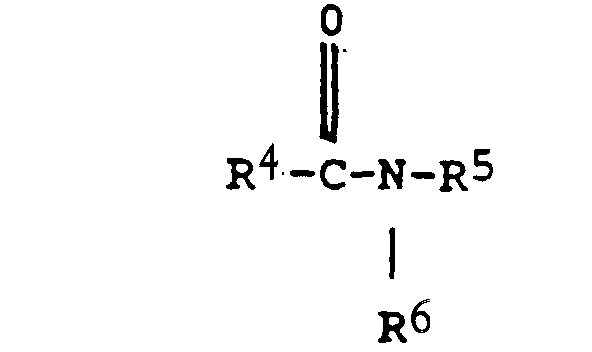

- Co =
- initial concentration of bacteria (cfu/ml) in test flask at time zero,
- Ct =
- concentration of bacteria (cfu/ml) in test flask at time t (one is added to the number to avoid calculating the log of zero),
- CFt =
- concentration of bacteria (cfu/ml) in control flask at time t, and
- cfu/ml =
- colony forming units per milliliter.
| % Reduction | Log Reduction | Kt |
| 90 | 1 | 1 |
| 99 | 2 | 2 |
| 99.9 | 3 | 3 |
| 99.99 | 4 | 4 |
| 99.999 | 5 | 5 |
| Test Number | Carbon | Nitrogen | Oxygen | Carbonyl |
| 83 | 79.545 | 9.169 | 11.286 | 13 |
| 85 | 78.535 | 9.928 | 11.537 | 14 |
| 223 | 78.710 | 10.037 | 11.252 | 14 |
| 227 | 79.107 | 10.627 | 10.266 | 14 |
| Test No. | Carbon | Nitrogen | Oxygen | Carbonyl |
| 81 | 79.540 | 8.787 | 11.674 | 12 |
| 79 | 80.165 | 8.924 | 10.911 | 10 |
| 103 | 79.100 | 8.675 | 12.224 | 8 |
| 109 | 80.951 | 8.961 | 10.089 | 8 |
| Irradiation Conditions for Spunlaced Fabrics | |||||||
| Radiation Treatment | Lens Distance | Lateral speed | Irradiance | Energy/ Total Pulse Energy | |||
| Lens | (mm) | (cm/min) | Passes | (MW/cm2) | (mJ/cm2) | (J/cm2) | |
| A1 | NO | NA | 26.4 | 1 | 5.3 | 85 | 0.34 |
| A2 | NO | NA | 26.4 | 2 | 5.3 | 85 | 0.68 |
| A3 | NO | NA | 26.4 | 4 | 5.3 | 85 | 1.36 |
| A4 | NO | NA | 26.4 | 8 | 5.3 | 85 | 2.72 |
| A5 | NO | NA | 26.4 | 16 | 5.3 | 85 | 5.44 |
| A6 | NO | NA | 26.4 | 32 | 5.3 | 85 | 10.90 |
| B1 | YES | 128 | 13.2 | 1 | 10.6 | 170 | 0.68 |
| B2 | YES | 128 | 13.2 | 2 | 10.6 | 170 | 1.36 |
| B3 | YES | 128 | 13.2 | 4 | 10.6 | 170 | 2.72 |
| B4 | YES | 128 | 13.2 | 8 | 10.6 | 170 | 5.44 |
| B5 | YES | 128 | 13.2 | 16 | 10.6 | 170 | 10.90 |
| C1 | YES | 191 | 6.6 | 1 | 21.0 | 340 | 1.36 |
| C2 | YES | 191 | 6.6 | 2 | 21.0 | 340 | 2.72 |
| C3 | YES | 191 | 6.6 | 4 | 21.0 | 340 | 5.44 |
| C4 | YES | 191 | 6.6 | 8 | 21.0 | 340 | 10.90 |
| D1 | YES | 223 | 3.3 | 1 | 43.0 | 680 | 2.72 |
| D2 | YES | 223 | 3.3 | 2 | 43.0 | 680 | 5.44 |
| D3 | YES | 223 | 3.3 | 4 | 43.0 | 680 | 10.90 |
| E1 | YES | 239 | 1.7 | 1 | 85.0 | 1360 | 5.44 |
| E2 | YES | 239 | 1.7 | 2 | 85.0 | 1360 | 10.90 |
| Antimicrobial Activity Associated with Irradiated Spunlaced Poly(hexamethylene adipamide) | |||||
| Example | Radiation Treatment | Initial cfu/ml | 1 Hour | ||
| cfu/ml | kt | Dt | |||
| 1 | None | 1.50E+05 | 1.51E+05 | 0.00 | 0.00 |
| 2 | A1 | 1.50E+05 | 1.87E+03 | 1.90 | 1.90 |
| 3 | A2 | 1.50E+05 | 7.50E+00 | 4.30 | 4.30 |
| 4 | A3 | 1.50E+05 | 2.50E+00 | 4.78 | 4.78 |
| 5 | A4 | 1.50E+05 | 0.00E+00 | 5.18 | 5.18 |
| 6 | A5 | 1.50E+05 | 2.50E+00 | 4.78 | 4.78 |
| 7 | A6 | 1.50E+05 | 0.00E+00 | 5.18 | 5.18 |
| 8 | B1 | 1.50E+05 | 3.38E+02 | 2.65 | 2.65 |
| 9 | B2 | 1.50E+05 | 0.00E+00 | 5.18 | 5.18 |
| 10 | B3 | 1.50E+05 | 0.00E+00 | 5.18 | 5.18 |
| 11 | B4 | 1.50E+05 | 0.00E+00 | 5.18 | 5.18 |
| 12 | 1B5 | 1.50E+05 | 2.50E+00 | 4.78 | 4.78 |
| 13 | C1 | 1.50E+05 | 6.00E+01 | 3.40 | 3.40 |
| 14 | C2 | 1.50E+05 | 5.00E+00 | 4.48 | 4.48 |
| 15 | C3 | 1.50E+05 | 7.50E+00 | 4.30 | 4.30 |
| 16 | C4 | 1.50E+05 | 0.00E+00 | 5.18 | 5.18 |
| 17 | D1 | 1.50E+05 | 2.75E+01 | 3.74 | 3.74 |
| 18 | D2 | 1.50E+05 | 0.00E+00 | 5.18 | 5.18 |
| 19 | D3 | 1.50E+05 | 0.00E+00 | 5.18 | 5.18 |
| 20 | E1 | 1.50E+05 | 1.25E+01 | 4.10 | 4.10 |
| 21 | E2 | 1.50E+05 | 4.00E+01 | 3.57 | 3.57 |
| NC | None | 1.50E+05 | 1.89E+05 | 0.00 | 0.00 |
| PC | None | 1.50E+05 | 7.50E+00 | 4.30 | 4.40 |
| IC | None | 1.50E+05 | 1.90E+05 | -0.10 | -0.10 |
| UC | None | 0.00E+00 | 0.00E+00 | NA | NA |
| Antimicrobial Activity Associated with Poly(metaphenylene isophthalamide) Spunlaced Fabric Irradiated with 10.9 J/cm2 | |||||
| Example | Radiation Treatment | Initial cfu/ml | 24 Hours | ||
| cfu/ml | kt | Dt | |||
| IC | None | 1.05E+04 | 5.98E+03 | 0.25 | -0.41 |
| IC | None | 1.05E+05 | 6.45E+04 | 0.36 | -0.46 |
| UC | None | 0.00E+00 | 0.00E+00 | NA | NA |
| 22 | A6 | 1.05E+03 | 0.00E+00 | 3.02 | 1.70 |
| 23 | B5 | 1.05E+03 | 5.00E+00 | 2.24 | 0.92 |
| 24 | C4 | 1.05E+03 | 2.35E+02 | 0.67 | -0.65 |
| 25 | D3 | 1.05E+03 | 1.09E+03 | 0.20 | 1.12 |
| 26 | E2 | 1.05E+03 | 3.00E+03 | -0.46 | -1.78 |
| 27 | A6 | 1.05E+04 | 5.00E+01 | 2.45 | 1.79 |
| 28 | B5 | 1.05E+04 | 2.50E+00 | 3.63 | 2.97 |
| 29 | C4 | 1.05E+04 | 1.46E+03 | 1.52 | 0.86 |
| 30 | D3 | 1.05E+04 | 2.25E+04 | -0.32 | -0.99 |
| 31 | E2 | 1.05E+04 | 3.00E+04 | -0.46 | -1.12 |
| 32 | A6 | 1.05E+05 | 2.50E+00 | 4.63 | 3.81 |
| 33 | B5 | 1.05E+05 | 2.50E+00 | 4.63 | 3.81 |
| 34 | C4 | 1.05E+05 | 2.38E+03 | 1.88 | 1.06 |
| 35 | D3 | 1.05E+05 | 5.27E+04 | 0.52 | -0.31 |
| 36 | E2 | 1.05E+05 | 3.00E+05 | -0.46 | -1.28 |
| 37 | None | 1.05E+03 | 5.00E+01 | 1.32 | -0.01 |
| 38 | None | 1.05E+04 | 2.27E+03 | 0.83 | 0.16 |
| 39 | None | 1.05E+05 | 1.58E+04 | 0.85 | 0.03 |
| NC | None | 1.05E+03 | 1.28+E02 | 2.87 | 0.08 |
| PC | None | 1.05E+03 | 0.00E+00 | 4.90 | 2.11 |
| Antimicrobial Activity Associated with Poly(hexamethylene adipamide) Yarn Irradiated with 12 J/cm2 Energy | ||||
| Example | Radiation Treatment | 1 Hour | ||
| cfu/ml | kt | Dt | ||
| IC | None | 3.31E+04 | 0.01 | 0.16 |
| NC | None | 2.03E+04 | 0.23 | 0.00 |
| PC | None | 0.00E+00 | 4.53 | 4.31 |
| 40 | None | 4.68E+04 | -0.14 | 0.01 |
| 41 | None | 4.95E+04 | -0.16 | -0.01 |
| 42 | 12 J/cm2 | 0.00E+00 | 4.53 | 4.68 |
| 43 | 12 J/cm2 | 0.00E+00 | 4.53 | 4.68 |
| Initial concentration K. pneumoniae = 3.41E+04 cfu/ml |
| Antimicrobial Activity Associated with Undrawn Poly(hexamethylene adipamide) Yarn | ||||
| Example | Treatment | 1 Hour | ||
| cfu/ml | kt | Dt | ||
| 44 | None | 1.85E+04 | 0.28 | 0.00 |
| 45 | 12 J/cm2 | 0.00E+00 | 3.54 | 3.27 |
| IC | None | 1.10E+05 | -0.49 | -0.77 |
| UC | None | 0.00E+00 | NA | NA |
| Initial concentration K. pneumoniae = 3.5E+04 cfu/ml |
| Antimicrobial Activity Associated with Irradiated poly(ε-caproamide) Yarn | ||||
| Example | Radiation Treatment | 1 Hour | ||
| cfu/ml | kt | Dt | ||
| 46 | None | 5.2E+04 | 0.22 | 0.00 |
| 47 | 12 J/cm2 | 0.0E+00 | 4.93 | 4.72 |
| IC | None | 8.1E+04 | 0.03 | -0.19 |
| UC | None | 0.0E+00 | NA | NA |
| Initial Concentration K. pneumoniae = 8.6E+04 cfu/ml |
| Antimicrobial Activity Associated with Irradiated Poly(hexamethylene adipamide) modified with 2.4% by weight of N,N'-bis(3-aminopropyl)-piperazine | |||||
| Example | Material | Radiation Treatment | 1 Hour | ||
| cfu/ml | kt | DT | |||
| 48 | Undrawn | 12 J/cm2 | 2.5E+00 | 4.44 | 4.09 |
| 49 | Undrawn | None | 3.1E+04 | 0.35 | 0.00 |
| 50 | Drawn | 12 J/cm2 | 0.0E+00 | 4.84 | 4.78 |
| 51 | Drawn | None | 6.0E+04 | 0.06 | 0.00 |
| IC | ------ | None | 7.4E+04 | -0.03 | -0.21 |
| UC | ------ | None | 0.0E+00 | NA | NA |
| Initial concentration K. pneumoniae = 6.9E+04 cfu/ml |

| Activity of Irradiated Spunlaced Fabric of Poly(hexamethylene adipamide) to Aspergillis niger. | ||||
| Example | Radiation Treatment | 1 Hour | ||
| pg/ml | kt | Dt | ||
| 66 | None | 4.3E+04 | 0.37 | 0.00 |
| 67 | 3.33 J/cm2/side | 2.2E+02 | 2.66 | 2.29 |
| IC | None | 1.4E+05 | -0.15 | -0.51 |
| UC | None | 0.0E+00 | NA | NA |
| Initial Concentration A. niger = 1.0E+05 propagules/ml (pg/ml) |
| Activity of Irradiated Spunlaced Fabric of Poly(hexamethylene adipamide) to Candida albicans. | ||||
| Example | Radiation Treatment | 1 Hour | ||
| cfu/ml | kt | Dt | ||
| 68 | None | 9.8E+04 | -0.19 | 0.00 |
| 69 | 4.0 J/cm2/side | 1.0E+02 | 2.80 | 2.99 |
| IC | None | 1.2E+05 | -0.28 | -0.09 |
| UC | None | 0.0E+0 | NA | NA |
| Initial concentration C. albicans = 6.3E+04 cfu/ml |
| Activity of Irradiated Spunlaced Fabric of Poly(hexamethylene adipamide) to Bacillus circulans spores. | ||||
| Example | Radiation Treatment | 1 Hour | ||
| cfu/ml | kt | Dt | ||
| 70 | None | 1.5E+03 | 0.27 | 0.00 |
| 71 | 2.66 J/cm2/side | 2.0E+01 | 2.14 | 1.88 |
| IC | None | 2.5E+03 | 0.04 | -0.22 |
| UC | None | 0.0E+0 | NA | NA |
| Initial Concentration B. circulans = 2.8E+03 cfu/ml |
| Activity of Irradiated Yarn of Poly(hexamethylene adipamide) to Bacteriophage T4. | ||||
| Example | Radiation Treatment | 1 Hour | ||
| pfu/ml | kt | Dt | ||
| 72 | None | 2.48E+05 | -0.16 | 0.00 |
| 73 | 12 J/cm2 | 0.00E+00 | 5.23 | 5.39 |
| IC | None | 2.96E+05 | -0.24 | -0.07 |
| Initial Concentration Bacteriophage T4 = 1.7E+05 plaque forming units (pfu/ml). |
| control polymer (10987-49-6) | irradiated polymer (10987-49-5) | ||||||
| solid | liquid | solid | liquid | ||||
| kt | kt | kt | kt | kt | kt | kt | kt |
| @ 1 | @ 24 | @ 1 | @ 24 | @ 1 | @ 24 | @ 1 | @ 24 |
| hour | hrs. | hour | hrs. | hour | hrs. | hour | hrs. |
| 0.33 | 0.34 | 0.42 | 0.38 | 1.47 | 5.04 | 0.37 | 0.24 |
| (Antimicrobial Activity Associated with Poly(hexamethylene adipamide) Irradiated with High Energy Electrons | |||||||
| Art. | |||||||
| Ex. # | Type . | Atmos. | Beam Passes | Radiation Delivered | Dose (Mrad) - | Initial cfu/mL | kt @24h |
| 77 | S-1 | Air | 0 | 0 | 4.00E+04 | -0.65 | |
| 78 | S-1 | Air | 0 | 0 | 1.20E+05 | -0.62 | |
| 79 | S-2 | Air | 0 | 0 | 1.20E+05 | -0.83 | |
| 80 | S-1 | Air | 5 | 2.5 | 1.20E+05 | -0.52 | |
| 81 | S-1 | N2 | 5 | 2.5 | 1.20E+05 | 0.32 | |
| 82 | S-2 | Air | 5 | 2.5 | 1.20E+05 | -0.54 | |
| 83 | S-2 | N2 | 5 | 2.5 | 1.20E+05 | -0.58 | |
| 84 | S-1 | Ar | 6 | 3.0 | 9.4E+04 | 1.16 | |
| 85 | S-1 | Air | 20 | 10 | 1.20E+05 | 0.32 | |
| 86 | S-1 | N2 | 20 | 10 | 1.20E+05 | 0.47 | |
| 87 | S-2 | Air | 20 | 10 | 1.20E+05 | 0.36 | |
| 88 | S-2 | N2 | 20 | 10 | 1.20E+05 | -0.24 | |
| 89 | S-1 | Air | 40 | 20 | 1.20E+05 | 0.89 | |
| 90 | S-2 | N2 | 40 | 20 | 1.20E+05 | 1.25 |
| Example | Sample ID | 1hr | 24hr | ||
| kt | Dt | kt | Dt | ||
| 94 | P11037-14 | 2.42 | 2.53 | 4.54 | 4.84 |
| 95 | P11037-14-1 | 4.30 | 4.41 | 5.08 | 5.38 |
| 96 | P11037-15-1 | 0.15 | 0.27 | -0.50 | -0.20 |
| 97 | P11037-17 | 0.03 | 0.14 | 0.32 | 0.62 |
| 98 | Control scoured 66 nylon | -0.11 | 0.00 | 0.30 | 0.00 |
Claims (20)
- A process for preparing an inherently antimicrobial, polymeric material, comprising irradiating a shaped material comprising an organic polymer having carbonyl groups covalently bound to nitrogen in the form ofmoieties, said material having a specific surface of at least 0.02m2/g, wherein the material is irradiated either with (a) an ultraviolet photon energy density of at least 300 mJ/cm2 at a wavelength of no greater than 222 nm, the absorption coefficient (α) for the material being 1.5/D where D is the thickness of the material, whereby the material will absorb at least 50% of the photon energy in the first micrometer depth of the material, or with (b) electrons having a kinetic energy of about 6eV to 5000 eV at an energy absorption for the electrons of about 10,000 erg/cm3 to 250,000 erg/cm3; whereby only said
 moieties on the surface of, and to a depth of less than 1 µm below the surface of said materials are converted to amine and/or hydrazine moieties to impart antimicrobial activity to the surface of said material, said polymer being selected from a polyamide, polyurea, polyhydrazide, polyurethane, and copolymers and polymer blends thereof; and whereby the polymer has a pH of less than 9.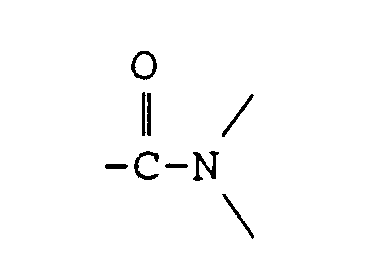
- A process for preparing an inherently antimicrobial, polymeric material as defined in claim 1, wherein the source of ultraviolet photons is a laser.
- A process for preparing an inherently antimicrobial, polymeric material as defined in claim 1, wherein the source of ultraviolet photons is an ultraviolet lamp.
- A process for preparing an inherently antimicrobial, polyamide material, polyurea material, polyhydrazide material or polyurethane material comprising treating the surface to a depth of less than 1 µm of said material with a reducing agent selected from lithium aluminium hydride, borane, or trichlorosilane to form corresponding amine and/or hydrazine groups sufficient to impart antimicrobial activity only to the surface; and whereby the polymer has a pH of less than 9.
- A process for controlling microorganisms, comprising contacting a microorganism in a gaseous medium with an effective amount of the antimicrobial, polyamide material prepared by the process of claim 1.
- A process for controlling microorganisms, comprising contacting a microorganism in an aqueous medium having a pH of less than about 9 with an effective amount of the antimicrobial, polyamide material prepared by the process of claim 1.
- A process for controlling microorganism, comprising contacting skin or other parts of a mammal with an effective amount of the antimicrobial, polyamide material prepared by the process of claim 1.
- A wound closure device comprising the antimicrobial, polyamide material prepared by the process of claim 1.
- A device for controlling odours, comprising the antimicrobial, polyamide material prepared by the process of claim 1.
- A device for purifying or sterilizing a gas or aqueous solutions, comprising the antimicrobial, polyamide material prepared by the process of claim 1.
- A device for storing, transporting or dispensing sterile solutions, comprising the antimicrobial, polyamide material prepared by the process of claim 1.
- A food wrap, comprising the antimicrobial, polyamide material prepared by the process of claim 1.
- A catheter, comprising the antimicrobial, polyamide material prepared by the process of claim 1.
- A wound dressing, comprising the antimicrobial, polyamide material prepared by the process of claim 1.
- A garment, comprising the antimicrobial, polyamide material prepared by the process of claim 1.
- A floor covering, comprising the antimicrobial, polyamide material prepared by the process of claim 1.
- A coating, comprising the antimicrobial, polyamide material prepared by the process of claim 1.
- A medical implant or a medical device, comprising the antimicrobial, polyamide material prepared by the process of claim 1.
- A preservative, comprising the antimicrobial, polyamide material prepared by the process of claim 1.
- The process of any one of claims 5, 6 and 7 wherein the microorganisms are selected from bacteria, Myceteae, viruses, algae, protozoa, viroids, and prions.
Applications Claiming Priority (3)
| Application Number | Priority Date | Filing Date | Title |
|---|---|---|---|
| US43158389A | 1989-11-03 | 1989-11-03 | |
| US431583 | 1989-11-03 | ||
| PCT/US1990/006473 WO1991006593A1 (en) | 1989-11-03 | 1990-11-05 | Antimicrobial polymeric materials |
Publications (2)
| Publication Number | Publication Date |
|---|---|
| EP0497890A1 EP0497890A1 (en) | 1992-08-12 |
| EP0497890B1 true EP0497890B1 (en) | 1998-01-28 |
Family
ID=23712575
Family Applications (1)
| Application Number | Title | Priority Date | Filing Date |
|---|---|---|---|
| EP90916942A Expired - Lifetime EP0497890B1 (en) | 1989-11-03 | 1990-11-05 | Antimicrobial polymeric materials |
Country Status (9)
| Country | Link |
|---|---|
| EP (1) | EP0497890B1 (en) |
| JP (2) | JP3012321B2 (en) |
| AT (1) | ATE162834T1 (en) |
| AU (1) | AU655407B2 (en) |
| CA (1) | CA2072750A1 (en) |
| DE (1) | DE69032013T2 (en) |
| DK (1) | DK0497890T3 (en) |
| ES (1) | ES2111542T3 (en) |
| WO (1) | WO1991006593A1 (en) |
Cited By (2)
| Publication number | Priority date | Publication date | Assignee | Title |
|---|---|---|---|---|
| US8944245B2 (en) | 2004-06-07 | 2015-02-03 | Ultimed, Inc. | Dispensing strip for needle assemblies |
| WO2025201606A1 (en) * | 2024-03-27 | 2025-10-02 | Hochschule für Technik und Wirtschaft Dresden | Method for producing an antimicrobial polymer surface and material having an antimicrobial polymer surface |
Families Citing this family (3)
| Publication number | Priority date | Publication date | Assignee | Title |
|---|---|---|---|---|
| AU2003251382A1 (en) | 2002-05-24 | 2003-12-12 | Michel Joyce | Article of clothing with moisture absorbent portion |
| US20140065090A1 (en) * | 2012-08-31 | 2014-03-06 | W. L. Gore & Associates, Inc. | Reactive Oxidative Species Generating Materials and Methods of Use |
| EP3448171B1 (en) | 2016-05-11 | 2019-11-06 | Eti Gida Sanayi Ve Ticaret Anonim Sirketi | Production method for anti-microbial food packaging |
Family Cites Families (5)
| Publication number | Priority date | Publication date | Assignee | Title |
|---|---|---|---|---|
| GB107457A (en) * | 1916-08-04 | 1917-07-05 | Frank Nelson Fitch | Improvements in Wire Gripping Devices for use in connection with Wire Strainers. |
| CH187765D (en) * | 1965-02-11 | |||
| US4708870A (en) * | 1985-06-03 | 1987-11-24 | E. I. Du Pont De Nemours And Company | Method for imparting antimicrobial activity from acrylics |
| US4810567A (en) * | 1985-08-21 | 1989-03-07 | Uop | Antimicrobial fabrics utilizing graft copolymers |
| BR8606973A (en) * | 1985-11-14 | 1987-11-03 | Deutsches Textilforschzentrum | FIBER, FILAMENT, YARN AND / OR FLAT ITEMS AND / OR NON-WOVEN MATERIAL CONTAINING THE SAME AS WELL AS A PROCESS FOR THE PRODUCTION OF THESE |
-
1990
- 1990-11-05 ES ES90916942T patent/ES2111542T3/en not_active Expired - Lifetime
- 1990-11-05 AU AU67287/90A patent/AU655407B2/en not_active Ceased
- 1990-11-05 AT AT90916942T patent/ATE162834T1/en not_active IP Right Cessation
- 1990-11-05 DK DK90916942.7T patent/DK0497890T3/en active
- 1990-11-05 EP EP90916942A patent/EP0497890B1/en not_active Expired - Lifetime
- 1990-11-05 WO PCT/US1990/006473 patent/WO1991006593A1/en not_active Ceased
- 1990-11-05 DE DE69032013T patent/DE69032013T2/en not_active Expired - Fee Related
- 1990-11-05 JP JP2515719A patent/JP3012321B2/en not_active Expired - Fee Related
- 1990-11-05 CA CA002072750A patent/CA2072750A1/en not_active Abandoned
-
1999
- 1999-09-14 JP JP26019099A patent/JP3360299B2/en not_active Expired - Fee Related
Cited By (2)
| Publication number | Priority date | Publication date | Assignee | Title |
|---|---|---|---|---|
| US8944245B2 (en) | 2004-06-07 | 2015-02-03 | Ultimed, Inc. | Dispensing strip for needle assemblies |
| WO2025201606A1 (en) * | 2024-03-27 | 2025-10-02 | Hochschule für Technik und Wirtschaft Dresden | Method for producing an antimicrobial polymer surface and material having an antimicrobial polymer surface |
Also Published As
| Publication number | Publication date |
|---|---|
| DE69032013D1 (en) | 1998-03-05 |
| AU655407B2 (en) | 1994-12-22 |
| ATE162834T1 (en) | 1998-02-15 |
| WO1991006593A1 (en) | 1991-05-16 |
| AU6728790A (en) | 1991-05-31 |
| CA2072750A1 (en) | 1991-05-04 |
| JP3360299B2 (en) | 2002-12-24 |
| EP0497890A1 (en) | 1992-08-12 |
| JPH05503108A (en) | 1993-05-27 |
| DK0497890T3 (en) | 1998-03-02 |
| ES2111542T3 (en) | 1998-03-16 |
| JP2000103891A (en) | 2000-04-11 |
| DE69032013T2 (en) | 1998-08-20 |
| JP3012321B2 (en) | 2000-02-21 |
Similar Documents
| Publication | Publication Date | Title |
|---|---|---|
| US5428078A (en) | Process for preparing antimicrobial polymeric materials using irradiation | |
| Kanazawa et al. | Polymeric phosphonium salts as a novel class of cationic biocides. III. Immobilization of phosphonium salts by surface photografting and antibacterial activity of the surface‐treated polymer films | |
| Ghobeira et al. | Effects of different sterilization methods on the physico-chemical and bioresponsive properties of plasma-treated polycaprolactone films | |
| Gungor et al. | Developing centrifugal spun thermally cross‐linked gelatin based fibrous biomats for antibacterial wound dressing applications | |
| Seyedpour et al. | Low fouling ultrathin nanocomposite membranes for efficient removal of manganese | |
| DE2326863A1 (en) | PROCESS FOR MANUFACTURING BIOCOMPATIBLE AND BIOFUNCTIONAL MATERIALS | |
| IE891457L (en) | Sterilization | |
| DE69735141T2 (en) | PROCESS FOR STERILIZING CLOSED CONTAINERS | |
| AU655407B2 (en) | Antimicrobial polymeric materials | |
| Chang et al. | A study on chitosan modification of polyester fabrics by atmospheric pressure plasma and its antibacterial effects | |
| EP1174029B1 (en) | Bactericidal organic polymeric material | |
| González-Ceballos et al. | Metal-free organic polymer for the preparation of a reusable antimicrobial material with real-life application as an absorbent food pad | |
| Ignatova et al. | Electrospun mats from styrene/maleic anhydride copolymers: Modification with amines and assessment of antimicrobial activity | |
| IL96750A (en) | Antimicrobial polymeric materials and their production | |
| CN1180152C (en) | A kind of super amphiphilic fabric fiber and its preparation method and application | |
| Fan et al. | Preparation and Property Analysis of PPDO Composite Suture With the Release Effect of Nanosilver | |
| Miao et al. | Inactivation of Escherichia coli and properties of medical poly (vinyl chloride) in remote-oxygen plasma | |
| EP1883681B1 (en) | Method for treating surfaces with copolymers | |
| Kulaga | Antimicrobial coatings for soft materials | |
| JP3482607B2 (en) | Synthetic polymer product having chitin / chitosan fixed to its surface and method for producing the same | |
| Bratescu et al. | Treatment of immobilized collagen on poly (tetrafluoroethylene) nanoporous membrane with plasma | |
| Carr | Increase in the surface energy of metal and polymeric surfaces using the one atmosphere uniform glow discharge plasma (OAUGDP). | |
| Verma et al. | Biofunctional polyethylene terephthalate surface by CO2 plasma activation | |
| JPH06128877A (en) | Antibacterial deodorant synthetic fiber | |
| Czapka et al. | Fabrication of Photoactive Electrospun Cellulose Acetate Nanofibers for Antibacterial Applications. Energies 2021, 14, 2598 |
Legal Events
| Date | Code | Title | Description |
|---|---|---|---|
| PUAI | Public reference made under article 153(3) epc to a published international application that has entered the european phase |
Free format text: ORIGINAL CODE: 0009012 |
|
| AK | Designated contracting states |
Kind code of ref document: A1 Designated state(s): AT BE CH DE DK ES FR GB IT LI SE |
|
| 17P | Request for examination filed |
Effective date: 19920429 |
|
| 17Q | First examination report despatched |
Effective date: 19930331 |
|
| GRAG | Despatch of communication of intention to grant |
Free format text: ORIGINAL CODE: EPIDOS AGRA |
|
| GRAH | Despatch of communication of intention to grant a patent |
Free format text: ORIGINAL CODE: EPIDOS IGRA |
|
| GRAH | Despatch of communication of intention to grant a patent |
Free format text: ORIGINAL CODE: EPIDOS IGRA |
|
| GRAA | (expected) grant |
Free format text: ORIGINAL CODE: 0009210 |
|
| AK | Designated contracting states |
Kind code of ref document: B1 Designated state(s): AT BE CH DE DK ES FR GB IT LI SE |
|
| REF | Corresponds to: |
Ref document number: 162834 Country of ref document: AT Date of ref document: 19980215 Kind code of ref document: T |
|
| REG | Reference to a national code |
Ref country code: CH Ref legal event code: NV Representative=s name: RITSCHER & SEIFERT PATENTANWAELTE VSP Ref country code: CH Ref legal event code: EP |
|
| REG | Reference to a national code |
Ref country code: DK Ref legal event code: T3 |
|
| REF | Corresponds to: |
Ref document number: 69032013 Country of ref document: DE Date of ref document: 19980305 |
|
| REG | Reference to a national code |
Ref country code: ES Ref legal event code: FG2A Ref document number: 2111542 Country of ref document: ES Kind code of ref document: T3 |
|
| ITF | It: translation for a ep patent filed | ||
| ET | Fr: translation filed | ||
| PGFP | Annual fee paid to national office [announced via postgrant information from national office to epo] |
Ref country code: ES Payment date: 19981118 Year of fee payment: 9 |
|
| PLBE | No opposition filed within time limit |
Free format text: ORIGINAL CODE: 0009261 |
|
| STAA | Information on the status of an ep patent application or granted ep patent |
Free format text: STATUS: NO OPPOSITION FILED WITHIN TIME LIMIT |
|
| 26N | No opposition filed | ||
| PGFP | Annual fee paid to national office [announced via postgrant information from national office to epo] |
Ref country code: DE Payment date: 19990902 Year of fee payment: 10 |
|
| PGFP | Annual fee paid to national office [announced via postgrant information from national office to epo] |
Ref country code: DK Payment date: 19990909 Year of fee payment: 10 |
|
| PGFP | Annual fee paid to national office [announced via postgrant information from national office to epo] |
Ref country code: SE Payment date: 19990915 Year of fee payment: 10 |
|
| PGFP | Annual fee paid to national office [announced via postgrant information from national office to epo] |
Ref country code: GB Payment date: 19990917 Year of fee payment: 10 |
|
| PGFP | Annual fee paid to national office [announced via postgrant information from national office to epo] |
Ref country code: FR Payment date: 19990920 Year of fee payment: 10 |
|
| PGFP | Annual fee paid to national office [announced via postgrant information from national office to epo] |
Ref country code: CH Payment date: 19991018 Year of fee payment: 10 |
|
| PGFP | Annual fee paid to national office [announced via postgrant information from national office to epo] |
Ref country code: BE Payment date: 19991029 Year of fee payment: 10 Ref country code: AT Payment date: 19991029 Year of fee payment: 10 |
|
| PG25 | Lapsed in a contracting state [announced via postgrant information from national office to epo] |
Ref country code: ES Free format text: LAPSE BECAUSE OF NON-PAYMENT OF DUE FEES Effective date: 19991106 |
|
| PG25 | Lapsed in a contracting state [announced via postgrant information from national office to epo] |
Ref country code: GB Free format text: LAPSE BECAUSE OF NON-PAYMENT OF DUE FEES Effective date: 20001105 Ref country code: DK Free format text: LAPSE BECAUSE OF NON-PAYMENT OF DUE FEES Effective date: 20001105 Ref country code: AT Free format text: LAPSE BECAUSE OF NON-PAYMENT OF DUE FEES Effective date: 20001105 |
|
| PG25 | Lapsed in a contracting state [announced via postgrant information from national office to epo] |
Ref country code: SE Free format text: THE PATENT HAS BEEN ANNULLED BY A DECISION OF A NATIONAL AUTHORITY Effective date: 20001129 |
|
| PG25 | Lapsed in a contracting state [announced via postgrant information from national office to epo] |
Ref country code: LI Free format text: LAPSE BECAUSE OF NON-PAYMENT OF DUE FEES Effective date: 20001130 Ref country code: CH Free format text: LAPSE BECAUSE OF NON-PAYMENT OF DUE FEES Effective date: 20001130 Ref country code: BE Free format text: LAPSE BECAUSE OF NON-PAYMENT OF DUE FEES Effective date: 20001130 |
|
| BERE | Be: lapsed |
Owner name: E.I. DU PONT DE NEMOURS AND CY Effective date: 20001130 |
|
| GBPC | Gb: european patent ceased through non-payment of renewal fee |
Effective date: 20001105 |
|
| REG | Reference to a national code |
Ref country code: CH Ref legal event code: PL |
|
| EUG | Se: european patent has lapsed |
Ref document number: 90916942.7 |
|
| REG | Reference to a national code |
Ref country code: DK Ref legal event code: EBP |
|
| PG25 | Lapsed in a contracting state [announced via postgrant information from national office to epo] |
Ref country code: FR Free format text: LAPSE BECAUSE OF NON-PAYMENT OF DUE FEES Effective date: 20010731 |
|
| PG25 | Lapsed in a contracting state [announced via postgrant information from national office to epo] |
Ref country code: DE Free format text: LAPSE BECAUSE OF NON-PAYMENT OF DUE FEES Effective date: 20010801 |
|
| REG | Reference to a national code |
Ref country code: FR Ref legal event code: ST |
|
| REG | Reference to a national code |
Ref country code: ES Ref legal event code: FD2A Effective date: 20001214 |
|
| PG25 | Lapsed in a contracting state [announced via postgrant information from national office to epo] |
Ref country code: IT Free format text: LAPSE BECAUSE OF NON-PAYMENT OF DUE FEES Effective date: 20051105 |