EP0485458B1 - Thioacylating reagents and intermediates, thiopeptides, and methods for preparing and using same - Google Patents
Thioacylating reagents and intermediates, thiopeptides, and methods for preparing and using same Download PDFInfo
- Publication number
- EP0485458B1 EP0485458B1 EP90911857A EP90911857A EP0485458B1 EP 0485458 B1 EP0485458 B1 EP 0485458B1 EP 90911857 A EP90911857 A EP 90911857A EP 90911857 A EP90911857 A EP 90911857A EP 0485458 B1 EP0485458 B1 EP 0485458B1
- Authority
- EP
- European Patent Office
- Prior art keywords
- butoxycarbonyl
- amino
- ortho
- thioanilide
- benzimidazolone
- Prior art date
- Legal status (The legal status is an assumption and is not a legal conclusion. Google has not performed a legal analysis and makes no representation as to the accuracy of the status listed.)
- Expired - Lifetime
Links
- 239000003153 chemical reaction reagent Substances 0.000 title claims abstract description 48
- 238000000034 method Methods 0.000 title claims abstract description 47
- 239000000543 intermediate Substances 0.000 title description 10
- 108090000765 processed proteins & peptides Proteins 0.000 claims abstract description 64
- -1 anilide compounds Chemical class 0.000 claims abstract description 54
- 230000008569 process Effects 0.000 claims abstract description 22
- GEYOCULIXLDCMW-UHFFFAOYSA-N 1,2-phenylenediamine Chemical compound NC1=CC=CC=C1N GEYOCULIXLDCMW-UHFFFAOYSA-N 0.000 claims abstract description 6
- YMWUJEATGCHHMB-UHFFFAOYSA-N Dichloromethane Chemical compound ClCCl YMWUJEATGCHHMB-UHFFFAOYSA-N 0.000 claims description 69
- ZMXDDKWLCZADIW-UHFFFAOYSA-N N,N-Dimethylformamide Chemical compound CN(C)C=O ZMXDDKWLCZADIW-UHFFFAOYSA-N 0.000 claims description 46
- 239000001257 hydrogen Substances 0.000 claims description 34
- 229910052739 hydrogen Inorganic materials 0.000 claims description 34
- QOSSAOTZNIDXMA-UHFFFAOYSA-N Dicylcohexylcarbodiimide Chemical compound C1CCCCC1N=C=NC1CCCCC1 QOSSAOTZNIDXMA-UHFFFAOYSA-N 0.000 claims description 30
- 235000001014 amino acid Nutrition 0.000 claims description 28
- 150000001413 amino acids Chemical class 0.000 claims description 28
- 229920005989 resin Polymers 0.000 claims description 26
- 239000011347 resin Substances 0.000 claims description 26
- 102000004196 processed proteins & peptides Human genes 0.000 claims description 25
- RTZKZFJDLAIYFH-UHFFFAOYSA-N Diethyl ether Chemical compound CCOCC RTZKZFJDLAIYFH-UHFFFAOYSA-N 0.000 claims description 24
- 239000002904 solvent Substances 0.000 claims description 21
- 125000002924 primary amino group Chemical group [H]N([H])* 0.000 claims description 19
- 239000000203 mixture Substances 0.000 claims description 18
- 150000002431 hydrogen Chemical class 0.000 claims description 17
- 125000002496 methyl group Chemical group [H]C([H])([H])* 0.000 claims description 14
- ASOKPJOREAFHNY-UHFFFAOYSA-N 1-Hydroxybenzotriazole Chemical compound C1=CC=C2N(O)N=NC2=C1 ASOKPJOREAFHNY-UHFFFAOYSA-N 0.000 claims description 10
- UFHFLCQGNIYNRP-UHFFFAOYSA-N Hydrogen Chemical compound [H][H] UFHFLCQGNIYNRP-UHFFFAOYSA-N 0.000 claims description 10
- 125000000217 alkyl group Chemical group 0.000 claims description 10
- 229910052799 carbon Inorganic materials 0.000 claims description 10
- 125000001424 substituent group Chemical group 0.000 claims description 10
- 235000008206 alpha-amino acids Nutrition 0.000 claims description 9
- 125000001584 benzyloxycarbonyl group Chemical group C(=O)(OCC1=CC=CC=C1)* 0.000 claims description 9
- 125000004432 carbon atom Chemical group C* 0.000 claims description 9
- 239000000460 chlorine Substances 0.000 claims description 9
- 125000001834 xanthenyl group Chemical group C1=CC=CC=2OC3=CC=CC=C3C(C12)* 0.000 claims description 9
- WEVYAHXRMPXWCK-UHFFFAOYSA-N Acetonitrile Chemical compound CC#N WEVYAHXRMPXWCK-UHFFFAOYSA-N 0.000 claims description 8
- WKBOTKDWSSQWDR-UHFFFAOYSA-N Bromine atom Chemical compound [Br] WKBOTKDWSSQWDR-UHFFFAOYSA-N 0.000 claims description 8
- ZAMOUSCENKQFHK-UHFFFAOYSA-N Chlorine atom Chemical compound [Cl] ZAMOUSCENKQFHK-UHFFFAOYSA-N 0.000 claims description 8
- WYURNTSHIVDZCO-UHFFFAOYSA-N Tetrahydrofuran Chemical compound C1CCOC1 WYURNTSHIVDZCO-UHFFFAOYSA-N 0.000 claims description 8
- 150000001371 alpha-amino acids Chemical class 0.000 claims description 8
- GDTBXPJZTBHREO-UHFFFAOYSA-N bromine Substances BrBr GDTBXPJZTBHREO-UHFFFAOYSA-N 0.000 claims description 8
- 229910052794 bromium Inorganic materials 0.000 claims description 8
- 229910052801 chlorine Inorganic materials 0.000 claims description 8
- 125000002088 tosyl group Chemical group [H]C1=C([H])C(=C([H])C([H])=C1C([H])([H])[H])S(*)(=O)=O 0.000 claims description 8
- PXGOKWXKJXAPGV-UHFFFAOYSA-N Fluorine Chemical compound FF PXGOKWXKJXAPGV-UHFFFAOYSA-N 0.000 claims description 7
- 125000001797 benzyl group Chemical group [H]C1=C([H])C([H])=C(C([H])=C1[H])C([H])([H])* 0.000 claims description 7
- 239000011737 fluorine Substances 0.000 claims description 7
- 229910052731 fluorine Inorganic materials 0.000 claims description 7
- 125000004435 hydrogen atom Chemical group [H]* 0.000 claims description 7
- 125000004464 hydroxyphenyl group Chemical group 0.000 claims description 7
- HEDRZPFGACZZDS-UHFFFAOYSA-N Chloroform Chemical compound ClC(Cl)Cl HEDRZPFGACZZDS-UHFFFAOYSA-N 0.000 claims description 6
- 125000002887 hydroxy group Chemical group [H]O* 0.000 claims description 6
- 238000005897 peptide coupling reaction Methods 0.000 claims description 6
- 238000010647 peptide synthesis reaction Methods 0.000 claims description 6
- 125000001997 phenyl group Chemical group [H]C1=C([H])C([H])=C(*)C([H])=C1[H] 0.000 claims description 6
- OKTJSMMVPCPJKN-UHFFFAOYSA-N Carbon Chemical group [C] OKTJSMMVPCPJKN-UHFFFAOYSA-N 0.000 claims description 5
- 125000000623 heterocyclic group Chemical group 0.000 claims description 5
- 239000012442 inert solvent Substances 0.000 claims description 5
- 125000004433 nitrogen atom Chemical group N* 0.000 claims description 5
- 239000003960 organic solvent Substances 0.000 claims description 5
- CDBYLPFSWZWCQE-UHFFFAOYSA-L Sodium Carbonate Chemical compound [Na+].[Na+].[O-]C([O-])=O CDBYLPFSWZWCQE-UHFFFAOYSA-L 0.000 claims description 4
- 150000001721 carbon Chemical group 0.000 claims description 4
- 125000003178 carboxy group Chemical group [H]OC(*)=O 0.000 claims description 4
- 239000007822 coupling agent Substances 0.000 claims description 4
- 125000001495 ethyl group Chemical group [H]C([H])([H])C([H])([H])* 0.000 claims description 4
- 239000007790 solid phase Substances 0.000 claims description 4
- YLQBMQCUIZJEEH-UHFFFAOYSA-N tetrahydrofuran Natural products C=1C=COC=1 YLQBMQCUIZJEEH-UHFFFAOYSA-N 0.000 claims description 4
- OJKZEZMAPKWHTG-UHFFFAOYSA-N bis(2h-triazol-4-yl)methanone Chemical compound C=1NN=NC=1C(=O)C1=CNN=N1 OJKZEZMAPKWHTG-UHFFFAOYSA-N 0.000 claims description 3
- PFKFTWBEEFSNDU-UHFFFAOYSA-N carbonyldiimidazole Chemical compound C1=CN=CN1C(=O)N1C=CN=C1 PFKFTWBEEFSNDU-UHFFFAOYSA-N 0.000 claims description 3
- 125000002057 carboxymethyl group Chemical group [H]OC(=O)C([H])([H])[*] 0.000 claims description 3
- 125000004029 hydroxymethyl group Chemical group [H]OC([H])([H])* 0.000 claims description 3
- 125000000449 nitro group Chemical group [O-][N+](*)=O 0.000 claims description 3
- CYQAYERJWZKYML-UHFFFAOYSA-N phosphorus pentasulfide Chemical group S1P(S2)(=S)SP3(=S)SP1(=S)SP2(=S)S3 CYQAYERJWZKYML-UHFFFAOYSA-N 0.000 claims description 3
- 125000002221 trityl group Chemical group [H]C1=C([H])C([H])=C([H])C([H])=C1C([*])(C1=C(C(=C(C(=C1[H])[H])[H])[H])[H])C1=C([H])C([H])=C([H])C([H])=C1[H] 0.000 claims description 3
- YGYAWVDWMABLBF-UHFFFAOYSA-N Phosgene Chemical compound ClC(Cl)=O YGYAWVDWMABLBF-UHFFFAOYSA-N 0.000 claims description 2
- 125000003368 amide group Chemical group 0.000 claims description 2
- 125000000753 cycloalkyl group Chemical group 0.000 claims description 2
- RIFGWPKJUGCATF-UHFFFAOYSA-N ethyl chloroformate Chemical compound CCOC(Cl)=O RIFGWPKJUGCATF-UHFFFAOYSA-N 0.000 claims description 2
- 229920001184 polypeptide Polymers 0.000 claims description 2
- IAZDPXIOMUYVGZ-UHFFFAOYSA-N Dimethylsulphoxide Chemical compound CS(C)=O IAZDPXIOMUYVGZ-UHFFFAOYSA-N 0.000 claims 2
- PNDPGZBMCMUPRI-UHFFFAOYSA-N iodine Chemical compound II PNDPGZBMCMUPRI-UHFFFAOYSA-N 0.000 claims 2
- HSDAJNMJOMSNEV-UHFFFAOYSA-N benzyl chloroformate Chemical compound ClC(=O)OCC1=CC=CC=C1 HSDAJNMJOMSNEV-UHFFFAOYSA-N 0.000 claims 1
- 210000004899 c-terminal region Anatomy 0.000 claims 1
- 229910000029 sodium carbonate Inorganic materials 0.000 claims 1
- 150000001875 compounds Chemical class 0.000 abstract description 43
- 125000003275 alpha amino acid group Chemical group 0.000 abstract description 3
- 125000004122 cyclic group Chemical group 0.000 abstract 1
- 238000006243 chemical reaction Methods 0.000 description 40
- DTQVDTLACAAQTR-UHFFFAOYSA-N Trifluoroacetic acid Chemical class OC(=O)C(F)(F)F DTQVDTLACAAQTR-UHFFFAOYSA-N 0.000 description 29
- XEKOWRVHYACXOJ-UHFFFAOYSA-N Ethyl acetate Chemical compound CCOC(C)=O XEKOWRVHYACXOJ-UHFFFAOYSA-N 0.000 description 24
- KRKNYBCHXYNGOX-UHFFFAOYSA-N citric acid Chemical compound OC(=O)CC(O)(C(O)=O)CC(O)=O KRKNYBCHXYNGOX-UHFFFAOYSA-N 0.000 description 24
- 238000003756 stirring Methods 0.000 description 24
- AEOCXXJPGCBFJA-UHFFFAOYSA-N ethionamide Chemical compound CCC1=CC(C(N)=S)=CC=N1 AEOCXXJPGCBFJA-UHFFFAOYSA-N 0.000 description 22
- 238000002360 preparation method Methods 0.000 description 20
- 239000000243 solution Substances 0.000 description 20
- 230000015572 biosynthetic process Effects 0.000 description 19
- KFZMGEQAYNKOFK-UHFFFAOYSA-N Isopropanol Chemical compound CC(C)O KFZMGEQAYNKOFK-UHFFFAOYSA-N 0.000 description 18
- 238000003786 synthesis reaction Methods 0.000 description 16
- QTBSBXVTEAMEQO-UHFFFAOYSA-N Acetic acid Chemical compound CC(O)=O QTBSBXVTEAMEQO-UHFFFAOYSA-N 0.000 description 15
- 230000003287 optical effect Effects 0.000 description 15
- 239000012074 organic phase Substances 0.000 description 14
- 125000000539 amino acid group Chemical group 0.000 description 13
- UIIMBOGNXHQVGW-UHFFFAOYSA-M Sodium bicarbonate Chemical compound [Na+].OC([O-])=O UIIMBOGNXHQVGW-UHFFFAOYSA-M 0.000 description 12
- 125000006239 protecting group Chemical group 0.000 description 12
- 230000000694 effects Effects 0.000 description 11
- 230000008018 melting Effects 0.000 description 11
- 238000002844 melting Methods 0.000 description 11
- IJGRMHOSHXDMSA-UHFFFAOYSA-N Atomic nitrogen Chemical compound N#N IJGRMHOSHXDMSA-UHFFFAOYSA-N 0.000 description 10
- CSNNHWWHGAXBCP-UHFFFAOYSA-L Magnesium sulfate Chemical compound [Mg+2].[O-][S+2]([O-])([O-])[O-] CSNNHWWHGAXBCP-UHFFFAOYSA-L 0.000 description 10
- 230000000144 pharmacologic effect Effects 0.000 description 10
- PSWFFKRAVBDQEG-YGQNSOCVSA-N thymopentin Chemical compound NC(N)=NCCC[C@H](N)C(=O)N[C@@H](CCCCN)C(=O)N[C@@H](CC(O)=O)C(=O)N[C@@H](C(C)C)C(=O)N[C@H](C(O)=O)CC1=CC=C(O)C=C1 PSWFFKRAVBDQEG-YGQNSOCVSA-N 0.000 description 10
- RWRDLPDLKQPQOW-UHFFFAOYSA-N Pyrrolidine Chemical compound C1CCNC1 RWRDLPDLKQPQOW-UHFFFAOYSA-N 0.000 description 9
- 125000000051 benzyloxy group Chemical group [H]C1=C([H])C([H])=C(C([H])=C1[H])C([H])([H])O* 0.000 description 9
- 230000007515 enzymatic degradation Effects 0.000 description 9
- NPZTUJOABDZTLV-UHFFFAOYSA-N hydroxybenzotriazole Substances O=C1C=CC=C2NNN=C12 NPZTUJOABDZTLV-UHFFFAOYSA-N 0.000 description 9
- HPALAKNZSZLMCH-UHFFFAOYSA-M sodium;chloride;hydrate Chemical class O.[Na+].[Cl-] HPALAKNZSZLMCH-UHFFFAOYSA-M 0.000 description 9
- RDOXTESZEPMUJZ-UHFFFAOYSA-N anisole Chemical compound COC1=CC=CC=C1 RDOXTESZEPMUJZ-UHFFFAOYSA-N 0.000 description 8
- OAYLNYINCPYISS-UHFFFAOYSA-N ethyl acetate;hexane Chemical compound CCCCCC.CCOC(C)=O OAYLNYINCPYISS-UHFFFAOYSA-N 0.000 description 8
- 229960004517 thymopentin Drugs 0.000 description 8
- UIIMBOGNXHQVGW-DEQYMQKBSA-M Sodium bicarbonate-14C Chemical compound [Na+].O[14C]([O-])=O UIIMBOGNXHQVGW-DEQYMQKBSA-M 0.000 description 7
- 210000001744 T-lymphocyte Anatomy 0.000 description 7
- 102400000160 Thymopentin Human genes 0.000 description 7
- 101800001703 Thymopentin Proteins 0.000 description 7
- 150000001412 amines Chemical class 0.000 description 7
- 230000004071 biological effect Effects 0.000 description 7
- 150000002148 esters Chemical class 0.000 description 7
- 239000000463 material Substances 0.000 description 7
- 238000005636 thioacylation reaction Methods 0.000 description 7
- HBAHZZVIEFRTEY-UHFFFAOYSA-N 2-heptylcyclohex-2-en-1-one Chemical class CCCCCCCC1=CCCCC1=O HBAHZZVIEFRTEY-UHFFFAOYSA-N 0.000 description 6
- 0 CC*NC(c1c2cccc1)=CI2(N)=C Chemical compound CC*NC(c1c2cccc1)=CI2(N)=C 0.000 description 6
- VYPSYNLAJGMNEJ-UHFFFAOYSA-N Silicium dioxide Chemical compound O=[Si]=O VYPSYNLAJGMNEJ-UHFFFAOYSA-N 0.000 description 6
- 150000003862 amino acid derivatives Chemical class 0.000 description 6
- 239000000706 filtrate Substances 0.000 description 6
- 239000007788 liquid Substances 0.000 description 6
- 239000000741 silica gel Substances 0.000 description 6
- 229910002027 silica gel Inorganic materials 0.000 description 6
- 229910000030 sodium bicarbonate Inorganic materials 0.000 description 6
- 235000017557 sodium bicarbonate Nutrition 0.000 description 6
- 239000011877 solvent mixture Substances 0.000 description 6
- ADFXKUOMJKEIND-UHFFFAOYSA-N 1,3-dicyclohexylurea Chemical compound C1CCCCC1NC(=O)NC1CCCCC1 ADFXKUOMJKEIND-UHFFFAOYSA-N 0.000 description 5
- KRHYYFGTRYWZRS-UHFFFAOYSA-N Fluorane Chemical compound F KRHYYFGTRYWZRS-UHFFFAOYSA-N 0.000 description 5
- 229920001367 Merrifield resin Polymers 0.000 description 5
- 102000035195 Peptidases Human genes 0.000 description 5
- 108091005804 Peptidases Proteins 0.000 description 5
- NINIDFKCEFEMDL-UHFFFAOYSA-N Sulfur Chemical group [S] NINIDFKCEFEMDL-UHFFFAOYSA-N 0.000 description 5
- 238000003556 assay Methods 0.000 description 5
- 238000012512 characterization method Methods 0.000 description 5
- 238000003818 flash chromatography Methods 0.000 description 5
- 229910052943 magnesium sulfate Inorganic materials 0.000 description 5
- 229910052757 nitrogen Inorganic materials 0.000 description 5
- 239000000047 product Substances 0.000 description 5
- 239000000376 reactant Substances 0.000 description 5
- 238000010992 reflux Methods 0.000 description 5
- XLYOFNOQVPJJNP-UHFFFAOYSA-N water Substances O XLYOFNOQVPJJNP-UHFFFAOYSA-N 0.000 description 5
- VHYFNPMBLIVWCW-UHFFFAOYSA-N 4-Dimethylaminopyridine Chemical compound CN(C)C1=CC=NC=C1 VHYFNPMBLIVWCW-UHFFFAOYSA-N 0.000 description 4
- LFQSCWFLJHTTHZ-UHFFFAOYSA-N Ethanol Chemical compound CCO LFQSCWFLJHTTHZ-UHFFFAOYSA-N 0.000 description 4
- 241000699670 Mus sp. Species 0.000 description 4
- 238000013019 agitation Methods 0.000 description 4
- 125000002490 anilino group Chemical group [H]N(*)C1=C([H])C([H])=C([H])C([H])=C1[H] 0.000 description 4
- 238000005859 coupling reaction Methods 0.000 description 4
- 229910000040 hydrogen fluoride Inorganic materials 0.000 description 4
- 239000002955 immunomodulating agent Substances 0.000 description 4
- 229940121354 immunomodulator Drugs 0.000 description 4
- 238000001727 in vivo Methods 0.000 description 4
- UZKWTJUDCOPSNM-UHFFFAOYSA-N methoxybenzene Substances CCCCOC=C UZKWTJUDCOPSNM-UHFFFAOYSA-N 0.000 description 4
- 239000012071 phase Substances 0.000 description 4
- 239000007858 starting material Substances 0.000 description 4
- 239000000758 substrate Substances 0.000 description 4
- HNKJADCVZUBCPG-UHFFFAOYSA-N thioanisole Chemical compound CSC1=CC=CC=C1 HNKJADCVZUBCPG-UHFFFAOYSA-N 0.000 description 4
- ZCYVEMRRCGMTRW-UHFFFAOYSA-N 7553-56-2 Chemical compound [I] ZCYVEMRRCGMTRW-UHFFFAOYSA-N 0.000 description 3
- NOWKCMXCCJGMRR-UHFFFAOYSA-N Aziridine Chemical compound C1CN1 NOWKCMXCCJGMRR-UHFFFAOYSA-N 0.000 description 3
- QMMFVYPAHWMCMS-UHFFFAOYSA-N Dimethyl sulfide Chemical compound CSC QMMFVYPAHWMCMS-UHFFFAOYSA-N 0.000 description 3
- 239000004472 Lysine Substances 0.000 description 3
- 150000001408 amides Chemical class 0.000 description 3
- 125000003277 amino group Chemical group 0.000 description 3
- 229940051881 anilide analgesics and antipyretics Drugs 0.000 description 3
- HONIICLYMWZJFZ-UHFFFAOYSA-N azetidine Chemical compound C1CNC1 HONIICLYMWZJFZ-UHFFFAOYSA-N 0.000 description 3
- 230000015556 catabolic process Effects 0.000 description 3
- 210000004027 cell Anatomy 0.000 description 3
- 239000003795 chemical substances by application Substances 0.000 description 3
- 238000006731 degradation reaction Methods 0.000 description 3
- 230000002255 enzymatic effect Effects 0.000 description 3
- 238000001704 evaporation Methods 0.000 description 3
- 230000008020 evaporation Effects 0.000 description 3
- 239000000367 immunologic factor Substances 0.000 description 3
- 238000010348 incorporation Methods 0.000 description 3
- 239000011630 iodine Substances 0.000 description 3
- 229910052740 iodine Inorganic materials 0.000 description 3
- VLKZOEOYAKHREP-UHFFFAOYSA-N n-Hexane Chemical compound CCCCCC VLKZOEOYAKHREP-UHFFFAOYSA-N 0.000 description 3
- 229910052760 oxygen Inorganic materials 0.000 description 3
- 125000004430 oxygen atom Chemical group O* 0.000 description 3
- 125000003386 piperidinyl group Chemical group 0.000 description 3
- 238000000746 purification Methods 0.000 description 3
- 230000004044 response Effects 0.000 description 3
- 239000000126 substance Substances 0.000 description 3
- 125000002813 thiocarbonyl group Chemical group *C(*)=S 0.000 description 3
- CURLTUGMZLYLDI-UHFFFAOYSA-N Carbon dioxide Chemical group O=C=O CURLTUGMZLYLDI-UHFFFAOYSA-N 0.000 description 2
- 102000000496 Carboxypeptidases A Human genes 0.000 description 2
- 108010080937 Carboxypeptidases A Proteins 0.000 description 2
- 101800000414 Corticotropin Proteins 0.000 description 2
- GSNUFIFRDBKVIE-UHFFFAOYSA-N DMF Natural products CC1=CC=C(C)O1 GSNUFIFRDBKVIE-UHFFFAOYSA-N 0.000 description 2
- 108010022337 Leucine Enkephalin Proteins 0.000 description 2
- 238000005684 Liebig rearrangement reaction Methods 0.000 description 2
- 241000699660 Mus musculus Species 0.000 description 2
- NQRYJNQNLNOLGT-UHFFFAOYSA-N Piperidine Chemical compound C1CCNCC1 NQRYJNQNLNOLGT-UHFFFAOYSA-N 0.000 description 2
- 102100027467 Pro-opiomelanocortin Human genes 0.000 description 2
- 239000004365 Protease Substances 0.000 description 2
- 238000004458 analytical method Methods 0.000 description 2
- 125000003118 aryl group Chemical group 0.000 description 2
- QVGXLLKOCUKJST-UHFFFAOYSA-N atomic oxygen Chemical compound [O] QVGXLLKOCUKJST-UHFFFAOYSA-N 0.000 description 2
- 239000006227 byproduct Substances 0.000 description 2
- 125000002915 carbonyl group Chemical group [*:2]C([*:1])=O 0.000 description 2
- 150000001732 carboxylic acid derivatives Chemical class 0.000 description 2
- 230000011712 cell development Effects 0.000 description 2
- ORTQZVOHEJQUHG-UHFFFAOYSA-L copper(II) chloride Chemical compound Cl[Cu]Cl ORTQZVOHEJQUHG-UHFFFAOYSA-L 0.000 description 2
- IDLFZVILOHSSID-OVLDLUHVSA-N corticotropin Chemical compound C([C@@H](C(=O)N[C@@H](CO)C(=O)N[C@@H](CCSC)C(=O)N[C@@H](CCC(O)=O)C(=O)N[C@@H](CC=1NC=NC=1)C(=O)N[C@@H](CC=1C=CC=CC=1)C(=O)N[C@@H](CCCNC(N)=N)C(=O)N[C@@H](CC=1C2=CC=CC=C2NC=1)C(=O)NCC(=O)N[C@@H](CCCCN)C(=O)N1[C@@H](CCC1)C(=O)N[C@@H](C(C)C)C(=O)NCC(=O)N[C@@H](CCCCN)C(=O)N[C@@H](CCCCN)C(=O)N[C@@H](CCCNC(N)=N)C(=O)N[C@@H](CCCNC(N)=N)C(=O)N1[C@@H](CCC1)C(=O)N[C@@H](C(C)C)C(=O)N[C@@H](CCCCN)C(=O)N[C@@H](C(C)C)C(=O)N[C@@H](CC=1C=CC(O)=CC=1)C(=O)N1[C@@H](CCC1)C(=O)N[C@@H](CC(N)=O)C(=O)NCC(=O)N[C@@H](C)C(=O)N[C@@H](CCC(O)=O)C(=O)N[C@@H](CC(O)=O)C(=O)N[C@@H](CCC(O)=O)C(=O)N[C@@H](CO)C(=O)N[C@@H](C)C(=O)N[C@@H](CCC(O)=O)C(=O)N[C@@H](C)C(=O)N[C@@H](CC=1C=CC=CC=1)C(=O)N1[C@@H](CCC1)C(=O)N[C@@H](CC(C)C)C(=O)N[C@@H](CCC(O)=O)C(=O)N[C@@H](CC=1C=CC=CC=1)C(O)=O)NC(=O)[C@@H](N)CO)C1=CC=C(O)C=C1 IDLFZVILOHSSID-OVLDLUHVSA-N 0.000 description 2
- 229960000258 corticotropin Drugs 0.000 description 2
- 230000008878 coupling Effects 0.000 description 2
- 238000010168 coupling process Methods 0.000 description 2
- 238000011161 development Methods 0.000 description 2
- 230000018109 developmental process Effects 0.000 description 2
- 238000011156 evaluation Methods 0.000 description 2
- 150000002430 hydrocarbons Chemical group 0.000 description 2
- 230000007062 hydrolysis Effects 0.000 description 2
- 238000006460 hydrolysis reaction Methods 0.000 description 2
- 238000002347 injection Methods 0.000 description 2
- 239000007924 injection Substances 0.000 description 2
- URLZCHNOLZSCCA-UHFFFAOYSA-N leu-enkephalin Chemical compound C=1C=C(O)C=CC=1CC(N)C(=O)NCC(=O)NCC(=O)NC(C(=O)NC(CC(C)C)C(O)=O)CC1=CC=CC=C1 URLZCHNOLZSCCA-UHFFFAOYSA-N 0.000 description 2
- 230000035800 maturation Effects 0.000 description 2
- IOPLHGOSNCJOOO-UHFFFAOYSA-N methyl 3,4-diaminobenzoate Chemical compound COC(=O)C1=CC=C(N)C(N)=C1 IOPLHGOSNCJOOO-UHFFFAOYSA-N 0.000 description 2
- 230000004048 modification Effects 0.000 description 2
- 238000012986 modification Methods 0.000 description 2
- 230000000269 nucleophilic effect Effects 0.000 description 2
- 238000011580 nude mouse model Methods 0.000 description 2
- 239000001301 oxygen Substances 0.000 description 2
- 230000000704 physical effect Effects 0.000 description 2
- 239000002243 precursor Substances 0.000 description 2
- 235000019833 protease Nutrition 0.000 description 2
- 238000000425 proton nuclear magnetic resonance spectrum Methods 0.000 description 2
- 230000006340 racemization Effects 0.000 description 2
- 108020003175 receptors Proteins 0.000 description 2
- 229930195734 saturated hydrocarbon Natural products 0.000 description 2
- 239000007787 solid Substances 0.000 description 2
- ZERULLAPCVRMCO-UHFFFAOYSA-N sulfure de di n-propyle Natural products CCCSCCC ZERULLAPCVRMCO-UHFFFAOYSA-N 0.000 description 2
- 230000002194 synthesizing effect Effects 0.000 description 2
- WROMPOXWARCANT-UHFFFAOYSA-N tfa trifluoroacetic acid Chemical compound OC(=O)C(F)(F)F.OC(=O)C(F)(F)F WROMPOXWARCANT-UHFFFAOYSA-N 0.000 description 2
- 125000003396 thiol group Chemical class [H]S* 0.000 description 2
- 238000007280 thionation reaction Methods 0.000 description 2
- UUUHXMGGBIUAPW-UHFFFAOYSA-N 1-[1-[2-[[5-amino-2-[[1-[5-(diaminomethylideneamino)-2-[[1-[3-(1h-indol-3-yl)-2-[(5-oxopyrrolidine-2-carbonyl)amino]propanoyl]pyrrolidine-2-carbonyl]amino]pentanoyl]pyrrolidine-2-carbonyl]amino]-5-oxopentanoyl]amino]-3-methylpentanoyl]pyrrolidine-2-carbon Chemical class C1CCC(C(=O)N2C(CCC2)C(O)=O)N1C(=O)C(C(C)CC)NC(=O)C(CCC(N)=O)NC(=O)C1CCCN1C(=O)C(CCCN=C(N)N)NC(=O)C1CCCN1C(=O)C(CC=1C2=CC=CC=C2NC=1)NC(=O)C1CCC(=O)N1 UUUHXMGGBIUAPW-UHFFFAOYSA-N 0.000 description 1
- JMHFFDIMOUKDCZ-NTXHZHDSSA-N 61214-51-5 Chemical compound C([C@@H](C(=O)N[C@@H](CCCCN)C(=O)N[C@@H](CC(N)=O)C(=O)N[C@@H](C)C(=O)N[C@@H]([C@@H](C)CC)C(=O)N[C@@H]([C@@H](C)CC)C(=O)N[C@@H](CCCCN)C(=O)N[C@@H](CC(N)=O)C(=O)N[C@@H](C)C(=O)N[C@@H](CC=1C=CC(O)=CC=1)C(=O)N[C@@H](CCCCN)C(=O)N[C@@H](CCCCN)C(=O)NCC(=O)N[C@@H](CCC(O)=O)C(O)=O)NC(=O)[C@H](CC(C)C)NC(=O)[C@@H](NC(=O)[C@@H](NC(=O)[C@H](CC(C)C)NC(=O)[C@H]1N(CCC1)C(=O)[C@@H](NC(=O)[C@H](CCC(N)=O)NC(=O)[C@H](CO)NC(=O)[C@H](CCCCN)NC(=O)[C@H](CCC(O)=O)NC(=O)[C@H](CO)NC(=O)[C@@H](NC(=O)[C@H](CCSC)NC(=O)[C@H](CC=1C=CC=CC=1)NC(=O)CNC(=O)CNC(=O)[C@@H](N)CC=1C=CC(O)=CC=1)[C@@H](C)O)[C@@H](C)O)C(C)C)[C@@H](C)O)C1=CC=CC=C1 JMHFFDIMOUKDCZ-NTXHZHDSSA-N 0.000 description 1
- HBAQYPYDRFILMT-UHFFFAOYSA-N 8-[3-(1-cyclopropylpyrazol-4-yl)-1H-pyrazolo[4,3-d]pyrimidin-5-yl]-3-methyl-3,8-diazabicyclo[3.2.1]octan-2-one Chemical class C1(CC1)N1N=CC(=C1)C1=NNC2=C1N=C(N=C2)N1C2C(N(CC1CC2)C)=O HBAQYPYDRFILMT-UHFFFAOYSA-N 0.000 description 1
- 101800001288 Atrial natriuretic factor Proteins 0.000 description 1
- 102400001282 Atrial natriuretic peptide Human genes 0.000 description 1
- 101800001890 Atrial natriuretic peptide Proteins 0.000 description 1
- 102400000748 Beta-endorphin Human genes 0.000 description 1
- 101800005049 Beta-endorphin Proteins 0.000 description 1
- 239000004135 Bone phosphate Substances 0.000 description 1
- 229910021592 Copper(II) chloride Inorganic materials 0.000 description 1
- 239000000055 Corticotropin-Releasing Hormone Substances 0.000 description 1
- 239000012988 Dithioester Substances 0.000 description 1
- 101000904173 Homo sapiens Progonadoliberin-1 Proteins 0.000 description 1
- 101800001751 Melanocyte-stimulating hormone alpha Proteins 0.000 description 1
- 241001465754 Metazoa Species 0.000 description 1
- 241000283973 Oryctolagus cuniculus Species 0.000 description 1
- 102100024028 Progonadoliberin-1 Human genes 0.000 description 1
- 102000005157 Somatostatin Human genes 0.000 description 1
- 108010056088 Somatostatin Proteins 0.000 description 1
- UCKMPCXJQFINFW-UHFFFAOYSA-N Sulphide Chemical compound [S-2] UCKMPCXJQFINFW-UHFFFAOYSA-N 0.000 description 1
- 101000996723 Sus scrofa Gonadotropin-releasing hormone receptor Proteins 0.000 description 1
- 102400000159 Thymopoietin Human genes 0.000 description 1
- GXBMIBRIOWHPDT-UHFFFAOYSA-N Vasopressin Natural products N1C(=O)C(CC=2C=C(O)C=CC=2)NC(=O)C(N)CSSCC(C(=O)N2C(CCC2)C(=O)NC(CCCN=C(N)N)C(=O)NCC(N)=O)NC(=O)C(CC(N)=O)NC(=O)C(CCC(N)=O)NC(=O)C1CC1=CC=CC=C1 GXBMIBRIOWHPDT-UHFFFAOYSA-N 0.000 description 1
- 102000002852 Vasopressins Human genes 0.000 description 1
- 108010004977 Vasopressins Proteins 0.000 description 1
- OCBKTAQLHRVNOS-GAOSQQNJSA-N [1-[[[(2S)-2-amino-3-methylbutanoyl]amino]sulfanylmethyl]cyclohexa-2,4-dien-1-yl] (2S)-2-amino-3-(4-hydroxyphenyl)propanoate Chemical compound CC(C)[C@@H](C(=O)NSCC1(CC=CC=C1)OC(=O)[C@H](CC2=CC=C(C=C2)O)N)N OCBKTAQLHRVNOS-GAOSQQNJSA-N 0.000 description 1
- DXRMGXKYQYUKOQ-WHLOOWMUSA-N [[[(2S)-2-amino-3-(4-hydroxyphenyl)propanoyl]oxy-phenylmethoxy]-phenylmethyl] (2S)-2-amino-3-(4-hydroxyphenyl)propanoate Chemical compound C([C@H](N)C(=O)OC(OC(OC(=O)[C@@H](N)CC=1C=CC(O)=CC=1)C=1C=CC=CC=1)C=1C=CC=CC=1)C1=CC=C(O)C=C1 DXRMGXKYQYUKOQ-WHLOOWMUSA-N 0.000 description 1
- 239000000654 additive Substances 0.000 description 1
- 150000001370 alpha-amino acid derivatives Chemical class 0.000 description 1
- 238000010640 amide synthesis reaction Methods 0.000 description 1
- 150000003931 anilides Chemical class 0.000 description 1
- 230000005875 antibody response Effects 0.000 description 1
- 239000000427 antigen Substances 0.000 description 1
- 108091007433 antigens Proteins 0.000 description 1
- 102000036639 antigens Human genes 0.000 description 1
- 238000013459 approach Methods 0.000 description 1
- 239000007864 aqueous solution Substances 0.000 description 1
- KBZOIRJILGZLEJ-LGYYRGKSSA-N argipressin Chemical compound C([C@H]1C(=O)N[C@@H](CCC(N)=O)C(=O)N[C@@H](CC(N)=O)C(=O)N[C@@H](CSSC[C@@H](C(N[C@@H](CC=2C=CC(O)=CC=2)C(=O)N1)=O)N)C(=O)N1[C@@H](CCC1)C(=O)N[C@@H](CCCN=C(N)N)C(=O)NCC(N)=O)C1=CC=CC=C1 KBZOIRJILGZLEJ-LGYYRGKSSA-N 0.000 description 1
- MYONAGGJKCJOBT-UHFFFAOYSA-N benzimidazol-2-one Chemical compound C1=CC=CC2=NC(=O)N=C21 MYONAGGJKCJOBT-UHFFFAOYSA-N 0.000 description 1
- 230000008512 biological response Effects 0.000 description 1
- 230000000903 blocking effect Effects 0.000 description 1
- 239000012267 brine Substances 0.000 description 1
- NSQLIUXCMFBZME-MPVJKSABSA-N carperitide Chemical compound C([C@H]1C(=O)NCC(=O)NCC(=O)N[C@@H](CCCNC(N)=N)C(=O)N[C@@H](CCSC)C(=O)N[C@@H](CC(O)=O)C(=O)N[C@@H](CCCNC(N)=N)C(=O)N[C@H](C(NCC(=O)N[C@@H](C)C(=O)N[C@@H](CCC(N)=O)C(=O)N[C@@H](CO)C(=O)NCC(=O)N[C@@H](CC(C)C)C(=O)NCC(=O)N[C@@H](CSSC[C@@H](C(=O)N1)NC(=O)[C@H](CO)NC(=O)[C@H](CO)NC(=O)[C@H](CCCNC(N)=N)NC(=O)[C@H](CCCNC(N)=N)NC(=O)[C@H](CC(C)C)NC(=O)[C@@H](N)CO)C(=O)N[C@@H](CC(N)=O)C(=O)N[C@@H](CO)C(=O)N[C@@H](CC=1C=CC=CC=1)C(=O)N[C@@H](CCCNC(N)=N)C(=O)N[C@@H](CC=1C=CC(O)=CC=1)C(O)=O)=O)[C@@H](C)CC)C1=CC=CC=C1 NSQLIUXCMFBZME-MPVJKSABSA-N 0.000 description 1
- 230000003197 catalytic effect Effects 0.000 description 1
- 230000011748 cell maturation Effects 0.000 description 1
- 230000008859 change Effects 0.000 description 1
- WORJEOGGNQDSOE-UHFFFAOYSA-N chloroform;methanol Chemical compound OC.ClC(Cl)Cl WORJEOGGNQDSOE-UHFFFAOYSA-N 0.000 description 1
- 238000004587 chromatography analysis Methods 0.000 description 1
- 238000003776 cleavage reaction Methods 0.000 description 1
- 238000004440 column chromatography Methods 0.000 description 1
- 230000000295 complement effect Effects 0.000 description 1
- 238000009833 condensation Methods 0.000 description 1
- 230000005494 condensation Effects 0.000 description 1
- 238000006482 condensation reaction Methods 0.000 description 1
- 238000002425 crystallisation Methods 0.000 description 1
- 230000008025 crystallization Effects 0.000 description 1
- 231100000433 cytotoxic Toxicity 0.000 description 1
- 230000001472 cytotoxic effect Effects 0.000 description 1
- 230000006378 damage Effects 0.000 description 1
- 230000003247 decreasing effect Effects 0.000 description 1
- 230000001419 dependent effect Effects 0.000 description 1
- SQKZZFWTOOPCDQ-UHFFFAOYSA-N dichloromethane;ethyl acetate;hexane Chemical compound ClCCl.CCCCCC.CCOC(C)=O SQKZZFWTOOPCDQ-UHFFFAOYSA-N 0.000 description 1
- USPLDBATMHXKKD-UHFFFAOYSA-N dichloromethane;pentane Chemical compound ClCCl.CCCCC USPLDBATMHXKKD-UHFFFAOYSA-N 0.000 description 1
- 230000004069 differentiation Effects 0.000 description 1
- 238000010790 dilution Methods 0.000 description 1
- 239000012895 dilution Substances 0.000 description 1
- 125000005022 dithioester group Chemical group 0.000 description 1
- 239000003814 drug Substances 0.000 description 1
- 238000001962 electrophoresis Methods 0.000 description 1
- 238000005516 engineering process Methods 0.000 description 1
- 230000006862 enzymatic digestion Effects 0.000 description 1
- 230000007071 enzymatic hydrolysis Effects 0.000 description 1
- 238000006047 enzymatic hydrolysis reaction Methods 0.000 description 1
- 238000002474 experimental method Methods 0.000 description 1
- 238000000605 extraction Methods 0.000 description 1
- 239000012467 final product Substances 0.000 description 1
- 230000037406 food intake Effects 0.000 description 1
- 239000012634 fragment Substances 0.000 description 1
- 125000000524 functional group Chemical group 0.000 description 1
- 210000001035 gastrointestinal tract Anatomy 0.000 description 1
- 239000000499 gel Substances 0.000 description 1
- XLXSAKCOAKORKW-UHFFFAOYSA-N gonadorelin Chemical compound C1CCC(C(=O)NCC(N)=O)N1C(=O)C(CCCN=C(N)N)NC(=O)C(CC(C)C)NC(=O)CNC(=O)C(NC(=O)C(CO)NC(=O)C(CC=1C2=CC=CC=C2NC=1)NC(=O)C(CC=1NC=NC=1)NC(=O)C1NC(=O)CC1)CC1=CC=C(O)C=C1 XLXSAKCOAKORKW-UHFFFAOYSA-N 0.000 description 1
- 239000005556 hormone Substances 0.000 description 1
- 229940088597 hormone Drugs 0.000 description 1
- 230000003301 hydrolyzing effect Effects 0.000 description 1
- 125000004356 hydroxy functional group Chemical group O* 0.000 description 1
- 210000002861 immature t-cell Anatomy 0.000 description 1
- 230000002519 immonomodulatory effect Effects 0.000 description 1
- 230000001900 immune effect Effects 0.000 description 1
- 230000028993 immune response Effects 0.000 description 1
- 238000005342 ion exchange Methods 0.000 description 1
- 210000004698 lymphocyte Anatomy 0.000 description 1
- 239000003550 marker Substances 0.000 description 1
- 230000007246 mechanism Effects 0.000 description 1
- 239000003607 modifier Substances 0.000 description 1
- 239000012026 peptide coupling reagents Substances 0.000 description 1
- 239000002831 pharmacologic agent Substances 0.000 description 1
- 230000003389 potentiating effect Effects 0.000 description 1
- 230000002035 prolonged effect Effects 0.000 description 1
- 235000018102 proteins Nutrition 0.000 description 1
- 102000004169 proteins and genes Human genes 0.000 description 1
- 108090000623 proteins and genes Proteins 0.000 description 1
- 229940024999 proteolytic enzymes for treatment of wounds and ulcers Drugs 0.000 description 1
- 239000011541 reaction mixture Substances 0.000 description 1
- 239000003488 releasing hormone Substances 0.000 description 1
- 238000004366 reverse phase liquid chromatography Methods 0.000 description 1
- 238000006798 ring closing metathesis reaction Methods 0.000 description 1
- 150000003839 salts Chemical class 0.000 description 1
- 230000007017 scission Effects 0.000 description 1
- 238000007086 side reaction Methods 0.000 description 1
- 239000001488 sodium phosphate Substances 0.000 description 1
- 229910000162 sodium phosphate Inorganic materials 0.000 description 1
- 238000010532 solid phase synthesis reaction Methods 0.000 description 1
- NHXLMOGPVYXJNR-ATOGVRKGSA-N somatostatin Chemical compound C([C@H]1C(=O)N[C@H](C(N[C@@H](CO)C(=O)N[C@@H](CSSC[C@@H](C(=O)N[C@@H](CCCCN)C(=O)N[C@@H](CC(N)=O)C(=O)N[C@@H](CC=2C=CC=CC=2)C(=O)N[C@@H](CC=2C=CC=CC=2)C(=O)N[C@@H](CC=2C3=CC=CC=C3NC=2)C(=O)N[C@@H](CCCCN)C(=O)N[C@H](C(=O)N1)[C@@H](C)O)NC(=O)CNC(=O)[C@H](C)N)C(O)=O)=O)[C@H](O)C)C1=CC=CC=C1 NHXLMOGPVYXJNR-ATOGVRKGSA-N 0.000 description 1
- 229960000553 somatostatin Drugs 0.000 description 1
- 210000004988 splenocyte Anatomy 0.000 description 1
- 230000006641 stabilisation Effects 0.000 description 1
- 238000011105 stabilization Methods 0.000 description 1
- 238000006467 substitution reaction Methods 0.000 description 1
- 229910052717 sulfur Inorganic materials 0.000 description 1
- 238000001308 synthesis method Methods 0.000 description 1
- 238000012360 testing method Methods 0.000 description 1
- 229940124597 therapeutic agent Drugs 0.000 description 1
- 125000003441 thioacyl group Chemical group 0.000 description 1
- 125000001391 thioamide group Chemical group 0.000 description 1
- 150000003556 thioamides Chemical class 0.000 description 1
- 210000001541 thymus gland Anatomy 0.000 description 1
- 230000001988 toxicity Effects 0.000 description 1
- 231100000419 toxicity Toxicity 0.000 description 1
- RYFMWSXOAZQYPI-UHFFFAOYSA-K trisodium phosphate Chemical compound [Na+].[Na+].[Na+].[O-]P([O-])([O-])=O RYFMWSXOAZQYPI-UHFFFAOYSA-K 0.000 description 1
- 229960003726 vasopressin Drugs 0.000 description 1
- WHNFPRLDDSXQCL-UHFFFAOYSA-N α-melanotropin Chemical compound C=1N=CNC=1CC(C(=O)NC(CC=1C=CC=CC=1)C(=O)NC(CCCNC(N)=N)C(=O)NC(CC=1C2=CC=CC=C2NC=1)C(=O)NCC(=O)NC(CCCCN)C(=O)N1C(CCC1)C(=O)NC(C(C)C)C(N)=O)NC(=O)C(CCC(O)=O)NC(=O)C(CCSC)NC(=O)C(CO)NC(=O)C(NC(=O)C(CO)NC(C)=O)CC1=CC=C(O)C=C1 WHNFPRLDDSXQCL-UHFFFAOYSA-N 0.000 description 1
Classifications
-
- C—CHEMISTRY; METALLURGY
- C07—ORGANIC CHEMISTRY
- C07D—HETEROCYCLIC COMPOUNDS
- C07D403/00—Heterocyclic compounds containing two or more hetero rings, having nitrogen atoms as the only ring hetero atoms, not provided for by group C07D401/00
- C07D403/02—Heterocyclic compounds containing two or more hetero rings, having nitrogen atoms as the only ring hetero atoms, not provided for by group C07D401/00 containing two hetero rings
- C07D403/12—Heterocyclic compounds containing two or more hetero rings, having nitrogen atoms as the only ring hetero atoms, not provided for by group C07D401/00 containing two hetero rings linked by a chain containing hetero atoms as chain links
-
- C—CHEMISTRY; METALLURGY
- C07—ORGANIC CHEMISTRY
- C07D—HETEROCYCLIC COMPOUNDS
- C07D235/00—Heterocyclic compounds containing 1,3-diazole or hydrogenated 1,3-diazole rings, condensed with other rings
- C07D235/02—Heterocyclic compounds containing 1,3-diazole or hydrogenated 1,3-diazole rings, condensed with other rings condensed with carbocyclic rings or ring systems
- C07D235/04—Benzimidazoles; Hydrogenated benzimidazoles
- C07D235/24—Benzimidazoles; Hydrogenated benzimidazoles with hetero atoms or with carbon atoms having three bonds to hetero atoms with at the most one bond to halogen, e.g. ester or nitrile radicals, directly attached in position 2
- C07D235/26—Oxygen atoms
-
- C—CHEMISTRY; METALLURGY
- C07—ORGANIC CHEMISTRY
- C07K—PEPTIDES
- C07K14/00—Peptides having more than 20 amino acids; Gastrins; Somatostatins; Melanotropins; Derivatives thereof
- C07K14/435—Peptides having more than 20 amino acids; Gastrins; Somatostatins; Melanotropins; Derivatives thereof from animals; from humans
- C07K14/575—Hormones
- C07K14/66—Thymopoietins
-
- C—CHEMISTRY; METALLURGY
- C07—ORGANIC CHEMISTRY
- C07K—PEPTIDES
- C07K5/00—Peptides containing up to four amino acids in a fully defined sequence; Derivatives thereof
- C07K5/02—Peptides containing up to four amino acids in a fully defined sequence; Derivatives thereof containing at least one abnormal peptide link
-
- C—CHEMISTRY; METALLURGY
- C07—ORGANIC CHEMISTRY
- C07K—PEPTIDES
- C07K5/00—Peptides containing up to four amino acids in a fully defined sequence; Derivatives thereof
- C07K5/04—Peptides containing up to four amino acids in a fully defined sequence; Derivatives thereof containing only normal peptide links
- C07K5/08—Tripeptides
- C07K5/0815—Tripeptides with the first amino acid being basic
-
- C—CHEMISTRY; METALLURGY
- C07—ORGANIC CHEMISTRY
- C07K—PEPTIDES
- C07K5/00—Peptides containing up to four amino acids in a fully defined sequence; Derivatives thereof
- C07K5/04—Peptides containing up to four amino acids in a fully defined sequence; Derivatives thereof containing only normal peptide links
- C07K5/08—Tripeptides
- C07K5/0819—Tripeptides with the first amino acid being acidic
-
- C—CHEMISTRY; METALLURGY
- C07—ORGANIC CHEMISTRY
- C07K—PEPTIDES
- C07K5/00—Peptides containing up to four amino acids in a fully defined sequence; Derivatives thereof
- C07K5/04—Peptides containing up to four amino acids in a fully defined sequence; Derivatives thereof containing only normal peptide links
- C07K5/10—Tetrapeptides
- C07K5/1002—Tetrapeptides with the first amino acid being neutral
- C07K5/1005—Tetrapeptides with the first amino acid being neutral and aliphatic
- C07K5/1013—Tetrapeptides with the first amino acid being neutral and aliphatic the side chain containing O or S as heteroatoms, e.g. Cys, Ser
-
- A—HUMAN NECESSITIES
- A61—MEDICAL OR VETERINARY SCIENCE; HYGIENE
- A61K—PREPARATIONS FOR MEDICAL, DENTAL OR TOILETRY PURPOSES
- A61K38/00—Medicinal preparations containing peptides
Definitions
- This invention relates to novel ⁇ -amino acid derivatives used as thioacylating reagents, intermediates formed as precursors to these derivatives and their use to prepare thiopeptides of biological and medicinal importance.
- the thioacylating reagents introduce thioamide linkages into the growing peptide.
- the thiopeptides disclosed herein are characterized by providing superior activity in vivo as biological response modifiers, neuroeffectors and immunomodulators and by increased resistance to enzymatic degradation due to the introduction of a thioamide linkage into the backbone of the peptide.
- the thiopeptides are described herein as peptides which contain a thioamide linkage between adjacent amino acid residues.
- the thioacylating reagents may be used to introduce this thioamide linkage into a growing peptide with relative ease and in substantially higher yields than observed in prior processes while retaining the optical integrity of the peptide.
- the phrase growing peptide signifies that amino acid chain elongation is occurring which increases the size of the peptide by incorporating additional residues into the peptide sequence.
- thiopeptides so formed are useful reagents and intermediates for further thiopeptide synthesis. See, P. Campbell, and N. Nashed, "Carboxypeptidase A Catalyzed Hydrolysis of Thiopeptide and Thionester Analogues of Specific Substrates. An Effect on K cat for Peptide, but not Ester, Substrates", J. Am. Chem. Soc., 104, 5221-26 (1982); P. Bartlett, K. Speer, and N. Jacobsen, "A Thioamide Substrate of Carboxypeptidase A", Biochemistry, 21 , 1608-11, (1982); and L. Maziak, G. Lajoie, and B.
- the optical integrity of a compound relates to its ability to rotate light. This ability is measured in an instrument known as a polarimeter which utilizes a zero point reference.
- the degree to which a chemically pure material rotates light indicates its relative optical purity. That is, a material may be chemically pure while being optically inactive or racemic. The amount of activity that is observed from a material is often dependent upon its optical purity. Two enantiomers although possessing idential chemical formulae may have completely different biological activities. It is common in medicinal applications for a compound of one optical configuration to exhibit activity and usefulness, while its optical rotamer or complementary enantiomer demonstrates a different activity or is wholly inert. Thus, where optical configuration is important, optical purity, as well as chemical purity, is an important concern.
- a thiopeptide meet several criteria to be suitable for pharmacological study.
- the thiopeptide should demonstrate an increased resistance to enzymatic degradation.
- the thiopeptide should elicit an enhanced biological response over its oxygenated counterpart.
- it must be safe for human ingestion.
- the thiopeptide should be capable of being produced in quantities large enough to perform clinical studies.
- the characteristics described should be possessed as inherent properties of the thiopeptide which establish it as superior to other peptides not containing a thioamide linkage between adjacent amino acid residues. With reference to the last criterion, it is advantageous to be capable of producing large quantities of material. Several factors are important with respect to this consideration.
- the process for producing the thiopeptide is preferably simple, efficient and economical. That is, the reaction scheme of the process should contain few steps, afford high overall yields, and demonstrate minimal by-product formation. Moreover, the scheme should preferably utilize inexpensive reagents and materials. Further, the method should ensure the optical integrity of the growing peptide by avoiding reactions that will racemize the compound. That is, a racemic mixture is likely not to fully exhibit the desired pharmacological response.
- thioacylating reagents which permit the selective incorporation of thioamide linkages into growing peptides at specific residue linkages while utilizing efficient reaction conditions.
- a thioacylation process which will retain the optical integrity of the resulting peptide and will produce such peptide in high yields.
- methods for preparing thioacylating reagents capable of simple and economical reaction with amino acids and peptides to produce thiopeptides There is yet another need for thiopeptides, and methods to prepare them, having increased enzymatic stability and enhanced biological activity over their oxygenated analogs.
- thioacylating reagents represented by the formula: wherein R 1 is hydrogen; C 1 -C 4 branched or unbranched alkyl which may or may not be substituted by amino, carboxy, guanidino, hydroxy, hydroxymethyl, hydroxyphenyl and functionality-protected derivatives thereof or a substituent selected from the group consisting of wherein
- This invention also provides novel intermediate compounds that are extremely well suited for preparing the thioacylating reagent of this invention.
- This invention additionally is useful to provide thiopeptides that exhibit increased resistance to enzymatic degradation and demonstrate enhanced biological activity in vivo over their oxygen containing counterparts.
- This invention further provides methods for synthesizing these thioacylating reagents and novel intermediates useful in the preparation of these reagents, as well as processes for producing the thiopeptides represented herein.
- thiopeptides which demonstrate an increased resistance to enzymatic degradation and an enhanced pharmacological activity as compared with corresponding peptides containing only amide bonding between adjacent residues. These thiopeptides show utility as biological response modifiers, neuroelleors and immunomodulators.
- the thiopeptides which can be prepared by the present invention are represented by the formula: and salts thereof, wherein R 1 is hydrogen, C 1 -C 4 branched or unbranched alkyl which may or may not be substituted by amino, carboxy, guanidino, hydroxy, hydroxymethyl, hydroxyphenyl and functionality-protected derivatives therefore or a subtituent selected from the group consisting of wherein
- the thioacylating reagents are represented by: wherein R 1 is represented by a member of the group consisting of hydrogen; C 1 -C 4 branched or unbranched alkyl which may or may not be substituted by amino, carboxy, guanidino, hydroxy, hydroxymethyl, hydroxyphenyl and functionality-protected derivatives therefore or a substituent selected from the group consisting of: wherein
- R 1 are typically substituents commonly found among natural ⁇ -amino acids. Particularly preferred groups include branched or unbranched alkyl groups which may or may not be substituted by amino, carboxy, guanidino, hydroxy, hydroxymethyl or hydroxyphenyl.
- thioacylating reagent is meant to include compounds which react with hydroxy and amino groups to introduce a thioacyl group to the nucleophilic substituent and becomes covalently bound thereto.
- thiocarbonyls in the amide bonds of peptides results in an increased resistance to hydrolysis and enzymatic destruction as compared with peptides of the same general structure but having conventional carbonyl moities in their amide linkages.
- the amino acid ortho amino thioanilides of this invention are represented by: wherein R 1 , R 2 , R 3 , R 4 and R 5 in the compound are as defined hereinabove.
- Preferred values for R 1 in these thioanilide intermediates are substituents commonly found along natural ⁇ -amino acids.
- Particularly preferred groupings include branched or unbranched alkyl groups that may or may not be substituted by amino, carboxy, guanido, hydroxy, hydroxymethyl or hydroxyphenyl.
- amino-acid-ortho-amino-thioanilide is meant to include compounds having an ortho disubstituted amino benzene structure and an amino acid bound to said ortho disubstituted amino benzene structure by a thioamide linkage with said amino acid suitably protected at the amino terminus with an appropriate protecting group as defined for R 2 hereinabove.
- the amino-acid-ortho-amino-anilides of this invention are represented by: wherein R 1 , R 2 , R 3 , R 4 and R 5 in the compound are as defined hereinabove.
- R 1 are those substituents commonly found among natural ⁇ -amino acids.
- Particularly preferred groupings include branched or unbranched alkyl groups which may or may not be substituted by amino, carboxy, guanido, hydroxy, hydroxymethyl or hydroxyphenyl.
- amino-acid-ortho-amino-anilide is meant to include compounds having an ortho disubstituted amino benzene structure and an amino acid bound to one of the amino substitutents on said ortho disubstituted amino benzene structure through an amide linkage with said amino acid suitably protected at the amino terminus with an appropriate protecting group a defined for R 2 hereinabove.
- the thioacylating reagents of the present invention may be prepared by initial reaction of an ortho-phenylenediamine conveniently with an amino acid according to the following scheme: wherein R 1 , R 2 , R 3 , R 4 and R 5 are as defined hereinabove.
- Ortho-phenylenediamine and amino acids described herein may be reacted in the presence of a peptide coupling agent in a suitable solvent with stirring or agitation to form amino acid ortho amino anilides I.
- a peptide coupling agent in a suitable solvent with stirring or agitation to form amino acid ortho amino anilides I.
- selective amide formation occurs at only one of the two amino substituents on the benzene ring.
- Contacting compounds of general formula I with a thionation reagent in the presence of a suitable solvent at -78°C to 0°C with stirring or agitation forms amino acid ortho amino thioanilides II.
- Subsequent treatment of compounds of general formula II with a reagent well-suited to effect internal ring closure in a suitably inert solvent with stirring or agitation yields the desired compounds of general formula III.
- the reaction scheme to form the thioacylating reagents is illustrated hereinabove.
- the process of peptide synthesis requires specific functional groups to react with other substituents to link amino acid residues in a desired manner to form a peptide with a sought after and known sequence. Since amino acids possess at least two reactive substitutents, the amine and carboxylic acid portions, suitable protection or blocking of these functionalities is required to ensure that reaction will occur only at desired sites.
- protecting groups should be introduced to the moiety efficaciously while their removal should be performed under conditions which do not effect other portions of the molecule. In this manner, certain reactions and modifications may be performed on the amino acid, peptide, or other compound with assurance that the protected functionality will not interfere with the desired reaction. Further, by choosing a protecting group that is sensitive and labile to certain reactive conditions, a reaction scheme may be outlined to advantageously utilize these characteristics to effectively remove the protecting group once the synthesis is complete.
- protecting groups known in the field of peptide synthesis and recognized by conventional abbreviations therein, may be found in T. Greene, Protective Groups In Organic Synthesis, Academic Press (1981).
- preferred protecting groups that may be utilized for suitable protection of reactive nucleophilic substituents of R 1 are benzyl, carbobenzoxy or xanthenyl and for R 2 t-butoxycarbonyl or carbobenzoxy.
- Coupling of ortho-phenylene diamine with amino acids as described above to yield compounds of general formula I may be accomplished employing established techniques in the field of peptide chemistry. A broad range of suitable reactions are described in E. Gross & J. Meinhofer, 4 The Peptides: Analysis, Synthesis, Biology; Modern Techniques of Peptide and Amino Acid Analysis, John Wiley & Sons, (1981) and M. Bodanszky, Principles of Peptide Synthesis, Springer-Verlag (1984).
- the peptide coupling agents which may be used to assist condensation of amino and carboxylic acid moieties include N,N'-dicyclohexylcarbodiimide (DCC), N,N'-carbonyl diimidazole (CDI), 1-hydroxy benzotriazole (HOBt), ethyl chloroformate, and the like.
- DCC N,N'-dicyclohexylcarbodiimide
- CDI N,N'-carbonyl diimidazole
- HOBt 1-hydroxy benzotriazole
- ethyl chloroformate and the like.
- a preferred technique uses DCC as the coupling reagent.
- the DCC method may be used with or without catalytic additives such as 4-dimethylaminopyridine (DMAP), copper (II) chloride or HOBt to hasten the reaction and suppress the racemization of the desired compound.
- DMAP 4-dimethylaminopyridine
- II copper
- HOBt HOB
- the DCC reaction is often performed at room temperature but may be performed from about -78°C to gentle reflux in a variety of solvents that are inert with respect to the reactants.
- the solvents are normally organic solvents which are polar and aprotic.
- Preferred solvents include dichloromethane, chloroform, diethyl ether, tetrahydroform (THF) and N,N'-dimethylformamide (DMF).
- Particularly preferred solvents are dichloromethane and DMF.
- the coupling reaction may be carried out at atmospheric pressure at a temperature of -78°C to reflux for a period of about 1-48h.
- the reaction is carried out at -10°C to 25°C with stirring, shaking or agitation over a period of 4-6h.
- Compounds of general formula II are typically prepared under anhydrous conditions, by reacting compounds of general formula I with a mixture of phosphorous pentasulfide and anhydrous sodium carbonate in an inert solvent.
- the reaction temperature is preferably about 0°C, but may then be varied from -78°C to gentle reflux.
- the solvent is preferably anhydrous THF, and other suitable solvents include dichloromethane, diethyl ether and DMF.
- Compounds of general formula III may be prepared by contacting compounds of general formula II with carbonyl ditriazole or phosgene in an inert solvent at a temperature of -78°C to gentle reflux, preferably room temperature.
- the solvent may be selected from, but is not limited to, dichloromethane, diethyl ether, DMF and THF.
- the desired products may be isolated from the reaction mixture by crystallization.
- chromatographic techniques including, but not limited to, normal phase, reverse-phase, ion-exchange, affinity, or gel permeation, may be employed, as well as electrophoresis or extraction or other means.
- a novel class of thiopeptides which can be prepared by the present invention may be represented by the following formula: wherein X is S or O with at least one X being S, R 1 , R 3 , R 4 are as defined above, and n is 1-4.
- Preferred classes of thiopeptides are represented by the peptides comprising the following sequences: wherein X, R 1 , R 3 , and R 4 are as defined above.
- the peptides may have four, three, or two thiocarbonyl moieties, but most preferably there will be one thiocarbonyl with the remaining values represented by X being oxygen.
- a particularly preferred thiopeptide of formula V for enhanced stability and increased pharmacological activity is represented by formula VII:
- thiopeptides of formula VI having increased resistance to enzymatic degradation and enhanced biological activity is represented by formula VIII:
- thymopentin which is merely a biologically active fragment of the polypeptide thymopoietin, may be modified to elicit this response.
- 4-thiothymopentin represented by formula VII, has exhibited approximately a three-fold increase in biological activity.
- a control group of nude athymic mice was administered 20 micrograms of thymopentin per subject according to well-known assay techniques.
- mice of the test group were administered the same dosage under the same assay conditions, a mean increase of 128% for T cell maturation was observed.
- the increased effect in potency confirms that the introduction of a sulphur atom as a replacement for the carbonyl oxygen atom of an amide bond may decrease the rate of enzymatic degradation, enhance the affinity for relevant receptors, or act to assist both phenomena.
- Vasopressin (9 amino acid residues), Somatostatin (14 amino acid residues), ⁇ -Melanotropin (13 amino acid residues), Leutienizing Hormone Releasing Hormone (LHRH, 10 amino acid residues), Adrenocorticotropin (ACTH, 39 amino acid residues), ⁇ -Endorphin (31 amino acid residues), and Atrial Natri
- the thioacylation agents of the present invention permit the formation of thioamide linkages in growing peptides in substantially higher yields over those methods of thioamide introduction previously reported.
- the methods of the present invention yield thiopeptides that demonstrate previously unknown stability with respect to resistance to enzymatic degradation. Further, the thiopeptides of this invention exhibit a substantial increase in pharmacological activity over peptide analogs that are linked by amide bonding between residues.
- a thioamide moiety may be introduced into a growing peptide at a specific site in the peptide sequence by reacting a thioacylating reagent according to the invention with an amino acid or peptide.
- the peptide amino terminus must be protected at the terminal amino functionality.
- the reaction is advantageously carried out in a suitable solvent inert to the reactants in the presence of an appropriate peptide coupling reagent.
- the preferred solvents include dichloromethane, chloroform, diethyl ether, THF, DMF, and the like. Particularly preferred solvents are dichloromethane and DMF.
- the preferred reaction conditions are from -78°C to gentle reflux for a period of about 1-48h. Particularly preferred conditions are -10°C to 25°C stirring for a period of 4-6h.
- the peptide may be synthesized under any peptide coupling conditions.
- the thioamide linkage may be introduced first and the thiodipeptide so formed may then be enlarged employing generally recognized peptide coupling conditions.
- the compound so formed may be entirely freed of its protecting groups according to well-known protocols such as treatment with liquid hydrogen fluoride (HF). Where, however, the peptide or thiopeptide formed requires selective removal of the protective groups, usually from an amino terminus, suitable reaction conditions must be employed.
- HF liquid hydrogen fluoride
- the t-butoxycarbonyl (Boc) protected amino functionality of amino acid derivatives and terminal amines of peptides may be removed, e.g., by treatment with cold trifluoroacetic acid (TFA) at 0°C under suitable atmospheric conditions, e.g. adjusting the pH to about 8-9.
- TFA cold trifluoroacetic acid
- the TFA salt of the amino acid derivative or protected peptide may be mixed in a suitable organic solvent and subjected to mild aqueous basic conditions.
- the organic solution, containing said amino acid derivative or said protected peptide with free amino functionality may then be dried and concentrated to afford the free amino derivative.
- the thiopeptide may be liberated from said resin by using well-established methods.
- liquid HF containing dialkyl sulfide with anisole and thioanisole under suitable conditions at a temperature of -78°C to 0°C, the thiopeptide may be obtained free from all of the individual protecting groups of the component amino acid residues.
- the amounts of the reactants utilized in the aforementioned reaction may vary widely and the conditions required to facilitate reaction and encourage efficient completion may also vary widely. However, in general, the amounts of material employed to induce reaction in the processes discussed above will be substantially stoichiometric unless otherwise specified. In the following examples, reaction concentrations were generally held at 0.1 M to the reactants unless a higher concentration or dilution would be particularly useful for influencing the direction of a specific reaction. In practice, amounts will change depending upon variations in reaction conditions and the nature of the reactants.
- N-Boc-L-serine-O-benzyl ether (8.02 mmol) and ortho-phenylenediamine (11.6 mmol) were well dissolved in dichloromethane (21 ml) at 0°C and N,N'-dicyclohexylcarbodiimide (DCC) (8.27 mmol) added. The mixture was stirred for 1 hour at constant ice temperature and then filtered. The filtrate was transferred to a separating funnel and washed successively with saturated brine/5% aqueous citric acid and saturated brine/5% aqueous sodium bicarbonate followed by saturated brine alone.
- DCC N,N'-dicyclohexylcarbodiimide
- the compound was observed to have the following physical properties: Melting point 60-63°C; [ ⁇ ] 20 D (CHCl 3 ) -0.9; UV(CH 3 CN) lambda max 293; Elemental composition (C 21 H 27 N 3 O 4 ): Theoretical: C, 65.43; H, 7.06; N, 10.89. Found: C, 65.82; H, 7.42; N, 10.60.
- the compound was observed to have the following characteristics: Melting point 40-43°C; [ ⁇ ] 20 D (CHCl 3 ) -26.5; UV (CH 3 CN) lambda max 271; Elemental composition (C 21 H 27 N 3 O 4 ): Theoretical: C, 62.82; H, 6.80; N, 10.48; S, 7.98. Found: C, 63.06; H, 7.06; N, 10.42; S, 8.23.
- the compound was characterized by proton NMR and the following physical characteristics were also recorded: Melting point 119-122°c; [ ⁇ ] D 20 (CHCl 3 ) - 25.5; UV (CH 3 CN) lambda max 265; Elemental Composition (C 22 H 25 N 3 O 4 S): Theoretical: C, 61.81; H, 5.90; N, 9.82; S, 7.50. Found: C, 62.00; H, 6.01; N, 10.18; S, 7.30.
- ⁇ -N-Boc-L-tyrosyl-O-benzyl ether-benzyl ester was treated with trifluoroacetic acid (TFA) at 0°C under nitrogen for 0.5 hours.
- TFA trifluoroacetic acid
- the TFA was removed in vacuo to yield L-tyrosyl-O-benzyl-ether-benzyl ester TFA salt.
- This amino acid derivative was mixed in dichloromethane and treated with 5% aqueous sodium bicarbonate. The organic phase was separated, dried, and concentrated to give the free amino derivative in quantitive yield.
- the reaction was then filtered, concentrated in vacuo, the residue dissolved in ethyl acetate (15 ml) and the solution washed successively with 5% aqueous sodium bicarbonate, water, 5% aqueous citric acid, and water.
- the organic phase was then dried followed by evaporation and the residue placed on a flash column for purification.
- the protected dithiopeptide was eluted with a 3:2 ethyl acetate-hexane solvent mixture to afford ⁇ -N-Boc-L-valyl-L-tyrosyl-O-benzyl thioamide in good yield (80%).
- the compound was found to have the following physical characteristics: Melting point 56-58°C; IR (CHCl 3 ) 2972, 1735, 1500 cm -1 ; UV (CHCl 3 ) lambda max 272.
- the mixture was diluted with 8 volumes of ethyl acetate and the N,N'-dicyclohexylurea so formed was filtered away from the solution.
- the filtrate was transferred to a separating funnel and washed successively with 5% aqueous sodium bicarbonate, 5% aqueous citric acid, and saturated brine.
- the organic phase was collected and dried over MgSO 4 , filtered, and concentrated in vacuo.
- the solvent was evaporated in vacuo and the deprotected thiopeptide was purified by reversed phase chromotography on a Vydac C 18 column utilizing 12% aqueous acetic acid as an eluant.
- the thiopeptide was characterized by proton NMR and was also found to possess the following physical properties: Melting point 146-148°C; UV (CHCl 3 ) lambda max 268; M/e 696.
- the aqueous solution was washed with diethyl ether (30 ml), eluted with water and lyophilized to dryness.
- the crude thiopeptide was dissolved in 92% aqueous acetic acid (25 ml) and purified by reverse phase chromatography employing a C 18 packed column and the same acetic acid solvent as the eluant.
- ⁇ -N-Boc-N-tosyl-L-arginyl-benzyl ester was treated with TFA at 0°C under nitrogen for 0.5 hours.
- the TFA was removed in vacuo to yield N-tosyl-L-arginyl-benzyl ester TFA salt.
- This amino acid derivative was mixed in dichloromethane and treated with 5% aqueous sodium bicarbonate. The organic phase was separate, dried, and concentrated to give the free amino derivative in quantitive yield.
- N-tosyl-L-arginyl-benzyl ester (2 mmol) was dissolved in anhydrous DMF (0.5 ml) at 0°C under N 2 and 1-( ⁇ -N-Boc-L-thioprolyl)-2-benzimidazolone (2.2 mmol) (from Example 1) was added portionwise at 0°C with stirring over a 0.3 hour period. The mixture was stirred at 0°C continuously for 2 hours and permitted to warm to 25°C for 15-17 hours.
- the recovered compound possessed the following physical characteristics: Melting point 64-66°C and UV (CHCl 3 ) lambda max 270.
- ⁇ -N-Boc-L-thioprolyl-N-tosyl-L-arginylbenzyl ester was treated with TFA at 0°C under nitrogen for 0.5 hours.
- the TFA was removed in vacuo to yield L-thioprolyl-N-tosyl-L-arginyl-benzyl ester TFA salt.
- This thiodipeptide was mixed in dichloromethane and treated with aqueous sodium bicarbonate. The organic phase was separated, dried, and concentrated to give the free amino derivative in quantitive yield.
- the filtrate was transferred to a separatory funnel and washed successively with 5% aqueous sodium bicarbonate, 5% aqueous citric acid, and saturated brine.
- the organic phase was collected and dried over MgSO 4 , filtered and concentrated in vacuo.
- the residue was purified by flash chromatography on silica gel employing 1:1 hexane-ethyl acetate as an eluant to afford the ⁇ -N-Boc- ⁇ -N-2ClZ-L-lysyl-L-prolyl-N-tosyl-L-arginyl-benzyl ester-2-thioamide in high yield.
- ⁇ -N-Boc- ⁇ -N-2ClZ-lysyl-L-prolyl-N-tosyl-L-arginyl-benzyl ester-2-thioamide was treated with TFA at 0°C under nitrogen for 0.5 hours. The TFA was removed in vacuo to yield ⁇ -N-2ClZ-L-lysyl-L-prolyl-N-tosyl-L-arginyl-benzyl ester-2-thioamide TFA salt.
- This amino acid derivative was mixed in dichloromethane and treated with aqueous sodium bicarbonate. The organic phase was separated, dried, and concentrated to give the free amino derivative in quantitive yield.
- the thiopeptide exhibitied the following physical characteristics: Melting point 169-171°C and UV (50% aqueous ethanol) lambda max 268.
- thymopentin and 4-thiothymopentin The immunomodulatory action of thymopentin and 4-thiothymopentin on immature T-cell development by the expression of de novo antigens on T lymphocytes after daily subcutaneaus injections for two weeks in four week old nude athymic mice was measured. Following the final injection, the splenocytes were prepared and radio-labelled to determine the percentage of total cells bearing the radio labelled marker. Two distinct sets of experiments established the 4-thiothymopentin as having a 128% and 227% increase of cells bearing these markers over control animals administrered thymopentin at the same concentration and rate, under the same conditions in this assay.
Landscapes
- Chemical & Material Sciences (AREA)
- Organic Chemistry (AREA)
- Health & Medical Sciences (AREA)
- Life Sciences & Earth Sciences (AREA)
- Proteomics, Peptides & Aminoacids (AREA)
- Biophysics (AREA)
- General Health & Medical Sciences (AREA)
- Genetics & Genomics (AREA)
- Medicinal Chemistry (AREA)
- Molecular Biology (AREA)
- Biochemistry (AREA)
- Zoology (AREA)
- Toxicology (AREA)
- Endocrinology (AREA)
- Gastroenterology & Hepatology (AREA)
- Peptides Or Proteins (AREA)
- Medicines That Contain Protein Lipid Enzymes And Other Medicines (AREA)
- Preparation Of Compounds By Using Micro-Organisms (AREA)
- Organic Low-Molecular-Weight Compounds And Preparation Thereof (AREA)
- Plural Heterocyclic Compounds (AREA)
- Indole Compounds (AREA)
Abstract
Description
- This invention relates to novel α-amino acid derivatives used as thioacylating reagents, intermediates formed as precursors to these derivatives and their use to prepare thiopeptides of biological and medicinal importance. Hereby the thioacylating reagents introduce thioamide linkages into the growing peptide. The thiopeptides disclosed herein are characterized by providing superior activity in vivo as biological response modifiers, neuroeffectors and immunomodulators and by increased resistance to enzymatic degradation due to the introduction of a thioamide linkage into the backbone of the peptide. The thiopeptides are described herein as peptides which contain a thioamide linkage between adjacent amino acid residues. At least one such substitution by a sulphur atom of an oxygen atom in the amide bond of the backbone of the peptide structure is desired. As will be appreciated by the disclosure to follow, the thioacylating reagents may be used to introduce this thioamide linkage into a growing peptide with relative ease and in substantially higher yields than observed in prior processes while retaining the optical integrity of the peptide. The phrase growing peptide signifies that amino acid chain elongation is occurring which increases the size of the peptide by incorporating additional residues into the peptide sequence.
- The number of biologically active peptides is quite large. However, their potential utility as response modifiers, neuroeffectors or immunomodulators is dramatically circumscribed by their demonstrated very short half-lives in vivo and their lack of effectiveness when administered orally. This latter phenomenon is primarily due to the extreme lability of biologically active polypeptides in the presence of the peptidases and proteases normally found in the digestive tract.
- It is desirable to stabilize the backbone amide linkages of these biologically active peptides against such proteolytic enzymes in order to improve the pharmacokinetic properties of these peptides. Enhanced stability to enzymatic degradation would make these peptides more useful therapeutic agents.
- Recent advances in chemical replacement or modification of peptide linkages indicate that such linkage stabilization is feasible. By replacement of peptide linkages with thioamide bonds at those positions of the peptide backbone responsible for the biological response-limiting cleavage by peptidases and proteases, an increased stability to enzymatic degradation is obtained for many thiopeptide analogs. Reid and von der Emden [W. Reid and W. von der Emden, "Aminosaure-thionester und Endothiopeptide, II", Liebigs Ann. Chem., 642, 128 (1961)] discusses racemic thioamide formation through the thionester thioacylating agent:

- Methods for replacement for the carbonyl oxygen atom of a carboxyl moiety with a sulphur atom are known. Clausen, et al. [K. Clausen, M. Thorsen, and S. Lawesson, "Studies on Amino Acids and Peptides. Part 6. Methods for Introducing Thioamide Bonds into the Peptide Backbone: Synthesis of the Four Monothio Analogues of Leucine Enkephalin", J. Chem. Soc. Perkin Trans. I, 785 (1984)] describes thioacylation by the use of dithioesters of the formula:

- Thionation of peptides, or the replacement of an oxygen atom with a sulphur atom, at the carbonyl functionality of their peptide bonds has heretofore demonstrated a lack of reaction site specificity. Decreased overall yields have been observed because of side reactions and the by-products so formed which cause the purity of the product and the efficiency of the reaction to suffer. Further, the optical integrity of the final product is often not maintained due to the reaction mechanism of the previously used thioacylating reagents. The limited effectiveness of these thioacylating reagents severely circumscribed the potential of thiopeptides as pharmacological agents. Lack of an efficient method of producing pure, optically active thiopeptides has rendered the evaluation of pharmacological activity, stability to enzymatic and pH degradation, and toxicity of such compounds very difficult, since sufficient quantities of these materials have heretofore been unobtainable.
- The optical integrity of a compound relates to its ability to rotate light. This ability is measured in an instrument known as a polarimeter which utilizes a zero point reference. The degree to which a chemically pure material rotates light indicates its relative optical purity. That is, a material may be chemically pure while being optically inactive or racemic. The amount of activity that is observed from a material is often dependent upon its optical purity. Two enantiomers although possessing idential chemical formulae may have completely different biological activities. It is common in medicinal applications for a compound of one optical configuration to exhibit activity and usefulness, while its optical rotamer or complementary enantiomer demonstrates a different activity or is wholly inert. Thus, where optical configuration is important, optical purity, as well as chemical purity, is an important concern.
- It is desirable that a thiopeptide meet several criteria to be suitable for pharmacological study. First, the thiopeptide should demonstrate an increased resistance to enzymatic degradation. Second, the thiopeptide should elicit an enhanced biological response over its oxygenated counterpart. Third, it must be safe for human ingestion. Fourth, the thiopeptide should be capable of being produced in quantities large enough to perform clinical studies.
- Regarding the first three concerns, the characteristics described should be possessed as inherent properties of the thiopeptide which establish it as superior to other peptides not containing a thioamide linkage between adjacent amino acid residues. With reference to the last criterion, it is advantageous to be capable of producing large quantities of material. Several factors are important with respect to this consideration. The process for producing the thiopeptide is preferably simple, efficient and economical. That is, the reaction scheme of the process should contain few steps, afford high overall yields, and demonstrate minimal by-product formation. Moreover, the scheme should preferably utilize inexpensive reagents and materials. Further, the method should ensure the optical integrity of the growing peptide by avoiding reactions that will racemize the compound. That is, a racemic mixture is likely not to fully exhibit the desired pharmacological response.
- Prior thioacylation processes have suffered from being cumbersome and complicated. Moreover, they do not afford products with a high degree of optical integrity and provide inadequate overall yields of the thiopeptide.
- Accordingly, there is a need for thioacylating reagents which permit the selective incorporation of thioamide linkages into growing peptides at specific residue linkages while utilizing efficient reaction conditions. There is also a need for a thioacylation process which will retain the optical integrity of the resulting peptide and will produce such peptide in high yields. There is additionally a need for methods for preparing thioacylating reagents capable of simple and economical reaction with amino acids and peptides to produce thiopeptides. There is yet another need for thiopeptides, and methods to prepare them, having increased enzymatic stability and enhanced biological activity over their oxygenated analogs.
- It is an object of this invention to provide thioacylating reagents which will introduce thioamide linkages into growing peptides in high yield and which will retain the optical integrity of the peptide so formed. It is another object of this invention to provide novel intermediates to prepare the thioacylating reagents. It is also an object of this invention to provide processes to prepare thiopeptides which demonstrate greater pharmacological effectiveness with respect to activity and resistance to degradation than their oxygenated analogs. It is still another object of this invention to provide methods for synthesizing these thioacylating agents, novel intermediates, and thiopeptides.
- These and other objects are achieved herein by thioacylating reagents represented by the formula:


- A is -O- or -NH-,
- D is benzyl or xanthenyl,
- n is 1 or 2;
- E is -H or -CH3,
- G is -CH2-, -O- or -S-,
- J is -S- or -CH2-,
- L is -CH3 or phenyl;
- R2 is selected from t-butoxy, carbobenzoxy, chlorobenzyloxy, 9-fluorenylmethyloxycarbonyl, tosyl, trityl or xanthenyl;
- R3 is selected from hydrogen, methyl or ethyl; or
- R1 and R3, taken together with the carbon atom to which they are attached, form a saturated hydrocarbon ring containing 3-5 carbon atoms;
- R4 hydrogen; or R1 and R4, taken together with the carbon and nitrogen atoms to which they are attached, form a saturated heterocycle containing 2-6 ring carbon atoms (i.e., an aziridine, azetidine, pyrrolidine, or piperidine ring); and
- R5 is selected from hydrogen, fluorine, chlorine, bromine, iodine, amino, amido, carboxyl, carboxymethyl, cyano, guanidino, hydroxyl, hydroxymethyl, mercapto and nitro.
- This invention also provides novel intermediate compounds that are extremely well suited for preparing the thioacylating reagent of this invention.
- This invention additionally is useful to provide thiopeptides that exhibit increased resistance to enzymatic degradation and demonstrate enhanced biological activity in vivo over their oxygen containing counterparts.
- This invention further provides methods for synthesizing these thioacylating reagents and novel intermediates useful in the preparation of these reagents, as well as processes for producing the thiopeptides represented herein.
- In accordance with this invention, we provide a class of reagents for thioacylation that may introduce thioamide linkages into peptides or other suitable compounds in a simple, efficient, economical manner and in high yield. Thioacylation carried out using these reagents will furthermore maintain the optical integrity of the newly formed compound.
- Also in accordance with this invention, we provide a method of producing these reagents and provide novel intermediates useful in the preparation of the thioacylating reagent.
- In accordance with another aspect of this invention, we provide a series of thiopeptides which demonstrate an increased resistance to enzymatic degradation and an enhanced pharmacological activity as compared with corresponding peptides containing only amide bonding between adjacent residues. These thiopeptides show utility as biological response modifiers, neuroeffetors and immunomodulators.
- In accordance with this aspect of the invention, the thiopeptides which can be prepared by the present invention are represented by the formula:

wherein R1 is hydrogen, C1-C4 branched or unbranched alkyl which may or may not be substituted by amino, carboxy, guanidino, hydroxy, hydroxymethyl, hydroxyphenyl and functionality-protected derivatives therefore or a subtituent selected from the group consisting of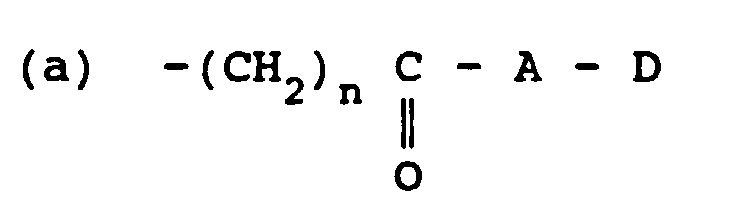
- A is -O- or -NH-,
- D is benzyl or xanthenyl,
- n is 1 or 2;
- E is -H or -CH3,
- G is -CH2-, -O- or -S-,
- J is -S- or -CH2-,
- L is -CH3 or phenyl;
- R3 is selected from hydrogen, methyl or ethyl;
- R1 and R3, taken together with the carbon atom to which they are attached, form a saturated hydrocarbon ring containing 3-5 carbon atoms;
- R4 is hydrogen or R1 and R4, taken together with the carbon and nitrogen atoms to which they are attached, form a saturated heterocycle containing 2-6 ring carbon atoms (i.e., an aziridine, azetidine, pyrrolidine, or piperidine ring); and n is 1-4.
- In accordance with the present invention, the thioacylating reagents are represented by:


- A is -O- or -NH-,
- D is benzyl or xanthenyl,
- n is 1 or 2;
- E is -H or -CH3,
- G is -CH2-, -O- or -S-,
- J is -S- or -CH2-,
- L is -CH3 or phenyl;
- R2 is represented by a member selected from the class consisting of:
t-butoxycarbonyl , carbobenzoxy, chlorobenzyloxy, 9-fluorenylmethyloxycarbonyl, tosyl, trityl or xanthenyl; - R3 is selected from hydrogen, methyl or ethyl; or
- R1 and R3, taken together with the carbon atom to which they are attached, form a cycloalkyl ring containing 3-5 carbon atoms;
- R4 is hydrogen; or R1 and R4, taken together with the carbon and nitrogen atoms to which they are attached, form a saturated heterocycle containing 2-6 ring carbon atoms (i.e., an aziridine, azetidine, pyrrolidine, or piperidine ring); and R5 is selected from hydrogen, fluorine, chlorine, bromine, iodine, amido, amino, carboxyl, carboxymethyl, cyano, guanidino, hydroxyl, hydroxymethyl, mercapto, or nitro.
- R1 are typically substituents commonly found among natural α-amino acids. Particularly preferred groups include branched or unbranched alkyl groups which may or may not be substituted by amino, carboxy, guanidino, hydroxy, hydroxymethyl or hydroxyphenyl.
- The term thioacylating reagent is meant to include compounds which react with hydroxy and amino groups to introduce a thioacyl group to the nucleophilic substituent and becomes covalently bound thereto. The inclusion of thiocarbonyls in the amide bonds of peptides results in an increased resistance to hydrolysis and enzymatic destruction as compared with peptides of the same general structure but having conventional carbonyl moities in their amide linkages.
- The amino acid ortho amino thioanilides of this invention are represented by:
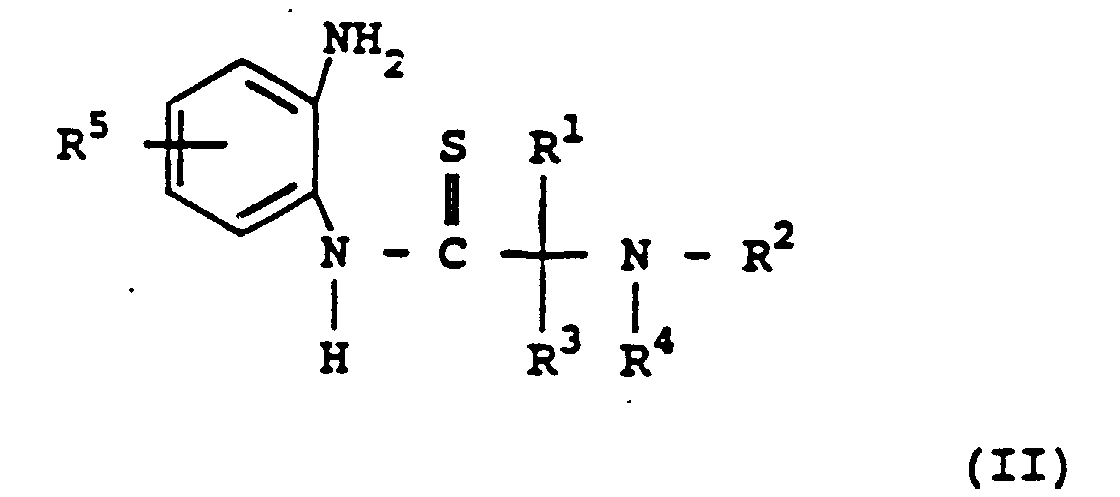
- The term amino-acid-ortho-amino-thioanilide is meant to include compounds having an ortho disubstituted amino benzene structure and an amino acid bound to said ortho disubstituted amino benzene structure by a thioamide linkage with said amino acid suitably protected at the amino terminus with an appropriate protecting group as defined for R2 hereinabove.
- The amino-acid-ortho-amino-anilides of this invention are represented by:

- The term amino-acid-ortho-amino-anilide is meant to include compounds having an ortho disubstituted amino benzene structure and an amino acid bound to one of the amino substitutents on said ortho disubstituted amino benzene structure through an amide linkage with said amino acid suitably protected at the amino terminus with an appropriate protecting group a defined for R2 hereinabove.
- The thioacylating reagents of the present invention may be prepared by initial reaction of an ortho-phenylenediamine conveniently with an amino acid according to the following scheme:


- Ortho-phenylenediamine and amino acids described herein may be reacted in the presence of a peptide coupling agent in a suitable solvent with stirring or agitation to form amino acid ortho amino anilides I. Surprisingly, however, selective amide formation occurs at only one of the two amino substituents on the benzene ring. Contacting compounds of general formula I with a thionation reagent in the presence of a suitable solvent at -78°C to 0°C with stirring or agitation forms amino acid ortho amino thioanilides II. Subsequent treatment of compounds of general formula II with a reagent well-suited to effect internal ring closure in a suitably inert solvent with stirring or agitation yields the desired compounds of general formula III. The reaction scheme to form the thioacylating reagents is illustrated hereinabove.
- The process of peptide synthesis requires specific functional groups to react with other substituents to link amino acid residues in a desired manner to form a peptide with a sought after and known sequence. Since amino acids possess at least two reactive substitutents, the amine and carboxylic acid portions, suitable protection or blocking of these functionalities is required to ensure that reaction will occur only at desired sites.
- These protecting groups should be introduced to the moiety efficaciously while their removal should be performed under conditions which do not effect other portions of the molecule. In this manner, certain reactions and modifications may be performed on the amino acid, peptide, or other compound with assurance that the protected functionality will not interfere with the desired reaction. Further, by choosing a protecting group that is sensitive and labile to certain reactive conditions, a reaction scheme may be outlined to advantageously utilize these characteristics to effectively remove the protecting group once the synthesis is complete.
- A variety of protecting groups known in the field of peptide synthesis and recognized by conventional abbreviations therein, may be found in T. Greene, Protective Groups In Organic Synthesis, Academic Press (1981). Among the preferred protecting groups that may be utilized for suitable protection of reactive nucleophilic substituents of R1 are benzyl, carbobenzoxy or xanthenyl and for R2 t-butoxycarbonyl or carbobenzoxy.
- Coupling of ortho-phenylene diamine with amino acids as described above to yield compounds of general formula I may be accomplished employing established techniques in the field of peptide chemistry. A broad range of suitable reactions are described in E. Gross & J. Meinhofer, 4 The Peptides: Analysis, Synthesis, Biology; Modern Techniques of Peptide and Amino Acid Analysis, John Wiley & Sons, (1981) and M. Bodanszky, Principles of Peptide Synthesis, Springer-Verlag (1984). The peptide coupling agents which may be used to assist condensation of amino and carboxylic acid moieties include N,N'-dicyclohexylcarbodiimide (DCC), N,N'-carbonyl diimidazole (CDI), 1-hydroxy benzotriazole (HOBt), ethyl chloroformate, and the like. A preferred technique uses DCC as the coupling reagent. The DCC method may be used with or without catalytic additives such as 4-dimethylaminopyridine (DMAP), copper (II) chloride or HOBt to hasten the reaction and suppress the racemization of the desired compound.
- The DCC reaction is often performed at room temperature but may be performed from about -78°C to gentle reflux in a variety of solvents that are inert with respect to the reactants. The solvents are normally organic solvents which are polar and aprotic. Preferred solvents include dichloromethane, chloroform, diethyl ether, tetrahydroform (THF) and N,N'-dimethylformamide (DMF).
Particularly preferred solvents are dichloromethane and DMF. In general, the coupling reaction may be carried out at atmospheric pressure at a temperature of -78°C to reflux for a period of about 1-48h. Preferably, the reaction is carried out at -10°C to 25°C with stirring, shaking or agitation over a period of 4-6h. - Compounds of general formula II are typically prepared under anhydrous conditions, by reacting compounds of general formula I with a mixture of phosphorous pentasulfide and anhydrous sodium carbonate in an inert solvent. The reaction temperature is preferably about 0°C, but may then be varied from -78°C to gentle reflux. The solvent is preferably anhydrous THF, and other suitable solvents include dichloromethane, diethyl ether and DMF.
- Compounds of general formula III may be prepared by contacting compounds of general formula II with carbonyl ditriazole or phosgene in an inert solvent at a temperature of -78°C to gentle reflux, preferably room temperature. The solvent may be selected from, but is not limited to, dichloromethane, diethyl ether, DMF and THF.
- In any of the synthesis methods described above, the desired products may be isolated from the reaction mixture by crystallization. Alternatively, chromatographic techniques including, but not limited to, normal phase, reverse-phase, ion-exchange, affinity, or gel permeation, may be employed, as well as electrophoresis or extraction or other means.
- A novel class of thiopeptides which can be prepared by the present invention may be represented by the following formula:


- For compounds of formula V, the peptides may have four, three, or two thiocarbonyl moieties, but most preferably there will be one thiocarbonyl with the remaining values represented by X being oxygen. A particularly preferred thiopeptide of formula V for enhanced stability and increased pharmacological activity is represented by formula VII:

- Similarly, for tetrapeptides of formula VI, especially preferred embodiments will be those wherein only one X represents a sulphur atom and the remaining two values for X each represent an oxygen atom. A most preferred series of thiopeptides of formula VI having increased resistance to enzymatic degradation and enhanced biological activity is represented by formula VIII:

- The incorporation of thioamide linkages at positions on the peptide backbone which are susceptible to degradation may be performed in order to increase the peptide's resistance to enzymatic digestion. This enhanced stability may afford greater biological activities to the peptides prolonged existence. For example, thymopentin, which is merely a biologically active fragment of the polypeptide thymopoietin, may be modified to elicit this response. One such thymopentin derivative, 4-thiothymopentin, represented by formula VII, has exhibited approximately a three-fold increase in biological activity. A control group of nude athymic mice was administered 20 micrograms of thymopentin per subject according to well-known assay techniques. See, e.g., O. Archer, T. Pierce, B. Papermanter, and R. Good, "Reduced Antibody Response in Thymectomized Rabbits", Nature, 195, 191 (1962); D. Osoba and J. Miller, "Evidence for a Humeral Thymus Factor Responsible for the Maturation of Immunological Faculty", Nature, 199, 653 (1963); G. E. Ranges et al., "T-Cell Development in Normal and Thymopentin-treated Nude Mice", J. Exp. Med., 156, 1057 (1982). The results of this assay showed a mean increase of 43% for the maturation of T cells and related immune responses. However, when the mice of the test group were administered the same dosage under the same assay conditions, a mean increase of 128% for T cell maturation was observed. Thus, the increased effect in potency confirms that the introduction of a sulphur atom as a replacement for the carbonyl oxygen atom of an amide bond may decrease the rate of enzymatic degradation, enhance the affinity for relevant receptors, or act to assist both phenomena.
- Other peptides that may be modified to incorporate thioamide linkages into the peptides backbone according to the thioacylation technology of the present invention include, but are not limited to, Vasopressin (9 amino acid residues), Somatostatin (14 amino acid residues), α-Melanotropin (13 amino acid residues), Leutienizing Hormone Releasing Hormone (LHRH, 10 amino acid residues), Adrenocorticotropin (ACTH, 39 amino acid residues), β-Endorphin (31 amino acid residues), and Atrial Natriuretic Factor (ANF, 33 amino acid residues).
- Site specific and mild conditions which assist in the efficient introduction of a thioamide linkage to the backbone of a growing peptide chain may be accomplished in high yield by the use of 1-thioacyl-2-benzimidazolones as thioacylating reagents according to this invention. The resulting thiopeptides demonstrate increased stability and greater pharmacological potency while retaining the optical integrity of their component amino acid residues.
- The thioacylation agents of the present invention permit the formation of thioamide linkages in growing peptides in substantially higher yields over those methods of thioamide introduction previously reported. The methods of the present invention yield thiopeptides that demonstrate previously unknown stability with respect to resistance to enzymatic degradation. Further, the thiopeptides of this invention exhibit a substantial increase in pharmacological activity over peptide analogs that are linked by amide bonding between residues.
- According to this invention, a thioamide moiety may be introduced into a growing peptide at a specific site in the peptide sequence by reacting a thioacylating reagent according to the invention with an amino acid or peptide. The peptide amino terminus must be protected at the terminal amino functionality. The reaction is advantageously carried out in a suitable solvent inert to the reactants in the presence of an appropriate peptide coupling reagent. The preferred solvents include dichloromethane, chloroform, diethyl ether, THF, DMF, and the like. Particularly preferred solvents are dichloromethane and DMF. The preferred reaction conditions are from -78°C to gentle reflux for a period of about 1-48h. Particularly preferred conditions are -10°C to 25°C stirring for a period of 4-6h.
- Until the thioamide linkage is required to be introduced, the peptide may be synthesized under any peptide coupling conditions. Alternatively, the thioamide linkage may be introduced first and the thiodipeptide so formed may then be enlarged employing generally recognized peptide coupling conditions.
- Once the incorporation of the thioamide linkage is completed, and the thiopeptide is prepared, the compound so formed may be entirely freed of its protecting groups according to well-known protocols such as treatment with liquid hydrogen fluoride (HF). Where, however, the peptide or thiopeptide formed requires selective removal of the protective groups, usually from an amino terminus, suitable reaction conditions must be employed.
- The t-butoxycarbonyl (Boc) protected amino functionality of amino acid derivatives and terminal amines of peptides may be removed, e.g., by treatment with cold trifluoroacetic acid (TFA) at 0°C under suitable atmospheric conditions, e.g. adjusting the pH to about 8-9. The TFA salt of the amino acid derivative or protected peptide may be mixed in a suitable organic solvent and subjected to mild aqueous basic conditions. The organic solution, containing said amino acid derivative or said protected peptide with free amino functionality, may then be dried and concentrated to afford the free amino derivative.
- In the case of 9-fluorenylmethyloxycarbonyl (Fmoc) protected amino acids, thiopeptides or Merrifield resin derivatives are presented, the corresponding free amino group may be generated selectively by treatment with piperidine in DMF under suitable atmospheric and thermal conditions.
- An alternative synthetic approach for introducing thioamide linkages can be effectuated via the Merrifield solid phase methodology and its known variants. Thus, a Merrifield resin is prepared by well-known solid phase peptide synthesis methods. A covalently attached α-amino acid residue, attached at its carboxyl function or, similarly, a peptide with a free terminal amino functionality is carried by said resin. Treatment of said resin with said thioacylating reagent under standard solid phase peptide synthesis conditions affords the desired product.
- Where this process introduces the thioamide linkage as the final step of thiopeptide formation, the thiopeptide may be liberated from said resin by using well-established methods. By employing liquid HF containing dialkyl sulfide with anisole and thioanisole under suitable conditions at a temperature of -78°C to 0°C, the thiopeptide may be obtained free from all of the individual protecting groups of the component amino acid residues.
- The amounts of the reactants utilized in the aforementioned reaction may vary widely and the conditions required to facilitate reaction and encourage efficient completion may also vary widely. However, in general, the amounts of material employed to induce reaction in the processes discussed above will be substantially stoichiometric unless otherwise specified. In the following examples, reaction concentrations were generally held at 0.1 M to the reactants unless a higher concentration or dilution would be particularly useful for influencing the direction of a specific reaction. In practice, amounts will change depending upon variations in reaction conditions and the nature of the reactants.
- The examples which follow are set forth to further illustrate various aspects of the present invention.
- N-Boc-L-serine-O-benzyl ether (8.02 mmol) and ortho-phenylenediamine (11.6 mmol) were well dissolved in dichloromethane (21 ml) at 0°C and N,N'-dicyclohexylcarbodiimide (DCC) (8.27 mmol) added. The mixture was stirred for 1 hour at constant ice temperature and then filtered. The filtrate was transferred to a separating funnel and washed successively with saturated brine/5% aqueous citric acid and saturated brine/5% aqueous sodium bicarbonate followed by saturated brine alone. The organic phase was then dried, concentrated, and the residue purified by flash chromatography on silica gel employing a 3:1 hexane-ethyl acetate solvent as an eluant to yield the α-N-Boc-L-seryl-O-benzyl-ortho-amino-anilide as a solid in high yield (97%) which was then recrystallized to analytical purity with a dichloromethane-pentane mixture. The compound was observed to have the following physical properties: Melting point 60-63°C; [α]

- Using the method of preparation described hereinabove and the appropriate starting materials, these additional ortho-amino anilides were synthesized:
- a1. α-N-Boc-L-alanyl-ortho-amino anilide
- a2. α-N-Boc-L-arginyl-di-N-Cbz-ortho-amino anilide
- a3. α-N-Boc-L-arginyl-N-tosyl-ortho-amino anilide
- a4. α-N-Boc-L-asparaginyl-N-xanthenylortho-amino anilide
- a5. α-N-Boc-L-aspartyl-β-benzyl ester-ortho-amino anilide
- a6. α-N-Fmoc-L-aspartyl-β-t-butyl ester-ortho-amino anilide
- a7. α-N-Boc-L-cysteinyl-S-benzyl ether-ortho-amino anilide
- a8. α-N-Boc-L-glutamyl-γ-benzyl ester-ortho-amino anilide
- a9. α-N-Boc-L-glutaminyl-N-xanthenyl-orthoamino anilide
- a10. α-N-Boc-glycyl-ortho-amino anilide
- a11. α-N-Boc-L-histidyl-N-benzyl-ortho-amino anilide
- a12. α-N-Boc-L-histidyl-N-tosyl-ortho-amino anilide
- a13. α-N-Boc-L-isoleucyl-ortho-amino anilide
- a14. α-N-Boc-L-leucyl-ortho-amino anilide
- a15. α-N-Boc-ε-N-2ClZ-L-lysyl-ortho-amino anilide
- a16. α-N-Boc-L-methionyl-ortho-amino anilide
- a17. α-N-Boc-L-phenylalanyl-ortho-amino anilide
- a18. α-N-Boc-L-prolyl-ortho-amino anilide
- a19. α-N-Boc-L-threonyl-O-benzyl ether-ortho-amino anilide
- a20. α-N-Boc-L-tryptophyl-ortho-amino anilide
- a21. α-N-Boc-L-tyrosinyl-O-2,6-dichlorobenzyl ether-ortho-amino anilide
- a22. α-N-Boc-L-valyl-ortho-amino anilide
- Physical characterizations of these compounds are set forth in Table A.
- To freshly distilled tetrahydrofuran (THF) (67 ml) was added phosphorous pentasulfide (6.26 mmol) and anhydrous sodium carbonate (6.26 mmol). The mixture was permitted to stir at 20°C for 0.3 hours. The mixture was then cooled to 0°C followed by the addition of the N-Boc-L-seryl-O-benzyl-ortho-aminoanilide (of step a) (0.71 mmol). After standing at 0°C for 5-6 hours, 10% aqueous sodium phosphate (tribasic; 22 ml) was added slowly followed by ethyl acetate (20 ml) and hexane (10 ml). The organic phase was separated, washed with brine, dried, and concentrated to yield an oil that was purified by flash chromatography on silica gel using a 6:1:2 hexane-ethyl acetate-methylene chloride solvent mixture as the eluant to give the N-Boc-L-seryl-O-benzyl-ortho-amino thioanilide as a crystalline solid in a moderate yield (50%). The compound was observed to have the following characteristics: Melting point 40-43°C; [α]

- Using the method of preparation described hereinabove and the appropriate starting materials, these additional ortho amino thioanilides were synthesized:
- b1. α-N-Boc-L-alanyl-ortho-amino thioanilide
- b2. α-N-Boc-L-arginyl-di-N-Cbz-ortho-aminothioanilide
- b3. α-N-Boc-L-arginyl-N-tosyl-ortho-aminothioanilide
- b4. α-N-Boc-L-asparaginyl-N-xanthenylortho-amino-thioanilide
- b5. α-N-Boc-L-aspartyl-β-benzyl esterortho-amino-thioanilide
- b6. α-N-Fmoc-L-aspartyl-β-t-butyl esterortho-amino-thioanilide
- b7. α-N-Boc-L-cysteinyl-S-benzyl etherortho-amino-thioanilide
- b8. α-N-Boc-L-glutamyl-γ-benzyl esterortho-amino-thioanilide
- b9. α-N-Boc-L-glutaminyl-N-xanthenyl-orthoamino-thioanilide
- b10. α-N-Boc-glycyl-ortho-amino-thioanilide-
- b11. α-N-Boc-L-histidyl-N-benzyl-ortho-aminothioanilide
- b12. α-N-Boc-L-histidyl-N-tosyl-ortho-aminothioanilide
- b13. α-N-Boc-L-isoleucyl-ortho-amino-thioanilide
- b14. α-N-Boc-L-leucyl-ortho-amino-thioanilide
- b15. α-N-Boc-ε-N-2ClZ-L-lysyl-ortho-amino thioanilide
- b16. α-N-Boc-L-methionyl-ortho-amino thioanilide
- b17. α-N-Boc-L-phenylalanyl-ortho-aminothioanilide
- b18. α-N-Boc-L-prolyl-ortho-amino-thioanilide
- b19. α-N-Boc-L-threonyl-O-benzyl-etherortho-amino thioanilide
- b20. α-N-Boc-L-tryptophyl-ortho-amino thioanilide
- b21. α-N-Boc-L-tyrosinyl-O-2,6-dichlorobenzyl-ether-ortho-amino-thioanilide
- b22. α-N-Boc-L-valyl-ortho-amino thioanilide
- Physical characterizations of these compounds are set forth in Table B.
- The α-N-Boc-L-seryl-O-benzyl-ortho amino thioanilide (of step b) (3.11 mmol) and carbonyl ditriazole (4.36 mmol) were dissolved in THF (45 ml) and after stirring at 25°C for 6.5 hours, the solvent was removed in vacuo. The residue that remained was dissolved in dichloromethane (2 ml) and purified by flash chromatography. The product was eluted with 4:1 hexane-ethyl acetate to give pure 1-(N-Boc-L-seryl-O-benzyl-2-thioacyl)-2-benzimidazolone in high yield (91%). The compound was characterized by proton NMR and the following physical characteristics were also recorded: Melting point 119-122°c; [α]D 20 (CHCl3) - 25.5; UV (CH3CN) lambdamax 265; Elemental Composition (C22H25N3O4S): Theoretical: C, 61.81; H, 5.90; N, 9.82; S, 7.50. Found: C, 62.00; H, 6.01; N, 10.18; S, 7.30.
- Using the method of preparation described hereinabove and the appropriate starting materials, these 1-(α-amino acid thioacyl)-2-benzimidazolone derivatives were synthesized:
- c1. 1-(α-N-Boc-L-alanyl-thioacyl)-2-benzimidazolone
- c2. 1-(α-N-Boc-L-arginyl-di-N-Cbz-thioacyl)-2-benzimidazolone
- c3. 1-(α-N-Boc-L-arginyl-N-tosyl-thioacyl)-2-benzimidazolone
- c4. 1-(α-N-Boc-L-asparaginyl-N-xanthenylthioacyl)-2-benzimidazolone
- c5. 1-(α-N-Boc-L-aspartyl- -benzyl esterthioacyl)-2-benzimidazolone
- c6. 1-(α-N-Fmoc-L-aspartyl- -t-butyl esterthioacyl)-2-benzimidazolone
- c7. 1-(α-N-Boc-L-cysteinyl-S-benzyl etherthioacyl)-2-benzimidazolone
- c8. 1-(α-N-Boc-L-glutamyl-γ-benzyl esterthioacyl)-2-benzimidazolone
- c9. 1-(α-N-Boc-L-glutaminyl-N-xanthenylthioacyl)-2-benzimidazolone
- c10. 1-(α-N-Boc-glycyl-thioacyl)-2-benzimidazolone
- c11. 1-(α-N-Boc-L-histidyl-N-benzylthioacyl)- 2-benzimidazolone
- c12. 1-(α-N-Boc-L-histidyl-N-tosyl-thioacyl)-2-benzimidazolone
- c13. 1-(α-N-Boc-L-isoleucyl-thioacyl)-2-benzimidazolone
- c14. 1-(α-N-Boc-L-leucyl-thioacyl)-2-benzimidazolone
- c15. 1-(α-N-Boc-L-lysyl-ε-N-2ClZ-thioacyl)-2-benzimidazolone
- c16. 1-(α-N-Boc-L-methionyl-thioacyl)-2-benzimidazolone
- c17. 1-(α-N-Boc-L-phenylalanyl-thioacyl)-2-benzimidazolone
- c18. 1-(α-N-Boc-L-prolyl-thioacyl)-2-benzimidazolone
- c19. 1-(α-N-Boc-L-threonyl-O-benzyl etherthioacyl)-2-benzimidazolone
- c20. 1-(α-N-Boc-L-tryphophyl-thioacyl)-2-benzimidazolone
- c21. 1-(α-N-Boc-L-tyrosinyl-0-2,6-dichlorobenzyl ether-thioacyl)-2-benzimidazolone
- c22. 1-(α-N-Boc-L-valyl-thioacyl)-2-benzimidazolone
- Physical characterizations of these compounds are set forth in Table C.
- α-N-Boc-L-tyrosyl-O-benzyl ether-benzyl ester was treated with trifluoroacetic acid (TFA) at 0°C under nitrogen for 0.5 hours. The TFA was removed in vacuo to yield L-tyrosyl-O-benzyl-ether-benzyl ester TFA salt. This amino acid derivative was mixed in dichloromethane and treated with 5% aqueous sodium bicarbonate. The organic phase was separated, dried, and concentrated to give the free amino derivative in quantitive yield.
- L-tyrosyl-O-benzyl ether benzyl ester (2 mmol) was dissolved in anhydrous N,N'-dimethylformamide (DMF) (0.5 ml) at 0°C under N2 and 1-(α-N-Boc-valyl-thioacyl)-2-benzimidazolone (2.2 mmol) (from Example 1) was added in portions at 0°C with stirring over a 0.3 hour period. The mixture was stirred continuously at 0°C for 2 hours and allowed to warm to 25°C for 15-17 hours. The reaction was then filtered, concentrated in vacuo, the residue dissolved in ethyl acetate (15 ml) and the solution washed successively with 5% aqueous sodium bicarbonate, water, 5% aqueous citric acid, and water. The organic phase was then dried followed by evaporation and the residue placed on a flash column for purification. The protected dithiopeptide was eluted with a 3:2 ethyl acetate-hexane solvent mixture to afford α-N-Boc-L-valyl-L-tyrosyl-O-benzyl thioamide in good yield (80%). The compound was found to have the following physical characteristics: Melting point 56-58°C; IR (CHCl3) 2972, 1735, 1500 cm-1; UV (CHCl3) lambdamax 272.
- α-N-Boc-L-valyl-L-tyrosyl-O-benzyl thioamide (compound from (i)) was treated with TFA at 0°C for 0.5 hours under nitrogen to afford, after concentration in vacuo, L-valyl-L-tyrosyl-O-benzyl thioamide TFA salt. The compound was mixed in dichloromethane and treated with 5% aqueous sodium bicarbonate. The organic phase was separated, dried, and concentrated to give the free amino derivative in quantitive yield.
- L-valyl-L-tyrosyl-O-benzyl-thioamide (2 mmol) was dissolved in anhydrous DMF (0.5 ml) at 0°C under N2 and α-N-Boc-L-aspartyl-β-benzyl ester (2 mmol) was added to the solution with stirring. HOBt (2 mmol) and DCC (2 mmol) were added slowly at 0°C and stirring was allowed to continue overnight. The mixture was diluted with 8 volumes of ethyl acetate and the N,N'-dicyclohexylurea so formed was filtered away from the solution. The filtrate was transferred to a separatory funnel and washed successively with 5% aqueous sodium bicarbonate, 5% aqueous citric acid, and saturated brine. The organic phase was collected and dried over MgSO4, filtered and concentrated in vacuo. The residue was purified by flash chromotography on silica gel employing a 1:1 hexane-ethyl acetate solvent mixture as an eluant to afford the α-N-Boc-L-aspartyl-β-benzyl ester-L-valyl-L-tyrosyl-O-benzyl ether-benzyl ester-3-thioamide in good yield (74%). The following physical characteristics were recorded for the compound: Melting point 112-114°C and UV (CHCl3) lambdamax 271.
- α-N-Boc-L-aspartyl-β-benzyl ester-L-valyl-L-tyrosyl-O-benzyl ether-benzyl ester-2-thioamide (compound from (ii)) was treated with TFA to remove the Boc group as in (ii) and L-aspartyl-β-benzyl ester-L-valyl-L-tyrosyl-O-benzyl ether-benzyl ester-2-thioamide was obtained in quantitive yield.
- L-aspartyl-β-benzyl ester-L-valyl-L-tyrosyl-O-benzyl ether-benzyl ester-3-thioamide was dissolved in dry DMF (0.5 ml) at 0°C under N2 and α-N-Boc-ε-2ClZ-L-lysine (2 mmol) was added to the solution with stirring. HOBt (2 mmol) and DCC (2 mmol) were added slowly at 0°C and stirring was allowed to continue overnight. The mixture was diluted with 8 volumes of ethyl acetate and the N,N'-dicyclohexylurea so formed was filtered away from the solution. The filtrate was transferred to a separating funnel and washed successively with 5% aqueous sodium bicarbonate, 5% aqueous citric acid, and saturated brine. The organic phase was collected and dried over MgSO4, filtered, and concentrated in vacuo. The residue was purified by flash chromotography on silica gel using a 1:1 hexane-ethyl acetate solvent mixture as an eluant to afford the α-N-Boc-ε-N-2ClZ-L-lysyl-L-aspartyl-β-benzyl ester-L-valyl-L-tyrosyl-O-benzyl ether-benzyl ester-3-thioamide in good yield (73%). The following physical characteristics were recorded for the compound: Melting point 71-73°C and UV (CHCl3) lambdamax 272.
- α-N-Boc-ε-N-2ClZ-L-lysyl-L-aspartyl-β-benzyl ester-L-valyl-L-tyrosyl-O-benzyl ether-benzyl ester-3-thioamide (compound from (iii)) was treated with TFA to remove the Boc group as in (ii) and ε-N-2ClZ-L-lysyl-L-aspartyl-β-benzyl ester-L-valyl-L- tyrosyl-O-benzyl ether-benzyl ester-3-thioamide was obtained in quantitive yield.
- ε-N-2ClZ-L-lysyl-L-aspartyl-β-benzyl ester-L-valyl-L-tyrosyl-O-benzyl ether-benzyl ester-3-thioamide (2 mmol) was dissolved in dry DMF (0.5 ml) at 0°C under N2 and α-N-Boc-N-tosyl-L-arginine (2 mmol) was added to the solution with stirring. HOBt (2 mmol) and DCC (2 mmol) were added slowly at 0°C and stirring was allowed to continue overnight. The mixture was diluted with 8 volumes of ethyl acetate and the N,N'-dicyclohexylurea so formed was filtered away from the solution. The filtrate was transferred to a separating funnel and washed successively with 5% aqueous sodium bicarbonate, 5% aqueous citric acid, and saturated brine. The organic phase was collected and dried over MgSO4, filtered, and concentrated in vacuo. The residue was purification by flash chromotography using 9:1 chloroform-methanol as an eluant to afford the α-N-Boc-N-tosyl-L-arginyl-ε-N-2ClZ-L-lysyl-L-aspartyl-β-benzyl ester-L-valyl-L-tyrosyl-O-benzyl ether-benzyl ester-4-thioamide in good yield (78%). The following physical characteristics were recorded for the compound: Melting point 105-107°C; IR (CHCl3) 1756, 1490 cm-1; UV (CHCl3) lambdamax 271. Elemental composition (C71H84Cl3N9O14S2): Theoretical: C, 58.13; H, 5.65; N, 8.34; S, 4.79. Found: C, 58.54; H, 5.81; N, 8.65; S, 4.40.
- α-N-Boc-N-tosyl-L-arginyl-L-lysyl-ε-N-2ClZ-L-aspartyl-β-benzyl ester-L-valyl-L-tyrosyl-O-benzyl ether-benzyl ester-4-thioamide was dissolved in liquid hydrogen fluoride containing 10% by volume of anisole, ethyl methyl sulfide, and thioanisole. After 1 hour at 0°C, the solvent was evaporated in vacuo and the deprotected thiopeptide was purified by reversed phase chromotography on a Vydac C18 column utilizing 12% aqueous acetic acid as an eluant. The thiopeptide was characterized by proton NMR and was also found to possess the following physical properties: Melting point 146-148°C; UV (CHCl3) lambdamax 268; M/e 696.
- Using the appropriate sequence of amino acid condensation reactions, the following mono-thiothymopentin analogs were prepared:
- d1. L-arginyl-L-lysyl-L-aspartyl-L-valyl-L-tyrosine-1-thioamide
- d2. L-arginyl-L-lysyl-L-aspartyl-L-valyl-L-tyrosine-2-thioamide
- d3. L-arginyl-L-lysyl-L-aspartyl-L-valyl-L- tyrosine-3-thioamide
- Physical characterizations for these thiopeptides are described in Table D.
- α-N-Boc-L-tyrosyl-O-benzyl ether attached to a benzyloxy group of a Merrified resin was treated with a 55% dichloromethane solution of TFA at room temperature for 1 hour. The resin was then collected, washed successively with four portions of 10 ml dichloromethane, four portions of 10 ml isopropanol (IPA) and dried for subsequent use.
- L-tyrosyl-O-benzyl ether attached to a benzyloxy group of a Merrifield resin (0.632 mmol/g of resin) was added to a solution of 1-(α-N-Boc-valylthioacyl)-2-benzimidazolone (0.948 mmol) in dry DMF (7 ml) with stirring at 25°C. The reaction was stirred for 16 hours after which time another portion of the benzimidazolone (0.948 mmol) was added and stirring was resumed for 18 hours. The resin was collected, washed with four 10 ml portions of DMF, then four 10 ml portions of IPA and subseqently dried in preparation for further reaction.
- α-N-Boc-L-valyl-L-tyrosyl-O-benzyl ether-thioamide attached to a benzyloxy group of a Merrified resin was treated with a 55% dichloromethane solution of TFA at room temperature for 1 hour. The resin was then collected, washed successively with four portions of 10 ml dichloromethane and four portions of 10 ml IPA and dried for subsequent use.
- L-valyl-L-tyrosyl-O-benzyl ether-thioamide attached to a benzyloxy group of Merrifield resin (0.632 mmol/g of resin) was added to a solution of α-N-Boc-L-aspartyl-β-benzyl ester (0.632 mmol) in DMF (7 ml) with stirring at 25°C. HOBt (0.632 mmol) and DCC (0.632 mmol) were added slowly with stirring. Reaction was allowed to proceed for 1-2 hours after which time the resin was collected, washed with four 10 ml portions of DMF, four 10 ml portions of IPA, and dried for further reaction.
- α-N-Boc-L-aspartyl-β-benzyl ester-L-valyl-L-tyrosyl-O-benzyl ether-2-thioamide attached to a benzyloxy group of a Merrified resin was treated with a 55% dichloromethane solution of TFA at room temperature for 1 hour. The resin was then collected, washed successively with four portions of 10 ml dichloromethane and four portions of 10 ml IPA and dried for subsequent use.
- L-aspartyl-β-benzyl ester-L-valyl-L-tyrosyl-O-benzyl ether-2-thioamide attached to a benzyloxy group of a Merrifield resin (0.632 mmol/g of resin) was added to a solution of α-N-Boc-N-ε-2ClZ-L-lysine (0.632 mmol) in DMF (7 ml) with stirring and the reaction proceeded for 1-2 hours. The resin was then collected, washed with four 10 ml portions of DMF, four 10 ml portions of IPA, and dried for further reaction.
- α-N-Boc-ε-N-2ClZ-L-lysyl-L-aspartyl-β-benzyl ester-L-valyl-L-tyrosyl-O-benzyl ether-3-thioamide attached to a benzyloxy group of Merrified resin was treated with a 55% dichloromethane solution of TFA at room temperature for 1 hour. The resin was then collected, washed successively with four portions of 10 ml dichloromethane and four portions of 10 ml IPA and dried for subsequent use.
- ε-N-2ClZ-L-lysyl-L-aspartyl-β-benzyl ester-L-valyl-L-tyrosyl-O-benzyl ether-3-thioamide attached to a benzyloxy group of a Merrified resin (0.632 mmol/g of resin) was added to a solution of α-N-Boc-N-tosyl-L-arginine (0.632 mmol) in DMF (7 ml) with stirring at 25°C. HOBt (0.632 mmol) and DCC (0.632 mmol) were added slowly with stirring. Reaction was allowed to proceed for 1-2 hours. The resin was subsequently collected, washed with four 10 ml portions of IPA, and dried for final protecting group removal.
- α-N-Boc-N-tosyl-L-arginyl-ε-2ClZ-L-lysyl-L-aspartyl-β-benzyl ester-L-valyl-L-tyrosyl-O-benzyl ether-4-thioamide attached to a benzyloxy group of a Merrifield resin (0.5 mmol) was treated with liquid hydrogen fluoride (5 ml) containing anisole, dimethyl sulfide, and thioanisole (0.5 ml 1:1:1 v/v) at 0°C for 1 hour. After evaporation of the solvent, the residue was dissolved in 10% aqueous acetic acid. The aqueous solution was washed with diethyl ether (30 ml), eluted with water and lyophilized to dryness. The crude thiopeptide was dissolved in 92% aqueous acetic acid (25 ml) and purified by reverse phase chromatography employing a C18 packed column and the same acetic acid solvent as the eluant.
- α-N-Boc-N-tosyl-L-arginyl-benzyl ester was treated with TFA at 0°C under nitrogen for 0.5 hours. The TFA was removed in vacuo to yield N-tosyl-L-arginyl-benzyl ester TFA salt. This amino acid derivative was mixed in dichloromethane and treated with 5% aqueous sodium bicarbonate. The organic phase was separate, dried, and concentrated to give the free amino derivative in quantitive yield.
- N-tosyl-L-arginyl-benzyl ester (2 mmol) was dissolved in anhydrous DMF (0.5 ml) at 0°C under N2 and 1-(α-N-Boc-L-thioprolyl)-2-benzimidazolone (2.2 mmol) (from Example 1) was added portionwise at 0°C with stirring over a 0.3 hour period. The mixture was stirred at 0°C continuously for 2 hours and permitted to warm to 25°C for 15-17 hours. The reaction was then filtered, concentrated in vacuo, the residue dissolved in ethyl acetate (15 ml) and the solution washed successively with 5% aqueous sodium bicarbonate, water, 5% aqueous citric acid, and water. The organic phase was then dried followed by evaporation and the residue placed on a flash column for purification. The protected thiodipeptide was eluted with a 3:2 ethyl acetate-hexane solvent mixture to afford α-N-Boc-L-thioprolyl-N-tosyl-L-arginyl-benzyl ester in high yield.
- The recovered compound possessed the following physical characteristics: Melting point 64-66°C and UV (CHCl3) lambdamax 270.
- α-N-Boc-L-thioprolyl-N-tosyl-L-arginylbenzyl ester was treated with TFA at 0°C under nitrogen for 0.5 hours. The TFA was removed in vacuo to yield L-thioprolyl-N-tosyl-L-arginyl-benzyl ester TFA salt. This thiodipeptide was mixed in dichloromethane and treated with aqueous sodium bicarbonate. The organic phase was separated, dried, and concentrated to give the free amino derivative in quantitive yield.
- L-thioprolyl-N-tosyl-L-arginyl-benzyl ester (2 mmol) was dissolved in anhydrous DMF (0.5 ml) at 0°C under N2 and α-N-Boc-ε-N-2ClZ-lysine (2 mmol) was added. HOBt (2 mmol) and DCC (2 mmol) were added slowly with stirring at 0°C and the reaction was allowed to continue overnight. The reaction was diluted with 8 volumes of ethyl acetate and the N,N'-dicyclohexylurea so formed was filtered away from the mixture. The filtrate was transferred to a separatory funnel and washed successively with 5% aqueous sodium bicarbonate, 5% aqueous citric acid, and saturated brine. The organic phase was collected and dried over MgSO4, filtered and concentrated in vacuo. The residue was purified by flash chromatography on silica gel employing 1:1 hexane-ethyl acetate as an eluant to afford the α-N-Boc-ε-N-2ClZ-L-lysyl-L-prolyl-N-tosyl-L-arginyl-benzyl ester-2-thioamide in high yield.
- The following physical characteristics were observed for the purified compound: Melting point 77-80°C; IR (CHCl3) 1758, 1380 cm-1; UV (CHCl3) lambdamax 271; Elemental composition (C55H71ClN8O11S2): Theoretical: C, 60,75; H, 7.10; N, 9.29. Found: C, 60.34; H, 7.07; N, 9.65.
- α-N-Boc-ε-N-2ClZ-lysyl-L-prolyl-N-tosyl-L-arginyl-benzyl ester-2-thioamide was treated with TFA at 0°C under nitrogen for 0.5 hours. The TFA was removed in vacuo to yield ε-N-2ClZ-L-lysyl-L-prolyl-N-tosyl-L-arginyl-benzyl ester-2-thioamide TFA salt. This amino acid derivative was mixed in dichloromethane and treated with aqueous sodium bicarbonate. The organic phase was separated, dried, and concentrated to give the free amino derivative in quantitive yield.
- ε-N-2ClZ-L-lysyl-L-prolyl-N-tosyl-L-arginylbenzyl ester-2-thioamide (2 mmol) was dissolved in anhydrous DMF (0.5 ml) at 0°C under N2 and α-N-Boc-threonine-O-benzyl ether (2 mmol) was added. HOBt (2 mmol) and DCC (2 mmol) were added portion-wise with stirring at 0°C and the reaction was allowed to continue overnight. The reaction was diluted with 8 volumes of ethyl acetate and the N,N'-dicyclohexylurea so formed was filtered away from the solution. The filtrate was transferred to a separatory funnel and washed successively with 5% aqueous sodium bicarbonate, 5% aqueous citric acid, and saturated brine. The organic phase was collected and dried over MgSO4, filtered, and concentrated in vacuo. The residue was purified by flash chromatography on silica gel employing a 1:1 hexane-ethyl acetate solvent mixture as an eluant to afford α-N-Boc-L-threonyl-O-benzyl ether-ε-N-2ClZ-L-lysyl-L-prolyl-N-tosyl-L-arginyl-benzyl ester-3-thioamide in high yield.
- α-N-Boc-L-threonyl-O-benzyl ether-ε-N-2ClZ-L-lysyl-L-prolyl-N-tosyl-L-arginyl-benzyl ester-1-thioamide was dissolved in liquid hydrogen fluoride containing 10% by volume of anisole, ethyl methyl sulfide, and thioanisole. After 1 hour at 0°C, the solvent was removed in vacuo and the deprotected thiopeptide was purified by reversed phase liquid column chromatography on a Vydac C18 column with 12% aqueous acetic acid as an eluant.
- The thiopeptide exhibitied the following physical characteristics: Melting point 169-171°C and UV (50% aqueous ethanol) lambdamax 268.
- The following mono-thiotuftsin analogs were prepared utilizing the appropriate starting materials and the correct sequence of amino acid coupling reactions:
- e1. L-threonyl-L-lysyl-L-prolyl-L-arginine-2-thioamide
- e2. L-threonyl-L-lysyl-L-prolyl-L-arginine-1-thioamide
- Physical characterizations for these thiopeptides are described in Table E.
- This assay was performed according to the protocol established by Lau and Goldstein. See C. Lau and G. Goldstein, "Functional Effects of Thymopoietin32-36 (TP5) on Cytotoxic Lymphocyte Precursor Units (CLP-U)", J. Immun., 124, 1861 (1980); G. E. Ranges et al., "T Cell Development in Normal and Thymopentin-treated Nude Mice", J. Exp. Med., 156, 1057 (1982).
- The immunomodulatory action of thymopentin and 4-thiothymopentin on immature T-cell development by the expression of de novo antigens on T lymphocytes after daily subcutaneaus injections for two weeks in four week old nude athymic mice was measured. Following the final injection, the splenocytes were prepared and radio-labelled to determine the percentage of total cells bearing the radio labelled marker. Two distinct sets of experiments established the 4-thiothymopentin as having a 128% and 227% increase of cells bearing these markers over control animals administrered thymopentin at the same concentration and rate, under the same conditions in this assay.
- These findings suggest that thiothymopentin analogs can induce a potent differentiation process associated with an increase of cell surface markers of T-lymphocytes.
- Many variations and additional embodiments will be readily apparent to those skilled in the art in view of the foregoing disclosures and examples. For example, thiopeptides of greater than five amino acid residues having improved characteristics as described herein, may be advantageously prepared according to the methods of the present invention. All such obvious variations and further embodiments are included within the scope of the appended claims.

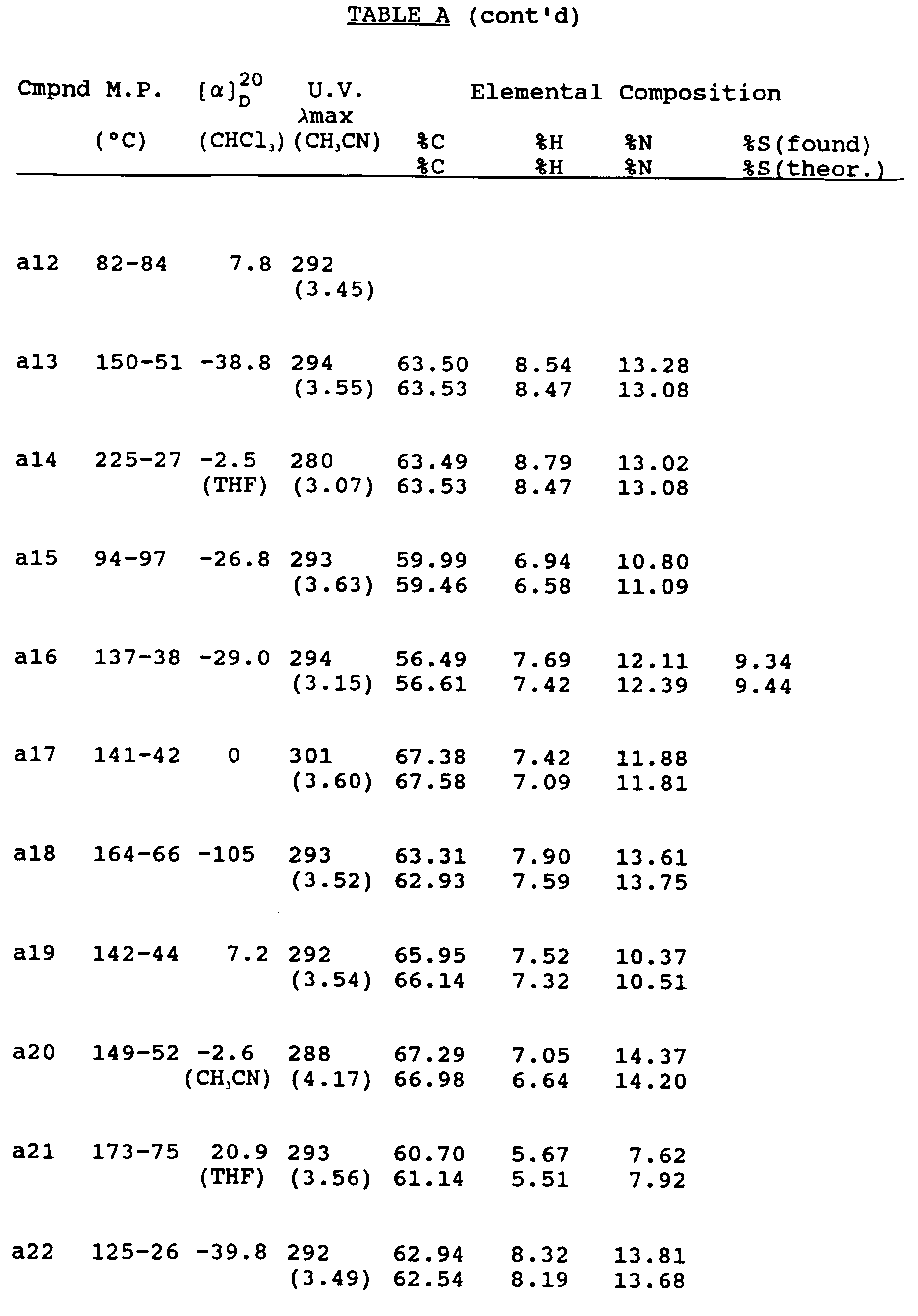


TABLE D Cmpnd M.P. (°C) U.V. λmax (CH3CN) d1 140-42 268
(3.86)d2 133-34 269
(3.71)d3 148-50 269
(3.89)TABLE E Cmpnd M.P. (°C) U.V. λmax (CH3CN) e1 182-83 267
(3.81)
(in 50% EtOH)


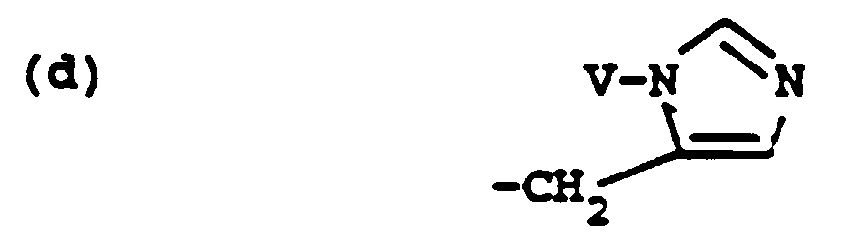


Claims (24)
- A thioacylating reagent represented by the formula:

 A is -O- or -NH-,D is benzyl or xanthenyl,n is 1 or 2;
 E is -H or -CH3,G is -CH2-, -O- or -S-,J is -S- or -CH2-,L is -CH3 or phenyl,

 R2 is selected from the group consisting of t-butoxycarbonyl, carbobenzyloxy, chlorobenzyloxy, 9-fluorenylmethyloxycarbonyl, tosyl, trityl and xanthenyl;R3 is hydrogen, methyl, or ethyl; or R1 and R3, taken together with the carbon atom to which they are attached, form a cycloalkyl group containing 3-5 carbon atoms;R4 is hydrogen; or R1 and R4, taken together with the carbon and nitrogen atoms to which they are attached, form a saturated heterocycle containing not less than 2, but not more than 6 ring carbon atoms; andR5 is selected from the group consisting of hydrogen, fluorine, chlorine, bromine, iodine, amino, amido, hydroxyl, hydroxymethyl, carboxyl, carboxymethyl, cyano, guanidino, mercapto, and nitro.
 - The thioacylating reagent according to claim 1, wherein R1 is C1 - C4 branched or unbranched alkyl, R2 is t-butoxycarbonyl, and R3 and R5 are hydrogen.
- The thioacylating reagent according to claim 2, wherein R1 and R4, taken together with the carbon and nitrogen atoms to which they are attached, form a saturated heterocycle containing 4 ring carbon atoms, R2 is t-butoxycarbonyl, and R3 and R5 are hydrogen.
- The thioacylating reagent according to claim 1, wherein R1 is represented by the formula:
 A is -O- or -NH-,D is benzyl or xanthenyl,n is 1 or 2;R2 is t-butoxycarbonyl; and
R3 and R5 are hydrogen. - The thioacylating reagent according to claim 1, wherein R1 is represented by the formula:
 E is -H or -CH3,G is -CH2-, -O- or -S-,J is -S- or -CH2-,L is -CH3 or phenyl,R2 is t-butoxycarbonyl; and
R3 and R5 are hydrogen. - The thioacylating reagent according to claim 1, wherein R1 is represented by the formula:
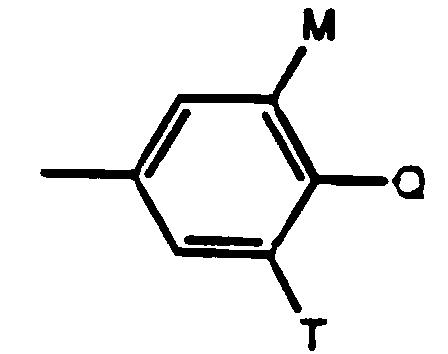
R2 is t-butoxycarbonyl; and
R3 and R5 are hydrogen. - The thioacylating reagent according to claim 1, wherein R1 is represented by the formula:

R2 is t-butoxycarbonyl; and
R3 and R5 are hydrogen. - The thioacylating reagent according to claim 1, wherein R1 is represented by the formula:

R3 and R5 are hydrogen. - The thioacylating reagent according to claim 1, wherein R1 is represented by the formula:

R3 and R5 are hydrogen. - A thioacylating reagent according to claim 1, wherein R1 is selected from the group consisting of side chains of naturally occurring α-amino acids and functionality protected derivatives thereof;
and R2, R3, R4 and R5 are as defined in any one of claims 1 through 9. - A thioacylating reagent according to claim 1, selected from the group consisting of:
1-(α-N-t-butoxycarbonyl-L-alanyl-thioacetyl)-2-benzimidazolone, 1-(α-N-t-butoxycarbonyl-L-arginyl-di-N-carbobenzyloxy-thioacetyl)-2-benzimidazolone, 1-(α-N-t-butoxycarbonyl-L-arginyl-N-tosyl-thioacetyl)-2-benzimidazolone, 1-(α-N-t-butoxycarbonyl-L-asparaginyl-N-xanthenyl-thioacetyl)-2-benzimidazolone, 1-(α-N-t-butoxycarbonyl-L-aspartyl-β-benzyl ester-thioacetyl)-2-benzimidazolone, 1-(α-N-9-fluorenylmethyloxycarbonyl-L-aspartyl-β-t-butyl ester-thioacetyl)-2-benzimidazolone, 1-(α-N-t-butoxycarbonyl-L-cysteinyl-S-benzyl ether- thioacetyl)-2-benzimidazolone, 1-(α-N-t-butoxycarbonyl-L-glutamyl-γ- benzyl esterthioacetyl) -2-benzimidazolone, 1-(α-N-t-butoxycarbonyl-L-glutaminyl-N-xanthenyl-thioacetyl)-2-benzimidazolone, 1-(α-N-t-butoxycarbonyl-glycylthioacetyl)-2-benzimidazolone, 1-(α-N-t-butoxycarbonyl-L-histidyl-N-benzyl-thioacetyl)-2-benzimidazolone, 1-(α-N-t-butoxycarbonyl-L-histidyl-N-tosyl-thioacetyl)-2-benzimidazolone, 1-(α-N-t-butoxycarbonyl-L-isoleucylthioacetyl) -2-benzimidazolone, 1-(α-N-t-butoxycarbonyl-L-leucyl-thioacetyl)-2-benzimidazolone, 1-(α-N-t-butoxycarbonyl-L-lysyl-ε-N-dichlorobenzyloxycarbonyl-thioacetyl)-2-benzimidazolone, 1-(α-N-t-butoxycarbonyl-L-methionylthioacetyl) -2-benzimidazolone, 1-(α-N-t-butoxycarbonyl-L-phenylalanyl-thioacetyl)-2- benzimidazolone, 1-(α-N-t-butoxycarbonyl-L-prolyl-thioacetyl)-2-benzimidazolone, 1-(α-N-t-butoxycarbonyl-L-seryl-O-benzyl ether-thioacetyl)-2-benzimidazolone, 1-(α-N-t-butoxycarbonyl-L-threonyl-O-benzyl ether- thioacetyl)-2-benzimidazolone, 1-(α-N-t-butoxycarbonyl-L-tryphophyl- thioacetyl)-2-benzimidazolone, 1-(α-N-t-butoxycarbonyl-L-tyrosinyl-O- 2,6-dichlorobenzyl etherthioacetyl)-2-benzimidazolone and 1-(α-N-t-butoxycarbonyl-L-valyl-thioacetyl)-2-benzimidazolone. - An amino acid ortho amino thioanilide represented by the formula:

- An amino acid ortho amino thioanalide according to claim 12, selected from the group consisting of:
α-N-t-butoxycarbonyl-L-alanyl-ortho-amino thioanilide, α-N-t-butoxycarbonyl-L-arginyl-di-N-carbobenzyloxy-ortho-amino thioanilide, α-N-t-butoxycarbonyl-L-arginyl-N-tosyl-ortho-amino thioanilide, α-N-t-butoxycarbonyl-L-asparaginyl-N-xanthenyl-ortho-amino thioanilide, α-N-t-butoxycarbonyl-aspartyl-β-benzyl ester-ortho-amino thioanilide, α-N-9-fluorenylmethyloxycarbonyl-aspartyl-β-t-butyl ester-ortho-amino thioanilide, α-N-t-butoxycarbonyl-L-cysteinyl-S-benzyl ether-ortho- amino thioanilide, α-N-t-butoxycarbonyl-L-glutamyl-γ-benzyl ester-ortho-amino thioanilide, α-N-t-butoxycarbonyl-L-glutaminyl-N- xanthenyl-ortho-amino thioanilide, α-N-t-butoxycarbonyl-glycyl- ortho-amino thioanilide, α-N-t-butoxycarbonyl-L-histidyl-N-benzyl- ortho-amino thioanilide, α-N-t-butoxycarbonyl-L-histidyl-N-tosylortho-amino thioanilide, α-N-t-butoxycarbonyl-L-isoleucyl-ortho-amino thioanilide, α-N-t-butoxycarbonyl-L-leucyl-ortho-amino thioanilide, α-N-t-butoxycarbonyl-ε-N-dichlorobenzyloxycarbonyl-L-lysylortho-amino thioanilide, α-N-t-butoxycarbonyl-L-methionyl-ortho-amino thioanilide, α-N-t-butoxycarbonyl-L-phenylalanyl-ortho-amino thioanilide, α-N-t-butoxycarbonyl-L-prolyl-ortho-amino thioanilide, α-N-t-butoxycarbonyl-L-seryl-O-benzyl ether-ortho-amino thioanilide, α-N-t-butoxycarbonyl-L-threonyl-O-benzyl ether-ortho-amino thioanilide, α-N-t-butoxycarbonyl-L-tryptophyl-ortho-amino thioanilide, α-N-t-butoxycarbonyl-L-tyrosinyl-O-benzyl ether-ortho-amino thioanilide and α-N-t-butoxycarbonyl-L-valyl-ortho-amino thioanilide. - An amino acid ortho amino anilide compound renresented bv the formula:

- An amino acid ortho amino anilide according to claim 14, selected from the group consisting of:
α-N-t-butoxycarbonyl-L-arginyl-di-N-cyarbobenzyloxy-ortho-amino anilide, α-N-t-butoxycarbonyl-L-arginyl-N-tosyl-ortho-amino anilide,α-N-t-butoxycarbonyl-L-asparaginyl-N-xanthenyl-ortho-amino anilide,α-N-t-butoxycarbonylaspartyl-β-benzyl ester-ortho-amino anilide, α-N-9-fluorenylmethyloxycarbonyl-aspartyl-β-t-butyl ester-ortho-amino anilide,α-N-t-butoxycarbonyl-L-cysteinyl-S-benzyl ether-ortho-amino anilide, α-N-t-butoxycarbonyl-L-glutamyl-γ-benzyl ester-ortho-amino anilide, α-N-t-butoxycarbonyl-L-glutaminyl-N-xanthenyl-ortho-amino anilide, α-N-t-butoxycarbonylglycyl-ortho-amino anilide, α-N-t-butoxycarbonyl- L-histidyl-N-benzyl-ortho-amino anilide, α-N-t-butoxycarbonyl-L- histidyl-N-tosyl-ortho-amino anilide, α-N-t-butoxycarbonyl-L- isoleucyl-ortho-amino anilide, α-N-t-butoxycarbonyl-L-leucyl- ortho-amino anilide, α-N-t-butoxycarbonyl-ε-N-dichlorobenzyloxycarbonyl-L-lysyl-ortho- amino anilide, α-N-t-butoxycarbonyl-L-methionyl-ortho-amino anilide, α-N-t-butoxycarbonyl-L-phenylalanyl-ortho-amino anilide, α-N-t-butoxycarbonyl-L-prolyl-ortho-amino anilide, α-N-t-butoxycarbonyl-L-seryl-O-benzyl ether-ortho-amino anilide, α-N-t-butoxycarbonyl-L- threonyl-O-benzyl ether-ortho-amino anilide, α-N-t-butoxycarbonyl-L-tryptophyl-ortho-amino anilide, α-N-t-butoxycarbonyl-L-tyrosinyl-O-2,6-dichlorobenzyl ether-ortho-amino anilide and α-N-t-butoxycarbonyl-L-valyl-ortho-amino anilide. - A process for producing the amino acid ortho amino anilide of claim 14, comprising the step of contacting an ortho phenylene diamine of the formula


- The process according to claim 16, wherein said organic solvent is selected from the group consisting of dichloromethane, chloroform, N,N'-dimethylformamide and tetrahydrofuran.
- The process according to claim 16, wherein said peptide coupling agent is selected from the group consisting of N,N'-dicyclohexylcarbodiimide, N,N'-carbonyl diimidazole, 1-hydroxybenzotriazole, ethyl chloroformate and benzyl chloroformate.
- A process for producing the amino acid ortho amino thioanilide according to claim 12, comprising the step of contacting the amino acid ortho amino anilide according to claim 14 with a reagent comprising a composition of phosphorous pentasulfide and sodium carbonate in an inert organic solvent.
- The process according to claim 19, wherein said solvent is selected from the group consisting of diethyl ether and tetrahydrofuran.
- A process for producing the thioacylating reagent according to the formula given in any one of claims 1-10, comprising the step of contacting the amino acid ortho amino thioanilide according to the formula given in claim 12 with carbonyl ditriazole in an inert etheral solvent or phosgene in the presence of an inert solvent.
- A process for producing a thiopeptide bond, comprising the step of contacting a protected alpha amino acid or a protected peptide, said protected alpha amino acid or protected peptide having a free amino functionality, with the thioacylating reagent according to the formula given in any one of claims 1 through 11 in the presence of an inert solvent.
- The process according to claim 22, wherein said process employs solid phase peptide synthesis techniques and wherein said protected alpha amino acid or protected peptide is suitably attached to an insoluble and inert resin by its carboxy terminus.
- The process according to claim 22 or claim 23, wherein said solvent is selected from the group consisting of acetonitrile, dichloromethane, diethyl ether, N,N'-dimethylformamide, dimethylsulfoxide and tetrahydrofuran.
Applications Claiming Priority (3)
| Application Number | Priority Date | Filing Date | Title |
|---|---|---|---|
| US07/389,852 US5138061A (en) | 1989-08-04 | 1989-08-04 | Thioacylating reagents |
| US389852 | 1989-08-04 | ||
| PCT/CA1990/000248 WO1991001976A1 (en) | 1989-08-04 | 1990-08-03 | Thioacylating reagents and intermediates, thiopeptides, and methods for preparing and using same |
Publications (2)
| Publication Number | Publication Date |
|---|---|
| EP0485458A1 EP0485458A1 (en) | 1992-05-20 |
| EP0485458B1 true EP0485458B1 (en) | 1997-10-22 |
Family
ID=23540015
Family Applications (1)
| Application Number | Title | Priority Date | Filing Date |
|---|---|---|---|
| EP90911857A Expired - Lifetime EP0485458B1 (en) | 1989-08-04 | 1990-08-03 | Thioacylating reagents and intermediates, thiopeptides, and methods for preparing and using same |
Country Status (11)
| Country | Link |
|---|---|
| US (2) | US5138061A (en) |
| EP (1) | EP0485458B1 (en) |
| JP (1) | JP3165698B2 (en) |
| AT (1) | ATE159521T1 (en) |
| CA (1) | CA2059647C (en) |
| DE (1) | DE69031623T2 (en) |
| DK (1) | DK0485458T3 (en) |
| ES (1) | ES2109236T3 (en) |
| HU (1) | HU220756B1 (en) |
| OA (1) | OA09561A (en) |
| WO (1) | WO1991001976A1 (en) |
Families Citing this family (9)
| Publication number | Priority date | Publication date | Assignee | Title |
|---|---|---|---|---|
| US5138061A (en) * | 1989-08-04 | 1992-08-11 | Biochem Pharma Inc. | Thioacylating reagents |
| EP1000930A3 (en) * | 1992-08-13 | 2003-10-29 | Warner-Lambert Company | Tachykinin antagonists |
| US5449761A (en) * | 1993-09-28 | 1995-09-12 | Cytogen Corporation | Metal-binding targeted polypeptide constructs |
| DE69833858T2 (en) | 1997-07-08 | 2007-02-22 | Ono Pharmaceutical Co. Ltd. | AMINO ACID DERIVATIVES |
| KR100281826B1 (en) * | 1998-04-21 | 2001-02-15 | 박호군 | Acylation Method of Amine Using N, N-Diacylimidazolone Derivatives |
| TWI245035B (en) | 1998-06-26 | 2005-12-11 | Ono Pharmaceutical Co | Amino acid derivatives and a pharmaceutical composition comprising the derivatives |
| WO2000004005A1 (en) | 1998-07-14 | 2000-01-27 | Ono Pharmaceutical Co., Ltd. | Amino acid derivatives and drugs containing the same as the active ingredient |
| GB0401008D0 (en) * | 2004-01-17 | 2004-02-18 | Univ Manchester | Drug delivery system |
| CA3213636A1 (en) | 2021-03-18 | 2022-09-22 | Seagen Inc. | Selective drug release from internalized conjugates of biologically active compounds |
Family Cites Families (7)
| Publication number | Priority date | Publication date | Assignee | Title |
|---|---|---|---|---|
| US2927116A (en) * | 1960-03-01 | Chlorobenzimidazolone compounds | ||
| DE1542886A1 (en) * | 1966-10-04 | 1970-05-14 | Bayer Ag | Fungicides |
| US3901909A (en) * | 1972-12-04 | 1975-08-26 | Squibb & Sons Inc | Mercaptobenzimidazolyl ureas and thioureas |
| DE3540495A1 (en) * | 1985-11-15 | 1987-05-21 | Merck Patent Gmbh | AMINO ACID DERIVATIVES |
| JPS62255485A (en) * | 1986-04-25 | 1987-11-07 | Kissei Pharmaceut Co Ltd | Benzimidazoline derivative |
| US4835166A (en) * | 1986-06-09 | 1989-05-30 | Pfizer Inc. | Antiallergy and antiinflammatory agents |
| US5138061A (en) * | 1989-08-04 | 1992-08-11 | Biochem Pharma Inc. | Thioacylating reagents |
-
1989
- 1989-08-04 US US07/389,852 patent/US5138061A/en not_active Expired - Lifetime
-
1990
- 1990-08-03 WO PCT/CA1990/000248 patent/WO1991001976A1/en not_active Ceased
- 1990-08-03 EP EP90911857A patent/EP0485458B1/en not_active Expired - Lifetime
- 1990-08-03 DE DE69031623T patent/DE69031623T2/en not_active Expired - Fee Related
- 1990-08-03 CA CA002059647A patent/CA2059647C/en not_active Expired - Lifetime
- 1990-08-03 ES ES90911857T patent/ES2109236T3/en not_active Expired - Lifetime
- 1990-08-03 AT AT90911857T patent/ATE159521T1/en not_active IP Right Cessation
- 1990-08-03 JP JP51078590A patent/JP3165698B2/en not_active Expired - Fee Related
- 1990-08-03 DK DK90911857.2T patent/DK0485458T3/en active
- 1990-08-03 HU HU9200338A patent/HU220756B1/en unknown
-
1992
- 1992-02-04 OA OA60141A patent/OA09561A/en unknown
- 1992-02-21 US US07/839,609 patent/US5371185A/en not_active Expired - Lifetime
Also Published As
| Publication number | Publication date |
|---|---|
| US5371185A (en) | 1994-12-06 |
| WO1991001976A1 (en) | 1991-02-21 |
| HUT63395A (en) | 1993-08-30 |
| HU9200338D0 (en) | 1992-04-28 |
| AU651557B2 (en) | 1994-07-28 |
| ES2109236T3 (en) | 1998-01-16 |
| JP3165698B2 (en) | 2001-05-14 |
| OA09561A (en) | 1993-01-31 |
| EP0485458A1 (en) | 1992-05-20 |
| CA2059647C (en) | 2001-06-05 |
| CA2059647A1 (en) | 1991-02-05 |
| DK0485458T3 (en) | 1998-04-20 |
| DE69031623D1 (en) | 1997-11-27 |
| AU6064290A (en) | 1991-03-11 |
| US5138061A (en) | 1992-08-11 |
| DE69031623T2 (en) | 1998-02-19 |
| HU220756B1 (en) | 2002-05-28 |
| ATE159521T1 (en) | 1997-11-15 |
| JPH05501865A (en) | 1993-04-08 |
Similar Documents
| Publication | Publication Date | Title |
|---|---|---|
| EP0517589B1 (en) | Tachykinin derivatives, their preparation and pharmaceutical compositions containing them | |
| EP0343654A2 (en) | Diol-containing renin inhibitors | |
| JPS61263998A (en) | Novel n-(acyldipeptidyl)-aminoglycol compound | |
| JPS61194097A (en) | Novel peptide and peptide derivative, manufacture and medicinal composition | |
| US4298523A (en) | Methods and compositions for preparation of H-ARG-X-Z-Y-TYR-R | |
| FR2460291A1 (en) | NOVEL TRIPEPTIDES ACTING ON THE CENTRAL NERVOUS SYSTEM AND THEIR PREPARATION PROCESS | |
| US5138061A (en) | Thioacylating reagents | |
| CA1251000A (en) | Dipeptides, process for the preparation thereof and pharcameutical preparations containing them | |
| EP0368719B1 (en) | Novel analogs of peptidase substrates | |
| HU185320B (en) | Process for producing biologically active encephaline analogous compounds | |
| CA1158236A (en) | Process for the preparation of novel substituted phenylacetic acid amide compounds | |
| EP0136720B1 (en) | Enkephalin analogs | |
| EP0124420B1 (en) | Gastric secretion inhibiting peptide derivatives, process for their preparation and medicines containing them | |
| US4716149A (en) | Partially modified, retro-inverso neurotensin analogs | |
| US5478811A (en) | Orally-active elastase inhibitors | |
| JPH069628A (en) | Hiv protease inhibitor containing hydroxyethylene equivalentweight type ditholanylglycine | |
| US4369137A (en) | N-Protected pentapeptides useful as intermediates in the preparation of thymopoietin pentapeptide | |
| AU651557C (en) | Thioacylating reagents and intermediates, thiopeptides, and methods for preparing and using same | |
| USRE29732E (en) | Tripeptide | |
| JPS61155395A (en) | Retro-reverse peptide and its synthesis | |
| US5457180A (en) | Methods for producing linear thiopeptides using an amino acid ortho amino thioanilide compound | |
| US3803117A (en) | Tetrapeptide | |
| FR2543546A1 (en) | B-ASPARTYL GROUP-CONTAINING GONADORELINE DERIVATIVES, PROCESS FOR THEIR PREPARATION AND PHARMACEUTICAL PREPARATIONS CONTAINING SAME | |
| US3780015A (en) | Process for preparing lysine containing peptides | |
| EP0406931B1 (en) | New analogues of all-bond retroinverted thymopentin, the method for the synthesis of the same and their employment for the preparation of pharmaceutical compositions |
Legal Events
| Date | Code | Title | Description |
|---|---|---|---|
| PUAI | Public reference made under article 153(3) epc to a published international application that has entered the european phase |
Free format text: ORIGINAL CODE: 0009012 |
|
| 17P | Request for examination filed |
Effective date: 19920204 |
|
| AK | Designated contracting states |
Kind code of ref document: A1 Designated state(s): AT BE CH DE DK ES FR GB IT LI LU NL SE |
|
| RAP1 | Party data changed (applicant data changed or rights of an application transferred) |
Owner name: BIOCHEM PHARMA INC. |
|
| 17Q | First examination report despatched |
Effective date: 19930514 |
|
| GRAG | Despatch of communication of intention to grant |
Free format text: ORIGINAL CODE: EPIDOS AGRA |
|
| GRAH | Despatch of communication of intention to grant a patent |
Free format text: ORIGINAL CODE: EPIDOS IGRA |
|
| RAP1 | Party data changed (applicant data changed or rights of an application transferred) |
Owner name: BIOCHEM PHARMA INC. |
|
| GRAH | Despatch of communication of intention to grant a patent |
Free format text: ORIGINAL CODE: EPIDOS IGRA |
|
| GRAA | (expected) grant |
Free format text: ORIGINAL CODE: 0009210 |
|
| AK | Designated contracting states |
Kind code of ref document: B1 Designated state(s): AT BE CH DE DK ES FR GB IT LI LU NL SE |
|
| REF | Corresponds to: |
Ref document number: 159521 Country of ref document: AT Date of ref document: 19971115 Kind code of ref document: T |
|
| ITF | It: translation for a ep patent filed | ||
| REG | Reference to a national code |
Ref country code: CH Ref legal event code: EP Ref country code: CH Ref legal event code: NV Representative=s name: ISLER & PEDRAZZINI AG |
|
| REF | Corresponds to: |
Ref document number: 69031623 Country of ref document: DE Date of ref document: 19971127 |
|
| ET | Fr: translation filed | ||
| REG | Reference to a national code |
Ref country code: ES Ref legal event code: FG2A Ref document number: 2109236 Country of ref document: ES Kind code of ref document: T3 |
|
| REG | Reference to a national code |
Ref country code: DK Ref legal event code: T3 |
|
| PLBE | No opposition filed within time limit |
Free format text: ORIGINAL CODE: 0009261 |
|
| STAA | Information on the status of an ep patent application or granted ep patent |
Free format text: STATUS: NO OPPOSITION FILED WITHIN TIME LIMIT |
|
| 26N | No opposition filed | ||
| REG | Reference to a national code |
Ref country code: GB Ref legal event code: IF02 |
|
| REG | Reference to a national code |
Ref country code: CH Ref legal event code: PFA Owner name: SHIRE BIOCHEM INC. Free format text: BIOCHEM PHARMA INC.#275 ARMAND-FRAPPIER BOULEVARD#LAVAL, QUEBEC H7V 4A7 (CA) -TRANSFER TO- SHIRE BIOCHEM INC.#2250 ALFRED NOBEL BLVD SUITE 500#ST-LAURENT, QUEBEC H4S 2C9 (CA) |
|
| NLT1 | Nl: modifications of names registered in virtue of documents presented to the patent office pursuant to art. 16 a, paragraph 1 |
Owner name: SHIRE BIOCHEM INC. |
|
| REG | Reference to a national code |
Ref country code: FR Ref legal event code: CD Ref country code: FR Ref legal event code: CA |
|
| REG | Reference to a national code |
Ref country code: CH Ref legal event code: PCAR Free format text: ISLER & PEDRAZZINI AG;POSTFACH 1772;8027 ZUERICH (CH) |
|
| BECN | Be: change of holder's name |
Owner name: SHIRE CANADA INC. Effective date: 20061019 |
|
| REG | Reference to a national code |
Ref country code: CH Ref legal event code: PFA Owner name: SHIRE CANADA INC. Free format text: SHIRE BIOCHEM INC.#2250 ALFRED NOBEL BLVD SUITE 500#ST-LAURENT, QUEBEC H4S 2C9 (CA) -TRANSFER TO- SHIRE CANADA INC.#2250 ALFRED NOBEL BLVD. SUITE 500#ST-LAURENT, QUEBEC H4S 2C9 (CA) |
|
| NLT1 | Nl: modifications of names registered in virtue of documents presented to the patent office pursuant to art. 16 a, paragraph 1 |
Owner name: SHIRE CANADA INC. |
|
| PGFP | Annual fee paid to national office [announced via postgrant information from national office to epo] |
Ref country code: LU Payment date: 20080624 Year of fee payment: 19 |
|
| PGFP | Annual fee paid to national office [announced via postgrant information from national office to epo] |
Ref country code: IT Payment date: 20080624 Year of fee payment: 19 Ref country code: BE Payment date: 20080630 Year of fee payment: 19 |
|
| REG | Reference to a national code |
Ref country code: FR Ref legal event code: CD |
|
| PGFP | Annual fee paid to national office [announced via postgrant information from national office to epo] |
Ref country code: DE Payment date: 20080822 Year of fee payment: 19 Ref country code: NL Payment date: 20080815 Year of fee payment: 19 Ref country code: ES Payment date: 20080805 Year of fee payment: 19 Ref country code: DK Payment date: 20080808 Year of fee payment: 19 Ref country code: CH Payment date: 20080814 Year of fee payment: 19 |
|
| PGFP | Annual fee paid to national office [announced via postgrant information from national office to epo] |
Ref country code: AT Payment date: 20080825 Year of fee payment: 19 Ref country code: FR Payment date: 20080529 Year of fee payment: 19 |
|
| PGFP | Annual fee paid to national office [announced via postgrant information from national office to epo] |
Ref country code: GB Payment date: 20080729 Year of fee payment: 19 |
|
| PGFP | Annual fee paid to national office [announced via postgrant information from national office to epo] |
Ref country code: SE Payment date: 20080814 Year of fee payment: 19 |
|
| BERE | Be: lapsed |
Owner name: SHIRE CANADA INC. Effective date: 20090831 |
|
| REG | Reference to a national code |
Ref country code: NL Ref legal event code: V1 Effective date: 20100301 Ref country code: CH Ref legal event code: PL |
|
| REG | Reference to a national code |
Ref country code: DK Ref legal event code: EBP |
|
| GBPC | Gb: european patent ceased through non-payment of renewal fee |
Effective date: 20090803 |
|
| PG25 | Lapsed in a contracting state [announced via postgrant information from national office to epo] |
Ref country code: LI Free format text: LAPSE BECAUSE OF NON-PAYMENT OF DUE FEES Effective date: 20090831 Ref country code: CH Free format text: LAPSE BECAUSE OF NON-PAYMENT OF DUE FEES Effective date: 20090831 |
|
| REG | Reference to a national code |
Ref country code: FR Ref legal event code: ST Effective date: 20100430 |
|
| PG25 | Lapsed in a contracting state [announced via postgrant information from national office to epo] |
Ref country code: BE Free format text: LAPSE BECAUSE OF NON-PAYMENT OF DUE FEES Effective date: 20090831 Ref country code: AT Free format text: LAPSE BECAUSE OF NON-PAYMENT OF DUE FEES Effective date: 20090803 |
|
| PG25 | Lapsed in a contracting state [announced via postgrant information from national office to epo] |
Ref country code: NL Free format text: LAPSE BECAUSE OF NON-PAYMENT OF DUE FEES Effective date: 20100301 Ref country code: DK Free format text: LAPSE BECAUSE OF NON-PAYMENT OF DUE FEES Effective date: 20090831 Ref country code: DE Free format text: LAPSE BECAUSE OF NON-PAYMENT OF DUE FEES Effective date: 20100302 Ref country code: FR Free format text: LAPSE BECAUSE OF NON-PAYMENT OF DUE FEES Effective date: 20090831 |
|
| REG | Reference to a national code |
Ref country code: ES Ref legal event code: FD2A Effective date: 20090804 |
|
| PG25 | Lapsed in a contracting state [announced via postgrant information from national office to epo] |
Ref country code: GB Free format text: LAPSE BECAUSE OF NON-PAYMENT OF DUE FEES Effective date: 20090803 |
|
| PG25 | Lapsed in a contracting state [announced via postgrant information from national office to epo] |
Ref country code: IT Free format text: LAPSE BECAUSE OF NON-PAYMENT OF DUE FEES Effective date: 20090803 |
|
| PG25 | Lapsed in a contracting state [announced via postgrant information from national office to epo] |
Ref country code: LU Free format text: LAPSE BECAUSE OF NON-PAYMENT OF DUE FEES Effective date: 20090803 |
|
| PG25 | Lapsed in a contracting state [announced via postgrant information from national office to epo] |
Ref country code: SE Free format text: LAPSE BECAUSE OF NON-PAYMENT OF DUE FEES Effective date: 20090804 |
|
| PG25 | Lapsed in a contracting state [announced via postgrant information from national office to epo] |
Ref country code: ES Free format text: LAPSE BECAUSE OF NON-PAYMENT OF DUE FEES Effective date: 20090804 |