EP0485347B1 - Recombinant hepatitis delta antigen, process for the purification and use thereof - Google Patents
Recombinant hepatitis delta antigen, process for the purification and use thereof Download PDFInfo
- Publication number
- EP0485347B1 EP0485347B1 EP91830479A EP91830479A EP0485347B1 EP 0485347 B1 EP0485347 B1 EP 0485347B1 EP 91830479 A EP91830479 A EP 91830479A EP 91830479 A EP91830479 A EP 91830479A EP 0485347 B1 EP0485347 B1 EP 0485347B1
- Authority
- EP
- European Patent Office
- Prior art keywords
- hdag
- aminoacid sequence
- sequence
- polypeptide
- aggregates
- Prior art date
- Legal status (The legal status is an assumption and is not a legal conclusion. Google has not performed a legal analysis and makes no representation as to the accuracy of the status listed.)
- Expired - Lifetime
Links
- WBGWWYQZCCSFKM-UHFFFAOYSA-N C=C1C=CCC(CO)C1 Chemical compound C=C1C=CCC(CO)C1 WBGWWYQZCCSFKM-UHFFFAOYSA-N 0.000 description 1
Images


Classifications
-
- C—CHEMISTRY; METALLURGY
- C07—ORGANIC CHEMISTRY
- C07K—PEPTIDES
- C07K14/00—Peptides having more than 20 amino acids; Gastrins; Somatostatins; Melanotropins; Derivatives thereof
- C07K14/005—Peptides having more than 20 amino acids; Gastrins; Somatostatins; Melanotropins; Derivatives thereof from viruses
-
- C—CHEMISTRY; METALLURGY
- C07—ORGANIC CHEMISTRY
- C07K—PEPTIDES
- C07K2319/00—Fusion polypeptide
-
- C—CHEMISTRY; METALLURGY
- C07—ORGANIC CHEMISTRY
- C07K—PEPTIDES
- C07K2319/00—Fusion polypeptide
- C07K2319/40—Fusion polypeptide containing a tag for immunodetection, or an epitope for immunisation
-
- C—CHEMISTRY; METALLURGY
- C07—ORGANIC CHEMISTRY
- C07K—PEPTIDES
- C07K2319/00—Fusion polypeptide
- C07K2319/70—Fusion polypeptide containing domain for protein-protein interaction
- C07K2319/735—Fusion polypeptide containing domain for protein-protein interaction containing a domain for self-assembly, e.g. a viral coat protein (includes phage display)
-
- C—CHEMISTRY; METALLURGY
- C12—BIOCHEMISTRY; BEER; SPIRITS; WINE; VINEGAR; MICROBIOLOGY; ENZYMOLOGY; MUTATION OR GENETIC ENGINEERING
- C12N—MICROORGANISMS OR ENZYMES; COMPOSITIONS THEREOF; PROPAGATING, PRESERVING, OR MAINTAINING MICROORGANISMS; MUTATION OR GENETIC ENGINEERING; CULTURE MEDIA
- C12N2770/00—MICROORGANISMS OR ENZYMES; COMPOSITIONS THEREOF; PROPAGATING, PRESERVING, OR MAINTAINING MICROORGANISMS; MUTATION OR GENETIC ENGINEERING; CULTURE MEDIA ssRNA viruses positive-sense
- C12N2770/00011—Details
- C12N2770/28011—Hepeviridae
- C12N2770/28111—Hepevirus, e.g. hepatitis E virus
- C12N2770/28122—New viral proteins or individual genes, new structural or functional aspects of known viral proteins or genes
Definitions
- This invention relates to Hepatitis Delta Viral antigen (HDAg) expressed from host cells transformed with vectors comprising HDAg coding sequences, to a process for the purification thereof in an antigenic form and to its use in the diagnostic field. More specifically, the invention relates to HDAg-like polypeptides expressed from recombinant vectors wherein the expressed polypeptide functions in diagnostic and therapeutic applications in a manner characteristic of the HDAg polypeptide found within liver cells infected with the Hepatitis Delta Virus (HDV).
- HDAg Hepatitis Delta Viral antigen
- HDV is a major human pathogen that was discovered by Rizzetto and coworkers in Hepatitis B Virus (HBV)-infected patients experiencing severe liver disease (Rizzetto et al., Gut, 18:997-1003, 1977).
- HBV Hepatitis B Virus
- the HDV genome consists of a circular, single stranded RNA approximately 1.7 kb in length with the ability to fold on itself by intramolecular base pairing to form a double-stranded rod-like structure (Kos et al., Nature 323:558, 1986). Recent studies have demonstrated that HDV replication is independent of the presence of HBV (Taylor et al., J. Virol. 61:2891, 1987).
- ORF5 open reading frames
- the identification and partial characterization of ORF5 is described in the EP Applications No. 0234050 and No. 0251575.
- the activity of ORF5 can be supplied in trans, by the diffusible HDAg and does not necessarily require the physical proximity of ORF5 to the replication control regions of the virus.
- the role of HDAg has been studied extensively with respect to its role in viral replication (Luo et al., J. Virol. 64:1021, 1990; Hsieh et al., J. Virol. 64:3192, 1990; Chao et al., J. Virol.
- HDAg has been found to exist in a 24 kd form and a 27 kd form (Bergmann et al., J. Infect. Dis. 154:702, 1986), with the larger form (214 amino acids) representing a 19 amino acid carboxyl-terminal extension of the smaller (195 amino acids) form (Taylor, Cell 61:371, 1990).
- the larger form which may actually inhibit viral replication may arise from conversion of a UAG termination codon for the smaller HDAg to UGG, permitting synthesis of the larger variant polypeptide (Luo et al., supra ; Taylor, supra ).
- the diagnosis of HDV infection is usually established by detection of corresponding total and/or M (IgM) immunoglobulins directed against HDAg.
- IgM total and/or M
- To detect anti-HDAg immunoglobulin activity various blocking and competitive inhibition enzyme immunoassays have been developed (Crivelli et al., J. Clin: Microbiol. 14:173, 1981; Purcell and Gerin, Virology, 2nd Ed., Fields et al. Eds., 2275-2283, 1990; Farci et al., J. Am.Med.Assoc. 255:1443, 1986). All of these immunoassays make use of the natural antigen that can be extracted from human- or chimpanzee-infected liver.
- the natural antigen is present in the hepatocytes at very low concentration and is extremely unstable under the relatively harsh conditions that may accompany isolation and purification of the antigen (e.g. , 6M guanidinium HCl, 8M urea). Such instability may lead to formation of relatively low molecular weight peptides with reduced immunodiagnostic or immunotherapeutic utility compared to a full-length or nearly full-length HDAg.
- Kuo M.Y.P. et al. J. Virol. 1988, p. 1855-1861 discloses a protein coded by a ⁇ -galactosidase-HDAg gene which when expressed in E. Coli, may be recovered from cells in a single step by immunoaffinity chromatography.
- the present invention refers to a fused gene with a ⁇ -gal portion much shorter, a HDAg sequence longer and a tet sequence at the C-terminal.
- inclusion bodies are thought to represent macromolecular complexes of the heterologous polypeptide and the bacterial outer membrane (Frankel et al., Proc. Natl. Acad. Sci USA 88:1192, 1991).
- the inclusion bodies frequently are used as a source of expressed polypeptide, since the inclusion bodies are readily pelleted by centrifugation and provide a convenient source of polypeptide.
- the inclusion bodies must be solubilized under relatively harsh conditions such as 5-7 M guanidine HCl, 6-8 M urea, sodium dodecyl sulfate (SDS), alkaline pH, and/or acetonitrile/propanol
- SDS sodium dodecyl sulfate
- alkaline pH alkaline pH
- Vector construction generally employs techniques now well understood by those skilled in the art.
- Site-specific DNA cleavage is performed by means of suitable restriction enzymes under conditions generally specified by the manufacturer of commercially available restriction enzymes (see for example the New England Biolabs Product Catalogue).
- Sticky end cleavage fragments may be blunt ended using E.coli DNA polymerase 1 (Klenow fragment) in the presence of appropriate deoxynucleotide triphosphates (dTNPs) using incubation conditions appropriate to the polymerase.
- the polymerase fills in 5' protruding ends.
- treatment with S1 nuclease may be used, with resultant hydrolysis of any single stranded DNA portion.
- Ligations are carried out using standard buffer and temperature conditions with T4 DNA ligase.
- Vector fragments are often treated with bacterial alkaline phosphatase in order to remove the 5' phosphate and thus prevent religation of the vector.
- Ligation mixtures may be transfected into suitable hosts, such as E.coli, and successful transformants selected by antibiotic resistance or other appropriate means, then screened for the correct orientation of insert.
- transformation includes, without limitation, known methods for transformation of host cells by nucleic acid uptake, microinjection, electrotransformation, electroporation, pellet bombardment or any other suitable method for transfer of exogeneous nucleic acid into host cells (see, e.g. Sambrook et al., Molecular Cloning A. Laboratory Manual, 2nd Ed., Cold Spring Harbor Laboratory Press, 1989).
- cytosol or cytosolic fraction refer to prokaryotic or eukaryotic cell cytoplasm exclusive of membranes and membrane-bound organelles. That is, the cytosol or cytosolic fractions is defined by the intracellular regions between membrane-bounded organelles.
- Polypeptides in the cytosol generally constitute "soluble" polypeptides, though such polypeptides may exist in monomeric or multimeric forms and may be capable of organizing as aggregates or particles when in the multimeric form.
- Such cytosolic aggregates require relatively high-speed centrifugation for purification and generally do not co-purify with membrane-bound organelles or other cellular structures, such as inclusion bodies, which are readily pelleted by low speed centrifugation.
- the invention involves the finding that multimeric aggregates of HDAg recombinant polypeptide have an antigenicity substantially comparable to the antigenicity of HDAg antigen of HDV-infected human liver cells.
- the aggregate is recovered from host cells which have been transformed with a recombinant vector able to express HDAg polypeptide.
- the aggregate may further contain HDV RNA bound to the polypeptide.
- the aggregates may be recovered by separating such aggregates from cell membrane material and cell inclusion bodies resulting, from sonication or any other method of disrupting the bacteria. This separation of aggregate from cell membrane material and cell inclusion bodies may be accomplished by centrifugation. Subsequent to the separation by centrifugation, the aggregates may also be separated substantially from cytosolic material by ultracentrifugation such as sucrose gradient fractionation.
- the present invention solves the problems referred to by providing recombinant DNA molecules able to express after transformation in a suitable host recombinant HDAg with an antigenicity substantially comparable to the antigenicity of HDAg of HDV from infected human liver cells,namely being able to raise antibody against HDAg.
- the present invention provides also a process for the purification of the HDAg with an antigenicity substantially comparable to the antigenicity of HDAg of HDV front infected human liver cells and its use in the diagnostic field.
- the host cells may be transformed with a recombinant expression vector carrying the coding information for HDAg-like recombinant polypeptides, containing a first region substantially homologous to substantially intact HDV antigen and an amino terminal second region contiguous to the first region and a carboxyl terminal third region contiguous to the first region, wherein the first region is HDAg antigenic and the second region and third region are each substantially heterologous to HDV antigen.
- the second region and third region may each be coded by nucleic acid sequences substantially heterologous to related HDV RNA.
- the aggregates may be recovered by separating the aggregates from cell membrane material and cell inclusion bodies and subsequently separating the aggregates from the cytosol of disrupted host cells by either ultracentrifugation on sucrose gradient or sequential immunoaffinity chromatography specific to the second region and third region.
- said second region comprises a region from the E. coli beta-galattosidase coding region
- said third region comprises a coding region from pBR322 plasmid.
- the HDAg-like recombinant polypeptide is, or is substantially homologous to, B-HDAg-T, whose aminoacid sequence is shown in Table 1.
- a method is furnished to allow expression of a nearly full-length HDAg and recovery of the expressed polypeptide under conditions substantially preserving the conformational epitopes of the antigen, preferably without use of denaturing agents, said HDAg having an antigenicity comparable to the intact natural antigen present in infected human or chimpanzee liver cells in the sense that the recombinant HDAg-like polypeptide is cross-reactive with and has a similar affinity index as the naturally derived HDAg.
- the recombinant HDAg-like polypeptide of the present invention is particularly useful in immunoassay of the HDAg in body tissue and fluids or antibodies in serum specific to such HDAg.
- the recombinant HDAg-like polypeptide is useful as a standard for such assays as well as other reagents as more fully discussed below.
- the HDAg-like polypeptide is encoded by an expression vector containing appropriate expression and other control elements as well as sequence encoding all but the carboxyl-terminal six amino acids of the large form of HDAg.
- the said expression vector is the plasmid pSORIN ⁇ , deposited at DSM N. 6774.
- E.coli cells expressing HDAg-like polypeptide from pSORIN ⁇ are centrifuged to form a cell paste, resuspended in lysis buffer, and sonicated under conditions generally disrupting the outer bacterial membrane while generally leaving the inclusion bodies intact. Any other known method for disruption of cells while leaving intact the inclusion bodies may be employed without departing from the scope of the present invention.
- the cellular membranes, inclusion bodies and other cellular debris were pelleted by low speed centrifugation (e.g. 10.000 rpm in a JA17 Beckman rotor for 30 min. at 4.C).
- the supernatant containing the cytosolic fraction with soluble polypeptides is applied to the top of a 10-50% sucrose gradient and subjected to a 16-hour ultracentrifugation run. Thereafter, the expressed HDAg-like polypeptide is isolated from the bottom of the gradient in the form of multimeric aggregates. While the HDAg-like polypeptide isolated from sucrose gradients is eminently suited to immunodiagnostic and other applications, it is to be understood that other centrifugation media known to those skilled in the art, such as caesium sulfate and caesium chloride, may be employed for ultracentrifugation of HDAg-like polypeptide multimers.
- the HDAg-like polypeptide may be purified by immunoaffinity chromatografy.
- the applicants have developed a double column procedure that exploits polypeptide sequence, heterologous to ORF5, that is contiguous with the ORF5 amino acid sequence at the amino terminal and carboxyl terminal portions of the expressed polypeptide. That, is, a monoclonal antibody (MAB-B) was raised to the non-ORF5 amino terminal portion of the expressed polypeptide.
- a monoclonal antibody (MAB-T) was raised to the non-ORF5 carboxyl terminal portion of the expressed polypeptide.
- MAB-B was used on a first immunoaffinity column
- MAB-T was used on a second immunoaffinity column.
- Such polypeptide material will include the entire ORF5 encoded by pSORIN ⁇ , since the ORF5 amino acid sequence is located between the heterologous amino acid sequences recognized by MAB-B and MAB-T.
- the expressed polypeptide may be employed in a variety of immunodiagnostic and immunotherapeutic applications.
- the purified expressed HDAg-like polypeptide is useful in a variety of immunoassay formats well known in the art.
- the invention includes use of the purified multimeric aggregates as described above for detection of analyte antibodies or analyte antigens in patient samples.
- analyte antibodies may be detected such as total immunoglobulin (Ig) or as immunoglobulin M (IgM).
- microtiter plates may be coated with MAB-T using standard procedures.
- the expressed polypeptide then may be added to the plates under conditions promoting binding of the polypeptide to MAB-T.
- patient serum and enzyme-labelled anti-HDAg polyclonal antibody may be added to the plates in a competitive immunoassay format well known to those skilled in the art.
- the amount of enzyme-labelled anti-HDAg polyclonal antibody bound to the plate is a measure of the amount of anti-HDAg Ig in the serum sample.
- biotinilated HDAg may be bound to the solid phase via streptavadin.
- microtiter plates may be coated with anti-human IgM monoclonal antibody according to standard methods.
- Patient serum is then added to the plate to sequester patient IgM to the solid phase.
- These solid phase patient IgM antibodies are then reacted simultaneously or sequentially with HDAg-like polypeptide and with enzyme-labelled anti-HDAg polyclonal antibody.
- the amount of enzyme label that becomes bound to the solid phase is a measure of the amount of anti-HDAg IgM in the patient sample.
- enzyme-labelled MAB-T may be used in place of the enzyme-labelled anti-HDAg polyclonal antibody.
- Detection of analyte HDAg in a patient sample may be accomplished with a microtiter plate or other solid phase having attached an anti-HDAg antibody.
- Patient sample is added to the plate for reaction.
- the solid phase bound HDAg from the patient sample is then reacted with a labelled anti-HDAg antibody.
- Detection of analyte HDAg in a patient sample may also be accomplished in any of the competitive binding immunoassay formats known to those skilled in the art, utilizing the purified HDAg polypeptide as described above. In such formats, HDV antigen present in the patient sample competes with the expressed HDAg-like polypeptide for binding to an anti-HDAg antibody.
- RNA from a biopsy of HDV-infected human liver was extracted as described (Chirgwin, Biochemistry 18:5294, 1979). A 20 ug sample of this RNA was analyzed in Northern blot format (Thomas, Proc. Natl. Acad. Sci. 77:5201, 1980), by hybridization to the oligonucleotide probe M316 (3' CGA ACG GAC CAG ATG GAG GTA GAC TCC GGA CCT AGG AAG AG 3') (data not shown).
- RNA 18 ug of total RNA were used as template for first strand cDNA synthesis as described (Sambrook et al., supra ), using as primer the oligonucleotide M314 (5' ATG AGC CGG TCC GAG TCG AGG AAG 3').
- the cDNA reaction mixture was used in PCR amplification experiments (Kawasaki, In: Innis et al., eds., PCR Protocols; A Guide to Methods and Applications, Academic Press, pp. 21-27), using as primers the oligonucleotides M314 and M315 (5' TCA CTG GGG TCG ACA ACT CTG GGG AGA 3').
- the PCR amplification was performed with a protocol of 35 cycles, each cycle consisting of one min. at 95C, one min. at 50C, and three min. at 65C.
- the amplification reaction produced two major bands: one of 300 bp and the other of 640 bp (data not shown).
- Southern blot analysis revealed that only the 640 bp band hybridized with oligonucleotide M316 (data not shown).
- the 640 bp band (200 ng) was cloned into SmaI-cut pTZ18R (50 ng) (Pharmacia, Sweden) by using an overnight ligation at 15C with 1 Weiss unit of T4 ligase (Promega, WI) in 20 ul 1xT4 ligase buffer (Promega, WI).
- the ligation mixture (10 ul) was used to transform E.coli strain JM109 cells; competent JM109 cells were prepared as described by Sambrook et al., supra .
- the recombinant plasmid was denominated pSORF5 ( Figure 1).
- the 640 bp insert was sequenced with a Taq polymerase sequencing (Promega, WI).
- pHBc27 a derivative of pBR322
- HBV hepatitis B virus
- HBcAg hepatitis B virus
- a lac promoter carrying the UV5 mutation lac UV5 promoter
- RBS ribosomal binding site of beta-galactosidase
- sequence encoding the first eight amino acids of beta-galactosidase are located immediately upstream of the EcoR1 site in pHBc27.
- the BamH1 site in pHBc27 is located within the gene for tetracycline resistance (tet), approximately 350 bases pairs (bp) from the 3' end of the tet gene.
- the plasmid HBc27 was cut with EcoR1 and BamH1 and the large fragment (pLac, approximately 4,500 bp) containing transcription and other control elements was purified from the short fragment (1,011 bp) containing the HBcAg sequence.
- the EcoR1 and BamH1 ends of pLac were filled in (blunt ended) with the Klenow fragment of E.coli DNA polymerase according to standard methods (Sambrook et al., v. supra ).
- pSORF5 provided HDAg sequence for expression of HDAg-like polypeptide.
- a BamH1/Rsal fragment of 627 bp encoding all but the carboxyl-terminal six amino acids of ORF5 was obtained from pSORF5, and blunt ended as described above.
- the 627 bp fragment from pSORF5 was cloned into pLac by blunt end ligation (see Sambrook et al., supra ) and the correct orientation of the ORF5 insert with respect to transcriptional control elements was confirmed by restriction mapping.
- the resulting plasmid, pSORIN (Fig. 3, Table 2, deposited at DSM No .6774) was used to transform E.coli cells of strain W3 110, and 1.0 ml aliquots of cultures were frozen in 15% glycerol at -70C.E.coli strain W3 110 is deposited with the American Type Culture Collection (ATCC), No. 27325.
- the polypeptide expected to be expressed from pSORIN ⁇ consists of the amino acid sequence shown in Table 1, beginning with the amino terminal portion and progressing to the carboxyl terminal portion of the polypeptide: a) eight amino acids derived from beta galactosidase, b) four amino acids derived from linker sequence used in construction of the respective plasmids, c) 209 amino acids derived from ORF5 (HDAg) and d) 89 amino acids derived from the tet gene of pBR322.
- the eight amino acids derived from beta-galactosidase are hereinafter termed the "B" region of the expressed polypeptide.
- the full-length expressed polypeptide therefore comprises B, HDAg and T amino acids, and is hereinafter termed the "B-HDAg-T” polypeptide and is the preferred form of HDAg-like polypeptide.
- the bacterial growth was monitored at 590 nm.
- OPD optical density
- IPTG isopropyl-B-D-galactoside
- the temperature was reduced to 30C and the stirring rate was increased to 1,300 rpm.
- the cells were harvested three hours post-induction with IPTG by pelleting at 3,000xg for 10 min. at 4C.
- Pelleted E.coli cells as described above were resuspended in 50 mM Tris/HCl pH 8.0, 1.0 mM EDTA, 1.0 mM FMSF and 100 mM NaCl, then disrupted by sonication (Braun Labsonic Model 1510 sonicator; three bursts of 60 sec. each at 100W, on ice). Following sonication, 8.0 mg/ml of sodium deoxycholate were then added at 4C under mixing. The cellular membranes, inclusion bodies and other cellular debris were removed by pelleting at 10,000 rpm in a JA17 Beckman rotor for 30 min. at 4C.
- the supernatant was loaded on a 10-50% sucrose gradient made with 50 mM Tris/HCl pH 7.5 and the gradient centrifuged at 35,000 rpm in a SW40 TI Beckman rotor, for 16 hours at 4C. Contents of the gradient were recovered at a flow rate of 0.8 ml/min. and collected as 0.4 ml fractions.
- the B-HDAg-T polypeptide was found at the bottom of the gradient in the form of multimeric aggregates.
- the purity of the B-HDAg-T material from the gradient is estimated at 85-90% based on sodium dodecyl sulfate polyacrylamide gel electrophoresis (SDS PAGE) and staining of polypeptide bands with Coomassie brilliant blue dye. In other words, no more than 10-15% non-B-HDAg-T polypeptide is present in the isolated fractions taken from the bottom of the gradient.
- the multimeric forms of HDAg obtained from the sucrose gradients are generally larger than 10. daltons
- the multimeric aggregates consist of nucleoprotein complexes of B-HDAg-T and RNA. It is known that HDAg is capable of binding to RNA. Chang et al., J. Virol. 62:2403 (1988). Further, the applicants have observed that sedimentation of HDAg particles (aggregates) is not observed if the E.coli lysate is treated with RNAase prior to loading on the sucrose gradient (data not shown).
- the first immunoaffinity column comprised Sepharose-CNBr (Pharnmacia, Sweden) coupled with a monoclonal antibody raised against the...-galactosidase (B) region of B-HDAg-T according to standard techniques (MAB-B). Coupling of antibody to the Sepharose-CNBr was performed according to the procedures recommended by Pharmacia, with a coupling yield in excess of 95%.
- the second immunoaffinity column comprised Sepharose-CNBr coupled with a monoclonal antibody raised against the T region of the B-HDAg-T polypeptide, according to standard techniques (MAB-T). Specifically, MAB-T is specific for the sequence WRLYRRH present in the T region of B-HDAg-T.
- Microtiter plates were coated with MAB-T (anti-WRLYRRH) using standard procedures. Then HDAg in the form of the expressed and sucrose gradient-purified B-HDAg-T polypeptide as described above were added to the plates at a concentration of 0.2 ug/ml. The plates that had been coated with B-HDAg-T were incubated at room temperature for 18 hours, then washed with BPS. Following washing, the plates were suitable for use in determination of total Ig anti-HDV in blood sera.
- MAB-T anti-WRLYRRH
- each well of the microtiter plates treated as above received 10 ul of serum to be analyzed.
- an anti-HDAg polyclonal antibody preparation labelled with horseradish peroxidase (HRP) was added to each well.
- HRP horseradish peroxidase
- the reagents were washed out and the quantity of anti-HDV polyclonal antibody bound to the plate was observed by addition of H2O2 and tetramethylbenzidine.
- the colorimetric reaction was stopped with 1.0 M sulfuric acid and the absorbance at 450 nm and 630 nm was measured.
- the amount of anti-HDAg polyclonal antibody bound to the microtiter plate as measured by the colorimetric reaction with HRP, is inversely proportional to the amount of anti-HDAg antibody in the serum sample.
- Microtiter plates were coated with anti-human IgM monoclonal antibody according to standard methods. Sera to be tested (10 ul) were added to the plate wells and incubated for one hour at 37C. Following this, anti-HDAg polyclonal antibody labelled with HRP and the expressed, sucrose gradient-purified B-HDAg-T polypeptide as described above were added to the plates and incubated for two hours at 37C. Following this incubation, the unbound reagents were removed by washing and the quantity of HRP-labelled antibody bound to the plates was observed by performing the colorimetric reaction as described above.
Landscapes
- Chemical & Material Sciences (AREA)
- Organic Chemistry (AREA)
- Health & Medical Sciences (AREA)
- Life Sciences & Earth Sciences (AREA)
- Molecular Biology (AREA)
- Biochemistry (AREA)
- Biophysics (AREA)
- Virology (AREA)
- General Health & Medical Sciences (AREA)
- Medicinal Chemistry (AREA)
- Genetics & Genomics (AREA)
- Proteomics, Peptides & Aminoacids (AREA)
- Gastroenterology & Hepatology (AREA)
- Preparation Of Compounds By Using Micro-Organisms (AREA)
- Peptides Or Proteins (AREA)
- Micro-Organisms Or Cultivation Processes Thereof (AREA)
- Medicines Containing Antibodies Or Antigens For Use As Internal Diagnostic Agents (AREA)
Abstract
Description
- This invention relates to Hepatitis Delta Viral antigen (HDAg) expressed from host cells transformed with vectors comprising HDAg coding sequences, to a process for the purification thereof in an antigenic form and to its use in the diagnostic field. More specifically, the invention relates to HDAg-like polypeptides expressed from recombinant vectors wherein the expressed polypeptide functions in diagnostic and therapeutic applications in a manner characteristic of the HDAg polypeptide found within liver cells infected with the Hepatitis Delta Virus (HDV).
- HDV is a major human pathogen that was discovered by Rizzetto and coworkers in Hepatitis B Virus (HBV)-infected patients experiencing severe liver disease (Rizzetto et al., Gut, 18:997-1003, 1977). HDV depends on HBV for the provision of a coat and accordingly has only been found in patients also infected with HBV. The HDV genome consists of a circular, single stranded RNA approximately 1.7 kb in length with the ability to fold on itself by intramolecular base pairing to form a double-stranded rod-like structure (Kos et al., Nature 323:558, 1986). Recent studies have demonstrated that HDV replication is independent of the presence of HBV (Taylor et al., J. Virol. 61:2891, 1987).
- It has been shown that an antigenic protein, denominated HDAg is encoded by one of the HDV open reading frames (ORF5) and results to be indispensable for replication of the HDV genome. The identification and partial characterization of ORF5 is described in the EP Applications No. 0234050 and No. 0251575. The activity of ORF5 can be supplied in trans, by the diffusible HDAg and does not necessarily require the physical proximity of ORF5 to the replication control regions of the virus. The role of HDAg has been studied extensively with respect to its role in viral replication (Luo et al., J. Virol. 64:1021, 1990; Hsieh et al., J. Virol. 64:3192, 1990; Chao et al., J. Virol. 64:5066, 1990). HDAg has been found to exist in a 24 kd form and a 27 kd form (Bergmann et al., J. Infect. Dis. 154:702, 1986), with the larger form (214 amino acids) representing a 19 amino acid carboxyl-terminal extension of the smaller (195 amino acids) form (Taylor, Cell 61:371, 1990). The larger form which may actually inhibit viral replication (Taylor, supra) may arise from conversion of a UAG termination codon for the smaller HDAg to UGG, permitting synthesis of the larger variant polypeptide (Luo et al., supra; Taylor, supra).
- The diagnosis of HDV infection is usually established by detection of corresponding total and/or M (IgM) immunoglobulins directed against HDAg. To detect anti-HDAg immunoglobulin activity various blocking and competitive inhibition enzyme immunoassays have been developed (Crivelli et al., J. Clin: Microbiol. 14:173, 1981; Purcell and Gerin, Virology, 2nd Ed., Fields et al. Eds., 2275-2283, 1990; Farci et al., J. Am.Med.Assoc. 255:1443, 1986). All of these immunoassays make use of the natural antigen that can be extracted from human- or chimpanzee-infected liver.
- Unfortunately, the natural antigen is present in the hepatocytes at very low concentration and is extremely unstable under the relatively harsh conditions that may accompany isolation and purification of the antigen (e.g. , 6M guanidinium HCl, 8M urea). Such instability may lead to formation of relatively low molecular weight peptides with reduced immunodiagnostic or immunotherapeutic utility compared to a full-length or nearly full-length HDAg.
- Kuo M.Y.P. et al. J. Virol. 1988, p. 1855-1861 discloses a protein coded by a β-galactosidase-HDAg gene which when expressed in E. Coli, may be recovered from cells in a single step by immunoaffinity chromatography. As it will appear from the following description the present invention refers to a fused gene with a β-gal portion much shorter, a HDAg sequence longer and a tet sequence at the C-terminal.
- A high level of expression of recombinant polypeptides In E.coli frequently results in formation of cytoplasmic granules observable with a phase-contrast microscope. Such insoluble granules have been termed "inclusion bodies", and are thought to represent macromolecular complexes of the heterologous polypeptide and the bacterial outer membrane (Frankel et al., Proc. Natl. Acad. Sci USA 88:1192, 1991). The inclusion bodies frequently are used as a source of expressed polypeptide, since the inclusion bodies are readily pelleted by centrifugation and provide a convenient source of polypeptide. However, to obtain soluble protein, the inclusion bodies must be solubilized under relatively harsh conditions such as 5-7 M guanidine HCl, 6-8 M urea, sodium dodecyl sulfate (SDS), alkaline pH, and/or acetonitrile/propanol Thus, isolation of recombinant HDAg or HDAg-like polypeptides from inclusion bodies yields peptides having reduced immunodiagnostic and immunotherapeutic utility in comparison to native HDAg or to expressed HDAg.
-
- Figure 1
- shows a restriction map of pSORF5.
- Figure 2
- shows a restriction map of pHBc27.
- Figure 3
- shows a restriction map of pSORINδ.
- Vector construction generally employs techniques now well understood by those skilled in the art. Site-specific DNA cleavage is performed by means of suitable restriction enzymes under conditions generally specified by the manufacturer of commercially available restriction enzymes (see for example the New England Biolabs Product Catalogue). Sticky end cleavage fragments may be blunt ended using E.coli DNA polymerase 1 (Klenow fragment) in the presence of appropriate deoxynucleotide triphosphates (dTNPs) using incubation conditions appropriate to the polymerase. The polymerase fills in 5' protruding ends. Alternatively, treatment with S1 nuclease may be used, with resultant hydrolysis of any single stranded DNA portion. Ligations, whether with sticky ends or blunt ends, are carried out using standard buffer and temperature conditions with T4 DNA ligase. Vector fragments are often treated with bacterial alkaline phosphatase in order to remove the 5' phosphate and thus prevent religation of the vector. Ligation mixtures may be transfected into suitable hosts, such as E.coli, and successful transformants selected by antibiotic resistance or other appropriate means, then screened for the correct orientation of insert.
- The term transformation includes, without limitation, known methods for transformation of host cells by nucleic acid uptake, microinjection, electrotransformation, electroporation, pellet bombardment or any other suitable method for transfer of exogeneous nucleic acid into host cells (see, e.g. Sambrook et al., Molecular Cloning A. Laboratory Manual, 2nd Ed., Cold Spring Harbor Laboratory Press, 1989).
- In contrast to isolation of expressed polypeptides from the commonly used inclusion bodies, applicants have discovered in particular that undenatured HDAg-like polypeptide may be isolated in multimeric form from the cytosolic fraction of bacterial cells using a simple one-step ultracentrifugation procedure. This particular discovery may be generalized as follows. As used herein, the terms "cytosol" or "cytosolic fraction" refer to prokaryotic or eukaryotic cell cytoplasm exclusive of membranes and membrane-bound organelles. That is, the cytosol or cytosolic fractions is defined by the intracellular regions between membrane-bounded organelles. Polypeptides in the cytosol generally constitute "soluble" polypeptides, though such polypeptides may exist in monomeric or multimeric forms and may be capable of organizing as aggregates or particles when in the multimeric form. Such cytosolic aggregates, however, require relatively high-speed centrifugation for purification and generally do not co-purify with membrane-bound organelles or other cellular structures, such as inclusion bodies, which are readily pelleted by low speed centrifugation.
- The invention involves the finding that multimeric aggregates of HDAg recombinant polypeptide have an antigenicity substantially comparable to the antigenicity of HDAg antigen of HDV-infected human liver cells. The aggregate is recovered from host cells which have been transformed with a recombinant vector able to express HDAg polypeptide. The aggregate may further contain HDV RNA bound to the polypeptide. In the case where the host cells are bacterial cells, the aggregates may be recovered by separating such aggregates from cell membrane material and cell inclusion bodies resulting, from sonication or any other method of disrupting the bacteria. This separation of aggregate from cell membrane material and cell inclusion bodies may be accomplished by centrifugation. Subsequent to the separation by centrifugation, the aggregates may also be separated substantially from cytosolic material by ultracentrifugation such as sucrose gradient fractionation.
- The present invention solves the problems referred to by providing recombinant DNA molecules able to express after transformation in a suitable host recombinant HDAg with an antigenicity substantially comparable to the antigenicity of HDAg of HDV from infected human liver cells,namely being able to raise antibody against HDAg. The present invention provides also a process for the purification of the HDAg with an antigenicity substantially comparable to the antigenicity of HDAg of HDV front infected human liver cells and its use in the diagnostic field.
- In a preferred embodiment, the host cells may be transformed with a recombinant expression vector carrying the coding information for HDAg-like recombinant polypeptides, containing a first region substantially homologous to substantially intact HDV antigen and an amino terminal second region contiguous to the first region and a carboxyl terminal third region contiguous to the first region, wherein the first region is HDAg antigenic and the second region and third region are each substantially heterologous to HDV antigen. The second region and third region may each be coded by nucleic acid sequences substantially heterologous to related HDV RNA. Where the host cells are bacterial cells, preferably E.coli, the aggregates may be recovered by separating the aggregates from cell membrane material and cell inclusion bodies and subsequently separating the aggregates from the cytosol of disrupted host cells by either ultracentrifugation on sucrose gradient or sequential immunoaffinity chromatography specific to the second region and third region. Preferably said second region comprises a region from the E. coli beta-galattosidase coding region and said third region comprises a coding region from pBR322 plasmid. According to a preferred embodiment, the HDAg-like recombinant polypeptide is, or is substantially homologous to, B-HDAg-T, whose aminoacid sequence is shown in Table 1.

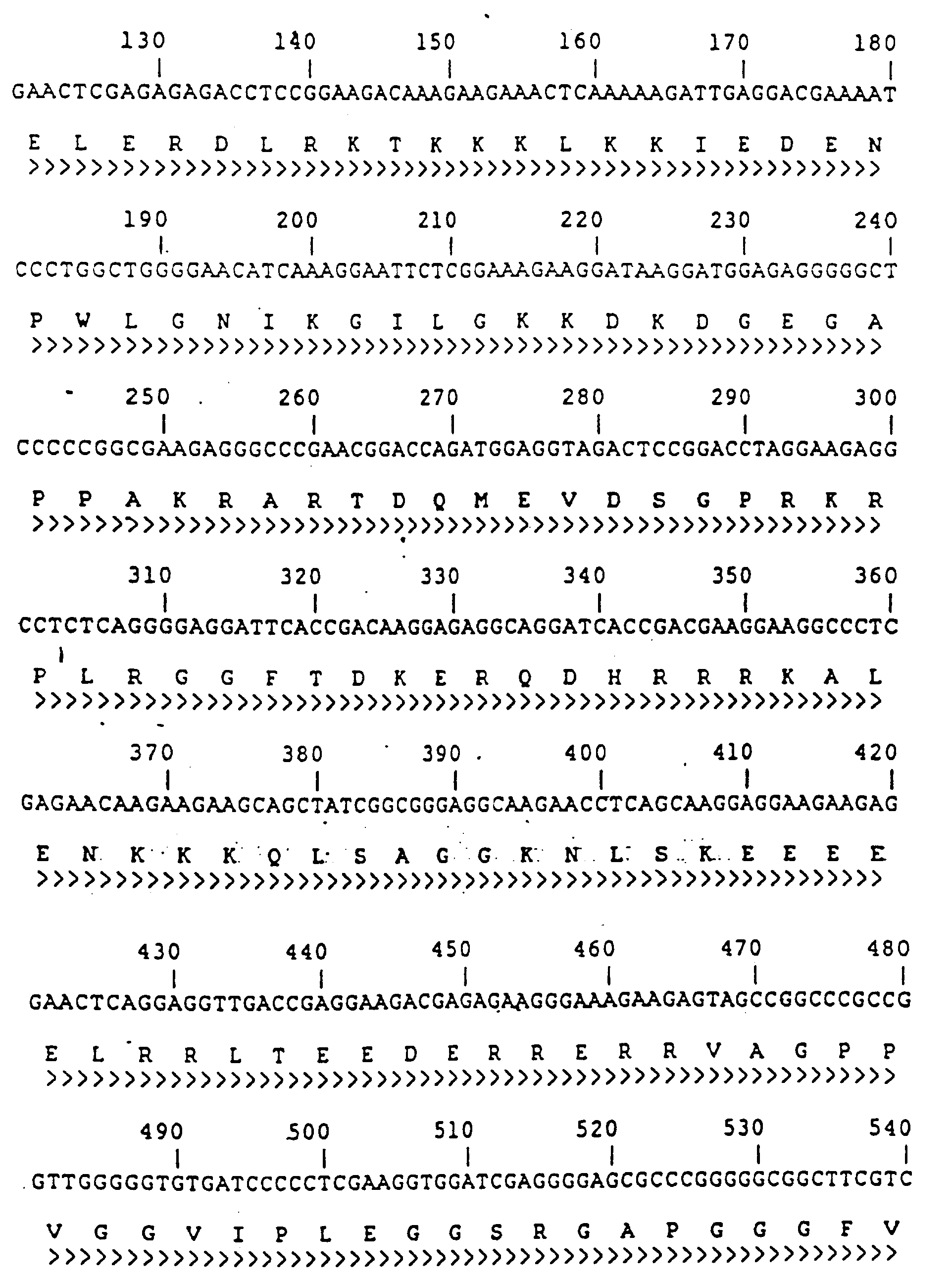

- According to the present invention a method is furnished to allow expression of a nearly full-length HDAg and recovery of the expressed polypeptide under conditions substantially preserving the conformational epitopes of the antigen, preferably without use of denaturing agents, said HDAg having an antigenicity comparable to the intact natural antigen present in infected human or chimpanzee liver cells in the sense that the recombinant HDAg-like polypeptide is cross-reactive with and has a similar affinity index as the naturally derived HDAg. Thus, the recombinant HDAg-like polypeptide of the present invention is particularly useful in immunoassay of the HDAg in body tissue and fluids or antibodies in serum specific to such HDAg. The recombinant HDAg-like polypeptide is useful as a standard for such assays as well as other reagents as more fully discussed below.
- In a preferred embodiment of the invention the HDAg-like polypeptide is encoded by an expression vector containing appropriate expression and other control elements as well as sequence encoding all but the carboxyl-terminal six amino acids of the large form of HDAg. In a specific embodiment of the invention the said expression vector is the plasmid pSORINδ, deposited at DSM N. 6774.
- According to this embodiment of the invention, E.coli cells expressing HDAg-like polypeptide from pSORINδ are centrifuged to form a cell paste, resuspended in lysis buffer, and sonicated under conditions generally disrupting the outer bacterial membrane while generally leaving the inclusion bodies intact. Any other known method for disruption of cells while leaving intact the inclusion bodies may be employed without departing from the scope of the present invention. Following cellular disruption, the cellular membranes, inclusion bodies and other cellular debris were pelleted by low speed centrifugation (e.g. 10.000 rpm in a JA17 Beckman rotor for 30 min. at 4.C). The supernatant containing the cytosolic fraction with soluble polypeptides is applied to the top of a 10-50% sucrose gradient and subjected to a 16-hour ultracentrifugation run. Thereafter, the expressed HDAg-like polypeptide is isolated from the bottom of the gradient in the form of multimeric aggregates. While the HDAg-like polypeptide isolated from sucrose gradients is eminently suited to immunodiagnostic and other applications, it is to be understood that other centrifugation media known to those skilled in the art, such as caesium sulfate and caesium chloride, may be employed for ultracentrifugation of HDAg-like polypeptide multimers.
- As an alternative to isolation of HDAg-like polypeptide by ultracentrifugation, the HDAg-like polypeptide may be purified by immunoaffinity chromatografy. The applicants have developed a double column procedure that exploits polypeptide sequence, heterologous to ORF5, that is contiguous with the ORF5 amino acid sequence at the amino terminal and carboxyl terminal portions of the expressed polypeptide. That, is, a monoclonal antibody (MAB-B) was raised to the non-ORF5 amino terminal portion of the expressed polypeptide. In like manner, a monoclonal antibody (MAB-T) was raised to the non-ORF5 carboxyl terminal portion of the expressed polypeptide. MAB-B was used on a first immunoaffinity column, and MAB-T was used on a second immunoaffinity column.
- The same cellular lysate material as was applied to the top of the sucrose gradients was applied to the first immunoaffinity column. The MAB-B-bound material was eluted and applied to the second column. Only expressed polypeptide having both amino-terminal and carboxyl-terminal portions recognized by MAB-B and MAB-T, respectively, will be retained by the second column. Such polypeptide material will include the entire ORF5 encoded by pSORINδ, since the ORF5 amino acid sequence is located between the heterologous amino acid sequences recognized by MAB-B and MAB-T. Following elution from the second column, the expressed polypeptide may be employed in a variety of immunodiagnostic and immunotherapeutic applications.
- The purified expressed HDAg-like polypeptide is useful in a variety of immunoassay formats well known in the art. The invention includes use of the purified multimeric aggregates as described above for detection of analyte antibodies or analyte antigens in patient samples. As an illustration, analyte antibodies may be detected such as total immunoglobulin (Ig) or as immunoglobulin M (IgM).
- As an example of immunoassay for anti-HDAg Ig, microtiter plates may be coated with MAB-T using standard procedures. The expressed polypeptide then may be added to the plates under conditions promoting binding of the polypeptide to MAB-T. Having attached the expressed HDAg-like polypeptide to the solid phase, patient serum and enzyme-labelled anti-HDAg polyclonal antibody may be added to the plates in a competitive immunoassay format well known to those skilled in the art. The amount of enzyme-labelled anti-HDAg polyclonal antibody bound to the plate is a measure of the amount of anti-HDAg Ig in the serum sample. In an alternative embodiment, biotinilated HDAg may be bound to the solid phase via streptavadin.
- As an illustration of immunoassay for anti-HDAg IgM, microtiter plates may be coated with anti-human IgM monoclonal antibody according to standard methods. Patient serum is then added to the plate to sequester patient IgM to the solid phase. These solid phase patient IgM antibodies are then reacted simultaneously or sequentially with HDAg-like polypeptide and with enzyme-labelled anti-HDAg polyclonal antibody. The amount of enzyme label that becomes bound to the solid phase is a measure of the amount of anti-HDAg IgM in the patient sample. In an alternative embodiment, enzyme-labelled MAB-T may be used in place of the enzyme-labelled anti-HDAg polyclonal antibody.
- Detection of analyte HDAg in a patient sample may be accomplished with a microtiter plate or other solid phase having attached an anti-HDAg antibody. Patient sample is added to the plate for reaction. The solid phase bound HDAg from the patient sample is then reacted with a labelled anti-HDAg antibody.
- Detection of analyte HDAg in a patient sample may also be accomplished in any of the competitive binding immunoassay formats known to those skilled in the art, utilizing the purified HDAg polypeptide as described above. In such formats, HDV antigen present in the patient sample competes with the expressed HDAg-like polypeptide for binding to an anti-HDAg antibody.
- The following examples are intended to illustrate but not to limit the invention.
- Total RNA from a biopsy of HDV-infected human liver was extracted as described (Chirgwin, Biochemistry 18:5294, 1979). A 20 ug sample of this RNA was analyzed in Northern blot format (Thomas, Proc. Natl. Acad. Sci. 77:5201, 1980), by hybridization to the oligonucleotide probe M316 (3' CGA ACG GAC CAG ATG GAG GTA GAC TCC GGA CCT AGG AAG AG 3') (data not shown). 18 ug of total RNA were used as template for first strand cDNA synthesis as described (Sambrook et al., supra), using as primer the oligonucleotide M314 (5' ATG AGC CGG TCC GAG TCG AGG AAG 3'). The cDNA reaction mixture was used in PCR amplification experiments (Kawasaki, In: Innis et al., eds., PCR Protocols; A Guide to Methods and Applications, Academic Press, pp. 21-27), using as primers the oligonucleotides M314 and M315 (5' TCA CTG GGG TCG ACA ACT CTG GGG AGA 3'). The PCR amplification was performed with a protocol of 35 cycles, each cycle consisting of one min. at 95C, one min. at 50C, and three min. at 65C. The amplification reaction produced two major bands: one of 300 bp and the other of 640 bp (data not shown). Southern blot analysis revealed that only the 640 bp band hybridized with oligonucleotide M316 (data not shown).
- The 640 bp band (200 ng) was cloned into SmaI-cut pTZ18R (50 ng) (Pharmacia, Sweden) by using an overnight ligation at 15C with 1 Weiss unit of T4 ligase (Promega, WI) in 20 ul 1xT4 ligase buffer (Promega, WI). The ligation mixture (10 ul) was used to transform E.coli strain JM109 cells; competent JM109 cells were prepared as described by Sambrook et al., supra. The recombinant plasmid was denominated pSORF5 (Figure 1). The 640 bp insert was sequenced with a Taq polymerase sequencing (Promega, WI).
- The expression plasmid pHBc27 (Figure 2) was used to provide appropriate transcription and other control elements for expression of HDAg. Any other equivalent expression vector is suitable. pHBc27, a derivative of pBR322, contains sequence encoding the hepatitis B virus (HBV) core antigen (HBcAg), and is described in Stahl et al., Proc. Natl. Acad. Sci. USA 79:1601 (1982). A lac promoter carrying the UV5 mutation (lac UV5 promoter), the ribosomal binding site (RBS) of beta-galactosidase, and sequence encoding the first eight amino acids of beta-galactosidase are located immediately upstream of the EcoR1 site in pHBc27. The BamH1 site in pHBc27 is located within the gene for tetracycline resistance (tet), approximately 350 bases pairs (bp) from the 3' end of the tet gene.
- The plasmid HBc27 was cut with EcoR1 and BamH1 and the large fragment (pLac, approximately 4,500 bp) containing transcription and other control elements was purified from the short fragment (1,011 bp) containing the HBcAg sequence. The EcoR1 and BamH1 ends of pLac were filled in (blunt ended) with the Klenow fragment of E.coli DNA polymerase according to standard methods (Sambrook et al., v. supra). pSORF5 provided HDAg sequence for expression of HDAg-like polypeptide. A BamH1/Rsal fragment of 627 bp encoding all but the carboxyl-terminal six amino acids of ORF5 was obtained from pSORF5, and blunt ended as described above.
- The 627 bp fragment from pSORF5 was cloned into pLac by blunt end ligation (see Sambrook et al., supra) and the correct orientation of the ORF5 insert with respect to transcriptional control elements was confirmed by restriction mapping. The resulting plasmid, pSORIN (Fig. 3, Table 2, deposited at DSM No .6774) was used to transform E.coli cells of strain W3 110, and 1.0 ml aliquots of cultures were frozen in 15% glycerol at -70C.E.coli strain W3 110 is deposited with the American Type Culture Collection (ATCC), No. 27325.


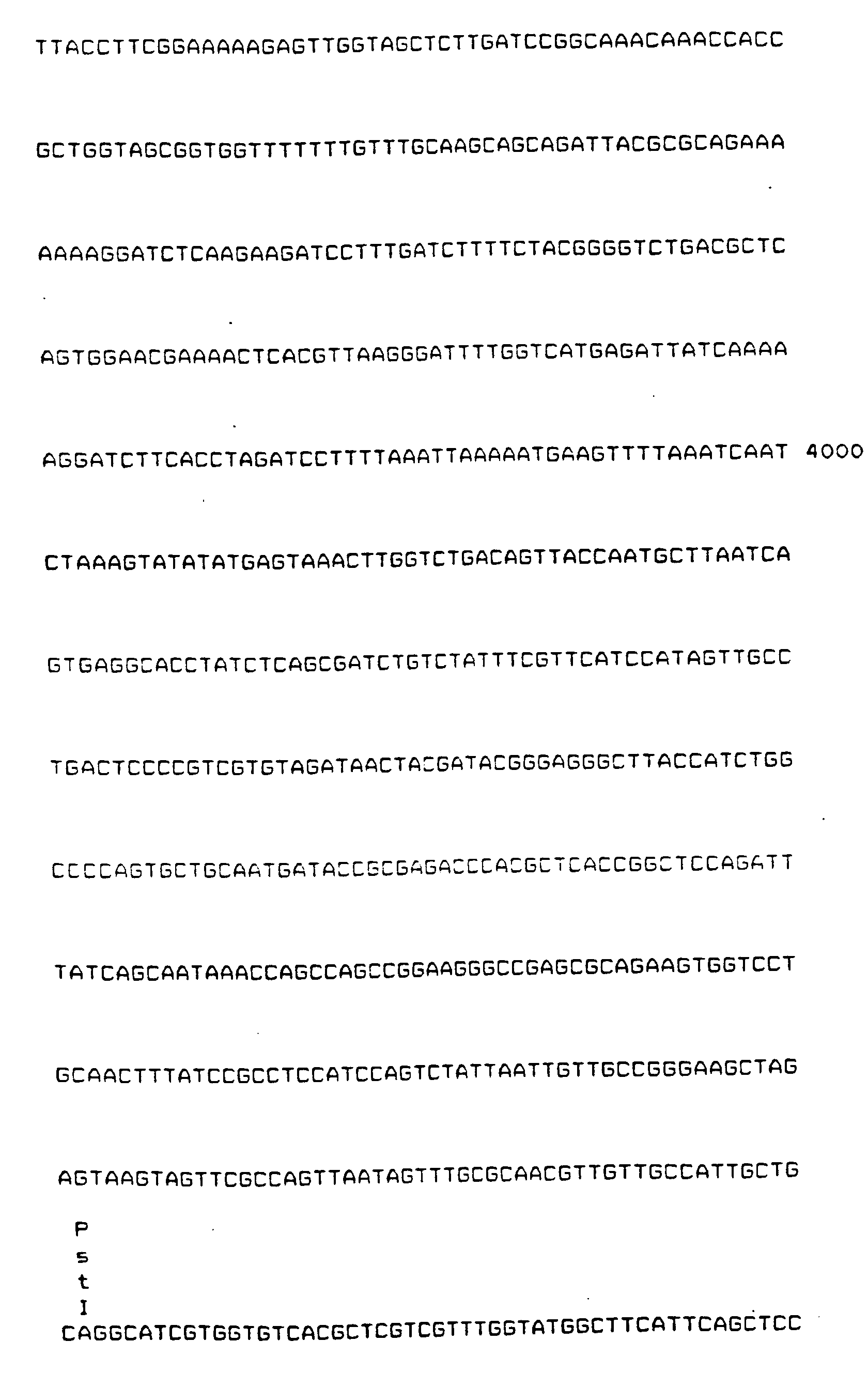

Given the structure of pSORINδ, the polypeptide expected to be expressed from pSORINδ consists of the amino acid sequence shown in Table 1, beginning with the amino terminal portion and progressing to the carboxyl terminal portion of the polypeptide: a) eight amino acids derived from beta galactosidase, b) four amino acids derived from linker sequence used in construction of the respective plasmids, c) 209 amino acids derived from ORF5 (HDAg) and d) 89 amino acids derived from the tet gene of pBR322. The eight amino acids derived from beta-galactosidase are hereinafter termed the "B" region of the expressed polypeptide. The 89 amino acids derived from the tet gene, expected to display a secondary structure including "turn" and "extended" regions, is hereinafter termed the "T" or "trailer" region. The full-length expressed polypeptide therefore comprises B, HDAg and T amino acids, and is hereinafter termed the "B-HDAg-T" polypeptide and is the preferred form of HDAg-like polypeptide. - A 1 ml frozen aliquot of stock E.coli strain W3 110 transformed with pSORIN was thawed and grown at 37C for 16 hours in Luria-Bertani broth with 50 ug/ml ampicillin. The overnight culture was inoculated into a 14-liter working volume fermenter (Chemag, F23000) and grown under the following constant conditions:
- a) Stirring rate: 400 rpm.
- b) Air flow rate: 2 liters/min.
- c) Temperature: 37C.
- d) pO2: 60%.
- e) pH: 7.4.
- The bacterial growth was monitored at 590 nm. When the culture had attained an optical density (OD) of 0.5, isopropyl-B-D-galactoside (IPTG) was added to the culture at a final concentration of 1.0 mM in order to induce expression of B-HDAg-T under control of the lac UV5 promoter. Thereafter, the temperature was reduced to 30C and the stirring rate was increased to 1,300 rpm. The cells were harvested three hours post-induction with IPTG by pelleting at 3,000xg for 10 min. at 4C.
- Pelleted E.coli cells as described above were resuspended in 50 mM Tris/HCl pH 8.0, 1.0 mM EDTA, 1.0 mM FMSF and 100 mM NaCl, then disrupted by sonication (Braun Labsonic Model 1510 sonicator; three bursts of 60 sec. each at 100W, on ice). Following sonication, 8.0 mg/ml of sodium deoxycholate were then added at 4C under mixing. The cellular membranes, inclusion bodies and other cellular debris were removed by pelleting at 10,000 rpm in a JA17 Beckman rotor for 30 min. at 4C. The supernatant was loaded on a 10-50% sucrose gradient made with 50 mM Tris/HCl pH 7.5 and the gradient centrifuged at 35,000 rpm in a SW40 TI Beckman rotor, for 16 hours at 4C. Contents of the gradient were recovered at a flow rate of 0.8 ml/min. and collected as 0.4 ml fractions. The B-HDAg-T polypeptide was found at the bottom of the gradient in the form of multimeric aggregates. The purity of the B-HDAg-T material from the gradient is estimated at 85-90% based on sodium dodecyl sulfate polyacrylamide gel electrophoresis (SDS PAGE) and staining of polypeptide bands with Coomassie brilliant blue dye. In other words, no more than 10-15% non-B-HDAg-T polypeptide is present in the isolated fractions taken from the bottom of the gradient.
- A sample of the B-HDAg-T polypeptide material obtained from sucrose gradients as described above was stained with uranyl acetate and examined with electron microscopy. The multimeric forms of HDAg obtained from the sucrose gradients are generally larger than 10. daltons The multimeric aggregates consist of nucleoprotein complexes of B-HDAg-T and RNA. It is known that HDAg is capable of binding to RNA. Chang et al., J. Virol. 62:2403 (1988). Further, the applicants have observed that sedimentation of HDAg particles (aggregates) is not observed if the E.coli lysate is treated with RNAase prior to loading on the sucrose gradient (data not shown).
- As an alternative to purification of B-HDAg-T by sucrose gradient centrifugation, a double immunoaffinity column procedure was developed allowing selection specifically of full-length B-HDAg-T polypeptide. The first immunoaffinity column comprised Sepharose-CNBr (Pharnmacia, Sweden) coupled with a monoclonal antibody raised against the...-galactosidase (B) region of B-HDAg-T according to standard techniques (MAB-B). Coupling of antibody to the Sepharose-CNBr was performed according to the procedures recommended by Pharmacia, with a coupling yield in excess of 95%. The second immunoaffinity column comprised Sepharose-CNBr coupled with a monoclonal antibody raised against the T region of the B-HDAg-T polypeptide, according to standard techniques (MAB-T). Specifically, MAB-T is specific for the sequence WRLYRRH present in the T region of B-HDAg-T.
- The same material as was applied to the top of the sucrose gradients, i.e., the crude sonicated lysate following centrifugation at 10,000 rpm for 10 min. at 4C ad described above, was applied to the immunoaffinity column containing MAB-B coupled with Sepharose-CNBr. MAB-B-bound material was eluted with high salt buffer comprising 3.5M MgCl2, 10 mM phosphate pH 7.2, then dialysed twice against 1 liter of phosphate buffered saline (PBS). The eluted material was then applied to the second immunoaffinity column containing MAB-T and eluted again with high salt buffer. The material eluted following the second immunoaffinity purification was determined to be full-length B-HDAg-T of 98% purity as determined by SDS PAGE and Coomassie Blue staining.
- Microtiter plates were coated with MAB-T (anti-WRLYRRH) using standard procedures. Then HDAg in the form of the expressed and sucrose gradient-purified B-HDAg-T polypeptide as described above were added to the plates at a concentration of 0.2 ug/ml. The plates that had been coated with B-HDAg-T were incubated at room temperature for 18 hours, then washed with BPS. Following washing, the plates were suitable for use in determination of total Ig anti-HDV in blood sera.
- Each well of the microtiter plates treated as above received 10 ul of serum to be analyzed. Immediately following addition of test serum, an anti-HDAg polyclonal antibody preparation labelled with horseradish peroxidase (HRP) was added to each well. Following three hours of incubation at 37C, the reagents were washed out and the quantity of anti-HDV polyclonal antibody bound to the plate was observed by addition of H2O2 and tetramethylbenzidine. The colorimetric reaction was stopped with 1.0 M sulfuric acid and the absorbance at 450 nm and 630 nm was measured. In this competitive assay format, the amount of anti-HDAg polyclonal antibody bound to the microtiter plate, as measured by the colorimetric reaction with HRP, is inversely proportional to the amount of anti-HDAg antibody in the serum sample.
- Microtiter plates were coated with anti-human IgM monoclonal antibody according to standard methods. Sera to be tested (10 ul) were added to the plate wells and incubated for one hour at 37C. Following this, anti-HDAg polyclonal antibody labelled with HRP and the expressed, sucrose gradient-purified B-HDAg-T polypeptide as described above were added to the plates and incubated for two hours at 37C. Following this incubation, the unbound reagents were removed by washing and the quantity of HRP-labelled antibody bound to the plates was observed by performing the colorimetric reaction as described above.
Claims (9)
- A composition comprising a multimeric aggregate able to raise antibody against hepatitis D antigen (HDAg), said multimeric aggregate comprising recombinant polypeptides, wherein said polypeptides comprise:
a first aminoacid sequence having an antigenicity of HDAg;
a second aminoacid sequence at the amino-terminal of said first aminoacid sequence and a third aminoacid sequence at the carboxy-terminal of said first aminoacid sequence, said second and said third amino acid sequences being heterologous to the sequence of HDAg;
said second aminoacid sequence having the following sequence:
M T M I T D S L
said third aminocid sequence having the following sequence:
- The composition according to claim 1 wherein said polypeptides comprise the following aminoacid sequence:


- The composition according to any of previous claims wherein said multimeric aggregate comprises RNA.
- An immunoassay kit comprising as specific reagent the composition according to any of previous claims.
- A method of immunoassay of an analyte antibody specific to HDAg in a sample comprising the steps of:
reacting said sample with the composition of any of claims from 1 to 3 to get the binding thereof with said analyte antibody;
detecting said binding. - A method of immunoassay of an analyte HDAg in a sample comprising the steps of:
competitive binding to an antibody specific to HDAg of said analyte antigen and of the composition of any of claims from 1 to 3;
detecting said competitive binding. - A process of recovering multimeric aggregate according to claim from 1 to 3 from host cells comprising the steps of:
disrupting said host cells by sonication;
separating said aggregates from cell membrane material and cell inclusion bodies by centrifugation. - A process of recovering multimeric aggregate according to claim from 1 to 3 from host cells comprising the steps of:
disrupting said host cells by sonication;
separating said aggregates from cell membrane material and cell inclusion bodies by centrifugation;
further separating said aggregates from cytosolic material by sequential immunoaffinity chromatography specific to said second aminoacid sequence and to said third aminoacid sequence. - A nucleic acid coding for the polypetide of claim 3 having the following sequence:

Applications Claiming Priority (2)
| Application Number | Priority Date | Filing Date | Title |
|---|---|---|---|
| IT6786590 | 1990-11-05 | ||
| IT67865A IT1241003B (en) | 1990-11-05 | 1990-11-05 | PROCEDURE FOR THE PURIFICATION OF AN EQUIVALENT RECOMBINING POLYPEPTIDE HDIV, EQUIVALENT POLYPEPTIDE HDAG AND IMMUNOLOGICAL TESTS USING IT |
Publications (3)
| Publication Number | Publication Date |
|---|---|
| EP0485347A2 EP0485347A2 (en) | 1992-05-13 |
| EP0485347A3 EP0485347A3 (en) | 1992-07-29 |
| EP0485347B1 true EP0485347B1 (en) | 1994-09-14 |
Family
ID=11305904
Family Applications (1)
| Application Number | Title | Priority Date | Filing Date |
|---|---|---|---|
| EP91830479A Expired - Lifetime EP0485347B1 (en) | 1990-11-05 | 1991-11-04 | Recombinant hepatitis delta antigen, process for the purification and use thereof |
Country Status (6)
| Country | Link |
|---|---|
| EP (1) | EP0485347B1 (en) |
| AT (1) | ATE111488T1 (en) |
| DE (1) | DE69104012T2 (en) |
| ES (1) | ES2064071T3 (en) |
| HK (1) | HK1004267A1 (en) |
| IT (1) | IT1241003B (en) |
Cited By (1)
| Publication number | Priority date | Publication date | Assignee | Title |
|---|---|---|---|---|
| CN101680889A (en) * | 2007-05-08 | 2010-03-24 | 霍夫曼-拉罗奇有限公司 | Method for detecting specific immunoglobulin G-class antibodies |
Families Citing this family (3)
| Publication number | Priority date | Publication date | Assignee | Title |
|---|---|---|---|---|
| IT1255660B (en) * | 1992-06-08 | 1995-11-09 | Sorin Biomedica Spa | STABILIZED COMPOSITIONS OF HDAG. |
| US5445932A (en) * | 1992-11-17 | 1995-08-29 | The United States Of America As Represented By The Department Of Health And Human Services | Method for detection of a new marker associated with hepatitis delta virus infection |
| US6844171B1 (en) * | 1998-07-02 | 2005-01-18 | President And Fellows Of Harvard College | Oligomerization of hepatitis delta antigen |
Family Cites Families (2)
| Publication number | Priority date | Publication date | Assignee | Title |
|---|---|---|---|---|
| DE3584866D1 (en) * | 1984-09-12 | 1992-01-23 | Chiron Corp | HYBRID PARTICLE IMMUNOGENES. |
| CA1338800C (en) * | 1986-06-17 | 1996-12-17 | Michael Houghton | Hepatitis delta and diagnostics and vaccines |
-
1990
- 1990-11-05 IT IT67865A patent/IT1241003B/en active IP Right Grant
-
1991
- 1991-11-04 EP EP91830479A patent/EP0485347B1/en not_active Expired - Lifetime
- 1991-11-04 DE DE69104012T patent/DE69104012T2/en not_active Expired - Fee Related
- 1991-11-04 AT AT91830479T patent/ATE111488T1/en active
- 1991-11-04 ES ES91830479T patent/ES2064071T3/en not_active Expired - Lifetime
-
1998
- 1998-04-23 HK HK98103386A patent/HK1004267A1/en not_active IP Right Cessation
Cited By (2)
| Publication number | Priority date | Publication date | Assignee | Title |
|---|---|---|---|---|
| CN101680889A (en) * | 2007-05-08 | 2010-03-24 | 霍夫曼-拉罗奇有限公司 | Method for detecting specific immunoglobulin G-class antibodies |
| CN103777024B (en) * | 2007-05-08 | 2017-04-12 | 霍夫曼-拉罗奇有限公司 | Method for detection of specific immunoglobulin class G antibodies |
Also Published As
| Publication number | Publication date |
|---|---|
| EP0485347A3 (en) | 1992-07-29 |
| IT9067865A0 (en) | 1990-11-05 |
| IT9067865A1 (en) | 1992-05-05 |
| IT1241003B (en) | 1993-12-27 |
| ATE111488T1 (en) | 1994-09-15 |
| DE69104012T2 (en) | 1995-05-11 |
| HK1004267A1 (en) | 1998-11-20 |
| ES2064071T3 (en) | 1995-01-16 |
| DE69104012D1 (en) | 1994-10-20 |
| EP0485347A2 (en) | 1992-05-13 |
Similar Documents
| Publication | Publication Date | Title |
|---|---|---|
| EP0013828B2 (en) | Recombinant DNA, hosts transformed with it and processes for the preparation of polypeptides | |
| Hedegaard et al. | Type 1 fimbriae of Escherichia coli as carriers of heterologous antigenic sequences | |
| US4784941A (en) | Expression and diagnostic use of pENV-3 encoded peptides which are immunologically reactive with antibodies to LAV | |
| JPH11313671A (en) | Synthetic HIV transmembrane protein and synthetic gene encoding the same | |
| GB2239245A (en) | Post-transfusional non-A non-B hepatitis viral polypeptides | |
| EP0182442B1 (en) | Recombinant dna molecules and their method of production | |
| NZ226026A (en) | Immunoassay for an antibody using recombinant antigens expressed in two different genera | |
| US5874533A (en) | HIV-2 envelope polypeptides | |
| JP3061196B2 (en) | Immunologically active peptides or polypeptides of parvovirus B19 | |
| US4968627A (en) | DNA fragments coding an immunogen peptide liable of inducing in vivo synthesis of anti-poliovirus antibodies | |
| EP0485347A2 (en) | Recombinant hepatitis delta antigen, process for the purification and use thereof | |
| HK1004267B (en) | Recombinant hepatitis delta antigen, process for the purification and use thereof | |
| Bartholomä et al. | Bacterial expression of the capsid antigen domain and identification of native gag proteins in spumavirus-infected cells | |
| EP0238893B1 (en) | Recombinant parvovirus ra-1 products and methods of use thereof | |
| KR100425884B1 (en) | DNA sequence encoding the specific and antigenic outer membrane protein of Salmonella typhi | |
| US6268122B1 (en) | Recombinant DNA molecules and their method of production | |
| Bonelli et al. | Recombinant hepatitis delta antigen, process for the purification and use thereof | |
| Friefeld et al. | The 140-kDa adenovirus DNA polymerase is recognized by antibodies to Escherichia coli-synthesized determinants predicted from an open reading frame on the adenovirus genome. | |
| Barber et al. | Expression of Lassa virus nucleocapsid protein segments in bacteria: purification of high-level expression products and their application in antibody detection | |
| US7122346B2 (en) | Process for the recombinant production of ribonucleoproteins | |
| Calogero et al. | Purification of recombinant hepatitis delta antigen expressed in E. coli cells | |
| CA1341644C (en) | Recombinant dna molecules and their method of production | |
| JP2869063B2 (en) | Expression and use of gag-encoded peptides that are immunoreactive with antibodies to LAV | |
| RU2151801C1 (en) | Recombinant plasmid dna pul 32 hcmv determining expression of human cytomegalovirus gene ul 32 fragment encoding hydrophilic site of basic matrix protein pp 150 in escherichia coli bacterium cells | |
| RU2205218C2 (en) | Recombinant plasmid dna p31nc encoding 15 amino acid nucleocapsid protein of swine reproductive-respiratory syndrome virus and providing its expression in cells of bacterium escherichia coli |
Legal Events
| Date | Code | Title | Description |
|---|---|---|---|
| PUAI | Public reference made under article 153(3) epc to a published international application that has entered the european phase |
Free format text: ORIGINAL CODE: 0009012 |
|
| AK | Designated contracting states |
Kind code of ref document: A2 Designated state(s): AT BE CH DE DK ES FR GB GR IT LI LU NL SE |
|
| PUAL | Search report despatched |
Free format text: ORIGINAL CODE: 0009013 |
|
| AK | Designated contracting states |
Kind code of ref document: A3 Designated state(s): AT BE CH DE DK ES FR GB GR IT LI LU NL SE |
|
| 17P | Request for examination filed |
Effective date: 19921105 |
|
| 17Q | First examination report despatched |
Effective date: 19921203 |
|
| GRAA | (expected) grant |
Free format text: ORIGINAL CODE: 0009210 |
|
| AK | Designated contracting states |
Kind code of ref document: B1 Designated state(s): AT BE CH DE DK ES FR GB GR IT LI LU NL SE |
|
| PG25 | Lapsed in a contracting state [announced via postgrant information from national office to epo] |
Ref country code: AT Effective date: 19940914 Ref country code: DK Effective date: 19940914 |
|
| REF | Corresponds to: |
Ref document number: 111488 Country of ref document: AT Date of ref document: 19940915 Kind code of ref document: T |
|
| REF | Corresponds to: |
Ref document number: 69104012 Country of ref document: DE Date of ref document: 19941020 |
|
| ITF | It: translation for a ep patent filed | ||
| PG25 | Lapsed in a contracting state [announced via postgrant information from national office to epo] |
Ref country code: LU Free format text: LAPSE BECAUSE OF NON-PAYMENT OF DUE FEES Effective date: 19941130 |
|
| PG25 | Lapsed in a contracting state [announced via postgrant information from national office to epo] |
Ref country code: SE Effective date: 19941214 |
|
| REG | Reference to a national code |
Ref country code: ES Ref legal event code: FG2A Ref document number: 2064071 Country of ref document: ES Kind code of ref document: T3 |
|
| ET | Fr: translation filed | ||
| REG | Reference to a national code |
Ref country code: GR Ref legal event code: FG4A Free format text: 3014288 |
|
| PLBI | Opposition filed |
Free format text: ORIGINAL CODE: 0009260 |
|
| 26 | Opposition filed |
Opponent name: CHIRON CORPORATION Effective date: 19950614 |
|
| NLR1 | Nl: opposition has been filed with the epo |
Opponent name: CHIRON CORPORATION |
|
| PLBF | Reply of patent proprietor to notice(s) of opposition |
Free format text: ORIGINAL CODE: EPIDOS OBSO |
|
| PLBF | Reply of patent proprietor to notice(s) of opposition |
Free format text: ORIGINAL CODE: EPIDOS OBSO |
|
| PLBF | Reply of patent proprietor to notice(s) of opposition |
Free format text: ORIGINAL CODE: EPIDOS OBSO |
|
| REG | Reference to a national code |
Ref country code: CH Ref legal event code: PUE Owner name: SORIN BIOMEDICA S.P.A. TRANSFER- SORIN BIOMEDICA D |
|
| NLS | Nl: assignments of ep-patents |
Owner name: SORIN BIOMEDICA DIAGNOSTICS S.P.A. |
|
| REG | Reference to a national code |
Ref country code: GB Ref legal event code: 732E |
|
| REG | Reference to a national code |
Ref country code: FR Ref legal event code: TP |
|
| REG | Reference to a national code |
Ref country code: ES Ref legal event code: PC2A |
|
| REG | Reference to a national code |
Ref country code: CH Ref legal event code: PUE Owner name: SORIN BIOMEDICA DIAGNOSTICS S.P.A. TRANSFER- WABCO |
|
| NLS | Nl: assignments of ep-patents |
Owner name: WABCO B.V. |
|
| REG | Reference to a national code |
Ref country code: GB Ref legal event code: 732E |
|
| REG | Reference to a national code |
Ref country code: FR Ref legal event code: TP |
|
| REG | Reference to a national code |
Ref country code: ES Ref legal event code: PC2A |
|
| PLBO | Opposition rejected |
Free format text: ORIGINAL CODE: EPIDOS REJO |
|
| PLBN | Opposition rejected |
Free format text: ORIGINAL CODE: 0009273 |
|
| STAA | Information on the status of an ep patent application or granted ep patent |
Free format text: STATUS: OPPOSITION REJECTED |
|
| 27O | Opposition rejected |
Effective date: 19981221 |
|
| NLR2 | Nl: decision of opposition | ||
| REG | Reference to a national code |
Ref country code: CH Ref legal event code: PUE Owner name: WABCO B.V. TRANSFER- DIASORIN INTERNATIONAL, INC. |
|
| BECA | Be: change of holder's address |
Free format text: 20001108 *DIASORIN INTERNATIONAL INC.:15 WEST 54TH STREET, NEW YORK NY 10019 |
|
| NLS | Nl: assignments of ep-patents |
Owner name: DIASORIN INTERNATIONAL, INC. |
|
| REG | Reference to a national code |
Ref country code: ES Ref legal event code: PC2A |
|
| REG | Reference to a national code |
Ref country code: GB Ref legal event code: 732E |
|
| REG | Reference to a national code |
Ref country code: FR Ref legal event code: TP |
|
| REG | Reference to a national code |
Ref country code: GB Ref legal event code: IF02 |
|
| REG | Reference to a national code |
Ref country code: CH Ref legal event code: PUE Owner name: DIASORIN INTERNATIONAL, INC. TRANSFER- DIASORIN S. |
|
| REG | Reference to a national code |
Ref country code: ES Ref legal event code: PC2A |
|
| NLS | Nl: assignments of ep-patents |
Owner name: DIASORIN S.R.L. |
|
| REG | Reference to a national code |
Ref country code: FR Ref legal event code: TP |
|
| NLS | Nl: assignments of ep-patents |
Owner name: DIASORIN S.R.L. |
|
| REG | Reference to a national code |
Ref country code: CH Ref legal event code: PFA Owner name: DIASORIN S.R.L. Free format text: DIASORIN S.R.L.#VIA CRESCENTINO#13040 SALUGGIA VC (IT) -TRANSFER TO- DIASORIN S.R.L.#VIA CRESCENTINO#13040 SALUGGIA VC (IT) |
|
| PGFP | Annual fee paid to national office [announced via postgrant information from national office to epo] |
Ref country code: CH Payment date: 20081024 Year of fee payment: 18 Ref country code: NL Payment date: 20081017 Year of fee payment: 18 Ref country code: DE Payment date: 20081119 Year of fee payment: 18 |
|
| PGFP | Annual fee paid to national office [announced via postgrant information from national office to epo] |
Ref country code: ES Payment date: 20081111 Year of fee payment: 18 |
|
| PGFP | Annual fee paid to national office [announced via postgrant information from national office to epo] |
Ref country code: BE Payment date: 20081128 Year of fee payment: 18 Ref country code: IT Payment date: 20081124 Year of fee payment: 18 |
|
| PGFP | Annual fee paid to national office [announced via postgrant information from national office to epo] |
Ref country code: FR Payment date: 20081013 Year of fee payment: 18 |
|
| PGFP | Annual fee paid to national office [announced via postgrant information from national office to epo] |
Ref country code: GR Payment date: 20081017 Year of fee payment: 18 Ref country code: GB Payment date: 20081022 Year of fee payment: 18 |
|
| BERE | Be: lapsed |
Owner name: *DIASORIN S.R.L. Effective date: 20091130 |
|
| REG | Reference to a national code |
Ref country code: NL Ref legal event code: V1 Effective date: 20100601 |
|
| REG | Reference to a national code |
Ref country code: CH Ref legal event code: PL |
|
| GBPC | Gb: european patent ceased through non-payment of renewal fee |
Effective date: 20091104 |
|
| REG | Reference to a national code |
Ref country code: FR Ref legal event code: ST Effective date: 20100730 |
|
| PG25 | Lapsed in a contracting state [announced via postgrant information from national office to epo] |
Ref country code: BE Free format text: LAPSE BECAUSE OF NON-PAYMENT OF DUE FEES Effective date: 20091130 Ref country code: NL Free format text: LAPSE BECAUSE OF NON-PAYMENT OF DUE FEES Effective date: 20100601 Ref country code: CH Free format text: LAPSE BECAUSE OF NON-PAYMENT OF DUE FEES Effective date: 20091130 Ref country code: FR Free format text: LAPSE BECAUSE OF NON-PAYMENT OF DUE FEES Effective date: 20091130 Ref country code: LI Free format text: LAPSE BECAUSE OF NON-PAYMENT OF DUE FEES Effective date: 20091130 Ref country code: GR Free format text: LAPSE BECAUSE OF NON-PAYMENT OF DUE FEES Effective date: 20100602 |
|
| PG25 | Lapsed in a contracting state [announced via postgrant information from national office to epo] |
Ref country code: DE Free format text: LAPSE BECAUSE OF NON-PAYMENT OF DUE FEES Effective date: 20100601 |
|
| PG25 | Lapsed in a contracting state [announced via postgrant information from national office to epo] |
Ref country code: GB Free format text: LAPSE BECAUSE OF NON-PAYMENT OF DUE FEES Effective date: 20091104 |
|
| PG25 | Lapsed in a contracting state [announced via postgrant information from national office to epo] |
Ref country code: IT Free format text: LAPSE BECAUSE OF NON-PAYMENT OF DUE FEES Effective date: 20091104 |
|
| REG | Reference to a national code |
Ref country code: ES Ref legal event code: FD2A Effective date: 20111116 |
|
| PG25 | Lapsed in a contracting state [announced via postgrant information from national office to epo] |
Ref country code: ES Free format text: LAPSE BECAUSE OF NON-PAYMENT OF DUE FEES Effective date: 20091105 |