EP0483113B1 - A method of producing an enzymatically active polypeptide analog of human Cu/Zn SOD - Google Patents
A method of producing an enzymatically active polypeptide analog of human Cu/Zn SOD Download PDFInfo
- Publication number
- EP0483113B1 EP0483113B1 EP92101250A EP92101250A EP0483113B1 EP 0483113 B1 EP0483113 B1 EP 0483113B1 EP 92101250 A EP92101250 A EP 92101250A EP 92101250 A EP92101250 A EP 92101250A EP 0483113 B1 EP0483113 B1 EP 0483113B1
- Authority
- EP
- European Patent Office
- Prior art keywords
- sod
- superoxide dismutase
- human
- analog
- protein
- Prior art date
- Legal status (The legal status is an assumption and is not a legal conclusion. Google has not performed a legal analysis and makes no representation as to the accuracy of the status listed.)
- Expired - Lifetime
Links
- 229920001184 polypeptide Polymers 0.000 title claims abstract description 50
- 108090000765 processed proteins & peptides Proteins 0.000 title claims abstract description 50
- 102000004196 processed proteins & peptides Human genes 0.000 title claims abstract description 50
- 238000000034 method Methods 0.000 title claims description 45
- 108090000623 proteins and genes Proteins 0.000 claims abstract description 118
- 239000013612 plasmid Substances 0.000 claims abstract description 113
- 230000001580 bacterial effect Effects 0.000 claims abstract description 37
- 108010012715 Superoxide dismutase Proteins 0.000 claims description 158
- 102000019197 Superoxide Dismutase Human genes 0.000 claims description 157
- 235000018102 proteins Nutrition 0.000 claims description 42
- 102000004169 proteins and genes Human genes 0.000 claims description 42
- 241000588724 Escherichia coli Species 0.000 claims description 41
- 239000002609 medium Substances 0.000 claims description 34
- 239000000243 solution Substances 0.000 claims description 30
- 239000011701 zinc Substances 0.000 claims description 29
- 230000006698 induction Effects 0.000 claims description 21
- 239000006228 supernatant Substances 0.000 claims description 20
- 230000012010 growth Effects 0.000 claims description 19
- 239000013587 production medium Substances 0.000 claims description 16
- 108010079058 casein hydrolysate Proteins 0.000 claims description 14
- 239000012460 protein solution Substances 0.000 claims description 13
- 239000000725 suspension Substances 0.000 claims description 8
- 102000008221 Superoxide Dismutase-1 Human genes 0.000 claims description 7
- 108010021188 Superoxide Dismutase-1 Proteins 0.000 claims description 7
- 150000001450 anions Chemical class 0.000 claims description 6
- 229910052725 zinc Inorganic materials 0.000 claims description 6
- HCHKCACWOHOZIP-UHFFFAOYSA-N Zinc Chemical compound [Zn] HCHKCACWOHOZIP-UHFFFAOYSA-N 0.000 claims description 4
- 238000011084 recovery Methods 0.000 claims description 4
- 239000010414 supernatant solution Substances 0.000 claims description 3
- 230000004071 biological effect Effects 0.000 claims description 2
- 238000001816 cooling Methods 0.000 claims description 2
- 230000002401 inhibitory effect Effects 0.000 claims description 2
- 125000003275 alpha amino acid group Chemical group 0.000 claims 1
- 238000005571 anion exchange chromatography Methods 0.000 claims 1
- 238000005277 cation exchange chromatography Methods 0.000 claims 1
- 238000004113 cell culture Methods 0.000 claims 1
- JZCCFEFSEZPSOG-UHFFFAOYSA-L copper(II) sulfate pentahydrate Chemical compound O.O.O.O.O.[Cu+2].[O-]S([O-])(=O)=O JZCCFEFSEZPSOG-UHFFFAOYSA-L 0.000 claims 1
- 238000010438 heat treatment Methods 0.000 claims 1
- RZLVQBNCHSJZPX-UHFFFAOYSA-L zinc sulfate heptahydrate Chemical compound O.O.O.O.O.O.O.[Zn+2].[O-]S([O-])(=O)=O RZLVQBNCHSJZPX-UHFFFAOYSA-L 0.000 claims 1
- 239000013598 vector Substances 0.000 abstract description 86
- 230000027455 binding Effects 0.000 abstract description 82
- 210000004027 cell Anatomy 0.000 abstract description 73
- 210000003705 ribosome Anatomy 0.000 abstract description 71
- 230000014509 gene expression Effects 0.000 abstract description 37
- 239000012634 fragment Substances 0.000 abstract description 32
- 108091028043 Nucleic acid sequence Proteins 0.000 abstract description 28
- 108091081024 Start codon Proteins 0.000 abstract description 21
- 230000010076 replication Effects 0.000 abstract description 18
- 108091008146 restriction endonucleases Proteins 0.000 abstract description 17
- 108020004414 DNA Proteins 0.000 abstract description 15
- 238000003780 insertion Methods 0.000 abstract description 12
- 230000037431 insertion Effects 0.000 abstract description 12
- 108020004999 messenger RNA Proteins 0.000 abstract description 12
- 241001515965 unidentified phage Species 0.000 abstract description 8
- 101710141454 Nucleoprotein Proteins 0.000 abstract description 7
- 108020004705 Codon Proteins 0.000 abstract description 5
- 102000009661 Repressor Proteins Human genes 0.000 abstract description 4
- 108010034634 Repressor Proteins Proteins 0.000 abstract description 4
- 102000053602 DNA Human genes 0.000 abstract description 3
- FAPWRFPIFSIZLT-UHFFFAOYSA-M Sodium chloride Chemical compound [Na+].[Cl-] FAPWRFPIFSIZLT-UHFFFAOYSA-M 0.000 description 28
- 235000002639 sodium chloride Nutrition 0.000 description 25
- 241000894006 Bacteria Species 0.000 description 21
- 238000004519 manufacturing process Methods 0.000 description 21
- 239000010949 copper Substances 0.000 description 19
- 239000002054 inoculum Substances 0.000 description 18
- YBJHBAHKTGYVGT-ZKWXMUAHSA-N (+)-Biotin Chemical compound N1C(=O)N[C@@H]2[C@H](CCCCC(=O)O)SC[C@@H]21 YBJHBAHKTGYVGT-ZKWXMUAHSA-N 0.000 description 16
- 239000013604 expression vector Substances 0.000 description 16
- 239000004098 Tetracycline Substances 0.000 description 15
- 150000001413 amino acids Chemical class 0.000 description 15
- 229960002180 tetracycline Drugs 0.000 description 15
- 229930101283 tetracycline Natural products 0.000 description 15
- 235000019364 tetracycline Nutrition 0.000 description 15
- 150000003522 tetracyclines Chemical class 0.000 description 15
- 230000000694 effects Effects 0.000 description 14
- 239000011780 sodium chloride Substances 0.000 description 14
- 230000005030 transcription termination Effects 0.000 description 14
- 230000014616 translation Effects 0.000 description 14
- 238000000108 ultra-filtration Methods 0.000 description 14
- 230000035897 transcription Effects 0.000 description 13
- 238000013518 transcription Methods 0.000 description 13
- QKNYBSVHEMOAJP-UHFFFAOYSA-N 2-amino-2-(hydroxymethyl)propane-1,3-diol;hydron;chloride Chemical compound Cl.OCC(N)(CO)CO QKNYBSVHEMOAJP-UHFFFAOYSA-N 0.000 description 12
- 238000010276 construction Methods 0.000 description 12
- 239000000872 buffer Substances 0.000 description 11
- 238000013519 translation Methods 0.000 description 11
- 108090000204 Dipeptidase 1 Proteins 0.000 description 10
- 125000002924 primary amino group Chemical group [H]N([H])* 0.000 description 10
- 150000003839 salts Chemical class 0.000 description 10
- 102000004190 Enzymes Human genes 0.000 description 9
- 108090000790 Enzymes Proteins 0.000 description 9
- PEDCQBHIVMGVHV-UHFFFAOYSA-N Glycerine Chemical compound OCC(O)CO PEDCQBHIVMGVHV-UHFFFAOYSA-N 0.000 description 9
- 241000283690 Bos taurus Species 0.000 description 8
- 229910017518 Cu Zn Inorganic materials 0.000 description 8
- 102000004594 DNA Polymerase I Human genes 0.000 description 8
- 108010017826 DNA Polymerase I Proteins 0.000 description 8
- 229920002684 Sepharose Polymers 0.000 description 8
- QVGXLLKOCUKJST-UHFFFAOYSA-N atomic oxygen Chemical compound [O] QVGXLLKOCUKJST-UHFFFAOYSA-N 0.000 description 8
- 229960002685 biotin Drugs 0.000 description 8
- 235000020958 biotin Nutrition 0.000 description 8
- 239000011616 biotin Substances 0.000 description 8
- 239000002299 complementary DNA Substances 0.000 description 8
- 239000001301 oxygen Substances 0.000 description 8
- 229910052760 oxygen Inorganic materials 0.000 description 8
- 230000009467 reduction Effects 0.000 description 8
- 238000006722 reduction reaction Methods 0.000 description 8
- 229910017752 Cu-Zn Inorganic materials 0.000 description 7
- 229910017943 Cu—Zn Inorganic materials 0.000 description 7
- 238000005273 aeration Methods 0.000 description 7
- 235000001014 amino acid Nutrition 0.000 description 7
- 102000006635 beta-lactamase Human genes 0.000 description 7
- TVZPLCNGKSPOJA-UHFFFAOYSA-N copper zinc Chemical compound [Cu].[Zn] TVZPLCNGKSPOJA-UHFFFAOYSA-N 0.000 description 7
- 230000001965 increasing effect Effects 0.000 description 7
- 239000007974 sodium acetate buffer Substances 0.000 description 7
- WQZGKKKJIJFFOK-GASJEMHNSA-N Glucose Natural products OC[C@H]1OC(O)[C@H](O)[C@@H](O)[C@@H]1O WQZGKKKJIJFFOK-GASJEMHNSA-N 0.000 description 6
- QNAYBMKLOCPYGJ-REOHCLBHSA-N L-alanine Chemical compound C[C@H](N)C(O)=O QNAYBMKLOCPYGJ-REOHCLBHSA-N 0.000 description 6
- VMHLLURERBWHNL-UHFFFAOYSA-M Sodium acetate Chemical compound [Na+].CC([O-])=O VMHLLURERBWHNL-UHFFFAOYSA-M 0.000 description 6
- -1 Vol. I Proteins 0.000 description 6
- 235000004279 alanine Nutrition 0.000 description 6
- 229940041514 candida albicans extract Drugs 0.000 description 6
- 229910052802 copper Inorganic materials 0.000 description 6
- 230000006378 damage Effects 0.000 description 6
- ZPWVASYFFYYZEW-UHFFFAOYSA-L dipotassium hydrogen phosphate Chemical compound [K+].[K+].OP([O-])([O-])=O ZPWVASYFFYYZEW-UHFFFAOYSA-L 0.000 description 6
- 229910000396 dipotassium phosphate Inorganic materials 0.000 description 6
- 230000002255 enzymatic effect Effects 0.000 description 6
- 239000012595 freezing medium Substances 0.000 description 6
- 239000008103 glucose Substances 0.000 description 6
- XLYOFNOQVPJJNP-ZSJDYOACSA-N heavy water Substances [2H]O[2H] XLYOFNOQVPJJNP-ZSJDYOACSA-N 0.000 description 6
- 238000004255 ion exchange chromatography Methods 0.000 description 6
- 229910052751 metal Inorganic materials 0.000 description 6
- 239000002184 metal Substances 0.000 description 6
- 244000005700 microbiome Species 0.000 description 6
- 210000000056 organ Anatomy 0.000 description 6
- 101150017120 sod gene Proteins 0.000 description 6
- 239000001632 sodium acetate Substances 0.000 description 6
- 235000017281 sodium acetate Nutrition 0.000 description 6
- 239000011573 trace mineral Substances 0.000 description 6
- 235000013619 trace mineral Nutrition 0.000 description 6
- 230000009466 transformation Effects 0.000 description 6
- 239000012138 yeast extract Substances 0.000 description 6
- MHAJPDPJQMAIIY-UHFFFAOYSA-N Hydrogen peroxide Chemical compound OO MHAJPDPJQMAIIY-UHFFFAOYSA-N 0.000 description 5
- 239000006137 Luria-Bertani broth Substances 0.000 description 5
- 239000008366 buffered solution Substances 0.000 description 5
- 238000005119 centrifugation Methods 0.000 description 5
- ARUVKPQLZAKDPS-UHFFFAOYSA-L copper(II) sulfate Chemical compound [Cu+2].[O-][S+2]([O-])([O-])[O-] ARUVKPQLZAKDPS-UHFFFAOYSA-L 0.000 description 5
- 229910000366 copper(II) sulfate Inorganic materials 0.000 description 5
- 239000012153 distilled water Substances 0.000 description 5
- 229910052564 epsomite Inorganic materials 0.000 description 5
- 239000000499 gel Substances 0.000 description 5
- 229920002401 polyacrylamide Polymers 0.000 description 5
- 239000000047 product Substances 0.000 description 5
- XLYOFNOQVPJJNP-UHFFFAOYSA-N water Chemical compound O XLYOFNOQVPJJNP-UHFFFAOYSA-N 0.000 description 5
- RYGMFSIKBFXOCR-UHFFFAOYSA-N Copper Chemical compound [Cu] RYGMFSIKBFXOCR-UHFFFAOYSA-N 0.000 description 4
- 229920002271 DEAE-Sepharose Polymers 0.000 description 4
- 238000013019 agitation Methods 0.000 description 4
- 229960000723 ampicillin Drugs 0.000 description 4
- AVKUERGKIZMTKX-NJBDSQKTSA-N ampicillin Chemical compound C1([C@@H](N)C(=O)N[C@H]2[C@H]3SC([C@@H](N3C2=O)C(O)=O)(C)C)=CC=CC=C1 AVKUERGKIZMTKX-NJBDSQKTSA-N 0.000 description 4
- 230000008901 benefit Effects 0.000 description 4
- 238000000855 fermentation Methods 0.000 description 4
- 230000004151 fermentation Effects 0.000 description 4
- 239000000122 growth hormone Substances 0.000 description 4
- 239000001963 growth medium Substances 0.000 description 4
- 230000002101 lytic effect Effects 0.000 description 4
- 125000001360 methionine group Chemical group N[C@@H](CCSC)C(=O)* 0.000 description 4
- 238000012261 overproduction Methods 0.000 description 4
- 230000008569 process Effects 0.000 description 4
- 239000011734 sodium Substances 0.000 description 4
- 239000012064 sodium phosphate buffer Substances 0.000 description 4
- NWONKYPBYAMBJT-UHFFFAOYSA-L zinc sulfate Chemical compound [Zn+2].[O-]S([O-])(=O)=O NWONKYPBYAMBJT-UHFFFAOYSA-L 0.000 description 4
- 229910000368 zinc sulfate Inorganic materials 0.000 description 4
- 239000011686 zinc sulphate Substances 0.000 description 4
- UDPGUMQDCGORJQ-UHFFFAOYSA-N (2-chloroethyl)phosphonic acid Chemical compound OP(O)(=O)CCCl UDPGUMQDCGORJQ-UHFFFAOYSA-N 0.000 description 3
- UXVMQQNJUSDDNG-UHFFFAOYSA-L Calcium chloride Chemical compound [Cl-].[Cl-].[Ca+2] UXVMQQNJUSDDNG-UHFFFAOYSA-L 0.000 description 3
- 108010076119 Caseins Proteins 0.000 description 3
- KRKNYBCHXYNGOX-UHFFFAOYSA-K Citrate Chemical compound [O-]C(=O)CC(O)(CC([O-])=O)C([O-])=O KRKNYBCHXYNGOX-UHFFFAOYSA-K 0.000 description 3
- 229910021580 Cobalt(II) chloride Inorganic materials 0.000 description 3
- 229910021592 Copper(II) chloride Inorganic materials 0.000 description 3
- 108010075031 Cytochromes c Proteins 0.000 description 3
- 102000004163 DNA-directed RNA polymerases Human genes 0.000 description 3
- 108090000626 DNA-directed RNA polymerases Proteins 0.000 description 3
- 206010061218 Inflammation Diseases 0.000 description 3
- 229910021578 Iron(III) chloride Inorganic materials 0.000 description 3
- 239000007836 KH2PO4 Substances 0.000 description 3
- 108010063312 Metalloproteins Proteins 0.000 description 3
- 102000010750 Metalloproteins Human genes 0.000 description 3
- 229910004619 Na2MoO4 Inorganic materials 0.000 description 3
- JZRWCGZRTZMZEH-UHFFFAOYSA-N Thiamine Natural products CC1=C(CCO)SC=[N+]1CC1=CN=C(C)N=C1N JZRWCGZRTZMZEH-UHFFFAOYSA-N 0.000 description 3
- 208000027418 Wounds and injury Diseases 0.000 description 3
- BFNBIHQBYMNNAN-UHFFFAOYSA-N ammonium sulfate Chemical compound N.N.OS(O)(=O)=O BFNBIHQBYMNNAN-UHFFFAOYSA-N 0.000 description 3
- 229910052921 ammonium sulfate Inorganic materials 0.000 description 3
- KGBXLFKZBHKPEV-UHFFFAOYSA-N boric acid Chemical compound OB(O)O KGBXLFKZBHKPEV-UHFFFAOYSA-N 0.000 description 3
- 239000001110 calcium chloride Substances 0.000 description 3
- 229910001628 calcium chloride Inorganic materials 0.000 description 3
- 239000005018 casein Substances 0.000 description 3
- BECPQYXYKAMYBN-UHFFFAOYSA-N casein, tech. Chemical compound NCCCCC(C(O)=O)N=C(O)C(CC(O)=O)N=C(O)C(CCC(O)=N)N=C(O)C(CC(C)C)N=C(O)C(CCC(O)=O)N=C(O)C(CC(O)=O)N=C(O)C(CCC(O)=O)N=C(O)C(C(C)O)N=C(O)C(CCC(O)=N)N=C(O)C(CCC(O)=N)N=C(O)C(CCC(O)=N)N=C(O)C(CCC(O)=O)N=C(O)C(CCC(O)=O)N=C(O)C(COP(O)(O)=O)N=C(O)C(CCC(O)=N)N=C(O)C(N)CC1=CC=CC=C1 BECPQYXYKAMYBN-UHFFFAOYSA-N 0.000 description 3
- 235000021240 caseins Nutrition 0.000 description 3
- 150000001768 cations Chemical class 0.000 description 3
- 230000001413 cellular effect Effects 0.000 description 3
- 238000010367 cloning Methods 0.000 description 3
- 230000001276 controlling effect Effects 0.000 description 3
- ORTQZVOHEJQUHG-UHFFFAOYSA-L copper(II) chloride Chemical compound Cl[Cu]Cl ORTQZVOHEJQUHG-UHFFFAOYSA-L 0.000 description 3
- 238000004690 coupled electron pair approximation Methods 0.000 description 3
- 230000029087 digestion Effects 0.000 description 3
- 238000002474 experimental method Methods 0.000 description 3
- 238000005187 foaming Methods 0.000 description 3
- 229930182830 galactose Natural products 0.000 description 3
- 230000004054 inflammatory process Effects 0.000 description 3
- 230000005764 inhibitory process Effects 0.000 description 3
- 208000014674 injury Diseases 0.000 description 3
- 238000011081 inoculation Methods 0.000 description 3
- RBTARNINKXHZNM-UHFFFAOYSA-K iron trichloride Chemical compound Cl[Fe](Cl)Cl RBTARNINKXHZNM-UHFFFAOYSA-K 0.000 description 3
- 239000000203 mixture Substances 0.000 description 3
- 238000012544 monitoring process Methods 0.000 description 3
- 229910000402 monopotassium phosphate Inorganic materials 0.000 description 3
- 108010070915 orgotein Proteins 0.000 description 3
- 229960004534 orgotein Drugs 0.000 description 3
- GNSKLFRGEWLPPA-UHFFFAOYSA-M potassium dihydrogen phosphate Chemical compound [K+].OP(O)([O-])=O GNSKLFRGEWLPPA-UHFFFAOYSA-M 0.000 description 3
- 230000002028 premature Effects 0.000 description 3
- 230000000644 propagated effect Effects 0.000 description 3
- 238000000746 purification Methods 0.000 description 3
- 230000001105 regulatory effect Effects 0.000 description 3
- 239000011684 sodium molybdate Substances 0.000 description 3
- TVXXNOYZHKPKGW-UHFFFAOYSA-N sodium molybdate (anhydrous) Chemical compound [Na+].[Na+].[O-][Mo]([O-])(=O)=O TVXXNOYZHKPKGW-UHFFFAOYSA-N 0.000 description 3
- 239000001488 sodium phosphate Substances 0.000 description 3
- 229910000162 sodium phosphate Inorganic materials 0.000 description 3
- TUGDLVFMIQZYPA-UHFFFAOYSA-N tetracopper;tetrazinc Chemical compound [Cu+2].[Cu+2].[Cu+2].[Cu+2].[Zn+2].[Zn+2].[Zn+2].[Zn+2] TUGDLVFMIQZYPA-UHFFFAOYSA-N 0.000 description 3
- 235000019157 thiamine Nutrition 0.000 description 3
- KYMBYSLLVAOCFI-UHFFFAOYSA-N thiamine Chemical compound CC1=C(CCO)SCN1CC1=CN=C(C)N=C1N KYMBYSLLVAOCFI-UHFFFAOYSA-N 0.000 description 3
- 229960003495 thiamine Drugs 0.000 description 3
- 239000011721 thiamine Substances 0.000 description 3
- 229940088174 thiamine 1 mg Drugs 0.000 description 3
- 238000002054 transplantation Methods 0.000 description 3
- RYFMWSXOAZQYPI-UHFFFAOYSA-K trisodium phosphate Chemical compound [Na+].[Na+].[Na+].[O-]P([O-])([O-])=O RYFMWSXOAZQYPI-UHFFFAOYSA-K 0.000 description 3
- 238000011144 upstream manufacturing Methods 0.000 description 3
- 239000011592 zinc chloride Substances 0.000 description 3
- JIAARYAFYJHUJI-UHFFFAOYSA-L zinc dichloride Chemical compound [Cl-].[Cl-].[Zn+2] JIAARYAFYJHUJI-UHFFFAOYSA-L 0.000 description 3
- 241000287828 Gallus gallus Species 0.000 description 2
- XEEYBQQBJWHFJM-UHFFFAOYSA-N Iron Chemical compound [Fe] XEEYBQQBJWHFJM-UHFFFAOYSA-N 0.000 description 2
- CSNNHWWHGAXBCP-UHFFFAOYSA-L Magnesium sulfate Chemical compound [Mg+2].[O-][S+2]([O-])([O-])[O-] CSNNHWWHGAXBCP-UHFFFAOYSA-L 0.000 description 2
- 241001465754 Metazoa Species 0.000 description 2
- 108091034117 Oligonucleotide Proteins 0.000 description 2
- 108020004511 Recombinant DNA Proteins 0.000 description 2
- 230000003115 biocidal effect Effects 0.000 description 2
- 230000033228 biological regulation Effects 0.000 description 2
- 230000015572 biosynthetic process Effects 0.000 description 2
- 108010006025 bovine growth hormone Proteins 0.000 description 2
- 230000030833 cell death Effects 0.000 description 2
- 230000006037 cell lysis Effects 0.000 description 2
- 210000002421 cell wall Anatomy 0.000 description 2
- 238000010353 genetic engineering Methods 0.000 description 2
- 230000036541 health Effects 0.000 description 2
- 150000002500 ions Chemical class 0.000 description 2
- 208000028867 ischemia Diseases 0.000 description 2
- 229910052748 manganese Inorganic materials 0.000 description 2
- 239000011572 manganese Substances 0.000 description 2
- 239000003550 marker Substances 0.000 description 2
- 150000002739 metals Chemical class 0.000 description 2
- 229930182817 methionine Natural products 0.000 description 2
- 230000010412 perfusion Effects 0.000 description 2
- COLNVLDHVKWLRT-QMMMGPOBSA-N phenylalanine group Chemical group N[C@@H](CC1=CC=CC=C1)C(=O)O COLNVLDHVKWLRT-QMMMGPOBSA-N 0.000 description 2
- 238000002360 preparation method Methods 0.000 description 2
- 238000001243 protein synthesis Methods 0.000 description 2
- 230000017854 proteolysis Effects 0.000 description 2
- 230000010410 reperfusion Effects 0.000 description 2
- 238000012163 sequencing technique Methods 0.000 description 2
- 239000000126 substance Substances 0.000 description 2
- 238000006467 substitution reaction Methods 0.000 description 2
- 230000004083 survival effect Effects 0.000 description 2
- 238000003786 synthesis reaction Methods 0.000 description 2
- 231100000331 toxic Toxicity 0.000 description 2
- 230000002588 toxic effect Effects 0.000 description 2
- 230000002463 transducing effect Effects 0.000 description 2
- 230000014621 translational initiation Effects 0.000 description 2
- BFSVOASYOCHEOV-UHFFFAOYSA-N 2-diethylaminoethanol Chemical compound CCN(CC)CCO BFSVOASYOCHEOV-UHFFFAOYSA-N 0.000 description 1
- 102000011399 Anion exchange proteins Human genes 0.000 description 1
- 108050001632 Anion exchange proteins Proteins 0.000 description 1
- 108010006591 Apoenzymes Proteins 0.000 description 1
- 101710095339 Apolipoprotein E Proteins 0.000 description 1
- 102100029470 Apolipoprotein E Human genes 0.000 description 1
- 108010025628 Apolipoproteins E Proteins 0.000 description 1
- 102000013918 Apolipoproteins E Human genes 0.000 description 1
- 108010083590 Apoproteins Proteins 0.000 description 1
- 102000006410 Apoproteins Human genes 0.000 description 1
- 101000836247 Aquifex pyrophilus Superoxide dismutase [Fe] Proteins 0.000 description 1
- 241000193830 Bacillus <bacterium> Species 0.000 description 1
- 208000005623 Carcinogenesis Diseases 0.000 description 1
- 241000282693 Cercopithecidae Species 0.000 description 1
- 108091026890 Coding region Proteins 0.000 description 1
- 108091033380 Coding strand Proteins 0.000 description 1
- MYMOFIZGZYHOMD-UHFFFAOYSA-N Dioxygen Chemical compound O=O MYMOFIZGZYHOMD-UHFFFAOYSA-N 0.000 description 1
- 206010059866 Drug resistance Diseases 0.000 description 1
- 241000701959 Escherichia virus Lambda Species 0.000 description 1
- 240000004260 Garcinia hombroniana Species 0.000 description 1
- 108700039691 Genetic Promoter Regions Proteins 0.000 description 1
- 108010051696 Growth Hormone Proteins 0.000 description 1
- 102000018997 Growth Hormone Human genes 0.000 description 1
- 101000771674 Homo sapiens Apolipoprotein E Proteins 0.000 description 1
- DGAQECJNVWCQMB-PUAWFVPOSA-M Ilexoside XXIX Chemical compound C[C@@H]1CC[C@@]2(CC[C@@]3(C(=CC[C@H]4[C@]3(CC[C@@H]5[C@@]4(CC[C@@H](C5(C)C)OS(=O)(=O)[O-])C)C)[C@@H]2[C@]1(C)O)C)C(=O)O[C@H]6[C@@H]([C@H]([C@@H]([C@H](O6)CO)O)O)O.[Na+] DGAQECJNVWCQMB-PUAWFVPOSA-M 0.000 description 1
- FFEARJCKVFRZRR-BYPYZUCNSA-N L-methionine Chemical compound CSCC[C@H](N)C(O)=O FFEARJCKVFRZRR-BYPYZUCNSA-N 0.000 description 1
- 101710125418 Major capsid protein Proteins 0.000 description 1
- PWHULOQIROXLJO-UHFFFAOYSA-N Manganese Chemical compound [Mn] PWHULOQIROXLJO-UHFFFAOYSA-N 0.000 description 1
- JQECLVNLAZGHRQ-CIUDSAMLSA-N Met-Asp-Gln Chemical compound CSCC[C@H](N)C(=O)N[C@@H](CC(O)=O)C(=O)N[C@H](C(O)=O)CCC(N)=O JQECLVNLAZGHRQ-CIUDSAMLSA-N 0.000 description 1
- 101100446506 Mus musculus Fgf3 gene Proteins 0.000 description 1
- 108010062010 N-Acetylmuramoyl-L-alanine Amidase Proteins 0.000 description 1
- 206010028980 Neoplasm Diseases 0.000 description 1
- 230000004570 RNA-binding Effects 0.000 description 1
- 206010063837 Reperfusion injury Diseases 0.000 description 1
- 102000002278 Ribosomal Proteins Human genes 0.000 description 1
- 102000007562 Serum Albumin Human genes 0.000 description 1
- 108010071390 Serum Albumin Proteins 0.000 description 1
- 101710185500 Small t antigen Proteins 0.000 description 1
- 208000036982 Spinal cord ischaemia Diseases 0.000 description 1
- OUUQCZGPVNCOIJ-UHFFFAOYSA-M Superoxide Chemical compound [O-][O] OUUQCZGPVNCOIJ-UHFFFAOYSA-M 0.000 description 1
- 108010067390 Viral Proteins Proteins 0.000 description 1
- 238000010521 absorption reaction Methods 0.000 description 1
- 230000009471 action Effects 0.000 description 1
- 239000011543 agarose gel Substances 0.000 description 1
- 230000032683 aging Effects 0.000 description 1
- 238000004458 analytical method Methods 0.000 description 1
- 230000003110 anti-inflammatory effect Effects 0.000 description 1
- 239000002246 antineoplastic agent Substances 0.000 description 1
- 229940041181 antineoplastic drug Drugs 0.000 description 1
- 239000006227 byproduct Substances 0.000 description 1
- 230000036952 cancer formation Effects 0.000 description 1
- 231100000504 carcinogenesis Toxicity 0.000 description 1
- 230000001451 cardiotoxic effect Effects 0.000 description 1
- 239000000969 carrier Substances 0.000 description 1
- 230000015556 catabolic process Effects 0.000 description 1
- 230000003197 catalytic effect Effects 0.000 description 1
- 239000013522 chelant Substances 0.000 description 1
- 238000006243 chemical reaction Methods 0.000 description 1
- WIIZWVCIJKGZOK-RKDXNWHRSA-N chloramphenicol Chemical compound ClC(Cl)C(=O)N[C@H](CO)[C@H](O)C1=CC=C([N+]([O-])=O)C=C1 WIIZWVCIJKGZOK-RKDXNWHRSA-N 0.000 description 1
- 238000004587 chromatography analysis Methods 0.000 description 1
- 238000007796 conventional method Methods 0.000 description 1
- 231100000433 cytotoxic Toxicity 0.000 description 1
- 230000001472 cytotoxic effect Effects 0.000 description 1
- 230000008260 defense mechanism Effects 0.000 description 1
- 230000002950 deficient Effects 0.000 description 1
- 238000006731 degradation reaction Methods 0.000 description 1
- 239000005547 deoxyribonucleotide Substances 0.000 description 1
- 125000002637 deoxyribonucleotide group Chemical group 0.000 description 1
- 239000000539 dimer Substances 0.000 description 1
- 229910001882 dioxygen Inorganic materials 0.000 description 1
- 238000007323 disproportionation reaction Methods 0.000 description 1
- 230000002708 enhancing effect Effects 0.000 description 1
- 239000013613 expression plasmid Substances 0.000 description 1
- 238000001914 filtration Methods 0.000 description 1
- 230000006870 function Effects 0.000 description 1
- 239000012456 homogeneous solution Substances 0.000 description 1
- 102000053020 human ApoE Human genes 0.000 description 1
- 239000000411 inducer Substances 0.000 description 1
- 230000001939 inductive effect Effects 0.000 description 1
- 208000015181 infectious disease Diseases 0.000 description 1
- 239000004615 ingredient Substances 0.000 description 1
- 230000000977 initiatory effect Effects 0.000 description 1
- 230000003834 intracellular effect Effects 0.000 description 1
- 229910052742 iron Inorganic materials 0.000 description 1
- 230000000302 ischemic effect Effects 0.000 description 1
- 210000003734 kidney Anatomy 0.000 description 1
- 238000012332 laboratory investigation Methods 0.000 description 1
- KDXKERNSBIXSRK-UHFFFAOYSA-N lysine Chemical compound NCCCCC(N)C(O)=O KDXKERNSBIXSRK-UHFFFAOYSA-N 0.000 description 1
- 230000002934 lysing effect Effects 0.000 description 1
- 230000001320 lysogenic effect Effects 0.000 description 1
- 229920002521 macromolecule Polymers 0.000 description 1
- 229910052943 magnesium sulfate Inorganic materials 0.000 description 1
- 238000005259 measurement Methods 0.000 description 1
- 230000007246 mechanism Effects 0.000 description 1
- 239000006151 minimal media Substances 0.000 description 1
- 238000012986 modification Methods 0.000 description 1
- 230000004048 modification Effects 0.000 description 1
- 230000035772 mutation Effects 0.000 description 1
- 231100000878 neurological injury Toxicity 0.000 description 1
- 239000002773 nucleotide Substances 0.000 description 1
- 125000003729 nucleotide group Chemical group 0.000 description 1
- 230000004783 oxidative metabolism Effects 0.000 description 1
- 239000008194 pharmaceutical composition Substances 0.000 description 1
- 230000000144 pharmacologic effect Effects 0.000 description 1
- 230000002265 prevention Effects 0.000 description 1
- 229940052586 pro 12 Drugs 0.000 description 1
- 238000012545 processing Methods 0.000 description 1
- 210000001236 prokaryotic cell Anatomy 0.000 description 1
- 229940121649 protein inhibitor Drugs 0.000 description 1
- 239000012268 protein inhibitor Substances 0.000 description 1
- 108700022487 rRNA Genes Proteins 0.000 description 1
- 239000003642 reactive oxygen metabolite Substances 0.000 description 1
- 238000006479 redox reaction Methods 0.000 description 1
- 238000009877 rendering Methods 0.000 description 1
- 238000011160 research Methods 0.000 description 1
- 238000012552 review Methods 0.000 description 1
- 230000035945 sensitivity Effects 0.000 description 1
- 229910052708 sodium Inorganic materials 0.000 description 1
- 238000000527 sonication Methods 0.000 description 1
- 241000894007 species Species 0.000 description 1
- 230000006641 stabilisation Effects 0.000 description 1
- 238000011105 stabilization Methods 0.000 description 1
- 230000000087 stabilizing effect Effects 0.000 description 1
- 239000007858 starting material Substances 0.000 description 1
- 238000003860 storage Methods 0.000 description 1
- 239000013589 supplement Substances 0.000 description 1
- 230000001502 supplementing effect Effects 0.000 description 1
- 210000002435 tendon Anatomy 0.000 description 1
- 210000001519 tissue Anatomy 0.000 description 1
- 231100000419 toxicity Toxicity 0.000 description 1
- 230000001988 toxicity Effects 0.000 description 1
- 238000011426 transformation method Methods 0.000 description 1
Images


Classifications
-
- C—CHEMISTRY; METALLURGY
- C12—BIOCHEMISTRY; BEER; SPIRITS; WINE; VINEGAR; MICROBIOLOGY; ENZYMOLOGY; MUTATION OR GENETIC ENGINEERING
- C12N—MICROORGANISMS OR ENZYMES; COMPOSITIONS THEREOF; PROPAGATING, PRESERVING, OR MAINTAINING MICROORGANISMS; MUTATION OR GENETIC ENGINEERING; CULTURE MEDIA
- C12N9/00—Enzymes; Proenzymes; Compositions thereof; Processes for preparing, activating, inhibiting, separating or purifying enzymes
- C12N9/0004—Oxidoreductases (1.)
- C12N9/0089—Oxidoreductases (1.) acting on superoxide as acceptor (1.15)
-
- C—CHEMISTRY; METALLURGY
- C07—ORGANIC CHEMISTRY
- C07K—PEPTIDES
- C07K14/00—Peptides having more than 20 amino acids; Gastrins; Somatostatins; Melanotropins; Derivatives thereof
- C07K14/435—Peptides having more than 20 amino acids; Gastrins; Somatostatins; Melanotropins; Derivatives thereof from animals; from humans
- C07K14/575—Hormones
- C07K14/61—Growth hormone [GH], i.e. somatotropin
-
- C—CHEMISTRY; METALLURGY
- C07—ORGANIC CHEMISTRY
- C07K—PEPTIDES
- C07K14/00—Peptides having more than 20 amino acids; Gastrins; Somatostatins; Melanotropins; Derivatives thereof
- C07K14/435—Peptides having more than 20 amino acids; Gastrins; Somatostatins; Melanotropins; Derivatives thereof from animals; from humans
- C07K14/775—Apolipopeptides
-
- C—CHEMISTRY; METALLURGY
- C12—BIOCHEMISTRY; BEER; SPIRITS; WINE; VINEGAR; MICROBIOLOGY; ENZYMOLOGY; MUTATION OR GENETIC ENGINEERING
- C12N—MICROORGANISMS OR ENZYMES; COMPOSITIONS THEREOF; PROPAGATING, PRESERVING, OR MAINTAINING MICROORGANISMS; MUTATION OR GENETIC ENGINEERING; CULTURE MEDIA
- C12N15/00—Mutation or genetic engineering; DNA or RNA concerning genetic engineering, vectors, e.g. plasmids, or their isolation, preparation or purification; Use of hosts therefor
- C12N15/09—Recombinant DNA-technology
- C12N15/63—Introduction of foreign genetic material using vectors; Vectors; Use of hosts therefor; Regulation of expression
- C12N15/67—General methods for enhancing the expression
- C12N15/69—Increasing the copy number of the vector
-
- C—CHEMISTRY; METALLURGY
- C12—BIOCHEMISTRY; BEER; SPIRITS; WINE; VINEGAR; MICROBIOLOGY; ENZYMOLOGY; MUTATION OR GENETIC ENGINEERING
- C12N—MICROORGANISMS OR ENZYMES; COMPOSITIONS THEREOF; PROPAGATING, PRESERVING, OR MAINTAINING MICROORGANISMS; MUTATION OR GENETIC ENGINEERING; CULTURE MEDIA
- C12N15/00—Mutation or genetic engineering; DNA or RNA concerning genetic engineering, vectors, e.g. plasmids, or their isolation, preparation or purification; Use of hosts therefor
- C12N15/09—Recombinant DNA-technology
- C12N15/63—Introduction of foreign genetic material using vectors; Vectors; Use of hosts therefor; Regulation of expression
- C12N15/70—Vectors or expression systems specially adapted for E. coli
- C12N15/73—Expression systems using phage (lambda) regulatory sequences
-
- A—HUMAN NECESSITIES
- A61—MEDICAL OR VETERINARY SCIENCE; HYGIENE
- A61K—PREPARATIONS FOR MEDICAL, DENTAL OR TOILETRY PURPOSES
- A61K38/00—Medicinal preparations containing peptides
Definitions
- One aspect of genetic engineering involves the insertion of foreign DNA sequences derived from eucaryotic sources into Escherichia coli or other microorganisms.
- Production of polypeptides can be considered a two-step process, with each step including numerous substeps. The two steps are transcription and translation. To produce a polypeptide efficiently and in quantity both steps of the process must be efficient. Transcription is the production of mRNA from the gene (DNA). Translation is the production of polypeptide from the mRNA.
- a critical substep of the transcription process is initiation, that is, the binding of RNA polymerase to a promoter-operator region.
- the sequence of deoxyribonucleotide bases which make up the promoter region may vary and thereby affect the relative efficiency of the promoter. The efficiency depends on the affinity of the RNA polymerase for the promoter.
- the efficiency of translation is affected by the stability of the mRNA. Increased stability of the mRNA permits improved translation. Although the exact determinants of mRNA stability are not precisely known, it is known that mRNA secondary structure as determined by the sequence of its bases has a role in stability.
- the initial substep of translation involves binding of the ribosome to a base sequence on the mRNA known as the Shine-Dalgarno sequence or the ribosomal binding site (RBS).
- the synthesis of polypeptides begins when the ribosome migrates along the mRNA to the AUG start codon for translation. Generally these codons are found approximately 10 bases "downstream" from the Shine-Dalgarno site.
- Factors which increase the efficiency of translation include those which enhance binding of the ribosomes to the Shine-Dalgarno site.
- a difficulty encountered in attempts to produce high amounts of eucaryotic polypeptides in bacterial cells involves the inability of cells producing large amounts of mRNA to grow efficiently. This difficulty can be eliminated by preventing transcription by a process known as repression.
- genes are switched off due to the action of a protein inhibitor (repressor protein) which prevents transcription by binding to the operator region.
- repressor protein protein inhibitor
- the repressed genes are activated by destruction of the repressor or by addition of molecules known as inducers which overcome the effect of the repressor.
- T 1 T 2 rRNA transcription termination sequences have been described (Brosius, J., et al., J. Mol. Biol. 148 , 107 (1981)).
- the placement of T 1 T 2 rRNA termination sequences at the 3' end of a procaryotic gene and the expression of such gene under the control of a promoter have been described (Amann, E., et al., Gene (1983) 25 , 167; Zabeau, M., et al., The EMBO Journal (1982) 1 , 1217).
- European patent application no. 81304573.9 published April 14, 1982 under European publication no. 049,619, discloses the use of the ⁇ cI857 thermoinducible repressor as a stabilizing element.
- the repressor is cloned on the plasmid.
- a ⁇ cI90 prophage defective in repressor synthesis is introduced by infection.
- the prophage is maintained by the cloned repressor at temperatures below 32°C. Any cell losing the plasmid will be lysed. If the temperature is increased to above 38°C, the repressor is destroyed or inactivated and the cells lyse.
- This stabilization system is not compatible with the vectors of the invention which include ⁇ P L promoter and which express polypeptides at temperatures above 38°C.
- Origins of replication from constitutive high copy number plasmids are known.
- pOP1 ⁇ 6 origin of replication from ColEl has been described (Gelfand, D. H., et al., PNAS (1978) 75 , (12), 5869 and Muesing, M., et al. Cell (1981) 45 , 235).
- high copy number run-away replication plasmids as distinguished from, constitutive high copy number plasmids, are known (Remant, E., et al. Gene (1983) 22 , 103).
- the present invention relates to which unexpectedly provide enhanced expression of different polypeptides.
- different ribosomal binding sites in the vectors of this invention it is possible to achieve enhanced expression levels of different polypeptides relative to the levels achieved with the previous vectors.
- using the same ribosomal binding sites as in the previous vectors it is possible to achieve enhanced expression of the same polypeptides.
- T 1 T 2 rRNA termination sequences at the 3' end of the gene encoding a polypeptide whose expression is desired, it is possible to increase the amount of desired polypeptide relative to the total polypeptide produced by a bacterial host.
- the presence of the T 1 T 2 rRNA transcription termination sequences permit origins of replication derived from constitutive high copy number plasmids to be incorporated into expression vector without loss of the ability to replicate in constitutive high copy number.
- Origin of replication derived from pBR322 or nonconstitutive high copy number plasmids other than runaway high copy number plasmids when incorporated into a vector are capable of producing only a certain number of copies per cell, typically less than 40 copies per cell. By substituting an origin of replication from a constitutive high copy number plasmid it has unexpectedly been found that that level of polypeptide expression is increased.
- the preferred vectors of this invention are stabilized in the bacterial host and when bacteria containing plasmids which include the vectors and genes encoding polypeptides are grown, the plasmids are not lost. In this way, yield reduction caused by plasmid instability is overcome. Moreover, use of such preferred vectors avoids the use of antibiotic resistance as a selectable marker, thus permitting lower costs for producing polypeptides.
- SOD Superoxide dismutase
- analogs thereof are some of several polypeptides which may be produced using the novel expression vectors of this invention.
- the present invention relates in particular to expression plasmids which unexpectedly provide enhanced expression of superoxide dismutase and analogs thereof using the same ribosomal binding sites as in the previous vectors and by employing different ribosomal binding sites as described in this invention.
- the present invention also relates to a method for enhanced production of SOD and analogs thereof in bacteria utilizing these plasmids.
- a group of metalloproteins known as superoxide dismutases catalyze the oxidation-reduction reaction 2O 2 - ⁇ + 2 H + ⁇ H 2 O 2 + O 2 and thus provide a defense mechanism against oxygen toxicity.
- SODs oxidation-reduction reaction
- Mn and Fe-SODs are found primarily in prokaryotic cells while CuZn-SOD have been demonstrated in virtually all eucaryotic organisms (Steinman, H.M. in Superoxide Dismutase, ed. Oberley, L.W. (CRC Press, Florida), pp. 11-68 (1982).
- Human Cu/Zn SOD-1 is a dimeric metallo-protein composed of identical non-covalently linked subunits, each having a molecular weight of 16000 daltons and containing one atom of copper and one of zinc (Hartz, J.W. and Deutsch, H.F., J. Biol. Chem. 247, 7043-7050 (1972)). Each subunit is composed of 153 amino acids whose sequence was established (Jabusch, J.R., Farb, D.L. Kerschensteiner, D.A. and Deutsch, H.F., Biochemistry 19 :2310-2316 (1980) and Barra, D., Martini, F., Bannister, J.V., Schinina, M.W.
- the human Cu-Zn SOD analog produced differs from natural human Cu-Zn SOD in that the amino terminus alanine is not acetylated.
- the natural human SOD is acetylated at the amino terminus alanine (Hartz, J.W. and Deutsch, H.F., J. Biol. Chem. (1972) 247, 7043-7050, Jabusch, J.R., et al., Biochemistry (1980) 19 , 2310-2316; Barra, et al., FEBS Letters (1980) 120, 53 and Oberly, L.W. Superoxide Dismutase, Vol. I, CRC Press, Florida, (1982), pp. 32-33).
- the natural human SOD is likely to be glycosylated like bovine SOD (Huber, W., U.S. Patent No. 3,579,495, issued May 18, 1971). Bacterial-produced human SOD is almost certainly not glycosylated as Escherichia coli does not glycosylate proteins which it produces.
- the amino acid sequence of the bacterial-produced SOD analog is identical to that of mature human SOD and does not contain a methionine residue at its N-terminus.
- This invention provides a method for producing in bacteria and purifying an enzymatically active analog of human Cu/Zn SOD.
- Superoxide dismutase is of considerable interest because of its pharmacological properties.
- Bovine-derived, naturally-occurring superoxide dismutase (orgotein) has been recognized to possess anti-inflammatory properties and is currently marketed in certain European countries, e.g., West Germany, for use in the treatment of inflammation. It is also sold in a number of countries including the United States as a veterinary product for treating inflammation, particularly for treating inflamed tendons in horses.
- SOD may be useful in a wide range of clinical applications. These include prevention of oncogenesis and tumor promotion and reduction of cytotoxic and cardiotoxic effects of anti-cancer drugs (Oberley, L.W. and Buettner, G.R., Cancer Research 39 , 1141-1149 (1979)); protection of ischemic tissues (McCord, J.M. and Roy, R.S., Can. J. Physiol. Pharma. 60 , 1346-1352 (1982)), and protection of spermatozoa (Alvarez, J.G. and Storey, B.T., Biol. Reprod. 28 , 1129-1136 (1983)).
- the present invention also relates to using recombinant human superoxide dismutase (hSOD) or analogs thereof to catalyze the reduction of superoxide radicals in the presence of H + , to hydrogen peroxide and molecular oxygen.
- hSOD human superoxide dismutase
- the present invention concerns using hSOD analogs to reduce reperfusion injury following ischemia and prolong the survival period of excised isolated organs. It also concerns the use of hSOD or analogs thereof to reduce injury on reperfusion following organ transplantation and spinal cord ischemia.
- This invention concerns a method of producing an enzymatically active polypeptide analog of human Cu/Zn superoxide dismutase having an amino acid sequence substantially identical to that of naturally occurring human Cu/Zn superoxide dismutase, and the biological activity of naturally occurring human Cu/Zn superoxide dismutase which comprises:
- the bacterial cell is an Escherichia coli cell containing a plasmid which contains a DNA sequence encoding for an analog of human superoxide dismutase.
- the invention also concerns a method as claimed in claim 14 of recovering purified enzymatically active eucaryotic superoxide dismutase or an analog thereof produced in the bacterial cell in accordance with the method of this invention.
- the recovering step comprises isolating the bacterial cell from the growth medium and suspending the bacterial cell in a suitable solution having a pH from about 7.0 to about 8.0. The cell wall of the suspended bacterial cell is disrupted and the resulting homogeneous solution is then sonicated under suitable conditions.
- the sonicated solution is centrifuged under suitable conditions and the supernatant is removed and heated for about 2 hours at about 65°C. The supernatant is then cooled and centrifuged under suitable conditions to produce a clear supernatant protein solution.
- the resulting supernatant is concentrated to an appropriate volume and subjected to ion exchange chromatography on a suitable anion exchanger equilibrated at a pH from about 7.0 to about 8.0.
- the resulting solution containing the superoxide dismutase or analog is collected, concentrated to an appropriate volume and dialyzed against a buffered solution with a pH from about 7.0 to about 8.0.
- This concentrated buffered solution is subjected to ion exchange chromatography on a suitable anion exchanger equilibrated at a pH from about 7.0 to about 8.0 and the anion exchange-protein complex is subjected to a suitable salt gradient.
- Fractions containing the superoxide dismutase or analog are collected, concentrated and dialyzed against distilled water.
- the pH of the solution of interest is adjusted to a pH from about 4.0 to about 5.0 with a suitable buffer.
- the buffered solution is then subjected to ion exchange chromatography with a suitable cation exchanger equilibrated at a pH from about 4.0 to about 5.0.
- the protein-cation exchanger complex is subjected to a suitable salt gradient and the resulting fractions which contain the purified superoxide dismutase or analog are collected.
- restriction maps for each of the plasmids shown in Figures 1-5 do not identify all restriction sites present on each plasmid. In some cases restriction sites are shown in one figure but not in another. However, in all cases those restriction sites necessary for a complete understanding of the invention are shown.
- a vector comprising a double-stranded DNA molecule can be used which enables the achievement of enhanced levels of gene expression and polypeptide production.
- the plasmid Upon introduction into a suitable bacterial host cell containing the thermolabile repressor C I the plasmid renders the host cell capable, upon increasing the temperature of the host cell to a temperature at which the repressor is inactivated, of effecting expression of a desired gene inserted into the plasmid and production of a polypeptide encoded by the gene.
- the vector includes in 5' to 3' order the following:
- the vector also includes a DNA sequence which contains an origin of replication from a bacterial plasmid capable of automomous replication in the host cell and a selection means selected from the group consisting of DNA sequences which contain a gene associated with a selectable or identifiable phenotypic trait which is manifested when the vector is present in the host cell and DNA sequences which contain the fragment designated cI 434 , such fragment including the gene for the cI 434 repressor protein and its associated promoter and operator sequence.
- cI 434 represses a cI 434 -lysogen; loss of the plasmid will result in cell lysis.
- the distance between the 3' end of the P L O L promoter and operator sequence and the 5' end of the N utilization site is less than about 80 base pairs and the distance between the 3' end of the N utilization site and the 5' end of the ribosomal binding site is less than about 300 base pairs.
- An optional additional component of the vector is a T 1 T 2 rRNA transcription termination sequence located 3' of the second restriction enzyme site.
- the T 1 T 2 rRNA transcription termination sequence is less than about 100 base pairs from the 3' end of the second restriction enzyme site. More preferably, the T 1 T 2 rRNA transcription termination sequence is less than about 20 base pairs from the 3' end of the second restriction enzyme site.
- the vector includes either a DNA sequence containing a gene associated with a selectable or identifiable phenotypic trait which is manifested when the vector is present in the host cell or a DNA sequence containing the cI 434 repressor gene which represses a ⁇ imm434cI - lysogen or both.
- Suitable genes associated with a selectable or identifiable phenotypic trait include those associated with temperature sensitivity or drug resistance, e.g., resistance to ampicillin, chloroamphenicol or tetracycline.
- cI 434 repressor gene When the cI 434 repressor gene is contained within a host, the host is prevented from ⁇ imm434cI - prophage induction. Thus, there is no need to use expensive antibiotic selection salines when cI 434 is present.
- the vector includes both a DNA sequence which contains a gene associated with a selectable or identifiable phenotypic trait and a DNA sequence which contains a fragment designated cI 434 .
- the cI 434 gene when included on the vector, it is located after the 3' end of the T 1 T 2 rRNA sequence.
- the vector also includes an origin of replication from a bacterial plasmid capable of autonomous replication in the host cell. Suitable such origins of replication may be obtained from a number of sources, e.g., from pBR322 or pR1.
- the vector has an origin of replication from a constitutive high copy number bacterial plasmid capable of autonomous replication in the host cell of at least 400 constitutive copies of the vector. More preferably, this origin of replication is from Co1E1. Most preferably, the origin is from plasmid pOP1 ⁇ 6.
- Another component of the vector is a first restriction enzyme site permitting replacement of the DNA sequence containing the ribosomal binding site which follows thereafter. Numerous such sites may be used. Suitable sites include Eco RI.
- Another component of the vector is a second restriction enzyme site for insertion of the desired gene into the plasmid in phase with the ATG initiation codon.
- Suitable sites include Nde I, Cla I, Hind III, Sma I, Bgl II, Xba I, Sac I and Alu I.
- the second restriction enzyme site also functions as the second restriction site necessary to permit replacement of the DNA sequence containing the ribosomal binding site. If the second restriction site is not also used for this purpose then the vector usable in this invention must also include a third restriction enzyme site after the ribosomal binding site but prior to the second restriction site.
- the vector contains two unique restriction enzyme sites.
- the first site permits replacement of the DNA sequence containing the ribosomal binding site.
- the second site permits insertion of the desired gene into the plasmid in phase with the ATG initiation codon.
- unique restriction enzyme site as employed herein means a restriction enzyme site which occurs only once in the plasmid.
- Eco RI is the first restriction enzyme site and Nde I is the second restriction enzyme site.
- the vector is a covalently closed circular double-stranded molecule.
- the plasmid it is not essential that the plasmid be covalently closed.
- the plasmid achieves its enhanced expression levels after the host cell is heated to a temperature at which the C I repressor protein is inactivated.
- a temperature above about 38°C is effective for this purpose and since it is desired that unnecessary heat damage to the host cells be avoided to as great an extent as possible, it is generally desirable that the temperature not exceed 42°C by more than a few degrees.
- Suitable sites are C II from lambda bacteriophage having the sequence: a mutant of C II from lambda bacteriophage having the sequence: the major head protein gene of bacteriophage lambda having the sequence: the natural ⁇ -lactamase ribosomal binding site derived from pBR322; a synthetic oligonucleotide having the sequence: a synthetic oligonucleotide having the sequence: and a natural ribosomal binding site derived from Bacillus thurengensis .
- the vectors usable in this invention may be used to obtain enhanced expression of a wide variety of genes encoding desirable polypeptide products.
- suitable genes include those encoding growth hormones, e.g., bovine, porcine, chicken or human growth hormones; superoxide dismutase; apolipoprotein E or analogs of any of the preceding.
- growth hormones e.g., bovine, porcine, chicken or human growth hormones
- superoxide dismutase apolipoprotein E or analogs of any of the preceding.
- analog is meant a polypeptide having the same activity as the naturally occurring polypeptide but having one or more different amino acids added or deleted, or both, at the N-terminus of the polypeptide.
- SOD analogs described have an amino acid sequence identical to that of mature human SOD.
- the preferred host for use with the plasmids usable in this invention is Escherichia coli .
- the presently preferred strains are A1637, A1645,
- A1645 is presently the most preferred strain for expression of superoxide dismutase or an analog thereof.
- A1645 and A1645 are presently the more preferred strains for expression of animal growth hormone genes.
- A2097 is presently the most preferred strain for the expression of the gene which produces:
- A1637 was obtained from C600 by inserting transposon containing tetracycline resistance gene within the galactose operon as well as the lambda system for expression which is close to galactose operon.
- C600 is available from the American Type Culture Collection, as ATCC Accession No. 23724.
- A1645 was obtained from A1637 by selection for Gal + (ability to ferment galactose) as well as loss of tetracycline resistance. It still contains the lambda expression system but part of the transposon has been removed by selection. Its phenotype is C600 r - m + gal + thr - leu - lacZ - bl ( ⁇ c1857 ⁇ H1 ⁇ BamH1 N + ). A1645 has been deposited with the American Type Culture Collection in Rockville, Maryland, U.S.A. containing various plasmids as described more fully hereinafter.
- A1645 ( ⁇ i434cI - mini Tn10) was derived by infecting Escherichia coli strain A1645 containing a plasmid with imm434 cI3008 mini Tn10 ⁇ 16 ⁇ 17 at 30°C. Tetracycline resistant colonies were isolated and purified. This strain containing plasmid pHG50 has been deposited with the American Type Culture Collection under ATCC Accession No. 39805.
- A2602 and A1563 are derived from SA500. Their phenotypes are SA500 his - ile - gal + ⁇ 8 ( ⁇ cI857 ⁇ H1 ⁇ Bam N + ) and SA500 his - ile - gal + ⁇ 8 lacZ - A21 ( ⁇ cI857 int2 xis1 nutL 3 ⁇ H1), respectively.
- A2097 is derived from A1645. Its phenotype is A1645 lac ⁇ A21 proC::Tn10.
- Prototrophic strains of Escherichia coli which enable high level polypeptide expression even when grown in a minimal media may also be used as hosts for the vectors usable in this invention.
- Preferred prototrophic strains include A4200 and A4255. Strain A4255 containing the plasmid p9200 has been deposited with the ATCC under Accession No. 53215. Even more preferred are biotin independent prototrophic strains such as A4346 containing the plasmid pHG44 which has been deposited with the ATCC under Accession No. 53218.
- Lytic strains of Escherichia coli may also be used as hosts for the vectors usable in this invention.
- Suitable lytic strains include those which produce, at the temperature at which the polypeptide is produced but at a rate slower than that at which the polypeptide is produced, a substance e.g., an enzyme like endolysin which will cause the cell to lyse. This permits the cell to produce relatively large amounts of the desired polypeptide before the amount of the lysing substance produced reaches the level which causes cell lysis.
- suitable lytic strains include those containing the P1cI ts plasmid such as strain A4048 containing pHG44 which has been deposited with the ATCC under Accession No. 53217.
- the vector may be formed by methods well known to those of ordinary skill in the art to which the invention relates. Such methods are described in greater detail in various publications identified herein, the contents of which are hereby incorporated by reference into the present disclosure in order to provide complete information concerning the state of the art.
- pJH200 One presently preferred vector is pJH200. This vector was introduced into Escherichia coli strain A1645 using a conventional transformation method. The resulting host vector system has been deposited under ATCC Accession No. 39783. A gene encoding a desired polypeptide, e.g. bovine growth hormone, may be inserted into pJH200.
- a desired polypeptide e.g. bovine growth hormone
- a second preferred vector, pR0211 was constructed from a partial Nde I digest of pJH200. Bovine growth hormone cDNA has been inserted into pR0211 by digesting the vector with Nde I and Hind III, isolating the large fragment and ligating to it bGH cDNA obtained from pAL500 (ATCC Accession No. 39782). The resulting plasmid is designated pR012.
- Plasmid pR012 has been partially digested with Pvu II followed by Nde I.
- a synthetic DNA fragment coding for the first 24 amino acids of the N-terminus of authentic bGH has been ligated to the digested pRO12.
- the resulting plasmid is designated pSAL 5200-6.
- the vectors usable in this invention may also be engineered to yield plasmids which produce human superoxide dismutase (SOD) or analogs thereof.
- SOD superoxide dismutase
- a fragment of pJH200 (ATCC Accession No. 39783) containing the ⁇ P L promoter and C II ribosomal binding site was isolated and then inserted into a plasmid pSOD NH-10 which contains the gene for human SOD to form a plasmid designated pSOD NH-550 as shown in Fig. 1.
- a fragment containing both the ⁇ P L promoter and the SOD gene was isolated from pSOD NH-550 following digestion with Alu I.
- pBRM is a high copy number plasmid which has been deposited under ATCC Accession No. 37283.
- the resulting plasmid is designated pSOD ⁇ 2. It has the restriction map shown is Fig. 1. This plasmid has been deposited in E. coli strain A2097 under ATCC Accession No. 39786.
- Plasmid pSOD ⁇ 2 (ATCC Accession No. 39786) contains the C II ribosomal binding site. This ribosomal binding site has been replaced with a fragment containing the ⁇ -lactamase promoter and Shine-Dalgarno ribosomal binding site isolated from an Eco RI- Alu I digest of pBLA11. (Plasmid pBLAll has the restriction map shown in Fig. 2 and has been deposited in Escherichia coli strain A1645 under ATCC Accession No. 39788.) The C II ribosomal binding site is removed from plasmid pSOD ⁇ 2 as shown in Fig. 2.
- pSOD ⁇ 2 is partially restricted with Eco RI, filled in with DNA polymerase I (Klenow) and religated, so that the only remaining Eco RI site in the plasmid is located at the 5' end of the C II RBS.
- the resulting plasmid, designated pSOD 13 was digested with Nde I, filled in with DNA polymerase I (Klenow) and then digested with Eco RI. The large fragment was isolated and ligated to the fragment containing the ⁇ -lactamase promoter and ribosomal binding site isolated from pBLA11 to form plasmid pSOD ⁇ 1.
- pSOD ⁇ 1 may be modified to include a tetracycline resistance gene fragment (Tet R ) instead of an ampicillin resistance gene fragment (Amp R )
- Tet R tetracycline resistance gene fragment
- Amp R fragment was removed from pSOD 1 by digestion with Pst I followed by partial BamHI .
- the resulting plasmid was filled in with DNA, polymerase I (Klenow).
- the Tet R gene fragment was separately isolated from an Eco RI- Ava I digest of pBR322, filled in and ligated to the filled in plasmid.
- Pasmid pBR322 is widely available, e.g. from the American Type Culture Collection as ATCC Accession No. 37017).
- the then resulting plasmid is designated pSOD ⁇ 1 T 11 . It has the restriction map shown in Fig. 3.
- pSOD ⁇ 1-BA2 One further plasmid which may be used to produce human superoxide dismutase is designated pSOD ⁇ 1-BA2. Its construction from pSOD ⁇ 13 is shown in Fig. 5.
- the vectors usable in this invention may also be engineered to yield plasmids which produce an analog of human Cu-Zn superoxide dismutase (SOD) which differs from natural human SOD in that the amino terminus is not acetylated.
- SOD Cu-Zn superoxide dismutase
- Such a plasmid has been constructed according to Fig. 4 and has been designated pSOD ⁇ 1 TT-1.
- Various host vector systems involve E . coli A1637, A1645, A2606, A2097 or A1563 if the plasmid does not contain the cI 434 fragment and strain A1645 ( i434cI - mini Tn10) if the plasmid contains the cI 434 fragment.
- Host vector systems of this invention also involve prototrophic E. coli such as A4200, A4255 and include biotin independent host vector systems such as A4346. Lytic host vector systems of this invention include those wherein the host is A4048, particularly A3111.
- the host vector systems and the plasmid described herein may be used to produce different polypeptides such as bovine, porcine, chicken and human growth hormones, human superoxide dismutase and human apoliprotein E. To do so, the host vector system is grown under suitable conditions permitting production of polypeptide which is then recovered.
- Suitable conditions involve growth of the host vector system for an appropriate period of time at about 42°C. Desirably, the period of growth at 42°C for all host vector systems except those designed to produce human polipoprotein E is about 1 to 5 hours. The period of growth for host vector systems designed to produce human apolipoprotein E is desirably about 15 minutes.
- Suitable media include casein hydrolysate.
- SOD analogs have been prepared which have an amino acid sequence identical to that of natural SOD except or variations at the N-terminus. Examples include the following:
- SOD analogs may be used to catalyze the dismutation or univalent reduction of the superoxide anion in the presence of proton to form hydrogen peroxide as shown in the following equation:
- compositions may also be prepared which contain effective amounts of SOD or one or more SOD analogs and a suitable carrier.
- SOD or analog may be administered directly or in the form of a composition to the animal or human subject, e.g., to treat a subject afflicted by inflammations or to reduce injury to the subject by oxygen-free radicals on reperfusion following global ischemia or organ transplantation e.g., kidney transplantation.
- the SOD or analog may also be added directly or in the form of a composition to the perfusion medium of an isolated organ, e.g., to reduce injury to an isolated organ by oxygen-free radicals on perfusion after excision, thus prolonging the survival period of the organ, e.g. cornea. Additionally, the SOD or analog may be used to reduce neurological injury.
- a method of producing enzymatically active eucaryotic superoxide dismutase (SOD) or an analog thereof in a bacterial cell has been discovered.
- the bacterial cell contains and is capable of expressing a DNA sequence encoding the superoxide dismutase or analog.
- the method comprises maintaining the bacterial cell under suitable conditions and in a suitable production medium.
- the production medium is supplemented with an amount of Cu ++ so that the concentration each of Cu ++ and Zn ++ in the medium is greater than about 2 ppm.
- the bacterial cell can be any bacterium in which a DNA sequence encoding eucaryotic superoxide dismutase has been introduced by recombinant DNA techniques.
- the bacterium must be capable of expressing the DNA sequence and producing the protein product.
- the suitable conditions and production medium will vary according to the species and strain of bacterium.
- the bacterial cell may contain the DNA sequence encoding the superoxide dismutase or analog in the body of a vector DNA molecule such as a plasmid.
- the vector or plasmid is constructed by recombinant DNA techniques to have the sequence encoding the SOD incorporated at a suitable position in the molecule.
- the bacterial cell is an Escherichia coli cell.
- the preferred strain of E. coli is strain A1645.
- the E. coli cell of this invention contains a plasmid which encodes for the SOD or its analog.
- the SOD is human superoxide dismutase or an analog thereof.
- the preferred embodiments of the invention concern E. coli strains which contain the plasmids pSOD ⁇ 1 , pSOD ⁇ 2, pSOD ⁇ T11, pSOD ⁇ 1 -BA2 or pSOD ⁇ 1 TT1. Methods of constructing these plasmids are described in the Description of the Figures and the plasmids themselves are described in Example 3. These plasmids can be constructed from available starting materials by persons of ordinary skill in the art. E.
- coli strains containing the various plasmids which are useful in constructing plasmids encoding eucaryotic superoxide dismutase have been deposited with the American Type Culture Collection, Rockville, Maryland 20852, pursuant to the provisions of the Budapest Treaty on the International Recognition of the Deposit of Microorganisms for the purposes of Patent Procedure.
- These plasmids and their ATCC accession numbers are: pBRM ATCC 37283; pSOD ⁇ 2 ATCC 39786; pBR322 ATCC 37017; pBLAll ATCC 39788; pJH200 ATCC 39783 and pPSI ATCC 39807.
- an enzymatically active human superoxide dismutase analog is produced by an E. coli strain A2097 cell containing the plasmid psOD ⁇ 2. This cell has been deposited with the American Type Culture Collection under accession number ATCC 39786.
- the suitable production medium for the bacterial cell can be any type of acceptable growth medium such as casein hydrolysate or LB (Luria Broth) medium.
- Suitable growth conditions will vary with the strain of E. coli and the plasmid it contains, for example E. coli A1645 containing plasmid pSOD ⁇ 1 T11 are induced at 42°C and maintained at that temperature from about 1 to about 5 hours.
- the suitable conditions of temperature, time, agitation and aeration for growing the inoculum and for growing the culture to a desired density before the production phase as well as for maintaining the culture in the production period are described in Example 26.
- the concentration of Cu ++ ion in the medium that is necessary to produce enzymatically active SOD will vary with the type of medium used. In a casein hydrolysate medium the Cu ++ ion concentration of 200 ppm has been found effective.
- a Cu ++ concentration of 75 ppm has been found effective. It is preferred that in all complex types of growth mediums the concentration of Cu ++ in the medium is from about 50 to about 250 ppm.
- Most eucaryotic superoxide dismutases are Cu/Zn metalloproteins.
- Zn ++ is added as a supplement to the medium, so that the concentration of Zn ++ in the medium is greater than about 2 ppm.
- Cu ++ and Zn ++ concentrations are supplemented by adding 0.8 g/l of CuSO 4 •5H 2 O and 10 mg./l of ZnSO 4 •7H 2 O.
- the specific ingredients of the suitable stock, culture, inoculating and production mediums may vary and are known to those of ordinary skill in the art. Specific examples of suitable mediums are described in Example 26.
- the invention also concerns a method of recovering purified enzymatically active eucaryotic SOD or an analog thereof produced in a bacterial cell in accordance with the methods of this invention.
- the bacterial cell is first isolated from the production medium after the culture has been chilled.
- the cell may be isolated by any nondisruptive method such as centrifugation or filtration.
- the cell is then suspended in a suitable solution having a pH from about 7.0 to about 8.0. It is preferred that a 50mM sodium phospate solution of a pH of about 7.8 be used.
- the cell wall is disrupted by a suitable means such as a blender or a cell disrupter and the resulting homogeneous suspension is sonicated under suitable conditions.
- the sonication may be by means of a continuous flow cell.
- the resulting sonicated solution is then centrifuged under suitable conditions so as to separate the cell debris from the protein supernatant solution.
- the supernatant is then heated for about 2 hours at about 65°C, cooled and centrifuged under the same conditions as were used in the previous centrifugation step in order to result in a clear protein solution as a supernatant.
- the supernatant is then concentrated to an appropriate volume, e.g. concentrated to 1 liter in an ultrafiltration device using a 10,000 molecular weight cutoff.
- the concentrated protein solution is then subjected to ion exchange chromatography on a suitable anion exchanger equilibrated at a pH from about 7.0 to about 8.0. It is preferred that the chromatography should be carried out on a DEAE-Sephacel column equilibriated with 150mM sodium phosphate buffer having a pH of about 7.8.
- the resulting flow through solution containing the superoxide dismutase or analog is then collected, concentrated to an appropriate volume and dialyzed against a buffered solution with a pH from about 7.0 to about 8.0. This can be done in an ultrafiltration device against a 20mM Tris-HCl solution of a pH of about 7.8.
- This concentrated solution is then subjected to ion exchange chromatography on a suitable anion exchanger equilibrated at a pH from about 7.0 to about 8.0.
- a QAE-Sepharose column equilibrated with 20mM Tris-HCl having a pH of about 7.8 is suitable.
- the protein bound to the anion exchanger is subjected to a suitable salt gradient e.g. 0-200mM NaCl in 20mM Tris HCl pH 7.8.
- the resulting fractions containing the SOD or analog are collected, concentrated e.g. with an ultrafiltration device, dialyzed against distilled water and the adjusted to a pH from about 4.0 to about 5.0 with a suitable buffer.
- the solution of interest is brought to 100mM Sodium Acetate by adding 1M Sodium Acetate having a pH of about 4.8.
- This buffered solution is again subjected to ion exchange chromatography but with a cation exchanger.
- a CM-Sepharose column equilibrated with a 100mM sodium acetate buffer having pH of about 4.7 is suitable.
- the protein bound to the cation exchanger is subjected to a suitable salt gradient, such as 100 to 500mM NaCl in 100mM sodium acetate pH 4.7 and the resulting fractions containing the purified SOD or analog are collected.
- the fractions containing the purified SOD may be concentrated e.g. by ultrafiltration and lyophilized for storage.
- expression vector refers to a group of plasmids useful for expressing desired genes in bacteria, particularly in E. coli .
- the desired gene may be inserted into the expression vector or alternatively, the promoters on the expression vector may be excised and placed in front of the desired gene.
- pJH200 is composed of a DNA inserted into the multicopy plasmid pBR322.
- the salient features of the ⁇ DNA are that it contains the ⁇ P L promoter, the leftward N utilization site (nut L ), an Eco RI restriction site, the t RI termination site, followed by the C II ribosomal binding site and an ATG initiation codon which is part of the Nde I restriction site.
- One hundred and sixteen (116) base pairs downstream of the Nde I restriction site are four unique restriction sites. The restriction sites enable facile insertion of the desired gene.
- the C II ribosomal binding site differs from the natural ribosomal binding site by a single point mutation.
- pJH200 was constructed from pOG11 (A. Oppenheim, et al., J. Mol. Biol. (1982) 158 ; 327) and contains the ⁇ P L promoter and the C II ribosomal binding site found in pOG11. However, 346 bp of ⁇ DNA located between the ⁇ P L promoter and the C II ribosomal binding site have been deleted, and an Eco RI restriction site has been introduced at the junction between these two elements. Also, a multi-restriction site linker was introduced "downstream" of the ribosome binding site. pJH200 has been deposited with the American Type Culture Collection under ATCC No. 39783.
- pRO211 was derived from pJH200 by eliminating one of the two Nde I restriction sites.
- pJH200, pRO211 and derivatives thereof containing eucaryotic genes may be maintained in suitable E. coli hosts.
- suitable E. coli hosts The most important feature of a suitable host is that it provide the thermosensitive repressor cI857 and the antitermination N protein. (M.E. Gottesman, et al., J. Mol. Biol. (1980) 140; 57-75).
- pRO211 has numerous advantages over previously described expression vectors including:
- Suitable hosts for the described vectors and plasmids are strains of E. coli suitable for transformation, including A1637, A2602, A1563, A1645 (c600 r - m + ga1 + thr - leu - lac - b1 ( ⁇ cI857 ⁇ H1 ⁇ BamHI N + )) and A2097 (A1645 lac ⁇ A21 proC::Tn 10).
- the starting point for Cu-Zn SOD cDNA modifications is the plasmid pS61-10 described in Lieman-Hurwitz, J., et al., PNAS (1982), 79 : 2808.
- the SOD cDNA is also described in copending U.S. patent application Serial No. 489,786, filed April 29, 1983.
- the SOD cDNA was modified to introduce an Nde I restriction site at the 5' end of the gene and a Hind III restriction site at the 3' end of the gene.
- the resulting plasmid, pSOD NH-10 contains SOD cDNA bounded by unique restriction sites.
- pSOD ⁇ 2 The construction of pSOD ⁇ 2 is shown in Fig. 1 and described in the Description of the Figures.
- pSOD ⁇ 2 has been deposited with the American Type Culture Collection under ATCC No. 39786.
- the ⁇ P L promoter, the Nut L and the C II ribosomal binding site were excised from the expression vector pJH200 and placed in front of the SOD gene of plasmid pSOD NH-10. Then, the fragment containing both the promoter, the RBS and the SOD gene was inserted into the vector pBRM (Hartman,J.R.,et al., PNAS 79 : 233-237 (1982).
- pBRM has been deposited with the American Type Culture Collection under ATCC No. 37283.
- pSOD ⁇ 2 was introduced into Escherichia coli strain A2097 by transformation using known methods. The clones obtained produce upon growth and induction an SOD analog protein. The amount of SOD analog produced by pSOD ⁇ 2 was about 0.1 - 0.3% of the total protein produced by the bacteria as calculated from scanning of Coomasie-stained SDS polyacrylamide gels (Table II). The SOD analog produced is probably identical to that produced by pSOD ⁇ 1 described in the following paragraph.
- pSOD ⁇ 1 The construction of pSOD ⁇ 1 is shown in Fig. 2 and described in the Description of the Figures.
- C II RBS of pSOD ⁇ 2 was replaced with the ⁇ -lactamase promoter and RBS derived from pBLAll.
- pBLAll has been deposited with the American Type Culture Collection under ATCC No. 39788.
- pBLAll contains the promoter and ribosomal binding site of the ⁇ -lactamase gene found in pBR322 between coordinates 4157 and 4353.
- An Eco RI linker was added upstream of the promoter and a multi-restriction site linker was added immediately after the initiation codon ATG.
- sequence of the coding strand beginning with the initiation codon is ATGAGCTCTAGAATTC.
- pSOD ⁇ 1 was introduced into Escherichia coli strain A1645 by transformation using known methods.
- the clones obtained produce upon growth and induction an SOD analog.
- the human Cu-Zn SOD analog produced differs from natural human Cu-Zn SOD in that the amino terminus alanine is not acetylated, as demonstrated by amino acid sequencing stoichiometry while the natural human SOD is acetylated at the amino terminus alanine (Hartz, J.W. and Deutsch, H.F., J. Biol. Chem.
- the amount of SOD produced by pSOD ⁇ 1 was about 3-8% of the total protein produced by the bacteria as calculated from scanning of Coomasie-stained SDS polyacrylamide gels (Table II). The methods used to grow the strain, recover the SOD produced and purify the SOD are the same as those described hereinafter in Example 7 for pSOD ⁇ 1 T 11 ⁇
- pSOD ⁇ 1 T 11 The construction of pSOD ⁇ 1 T 11 is shown in Fig. 3 and described in the Description of the Figures.
- the ⁇ -lactamase gene of pSOD ⁇ 1 was replaced with the gene coding for tetracycline resistance derived from pBR322.
- the amount of SOD analog produced by pSOD ⁇ 1 T 11 was about 8-13% of the total protein produced by the bacteria as calculated from scanning of Coomasie-stained SDS polyacrylamide gels (Table II).
- the SOD analog produced is identical to that produced by pSOD ⁇ 1.
- pSOD ⁇ 1 -BA2 The construction of pSOD ⁇ 1 -BA2 is shown in Fig. 5 and described in the Description of the Figures.
- the C II ribosomal binding site of pSOD ⁇ 13 was replaced by a synthetic DNA fragment with the sequence: which is similar to the sequence of the natural ⁇ -lactamase RBS.
- pSOD ⁇ 1 -BA2 was introduced into Escherichia coli strain A1645 by transformation using methods known to those of ordinary skill in the art.
- the clones obtained produce upon growth and induction an analog of human SOD.
- the amount of SOD produced by pSOD ⁇ 1 -BA2 was about 2 - 4% of the total protein produced by the bacteria as calculated from scanning of Coomasie-stained SDS polyacrylamide gel (Table II).
- the SOD analog produced is identical to that produced by pSOD ⁇ 1.
- Freezing medium contains per 500 ml: K 2 HPO 4 6.3 gr KH 2 PO 4 1.8 gr Na Citrate 0.45 gr MgSO 4 ⁇ 7H 2 O 0.09 gr (NH 4 ) 2 SO 4 0.9 gr Glycerol 44.0 gr
- the inoculum was propagated in 20 g/l casein hydrolysate, 10 g/l yeast extract and 2 g/l NaCl.
- Sterile medium in a shake flask was inoculated from stock culture and incubated 15 hours on a shaker at 30°C and approximately 200 r.p.m. As needed subsequent stages in inoculum propagation were carried out in stirred aerated fermenters.
- Sterile medium was innoculated with 2 - 10% innoculum and incubated 15 hours at 30°C, pH 7 ⁇ 0.5 with agitation and aeration to maintain a dissolved oxygen level above 20% air saturation.
- the production medium contains: Casein hydrolysate 20 g/l Yeast extract 10 g/l K 2 HPO 4 2.5 g/l MgSO 4 ⁇ 7H 2 O 1 g/l NaCl 5 g/l Biotin 0.1 mg/l Thiamine 1 mg/l Trace elements solution 3 ml/l CuSO 4 0.8 g/l ZnSO 4 10 mg/l
- the medium also contains 12.5 mg/liter tetracycline.
- the tetracycline is optional for production, but is always found in the medium used for growing the inoculum.
- Biotin, thiamine and tetracycline in concentrated solution were filter sterilized separately and added to the sterile production medium before inoculation.
- Sterile glucose solution was added initially to supply 10 g/l.
- At the induction step another 10 g/l of glucose was added.
- the trace elements solution contains: FeCl 3 16 g/l ZnCl 2 ⁇ 4H 2 O 2 g/l CoCl 2 ⁇ 6H 2 O 2 gf/l Na 2 MoO 4 ⁇ 2H 2 O 2 g/l CaCl 2 ⁇ 2H 2 O 1 g/l CuCl 2 1 g/l H 3 BO 3 0.5 g/l Conc. HCl 100 ml/l
- the medium is inoculated with 0.5 - 10% inoculum culture and incubated at 30°C. Agitation-aeration rates are set to maintain a dissolved oxygen level above 20% air saturation.
- the temperature is raised to 42°C and maintained at 42°C for 1 - 5 hours.
- the culture is then chilled and cells are recovered by centrifugation for enzyme purification.
- One and one half kilograms of bacterial cells are suspended in 12 liters of 50 mM sodium phosphate (pH 7.8), in a Polytron (Kinematica) blender while controlling the speed to minimize foaming.
- the homogeneous suspension is continuously passed through a Dynomill cell disrupter KD5 (Willy, A. Bachofen, Basel).
- the homogeneous suspension of disrupted cells is sonicated using a continuous flow cell and centrifuged in a CEPA 101 centrifuge. The supernatant is heated for 2 hours at 65°C, cooled and centrifuged as before.
- the clear supernatant is concentrated to 1 liter in a Millipore Pellicon ultrafiltration device using 10,000 molecular weight cutoff cassettes (type PTGC).
- the concentrated protein solution is passed through a DEAE-Sepharose column (2 Kg DEAE Sepharose) equilibrated with 150 mM sodium phosphate buffer (pH 7.8).
- the flow through solution is collected, concentrated and dialyzed in a Pellicon ultrafiltration device against 20 mM Tris-HCl, pH 7.8, and then applied on to a QAE-Sepharose column equilibrated with 20 mM Tris-HCl buffer.
- the column is developed with a 20 mM Tris HCl buffer, pH 7.8, and a salt gradient (0 - 200 mM NaCl).
- SOD-containing fractions are collected, concentrated using a Pellicon ultrafiltration device, dialzed against distilled water and then brought to 100 mM sodium acetate by adding 1 M sodium acetate buffer, pH 4.8.
- the protein solution is then further separated on a CM-Sepharose column equilibrated with 100mM sodium acetate buffer, pH 4.7.
- the column is developed using the same buffer and a salt gradient (100-500mM NaCl).
- SOD containing fractions are collectea, concentrated using a Pellicon ultrafilter device and lyophilized.
- the vector p579 is composed of a P L promoter, and N utilization site (Nut L ), the C II ribosomal binding site bounded by unique Eco RI and Nde I restriction sites, an ATG initiation codon and the T 1 T 2 transcription termination signals derived from the end of the rrnB ribosomal RNA gene operon of Escherichia coli . These elements are cloned on pBR322 carrying the ampicillin resistance gene.
- p579 was prepared by inserting the T 1 T 2 transcription termination signals contained on the plasmid pPS1 into the Hind III site of the vector pRO211.
- pPS1 has been described in Sarmientos, et al., Cell (1983) 32 , 1337-1346 and has been deposited with the American Type Culture Collection under ATCC Number 39807.
- p579 and its derivatives containing eucaryotic genes may be maintained in suitable Escherichia coli hosts. The most important feature of the host is that it provides the thermosensitive repressor cI857 and the antitermination N protein. (Gottesman, M. et al., J. Mol. Biol. (1980) 140 , 57-75).
- p579 has numerous advantages over previously described expression vectors including:
- Suitable hosts for the described vectors and plasmids are strains of Escherichia coli suitable for transformation, including A1637, A2602, A1563, A1645 (c600 r - m + gal + thr - leu - lac - bl ( ⁇ c1857 ⁇ H1 ⁇ BamHI N + ) and A2097 (A1645 lac ⁇ A21 proC::Tn 10).
- pSOD ⁇ 1 TT-1 The construction of pSOD ⁇ 1 TT-1 is shown in Fig. 4 and described in the Description of the Figures.
- the plasmid pSOD ⁇ 1 TT-1 was obtained by insertion of the T 1 T 2 termination sequences at the 3' end of the SOD gene found in pSOD ⁇ 1 T 11 (Fig. 15).
- the plasmid pSOD ⁇ 1 TT-1 was introcuced into Escherichia coli strain A1645 by transformation using methods known to those of ordinary skill in the art. This strain produced upon growth an SOD analog. The amount of SOD analog produced was about 10 - 15% of the total protein produced by the bacteria as calculated by scanning Coomasie-stained SDS polyacrylamide gels.
- the level of expression of pSOD ⁇ 1 TT-1 was higher than that obtained from pSOD ⁇ 1 T 11 (Table II) due to the T 1 T 2 -induced reduction in transcription and translation of non-desired DNA sequences.
- the human Cu-Zn SOD analog produced differs from natural human Cu-Zn SOD in that the amino terminus alanine is not acetylated, as demonstrated by amino acid sequencing stoichiometry.
- the natural human SOD is acetylated at the amino terminus alanine (Hartz, J.W. and Deutsch, H.F., J. Biol. Chem. (1972) 247 , 7043-7050, Jabusch, J.R., et al., Biochemistry (1980) 19 , 2310-2316; Barra, et al., FEBS Letters (1980) 120 , 53 and Oberley, L.W., Superoxide Dismutase , Vol.
- Freezing medium contains per 500 ml: K 2 HPO 4 6.3 g KH 2 PO 4 1.8 g Na Citrate 0.45 g MgSO 4 ⁇ 7H 2 O 0.09 g (NH 4 ) 2 SO 4 0.9 g Glycerol 44.0 g
- the inoculum was propagated in 20 g/l casein hydrolysate, 10 g/l yeast extract and 2 g/l NaCl.
- Sterile medium in a shake flask was inoculated from stock culture and incubated 15 hours on a shaker at 30°C and approximately 200 r.p.m. As needed subsequent stages in inoculum propagation were carried out in stirred aerated fermenters.
- Sterile medium was inoculated with 2 - 10% innoculum and incubated 15 hours at 30°C, pH 7 ⁇ 0.5 with agitation and aeration to maintain a dissolved oxygen level above 20% air saturation.
- the production medium contains: Casein hydrolysate 20 g/l Yeast extract 10 g/l K 2 HPO 4 2.5 g/l MgSO 4 ⁇ 7H 2 O 1 g/l NaCl 5 g/l Biotin 0.1 mg/l Thiamine 1 mg/l Trace elements solution 3 ml/l CuSO 4 0.8 g/l ZnSO 4 10 mg/l
- the medium also contains 12.5 mg/liter tetracycline.
- the tetracycline is optional for production, but is always found in the medium used for growing the inoculum.
- Biotin, thiamine and tetracycline in concentrated solution were filter sterilized separately and added to the sterile production medium before inoculation.
- Sterile glucose solution was added initially to supply 10 g/l.
- At the induction step another 10 g/l of glucose was added.
- the trace elements solution contains: FeCl 3 16 g/l ZnCl 2 ⁇ 4H 2 O 2 g/l CoCl 2 ⁇ 6H 2 O 2 g/l Na 2 MoO 4 ⁇ 2H 2 O 2 g/l CaCl 2 ⁇ 2H 2 O 1 g/1 CuCl 2 1 g/l H 3 BO 3 0.5 g/l Conc. HCl 100 ml/l
- the medium is inoculated with 0.5 - 10% inoculum culture and incubated at 30°C. Agitation-aeration rates are set to maintain a dissolved oxygen level above 20% air saturation.
- the temperature is raised to 42°C and maintained at 42°C for 1 - 5 hours.
- the culture is then chilled and cells are recovered by centrifugation for enzyme purification.
- One and half kilograms of bacterial cells are suspended in 12 liters of 50 mM sodium phosphate (pH 7.8), in a Polytron (Kinematica) blender while controlling the speed to minimize foaming.
- the homogeneous suspension is continuously passed through a Dynomill cell disrupter KD5 (Willy,'A. Bachofen, Basel).
- the homogeneous suspension of disrupted cells is sonicated using a continuous flow cell and centrifuged in a CEPA 101 centrifuge. The supernatant is heated for 2 hours at 65°C, cooled and centrifuged as before.
- the clear supernatant is concentrated to 1 liter in a Millipore Pellicon ultrafiltration device using 10,000 molecular weight cutoff cassettes (type PTGC).
- the concentrated protein solution is passed through a DEAE-Sepharose column (2 Kg DEAE Sepharose) equilibrated with 150 mM sodium phosphate buffer (pH 7.8).
- the flow through solution is collected, concentrated and dialyzed in a Pellicon ultrafiltration device against 20 mM Tris-HCl, pH 7.8, and then applied on to a QAE-Sepharose column equilibrated with 20 mM Tris-HCl buffer.
- the column is developed with a 20 mM Tris HCl buffer, pH 7.8, and a salt gradient (0 - 200 mM NaCl).
- SOD-containing fractions are collected, concentrated using a Pellicon ultrafiltration device, dialzed against distilled water and then brought to 100 mM sodium acetate by adding 1 M sodium acetate buffer, pH 4.8.
- the protein solution is then further separated on a CM-Sepharose column equilibrated with 100mM sodium acetate buffer, pH 4.7.
- the column is developed using the same buffer and a salt gradient (100-500mM NaCl).
- SOD containing fractions are collected, concentrated using a Pellicon ultrafilter device and lyophilized.
- the yield and activity of human superoxide dismutase produced by the SOD host-vector systems described in Example 3 may be improved by modifying the growth conditions of the host-vector systems. As the following data demonstrates supplementing the growth medium for the host-vector system with Cu and/or Zn results in a greater yield of the enzyme in active dimer form.
- Freezing medium contains: K 2 HPO 4 6.3 gr KH 2 PO 4 1.8 gr Na Citrate 0.45 gr MgSO 4 ⁇ 7H 2 O 0.09 gr (NH 4 ) 2 SO 4 0.9 gr Glycerol 44 gr Per 500 ml
- the inoculum was propagated in 20 g/l casein hydrolysate, 10 g/l yeast extract and 2 g/l NaCl.
- Sterile medium in a shake flask was inoculated from stock culture and incubated 15 hours on a shaker at 30°C, and approximately 200 r.p.m. If needed subsequent stages in inoculum propagation were carried out in stirred aerated fermenters.
- Sterile medium was inoculated with 2-10% flask culture, and incubated 15 hours at 30°C, pH 7 ⁇ 0.5 with agitation and aeration to maintain dissolved oxygen level above 20% air saturation.
- the production medium contains: Casein hydrolysate 20 g/l Yeast extract 10 g/l K 2 HPO 4 2.5 g/l MgSO 4 •7H 2 O 1 g/l NaCl 5 g/l Biotin 0.1 mg/l Thiamine 1 mg/l Trace elements solution 3 ml/l Tetracycline 12.5 mg/l
- Biotin, thiamine, and tetracycline in concentrated solutions were filter sterilized separately and added to the sterile production medium before inoculation.
- Sterile glucose solution was added initially to supply 10 g/l.
- At the induction step another 10 g/l of glucose was added.
- the trace elements solution contains: FeCl 3 16 g/l ZnCl 2 •4H 2 O 2 g/l CoCl 2 •6H 2 O 2 g/l Na 2 MoO 4 •2H 2 O 2 g/l CaCl 2 •2H 2 O 1 g/l CuCl 2 1 g/l H 3 BO 3 0.5 g/l Conc. HCl 100 ml/l
- the temperature is raised to 42°C and maintained at 42°C for 1-5 hours.
- the culture is then chilled, and cells are recovered by centrifugation for enzyme purification.
- One and one-half kilograms of bacterial cells (wet cake) are suspended in 12 liters of 50 mM sodium phosphate (pH 7.8), in a Polytron (Kinematica) blender while controlling the speed to minimize foaming.
- the homogeneous suspension is continuously passed through a Dynomill cell disrupter KD5 (Willy, A. Bachofen, Basel).
- the homogeneous suspension of disrupted cells is sonicated using a continuous flow cell and centrifuged in a CEPA 101 centrifuge. The supernatant is heated for 2 hours at 65°C, cooled and centrifuged as before.
- the clear supernatant is concentrated to 1 liter in a Millipore Pellicon ultrafiltration device using 10,000 molecular weight cutoff casettes (type PTGC).
- the concentrated protein solution is passed through a DEAE-Sephacel column (2 Kg DEAE Sephacel) equilibrated with 150 mM sodium phosphate buffer (pH 7.8).
- the flow through solution is collected, concentrated and dialyzed in a Pellicon ultrafiltration device against 20 mM Tris-HCL, pH, 7.8 and then applied on to a QAE-Sepharose column equilibrated with 20 mM Tris-HCl buffer.
- the column is developed with a 20 mM Tris-HCl buffer, pH 7.8, and a salt gradient (0 - 200 mM NaCl). SOD containing fractions are collected, concentrated using a Pellicon ultrafiltration device, dialyzed against distilled water and then brought to 100 mM sodium acetate by adding 1M sodium acetate buffer, pH 4.8. The protein solution is then further separated on a CM-Sepharose column equilibrated with 100 mM sodium acetate buffer, pH 4.7. The column is developed using the same buffer and a salt gradient (100-500 mM NaCl). SOD containing fractions are collected, concentrated using a Pellicon ultrafiltration device and lyophilized.
- SOD concentrations were determined by the method of Lowry (Lowry, O.H., Rosebrough, N.J., Farr, A.L. and Randall, R.J., J. Biol. Chem. 193 , 265-275 (1951)) using boving serum albumin as standard.
- Activity measurement monitoring the inhibition of reduction of ferricytochrome-c were carried out as described by McCord and Fridovich (McCord, J.M. and Fridovich, I., J. Biol. Chem. 244 , 6049-6055 (1969)).
- Cu and Zn content in pure SOD preparations was determined by atomic absorption.
- SOD-apo enzyme was prepared according to Weser and Hartmann (Weser, U.
- the sequence of 5 amino acids at the amino terminus of purified SOD prepared as described in Example 26 was determined by Edmann degradation.
- the amino acid sequence is identical to the N-terminus of human Cu/Zn SOD, that is Ala-Thr-Lys-Ala-Val. This confirms the authenticity of the bacterial product. It seems therefore that the soluble hSOD is accessible to E. coli processing enzymes which remove the N-terminal methionine.
- bacteria which are induced to produce large amounts of hSOD when grown on LB or casein hydrolysate media produce an enzymatically inactive protein.
- the protein so produced can be activated by reconstituting and adding back the missing Cu ++ , Zn ++ ions.
- the bacteria can be induced to produce enzymatically active hSOD by growing on media which has been supplemented with Cu ++ .
- certain components of rich media such as LB and casein hydrolysate
- chelate most of the available copper such that the bacteria do not have available enough free copper to fill all the sites in the SOD molecules, which are being produced at elevated levels.
- the addition of 50-250 ppm of Cu ++ ions to the media apparently raises the Cu ++ concentration within the bacteria to levels which are sufficient to provide all the Cu ++ necessary for the overproduced human Cu/Zn SOD.
Landscapes
- Health & Medical Sciences (AREA)
- Life Sciences & Earth Sciences (AREA)
- Chemical & Material Sciences (AREA)
- Genetics & Genomics (AREA)
- Organic Chemistry (AREA)
- Engineering & Computer Science (AREA)
- Zoology (AREA)
- Bioinformatics & Cheminformatics (AREA)
- Wood Science & Technology (AREA)
- Biochemistry (AREA)
- Biomedical Technology (AREA)
- Molecular Biology (AREA)
- General Health & Medical Sciences (AREA)
- General Engineering & Computer Science (AREA)
- Biotechnology (AREA)
- Biophysics (AREA)
- Medicinal Chemistry (AREA)
- Microbiology (AREA)
- Physics & Mathematics (AREA)
- Endocrinology (AREA)
- Toxicology (AREA)
- Gastroenterology & Hepatology (AREA)
- Plant Pathology (AREA)
- Proteomics, Peptides & Aminoacids (AREA)
- Virology (AREA)
- Micro-Organisms Or Cultivation Processes Thereof (AREA)
- Preparation Of Compounds By Using Micro-Organisms (AREA)
- Saccharide Compounds (AREA)
- Enzymes And Modification Thereof (AREA)
- Medicines That Contain Protein Lipid Enzymes And Other Medicines (AREA)
- Peptides Or Proteins (AREA)
- Medicines Containing Material From Animals Or Micro-Organisms (AREA)
- Measurement And Recording Of Electrical Phenomena And Electrical Characteristics Of The Living Body (AREA)
- Magnetic Resonance Imaging Apparatus (AREA)
- Pharmaceuticals Containing Other Organic And Inorganic Compounds (AREA)
Abstract
Description
The invention also concerns a method as claimed in claim 14 of recovering purified enzymatically active eucaryotic superoxide dismutase or an analog thereof produced in the bacterial cell in accordance with the method of this invention. Hereby, the recovering step comprises isolating the bacterial cell from the growth medium and suspending the bacterial cell in a suitable solution having a pH from about 7.0 to about 8.0. The cell wall of the suspended bacterial cell is disrupted and the resulting homogeneous solution is then sonicated under suitable conditions. The sonicated solution is centrifuged under suitable conditions and the supernatant is removed and heated for about 2 hours at about 65°C. The supernatant is then cooled and centrifuged under suitable conditions to produce a clear supernatant protein solution. The resulting supernatant is concentrated to an appropriate volume and subjected to ion exchange chromatography on a suitable anion exchanger equilibrated at a pH from about 7.0 to about 8.0. The resulting solution containing the superoxide dismutase or analog is collected, concentrated to an appropriate volume and dialyzed against a buffered solution with a pH from about 7.0 to about 8.0. This concentrated buffered solution is subjected to ion exchange chromatography on a suitable anion exchanger equilibrated at a pH from about 7.0 to about 8.0 and the anion exchange-protein complex is subjected to a suitable salt gradient. Fractions containing the superoxide dismutase or analog are collected, concentrated and dialyzed against distilled water. The pH of the solution of interest is adjusted to a pH from about 4.0 to about 5.0 with a suitable buffer. The buffered solution is then subjected to ion exchange chromatography with a suitable cation exchanger equilibrated at a pH from about 4.0 to about 5.0. The protein-cation exchanger complex is subjected to a suitable salt gradient and the resulting fractions which contain the purified superoxide dismutase or analog are collected.

Upon introduction into a suitable bacterial host cell containing the thermolabile repressor CI the plasmid renders the host cell capable, upon increasing the temperature of the host cell to a temperature at which the repressor is inactivated, of effecting expression of a desired gene inserted into the plasmid and production of a polypeptide encoded by the gene.

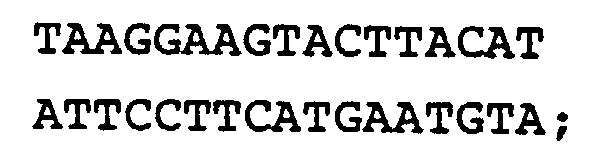
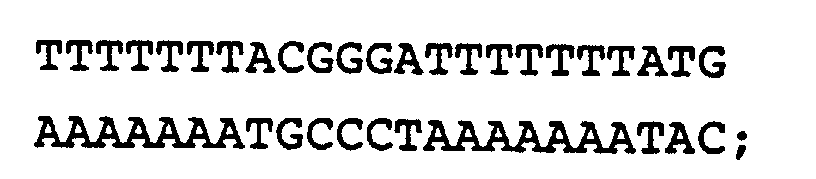
a synthetic oligonucleotide having the sequence:


The preferred host for use with the plasmids usable in this invention is Escherichia coli. The presently preferred strains are A1637, A1645, A2602, A2097, A1563 and A1645 (λi434cI- mini Tn10).


| Plasmid | RBS | Host | %SOD | Remarks |
| pSODα2 | CII | A2097 | 0.1-0.3 | AmpR |
| pSODβ1 | BLA | A1645 | 3-8 | AmpR |
| pSODβ1T11 | BLA | A1645 | 8-13 | TetR |
| pSODβ1TT-1 | BLA | A1645 | 10-15 | TetR;T1T2 |
| pSODβ1-BA2 | BLA | A1645 | 2-4 | AmpR |
| AmpR = | Ampicillin resistance |
| TetR = | Tetracycline resistance |
| T1T2 = | Transcription termination sequences |
| K2HPO4 | 6.3 gr |
| KH2PO4 | 1.8 gr |
| Na Citrate | 0.45 gr |
| MgSO4·7H2O | 0.09 gr |
| (NH4)2SO4 | 0.9 gr |
| Glycerol | 44.0 gr |
| Casein hydrolysate | 20 g/l |
| Yeast extract | 10 g/l |
| K2HPO4 | 2.5 g/l |
| MgSO4·7H2O | 1 g/l |
| NaCl | 5 g/l |
| Biotin | 0.1 mg/ |
| Thiamine | |
| 1 mg/l | |
| | 3 ml/l |
| CuSO4 | 0.8 g/ |
| ZnSO | |
| 4 | 10 mg/l |
| FeCl3 | 16 g/l |
| ZnCl2·4H2O | 2 g/l |
| CoCl2·6H2O | 2 gf/l |
| Na2MoO4·2H2O | 2 g/l |
| CaCl2·2H2O | 1 g/l |
| CuCl2 | 1 g/l |
| H3BO3 | 0.5 g/l |
| Conc. HCl | 100 ml/l |

| K2HPO4 | 6.3 g |
| KH2PO4 | 1.8 g |
| Na Citrate | 0.45 g |
| MgSO4·7H2O | 0.09 g |
| (NH4)2SO4 | 0.9 g |
| Glycerol | 44.0 g |
| Casein hydrolysate | 20 g/l |
| Yeast extract | 10 g/l |
| K2HPO4 | 2.5 g/l |
| MgSO4·7H2O | 1 g/l |
| NaCl | 5 g/l |
| Biotin | 0.1 mg/ |
| Thiamine | |
| 1 mg/l | |
| | 3 ml/l |
| CuSO4 | 0.8 g/ |
| ZnSO | |
| 4 | 10 mg/l |
| FeCl3 | 16 g/l |
| ZnCl2·4H2O | 2 g/l |
| CoCl2·6H2O | 2 g/l |
| Na2MoO4·2H2O | 2 g/l |
| CaCl2·2H2O | 1 g/1 |
| CuCl2 | 1 g/l |
| H3BO3 | 0.5 g/l |
| Conc. HCl | 100 ml/l |
| K2HPO4 | 6.3 gr |
| KH2PO4 | 1.8 gr |
| Na Citrate | 0.45 gr |
| MgSO4·7H2O | 0.09 gr |
| (NH4)2SO4 | 0.9 gr |
| Glycerol | 44 gr |
| Per 500 ml |
| Casein hydrolysate | 20 g/l |
| Yeast extract | 10 g/l |
| K2HPO4 | 2.5 g/l |
| MgSO4•7H2O | 1 g/l |
| NaCl | 5 g/l |
| Biotin | 0.1 mg/ |
| Thiamine | |
| 1 mg/l | |
| | 3 ml/l |
| Tetracycline | 12.5 mg/l |
| CuSO4•5H2O | 0.8 g/l |
| ZnSO4•7H2O | 10 mg/l |
| FeCl3 | 16 g/l |
| ZnCl2•4H2O | 2 g/l |
| CoCl2•6H2O | 2 g/l |
| Na2MoO4•2H2O | 2 g/l |
| CaCl2•2H2O | 1 g/l |
| CuCl2 | 1 g/l |
| H3BO3 | 0.5 g/l |
| Conc. HCl | 100 ml/l |
| Activity and Metal Content of SOD Preparations | |||
| Mole/Subunit | Activity | ||
| Protein | Cu | Zn | u/mg |
| hSOD | 0.07 | 1.62 | 167 |
| Apo enzyme | 0.01 | 0.02 | 0 |
| Reconstituted SOD | 0.81 | 0.88 | 2931 |
| hSOD | 0.88 | 0.90 | 2730 |
| Bovine SOD | 0.97 | 1.01 | 2805 |
| hSOD (Sigma) | 1606 |
Claims (15)
- A method of producing an enzymatically active polypeptide analog of human Cu/Zn superoxide dismutase having an amino acid sequence substantially identical to that of naturally occurring human Cu/Zn superoxide dismutase, and the biological activity of naturally occurring human Cu/Zn superoxide dismutase which comprises:(a) growing a culture of bacterial cells, transformed with a plasmid containing DNA encoding said polypeptide analog of human Cu-Zn superoxide dismutase incorporated therein, in a zinc-containing production medium supplemented with a non-growth inhibitory amount of Cu++ such that the final concentration each of Cu++ and Zn++ in the medium is greater than 2 ppm, wherein said transformed cells are capable of expressing the DNA encoding said polypeptide analog of human Cu/Zn superoxide dismutase; and(b) recovering the enzymatically active polypeptide analog of human Cu/Zn superoxide dismutase so produced.
- A method as in claim 1, wherein the bacterial cells comprise Escherichia coli cells.
- A method of claim 1 wherein the plasmid is pSODα2 having the restriction map shown in Fig. 1 and deposited under ATCC Accession No. 39786; pSODβ1 having the restriction map shown in Fig. 2 and being 3.0 kb in length; pSODβ1T11 having the restriction map shown in Fig. 3 and being 3.7 kb in length; pSODβ1TT-1 having the restriction map shown in Fig. 4 and being 4.8 kb in length, or pSODβ1-BA2 having the restriction nap shown in Fig. 5.
- A method as in claim 1, wherein the bacterial cell is Escherichia coli strain A2097 containing plasmid pSODα2 ATCC 39786.
- A method as in claim 1, wherein the production medium is a casein hydrolysate medium.
- A method as in claim 5, wherein the casein hydrolysate medium is LB medium.
- A method as in claim 1, wherein the Cu++ concentration is from about 50 to about 250 ppm.
- A method as in claim 7, wherein the Cu++ concentration is about 200 ppm.
- A method as in claim 7, wherein the Cu++ concentration is about 75 ppm.
- A method as in claim 1, wherein the prcduction medium is also supplemented with an amount of Zn++ so that the concentration of Zn++ in the medium is greater than about 2 ppm.
- A method as in claim 10, wherein the production medium is supplemented with about 0.8 g/l CuSO4.5H2O and about 10 mg/l ZnSO4.7H2O.
- A method of claim 1 wherein after step (a), the resulting bacterial cell culture is induced to express the DNA and produce the enzymatically active human Cu/Zn superoxide dismutase polypeptide analog.
- A method as in claim 12, wherein the induction ccmprises heat induction.
- A method of producing a purified enzymatically active polypeptide analog of human Cu/Zn superoxide dismutase according to claim 1 or 12, wherein the recovery of step (b) comprises:(a) Isolating the bacterial cells from the production medium;(b) disrupting the bacterial cells so as to form a suspension comprising cell debris and a protein supernatant solution;(c) separating said cell debris from the soluble protein supernatant solution;(d) heating said separated protein supernatant at about 65°C for about 2 hours;(e) cooling the heated protein supernatant;(f) separating the resulting protein supernatant so as to produce a clear supernatant protein solution containing the superoxide dismutase analog thereof; and(g) recovering the enzymatically active human Cu/Zn superoxide dismutase analog from the clear supernatant protein solution.
- The method of claim 14, wherein recovering the enzymatically active human Cu/Zn superoxide dismutase analog from the clear supernatant protein solution comprises:(a) treating the clear supernatant protein solution to obtain a concentrated solution of the superoxide dismutase analog;(b) subjecting the concentrated solution to both anion and cation exchange chromatography; and(c) collecting the resulting fractions containing purified superoxide dismutase analog thereof.
Applications Claiming Priority (11)
| Application Number | Priority Date | Filing Date | Title |
|---|---|---|---|
| US64467184A | 1984-08-27 | 1984-08-27 | |
| US64455184A | 1984-08-27 | 1984-08-27 | |
| US64511984A | 1984-08-27 | 1984-08-27 | |
| US64424584A | 1984-08-27 | 1984-08-27 | |
| US644551 | 1984-08-27 | ||
| US645119 | 1984-08-27 | ||
| US644245 | 1984-08-27 | ||
| US644671 | 1984-08-27 | ||
| US06/644,105 US4742004A (en) | 1984-08-27 | 1984-08-27 | Method for producing enzymatically active eucaryotic sod in bacteria |
| US644105 | 1984-08-27 | ||
| EP85110683A EP0173280B1 (en) | 1984-08-27 | 1985-08-26 | Plasmids containing lambda pl promoter, and engineered restriction site for convenient replacement of ribosomal binding site, hosts containing the plasmids and related methods |
Related Parent Applications (1)
| Application Number | Title | Priority Date | Filing Date |
|---|---|---|---|
| EP85110683.1 Division | 1985-08-26 |
Publications (3)
| Publication Number | Publication Date |
|---|---|
| EP0483113A2 EP0483113A2 (en) | 1992-04-29 |
| EP0483113A3 EP0483113A3 (en) | 1992-05-13 |
| EP0483113B1 true EP0483113B1 (en) | 1999-09-22 |
Family
ID=27542038
Family Applications (2)
| Application Number | Title | Priority Date | Filing Date |
|---|---|---|---|
| EP85110683A Expired - Lifetime EP0173280B1 (en) | 1984-08-27 | 1985-08-26 | Plasmids containing lambda pl promoter, and engineered restriction site for convenient replacement of ribosomal binding site, hosts containing the plasmids and related methods |
| EP92101250A Expired - Lifetime EP0483113B1 (en) | 1984-08-27 | 1985-08-26 | A method of producing an enzymatically active polypeptide analog of human Cu/Zn SOD |
Family Applications Before (1)
| Application Number | Title | Priority Date | Filing Date |
|---|---|---|---|
| EP85110683A Expired - Lifetime EP0173280B1 (en) | 1984-08-27 | 1985-08-26 | Plasmids containing lambda pl promoter, and engineered restriction site for convenient replacement of ribosomal binding site, hosts containing the plasmids and related methods |
Country Status (15)
| Country | Link |
|---|---|
| EP (2) | EP0173280B1 (en) |
| JP (4) | JP2933280B2 (en) |
| AT (2) | ATE79407T1 (en) |
| AU (1) | AU603331B2 (en) |
| CA (2) | CA1340597C (en) |
| DE (2) | DE3588216T2 (en) |
| DK (1) | DK384185A (en) |
| GR (1) | GR852030B (en) |
| HK (1) | HK151695A (en) |
| HU (2) | HU215160B (en) |
| IE (1) | IE61141B1 (en) |
| IL (3) | IL108976A (en) |
| MY (1) | MY130321A (en) |
| NZ (1) | NZ213154A (en) |
| PT (1) | PT81025B (en) |
Families Citing this family (13)
| Publication number | Priority date | Publication date | Assignee | Title |
|---|---|---|---|---|
| AU582536B2 (en) * | 1983-04-29 | 1989-04-06 | Yeda Research And Development Co. Ltd. | Human superoxide dismutase cdna |
| BG49718A3 (en) * | 1983-07-15 | 1992-01-15 | Bio- Technology General Corp | METHOD FOR OBTAINING A POLYPEPTIDE WITH SUPEROXIDE DISMUTASE ACTIVITY |
| EP0340805B1 (en) * | 1983-10-03 | 1997-07-16 | Chiron Corporation | Superoxide dismutase and expression in microorganisms |
| CA1267615A (en) * | 1984-08-27 | 1990-04-10 | Dan Hadary | Method for recovering purified growth hormones from genetically engineered microorganisms |
| JP2594535B2 (en) * | 1984-11-30 | 1997-03-26 | サントリー株式会社 | High expression vector and its use |
| US5037806A (en) * | 1985-02-22 | 1991-08-06 | Monsanto Company | Biologically active method using somatotropins |
| AU6522486A (en) * | 1985-10-04 | 1987-04-24 | Biotechnology Research Partners Limited | Recombinant apolipoproteins and methods |
| GB8701848D0 (en) * | 1987-01-28 | 1987-03-04 | Celltech Ltd | Polypeptides |
| IL96136A (en) * | 1989-11-07 | 2000-12-06 | Bio Technology General Corp | Use of hydrophobic chromatography in a method for purification of copper-zinc superoxide dismutase from cells containing same |
| WO1991007496A1 (en) * | 1989-11-09 | 1991-05-30 | Allied-Signal Inc. | Cloning and expression of genes encoding for polypeptides comprised of one or more repeating amino acid sequences |
| DE4239877C1 (en) * | 1992-11-27 | 1994-03-17 | Boehringer Ingelheim Int | Stabilized superoxide dismutase (SOD) composition |
| GB9303988D0 (en) * | 1993-02-26 | 1993-04-14 | Health Lab Service Board | Bi-functional expression systems |
| US6030810A (en) * | 1997-02-26 | 2000-02-29 | Delgado; Stephen Gregory | Cloned tetrodotoxin-sensitive sodium channel α-subunit and a splice variant thereof |
Family Cites Families (7)
| Publication number | Priority date | Publication date | Assignee | Title |
|---|---|---|---|---|
| DK143412C (en) * | 1979-05-17 | 1982-05-24 | Forenede Bryggerier As | PROCEDURE FOR THE RECOVERY OF CU, ZN SUPEROXIDE DISMUTASE FROM YAS |
| FI811009L (en) * | 1980-06-06 | 1981-12-07 | Biogen Nv | FOERBAETTRADE VEKTORER FOERFARANDEN FOER FRAMSTAELLNING AV DESSA VEKTORER OCH FOER EXPRESSION AV KLONADE GENER |
| US4506013A (en) * | 1980-10-03 | 1985-03-19 | Eli Lilly And Company | Stabilizing and selecting recombinant DNA host cells |
| CA1341012C (en) * | 1982-09-27 | 2000-06-06 | Biogen, Inc. | Dna sequences, recombinant dna molecules and processes for producing swine growth hormone-like polypeptides |
| CA1303530C (en) * | 1983-01-21 | 1992-06-16 | Michael Courtney | EXPRESSION VECTORS AND THEIR USE FOR THE PREPARATION OF A PROTEIN HAVING HUMAN .alpha. -ANTITRYPSIN ACTIVITY |
| BG49718A3 (en) * | 1983-07-15 | 1992-01-15 | Bio- Technology General Corp | METHOD FOR OBTAINING A POLYPEPTIDE WITH SUPEROXIDE DISMUTASE ACTIVITY |
| DE3486452T2 (en) * | 1983-10-03 | 1997-11-06 | Chiron Corp., Emeryville, Calif. | Superoxide dismutase and its expression in microorganisms |
-
1985
- 1985-08-15 CA CA000488832A patent/CA1340597C/en not_active Expired - Lifetime
- 1985-08-20 NZ NZ213154A patent/NZ213154A/en unknown
- 1985-08-22 GR GR852030A patent/GR852030B/el unknown
- 1985-08-23 DK DK384185A patent/DK384185A/en not_active Application Discontinuation
- 1985-08-26 IL IL10897685A patent/IL108976A/en not_active IP Right Cessation
- 1985-08-26 AT AT85110683T patent/ATE79407T1/en not_active IP Right Cessation
- 1985-08-26 DE DE3588216T patent/DE3588216T2/en not_active Expired - Fee Related
- 1985-08-26 DE DE8585110683T patent/DE3586473T2/en not_active Expired - Fee Related
- 1985-08-26 EP EP85110683A patent/EP0173280B1/en not_active Expired - Lifetime
- 1985-08-26 AT AT92101250T patent/ATE184916T1/en not_active IP Right Cessation
- 1985-08-26 IL IL7619285A patent/IL76192A/en not_active IP Right Cessation
- 1985-08-26 IL IL11003985A patent/IL110039A/en not_active IP Right Cessation
- 1985-08-26 PT PT81025A patent/PT81025B/en not_active IP Right Cessation
- 1985-08-26 EP EP92101250A patent/EP0483113B1/en not_active Expired - Lifetime
- 1985-08-26 IE IE209385A patent/IE61141B1/en not_active IP Right Cessation
- 1985-08-27 HU HU9801343A patent/HU215160B/en not_active IP Right Cessation
- 1985-08-27 HU HU853240A patent/HU214977B/en not_active IP Right Cessation
- 1985-08-27 JP JP60188317A patent/JP2933280B2/en not_active Expired - Lifetime
- 1985-08-27 AU AU46677/85A patent/AU603331B2/en not_active Ceased
-
1987
- 1987-10-01 MY MYPI87002785A patent/MY130321A/en unknown
-
1991
- 1991-03-01 CA CA000616018A patent/CA1340464C/en not_active Expired - Lifetime
-
1994
- 1994-11-24 JP JP6330418A patent/JP2688180B2/en not_active Expired - Fee Related
- 1994-11-24 JP JP6330419A patent/JP2777074B2/en not_active Expired - Lifetime
-
1995
- 1995-09-21 HK HK151695A patent/HK151695A/en not_active IP Right Cessation
-
1996
- 1996-04-17 JP JP8095694A patent/JPH08283296A/en active Pending
Also Published As
Similar Documents
| Publication | Publication Date | Title |
|---|---|---|
| US5162217A (en) | Plasmids for expression of human superoxide dismutase (SOD) analogs containing lambda PL promoter with engineered restriction site for substituting ribosomal binding sites and methods of use thereof | |
| US6030611A (en) | Therapeutic SOD compositions and uses thereof | |
| US5143836A (en) | Plasmids for expression of human superoxide dismutase (SOD) analogs containing lambda pl promoter with engineered restriction site for substituting ribosomal binding sites and methods of use thereof | |
| US4742004A (en) | Method for producing enzymatically active eucaryotic sod in bacteria | |
| SK278576B6 (en) | Expression vectors for increased production polypeptides, plasmides containing these vectors, host cells containing these plasmides, gained products, connecting methods and use | |
| EP0284105B1 (en) | Human manganese superoxide dismutase and methods of treatment | |
| Beck et al. | Efficient production of active human manganese superoxide dismutase in Escherichia coli | |
| JP2609449B2 (en) | Human manganese superoxide dismutase DNA (c), its expression in bacteria and enzymatic activity Human manganese superoxide dismutase recovery method | |
| DE3588216T2 (en) | Method to produce an enzymatically active polypeptide analog of human Cu / Zn SOD | |
| US5540911A (en) | Methods of use of human manganese superoxide dismutase | |
| US5246847A (en) | Polypeptide analogs of human manganese superoxide dismutase and compositions and complexes thereof | |
| US5126252A (en) | Expressions vectors containing Lambda PL promoter and T1 T2 RNA termination sequence, plasmids containing the vectors, hosts containing the plasmids and relatedmethods | |
| US5270195A (en) | Plasmids for expression and method of producing a human manganese superoxide dimutase analog | |
| US5112744A (en) | Plasmids for the production of human Cu-Zn superoxide dismutase, bacterial hosts containing the plasmids and methods for production and recovery of such superoxide dismutase | |
| US5670371A (en) | Bacterial expression of superoxide dismutase | |
| US5059529A (en) | Stabilized expression vectors containing λPL promoter and the gene for the cI434 repressor, plasmids containing the vectors, hosts containing the plasmids and related methods | |
| US5151364A (en) | Expression vectors containing lambdapl promoter, T1 T2 RRNA termination sequence, and origin of replication derived from a constitutive high copy number plasmid, and hosts containing the plasmids | |
| US5081020A (en) | Expression vectors containing λPL promoter, T1 T2 rRNA termination sequence and origin of replication derived from a constitutive high copy number plasmid hosts and related methods |
Legal Events
| Date | Code | Title | Description |
|---|---|---|---|
| PUAI | Public reference made under article 153(3) epc to a published international application that has entered the european phase |
Free format text: ORIGINAL CODE: 0009012 |
|
| PUAL | Search report despatched |
Free format text: ORIGINAL CODE: 0009013 |
|
| 17P | Request for examination filed |
Effective date: 19920224 |
|
| AC | Divisional application: reference to earlier application |
Ref document number: 173280 Country of ref document: EP |
|
| AK | Designated contracting states |
Kind code of ref document: A2 Designated state(s): AT BE CH DE FR GB IT LI LU NL SE |
|
| AK | Designated contracting states |
Kind code of ref document: A3 Designated state(s): AT BE CH DE FR GB IT LI LU NL SE |
|
| RIN1 | Information on inventor provided before grant (corrected) |
Inventor name: OPPENHEIM, AMOS B. Inventor name: LOCKER-GILADI, HILLA Inventor name: LEVANON, AVIGDOR Inventor name: KANNER, DOV Inventor name: HARTMAN, JACOB R. Inventor name: GORECKI, MARIAN Inventor name: BARTFELD, DANIEL Inventor name: AVIV, HAIM |
|
| 17Q | First examination report despatched |
Effective date: 19960719 |
|
| RAP1 | Party data changed (applicant data changed or rights of an application transferred) |
Owner name: BIO-TECHNOLOGY GENERAL CORPORATION |
|
| RIN1 | Information on inventor provided before grant (corrected) |
Inventor name: KANNER, DOV Inventor name: HARTMAN, JACOB R. Inventor name: BARTFELD, DANIEL |
|
| RIN1 | Information on inventor provided before grant (corrected) |
Inventor name: BARTFELD, DANIEL Inventor name: KANNER, DOV Inventor name: HARTMAN, JACOB R. |
|
| GRAG | Despatch of communication of intention to grant |
Free format text: ORIGINAL CODE: EPIDOS AGRA |
|
| GRAG | Despatch of communication of intention to grant |
Free format text: ORIGINAL CODE: EPIDOS AGRA |
|
| GRAH | Despatch of communication of intention to grant a patent |
Free format text: ORIGINAL CODE: EPIDOS IGRA |
|
| GRAH | Despatch of communication of intention to grant a patent |
Free format text: ORIGINAL CODE: EPIDOS IGRA |
|
| GRAA | (expected) grant |
Free format text: ORIGINAL CODE: 0009210 |
|
| AC | Divisional application: reference to earlier application |
Ref document number: 173280 Country of ref document: EP |
|
| AK | Designated contracting states |
Kind code of ref document: B1 Designated state(s): AT BE CH DE FR GB IT LI LU NL SE |
|
| REF | Corresponds to: |
Ref document number: 184916 Country of ref document: AT Date of ref document: 19991015 Kind code of ref document: T |
|
| REG | Reference to a national code |
Ref country code: CH Ref legal event code: NV Representative=s name: SCHMAUDER & PARTNER AG PATENTANWALTSBUERO Ref country code: CH Ref legal event code: EP |
|
| REF | Corresponds to: |
Ref document number: 3588216 Country of ref document: DE Date of ref document: 19991028 |
|
| ET | Fr: translation filed | ||
| ITF | It: translation for a ep patent filed | ||
| PLBE | No opposition filed within time limit |
Free format text: ORIGINAL CODE: 0009261 |
|
| STAA | Information on the status of an ep patent application or granted ep patent |
Free format text: STATUS: NO OPPOSITION FILED WITHIN TIME LIMIT |
|
| 26N | No opposition filed | ||
| REG | Reference to a national code |
Ref country code: GB Ref legal event code: IF02 |
|
| PGFP | Annual fee paid to national office [announced via postgrant information from national office to epo] |
Ref country code: AT Payment date: 20020704 Year of fee payment: 18 |
|
| PGFP | Annual fee paid to national office [announced via postgrant information from national office to epo] |
Ref country code: FR Payment date: 20020708 Year of fee payment: 18 |
|
| PGFP | Annual fee paid to national office [announced via postgrant information from national office to epo] |
Ref country code: GB Payment date: 20020712 Year of fee payment: 18 |
|
| PGFP | Annual fee paid to national office [announced via postgrant information from national office to epo] |
Ref country code: SE Payment date: 20020715 Year of fee payment: 18 Ref country code: NL Payment date: 20020715 Year of fee payment: 18 |
|
| PGFP | Annual fee paid to national office [announced via postgrant information from national office to epo] |
Ref country code: LU Payment date: 20020719 Year of fee payment: 18 |
|
| PGFP | Annual fee paid to national office [announced via postgrant information from national office to epo] |
Ref country code: DE Payment date: 20020724 Year of fee payment: 18 |
|
| PGFP | Annual fee paid to national office [announced via postgrant information from national office to epo] |
Ref country code: CH Payment date: 20020726 Year of fee payment: 18 |
|
| PGFP | Annual fee paid to national office [announced via postgrant information from national office to epo] |
Ref country code: BE Payment date: 20020808 Year of fee payment: 18 |
|
| PG25 | Lapsed in a contracting state [announced via postgrant information from national office to epo] |
Ref country code: LU Free format text: LAPSE BECAUSE OF NON-PAYMENT OF DUE FEES Effective date: 20030826 Ref country code: GB Free format text: LAPSE BECAUSE OF NON-PAYMENT OF DUE FEES Effective date: 20030826 Ref country code: AT Free format text: LAPSE BECAUSE OF NON-PAYMENT OF DUE FEES Effective date: 20030826 |
|
| PG25 | Lapsed in a contracting state [announced via postgrant information from national office to epo] |
Ref country code: SE Free format text: LAPSE BECAUSE OF NON-PAYMENT OF DUE FEES Effective date: 20030827 |
|
| PG25 | Lapsed in a contracting state [announced via postgrant information from national office to epo] |
Ref country code: LI Free format text: LAPSE BECAUSE OF NON-PAYMENT OF DUE FEES Effective date: 20030831 Ref country code: CH Free format text: LAPSE BECAUSE OF NON-PAYMENT OF DUE FEES Effective date: 20030831 Ref country code: BE Free format text: LAPSE BECAUSE OF NON-PAYMENT OF DUE FEES Effective date: 20030831 |
|
| BERE | Be: lapsed |
Owner name: *BIO-TECHNOLOGY GENERAL CORP. Effective date: 20030831 |
|
| PG25 | Lapsed in a contracting state [announced via postgrant information from national office to epo] |
Ref country code: NL Free format text: LAPSE BECAUSE OF NON-PAYMENT OF DUE FEES Effective date: 20040301 |
|
| PG25 | Lapsed in a contracting state [announced via postgrant information from national office to epo] |
Ref country code: DE Free format text: LAPSE BECAUSE OF NON-PAYMENT OF DUE FEES Effective date: 20040302 |
|
| EUG | Se: european patent has lapsed | ||
| GBPC | Gb: european patent ceased through non-payment of renewal fee | ||
| REG | Reference to a national code |
Ref country code: CH Ref legal event code: PL |
|
| PG25 | Lapsed in a contracting state [announced via postgrant information from national office to epo] |
Ref country code: FR Free format text: LAPSE BECAUSE OF NON-PAYMENT OF DUE FEES Effective date: 20040430 |
|
| NLV4 | Nl: lapsed or anulled due to non-payment of the annual fee |
Effective date: 20040301 |
|
| REG | Reference to a national code |
Ref country code: FR Ref legal event code: ST |