EP0480764B1 - Process to determine the stability of oil mixtures, including shale oil and fractions thereof - Google Patents
Process to determine the stability of oil mixtures, including shale oil and fractions thereof Download PDFInfo
- Publication number
- EP0480764B1 EP0480764B1 EP91309401A EP91309401A EP0480764B1 EP 0480764 B1 EP0480764 B1 EP 0480764B1 EP 91309401 A EP91309401 A EP 91309401A EP 91309401 A EP91309401 A EP 91309401A EP 0480764 B1 EP0480764 B1 EP 0480764B1
- Authority
- EP
- European Patent Office
- Prior art keywords
- oils
- mixture
- polarity
- oil
- polar
- Prior art date
- Legal status (The legal status is an assumption and is not a legal conclusion. Google has not performed a legal analysis and makes no representation as to the accuracy of the status listed.)
- Expired - Lifetime
Links
- 239000000203 mixture Substances 0.000 title claims description 130
- 238000000034 method Methods 0.000 title claims description 54
- 230000008569 process Effects 0.000 title claims description 48
- 239000003079 shale oil Substances 0.000 title claims description 28
- 239000003921 oil Substances 0.000 claims description 115
- 239000000126 substance Substances 0.000 claims description 88
- 239000003208 petroleum Substances 0.000 claims description 54
- IJGRMHOSHXDMSA-UHFFFAOYSA-N Atomic nitrogen Chemical compound N#N IJGRMHOSHXDMSA-UHFFFAOYSA-N 0.000 claims description 20
- 229910052757 nitrogen Inorganic materials 0.000 claims description 11
- NINIDFKCEFEMDL-UHFFFAOYSA-N Sulfur Chemical compound [S] NINIDFKCEFEMDL-UHFFFAOYSA-N 0.000 claims description 9
- 239000005864 Sulphur Substances 0.000 claims description 9
- 230000005526 G1 to G0 transition Effects 0.000 claims description 8
- 238000004817 gas chromatography Methods 0.000 claims description 6
- 229910052760 oxygen Inorganic materials 0.000 claims description 6
- QVGXLLKOCUKJST-UHFFFAOYSA-N atomic oxygen Chemical compound [O] QVGXLLKOCUKJST-UHFFFAOYSA-N 0.000 claims description 5
- 239000001301 oxygen Substances 0.000 claims description 5
- 238000013213 extrapolation Methods 0.000 claims description 2
- 150000008040 ionic compounds Chemical class 0.000 claims description 2
- 238000005304 joining Methods 0.000 claims description 2
- 125000001183 hydrocarbyl group Chemical group 0.000 claims 1
- 239000004094 surface-active agent Substances 0.000 description 21
- 239000002736 nonionic surfactant Substances 0.000 description 16
- 150000002430 hydrocarbons Chemical class 0.000 description 15
- 150000001875 compounds Chemical class 0.000 description 14
- 239000000839 emulsion Substances 0.000 description 13
- XLYOFNOQVPJJNP-UHFFFAOYSA-N water Substances O XLYOFNOQVPJJNP-UHFFFAOYSA-N 0.000 description 12
- 239000002283 diesel fuel Substances 0.000 description 11
- 229930195733 hydrocarbon Natural products 0.000 description 11
- PRAKJMSDJKAYCZ-UHFFFAOYSA-N dodecahydrosqualene Natural products CC(C)CCCC(C)CCCC(C)CCCCC(C)CCCC(C)CCCC(C)C PRAKJMSDJKAYCZ-UHFFFAOYSA-N 0.000 description 8
- 230000014759 maintenance of location Effects 0.000 description 8
- 238000005259 measurement Methods 0.000 description 8
- 239000003350 kerosene Substances 0.000 description 7
- 239000004215 Carbon black (E152) Substances 0.000 description 5
- 230000003993 interaction Effects 0.000 description 5
- JXTPJDDICSTXJX-UHFFFAOYSA-N n-Triacontane Natural products CCCCCCCCCCCCCCCCCCCCCCCCCCCCCC JXTPJDDICSTXJX-UHFFFAOYSA-N 0.000 description 5
- 229940032094 squalane Drugs 0.000 description 5
- 239000002253 acid Substances 0.000 description 4
- 150000001412 amines Chemical class 0.000 description 4
- UHOVQNZJYSORNB-UHFFFAOYSA-N Benzene Chemical compound C1=CC=CC=C1 UHOVQNZJYSORNB-UHFFFAOYSA-N 0.000 description 3
- ZMANZCXQSJIPKH-UHFFFAOYSA-N Triethylamine Chemical compound CCN(CC)CC ZMANZCXQSJIPKH-UHFFFAOYSA-N 0.000 description 3
- 125000004432 carbon atom Chemical group C* 0.000 description 3
- 238000004587 chromatography analysis Methods 0.000 description 3
- 238000004519 manufacturing process Methods 0.000 description 3
- 239000003209 petroleum derivative Substances 0.000 description 3
- 238000011160 research Methods 0.000 description 3
- 239000002904 solvent Substances 0.000 description 3
- 229930192474 thiophene Natural products 0.000 description 3
- WFRBDWRZVBPBDO-UHFFFAOYSA-N 2-methyl-2-pentanol Chemical compound CCCC(C)(C)O WFRBDWRZVBPBDO-UHFFFAOYSA-N 0.000 description 2
- 241001432959 Chernes Species 0.000 description 2
- RTZKZFJDLAIYFH-UHFFFAOYSA-N Diethyl ether Chemical compound CCOCC RTZKZFJDLAIYFH-UHFFFAOYSA-N 0.000 description 2
- OFBQJSOFQDEBGM-UHFFFAOYSA-N Pentane Chemical compound CCCCC OFBQJSOFQDEBGM-UHFFFAOYSA-N 0.000 description 2
- JUJWROOIHBZHMG-UHFFFAOYSA-N Pyridine Chemical compound C1=CC=NC=C1 JUJWROOIHBZHMG-UHFFFAOYSA-N 0.000 description 2
- YTPLMLYBLZKORZ-UHFFFAOYSA-N Thiophene Chemical compound C=1C=CSC=1 YTPLMLYBLZKORZ-UHFFFAOYSA-N 0.000 description 2
- 150000007513 acids Chemical class 0.000 description 2
- 150000001335 aliphatic alkanes Chemical class 0.000 description 2
- 238000004523 catalytic cracking Methods 0.000 description 2
- 230000003197 catalytic effect Effects 0.000 description 2
- 238000005260 corrosion Methods 0.000 description 2
- 230000007797 corrosion Effects 0.000 description 2
- 238000004821 distillation Methods 0.000 description 2
- 239000003814 drug Substances 0.000 description 2
- 239000000446 fuel Substances 0.000 description 2
- 125000005842 heteroatom Chemical group 0.000 description 2
- -1 hydrocarbons Chemical class 0.000 description 2
- 239000004615 ingredient Substances 0.000 description 2
- VNWKTOKETHGBQD-UHFFFAOYSA-N methane Chemical compound C VNWKTOKETHGBQD-UHFFFAOYSA-N 0.000 description 2
- 238000002156 mixing Methods 0.000 description 2
- 125000000962 organic group Chemical group 0.000 description 2
- 150000002927 oxygen compounds Chemical class 0.000 description 2
- XNLICIUVMPYHGG-UHFFFAOYSA-N pentan-2-one Chemical compound CCCC(C)=O XNLICIUVMPYHGG-UHFFFAOYSA-N 0.000 description 2
- 238000007670 refining Methods 0.000 description 2
- 239000011435 rock Substances 0.000 description 2
- 230000002195 synergetic effect Effects 0.000 description 2
- 238000012360 testing method Methods 0.000 description 2
- 150000003577 thiophenes Chemical class 0.000 description 2
- RYHBNJHYFVUHQT-UHFFFAOYSA-N 1,4-Dioxane Chemical compound C1COCCO1 RYHBNJHYFVUHQT-UHFFFAOYSA-N 0.000 description 1
- FCEHBMOGCRZNNI-UHFFFAOYSA-N 1-benzothiophene Chemical class C1=CC=C2SC=CC2=C1 FCEHBMOGCRZNNI-UHFFFAOYSA-N 0.000 description 1
- LRHPLDYGYMQRHN-UHFFFAOYSA-N 1-butanol Substances CCCCO LRHPLDYGYMQRHN-UHFFFAOYSA-N 0.000 description 1
- JSZOAYXJRCEYSX-UHFFFAOYSA-N 1-nitropropane Chemical compound CCC[N+]([O-])=O JSZOAYXJRCEYSX-UHFFFAOYSA-N 0.000 description 1
- 241000132007 Bahia Species 0.000 description 1
- 229930194845 Bahia Natural products 0.000 description 1
- RYGMFSIKBFXOCR-UHFFFAOYSA-N Copper Chemical compound [Cu] RYGMFSIKBFXOCR-UHFFFAOYSA-N 0.000 description 1
- RWSOTUBLDIXVET-UHFFFAOYSA-N Dihydrogen sulfide Chemical class S RWSOTUBLDIXVET-UHFFFAOYSA-N 0.000 description 1
- 241000196324 Embryophyta Species 0.000 description 1
- LFQSCWFLJHTTHZ-UHFFFAOYSA-N Ethanol Chemical compound CCO LFQSCWFLJHTTHZ-UHFFFAOYSA-N 0.000 description 1
- 235000017858 Laurus nobilis Nutrition 0.000 description 1
- 229910019142 PO4 Inorganic materials 0.000 description 1
- 229920001213 Polysorbate 20 Polymers 0.000 description 1
- 229920001214 Polysorbate 60 Polymers 0.000 description 1
- IYFATESGLOUGBX-YVNJGZBMSA-N Sorbitan monopalmitate Chemical compound CCCCCCCCCCCCCCCC(=O)OC[C@@H](O)[C@H]1OC[C@H](O)[C@H]1O IYFATESGLOUGBX-YVNJGZBMSA-N 0.000 description 1
- QAOWNCQODCNURD-UHFFFAOYSA-L Sulfate Chemical compound [O-]S([O-])(=O)=O QAOWNCQODCNURD-UHFFFAOYSA-L 0.000 description 1
- LWZFANDGMFTDAV-BURFUSLBSA-N [(2r)-2-[(2r,3r,4s)-3,4-dihydroxyoxolan-2-yl]-2-hydroxyethyl] dodecanoate Chemical compound CCCCCCCCCCCC(=O)OC[C@@H](O)[C@H]1OC[C@H](O)[C@H]1O LWZFANDGMFTDAV-BURFUSLBSA-N 0.000 description 1
- 230000009471 action Effects 0.000 description 1
- 230000002730 additional effect Effects 0.000 description 1
- 150000001298 alcohols Chemical class 0.000 description 1
- 238000004458 analytical method Methods 0.000 description 1
- 125000003118 aryl group Chemical group 0.000 description 1
- JXLHNMVSKXFWAO-UHFFFAOYSA-N azane;7-fluoro-2,1,3-benzoxadiazole-4-sulfonic acid Chemical compound N.OS(=O)(=O)C1=CC=C(F)C2=NON=C12 JXLHNMVSKXFWAO-UHFFFAOYSA-N 0.000 description 1
- 239000002585 base Substances 0.000 description 1
- 238000007630 basic procedure Methods 0.000 description 1
- KMGBZBJJOKUPIA-UHFFFAOYSA-N butyl iodide Chemical compound CCCCI KMGBZBJJOKUPIA-UHFFFAOYSA-N 0.000 description 1
- 150000001716 carbazoles Chemical class 0.000 description 1
- 239000003054 catalyst Substances 0.000 description 1
- 229910052801 chlorine Inorganic materials 0.000 description 1
- 239000004927 clay Substances 0.000 description 1
- 239000003245 coal Substances 0.000 description 1
- 230000001143 conditioned effect Effects 0.000 description 1
- 239000000470 constituent Substances 0.000 description 1
- 239000000356 contaminant Substances 0.000 description 1
- 239000011889 copper foil Substances 0.000 description 1
- 238000005336 cracking Methods 0.000 description 1
- 238000011161 development Methods 0.000 description 1
- 230000009977 dual effect Effects 0.000 description 1
- 238000000921 elemental analysis Methods 0.000 description 1
- 230000008030 elimination Effects 0.000 description 1
- 238000003379 elimination reaction Methods 0.000 description 1
- 239000003995 emulsifying agent Substances 0.000 description 1
- 150000002148 esters Chemical class 0.000 description 1
- 238000002474 experimental method Methods 0.000 description 1
- 238000000605 extraction Methods 0.000 description 1
- 238000004231 fluid catalytic cracking Methods 0.000 description 1
- 238000005984 hydrogenation reaction Methods 0.000 description 1
- 238000005470 impregnation Methods 0.000 description 1
- 230000006698 induction Effects 0.000 description 1
- 238000003990 inverse gas chromatography Methods 0.000 description 1
- 239000002480 mineral oil Substances 0.000 description 1
- 235000010446 mineral oil Nutrition 0.000 description 1
- 238000012986 modification Methods 0.000 description 1
- 230000004048 modification Effects 0.000 description 1
- 230000004001 molecular interaction Effects 0.000 description 1
- 238000012544 monitoring process Methods 0.000 description 1
- 239000012454 non-polar solvent Substances 0.000 description 1
- 150000002894 organic compounds Chemical class 0.000 description 1
- 239000012188 paraffin wax Substances 0.000 description 1
- 238000005325 percolation Methods 0.000 description 1
- NBIIXXVUZAFLBC-UHFFFAOYSA-K phosphate Chemical compound [O-]P([O-])([O-])=O NBIIXXVUZAFLBC-UHFFFAOYSA-K 0.000 description 1
- 239000010452 phosphate Substances 0.000 description 1
- 229910052698 phosphorus Inorganic materials 0.000 description 1
- 239000002798 polar solvent Substances 0.000 description 1
- 229920005547 polycyclic aromatic hydrocarbon Polymers 0.000 description 1
- 239000000256 polyoxyethylene sorbitan monolaurate Substances 0.000 description 1
- 235000010486 polyoxyethylene sorbitan monolaurate Nutrition 0.000 description 1
- 229920000136 polysorbate Polymers 0.000 description 1
- 229910052573 porcelain Inorganic materials 0.000 description 1
- UMJSCPRVCHMLSP-UHFFFAOYSA-N pyridine Natural products COC1=CC=CN=C1 UMJSCPRVCHMLSP-UHFFFAOYSA-N 0.000 description 1
- 238000011002 quantification Methods 0.000 description 1
- 230000000717 retained effect Effects 0.000 description 1
- 235000011067 sorbitan monolaureate Nutrition 0.000 description 1
- 229910001220 stainless steel Inorganic materials 0.000 description 1
- 239000010935 stainless steel Substances 0.000 description 1
- 229910052717 sulfur Inorganic materials 0.000 description 1
- 229910021653 sulphate ion Inorganic materials 0.000 description 1
- 150000003573 thiols Chemical class 0.000 description 1
Images


Classifications
-
- G—PHYSICS
- G01—MEASURING; TESTING
- G01N—INVESTIGATING OR ANALYSING MATERIALS BY DETERMINING THEIR CHEMICAL OR PHYSICAL PROPERTIES
- G01N33/00—Investigating or analysing materials by specific methods not covered by groups G01N1/00 - G01N31/00
- G01N33/26—Oils; Viscous liquids; Paints; Inks
- G01N33/28—Oils, i.e. hydrocarbon liquids
- G01N33/2829—Mixtures of fuels
-
- G—PHYSICS
- G01—MEASURING; TESTING
- G01N—INVESTIGATING OR ANALYSING MATERIALS BY DETERMINING THEIR CHEMICAL OR PHYSICAL PROPERTIES
- G01N30/00—Investigating or analysing materials by separation into components using adsorption, absorption or similar phenomena or using ion-exchange, e.g. chromatography or field flow fractionation
- G01N30/02—Column chromatography
- G01N30/50—Conditioning of the sorbent material or stationary liquid
-
- Y—GENERAL TAGGING OF NEW TECHNOLOGICAL DEVELOPMENTS; GENERAL TAGGING OF CROSS-SECTIONAL TECHNOLOGIES SPANNING OVER SEVERAL SECTIONS OF THE IPC; TECHNICAL SUBJECTS COVERED BY FORMER USPC CROSS-REFERENCE ART COLLECTIONS [XRACs] AND DIGESTS
- Y10—TECHNICAL SUBJECTS COVERED BY FORMER USPC
- Y10T—TECHNICAL SUBJECTS COVERED BY FORMER US CLASSIFICATION
- Y10T436/00—Chemistry: analytical and immunological testing
- Y10T436/21—Hydrocarbon
- Y10T436/212—Aromatic
Definitions
- This invention deals with a process to determine the stability of oil mixtures, including shale oils and distilled fractions thereof. More precisely, the invention concerns a process to determine the stability of oil mixtures, including shale oils, as well as the distilled fractions thereof, by measuring the chemical polarity of such mixtures.
- This invention is also intended to determine the chemical stability of any hydrocarbon mixture usually met with in oils from several sources, and contaminated by nitrogen, sulphur and oxygen compounds.
- the stability of an oil mixture is the direct outcome of its chemical polarity, since polar substances are the chemically reactive ones and consequently the more unstable ones. Hence by determining the chemical polarity of a mixture its stability can be gauged, that is, the lower its chemical polarity, numerically, the more stable and of better quality will the mixture be.
- Measurement of the chemical stability of oil mixtures is likewise useful in the case of emulsions of oil mixtures in water.
- the chemical polarity of the surfactant must be greater than that of the emulsion of the oil mixture in water, in order to displace the natural oil surfactants at the water-oil interface.
- the process used in this invention as shown berein provides an answer to this question, since by measuring just one number - that of chemical polarity - the non-ionic surfactant most suitable to separate a given emulsion of oils or of oil mixtures can be found.
- the inventive process is aimed at determining what proportion of each oil there has to be in a given mixture in order to arrive at a given chemical polarity.
- An emulsion of oils in water may be destabilized with the aid of any non-ionic surfactant that has a chemical polarity higher than that of the oil mixture.
- a non-ionic surfactant molecule since it is an amphyphilic kind of substance, contains both.
- non-polar and polar groups in the same-molecule, the non-polar moiety being a chain of hydrocarbons and the polar one being brought about by functional organic groups.
- the polar and non-polar moieties in oils are made up of different molecules: hydrocarbons, thiophenes, etc.
- polar and non-polar moieties are both in the same molecule.
- the inventive process namely, to measure the chemical stability of oil mixtures by measuring the chemical polarity of such mixtures, also applies to non-ionic surfactant mixtures, to finding the lowest chemical polarity needed for a surfactant to break an oil/water emulsion of known chemical polarity, etc.
- any mixtures of non-ionic compounds containing both non-polar and polar moieties may be determined, thus enabling the best proportion of each component of the mixture for a given application to be arrived at.
- DE-A-3 438 932 concerns the measurement of an electrical polarity by an electrical process.
- the present invention herewith discloses a further development in the field of research into the chemical polarity of oils, this time concerning oil mixtures, including shale oils and mixtures of oil fractions, as well as mixtures of oil emulsions in water and mixtures of any compounds therein, whether within the same or different molecules, non-polar, hydrocarbon moieties, and polar moieties, containing hetereoatoms, results arrived at having not yet been announced nor hinted at within literature on the subject.
- one objective of this invention is to provide a process to determine the stability of oil 'mixtures, including mixtures of oils from different sources and of different quality, of ordinary oils mixed with shale oils, as well as mixtures of different shale oils or mixtures of fractions thereof, and also mixtures of any different hydrocarbon cuts contaminated by nitrogen, sulphur and oxygen compounds.
- Another objective is to determine, again by means of their chemical polarity, the stability of mixtures of different oils, so as to enable the best quantity of each constituent of the mixture to be picked out, thereby meeting most suitable quality requirements for intended use.
- Still another objective of this invention is to determine the chemical polarity of oil mixtures or of fractions thereof, emulsified in water, in order to pick the best non-ionic surfactant or mixtures thereof able to break emulsions of oil mixtures in water, for which the non-ionic surfactant or mixtures thereof must have a chemical polarity higher than that of the emulsion of oil mixtures in water.
- One more objective is to determine the chemical stability for any end use, by measurement of the chemical polarity of mixtures of non-polar compounds, such as hydrocarbons, and of nitrogen, sulphur and oxygen polar compounds, both polar and non-polar moieties belonging to the same molecule or separate molecules.
- non-polar compounds such as hydrocarbons
- nitrogen, sulphur and oxygen polar compounds both polar and non-polar moieties belonging to the same molecule or separate molecules.
- the process developed by the applicant and described and claimed herein is thus intended for determining the stability of two or more oils, such as different petroleum oils, or petroleum and shale oils, or distilled fractions of petroleum, or any mixture of any two or more hydrocarbons containing nitrogen, sulphur and oxygen contaminats, or mixtures of amphyphilic compounds, by the measurement of the chemical polarity of such mixtures of two or more components by reverse-phase gas chromatography.
- oils such as different petroleum oils, or petroleum and shale oils, or distilled fractions of petroleum, or any mixture of any two or more hydrocarbons containing nitrogen, sulphur and oxygen contaminats, or mixtures of amphyphilic compounds
- the process comprises:
- any intermediate mixture will be determined graphically from figures lying among those for the chemical polarity of the original oils, which will enable choice of the most suitably stable mixture for the intended use to be made.
- the stability of a mixture of at least two oils is an inverse function of the concentration by weight of the most polar oil in the mixture.
- this invention has an extremely wide range of use in the petroleum field, from the first working of deposits, to the finding of the most suitable cuts in fractioning within cracking plants, and also as a parameter in the making of mixtures of pre-established stability for given uses, or in the disposal of mixtures of various oils or fractions of hydrocarbons of unsuitable stability.
- the determining of the chemical polarity of petroleum mixtures is aimed at, for the purpose, for example, of optimizing production and of making up mixtures to make refining easier.
- the question of how chemical polarities behaved in mixtures of several oils was looked into; whether or not such polarities represented additional properties, in an effort to arrive at parameters that might help in the estimating of polarity and therefore of the quality of the blends processed or exported.
- Figure 1 shows the chemical polarity of mixtures of petroleum oil that was determined, the most polar having been the Itaunas petroleum oil, at 474.5 and the least, a Caçao petroleum oil, at 276.5.
- a mixture containing 50% by weight of each of the oils has a chemical polarity of 375. If such polarity is enough chemical stability for a given application, a 1:1 mixture would be employed. However, if it does not stand for enough, chemical stability for the required application, the chemical polarity limit standing for minimum required stability for the intended application would be picked from the graph and mixture would be made up in the exact proportions.
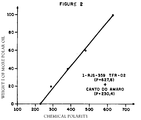
- Figure 2 is that of another graph for the process described herein, with pure original oils, at polarities. of 827.8 and 230.4 respectively.
- Figure 3 shows application of such process for a fraction of Cherne petroleum oil, namely, the very high polarity malthenes, diluted in nujol,and extremely low polarity (35.2) mineral oil.
- Cherne petroleum oil namely, the very high polarity malthenes, diluted in nujol,and extremely low polarity (35.2) mineral oil.
- various proportions of the petroleum malthenes were added to the nujol and the polarities of the mixtures were reckoned, andbroken line plotted; the bold line represents relation-relationship of Cherne petroleum malthenes and nujol in terms of original polarities.
- Another form of this invention deals with finding the stability of mixtures of shale oil with petroleum oil, as well as comparing the stability and quality of shale oil derived from the various processes of working bituminous shale rock that have been developed in Brazil, namely, PETROSIX, PLASOL and FLOOD BED, with the stability and quality of various petroleum oils.
- Example 4 below illustrates this embodiment of the present invention.
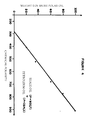
- Figure 4 shows mixtures of 900.7 chemical polarity shale oil with 284.1 polarity petroleum oil. For instance, Figure 4 shows that 20% of shale oil produced by the PETROSIX process can be added to a quite stable petroleum provided that for the intended application a mixture stability equal to a polarity of 400 can be withstood,
- a further form of this invention is aimed at determining the stability of mixtures of fractions of medium and heavy distillates by determining the chemical polarity of such mixtures.
- heteroatomic ingredients of petroleum render its fractions secured by distillation and catalytic processes impure.
- Such heteroatomic substances (alcohols, acids, thiophenes, benzothiophenes, amines, mercaptans, carbazoles, etc.) have several reactive organic functions that make petroleum products unstable, which instability is announced by a series of undesirable particulars, such as, colour, smell, caking, corrosion, etc., among commercial commodities. Therefore such heteroatomic ingredients have to be got rid of so as to enable petroleum products to be marketed within prevailing specifications.
- Matter got threfrom consisted of the filling of the chromatography column and was used to fill a stainless steel pipe 2 meters long and 3.2 mm in outside diameter, according to the usual procedure.
- the chromatography column so prepared was conditioned by a 20 ml/min flow of nitrogen and programmed temperature rise from 3Q to 100°C at a rate of 0.5°C/min., such final temperature of 100°C having been kept up for four hours.
- a series of polar substances were then injected: -1-butanol, thiophene, dioxane, 2-methyl-2-pentanol, benzene, nitropropane, 2-pentanone and iodobutane, together with the methane (not retained chromatographically) in order to determine the adjusted retention times for each polar substance.
- Ordinary paraffins n-alkanes were injected in the same way.
- line diesel which is a mixture of several distilled fractions.
- Figure determined for line diesel was 297.5.
- line diesel which consists of several cuts together, was of considerably poorer quality and lower stability than light diesel oil. It was thus determined that it is not advisable to blend several cuts together, such as kerosene with light diesel oil, heavy diesel oil and heavy naphtha (line diesel) where light diesle oil is regularly employed, since the fraction of the distillate got from the mixture has a stability which is unsuitable for the intended final use.
- This Example serves to show how the procedure for two different blends of petroleum meant to produce aviation kerosene can lead to products of different stability, and how the process of this invention can help in choosing the best product in terms of intended use.
- kerosene A 84.0 chemical polarity
- kerosene B 128.7 chemical polarity were produced. Because of the strictness recommended in choosing this kind of fuel the best quality fuel, kerosene A, was chosen without any hesitation, which was more stable because of its lower chemical polarity.
- This Example shows how, from among several different blends of petroleum, the most suitable charge, since most stable, can be chosen for an operation such as, for isntance, catalytic cracking, usually along with sensitive expensive catalysts.
- an operation such as, for isntance, catalytic cracking, usually along with sensitive expensive catalysts.
- the chemical polarity of each of the A, B and C gasoils was determined, which were 364.9, 397.2 and 420.3, respectively, which showed that gasoil A was the most stable and suitable for the operation to be undertaken.
- the fitness of the polarity figures in terms of heteroatomic content is to be seen.
- This Example shows that medium petroleum distillates of polarities very close to one another may exhibit chemical polarities that are quite a lot different, which may be important when choosing a given cut of petroleum or when choosing a mixture of cuts, polarity and stability of which have been fixed beforehand.
- the chemical polarity of two petroleums, A and B was found to be 418.4 and 427.8, respectively, thus very much alike.
- cuts of petroleum A and B in the 176.6 to 371.0°C (350-700°F) range showed chemical polarities of 316.1 and 268.0, respectively, pointing to petroleum B as being the most suitable for intended use.
- the embodiment shown next is generally like the process invented, since it has been shown that the stability of mixtures of different types of oils as well as mixtures of their fractions can be determined unerringly by such process.
- the following Example shows that the notion of "stability of oil mixtures" can be applied not only to mixtures of several kinds of oils but also to mixtures of distillates, which includes 'mixtures' where the hydrocarbon moiety and the heteroatomic moiety are in the same molecule, it being likewise possible to determine the stability of any such substance or mixture of substances, provided they are non--ionic, by means of the process herein described and claimed.
- non-ionic surfactants which are used to a great extent in the petroleum industry, since such non-ionic surfactants are amphyphilic substances, that is, substances where one moiety of their molecules is a non-polar hydrocarbon and the other a polar heteroatom,
- amphyphilic compounds that is, they exhibit dual affinity - for polar and non-polar solvents - since their molecules consist of a polar moiety, made up of heteroatoms (usually O, S, N, P, Cl) belonging to several functional organic groups (alcohol, ether, acid, ester, thiol, sulphonate, sulphate, amine, phosphate, etc.), and a non-polar moiety, usually a long ordinary paraffin chain, occasionally with cycloparaffinic or aromatic groups in it.
- heteroatoms usually O, S, N, P, Cl
- functional organic groups alcohol, ether, acid, ester, thiol, sulphonate, sulphate, amine, phosphate, etc.
- non-polar moiety usually a long ordinary paraffin chain, occasionally with cycloparaffinic or aromatic groups in it.
- amphyphilic molecules within either medium, polar or non-polar (water and oil systems), migrate to the inter-interface of such mediums, where they likewise satisfy molecular interaction affinities. A greater or a lesser affinity for one or the other of the mediums will depend on the extension and type of the polar and non-polar moities of the molecules.
- the support referred to in previous Examples herein is covered with the surfactant the chemical polarity of which is being sought, such surfactant having first of all been dissolved in a suitable solvent.
- the stationary phase is thereby got and it is put in interaction with several solutes, as already described. The same interactions were measured for squalane, polarity of which is zero.
- Results serve to show that this process is useful as a substitute for the HLB scale, and is a mote precise means of discovering the behaviour of non-ionic surfactants as regards polarity. Hence by measuring the chemical polarity of a surfactant or its mixtures the most suitable surfactant or mixture of surfactants may be accurately picked for the required purpose.
- Measurement repeatability is excellent, being ⁇ 0.56%, thus bearing witness to the reliability of such experimental procedure.
Landscapes
- Chemical & Material Sciences (AREA)
- Health & Medical Sciences (AREA)
- Engineering & Computer Science (AREA)
- Life Sciences & Earth Sciences (AREA)
- Medicinal Chemistry (AREA)
- Biochemistry (AREA)
- General Chemical & Material Sciences (AREA)
- Food Science & Technology (AREA)
- Chemical Kinetics & Catalysis (AREA)
- Physics & Mathematics (AREA)
- Analytical Chemistry (AREA)
- Oil, Petroleum & Natural Gas (AREA)
- General Health & Medical Sciences (AREA)
- General Physics & Mathematics (AREA)
- Immunology (AREA)
- Pathology (AREA)
- Production Of Liquid Hydrocarbon Mixture For Refining Petroleum (AREA)
- Fats And Perfumes (AREA)
- Lubricants (AREA)
Description
- This invention deals with a process to determine the stability of oil mixtures, including shale oils and distilled fractions thereof. More precisely, the invention concerns a process to determine the stability of oil mixtures, including shale oils, as well as the distilled fractions thereof, by measuring the chemical polarity of such mixtures.
- This invention is also intended to determine the chemical stability of any hydrocarbon mixture usually met with in oils from several sources, and contaminated by nitrogen, sulphur and oxygen compounds.
- The stability of an oil mixture is the direct outcome of its chemical polarity, since polar substances are the chemically reactive ones and consequently the more unstable ones. Hence by determining the chemical polarity of a mixture its stability can be gauged, that is, the lower its chemical polarity, numerically, the more stable and of better quality will the mixture be.
- Measurement of the chemical stability of oil mixtures is likewise useful in the case of emulsions of oil mixtures in water. Whenever such emulsions have to be broken by means of a non-ionic surfactant the chemical polarity of the surfactant must be greater than that of the emulsion of the oil mixture in water, in order to displace the natural oil surfactants at the water-oil interface. The higher the polarity of an oil or oil mixture the better it will emulsify water and the polarity of a de-emulsifier to break such emulsion must be still higher. The process used in this invention as shown berein provides an answer to this question, since by measuring just one number - that of chemical polarity - the non-ionic surfactant most suitable to separate a given emulsion of oils or of oil mixtures can be found. Hence the inventive process is aimed at determining what proportion of each oil there has to be in a given mixture in order to arrive at a given chemical polarity. An emulsion of oils in water may be destabilized with the aid of any non-ionic surfactant that has a chemical polarity higher than that of the oil mixture. It should be noted that a non-ionic surfactant molecule, since it is an amphyphilic kind of substance, contains both. non-polar and polar groups in the same-molecule, the non-polar moiety being a chain of hydrocarbons and the polar one being brought about by functional organic groups.Hence the polar and non-polar moieties in oils are made up of different molecules: hydrocarbons, thiophenes, etc. In the amphyphilic compounds, hovever, polar and non-polar moieties are both in the same molecule. The inventive process, namely, to measure the chemical stability of oil mixtures by measuring the chemical polarity of such mixtures, also applies to non-ionic surfactant mixtures, to finding the lowest chemical polarity needed for a surfactant to break an oil/water emulsion of known chemical polarity, etc.
- Therefore the chemical polarity of any mixtures of non-ionic compounds containing both non-polar and polar moieties, whether or not such polar and non-polar moieties make up separate molecules or one same molecule (as occurs with a great many organic, pharmaceutical and biologically active compounds), may be determined, thus enabling the best proportion of each component of the mixture for a given application to be arrived at.
- DE-A-3 438 932 concerns the measurement of an electrical polarity by an electrical process.
- Under Brazilian patent application No. PI 8703790 (corresponding to British patent specification 2207246 and United States patent No. 4889813), lodged by the present applicant as well, a process to determine the chemical polarity of oil and of the heavy fractions thereof is provided, which serves to show that the relative polarity of oils may be quantified with the aid of a single number, that classifies several oils in terms of their quality and therefore stability. The quantification of the relative polarity of oils has several applications. For instance, where oil has been discovered but is not yet being produced, any problems in connection with the exploring of reservoirs, designing of production, treatment and transportation systems, planning of production operations and of refining procedures can be dealt with beforehand, thus enabling a great saving in costs to take place.
- The present invention herewith discloses a further development in the field of research into the chemical polarity of oils, this time concerning oil mixtures, including shale oils and mixtures of oil fractions, as well as mixtures of oil emulsions in water and mixtures of any compounds therein, whether within the same or different molecules, non-polar, hydrocarbon moieties, and polar moieties, containing hetereoatoms, results arrived at having not yet been announced nor hinted at within literature on the subject.
- Therefore, one objective of this invention is to provide a process to determine the stability of oil 'mixtures, including mixtures of oils from different sources and of different quality, of ordinary oils mixed with shale oils, as well as mixtures of different shale oils or mixtures of fractions thereof, and also mixtures of any different hydrocarbon cuts contaminated by nitrogen, sulphur and oxygen compounds.
- Another objective is to determine, again by means of their chemical polarity, the stability of mixtures of different oils, so as to enable the best quantity of each constituent of the mixture to be picked out, thereby meeting most suitable quality requirements for intended use.
- Still another objective of this invention is to determine the chemical polarity of oil mixtures or of fractions thereof, emulsified in water, in order to pick the best non-ionic surfactant or mixtures thereof able to break emulsions of oil mixtures in water, for which the non-ionic surfactant or mixtures thereof must have a chemical polarity higher than that of the emulsion of oil mixtures in water.
- One more objective is to determine the chemical stability for any end use, by measurement of the chemical polarity of mixtures of non-polar compounds, such as hydrocarbons, and of nitrogen, sulphur and oxygen polar compounds, both polar and non-polar moieties belonging to the same molecule or separate molecules.
- The process developed by the applicant and described and claimed herein is thus intended for determining the stability of two or more oils, such as different petroleum oils, or petroleum and shale oils, or distilled fractions of petroleum, or any mixture of any two or more hydrocarbons containing nitrogen, sulphur and oxygen contaminats, or mixtures of amphyphilic compounds, by the measurement of the chemical polarity of such mixtures of two or more components by reverse-phase gas chromatography.
- The process comprises:
- a) separately determining the chemical polarity of each component of the mixture of oils by reverse-phase gas chromatography, each oil (petroleum oil, shale oil, distilled fraction of petroleum or of shale oil, or non-ionic surfactant) being employed alternately as the stationary phase, choosing the most polar of the oils (petroleum shale, distilled fraction of petroleum or shale oil, oil emulsion, or non-ionic surfactant) as the reference oil;
- b) plotting on a graph the chemical polarity figures determined for the original oils in step (a), such polarity figures being represented by the graph abscissa and the percentage of the most polar oil by weight, ranging from 0 to 100, being represented by the graph ordinate, and finding the stability or quality of the mixture of oils from the aforesaid graph upon a straight line joining the polarities of the original oils and the acceptable chemical polarity figure for the final intended use; or, alternatively:
- (a) preparing at least three mixtures of known concentration by weight of the aforesaid oils, each one of the mixtures to be consecutively employed as the stationary phase for reverse-phase gas chromatography, in order to determine the chemical polarity of the mixture of oils;
- (b) plotting a graph wherein the figures for chemical polarity arrived at in step (a) for at least three mixtures are the abscissa, and the percentage by weight for the most polar oil, from 0 to 100, is the ordinate;
- (c) determining the stability by linear extrapolation of chemical polarity along the abscissa for instances of 0% to 100% by weight of the most polar of the oils, the abscissa representing the polarity figures of the least polar oil and the most polar oil respectively, that is the polarity of the original oils unmixed.
- Obviously the chemical polarity (or stability) of any intermediate mixture will be determined graphically from figures lying among those for the chemical polarity of the original oils, which will enable choice of the most suitably stable mixture for the intended use to be made. The stability of a mixture of at least two oils is an inverse function of the concentration by weight of the most polar oil in the mixture.
- Thus, this invention has an extremely wide range of use in the petroleum field, from the first working of deposits, to the finding of the most suitable cuts in fractioning within cracking plants, and also as a parameter in the making of mixtures of pre-established stability for given uses, or in the disposal of mixtures of various oils or fractions of hydrocarbons of unsuitable stability.
- Furthermore, the scope of the research work being done by the applicant in this field leads to expectations that finding the chemical polarity of mixtures containing hydrocarbons and polar molecules may be extended to instances where the non-polar hydrocarbon moiety and the polar heteroatomic moiety are contained in the same molecule, as in the case of amphyphilic molecules such as not only non-ionic surfactants so much employed in the petroleum industry but also many other organic compounds as well as pharmaceuticals and biologically active compounds, as long as they are non-ionic.
- In view of the wealth of applications foreseeable for the process described, which applications go beyond the petroleum domain, it seems clear that the examples to be provided are just a small part of possible practical instances of this invention and should not therefore be regarded as limiting it.
- In one of the preferred embodiments of this invention the determining of the chemical polarity of petroleum mixtures is aimed at, for the purpose, for example, of optimizing production and of making up mixtures to make refining easier. In the course of research done by the Applicant the question of how chemical polarities behaved in mixtures of several oils was looked into; whether or not such polarities represented additional properties, in an effort to arrive at parameters that might help in the estimating of polarity and therefore of the quality of the blends processed or exported.
- By means of the impregnation of a suppport containing, as its stationary phase, the 260°C plus fraction of pure petroleum oils and their mixtures, respectively, in varying concentrations, the chemical polarity of petroleums from several sources and their mixtures was found according to the procedure described in Brazilian Application PI 8703790. Figure 1 shows the chemical polarity of mixtures of petroleum oil that was determined, the most polar having been the Itaunas petroleum oil, at 474.5 and the least, a Caçao petroleum oil, at 276.5. As stated above, it can be graphically shown that a mixture containing 50% by weight of each of the oils has a chemical polarity of 375. If such polarity is enough chemical stability for a given application, a 1:1 mixture would be employed. However, if it does not stand for enough, chemical stability for the required application, the chemical polarity limit standing for minimum required stability for the intended application would be picked from the graph and mixture would be made up in the exact proportions.
- Figure 2 is that of another graph for the process described herein, with pure original oils, at polarities. of 827.8 and 230.4 respectively.
- To arrive at Figures 1 and 2 a straight line is plotted on a graph starting from two points representing polarities of the original oils. Graph shows most polar concentrations of oil along ordinates and scale of polarity along abscissas. Concentrations and respective polarities are read off from such line.
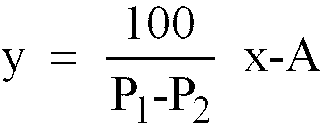
- Figure 3 shows application of such process for a fraction of Cherne petroleum oil, namely, the very high polarity malthenes, diluted in nujol,and extremely low polarity (35.2) mineral oil. In this case, in order to check on the accuracy of the process, various proportions of the petroleum malthenes were added to the nujol and the polarities of the mixtures were reckoned, andbroken line plotted; the bold line represents relation-relationship of Cherne petroleum malthenes and nujol in terms of original polarities. Formula for bold straight line is:
- y =
- concentration of most polar oil in mixture
- x =
- polarity of mixture
- P1=
- original polarity of most polar oil
- P2=
- polarity of least polar original oil
- A =
- value where bold line cuts axis of ordinates
- True figures found (broken line) and figures determined from line plotted from original polarites, (bold line) lie apart in places by about ± 5%. It can therefore be said that the polarity of mixtures of petroleum oil or of fractions thereof can be estimated within ±5% of error, if polarities of original crudes (or of their fractions) of misture are known. The opposite also applies.
- From Examples 1, 2 and 3, shown in figures 1, 2 and 3, one can conclude that:
- the polarities of petroleum oils or of their fractions, when mixed, are linearly related to the concentrations of petroleum oils or their fractions involved in such mixture;
- if original polarities of two petroleum oils or their fractions is known then the polarities of their mixtures in various concentrations can be found;
- if the polarities and concentrations of at least three mixtures are known then the polarities of the original oils or fractions thereof can be estimated.
- Another form of this invention deals with finding the stability of mixtures of shale oil with petroleum oil, as well as comparing the stability and quality of shale oil derived from the various processes of working bituminous shale rock that have been developed in Brazil, namely, PETROSIX, PLASOL and FLOOD BED, with the stability and quality of various petroleum oils.
- Example 4 below illustrates this embodiment of the present invention.
- In this Example the chemical polarity of the shale oils derived from the shale rock working processes referred to above was measured. In the measurement of shale oil chemical polarities the basic procedure described under Brazilian Application PI 8703790 included measurement of interaction of the stationary phase as well (shale oil derived from the various kinds of processes), with compounds such as pyridine and triethylamine, since such compounds are to be found in considerabel quantities admixed to shale oils. Comparison of the quality and stability of shale oils with quality and stability of petroleum oils likewise calls for the gauging of interaction between such amines and petroleum oils.
- Hence the measured chemical polarity of the shale oils got by means of the various processes was as follows:
Shale oil from FLOOD BED process - polarity 1182.6 PETROSIX - polarity 1129.7 PLASOL - polarity 1679.6 - The polarity of the same oils, without taking interaction with such amines into account was 957.7, 900.7 and 1329.8 respectively. Thus, compared with petroleum oils from various sources, chemical polarities of which run from 211.3 (Rio Grande do Norte, Brazil) considered to be slightly polar, up to 896.6 (Boscan petroleum from Venezuela), looked upon as very polar, it is found that shale oils are even more polar, that is, more unstable and of higher polarity, therefore lower quality.
- Therefore by measuring the chemical polarity of shale oils derived from the various processes, one can determine, for example, the stability of mixtures of shale oil(s) with petroleum oils by determining the highest chemical polarity figure for a mixture of shale oil/petroleum that a given application can stand. Figure 4 shows mixtures of 900.7 chemical polarity shale oil with 284.1 polarity petroleum oil. For instance, Figure 4 shows that 20% of shale oil produced by the PETROSIX process can be added to a quite stable petroleum provided that for the intended application a mixture stability equal to a polarity of 400 can be withstood,
- A further form of this invention is aimed at determining the stability of mixtures of fractions of medium and heavy distillates by determining the chemical polarity of such mixtures.
- Hence this process to determine the stability of oil mixtures can be applied to mixtures of fractions of medium and heavy distillates containing nitrogen, sulphur and oxygen contaminants.
- Within the state of the art it is known that the nitrogen, sulphur and oxyen heteroatomic ingredients of petroleum render its fractions secured by distillation and catalytic processes impure. Such heteroatomic substances (alcohols, acids, thiophenes, benzothiophenes, amines, mercaptans, carbazoles, etc.) have several reactive organic functions that make petroleum products unstable, which instability is announced by a series of undesirable particulars, such as, colour, smell, caking, corrosion, etc., among commercial commodities. Therefore such heteroatomic ingredients have to be got rid of so as to enable petroleum products to be marketed within prevailing specifications.
- Usually such compounds are got rid of by chemical, physico-chemical, or catalytic treatment action, involving, respectively, extraction with acids, bases and solvents, percolation through clay, hydrogenation, etc.
- Quality of the products got is then evaluated by means of standard tests such as induction period, copper foil corrosion, degree of acidity, etc., or by elemental analysis whereby elimination of the element concerned is controlled, efficiency of such kinds of treatment being found through lowering of the quantity of such elements. However any presence of oxygenated compounds is not usually looked into since analysis is difficult; of these, acid content is the only one for which degree of acidity is gauged.
- However the instability of mixtures of medium and heavy fractions of distillates can be worked out in a simple and precise way by means of the process described and claimed herein and used for mixtures of such distilled fractions by measuring the chemical polarity of the mixtures of distilled fractions contaminated by nitrogen, sulphur and oxygen polar compounds.
- The great usefulness of this process is seen in the monitoring of treatment operations, in comparison of the quality of catalytic cracking and hydrogentation charges and the quality of products therefrom, whether as a sole cut or as mixtures of cuts for end use.
- Basically, in the reverse-phase gas chromatography process the medium distillate fractions for which stability and quality were to be determined were used as the stationaty phase, modifications having been introduced accordint to the degree of volatility of the fraction of mixture of fractions under study.
- The following Examples show how the process herewith invented works when used for mixtures of several fractions of medium distillates.
- In this Example the quality (stability) of diesel oil got by mixing several cuts (kerosene + light diesel oil + heavy diesel oil + heavy naphtha), referred to herein as line diesel, is compared with that of the light diesel oil of which it consisted originally.
- To 50 ml of ordinary pentane 0.5 g of light diesel oil was added and this solution was poured upon 5,0 g of a 0.250/0.177 mm openings (60/80 mesh in the US series sieve) Vollaspher A2 support contained in a flask. Mixture was evaporated in a rotating evaporator at a reduced pressure of 17 mm of Hg. After solvent had been fully evaporated resultant matter was transferred into a porcelain dish and placed for about twelve hours, or throughout the night, in an oven, at a pressure of 10mm of Hg. Matter got threfrom consisted of the filling of the chromatography column and was used to fill a stainless steel pipe 2 meters long and 3.2 mm in outside diameter, according to the usual procedure.The chromatography column so prepared was conditioned by a 20 ml/min flow of nitrogen and programmed temperature rise from 3Q to 100°C at a rate of 0.5°C/min., such final temperature of 100°C having been kept up for four hours.
- Column was thereupon cooled and flow adjusted to 10 ml/min. Temperatures at detector, injector and column during the test were kept at 250°C, 200°C, and 100°C, respectively.
- A series of polar substances were then injected: -1-butanol, thiophene, dioxane, 2-methyl-2-pentanol, benzene, nitropropane, 2-pentanone and iodobutane, together with the methane (not retained chromatographically) in order to determine the adjusted retention times for each polar substance. Ordinary paraffins (n-alkanes) were injected in the same way.
- Retention times were calculated according to E. Kovats in "Advances in Chromatography", J.C. Giddings and R.A. Keller, Editors, Marcel Dekker, Inc., New York., vol. I, 1965, p. 229, as follows:

- Xi =
- the adjusted retention time for the tested solute with z carbon atoms
- X(n-Cz) =
- the adjusted retention time of the ordinary alkane with z carbon atoms eluted promptly before the tested solute
- X(n-Cz+1) =
- the adjusted retention time of ordinary alkane with z+1 carbon atoms eluted immediately after tested solute
- A chromatographic column was then prepared, in the same way and to the same dimensions as for the former one, but stationary phase was a standard hydrocarbon - squalane - same solutes having been injected and retention times reckoned in the same fashion. With retention times from diesel oil sample and squalane the constants of W.O. Mc-Reynolds, as described in the Journal of Chromatographic Science, 1970, 8, p. 685, can be found:

- Polarity of light diesel measured this way was 146.3
- Same procedure as above was followed to determine chemical polarity of line diesel, which is a mixture of several distilled fractions. Figure determined for line diesel was 297.5. Thus it was determined that line diesel, which consists of several cuts together, was of considerably poorer quality and lower stability than light diesel oil. It was thus determined that it is not advisable to blend several cuts together, such as kerosene with light diesel oil, heavy diesel oil and heavy naphtha (line diesel) where light diesle oil is regularly employed, since the fraction of the distillate got from the mixture has a stability which is unsuitable for the intended final use.
- This Example serves to show how the procedure for two different blends of petroleum meant to produce aviation kerosene can lead to products of different stability, and how the process of this invention can help in choosing the best product in terms of intended use. Thus, starting with two blends of petroleum, kerosene A of 84.0 chemical polarity and kerosene B of 128.7 chemical polarity were produced. Because of the strictness recommended in choosing this kind of fuel the best quality fuel, kerosene A, was chosen without any hesitation, which was more stable because of its lower chemical polarity. Of course a top chemical polarity figure could also have been quoted, for a mixture of the two kerosenes, for instance, 100, which could have been arrived at by mixing the two types of kerosene - A and B - in suitable proportions, to be found from the corresponding graph.
- This Example shows how, from among several different blends of petroleum, the most suitable charge, since most stable, can be chosen for an operation such as, for isntance, catalytic cracking, usually along with sensitive expensive catalysts. For example, in a given refinery there were three blends of petroleum available, and it had to be found which of these was best for fluid catalytic cracking purposes along with a very sensitiye and expensive catalys. The chemical polarity of each of the A, B and C gasoils was determined, which were 364.9, 397.2 and 420.3, respectively, which showed that gasoil A was the most stable and suitable for the operation to be undertaken. Upon determining the other particulars of the charges, the fitness of the polarity figures in terms of heteroatomic content is to be seen.
GASOILS A B C Density (gm/cm3) 0.9243 0.9318 0.9437 Sulphur (% by weight) 0.94 0.98 0.92 Nitrogen (% by weight) 0.18 0.20 0.24 Polynuclear aromatic hydrocarbons (mmol/100g) 38.0 39.0 39.5 Polarity 364.9 397.2 420.3 - This Example shows that medium petroleum distillates of polarities very close to one another may exhibit chemical polarities that are quite a lot different, which may be important when choosing a given cut of petroleum or when choosing a mixture of cuts, polarity and stability of which have been fixed beforehand. For instance, the chemical polarity of two petroleums, A and B, was found to be 418.4 and 427.8, respectively, thus very much alike. Surprisingly, cuts of petroleum A and B in the 176.6 to 371.0°C (350-700°F) range showed chemical polarities of 316.1 and 268.0, respectively, pointing to petroleum B as being the most suitable for intended use.
- The embodiment shown next is generally like the process invented, since it has been shown that the stability of mixtures of different types of oils as well as mixtures of their fractions can be determined unerringly by such process. The following Example shows that the notion of "stability of oil mixtures" can be applied not only to mixtures of several kinds of oils but also to mixtures of distillates, which includes 'mixtures' where the hydrocarbon moiety and the heteroatomic moiety are in the same molecule, it being likewise possible to determine the stability of any such substance or mixture of substances, provided they are non--ionic, by means of the process herein described and claimed.
- This Example therefore bears witness to the broad scope of the notion of 'mixture', inasmuch as the process applies not only to mixtures of different oils and their fractions but also to certain types of substances (and their mixtures as well), containing a non-polar hydrocarbon moiety and a polar heteroatomic moiety in the same molecule.
- Though this process is not to be regarded as limited to the substances referred to below the applicant has concerned itself with the aforesaid notion of chemical polarity as regards non-ionic surfactants, which are used to a great extent in the petroleum industry, since such non-ionic surfactants are amphyphilic substances, that is, substances where one moiety of their molecules is a non-polar hydrocarbon and the other a polar heteroatom,
- Every year the treatment of petroleums uses up a huge quantity of surfactants, intended to separate emulsions of water and oil. The state of the art concerned in this field of study recommends that the polarity of the demulsifier should be higher than that of the natural petroleum surfactants, so as to be able to disperse them from the water-oil interface. The higher the polarity of a petroleum the likelier it is to emulsify water so that a suitable demulsifier must have a polarity that is higher still if it is to break up the emulsion. Know-ledge of the polarity of the demulsifiers was always, a major need in the technique employed but experimental difficulties made it hard to determine. Even the classifying of surfactants in terms of the hydrophylic-lipophylic scale (HLB) lacks precision and is limited.
- Now, most of the surfactants employed in the petroleum industry are amphyphilic compounds, that is, they exhibit dual affinity - for polar and non-polar solvents - since their molecules consist of a polar moiety, made up of heteroatoms (usually O, S, N, P, Cl) belonging to several functional organic groups (alcohol, ether, acid, ester, thiol, sulphonate, sulphate, amine, phosphate, etc.), and a non-polar moiety, usually a long ordinary paraffin chain, occasionally with cycloparaffinic or aromatic groups in it. Because of these features the amphyphilic molecules, within either medium, polar or non-polar (water and oil systems), migrate to the inter-interface of such mediums, where they likewise satisfy molecular interaction affinities. A greater or a lesser affinity for one or the other of the mediums will depend on the extension and type of the polar and non-polar moities of the molecules.
- It is important to determine the chemical polarity of surfactants not only in the case of one only surfactant but also in that of mixtures thereof, since where mixtures of compounds are concerned use may be made of the synergistic effect of their molecules.
- In determining the chemical polarity of pure non-ionic surfactants or those within synergistic mixtures with the aid of inverse gas chromatography, the support referred to in previous Examples herein is covered with the surfactant the chemical polarity of which is being sought, such surfactant having first of all been dissolved in a suitable solvent. The stationary phase is thereby got and it is put in interaction with several solutes, as already described. The same interactions were measured for squalane, polarity of which is zero.
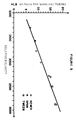
- In order to show that the chemical polarity results for non-ionic surfactants got with this process are in line with HLB scale figures usually adopted for surfactants, Figure 5 was drawn up which serves to bear out the linear relationship between experimental values and HLB data supplied by manufacturers for the products concerned.
- Results serve to show that this process is useful as a substitute for the HLB scale, and is a mote precise means of discovering the behaviour of non-ionic surfactants as regards polarity. Hence by measuring the chemical polarity of a surfactant or its mixtures the most suitable surfactant or mixture of surfactants may be accurately picked for the required purpose.
- Measurement repeatability is excellent, being ± 0.56%, thus bearing witness to the reliability of such experimental procedure.
- In Table 1 below chemical polarity figures are giyen for commercial non-ionic surfactants, together with HLB figures provided by manufacturer. All the surfactant names are Trade Names.
TABLE 1 SURFACTANT HLB (*) RELATIVE POLARITY (**) RENEX 409.0 1 784.2 RENEX 60 10.9 2 012.4 RENEX 120 14.1 2 294.7 RENEX 150 15.0 2 496.7 RENEX 30017.1 2 879.1 SPAN 208.6 1 575.2 SPAN 406.7 1 310.8 TWEEN 2016.7 2 883.8 TWEEN 4015.6 2 511.6 TWEEN 6014.9 2 301.8 (*) Figures provided by manufacturers (**) Average figure after three readings - Therefore the process covered herein is useful in comparing the polarity of petroleum oils and those of surfactants and their mixtures. Brazilian petroleum polarities range from 43.5 for the more non-polar petroleum from Bahia to 627.0 for a polar petroleum from the Campos basin in Rio de Janeiro. On the other hand the polarity figures determined for surfactants, as shown in the table above, lie all of them above 1000, measurement having been made, for the first time, of that which demulsification theory claimed, and it having been determined that the polarity of surfactants is really much higher than that for petroleum oils.
- The feasibility of the present system for determining the stability of mixtures of oils and of fractions thereof is of major importance in the present critical state of the oil business since it enables stability to be determined for mixtures of oils from the most different of sources, as in the case of oils derived from the distillation of coal (Synthoil), where maximum proportion of which to be added to petroleum, without harming the stability of the mixture, can be accurately determined by the present process for each kind of application, thereby upgrading organic substances which have until recently been little used on an industrial scale.
- The variety of Examples provided without exhausting the subjeot however, enables the extremely wide scope of the process described and claimed herein to be perperceived, a process which can be employed for all kinds of mixures of oils from various sources, or fractions thereof, and of mixtures in general of substances containing non-polar and polar moieties, which moieties may lie within different molecules or even within one same molecule. Hence, application of the present process may be extended to fields other than the petroleum field, such as surfactants, pharmaceuticals, biotechnological,etc,, whenever the chemical polarity of a non-ionic mixture of polar/non-polar substances has to be found.
Claims (6)
- A process to determine the stability of a mixture of oils, which process comprises:(a) separately determining the chemical polarity of each component of the mixture of oils by reverse-phase gas chromatography, each oil being employed alternately as the stationary phase, choosing the most polar of the oils as the reference oil;(b) plotting on a graph the chemical polarity figures determined for the original oils in step (a), such polarity figures being represented by the graph abscissa and the percentage of the most polar oil by weight, ranging from 0 to 100, being represented by the graph ordinate, and determining the stability or quality of the mixture of oils from the aforesaid graph upon a straight line joining the polarities of the original oils and the acceptable chemical polarity figure for the final intended use; or, alternatively:(a) preparing at least three mixtures of known concentration by weight of the aforesaid oils, each one of the mixtures to be consecutively employed as the stationary phase for reverse-phase gas chromatography, in order to determine the chemical polarity of the mixture of oils;(b) plotting a graph wherein the figures for chemical polarity arrived at in step (a) for at least three mixtures are the abscissa, and the percentage by weight for the most polar oil, from 0 to 100, is the ordinate;(c) determining the stability by linear extrapolation of chemical polarity along the abscissa for instances of 0% to 100% by weight of the most polar of the oils, the abscissa representing the polarity figures of the least polar oil and the most polar oil respectively, that is the polarity of the original oils unmixed.
- A process according to claim 1, wherein the mixture of oils includes two or more petroleum oils from different sources.
- A process according to claim 1, wherein the mixture of oils is a mixture of two or more shale oils or a mixture of petroleum oils and shale oils.
- A process according to claim 1, wherein the mixture of oils includes two or more distilled fractions of petroleum or shale oils.
- A process according to claim 1, wherein the mixture includes two or more non-ionic compounds containing a non-polar hydrocarbon moiety and a nitrogen, sulphur or oxygen polar moiety in the same or different molecules.
- A process according to claim 1, wherein the stability of a mixture of at least two oils is an inverse function of the concentration by weight of the most polar oil in the mixture.
Applications Claiming Priority (2)
| Application Number | Priority Date | Filing Date | Title |
|---|---|---|---|
| BR9005133 | 1990-10-12 | ||
| BR909005133A BR9005133A (en) | 1990-10-12 | 1990-10-12 | PROCESS FOR DETERMINING THE STABILITY OF OIL MIXTURES, INCLUDING SHALE OIL AND FRACTIONS OF THESE OILS |
Publications (3)
| Publication Number | Publication Date |
|---|---|
| EP0480764A2 EP0480764A2 (en) | 1992-04-15 |
| EP0480764A3 EP0480764A3 (en) | 1993-03-17 |
| EP0480764B1 true EP0480764B1 (en) | 1996-06-12 |
Family
ID=4050515
Family Applications (1)
| Application Number | Title | Priority Date | Filing Date |
|---|---|---|---|
| EP91309401A Expired - Lifetime EP0480764B1 (en) | 1990-10-12 | 1991-10-11 | Process to determine the stability of oil mixtures, including shale oil and fractions thereof |
Country Status (6)
| Country | Link |
|---|---|
| US (1) | US5163982A (en) |
| EP (1) | EP0480764B1 (en) |
| BR (1) | BR9005133A (en) |
| CA (1) | CA2053333C (en) |
| DE (1) | DE69120197T2 (en) |
| NO (1) | NO302203B1 (en) |
Families Citing this family (7)
| Publication number | Priority date | Publication date | Assignee | Title |
|---|---|---|---|---|
| FR2717579B1 (en) * | 1994-03-18 | 1996-04-26 | Elf Aquitaine | Method for determining the characteristics of a crude oil. |
| US5612380A (en) * | 1994-09-27 | 1997-03-18 | The Scripps Research Institute | Method for sleep induction |
| AU701945B2 (en) * | 1994-09-27 | 1999-02-11 | Scripps Research Institute, The | Method for sleep induction |
| US20020091433A1 (en) * | 1995-04-19 | 2002-07-11 | Ni Ding | Drug release coated stent |
| US9458715B2 (en) * | 2014-12-16 | 2016-10-04 | Schlumberger Technology Corporation | Determining the plus fraction of a gas chromatogram |
| JP5780374B1 (en) * | 2015-02-27 | 2015-09-16 | Jfeエンジニアリング株式会社 | Crude oil composition estimation method, absorption liquefaction facility absorption process simulation method, and recovery facility process simulation method |
| FR3035970B1 (en) | 2015-05-05 | 2017-06-02 | Ifp Energies Now | METHOD FOR CONTINUOUSLY MONITORING THE ADVANCED STATE OF OXIDATION OF A FUEL |
Family Cites Families (7)
| Publication number | Priority date | Publication date | Assignee | Title |
|---|---|---|---|---|
| US4202193A (en) * | 1978-10-03 | 1980-05-13 | National Steel Corporation | Apparatus for controlling the concentration and stability of an emulsion |
| FR2495780A1 (en) * | 1980-12-05 | 1982-06-11 | Elf Aquitaine | Formulation of model compsn. simulating behaviour of a crude oil - for experiments on phase equilibria, e.g. in enhanced recovery |
| US4438203A (en) * | 1982-06-14 | 1984-03-20 | The United States Of America As Represented By The Secretary Of The Navy | Method and apparatus for determination of lubricant stability |
| DE3438932A1 (en) * | 1984-10-24 | 1986-04-24 | Schaller-Automation Industrielle Automationstechnik KG, 6653 Blieskastel | In-service test method and equipment for determining the quality of liquid fuels and oils |
| US4762797A (en) * | 1986-04-08 | 1988-08-09 | Exxon Chemical Patents Inc. | Method for determining the fouling tendency of hydrocarbons |
| US4865746A (en) * | 1987-01-23 | 1989-09-12 | Exxon Research And Engineering Company | Chromatographic analysis of hydrocarbons |
| BR8703790A (en) * | 1987-07-21 | 1989-01-31 | Petroleo Brasileiro Sa | PROCESS TO DETERMINE THE CHEMICAL POLARITY OF PETROLEUM AND ITS HEAVY FRACTIONS |
-
1990
- 1990-10-12 BR BR909005133A patent/BR9005133A/en not_active IP Right Cessation
-
1991
- 1991-10-09 NO NO913951A patent/NO302203B1/en unknown
- 1991-10-11 DE DE69120197T patent/DE69120197T2/en not_active Expired - Fee Related
- 1991-10-11 US US07/774,947 patent/US5163982A/en not_active Expired - Fee Related
- 1991-10-11 CA CA002053333A patent/CA2053333C/en not_active Expired - Fee Related
- 1991-10-11 EP EP91309401A patent/EP0480764B1/en not_active Expired - Lifetime
Non-Patent Citations (4)
| Title |
|---|
| ADVANCES IN CHROMATOGRAPHY, vol. 1, Giddings & Keller (ed.), Marcel Dekker Inc. (publ.), New York, NY (US); KOVATS, pp. 229-247 * |
| G0011/91 * |
| T0115/85 * |
| T0163/85 * |
Also Published As
| Publication number | Publication date |
|---|---|
| NO913951L (en) | 1992-04-13 |
| EP0480764A2 (en) | 1992-04-15 |
| NO302203B1 (en) | 1998-02-02 |
| DE69120197D1 (en) | 1996-07-18 |
| NO913951D0 (en) | 1991-10-09 |
| CA2053333C (en) | 1996-01-16 |
| US5163982A (en) | 1992-11-17 |
| BR9005133A (en) | 1992-04-14 |
| CA2053333A1 (en) | 1992-04-13 |
| DE69120197T2 (en) | 1996-10-10 |
| EP0480764A3 (en) | 1993-03-17 |
Similar Documents
| Publication | Publication Date | Title |
|---|---|---|
| Musser et al. | Molecular characterization of wax isolated from a variety of crude oils | |
| García et al. | Asphaltene− paraffin structural interactions. Effect on crude oil stability | |
| Poindexter et al. | Factors contributing to petroleum foaming. 1. Crude oil systems | |
| Fan et al. | Evaluating crude oils by SARA analysis | |
| Ovalles et al. | Characterization of heavy crude oils, their fractions, and hydrovisbroken products by the asphaltene solubility fraction method | |
| Furey | Volatility characteristics of gasoline-alcohol and gasoline-ether fuel blends | |
| US5163982A (en) | Process to find stability of oil mixtures, including shale oil and fractions thereof | |
| US4762797A (en) | Method for determining the fouling tendency of hydrocarbons | |
| Davies et al. | Applications of coupled LC‐GC: A review | |
| Di Sanzo et al. | Determination of aromatics in jet and diesel fuels by supercritical fluid chromatography with flame ionization detection (SFC—FID): a quantitative study | |
| Hayes Jr et al. | Paraffins, olefins, naphthenes and aromatics analysis of selected hydrocarbon distillates using on-line column switching high-performance liquid chromatography with dielectric constant detection | |
| Sarowha et al. | Compositional studies on gas oil fractions using high-performance liquid chromatography | |
| Done et al. | A Rapid Method of Identification and Assessment of Total Crude Oils and Crude Oil Fractions by Gel Permeation Chromatography | |
| Hayes Jr et al. | Rapid determination of naphthenes in hydrocarbon distillates using on-line column switching high-performance liquid chromatography with dielectric constant detection | |
| Sánchez et al. | Size exclusion chromatographic approach for the evaluation of processes for upgrading heavy petroleum | |
| US20230273176A1 (en) | Method to prepare virtual assay using high pressure liquid chromatography | |
| Schabron et al. | Petroleum residua solubility parameter/polarity map: stability studies of residua pyrolysis | |
| Hayes Jr et al. | The analysis of hydrocarbon distillates for group types using hplc with dielectric constant detection: A review | |
| Stevenson | Rapid separation of petroleum fuels by hydrocarbon type | |
| US4889813A (en) | Process for determining the polarity of a crude oil | |
| Bobra | Solubility behaviour of petroleum oils in water | |
| Holstein et al. | Liquid chromatography of coal oil fractions | |
| Carbognani | Group-type separation of middle petroleum distillates by adsorption and charge-transfer liquid chromatography with dielectric constant detection | |
| Ościk et al. | Thermodynamic Approach to TLC with Mixed mobile Phase. Determination of Parameters Characterizing TLC Systems | |
| Beg et al. | Hydrocarbon group analysis of Arabian crude oils TBP-fractions |
Legal Events
| Date | Code | Title | Description |
|---|---|---|---|
| PUAI | Public reference made under article 153(3) epc to a published international application that has entered the european phase |
Free format text: ORIGINAL CODE: 0009012 |
|
| AK | Designated contracting states |
Kind code of ref document: A2 Designated state(s): BE DE ES FR GB IT LU NL |
|
| PUAL | Search report despatched |
Free format text: ORIGINAL CODE: 0009013 |
|
| AK | Designated contracting states |
Kind code of ref document: A3 Designated state(s): BE DE ES FR GB IT LU NL |
|
| 17P | Request for examination filed |
Effective date: 19930310 |
|
| 17Q | First examination report despatched |
Effective date: 19941201 |
|
| GRAH | Despatch of communication of intention to grant a patent |
Free format text: ORIGINAL CODE: EPIDOS IGRA |
|
| GRAH | Despatch of communication of intention to grant a patent |
Free format text: ORIGINAL CODE: EPIDOS IGRA |
|
| GRAA | (expected) grant |
Free format text: ORIGINAL CODE: 0009210 |
|
| AK | Designated contracting states |
Kind code of ref document: B1 Designated state(s): BE DE ES FR GB IT LU NL |
|
| PG25 | Lapsed in a contracting state [announced via postgrant information from national office to epo] |
Ref country code: IT Free format text: LAPSE BECAUSE OF FAILURE TO SUBMIT A TRANSLATION OF THE DESCRIPTION OR TO PAY THE FEE WITHIN THE PRESCRIBED TIME-LIMIT;WARNING: LAPSES OF ITALIAN PATENTS WITH EFFECTIVE DATE BEFORE 2007 MAY HAVE OCCURRED AT ANY TIME BEFORE 2007. THE CORRECT EFFECTIVE DATE MAY BE DIFFERENT FROM THE ONE RECORDED. Effective date: 19960612 Ref country code: FR Effective date: 19960612 Ref country code: BE Effective date: 19960612 Ref country code: ES Free format text: THE PATENT HAS BEEN ANNULLED BY A DECISION OF A NATIONAL AUTHORITY Effective date: 19960612 |
|
| REF | Corresponds to: |
Ref document number: 69120197 Country of ref document: DE Date of ref document: 19960718 |
|
| PG25 | Lapsed in a contracting state [announced via postgrant information from national office to epo] |
Ref country code: LU Free format text: LAPSE BECAUSE OF NON-PAYMENT OF DUE FEES Effective date: 19961031 |
|
| EN | Fr: translation not filed | ||
| PLBE | No opposition filed within time limit |
Free format text: ORIGINAL CODE: 0009261 |
|
| STAA | Information on the status of an ep patent application or granted ep patent |
Free format text: STATUS: NO OPPOSITION FILED WITHIN TIME LIMIT |
|
| 26N | No opposition filed | ||
| PGFP | Annual fee paid to national office [announced via postgrant information from national office to epo] |
Ref country code: GB Payment date: 19971002 Year of fee payment: 7 |
|
| PGFP | Annual fee paid to national office [announced via postgrant information from national office to epo] |
Ref country code: DE Payment date: 19971017 Year of fee payment: 7 |
|
| PGFP | Annual fee paid to national office [announced via postgrant information from national office to epo] |
Ref country code: NL Payment date: 19971029 Year of fee payment: 7 |
|
| PG25 | Lapsed in a contracting state [announced via postgrant information from national office to epo] |
Ref country code: GB Free format text: LAPSE BECAUSE OF NON-PAYMENT OF DUE FEES Effective date: 19981011 |
|
| PG25 | Lapsed in a contracting state [announced via postgrant information from national office to epo] |
Ref country code: NL Free format text: LAPSE BECAUSE OF NON-PAYMENT OF DUE FEES Effective date: 19990501 |
|
| GBPC | Gb: european patent ceased through non-payment of renewal fee |
Effective date: 19981011 |
|
| NLV4 | Nl: lapsed or anulled due to non-payment of the annual fee |
Effective date: 19990501 |
|
| PG25 | Lapsed in a contracting state [announced via postgrant information from national office to epo] |
Ref country code: DE Free format text: LAPSE BECAUSE OF NON-PAYMENT OF DUE FEES Effective date: 19990803 |