EP0480257A2 - Use of a potassium channel activator for pharmaceutical compositions useful in cardiopulmonary bypass and organ transplant - Google Patents
Use of a potassium channel activator for pharmaceutical compositions useful in cardiopulmonary bypass and organ transplant Download PDFInfo
- Publication number
- EP0480257A2 EP0480257A2 EP91116486A EP91116486A EP0480257A2 EP 0480257 A2 EP0480257 A2 EP 0480257A2 EP 91116486 A EP91116486 A EP 91116486A EP 91116486 A EP91116486 A EP 91116486A EP 0480257 A2 EP0480257 A2 EP 0480257A2
- Authority
- EP
- European Patent Office
- Prior art keywords
- alkyl
- arylalkyl
- cycloalkyl
- hydrogen
- aryl
- Prior art date
- Legal status (The legal status is an assumption and is not a legal conclusion. Google has not performed a legal analysis and makes no representation as to the accuracy of the status listed.)
- Ceased
Links
- 239000004036 potassium channel stimulating agent Substances 0.000 title claims abstract description 22
- 210000000056 organ Anatomy 0.000 title claims abstract description 18
- 230000002612 cardiopulmonary effect Effects 0.000 title claims abstract description 7
- 239000008194 pharmaceutical composition Substances 0.000 title claims description 16
- 238000000034 method Methods 0.000 claims abstract description 14
- 238000002054 transplantation Methods 0.000 claims abstract description 9
- 125000000217 alkyl group Chemical group 0.000 claims description 85
- 125000003710 aryl alkyl group Chemical group 0.000 claims description 49
- 229910052739 hydrogen Inorganic materials 0.000 claims description 49
- 239000001257 hydrogen Substances 0.000 claims description 49
- 125000000753 cycloalkyl group Chemical group 0.000 claims description 47
- 150000002431 hydrogen Chemical group 0.000 claims description 44
- -1 amino, substituted amino Chemical group 0.000 claims description 31
- 125000003118 aryl group Chemical group 0.000 claims description 28
- 150000001875 compounds Chemical class 0.000 claims description 28
- 125000003342 alkenyl group Chemical group 0.000 claims description 22
- 125000001316 cycloalkyl alkyl group Chemical group 0.000 claims description 17
- 125000002023 trifluoromethyl group Chemical group FC(F)(F)* 0.000 claims description 14
- 125000000304 alkynyl group Chemical group 0.000 claims description 13
- 125000001188 haloalkyl group Chemical group 0.000 claims description 13
- IJGRMHOSHXDMSA-UHFFFAOYSA-N Atomic nitrogen Chemical compound N#N IJGRMHOSHXDMSA-UHFFFAOYSA-N 0.000 claims description 12
- 229910052736 halogen Inorganic materials 0.000 claims description 12
- 150000002367 halogens Chemical class 0.000 claims description 12
- 125000002887 hydroxy group Chemical group [H]O* 0.000 claims description 12
- 125000004093 cyano group Chemical group *C#N 0.000 claims description 11
- 125000000449 nitro group Chemical group [O-][N+](*)=O 0.000 claims description 11
- 239000008148 cardioplegic solution Substances 0.000 claims description 10
- 125000004793 2,2,2-trifluoroethoxy group Chemical group FC(CO*)(F)F 0.000 claims description 9
- 125000001960 7 membered carbocyclic group Chemical group 0.000 claims description 9
- 229910052799 carbon Inorganic materials 0.000 claims description 9
- 150000001721 carbon Chemical group 0.000 claims description 9
- 229910052757 nitrogen Inorganic materials 0.000 claims description 9
- 125000002924 primary amino group Chemical group [H]N([H])* 0.000 claims description 9
- 125000000876 trifluoromethoxy group Chemical group FC(F)(F)O* 0.000 claims description 9
- 125000003545 alkoxy group Chemical group 0.000 claims description 8
- TVZCRIROJQEVOT-CABCVRRESA-N Cromakalim Chemical compound N1([C@@H]2C3=CC(=CC=C3OC([C@H]2O)(C)C)C#N)CCCC1=O TVZCRIROJQEVOT-CABCVRRESA-N 0.000 claims description 7
- 229950004210 cromakalim Drugs 0.000 claims description 7
- NINIDFKCEFEMDL-UHFFFAOYSA-N Sulfur Chemical group [S] NINIDFKCEFEMDL-UHFFFAOYSA-N 0.000 claims description 6
- 125000004414 alkyl thio group Chemical group 0.000 claims description 6
- QVGXLLKOCUKJST-UHFFFAOYSA-N atomic oxygen Chemical group [O] QVGXLLKOCUKJST-UHFFFAOYSA-N 0.000 claims description 6
- 229910052760 oxygen Inorganic materials 0.000 claims description 6
- 239000001301 oxygen Substances 0.000 claims description 6
- 229910052717 sulfur Chemical group 0.000 claims description 6
- 239000011593 sulfur Chemical group 0.000 claims description 6
- 238000001356 surgical procedure Methods 0.000 claims description 6
- 125000001475 halogen functional group Chemical group 0.000 claims description 5
- 125000004435 hydrogen atom Chemical group [H]* 0.000 claims description 5
- 239000000243 solution Substances 0.000 claims description 5
- 238000002360 preparation method Methods 0.000 claims description 4
- 125000004214 1-pyrrolidinyl group Chemical group [H]C1([H])N(*)C([H])([H])C([H])([H])C1([H])[H] 0.000 claims description 3
- 230000000694 effects Effects 0.000 claims description 3
- 125000004573 morpholin-4-yl group Chemical group N1(CCOCC1)* 0.000 claims description 3
- 125000004433 nitrogen atom Chemical group N* 0.000 claims description 3
- 125000000587 piperidin-1-yl group Chemical group [H]C1([H])N(*)C([H])([H])C([H])([H])C([H])([H])C1([H])[H] 0.000 claims description 3
- 241000894007 species Species 0.000 claims description 3
- 125000001424 substituent group Chemical group 0.000 claims description 3
- 125000000547 substituted alkyl group Chemical group 0.000 claims description 3
- IVVNZDGDKPTYHK-JTQLQIEISA-N 1-cyano-2-[(2s)-3,3-dimethylbutan-2-yl]-3-pyridin-4-ylguanidine Chemical compound CC(C)(C)[C@H](C)N=C(NC#N)NC1=CC=NC=C1 IVVNZDGDKPTYHK-JTQLQIEISA-N 0.000 claims description 2
- ZFMITUMMTDLWHR-UHFFFAOYSA-N Minoxidil Chemical compound NC1=[N+]([O-])C(N)=CC(N2CCCCC2)=N1 ZFMITUMMTDLWHR-UHFFFAOYSA-N 0.000 claims description 2
- 125000004432 carbon atom Chemical group C* 0.000 claims description 2
- 229960003632 minoxidil Drugs 0.000 claims description 2
- 229960002497 nicorandil Drugs 0.000 claims description 2
- LBHIOVVIQHSOQN-UHFFFAOYSA-N nicorandil Chemical compound [O-][N+](=O)OCCNC(=O)C1=CC=CN=C1 LBHIOVVIQHSOQN-UHFFFAOYSA-N 0.000 claims description 2
- 229960002310 pinacidil Drugs 0.000 claims description 2
- 150000003839 salts Chemical class 0.000 claims description 2
- 230000024883 vasodilation Effects 0.000 claims description 2
- 208000028867 ischemia Diseases 0.000 abstract description 9
- 230000000302 ischemic effect Effects 0.000 description 14
- 241000700159 Rattus Species 0.000 description 9
- 102000003855 L-lactate dehydrogenase Human genes 0.000 description 7
- 108700023483 L-lactate dehydrogenases Proteins 0.000 description 7
- 0 *c1ccccc1 Chemical compound *c1ccccc1 0.000 description 6
- 210000000709 aorta Anatomy 0.000 description 5
- ZLMJMSJWJFRBEC-UHFFFAOYSA-N Potassium Chemical compound [K] ZLMJMSJWJFRBEC-UHFFFAOYSA-N 0.000 description 4
- 239000000872 buffer Substances 0.000 description 4
- 239000003814 drug Substances 0.000 description 4
- 230000004217 heart function Effects 0.000 description 4
- 230000036722 left ventricular developed pressure Effects 0.000 description 4
- 239000011591 potassium Substances 0.000 description 4
- 229910052700 potassium Inorganic materials 0.000 description 4
- 230000010410 reperfusion Effects 0.000 description 4
- 229940124549 vasodilator Drugs 0.000 description 4
- 239000003071 vasodilator agent Substances 0.000 description 4
- IAZDPXIOMUYVGZ-UHFFFAOYSA-N Dimethylsulphoxide Chemical compound CS(C)=O IAZDPXIOMUYVGZ-UHFFFAOYSA-N 0.000 description 3
- 230000036772 blood pressure Effects 0.000 description 3
- 230000000747 cardiac effect Effects 0.000 description 3
- 239000003795 chemical substances by application Substances 0.000 description 3
- 210000004351 coronary vessel Anatomy 0.000 description 3
- 229940079593 drug Drugs 0.000 description 3
- 230000000304 vasodilatating effect Effects 0.000 description 3
- CSNNHWWHGAXBCP-UHFFFAOYSA-L Magnesium sulfate Chemical compound [Mg+2].[O-][S+2]([O-])([O-])[O-] CSNNHWWHGAXBCP-UHFFFAOYSA-L 0.000 description 2
- UIIMBOGNXHQVGW-UHFFFAOYSA-M Sodium bicarbonate Chemical compound [Na+].OC([O-])=O UIIMBOGNXHQVGW-UHFFFAOYSA-M 0.000 description 2
- 230000002253 anti-ischaemic effect Effects 0.000 description 2
- 230000005961 cardioprotection Effects 0.000 description 2
- 238000002474 experimental method Methods 0.000 description 2
- 230000006870 function Effects 0.000 description 2
- 125000001072 heteroaryl group Chemical group 0.000 description 2
- 125000004446 heteroarylalkyl group Chemical group 0.000 description 2
- 238000002955 isolation Methods 0.000 description 2
- 238000005259 measurement Methods 0.000 description 2
- 230000010412 perfusion Effects 0.000 description 2
- 230000003389 potentiating effect Effects 0.000 description 2
- 230000004224 protection Effects 0.000 description 2
- 239000003981 vehicle Substances 0.000 description 2
- SGTNSNPWRIOYBX-UHFFFAOYSA-N 2-(3,4-dimethoxyphenyl)-5-{[2-(3,4-dimethoxyphenyl)ethyl](methyl)amino}-2-(propan-2-yl)pentanenitrile Chemical compound C1=C(OC)C(OC)=CC=C1CCN(C)CCCC(C#N)(C(C)C)C1=CC=C(OC)C(OC)=C1 SGTNSNPWRIOYBX-UHFFFAOYSA-N 0.000 description 1
- ONMJFNSPONMUCP-OKQDKNQFSA-N CC(C)([C@H]([C@@H]1N/C(/C(CC2)C2C2C=CCCC2)=N/C#N)O)OC(CC2)=C1C=C2C#N Chemical compound CC(C)([C@H]([C@@H]1N/C(/C(CC2)C2C2C=CCCC2)=N/C#N)O)OC(CC2)=C1C=C2C#N ONMJFNSPONMUCP-OKQDKNQFSA-N 0.000 description 1
- 229940127291 Calcium channel antagonist Drugs 0.000 description 1
- UXVMQQNJUSDDNG-UHFFFAOYSA-L Calcium chloride Chemical compound [Cl-].[Cl-].[Ca+2] UXVMQQNJUSDDNG-UHFFFAOYSA-L 0.000 description 1
- 241000282693 Cercopithecidae Species 0.000 description 1
- 201000000057 Coronary Stenosis Diseases 0.000 description 1
- 102000004190 Enzymes Human genes 0.000 description 1
- 108090000790 Enzymes Proteins 0.000 description 1
- 241000282326 Felis catus Species 0.000 description 1
- WQZGKKKJIJFFOK-GASJEMHNSA-N Glucose Natural products OC[C@H]1OC(O)[C@H](O)[C@@H](O)[C@@H]1O WQZGKKKJIJFFOK-GASJEMHNSA-N 0.000 description 1
- HTTJABKRGRZYRN-UHFFFAOYSA-N Heparin Chemical compound OC1C(NC(=O)C)C(O)OC(COS(O)(=O)=O)C1OC1C(OS(O)(=O)=O)C(O)C(OC2C(C(OS(O)(=O)=O)C(OC3C(C(O)C(O)C(O3)C(O)=O)OS(O)(=O)=O)C(CO)O2)NS(O)(=O)=O)C(C(O)=O)O1 HTTJABKRGRZYRN-UHFFFAOYSA-N 0.000 description 1
- 241000282414 Homo sapiens Species 0.000 description 1
- 206010061216 Infarction Diseases 0.000 description 1
- 239000007836 KH2PO4 Substances 0.000 description 1
- 239000008002 Krebs-Henseleit bicarbonate buffer Substances 0.000 description 1
- 241001465754 Metazoa Species 0.000 description 1
- 206010028851 Necrosis Diseases 0.000 description 1
- 241000009328 Perro Species 0.000 description 1
- 102000004257 Potassium Channel Human genes 0.000 description 1
- LCTONWCANYUPML-UHFFFAOYSA-M Pyruvate Chemical compound CC(=O)C([O-])=O LCTONWCANYUPML-UHFFFAOYSA-M 0.000 description 1
- 230000009471 action Effects 0.000 description 1
- 239000012190 activator Substances 0.000 description 1
- 239000000556 agonist Substances 0.000 description 1
- 210000001367 artery Anatomy 0.000 description 1
- 230000008901 benefit Effects 0.000 description 1
- 239000008280 blood Substances 0.000 description 1
- 210000004369 blood Anatomy 0.000 description 1
- 239000001110 calcium chloride Substances 0.000 description 1
- 235000011148 calcium chloride Nutrition 0.000 description 1
- 229910001628 calcium chloride Inorganic materials 0.000 description 1
- 230000001848 cardiodepressant effect Effects 0.000 description 1
- 230000036459 cardiodepression Effects 0.000 description 1
- 230000003293 cardioprotective effect Effects 0.000 description 1
- 210000004027 cell Anatomy 0.000 description 1
- 238000013329 compounding Methods 0.000 description 1
- 230000002596 correlated effect Effects 0.000 description 1
- 239000008121 dextrose Substances 0.000 description 1
- 230000035487 diastolic blood pressure Effects 0.000 description 1
- HSUGRBWQSSZJOP-RTWAWAEBSA-N diltiazem Chemical compound C1=CC(OC)=CC=C1[C@H]1[C@@H](OC(C)=O)C(=O)N(CCN(C)C)C2=CC=CC=C2S1 HSUGRBWQSSZJOP-RTWAWAEBSA-N 0.000 description 1
- 229960004166 diltiazem Drugs 0.000 description 1
- 238000010494 dissociation reaction Methods 0.000 description 1
- 230000005593 dissociations Effects 0.000 description 1
- 239000003937 drug carrier Substances 0.000 description 1
- 230000002526 effect on cardiovascular system Effects 0.000 description 1
- 230000004907 flux Effects 0.000 description 1
- 238000009472 formulation Methods 0.000 description 1
- 210000002064 heart cell Anatomy 0.000 description 1
- 229960002897 heparin Drugs 0.000 description 1
- 229920000669 heparin Polymers 0.000 description 1
- 230000002631 hypothermal effect Effects 0.000 description 1
- 238000011065 in-situ storage Methods 0.000 description 1
- 230000007574 infarction Effects 0.000 description 1
- 238000001802 infusion Methods 0.000 description 1
- 230000003834 intracellular effect Effects 0.000 description 1
- 210000003734 kidney Anatomy 0.000 description 1
- 239000004816 latex Substances 0.000 description 1
- 229920000126 latex Polymers 0.000 description 1
- 210000005240 left ventricle Anatomy 0.000 description 1
- 210000004185 liver Anatomy 0.000 description 1
- 229910052943 magnesium sulfate Inorganic materials 0.000 description 1
- 235000019341 magnesium sulphate Nutrition 0.000 description 1
- 229910052751 metal Inorganic materials 0.000 description 1
- 239000002184 metal Substances 0.000 description 1
- 239000000203 mixture Substances 0.000 description 1
- 229910000402 monopotassium phosphate Inorganic materials 0.000 description 1
- 235000019796 monopotassium phosphate Nutrition 0.000 description 1
- 230000002107 myocardial effect Effects 0.000 description 1
- 210000004165 myocardium Anatomy 0.000 description 1
- 230000017074 necrotic cell death Effects 0.000 description 1
- 229960001597 nifedipine Drugs 0.000 description 1
- HYIMSNHJOBLJNT-UHFFFAOYSA-N nifedipine Chemical compound COC(=O)C1=C(C)NC(C)=C(C(=O)OC)C1C1=CC=CC=C1[N+]([O-])=O HYIMSNHJOBLJNT-UHFFFAOYSA-N 0.000 description 1
- 229960001412 pentobarbital Drugs 0.000 description 1
- WEXRUCMBJFQVBZ-UHFFFAOYSA-N pentobarbital Chemical compound CCCC(C)C1(CC)C(=O)NC(=O)NC1=O WEXRUCMBJFQVBZ-UHFFFAOYSA-N 0.000 description 1
- 108020001213 potassium channel Proteins 0.000 description 1
- 239000003450 potassium channel blocker Substances 0.000 description 1
- GNSKLFRGEWLPPA-UHFFFAOYSA-M potassium dihydrogen phosphate Chemical compound [K+].OP(O)([O-])=O GNSKLFRGEWLPPA-UHFFFAOYSA-M 0.000 description 1
- 239000003223 protective agent Substances 0.000 description 1
- 230000009467 reduction Effects 0.000 description 1
- 239000000523 sample Substances 0.000 description 1
- 235000017557 sodium bicarbonate Nutrition 0.000 description 1
- 229910000030 sodium bicarbonate Inorganic materials 0.000 description 1
- 238000013222 sprague-dawley male rat Methods 0.000 description 1
- 238000003860 storage Methods 0.000 description 1
- 239000000758 substrate Substances 0.000 description 1
- 238000012360 testing method Methods 0.000 description 1
- 230000002861 ventricular Effects 0.000 description 1
- 229960001722 verapamil Drugs 0.000 description 1
- XLYOFNOQVPJJNP-UHFFFAOYSA-N water Substances O XLYOFNOQVPJJNP-UHFFFAOYSA-N 0.000 description 1
Classifications
-
- A—HUMAN NECESSITIES
- A61—MEDICAL OR VETERINARY SCIENCE; HYGIENE
- A61K—PREPARATIONS FOR MEDICAL, DENTAL OR TOILETRY PURPOSES
- A61K31/00—Medicinal preparations containing organic active ingredients
- A61K31/33—Heterocyclic compounds
- A61K31/395—Heterocyclic compounds having nitrogen as a ring hetero atom, e.g. guanethidine or rifamycins
- A61K31/40—Heterocyclic compounds having nitrogen as a ring hetero atom, e.g. guanethidine or rifamycins having five-membered rings with one nitrogen as the only ring hetero atom, e.g. sulpiride, succinimide, tolmetin, buflomedil
-
- A—HUMAN NECESSITIES
- A61—MEDICAL OR VETERINARY SCIENCE; HYGIENE
- A61K—PREPARATIONS FOR MEDICAL, DENTAL OR TOILETRY PURPOSES
- A61K31/00—Medicinal preparations containing organic active ingredients
- A61K31/33—Heterocyclic compounds
- A61K31/335—Heterocyclic compounds having oxygen as the only ring hetero atom, e.g. fungichromin
- A61K31/35—Heterocyclic compounds having oxygen as the only ring hetero atom, e.g. fungichromin having six-membered rings with one oxygen as the only ring hetero atom
-
- A—HUMAN NECESSITIES
- A61—MEDICAL OR VETERINARY SCIENCE; HYGIENE
- A61P—SPECIFIC THERAPEUTIC ACTIVITY OF CHEMICAL COMPOUNDS OR MEDICINAL PREPARATIONS
- A61P3/00—Drugs for disorders of the metabolism
-
- A—HUMAN NECESSITIES
- A61—MEDICAL OR VETERINARY SCIENCE; HYGIENE
- A61P—SPECIFIC THERAPEUTIC ACTIVITY OF CHEMICAL COMPOUNDS OR MEDICINAL PREPARATIONS
- A61P43/00—Drugs for specific purposes, not provided for in groups A61P1/00-A61P41/00
-
- A—HUMAN NECESSITIES
- A61—MEDICAL OR VETERINARY SCIENCE; HYGIENE
- A61P—SPECIFIC THERAPEUTIC ACTIVITY OF CHEMICAL COMPOUNDS OR MEDICINAL PREPARATIONS
- A61P9/00—Drugs for disorders of the cardiovascular system
-
- A—HUMAN NECESSITIES
- A61—MEDICAL OR VETERINARY SCIENCE; HYGIENE
- A61P—SPECIFIC THERAPEUTIC ACTIVITY OF CHEMICAL COMPOUNDS OR MEDICINAL PREPARATIONS
- A61P9/00—Drugs for disorders of the cardiovascular system
- A61P9/10—Drugs for disorders of the cardiovascular system for treating ischaemic or atherosclerotic diseases, e.g. antianginal drugs, coronary vasodilators, drugs for myocardial infarction, retinopathy, cerebrovascula insufficiency, renal arteriosclerosis
Definitions
- Cardiopulmonary bypass and heart transplant are two important surgical procedures used by cardiac surgeons. While they both are designed to improve cardiac functional status, the techniques could be greatly improved. In both cases, the procedures require that the hearts be removed from the normal circulation of the body and thus by definition, some degree of damage may be observed. In bypass and transplant, cardioplegic solution, rather than blood, is employed to perfuse the coronary arteries. Accordingly, the conditions and attendant risks/damage resulting from these procedures may differ from coronary stenosis induced damage. To reduce the degree of surgical damage, the hearts are perfused in a retrograde fashion with a cardioplegic solution designed to reduce energy needs of the tissue by arresting the hearts, making them hypothermic (reduce energy demands) and also supplying them with essential substrates.
- Cardiopulmonary bypass involves aortic cross-clamping and retrograde infusion of cardioplegic solution while heart transplant involves removal of the heart from a donor and the heart is stored in cardioplegic solution or is retrogradely perfused using a Langendorff type system until transplant can be affected.
- the present invention relates to the use of a potassium channel activator, in the preparation of a pharmaceutical composition useful in reducing the damage or ischemia induced by the bypass and transplant procedures.
- the pharmaceutical composition prepared according to the present invention containing a potassium channel activator is added to any solution used to perfuse the coronary arteries or used in connection with bypass and transplant procedures. These solutions may be selected from any of the various cardioplegic solutions, intracellular solutions, etc., which are used to perfuse the arteries, to store the organ, to arrest the heart for transplant, etc. Additionally, the pharmaceutical composition prepared according to the present invention comprising the potassium channel activator may be administered to a mammalian specie, i.e., monkey, dog, cat, rat, human, etc., which is involved in the bypass or transplant procedure. For example, a potassium channel activator can be administered to a bypass patient, organ donor and/or organ recipient before, during and/or after the bypass or transplant procedure.
- the present methods involve the use of a potassium channel activator which has little or no vasodilating effect on normal tissue.
- a potassium channel activator which has little or no vasodilating effect on normal tissue.
- Such selective compounds have been found to open only the potassium channels in ischemic tissue and therefore pharmaceutical compositions comprising such compounds offer protection of the organ for bypass- or transplant-induced ischemic damage, but have little or no blood pressure lowering activity on the patient.
- Organ transplant procedures which would also benefit from use of a pharmaceutical composition containing a potassium channel activator, especially the ischemia selective activators, include liver and kidney transplants.
- Suitable potassium channel activators include those disclosed in U. S. Patent 4,057,636, especially the compound known as pinacidil; those disclosed in European Patent Publication number 0 274 821, especially the compound known as cromakalim; nicorandil; minoxidil; compounds in copending application U. S. Ser. No.
- R1 is R2 is hydrogen, hydroxy, R3 and R4 are each independently hydrogen, alkyl or arylalkyl, or, R3 and R4 taken together with the carbon atom to which they are attached form a 5- to 7-membered carbocyclic ring;
- R5 is selected from H, alkyl, haloalkyl, alkenyl, alkynyl, cycloalkyl, arylalkyl, cycloalkylalkyl, -CN, -NO2, -COR, -COOR, -CONHR, -CONR2, -CF3, S-alkyl, -SOalkyl, -SO2alkyl, halogen, amino, substituted amino, O-alkyl, OCF3, OCH2CF3, -OCOal
- R1 is alkyl, alkenyl, alkynyl, haloalkyl, cycloalkyl, aryl, arylalkyl or cycloalkylalkyl
- R2 is -C ⁇ N, -NO2, -CF3 or R3 and R4 are each independently selected from -R2, hydrogen, alkyl, alkenyl, alkynyl, haloalkyl, halo, alkoxy, -NHalkly, -N-(alkyl)2, -S-alkyl, -O-arylalkyl, -S-arylalkyl or -S-aryl, -O-aryl, -NHarylalkyl, or R2 and R3 taken together are a group which forms a ring with the two carbon atoms to which they are attached, which group is selected
- the most preferred compounds which are those having IC50 (rat aorta) values greater than cromakalim (as shown in the examples), i.e. those having the highest degree of selectivity are compounds of formula C wherein R7 is aryl, arylalkyl, heteroaryl or heteroarylalkyl; and compounds of formula E and F where R1 is aryl, arylalkyl, heteroaryl or heteroarylalkyl.
- the pharmaceutical composition comprising the potassium channel activator is added to the cardioplegic solution utilized to perfuse the coronary arteries during bypass, and is added to the cardioplegic solutions for arresting and storage of the heart or other organ for transplant.
- the pharmaceutical composition comprising a potassium channel activator may be administered to the bypass patient before and/or during and/or after surgery or be administered to recipients and donors before and/or after transplant.
- the dosage of the potassium channel activator When administered to the mammalian organ donor or recipient or bypass patient, the dosage of the potassium channel activator should be in the range of 1-50 mg/kg.
- Administration of the pharmaceutical composition comprising the potassium channel activator to donor/recipient can be by any techniques known in the medical arts, e.g., orally, parenterally, intranasally, transdermally and the like, using known pharmaceutically acceptable formulations and delivery systems. This can be accomplished by compounding about 10 to 500 milligrams of a potassium channel activator into a pharmaceutically acceptable carrier by known techinques.
- the potassium-channel activator can be present in the cardioplegic solutions in concentrations from about 3 ⁇ M to 60 ⁇ M and preferably is present in an amount ranging from 7 ⁇ M to 30 ⁇ M.
- Lactate dehydrogenase is an enzyme released in the heart during an ischemic event and is an index of cardiac cell necrosis. In the Grover et al. model, this is measured during reperfusion and an agent which provides for lower release levels of LDH is considered to offer greater cardioprotection since lower LDH indicates a smaller infarct size.
- Cardiac function is determined using the double product (DP) of heart rate times the left ventricular developed pressure (LVDP) divided by 1,000.
- Example examines cromakalim, a potassium channel activator having vasodilator/blood pressure lowering activity, and compounds from formula C , E and F , which have little or no vasodilating activity in normal tissue.
- mice Male Sprague-Dawley rats (450-550 g) were used in all experiments. The rats were anesthetized using 30 mg/kg sodium pentobarbital (i.p.). They were intubated and then treated with i.v. heparin (1000 U/kg). While being mechanically ventilated, their hearts were perfused in situ via retrograde cannulation of the aorta.
- the hearts were then excised and quickly moved to a Langendorff apparatus where they were perfused with Krebs-Henseleit bicarbonate buffer (112 mM NaCl2, 25 mM NaHCO3, 5 mM KCl, 1.2 mM MgSO4, 1 mM KH2PO4, 1.25 mM CaCl2, 11.5 mM dextrose, and 2 mM pyruvate bubbled with 95% O2 - 5% CO2) at a constant pressure (75 mm Hg).
- a water filled latex balloon attached to a metal cannula was then inserted into the left ventricle and connected to a Statham pressure transducer for measurement of left ventricular pressure.
- EDP end diastolic pressure
- HR heart rate
- LVDP left ventricular developed pressure
- IC50(m) values for rat aorta are also included in the TABLE.
- the IC50 (rat aorta) value is the concentration of the particular compound which inhibits agonist-induced constriction in rat aorta by 50 percent.
- the lower values indicate greater vasodilation and it should be noted that these values are for normal, i.e., non-ischemic, tissue.
- cromakalim with an IC50 of 5.7 x 10 ⁇ 8 m is a relatively potent vasodilator in non-ischemic tissue.
- the ischemia selective compounds are comparable in the anti-ischemic effects (LDH) but have only a fraction of the vasodilator action in non-ischemic tissue.
Landscapes
- Health & Medical Sciences (AREA)
- Pharmacology & Pharmacy (AREA)
- Veterinary Medicine (AREA)
- Public Health (AREA)
- Chemical & Material Sciences (AREA)
- General Health & Medical Sciences (AREA)
- Medicinal Chemistry (AREA)
- Animal Behavior & Ethology (AREA)
- Life Sciences & Earth Sciences (AREA)
- Engineering & Computer Science (AREA)
- Bioinformatics & Cheminformatics (AREA)
- General Chemical & Material Sciences (AREA)
- Epidemiology (AREA)
- Nuclear Medicine, Radiotherapy & Molecular Imaging (AREA)
- Chemical Kinetics & Catalysis (AREA)
- Organic Chemistry (AREA)
- Heart & Thoracic Surgery (AREA)
- Cardiology (AREA)
- Diabetes (AREA)
- Vascular Medicine (AREA)
- Urology & Nephrology (AREA)
- Hematology (AREA)
- Obesity (AREA)
- Pharmaceuticals Containing Other Organic And Inorganic Compounds (AREA)
- Pyridine Compounds (AREA)
- Medicines That Contain Protein Lipid Enzymes And Other Medicines (AREA)
- Pyrane Compounds (AREA)
- Plural Heterocyclic Compounds (AREA)
- Acyclic And Carbocyclic Compounds In Medicinal Compositions (AREA)
Abstract
Description
- Cardiopulmonary bypass and heart transplant are two important surgical procedures used by cardiac surgeons. While they both are designed to improve cardiac functional status, the techniques could be greatly improved. In both cases, the procedures require that the hearts be removed from the normal circulation of the body and thus by definition, some degree of damage may be observed. In bypass and transplant, cardioplegic solution, rather than blood, is employed to perfuse the coronary arteries. Accordingly, the conditions and attendant risks/damage resulting from these procedures may differ from coronary stenosis induced damage. To reduce the degree of surgical damage, the hearts are perfused in a retrograde fashion with a cardioplegic solution designed to reduce energy needs of the tissue by arresting the hearts, making them hypothermic (reduce energy demands) and also supplying them with essential substrates. While such solutions are helpful, further improvements in the ability of these hearts to compensate for the surgical damage would be useful. Cardiopulmonary bypass involves aortic cross-clamping and retrograde infusion of cardioplegic solution while heart transplant involves removal of the heart from a donor and the heart is stored in cardioplegic solution or is retrogradely perfused using a Langendorff type system until transplant can be affected.
- It has long been known that potassium leaks out of myocardial cells during ischemia and the amount of potassium which leaks out seems to be correlated with the degree of ischemic damage. Indeed, potassium leaks out of hearts subjected to the type of global ischemia which would be seen during cardiopulmonary bypass and heart transplant. Current thinking indicates that compounds which could block the outward flux of potassium, i.e., potassium channel blockers, could protect the ischemic tissue.
- The present invention relates to the use of a potassium channel activator, in the preparation of a pharmaceutical composition useful in reducing the damage or ischemia induced by the bypass and transplant procedures.
- The pharmaceutical composition prepared according to the present invention containing a potassium channel activator is added to any solution used to perfuse the coronary arteries or used in connection with bypass and transplant procedures. These solutions may be selected from any of the various cardioplegic solutions, intracellular solutions, etc., which are used to perfuse the arteries, to store the organ, to arrest the heart for transplant, etc. Additionally, the pharmaceutical composition prepared according to the present invention comprising the potassium channel activator may be administered to a mammalian specie, i.e., monkey, dog, cat, rat, human, etc., which is involved in the bypass or transplant procedure. For example, a potassium channel activator can be administered to a bypass patient, organ donor and/or organ recipient before, during and/or after the bypass or transplant procedure.
- In a preferred embodiment the present methods involve the use of a potassium channel activator which has little or no vasodilating effect on normal tissue. Such selective compounds have been found to open only the potassium channels in ischemic tissue and therefore pharmaceutical compositions comprising such compounds offer protection of the organ for bypass- or transplant-induced ischemic damage, but have little or no blood pressure lowering activity on the patient.
- While the use of the pharmaceutical compositions prepared according to the present invention relating to transplant procedures is most frequently described in terms of heart transplant, it is meant to include other types of organ transplant as well. Organ transplant procedures which would also benefit from use of a pharmaceutical composition containing a potassium channel activator, especially the ischemia selective activators, include liver and kidney transplants.
- Any potassium channel activator may be used in accordance with the present invention. Suitable potassium channel activators include those disclosed in U. S. Patent 4,057,636, especially the compound

known as pinacidil; those disclosed in European Patent Publication number 0 274 821, especially the compound
known as cromakalim; nicorandil; minoxidil; compounds in copending application U. S. Ser. No. 506,632 filed April 9, 1990 having the formula
wherein a, b, and c are all carbons or one of a, b and c can be nitrogen or -NO- and the others are carbons;
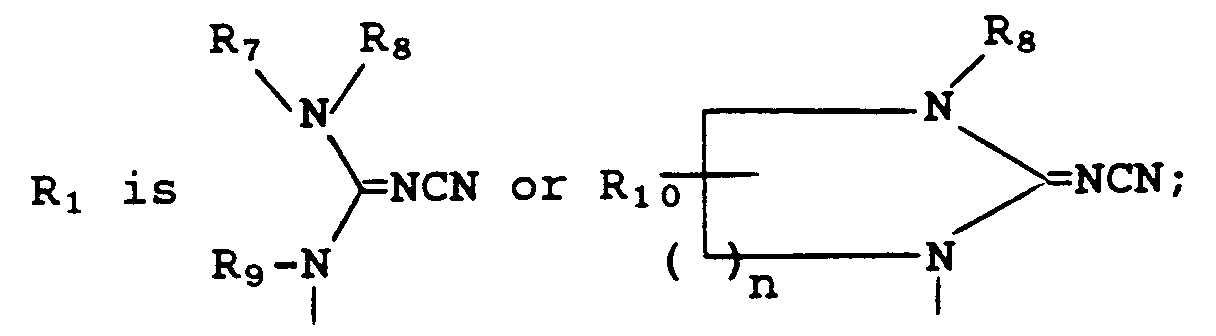
R₁ is
R₂ is hydrogen, hydroxy,
R₃ and R₄ are each independently hydrogen, alkyl or arylalkyl, or, R₃ and R₄ taken together with the carbon atom to which they are attached form a 5- to 7-membered carbocyclic ring;
R₅ is selected from H, alkyl, haloalkyl, alkenyl, alkynyl, cycloalkyl, arylalkyl, cycloalkylalkyl, -CN, -NO₂, -COR, -COOR, -CONHR, -CONR₂, -CF₃, S-alkyl, -SOalkyl, -SO₂alkyl,
halogen, amino, substituted amino, O-alkyl, OCF₃, OCH₂CF₃, -OCOalkyl, -OCONRalkyl, -NRCOalkyl and NRCOOalkyl, NRCONR₂ wherein R in each of the above groups can be hydrogen, alkyl, aryl, arylalkyl, cycloalkyl, or (cycloalkyl)alkyl;
R₆ is selected from H, alkyl, OH, O-alkyl, amino, substituted amino, CN, and NO₂;
R₇ and R₈ are each independently selected from hydrogen, alkyl, alkenyl, aryl, (heterocyclo)alkyl, heterocyclo, arylalkyl, cycloalkyl and (cycloalkyl)alkyl, substituted alkyl wherein the substituents include alkoxy, alkylthio and substituted amino, or R₇ and R₈ taken together with the nitrogen atom to which they are attached form 1-pyrrolidinyl, 1-piperidinyl, 1-azepinyl, 4-morpholinyl, 4-thiamorphilinyl, 1-piperazinyl, 4-alkyl-1-piperazinyl or 4-arylalkyl-1-piperazinyl, wherein each of the so-formed groups can be substituted with alkyl, alkoxy, alkylthio, halogen or trifluoromethyl;
R₉ and R₁₀ are selected from hydrogen, alkyl, alkenyl, aryl, arylalkyl, cycloalkyl or cycloalkylalkyl; and
n is 1, 2 or 3;
with the compound
being preferred; compounds in copending application U. S. Ser. No. 349,021 filed May 8, 1989 having the formula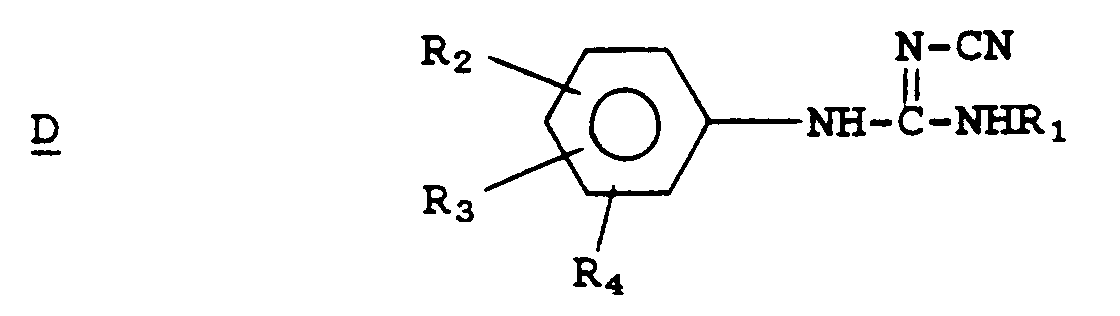
and its possible tautomers
and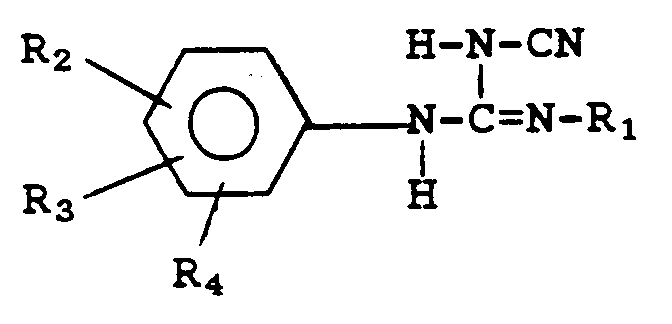
including pharmaceutically acceptable salts;
wherein R₁ is alkyl, alkenyl, alkynyl, haloalkyl, cycloalkyl, aryl, arylalkyl or cycloalkylalkyl;
R₂ is -C≡N, -NO₂,

-CF₃ or
R₃ and R₄ are each independently selected from -R₂, hydrogen, alkyl, alkenyl, alkynyl, haloalkyl, halo, alkoxy, -NHalkly, -N-(alkyl)₂, -S-alkyl, -O-arylalkyl, -S-arylalkyl or -S-aryl, -O-aryl, -NHarylalkyl, or R₂ and R₃ taken together are a group which forms a ring with the two carbon atoms to which they are attached, which group is selected from

wherein - m =
- 1 or 2,
- n =
- 3-5,
- p =
- 2-4,
- As discussed above, it has been found that compounds of formula C, E and F are extremely useful and preferably used in the present invention for the preparation of pharmaceuticals useful in bypass and transplant since they have been shown to reduce LDH release in globally ischemic rat hearts while little or no reduction in blood pressure would be expected in whole animals. These and other "ischemia selective" compounds are a class of compounds wherein anti-ischemic effects comparable to the potent vasodilator cromakalim are realized, but with significantly reduced vasodilatory action.
- Thus, the most preferred compounds which are those having IC₅₀ (rat aorta) values greater than cromakalim (as shown in the examples), i.e. those having the highest degree of selectivity, are compounds of formula C wherein R₇ is aryl, arylalkyl, heteroaryl or heteroarylalkyl; and compounds of formula E and F where R₁ is aryl, arylalkyl, heteroaryl or heteroarylalkyl.
- In accordance with the present methods, the pharmaceutical composition comprising the potassium channel activator is added to the cardioplegic solution utilized to perfuse the coronary arteries during bypass, and is added to the cardioplegic solutions for arresting and storage of the heart or other organ for transplant. The pharmaceutical composition comprising a potassium channel activator may be administered to the bypass patient before and/or during and/or after surgery or be administered to recipients and donors before and/or after transplant.
- When administered to the mammalian organ donor or recipient or bypass patient, the dosage of the potassium channel activator should be in the range of 1-50 mg/kg. Administration of the pharmaceutical composition comprising the potassium channel activator to donor/recipient can be by any techniques known in the medical arts, e.g., orally, parenterally, intranasally, transdermally and the like, using known pharmaceutically acceptable formulations and delivery systems. This can be accomplished by compounding about 10 to 500 milligrams of a potassium channel activator into a pharmaceutically acceptable carrier by known techinques.
- The potassium-channel activator can be present in the cardioplegic solutions in concentrations from about 3 µM to 60 µM and preferably is present in an amount ranging from 7 µM to 30 µM.
- Grover et al., "Dissociation of Cardiodepression from Cardioprotection with Calcium Antagonists: Diltiazem Protects Ischemic Rat Myocardium with a Lower Functional Cost as Compared with Verapamil and Nifedipine", Journal of Cardiovascular Pharmacology; pages 331-340, Vol. 14, No. 2 (1989), describe a model for testing globally ischemic, isolated rat hearts. This model is expected to be a reliable indicator of protection since the laboratory-induced isolation and ischemic event including perfusion with a cardioplegic solution, reasonably duplicates the environment and conditions for the heart during bypass and transplant. Grover et al. express the efficacy of protective agents as the amount of lactate dehydrogenase (LDH) release and post-ischemic cardiac function. Lactate dehydrogenase is an enzyme released in the heart during an ischemic event and is an index of cardiac cell necrosis. In the Grover et al. model, this is measured during reperfusion and an agent which provides for lower release levels of LDH is considered to offer greater cardioprotection since lower LDH indicates a smaller infarct size. Cardiac function is determined using the double product (DP) of heart rate times the left ventricular developed pressure (LVDP) divided by 1,000.
- The lower the value for DP before the ischemic isolation of the heart for a given agent, the more cardiodepressant it is considered to be and the higher the value of DP is during reperfusion, the more cardioprotective the agent is.
- The following Example examines cromakalim, a potassium channel activator having vasodilator/blood pressure lowering activity, and compounds from formula C, E and F, which have little or no vasodilating activity in normal tissue.
-
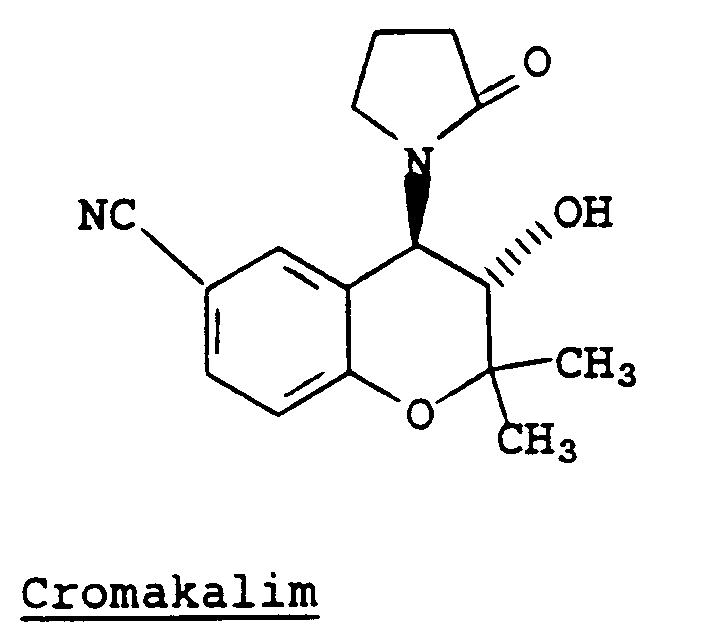


- Male Sprague-Dawley rats (450-550 g) were used in all experiments. The rats were anesthetized using 30 mg/kg sodium pentobarbital (i.p.). They were intubated and then treated with i.v. heparin (1000 U/kg). While being mechanically ventilated, their hearts were perfused in situ via retrograde cannulation of the aorta. The hearts were then excised and quickly moved to a Langendorff apparatus where they were perfused with Krebs-Henseleit bicarbonate buffer (112 mM NaCl₂, 25 mM NaHCO₃, 5 mM KCl, 1.2 mM MgSO₄, 1 mM KH₂PO₄, 1.25 mM CaCl₂, 11.5 mM dextrose, and 2 mM pyruvate bubbled with 95% O₂ - 5% CO₂) at a constant pressure (75 mm Hg). A water filled latex balloon attached to a metal cannula was then inserted into the left ventricle and connected to a Statham pressure transducer for measurement of left ventricular pressure. The hearts were allowed to equilibrate for 15 minutes at which time end diastolic pressure (EDP) was adjusted to 5 mm Hg and this was maintained for 5 minutes. Pre-ischemia or pre-drug function, heart rate and coronary flow (extracorporeal electromagnetic flow probe, Carolina Medical Electronics, King, N.C.) were then measured. Cardiac function was determined using the double product of heart rate (HR) X left ventricular developed pressure (LVDP) divided by 1000. Cardiac temperature was maintained throughout the experiment by submerging the hearts in 37°C buffer which was allowed to accumulate in a stoppered, heated chamber.
- Once the baseline measurements were taken, the hearts were treated with 10 µM cromakalim, compounds C', C'', E', E'', F', F'' (n = 4 each) or with vehicle buffer (0.01% DMSO, n = 7). All of these hearts were treated with their respective drugs or vehicle for ten minutes. At this time, post-drug cardiac function and flow were measured and then the hearts were made globally ischemic by shutting off the buffer perfusion. The ischemia was maintained for 25 minutes, the hearts were then reperfused with nondrug treated buffer. Reperfusion was maintained for a total of 30 minutes and at this time reperfusion function and flow were again determined. The results are summarized in the TABLE below.
- Also included in the TABLE are the IC₅₀(m) values for rat aorta. The IC₅₀ (rat aorta) value is the concentration of the particular compound which inhibits agonist-induced constriction in rat aorta by 50 percent. Thus, the lower values indicate greater vasodilation and it should be noted that these values are for normal, i.e., non-ischemic, tissue. It can be seen that cromakalim with an IC₅₀ of 5.7 x 10⁻⁸ m is a relatively potent vasodilator in non-ischemic tissue. The ischemia selective compounds, however, are comparable in the anti-ischemic effects (LDH) but have only a fraction of the vasodilator action in non-ischemic tissue.

R₅ is hydrogen or R₁;
compounds in copending application U.S. Serial No. 540,423 filed June 18, 1990 having the general formula

wherein A can be -CH₂-, -O-, -NR₉-, -S-, -SO- or -SO₂-, where R₉ is hydrogen or lower alkyl of 1 to 4 carbons;
wherein X is oxygen or sulfur;
Y is -NR₈, -O-, -S- or

R₁ is aryl, arylalkyl, heterocyclo or (heterocyclo)alkyl;
R₂ is hydrogen, hydroxy,

R₃ and R₄ are each independently hydrogen, alkyl or arylalkyl, or, R₃ and R₄ taken together with the carbon atom to which they are attached form a 5- to 7-membered carbocyclic ring;
R₅ is selected from H, alkyl, haloalkyl, alkenyl, alkynyl, cycloalkyl, arylalkyl, cycloalkylalkyl, -CN, -NO₂, -COR, -COOR, -CONHR, -CONR₂, -CF₃, S-alkyl, -SOalkyl, -SO₂alkyl,

halogen, amino, substituted amino, O-alkyl, OCF₃, OCH₂CF₃, -OCOalkyl, -OCONRalkyl, -NRCOalkyl and NRCOOalkyl, NRCONR₂ wherein R in each of the above groups can be hydrogen, alkyl, aryl, arylalkyl, cycloalkyl, or (cycloalkyl)alkyl;
R₆ is selected from H, alkyl, halo, OH, O-alkyl, amino and substituted amino;
R₇ and R₈ are each independently selected from hydrogen, alkyl, arylalkyl;
n is 1, 2 or 3; and,
R₁₀ is hydrogen, hydroxy, alkyl or O-alkyl; and compounds in copending application Serial No. 502,967 filed April 2, 1990 having the general formula

wherein a, b, and c are all carbons or one of a, b and c can be nitrogen or -NO- and the others are carbons;
where X is oxygen or sulfur;
R₁ is selected from aryl, arylalkyl, (heterocyclo)alkyl, heterocyclo, cycloalkyl and (cycloalkyl)alkyl.
R₂ is hydrogen, hydroxy,

R₃ and R₄ are each independently hydrogen, alkyl or arylalkyl, or, R₃ and R₄ taken together with the carbon atom to which they are attached form a 5- to 7-membered carbocyclic ring;
R₅ is selected from H, alkyl, haloalkyl, alkenyl, alkynyl, cycloalkyl, arylalkyl, cycloalkylalkyl, -CN, -NO₂, -COR, -COOR, -CONHR, -CONR₂, -CF₃, S-alkyl, -SOalkyl, -SO₂alkyl,

halogen, amino, substituted amino, O-alkyl, OCF₃, OCH₂CF₃, -OCOalkyl, -OCONRalkyl, -NRCOalkyl and NRCOOalkyl, NRCONR₂ wherein R in each of the above groups can be hydrogen, alkyl, aryl, arylalkyl, cycloalkyl, or (cycloalkyl)alkyl;
R₆ is selected from H, alkyl, OH, O-alkyl, amino, substituted amino, CN, and NO₂;
R₇ is selected from hydrogen, alkyl, alkenyl, aryl, arylalkyl, cycloalkyl or cycloalkylalkyl; and,
n is 1, 2 or 3.
Claims (12)
- Use of a potassium channel activator for the preparation of a pharmaceutical composition useful in protecting an organ and surrounding cells in a mammalian species subject to an organ surgery procedure.
- Use according to claim 1 wherein said procedure is cardiopulmonary bypass surgery.
- Use according to claim 1 wherein said procedure is organ transplant surgery.
- Use according to claim 3 wherein said procedure is heart transplant surgery.
- Use according to claim 1 wherein said pharmaceutical composition prepared is added to a solution used in said procedure in order to preserve, protect or maintain organ function.
- Use according to claim 5 wherein said pharmaceutical composition prepared is added to a cardioplegic solution used to arrest, perfuse, store and/or protect a heart involved in a cardiopulmonary bypass or heart transplant procedure.
- Use according to claim 2 wherein the pharmaceutical composition prepared is administered to a mammalian specie undergoing said bypass procedure before and/or during and/or after said procedure.
- Use according to claim 4 wherein the pharmaceutical composition prepared is administered to an organ donor before, during or after removal of said organ from said donor.
- Use according to claim 4 wherein said pharmaceutical composition is administered to an organ recipient before, during or after transplantation of said organ into said recipient.
- Use according to any one of claims 1 to 4 wherein said potassium channel activator is selected from
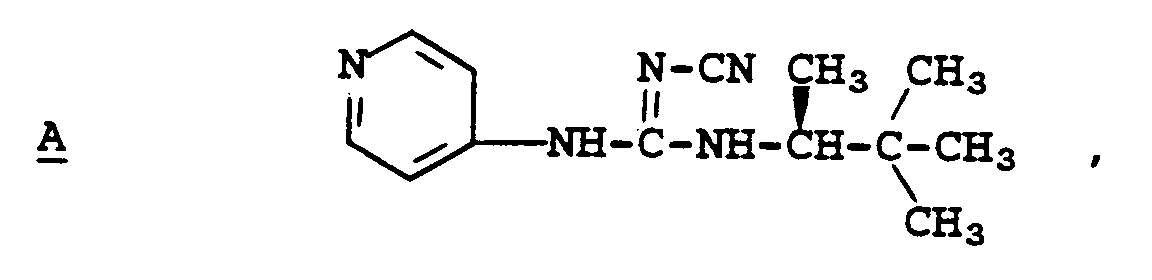

compounds having the formula C
R₁ is

R₅ is selected from H, alkyl, haloalkyl, alkenyl, alkynyl, cycloalkyl, arylalkyl, cycloalkylalkyl, -CN, -NO₂, -COR, -COOR, -CONHR, -CONR₂, -CF₃, S-alkyl, -SOalkyl, -SO₂alkyl,
R₆ is selected from H, alkyl, OH, O-alkyl, amino, substituted amino, CN, and NO₂;
R₇ and R₈ are each independently selected from hydrogen, alkyl, alkenyl, aryl, (heterocyclo)alkyl, heterocyclo, arylalkyl, cycloalkyl and (cycloalkyl)alkyl, substituted alkyl wherein the substituents include alkoxy, alkylthio and substituted amino, or R₇ and R₈ taken together with the nitrogen atom to which they are attached form 1-pyrrolidinyl, 1-piperidinyl, 1-azepinyl, 4-morpholinyl, 4-thiamorphilinyl, 1-piperazinyl, 4-alkyl-1-piperazinyl or 4-arylalkyl-1-piperazinyl, wherein each of the so-formed groups can be substituted with alkyl, alkoxy, alkylthio, halogen or trifluoromethyl;
R₉ and R₁₀ are selected from hydrogen, alkyl, alkenyl, aryl, arylalkyl, cycloalkyl or cycloalkylalkyl; and
n is 1, 2 or 3;
with the compound


wherein R₁ is alkyl, alkenyl, alkynyl, haloalkyl, cycloalkyl, aryl, arylalkyl or cycloalkylalkyl;
R₂ is -C≡N, -NO₂,


 m = 1 or 2,n = 3-5,p = 2-4,X is 0, NR₅, CH₂; and
R₅ is hydrogen or R₁;
compounds having the general formula
wherein X is oxygen or sulfur;
Y is -NR₈, -O-, -S- or
R₂ is hydrogen, hydroxy,
R₅ is selected from H, alkyl, haloalkyl, alkenyl, alkynyl, cycloalkyl, arylalkyl, cycloalkylalkyl, -CN, -NO₂, -COR, -COOR, -CONHR, -CONR₂, -CF₃, S-alkyl, -SOalkyl, -SO₂alkyl,
R₆ is selected from H, alkyl, halo, OH, O-alkyl, amino and substituted amino;
R₇ and R₈ are each independently selected from hydrogen, alkyl, arylalkyl;
n is 1, 2 or 3; and,
R₁₀ is hydrogen, hydroxy, alkyl or O-alkyl; and compounds having the general formula
where X is oxygen or sulfur;
R₁ is selected from aryl, arylalkyl, (heterocyclo)alkyl, heterocyclo, cycloalkyl and (cycloalkyl)alkyl.
R₂ is hydrogen, hydroxy,
R₅ is selected from H, alkyl, haloalkyl, alkenyl, alkynyl, cycloalkyl, arylalkyl, cycloalkylalkyl, -CN, -NO₂, -COR, -COOR, -CONHR, -CONR₂, -CF₃, S-alkyl, -SOalkyl, -SO₂alkyl,
R₆ is selected from H, alkyl, OH, O-alkyl, amino, substituted amino, CN, and NO₂;
R₇ is selected from hydrogen, alkyl, alkenyl, aryl, arylalkyl, cycloalkyl or cycloalkylalkyl; and,
n is 1, 2 or 3. - Use according to any of claims 1 to 10 wherein said potassium channel activator shows little or no vasodilation activity in normal tissue.
- The use of claim 11 wherein said potassium channel activator is selected from


R₅ is selected from H, alkyl, haloalkyl, alkenyl, alkynyl, cycloalkyl, arylalkyl, cycloalkylalkyl, -CN, -NO₂, -COR, -COOR, -CONHR, -CONR₂, -CF₃, S-alkyl, -SOalkyl, -SO₂alkyl,
R₆ is selected from H, alkyl, OH, O-alkyl, amino, substituted amino, CN, and NO₂;
R₇ and R₈ are each independently selected from hydrogen, alkyl, alkenyl, aryl, (heterocyclo)alkyl, heterocyclo, arylalkyl, cycloalkyl and (cycloalkyl)alkyl, substituted alkyl wherein the substituents include alkoxy, alkylthio and substituted amino, or R₇ and R₈ taken together with the nitrogen atom to which they are attached form 1-pyrrolidinyl, 1-piperidinyl, 1-azepinyl, 4-morpholinyl, 4-thiamorphilinyl, 1-piperazinyl, 4-alkyl-1-piperazinyl or 4-arylalkyl-1-piperazinyl, wherein each of the so-formed groups can be substituted with alkyl, alkoxy, alkylthio, halogen or trifluoromethyl;
R₉ and R₁₀ are selected from hydrogen, alkyl, alkenyl, aryl, arylalkyl, cycloalkyl or cycloalkylalkyl; and
n is 1, 2 or 3;
wherein X is oxygen or sulfur;
Y is -NR₈, -O-, -S- or
R₂ is hydrogen, hydroxy,
R₅ is selected from H, alkyl, haloalkyl, alkenyl, alkynyl, cycloalkyl, arylalkyl, cycloalkylalkyl, -CN, -NO₂, -COR, -COOR, -CONHR, -CONR₂, -CF₃, S-alkyl, -SOalkyl, -SO₂alkyl,
R₆ is selected from H, alkyl, halo, OH, O-alkyl, amino and substituted amino;
R₇ and R₈ are each independently selected from hydrogen, alkyl, arylalkyl;
n is 1, 2 or 3; and,
R₁₀ is hydrogen, hydroxy, alkyl or O-alkyl; and compounds having the general formula
where X is oxygen or sulfur;
R₁ is selected from aryl, arylalkyl, (heterocyclo)alkyl, heterocyclo, cycloalkyl and (cycloalkyl)alkyl.
R₂ is hydrogen, hydroxy,
R₅ is selected from H, alkyl, haloalkyl, alkenyl, alkynyl, cycloalkyl, arylalkyl, cycloalkylalkyl, -CN, -NO₂, -COR, -COOR, -CONHR, -CONR₂, -CF₃, S-alkyl, -SOalkyl, -SO₂alkyl,
R₆ is selected from H, alkyl, OH, O-alkyl, amino, substituted amino, CN, and NO₂;
R₇ is selected from hydrogen, alkyl, alkenyl, aryl, arylalkyl, cycloalkyl or cycloalkylalkyl; and,
n is 1, 2 or 3.
Applications Claiming Priority (2)
| Application Number | Priority Date | Filing Date | Title |
|---|---|---|---|
| US589224 | 1990-09-26 | ||
| US07/589,224 US5643921A (en) | 1990-09-26 | 1990-09-26 | Cardiopulmonary bypass and organ transplant using a potassium channel activator |
Publications (2)
| Publication Number | Publication Date |
|---|---|
| EP0480257A2 true EP0480257A2 (en) | 1992-04-15 |
| EP0480257A3 EP0480257A3 (en) | 1992-08-05 |
Family
ID=24357133
Family Applications (1)
| Application Number | Title | Priority Date | Filing Date |
|---|---|---|---|
| EP19910116486 Ceased EP0480257A3 (en) | 1990-09-26 | 1991-09-26 | Use of a potassium channel activator for pharmaceutical compositions useful in cardiopulmonary bypass and organ transplant |
Country Status (4)
| Country | Link |
|---|---|
| US (1) | US5643921A (en) |
| EP (1) | EP0480257A3 (en) |
| JP (2) | JP2622442B2 (en) |
| CA (1) | CA2051261A1 (en) |
Cited By (2)
| Publication number | Priority date | Publication date | Assignee | Title |
|---|---|---|---|---|
| WO2000050039A1 (en) * | 1999-02-25 | 2000-08-31 | Lundblad, Leif, J., I. | Agent for use in transplantation |
| WO2005075463A1 (en) | 2004-02-03 | 2005-08-18 | Universite De Liege | Benzopyran derivatives, method of production and use thereof |
Families Citing this family (13)
| Publication number | Priority date | Publication date | Assignee | Title |
|---|---|---|---|---|
| US20050089559A1 (en) * | 2003-10-23 | 2005-04-28 | Istvan Szelenyi | Combinations of potassium channel openers and sodium channel inhibitors or sodium channel-influencing active compounds for treating pains |
| US7960436B2 (en) * | 2006-06-05 | 2011-06-14 | Valeant Pharmaceuticals International | Substituted arylamino-1,2,3,4-tetrahydro naphthalenes and-2,3-dihydro-1H-indenes as potassium channel modulators |
| US20080045534A1 (en) * | 2006-08-18 | 2008-02-21 | Valeant Pharmaceuticals North America | Derivatives of 1,3-diamino benzene as potassium channel modulators |
| US8993593B2 (en) * | 2006-08-23 | 2015-03-31 | Valeant Pharmaceuticals International | N-(4-(6-fluoro-3,4-dihydroisoquinolin-2(1H)-yl)-2,6-dimethylphenyl)-3,3-dimethylbutanamide as potassium channel modulators |
| BRPI0716715B1 (en) * | 2006-08-23 | 2021-07-06 | Xenon Pharmaceuticals, Inc | 4-(N-AZACICLOALKYL) DERIVATIVES AS POTASSIUM CHANNEL MODULATORS, THEIR USES, PRODUCT, COMPOSITION, TABLET AND CAPSULE |
| US8722929B2 (en) * | 2006-10-10 | 2014-05-13 | Valeant Pharmaceuticals International | N-[2-amino-4-(phenylmethoxy)phenyl] amides and related compounds as potassium channel modulators |
| US8030518B2 (en) * | 2006-11-28 | 2011-10-04 | Valeant Pharmaceuticals International | 1,4 diamino bicyclic retigabine analogues as potassium channel modulators |
| US8367684B2 (en) * | 2007-06-13 | 2013-02-05 | Valeant Pharmaceuticals International | Derivatives of 4-(N-azacycloalkyl) anilides as potassium channel modulators |
| US8563566B2 (en) | 2007-08-01 | 2013-10-22 | Valeant Pharmaceuticals International | Naphthyridine derivatives as potassium channel modulators |
| US7786146B2 (en) * | 2007-08-13 | 2010-08-31 | Valeant Pharmaceuticals International | Derivatives of 5-amino-4,6-disubstituted indole and 5-amino-4,6-disubstituted indoline as potassium channel modulators |
| TWI886158B (en) | 2019-10-10 | 2025-06-11 | 加拿大商再諾製藥公司 | Solid state crystalline forms of a selective potassium channel modulator |
| CN114667146A (en) | 2019-11-08 | 2022-06-24 | 泽农医药公司 | Methods of treating depression |
| PE20231815A1 (en) | 2021-02-09 | 2023-11-16 | Xenon Pharmaceuticals Inc | VOLTAGE CONTROLLED POTASSIUM CHANNEL OPENER FOR USE IN THE TREATMENT OF ANHEDONIA |
Family Cites Families (8)
| Publication number | Priority date | Publication date | Assignee | Title |
|---|---|---|---|---|
| GB8800199D0 (en) * | 1988-01-06 | 1988-02-10 | Beecham Group Plc | Pharmaceutical preparation |
| CA1336963C (en) * | 1988-07-18 | 1995-09-12 | Gary James Grover | Method for inhibiting myocardial cell necrosis and preserving heart function during myocardial ischemia and/or reperfusion |
| US5011837A (en) * | 1988-08-09 | 1991-04-30 | E. R. Squibb & Sons, Inc. | Aryl cyanoguanidines: potassium channel activators and method of making same |
| NZ229828A (en) * | 1988-08-09 | 1992-03-26 | Squibb & Sons Inc | Aryl cyanoguanidine derivatives and pharmaceutical compositions |
| GB8820844D0 (en) * | 1988-09-05 | 1988-10-05 | Pfizer Ltd | Therapeutic agents |
| US5140031A (en) * | 1989-05-31 | 1992-08-18 | E. R. Squibb & Sons, Inc. | Pyranyl cyanoguanidine derivatives |
| CA2015296C (en) * | 1989-05-31 | 2001-08-07 | Karnail Atwal | Pyranyl cyanoguanidine derivatives |
| US5061813A (en) * | 1990-04-02 | 1991-10-29 | E. R. Squibb & Sons, Inc. | Substituted cyanoimino benzopyranes |
-
1990
- 1990-09-26 US US07/589,224 patent/US5643921A/en not_active Expired - Lifetime
-
1991
- 1991-09-12 CA CA002051261A patent/CA2051261A1/en not_active Abandoned
- 1991-09-26 JP JP3247648A patent/JP2622442B2/en not_active Expired - Lifetime
- 1991-09-26 EP EP19910116486 patent/EP0480257A3/en not_active Ceased
-
1992
- 1992-03-25 JP JP4067047A patent/JPH0570347A/en not_active Withdrawn
Non-Patent Citations (1)
| Title |
|---|
| GROVER AND ATWAL: "BMS-180448.", CARDIOVASCULAR DRUG REVIEWS, vol. 13, no. 2, pages 123 - 136 * |
Cited By (5)
| Publication number | Priority date | Publication date | Assignee | Title |
|---|---|---|---|---|
| WO2000050039A1 (en) * | 1999-02-25 | 2000-08-31 | Lundblad, Leif, J., I. | Agent for use in transplantation |
| US6472395B1 (en) | 1999-02-25 | 2002-10-29 | Leif J. I. Lundblad | Agent for use in transplantation |
| WO2005075463A1 (en) | 2004-02-03 | 2005-08-18 | Universite De Liege | Benzopyran derivatives, method of production and use thereof |
| EP1589015A1 (en) * | 2004-02-03 | 2005-10-26 | Université de Liège | Benzopyran derivatives, method of production and use thereof |
| US7507761B2 (en) | 2004-02-03 | 2009-03-24 | Universite De Liege | Benzopyran derivatives, method of production and use thereof |
Also Published As
| Publication number | Publication date |
|---|---|
| JPH0570347A (en) | 1993-03-23 |
| JPH05294847A (en) | 1993-11-09 |
| CA2051261A1 (en) | 1992-03-27 |
| EP0480257A3 (en) | 1992-08-05 |
| US5643921A (en) | 1997-07-01 |
| JP2622442B2 (en) | 1997-06-18 |
Similar Documents
| Publication | Publication Date | Title |
|---|---|---|
| US5643921A (en) | Cardiopulmonary bypass and organ transplant using a potassium channel activator | |
| DE69211182T2 (en) | Pyranylcyanoguanidine derivatives | |
| AU2010226894B2 (en) | Organ arrest, protection, preservation and recovery | |
| US5679706A (en) | Combination of a potassium channel activator and an antiarrhythmic agent | |
| WO1988005044A1 (en) | Nitroxide compounds for the preparation of a pharmaceutical composition intended for the prophylaxis and treatment of ischemic cell damage | |
| US6015834A (en) | In vivo treatment of mammalian cells with a cell membrane permeant calcium buffer | |
| KR20020001797A (en) | Organ arrest, protection and preservation | |
| ES2224160T3 (en) | PROTECTIVE AGENT FOR ORGAN OR FABRIC. | |
| US5719174A (en) | Indenoindole compounds for use in organ preservation | |
| CA1336963C (en) | Method for inhibiting myocardial cell necrosis and preserving heart function during myocardial ischemia and/or reperfusion | |
| EP0559677B1 (en) | Hydroxamic acids for preventing reperfusion injury | |
| CA1177754A (en) | Pharmaceutical compositions, effective against coronary heart disease and hypertension | |
| EP0489404A2 (en) | Method of treating shock using a potassium channel activator | |
| AU674550B2 (en) | Platelet aggregation inhibitor | |
| JPH05255087A (en) | Use of potassium channel activator and sulfhydryl-containing compound in combination | |
| US5354764A (en) | Method for inhibiting myocardial cell necrosis and preserving heart function during myocardial ischemia and/or reperfusion | |
| MX2008000276A (en) | USE OF SOLUBLE CYCLASS GUANYLATE ACTIVATORS FOR THE TREATMENT AGAINST DAMAGE BY REPERFUSION. | |
| RU2126008C1 (en) | Diazabicycloalkene derivatives and pharmaceutical composition | |
| EP0596449A2 (en) | Serotonin receptor antagonists for treating myocardial ischemia | |
| de Jong | Cardioplegia and Calcium Entry Blockade | |
| WO2003105909A1 (en) | Medicine for prevention of and/or treatment for liver inshemiareperfusion injury and protective agent for transplant liver |
Legal Events
| Date | Code | Title | Description |
|---|---|---|---|
| PUAI | Public reference made under article 153(3) epc to a published international application that has entered the european phase |
Free format text: ORIGINAL CODE: 0009012 |
|
| AK | Designated contracting states |
Kind code of ref document: A2 Designated state(s): AT BE CH DE DK ES FR GB GR IT LI LU NL SE |
|
| PUAL | Search report despatched |
Free format text: ORIGINAL CODE: 0009013 |
|
| AK | Designated contracting states |
Kind code of ref document: A3 Designated state(s): AT BE CH DE DK ES FR GB GR IT LI LU NL SE |
|
| 17P | Request for examination filed |
Effective date: 19930203 |
|
| 17Q | First examination report despatched |
Effective date: 19940916 |
|
| GRAG | Despatch of communication of intention to grant |
Free format text: ORIGINAL CODE: EPIDOS AGRA |
|
| STAA | Information on the status of an ep patent application or granted ep patent |
Free format text: STATUS: THE APPLICATION HAS BEEN REFUSED |
|
| 18R | Application refused |
Effective date: 19980904 |