EP0470039B1 - Novel 3-arylindole and 3-arylindazole derivatives - Google Patents
Novel 3-arylindole and 3-arylindazole derivatives Download PDFInfo
- Publication number
- EP0470039B1 EP0470039B1 EP91610058A EP91610058A EP0470039B1 EP 0470039 B1 EP0470039 B1 EP 0470039B1 EP 91610058 A EP91610058 A EP 91610058A EP 91610058 A EP91610058 A EP 91610058A EP 0470039 B1 EP0470039 B1 EP 0470039B1
- Authority
- EP
- European Patent Office
- Prior art keywords
- indole
- compound
- alkyl
- fluorophenyl
- formula
- Prior art date
- Legal status (The legal status is an assumption and is not a legal conclusion. Google has not performed a legal analysis and makes no representation as to the accuracy of the status listed.)
- Expired - Lifetime
Links
- 0 *c1c(C(*N2C3=CC*CC3)[Al])c2c(*)c(*)c1* Chemical compound *c1c(C(*N2C3=CC*CC3)[Al])c2c(*)c(*)c1* 0.000 description 12
Classifications
-
- C—CHEMISTRY; METALLURGY
- C07—ORGANIC CHEMISTRY
- C07D—HETEROCYCLIC COMPOUNDS
- C07D209/00—Heterocyclic compounds containing five-membered rings, condensed with other rings, with one nitrogen atom as the only ring hetero atom
- C07D209/02—Heterocyclic compounds containing five-membered rings, condensed with other rings, with one nitrogen atom as the only ring hetero atom condensed with one carbocyclic ring
- C07D209/04—Indoles; Hydrogenated indoles
-
- A—HUMAN NECESSITIES
- A61—MEDICAL OR VETERINARY SCIENCE; HYGIENE
- A61P—SPECIFIC THERAPEUTIC ACTIVITY OF CHEMICAL COMPOUNDS OR MEDICINAL PREPARATIONS
- A61P25/00—Drugs for disorders of the nervous system
-
- A—HUMAN NECESSITIES
- A61—MEDICAL OR VETERINARY SCIENCE; HYGIENE
- A61P—SPECIFIC THERAPEUTIC ACTIVITY OF CHEMICAL COMPOUNDS OR MEDICINAL PREPARATIONS
- A61P25/00—Drugs for disorders of the nervous system
- A61P25/04—Centrally acting analgesics, e.g. opioids
-
- A—HUMAN NECESSITIES
- A61—MEDICAL OR VETERINARY SCIENCE; HYGIENE
- A61P—SPECIFIC THERAPEUTIC ACTIVITY OF CHEMICAL COMPOUNDS OR MEDICINAL PREPARATIONS
- A61P25/00—Drugs for disorders of the nervous system
- A61P25/18—Antipsychotics, i.e. neuroleptics; Drugs for mania or schizophrenia
-
- A—HUMAN NECESSITIES
- A61—MEDICAL OR VETERINARY SCIENCE; HYGIENE
- A61P—SPECIFIC THERAPEUTIC ACTIVITY OF CHEMICAL COMPOUNDS OR MEDICINAL PREPARATIONS
- A61P25/00—Drugs for disorders of the nervous system
- A61P25/20—Hypnotics; Sedatives
-
- A—HUMAN NECESSITIES
- A61—MEDICAL OR VETERINARY SCIENCE; HYGIENE
- A61P—SPECIFIC THERAPEUTIC ACTIVITY OF CHEMICAL COMPOUNDS OR MEDICINAL PREPARATIONS
- A61P25/00—Drugs for disorders of the nervous system
- A61P25/24—Antidepressants
-
- A—HUMAN NECESSITIES
- A61—MEDICAL OR VETERINARY SCIENCE; HYGIENE
- A61P—SPECIFIC THERAPEUTIC ACTIVITY OF CHEMICAL COMPOUNDS OR MEDICINAL PREPARATIONS
- A61P25/00—Drugs for disorders of the nervous system
- A61P25/26—Psychostimulants, e.g. nicotine, cocaine
-
- C—CHEMISTRY; METALLURGY
- C07—ORGANIC CHEMISTRY
- C07D—HETEROCYCLIC COMPOUNDS
- C07D209/00—Heterocyclic compounds containing five-membered rings, condensed with other rings, with one nitrogen atom as the only ring hetero atom
- C07D209/02—Heterocyclic compounds containing five-membered rings, condensed with other rings, with one nitrogen atom as the only ring hetero atom condensed with one carbocyclic ring
- C07D209/04—Indoles; Hydrogenated indoles
- C07D209/08—Indoles; Hydrogenated indoles with only hydrogen atoms or radicals containing only hydrogen and carbon atoms, directly attached to carbon atoms of the hetero ring
-
- C—CHEMISTRY; METALLURGY
- C07—ORGANIC CHEMISTRY
- C07D—HETEROCYCLIC COMPOUNDS
- C07D209/00—Heterocyclic compounds containing five-membered rings, condensed with other rings, with one nitrogen atom as the only ring hetero atom
- C07D209/02—Heterocyclic compounds containing five-membered rings, condensed with other rings, with one nitrogen atom as the only ring hetero atom condensed with one carbocyclic ring
- C07D209/04—Indoles; Hydrogenated indoles
- C07D209/10—Indoles; Hydrogenated indoles with substituted hydrocarbon radicals attached to carbon atoms of the hetero ring
-
- C—CHEMISTRY; METALLURGY
- C07—ORGANIC CHEMISTRY
- C07D—HETEROCYCLIC COMPOUNDS
- C07D231/00—Heterocyclic compounds containing 1,2-diazole or hydrogenated 1,2-diazole rings
- C07D231/54—Heterocyclic compounds containing 1,2-diazole or hydrogenated 1,2-diazole rings condensed with carbocyclic rings or ring systems
- C07D231/56—Benzopyrazoles; Hydrogenated benzopyrazoles
-
- C—CHEMISTRY; METALLURGY
- C07—ORGANIC CHEMISTRY
- C07D—HETEROCYCLIC COMPOUNDS
- C07D401/00—Heterocyclic compounds containing two or more hetero rings, having nitrogen atoms as the only ring hetero atoms, at least one ring being a six-membered ring with only one nitrogen atom
- C07D401/02—Heterocyclic compounds containing two or more hetero rings, having nitrogen atoms as the only ring hetero atoms, at least one ring being a six-membered ring with only one nitrogen atom containing two hetero rings
- C07D401/04—Heterocyclic compounds containing two or more hetero rings, having nitrogen atoms as the only ring hetero atoms, at least one ring being a six-membered ring with only one nitrogen atom containing two hetero rings directly linked by a ring-member-to-ring-member bond
-
- C—CHEMISTRY; METALLURGY
- C07—ORGANIC CHEMISTRY
- C07D—HETEROCYCLIC COMPOUNDS
- C07D401/00—Heterocyclic compounds containing two or more hetero rings, having nitrogen atoms as the only ring hetero atoms, at least one ring being a six-membered ring with only one nitrogen atom
- C07D401/14—Heterocyclic compounds containing two or more hetero rings, having nitrogen atoms as the only ring hetero atoms, at least one ring being a six-membered ring with only one nitrogen atom containing three or more hetero rings
-
- C—CHEMISTRY; METALLURGY
- C07—ORGANIC CHEMISTRY
- C07D—HETEROCYCLIC COMPOUNDS
- C07D413/00—Heterocyclic compounds containing two or more hetero rings, at least one ring having nitrogen and oxygen atoms as the only ring hetero atoms
- C07D413/14—Heterocyclic compounds containing two or more hetero rings, at least one ring having nitrogen and oxygen atoms as the only ring hetero atoms containing three or more hetero rings
Definitions
- the present invention relates to novel 3-arylindole or 3-arylindazole derivatives and their acid addition salts with selective and long lasting central serotonin S2 (5-hydroxytryptamine-2 ; 5-HT2) antagonistic activity, to methods for preparing such compounds, to medicaments comprising such compounds as an active ingredient and to the benificial use of these derivatives in the treatment of CNS disorders such as anxiety, agression, depression, sleep disturbances, migraine, negative symptoms of schizophrenia, and Parkinson's disease with a low degree of undesired side effects.
- CNS disorders such as anxiety, agression, depression, sleep disturbances, migraine, negative symptoms of schizophrenia, and Parkinson's disease with a low degree of undesired side effects.
- novel indole and indazole derivatives of the present invention are represented by the following formula : wherein Ar is phenyl optionally substituted with one or more substituents selected from halogen, hydroxy, trifluoromethyl, and cyano, or Ar is 2-thienyl, 3-thienyl, 2-furyl, 3-furyl, 2-pyridyl, 3-pyridyl, or 4-pyridyl; R1-R4 are independently selected from hydrogen, halogen, lower alkyl, lower alkoxy, lower alkylthio, lower alkylsulphonyl, cyano, trifluoromethyl, or trifluoromethylthio; the dotted line emanating from X in the ring system designates an optional bond; when said dotted line indicates a bond, X is nitrogen or a group CR6 wherein R6 is hydrogen, halogen, trifluoromethyl or lower alkyl; when the dotted line indicates no bond, X is CH2 ; the dotted line
- Stereoisomers, prodrugs and pharmaceutically acceptable salts of the compounds of formula I are also embraced by the invention.
- lower alkyl is intended to mean a straight or branched alkyl group having from one to four carbon atoms, such as methyl, ethyl, n-propyl, iso-propyl, n-butyl, sec-butyl, etc.
- Lower alkoxy, lower alkylthio and lower alkylsulfonyl similarly designate such groups wherein the alkyl moiety is a lower alkyl group as defined above.
- Lower alkenyl is intended to mean an alkenyl group containing from 2 to 4 carbon atoms, for example ethenyl, 1-propenyl, 2-butenyl, etc.
- Cycloalkyl means cycloalkyl having from three to eight carbon atoms inclusive.
- Halogen means fluoro, chloro, bromo or iodo.
- dotted lines may or may not represent a bond, i.e. that the rings may or may not have a double bond in the positions of the dotted lines in Formula I.
- the Z groups -COCH2- and-CSCH2- may be incorporated in the ring of the structure 1a in both directions.
- the acid addition salts of the invention are pharmaceutically acceptable salts of the compounds of Formula I formed with non-toxic acids.
- organic salts are those with maleic, fumaric, benzoic, ascorbic, embonic, succinic, oxalic, bis-methylenesalicylic, methanesulfonic, ethanedisulphonic, acetic, propionic, tartaric, salicylic, citric, gluconic, lactic, malic, mandelic, cinnamic, citraconic, aspartic, stearic, palmitic, itaconic, glycolic, p-amino-benzoic, glutamic, benzene sulfonic and theophylline acetic acids, as well as the 8-halotheophyllines, for example 8-bromo-theophylline.
- inorganic salts are those with hydrochloric, hydrobromic, sulfuric, sulfamic, phosphoric and
- Prodrugs of the present invention may be conventional esters with available hydroxy groups, or in particular if the compound is a compound of the general formula I wherein R5 is a group of the structure 1a wherein V is NH or the structure 1b where U1 is NH and/or V1 is NHR10 they may exist as prodrugs in which said nitrogen atom is acylated with a group wherein A is O, S or NR a with R a being hydrogen, lower alkyl, or phenyl optionally substituted with one or more substituents selected from the group comprising halogen, trifluoromethyl, lower alkyl, lower alkoxy, lower alkylthio and cyano; B is a group R b which is alkyl or alkenyl containing from one to twentyfour carbon atoms inclusive, or cycloalkyl or cycloalkylalkyl, optionally substituted with one or two hydroxy groups, phenyl optionally substituted with one or more substituents selected from the group comprising
- prodrugs are not esters , they have been found to decompose properly in order to release the compound of the invention over a desired prolonged period of time when administered parenterally as a depote formulation in an apropriate oil, such as peanut oil, sesame oil, cotton seed oil, corn oil, soy bean oil, olive oil, coconut oil (e.g. viscoleo®), etc., or synthetic esters of fatty acids and glycerol or propylenglycol.
- an apropriate oil such as peanut oil, sesame oil, cotton seed oil, corn oil, soy bean oil, olive oil, coconut oil (e.g. viscoleo®), etc.
- synthetic esters of fatty acids and glycerol or propylenglycol such as peanut oil, sesame oil, cotton seed oil, corn oil, soy bean oil, olive oil, coconut oil (e.g. viscoleo®), etc.
- indole or indazole derivatives having an aryl substituent in the 1-position and a tetrahydropyridyl, piperidinyl or piperzinyl group in the the 3 position have been disclosed in a number of patents.
- EP-A2 224919 discloses 1-phenyl-3-(4-(thiazolylalkyl)piperazin-1-yl)indole derivatives as antiallergy agents.
- EP-A 0 135 781 and US Patents Nos. 4,670,447 , 4,758,668 and 4,853,470 all generically relate to a very broad class of 1-aryl-3-pipendylindazoles alleged to have analgesic and antipsychotic and in some of the patents also antidepressant effects.
- Antipsychotic effects are shown by the apomorphine climbing assay which is a test for classical neuroleptic activity, i.e. dopamine antagonism, and antidepressant effects are shown in the tetrabenazine ptosis test for a few compounds.
- EP-A 0 281 309 and US Patents No. 4,831,031 disclose 3-[4-(heterocycleethyl (or -butyl))piperazin-1-yl]indazoles substituted in the 1-position with trifluoromethylphenyl and claimed to be useful as antipsychotics as shown in the apomorphine climbing test.
- European Patent Publication No. 0 302 423 relates to 1-phenyl-3-(1-piperazinyl)-1 H -indazoles claimed to be useful as analgesics, anticonvulsants and antidepressants, the antidepressant effects again shown in the tetrabenazine ptosis test in mice. Only results for a few compounds showing quite weak effects are given.
- ritanserin has been shown to be an antidepressant and to improve depressive symptoms of schizophrenia (E. Klieser, W. H. Strauss; Pharmacopsychiat. 21 (1988), pp. 391-393) and it has been demonstrated to exert effects in an animal test reminiscent of anxiolytic drug activity (F.C. Colpart et al; Psychopharmacology (1985) 86; 303-305). Furthermore ritanserin has been shown to improve the quality of sleep (P. A. J. Janssen; Pharmacopsychiat. 21 (1988), 33-37).
- 5-HT is involved in migraine attacks.
- the links between 5-HT and migraine attacks are several and they suggest a number of mechanisms whereby 5-HT may be involved (Scrip Report; "Migraine - Current trends in research and treatment”; PJB Publications Ltd.; May 1991).
- Various 5-HT2 antagonists are in clinical trials as anti-migraine agents, such as sergolexole (c.f. for example Pharma Projects , May 1991, 1359-1365).
- ritanserin has been found to relieve neuroleptic-induced parkinsonism (Bersani et al.; Clinical Neuropharmacology, 13, No. 6 (1990), 500-506).
- novel indole or indazole derivatives of the present invention are selective 5-HT2 antagonists with prolonged activity, and accordingly are useful in the treatment of anxiety, agression, depression, sleep disturbances, migraine, negative symptoms of schizophrenia, drug-induced Parkinsonism and Parkinson's disease substantially without causing neurological side effects.
- the compounds of the present invention are selective, and most of them very selective, antagonists of the 5-HT2 receptor, measured as the ratio between the dopamine D-2 receptor and the 5-HT2 receptor antagonistic activities. Only a few compounds with such a selectivity profile are known from the prior art. Such compounds include ritanserin, seganserin, ICI 169369, ICI 170809, sergolexole and MDL 11939, which compounds are very different in chemical structure from the present compounds.
- a preferred subgroup of compounds are those wherein X is a CR6 group; most preferably those wherein R2 and/or R6 are other than hydrogen.
- Ar is phenyl optionally substituted with halogen, most preferably 4-fluorophenyl;
- R5 is a group wherein R7, R8, R9 and R10 independently are selected from hydrogen, lower alkyl or alkenyl;
- R2 is selected from halogen, -CF3, and -CH3;
- R3 is selected from H, halogen, -CF3, and -CH3 ; and
- R1 and R4 are H.
- Particularly preferred compounds are: 5-Chloro-3-(4-fluorophenyl)-1-[1-[2-(3-methylimidazolidin-2-on-1-yl)ethyl]-4-piperidyl]- 1H -indole, 3-(4-Fluorophenyl)-1-[1-[2-(imidazolidin-2-on-1-yl)ethyl]-4-piperidyl]-5-methyl- 1H -indole, 3-(4-Fluorophenyl)-5-methyl-1-[1-[2-[3-(2-propyl)imidazolidin-2-on-1-yl]ethyl]-4-piperidyl)- 1H -indole, 2,5-Dimethyl-3-(4-fluorophenyl)-1-[1-[2-(imidazolidin-2-on-1-yl)ethyl]-1,2,3,6-tetrahydropyridin-4-
- the present invention provides a pharmaceutical preparation comprising at least one compound of the Formula I as an active ingredient together with a pharmaceutically acceptable carrier or diluent.
- the compounds of the Formula I and the pharmaceutically acceptable acid addition salts thereof may be administered by any suitable route, for example orally in the form of tablets, capsules, powders, syrups, etc., or parenterally in the form of solutions for injection.
- Suitable pharmaceutical preparations may be prepared by methods well known in the art.
- the compounds of the invention are administered in unit dosage form containing said compound in an amount of about 0.10 - 100 mg, preferably about 1 - 50 mg.
- the total daily dose usally ranges from about 0.1 to 500 mg of the active compound of the invention.
- the present invention provides the use of a compound of the Formula I for the manufacturing of a pharmaceutical preparation for the treatment of CNS disorders.
- the present invention also provides a method for treating CNS disorders comprising administration of a compound having the general Formula I or an acid addition salt thereof to a patient suffering from such a disease.
- the present invention provides a method for the preparation of a derivative having the general Formula I , which method comprises:
- reaction is conveniently performed at 20-120°C in an aprotic solvent such as acetone or methyl isobutyl ketone in the presence of free base (e.g. K2CO3 or triethylamine) and the starting compounds of Formula II are prepared as described below.
- aprotic solvent such as acetone or methyl isobutyl ketone
- free base e.g. K2CO3 or triethylamine
- free base e.g. K2CO3 or triethylamine
- An 3-arylindole or 3-arylindazole of the Formula XIII is arylated with 4-chloro- or 4-bromopyridine in NMP, DMF, HMPA or DMSO with potassium carbonate as base and catalyzed by copper, copper(I) iodide or copper(I) bromide at 150-210 °C.
- 3-aryl-1-(4-pyridyl)indole or 3-aryl-1-(4-pyridyl)indazole of Formula XIV thus obtained is reduced to the 3-aryl-1-(4-piperidyl)indole or 3-aryl-1-(4-piperidyl)indazole of the Formula XV with hydrogen at low pressure (3 ato.) in the presence of platinum.
- 3-Arylindoles, which are unsubstituted in the 2-position, are prepared from the corresponding 2-cyano-3-arylindoles or 3-arylindole-2-carboxylic esters by alkaline or acidic hydrolysis followed by decarboxylation in NMP or quinoline with copper catalysis.
- the 2-cyano-3-arylindoles and 3-arylindole-2-carboxylic esters used are prepared either from the corresponding anilines by Japp-Klingemann reaction followed by Fischer indole synthesis or from the corresponding 2-benzoylanilines according to modified literature procedures (Morooka et al, Synthesis , 1978 , 445, Hughes et al, J. Proc. Roy. Soc. N. S. Wales , 1939 , 72 , 209 and C. D. Jones, J. Org. Chem. , 1972 , 37 , 3624).
- 2-Substituted 3-arylindoles are prepared either from the corresponding 2-benzoyl-anilines or by Fischer indole synthesis from the corresponding substituted phenyl hydrazones (e.g. (4-fluorophenyl)acetone (4-methylphenyl)hydrazone) according to modified literature procedures (Greuter et al, Helv. Chem. Acta , 1974 , 57 , 281 and Yamamoto et al, Chem. Pharm. Bull. , 1968 , 16 , 2313).
- substituted phenyl hydrazones e.g. (4-fluorophenyl)acetone (4-methylphenyl)hydrazone
- 3-Arylindazoles are prepared either from the corresponding 2-benzoylanilines or by heating the corresponding 2-chloro - or bromobenzophenone hydrazone with base, according to modified literature procedures (Dziewonski et al., Bull. Intern. Acad. Polonaise, Casse Sci. Math. Nat. , 1935 A, 333 ( Chem. Abstr. , 1936 , 30 , 1972) and Gladstone et al, J Chem. Soc. , 1965 , 3048).
- 2-Halo-3-aryl-1-(4-piperidyl)indoles are prepared from the corresponding 3-aryl-1-(4-piperidyl)indoles, in which the piperidine nitrogen is protected by a suitable aminoprotective group (e.g. methyl or 2,2,2-trichloroethyl carbamate), by halogenation with an halogenation reagent such as N -bromosuccinimide, N -chlorosuccinimide or bromine in an inert solvent (e.g.
- reaction is performed by refluxing a compound of Formula IV with a compound of Formula V and a strong base (e.g. sodium amide) in an inert solvent, e.g. toluene.
- a strong base e.g. sodium amide
- the starting compounds of Formula IV are prepared by reacting the corresponding 3-arylindoles, prepared as described above, with hydroxylamine-O-sulphonic acid and strong base (e.g.
- the reduction is conveniently performed with a complex hydride (e.g. sodium borohydride) in acidic solution (e.g.trifluoroacetic acid).
- a complex hydride e.g. sodium borohydride
- acidic solution e.g.trifluoroacetic acid
- the reduction is suitably carried out at a low hydrogen pressure (3 ato.) in the presence of platinum or palladium or by refluxing a compound of formula VII with ammonium formate and palladium in a water miscible solvent (e.g. ethanol).
- a complex hydride e.g.
- the reduction in method (f) preferably is performed by catalytic hydrogenation with platinum as a catalyst.
- the starting compounds of Formula VIII are prepared by quaternizing a 1-(4-pyridyl)-3-arylindole or 1-(4-pyridyl)-3-arylindazole, prepared as described above, with a lower alkyl halide or a halide of the general Formula IIIa or IIIb in MIBK or acetone.
- the reduction in method (g) is conveniently carried out with lithium aluminum hydride in tetrahydrofuran, or diethyl ether, or with diborane in tetrahydrofuran.
- Aminoalkyl derivatives of the Formula X are prepared by alkylating a compound of the Formula II with a halo-nitrile of the following formula: hal(CH2) n CN in the presence of a base (e.g. K2CO3 or triethylamine) in an inert solvent such as acetone, MIBK or toluene at elevated temperature (30-100 °C).
- a base e.g. K2CO3 or triethylamine
- an inert solvent such as acetone, MIBK or toluene at elevated temperature (30-100 °C).
- the cyano group may be reduced according to standard procedures using e.g. AlH3, LiAlH4 or B2H6.
- the R9 substituent is introduced by direct alkylation or by an acylation/reduction procedure, which is obvious to the chemist skilled in the art.
- acylation of the thus obtained amino derivatives is accomplished by addition of an acylating agent at a low temperature (-20-30 °C) preferably in a chlorinated solvent (dichloromethane, chloroform, or 1,1,1-trichloroethane) and, if necessary, in the presence of a base to neutralize any acidic reaction product formed.
- Ethylene or propylene diamines as intermediates for the ringclosure procedure in method (i) are prepared by repeating with appropriate reagents the procedure described for the preparation of the aminoalkyl derivatives used as starting materials in method (h).
- the reduction is conveniently carried out using a complex hydride (e.g. lithium aluminum hydride) in an inert solvent (e.g. diethyl ether).
- a complex hydride e.g. lithium aluminum hydride
- an inert solvent e.g. diethyl ether
- the starting compounds of Formula XII are prepared by reacting a compound of Formula II with a halocarboxylic acid ester of formula hal-(CH2) p CO2R17 in the presence of a base (e.g. K2CO3 or triethylamine) in an inert solvent such as acetone, MIBK or toluene at elevated temperature (30-100 °C).
- the ⁇ -haloalkyl-2-imidazolidinone alkylating reagents were prepared according to modified literature procedures (see eg. Johnston, T.P.; McCaleb, G.S.; Montgomery, J.A. The Synthesis of Antineoplastic Agents. XXXII. N-Nitrosureas. J.Med.Chem. 1963 , 6 , 669-681; Ebetino, F.F. Belg.Patent 653421, 1965; Chem.Abstr. 1966 , 64 , 12684; Costeli, J.; Züst, A. Ger.Offen 2035370, 1971; Chem.Abstr. 1971 , 74 , 87985z). Other sidechains of structure IIIa were prepared as stated in the literature.
- the acid addition salts of the compounds of the invention are easily prepared by methods well known in the art.
- the base is reacted with either the calculated amount of organic or inorganic acid in an aqueous miscible solvent, such as acetone or ethanol, with isolation of the salt by concentration and cooling, or with an excess of the acid in an aqueous immiscible solvent, such as diethyl ether or chloroform, with the desired salt separating directly.
- an aqueous immiscible solvent such as diethyl ether or chloroform
- these salts may also be prepared by the classical method of double decomposition of appropriate salts.
- Methyl 3-(4-fluorophenyl)- 1H -indole-2-carboxylate 22d (59.6 g) was refluxed in a mixture of methanol (1.5 l) and 2 N aqueous NaOH (500 ml) for 3.5 h.
- the reaction mixture was cooled to room temperature, the solvents were evaporated in vacuo and water (500 ml) was added.
- the alkaline solution was acidified and the thus formed precipitate was filtered off and dissolved in ethyl acetate (750 ml). The ethyl acetate solution was washed with brine (500 ml) and dried (Na2SO4).
- indole derivatives were prepared: 5-Chloro-3-(4-fluorophenyl)- 1H -indole 1b , mp 81-83 °C. 3-(4-Fluorophenyl)-5-methyl- 1H -indole 1c , mp 123-126 °C. 6-Chloro-3-(4-fluorophenyl)- 1H -indole 1d , (oil). 5-Fluoro-3-(4-fluorophenyl)- 1H -indole 1e , (oil).
- indole derivatives were prepared: 5-Chloro-3-(4-fluorophenyl)-1-(4-pyridyl)- 1H -indole 2b , mp 162-164 °C. 3-(4-Fluorophenyl)-5-methyl-1-(4-pyridyl)- 1H -indole 2c , mp 125-127 °C. 5-Fluoro-3-(4-fluorophenyl)-1-(4-pyridyl)- 1H -indole 2d , mp 129-134 °C.
- 6-Chloro-3-(4-fluorophenyl)-1-(4-pyridyl)- 1H -indole 2e (1.8 g) was dissolved in acetic acid (100 ml) and PtO2 (0.2 g) was added. After hydrogenation for 30 h at 3 ato the catalyst was filtered off, the acetic acid was evaporated in vacuo and water (50 ml) was added. The acidic solution was made alkaline (pH >9) with concentrated sodium hydroxide and extracted with ethyl acetate (2 x 50 ml). The combined organic phases were successively washed with diluted sodium hydroxide (50 ml), washed with brine, and dried (Na2SO4).
- indole and indazole derivatives were prepared: 6-Chloro-3-(4-fluorophenyl)-1-[1-[2-(imidazolidin-2-on-1-yl)ethyl]-4-piperidyl]- 1H -indole 4b , mp 192-194 °C. 6-Chloro-3-(4-fluorophenyl)-1-[1-[2-[3-(2-propyl)imidazolidin-2-on-1-yl]ethyl]-4-piperidyl]- 1H -indole, hydrochloride, hydrate 4c , mp 255-258 °C.
- Ammonium formate (12 g) was added in small portions during 18 h to a refluxing mixture of 2,5-dimethyl-3-(4-fluorophenyl)-1-[1-[2-(imidazolidin-2-on-1-yl)ethyl]-1,2,3,6-tetrahydropyridin-4-yl]- 1H -indole 6a (1.9 g), 5 % palladium on activated carbon (1 g) and ethanol (50 ml). The reaction mixture was cooled to room temperature and the solvents were evaporated in vacuo .
- indole derivatives were prepared: 3-(4-Fluorophenyl)-1-[1-[2-(imidazolidin-2-on-1-yl)ethyl]-4-piperidyl]-5-trifluoromethyl-1H-indole 7b , mp 182-186 °C 1-[1-[2-(Imidazolidin-2-on-1-yl)ethyl]-4-piperidyl]-2-methyl-3-phenyl- 1H -indole 7c , mp 179-183 °C.
- indole and indazole derivatives were prepared: 5-Chloro-2-methyl-3-phenyl-1-(4-pyridyl)- 1H -indole 17b , mp 158-160 °C. 6-Chloro-3-(4-fluorophenyl)-1-(4-pyridyl)- 1H -indazole 17c , (oil). 3-(4-Fluorophenyl)-1-(4-pyridyl)-5-trifluoromethyl- 1H -indazole 17d , (oil).
- Potassium tert -butoxid (7.5 g) was added to a solution of 3-(4-fluorophenyl)-5-methyl- 1H -indole 1c (15 g) in DMF during 15 min at 0-5 °C. Then a suspension of potassium hydroxylamine-O-sulphonate in DMF (prepared by addition of potassium tert-butoxid (7.5 g) to a suspension of hydroxylamine-O-sulphonic acid (7.6 g) in DMF (100 ml) during 0.5 h at 0-5 °C) was added slowly at 0-5 °C.
- Methyl 3-(4-fluorophenyl)-5-trifluoromethyl- 1H -indole-2-carboxylate 22e mp 136-139 °C.
- Methyl 5-chloro-3-phenyl- 1H -indole-2-carboxylate 22f (oil).
- the compounds of the invention were tested in well recognized and reliable methods. The tests were as follows and the results are given in the following Table 1. The well known 5HT2 antagonists ritanserin and ICI 169369 were included in the tests for comparison purposes.
- Incubation tubes kept on ice in triplicate receive 100 ⁇ l of drug solution in water (or water for total binding) and 2000 ⁇ l of tissue suspension (final tissue content corresponds to 4 mg original tissue).
- the binding experiment is initiated by addition of 100 ⁇ l of 3H-Ketanserin (final concentration 0.5 nM) and by placing the tubes in a 37°C water bath. After incubation for 30 min. the samples are filtered under vacuum (0-50 mBar) through Whatman GF/F filters (25 mm). The tubes are rinsed with 5 ml ice-cold buffer which are then poured on the filters. Thereafter, the filters are washed with 2 x 5 ml of buffer.
- the filters are placed in counting vials and 4 ml of appropriate scintillation fluid (e.g. Picofluor TM15) are added. After shaking for 1 h and storage 2 hrs in the dark the content of radioactivity is determined by liquid scintillation counting. Specific binding is obtained by subtracting the nonspecific binding in the presence of 1 ⁇ M mianserin. For determination of the inhibiiton of binding five concentrations of drugs covering 3 decades are used.
- appropriate scintillation fluid e.g. Picofluor TM15
- the measured cpm are plotted against drug concentration on semilogarithmic paper and the best fitting S-shaped curve is drawn.
- the IC50 value is determined as the concentration at which the binding is 50% of the total binding in control samples minus the nonspecific binding in the presence of 1 ⁇ M mianserin.
- 3H-Ketanserin [ethylene-3H]-ketanserin hydrochloride from New England Nuclear, specific activity 60-80 Ci/mmol).
- Incubation tubes kept on ice in triplicate receive 100 ⁇ l of drug solution in water (or water for total binding) and 4000 ⁇ l of tissue suspension (final tissue content corresponds to 3.08 mg original tissue).
- the binding experimental is initiated by addition of 100 ⁇ l of 3H-spiperone (final concentration 0.5 nM) and by placing the tubes in a 37°C water bath. After incubation for 10 min. the samples are filtered under vacuum (0-50 mBar) through Whatman GF/F filters (25 mm). The tubes are rinsed with 5 ml ice-cold buffer which are then poured on the filters. Thereafter, the filters are washed with 2 x 5 ml of buffer.
- the filters are placed in counting vials and 4 ml of appropriate scintillation fluid (e.g. Picofluor TM15) are added. After shaking for 1 h and storage 2 hrs in the dark the content of radioactivity is determined by liquid scintillation counting. Specific binding is obtained by subtracting the nonspecific binding in the presence of 10 ⁇ M of 6,7-ADTN.
- appropriate scintillation fluid e.g. Picofluor TM15
- the measured cpm are plotted against drug concentration on semilogarithmic paper and the best fitting S-shaped curve is drawn.
- the IC50 value is determined as the concentration at which the binding is 50% of the total binding in control samples minus the nonspecific binding in the presence of 10 ⁇ M of 6,7-ADTN.
- 3H-Spiperone [phenyl-4-3H]-spiperone from Amersham international plc. England, specific activity 15-25 Ci/mmol.
- the derivatives of the present invention which have been tested are all selective 5-HT2 ligands, the affinity for the 5-HT2 receptor as shown in the 3H-ketanserin binding test being very high as compared to the affinity for the dopamine D-2 receptor as measured in the 3H-spiroperidol binding test.
- the compounds of the invention are in general found to be more selective.
- Quipazine is a 5-HT2 agonist, which induces head twitches in rats.
- the test is a test for 5-HT2-antagonistic effect testing the ability to inhibit head twitches.
- the method and test results for some reference substances are published by Arnt et al. ( Drug Development Research , 16 , 59-70, 1989).
- Dopamine D-2 agonists induce contralateral circling behaviour in rats with 6-OHDA lesions. Pergolide-induced circling is antagonized by dopamine D-2 antagonists.
- dopamine D-2 antagonists Arnt,J. and J.Hyttel, Eur. J. Pharmacol . 102 , 349-354, 1984; Arnt, J. and J. Hyttel, J. Neural. Transm . 67 , 225-240, 1986.
- the test is an extremely sensitive test for dopamine D-2 antagonism in vivo .
- the compounds of the present invention are selective 5-HT2 antagonist in vivo and in vitro thus being useful in the treatment of anxiety, depression, sleep disturbances, migraine, negative symptoms of schizophrenia, and Parkinson's Disease without neurological side effects as known from the classical neuroleptics.
- the pharmaceutical formulations of the invention may be prepared by conventional methods in the art.
- Tablets may be prepared by mixing the active ingredient with ordinary adjuvants and/or diluents and subsequently compressing the mixture in a conventional tabletting machine.
- adjuvants or diluents comprise: corn starch, potato starch, talcum, magnesium stearate, gelatine, lactose, gums, and the like. Any other adjuvants or additives usually used for such purposes such as colourings, flavourings, preservatives etc. may be used provided that they are compatible with the active ingredients.
- Solutions for injections may be prepared by dissolving the active ingredient and possible additives in a part of the solvent for injection, preferably sterile water, adjusting the solution to desired volume, sterilization of the solution and filling in suitable ampules or vials. Any suitable additive conventionally used in the art may be added, such as tonicity agents, preservatives, antioxidants, etc.
Landscapes
- Organic Chemistry (AREA)
- Chemical & Material Sciences (AREA)
- Health & Medical Sciences (AREA)
- Bioinformatics & Cheminformatics (AREA)
- Engineering & Computer Science (AREA)
- Nuclear Medicine, Radiotherapy & Molecular Imaging (AREA)
- Life Sciences & Earth Sciences (AREA)
- Neurology (AREA)
- Neurosurgery (AREA)
- Chemical Kinetics & Catalysis (AREA)
- General Chemical & Material Sciences (AREA)
- Medicinal Chemistry (AREA)
- Veterinary Medicine (AREA)
- Pharmacology & Pharmacy (AREA)
- Biomedical Technology (AREA)
- Animal Behavior & Ethology (AREA)
- General Health & Medical Sciences (AREA)
- Public Health (AREA)
- Psychiatry (AREA)
- Pain & Pain Management (AREA)
- Anesthesiology (AREA)
- Pharmaceuticals Containing Other Organic And Inorganic Compounds (AREA)
- Plural Heterocyclic Compounds (AREA)
- Indole Compounds (AREA)
- Compositions Of Macromolecular Compounds (AREA)
Abstract
Description
- The present invention relates to novel 3-arylindole or 3-arylindazole derivatives and their acid addition salts with selective and long lasting central serotonin S₂ (5-hydroxytryptamine-2 ; 5-HT₂) antagonistic activity, to methods for preparing such compounds, to medicaments comprising such compounds as an active ingredient and to the benificial use of these derivatives in the treatment of CNS disorders such as anxiety, agression, depression, sleep disturbances, migraine, negative symptoms of schizophrenia, and Parkinson's disease with a low degree of undesired side effects.
- The novel indole and indazole derivatives of the present invention are represented by the following formula :

wherein Ar is phenyl optionally substituted with one or more substituents selected from halogen, hydroxy, trifluoromethyl, and cyano, or Ar is 2-thienyl, 3-thienyl, 2-furyl, 3-furyl, 2-pyridyl, 3-pyridyl, or 4-pyridyl;
R¹-R⁴ are independently selected from hydrogen, halogen, lower alkyl, lower alkoxy, lower alkylthio, lower alkylsulphonyl, cyano, trifluoromethyl, or trifluoromethylthio;
the dotted line emanating from X in the ring system designates an optional bond; when said dotted line indicates a bond, X is nitrogen or a group CR⁶ wherein R⁶ is hydrogen, halogen, trifluoromethyl or lower alkyl;
when the dotted line indicates no bond, X is CH₂ ;
the dotted line, emanating from the Y, indicates an optional bond;
when it does not indicate a bond Y is N or CH; and when it indicates a bond Y is C;
R⁵ is hydrogen, or lower alkyl, optionally substituted with one or two hydroxy groups, or R⁵ is a group taken from structures 1a and 1b:
wherein n is an integer from 2 - 6;
W is oxygen or sulphur;
U is nitrogen or CH ;
Z is -(CH₂)m-, m being 2 or 3, or Z is 1,2-phenylene optionally substituted with halogen or trifluoromethyl or Z is -CH=CH-, -COCH₂- or -CSCH₂-;
V is oxygen, CH₂, or NR⁷, wherein R⁷ is hydrogen or lower alkyl or alkenyl, cycloalkyl or cycloalkylalkyl optionally substituted with one or two hydroxy groups;
U¹ is a group NR⁸, wherein R⁸ is hydrogen or lower alkyl or alkenyl, cycloalkyl or cycloalkylalkyl optionally substituted with one or two hydroxy groups; and
V¹ is NR⁹R¹⁰, where each of R⁹ and R¹⁰ may be independently selected among the R⁸-substituents;
provided that R⁵ may not be methyl when R¹-R⁴ each are hydrogen, X and Y are CH and Ar is phenyl. - Stereoisomers, prodrugs and pharmaceutically acceptable salts of the compounds of formula I are also embraced by the invention.
- The term "lower alkyl" is intended to mean a straight or branched alkyl group having from one to four carbon atoms, such as methyl, ethyl, n-propyl, iso-propyl, n-butyl, sec-butyl, etc. Lower alkoxy, lower alkylthio and lower alkylsulfonyl similarly designate such groups wherein the alkyl moiety is a lower alkyl group as defined above.
- Lower alkenyl is intended to mean an alkenyl group containing from 2 to 4 carbon atoms, for example ethenyl, 1-propenyl, 2-butenyl, etc.
- Cycloalkyl means cycloalkyl having from three to eight carbon atoms inclusive.
- Halogen means fluoro, chloro, bromo or iodo.
- The term "indicate an optional bond" is intended to mean that the dotted lines may or may not represent a bond, i.e. that the rings may or may not have a double bond in the positions of the dotted lines in Formula I.
- The Z groups -COCH₂- and-CSCH₂- may be incorporated in the ring of the structure 1a in both directions.
- The acid addition salts of the invention are pharmaceutically acceptable salts of the compounds of Formula I formed with non-toxic acids. Exemplary of such organic salts are those with maleic, fumaric, benzoic, ascorbic, embonic, succinic, oxalic, bis-methylenesalicylic, methanesulfonic, ethanedisulphonic, acetic, propionic, tartaric, salicylic, citric, gluconic, lactic, malic, mandelic, cinnamic, citraconic, aspartic, stearic, palmitic, itaconic, glycolic, p-amino-benzoic, glutamic, benzene sulfonic and theophylline acetic acids, as well as the 8-halotheophyllines, for example 8-bromo-theophylline. Exemplary of such inorganic salts are those with hydrochloric, hydrobromic, sulfuric, sulfamic, phosphoric and nitric acids.
- Prodrugs of the present invention may be conventional esters with available hydroxy groups, or in particular if the compound is a compound of the general formula I wherein R⁵ is a group of the structure 1a wherein V is NH or the structure 1b where U¹ is NH and/or V¹ is NHR¹⁰ they may exist as prodrugs in which said nitrogen atom is acylated with a group

wherein A is O, S or NRa with Ra being hydrogen, lower alkyl, or phenyl optionally substituted with one or more substituents selected from the group comprising halogen, trifluoromethyl, lower alkyl, lower alkoxy, lower alkylthio and cyano;
B is a group Rb which is alkyl or alkenyl containing from one to twentyfour carbon atoms inclusive, or cycloalkyl or cycloalkylalkyl, optionally substituted with one or two hydroxy groups, phenyl optionally substituted with one or more substituents selected from the group comprising halogen, trifluoromethyl, lower alkyl, lower alkoxy, lower alkylthio, or cyano; or
B is QRb', wherein Q is O or S and Rb' is one of the substituents defined for Rb above; or
B is NRcRd, wherein Rc and Rd independently are either hydrogen or one of the substituents defined for Rb above. - Although the latter prodrugs are not esters , they have been found to decompose properly in order to release the compound of the invention over a desired prolonged period of time when administered parenterally as a depote formulation in an apropriate oil, such as peanut oil, sesame oil, cotton seed oil, corn oil, soy bean oil, olive oil, coconut oil (e.g. viscoleo®), etc., or synthetic esters of fatty acids and glycerol or propylenglycol.
- Only one 3-arylindole or 3-arylindazole derivative substituted in the 1-position with a piperidinyl, piperazinyl or tetrahydropyridyl group is known from the prior art.
- 1-(1-methyl-4-piperidinyl)-3-phenylindole is disclosed in Adachi et al, Chem. Pharm. Bull., 33(5), 1826-1835, (1985), as an intermediate in the synthesis of 2-acyl-N-(1-methyl-4-piperidinyl)aniline. Nothing is disclosed or suggested as regards the pharmacological properties of said compound.
- On the other hand indole or indazole derivatives having an aryl substituent in the 1-position and a tetrahydropyridyl, piperidinyl or piperzinyl group in the the 3 position have been disclosed in a number of patents.
- DE Offentlegungsschrift No. 2811031 (Laboratories Sauba S.A.) relates to 1-(optionally subst. phenyl)-3-((4-alkyl or aryl)-piperazin-1-yl)-indole derivatives stated to have antinflammatory activity.
- EP-A2 224919 (Fujisawa Pharmaceutical Co., Ltd.) discloses 1-phenyl-3-(4-(thiazolylalkyl)piperazin-1-yl)indole derivatives as antiallergy agents.
- DE Offenlegungsschrift No. 1695604 (Pfizer Corporation) describes 1-phenyl-3-(optionally 1-benzyl or 1-methyl substituted 4-piperidinyl)-2-indolones having anti-depressant effects.
- EP-A 0 135 781 and US Patents Nos. 4,670,447 , 4,758,668 and 4,853,470 all generically relate to a very broad class of 1-aryl-3-pipendylindazoles alleged to have analgesic and antipsychotic and in some of the patents also antidepressant effects. Antipsychotic effects are shown by the apomorphine climbing assay which is a test for classical neuroleptic activity, i.e. dopamine antagonism, and antidepressant effects are shown in the tetrabenazine ptosis test for a few compounds.
- EP-A 0 281 309 and US Patents No. 4,831,031 disclose 3-[4-(heterocycleethyl (or -butyl))piperazin-1-yl]indazoles substituted in the 1-position with trifluoromethylphenyl and claimed to be useful as antipsychotics as shown in the apomorphine climbing test.
- European Patent Publication No. 0 302 423 relates to 1-phenyl-3-(1-piperazinyl)-1H-indazoles claimed to be useful as analgesics, anticonvulsants and antidepressants, the antidepressant effects again shown in the tetrabenazine ptosis test in mice. Only results for a few compounds showing quite weak effects are given.
- From our own US patent No 4,710,500 (corresponding to EP patent No 0200323) 1-aryl-3-(1,2,3,6-tetrahydropyridin-4-yl)-, 1-aryl-3-(4-piperidinyl)- and 1-aryl-3-(1-piperazinyl)-indole derivatives are known. The compounds are claimed to be potent and long-lasting dopamine antagonists, and accordingly to be useful in the treatment of psychoses and additionally to be strong 5-HT₂ antagonists indicating effects in the treatment of depression, negative symptoms of schizophrenia and neuroleptic-induced extrapyramidal side effects and cardiovascular diseases. Some of the compounds are selective 5-HT₂ antagonists in vivo.
Previously evidence of various clinical effects of 5-HT₂ antagonists have been presented. For example reference may be made to the following:
The selective 5-HT₂ antagonist ritanserin has been shown to be an antidepressant and to improve depressive symptoms of schizophrenia (E. Klieser, W. H. Strauss; Pharmacopsychiat. 21 (1988), pp. 391-393) and it has been demonstrated to exert effects in an animal test reminiscent of anxiolytic drug activity (F.C. Colpart et al; Psychopharmacology (1985) 86; 303-305). Furthermore ritanserin has been shown to improve the quality of sleep (P. A. J. Janssen; Pharmacopsychiat. 21 (1988), 33-37). - Furthermore it is generally believed that 5-HT is involved in migraine attacks. The links between 5-HT and migraine attacks are several and they suggest a number of mechanisms whereby 5-HT may be involved (Scrip Report; "Migraine - Current trends in research and treatment"; PJB Publications Ltd.; May 1991). Various 5-HT₂ antagonists are in clinical trials as anti-migraine agents, such as sergolexole (c.f. for example Pharma Projects , May 1991, 1359-1365).
- Studies of the mixed serotonin and dopamine receptor antagonist setoperone indicate that blockade of 5-HT₂ receptors may be related to improvement of negative symptoms of schizophrenia (Ceulemans et al, Psychopharmacology (1985) 85, 329-332).
- Finally, ritanserin has been found to relieve neuroleptic-induced parkinsonism (Bersani et al.; Clinical Neuropharmacology, 13, No. 6 (1990), 500-506).
- Surprisingly, it has now been found that the novel indole or indazole derivatives of the present invention are selective 5-HT₂ antagonists with prolonged activity, and accordingly are useful in the treatment of anxiety, agression, depression, sleep disturbances, migraine, negative symptoms of schizophrenia, drug-induced Parkinsonism and Parkinson's disease substantially without causing neurological side effects.
- The compounds of the present invention are selective, and most of them very selective, antagonists of the 5-HT₂ receptor, measured as the ratio between the dopamine D-2 receptor and the 5-HT₂ receptor antagonistic activities. Only a few compounds with such a selectivity profile are known from the prior art. Such compounds include ritanserin, seganserin, ICI 169369, ICI 170809, sergolexole and MDL 11939, which compounds are very different in chemical structure from the present compounds.
- A preferred subgroup of compounds are those wherein X is a CR⁶ group; most preferably those wherein R² and/or R⁶ are other than hydrogen.
- Preferably, Ar is phenyl optionally substituted with halogen, most preferably 4-fluorophenyl;
R⁵ is a group
wherein R⁷, R⁸,
R⁹ and R¹⁰ independently are selected from hydrogen, lower alkyl or alkenyl; R² is selected from halogen, -CF₃, and -CH₃; R³ is selected from H, halogen, -CF₃, and -CH₃ ; and R¹ and R⁴ are H. - Particularly preferred compounds are:
5-Chloro-3-(4-fluorophenyl)-1-[1-[2-(3-methylimidazolidin-2-on-1-yl)ethyl]-4-piperidyl]-1H-indole,
3-(4-Fluorophenyl)-1-[1-[2-(imidazolidin-2-on-1-yl)ethyl]-4-piperidyl]-5-methyl-1H-indole,
3-(4-Fluorophenyl)-5-methyl-1-[1-[2-[3-(2-propyl)imidazolidin-2-on-1-yl]ethyl]-4-piperidyl)-1H-indole,
2,5-Dimethyl-3-(4-fluorophenyl)-1-[1-[2-(imidazolidin-2-on-1-yl)ethyl]-1,2,3,6-tetrahydropyridin-4-yl]-1H-indole,
2,5-Dimethyl-3-(4-fluorophenyl)-1-[1-[2-(imidazolidin-2-on-1-yl)ethyl]-4-piperidyl]-1H-indole,
2,5-Dimethyl-3-(4-fluorophenyl)-1-(1-methyl-4-piperidyl)-1H-indole, and 1-[1-[2-(1,3-Dimethyl-1-ureido)ethyl]-4-piperidyl]-3-(4-fluorophenyl)-5-methyl-1H-indole. - In another aspect the present invention provides a pharmaceutical preparation comprising at least one compound of the Formula I as an active ingredient together with a pharmaceutically acceptable carrier or diluent.
- The compounds of the Formula I and the pharmaceutically acceptable acid addition salts thereof may be administered by any suitable route, for example orally in the form of tablets, capsules, powders, syrups, etc., or parenterally in the form of solutions for injection.
- Suitable pharmaceutical preparations may be prepared by methods well known in the art. Conveniently, the compounds of the invention are administered in unit dosage form containing said compound in an amount of about 0.10 - 100 mg, preferably about 1 - 50 mg.
- The total daily dose usally ranges from about 0.1 to 500 mg of the active compound of the invention. In a further aspect the present invention provides the use of a compound of the Formula I for the manufacturing of a pharmaceutical preparation for the treatment of CNS disorders.
- The present invention also provides a method for treating CNS disorders comprising administration of a compound having the general Formula I or an acid addition salt thereof to a patient suffering from such a disease.
- Finally, the present invention provides a method for the preparation of a derivative having the general Formula I, which method comprises:
- a) reacting a compound of the following formula:


- b) reacting a compound of following formula:

R⁵N(CH₂CH₂hal)₂ V
in which R⁵ is as defined above and hal is halogen; - c) reducing the indole ring of a compound of the general formula

- d) reducing the double bond in the tetrahydropyridyl ring in a compound of the formula:
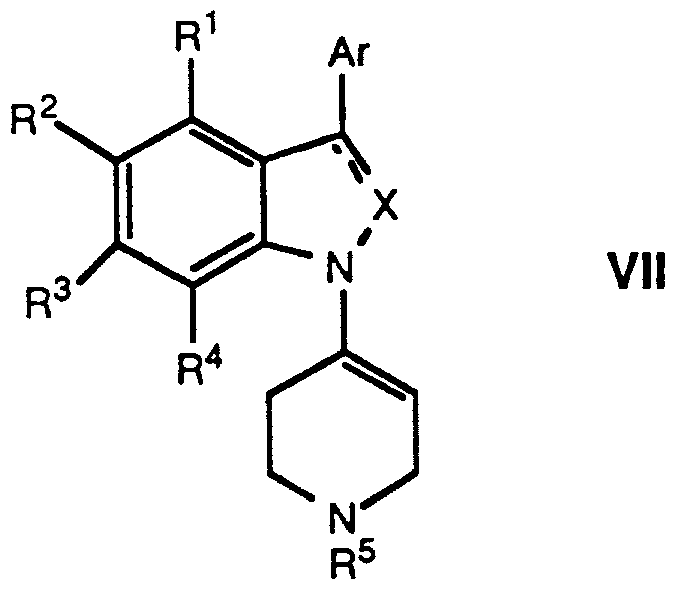
- e) reducing the pyridinium ring in a compound of following formula:

- f) reducing the pyridinium ring in a compound of the above Formula VIII or the pyridyl ring of a compound of formula XIV (below) to a piperidine ring;
- g) reducing the carbonyl group of a compound of the following formula:

- h) acylating an aminoalkyl derivative of the following formula :

- i) ringclosure reaction of an intermediate ethylene or propylene diamine derivative of the following formula :

- j) reducing a carboxylic acid or carboxylic acid derivative of the following formula :

and then, if desired:
acylating a compound prepared in one of the methods (a) to (j) having the formula I in which R⁵ is a structure 1a or 1b wherein V is NH, or V¹ is NHR¹⁰ or U¹ is NH with an acylating agent, or esterifying an available hydroxy group in a compound of formula I in order to obtain a prodrug;
converting a compound prepared in one of methods (a) to (j) in a pharmaceutically acceptable acid addition salt thereof; or
resolving an optically active compound of formula I prepared in one of methods (a) to (j) in optically active isomers thereof. - In method (a) the reaction is conveniently performed at 20-120°C in an aprotic solvent such as acetone or methyl isobutyl ketone in the presence of free base (e.g. K₂CO₃ or triethylamine) and the starting compounds of Formula II are prepared as described below.
3-aryl-1-(4-piperidyl)indoles and 3-aryl-1-(4-piperidyl)indazoles are prepared as shown in the following reaction scheme:
wherein R¹-R⁴, R⁶ and Ar are as defined above. - An 3-arylindole or 3-arylindazole of the Formula XIII is arylated with 4-chloro- or 4-bromopyridine in NMP, DMF, HMPA or DMSO with potassium carbonate as base and catalyzed by copper, copper(I) iodide or copper(I) bromide at 150-210 °C. The 3-aryl-1-(4-pyridyl)indole or 3-aryl-1-(4-pyridyl)indazole of Formula XIV thus obtained is reduced to the 3-aryl-1-(4-piperidyl)indole or 3-aryl-1-(4-piperidyl)indazole of the Formula XV with hydrogen at low pressure (3 ato.) in the presence of platinum.
3-Arylindoles, which are unsubstituted in the 2-position, are prepared from the corresponding 2-cyano-3-arylindoles or 3-arylindole-2-carboxylic esters by alkaline or acidic hydrolysis followed by decarboxylation in NMP or quinoline with copper catalysis. The 2-cyano-3-arylindoles and 3-arylindole-2-carboxylic esters used are prepared either from the corresponding anilines by Japp-Klingemann reaction followed by Fischer indole synthesis or from the corresponding 2-benzoylanilines according to modified literature procedures (Morooka et al, Synthesis, 1978, 445, Hughes et al, J. Proc. Roy. Soc. N. S. Wales, 1939, 72, 209 and C. D. Jones, J. Org. Chem., 1972, 37, 3624).
2-Substituted 3-arylindoles are prepared either from the corresponding 2-benzoyl-anilines or by Fischer indole synthesis from the corresponding substituted phenyl hydrazones (e.g. (4-fluorophenyl)acetone (4-methylphenyl)hydrazone) according to modified literature procedures (Greuter et al, Helv. Chem. Acta, 1974, 57, 281 and Yamamoto et al, Chem. Pharm. Bull., 1968, 16, 2313).
3-Arylindazoles are prepared either from the corresponding 2-benzoylanilines or by heating the corresponding 2-chloro - or bromobenzophenone hydrazone with base, according to modified literature procedures (Dziewonski et al., Bull. Intern. Acad. Polonaise, Casse Sci. Math. Nat., 1935A, 333 (Chem. Abstr., 1936, 30, 1972) and Gladstone et al, J Chem. Soc., 1965, 3048).
2-Halo-3-aryl-1-(4-piperidyl)indoles are prepared from the corresponding 3-aryl-1-(4-piperidyl)indoles, in which the piperidine nitrogen is protected by a suitable aminoprotective group (e.g. methyl or 2,2,2-trichloroethyl carbamate), by halogenation with an halogenation reagent such as N-bromosuccinimide, N-chlorosuccinimide or bromine in an inert solvent (e.g. CCl₄ or acetic acid) according to modified literature procedures (Hino et al.,Tetrahedron, 1974, 30, 2123), followed by deprotection of the piperidine nitrogen by standard methods which are obvious to the chemist skilled in the art.
In method (b) the reaction is performed by refluxing a compound of Formula IV with a compound of Formula V and a strong base (e.g. sodium amide) in an inert solvent, e.g. toluene. The starting compounds of Formula IV are prepared by reacting the corresponding 3-arylindoles, prepared as described above, with hydroxylamine-O-sulphonic acid and strong base (e.g. potasium tert.-butoxide) in a polar aprotic solvent (e.g. DMF).
In method (c) the reduction is conveniently performed with a complex hydride (e.g. sodium borohydride) in acidic solution (e.g.trifluoroacetic acid).
In method (d) the reduction is suitably carried out at a low hydrogen pressure (3 ato.) in the presence of platinum or palladium or by refluxing a compound of formula VII with ammonium formate and palladium in a water miscible solvent (e.g. ethanol).
In method (e) the reduction is expediently carried out with a complex hydride (e.g. sodium borohydride in methanol) whereas the reduction in method (f) preferably is performed by catalytic hydrogenation with platinum as a catalyst. The starting compounds of Formula VIII are prepared by quaternizing a 1-(4-pyridyl)-3-arylindole or 1-(4-pyridyl)-3-arylindazole, prepared as described above, with a lower alkyl halide or a halide of the general Formula IIIa or IIIb in MIBK or acetone. The reduction in method (g) is conveniently carried out with lithium aluminum hydride in tetrahydrofuran, or diethyl ether, or with diborane in tetrahydrofuran. Aminoalkyl derivatives of the Formula X (method h) are prepared by alkylating a compound of the Formula II with a halo-nitrile of the following formula: hal(CH₂)nCN in the presence of a base (e.g. K₂CO₃ or triethylamine) in an inert solvent such as acetone, MIBK or toluene at elevated temperature (30-100 °C). The cyano group may be reduced according to standard procedures using e.g. AlH₃, LiAlH₄ or B₂H₆. The R⁹ substituent is introduced by direct alkylation or by an acylation/reduction procedure, which is obvious to the chemist skilled in the art. Acylation of the thus obtained amino derivatives is accomplished by addition of an acylating agent at a low temperature (-20-30 °C) preferably in a chlorinated solvent (dichloromethane, chloroform, or 1,1,1-trichloroethane) and, if necessary, in the presence of a base to neutralize any acidic reaction product formed.
Ethylene or propylene diamines as intermediates for the ringclosure procedure in method (i) are prepared by repeating with appropriate reagents the procedure described for the preparation of the aminoalkyl derivatives used as starting materials in method (h). Generally, heating (80-150 °C) is required to effect ringclosure with the appropriate carbonyl- or thiocarbonyl precursor compound (phosgene, thiophosgene, carbondisulphide, urea or thiourea).
In method (j) the reduction is conveniently carried out using a complex hydride (e.g. lithium aluminum hydride) in an inert solvent (e.g. diethyl ether). The starting compounds of Formula XII are prepared by reacting a compound of Formula II with a halocarboxylic acid ester of formula hal-(CH₂)pCO₂R¹⁷ in the presence of a base (e.g. K₂CO₃ or triethylamine) in an inert solvent such as acetone, MIBK or toluene at elevated temperature (30-100 °C). - The ω-haloalkyl-2-imidazolidinone alkylating reagents (substructure of structure IIIa) were prepared according to modified literature procedures (see eg. Johnston, T.P.; McCaleb, G.S.; Montgomery, J.A. The Synthesis of Antineoplastic Agents. XXXII. N-Nitrosureas. J.Med.Chem. 1963, 6, 669-681; Ebetino, F.F. Belg.Patent 653421, 1965; Chem.Abstr. 1966, 64, 12684; Costeli, J.; Züst, A. Ger.Offen 2035370, 1971; Chem.Abstr. 1971, 74, 87985z). Other sidechains of structure IIIa were prepared as stated in the literature.
- The acid addition salts of the compounds of the invention are easily prepared by methods well known in the art. The base is reacted with either the calculated amount of organic or inorganic acid in an aqueous miscible solvent, such as acetone or ethanol, with isolation of the salt by concentration and cooling, or with an excess of the acid in an aqueous immiscible solvent, such as diethyl ether or chloroform, with the desired salt separating directly. Of course, these salts may also be prepared by the classical method of double decomposition of appropriate salts.
- In the following the invention is further illustrated by way of examples, which in no way may be construed as limiting for the invention.
- Methyl 3-(4-fluorophenyl)-1H-indole-2-carboxylate 22d (59.6 g) was refluxed in a mixture of methanol (1.5 l) and 2 N aqueous NaOH (500 ml) for 3.5 h. The reaction mixture was cooled to room temperature, the solvents were evaporated in vacuo and water (500 ml) was added. The alkaline solution was acidified and the thus formed precipitate was filtered off and dissolved in ethyl acetate (750 ml). The ethyl acetate solution was washed with brine (500 ml) and dried (Na₂SO₄). Evaporation of the solvents afforded the crude 4-fluorophenyl-1H-indole-2-carboxylic acid which was used without further purification.
A mixture of the crude indole-2-carboxylic acid (55.0 g), Cu (2.0 g) and quinoline (1.0 l) was refluxed for 2.5 h, cooled and filtered. The filtrate was poured into water (800 ml) and extracted with diethyl ether (2 x 800 ml). The combined organic phases were succesively washed with 1 N hydrochloric acid (4 x 1.0 l), washed with brine (1.0 l) and dried (Na₂SO₄). Evaporation of the solvent in vacuo gave the title compound which was precipitated from diethyl ether. Yield: 43.6 g, mp 98-100 °C. - In a corresponding manner the following indole derivatives were prepared:
5-Chloro-3-(4-fluorophenyl)-1H-indole 1b, mp 81-83 °C.
3-(4-Fluorophenyl)-5-methyl-1H-indole 1c, mp 123-126 °C.
6-Chloro-3-(4-fluorophenyl)-1H-indole 1d, (oil).
5-Fluoro-3-(4-fluorophenyl)-1H-indole 1e, (oil).
3-(4-Fluorophenyl)-5-trifluoromethyl-1H-indole 1f, (oil).
5-Chloro-3-phenyl-1H-indole 1g, mp 84-86 °C. - 3-(4-Fluorophenyl)-1H-indole 1a (39.3 g), 4-chloropyridine hydrochloride (55.8 g), K₂CO₃ (102.8 g), CuBr (15 g) and N-methylpyrrolidinone (1.2 l) were refluxed under stirring for 18 h. The reaction mixture was cooled, poured into water (1.0 l) and extracted with diethyl ether (2 x 1 l). The combined organic phases were washed with brine (3 x 1.5 l), dried (Na₂SO₄) and treated with activated carbon. Evaporation of the solvent gave the title compound which was crystallized from diethyl ether. Yield: 42.0 g, mp 115-118 °C.
- In a corresponding manner the following indole derivatives were prepared:
5-Chloro-3-(4-fluorophenyl)-1-(4-pyridyl)-1H-indole 2b, mp 162-164 °C.
3-(4-Fluorophenyl)-5-methyl-1-(4-pyridyl)-1H-indole 2c, mp 125-127 °C.
5-Fluoro-3-(4-fluorophenyl)-1-(4-pyridyl)-1H-indole 2d, mp 129-134 °C.
6-Chloro-3-(4-fluorophenyl)-1-(4-pyridyl)-1H-indole 2e, mp 194-198 °C.
3-(4-Fluorophenyl)-1-(4-pyridyl)-5-trifluoromethyl-1H-indole 2f, mp 163-165 °C.
5-Chloro-3-phenyl-1-(4-pyridyl)-1H-indole 2g, mp 130-132 °C. - 6-Chloro-3-(4-fluorophenyl)-1-(4-pyridyl)-1H-indole 2e (1.8 g) was dissolved in acetic acid (100 ml) and PtO₂ (0.2 g) was added. After hydrogenation for 30 h at 3 ato the catalyst was filtered off, the acetic acid was evaporated in vacuo and water (50 ml) was added. The acidic solution was made alkaline (pH >9) with concentrated sodium hydroxide and extracted with ethyl acetate (2 x 50 ml). The combined organic phases were successively washed with diluted sodium hydroxide (50 ml), washed with brine, and dried (Na₂SO₄). Evaporation of the solvent gave 1.5 g of the title compound as an oil.
In a corresponding manner the following indole and indazole derivatives were prepared:
3-(4-Fluorophenyl)-1-(4-piperidyl)-1H-indole 3b, (oil).
5-Chloro-3-(4-fluorophenyl)-1-(4-piperidyl)-1H-indole 3c, (oil).
3-(4-Fluorophenyl)-5-methyl-1-(4-piperidyl)-1H-indole 3d, (oil).
5-Fluoro-3-(4-fluorophenyl)-1-(4-piperidyl)-1H-indole 3e, (oil).
3-(4-Fluorophenyl)-1-(4-piperidyl)-5-trifluoromethyl-1H-indole 3f, (oil).
5-Chloro-3-phenyl-1-(4-piperidyl)-1H-indole 3g, (oil).
6-Chloro-3-(4-fluorophenyl)-1-(4-piperidyl)-1H-indazole 3h, (oil).
3-(4-Fluorophenyl)-1-(4-piperidyl)-5-trifluoromethyl-1H-indazole 3i, (oil). - A mixture of 6-chloro-3-(4-fluorophenyl)-1-(4-piperidyl)-1H-indole 3a (1.5 g), 1-(2-chloroethyl)-3-methyl-2-imidazolidinon (1.1 g), K₂CO₃ (1.0 g), KI (0.5 g) and methyl isobutyl ketone (100 ml) was refluxed for 18 h. The reaction mixture was cooled, poured into water (50 ml) and extracted with ethyl acetate (2 x 50 ml). The combined organic phases were dried (Na₂SO₄) and the solvents were evaporated in vacuo. The remaining oil was purified by column chromatography on silica gel (eluted with ethyl acetate/isopropanol 9:1 containing 4 % triethylamine). The title compound was precipitated as its maleate from ethyl acetate. Yield: 1.4 g, mp 110-112 °C.
- In a corresponding manner the following indole and indazole derivatives were prepared:
6-Chloro-3-(4-fluorophenyl)-1-[1-[2-(imidazolidin-2-on-1-yl)ethyl]-4-piperidyl]-1H-indole 4b, mp 192-194 °C.
6-Chloro-3-(4-fluorophenyl)-1-[1-[2-[3-(2-propyl)imidazolidin-2-on-1-yl]ethyl]-4-piperidyl]-1H-indole, hydrochloride, hydrate 4c, mp 255-258 °C.
5-Chloro-3-(4-fluorophenyl)-1-[1-[2-(imidazolidin-2-on-1-yl)ethyl]-4-piperidyl]-1H-indole 4d, mp 171-174 °C.
5-Chloro-3-(4-fluorophenyl)-1-[1-[2-[3-(2-propyl)imidazolidin-2-on-1-yl]ethyl]-4-piperidyl]-1H-indole 4e, mp 161-164 °C.
5-Chloro-3-(4-fluorophenyl)-1-[1-[2-(3-methylimidazolidin-2-on-1-yl)ethyl]-piperidyl]-1H-indole 4f, mp 128-133 °C.
3-(4-Fluorophenyl)-1-[1-[2-(imidazolidin-2-on-1-yl)ethyl]-4-piperidyl]-5-methyl-1H-indole 4g, mp 185-187 °C.
3-(4-Fluorophenyl)-5-methyl-1-[1-[2-[3-(2-propyl)imidazolidin-2-on-1-yl]ethyl]-4-piperidyl)-1H-indole, oxalate 4h, mp 175-177 °C.
3-(4-Fluorophenyl)-5-methyl-1-[1-[2-(3-methylimidazolidin-2-on-1-yl)ethyl]-4-piperidyl]-1H-indole, fumarate 4i, mp 103-105 °C.
3-(4-Fluorophenyl)-5-methyl-1-[1-[2-(2-pyrrolidinon-1-yl)ethyl]-4-piperidyl]-1H-indole, oxalate 4j, mp 120-122 °C.
3-(4-Fluorophenyl)-1-[1-[2-(imidazolidin-2-on-1-yl)ethyl]-4-piperidyl]-1H-indole 4k, mp 172-173 °C.
3-(4-Fluorophenyl)-1-[1-[2-[3-(2-propyl)imidazolidin-2-on-1-yl]ethyl]-4-piperidyl]-1H-indole, hydrochloride, hydrate 4l, mp 242-244 °C.
5-Fluoro-3-(4-fluorophenyl)-1-[1-[2-(imidazolidin-2-on-1-yl)ethyl]-4-piperidyl]-1H-indole 4m, mp 153-156 °C.
5-Fluoro-3-(4-fluorophenyl)-1-[1-[2-[3-(2-propyl)imidazolidin-2-on-1-yl]ethyl]-4-piperidyl]-1H-indole 4n, mp 143-145 °C.
5-Fluoro-3-(4-fluorophenyl)-1-[1-[2-(oxazolidin-2-on-3-yl)ethyl]-4-piperidyl]-1H-indole 4o, mp 123-125 °C.
5-Chloro-3-phenyl-1-[1-[2-(imidazolidin-2-on-1-yl)ethyl]-4-piperidyl]-1H-indole 4p, mp 155-157 °C.
5-Chloro-3-phenyl-1-[1-[2-[3-(2-propyl)imidazolidin-2-on-1-yl]ethyl]-4-piperidyl)-1H-indole 4q, mp 146-148 °C.
2,3-Dihydro-3-(4-fluorophenyl)-1-[1-[2-(imidazolidin-2-on-1-yl)ethyl]-4-piperidyl]-5-fluoro-1H-indole 4r, mp 182-186 °C.
3-(4-Fluorophenyl)-5-methyl-1-[1-(2-propyl)-4-piperidyl]-1H-indole, maleate 4s, m p 162-163 °C.
6-Chloro-3-(4-fluorophenyl)-1-[1-[2-(imidazolidin-2-on-1-yl)ethyl]-4-piperidyl]-1H-indazole 4t, mp 195-197 °C.
3-(4-Fluorophenyl)-1-[1-[2-(imidazolidin-2-on-1-yl)ethyl]-4-piperidyl]-5-trifluoromethyl-1H-indazole 4u, mp 217-219 °C.
3-(4-Fluorophenyl)-1-[1-[2-[3-(2-propyl)imidazolidin-2-on-1-yl]ethyl]-4-piperidyl]-5-trifluoromethyl-1H-indole 4v, mp 156-158 °C.
2-Bromo-3-(4-fluorophenyl)-1-[1-[2-(imidazolidin-2-on-1-yl)ethyl]-4-piperidyl]-1H-indole 4x, mp 194-196 °C. - A mixture of 2,5-dimethyl-3-(4-fluorophenyl)-1-(4-pyridyl)-1H-indole 17a (5.0 g) and 1-(2-iodoethyl)-2-imidazolidinon (7.6 g) and methyl isobutyl ketone (50 ml) was refluxed for 6 h. After cooling to room temperature the precipitated product was filtered off and dried in vacuo at 70 °C overnight. This afforded 6.3 g of the title compound, mp 215-217 °C.
- In a corresponding manner the following indole derivatives were prepared:
4-[3-(4-Fluorophenyl)-5-methyl-1H-indol-1-yl]-1-[2-(imidazolidin-2-on-1-yl)ethyl]pyridinium iodide 5b, mp >250 °C.
4-[3-(4-Fluorophenyl)-5-trifluoromethyl-1H-indol-1-yl]-1-[2-(imidazolidin-2-on-1-yl)ethyl]pyridinium iodide 5c, mp >250 °C. - 4-[2,5-Dimethyl-3-(4-fluorophenyl)-1H-indol-1-yl]-1-[2-(imidazolidin-2-on-1-yl)ethyl]pyridinium iodide 5a (6.3 g) was suspended in ethanol (100 ml) and sodium borohydride (2.1 g) was added in three portions during 3.5 h. Then the solvent was evaporated in vacuo and water (100 ml) was added. The mixture obtained was extracted with dichloromethane (2 x 50 ml). The combined organic phases were washed with brine (100 ml) and dried (MgSO₄). Evaporation of the solvent gave the title compound as an oil, which was purified by column chromatography on silica gel (eluted with ethyl acetate/ethanol 8:1 containing 4 % triethylamine). Yield: 2.5 g, mp 151-153 °C.
In a corresponding manner the following indole derivatives were prepared: 2,5-Dimethyl-3-(4-fluorophenyl)-1-(1-methyl-1,2,3,6-tetrahydropyridin-4-yl)-1H-indole 6b, mp 98-100 °C.
3-(4-Fluorophenyl)-1-[1-[2-(imidazolidin-2-on-1-yl)ethyl]-1,2,3,6-tetrahydropyridin-4-yl]-5-methyl-1H-indole 6c, mp 129-131 °C.
3-(4-Fluorophenyl)-5-methyl-1-(1-methyl-1,2,3,6-tetrahydropyridin-4-yl)-1H-indole, maleate 6d, mp 168-171 °C.
5-Chloro-2-methyl-1-(1-methyl-1,2,3,6-tetrahydropyridin-4-yl)-3-phenyl-1H-indole, oxalate 6e, mp 165-168 °C.
3-(4-Fluorophenyl)-1-[1-[2-(imidazolidin-2-on-1-yl)ethyl]-1,2,3,6-tetrahydropyridin-4-yl]-5-trifluoromethyl-1H-indole 6f, mp 113-115 °C. - Ammonium formate (12 g) was added in small portions during 18 h to a refluxing mixture of 2,5-dimethyl-3-(4-fluorophenyl)-1-[1-[2-(imidazolidin-2-on-1-yl)ethyl]-1,2,3,6-tetrahydropyridin-4-yl]-1H-indole 6a (1.9 g), 5 % palladium on activated carbon (1 g) and ethanol (50 ml). The reaction mixture was cooled to room temperature and the solvents were evaporated in vacuo. After addition of water the mixture was made alkaline with concentrated NaOH and extracted with ethyl acetate (2 x 50 ml).The combined organic phases were dried (Na₂SO₄) and the solvents were evaporated in vacuo. This afforded the title compound which crystallized from diethyl ether. Yield 0.2 g, mp 188-190 °C.
- In a corresponding manner the following indole derivatives were prepared:
3-(4-Fluorophenyl)-1-[1-[2-(imidazolidin-2-on-1-yl)ethyl]-4-piperidyl]-5-trifluoromethyl-1H-indole 7b, mp 182-186 °C
1-[1-[2-(Imidazolidin-2-on-1-yl)ethyl]-4-piperidyl]-2-methyl-3-phenyl-1H-indole 7c, mp 179-183 °C. - 2,5-Dimethyl-3-(4-fluorophenyl)-1-(4-pyridyl)-1H-indole 17a (5.0 g), methyl iodide (5 ml) and acetone (100 ml) were heated at 40 °C for 18 h. After cooling to room temperature the precipitated product was filtered off and dried in vacuo at 70 °C overnight. yield: 6.3 g, mp 217-219 °C.
In a corresponding manner the following indole derivatives were prepared:
4-(5-Chloro-2-methyl-3-phenyl-1H-indol-1-yl)-1-methylpyridinium iodide 8b, mp 225-227 °C.
4-[3-(4-Fluorophenyl)-5-methyl-1H-indol-1-yl]-1-methylpyridinium, iodide 8c, mp > 250 °C. - 4-[2,5-Dimethyl-3-(4-fluorophenyl)-1H-indol-1-yl]-1-methylpyridinium, iodide 8a (3.0 g) was dissolved in acetic acid (75 ml) and PtO₂ (0.4 g) was added. After hydrogenation for 2 weeks at 3 ato the catalyst was filtered off, the acetic acid was evaporated in vacuo and water (50 ml) was added. The thus obtained acidic solution was made alkaline (pH >9) with concentrated sodium hydroxide and extracted with ethyl acetate (2 x 50 ml). The organic phases were successively washed with diluted sodium hydroxide (50 ml), washed with brine and dried (Na₂SO₄). Evaporation of the solvent gave 1.3 g of the title compound as an oil, which was purified by column chromatography on silica gel (eluted with ethyl acetate/ethanol 8:1 containing 4 % triethylamine) and crystallized from heptane. Yield 0.4 g, mp 110-112 °C.
In a corresponding manner the following indole derivative was prepared: 5-Chloro-2-methyl-3-phenyl-1-(1-methyl-4-piperidyl)-1H-indole 9b, mp 131-136 °C (decomp.). - A mixture of 3-(4-fluorophenyl)-5-methyl-1-(4-piperidyl)-1H-indole 3d (6.0 g), K₂CO₃ (3.0 g) and dichloromethane (50 ml) was cooled to 0-5 °C and a solution of methyl chloroformate (2.2 g) in dichloromethane (50 ml) was added during 0.5 h. After reaction for further 2 h at room temperature the reaction mixture was washed with water (2 x 100 ml) and dried (MgSO₄). Evaporation of the solvents in vacuo afforded the title compound, which was used without further purification. Yield: 6.7 g, (oil). in a corresponding manner the following indole derivative was prepared:
2,2,2-Trichloroethyl-4-[3-(4-fluorophenyl)-1H-indol-1-yl]piperidine-1-carboxylate 10b (oil). - A solution of the crude methyl 4-[3-(4-fluorophenyl)-5-methyl-1H-indol-1-yl]piperidine-1-carboxylate 10a, (6.7 g) in dry tetrahydrofuran (75 ml) was added to a suspension of lithium aluminum hydride (4 g) in dry tetrahydrofuran (75 ml) during 0.5 h and the reaction mixture was refluxed for 1 h. After cooling on an ice bath water (5 ml), 6 N aqueous NaOH (5 ml) and water (10 ml) were added, succesively. The precipitate was filtered off, the filtrate was dried (MgSO₄) and the solvents were evaporated in vacuo. This afforded the title compound, as an oil, which was precipitated as its fumarate from ethanol. Yield: 1.4 g, mp 170-172 °C.
- A solution of 3-(4-fluorophenyl)-5-methyl-1-(4-piperidyl)-1H-indole 3d (20 g), chloroacetonitrile (5.4 g) and triethylamine (7.5.ml) in N-methylpyrrolidinone (125 ml) was heated at 60 °C for 2 h. The reaction mixture was poured into ice (200 g) and extracted with diethyl ether (2 x 200 ml). The combined organic phases were washed with brine (3 x 250 ml), dried (Na₂SO₄) and the solvents evaporated in vacuo. This afforded the 1-[1-(2-cyanomethyl)-4-piperidyl]-3-(4-fluorophenyl)-5-methyl-1H-indole, as an oil, which was used without further purification. Yield: 22.2 g. To a suspension of aluminum chloride (5.0 g) in dry diethyl ether (200 ml) was added lithium aluminum hydride (5.0 g) at 10-15 °C. Then a solution of the crude cyanomethyl compound in dry tetrahydrofuran (300 ml) was added dropwise during 0.5 h at 10-15 °C. The reaction mixture was refluxed for 2 h, cooled on an ice bath and concentrated aqueous NaOH (25 ml) was added. The inorganic salts were filtered off and the solvent evaporated in vacuo. The remaining oil was dissolved in dichloromethane, dried (MgSO₄) and the solvent was evaporated. This afforded the title compound as an oil. Yield: 18.9 g.
- A solution of 1-[1-(2-aminoethyl)-4-piperidyl]-3-(4-fluorophenyl)-5-methyl-1H-indole, 12a (5.0 g), N,N-dimethylthiocarbamoylchloride (2.1 g) and triethylamine (5 ml) in dichloromethane (150 ml) was refluxed for 18 h. After cooling to room temperature the reaction mixture was washed with water and dried (MgSO₄). Evaporation of the solvent afforded the title compound as an oil which was purified by column chromatography on silica gel (eluted with ethyl acetate containing 4 % triethylamine). The title compound precipitated from ethyl acetate and was recrystallized from diethyl ether. Yield: 0.8 g, mp 106-108 °C.
- In a corresponding manner the following indole derivative was prepared:
1-[1-[2-(3,3-Dimethyl-1-ureido)ethyl]-4-piperidyl]-3-(4-fluorophenyl)-5-methyl-1H-indole 13b, mp 126-128 °C. - A mixture of 1-[1-(2-aminoethyl)-4-piperidyl]-3-(4-fluorophenyl)-5-methyl-1H-indole 12a (8.9 g), K₂CO₃ (4.2 g) and dichloromethane (80 ml) was cooled to 0-5 °C and a solution of methyl chloroformate (2.9 g) in dichloromethane (50 ml) was added during 15 min. After reaction for further 2 h at room temperature the reaction mixture was washed with water (2 x 50 ml), dried (MgSO₄) and the solvents were evaporated in vacuo. This afforded the 1-[1-(N-methoxycarbonyl-2-aminoethyl)-4-piperidyl]-3-(4-fluorophenyl)-5-methyl-1H-indole, as an oil, which was used without further purification. Yield: 8.8 g.
A solution of the crude 1-(1-(N-methoxycarbonyl-2-aminoethyl)-4-piperidyl)-3-(4-fluorophenyl)-5-methyl-1H-indole (8.8 g) in dry tetrahydrofuran (75 ml) was added to a suspension of lithium aluminum hydride (2 g) in dry tetrahydrofuran (75 ml) during 15 min and the reaction mixture was refluxed for 1.5 h. After cooling on an ice bath water (4 ml), 4 N aqueous NaOH (2.5 ml) and water (10 ml) were added, succesively. The precipitate was filtered off, the solution was dried (Na₂SO₄) and the solvents were evaporated. This afforded the title compound, as an oil Yield: 6.9 g. - A mixture of 1-(1-(N-methyl-2-aminoethyl)-4-piperidyl)-3-(4-fluorophenyl)-5-methyl-1H-indole 14a (6.9), methyl isocyanate (2.1 g) and K₂CO₃ (4 g) in methyl isobutyl ketone (150 ml) was refluxed for 6 h. After cooling to room temperature water (100 ml) was added and the mixture was extracted with ethyl acetate (2 x 100 ml). The combined organic phases were washed with brine and dried (MgSO₄). Evaporation of the solvent afforded the title compound as an oil which was purified by column chromatography on silica gel (eluted with ethyl acetate/ethanol 4:1, containing 4 % triethylamine). The title compound was precipitated as its hydrochloride from diethyl ether. Yield: 0.9 g, mp 88-90 °C.
- A solution of ethyl bromoacetate in acetone was added during 15 min to a mixture of 3-(4-fluorophenyl)-5-methyl-1-(4-piperidyl)-1H-indole 3d (5.0 g), K₂CO₃ (2.5 g) and acetone (100 ml) at room temperature. After another 2 h the solvents were evaporated, water was added and the mixture was extracted with ethyl acetate (2 x100 ml). The combined organic phases were washed with brine and dried (Na₂SO₄). Evaporation of the solvent afforded the crude methyl 4-[3-(4-fluorophenyl)-5-methyl-1H-indol-1-yl]-1-piperidinacetate (6.0 g), which was used without further purification.
A solution of the crude methyl ester (6.0 g) in tetrahydrofuran (50 ml) was added to a suspension of lithium aluminum hydride (1.2 g) in dry tetrahydrofuran (50 ml) and the mixture was refluxed for 1 h. After cooling on ice bath, water (1.5 ml) and 4 N aqueous NaOH (1.5 ml) were added. The precipitate was filtered off and the filtrate was dried (Na₂SO₄). Evaporation of the solvents afforded the title compound (4.2 g) as an oil which was purified by column chromatography on silica gel (eluted with ethyl acetate containing 4 % triethylamine). The title compound precipitated as its oxalate from acetone. Yield: 0.09 g, mp 81-83 °C. - 2,5-Dimethyl-(4-fluorophenyl)-1H-indole 24a (50 g), 4-bromopyridine, hydrochloride (80 g), K₂CO₃ (90 g), CuBr (10 g) and N-methylpyrrolidone (750 ml) were refluxed under stirring for 18 h. The reaction mixture was cooled, poured into water (1.0 l) and extracted with diethyl ether (2 x 750 ml). The combined organic phases were washed with brine (3 x 1 l), dried (Na₂SO₄) and treated with activated carbon. Evaporation of the diethyl ether afforded the title compound (29.8 g) which was purified by column chromatography on silica gel (eluted with ethyl acetate/heptane 3:1). The title compound crystallized from diethyl ether. Yield: 20.5 g, mp 172-174 °C.
- In a corresponding manner the following indole and indazole derivatives were prepared:
5-Chloro-2-methyl-3-phenyl-1-(4-pyridyl)-1H-indole 17b, mp 158-160 °C.
6-Chloro-3-(4-fluorophenyl)-1-(4-pyridyl)-1H-indazole 17c, (oil).
3-(4-Fluorophenyl)-1-(4-pyridyl)-5-trifluoromethyl-1H-indazole 17d, (oil). - To a solution of 5-fluoro-3-(4-fluorophenyl)-1-(4-piperidyl)-1H-indole 3e (2 g) in trifluoroacetic acid (30 ml) was added sodium cyanoborohydride (1 g). After 2 h reaction at room temperature the solvent was evaporated in vacuo and ethyl acetate (50 ml) was added. The mixture was washed twice with aqueous 2 N sodium hydroxide (50 ml) and dried (Na₂SO₄). Evaporation of the solvent in vacuo afforded the crude product which was used without further purification. Yield: 1.5 g (oil).
- In a corresponding manner the following indole derivative was prepared:
2,3-Dihydro-3-(4-fluorophenyl)-1-[1-[2-(imidazolidin-2-on-1-yl)ethyl]-4-piperidyl]-5-methyl-1H-indole 18b, mp 180-185 °C. - Potassium tert-butoxid (7.5 g) was added to a solution of 3-(4-fluorophenyl)-5-methyl-1H-indole 1c (15 g) in DMF during 15 min at 0-5 °C. Then a suspension of potassium hydroxylamine-O-sulphonate in DMF (prepared by addition of potassium tert-butoxid (7.5 g) to a suspension of hydroxylamine-O-sulphonic acid (7.6 g) in DMF (100 ml) during 0.5 h at 0-5 °C) was added slowly at 0-5 °C. After reaction at 0 °C for 1 h the mixture was poured into ice, and extracted with diethyl ether (2 x 250 ml). The combined organic phases were washed with brine (3 x 250 ml) and dried (Na₂SO₄). Evaporation of the solvents afforded the title compound which was purified by column chromatography on silica gel (eluted with ethyl acetate/heptane 1:3) and crystallized from diethylether. Yield: 4.3 g, mp 116-120 °C.
- To a mixture of 1-amino-3-(4-fluorophenyl)-5-methyl-1H-indole 19a (1 g) and toluene (20 ml) was added a 50 % suspension of sodium amide in xylene (1.0 ml). After reaction for 15 min at room temperature a solution of N,N-bis(2-chloroethyl)methylamine (0.8 g) in toluene was added slowly and the mixture was refluxed for 3 h. After cooling to room temperature, the solvents were evaporated in vacuo and water (100 ml) was added. The mixture was extracted with ethyl acetate (2 x 50 ml) and the combined organic phases were dried (Na₂SO₄). Evaporation of the solvents in vacuo afforded the title compound, which was purified by column chromatography on silica gel (eluted with ethyl acetate/ethanol 4:1 containing 4 % triethylamine) and crystallized from heptane. Yield: 0.5 g, mp 105-107 °C.
- To a mixture of 3-(4-fluorophenyl)-1-[1-[2-(imidazolidin-2-on-1-yl)ethyl]-4-piperidyl]-5-methyl-1H-indole 4g (3 g), K₂CO₃ (1.3 g) and toluene (50 ml) was added a solution of acetyl chloride (0.6 ml) in toluene (5 ml) during 10 min at 0-5 °C. After reaction for further 18 h at room temperature the reaction mixture was filtered, the solvent was evaporated in vacuo and ethyl acetate (50 ml) was added. The thus formed solution was washed with brine (50 ml), dried (Na₂SO₄) and the solvent was evaporated in vacuo. This afforded the title compound as an oil which was purified by column chromatography on silica gel (eluted with ethyl acetate containing 4 % triethylamine). The title compound precipitated as its oxalate from acetone. Yield: 2.0 g, mp 233-235 °C.
In a corresponding manner the following indole derivative was prepared: 1-[1-[2-(3-Decanoylimidazolidin-2-on-1-yl)ethyl]-4-piperidyl]-3-(4-fluorophenyl)-5-methyl-1H-indole, oxalate 21b, mp 175-176 °C. - To a solution of p-toluidine (119.4 g) in conc. aqueous HCl (575 ml) was added a solution of NaNO₂ (84.6 g) in water (500 ml) at 0-5 °C during 1.5 h. The reaction mixture was added in one portion to a mixture of methyl 2-(4-fluorobenzyl)-3-oxo-butanoate (250 g), KOH (220 g), water (0.5 l), ethanol (1.25 l) and ice (2 kg) under stirring. After reaction for 2 h at room temperature the reaction mixture was extracted with diethyl ether (2 x 2 l). The combined organic phases were washed with water (3 l) and dried (Na₂SO₄). Evaporation of the solvents afforded the crude 4-tolylhydrazone of methyl 2-oxo-3-(4-fluorophenyl)-propanoate (330 g), which was used without further purification.
A mixture of the crude hydrazone, methanol (2.25 l) and aqueous H₂SO₄ (100 ml) was refluxed for 18 h. The reaction mixture was cooled to room temperature and a part of the solvents were evaporated in vacuo. The thus obtained solution was cooled to 0 °C and the precipitated compound was filtered off and dried overnight in vacuo. at 60 °C. Yield: 180 g, mp 151-155 °C.
In a corresponding manner the following indole derivatives were prepared: Methyl 5-chloro-3-(4-fluorophenyl)-1H-indole-2-carboxylate 22b, mp 184-186 °C.
Methyl 5-fluoro-3-(4-fluorophenyl)-1H-indole-2-carboxylate, 22c, (oil).
Methyl 3-(4-fluorophenyl)-1H-indole-2-carboxylate 22d, mp 148-150 °C.
Methyl 3-(4-fluorophenyl)-5-trifluoromethyl-1H-indole-2-carboxylate 22e, mp 136-139 °C.
Methyl 5-chloro-3-phenyl-1H-indole-2-carboxylate 22f, (oil). - To a mixture of a 50 % sodium hydride suspension in mineral oil (52.5 g) (which was extracted with dry heptane) and dry tetrahydrofuran (250 ml) was added a solution of N-benzoyl 5-chloro-2-(4-fluorobenzoyl)aniline (129 g) in dry tetrahydrofuran (500 ml) during 0.5 h at 20 °C (ice bath). After 1 h methyl 2-bromoacetate (101 ml) was added during 0.5 h at 20 °C (ice bath) and the mixture was stirred for another 1 hour. The solvents were evaporated in vacuo. The remaining oil was diluted with methanol (250 ml) and 5.4 M sodium methoxide in methanol (670 ml) was added carefully. After 1 h at room temperature the solvents were evaporated in vacuo and water (0.5 l) was added. The thus obtained mixture was extracted with ethyl acetate (2 x 0.75 l) and the combined organic phases were washed with brine and dried (Na₂SO₄). Evaporation of the solvents in vacuo afforded the title compound, which was purified by column chromatography on silica gel (eluted with ethyl acetate/heptane 1:3) and crystallized from heptane. Yield: 33 g, mp 172-183 °C.
- A solution of 4-fluorophenylacetone (60 g), 4-tolylhydrazine, HCl (68.8 g) and triethylamine (165 ml) in ethanol (600 ml) was refluxed for 18 h. The reaction mixture was cooled to room temperature, the solvents were evaporated in vacuo and water (500 ml) was added to the remaining oil. The thus obtained mixture was extracted with ethyl acetate (2 x 250 ml). The combined organic phases were washed with brine and dried (Na₂SO₄). Evaporation of the solvents afforded the crude 4-fluorophenylacetone tolylhydrazone (100 g) as an oil, which was used without further purification.
- The crude hydrazone (100 g), ethanol (700 ml) and conc. aqueous H₂SO₄ (40 ml) were refluxed for 18 h. After cooling to room temperature water (0.5 l) was added. The thus obtained mixture was extracted with (2 x 700 ml) ethyl acetate and the combined organic phases were washed with brine, dried and the solvents were evaporated in vacuo. This afforded the title compound, which was purified by column chromatography on silica gel (eluted with ethyl acetate/heptane 1:4) and crystallized from heptane. Yield: 75.5 g, mp:124-128 °C.
In a corresponding manner the following indole derivative was prepared: 5-Chloro-3-phenyl-2-methyl-1H-indole 24b, (oil). - To solution of 5-chloro-2-(4-fluorobenzoyl)aniline (5 g) in 6 M aqueous HCl (25 ml) was added a solution of NaNO₂ (2.5 g) in water (5 ml) at 0-5 °C under stirring during 15 min. After stirring for further 0.5 h at 0 °C a solution of SnCl₂ (20 g) in conc. aqueous HCl (25 ml) was added. The reaction mixture was allowed to heat to room temperature and after 0.5 h the precipitate was filtered off and suspended in 2 N aqueous NaOH. The suspension was filtered and dichloromethane was added to the precipitate. The thus obtained solution was washed with brine and dried (MgSO₄). Evaporation of the solvents afforded the title compound (2.5 g) as an oil which was used without further purification.
In a corresponding manner the following indazole derivative was prepared: 3-(4-Fluorophenyl)-5-trifluoromethyl-1H-indazole 25b, (oil) - A mixture of 2,2,2-trichloroethyl 4-[3-(4-fluorophenyl)-1H-indol-1-yl]piperidine-1-carboxylate 10b (4.0 g), N-bromosuccinimid (1.5 g) and tetrachloromethane (60 ml) was refluxed for 2 h. The reaction mixture was cooled to room temperature and the precipitate was filtered off. Evaporation of the solvent afforded the crude 2,2,2-trichloroethyl 2-bromo-4-[3-(4-fluorophenyl)-1H-indol-1-yl]piperidine-1-carboxylate (4.4 g) as an oil which was used without further purification. A mixture of the crude 2-bromo-indole (4.4 g), zinc powder (4.4 g) and 90 % acetic acid in water (150 ml) was heated at 40 °C for 30 min. The reaction mixture was filtered and the solvent evaporated in vacuo. To the remaining oil was added ethyl acetate (50 ml) and the thus obtained solution was washed successively with water, 4 N aqueous NaOH and brine. Evaporation of the solvents afforded the title compound as an oil (2.9 g).
- A mixture of 3-(4-Fluorophenyl)-5-methyl-1-[1-[2-[3-(2-propyl)imidazolidin-2-on-1-yl]ethyl]-4-piperidyl)-1H-indole 4h (3.0 g), dimethylsulphoxide (0.51 g) and conc. aqueous HCl (1 ml) was heated to 60 °C for 0.5 h under stirring. The reaction mixture was cooled to room temperature and water was added. The solution was extracted with ethyl acetate (2 x 50 ml). The combined organic phases were washed with 4 N aqueous NaOH and brine. Evaporation of the solvent gave an oil which was purified by column chromatography on silica gel (eluted with ethyl acetate/heptane 1:3). This afforded the title compound which crystallized from diethyl ether. Yield 0.4 g, mp 127-130 °C.
- The compounds of the invention were tested in well recognized and reliable methods. The tests were as follows and the results are given in the following Table 1. The well known 5HT₂ antagonists ritanserin and ICI 169369 were included in the tests for comparison purposes.
- By this method the inhibition by drugs of the binding of ³H-Ketanserin (0,5 nM) to Serotonin S₂ (5-HT₂) receptors in membranes from rat is determined in vitro. Method in Hyttel, Pharmacology & Toxicology, 61 , 126-129, 1987.
- Male Wistar (Mol:Wist) rats (125-250 g) are sacrificed and cortical tissue is dissected and weighed. The tissue is homogenized (Ultra Turrax, 10 sec.) in 10 ml of ice-cold 50 mM tris buffer pH 7.7 (at 25°C). The centrifuge glassware used in this step has been rinsed by sonication for 10 min. in ethanol. The homogenate is centrifuged twice at 20,000 g for 10 min. at 4°C with rehomogenization of the pellet in 10 ml ice-cold buffer. The final pellet is homogenized in 500 vol (w/v) ice-cold buffer.
- Incubation tubes kept on ice in triplicate receive 100 µl of drug solution in water (or water for total binding) and 2000 µl of tissue suspension (final tissue content corresponds to 4 mg original tissue). The binding experiment is initiated by addition of 100 µl of ³H-Ketanserin (final concentration 0.5 nM) and by placing the tubes in a 37°C water bath. After incubation for 30 min. the samples are filtered under vacuum (0-50 mBar) through Whatman GF/F filters (25 mm). The tubes are rinsed with 5 ml ice-cold buffer which are then poured on the filters. Thereafter, the filters are washed with 2 x 5 ml of buffer. The filters are placed in counting vials and 4 ml of appropriate scintillation fluid (e.g. Picofluor ™15) are added. After shaking for 1 h and storage 2 hrs in the dark the content of radioactivity is determined by liquid scintillation counting. Specific binding is obtained by subtracting the nonspecific binding in the presence of 1 µM mianserin.
For determination of the inhibiiton of binding five concentrations of drugs covering 3 decades are used. - The measured cpm are plotted against drug concentration on semilogarithmic paper and the best fitting S-shaped curve is drawn. The IC₅₀ value is determined as the concentration at which the binding is 50% of the total binding in control samples minus the nonspecific binding in the presence of 1 µM mianserin.
- ³H-Ketanserin = [ethylene-³H]-ketanserin hydrochloride from New England Nuclear, specific activity 60-80 Ci/mmol).
- By this method the inhibition by drugs of the binding of ³H-spiperone (=³H-spiroperidol) (0.5 nM) to dopamine D-2 receptors in membranes from rat corpus striatum is determined in vitro. Method and results in Hyttel & Larsen, J. Neurochem, 44 , 1615-1622, 1985).
- Male Wistar (Mol:Wistar) rats (125-250 g) are sacrificed and striatal tissue is dissected and weighed. The tissue is homogenized (Ultra Turrax, 10 sec.) in 10 ml of ice-cold 50 mM K-phosphate buffer pH 7.4 (at 25°C). The homogenate is centrifuged twice at 20,000 g for 10 min. at 4°C wtih rehomogenization of the pellet in 10 ml ice-cold buffer. The final pellet is homogenized in 1300 vol (w/v) ice-cold buffer.
- Incubation tubes kept on ice in triplicate receive 100 µl of drug solution in water (or water for total binding) and 4000 µl of tissue suspension (final tissue content corresponds to 3.08 mg original tissue). The binding experimental is initiated by addition of 100 µl of ³H-spiperone (final concentration 0.5 nM) and by placing the tubes in a 37°C water bath. After incubation for 10 min. the samples are filtered under vacuum (0-50 mBar) through Whatman GF/F filters (25 mm). The tubes are rinsed with 5 ml ice-cold buffer which are then poured on the filters. Thereafter, the filters are washed with 2 x 5 ml of buffer. The filters are placed in counting vials and 4 ml of appropriate scintillation fluid (e.g. Picofluor ™15) are added. After shaking for 1 h and storage 2 hrs in the dark the content of radioactivity is determined by liquid scintillation counting. Specific binding is obtained by subtracting the nonspecific binding in the presence of 10 µM of 6,7-ADTN.
- For determination of the inhibition of binding five concentrations of drugs covering 3 decades are used.
- The measured cpm are plotted against drug concentration on semilogarithmic paper and the best fitting S-shaped curve is drawn. The IC₅₀ value is determined as the concentration at which the binding is 50% of the total binding in control samples minus the nonspecific binding in the presence of 10 µM of 6,7-ADTN. ³H-Spiperone = [phenyl-4-³H]-spiperone from Amersham international plc. England, specific activity 15-25 Ci/mmol.


- It is seen from the table that the derivatives of the present invention which have been tested are all selective 5-HT₂ ligands, the affinity for the 5-HT₂ receptor as shown in the ³H-ketanserin binding test being very high as compared to the affinity for the dopamine D-2 receptor as measured in the ³H-spiroperidol binding test. As compared to the known standard 5-HT₂ antagonists ritanserin and ICI 169369 the compounds of the invention are in general found to be more selective.
- Additionally the compounds of the invention were tested in the following well known and reliable in vivo tests :
- Quipazine is a 5-HT₂ agonist, which induces head twitches in rats. The test is a test for 5-HT₂-antagonistic effect testing the ability to inhibit head twitches. The method and test results for some reference substances are published by Arnt et al. (Drug Development Research, 16 , 59-70, 1989).
- Dopamine D-2 agonists induce contralateral circling behaviour in rats with 6-OHDA lesions. Pergolide-induced circling is antagonized by dopamine D-2 antagonists. (Arnt,J. and J.Hyttel, Eur. J. Pharmacol. 102 , 349-354, 1984; Arnt, J. and J. Hyttel, J. Neural. Transm. 67 , 225-240, 1986). The test is an extremely sensitive test for dopamine D-2 antagonism in vivo.
- These in vivo tests showed that the compounds of the invention are strong and selective 5-HT₂ antagonists with long duration of action in vivo (Quipazine test) and that they are substantially without dopamine D-2 antagonistic activity in vivo as shown in the test for antagonism of pergolide induced circling.
- Accordingly, the compounds of the present invention are selective 5-HT₂ antagonist in vivo and in vitro thus being useful in the treatment of anxiety, depression, sleep disturbances, migraine, negative symptoms of schizophrenia, and Parkinson's Disease without neurological side effects as known from the classical neuroleptics.
- The pharmaceutical formulations of the invention may be prepared by conventional methods in the art.
- For example: Tablets may be prepared by mixing the active ingredient with ordinary adjuvants and/or diluents and subsequently compressing the mixture in a conventional tabletting machine. Examples of adjuvants or diluents comprise: corn starch, potato starch, talcum, magnesium stearate, gelatine, lactose, gums, and the like. Any other adjuvants or additives usually used for such purposes such as colourings, flavourings, preservatives etc. may be used provided that they are compatible with the active ingredients.
Solutions for injections may be prepared by dissolving the active ingredient and possible additives in a part of the solvent for injection, preferably sterile water, adjusting the solution to desired volume, sterilization of the solution and filling in suitable ampules or vials. Any suitable additive conventionally used in the art may be added, such as tonicity agents, preservatives, antioxidants, etc. - Typical examples of recipes for the formulation of the invention are as follows:
-
Comp. 4c 5 mg Lactose 18 mg Potato starch 27 mg Sucrose 58 mg Sorbitol 3 mg Talcum 5 mg Gelatine 2 mg Povidone 1 mg Magnesium stearate 0.5 mg -
Comp. 4b 50 mg Lactose 16 mg Potato starch 45 mg Sucrose 106 mg Sorbitol 6 mg Talcum 9 mg Gelatine 4 mg Povidone 3 mg Magnesium stearate 0.6 mg -
Comp. 4h 10 mg Sorbitol 500 mg Tragacanth 7 mg Glycerol 50 mg Methyl-paraben 1 mg Propyl-paraben 0.1 mg Ethanol 0.005 ml Water ad 1 ml -
Comp. 4c 50 mg Acetic acid 17.9 mg Sterile water ad 1 ml -
Comp. 4h 10 mg Sorbitol 42.9 mg Acetic acid 0.63 mg Sodium hydroxide 22 mg Sterile water ad 1 ml
Claims (10)
- A method for the preparation of an 3-arylindole or 3-arylindazole derivative having formula :

R¹-R⁴ are independently selected from hydrogen, halogen, C₁-C₄ alkyl, C₁-C₄ alkoxy, C₁-C₄ alkylthio, C₁-C₄ alkylsulphonyl, cyano, trifluoromethyl, or trifluoromethylthio;
the dotted line emanating from X in the ring system designates an optional bond; when said dotted line indicates a bond, X is nitrogen or a group CR⁶ wherein R⁶ is hydrogen, halogen, trifluoromethyl or C₁-C₄ alkyl;
when the dotted line indicates no bond, X is CH₂ ;
the dotted line, emanating from the Y, indicates an optional bond;
when it does not indicate a bond Y is N or CH; and when it indicates a bond Y is C; R⁵ is hydrogen or C₁-C₄ alkyl, optionally substituted with one or two hydroxy groups, or R⁵ is a group taken from structures 1a and 1b :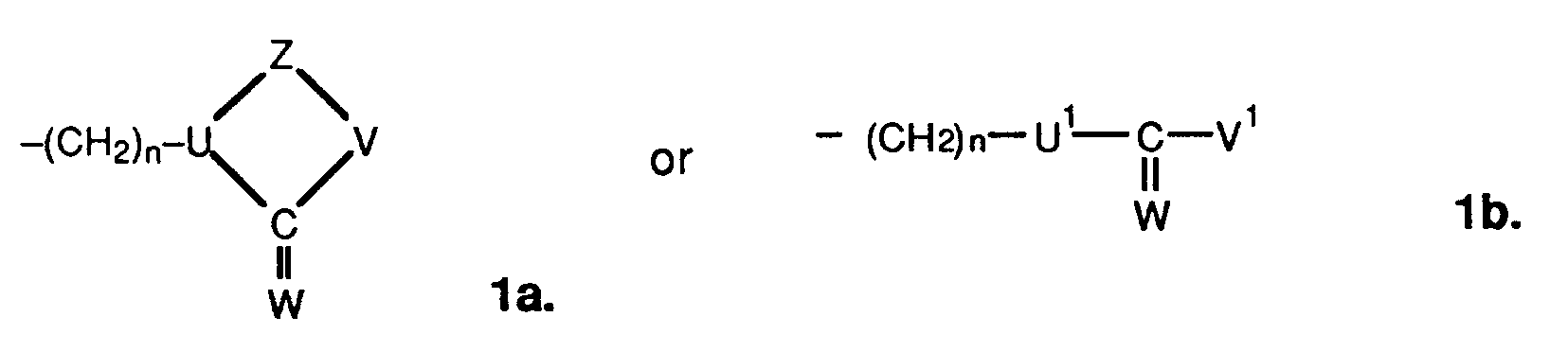
W is oxygen, or sulphur;
U is nitrogen or CH ;
Z is -(CH₂)m-, m being 2 or 3, or Z is 1,2-phenylene optionally substituted with halogen or trifluoromethyl or Z is -CH=CH- , -COCH₂- or -CSCH₂-;
V is oxygen, CH₂, or NR⁷, wherein R⁷ is hydrogen or C₁-C₄ alkyl or C₂-C₄ alkenyl, C₃-C₈ cycloalkyl or C₃-C₈ cycloalkyl(C₁-C₄)alkyl optionally substituted with one or two hydroxy groups;
U¹ is a group NR⁸,wherein R⁸ is hydrogen or C₁-C₄ alkyl or C₂-C₄ alkenyl, C₃-C₈ cycloalkyl or C₃-C₈ cycloalkyl(C₁-C₄)alkyl optionally substituted with one or two hydroxy groups; and
V¹ is NR⁹R¹⁰, where each of R⁹ and R¹⁰ may be independently selected among the R⁸-substituents;
provided that R⁵ may not be methyl when R¹-R⁴ each are hydrogen, X and Y are CH, and Ar is phenyl;
or a pharmaceutically acceptable acid addition salt or prodrug thereof comprisinga) reacting a compound of the following formula:

 b) reacting a compound of following formula:
R⁵N(CH₂CH₂hal)₂ V
in which R⁵ is as defined above and hal is halogen;c) reducing the indole ring of a compound of the general formula d) reducing the double bond in the tetrahydropyridyl ring in a compound of the formula:
 e) reducing the pyridinium ring in a compound of following formula:
 f) reducing the pyridinium ring in a compound of the above Formula VIII or the pyridyl ring of a compound of formula XIV to a piperidine ring;g) reducing the carbonyl group of a compound of the following formula :
 h) acylating an aminoalkyl derivative of the following formula :
 i) ringclosure reaction of an intermediate ethylene or propylene diamine derivative of the following formula :
 j) reducing a carboxylic acid or carboxylic acid derivative of the following formula :
and then, if desired:
acylating a compound prepared in one of the methods (a) to (j) having the formula I in which R⁵ is a structure 1a or 1b wherein V is NH, or V¹ is NHR¹⁰ or U¹ is NH with an acylating agent, or esterifying an available hydroxy group in a compound of formula I in order to obtain a prodrug;
converting a compound prepared in one of methods (a) to (j) in a pharmaceutically acceptable acid addition salt thereof; or
resolving an optically active compound of formula I prepared in one of methods (a) to (j) in optically active isomers thereof.
Applications Claiming Priority (3)
| Application Number | Priority Date | Filing Date | Title |
|---|---|---|---|
| DK181190A DK181190D0 (en) | 1990-07-30 | 1990-07-30 | 3-ARYL-INDOL OR 3-ARYL-INDAZOL DERIVATIVES |
| DK1811/90 | 1990-07-30 | ||
| SG19995A SG19995G (en) | 1990-07-30 | 1995-02-07 | Novel 3-arylindole and 3-arylindazole derivatives |
Publications (3)
| Publication Number | Publication Date |
|---|---|
| EP0470039A2 EP0470039A2 (en) | 1992-02-05 |
| EP0470039A3 EP0470039A3 (en) | 1992-05-27 |
| EP0470039B1 true EP0470039B1 (en) | 1994-12-07 |
Family
ID=26066139
Family Applications (1)
| Application Number | Title | Priority Date | Filing Date |
|---|---|---|---|
| EP91610058A Expired - Lifetime EP0470039B1 (en) | 1990-07-30 | 1991-07-22 | Novel 3-arylindole and 3-arylindazole derivatives |
Country Status (20)
| Country | Link |
|---|---|
| US (1) | US5393761A (en) |
| EP (1) | EP0470039B1 (en) |
| JP (1) | JP3165181B2 (en) |
| KR (1) | KR100233955B1 (en) |
| AT (1) | ATE115128T1 (en) |
| AU (1) | AU646679B2 (en) |
| CA (1) | CA2048027C (en) |
| DE (1) | DE69105659T2 (en) |
| DK (2) | DK181190D0 (en) |
| ES (1) | ES2064974T3 (en) |
| FI (1) | FI99111C (en) |
| GR (1) | GR3015274T3 (en) |
| HK (1) | HK51495A (en) |
| IE (1) | IE65673B1 (en) |
| IL (1) | IL98829A (en) |
| NO (1) | NO178192C (en) |
| NZ (1) | NZ238956A (en) |
| PT (1) | PT98483B (en) |
| SG (1) | SG19995G (en) |
| ZA (1) | ZA915805B (en) |
Families Citing this family (21)
| Publication number | Priority date | Publication date | Assignee | Title |
|---|---|---|---|---|
| US5643784A (en) * | 1990-12-04 | 1997-07-01 | H, Lundbeck A/S | Indan derivatives |
| NZ243065A (en) * | 1991-06-13 | 1995-07-26 | Lundbeck & Co As H | Piperidine derivatives and pharmaceutical compositions |
| DK8492D0 (en) * | 1992-01-23 | 1992-01-23 | Lundbeck & Co As H | TREATMENT OF PSYCHOSIS |
| US5264576A (en) * | 1992-10-22 | 1993-11-23 | Hoechst-Roussel Pharmaceuticals Incorporated | Pyrazolo[4,3-c]pyridines which are intermediates |
| TW421649B (en) * | 1995-01-31 | 2001-02-11 | Janssen Pharmaceutica Nv | 4-(1H-indol-1yl)-1-piperidinyl derivatives |
| GB9523462D0 (en) * | 1995-11-16 | 1996-01-17 | Merck Sharp & Dohme | Therapeutic agents |
| FR2744452B1 (en) * | 1996-02-06 | 1998-03-06 | Cird Galderma | HETEROCYCLIC BIARYLATED COMPOUNDS, PHARMACEUTICAL AND COSMETIC COMPOSITIONS CONTAINING THEM AND USES |
| DE19642255A1 (en) | 1996-10-14 | 1998-04-16 | Bayer Ag | Use of 1-benzyl-3- (substituted-hetaryl) fused pyrazole derivatives |
| TWI242011B (en) | 1997-03-31 | 2005-10-21 | Eisai Co Ltd | 1,4-substituted cyclic amine derivatives |
| FR2788772B1 (en) * | 1999-01-26 | 2001-03-02 | Adir | NOVEL CYANO-INDOLE INHIBITOR COMPOUNDS FOR SEROTONIN RECAPTURE, PROCESS FOR THEIR PREPARATION AND THE PHARMACEUTICAL COMPOSITIONS CONTAINING THEM |
| WO2001092223A1 (en) * | 2000-05-26 | 2001-12-06 | Ciba Specialty Chemicals Holding Inc. | Process for the preparation of indole derivatives and intermediates of the process |
| ES2275853T3 (en) * | 2001-02-16 | 2007-06-16 | Aventis Pharmaceuticals Inc. | UREA HETEROCICLIC DERIVATIVES AND ITS USE AS LEGANDS OF DOPAMINE RECEIVERS D3. |
| GB0117950D0 (en) * | 2001-02-16 | 2001-09-19 | Aventis Pharma Inc | Novel heterocyclic urea derivatives andd their use as dopamine D3 receptor ligands |
| DE60309598T2 (en) | 2002-06-24 | 2007-09-13 | Schering Corp. | INDICATIVES SUITABLE AS HISTAMINE H3 ANTAGONISTS |
| TW200409759A (en) | 2002-09-25 | 2004-06-16 | Wyeth Corp | Substituted 4-(indazol-3-yl)phenols |
| GB0306604D0 (en) * | 2003-03-21 | 2003-04-30 | Curidium Ltd | Second medical use |
| EP1692128A1 (en) | 2003-11-19 | 2006-08-23 | Signal Pharmaceuticals LLC | Indazole compounds and methods of use thereof as protein kinase inhibitors |
| DE102006043443A1 (en) * | 2006-09-15 | 2008-03-27 | Bayer Healthcare Ag | Novel aza-bicyclic compounds and their use |
| DE102010021637A1 (en) | 2010-05-26 | 2011-12-01 | Bayer Schering Pharma Aktiengesellschaft | Substituted 5-fluoro-1H-pyrazolopyridines and their use |
| WO2014102588A2 (en) * | 2012-12-27 | 2014-07-03 | Purdue Pharma L.P. | Indole and indoline-type piperidine compounds and uses thereof |
| AP2015008670A0 (en) | 2013-02-21 | 2015-08-31 | Adverio Pharma Gmbh | Forms of methyl {4,6-diamino-2-[1-(2-fluorobenzyl)-1H-pyrazolo[3,4-B]pyridino-3-yl]pyrimidino-5-yl} methyl carbamate |
Family Cites Families (5)
| Publication number | Priority date | Publication date | Assignee | Title |
|---|---|---|---|---|
| FR2354766A1 (en) * | 1976-06-17 | 1978-01-13 | Labaz | INDOLE N-AMINOALKYL DERIVATIVES AND METHODS FOR PREPARING THEM |
| FR2421900A1 (en) * | 1977-03-17 | 1979-11-02 | Sauba Lab | PIPERAZINO-3-INDOLES, THEIR PREPARATION PROCESS AND THEIR THERAPEUTIC APPLICATIONS |
| HU198036B (en) * | 1983-08-22 | 1989-07-28 | Hoechst Roussel Pharma | Process for production of derivatives of 3-piperidil-/1h/-indasole and medical preparatives containing them |
| DK704488D0 (en) * | 1988-12-19 | 1988-12-19 | Novo Industri As | NEW N-SUBSTITUTED AZAHETEROCYCLIC CARBOXYLIC ACIDS |
| IE58370B1 (en) * | 1985-04-10 | 1993-09-08 | Lundbeck & Co As H | Indole derivatives |
-
1990
- 1990-07-30 DK DK181190A patent/DK181190D0/en not_active Application Discontinuation
-
1991
- 1991-07-09 IE IE240391A patent/IE65673B1/en not_active IP Right Cessation
- 1991-07-12 NO NO912739A patent/NO178192C/en not_active IP Right Cessation
- 1991-07-12 NZ NZ238956A patent/NZ238956A/en unknown
- 1991-07-15 IL IL98829A patent/IL98829A/en not_active IP Right Cessation
- 1991-07-22 AT AT91610058T patent/ATE115128T1/en not_active IP Right Cessation
- 1991-07-22 ES ES91610058T patent/ES2064974T3/en not_active Expired - Lifetime
- 1991-07-22 EP EP91610058A patent/EP0470039B1/en not_active Expired - Lifetime
- 1991-07-22 DE DE69105659T patent/DE69105659T2/en not_active Expired - Fee Related
- 1991-07-22 DK DK91610058.9T patent/DK0470039T3/en active
- 1991-07-24 ZA ZA915805A patent/ZA915805B/en unknown
- 1991-07-27 KR KR1019910012971A patent/KR100233955B1/en not_active Expired - Fee Related
- 1991-07-29 FI FI913613A patent/FI99111C/en active
- 1991-07-29 JP JP18892391A patent/JP3165181B2/en not_active Expired - Fee Related
- 1991-07-29 AU AU81411/91A patent/AU646679B2/en not_active Ceased
- 1991-07-29 PT PT98483A patent/PT98483B/en not_active IP Right Cessation
- 1991-07-29 CA CA002048027A patent/CA2048027C/en not_active Expired - Fee Related
-
1993
- 1993-10-04 US US08/131,438 patent/US5393761A/en not_active Expired - Fee Related
-
1995
- 1995-02-07 SG SG19995A patent/SG19995G/en unknown
- 1995-03-03 GR GR940404079T patent/GR3015274T3/en unknown
- 1995-04-06 HK HK51495A patent/HK51495A/en not_active IP Right Cessation
Non-Patent Citations (1)
| Title |
|---|
| J.-M. Meunier, A. Shvaloff, Neurotransmitteurs, MASSON, p.227 * |
Also Published As
Similar Documents
| Publication | Publication Date | Title |
|---|---|---|
| AU646679B2 (en) | Novel 3-arylindole and 3-arylindazole derivatives | |
| US5216001A (en) | Indole derivatives | |
| EP0376607B1 (en) | Piperazinyl derivatives | |
| EP0200322B1 (en) | Heterocyclic compounds | |
| US5834493A (en) | Indole derivatives as 5-HT1A and/or 5-HT2 ligands | |
| RU2293082C2 (en) | Derivatives of sulfonamide, their preparing and using as medicaments | |
| AU765317B2 (en) | 4,5,6 and 7-indole and indoline derivatives, their preparation and use | |
| US5576336A (en) | Indole derivatives as dopamine D4 antagonists | |
| US5322851A (en) | Indole derivatives | |
| JP3898219B2 (en) | Phenylindole compounds | |
| EP1121356B1 (en) | 3-tetrahydropyridin-4-yl indoles for treatment of psychotic disorders | |
| HUP0301735A2 (en) | Indole derivatives useful for the treatment of cns disorders, pharmaceutical compositions containing them and their use | |
| NZ277483A (en) | 1-arylindole derivatives and medicaments | |
| CA2414115A1 (en) | Indole derivatives useful for the treatment of cns disorders | |
| CN101243075A (en) | Novel 2,3-dihydroindoline compounds | |
| HK1039333B (en) | 3-tetrahydropyridin-4-yl indoles for treatment of psychotic disorders |
Legal Events
| Date | Code | Title | Description |
|---|---|---|---|
| PUAI | Public reference made under article 153(3) epc to a published international application that has entered the european phase |
Free format text: ORIGINAL CODE: 0009012 |
|
| AK | Designated contracting states |
Kind code of ref document: A2 Designated state(s): AT BE CH DE DK ES FR GB GR IT LI LU NL SE |
|
| PUAL | Search report despatched |
Free format text: ORIGINAL CODE: 0009013 |
|
| AK | Designated contracting states |
Kind code of ref document: A3 Designated state(s): AT BE CH DE DK ES FR GB GR IT LI LU NL SE |
|
| 17P | Request for examination filed |
Effective date: 19920717 |
|
| 17Q | First examination report despatched |
Effective date: 19930408 |
|
| GRAA | (expected) grant |
Free format text: ORIGINAL CODE: 0009210 |
|
| AK | Designated contracting states |
Kind code of ref document: B1 Designated state(s): AT BE CH DE DK ES FR GB GR IT LI LU NL SE |
|
| REF | Corresponds to: |
Ref document number: 115128 Country of ref document: AT Date of ref document: 19941215 Kind code of ref document: T |
|
| ITF | It: translation for a ep patent filed | ||
| REF | Corresponds to: |
Ref document number: 69105659 Country of ref document: DE Date of ref document: 19950119 |
|
| EAL | Se: european patent in force in sweden |
Ref document number: 91610058.9 |
|
| REG | Reference to a national code |
Ref country code: ES Ref legal event code: FG2A Ref document number: 2064974 Country of ref document: ES Kind code of ref document: T3 |
|
| ET | Fr: translation filed | ||
| REG | Reference to a national code |
Ref country code: DK Ref legal event code: T3 |
|
| REG | Reference to a national code |
Ref country code: GR Ref legal event code: FG4A Free format text: 3015274 |
|
| PLBE | No opposition filed within time limit |
Free format text: ORIGINAL CODE: 0009261 |
|
| 26N | No opposition filed | ||
| REG | Reference to a national code |
Ref country code: GB Ref legal event code: IF02 |
|
| PGFP | Annual fee paid to national office [announced via postgrant information from national office to epo] |
Ref country code: FR Payment date: 20020702 Year of fee payment: 12 |
|
| PGFP | Annual fee paid to national office [announced via postgrant information from national office to epo] |
Ref country code: SE Payment date: 20020703 Year of fee payment: 12 Ref country code: NL Payment date: 20020703 Year of fee payment: 12 Ref country code: AT Payment date: 20020703 Year of fee payment: 12 |
|
| PGFP | Annual fee paid to national office [announced via postgrant information from national office to epo] |
Ref country code: CH Payment date: 20020704 Year of fee payment: 12 |
|
| PGFP | Annual fee paid to national office [announced via postgrant information from national office to epo] |
Ref country code: LU Payment date: 20020709 Year of fee payment: 12 |
|
| PGFP | Annual fee paid to national office [announced via postgrant information from national office to epo] |
Ref country code: DK Payment date: 20020711 Year of fee payment: 12 |
|
| PGFP | Annual fee paid to national office [announced via postgrant information from national office to epo] |
Ref country code: GB Payment date: 20020717 Year of fee payment: 12 |
|
| PGFP | Annual fee paid to national office [announced via postgrant information from national office to epo] |
Ref country code: GR Payment date: 20020723 Year of fee payment: 12 |
|
| PGFP | Annual fee paid to national office [announced via postgrant information from national office to epo] |
Ref country code: DE Payment date: 20020730 Year of fee payment: 12 |
|
| PGFP | Annual fee paid to national office [announced via postgrant information from national office to epo] |
Ref country code: BE Payment date: 20020802 Year of fee payment: 12 |
|
| PGFP | Annual fee paid to national office [announced via postgrant information from national office to epo] |
Ref country code: ES Payment date: 20020807 Year of fee payment: 12 |
|
| PG25 | Lapsed in a contracting state [announced via postgrant information from national office to epo] |
Ref country code: LU Free format text: LAPSE BECAUSE OF NON-PAYMENT OF DUE FEES Effective date: 20030722 Ref country code: GB Free format text: LAPSE BECAUSE OF NON-PAYMENT OF DUE FEES Effective date: 20030722 Ref country code: AT Free format text: LAPSE BECAUSE OF NON-PAYMENT OF DUE FEES Effective date: 20030722 |
|
| PG25 | Lapsed in a contracting state [announced via postgrant information from national office to epo] |
Ref country code: SE Free format text: LAPSE BECAUSE OF NON-PAYMENT OF DUE FEES Effective date: 20030723 Ref country code: ES Free format text: LAPSE BECAUSE OF NON-PAYMENT OF DUE FEES Effective date: 20030723 |
|
| PG25 | Lapsed in a contracting state [announced via postgrant information from national office to epo] |
Ref country code: LI Free format text: LAPSE BECAUSE OF NON-PAYMENT OF DUE FEES Effective date: 20030731 Ref country code: DK Free format text: LAPSE BECAUSE OF NON-PAYMENT OF DUE FEES Effective date: 20030731 Ref country code: CH Free format text: LAPSE BECAUSE OF NON-PAYMENT OF DUE FEES Effective date: 20030731 Ref country code: BE Free format text: LAPSE BECAUSE OF NON-PAYMENT OF DUE FEES Effective date: 20030731 |
|
| BERE | Be: lapsed |
Owner name: H. *LUNDBECK A/S Effective date: 20030731 |
|
| PG25 | Lapsed in a contracting state [announced via postgrant information from national office to epo] |
Ref country code: NL Free format text: LAPSE BECAUSE OF NON-PAYMENT OF DUE FEES Effective date: 20040201 |
|
| PG25 | Lapsed in a contracting state [announced via postgrant information from national office to epo] |
Ref country code: DE Free format text: LAPSE BECAUSE OF NON-PAYMENT OF DUE FEES Effective date: 20040203 |
|
| PG25 | Lapsed in a contracting state [announced via postgrant information from national office to epo] |
Ref country code: GR Free format text: LAPSE BECAUSE OF NON-PAYMENT OF DUE FEES Effective date: 20040205 |
|
| EUG | Se: european patent has lapsed | ||
| GBPC | Gb: european patent ceased through non-payment of renewal fee |
Effective date: 20030722 |
|
| REG | Reference to a national code |
Ref country code: CH Ref legal event code: PL Ref country code: DK Ref legal event code: EBP |
|
| PG25 | Lapsed in a contracting state [announced via postgrant information from national office to epo] |
Ref country code: FR Free format text: LAPSE BECAUSE OF NON-PAYMENT OF DUE FEES Effective date: 20040331 |
|
| NLV4 | Nl: lapsed or anulled due to non-payment of the annual fee |
Effective date: 20040201 |
|
| REG | Reference to a national code |
Ref country code: FR Ref legal event code: ST |
|
| REG | Reference to a national code |
Ref country code: ES Ref legal event code: FD2A Effective date: 20030723 |
|
| PG25 | Lapsed in a contracting state [announced via postgrant information from national office to epo] |
Ref country code: IT Free format text: LAPSE BECAUSE OF NON-PAYMENT OF DUE FEES Effective date: 20050722 |