EP0467637B1 - Pyrazolo(1,5-a)pyridine compounds, and production and use thereof - Google Patents
Pyrazolo(1,5-a)pyridine compounds, and production and use thereof Download PDFInfo
- Publication number
- EP0467637B1 EP0467637B1 EP91306429A EP91306429A EP0467637B1 EP 0467637 B1 EP0467637 B1 EP 0467637B1 EP 91306429 A EP91306429 A EP 91306429A EP 91306429 A EP91306429 A EP 91306429A EP 0467637 B1 EP0467637 B1 EP 0467637B1
- Authority
- EP
- European Patent Office
- Prior art keywords
- pyrazolo
- pyridine
- pyrid
- yloxy
- compound
- Prior art date
- Legal status (The legal status is an assumption and is not a legal conclusion. Google has not performed a legal analysis and makes no representation as to the accuracy of the status listed.)
- Expired - Lifetime
Links
Images

Classifications
-
- C—CHEMISTRY; METALLURGY
- C07—ORGANIC CHEMISTRY
- C07D—HETEROCYCLIC COMPOUNDS
- C07D471/00—Heterocyclic compounds containing nitrogen atoms as the only ring hetero atoms in the condensed system, at least one ring being a six-membered ring with one nitrogen atom, not provided for by groups C07D451/00 - C07D463/00
- C07D471/02—Heterocyclic compounds containing nitrogen atoms as the only ring hetero atoms in the condensed system, at least one ring being a six-membered ring with one nitrogen atom, not provided for by groups C07D451/00 - C07D463/00 in which the condensed system contains two hetero rings
- C07D471/04—Ortho-condensed systems
-
- A—HUMAN NECESSITIES
- A61—MEDICAL OR VETERINARY SCIENCE; HYGIENE
- A61P—SPECIFIC THERAPEUTIC ACTIVITY OF CHEMICAL COMPOUNDS OR MEDICINAL PREPARATIONS
- A61P25/00—Drugs for disorders of the nervous system
-
- A—HUMAN NECESSITIES
- A61—MEDICAL OR VETERINARY SCIENCE; HYGIENE
- A61P—SPECIFIC THERAPEUTIC ACTIVITY OF CHEMICAL COMPOUNDS OR MEDICINAL PREPARATIONS
- A61P25/00—Drugs for disorders of the nervous system
- A61P25/24—Antidepressants
-
- A—HUMAN NECESSITIES
- A61—MEDICAL OR VETERINARY SCIENCE; HYGIENE
- A61P—SPECIFIC THERAPEUTIC ACTIVITY OF CHEMICAL COMPOUNDS OR MEDICINAL PREPARATIONS
- A61P25/00—Drugs for disorders of the nervous system
- A61P25/26—Psychostimulants, e.g. nicotine, cocaine
-
- A—HUMAN NECESSITIES
- A61—MEDICAL OR VETERINARY SCIENCE; HYGIENE
- A61P—SPECIFIC THERAPEUTIC ACTIVITY OF CHEMICAL COMPOUNDS OR MEDICINAL PREPARATIONS
- A61P43/00—Drugs for specific purposes, not provided for in groups A61P1/00-A61P41/00
Definitions
- This invention relates to 1-(isopropylamino)-3-(pyrazolo[1,5-a]pyrid-4-yloxy)-2-propanol which exhibits anti-serotonergic activity, and to a production process and use thereof.
- antiserotonin-acting substance there are known the compounds represented by the following formulae: These compounds have a naphthalene or indole ring as their basic skeletons, but a compound which is more easily degradable and shows a shortened half-life in the body is desired.
- the present inventors have succeeded in the production of 1-(isopropylamino)-3-(pyrazolo[1,5-a]pyrid-4-yloxy)-2-propanol [the formula (A) below] which is a novel compound having a pyrazolopyridine ring as the basic skeleton.
- the present invention provides pyrazolo[1,5-a]pyridine compounds of the formula (B) below wherein R1 represents -OH, -OCH2-Ph (where Ph is a phenyl group), or -O-CH2-CH(OH)-CH2-NH-CH-(CH3)2; and R2 is H or, only when R1 is -OCH2-Ph, -COOH or -COOR (where R is a C1-C3 alkyl group).
- the Compound (A) possesses anti-serotonergic activity and can be produced through the following synthetic pathways: [wherein Ph represents a phenyl group; Mes represents a mesitylenesulfonic acid group; R represents a C1-C3 alkyl group; and Ts represents a tosyl group].
- the Compounds ( 2 ), ( 3 ), ( 4 ), ( 5 ), ( 6 ) and ( A ) are novel, and among them, the compounds having the pyrazolopyridine skeleton are represented by the general formula (B) as given below: [wherein R1 represents -OH, or -O-CH2-CH(OH)-CH2-NH-CH-(CH3)2; and R2 represents H or R1 represents - OCH2Ph (where Ph is a phenyl group) and R2 represents -COOR (where R is a C1-C3 alkyl group)].
- R1 represents -OH, or -O-CH2-CH(OH)-CH2-NH-CH-(CH3)2
- R2 represents H or R1 represents - OCH2Ph (where Ph is a phenyl group) and R2 represents -COOR (where R is a C1-C3 alkyl group)].
- 3-hydroxypyridine ( 1 ) is benzylated for the purpose of protecting the hydroxyl group, producing 3-benzyloxypyridine ( 2 ).
- This reaction can be carried out, for example, by allowing benzyl chloride to act on the Compound ( 1 ) in the presence of a deacidifying agent, such as sodium hydroxide.
- the Compound ( 2 ) is reacted with O-mesitylenesulfonylhydroxylamine to give N-amino-3-benzyloxypyridinium mesitylenesulfonate ( 3 ).
- the reaction can be allowed to proceed in such a solvent as methylene chloride, under ice-cooling, if desired.
- This reaction can be allowed to proceed in such a solvent as dimethylformamide at room temperature.
- the production of the Compound ( 4 ) is generally accompanied by the formation of the 6-benzyloxy derivative which is the isomer of the Compound ( 4 ), and the two compounds each can be separated from the other by suitable means, such as column chromatography.
- the removal reaction may be conducted stepwise; firstly, the alkoxycarbonyl group is hydrolyzed in the presence of an alkali such as alkali hydroxide to convert to the carboxyl group, and then heated in a solvent under the addition of copper chromite (2CuOCr2O3) or reacted with a strong acid such as hydrobromic acid to cause decarboxylation reaction for removing the carboxyl group. Subsequently, the benzyl group can be removed, for example, by reaction with boron trifluoride etherate and dimethyl sulfide in a solvent such as methylene chloride.
- an alkali such as alkali hydroxide
- a strong acid such as hydrobromic acid
- the Compound ( 4 ) after converting its alkoxycarbonyl group to a carboxyl group as described above, can also be subjected to simultaneous removal of the carboxyl and benzyl groups by reacting with a strong acid such as hydrobromic acid.
- a strong acid such as hydrobromic acid.
- the Compound ( 4 ) can also be reacted, for example, with 47 % hydrobromic acid to achieve improved yields by a progress of simultaneous removal of the alkoxycarbonyl and benzyl groups.
- optically active Compound ( 6 ) can be synthesized by employing glycidyl tosylate obtained by the tosylation of optically active glycidol, and optically active product Compound (A) can be obtained by reacting the optically active Compound ( 6 ) with isopropylamine.
- the Compound (A) which exhibits anti-serotonergic activity, can be used as an agent for treating neurosis, such as an antidepressant or antimania agent and can be administered orally or in a form of subcutaneous or intravenous injection. Its daily dose for human adults is 1 to 100 mg, preferably 10 to 20 mg, in the case of oral administration, and 0.05 to 20 mg, preferably 0.1 to 10 mg, in the case of injection.
- the Compound (A) because of the chemical configuration of its basic skeleton, is easily degradable and consequently has a short half-life period within the body, suggesting that it can alleviate adverse effects caused by drug accumulation.
- the Compound (A) does not show blocking activity of ⁇ -adrenoceptor.
- Fig. 1 is a bar graph representing the results of the test on anti-serotonergic activity as conducted in Experiment Example where A denotes the compound according to this invention, that is 1-(isopropylamino)-3-(pyrazolo[1,5-a]-pyrid-4-yloxy)-2-propanol.
- A denotes the compound according to this invention, that is 1-(isopropylamino)-3-(pyrazolo[1,5-a]-pyrid-4-yloxy)-2-propanol.
- mice Male DBA strain mice (supplied by Japan SLC) weighing 20 to 25 g (6-weeks aged) were maintained on a 12 hr light-dark cycle from 7:00 to 19:00 at 24 ⁇ 1°C, while they were allowed free access to food and water. The experiment was performed from 13:00 to 17:00.
- a solution of the Compound (A) in isotonic saline was administered to the animals intraperitoneally, with isotonic saline in the same volume being administered to the control. 15 minutes after intraperitoneal application, Tryptamine was given each animal into the tail vein at a dose of 25 mg/kg.
- the product was recrystallized from a mixed solution of methanol and ethyl acetate to give white flaky crystals having a melting point of 105 to 108° C.
- the compound 4 ′ was recrystallized from methyl acetate-n-hexane mixed solution to give white crystals with a melting point of 80.5 to 81.5°C.
- reaction mixture was neutralized by adding about 10 ml of saturated aqueous NH4Cl, followed by addition of water (20 ml) and extraction with ether.
- the extract was washed with water, dried and freed of the solvent by distillation, and the residue was purified on a column of silica gel (7734, chloroform). Yield: 350 mg or 61.4 %.
- the epoxy derivative ( 6 ) (336 mg, 1.77 mmole) was refluxed in isopropylamine-water (10:1) mixed solution for 45 minutes.
- the reaction solution was freed of the solvent by distillation, and the residue was admixed with chloroform.
- the mixture was dried, and the solvent was distilled off to give crystals showing one spot on TLC. Yield: 431 mg or 98.0 %.
Landscapes
- Health & Medical Sciences (AREA)
- Chemical & Material Sciences (AREA)
- Organic Chemistry (AREA)
- Life Sciences & Earth Sciences (AREA)
- General Health & Medical Sciences (AREA)
- General Chemical & Material Sciences (AREA)
- Medicinal Chemistry (AREA)
- Nuclear Medicine, Radiotherapy & Molecular Imaging (AREA)
- Bioinformatics & Cheminformatics (AREA)
- Pharmacology & Pharmacy (AREA)
- Engineering & Computer Science (AREA)
- Animal Behavior & Ethology (AREA)
- Chemical Kinetics & Catalysis (AREA)
- Public Health (AREA)
- Veterinary Medicine (AREA)
- Biomedical Technology (AREA)
- Neurology (AREA)
- Neurosurgery (AREA)
- Psychiatry (AREA)
- Pain & Pain Management (AREA)
- Nitrogen Condensed Heterocyclic Rings (AREA)
- Pharmaceuticals Containing Other Organic And Inorganic Compounds (AREA)
Abstract
Description
- This invention relates to 1-(isopropylamino)-3-(pyrazolo[1,5-a]pyrid-4-yloxy)-2-propanol which exhibits anti-serotonergic activity, and to a production process and use thereof.
- As antiserotonin-acting substance, there are known the compounds represented by the following formulae:

These compounds have a naphthalene or indole ring as their basic skeletons, but a compound which is more easily degradable and shows a shortened half-life in the body is desired. - The present inventors have succeeded in the production of 1-(isopropylamino)-3-(pyrazolo[1,5-a]pyrid-4-yloxy)-2-propanol [the formula (A) below] which is a novel compound having a pyrazolopyridine ring as the basic skeleton.
- In one aspect, the present invention provides pyrazolo[1,5-a]pyridine compounds of the formula (B) below wherein R¹ represents -OH, -OCH₂-Ph (where Ph is a phenyl group),
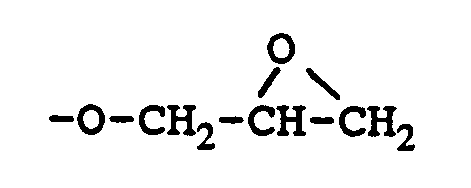
or -O-CH₂-CH(OH)-CH₂-NH-CH-(CH₃)₂; and R² is H or, only when R¹ is -OCH₂-Ph, -COOH or -COOR (where R is a C₁-C₃ alkyl group). - The Compound (A) possesses anti-serotonergic activity and can be produced through the following synthetic pathways:

[wherein Ph represents a phenyl group; Mes represents a mesitylenesulfonic acid group; R represents a C₁-C₃ alkyl group; and Ts represents a tosyl group]. - In the above reaction scheme, the Compounds (2), (3), (4), (5), (6) and (A) are novel, and among them, the compounds having the pyrazolopyridine skeleton are represented by the general formula (B) as given below:

[wherein R¹ represents -OH,
or -O-CH₂-CH(OH)-CH₂-NH-CH-(CH₃)₂; and R² represents H or R¹ represents - OCH₂Ph (where Ph is a phenyl group) and R² represents -COOR (where R is a C₁-C₃ alkyl group)]. - The above-mentioned synthetic pathways are explained in the following:
In the first place, 3-hydroxypyridine (1) is benzylated for the purpose of protecting the hydroxyl group, producing 3-benzyloxypyridine (2). This reaction can be carried out, for example, by allowing benzyl chloride to act on the Compound (1) in the presence of a deacidifying agent, such as sodium hydroxide. - Then, the Compound (2) is reacted with O-mesitylenesulfonylhydroxylamine to give N-amino-3-benzyloxypyridinium mesitylenesulfonate (3). The reaction can be allowed to proceed in such a solvent as methylene chloride, under ice-cooling, if desired.
- The resulting Compound (3), after action of such a base as anhydrous potassium carbonate, is treated with a lower alkyl ester of propiolic acid, whereupon a cyclization reaction takes place to yield 4-benzyloxypyrazolo[1,5-a]-pyridine-3-carboxylic acid lower alkyl ester (4). This reaction can be allowed to proceed in such a solvent as dimethylformamide at room temperature. The production of the Compound (4) is generally accompanied by the formation of the 6-benzyloxy derivative which is the isomer of the Compound (4), and the two compounds each can be separated from the other by suitable means, such as column chromatography.
- In the next place, the Compound (4) is subjected to removal of its benzyl and alkoxycarbonyl groups to give 4-hydroxypyrazolo[1,5-a]pyridine (5).
- The removal reaction may be conducted stepwise; firstly, the alkoxycarbonyl group is hydrolyzed in the presence of an alkali such as alkali hydroxide to convert to the carboxyl group, and then heated in a solvent under the addition of copper chromite (2CuOCr₂O₃) or reacted with a strong acid such as hydrobromic acid to cause decarboxylation reaction for removing the carboxyl group. Subsequently, the benzyl group can be removed, for example, by reaction with boron trifluoride etherate and dimethyl sulfide in a solvent such as methylene chloride.
- In addition, the Compound (4), after converting its alkoxycarbonyl group to a carboxyl group as described above, can also be subjected to simultaneous removal of the carboxyl and benzyl groups by reacting with a strong acid such as hydrobromic acid. By employing hydrobromic acid, the reaction can be finished in a shortened period of time and in increased yields.
- Furthermore, the Compound (4) can also be reacted, for example, with 47 % hydrobromic acid to achieve improved yields by a progress of simultaneous removal of the alkoxycarbonyl and benzyl groups.
- 4-Hydroxypyrazolo[1,5-a]pyridine (5) as obtained by the above procedure is reacted, in the form of an alkali metal salt, with glycidyl tosylate to give 3-(pyrazolo-[1,5-a]pyrid-4-yloxy)-1,2-epoxypropane (6). The reaction is preferably carried out in a solvent such as dimethylformamide under an atmosphere of argon gas.
- Then, the Compound (6) is reacted with isopropylamine to produce 1-(isopropylamino)-3-(pyrazolo[1,5-a]pyrid-4-yloxy)-2-propanol (A), with approximately quantitative yields being achieved.
- In the step of producing the Compound (6) from the Compound (5), optically active Compound (6) can be synthesized by employing glycidyl tosylate obtained by the tosylation of optically active glycidol, and optically active product Compound (A) can be obtained by reacting the optically active Compound (6) with isopropylamine.
- The Compound (A), which exhibits anti-serotonergic activity, can be used as an agent for treating neurosis, such as an antidepressant or antimania agent and can be administered orally or in a form of subcutaneous or intravenous injection. Its daily dose for human adults is 1 to 100 mg, preferably 10 to 20 mg, in the case of oral administration, and 0.05 to 20 mg, preferably 0.1 to 10 mg, in the case of injection. The Compound (A), because of the chemical configuration of its basic skeleton, is easily degradable and consequently has a short half-life period within the body, suggesting that it can alleviate adverse effects caused by drug accumulation.
- In contrast to Pindolol, the Compound (A) does not show blocking activity of β-adrenoceptor.
- Reverting to the drawing, Fig. 1 is a bar graph representing the results of the test on anti-serotonergic activity as conducted in Experiment Example where A denotes the compound according to this invention, that is 1-(isopropylamino)-3-(pyrazolo[1,5-a]-pyrid-4-yloxy)-2-propanol. Below given are the Experiment Example and Examples to illustrate this invention more particularly.
- In accordance with the method as described in Japanese Journal of Pharmacology (Japan. J. Pharmacol.), 51, 421-424 (1989), the Compound (A) was tested for its anti-serotonergic activity.
- Male DBA strain mice (supplied by Japan SLC) weighing 20 to 25 g (6-weeks aged) were maintained on a 12 hr light-dark cycle from 7:00 to 19:00 at 24 ± 1°C, while they were allowed free access to food and water. The experiment was performed from 13:00 to 17:00.
- A solution of the Compound (A) in isotonic saline was administered to the animals intraperitoneally, with isotonic saline in the same volume being administered to the control. 15 minutes after intraperitoneal application, Tryptamine was given each animal into the tail vein at a dose of 25 mg/kg.
- After administration of Tryptamine, mice were housed individually in transparent plastic cages to observe their behaviour. Among the serotonin syndrome induced after administration of tryptamine, head weaving and hindlimb abduction which clearly appeared were scored every minute in accordance with the following criteria of assessment:
0 = no appearance of the behaviour observed (absent),
1 = behaviour sustained for a period of less than 20 sec (occasional),
2 = behaviour sustained for a period of not less than 20 sec but less than 40 sec (frequent),
3 = behaviour sustained for not less than 40 sec (continuous). Observation was effected until behaviour disappeared, and the results were expressed as a total score obtained by summing up individual scores recorded every minute. - The scores recorded for the head weaving and hindlimb abduction were evaluated by Mann-Witney's U-test.
- The results are shown in Fig. 1.
- As is evident, the Compound (A), when given to the animals, clearly suppressed head weaving arid hindlimb abduction in contrast to the control.
- Consequently, it is considered evident that the Compound (A) exhibits anti-serotonergic activity.
- To a suspension of 3-hydroxypyridine (24.7 g, 260 mmole) in distilled methylene chloride (260 ml) were added Adogen 464™ (1.6 ml), 40 % NaOH (130 ml), benzyl chloride (32 ml, 278 mmole), followed by stirring for 3 days at room temperature. The organic layer was separated from the reaction solution, and the aqueous layer was admixed with water and extracted with methylene chloride. The resulting extract was combined with the methylene chloride layer separated previously, and the combined solution was washed with saturated saline, dried over K₂CO₃ and freed of the solvent by distillation. The residue was purified on a column of silica gel (7734, n-hexane : ethyl acetate = 20 : 1 to 5 : 1 ).
Yield: 8.6 g or 17.9 %. - A solution of O-mesitylenesulfonylhydroxylamine (13.7 g, 44.6 mmole, purity of 70 %) in methylene chloride (150 ml) was added dropwise to a solution of 3-benzyloxypyridine (8.25 g, 44.6 mmole) in methylene chloride (150 ml) under ice-cooling, with stirring. The reaction solution was returned to room temperature, stirred for 1 hour and concentrated to one-quarter of the original volume at 20 to 30°C, and ether was added to the concentrate, thereby white crystals were precipitated. This product was used in the next reaction, without being purified.
Yield: 14.9 g or 83.3 %. - The product was recrystallized from a mixed solution of methanol and ethyl acetate to give white flaky crystals having a melting point of 105 to 108° C.

- Anhydrous K₂CO₃ (5.8 g, 42.0 mmole) was added to a solution of the N-amino salt (3) (14.0 g, 35.0 mmole) in DMF (350 ml), and the mixture was stirred at room temperature for 2 to 3 minutes until it turned blue from initial green. Then, methyl propiolate (4.4 ml, 52.5 mmole) was added dropwise to the mixture, followed by stirring for 25 hours. The insoluble matter was filtered off from the reaction mixture, and solvent was removed from the filtrate by distillation. The residue was admixed with methylene chloride, resulting insoluble matter was filtered off, and solvent was removed from the filtrate by distillation. The residue was purified on a column of silica gel (9385, n-hexane : ethyl acetate = 5 : 1 to 2 : 1). Yield: 4.7 g or 47.6 %.
- In this experiment, the 6-benzyloxy isomer was also produced simultaneously. Yield of 2.1 g or 21.1 %.
- The
compound 4′ was recrystallized from methyl acetate-n-hexane mixed solution to give white crystals with a melting point of 80.5 to 81.5°C.
- A suspension of the methyl ester derivative (4′) (113 mg, 0.40 mmole) in 47 % HBr (2 ml) was refluxed for 10 minutes. The reactiol mixture was freed of the solvent by distillation as far as possible, and the residue was made alkaline (pH 8) with NaHCO₃. The resulting slurry was admixed with ethanol, insoluble matter was filtered off therefrom, and the filtrate was freed of the solvent by distillation. The same procedure was repeated once again, ether was added to the resulting residue, insoluble matter was filtered off therefrom, and the filtrate was freed of the solvent by distillation. The residue was purified on a column of silica gel (7734, chloroform).
Yield: 45 mg or 83.3 %
- NaH (containing 60 % of oil, 270 mg, 4.5 mmole) was washed with anhydrous petroleum ether, and was admixed, under atmosphere of argon gas, with distilled DMF (15 ml.) and 4-hydroxypyrazolo[1,5-a]pyridine (5) (402 mg, 3.0 mmole), followed by stirring for 30 min to give a light pink suspension. Subsequently, glycidyl tosylate (821 mg, 3.6 mmole) was added to the suspension, followed by stirring overnight under atmosphere of argon gas to obtain a red-yellow suspension. The reaction mixture was neutralized by adding about 10 ml of saturated aqueous NH₄Cl, followed by addition of water (20 ml) and extraction with ether. The extract was washed with water, dried and freed of the solvent by distillation, and the residue was purified on a column of silica gel (7734, chloroform).
Yield: 350 mg or 61.4 %.
NMR (CDCl₃)δ
2.80 (dd, J=5.3Hz, Hb),
2.95 (dd, J=5.4Hz, Ha),
3.4-3.5 (m, Hc),
4.08 (dd, J=11.6Hz, one of CH₂),
4.38 (dd, J=11.31Hz, one of CH₂),
6.38 (d, J=7Hz, H-5),
6.64 (t, J=7Hz, H-6),
6.66 (dd, J=2.5, 1Hz, H-3),
7.88 (d, J=2.5Hz, H-2),
8.15 (d, J=7Hz, H-7). - The epoxy derivative (6) (336 mg, 1.77 mmole) was refluxed in isopropylamine-water (10:1) mixed solution for 45 minutes. The reaction solution was freed of the solvent by distillation, and the residue was admixed with chloroform. The mixture was dried, and the solvent was distilled off to give crystals showing one spot on TLC.
Yield: 431 mg or 98.0 %. - The product was recrystallized from n-hexane to produce white crystals with a melting point of 65 to 67°C.

NMR (CDCl₃)δ
1.11 (d, J=6Hz, CH₃x2),
2.0 - 2.3 (brs, NH and OH),
2.7 - 3.0 (m, -CH(OH)CH₂NHCH-),
4.0 - 4.2 (m, -OCH₂CH(OH)-),
6.39 (brd, J=7Hz, H-5),
6.62 (dd, J=2.5, 1Hz, H-3),
6.64 (t, J=7Hz, H-6),
7.87 (d, J=2.5Hz, H-2),
8.15 (dt, J=7.1Hz, H-7).
Claims (10)
- A pyrazolo[1,5-a]pyridine compound represented by the formula:

R¹ represents -OH, -OCH₂-Ph (where Ph is a phenyl group), or
- 3-(Pyrazolo[1,5-a]pyrid-4-yloxy)-1,2-epoxypropane.
- 4-Hydroxypyrazolo[1,5-a]pyridine.
- A 4-benzyloxypyrazolo[1,5-a]pyridine-3-carboxylic acid C₁-C₃ alkyl ester.
- A process for producing 1-(isopropylamino)-3-(pyrazolo[1,5-a]pyrid-4-yloxy)-2-propanol characterized in that said process comprises reacting 3-(pyrazolo[1,5-a]pyrid-4-yloxy)-1,2-epoxypropane with isopropylamine.
- A process as claimed in Claim 5, characterized in that said process comprises reacting 3-benzyloxypyridine with O-mesitylenesulfonylhydroxylamine to form N-amino-3-benzyloxypyridinium mesitylenesulfonate; reacting the N-amino-3-benzyl-oxypyridinium mesitylenesulfonate with a C₁-C₃ alkyl ester of propiolic acid to form a 4-benzyloxypyrazolo[1,5-a]pyridine-3-carboxylic acid C₁-C₃ alkyl ester; removing the alkoxycarbonyl and benzyl groups from said ester to yield 4-hydroxypyrazolo[1,5-a]pyridine and reacting the 4-hydroxypyrazolo[1,5-a]pyridine with glycidyl tosylate to produce the 3-(pyrazolo[1,5-a]pyrid-4-yloxy)-1,2-epoxypropane.
- The use of 1-(isopropylamino)-3-(pyrazolo[1,5-a]pyrid-4-yloxy)-2-propanol in the manufacture of an anti-serotonin medicament.
Applications Claiming Priority (4)
| Application Number | Priority Date | Filing Date | Title |
|---|---|---|---|
| JP191075/90 | 1990-07-18 | ||
| JP19107590 | 1990-07-18 | ||
| JP3082058A JPH06166687A (en) | 1990-07-18 | 1991-01-21 | Pyrasolo(1,5-a)pyridine compound, its production method and use |
| JP82058/91 | 1991-01-21 |
Publications (2)
| Publication Number | Publication Date |
|---|---|
| EP0467637A1 EP0467637A1 (en) | 1992-01-22 |
| EP0467637B1 true EP0467637B1 (en) | 1995-10-18 |
Family
ID=26423090
Family Applications (1)
| Application Number | Title | Priority Date | Filing Date |
|---|---|---|---|
| EP91306429A Expired - Lifetime EP0467637B1 (en) | 1990-07-18 | 1991-07-16 | Pyrazolo(1,5-a)pyridine compounds, and production and use thereof |
Country Status (7)
| Country | Link |
|---|---|
| US (1) | US5202334A (en) |
| EP (1) | EP0467637B1 (en) |
| JP (1) | JPH06166687A (en) |
| AT (1) | ATE129246T1 (en) |
| CA (1) | CA2046999A1 (en) |
| DE (1) | DE69113901T2 (en) |
| ES (1) | ES2080257T3 (en) |
Families Citing this family (1)
| Publication number | Priority date | Publication date | Assignee | Title |
|---|---|---|---|---|
| CA2732520A1 (en) * | 2008-08-05 | 2010-02-11 | Merck Sharp & Dohme Corp. | Therapeutic compounds |
Family Cites Families (1)
| Publication number | Priority date | Publication date | Assignee | Title |
|---|---|---|---|---|
| JPS5229318B2 (en) * | 1972-03-30 | 1977-08-01 |
-
1991
- 1991-01-21 JP JP3082058A patent/JPH06166687A/en active Pending
- 1991-07-12 CA CA002046999A patent/CA2046999A1/en not_active Abandoned
- 1991-07-12 US US07/729,352 patent/US5202334A/en not_active Expired - Fee Related
- 1991-07-16 AT AT91306429T patent/ATE129246T1/en not_active IP Right Cessation
- 1991-07-16 DE DE69113901T patent/DE69113901T2/en not_active Expired - Fee Related
- 1991-07-16 EP EP91306429A patent/EP0467637B1/en not_active Expired - Lifetime
- 1991-07-16 ES ES91306429T patent/ES2080257T3/en not_active Expired - Lifetime
Non-Patent Citations (5)
| Title |
|---|
| CHEMICAL ABSTRACTS, vol. 83, no. 1, July 7, 1975, Columbus, Ohio, USA TAMURA YASUMITSU et al. "Effects of 3-substituents upon orientation in the 1,3-dipolar cycloaddition reaction between 3-substituted piridine N-imides and ethyl propiolate. Synstheses of ethyl 4- and 6-substituted pyrazolo (1,5-a)pyridine-3-carboxylates" page 825, column 2, abstract no. 9 886q & Chem. Soc. Perkin Trans. 1 1975, (5) 406-9 * |
| CHEMICAL ABSTRACTS, vol. 94, no. 22, June 1, 1981 Columbus, Ohio, USA GRELAN PHARMAZEUTICAL CO: "Analgesic and antiinflammatory pharmazeuticals containing pyrazolo (1,5-a)pyridine derivatives" page 380, column 2, abstract-no. 180 683x & Jpn. Kokai TOKKYO Koho 81 10,114 * |
| CHEMICAL ABSTRACTS, vol. 94, no. 25, June 22, 1981 Columbus, Ohio, USA SHIONO KORYO LTD. "4-(3-Isopropylamino-2-hydroxypropoxy)-indole" page 585, column 2, abstract-no. 208 704f & Jpn. Kokai Tokkyo Koho 80 127, 366 * |
| CHEMICAL ABSTRACTS, vol. 95, no. 9, August 31, 1981 Columbus, Ohio, USA KUNISHIGE TSUTOMU "Pindolol and propanolol" page 762, colomn 2, abstract-no. 80 723n & Jpn. Kokai Tokkyo Koho 81 29,547 * |
| CHEMICAL ABSTRACTS, vol. 95, vol. 9, August 31, 1981 Columbus, Ohio, USA KUNISHIGE TSUTOMU "Pindolol and propanolol" page 762, column 2, abstract-no. 80 722m & Jpn. Kokai Tokkyo Koho 81 29,549 * |
Also Published As
| Publication number | Publication date |
|---|---|
| ES2080257T3 (en) | 1996-02-01 |
| DE69113901T2 (en) | 1996-05-02 |
| DE69113901D1 (en) | 1995-11-23 |
| ATE129246T1 (en) | 1995-11-15 |
| EP0467637A1 (en) | 1992-01-22 |
| US5202334A (en) | 1993-04-13 |
| JPH06166687A (en) | 1994-06-14 |
| CA2046999A1 (en) | 1992-01-19 |
Similar Documents
| Publication | Publication Date | Title |
|---|---|---|
| EP0835258B1 (en) | Novel camptothecin analogues, preparation methods therefor, use thereof as drugs, and pharmaceutical compositions containing said analogues | |
| EP1546149B1 (en) | Modified pictet-spengler reaction and products prepared therefrom | |
| JPH02231486A (en) | New beta-adrenaline agonist | |
| JP2001519425A (en) | Halogen-substituted tetracyclic tetrahydrofuran derivatives | |
| CA2275351C (en) | Novel counterparts of camptothecin, their application as medicine and pharmaceutical compositions containing them | |
| EP0874849A1 (en) | 2,7-substituted octahydro-pyrrolo 1,2-a]pyrazine derivatives | |
| KR900008569B1 (en) | Method for preparing xanthine derivative | |
| US4395559A (en) | 2,3-Indoledione derivatives | |
| US5258383A (en) | DC-89 derivatives | |
| CA2315909C (en) | Novel acronycine derivatives, preparation method and pharmaceutical compositions | |
| EP0467637A1 (en) | Pyrazolo(1,5-a)pyridine compounds, and production and use thereof | |
| NZ260384A (en) | 4-quinolinyldihydropyridin-3-carboxylic acid derivatives and 5,6-fused (hetero)cyclic-4-quinolinyl-dihydropyridin-3-carboxylic acid derivatives and pharmaceutical compositions | |
| EP1007527B1 (en) | Optically pure camptothecin analogues, optically pure synthesis intermediate and method for preparing same | |
| CA2014673A1 (en) | Azetidinyl substituted isothiazolo-pyrydone derivatives, process for their preparation and uses as medicaments | |
| JP2000511897A (en) | Novel water-soluble analog of 20 (S) camptothecin | |
| US6159985A (en) | Imidazo-isoquinoline compounds, their compositions and uses | |
| KR0153530B1 (en) | Process for preparing lactam derivative | |
| EP0120832B1 (en) | 4-alkylindolonaphthyridines and pharmaceutical compositions containing them | |
| US5128363A (en) | Trifluoromethoxy substituted 1,3,4,9-tetrahydropyrano-[3,4-b]indole-1-acetic acids | |
| CH620678A5 (en) | Process for the preparation of a derivative of piperidine | |
| EP0535722A1 (en) | 3,4-Dehydropiperidine derivatives | |
| SK47794A3 (en) | Chinolyl-dihydropyridinecarboxylic acid esters, method of their production, medicines containing these matters, method of their production and using of these compounds | |
| EP0544240A1 (en) | Benzoquinoxalines and pharmaceutical compositions containing them | |
| CA1192189A (en) | E-homo-eburnane derivatives and a process for preparing same | |
| JPH04128224A (en) | Cerebral circulation metabolism-improving agent having coumarin ring |
Legal Events
| Date | Code | Title | Description |
|---|---|---|---|
| PUAI | Public reference made under article 153(3) epc to a published international application that has entered the european phase |
Free format text: ORIGINAL CODE: 0009012 |
|
| AK | Designated contracting states |
Kind code of ref document: A1 Designated state(s): AT BE CH DE DK ES FR GB GR IT LI LU NL SE |
|
| 17P | Request for examination filed |
Effective date: 19920717 |
|
| 17Q | First examination report despatched |
Effective date: 19941221 |
|
| GRAA | (expected) grant |
Free format text: ORIGINAL CODE: 0009210 |
|
| AK | Designated contracting states |
Kind code of ref document: B1 Designated state(s): AT BE CH DE DK ES FR GB GR IT LI LU NL SE |
|
| PG25 | Lapsed in a contracting state [announced via postgrant information from national office to epo] |
Ref country code: NL Free format text: LAPSE BECAUSE OF FAILURE TO SUBMIT A TRANSLATION OF THE DESCRIPTION OR TO PAY THE FEE WITHIN THE PRESCRIBED TIME-LIMIT Effective date: 19951018 Ref country code: GR Free format text: LAPSE BECAUSE OF FAILURE TO SUBMIT A TRANSLATION OF THE DESCRIPTION OR TO PAY THE FEE WITHIN THE PRESCRIBED TIME-LIMIT Effective date: 19951018 Ref country code: DK Effective date: 19951018 Ref country code: AT Effective date: 19951018 |
|
| REF | Corresponds to: |
Ref document number: 129246 Country of ref document: AT Date of ref document: 19951115 Kind code of ref document: T |
|
| ITF | It: translation for a ep patent filed | ||
| REF | Corresponds to: |
Ref document number: 69113901 Country of ref document: DE Date of ref document: 19951123 |
|
| ET | Fr: translation filed | ||
| PG25 | Lapsed in a contracting state [announced via postgrant information from national office to epo] |
Ref country code: SE Effective date: 19960118 |
|
| REG | Reference to a national code |
Ref country code: ES Ref legal event code: FG2A Ref document number: 2080257 Country of ref document: ES Kind code of ref document: T3 |
|
| NLV1 | Nl: lapsed or annulled due to failure to fulfill the requirements of art. 29p and 29m of the patents act | ||
| PG25 | Lapsed in a contracting state [announced via postgrant information from national office to epo] |
Ref country code: LU Free format text: LAPSE BECAUSE OF NON-PAYMENT OF DUE FEES Effective date: 19960731 |
|
| PLBE | No opposition filed within time limit |
Free format text: ORIGINAL CODE: 0009261 |
|
| STAA | Information on the status of an ep patent application or granted ep patent |
Free format text: STATUS: NO OPPOSITION FILED WITHIN TIME LIMIT |
|
| 26N | No opposition filed | ||
| PGFP | Annual fee paid to national office [announced via postgrant information from national office to epo] |
Ref country code: FR Payment date: 19990709 Year of fee payment: 9 |
|
| PGFP | Annual fee paid to national office [announced via postgrant information from national office to epo] |
Ref country code: CH Payment date: 19990713 Year of fee payment: 9 |
|
| PGFP | Annual fee paid to national office [announced via postgrant information from national office to epo] |
Ref country code: GB Payment date: 19990714 Year of fee payment: 9 |
|
| PGFP | Annual fee paid to national office [announced via postgrant information from national office to epo] |
Ref country code: DE Payment date: 19990716 Year of fee payment: 9 |
|
| PGFP | Annual fee paid to national office [announced via postgrant information from national office to epo] |
Ref country code: ES Payment date: 19990719 Year of fee payment: 9 |
|
| PGFP | Annual fee paid to national office [announced via postgrant information from national office to epo] |
Ref country code: BE Payment date: 19990915 Year of fee payment: 9 |
|
| PG25 | Lapsed in a contracting state [announced via postgrant information from national office to epo] |
Ref country code: GB Free format text: LAPSE BECAUSE OF NON-PAYMENT OF DUE FEES Effective date: 20000716 |
|
| PG25 | Lapsed in a contracting state [announced via postgrant information from national office to epo] |
Ref country code: ES Free format text: LAPSE BECAUSE OF NON-PAYMENT OF DUE FEES Effective date: 20000717 |
|
| PG25 | Lapsed in a contracting state [announced via postgrant information from national office to epo] |
Ref country code: LI Free format text: LAPSE BECAUSE OF NON-PAYMENT OF DUE FEES Effective date: 20000731 Ref country code: CH Free format text: LAPSE BECAUSE OF NON-PAYMENT OF DUE FEES Effective date: 20000731 Ref country code: BE Free format text: LAPSE BECAUSE OF NON-PAYMENT OF DUE FEES Effective date: 20000731 |
|
| BERE | Be: lapsed |
Owner name: SENJU PHARMACEUTICAL CO. LTD Effective date: 20000731 |
|
| GBPC | Gb: european patent ceased through non-payment of renewal fee |
Effective date: 20000716 |
|
| REG | Reference to a national code |
Ref country code: CH Ref legal event code: PL |
|
| PG25 | Lapsed in a contracting state [announced via postgrant information from national office to epo] |
Ref country code: FR Free format text: LAPSE BECAUSE OF NON-PAYMENT OF DUE FEES Effective date: 20010330 |
|
| REG | Reference to a national code |
Ref country code: FR Ref legal event code: ST |
|
| PG25 | Lapsed in a contracting state [announced via postgrant information from national office to epo] |
Ref country code: DE Free format text: LAPSE BECAUSE OF NON-PAYMENT OF DUE FEES Effective date: 20010501 |
|
| REG | Reference to a national code |
Ref country code: ES Ref legal event code: FD2A Effective date: 20010810 |
|
| PG25 | Lapsed in a contracting state [announced via postgrant information from national office to epo] |
Ref country code: IT Free format text: LAPSE BECAUSE OF NON-PAYMENT OF DUE FEES Effective date: 20050716 |