EP0464187B1 - Coated media for chromatography - Google Patents
Coated media for chromatography Download PDFInfo
- Publication number
- EP0464187B1 EP0464187B1 EP91903491A EP91903491A EP0464187B1 EP 0464187 B1 EP0464187 B1 EP 0464187B1 EP 91903491 A EP91903491 A EP 91903491A EP 91903491 A EP91903491 A EP 91903491A EP 0464187 B1 EP0464187 B1 EP 0464187B1
- Authority
- EP
- European Patent Office
- Prior art keywords
- hydrophobic
- hydrophilic
- domains
- molecules
- groups
- Prior art date
- Legal status (The legal status is an assumption and is not a legal conclusion. Google has not performed a legal analysis and makes no representation as to the accuracy of the status listed.)
- Expired - Lifetime
Links
Images



Classifications
-
- B—PERFORMING OPERATIONS; TRANSPORTING
- B01—PHYSICAL OR CHEMICAL PROCESSES OR APPARATUS IN GENERAL
- B01D—SEPARATION
- B01D67/00—Processes specially adapted for manufacturing semi-permeable membranes for separation processes or apparatus
- B01D67/0081—After-treatment of organic or inorganic membranes
- B01D67/0088—Physical treatment with compounds, e.g. swelling, coating or impregnation
-
- B—PERFORMING OPERATIONS; TRANSPORTING
- B01—PHYSICAL OR CHEMICAL PROCESSES OR APPARATUS IN GENERAL
- B01D—SEPARATION
- B01D67/00—Processes specially adapted for manufacturing semi-permeable membranes for separation processes or apparatus
- B01D67/0081—After-treatment of organic or inorganic membranes
- B01D67/0093—Chemical modification
- B01D67/00931—Chemical modification by introduction of specific groups after membrane formation, e.g. by grafting
-
- B—PERFORMING OPERATIONS; TRANSPORTING
- B01—PHYSICAL OR CHEMICAL PROCESSES OR APPARATUS IN GENERAL
- B01D—SEPARATION
- B01D67/00—Processes specially adapted for manufacturing semi-permeable membranes for separation processes or apparatus
- B01D67/0081—After-treatment of organic or inorganic membranes
- B01D67/0093—Chemical modification
- B01D67/00933—Chemical modification by addition of a layer chemically bonded to the membrane
-
- B—PERFORMING OPERATIONS; TRANSPORTING
- B01—PHYSICAL OR CHEMICAL PROCESSES OR APPARATUS IN GENERAL
- B01J—CHEMICAL OR PHYSICAL PROCESSES, e.g. CATALYSIS OR COLLOID CHEMISTRY; THEIR RELEVANT APPARATUS
- B01J20/00—Solid sorbent compositions or filter aid compositions; Sorbents for chromatography; Processes for preparing, regenerating or reactivating thereof
- B01J20/30—Processes for preparing, regenerating, or reactivating
- B01J20/32—Impregnating or coating ; Solid sorbent compositions obtained from processes involving impregnating or coating
- B01J20/3202—Impregnating or coating ; Solid sorbent compositions obtained from processes involving impregnating or coating characterised by the carrier, support or substrate used for impregnation or coating
- B01J20/3206—Organic carriers, supports or substrates
- B01J20/3208—Polymeric carriers, supports or substrates
- B01J20/321—Polymeric carriers, supports or substrates consisting of a polymer obtained by reactions involving only carbon to carbon unsaturated bonds
-
- B—PERFORMING OPERATIONS; TRANSPORTING
- B01—PHYSICAL OR CHEMICAL PROCESSES OR APPARATUS IN GENERAL
- B01J—CHEMICAL OR PHYSICAL PROCESSES, e.g. CATALYSIS OR COLLOID CHEMISTRY; THEIR RELEVANT APPARATUS
- B01J20/00—Solid sorbent compositions or filter aid compositions; Sorbents for chromatography; Processes for preparing, regenerating or reactivating thereof
- B01J20/30—Processes for preparing, regenerating, or reactivating
- B01J20/32—Impregnating or coating ; Solid sorbent compositions obtained from processes involving impregnating or coating
- B01J20/3202—Impregnating or coating ; Solid sorbent compositions obtained from processes involving impregnating or coating characterised by the carrier, support or substrate used for impregnation or coating
- B01J20/3206—Organic carriers, supports or substrates
- B01J20/3208—Polymeric carriers, supports or substrates
- B01J20/3212—Polymeric carriers, supports or substrates consisting of a polymer obtained by reactions otherwise than involving only carbon to carbon unsaturated bonds
-
- B—PERFORMING OPERATIONS; TRANSPORTING
- B01—PHYSICAL OR CHEMICAL PROCESSES OR APPARATUS IN GENERAL
- B01J—CHEMICAL OR PHYSICAL PROCESSES, e.g. CATALYSIS OR COLLOID CHEMISTRY; THEIR RELEVANT APPARATUS
- B01J20/00—Solid sorbent compositions or filter aid compositions; Sorbents for chromatography; Processes for preparing, regenerating or reactivating thereof
- B01J20/30—Processes for preparing, regenerating, or reactivating
- B01J20/32—Impregnating or coating ; Solid sorbent compositions obtained from processes involving impregnating or coating
- B01J20/3231—Impregnating or coating ; Solid sorbent compositions obtained from processes involving impregnating or coating characterised by the coating or impregnating layer
- B01J20/3242—Layers with a functional group, e.g. an affinity material, a ligand, a reactant or a complexing group
- B01J20/3268—Macromolecular compounds
- B01J20/3272—Polymers obtained by reactions otherwise than involving only carbon to carbon unsaturated bonds
-
- B—PERFORMING OPERATIONS; TRANSPORTING
- B01—PHYSICAL OR CHEMICAL PROCESSES OR APPARATUS IN GENERAL
- B01J—CHEMICAL OR PHYSICAL PROCESSES, e.g. CATALYSIS OR COLLOID CHEMISTRY; THEIR RELEVANT APPARATUS
- B01J20/00—Solid sorbent compositions or filter aid compositions; Sorbents for chromatography; Processes for preparing, regenerating or reactivating thereof
- B01J20/30—Processes for preparing, regenerating, or reactivating
- B01J20/32—Impregnating or coating ; Solid sorbent compositions obtained from processes involving impregnating or coating
- B01J20/3231—Impregnating or coating ; Solid sorbent compositions obtained from processes involving impregnating or coating characterised by the coating or impregnating layer
- B01J20/3242—Layers with a functional group, e.g. an affinity material, a ligand, a reactant or a complexing group
- B01J20/3268—Macromolecular compounds
- B01J20/3276—Copolymers
-
- B—PERFORMING OPERATIONS; TRANSPORTING
- B01—PHYSICAL OR CHEMICAL PROCESSES OR APPARATUS IN GENERAL
- B01J—CHEMICAL OR PHYSICAL PROCESSES, e.g. CATALYSIS OR COLLOID CHEMISTRY; THEIR RELEVANT APPARATUS
- B01J20/00—Solid sorbent compositions or filter aid compositions; Sorbents for chromatography; Processes for preparing, regenerating or reactivating thereof
- B01J20/30—Processes for preparing, regenerating, or reactivating
- B01J20/32—Impregnating or coating ; Solid sorbent compositions obtained from processes involving impregnating or coating
- B01J20/3231—Impregnating or coating ; Solid sorbent compositions obtained from processes involving impregnating or coating characterised by the coating or impregnating layer
- B01J20/3242—Layers with a functional group, e.g. an affinity material, a ligand, a reactant or a complexing group
- B01J20/3268—Macromolecular compounds
- B01J20/328—Polymers on the carrier being further modified
- B01J20/3282—Crosslinked polymers
-
- B—PERFORMING OPERATIONS; TRANSPORTING
- B01—PHYSICAL OR CHEMICAL PROCESSES OR APPARATUS IN GENERAL
- B01J—CHEMICAL OR PHYSICAL PROCESSES, e.g. CATALYSIS OR COLLOID CHEMISTRY; THEIR RELEVANT APPARATUS
- B01J20/00—Solid sorbent compositions or filter aid compositions; Sorbents for chromatography; Processes for preparing, regenerating or reactivating thereof
- B01J20/30—Processes for preparing, regenerating, or reactivating
- B01J20/32—Impregnating or coating ; Solid sorbent compositions obtained from processes involving impregnating or coating
- B01J20/3231—Impregnating or coating ; Solid sorbent compositions obtained from processes involving impregnating or coating characterised by the coating or impregnating layer
- B01J20/3242—Layers with a functional group, e.g. an affinity material, a ligand, a reactant or a complexing group
- B01J20/3285—Coating or impregnation layers comprising different type of functional groups or interactions, e.g. different ligands in various parts of the sorbent, mixed mode, dual zone, bimodal, multimodal, ionic or hydrophobic, cationic or anionic, hydrophilic or hydrophobic
-
- B—PERFORMING OPERATIONS; TRANSPORTING
- B01—PHYSICAL OR CHEMICAL PROCESSES OR APPARATUS IN GENERAL
- B01J—CHEMICAL OR PHYSICAL PROCESSES, e.g. CATALYSIS OR COLLOID CHEMISTRY; THEIR RELEVANT APPARATUS
- B01J20/00—Solid sorbent compositions or filter aid compositions; Sorbents for chromatography; Processes for preparing, regenerating or reactivating thereof
- B01J20/30—Processes for preparing, regenerating, or reactivating
- B01J20/32—Impregnating or coating ; Solid sorbent compositions obtained from processes involving impregnating or coating
- B01J20/3231—Impregnating or coating ; Solid sorbent compositions obtained from processes involving impregnating or coating characterised by the coating or impregnating layer
- B01J20/3287—Layers in the form of a liquid
-
- B—PERFORMING OPERATIONS; TRANSPORTING
- B01—PHYSICAL OR CHEMICAL PROCESSES OR APPARATUS IN GENERAL
- B01J—CHEMICAL OR PHYSICAL PROCESSES, e.g. CATALYSIS OR COLLOID CHEMISTRY; THEIR RELEVANT APPARATUS
- B01J39/00—Cation exchange; Use of material as cation exchangers; Treatment of material for improving the cation exchange properties
- B01J39/08—Use of material as cation exchangers; Treatment of material for improving the cation exchange properties
- B01J39/16—Organic material
- B01J39/17—Organic material containing also inorganic materials, e.g. inert material coated with an ion-exchange resin
-
- B—PERFORMING OPERATIONS; TRANSPORTING
- B01—PHYSICAL OR CHEMICAL PROCESSES OR APPARATUS IN GENERAL
- B01J—CHEMICAL OR PHYSICAL PROCESSES, e.g. CATALYSIS OR COLLOID CHEMISTRY; THEIR RELEVANT APPARATUS
- B01J39/00—Cation exchange; Use of material as cation exchangers; Treatment of material for improving the cation exchange properties
- B01J39/08—Use of material as cation exchangers; Treatment of material for improving the cation exchange properties
- B01J39/16—Organic material
- B01J39/18—Macromolecular compounds
- B01J39/20—Macromolecular compounds obtained by reactions only involving unsaturated carbon-to-carbon bonds
-
- B—PERFORMING OPERATIONS; TRANSPORTING
- B01—PHYSICAL OR CHEMICAL PROCESSES OR APPARATUS IN GENERAL
- B01J—CHEMICAL OR PHYSICAL PROCESSES, e.g. CATALYSIS OR COLLOID CHEMISTRY; THEIR RELEVANT APPARATUS
- B01J41/00—Anion exchange; Use of material as anion exchangers; Treatment of material for improving the anion exchange properties
- B01J41/08—Use of material as anion exchangers; Treatment of material for improving the anion exchange properties
- B01J41/12—Macromolecular compounds
- B01J41/14—Macromolecular compounds obtained by reactions only involving unsaturated carbon-to-carbon bonds
-
- B—PERFORMING OPERATIONS; TRANSPORTING
- B01—PHYSICAL OR CHEMICAL PROCESSES OR APPARATUS IN GENERAL
- B01D—SEPARATION
- B01D2323/00—Details relating to membrane preparation
- B01D2323/30—Cross-linking
-
- Y—GENERAL TAGGING OF NEW TECHNOLOGICAL DEVELOPMENTS; GENERAL TAGGING OF CROSS-SECTIONAL TECHNOLOGIES SPANNING OVER SEVERAL SECTIONS OF THE IPC; TECHNICAL SUBJECTS COVERED BY FORMER USPC CROSS-REFERENCE ART COLLECTIONS [XRACs] AND DIGESTS
- Y10—TECHNICAL SUBJECTS COVERED BY FORMER USPC
- Y10T—TECHNICAL SUBJECTS COVERED BY FORMER US CLASSIFICATION
- Y10T428/00—Stock material or miscellaneous articles
- Y10T428/29—Coated or structually defined flake, particle, cell, strand, strand portion, rod, filament, macroscopic fiber or mass thereof
- Y10T428/2982—Particulate matter [e.g., sphere, flake, etc.]
- Y10T428/2991—Coated
- Y10T428/2993—Silicic or refractory material containing [e.g., tungsten oxide, glass, cement, etc.]
- Y10T428/2996—Glass particles or spheres
-
- Y—GENERAL TAGGING OF NEW TECHNOLOGICAL DEVELOPMENTS; GENERAL TAGGING OF CROSS-SECTIONAL TECHNOLOGIES SPANNING OVER SEVERAL SECTIONS OF THE IPC; TECHNICAL SUBJECTS COVERED BY FORMER USPC CROSS-REFERENCE ART COLLECTIONS [XRACs] AND DIGESTS
- Y10—TECHNICAL SUBJECTS COVERED BY FORMER USPC
- Y10T—TECHNICAL SUBJECTS COVERED BY FORMER US CLASSIFICATION
- Y10T428/00—Stock material or miscellaneous articles
- Y10T428/31504—Composite [nonstructural laminate]
- Y10T428/3154—Of fluorinated addition polymer from unsaturated monomers
- Y10T428/31544—Addition polymer is perhalogenated
Definitions
- This invention relates to the production of hydrophilic coatings on hydrophobic surfaces. Specifically, this invention relates to hydrophobic materials having a hydrophilic, derivatizable surface coating useful as a chromatography medium for protein separation and as a protein compatible surface.
- Support materials for high productivity liquid chromatography must be chemically and mechanically stable.
- Rigid inert polymers such as crosslinked polystyrene permit increases in operating pressure and flow rates.
- hydrophobic interactions between such resins and proteins often are so strong that the proteins are denatured upon adsorption or during elution.
- hydrophilic moieties with sites on hydrophobic polymers to provide a hydrophilic surface character.
- Such post coated materials often referred to as pellicular materials or supports, can be produced readily if the base polymer is one having many easily derivatized reactive groups.
- This approach involves alkylation of styrene, followed by polymerization to produce derivatized polystyrene, and subsequent surface reaction with polyoxyethylene.
- hydrophilic groups typically comprise hydroxyl and/or ether groups, and include such materials as glycerol, ethylene glycol, diethylamino ethanol, trimethyl ethanolamino glycolic acid, and hydroxyethylsulfonic acid.
- glycerol ethylene glycol
- diethylamino ethanol trimethyl ethanolamino glycolic acid
- hydroxyethylsulfonic acid Unfortunately, exposure of such materials to extremes of pH, often required for regeneration of a chromatography medium, has the effect of hydrolyzing the ester linkages and of degrading the properties of the medium.
- EP-A-0,221,046 discloses a method for modifying a hydrophobic surface, chromatography to render it less hydrophobic by adsorbing on the surface a high molecular weight (greater than 10,000 Daltons) polymer which contains hydrophobic groups to bind to the hydrophobic surface.
- This document suggests the use of hydrolised polyvinylacetate, hydroxyethyl cellulose and dextraus modified with hydrophobic binding groups.
- the modifying polymer is preferably crosslinked.
- the modifying polymer is deposited as a monomolecular layer. The amount adsorbed is controlled by the concentration of the modifying polymer solution as the modifying polymer.
- WO-A 89/08130 discloses the modification of particulate, hydrophobic chromatographic support material by hydrophobic interaction with a modifying compound having a hydrophobic portion and a hydrophilic portion.
- the hydrophobic portions may be crosslinked after the deposition.
- the hydrophilic portions extend away from the surface.
- US-A-4,245,005 describes an elegant method for producing a pellicular polyethyleneimine-coated, porous support. Charged polymeric molecules are attracted to the surface of support materials of opposite charge by means of electrostatic forces. Once adsorbed, the polymeric materials are cross-linked in place and therefore resist erosion by solvent extraction, changes in pH, or exposure to elution buffers. This technique works well for the production of cationic resins (exchange anions) but is impractical for the preparation of organic, chromatographic packing materials useful in other types of chromatography procedures.
- this invention provides a technique for preparing derivatizable chromatographic supports from hydrophobic polymers.
- the technique involves adsorption of a molecular layer on a hydrophobic surface followed by cross-linking to produce an adherent hydrophilic surface. This is accomplished by contacting the hydrophobic surface with a relatively polar liquid, hydrophilic with respect to the surface, containing a solvated compound comprising both hydrophobic and hydrophilic domains linked flexibly by covalent bonds.
- the hydrophobic domains of the compound bind to the hydrophobic surface by conventional hydrophobic-hydrophobic interaction; the hydrophilic domains extend outwardly from the surface into the relatively polar liquid phase.
- the adsorbed compound may contain hydroxyl, epozy, halide, or other reactive side groups.
- the method may include the additional step of derivatizing the continuous, hydrophilic film at these side groups to produce anionic, cationic, reverse phase, size exclusion, affinity, or other types of chromatography media.
- the liquid used to deposit the adsorbed phase is formulated to control its lipophilic/hydrophilic character such that the coating compound is sparingly soluble therein. This encourages the hydrophobic domains of the solute to interact with the hydrophobic surface and the solute to accumulate at the solid/liquid interface with the hydrophilic domains extending away from the hydrophobic surface.
- the cross-linking step may be accomplished by reacting a cross-linking agent with reactive groups comprising the hydrophilic domains, the hydrophobic domains, or both, or by introducing a catalyst which promotes reaction directly between adjacent reactive groups.
- the adsorbing compound may be an oligomer, a polymer such as a copolymer, e.g., a block copolymer, a terpolymer, or a multidomain polymerizable compound which is polymerized as well as cross-linked in place on the surface.
- the hydrophilic domains of the adsorbing species preferably comprise hydroxyl groups, epoxy groups, or ether linkages.
- the hydrophobic domains preferably comprise halides or hydrocarbons.
- the hydrophobic support material can be any hydrophobic material, organic or inorganic, but preferably is a rigid, inert synthetic organic polymeric material such as polystyrene or cross-linked polystyrene.
- the method of the invention includes the additional step of polymerizing the compound on the surface.
- the process of the invention provides a hydrophilic chromatography matrix material useful in contact with protein solutions comprising a substrate having a hydrophobic surface coated with a continuous hydrophilic film attached to the surface by hydrophobic interaction and cross-linking.
- the surface density of the hydrophilic regions of the film preferably is sufficient to mask the hydrophobic regions and the hydrophobic surface.
- the film may be derivatized to contain covalently linked moieties such as hydrocarbons of various lengths, cationic groups such as amines, imines, quaternary ammonium, phosphonium, or sulfonium salts, anionic groups such as sulfate, sulfonates, carboxyl, and phosphates, or moieties designed for attachment of binding proteins such as protein A.
- moieties such as hydrocarbons of various lengths, cationic groups such as amines, imines, quaternary ammonium, phosphonium, or sulfonium salts, anionic groups such as sulfate, sulfonates, carboxyl, and phosphates, or moieties designed for attachment of binding proteins such as protein A.
- FIGURES 1A and 1B are schematic illustrations of a polymer in contact with a hydrophobic surface in a hydrophilic solution (A) and a hydrophobic solution (B), wherein X represents a hydrophobic moiety, the plus signs represent cationic groups, and the colored circles represent hydroxyl groups.
- FIGURES 2A, 2B, and 2C illustrate the conformation of multidomain moieties disposed in solution in the presence of a hydrophobic support. Note the mutual repulsion of charged groups (open circles) in various polymers in low ionic strength solutions, and the association of hydrophobic domains (characterized by hydrophobic moities represented by X) with the hydrophobic surface.
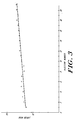
- FIGURE 3 is a graph of peak height vs. injection number where the sample is lysozyme loaded onto polystyrene-divinyl benzene support coated with an epichlorohydrin-glycidol copolymer.
- Mobile phase 20 mM MES, pH 6.
- Flow Rate 1 ml/min.
- Column 4.6 x 50 mm.
- Injection 20 ⁇ L at 1 mg/ml concentration, total volume injected varying from 20 ⁇ L to 400 ⁇ L.
- FIGURE 4 shows the separation of test proteins on the strong cation-exchanger made by the method described in Example 1A.
- Mobile phase A: 20 mM MES, pH 6; B: A + 0.5 M NaCl.
- Gradient from 0 to 100% B in 20 minutes.
- Flow rate 1 ml/min.
- Injection volume 20 ⁇ L.
- FIGURE 5 shows the separation of test proteins on the strong cation-exchanger made by the method described in Example 1B.
- Mobile phase A: 20 mM MES, pH 6; B: A + 0.5 M NaCl.
- Gradient from 0 to 100% B in 20 minutes.
- Flow rate 1 ml/min.
- Injection volume 20 ⁇ L.
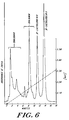
- FIGURE 6 shows the separation of test proteins on the strong anion-exchanger made by the method described in Example 1C.
- Mobile phase A: 20 mM Piperazine, pH 6; B: A + 0.35 M NaCl. Gradient: from 0 to 100% B in 20 minutes.
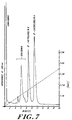
- FIGURE 7 shows the separation of test proteins on the strong anion-exchanger made by the method described in Example 1D.
- Mobile phase A: 20 mM Piperazine, pH 6; B: A + 0.35 M NaCl. Gradient: from 0 to 100% B in 20 minutes.
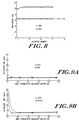
- FIGURE 8 shows the peak height vs. injection number for bovine serum albumin (BSA) and ovalbumin (OVA) on a column packed with dodecyl-polyglycidol ether-coated polystyrene beads.
- Mobile phase 0.05 M phosphate buffer, pH 6.8.
- Column 4.6 x 50 mm.
- Flow rate 1 ml/min.
- Injection volume 20 ⁇ L at 4 mg/ml concentration.
- FIGURE 9A and 9B are graphs of retention time vs. ionic strength of a phosphate buffer for various proteins passed through a column packed with dodecyl-polyglycidol ether-coated polystyrene beads.
- Samples ovalbumin (OVA), bovine serum albumin (BSA), lysozyme (LYSO), and cytochrome C (Cyto C).
- Mobile phase phosphate buffer, pH 7.
- Flow rate 1 ml/min.
- FIGURE 10 is a chromatogram illustrating the separation of standard proteins on a weak cation-exchanger made by the method described in Example 3
- Mobile phase A: 0.05 M phosphate buffer, pH 7; B: A + 1 M NaCl.
- molecules defining both hydrophobic and hydrophilic domains or segments are adsorbed by hydrophobic-hydrophobic interaction onto the surface of a hydrophobic chromatography support, and then are cross-linked in place to produce a permanent hydrophilic film.
- the resulting composite is inert, hydrophilic, and water wettable.
- both the hydrophobic support material and the coating compound used as a starting material individually are sufficiently hydrophobic such that they are non-water wettable and water insoluble, respectively, yet the resulting pellicular support is both hydrophilic and water wettable.
- This type of coating can be produced on essentially any hydrophobic surface by exposing the surface to a true solution, hydrophilic with respect to the surface to be coated, comprising a solute having two critical chemical properties.
- the solute must comprise regions or domains having significant hydrophobic character, and, interconnected flexibly by covalent bonds, regions or domains having significant hydrophilic character.
- the solute must comprise reactive moieties to serve as sites for subsequent crosslinking.
- Figure 2 schematically depicts the stereochemistry of a hydrophobic surface exposed to such a solute, represented by way of example as a polymer made up of plural regions or blocks comprising hydrophobic side groups (represented by X) and plural regions or blocks having hydrophilic side groups (represented by open circles).
- solute will adsorb at the hydrophobic surface by hydrophobic/hydrophobic interaction. The rate of adsorption will be proportional to solute concentration.
- an amount of solute sufficient to cover the available surface of the support, all exposed surfaces of the hydrophobic support material will be coated with a uniform layer of hydrophobic moieties.
- the hydrophilic portions of the solute will extend outwardly into the solution away from the hydrophobic regions.
- the adsorbed coating may present only hydrophilic moieties, effectively masking the hydrophobic regions, as illustrated in Fig. 2B, may continue to present significant hydrophobic areas as illustrated in Fig. 2C, or may result in a surface having small but accessible hydrophobic patches within a hydrophilic "forest" as illustrated in Fig. 2A.
- the next production step is to cross-link in situ adjacent molecules adsorbed on the hydrophobic surface, thereby covalently linking the adsorbed species together.
- This crosslinking in combination with the hydrophobic interaction, results in surface adherent pellicular coatings resistant to solvents and extremes of pH.
- These materials may be designed to have a uniformly hydrophilic surface.
- the coating may be derivatized at those sites using conventional procedures and chemistries, or the novel approaches disclosed herein. Using this approach, one may produce anionic or cationic exchange resins, as well as specialty resins useful, for example, in affinity chromatography, size exclusion chromatography, or neutral hydrophobic interaction chromatography.
- the resulting coatings are useful in the chromatographic separation of many types of mixtures, they are particularly well suited for the separation of proteins, and most particularly in the separation of such mixtures using high pressure, high throughput chromatography procedures.
- the media is stable, and the surface coating is disposed in the collapsed structure shown in Fig. 1B.
- the surface is converted to the distended or swollen structure illustrated in Fig. 1A.
- the coating process may be broken down into four steps:
- the invention may be practiced using essentially any hydrophobic chromatography substrate material, either organic or inorganic. Relatively inert hydrophobic polymeric materials are preferred. Rigid, cross-linked, high surface area particulate polymeric substrates are most preferred.
- the invention may be used to coat such substrate materials irrespective of their geometry. Thus, it may be used to coat all surfaces of microparticulate porous polymeric materials.
- the currently most preferred substrate material is polystyrene, most preferably crosslinked with divinyl benzene (PSDVB).
- PSDVB divinyl benzene
- Other crosslinkers known to the polymer chemist may be used.
- other types of resins may be used including polyethers, polysulfones, polyamides, polyimides, poly(arylene oxide), polyurethanes, polycarbonates, polyesters, poly(vinyl halides), poly(vinylidene halides), poly acrylates, polyolefins, derivatives, blends, copolymers, or multipolymers thereof.
- PSDVB substrate materials are available from PL Laboratories, Ltd. of Shropshire, U.K.
- the adsorbing species applied to the hydrophobic substrate may vary widely.
- An essential characteristic of materials useful in the coating process is that they have short, interdispersed, hydrophilic and hydrophobic domains.
- Useful materials preferably comprise plural hydrophobic domains which are more hydrophobic than the nonpolar domains of most surfactants, are therefore more tightly adsorbed to hydrophobic surfaces than surfactants, and less likely to be leached from hydrophobic supports.
- Hydrophobic segments of such multidomain materials will adsorb from a polar solution onto a hydrophobic surface.
- the driving force for adsorption is the thermodynamic minimization of the hydrophobic contact area between the hydrophobic surface and the relatively polar solvent medium. Adsorption is favored thermodynamically as the polar/nonpolar contact area is minimized. In contrast, there is no driving force for adsorption of polar segments of the polymer.
- the hydrophilic segments When a segment containing these groups is located between two adsorbable hydrophobic segments, the hydrophilic segments loop out away from the surfaces as shown in the drawing. The size of the loop is dependent on the size of the hydrophilic segment.
- the conformation of the polymer at the surface after adsorption is that of a loop and train arrangement depicted schematically in Figure 2. Because the hydrophilic loops imbibe water, the water content, surface hydrophilicity, and water wettability of the coated support are increased greatly and the potential hydrophobic contact area of the support is decreased greatly.
- the surface characteristics of the coated support described above are related to the size of the hydrophilic loop.
- Hydrophilic loop size determines two additional characteristics of the coating: 1) the propensity of the coating to swell in very polar solvents at low ionic strength (as illustrated in Fig. 1A), and 2) the ability of polar groups in the hydrophilic loop to mask the hydrophobic character of the underlying support matrix, as illustrated in Fig. 2A and 2B.
- the second characteristic of large hydrophilic loops is that they can extend so far away from the surface that they do not cover hydrophobic portions of the surface. This behavior potentially allows small proteins with a hydrophobic exterior, such as a lysozyme, to adsorb at embedded but exposed hydrophobic patches at the surface of the coated support.
- the ratio of hydrophilic and hydrophobic monomers can control the swelling and the coating efficiency of the polymer. If the hydrophilic:hydrophobic monomer ratio is too high, the polymer will produce large loops when in contact with the hydrophobic surface. This causes swelling and poor surface coverage. If the hydrophilic:hydrophobic monomer ratio is too low, the polymer will be insoluble in relatively hydrophilic solvents.
- adsorbed species include copolymers, terpolymers, or multipolymers, preferably comprising blocks of like monomers which constitute the hydrophobic and hydrophilic domains, and also comprising plural reactive groups suitable for crosslinking and optional derivatization. Best results so far have been achieved with acrylic and polyether chemistries to produce species such as epichlorohydrin-glycidol copolymer, and polyacrylic acid-glycidyl ester copolymer. Oligomeric materials may also be used, and after cross-linking generally have equivalent properties to larger species of equivalent monomer composition. Oligomeric materials may be preferred because of their ease of solubility. Species which are not polymeric or oligomeric, but which may be polymerized and/or crosslinked on the hydrophobic surface also may be used.
- a solvent which has a hydrophilic/lipophilic balance just sufficiently hydrophobic to permit solubilization of the coating compound with its hydrophobic domains.
- the compound will be only sparingly soluble.
- Aqueous solvents are preferred.
- various amounts of water-miscible organic solvents may be added to the water.
- Examples include polyethylene glycol, propanol, methanol, acetonitrile, and acetone.
- the currently preferred solvent system is water/polyethylene glycol/propanol. These compounds are miscible with water in all proportions.
- Such mixed solvent systems can optimize the adsorption step.
- the only requirement for adsorption is that the solvent be hydrophilic with respect to the surface (less hydrophobic than the surface), and capable of dissolving the coating compound.
- cross linking step is conducted using chemical reactions and processing techniques known to those skilled in the art to produce true covalent bonds between adjacent molecules. Details of crosslinking reactions necessarily depend on the nature and selection of the adsorbed species.
- the crosslinking reactions may be conducted so as to produce a relatively low crosslink density so that surface groups remain for use in derivatizing the coating.
- crosslinking approaches include boron trifluoride catalyzed reaction of epoxide groups to produce an ether crosslink and a pendent hydroxyl group; the reaction of a halide group with a hydroxyl group conducted in strong base to produce an ether crosslink (Williamson Ether Synthesis); and the reaction of a divinyl or other multiply unsaturated compound with acrylates, methacrylates, or other unsaturated pendent groups.
- the pellicular coating of the invention may be derivatized to produce various types of chromatography media useful in size exclusion, hydrophobic interaction, metal chelate, strong or weak anionic exchange, strong or weak cation exchange, or affinity chromatographies.
- Groups useful in these various types of separation typically are attached through pendant hydroxide, halide, or epoxide moieties accessible on the crosslinked pellicular coating using chemistries well known to those skilled in the art and employed to derivatize other types of polymeric substrates.
- chloride or bromide groups on the coating may be treated with: 1) polyethers of various lengths to produce swellable hydrophilic tentacles extending from the substrate's surface; 2) alkanols to produce ether linked hydrocarbons of various lengths ranging, for example, from C 4 to C 20 ; 3) polyethylenimine to produce a cationic resin (anion exchanger) which itself may be derivatized further; 4) tertiary amines, (e.g., :N(CH 3 ) 2 ) to produce strong anionic exchange resins; 5) diethanol amine to produce weak anionic exchange resins; 6) alpha hydroxy alkyl sulfonates to produce strong cationic exchange resins; 7) hydroxyacetic acid to produce a weak cationic exchange resin; 8) imino-diacetic acid to produce a metal chelate resin; and 9) various combinations of the foregoing. Hydroxyl or epoxy groups can be derivatized similarly
- This coating process is based on the two epoxy monomers, epicholorohydrin and glycidol.
- the monomers are polymerized with boron trifluoride to give an epoxy polymer that is relatively hydrophobic.
- BF 3 polymerization of epoxies also forms cyclic polymers in addition to the linear polymer illustrated in the formula.
- the monomer ratio i.e., the x/y ratio
- Copolymers of x/y ratios ranging from 0.5 to 3 have poor water solubility.
- the copolymer is dispersed in water containing polyethylene glycol/propanol and then mixed with divinyl benzene crosslinked polystyrene chromatography beads sold by PL Laboratories, Shropshire, U.K.
- Y ml epichlorohydrin and "X" ml glycidol are dissolved in 15 ml dicholoromethane.
- X+Y is kept constant at 2 ml and (X:Y) ratio is varied between 0.5 and 5. The preferred ratio is 0.5.
- 50 ⁇ L boron trifluoride is added to the mixture.
- the polymerization reaction is conducted at room temperature for a period of 24 hours after which the solvent is evaporated.
- the remaining viscous polymer is dissolved in a mixed solvent comprising 10 ml water, 7 ml polyethylene glycol, and 30 ml isopropanol.
- the solution is filtered and 3 grams of polystyrene divinylbenzene particles are added.
- the resulting suspension is briefly sonicated and then agitated for 14 hours.
- the epoxy polymer is adsorbed onto the hydrophobic surface.
- the hydrophobic -CH 2 Cl groups orient toward the PSDVB surface while the hydrophilic -CH 2 OH groups orient outward toward the solution where it is solvated, as shown below.
- the next step of the coating process involves crosslinking by ether bond formation in strong base according to the reactions:
- Reaction time determines the amount of -CH 2 Cl consumed in the reaction.
- the reaction may be stopped before all -CH 2 Cl is consumed to leave both -OH and -Cl groups in the coating so that additional groups can be attached through either of these functional groups.
- the particles are filtered and washed with 50 ml water.
- the wetted particles are then suspended in 50 ml, 3 M KOH, sonicated briefly, and agitated at room temperature for 24 hours.
- the particles are then filtered and washed sequentially with water, isopropanol, and acetone, and then dried for 3 hours under vacuum at 60°C.
- Figure 3 shows peak height vs. injection number (cumulative volume of sample) for lysozyme. Note that peak height does not change significantly over the series of injections, indicating the absence of hydrophobic patches on the surface of the medium.
- the hydrophilic coating may be derivatized with a stationary phase ligand using techniques known in the art, as set forth below.
- Dodecylpolyglycidol ether surfactant is produced by dissolving 2.5 ml of dodecanol (Aldrich, Milwaukee WI) in 2.5 ml of methylene chloride. A few drops of boron trifluoride-etherate (Aldrich) are added and then 2.5 ml of glycidol (Aldrich) is slowly added to the reaction mixture over a period of about 1-1/2 to 3 days. During this time the mixture is continuously stired with a RH-SY Synchronous Lab Pump (Fluid Metering Inc., Oyster Bay, NY). Slow addition of the glycidol increases its chance of reacting with dodecanol rather than with itself. As the reaction proceeds, an immiscible, viscous residue forms.
- the methylene chloride solution is poured into a centrifuge tube and the remaining viscous residue is extracted 3 to 4 times with methylene chloride.
- the cloudy methylene chloride wash solutions are pooled in the centrifuge tube with the original reaction mixture and spun at 1000 G for approximately 20 minutes. This produces a clear bottom layer of methylene chloride solution and a shallow top layer of a viscous syrup. The top layer is discarded and the methylene chloride is evaporated to yield another viscous residue which is then extracted 3-4 times with diethyl ether to remove hydrophobic components.
- the clear, colorless surfactant product remaining after the diethyl ether extraction is dried under a vacuum to remove any additional solvent. This procedure yields about 1.5 g of product.
- the amount of product can be varied by proportionally adjusting the amount of reactant, solvent, and time.
- Crosslinkable moieties are bound to the surfactant by reaction with epichlorohydrin.
- a typical modification is achieved by adding 1.0 ml epichlorohydrin (Eastman, Rochester, NY) to 1.0 g surfactant in 16 ml of methylene chloride. This yields a cloudy solution.
- a few drops of boron trifluoride-etherate are added and the reaction mixture is shaken for 24 hours, during which time the mixture becomes clear.
- the methylene chloride is then evaporated and the remaining viscous residue is extracted 3 or 4 times with diethyl ether to remove polymerized epichlorohydrin. This leaves about 0.5 g of epichlorohydrin-modified surfactant. It is important to note here that overderivatizion with epichlorohydrin may result in modified surfactant which is completely soluble in diethyl ether.
- the epichlorohydrin-modified surfactant is coated onto poly(styrene-divinylbenzene) HPLC packing in an isopropanol/water solution.
- a typical procedure for coating 2.2 g of packing begins by dissolving about 2.2 g modified surfactant in 30 ml isopropanol. Water is added slowly until the surfactant solution becomes cloudy (around 29 mL water). Enough isopropanol is then added (less than a ml) to yield a clear solution. The particulate PSDVB is dispersed in this solution and allowed to sit overnight with stirring. This is followed by isolation of the particulate packing by filtration and washing with 50-75 ml of water.
- the coating is then cross-linked by adding the coated particles to 50 ml of an aqueous 3 M NaOH solution.
- the crosslinking reaction proceeds for 24 hours.
- the crosslinking reaction mixture may be heated briefly to near boiling point prior to filtering and washing; however, this step does not seem to be necessary to achieve adequate crosslinking.
- the packing is then isolated by filtration and washed with water and 100 ml each of 75/25, 50/50, 25/75 and 0/100 mixtures of water/isopropanol.
- Figures 8 and 9 illustrate the surface properties of particles made in accordance with this example.
- Figure 8 shows a constant peak height with increasing quantity of two proteins, illustrating that the medium has very low hydrophobic character.
- Figure 9B shows that positively charged proteins bind well at low ionic strength, indicating that the medium is anionic.
- Figure 9A shows that negatively charged proteins have low constant retention time irrespective of ionic strength, indicating the absence of significant positive charge.
- the pre-polymer coated PSDVB is transferred into a methacrylate acid solution (20 ml, 1.7% w/v), and 0.5 g ammonium persulfate is added.
- the reaction is conducted under N 2 flow with continuous stirring for 24 hours. 20 ⁇ l tetra methyl ethylene diamine is then added and the reaction continues for 30 more minutes. The reaction is quenched by the addition of 10 ⁇ l hydroquinone. After filtering and washing with water (3 x 30 ml), methanol (3 x 20 ml), and CH 2 Cl 2 (50 ml), the particles are dried overnight under vacuum.
Landscapes
- Chemical & Material Sciences (AREA)
- Chemical Kinetics & Catalysis (AREA)
- Organic Chemistry (AREA)
- Analytical Chemistry (AREA)
- Inorganic Chemistry (AREA)
- Engineering & Computer Science (AREA)
- Manufacturing & Machinery (AREA)
- Health & Medical Sciences (AREA)
- Transplantation (AREA)
- Solid-Sorbent Or Filter-Aiding Compositions (AREA)
- Treatment Of Liquids With Adsorbents In General (AREA)
- Peptides Or Proteins (AREA)
Abstract
Description
- This invention relates to the production of hydrophilic coatings on hydrophobic surfaces. Specifically, this invention relates to hydrophobic materials having a hydrophilic, derivatizable surface coating useful as a chromatography medium for protein separation and as a protein compatible surface.
- Support materials for high productivity liquid chromatography must be chemically and mechanically stable. Rigid inert polymers such as crosslinked polystyrene permit increases in operating pressure and flow rates. Unfortunately, hydrophobic interactions between such resins and proteins often are so strong that the proteins are denatured upon adsorption or during elution. Thus, it is recognized that one must post treat the hydrophobic surface of such polymeric chromatography-packing materials to adapt it for use in the separation of proteins.
- It is often necessary to force liquid through chromatographic column beds because the liquid mobile phase flows too slowly under the force of gravity to produce acceptable separation times. The problem of flow rate is aggravated by the use of microparticulate packing geometries often used to enhance resolution. It is common in liquid chromatography, i.e., high pressure liquid chromatography or HPLC, to use pressures of 100 atmospheres or more to achieve rapid separations. Soft-gel packing materials will not tolerate more than a few atmospheres of pressure, thus are unsuited for high pressure use, and increasingly are being replaced with rigid materials.
- It is at least theoretically possible to react hydrophilic moieties with sites on hydrophobic polymers to provide a hydrophilic surface character. Such post coated materials, often referred to as pellicular materials or supports, can be produced readily if the base polymer is one having many easily derivatized reactive groups. One example of this approach involves alkylation of styrene, followed by polymerization to produce derivatized polystyrene, and subsequent surface reaction with polyoxyethylene.
- Another example is the derivatization of polymethacrylate. The basic hydrophobic character of this polymer may be altered if very hydrophilic groups are introduced into the surface through esterification. Such hydrophilic groups typically comprise hydroxyl and/or ether groups, and include such materials as glycerol, ethylene glycol, diethylamino ethanol, trimethyl ethanolamino glycolic acid, and hydroxyethylsulfonic acid. Unfortunately, exposure of such materials to extremes of pH, often required for regeneration of a chromatography medium, has the effect of hydrolyzing the ester linkages and of degrading the properties of the medium.
- Where the surface of rigid, inert, hydrophobic material has groups reactive enough to permit such derivatization, that property generally is inconsistent with a major reason for turning to such support materials in the first place, i.e., inertness. However, the art has developed strageties to provide coatings on truly inert polymeric particles without requiring formation of covalent bonds directly between the coating and the support.
- An example of alteration of the surface characteristics of a hydrophobic support medium involves adsorbing a water soluble surfactant onto a silica-based reverse-phase packing material. Chang et al, J. Chrom, V. 319, pp. 396-399, 1985 describes PEG covalently bonded to silica in particular a porous membrane surface, substrates via reactive silane bridges.
- EP-A-0,221,046 discloses a method for modifying a hydrophobic surface, chromatography to render it less hydrophobic by adsorbing on the surface a high molecular weight (greater than 10,000 Daltons) polymer which contains hydrophobic groups to bind to the hydrophobic surface. This document suggests the use of hydrolised polyvinylacetate, hydroxyethyl cellulose and dextraus modified with hydrophobic binding groups. After the deposition the modifying polymer is preferably crosslinked. The modifying polymer is deposited as a monomolecular layer. The amount adsorbed is controlled by the concentration of the modifying polymer solution as the modifying polymer.
- WO-A 89/08130 discloses the modification of particulate, hydrophobic chromatographic support material by hydrophobic interaction with a modifying compound having a hydrophobic portion and a hydrophilic portion. The hydrophobic portions may be crosslinked after the deposition. The hydrophilic portions extend away from the surface.
- US-A-4,245,005 describes an elegant method for producing a pellicular polyethyleneimine-coated, porous support. Charged polymeric molecules are attracted to the surface of support materials of opposite charge by means of electrostatic forces. Once adsorbed, the polymeric materials are cross-linked in place and therefore resist erosion by solvent extraction, changes in pH, or exposure to elution buffers. This technique works well for the production of cationic resins (exchange anions) but is impractical for the preparation of organic, chromatographic packing materials useful in other types of chromatography procedures.
- According to the present invention there is provided the method claimed in
claim 1 and the material claimed inclaim 9. - In particular, this invention provides a technique for preparing derivatizable chromatographic supports from hydrophobic polymers. The technique involves adsorption of a molecular layer on a hydrophobic surface followed by cross-linking to produce an adherent hydrophilic surface. This is accomplished by contacting the hydrophobic surface with a relatively polar liquid, hydrophilic with respect to the surface, containing a solvated compound comprising both hydrophobic and hydrophilic domains linked flexibly by covalent bonds. The hydrophobic domains of the compound bind to the hydrophobic surface by conventional hydrophobic-hydrophobic interaction; the hydrophilic domains extend outwardly from the surface into the relatively polar liquid phase. This produces an adsorbed coating on the hydrophobic surface which presents an outer carpet of hydrophilic groups superposed above buried hydrophobic regions. Adjacent molecules in the adsorbed coating are then cross-linked in place to produce a continuous hydrophilic film enveloping the hydrophobic surface.
- The adsorbed compound may contain hydroxyl, epozy, halide, or other reactive side groups. The method may include the additional step of derivatizing the continuous, hydrophilic film at these side groups to produce anionic, cationic, reverse phase, size exclusion, affinity, or other types of chromatography media.
- The liquid used to deposit the adsorbed phase is formulated to control its lipophilic/hydrophilic character such that the coating compound is sparingly soluble therein. This encourages the hydrophobic domains of the solute to interact with the hydrophobic surface and the solute to accumulate at the solid/liquid interface with the hydrophilic domains extending away from the hydrophobic surface.
- The cross-linking step may be accomplished by reacting a cross-linking agent with reactive groups comprising the hydrophilic domains, the hydrophobic domains, or both, or by introducing a catalyst which promotes reaction directly between adjacent reactive groups. The adsorbing compound may be an oligomer, a polymer such as a copolymer, e.g., a block copolymer, a terpolymer, or a multidomain polymerizable compound which is polymerized as well as cross-linked in place on the surface.
- The hydrophilic domains of the adsorbing species preferably comprise hydroxyl groups, epoxy groups, or ether linkages. The hydrophobic domains preferably comprise halides or hydrocarbons. The hydrophobic support material can be any hydrophobic material, organic or inorganic, but preferably is a rigid, inert synthetic organic polymeric material such as polystyrene or cross-linked polystyrene. Where the adsorbing species is a multidomain polymerizable compound, the method of the invention includes the additional step of polymerizing the compound on the surface.
- The process of the invention provides a hydrophilic chromatography matrix material useful in contact with protein solutions comprising a substrate having a hydrophobic surface coated with a continuous hydrophilic film attached to the surface by hydrophobic interaction and cross-linking. The surface density of the hydrophilic regions of the film preferably is sufficient to mask the hydrophobic regions and the hydrophobic surface. Additionally, the film may be derivatized to contain covalently linked moieties such as hydrocarbons of various lengths, cationic groups such as amines, imines, quaternary ammonium, phosphonium, or sulfonium salts, anionic groups such as sulfate, sulfonates, carboxyl, and phosphates, or moieties designed for attachment of binding proteins such as protein A.
- It is an object of the invention to provide a stable hydrophilic layer cross-linked in place on the surface of a hydrophobic chromatography support medium which resists erosion, can be applied to essentially any hydrophobic material, is compatible with aqueous protein solutions, and is stable from at least pH-2 to pH-11. Another object is to provide improved hydrophilic chromatographic supports having high mechanical strength and chemical stability. Another object is to provide a process for adsorbing a thin layer onto a support material by hydrophobic interaction, and cross-linking the layer onto the support material to produce a hydrophilic coating.
- These and other objects and features of the invention will be apparent from the following description and drawings.
- The accompanying drawings illustrate the invention and its achieved results according to the best modes so far devised for the practical application of the principles of the invention.
- FIGURES 1A and 1B are schematic illustrations of a polymer in contact with a hydrophobic surface in a hydrophilic solution (A) and a hydrophobic solution (B), wherein X represents a hydrophobic moiety, the plus signs represent cationic groups, and the colored circles represent hydroxyl groups.
- FIGURES 2A, 2B, and 2C illustrate the conformation of multidomain moieties disposed in solution in the presence of a hydrophobic support. Note the mutual repulsion of charged groups (open circles) in various polymers in low ionic strength solutions, and the association of hydrophobic domains (characterized by hydrophobic moities represented by X) with the hydrophobic surface.
- FIGURE 3 is a graph of peak height vs. injection number where the sample is lysozyme loaded onto polystyrene-divinyl benzene support coated with an epichlorohydrin-glycidol copolymer., Mobile phase: 20 mM MES,
pH 6. Flow Rate: 1 ml/min. Column: 4.6 x 50 mm. Injection: 20 µL at 1 mg/ml concentration, total volume injected varying from 20µL to 400µL. - FIGURE 4 shows the separation of test proteins on the strong cation-exchanger made by the method described in Example 1A. Mobile phase: A: 20 mM MES,
pH 6; B: A + 0.5 M NaCl. Gradient: from 0 to 100% B in 20 minutes. Column: 4.6 x 50 mm. Flow rate: 1 ml/min. Injection volume: 20 µL. - FIGURE 5 shows the separation of test proteins on the strong cation-exchanger made by the method described in Example 1B. Mobile phase: A: 20 mM MES,
pH 6; B: A + 0.5 M NaCl. Gradient: from 0 to 100% B in 20 minutes. Column: 4.6 x 50 mm. Flow rate: 1 ml/min. Injection volume: 20 µL. - FIGURE 6 shows the separation of test proteins on the strong anion-exchanger made by the method described in Example 1C. Mobile phase: A: 20 mM Piperazine,
pH 6; B: A + 0.35 M NaCl. Gradient: from 0 to 100% B in 20 minutes. Column: 4.6 x 50 mm. Flow rate: 1 ml/min. Injection volume: 20 µL. - FIGURE 7 shows the separation of test proteins on the strong anion-exchanger made by the method described in Example 1D. Mobile phase: A: 20 mM Piperazine,
pH 6; B: A + 0.35 M NaCl. Gradient: from 0 to 100% B in 20 minutes. Column: 4.6 x 50 mm. Flow rate: 1 ml/min. Injection volume: 20 µL. - FIGURE 8 shows the peak height vs. injection number for bovine serum albumin (BSA) and ovalbumin (OVA) on a column packed with dodecyl-polyglycidol ether-coated polystyrene beads. Mobile phase: 0.05 M phosphate buffer, pH 6.8. Column: 4.6 x 50 mm. Flow rate: 1 ml/min. Injection volume: 20 µL at 4 mg/ml concentration.
- FIGURE 9A and 9B are graphs of retention time vs. ionic strength of a phosphate buffer for various proteins passed through a column packed with dodecyl-polyglycidol ether-coated polystyrene beads. Samples: ovalbumin (OVA), bovine serum albumin (BSA), lysozyme (LYSO), and cytochrome C (Cyto C). Mobile phase: phosphate buffer,
pH 7. Column: 4.6 x 50 mm. Flow rate: 1 ml/min. - FIGURE 10 is a chromatogram illustrating the separation of standard proteins on a weak cation-exchanger made by the method described in Example 3 Mobile phase: A: 0.05 M phosphate buffer,
pH 7; B: A + 1 M NaCl. Flow rate: 1 ml/min, gradient from 0 to 100%B in 20 min. Column: 4.6 x 50 mm. Flow rate: 1 ml/min. Injection volume: 25µL. - According to the process of the invention molecules defining both hydrophobic and hydrophilic domains or segments are adsorbed by hydrophobic-hydrophobic interaction onto the surface of a hydrophobic chromatography support, and then are cross-linked in place to produce a permanent hydrophilic film. The resulting composite is inert, hydrophilic, and water wettable. In many cases, both the hydrophobic support material and the coating compound used as a starting material individually are sufficiently hydrophobic such that they are non-water wettable and water insoluble, respectively, yet the resulting pellicular support is both hydrophilic and water wettable. This seemingly incongruous result is achieved by exploiting the microstructure and steric properties of certain polymers, or polymerizable materials, so as to produce pellicular materials in which the hydrophobic regions of the adsorbed species and the hydrophobic surface of the underlying support are buried beneath an exposed continuous carpet of hydrophilic moieties. This approach permits complete or partial masking of hydrophobic regions within the adsorbed coating and on the substrate surface. Aqueous solutions therefore uniformly wet the surface of the material, and hydrophobic patches on proteins in solution need not be subjected to the potentially destructive effects of hydrophobic-hydrophobic interaction.
- This type of coating can be produced on essentially any hydrophobic surface by exposing the surface to a true solution, hydrophilic with respect to the surface to be coated, comprising a solute having two critical chemical properties. First, the solute must comprise regions or domains having significant hydrophobic character, and, interconnected flexibly by covalent bonds, regions or domains having significant hydrophilic character. Second, the solute must comprise reactive moieties to serve as sites for subsequent crosslinking.
- Figure 2 schematically depicts the stereochemistry of a hydrophobic surface exposed to such a solute, represented by way of example as a polymer made up of plural regions or blocks comprising hydrophobic side groups (represented by X) and plural regions or blocks having hydrophilic side groups (represented by open circles). As illustrated, solute will adsorb at the hydrophobic surface by hydrophobic/hydrophobic interaction. The rate of adsorption will be proportional to solute concentration. Provided there is available in the solution an amount of solute sufficient to cover the available surface of the support, all exposed surfaces of the hydrophobic support material will be coated with a uniform layer of hydrophobic moieties. The hydrophilic portions of the solute will extend outwardly into the solution away from the hydrophobic regions. Depending on the molecular dimensions and relative amounts of hydrophilic and hydrophobic moieties in the solute, the adsorbed coating may present only hydrophilic moieties, effectively masking the hydrophobic regions, as illustrated in Fig. 2B, may continue to present significant hydrophobic areas as illustrated in Fig. 2C, or may result in a surface having small but accessible hydrophobic patches within a hydrophilic "forest" as illustrated in Fig. 2A.
- The next production step is to cross-link in situ adjacent molecules adsorbed on the hydrophobic surface, thereby covalently linking the adsorbed species together. This crosslinking, in combination with the hydrophobic interaction, results in surface adherent pellicular coatings resistant to solvents and extremes of pH. These materials may be designed to have a uniformly hydrophilic surface.
- They may be used as a chromatography medium, for example, in size exclusion applications. Materials having residual exposed hydrophobic regions may be used in hydrophobic interaction chromatography.
- If, after crosslinking, the adsorbed species has remaining exposed reactive sites, the coating may be derivatized at those sites using conventional procedures and chemistries, or the novel approaches disclosed herein. Using this approach, one may produce anionic or cationic exchange resins, as well as specialty resins useful, for example, in affinity chromatography, size exclusion chromatography, or neutral hydrophobic interaction chromatography.
- While the resulting coatings are useful in the chromatographic separation of many types of mixtures, they are particularly well suited for the separation of proteins, and most particularly in the separation of such mixtures using high pressure, high throughput chromatography procedures. During storage and shipment, the media is stable, and the surface coating is disposed in the collapsed structure shown in Fig. 1B. When equilibrated with a hydrophilic solution, the surface is converted to the distended or swollen structure illustrated in Fig. 1A.
- The coating process may be broken down into four steps:
- 1. provision of a compound containing domains with hydrophobic and hydrophilic functional groups;
- 2. adsorption involving the deposition of hydrophobic domains onto the surface of a hydrophobic material and interfacial orientation of the hydrophobic and hydrophilic domains based on polarity;
- 3. a cross-linking step in which adjacent adsorbed species are linked together to produce a continuous film, and
- 4. an optional derivatization step.
-
- The order of these steps is immaterial, except that crosslinking must occur after adsorption. Two or more steps may be conducted simultaneously.
- Further particulars concerning each step of the process are described below.
- The invention may be practiced using essentially any hydrophobic chromatography substrate material, either organic or inorganic. Relatively inert hydrophobic polymeric materials are preferred. Rigid, cross-linked, high surface area particulate polymeric substrates are most preferred. The invention may be used to coat such substrate materials irrespective of their geometry. Thus, it may be used to coat all surfaces of microparticulate porous polymeric materials.
- The currently most preferred substrate material, for use in chromatography applications, is polystyrene, most preferably crosslinked with divinyl benzene (PSDVB). Other crosslinkers known to the polymer chemist may be used. Furthermore, other types of resins may be used including polyethers, polysulfones, polyamides, polyimides, poly(arylene oxide), polyurethanes, polycarbonates, polyesters, poly(vinyl halides), poly(vinylidene halides), poly acrylates, polyolefins, derivatives, blends, copolymers, or multipolymers thereof.
- Generally, best results are achieved with high surface area particles, e.g., those made by fusion of smaller particles produced in known emulsion or suspension polymerization techniques. Preferred specific PSDVB substrate materials are available from PL Laboratories, Ltd. of Shropshire, U.K.
- The adsorbing species applied to the hydrophobic substrate may vary widely. An essential characteristic of materials useful in the coating process is that they have short, interdispersed, hydrophilic and hydrophobic domains. Useful materials preferably comprise plural hydrophobic domains which are more hydrophobic than the nonpolar domains of most surfactants, are therefore more tightly adsorbed to hydrophobic surfaces than surfactants, and less likely to be leached from hydrophobic supports.
- Hydrophobic segments of such multidomain materials will adsorb from a polar solution onto a hydrophobic surface. The driving force for adsorption is the thermodynamic minimization of the hydrophobic contact area between the hydrophobic surface and the relatively polar solvent medium. Adsorption is favored thermodynamically as the polar/nonpolar contact area is minimized. In contrast, there is no driving force for adsorption of polar segments of the polymer. Polymers containing relatively hydrophilic monomers such as -(CH2CH2O)-, =(CH2CHOHCH2O)-, -(CH2CHOH)-, or -(CH2CH(CH2OH)O)-are only weakly adsorbed at hydrophobic surfaces, if they are retained at all. When a segment containing these groups is located between two adsorbable hydrophobic segments, the hydrophilic segments loop out away from the surfaces as shown in the drawing. The size of the loop is dependent on the size of the hydrophilic segment. The conformation of the polymer at the surface after adsorption is that of a loop and train arrangement depicted schematically in Figure 2. Because the hydrophilic loops imbibe water, the water content, surface hydrophilicity, and water wettability of the coated support are increased greatly and the potential hydrophobic contact area of the support is decreased greatly.
- The surface characteristics of the coated support described above are related to the size of the hydrophilic loop. Hydrophilic loop size determines two additional characteristics of the coating: 1) the propensity of the coating to swell in very polar solvents at low ionic strength (as illustrated in Fig. 1A), and 2) the ability of polar groups in the hydrophilic loop to mask the hydrophobic character of the underlying support matrix, as illustrated in Fig. 2A and 2B.
- Studies of the pressure drop across columns packed with PSDVB particles coated as disclosed herein with polymers that produce large hydrophilic loops demonstrate that such polymers are very sensitive to the concentration of salt and organic solvent in the mobile phase, particularly when the coating polymer has been derivatized with ionic groups. Mutual repulsion of charged groups at low ionic strength can cause substantial expansion of the large loops. This is a common characteristic of soft-gel materials and is illustrated on a PSDVB support in Figures 2A and 2B. As illustrated, extensive swelling of the coating is difficult for adsorbed species with short interdispersed segments.
- The second characteristic of large hydrophilic loops is that they can extend so far away from the surface that they do not cover hydrophobic portions of the surface. This behavior potentially allows small proteins with a hydrophobic exterior, such as a lysozyme, to adsorb at embedded but exposed hydrophobic patches at the surface of the coated support.
- The ratio of hydrophilic and hydrophobic monomers can control the swelling and the coating efficiency of the polymer. If the hydrophilic:hydrophobic monomer ratio is too high, the polymer will produce large loops when in contact with the hydrophobic surface. This causes swelling and poor surface coverage. If the hydrophilic:hydrophobic monomer ratio is too low, the polymer will be insoluble in relatively hydrophilic solvents.
- Currently preferred adsorbed species include copolymers, terpolymers, or multipolymers, preferably comprising blocks of like monomers which constitute the hydrophobic and hydrophilic domains, and also comprising plural reactive groups suitable for crosslinking and optional derivatization. Best results so far have been achieved with acrylic and polyether chemistries to produce species such as epichlorohydrin-glycidol copolymer, and polyacrylic acid-glycidyl ester copolymer. Oligomeric materials may also be used, and after cross-linking generally have equivalent properties to larger species of equivalent monomer composition. Oligomeric materials may be preferred because of their ease of solubility. Species which are not polymeric or oligomeric, but which may be polymerized and/or crosslinked on the hydrophobic surface also may be used.
- Best results are achieved by adsorbing the multidomain species onto the hydrophobic substrate from a true solution. In accordance with an aspect of the invention, a solvent is selected which has a hydrophilic/lipophilic balance just sufficiently hydrophobic to permit solubilization of the coating compound with its hydrophobic domains. In such solvents, the compound will be only sparingly soluble. This approach promotes adsorption as it maximizes the tendency of the hydrophobic domains to partition onto the hydrophobic surface while simultaneously solubilizing the hydrophilic domains. Aqueous solvents are preferred. To achieve solubilization of the coating compound, various amounts of water-miscible organic solvents may be added to the water. Examples include polyethylene glycol, propanol, methanol, acetonitrile, and acetone. The currently preferred solvent system is water/polyethylene glycol/propanol. These compounds are miscible with water in all proportions. Such mixed solvent systems can optimize the adsorption step. However, the only requirement for adsorption is that the solvent be hydrophilic with respect to the surface (less hydrophobic than the surface), and capable of dissolving the coating compound.
- Generally the cross linking step is conducted using chemical reactions and processing techniques known to those skilled in the art to produce true covalent bonds between adjacent molecules. Details of crosslinking reactions necessarily depend on the nature and selection of the adsorbed species. The crosslinking reactions may be conducted so as to produce a relatively low crosslink density so that surface groups remain for use in derivatizing the coating. Currently preferred crosslinking approaches include boron trifluoride catalyzed reaction of epoxide groups to produce an ether crosslink and a pendent hydroxyl group; the reaction of a halide group with a hydroxyl group conducted in strong base to produce an ether crosslink (Williamson Ether Synthesis); and the reaction of a divinyl or other multiply unsaturated compound with acrylates, methacrylates, or other unsaturated pendent groups.
- Optionally the pellicular coating of the invention may be derivatized to produce various types of chromatography media useful in size exclusion, hydrophobic interaction, metal chelate, strong or weak anionic exchange, strong or weak cation exchange, or affinity chromatographies. Groups useful in these various types of separation typically are attached through pendant hydroxide, halide, or epoxide moieties accessible on the crosslinked pellicular coating using chemistries well known to those skilled in the art and employed to derivatize other types of polymeric substrates. As non limiting examples, chloride or bromide groups on the coating may be treated with: 1) polyethers of various lengths to produce swellable hydrophilic tentacles extending from the substrate's surface; 2) alkanols to produce ether linked hydrocarbons of various lengths ranging, for example, from C4 to C20; 3) polyethylenimine to produce a cationic resin (anion exchanger) which itself may be derivatized further; 4) tertiary amines, (e.g., :N(CH3)2) to produce strong anionic exchange resins; 5) diethanol amine to produce weak anionic exchange resins; 6) alpha hydroxy alkyl sulfonates to produce strong cationic exchange resins; 7) hydroxyacetic acid to produce a weak cationic exchange resin; 8) imino-diacetic acid to produce a metal chelate resin; and 9) various combinations of the foregoing. Hydroxyl or epoxy groups can be derivatized similarly. Antibodies and other binding proteins may be immunochemically, electrostatically, or covalently coupled to the coatings using procedures known per se.
- The invention will be understood further from the following non limiting examples.
- This coating process is based on the two epoxy monomers, epicholorohydrin and glycidol. The monomers are polymerized with boron trifluoride to give an epoxy polymer that is relatively hydrophobic.BF3 polymerization of epoxies also forms cyclic polymers in addition to the linear polymer illustrated in the formula. By varying the monomer ratio, i.e., the x/y ratio, one may vary the hydrophobicity of the linear or cyclic epoxy polymer. In this example, ratios ranging from 0.5 to 10 are used. Copolymers of x/y ratios ranging from 0.5 to 3 have poor water solubility. The copolymer is dispersed in water containing polyethylene glycol/propanol and then mixed with divinyl benzene crosslinked polystyrene chromatography beads sold by PL Laboratories, Shropshire, U.K.

- More specifically, "Y" ml epichlorohydrin and "X" ml glycidol are dissolved in 15 ml dicholoromethane. X+Y is kept constant at 2 ml and (X:Y) ratio is varied between 0.5 and 5. The preferred ratio is 0.5. After dissolving the monomers, 50 µL boron trifluoride is added to the mixture. The polymerization reaction is conducted at room temperature for a period of 24 hours after which the solvent is evaporated. The remaining viscous polymer is dissolved in a mixed solvent comprising 10 ml water, 7 ml polyethylene glycol, and 30 ml isopropanol. The solution is filtered and 3 grams of polystyrene divinylbenzene particles are added. The resulting suspension is briefly sonicated and then agitated for 14 hours.
- The epoxy polymer is adsorbed onto the hydrophobic surface. The hydrophobic -CH2Cl groups orient toward the PSDVB surface while the hydrophilic -CH2OH groups orient outward toward the solution where it is solvated, as shown below.
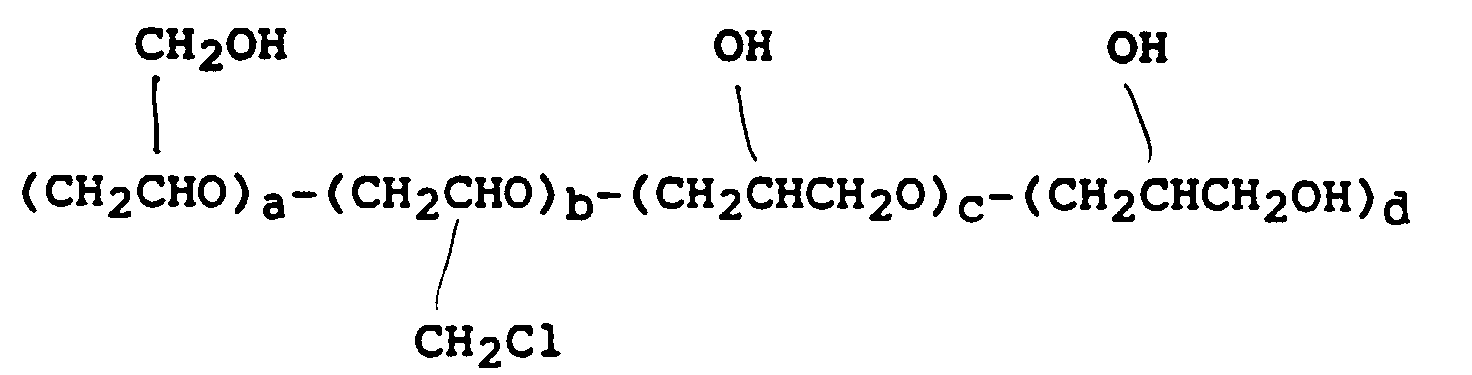
- When 5-10 hydroxyl groups appear in a row, these hydrophilic segments seem to loop out away from the surface.
- The next step of the coating process involves crosslinking by ether bond formation in strong base according to the reactions:

- Reaction time determines the amount of -CH2Cl consumed in the reaction. The reaction may be stopped before all -CH2Cl is consumed to leave both -OH and -Cl groups in the coating so that additional groups can be attached through either of these functional groups.
- More particularly, the particles are filtered and washed with 50 ml water. The wetted particles are then suspended in 50 ml, 3 M KOH, sonicated briefly, and agitated at room temperature for 24 hours. The particles are then filtered and washed sequentially with water, isopropanol, and acetone, and then dried for 3 hours under vacuum at 60°C.
- The resulting particles are easily suspended. Figure 3 shows peak height vs. injection number (cumulative volume of sample) for lysozyme. Note that peak height does not change significantly over the series of injections, indicating the absence of hydrophobic patches on the surface of the medium.
- The hydrophilic coating may be derivatized with a stationary phase ligand using techniques known in the art, as set forth below.
-
- A) A strong cation-exchanger may be produced by suspending 1 gram of coated material in 8 ml, 3 M KOH containing 3 grams of hydroxy ethane sulfonic acid for 14 hours at 80°C, after which it is filtered and washed with water, followed by isopropanol. The particles are then suspended in 8 ml, 3 M KOH containing 3 grams of bromoethane sulfonic acid for 14 hours at 80°C. The solution is filtered and washed with water, isopropanol, and acetone and then air dried. Figure 4 shows an exemplary chromatographic separation of a protein test mix using this derivatized material.
- B) Another strong cation-exchanger may be produced by suspending 1 gram of coated material in 30 ml dry dichloromethane containing 1 ml phosphorus tribomide. This solution is refluxed for 14 hours after which it is filtered and then washed with dichloromethane, followed by acetone, and then air dried. The dry particles are then suspended in 3 M KOH containing 3 grams of hydroxyethane sulfonic acid for 14 hours at 80°C. The solution is then filtered and washed with water, isopropanol, and acetone, and then air dried. Figure 5 shows the results of a chromatographic separation of a standard protein mix on this strong cation-exchanger.
- C) A strong anion-exchanger may be produced by suspending 1 gram of brominated particles in 30 ml of 10%(v/v) dimethylethanolamine in methanol and refluxed for 14 hours. The particles are then filtered and washed sequentially with methanol, water, methanol, and finally acetone, and then air dried. Figure 6 shows the chromatographic separation of a standard protein mix on this strong anion-exchanger.
- D) Another method of producing a strong anion-exchanger entails suspending 1 gram of brominated material in 30 ml methanol containing 10%(w/v) polyethylenamine. This solution is refluxed for 14 hours after which it is filtered and washed sequentially with methanol, water, 0.1 N NaOH, water, and methanol. The particles are then suspended in a mixture of 8 ml dimethyl formamide, containing 1 ml methyl iodide, and 500 µL pentamethyl piperidine for 14 hours at 60°C. The solution is then filtered and washed sequentially with dimethylformamide, methanol, and acetone, and then air dried. Figure 7 shows the results of a chromatographic separation using this strong anion-exchanger.
-
- Dodecylpolyglycidol ether surfactant is produced by dissolving 2.5 ml of dodecanol (Aldrich, Milwaukee WI) in 2.5 ml of methylene chloride. A few drops of boron trifluoride-etherate (Aldrich) are added and then 2.5 ml of glycidol (Aldrich) is slowly added to the reaction mixture over a period of about 1-1/2 to 3 days. During this time the mixture is continuously stired with a RH-SY Synchronous Lab Pump (Fluid Metering Inc., Oyster Bay, NY). Slow addition of the glycidol increases its chance of reacting with dodecanol rather than with itself. As the reaction proceeds, an immiscible, viscous residue forms.
- After the addition of glycidol is complete, the methylene chloride solution is poured into a centrifuge tube and the remaining viscous residue is extracted 3 to 4 times with methylene chloride. The cloudy methylene chloride wash solutions are pooled in the centrifuge tube with the original reaction mixture and spun at 1000 G for approximately 20 minutes. This produces a clear bottom layer of methylene chloride solution and a shallow top layer of a viscous syrup. The top layer is discarded and the methylene chloride is evaporated to yield another viscous residue which is then extracted 3-4 times with diethyl ether to remove hydrophobic components. The clear, colorless surfactant product remaining after the diethyl ether extraction is dried under a vacuum to remove any additional solvent. This procedure yields about 1.5 g of product. The amount of product can be varied by proportionally adjusting the amount of reactant, solvent, and time.
- Crosslinkable moieties are bound to the surfactant by reaction with epichlorohydrin. A typical modification is achieved by adding 1.0 ml epichlorohydrin (Eastman, Rochester, NY) to 1.0 g surfactant in 16 ml of methylene chloride. This yields a cloudy solution. A few drops of boron trifluoride-etherate are added and the reaction mixture is shaken for 24 hours, during which time the mixture becomes clear. The methylene chloride is then evaporated and the remaining viscous residue is extracted 3 or 4 times with diethyl ether to remove polymerized epichlorohydrin. This leaves about 0.5 g of epichlorohydrin-modified surfactant. It is important to note here that overderivatizion with epichlorohydrin may result in modified surfactant which is completely soluble in diethyl ether.
- The epichlorohydrin-modified surfactant is coated onto poly(styrene-divinylbenzene) HPLC packing in an isopropanol/water solution. A typical procedure for coating 2.2 g of packing begins by dissolving about 2.2 g modified surfactant in 30 ml isopropanol. Water is added slowly until the surfactant solution becomes cloudy (around 29 mL water). Enough isopropanol is then added (less than a ml) to yield a clear solution. The particulate PSDVB is dispersed in this solution and allowed to sit overnight with stirring. This is followed by isolation of the particulate packing by filtration and washing with 50-75 ml of water. The coating is then cross-linked by adding the coated particles to 50 ml of an aqueous 3 M NaOH solution. The crosslinking reaction proceeds for 24 hours. The crosslinking reaction mixture may be heated briefly to near boiling point prior to filtering and washing; however, this step does not seem to be necessary to achieve adequate crosslinking. The packing is then isolated by filtration and washed with water and 100 ml each of 75/25, 50/50, 25/75 and 0/100 mixtures of water/isopropanol.
- Figures 8 and 9 illustrate the surface properties of particles made in accordance with this example. Figure 8 shows a constant peak height with increasing quantity of two proteins, illustrating that the medium has very low hydrophobic character. Figure 9B shows that positively charged proteins bind well at low ionic strength, indicating that the medium is anionic. Figure 9A shows that negatively charged proteins have low constant retention time irrespective of ionic strength, indicating the absence of significant positive charge.
- To make a weak cation-exchanger on PSDVB, 6 ml CH2Cl2 (dried over 4Å molecular sieves) is transferred into a 50 ml round-bottomed flask. 1 ml glycidyl methacrylate is added and gently swirled. A BF3-etherate solution is made by adding 5 µL BF3-etherate to 2 ml CH2Cl2 in a test tube. The BF3-etherate solution is added to the glycidyl methacrylate solution drop by drop with swirling. The round-bottomed flask is wrapped with aluminum foil and shaken at room temperature for 24 hours. Next, 3 ml isopropanol and 3 ml water are added to the flask to stop the reaction. The solvent is removed under vacuum, and PEG and water are added to the solution of pre-polymer until a slightly cloudy solution is obtained (approximately 8 ml PEG and 8 ml of water). At this point, 1 gram of PSDVB particles is added to the pre-polymer solution. After sonicating for 5 min. and degassing, the system is shaken at 37°C for 24 hours.
- After filtering and washing three times with 50 ml H2O, the pre-polymer coated PSDVB is transferred into a methacrylate acid solution (20 ml, 1.7% w/v), and 0.5 g ammonium persulfate is added. The reaction is conducted under N2 flow with continuous stirring for 24 hours. 20 µl tetra methyl ethylene diamine is then added and the reaction continues for 30 more minutes. The reaction is quenched by the addition of 10 µl hydroquinone. After filtering and washing with water (3 x 30 ml), methanol (3 x 20 ml), and CH2Cl2 (50 ml), the particles are dried overnight under vacuum.
- The chromatographic properties of this material are illustrated by the data set forth in Figure 10.
Claims (11)
- A method of producing a hydrophilic coating on a hydrophobic surface of a chromatography matrix comprising the steps of:providing a chromatography matrix comprising a hydrophobic surface;providing a liquid phase, hydrophilic with respect to said surface, containing a plurality of molecules of a solvated compound, each molecule of said compound comprising at least one hydrophilic domain covalently and flexibly bonded to at least two hydrophobic domains, and a crosslinkable site, said liquid phase having a hydrophilic/lipophilic balance just sufficiently hydrophobic to permit solubilisation of said molecules and to promote partition of said hydrophobic domains of said molecules onto the hydrophobic surface;contacting said hydrophobic surface with said liquid phase, thereby depositing molecules of said compound on said hydrophobic surface, said molecules being oriented with said hydrophobic domains proximate to and adsorbed on said hydrophobic surface and with said hydrophilic domains forming loops extending outwardly from said hydrophobic surface into said liquid phase; andcrosslinking molecules adjacent one another at said crosslinkable sites to produce on said surface-an adherent film wettable by aqueous solutions.
- The method of claim 1, wherein at least one of said domains comprises derivatisable moieties, the method comprising the additional step of derivatising said adherent film.
- The method of claim 1, wherein the hydrophilic domains comprise moieties comprising hydroxyl groups or ether linkages.
- The method of claim 1, wherein said molecules of said compound comprise(a) a polymer comprising plural hydrophobic domains and plural hydrophilic domains; or(b) a multipolymer wherein said hydrophobic domains comprise plural linked hydrophobic monomers and said hydrophilic domains comprise plural linked hydrophilic monomers; or(c) a copolymer comprising a plurality of blocks, wherein said blocks comprise blocks of said hydrophobic domain and blocks of said hydrophilic domain.
- The method of claim 1 wherein said compound is a multidomain polymerisable compound, said method comprising the additional step of polymerizing said multidomain polymerisable compound in place on said surface.
- The method of claim 1, wherein(a) said hydrophobic surface comprises polystyrene; or(b) said hydrophobic surface comprises divinylbenzene crosslinked polystyrene.
- The method of claim 1 wherein the hydrophobic domains comprise moieties comprising halides or hydrocarbons.
- The method of claim 1, wherein(a) said crosslinking step is effected by reacting said crosslinkable sites comprising epoxy groups on adjacent molecules; or(b) said crosslinking step is effected by reacting crosslinkable sites having a halide group on one of said molecules with crosslinkable sites having a hydroxyl group on another; or(c) said crosslinking step is effected by reacting a crosslinking compound comprising plural reactive groups with reactive groups at said crosslinkable sites on said molecules.
- A porous chromatography particle having a hydrophilic coating useful in contact with a protein solution to inhibit denaturation comprising a hydrophobic substrate, said hydrophobic substrate comprising an organic polymeric material, and, adhered thereto by hydrophobic interactions, an enveloping, continuous film, the individual molecules of said film comprising at least a hydrophilic domain covalently and flexibly bonded to at least two hydrophobic domains, and a crosslinkable site, said hydrophobic domains being adsorbed onto the surface of said hydrophobic substrate by said hydrophobic interactions and wherein said hydrophilic domains are disposed outwardly from the substrate forming loops thereby producing a surface wettable by aqueous solutions, said individual molecules being crosslinked at said crosslinkable site.
- The material of claim 9, wherein said hydrophobic substrate comprises polystyrene, for example polystyrene crosslinked with divinylbenzene.
- The material of claim 9, further comprising moieties covalently linked to said film disposed outwardly from said surface selected from the group consisting of cationic groups, anionic groups, hydrocarbon groups, groups capable of metal chelation, binding proteins, and combinations thereof.
Applications Claiming Priority (3)
| Application Number | Priority Date | Filing Date | Title |
|---|---|---|---|
| US07/469,956 US5030352A (en) | 1990-01-25 | 1990-01-25 | Coated media for chromatography |
| US469956 | 1990-01-25 | ||
| PCT/US1991/000325 WO1991011241A1 (en) | 1990-01-25 | 1991-01-16 | Coated media for chromatography |
Publications (3)
| Publication Number | Publication Date |
|---|---|
| EP0464187A1 EP0464187A1 (en) | 1992-01-08 |
| EP0464187A4 EP0464187A4 (en) | 1992-06-03 |
| EP0464187B1 true EP0464187B1 (en) | 2001-03-14 |
Family
ID=23865690
Family Applications (1)
| Application Number | Title | Priority Date | Filing Date |
|---|---|---|---|
| EP91903491A Expired - Lifetime EP0464187B1 (en) | 1990-01-25 | 1991-01-16 | Coated media for chromatography |
Country Status (8)
| Country | Link |
|---|---|
| US (1) | US5030352A (en) |
| EP (1) | EP0464187B1 (en) |
| JP (1) | JP2807706B2 (en) |
| AT (1) | ATE199654T1 (en) |
| AU (1) | AU628722B2 (en) |
| CA (1) | CA2049298C (en) |
| DE (1) | DE69132553T2 (en) |
| WO (1) | WO1991011241A1 (en) |
Families Citing this family (59)
| Publication number | Priority date | Publication date | Assignee | Title |
|---|---|---|---|---|
| JPH0383999A (en) * | 1989-08-28 | 1991-04-09 | Hitachi Ltd | Preparation of oriented protein film, artificial structure comprising the same film and its use |
| US5230806A (en) * | 1991-02-04 | 1993-07-27 | Iowa State University Research Foundation, Inc. | Modified resins for solid-phase extraction |
| WO1993007168A2 (en) | 1991-09-30 | 1993-04-15 | Perseptive Biosystems, Inc. | Protein chromatography system |
| US5252216A (en) * | 1992-03-24 | 1993-10-12 | Smithkline Beecham Corporation | Protein purification |
| US5372719A (en) * | 1992-03-30 | 1994-12-13 | Perseptive Biosystems, Inc. | Molecular imaging |
| WO1994000214A1 (en) * | 1992-06-19 | 1994-01-06 | Sepracor Inc. | Passivated and stabilized porous supports and methods for the preparation and use of same |
| US5906734A (en) * | 1992-06-19 | 1999-05-25 | Biosepra Inc. | Passivated porous polymer supports and methods for the preparation and use of same |
| US5445732A (en) * | 1992-06-19 | 1995-08-29 | Sepracor Inc. | Passivated porous polymer supports and methods for the preparation and use of same |
| US5268097A (en) * | 1992-06-19 | 1993-12-07 | Sepracor Inc. | Passivated and stabilized porous mineral oxide supports and method for the preparation and use of same |
| US5470463A (en) * | 1992-06-19 | 1995-11-28 | Sepracor Inc. | Passivated porous supports and methods for the preparation and use of same |
| US6039876A (en) * | 1992-07-24 | 2000-03-21 | Yang; Yan-Bo | Hydrophilic polystrene divinylbenzene based matrixes for chromatography |
| US6093546A (en) * | 1992-09-03 | 2000-07-25 | Roche Diagnostics | Process for preparing test elements |
| JP3351572B2 (en) * | 1992-10-05 | 2002-11-25 | 井上 聰一 | Analyte separation / analysis method by ion chromatography, dual-charged stationary phase for ion chromatography, and analyte separation / analysis method by multifunctional liquid chromatography |
| DE4300412A1 (en) * | 1993-01-09 | 1994-07-14 | Behringwerke Ag | Hydrophobic adsorbents and their use for the absorption of lipoproteins |
| JP2871435B2 (en) * | 1993-04-22 | 1999-03-17 | イー・アイ・デュポン・ドウ・ヌムール・アンド・カンパニー | Method for producing a hydrophilic polymer coated perfluorocarbon polymer based matrix |
| US5626757A (en) * | 1994-02-22 | 1997-05-06 | Advanced Separation Technologies Inc. | Macrocyclic antibiotics as separation agents |
| US5503933A (en) * | 1994-02-25 | 1996-04-02 | Purdue Research Foundation | Covalently bonded coatings |
| US5519064A (en) * | 1994-10-28 | 1996-05-21 | The Dow Chemical Company | Surface-modified post-crosslinked adsorbents and a process for making the surface modified post-crosslinked adsorbents |
| US5756717A (en) * | 1995-05-24 | 1998-05-26 | Perseptive Biosystems, Inc | Protein imaging |
| US5906747A (en) * | 1995-11-13 | 1999-05-25 | Biosepra Inc. | Separation of molecules from dilute solutions using composite chromatography media having high dynamic sorptive capacity at high flow rates |
| US20020115585A1 (en) * | 1996-06-07 | 2002-08-22 | Hei Derek J. | Method and devices for the removal of psoralens from blood products |
| EP0949959B1 (en) | 1996-08-26 | 2008-07-09 | Massachusetts Institute Of Technology | Preparation of polymer articles having hydrophilic surface |
| US20030198825A1 (en) * | 1996-08-26 | 2003-10-23 | Massachusetts Institute Of Technology | Polymeric membranes and other polymer articles having desired surface characteristics and method for their preparation |
| US20010009756A1 (en) | 1998-01-06 | 2001-07-26 | Derek Hei | Flow devices for the reduction of compounds from biological compositions and methods of use |
| US20010018179A1 (en) | 1998-01-06 | 2001-08-30 | Derek J. Hei | Batch devices for the reduction of compounds from biological compositions containing cells and methods of use |
| SE9700769D0 (en) * | 1997-03-04 | 1997-03-04 | Pharmacia Biotech Ab | Matrices for separation and separation that utilize the matrices |
| SE9702427D0 (en) * | 1997-06-25 | 1997-06-25 | Pharmacia Biotech Ab | Coated polymer article |
| US7611831B2 (en) * | 1998-01-06 | 2009-11-03 | Cerus Corporation | Adsorbing pathogen-inactivating compounds with porous particles immobilized in a matrix |
| JP4883837B2 (en) * | 1998-06-12 | 2012-02-22 | ウォーターズ・テクノロジーズ・コーポレーション | A novel ion-exchange porous resin for solid-phase extraction and chromatography |
| US7232520B1 (en) * | 1998-06-12 | 2007-06-19 | Waters Investments Limited | Ion exchange porous resins for solid phase extraction and chromatography |
| US6908553B1 (en) * | 1998-07-08 | 2005-06-21 | Baxter International Inc. | Composite membrane with particulate matter substantially immobilized therein |
| DE19859703B4 (en) * | 1998-12-23 | 2009-10-29 | Macherey, Nagel Gmbh & Co. Handelsgesellschaft | Process for purifying nucleic acids and anion exchangers for carrying out this process |
| JP2002210377A (en) * | 2001-01-22 | 2002-07-30 | Tosoh Corp | Anion exchanger, method for producing the same, and use using the same |
| JP4433617B2 (en) * | 2001-01-24 | 2010-03-17 | 東ソー株式会社 | Anion exchanger, method for producing the same, and use thereof |
| EP1226869B1 (en) | 2001-01-29 | 2010-08-11 | Tosoh Corporation | Cation exchanger, process for producing same, and its use |
| EP1438738A4 (en) * | 2001-09-18 | 2007-04-18 | Eidgenoess Tech Hochschule | METHODS AND DEVICE FOR FORMING PATTERNS ON A SURFACE |
| CA2460928A1 (en) * | 2001-09-18 | 2003-03-27 | Eidgenossische Technische Hochschule Zurich | Methods and apparatus for coating surfaces |
| FR2839660B1 (en) * | 2002-05-17 | 2005-01-21 | Commissariat Energie Atomique | MICROREACTOR, PROCESS FOR PREPARING THE SAME, AND METHOD FOR REALIZING BIOCHEMICAL OR BIOLOGICAL REACTION |
| US20040035775A1 (en) * | 2002-05-31 | 2004-02-26 | Biolink Partners, Inc. | MemCoatTM: functionalized surface coatings, products and uses thereof |
| GB0300820D0 (en) * | 2003-01-14 | 2003-02-12 | Diagnoswiss Sa | Membrane-microchannel strip |
| WO2005037869A2 (en) * | 2003-10-15 | 2005-04-28 | Applera Corporation | Method of reducing leachate from protein a affinity media |
| US20050176893A1 (en) * | 2004-01-20 | 2005-08-11 | Dipak Rana | Hydrophilic surface modifying macromolecules (H-phil SMM) and H-phil SMM blended membranes |
| SE0400916D0 (en) * | 2004-04-05 | 2004-04-05 | Amersham Biosciences Ab | Polymeric ligands |
| US7285219B2 (en) * | 2004-08-10 | 2007-10-23 | Prime Separations, Inc. | Chromatographic separation member and method |
| JP4637533B2 (en) * | 2004-08-31 | 2011-02-23 | 信和化工株式会社 | Separation agent for solid phase extraction |
| MY144940A (en) * | 2005-01-25 | 2011-11-30 | Avantor Performance Mat Inc | Chromatographic media |
| EP1875224B1 (en) * | 2005-03-17 | 2009-04-29 | Vrije Universiteit Brussel | Method for preparing monolithic separation and reaction media in a separation or reaction channel |
| SE0502485L (en) * | 2005-11-09 | 2007-05-10 | Peter Viberg | particles |
| CN102258982B (en) * | 2005-12-02 | 2013-09-04 | 积水化学工业株式会社 | Filler for ion exchange liquid chromatography, and method for producing the same |
| CN102365262B (en) | 2009-03-31 | 2014-09-17 | 3M创新有限公司 | Hydrophobic monomers, hydrophobically derivatized carriers and methods for their preparation and use |
| US9132364B2 (en) * | 2010-02-26 | 2015-09-15 | Dionex Corporation | High capacity ion chromatography stationary phases and method of forming |
| US9169331B2 (en) | 2012-12-21 | 2015-10-27 | Dionex Corporation | Separation of glycans by mixed-mode liquid chromatography |
| US9310344B2 (en) | 2013-06-14 | 2016-04-12 | Dionex Corporation | HILIC/anion-exchange/cation-exchange multimodal media |
| US10711106B2 (en) | 2013-07-25 | 2020-07-14 | The University Of Chicago | High aspect ratio nanofibril materials |
| US9340562B1 (en) | 2014-10-29 | 2016-05-17 | Thermo Electron Manufacturing Limited | Chromatographic material and method for preparation thereof |
| JP6759679B2 (en) * | 2016-04-25 | 2020-09-23 | 日立化成株式会社 | Separator and column |
| EP3721998A1 (en) * | 2019-04-10 | 2020-10-14 | Philipps-Universität Marburg | Method for generating a hydrophilic surface on ps/dvb copolymer particles |
| WO2022109171A1 (en) * | 2020-11-18 | 2022-05-27 | Modernatx, Inc. | Ribonucleic acid purification |
| WO2026038178A1 (en) | 2024-08-14 | 2026-02-19 | Tantti Laboratory Inc. | Chromatography resin with composite sponge-like structure |
Citations (1)
| Publication number | Priority date | Publication date | Assignee | Title |
|---|---|---|---|---|
| WO1989008130A1 (en) * | 1988-02-25 | 1989-09-08 | Purdue Research Foundation | Immobilized artificial membranes |
Family Cites Families (16)
| Publication number | Priority date | Publication date | Assignee | Title |
|---|---|---|---|---|
| US474002A (en) * | 1892-05-03 | Conveyer | ||
| US4212905A (en) * | 1976-06-30 | 1980-07-15 | Board of Reagents, for and on behalf of the University of Florida | Method of coating supports using addition copolymers of aminimides |
| US4245005A (en) * | 1979-02-28 | 1981-01-13 | Purdue Research Foundation | Pellicular coated support and method |
| US4519905A (en) * | 1981-02-17 | 1985-05-28 | The Dow Chemical Company | High performance analytical column for anion determination |
| JPS5928972A (en) * | 1982-08-10 | 1984-02-15 | 株式会社日本メデイカル・サブライ | Adsorbing body for purifying blood and production thereof |
| JPS5955348A (en) * | 1982-09-21 | 1984-03-30 | Sumitomo Genshiryoku Kogyo Kk | Adsorptive body |
| US4551435A (en) * | 1983-08-24 | 1985-11-05 | Immunicon, Inc. | Selective removal of immunospecifically recognizable substances from solution |
| US4539399A (en) * | 1984-07-27 | 1985-09-03 | Advanced Separation Technologies Inc. | Bonded phase material for chromatographic separations |
| US4544485A (en) * | 1984-08-31 | 1985-10-01 | Purdue Research Foundation | Chromatographic method and means |
| US4794002A (en) | 1985-11-01 | 1988-12-27 | Monsanto Company | Modified polymeric surfaces and process for preparing same |
| JPH0622687B2 (en) * | 1986-01-28 | 1994-03-30 | 三菱化成株式会社 | Surface functional type anion exchange resin |
| US4886598A (en) * | 1986-10-23 | 1989-12-12 | The United States Of America As Represented By The Department Of Energy | Liquid membrane coated ion-exchange column solids |
| JP2509542B2 (en) * | 1987-02-26 | 1996-06-19 | 株式会社ワイエムシィ | Carrier for solute separation |
| US4931498A (en) * | 1988-02-25 | 1990-06-05 | Purdue Research Foundation | Immobilized artificial membranes |
| EP0352917B1 (en) * | 1988-07-06 | 1994-04-27 | Eastman Kodak Company | The selective removal of chemical species from a fluid |
| US4927711A (en) * | 1988-12-23 | 1990-05-22 | Corning Incorporated | Hybrid circuits and thick film dielectrics used therein |
-
1990
- 1990-01-25 US US07/469,956 patent/US5030352A/en not_active Expired - Lifetime
-
1991
- 1991-01-16 AT AT91903491T patent/ATE199654T1/en not_active IP Right Cessation
- 1991-01-16 CA CA002049298A patent/CA2049298C/en not_active Expired - Fee Related
- 1991-01-16 JP JP3503592A patent/JP2807706B2/en not_active Expired - Lifetime
- 1991-01-16 EP EP91903491A patent/EP0464187B1/en not_active Expired - Lifetime
- 1991-01-16 DE DE69132553T patent/DE69132553T2/en not_active Expired - Lifetime
- 1991-01-16 AU AU72273/91A patent/AU628722B2/en not_active Ceased
- 1991-01-16 WO PCT/US1991/000325 patent/WO1991011241A1/en not_active Ceased
Patent Citations (1)
| Publication number | Priority date | Publication date | Assignee | Title |
|---|---|---|---|---|
| WO1989008130A1 (en) * | 1988-02-25 | 1989-09-08 | Purdue Research Foundation | Immobilized artificial membranes |
Also Published As
| Publication number | Publication date |
|---|---|
| JPH04505968A (en) | 1992-10-15 |
| ATE199654T1 (en) | 2001-03-15 |
| CA2049298A1 (en) | 1991-07-26 |
| AU628722B2 (en) | 1992-09-17 |
| US5030352A (en) | 1991-07-09 |
| WO1991011241A1 (en) | 1991-08-08 |
| DE69132553T2 (en) | 2001-06-21 |
| EP0464187A4 (en) | 1992-06-03 |
| JP2807706B2 (en) | 1998-10-08 |
| DE69132553D1 (en) | 2001-04-19 |
| CA2049298C (en) | 1996-02-20 |
| EP0464187A1 (en) | 1992-01-08 |
| AU7227391A (en) | 1991-08-21 |
Similar Documents
| Publication | Publication Date | Title |
|---|---|---|
| AU628722B2 (en) | Coated media for chromatography | |
| US5389449A (en) | Sulfonamide bonded hydrophilic coatings | |
| AU759683B2 (en) | A chromatography method and a column material useful in said method | |
| EP3570974B1 (en) | Multimodal chromatographic media for protein separation | |
| EP0751823B1 (en) | Covalently bonded coating | |
| EP1226870B1 (en) | Anion exchanger, process for producing the same, and its use | |
| JP2001516376A (en) | Functional insertion method | |
| US6039876A (en) | Hydrophilic polystrene divinylbenzene based matrixes for chromatography | |
| KR0140099B1 (en) | Composite ion exchange compositions for ion chromatography | |
| EP1094899B1 (en) | Method for separation on cation exchangers | |
| US5159039A (en) | Separation media containing acyl diazepines | |
| CN114369182A (en) | Preparation method of porous high-molecular polymer microspheres with amphoteric structures | |
| US5158682A (en) | Separation media containing acyl diazepines | |
| JPH0780294A (en) | Composite adsorbent | |
| EP1455920A1 (en) | Separation method | |
| CN120940005A (en) | A dendritic ion exchange chromatography medium, its preparation method and application | |
| CS273487B1 (en) | Macroporous polymer membranes for biopolymers' chromatographic separation |
Legal Events
| Date | Code | Title | Description |
|---|---|---|---|
| PUAI | Public reference made under article 153(3) epc to a published international application that has entered the european phase |
Free format text: ORIGINAL CODE: 0009012 |
|
| AK | Designated contracting states |
Kind code of ref document: A1 Designated state(s): AT BE CH DE DK ES FR GB GR IT LI LU NL SE |
|
| 17P | Request for examination filed |
Effective date: 19920122 |
|
| A4 | Supplementary search report drawn up and despatched |
Effective date: 19920421 |
|
| AK | Designated contracting states |
Kind code of ref document: A4 Designated state(s): AT BE CH DE DK ES FR GB GR IT LI LU NL SE |
|
| 17Q | First examination report despatched |
Effective date: 19940420 |
|
| GRAG | Despatch of communication of intention to grant |
Free format text: ORIGINAL CODE: EPIDOS AGRA |
|
| GRAG | Despatch of communication of intention to grant |
Free format text: ORIGINAL CODE: EPIDOS AGRA |
|
| GRAH | Despatch of communication of intention to grant a patent |
Free format text: ORIGINAL CODE: EPIDOS IGRA |
|
| GRAH | Despatch of communication of intention to grant a patent |
Free format text: ORIGINAL CODE: EPIDOS IGRA |
|
| GRAA | (expected) grant |
Free format text: ORIGINAL CODE: 0009210 |
|
| AK | Designated contracting states |
Kind code of ref document: B1 Designated state(s): AT BE CH DE DK ES FR GB GR IT LI LU NL SE |
|
| PG25 | Lapsed in a contracting state [announced via postgrant information from national office to epo] |
Ref country code: IT Free format text: LAPSE BECAUSE OF FAILURE TO SUBMIT A TRANSLATION OF THE DESCRIPTION OR TO PAY THE FEE WITHIN THE PRE;WARNING: LAPSES OF ITALIAN PATENTS WITH EFFECTIVE DATE BEFORE 2007 MAY HAVE OCCURRED AT ANY TIME BEFORE 2007. THE CORRECT EFFECTIVE DATE MAY BE DIFFERENT FROM THE ONE RECORDED.SCRIBED TIME-LIMIT Effective date: 20010314 Ref country code: FR Free format text: LAPSE BECAUSE OF FAILURE TO SUBMIT A TRANSLATION OF THE DESCRIPTION OR TO PAY THE FEE WITHIN THE PRESCRIBED TIME-LIMIT Effective date: 20010314 Ref country code: AT Free format text: LAPSE BECAUSE OF FAILURE TO SUBMIT A TRANSLATION OF THE DESCRIPTION OR TO PAY THE FEE WITHIN THE PRESCRIBED TIME-LIMIT Effective date: 20010314 Ref country code: LI Free format text: LAPSE BECAUSE OF FAILURE TO SUBMIT A TRANSLATION OF THE DESCRIPTION OR TO PAY THE FEE WITHIN THE PRESCRIBED TIME-LIMIT Effective date: 20010314 Ref country code: BE Free format text: LAPSE BECAUSE OF FAILURE TO SUBMIT A TRANSLATION OF THE DESCRIPTION OR TO PAY THE FEE WITHIN THE PRESCRIBED TIME-LIMIT Effective date: 20010314 Ref country code: NL Free format text: LAPSE BECAUSE OF FAILURE TO SUBMIT A TRANSLATION OF THE DESCRIPTION OR TO PAY THE FEE WITHIN THE PRESCRIBED TIME-LIMIT Effective date: 20010314 Ref country code: CH Free format text: LAPSE BECAUSE OF FAILURE TO SUBMIT A TRANSLATION OF THE DESCRIPTION OR TO PAY THE FEE WITHIN THE PRESCRIBED TIME-LIMIT Effective date: 20010314 |
|
| REF | Corresponds to: |
Ref document number: 199654 Country of ref document: AT Date of ref document: 20010315 Kind code of ref document: T |
|
| REG | Reference to a national code |
Ref country code: CH Ref legal event code: EP |
|
| REF | Corresponds to: |
Ref document number: 69132553 Country of ref document: DE Date of ref document: 20010419 |
|
| PG25 | Lapsed in a contracting state [announced via postgrant information from national office to epo] |
Ref country code: DK Free format text: LAPSE BECAUSE OF FAILURE TO SUBMIT A TRANSLATION OF THE DESCRIPTION OR TO PAY THE FEE WITHIN THE PRESCRIBED TIME-LIMIT Effective date: 20010614 Ref country code: SE Free format text: LAPSE BECAUSE OF FAILURE TO SUBMIT A TRANSLATION OF THE DESCRIPTION OR TO PAY THE FEE WITHIN THE PRESCRIBED TIME-LIMIT Effective date: 20010614 |
|
| PG25 | Lapsed in a contracting state [announced via postgrant information from national office to epo] |
Ref country code: GR Free format text: LAPSE BECAUSE OF FAILURE TO SUBMIT A TRANSLATION OF THE DESCRIPTION OR TO PAY THE FEE WITHIN THE PRESCRIBED TIME-LIMIT Effective date: 20010615 |
|
| NLV1 | Nl: lapsed or annulled due to failure to fulfill the requirements of art. 29p and 29m of the patents act | ||
| EN | Fr: translation not filed | ||
| PG25 | Lapsed in a contracting state [announced via postgrant information from national office to epo] |
Ref country code: ES Free format text: LAPSE BECAUSE OF FAILURE TO SUBMIT A TRANSLATION OF THE DESCRIPTION OR TO PAY THE FEE WITHIN THE PRESCRIBED TIME-LIMIT Effective date: 20010927 |
|
| REG | Reference to a national code |
Ref country code: CH Ref legal event code: PL |
|
| REG | Reference to a national code |
Ref country code: GB Ref legal event code: IF02 |
|
| PG25 | Lapsed in a contracting state [announced via postgrant information from national office to epo] |
Ref country code: LU Free format text: LAPSE BECAUSE OF NON-PAYMENT OF DUE FEES Effective date: 20020116 |
|
| PLBE | No opposition filed within time limit |
Free format text: ORIGINAL CODE: 0009261 |
|
| STAA | Information on the status of an ep patent application or granted ep patent |
Free format text: STATUS: NO OPPOSITION FILED WITHIN TIME LIMIT |
|
| 26N | No opposition filed | ||
| PGFP | Annual fee paid to national office [announced via postgrant information from national office to epo] |
Ref country code: GB Payment date: 20100125 Year of fee payment: 20 Ref country code: DE Payment date: 20100127 Year of fee payment: 20 |
|
| REG | Reference to a national code |
Ref country code: GB Ref legal event code: PE20 Expiry date: 20110115 |
|
| PG25 | Lapsed in a contracting state [announced via postgrant information from national office to epo] |
Ref country code: GB Free format text: LAPSE BECAUSE OF EXPIRATION OF PROTECTION Effective date: 20110115 |
|
| PG25 | Lapsed in a contracting state [announced via postgrant information from national office to epo] |
Ref country code: DE Free format text: LAPSE BECAUSE OF EXPIRATION OF PROTECTION Effective date: 20110116 |