EP0464175B1 - Extracellular form of the human fibroblast growth factor receptor - Google Patents
Extracellular form of the human fibroblast growth factor receptor Download PDFInfo
- Publication number
- EP0464175B1 EP0464175B1 EP91902691A EP91902691A EP0464175B1 EP 0464175 B1 EP0464175 B1 EP 0464175B1 EP 91902691 A EP91902691 A EP 91902691A EP 91902691 A EP91902691 A EP 91902691A EP 0464175 B1 EP0464175 B1 EP 0464175B1
- Authority
- EP
- European Patent Office
- Prior art keywords
- sequence
- polypeptide
- amino acid
- human
- bfgf
- Prior art date
- Legal status (The legal status is an assumption and is not a legal conclusion. Google has not performed a legal analysis and makes no representation as to the accuracy of the status listed.)
- Expired - Lifetime
Links
Images



Classifications
-
- C—CHEMISTRY; METALLURGY
- C07—ORGANIC CHEMISTRY
- C07K—PEPTIDES
- C07K14/00—Peptides having more than 20 amino acids; Gastrins; Somatostatins; Melanotropins; Derivatives thereof
- C07K14/435—Peptides having more than 20 amino acids; Gastrins; Somatostatins; Melanotropins; Derivatives thereof from animals; from humans
- C07K14/705—Receptors; Cell surface antigens; Cell surface determinants
- C07K14/71—Receptors; Cell surface antigens; Cell surface determinants for growth factors; for growth regulators
-
- A—HUMAN NECESSITIES
- A61—MEDICAL OR VETERINARY SCIENCE; HYGIENE
- A61K—PREPARATIONS FOR MEDICAL, DENTAL OR TOILETRY PURPOSES
- A61K47/00—Medicinal preparations characterised by the non-active ingredients used, e.g. carriers or inert additives; Targeting or modifying agents chemically bound to the active ingredient
- A61K47/50—Medicinal preparations characterised by the non-active ingredients used, e.g. carriers or inert additives; Targeting or modifying agents chemically bound to the active ingredient the non-active ingredient being chemically bound to the active ingredient, e.g. polymer-drug conjugates
- A61K47/51—Medicinal preparations characterised by the non-active ingredients used, e.g. carriers or inert additives; Targeting or modifying agents chemically bound to the active ingredient the non-active ingredient being chemically bound to the active ingredient, e.g. polymer-drug conjugates the non-active ingredient being a modifying agent
- A61K47/62—Medicinal preparations characterised by the non-active ingredients used, e.g. carriers or inert additives; Targeting or modifying agents chemically bound to the active ingredient the non-active ingredient being chemically bound to the active ingredient, e.g. polymer-drug conjugates the non-active ingredient being a modifying agent the modifying agent being a protein, peptide or polyamino acid
- A61K47/64—Drug-peptide, drug-protein or drug-polyamino acid conjugates, i.e. the modifying agent being a peptide, protein or polyamino acid which is covalently bonded or complexed to a therapeutically active agent
- A61K47/642—Drug-peptide, drug-protein or drug-polyamino acid conjugates, i.e. the modifying agent being a peptide, protein or polyamino acid which is covalently bonded or complexed to a therapeutically active agent the peptide or protein in the drug conjugate being a cytokine, e.g. IL2, chemokine, growth factors or interferons being the inactive part of the conjugate
-
- A—HUMAN NECESSITIES
- A61—MEDICAL OR VETERINARY SCIENCE; HYGIENE
- A61P—SPECIFIC THERAPEUTIC ACTIVITY OF CHEMICAL COMPOUNDS OR MEDICINAL PREPARATIONS
- A61P17/00—Drugs for dermatological disorders
-
- A—HUMAN NECESSITIES
- A61—MEDICAL OR VETERINARY SCIENCE; HYGIENE
- A61P—SPECIFIC THERAPEUTIC ACTIVITY OF CHEMICAL COMPOUNDS OR MEDICINAL PREPARATIONS
- A61P27/00—Drugs for disorders of the senses
- A61P27/02—Ophthalmic agents
-
- A—HUMAN NECESSITIES
- A61—MEDICAL OR VETERINARY SCIENCE; HYGIENE
- A61P—SPECIFIC THERAPEUTIC ACTIVITY OF CHEMICAL COMPOUNDS OR MEDICINAL PREPARATIONS
- A61P29/00—Non-central analgesic, antipyretic or antiinflammatory agents, e.g. antirheumatic agents; Non-steroidal antiinflammatory drugs [NSAID]
-
- A—HUMAN NECESSITIES
- A61—MEDICAL OR VETERINARY SCIENCE; HYGIENE
- A61P—SPECIFIC THERAPEUTIC ACTIVITY OF CHEMICAL COMPOUNDS OR MEDICINAL PREPARATIONS
- A61P35/00—Antineoplastic agents
-
- A—HUMAN NECESSITIES
- A61—MEDICAL OR VETERINARY SCIENCE; HYGIENE
- A61P—SPECIFIC THERAPEUTIC ACTIVITY OF CHEMICAL COMPOUNDS OR MEDICINAL PREPARATIONS
- A61P9/00—Drugs for disorders of the cardiovascular system
- A61P9/10—Drugs for disorders of the cardiovascular system for treating ischaemic or atherosclerotic diseases, e.g. antianginal drugs, coronary vasodilators, drugs for myocardial infarction, retinopathy, cerebrovascula insufficiency, renal arteriosclerosis
-
- A—HUMAN NECESSITIES
- A61—MEDICAL OR VETERINARY SCIENCE; HYGIENE
- A61K—PREPARATIONS FOR MEDICAL, DENTAL OR TOILETRY PURPOSES
- A61K38/00—Medicinal preparations containing peptides
Definitions
- the present invention relates to human growth factor receptors.
- the major endothelial cell mitogens in fact are not found in plasma, although they are present in extracts of almost all tissues studied and in many normal and tumor cell lines as well. Therefore, the localized induction of rapid endothelial cell proliferation may involve the release of endothelial cell mitogens from cells in response to environmental cues.
- bFGF basic fibroblast growth factor
- heparin-binding growth factors for their high affinity to heparin.
- Basic FGF has been purified from most mesoderm- or neuroectoderm-derived tissues or cells. Structural studies have shown that bFGF is a single chain polypeptide made of 146 amino acids, which can also exist in NH 2 -terminally truncated forms missing the first 10-20 amino acids. The truncated forms of bFGF are as potent as native bFGF, as demonstrated by radioreceptor binding and biological assays.
- Basic FGF seems to have been extremely well conserved through evolution. For example, bovine and human bFGF differ in only two of their 146 amino acids, giving an overall amino acid sequence homology of 98.7%. Related to bFGF is acidic FGF (aFGF), which shares a 55% total sequence homology with bFGF. Acidic FGF is a 140-amino acid polypeptide that can also exist in a NH 2 -terminally truncated form missing the first 6 amino acids. As expected from their high degree of homology, both basic and acidic FGF seem to interact with the same cell-surface receptors. This explains their common range of target cells and spectrum of biological activity.
- aFGF acidic FGF
- the chicken bFGF receptor shows a considerable amino acid similarity to a previously identified human polypeptide sequence which is the product of the flg gene (Ruta et al, Oncogene, 3 , 9-15, 1988).
- the flg molecule seems to be a tyrosine kinase, shows a typical hydrophobic transmembrane region and consequently it is likely that the described human sequence could be part of the human bFGF receptor.
- the amino acid sequence of the flg molecule was deduced by Ruta et al by the translation of an open reading frame of a partial cDNA clone.
- the flg cDNA sequence, according to Ruta et al was obtained by low-stringency screening of a human endothelial cell cDNA library using as probe a DNA fragment coding for a tyrosine kinase oncogene. Nevertheless, the flg cDNA clone, described to date, is only partial and lacks the nucleotide sequence coding for the extracellular portion of the human bFGF receptor.
- WO 91/00916 which was not published until after the present application was filed but which has an earlier claimed priority date than the present application, discloses the cDNA and amino acid sequences of a human FGF receptor that is different from the receptor which is the subject of the present application.
- the present invention provides a polypeptide which is capable of binding specifically human basic Fibroblast Growth Factor (bFGF) and human acidic Fibroblast Growth Factor (aFGF) and which has:
- the invention also provides a DNA molecule which encodes a polypeptide of the invention.
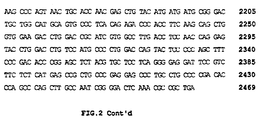
- the DNA molecule may have the sequence from nucleotide 64 to nucleotide 1128 shown in Figure 2.
- the invention further provides a vector which incorporates a DNA molecule of the invention and which is capable, when provided in a transformed host, of expressing the polypeptide of the invention encoded by the DNA molecule.
- a host transformed with such a vector forms part of the present invention too.
- a polypeptide of the invention is prepared by a process which comprises culturing a transformed host according to the invention under such conditions that the polypeptide is expressed. The polypeptide can then be isolated. The polypeptide may be recovered in biologically pure form.
- Polypeptides of the invention have the sequence underlined in Figure 3 from amino acid 22 to amino acid 376. This is the sequence of the extracellular portion of the bFGF receptor without the putative leader sequence.
- the sequence underlined in Figure 3 may be modified by one or more amino acid substitutions and/or insertions.
- a polypeptide composed of such a modified sequence must of course still be capable of binding human bFGF and aFGF.
- For a suitable receptor-binding test see Dower et al, J. Immunol. 42, 4314-4320, 1989.
- the degree of homology may be 95% or more.
- one or more amino acid residues of the sequence underlined in Figure 3 may be substituted or one or more additional amino acid residues may be inserted; provided the physicochemical character of the original sequence is preserved, i.e. in terms of charge density, hydrophobicity/hydrophilicity, size and configuration.
- Candidate substitutions are, based on the one-letter code (Eur. J. Biochem. 138 , 9-37, 1984):
- a short sequence of up to 50 amino acid residues may be provided at either or each terminal.
- the sequence may have up to 30, for example up to 20 or up to 10, amino acid residues.
- a much longer extension may be present. Longer amino acid sequences may be fused to either or each end.
- a chimaeric protein may therefore be provided in which the or each extension is a heterologous amino acid sequence, i.e. a sequence not naturally linked to the sequence derived from Figure 3.
- Such a chimaeric protein may therefore combine the ability to bind specifically to bFGF and aFGF with another functionality.
- the polypeptides are prepared by recombinant DNA technology. The preparation of the polypeptides therefore depends upon the provision of a DNA sequence encoding the polypeptide.
- DNA having the sequence shown in Figure 2 may be obtained by probing a human placenta cDNA library, for example a Xgtll library. Such a library is available from Clontech. Suitable probes are: and
- a shorter sequence than that shown in Figure 2 may be obtained by use of restriction endonucleases and/or exonucleases.
- a DNA sequence from nucleotide 64 to nucleotide 1128 may be provided.
- Modified sequences may be obtained by use of any appropriate technique, including restriction with an endonuclease, insertion of linkers, use of an exonuclease and/or a polymerase and site-directed mutagenesis. Whether a shortened and/or modified DNA sequence encodes a polypeptide of the invention can be readily ascertained.
- the polypeptide encoded by the sequence can be expressed in a suitable host and tested for its ability to bind specifically human bFGF and aFGF.
- an expression vector For expression of a polypeptide of the invention, an expression vector is constructed.
- An expression vector is prepared which comprises a DNA sequence encoding a polypeptide of the invention and which is capable of expressing the polypeptide when provided in a suitable host.
- Appropriate transcriptional and translational control elements are provided, including a promoter for the DNA sequence, a transcriptional termination site, and translational start and stop codons.
- the DNA sequence is provided in the correct frame such as to enable expression of the polypeptide to occur in a host compatible with the vector.
- the expression vector is then provided in an appropriate host. Cells harbouring the vector are grown so as to enable expression to occur.
- the vector may be a plasmid or a viral vector. Any appropriate host-vector system may be employed.
- the transformed host may be a prokaryotic or eukaryotic host.
- a bacterial or yeast host may be employed, for example E. coli or S. cerevisiae.
- Insect cells can alternatively be used, in which case a baculovirus expression system may be appropriate.
- cells of a mammalian cell line such as Chinese Hamster Overy (CHO) cells may be transformed.
- the polypeptide of the invention can be isolated and purified.
- the polypeptide can be employed as a human bFGF or aFGF antagonist. It may sequester bFGF in vivo , thus preventing the biological activity of bFGF and acting as an inhibitor of bFGF activities.
- Antagonists of bFGF and aFGF activities could have clinical applications in several pathologies related to abnormal angiogenesis such as diabetic, retinopathy, neovascular glaucoma, rheumatoid arthritis, psoriasis, artherosclerosis and as contraceptives.
- FGF antagonists could be therapeutically developed to treat these diseases.
- a polypeptide of the present invention may be chemically coupled to another material to provide a conjugate.
- the other material may be a carrier molecule or a molecule with another biological function.
- the polypeptide of the invention may also be formulated in a pharmaceutical composition.
- the pharmaceutical composition also comprises a pharmaceutically acceptable carrier or diluent.
- the pharmaceutical composition may contain the polypeptide of the invention in the form of a conjugate.
- the polypeptide of the invention may be administered to a patient by any convenient route.
- the choice of whether an oral route or a parenteral route, such as subcutaneous, intravenous or intramuscular administration, is adopted; of the dose; and of the frequency of administration depends upon a variety of factors. These factors include the purpose of the administration, the age and weight of the patient being treated and the condition of the patient.
- the polypeptide is administered in an amount of from 1 to 1000 ⁇ g per dose, more preferably from 10 to 100 ⁇ g per dose, for each route of administration.
- a cDNA clone coding for basic FGF receptor was isolated by screening a human placenta ⁇ gt11 cDNA library. This library is commercially available from Clontech.
- a first screening was carried out using only the probe OAB965.
- the oligonucleotide was kinased using ( ⁇ 32 P)ATP and purified on a Nensorb column (Nen).
- Nen Nensorb column
- 0.05 ml of an overnight culture of Y1090 were mixed with 0.1 ml of sterile lambda diluent (10 mM Tris HCl pH 7.5, 10 mM MgCl 2 , 0.1 mM EDTA) containing a 4 x 10 -3 dilution of the library and incubated at 37°C for 15 minutes to allow phage adsorption.
- Plating was carried out on 20 Petri dishes of LB containing ampicillin 100 ⁇ g/ml.
- Phage DNA of PL3, PL10, and PL16 was purified using Lambdasorb phage adsorbent (Promega) and digested with EcoRI. From the different digestions, we selected two inserts of 2.8 Kb and 0.6 Kb from PL10 and subcloned them into M13mp19.
- Nucleotide sequence analysis was carried out by primed DNA synthesis on single-stranded DNA templates in the presence of dideoxynucleoside triphosphates (Sanger et al , Proc. Natl. Acad. Sci. USA 74 , 5463-5467, 1977) by using Sequenase (United States Biochemical Corp. Cleveland, Ohio). Both strands of the subclones were sequenced using either universal or specific primer oligonucleotides based on the generated sequence.
- a single open reading frame for 817 amino acids with a termination codon could be detected.
- the first 196 amino acids of the mature bFGF receptor are codified by the insert of 0.6 Kb.
- the final sequence of this fragment contains an EcoRI site, so that the 626 amino acids of the COOH-terminus are codified by the 2.8 Kb insert and followed by a 3' end untranslated region, as schematically illustrated in Fig. 1.
- the chicken receptor for bFGF is a protein of 819 amino acids including a leader peptide of 21 amino acids, followed by a mature protein of 798 amino acids.
- our clone contained the complete mature bFGF receptor molecule, preceded by 16 amino acids of the leader peptide.
- PL5 a new clone, name PL5, which contained a 0.7 kb EcoRI fragment. This fragment was sequenced and found to contain the 0.6 kb sequence from PL10, while it further extended at the 5' end. More precisely, the 0.7 kb sequence from PL5 codes for the 196 amino acids of the NH 2 terminal sequence, also found in PL10, preceded by 21 amino acids of the leader peptide, starting with a methionine.
- Fig. 1 A schematic description of clones PL5 and PL10 is illustrated in Fig. 1.
- a vector was constructed using as regulatory signals the tryptophan promoter of E.coli and the ribosome binding site region of the lambda CII protein (Hendrix R.W., Roberts J.W., Stahl F.W. and Weisberg R.A.: Lambda II Cold Spring Harbour Laboratory, Cold Spring Harbour, N.Y. 1983).
- the 5' end of the receptor sequence was synthetically reconstructed to be cloned into the expression vector.
- a HindIII-PstI synthetic DNA fragment coding for the CII ribosome binding site followed by the ATG codon and the first 95 nucleotides of the mature receptor sequence (Fig.2: nucleotides 61 to 155) was synthesized using complementary oligonucleotides.
- the complete sequence of such synthetic fragment is:
- This HindIII-PstI fragment was subcloned into M13mp18 previously cut with HindIII and EcoRI, together with a PstI-EcoRI fragment from PL5, harbouring the receptor sequence corresponding to nucleotides 156 to 586 of fig.2.
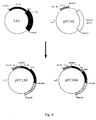
- the resulting plasmid L23 carries the CII ribosome binding site followed by nucleotides 61 to 586 of the receptor sequence (See Fig.4), corresponding to the first 175 amino acids of the mature protein.
- PCR polymerase chain reaction
- the reaction was performed in a Perkin Elmer DNA thermal cycler, using the Perkin Elmer Amplitaq DNA Polymerase and the following cycles: 2'30" at 94°C, 30 cycles made by one step of 1'30" at 94°C and a second step of 2'30" at 72°C and a final cycle of 7' at 72°C.
- the primers used for the reaction were the following:
- the amplified product was digested with EcoRI and BamHI to obtain a fragment of 546 bp, corresponding in fig.2 to nucleotides 587 to 1128 of the mature receptor sequence.
- pFC138 The expression plasmid for the mature extracellar receptor protein, named pFC138, was constructed by joining the following three fragments:
- E.coli B strain ( Delbruck M.: Bacterial viruses or bacteriophages. Biol.Rev. 21 p.30-40 1946) was used for expression of the mature extracellular FGF receptor protein.
- the protein was recognized in western blot by rabbit anti-human FGF receptor polyclonal antibodies (Promega).
- the recombinant extracellular domain could be synthesized as a fusion protein where additional amino acid residues are present either at the NH 2 - end or at the COOH-end of the mature extracellular region.
- Plasmid pFC 164 is constructed in a way similar to pFC 138 and when introduced in the E. coli host strain B, yields higher levels of expression of the extracellular domain of the FGF receptor.
- the ⁇ -galactosidase moiety is also responsible for an increased intracellular stability of the fusion protein.
- Plasmids pFC 138 and pFC 164 are therefore objects of the present invention.
Landscapes
- Health & Medical Sciences (AREA)
- Life Sciences & Earth Sciences (AREA)
- Chemical & Material Sciences (AREA)
- Organic Chemistry (AREA)
- Engineering & Computer Science (AREA)
- Bioinformatics & Cheminformatics (AREA)
- General Health & Medical Sciences (AREA)
- Medicinal Chemistry (AREA)
- Veterinary Medicine (AREA)
- Public Health (AREA)
- Animal Behavior & Ethology (AREA)
- Pharmacology & Pharmacy (AREA)
- General Chemical & Material Sciences (AREA)
- Nuclear Medicine, Radiotherapy & Molecular Imaging (AREA)
- Chemical Kinetics & Catalysis (AREA)
- Proteomics, Peptides & Aminoacids (AREA)
- Molecular Biology (AREA)
- Pain & Pain Management (AREA)
- Biochemistry (AREA)
- Vascular Medicine (AREA)
- Rheumatology (AREA)
- Ophthalmology & Optometry (AREA)
- Dermatology (AREA)
- Cell Biology (AREA)
- Immunology (AREA)
- Toxicology (AREA)
- Zoology (AREA)
- Gastroenterology & Hepatology (AREA)
- Urology & Nephrology (AREA)
- Biophysics (AREA)
- Genetics & Genomics (AREA)
- Cardiology (AREA)
- Heart & Thoracic Surgery (AREA)
- Epidemiology (AREA)
- Peptides Or Proteins (AREA)
- Preparation Of Compounds By Using Micro-Organisms (AREA)
- Micro-Organisms Or Cultivation Processes Thereof (AREA)
- Medicines That Contain Protein Lipid Enzymes And Other Medicines (AREA)
Abstract
Description








Claims (17)
- A polypeptide which is capable of binding specifically human basic Fibroblast Growth Factor (bFGF) and human acidic Fibroblast Growth Factor (aFGF) and which has:(a) the sequence underlined in Figure 3, or(b) said sequence (a) modified by an amino acid extension sequence at either or each end.
- A polypeptide according to claim 1 wherein said amino acid extension sequence is a heterologous amino acid sequence.
- A polypeptide according to claim 1 or 2 wherein said amino acid extension sequence has up to 50 amino acid residues.
- A polypeptide according to claim 1, 2 or 3 modified in that the sequence underlined in Figure 3 has one or more amino acid substitutions and/or insertions, and wherein the modified sequence has a degree of homology of 85% or more with the sequence underlined in Figure 3.
- A polypeptide according to claim 1, 2 or 3 modified in that the sequence underlined in Figure 3 has one or more amino acid substitutions and/or insertions, and wherein the modified sequence has a degree of homology of 95% or more with the sequence underlined in Figure 3.
- A DNA molecule which encodes a polypeptide as defined in any one of claims 1 to 5.
- A DNA molecule according to claim to 6, which has the sequence from nucleotide 64 to nucleotide 1128 shown in Figure 2.
- A vector which incorporates a DNA molecule as claimed in claim 6 or 7 and which is capable, when provided in a suitable host, of expressing said polypeptide.
- A vector according to claim 8, which is a plasmid.
- The plasmid pFC 138 shown in Figure 4.
- The plasmid pFC 164 shown in Figure 4.
- A host transformed with a vector or a plasmid as claimed in any one of claims 8 to 11.
- A host according to claim 12 which is a mammalian cell line.
- A host according to claim 12 which is a bacterium.
- A process for the preparation of a polypeptide as defined in any one of claims 1 to 5, which process comprises culturing a transformed host as claimed in any one of claims 12 to 14 under such conditions that the said polypeptide is expressed.
- A pharmaceutical composition comprising a pharmaceutically acceptable carrier or diluent and, as an active principle, a polypeptide as claimed in any one of claims 1 to 5.
- A polypeptide as defined in any one of claims 1 to 5 for use as an antagonist for human bFGF or human aFGF.
Applications Claiming Priority (3)
| Application Number | Priority Date | Filing Date | Title |
|---|---|---|---|
| GB9001466 | 1989-01-23 | ||
| GB909001466A GB9001466D0 (en) | 1990-01-23 | 1990-01-23 | Extracellular form of the human fibroblast growth factor receptor |
| PCT/EP1991/000103 WO1991011459A1 (en) | 1990-01-23 | 1991-01-21 | Extracellular form of the human fibroblast growth factor receptor |
Publications (2)
| Publication Number | Publication Date |
|---|---|
| EP0464175A1 EP0464175A1 (en) | 1992-01-08 |
| EP0464175B1 true EP0464175B1 (en) | 1998-01-07 |
Family
ID=10669720
Family Applications (1)
| Application Number | Title | Priority Date | Filing Date |
|---|---|---|---|
| EP91902691A Expired - Lifetime EP0464175B1 (en) | 1990-01-23 | 1991-01-21 | Extracellular form of the human fibroblast growth factor receptor |
Country Status (5)
| Country | Link |
|---|---|
| EP (1) | EP0464175B1 (en) |
| JP (1) | JPH04504428A (en) |
| DE (1) | DE69128564T2 (en) |
| GB (1) | GB9001466D0 (en) |
| WO (1) | WO1991011459A1 (en) |
Families Citing this family (14)
| Publication number | Priority date | Publication date | Assignee | Title |
|---|---|---|---|---|
| ATE243253T1 (en) * | 1990-07-06 | 2003-07-15 | Rhone Poulenc Rorer Internat H | RECEPTORS OF GROWTH FACTORS FROM FIBROBLASTS |
| DE4129533A1 (en) * | 1991-09-05 | 1993-03-11 | Max Planck Gesellschaft | MUTTED GROWTH FACTOR RECEPTOR AS A MEDICINAL PRODUCT AND ITS USE FOR TREATING CANCER |
| IL100219A0 (en) * | 1991-12-02 | 1992-09-06 | Yeda Res & Dev | Variable region within fibroblast growth factor receptors that confers ligand specificity |
| US5916772A (en) * | 1992-06-16 | 1999-06-29 | Whittier Institute For Diabetes And Endocrinology | Recombinant production of saporin-containing proteins |
| WO1994000599A2 (en) * | 1992-06-18 | 1994-01-06 | Whittier Institute For Diabetes And Endocrinology | Process for detection of neoplastic disease |
| AU3224700A (en) * | 1999-02-08 | 2000-08-25 | Chiron Corporation | Fibroblast growth factor receptor-immunoglobulin fusion |
| ES2336832T3 (en) | 2005-07-22 | 2010-04-16 | Five Prime Therapeutics, Inc. | COMPOSITIONS AND PROCEDURES TO TREAT DISEASES WITH FGFR FUSION PROTEINS. |
| CN102171343B (en) | 2008-08-04 | 2017-07-14 | 戊瑞治疗有限公司 | FGFR extracellular domain acidic region mutein |
| EP2478003A4 (en) | 2009-09-15 | 2013-05-29 | Five Prime Therapeutics Inc | HAIR GROWTH METHODS USING THE EXTRACELLULAR DOMAINS OF FGFR4 |
| CA2780457A1 (en) | 2009-11-13 | 2011-05-19 | Five Prime Therapeutics, Inc. | Use of fgfr1 extra cellular domain proteins to treat cancers characterized by ligand-dependent activating mutations in fgfr2 |
| EP2512501A4 (en) | 2009-12-17 | 2014-01-01 | Five Prime Therapeutics Inc | Hair growth methods using fgfr3 extracellular domains |
| US8481038B2 (en) | 2010-11-15 | 2013-07-09 | Five Prime Therapeutics, Inc. | Treatment of cancer with elevated dosages of soluble FGFR1 fusion proteins |
| US8951972B2 (en) | 2010-12-09 | 2015-02-10 | Five Prime Therapeutics, Inc. | FGFR1 extracellular domain combination therapies for lung cancer |
| CA2855818A1 (en) | 2011-11-14 | 2013-05-23 | Five Prime Therapeutics, Inc. | A method of treating lung cancer having an fgfr1 gene amplification or fgfr1 overexpression |
Citations (1)
| Publication number | Priority date | Publication date | Assignee | Title |
|---|---|---|---|---|
| WO1991000916A2 (en) * | 1989-07-06 | 1991-01-24 | The Regents Of The University Of California | Receptors for fibroblast growth factors |
-
1990
- 1990-01-23 GB GB909001466A patent/GB9001466D0/en active Pending
-
1991
- 1991-01-21 WO PCT/EP1991/000103 patent/WO1991011459A1/en not_active Ceased
- 1991-01-21 JP JP3503073A patent/JPH04504428A/en active Pending
- 1991-01-21 DE DE69128564T patent/DE69128564T2/en not_active Expired - Fee Related
- 1991-01-21 EP EP91902691A patent/EP0464175B1/en not_active Expired - Lifetime
Patent Citations (1)
| Publication number | Priority date | Publication date | Assignee | Title |
|---|---|---|---|---|
| WO1991000916A2 (en) * | 1989-07-06 | 1991-01-24 | The Regents Of The University Of California | Receptors for fibroblast growth factors |
Non-Patent Citations (1)
| Title |
|---|
| Oncogene, vol. 3, 1988, pages 9-15; Ruta, M. et al * |
Also Published As
| Publication number | Publication date |
|---|---|
| GB9001466D0 (en) | 1990-03-21 |
| DE69128564T2 (en) | 1998-05-07 |
| EP0464175A1 (en) | 1992-01-08 |
| JPH04504428A (en) | 1992-08-06 |
| DE69128564D1 (en) | 1998-02-12 |
| WO1991011459A1 (en) | 1991-08-08 |
Similar Documents
| Publication | Publication Date | Title |
|---|---|---|
| US5288855A (en) | Extracellular form of the human fibroblast growth factor receptor | |
| US6130071A (en) | Vascular endothelial growth factor C (VEGF-C) ΔCys156 protein and gene, and uses thereof | |
| US5928939A (en) | Vascular endothelial growth factor-b and dna coding therefor | |
| AU646014B2 (en) | Novel platelet-derived growth factor B chain analogs and method for homogeneous production thereof | |
| EP0956339B1 (en) | Recombinant vascular endothelial cell growth factor d (vegf-d) | |
| AU697167B2 (en) | Chimeric proteins which block complement activation | |
| US6384191B1 (en) | Receptors for fibroblast growth factors | |
| JPH10511557A (en) | Variants of vascular endothelial cell growth factor, their use and methods of their production | |
| WO1995008570A9 (en) | Chimeric proteins which block complement activation | |
| CA2084514A1 (en) | O-glycosylated ifn-alpha | |
| WO1990008822A1 (en) | Erythropoietin receptor | |
| WO1995021919A2 (en) | Protein having tpo activity | |
| WO1991011459A1 (en) | Extracellular form of the human fibroblast growth factor receptor | |
| EP0327369A2 (en) | Human plalelet-derived growth factor receptor | |
| US5618715A (en) | Oncostatin M and novel compositions having anti-neoplastic activity | |
| CA1338011C (en) | Oncostatin m and novel compositions having anti-neoplastic activity | |
| AU651083B2 (en) | Production of biologically active platelet-derived growth factor from high expression host cell systems | |
| WO1999053033A1 (en) | Methods and compositions for high yield production of eukaryotic proteins | |
| US5451506A (en) | Oncostatin M and novel compositions having anti-neoplastic activity | |
| KR100272867B1 (en) | Proteins with TPO Activity | |
| WO1992006999A1 (en) | Therapeutic fragments of von willebrand factor | |
| WO2001070768A2 (en) | Receptor-binding compounds and method for identifying them | |
| JP2816971B2 (en) | Recombinant hepatocyte growth factor | |
| NO323195B1 (en) | Protein having TPO activity, DNA coding for said protein, production methods, host cells, pharmaceutical compositions, uses and antibody | |
| HK1025789B (en) | Recombinant vascular endothelial cell growth factor d (vegf-d) |
Legal Events
| Date | Code | Title | Description |
|---|---|---|---|
| PUAI | Public reference made under article 153(3) epc to a published international application that has entered the european phase |
Free format text: ORIGINAL CODE: 0009012 |
|
| 17P | Request for examination filed |
Effective date: 19910923 |
|
| AK | Designated contracting states |
Kind code of ref document: A1 Designated state(s): DE GB IT |
|
| RAP1 | Party data changed (applicant data changed or rights of an application transferred) |
Owner name: PHARMACIA S.P.A. |
|
| 17Q | First examination report despatched |
Effective date: 19950712 |
|
| RAP1 | Party data changed (applicant data changed or rights of an application transferred) |
Owner name: PHARMACIA & UPJOHN S.P.A. |
|
| GRAG | Despatch of communication of intention to grant |
Free format text: ORIGINAL CODE: EPIDOS AGRA |
|
| GRAG | Despatch of communication of intention to grant |
Free format text: ORIGINAL CODE: EPIDOS AGRA |
|
| GRAG | Despatch of communication of intention to grant |
Free format text: ORIGINAL CODE: EPIDOS AGRA |
|
| GRAH | Despatch of communication of intention to grant a patent |
Free format text: ORIGINAL CODE: EPIDOS IGRA |
|
| GRAH | Despatch of communication of intention to grant a patent |
Free format text: ORIGINAL CODE: EPIDOS IGRA |
|
| GRAA | (expected) grant |
Free format text: ORIGINAL CODE: 0009210 |
|
| AK | Designated contracting states |
Kind code of ref document: B1 Designated state(s): DE GB IT |
|
| PGFP | Annual fee paid to national office [announced via postgrant information from national office to epo] |
Ref country code: GB Payment date: 19980114 Year of fee payment: 8 |
|
| ITF | It: translation for a ep patent filed | ||
| REF | Corresponds to: |
Ref document number: 69128564 Country of ref document: DE Date of ref document: 19980212 |
|
| PG25 | Lapsed in a contracting state [announced via postgrant information from national office to epo] |
Ref country code: DE Free format text: LAPSE BECAUSE OF NON-PAYMENT OF DUE FEES Effective date: 19981101 |
|
| PLBE | No opposition filed within time limit |
Free format text: ORIGINAL CODE: 0009261 |
|
| STAA | Information on the status of an ep patent application or granted ep patent |
Free format text: STATUS: NO OPPOSITION FILED WITHIN TIME LIMIT |
|
| 26N | No opposition filed | ||
| PG25 | Lapsed in a contracting state [announced via postgrant information from national office to epo] |
Ref country code: GB Free format text: LAPSE BECAUSE OF NON-PAYMENT OF DUE FEES Effective date: 19990121 |
|
| GBPC | Gb: european patent ceased through non-payment of renewal fee |
Effective date: 19990121 |
|
| PG25 | Lapsed in a contracting state [announced via postgrant information from national office to epo] |
Ref country code: IT Free format text: LAPSE BECAUSE OF NON-PAYMENT OF DUE FEES;WARNING: LAPSES OF ITALIAN PATENTS WITH EFFECTIVE DATE BEFORE 2007 MAY HAVE OCCURRED AT ANY TIME BEFORE 2007. THE CORRECT EFFECTIVE DATE MAY BE DIFFERENT FROM THE ONE RECORDED. Effective date: 20050121 |