EP0458901B1 - Inhibiting transformation of cells having elevated purine metabolic enzyme activity - Google Patents
Inhibiting transformation of cells having elevated purine metabolic enzyme activity Download PDFInfo
- Publication number
- EP0458901B1 EP0458901B1 EP90904105A EP90904105A EP0458901B1 EP 0458901 B1 EP0458901 B1 EP 0458901B1 EP 90904105 A EP90904105 A EP 90904105A EP 90904105 A EP90904105 A EP 90904105A EP 0458901 B1 EP0458901 B1 EP 0458901B1
- Authority
- EP
- European Patent Office
- Prior art keywords
- cells
- creatine kinase
- gene
- ckb
- virus
- Prior art date
- Legal status (The legal status is an assumption and is not a legal conclusion. Google has not performed a legal analysis and makes no representation as to the accuracy of the status listed.)
- Expired - Lifetime
Links
Images







Classifications
-
- C—CHEMISTRY; METALLURGY
- C12—BIOCHEMISTRY; BEER; SPIRITS; WINE; VINEGAR; MICROBIOLOGY; ENZYMOLOGY; MUTATION OR GENETIC ENGINEERING
- C12N—MICROORGANISMS OR ENZYMES; COMPOSITIONS THEREOF; PROPAGATING, PRESERVING, OR MAINTAINING MICROORGANISMS; MUTATION OR GENETIC ENGINEERING; CULTURE MEDIA
- C12N15/00—Mutation or genetic engineering; DNA or RNA concerning genetic engineering, vectors, e.g. plasmids, or their isolation, preparation or purification; Use of hosts therefor
- C12N15/09—Recombinant DNA-technology
- C12N15/11—DNA or RNA fragments; Modified forms thereof; Non-coding nucleic acids having a biological activity
- C12N15/113—Non-coding nucleic acids modulating the expression of genes, e.g. antisense oligonucleotides; Antisense DNA or RNA; Triplex- forming oligonucleotides; Catalytic nucleic acids, e.g. ribozymes; Nucleic acids used in co-suppression or gene silencing
- C12N15/1137—Non-coding nucleic acids modulating the expression of genes, e.g. antisense oligonucleotides; Antisense DNA or RNA; Triplex- forming oligonucleotides; Catalytic nucleic acids, e.g. ribozymes; Nucleic acids used in co-suppression or gene silencing against enzymes
-
- A—HUMAN NECESSITIES
- A61—MEDICAL OR VETERINARY SCIENCE; HYGIENE
- A61K—PREPARATIONS FOR MEDICAL, DENTAL OR TOILETRY PURPOSES
- A61K31/00—Medicinal preparations containing organic active ingredients
-
- A—HUMAN NECESSITIES
- A61—MEDICAL OR VETERINARY SCIENCE; HYGIENE
- A61K—PREPARATIONS FOR MEDICAL, DENTAL OR TOILETRY PURPOSES
- A61K31/00—Medicinal preparations containing organic active ingredients
- A61K31/185—Acids; Anhydrides, halides or salts thereof, e.g. sulfur acids, imidic, hydrazonic or hydroximic acids
- A61K31/19—Carboxylic acids, e.g. valproic acid
- A61K31/195—Carboxylic acids, e.g. valproic acid having an amino group
-
- A—HUMAN NECESSITIES
- A61—MEDICAL OR VETERINARY SCIENCE; HYGIENE
- A61K—PREPARATIONS FOR MEDICAL, DENTAL OR TOILETRY PURPOSES
- A61K31/00—Medicinal preparations containing organic active ingredients
- A61K31/33—Heterocyclic compounds
- A61K31/395—Heterocyclic compounds having nitrogen as a ring hetero atom, e.g. guanethidine or rifamycins
- A61K31/41—Heterocyclic compounds having nitrogen as a ring hetero atom, e.g. guanethidine or rifamycins having five-membered rings with two or more ring hetero atoms, at least one of which being nitrogen, e.g. tetrazole
- A61K31/415—1,2-Diazoles
-
- A—HUMAN NECESSITIES
- A61—MEDICAL OR VETERINARY SCIENCE; HYGIENE
- A61K—PREPARATIONS FOR MEDICAL, DENTAL OR TOILETRY PURPOSES
- A61K31/00—Medicinal preparations containing organic active ingredients
- A61K31/33—Heterocyclic compounds
- A61K31/395—Heterocyclic compounds having nitrogen as a ring hetero atom, e.g. guanethidine or rifamycins
- A61K31/495—Heterocyclic compounds having nitrogen as a ring hetero atom, e.g. guanethidine or rifamycins having six-membered rings with two or more nitrogen atoms as the only ring heteroatoms, e.g. piperazine or tetrazines
- A61K31/505—Pyrimidines; Hydrogenated pyrimidines, e.g. trimethoprim
-
- A—HUMAN NECESSITIES
- A61—MEDICAL OR VETERINARY SCIENCE; HYGIENE
- A61K—PREPARATIONS FOR MEDICAL, DENTAL OR TOILETRY PURPOSES
- A61K31/00—Medicinal preparations containing organic active ingredients
- A61K31/66—Phosphorus compounds
-
- A—HUMAN NECESSITIES
- A61—MEDICAL OR VETERINARY SCIENCE; HYGIENE
- A61P—SPECIFIC THERAPEUTIC ACTIVITY OF CHEMICAL COMPOUNDS OR MEDICINAL PREPARATIONS
- A61P31/00—Antiinfectives, i.e. antibiotics, antiseptics, chemotherapeutics
-
- A—HUMAN NECESSITIES
- A61—MEDICAL OR VETERINARY SCIENCE; HYGIENE
- A61P—SPECIFIC THERAPEUTIC ACTIVITY OF CHEMICAL COMPOUNDS OR MEDICINAL PREPARATIONS
- A61P31/00—Antiinfectives, i.e. antibiotics, antiseptics, chemotherapeutics
- A61P31/12—Antivirals
-
- A—HUMAN NECESSITIES
- A61—MEDICAL OR VETERINARY SCIENCE; HYGIENE
- A61P—SPECIFIC THERAPEUTIC ACTIVITY OF CHEMICAL COMPOUNDS OR MEDICINAL PREPARATIONS
- A61P35/00—Antineoplastic agents
-
- C—CHEMISTRY; METALLURGY
- C07—ORGANIC CHEMISTRY
- C07K—PEPTIDES
- C07K14/00—Peptides having more than 20 amino acids; Gastrins; Somatostatins; Melanotropins; Derivatives thereof
- C07K14/82—Translation products from oncogenes
-
- C—CHEMISTRY; METALLURGY
- C12—BIOCHEMISTRY; BEER; SPIRITS; WINE; VINEGAR; MICROBIOLOGY; ENZYMOLOGY; MUTATION OR GENETIC ENGINEERING
- C12N—MICROORGANISMS OR ENZYMES; COMPOSITIONS THEREOF; PROPAGATING, PRESERVING, OR MAINTAINING MICROORGANISMS; MUTATION OR GENETIC ENGINEERING; CULTURE MEDIA
- C12N9/00—Enzymes; Proenzymes; Compositions thereof; Processes for preparing, activating, inhibiting, separating or purifying enzymes
- C12N9/10—Transferases (2.)
- C12N9/12—Transferases (2.) transferring phosphorus containing groups, e.g. kinases (2.7)
-
- C—CHEMISTRY; METALLURGY
- C12—BIOCHEMISTRY; BEER; SPIRITS; WINE; VINEGAR; MICROBIOLOGY; ENZYMOLOGY; MUTATION OR GENETIC ENGINEERING
- C12N—MICROORGANISMS OR ENZYMES; COMPOSITIONS THEREOF; PROPAGATING, PRESERVING, OR MAINTAINING MICROORGANISMS; MUTATION OR GENETIC ENGINEERING; CULTURE MEDIA
- C12N9/00—Enzymes; Proenzymes; Compositions thereof; Processes for preparing, activating, inhibiting, separating or purifying enzymes
- C12N9/10—Transferases (2.)
- C12N9/12—Transferases (2.) transferring phosphorus containing groups, e.g. kinases (2.7)
- C12N9/1223—Phosphotransferases with a nitrogenous group as acceptor (2.7.3)
-
- C—CHEMISTRY; METALLURGY
- C12—BIOCHEMISTRY; BEER; SPIRITS; WINE; VINEGAR; MICROBIOLOGY; ENZYMOLOGY; MUTATION OR GENETIC ENGINEERING
- C12Q—MEASURING OR TESTING PROCESSES INVOLVING ENZYMES, NUCLEIC ACIDS OR MICROORGANISMS; COMPOSITIONS OR TEST PAPERS THEREFOR; PROCESSES OF PREPARING SUCH COMPOSITIONS; CONDITION-RESPONSIVE CONTROL IN MICROBIOLOGICAL OR ENZYMOLOGICAL PROCESSES
- C12Q1/00—Measuring or testing processes involving enzymes, nucleic acids or microorganisms; Compositions therefor; Processes of preparing such compositions
- C12Q1/48—Measuring or testing processes involving enzymes, nucleic acids or microorganisms; Compositions therefor; Processes of preparing such compositions involving transferase
- C12Q1/50—Measuring or testing processes involving enzymes, nucleic acids or microorganisms; Compositions therefor; Processes of preparing such compositions involving transferase involving creatine phosphokinase
-
- C—CHEMISTRY; METALLURGY
- C12—BIOCHEMISTRY; BEER; SPIRITS; WINE; VINEGAR; MICROBIOLOGY; ENZYMOLOGY; MUTATION OR GENETIC ENGINEERING
- C12Y—ENZYMES
- C12Y207/00—Transferases transferring phosphorus-containing groups (2.7)
- C12Y207/01—Phosphotransferases with an alcohol group as acceptor (2.7.1)
- C12Y207/0102—Adenosine kinase (2.7.1.20)
-
- C—CHEMISTRY; METALLURGY
- C12—BIOCHEMISTRY; BEER; SPIRITS; WINE; VINEGAR; MICROBIOLOGY; ENZYMOLOGY; MUTATION OR GENETIC ENGINEERING
- C12Y—ENZYMES
- C12Y207/00—Transferases transferring phosphorus-containing groups (2.7)
- C12Y207/03—Phosphotransferases with a nitrogenous group as acceptor (2.7.3)
- C12Y207/03002—Creatine kinase (2.7.3.2)
-
- C—CHEMISTRY; METALLURGY
- C12—BIOCHEMISTRY; BEER; SPIRITS; WINE; VINEGAR; MICROBIOLOGY; ENZYMOLOGY; MUTATION OR GENETIC ENGINEERING
- C12Y—ENZYMES
- C12Y207/00—Transferases transferring phosphorus-containing groups (2.7)
- C12Y207/04—Phosphotransferases with a phosphate group as acceptor (2.7.4)
- C12Y207/04003—Adenylate kinase (2.7.4.3)
-
- C—CHEMISTRY; METALLURGY
- C12—BIOCHEMISTRY; BEER; SPIRITS; WINE; VINEGAR; MICROBIOLOGY; ENZYMOLOGY; MUTATION OR GENETIC ENGINEERING
- C12Y—ENZYMES
- C12Y406/00—Phosphorus-oxygen lyases (4.6)
- C12Y406/01—Phosphorus-oxygen lyases (4.6.1)
- C12Y406/01001—Aodenylate cyclase (4.6.1.1)
-
- G—PHYSICS
- G01—MEASURING; TESTING
- G01N—INVESTIGATING OR ANALYSING MATERIALS BY DETERMINING THEIR CHEMICAL OR PHYSICAL PROPERTIES
- G01N33/00—Investigating or analysing materials by specific methods not covered by groups G01N1/00 - G01N31/00
- G01N33/48—Biological material, e.g. blood, urine; Haemocytometers
- G01N33/50—Chemical analysis of biological material, e.g. blood, urine; Testing involving biospecific ligand binding methods; Immunological testing
- G01N33/53—Immunoassay; Biospecific binding assay; Materials therefor
- G01N33/573—Immunoassay; Biospecific binding assay; Materials therefor for enzymes or isoenzymes
-
- G—PHYSICS
- G01—MEASURING; TESTING
- G01N—INVESTIGATING OR ANALYSING MATERIALS BY DETERMINING THEIR CHEMICAL OR PHYSICAL PROPERTIES
- G01N33/00—Investigating or analysing materials by specific methods not covered by groups G01N1/00 - G01N31/00
- G01N33/48—Biological material, e.g. blood, urine; Haemocytometers
- G01N33/50—Chemical analysis of biological material, e.g. blood, urine; Testing involving biospecific ligand binding methods; Immunological testing
- G01N33/53—Immunoassay; Biospecific binding assay; Materials therefor
- G01N33/575—Immunoassay; Biospecific binding assay; Materials therefor for cancer
- G01N33/5758—Immunoassay; Biospecific binding assay; Materials therefor for cancer involving compounds serving as markers for tumours, cancers or neoplasias, e.g. cellular determinants, receptors, heat shock/stress proteins, A-protein, oligosaccharides or metabolites
-
- A—HUMAN NECESSITIES
- A61—MEDICAL OR VETERINARY SCIENCE; HYGIENE
- A61K—PREPARATIONS FOR MEDICAL, DENTAL OR TOILETRY PURPOSES
- A61K38/00—Medicinal preparations containing peptides
-
- A—HUMAN NECESSITIES
- A61—MEDICAL OR VETERINARY SCIENCE; HYGIENE
- A61K—PREPARATIONS FOR MEDICAL, DENTAL OR TOILETRY PURPOSES
- A61K48/00—Medicinal preparations containing genetic material which is inserted into cells of the living body to treat genetic diseases; Gene therapy
-
- G—PHYSICS
- G01—MEASURING; TESTING
- G01N—INVESTIGATING OR ANALYSING MATERIALS BY DETERMINING THEIR CHEMICAL OR PHYSICAL PROPERTIES
- G01N2333/00—Assays involving biological materials from specific organisms or of a specific nature
- G01N2333/005—Assays involving biological materials from specific organisms or of a specific nature from viruses
- G01N2333/01—DNA viruses
Definitions
- Transformation or malignant transformation, of cells results in changes in their growth characteristics and can cause them to form tumors in animals into whom they are introduced.
- transformation of adherent cells can be associated with alterations such as changes in growth control, cell morphology, membrane characteristics, protein secretion and gene expression.
- transformation can occur spontaneously, it can be caused by a chemical or irradiation or may result from infection by a tumor virus. Little is known about the underlying molecular events.
- RNA viruses retroviruses
- DNA viruses can act to transform cells and collectively are referred to as tumor viruses. In the case of tumor viruses, it is clear that the virus does not itself carry all of the genes necessary to produce the phenotypic changes characteristic of infected cells.
- Tumor viruses may act through a gene or genes in their genome (oncogenes) which, in some way, influence or induce target cell genes.
- the induced target cell genes act to carry out the changes observed in transformed cells.
- transforming DNA viruses There are at least three major classes of transforming DNA viruses: adenoviruses, which have two groups of oncogenes, E1A and E1B, which act together to produce transformation; papovaviruses, which synthesize proteins, called T antigens, which may work together to transform cells; and herpes viruses, for which no oncogene has been identified as yet.
- the present invention relates to a composition comprising a creatine kinase substrate analogue for use in therapy, e.g. in antitumour therapy or in inhibiting cell metastasis or transformation.
- It also relates to the use of a creatine kinase substrate analogue for the manufacture of a medicament for use in antitumour therapy or in inhibiting cell metastasis or transformation.
- the invention may be used in a method of inhibiting or interfering with the increase in host gene expression caused by the DNA tumor virus or factor, particularly by interfering with the ability of the virus or the factor to increase expression of a gene(s) which encodes host cell purine metabolic enzyme(s). It may be used in a method of reducing cellular transformation by interfering with the ability of an oncogenic product(s) of a DNA tumor virus or of other cellular activated proteins with functions similar to those of oncogenic products of a virus associated with transformation, to increase expression of host cell purine metabolic enzyme gene expression.
- the uses/drugs of the present invention can have the desired effect by acting in one or more of the following ways: by inhibiting the purine metabolic enzyme whose activity in the cell is elevated; by decreasing the message level; by interfering with the transcription factors which induce expression of the host cell purine metabolic enzymes; and by inhibiting interaction of the viral product or the factor with a host cell gene(s)s encoding a purine metabolic enzyme(s).
- the drugs may act by inhibiting interaction of the viral product or factor with a host cell gene product(s), the interaction of which regulates the activity of the purine metabolic enzymes, or their expression.
- antiviral agents such drugs act by interfering with the replication of the virus.
- Drugs useful in the present method can be existing drugs, analogues of existing drugs or drugs designed specifically for the purpose of reducing purine metabolic enzyme activity, such as by inhibiting the DNA tumor virus or its activity.
- tumors which are characterized by high levels of expression of the purine metabolic enzymes and which are associated directly or indirectly with the presence of the DNA tumor virus can be treated in a similar fashion.
- tumors that result from cellular mutations that mimic the effects of infection by a DNA tumor virus can be treated in a similar manner. For instance, loss of antioncogene products Rb, DCC or p53 may mimic infection by a DNA tumor virus, leading to high levels of expression of purine metabolic enzymes.
- Rb, DCC or p53 may mimic infection by a DNA tumor virus, leading to high levels of expression of purine metabolic enzymes.
- a genomic clone for the human creatine kinase B-isozyme has been isolated and the gene has been shown to encode a functional enzyme, as demonstrated by transfection of the cloned DNA into different cell lines and subsequent observation of the production of the B-isozyme.
- the promoter has been shown to have a strong sequence relationship with the promoter region of the adenovirus E2E gene.
- the E2E region of the adenovirus encodes a 72 kd single stranded DNA binding protein which is involved in the replication of the virus. Expression of the E2 gene and subsequent viral replication, is highly dependent on the oncogenic products of the adenovirus E1a region.
- the CKB promoter region provides the first example of a strong sequence similarity between a cellular gene promoter region and a viral gene promoter.
- the strong similarity to the first 100 nucleotides of the 5'-noncoding sequence of the E2 promoter suggests that express ion from each promoter is regulated by some factors common to both.
- This model is supported by the srikingly good alignment of the two promoters through each of the four sub-regions of the promoter that are important for expression of E2. (Some or all of the first 100 nucleotides of the adenovirus E2E promoter are required for its expression). This surprising relationship of the two promoter sequences motivated an investigation for a possible functional relationship between the two.
- brain creatine kinase expression is regulated by the oncogenic products of the E1a region of the adenovirus.
- a cellular gene associated with energy metabolism and regulation of intracellular nucleotide levels is turned on, or activated, by the transforming domains of an oncogene. That is, induction of a cellular gene by oncogenic products of a transforming virus has been demonstrated.
- regulation of brain creatine kinase expression by the short (19 amino acid) transforming domain 2 of the E1a oncogene has been shown. This is of interest because a whole range of human transforming viruses (e.g.
- adenoviruses SV40, papilloma virus
- SV40 SV40, papilloma virus
- domain 2 This same domain in the protein has also recently been shown to interact with the cellular anti-oncogene product of the retinoblastoma gene, revealing a novel oncogene-anti-oncogene association.
- Domain one of E1a which is also involved in transformation and induction of DNA synthesis, is also important for the induction of CKB.
- Cyclin which is a cell cycle regulated gene, important for cell division, has also been shown to require this domain. It is reasonable to suggest that CKB is part of the trigger mechanism in cell division and for growth of some malignant cells.
- viruses encode oncogenic molecules, such as the E7 product of HPV-16, which is similar structurally and functionally to the E1a product of adenovirus in the transformation domains.
- the human cytomegatovirus which is known to induce CKB levels, the oncogenic molecules or the cellular analogues, regulates similar metabolic events important for transformation of the affected cell.
- Creatine kinase along with some enzymes that work in conjunction with it, are part of the important events leading to transformation. Inhibiting the activity of CK and associated enzymes will be very useful in controlling transformation and the replication of the viruses.
- Drugs used in the method of the present invention will act by interfering with the effect of the viral product on expression of the gene encoding the key cellular enzyme; interfering with the activity of the activated or induced enzyme; interfering with the activity of other components of adenosine uptake and its metabolic pathways or the signals for their activation; or by interfering with any combination of the three.
- expression of transforming domain 2 of the E1a region of an adenovirus now known to induce creatine kinase expression in cells, can be inhibited.
- the region around domain one of E1a also needed for induction of CKB and cyclin can be interfered with.
- creatine kinase catalyzes the reversible storage of ATP as creatine phosphate, and its regeneration to maintain a high ATP/ADP ratio in the cell.
- the level of brain creatine kinase is greatly enhanced in tumor cells, such as in small cell lung carcinoma.
- the method of the present invention can be used to regulate (e.g., inhibit or interfere with) the activity of brain creatine kinase, and, thus, is useful in controlling the growth of tumor cells.
- other components of the adenosine metabolic pathway, or signals for its activation can be inhibited or interfered with, thereby modifying nucleotide levels and distribution and DNA synthesis.
- the invention provides a method for countering oncogenesis and viral-induced cell proliferation by controlling the levels of ATP available for cell metabolism, growth, and generation of secondary messengers.
- Figure 1 is a partial restriction map of the human genomic clone 16B2.
- the cross-hatched area represents the 2.5kbp coding region within the human creatine kinase B isozyme gene.
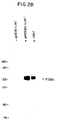
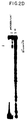
- Figure 2 shows mapping of the transcriptional start site of the human gene for brain creatine kinase.
- Panel A is a simple map at the 5' end of the gene for the B isozyme and the locations of probes and oligonucleotides for analysis described herein. The arrow indicates the position of the 5' end of the mRNA that was determined by this analysis.
- Panel B shows results of primer extension mapping of the 5' end of the mRNA for the human B isozyme gene.
- Panel C shows results of S1 nuclease mapping of the 5' end of the mRNA.
- Panel D shows results of S1 nuclease mapping with synthetic oligomer 3 (a 60-mer synthetic oligomer).
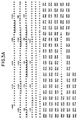
- Figure 3 is the nucleotide sequence of the human B isozyme of creatine kinase.
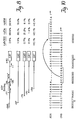
- Panel A is the sequence of the amino-terminal coding region and of the 5'-flanking sequences. Parentheses enclose the -90 to -84 heptanucleotide sequence which behaved aberrantly in the sequencing of both strands and may contain an error. The asterisk indicates the location in the gene of the major 5'-end of the transcript that was determined by primer extension analysis and S1 nuclease mapping experiments. Nucleotides are numbered consecutively from this site. Brackets indicate the positions of the first two introns. Underlines have been used to highlight sequence elements that are typically associated with promoters or with binding sites for regulatory proteins.
- Panel B sequence relationship between the adenovirus E2 promoter and the 5'-region of the B isozyme of creatine kinase. Lines connect nucleotides that are identical. Regions I-IV of the adenovirus E 2 E sequence have been designated as important for expression (20,40), and similar regions are found in the gene for the B isozyme. A fifth region (designated V) of sequence similarity is also noted.
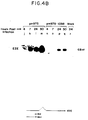
- Figure 4 shows autoradiograms showing the results of hybridization assays of total cellular RNA harvested from HeLa cells infected with pm975 wild-type Ad5 virus, HeLa cells infected with the pm975-1098 mutant which has a point mutation in domain 3 or mock infected HeLa cells, using a probe specific for CKB or a probe specific for E2E.
- Panel A shows induction of CKB mRNA (lanes a-d, wild-type virus; lanes e-h, mutant virus; lane i, mock-infected or endogenous CKB level in HeLa cell lines used).
- Panel B shows the induction of E2E RNA (lanes j-m, wild-type virus; lanes n-q, mutant virus; lane r, mock-infected, showing no endogenous E 2 E RNA.
- Panel C shows results of measurements of creatine kinase activity when cells were infected with wild-type and mutant virus at 5 pfu/cell and 50 pfu/cell.
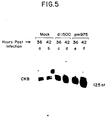
- Figure 5 shows autoradiograms showing the results of hybridization as says of total cellular RNA harvested from HeLa cells infected as described in Example 2 at 20 pfu/cell with virus expressing the 12S(dl 1500) or 13S(pm975) products. Lanes a and b, mock infected; lanes c and d, dl 1500 infected; lanes e and f pm975 infected with a probe specific for CKB mRNA. Results show that the 12S product of E1a which lacks domain 3 activates expression of CKB.
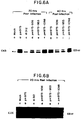
- Figure 6 shows autoradiograms showing the results of hybridization assays of RNA from HeLa cells infected with wild-type or mutant viruses, as described in Example 2 with probes specific for brain creatine kinase (A) and E2E (B): Lane a, mock-infected; lanes b and g, wild-type pm975 virus, lane c, mutant d1312 virus (deleted for the E1a products); lanes d, e, h, i, mutant viruses pm975-936 and -953 (point mutation in domain 2); lanes f, j, mutant virus pm975-1098 (point mutation in domain 3).
- Figure 7 shows that amino terminal deletions of E1a which disrupt transformation also result in an inability to induce CKB expression.
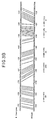
- Figure 8 shows colocalization of the E7 and E1a target sequences in the E2 promoter attached to the CAT gene.
- Figure 9 shows the structural similarity between adenovirus E1a and papillomavirus HPV-16E7 transforming proteins.
- Figure 10 shows partial nucleotide sequences for adenosine deaminase and brain creatine kinase.
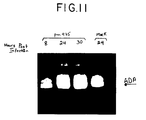
- Figure 11 shows autoradiograms showing the results of hybridization as says in which RNA harvested at 8, 24 and 30 hours post-infection from HeLa cells infected wild-type (pm975) virus (lanes a, b and c) or mock-infected (lane d) was probed for adenosine deaminase (ADA) production.
- ADA adenosine deaminase
- Figure 12 shows part of the sequence of CKB gene, from which antisense oligonuclotides useful to block CKB translation can be determined.
- the present invention is based on the isolation, sequencing and characterization of a functional and complete copy of the gene for human brain creatine kinase (CKB).
- CKB creatine kinase
- the creatine kinases are a family of enzymes which are involved in the maintenance of ATP at sites of cellular work. S.P. Bessman, Ann. Rev. Biochem. , 54 :831 (1985).
- a viral product e.g., oncogene
- signals activated by those products to induce the expression of an enzyme (or enzymes) in a pathway involved in regulating cellular nucleotide levels and, thus, to reduce the effects of such activation or overexpression on cells.
- This can be carried out by interfering with the effect of the viral product on expression of the gene encoding the key cellular enzyme; by interfering with the activity of the activated or induced enzyme; by interfering with the activity of other components of the adenosine metabolic pathway, including adenosine uptake or the signals for their activation; or by interfering with any combination of the three.
- Oncogenic products of DNA tumor viruses particularly those DNA tumor viruses associated with transformation or tumors of epithelial cells, have been shown to have certain common functional, structural and sequence similarities which make it reasonable to expect that they have a common or similar effect on host cells which results in induction of cellular transformation.
- the creatine kinase system which has now been shown to be linked to a DNA tumor virus, and transformation might be along a biochemical path which is modified by viruses.
- the present invention is useful in methods of inhibiting transformation in or metastasis of mammalian cells in which activity of one or more purine metabolic enzymes is elevated. This is carried out by inhibiting (reducing or eliminating) the ability of a DNA tumor virus, a factor produced by or characteristically associated with a DNA tumor virus (a DNA tumor virus factor) or other factor which has an effect corresponding to that of the DNA tumor virus or virus factor to induce cellular transformation or to maintain a transformed phenotype (DNA tumor virus factor equivalent), to increase purine metabolic enzyme activity. This is effected by interfering with the ability of the virus or factor to increase expression of such purine metabolic enzymes. It further relates to compounds or drugs useful in the present method.
- a DNA tumor virus or a DNA tumor virus factor or its equivalent it is possible to inhibit the ability of a DNA tumor virus or a DNA tumor virus factor or its equivalent to increase the expression of host cell enzymes, such as creatine kinase, adenylate kinase, adenylate cyclase and adenosine kinase, which participate in purine metabolism or which interact with these host cell enzymes. It is also possible by the use of inhibitors for these enzymes to counterbalance the induction effect caused by the virus. Thus, it is possible to inhibit the ability of the DNA tumor virus or virus factor to induce cellular transformation or to maintain the transformed state by preventing the induction or by chemically neutralizing it.
- host cell enzymes such as creatine kinase, adenylate kinase, adenylate cyclase and adenosine kinase
- the method of inhibiting transformation of mammalian cells in which purine metabolic enzyme activity is increased can have its effect by several different mechanisms. That is, the ability of a DNA tumor virus, DNA tumor virus factor or other factor to induce transformation can be interfered with by:
- the method of inhibiting cellular transformation can be carried out using existing drugs, analogues of such drugs, or drugs specifically designed for the purpose.
- Drugs can be administered to produce inhibition of cellular transformation by direct interaction with the virus (e.g., by inhibiting production of viral DNA or mRNA expression of the encoded protein); by blocking the domain or sequence of the virus which is responsible for inducing expression of a cellular gene involved in cell growth perturbing functions; by blocking the activity of a factor, produced by or characteristic of the DNA tumor virus, which is the inducer of such a cellular gene; or by acting directly upon host cell products which interact with a viral product to cause transformation (e.g., by inhibiting the enzyme activity of the activated enzymes).
- Drug analogues and drugs designed for the specific purpose intended are also the subject of the present invention.
- DNA tumor viruses able to induce cellular transformation which can be inhibited by the present method; of individual enzymes involved in purine metabolism and their interactions with one another and other cell constituents of the basis on which this inhibition is effected; of the use of the present method in inhibiting cellular transformation and of compositions useful in the present method.
- the activity of host cell creatine kinase is increased (greater than activity which occurs in the absence of transformation). Therefore, it is reasonable to expect that the present method can be used in the treatment of any tumor in which the activity of creatine kinase is increased significantly above activity in normal cells.
- the present method can be used in inhibiting transformation of cells in which activity of other purine metabolic enzymes, particularly those which associate functionally with CKB, is increased.
- HPVs human papillomaviruses
- HPV types 16 18, 31 and 33 Zur Hausen and Schneider, 1987 In : Howley PM Salzman N Eds.
- the Papovaviridae The Papillomaviruses , Plenum, NY pp. 24-263).
- HPV-16 has been detected most frequently (greater than 60%) in biopsies from cervical carcinoma.
- RNA analyses for cervical carcinoma tissues and derived cell lines have revealed that the E6 and E7 ORFs are generally expressed, suggesting that their gene products may be necessary for the maintenance of the malignant phenotype.
- HPV-16 E6/E7 region has been shown to encode a function capable of cooperating with an activated ras oncogene in the transformation of rat embryo fibroblasts. (Matlashewski, G. et al., (1987) EMBO , 6 :1741-1746).
- HPV 16 The immortalization function of HPV 16 has been mapped to the E7 ORF by Phelps and co-workers. (Phelps, W.C. et al., Current Topics in Microbiological and Immunology , 144 Springer Verlag Berlin Heidelberg, (1989). These researchers also found the E7 product of HPV-16 to have activities similar to those of the oncogenic product of another virus, the E1a protein of adenovirus.
- the papillomavirus oncogenic product and the adenovirus oncogenic product described above have been shown to have the following similarities:
- DNA tumor viruses each belonging to a different class of DNA viruses, have been shown to have structural and sequence similarities and to modulate host gene expression.
- E7 and E1a appear to possess multifunctions and it is reasonable to assume that their ability to modulate host gene expression is an important event in their ability to induce cellular transformation. If the cellular gene products which are targets for such oncogenic regulators which require the transforming domains of these DNA tumor viruses were identified, it would not only provide great insight into metabolic events which are affected during transformations, but also provide a means by which transformation by such DNA tumor viruses can be inhibited. In addition, it would make it possible to design markers useful in diagnosing infection with the responsible DNA virus and in monitoring subsequent transformation.
- the brain isozyme of creatine kinase has many features which are of relevance to the work described herein. Elevated levels of the CKB have been detected in tumor samples obtained from patients with small cell lung cancer (SCLS). Gazdar, A.F. et al. , Cancer Res. , 41 :2773-2777 (1981). Marked elevation of CKB (as measured with a radioimmunoassay), was noted in 49 out of 50 cells lines established from patients with SCLC. Carney, D.N. et al. , Cancer Res. , 45 :2913-2923 (1985). In contrast, CKB levels in non-SCLC lines were considerably lower, or negligible in most cases.
- SCLS small cell lung cancer
- the level of this enzyme is regarded as a reliable marker of SCLC and may be of functional importance in determining aspects of the small cell phenotype, including the neuroendocrine features unique to this tumor. Gazdar, A.F. et al. , In: The Endocrine Lune in Health and Disease , (Becker, K.L. and A.F. Gazdar, eds.), W.B. Saunders & Co., Philadelphia, PA, pp. 501-1108 (1984).
- Elevated levels of CKB in both tumor cells and patient serum have been associated with a wide range of human tumors. Examples are prostatic carcinoma, breast carcinoma, cancers of the ovary, uterus, cervix, bladder and anal canal.
- Rubery, E.D. et al. Eur. J. Canc. Clin. Oncol. , 18 :951-956 (1982); DeLuca, M. et al. , Biochem. Biophys. Res. Comm. , 99 :189-195 (1981); Feld, R.D. and D.L. Witte, Clin. Chem. , 23 :1930-1932 (1977); Thompson, R.J. et al.
- the B isoenzyme is under hormonal control. It is known to be induced by estrogen in the female genital tract. Malnick, S.D.H. et al. , Endocrinology , 113 :1907-1909 (1983). Its induction is rapid (within one hour) and it is identical to the previously identified estrogen induced protein. It has subsequently been found to be stimulated by vitamin D metabolites in cartilage, (Somjen, D. et al. , FEBS Letters , 167 :281-285 (1984)), bone and kidney (Somjen, D. et al. , Biochem.
- the promoter of the human CKB gene has a strong sequence similarity to the adenovirus E2 promoter, Figure 3B. Further, it has been demonstrated that both brain creatine kinase and its mRNA levels are induced by the oncogenic products of the E1a gene of adenovirus type 5, Figures 4-7. In particular, through the use of adenovirus mutants in which a domain of the E1a region is nonfunctional, it has been shown that transforming domain 2 of E1a is required for viral induction of CKB, Figure 6. Also, the amino terminus and domain one of E1a, which are involved with transformation and induction of DNA synthesis are needed for CKB induction, Figure 7.
- CKB a cellular enzyme
- adenosine deaminase (ADA) closely resembles the promoter region of the brain creatine kinase gene with a palindromic sequence being shuffled.
- a possible coregulation (up or down regulation for one or both) must be an important step in viral invasion and transformation. This is of particular interest because, like CKB, adenosine deaminase participates in adenosine metabolism (and, thus, DNA synthesis, replication and 2nd messenger production). Suppression or deletion of adenosine deaminase in children is associated with severe immunosuppression. Hirschhorn, R., Ciba Found. Sym.
- CKB levels have been shown to be elevated in tumors, and have now been demonstrated to be inducible by adenovirus.
- the induction by adenovirus is closely associated with the transforming ability of the oncogenic products of the virus, suggesting that transformation by adenovirus requires the expression of CKB.
- the striking similarity between the regulatory regions of CKB, adenosine deaminase and adenovirus E 2 E suggests that the two cellular genes are part of a metabolic pathway that is affected by signals from viruses to replicate and signals involved in oncogenic transformation. We know that both of these cellular genes are involved in adenosine metabolism, and with the synthesis of DNA nucleotide precursors, and hence are tightly linked to replication.
- Oncogenes and anti-oncogenes that are capable of inducing growth changes in the cell and inducing a transformed phenotype are now thought to act as elements of a signalling pathway that allows cells to respond to environmental signals. It has been suggested that nuclear oncogenes are capable of inducing the expression (transactivation) of key growth related genes in the nucleus. However, until the present time, there has been no solid evidence to support this hypothesis.
- the E1a oncogene has presented a dilema for investigators studying transformation because although the E1a oncogene can transactivate viral and a few cellular genes, this ability seems to be distinct from its ability to transform cells.
- a product of the adenovirus E1a region turns on the expression of a cellular gene that is at the heart of energy metabolism or production for the cell, that is involved in regulation of energy and nucleotide pools, and that is expressed at high levels in a wide range of tumors. It has been shown that induction corresponds with the transforming ability of the molecule, indicating that brain creatine kinase is on a signal pathway that is required for E1a to function as an oncogene.
- adenosine deaminase Another important cellular gene, which encodes adenosine deaminase, has been shown to have a striking resemblance (sequence similarity) in the promoter region to brain creatine kinase. It also appears, although from preliminary data, that the adenosine deaminase promoter is regulated by the E1a products ( Figure 11). This is of particular interest because adenosine deaminase, like brain creatine kinase, is a tumor antigen (a thymus leukemia antigen), and is also involved in adenosine metabolism. It has been shown to be up or down regulated by other viruses.
- adenosine metabolism i.e., the kinase and the deaminase
- cAMP cyclic adenosine monosphosphate
- CKB and ADA are members of a larger metabolic system in which the promoters of participating enzymes bear sequence similarities to one another, and are normally regulated in a coordinated manner, but that there is a second level of regulation imposed by viral products.
- the viral products may act on members of this metabolic pathway either directly (e.g., by binding to cellular products, such as the retinoblastoma gene product, which alters gene expression) or indirectly (e.g., by altering the function or action of genes or gene products involved in a cascade of events leading to altered expression of genes in this metabolic system). It is reasonable to suggest that in acting as an oncogene, E1a turns on or activates these cellular genes.
- ADA and CKB has been shown to be membrane-associated.
- concentration of membrane-associated adenosine deaminase binding protein has been shown to vary in different tumors. This protein seems to anchor the adenosine deaminase to the membrane, to modify its activity, and to carry adenosine to other parts of the cell, including the nucleus.
- a subpopulation of CKB is bound to the inner membrane as well.
- Another enzyme involved in adenosine metabolism is membrane-bound adenylate cyclase and adenylate kinase. Adenylate kinase associates physically with creatine kinase.
- a complex is formed in the membrane around the adenosine receptor.
- a signal that is generated from a virus, or is the inducer of a transformation process might be introduced into the cell by the adenosine receptor or the adenosine binding protein or the complex. This signal is translated into modification of adenosine metabolism leading to local adjustment of nucleotide pools (ATP and GTP). Secondary messengers are thought to be activated secondary to the activation of this cascade of enzymatic reactions. Cyclic AMP (cAMP) is a product of adenosine metabolism and could be a secondary mediator. The present invention, thus, relates to interference with viral or oncogenic induction of the expression or activity of any member of this membrane-associated complex.
- viral products which activate some cellular genes activate a subpopulation of lipids associated with the membrane, which are then released as secondary messengers to the nucleus as inducers of replication. Most of these lipids are activated by phosphorylation by ATP and CKB might be involved indirectly in activating these lipids. Viral products might also release growth factors that act on the membrane-associated complex and might also activate ion channels in the membrane or hormone receptors. The activation of such a cascade, and the local adjustment of nucleotide pools, resulting from induced levels of CKB or ADA, might trigger G-binding proteins (e.g., p21), adding another dimension to the signal transduction.
- G-binding proteins e.g., p21
- Another sub-branch of the pathways related to adenosine metabolism is the generation of S-adenosine methionine, which is involved in DNA methylation and which could be coregulated.
- HIV virus is associated with changes in adenosine deaminase in T cells, and the HIV early gene product, TAT, has been demonstrated to be secreted and taken up by cells.
- TAT HIV early gene product
- the anti-oncogene Rb (retinoblastoma) gene product has been shown to interact with domain: 1 & 2 in the E1a protein, SV40 large T antigen and papilloma virus HPV-16E7 product.
- these oncogenes work indirectly (i.e., their effects might be mediated by the Rb gene product, if Rb is a master down regulator of proliferative genes).
- Other cellular proteins have been shown to interact directly with E1a, and might mediate some of its functions.
- a sequence present on the promoter region of the CKB gene which is also present on the promoter region of adenosine deaminase gene might serve as the direct target for the Rb gene and those other cellular proteins.
- a cellular gene product creatine kinase, which is an enzyme involved in maintenance of ATP at sites of cellular work or energy production, is a target of oncogenic products of DNA tumor viruses, such as the HPV E7 product and the adenovirus E1a product, which act as regulators and modify or regulate expression of cellular genes.
- DNA tumor virus factors there appear to be factors which are consistently present in or secreted from some transformed cells or tumor cells, which in and of themselves are capable of inducing DNA synthesis in host cells and probably are able to modulate cellular gene expression with much the same effect that a DNA tumor virus has (i.e., increase in expression of the cellular gene). Such factors are referred to herein as DNA tumor virus factors.
- creatine kinase has several characteristics which support the idea that it is such a target of oncogenic products of DNA tumor viruses.
- other enzymes which have a similar role in cellular metabolism e.g., purine metabolism and nucleotide level regulation
- CKB CKB
- interference with the ability of an oncogenic product of a DNA tumor virus or DNA tumor virus factor to regulate expression of enzymes which participate in purine metabolism and/or interference with another enzyme(s) which interacts with the purine metabolic pathway enzyme(s) will result in inhibition of or interference with the ability of such viruses or factors to transform cells.
- the method of the present invention makes it possible to inhibit the ability of DNA tumor viruses to act as mediators of cell transformation, and thus, to inhibit cell transformation or tumor formation or spread, by acting upon production of viral DNA, RNA or encoded oncogenic products, as well as by interfering with other viral or cellular products which normally interact or cooperate with viral or cellular products to bring about cell transformation.
- CKB is regulated by E1a. Transforming domains one and two which are partially shared with other DNA tumor viruses are required for the induction observed.
- the papilloma viruses (e.g., type 16) which are associated with malignancies in the cervix encode a protein (the E7-encoded protein) which is very similar in sequence and function to that of the E1a-encoded protein in the transforming region.
- the E7-encoded protein has amino acid sequence homology to the E1a-encoded protein in the important transformation domain; 2) the E7-encoded protein, like the E1a-encoded protein can act to turn on the adenovirus E2 promoter; 3) both proteins interact with similar host proteins, such as the retinoblastoma gene product; and 4) the E7-encoded protein can replace the E1a-encoded protein in transformation assays in which complimentation with ras is tested.
- E1a of adenovirus or E7 of papillomavirus virus can induce the E2 promoter and they both require the first 90 bases of the promoter for induction.
- E1A turns on CKB expression and because the first 90 bp of the CKB promoter sequence resemble those of the E2 promoter, it is reasonable to expect that E7 acts similarly (i.e., turns on CKB expression).
- a human genomic library was screened with a rabbit muscle-specific (M-) creatine kinase cDNA probe.
- M- rabbit muscle-specific
- a 180-bp rabbit cDNA probe (M180) was prepared by primer extension of an M13 mp8 clone using [ 32 P]dATP as the radionucleotide and purified as described by Maniatis et al. Maniatis, T. et al. , Molecular Cloning: A Laboratory Manual, Cold Spring Harbor Laboratory, Cold Spring Harbor, NY (1982).
- the 180bp probe was used to screen a human lymphocyte-derived genomic library in the Charon 4A lambda phage vector. Twenty-four potential positive clones were isolated and one clone (16B2), which gave the strongest hybridization signal, was chosen for further study. It was shown to contain a 12-kilobase pairs (Kbp) insert of human DNA.
- the 12Kbp insert was cloned into plasmid, pBR322, producing plasmid pHCK302 ( Figure 1).
- the M180 probe hybridized to a 0.9-Kbp PstI fragment and shares with it 95% sequence homology.
- Rabbit B isozyme cDNA probes were used to determine whether the clone encodes the remainder of the human creatine kinase. As described in Example 1, results showed that the entire coding sequence for human brain creatine kinase is encompassed by a region of 2.5Kbp that is embedded within the 12-Kbp genomic fragment isolated from the initial screen of the library.
- Plasmid pHCK302 was shown to express a function brain creatine kinase when transfected into BALB/c/3T3, LtK-and human HeLa cells.
- Subclone pHCK201, ( Figure 1) which contained only 850 bp of 5'-flanking sequences, also expressed the enzyme to comparable levels.
- the 5'-flanking region was analyzed, using a variety of synthetic oligonucleotides, to map the transcriptional start site (Figure 2A) and to identify the promoter element of the brain creatine kinase gene. This work is described in detail in Example 1 and results are presented in Figures 2 and 3. Results suggested that two promoter elements are present in the brain creatine kinase gene. Most promoters consist of a TATA box located approximately 30 bp upstream from the start site of transcription and additional upstream promoter elements are located between 30 and 100 bp upstream from the 5'-end. In vivo and in vitro transcription analysis and DNA binding studies have identified a few conserved elements which bind regulatory proteins.
- the gene for human creatine kinase B has two TA-rich sequences, a TTAA sequence that is centered at -26 from the presumptive transcription start site and a TATAAATA sequence that is centered at -62 ( Figure 3A).
- Benoist, D. et al. Nucleic Acids Res. , 8 :127-142 (1980); Dynan, W.S. and R.
- TTAA sequence at -30 is located at the expected position for a TATA box, it is probably the functional element which initiates transcripts from the promoter.
- TATAAATA TATA consensus sequence
- CAT GGCCAATG
- TA-rich sequence which is distinct from the TATA box, can direct initiation of transcription under certain conditions. Barron, E.A. et al. , New Insights Into the Regulation of Transcription , 6th Annual Stonybrook Symposium, p. 10, Stonybrook, NY (1987).
- Results also showed that there is a remarkable similarity of the B isozyme promoter to the adenovirus E 2 E (also designated "E2E") promoter region (Figure 3B).
- This region of the E 2 E gene has two overlapping promoter elements that evidently direct expression from two transcriptional start sites. Four elements within this promoter (denoted regions I-IV in Figure 3B) have been identified as required for efficient expression. Zajchowski, D.A. et al. , EMBO Journal , 4 :1293-1300 (1985); Elkaim, R. et al. , Nucleic Acids Res. , 11 :7105-7117 (1983).
- the promoter region of the human brain creatine kinase gene thus, has been shown to have strong sequence similarity to the adenovirus E2E promoter.
- the E1a proteins of adenovirus are divided into three regions or domains. Induction of viral and cellular promoters requires domain 3 of E1a. However, activation of creatine kinase expression was shown to occur upon infection with adenovirus mutants that are defective in this domain. However transforming domain 2, which is important for association of E1a with the retinoblastoma gene product (Rb), was shown to be required for induction. The polypeptide encoded by domain 2 is small (about 20 amino acids) and has been shown to be essential for the activity of E1a on cell growth. This difference in effect was demonstrated using adenovirus mutants with selected defects, as described in Examples 2-5.
- the proteins encoded by the E1a region are necessary for efficient viral replication in permissive human cell lines and for viral transformation of nonpermissive rodent cells.
- the major proteins are nuclear phosphoproteins of 243 and 289 amino acids, which have the same amino and carboxy termini and differ only by the presence of 46 additional amino acids in the 289 amino acid polypeptide.
- F.L. Graham The Adenoviruses , Ginsberg, H. ed., Plenum Press, New York (1984). These are products of 12S and 13S RNA species, respectively.
- the E1a proteins contain three distinct domains that are strongly conserved among adenovirus subgroups and species. H. van Ormond, J. Maat, R. Dijkena, Gene 12 , 63 (1980). D.
- a range of human cell lines were infected with wild-type adenovirus 5, and creatine kinase activity was monitored for up to 36 hours post-infection. Infections were carried out in the presence and absence of AraC, a compound which inhibits replication of the virus and thereby maintains a desired level of Ela.
- HeLa cells, U937 (MIT Tissue Culture Collection), and an established transformed SCLC line (NCI-H69) showed a strong induction (3-12 fold) of creatine kinase activity by 16-24 hours post-infection.
- infecting the same types of cells at high multiplicities with the deletion mutant adenovirus dl312, a mutation that obliterates the E1a region showed no effect on brain creatine kinase expression.
- Domain 3 of the E1a gene was shown to be unnecessary for induction of brain creatine kinase (Example 2).
- a Gly- Arg point mutation in domain 3 impaired E1a-activation of E2E and of other early viral promoters. J.W. Lillie et al., Cell , 46 :1043 (1986); J.W. Lillie et al., Cell , 50 :1091 (1986).
- this mutation had no effect on the ability of E1a to activate expression of creatine kinase in HeLa cells at multiplicities of infection that range between 5 and 50 pfu/cell.
- HeLa cells were infected with the wild-type virus or with one of two mutant viruses which have point mutations in domain 2, as described in Example 4 and Figure 6. These two point mutations (pm975-936(Glu126-Gly) and pm975-953 (Ser132-Gly) render the E1a 289 amino acid gene product defective for collaboration with the activated ras oncogene in transforming primary rat kidney cells. J.W. Lillie et al., Cell , 46 :1043 (1986). The mutants are also poor inducers of DNA synthesis in growth arrested cells, but have no effect on the induction of the early viral genes. J.W. Lillie et al., Cell , 50 :1091 (1987).
- Figure 6B shows the results of probing of the same RNA samples for the E2E product with a hybridization probe specific for the E2E protein.
- Figure 7 shows that amino terminal detections of E1a into domain 1 obliterate the induced expression of CKB.
- HeLa cells were infected with amino terminal deleted viral constructs.
- Panel a shows creatine kinase actually represented by bars.
- Panel b shows amino acids deleted into each mutant and names given by Whyte and Co-wokers. Whyte P. et al. , J. Virol. , 62 :257-265 (1988).
- RNA harvested from cells is probed with CKB specific probes (data not shown).
- CKB a major enzyme in energy metabolism and nucleotide regulation associates with the ability of E1a to transform. It leads to this conclusion that it must be part of a mechanism by which cells are transformed by some DNA tumor viruses or their equivalents.
- compositions Useful in the Present Method of Inhibiting Purine Metabolic Enzymes
- a multi-substrate analogue such as a disubstrate compound having both the creatine entity and the nucleotides ADP or ATP, covalently linked a) Creatine-ADP Creatine-ATP b) Creatine-R-ADP Creatine-R-ATP where R is a spacer, such as(CH 2 ) n c) Creatine-R-ADP with methylene groups replacing some or all of the phosphorus back-bone, to facilitate uptake by cells Creatine-R-ATP with methylene groups replacing some or all of the phosphorus back-bone, to facilitate uptake by cells d) Variations of Creatine-R-ADP Creatine-R-ATP which facilitate uptake of molecules by cells, by reducing the net charge on the molecules 2. Modifications of compounds generated by Kenyon and co-workers, which inhibit creatine kinase; appropriate modifications enhance uptake by cells or make it specific by attaching it to ADP or its metylene derivatives Examples of such compounds
- non-transformed mammalian cells For non-transformed mammalian cells to grow in vitro , they require the presence of appropriate polypeptide growth factor(s) that exert their effects through specific plasma membrane receptors.
- Primary epithelial cells are hard to grow in culture. This has hindered the study of epithelial cell transformation in vitro , and explains why most in vitro transformation experiments have been done with fibroblasts, although malignant tumors of non-epithelial cell origin account for only 10-20% of human neoplasms.
- human and rodent primary epithelial cells can be transformed with adenovirus, a DNA tumor virus (Houweling, A.P. et al ., Virology 105 :537-550 (1980); Vander Elsen, P.J. et al ., Virology 131 :242-246 (1983); Whittaker, J.L. et al ., Mol. Cell. Biol. 4 :110-116 (1984)).
- Ela 12S gene product enables primary rodent epithelial cells to proliferate in the presence or absence of serum (Quinlan, M.P. and T. Grodzicker, J. Virol. 61 :673-682 (1987)).
- the 12S gene product provides a means of studying the changes involved in the immortalization and transformation of primary epithelial cells.
- the 12S gene is a member of the adenovirus Ela transcription unit. At early times, after infection, and in transformed cells, two Ela transcripts designated 13S', 12S' mRNAs are produced. These mRNAs are translated into proteins of 289 and 243 amino acids, respectively, that differ only by the presence of an additional internal 46aa in the 289aa protein.
- the products of the Ela region can immortalize primary cells (Moran, E. et al ., J. Virol. 57 :765-775 (1986)) and can cooperate with other viral genes and cellular oncogenes to transform primary rat cells (Ruley, H.E., Nature 304 :602-606 (1983)).
- the Ela 12S protein seems to play a major role in the stimulation of cell proliferation responses.
- the 12S gene product is required for optimal virus production in growth arrested permissive cells, but not in actively growing cells (Spindler, K.R. et al ., J. Virol. 53 :742-750 (1985)). It induces cellular DNA synthesis and cell cycle progression in quiescant cells (Quinlan, M.P. and T.
- the 12S product has been shown to cause/trigger the production of a growth factor, when introduced into primary kidney quiescent cells.
- a DNA tumor virus factor is a substance produced by or associated with a DNA tumor virus in a transformed or tumor cell and is capable of inducing immortalization in the absence of the DNA tumor virus itself.
- Quinlan et al . found that infection of primary baby rat kidney cells with an adenovirus variant that encodes only the 12S product results in production of a growth factor that stimulates primary epithelial cells to proliferate.
- the growth factor released by 12S adenovirus infection might be mediating the seen observed effects of the 12S product (immortalization, induction of DNA synthesis).
- the 12S product is capable of inducing the expression of CKB.
- the regions required to induce CKB expression or the production of the viral factor are similar. This suggests that the virus might be affecting the host cell genes via the secreted factor.
- the factor which is the hormone might be the real inducer of CKB and other enzymes. This is further favored by the fact that the kinetics of induction of CKB and the factor are similar. It is reasonable to expect that this factor (or derivatives thereof) is secreted by many tumors in which CKB (and adenosine metabolic enzymes) is highly activated.
- DNA tumor viruses such as polyoma and papilloma virus encode transforming products with amino acid sequences similar to the amino acid sequence of the adenovirus 12S products.
- cells infected with such viruses are very likely going to express this DNA tumor virus factor or transforming factor and cause induction of purine metabolic pathway exzymes in much the same manner as the 12S factor causes induction.
- the CKB gene is known to be very responsive to multihormonal signals, implying it is indeed active in signalling or is along a metabolic path that mediates these effects.
- this adenovirus factor might be a new hormone which also regulates CKB. Most of these hormones, in spite of being different and having different receptors, might pass by or affect a common event which CKB is part of.
- induction of a cellular gene associated with energy metabolism by products of the transforming region of an oncogene has been demonstrated.
- induction of the brain creatine kinase gene by transforming domains of E1a has been demonstrated.
- the product(s) of the transforming domain of an oncogene e.g., E1a
- the product(s) of the transforming domain of an oncogene induces expression from promoters of two cellular genes (brain creatine kinase, adenosine deaminase) encoding products which play critical roles in cellular energy metabolism and DNA synthesis.
- these two enzymes are participants in a larger pathway in which other critical enzymes participate.
- interfering substances molecules that will alter their activity. These molecules might counteract the viral or oncogenic activity and thereby reverse a transformed phenotype when administered into malignant cells.
- interfering compounds would be synthetic analogues that would inhibit these enzymes.
- transition-state substrate analogues of creatine phosphate e.g., epoxycreatine, cyclocreatine, etc.
- Such compounds can be introduced into transformed cells, such as small cell lung carcinoma, retinoblastoma, pulmonary carcinoid tumors and others, and their ability to revert the transformed phenotype to a normal phenotype or their effect on the growth rate of the tumor cells will be assessed.
- anti-gene constructs e.g., in a retrovirus
- adenosine uptake in malignant cells.
- the uptake of adenosine could be modified by these viral or oncogenic signals.
- the adenosine receptors and the ADA binding protein might be involved in receiving such signals. Interfering with adenosine uptake might modify the transmission of the signals.
- Viral transformation is known to be the result of collaboration between two or more genes.
- E1a products can immortalize primary cells, but in collaboration with an activated ras gene, they can transform cells fully.
- the activity of the ras gene product, p21 is tightly regulated by GTP/GDP pools.
- Preliminary experiments have shown that creatine kinase can contribute not only to the ATP/ADP pool maintenance, but might also extend its activity to catalyze the transfer of high energy phosphate from creatine phosphate to DGP to GTP.
- the G-binding protein family, including p21 is involved in signal transduction and is regulated by GTP/GDP ratios.
- brain creatine kinase has a role in regulating GDP/GTP pools, directly or indirectly, then brain creatine kinase will be a regulator of these signal transduction pathways. Thus, interfering with brain creatine kinase, as described above, would also result in interference with these pathways.
- the induction of CKB expression by E1a in the nucleus might result in activation of nucleotide pools needed to charge or activate some nucleotide binding proteins (e.g., ras oncogene product). The ras oncogene, once activated by binding GTP, will continue the proliferative signalling pathway of transformation. This hypothesis might explain a collaboration between nuclear and cytoplasmic oncogenes.
- an oligonucleotide sequence complementary to all or a portion of domain 2 can be introduced into cells; hybridization of the introduced oligonucleotide results in inhibition of activity of domain 2.
- a nucleotide sequence which is sufficiently similar to the sequence of the CKB promoter region that a viral product interacts with it as the viral product interacts with CKB is a functional equivalent, and similar inhibition strategies may be employed.
- substrate analogues e.g. epoxycreatine, homocyclocreatine
- enzymes involved in regulation of nucleotide levels in the cell e.g. CKB, ADA
- Transition state substrate analogues can be designed to inhibit the enzyme.
- Epoxy creatine, for example, inhibits the activity of CKB, and homocyclocreatine reduces the efficiency of the enzyme dramatically.
- a series of related compounds can be designed to represent variations of the substrates for this pathway, and their inhibitory effects tested. These suggested compounds are specific for one enzyme and should be interfere with other cellular processes.
- tumor-inducing viruses such as adenoviruses
- proteins such as the E1a products
- cAMP is a product of ATP and it too might be activated.
- the present invention makes it possible to counter the effects of the adenovirus oncogenic products, and other related viral products provides a method for regulating creatine kinase expression or activity, and thereby makes it possible to control the rate of proliferation of cells containing adenovirus or another tumor virus.
- the creatine kinase promoter region and the adenosine deaminase promoter show striking sequence similarity (See Figure 9). Both creatine kinase and adenosine deaminase participate in adenosine metabolism and are tumor markers. It is possible that expression from the adenosine deaminase promter is controlled in a similar manner by adenovirus oncogenic products. It is also possible that adenosine deaminase induction can be controlled in a similar manner.
- transforming viruses e.g., SV40 larg T, papilloma virus
- SV40 larg T papilloma virus
- domain 2 may also have the ability to affect induction of creatine kinase or another cellular enzyme involved in energy metabolism. Induction by such transforming viruses might also be important for regulation of intermediary metabolic events which occur after oncogenic activation. For example, early viral products of both RNA and DNA tumor viruses might modify uptake of adenosine by receptors.
- a diagnostic assay can be carried out as follows: proteins can be extracted from cervical scrappings, such as those obtained for cytologic evaluation and extracted (e.g., by freeze-thawing). The supernatant can be assayed for enzymes of interest (e.g., creatine kinase, adenylate kinase). Two or more enzymes can be assessed simultaneously.
- proteins can be extracted from cervical scrappings, such as those obtained for cytologic evaluation and extracted (e.g., by freeze-thawing). The supernatant can be assayed for enzymes of interest (e.g., creatine kinase, adenylate kinase). Two or more enzymes can be assessed simultaneously.
- Enzyme assays are simple and can be carried out quickly (e.g., in this case, approximately 25 minutes). Such enzyme assays can measure, for example, CKB activity, as well as activity of one or two additional enzymes along the purine metabolic pathway.
- cytologic examination carried out in conjunction with detection of human papillomavirus is superior to the use of either cytologic studies or human papillomavirus detection alone in evaluating patients with cervical lesions (Ritter, D.B. et al. , Am. J. Obst. Gynecol. , 159 (6):1517-1525 (1988)).
- detection of infection with HPV will be a routine assay which can compliment Papanicolaou smear test.
- Enzyme assays can be substituted for Southern blotting, in order to detect viral activity. For example, a simple complementation test which is practical, inexpensive and easy to carry out in clinical settings, can be used.
- a drug or compound which: 1) is able to enter cells in which a DNA tumor virus or a DNA tumor virus factor has acted upon cellular genes encoding purine metabolic enzymes or their products and, as a result, increased expression of that gene and 2) is able to prevent the transforming domain of the oncogenic virus from inducing cellular genes or to inhibit the increased activity of induced cellular genes, is administered to an individual in whom a DNA tumor virus or virus factor has acted, resulting in a cellular abnormality or a tumor.
- the drug or compound is administered in sufficient quantity to reduce or eliminate the effect of the DNA tumor virus or virus factor on cells.
- Drugs useful in the present invention can be selected or designed to act in one or more of the above-described ways.
- one useful type of drug is one which inhibits the purine metabolic enzyme(s) whose activity in transformed cells is increased. Inhibition will result in a decrease in the activity of the enzyme(s) and/or will interfere with the ability of the purine metabolic enzymes to associate or interact with one another.
- a drug which is an antisense construct (oligonucleotide sequence) which binds selectively to a region of the RNA necessary for translation can be used.
- the oligonucleotide sequence is one which binds selectively to a region of CKB RNA, as represented in Figure 12 , which is needed for translation. The effects of the transforming viral DNA are, as a result, reduced or prevented.
- an oligonucleotide sequence capable of entering the cell nucleus and binding (hybridizing) to the specific activated message to block it can be introduced into cells. Hybridization to the nucleotide sequence renders it unavailable for further activity.
- a drug which interferes with a transcription factor e.g., by acting upon a promoter or blocking the ability of a transcription factor(s) to activate a promoter(s) to transcribe
- a drug which inhibits interaction of the viral oncogenic product(s) e.g., the E7 product, E1a product
- a cellular gene encoding a purine metabolic enzyme can be administered.
- Inactivation can occur, for example, by binding of the drug to the viral oncogenic product or by destruction of the viral oncogenic product by the drug.
- a variety of presently-available compounds (described below) can be assessed for their ability to inhibit creatine kinase or adenylate kinase, which seems to work in conjunction with creatine kinase and can serve as models for design of additional drugs for creatine kinase inhibition.
- At least one drug which is capable of inhibiting adenylate kinase, another enzyme which participates in the purine metabolic pathway or a cellular component which cooperates with a purine metabolic pathway enzyme is administered to an individual in a manner appropriate for introducing the drug into affected cells.
- the form in which the drug(s) will be administered is determined by the type of drug used, as will the route of administration and the quantity given.
- a compound or drug which is able to inhibit the activity of the HPV oncogenic products and, thus, inhibit modulation of the cellular gene is administered in a therapeutically effective quantity.
- a compound or drug can be, for example, a peptide which binds domains 1 and 2 of E1a or E7, to prevent them from inducing their transactivation activity.
- they can be inhibitors of the activated cellular enzymes.
- the compound or drug can be administered topically or can be injected, infused or otherwise introduced.
- Compounds or drugs used for this purpose can be existing substances, analogues of existing substances or substances designed specifically to interfere with the action of the oncogenic product.
- the following is a description of existing compounds known to inhibit creatine kinase and existing compounds known to inhibit adenylate kinase.
- CKB is an enzyme that is very active in many tumors, particularly those of epithelial origin (e.g., small cell carcino-ma, retinoblastomas, cervical carcinomas, bladder cancer, ovarian cancer and many more).
- epithelial origin e.g., small cell carcino-ma, retinoblastomas, cervical carcinomas, bladder cancer, ovarian cancer and many more.
- the presence of persistent disease has been shown to correlate with a raised CKB level (Rubery, E.D. et al. , Eur. J. Cancer Clin. , 18 :951-956 (1982); Silverman, L.M. et al. ).
- CKB is found in the cytoplasm of both benign and malignant glandular epithelium. In malignant tissues, the level increases and CKB is secreted or released. (Z.A., Clin. Chem. , 25 :1432-1435 (1979)).
- Adenylate kinase is another purine metabolic enzyme which can be inhibited by the present method and whose inhibition will result in inhibition of cellular transformation.
- Adenylate kinases (NTP: AMP phosphotransferases, N, adenine or guanine) are relatively small, monomeric intracellular enzymes (MWt 21-27 KDa) which catalyze the interconversion of nucleotides according to the equation: Mg ++ NTP + AMP Mg ++ NDP + ADP.
- the enzyme is ubiquitous and particularly plentiful in tissues where the turnover of energy from adenine nucleotides is high (Noda, L., In: Enzymes , (Boyer, P., ed.) Vol. 8, pp.
- adenylate kinase is a key enzyme in controlling the rate of cell growth.
- Konrad et al. Konrad et al. , J. Biol. Chem. , 263 :19468-19474 (1988)
- Konrad et al. Konrad et al. , J. Biol. Chem. , 263 :19468-19474 (1988)
- Konrad et al. Konrad et al.
- J. Biol. Chem. , 263 :19468-19474 (1988) have cloned the eukaryotic gene from budding yeast. By gene disruption experiments they show that the cytosolic gene is needed for normal cell growth but is not essential for cell viability.
- creatine kinase associates with the adenylate kinase to form a comparticle to regulate ATP levels, makes it important to try to intervene with both.
- Using a combination of drugs that inhibit both enzymes might be an excellent way to reduce ATP levels and growth of tumors. These conbinations might generate a new family of antiviral and antitumor drugs.
- the 180-bp rabbit cDNA probe (M180) used for screening was prepared by primer extension (with Klenow fragment, Boehringer Mannheim) of an M13 mp8 clone using [ 32 P]dATP (Amersham Corp.) as the radioactive nucleotide and purified.
- M180 The 180-bp rabbit cDNA probe used for screening was prepared by primer extension (with Klenow fragment, Boehringer Mannheim) of an M13 mp8 clone using [ 32 P]dATP (Amersham Corp.) as the radioactive nucleotide and purified.
- Maniatis, T. et al. Molecular Cloning, A Laboratory Manual , Cold Spring Harbor Laboratory, Cold Spring Harbor, NY (1982).
- This probe covers codons 256-316 which encompass a stretch of 12 amino acids (including the reactive Cys-283) that are well conserved between the creatine kinase isozymes.
- Watts, D.C. The Enzymes , VIII :383-455 (19
- a human lymphocyte-derived genomic library in the Charon 4A lambda phage vector was screened with the 180-bp probe. Approximately 10 6 plaques were screened by the hybridization method. Maniatis, T. et al. , Molecular Cloning, A Laboratory Manual , Cold Spring Harbor Laboratory, Cold Spring Harbor, NY (1982). Twenty-four potential positive clones were isolated, and clone 16B2 was chosen for further studies. Clone 16B2 gave the strongest hybridization signal and contained a 12-kbp insert of human DNA. This insert was cloned into plasmid pBR322 to give plasmid pHCK302 (Fig. 1).
- the M180 probe hybridized to a 0.9-kbp PstI fragment (Fig. 1) and shares with it 95% sequence identity. Analysis of the sequence of this subclone revealed a replacement of Val-280 to isoleucine, a substitution known to distinguish the B from the M isozyme in different species. Watts, D.C., The Enzymes , VIII :383-455 (1973).
- DNA sequencing was performed by the dideoxy chain termination method, using the M13 universal primer as well as a variety of synthetic oligonucleotides. Klenow fragment and avian myeloblastosis virus reverse transcriptase were used interchangeably with 32 P or 35 S as the label. Reactions were run at 37-50°C, depending on the GC content of the sequence. In one case, the chemical method was also used. Sanger, F. et al. , Proc. Natl. Acad. Sci., USA , 74 :5463-5467 (1977); Sanger. F. et al. , J. Mol. Biol. , 143 :161-178 (1980); Maxam, A.M. and W. Gilbert, Methods Enzymol. , 65 :499-559 (1980).
- Plasmid pXGH5 is a chimeric gene in which the human growth hormone coding region is fused to the mouse MT-I promoter. Selden, F.R. et al. , Mol. Cell. Biol. , 6 :3173-3179 (1986); Hamer, D.H. and M. Walling, J. Mol. Appl. Genet. , 1 :273-288 (1982); Denoto, F.M. et al.
- RNA Preparation and Analysis Total cellular RNA from transfected cells was prepared by the guanidinum/CsCl method. Maniatis, T. et al. , Molecular Cloning, A Laboratory Manual , Cold Spring Harbor Laboratory, Cold Spring Harbor, NY (1982); Ullrich, A. et al. , Science , 196 :1313-1318 (1977). S1 nuclease analysis was performed as described. Berk, A.J. and P.A. Sharp, Cell , 12 :721-731 (1977).
- the 32 P-end-labeled oligonucleotides were hybridized overnight at 30°C to 30 ug of total RNA, and the hybrids were precipitated and washed.
- Extension with avian myeloblastosis virus reverse transcriptase in the presence of unlabeled nucleotides was carried out at 42°C for 90 minutes. This was followed by ribonuclease A digestion, two phenol/chloroform extractions, and precipitation. Products were analyzed on 6% acrylamide gels.
- Rabbit B isozyme cDNA probes were used to determine whether clone 16B2 encodes the remainder of the human enzyme. Pickering, L. et al. , Proc. Natl. Acad. Sci., USA , 82 :2310-2314 (1985). Probe H12-8 from the amino-terminal and probe B-19 from the carboxyl-terminal coding region hybridize to the human sequence (Fig. 1). They are separated by 2.1 kbp, which is considerably greater than the distance (443 bp) between the closest end points in the rabbit B isozyme cDNA. Because the human and rabbit enzymes have similar molecular weights, we assume that the enlarged spacing in the human gene is due to intervening sequences. Watts, D.C., The Enzymes , VIII :383-455 (1973).
- Plasmid pHCK302 which contains the 12-kbp genomic fragment ( Figure 1) expressed a functional brain creatine kinase when transfected into BALB/c/3T3, LtK - , and human HeLa cells.
- the subclone pHCK 201 ( Figure 1), which has only 850 bp of 5'-flanking sequences, also expressed the enzyme to comparable levels.
- the amount of enzyme activity produced is approximately in proportion to the amount of plasmid transfected, up to 10 ug of pHCK 201/10-cm plate transfection. (Samples were normalized for protein content in each assay).
- a mouse anti-human B isozyme monoclonal antibody can detect the human enzyme in extracts of transfected cells.
- the published cDNA sequence of the human B isozyme extends to only 8 nucleotides on the 5'-side of the ATG initiator codon. Kaye, F.J. et al. , J. Clin. Invest. , 79 :1412-1420 (1987).
- To identify the promoter element of the gene for the B-isozyme a variety of synthetic oligonucleotides were constructed and used to sequence the 5'-flanking region and to map the transcriptional start site (Figure 2A). The promoter element appears to be within the first 850 base pairs of 5'-flanking sequences because plasmid pHCK201 expresses functional enzyme.
- Figure 2B shows results of primer extensions of an oligonucleotide (oligomer 1 ( Figure 2A)) that is complementary to a 24-nucleotide segment which starts 21 nucleotides after the A of the ATG initiator.
- Hybridization (to mRNA) and extension of this primer gave two fragments of 128 and 132 nucleotides that appeared with the nonexpressing LtK - cells that were transfected with plasmid pUC13 (lane 1).
- RNA from the human monocyte cell cline U937 which endogenously expresses the B isozyme, gave the same bands as were seen with LtK - cells transfected with plasmid pHCK201 (lane 3). This implies that the isolated gene is expressed from the same promoter as is the endogenous gene.
- the size of the primer extension product indicates that the mRNA has about 81 nucleotides of 5'-untranslated sequence.
- RNA from the monocytic U937 cell line and from LtK - cells transfected with either plasmid pHCK201 or plasmid pHCK302 gave a major protected fragment estimated as 192 nucleotides ( Figure 2C, lanes 4, 6, 7 and 8). This band was absent in LtK - cells transfected with plasmid pUC13 (lane 5). After subtracting the 180 nucleotides of coding region that is encompassed by the probe, the data imply that there are 12 additional nucleotides that extend to either the transcript start site or to an intron-exon junction.
- a single-stranded end-labeled probe (Probe II ( Figure 2A) was used in S1 nuclease analysis (with mRNA from LtK - -transfected cells) to determine whether an mRNA is encoded by the region that is upstream of the intron. Comparison of the resultant protected fragment with a "sequencing ladder" of Probe II (data not shown) revealed the start site(s) which is marked in Figure 3A. This is located at 67 nucleotides before the splice donor site.
- oligonucleotide 3 was synthesized that encompass the putative start site.
- This oligonucleotide was end-labeled and used for S1 nuclease mapping, using RNA from pHCK201-transfected LtK - cells.
- Figure 2D shows the protected band that is displayed next to a "G ladder" obtained by Maxam-Gilbert sequencing of the labeled oligonucleotide. Maxam, A.M. and W. Gilbert, Methods Enzymol. , 65 :499-559 (1980).
- the major 5'-end maps to the C that is 69 bp before the intron. It was concluded that the 5'-end starts at sites that are 67-69 bp upstream of the introns. These sites are underlined in Figure 3A, in which the central G is arbitrarily numbered +1.
- HeLa cells were grown in dishes in Dulbecco's Modified Eagles media (DMEM) supplemented with 10% FCS (fetal calf serum). Close to confluency, the cells were washed with serum-free media and infected for one hour with 20 pfu/cell with pm975 wild-type Ad5 virus (encodes the 13S product) or with the pm975-1098 mutant which has a point mutation in domains 3. J.W. Lillie et al., Cell , 46 :1043 (1986); J.W. Lillie et al., Cell , 50 :1091 (1987). AraC was added at a concentration of 20 ⁇ g/ml post-infection and was replenished every 8-10 hours.
- DMEM Dulbecco's Modified Eagles media
- FCS fetal calf serum
- Panel A shows induction of CKB mRNA (lanes a-d are for the wild-type virus and lanes e-h are for the mutant). Lane i depicts the endogenous level of CKB in the HeLa cell line that was used (24 hours mock infected plate) and the level does not change with time.
- Panel B shows the induction of E2E RNA (lanes j-m are for wild-type virus and lanes n-q are for mutant). Lane r is an analysis of the RNA isolated from the mock-infection and shows no endogenous E2E RNA.
- Panel C shows the results of measurements of creatine kinase activity when cells were infected with wild-type and mutant virus at 5 pfu/cell and 50 pfu/cell.
- the cells were harvested for protein at 16, 24, 36, and 40 hours post-infection by cycles of freeze-thawing and assayed for creatine kinase activity using a kit from Sigma Chemical Company (St. Louis, MO). Activity is reported as a change in absorbance at 340 nm per min per mg protein.
- HeLa cells were infected, as described in Example 2 at 20 pfu/cell with virus expressing the 12S (dl1500) or 13S (pm975) products. J.W. Lillie et al., Cell , 46 :1043 (1986); J.W. Lillie et al., Cell , 50 :1091 (1987). Total cellular RNA was harvested at 36 and 42 hours post-infection and 30 ⁇ g were probed for brain creatine kinase mRNA by using the primer extension probe shown in Figure 4.
- Lanes a and b show results for mock infection
- lanes c and d are for RNA that was harvested from dl1500-infected plates
- lanes e and f show results of probing RNA that was harvested from cells infected with the pm975 virus.
- HeLa cells were infected with wild-type or mutant viruses as described in Example 2, and RNA was harvested at 20 and 40 hours post-infection and probed for brain creatine kinase ( Figure 6, panel A) or E 2 E ( Figure 6, panel B) by use of primer extension probes (See Example 2).
- lane a mock infection
- lane c mutant dl312 virus (deleted for the E1a gene)
- lanes d, e, h, i mutant viruses pm975-936 and 953 each of which has a point mutation in domain 2
- lanes f, j mutant virus pm975-1098 which has a point mutation in domain 3.
Landscapes
- Health & Medical Sciences (AREA)
- Life Sciences & Earth Sciences (AREA)
- Chemical & Material Sciences (AREA)
- Organic Chemistry (AREA)
- Engineering & Computer Science (AREA)
- General Health & Medical Sciences (AREA)
- Genetics & Genomics (AREA)
- Medicinal Chemistry (AREA)
- Wood Science & Technology (AREA)
- Zoology (AREA)
- Bioinformatics & Cheminformatics (AREA)
- Biochemistry (AREA)
- Molecular Biology (AREA)
- General Engineering & Computer Science (AREA)
- Biomedical Technology (AREA)
- Pharmacology & Pharmacy (AREA)
- Veterinary Medicine (AREA)
- Public Health (AREA)
- Animal Behavior & Ethology (AREA)
- Biotechnology (AREA)
- Immunology (AREA)
- Microbiology (AREA)
- Epidemiology (AREA)
- Hematology (AREA)
- Urology & Nephrology (AREA)
- Physics & Mathematics (AREA)
- Biophysics (AREA)
- Analytical Chemistry (AREA)
- Oncology (AREA)
- Chemical Kinetics & Catalysis (AREA)
- General Chemical & Material Sciences (AREA)
- Nuclear Medicine, Radiotherapy & Molecular Imaging (AREA)
- Proteomics, Peptides & Aminoacids (AREA)
- Virology (AREA)
- General Physics & Mathematics (AREA)
- Pathology (AREA)
- Food Science & Technology (AREA)
- Communicable Diseases (AREA)
- Cell Biology (AREA)
- Plant Pathology (AREA)
Abstract
Description
- Transformation, or malignant transformation, of cells results in changes in their growth characteristics and can cause them to form tumors in animals into whom they are introduced. For example, transformation of adherent cells can be associated with alterations such as changes in growth control, cell morphology, membrane characteristics, protein secretion and gene expression. Although transformation can occur spontaneously, it can be caused by a chemical or irradiation or may result from infection by a tumor virus. Little is known about the underlying molecular events. One type of RNA viruses (retroviruses) and many different types of DNA viruses can act to transform cells and collectively are referred to as tumor viruses. In the case of tumor viruses, it is clear that the virus does not itself carry all of the genes necessary to produce the phenotypic changes characteristic of infected cells. Tumor viruses may act through a gene or genes in their genome (oncogenes) which, in some way, influence or induce target cell genes. The induced target cell genes, in turn, act to carry out the changes observed in transformed cells. There are at least three major classes of transforming DNA viruses: adenoviruses, which have two groups of oncogenes, E1A and E1B, which act together to produce transformation; papovaviruses, which synthesize proteins, called T antigens, which may work together to transform cells; and herpes viruses, for which no oncogene has been identified as yet.
- Although considerable effort has been expended in identifying transforming genes or oncogenes and, in some cases, has also resulted in identification of their protein products, very little is known about the cellular mechanisms affected in the transformation process. There is a consensus that these oncogenes perturb cell growth by modifying the expression or activity of key growth related genes. It would be very helpful to have a better understanding of how transformation occurs, particularly if the biochemical pathways affected can be identified. Such knowledge would make it possible to design compounds which can interfere with or counter the effects of the transforming or minimizing the exent to which it occurs once begun and thus to reduce effects on individuals in whom it occurs.
- The present invention relates to a composition comprising a creatine kinase substrate analogue for use in therapy, e.g. in antitumour therapy or in inhibiting cell metastasis or transformation.
- It also relates to the use of a creatine kinase substrate analogue for the manufacture of a medicament for use in antitumour therapy or in inhibiting cell metastasis or transformation.
- The invention may be used in a method of inhibiting or interfering with the increase in host gene expression caused by the DNA tumor virus or factor, particularly by interfering with the ability of the virus or the factor to increase expression of a gene(s) which encodes host cell purine metabolic enzyme(s). It may be used in a method of reducing cellular transformation by interfering with the ability of an oncogenic product(s) of a DNA tumor virus or of other cellular activated proteins with functions similar to those of oncogenic products of a virus associated with transformation, to increase expression of host cell purine metabolic enzyme gene expression.
- The uses/drugs of the present invention can have the desired effect by acting in one or more of the following ways: by inhibiting the purine metabolic enzyme whose activity in the cell is elevated; by decreasing the message level; by interfering with the transcription factors which induce expression of the host cell purine metabolic enzymes; and by inhibiting interaction of the viral product or the factor with a host cell gene(s)s encoding a purine metabolic enzyme(s). Alternatively, the drugs may act by inhibiting interaction of the viral product or factor with a host cell gene product(s), the interaction of which regulates the activity of the purine metabolic enzymes, or their expression. As antiviral agents, such drugs act by interfering with the replication of the virus.
- Drugs useful in the present method can be existing drugs, analogues of existing drugs or drugs designed specifically for the purpose of reducing purine metabolic enzyme activity, such as by inhibiting the DNA tumor virus or its activity.
- Through use of the present invention, it is possible to reduce or eliminate the transforming ability of DNA tumor viruses and, thus, to reduce the extent to which tumor formation occurs or to prevent tumor formation.
- Other tumors which are characterized by high levels of expression of the purine metabolic enzymes and which are associated directly or indirectly with the presence of the DNA tumor virus can be treated in a similar fashion. In addition, tumors that result from cellular mutations that mimic the effects of infection by a DNA tumor virus can be treated in a similar manner. For instance, loss of antioncogene products Rb, DCC or p53 may mimic infection by a DNA tumor virus, leading to high levels of expression of purine metabolic enzymes. These tumors are likely candidates for treatment by the present methods.
- A genomic clone for the human creatine kinase B-isozyme has been isolated and the gene has been shown to encode a functional enzyme, as demonstrated by transfection of the cloned DNA into different cell lines and subsequent observation of the production of the B-isozyme. The promoter has been shown to have a strong sequence relationship with the promoter region of the adenovirus E2E gene. The E2E region of the adenovirus encodes a 72 kd single stranded DNA binding protein which is involved in the replication of the virus. Expression of the E2 gene and subsequent viral replication, is highly dependent on the oncogenic products of the adenovirus E1a region.
- The CKB promoter region provides the first example of a strong sequence similarity between a cellular gene promoter region and a viral gene promoter. The strong similarity to the first 100 nucleotides of the 5'-noncoding sequence of the E2 promoter suggests that express ion from each promoter is regulated by some factors common to both. This model is supported by the srikingly good alignment of the two promoters through each of the four sub-regions of the promoter that are important for expression of E2. (Some or all of the first 100 nucleotides of the adenovirus E2E promoter are required for its expression). This surprising relationship of the two promoter sequences motivated an investigation for a possible functional relationship between the two. As described herein, it has been shown that brain creatine kinase expression is regulated by the oncogenic products of the E1a region of the adenovirus. Thus, for the first time, it has been shown that a cellular gene associated with energy metabolism and regulation of intracellular nucleotide levels is turned on, or activated, by the transforming domains of an oncogene. That is, induction of a cellular gene by oncogenic products of a transforming virus has been demonstrated. In particular, regulation of brain creatine kinase expression by the short (19 amino acid) transforming
domain 2 of the E1a oncogene has been shown. This is of interest because a whole range of human transforming viruses (e.g. adenoviruses, SV40, papilloma virus) has been shown to contain transforming domains close in sequence todomain 2. This same domain in the protein has also recently been shown to interact with the cellular anti-oncogene product of the retinoblastoma gene, revealing a novel oncogene-anti-oncogene association. Domain one of E1a, which is also involved in transformation and induction of DNA synthesis, is also important for the induction of CKB. Cyclin, which is a cell cycle regulated gene, important for cell division, has also been shown to require this domain. It is reasonable to suggest that CKB is part of the trigger mechanism in cell division and for growth of some malignant cells. - The induction of a cellular gene that is important for regulating energy metabolism and nucleotide levels of the cell by the transforming domains might be important for regulation of intermediary metabolic events that take place after oncogenic activation. Blocking the activity of creatine kinase, which is a tumor marker for small cell lung carcinoma (SCLC), active in many malignancies and which is shown to be induced by the DNA tumor virus or its cellular homologue in transformed cells, will be very useful for controlling the growth of the tumor or extent of transformation, as well as the ability of the viruses to replicate. Of great significance will be the ability to interfere with human DNA viruses, such as the human papilloma virus, which is associated with malignancies of the cervix. These viruses encode oncogenic molecules, such as the E7 product of HPV-16, which is similar structurally and functionally to the E1a product of adenovirus in the transformation domains. The human cytomegatovirus which is known to induce CKB levels, the oncogenic molecules or the cellular analogues, regulates similar metabolic events important for transformation of the affected cell. Creatine kinase, along with some enzymes that work in conjunction with it, are part of the important events leading to transformation. Inhibiting the activity of CK and associated enzymes will be very useful in controlling transformation and the replication of the viruses.
- For the first time, the promoters of two cellular genes--the brain creatine kinase gene and the adenosine deaminase gene--each of which participates in cellular nucleotide metabolism and is naturally overexpressed in tumors--have been shown to have remarkable sequence similarity.
- A link between the functions of these enzymes involved in purine metabolism and nucleotide level regulation and the replication gene in a DNA tumor virus plus their indiction by the transforming molecules of the DNA tumor virus suggests an important function they mediate in DNA tumor viral functions.
- Regulating adenosine pools by creatine kinase and associated enzymes might affect guanine pools directly or indirectly. It has been demonstrated that there is a link beteen the conversion of guanidine diphosphate (GDP) to guanidine triphosphate (GTP) through ATP regulation through creatine kinase. Bessman, S.P. & L.C. Carpenter, Ann. Rev. Biochem., 54:831-862 (1985). The regulation of GDP/GTP pools is vital for many processes activated during transformation. The ras oncogene product (p21) associated with many malignancies is regulated by GDP/GTP pools, as well as a family of signally G-proteins and microtubules assembly. Hence the creatine kinase system which is induced by a nuclear oncogene might link nuclear events to cycloplasmic events activated during malignancy.
- Hence again regulating the activity of the creatine kinase system and the enzymes working in conjunction with it will control cytoplasmic events necessary to sustain transformation or viral entry and replication. The link now shown to exist between the cellular enzymes involved in early uptake and metabolism of adenosine to effects of DNA tumor viruses and transformation provides an excellent basis for drug design. Compounds active in regulating these enzymes and others working with them will be of utmost importance in chemotherapy strategies and in antiviral drug strategies. Drugs used in the method of the present invention will act by interfering with the effect of the viral product on expression of the gene encoding the key cellular enzyme; interfering with the activity of the activated or induced enzyme; interfering with the activity of other components of adenosine uptake and its metabolic pathways or the signals for their activation; or by interfering with any combination of the three. For example, expression of transforming
domain 2 of the E1a region of an adenovirus, now known to induce creatine kinase expression in cells, can be inhibited. Similarly the region around domain one of E1a also needed for induction of CKB and cyclin can be interfered with. For example, creatine kinase catalyzes the reversible storage of ATP as creatine phosphate, and its regeneration to maintain a high ATP/ADP ratio in the cell. The level of brain creatine kinase is greatly enhanced in tumor cells, such as in small cell lung carcinoma. The method of the present invention can be used to regulate (e.g., inhibit or interfere with) the activity of brain creatine kinase, and, thus, is useful in controlling the growth of tumor cells. For example, other components of the adenosine metabolic pathway, or signals for its activation, can be inhibited or interfered with, thereby modifying nucleotide levels and distribution and DNA synthesis. Thus, the invention provides a method for countering oncogenesis and viral-induced cell proliferation by controlling the levels of ATP available for cell metabolism, growth, and generation of secondary messengers. - Figure 1 is a partial restriction map of the human genomic clone 16B2. The cross-hatched area represents the 2.5kbp coding region within the human creatine kinase B isozyme gene.
- Figure 2 shows mapping of the transcriptional start site of the human gene for brain creatine kinase. Panel A is a simple map at the 5' end of the gene for the B isozyme and the locations of probes and oligonucleotides for analysis described herein. The arrow indicates the position of the 5' end of the mRNA that was determined by this analysis. Panel B shows results of primer extension mapping of the 5' end of the mRNA for the human B isozyme gene. Panel C shows results of S1 nuclease mapping of the 5' end of the mRNA. Panel D shows results of S1 nuclease mapping with synthetic oligomer 3 (a 60-mer synthetic oligomer).
- Figure 3 is the nucleotide sequence of the human B isozyme of creatine kinase. Panel A is the sequence of the amino-terminal coding region and of the 5'-flanking sequences. Parentheses enclose the -90 to -84 heptanucleotide sequence which behaved aberrantly in the sequencing of both strands and may contain an error. The asterisk indicates the location in the gene of the major 5'-end of the transcript that was determined by primer extension analysis and S1 nuclease mapping experiments. Nucleotides are numbered consecutively from this site. Brackets indicate the positions of the first two introns. Underlines have been used to highlight sequence elements that are typically associated with promoters or with binding sites for regulatory proteins. Panel B, sequence relationship between the adenovirus E2 promoter and the 5'-region of the B isozyme of creatine kinase. Lines connect nucleotides that are identical. Regions I-IV of the adenovirus E2E sequence have been designated as important for expression (20,40), and similar regions are found in the gene for the B isozyme. A fifth region (designated V) of sequence similarity is also noted.
- Figure 4 shows autoradiograms showing the results of hybridization assays of total cellular RNA harvested from HeLa cells infected with pm975 wild-type Ad5 virus, HeLa cells infected with the pm975-1098 mutant which has a point mutation in
domain 3 or mock infected HeLa cells, using a probe specific for CKB or a probe specific for E2E. Panel A shows induction of CKB mRNA (lanes a-d, wild-type virus; lanes e-h, mutant virus; lane i, mock-infected or endogenous CKB level in HeLa cell lines used). Panel B shows the induction of E2E RNA (lanes j-m, wild-type virus; lanes n-q, mutant virus; lane r, mock-infected, showing no endogenous E2E RNA. Panel C shows results of measurements of creatine kinase activity when cells were infected with wild-type and mutant virus at 5 pfu/cell and 50 pfu/cell. O=CKB activity in mock-infected plates, ● = in wild-type virus infected plates and △ = in plates infected with pm975-1098 mutant. Results demonstrate that a point mutation in domain 3 (pm975-1098) that is defective for induction of E2E can induce expression of CKB. - Figure 5 shows autoradiograms showing the results of hybridization as says of total cellular RNA harvested from HeLa cells infected as described in Example 2 at 20 pfu/cell with virus expressing the 12S(dl 1500) or 13S(pm975) products. Lanes a and b, mock infected; lanes c and d,
dl 1500 infected; lanes e and f pm975 infected with a probe specific for CKB mRNA. Results show that the 12S product of E1a which lacksdomain 3 activates expression of CKB. - Figure 6 shows autoradiograms showing the results of hybridization assays of RNA from HeLa cells infected with wild-type or mutant viruses, as described in Example 2 with probes specific for brain creatine kinase (A) and E2E (B): Lane a, mock-infected; lanes b and g, wild-type pm975 virus, lane c, mutant d1312 virus (deleted for the E1a products); lanes d, e, h, i, mutant viruses pm975-936 and -953 (point mutation in domain 2); lanes f, j, mutant virus pm975-1098 (point mutation in domain 3).
- Figure 7 shows that amino terminal deletions of E1a which disrupt transformation also result in an inability to induce CKB expression.
- Figure 8 shows colocalization of the E7 and E1a target sequences in the E2 promoter attached to the CAT gene.
- Figure 9 shows the structural similarity between adenovirus E1a and papillomavirus HPV-16E7 transforming proteins.
- Figure 10 shows partial nucleotide sequences for adenosine deaminase and brain creatine kinase. An identical palindromic sequence, which is underlined and marked with an arrow, is shared by both enzymes.
- Figure 11 shows autoradiograms showing the results of hybridization as says in which RNA harvested at 8, 24 and 30 hours post-infection from HeLa cells infected wild-type (pm975) virus (lanes a, b and c) or mock-infected (lane d) was probed for adenosine deaminase (ADA) production. Initial results show that ADA is induced by the E1a gene products.
- Figure 12 shows part of the sequence of CKB gene, from which antisense oligonuclotides useful to block CKB translation can be determined.
- The present invention is based on the isolation, sequencing and characterization of a functional and complete copy of the gene for human brain creatine kinase (CKB). The creatine kinases are a family of enzymes which are involved in the maintenance of ATP at sites of cellular work. S.P. Bessman, Ann. Rev. Biochem., 54:831 (1985).
- Cellular functions associated with the ability of viral oncogenes to transform cells have been identified. These involve energy and nucleotide pool level regulation by the creatine kinase shuttle system. Other pathways involved in adenosine metabolism, which regulate nucleotide levels locally in the cell, might involve other enzymes which can be regulated by the oncogene products. Such enzymes might have promoters whose sequence is similar to that of brain creatine kinase and adenosine deaminase.
- As a result of these findings, it is now possible to disrupt the ability of a viral product (e.g., oncogene) or signals activated by those products to induce the expression of an enzyme (or enzymes) in a pathway involved in regulating cellular nucleotide levels and, thus, to reduce the effects of such activation or overexpression on cells. This can be carried out by interfering with the effect of the viral product on expression of the gene encoding the key cellular enzyme; by interfering with the activity of the activated or induced enzyme; by interfering with the activity of other components of the adenosine metabolic pathway, including adenosine uptake or the signals for their activation; or by interfering with any combination of the three.
- Oncogenic products of DNA tumor viruses, particularly those DNA tumor viruses associated with transformation or tumors of epithelial cells, have been shown to have certain common functional, structural and sequence similarities which make it reasonable to expect that they have a common or similar effect on host cells which results in induction of cellular transformation. The creatine kinase system, which has now been shown to be linked to a DNA tumor virus, and transformation might be along a biochemical path which is modified by viruses.
- In particular, it is known that the oncogenic products of two DNA viruses, the E7 protein of human papillomavirus (HPV) 16 and the adenovirus E1a protein, have many similar structural and functional roles in cells and are able to increase host gene expression. As described in detail herein, these similarities and the ability shown by these DNA viruses to induce cellular transformation appear to be linked to their ability to increase host gene expression, particularly their ability to increase expression of purine metabolic enzymes. In addition, the ability of these viruses to replicate has been shown to be linked to their ability to increase host gene expression of nucleotide metabolic enzymes.
- The present invention is useful in methods of inhibiting transformation in or metastasis of mammalian cells in which activity of one or more purine metabolic enzymes is elevated. This is carried out by inhibiting (reducing or eliminating) the ability of a DNA tumor virus, a factor produced by or characteristically associated with a DNA tumor virus (a DNA tumor virus factor) or other factor which has an effect corresponding to that of the DNA tumor virus or virus factor to induce cellular transformation or to maintain a transformed phenotype (DNA tumor virus factor equivalent), to increase purine metabolic enzyme activity. This is effected by interfering with the ability of the virus or factor to increase expression of such purine metabolic enzymes. It further relates to compounds or drugs useful in the present method.
- In particular, through use of the present method, it is possible to inhibit the ability of a DNA tumor virus or a DNA tumor virus factor or its equivalent to increase the expression of host cell enzymes, such as creatine kinase, adenylate kinase, adenylate cyclase and adenosine kinase, which participate in purine metabolism or which interact with these host cell enzymes. It is also possible by the use of inhibitors for these enzymes to counterbalance the induction effect caused by the virus. Thus, it is possible to inhibit the ability of the DNA tumor virus or virus factor to induce cellular transformation or to maintain the transformed state by preventing the induction or by chemically neutralizing it. As a result, cellular transformation, maintenance of transformation or metastasis is inhibited (i.e., it is prevented or occurs to a lesser extent than would be the case if the present method were not carried out or is reversed, wholly or in part, once a cell has been transformed).
- The method of inhibiting transformation of mammalian cells in which purine metabolic enzyme activity is increased (i.e., greater than purine metabolic enzyme activity in untransformed cells) can have its effect by several different mechanisms. That is, the ability of a DNA tumor virus, DNA tumor virus factor or other factor to induce transformation can be interfered with by:
- 1) inhibiting the purine metabolic enzyme(s) whose activity in transformed cells is elevated as a result of the effect of the virus or factor. This can be carried out, for example, by administering a compound or drug which reduces the activity of the purine metabolic enzyme(s) or reduces the association of two or more purine metabolic enzymes;
- 2) decreasing the message level/preventing translation of the mRNA. This can be carried out by administering antisense constructs which are oligonucleotides selected to bind to a region of the cellular purine metabolic enzyme mRNA necessary for translation. For CKB, for example, this region is defined and is that region at the 3' end, shown in Figure 12;
- 3) interfering with transcription factors. This can be carried out by modifying the association of unique factors with their specific promoters. Drugs can be designed to prevent or modify the association and hence control the extent of initiation and hence products expressed from indicated adenosine genes;
- 4) by inhibiting interaction of viral products with host cell genes encoding the purine metabolic enzymes. This can be carried out by identifying the target and preventing the association and triggering of the promoter. The unique TTAA element on the CKB promoter, which is shared with the adenovirus E2E promoter and the ADA gene, might be an excellent candidate; and
- 5) by inhibiting interaction of viral product(s) with host cell product(s), the interaction of which regulates the activity or expression of purine metabolic enzymes. This can be carried out by compounds designed to bind to the viral products and inhibit binding of the host cell product with the viral product.
- Because it is known that the activity of purine metabolic enzymes, such as creatine kinase, is elevated in mammalian cells transformed by a DNA tumor virus or virus factor, and because there are enzymes which work in conjunction with it, such as adenosine kinase, adenylate kinase and adenylate cyclase, such enzymes might be useful as markers for identifying transformed cells.
For example, the occurrence (presence/absence or quantity) of one or more of these enzymes can be determined, using known enzyme assays or specific probes from the isolated genes. This can be an indicator or marker for detecting infection with virus or a transformation process occurring in cells and the information used for diagnostic purposes or for monitoring treatment in an individual in whom diagnosis has been made. - The method of inhibiting cellular transformation can be carried out using existing drugs, analogues of such drugs, or drugs specifically designed for the purpose. Drugs can be administered to produce inhibition of cellular transformation by direct interaction with the virus (e.g., by inhibiting production of viral DNA or mRNA expression of the encoded protein); by blocking the domain or sequence of the virus which is responsible for inducing expression of a cellular gene involved in cell growth perturbing functions; by blocking the activity of a factor, produced by or characteristic of the DNA tumor virus, which is the inducer of such a cellular gene; or by acting directly upon host cell products which interact with a viral product to cause transformation (e.g., by inhibiting the enzyme activity of the activated enzymes). Drug analogues and drugs designed for the specific purpose intended are also the subject of the present invention.
- The following is a description of DNA tumor viruses able to induce cellular transformation, which can be inhibited by the present method; of individual enzymes involved in purine metabolism and their interactions with one another and other cell constituents of the basis on which this inhibition is effected; of the use of the present method in inhibiting cellular transformation and of compositions useful in the present method. It is important to note that in each of the instances described, in which cellular transformation occurs, the activity of host cell creatine kinase is increased (greater than activity which occurs in the absence of transformation). Therefore, it is reasonable to expect that the present method can be used in the treatment of any tumor in which the activity of creatine kinase is increased significantly above activity in normal cells. Similarly, it is reasonable to expect that the present method can be used in inhibiting transformation of cells in which activity of other purine metabolic enzymes, particularly those which associate functionally with CKB, is increased.
- It is also possible to inhibit metastasis of transformed cells (reduce the extent to which it occurs or prevent its occurrence) using the method and compounds described.
- Recent investigation has established a strong association between certain human papillomaviruses (HPVs) and some types of human angogenital cancers. More than a dozen different HPV types have been isolated from epithelial tumors of the genital region. Precancerous lesions, such as moderate to severe cervical dysplasia and carcinoma in situ, as well as invasive cervical carcinoma, have been associated with
HPV types - The immortalization function of
HPV 16 has been mapped to the E7 ORF by Phelps and co-workers. (Phelps, W.C. et al., Current Topics in Microbiological and Immunology, 144 Springer Verlag Berlin Heidelberg, (1989). These researchers also found the E7 product of HPV-16 to have activities similar to those of the oncogenic product of another virus, the E1a protein of adenovirus. - In summary, the papillomavirus oncogenic product and the adenovirus oncogenic product described above have been shown to have the following similarities:
- 1. Phelps, et al., has shown that E7 has transcriptional transactivation properties analogous to those of adenovirus E1a. That is, E7 can affect heterologous promoters, including the adenovirus E2 promoter. The adenovirus E2 promoter sequences required for E1a stimulation and HPV-16 E7 activation have been shown to be coincident. Figure 8 taken from Phelps, W.C., et al., Current Topics in Microbiology and Immunology: Transforming Proteins of DNA Tumor Viruses. Edited by Knippers and Levine, Springer-Verlag, pp. 153-166.
- a) The figure is a demonstration of localization of the E7 target sequence in the Adenovirus E2 promoter hooked to the CAT gene. Bal31 deletions with end points at -97, -79, -70 and -59 derived from the -285 to +40 AdE2CAT plasmid were generated. Five micorgrams of each Ad E2CAT plasmid together with 5 µg of either PBR322, PE1A (a plasmid encoding adenovirus E1a product) or p858 (a construct expressing the papillomavirus E7 product) were cotransfected into CV1 monkey cells and assayed for CAT actaivity. The locations of the E2F binding sites and its major and minor RNA initiation sites are shown.
- 2. Comparison of the amino acid sequences of HPV-16 E7 and adenovirus E1a proteins reveals regions of significant amino acid similarity which are well conserved within the E7 proteins of other papillomaviruses present in genital tissues. Figure 9 taken from Phelps, et al., (ibid).
- b) Figure 9 shows structural similarity between Adenovirus E1a and HPV-16 E7. A schematic diagram of the Ad5 E1a region is shown at the top of the figure with the conserved amino acid domains 1-3. Homologous (boxed) and is functional (stippled) amino acids of
domains terminal 37 residues. The predicted amino acid sequences for this region of the E7 proteins of the other genital-associated HPVs are shown.
- b) Figure 9 shows structural similarity between Adenovirus E1a and HPV-16 E7. A schematic diagram of the Ad5 E1a region is shown at the top of the figure with the conserved amino acid domains 1-3. Homologous (boxed) and is functional (stippled) amino acids of
- 3. The conserved sequences between E1a and E7 mentioned above are restricted to
domains - 4. Both E1a and E7 associate with the antioncogene product of the retinoblastoma (Rb) gene (N. Dyson et al., Science, 243:934-937 (1989)). The conserved sequences between the two proteins which are important for transformation are also important for the association with the Rb protein. This suggests that the two proteins interact with the same cellular metabolic events to cause transformation.
- 5. E7 can compliment the ras oncogene in transforming baby rat kidney cells in a similar fashion to E1a complementation (Phelps et al., ibid).
- Thus, two DNA tumor viruses, each belonging to a different class of DNA viruses, have been shown to have structural and sequence similarities and to modulate host gene expression. Both E7 and E1a appear to possess multifunctions and it is reasonable to assume that their ability to modulate host gene expression is an important event in their ability to induce cellular transformation. If the cellular gene products which are targets for such oncogenic regulators which require the transforming domains of these DNA tumor viruses were identified, it would not only provide great insight into metabolic events which are affected during transformations, but also provide a means by which transformation by such DNA tumor viruses can be inhibited. In addition, it would make it possible to design markers useful in diagnosing infection with the responsible DNA virus and in monitoring subsequent transformation. It would also make it possible to design compounds or drugs useful to inhibit such activated events and serve as chemotherapeutic and antiviral compounds. As described in the following sections, it has been determined that at least one cellular enzyme which is involved in energy metabolism and purine pathways (i.e., creatine kinase) and which is a tumor marker is a reasonable target of DNA tumor viruses. The oncogene proteins of the DNA tumor viruses probably act on host/cellular genes and modify expression of the kinase gene, resulting in induction of a transformed state.
- The brain isozyme of creatine kinase (CKB) has many features which are of relevance to the work described herein. Elevated levels of the CKB have been detected in tumor samples obtained from patients with small cell lung cancer (SCLS). Gazdar, A.F. et al., Cancer Res., 41:2773-2777 (1981). Marked elevation of CKB (as measured with a radioimmunoassay), was noted in 49 out of 50 cells lines established from patients with SCLC. Carney, D.N. et al., Cancer Res., 45:2913-2923 (1985). In contrast, CKB levels in non-SCLC lines were considerably lower, or negligible in most cases. The level of this enzyme is regarded as a reliable marker of SCLC and may be of functional importance in determining aspects of the small cell phenotype, including the neuroendocrine features unique to this tumor. Gazdar, A.F. et al., In: The Endocrine Lune in Health and Disease, (Becker, K.L. and A.F. Gazdar, eds.), W.B. Saunders & Co., Philadelphia, PA, pp. 501-1108 (1984).
- Elevated levels of CKB in both tumor cells and patient serum have been associated with a wide range of human tumors. Examples are prostatic carcinoma, breast carcinoma, cancers of the ovary, uterus, cervix, bladder and anal canal. Rubery, E.D. et al., Eur. J. Canc. Clin. Oncol., 18:951-956 (1982); DeLuca, M. et al., Biochem. Biophys. Res. Comm., 99:189-195 (1981); Feld, R.D. and D.L. Witte, Clin. Chem., 23:1930-1932 (1977); Thompson, R.J. et al., Lancet, ii:673-675 (1980). In many cases, there is a good correlation between the progression of metastasis and levels of CKB in serum. Zweig, M.H. et al., Clin. Chem., 25:1190-1191 (1979). In many patients the levels of CKB in serum seem to respond to clinical treatment of the tumors. Thompson, R.J. et al., Lancet, ii:673-675 (1980).
- The B isoenzyme is under hormonal control. It is known to be induced by estrogen in the female genital tract. Malnick, S.D.H. et al., Endocrinology, 113:1907-1909 (1983). Its induction is rapid (within one hour) and it is identical to the previously identified estrogen induced protein. It has subsequently been found to be stimulated by vitamin D metabolites in cartilage, (Somjen, D. et al., FEBS Letters, 167:281-285 (1984)), bone and kidney (Somjen, D. et al., Biochem. J., 219:1033-1039 (1984)), as well as by PTH and prostaglandin E2 in bone cells in culture (Somjen, D. et al., Biochem. J., 225:591-595 (1985)). Golander, A. et al., Endocrinology, 118:1966-1970 (1986) showed that human growth hormone (hGH) induces CKB expression in kidney, liver and epiphysis, both in vivo and in vitro. Its induction by hGH is followed by a parallel increase in DNA synthesis.
- It has now been demonstrated that the promoter of the human CKB gene has a strong sequence similarity to the adenovirus E2 promoter, Figure 3B. Further, it has been demonstrated that both brain creatine kinase and its mRNA levels are induced by the oncogenic products of the E1a gene of
adenovirus type 5, Figures 4-7. In particular, through the use of adenovirus mutants in which a domain of the E1a region is nonfunctional, it has been shown that transformingdomain 2 of E1a is required for viral induction of CKB, Figure 6. Also, the amino terminus and domain one of E1a, which are involved with transformation and induction of DNA synthesis are needed for CKB induction, Figure 7. Thus, it has now been demonstrated that the oncogenic products of a DNA virus induce the expression of a cellular enzyme (CKB) which not only has a key role in cellular energy metabolism, but also is known to be present at elevated levels in a variety of tumor cells. The induction correlates with the ability of E1a to induce DNA synthesis and to transform, implying that it is essential for E1a and other related cellular analogues to express these functions. - It is significant that the nucleotide sequence of the promoter region of adenosine deaminase (ADA) closely resembles the promoter region of the brain creatine kinase gene with a palindromic sequence being shuffled. A possible coregulation (up or down regulation for one or both) must be an important step in viral invasion and transformation. This is of particular interest because, like CKB, adenosine deaminase participates in adenosine metabolism (and, thus, DNA synthesis, replication and 2nd messenger production). Suppression or deletion of adenosine deaminase in children is associated with severe immunosuppression. Hirschhorn, R., Ciba Found. Sym., 68:35-54 (1978). Chemical inhibitors of adenosine deaminase have been shown to suppress replication of a wide variety of viruses in their host cells. T.W. North and S.S. Cohen, Proc. Natl. Acad. Sci., USA, 75:4684-4688 (1978). This suggests that the enzyme is important for replication of many viruses or is involved with a signalling pathway affected by viral products of their cellular analogues. Like the association of CKB with SCLC, adenosine deaminase is associated with T cell tumors, and inhibitors of ADA have been used in the treatment of hairy-cell leukemia (J.B. Johnston et al., Cancer Research, 46:2179-2184 (1986)). Patients with AIDS have elevated servm levels of ADA but undetermined levels intra-cellularly. M.J. Cowan et al., Proc. Natl. Acad. Sci., USA, 83:1089-1091 (1986).
- CKB levels have been shown to be elevated in tumors, and have now been demonstrated to be inducible by adenovirus. The induction by adenovirus is closely associated with the transforming ability of the oncogenic products of the virus, suggesting that transformation by adenovirus requires the expression of CKB. The striking similarity between the regulatory regions of CKB, adenosine deaminase and adenovirus E2E, suggests that the two cellular genes are part of a metabolic pathway that is affected by signals from viruses to replicate and signals involved in oncogenic transformation. We know that both of these cellular genes are involved in adenosine metabolism, and with the synthesis of DNA nucleotide precursors, and hence are tightly linked to replication.
- Oncogenes and anti-oncogenes that are capable of inducing growth changes in the cell and inducing a transformed phenotype are now thought to act as elements of a signalling pathway that allows cells to respond to environmental signals. It has been suggested that nuclear oncogenes are capable of inducing the expression (transactivation) of key growth related genes in the nucleus. However, until the present time, there has been no solid evidence to support this hypothesis. The E1a oncogene has presented a dilema for investigators studying transformation because although the E1a oncogene can transactivate viral and a few cellular genes, this ability seems to be distinct from its ability to transform cells.
- For the first time, it has been shown that a product of the adenovirus E1a region turns on the expression of a cellular gene that is at the heart of energy metabolism or production for the cell, that is involved in regulation of energy and nucleotide pools, and that is expressed at high levels in a wide range of tumors. It has been shown that induction corresponds with the transforming ability of the molecule, indicating that brain creatine kinase is on a signal pathway that is required for E1a to function as an oncogene.
- Another important cellular gene, which encodes adenosine deaminase, has been shown to have a striking resemblance (sequence similarity) in the promoter region to brain creatine kinase. It also appears, although from preliminary data, that the adenosine deaminase promoter is regulated by the E1a products (Figure 11). This is of particular interest because adenosine deaminase, like brain creatine kinase, is a tumor antigen (a thymus leukemia antigen), and is also involved in adenosine metabolism. It has been shown to be up or down regulated by other viruses. Evidence demonstrates that the two branches of adenosine metabolism (i.e., the kinase and the deaminase) are affected by viral infection and changed in tumor metabolism. The presence of these regulatory sequences in replication genes of tumor viruses suggests a site of communication between the virus and the host cell. Adenosine metabolism and production of a second messenger, cyclic adenosine monosphosphate (cAMP) are part of the link.
- There is evidence that suggests that CKB and ADA are members of a larger metabolic system in which the promoters of participating enzymes bear sequence similarities to one another, and are normally regulated in a coordinated manner, but that there is a second level of regulation imposed by viral products. The viral products may act on members of this metabolic pathway either directly (e.g., by binding to cellular products, such as the retinoblastoma gene product, which alters gene expression) or indirectly (e.g., by altering the function or action of genes or gene products involved in a cascade of events leading to altered expression of genes in this metabolic system). It is reasonable to suggest that in acting as an oncogene, E1a turns on or activates these cellular genes.
- Furthermore, at least a fraction of both ADA and CKB has been shown to be membrane-associated. The concentration of membrane-associated adenosine deaminase binding protein has been shown to vary in different tumors. This protein seems to anchor the adenosine deaminase to the membrane, to modify its activity, and to carry adenosine to other parts of the cell, including the nucleus. A subpopulation of CKB is bound to the inner membrane as well. Another enzyme involved in adenosine metabolism is membrane-bound adenylate cyclase and adenylate kinase. Adenylate kinase associates physically with creatine kinase. It is reasonable to predict that a complex is formed in the membrane around the adenosine receptor. A signal that is generated from a virus, or is the inducer of a transformation process, might be introduced into the cell by the adenosine receptor or the adenosine binding protein or the complex. This signal is translated into modification of adenosine metabolism leading to local adjustment of nucleotide pools (ATP and GTP). Secondary messengers are thought to be activated secondary to the activation of this cascade of enzymatic reactions. Cyclic AMP (cAMP) is a product of adenosine metabolism and could be a secondary mediator. The present invention, thus, relates to interference with viral or oncogenic induction of the expression or activity of any member of this membrane-associated complex.
- It is also possible that viral products which activate some cellular genes activate a subpopulation of lipids associated with the membrane, which are then released as secondary messengers to the nucleus as inducers of replication. Most of these lipids are activated by phosphorylation by ATP and CKB might be involved indirectly in activating these lipids. Viral products might also release growth factors that act on the membrane-associated complex and might also activate ion channels in the membrane or hormone receptors. The activation of such a cascade, and the local adjustment of nucleotide pools, resulting from induced levels of CKB or ADA, might trigger G-binding proteins (e.g., p21), adding another dimension to the signal transduction.
- Another sub-branch of the pathways related to adenosine metabolism is the generation of S-adenosine methionine, which is involved in DNA methylation and which could be coregulated.
- It is probable that viral products interact with some of the above mentioned receptors or membrane components. For example, HIV virus is associated with changes in adenosine deaminase in T cells, and the HIV early gene product, TAT, has been demonstrated to be secreted and taken up by cells. The above mentioned receptors, adenosine, or adenosine binding proteins or the complex of proteins, might be mediators for this uptake.
- The anti-oncogene Rb (retinoblastoma) gene product has been shown to interact with domain: 1 & 2 in the E1a protein, SV40 large T antigen and papilloma virus HPV-16E7 product. Thus, it is possible that these oncogenes work indirectly (i.e., their effects might be mediated by the Rb gene product, if Rb is a master down regulator of proliferative genes). Other cellular proteins have been shown to interact directly with E1a, and might mediate some of its functions. A sequence present on the promoter region of the CKB gene which is also present on the promoter region of adenosine deaminase gene (Figure 8), might serve as the direct target for the Rb gene and those other cellular proteins.
- It is reasonable to expect that a cellular gene product, creatine kinase, which is an enzyme involved in maintenance of ATP at sites of cellular work or energy production, is a target of oncogenic products of DNA tumor viruses, such as the HPV E7 product and the adenovirus E1a product, which act as regulators and modify or regulate expression of cellular genes. In addition to discrete DNA tumor viruses, there appear to be factors which are consistently present in or secreted from some transformed cells or tumor cells, which in and of themselves are capable of inducing DNA synthesis in host cells and probably are able to modulate cellular gene expression with much the same effect that a DNA tumor virus has (i.e., increase in expression of the cellular gene). Such factors are referred to herein as DNA tumor virus factors.
- As discussed below, creatine kinase has several characteristics which support the idea that it is such a target of oncogenic products of DNA tumor viruses. As is also discussed below, other enzymes which have a similar role in cellular metabolism (e.g., purine metabolism and nucleotide level regulation) and which work in association with CKB are likely to be targets of oncogenic products as well. Thus, interference with the ability of an oncogenic product of a DNA tumor virus or DNA tumor virus factor to regulate expression of enzymes which participate in purine metabolism and/or interference with another enzyme(s) which interacts with the purine metabolic pathway enzyme(s) will result in inhibition of or interference with the ability of such viruses or factors to transform cells. This should be particularly useful in inhibiting tumor formation, growth or metastasis in epithelial cells and, particularly, in epithelial cells of the cervix, in which HPV is known to be present. The method of the present invention makes it possible to inhibit the ability of DNA tumor viruses to act as mediators of cell transformation, and thus, to inhibit cell transformation or tumor formation or spread, by acting upon production of viral DNA, RNA or encoded oncogenic products, as well as by interfering with other viral or cellular products which normally interact or cooperate with viral or cellular products to bring about cell transformation.
- It has now been demonstrated that CKB is regulated by E1a. Transforming domains one and two which are partially shared with other DNA tumor viruses are required for the induction observed.
- The papilloma viruses (e.g., type 16) which are associated with malignancies in the cervix encode a protein (the E7-encoded protein) which is very similar in sequence and function to that of the E1a-encoded protein in the transforming region. In particular, several key similarities have been identified: 1) the E7-encoded protein has amino acid sequence homology to the E1a-encoded protein in the important transformation domain; 2) the E7-encoded protein, like the E1a-encoded protein can act to turn on the adenovirus E2 promoter; 3) both proteins interact with similar host proteins, such as the retinoblastoma gene product; and 4) the E7-encoded protein can replace the E1a-encoded protein in transformation assays in which complimentation with ras is tested.
- It is also important to note that the sequence of the adenovirus E2 promoter, which controls the replication of adenovirus, has striking similarity to that of the cellular CKB promoter. Either E1a of adenovirus or E7 of papillomavirus virus can induce the E2 promoter and they both require the first 90 bases of the promoter for induction. E1A turns on CKB expression and because the first 90 bp of the CKB promoter sequence resemble those of the E2 promoter, it is reasonable to expect that E7 acts similarly (i.e., turns on CKB expression). In addition, the fact that the
transformation domains - The following is a description of: 1) the isolation and characterization of a functional and complete copy of the human brain creatine kinase gene, particularly as to the strong sequence similarity between the brain creatine kinase gene promoter and that of the adenovirus E2E promoter; 2) activation of creatine kinase expression by the oncogenic products of the E1a region of
adenovirus type 5; 3) the amino acids involved in E1a induction of CKB are conserved in many DNA tumor viruses suggesting that they all will induce the creatine kinase system; 4) means by which the oncogene product-creatine kinase gene interaction can be disrupted or counterbalanced; and 5) the fact that creatine kinase associates with other proteins indicates that these too will be an appropriate target for oncogenic product regulation. - As described in detail in Example 1, a human genomic library was screened with a rabbit muscle-specific (M-) creatine kinase cDNA probe. Briefly, a 180-bp rabbit cDNA probe (M180) was prepared by primer extension of an M13 mp8 clone using [32P]dATP as the radionucleotide and purified as described by Maniatis et al. Maniatis, T. et al., Molecular Cloning: A Laboratory Manual, Cold Spring Harbor Laboratory, Cold Spring Harbor, NY (1982). The 180bp probe was used to screen a human lymphocyte-derived genomic library in the
Charon 4A lambda phage vector. Twenty-four potential positive clones were isolated and one clone (16B2), which gave the strongest hybridization signal, was chosen for further study. It was shown to contain a 12-kilobase pairs (Kbp) insert of human DNA. - The 12Kbp insert was cloned into plasmid, pBR322, producing plasmid pHCK302 (Figure 1). The M180 probe hybridized to a 0.9-Kbp PstI fragment and shares with it 95% sequence homology. Rabbit B isozyme cDNA probes were used to determine whether the clone encodes the remainder of the human creatine kinase. As described in Example 1, results showed that the entire coding sequence for human brain creatine kinase is encompassed by a region of 2.5Kbp that is embedded within the 12-Kbp genomic fragment isolated from the initial screen of the library. Plasmid pHCK302 was shown to express a function brain creatine kinase when transfected into BALB/c/3T3, LtK-and human HeLa cells. Subclone pHCK201, (Figure 1) which contained only 850 bp of 5'-flanking sequences, also expressed the enzyme to comparable levels.
- The 5'-flanking region was analyzed, using a variety of synthetic oligonucleotides, to map the transcriptional start site (Figure 2A) and to identify the promoter element of the brain creatine kinase gene. This work is described in detail in Example 1 and results are presented in Figures 2 and 3. Results suggested that two promoter elements are present in the brain creatine kinase gene. Most promoters consist of a TATA box located approximately 30 bp upstream from the start site of transcription and additional upstream promoter elements are located between 30 and 100 bp upstream from the 5'-end. In vivo and in vitro transcription analysis and DNA binding studies have identified a few conserved elements which bind regulatory proteins. The gene for human creatine kinase B has two TA-rich sequences, a TTAA sequence that is centered at -26 from the presumptive transcription start site and a TATAAATA sequence that is centered at -62 (Figure 3A). There are two possible CAT sequences GCCAATG (-52) and GGCCAATG (-82), three copies of the Sp1 binding sequence GGGCGG occur at -46, -120, -144, and a GCACCACCC sequence at -98. Benoist, D. et al., Nucleic Acids Res., 8:127-142 (1980); Dynan, W.S. and R. Tjian, Cell, 42:559-572 (1985); Dynan, W.S. and R. Tjian, Cell, 32:669-680 (1983); Dynan, W.S. and R. Tjian, Nature, 316:774-778 (1985); Myers, R.M. et al., Science, 232:613-618 (1986). Because each CAT sequence is positioned just upstream of each TATA element, the sequence motif is suggestive of a compound of two promoter elements. Deletion and mutation work on these sequences should give insight on the role, if any, that these elements might have in vivo.
- Because the TTAA sequence at -30 is located at the expected position for a TATA box, it is probably the functional element which initiates transcripts from the promoter. The presence of the exact TATA consensus sequence (TATAAATA) at position -62, which is preceded by a CAT (GGCCAATG) sequence at -82, raises the possibility that, under some conditions, this unit of the 5'-flanking sequence acts as a second promoter and that transcripts could initiate from a site different from what was mapped here. The prolactin gene's TA-rich sequence, which is distinct from the TATA box, can direct initiation of transcription under certain conditions. Barron, E.A. et al., New Insights Into the Regulation of Transcription, 6th Annual Stonybrook Symposium, p. 10, Stonybrook, NY (1987).
- Results also showed that there is a remarkable similarity of the B isozyme promoter to the adenovirus E2E (also designated "E2E") promoter region (Figure 3B). This region of the E2E gene has two overlapping promoter elements that evidently direct expression from two transcriptional start sites. Four elements within this promoter (denoted regions I-IV in Figure 3B) have been identified as required for efficient expression. Zajchowski, D.A. et al., EMBO Journal, 4:1293-1300 (1985); Elkaim, R. et al., Nucleic Acids Res., 11:7105-7117 (1983). These four elements and a fifth region of strong sequence similarity are present in the 5'-region of the gene for the creatine kinase B isozyme. Because the E2E promoter is inducible by the adenovirus EIa gene product, work was also carried out, as described below, to determine whether the EIa induces expression of the B isozyme.
- The promoter region of the human brain creatine kinase gene, thus, has been shown to have strong sequence similarity to the adenovirus E2E promoter.
- The similarity between the adenovirus E2E promoter and the promoter for human brain creatine kinase is restricted to promoter sequences required for wild-type levels of expression of E2E. As discussed in Examples 2-5 and Figures 4-7, it was demonstrated that expression from the brain creatine kinase promoter is regulated by E1a products. Initial data showed that mammalian cells (e.g., kidney cells) transformed by adenoviruses which expressed high constitutive levels of E1a also expressed high levels of brain creatine kinase. Transient co-transfection experiments in different mammalian cell lines in which brain creatine kinase was introduced on a plasmid, with or without an Ela expressing plasmid, showed increased (as much as 6 to 11-fold) activity in the presence of E1a. These results indicated that expression of brain creatine kinase is activated by all or a portion of the E1a gene product. It was subsequently demonstrated, as described in Examples 1 and Figures 2-5, that both enzyme and mRNA levels are induced by the oncogenic products of the E1a region of
adenovirus type 5; thatdomain 3 is not necessary for activation of creatine kinase expression; and that transformingdomains - The E1a proteins of adenovirus are divided into three regions or domains. Induction of viral and cellular promoters requires
domain 3 of E1a. However, activation of creatine kinase expression was shown to occur upon infection with adenovirus mutants that are defective in this domain. However transformingdomain 2, which is important for association of E1a with the retinoblastoma gene product (Rb), was shown to be required for induction. The polypeptide encoded bydomain 2 is small (about 20 amino acids) and has been shown to be essential for the activity of E1a on cell growth. This difference in effect was demonstrated using adenovirus mutants with selected defects, as described in Examples 2-5. - The proteins encoded by the E1a region are necessary for efficient viral replication in permissive human cell lines and for viral transformation of nonpermissive rodent cells. The major proteins are nuclear phosphoproteins of 243 and 289 amino acids, which have the same amino and carboxy termini and differ only by the presence of 46 additional amino acids in the 289 amino acid polypeptide. F.L. Graham, The Adenoviruses, Ginsberg, H. ed., Plenum Press, New York (1984). These are products of 12S and 13S RNA species, respectively. The E1a proteins contain three distinct domains that are strongly conserved among adenovirus subgroups and species. H. van Ormond, J. Maat, R. Dijkena, Gene 12, 63 (1980). D. Kimelman, J.S. Miller, D. Porter, B.E. Roberts, J. Virol, 53, 399 (1985). The vast majority of
domain 3 is unique to the 289 amino acid protein and is important for trans-activation of early viral promoters. A.J. Berk, Ann. Rev. Genet. 20, 45 (1986). J.W. Lillie, M. Green, M.R. Green, Cell 46, 1043 (1986). J.W. Lillie, P.M. Loewenstein, M.R. Green, M. Green,Cell 50, 1091 (1987).Domains Cell 50, 1091 (1987). E.K. Moran and M.B. Mathews,Cell 48, 177 (1987). E. Borrelli, R. Hen, P. Chambon,Nature 312, 608 (1984). A. Velcich and E. Ziff,Cell 40, 705 (1985). F.L. Graham, The Adenoviruses, Ginsberg, H. ed., Plenum Press, New York (1984). - A range of human cell lines were infected with wild-
type adenovirus 5, and creatine kinase activity was monitored for up to 36 hours post-infection. Infections were carried out in the presence and absence of AraC, a compound which inhibits replication of the virus and thereby maintains a desired level of Ela. HeLa cells, U937 (MIT Tissue Culture Collection), and an established transformed SCLC line (NCI-H69) showed a strong induction (3-12 fold) of creatine kinase activity by 16-24 hours post-infection. In contrast, infecting the same types of cells at high multiplicities with the deletion mutant adenovirus dl312, a mutation that obliterates the E1a region, showed no effect on brain creatine kinase expression. -
Domain 3 of the E1a gene was shown to be unnecessary for induction of brain creatine kinase (Example 2). A Gly- Arg point mutation in domain 3 (mutant pm975-1098) impaired E1a-activation of E2E and of other early viral promoters. J.W. Lillie et al., Cell, 46:1043 (1986); J.W. Lillie et al., Cell, 50:1091 (1986). However, this mutation had no effect on the ability of E1a to activate expression of creatine kinase in HeLa cells at multiplicities of infection that range between 5 and 50 pfu/cell. By primer extension of end-labeled oligonucleotides, brain creatine kinase and E2E mRNAs were analyzed. The induction of brain creatine kinase mRNA synthesis by wild-type adenovirus pm975 (Figure 4, lanes a-d) and mutant adenovirus pm975-1098 (Figure 4, lanes e-h) contrasts with the behavior of E2E RNA synthesis where the pm975-1098 mutation prevents E1a-activation of E2E RNA synthesis, as shown in (Figure 4B, lanes j-m (wild-type) and lanes n-q (mutant). Figure 4C shows that creatine kinase activity is induced to similar levels upon infection with both the wild-type and 1098 mutant adenovirus, at multiplicities of infection of about 5 and 50 pfu/cell. - Infection with the dl1500 adenovirus, which expresses the E1a 12S
product lacking domain 3, and results in synthesis of the 243 amino acid polypeptide, also resulted in induction of CKB expression (Figure 5). Compared with mock-infected cells (lanes a, b), significant induction of CKB was observed in dl1500 infected plates (lanes c,d). The induction was slightly lower than that seen with wild-type (lanes e, f) and requires a longer period (which may be a result of a low level of expression of the 243 amino acid E1a product). Mutant adenovirus dl312, which lacks the E1a region, had no effect on CKB expression, even at long time points. Collectively, the results shown in Figures 4 and 5 demonstrate thatdomain 3 of E1a is not essential for induction of CKB expression. - HeLa cells were infected with the wild-type virus or with one of two mutant viruses which have point mutations in
domain 2, as described in Example 4 and Figure 6. These two point mutations (pm975-936(Glu126-Gly) and pm975-953 (Ser132-Gly) render theE1a 289 amino acid gene product defective for collaboration with the activated ras oncogene in transforming primary rat kidney cells. J.W. Lillie et al., Cell, 46:1043 (1986). The mutants are also poor inducers of DNA synthesis in growth arrested cells, but have no effect on the induction of the early viral genes. J.W. Lillie et al., Cell, 50:1091 (1987). The induction of brain creatine kinase mRNA was severely impaired in plates that were infected with either of thedomain 2 mutant viruses. (Figure 6A, lanes d, e). The mock infection (i.e., without virus) (lane a) and infection with the dl312 deletion mutant (lane c) show the same level of CKB which corresponds to the endogenous amount in these particular cells. Infection with the wild-type anddomain 3 mutant (pm975-1098) virus gave the expected induction (compare lanes b and f). The same observations were made when RNA was harvested at 40 hours post infection (Figure 6A, lanes g-j). - Figure 6B shows the results of probing of the same RNA samples for the E2E product with a hybridization probe specific for the E2E protein. The results revealed that both domain 2-point mutants activated express ion of E2E to a level similar to that of the wild-type virus (compare Figure 6B, lanes d and e, with b), while the domain 3-deleted point mutant (pm975-1098) and E1a deletion mutant (dl312), were both defective for activation (Figure 6B, lanes f and c). These results distinguish the parts of E1a that activate expression of CKB from those which activate E2E.
- Further experiments investigated the effects of
domain 1 mutations on brain creatine kinase expression. - Figure 7 shows that amino terminal detections of E1a into
domain 1 obliterate the induced expression of CKB. HeLa cells were infected with amino terminal deleted viral constructs. Panel a shows creatine kinase actually represented by bars. Panel b shows amino acids deleted into each mutant and names given by Whyte and Co-wokers. Whyte P. et al., J. Virol., 62:257-265 (1988). The same observation is seen when RNA harvested from cells is probed with CKB specific probes (data not shown). Hence the induction of CKB a major enzyme in energy metabolism and nucleotide regulation associates with the ability of E1a to transform. It leads to this conclusion that it must be part of a mechanism by which cells are transformed by some DNA tumor viruses or their equivalents. - Compounds which inhibit CKB and/or other enzymes which participate in purine metabolism, directly or indirectly (i.e., by interacting with enzymes in the pathway) will have great value in preventing and/or treating cervical tumors and other tumors characterized by high levels of these enzymes. These compounds can be transition state analog covalent inhibitors applied locally in the cervix. In addition, inhibitors of the enzymes that work in conjunction with CKB, can now be designed and used, in order to make control of the effect on CKB tighter. For example, inhibitors of adenylate kinase, an enzyme that physically and functionally associates with creatine kinase, can be designed. Such compounds, alone or in combination (in combination they control ATP levels more tightly), are useful as antiviral, antitumor compounds in the cervix.
- The following are compounds or drugs which can be used, alone or in combination, in the method of the present invention in order to inhibit the purine metabolic enzyme indicated. It is to be understood that these are just examples of compounds which can be used and that this is not intended to be limiting in any way. These compounds, modifications of these compounds, and new compounds can also be used.
-
1. A multi-substrate analogue, such as a disubstrate compound having both the creatine entity and the nucleotides ADP or ATP, covalently linkeda) Creatine-ADP Creatine-ATP b) Creatine-R-ADP Creatine-R-ATP where R is a spacer, such as(CH2)n c) Creatine-R-ADP with methylene groups replacing some or all of the phosphorus back-bone, to facilitate uptake by cells Creatine-R-ATP with methylene groups replacing some or all of the phosphorus back-bone, to facilitate uptake by cells d) Variations of Creatine-R-ADP Creatine-R-ATP
2. Modifications of compounds generated by Kenyon and co-workers, which inhibit creatine kinase; appropriate modifications enhance uptake by cells or make it specific by attaching it to ADP or its metylene derivatives Examples of such compounds are: - a) 1-carboxymethyl-2-iminoimidazolidine-4-one

- b) 1,3 Dicarboxy-methyl-2-imino-imidazolidine

- c) 2-Methyl-N,N'-dicarboxymethyl-imidazole

- d) Epoxycreatine
- cyclopropane
- cyclopropanone
- butanediones
- 2,3 butanedione
- salicylate derivatives
- iodoacetamidosalicylate
- iodoacetamide derivatives
- N-(iodoacetamidoethyl)amino naphthalene-1-sulphonate
- N-(4-iodoacetamidophenyl)amino naphthalene-2-sulphonate
- benzene derivatives
- e.g., fluorodinitro benzenes 1-fluoro-2,4-dinitrobenzene
- 5,5'-dithiobis(2-nitrobenzoic acid)
- N-cyclohexyl-N-beta(4-methyl-morpholine)
- a) 2',3'-dialdehyde derivatives of ADP, ATP
- b) ATP-γ(N-(2-chlorethyl)-N-methyl) amide
(a mustard derivative) - c) imidazolides of AMP, ADP, ATP
-
- 1. Multi substrate inhibitors (Valentine, N., et al., Am. J. Hematol., 32(2):143-145 (1989); Gustav, E., et al., JBC, 248:1121-1123 (1973)).
- a) P1, P5-Di(adenosine-5') pentaphosphate
- b) the above compound in which methylene replaces some or all of the phosphate groups, facilitate uptake by cells.
- c) AP4A P1, P4-(diadenosine 5') tetraphosphate and its methylene substitutions
- 2. Elemental sulfur and its derivatives (Conner, J. and P.J. Russel, Research Communications, 113(1):348-352 (1983)).
- 3. Adriablastin
(Toleikis, A.I, et al., Biokhimiia, 53(4):649-654 (1988)). - 4. 5,51 dithiobis-2(nitrobenzoate)
(Declerck, P.J. and M. Muller, Comp. Biochem. & Physio., 88(2):575-586 (1987)). - 5. Adenosine, di-, tri-, tetraphosphopyridoxals
(Yasami, T., et al., FEBS-LEH, 229(2):261-264 (1988)). - 6. Potassium ferrate
(Crivellone, M.D., et al., J.Biol. Chem., 260(5):2657-2661 (1985)). - 7. 8-Azido-2'-O-dansyl-ATP
Chuan, H., et al., J. Bio. Chem., 264(14):7981-7988 (1989)). -
- 1. -5-iodotubercidin (from sponge of genus Echinodictyum)
Weinberg, J.M., et al., Am. J. Physiol., 254(3p+2) pF311-322, (1988)). - 2. From marine sources
two very potent inhibitors
4-Amino-5-bromo-pyrrolo
[2,3-d] pyrimidine
5'-Deoxy-5-iodotubercidin
(from red alga Hypnea Valentiae)
(Davies, L.P., et al., Biochem. Pharm., 33(3):347-355 (1984)). - 3. Clitocine and its derivatives
(Moss, R.J., et al., J. Med. Chem., 31(4):786-790 (1988)). Combinations of compounds inhibiting two of the above enzymes. - For non-transformed mammalian cells to grow in vitro, they require the presence of appropriate polypeptide growth factor(s) that exert their effects through specific plasma membrane receptors. Primary epithelial cells are hard to grow in culture. This has hindered the study of epithelial cell transformation in vitro, and explains why most in vitro transformation experiments have been done with fibroblasts, although malignant tumors of non-epithelial cell origin account for only 10-20% of human neoplasms. However, human and rodent primary epithelial cells can be transformed with adenovirus, a DNA tumor virus (Houweling, A.P. et al., Virology 105:537-550 (1980); Vander Elsen, P.J. et al., Virology 131:242-246 (1983); Whittaker, J.L. et al., Mol. Cell. Biol. 4:110-116 (1984)).
- Adenoviruses normally infect quiescent epithelial cells and the expression of the
adenovirus type 5, Ela 12S gene product enables primary rodent epithelial cells to proliferate in the presence or absence of serum (Quinlan, M.P. and T. Grodzicker, J. Virol. 61:673-682 (1987)). Thus, the 12S gene product provides a means of studying the changes involved in the immortalization and transformation of primary epithelial cells. The 12S gene is a member of the adenovirus Ela transcription unit. At early times, after infection, and in transformed cells, two Ela transcripts designated 13S', 12S' mRNAs are produced. These mRNAs are translated into proteins of 289 and 243 amino acids, respectively, that differ only by the presence of an additional internal 46aa in the 289aa protein. - The products of the Ela region can immortalize primary cells (Moran, E. et al., J. Virol. 57:765-775 (1986)) and can cooperate with other viral genes and cellular oncogenes to transform primary rat cells (Ruley, H.E., Nature 304:602-606 (1983)). The Ela 12S protein seems to play a major role in the stimulation of cell proliferation responses. The 12S gene product is required for optimal virus production in growth arrested permissive cells, but not in actively growing cells (Spindler, K.R. et al., J. Virol. 53:742-750 (1985)). It induces cellular DNA synthesis and cell cycle progression in quiescant cells (Quinlan, M.P. and T. Grodzicker, J. Virol. 61:673-682 (1987); Spindler...ibid); Stabel, S.P. et al., EMBO J. 4:2329-2336 (1985)). It can immortalize primary epithelial cells so that they retain many of their differential characteristics.
- The 12S product has been shown to cause/trigger the production of a growth factor, when introduced into primary kidney quiescent cells. Such a DNA tumor virus factor is a substance produced by or associated with a DNA tumor virus in a transformed or tumor cell and is capable of inducing immortalization in the absence of the DNA tumor virus itself. For example, recently Quinlan et al. (Quinlan, M.P. et al., PNAS 84:3283-3287 (1987)), found that infection of primary baby rat kidney cells with an adenovirus variant that encodes only the 12S product results in production of a growth factor that stimulates primary epithelial cells to proliferate. Media from cells that were infected with this variant virus, was filtered (to remove intact virus) and fed to cells which never saw the virus. Results showed that this conditioned media was able to induce epithelial cell DNA synthesis and proliferation between 24 and 36 hours after addition. A growth factor seems to be secreted from the epithelial cells upon infection with the 12S virus. The factor acts in an autocrine fashion and has a large molecular weight. The growth factor appears to be a unique mitogen for epithelial cells. Although it has been shown that the 12S product of adenovirus can induce DNA synthesis, proliferation, immortalization or transformation of its host cell, it is unclear how induction occurs. Other DNA tumor viruses associated with malignancies share sequence resemblances to the 12S protein of adenovirus and most probably secrete similar factors.
- It appears that the growth factor released by 12S adenovirus infection might be mediating the seen observed effects of the 12S product (immortalization, induction of DNA synthesis). As described previously, the 12S product is capable of inducing the expression of CKB. The regions required to induce CKB expression or the production of the viral factor are similar. This suggests that the virus might be affecting the host cell genes via the secreted factor. Hence, the factor which is the hormone might be the real inducer of CKB and other enzymes. This is further favored by the fact that the kinetics of induction of CKB and the factor are similar. It is reasonable to expect that this factor (or derivatives thereof) is secreted by many tumors in which CKB (and adenosine metabolic enzymes) is highly activated. Further support for this idea is the fact that many DNA tumor viruses, such as polyoma and papilloma virus encode transforming products with amino acid sequences similar to the amino acid sequence of the adenovirus 12S products. Thus, cells infected with such viruses are very likely going to express this DNA tumor virus factor or transforming factor and cause induction of purine metabolic pathway exzymes in much the same manner as the 12S factor causes induction.
- The CKB gene is known to be very responsive to multihormonal signals, implying it is indeed active in signalling or is along a metabolic path that mediates these effects. Thus, this adenovirus factor might be a new hormone which also regulates CKB. Most of these hormones, in spite of being different and having different receptors, might pass by or affect a common event which CKB is part of.
- Even a seemingly unrelated virus, the cytomegalovirus, which induces CKB expression (Gonczol, E. and S. A. Plotkin, J. Gen. Virol., 65:1833-1834 (1984), also appears to induce production of a factor capable of stimulating DNA synthesis and modify cell growth. This factor appears to function, at least partially, by modifying microtubule structure. Creatine kinase is thought to associate with the microtubule structure. This factor might be the inducer of CKB expression.
- Interruption of the autocrine loop which links this growth factor and its induction of enzymes, using selected drugs (e.g., competitive factor antagonists) can be carried out, using competitive antagonists which interfere with effects of the factor. In addition, antibodies against the factor or receptor it interacts with can be used to block the factor's effect. Such compounds can be used for the treatment of virally infected cells and tumors of epithelial origin.
- For the first time, induction of a cellular gene associated with energy metabolism by products of the transforming region of an oncogene has been demonstrated. In particular, induction of the brain creatine kinase gene by transforming domains of E1a has been demonstrated. As explained above, it has been shown that the product(s) of the transforming domain of an oncogene (e.g., E1a) induces expression from promoters of two cellular genes (brain creatine kinase, adenosine deaminase) encoding products which play critical roles in cellular energy metabolism and DNA synthesis. As also described, it is possible that these two enzymes are participants in a larger pathway in which other critical enzymes participate. It is possible that some of the enzymes have similar sequences, and are activated in a similar manner to that in which the two herein described genes are activated. If such oncogenes are transforming (effect transformation from a normal phenotype) because they modify or interfere with the pathway in which such enzymes participate, it is possible to design molecules (referred to as interfering substances) that will alter their activity. These molecules might counteract the viral or oncogenic activity and thereby reverse a transformed phenotype when administered into malignant cells. Among potential interfering compounds would be synthetic analogues that would inhibit these enzymes. For example, there exist transition-state substrate analogues of creatine phosphate (e.g., epoxycreatine, cyclocreatine, etc.) that will inhibit creatine kinase. Such compounds can be introduced into transformed cells, such as small cell lung carcinoma, retinoblastoma, pulmonary carcinoid tumors and others, and their ability to revert the transformed phenotype to a normal phenotype or their effect on the growth rate of the tumor cells will be assessed. It is also possible to make anti-gene constructs (e.g., in a retrovirus) for the brain creatine kinase gene and introduce them into cells, using known techniques, to suppress expression of brain creatine kinase. Local administration of such a compound in tumors might suppress the growth of malignant cells. It is also possible to modify adenosine uptake in malignant cells. The uptake of adenosine could be modified by these viral or oncogenic signals. The adenosine receptors and the ADA binding protein might be involved in receiving such signals. Interfering with adenosine uptake might modify the transmission of the signals. It is also possible to interfere with the 19 amino acid peptide whose sequence is common to many tumor viruses (described above). If this peptide is important for induction, directly or indirectly, then the administration of antibodies directed against this peptide or antagonist peptides could be used to neutralize the peptide's effects. The same could be done for NH2 terminal region which is involved in DNA synthesis induction and CKB regulation.
- Viral transformation is known to be the result of collaboration between two or more genes. For example, E1a products can immortalize primary cells, but in collaboration with an activated ras gene, they can transform cells fully. The activity of the ras gene product, p21, is tightly regulated by GTP/GDP pools. Preliminary experiments have shown that creatine kinase can contribute not only to the ATP/ADP pool maintenance, but might also extend its activity to catalyze the transfer of high energy phosphate from creatine phosphate to DGP to GTP. The G-binding protein family, including p21, is involved in signal transduction and is regulated by GTP/GDP ratios. If brain creatine kinase has a role in regulating GDP/GTP pools, directly or indirectly, then brain creatine kinase will be a regulator of these signal transduction pathways. Thus, interfering with brain creatine kinase, as described above, would also result in interference with these pathways. The induction of CKB expression by E1a in the nucleus might result in activation of nucleotide pools needed to charge or activate some nucleotide binding proteins (e.g., ras oncogene product). The ras oncogene, once activated by binding GTP, will continue the proliferative signalling pathway of transformation. This hypothesis might explain a collaboration between nuclear and cytoplasmic oncogenes. Where nuclear oncogenes turn on expression of products needed for cytoplasmic events. Here, too, regulation of brain creatine kinase activity in transformed cells, and, hence, of nucleotide pools, would result in suppression of the rapid proliferative signal and present a transformed phenotype.
- It is now possible to intefere with, inhibit or reduce expression from the promoter of a cellular gene (such as a gene encoding an enzyme which participates in adenosine metabolism) which is induced or activated by a viral product. In particular, it is now possible to interfere with the activity of the oncogenic products of the adenovirus E1a region. That is, it is possible to block induction of both creatine kinase levels and mRNA levels by the oncogenic products of
domains domain 2 can be introduced into cells; hybridization of the introduced oligonucleotide results in inhibition of activity ofdomain 2. As used herein, a nucleotide sequence which is sufficiently similar to the sequence of the CKB promoter region that a viral product interacts with it as the viral product interacts with CKB, is a functional equivalent, and similar inhibition strategies may be employed. - It is also possible to interfere with or inhibit the activity of the enzymes of this pathway. For example, substrate analogues (e.g. epoxycreatine, homocyclocreatine) can be administered to inhibit enzymes involved in regulation of nucleotide levels in the cell (e.g. CKB, ADA) by, for example, competing with creatine or creatine phosphate (native substrates) for the active site of creatine kinase. Transition state substrate analogues can be designed to inhibit the enzyme. Epoxy creatine, for example, inhibits the activity of CKB, and homocyclocreatine reduces the efficiency of the enzyme dramatically. A series of related compounds can be designed to represent variations of the substrates for this pathway, and their inhibitory effects tested. These suggested compounds are specific for one enzyme and should be interfere with other cellular processes.
- The rapid proliferation of many cancer cells requires a higher metabolic rate, which in turn requires rapid regeneration of ATP for energy. Thus, it is possible that tumor-inducing viruses, such as adenoviruses, encode proteins, such as the E1a products, which can induce expression of creatine kinase or other enzymes involved in adenosine metabolism, to maintain high levels of ATP in infected cells. cAMP is a product of ATP and it too might be activated. The present invention makes it possible to counter the effects of the adenovirus oncogenic products, and other related viral products provides a method for regulating creatine kinase expression or activity, and thereby makes it possible to control the rate of proliferation of cells containing adenovirus or another tumor virus. As mentioned, the creatine kinase promoter region and the adenosine deaminase promoter show striking sequence similarity (See Figure 9). Both creatine kinase and adenosine deaminase participate in adenosine metabolism and are tumor markers. It is possible that expression from the adenosine deaminase promter is controlled in a similar manner by adenovirus oncogenic products. It is also possible that adenosine deaminase induction can be controlled in a similar manner. Other transforming viruses, (e.g., SV40 larg T, papilloma virus), which are known to share sequence similarity with
domain 2 may also have the ability to affect induction of creatine kinase or another cellular enzyme involved in energy metabolism. Induction by such transforming viruses might also be important for regulation of intermediary metabolic events which occur after oncogenic activation. For example, early viral products of both RNA and DNA tumor viruses might modify uptake of adenosine by receptors. - Because of the increased levels of CKB and other cooperative enzymes, simple enzyme assays can be used to detect a DNA tumor virus in cells in which one is thought to be present. This can be used for diagnostic purposes or for monitoring treatment provided to an individual in which the presence of transformed cells has been detected. For example, a diagnostic assay can be carried out as follows: proteins can be extracted from cervical scrappings, such as those obtained for cytologic evaluation and extracted (e.g., by freeze-thawing). The supernatant can be assayed for enzymes of interest (e.g., creatine kinase, adenylate kinase). Two or more enzymes can be assessed simultaneously. Presently-available methods, such as Southern blots which use labelled probes from the virus, are time consuming and costly. Enzyme assays, however, are simple and can be carried out quickly (e.g., in this case, approximately 25 minutes). Such enzyme assays can measure, for example, CKB activity, as well as activity of one or two additional enzymes along the purine metabolic pathway.
- It may be that the sensitivity of cytologic examination (Papanicolaou smear test) carried out in conjunction with detection of human papillomavirus is superior to the use of either cytologic studies or human papillomavirus detection alone in evaluating patients with cervical lesions (Ritter, D.B. et al., Am. J. Obst. Gynecol., 159(6):1517-1525 (1988)). Through the present invention, detection of infection with HPV will be a routine assay which can compliment Papanicolaou smear test. Enzyme assays can be substituted for Southern blotting, in order to detect viral activity. For example, a simple complementation test which is practical, inexpensive and easy to carry out in clinical settings, can be used.
- In the present invention, a drug or compound which: 1) is able to enter cells in which a DNA tumor virus or a DNA tumor virus factor has acted upon cellular genes encoding purine metabolic enzymes or their products and, as a result, increased expression of that gene and 2) is able to prevent the transforming domain of the oncogenic virus from inducing cellular genes or to inhibit the increased activity of induced cellular genes, is administered to an individual in whom a DNA tumor virus or virus factor has acted, resulting in a cellular abnormality or a tumor. The drug or compound is administered in sufficient quantity to reduce or eliminate the effect of the DNA tumor virus or virus factor on cells. Drugs useful in the present invention can be selected or designed to act in one or more of the above-described ways. For example, one useful type of drug is one which inhibits the purine metabolic enzyme(s) whose activity in transformed cells is increased. Inhibition will result in a decrease in the activity of the enzyme(s) and/or will interfere with the ability of the purine metabolic enzymes to associate or interact with one another. Alternatively, a drug which is an antisense construct (oligonucleotide sequence) which binds selectively to a region of the RNA necessary for translation can be used. In the case of CKB, the oligonucleotide sequence is one which binds selectively to a region of CKB RNA, as represented in Figure 12, which is needed for translation. The effects of the transforming viral DNA are, as a result, reduced or prevented. That is, an oligonucleotide sequence capable of entering the cell nucleus and binding (hybridizing) to the specific activated message to block it can be introduced into cells. Hybridization to the nucleotide sequence renders it unavailable for further activity. In another approach, a drug which interferes with a transcription factor (e.g., by acting upon a promoter or blocking the ability of a transcription factor(s) to activate a promoter(s) to transcribe) is administered in sufficient quantities to have the desired effect. Alternatively, a drug which inhibits interaction of the viral oncogenic product(s) (e.g., the E7 product, E1a product) with a cellular gene encoding a purine metabolic enzyme can be administered. Inactivation can occur, for example, by binding of the drug to the viral oncogenic product or by destruction of the viral oncogenic product by the drug. A variety of presently-available compounds (described below) can be assessed for their ability to inhibit creatine kinase or adenylate kinase, which seems to work in conjunction with creatine kinase and can serve as models for design of additional drugs for creatine kinase inhibition.
- In the method using the present invention, at least one drug which is capable of inhibiting adenylate kinase, another enzyme which participates in the purine metabolic pathway or a cellular component which cooperates with a purine metabolic pathway enzyme is administered to an individual in a manner appropriate for introducing the drug into affected cells. The form in which the drug(s) will be administered is determined by the type of drug used, as will the route of administration and the quantity given.
- For example, in the case of an individual in whom cervical dysplasia or cervical carcinoma is present, a compound or drug which is able to inhibit the activity of the HPV oncogenic products and, thus, inhibit modulation of the cellular gene (e.g., the CK gene, adenylate kinase gene) is administered in a therapeutically effective quantity. Such a compound or drug can be, for example, a peptide which binds
domains - Compounds or drugs used for this purpose can be existing substances, analogues of existing substances or substances designed specifically to interfere with the action of the oncogenic product. The following is a description of existing compounds known to inhibit creatine kinase and existing compounds known to inhibit adenylate kinase. It will be possible to modify the below described compounds to produce analogues which have enhanced characteristics, such as greater specificity for the enzyme or the oncogenic product, enhanced stability, enhanced uptake into cells, tighter binding to the enzyme or the oncogenic product or better inhibitory activity. In addition, based on knowledge of the structural and functional characteristics of the oncogenes and of the cellular genes upon which the oncogenic products act, it is possible to design other compounds or drugs useful in the present method.
- A further application of the work described herein is identification of existing compounds inhibiting and counterbalancing the induction effects caused by these DNA tumor viruses in the cervix. It is clear that CKB is an enzyme that is very active in many tumors, particularly those of epithelial origin (e.g., small cell carcino-ma, retinoblastomas, cervical carcinomas, bladder cancer, ovarian cancer and many more). In the cervix, the presence of persistent disease has been shown to correlate with a raised CKB level (Rubery, E.D. et al., Eur. J. Cancer Clin., 18:951-956 (1982); Silverman, L.M. et al.). CKB is found in the cytoplasm of both benign and malignant glandular epithelium. In malignant tissues, the level increases and CKB is secreted or released. (Z.A., Clin. Chem., 25:1432-1435 (1979)).
- Adenylate kinase is another purine metabolic enzyme which can be inhibited by the present method and whose inhibition will result in inhibition of cellular transformation. Adenylate kinases (NTP: AMP phosphotransferases, N, adenine or guanine) are relatively small, monomeric intracellular enzymes (MWt 21-27 KDa) which catalyze the interconversion of nucleotides according to the equation: Mg++ NTP + AMP Mg++ NDP + ADP. The enzyme is ubiquitous and particularly plentiful in tissues where the turnover of energy from adenine nucleotides is high (Noda, L., In: Enzymes, (Boyer, P., ed.) Vol. 8, pp. 279-305, Academic Press, Orlando, Fl). It has an important role in maintaining energy charge of the adenylate pool (Lipman, F., Curr. Top Cell. Regul., 18:301-311 (1981); Atkinson, D.E., Biochemistry, 7:4030-4034 (1968)). The prokaryotic gene from E. coli has been cloned (Brune, M. et al., Nucleic Acids Res., 13:7139-7151 (1985). This and previous studies (Glaser, M. et al., J. Bacteriol., 123:128-136 (1975) have shown that adenylate kinase is a key enzyme in controlling the rate of cell growth. Konrad et al. (Konrad et al., J. Biol. Chem., 263:19468-19474 (1988)) have cloned the eukaryotic gene from budding yeast. By gene disruption experiments they show that the cytosolic gene is needed for normal cell growth but is not essential for cell viability.
- The fact that creatine kinase associates with the adenylate kinase to form a comparticle to regulate ATP levels, makes it important to try to intervene with both. Using a combination of drugs that inhibit both enzymes might be an excellent way to reduce ATP levels and growth of tumors. These conbinations might generate a new family of antiviral and antitumor drugs.
- The invention will now be illustrated by the following Examples, which are not to be taken as limiting in any way.
- DNA Methods. The 180-bp rabbit cDNA probe (M180) used for screening was prepared by primer extension (with Klenow fragment, Boehringer Mannheim) of an M13 mp8 clone using [32P]dATP (Amersham Corp.) as the radioactive nucleotide and purified. Maniatis, T. et al., Molecular Cloning, A Laboratory Manual, Cold Spring Harbor Laboratory, Cold Spring Harbor, NY (1982). This probe covers codons 256-316 which encompass a stretch of 12 amino acids (including the reactive Cys-283) that are well conserved between the creatine kinase isozymes. Watts, D.C., The Enzymes, VIII:383-455 (1973); Kumar, S.A. and A.J.L. Macario, Hybridoma, 4:297-309 (1985).
- A human lymphocyte-derived genomic library in the
Charon 4A lambda phage vector (kindly provided by Dr. D. Page, Department of Biology and Whitehead Institute, MIT) was screened with the 180-bp probe. Approximately 106 plaques were screened by the hybridization method. Maniatis, T. et al., Molecular Cloning, A Laboratory Manual, Cold Spring Harbor Laboratory, Cold Spring Harbor, NY (1982). Twenty-four potential positive clones were isolated, and clone 16B2 was chosen for further studies. Clone 16B2 gave the strongest hybridization signal and contained a 12-kbp insert of human DNA. This insert was cloned into plasmid pBR322 to give plasmid pHCK302 (Fig. 1). The M180 probe hybridized to a 0.9-kbp PstI fragment (Fig. 1) and shares with it 95% sequence identity. Analysis of the sequence of this subclone revealed a replacement of Val-280 to isoleucine, a substitution known to distinguish the B from the M isozyme in different species. Watts, D.C., The Enzymes, VIII:383-455 (1973). - End-labeled oligonucleotides for S1 mapping were extended with Klenow enzyme and the four deoxynucleotide triphosphates, using M13 clones as templates; the products were digested with BamHI and purified as discussed elsewhere. Kingston, R.E. et al., Mol. Cell. Biol., 6:3180-3190 (1986).
- DNA sequencing was performed by the dideoxy chain termination method, using the M13 universal primer as well as a variety of synthetic oligonucleotides. Klenow fragment and avian myeloblastosis virus reverse transcriptase were used interchangeably with 32P or 35S as the label. Reactions were run at 37-50°C, depending on the GC content of the sequence. In one case, the chemical method was also used. Sanger, F. et al., Proc. Natl. Acad. Sci., USA, 74:5463-5467 (1977); Sanger. F. et al., J. Mol. Biol., 143:161-178 (1980); Maxam, A.M. and W. Gilbert, Methods Enzymol., 65:499-559 (1980).
- Mouse BALB/c/3T3 fibroblasts, and LtK- and human HeLa cells were cultured in Dulbecco's modified Eagle's medium supplemented with 10% calf serum in 10-cm plates. Transfections were carried out using a modification of the calcium phosphate precipitation procedure. Kingston, R.E. et al., Mol. Cell. Biol., 6:3180-3190 (1986); Graham, F.L. and A.J. van der Eb, Virology, 52:456-467 (1973). Ten µg of DNA were used per transfection; this consisted of 2-8 ug of plasmid pHCK302 or pHCK201, 1 ug of plasmid pXGH5 (a reporter plasmid), and the remainder as plasmid pUC13. Plasmid pXGH5 is a chimeric gene in which the human growth hormone coding region is fused to the mouse MT-I promoter. Selden, F.R. et al., Mol. Cell. Biol., 6:3173-3179 (1986); Hamer, D.H. and M. Walling, J. Mol. Appl. Genet., 1:273-288 (1982); Denoto, F.M. et al., Nucleic Acids Res., 9:3719-3730 (1981); Durnam, D.M. et al., Proc. Natl. Acad. Sci., USA, 77:6511-6515 (1980). The human growth hormone gene product is secreted, and the amount produced can be quantitated by a radioimmune sandwich assay to measure transfection efficiency. Selden, F.R. et al., Mol. Cell. Biol., 6:3173-3179 (1986).
- Cells were harvested 48 hours after transfection for either protein assays or RNA analysis. For protein work, the cells were thawed by cycles of freeze-thawing. The cell-free supernatant was subsequently assayed for creatine kinase activity using a coupled reaction in which rates are reflected by the accumulation of NADPH as monitored at 340 nm. Eppenberger, H.M. et al., J. Biol. Chem., 242:204-209 (1967). In addition, approximately 20 ug of total protein from each extract was analyzed by immune blots with a mouse anti-human B isozyme monoclonal antibody (Hybritech). Burnette, W.N., Anal. Biochem., 112:195-203 (1981). RNA Preparation and Analysis. Total cellular RNA from transfected cells was prepared by the guanidinum/CsCl method. Maniatis, T. et al., Molecular Cloning, A Laboratory Manual, Cold Spring Harbor Laboratory, Cold Spring Harbor, NY (1982); Ullrich, A. et al., Science, 196:1313-1318 (1977). S1 nuclease analysis was performed as described. Berk, A.J. and P.A. Sharp, Cell, 12:721-731 (1977). For primer extension analysis, the 32P-end-labeled oligonucleotides were hybridized overnight at 30°C to 30 ug of total RNA, and the hybrids were precipitated and washed. Extension with avian myeloblastosis virus reverse transcriptase in the presence of unlabeled nucleotides was carried out at 42°C for 90 minutes. This was followed by ribonuclease A digestion, two phenol/chloroform extractions, and precipitation. Products were analyzed on 6% acrylamide gels.
- Rabbit B isozyme cDNA probes were used to determine whether clone 16B2 encodes the remainder of the human enzyme. Pickering, L. et al., Proc. Natl. Acad. Sci., USA, 82:2310-2314 (1985). Probe H12-8 from the amino-terminal and probe B-19 from the carboxyl-terminal coding region hybridize to the human sequence (Fig. 1). They are separated by 2.1 kbp, which is considerably greater than the distance (443 bp) between the closest end points in the rabbit B isozyme cDNA. Because the human and rabbit enzymes have similar molecular weights, we assume that the enlarged spacing in the human gene is due to intervening sequences. Watts, D.C., The Enzymes, VIII:383-455 (1973).
- Sequence analysis of the region that hybridizes to probe H12-8 reveals an ATG and additional sequences which encode a protein that is identical to the amino terminus of the recently published human B isozyme cDNA. Kaye, F.J. et al., J. Clin. Invest., 79:1412-1420 (1987). Similarly, the sequence of the portion that hybridizes to B-19 (Fig. 1) shows that this region encodes a protein that is identical to the carboxyl terminus of the human cDNA and that the TGA stop codon is located in the expected position. Kaye, F.J. et al., J. Clin. Invest., 79:1412-1420 (1987). There also is exact identity over the entire 184 nucleotides of 3'-flanking sequence in the cDNA with the sequence encoded by the genomic DNA. These data show that the entire coding sequence for human brain creatine kinase is encompassed by a region of 2.5 kbp that is embedded within the 12-kbp genomic fragment that was isolated from the initial screen of the library.
- Plasmid pHCK302 which contains the 12-kbp genomic fragment (Figure 1) expressed a functional brain creatine kinase when transfected into BALB/c/3T3, LtK-, and human HeLa cells. The subclone pHCK 201 (Figure 1), which has only 850 bp of 5'-flanking sequences, also expressed the enzyme to comparable levels. The amount of enzyme activity produced is approximately in proportion to the amount of plasmid transfected, up to 10 ug of
pHCK 201/10-cm plate transfection. (Samples were normalized for protein content in each assay). A mouse anti-human B isozyme monoclonal antibody can detect the human enzyme in extracts of transfected cells. It was not possible to detect any level of the enzyme in untransfected LtK- cells. It has been observed that, in transient expression experiments, genes which are silent in the host can be expressed if introduced exogenously. Melton, D.W. et al., Proc. Natl. Acad. Sci., USA, 81:2147-2864 (1984). Similar results were obtained with transfection into HeLa and BALB/c/3T3 cells. - The published cDNA sequence of the human B isozyme (isolated by using our probes) extends to only 8 nucleotides on the 5'-side of the ATG initiator codon. Kaye, F.J. et al., J. Clin. Invest., 79:1412-1420 (1987). To identify the promoter element of the gene for the B-isozyme, a variety of synthetic oligonucleotides were constructed and used to sequence the 5'-flanking region and to map the transcriptional start site (Figure 2A). The promoter element appears to be within the first 850 base pairs of 5'-flanking sequences because plasmid pHCK201 expresses functional enzyme. As shown below, a comparison of primer extension with S1 nuclease mapping experiments reveals the presence of a 230-bp intron that is 12 bp upstream of the ATG initiation codon. A 5'-end of B isozyme mRNA that, in the gene, is 310 base pairs from this ATG codon was identified.
- Figure 2B shows results of primer extensions of an oligonucleotide (oligomer 1 (Figure 2A)) that is complementary to a 24-nucleotide segment which starts 21 nucleotides after the A of the ATG initiator. Hybridization (to mRNA) and extension of this primer gave two fragments of 128 and 132 nucleotides that appeared with the nonexpressing LtK- cells that were transfected with plasmid pUC13 (lane 1). An intense doublet corresponding to fragments of 126 and 128 nucleotides appeared when RNA was used from LtK- cells transfected with pHCK201 (lane 2). (A similar result was obtained when pHCK201 was substituted with pHCK302 in the transfections (data not shown)). RNA from the human monocyte cell cline U937, which endogenously expresses the B isozyme, gave the same bands as were seen with LtK- cells transfected with plasmid pHCK201 (lane 3). This implies that the isolated gene is expressed from the same promoter as is the endogenous gene. The size of the primer extension product indicates that the mRNA has about 81 nucleotides of 5'-untranslated sequence.
- A 5'-end-labeled single-stranded DNA probe (Probe I (Figure 2A)) was used for S1 nuclease mapping. RNA from the monocytic U937 cell line and from LtK- cells transfected with either plasmid pHCK201 or plasmid pHCK302 gave a major protected fragment estimated as 192 nucleotides (Figure 2C,
lanes - A single-stranded end-labeled probe (Probe II (Figure 2A)) was used in S1 nuclease analysis (with mRNA from LtK--transfected cells) to determine whether an mRNA is encoded by the region that is upstream of the intron. Comparison of the resultant protected fragment with a "sequencing ladder" of Probe II (data not shown) revealed the start site(s) which is marked in Figure 3A. This is located at 67 nucleotides before the splice donor site.
- To confirm these results, a 60-mer oligonucleotide (oligomer 3) was synthesized that encompass the putative start site. This oligonucleotide was end-labeled and used for S1 nuclease mapping, using RNA from pHCK201-transfected LtK- cells. Figure 2D (left lane) shows the protected band that is displayed next to a "G ladder" obtained by Maxam-Gilbert sequencing of the labeled oligonucleotide. Maxam, A.M. and W. Gilbert, Methods Enzymol., 65:499-559 (1980). The major 5'-end maps to the C that is 69 bp before the intron. It was concluded that the 5'-end starts at sites that are 67-69 bp upstream of the introns. These sites are underlined in Figure 3A, in which the central G is arbitrarily numbered +1.
- Results of the following work demonstrated that a point mutation in
domain 3 that is defective for induction of E2E can induce expression of brain creatine kinase. - HeLa cells were grown in dishes in Dulbecco's Modified Eagles media (DMEM) supplemented with 10% FCS (fetal calf serum). Close to confluency, the cells were washed with serum-free media and infected for one hour with 20 pfu/cell with pm975 wild-type Ad5 virus (encodes the 13S product) or with the pm975-1098 mutant which has a point mutation in
domains 3. J.W. Lillie et al., Cell, 46:1043 (1986); J.W. Lillie et al., Cell, 50:1091 (1987). AraC was added at a concentration of 20 µg/ml post-infection and was replenished every 8-10 hours. Mock-infected plates (control plates) had similar treatment but lacked infection with virus. At 4, 7, 24, and 30 hours post-infection, total cellular RNA was harvested, purified and 30 µgs were hybridized to an end-labeled probe that is specific for CKB (oligomer I, panel A, Figure 4) or for E2E (18 nt, panel B, Figure 4). The positions of these probes relative to the two genes are indicated below each autoradiogram shown in Figure 4, and they give primer-extended bands of 125 nucleotides (A) and 68 nucleotides (B), respectively. Primer extension was carried out on 30 µg of total cellular RNA using liquid hybridization conditions at 30°C. J.W. Lillie et al. Cell, 46:1043 (1986). Panel A shows induction of CKB mRNA (lanes a-d are for the wild-type virus and lanes e-h are for the mutant). Lane i depicts the endogenous level of CKB in the HeLa cell line that was used (24 hours mock infected plate) and the level does not change with time. Panel B shows the induction of E2E RNA (lanes j-m are for wild-type virus and lanes n-q are for mutant). Lane r is an analysis of the RNA isolated from the mock-infection and shows no endogenous E2E RNA. Panel C shows the results of measurements of creatine kinase activity when cells were infected with wild-type and mutant virus at 5 pfu/cell and 50 pfu/cell. The cells were harvested for protein at 16, 24, 36, and 40 hours post-infection by cycles of freeze-thawing and assayed for creatine kinase activity using a kit from Sigma Chemical Company (St. Louis, MO). Activity is reported as a change in absorbance at 340 nm per min per mg protein. O = CKB activity in mock infected plates, ● = in wild-type virus infected plates, and ▲ = In plates infected with pm975-1098 mutant. - Results of the following work demonstrated that the 12S product of E1a which lacks
domain 3 can activate expression of brain creatine kinase. - HeLa cells were infected, as described in Example 2 at 20 pfu/cell with virus expressing the 12S (dl1500) or 13S (pm975) products. J.W. Lillie et al., Cell, 46:1043 (1986); J.W. Lillie et al., Cell, 50:1091 (1987). Total cellular RNA was harvested at 36 and 42 hours post-infection and 30 µg were probed for brain creatine kinase mRNA by using the primer extension probe shown in Figure 4. Three results are shown in Figure 5: Lanes a and b show results for mock infection, lanes c and d are for RNA that was harvested from dl1500-infected plates and lanes e and f show results of probing RNA that was harvested from cells infected with the pm975 virus.
- Results of the following work demonstrated that point mutations in
domain 2 cause impairment of E1a-induced expression of brain creatine kinase. - HeLa cells were infected with wild-type or mutant viruses as described in Example 2, and RNA was harvested at 20 and 40 hours post-infection and probed for brain creatine kinase (Figure 6, panel A) or E2E (Figure 6, panel B) by use of primer extension probes (See Example 2). Infections were done with the following viruses shown in Figure 6: lane a, mock infection; lanes b, g, wild-type pm975 virus; lane c, mutant dl312 virus (deleted for the E1a gene); lanes d, e, h, i, mutant viruses pm975-936 and 953 each of which has a point mutation in
domain 2; lanes f, j, mutant virus pm975-1098 which has a point mutation indomain 3. - Amino terminal deletions into domain one obliterate the ability of E1a to induce CKB expression. HeLa cells were infected as described in Example 2 with wild-type pm975 virus or the amino terminal deletions generated in Harlos's lab. The names of the deletions are indicated with reference to the exact amino acids removed. The bars represent creatine kinase activity in infected cells. As deletions get into domain one creatine kinase activity induction is lost.
3. Compounds generated by Walker and co-workers to inhibit creatine kinase, such as homocyclocreatine, cyclocreatine.
4. Small organic molecules which inhibit the purine metabolic enzyme, such as:
Derivatives or analogues of these molecules which will make them specific to CKB by linking them covalently to the substrates of CKB (i.e., creatine or ADP/ATP) or their methylene derivatives.
5. derivatives of ADP, ATP, such as:
6. A natural inhibitor in the serum of some patients, such as those with muscular dystrophy (which is a small dialyzable molecule of still unidentified origin).
7. Compounds which uncouple of creatine kinase from the complex: adenylate kinase/translocase/creatine kinase
8. Some of the blockers used in resolving a myocardial infarct are thought to inhibit creatine kinase.
Claims (10)
- A composition comprising a creatine kinase substrate analogue for use in therapy, for example in antitumour therapy or in inhibiting cell metastasis or transformation.
- Use of a creatine kinase substrate analogue for the manufacture of a medicament for use in antitumour therapy or in inhibiting cell metastasis or transformation.
- The composition of claim 1 or the use of claim 2 wherein the creatine kinase substrate analogue is a creatine analogue.
- The composition or use of claim 3 wherein the creatine analogue is cyclocreatine.
- The composition or use of claim 3 wherein the creatine analogue is homocyclocreatine.
- The composition or use of claim 3 wherein the creatine analogue is 1-carboxymethyl-2-iminoimidazolidine-4-one.
- The composition or use of claim 3 wherein the creatine analogue is a bisubstrate compound having a creatine-like moiety linked to an adenosine-like moiety via an optional spacer, e.g. creatine-ADP, creatine-ATP, creatine-R-ADP, and creatine-R-ATP, wherein R is a spacer.
- The composition or use of claim 3 wherein the creatine analogue is epoxycreatine.
- The composition or use of claim 3 wherein the creatine analogue is 1,3 dicarboxy-methyl-2-iminoimidazolidine.
- The composition or use of claim 3 wherein the creatine analogue is 2-methyl-N-N'-dicarboxymethyl-imidazole.
Priority Applications (1)
| Application Number | Priority Date | Filing Date | Title |
|---|---|---|---|
| EP96201406A EP0758681A3 (en) | 1989-02-14 | 1990-02-14 | Inhibition of transformation of cells with high purine metabolic enzyme activity |
Applications Claiming Priority (7)
| Application Number | Priority Date | Filing Date | Title |
|---|---|---|---|
| US31077389A | 1989-02-14 | 1989-02-14 | |
| US310773 | 1989-02-14 | ||
| US34496389A | 1989-04-28 | 1989-04-28 | |
| US344963 | 1989-04-28 | ||
| US46714790A | 1990-01-18 | 1990-01-18 | |
| US467147 | 1990-01-18 | ||
| PCT/US1990/000848 WO1990009192A1 (en) | 1989-02-14 | 1990-02-14 | Inhibiting transformation of cells having elevated purine metabolic enzyme activity |
Related Child Applications (1)
| Application Number | Title | Priority Date | Filing Date |
|---|---|---|---|
| EP96201406.4 Division-Into | 1996-05-16 |
Publications (2)
| Publication Number | Publication Date |
|---|---|
| EP0458901A1 EP0458901A1 (en) | 1991-12-04 |
| EP0458901B1 true EP0458901B1 (en) | 1997-12-17 |
Family
ID=27405474
Family Applications (2)
| Application Number | Title | Priority Date | Filing Date |
|---|---|---|---|
| EP90904105A Expired - Lifetime EP0458901B1 (en) | 1989-02-14 | 1990-02-14 | Inhibiting transformation of cells having elevated purine metabolic enzyme activity |
| EP96201406A Withdrawn EP0758681A3 (en) | 1989-02-14 | 1990-02-14 | Inhibition of transformation of cells with high purine metabolic enzyme activity |
Family Applications After (1)
| Application Number | Title | Priority Date | Filing Date |
|---|---|---|---|
| EP96201406A Withdrawn EP0758681A3 (en) | 1989-02-14 | 1990-02-14 | Inhibition of transformation of cells with high purine metabolic enzyme activity |
Country Status (9)
| Country | Link |
|---|---|
| EP (2) | EP0458901B1 (en) |
| JP (1) | JP2953535B2 (en) |
| AT (1) | ATE161188T1 (en) |
| AU (4) | AU646799B2 (en) |
| CA (1) | CA2046607C (en) |
| DE (1) | DE69031830T2 (en) |
| DK (1) | DK0458901T3 (en) |
| ES (1) | ES2114531T3 (en) |
| WO (1) | WO1990009192A1 (en) |
Families Citing this family (16)
| Publication number | Priority date | Publication date | Assignee | Title |
|---|---|---|---|---|
| US5321030A (en) * | 1989-02-14 | 1994-06-14 | Amira, Inc. | Creatine analogs having antiviral activity |
| US5324731A (en) * | 1989-02-14 | 1994-06-28 | Amira, Inc. | Method of inhibiting transformation of cells in which purine metabolic enzyme activity is elevated |
| AU4151996A (en) | 1994-11-08 | 1996-05-31 | Avicena Group, Inc. | Use of creatine or creatine analogs for the treatment of diseases of the nervous system |
| CA2231632C (en) * | 1995-10-11 | 2004-01-20 | Avicena Group, Inc. | Use of creatine analogues for the treatment of disorders of glucose metabolism |
| US5998457A (en) * | 1995-10-26 | 1999-12-07 | Avicena Group, Inc. | Creatine analogues for treatment of obesity |
| US6777177B1 (en) | 1997-10-10 | 2004-08-17 | Vanderbilt University | Mammalian genes involved in viral infection and tumor suppression |
| WO1997039119A1 (en) | 1996-04-15 | 1997-10-23 | Vanderbilt University | Mammalian genes involved in viral infection and tumor suppression |
| JP2000515559A (en) * | 1997-06-25 | 2000-11-21 | アイ・ピー・アール・インシティチュート・フォー・ファーマシューティカル・リサーチ・エー・ジー | How to lose weight |
| CA2305312C (en) * | 1997-10-10 | 2010-03-23 | Vanderbilt University | Mammalian genes involved in viral infection and tumor suppression |
| DK1090108T3 (en) * | 1998-06-03 | 2011-04-26 | Wyeth Corp | New methods for salvaging RNA viruses |
| US6242491B1 (en) | 1999-06-25 | 2001-06-05 | Rima Kaddurah-Daouk | Use of creatine or creatine compounds for skin preservation |
| US6444695B1 (en) | 2000-09-21 | 2002-09-03 | The Regents Of The University Of California | Inhibition of thrombin-induced platelet aggregation by creatine kinase inhibitors |
| US7683043B2 (en) | 2006-06-06 | 2010-03-23 | Xenoport, Inc. | Creatine phosphate analog prodrugs, compositions and uses thereof |
| US9233099B2 (en) | 2012-01-11 | 2016-01-12 | University Of Cincinnati | Methods of treating cognitive dysfunction by modulating brain energy metabolism |
| EP3137447B1 (en) | 2014-04-30 | 2021-06-30 | Rgenix, Inc. | Inhibitors of creatine transport and uses thereof |
| JP2023505687A (en) | 2019-12-11 | 2023-02-10 | インスピルナ,インコーポレーテッド | Cancer treatment method |
-
1990
- 1990-02-14 CA CA002046607A patent/CA2046607C/en not_active Expired - Fee Related
- 1990-02-14 EP EP90904105A patent/EP0458901B1/en not_active Expired - Lifetime
- 1990-02-14 WO PCT/US1990/000848 patent/WO1990009192A1/en not_active Ceased
- 1990-02-14 DK DK90904105T patent/DK0458901T3/en active
- 1990-02-14 DE DE69031830T patent/DE69031830T2/en not_active Expired - Fee Related
- 1990-02-14 EP EP96201406A patent/EP0758681A3/en not_active Withdrawn
- 1990-02-14 ES ES90904105T patent/ES2114531T3/en not_active Expired - Lifetime
- 1990-02-14 JP JP2504356A patent/JP2953535B2/en not_active Expired - Fee Related
- 1990-02-14 AT AT90904105T patent/ATE161188T1/en active
- 1990-02-14 AU AU51969/90A patent/AU646799B2/en not_active Ceased
-
1994
- 1994-09-09 AU AU72877/94A patent/AU7287794A/en not_active Abandoned
-
1995
- 1995-04-18 AU AU16503/95A patent/AU1650395A/en not_active Abandoned
-
1998
- 1998-04-16 AU AU61921/98A patent/AU6192198A/en not_active Abandoned
Also Published As
| Publication number | Publication date |
|---|---|
| CA2046607A1 (en) | 1990-08-15 |
| EP0458901A1 (en) | 1991-12-04 |
| JP2953535B2 (en) | 1999-09-27 |
| WO1990009192A1 (en) | 1990-08-23 |
| AU6192198A (en) | 1998-06-11 |
| JPH04506058A (en) | 1992-10-22 |
| EP0758681A2 (en) | 1997-02-19 |
| AU646799B2 (en) | 1994-03-10 |
| ES2114531T3 (en) | 1998-06-01 |
| DE69031830T2 (en) | 1998-09-24 |
| AU7287794A (en) | 1994-11-24 |
| AU1650395A (en) | 1995-06-29 |
| CA2046607C (en) | 2002-04-16 |
| DE69031830D1 (en) | 1998-01-29 |
| DK0458901T3 (en) | 1998-08-31 |
| AU5196990A (en) | 1990-09-05 |
| EP0758681A3 (en) | 1997-06-04 |
| ATE161188T1 (en) | 1998-01-15 |
Similar Documents
| Publication | Publication Date | Title |
|---|---|---|
| US5324731A (en) | Method of inhibiting transformation of cells in which purine metabolic enzyme activity is elevated | |
| AU646799B2 (en) | Inhibiting transformation of cells having elevated purine metabolic enzyme activity | |
| Natoli et al. | Induction of the DNA-binding activity of c-jun/c-fos heterodimers by the hepatitis B virus transactivator pX | |
| Crook et al. | Continued expression of HPV‐16 E7 protein is required for maintenance of the transformed phenotype of cells co‐transformed by HPV‐16 plus EJ‐ras. | |
| Jelsma et al. | Sequences in E1A proteins of human adenovirus 5 required for cell transformation, repression of a transcriptional enhancer, and induction of proliferating cell nuclear antigen | |
| Nori et al. | Inhibition of v-src-induced transformation by a GTPase-activating protein | |
| Miller et al. | The Epstein-Barr virus latent membrane protein 1 induces expression of the epidermal growth factor receptor | |
| Miller et al. | lytic cycle switches of oncogenic human gammaherpesviruses1 | |
| US6689560B1 (en) | Raf protein kinase therapeutics | |
| Jochner et al. | Epstein‐Barr virus nuclear antigen 2 is a transcriptional suppressor of the immunoglobulin mu gene: implications for the expression of the translocated c‐myc gene in Burkitt's lymphoma cells. | |
| JP2609424B2 (en) | Antisense oligonucleotide inhibition of papillomavirus | |
| US7186514B2 (en) | MN gene and protein | |
| Fickenscher et al. | Regulation of the herpesvirus saimiri oncogene stpC, similar to that of T-cell activation genes, in growth-transformed human T lymphocytes | |
| US20080221309A1 (en) | MN Gene and Protein | |
| Amsterdam et al. | Cotransfection of granulosa cells with simian virus 40 and Ha-RAS oncogene generates stable lines capable of induced steroidogenesis. | |
| Naldini et al. | Phosphotyrosine antibodies identify the p210c-abl tyrosine kinase and proteins phosphorylated on tyrosine in human chronic myelogenous leukemia cells | |
| Schulze et al. | Anchorage-independent transcription of the cyclin A gene induced by the E7 oncoprotein of human papillomavirus type 16 | |
| Wong et al. | Complementary functions of E1a conserved region 1 cooperate with conserved region 3 to activate adenovirus serotype 5 early promoters | |
| Brough et al. | Restricted changes in the adenovirus DNA-binding protein that lead to extended host range or temperature-sensitive phenotypes | |
| Maeda et al. | Mouse DTEF-1 (ETFR-1, TEF-5) is a transcriptional activator in α1-adrenergic agonist-stimulated cardiac myocytes | |
| Dahler et al. | Keratinocyte growth arrest is associated with activation of a transcriptional repressor element in the human cdk1 promoter | |
| AU2004201560A1 (en) | Compositions comprising creatine kinase substrate analogs | |
| Pützer et al. | E1A 12S and 13S of the transformation-defective adenovirus type 12 strain CS-1 inactivate proteins of the RB family, permitting transactivation of the E2F-dependent promoter | |
| CA2451218A1 (en) | Diagnosis and treatment of cancer | |
| Shim et al. | Myc Target Genes in Neoplastic Tranformation |
Legal Events
| Date | Code | Title | Description |
|---|---|---|---|
| PUAI | Public reference made under article 153(3) epc to a published international application that has entered the european phase |
Free format text: ORIGINAL CODE: 0009012 |
|
| AK | Designated contracting states |
Kind code of ref document: A1 Designated state(s): AT BE CH DE DK ES FR GB IT LI LU NL SE |
|
| 17P | Request for examination filed |
Effective date: 19910902 |
|
| 17Q | First examination report despatched |
Effective date: 19920908 |
|
| RAP1 | Party data changed (applicant data changed or rights of an application transferred) |
Owner name: MASSACHUSETTS INSTITUTE OF TECHNOLOGY Owner name: HARVARD UNIVERSITY Owner name: THE GENERAL HOSPITAL CORPORATION Owner name: AMIRA, INC. |
|
| GRAH | Despatch of communication of intention to grant a patent |
Free format text: ORIGINAL CODE: EPIDOS IGRA |
|
| GRAH | Despatch of communication of intention to grant a patent |
Free format text: ORIGINAL CODE: EPIDOS IGRA |
|
| GRAA | (expected) grant |
Free format text: ORIGINAL CODE: 0009210 |
|
| DX | Miscellaneous (deleted) | ||
| AK | Designated contracting states |
Kind code of ref document: B1 Designated state(s): AT BE CH DE DK ES FR GB IT LI LU NL SE |
|
| REF | Corresponds to: |
Ref document number: 161188 Country of ref document: AT Date of ref document: 19980115 Kind code of ref document: T |
|
| REG | Reference to a national code |
Ref country code: CH Ref legal event code: EP |
|
| REF | Corresponds to: |
Ref document number: 69031830 Country of ref document: DE Date of ref document: 19980129 |
|
| ITF | It: translation for a ep patent filed | ||
| ET | Fr: translation filed | ||
| REG | Reference to a national code |
Ref country code: ES Ref legal event code: FG2A Ref document number: 2114531 Country of ref document: ES Kind code of ref document: T3 |
|
| REG | Reference to a national code |
Ref country code: CH Ref legal event code: NV Representative=s name: PATENTANWAELTE SCHAAD, BALASS, MENZL & PARTNER AG |
|
| REG | Reference to a national code |
Ref country code: DK Ref legal event code: T3 |
|
| PLBE | No opposition filed within time limit |
Free format text: ORIGINAL CODE: 0009261 |
|
| STAA | Information on the status of an ep patent application or granted ep patent |
Free format text: STATUS: NO OPPOSITION FILED WITHIN TIME LIMIT |
|
| 26N | No opposition filed | ||
| PGFP | Annual fee paid to national office [announced via postgrant information from national office to epo] |
Ref country code: SE Payment date: 20000218 Year of fee payment: 11 |
|
| PGFP | Annual fee paid to national office [announced via postgrant information from national office to epo] |
Ref country code: ES Payment date: 20000223 Year of fee payment: 11 |
|
| PGFP | Annual fee paid to national office [announced via postgrant information from national office to epo] |
Ref country code: CH Payment date: 20000224 Year of fee payment: 11 Ref country code: DK Payment date: 20000224 Year of fee payment: 11 |
|
| PGFP | Annual fee paid to national office [announced via postgrant information from national office to epo] |
Ref country code: BE Payment date: 20000228 Year of fee payment: 11 Ref country code: AT Payment date: 20000228 Year of fee payment: 11 |
|
| PGFP | Annual fee paid to national office [announced via postgrant information from national office to epo] |
Ref country code: NL Payment date: 20000229 Year of fee payment: 11 |
|
| PGFP | Annual fee paid to national office [announced via postgrant information from national office to epo] |
Ref country code: LU Payment date: 20000302 Year of fee payment: 11 |
|
| PG25 | Lapsed in a contracting state [announced via postgrant information from national office to epo] |
Ref country code: LU Free format text: LAPSE BECAUSE OF NON-PAYMENT OF DUE FEES Effective date: 20010214 Ref country code: DK Free format text: LAPSE BECAUSE OF NON-PAYMENT OF DUE FEES Effective date: 20010214 Ref country code: AT Free format text: LAPSE BECAUSE OF NON-PAYMENT OF DUE FEES Effective date: 20010214 |
|
| PG25 | Lapsed in a contracting state [announced via postgrant information from national office to epo] |
Ref country code: ES Free format text: LAPSE BECAUSE OF NON-PAYMENT OF DUE FEES Effective date: 20010215 Ref country code: SE Free format text: LAPSE BECAUSE OF NON-PAYMENT OF DUE FEES Effective date: 20010215 |
|
| PG25 | Lapsed in a contracting state [announced via postgrant information from national office to epo] |
Ref country code: BE Free format text: LAPSE BECAUSE OF NON-PAYMENT OF DUE FEES Effective date: 20010228 Ref country code: LI Free format text: LAPSE BECAUSE OF NON-PAYMENT OF DUE FEES Effective date: 20010228 Ref country code: CH Free format text: LAPSE BECAUSE OF NON-PAYMENT OF DUE FEES Effective date: 20010228 |
|
| BERE | Be: lapsed |
Owner name: HARVARD UNIVERSITY Effective date: 20010228 Owner name: MASSACHUSETTS INSTITUTE OF TECHNOLOGY Effective date: 20010228 Owner name: AMIRA INC. Effective date: 20010228 Owner name: THE GENERAL HOSPITAL CORP. Effective date: 20010228 |
|
| PG25 | Lapsed in a contracting state [announced via postgrant information from national office to epo] |
Ref country code: NL Free format text: LAPSE BECAUSE OF NON-PAYMENT OF DUE FEES Effective date: 20010901 |
|
| REG | Reference to a national code |
Ref country code: CH Ref legal event code: PL |
|
| EUG | Se: european patent has lapsed |
Ref document number: 90904105.5 |
|
| REG | Reference to a national code |
Ref country code: DK Ref legal event code: EBP |
|
| NLV4 | Nl: lapsed or anulled due to non-payment of the annual fee |
Effective date: 20010901 |
|
| REG | Reference to a national code |
Ref country code: GB Ref legal event code: IF02 |
|
| REG | Reference to a national code |
Ref country code: ES Ref legal event code: FD2A Effective date: 20020916 |
|
| PG25 | Lapsed in a contracting state [announced via postgrant information from national office to epo] |
Ref country code: IT Free format text: LAPSE BECAUSE OF NON-PAYMENT OF DUE FEES;WARNING: LAPSES OF ITALIAN PATENTS WITH EFFECTIVE DATE BEFORE 2007 MAY HAVE OCCURRED AT ANY TIME BEFORE 2007. THE CORRECT EFFECTIVE DATE MAY BE DIFFERENT FROM THE ONE RECORDED. Effective date: 20050214 |
|
| PGFP | Annual fee paid to national office [announced via postgrant information from national office to epo] |
Ref country code: DE Payment date: 20060117 Year of fee payment: 17 |
|
| PGFP | Annual fee paid to national office [announced via postgrant information from national office to epo] |
Ref country code: FR Payment date: 20060217 Year of fee payment: 17 |
|
| PGFP | Annual fee paid to national office [announced via postgrant information from national office to epo] |
Ref country code: GB Payment date: 20060223 Year of fee payment: 17 |
|
| GBPC | Gb: european patent ceased through non-payment of renewal fee |
Effective date: 20070214 |
|
| REG | Reference to a national code |
Ref country code: FR Ref legal event code: ST Effective date: 20071030 |
|
| PG25 | Lapsed in a contracting state [announced via postgrant information from national office to epo] |
Ref country code: DE Free format text: LAPSE BECAUSE OF NON-PAYMENT OF DUE FEES Effective date: 20070901 |
|
| PG25 | Lapsed in a contracting state [announced via postgrant information from national office to epo] |
Ref country code: FR Free format text: LAPSE BECAUSE OF NON-PAYMENT OF DUE FEES Effective date: 20070228 Ref country code: GB Free format text: LAPSE BECAUSE OF NON-PAYMENT OF DUE FEES Effective date: 20070214 |