EP0458259B1 - Novel antibiotic and process for preparing the same - Google Patents
Novel antibiotic and process for preparing the same Download PDFInfo
- Publication number
- EP0458259B1 EP0458259B1 EP91108173A EP91108173A EP0458259B1 EP 0458259 B1 EP0458259 B1 EP 0458259B1 EP 91108173 A EP91108173 A EP 91108173A EP 91108173 A EP91108173 A EP 91108173A EP 0458259 B1 EP0458259 B1 EP 0458259B1
- Authority
- EP
- European Patent Office
- Prior art keywords
- substance
- medium
- culture
- preparing
- formula
- Prior art date
- Legal status (The legal status is an assumption and is not a legal conclusion. Google has not performed a legal analysis and makes no representation as to the accuracy of the status listed.)
- Expired - Lifetime
Links
- 0 C*C(CC(N(*1)C(C)CC(CC2)C2C1N)=C1)N=C1N Chemical compound C*C(CC(N(*1)C(C)CC(CC2)C2C1N)=C1)N=C1N 0.000 description 1
- ASIBQPPRHGMYRV-UHFFFAOYSA-N CC(CC=C1)N=C1N Chemical compound CC(CC=C1)N=C1N ASIBQPPRHGMYRV-UHFFFAOYSA-N 0.000 description 1
Images

Classifications
-
- C—CHEMISTRY; METALLURGY
- C07—ORGANIC CHEMISTRY
- C07D—HETEROCYCLIC COMPOUNDS
- C07D211/00—Heterocyclic compounds containing hydrogenated pyridine rings, not condensed with other rings
- C07D211/04—Heterocyclic compounds containing hydrogenated pyridine rings, not condensed with other rings with only hydrogen or carbon atoms directly attached to the ring nitrogen atom
- C07D211/80—Heterocyclic compounds containing hydrogenated pyridine rings, not condensed with other rings with only hydrogen or carbon atoms directly attached to the ring nitrogen atom having two double bonds between ring members or between ring members and non-ring members
- C07D211/84—Heterocyclic compounds containing hydrogenated pyridine rings, not condensed with other rings with only hydrogen or carbon atoms directly attached to the ring nitrogen atom having two double bonds between ring members or between ring members and non-ring members with hetero atoms or with carbon atoms having three bonds to hetero atoms, with at the most one bond to halogen directly attached to ring carbon atoms
- C07D211/90—Carbon atoms having three bonds to hetero atoms with at the most one bond to halogen
-
- A—HUMAN NECESSITIES
- A61—MEDICAL OR VETERINARY SCIENCE; HYGIENE
- A61P—SPECIFIC THERAPEUTIC ACTIVITY OF CHEMICAL COMPOUNDS OR MEDICINAL PREPARATIONS
- A61P31/00—Antiinfectives, i.e. antibiotics, antiseptics, chemotherapeutics
- A61P31/04—Antibacterial agents
-
- C—CHEMISTRY; METALLURGY
- C12—BIOCHEMISTRY; BEER; SPIRITS; WINE; VINEGAR; MICROBIOLOGY; ENZYMOLOGY; MUTATION OR GENETIC ENGINEERING
- C12P—FERMENTATION OR ENZYME-USING PROCESSES TO SYNTHESISE A DESIRED CHEMICAL COMPOUND OR COMPOSITION OR TO SEPARATE OPTICAL ISOMERS FROM A RACEMIC MIXTURE
- C12P17/00—Preparation of heterocyclic carbon compounds with only O, N, S, Se or Te as ring hetero atoms
- C12P17/10—Nitrogen as only ring hetero atom
- C12P17/12—Nitrogen as only ring hetero atom containing a six-membered hetero ring
Definitions
- This invention relates to a antibiotic which is expected to be useful as a treating agent of mycoses and to a process for preparing the same.
- antibiotics produced by microorganisms have hitherto been developed, but a compound consistent with the antibiotic substance of the present invention (hereinafter referred to as "substance SF 2698") in physicochemical properties is not among them.
- An object of the present invention is provide a novel antibiotic with antifungal activity.
- Another object of the present invention is to provide a process for preparing such an antibiotic.
- the inventors have searched for a substance with antifungal activity and, as a result, have found a culture of a certain strain belonging to the genus Streptomyces to have produced a substance which exhibits antifungal activity in a synthetic medium. They have isolated the effective substance and determined its physicochemical properties.
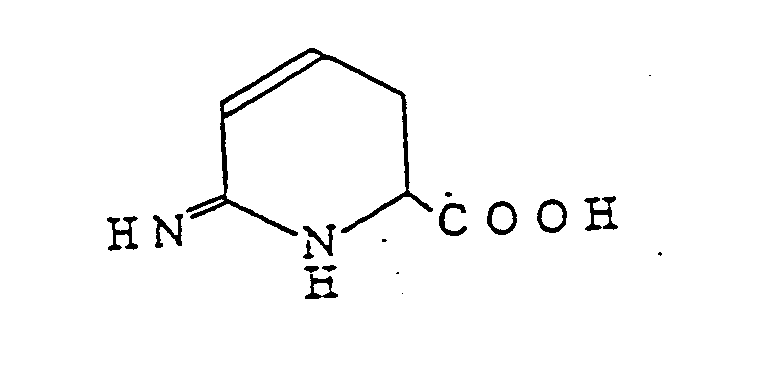
- a novel antibiotic substance SF 2698 represented by formula: and salts thereof and a process for preparing substance SF 2698, which comprises cultivating a microorganism belonging to the genus Streptomyces and capable of producing substance SF 2698 in a medium to accumulate substance SF 2698 therein and recovering the accumulated substance SF 2698.
- Figure 1 is an infrared absorption spectrum (KBr tablet) of a hydrochloride of substance SF 2698.
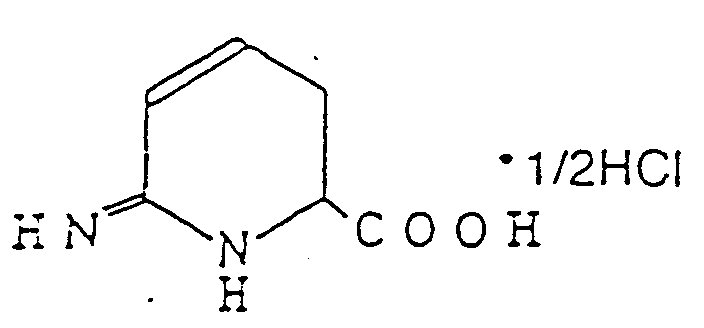
- a hydrochloride of substance SF 2698 represented by the formula has the following physicochemical properties:-
- Substance SF 2698 may have the following alternative structure depending on conditions.
- Substance SF 2689 is an amphoteric substance and can be converted to inorganic or organic acid salts, e.g., a hydrochloride, a sulfate, and a trifluoroacetate, or salts with inorganic or organic bases, e.g., a sodium salt, a potassium salt, and an ethanolamine salt.
- inorganic or organic acid salts e.g., a hydrochloride, a sulfate, and a trifluoroacetate
- salts with inorganic or organic bases e.g., a sodium salt, a potassium salt, and an ethanolamine salt.
- Substance SF 2698-producing microorganisms which can be used in the present invention include a strain SF 2698 isolated from the soil of Shizuoka, Japan.
- Strain SF 2698 has the following microbiological properties.
- Vegetative hyphae extend long and branch well, and are not cut under usual conditions. Aerial hyphae abundantly grow on a starch-agar medium, a glucose-asparagine-agar medium, etc. with satisfactory sporulation. Branching of aerial hyphae is relatively small with no whirl branching. Spore chains on the top of aerial hyphae are linear. Under electron microscopic observation, spores have an elliptic to cylindrical shape having a size of from 0.6-1.0 x 0.9-1.4 ⁇ m and with a smooth surface. Usually about 30 to 50 spores are linked. No sporangium, no motile spore or no sclerotium is observed.
- strain SF 2698 is recognized to be a strain belonging to the genus Streptomyces of actinomyces, with the aerial hypha in the "yellow" color series, the tip of the aerial hypha being linear, a smooth spore surface, and a reverse color being from pale yellow to yellowish brown, and does not produce an appreciable soluble pigment.
- the inventors designated the strain Streptomyces sp. SF 2698.
- the strain has been deposited to Fermentation Research Institute, Agency of Industrial Science & Technology (1-3, Higashi 1-chome, Tsukuba-shi, Ibaraki 305 JAPAN) under a receipt number of FERM BP-3336 in accordance with the Budapest Treaty.
- strain SF 2698 Properties of strain SF 2698 are liable to undergo variation as usually observed with other actinomyces. All the mutants (either spontaneous or induced), zygotes or recombinants of, or originated from, strain SF 2698 can be used in the present invention if they can produce substance SF 2698.
- the above-described strain is cultivated in a medium containing nutrients generally utilizable by microorganisms.
- Any of known nutrient sources conventionally utilized for cultivation of actinomyces can be used.
- Examples of usable carbon sources are glucose, glucose or maltose syrup, dextrin, starch, molasses, and animal and vegetable oils.
- Examples of usable nitrogen sources are soybean meal, wheat germs, corn steep liquor, cotton seed meal, meat extract, peptone, yeast extract, ammonium sulfate, sodium nitrate, and urea.
- inorganic acid salts capable of producing a sodium, potassium, calcium, magnesium, cobalt, chloride, phosphate or sulfate ion or other ions are added to the medium.
- inorganic acid salts examples include sodium sulfate and calcium carbonate.
- Organic or inorganic substances which assist growth of the strain to accelerate production of antibiotic SF 2698 are appropriately added to the medium. Specific examples thereof are Vitamin A, B 1 , B 2 and B 12 .
- Cultivation is suitably carried out under aerobic conditions, and particularly by submerged culture, at pH 7.5 and at a temperature of from 25 to 30°C, mostly around 28°C.
- Accumulation of substance SF 2698 reaches the maximum usually at 2 to 7 day culture either in shake culture or static culture, though depending on the medium and culture conditions. When the amount of accumulated substance SF 2698 reaches the maximum, cultivation is stopped, and the desired substance is isolated and purificated from the culture supernatant.
- Means for isolation and purification of substance SF 2698 from the culture are selected from those generally employed making use of the properties of the substance, such as ion exchange resin methods, adsorption or partition column chromatography, gel filtration, dialysis, sedimentation, and the like either individually or in an appropriate combination thereof.
- substance SF 2698 produced and accumulated in the culture is adsorbed onto strongly acidic ion exchange resins, e.g., Diaion PK-208 (produced by Mitsubishi Kasei Corporation). It is effectively purified by chromatography using an adsorbent, e.g., activated carbon.
- chromatography using an adsorbent e.g., silica gel (Wako Gel C-200, produced by Wako Pure Chemical Industries, Ltd.), alumina, etc., or Sephadex G-10 (produced by Pharmacia Co.).
- an adsorbent e.g., silica gel (Wako Gel C-200, produced by Wako Pure Chemical Industries, Ltd.), alumina, etc., or Sephadex G-10 (produced by Pharmacia Co.).
- silica gel Wako Gel C-200, produced by Wako Pure Chemical Industries, Ltd.
- alumina e.g., alumina
- Sephadex G-10 produced by Pharmacia Co.
- the substance SF 2698 according to the present invention exhibits antifungal activity as demonstrated by Test Example hereinafter described and is applicable to therapy of mycoses in humans and animals with expectation of usefulness as an antifungal.
- substance SF 2698 can be formulated into a pharmaceutical composition of various dosage forms according to known preparation techniques.
- Substance SF 2698 may also be utilized as an intermediate for synthesizing pharmaceuticals.
- MIC Minimum growth inhibitory concentrations
- a hydrochloride of substance SF 2698 exhibits antimicrobial activity against certain kinds of eumycetes.
- toxicity of a hydrochloride of substance SF2698 was examined by administering to mice the test compound by intravenous injection. As a result, there was no case of death at a dose of 100 mg/kg.
- the present invention is now illustrated in greater detail with reference to Example. Now that properties of substance SF 2698 have been elucidated, various approaches can be taken for the preparation of substance SF 2698 according to its properties.
- the present invention also include methods of production, concentration, extraction, purification of substance SF 2698 according to its properties using known methods as well as modifications of the methods described in Example.
- a 100 ml-volume Erlenmeyer flask containing 20 ml of the seed medium was sterilized at 121°C for 20 minutes, and 2 to 3 platinum loopfuls of a slant agar culture of Streptomyces sp. SF 2698 (FERM BP-3336) were inoculated thereto and cultivated at 28°C for 24 hours with shaking to prepare a first subculture.
- a 500 ml-volume Erlenmeyer flask containing 80 ml of the seed medium was sterilized at 121°C for 30 minutes, and 4 ml of the first subculture was inoculated thereto and cultivated at 28°C for 24 hours with shaking to prepare a second subculture.
- a 2 l-volume Erlenmeyer flask containing 700 ml of the seed medium was sterilized at 121°C for 30 minutes, and 35 ml of the second subculture was inoculated thereto and cultivated at 28°C for 24 hours to prepare a third subculture.
- 700 ml of the third subculture was inoculated to a 50 l-volume jar fermenter containing 35 l of the production medium was sterilized at 121°C for 30 minutes and cultivated at 28°C for 5 days with aeration (17.5 l/min) and stirring (250 rpm in the initial stage; 400 rpm from 24 hours on).
- diatomaceous earth was added to the culture as a filter aid, and the culture was filtered.
- the filtrate of the culture 60 l was passed through a column of activated carbon for chromatography (6 l), and the column was washed with water (40 l). The washing was concentrated under reduced pressure, and the concentrate (4 l) was passed through a column of Diaion PK-208 (H + type, 800 ml; produced by Mitsubishi Kasei Corporation). After washing the column with water, elution was carried out using 0.1N aqueous ammonia (13 l).
- the eluent containing the active component was determined by bioassay using Candida glabrata as the indicator microorganism and neutralized with 0.5N hydrochloric acid and passed through a column of activated carbon for chromatography (1 l). After washing the column with water, the active component was eluted with 30% aqueous methanol (2 l). The eluent was concentrated under reduced pressure, and the concentrate was subjected to chromatography using a column of Sephadex G-10 (1.8 l; produced by Pharmacia Co.) and water as a developing solvent. The active fraction was concentrated under reduced pressure at 40°C or less to obtain 103 mg of a hydrochloride of substance SF 2698 as a colorless crystal.
- Substance SF 2698 per se can be obtained from the above active fraction as follows. The fraction is adjusted to pH 5 and was desalted by activated carbon chromatography. The resulting eluate is concentrated to dryness under reduced pressure to give substance SF 2698.
Landscapes
- Chemical & Material Sciences (AREA)
- Organic Chemistry (AREA)
- Health & Medical Sciences (AREA)
- Life Sciences & Earth Sciences (AREA)
- Engineering & Computer Science (AREA)
- Wood Science & Technology (AREA)
- Zoology (AREA)
- General Health & Medical Sciences (AREA)
- Chemical Kinetics & Catalysis (AREA)
- General Chemical & Material Sciences (AREA)
- Bioinformatics & Cheminformatics (AREA)
- Biochemistry (AREA)
- Microbiology (AREA)
- General Engineering & Computer Science (AREA)
- Biotechnology (AREA)
- Genetics & Genomics (AREA)
- Nuclear Medicine, Radiotherapy & Molecular Imaging (AREA)
- Oncology (AREA)
- Medicinal Chemistry (AREA)
- Communicable Diseases (AREA)
- Pharmacology & Pharmacy (AREA)
- Animal Behavior & Ethology (AREA)
- Public Health (AREA)
- Veterinary Medicine (AREA)
- Preparation Of Compounds By Using Micro-Organisms (AREA)
- Hydrogenated Pyridines (AREA)
- Pharmaceuticals Containing Other Organic And Inorganic Compounds (AREA)
Description
- Calcd.:
- m/z 140.0585 (C6H8N2O2)
- Found :
- m/z 140.0587 (M+)
λmax nm (ε)[MeOH]: 218 (9000), 255 (shoulder)
shown in Fig. 1
- δ (ppm):
- 7.02 (1H, dt), 6.23 (1H, dt), 4.18 (1H, t), 2.92 (1H, m), 2.78 (1H, m)
- δ (ppm):
- 177.8 s, 159.1 s, 146.9 d, 117.3 d, 53.4 d, 27.8 t
Rf = 0.29; silica gel glass plate (5715, manufactured by Merck Co.); butanol-methanol-water (2:1:1 by volume) as a developing solvent


| Medium | Growth (Color of Reverse of Colony) | Aerial Hypha | Soluble Pigment |
| sucrose-nitrate-agar | medium; pearl (2ba) | medium, pearl (2ba) | none |
| glucose-asparagine-agar | satisfactory; pale yellow (2fb) | medium to satisfactory, pastel yellow (1fb) | none |
| glycerine-asparagine-agar | medium; pale yellow (1ba) | poor; pearl (2ba) | none |
| malic acid-calcium-agar | medium; pearl (2ba) | medium; pearl (2ba) | none |
| starch-agar | satisfactory; pale yellow (2fb) | satisfactory; pastel yellow (1fb) | none |
| oat meal-agar | satisfactory; pale yellow (2fb) | medium; ivory-white (2ca) | ivory-white (2ca) |
| yeast extract-malt extract-agar | satisfactory; | satisfactory; mustard (21e) (1ca) | none faint yellow |
| tyrosine-agar | medium; yellowish brown (2ie) | poor; pearl (2ba) | none |
| nutrient agar | medium; grayish yellow (2gc) | none | none |
| Bennett agar | satisfactory; mustard (21e) | satisfactory; faint yellow (1ca) | none |
from 15 to 33°C, and particularly from 25 to 30°C, on a yeast extract-starch-agar medium.
negative
Coagulation of skim milk: negative
capable of growing in a 5% NaCℓ-containing medium but substantially incapable of growing in a 7% or higher NaCℓ -containing medium
positive (on peptone-yeast-iron agar medium)
| Test Microorganism | MIC (µg/mℓ) |
| Candida glabrata IFO-0005 | 0.2 |
| Candida glabrata IFO-0622 | 0.78 |
| Candida utilis M9007 | 12.5 |
| Candida albicans M9001 | >100 |
| Cryptococcus neoformans M9010 | >100 |
Claims (4)
- A substance represented by formula:and a salt thereof.

- A substance according to claim 1 whose hydrochloride represented by the formulahas the following physicochemical properties:
 1) Color and shape: colorless crystal2) Melting point: vague; decomposition at 250°C or higher3) Molecular formula: C6H8N2O2·1/2HCl4) Mass spectrum (HR-MS):
- Calcd.:
- m/z 140.0585 (C6H8N2O2)
- Found :
- m/z 140.0587 (M+)
5) Ultraviolet and visible absorption spectra:
λmax nm (ε)[MeOH]: 218 (9000), 255 (shoulder)6) 13C NMR spectrum (100 MHz, D2O)- δ (ppm):
- 177.8 s, 159.1 s, 146.9 d, 117.3 d, 53.4 d, 27.8 t
- A process for preparing a substance as claimed in claim 1, which comprises cultivating a microorganism capable of producing the substance belonging to the genus Streptomyces and recovering the substance from the culture.
- The process of claim 3, wherein said microorganism is FERM BP-3336.
Applications Claiming Priority (2)
| Application Number | Priority Date | Filing Date | Title |
|---|---|---|---|
| JP2129049A JP2594167B2 (en) | 1990-05-21 | 1990-05-21 | Novel antibiotic SF2698 substance and its production method |
| JP129049/90 | 1990-05-21 |
Publications (3)
| Publication Number | Publication Date |
|---|---|
| EP0458259A2 EP0458259A2 (en) | 1991-11-27 |
| EP0458259A3 EP0458259A3 (en) | 1992-05-06 |
| EP0458259B1 true EP0458259B1 (en) | 1998-08-05 |
Family
ID=14999823
Family Applications (1)
| Application Number | Title | Priority Date | Filing Date |
|---|---|---|---|
| EP91108173A Expired - Lifetime EP0458259B1 (en) | 1990-05-21 | 1991-05-21 | Novel antibiotic and process for preparing the same |
Country Status (4)
| Country | Link |
|---|---|
| US (1) | US5164507A (en) |
| EP (1) | EP0458259B1 (en) |
| JP (1) | JP2594167B2 (en) |
| DE (1) | DE69129924T2 (en) |
Families Citing this family (3)
| Publication number | Priority date | Publication date | Assignee | Title |
|---|---|---|---|---|
| CA2077025A1 (en) * | 1991-08-29 | 1993-03-01 | Tsuneo Okonogi | 2-piperidinecarboxylic acid derivatives, oncogene suppressor and agent for obtaining revertants |
| JP2828548B2 (en) | 1991-08-29 | 1998-11-25 | 明治製菓株式会社 | Novel 2-piperidinecarboxylic acid derivative |
| JPH05279374A (en) * | 1992-03-31 | 1993-10-26 | Sawao Murao | Suidatrestin and its production |
Family Cites Families (2)
| Publication number | Priority date | Publication date | Assignee | Title |
|---|---|---|---|---|
| ES8708211A1 (en) * | 1985-06-14 | 1987-10-01 | Sankyo Co | 1,4-Dihydropyridine derivatives, their preparation and their pharmaceutical use. |
| DE3615404A1 (en) * | 1986-05-07 | 1987-11-12 | Bayer Ag | SALTS OF 3-AMINO-DIHYDROPYRIDINE, A METHOD FOR THE PRODUCTION AND THEIR USE IN MEDICINAL PRODUCTS |
-
1990
- 1990-05-21 JP JP2129049A patent/JP2594167B2/en not_active Expired - Lifetime
-
1991
- 1991-05-21 US US07/703,653 patent/US5164507A/en not_active Expired - Fee Related
- 1991-05-21 DE DE69129924T patent/DE69129924T2/en not_active Expired - Fee Related
- 1991-05-21 EP EP91108173A patent/EP0458259B1/en not_active Expired - Lifetime
Also Published As
| Publication number | Publication date |
|---|---|
| DE69129924T2 (en) | 1999-05-12 |
| JP2594167B2 (en) | 1997-03-26 |
| EP0458259A3 (en) | 1992-05-06 |
| EP0458259A2 (en) | 1991-11-27 |
| DE69129924D1 (en) | 1998-09-10 |
| US5164507A (en) | 1992-11-17 |
| JPH0426674A (en) | 1992-01-29 |
Similar Documents
| Publication | Publication Date | Title |
|---|---|---|
| EP0271581A1 (en) | Novel compounds dc-88a and dc-89a1 and process for their preparation | |
| US4460765A (en) | Enzyme inhibitor produced by cultivation of streptomyces microorganisms | |
| JPH0689017B2 (en) | BBM-2478B antibiotic | |
| EP0298640B1 (en) | A new antimicrobial agent, fr 109615 and production thereof | |
| CA1270782A (en) | Cl-1577d and 1577e antibiotic/antitumor compounds, their production and use | |
| EP0300273B1 (en) | AB-006 antibiotics and process for their production | |
| EP0345735B1 (en) | Glycoside antibiotics bu-3608d and bu-3608e | |
| EP0318056A2 (en) | Novel antibiotics and process for preparing the same | |
| EP0326173B1 (en) | Novel antitumor antibiotic substance and a method for production thereof | |
| US5164507A (en) | Antibiotic pyridine compound | |
| KR920001448B1 (en) | BBM-2478 Antibiotic Complex | |
| EP0491956B1 (en) | Reveromycin a, production thereof, and antitumor drug and fungicide | |
| US4376778A (en) | Antibiotic substances and processes for production thereof | |
| US4548816A (en) | Antibiotic SF-2288 and its preparation method | |
| EP0110155A1 (en) | Novel anthracycline derivatives, a process for preparing the same by a microorganism strain, the novel strain streptomyces cyaneus, and use of the anthracycline derivatives as medicaments | |
| EP0327009B1 (en) | WS-9326A, WS-9326B and their derivatives | |
| JP3036923B2 (en) | Depsipeptides A and B, production method thereof, antiviral agent and antibacterial agent | |
| EP0253413B1 (en) | New antibiotics called "mureidomycins a, b, c and d" a process for their preparation and their therapeutic use | |
| US4565781A (en) | Antibiotic, Spicamycin | |
| US4803074A (en) | FR-900848 substance and preparation thereof | |
| US4677071A (en) | Antibiotic agents from S. coeruleorubidus, rubidus | |
| US4499075A (en) | Antibiotic agents from S. coeruleorubidus, rubidus | |
| EP0659759A1 (en) | Novel physiologically active substance nk175203, process for producing the same, and pharmaceutical use thereof | |
| EP0289354A2 (en) | Antibiotic TAN-950A, its production and use | |
| US4650765A (en) | Biologically pure culture of Streptoverticillium stramineum sp. nov. |
Legal Events
| Date | Code | Title | Description |
|---|---|---|---|
| PUAI | Public reference made under article 153(3) epc to a published international application that has entered the european phase |
Free format text: ORIGINAL CODE: 0009012 |
|
| AK | Designated contracting states |
Kind code of ref document: A2 Designated state(s): DE FR GB IT |
|
| PUAL | Search report despatched |
Free format text: ORIGINAL CODE: 0009013 |
|
| AK | Designated contracting states |
Kind code of ref document: A3 Designated state(s): DE FR GB IT |
|
| 17P | Request for examination filed |
Effective date: 19920820 |
|
| 17Q | First examination report despatched |
Effective date: 19960411 |
|
| GRAG | Despatch of communication of intention to grant |
Free format text: ORIGINAL CODE: EPIDOS AGRA |
|
| GRAG | Despatch of communication of intention to grant |
Free format text: ORIGINAL CODE: EPIDOS AGRA |
|
| GRAH | Despatch of communication of intention to grant a patent |
Free format text: ORIGINAL CODE: EPIDOS IGRA |
|
| GRAH | Despatch of communication of intention to grant a patent |
Free format text: ORIGINAL CODE: EPIDOS IGRA |
|
| ITF | It: translation for a ep patent filed | ||
| GRAA | (expected) grant |
Free format text: ORIGINAL CODE: 0009210 |
|
| AK | Designated contracting states |
Kind code of ref document: B1 Designated state(s): DE FR GB IT |
|
| REF | Corresponds to: |
Ref document number: 69129924 Country of ref document: DE Date of ref document: 19980910 |
|
| ET | Fr: translation filed | ||
| PLBE | No opposition filed within time limit |
Free format text: ORIGINAL CODE: 0009261 |
|
| STAA | Information on the status of an ep patent application or granted ep patent |
Free format text: STATUS: NO OPPOSITION FILED WITHIN TIME LIMIT |
|
| 26N | No opposition filed | ||
| PGFP | Annual fee paid to national office [announced via postgrant information from national office to epo] |
Ref country code: DE Payment date: 20010514 Year of fee payment: 11 |
|
| PGFP | Annual fee paid to national office [announced via postgrant information from national office to epo] |
Ref country code: GB Payment date: 20010516 Year of fee payment: 11 |
|
| PGFP | Annual fee paid to national office [announced via postgrant information from national office to epo] |
Ref country code: FR Payment date: 20010518 Year of fee payment: 11 |
|
| REG | Reference to a national code |
Ref country code: GB Ref legal event code: IF02 |
|
| PG25 | Lapsed in a contracting state [announced via postgrant information from national office to epo] |
Ref country code: GB Free format text: LAPSE BECAUSE OF NON-PAYMENT OF DUE FEES Effective date: 20020521 |
|
| PG25 | Lapsed in a contracting state [announced via postgrant information from national office to epo] |
Ref country code: DE Free format text: LAPSE BECAUSE OF NON-PAYMENT OF DUE FEES Effective date: 20021203 |
|
| GBPC | Gb: european patent ceased through non-payment of renewal fee |
Effective date: 20020521 |
|
| PG25 | Lapsed in a contracting state [announced via postgrant information from national office to epo] |
Ref country code: FR Free format text: LAPSE BECAUSE OF NON-PAYMENT OF DUE FEES Effective date: 20030131 |
|
| REG | Reference to a national code |
Ref country code: FR Ref legal event code: ST |
|
| PG25 | Lapsed in a contracting state [announced via postgrant information from national office to epo] |
Ref country code: IT Free format text: LAPSE BECAUSE OF NON-PAYMENT OF DUE FEES;WARNING: LAPSES OF ITALIAN PATENTS WITH EFFECTIVE DATE BEFORE 2007 MAY HAVE OCCURRED AT ANY TIME BEFORE 2007. THE CORRECT EFFECTIVE DATE MAY BE DIFFERENT FROM THE ONE RECORDED. Effective date: 20050521 |