EP0456636B1 - A crystalline lactitol monohydrate and a process for the preparation thereof, use thereof, and sweetening agent - Google Patents
A crystalline lactitol monohydrate and a process for the preparation thereof, use thereof, and sweetening agent Download PDFInfo
- Publication number
- EP0456636B1 EP0456636B1 EP89908709A EP89908709A EP0456636B1 EP 0456636 B1 EP0456636 B1 EP 0456636B1 EP 89908709 A EP89908709 A EP 89908709A EP 89908709 A EP89908709 A EP 89908709A EP 0456636 B1 EP0456636 B1 EP 0456636B1
- Authority
- EP
- European Patent Office
- Prior art keywords
- lactitol
- monohydrate
- temperature
- lactitol monohydrate
- solution
- Prior art date
- Legal status (The legal status is an assumption and is not a legal conclusion. Google has not performed a legal analysis and makes no representation as to the accuracy of the status listed.)
- Expired - Lifetime
Links
- 229960001159 lactitol monohydrate Drugs 0.000 title claims abstract description 71
- ZCWBZRBJSPWUPG-UHFFFAOYSA-N 4-bromo-2-nitroaniline Chemical compound NC1=CC=C(Br)C=C1[N+]([O-])=O ZCWBZRBJSPWUPG-UHFFFAOYSA-N 0.000 title claims abstract description 70
- 238000000034 method Methods 0.000 title claims abstract description 35
- 235000003599 food sweetener Nutrition 0.000 title claims abstract description 14
- 239000003765 sweetening agent Substances 0.000 title claims abstract description 14
- 238000002360 preparation method Methods 0.000 title description 7
- 229960003451 lactitol Drugs 0.000 claims abstract description 57
- 239000000832 lactitol Substances 0.000 claims abstract description 57
- 235000010448 lactitol Nutrition 0.000 claims abstract description 57
- VQHSOMBJVWLPSR-JVCRWLNRSA-N lactitol Chemical compound OC[C@H](O)[C@@H](O)[C@@H]([C@H](O)CO)O[C@@H]1O[C@H](CO)[C@H](O)[C@H](O)[C@H]1O VQHSOMBJVWLPSR-JVCRWLNRSA-N 0.000 claims abstract description 57
- 239000013078 crystal Substances 0.000 claims abstract description 33
- XLYOFNOQVPJJNP-UHFFFAOYSA-N water Substances O XLYOFNOQVPJJNP-UHFFFAOYSA-N 0.000 claims abstract description 33
- 238000002844 melting Methods 0.000 claims abstract description 25
- 230000008018 melting Effects 0.000 claims abstract description 25
- 239000012452 mother liquor Substances 0.000 claims abstract description 18
- 238000001035 drying Methods 0.000 claims abstract description 11
- 238000001816 cooling Methods 0.000 claims abstract description 9
- 238000001704 evaporation Methods 0.000 claims abstract description 9
- 239000007864 aqueous solution Substances 0.000 claims abstract description 7
- 235000009508 confectionery Nutrition 0.000 claims abstract description 7
- 229930006000 Sucrose Natural products 0.000 claims abstract description 6
- CZMRCDWAGMRECN-UGDNZRGBSA-N Sucrose Chemical compound O[C@H]1[C@H](O)[C@@H](CO)O[C@@]1(CO)O[C@@H]1[C@H](O)[C@@H](O)[C@H](O)[C@@H](CO)O1 CZMRCDWAGMRECN-UGDNZRGBSA-N 0.000 claims abstract description 6
- 235000019219 chocolate Nutrition 0.000 claims abstract description 6
- 239000005720 sucrose Substances 0.000 claims abstract description 6
- 235000015243 ice cream Nutrition 0.000 claims abstract description 5
- 235000015173 baked goods and baking mixes Nutrition 0.000 claims abstract description 4
- 235000013361 beverage Nutrition 0.000 claims abstract description 4
- 235000013339 cereals Nutrition 0.000 claims abstract description 4
- 235000015218 chewing gum Nutrition 0.000 claims abstract description 4
- 229940112822 chewing gum Drugs 0.000 claims abstract description 4
- 235000011850 desserts Nutrition 0.000 claims abstract description 4
- 235000005911 diet Nutrition 0.000 claims abstract description 4
- 230000000378 dietary effect Effects 0.000 claims abstract description 4
- 239000000606 toothpaste Substances 0.000 claims abstract description 4
- 229940034610 toothpaste Drugs 0.000 claims abstract description 4
- 239000002537 cosmetic Substances 0.000 claims abstract description 3
- 239000011369 resultant mixture Substances 0.000 claims abstract 4
- 238000002425 crystallisation Methods 0.000 claims description 39
- 230000008025 crystallization Effects 0.000 claims description 38
- 239000000243 solution Substances 0.000 claims description 34
- 239000000047 product Substances 0.000 claims description 19
- 239000000126 substance Substances 0.000 claims description 9
- 235000019204 saccharin Nutrition 0.000 claims description 6
- CVHZOJJKTDOEJC-UHFFFAOYSA-N saccharin Chemical compound C1=CC=C2C(=O)NS(=O)(=O)C2=C1 CVHZOJJKTDOEJC-UHFFFAOYSA-N 0.000 claims description 6
- 229940081974 saccharin Drugs 0.000 claims description 6
- 239000000901 saccharin and its Na,K and Ca salt Substances 0.000 claims description 6
- 238000004519 manufacturing process Methods 0.000 claims description 5
- 238000010899 nucleation Methods 0.000 claims description 5
- TVXBFESIOXBWNM-UHFFFAOYSA-N Xylitol Natural products OCCC(O)C(O)C(O)CCO TVXBFESIOXBWNM-UHFFFAOYSA-N 0.000 claims description 2
- HEBKCHPVOIAQTA-UHFFFAOYSA-N meso ribitol Natural products OCC(O)C(O)C(O)CO HEBKCHPVOIAQTA-UHFFFAOYSA-N 0.000 claims description 2
- 239000000811 xylitol Substances 0.000 claims description 2
- 235000010447 xylitol Nutrition 0.000 claims description 2
- HEBKCHPVOIAQTA-SCDXWVJYSA-N xylitol Chemical compound OC[C@H](O)[C@@H](O)[C@H](O)CO HEBKCHPVOIAQTA-SCDXWVJYSA-N 0.000 claims description 2
- 229960002675 xylitol Drugs 0.000 claims description 2
- 239000012535 impurity Substances 0.000 claims 3
- 238000005406 washing Methods 0.000 claims 3
- 239000012467 final product Substances 0.000 claims 1
- 239000000825 pharmaceutical preparation Substances 0.000 claims 1
- 229940127557 pharmaceutical product Drugs 0.000 claims 1
- 239000003814 drug Substances 0.000 abstract 1
- 150000004682 monohydrates Chemical class 0.000 description 30
- KRKNYBCHXYNGOX-UHFFFAOYSA-N citric acid Chemical compound OC(=O)CC(O)(C(O)=O)CC(O)=O KRKNYBCHXYNGOX-UHFFFAOYSA-N 0.000 description 27
- 239000000203 mixture Substances 0.000 description 22
- 239000000843 powder Substances 0.000 description 14
- 239000000796 flavoring agent Substances 0.000 description 12
- 235000019634 flavors Nutrition 0.000 description 12
- 238000012360 testing method Methods 0.000 description 11
- WBZFUFAFFUEMEI-UHFFFAOYSA-M Acesulfame k Chemical compound [K+].CC1=CC(=O)[N-]S(=O)(=O)O1 WBZFUFAFFUEMEI-UHFFFAOYSA-M 0.000 description 9
- 244000299461 Theobroma cacao Species 0.000 description 9
- 239000000619 acesulfame-K Substances 0.000 description 9
- 235000000346 sugar Nutrition 0.000 description 9
- 108010011485 Aspartame Proteins 0.000 description 8
- 239000000605 aspartame Substances 0.000 description 8
- 235000010357 aspartame Nutrition 0.000 description 8
- IAOZJIPTCAWIRG-QWRGUYRKSA-N aspartame Chemical compound OC(=O)C[C@H](N)C(=O)N[C@H](C(=O)OC)CC1=CC=CC=C1 IAOZJIPTCAWIRG-QWRGUYRKSA-N 0.000 description 8
- 229960003438 aspartame Drugs 0.000 description 8
- 150000004683 dihydrates Chemical class 0.000 description 8
- 235000013601 eggs Nutrition 0.000 description 6
- 229920000159 gelatin Polymers 0.000 description 6
- 235000019322 gelatine Nutrition 0.000 description 6
- 239000001814 pectin Substances 0.000 description 6
- 235000010987 pectin Nutrition 0.000 description 6
- 229920001277 pectin Polymers 0.000 description 6
- 241000220223 Fragaria Species 0.000 description 5
- 235000009470 Theobroma cacao Nutrition 0.000 description 5
- 150000008064 anhydrides Chemical class 0.000 description 5
- 235000013312 flour Nutrition 0.000 description 5
- -1 lactitol anhydride Chemical class 0.000 description 5
- 235000016623 Fragaria vesca Nutrition 0.000 description 4
- 235000011363 Fragaria x ananassa Nutrition 0.000 description 4
- 239000005715 Fructose Substances 0.000 description 4
- 229930091371 Fructose Natural products 0.000 description 4
- RFSUNEUAIZKAJO-ARQDHWQXSA-N Fructose Chemical compound OC[C@H]1O[C@](O)(CO)[C@@H](O)[C@@H]1O RFSUNEUAIZKAJO-ARQDHWQXSA-N 0.000 description 4
- GUBGYTABKSRVRQ-QKKXKWKRSA-N Lactose Natural products OC[C@H]1O[C@@H](O[C@H]2[C@H](O)[C@@H](O)C(O)O[C@@H]2CO)[C@H](O)[C@@H](O)[C@H]1O GUBGYTABKSRVRQ-QKKXKWKRSA-N 0.000 description 4
- 239000003995 emulsifying agent Substances 0.000 description 4
- 235000019197 fats Nutrition 0.000 description 4
- 238000005984 hydrogenation reaction Methods 0.000 description 4
- 239000008101 lactose Substances 0.000 description 4
- 235000020183 skimmed milk Nutrition 0.000 description 4
- 244000215068 Acacia senegal Species 0.000 description 3
- LFQSCWFLJHTTHZ-UHFFFAOYSA-N Ethanol Chemical compound CCO LFQSCWFLJHTTHZ-UHFFFAOYSA-N 0.000 description 3
- 108010010803 Gelatin Proteins 0.000 description 3
- 239000001828 Gelatine Substances 0.000 description 3
- 229920000084 Gum arabic Polymers 0.000 description 3
- 229920002472 Starch Polymers 0.000 description 3
- 239000000205 acacia gum Substances 0.000 description 3
- 235000010489 acacia gum Nutrition 0.000 description 3
- 210000004027 cell Anatomy 0.000 description 3
- 239000006185 dispersion Substances 0.000 description 3
- 230000008020 evaporation Effects 0.000 description 3
- 239000008273 gelatin Substances 0.000 description 3
- 235000011852 gelatine desserts Nutrition 0.000 description 3
- 239000000845 maltitol Substances 0.000 description 3
- 235000010449 maltitol Nutrition 0.000 description 3
- 239000003381 stabilizer Substances 0.000 description 3
- 239000008107 starch Substances 0.000 description 3
- 235000019698 starch Nutrition 0.000 description 3
- IIZPXYDJLKNOIY-JXPKJXOSSA-N 1-palmitoyl-2-arachidonoyl-sn-glycero-3-phosphocholine Chemical compound CCCCCCCCCCCCCCCC(=O)OC[C@H](COP([O-])(=O)OCC[N+](C)(C)C)OC(=O)CCC\C=C/C\C=C/C\C=C/C\C=C/CCCCC IIZPXYDJLKNOIY-JXPKJXOSSA-N 0.000 description 2
- 102000002322 Egg Proteins Human genes 0.000 description 2
- 108010000912 Egg Proteins Proteins 0.000 description 2
- WQZGKKKJIJFFOK-GASJEMHNSA-N Glucose Natural products OC[C@H]1OC(O)[C@H](O)[C@@H](O)[C@@H]1O WQZGKKKJIJFFOK-GASJEMHNSA-N 0.000 description 2
- UIIMBOGNXHQVGW-UHFFFAOYSA-M Sodium bicarbonate Chemical compound [Na+].OC([O-])=O UIIMBOGNXHQVGW-UHFFFAOYSA-M 0.000 description 2
- ATJFFYVFTNAWJD-UHFFFAOYSA-N Tin Chemical compound [Sn] ATJFFYVFTNAWJD-UHFFFAOYSA-N 0.000 description 2
- 230000009102 absorption Effects 0.000 description 2
- 238000010521 absorption reaction Methods 0.000 description 2
- 239000002253 acid Substances 0.000 description 2
- 230000015572 biosynthetic process Effects 0.000 description 2
- 238000009835 boiling Methods 0.000 description 2
- 235000014121 butter Nutrition 0.000 description 2
- 229940110456 cocoa butter Drugs 0.000 description 2
- 235000019868 cocoa butter Nutrition 0.000 description 2
- 239000003086 colorant Substances 0.000 description 2
- 238000007796 conventional method Methods 0.000 description 2
- 239000006071 cream Substances 0.000 description 2
- 235000013399 edible fruits Nutrition 0.000 description 2
- 235000014103 egg white Nutrition 0.000 description 2
- 210000000969 egg white Anatomy 0.000 description 2
- 235000013345 egg yolk Nutrition 0.000 description 2
- 210000002969 egg yolk Anatomy 0.000 description 2
- 239000012527 feed solution Substances 0.000 description 2
- 238000009472 formulation Methods 0.000 description 2
- 239000008103 glucose Substances 0.000 description 2
- 235000015110 jellies Nutrition 0.000 description 2
- 239000008274 jelly Substances 0.000 description 2
- 239000000787 lecithin Substances 0.000 description 2
- 235000010445 lecithin Nutrition 0.000 description 2
- 229940067606 lecithin Drugs 0.000 description 2
- 238000005259 measurement Methods 0.000 description 2
- 239000000155 melt Substances 0.000 description 2
- 238000003860 storage Methods 0.000 description 2
- 239000002344 surface layer Substances 0.000 description 2
- MWOOGOJBHIARFG-UHFFFAOYSA-N vanillin Chemical compound COC1=CC(C=O)=CC=C1O MWOOGOJBHIARFG-UHFFFAOYSA-N 0.000 description 2
- FGQOOHJZONJGDT-UHFFFAOYSA-N vanillin Natural products COC1=CC(O)=CC(C=O)=C1 FGQOOHJZONJGDT-UHFFFAOYSA-N 0.000 description 2
- 235000012141 vanillin Nutrition 0.000 description 2
- CHHHXKFHOYLYRE-UHFFFAOYSA-M 2,4-Hexadienoic acid, potassium salt (1:1), (2E,4E)- Chemical compound [K+].CC=CC=CC([O-])=O CHHHXKFHOYLYRE-UHFFFAOYSA-M 0.000 description 1
- QCVGEOXPDFCNHA-UHFFFAOYSA-N 5,5-dimethyl-2,4-dioxo-1,3-oxazolidine-3-carboxamide Chemical compound CC1(C)OC(=O)N(C(N)=O)C1=O QCVGEOXPDFCNHA-UHFFFAOYSA-N 0.000 description 1
- QEWLHSNMEXFSCI-UHFFFAOYSA-N Alloclamide hydrochloride Chemical compound Cl.CCN(CC)CCNC(=O)C1=CC=C(Cl)C=C1OCC=C QEWLHSNMEXFSCI-UHFFFAOYSA-N 0.000 description 1
- 240000006766 Cornus mas Species 0.000 description 1
- 235000003363 Cornus mas Nutrition 0.000 description 1
- FBPFZTCFMRRESA-FSIIMWSLSA-N D-Glucitol Natural products OC[C@H](O)[C@H](O)[C@@H](O)[C@H](O)CO FBPFZTCFMRRESA-FSIIMWSLSA-N 0.000 description 1
- 238000001159 Fisher's combined probability test Methods 0.000 description 1
- VAOUPFUEMFJHKI-MTURKXFLSA-N Lactitol dihydrate Chemical compound O.O.OC[C@H](O)[C@@H](O)[C@@H]([C@H](O)CO)O[C@@H]1O[C@H](CO)[C@H](O)[C@H](O)[C@H]1O VAOUPFUEMFJHKI-MTURKXFLSA-N 0.000 description 1
- 229910000564 Raney nickel Inorganic materials 0.000 description 1
- NPXOKRUENSOPAO-UHFFFAOYSA-N Raney nickel Chemical compound [Al].[Ni] NPXOKRUENSOPAO-UHFFFAOYSA-N 0.000 description 1
- UEDUENGHJMELGK-HYDKPPNVSA-N Stevioside Chemical compound O([C@@H]1[C@@H](O)[C@H](O)[C@@H](CO)O[C@H]1O[C@]12C(=C)C[C@@]3(C1)CC[C@@H]1[C@@](C)(CCC[C@]1([C@@H]3CC2)C)C(=O)O[C@H]1[C@@H]([C@@H](O)[C@H](O)[C@@H](CO)O1)O)[C@@H]1O[C@H](CO)[C@@H](O)[C@H](O)[C@H]1O UEDUENGHJMELGK-HYDKPPNVSA-N 0.000 description 1
- 239000004376 Sucralose Substances 0.000 description 1
- 244000273928 Zingiber officinale Species 0.000 description 1
- 235000006886 Zingiber officinale Nutrition 0.000 description 1
- 238000010009 beating Methods 0.000 description 1
- 235000015895 biscuits Nutrition 0.000 description 1
- 239000008280 blood Substances 0.000 description 1
- 210000004369 blood Anatomy 0.000 description 1
- FNAQSUUGMSOBHW-UHFFFAOYSA-H calcium citrate Chemical compound [Ca+2].[Ca+2].[Ca+2].[O-]C(=O)CC(O)(CC([O-])=O)C([O-])=O.[O-]C(=O)CC(O)(CC([O-])=O)C([O-])=O FNAQSUUGMSOBHW-UHFFFAOYSA-H 0.000 description 1
- 239000001354 calcium citrate Substances 0.000 description 1
- MKJXYGKVIBWPFZ-UHFFFAOYSA-L calcium lactate Chemical compound [Ca+2].CC(O)C([O-])=O.CC(O)C([O-])=O MKJXYGKVIBWPFZ-UHFFFAOYSA-L 0.000 description 1
- 239000001527 calcium lactate Substances 0.000 description 1
- 229960002401 calcium lactate Drugs 0.000 description 1
- 235000011086 calcium lactate Nutrition 0.000 description 1
- 159000000007 calcium salts Chemical class 0.000 description 1
- 239000007795 chemical reaction product Substances 0.000 description 1
- 235000021185 dessert Nutrition 0.000 description 1
- 238000011161 development Methods 0.000 description 1
- 230000018109 developmental process Effects 0.000 description 1
- 206010012601 diabetes mellitus Diseases 0.000 description 1
- 238000009826 distribution Methods 0.000 description 1
- 239000000428 dust Substances 0.000 description 1
- 239000000835 fiber Substances 0.000 description 1
- 235000013305 food Nutrition 0.000 description 1
- 235000008397 ginger Nutrition 0.000 description 1
- 235000020278 hot chocolate Nutrition 0.000 description 1
- 238000002329 infrared spectrum Methods 0.000 description 1
- 239000004615 ingredient Substances 0.000 description 1
- 230000002427 irreversible effect Effects 0.000 description 1
- 235000013336 milk Nutrition 0.000 description 1
- 239000008267 milk Substances 0.000 description 1
- 210000004080 milk Anatomy 0.000 description 1
- 235000013615 non-nutritive sweetener Nutrition 0.000 description 1
- 229940038580 oat bran Drugs 0.000 description 1
- 235000010603 pastilles Nutrition 0.000 description 1
- 230000001766 physiological effect Effects 0.000 description 1
- 239000004033 plastic Substances 0.000 description 1
- 229940069338 potassium sorbate Drugs 0.000 description 1
- 235000010241 potassium sorbate Nutrition 0.000 description 1
- 239000004302 potassium sorbate Substances 0.000 description 1
- 239000003755 preservative agent Substances 0.000 description 1
- 230000002335 preservative effect Effects 0.000 description 1
- 238000004064 recycling Methods 0.000 description 1
- 150000003839 salts Chemical class 0.000 description 1
- 235000017557 sodium bicarbonate Nutrition 0.000 description 1
- 229910000030 sodium bicarbonate Inorganic materials 0.000 description 1
- 239000001509 sodium citrate Substances 0.000 description 1
- NLJMYIDDQXHKNR-UHFFFAOYSA-K sodium citrate Chemical compound O.O.[Na+].[Na+].[Na+].[O-]C(=O)CC(O)(CC([O-])=O)C([O-])=O NLJMYIDDQXHKNR-UHFFFAOYSA-K 0.000 description 1
- ILJOYZVVZZFIKA-UHFFFAOYSA-M sodium;1,1-dioxo-1,2-benzothiazol-3-olate;hydrate Chemical compound O.[Na+].C1=CC=C2C(=O)[N-]S(=O)(=O)C2=C1 ILJOYZVVZZFIKA-UHFFFAOYSA-M 0.000 description 1
- 239000007787 solid Substances 0.000 description 1
- 239000000600 sorbitol Substances 0.000 description 1
- 229940013618 stevioside Drugs 0.000 description 1
- OHHNJQXIOPOJSC-UHFFFAOYSA-N stevioside Natural products CC1(CCCC2(C)C3(C)CCC4(CC3(CCC12C)CC4=C)OC5OC(CO)C(O)C(O)C5OC6OC(CO)C(O)C(O)C6O)C(=O)OC7OC(CO)C(O)C(O)C7O OHHNJQXIOPOJSC-UHFFFAOYSA-N 0.000 description 1
- 235000019202 steviosides Nutrition 0.000 description 1
- 238000003756 stirring Methods 0.000 description 1
- 235000021012 strawberries Nutrition 0.000 description 1
- 235000019408 sucralose Nutrition 0.000 description 1
- BAQAVOSOZGMPRM-QBMZZYIRSA-N sucralose Chemical compound O[C@@H]1[C@@H](O)[C@@H](Cl)[C@@H](CO)O[C@@H]1O[C@@]1(CCl)[C@@H](O)[C@H](O)[C@@H](CCl)O1 BAQAVOSOZGMPRM-QBMZZYIRSA-N 0.000 description 1
- 150000008163 sugars Chemical class 0.000 description 1
- 235000015149 toffees Nutrition 0.000 description 1
- 235000013337 tricalcium citrate Nutrition 0.000 description 1
- 239000008371 vanilla flavor Substances 0.000 description 1
- 235000019871 vegetable fat Nutrition 0.000 description 1
- 235000019220 whole milk chocolate Nutrition 0.000 description 1
Images
Classifications
-
- A—HUMAN NECESSITIES
- A23—FOODS OR FOODSTUFFS; TREATMENT THEREOF, NOT COVERED BY OTHER CLASSES
- A23G—COCOA; COCOA PRODUCTS, e.g. CHOCOLATE; SUBSTITUTES FOR COCOA OR COCOA PRODUCTS; CONFECTIONERY; CHEWING GUM; ICE-CREAM; PREPARATION THEREOF
- A23G3/00—Sweetmeats; Confectionery; Marzipan; Coated or filled products
- A23G3/34—Sweetmeats, confectionery or marzipan; Processes for the preparation thereof
- A23G3/346—Finished or semi-finished products in the form of powders, paste or liquids
-
- A—HUMAN NECESSITIES
- A23—FOODS OR FOODSTUFFS; TREATMENT THEREOF, NOT COVERED BY OTHER CLASSES
- A23G—COCOA; COCOA PRODUCTS, e.g. CHOCOLATE; SUBSTITUTES FOR COCOA OR COCOA PRODUCTS; CONFECTIONERY; CHEWING GUM; ICE-CREAM; PREPARATION THEREOF
- A23G9/00—Frozen sweets, e.g. ice confectionery, ice-cream; Mixtures therefor
- A23G9/52—Liquid products; Solid products in the form of powders, flakes or granules for making liquid products ; Finished or semi-finished solid products, frozen granules
-
- A—HUMAN NECESSITIES
- A23—FOODS OR FOODSTUFFS; TREATMENT THEREOF, NOT COVERED BY OTHER CLASSES
- A23L—FOODS, FOODSTUFFS OR NON-ALCOHOLIC BEVERAGES, NOT OTHERWISE PROVIDED FOR; PREPARATION OR TREATMENT THEREOF
- A23L27/00—Spices; Flavouring agents or condiments; Artificial sweetening agents; Table salts; Dietetic salt substitutes; Preparation or treatment thereof
- A23L27/30—Artificial sweetening agents
-
- A—HUMAN NECESSITIES
- A23—FOODS OR FOODSTUFFS; TREATMENT THEREOF, NOT COVERED BY OTHER CLASSES
- A23L—FOODS, FOODSTUFFS OR NON-ALCOHOLIC BEVERAGES, NOT OTHERWISE PROVIDED FOR; PREPARATION OR TREATMENT THEREOF
- A23L27/00—Spices; Flavouring agents or condiments; Artificial sweetening agents; Table salts; Dietetic salt substitutes; Preparation or treatment thereof
- A23L27/30—Artificial sweetening agents
- A23L27/33—Artificial sweetening agents containing sugars or derivatives
- A23L27/34—Sugar alcohols
-
- A—HUMAN NECESSITIES
- A61—MEDICAL OR VETERINARY SCIENCE; HYGIENE
- A61K—PREPARATIONS FOR MEDICAL, DENTAL OR TOILETRY PURPOSES
- A61K8/00—Cosmetics or similar toiletry preparations
- A61K8/18—Cosmetics or similar toiletry preparations characterised by the composition
- A61K8/30—Cosmetics or similar toiletry preparations characterised by the composition containing organic compounds
- A61K8/60—Sugars; Derivatives thereof
-
- A—HUMAN NECESSITIES
- A61—MEDICAL OR VETERINARY SCIENCE; HYGIENE
- A61Q—SPECIFIC USE OF COSMETICS OR SIMILAR TOILETRY PREPARATIONS
- A61Q11/00—Preparations for care of the teeth, of the oral cavity or of dentures; Dentifrices, e.g. toothpastes; Mouth rinses
-
- C—CHEMISTRY; METALLURGY
- C07—ORGANIC CHEMISTRY
- C07H—SUGARS; DERIVATIVES THEREOF; NUCLEOSIDES; NUCLEOTIDES; NUCLEIC ACIDS
- C07H15/00—Compounds containing hydrocarbon or substituted hydrocarbon radicals directly attached to hetero atoms of saccharide radicals
- C07H15/02—Acyclic radicals, not substituted by cyclic structures
- C07H15/04—Acyclic radicals, not substituted by cyclic structures attached to an oxygen atom of the saccharide radical
-
- A—HUMAN NECESSITIES
- A23—FOODS OR FOODSTUFFS; TREATMENT THEREOF, NOT COVERED BY OTHER CLASSES
- A23G—COCOA; COCOA PRODUCTS, e.g. CHOCOLATE; SUBSTITUTES FOR COCOA OR COCOA PRODUCTS; CONFECTIONERY; CHEWING GUM; ICE-CREAM; PREPARATION THEREOF
- A23G2200/00—COCOA; COCOA PRODUCTS, e.g. CHOCOLATE; SUBSTITUTES FOR COCOA OR COCOA PRODUCTS; CONFECTIONERY; CHEWING GUM; ICE-CREAM; PREPARATION THEREOF containing organic compounds, e.g. synthetic flavouring agents
- A23G2200/06—COCOA; COCOA PRODUCTS, e.g. CHOCOLATE; SUBSTITUTES FOR COCOA OR COCOA PRODUCTS; CONFECTIONERY; CHEWING GUM; ICE-CREAM; PREPARATION THEREOF containing organic compounds, e.g. synthetic flavouring agents containing beet sugar or cane sugar if specifically mentioned or containing other carbohydrates, e.g. starches, gums, alcohol sugar, polysaccharides, dextrin or containing high or low amount of carbohydrate
Definitions
- the invention relates to a new crystalline lactitol monohydrate, and a process for the preparation thereof by crystallization from an aqueous solution, the use of the said new crystalline lactitol monohydrate in dietetic products, confectionery, bakery products, cereals, desserts, jams, beverages, chocolate, chewing gum and ice-cream, as well as in costmetic products, and in the manufacture a pharmaceutical , such as tooth paste.
- the invention also relates to a new sweetening agent resembling sugar, mainly composed of the said new crystalline lactitol monohydrate.
- Lactitol is a bulk sweetener which can be used as a total or partial replacement for sucrose, however, its energy content is only about half of that of sucrose, and it does not cause increased blood glucose content; furthermore, it is tooth-friendly (see Developments in Sweeteners, Ed. Grenby, T.H., Vol. 3, 1987, p. 65-81).
- lactitol is prepared analogously with the preparation of sorbitol from glucose by hydrogenation in the presence of a Raney nickel catalyst.
- An aqueous solution of lactose typically having a concentration between 30 and 40% by weight due to the poor solubility of lactose, is hydrogenated at 70 to 130°C at a pressure between 30 and 74 atm.
- the preparation is described in Wolfrom, M.L., Burke, W.J., Brown, K.R. and Rose, R.S., J. Am. Chem. Soc. 60, (1938) p. 571-573.
- Crystalline lactitol is reported to occur in anhydrous form (anhydride) as well as in the form of a monohydrate and dihydrate, which forms have been known for a long time with the exception of pure monohydrate.
- lactitol monohydrate is of considerable commercial interest on account of its low hygroscopicity.
- lactitol anhydride can be crystallized by adding ethanol to a lactitol solution evaporated to a high concentration. After a crystallization time of one month, the yield of lactitol was 80%, and the melting point of the resulting crystal, which was found to be an anhydride, was between 144 and 146°C.
- the surface layer of said partially anhydrated monohydrate is imperfect and under suitable conditions it will be restored partially or completely to the monohydrate form. Since the formation of a perfect lattice structure is irreversible, the restored crystal structure will never be perfect, i.e. if the anhydride or partially anhydrated monohydrate takes (binds) crystal water, the product obtained does not have the crystal structure of lactitol monohydrate. Both the anhydrated and partially restored monohydrate easily get cloddy and have a rather poor flowability and rather a high hygroscopicity on account of the fragmented surface and high dust content of the product.
- Monohydrate loses all of its crystal water as rapidly as in two hours when it is dried at 105°C in a conventional laboratory oven.
- the "monohydrate” disclosed in this patent, which lost 2% of its weight at 130°C during 3 days, is originally a monohydrate anhydrated to a degree of anhydration of 60%.
- the "monohydrates” disclosed in the European patent Are not monohydrates anhydrated from pure monohydrate; instead, they are overdried products formed from the mixtures of dihydrate and monohydrate due to the crystallization method.
- Lactitol hydrate powders anhydrated to a moisture content of less than 3% have been prepared by drying both lactitol solution and crystalline hydrate. The hygroscopicity of these powders is utilized in drying moist mixtures (European Patent Application 0231643).
- the new lactitol monohydrate has a good flowability and long shelf life, and it is stable at room temperatures, in relative humidities ranging from 25 to 75%. After having been stored under varying atmospheric conditions for about two years in an open paper sack, the lactitol monohydrate did not become cloddy and its flowability was 5.1 s/100 g measured by a funnel technique, the inclination of the funnel being 60°, the pipe length 23 mm and the inner diameter 11 mm.
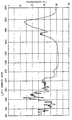
- the infrared absorption of the lactitol monohydrate was measured by a Perkin-Elmer 398 spectrometer from a tablet having a composition of 1 g of lactitol monohydrate and 131 g of KBr. The infrared spectrum is shown in the drawing.
- melt When determining the melting point, one must take into account that molten lactitol monohydrate has a high viscosity at its melting temperature, wherefore it takes time (even 2 minutes) before the sample is spread evenly on the walls of the capillary tube. Furthermore, the melt often contains bubbles caused by the liberation of crystal water, which remain in the melt for a long time.
- lactitol monohydrate anhydride is prepared by crystallizing lactitol within the temperature range from 10 to 50°C from a seeded lactitol solution obtained by hydrogenation and evaporated to a concentration between 70 and 85% or from a mother liquor obtained from the first crystallization step.
- This process can be used for the crystallization of lactitol only when the purity of lactitol in the feed solution is high, and since dihydrate may already be crystallized from pure lactitol solution, the crystallization of pure monohydrate is difficult if not impossible.
- crystallization temperatures in the range from 80 to 30°C are considerably higher than in the prior art process (from 50 to 10°C), whereby it is possible to crystallize lactitol monohydrate in at least four successive crystallization steps.
- the total yield of lactitol monohydrate is considerably higher than can be achieved with the prior art process (no more than 85% on lactitol).
- the crystallization tests showed that if the crystallization is to occur in a controlled manner for obtaining a desired crystal size without a wide crystal size distribution, the crystallization should be effected in such a manner that the supersaturation of the mother liquor remains below 1.3 (preferably 1.2) with respect to lactitol throughout the crystallization.
- the supersaturation can be maintained within a desired range either by using a sufficiently long crystallization time or by measuring the dry substance content of the mother liquor with a refractometer.
- the supersaturation can be calculated from the dry substance content of the mother liquor and from the solubility curve of lactitol.
- Monohydrate anhydride Lacty-M, LCDE-31 partially restored during storage and having a melting range 97-103°C corresponding to 2% anhydration was cloddy and possessed a hygroscopity substantially greater than that of the monohydrate (from Test 2 in Example 1). Water absorptions at 20°C after storage for 3 days at various relative humidities are shown in the following Table I.
- Drying tests were carried out on lactitol monohydrate in a conventional laboratory oven at a pressure of 1 bar. The samples were weighed and the degree of anhydration was calculated as a function of the drying time. Table II shows the degree of anhydration under varying drying conditions.
- the melting ranges of the partially anhydrated monohydrates formed in the test are 100-146°C (cf. Example 3).
- the new lactitol monohydrate is particularly suitable as a substitute for sugar in diabetic, dietetic or tooth-friendly products.
- lactitol monohydrate with other bulk or intense sweeteners, such as saccharin, Aspartame, Acesulfame K, Alitane, Sucralose, Stevioside or xylitol, a product highly resembling sugar and yet having a lower energy content and further being tooth-friendly can be prepared.
- this product is novel, and can be used instead of sugar e.g. in sugar products, confectionery, jams, bakery products, table-top sweeteners, cereals, desserts, chocolate, beverages, chewing gum and ice-creams, as well as in pharmaceutical and cosmetic products, such as toothpaste.
- a four-step crystallization test sequence was carried out on lactitol monohydrate, starting from a filtered and de-ionised lactitol solution.
- the lactitol solution had been prepared from a lactose solution hydrogenated by the conventional technique.
- the crystallization was carried out according to the following steps: A lactitol solution having a purity of 98.3% lactitol in the dry matter was evaporated to 82.1% by weight at a temperature above 70°C, and 423 kg thereof was transferred into a crystallizer.
- the crystallizer was a conventional horizontal cylindrical batch-operated cooling crystallizer having a volume of 0.4 m3 and provided with a mixer and a recycling water jacket whose temperature was controlled by means of a microprocessor.
- the temperature of the solution was adjusted to 70°C, whereafter the solution was seeded with ground lactitol monohydrate crystals.
- the seed crystal size was 0.02-0.05 mm, and the quantity thereof was 0.004% by weight on the lactitol in the batch. After the seeding, the mass was cooled in 16 hours down to 40°C, first slowly and ultimately more rapidly.
- the crystals were separated from the mother liquor with a conventional basket centrifuge wherein the crystals were also washed using 9.2% of water per obtained amount of crystal product.
- the centrifuged crystals were dried with a drum dryer using the conventional technique.
- the diameter of the cocurrent drum dryer used was 0.6 m, height 2.5 m and inclination about 1°; the speed of rotation was 3.5 rpm and the temperature of the drying air was 95°C.
- the feed rate of lactitol monohydrate was about 1.2 kg/min and the delay time about 30 minutes.
- the total yield of lactitol monohydrate (four-step crystallization) was 97.6 %.
- Crystallization Example 1 is intended to illustrate the practicability of the novel process, but the crystallization may also be carried out by modifying it in a manner as required by normal effective production operation. Thus the crystallization may also be performed without adding seed crystals, i.e. by allowing the solution to form seeds spontaneously as in crystallization test 5. Further, the crystallization may be effected entirely or partially by evaporative crystallization as demonstrated in Example 2. The crystallization may also be carried out in a continuous operation as long as the temperature is maintained in the range 80°C-30°C and the supersaturation of the mother liquor is maintained below 1.3.
- the lactitol solution was concentrated in a conventional 0.4 m3 evaporation crystallizer at 60°C at a pressure of about 180 mbar until the dry matter content of the solution was 80.9% by weight and there was approximately 30% of solution on the volume of the crystallizer, at which point the solution was seeded with lactitol monohydrate seed crystals.
- the amount of seed crystals was 0.008% by weight of the lactitol monohydrate content of the final batch, and the average size of the seed crystals was about 0.03 mm.
- more feed solution was supplied to the crystallizer, and the evaporation was continued at 59-65°C so that the dry matter content of the mother liquor was in the range 78-82% by weight.
- the crystallizer was replete with a mass which was transferred into a cooling crystallizer and cooled from 62°C to 55°C in 10 hours, whereafter the crystals were separated from the mother liquor by centrifuging and dried as in Example 1.
- the crystal yield was 49.7% on lactitol.
- the purity of the lactitol monohydrate product was 99.7% on a dry matter basis, the dry matter content was 95.0% and the melting range 94.5-98°C.
- the lactitol monohydrate produced in Test 2 of Example 1 was dried at 20-105°C with drying air having a relative humidity of 0-25% for varying periods of time, whereby different partially anhydrated monohydrates were obtained.
- the melting range of the anhydrated monohydrates obtained is shown as a function of the degree of anhydration in Table V:
- Example 1 Examples 2 and 3 are intended to illustrate the invention, but the crystallization can be carried out also by modifying it in a manner as required by normal effective production operation, as explained hereinabove.
- Baked cake had golden colour and even crumb texture: Weight 275 g Height 3.7 cm Volume 744 cm Density 0.37 g/ml
- Lactitol monohydrate 100 Fructose 40 Butterfat 40 Skimmed milk powder 110 Water 700 Emulsifier (stabiliser) (Grindstaad SE 33) 9.3 Aspartame 0.24 Colour (Bush Boake Allan Permucol egg yellow powder) 0.06 Vanilla flavour 0.4
Landscapes
- Chemical & Material Sciences (AREA)
- Life Sciences & Earth Sciences (AREA)
- Health & Medical Sciences (AREA)
- Engineering & Computer Science (AREA)
- Organic Chemistry (AREA)
- General Health & Medical Sciences (AREA)
- Food Science & Technology (AREA)
- Polymers & Plastics (AREA)
- Animal Behavior & Ethology (AREA)
- Veterinary Medicine (AREA)
- Biotechnology (AREA)
- Crystallography & Structural Chemistry (AREA)
- Genetics & Genomics (AREA)
- Molecular Biology (AREA)
- Proteomics, Peptides & Aminoacids (AREA)
- Biochemistry (AREA)
- Public Health (AREA)
- Nutrition Science (AREA)
- Birds (AREA)
- Oral & Maxillofacial Surgery (AREA)
- Epidemiology (AREA)
- Seasonings (AREA)
- Saccharide Compounds (AREA)
- Peptides Or Proteins (AREA)
- Organic Low-Molecular-Weight Compounds And Preparation Thereof (AREA)
- Medicines That Contain Protein Lipid Enzymes And Other Medicines (AREA)
- Confectionery (AREA)
- Reinforced Plastic Materials (AREA)
- Compositions Of Macromolecular Compounds (AREA)
- Silicates, Zeolites, And Molecular Sieves (AREA)
- Cosmetics (AREA)
Abstract
Description
- The invention relates to a new crystalline lactitol monohydrate, and a process for the preparation thereof by crystallization from an aqueous solution, the use of the said new crystalline lactitol monohydrate in dietetic products, confectionery, bakery products, cereals, desserts, jams, beverages, chocolate, chewing gum and ice-cream, as well as in costmetic products, and in the manufacture a pharmaceutical , such as tooth paste. The invention also relates to a new sweetening agent resembling sugar, mainly composed of the said new crystalline lactitol monohydrate.
- Lactitol is a bulk sweetener which can be used as a total or partial replacement for sucrose, however, its energy content is only about half of that of sucrose, and it does not cause increased blood glucose content; furthermore, it is tooth-friendly (see Developments in Sweeteners, Ed. Grenby, T.H., Vol. 3, 1987, p. 65-81).
- The preparation of lactitol from lactose has been known for a long time. Industrially, lactitol is prepared analogously with the preparation of sorbitol from glucose by hydrogenation in the presence of a Raney nickel catalyst. An aqueous solution of lactose, typically having a concentration between 30 and 40% by weight due to the poor solubility of lactose, is hydrogenated at 70 to 130°C at a pressure between 30 and 74 atm. The preparation is described in Wolfrom, M.L., Burke, W.J., Brown, K.R. and Rose, R.S., J. Am. Chem. Soc. 60, (1938) p. 571-573.
- Crystalline lactitol is reported to occur in anhydrous form (anhydride) as well as in the form of a monohydrate and dihydrate, which forms have been known for a long time with the exception of pure monohydrate. Among the crystal forms of lactitol, lactitol monohydrate is of considerable commercial interest on account of its low hygroscopicity.
- In the preparation process mentioned above, lactitol anhydride can be crystallized by adding ethanol to a lactitol solution evaporated to a high concentration. After a crystallization time of one month, the yield of lactitol was 80%, and the melting point of the resulting crystal, which was found to be an anhydride, was between 144 and 146°C.
- The crystallization of lactitol dihydrate was presumably mentioned for the first time by Senderens, J.B., Compt. Rend. 170, (1920) p. 47-50. Lactitol solution obtained by hydrogenation was evaporated slowly at room temperature so that crystallization was initiated. The melting point of the resulting product was 78°C, and Senderens mistakenly regarded it as a monohydrate. However, it appears from European Patent 0039981 and Wolfrom, M.L., Hann, R.M. and Hudson, C.S., J. Am. Chem. Soc. 74 (1952) p. 1105 that the product obtained by Senderens was a dihydrate having a moisture content of 9.5%, determined by a Karl Fisher method, and a melting point between 76 and 78°C.
- The next attempt to prepare lactitol monohydrate by crystallization was made in 1979; the end product, however, was an impure dihydrate, see van Velthuijsen, J.A., J. Agric. Food Chem. 27, (1979) p. 680. The solubility of the "monohydrate" so obtained was reported to be 64% by weight at 25°C; however, it has been proved that lactitol monohydrate cannot have such a solubility, see the above-mentioned European Patent 0039981. Taking into consideration that the alleged monohydrate was impure (4.5% of other sugars and dihydrate), the corrected solubility is the right solubility of lactitol (about 59% by weight on dry substance basis). The reported melting range from 94 to 97°C also indicates the presence of a slightly overdried (impure) dihydrate.
- Another attempt to prepare lactitol monohydrate was made in 1981, see the above-mentioned European Patent 0039981. The low crystallization temperature, however, resulted in the formation of monohydrate and dihydrate either as mixed crystals or separately, the product being then dried into partially anhydrated monohydrate. The reported melting point 121-123°C is that of partially anhydrated monohydrate from which the lattice cell constants of monohydrate are obtained by means of a single-crystal X-ray diffractometer within the measuring accuracy. The surface layer of partially anhydrated monohydrate may be integral (double crystal) or fragmented or it may be composed of numerous separate anhydride crystals, which becomes apparent from the high scattering of the lattice cell constants when determined by the single-crystal method. Partially anhydrated monohydrate is at least as stable as a complete anhydride which does not bind water at room temperature at moderate relative humidities.
- The surface layer of said partially anhydrated monohydrate is imperfect and under suitable conditions it will be restored partially or completely to the monohydrate form. Since the formation of a perfect lattice structure is irreversible, the restored crystal structure will never be perfect, i.e. if the anhydride or partially anhydrated monohydrate takes (binds) crystal water, the product obtained does not have the crystal structure of lactitol monohydrate. Both the anhydrated and partially restored monohydrate easily get cloddy and have a rather poor flowability and rather a high hygroscopicity on account of the fragmented surface and high dust content of the product.
- Monohydrate loses all of its crystal water as rapidly as in two hours when it is dried at 105°C in a conventional laboratory oven. The melting point of the "monohydrate" disclosed in European Patent 0039981, that is, 121-123°C, corresponds to that of a monohydrate anhydrated to a degree of anhydration of 10 to 15%. In addition, the "monohydrate" disclosed in this patent, which lost 2% of its weight at 130°C during 3 days, is originally a monohydrate anhydrated to a degree of anhydration of 60%. The "monohydrates" disclosed in the European patent Are not monohydrates anhydrated from pure monohydrate; instead, they are overdried products formed from the mixtures of dihydrate and monohydrate due to the crystallization method.
- Lactitol hydrate powders anhydrated to a moisture content of less than 3% have been prepared by drying both lactitol solution and crystalline hydrate. The hygroscopicity of these powders is utilized in drying moist mixtures (European Patent Application 0231643).
- The preparation of pure lactitol monohydrate having lattice cell constants a = 7.815 ± 0.008 Å, b = 12.682 ± 0.008 Å, and c = 15.927 ± 0.008 Å; and a melting range between 94 and 100°C, preferably between 94 and 98°C, has now succeeded for the first time. The melting range was determined with a Büchi Tottol melting point apparatus. The lactitol content of the said pure lactitol monohydrate is more than 99.5% on a dry substance basis, and its moisture content is between 4.85 and 5.15%.
- The new lactitol monohydrate has a good flowability and long shelf life, and it is stable at room temperatures, in relative humidities ranging from 25 to 75%. After having been stored under varying atmospheric conditions for about two years in an open paper sack, the lactitol monohydrate did not become cloddy and its flowability was 5.1 s/100 g measured by a funnel technique, the inclination of the funnel being 60°, the pipe length 23 mm and the inner diameter 11 mm.
- The infrared absorption of the lactitol monohydrate was measured by a Perkin-Elmer 398 spectrometer from a tablet having a composition of 1 g of lactitol monohydrate and 131 g of KBr. The infrared spectrum is shown in the drawing.
- No more than 150 g of pure lactitol monohydrate on a dry substance basis dissolves in 100 ml of water at 25° C. Pure lactitol monohydrate crystals are colourless, odourless and transparent.
- An accurate determination of the melting range of lactitol monohydrate can be most successfully carried out by introducing samples of milled lactitol into several capillary tubes and melting the open ends of the tubes before measuring. The measurements are carried out with a conventional melting point apparatus at different constant temperatures using one capillary tube per measurement until the extreme points of the melting range are found.
- When determining the melting point, one must take into account that molten lactitol monohydrate has a high viscosity at its melting temperature, wherefore it takes time (even 2 minutes) before the sample is spread evenly on the walls of the capillary tube. Furthermore, the melt often contains bubbles caused by the liberation of crystal water, which remain in the melt for a long time.
- In the process according to the above-mentioned European Patent 0039981, lactitol monohydrate anhydride is prepared by crystallizing lactitol within the temperature range from 10 to 50°C from a seeded lactitol solution obtained by hydrogenation and evaporated to a concentration between 70 and 85% or from a mother liquor obtained from the first crystallization step. This process can be used for the crystallization of lactitol only when the purity of lactitol in the feed solution is high, and since dihydrate may already be crystallized from pure lactitol solution, the crystallization of pure monohydrate is difficult if not impossible.
- In the crystallization process according to the invention, crystallization temperatures (in the range from 80 to 30°C) are considerably higher than in the prior art process (from 50 to 10°C), whereby it is possible to crystallize lactitol monohydrate in at least four successive crystallization steps. With the present new process the total yield of lactitol monohydrate (see the crystallization series of Example 1, wherein the total yield is 97.6% on lactitol) is considerably higher than can be achieved with the prior art process (no more than 85% on lactitol).
- The crystallization tests showed that if the crystallization is to occur in a controlled manner for obtaining a desired crystal size without a wide crystal size distribution, the crystallization should be effected in such a manner that the supersaturation of the mother liquor remains below 1.3 (preferably 1.2) with respect to lactitol throughout the crystallization. The supersaturation can be maintained within a desired range either by using a sufficiently long crystallization time or by measuring the dry substance content of the mother liquor with a refractometer. The supersaturation can be calculated from the dry substance content of the mother liquor and from the solubility curve of lactitol. The supersaturation (s) is defined as follows:

- Cml = measured dry substance content of mother liquor, % by weight
- Cml'= solubility of lactitol in the mother liquor
- Monohydrate anhydride ( Lacty-M, LCDE-31) partially restored during storage and having a melting range 97-103°C corresponding to 2% anhydration was cloddy and possessed a hygroscopity substantially greater than that of the monohydrate (from Test 2 in Example 1). Water absorptions at 20°C after storage for 3 days at various relative humidities are shown in the following Table I.

- Drying tests were carried out on lactitol monohydrate in a conventional laboratory oven at a pressure of 1 bar. The samples were weighed and the degree of anhydration was calculated as a function of the drying time. Table II shows the degree of anhydration under varying drying conditions.

- The melting ranges of the partially anhydrated monohydrates formed in the test are 100-146°C (cf. Example 3).
- On account of its excellent technical and physiological properties, the new lactitol monohydrate is particularly suitable as a substitute for sugar in diabetic, dietetic or tooth-friendly products. By combining lactitol monohydrate with other bulk or intense sweeteners, such as saccharin, Aspartame, Acesulfame K, Alitane, Sucralose, Stevioside or xylitol, a product highly resembling sugar and yet having a lower energy content and further being tooth-friendly can be prepared. Also this product is novel, and can be used instead of sugar e.g. in sugar products, confectionery, jams, bakery products, table-top sweeteners, cereals, desserts, chocolate, beverages, chewing gum and ice-creams, as well as in pharmaceutical and cosmetic products, such as toothpaste.
- A four-step crystallization test sequence was carried out on lactitol monohydrate, starting from a filtered and de-ionised lactitol solution. The lactitol solution had been prepared from a lactose solution hydrogenated by the conventional technique.
- All of the nine crystallization tests of this Example were carried out analogously with Test 1 which was performed in the following manner:
- The crystallization was carried out according to the following steps: A lactitol solution having a purity of 98.3% lactitol in the dry matter was evaporated to 82.1% by weight at a temperature above 70°C, and 423 kg thereof was transferred into a crystallizer. The crystallizer was a conventional horizontal cylindrical batch-operated cooling crystallizer having a volume of 0.4 m³ and provided with a mixer and a recycling water jacket whose temperature was controlled by means of a microprocessor. In the crystallizer, the temperature of the solution was adjusted to 70°C, whereafter the solution was seeded with ground lactitol monohydrate crystals. The seed crystal size was 0.02-0.05 mm, and the quantity thereof was 0.004% by weight on the lactitol in the batch. After the seeding, the mass was cooled in 16 hours down to 40°C, first slowly and ultimately more rapidly.
- When the crystallization was complete the crystals were separated from the mother liquor with a conventional basket centrifuge wherein the crystals were also washed using 9.2% of water per obtained amount of crystal product. The centrifuged crystals were dried with a drum dryer using the conventional technique. The diameter of the cocurrent drum dryer used was 0.6 m, height 2.5 m and inclination about 1°; the speed of rotation was 3.5 rpm and the temperature of the drying air was 95°C. The feed rate of lactitol monohydrate was about 1.2 kg/min and the delay time about 30 minutes.
- The performance conditions and results of the crystallization tests are presented in Tables III and IV hereinafter.
- The total yield of lactitol monohydrate (four-step crystallization) was 97.6 %.


- Crystallization Example 1 is intended to illustrate the practicability of the novel process, but the crystallization may also be carried out by modifying it in a manner as required by normal effective production operation. Thus the crystallization may also be performed without adding seed crystals, i.e. by allowing the solution to form seeds spontaneously as in crystallization test 5. Further, the crystallization may be effected entirely or partially by evaporative crystallization as demonstrated in Example 2. The crystallization may also be carried out in a continuous operation as long as the temperature is maintained in the
range 80°C-30°C and the supersaturation of the mother liquor is maintained below 1.3. - Crystallization of lactitol monohydrate was performed starting from a lactitol solution prepared by hydrogenation (the same as in Example 1). The solution was evaporatively crystallized for 5 hours at 60°C, whereafter the crystals were separated from a slightly cooled mass, washed, and dried, as explained in the following.
- The lactitol solution was concentrated in a conventional 0.4 m³ evaporation crystallizer at 60°C at a pressure of about 180 mbar until the dry matter content of the solution was 80.9% by weight and there was approximately 30% of solution on the volume of the crystallizer, at which point the solution was seeded with lactitol monohydrate seed crystals. The amount of seed crystals was 0.008% by weight of the lactitol monohydrate content of the final batch, and the average size of the seed crystals was about 0.03 mm. After the seeding, more feed solution was supplied to the crystallizer, and the evaporation was continued at 59-65°C so that the dry matter content of the mother liquor was in the range 78-82% by weight.
- After evaporating for 5 hours, the crystallizer was replete with a mass which was transferred into a cooling crystallizer and cooled from 62°C to 55°C in 10 hours, whereafter the crystals were separated from the mother liquor by centrifuging and dried as in Example 1. The crystal yield was 49.7% on lactitol. The purity of the lactitol monohydrate product was 99.7% on a dry matter basis, the dry matter content was 95.0% and the melting range 94.5-98°C.
- The lactitol monohydrate produced in Test 2 of Example 1 was dried at 20-105°C with drying air having a relative humidity of 0-25% for varying periods of time, whereby different partially anhydrated monohydrates were obtained. The melting range of the anhydrated monohydrates obtained is shown as a function of the degree of anhydration in Table V:


- Like Example 1, Examples 2 and 3 are intended to illustrate the invention, but the crystallization can be carried out also by modifying it in a manner as required by normal effective production operation, as explained hereinabove.
-
g Cocoa butter 165 Cocoa liquor 630 Lactitol monohydrate 719 Acesulfame K 2.3 Vanillin 0.3 Lecithin 6 - Procedure: Conch. 17 hours at 50° C and 3 hours at 60° C.
-
g Cocoa butter 345 Cocoa liquor 195 Milk powder, fat 26 % 209 Lactitol monohydrate 789 Acesulfame K 1.4 Vanillin 0.3 Lecithin 6 - Procedure: Conch. 20 hours at 50° C.
-


-
- 1. Mix lactitol monohydrate, Finmalt L, vegetable fat and emulsifier.
- 2. Heat to 120° C.
- 3. Add dissolved gelatine.
- 4. Add citric acid, flavour and colour.
- 5. Pull the mass 2-4 minutes.
- 6. Form the mass.
-
g Lactitol monohydrate 200 Finmalt L (maltitol syrup) 267 Acesulfame K 0.63 Water 50 Gelatin 250 BL 35 Water 70 Citric acid (50 % solution) Flavour, colour as required 5 -
- 1. Mix lactitol monohydrate, Finmalt L, Acesulfame K and water.
- 2. Heat to 116° C.
- 3. Cool to 90°C and add dissolved gelatine.
- 4. Add citric acid, flavour and colour.
- 5. Deposit into starch moulds.
-


-
- 1. Homogenise pectin and lactitol monohydrate.
- 2. Add a solution of water, sodium citrate and citric acid.
- 3. Heat to 100° C.
- 4. Add a homogenised mixture of lactitol monohydrate, Acesulfame K, Finmalt L, flavours and colours.
- 5. Heat to 106-108°C.
- 6. Add citric acid.
- 7. Deposit into starch or plastic moulds.
-
g Gum arabic, 50 % solution 400 Lactitol monohydrate 220 Finmalt (maltitol syrup) 107 Acesulfame K 1.0 Water 100 Citric acid (50 % solution) 10 Flavour, colour 2 -
- 1. Mix lactitol and Finmalt to the water.
- 2. Heat to 120°C.
- 3. Add heated solution to gum arabic solution.
- 4. Add acid, flavour and colour.
- 5. Deposit into starch moulds.
- 6. Dry 48-60 hours at 60°C.
-
g Lactitol monohydrate 368 Finmalt L (maltitol syrup) 200 Acesulfame K 0.4 Water 100 Flavours, colour 2 -
- 1. Heat sweeteners and water to 160-162°C.
- 2. Keep the mass 10 minutes in vacuum (0.8-0.9 ....).
- 3. Cool the mass and mix flavours and colours.
- 4. Form the mass.
-
g Strawberries 300 Water 300 Pectin (Obi Violettband B) 6 Lactitol monohydrate 500 Citric acid (50 % solution) 3 Calcium citrate 0.2 Calcium lactate 0.3 Potassium sorbate 1.7 -
- 1. Dry mix the pectin and 50 g of the lactitol.
- 2. Heat the fruit and water for few minutes.
- 3. Sprinkle the pectin/lactitol mixture into the fruit/-water mixture.
- 4. Bring to boil and keep boiling for a moment to dissolve the pectin completely.
- 5. Add remainder of the lactitol and boil for a little while.
- 6. Add the preservative and the calcium salts soluted in a small amount of water.
- 7. Boil until the weight of the batch is 1000 g or until desired solid content is reached.
- 8. Stop boiling and add acid solution.
- 9. Cool to 70°C stirring from time to time and pack.
-
g Lactitol monohydrate 95 Fructose 95 Fat 10 Whole egg 50 Flour 175 Fibre (oat bran) 30 Sodium bicarbonate 7.5 Salt 1.5 Ginger 1 Water 40 -
- 1. Cream fat with lactitol and fructose.
- 2. Mix eggs in one by one.
- 3. Shift together dry ingredients and add beating throughly.
- 4. Cool a few hours or overnight.
- 5. Bake in 170°C for about 11 minutes.
-
g Lactitol monohydrate (milled) 179.5 Butter 180.0 Whole egg 180.0 Flour 150.0 Cocoa powder 30.0 Saccharin 0.5 -
- 1. Dry mix the milled lactitol monohydrate with the saccharin.
- 2. Cream with the butter until light and fluffy.
- 3. Gradually beat in the eggs.
- 4. Fold in the flour and cocoa powder.
- 5. Deposit into a greased cake tin (16 cm diameter).
- 6. Bake for 60 minutes at 180° C.
-
g Lactitol monohydrate (milled) 89.3 Eggs (separated) 180 Flour 90 Saccharin 0.2 -
- 1. Dry mix the milled lactitol with the saccharin.
- 2. Whisk egg yolks with lactitol mixture until thick and creamy.
- 3. Whisk egg whites until firm and dry.
- 4. Fold egg white into egg yolk mixture.
- 5. Fold in flour.
- 6. Deposit into a greased and floured cake tin (16 cm diameter).
- 7. Bake for 40 minutes at 180° C.
- Baked cake had golden colour and even crumb texture:
Weight 275 g Height 3.7 cm Volume 744 cm Density 0.37 g/ml -


-
- 1. Dissolve the lactitol and skimmed milk powder in the water (reserving about 5 % to dissolve the aspartame).
- 2. Add the butterfat and emulsifier (stabiliser).
- 3. Pasteurise at 72° C for 10 minutes.
- 4. Homogenise.
- 5. Rapidly cool to 5° C and age overnight at 2 - 4° C.
- 6. Add colour, flavour and pre-dissolved aspartame.
- 7. Freeze to 100 % overrun.
-
g Lactitol monohydrate 100 Fructose 40 Butterfat 40 Skimmed milk powder 110 Water 700 Emulsifier (stabiliser) (Grindstaad SE 33) 9.3 Aspartame 0.24 Colour (Bush Boake Allan Permucol egg yellow powder) 0.06 Vanilla flavour 0.4 -
- 1. Dissolve the lactitol, fructose and skimmed milk powder in most of the water (reserving about 5 % to dissolve the aspartame).
- 2. Add the butterfat and emulsifier (stabiliser).
- 3. Pasteurise at 72° C for 10 minutes.
- 4. Homogenise.
- 5. Rapidly cool to 5° C and age overnight at 2 - 4 °C.
- 6. Add the colour, flavour and pre-dissolved aspartame.
- 7. Freeze to 100 % overrun.
-
g Lactitol monohydrate 250 Strawberry puree 150 Gelatin 125° Bloom 10 Citric acid (50 %) 4.0 Aspartame 0.8 Colour (Hexacol Strawberry Red) 0.3 Strawberry flavour 1.1 Water 584 -
- 1. Dissolve the lactitol in the water.
- 2. Add the gelatin and mix.
- 3. Pasteurise at 72° C for 10 minutes.
- 4. Rapidly cool to 5° C and age overnight at 2 - 4 °C.
- 5. Add strawberry puree, citric acid, colour and flavour.
- 6. Freeze to 65 % overrun.
-
g Lactitol monohydrate 100 Sodium saccharin 0.23 - Dry mix using a ribbon blade (or other suitable dry powder mixer) until a uniform dispersion is obtained.
- Suitable for direct replacement of succrose in all applications.
-
g Lactitol monohydrate 100 Acesulfame K 1.85 - Dry mix using a ribbon blade (or other suitable dry powder mixer) until a uniform dispersion is obtained.
- Suitable for use in reduced caloric formulations where some bulk is needed.
-
g Lactitol monohydrate 100 Aspartame 6.0 - Dry mix using a ribbon blade (or other suitable dry powder mixer) until a uniform dispersion is obtained.
- Suitable for sprinkling or use in low caloric formulations where bulk is not required.
-
g Lactitol monohydrate 200 Skimmed milk powder 70 Fat reduced cocoa powder 12 - Reconstitute with 708 g hot water (total 1000 g).
Claims (11)
- A crystalline lactitol monohydrate having lattice cell constants a = 7.815 ± 0.008 Á, b = 12.682 ± 0.008 Á, and c = 15.927 ± 0.008 Á, a melting range between 94 and 100°C, and a water content between 4.85 and 5.15%.
- A crystalline lactitol monohydrate according to claim 1, characterized in that its flowability is better than 25 s/100 g, preferably better than 10 s/100 g, calculated by a funnel technique, the inclination of the funnel being 60°, the pipe length 23 mm and the inner diameter 11 mm.
- A crystalline lactitol monohydrate according to claim 1, characterized in that its hygroscopicity is less than 0.2 % w/w humidity after 3 days at 20°C and 75 % relative humidity, and preferably less than 0.1 % w/w.
- A process of preparing a crystalline lactitol monohydrate having lattice cell constants a = 7.815 ± 0.008 Å, b = 12.662 ± 0.008 Å, and c = 15.927 ± 0.008 Å; and a melting range between 94 and 100°C, by crystallizing from an aqueous solution which in addition to lactitol possibly contains impurities no more than 30 % on dry substance basis, characterized by evaporating the aqueous solution of lactitol to a concentration between 75 and 88 % by weight, seeding the evaporated solution at a temperature between 50 and 80°C, or allowing the solution to form seeds spontaneously at said temperature, optionally evaporating within a temperature range from 50 to 80°C for increasing the crystal content, cooling the resultant mixture of a temperature ranging between 30 and 60°C, subsequently separating the lactitol monohydrate crystals from the mother liquor, optionally washing, and subsequently drying with air having a temperature below 120°C, preferably between 60 and 100°C, and a relative humidity between 0 and 40 %, preferably between 5 and 20 %, for a time period less than 24 hours, preferably 5 to 50 minutes, whereby a final product is obtained having the water content between 4.85 and 5.15 %.
- A process for preparing a crystalline lactitol monohydrate having lattice cell constants a = 7.815 ± 0.008 Å, b = 12.682 ± 0.008 Å and c = 15.927 ± 0.008 Å; and a melting range between 94 and 100°C, by crystallizing from an aqueous solution which in addition to lactitol possibly contains impurities no more than 30 % on dry substance basis, characterized by evaporating the aqueous solution of lactitol to a concentration between 80 and 88 % by weight at a temperature between 70 and 80°C, cooling the solution to a temperature between 65 and 75°C, seeding the solution, or allowing the solution to form seeds spontaneously at said temperature, subsequently cooling the resultant mixture slowly to a temperature within a range between 35 and 45°C, separating the lactitol monohydrate crystals from the mother liquor, optionally washing, and subsequently drying with air having a temperature below 120°C, preferably between 60 and 100°C, and a relative humidity between 0 and 40 %, preferably between 5 and 20 %, for a time period less than 24 hours, preferably for 5 to 50 minutes, the water content of the obtained product being between 4.85 and 5.15 %.
- A process of preparing a crystalline lactitol monohydrate having lattice cell constants a = 7.815 ± 0.008 Å, b = 12.682 ± 0.008 Å and c = 15.927 ± 0.008Å and a melting range between 94 and 100°C, by crystallizing from a mother liquor obtained in a previous crystallization step and containing in addition to lactitol possibly impurities no more than 30 % on dry substance basis, charac-terized by evaporating said mother liquor to a concentration between 80 and 88 % by weight at a temperature between 70 and 80°C, cooling the solution to a temperature between 65 and 75°C, seeding the solution, or allowing the solution to form seeds spontaneously at said temperature, subsequently cooling the resultant mixture slowly to a temperature within a range between 35 and 45°C, separating the lactitol monohydrate crystals from the mother liquor, optionally washing, and subsequently drying with air having a temperature below 120°C, preferably between 60 and 100°C, and a relative humidity between 5 and 20 %, for a time period less than 24 hours, preferably for 5 to 50 minutes, the water content of the obtained product being between 4.85 and 5.15 %.
- A process according to claim 4, 5 or 6, characterized in that the supersaturation of the mother liquor is maintained at a value below 1.3 (preferably 1.2) relative to lactitol throughout the crystallization.
- A process according to claim 6, characterized in that said mother liquor is obtained from the previous, 2nd and 3rd crystallization step.
- Use of the crystalline lactitol monohydrate according to claim 1, 2 or 3 as a bulk sweetener for the total or partial replacement of sucrose.
- Use of the crystalline lactitol monohydrate according to claim 1, 2 or 3 in dietetic products, confectionery, bakery products, cereals, desserts, jams, beverages, chocolate, chewing gum and ice-cream, as well as in cosmetic products, and in the manufacture of pharmaceutical products, such as tooth paste.
- A special sweetening agent resembling sucrose, characterized in that it is mainly composed of a crystalline lactitol monohydrate having lattice cell constants a = 7.815 ± 0.008 Á, b = 12.682 ± 0.008 Á, and c = 15.927 ± 0.008 Á, a melting range between 94 and 100°C, and a water content between 4.85 and 5.15%, and of a tooth-friendly sweetening agent such as saccharin or xylitol.
Priority Applications (1)
| Application Number | Priority Date | Filing Date | Title |
|---|---|---|---|
| DE8916202U DE8916202U1 (en) | 1988-12-01 | 1989-08-04 | Crystalline lactitol monohydrate and sweetener |
Applications Claiming Priority (3)
| Application Number | Priority Date | Filing Date | Title |
|---|---|---|---|
| FI885588 | 1988-12-01 | ||
| FI885588A FI83965C (en) | 1988-12-01 | 1988-12-01 | KRISTALLINT LACTITOLMONOHYDRAT OCH FOERFARANDE FOER DESS FRAMSTAELLNING SAMT DESS ANVAENDNING. |
| PCT/FI1989/000142 WO1990006317A1 (en) | 1988-12-01 | 1989-08-04 | A crystalline lactitol monohydrate and a process for the preparation thereof, use thereof, and sweetening agent |
Publications (2)
| Publication Number | Publication Date |
|---|---|
| EP0456636A1 EP0456636A1 (en) | 1991-11-21 |
| EP0456636B1 true EP0456636B1 (en) | 1996-03-13 |
Family
ID=8527497
Family Applications (1)
| Application Number | Title | Priority Date | Filing Date |
|---|---|---|---|
| EP89908709A Expired - Lifetime EP0456636B1 (en) | 1988-12-01 | 1989-08-04 | A crystalline lactitol monohydrate and a process for the preparation thereof, use thereof, and sweetening agent |
Country Status (11)
| Country | Link |
|---|---|
| EP (1) | EP0456636B1 (en) |
| JP (1) | JP2733701B2 (en) |
| KR (1) | KR0141981B1 (en) |
| AT (1) | ATE135360T1 (en) |
| CA (1) | CA1339214C (en) |
| DE (1) | DE68925979T2 (en) |
| DK (1) | DK170378B1 (en) |
| ES (1) | ES2018727A6 (en) |
| FI (1) | FI83965C (en) |
| NO (1) | NO174555C (en) |
| WO (1) | WO1990006317A1 (en) |
Cited By (1)
| Publication number | Priority date | Publication date | Assignee | Title |
|---|---|---|---|---|
| US6872414B1 (en) | 1999-09-20 | 2005-03-29 | Xyrofin Oy | Anhydrous lactitol crystals, a product containing the same and a process for the preparation thereof as well as use thereof |
Families Citing this family (20)
| Publication number | Priority date | Publication date | Assignee | Title |
|---|---|---|---|---|
| FI91261C (en) * | 1991-03-22 | 1996-01-31 | Xyrofin Oy | Crystalline, crystalline anhydrous lactitol and process for its preparation and use thereof |
| JP3035837B2 (en) * | 1991-06-06 | 2000-04-24 | 株式会社林原生物化学研究所 | Powdered carbohydrate, its production method and use |
| US5399365A (en) * | 1991-06-19 | 1995-03-21 | Wm. Wrigley Jr. Company | Chewing gum containing palatinose and/or palatinose oligosaccharide |
| US5296244A (en) * | 1991-06-19 | 1994-03-22 | Wm. Wrigley Jr. Company | Chewing gum containing aspartame and palatinose oligosaccharide |
| US5298263A (en) * | 1991-06-19 | 1994-03-29 | Wm. Wrigley Jr. Company | Chewing gum coated with palatinose or palatinose oligosaccharide |
| US5270061A (en) * | 1992-03-26 | 1993-12-14 | Wm. Wrigley Jr. Company | Dual composition hard coated gum with improved shelf life |
| US5665406A (en) * | 1992-03-23 | 1997-09-09 | Wm. Wrigley Jr. Company | Polyol coated chewing gum having improved shelf life and method of making |
| FI100005B (en) * | 1993-04-23 | 1997-08-15 | Xyrofin Oy | Process for the preparation of an intermediate |
| DE4411582C2 (en) * | 1994-03-30 | 1996-11-14 | Worlee Sweet E H Worlee & Co G | crystal Sweet |
| US5962063A (en) * | 1995-11-09 | 1999-10-05 | Xyrofin Oy | Process for preparation of a crumb |
| CN1060320C (en) * | 1996-04-08 | 2001-01-10 | 上海淮海制药厂 | Lactitol solution and preparation method thereof |
| FR2753972B1 (en) * | 1996-09-27 | 1998-12-04 | Roquette Freres | LACTITOL COMPOSITION AND PROCESS FOR THE PREPARATION THEREOF |
| FI103120B1 (en) | 1997-03-03 | 1999-04-30 | Xyrofin Oy | Method for crystallization of lactitol |
| US6090429A (en) * | 1997-03-27 | 2000-07-18 | Roquette Freres | Process for the manufacture of a lactitol syrup |
| FI107732B (en) | 1998-03-18 | 2001-09-28 | Xyrofin Oy | Crystallization of lactitol, a crystalline lactitol product and its use |
| WO2000024273A1 (en) * | 1998-10-28 | 2000-05-04 | San-Ei Gen F.F.I., Inc. | Compositions containing sucralose and application thereof |
| FI20022130A7 (en) * | 2002-12-03 | 2004-06-04 | Danisco Sweeteners Oy | Method for preparing edible coated kernels and kernels prepared by the method |
| WO2004087648A2 (en) * | 2003-03-12 | 2004-10-14 | Sun Pharmaceutical Industries Limited | Stabilized phenytoin containing composition |
| KR101189640B1 (en) | 2010-03-26 | 2012-10-12 | 씨제이제일제당 (주) | How to Make D-Pycosy Crystals |
| GB2495157A (en) * | 2011-09-20 | 2013-04-03 | Nihon Kraft Foods Ltd | Extruded confectionery comprising filled capillaries |
Family Cites Families (4)
| Publication number | Priority date | Publication date | Assignee | Title |
|---|---|---|---|---|
| DE2133428C3 (en) * | 1971-07-05 | 1975-01-16 | Maizena Gmbh, 2000 Hamburg | Use of lactitol as a sugar substitute |
| NL176042C (en) * | 1978-11-13 | 1985-02-18 | Cca Biochem B V | METHOD FOR PREPARING AERIAL CONTAINERS FOR DIABETICIANS. |
| NL8002823A (en) * | 1980-05-14 | 1981-12-16 | Amsterdam Chem Comb | LACTITOL MONOHYDRATE AND METHOD FOR PREPARING CRYSTALLINE LACTITOL. |
| JPS5885900A (en) * | 1981-11-17 | 1983-05-23 | セ−セ−ア−・ビオヘム・ベ−・ヴェ− | Manufacture of lactitol-hydrate and crystalline lactitol |
-
1988
- 1988-12-01 FI FI885588A patent/FI83965C/en not_active IP Right Cessation
-
1989
- 1989-08-04 DE DE68925979T patent/DE68925979T2/en not_active Expired - Lifetime
- 1989-08-04 KR KR1019900701663A patent/KR0141981B1/en not_active Expired - Lifetime
- 1989-08-04 EP EP89908709A patent/EP0456636B1/en not_active Expired - Lifetime
- 1989-08-04 AT AT89908709T patent/ATE135360T1/en not_active IP Right Cessation
- 1989-08-04 JP JP1508183A patent/JP2733701B2/en not_active Ceased
- 1989-08-04 WO PCT/FI1989/000142 patent/WO1990006317A1/en not_active Ceased
- 1989-08-21 CA CA000608902A patent/CA1339214C/en not_active Expired - Lifetime
- 1989-08-22 ES ES8902911A patent/ES2018727A6/en not_active Expired - Lifetime
-
1991
- 1991-05-27 NO NO19912030A patent/NO174555C/en not_active IP Right Cessation
- 1991-05-31 DK DK104191A patent/DK170378B1/en not_active IP Right Cessation
Non-Patent Citations (2)
| Title |
|---|
| Abstract of a paper presented by M.VAN BOMMEL and J.A.KANTERS at the 6th Europ.Cryst. Meeting, Barcelona on July 28, 1980 * |
| INTERNATL. DAIRY FEDERATION BULLETIN, vol. 212, 1987; C.J. BOOY, pp. 62-68 * |
Cited By (1)
| Publication number | Priority date | Publication date | Assignee | Title |
|---|---|---|---|---|
| US6872414B1 (en) | 1999-09-20 | 2005-03-29 | Xyrofin Oy | Anhydrous lactitol crystals, a product containing the same and a process for the preparation thereof as well as use thereof |
Also Published As
| Publication number | Publication date |
|---|---|
| DK104191D0 (en) | 1991-05-31 |
| NO174555B (en) | 1994-02-14 |
| KR900701809A (en) | 1990-12-04 |
| EP0456636A1 (en) | 1991-11-21 |
| NO912030L (en) | 1991-07-02 |
| DE68925979D1 (en) | 1996-04-18 |
| ATE135360T1 (en) | 1996-03-15 |
| NO912030D0 (en) | 1991-05-27 |
| DK104191A (en) | 1991-05-31 |
| KR0141981B1 (en) | 1998-06-15 |
| JP2733701B2 (en) | 1998-03-30 |
| CA1339214C (en) | 1997-08-05 |
| WO1990006317A1 (en) | 1990-06-14 |
| DE68925979T2 (en) | 1996-08-14 |
| NO174555C (en) | 2007-03-19 |
| FI885588L (en) | 1990-06-02 |
| FI83965B (en) | 1991-06-14 |
| FI885588A0 (en) | 1988-12-01 |
| ES2018727A6 (en) | 1991-05-01 |
| DK170378B1 (en) | 1995-08-14 |
| FI83965C (en) | 1991-09-25 |
Similar Documents
| Publication | Publication Date | Title |
|---|---|---|
| CA1339214C (en) | Crystalline lactitol monohydrate and a process for the preparation thereof, use thereof and sweetening agent | |
| US5672589A (en) | Crystalline lactitol monohydrate and a process for the preparation thereof, use thereof, and sweetening agent | |
| US5779806A (en) | Crystalline anhydrous lactitol and a process for the preparation thereof as well as use thereof | |
| US6555146B1 (en) | Sugar-free foodstuff products | |
| JPH04503504A (en) | Crystalline lactitol monohydrate and their preparation, their uses, and sweeteners | |
| US6548095B1 (en) | Sugar-free compressed products | |
| CA2200713A1 (en) | Food products with low calorie bulking agent | |
| EP0981533B1 (en) | A process for the crystallization of lactitol | |
| US6872414B1 (en) | Anhydrous lactitol crystals, a product containing the same and a process for the preparation thereof as well as use thereof | |
| WO1989004609A1 (en) | Bulking agent | |
| JP2002112709A (en) | Frozen dessert and its production method | |
| DE8916202U1 (en) | Crystalline lactitol monohydrate and sweetener | |
| WO2001021633A1 (en) | Anhydrous lactitol crystals, a product containing the same and a process for the preparation thereof as well as use thereof |
Legal Events
| Date | Code | Title | Description |
|---|---|---|---|
| PUAI | Public reference made under article 153(3) epc to a published international application that has entered the european phase |
Free format text: ORIGINAL CODE: 0009012 |
|
| 17P | Request for examination filed |
Effective date: 19910517 |
|
| AK | Designated contracting states |
Kind code of ref document: A1 Designated state(s): AT BE CH DE FR GB IT LI LU NL SE |
|
| RAP1 | Party data changed (applicant data changed or rights of an application transferred) |
Owner name: SUOMEN XYROFIN OY |
|
| EL | Fr: translation of claims filed | ||
| TCAT | At: translation of patent claims filed | ||
| TCNL | Nl: translation of patent claims filed | ||
| DET | De: translation of patent claims | ||
| RAP1 | Party data changed (applicant data changed or rights of an application transferred) |
Owner name: XYROFIN OY |
|
| 17Q | First examination report despatched |
Effective date: 19921211 |
|
| GRAA | (expected) grant |
Free format text: ORIGINAL CODE: 0009210 |
|
| AK | Designated contracting states |
Kind code of ref document: B1 Designated state(s): AT BE CH DE FR GB IT LI LU NL SE |
|
| REF | Corresponds to: |
Ref document number: 135360 Country of ref document: AT Date of ref document: 19960315 Kind code of ref document: T |
|
| ET | Fr: translation filed | ||
| REF | Corresponds to: |
Ref document number: 68925979 Country of ref document: DE Date of ref document: 19960418 |
|
| ITF | It: translation for a ep patent filed | ||
| PLBQ | Unpublished change to opponent data |
Free format text: ORIGINAL CODE: EPIDOS OPPO |
|
| PLBI | Opposition filed |
Free format text: ORIGINAL CODE: 0009260 |
|
| PLBF | Reply of patent proprietor to notice(s) of opposition |
Free format text: ORIGINAL CODE: EPIDOS OBSO |
|
| 26 | Opposition filed |
Opponent name: PURAC BIOCHEM Effective date: 19961211 |
|
| NLR1 | Nl: opposition has been filed with the epo |
Opponent name: PURAC BIOCHEM |
|
| PLBF | Reply of patent proprietor to notice(s) of opposition |
Free format text: ORIGINAL CODE: EPIDOS OBSO |
|
| PLBF | Reply of patent proprietor to notice(s) of opposition |
Free format text: ORIGINAL CODE: EPIDOS OBSO |
|
| PLBO | Opposition rejected |
Free format text: ORIGINAL CODE: EPIDOS REJO |
|
| APAC | Appeal dossier modified |
Free format text: ORIGINAL CODE: EPIDOS NOAPO |
|
| APAE | Appeal reference modified |
Free format text: ORIGINAL CODE: EPIDOS REFNO |
|
| APAC | Appeal dossier modified |
Free format text: ORIGINAL CODE: EPIDOS NOAPO |
|
| APAC | Appeal dossier modified |
Free format text: ORIGINAL CODE: EPIDOS NOAPO |
|
| REG | Reference to a national code |
Ref country code: GB Ref legal event code: CTFF Free format text: GBCTFFSPC/GB2000/023, 20000915 |
|
| REG | Reference to a national code |
Ref country code: GB Ref legal event code: IF02 |
|
| REG | Reference to a national code |
Ref country code: GB Ref legal event code: CTFG Free format text: GBCTFGSPC/GB00/023: 20020502, EXPIRES: 20131206 |
|
| APAC | Appeal dossier modified |
Free format text: ORIGINAL CODE: EPIDOS NOAPO |
|
| PLBN | Opposition rejected |
Free format text: ORIGINAL CODE: 0009273 |
|
| STAA | Information on the status of an ep patent application or granted ep patent |
Free format text: STATUS: OPPOSITION REJECTED |
|
| 27O | Opposition rejected |
Effective date: 20021209 |
|
| NLR2 | Nl: decision of opposition |
Effective date: 20021209 |
|
| APAH | Appeal reference modified |
Free format text: ORIGINAL CODE: EPIDOSCREFNO |
|
| PGFP | Annual fee paid to national office [announced via postgrant information from national office to epo] |
Ref country code: LU Payment date: 20080829 Year of fee payment: 20 Ref country code: CH Payment date: 20080825 Year of fee payment: 20 Ref country code: NL Payment date: 20080824 Year of fee payment: 20 |
|
| PGFP | Annual fee paid to national office [announced via postgrant information from national office to epo] |
Ref country code: FR Payment date: 20080818 Year of fee payment: 20 Ref country code: AT Payment date: 20080721 Year of fee payment: 20 Ref country code: IT Payment date: 20080827 Year of fee payment: 20 |
|
| PGFP | Annual fee paid to national office [announced via postgrant information from national office to epo] |
Ref country code: GB Payment date: 20080827 Year of fee payment: 20 |
|
| PGFP | Annual fee paid to national office [announced via postgrant information from national office to epo] |
Ref country code: DE Payment date: 20080930 Year of fee payment: 20 |
|
| PGFP | Annual fee paid to national office [announced via postgrant information from national office to epo] |
Ref country code: BE Payment date: 20080922 Year of fee payment: 20 Ref country code: SE Payment date: 20080827 Year of fee payment: 20 |
|
| REG | Reference to a national code |
Ref country code: CH Ref legal event code: PL |
|
| REG | Reference to a national code |
Ref country code: GB Ref legal event code: PE20 Expiry date: 20090803 |
|
| BE20 | Be: patent expired |
Owner name: *XYROFIN OY Effective date: 20090804 |
|
| NLV7 | Nl: ceased due to reaching the maximum lifetime of a patent |
Effective date: 20090804 |
|
| EUG | Se: european patent has lapsed | ||
| PG25 | Lapsed in a contracting state [announced via postgrant information from national office to epo] |
Ref country code: GB Free format text: LAPSE BECAUSE OF EXPIRATION OF PROTECTION Effective date: 20090803 Ref country code: NL Free format text: LAPSE BECAUSE OF EXPIRATION OF PROTECTION Effective date: 20090804 |
|
| REG | Reference to a national code |
Ref country code: GB Ref legal event code: CTFL Free format text: PRODUCT NAME: LACTITOL MONOHYDRATE; REGISTERED: FI 13541 19981207; UK PL 17154/0001 20000324; REASON FOR LAPSE: SURRENDERED Spc suppl protection certif: SPC/GB00/023 Filing date: 20000915 Effective date: 20100205 |
|
| REG | Reference to a national code |
Ref country code: GB Ref legal event code: SPCX Free format text: SPC/GB00/023 IS INCORRECTLY SHOWING AS SURRENDERED, BUT THEY SHOULD BE SHOWING AS FEES NOT PAID IN THE REASON FOR LAPSE SECTION. Spc suppl protection certif: SPC/GB00/023 |