EP0456356B1 - A novel type II restriction endonuclease obtainable from Pseudomonas alcaligenes and a process for producing the same - Google Patents
A novel type II restriction endonuclease obtainable from Pseudomonas alcaligenes and a process for producing the same Download PDFInfo
- Publication number
- EP0456356B1 EP0456356B1 EP91303378A EP91303378A EP0456356B1 EP 0456356 B1 EP0456356 B1 EP 0456356B1 EP 91303378 A EP91303378 A EP 91303378A EP 91303378 A EP91303378 A EP 91303378A EP 0456356 B1 EP0456356 B1 EP 0456356B1
- Authority
- EP
- European Patent Office
- Prior art keywords
- dna
- paci
- restriction endonuclease
- endonuclease
- activity
- Prior art date
- Legal status (The legal status is an assumption and is not a legal conclusion. Google has not performed a legal analysis and makes no representation as to the accuracy of the status listed.)
- Expired - Lifetime
Links
- 108091008146 restriction endonucleases Proteins 0.000 title claims description 32
- 238000000034 method Methods 0.000 title claims description 15
- 241000168225 Pseudomonas alcaligenes Species 0.000 title claims description 13
- FAPWRFPIFSIZLT-UHFFFAOYSA-M Sodium chloride Chemical compound [Na+].[Cl-] FAPWRFPIFSIZLT-UHFFFAOYSA-M 0.000 claims description 44
- 108020004414 DNA Proteins 0.000 claims description 41
- 230000000694 effects Effects 0.000 claims description 36
- 108010042407 Endonucleases Proteins 0.000 claims description 23
- 239000011780 sodium chloride Substances 0.000 claims description 22
- 102000004533 Endonucleases Human genes 0.000 claims description 20
- 238000003776 cleavage reaction Methods 0.000 claims description 12
- 230000007017 scission Effects 0.000 claims description 12
- 102000053602 DNA Human genes 0.000 claims description 3
- 238000004519 manufacturing process Methods 0.000 claims description 2
- PEDCQBHIVMGVHV-UHFFFAOYSA-N Glycerine Chemical compound OCC(O)CO PEDCQBHIVMGVHV-UHFFFAOYSA-N 0.000 description 21
- 102000004190 Enzymes Human genes 0.000 description 17
- 108090000790 Enzymes Proteins 0.000 description 17
- 210000004027 cell Anatomy 0.000 description 17
- 238000006243 chemical reaction Methods 0.000 description 17
- 239000000872 buffer Substances 0.000 description 13
- 108060002716 Exonuclease Proteins 0.000 description 10
- 102000013165 exonuclease Human genes 0.000 description 10
- 239000000243 solution Substances 0.000 description 10
- 239000002773 nucleotide Substances 0.000 description 9
- 238000012163 sequencing technique Methods 0.000 description 9
- TWRXJAOTZQYOKJ-UHFFFAOYSA-L Magnesium chloride Chemical compound [Mg+2].[Cl-].[Cl-] TWRXJAOTZQYOKJ-UHFFFAOYSA-L 0.000 description 8
- 125000003729 nucleotide group Chemical group 0.000 description 8
- 230000001580 bacterial effect Effects 0.000 description 7
- 230000029087 digestion Effects 0.000 description 7
- 239000013612 plasmid Substances 0.000 description 7
- 239000012634 fragment Substances 0.000 description 6
- 239000000523 sample Substances 0.000 description 6
- KCXVZYZYPLLWCC-UHFFFAOYSA-N EDTA Chemical compound OC(=O)CN(CC(O)=O)CCN(CC(O)=O)CC(O)=O KCXVZYZYPLLWCC-UHFFFAOYSA-N 0.000 description 5
- 241000894006 Bacteria Species 0.000 description 4
- 238000005119 centrifugation Methods 0.000 description 4
- 229910001629 magnesium chloride Inorganic materials 0.000 description 4
- 230000004048 modification Effects 0.000 description 4
- 238000012986 modification Methods 0.000 description 4
- 108090000623 proteins and genes Proteins 0.000 description 4
- 239000012089 stop solution Substances 0.000 description 4
- 239000006228 supernatant Substances 0.000 description 4
- QKNYBSVHEMOAJP-UHFFFAOYSA-N 2-amino-2-(hydroxymethyl)propane-1,3-diol;hydron;chloride Chemical compound Cl.OCC(N)(CO)CO QKNYBSVHEMOAJP-UHFFFAOYSA-N 0.000 description 3
- 102000004594 DNA Polymerase I Human genes 0.000 description 3
- 108010017826 DNA Polymerase I Proteins 0.000 description 3
- 241000588724 Escherichia coli Species 0.000 description 3
- KFZMGEQAYNKOFK-UHFFFAOYSA-N Isopropanol Chemical compound CC(C)O KFZMGEQAYNKOFK-UHFFFAOYSA-N 0.000 description 3
- HEMHJVSKTPXQMS-UHFFFAOYSA-M Sodium hydroxide Chemical compound [OH-].[Na+] HEMHJVSKTPXQMS-UHFFFAOYSA-M 0.000 description 3
- 238000004458 analytical method Methods 0.000 description 3
- 238000010367 cloning Methods 0.000 description 3
- 239000000284 extract Substances 0.000 description 3
- 239000000499 gel Substances 0.000 description 3
- 239000000203 mixture Substances 0.000 description 3
- 239000011541 reaction mixture Substances 0.000 description 3
- 230000009466 transformation Effects 0.000 description 3
- 102000013381 DNA Modification Methylases Human genes 0.000 description 2
- 108010090738 DNA Modification Methylases Proteins 0.000 description 2
- LFQSCWFLJHTTHZ-UHFFFAOYSA-N Ethanol Chemical compound CCO LFQSCWFLJHTTHZ-UHFFFAOYSA-N 0.000 description 2
- 208000034454 F12-related hereditary angioedema with normal C1Inh Diseases 0.000 description 2
- 108091028043 Nucleic acid sequence Proteins 0.000 description 2
- 108020004511 Recombinant DNA Proteins 0.000 description 2
- 108010064978 Type II Site-Specific Deoxyribonucleases Proteins 0.000 description 2
- 238000005273 aeration Methods 0.000 description 2
- 238000013019 agitation Methods 0.000 description 2
- 239000007853 buffer solution Substances 0.000 description 2
- 229940041514 candida albicans extract Drugs 0.000 description 2
- 239000007795 chemical reaction product Substances 0.000 description 2
- 238000012258 culturing Methods 0.000 description 2
- 239000005546 dideoxynucleotide Substances 0.000 description 2
- 108010035806 endodeoxyribonuclease PacI Proteins 0.000 description 2
- 238000006911 enzymatic reaction Methods 0.000 description 2
- 238000010353 genetic engineering Methods 0.000 description 2
- 208000016861 hereditary angioedema type 3 Diseases 0.000 description 2
- 238000011534 incubation Methods 0.000 description 2
- 239000008188 pellet Substances 0.000 description 2
- YBYRMVIVWMBXKQ-UHFFFAOYSA-N phenylmethanesulfonyl fluoride Chemical compound FS(=O)(=O)CC1=CC=CC=C1 YBYRMVIVWMBXKQ-UHFFFAOYSA-N 0.000 description 2
- 229940080469 phosphocellulose Drugs 0.000 description 2
- 238000000746 purification Methods 0.000 description 2
- 150000003839 salts Chemical class 0.000 description 2
- 241000894007 species Species 0.000 description 2
- 238000010561 standard procedure Methods 0.000 description 2
- RWQNBRDOKXIBIV-UHFFFAOYSA-N thymine Chemical compound CC1=CNC(=O)NC1=O RWQNBRDOKXIBIV-UHFFFAOYSA-N 0.000 description 2
- 239000012137 tryptone Substances 0.000 description 2
- 239000012138 yeast extract Substances 0.000 description 2
- GFFGJBXGBJISGV-UHFFFAOYSA-N Adenine Chemical compound NC1=NC=NC2=C1N=CN2 GFFGJBXGBJISGV-UHFFFAOYSA-N 0.000 description 1
- 229930024421 Adenine Natural products 0.000 description 1
- 229920000936 Agarose Polymers 0.000 description 1
- 108020000946 Bacterial DNA Proteins 0.000 description 1
- CURLTUGMZLYLDI-UHFFFAOYSA-N Carbon dioxide Chemical compound O=C=O CURLTUGMZLYLDI-UHFFFAOYSA-N 0.000 description 1
- 241000050051 Chelone glabra Species 0.000 description 1
- 229920002271 DEAE-Sepharose Polymers 0.000 description 1
- GUBGYTABKSRVRQ-WFVLMXAXSA-N DEAE-cellulose Chemical compound OC1C(O)C(O)C(CO)O[C@H]1O[C@@H]1C(CO)OC(O)C(O)C1O GUBGYTABKSRVRQ-WFVLMXAXSA-N 0.000 description 1
- 108010044289 DNA Restriction-Modification Enzymes Proteins 0.000 description 1
- 102000006465 DNA Restriction-Modification Enzymes Human genes 0.000 description 1
- 230000007023 DNA restriction-modification system Effects 0.000 description 1
- 102000016928 DNA-directed DNA polymerase Human genes 0.000 description 1
- 108010014303 DNA-directed DNA polymerase Proteins 0.000 description 1
- 108010054576 Deoxyribonuclease EcoRI Proteins 0.000 description 1
- 210000000712 G cell Anatomy 0.000 description 1
- 241001501603 Haemophilus aegyptius Species 0.000 description 1
- HTTJABKRGRZYRN-UHFFFAOYSA-N Heparin Chemical compound OC1C(NC(=O)C)C(O)OC(COS(O)(=O)=O)C1OC1C(OS(O)(=O)=O)C(O)C(OC2C(C(OS(O)(=O)=O)C(OC3C(C(O)C(O)C(O3)C(O)=O)OS(O)(=O)=O)C(CO)O2)NS(O)(=O)=O)C(C(O)=O)O1 HTTJABKRGRZYRN-UHFFFAOYSA-N 0.000 description 1
- 239000006142 Luria-Bertani Agar Substances 0.000 description 1
- 102000016397 Methyltransferase Human genes 0.000 description 1
- 108060004795 Methyltransferase Proteins 0.000 description 1
- 108091034117 Oligonucleotide Proteins 0.000 description 1
- 229920005654 Sephadex Polymers 0.000 description 1
- 239000012507 Sephadex™ Substances 0.000 description 1
- 229920002684 Sepharose Polymers 0.000 description 1
- 239000007983 Tris buffer Substances 0.000 description 1
- 230000002730 additional effect Effects 0.000 description 1
- 229960000643 adenine Drugs 0.000 description 1
- 238000001042 affinity chromatography Methods 0.000 description 1
- 239000011543 agarose gel Substances 0.000 description 1
- 238000000246 agarose gel electrophoresis Methods 0.000 description 1
- 238000013459 approach Methods 0.000 description 1
- UDSAIICHUKSCKT-UHFFFAOYSA-N bromophenol blue Chemical compound C1=C(Br)C(O)=C(Br)C=C1C1(C=2C=C(Br)C(O)=C(Br)C=2)C2=CC=CC=C2S(=O)(=O)O1 UDSAIICHUKSCKT-UHFFFAOYSA-N 0.000 description 1
- 235000011089 carbon dioxide Nutrition 0.000 description 1
- 239000001913 cellulose Substances 0.000 description 1
- 229920002678 cellulose Polymers 0.000 description 1
- 238000004587 chromatography analysis Methods 0.000 description 1
- 230000000295 complement effect Effects 0.000 description 1
- SUYVUBYJARFZHO-RRKCRQDMSA-N dATP Chemical compound C1=NC=2C(N)=NC=NC=2N1[C@H]1C[C@H](O)[C@@H](COP(O)(=O)OP(O)(=O)OP(O)(O)=O)O1 SUYVUBYJARFZHO-RRKCRQDMSA-N 0.000 description 1
- SUYVUBYJARFZHO-UHFFFAOYSA-N dATP Natural products C1=NC=2C(N)=NC=NC=2N1C1CC(O)C(COP(O)(=O)OP(O)(=O)OP(O)(O)=O)O1 SUYVUBYJARFZHO-UHFFFAOYSA-N 0.000 description 1
- 239000006185 dispersion Substances 0.000 description 1
- 238000002224 dissection Methods 0.000 description 1
- 230000007042 double strand scission Effects 0.000 description 1
- 108010030074 endodeoxyribonuclease MluI Proteins 0.000 description 1
- 230000006862 enzymatic digestion Effects 0.000 description 1
- 230000002255 enzymatic effect Effects 0.000 description 1
- 238000000605 extraction Methods 0.000 description 1
- 229960002897 heparin Drugs 0.000 description 1
- 229920000669 heparin Polymers 0.000 description 1
- 238000004128 high performance liquid chromatography Methods 0.000 description 1
- 238000000338 in vitro Methods 0.000 description 1
- 208000015181 infectious disease Diseases 0.000 description 1
- 230000009545 invasion Effects 0.000 description 1
- 238000004255 ion exchange chromatography Methods 0.000 description 1
- 239000006166 lysate Substances 0.000 description 1
- 125000002496 methyl group Chemical group [H]C([H])([H])* 0.000 description 1
- 230000011987 methylation Effects 0.000 description 1
- 238000007069 methylation reaction Methods 0.000 description 1
- 239000002808 molecular sieve Substances 0.000 description 1
- ZIUHHBKFKCYYJD-UHFFFAOYSA-N n,n'-methylenebisacrylamide Chemical compound C=CC(=O)NCNC(=O)C=C ZIUHHBKFKCYYJD-UHFFFAOYSA-N 0.000 description 1
- 108020004707 nucleic acids Proteins 0.000 description 1
- 102000039446 nucleic acids Human genes 0.000 description 1
- 150000007523 nucleic acids Chemical class 0.000 description 1
- 239000013600 plasmid vector Substances 0.000 description 1
- 238000002360 preparation method Methods 0.000 description 1
- 239000012460 protein solution Substances 0.000 description 1
- 102000004169 proteins and genes Human genes 0.000 description 1
- 239000012521 purified sample Substances 0.000 description 1
- URGAHOPLAPQHLN-UHFFFAOYSA-N sodium aluminosilicate Chemical compound [Na+].[Al+3].[O-][Si]([O-])=O.[O-][Si]([O-])=O URGAHOPLAPQHLN-UHFFFAOYSA-N 0.000 description 1
- 238000000527 sonication Methods 0.000 description 1
- 239000000758 substrate Substances 0.000 description 1
- 239000010414 supernatant solution Substances 0.000 description 1
- 238000012360 testing method Methods 0.000 description 1
- OSBSFAARYOCBHB-UHFFFAOYSA-N tetrapropylammonium Chemical compound CCC[N+](CCC)(CCC)CCC OSBSFAARYOCBHB-UHFFFAOYSA-N 0.000 description 1
- 229940113082 thymine Drugs 0.000 description 1
- LENZDBCJOHFCAS-UHFFFAOYSA-N tris Chemical compound OCC(N)(CO)CO LENZDBCJOHFCAS-UHFFFAOYSA-N 0.000 description 1
- 241001515965 unidentified phage Species 0.000 description 1
- XLYOFNOQVPJJNP-UHFFFAOYSA-N water Substances O XLYOFNOQVPJJNP-UHFFFAOYSA-N 0.000 description 1
Images
Classifications
-
- C—CHEMISTRY; METALLURGY
- C12—BIOCHEMISTRY; BEER; SPIRITS; WINE; VINEGAR; MICROBIOLOGY; ENZYMOLOGY; MUTATION OR GENETIC ENGINEERING
- C12N—MICROORGANISMS OR ENZYMES; COMPOSITIONS THEREOF; PROPAGATING, PRESERVING, OR MAINTAINING MICROORGANISMS; MUTATION OR GENETIC ENGINEERING; CULTURE MEDIA
- C12N9/00—Enzymes; Proenzymes; Compositions thereof; Processes for preparing, activating, inhibiting, separating or purifying enzymes
- C12N9/14—Hydrolases (3)
- C12N9/16—Hydrolases (3) acting on ester bonds (3.1)
- C12N9/22—Ribonucleases [RNase]; Deoxyribonucleases [DNase]
Definitions
- the present invention relates to a new Type II restriction endonuclease, PacI , obtainable from Pseudomonas alcaligenes , and to process for producing the same.
- R-M system restriction-modification system
- Bacteria usually possess only a small number of restriction endonucleases per species.
- the endonucleases are named according to the bacteria from which they are derived.
- the species Haemophilus aegyptius for example synthesizes three different restriction endonucleases, named HaeI, HaeII, and HaeIII.
- These enzymes recognize and cleave the sequences (AT)GGCC(AT), PuGCGCPy and GGCC respectively.
- Escherichia coli RY13 synthesizes only one restriction endonuclease, Eco RI, which recognizes the sequence GAATTC.
- Restriction endonucleases the first component of R-M systems, have been characterized primarily with respect to their recognition sequence and cleavage specificity because of their practical use for molecular dissection of DNA.
- the majority of restriction endonucleases recognize sequences 4-6 nucleotides in length. More recently, recognition endonucleases having recognition sequences of 7-8 nucleotides in length have been found. Most, but not all, recognition sites contain a dyad axis of symmetry, and in most cases, all the bases within the site are uniquely specified. This symmetrical relationship in the recognition sequence of restriction endonucleases has been termed "palindromes".
- restriction endonucleases have degenerate or relaxed specificities in that they can recognize multiple bases at the same positions.
- HaeIII which recognizes the sequence GGCC is an example of restriction endonuclease having a symmetrical relationship
- HaeII which recognizes the sequence PuGCGCPy
- Endonucleases with symmetrical recognition sites generally cleave symmetrically within or adjacent to the recognition site, while those that recognize asymmetric sites tend to cut at distance from the recognition site, typically from about 1-18 base pairs away from the site.
- the second component of bacterial R-M systems are the modification methylases. These enzymes are complementary to restriction endonucleases and provide the means by which bacteria are able to protect their own DNA and distinguish it from foreign, infecting DNA. Modification methylases recognize and bind to the same nucleotide recognition sequence as the corresponding restriction endonuclease, but instead of breaking the DNA, they chemically modify one or other of the nucleotides within the sequence by the addition of a methyl group. Following methylation, the recognition sequence is no longer bound or cleaved by the corresponding restriction endonuclease.
- the DNA of a bacterial cell is always fully modified, by virtue of the activity of its modification methylase and it is therefore completely insensitive to the presence of the endogenous restriction endonuclease. It is only unmodified, and therefore identifiably foreign, DNA that is sensitive to restriction endonuclease recognition and attack.
- restriction endonucleases which recognize identical sequences are called "isoschizomers". Although the recognition sequences of isoschizomers are the same, they may vary with respect to site of cleavage (e.g., XmaI V. SmaI Endow, et al., J. Mol. Biol. 112:521 (1977); Waalwijk, et al., Nucleic Acids Res. 5:3231 (1978)) and in cleavage rate at various sites (XhoI v. Pae R7I Gingeras, et al., Proc. Natl. Acad. Sci U.S.A. 80:402 (1983)).
- site of cleavage e.g., XmaI V. SmaI Endow, et al., J. Mol. Biol. 112:521 (1977); Waalwijk, et al., Nucleic Acids Res. 5:3231 (1978)
- restriction endonucleases are already known for numerous DNA sequences, however, a large number of restriction enzymes with diversified enzymatic characteristics are necessary for successful genetic manipulation. In particular, restriction endonucleases that require eight specific nucleotides in their recognition sequence are quite rare. In fact, to date only three have been identified, NotI (GCGGCCGC), SfiI (GGCCNNNNNGGCC), and FseI (GGCCGGCC).
- Type II restriction endonucleases which recognize novel DNA sequences, and in particular, those which recognize eight nucleotides recognition sequences.
- the present invention further relates to a process for the production of the novel restriction endonuclease PacI which comprises culturing Pseudomonas alcaligenes under conditions suitable for expressing PacI, collecting the cells, obtaining a cell-free extract therefrom and separating and collecting the restriction endonuclease PacI from the cell-free extract.
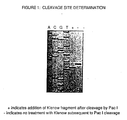
- FIG. 1 Site of cleavage determination for PacI.
- PacI is obtained by culturing Pseudomonas alcaligenes strain NEB 585 and recovering the enzyme from the cells.
- Pseudomonas alcaligenes strain NEB 585 was isolated from a water sample obtained from a bayou located in Louisiana in 1989. The sample was returned to New England Biolabs and plated on LB agar. Selected colonies were picked and plate purified. Purified samples were assayed for endonuclease activity in accordance with the technique described by Schildkraut in Genetic Engineering Principles and Methods , (1984) Setlow, J.K. et al., eds., Plenum Publishing, Vol. 6, pg. 117, the disclosure of which is hereby incorporated by reference. One sample identified as Pseudomonas alcaligenes NEB 585 contained the novel restriction endonuclease PacI.
- P . alcaligenes may be grown using any suitable technique, for example, P . alcaligenes may be grown in a media comprising tryptone, yeast extract and NaCl (pH 7.2), and incubated at 30°C with agitation and aeration. Cells in the late logarithmic stage are collected using centrifugation and stored frozen at -70°C.
- the enzyme can be isolated and purified from the frozen cell paste by using conventional enzyme purification methods.
- the obtained cell paste is thawed and suspended in a buffer solution and subjected to treatment to allow extraction of the enzyme by the buffer solution, such treatment includes sonication, high pressure dispersion, or enzymatic digestion.
- the cell residue is then removed by centrifugation, and the supernatant containing the new enzyme can be purified by ion-exchange chromatography, using for example phosphocellulose or DEAE-cellulose, molecular sieve chromatography and affinity chromatography, using for example heparin agarose or DNA-cellulose, or a combination of these methods, to produce the enzyme of the present invention.
- the enzyme of the present invention along with its corresponding DNA methylase may also be obtained using recombinant DNA techniques, such as the methylase selection technique disclosed by Wilson, et al., EPO Publication No. 019413, the disclosure of which is herein incorporated by reference.
- the methylase selection technique can be carried out in three steps. First, DNA from a bacterial strain encoding an R-M system is purified, partially digested with cloning endonucleases, and then ligated to a cleaved, dephosphorylated plasmid vector. The ligated DNA is transformed into E . coli , the transformants are pooled and the populations of plasmids are purified to form libraries.
- the libraries are digested with a selecting endonuclease, one which can be blocked by the specific modification that the methylase confers.
- the digests are transformed back into E . coli to recover undigested molecules.
- the transformants can be screened immediately, or pooled and the plasmids cycled through further rounds of purification and selection.
- individual transformants are collected and mini-preparations are made of their plasmids.
- the plasmids are analyzed for resistance to digestion by the endonuclease of interest and for possession of common inserts.
- methylase gene will be encoded by at least one fragment, which will generally be present in all bona fide methylase clones.
- Cell extracts are prepared from positive candidates and assayed in vitro for methyltransferase activity and endonuclease activity.
- R-M systems have been found to be more complex and therefore more difficult to obtain using recombinant DNA techniques and require modification of the above-described approach to cloning R-M systems. See Lunnen, et al., (1988) Gene 74:25-32, the disclosure of which is hereby incorporated by reference.
- the methylase and endonuclease genes may not be linked or the endonuclease used to fragment the bacterial DNA may cut either or both of the R-M genes.
- the methylase may not protect sufficiently against digestion by the corresponding endonuclease, either because of the inefficient expression in the transformation host, or because of the inherent control mechanism for expression of the methylase and endonuclease genes, or for unknown reasons. Modification has also been found to be harmful to the host cell chosen for transformation. Another difficulty in cloning R-M systems is that the endonuclease sought to be cloned may not be available in sufficient purity or quantity for methylase selection. Finally, in many systems, difficulties are encountered in expressing the endonuclease gene in a transformation host cell of a different bacterial species.
- PacI The recognition sequence of the endonuclease of the present invention, PacI can be determined by double-digesting Adeno2, T7 and M13mp18 DNA with the restriction endonuclease of the present invention and a restriction enzyme which cleaves the test DNA at known sites.
- the size of the DNA restriction fragments obtained can be determined using agarose gel electrophoresis. Using this technique the following results were obtained:
- the point of cleavage on the recognition sequence of the endonuclease of the present invention can be determined by using dideoxy sequencing (Sanger, F., et al., PNAS (1977) 74:5463-5467) to analyze the terminal base sequence obtained by cleaving pvPACI-11B, a pBR322 derived double-stranded plasmid, with the enzyme of the present invention.
- pvPACI-11B is formed using standard techniques to insert an 8-nucleotide linker comprising the PacI recognition sequence, 5'TTAATTAA3', into the PVUII site of pBR322 (ATCC # 37017).
- the PacI cleavage position is between the fifth and sixth nucleotides, T and T, in its recognition sequence which results in a 3' two-base extension as shown below, wherein the cleavage position is defined with the vertical arrows.
- the enzyme of the present invention has the following additional properties:
- Pseudomonas alcaligenes strain NEB 585 (ATCC # 55044) was grown in media consisting of 10 g/l tryptone, 5 g/l yeast extract, 5 g/l NaCl (adjusted to pH 7.2). The cells were incubated at 30°C until late logarithmic stage with aeration and agitation. The cells were harvested by centrifugation and stored frozen at -70°C.
- the supernatant obtained was ultracentrifuged at 4°C for one hour at 40,000 rpm (Beckman Ti50.2 rotor).
- the supernatant solution was loaded onto a DEAE-Sepharose column (138 mls). The flow-through was collected and glycerol was added to 5%.
- the solution was dialyzed for four hours against 4 liters of buffer B (0.15 M NaCl, 10 mM KPO4, 0.1 mM EDTA, 10 mM ⁇ -ME, 5% glycerol, pH 6.0).
- the dialyzate was applied to a heparin-Sepharose column (93 mls). The column was then washed with 200 mls buffer B and eluted with a linear gradient of 0.15 to 1.0 M NaCl in buffer B. The fractions obtained were tested for PacI activity (10 minute incubation) and exonuclease activity, as described below. Fractions eluting at 0.5 mols/l NaCl possessed PacI activity and were collected. Exonuclease activity was detected immediately before and on top of PacI activity.
- buffer B without salt was added until conductivity equaled that of 0.15 M NaCl, the volume was 125 mls.
- This solution was loaded onto a phosphocellulose column (27 mls) and the column was washed with 50 mls of buffer B and the enzyme was eluted with a 270 ml gradient of 0.15 to 1.0 M NaCl in buffer B.
- the fractions obtained were tested for PacI and exonuclease activity, as described below. Exonuclease activity eluted on top of PacI activity.
- the fractions possessing peak PacI activity eluted at between 0.4 and 0.45 mol/l NaCl were pooled and loaded immediately onto a G-75 Sephadex column (2.5 x 96 cm). The column was eluted slowly (one drop/15 seconds) with buffer C (0.15 M NaCl, 5% glycerol, 10 mM ⁇ -ME, 10 mM KPO4, 0.1 mM EDTA, pH 6.0). The fractions obtained were assayed for PacI and exonuclease activity. Exonuclease activity eluted with PacI activity.
- the fractions were collected, assayed and fractions eluting between 220 and 245 mls containing PacI activity were pooled and dialyzed against 4 liters of buffer D (5% glycerol, 10 mM ⁇ -ME, 50 mM NaCl, 20 mM KPO4, pH 6.0) for four hours.
- the dialyzate was loaded onto a heparin-TSK HPLC column.
- the enzyme activity was eluted with a 52 ml linear gradient of 50 mM NaCl to 0.6 M NaCl in buffer D.
- the fractions were collected and 2 »l of each fraction was assayed for PacI activity (15 minute incubation) and exonuclease activity. Peak PacI activity was found in fractions eluting between 0.37 and 0.4 mol/l NaCl. Peak exonuclease activity was found at fractions eluting between 0.4 and 0.43 mol/l NaCl.
- Fractions possessing peak PacI activity were pooled. Equal amounts of 100% glycerol was added to the pooled fraction and BSA was added to 200 »g/ml.
- the enzyme obtained was substantially pure and substantially free from any nonspecific endonuclease and exonuclease activity.
- the enzyme was stored in 50% glycerol, 10 mM ⁇ -ME, 190 mM NaCl, 20 mM KPO4, pH6.0 at -20°C.
- PacI activity A 2 »l sample of the fraction to be tested was added to 25 »l of the substrate solution (10 mM Tris-HCl, 10 mM MgCl2, 1 mM DTT, 100 »g/ml BSA, pH 6.0 containing 0.5 »g PstI linerized pvPACI-IIB DNA). The enzymatic reaction was incubated at 37°C for the time indicated, 10 or 15 minutes. The reaction was terminated by adding 7.0 »l of a Stop solution (50% glycerol, 50 mM EDTA pH 8.0, and 0.02% Bromophenol Blue). The reaction mixture was applied to a 1.0% agarose gel and electrophoresed. The bands obtained were identified in comparison with DNA length standards.
- Exonuclease activity A 2 »l sample of the protein solution was added to 50 »l of 10 mM Tris-Hcl, 10 mM MgCl2, 1 mM DTT, 100 »g/ml BSA, pH 6.0, containing 25 »g/ml 3H-DNA. The reaction was incubated at 37°C for one hour.
- Optimum Buffer Conditions For optimum PacI activity the following buffer was used: 10 mM Tris-Hcl, 10 mM MgCl2, 1 mM DTT, 100 »g/ml BSA, pH 7.
- the DNA was pelleted by centrifugation for 10 minutes in an eppendorf centrifuge, 95% of the supernatant was removed by aspiration, 300 »l of 70% ETOH/30% dH2O was added and the solution centrifuged for 5 minutes, followed by removal of approximately 95% of the supernatant. The DNA pellet was then completely dried in a speed-vac apparatus for 10 minutes.
- oligonucleotide primer (5'CGCTTACAGACAAGCTGTG3') was synthesized, using standard techniques, to sequence through the PacI site of pvPACI-11B.
- TPK mixture was aliquoted into 3 »l of the deoxy/dideoxy nucleotide reaction mixtures (obtained from New England Biolabs, Inc.) for the A, C, G and T sequencing reactions.
- the remaining TPK mixture was added to 9 »l of the A sequencing reaction mix which contained no dideoxy nucleotides to create a labeled strand of DNA extending through the PacI recognition site.
- the reactions were incubated 15 minutes at 37°C. 1 »l of dNTP chase solution (obtained from New England Biolabs, Inc.) was added to the A, C, G and T reactions. 3 »l chase was added to the extension reaction. The reactions were incubated an additional 15 minutes at 37°C.
- 6 »l stop solution obtained from New England Biolabs, Inc. was added to the A, C, G and T sequencing reactions and these were stored at -20°C until run on a sequencing gel.
- the extension reaction was incubated at 70°C for 25 minutes to inactivate the DNA polymerase (Klenow), then incubated at room temperature for 10 minutes.
- 9 »l of the extension reaction was placed in one 0.5 ml eppendorf tube and 6 »l were placed in a second tube. To the 9 »l tube was added 1 »l (approximately 0.75 units) PacI endonuclease. The reaction was mixed and 2 »l were transferred to the second tube. The enzyme reactions were incubated at 37°C for 30 minutes.
Landscapes
- Life Sciences & Earth Sciences (AREA)
- Health & Medical Sciences (AREA)
- Chemical & Material Sciences (AREA)
- Wood Science & Technology (AREA)
- Molecular Biology (AREA)
- Engineering & Computer Science (AREA)
- Bioinformatics & Cheminformatics (AREA)
- Organic Chemistry (AREA)
- Zoology (AREA)
- Genetics & Genomics (AREA)
- Medicinal Chemistry (AREA)
- Microbiology (AREA)
- Biotechnology (AREA)
- Biochemistry (AREA)
- General Engineering & Computer Science (AREA)
- General Health & Medical Sciences (AREA)
- Biomedical Technology (AREA)
- Enzymes And Modification Thereof (AREA)
Description
- The present invention relates to a new Type II restriction endonuclease, PacI, obtainable from Pseudomonas alcaligenes, and to process for producing the same.
- Many bacteria contain systems which guard against invasion of foreign DNA. Bacterial cells contain specific endonucleases that make double-strand scissions in invading DNA unless the DNA has been previously modified, usually by the appropriate corresponding DNA methylase. The endonuclease with its accompanying methylase is called a restriction-modification system (hereinafter "R-M system"). The principle function of R-M systems is thus defensive: they enable bacterial cells to resist infections by bacteriophage and plasmid DNA molecules which might otherwise parasitize them.
- Bacteria usually possess only a small number of restriction endonucleases per species. The endonucleases are named according to the bacteria from which they are derived. Thus, the species Haemophilus aegyptius, for example synthesizes three different restriction endonucleases, named HaeI, HaeII, and HaeIII. These enzymes recognize and cleave the sequences (AT)GGCC(AT), PuGCGCPy and GGCC respectively. Escherichia coli RY13, on the other hand, synthesizes only one restriction endonuclease, Eco RI, which recognizes the sequence GAATTC.
- Restriction endonucleases, the first component of R-M systems, have been characterized primarily with respect to their recognition sequence and cleavage specificity because of their practical use for molecular dissection of DNA. The majority of restriction endonucleases recognize sequences 4-6 nucleotides in length. More recently, recognition endonucleases having recognition sequences of 7-8 nucleotides in length have been found. Most, but not all, recognition sites contain a dyad axis of symmetry, and in most cases, all the bases within the site are uniquely specified. This symmetrical relationship in the recognition sequence of restriction endonucleases has been termed "palindromes". Some restriction endonucleases have degenerate or relaxed specificities in that they can recognize multiple bases at the same positions. HaeIII, which recognizes the sequence GGCC is an example of restriction endonuclease having a symmetrical relationship, while HaeII, which recognizes the sequence PuGCGCPy, typifies restriction endonucleases having a degenerate or relaxed specificity. Endonucleases with symmetrical recognition sites generally cleave symmetrically within or adjacent to the recognition site, while those that recognize asymmetric sites tend to cut at distance from the recognition site, typically from about 1-18 base pairs away from the site.
- The second component of bacterial R-M systems are the modification methylases. These enzymes are complementary to restriction endonucleases and provide the means by which bacteria are able to protect their own DNA and distinguish it from foreign, infecting DNA. Modification methylases recognize and bind to the same nucleotide recognition sequence as the corresponding restriction endonuclease, but instead of breaking the DNA, they chemically modify one or other of the nucleotides within the sequence by the addition of a methyl group. Following methylation, the recognition sequence is no longer bound or cleaved by the corresponding restriction endonuclease. The DNA of a bacterial cell is always fully modified, by virtue of the activity of its modification methylase and it is therefore completely insensitive to the presence of the endogenous restriction endonuclease. It is only unmodified, and therefore identifiably foreign, DNA that is sensitive to restriction endonuclease recognition and attack.
- More than 1000 different restriction endonucleases have been isolated from bacterial strains, and many share common specificities. Restriction endonucleases which recognize identical sequences are called "isoschizomers". Although the recognition sequences of isoschizomers are the same, they may vary with respect to site of cleavage (e.g., XmaI V. SmaI Endow, et al., J. Mol. Biol. 112:521 (1977); Waalwijk, et al., Nucleic Acids Res. 5:3231 (1978)) and in cleavage rate at various sites (XhoI v. Pae R7I Gingeras, et al., Proc. Natl. Acad. Sci U.S.A. 80:402 (1983)).
- Specific Type II restriction endonucleases are already known for numerous DNA sequences, however, a large number of restriction enzymes with diversified enzymatic characteristics are necessary for successful genetic manipulation. In particular, restriction endonucleases that require eight specific nucleotides in their recognition sequence are quite rare. In fact, to date only three have been identified, NotI (GCGGCCGC), SfiI (GGCCNNNNNGGCC), and FseI (GGCCGGCC).
- Accordingly, there is a continued need for Type II restriction endonucleases which recognize novel DNA sequences, and in particular, those which recognize eight nucleotides recognition sequences.
- In accordance with the present invention, there is provided a novel restriction endonuclease obtainable from the bacterium Pseudomonas alcaligenes endonuclease, hereinafter referred to as "PacI", which endonuclease:
- (1) recognizes the base sequence in a double-stranded DNA molecule as shown below,(wherein A and T represent adenine and thymine, respectively);

- (2) cleaves said sequence in the phosphodiester bonds between T and T as indicated with the vertical arrows; and
- (3) cleaves double-stranded Adeno2, T7 and M13mp18 DNA in one position, while not cleaving pBR322, phiX174, pUC19, SV40 or lambda DNAs.
- The present invention further relates to a process for the production of the novel restriction endonuclease PacI which comprises culturing Pseudomonas alcaligenes under conditions suitable for expressing PacI, collecting the cells, obtaining a cell-free extract therefrom and separating and collecting the restriction endonuclease PacI from the cell-free extract.
- FIG. 1 - Site of cleavage determination for PacI.
- In accordance with the present invention, PacI is obtained by culturing Pseudomonas alcaligenes strain NEB 585 and recovering the enzyme from the cells.
- Pseudomonas alcaligenes strain NEB 585 was isolated from a water sample obtained from a bayou located in Louisiana in 1989. The sample was returned to New England Biolabs and plated on LB agar. Selected colonies were picked and plate purified. Purified samples were assayed for endonuclease activity in accordance with the technique described by Schildkraut in Genetic Engineering Principles and Methods, (1984) Setlow, J.K. et al., eds., Plenum Publishing, Vol. 6, pg. 117, the disclosure of which is hereby incorporated by reference. One sample identified as Pseudomonas alcaligenes NEB 585 contained the novel restriction endonuclease PacI.
- A sample of Pseudomonas alcaligenes strain NEB 585 was deposited at the American Type Culture Collection (ATCC) on May 7, 1990 and bears Accession No. 55044.
- For recovering the enzyme of the present invention, P. alcaligenes may be grown using any suitable technique, for example, P. alcaligenes may be grown in a media comprising tryptone, yeast extract and NaCl (pH 7.2), and incubated at 30°C with agitation and aeration. Cells in the late logarithmic stage are collected using centrifugation and stored frozen at -70°C.
- After the cells are harvested and frozen, the enzyme can be isolated and purified from the frozen cell paste by using conventional enzyme purification methods. For example, the obtained cell paste is thawed and suspended in a buffer solution and subjected to treatment to allow extraction of the enzyme by the buffer solution, such treatment includes sonication, high pressure dispersion, or enzymatic digestion. The cell residue is then removed by centrifugation, and the supernatant containing the new enzyme can be purified by ion-exchange chromatography, using for example phosphocellulose or DEAE-cellulose, molecular sieve chromatography and affinity chromatography, using for example heparin agarose or DNA-cellulose, or a combination of these methods, to produce the enzyme of the present invention.
- The enzyme of the present invention along with its corresponding DNA methylase may also be obtained using recombinant DNA techniques, such as the methylase selection technique disclosed by Wilson, et al., EPO Publication No. 019413, the disclosure of which is herein incorporated by reference. For example, the methylase selection technique can be carried out in three steps. First, DNA from a bacterial strain encoding an R-M system is purified, partially digested with cloning endonucleases, and then ligated to a cleaved, dephosphorylated plasmid vector. The ligated DNA is transformed into E. coli, the transformants are pooled and the populations of plasmids are purified to form libraries. Next, the libraries are digested with a selecting endonuclease, one which can be blocked by the specific modification that the methylase confers. The digests are transformed back into E. coli to recover undigested molecules. The transformants can be screened immediately, or pooled and the plasmids cycled through further rounds of purification and selection. Finally, individual transformants are collected and mini-preparations are made of their plasmids. The plasmids are analyzed for resistance to digestion by the endonuclease of interest and for possession of common inserts. (The methylase gene will be encoded by at least one fragment, which will generally be present in all bona fide methylase clones.) Cell extracts are prepared from positive candidates and assayed in vitro for methyltransferase activity and endonuclease activity.
- However, a number of R-M systems have been found to be more complex and therefore more difficult to obtain using recombinant DNA techniques and require modification of the above-described approach to cloning R-M systems. See Lunnen, et al., (1988) Gene 74:25-32, the disclosure of which is hereby incorporated by reference. For example, in some systems, the methylase and endonuclease genes may not be linked or the endonuclease used to fragment the bacterial DNA may cut either or both of the R-M genes. In other systems, such as BamHI and DdeI, the methylase may not protect sufficiently against digestion by the corresponding endonuclease, either because of the inefficient expression in the transformation host, or because of the inherent control mechanism for expression of the methylase and endonuclease genes, or for unknown reasons. Modification has also been found to be harmful to the host cell chosen for transformation. Another difficulty in cloning R-M systems is that the endonuclease sought to be cloned may not be available in sufficient purity or quantity for methylase selection. Finally, in many systems, difficulties are encountered in expressing the endonuclease gene in a transformation host cell of a different bacterial species.
- The recognition sequence of the endonuclease of the present invention, PacI can be determined by double-digesting Adeno2, T7 and M13mp18 DNA with the restriction endonuclease of the present invention and a restriction enzyme which cleaves the test DNA at known sites. The size of the DNA restriction fragments obtained can be determined using agarose gel electrophoresis. Using this technique the following results were obtained:
- (a) The single recognition sequence of PacI on Adeno2 DNA was mapped to approximately 28,500 base pairs by analysis against ClaI, NdeI, and SpeI cleaved Adeno2 DNA. The sequence 5'TTAATTAA3' occurs at only one position 28,618 base pairs.
- (b) The single recognition sequence of PacI on T7 DNA was mapped to approximately 27,000 base pairs by analysis against AlwI, BanII, BclI, BglII, BssHII, BstEII, EcoNI, MluI, NcoI, NheI, SfiI, and StuI cleaved T7 DNA. The sequence 5'TTAATTAA3' occurs at only one position 27,222 base pairs.
- (c) The single recognition sequence of PacI on M13mp18 DNA was mapped to approximately position 4096 base pairs by analysis against SnaBI, BsmI, and BglII cleaved M13mp18 DNA. The sequence 5'TTAATTAA3' occurs at only one position 4132 base pairs.
- (d) There is no observed cleavage of pBR322 DNA, pUC19 DNA, phiX174 DNA, SV40 DNA or lambda DNA. The sequence 5'TTAATTAA3' does not occur within the sequence of these molecules.
- As is shown below in Table 1, the number and sizes of the fragments generated by digestion with PacI on eight DNA molecules match the computer predicted number and sizes of the fragments that would be generated by cleavage at the sequence 5'TTAATTAA3'.
- From the above data, it was thus concluded that PacI recognizes the sequence 5'TTAATTAA3'.
- The point of cleavage on the recognition sequence of the endonuclease of the present invention can be determined by using dideoxy sequencing (Sanger, F., et

al., PNAS (1977) 74:5463-5467) to analyze the terminal base sequence obtained by cleaving pvPACI-11B, a pBR322 derived double-stranded plasmid, with the enzyme of the present invention. pvPACI-11B is formed using standard techniques to insert an 8-nucleotide linker comprising the PacI recognition sequence, 5'TTAATTAA3', into the PVUII site of pBR322 (ATCC # 37017). Using the technique described above and further exemplified in Example II, it was concluded that the PacI cleavage position is between the fifth and sixth nucleotides, T and T, in its recognition sequence which results in a 3' two-base extension as shown below,
wherein the cleavage position is defined with the vertical arrows. - The enzyme of the present invention has the following additional properties:
- (a) NaCl Concentration: The optimal salt concentration was at 0 mM NaCl, the relative activity being 33% for 100 and 150 mM NaCl. Activity was higher at a concentration of 0-5 mM NaCl than at a concentration of 150 mM NaCl.
- (b) Temperature: Activity was higher at 37°C than at 25°C.
- (c) pH: The activity was higher at pH 7.0 than pH 8.0
- Pseudomonas alcaligenes strain NEB 585 (ATCC # 55044) was grown in media consisting of 10 g/l tryptone, 5 g/l yeast extract, 5 g/l NaCl (adjusted to pH 7.2). The cells were incubated at 30°C until late logarithmic stage with aeration and agitation. The cells were harvested by centrifugation and stored frozen at -70°C.
- 110 g of the cells obtained above were suspended in three volumes of buffer A (0.3 NaCl, 10 mM KPO4, 0.1 mM EDTA, 10 mM β-ME, pH 6.0). Phenylmethylsulfonyl fluoride was added to 25 »g/ml and the cells were sonicated until approximately 46 mg of protein/g cell was released. The lysate was centrifuged at 4°C for 70 minutes at 17,000 rpm (Beckman JA17 rotor).
- The supernatant obtained was ultracentrifuged at 4°C for one hour at 40,000 rpm (Beckman Ti50.2 rotor). The supernatant solution was loaded onto a DEAE-Sepharose column (138 mls). The flow-through was collected and glycerol was added to 5%. The solution was dialyzed for four hours against 4 liters of buffer B (0.15 M NaCl, 10 mM KPO4, 0.1 mM EDTA, 10 mM β-ME, 5% glycerol, pH 6.0).
- The dialyzate was applied to a heparin-Sepharose column (93 mls). The column was then washed with 200 mls buffer B and eluted with a linear gradient of 0.15 to 1.0 M NaCl in buffer B. The fractions obtained were tested for PacI activity (10 minute incubation) and exonuclease activity, as described below. Fractions eluting at 0.5 mols/l NaCl possessed PacI activity and were collected. Exonuclease activity was detected immediately before and on top of PacI activity.
- To the fractions with PacI activity, buffer B without salt was added until conductivity equaled that of 0.15 M NaCl, the volume was 125 mls. This solution was loaded onto a phosphocellulose column (27 mls) and the column was washed with 50 mls of buffer B and the enzyme was eluted with a 270 ml gradient of 0.15 to 1.0 M NaCl in buffer B. The fractions obtained were tested for PacI and exonuclease activity, as described below. Exonuclease activity eluted on top of PacI activity.
- The fractions possessing peak PacI activity eluted at between 0.4 and 0.45 mol/l NaCl were pooled and loaded immediately onto a G-75 Sephadex column (2.5 x 96 cm). The column was eluted slowly (one drop/15 seconds) with buffer C (0.15 M NaCl, 5% glycerol, 10 mM β-ME, 10 mM KPO4, 0.1 mM EDTA, pH 6.0). The fractions obtained were assayed for PacI and exonuclease activity. Exonuclease activity eluted with PacI activity.
- The fractions were collected, assayed and fractions eluting between 220 and 245 mls containing PacI activity were pooled and dialyzed against 4 liters of buffer D (5% glycerol, 10 mM β-ME, 50 mM NaCl, 20 mM KPO4, pH 6.0) for four hours. The dialyzate was loaded onto a heparin-TSK HPLC column. The enzyme activity was eluted with a 52 ml linear gradient of 50 mM NaCl to 0.6 M NaCl in buffer D. The fractions were collected and 2 »l of each fraction was assayed for PacI activity (15 minute incubation) and exonuclease activity. Peak PacI activity was found in fractions eluting between 0.37 and 0.4 mol/l NaCl. Peak exonuclease activity was found at fractions eluting between 0.4 and 0.43 mol/l NaCl.
- Fractions possessing peak PacI activity were pooled. Equal amounts of 100% glycerol was added to the pooled fraction and BSA was added to 200 »g/ml. The enzyme obtained was substantially pure and substantially free from any nonspecific endonuclease and exonuclease activity. The enzyme was stored in 50% glycerol, 10 mM β-ME, 190 mM NaCl, 20 mM KPO4, pH6.0 at -20°C.
- PacI activity: A 2 »l sample of the fraction to be tested was added to 25 »l of the substrate solution (10 mM Tris-HCl, 10 mM MgCl₂, 1 mM DTT, 100 »g/ml BSA, pH 6.0 containing 0.5 »g PstI linerized pvPACI-IIB DNA). The enzymatic reaction was incubated at 37°C for the time indicated, 10 or 15 minutes. The reaction was terminated by adding 7.0 »l of a Stop solution (50% glycerol, 50 mM EDTA pH 8.0, and 0.02% Bromophenol Blue). The reaction mixture was applied to a 1.0% agarose gel and electrophoresed. The bands obtained were identified in comparison with DNA length standards.
- Exonuclease activity: A 2 »l sample of the protein solution was added to 50 »l of 10 mM Tris-Hcl, 10 mM MgCl2, 1 mM DTT, 100 »g/ml BSA, pH 6.0, containing 25 »g/ml ³H-DNA. The reaction was incubated at 37°C for one hour.
- Unit Definition: One unit of PacI completely cleaves 1 »g of pvPACI-IIB DNA within one hour at 37°C.
- Optimum Buffer Conditions: For optimum PacI activity the following buffer was used: 10 mM Tris-Hcl, 10 mM MgCl₂, 1 mM DTT, 100 »g/ml BSA, pH 7.
- 3 »g of pvPACI-11B purified plasmid DNA was dissolved in a total of 20 »l dH2O in a 1.5 ml eppendorf tube. 2 »l of 2M NaOH, 2 mM EDTA was added and the solution incubated 5 minutes at room temperature. 7 »l dH20 (4°C), 6 »l 3M NaAcetate pH 5.0 (4°C) and 75 »l ETOH (4°C) were added rapidly. The solution was immediately placed in a dry ice/2-propanol bath for 15 minutes to precipitate the DNA. The DNA was pelleted by centrifugation for 10 minutes in an eppendorf centrifuge, 95% of the supernatant was removed by aspiration, 300 »l of 70% ETOH/30% dH2O was added and the solution centrifuged for 5 minutes, followed by removal of approximately 95% of the supernatant. The DNA pellet was then completely dried in a speed-vac apparatus for 10 minutes.
- An oligonucleotide primer (5'CGCTTACAGACAAGCTGTG3') was synthesized, using standard techniques, to sequence through the PacI site of pvPACI-11B.
- To the dried pellet were added 13.5 »l dH2O, 2.25»l 10X sequencing buffer (75 mM Tris pH 7.6, 55 mM DTT, 50 mM MgCl2), and 1.5 »l of 1.0 »m primer solution. The solution was incubated at 37°C for 30 minutes. 3 »l of [alpha-³⁵S] dATP at 800 Ci/mmole, 10 mCi/ml was added. 1.5 »l (7.5 units) Klenow fragment DNA polymerase (obtained from New England Biolabs, Inc.) was added. This solution was called the TPK mixture. 3.2 »l of the TPK mixture was aliquoted into 3 »l of the deoxy/dideoxy nucleotide reaction mixtures (obtained from New England Biolabs, Inc.) for the A, C, G and T sequencing reactions. The remaining TPK mixture was added to 9 »l of the A sequencing reaction mix which contained no dideoxy nucleotides to create a labeled strand of DNA extending through the PacI recognition site. The reactions were incubated 15 minutes at 37°C. 1 »l of dNTP chase solution (obtained from New England Biolabs, Inc.) was added to the A, C, G and T reactions. 3 »l chase was added to the extension reaction. The reactions were incubated an additional 15 minutes at 37°C. 6 »l stop solution (obtained from New England Biolabs, Inc.) was added to the A, C, G and T sequencing reactions and these were stored at -20°C until run on a sequencing gel. The extension reaction was incubated at 70°C for 25 minutes to inactivate the DNA polymerase (Klenow), then incubated at room temperature for 10 minutes. 9 »l of the extension reaction was placed in one 0.5 ml eppendorf tube and 6 »l were placed in a second tube. To the 9 »l tube was added 1 »l (approximately 0.75 units) PacI endonuclease. The reaction was mixed and 2 »l were transferred to the second tube. The enzyme reactions were incubated at 37°C for 30 minutes. Following digestion 4 »l of the reactions were removed and mixed with 5 »l stop solution. To the remaining 4 »l was added 0.25 »l (1.25 units) Klenow fragment and the reaction incubated at room temperature for 12 minutes, after which 5 »l of stop solution was added. The enzyme digest reactions were also stored at -20°C prior to running the gel. The reaction products were electrophoresed on an 8% bis-acrylamide sequencing gel, with the PacI digestion of the extension reaction next to the set of sequencing reactions produced from the same primer (see Figure 1).
- Digestion of the extension reaction product with PacI endonuclease produced a band which co-migrated with the third T of the PacI recognition sequence 5'TTAATTAA3'. Treatment with Klenow fragment following PacI digestion produced a fragment which co-migrated with the 5'A in the PacI recognition sequence of 5'TTAATTAA3'. These results indicated that the PacI cleavage site was between the fifth and sixth nucleotides, T and T, in its recognition sequence 5'TTAAT/TAA3' and thus produced a two-base 3' extension.
Claims (6)
- A substantially pure Type II restriction endonuclease obtainable from Pseudomonas alcaligenes recognizing the following base sequence in double-stranded deoxyribonucleic acid molecules:and having a cleavage position defined by the arrows.

- The Type II restriction endonuclease of claim 1, having a greater activity at 37°C than at 25°C.
- The Type II restriction endonuclease of claim 1, cleaving double-stranded deoxyribonucleic acid Adeno2, T7 and M13mp18 in one position.
- The Type II restriction endonuclease of claim 1, having greater activity at pH 7.0 than pH 8.0.
- The Type II restriction endonuclease of claim 1, having greater activity at a NaCl concentration of 0 to 5 mM than at a concentration of 150 mM.
- A method for obtaining the Type II restriction endonuclease of claim 1, comprising cultivating a sample of Pseudomonas alcaligenes under conditions favoring production of said endonuclease and separating said endonuclease therefrom.
Applications Claiming Priority (2)
| Application Number | Priority Date | Filing Date | Title |
|---|---|---|---|
| US07/521,540 US5098839A (en) | 1990-05-10 | 1990-05-10 | Type ii restriction endonuclease obtainable from pseudomonas alcaligenes and a process for producing the same |
| US521540 | 1990-05-10 |
Publications (3)
| Publication Number | Publication Date |
|---|---|
| EP0456356A2 EP0456356A2 (en) | 1991-11-13 |
| EP0456356A3 EP0456356A3 (en) | 1991-12-04 |
| EP0456356B1 true EP0456356B1 (en) | 1994-09-28 |
Family
ID=24077145
Family Applications (1)
| Application Number | Title | Priority Date | Filing Date |
|---|---|---|---|
| EP91303378A Expired - Lifetime EP0456356B1 (en) | 1990-05-10 | 1991-04-16 | A novel type II restriction endonuclease obtainable from Pseudomonas alcaligenes and a process for producing the same |
Country Status (4)
| Country | Link |
|---|---|
| US (1) | US5098839A (en) |
| EP (1) | EP0456356B1 (en) |
| JP (1) | JP3040544B2 (en) |
| DE (2) | DE456356T1 (en) |
Cited By (2)
| Publication number | Priority date | Publication date | Assignee | Title |
|---|---|---|---|---|
| WO1999011821A1 (en) * | 1997-09-02 | 1999-03-11 | New England Biolabs, Inc. | Method for screening restriction endonucleases |
| US6905837B2 (en) | 1997-09-02 | 2005-06-14 | New England Biolabs, Inc. | Method for screening restriction endonucleases |
Families Citing this family (20)
| Publication number | Priority date | Publication date | Assignee | Title |
|---|---|---|---|---|
| US5440313A (en) * | 1993-05-27 | 1995-08-08 | Stellar Gps Corporation | GPS synchronized frequency/time source |
| US5451519A (en) * | 1993-05-28 | 1995-09-19 | Georgetown University | Cloning restriction endonuclease genes by modulating methyltransferase activity |
| JP4303418B2 (en) * | 1997-10-24 | 2009-07-29 | ライフ テクノロジーズ コーポレーション | Recombination cloning using nucleic acids with recombination sites |
| EP2119788A1 (en) | 1999-03-02 | 2009-11-18 | Life Technologies Corporation | Compositions and methods for use in recombinational cloning of nucleic acids |
| US6689573B1 (en) | 1999-05-24 | 2004-02-10 | New England Biolabs, Inc. | Method for screening restriction endonucleases |
| CN1757724B (en) | 1999-12-10 | 2014-06-11 | 茵维特罗根公司 | Use of multiple recombination sites with unique specificity in recombinational cloning |
| US7198924B2 (en) * | 2000-12-11 | 2007-04-03 | Invitrogen Corporation | Methods and compositions for synthesis of nucleic acid molecules using multiple recognition sites |
| JP4210769B2 (en) * | 2001-11-22 | 2009-01-21 | 独立行政法人産業技術総合研究所 | How to make a Gateway entry clone |
| US6977162B2 (en) * | 2002-03-01 | 2005-12-20 | Ravgen, Inc. | Rapid analysis of variations in a genome |
| NZ535044A (en) * | 2002-03-01 | 2008-12-24 | Ravgen Inc | Non-invasive method to determine the genetic sequence of foetal DNA from a sample from a pregnant female thereby detecting any alternation in gene sequence as compared with the wild type sequence |
| US7442506B2 (en) * | 2002-05-08 | 2008-10-28 | Ravgen, Inc. | Methods for detection of genetic disorders |
| US7727720B2 (en) * | 2002-05-08 | 2010-06-01 | Ravgen, Inc. | Methods for detection of genetic disorders |
| US20070178478A1 (en) * | 2002-05-08 | 2007-08-02 | Dhallan Ravinder S | Methods for detection of genetic disorders |
| US20040219516A1 (en) * | 2002-07-18 | 2004-11-04 | Invitrogen Corporation | Viral vectors containing recombination sites |
| AU2003257109A1 (en) * | 2002-08-05 | 2004-02-23 | Invitrogen Corporation | Compositions and methods for molecular biology |
| US20050095615A1 (en) * | 2003-06-26 | 2005-05-05 | Welch Peter J. | Methods and compositions for detecting promoter activity and expressing fusion proteins |
| US6958230B2 (en) * | 2003-09-22 | 2005-10-25 | New England Biolabs, Inc. | Method for cloning and expression of SbfI restriction endonuclease and SbfI methylase in E. coli |
| US8304189B2 (en) * | 2003-12-01 | 2012-11-06 | Life Technologies Corporation | Nucleic acid molecules containing recombination sites and methods of using the same |
| WO2005086654A2 (en) * | 2004-02-27 | 2005-09-22 | The Trustees Of Princeton University | Self-cleaving affinity tags and methods of use |
| EP2565267A1 (en) | 2005-08-04 | 2013-03-06 | New England Biolabs, Inc. | Novel restriction endonucleases, DNA encoding these endonucleases and methods for identifying new endonucleases with the same or varied specificity |
-
1990
- 1990-05-10 US US07/521,540 patent/US5098839A/en not_active Expired - Lifetime
-
1991
- 1991-04-16 DE DE91303378T patent/DE456356T1/en active Pending
- 1991-04-16 EP EP91303378A patent/EP0456356B1/en not_active Expired - Lifetime
- 1991-04-16 DE DE69104262T patent/DE69104262T2/en not_active Expired - Lifetime
- 1991-05-10 JP JP3201544A patent/JP3040544B2/en not_active Expired - Lifetime
Cited By (2)
| Publication number | Priority date | Publication date | Assignee | Title |
|---|---|---|---|---|
| WO1999011821A1 (en) * | 1997-09-02 | 1999-03-11 | New England Biolabs, Inc. | Method for screening restriction endonucleases |
| US6905837B2 (en) | 1997-09-02 | 2005-06-14 | New England Biolabs, Inc. | Method for screening restriction endonucleases |
Also Published As
| Publication number | Publication date |
|---|---|
| EP0456356A3 (en) | 1991-12-04 |
| US5098839A (en) | 1992-03-24 |
| JP3040544B2 (en) | 2000-05-15 |
| JPH06335388A (en) | 1994-12-06 |
| EP0456356A2 (en) | 1991-11-13 |
| DE69104262D1 (en) | 1994-11-03 |
| DE69104262T2 (en) | 1995-05-11 |
| DE456356T1 (en) | 1994-02-03 |
Similar Documents
| Publication | Publication Date | Title |
|---|---|---|
| US5098839A (en) | Type ii restriction endonuclease obtainable from pseudomonas alcaligenes and a process for producing the same | |
| EP0466332B1 (en) | A novel restriction endonuclease obtainable from Bacillus coagulans and a process for producing the same | |
| US4999294A (en) | Method for producing the FokI restriction endonuclease and methylase | |
| US5192676A (en) | Type ii restriction endonuclease, asci, obtainable from arthrobacter species and a process for producing the same | |
| EP0388212B1 (en) | Method for producing the Hinc II restriction endonuclease and methylase | |
| US5139942A (en) | Method for producing the nde i restriction endonuclease and methylase | |
| US4999293A (en) | Method for producing the HhaI restriction endonuclease and methylase | |
| US4987074A (en) | Method for producing the HgiAI restriction endonuclease and methylase | |
| US5053330A (en) | Method for producing the mwoi restriction endonuclease and methylase | |
| US5030569A (en) | Method for producing the AFL II restriction endonuclease and methylase | |
| EP0517111B1 (en) | A novel type II restriction endonuclease, PmeI, obtainable from pseudomonas mendocina and a process for producing the same | |
| US5100793A (en) | Method for producing the asei restriction endonuclease and methylase | |
| US6238904B1 (en) | Type II restriction endonuclease, HpyCH4III, obtainable from Helicobacter pylori CH4 and a process for producing the same | |
| US5516678A (en) | Method for producing the SSPI restriction endonuclease and methylase | |
| EP0539160B1 (en) | A type II restriction endonuclease, Apo I, obtainable from Arthrobacter protophormiae and a process for producing the same | |
| US5075232A (en) | Method for producing the nlavi restriction endonuclease and methylase | |
| US5147794A (en) | Type II restriction endonuclease obtainable from Kluyvera ascorbata and a process for producing the same | |
| WO2001021776A1 (en) | A NOVEL TYPE II RESTRICTION ENDONUCLEASE, HpyCH4V, OBTAINABLE FROM HELICOBACTER PYLORI CH4 AND A PROCESS FOR PRODUCING THE SAME | |
| US5298404A (en) | Method for producing the Hpa I restriction endonuclease and methylase | |
| US6194188B1 (en) | Type II restriction endonuclease, HpyCH4IV, obtainable from Helicobacter pylori CH4 and a process for producing the same | |
| US6280992B1 (en) | Type II restriction endonuclease, Hpy99I, obtainable from Helicobacter pylori J99 and a process for producing the same | |
| EP0314346B1 (en) | Method for producing the Afl II restriction endonuclease |
Legal Events
| Date | Code | Title | Description |
|---|---|---|---|
| PUAI | Public reference made under article 153(3) epc to a published international application that has entered the european phase |
Free format text: ORIGINAL CODE: 0009012 |
|
| PUAL | Search report despatched |
Free format text: ORIGINAL CODE: 0009013 |
|
| AK | Designated contracting states |
Kind code of ref document: A2 Designated state(s): DE FR GB |
|
| AK | Designated contracting states |
Kind code of ref document: A3 Designated state(s): DE FR GB |
|
| 17P | Request for examination filed |
Effective date: 19920324 |
|
| EL | Fr: translation of claims filed | ||
| 17Q | First examination report despatched |
Effective date: 19931208 |
|
| DET | De: translation of patent claims | ||
| GRAA | (expected) grant |
Free format text: ORIGINAL CODE: 0009210 |
|
| AK | Designated contracting states |
Kind code of ref document: B1 Designated state(s): DE FR GB |
|
| REF | Corresponds to: |
Ref document number: 69104262 Country of ref document: DE Date of ref document: 19941103 |
|
| ET | Fr: translation filed | ||
| PLBE | No opposition filed within time limit |
Free format text: ORIGINAL CODE: 0009261 |
|
| STAA | Information on the status of an ep patent application or granted ep patent |
Free format text: STATUS: NO OPPOSITION FILED WITHIN TIME LIMIT |
|
| 26N | No opposition filed | ||
| REG | Reference to a national code |
Ref country code: GB Ref legal event code: IF02 |
|
| PGFP | Annual fee paid to national office [announced via postgrant information from national office to epo] |
Ref country code: GB Payment date: 20100312 Year of fee payment: 20 |
|
| PGFP | Annual fee paid to national office [announced via postgrant information from national office to epo] |
Ref country code: FR Payment date: 20100420 Year of fee payment: 20 |
|
| PGFP | Annual fee paid to national office [announced via postgrant information from national office to epo] |
Ref country code: DE Payment date: 20100430 Year of fee payment: 20 |
|
| REG | Reference to a national code |
Ref country code: DE Ref legal event code: R071 Ref document number: 69104262 Country of ref document: DE |
|
| REG | Reference to a national code |
Ref country code: GB Ref legal event code: PE20 Expiry date: 20110415 |
|
| PG25 | Lapsed in a contracting state [announced via postgrant information from national office to epo] |
Ref country code: GB Free format text: LAPSE BECAUSE OF EXPIRATION OF PROTECTION Effective date: 20110415 |
|
| PG25 | Lapsed in a contracting state [announced via postgrant information from national office to epo] |
Ref country code: DE Free format text: LAPSE BECAUSE OF EXPIRATION OF PROTECTION Effective date: 20110416 |