EP0454078B1 - Dual functioning excipient for metal chelate contrast agents - Google Patents
Dual functioning excipient for metal chelate contrast agents Download PDFInfo
- Publication number
- EP0454078B1 EP0454078B1 EP91106575A EP91106575A EP0454078B1 EP 0454078 B1 EP0454078 B1 EP 0454078B1 EP 91106575 A EP91106575 A EP 91106575A EP 91106575 A EP91106575 A EP 91106575A EP 0454078 B1 EP0454078 B1 EP 0454078B1
- Authority
- EP
- European Patent Office
- Prior art keywords
- excipient
- bis
- calcium
- iii
- hydrogen
- Prior art date
- Legal status (The legal status is an assumption and is not a legal conclusion. Google has not performed a legal analysis and makes no representation as to the accuracy of the status listed.)
- Expired - Lifetime
Links
- PEEHTFAAVSWFBL-UHFFFAOYSA-N O=C(C=C1)NC1=O Chemical compound O=C(C=C1)NC1=O PEEHTFAAVSWFBL-UHFFFAOYSA-N 0.000 description 1
Classifications
-
- A—HUMAN NECESSITIES
- A61—MEDICAL OR VETERINARY SCIENCE; HYGIENE
- A61K—PREPARATIONS FOR MEDICAL, DENTAL OR TOILETRY PURPOSES
- A61K49/00—Preparations for testing in vivo
- A61K49/06—Nuclear magnetic resonance [NMR] contrast preparations; Magnetic resonance imaging [MRI] contrast preparations
-
- A—HUMAN NECESSITIES
- A61—MEDICAL OR VETERINARY SCIENCE; HYGIENE
- A61K—PREPARATIONS FOR MEDICAL, DENTAL OR TOILETRY PURPOSES
- A61K49/00—Preparations for testing in vivo
- A61K49/0002—General or multifunctional contrast agents, e.g. chelated agents
-
- A—HUMAN NECESSITIES
- A61—MEDICAL OR VETERINARY SCIENCE; HYGIENE
- A61K—PREPARATIONS FOR MEDICAL, DENTAL OR TOILETRY PURPOSES
- A61K49/00—Preparations for testing in vivo
- A61K49/04—X-ray contrast preparations
-
- A—HUMAN NECESSITIES
- A61—MEDICAL OR VETERINARY SCIENCE; HYGIENE
- A61K—PREPARATIONS FOR MEDICAL, DENTAL OR TOILETRY PURPOSES
- A61K51/00—Preparations containing radioactive substances for use in therapy or testing in vivo
- A61K51/02—Preparations containing radioactive substances for use in therapy or testing in vivo characterised by the carrier, i.e. characterised by the agent or material covalently linked or complexing the radioactive nucleus
- A61K51/04—Organic compounds
- A61K51/0474—Organic compounds complexes or complex-forming compounds, i.e. wherein a radioactive metal (e.g. 111In3+) is complexed or chelated by, e.g. a N2S2, N3S, NS3, N4 chelating group
- A61K51/0482—Organic compounds complexes or complex-forming compounds, i.e. wherein a radioactive metal (e.g. 111In3+) is complexed or chelated by, e.g. a N2S2, N3S, NS3, N4 chelating group chelates from cyclic ligands, e.g. DOTA
-
- A—HUMAN NECESSITIES
- A61—MEDICAL OR VETERINARY SCIENCE; HYGIENE
- A61K—PREPARATIONS FOR MEDICAL, DENTAL OR TOILETRY PURPOSES
- A61K2123/00—Preparations for testing in vivo
Definitions
- metal chelates as contrast agents for magnetic resonance, x-ray, ultrasound, and radiodiagnostic imaging is well known.
- Metal chelates of the transition metal and lanthanide metal ions are of primary interest due to their strong paramagnetic and x-ray absorbing properties as well as others. Because the free metal ions are in general more toxic, these type of pharmaceuticals are prepared in the form of chelates, i.e. the metal ions are complexed, typically by organic ligands. Examples of these organic ligands are linear and macrocyclic polyaminopolycarboxylic acids and their derivatives. Unfortunately, in many cases there are also toxicity problems with the free organic ligand. Thus, even the use of metal chelates as contrast agents may cause toxicity problems to the extent that free metal and/or free organic ligand may both be present in the blood following introduction of the chelate.
- M e.g. sodium
- M' e.g. Zinc, copper or calcium
- This excipient is disclosed as a scavenger for the free metal ions, but no mention is made of scavenging free organic ligand. Indeed, this European patent suggests and claims the addition of free ligand to enhance safety.
- novel excipients for metal chelate contrast agents, M(L), wherein M is a contrast metal and L is a chelating ligand, for magnetic resonance, x-ray, ultrasound and radiodiagnostic imaging, and compositions and methods utilizing such excipients are disclosed.
- These novel excipients have the formula X m [X'(L')] n , (I) wherein X and X' are each independently calcium or zinc; L' is an organic ligand which may be the organic ligand, L, employed in the metal chelate contrast agent or another organic ligand which has a greater affinity for the metal, M, than for calcium or zinc; and wherein m and n are independently selected from 1, 2 or 3.
- This salt of the complex of the organic ligand is a highly useful excipient for metal chelate contrast agents in that this single excipient has been found to scavenge free metal ions and free organic ligand, thereby enhancing the safety of such contrast agents and methods employing same.
- the present invention pertains to novel excipients for metal chelate contrast agents, compositions of contrast agents complexed with such excipients and methods of imaging employing same.
- the novel excipient of the present invention comprising the salt of the complex of an organic ligand, has been found to scavenge free metal and free organic ligand.
- the excipient comprises the calcium salt of the calcium complex of the ligand shown as Ca m [Ca(L')] n wherein m, n and L' are as defined above. Since the excipients of the present invention are dual-functioning scavengers and are much safer than the free metal ions and free ligands they scavenge, significantly less toxic contrast agents and methods of imaging are provided.
- This dual-functioning phenomenon is additionally advantageous in that the possible toxicity resulting from any dissociation of a metal chelate contrast agent, M(L), which may occur while in storage prior to use is also alleviated.
- M(L) metal chelate contrast agent
- the calcium or zinc complex, X'(L')] n reacts with the toxic metal ion of the contrast agent by a metal ion exchange process.
- the free calcium or zinc ion of the excipient forms a complex with free organic ligand that may be present. No other new species are expected to form in situ utilizing this excipient.
- the calcium or zinc complex salts of formula I are readily prepared by reacting the desired organic ligand in solution with an excess of a calcium salt, e.g., calcium carbonate, calcium chloride, calcium acetate, zinc chloride, zinc acetate and the like.
- the present excipients can be employed in compositions with any metal chelate contrast agent comprising a metal ion and an organic ligand. This can be accomplished, using known techniques, by adding the calcium or zinc complex salt of formula I to a solution of the metal chelate contrast agent, as more clearly illustrated in the Examples.
- organic ligand, L' should be selected so that the complexes it forms, i.e., Ca(L'), Zn(L') and/or M(L') are well tolerated.
- Suitable organic ligands include but are not limited to linear or macrocyclic polyaminopolycarboxylic acids and derivatives thereof.
- One preferred group metal chelate contrast agents and imaging methods of the present invention employ organic ligands which are 1-substituted-1,4,7-triscarboxymethyl-1,4,7,10-tetraazacyclododecane and derivatives thereof, as disclosed in U. S. 4,885,363 and pending applications U. S. Ser. No.
- the excipients of the present invention can be employed with any metal chelate contrast agent.
- they are used with a contrast agent comprising an organic ligand of formula A complexed with a paramagnetic metal atom and used as relaxation enhancement agents for magnetic resonance imaging.
- These agents when administered to a mammalian host (e.g., humans) distribute in various concentrations to different tissues, and catalyse relaxation of protons (in the tissues) that have been excited by the absorption of radiofrequency energy from a magnetic resonance imager. This acceleration of the rate of relaxation of the excited protons provides for an image of different contrast when the host is scanned with a magnetic resonance imager.
- the magnetic resonance imager is used to record images at various times generally before and after administration of the agents, and the differences in the images created by the agents' presence in tissues are used in diagnosis.
- paramagnetic metal atoms such as gadolinium(III), dysprosium(III), manganese(II), manganese(III) chromium(III), iron(II) and iron(III) (all are paramagnetic metal atoms with a symmetrical electronic configuration) are preferred as metals complexed by the ligands of formula I; gadolinium(III) is most preferred due to the fact that it has the highest paramagnetism, low toxicity, and high lability of coordinated water.
- Exemplary contrast agents which will be greatly enhanced when employed in a composition including a pharmaceutically acceptable carrier and an excipient of the present invention include Gadoteridol which is Gd(HP-DO3A), Dotarem which is N-methylglucamine[Gd(DOTA)], Magnevist which is di-N-methylglucamine[Gd(DTPA)] and Gadodiamide which is Gd(DTPA-BMA), Gd(DTPA)-bis morpholinoamide, Gd(DTPA)-bis 1,2-dihydroxypropylamide.
- excipients of formula I are conveniently employed with ligands of formula A which are complexed with a lanthanide (atomic number 58 to 71) and used as chemical shift agents in magnetic resonance imaging or in magnetic resonance in vivo spectroscopy.
- a lanthanide atomic number 58 to 71
- Excipients of formula I are also conveniently employed with contrast elements including yttrium and the transition series (atomic number 21-29).
- excipients of formula I and contrast agents including same are preferred, those working in the medical diagnostic arts will appreciate that the excipients can also be used with contrast agents in x-ray imaging, radionuclide imaging and ultrasound imaging.
- contrast agents which include the excipient of formula I can be easily prepared by adding the calcium or zinc complex salt into the metal chelate contrast agent solution.
- the so-formed solution is maintained at about pH neutral.
- the excipient/contrast agent composition can be prepackaged in combination or the present excipient can be added to the contrast solution directly before use.
- the mole ratio of the calcium or zinc complex salt to the contrast agent is about 0.05-10 percent.
- the ligand HP-DO3A containing 3.5 percent water by elemental analysis data, (0.518 g, 1.24 mmol) was dissolved in 10 mL water at room temperature and solid calcium carbonate (0.204 g, 2.03 mmol) was added to it slowly with stirring.
- the cloudy solution was heated at 90°C for 2.5 hours, cooled, centrifuged, and filtered. The filtrate was evaporated under vacuum to dryness to give 0.56 g of white solid.
- the solid was recrystallized in water:acetone (1:3 v/v) mixture and dried in vacuo at room temperature.
- the relative toxicities of free metal, free ligand, metal chelate contrast agent and excipient of the present invention were determined by injecting samples of each into the tail vein of Charles River CD-1 mice (18-23 g, 25-35 days) at 0.02 mL/g. The observation period was 14 days. The results are summarized in Table 1.
- the following novel diagnostic formulation was prepared by combining the known diagnostic agent, Gadoteridol, with the excipient of Example 2 using the procedure which follows: Ingredient Amount (per ml) Gadoteridol 1 (diagnostic agent) 558.6 mg Calteridol Calcium 2 (novel excipient) 0.46 mg Tromethamine (buffer) 1.21 mg 1N NaOH solution as needed for pH adjustment 1N HCl solution as needed for pH adjustment Water for Injection USP q.s.
- the so-prepared solution was cooled to 20-25°C and the pH was adjusted to between 7.3 and 7.5 (7.4 optimum) using HCl solution and/or NaOH solution as necessary. The balance of the water was added and the pH rechecked/readjusted. The solution was filtered through a sterile 0.2 micrometer membrane and thereafter sterilized and stored at controlled room temperature (15-30°C).
- a novel diagnostic composition for Dotarem i.e., N-methylglucamine [Gd(DOTA)] was prepared using the procedure above in Example 6 but substituting Dotarem for Gadoteridol and substituting the excipient of Example 3, Ca[Ca(DOTA)], for the calteridol calcium.
- a novel diagnostic composition for Magnevist i.e., (N-methylglucamine) 2 [Gd(DTPA)]
- Magnevist i.e., (N-methylglucamine) 2 [Gd(DTPA)]
- a novel diagnostic composition for Gadodiamide i.e., Gd(DTPA-bis methylamide) was prepared using the procedure of Example 6 but substituting Gadodiamide for Gadoteridol and substituting an excipient Ca[Ca(DTPA-bis methylamide)] 2 , prepared using the methodology of Example 2.
- a novel diagnostic composition was prepared for the contrast agent gadolinium DTPA bis morpholinoamide using the procedure of Example 6 substituting this agent for Gadoteridol and substituting an excipient, Ca[Ca(DTPA bis morpholinoamide)] 2 prepared using the methodology of Example 2.
- a novel diagnostic composition was prepared for the contrast agent gadolinium (DTPA 1,2-dihydroxypropylamide) using the procedure of Example 6 substituting this agent for Gadoteridol and substituting an excipient, Ca[Ca(DTPA 1,2-dihydroxypropylamide)] 2 , prepared using the methodology of Example 2.
Landscapes
- Health & Medical Sciences (AREA)
- Life Sciences & Earth Sciences (AREA)
- Veterinary Medicine (AREA)
- Public Health (AREA)
- Epidemiology (AREA)
- Animal Behavior & Ethology (AREA)
- General Health & Medical Sciences (AREA)
- Proteomics, Peptides & Aminoacids (AREA)
- Nuclear Medicine, Radiotherapy & Molecular Imaging (AREA)
- Radiology & Medical Imaging (AREA)
- Physics & Mathematics (AREA)
- Chemical & Material Sciences (AREA)
- Medicinal Chemistry (AREA)
- Optics & Photonics (AREA)
- Pharmacology & Pharmacy (AREA)
- Medicines Containing Antibodies Or Antigens For Use As Internal Diagnostic Agents (AREA)
- Plural Heterocyclic Compounds (AREA)
- Heterocyclic Carbon Compounds Containing A Hetero Ring Having Nitrogen And Oxygen As The Only Ring Hetero Atoms (AREA)
Abstract
Description
- The use of metal chelates as contrast agents for magnetic resonance, x-ray, ultrasound, and radiodiagnostic imaging is well known. Metal chelates of the transition metal and lanthanide metal ions are of primary interest due to their strong paramagnetic and x-ray absorbing properties as well as others. Because the free metal ions are in general more toxic, these type of pharmaceuticals are prepared in the form of chelates, i.e. the metal ions are complexed, typically by organic ligands. Examples of these organic ligands are linear and macrocyclic polyaminopolycarboxylic acids and their derivatives. Unfortunately, in many cases there are also toxicity problems with the free organic ligand. Thus, even the use of metal chelates as contrast agents may cause toxicity problems to the extent that free metal and/or free organic ligand may both be present in the blood following introduction of the chelate.
- The European patent 0270483 discloses the use of a formulation excipient of the formula
Mx[M'(L)]y
which is described as the metal (M = e.g. sodium) salt of a less toxic metal (M' = e.g. Zinc, copper or calcium) chelate, wherein L may or may not be the organic ligand with which the paramagnetic or heavy metal is complexed. This excipient is disclosed as a scavenger for the free metal ions, but no mention is made of scavenging free organic ligand. Indeed, this European patent suggests and claims the addition of free ligand to enhance safety. - In WO 89/00052 entitled "Metal-Ligand Chelates Safety Enhancement - Used in Magnetic Resonance Imaging or X-ray Contrast Agents, by Addition of Calcium Ions", it is claimed that the use of effective amounts of calcium in the form of, calcium chloride, calcium gluconate, or balanced salt solutions substantially reduces the toxicity without the need to add additional ligand. The potential toxicity from free metal ion and/or organic ligand was not discussed.
- In accordance with the present invention novel excipients for metal chelate contrast agents, M(L), wherein M is a contrast metal and L is a chelating ligand, for magnetic resonance, x-ray, ultrasound and radiodiagnostic imaging, and compositions and methods utilizing such excipients, are disclosed. These novel excipients have the formula
Xm[X'(L')]n , (I)
wherein X and X' are each independently calcium or zinc;
L' is an organic ligand which may be the organic ligand, L, employed in the metal chelate contrast agent or another organic ligand which has a greater affinity for the metal, M, than for calcium or zinc; and wherein m and n are independently selected from 1, 2 or 3. This salt of the complex of the organic ligand is a highly useful excipient for metal chelate contrast agents in that this single excipient has been found to scavenge free metal ions and free organic ligand, thereby enhancing the safety of such contrast agents and methods employing same. - The present invention pertains to novel excipients for metal chelate contrast agents, compositions of contrast agents complexed with such excipients and methods of imaging employing same. Unexpectedly, the novel excipient of the present invention, comprising the salt of the complex of an organic ligand, has been found to scavenge free metal and free organic ligand. Preferably, the excipient comprises the calcium salt of the calcium complex of the ligand shown as
Cam[Ca(L')]n
wherein m, n and L' are as defined above. Since the excipients of the present invention are dual-functioning scavengers and are much safer than the free metal ions and free ligands they scavenge, significantly less toxic contrast agents and methods of imaging are provided. - This dual-functioning phenomenon is additionally advantageous in that the possible toxicity resulting from any dissociation of a metal chelate contrast agent, M(L), which may occur while in storage prior to use is also alleviated. Thus, products with enhanced safety and shelf-life are provided by use of the present excipients.
- In viewing the dual scavenging activity of the present excipient
Xm[X'(L')]n ,
it is believed that the calcium or zinc complex, X'(L'), reacts with the toxic metal ion of the contrast agent by a metal ion exchange process. The free calcium or zinc ion of the excipient forms a complex with free organic ligand that may be present. No other new species are expected to form in situ utilizing this excipient. The calcium or zinc complex salts of formula I are readily prepared by reacting the desired organic ligand in solution with an excess of a calcium salt, e.g., calcium carbonate, calcium chloride, calcium acetate, zinc chloride, zinc acetate and the like. - Thereafter, the present excipients can be employed in compositions with any metal chelate contrast agent comprising a metal ion and an organic ligand. This can be accomplished, using known techniques, by adding the calcium or zinc complex salt of formula I to a solution of the metal chelate contrast agent, as more clearly illustrated in the Examples.
- As would be understood by those working in this art, the organic ligand, L', should be selected so that the complexes it forms, i.e., Ca(L'), Zn(L') and/or M(L') are well tolerated. Suitable organic ligands include but are not limited to linear or macrocyclic polyaminopolycarboxylic acids and derivatives thereof. One preferred group metal chelate contrast agents and imaging methods of the present invention employ organic ligands which are 1-substituted-1,4,7-triscarboxymethyl-1,4,7,10-tetraazacyclododecane and derivatives thereof, as disclosed in U. S. 4,885,363 and pending applications U. S. Ser. No. 454,883, filed December 22, 1989 entitled "10-(2'-Hydroxy-3'-Alkoxy-1,4,7-Triscarboxymethyl-1,4,7,10-Tetraazacyclododecanes" and U. S. Ser. No. 454,890, filed December 22, 1989 entitled 10-(2'-Hydroxy-3'-Polyoxaalkyl)-1,4,7-Triscarboxymethyl-1,4,7,10-Tetraazacyclododecane", which have the general formula
- A


R1 and R2 are hydrogen in a preferred embodiment for forming a Gd(III) chelate useful in general purpose magnetic resonance imaging. The most preferred emobodiment for forming a Gd(III) chelate is when R1 is hydroxyalkyl or when R1 is
Another group of suitable ligands are disclosed in U. S. 4,647,447 which describes the complex salts - B

- C
N(CH2X)3
wherein
X is -COOY, PO3HY or -CONHOY;
Y is a hydrogen atom, a metal ion equivalent and/or a physiologically biocompatible cation of an inorganic or organic base or amino acid;
A is -CHR2-CHR3-, -CH2CH2(ZCH2-CH2)m-,
each R1 is hydrogen or methyl;
R2 and R3 together represent a trimethylene group or a tetramethylene group or individually are hydrogen atoms, lower alkyl groups (e.g., 1-8 carbons), phenyl groups, benzyl groups or R2 is a hydrogen atom and R3 is -(CH2)p-C6H4-W-protein where p is 0 or 1, W is -NH-, -NHCOCH2- or -NHCS-, protein represents a protein residue;
m is 1, 2 or 3;
Z is an oxygen atom or a sulfur atom or the group NCH2X or NCH2CH2OR4 wherein X is as defined above and R4 is C1-8alkyl;
V is X or is -CH2OH, -CONH(CH2)nX or -COB, wherein X is as defined above, B is a protein or lipid residue, n is an integer from 1 to 12, or if R1, R2 and R3 are each hydrogen; then both V's together form the group
Also related to the U. S. 4,647,447 ligands are diethylenetriamine pentaacetic acid-bis methylamide (DTPA-BMA), which can be shown as

- a) R1 and R2 together with nitrogen to which they are attached form morpholino,
- b) R1 is hydrogen and R2 is

Another group of ligands suitable for use with the present excipients/compositions/methods is disclosed in European Application 0 255 471 A1. That application discloses macrocycles of the formula - D

Y is N or P;
A1 and A2 are each optionally branched C2-6 alkylene;
U1, U2, U3 and U4 are each a single bond or optionally branched C1-6 alkylene;
D1, D2, D3, D4 are each O, S, C1-6 alkylene or NR7;
R7 is hydrogen or C1-4 alkylene having a COOR1 terminal group;
R1 is hydrogen or a metal ion equivalent;
D5 is D1 or CHR5, where R5 can be hydrogen or optionally unsaturated C1-20 alkylene which may include imino, phenyleneoxy, phenyleneimino, amido, ester, O, S and/or N optionally substituted with OH, SH imino and/or amino and may carry a terminal functional group (optionally bonded to a macromolecule B);
s and t are each 0-5;
R2 is hydrogen, optionally substituted C1-16 alkyl, acyl, acylalkyl (optionally substituted by one or more OH or lower alkoxy groups), -CH2-X-V, B or CH2COB where X is CO, optionally branched C1-10 alkylene (optionally substituted by 1 or more OH or lower alkoxy groups) or optionally branched C2-23 alkylene interrupted by O;
V is NR3R4 or COOR6;
R3 and R4 are each hydrogen, C1-16 alkyl (optionally substituted by 1 or more OH or lower alkoxy groups) or together complete a 5-6 membered heterocycle optionally containing another heteroatom;
R6 is hydrogen, C1-16 saturated, unsaturated, linear branched or cyclic hydrocarbyl, aryl or aralkyl;
R2 or R3 can be bonded by a C2-20 alkylene chain (optionally having a terminal carbonyl group, optionally interrupted by 1 or more O or R1 carboxymethylimino, or substituted by one or more OH, lower alkoxy or carboxy lower alkyl groups) to a second macromolecule of the formula - D'

- As described above, the excipients of the present invention can be employed with any metal chelate contrast agent. In one embodiment they are used with a contrast agent comprising an organic ligand of formula A complexed with a paramagnetic metal atom and used as relaxation enhancement agents for magnetic resonance imaging. These agents, when administered to a mammalian host (e.g., humans) distribute in various concentrations to different tissues, and catalyse relaxation of protons (in the tissues) that have been excited by the absorption of radiofrequency energy from a magnetic resonance imager. This acceleration of the rate of relaxation of the excited protons provides for an image of different contrast when the host is scanned with a magnetic resonance imager. The magnetic resonance imager is used to record images at various times generally before and after administration of the agents, and the differences in the images created by the agents' presence in tissues are used in diagnosis. In proton magnetic resonance imaging, paramagnetic metal atoms such as gadolinium(III), dysprosium(III), manganese(II), manganese(III) chromium(III), iron(II) and iron(III) (all are paramagnetic metal atoms with a symmetrical electronic configuration) are preferred as metals complexed by the ligands of formula I; gadolinium(III) is most preferred due to the fact that it has the highest paramagnetism, low toxicity, and high lability of coordinated water.
- Exemplary contrast agents which will be greatly enhanced when employed in a composition including a pharmaceutically acceptable carrier and an excipient of the present invention include Gadoteridol which is Gd(HP-DO3A), Dotarem which is N-methylglucamine[Gd(DOTA)], Magnevist which is di-N-methylglucamine[Gd(DTPA)] and Gadodiamide which is Gd(DTPA-BMA), Gd(DTPA)-bis morpholinoamide, Gd(DTPA)-bis 1,2-dihydroxypropylamide.
- Additionally, the excipients of formula I are conveniently employed with ligands of formula A which are complexed with a lanthanide (atomic number 58 to 71) and used as chemical shift agents in magnetic resonance imaging or in magnetic resonance in vivo spectroscopy.
- Excipients of formula I are also conveniently employed with contrast elements including yttrium and the transition series (atomic number 21-29).
- While the above-described uses for the excipients of formula I and contrast agents including same are preferred, those working in the medical diagnostic arts will appreciate that the excipients can also be used with contrast agents in x-ray imaging, radionuclide imaging and ultrasound imaging.
- As mentioned previously excipients, compositions and methods wherein


- As described previously, contrast agents which include the excipient of formula I can be easily prepared by adding the calcium or zinc complex salt into the metal chelate contrast agent solution. Preferably the so-formed solution is maintained at about pH neutral. The excipient/contrast agent composition can be prepackaged in combination or the present excipient can be added to the contrast solution directly before use. Typically the mole ratio of the calcium or zinc complex salt to the contrast agent is about 0.05-10 percent.
- The following Examples illustrate specific embodiments of the present invention, however, it is understood that the invention should not be limited to the details therein.
*DO3A = 1,4,7,10-tetraazacyclododecane-1,4,7-triacetate - Twenty millimoles (7.67 g) of DO3A was dissolved in 32 mL of water and 32 mmoles (3.18 g) of calcium carbonate was added slowly. The solution was heated under reflux at 80°C for 2 hours and it was cooled to room temperature and filtered to remove excess solid calcium carbonate. The solution was then rotary evaporated to dryness and placed in a 75°C vacuum oven (5 mm Hg) for 24 hours. A glass-like solid was obtained in 94 percent yield.
Analysis calc'd Ca3C28H46N8O12 (8% H2O): C, 38.58; H, 6.15; N, 12.85; Found: C, 38.17; H, 5.99; N, 12.83.
**HP-DO3A = 1,4,7-tris(carboxymethyl)-10-(2'-hydroxy)propyl-1,4,7,10-tetraazacyclododecanoate. - The ligand HP-DO3A, containing 3.5 percent water by elemental analysis data, (0.518 g, 1.24 mmol) was dissolved in 10 mL water at room temperature and solid calcium carbonate (0.204 g, 2.03 mmol) was added to it slowly with stirring. The cloudy solution was heated at 90°C for 2.5 hours, cooled, centrifuged, and filtered. The filtrate was evaporated under vacuum to dryness to give 0.56 g of white solid. The solid was recrystallized in water:acetone (1:3 v/v) mixture and dried in vacuo at room temperature.
Analysis calc'd Ca3C34H58N8O14 (12% H2O): C, 39.50; H, 6.85; N, 10.84; Found: C, 39.66; H, 6.83; N, 10.76.
*DOTA = 1,4,7,10-tetraazacyclododecane-N,N',N'',N'''-tetraacetate - Twenty millimoles of DOTA is dissolved in 40 mL of water and 44 mmoles of CaCO3 is added slowly. The solution is heated under reflux at 80°C for 2 hours and it is cooled to room temperature and filtered to remove excess solid CaCO3. The solution is then rotary evaporated to dryness and placed in a 75°C vacuum oven (5 mm Hg) for 24 hours. A white solid is obtained.
**DTPA = N,N-bis[2-[bis(carboxymethyl)-amino]ethylglycinate - Twenty millimoles of DTPA is dissolved in 40 mL of water and 55 mmoles of CaCO3 is added slowly. The solution is heated under reflux at 80°C for 2 hours and it is cooled to room temperature and filtered to remove excess solid CaCO3. The solution is then rotary evaporated to dryness and placed in a 75°C vacuum oven (5 mm Hg) for 24 hours. A white solid is obtained.
- The relative toxicities of free metal, free ligand, metal chelate contrast agent and excipient of the present invention were determined by injecting samples of each into the tail vein of Charles River CD-1 mice (18-23 g, 25-35 days) at 0.02 mL/g. The observation period was 14 days.
The results are summarized in Table 1.Table 1 Intravenous Acute Tolerance in Mice (LD50 Values) for Gd(OH)3, DO3A, DOTA, Gd(DO3A), Gd(DO3A) formulated, Gd(HP-DO3A), Gd(HP-DO3A) formulated, Ca[Ca(DO3A)]2, Ca[Ca(HP-DO3A)]2, and CaCl2 at the Physiologic pH. Compound LD50 (mMol/kg) Gd(OH)3 0.1 DO3A 0.12 HP-DO3A 0.11 DOTA 0.18 Gd(DO3A) 5.7 Gd(DO3A), formulateda 7.4 (male) 8.5 (female) Gd(HP-DO3A) 10 Gd(HP-DO3A), formulatedb 10.7 (male) 13.6 (female) Ca[Ca(DO3A)]2 1.6 Ca[Ca(HP-DO3A)]2 1.3 CaCl2 1.5 a The formulation consists of Gd(DO3A), 0.5 M; Ca[Ca(DO3A)]2, 0.25 mM; Tris Buffer, 10 mM (pH 7.4). b The formulation consists of Gd(HP-DO3A), 0.5 M; Ca[Ca(HP-DO3A)]2, 0.25 mM; Tris Buffer, 10 mM (pH 7.4). - The data illustrate that the complexed Gd(DO3A) (i.e., metal chelate contrast agent) and calcium complex salt (i.e., excipient) were highly tolerated. Therefore, when using the calcium complex salt of the present invention as the excipient, the amounts of free metal and free ligand are greatly reduced and any excesses of chelated contrast agent or excipient are well tolerated providing contrast methodology with enhanced safety.
- The following novel diagnostic formulation was prepared by combining the known diagnostic agent, Gadoteridol, with the excipient of Example 2 using the procedure which follows:
Ingredient Amount (per ml) Gadoteridol1 (diagnostic agent) 558.6 mg Calteridol Calcium2 (novel excipient) 0.46 mg Tromethamine (buffer) 1.21 mg 1N NaOH solution as needed for pH adjustment 1N HCl solution as needed for pH adjustment Water for Injection USP q.s. 1.0 ml 1Gadolinium(III) 1,4,7-tris(carboxymethyl)-10-(2'-hydroxypropyl)-1,4,7,10-tetraazacyclododecane 2Ca[Ca(HP-DO3A)]2 excipient of Example 2 above. - A novel diagnostic composition for Dotarem, i.e., N-methylglucamine [Gd(DOTA)], was prepared using the procedure above in Example 6 but substituting Dotarem for Gadoteridol and substituting the excipient of Example 3, Ca[Ca(DOTA)], for the calteridol calcium.
- A novel diagnostic composition for Magnevist, i.e., (N-methylglucamine)2 [Gd(DTPA)], was prepared using the procedure of Example 6 but substituting Magnevist for Gadoteridol and substituting the excipient of Example 4, Ca3[Ca(DTPA)]2, for the calteridol calcium.
- A novel diagnostic composition for Gadodiamide, i.e., Gd(DTPA-bis methylamide), was prepared using the procedure of Example 6 but substituting Gadodiamide for Gadoteridol and substituting an excipient Ca[Ca(DTPA-bis methylamide)]2, prepared using the methodology of Example 2.
- A novel diagnostic composition was prepared for the contrast agent gadolinium DTPA bis morpholinoamide using the procedure of Example 6 substituting this agent for Gadoteridol and substituting an excipient, Ca[Ca(DTPA bis morpholinoamide)]2 prepared using the methodology of Example 2.
- A novel diagnostic composition was prepared for the contrast agent gadolinium (DTPA 1,2-dihydroxypropylamide) using the procedure of Example 6 substituting this agent for Gadoteridol and substituting an excipient, Ca[Ca(DTPA 1,2-dihydroxypropylamide)]2, prepared using the methodology of Example 2.
Claims (14)
- An excipient for a metal chelate contrast agent, wherein said metal chelate contrast agent, M(L), comprises a metal ion complexed with an organic ligand, which excipient has the formula I
Xm[X'(L')]n (I)
wherein X and X' are each independently selected from calcium or zinc, L' is an organic ligand which may be L or another organic ligand which has a greater affinity for M than for calcium or zinc, and wherein m and n are each independently 1, 2 or 3. - The excipient of claim 1 wherein

- The excipient of claim 1 wherein L and L' are independently selected from linear and macrocyclic polyaminopolycarboxylic acids and derivatives thereof.
- The excipient of claim 1 wherein L and L' are independently selected from compounds of the formula

Y is oxygen or


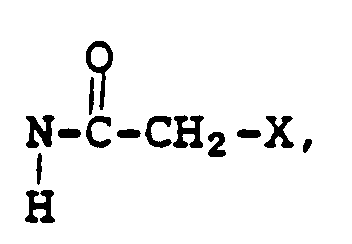


- The excipient of claim 1 wherein L and L' are independently selected from the compounds of the formulaB
 C
C
N(CH2X)3
wherein
X is -COOY, PO3HY or -CONHOY;
Y is a hydrogen atom, a metal ion equivalent and/or a physiologically biocompatible cation of an inorganic or organic base or amino acid;
A is -CHR2-CHR3-, -CH2CH2(ZCH2-CH2)m-,
each R1 is hydrogen or methyl;
R2 and R3 together represent a trimethylene group or a tetramethylene group or individually are hydrogen atoms, lower alkyl groups (e.g., 1-8 carbons), phenyl groups, benzyl groups or R2 is a hydrogen atom and R3 is -(CH2)p-C6H4-W-protein where p is 0 or 1, W is -NH-, -NHCOCH2- or -NHCS-, protein represents a protein residue;
m is 1, 2 or 3;
Z is an oxygen atom or a sulfur atom or the group NCH2X or NCH2CH2OR4 wherein X is as defined above and R4 is C1-8alkyl;
V is X or is -CH2OH, -CONH(CH2)nX or -COB, wherein X is as defined above, B is a protein or lipid residue, n is an integer from 1 to 12, or if R1, R2 and R3 are each hydrogen; then both V's together form the group
- The excipient of claim 1 wherein L and L' are independently selected from the compounds of the formulaD

Y is N or P;
A1 and A2 are each optionally branched C2-6 alkylene;
U1, U2, U3 and U4 are each a single bond or optionally branched C1-6 alkylene;
D1, D2, D3, D4 are each O, S, C1-6 alkylene or NR7;
R7 is hydrogen or C1-4 alkylene having a COOR1 terminal group;
R1 is hydrogen or a metal ion equivalent;
D5 is D1 or CHR5, where R5 can be hydrogen or optionally unsaturated C1-20 alkylene which may include imino, phenyleneoxy, phenyleneimino, amido, ester, O, S and/or N optionally substituted with OH, SH imino and/or amino and may carry a terminal functional group (optionally bonded to a macromolecule B);
s and t are each 0-5;
R2 is hydrogen, optionally substituted C1-16 alkyl, acyl, acylalkyl (optionally substituted by one or more OH or lower alkoxy groups), -CH2-X-V, B or CH2COB where X is CO, optionally branched C1-10 alkylene (optionally substituted by 1 or more OH or lower alkoxy groups) or optionally branched C2-23 alkylene interrupted by O;
V is NR3R4 or COOR6;
R3 and R4 are each hydrogen, C1-16 alkyl (optionally substituted by 1 or more OH or lower alkoxy groups) or together complete a 5-6 membered heterocycle optionally containing another heteroatom;
R6 is hydrogen, C1-16 saturated, unsaturated, linear branched or cyclic hydrocarbyl, aryl or aralkyl;
R2 or R3 can be bonded by a C2-20 alkylene chain (optionally having a terminal carbonyl group, optionally interrupted by 1 or more O or R1 carboxymethylimino, or substituted by one or more OH, lower alkoxy or carboxy lower alkyl groups) to a second macromolecule of the formulaD'
- The excipient of claim 1 wherein L and L' are independently selected from 1,4,7,10-tetraazacyclododecane-1,4,7-triacetic acid, 1,4,7-tris(carboxymethyl)-10-(2'-hydroxypropyl)-1,4,7,10-tetraazacyclododecane, N,N-bis[2-[bis(carboxymethyl)-amino]ethyl]glycine, DTPA-bis methylamide, DTPA bis morpholinoamide and DTPA bis 1,2-dihydroxypropylamide.
- The excipient of claim 1 wherein L and L' are the same organic ligand.
- A method for preparing a contrast agent composition for use in magnetic resonance, x-ray, ultrasound and radio-diagnostic imaging comprising combining
a metal ion, M, complexed with an organic ligand, L, and a complex salt excipient of the formula
Xm[X'(L')]n
in accordance with any one of claims 1 to 8 with a pharmaceutically acceptable carrier therefor. - The method of claim 9 wherein the mole ratio of said complex salt to said metal chelate contrast agent is between about 0.05 and 10 percent.
- The method of claim 9 wherein said metal ion is selected from paramagnetic metal atoms, lanthanide series elements, yttrium, and the transition series elements.
- The method of claim 11 wherein said paramagnetic metals are selected from gadolinium(III), dysprosium(III), manganese(II), manganese(III), chromium(III), iron(II) and iron(III).
- The method of claim 9 wherein said metal ion complexed with an organic ligand is gadolinium(III) 1,4,7-tris(carboxymethyl)-10-(2'-hydroxypropyl)-1,4,7,10-tetraazacyclododecane and said excipient is calcium bis[1,4,7-tris(carboxymethyl)-10-(2'-hydroxypropyl)-1,4,7,10-tetraazacyclododecanatocalcium(II)];
N-methylglucamine gadolinium (III) 1,4,7,10-tetraazacyclododecane-N,N',N'',N'''-tetraacetic acid and said excipient is calcium [1,4,7,10-tetraazacyclododecane-1,4,7,10-tetraacetatocalcium(II)];
di-N-methylglucaminium gadolinium(III) N,N-bis[2-[bis(carboxymethyl)-amino]ethyl]glycine and said excipient is calcium bis[diethylenetriamine-N,N',N',N'',N''-pentaacetatocalcium(II)];
diethylene triamine pentaacetato-bis methylamide-gadolinium(III) and said excipient is calcium bis[diethylenetriamine-N,N'N',N'',N''-pentaacetato-bis methylamide-calcium(II)];
gadolinium(III) 1,4,7,10-tetraazacyclododecane-1,4,7-triacetic acid and said excipient is calcium bis[1,4,7,10-tetraazacyclododecane-1,4,7-triacetatocalcium(II)];
gadolinium (III) DTPA bis morpholinoamide and said excipient is calcium bis [DTPA-bis morpholinamido calcium (II)]; or
gadolinium (III) DTPA bis 1,2-dihydroxypropylamide and said excipient is calcium bis[DTPA bis 1,2-dihydroxypropylamido calcium (II)]. - A method for preparing a contrast agent composition comprising combining a metal chelate which is gadolinium (III) 1,4,7-tris(carboxymethyl)-10-(2'-hydroxypropyl)-1,4,7,10-tetraazacyclododecane;
an excipient which is calcium bis[1,4,7-tris(carboxymethyl)-10-(2'-hydroxypropyl)-1,4,7,10-tetraazacyclododecanatocalcium(II)];
a buffer;
acidic and/or basic solution sufficient to adjust pH of said composition to a desired value; and
water.
Applications Claiming Priority (2)
| Application Number | Priority Date | Filing Date | Title |
|---|---|---|---|
| US51446890A | 1990-04-25 | 1990-04-25 | |
| US514468 | 1990-04-25 |
Publications (3)
| Publication Number | Publication Date |
|---|---|
| EP0454078A2 EP0454078A2 (en) | 1991-10-30 |
| EP0454078A3 EP0454078A3 (en) | 1991-11-13 |
| EP0454078B1 true EP0454078B1 (en) | 1996-10-02 |
Family
ID=24047292
Family Applications (1)
| Application Number | Title | Priority Date | Filing Date |
|---|---|---|---|
| EP91106575A Expired - Lifetime EP0454078B1 (en) | 1990-04-25 | 1991-04-24 | Dual functioning excipient for metal chelate contrast agents |
Country Status (8)
| Country | Link |
|---|---|
| EP (1) | EP0454078B1 (en) |
| JP (1) | JP3153260B2 (en) |
| AT (1) | ATE143605T1 (en) |
| CA (1) | CA2039399C (en) |
| DE (1) | DE69122422T2 (en) |
| DK (1) | DK0454078T3 (en) |
| ES (1) | ES2092522T3 (en) |
| GR (1) | GR3021928T3 (en) |
Cited By (2)
| Publication number | Priority date | Publication date | Assignee | Title |
|---|---|---|---|---|
| US9636427B2 (en) | 2008-02-19 | 2017-05-02 | Guerbet | Process for preparing a pharmaceutical formulation of contrast agents |
| US10918743B2 (en) | 2013-04-26 | 2021-02-16 | Guerbet | Contrast medium formulation and related preparation method |
Families Citing this family (11)
| Publication number | Priority date | Publication date | Assignee | Title |
|---|---|---|---|---|
| DE4115789A1 (en) * | 1991-05-10 | 1992-11-12 | Schering Ag | MACROCYCLIC POLYMER COMPLEX IMAGERS, THEIR COMPLEXES, METHOD FOR THEIR PRODUCTION AND THE PHARMACEUTICAL AGENTS CONTAINING THEM |
| GB9321595D0 (en) * | 1993-10-20 | 1993-12-08 | Nycomed Imaging As | Contrast agents |
| US5582814A (en) * | 1994-04-15 | 1996-12-10 | Metasyn, Inc. | 1-(p-n-butylbenzyl) DTPA for magnetic resonance imaging |
| TW319763B (en) | 1995-02-01 | 1997-11-11 | Epix Medical Inc | |
| DE19719033C1 (en) * | 1997-04-29 | 1999-01-28 | Schering Ag | Ion pairs, processes for their preparation and their use as contrast agents |
| US6559330B1 (en) | 1999-09-09 | 2003-05-06 | Schering Aktiengesellschaft | Calcium complex of [[(4r)-4-[bis{carboxy-.kappa.o)methyl]amino-.kappa.n]-6,9-bis[(carboxy.kappa.o)methyl]-1-[(4,4-diphenylcyclohexyl)oxy]-1-hydroxy-2-oxa-6,9-diaza-1-phosphaundecan-11-ylic-acid-.kappa.n6,.kappa.n9,.kappa.011]1-oxidato(6-)]-, hexahydrogen, its salts, pharmaceutical agents that contain these complexes, their use in treatment and as additives in diagnosis, as well as processes for the production of the complexes and agents |
| KR101142730B1 (en) * | 2009-03-16 | 2012-05-04 | 가천의과학대학교 산학협력단 | Magnetic resonance imaging contrast agent with paramagnetic-inositol phosphates complexes |
| EP3101012A1 (en) | 2015-06-04 | 2016-12-07 | Bayer Pharma Aktiengesellschaft | New gadolinium chelate compounds for use in magnetic resonance imaging |
| EP3544964B1 (en) | 2016-11-28 | 2020-06-17 | Bayer Pharma Aktiengesellschaft | High relaxivity gadolinium chelate compounds for use in magnetic resonance imaging |
| US12590073B2 (en) * | 2018-10-24 | 2026-03-31 | Biophore India Pharmaceuticals Pvt. Ltd. | Process for the preparation of macrocyclic chelant 2,2′,2″-(10-(2-hydroxypropyl)-1,4,7,10-tetra azacyclododecane-1,4,7-triyl) triacetic acid and it's complexes with paramagnetic metal ions |
| IL321215B2 (en) | 2018-11-23 | 2026-05-01 | Bayer Ag | Formulation of contrast media and process of preparation thereof |
Family Cites Families (5)
| Publication number | Priority date | Publication date | Assignee | Title |
|---|---|---|---|---|
| EP0232751B1 (en) * | 1986-01-23 | 1991-09-11 | E.R. Squibb & Sons, Inc. | 1-substituted-4,7,10-triscarboxymethyl-1,4,7,10-tetraazacyclododecane and analogs |
| US4885363A (en) * | 1987-04-24 | 1989-12-05 | E. R. Squibb & Sons, Inc. | 1-substituted-1,4,7-triscarboxymethyl-1,4,7,10-tetraazacyclododecane and analogs |
| DE3625417C2 (en) * | 1986-07-28 | 1998-10-08 | Schering Ag | Tetraazacyclododecane derivatives |
| DE3640708C2 (en) * | 1986-11-28 | 1995-05-18 | Schering Ag | Improved pharmaceuticals containing metals |
| AU629171B2 (en) * | 1987-06-30 | 1992-10-01 | Mallinckrodt, Inc. | Method for enhancing the safety of metal-ligand chelates as magnetic resonants imaging agents and x-ray contrast agents |
-
1991
- 1991-03-28 CA CA002039399A patent/CA2039399C/en not_active Expired - Lifetime
- 1991-04-24 EP EP91106575A patent/EP0454078B1/en not_active Expired - Lifetime
- 1991-04-24 DE DE69122422T patent/DE69122422T2/en not_active Expired - Lifetime
- 1991-04-24 AT AT91106575T patent/ATE143605T1/en not_active IP Right Cessation
- 1991-04-24 ES ES91106575T patent/ES2092522T3/en not_active Expired - Lifetime
- 1991-04-24 DK DK91106575.3T patent/DK0454078T3/en active
- 1991-04-25 JP JP09517091A patent/JP3153260B2/en not_active Expired - Lifetime
-
1996
- 1996-12-06 GR GR960403338T patent/GR3021928T3/en unknown
Cited By (4)
| Publication number | Priority date | Publication date | Assignee | Title |
|---|---|---|---|---|
| US9636427B2 (en) | 2008-02-19 | 2017-05-02 | Guerbet | Process for preparing a pharmaceutical formulation of contrast agents |
| US9655983B2 (en) | 2008-02-19 | 2017-05-23 | Guerbet | Process for preparing a pharmaceutical formulation of contrast agents |
| US9907866B2 (en) | 2008-02-19 | 2018-03-06 | Guerbet | Process for preparing a pharmaceutical formulation of contrast agents |
| US10918743B2 (en) | 2013-04-26 | 2021-02-16 | Guerbet | Contrast medium formulation and related preparation method |
Also Published As
| Publication number | Publication date |
|---|---|
| ATE143605T1 (en) | 1996-10-15 |
| EP0454078A3 (en) | 1991-11-13 |
| GR3021928T3 (en) | 1997-03-31 |
| DE69122422T2 (en) | 1997-02-13 |
| EP0454078A2 (en) | 1991-10-30 |
| CA2039399C (en) | 2000-09-05 |
| DK0454078T3 (en) | 1996-11-18 |
| DE69122422D1 (en) | 1996-11-07 |
| ES2092522T3 (en) | 1996-12-01 |
| JPH04225925A (en) | 1992-08-14 |
| JP3153260B2 (en) | 2001-04-03 |
| CA2039399A1 (en) | 1991-10-26 |
Similar Documents
| Publication | Publication Date | Title |
|---|---|---|
| US5804161A (en) | Contrast agents | |
| CA1322156C (en) | Metal complex-containing pharmaceutical agents | |
| US7385041B2 (en) | Dual functioning excipient for metal chelate contrast agents | |
| US5087440A (en) | Heterocyclic derivatives of DTPA used for magnetic resonance imaging | |
| EP0394394B1 (en) | Manganese(ii) chelates | |
| US5348954A (en) | Heterocyclic chelating agents | |
| CA2079212A1 (en) | Contrast media | |
| EP0463644A2 (en) | Use of chelate complexes | |
| EP0527131A1 (en) | Chelants | |
| CA2039399C (en) | Dual functioning excipient for metal chelate contrast agents | |
| US5409689A (en) | MRI image enhancement using complexes of paramagnetic cations and amine ligands containing a mixture of phosphonate and non-phosphonate pendant arms | |
| EP0565930A1 (en) | Tetraazacyclododecane tetraacetic acid derivatives and the use thereof as diagnostic agents | |
| EP0277088A2 (en) | Polymer complexes, process for their preparation and pharmaceutical compounds containing them | |
| WO1995028392A1 (en) | Chelant compounds | |
| JPH06340556A (en) | Use of macrocyclic aminophosphonic acid complex as imaging agent | |
| US5858329A (en) | MRI diagnostic procedures using tripodal pyridinyl metal complexes | |
| EP0107292A1 (en) | Tc99m-phenida, radioscintigraphic agent for diagnosis of hepatobiliary disease | |
| US6559330B1 (en) | Calcium complex of [[(4r)-4-[bis{carboxy-.kappa.o)methyl]amino-.kappa.n]-6,9-bis[(carboxy.kappa.o)methyl]-1-[(4,4-diphenylcyclohexyl)oxy]-1-hydroxy-2-oxa-6,9-diaza-1-phosphaundecan-11-ylic-acid-.kappa.n6,.kappa.n9,.kappa.011]1-oxidato(6-)]-, hexahydrogen, its salts, pharmaceutical agents that contain these complexes, their use in treatment and as additives in diagnosis, as well as processes for the production of the complexes and agents | |
| WO1990008134A1 (en) | Chelating agent derivatives | |
| US5824288A (en) | Thio-substituted pyridines as MRI ligand precursors | |
| CA2380766C (en) | Calcium complex of phosphorus containing diethylenetriamine derivatives | |
| US5820851A (en) | Tripodal pyridine ligands as MRI contrast agents | |
| AU646795C (en) | Heterocyclic chelating agents | |
| US20030203879A1 (en) | Calcium complex of [[(4R)-4-[bis[(carboxy-.kappa.O)methyl]amino-.kappa.n]-6,9-bis[(carboxy.kappa.O)methyl]-1-[(4,4-diphenylcyclohexy)oxy]-1-hydroxy-2-oxa-6,9-diaza-1-phosphaundecan-11-ylic-acid-.kappa.N6,.Kappa.N9,.Kappa 011]1-oxidato(6-)]-, hexahydrogen, its salts, pharmaceutical agents that contain these complexes, their use in treatment and as additives in diagnosis, as well as processes for the production of the complexes and agents | |
| MXPA98009385A (en) | Agents against |
Legal Events
| Date | Code | Title | Description |
|---|---|---|---|
| PUAI | Public reference made under article 153(3) epc to a published international application that has entered the european phase |
Free format text: ORIGINAL CODE: 0009012 |
|
| PUAL | Search report despatched |
Free format text: ORIGINAL CODE: 0009013 |
|
| AK | Designated contracting states |
Kind code of ref document: A2 Designated state(s): AT BE CH DE DK ES FR GB GR IT LI LU NL SE |
|
| AK | Designated contracting states |
Kind code of ref document: A3 Designated state(s): AT BE CH DE DK ES FR GB GR IT LI LU NL SE |
|
| 17P | Request for examination filed |
Effective date: 19920506 |
|
| 17Q | First examination report despatched |
Effective date: 19940330 |
|
| RAP1 | Party data changed (applicant data changed or rights of an application transferred) |
Owner name: BRACCO INTERNATIONAL B.V. |
|
| GRAH | Despatch of communication of intention to grant a patent |
Free format text: ORIGINAL CODE: EPIDOS IGRA |
|
| GRAH | Despatch of communication of intention to grant a patent |
Free format text: ORIGINAL CODE: EPIDOS IGRA |
|
| GRAA | (expected) grant |
Free format text: ORIGINAL CODE: 0009210 |
|
| AK | Designated contracting states |
Kind code of ref document: B1 Designated state(s): AT BE CH DE DK ES FR GB GR IT LI LU NL SE |
|
| REF | Corresponds to: |
Ref document number: 143605 Country of ref document: AT Date of ref document: 19961015 Kind code of ref document: T |
|
| REG | Reference to a national code |
Ref country code: CH Ref legal event code: NV Representative=s name: DR. NENAD TOMOV-GRISOGONO |
|
| REF | Corresponds to: |
Ref document number: 69122422 Country of ref document: DE Date of ref document: 19961107 |
|
| ET | Fr: translation filed | ||
| REG | Reference to a national code |
Ref country code: DK Ref legal event code: T3 |
|
| REG | Reference to a national code |
Ref country code: ES Ref legal event code: FG2A Ref document number: 2092522 Country of ref document: ES Kind code of ref document: T3 |
|
| ITF | It: translation for a ep patent filed | ||
| REG | Reference to a national code |
Ref country code: GR Ref legal event code: FG4A Free format text: 3021928 |
|
| PLBI | Opposition filed |
Free format text: ORIGINAL CODE: 0009260 |
|
| PLBF | Reply of patent proprietor to notice(s) of opposition |
Free format text: ORIGINAL CODE: EPIDOS OBSO |
|
| 26 | Opposition filed |
Opponent name: SCHERING AG Effective date: 19970625 |
|
| NLR1 | Nl: opposition has been filed with the epo |
Opponent name: SCHERING AG |
|
| PLBF | Reply of patent proprietor to notice(s) of opposition |
Free format text: ORIGINAL CODE: EPIDOS OBSO |
|
| PLBF | Reply of patent proprietor to notice(s) of opposition |
Free format text: ORIGINAL CODE: EPIDOS OBSO |
|
| REG | Reference to a national code |
Ref country code: CH Ref legal event code: PFA Free format text: BRACCO INTERNATIONAL B.V.,7, DE BOELELAAN,1083 HJ AMSTERDAM (NL) TRANSFER- BRACCO INTERNATIONAL B.V.,STRAWINSKYLAAN 3051,1077 ZX AMSTERDAM (NL) |
|
| PLBO | Opposition rejected |
Free format text: ORIGINAL CODE: EPIDOS REJO |
|
| PLBN | Opposition rejected |
Free format text: ORIGINAL CODE: 0009273 |
|
| STAA | Information on the status of an ep patent application or granted ep patent |
Free format text: STATUS: OPPOSITION REJECTED |
|
| 27O | Opposition rejected |
Effective date: 20010222 |
|
| NLR2 | Nl: decision of opposition | ||
| REG | Reference to a national code |
Ref country code: GB Ref legal event code: IF02 |
|
| PGFP | Annual fee paid to national office [announced via postgrant information from national office to epo] |
Ref country code: FR Payment date: 20100506 Year of fee payment: 20 Ref country code: DK Payment date: 20100427 Year of fee payment: 20 Ref country code: ES Payment date: 20100426 Year of fee payment: 20 Ref country code: LU Payment date: 20100505 Year of fee payment: 20 |
|
| PGFP | Annual fee paid to national office [announced via postgrant information from national office to epo] |
Ref country code: IT Payment date: 20100428 Year of fee payment: 20 Ref country code: AT Payment date: 20100401 Year of fee payment: 20 Ref country code: NL Payment date: 20100424 Year of fee payment: 20 Ref country code: DE Payment date: 20100428 Year of fee payment: 20 |
|
| PGFP | Annual fee paid to national office [announced via postgrant information from national office to epo] |
Ref country code: CH Payment date: 20100426 Year of fee payment: 20 Ref country code: BE Payment date: 20100503 Year of fee payment: 20 |
|
| PGFP | Annual fee paid to national office [announced via postgrant information from national office to epo] |
Ref country code: SE Payment date: 20100428 Year of fee payment: 20 Ref country code: GB Payment date: 20100426 Year of fee payment: 20 |
|
| PGFP | Annual fee paid to national office [announced via postgrant information from national office to epo] |
Ref country code: GR Payment date: 20100429 Year of fee payment: 20 |
|
| REG | Reference to a national code |
Ref country code: DE Ref legal event code: R071 Ref document number: 69122422 Country of ref document: DE |
|
| REG | Reference to a national code |
Ref country code: CH Ref legal event code: PL |
|
| BE20 | Be: patent expired |
Owner name: *BRACCO INTERNATIONAL B.V. Effective date: 20110424 |
|
| REG | Reference to a national code |
Ref country code: NL Ref legal event code: V4 Effective date: 20110424 |
|
| REG | Reference to a national code |
Ref country code: DK Ref legal event code: EUP |
|
| REG | Reference to a national code |
Ref country code: GB Ref legal event code: PE20 Expiry date: 20110423 |
|
| PG25 | Lapsed in a contracting state [announced via postgrant information from national office to epo] |
Ref country code: NL Free format text: LAPSE BECAUSE OF EXPIRATION OF PROTECTION Effective date: 20110424 Ref country code: GB Free format text: LAPSE BECAUSE OF EXPIRATION OF PROTECTION Effective date: 20110423 |
|
| REG | Reference to a national code |
Ref country code: ES Ref legal event code: FD2A Effective date: 20120510 |
|
| PG25 | Lapsed in a contracting state [announced via postgrant information from national office to epo] |
Ref country code: ES Free format text: LAPSE BECAUSE OF EXPIRATION OF PROTECTION Effective date: 20110425 |
|
| PG25 | Lapsed in a contracting state [announced via postgrant information from national office to epo] |
Ref country code: DE Free format text: LAPSE BECAUSE OF EXPIRATION OF PROTECTION Effective date: 20110424 |