EP0452858B1 - Metal complexes of acid adducts to dioxime ligands useful in labelling proteins and other amine-containing compounds - Google Patents
Metal complexes of acid adducts to dioxime ligands useful in labelling proteins and other amine-containing compounds Download PDFInfo
- Publication number
- EP0452858B1 EP0452858B1 EP91105987A EP91105987A EP0452858B1 EP 0452858 B1 EP0452858 B1 EP 0452858B1 EP 91105987 A EP91105987 A EP 91105987A EP 91105987 A EP91105987 A EP 91105987A EP 0452858 B1 EP0452858 B1 EP 0452858B1
- Authority
- EP
- European Patent Office
- Prior art keywords
- dioxime
- complex
- alkyl
- chlorine
- acid
- Prior art date
- Legal status (The legal status is an assumption and is not a legal conclusion. Google has not performed a legal analysis and makes no representation as to the accuracy of the status listed.)
- Expired - Lifetime
Links
- 0 *c1cc(P)cc(*)c1 Chemical compound *c1cc(P)cc(*)c1 0.000 description 1
Classifications
-
- C—CHEMISTRY; METALLURGY
- C07—ORGANIC CHEMISTRY
- C07F—ACYCLIC, CARBOCYCLIC OR HETEROCYCLIC COMPOUNDS CONTAINING ELEMENTS OTHER THAN CARBON, HYDROGEN, HALOGEN, OXYGEN, NITROGEN, SULFUR, SELENIUM OR TELLURIUM
- C07F13/00—Compounds containing elements of Groups 7 or 17 of the Periodic Table
- C07F13/005—Compounds without a metal-carbon linkage
-
- A—HUMAN NECESSITIES
- A61—MEDICAL OR VETERINARY SCIENCE; HYGIENE
- A61K—PREPARATIONS FOR MEDICAL, DENTAL OR TOILETRY PURPOSES
- A61K47/00—Medicinal preparations characterised by the non-active ingredients used, e.g. carriers or inert additives; Targeting or modifying agents chemically bound to the active ingredient
- A61K47/50—Medicinal preparations characterised by the non-active ingredients used, e.g. carriers or inert additives; Targeting or modifying agents chemically bound to the active ingredient the non-active ingredient being chemically bound to the active ingredient, e.g. polymer-drug conjugates
- A61K47/51—Medicinal preparations characterised by the non-active ingredients used, e.g. carriers or inert additives; Targeting or modifying agents chemically bound to the active ingredient the non-active ingredient being chemically bound to the active ingredient, e.g. polymer-drug conjugates the non-active ingredient being a modifying agent
- A61K47/68—Medicinal preparations characterised by the non-active ingredients used, e.g. carriers or inert additives; Targeting or modifying agents chemically bound to the active ingredient the non-active ingredient being chemically bound to the active ingredient, e.g. polymer-drug conjugates the non-active ingredient being a modifying agent the modifying agent being an antibody, an immunoglobulin or a fragment thereof, e.g. an Fc-fragment
- A61K47/6835—Medicinal preparations characterised by the non-active ingredients used, e.g. carriers or inert additives; Targeting or modifying agents chemically bound to the active ingredient the non-active ingredient being chemically bound to the active ingredient, e.g. polymer-drug conjugates the non-active ingredient being a modifying agent the modifying agent being an antibody, an immunoglobulin or a fragment thereof, e.g. an Fc-fragment the modifying agent being an antibody or an immunoglobulin bearing at least one antigen-binding site
- A61K47/6887—Antibody-chelate conjugates using chelates for therapeutic purposes
-
- A—HUMAN NECESSITIES
- A61—MEDICAL OR VETERINARY SCIENCE; HYGIENE
- A61K—PREPARATIONS FOR MEDICAL, DENTAL OR TOILETRY PURPOSES
- A61K51/00—Preparations containing radioactive substances for use in therapy or testing in vivo
- A61K51/02—Preparations containing radioactive substances for use in therapy or testing in vivo characterised by the carrier, i.e. characterised by the agent or material covalently linked or complexing the radioactive nucleus
- A61K51/04—Organic compounds
- A61K51/0474—Organic compounds complexes or complex-forming compounds, i.e. wherein a radioactive metal (e.g. 111In3+) is complexed or chelated by, e.g. a N2S2, N3S, NS3, N4 chelating group
- A61K51/0478—Organic compounds complexes or complex-forming compounds, i.e. wherein a radioactive metal (e.g. 111In3+) is complexed or chelated by, e.g. a N2S2, N3S, NS3, N4 chelating group complexes from non-cyclic ligands, e.g. EDTA, MAG3
-
- A—HUMAN NECESSITIES
- A61—MEDICAL OR VETERINARY SCIENCE; HYGIENE
- A61K—PREPARATIONS FOR MEDICAL, DENTAL OR TOILETRY PURPOSES
- A61K51/00—Preparations containing radioactive substances for use in therapy or testing in vivo
- A61K51/02—Preparations containing radioactive substances for use in therapy or testing in vivo characterised by the carrier, i.e. characterised by the agent or material covalently linked or complexing the radioactive nucleus
- A61K51/04—Organic compounds
- A61K51/08—Peptides, e.g. proteins, carriers being peptides, polyamino acids, proteins
- A61K51/10—Antibodies or immunoglobulins; Fragments thereof, the carrier being an antibody, an immunoglobulin or a fragment thereof, e.g. a camelised human single domain antibody or the Fc fragment of an antibody
- A61K51/1093—Antibodies or immunoglobulins; Fragments thereof, the carrier being an antibody, an immunoglobulin or a fragment thereof, e.g. a camelised human single domain antibody or the Fc fragment of an antibody conjugates with carriers being antibodies
-
- A—HUMAN NECESSITIES
- A61—MEDICAL OR VETERINARY SCIENCE; HYGIENE
- A61K—PREPARATIONS FOR MEDICAL, DENTAL OR TOILETRY PURPOSES
- A61K2121/00—Preparations for use in therapy
-
- A—HUMAN NECESSITIES
- A61—MEDICAL OR VETERINARY SCIENCE; HYGIENE
- A61K—PREPARATIONS FOR MEDICAL, DENTAL OR TOILETRY PURPOSES
- A61K2123/00—Preparations for testing in vivo
Definitions
- the invention concerns metal complexes of boronic acid adducts to dioxime ligands, useful as protein and amine labeling agents.
- EPC discloses compounds of formula XM[R 1 C(NOH)-CR 2 (NOH)] 3 B-(A 1 ) p -R 3 in which X, M, R 1 and R 2 are defined as in the foregoing documents, while R 3 is or contains a biochemically active group (page 3, line 27) selected from hypoxia mediated nitro-heterocycles; amphetamines; steroids, e.g.
- Biochemically active groups are further defined in page 4, line 24 of the citation as "molecules having affinity for a specific receptor".
- the metal complexes of boronic acid adducts to dioxime ligands of the present invention have formula II XM[R 1 C(NOH)-CR 2 (NOH)] 3 B-(A 1 ) p -E II or a pharmaceutically acceptable salt thereof, wherein:
- R 4 may be ortho, meta or para to R 3 . It is preferred that R 4 is in a meta position in relationship to both R 3 and the spacer group (A 1 ) p .
- (A 1 ) in the boron derivatives of formula II can be any chemical moiety which can serve to distance or otherwise isolate the moiety represented by "E” from the rest of the complex of formula II.
- the preferred moieties for -(A 1 ) p - are alkylene, arylene, oxaalkylene, hydroxyalkylene, hydroxyalkyleneoxy, carboxyalkylene, arylalkylene, arylalkylamido, alkylamido and alkylsulfonato.
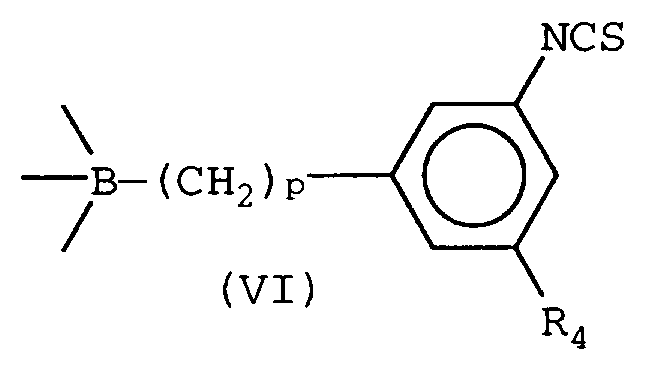
- boron radicals are the compounds of formula wherein p is zero or one, and R 4 is hydrogen or a water solubilizing functionality such as -COOH, carboxylalkyl, hydroxyalkyl, -SO 3 H, alkyl sulfonate, sulfonamide or hydroxyl.
- anion refers to any chemical entity which bears a negative charge.
- the preferred anionic moieties are Cl - and HO - .
- alkyl refer to both straight and branched chain groups. Groups having 1 to 10 carbon atoms are preferred.
- aryl refers to phenyl and substituted phenyl. Preferred are phenyl and phenyl substituted with 1, 2 or 3 alkyl, haloalkyl, dialkylaminoalkyl, alkoxy, alkoxyalkyl, halogen, hydroxy, or formyl groups.
- 5 or 6-membered nitrogen containing heterocycle refers to all 5- and 6-membered rings containing at least one nitrogen atom.
- Exemplary aliphatic groups are dehydro derivatives of a compound having the formula wherein m is 0 or 1 and A is oxygen, sulfur, N-R 13 or CH-R 14 , wherein R 13 is alkyl, aryl, or arylalkyl and R 14 is hydrogen, alkyl, aryl or arylalkyl.
- aromatic groups are also included within the expression "5- or 6-membered nitrogen containing heterocycle” are aromatic groups.
- heteroaromatic groups are pyrrolyl, imidazolyl, oxazolyl, pyrazolyl, pyridinyl, and pyrimidinyl groups.
- the above groups can be linked via a hetero atom or a carbon 5 atom.
- 5- or 6-membered nitrogen or oxygen containing heterocycle refers to all 5- and 6-membered rings containing at least one nitrogen, sulfur or oxygen atom.
- Exemplary groups are those described above under the definition of the expression "5 or 6-membered nitrogen containing heterocycle”. Additional exemplary groups are 1,4-dioxanyl, furanyl and thiophenyl.
- Preparation of the technetium complexes of this invention can best be accomplished using technetium-99m in the form of the pertechnetate ion.
- the pertechnetate ion can be obtained from commercially available technetium-99m parentdaughter generators; such technetium is in the +7 oxidation state.
- the generation of the pertechnetate ion using this type of generator is well known in the art, and is described in more detail in documents US-A-3,369,121 and 3,920,995. These generators are usually eluted with saline solution and the pertechnetate ion is obtained as the sodium salt.
- Preparation of the complexes of this invention wherein M is an isotope of rhenium can best be accomplished using a source of rhenium in the +3, +4, +5 or +7 oxidation state.
- Re (IV) is available as K 2 ReCl 6 and Re (VII) is available as NH 4 ReO 4 or KReO 4 .
- Re (V) is available as [ReOCl 4 ](NBu 4 ) and [ReOCl 4 ](AsPh 4 ) and as ReOCl 3 (PPh 3 ) 2 and as ReO 2 (pyridine) 4 + .
- Other Re (III) , Re (IV) , Re (V) , Re (VII) reagents known to those skilled in the art can also be used.
- the complexes of this invention can be prepared by the reaction of a boronic acid derivative of formula VII with a compound of the formula XM[R 1 C(NOH)-CR 2 (NOH)]3.
- a boronic acid derivative of formula VII with a compound of the formula XM[R 1 C(NOH)-CR 2 (NOH)]3.
- U.S. 4,714,605 discloses a compound MX(dioxime) 3 wherein M is technetium.
- a source of Re (III) such as ReCl 3 (CH 3 CN)(PPh 3 ) 2 or [Re 2 Cl 8 ](NBu 4 ) 2
- a source of anion X a source of anion X.
- the formation of complexes ReX(dioxime) 3 proceeds when the mixture of Re (III) starting material, source of anion, and dioxime ligand are heated to 25 - 100°C for about 2 to 30 minutes at a pH of about one to about 4.
- the source of the anion moiety can be water or any compound or salt that dissociates to release an appropriate anion.
- exemplary compounds include NaCl, NaBr and thiol containing compounds.
- the formation of the complexes of formula II proceeds when the mixture of metal ion, source of anion, boronic acid derivative and dioxime is heated at about 25°C to about 100°C for about two minutes to about 30 minutes.
- the preferred temperature is about 50°C to about 100°C and the preferred time of heating is from about two minutes to about 15 minutes.
- the optimal pH for the above reaction is from about 1 to about 4.
- the reaction mixture should also contain a reducing agent.
- Stannous ions are the preferred reducing agent, and can be introduced in the form of a stannous salt such as a stannous halide (e.g. stannous chloride or stannous fluoride).
- the reducing agent should be present in a concentration of about 1.5 micromolar to 6.6 millimolar.
- complexing agents also known in the art as chelating agents
- the complexing agent should, of course, be pharmaceutically acceptable.
- Exemplary complexing agents are diethylenetriaminepentaacetic acid (DTPA), ethylene glycol-bis( ⁇ aminoethylether)-N,N,N',N'-tetraacetic acid (EGTA), ethylenediamine-tetraacetic acid (EDTA), citric acid, tartaric acid, malonic acid, etc.
- the complexing reaction mixture can also include an accelerator (catalyst) which serves to improve the radiochemical purity (i.e., the % of the radioactivity that is in the desired chemical form) of the product.
- accelerators are the ⁇ -hydroxycarboxylic acids such as citric acid, tartaric acid, and malonic acid. A combination of DTPA and citric acid has been found to be preferred.
- kits having all of the components, other than the source of the technetium or rhenium, to prepare the boronic adducts of the metal dioxime complexes of formula I is an integral part of this invention.
- a multi-vial kit may also be used to prepare the complexes of this invention.
- the intermediate product from this kit is then added to a second vial that contains a boronic acid derivative of formula VIII (or a compound which can react in situ to form such a derivative).
- kits of this invention can be formulated in aqueous solution.
- the pH of the kit should be adjusted to fall within the range of about 1.0 to 4.0 using a pharmaceutically acceptable acid or base (e.g., hydrochloric acid or sodium hydroxide).
- a pharmaceutically acceptable acid or base e.g., hydrochloric acid or sodium hydroxide.
- the pH of the kit will be about 2.0.
- the kit be in lyophilized form. While “wet" kits (i.e. kits which provide all components in solution) can be used, they are not as efficacious as the corresponding lyophilized kit.
- the compounds of formula VIII wherein R 3 is NCS are novel and form an integral part of this invention.
- These boronic acids of formula VIII or pharmaceutically acceptable salts thereof are bifunctional reagents that will react with the above kit constituents to form the complexes of formula II.
- the reactive group R 3 will react with proteins or with other amine-containing compounds either before or after reaction with the metal M.
- This activated compound could then be used for reaction with proteins.
- Radiolabelled antibodies and antibody fragments are envisioned by this invention and are useful either as diagnostics or in radiotherapy.
- Antibody fragments include Fab, F(ab') 2 , and Fab'. They are described by S.W. Burchiel et al. "Immunopharmokinetics of Radiolabeled Antibodies and their Fragments", Chapter 13 in “Tumor Imaging, The Radiochemical Detection of Cancer", editors S.W. Burchiel and B.A. Rhodes, Masson Publishing Inc., (1982).
- Uses of these radiolabeled antibodies and antibody fragments include the detection of clots and the diagnosis and treatment of cancer.
- Substrates such as drugs, proteins or hormones that are radiolabeled using the method described herein may be used to provide diagnostic anatomic images of organ systems, images of organ function, probes to biochemical processes and the diagnosis and treatment of cancer.
- antibodies and antibody fragments labelled in the above-described manner retain their biological activity and hence are capable of localizing preferentially in tumors that express antigens that are recognized by a specific antibody. Because of this preferential localization of radiolabeled materials in tumors, antibodies and antibody fragments labelled in the manner described in this invention are useful in the diagnosis or therapy of cancer.
- the antibody-boronic acid-metal dioxime complex conjugate is relatively non-reactive with tissue not associated with the tumor or cancer.
- Either the complexes of this invention or the proteins or antibodies labeled with the complexes of this invention can be administered to a host by bolus intravenous injection or intraperitoneally.
- the size of the host, and the imaging system used, will determine the quantity of radioactivity needed to produce diagnostic images.
- the quantity of radioactivity injected will normally range from about 5 to 20 millicuries of technetium-99m.
- the above mode of administration is also applicable when the complexes of this invention, by themselves, or when coupled to antibodies or proteins are used in radiotherapy.
- the quantity of radioactivity in radiotherapy for a human host will range from about 10 to 30 millicuries.
- a sample of 99m Tc(chlorine) (1,2-cyclohexanedione dioxime) 3 was prepared as described in Example 10.
- the complex was isolated, and kit components were removed, by purification on Hamilton PRP-1 resin, as follows.
- the kit contents were drawn up into a needle-hub containing the resin and then rinsed with 1 ml of saline, 1 ml of 25/75 EtOH/saline, 1 ml of H 2 O, and 1 ml of EtOH.
- Tc-DMG-BPITC 99m Tc(chlorine) (dimethyl glyoxime) 3 (3-isothiocyanatophenyl)boron
- Tc(chlorine) (dimethyl glyoxime) 3 (3-isothiocyanatophenyl)boron(Tc-DMG-BPITC), prepared as described in Example 4, and purified as described in Example 14, was evaporated to dryness with a nitrogen stream.
- Tc-DMG-BPITC Tc(chlorine) (dimethyl glyoxime) 3 -(3-isothiocyanatophenyl)boron
- Tc(chlorine) (dimethyl glyoxime) 3 (3-isothiocyanatophenyl)boron (Tc-DMG-BPITC), prepared as described in Example 4, and purified as described in Example 14, was evaporated to dryness with a nitrogen stream.
- the complex was re-dissolved in 50 ⁇ l of DMSO, and 10 ⁇ l of this DMSO solution was added to 100 ⁇ l of pH 9.5 0.1M sodium phosphate buffer that contained 1.0 mg of antibody B72.3.
- This antibody is described by D. Colcher et al., Nucl. Med. Biol., Vol. 14 (3) p. 251 - 262 (1987). After incubation at 37°C for 2.0 hours, the yield of Tc-labeled B72.3 was 10%, as estimated by HPLC on an ISRP-TSK column.
- Tc(chlorine) (dimethyl glyoxime) 3 (3-carboxy-5-isothiocyanatophenyl)boron (Tc-DMG-NCS-COOH), prepared as described in Example 5, and purified as described in Example 14, was evaporated to dryness with a nitrogen stream.
- the complex was re-dissolved in 100 ⁇ l of pH 9.5 0.1M sodium phosphate buffer that contained 1.0 mg of B72.3. After incubation at 37°C for 2.0 hours, the yield of Tc-labeled B72.3 was 34%, as estimated by HPLC on an ISRP-TSK column.
- Tc(chlorine)(dimethyl glyoxime) 3 (3-carboxy-5-isothiocyanatophenyl)boron (Tc-DMG-NCS-COOH), prepared as described in Example 5, and purified as described in Example 14, was evaporated to dryness with a nitrogen stream.
- the complex was re-dissolved in 100 ⁇ l of pH 9.5 0.1M sodium phosphate buffer that contained 1.0 mg of NP-4 (CMMI, Newark, New Jersey). After incubation at 37°C for 2.0 hours, the yield of Tc-labeled NP-4 was 40%, as estimated by HPLC on an ISRP-TSK column.
- Tc(chlorine)(dimethyl glyoxime) 3 (3-carboxy-5-isothiocyanatophenyl)boron (Tc-DMG-NCS-COOH), prepared as described in Example 5, and purified as described in Example 14, was evaporated to dryness with a nitrogen stream.
- the complex was re-dissolved in 100 ⁇ l of pH 9.5, 0.1M sodium phosphate buffer that contained 1.0 mg of the F(ab') 2 fragment of NP-4 (CMMI, Newark, New Jersey). After incubation at 37°C for 2.0 hours, the yield of Tc-labeled NP-4-F(ab') 2 was 15.2%, as estimated by HPLC on an ISRP-TSK column.
Landscapes
- Health & Medical Sciences (AREA)
- Life Sciences & Earth Sciences (AREA)
- Chemical & Material Sciences (AREA)
- Animal Behavior & Ethology (AREA)
- Public Health (AREA)
- Proteomics, Peptides & Aminoacids (AREA)
- Medicinal Chemistry (AREA)
- Veterinary Medicine (AREA)
- Pharmacology & Pharmacy (AREA)
- Epidemiology (AREA)
- General Health & Medical Sciences (AREA)
- Organic Chemistry (AREA)
- Physics & Mathematics (AREA)
- Optics & Photonics (AREA)
- Engineering & Computer Science (AREA)
- Immunology (AREA)
- Biomedical Technology (AREA)
- Nuclear Medicine, Radiotherapy & Molecular Imaging (AREA)
- Bioinformatics & Cheminformatics (AREA)
- Organic Low-Molecular-Weight Compounds And Preparation Thereof (AREA)
- Investigating Or Analysing Biological Materials (AREA)
- Medicines Containing Antibodies Or Antigens For Use As Internal Diagnostic Agents (AREA)
Abstract
Description
- The invention concerns metal complexes of boronic acid adducts to dioxime ligands, useful as protein and amine labeling agents.
- Documents EP-A-199 260 and 311 891 disclose compounds of formula XM[R1C(NOH)-CR2(NOH)]3B-R3 in which X is an anion; M is a labeling metal, namely Tc or Re; R1 and R2 are H, halogens, aliphatic, aromatic, or heterocyclic substituents; B is boron; and R3 can be HO-, alkyl-, alkenyl-, cycloalkyl-, cycloalkenyl-, alkoxy-, HOOC-alkyl-, HOOC-alkenyl-, HO-alkyl-, HO-alkenyl-, alkoxyalkyl-, alkoxyalkenyl-, haloalkyl-, haloalkenyl-, aryl-, aryl-alkyl-, R4R5N-alkyl-, with R4 and R5 being H or alkyl, or forming together 5- or 6-membered heterocycles.
- Document EP-A-441 491 cited under Art 54(3-4) EPC discloses compounds of formula XM[R1C(NOH)-CR2(NOH)]3B-(A1)p-R3 in which X, M, R1 and R2 are defined as in the foregoing documents, while R3 is or contains a biochemically active group (page 3, line 27) selected from hypoxia mediated nitro-heterocycles; amphetamines; steroids, e.g. estrogen or estradiol; sugars; fatty acids; barbiturates; sulfonamides; monoamine oxidase substrates and inhibitors; antihypertensives; substrates for muscarine receptors; and substrates for dopamine receptors. Biochemically active groups are further defined in page 4, line 24 of the citation as "molecules having affinity for a specific receptor".
- A1 is a bond or a spacer group (p being an integer from 0 to about 100) that can form a linear or branched chain, and the A1's, are selected from -CHR4-, -CR4R5-, -CH=CH-, -CH=CR4-, -CR4=CR5-, -C≡C-, cycloalkylene, cycloalkenylene, arylene, heterocyclo, -O-, -S-, -CO-, -CS-, -NH-, -CH=N-, -CR4=N-, -NR4-, alkylene, oxaalkylene, hydroxyalkylene, hydroxyalkoxyalkylene, alkenylene, arylalkylene, alkylamido, arylalkylamido, alkylaminoalkylene, -(CH2)1-3-, -CH2-CH=CH-CH2-, -(CH2)1-2-CO-NH-(CH2)1-3-, -Ph-(CH2)1-2-, -CH2)2O-, -CH2CH(OH)CH2OCH2-, -CH2-CO-NH-CH2-Ph-, -(A3-O-A3')- and -(A3-NH-A3')- in which A3 and A3, are the same or different alkyl and R4 and R5 are independently selected from alkyl, alkenyl alkoxy, aryl, 5- or 6-membered N and O-containaing heterocycles, halogen, -OH, or alkyl-OH.
- The metal complexes of boronic acid adducts to dioxime ligands of the present invention have formula II
XM[R1C(NOH)-CR2(NOH)]3B-(A1)p-E II
or a pharmaceutically acceptable salt thereof, wherein: - M is an isotope of technetium or rhenium;
- X is an anion, and R1 and R2 are each independently H, halogen, alkyl, aryl, or a 5- or 6-membered N-, S-, or O-containing heterocycle, or together R1 and R2 are -(CR8R9)n- where n = 3, 4, 5, or 6 and R8 and R9 are each independently H or alkyl;
- B is boron; (A1) is a chemical moiety which distances or otherwise isolates the moiety represented by "E" from the rest of the complex II, p being zero or an integer up to 100, preferably 1 to 20; and
- E is a group of formula

- R4 may be ortho, meta or para to R3. It is preferred that R4 is in a meta position in relationship to both R3 and the spacer group (A1)p.
- (A1) in the boron derivatives of formula II can be any chemical moiety which can serve to distance or otherwise isolate the moiety represented by "E" from the rest of the complex of formula II.
- For example, wherein p is an integer greater than zero, A1, or the various A1 units that form a straight or branched chain are independently selected from alkylene, alkenylene, cycloalkylene, cycloalkenylene, oxaalkylene, hydroxyalkylene, carboxyalkylene, alkylene-amido, alkylenesulfonato, arylene, arylalkylene, heterocyclo, -CH2-, -CHR6-, -CR6R10-, -CH=CH-, -CH=CR11-, -CR6=CR12-, -C≡C-; -O-, -S-, -CO-, -HC=N-, -CR6=N-, or -NR6-, in which R6, R10, R11 and R12 are independently selected from alkyl, alkenyl, alkoxy, aryl, 5- or 6-membered N-containing heterocyclic rests, halogen, -OH, or hydroxyalkyl.
- In the complexes of the present invention, the preferred moieties for -(A1)p- are alkylene, arylene, oxaalkylene, hydroxyalkylene, hydroxyalkyleneoxy, carboxyalkylene, arylalkylene, arylalkylamido, alkylamido and alkylsulfonato.
- The most preferred boron radicals are the compounds of formula

- The term anion refers to any chemical entity which bears a negative charge. Exemplary groups are Cl-, Br-, F-, I-, HO-, RS-, S=C=N- and N≡C-S-. 30 The preferred anionic moieties are Cl- and HO-.
- Listed below are definitions of the terms used to describe the complexes of this invention. These definitions apply to the terms as they are used throughout the specification (unless they are otherwise limited in specific instances) either individually or as part of a larger group.
- The term "alkyl" refer to both straight and branched chain groups. Groups having 1 to 10 carbon atoms are preferred.
- The term "aryl" refers to phenyl and substituted phenyl. Preferred are phenyl and phenyl substituted with 1, 2 or 3 alkyl, haloalkyl, dialkylaminoalkyl, alkoxy, alkoxyalkyl, halogen, hydroxy, or formyl groups.
- The expression "5 or 6-membered nitrogen containing heterocycle" refers to all 5- and 6-membered rings containing at least one nitrogen atom. Exemplary aliphatic groups are dehydro derivatives of a compound having the formula

- The expression "5- or 6-membered nitrogen or oxygen containing heterocycle" refers to all 5- and 6-membered rings containing at least one nitrogen, sulfur or oxygen atom. Exemplary groups are those described above under the definition of the expression "5 or 6-membered nitrogen containing heterocycle". Additional exemplary groups are 1,4-dioxanyl, furanyl and thiophenyl.
- It should be understood that the various moieties in (A1)p, or R1 and R2 of the vicinal dioxime should not contain functional groups that will react with the R3 group on the boron derivatives of formula IV.
- Preparation of the technetium complexes of this invention can best be accomplished using technetium-99m in the form of the pertechnetate ion. The pertechnetate ion can be obtained from commercially available technetium-99m parentdaughter generators; such technetium is in the +7 oxidation state. The generation of the pertechnetate ion using this type of generator is well known in the art, and is described in more detail in documents US-A-3,369,121 and 3,920,995. These generators are usually eluted with saline solution and the pertechnetate ion is obtained as the sodium salt.
- Preparation of the complexes of this invention wherein M is an isotope of rhenium can best be accomplished using a source of rhenium in the +3, +4, +5 or +7 oxidation state. Examples of compounds in which rhenium is available in the + 3 oxidation state are ReCl3(CH3CN)(PPh3)2and [Re2Cl8] (NBu4)2 wherein Ph = phenyl and Bu = butyl. Re(IV) is available as K2ReCl6 and Re(VII) is available as NH4ReO4 or KReO4. Re(V) is available as [ReOCl4](NBu4) and [ReOCl4](AsPh4) and as ReOCl3(PPh3)2 and as ReO2 (pyridine)4 +. Other Re(III), Re(IV), Re(V), Re(VII) reagents known to those skilled in the art can also be used.
- To prepare the complexes of this invention requires a source of the metal ion as described above which is combined with a source of anion, a boronic acid derivative having the formula VII (OH)2B(A1)p-E and a dioxime of formula HO-N=CR1-CR2=N-OH or a pharmaceutically acceptable salt thereof.
- Alternatively, the complexes of this invention can be prepared by the reaction of a boronic acid derivative of formula VII with a compound of the formula XM[R1C(NOH)-CR2(NOH)]3. U.S. 4,714,605 discloses a compound MX(dioxime)3 wherein M is technetium.
- Complexes of the formula MX(dioxime)3 wherein M is an isotope of rhenium can be prepared by combining a source of Re(III) such as ReCl3(CH3CN)(PPh3)2 or [Re2Cl8](NBu4)2 with a dioxime of formula HO-N=CR1-CR2=N-OH and a source of anion X. The formation of complexes ReX(dioxime)3 proceeds when the mixture of Re(III) starting material, source of anion, and dioxime ligand are heated to 25 - 100°C for about 2 to 30 minutes at a pH of about one to about 4.
- If the complexes of formula II are prepared from pertechnetate or perrhenate, the source of the anion moiety can be water or any compound or salt that dissociates to release an appropriate anion. Exemplary compounds include NaCl, NaBr and thiol containing compounds.
- The formation of the complexes of formula II proceeds when the mixture of metal ion, source of anion, boronic acid derivative and dioxime is heated at about 25°C to about 100°C for about two minutes to about 30 minutes. The preferred temperature is about 50°C to about 100°C and the preferred time of heating is from about two minutes to about 15 minutes. The optimal pH for the above reaction is from about 1 to about 4.
- If the source of technetium or rhenium is pertechnetate or perrhenate, or other starting material in an oxidation state higher than +3, the reaction mixture should also contain a reducing agent. Stannous ions are the preferred reducing agent, and can be introduced in the form of a stannous salt such as a stannous halide (e.g. stannous chloride or stannous fluoride). The reducing agent should be present in a concentration of about 1.5 micromolar to 6.6 millimolar.
- Various complexing agents (also known in the art as chelating agents) can be included as part of the complexing reaction. The complexing agent should, of course, be pharmaceutically acceptable. Exemplary complexing agents are diethylenetriaminepentaacetic acid (DTPA), ethylene glycol-bis(βaminoethylether)-N,N,N',N'-tetraacetic acid (EGTA), ethylenediamine-tetraacetic acid (EDTA), citric acid, tartaric acid, malonic acid, etc.
- The complexing reaction mixture can also include an accelerator (catalyst) which serves to improve the radiochemical purity (i.e., the % of the radioactivity that is in the desired chemical form) of the product. Exemplary accelerators are the α-hydroxycarboxylic acids such as citric acid, tartaric acid, and malonic acid. A combination of DTPA and citric acid has been found to be preferred.
- As it is necessary to prepare the complexes of this invention at, or near, the site where they are to be used, a kit having all of the components, other than the source of the technetium or rhenium, to prepare the boronic adducts of the metal dioxime complexes of formula I is an integral part of this invention. Such a kit contains a source of anion, a boronic acid derivative of formula VIII

- A multi-vial kit may also be used to prepare the complexes of this invention. For example, one vial of the kit could contain a source of anion, a dioxime ligand of formula HO-N=CR1-CR2=N-OH or pharmacologically acceptable salt thereof, a reducing agent, and optional complexing agents. A source of technetium or rhenium is added to this kit, which is then heated to form the intermediate MX(dioxime)3 of formula XM[R1C(NOH)-CR2(NOH)]3 (M = Tc,Re). The intermediate product from this kit is then added to a second vial that contains a boronic acid derivative of formula VIII (or a compound which can react in situ to form such a derivative).
- The kits of this invention can be formulated in aqueous solution. To optimize the stability of the kit, and to optimize the radiochemical purity of the labeled product, the pH of the kit should be adjusted to fall within the range of about 1.0 to 4.0 using a pharmaceutically acceptable acid or base (e.g., hydrochloric acid or sodium hydroxide). Preferably, the pH of the kit will be about 2.0. It is also preferred that the kit be in lyophilized form. While "wet" kits (i.e. kits which provide all components in solution) can be used, they are not as efficacious as the corresponding lyophilized kit.
- The compounds of formula VIII wherein R3 is NCS are novel and form an integral part of this invention. These boronic acids of formula VIII or pharmaceutically acceptable salts thereof are bifunctional reagents that will react with the above kit constituents to form the complexes of formula II. The reactive group R3 will react with proteins or with other amine-containing compounds either before or after reaction with the metal M.
- Working with the 99Technetium isotope, the structure of one of the complexes of this invention has been investigated and is believed to be

- Coupling of the metal complexes of formula II, to proteins such as monoclonal and polyclonal antibodies, polypeptides such as albumin, insulin, hemoglobin and fibrinogen, hormones such as angiotensin, adrenalin, and amine containing steroid, derivatives, amino acids such as glycine and cysteine, drugs such as penicillamine and alkaloids, or other amine-containing compounds such as enzymes and whole cells occurs via reaction of the group R3 on the boron derivative with primary or secondary amines on the protein or other aminecontaining compounds. If R3 is isothiocyanato (-N=C=S), the resultant thiourea bond is chemically very stable. Thus, a stable covalent link is formed that attaches the metal dioxime complexes of formula II to the protein or other amine-containing compound. An example of this reaction is shown below.

- It is also possible to form complexes where the group E on the boron moiety has not initially a reactive functionality. This complex could then be converted, after the formation of the complex core, to another more reactive compound II that contains a group E that is reactive. For example, compounds that contain a boron moiety such as B-Ph-CH2OH can be converterted after formation into active compounds, e.g. B-Ph-CH2OTs (Ts = tosyl).
- This activated compound could then be used for reaction with proteins.
- Radiolabelled antibodies and antibody fragments are envisioned by this invention and are useful either as diagnostics or in radiotherapy. Antibody fragments include Fab, F(ab')2, and Fab'. They are described by S.W. Burchiel et al. "Immunopharmokinetics of Radiolabeled Antibodies and their Fragments", Chapter 13 in "Tumor Imaging, The Radiochemical Detection of Cancer", editors S.W. Burchiel and B.A. Rhodes, Masson Publishing Inc., (1982). Uses of these radiolabeled antibodies and antibody fragments include the detection of clots and the diagnosis and treatment of cancer. Substrates such as drugs, proteins or hormones that are radiolabeled using the method described herein may be used to provide diagnostic anatomic images of organ systems, images of organ function, probes to biochemical processes and the diagnosis and treatment of cancer.
- As described in further detail in the example section, it has been demonstrated that certain antibodies and antibody fragments labelled in the above-described manner retain their biological activity and hence are capable of localizing preferentially in tumors that express antigens that are recognized by a specific antibody. Because of this preferential localization of radiolabeled materials in tumors, antibodies and antibody fragments labelled in the manner described in this invention are useful in the diagnosis or therapy of cancer. The antibody-boronic acid-metal dioxime complex conjugate is relatively non-reactive with tissue not associated with the tumor or cancer.
- Either the complexes of this invention or the proteins or antibodies labeled with the complexes of this invention can be administered to a host by bolus intravenous injection or intraperitoneally. The size of the host, and the imaging system used, will determine the quantity of radioactivity needed to produce diagnostic images. For a human host, the quantity of radioactivity injected will normally range from about 5 to 20 millicuries of technetium-99m.
- The above mode of administration is also applicable when the complexes of this invention, by themselves, or when coupled to antibodies or proteins are used in radiotherapy. The quantity of radioactivity in radiotherapy for a human host will range from about 10 to 30 millicuries.
- The following examples are specific embodiments of this invention.
- To a cooled (0°C) solution of 3-aminophenyl-boronic acid (2.24 g, 0.013 mol) in acetone (5 ml) was added dropwise a solution of thiophosgene (1 ml, 0.013 mol) in chloroform (5 ml) over a period of 0.5 hour. The reaction mixture was stirred at 0°C for 1 hour and at room temperature for 12 hours. The solvent was evaporated on a rotary evaporator and the residue was triturated with ether and filtered to remove the triethylamine hydrochloride. The ether solution was evaporated to a brown oil. This was chromatographed on silica gel (30 g) using acetone-chloroform (7:3) as eluent. Fractions containing the product were collected and evaporated to give a light brown solid. This solid was crystallized from ethyl acetate/hexane. M.P. 166-67°C. Anal. Calcd. for C7H6NSBO2.0.25H2O: C, 46.00; H,3.59; N, 7.67; S, 17.54. Found: C, 46.17; H, 3.48; N, 7.59; S,17.71.
- A solution of m-bromotoluene (25 g. 0.146 mol) in ether (200 ml) was added dropwise to magnesium (4.0 g, 0.17 mol) in ether (50 ml) at room temperature over a period of 3 hours under a nitrogen atmosphere. After the addition, the reaction mixture was stirred for 12 hours at room temperature. The Grignard reagent was added slowly to a solution of trimethyl borate (15.6 g, 17 ml, 0.15 mol) in ether (500 ml) over a period of 4 hours at -78°C and stirred for 12 hours at room temperature. The reaction mixture was hydrolyzed with 30% sulfuric acid (50 ml). The ether layer was separated, washed with water (3 x 250 ml) and dried over Na2SO4. The solvent was removed on a rotary evaporator and the solid obtained was recrystallized from water. M.P. 160-161°C.
- To a solution of m-Tolylboronic acid (8.0 g, 0.059 mol) in 10% sodium hydroxide (250 ml) was added potassium permanganate (20 g) in small portions. The reaction mixture was stirred at room temperature for 48 hours. The precipitated manganese dioxide was filtered and the filtrate was acidified with 10% sulfuric acid and cooled. The white precipitate that formed was filtered and recrystallised from water. M.P. 250-52°C.
- To a stirred slurry of m-carboxyphenylboronic acid (5 g, 0.03 mol) in concentrated sulfuric acid (15 ml) was added fuming nitric acid (15 ml, d = 1.54). The reaction mixture was stirred at room temperature for 45 minutes and poured on ice (150 g). The nitro acid formed was filtered, washed with water and dried. M.P. 235-37°C.
- A solution of 3-nitro-5-carboxyphenylboronic acid (3.3 g, 0.016 mol) in absolute ethanol (25 ml) was hydrogenated in the presence of Raney Nickel (1 g) at 50 lbs per square inch for 4 hours in a Parr shaker. The catalyst was removed by filtration and the solvent was removed on a rotary evaporator. The solid obtained was recrystallized from water. M.P. 210-12°C.
- To a solution of 3-amino-5-carboxyphenylboronic acid (150 mg, 0.08 mmol) in 3N HCl (3 ml) was added thiophosgene (92 mg, 0.08 mmol) in 3N HCl (3 ml) and the reaction mixture was stirred at room temperature. A white solid was formed after 20 minutes. This was recrystallized from hexane/ethyl acetate. M.P. >350°C. Anal. Calcd. for C8H6NO4BS.3H2O. C, 42.06; H, 2.91; N, 6.13. Found: C, 42.51; H, 2.87; N, 5.68.
- To a freeze-dried mixture of 2.0 mg of dimethyl glyoxime, 100 mg of sodium chloride, 18 mg of citric acid, 1 mg of diethylenetriaminepenta-acetic acid (DTPA), 50 mg of gammacyclodextrin, and 50µg of stannous chloride in a 5 ml siliconized serum vial was added 3.0 mg of 3-isothiocyanatophenylboronic acid in 50 µl of ethanol.
- Sodium pertechnetate in physiological saline (1.0 ml) was added to the vial, which was then heated at 100°C for 5 minutes. The yield of Tc(chlorine)(dimethyl glyoxime)3(3-isothiocyanatophenyl) boron, as determined by high pressure liquid chromatography (HPLC), was 35-40%. Samples of this complex coelute from Lichrosorb HPLC columns with authentic samples of 99Tc(chlorine)(dimethyl glyoxime)3(3-isothiocyanatophenyl) boron that was prepared as described below.
- A solution containing 99Tc(dimethyl glyoxime)3(µ-OH)(SnCl3)·3H2O (97 mg, 0.138 mmol), 3-isothiocyanatophenylboronic acid (32 mg, 0.18 mmol), ethanol (10 ml), and 1M HCl (2 ml) was boiled gently in a small beaker for 1 hour in air. The resulting red-orange precipitate (60% yield) was recrystallized from a warm CH2Cl2/EtOH mixture (1:5). X-Ray structure quality crystals were formed within one day. Anal. (Calcd.) for C19H24N7O6BClSTc: C, 36.36 (36.59); H, 3.80 (3.89); N, 15.88 (15.72). Molecular ion MH+ observed by mass spectroscopy at m/z=624. Retention time = 8.4 minutes on Licrosorb HPLC column (75/25 ACN/0.1M NH4OAc pH 4.6, 1.5 mL/min.) An X-Ray crystal structure determination on this complex confirmed the structure.
- Following the procedure for Example 4, but substituting 3.0 mg of 3-isothiocyanato-5-carboxyphenyl boronic acid for the 3-isothiocyanatophenylboronic acid, yielded 35 - 40% of the title complex. Samples of this complex coelute from a Nucleosil HPLC column with authentic samples of 99Tc(chlorine)(dimethyl glyoxime)3(3-isothiocyanato-5-carboxyphenyl) boron prepared as described in 5a below.
- To the complex Tc(chlorine)(dimethyl glyoxime)3 [TcCl(DMG3)] (23.8 mg, 0.049 mmol) in 3 ml of CH3CN was added 3 drops of 1M HCl and 11.5 mg (0.051 mmol) of 3-isothiocyanato-5-carboxyphenyl boronic acid. The reaction mixture was heated at 50°C with stirring for 15 minutes. It was then treated with an equal volume of 1M HCl and cooled to room temperature. The resulting red-orange precipitate was recrystallized from CH3CN/1M HCl to yield analytically pure needles (75.5% yield), isolated as the 1.5 H2O hydrate. Anal. (Calcd.) for C20H24N7BClO8STc·1.5H2O: C, 34.76 (34.57); H, 3.90 (3.92); N, 13.90 (14.11). Retention time = 2.85 min., Nucleosil HPLC column (65/35 ACN/0.1M citric acid, 1.5 ml/min.).
- To a freeze-dried mixture of 1.5 mg of 1,2-cyclohexanedionedioxime, 100 mg of sodium chloride, 9 mg of citric acid, 2 mg of diethylenetriamine-penta-acetic acid (DTPA), 50 mg of gamma-cyclodextrin, and 50 µg of stannous chloride in a 5 ml siliconized serum vial was added 2.4 mg of 3-isothiocyanatophenylboronic acid in 50 µl of ethanol.
- Sodium pertechnetate in physiological saline (1.0 ml) was added to the vial, which was then heated at 100°C for 15 minutes. The yield of Tc(chlorine) (1,2 cyclohexanedione dioxime)3(3-isothiocyanatophenyl) boron, as determined by high pressure liquid chromatography (HPLC), was 33%. Samples of this complex coelute from Licrosorb HPLC columns with authentic samples of a 99Tc standard, prepared as described in 6a below.
- A solution containing 99Tc(1,2-cyclohexanedione dioxime)3(µ-OH)SnCl3·3H2O (77 mg, 0.095 mmol), 3-isothiocyanatophenylboronic acid (22 mg, 0.12 mmol), ethanol (10 ml), and 1M HCl (2 ml) was boiled in a small beaker for 1 hour in air. During this time, the volume of the solution reduced to 2 ml, and orange crystals of product precipitated (66% yield). The product was purified on a silica gel column; elution with 5% ACN/95% CH2Cl2 yielded analytically pure product upon evaporation of solvent. Anal. (Calcd.) for C25H30N7BClO6STc: C, 42.65 (42.78); H, 4.44 (4.31); N, 14.26 (13.87). Samples of this complex eluted from Licrosorb HPLC columns at a retention time of 8 minutes (90/10 ACN/0.1M NH4OAc pH 4.6, 1.5 ml/min.).
- Following the procedure of Example 6, but substituting 3.0 mg of 3-isothiocyanato-5-carboxyphenylboronic acid for the 3-isothiocyanatophenylboronic acid, yielded 35% of the title complex. Samples of this complex eluted from Nucleosil HPLC columns at a retention time identical to that of a 99Tc standard of the title complex, prepared as described in Example 12a.
- Following the procedure of example 4, but omitting the boronic acid entirely, and heating the kit for 2.5 minutes at 100°C, the complex 99mTC(chlorine) (dimethyl glyoxime)3 was prepared in 76% yield.
- To 99mTc(chlorine) (dimethyl glyoxime)3 prepared as described in Example 8, was added 3.0 mg of 3-isothiocyanato-5-carboxyphenylboronic acid in 50 µl of ethanol. The mixture was heated at 100°C for 5 minutes yielding the title compound in 62% yield. Samples of this complex coeluted from Nucleosil HPLC columns at a retention time identical to that of an authentic 99Tc standard of the complex, prepared as described in Example 5a.
- Following the procedure of Example 6, but omitting the boronic acid entirely, the yield of 99mTc(chlorine)(1,2-cyclohexanedionedioxime)3 was 92%.
- To 99mTc(chlorine) (1,2-cyclohexanedione dioxime)3 prepared as described in Example 10, was added 2.4 mg of 3-isothiocyanatophenylboronic acid in 50 µl of ethanol. The mixture was heated for 15 minutes at 100°C. The yield of title complex, prepared by this route, was 48.5%. Samples of this complex coeluted from Licrosorb HPLC columns at a retention time identical to that of an authentic 99Tc standard that was prepared as described in Example 6a.
- A sample of 99mTc(chlorine) (1,2-cyclohexanedione dioxime)3 was prepared as described in Example 10. The complex was isolated, and kit components were removed, by purification on Hamilton PRP-1 resin, as follows. The kit contents were drawn up into a needle-hub containing the resin and then rinsed with 1 ml of saline, 1 ml of 25/75 EtOH/saline, 1 ml of H2O, and 1 ml of EtOH.
- An 0.5 ml aliquot of the ethanol fraction, which contained purified 99mTc(chlorine) (1,2-cyclohexanedione dioxime)3 was added to a vial that contained 1.5 mg of 3-isothiocyanato-5-carboxyphenyl)boron and 50 µl of 1N HCl. This kit was heated for 5 minutes at 100°C. This procedure gave the title complex in 81.7% yield. Samples of this complex co-eluted from HPLC columns at the retention time of an authentic 99Tc standard of the complex that was prepared as described in 12a below.
- To 4.0 mg of 99Tc(chlorine) (1,2-cyclohexanedione dioxime)3, dissolved in 3 ml of ACN was added 1.5 mg of 3-isothiocyanato-5-carboxyphenyl boronic acid and 3 drops of 3M HCl. The solution was heated gently for 20 minutes. The complex 99Tc(chlorine)(1,2-cyclohexanedione)3(3-isothiocyanato-5-carboxyphenyl)boron was formed in quantitative yield. Samples of this complex gave a strong molecular ion peak MH+ by fast atom bombardment mass spectroscopy and had a retention time of 8.0 minutes on Nucleosil HPLC columns (ACN/0.1M citric acid 60/40, 1.5 ml/min.).
- A solution of 99mTc(chlorine) (dimethyl glyoxime)3(3-isothiocyanatophenyl)boron (Tc-DMG-BPITC) prepared as described in Example 4, was purified by adsorption onto Reverse Phase resin (as in Example 12). After washing the resin with 50% ethanol/50% normal saline to remove impurities and excess boronic acid, the desired complex was eluted from the resin with ethanol. A 200 µl aliquot of this ethanol solution was mixed with 200 µl of glycine (20 mg/mL in 0.1 M sodium phosphate buffer pH 9.0). The mixture was incubated at 37°C for 1 hour. Analysis of the reaction by HPLC showed that all starting material had disappeared at this time. The yield of Tc-labeled glycine (Tc-DMG-BPITC-Glycine) was 88%, as determined by HPLC.
- A sample of Tc(chlorine) (dimethyl glyoxime)3 (3-isothiocyanatophenyl)boron(Tc-DMG-BPITC), prepared as described in Example 4, and purified as described in Example 14, was evaporated to dryness with a nitrogen stream. The complex was re-dissolved in 50 µl of DMSO, and 10 µl of this DMSO solution was added to 100 µl of pH 9.0 0.1M sodium phosphate buffer that contained 0.5 mg of polylysine (average m.w. = 102,000). After incubation at 37°C for 2 hours, the yield of Tc-labelled polylysine (Tc-DMG-BPITC-polylysine) was 36%, as estimated by HPLC on a Pinkerton ISRP column.
- A sample of Tc(chlorine) (dimethyl glyoxime)3-(3-isothiocyanatophenyl)boron (Tc-DMG-BPITC), prepared as described in Example 4, and purified as described in Example 14, was evaporated to dryness with a nitrogen stream. The complex was re-dissolved in 50 µl of DMSO, and 10 µl of this DMSO solution was added to 100 µl of pH 9.5 0.1M sodium phosphate buffer that contained 0.5 mg of mouse IgG. After incubation at 37°C for 2.5 hours, the yield of Tc-labeled mouse IgG was 34%, as estimated by HPLC on a Pinkerton ISRP column.
- A sample of Tc(chlorine) (dimethyl glyoxime)3 (3-isothiocyanatophenyl)boron (Tc-DMG-BPITC), prepared as described in Example 4, and purified as described in Example 14, was evaporated to dryness with a nitrogen stream. The complex was re-dissolved in 50 µl of DMSO, and 10 µl of this DMSO solution was added to 100 µl of pH 9.5 0.1M sodium phosphate buffer that contained 1.0 mg of antibody B72.3. This antibody is described by D. Colcher et al., Nucl. Med. Biol., Vol. 14 (3) p. 251 - 262 (1987). After incubation at 37°C for 2.0 hours, the yield of Tc-labeled B72.3 was 10%, as estimated by HPLC on an ISRP-TSK column.
- A sample of Tc(chlorine) (dimethyl glyoxime)3(3-carboxy-5-isothiocyanatophenyl)boron (Tc-DMG-NCS-COOH), prepared as described in Example 5, and purified as described in Example 14, was evaporated to dryness with a nitrogen stream. The complex was re-dissolved in 100 µl of pH 9.5 0.1M sodium phosphate buffer that contained 1.0 mg of B72.3. After incubation at 37°C for 2.0 hours, the yield of Tc-labeled B72.3 was 34%, as estimated by HPLC on an ISRP-TSK column.
- A sample of 99mTechnetium labelled B72.3, prepared as described in Example 18, was purified from excess labelling reagent by passage through an ISRP and TSK column, linked in series. An aliquot of the purified antibody (about 50,000 cpm/128 ng of protein) was loaded onto a TAG-72 affinity column and incubated at room temperature. The column was washed with PBS buffer to elute non-specifically bound protein. The active labelled antibody was then eluted from the column with 6M guanidine. The immunoreactivity of the antibody, expressed as a percentage, is defined as [

- Tumor-bearing (GW39 tumor line) nude mice were injected with 10-20 uCi of Tc-labelled B72.3 prepared as described in Example 18 and purified by HPLC as described in Example 19. The animals were sacrificed at 2 or 24 hours (n=5 animals for each time point), and organs of interest dissected and counted for radioactivity. For comparison, 131Iodine labelled B72.3 was injected into a control set of tumor-bearing mice. Data from this experiment (enclosed as Table 1), indicated specific localization of both the Iodine and Tc-labelled B72.3 in the tumors.
- A sample of Tc(chlorine)(dimethyl glyoxime)3(3-carboxy-5-isothiocyanatophenyl)boron (Tc-DMG-NCS-COOH), prepared as described in Example 5, and purified as described in Example 14, was evaporated to dryness with a nitrogen stream. The complex was re-dissolved in 100 µl of pH 9.5 0.1M sodium phosphate buffer that contained 1.0 mg of NP-4 (CMMI, Newark, New Jersey). After incubation at 37°C for 2.0 hours, the yield of Tc-labeled NP-4 was 40%, as estimated by HPLC on an ISRP-TSK column.
- A sample of 99mTechnetium labelled NP-4, prepared as described in Example 21, was purified from excess labelling reagent by passage through an ISRP-TSK HPLC column. An aliquot of the purified antibody (about 50,000 cpm/128 ng of protein) was loaded onto an anti-CEA affinity column and incubated at room temperature. The column was washed with PBS buffer to elute non-specifically bound protein. The active labelled antibody was then eluted from the column with 6M quanidine. The immunoreactivity of the antibody, expressed as a percentage, is defined as [

- Tumor-bearing (GW39 tumor line) nude mice were injected with 50µCi of Tc-labelled NP-4 prepared as described in Example 21 and purified by HPLC as described in Example 22. The animals were sacrificed at 2 or 24 hours (n=6 animals for each time point), and organs of interest dissected and counted for radioactivity. Data from this experiment (enclosed as Table 2), indicated specific localization of the 99m-Tc-labelled NP-4 in the tumors. At 24 hours, an average of 16.56% of the injected dose was seen per gram of tumor.
- A sample of Tc(chlorine)(dimethyl glyoxime)3(3-carboxy-5-isothiocyanatophenyl)boron (Tc-DMG-NCS-COOH), prepared as described in Example 5, and purified as described in Example 14, was evaporated to dryness with a nitrogen stream. The complex was re-dissolved in 100 µl of pH 9.5, 0.1M sodium phosphate buffer that contained 1.0 mg of the F(ab')2 fragment of NP-4 (CMMI, Newark, New Jersey). After incubation at 37°C for 2.0 hours, the yield of Tc-labeled NP-4-F(ab')2 was 15.2%, as estimated by HPLC on an ISRP-TSK column.
- A sample of 99mTechnetium labelled NP-4-F(ab')2, prepared as described in Example 24, was purified from excess labelling reagent by passage through an ISRP-TSK HPLC column. An aliquot of the purified antibody (about 30,000 cpm/100 ng of protein) was loaded onto an anti-CEA affinity column and incubated at room temperature. The column was then washed with PBS buffer to elute non-specifically bound protein. The active labelled antibody fragment was then eluted from the column with 6M guanidine. The immunoreactivity of the antibody, expressed as a percentage, is defined as [

- Tumor-bearing (GW39 tumor line) nude mice were injected with 20-30 µCi of Tc-labelled F(ab')2 fragment of NP-4 prepared as described in Example 24 and purified by HPLC as described in Example 25. The animals were sacrificed at 2 or 24 hours (n=6 animals for each time point), and organs of interest dissected and counted for radioactivity. Data from this experiment (enclosed as Table 3), indicated specific localization of the 99m-Tc-labelled NP-4 F(ab')2 fragment in the tumors. At 24 hours, an average of 10.5% of the injected dose was seen per gram of tumor.
- A sample of 99mTc(chlorine)(1,2-cyclohexanedione dioxime)3(3-isothiocyanato-5-carboxyphenyl) boron was prepared as described in Example 12, diluted to 2 ml with normal saline, purified as described in Example 14, and evaporated to dryness with a nitrogen stream. The complex was redissolved in 100 µl of pH 9.5 0.1M sodium phosphate buffer that contained 1.0 mg of the monoclonal antibody B72.3. After incubation at 37°C for 2 hours, the yield of 99mTc-labeled B72.3 was 7.4%, as estimated by HPLC on an ISRP-TSK column.
Table 1 Comparison of the biodistribution of 99mTc and 131I labeled B72.3 in Tumor (GW39) bearing nude mice.
a. 99mTc-B72.3 (from example 16)Tissue % injected dose/gram tissue 2 hr p.i. 24 hr p.i. GW39 2.48 ± 0.749 10.47 ± 3.788 Liver 9.05 ± 0.719 6.13 ± 1.227 Spleen 7.70 ± 1.079 3.82 ± 1.098 L. Kidney 10.49 ± 3.701 5.17 ± 0.866 Lungs 14.47 ± 4.684 8.30 ± 1.984 Blood 30.66 ± 3.362 15.84 ± 2.255 Urine 7.88 ± 0.900 6.50 ± 3.640 Stomach 2.51 ± 1.950 1.60 ± 0.343 Small Int. 4.47 ± 0.522 3.31 ± 0.298 Muscle 1.37 ± 0.243 1.46 ± 0.320 Bone 2.91 ± 0.586 1.91 ± 0.414 b.131I-B72.3 GW39 3.10 ± 1.411 18.20 ± 8.362 Liver 7.80 ± 1.166 5.50 ± 1.129 Spleen 8.57 ± 3.169 5.11 ± 1.508 L. Kidney 11.19 ± 6.655 6.26 ± 1.027 Lungs 12.48 ± 1.577 8.46 ± 1.209 Blood 25.96 ± 7.317 18.98 ± 2.708 Urine 8.45 ± 4.887 4.28 ± 1.701 Stomach 2.46 ± 0.717 4.47 ± 1.123 Small Int. 2.04 ± 0.426 1.45 ± 0.176 Muscle 1.33 ± 0.435 2.16 ± 0.315 Bone 3.43 ± 1.212 2.63 ± 0.475 Table 2 The biodistribution of 99mTc-NP-4 whole antibody in Tumor (GW39) bearing nude mice. Tissue % injected dose/gram tissue 2 hr p.i. 24 hr p.i. GW39 1.75 ± 0.783 16.56 ± 5.822 Liver 5.79 ± 1.234 4.29 ± 0.365 Spleen 4.74 ± 0.935 3.86 ± 1.104 L. Kidney 7.14 ± 1.463 3.51 ± 0.709 Lungs 10.45 ± 1.849 5.43 ± 1.795 Blood 20.97 ± 3.594 11.46 ± 1.286 Urine 5.36 ± 0.712 7.05 ± 2.641 Stomach 1.35 ± 0.338 1.51 ± 0.458 Small Int. 1.62 ± 0.392 2.06 ± 0.409 Muscle 0.92 ± 0.240 1.37 ± 0.239 Bone 2.75 ± 0.740 1.92 ± 0.490 Table 3 The biodistribution of 99mTc-NP-4 F(ab')2 in Tumor (GW39) bearing nude mice. Tissue % injected dose/gram tissue 2 hr p.i. 24 hr p.i. GW39 3.99 ± 0.578 10.47 ± 2.595 Liver 8.01 ± 2.383 4.16 ± 1.530 Spleen 6.22 ± 2.466 3.26 ± 2.398 L. Kidney 17.66 ± 5.709 17.95 ±10.516 Lungs 10.87 ± 3.409 3.78 ± 1.785 Blood 29.37 ± 7.068 6.24 ± 2.122 Urine 28.24 ±12.850 11.73 ± 9.797 Stomach 2.79 ± 0.545 0.71 ± 0.328 Large Int. 3.72 ± 0.543 3.15 ± 1.208 Muscle 1.30 ± 0.198 1.13 ± 0.508 Bone 4.32 ± 2.320 1.73 ± 0.829
Claims (14)
- Metal complexes of boronic acid adducts to dioxime ligands, useful as protein and amine labeling agents, having formula
XM[R1C(NOH)-CR2(NOH)]3B-(A1)p-E II
or a pharmaceutically acceptable salt thereof, wherein:M is an isotope of technetium or rhenium;X is an anion, and R1 and R2 are each independently H, halogen, alkyl, aryl, or a 5- or 6-membered N-, S-, or O-containing heterocycle, or together R1 and R2 are -(CR8R9)n- where n = 3, 4, 5, or 6 and R8 and R9 are each independently H or alkyl;B is boron; (A1) is a chemical moiety which distances or otherwise isolates the moiety represented by "E" from the remainder of the complex II, p being zero or an integer up to 100, preferably 1 to 20; andE is a group of formula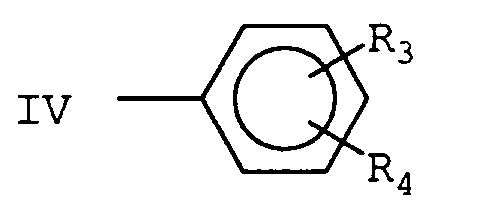
- The complex of claim 1, in which A1 is selected from alkylene, alkenylene, cycloalkylene, cycloalkenylene, oxaalkylene, hydroxyalkylene, carboxyalkylene, alkyleneamido, alkylenesulfonato, arylene, arylalkylene, heterocyclo, -CH2-, -CHR6-, -CR6R10-, -CH=CH-, -CH=CR11-, -CR6=CR12-, -C≡C; -O-, -S-, -CO-, -HC=N-, -CR6=N-, or -NR6-, in which R6, R10, R11 and R12 are independently selected from alkyl, alkenyl, alkoxy, aryl, 5- or 6-membered N-containing heterocyclic rest, halogen, -OH, or hydroxyalkyl.
- The complex of claim 1, wherein the boron carrying moiety is of formula VI
- The complex of claims 1-3, wherein X is Cl- or OH- and the dioxime portion is dimethyl-glyoxime or a dioxime of ethane dione, 1,2-cyclopentane dione or 1,2-cyclohexane dione.
- A complex of claim 1, namelyTc- or Re-(chlorine)(1,2-cyclohexanedione)3(3-carboxy-5-isothiocyanatophenylboron);Tc- or Re-(chlorine)(1,2-cyclohexanedione)3(3-isothiocyanatophenylboron);Tc- or Re- (chlorine)(dimethylglyoxime)3(3-carboxy-5-isothiocyanatophenylboron);Tc- or Re-(chlorine)(dimethylglyoxime)3(3-isothiocyanatophenylboron);Tc- or Re-(chlorine)(dimethylglyoxime)3(4-isothiocyanatophenylboron).
- A method for the preparation of complexes according to claims 1-5, comprising:a) combining a Tc or Re source, a source of an anion, a boronic acid of formula VII (HO)2B(A1)p-E, in which A1, p and E are defined as in claim 1, and a dioxime of formula HO-N=CR1-CR2=N-OH in which R1 and R2 are defined as in claim 1, or a pharmaceutically acceptable salt thereof; orb) reacting the foregoing boronic acid VII with a dioxime compound XM[R1C(NOH)-CR2(NOH)]3 in which X, R1, R2 and M are as defined in claim 1.
- A boronic acid compound of formula VIII

- The boronic acid compound of claim 7, namely 3-isothiocyanatophenylboronic acid, 4-isothiocyanatophenylboronic acid or 3-carboxy-5-isothiocyanatophenylboronic acid
- A kit for labeling with 99mTc or isotopic Re comprising,(i) a source of anion, e.g. Cl-;(ii) a boronic acid compound of formula VIII

p is 0 to 100, R3 is a functional group selected from -NCS, -NCO, -O-Tosyl, -O-Mesityl or derivatized acyl halides, activated esters, or N-hydroxysuccinimide; and R4 is H or a water solubilizing function selected from -OH, -COOH, -SO3H, alkyl-sulfonates, -SO2NH2, -Alk-COOH, -Alk-OH;(iii) a vic dioxime HO-N=CR1-CR2=N-OH or a pharmaceutically acceptable salt thereof in which R1 and R2 are each independently H, halogen, alkyl, aryl, or a 5- or 6-membered N-, S-, or O-containing heterocycle, or together R1 and R2 are -(CR8R9)n- where n = 3, 4, 5, or 6 and R8 and R9 are each independently H or alkyl; and(iv) optionally, a reducing agent. - A kit according to claim 7, in which the dioxime is 1,2-cyclohexanedione-dioxime or 2,3-butanedione-dioxime;
and the boronic acid is 3-carboxy-5-isothiocyanatophenylboronic acid or 3-isothiocyanatophenylboronic acid. - A conjugate formed by the reaction of a metal/dioxime/boron complex of claims 1-5 and amine-containing compounds, wherein said amine-containing compounds are selected from proteins, e.g. fibrin, fibrinogen and low density lipoprotein, polypeptides, hormones, amine-containing steroids, aminoacids, or amine-containing drugs and compounds.
- A conjugate of claim 11, in which the polypeptides are antibodies e.g. monoclonal, or antibody fragments, e.g. Fab.
- An antibody-metal/dioxime/boron complex conjugate of claim 12, which is immunoreactive and immunospecific toward a cancer target site.
- A composition for the diagnosis or the pharmaceutical treatment of cancer comprising a metal/dioxime/boron complex according to any of claims 1-5.
Applications Claiming Priority (2)
| Application Number | Priority Date | Filing Date | Title |
|---|---|---|---|
| US508433 | 1990-04-13 | ||
| US07/508,433 US5183653A (en) | 1990-04-13 | 1990-04-13 | Boronic acid adducts of metal dioxime complexes useful in labelling proteins and other amine-containing compounds |
Publications (3)
| Publication Number | Publication Date |
|---|---|
| EP0452858A2 EP0452858A2 (en) | 1991-10-23 |
| EP0452858A3 EP0452858A3 (en) | 1992-04-15 |
| EP0452858B1 true EP0452858B1 (en) | 1997-07-16 |
Family
ID=24022730
Family Applications (1)
| Application Number | Title | Priority Date | Filing Date |
|---|---|---|---|
| EP91105987A Expired - Lifetime EP0452858B1 (en) | 1990-04-13 | 1991-04-15 | Metal complexes of acid adducts to dioxime ligands useful in labelling proteins and other amine-containing compounds |
Country Status (9)
| Country | Link |
|---|---|
| US (1) | US5183653A (en) |
| EP (1) | EP0452858B1 (en) |
| JP (1) | JP2933740B2 (en) |
| AT (1) | ATE155474T1 (en) |
| CA (1) | CA2039218C (en) |
| DE (1) | DE69126816T2 (en) |
| DK (1) | DK0452858T3 (en) |
| ES (1) | ES2103755T3 (en) |
| GR (1) | GR3024598T3 (en) |
Families Citing this family (42)
| Publication number | Priority date | Publication date | Assignee | Title |
|---|---|---|---|---|
| US6825169B1 (en) * | 1991-10-22 | 2004-11-30 | Trustees Of Tufts College | Inhibitors of dipeptidyl-aminopeptidase type IV |
| US5300280A (en) * | 1992-02-14 | 1994-04-05 | Mallinckrodt Medical, Inc. | Stabilized radiopharmaceutical kits |
| US5594151A (en) * | 1994-01-28 | 1997-01-14 | Prolinx, Inc. | Phenylboronic acid complexing reagents derived from aminosalicylic acid |
| US5777148A (en) * | 1994-01-28 | 1998-07-07 | Prolinx, Inc. | Boronic compound complexing reagents and highly stable complexes |
| US5837878A (en) * | 1994-01-28 | 1998-11-17 | Prolinx, Inc. | Boronic compound complexing reagents and highly stable complexes |
| US5847192A (en) * | 1994-01-28 | 1998-12-08 | Prolinx, Inc. | Boronic compound complexing reagents and complexes |
| US5623055A (en) * | 1994-01-28 | 1997-04-22 | Prolinx, Inc. | Phenylboronic acid complexes derived from aminosalicylic acid for bioconjugate preparation |
| US5594111A (en) * | 1994-01-28 | 1997-01-14 | Prolinx, Inc. | Phenylboronic acid complexes for bioconjugate preparation |
| US5744627A (en) * | 1994-01-28 | 1998-04-28 | Prolinx, Inc. | Boronic compound complexing reagents and complexes |
| US5852178A (en) * | 1994-01-28 | 1998-12-22 | Prolinx, Inc. | Phenylboronic acid complexing reagents for conjugating biologically active molecules |
| US6156884A (en) | 1996-08-05 | 2000-12-05 | Prolinx, Inc. | Bifunctional boronic compound complexing reagents and complexes |
| US6075126A (en) | 1996-08-05 | 2000-06-13 | Prolinx, Inc. | Phenyldiboronic acid reagents and complexes |
| US6056941A (en) * | 1999-07-28 | 2000-05-02 | Bracco Research Usa | Kit for the preparation of technetium TC 99m teboroxime myocardial perfusion agent |
| US7261876B2 (en) | 2002-03-01 | 2007-08-28 | Bracco International Bv | Multivalent constructs for therapeutic and diagnostic applications |
| US8623822B2 (en) * | 2002-03-01 | 2014-01-07 | Bracco Suisse Sa | KDR and VEGF/KDR binding peptides and their use in diagnosis and therapy |
| US7211240B2 (en) * | 2002-03-01 | 2007-05-01 | Bracco International B.V. | Multivalent constructs for therapeutic and diagnostic applications |
| US7794693B2 (en) * | 2002-03-01 | 2010-09-14 | Bracco International B.V. | Targeting vector-phospholipid conjugates |
| EP1587944A4 (en) * | 2002-03-01 | 2007-03-21 | Dyax Corp | Kdr and vegf/kdr binding peptides and their use in diagnosis and therapy |
| AU2003213730A1 (en) | 2002-03-01 | 2003-09-16 | Bracco International B.V. | Kdr and vegf/kdr binding peptides and their use in diagnosis and therapy |
| US7226577B2 (en) | 2003-01-13 | 2007-06-05 | Bracco Imaging, S. P. A. | Gastrin releasing peptide compounds |
| US7390670B2 (en) * | 2003-02-20 | 2008-06-24 | Lumigen, Inc. | Signalling compounds and methods for detecting hydrogen peroxide |
| EP2284180B1 (en) | 2003-03-03 | 2015-09-09 | Dyax Corp. | Uses of peptides that specifically bind HGF receptor (cMET) |
| SG177216A1 (en) * | 2003-07-24 | 2012-01-30 | Bracco Imaging Spa | Stable radiopharmaceutical compositions and methods for their preparation |
| WO2008059489A2 (en) * | 2006-11-13 | 2008-05-22 | Spectrum Dynamics Llc | Radioimaging applications of and novel formulations of teboroxime |
| EP2097438B1 (en) | 2006-12-11 | 2015-08-26 | Bracco Imaging S.p.A | Fibrin binding peptide conjugates for diagnostic and therapeutic applications |
| EP2147684A1 (en) | 2008-07-22 | 2010-01-27 | Bracco Imaging S.p.A | Diagnostic Agents Selective Against Metalloproteases |
| US20120045393A1 (en) | 2009-03-17 | 2012-02-23 | Linder Karen E | Lhrh-ii peptide analogs |
| US20150344523A1 (en) | 2014-05-05 | 2015-12-03 | California Institute Of Technology | Mutant akt-specific capture agents, compositions, and methods of using and making |
| CN115112898B (en) | 2015-07-15 | 2026-03-24 | 加州理工学院 | IL-17F-specific trapping agent, composition, and methods of use and manufacture |
| BR112018015143A2 (en) | 2016-02-09 | 2018-12-18 | Bracco Suisse Sa | recombinant chimeric protein for selectin targeting |
| EP3440101B1 (en) | 2016-04-04 | 2021-10-06 | Indi Molecular, Inc. | Cd8-specific capture agents, compositions, and methods of using and making |
| US11884707B2 (en) | 2016-09-29 | 2024-01-30 | Regeneron Pharmaceuticals, Inc. | Compositions for detection, inhibition and imaging of indoleamine 2, 3-dioxygenase 1 (IDO1) and methods of making and using same |
| WO2018085375A1 (en) | 2016-11-01 | 2018-05-11 | Ohio State Innovation Foundation | Methods for the iodination of biomolecules |
| US11719705B2 (en) | 2017-06-15 | 2023-08-08 | Indi Molecular, Inc. | IL-17F and IL-17A-specific capture agents, compositions, and methods of using and making |
| WO2020097531A1 (en) | 2018-11-08 | 2020-05-14 | Indi Molecular, Inc. | Theranostic capture agents, compositions, and methods of using and making |
| WO2020186091A1 (en) | 2019-03-12 | 2020-09-17 | Indi Molecular, Inc. | Cross-linked epitopes and methods of use thereof |
| WO2020236952A1 (en) | 2019-05-20 | 2020-11-26 | Ohio State Innovation Foundation | Apohemoglobin-haptoglobin complexes and methods of using thereof |
| WO2020236969A1 (en) | 2019-05-20 | 2020-11-26 | Indi Molecular, Inc. | Compositions and methods relating to detection, inhibition, and imaging of indoleamine 2,3-dioxygenase 1 (ido1) |
| US11414460B2 (en) | 2019-07-19 | 2022-08-16 | Institute For Systems Biology | KRAS-specific capture agents, compositions, and methods of making and using |
| CN111377968B (en) * | 2020-03-09 | 2023-07-25 | 中国医学科学院阜外医院 | A Class of 99mTc(Ⅲ) Complex Containing Arylboronic Acid and Its Kit Formula and Application |
| WO2022098745A1 (en) | 2020-11-03 | 2022-05-12 | Indi Molecular, Inc. | Compositions, delivery systems, and methods useful in tumor therapy |
| WO2022098743A1 (en) | 2020-11-03 | 2022-05-12 | Indi Molecular, Inc. | Compositions, imaging, and therapeutic methods targeting folate receptor 1 (folr1) |
Family Cites Families (6)
| Publication number | Priority date | Publication date | Assignee | Title |
|---|---|---|---|---|
| US4705849A (en) * | 1985-04-15 | 1987-11-10 | E. R. Squibb & Sons, Inc. | Boronic acid adducts of technetium-99m dioxime complexes |
| GB8603537D0 (en) * | 1986-02-13 | 1986-03-19 | Parker D | Conjugate compound |
| US4877868A (en) * | 1986-03-12 | 1989-10-31 | Neorx Corporation | Radionuclide antibody coupling |
| US4861869A (en) * | 1986-05-29 | 1989-08-29 | Mallinckrodt, Inc. | Coupling agents for joining radionuclide metal ions with biologically useful proteins |
| DE3728599A1 (en) * | 1986-12-10 | 1988-06-23 | Hoechst Ag | METHOD FOR PRODUCING AN ORGAN-SPECIFIC SUBSTANCE MARKED WITH TECHNETIUM-99M |
| US4871836A (en) * | 1987-10-13 | 1989-10-03 | E. R. Squibb & Sons, Inc. | Boronic acid adducts of rhenium and radioactive isotopes of rhenium dioxime complexes |
-
1990
- 1990-04-13 US US07/508,433 patent/US5183653A/en not_active Expired - Lifetime
-
1991
- 1991-03-27 CA CA002039218A patent/CA2039218C/en not_active Expired - Fee Related
- 1991-04-12 JP JP3079577A patent/JP2933740B2/en not_active Expired - Fee Related
- 1991-04-15 DE DE69126816T patent/DE69126816T2/en not_active Expired - Fee Related
- 1991-04-15 EP EP91105987A patent/EP0452858B1/en not_active Expired - Lifetime
- 1991-04-15 ES ES91105987T patent/ES2103755T3/en not_active Expired - Lifetime
- 1991-04-15 DK DK91105987.1T patent/DK0452858T3/en active
- 1991-04-15 AT AT91105987T patent/ATE155474T1/en not_active IP Right Cessation
-
1997
- 1997-09-02 GR GR970402242T patent/GR3024598T3/en unknown
Non-Patent Citations (1)
| Title |
|---|
| 415, AN 109420f * |
Also Published As
| Publication number | Publication date |
|---|---|
| ES2103755T3 (en) | 1997-10-01 |
| EP0452858A3 (en) | 1992-04-15 |
| ATE155474T1 (en) | 1997-08-15 |
| US5183653A (en) | 1993-02-02 |
| DK0452858T3 (en) | 1997-11-17 |
| JPH05320182A (en) | 1993-12-03 |
| CA2039218A1 (en) | 1991-10-14 |
| GR3024598T3 (en) | 1997-12-31 |
| EP0452858A2 (en) | 1991-10-23 |
| DE69126816D1 (en) | 1997-08-21 |
| JP2933740B2 (en) | 1999-08-16 |
| DE69126816T2 (en) | 1998-02-12 |
| CA2039218C (en) | 1999-03-30 |
Similar Documents
| Publication | Publication Date | Title |
|---|---|---|
| US5183653A (en) | Boronic acid adducts of metal dioxime complexes useful in labelling proteins and other amine-containing compounds | |
| Sprague et al. | Preparation and biological evaluation of copper-64–labeled Tyr3-octreotate using a cross-bridged macrocyclic chelator | |
| US5202451A (en) | Anchimeric radiometal chelating compounds | |
| JP2555391B2 (en) | Main chain polysubstituted chelates for forming metal chelate-protein complexes | |
| EP0348261B1 (en) | Radiohalogenated compounds for site specific labeling | |
| JPH0651720B2 (en) | Antibody-chelating agent conjugate | |
| JPH075527B2 (en) | Bifunctional DTPA type ligand | |
| KR20200056979A (en) | Radioactive agent | |
| CN108699108A (en) | Radiolabeled Drugs | |
| WO2011098611A2 (en) | Alpha-emitting complexes | |
| HUT73665A (en) | Bifunctional-chelating agents braked with calcogene atoms, pharmaceutical compositions containing them , and use of these compositions in radio- diagnosis and radiotherapy | |
| Kramer et al. | Derivatives of 1, 3, 5-triamino-1, 3, 5-trideoxy-cis-inositol as versatile pentadentate ligands for protein labeling with Re-186/188. prelabeling, biodistribution, and X-ray structural studies | |
| Kasina et al. | Simplified preformed chelate protein radiolabeling with technetium-99m mercaptoacetamidoadipoylglycylglycine (N3S-adipate) | |
| US6995247B2 (en) | Ac-HEHA and related compounds, methods of synthesis and methods of use | |
| US6660246B1 (en) | Ligands and metal complexes thereof | |
| US5942210A (en) | Methods for lyoprotecting a macromolecule using tricine | |
| EP0857071A1 (en) | (radio) labelled biotin derivatives | |
| IE68411B1 (en) | Chelating agents for attaching metal ions to proteins | |
| TWI381852B (en) | Biotin diaminoderivatives and their conjugates with macrocyclic chelating agents | |
| Häfeli et al. | Radiolabeling of magnetic targeted carriers (MTC) with indium-111 | |
| JP2020504103A (en) | Method for labeling sensitive and thermosensitive target-directed biomolecules with technetium-based compounds | |
| Dorbes et al. | Synthesis, characterization and in vitro evaluation of new oxorhenium-and oxotechnetium-CCK4 derivatives as molecular imaging agents for CCK2-receptor targeting | |
| RU2655965C2 (en) | Method of obtaining set of technetium-99m complex with the modified specific mini-antibodies for diagnostics of oncological diseases with her2/neu overexpression | |
| US5656253A (en) | Ligands useful in radiographic imaging | |
| JPH04500376A (en) | Radionuclide metal chelates for radiolabeling of proteins |
Legal Events
| Date | Code | Title | Description |
|---|---|---|---|
| PUAI | Public reference made under article 153(3) epc to a published international application that has entered the european phase |
Free format text: ORIGINAL CODE: 0009012 |
|
| AK | Designated contracting states |
Kind code of ref document: A2 Designated state(s): AT BE CH DE DK ES FR GB GR IT LI LU NL SE |
|
| PUAL | Search report despatched |
Free format text: ORIGINAL CODE: 0009013 |
|
| AK | Designated contracting states |
Kind code of ref document: A3 Designated state(s): AT BE CH DE DK ES FR GB GR IT LI LU NL SE |
|
| 17P | Request for examination filed |
Effective date: 19920930 |
|
| 17Q | First examination report despatched |
Effective date: 19940805 |
|
| RAP1 | Party data changed (applicant data changed or rights of an application transferred) |
Owner name: BRACCO INTERNATIONAL B.V. |
|
| GRAG | Despatch of communication of intention to grant |
Free format text: ORIGINAL CODE: EPIDOS AGRA |
|
| GRAH | Despatch of communication of intention to grant a patent |
Free format text: ORIGINAL CODE: EPIDOS IGRA |
|
| GRAH | Despatch of communication of intention to grant a patent |
Free format text: ORIGINAL CODE: EPIDOS IGRA |
|
| GRAA | (expected) grant |
Free format text: ORIGINAL CODE: 0009210 |
|
| AK | Designated contracting states |
Kind code of ref document: B1 Designated state(s): AT BE CH DE DK ES FR GB GR IT LI LU NL SE |
|
| REF | Corresponds to: |
Ref document number: 155474 Country of ref document: AT Date of ref document: 19970815 Kind code of ref document: T |
|
| REG | Reference to a national code |
Ref country code: CH Ref legal event code: NV Representative=s name: DR. NENAD TOMOV-GRISOGONO Ref country code: CH Ref legal event code: EP |
|
| REF | Corresponds to: |
Ref document number: 69126816 Country of ref document: DE Date of ref document: 19970821 |
|
| ET | Fr: translation filed | ||
| REG | Reference to a national code |
Ref country code: ES Ref legal event code: FG2A Ref document number: 2103755 Country of ref document: ES Kind code of ref document: T3 |
|
| ITF | It: translation for a ep patent filed | ||
| REG | Reference to a national code |
Ref country code: DK Ref legal event code: T3 |
|
| REG | Reference to a national code |
Ref country code: GR Ref legal event code: FG4A Free format text: 3024598 |
|
| REG | Reference to a national code |
Ref country code: CH Ref legal event code: PFA Free format text: BRACCO INTERNATIONAL B.V.,7, DE BOELELAAN,1083 HJ AMSTERDAM (NL) TRANSFER- BRACCO INTERNATIONAL B.V.,STRAWINSKYLAAN 3051,1077 ZX AMSTERDAM (NL) |
|
| PLBE | No opposition filed within time limit |
Free format text: ORIGINAL CODE: 0009261 |
|
| STAA | Information on the status of an ep patent application or granted ep patent |
Free format text: STATUS: NO OPPOSITION FILED WITHIN TIME LIMIT |
|
| 26N | No opposition filed | ||
| REG | Reference to a national code |
Ref country code: GB Ref legal event code: IF02 |
|
| PGFP | Annual fee paid to national office [announced via postgrant information from national office to epo] |
Ref country code: AT Payment date: 20050321 Year of fee payment: 15 |
|
| PGFP | Annual fee paid to national office [announced via postgrant information from national office to epo] |
Ref country code: SE Payment date: 20050323 Year of fee payment: 15 Ref country code: DK Payment date: 20050323 Year of fee payment: 15 Ref country code: CH Payment date: 20050323 Year of fee payment: 15 |
|
| PGFP | Annual fee paid to national office [announced via postgrant information from national office to epo] |
Ref country code: NL Payment date: 20050325 Year of fee payment: 15 Ref country code: LU Payment date: 20050325 Year of fee payment: 15 Ref country code: GB Payment date: 20050325 Year of fee payment: 15 |
|
| PGFP | Annual fee paid to national office [announced via postgrant information from national office to epo] |
Ref country code: GR Payment date: 20050328 Year of fee payment: 15 |
|
| PGFP | Annual fee paid to national office [announced via postgrant information from national office to epo] |
Ref country code: BE Payment date: 20050330 Year of fee payment: 15 |
|
| PGFP | Annual fee paid to national office [announced via postgrant information from national office to epo] |
Ref country code: DE Payment date: 20050401 Year of fee payment: 15 |
|
| PGFP | Annual fee paid to national office [announced via postgrant information from national office to epo] |
Ref country code: ES Payment date: 20050408 Year of fee payment: 15 |
|
| PGFP | Annual fee paid to national office [announced via postgrant information from national office to epo] |
Ref country code: FR Payment date: 20050427 Year of fee payment: 15 |
|
| PG25 | Lapsed in a contracting state [announced via postgrant information from national office to epo] |
Ref country code: GB Free format text: LAPSE BECAUSE OF NON-PAYMENT OF DUE FEES Effective date: 20060415 Ref country code: AT Free format text: LAPSE BECAUSE OF NON-PAYMENT OF DUE FEES Effective date: 20060415 |
|
| PG25 | Lapsed in a contracting state [announced via postgrant information from national office to epo] |
Ref country code: SE Free format text: LAPSE BECAUSE OF NON-PAYMENT OF DUE FEES Effective date: 20060416 |
|
| PG25 | Lapsed in a contracting state [announced via postgrant information from national office to epo] |
Ref country code: ES Free format text: LAPSE BECAUSE OF NON-PAYMENT OF DUE FEES Effective date: 20060417 |
|
| PG25 | Lapsed in a contracting state [announced via postgrant information from national office to epo] |
Ref country code: LU Free format text: LAPSE BECAUSE OF NON-PAYMENT OF DUE FEES Effective date: 20060430 Ref country code: LI Free format text: LAPSE BECAUSE OF NON-PAYMENT OF DUE FEES Effective date: 20060430 Ref country code: CH Free format text: LAPSE BECAUSE OF NON-PAYMENT OF DUE FEES Effective date: 20060430 Ref country code: BE Free format text: LAPSE BECAUSE OF NON-PAYMENT OF DUE FEES Effective date: 20060430 |
|
| PGFP | Annual fee paid to national office [announced via postgrant information from national office to epo] |
Ref country code: IT Payment date: 20060430 Year of fee payment: 16 |
|
| PG25 | Lapsed in a contracting state [announced via postgrant information from national office to epo] |
Ref country code: DK Free format text: LAPSE BECAUSE OF NON-PAYMENT OF DUE FEES Effective date: 20060501 |
|
| PG25 | Lapsed in a contracting state [announced via postgrant information from national office to epo] |
Ref country code: NL Free format text: LAPSE BECAUSE OF NON-PAYMENT OF DUE FEES Effective date: 20061101 Ref country code: DE Free format text: LAPSE BECAUSE OF NON-PAYMENT OF DUE FEES Effective date: 20061101 |
|
| REG | Reference to a national code |
Ref country code: DK Ref legal event code: EBP |
|
| REG | Reference to a national code |
Ref country code: CH Ref legal event code: PL |
|
| EUG | Se: european patent has lapsed | ||
| GBPC | Gb: european patent ceased through non-payment of renewal fee |
Effective date: 20060415 |
|
| NLV4 | Nl: lapsed or anulled due to non-payment of the annual fee |
Effective date: 20061101 |
|
| REG | Reference to a national code |
Ref country code: FR Ref legal event code: ST Effective date: 20061230 |
|
| REG | Reference to a national code |
Ref country code: ES Ref legal event code: FD2A Effective date: 20060417 |
|
| BERE | Be: lapsed |
Owner name: *BRACCO INTERNATIONAL B.V. Effective date: 20060430 |
|
| PG25 | Lapsed in a contracting state [announced via postgrant information from national office to epo] |
Ref country code: FR Free format text: LAPSE BECAUSE OF NON-PAYMENT OF DUE FEES Effective date: 20060502 |
|
| PG25 | Lapsed in a contracting state [announced via postgrant information from national office to epo] |
Ref country code: GR Free format text: LAPSE BECAUSE OF NON-PAYMENT OF DUE FEES Effective date: 20061102 |
|
| PG25 | Lapsed in a contracting state [announced via postgrant information from national office to epo] |
Ref country code: IT Free format text: LAPSE BECAUSE OF NON-PAYMENT OF DUE FEES Effective date: 20070415 |