EP0452299A1 - Method and composition for stimulating the growth of nerve processes - Google Patents
Method and composition for stimulating the growth of nerve processes Download PDFInfo
- Publication number
- EP0452299A1 EP0452299A1 EP91890075A EP91890075A EP0452299A1 EP 0452299 A1 EP0452299 A1 EP 0452299A1 EP 91890075 A EP91890075 A EP 91890075A EP 91890075 A EP91890075 A EP 91890075A EP 0452299 A1 EP0452299 A1 EP 0452299A1
- Authority
- EP
- European Patent Office
- Prior art keywords
- nerve
- mixture
- peptides
- amino acids
- enzymatic decomposition
- Prior art date
- Legal status (The legal status is an assumption and is not a legal conclusion. Google has not performed a legal analysis and makes no representation as to the accuracy of the status listed.)
- Granted
Links
- 239000000203 mixture Substances 0.000 title claims abstract description 17
- 238000000034 method Methods 0.000 title claims abstract description 7
- 230000008035 nerve activity Effects 0.000 title 1
- 230000004936 stimulating effect Effects 0.000 title 1
- 150000001413 amino acids Chemical class 0.000 claims abstract description 17
- 206010012289 Dementia Diseases 0.000 claims abstract description 16
- 108090000765 processed proteins & peptides Proteins 0.000 claims abstract description 15
- 102000004196 processed proteins & peptides Human genes 0.000 claims abstract description 14
- 102000004169 proteins and genes Human genes 0.000 claims abstract description 12
- 108090000623 proteins and genes Proteins 0.000 claims abstract description 12
- 238000000354 decomposition reaction Methods 0.000 claims abstract description 11
- 230000002255 enzymatic effect Effects 0.000 claims abstract description 11
- 238000004519 manufacturing process Methods 0.000 claims abstract description 9
- 239000003814 drug Substances 0.000 claims abstract description 8
- 238000011321 prophylaxis Methods 0.000 claims abstract description 3
- 239000007864 aqueous solution Substances 0.000 claims abstract 7
- 239000004480 active ingredient Substances 0.000 claims abstract 3
- 230000002708 enhancing effect Effects 0.000 claims abstract 3
- 241000124008 Mammalia Species 0.000 claims abstract 2
- 210000005036 nerve Anatomy 0.000 claims description 23
- 210000004556 brain Anatomy 0.000 claims description 17
- 230000000050 nutritive effect Effects 0.000 claims description 8
- 241000282898 Sus scrofa Species 0.000 claims description 5
- 235000015097 nutrients Nutrition 0.000 claims description 3
- 235000016709 nutrition Nutrition 0.000 claims description 2
- 230000035764 nutrition Effects 0.000 claims description 2
- 239000003795 chemical substances by application Substances 0.000 claims 4
- 239000003223 protective agent Substances 0.000 claims 3
- 238000010255 intramuscular injection Methods 0.000 claims 1
- 239000007927 intramuscular injection Substances 0.000 claims 1
- 238000010253 intravenous injection Methods 0.000 claims 1
- 238000002360 preparation method Methods 0.000 claims 1
- 230000000069 prophylactic effect Effects 0.000 claims 1
- 210000004027 cell Anatomy 0.000 description 19
- 210000002569 neuron Anatomy 0.000 description 18
- 230000000694 effects Effects 0.000 description 12
- 229940024606 amino acid Drugs 0.000 description 10
- 235000001014 amino acid Nutrition 0.000 description 10
- 239000000126 substance Substances 0.000 description 10
- 239000000243 solution Substances 0.000 description 8
- 238000011282 treatment Methods 0.000 description 8
- 208000003098 Ganglion Cysts Diseases 0.000 description 7
- NBIIXXVUZAFLBC-UHFFFAOYSA-N Phosphoric acid Chemical compound OP(O)(O)=O NBIIXXVUZAFLBC-UHFFFAOYSA-N 0.000 description 7
- 208000005400 Synovial Cyst Diseases 0.000 description 7
- 239000002504 physiological saline solution Substances 0.000 description 7
- 229940079593 drug Drugs 0.000 description 6
- 230000000975 bioactive effect Effects 0.000 description 5
- 210000001320 hippocampus Anatomy 0.000 description 5
- DHMQDGOQFOQNFH-UHFFFAOYSA-N Glycine Chemical compound NCC(O)=O DHMQDGOQFOQNFH-UHFFFAOYSA-N 0.000 description 4
- 229910000147 aluminium phosphate Inorganic materials 0.000 description 4
- 230000005540 biological transmission Effects 0.000 description 4
- 239000007853 buffer solution Substances 0.000 description 4
- 238000001990 intravenous administration Methods 0.000 description 4
- 230000006386 memory function Effects 0.000 description 4
- 241000287828 Gallus gallus Species 0.000 description 3
- 241001465754 Metazoa Species 0.000 description 3
- OIPILFWXSMYKGL-UHFFFAOYSA-N acetylcholine Chemical compound CC(=O)OCC[N+](C)(C)C OIPILFWXSMYKGL-UHFFFAOYSA-N 0.000 description 3
- 229960004373 acetylcholine Drugs 0.000 description 3
- 239000008280 blood Substances 0.000 description 3
- 210000004369 blood Anatomy 0.000 description 3
- 210000002779 brain fornix Anatomy 0.000 description 3
- 230000007850 degeneration Effects 0.000 description 3
- 239000003102 growth factor Substances 0.000 description 3
- 239000000047 product Substances 0.000 description 3
- 235000018102 proteins Nutrition 0.000 description 3
- 210000001032 spinal nerve Anatomy 0.000 description 3
- 230000004083 survival effect Effects 0.000 description 3
- 238000002560 therapeutic procedure Methods 0.000 description 3
- UCTWMZQNUQWSLP-VIFPVBQESA-N (R)-adrenaline Chemical compound CNC[C@H](O)C1=CC=C(O)C(O)=C1 UCTWMZQNUQWSLP-VIFPVBQESA-N 0.000 description 2
- 229930182837 (R)-adrenaline Natural products 0.000 description 2
- 206010002091 Anaesthesia Diseases 0.000 description 2
- 239000004475 Arginine Substances 0.000 description 2
- RZZPDXZPRHQOCG-OJAKKHQRSA-M CDP-choline(1-) Chemical compound O[C@@H]1[C@H](O)[C@@H](COP([O-])(=O)OP([O-])(=O)OCC[N+](C)(C)C)O[C@H]1N1C(=O)N=C(N)C=C1 RZZPDXZPRHQOCG-OJAKKHQRSA-M 0.000 description 2
- OYPRJOBELJOOCE-UHFFFAOYSA-N Calcium Chemical compound [Ca] OYPRJOBELJOOCE-UHFFFAOYSA-N 0.000 description 2
- CKLJMWTZIZZHCS-UHFFFAOYSA-N D-OH-Asp Natural products OC(=O)C(N)CC(O)=O CKLJMWTZIZZHCS-UHFFFAOYSA-N 0.000 description 2
- WQZGKKKJIJFFOK-GASJEMHNSA-N Glucose Natural products OC[C@H]1OC(O)[C@H](O)[C@@H](O)[C@@H]1O WQZGKKKJIJFFOK-GASJEMHNSA-N 0.000 description 2
- 239000004471 Glycine Substances 0.000 description 2
- QNAYBMKLOCPYGJ-REOHCLBHSA-N L-alanine Chemical compound C[C@H](N)C(O)=O QNAYBMKLOCPYGJ-REOHCLBHSA-N 0.000 description 2
- CKLJMWTZIZZHCS-REOHCLBHSA-N L-aspartic acid Chemical compound OC(=O)[C@@H](N)CC(O)=O CKLJMWTZIZZHCS-REOHCLBHSA-N 0.000 description 2
- WHUUTDBJXJRKMK-VKHMYHEASA-N L-glutamic acid Chemical compound OC(=O)[C@@H](N)CCC(O)=O WHUUTDBJXJRKMK-VKHMYHEASA-N 0.000 description 2
- AGPKZVBTJJNPAG-WHFBIAKZSA-N L-isoleucine Chemical compound CC[C@H](C)[C@H](N)C(O)=O AGPKZVBTJJNPAG-WHFBIAKZSA-N 0.000 description 2
- ROHFNLRQFUQHCH-YFKPBYRVSA-N L-leucine Chemical compound CC(C)C[C@H](N)C(O)=O ROHFNLRQFUQHCH-YFKPBYRVSA-N 0.000 description 2
- FFEARJCKVFRZRR-BYPYZUCNSA-N L-methionine Chemical compound CSCC[C@H](N)C(O)=O FFEARJCKVFRZRR-BYPYZUCNSA-N 0.000 description 2
- COLNVLDHVKWLRT-QMMMGPOBSA-N L-phenylalanine Chemical compound OC(=O)[C@@H](N)CC1=CC=CC=C1 COLNVLDHVKWLRT-QMMMGPOBSA-N 0.000 description 2
- QIVBCDIJIAJPQS-VIFPVBQESA-N L-tryptophane Chemical compound C1=CC=C2C(C[C@H](N)C(O)=O)=CNC2=C1 QIVBCDIJIAJPQS-VIFPVBQESA-N 0.000 description 2
- ROHFNLRQFUQHCH-UHFFFAOYSA-N Leucine Natural products CC(C)CC(N)C(O)=O ROHFNLRQFUQHCH-UHFFFAOYSA-N 0.000 description 2
- ONIBWKKTOPOVIA-UHFFFAOYSA-N Proline Natural products OC(=O)C1CCCN1 ONIBWKKTOPOVIA-UHFFFAOYSA-N 0.000 description 2
- 241000700159 Rattus Species 0.000 description 2
- 241000700157 Rattus norvegicus Species 0.000 description 2
- MTCFGRXMJLQNBG-UHFFFAOYSA-N Serine Natural products OCC(N)C(O)=O MTCFGRXMJLQNBG-UHFFFAOYSA-N 0.000 description 2
- 229930006000 Sucrose Natural products 0.000 description 2
- CZMRCDWAGMRECN-UGDNZRGBSA-N Sucrose Chemical compound O[C@H]1[C@H](O)[C@@H](CO)O[C@@]1(CO)O[C@@H]1[C@H](O)[C@@H](O)[C@H](O)[C@@H](CO)O1 CZMRCDWAGMRECN-UGDNZRGBSA-N 0.000 description 2
- AYFVYJQAPQTCCC-UHFFFAOYSA-N Threonine Natural products CC(O)C(N)C(O)=O AYFVYJQAPQTCCC-UHFFFAOYSA-N 0.000 description 2
- 239000004473 Threonine Substances 0.000 description 2
- 102000004142 Trypsin Human genes 0.000 description 2
- 108090000631 Trypsin Proteins 0.000 description 2
- QIVBCDIJIAJPQS-UHFFFAOYSA-N Tryptophan Natural products C1=CC=C2C(CC(N)C(O)=O)=CNC2=C1 QIVBCDIJIAJPQS-UHFFFAOYSA-N 0.000 description 2
- 239000006035 Tryptophane Substances 0.000 description 2
- 102000005421 acetyltransferase Human genes 0.000 description 2
- 108020002494 acetyltransferase Proteins 0.000 description 2
- 235000004279 alanine Nutrition 0.000 description 2
- 230000037005 anaesthesia Effects 0.000 description 2
- ODKSFYDXXFIFQN-UHFFFAOYSA-N arginine Natural products OC(=O)C(N)CCCNC(N)=N ODKSFYDXXFIFQN-UHFFFAOYSA-N 0.000 description 2
- 210000004227 basal ganglia Anatomy 0.000 description 2
- 229910052791 calcium Inorganic materials 0.000 description 2
- 239000011575 calcium Substances 0.000 description 2
- 230000002490 cerebral effect Effects 0.000 description 2
- 230000008859 change Effects 0.000 description 2
- 235000013681 dietary sucrose Nutrition 0.000 description 2
- 229960003638 dopamine Drugs 0.000 description 2
- VYFYYTLLBUKUHU-UHFFFAOYSA-N dopamine Chemical compound NCCC1=CC=C(O)C(O)=C1 VYFYYTLLBUKUHU-UHFFFAOYSA-N 0.000 description 2
- 229960005139 epinephrine Drugs 0.000 description 2
- 238000011156 evaluation Methods 0.000 description 2
- 239000011521 glass Substances 0.000 description 2
- 239000008103 glucose Substances 0.000 description 2
- 229960002989 glutamic acid Drugs 0.000 description 2
- HNDVDQJCIGZPNO-UHFFFAOYSA-N histidine Natural products OC(=O)C(N)CC1=CN=CN1 HNDVDQJCIGZPNO-UHFFFAOYSA-N 0.000 description 2
- 238000007912 intraperitoneal administration Methods 0.000 description 2
- AGPKZVBTJJNPAG-UHFFFAOYSA-N isoleucine Natural products CCC(C)C(N)C(O)=O AGPKZVBTJJNPAG-UHFFFAOYSA-N 0.000 description 2
- 229960000310 isoleucine Drugs 0.000 description 2
- 210000001161 mammalian embryo Anatomy 0.000 description 2
- 229930182817 methionine Natural products 0.000 description 2
- COLNVLDHVKWLRT-UHFFFAOYSA-N phenylalanine Natural products OC(=O)C(N)CC1=CC=CC=C1 COLNVLDHVKWLRT-UHFFFAOYSA-N 0.000 description 2
- 239000000088 plastic resin Substances 0.000 description 2
- 230000002265 prevention Effects 0.000 description 2
- QZAYGJVTTNCVMB-UHFFFAOYSA-N serotonin Chemical compound C1=C(O)C=C2C(CCN)=CNC2=C1 QZAYGJVTTNCVMB-UHFFFAOYSA-N 0.000 description 2
- 229960004793 sucrose Drugs 0.000 description 2
- 239000006228 supernatant Substances 0.000 description 2
- 239000000725 suspension Substances 0.000 description 2
- 239000012588 trypsin Substances 0.000 description 2
- 229960004799 tryptophan Drugs 0.000 description 2
- 238000005303 weighing Methods 0.000 description 2
- SFLSHLFXELFNJZ-QMMMGPOBSA-N (-)-norepinephrine Chemical compound NC[C@H](O)C1=CC=C(O)C(O)=C1 SFLSHLFXELFNJZ-QMMMGPOBSA-N 0.000 description 1
- MTCFGRXMJLQNBG-REOHCLBHSA-N (2S)-2-Amino-3-hydroxypropansäure Chemical compound OC[C@H](N)C(O)=O MTCFGRXMJLQNBG-REOHCLBHSA-N 0.000 description 1
- 208000024827 Alzheimer disease Diseases 0.000 description 1
- 206010052346 Brain contusion Diseases 0.000 description 1
- 206010008190 Cerebrovascular accident Diseases 0.000 description 1
- GHXZTYHSJHQHIJ-UHFFFAOYSA-N Chlorhexidine Chemical compound C=1C=C(Cl)C=CC=1NC(N)=NC(N)=NCCCCCCN=C(N)N=C(N)NC1=CC=C(Cl)C=C1 GHXZTYHSJHQHIJ-UHFFFAOYSA-N 0.000 description 1
- LEVWYRKDKASIDU-QWWZWVQMSA-N D-cystine Chemical compound OC(=O)[C@H](N)CSSC[C@@H](N)C(O)=O LEVWYRKDKASIDU-QWWZWVQMSA-N 0.000 description 1
- 102000004190 Enzymes Human genes 0.000 description 1
- 108090000790 Enzymes Proteins 0.000 description 1
- 239000001828 Gelatine Substances 0.000 description 1
- YQEZLKZALYSWHR-UHFFFAOYSA-N Ketamine Chemical compound C=1C=CC=C(Cl)C=1C1(NC)CCCCC1=O YQEZLKZALYSWHR-UHFFFAOYSA-N 0.000 description 1
- XUJNEKJLAYXESH-REOHCLBHSA-N L-Cysteine Chemical compound SC[C@H](N)C(O)=O XUJNEKJLAYXESH-REOHCLBHSA-N 0.000 description 1
- ONIBWKKTOPOVIA-BYPYZUCNSA-N L-Proline Chemical compound OC(=O)[C@@H]1CCCN1 ONIBWKKTOPOVIA-BYPYZUCNSA-N 0.000 description 1
- ODKSFYDXXFIFQN-BYPYZUCNSA-P L-argininium(2+) Chemical compound NC(=[NH2+])NCCC[C@H]([NH3+])C(O)=O ODKSFYDXXFIFQN-BYPYZUCNSA-P 0.000 description 1
- HNDVDQJCIGZPNO-YFKPBYRVSA-N L-histidine Chemical compound OC(=O)[C@@H](N)CC1=CN=CN1 HNDVDQJCIGZPNO-YFKPBYRVSA-N 0.000 description 1
- KDXKERNSBIXSRK-YFKPBYRVSA-N L-lysine Chemical compound NCCCC[C@H](N)C(O)=O KDXKERNSBIXSRK-YFKPBYRVSA-N 0.000 description 1
- AYFVYJQAPQTCCC-GBXIJSLDSA-N L-threonine Chemical compound C[C@@H](O)[C@H](N)C(O)=O AYFVYJQAPQTCCC-GBXIJSLDSA-N 0.000 description 1
- KZSNJWFQEVHDMF-BYPYZUCNSA-N L-valine Chemical compound CC(C)[C@H](N)C(O)=O KZSNJWFQEVHDMF-BYPYZUCNSA-N 0.000 description 1
- 239000004472 Lysine Substances 0.000 description 1
- KDXKERNSBIXSRK-UHFFFAOYSA-N Lysine Natural products NCCCCC(N)C(O)=O KDXKERNSBIXSRK-UHFFFAOYSA-N 0.000 description 1
- -1 Mg2+ ions Chemical class 0.000 description 1
- 239000004677 Nylon Substances 0.000 description 1
- 208000018737 Parkinson disease Diseases 0.000 description 1
- 208000006011 Stroke Diseases 0.000 description 1
- KZSNJWFQEVHDMF-UHFFFAOYSA-N Valine Natural products CC(C)C(N)C(O)=O KZSNJWFQEVHDMF-UHFFFAOYSA-N 0.000 description 1
- 230000005856 abnormality Effects 0.000 description 1
- 239000000853 adhesive Substances 0.000 description 1
- 230000001070 adhesive effect Effects 0.000 description 1
- 229940005524 anti-dementia drug Drugs 0.000 description 1
- 238000003556 assay Methods 0.000 description 1
- 239000000872 buffer Substances 0.000 description 1
- 239000006285 cell suspension Substances 0.000 description 1
- 210000004289 cerebral ventricle Anatomy 0.000 description 1
- 210000004720 cerebrum Anatomy 0.000 description 1
- 229960001231 choline Drugs 0.000 description 1
- 238000004891 communication Methods 0.000 description 1
- XUJNEKJLAYXESH-UHFFFAOYSA-N cysteine Natural products SCC(N)C(O)=O XUJNEKJLAYXESH-UHFFFAOYSA-N 0.000 description 1
- 235000018417 cysteine Nutrition 0.000 description 1
- 229960003067 cystine Drugs 0.000 description 1
- 210000001787 dendrite Anatomy 0.000 description 1
- 230000001419 dependent effect Effects 0.000 description 1
- 238000011161 development Methods 0.000 description 1
- 230000003292 diminished effect Effects 0.000 description 1
- 230000008034 disappearance Effects 0.000 description 1
- 230000009429 distress Effects 0.000 description 1
- 235000013601 eggs Nutrition 0.000 description 1
- 210000002257 embryonic structure Anatomy 0.000 description 1
- 230000007071 enzymatic hydrolysis Effects 0.000 description 1
- 238000006047 enzymatic hydrolysis reaction Methods 0.000 description 1
- 238000002474 experimental method Methods 0.000 description 1
- 239000000835 fiber Substances 0.000 description 1
- 210000001652 frontal lobe Anatomy 0.000 description 1
- 230000006870 function Effects 0.000 description 1
- 229920000159 gelatin Polymers 0.000 description 1
- 235000019322 gelatine Nutrition 0.000 description 1
- 230000006872 improvement Effects 0.000 description 1
- 239000003112 inhibitor Substances 0.000 description 1
- 230000005764 inhibitory process Effects 0.000 description 1
- 238000007918 intramuscular administration Methods 0.000 description 1
- 229960003299 ketamine Drugs 0.000 description 1
- 230000004060 metabolic process Effects 0.000 description 1
- 210000001682 neurofibril Anatomy 0.000 description 1
- 229920001778 nylon Polymers 0.000 description 1
- 210000001152 parietal lobe Anatomy 0.000 description 1
- 238000011084 recovery Methods 0.000 description 1
- 230000009467 reduction Effects 0.000 description 1
- 238000011160 research Methods 0.000 description 1
- 210000004761 scalp Anatomy 0.000 description 1
- 229940076279 serotonin Drugs 0.000 description 1
- 210000002966 serum Anatomy 0.000 description 1
- 210000003625 skull Anatomy 0.000 description 1
- 238000007920 subcutaneous administration Methods 0.000 description 1
- 208000024891 symptom Diseases 0.000 description 1
- 210000000225 synapse Anatomy 0.000 description 1
- 210000003478 temporal lobe Anatomy 0.000 description 1
- 238000012360 testing method Methods 0.000 description 1
- 239000004474 valine Substances 0.000 description 1
- 230000002792 vascular Effects 0.000 description 1
Images
Classifications
-
- C—CHEMISTRY; METALLURGY
- C07—ORGANIC CHEMISTRY
- C07K—PEPTIDES
- C07K14/00—Peptides having more than 20 amino acids; Gastrins; Somatostatins; Melanotropins; Derivatives thereof
- C07K14/435—Peptides having more than 20 amino acids; Gastrins; Somatostatins; Melanotropins; Derivatives thereof from animals; from humans
- C07K14/475—Growth factors; Growth regulators
- C07K14/48—Nerve growth factor [NGF]
-
- C—CHEMISTRY; METALLURGY
- C07—ORGANIC CHEMISTRY
- C07K—PEPTIDES
- C07K14/00—Peptides having more than 20 amino acids; Gastrins; Somatostatins; Melanotropins; Derivatives thereof
- C07K14/435—Peptides having more than 20 amino acids; Gastrins; Somatostatins; Melanotropins; Derivatives thereof from animals; from humans
- C07K14/46—Peptides having more than 20 amino acids; Gastrins; Somatostatins; Melanotropins; Derivatives thereof from animals; from humans from vertebrates
- C07K14/47—Peptides having more than 20 amino acids; Gastrins; Somatostatins; Melanotropins; Derivatives thereof from animals; from humans from vertebrates from mammals
- C07K14/4701—Peptides having more than 20 amino acids; Gastrins; Somatostatins; Melanotropins; Derivatives thereof from animals; from humans from vertebrates from mammals not used
- C07K14/4702—Regulators; Modulating activity
- C07K14/4705—Regulators; Modulating activity stimulating, promoting or activating activity
-
- A—HUMAN NECESSITIES
- A61—MEDICAL OR VETERINARY SCIENCE; HYGIENE
- A61K—PREPARATIONS FOR MEDICAL, DENTAL OR TOILETRY PURPOSES
- A61K38/00—Medicinal preparations containing peptides
Definitions
- New pharmaceutical applications will be provided on the basis of the findings that the present invention is related to a bioactive substance which exhibits an activity to enhance neuroaxon production on ganglion cells; in more detail on the basis of the findings that the mixture of peptides prepared by controlled enzymatic decomposition of swine brain protein fraction and amino acids exhibits an activity to enhance neuroaxon production on ganglion cells.
- said bioactive substance exhibits an activity as a nerve nutritive factor on the central nerve, in particular, choline-working nerve cells; in more detail, on the basis of the findings that the mixture of peptides prepared by controlled enzymatic decomposition of swine brain protein fraction and amino acid exhibits an activity as a nerve nutritive factor on the central nerve closely related to dementia, in particular, choline-working nerve cells through the administration routes easy for clinical applications, i.e. intravenous, oral, intramuscular or subcutaneous routes.
- the mixture of peptides and amino acids in the present invention contains approximately 5 % of peptides with a molecular weight of 10,000 or less and approximately 85 % of free amino acid. This mixture is already in practical use in Austria for the treatment of cerebral vascular metabolism insufficiency, slight infantile atelencephalia, cerebral apoplexy, cerebral contusion, etc.
- peptides and amino acids such as alanine, arginine, asparaginic acid, glutaminic acid, glycine, histidine, isoleucine, leucine, lysine, methionine, phenylalanine, proline, serine, threonine, tryptophane, cysteine, valine, and thyrosine.
- Dementia is considered to be induced by the factors of reduction in nerve transmission substances like acetylcholine, serotonin and noradrenalin, change in neurofibril and disappearance of nerve cells.
- a nerve nutrient factor including NGF has been in the limelight recently to the extent of even being taken up as a major research theme for a study on anti-dementia drugs.
- NGF neurotrophic factor
- the NGF molecular weight is so large that it cannot reach the inside of the brain by common means of the administration.
- the above activities can be found only when NGF has direct access to the inside of the brain, and such administration method must not be applied in clinical practice.
- the aim of the present invention is to demonstrate that new applications can be provided for a known product already in clinical use.
- the new applications are intended for prophylaxis or treatment of dementia on the basis of the new findings that this known product has activities to increase acetylcholine, a nerve transmission substance, and to grow neuroaxon.
- the clinical application of the known product is enabled by simple means of administration for protecting acetylcholine-working nerve cells in the brain which have a close connection with memory, and for maintaining the memory function.
- degeneration and deciduation of acetylcholine-working nerve cells in the brain of an animal with experimentally-induced dementia can be prevented, its application for prevention and treatment of dementia can be indicated.
- the effectiveness of the present invention was ascertained in comparison with NGF (neuroaxon growth factor) and other substances.
- the drug of the present invention was administered intravenously through the intraperitoneal route into the septal nuclear cells with the supply of NGF (a neuroaxis growth factor: one of the nerve nutritive factors) discontinued from the hippocampus because of incision of fimbria fornix between the hippocampus and the septal nucleus, and as a result, improvement was noted in degeneration and deciduation of septal nuclear cells.
- NGF neuroaxis growth factor: one of the nerve nutritive factors
- the bioactive substance used in the present invention which is obtained from enzymatic hydrolysis of swine brain protein fraction is available from the applicants under the trade name Cerebrolysin.
- Each ml of this drug contains 3.00 mg of alanine, 0.25 mg of arginine, 3.00 mg of asparaginic acid, 0.06 g of cystine, 4.30 mg of glutaminic acid, 1.50 mg of glycine, 1.30 mg of histidine, 2.00 mg of isoleucine, 6.00 mg of leucine, 0.50 mg of methionine, 2.00 mg of phenylalanine, 2.00 mg of proline, 0.30 g of serine, 0.30 g of threonine, 0.50 g of tryptophane and 2.00 mg of thyrosine as amino acids as well as peptide having a molecular weight of 10.000 or less.
- a bioactive substance Cerebrolysin was diluted in a phosphoric acid buffer solution (PBS) at a ratio of 10:100, 20:100, 40:100 and 80:100.
- PBS phosphoric acid buffer solution
- the neuroaxis growth factor (NGF) was prepared at concentrations of 12.5 ng/100 ⁇ l, 25.0 ng/100 ⁇ l and 50.0 ng/100 ⁇ l, and also each amino acid contained in Cerebrolysin was suspended in a PBS (an amino acid solution) at the same concentrations as Cerebrolysin was.
- Sorcoseryl (Taiho Pharmaceutical) was used, being diluted in a PBS at a ratio of 10:100, 20:100, 40:100 and 80:100.
- this drug is administered at an amount of 1-30 ml directly by the intravenous route or through intravenous drip along with a physiological saline solution or a nutrition solution like a glucose-containing solution.
- Wistar rats weighing 200-250 g were fixed on the brain fixing stand, and the fimbria fornix at either side was sucked for removal by the aspirator to cut off the route between the hippocampus and the septal nucleus.
- the animals thus treated were divided into 5 groups from the aspect of the Cerebrolysin administration period; the 0-week group, the 1-week group, the 2-week group, the 3-week group and the 4-week group. After the administration thus designated was completed in each group, a cannula was inserted through the heart. Blood was removed with a physiological saline solution, and then, the brain was fixed, being refluxed with a 4% paraformaldehyde-phosphoric acid buffer physiological saline solution. The brain was, then, preserved in a cool place one overnight in a 10 % saccharose solution. A 40 ⁇ m-thick thin slice was prepared and attached on a glass plate.
- the slice thus obtained was treated with an anti-choline acetyl transferase, and colored by the ABC method. After a photographic picture was taken, the number of colored nerve cells was counted, and the size of such cells was measured.
- This drug can be formulated in the manner of being injected as such intravenously at an amount of 1-30ml, or being dripped along with a physiological saline solution or a glucose solution, or being injected intramuscularly at an amount of 1-5 ml.
- DGC spinal nerve of chicken embryo
- a bioactive substance of the present invention in a range of concentrations of 10 ⁇ l/ml-80 ⁇ l/ml, neuroaxon was found to be produced from DGC. In a range of 10 ⁇ l/ml-20 ⁇ l/ml in particular, growth of neuroaxon was concentration-dependent. On the contrary, no sign of neuroaxon production was noted in the case of the treatment with Sorcoseryl, mixed amino acids solution, dihydroergotin methylate, calcium hopatenate, Cyticholine, Dopamin and epinephrine.
- Cerebrolysin used in the present invention synthesizes a nerve nutrient factor inside nerve cells and that it contributes to neuroaxon production and growth.
- Wistar rats weighing 200-250 g were fixed on the brain fixing stands under ketamine anesthesia at a rate of 5 mg/kg.
- the scalp was excised with a pair of scissors, and sterilized with hibitane. Then, the skull was shaved with a minister drill. Blood was blocked electrically, and the brain was exposed. Fimbria fornix was sucked for removal by the aspirator to cut off the route between the hippocampus and the sepal nucleus.
- the animals thus treated were divided into 5 groups by the administration period; the 0-week group, the 1-week group, the 2-week group, the 3-week group and the 4-week group. Both Cerebrolysin and a physiological saline solution were injected intraperitoneally each at an amount of 5 mg/kg once a day to every group for the designated period.
- a cannula was inserted through the heart, and blood was removed with a physiological saline solution. Then, the brain was fixed, being refluxed with a 4 % paraformaldehydephosphoric acid buffer physiological saline solution. The cervical part was cut off to take out the brain, and it was, then, preserved in a cool place one overnight in a 10 % saccharose solution. A 40 ⁇ m-thick slice was prepared by use of the vibratome, and attached on a glass plate.
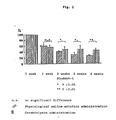
- the slice thus obtained was treated with an anticholine acetyl transferase, and colored by the ABC method. After a photographic picture was taken, the number of colored nerve cells was counted, and the size of such cells was measured. The results obtained were as follows:
- the activity to protect the septal cells turned out to be superior in the Cerebrolysin group to the control group in the 2nd week of the administration.
- choline-working nerve cells were found to survive at a rate of 47 %; the survival rate was approximately 20 % higher in the Cerebrolysin group than in the control group.
- Fig. 1 incidentally, the survival of choline-working nerve cells is indicated along the Y-axis by percentage of those injured against those not injured.
- Cerebrolysin exhibited an activity as a nerve nutritive factor through the intraperitoneal administration regarded clinically as being equal to the intravenous administration, and protected the septal cells, consequently improving the survival rate.
Landscapes
- Chemical & Material Sciences (AREA)
- Health & Medical Sciences (AREA)
- Life Sciences & Earth Sciences (AREA)
- Organic Chemistry (AREA)
- General Health & Medical Sciences (AREA)
- Gastroenterology & Hepatology (AREA)
- Biochemistry (AREA)
- Biophysics (AREA)
- Zoology (AREA)
- Genetics & Genomics (AREA)
- Medicinal Chemistry (AREA)
- Molecular Biology (AREA)
- Proteomics, Peptides & Aminoacids (AREA)
- Toxicology (AREA)
- Medicines That Contain Protein Lipid Enzymes And Other Medicines (AREA)
- Peptides Or Proteins (AREA)
- Preparation Of Compounds By Using Micro-Organisms (AREA)
Abstract
Description
- New pharmaceutical applications will be provided on the basis of the findings that the present invention is related to a bioactive substance which exhibits an activity to enhance neuroaxon production on ganglion cells; in more detail on the basis of the findings that the mixture of peptides prepared by controlled enzymatic decomposition of swine brain protein fraction and amino acids exhibits an activity to enhance neuroaxon production on ganglion cells. In addition, said bioactive substance exhibits an activity as a nerve nutritive factor on the central nerve, in particular, choline-working nerve cells; in more detail, on the basis of the findings that the mixture of peptides prepared by controlled enzymatic decomposition of swine brain protein fraction and amino acid exhibits an activity as a nerve nutritive factor on the central nerve closely related to dementia, in particular, choline-working nerve cells through the administration routes easy for clinical applications, i.e. intravenous, oral, intramuscular or subcutaneous routes.
- The mixture of peptides and amino acids in the present invention contains approximately 5 % of peptides with a molecular weight of 10,000 or less and approximately 85 % of free amino acid. This mixture is already in practical use in Austria for the treatment of cerebral vascular metabolism insufficiency, slight infantile atelencephalia, cerebral apoplexy, cerebral contusion, etc. It is a mixture of peptides and amino acids such as alanine, arginine, asparaginic acid, glutaminic acid, glycine, histidine, isoleucine, leucine, lysine, methionine, phenylalanine, proline, serine, threonine, tryptophane, cysteine, valine, and thyrosine.
- If changes occur in nerve cells which support cerebrum functions and in fibrous connection thereof, symptoms of dementia appear. Dementia is considered to be induced by the factors of reduction in nerve transmission substances like acetylcholine, serotonin and noradrenalin, change in neurofibril and disappearance of nerve cells.
- It is known that when nerve cells are diminished in the temporal lobe, parietal lobe and frontal lobe and when a remarkable change occurs in the part called dendrites which sustain stimuli, the synapse, the junction to which fibers from other nerve cells are attached, is reduced. Such factors as an increase in acetylcholine and nerve growth, in particular neuroaxon production, may lead to an inhibition of occurrence of dementia.
- At present, the etiology of dementia is not yet elucidated. Trials are in distress with respect to the treatment of Parkinson's disease by means of the supplementary administration of nerve transmission substances and with respect to the treatment of dementia by means of the inhibitor against enzymes which decompose nerve transmission substances.
- Against such background, a nerve nutrient factor including NGF has been in the limelight recently to the extent of even being taken up as a major research theme for a study on anti-dementia drugs.
- In view of the facts that choline-working nerve cells in the fore-brain basal ganglion are much related to the memory function, that remarkable degeneration and deciduation of these cells are observed in Alzheimer's disease and that dementia may be likely to be induced for such causation, protection of choline-working nerve cells in the forebrain basal ganglion by means of the administration of nerve nutritive factors including NGF can be the therapy to directly eliminate the cause of dementia unlike the palliative anti-symptomatic therapy. Being in for the aged society, the development of drugs with such activities should be the urgent task of high priority.
- A study on NGF is in the formost advance nowadays. The findings so far obtained by its administration into the cerebral ventricle revealed that NGF has an activity to protect the septal cells in a rat with the corpus fimbriatum incised, that it has an activity to bring recovery in labyrinth tests, and that it has an activity to improve the memory function in an aged rat to the extent of no abnormality.
- However, the NGF molecular weight is so large that it cannot reach the inside of the brain by common means of the administration. The above activities can be found only when NGF has direct access to the inside of the brain, and such administration method must not be applied in clinical practice.
- Under these circumstances, the advent of a drug with a nerve nutritive factor which can be useful for clinical treatment is expected.
- The aim of the present invention is to demonstrate that new applications can be provided for a known product already in clinical use. The new applications are intended for prophylaxis or treatment of dementia on the basis of the new findings that this known product has activities to increase acetylcholine, a nerve transmission substance, and to grow neuroaxon. Furthermore, the clinical application of the known product is enabled by simple means of administration for protecting acetylcholine-working nerve cells in the brain which have a close connection with memory, and for maintaining the memory function. In addition, on the basis of the new findings that degeneration and deciduation of acetylcholine-working nerve cells in the brain of an animal with experimentally-induced dementia can be prevented, its application for prevention and treatment of dementia can be indicated.
- It is well known that the nerve cells in Meinnert's basal nucleus, septal nucleus and hippocampus are closely related to the memory function through the communication network with the brain; it is especially noticed that deciduation of these choline-working nerve cells is remarkable in dementia cases of Alzheimer type. It is very important to maintain these nerve cells with the use of nerve nutritive factors for prevention of dementia, but such therapy has so far not been known. The present invention provides such application.
- The effectiveness of the present invention was ascertained in comparison with NGF (neuroaxon growth factor) and other substances.
- The drug of the present invention was administered intravenously through the intraperitoneal route into the septal nuclear cells with the supply of NGF (a neuroaxis growth factor: one of the nerve nutritive factors) discontinued from the hippocampus because of incision of fimbria fornix between the hippocampus and the septal nucleus, and as a result, improvement was noted in degeneration and deciduation of septal nuclear cells.
- The bioactive substance used in the present invention which is obtained from enzymatic hydrolysis of swine brain protein fraction is available from the applicants under the trade name Cerebrolysin. Each ml of this drug contains 3.00 mg of alanine, 0.25 mg of arginine, 3.00 mg of asparaginic acid, 0.06 g of cystine, 4.30 mg of glutaminic acid, 1.50 mg of glycine, 1.30 mg of histidine, 2.00 mg of isoleucine, 6.00 mg of leucine, 0.50 mg of methionine, 2.00 mg of phenylalanine, 2.00 mg of proline, 0.30 g of serine, 0.30 g of threonine, 0.50 g of tryptophane and 2.00 mg of thyrosine as amino acids as well as peptide having a molecular weight of 10.000 or less.
- Ganglion in the posterior root of the spinal nerve of chicken embryo was taken out of eggs aged 10-12 days, and suspended in a phosphoric acid buffer solution (PBS) containing no Ca²⁺ and no Mg²⁺ ions. It was treated with 0.1 % trypsin at 37° C for approximately 40 minutes, and centrifuged at 1,500 rpm for 5 minutes. Eagle's MEM medium was added to the cells thus collected with the supernatant removed, and the mixture was pipetted to disperse the cells. The suspensions of the cells thus obtained were filtered through a nylon mesh filter, transferred into a plastic resin dish, and incubated at 37° C for approximately 2 hours in a 5 % CO₂ incubator. Then, non-adhesive cells were collected in use for assay.
- A bioactive substance Cerebrolysin was diluted in a phosphoric acid buffer solution (PBS) at a ratio of 10:100, 20:100, 40:100 and 80:100. For control purposes, the neuroaxis growth factor (NGF) was prepared at concentrations of 12.5 ng/100 µl, 25.0 ng/100 µl and 50.0 ng/100 µl, and also each amino acid contained in Cerebrolysin was suspended in a PBS (an amino acid solution) at the same concentrations as Cerebrolysin was. In addition, Sorcoseryl (Taiho Pharmaceutical) was used, being diluted in a PBS at a ratio of 10:100, 20:100, 40:100 and 80:100.
- Incidentally, this drug is administered at an amount of 1-30 ml directly by the intravenous route or through intravenous drip along with a physiological saline solution or a nutrition solution like a glucose-containing solution.
- In another experiment, under anesthesia Wistar rats weighing 200-250 g were fixed on the brain fixing stand, and the fimbria fornix at either side was sucked for removal by the aspirator to cut off the route between the hippocampus and the septal nucleus.
- The animals thus treated were divided into 5 groups from the aspect of the Cerebrolysin administration period; the 0-week group, the 1-week group, the 2-week group, the 3-week group and the 4-week group. After the administration thus designated was completed in each group, a cannula was inserted through the heart. Blood was removed with a physiological saline solution, and then, the brain was fixed, being refluxed with a 4% paraformaldehyde-phosphoric acid buffer physiological saline solution. The brain was, then, preserved in a cool place one overnight in a 10 % saccharose solution. A 40µm-thick thin slice was prepared and attached on a glass plate.
- The slice thus obtained was treated with an anti-choline acetyl transferase, and colored by the ABC method. After a photographic picture was taken, the number of colored nerve cells was counted, and the size of such cells was measured.
- This drug can be formulated in the manner of being injected as such intravenously at an amount of 1-30ml, or being dripped along with a physiological saline solution or a glucose solution, or being injected intramuscularly at an amount of 1-5 ml.
- For more detailed explanation of the present invention, the following examples are given:
- Ganglion in the posterior root of the spinal nerve was cut out from 2 chicken embryos aged 10-12 days, and gathered in 2 ml of PBS (phosphoric acid buffer solution which does not contain Ca²⁺ and Mg²⁺). Ganglion thus gathered was transferred into 5 ml of PBS containing 0.1 % trypsin, warmed at 37° C for 20 minutes, and then washed with Eagle's MEM medium containing 10 % semi-fetus serum (FCS). To the ganglion thus treated, 10 ml of Eagle's MEM medium was added, and the mixture was pipetted carefully 10-20 times to prepare cell suspensions. Then, 5 ml of the suspension was placed in each plastic resin dish having a dimension of 60 x 15 mm, and warmed at 37° C for 3 hours. The supernatant carefully collected was used as the ganglion cells in the posterior root of the spinal nerve of chicken embryo (DGC). DGC was prepared in 500 cells/0.9 ml, and placed in a 24-hole micro-plate treated with gelatine at an amount of 0.9 ml for each hole. Then, Cerebrolysin, NGF, Sorcoseryl, mixed amino acids solution, dihydroergotin methylate, Cyticholine, calcium hopatenate, Dopamin and epinephrine, all of which concentrations had preliminarily been adjusted, were added individually to DGC. For blank purposes, 100 µl of PBS only was used. These samples were cultured at 37° C in a 5 % CO₂ incubator for 12 hours, 24 hours, 48 hours and 96 hours, and an observation was made by use of a phase microscope under 200-time enlargement. The following results were obtained:
- In the case of the treatment with Cerebrolysin, a bioactive substance of the present invention in a range of concentrations of 10 µl/ml-80 µl/ml, neuroaxon was found to be produced from DGC. In a range of 10 µl/ml-20 µl/ml in particular, growth of neuroaxon was concentration-dependent. On the contrary, no sign of neuroaxon production was noted in the case of the treatment with Sorcoseryl, mixed amino acids solution, dihydroergotin methylate, calcium hopatenate, Cyticholine, Dopamin and epinephrine. In NGF, neuroaxon production was observed, but it was inferior to the neuroaxon produced by the present invention in terms of growth mode (time and thickness). Thus, it is concluded that Cerebrolysin used in the present invention synthesizes a nerve nutrient factor inside nerve cells and that it contributes to neuroaxon production and growth.

- Wistar rats weighing 200-250 g were fixed on the brain fixing stands under ketamine anesthesia at a rate of 5 mg/kg. The scalp was excised with a pair of scissors, and sterilized with hibitane. Then, the skull was shaved with a minister drill. Blood was blocked electrically, and the brain was exposed. Fimbria fornix was sucked for removal by the aspirator to cut off the route between the hippocampus and the sepal nucleus.
- The animals thus treated were divided into 5 groups by the administration period; the 0-week group, the 1-week group, the 2-week group, the 3-week group and the 4-week group. Both Cerebrolysin and a physiological saline solution were injected intraperitoneally each at an amount of 5 mg/kg once a day to every group for the designated period.
- After lapse of the designated administration period in each group, a cannula was inserted through the heart, and blood was removed with a physiological saline solution. Then, the brain was fixed, being refluxed with a 4 % paraformaldehydephosphoric acid buffer physiological saline solution. The cervical part was cut off to take out the brain, and it was, then, preserved in a cool place one overnight in a 10 % saccharose solution. A 40 µm-thick slice was prepared by use of the vibratome, and attached on a glass plate.
- The slice thus obtained was treated with an anticholine acetyl transferase, and colored by the ABC method. After a photographic picture was taken, the number of colored nerve cells was counted, and the size of such cells was measured. The results obtained were as follows:
- As shown in the attached Fig. 1, the activity to protect the septal cells turned out to be superior in the Cerebrolysin group to the control group in the 2nd week of the administration. At the time of the final evaluation, choline-working nerve cells were found to survive at a rate of 47 %; the survival rate was approximately 20 % higher in the Cerebrolysin group than in the control group.
- In Fig. 1, incidentally, the survival of choline-working nerve cells is indicated along the Y-axis by percentage of those injured against those not injured.
- In making an evaluation of the size of cells by a length as shown in Table 1, it is noted that the size of cells is markedly larger in the Cerebrolysin group than in the control group and that there is no particular difference in the size of cells between those injured and those not injured.

- Thus, Cerebrolysin exhibited an activity as a nerve nutritive factor through the intraperitoneal administration regarded clinically as being equal to the intravenous administration, and protected the septal cells, consequently improving the survival rate.
Claims (9)
- A method of enhancing neuroaxon production, wherein an aqueous solution of the mixture of peptides having a molecular weight of 10,000 or less obtained by enzymatic decomposition of proteins and amino acids is used as the active ingredient.
- A method as claimed in claim 1, wherein said mixture of peptides is obtained by enzymatic decomposition of swine brain protein fraction.
- A neuroaxon producing agent, consisting of an aqueous solution of the mixture of peptides having a molecular weight of 10,000 or less obtained by enzymatic decomposition of proteins and amino acids.
- A dementia prophylactic agent, comprising an aqueous solution of the mixture of peptides having a molecular weight of 10,000 or less obtained by enzymatic decomposition of proteins and amino acids as an active ingredient.
- A central nerve protecting agent, comprising an aqueous solution of the mixture of peptides with a molecular weight of 10,000 or less obtained by enzymatic decomposition of proteins and amino acids as nerve nutrients.
- A central nerve protecting agent as claimed in claim 5, wherein said mixture of peptides is obtained by enzymatic decomposition of swine brain protein fraction.
- A central nerve protecting agent as claimed in claims 5 or 6, wherein said agent is adapted for intravenous or intramuscular injection.
- A nerve nutritive agent, consisting of an aqueous solution of the mixture of peptides having a molecular weight of 10,000 or less obtained by enzymatic decomposition of proteins and amino acids.
- The use of an aqueous solution of the mixture of peptides with a molecular weight of 10,000 or less obtained by enzymatic decomposition of proteins and amino acids in the preparation of a medicament for enhancing neuroaxon production, for central nerve protection, for nerve nutrition and for the prophylaxis of dementia in mammals.
Applications Claiming Priority (4)
| Application Number | Priority Date | Filing Date | Title |
|---|---|---|---|
| JP97207/90 | 1990-04-12 | ||
| JP2097207A JPH03294233A (en) | 1990-04-12 | 1990-04-12 | Promotion of formation of neurite and agent for formation of neurite |
| JP2206249A JPH0491034A (en) | 1990-08-02 | 1990-08-02 | Central nerve protecting agent |
| JP206249/90 | 1990-08-02 |
Publications (2)
| Publication Number | Publication Date |
|---|---|
| EP0452299A1 true EP0452299A1 (en) | 1991-10-16 |
| EP0452299B1 EP0452299B1 (en) | 1997-06-18 |
Family
ID=26438396
Family Applications (1)
| Application Number | Title | Priority Date | Filing Date |
|---|---|---|---|
| EP91890075A Expired - Lifetime EP0452299B1 (en) | 1990-04-12 | 1991-04-11 | Use of a mixture of peptides and amino acids in the prophylaxis or treatment of dementia |
Country Status (4)
| Country | Link |
|---|---|
| EP (1) | EP0452299B1 (en) |
| AT (1) | ATE154608T1 (en) |
| DE (1) | DE69126563T2 (en) |
| ES (1) | ES2104686T3 (en) |
Cited By (7)
| Publication number | Priority date | Publication date | Assignee | Title |
|---|---|---|---|---|
| WO1999004781A1 (en) * | 1997-07-28 | 1999-02-04 | The Institute Of Physical And Chemical Research | Protecting and survival promoting agent for central nervous cell |
| CN1087940C (en) * | 1994-04-26 | 2002-07-24 | 中国药品生物制品标准化研究中心 | Method for prepn. of cerebral proteolytic liquid-cerebral health injection |
| WO2005046615A3 (en) * | 2003-11-12 | 2006-06-22 | Pharmacia & Upjohn Co Llc | Compositions for treatment of central nervous system mediated disorders |
| WO2005037193A3 (en) * | 2003-10-03 | 2006-12-21 | Pharmacia Corp | Compositions of a cyclooxygenase-2 selective inhibitor administered under hypothermic conditions for the treatment of ischemic mediated central nervous system disorders or injury |
| WO2007128493A1 (en) | 2006-05-03 | 2007-11-15 | Ebewe Pharma Ges.M.B.H. Nfg.Kg | Neuroprotective compounds and uses thereof |
| EP3449931A1 (en) | 2017-08-28 | 2019-03-06 | EVER Neuro Pharma GmbH | Use of cerebrolysin |
| WO2022013236A1 (en) | 2020-07-13 | 2022-01-20 | Ever Neuro Pharma Gmbh | Method for producing a mammalian brain protein hydrolysate |
Citations (4)
| Publication number | Priority date | Publication date | Assignee | Title |
|---|---|---|---|---|
| GB866509A (en) * | 1956-05-22 | 1961-04-26 | Univ Tulane | Therapeutic agent prepared from brain tissues and the preparation of such agent |
| EP0172987A2 (en) * | 1984-04-04 | 1986-03-05 | Yeda Research And Development Company, Ltd. | Nerve regeneration |
| EP0326075A2 (en) * | 1988-01-25 | 1989-08-02 | American Cyanamid Company | Heparin-binding brain mitogens |
| EP0327769A2 (en) * | 1988-02-08 | 1989-08-16 | FIDIA S.p.A. | Novel neuronotrophic factor |
-
1991
- 1991-04-11 DE DE69126563T patent/DE69126563T2/en not_active Expired - Fee Related
- 1991-04-11 EP EP91890075A patent/EP0452299B1/en not_active Expired - Lifetime
- 1991-04-11 ES ES91890075T patent/ES2104686T3/en not_active Expired - Lifetime
- 1991-04-11 AT AT91890075T patent/ATE154608T1/en not_active IP Right Cessation
Patent Citations (4)
| Publication number | Priority date | Publication date | Assignee | Title |
|---|---|---|---|---|
| GB866509A (en) * | 1956-05-22 | 1961-04-26 | Univ Tulane | Therapeutic agent prepared from brain tissues and the preparation of such agent |
| EP0172987A2 (en) * | 1984-04-04 | 1986-03-05 | Yeda Research And Development Company, Ltd. | Nerve regeneration |
| EP0326075A2 (en) * | 1988-01-25 | 1989-08-02 | American Cyanamid Company | Heparin-binding brain mitogens |
| EP0327769A2 (en) * | 1988-02-08 | 1989-08-16 | FIDIA S.p.A. | Novel neuronotrophic factor |
Non-Patent Citations (2)
| Title |
|---|
| DERWENT ABSTRACT, WPIL AN = 87-262218; & SU-A-1 286 206 (TASHK MEDICINE INSTITUT) Published 30 january 1987. * |
| MEDIZINISCHE WELT, vol. 31, no. 17, 25 April 1980, F.R.G. pages 636 - 637; BAYER E.: "Über die Therapie mit dem Hirnhydrolysat Cerebrolysin." * |
Cited By (10)
| Publication number | Priority date | Publication date | Assignee | Title |
|---|---|---|---|---|
| CN1087940C (en) * | 1994-04-26 | 2002-07-24 | 中国药品生物制品标准化研究中心 | Method for prepn. of cerebral proteolytic liquid-cerebral health injection |
| WO1999004781A1 (en) * | 1997-07-28 | 1999-02-04 | The Institute Of Physical And Chemical Research | Protecting and survival promoting agent for central nervous cell |
| WO2005037193A3 (en) * | 2003-10-03 | 2006-12-21 | Pharmacia Corp | Compositions of a cyclooxygenase-2 selective inhibitor administered under hypothermic conditions for the treatment of ischemic mediated central nervous system disorders or injury |
| WO2005046615A3 (en) * | 2003-11-12 | 2006-06-22 | Pharmacia & Upjohn Co Llc | Compositions for treatment of central nervous system mediated disorders |
| WO2007128493A1 (en) | 2006-05-03 | 2007-11-15 | Ebewe Pharma Ges.M.B.H. Nfg.Kg | Neuroprotective compounds and uses thereof |
| US8034778B2 (en) | 2006-05-03 | 2011-10-11 | Ever Neuro Pharma Gmbh | Neuroprotective compounds and uses thereof |
| EP3449931A1 (en) | 2017-08-28 | 2019-03-06 | EVER Neuro Pharma GmbH | Use of cerebrolysin |
| WO2019042983A1 (en) | 2017-08-28 | 2019-03-07 | Ever Neuro Pharma Gmbh | Use of cerebrolysin |
| US12589118B2 (en) | 2017-08-28 | 2026-03-31 | Ever Nuero Pharma Gmbh | Method of prolonging the lifespan of patients with cerebral autosomal dominant arteriopathy with subcortical infarcts and leukoencephalopathy (CADASIL) using a cerebrolysin® preparation |
| WO2022013236A1 (en) | 2020-07-13 | 2022-01-20 | Ever Neuro Pharma Gmbh | Method for producing a mammalian brain protein hydrolysate |
Also Published As
| Publication number | Publication date |
|---|---|
| ES2104686T3 (en) | 1997-10-16 |
| ATE154608T1 (en) | 1997-07-15 |
| DE69126563T2 (en) | 1998-02-05 |
| DE69126563D1 (en) | 1997-07-24 |
| EP0452299B1 (en) | 1997-06-18 |
Similar Documents
| Publication | Publication Date | Title |
|---|---|---|
| Park et al. | The effect of growth hormone on glucose uptake by the isolated rat diaphragm | |
| DE3781204T2 (en) | METHOD FOR PRODUCING LYMPHOKINACTIVATED KILLING CELLS. | |
| JPS631296B2 (en) | ||
| DD241268A5 (en) | METHOD FOR THE PRODUCTION OF HTNF RESISTANT MAEUSE L (R) CELLS | |
| CA2182489A1 (en) | Antioxidants and intracellular glutathione raising agents for therapeutic treatments | |
| EP0452299B1 (en) | Use of a mixture of peptides and amino acids in the prophylaxis or treatment of dementia | |
| AU2004275682B2 (en) | Novel use of antisecretory factor | |
| US20210145797A1 (en) | Compositions for treating skin | |
| EP0579830A1 (en) | Therapeutic agent for corneal lesion | |
| US6537808B2 (en) | Use of nerve growth factor for the storage, culture or treatment of cornea | |
| JPS6227048B2 (en) | ||
| EP2730584B1 (en) | Protein-polypeptide complex obtained from nervous tissue of hoofed livestock embryos, process for preparing same and pharmaceutical composition | |
| JPH0491034A (en) | Central nerve protecting agent | |
| CA2616156C (en) | Nasel formulations of recombinant human erythropoietin (rhepo) with low content of sialic acid for the treatment of diseases of the central nervous system | |
| Anderson et al. | Chediak‐Higashi Syndrome in a Black Child | |
| EP0500589B1 (en) | Purified protein and bioactive pharmaceutical | |
| RU2811901C1 (en) | Agent for stimulating proliferative activity of bone marrow cells | |
| EP0396402A2 (en) | Cell growth activators | |
| RU2315607C2 (en) | Method for preparing medicinal agent for cataract treatment | |
| WO1996030537A1 (en) | Multi-factor immunity modulator mixture, process for its production and medicaments containing said modulators | |
| RU2302875C1 (en) | Agent normalizing pancreas function and method for its preparing | |
| JPS6323176B2 (en) | ||
| JPH02215730A (en) | Cell proliferation inhibitor | |
| WO2004035081A1 (en) | Activity of osteogenic growth peptide (ogp) for promoting proliferation of hemopoietic progenitor cell in erythron and its use | |
| EP1309615A2 (en) | Amniotic apoptosis modulating substances |
Legal Events
| Date | Code | Title | Description |
|---|---|---|---|
| PUAI | Public reference made under article 153(3) epc to a published international application that has entered the european phase |
Free format text: ORIGINAL CODE: 0009012 |
|
| AK | Designated contracting states |
Kind code of ref document: A1 Designated state(s): AT BE CH DE DK ES FR GB GR IT LI LU NL SE |
|
| 17P | Request for examination filed |
Effective date: 19920409 |
|
| 17Q | First examination report despatched |
Effective date: 19941102 |
|
| GRAG | Despatch of communication of intention to grant |
Free format text: ORIGINAL CODE: EPIDOS AGRA |
|
| GRAH | Despatch of communication of intention to grant a patent |
Free format text: ORIGINAL CODE: EPIDOS IGRA |
|
| GRAH | Despatch of communication of intention to grant a patent |
Free format text: ORIGINAL CODE: EPIDOS IGRA |
|
| GRAA | (expected) grant |
Free format text: ORIGINAL CODE: 0009210 |
|
| AK | Designated contracting states |
Kind code of ref document: B1 Designated state(s): AT BE CH DE DK ES FR GB GR IT LI LU NL SE |
|
| PG25 | Lapsed in a contracting state [announced via postgrant information from national office to epo] |
Ref country code: NL Free format text: LAPSE BECAUSE OF FAILURE TO SUBMIT A TRANSLATION OF THE DESCRIPTION OR TO PAY THE FEE WITHIN THE PRESCRIBED TIME-LIMIT Effective date: 19970618 Ref country code: GR Free format text: LAPSE BECAUSE OF FAILURE TO SUBMIT A TRANSLATION OF THE DESCRIPTION OR TO PAY THE FEE WITHIN THE PRESCRIBED TIME-LIMIT Effective date: 19970618 Ref country code: CH Free format text: LAPSE BECAUSE OF FAILURE TO SUBMIT A TRANSLATION OF THE DESCRIPTION OR TO PAY THE FEE WITHIN THE PRESCRIBED TIME-LIMIT Effective date: 19970618 Ref country code: LI Free format text: LAPSE BECAUSE OF FAILURE TO SUBMIT A TRANSLATION OF THE DESCRIPTION OR TO PAY THE FEE WITHIN THE PRESCRIBED TIME-LIMIT Effective date: 19970618 Ref country code: DK Effective date: 19970618 Ref country code: BE Effective date: 19970618 |
|
| REF | Corresponds to: |
Ref document number: 154608 Country of ref document: AT Date of ref document: 19970715 Kind code of ref document: T |
|
| REG | Reference to a national code |
Ref country code: CH Ref legal event code: EP |
|
| REF | Corresponds to: |
Ref document number: 69126563 Country of ref document: DE Date of ref document: 19970724 |
|
| ITF | It: translation for a ep patent filed | ||
| PG25 | Lapsed in a contracting state [announced via postgrant information from national office to epo] |
Ref country code: SE Effective date: 19970918 |
|
| ET | Fr: translation filed | ||
| REG | Reference to a national code |
Ref country code: ES Ref legal event code: FG2A Ref document number: 2104686 Country of ref document: ES Kind code of ref document: T3 |
|
| NLV1 | Nl: lapsed or annulled due to failure to fulfill the requirements of art. 29p and 29m of the patents act | ||
| REG | Reference to a national code |
Ref country code: CH Ref legal event code: PL |
|
| PGFP | Annual fee paid to national office [announced via postgrant information from national office to epo] |
Ref country code: GB Payment date: 19980402 Year of fee payment: 8 |
|
| PG25 | Lapsed in a contracting state [announced via postgrant information from national office to epo] |
Ref country code: LU Free format text: LAPSE BECAUSE OF NON-PAYMENT OF DUE FEES Effective date: 19980411 |
|
| PLBE | No opposition filed within time limit |
Free format text: ORIGINAL CODE: 0009261 |
|
| STAA | Information on the status of an ep patent application or granted ep patent |
Free format text: STATUS: NO OPPOSITION FILED WITHIN TIME LIMIT |
|
| 26N | No opposition filed | ||
| PGFP | Annual fee paid to national office [announced via postgrant information from national office to epo] |
Ref country code: FR Payment date: 19990406 Year of fee payment: 9 |
|
| PG25 | Lapsed in a contracting state [announced via postgrant information from national office to epo] |
Ref country code: GB Free format text: LAPSE BECAUSE OF NON-PAYMENT OF DUE FEES Effective date: 19990411 |
|
| PGFP | Annual fee paid to national office [announced via postgrant information from national office to epo] |
Ref country code: ES Payment date: 19990420 Year of fee payment: 9 |
|
| GBPC | Gb: european patent ceased through non-payment of renewal fee |
Effective date: 19990411 |
|
| PG25 | Lapsed in a contracting state [announced via postgrant information from national office to epo] |
Ref country code: ES Free format text: THE PATENT HAS BEEN ANNULLED BY A DECISION OF A NATIONAL AUTHORITY Effective date: 20000412 |
|
| PG25 | Lapsed in a contracting state [announced via postgrant information from national office to epo] |
Ref country code: FR Free format text: LAPSE BECAUSE OF NON-PAYMENT OF DUE FEES Effective date: 20001229 |
|
| REG | Reference to a national code |
Ref country code: FR Ref legal event code: ST |
|
| REG | Reference to a national code |
Ref country code: ES Ref legal event code: FD2A Effective date: 20020204 |
|
| PG25 | Lapsed in a contracting state [announced via postgrant information from national office to epo] |
Ref country code: IT Free format text: LAPSE BECAUSE OF NON-PAYMENT OF DUE FEES Effective date: 20050411 |
|
| PGFP | Annual fee paid to national office [announced via postgrant information from national office to epo] |
Ref country code: DE Payment date: 20060421 Year of fee payment: 16 |
|
| PG25 | Lapsed in a contracting state [announced via postgrant information from national office to epo] |
Ref country code: DE Free format text: LAPSE BECAUSE OF NON-PAYMENT OF DUE FEES Effective date: 20071101 |
|
| PG25 | Lapsed in a contracting state [announced via postgrant information from national office to epo] |
Ref country code: AT Free format text: LAPSE BECAUSE OF NON-PAYMENT OF DUE FEES Effective date: 20100411 |
|
| PGFP | Annual fee paid to national office [announced via postgrant information from national office to epo] |
Ref country code: AT Payment date: 20101031 Year of fee payment: 20 |
|
| PGRI | Patent reinstated in contracting state [announced from national office to epo] |
Ref country code: AT Effective date: 20110118 |