EP0431023B1 - Gamma inulin compositions - Google Patents
Gamma inulin compositions Download PDFInfo
- Publication number
- EP0431023B1 EP0431023B1 EP89909684A EP89909684A EP0431023B1 EP 0431023 B1 EP0431023 B1 EP 0431023B1 EP 89909684 A EP89909684 A EP 89909684A EP 89909684 A EP89909684 A EP 89909684A EP 0431023 B1 EP0431023 B1 EP 0431023B1
- Authority
- EP
- European Patent Office
- Prior art keywords
- inulin
- suspension
- particles
- gamma
- carrier material
- Prior art date
- Legal status (The legal status is an assumption and is not a legal conclusion. Google has not performed a legal analysis and makes no representation as to the accuracy of the status listed.)
- Expired - Lifetime
Links
- JYJIGFIDKWBXDU-MNNPPOADSA-N inulin Chemical compound O[C@H]1[C@H](O)[C@@H](CO)O[C@@]1(CO)OC[C@]1(OC[C@]2(OC[C@]3(OC[C@]4(OC[C@]5(OC[C@]6(OC[C@]7(OC[C@]8(OC[C@]9(OC[C@]%10(OC[C@]%11(OC[C@]%12(OC[C@]%13(OC[C@]%14(OC[C@]%15(OC[C@]%16(OC[C@]%17(OC[C@]%18(OC[C@]%19(OC[C@]%20(OC[C@]%21(OC[C@]%22(OC[C@]%23(OC[C@]%24(OC[C@]%25(OC[C@]%26(OC[C@]%27(OC[C@]%28(OC[C@]%29(OC[C@]%30(OC[C@]%31(OC[C@]%32(OC[C@]%33(OC[C@]%34(OC[C@]%35(OC[C@]%36(O[C@@H]%37[C@@H]([C@@H](O)[C@H](O)[C@@H](CO)O%37)O)[C@H]([C@H](O)[C@@H](CO)O%36)O)[C@H]([C@H](O)[C@@H](CO)O%35)O)[C@H]([C@H](O)[C@@H](CO)O%34)O)[C@H]([C@H](O)[C@@H](CO)O%33)O)[C@H]([C@H](O)[C@@H](CO)O%32)O)[C@H]([C@H](O)[C@@H](CO)O%31)O)[C@H]([C@H](O)[C@@H](CO)O%30)O)[C@H]([C@H](O)[C@@H](CO)O%29)O)[C@H]([C@H](O)[C@@H](CO)O%28)O)[C@H]([C@H](O)[C@@H](CO)O%27)O)[C@H]([C@H](O)[C@@H](CO)O%26)O)[C@H]([C@H](O)[C@@H](CO)O%25)O)[C@H]([C@H](O)[C@@H](CO)O%24)O)[C@H]([C@H](O)[C@@H](CO)O%23)O)[C@H]([C@H](O)[C@@H](CO)O%22)O)[C@H]([C@H](O)[C@@H](CO)O%21)O)[C@H]([C@H](O)[C@@H](CO)O%20)O)[C@H]([C@H](O)[C@@H](CO)O%19)O)[C@H]([C@H](O)[C@@H](CO)O%18)O)[C@H]([C@H](O)[C@@H](CO)O%17)O)[C@H]([C@H](O)[C@@H](CO)O%16)O)[C@H]([C@H](O)[C@@H](CO)O%15)O)[C@H]([C@H](O)[C@@H](CO)O%14)O)[C@H]([C@H](O)[C@@H](CO)O%13)O)[C@H]([C@H](O)[C@@H](CO)O%12)O)[C@H]([C@H](O)[C@@H](CO)O%11)O)[C@H]([C@H](O)[C@@H](CO)O%10)O)[C@H]([C@H](O)[C@@H](CO)O9)O)[C@H]([C@H](O)[C@@H](CO)O8)O)[C@H]([C@H](O)[C@@H](CO)O7)O)[C@H]([C@H](O)[C@@H](CO)O6)O)[C@H]([C@H](O)[C@@H](CO)O5)O)[C@H]([C@H](O)[C@@H](CO)O4)O)[C@H]([C@H](O)[C@@H](CO)O3)O)[C@H]([C@H](O)[C@@H](CO)O2)O)[C@@H](O)[C@H](O)[C@@H](CO)O1 JYJIGFIDKWBXDU-MNNPPOADSA-N 0.000 title claims abstract description 96
- 229920001202 Inulin Polymers 0.000 title claims abstract description 74
- 229940029339 inulin Drugs 0.000 title claims abstract description 74
- 239000000203 mixture Substances 0.000 title claims abstract description 34
- 239000000427 antigen Substances 0.000 claims abstract description 38
- 102000036639 antigens Human genes 0.000 claims abstract description 38
- 108091007433 antigens Proteins 0.000 claims abstract description 38
- 239000002245 particle Substances 0.000 claims abstract description 36
- 238000002360 preparation method Methods 0.000 claims abstract description 36
- 239000012876 carrier material Substances 0.000 claims abstract description 32
- 238000000034 method Methods 0.000 claims abstract description 12
- 230000008569 process Effects 0.000 claims abstract description 10
- 230000000890 antigenic effect Effects 0.000 claims abstract description 4
- 230000028993 immune response Effects 0.000 claims abstract description 4
- 108090000695 Cytokines Proteins 0.000 claims abstract 2
- 102000004127 Cytokines Human genes 0.000 claims abstract 2
- 239000000725 suspension Substances 0.000 claims description 34
- SMYKVLBUSSNXMV-UHFFFAOYSA-K aluminum;trihydroxide;hydrate Chemical compound O.[OH-].[OH-].[OH-].[Al+3] SMYKVLBUSSNXMV-UHFFFAOYSA-K 0.000 claims description 13
- 239000002671 adjuvant Substances 0.000 claims description 9
- 230000001024 immunotherapeutic effect Effects 0.000 claims description 8
- 229960005486 vaccine Drugs 0.000 claims description 8
- XLYOFNOQVPJJNP-UHFFFAOYSA-N water Substances O XLYOFNOQVPJJNP-UHFFFAOYSA-N 0.000 claims description 8
- 238000004519 manufacturing process Methods 0.000 claims description 7
- 230000000694 effects Effects 0.000 claims description 6
- 239000003085 diluting agent Substances 0.000 claims description 5
- 238000010438 heat treatment Methods 0.000 claims description 4
- 125000002887 hydroxy group Chemical group [H]O* 0.000 claims description 3
- 230000000295 complement effect Effects 0.000 claims description 2
- 239000003937 drug carrier Substances 0.000 claims description 2
- 239000002158 endotoxin Substances 0.000 claims description 2
- 230000037361 pathway Effects 0.000 claims description 2
- 241001465754 Metazoa Species 0.000 claims 7
- 239000003814 drug Substances 0.000 claims 6
- 108090000765 processed proteins & peptides Proteins 0.000 claims 3
- 108060003951 Immunoglobulin Proteins 0.000 claims 2
- 239000007864 aqueous solution Substances 0.000 claims 2
- 239000008135 aqueous vehicle Substances 0.000 claims 2
- 208000037265 diseases, disorders, signs and symptoms Diseases 0.000 claims 2
- 208000035475 disorder Diseases 0.000 claims 2
- 102000018358 immunoglobulin Human genes 0.000 claims 2
- 230000000813 microbial effect Effects 0.000 claims 2
- 241000894006 Bacteria Species 0.000 claims 1
- 241000233866 Fungi Species 0.000 claims 1
- 208000018522 Gastrointestinal disease Diseases 0.000 claims 1
- 206010061217 Infestation Diseases 0.000 claims 1
- 102000014150 Interferons Human genes 0.000 claims 1
- 108010050904 Interferons Proteins 0.000 claims 1
- 102000015696 Interleukins Human genes 0.000 claims 1
- 108010063738 Interleukins Proteins 0.000 claims 1
- 241000204031 Mycoplasma Species 0.000 claims 1
- 206010028980 Neoplasm Diseases 0.000 claims 1
- 208000012902 Nervous system disease Diseases 0.000 claims 1
- 208000025966 Neurological disease Diseases 0.000 claims 1
- 208000006994 Precancerous Conditions Diseases 0.000 claims 1
- 208000025747 Rheumatic disease Diseases 0.000 claims 1
- 102000018594 Tumour necrosis factor Human genes 0.000 claims 1
- 108050007852 Tumour necrosis factor Proteins 0.000 claims 1
- 241000700605 Viruses Species 0.000 claims 1
- 230000004913 activation Effects 0.000 claims 1
- 230000000172 allergic effect Effects 0.000 claims 1
- 230000003302 anti-idiotype Effects 0.000 claims 1
- 230000000259 anti-tumor effect Effects 0.000 claims 1
- 208000010668 atopic eczema Diseases 0.000 claims 1
- 201000011510 cancer Diseases 0.000 claims 1
- 230000004064 dysfunction Effects 0.000 claims 1
- 229940088597 hormone Drugs 0.000 claims 1
- 239000005556 hormone Substances 0.000 claims 1
- 208000003669 immune deficiency disease Diseases 0.000 claims 1
- 210000000987 immune system Anatomy 0.000 claims 1
- 230000001571 immunoadjuvant effect Effects 0.000 claims 1
- 239000000568 immunological adjuvant Substances 0.000 claims 1
- 208000015181 infectious disease Diseases 0.000 claims 1
- 238000002347 injection Methods 0.000 claims 1
- 239000007924 injection Substances 0.000 claims 1
- 229940079322 interferon Drugs 0.000 claims 1
- 239000000644 isotonic solution Substances 0.000 claims 1
- 125000001446 muramyl group Chemical group N[C@@H](C=O)[C@@H](O[C@@H](C(=O)*)C)[C@H](O)[C@H](O)CO 0.000 claims 1
- 244000045947 parasite Species 0.000 claims 1
- 229920000157 polyfructose Polymers 0.000 claims 1
- 230000004936 stimulating effect Effects 0.000 claims 1
- 210000001541 thymus gland Anatomy 0.000 claims 1
- 230000000699 topical effect Effects 0.000 claims 1
- 230000002708 enhancing effect Effects 0.000 abstract 1
- 239000000463 material Substances 0.000 abstract 1
- 229940037003 alum Drugs 0.000 description 53
- 241000699666 Mus <mouse, genus> Species 0.000 description 7
- FAPWRFPIFSIZLT-UHFFFAOYSA-M Sodium chloride Chemical compound [Na+].[Cl-] FAPWRFPIFSIZLT-UHFFFAOYSA-M 0.000 description 7
- QGZKDVFQNNGYKY-UHFFFAOYSA-N Ammonia Chemical compound N QGZKDVFQNNGYKY-UHFFFAOYSA-N 0.000 description 6
- 241000699670 Mus sp. Species 0.000 description 6
- 210000002966 serum Anatomy 0.000 description 6
- 239000011780 sodium chloride Substances 0.000 description 6
- WNROFYMDJYEPJX-UHFFFAOYSA-K aluminium hydroxide Chemical compound [OH-].[OH-].[OH-].[Al+3] WNROFYMDJYEPJX-UHFFFAOYSA-K 0.000 description 5
- 229910021502 aluminium hydroxide Inorganic materials 0.000 description 5
- 230000000274 adsorptive effect Effects 0.000 description 4
- 230000002776 aggregation Effects 0.000 description 4
- 238000004220 aggregation Methods 0.000 description 4
- 238000006243 chemical reaction Methods 0.000 description 4
- 230000021615 conjugation Effects 0.000 description 4
- 239000008188 pellet Substances 0.000 description 4
- 102000004169 proteins and genes Human genes 0.000 description 4
- 108090000623 proteins and genes Proteins 0.000 description 4
- 230000004044 response Effects 0.000 description 4
- 230000002195 synergetic effect Effects 0.000 description 4
- 238000012360 testing method Methods 0.000 description 4
- HEMHJVSKTPXQMS-UHFFFAOYSA-M Sodium hydroxide Chemical compound [OH-].[Na+] HEMHJVSKTPXQMS-UHFFFAOYSA-M 0.000 description 3
- 230000000240 adjuvant effect Effects 0.000 description 3
- 229910021529 ammonia Inorganic materials 0.000 description 3
- 239000003795 chemical substances by application Substances 0.000 description 3
- 238000001493 electron microscopy Methods 0.000 description 3
- 238000001914 filtration Methods 0.000 description 3
- 239000000126 substance Substances 0.000 description 3
- WSFSSNUMVMOOMR-UHFFFAOYSA-N Formaldehyde Chemical compound O=C WSFSSNUMVMOOMR-UHFFFAOYSA-N 0.000 description 2
- WQZGKKKJIJFFOK-GASJEMHNSA-N Glucose Natural products OC[C@H]1OC(O)[C@H](O)[C@@H](O)[C@@H]1O WQZGKKKJIJFFOK-GASJEMHNSA-N 0.000 description 2
- VSCWAEJMTAWNJL-UHFFFAOYSA-K aluminium trichloride Chemical compound Cl[Al](Cl)Cl VSCWAEJMTAWNJL-UHFFFAOYSA-K 0.000 description 2
- 239000000969 carrier Substances 0.000 description 2
- 229920001429 chelating resin Polymers 0.000 description 2
- 206010013023 diphtheria Diseases 0.000 description 2
- 238000002474 experimental method Methods 0.000 description 2
- 229960004279 formaldehyde Drugs 0.000 description 2
- 235000019256 formaldehyde Nutrition 0.000 description 2
- 239000012535 impurity Substances 0.000 description 2
- 230000036512 infertility Effects 0.000 description 2
- 229910052500 inorganic mineral Inorganic materials 0.000 description 2
- 108010045069 keyhole-limpet hemocyanin Proteins 0.000 description 2
- 239000011707 mineral Substances 0.000 description 2
- 238000004062 sedimentation Methods 0.000 description 2
- 239000006228 supernatant Substances 0.000 description 2
- NHBKXEKEPDILRR-UHFFFAOYSA-N 2,3-bis(butanoylsulfanyl)propyl butanoate Chemical compound CCCC(=O)OCC(SC(=O)CCC)CSC(=O)CCC NHBKXEKEPDILRR-UHFFFAOYSA-N 0.000 description 1
- NLXLAEXVIDQMFP-UHFFFAOYSA-N Ammonium chloride Substances [NH4+].[Cl-] NLXLAEXVIDQMFP-UHFFFAOYSA-N 0.000 description 1
- VHUUQVKOLVNVRT-UHFFFAOYSA-N Ammonium hydroxide Chemical compound [NH4+].[OH-] VHUUQVKOLVNVRT-UHFFFAOYSA-N 0.000 description 1
- 241000588832 Bordetella pertussis Species 0.000 description 1
- GUBGYTABKSRVRQ-WFVLMXAXSA-N DEAE-cellulose Chemical compound OC1C(O)C(O)C(CO)O[C@H]1O[C@@H]1C(CO)OC(O)C(O)C1O GUBGYTABKSRVRQ-WFVLMXAXSA-N 0.000 description 1
- 238000002965 ELISA Methods 0.000 description 1
- 238000000692 Student's t-test Methods 0.000 description 1
- QAOWNCQODCNURD-UHFFFAOYSA-L Sulfate Chemical compound [O-]S([O-])(=O)=O QAOWNCQODCNURD-UHFFFAOYSA-L 0.000 description 1
- 206010043376 Tetanus Diseases 0.000 description 1
- 239000012190 activator Substances 0.000 description 1
- 125000002252 acyl group Chemical group 0.000 description 1
- 125000000217 alkyl group Chemical group 0.000 description 1
- WQZGKKKJIJFFOK-DVKNGEFBSA-N alpha-D-glucose Chemical compound OC[C@H]1O[C@H](O)[C@H](O)[C@@H](O)[C@@H]1O WQZGKKKJIJFFOK-DVKNGEFBSA-N 0.000 description 1
- 239000001164 aluminium sulphate Substances 0.000 description 1
- 235000011114 ammonium hydroxide Nutrition 0.000 description 1
- 230000005875 antibody response Effects 0.000 description 1
- 125000003118 aryl group Chemical group 0.000 description 1
- 238000003556 assay Methods 0.000 description 1
- 230000001580 bacterial effect Effects 0.000 description 1
- 244000052616 bacterial pathogen Species 0.000 description 1
- 108010051210 beta-Fructofuranosidase Proteins 0.000 description 1
- 239000002775 capsule Substances 0.000 description 1
- 238000005119 centrifugation Methods 0.000 description 1
- 239000003153 chemical reaction reagent Substances 0.000 description 1
- 238000000975 co-precipitation Methods 0.000 description 1
- 238000002288 cocrystallisation Methods 0.000 description 1
- 239000000084 colloidal system Substances 0.000 description 1
- 230000024203 complement activation Effects 0.000 description 1
- 238000002425 crystallisation Methods 0.000 description 1
- 230000008025 crystallization Effects 0.000 description 1
- 229960005097 diphtheria vaccines Drugs 0.000 description 1
- 238000009826 distribution Methods 0.000 description 1
- 238000011013 endotoxin removal Methods 0.000 description 1
- 230000002255 enzymatic effect Effects 0.000 description 1
- 239000010419 fine particle Substances 0.000 description 1
- 230000002538 fungal effect Effects 0.000 description 1
- 239000007863 gel particle Substances 0.000 description 1
- 239000008103 glucose Substances 0.000 description 1
- 230000002209 hydrophobic effect Effects 0.000 description 1
- 229960001438 immunostimulant agent Drugs 0.000 description 1
- 239000003022 immunostimulating agent Substances 0.000 description 1
- 230000003308 immunostimulating effect Effects 0.000 description 1
- 238000011065 in-situ storage Methods 0.000 description 1
- 230000003993 interaction Effects 0.000 description 1
- 108010090785 inulinase Proteins 0.000 description 1
- 239000001573 invertase Substances 0.000 description 1
- 235000011073 invertase Nutrition 0.000 description 1
- 239000007788 liquid Substances 0.000 description 1
- 238000004949 mass spectrometry Methods 0.000 description 1
- 230000007246 mechanism Effects 0.000 description 1
- FJQXCDYVZAHXNS-UHFFFAOYSA-N methadone hydrochloride Chemical compound Cl.C=1C=CC=CC=1C(CC(C)N(C)C)(C(=O)CC)C1=CC=CC=C1 FJQXCDYVZAHXNS-UHFFFAOYSA-N 0.000 description 1
- 230000003278 mimic effect Effects 0.000 description 1
- 229940066827 pertussis vaccine Drugs 0.000 description 1
- 239000000546 pharmaceutical excipient Substances 0.000 description 1
- PDTFCHSETJBPTR-UHFFFAOYSA-N phenylmercuric nitrate Chemical compound [O-][N+](=O)O[Hg]C1=CC=CC=C1 PDTFCHSETJBPTR-UHFFFAOYSA-N 0.000 description 1
- 239000004033 plastic Substances 0.000 description 1
- 239000002244 precipitate Substances 0.000 description 1
- 239000003755 preservative agent Substances 0.000 description 1
- 230000002335 preservative effect Effects 0.000 description 1
- 239000002510 pyrogen Substances 0.000 description 1
- 229920005989 resin Polymers 0.000 description 1
- 239000011347 resin Substances 0.000 description 1
- 238000000527 sonication Methods 0.000 description 1
- 238000010186 staining Methods 0.000 description 1
- 238000006467 substitution reaction Methods 0.000 description 1
- BDHFUVZGWQCTTF-UHFFFAOYSA-N sulfonic acid Chemical compound OS(=O)=O BDHFUVZGWQCTTF-UHFFFAOYSA-N 0.000 description 1
- 229910021653 sulphate ion Inorganic materials 0.000 description 1
- 229960002766 tetanus vaccines Drugs 0.000 description 1
- 231100000331 toxic Toxicity 0.000 description 1
- 230000002588 toxic effect Effects 0.000 description 1
- 230000009466 transformation Effects 0.000 description 1
- 239000012646 vaccine adjuvant Substances 0.000 description 1
- 229940124931 vaccine adjuvant Drugs 0.000 description 1
- 230000003612 virological effect Effects 0.000 description 1
- 239000007762 w/o emulsion Substances 0.000 description 1
- 238000005406 washing Methods 0.000 description 1
Images


Classifications
-
- A—HUMAN NECESSITIES
- A61—MEDICAL OR VETERINARY SCIENCE; HYGIENE
- A61K—PREPARATIONS FOR MEDICAL, DENTAL OR TOILETRY PURPOSES
- A61K39/00—Medicinal preparations containing antigens or antibodies
- A61K39/39—Medicinal preparations containing antigens or antibodies characterised by the immunostimulating additives, e.g. chemical adjuvants
-
- A—HUMAN NECESSITIES
- A61—MEDICAL OR VETERINARY SCIENCE; HYGIENE
- A61K—PREPARATIONS FOR MEDICAL, DENTAL OR TOILETRY PURPOSES
- A61K31/00—Medicinal preparations containing organic active ingredients
- A61K31/70—Carbohydrates; Sugars; Derivatives thereof
- A61K31/715—Polysaccharides, i.e. having more than five saccharide radicals attached to each other by glycosidic linkages; Derivatives thereof, e.g. ethers, esters
-
- A—HUMAN NECESSITIES
- A61—MEDICAL OR VETERINARY SCIENCE; HYGIENE
- A61K—PREPARATIONS FOR MEDICAL, DENTAL OR TOILETRY PURPOSES
- A61K39/00—Medicinal preparations containing antigens or antibodies
- A61K2039/555—Medicinal preparations containing antigens or antibodies characterised by a specific combination antigen/adjuvant
- A61K2039/55505—Inorganic adjuvants
-
- A—HUMAN NECESSITIES
- A61—MEDICAL OR VETERINARY SCIENCE; HYGIENE
- A61K—PREPARATIONS FOR MEDICAL, DENTAL OR TOILETRY PURPOSES
- A61K39/00—Medicinal preparations containing antigens or antibodies
- A61K2039/555—Medicinal preparations containing antigens or antibodies characterised by a specific combination antigen/adjuvant
- A61K2039/55511—Organic adjuvants
- A61K2039/55583—Polysaccharides
Definitions
- compositions including inulin in the gamma polymorphic form which may be used as immunoactive agents.
- adsorbed diphtheria and tetanus vaccine may comprise diphtheria formol toxoid and tetanus formol toxoid and a mineral carrier which may be hydrated aluminium hydroxide
- pertussis vaccine may comprise killed Bordetella pertussis cells on an aluminium hydroxide carrier (see Martindale's Extra Pharmacopoeia 28th Edition 1982 Entries 7946-v, 7953-b and 7985-l at pp 1591-1610).
- composition comprising particles containing inulin or an inulin derivative in the gamma polymorphic form and an antigen-binding aluminium hydroxide gel carrier material.
- the gamma polymorphic form of inulin or an inulin derivative (hereinafter referred to as "gamma inulin") and the antigen-binding aluminium hydroxide gel carrier material may be associated in the particles by way of electrostatic or hydrophobic interactions, covalent bonding, coprecipitation, crystallization of one component onto the other component, or by a combination thereof.
- the particles are prepared by cocrystallization of the gamma inulin and the antigen-binding carrier material so that both of these components are contained in the same particles.
- the antigen-binding carrier material may comprise poorly soluble particles of aluminium hydroxide (alum) gel.
- particles of the antigen-binding carrier material are smaller than 5»m and more preferably smaller than 1-5»m. Most preferably, the particles are 50-2000 nanometres in diameter. It is particularly favoured to have an antigen-binding carrier material which is endotoxin- and pyrogen-free, and which is pharmaceutically acceptable.
- the antigen-binding carrier material does not tend to aggregate or is treated to avoid aggregation.
- a suspension of fine particles of the antigen-binding carrier material is added to a solution of inulin or inulin derivative to give a controlled ratio of gamma inulin to antigen-binding carrier material of, for instance 200:1 to 1:1 and more suitably 50:1 to 5:1 (w/w).
- the inulin concentration is conveniently kept above 5% w/v.
- An initial 6-7% w/v solution of inulin is convenient.
- the resulting suspension may be rapidly cooled to a temperature such as 5°C and stirred at such a temperature for several days to crystallize the inulin, prior to several days at 37°C to encourage transformation of the inulin to the gamma configuration, and subsequent washing and removal of large particles.
- reaction conditions it may be appropriate to avoid the utilization of ammonia or CO2-containing water in preparing inulin or alum solutions and to preadsorb inulin solutions with an alum gel suspension which suspension is subsequently discarded.
- the inulin fraction used in the invention will typically be prepared by the processes disclosed in International Patent Specification WO87/02679, although as mentioned above it is desirable to avoid reagents or reaction conditions which may cause aggregation. Accordingly, it is preferred that ammonia is omitted in the preparation of inulin if alum gel is to be employed as the antigen-binding carrier material.
- the gamma inulin in the composition will have a molecular weight greater than about 3000, and more preferably above 8000. Its molecular weight is advantageously in the range from 8000 to about 16000 and it will be virtually insoluble in water at 37°C after conversion to the gamma form.
- Inulin derivatives envisaged for use in the composition of this invention include derivatives of ⁇ -D-[2-1] polyfructofuranosyl ⁇ -D glucose such as those obtained by enzymatic removal of the end glucose from inulin, for example by using an invertase or inulase enzyme.
- Other derivatives may include inulin in which the free hydroxyl groups have been etherified or esterified, for example by chemical substitution with alkyl, aryl or acyl groups by known methods.
- composition of the present invention produces a potentiated immune response, when compared with gamma inulin or the antigen-binding aluminium hydroxide gel carrier material alone. This potentiated immune response was not expected.
- the compositions of the invention may therefore be used as adjuvants, such as in vaccine preparations, or as immuno-stimulants in the same way as described in Specification WO87/02679.
- this invention provides an immunotherapeutic composition which comprises as an active component thereof particles containing inulin or an inulin derivative in gamma polymorphic form and an antigen-binding aluminium hydroxide gel carrier material, and a pharmaceutically acceptable diluent or carrier.
- any antigen or combination of antigens such as one or more viral, bacterial, fungal or protozoal proteins, may be adsorbed onto the composition of the invention, and formulated into a vaccine preparation in association with acceptable carriers or excipients.
- the composition of the invention has a strong adsorptive capacity for proteins in solution, but, unlike antigen-binding carriers such as alum gel, is not aggregated by them.
- a vaccine composition comprising inulin or an inulin derivative particles in the gamma polymorphic form and an antigen-binding aluminium hydroxide gel carrier material, and one or more antigens adsorbed thereon, together with a pharmaceutically acceptable carrier or diluent.
- EXAMPLE 1 Preparation of a composition containing gamma inulin with alum as the antigen-binding carrier.
- Aluminium hydroxide (“alum gel”) is prepared by adjustment of a solution of the purest available aluminium chloride or sulphate with a solution of analytical grade sodium hydroxide to pH 4 to 10, preferably ca 7.0, under the conditions that yield very small particles of alum gel.
- the first precipitate say up to pH 4, can be discarded to remove pyrogens and substances that may cause alum to aggregate.
- the second suspension is then washed by centrifugation or settling with pyrogen-free water to remove soluble matter. Excess supernatant is removed after settling overnight and the concentrated suspension sterilised by autoclaving.
- the weight/ml of the alum gel is calculated from assays of A13+ by standard chelometric or mass spectrometric methods.
- All solutions are preferably made up in CO2-free water to minimise alum aggregation, and CO2 is excluded from the process. Water can be kept over the alum gel.
- Inulin solutions are prepared as described in WO87/02679, except that the crude inulin is dissolved to 8-10% w/v in water at 75°C that has recently been boiled to remove CO2 and ammonia solution is omitted. The solution is briefly slurried with 1% v/v of the prepared alum gel suspension to remove gross impurities and the alum removed by filtration or sedimentation.
- the inulin may be cooled and filtered as described in WO87/02679 through DEAE-cellulose and Amberlite sulphonic acid resin (omitting ammonia), or repeatedly slurried with alum gel until free of impurities.
- the solution is given a final treatment with alum gel after the Amberlite filtration and before the Zetapor filtration that ensures sterility and endotoxin removal. Subsequently the preparation is kept sterile and endotoxin-free.
- Inulin concentrations should now be 6-7% w/v.
- a fine suspension of alum gel particles (as prepared above, or "Alhydrogel” or other endotoxin-free preparation, sterilized by autoclaving) is then added to give a known w/w ratio of inulin:alum in the suggested range of 200:1 to 1:1, preferably 50:1 to 5:1 (w/w), keeping the inulin concentration greater than 5.0% w/v.
- the suspension is rapidly cooled to 5°C and stirred as before, i.e.
- the preparation may be disrupted by sonication treatment, especially after heat treatment for example for an hour at 45-55°C (conveniently at 50-52°C) to make the particles more fragile, to create particles of a convenient size, for example in the range of 50 to 1000 nanometres in diameter.
- the fine suspension is adjusted to 5% w/v inulin in 0.8% NaCl plus a compatible preservative, for example 20 »g/ml phenylmercuric nitrate.
- a compatible preservative for example 20 »g/ml phenylmercuric nitrate.
- the resulting composition (also referred to as a gamma inulin/alum hybrid preparation or as "Algammulin") is checked for dissolved matter, insolubility, endotoxin content, sterility and complement activation as described in WO87/02679.
- the inulin appears to crystallize around the alum particles forming a porous capsule, and is then readily converted in situ to the gamma form.
- the particles have a strong adsorptive capacity for proteins in solution, but unlike alum gel are not aggregated by them.
- the remainder of the suspensions were centrifuged and washed to show that the hybrid preparation and the alum suspensions had adsorbed greater than 95% of the label, while the g-IN had adsorbed less than 5% of the label.
- the Percoll® tubes were centrifuged at 700g for 4 minutes and processed immediately. In the tubes containing free g-IN (with or without admixed alum) or the hybrid preparation the bulk of the turbidity, representing the g-IN, remained in the top 50»l, while in the tubes containing free alum gel all of the gel could be seen to be in or near the pellet. In the tube containing the hybrid preparation there was no visible pellet.
- the tubes were then fractionated by removal to replicate tubes of the top 50»l and the next 500»l, while the pellet (lowest 50»l) was left in the tube. All the tubes were then counted in a gamma counter and the proportion of label in each fraction determined, as exemplified in the following table: % of 125I label hybrid prep.* alum gel alone top 50»l 82.9 9.7 middle 500»l 14.4 45.2 pellet 50»l 2.6 45.1 * g-IN:alum ratio 12.5:1.
- Electron microscopy of gamma inulin particles reveals fairly uniform ovoids ca 1x1.5 »m in diameter that are difficult to visualise ( Figure 1B) unless prestained with an electron-dense substance, e.g. phosphotungstate.
- electron microscopy of the particles of the hybrid preparation "Algammulin" ( Figure 1A) reveals similar-sized ovoids that are intrinsically electron-dense, i.e. are clearly visible without staining. This demonstrates that the alum and the gamma inulin are indeed contained in the same particle, and that the electron-dense alum is contained within and dispersed through the "Algammulin” particles.
- mice BALB/c female mice were injected intraperitoneally (i.p.) in groups of 7 or 8 with 0.2ml of endotoxin-free saline containing KLH either adsorbed to the hybrid preparation "Algammulin" or to alum gel, or mixed with g-IN, or adsorbed to alum gel and mixed with g-IN.
- the dose of g-IN, whether in free or hybrid form, was always 1000»g/mouse.
- the mice were injected 14 days later i.p. with KLH in the absence of any adjuvant, and serum was taken after a further 7 days. KLH-specific IgG/ml was measured by ELISA on sera of individual mice, and the geometric mean titre calculated.
- FIG. 2B shows the results of several replicate comparisons of Algammulin with CFA and ICFA, using a protocol similar to that of Example 4. They demonstrate that 6mg and 9mg Algammulin/mouse give specific serum antibody titres that are significantly greater than those from ICFA and comparable to those from CFA.
- Figure 3 is a summary of a substantial number of replicate tests using the protocol of Example 4 and including doses of Algammulin that can be expected to fall within a physiologically acceptable range.
- Figure 3B shows that a given dose of alum conjugated as Algammulin gives specific serum antibody titres that are 6.4-12.6 fold greater than the same dose of alum alone, again demonstrating the synergistic effect of conjugation with gamma inulin.
- Figure 4 shows a seroconversion test, using 15-20 mice per data point and with a protocol similar to that of Example 4 except that sub-seroconversion doses of KLH were used (0.1 »g/mouse). These doses of KLH alone or mixed with 200 »g/mouse of gamma inulin only show a seroconversionpositive response (i.e. produce a specific serum antibody titre in excess of the mean plus 2 standard deviations of the mean of the KLH-alone group) in 10% or less of the individual sera. Such positive seroconversion responses were not obtained from KLH on alum until the alum dose reached 40 »g/mouse. However, highly significant positive seroconversion responses were reached at 10 »g of alum/mouse provided that the alum was conjugated with gamma inulin as Algammulin, again demonstrating the synergistic effect of conjugation.
Landscapes
- Health & Medical Sciences (AREA)
- Life Sciences & Earth Sciences (AREA)
- Chemical & Material Sciences (AREA)
- General Health & Medical Sciences (AREA)
- Public Health (AREA)
- Veterinary Medicine (AREA)
- Medicinal Chemistry (AREA)
- Animal Behavior & Ethology (AREA)
- Epidemiology (AREA)
- Pharmacology & Pharmacy (AREA)
- Mycology (AREA)
- Microbiology (AREA)
- Chemical Kinetics & Catalysis (AREA)
- General Chemical & Material Sciences (AREA)
- Immunology (AREA)
- Molecular Biology (AREA)
- Medicines Containing Antibodies Or Antigens For Use As Internal Diagnostic Agents (AREA)
Abstract
Description
- This invention relates to compositions including inulin in the gamma polymorphic form, which may be used as immunoactive agents.
- It is known to produce vaccines in which an antigenic toxoid is adsorbed on a mineral carrier which may be inter alia hydrated aluminium hydroxide. For example, adsorbed diphtheria and tetanus vaccine may comprise diphtheria formol toxoid and tetanus formol toxoid and a mineral carrier which may be hydrated aluminium hydroxide, and pertussis vaccine may comprise killed Bordetella pertussis cells on an aluminium hydroxide carrier (see Martindale's Extra Pharmacopoeia 28th Edition 1982 Entries 7946-v, 7953-b and 7985-l at pp 1591-1610).
- The properties and uses of the novel gamma polymorphic form of inulin have been described in International Patent Specification No. WO87/02679 (PCT/AU86/00311). In that specification, it is disclosed that this form of inulin may be used as an activator of the alternative pathway of complement and may be appropriate as an antitumourigenic agent. It is also disclosed in that specification that the gamma polymorphic form of inulin possesses adjuvant activity.
- It has now been found that the activity of the gamma polymorphic form of inulin as an immunoactive agent such as an adjuvant may be enhanced if it is associated with an antigen-binding carrier material, and that this association provides synergistic effects.
- In accordance with the present invention there is provided a composition comprising particles containing inulin or an inulin derivative in the gamma polymorphic form and an antigen-binding aluminium hydroxide gel carrier material.
- The gamma polymorphic form of inulin or an inulin derivative (hereinafter referred to as "gamma inulin") and the antigen-binding aluminium hydroxide gel carrier material may be associated in the particles by way of electrostatic or hydrophobic interactions, covalent bonding, coprecipitation, crystallization of one component onto the other component, or by a combination thereof. Preferably, the particles are prepared by cocrystallization of the gamma inulin and the antigen-binding carrier material so that both of these components are contained in the same particles.
- The antigen-binding carrier material may comprise poorly soluble particles of aluminium hydroxide (alum) gel. Conveniently, particles of the antigen-binding carrier material are smaller than 5»m and more preferably smaller than 1-5»m. Most preferably, the particles are 50-2000 nanometres in diameter. It is particularly favoured to have an antigen-binding carrier material which is endotoxin- and pyrogen-free, and which is pharmaceutically acceptable. Advantageously, the antigen-binding carrier material does not tend to aggregate or is treated to avoid aggregation.
- In accordance with another aspect of the invention there is provided a process for the production of a composition of the invention as broadly described above, the process comprising the steps:
of providing a suspension of an antigen-binding aluminium hydroxide gel carrier material; and - (i) admixing said suspension with inulin or an inulin derivative, and thereafter converting the inulin or inulin derivative to the gamma polymorphic form; or
- (ii) admixing said suspension with inulin or an inulin derivative in the gamma polymorphic form;
- Preferably, a suspension of fine particles of the antigen-binding carrier material is added to a solution of inulin or inulin derivative to give a controlled ratio of gamma inulin to antigen-binding carrier material of, for instance 200:1 to 1:1 and more suitably 50:1 to 5:1 (w/w). The inulin concentration is conveniently kept above 5% w/v. An initial 6-7% w/v solution of inulin is convenient.
- The resulting suspension may be rapidly cooled to a temperature such as 5°C and stirred at such a temperature for several days to crystallize the inulin, prior to several days at 37°C to encourage transformation of the inulin to the gamma configuration, and subsequent washing and removal of large particles.
- Alternatively, it may be desirable to precipitate or otherwise intimately associate particles of inulin which are already in the gamma polymorphic configuration onto the antigen-binding aluminium hydroxide gel carrier material, or to precipitate the said antigen-binding carrier material onto particles of inulin either before or after its conversion to the gamma configuration.
- As mentioned above, it is particularly desirable to employ pyrogen- and endotoxin-free solutions or suspensions of the inulin and antigen-binding carrier material fractions. It may also be desirable to employ reaction conditions to minimise the aggregation of the antigen-binding carrier material. For instance, it may be appropriate to avoid the utilization of ammonia or CO₂-containing water in preparing inulin or alum solutions and to preadsorb inulin solutions with an alum gel suspension which suspension is subsequently discarded.
- The inulin fraction used in the invention will typically be prepared by the processes disclosed in International Patent Specification WO87/02679, although as mentioned above it is desirable to avoid reagents or reaction conditions which may cause aggregation. Accordingly, it is preferred that ammonia is omitted in the preparation of inulin if alum gel is to be employed as the antigen-binding carrier material.
- Broadly speaking, the gamma inulin in the composition will have a molecular weight greater than about 3000, and more preferably above 8000. Its molecular weight is advantageously in the range from 8000 to about 16000 and it will be virtually insoluble in water at 37°C after conversion to the gamma form.
- Inulin derivatives envisaged for use in the composition of this invention include derivatives of β-D-[2-1] polyfructofuranosyl α-D glucose such as those obtained by enzymatic removal of the end glucose from inulin, for example by using an invertase or inulase enzyme. Other derivatives may include inulin in which the free hydroxyl groups have been etherified or esterified, for example by chemical substitution with alkyl, aryl or acyl groups by known methods.
- The composition of the present invention produces a potentiated immune response, when compared with gamma inulin or the antigen-binding aluminium hydroxide gel carrier material alone. This potentiated immune response was not expected. The compositions of the invention may therefore be used as adjuvants, such as in vaccine preparations, or as immuno-stimulants in the same way as described in Specification WO87/02679.
- Thus, in another aspect this invention provides an immunotherapeutic composition which comprises as an active component thereof particles containing inulin or an inulin derivative in gamma polymorphic form and an antigen-binding aluminium hydroxide gel carrier material, and a pharmaceutically acceptable diluent or carrier.
- Any antigen or combination of antigens, such as one or more viral, bacterial, fungal or protozoal proteins, may be adsorbed onto the composition of the invention, and formulated into a vaccine preparation in association with acceptable carriers or excipients. The composition of the invention has a strong adsorptive capacity for proteins in solution, but, unlike antigen-binding carriers such as alum gel, is not aggregated by them.
- In a further aspect of the invention, there is provided a vaccine composition comprising inulin or an inulin derivative particles in the gamma polymorphic form and an antigen-binding aluminium hydroxide gel carrier material, and one or more antigens adsorbed thereon, together with a pharmaceutically acceptable carrier or diluent.
- The invention will now be illustrated with reference to the accompanying drawings and the following non-limiting Examples.
- Aluminium hydroxide ("alum gel") is prepared by adjustment of a solution of the purest available aluminium chloride or sulphate with a solution of analytical grade sodium hydroxide to
pH 4 to 10, preferably ca 7.0, under the conditions that yield very small particles of alum gel. The first precipitate, say up topH 4, can be discarded to remove pyrogens and substances that may cause alum to aggregate. The second suspension is then washed by centrifugation or settling with pyrogen-free water to remove soluble matter. Excess supernatant is removed after settling overnight and the concentrated suspension sterilised by autoclaving. The weight/ml of the alum gel is calculated from assays of A1³⁺ by standard chelometric or mass spectrometric methods. All solutions are preferably made up in CO₂-free water to minimise alum aggregation, and CO₂ is excluded from the process. Water can be kept over the alum gel. Inulin solutions are prepared as described in WO87/02679, except that the crude inulin is dissolved to 8-10% w/v in water at 75°C that has recently been boiled to remove CO₂ and ammonia solution is omitted. The solution is briefly slurried with 1% v/v of the prepared alum gel suspension to remove gross impurities and the alum removed by filtration or sedimentation. The inulin may be cooled and filtered as described in WO87/02679 through DEAE-cellulose and Amberlite sulphonic acid resin (omitting ammonia), or repeatedly slurried with alum gel until free of impurities. In the former case, the solution is given a final treatment with alum gel after the Amberlite filtration and before the Zetapor filtration that ensures sterility and endotoxin removal. Subsequently the preparation is kept sterile and endotoxin-free. Inulin concentrations should now be 6-7% w/v. A fine suspension of alum gel particles (as prepared above, or "Alhydrogel" or other endotoxin-free preparation, sterilized by autoclaving) is then added to give a known w/w ratio of inulin:alum in the suggested range of 200:1 to 1:1, preferably 50:1 to 5:1 (w/w), keeping the inulin concentration greater than 5.0% w/v. The suspension is rapidly cooled to 5°C and stirred as before, i.e. at 5°C for several days to crystallize, transferred to 37°C for several days to transform to the gamma configuration, then centrifuged and resuspended in water, heated for 1 hour at 50-52°C, and washed to zero supernatant refractive index. It may be necessary to differentially centrifuge or otherwise fractionate the final suspension to remove particles greater than 1.5»m diameter, as judged by haemocytometer observation. Alternatively, the preparation may be disrupted by sonication treatment, especially after heat treatment for example for an hour at 45-55°C (conveniently at 50-52°C) to make the particles more fragile, to create particles of a convenient size, for example in the range of 50 to 1000 nanometres in diameter. The fine suspension is adjusted to 5% w/v inulin in 0.8% NaCl plus a compatible preservative, for example 20 »g/ml phenylmercuric nitrate. The resulting composition (also referred to as a gamma inulin/alum hybrid preparation or as "Algammulin") is checked for dissolved matter, insolubility, endotoxin content, sterility and complement activation as described in WO87/02679. In the process described above, the inulin appears to crystallize around the alum particles forming a porous capsule, and is then readily converted in situ to the gamma form. Like alum gel, the particles have a strong adsorptive capacity for proteins in solution, but unlike alum gel are not aggregated by them. - 40 »l of saline alone, a suspension of gamma inulin (g-IN)/alum hybrid preparation at 50 mg g-IN/ml, or suspensions containing the same quantities of g-IN or alum alone or in mixture, were mixed with 10»l of saline containing 0.65»g keyhole limpet haemocyanin labelled with 10⁵ cpm of ¹²⁵I and allowed to adsorb for 15 min at 23°C. The suspensions were then each mixed with 1ml of saline of which 20»l portions were layered in 600»l Percoll® colloid (density 1.126 g/ml) in plastic tubes of 6.5mm internal diameter, forming a column of liquid 3cm deep. The remainder of the suspensions were centrifuged and washed to show that the hybrid preparation and the alum suspensions had adsorbed greater than 95% of the label, while the g-IN had adsorbed less than 5% of the label. The Percoll® tubes were centrifuged at 700g for 4 minutes and processed immediately. In the tubes containing free g-IN (with or without admixed alum) or the hybrid preparation the bulk of the turbidity, representing the g-IN, remained in the top 50»l, while in the tubes containing free alum gel all of the gel could be seen to be in or near the pellet. In the tube containing the hybrid preparation there was no visible pellet. The tubes were then fractionated by removal to replicate tubes of the top 50»l and the next 500»l, while the pellet (lowest 50»l) was left in the tube. All the tubes were then counted in a gamma counter and the proportion of label in each fraction determined, as exemplified in the following table:
% of ¹²⁵I label hybrid prep.* alum gel alone top 50»l 82.9 9.7 middle 500»l 14.4 45.2 pellet 50»l2.6 45.1 * g-IN:alum ratio 12.5:1. - In the samples containing saline or g-IN alone, greater than 95% of the label remained in the top fraction. The distribution of label in the sample containing alum mixed with g-IN was the same as in the sample containing alum gel alone.
- This type of experiment shows that the adsorptive capacity of the hybrid preparation is firmly associated with the gamma inulin and is distinct in sedimentation properties from free alum gel.
- Electron microscopy of gamma inulin particles reveals fairly uniform ovoids ca 1x1.5 »m in diameter that are difficult to visualise (Figure 1B) unless prestained with an electron-dense substance, e.g. phosphotungstate. In contrast, electron microscopy of the particles of the hybrid preparation "Algammulin" (Figure 1A) reveals similar-sized ovoids that are intrinsically electron-dense, i.e. are clearly visible without staining. This demonstrates that the alum and the gamma inulin are indeed contained in the same particle, and that the electron-dense alum is contained within and dispersed through the "Algammulin" particles.
- When the hybrid preparation "Algammulin" prepared as described in Example 2 and carrying an adsorbed antigen (for example, keyhole limpet haemocyanin, KLH) is injected into mice, the antibody response (in terms of »g KLH-specific IgG/ml of serum) is increased several-fold over that produced in mice injected in parallel with the same antigen adsorbed on alum gel or mixed with g-IN, or adsorbed to alum gel and mixed with g-IN. In each case the g-IN and alum contents are equivalent by weight.
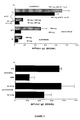
- BALB/c female mice were injected intraperitoneally (i.p.) in groups of 7 or 8 with 0.2ml of endotoxin-free saline containing KLH either adsorbed to the hybrid preparation "Algammulin" or to alum gel, or mixed with g-IN, or adsorbed to alum gel and mixed with g-IN. The dose of g-IN, whether in free or hybrid form, was always 1000»g/mouse. The mice were injected 14 days later i.p. with KLH in the absence of any adjuvant, and serum was taken after a further 7 days. KLH-specific IgG/ml was measured by ELISA on sera of individual mice, and the geometric mean titre calculated. Probabilities were assessed on geometric mean titres by Mann-Whitney non-parametric ranking test and on arithmetic means of replicate geometric mean titres by Student t tests. Figure 2A shows illustrative results and standard errors demonstrating that "Algammulin" gave specific serum antibody titres that were significantly 5.7-8.7 fold higher than a simple mixture of the same doses of alum and gamma inulin, and similarly greater than the same doses of either component alone. This experiment proves the concept that a gamma inulin/alum hybrid preparation is advantageous as a vaccine adjuvant in comparison with either component alone or in mixture, and shows that conjugation of a given dose of alum with gamma inulin greatly enhances the effect of that amount of alum by a synergistic mechanism. These tests used very low doses of KLH (1 »g/mouse i.p.) that were barely able to elicit a seropositive response on their own, and therefore mimic a conventional "poor antigen" such as may be found in a commercial vaccine.
- Freund's incomplete adjuvant (ICFA, a water-in-oil emulsion of antigen) and Freund's complete adjuvant (CFA, as for ICFA but with admixture of heat-killed tubercle bacilli) are recognised as standard powerful adjuvants, although too toxic for clinical application. CFA is more powerful than ICFA. Figure 2B shows the results of several replicate comparisons of Algammulin with CFA and ICFA, using a protocol similar to that of Example 4. They demonstrate that 6mg and 9mg Algammulin/mouse give specific serum antibody titres that are significantly greater than those from ICFA and comparable to those from CFA.
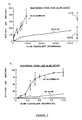
- Figure 3 is a summary of a substantial number of replicate tests using the protocol of Example 4 and including doses of Algammulin that can be expected to fall within a physiologically acceptable range. Figure 3B shows that a given dose of alum conjugated as Algammulin gives specific serum antibody titres that are 6.4-12.6 fold greater than the same dose of alum alone, again demonstrating the synergistic effect of conjugation with gamma inulin.
- Figure 4 shows a seroconversion test, using 15-20 mice per data point and with a protocol similar to that of Example 4 except that sub-seroconversion doses of KLH were used (0.1 »g/mouse). These doses of KLH alone or mixed with 200 »g/mouse of gamma inulin only show a seroconversionpositive response (i.e. produce a specific serum antibody titre in excess of the mean plus 2 standard deviations of the mean of the KLH-alone group) in 10% or less of the individual sera. Such positive seroconversion responses were not obtained from KLH on alum until the alum dose reached 40 »g/mouse. However, highly significant positive seroconversion responses were reached at 10 »g of alum/mouse provided that the alum was conjugated with gamma inulin as Algammulin, again demonstrating the synergistic effect of conjugation.
Claims (26)
- An immunoadjuvant composition comprising particles containing inulin or an inulin derivative in the gamma polymorphic form in association with an antigen-binding aluminium hydroxide gel carrier material.
- A composition according to claim 1, wherein said inulin or inulin derivative has a low solubility in agueous media above 37°C.
- A composition according to claim 1 or claim 2, wherein said inulin or inulin derivative has a molecular weight greater than 3000, preferably greater than 8000.
- A composition according to claim 1, comprising particles wherein the gamma inulin has a molecular weight in the range of from about 8000 to about 16000 and is virtually insoluble in water at 37°C.
- A composition according to any one of claims 1 to 4, wherein said particles are in the form of a stable suspension of particles 50-2000 nanometres in diameter.
- A composition according to claim 1 or claim 2, wherein said inulin derivative is β-D-[2-1]polyfructose, or inulin in which the free hydroxyl groups have been etherified, or inulin in which the free hydroxyl groups have been esterified.
- A composition according to claim 1 or claim 2, wherein said inulin or inulin derivative in the gamma polymorphic form is co-crystallized in the same particles with said carrier material.
- An immunotherapeutic preparation which comprises as an active component thereof particles containing inulin or an inulin derivative in gamma polymorphic form in association with an antigen-binding aluminium hydroxide gel carrier material, and a pharmaceutically acceptable diluent or carrier.
- A preparation according to claim 8, wherein said carrier or diluent is a sterile, aqueous vehicle.
- A preparation according to claim 9, wherein said aqueous vehicle is an isotonic solution.
- A preparation according to claim 8, in a form suitable for injection.
- A preparation according to claim 9 in a form suitable for oral, rectal, vaginal, topical, nasal or ocular administration.
- A preparation according to claim 8, further comprising a second active component which is an immune modulator.
- A preparation according to claim 13, wherein said immune modulator is a vaccinating antigen, an antigenic peptide sequence, or an anti-idiotype immune globulin.
- A preparation according to claim 13, wherein said immune modulator is an interleukin or an interferon or tumour necrosis factor or other cytokine, or thymocyte stimulator or other thymus stimulating hormone, a muramyl peptide or other microbial component or whole microbial component or whole microbe, or an endotoxin.
- A vaccine composition comprising particles containing inulin or an inulin derivative in the gamma polymorphic form in association with an antigen-binding aluminium hydroxide gel carrier material, and one or more antigens adsorbed thereon, together with a pharmaceutically acceptable carrier or diluent.
- The use in the manufacture of a medicament for the activation of the alternative pathway of complement in a human or animal body, or for antitumour treatment in a human or animal of an immunotherapeutic preparation according to claim 8.
- The use in the manufacture of a medicament for the treatment of cancer in a human or animal body, or for the treatment of actual or possible precancerous condition therein of an immunotherapeutic preparation according to claim 8 or a vaccine composition according to claim 16.
- The use in the manufacture of a medicament for the treatment of an infection by a bacterium, mycoplasma, fungus, virus, protozoon or other microbe, or of an infestation by a Worm or parasite, in a human or animal body of an immunotherapeutic preparation according to claim 8 or a vaccine composition according to claim 16.
- The use in the manufacture of a medicament for the treatment of allergic disorders or primary or secondary immune deficiency diseases or rheumatic diseases or neurological disorders or gastrointestinal disorders or other disorders related to dysfunction of the immune system in a human or animal body of an immunotherapeutic preparation according to claim 8.
- The use in the manufacture of a medicament for enhancement of an immune response in a human or animal body to which has been administered an immune modulator of an immunotherapeutic preparation according to claim 8.
- The use in the manufacture of a medicament for facilitating the effect in administration of a vaccinating antigen, an antigenic peptide sequence, or an anti-idotype immune globulin, in a human or animal body of an adjuvant in the form of an immunotherapeutic preparation according to claim 8.
- A process for the preparation of a composition according to claim 1, which comprises the steps of:
providing a suspension of said antigen-binding aluminium hydroxide gel carrier material, and(i) admixing said suspension with inulin or an inulin derivative, and thereafter converting said inulin or inulin derivative to the gamma polymorphic form, or(ii) admixing said suspension with inulin or an inulin derivative in gamma polymorphic form;to effect association of said inulin or inulin derivatives in the gamma polymorphic form with the said antigen-binding carrier material. - A process for the preparation of a composition according to claim 1, which comprises the steps of:(a) recrystallizing crude inulin from an aqueous solution in the presence of a suspension of the aluminium hydroxide gel carrier material at a temperature substantially below 37°C to obtain finely divided particles in suspension;(b) heating said suspension at a temperature in the range of from about 25 to 45°C for approximately 1 to 3 days;(c) optionally further heating said suspension at a temperature in the range of from about 40 to 55°C for approximately 0.5 to 1.5 hours; and(d) isolating the thus-formed gamma inulin/carrier material co-crystallized particles from the suspension.
- A process for the preparation of a composition according to claim 1, which comprises the steps of:(a) recrystallizing crude inulin from an aqueous solution in the presence of a suspension of the aluminium hydroxide gel carrier material at a temperature in the range of from about 25 to 45°C to obtain particles in suspension;(b) optionally further heating said suspension at a temperature in the range of from about 40 to 55°C for approximately 0.5 to 1.5 hours; and(c) isolating the thus formed gamma inulin/carrier material co-crystallized particles from the suspension.
- A process according to claim 24 or claim 25, which comprises the further step of:(e) treating a suspension of the gamma inulin/carrier material particles to create particles in the range of 50 to 1000 nanometres in diameter.
Applications Claiming Priority (3)
| Application Number | Priority Date | Filing Date | Title |
|---|---|---|---|
| AUPI993888 | 1988-08-18 | ||
| AU9938/88 | 1988-08-18 | ||
| PCT/AU1989/000349 WO1990001949A1 (en) | 1988-08-18 | 1989-08-17 | Gamma inulin compositions |
Publications (3)
| Publication Number | Publication Date |
|---|---|
| EP0431023A1 EP0431023A1 (en) | 1991-06-12 |
| EP0431023A4 EP0431023A4 (en) | 1991-12-04 |
| EP0431023B1 true EP0431023B1 (en) | 1995-04-05 |
Family
ID=3773298
Family Applications (1)
| Application Number | Title | Priority Date | Filing Date |
|---|---|---|---|
| EP89909684A Expired - Lifetime EP0431023B1 (en) | 1988-08-18 | 1989-08-17 | Gamma inulin compositions |
Country Status (5)
| Country | Link |
|---|---|
| US (1) | US5476844A (en) |
| EP (1) | EP0431023B1 (en) |
| CA (1) | CA1337047C (en) |
| DE (1) | DE68922109T2 (en) |
| WO (1) | WO1990001949A1 (en) |
Families Citing this family (17)
| Publication number | Priority date | Publication date | Assignee | Title |
|---|---|---|---|---|
| JPH07252156A (en) * | 1994-03-15 | 1995-10-03 | Meiji Seika Kaisha Ltd | Medicine for prevention and therapy of osteoporosis |
| AUPM855194A0 (en) * | 1994-10-04 | 1994-10-27 | Csl Limited | Controlled-release pharmaceutical preparations |
| CN1285753A (en) * | 1997-12-02 | 2001-02-28 | 鲍德杰克特疫苗公司 | Transdermal delivery of particulate vaccine compositions |
| US6399142B1 (en) | 1998-08-27 | 2002-06-04 | Barnard Stewart Silver | Liquid food products |
| US6569488B2 (en) | 1998-08-27 | 2003-05-27 | Barnard Stewart Silver | Processes for making novel inulin products |
| US6419978B1 (en) | 1998-08-27 | 2002-07-16 | Barnard Stewart Silver | Inulin fractions |
| US7045166B2 (en) * | 1998-08-27 | 2006-05-16 | Silver Barnard S | Sweetener compositions containing fractions of inulin |
| US6881723B1 (en) | 1998-11-05 | 2005-04-19 | Powderject Vaccines, Inc. | Nucleic acid constructs |
| WO2000047227A2 (en) | 1999-02-09 | 2000-08-17 | Powderject Vaccines, Inc. | Mycobacterium tuberculosis, immunization |
| US7196066B1 (en) | 1999-11-03 | 2007-03-27 | Powderject Vaccines, Inc. | DNA-vaccines based on constructs derived from the genomes of human and animal pathogens |
| CA2514252A1 (en) * | 2003-01-29 | 2004-08-12 | Jelen Boguslaw | A therapeutic composition for the treatment of hiv-1 and hiv-2 |
| JP5529377B2 (en) | 2004-09-02 | 2014-06-25 | ヴァクシン プロプライエトリー リミティッド | Polymorphic forms of inulin and uses thereof |
| WO2011032229A1 (en) * | 2009-09-18 | 2011-03-24 | Vaxine Pty Ltd | A novel epsilon polymorphic form of inulin and compositions comprising same |
| BR112013032675A2 (en) | 2011-06-19 | 2017-08-08 | Vaxine Pty Ltd | adjuvant vaccine composition comprising inulin particles |
| EP3349790A1 (en) * | 2015-09-18 | 2018-07-25 | Rijksuniversiteit Groningen | Long chain inulin for stimulating an immune response |
| EP3598128A4 (en) | 2016-12-28 | 2020-12-30 | National Institute of Biomedical Innovation, Healty and Nutrition | CHARACTERISTICS ANALYSIS PROCEDURES AND CLASSIFICATION OF PHARMACEUTICAL COMPONENTS USING TRANSCRIPTOMS |
| WO2022066825A1 (en) * | 2020-09-23 | 2022-03-31 | The Regents Of The University Of Michigan | Compositions and methods for treating and/or preventing autoimmune disorders |
Family Cites Families (4)
| Publication number | Priority date | Publication date | Assignee | Title |
|---|---|---|---|---|
| US4021545A (en) * | 1976-07-12 | 1977-05-03 | American Cyanamid Company | Complement inhibitors |
| US4285735A (en) * | 1980-03-10 | 1981-08-25 | Mitchell William A | Fructose polymer mixture |
| JPS5716815A (en) * | 1980-07-02 | 1982-01-28 | Ajinomoto Co Inc | Oxygen transporting agent for artificial blood |
| AU589233B2 (en) * | 1985-10-31 | 1989-10-05 | Vaxine Pty Ltd | Immunotherapeutic treatment |
-
1989
- 1989-08-16 CA CA000608534A patent/CA1337047C/en not_active Expired - Lifetime
- 1989-08-17 EP EP89909684A patent/EP0431023B1/en not_active Expired - Lifetime
- 1989-08-17 US US07/656,081 patent/US5476844A/en not_active Expired - Lifetime
- 1989-08-17 WO PCT/AU1989/000349 patent/WO1990001949A1/en not_active Ceased
- 1989-08-17 DE DE68922109T patent/DE68922109T2/en not_active Expired - Fee Related
Non-Patent Citations (4)
| Title |
|---|
| BRITISH PHARMACOPOEIA, vol. II, 1988, Her Majesty's Stationery Office, London (GB); p. 1047# * |
| MARTINDALE "THE EXTRA PHARMACOPOEIA", 28th ed., 1982, Pharmaceutical Press, London (GB); pp. 1591-1610, nos. 7946v, 7948q, 7949p, 7953b, 7955g, 7959w, 7961b, 7985l, 8018t, 8020y# * |
| MOLECULAR IMMUNOLOGY, vol. 23, no. 8, 1986; P.D. COOPER et al., pp. 895-901; and P.D. Cooper et al., pp. 903-908# * |
| PATENT ABSTRACTS OF JAPAN, C-166; p. 14# * |
Also Published As
| Publication number | Publication date |
|---|---|
| WO1990001949A1 (en) | 1990-03-08 |
| EP0431023A1 (en) | 1991-06-12 |
| US5476844A (en) | 1995-12-19 |
| DE68922109D1 (en) | 1995-05-11 |
| CA1337047C (en) | 1995-09-19 |
| DE68922109T2 (en) | 1995-10-12 |
| EP0431023A4 (en) | 1991-12-04 |
Similar Documents
| Publication | Publication Date | Title |
|---|---|---|
| CA1337047C (en) | Gamma inulin compositions | |
| SU1487802A3 (en) | METHOD OF OBTAINING LIPOS | |
| Batchelor et al. | A penicilloylated protein impurity as a source of allergy to benzylpenicillin and 6-aminopenicillanic acid | |
| DE69329030T2 (en) | ANTIGEN CONTAINING MICROPARTICLES AND THEIR USE FOR INDUCING HUMORAL OR CELLULAR ANSWERS | |
| KR100188836B1 (en) | Hydroxyapatite-antigen conjugates and methods for generating a poly-ig immune response | |
| JP2010265330A6 (en) | Formulation | |
| JP2010265330A (en) | Prescribed substance | |
| JPH03504975A (en) | Heterofunctional cell immunizing agent, vaccine containing the same, and method for using the same | |
| JPH05502871A (en) | Vaccines and immune sera against drugs of abuse | |
| US4203971A (en) | Neisseria gonorrhoeae vaccine | |
| CN116983403A (en) | An immune composition product for preventing or treating varicella-zoster virus-related diseases and its preparation method | |
| WO2018119746A1 (en) | Purification of recombinant ev71 virus-like particle and method for preparing vaccine thereof | |
| WO2020259633A1 (en) | Human immunoglobulin against methicillin-resistant staphylococcus aureus, preparation method therefor, and use thereof | |
| GB2160312A (en) | Adjuvant for immunisation | |
| JPH02149530A (en) | Use of zinc or iron hydroxide as adjuvant in antigen solution | |
| AU620149B2 (en) | Gamma inulin compositions | |
| JPH05506234A (en) | vaccine composition | |
| JP3001214B2 (en) | Gunmainulin composition | |
| JPH0669962B2 (en) | Oral immunoglobulin | |
| Watson | Effect of various penicillin compounds on haemagglutination of penicillin-coated erythrocytes | |
| WO2024125100A1 (en) | Bivalent inactivated ev71-ca16 vaccine, method for preparing same, and use thereof | |
| CA1117866A (en) | Haemophilus influenzae vaccine | |
| JP4331798B2 (en) | Allergen prescription | |
| RU2264229C2 (en) | Secretory immunoglobulin a preparation possessing antiviral or antibacterial effect | |
| TW586935B (en) | Saponin-containing vaccine preparation |
Legal Events
| Date | Code | Title | Description |
|---|---|---|---|
| PUAI | Public reference made under article 153(3) epc to a published international application that has entered the european phase |
Free format text: ORIGINAL CODE: 0009012 |
|
| 17P | Request for examination filed |
Effective date: 19910215 |
|
| AK | Designated contracting states |
Kind code of ref document: A1 Designated state(s): BE CH DE FR GB IT LI NL |
|
| A4 | Supplementary search report drawn up and despatched |
Effective date: 19911014 |
|
| AK | Designated contracting states |
Kind code of ref document: A4 Designated state(s): BE CH DE FR GB IT LI NL |
|
| 17Q | First examination report despatched |
Effective date: 19931018 |
|
| GRAA | (expected) grant |
Free format text: ORIGINAL CODE: 0009210 |
|
| AK | Designated contracting states |
Kind code of ref document: B1 Designated state(s): BE CH DE FR GB IT LI NL |
|
| REF | Corresponds to: |
Ref document number: 68922109 Country of ref document: DE Date of ref document: 19950511 |
|
| ITF | It: translation for a ep patent filed | ||
| ET | Fr: translation filed | ||
| PLBE | No opposition filed within time limit |
Free format text: ORIGINAL CODE: 0009261 |
|
| STAA | Information on the status of an ep patent application or granted ep patent |
Free format text: STATUS: NO OPPOSITION FILED WITHIN TIME LIMIT |
|
| 26N | No opposition filed | ||
| PGFP | Annual fee paid to national office [announced via postgrant information from national office to epo] |
Ref country code: NL Payment date: 19990714 Year of fee payment: 11 |
|
| PGFP | Annual fee paid to national office [announced via postgrant information from national office to epo] |
Ref country code: BE Payment date: 19990910 Year of fee payment: 11 |
|
| PG25 | Lapsed in a contracting state [announced via postgrant information from national office to epo] |
Ref country code: BE Free format text: LAPSE BECAUSE OF NON-PAYMENT OF DUE FEES Effective date: 20000831 |
|
| BERE | Be: lapsed |
Owner name: THE AUSTRALIAN NATIONAL UNIVERSITY Effective date: 20000831 |
|
| PG25 | Lapsed in a contracting state [announced via postgrant information from national office to epo] |
Ref country code: NL Free format text: LAPSE BECAUSE OF NON-PAYMENT OF DUE FEES Effective date: 20010301 |
|
| NLV4 | Nl: lapsed or anulled due to non-payment of the annual fee |
Effective date: 20010301 |
|
| REG | Reference to a national code |
Ref country code: GB Ref legal event code: IF02 |
|
| PGFP | Annual fee paid to national office [announced via postgrant information from national office to epo] |
Ref country code: CH Payment date: 20030818 Year of fee payment: 15 |
|
| PGFP | Annual fee paid to national office [announced via postgrant information from national office to epo] |
Ref country code: DE Payment date: 20030828 Year of fee payment: 15 |
|
| PG25 | Lapsed in a contracting state [announced via postgrant information from national office to epo] |
Ref country code: LI Free format text: LAPSE BECAUSE OF NON-PAYMENT OF DUE FEES Effective date: 20040831 Ref country code: CH Free format text: LAPSE BECAUSE OF NON-PAYMENT OF DUE FEES Effective date: 20040831 |
|
| PG25 | Lapsed in a contracting state [announced via postgrant information from national office to epo] |
Ref country code: DE Free format text: LAPSE BECAUSE OF NON-PAYMENT OF DUE FEES Effective date: 20050301 |
|
| REG | Reference to a national code |
Ref country code: CH Ref legal event code: PL |
|
| PG25 | Lapsed in a contracting state [announced via postgrant information from national office to epo] |
Ref country code: IT Free format text: LAPSE BECAUSE OF NON-PAYMENT OF DUE FEES;WARNING: LAPSES OF ITALIAN PATENTS WITH EFFECTIVE DATE BEFORE 2007 MAY HAVE OCCURRED AT ANY TIME BEFORE 2007. THE CORRECT EFFECTIVE DATE MAY BE DIFFERENT FROM THE ONE RECORDED. Effective date: 20050817 |
|
| PGFP | Annual fee paid to national office [announced via postgrant information from national office to epo] |
Ref country code: FR Payment date: 20080903 Year of fee payment: 20 |
|
| PGFP | Annual fee paid to national office [announced via postgrant information from national office to epo] |
Ref country code: GB Payment date: 20080827 Year of fee payment: 20 |
|
| REG | Reference to a national code |
Ref country code: GB Ref legal event code: PE20 Expiry date: 20090816 |
|
| PG25 | Lapsed in a contracting state [announced via postgrant information from national office to epo] |
Ref country code: GB Free format text: LAPSE BECAUSE OF EXPIRATION OF PROTECTION Effective date: 20090816 |